AB 1400: Public Interest Research, Development, and Demonstration Program and Electric Program Investment Charge program: microgrid projects: diesel backup generators.
- Session Year: 2017-2018
- House: Assembly
- Latest Version Date: 2017-10-04
The California Constitution establishes the Public Utilities Commission (PUC), with jurisdiction over all public utilities, as defined. Existing decisions of the PUC institute an Electric Program Investment Charge (EPIC) to fund renewable energy and research, development, and demonstration programs.
Existing law creates in the State Treasury the Electric Program Investment Charge Fund to be administered by the State Energy Resources Conservation and Development Commission (Energy Commission) and requires the PUC to forward to the Energy Commission at least quarterly moneys for those EPIC programs the PUC has determined should be administered by the Energy Commission for deposit in the fund.
Existing law requires the Energy Commission, in administering moneys in the fund for research, development, and demonstration programs, to develop and implement the EPIC program for the purpose of awarding funds to projects that may lead to technological advancement and breakthroughs to overcome barriers that prevent the achievement of the states statutory energy goals and that may result in a portfolio of projects that are strategically focused and sufficiently narrow to make advancement on the most significant technological challenges.
Existing law requires the Energy Commission to develop, implement, and administer the Public Interest Research, Development, and Demonstration Program to provide support for a full range of research, development, and demonstration activities to advance energy science or technologies that, as determined by the Energy Commission, are not adequately provided for by competitive and regulated energy markets.
This bill would, for projects related to the deployment of microgrids, prohibit recipients of moneys awarded under the above 2 programs from expending those moneys for the purchase of diesel generators.
The California Constitution establishes the Public Utilities Commission (PUC), with jurisdiction over all public utilities, as defined. Existing decisions of the PUC institute an Electric Program Investment Charge (EPIC) to fund renewable energy and research, development, and demonstration programs.
Existing law creates in the State Treasury the Electric Program Investment Charge Fund to be administered by the State Energy Resources Conservation and Development Commission (Energy Commission) and requires the PUC to forward to the Energy Commission at least quarterly moneys for those EPIC programs the PUC has determined should be administered by the Energy Commission for deposit in the fund.
Existing law requires the Energy Commission, in administering moneys in the fund for research, development, and demonstration programs, to develop and implement the EPIC program for the purpose of awarding funds to projects that may lead to technological advancement and breakthroughs to overcome barriers that prevent the achievement of the states statutory energy goals and that may result in a portfolio of projects that are strategically focused and sufficiently narrow to make advancement on the most significant technological challenges.
Existing law requires the Energy Commission to develop, implement, and administer the Public Interest Research, Development, and Demonstration (PIER) Program to provide support for a full range of research, development, and demonstration activities to advance energy science or technologies that, as determined by the Energy Commission, are not adequately provided for by competitive and regulated energy markets.
This bill would, for projects related to the deployment of microgrids, prohibit recipients of moneys awarded under the above 2 programs from expending those moneys for the purchase of fossil fuel diesel generators.
The California Constitution establishes the Public Utilities Commission (PUC), with jurisdiction over all public utilities, as defined. Existing decisions of the PUC institute an Electric Program Investment Charge (EPIC) to fund renewable energy and research, development, and demonstration programs.
Existing law creates in the State Treasury the Electric Program Investment Charge Fund to be administered by the State Energy Resources Conservation and Development Commission (Energy Commission) and requires the PUC to forward to the Energy Commission at least quarterly moneys for those EPIC programs the PUC has determined should be administered by the Energy Commission for deposit in the fund.
Existing law requires the Energy Commission, in administering moneys in the fund for research, development, and demonstration programs, to develop and implement the EPIC program for the purpose of awarding funds to projects that may lead to technological advancement and breakthroughs to overcome barriers that prevent the achievement of the states statutory energy goals and that may result in a portfolio of projects that are strategically focused and sufficiently narrow to make advancement on the most significant technological challenges.
Existing law requires the Energy Commission to develop, implement, and administer the Public Interest Research, Development, and Demonstration (PIER) Program to provide support for a full range of research, development, and demonstration activities to advance energy science or technologies that, as determined by the Energy Commission, are not adequately provided for by competitive and regulated energy markets.
This bill would, for projects related to the deployment of microgrids, prohibit recipients of moneys awarded under the above 2 programs from expending those moneys for the purchase of diesel fossil fuel generators.
The California Constitution establishes the Public Utilities Commission (PUC), with jurisdiction over all public utilities, as defined. Existing decisions of the PUC institute an Electric Program Investment Charge (EPIC) to fund renewable energy and research, development, and demonstration programs.
Existing law creates in the State Treasury the Electric Program Investment Charge Fund to be administered by the State Energy Resources Conservation and Development Commission (Energy Commission) and requires the PUC to forward to the Energy Commission at least quarterly moneys for those EPIC programs the PUC has determined should be administered by the Energy Commission for deposit in the fund.
Existing law requires the Energy Commission, in administering moneys in the fund for research, development, and demonstration programs, to develop and implement the EPIC program for the purpose of awarding funds to projects that may lead to technological advancement and breakthroughs to overcome barriers that prevent the achievement of the states statutory energy goals and that may result in a portfolio of projects that are strategically focused and sufficiently narrow to make advancement on the most significant technological challenges.
Existing law requires the Energy Commission to develop, implement, and administer the Public Interest Research, Development, and Demonstration (PIER) Program to provide support for a full range of research, development, and demonstration activities to advance energy science or technologies that, as determined by the Energy Commission, are not adequately provided for by competitive and regulated energy markets.
This bill would, for projects related to the deployment of microgrids, prohibit recipients of moneys awarded under the above 2 programs from expending those moneys for the purchase of diesel generators.
Existing law establishes various types of refuges for fish and wildlife and prohibits certain activities in those refuges. This bill would state the intent of the Legislature to enact legislation that would designate a protected habitat for migratory birds and urban wildlife in the waters and surrounding land of the Silver Lake Reservoir in the County of Los Angeles.Existing law establishes various types of refuges for fish and wildlife and prohibits certain activities in those refuges.
This bill would state the intent of the Legislature to enact legislation that would designate a protected habitat for migratory birds and urban wildlife in the waters and surrounding land of the Silver Lake Reservoir in the County of Los Angeles.
For a project related to the deployment of a microgrid, a recipient of moneys awarded pursuant to this chapter shall not expend those moneys for the purchase of diesel generators, including diesel backup generators.
SEC. 2.Section 25711.8 is added to the Public Resources Code, to read:25711.8.For a project related to the deployment of a microgrid, a recipient of moneys awarded pursuant to this chapter shall not expend those moneys for the purchase of diesel generators, including diesel backup generators.
For a project related to the deployment of a microgrid, a recipient of moneys awarded pursuant to this chapter shall not expend those moneys for the purchase of fossil fuel diesel generators, including fossil fuel diesel backup generators.
SEC. 2.Section 25711.8 is added to the Public Resources Code, to read:25711.8.For a project related to the deployment of a microgrid, a recipient of moneys awarded pursuant to this chapter shall not expend those moneys for the purchase of fossil fuel diesel generators, including fossil fuel diesel backup generators.
For a project related to the deployment of a microgrid, a recipient of moneys awarded pursuant to this chapter shall not expend those moneys for the purchase of diesel fossil fuel generators, including diesel fossil fuel backup generators.
SEC. 2.Section 25711.8 is added to the Public Resources Code, to read:25711.8.For a project related to the deployment of a microgrid, a recipient of moneys awarded pursuant to this chapter shall not expend those moneys for the purchase of diesel fossil fuel generators, including diesel fossil fuel backup generators.
For a project related to the deployment of a microgrid, a recipient of moneys awarded pursuant to this chapter shall not expend those moneys for the purchase of diesel generators, including diesel backup generators.
SEC. 2.Section 25711.8 is added to the Public Resources Code, to read:25711.8.For a project related to the deployment of a microgrid, a recipient of moneys awarded pursuant to this chapter shall not expend those moneys for the purchase of diesel generators, including diesel backup generators.
SECTION 1.It is the intent of the Legislature to enact legislation that would designate a protected habitat for migratory birds and urban wildlife in the waters and surrounding land of the Silver Lake Reservoir in the County of Los Angeles.It is the intent of the Legislature to enact legislation that would designate a protected habitat for migratory birds and urban wildlife in the waters and surrounding land of the Silver Lake Reservoir in the County of Los Angeles.
|
Date
|
Status
|
|---|---|
| Oct 4, 2017 | Chaptered by Secretary of State - Chapter 476, Statutes of 2017. |
| Oct 4, 2017 | Approved by the Governor. |
| Sep 21, 2017 | Enrolled and presented to the Governor at 3:30 p.m. |
| Sep 13, 2017 | Assembly Rule 77(a) suspended. |
| Sep 13, 2017 | In Assembly. Concurrence in Senate amendments pending. May be considered on or after September 15 pursuant to Assembly Rule 77. |
| Sep 12, 2017 | Read third time. Passed. Ordered to the Assembly. |
| Sep 11, 2017 | Read second time. Ordered to third reading. |
| Sep 7, 2017 | Read third time and amended. Ordered to second reading. |
| Jul 11, 2017 | Read second time. Ordered to third reading. |
| Jul 10, 2017 | From committee: Be ordered to second reading pursuant to Senate Rule 28.8. |
| Jun 20, 2017 | From committee: Do pass and re-refer to Com. on APPR. (Ayes 9. Noes 1.) (June 20). Re-referred to Com. on APPR. |
| Jun 8, 2017 | Referred to Com. on E., U. & C. |
| May 30, 2017 | In Senate. Read first time. To Com. on RLS. for assignment. |
| May 30, 2017 | Read third time. Passed. Ordered to the Senate. (Ayes 61. Noes 11. Page 1799.) |
| May 25, 2017 | Read second time. Ordered to third reading. |
| May 24, 2017 | From committee: Do pass. (Ayes 14. Noes 3.) (May 24). |
| Apr 26, 2017 | Re-referred to Com. on APPR. |
| Apr 25, 2017 | Read second time and amended. |
| Apr 24, 2017 | From committee: Amend, and do pass as amended and re-refer to Com. on APPR. (Ayes 11. Noes 2.) (April 19). |
| Mar 29, 2017 | Re-referred to Com. on U. & E. |
| Mar 28, 2017 | From committee chair, with author's amendments: Amend, and re-refer to Com. on U. & E. Read second time and amended. |
| Mar 27, 2017 | Referred to Com. on U. & E. |
| Feb 19, 2017 | From printer. May be heard in committee March 21. |
| Feb 17, 2017 | Read first time. To print. |
|
Date
|
Description
|
Location
|
Votes
|
|
|---|---|---|---|---|
| Sep 13, 2017 | AB 1400 Friedman Concurrence in Senate Amendments | Assembly Floor |
Passed |
|
| Sep 12, 2017 | Assembly 3rd Reading AB1400 Friedman By Stern | Senate Floor |
Passed |
|
| Jun 20, 2017 | Do pass, but first be re-referred to the Committee on [Appropriations] | Senate Standing Committee on Energy, Utilities and Communications |
Passed |
|
| May 30, 2017 | AB 1400 FRIEDMAN Assembly Third Reading | Assembly Floor |
Passed |
|
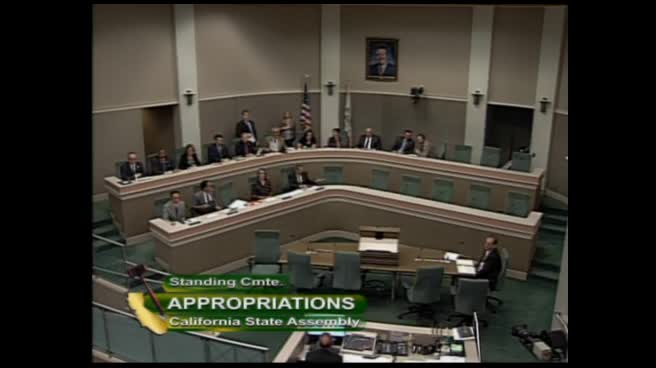
| May 24, 2017 | Do pass. | Assembly Standing Committee on Appropriations |
Passed |
|
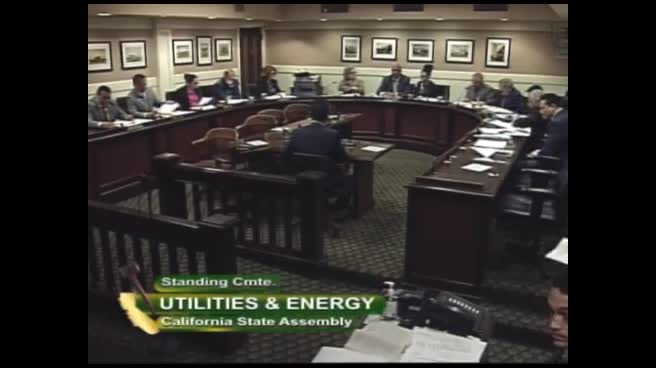
| Apr 19, 2017 | Do pass as amended and be re-referred to the Committee on [Appropriations] | Assembly Standing Committee on Utilities and Energy |
Passed |
This list shows positions taken on this bill by organizations on the date displayed, which is linked to the original source.
Positions by individuals are not included.
|
Organization
|
Position
|
Date
|
|---|---|---|
| American Lung Association | ** Support | Sep 11, 2017 |
| California Association Of Professional Scientists | ** Support | Sep 11, 2017 |
| California Environmental Justice Alliance | ** Support | Sep 11, 2017 |
| Coalition For Clean Air | ** Support | Sep 11, 2017 |
| Environmental Defense Fund | ** Support | Sep 11, 2017 |
| Sierra Club California | ** Support | Sep 11, 2017 |
CONCURRENCE IN SENATE AMENDMENTS
CSA1 Bill Id:AB 1400
Author:(Friedman)
As Amended Ver:September 7, 2017
Majority vote
ASSEMBLY: | 61-11 | (May 30, 2017) | SENATE: | 39-0 | (September 12, 2017) |
Original Committee Reference: U. & E.
SUMMARY: This bill prohibits microgrid projects from spending state funding from the Public Interest Research Development and Demonstration (PIER) program or the Electric Program Investment Charge (EPIC) on diesel generators.
The Senate amendments limited the prohibition on microgrid generators to only diesel generators.
FISCAL EFFECT: According to the Appropriations Committees in both houses, this bill poses negligible fiscal impact to the state.
COMMENTS:
- Purpose. According to the author, microgrids often incorporate renewable sources but most also rely on generators for back-up power. The exhaust from these engines contains substances that can pose a risk to human health. Currently, the California Energy Commission (CEC) has programs that fund microgrid projects that include back-up diesel generators. While including back-up diesel generators may be necessary for providing electricity when renewables can't meet demand, the state should not allow funds to be used to purchase them. This bill would bar the use of these moneys for diesel generators but still allow the state to fund microgrid projects.
- What are microgrids? Microgrids are localized sections of the larger electric grid (macrogrid) that normally operate in conjunction with, and connected to, the larger grid, but may also disconnect and operate independently. This grid independence means microgrids contain local generation such as batteries, generators, or renewable resources like solar panels. These microgrids can provide backup for areas during emergencies or reduce grid load. Microgrids can be as small as a single-facility, like a prison or fire station, or as large as a city or district.
Diesel generators are diesel engines combined with electric generators producing electric power. These engines largely emit exhaust high in air pollutants, such as NOx, particulate matter, and greenhouse gases. Particulate matter, for example, is comprised of small particles known to be toxic air contaminants and contribute to severe health effects. For this reason, the California Air Resources Board has set emissions standards for both mobile and stationary engines to reduce their pollution.
- PIER and EPIC Programs. Both the PIER and EPIC programs were established to invest in research, development, and demonstration projects that advance new energy solutions. In 2011, the Legislature did not reauthorize the electricity research portion of the PIER Program, but retained the natural gas portion. Since November 2016, the CEC has funded through PIER more than 196 research projects totaling $171.1 million. Through EPIC, the CEC administers about $130 million per year, approximately 80% of the total program budget.
This bill prohibits PIER or EPIC monies from being spent on diesel generators for microgrid deployments. However, these projects rarely deploy generators. In fact, the CEC currently reports no EPIC monies are used for diesel generators.
Analysis Prepared by: Laura McWilliams / U. & E. / (916) 319-2083 FN: 0002177
Office of Senate Floor Analyses (916) 651-1520 Fax: (916) 327-4478 | AB |
THIRD READING
Bill No: AB 1400
:
SENATE ENERGY, U. & C. COMMITTEE: 9-1, 6/20/17
AYES: Hueso, Bradford, Cannella, Hill, McGuire, Skinner, Stern, Vidak, Wiener
NOES: Morrell
NO VOTE RECORDED: Hertzberg
SENATE APPROPRIATIONS COMMITTEE: Senate Rule 28.8
ASSEMBLY FLOOR: 61-11, 5/30/17 - See last page for vote
DIGEST:
This bill prohibits a recipient of certain research, demonstration and development (RD&D) funds from using award monies to purchase of diesel generators.
Senate Floor Amendments of 9/7/17 replace the prohibition on using award monies to purchase fossil-fuel generators with the less-restrictive prohibition on using award monies on diesel generators.
Existing law:
- Authorizes the California Public Utilities Commission (CPUC) to allow in rates the inclusion of expenses for research and development. (Public Utilities Code §790)
- Directs the CPUC to order the investor-owned electric utilities (IOUs) to collect from every customer, from January 1, 2002, to January 1, 2012, a nonbypassable system benefits charge to fund energy efficiency, renewable energy, and RD&D. (Public Utilities Code §399.8)
- Directs the CPUC to establish a surcharge on natural gas to fund public interest research and development. (Public Utilities Code §890)
- Directs the California Energy Commission (CEC) to establish the Public Interest Energy Research, Development and Demonstration (PIER) RD&D program. Creates the PIER Fund, into which money collected for public interest RD&D pursuant to Section 399.8 of the Public Utilities Code is to be transferred. States that money collected between January 1, 2007, and January 1, 2012, is to be used for PIER program projects. (Public Resources Code §25620 et seq.)
- Creates the Electric Program Investment Charge (EPIC) Fund, into which the CPUC is to deposit monies collected by the IOUs, per CPUC order, to fund RD&D programs. (Public Resources Code §25710 et seq.)
This bill prohibits a recipient of a PIER award or an EPIC award for deployment of a microgrid from using the award money to purchase of a diesel generator, including a backup diesel generator.
Background
Research, Development and Demonstration. The state has two active energy-related, ratepayer-funded RD&D programs. These programs were established following energy deregulation in 1996 on the assumption that it would no longer be in the interest of IOUs fund such research efforts. Briefly, the state’s energy RD&D programs are:
- EPIC. A successor program to PIER, EPIC was adopted by the CPUC 2011. The program authorizes collecting funds from system benefits charges for renewables and RD&D. The program is administered by the CEC and the IOUs and overseen by the CPUC. The current annual program budget is $125 million.
- PIER. From 1996 until 2011, a surcharge on the ratepayers of the state’s electric IOUs funding RD&D through the PIER program at an amount of $65.5 annually. The Legislature did not reauthorize the program and program funding is now exhausted.
- PIER-Natural Gas (NG). Since 2000, the PIER-NG program has been funded by a surcharge on the ratepayers of the natural gas IOUs. The program budget allows for awards of $24 million annually.
This bill prohibits a recipient of RD&D funds—either EPIC or PIER—for deployment of a microgrid from using those funds to purchase a diesel generator, including a backup generator. The author is concerned that using state RD&D funds for such generators is inconsistent with the state’s energy goals, which encourage use of increasing amounts of energy efficiency, demand response and renewable energy and decreasing amounts of fossil fuels, especially diesel fuel.
FISCAL EFFECT: Appropriation: Fiscal Com.: Local:
American Lung Association
California Association of Professional Scientists
California Environmental Justice Alliance
Coalition for Clean Air
Environmental Defense Fund
Sierra Club California
None received
ARGUMENTS IN SUPPORT: Supporters note public health harms caused by diesel energy generation and assert the state should not fund RD&D projects that use it.
ASSEMBLY FLOOR: 61-11, 5/30/17
AYES: Aguiar-Curry, Arambula, Baker, Berman, Bloom, Bocanegra, Bonta, Burke, Calderon, Cervantes, Chávez, Chiu, Chu, Cooley, Cooper, Cunningham, Dababneh, Daly, Flora, Fong, Frazier, Friedman, Cristina Garcia, Eduardo Garcia, Gipson, Gloria, Gomez, Gonzalez Fletcher, Gray, Grayson, Holden, Irwin, Jones-Sawyer, Kalra, Lackey, Levine, Limón, Low, Maienschein, McCarty, Medina, Mullin, Muratsuchi, Nazarian, Obernolte, O'Donnell, Quirk, Quirk-Silva, Reyes, Ridley-Thomas, Rodriguez, Rubio, Salas, Santiago, Steinorth, Mark Stone, Thurmond, Ting, Weber, Wood, Rendon
NOES: Travis Allen, Bigelow, Brough, Caballero, Gallagher, Harper, Mathis, Melendez, Patterson, Voepel, Waldron
NO VOTE RECORDED: Acosta, Chau, Chen, Choi, Dahle, Eggman, Kiley, Mayes
9/11/17 11:50:31
**** END ****
Office of Senate Floor Analyses (916) 651-1520 Fax: (916) 327-4478 | AB |
THIRD READING
Bill No: AB 1400
:
SENATE ENERGY, U. & C. COMMITTEE: 9-1, 6/20/17
AYES: Hueso, Bradford, Cannella, Hill, McGuire, Skinner, Stern, Vidak, Wiener
NOES: Morrell
NO VOTE RECORDED: Hertzberg
SENATE APPROPRIATIONS COMMITTEE: Senate Rule 28.8
ASSEMBLY FLOOR: 61-11, 5/30/17 - See last page for vote
DIGEST:
This bill prohibits a recipient of certain research, demonstration and development (RD&D) funds from using award monies to purchase of fossil fuel generators.
Existing law:
- Authorizes the California Public Utilities Commission (CPUC) to allow in rates the inclusion of expenses for research and development. (Public Utilities Code §790)
- Directs the CPUC to order the investor-owned electric utilities (IOUs) to collect from every customer, from January 1, 2002, to January 1, 2012, a nonbypassable system benefits charge to fund energy efficiency, renewable energy, and RD&D. (Public Utilities Code §399.8)
- Directs the CPUC to establish a surcharge on natural gas to fund public interest research and development. (Public Utilities Code §890)
- Directs the California Energy Commission (CEC) to establish the Public Interest Energy Research, Development and Demonstration (PIER) RD&D program. Creates the PIER Fund, into which money collected for public interest RD&D pursuant to Section 399.8 of the Public Utilities Code is to be transferred. States that money collected between January 1, 2007, and January 1, 2012, is to be used for PIER program projects. (Public Resources Code §25620 et seq.)
- Creates the Electric Program Investment Charge (EPIC) Fund, into which the CPUC is to deposit monies collected by the IOUs, per CPUC order, to fund RD&D programs. (Public Resources Code §25710 et seq.)
This bill prohibits a recipient of a PIER award or an EPIC award for deployment of a microgrid from using the award money to purchase of a fossil-fuel generator, including a backup fossil-fuel generator.
Background
Research, Development and Demonstration. The state has two active energy-related, ratepayer-funded RD&D programs. These programs were established following energy deregulation in 1996 on the assumption that it would no longer be in the interest of IOUs fund such research efforts. Briefly, the state’s energy RD&D programs are:
- EPIC. A successor program to PIER, EPIC was adopted by the CPUC 2011. The program authorizes collecting funds from system benefits charges for renewables and RD&D. The program is administered by the CEC and the IOUs and overseen by the CPUC. The current annual program budget is $125 million.
- PIER. From 1996 until 2011, a surcharge on the ratepayers of the state’s electric IOUs funding RD&D through the PIER program at an amount of $65.5 annually. The Legislature did not reauthorize the program and program funding is now exhausted.
- PIER-Natural Gas (NG). Since 2000, the PIER-NG program has been funded by a surcharge on the ratepayers of the natural gas IOUs. The program budget allows for awards of $24 million annually.
Microgrids. The United States Department of Energy defines a microgrid as “a local energy grid with control capability, which means it can disconnect from the traditional grid and operate autonomously.” [See https://energy.gov/articles/how-microgrids-work] Many facilities, such as research institutions and military bases, can benefit from installation of microgrids, and the ability to disconnect a microgrid from the larger energy grid can aid grid managers. The CEC confirms that its RD&D programs have funded microgrid projects and that some RD&D funds may have paid for fossil-fuel resources to provide backup power for micogrid projects. However, the CEC did not provide any project or funding details.
This bill prohibits a recipient of RD&D funds—either EPIC or PIER—for deployment of a microgrid from using those funds to purchase a fossil fuel generators, including backup generators. The author is concerned that using state RD&D funds for such generators is inconsistent with the state’s energy goals, which encourage use of increasing amounts of energy efficiency, demand response and renewable energy and decreasing amounts of fossil fuels.
The CEC did not express concern that restricting RD&D funds in this way would jeopardize the viability or attractiveness of microgrid projects. The effects of this bill will likely not be dramatic, though it will ensure some small portion of state RD&D funds will not be used for a general application of fossil fuel generation, thereby making the funds available for other opportunities more aligned with the state’s energy and environmental priorities.
FISCAL EFFECT: Appropriation: Fiscal Com.: Local:
American Lung Association
California Association of Professional Scientists
California Environmental Justice Alliance
Coalition for Clean Air
Environmental Defense Fund
Sierra Club California
OPPOSITION: (Verified 7/11/17)
None received
ARGUMENTS IN SUPPORT: Supporters note public health harms caused by fossil-fuel energy generation and assert the state should not fund RD&D projects that use it.
ASSEMBLY FLOOR: 61-11, 5/30/17
AYES: Aguiar-Curry, Arambula, Baker, Berman, Bloom, Bocanegra, Bonta, Burke, Calderon, Cervantes, Chávez, Chiu, Chu, Cooley, Cooper, Cunningham, Dababneh, Daly, Flora, Fong, Frazier, Friedman, Cristina Garcia, Eduardo Garcia, Gipson, Gloria, Gomez, Gonzalez Fletcher, Gray, Grayson, Holden, Irwin, Jones-Sawyer, Kalra, Lackey, Levine, Limón, Low, Maienschein, McCarty, Medina, Mullin, Muratsuchi, Nazarian, Obernolte, O'Donnell, Quirk, Quirk-Silva, Reyes, Ridley-Thomas, Rodriguez, Rubio, Salas, Santiago, Steinorth, Mark Stone, Thurmond, Ting, Weber, Wood, Rendon
NOES: Travis Allen, Bigelow, Brough, Caballero, Gallagher, Harper, Mathis, Melendez, Patterson, Voepel, Waldron
NO VOTE RECORDED: Acosta, Chau, Chen, Choi, Dahle, Eggman, Kiley, Mayes
8/24/17 14:00:28
**** END ****
SENATE COMMITTEE ON ENERGY, UTILITIES AND COMMUNICATIONS
Senator Ben Hueso, Chair
2017 - 2018 Regular
Bill No: AB 1400 Hearing Date: 6/20/2017
Author: | Friedman | ||
Version: | 4/25/2017 As Amended | ||
Urgency: | No | Fiscal: | Yes |
Consultant: | Jay Dickenson | ||
SUBJECT: Public Interest Research, Development, and Demonstration Program and Electric Program Investment Charge program: microgrid projects: fossil fuel backup generators
DIGEST: This bill prohibits a recipient of certain research, demonstration and development (RD&D) funds from using award monies to purchase of fossil fuel generators.
ANALYSIS:
Existing law:
- Authorizes the California Public Utilities Commission (CPUC) to allow in rates the inclusion of expenses for research and development. (Public Utilities Code §790)
- Directs the CPUC to order the investor-owned electric utilities (IOUs) to collect from every customer, from January 1, 2002, to January 1, 2012, a nonbypassable system benefits charge to fund energy efficiency, renewable energy, and RD&D. (Public Utilities Code §399.8)
- Directs the CPUC to establish a surcharge on natural gas to fund public interest research and development. (Public Utilities Code §890)
- Directs the California Energy Commission (CEC) to establish the Public Interest Energy Research, Development and Demonstration (PIER) RD&D program. Creates the PIER Fund, into which money collected for public interest RD&D pursuant to Section 399.8 of the Public Utilities Code is to be transferred. States that money collected between January 1, 2007, and January 1, 2012, is to be used for PIER program projects. (Public Resources Code §25620 et seq.)
- Creates the Electric Program Investment Charge (EPIC) Fund, into which the CPUC is to deposit monies collected by the IOUs, per CPUC order, to fund RD&D programs. (Public Resources Code §25710 et seq.)
This bill prohibits a recipient of a PIER award or an EPIC award for deployment of a microgrid from using the award money to purchase of a fossil-fuel generator, including a backup fossil-fuel generator.
Background
Research, Development and Demonstration. The state has two active energy-related, ratepayer-funded RD&D programs. These programs were established following energy deregulation in 1996 on the assumption that it would no longer be in the interest of IOUs fund such research efforts. Briefly, the state’s energy RD&D programs are:
- EPIC. A successor program to PIER, EPIC was adopted by the CPUC 2011. The program authorizes collecting funds from system benefits charges for renewables and RD&D. The program is administered by the CEC and the IOUs and overseen by the CPUC. The current annual program budget is $125 million.
- PIER. From 1996 until 2011, a surcharge on the ratepayers of the state’s electric IOUs funding RD&D through the PIER program at an amount of $65.5 annually. The Legislature did not reauthorize the program and program funding is now exhausted.
- PIER-Natural Gas (NG). Since 2000, the PIER-NG program has been funded by a surcharge on the ratepayers of the natural gas IOUs. The program budget allows for awards of $24 million annually.
Microgrids. The United States Department of Energy defines a microgrid as “a local energy grid with control capability, which means it can disconnect from the traditional grid and operate autonomously.”[1] Many facilities, such as research institutions and military bases, can benefit from installation of microgrids, and the ability to disconnect a microgrid from the larger energy grid can aid grid managers. The CEC confirms that its RD&D programs have funded microgrid projects and that some RD&D funds may have paid for fossil-fuel resources to provide backup power for micogrid projects. However, the CEC did not provide any project or funding details.
This bill would prohibit a recipient of RD&D funds—either EPIC or PIER—for deployment of a microgrid from using those funds to purchase a fossil fuel generators, including backup generators. The author is concerned that using state RD&D funds for such generators is inconsistent with the state’s energy goals, which encourage use of increasing amounts of energy efficiency, demand response and renewable energy and decreasing amounts of fossil fuels.
The CEC did not express concern that restricting RD&D funds in this way would jeopardize the viability or attractiveness of microgrid projects. The effects of this bill will likely not be dramatic, though it will ensure some small portion of state RD&D funds will not be used for a general application of fossil fuel generation, thereby making the funds available for other opportunities more aligned with the state’s energy and environmental priorities.
FISCAL EFFECT: Appropriation: No Fiscal Com.: Yes Local: No
SUPPORT:
American Lung Association
California Association of Professional Scientists
California Environmental Justice Alliance
Coalition for Clean Air
Environmental Defense Fund
Sierra Club California
OPPOSITION:
None received
ARGUMENTS IN SUPPORT: Supporters note public health harms caused by fossil-fuel energy generation and assert the state should not fund RD&D projects that use it.
-- END --
ASSEMBLY THIRD READING
ATR Bill Id:AB 1400
Author:(Friedman)
As Amended Ver:April 25, 2017
Majority vote
Committee | Votes | Ayes | Noes |
Utilities | 11-2 | Holden, Burke, Chávez, Fong, Cristina Garcia, Eduardo Garcia, Muratsuchi, Quirk, Reyes, Santiago, Ting | Patterson, Chen |
Appropriations | 14-3 | Gonzalez Fletcher, Bloom, Bocanegra, Bonta, Gloria, Chau, Quirk, Fong, Friedman, Eduardo Garcia, Jones-Sawyer, Muratsuchi, Obernolte, Reyes | Bigelow, Brough, Gallagher |
SUMMARY: This bill prohibits microgrid projects that receive state funding from the Public Interest Research Development and Demonstration (PIER) program or the Electric Program Investment Charge (EPIC) from spending those funds on fossil fuel generators.
FISCAL EFFECT: According to the Assembly Appropriations Committee, this bill poses negligible fiscal impact to the state.
COMMENTS:
- Purpose. According to the author, microgrids often incorporate renewable sources but most also rely on generators for back-up power. The exhaust from these engines contains substances that can pose a risk to human health. Currently, the California Energy Commission (CEC) has programs that fund microgrid projects that include back-up diesel generators. While including back-up diesel generators may be necessary for providing electricity when renewables can't meet demand, the state should not allow funds to be used to purchase them. This bill would bar the use of these moneys for diesel generators but still allow the state to fund microgrid projects.
- What are microgrids? Microgrids are localized sections of the larger electric grid (macrogrid) that normally operate in conjunction with, and connected to, the larger grid, but may also disconnect and operate independently. This grid independence means microgrids contain local generation such as batteries, generators, or renewable resources like solar panels. These microgrids can provide backup for areas during emergencies or reduce grid load. Microgrids can be as small as a single-facility, like a prison or fire station, or as large as a city or district.
Fossil fuel generators are fossil fuel engines combined with electric generators producing electric power. These engines largely emit exhaust high in air pollutants, such as NOx, particulate matter, and greenhouse gases. Particulate matter, for example, is comprised of small particles known to be toxic air contaminants and contribute to severe health effects. For this reason, the California Air Resources Board has set emissions standards for both mobile and stationary engines to reduce their pollution.
- PIER and EPIC Programs. In 1997, the CEC began funding the PIER program for research, development, and demonstration projects that were not adequately provided for by competitive and regulated markets. In 2011, the Legislature did not reauthorize the electricity research portion of the PIER Program. The natural gas portion of PIER, the Natural Gas Research and Development Program, remains in effect and has funded more than 196 research projects totaling $171.1 million since November 2016.
In December 2011, the California Public Utilities Commission established the EPIC fund and designated the CEC and California’s three major electric corporations as administrators of the program. The purpose of the program is to invest in research projects that create and advance new energy solutions, foster regional innovation, and bring ideas from the lab to the marketplace. The CEC administers about $130 million per year of EPIC funds, approximately 80% of the total program budget.
This bill prohibits EPIC or PIER monies from being spent on fossil fuel generators for microgrid deployments. In microgrids, generators may be used either as the primary source of local power or as a backup in case of outages. However, for the PIER and EPIC projects there is marginal need for backup power. Currently, the CEC reports no EPIC monies are used for diesel generators.
Analysis Prepared by: Laura McWilliams / U. & E. / (916) 319-2083 FN: 0000499
Date of Hearing: May 24, 2017
ASSEMBLY COMMITTEE ON APPROPRIATIONS
Lorena Gonzalez Fletcher, Chair
ABPCA Bill Id:AB 1400
Author:(Friedman) – As Amended Ver:April 25, 2017
Policy Committee: | Utilities and Energy | Vote: | 11 - 2 |
|
| ||
|
|
Urgency: No State Mandated Local Program: No Reimbursable: No
SUMMARY:
This bill prohibits projects to deploy microgrids that receive state funding from the Public Interest Research Development and Demonstration (PIER) program or the Electric Program Investment Charge (EPIC) from spending those funds on fossil fuel generators or backup generators.
FISCAL EFFECT:
Negligible state fiscal impact.
COMMENTS:
- Purpose. According to the author’s office, “Municipalities, businesses, college campuses and government agencies, including the Department of Defense are turning to microgrids for both electricity reliability and climate change resiliency. A microgrid is a small network of electricity users with a local source of supply that is usually attached to a centralized larger grid but is able to function independently.
These microgrids quite often incorporate renewable sources of energy, predominantly wind and solar, or both. However, most of these microgrid systems also rely on diesel generators for back-up power. While diesel engines have historically been cheaper to run than gasoline engines or other sources of power, the exhaust from these engines contains substances that can pose a risk to human health.
California has been moving away from diesel power generation. The California Public Utilities Commission has banned utilities and demand response providers, starting January 1, 2018, from relying on diesel generation in the state’s demand response program.
Currently, the California Energy Commission has programs that fund microgrid projects that include back-up diesel generators. While including back-up diesel generators may be necessary for providing electricity when renewables can’t meet demand, the state should not allow funds to be used to purchase them. AB 1400 would bar the use of these moneys for diesel generators but still allow the state to fund microgrid projects.”
- Background. Microgrids are localized sections of the larger electric grid (macrogrid) that normally operate in conjunction with, and connected to, the larger grid, but may also disconnect and operate independently. This grid independence means microgrids contain local generation such as batteries, generators, or renewable resources like solar panels. These microgrids can provide backup for areas during emergencies or reduce grid load. Microgrids can be as small as a single-facility, like a prison or fire station, or as large as a city or district.
Diesel generators are diesel engines combined with electric generators producing electric power. Diesel engines largely emit exhaust high in air pollutants, such as NOx, particulate matter, and greenhouse gases. Particulate matter, for example, is comprised of small soot particles known to be toxic air contaminants and contribute to severe health effects. For this reason, the California Air Resources Board has set emissions standards for both mobile and stationary diesel engines to reduce their pollution. Despite these standards, diesel engines still emit more pollution than other fossil fuel engines, like natural gas or propane.
- Pier and EPIC Programs. In 1997, the CEC began funding the PIER program for research, development, and demonstration projects that are not adequately provided for by competitive and regulated markets. In 2011, the Legislature did not reauthorize the electricity research portion of the PIER Program and the mechanism that funded it. The natural gas portion of PIER, the Natural Gas Research and Development Program, remains in effect and has funded more than 196 research projects totaling $171.1 million since November 2016.
In December 2011, the CPUC established the EPIC fund and designated the CEC and California’s three major IOUs as administrators of the program. The purpose of the program is to invest in research projects that create and advance new energy solutions, foster regional innovation, and bring ideas from the lab to the marketplace. The CEC administers about $130 million per year of EPIC funds, approximately 80% of the total program budget. The CEC has three silos to which it allocates EPIC funds: applied research and development, technology demonstration and deployment (TDD), and market facilitation. The IOUs only fund TDD projects.
Analysis Prepared by: Jennifer Galehouse / APPR. / (916) 319-2081
Date of Hearing: April 19, 2017
ASSEMBLY COMMITTEE ON UTILITIES AND ENERGY
Chris Holden, Chair
ABPCA Bill Id:AB 1400 (
Author:Friedman) – As Amended Ver:March 28, 2017
SUBJECT: Public Interest Research, Development, and Demonstration Program and Electric Program Investment Charge program: microgrid projects: diesel backup generators
SUMMARY: Prohibits administrators of microgrid projects funded from Public Interest Energy Research (PIER) or Electric Program Investment Charge (EPIC) from using those monies to purchase diesel generators.
EXISTING LAW:
- Establishes the PIER fund, and mandates part of the nonbypassable charge that the investor-owned utilities (IOUs) collect be transferred to the California Energy Commission (CEC) to administer the eligible PIER programs. (Public Resources Code §25620-25620.15)
- Establishes the EPIC fund, and mandates the California Public Utilities Commission (CPUC) to set the rates that the IOUs collect and transfer to the CEC to administer the eligible EPIC programs. (Public Resources Code §25710-25712)
- Mandates the CPUC to require IOUs to collect funds for energy efficiency, renewable energy, or other energy research programs. (Public Utilities Code §381-384.5 and §399-399.9)
FISCAL EFFECT: This bill is keyed fiscal and will be referred to the Appropriations Committee for its review of the fiscal effect of this bill.
BACKGROUND:
PIER Program. In 1997, the CEC began funding the PIER program for “research, development, and demonstration projects that are not adequately provided for by competitive and regulated markets.”[1] Subsequent legislation revised the program, most substantially under Senate Bill 1250 (Perata, 2006),[2] to fund energy efficiencies in major sectors such as buildings, industrial, agricultural, and water; development and integration of renewable energy resources; and advancements in smart grid, energy storage, and energy-related transportation research. In 2011, the Legislature did not reauthorize the electricity research portion of the PIER Program and the mechanism that funds it.[3] As a result, the PIER Electric program encumbered the final PIER electricity funds—approximately $779 million—in June 2013. From July 2013 through June 2017, the program focus is on completing existing projects.[4] The natural gas portion of PIER, the Natural Gas Research and Development Program, remains in effect and has funded more than 196 research projects totaling $171.1 million since November 2016.[5] In 2011, the CPUC adopted the EPIC program, which authorizes collecting funds for research, development, and demonstration purposes, filling the gaps in funding from the expiration of PIER Electric.
EPIC Program. In December 2011, the CPUC established the EPIC fund and designated the CEC and California’s three major IOUs[6] as administrators of the program.[7] The purpose of the program is to invest in research projects that “create and advance new energy solutions, foster regional innovation, and bring ideas from the lab to the marketplace.”[8] The CEC administers about $130 million per year[9] of EPIC funds, approximately 80% of the total program budget. The CEC has three silos to which it allocates EPIC funds: applied research and development, technology demonstration and deployment (TDD), and market facilitation. The IOUs only fund TDD projects.
The TDD silo, specifically, deals with “technologies at a scale sufficiently large and in conditions sufficiently reflective of anticipated actual operating environments.”[10] Examples of these TDD projects include energy-efficient attic programs, dairy biogas-to-electricity generators, and microgrid deployments. The guiding principles of EPIC projects are to promote greater reliability, lower costs, and increase safety, while advancing technologies critical to achieving the state’s environmental and energy goals.
COMMENTS:
- Author’s Statement. According to the author’s office, “Municipalities, businesses, college campuses and government agencies, including the Department of Defense are turning to microgrids for both electricity reliability and climate change resiliency. A microgrid is a small network of electricity users with a local source of supply that is usually attached to a centralized larger grid but is able to function independently.
These microgrids quite often incorporate renewable sources of energy, predominantly wind and solar, or both. However, most of these microgrid systems also rely on diesel generators for back-up power. While diesel engines have historically been cheaper to run than gasoline engines or other sources of power, the exhaust from these engines contains substances that can pose a risk to human health.
California has been moving away from diesel power generation. The California Public Utilities Commission has banned utilities and demand response providers, starting January 1, 2018, from relying on diesel generation in the state’s demand response program.
Currently, the California Energy Commission has programs that fund microgrid projects with that include back-up diesel generators. While including back-up diesel generators may be necessary for providing electricity when renewables can’t meet demand, the state should not allow funds to be used to purchase them. AB 1400 would bar the use of these moneys for diesel generators but still allow the state to fund microgrid projects.”
- What is a Microgrid? Microgrids are localized sections of the larger electric grid (macrogrid) that normally operate in conjunction with, and connected to, the larger grid, but may also disconnect and operate independently. This grid independence means microgrids contain local generation such as batteries, generators, or renewable resources like solar panels. These microgrids can provide backup for areas during emergencies or reduce grid load. Microgrids can be as small as a single-facility, like a prison or fire station, or as large as a city or district.[11]
- Need for Generators in Microgrid Projects? This bill prohibits EPIC or PIER monies to be spent on diesel generators for microgrid deployments. Generators may be used in microgrids either as the primary source of local power, or as a backup in case of outages. However, for the CEC administered funds, the microgrid projects involve renewable resource deployment, commonly solar photovoltaics and batteries.[12] Since these renewable microgrid projects are connected to the larger electric grid, there is very marginal need for backup power. Currently, the CEC reports no EPIC monies are used for diesel generators.
- Impacts of Diesel Generation? Diesel generators are diesel engines combined with electric generators producing electric power. Diesel engines largely emit exhaust high in air pollutants, such as NOx, particulate matter, and greenhouse gases. Particulate matter, for example, is comprised of small soot particles known to be toxic air contaminants and contribute to severe health effects.[13] For this reason, the California Air Resources Board has set emissions standards for both mobile and stationary diesel engines to reduce their pollution.[14] Despite these standards, diesel engines still emit more pollution than other fossil fuel engines, like natural gas or propane.
Nevertheless, in their recent decision on demand response portfolios the CPUC prohibited distributed generation technologies that use “diesel, natural gas, gasoline, propane, or liquefied petroleum gas.”[15] The committee may wish to consider an amendment to this bill that aligns with CPUC demand response regulations, by prohibiting PIER and EPIC monies from being spent on fossil fuel generators, not just diesel.
RELATED LEGISLATION: AB 1014 (Cooper) updates standards for diesel backup generators and standby system testing in the healthcare field; does not address emissions concerns.
REGISTERED SUPPORT / OPPOSITION:
Support
Coalition for Clean Air
Opposition
None on file.
Analysis Prepared by: Laura McWilliams / U. & E. /
SB 90 (Sher, 1997) ↑
Chapter 512, Statutes of 2006 ↑
Public Utilities Code §399.8 ↑
Commission Report: Public Interest Energy Research 2015 Annual Report; April 2016; CEC-500-2016-032-CMF; http://www.energy.ca.gov/2016publications/CEC-500-2016-032/CEC-500-2016-032-CMF.pdf ↑
Staff Report: Natural Gas Research and Development Program; November 2016; CEC-500-2016-063; http://www.energy.ca.gov/2016publications/CEC-500-2016-063/CEC-500-2016-063.pdf ↑
Pacific Gas & Electric (PG&E), Southern California Edison (SCE), and San Diego Gas & Electric (SDG&E) ↑
CPUC D. 12-05-037 ↑
Electric Program Investment Charge 2016 Annual Report, CEC Staff Report; CEC-50-2017-015; February 2017; http://www.energy.ca.gov/2017publications/CEC-500-2017-015/CEC-500-2017-015.pdf ↑
Commission Final Report, Low-Income Barriers Study, Part A; CEC; CEC-300-2016-009-CMF; December 2016. ↑
CPUC D. 12-05-037 ↑
e.g. Fort Collins, CO’s Zero Energy District; https://building-microgrid.lbl.gov/examples-microgrids ↑
http://innovation.energy.ca.gov/SearchResults.aspx?tks=636274994200692498 ↑
https://www.arb.ca.gov/research/diesel/diesel-health.htm ↑
https://www.arb.ca.gov/msprog/onrdiesel/documents/DPFEval.pdf & https://www.arb.ca.gov/regact/2011/soreci2011/soreci2011part5.pdf ↑
CPUC D.16-09-056 ↑
Discussed in Hearing
 1MIN
Assembly Floor
 2MIN
Senate Floor
 6MIN
Senate Standing Committee on Energy, Utilities and Communications
 1MIN
Assembly Floor
 2MIN
Assembly Standing Committee on Appropriations
 5MIN
Assembly Standing Committee on Utilities and Energy
Bill Author

Bill Co-Author(s):