AB 1401: Juveniles: protective custody warrant.
- Session Year: 2017-2018
- House: Assembly
- Latest Version Date: 2017-09-23
Existing law establishes the jurisdiction of the juvenile court, which is permitted to adjudge certain children to be dependents of the court under certain circumstances, including when the child is abused, a parent or guardian fails to adequately supervise or protect the child, as specified, or a parent or guardian fails to provide the child with adequate food, clothing, shelter, or medical treatment. Existing law requires a proceeding in the juvenile court to declare a child to be a dependent child of the court to be commenced by the filing with the court, by the social worker, of a petition in conformity with specified requirements. Existing law authorizes the court to issue a protective custody warrant for a minor under certain circumstances, including when a petition has been filed in the juvenile court alleging that the minor comes within the jurisdiction of the juvenile court as a dependent or when a dependent minor has run away from his or her court-ordered placement.
This bill would authorize the court to issue a protective custody warrant, without filing a petition in the juvenile court alleging that the minor comes within the jurisdiction of the juvenile court as a dependent, if there is probable cause to believe the minor comes within the jurisdiction of the juvenile court as a dependent, there is a substantial danger to the safety or to the physical or emotional health of the child, and there are no reasonable means to protect the childs safety or physical health without removal. The bill would require any child taken into protective custody under these provisions to immediately be delivered to the social worker who shall investigate the facts and circumstances of the child and the facts surrounding the child being taken into custody and attempt to maintain the child with the childs family through the provision of services. By imposing additional duties on county social workers, this bill would impose a state-mandated local program.
The California Constitution requires the state to reimburse local agencies and school districts for certain costs mandated by the state. Statutory provisions establish procedures for making that reimbursement.
This bill would provide that no reimbursement is required by this act for a specified reason.
Existing law establishes the jurisdiction of the juvenile court, which is permitted to adjudge certain children to be dependents of the court under certain circumstances, including when the child is abused, a parent or guardian fails to adequately supervise or protect the child, as specified, or a parent or guardian fails to provide the child with adequate food, clothing, shelter, or medical treatment. Existing law requires a proceeding in the juvenile court to declare a child to be a dependent child of the court to be commenced by the filing with the court, by the social worker, of a petition in conformity with specified requirements. Existing law authorizes the court to issue a protective custody warrant for a minor under certain circumstances, including when a petition has been filed in the juvenile court alleging that the minor comes within the jurisdiction of the juvenile court as a dependent or when a dependent minor has run away from his or her court-ordered placement.
This bill would authorize the court to issue a protective custody warrant, without filing a petition in the juvenile court alleging that the minor comes within the jurisdiction of the juvenile court as a dependent, if there is probable cause to believe the minor comes within the jurisdiction of the juvenile court as a dependent, there is a substantial danger to the physical or emotional health, or both, safety or physical health of the child, and there are no reasonable means to protect the child childs safety or physical health without removal. The bill would require any child taken into protective custody under these provisions to immediately be delivered to the social worker who shall investigate the facts and circumstances of the child and the facts surrounding the child being taken into custody and attempt to maintain the child with the childs family through the provision of services. By imposing additional duties on county social workers, this bill would impose a state-mandated local program.
The California Constitution requires the state to reimburse local agencies and school districts for certain costs mandated by the state. Statutory provisions establish procedures for making that reimbursement.
This bill would provide that no reimbursement is required by this act for a specified reason.
Existing law establishes the jurisdiction of the juvenile court, which is permitted to adjudge certain children to be dependents of the court under certain circumstances, including when the child is abused, a parent or guardian fails to adequately supervise or protect the child, as specified, or a parent or guardian fails to provide the child with adequate food, clothing, shelter, or medical treatment. Existing law requires a proceeding in the juvenile court to declare a child to be a dependent child of the court to be commenced by the filing with the court, by the social worker, of a petition in conformity with specified requirements. Existing law authorizes the court to issue a protective custody warrant for a minor under certain circumstances, including when a petition has been filed in the juvenile court alleging that the minor comes within the jurisdiction of the juvenile court as a dependent or when a dependent minor has run away from his or her court-ordered placement.
This bill would authorize the court to issue a protective custody warrant, without filing a petition in the juvenile court alleging that the minor comes within the jurisdiction of the juvenile court as a dependent, if there is probable cause to believe the minor comes within the jurisdiction of the juvenile court as a dependent, there is a substantial danger to the physical or emotional health, or both, of the child, and there are no reasonable means to protect the child without removal.
(a)Whenever a petition has been filed in the juvenile court alleging that a minor comes within Section 300 and praying for a hearing on that petition, or whenever any subsequent petition has been filed praying for a hearing in the matter of the minor and it appears to the court that the circumstances of his or her home environment may endanger the health, person, or welfare of the minor, or whenever a dependent minor has run away from his or her court-ordered placement, a protective custody warrant may be issued immediately for the minor.
(b)A protective custody warrant may be issued without filing a petition under Section 300 if the court finds probable cause to support all of the following:
(1)The child is a person described in Section 300.
(2)There is a substantial danger to the safety or to the physical or emotional health of the child.
(3)There are no reasonable means to protect the childs safety or physical health without removal.
(c)Any child taken into protective custody pursuant to this section shall immediately be delivered to the social worker who shall investigate, pursuant to Section 309, the facts and circumstances of the child and the facts surrounding the child being taken into custody and attempt to maintain the child with the childs family through the provision of services.
(d)(1)Nothing in this section is intended to limit any other circumstance that permits a magistrate to issue a warrant for a person.
(2)Nothing in this section is intended to limit a social worker from taking into and maintaining temporary custody of a minor pursuant to paragraph (2) of subdivision (a) of Section 306.
SEC. 2.To the extent that this act has an overall effect of increasing the costs already borne by a local agency for programs or levels of service mandated by the 2011 Realignment Legislation within the meaning of Section 36 of Article XIII of the California Constitution, it shall apply to local agencies only to the extent that the state provides annual funding for the cost increase. Any new program or higher level of service provided by a local agency pursuant to this act above the level for which funding has been provided shall not require a subvention of funds by the state or otherwise be subject to Section 6 of Article XIIIB of the California Constitution.
(a)Whenever a petition has been filed in the juvenile court alleging that a minor comes within Section 300 and praying for a hearing on that petition, or whenever any subsequent petition has been filed praying for a hearing in the matter of the minor and it appears to the court that the circumstances of his or her home environment may endanger the health, person, or welfare of the minor, or whenever a dependent minor has run away from his or her court-ordered placement, a protective custody warrant may be issued immediately for the minor.
(b)A protective custody warrant may be issued without filing a petition under Section 300 if the court finds probable cause to support all of the following:
(1)The child is a person described in Section 300.
(2)There is a substantial danger to the safety or to the physical or emotional health of the child.
(3)There are no reasonable means to protect the childs safety or physical health without removal.
(c)Any child taken into protective custody pursuant to this section shall immediately be delivered to the social worker who shall investigate, pursuant to Section 309, the facts and circumstances of the child and the facts surrounding the child being taken into custody and attempt to maintain the child with the childs family through the provision of services.
(d)(1)Nothing in this section is intended to limit any other circumstance permitting that permits a magistrate to issue a warrant for a person.
(2)Nothing in this section is intended to limit a social worker from taking into and maintaining temporary custody of a minor pursuant to paragraph (2) of subdivision (a) of Section 306.
SEC. 2.To the extent that this act has an overall effect of increasing the costs already borne by a local agency for programs or levels of service mandated by the 2011 Realignment Legislation within the meaning of Section 36 of Article XIII of the California Constitution, it shall apply to local agencies only to the extent that the state provides annual funding for the cost increase. Any new program or higher level of service provided by a local agency pursuant to this act above the level for which funding has been provided shall not require a subvention of funds by the state or otherwise be subject to Section 6 of Article XIIIB of the California Constitution.
(a)Whenever a petition has been filed in the juvenile court alleging that a minor comes within Section 300 and praying for a hearing on that petition, or whenever any subsequent petition has been filed praying for a hearing in the matter of the minor and it appears to the court that the circumstances of his or her home environment may endanger the health, person, or welfare of the minor, or whenever a dependent minor has run away from his or her court-ordered placement, a protective custody warrant may be issued immediately for the minor.
(b)A protective custody warrant may be issued without filing a petition under Section 300 if the court finds probable cause to support all of the following:
(1)The child is a person described in Section 300.
(2)There is a substantial danger to the physical or emotional health, or both, safety or physical health of the child.
(3)There are no reasonable means to protect the child childs safety or physical health without removal.
(c)Any child taken into protective custody pursuant to this section shall immediately be delivered to the social worker who shall investigate, pursuant to Section 309, the facts and circumstances of the child and the facts surrounding the child being taken into custody and attempt to maintain the child with the childs family through the provision of services.
(d)Nothing in this section is intended to limit any other circumstance permitting a magistrate to issue a warrant for a person.
SEC. 2.To the extent that this act has an overall effect of increasing the costs already borne by a local agency for programs or levels of service mandated by the 2011 Realignment Legislation within the meaning of Section 36 of Article XIII of the California Constitution, it shall apply to local agencies only to the extent that the state provides annual funding for the cost increase. Any new program or higher level of service provided by a local agency pursuant to this act above the level for which funding has been provided shall not require a subvention of funds by the state or otherwise be subject to Section 6 of Article XIIIB of the California Constitution.
(a)Whenever a petition has been filed in the juvenile court alleging that a minor comes within Section 300 and praying for a hearing thereon, on that petition, or whenever any subsequent petition has been filed praying for a hearing in the matter of the minor and it appears to the court that the circumstances of his or her home environment may endanger the health, person, or welfare of the minor, or whenever a dependent minor has run away from his or her court ordered court-ordered placement, a protective custody warrant may be issued immediately for the minor.
(b)A protective custody warrant may be issued without filing a petition under Section 300 if the court finds probable cause to support all of the following:
(1)The child is a person described in Section 300.
(2)There is a substantial danger to the physical or emotional health, or both, of the child.
(3)There are no reasonable means to protect the child without removal.
|
Date
|
Status
|
|---|---|
| Sep 23, 2017 | Chaptered by Secretary of State - Chapter 262, Statutes of 2017. |
| Sep 23, 2017 | Approved by the Governor. |
| Sep 12, 2017 | Enrolled and presented to the Governor at 2:30 p.m. |
| Sep 5, 2017 | Senate amendments concurred in. To Engrossing and Enrolling. (Ayes 77. Noes 0.). |
| Aug 31, 2017 | In Assembly. Concurrence in Senate amendments pending. May be considered on or after September 2 pursuant to Assembly Rule 77. |
| Aug 31, 2017 | Read third time. Passed. Ordered to the Assembly. |
| Aug 24, 2017 | Read second time. Ordered to third reading. |
| Aug 23, 2017 | From Consent Calendar. |
| Aug 22, 2017 | Read second time. Ordered to Consent Calendar. |
| Aug 21, 2017 | From committee: Be placed on second reading file pursuant to Senate Rule 28.8 and ordered to consent calendar. |
| Jul 12, 2017 | From committee: Do pass and re-refer to Com. on APPR. with recommendation: To Consent Calendar. (Ayes 7. Noes 0.) (July 11). Re-referred to Com. on APPR. |
| Jun 20, 2017 | In committee: Set, first hearing. Hearing canceled at the request of author. |
| Jun 14, 2017 | From committee: Do pass and re-refer to Com. on JUD. (Ayes 4. Noes 0.) (June 13). Re-referred to Com. on JUD. |
| Jun 1, 2017 | Referred to Coms. on HUMAN S. and JUD. |
| May 18, 2017 | In Senate. Read first time. To Com. on RLS. for assignment. |
| May 18, 2017 | Read third time. Passed. Ordered to the Senate. (Ayes 69. Noes 0. Page 1619.) |
| May 11, 2017 | Read second time. Ordered to Consent Calendar. |
| May 10, 2017 | From committee: Do pass. To Consent Calendar. (Ayes 17. Noes 0.) (May 10). |
| Apr 20, 2017 | Read second time. Ordered to Consent Calendar. |
| Apr 19, 2017 | Read second time and amended. Ordered returned to second reading. |
| Apr 18, 2017 | From committee: Amend, and do pass as amended. To Consent Calendar. (Ayes 11. Noes 0.) (April 18). |
| Mar 16, 2017 | Referred to Com. on JUD. |
| Feb 19, 2017 | From printer. May be heard in committee March 21. |
| Feb 17, 2017 | Read first time. To print. |
|
Date
|
Description
|
Location
|
Votes
|
|
|---|---|---|---|---|
| Sep 5, 2017 | AB 1401 MAIENSCHEIN Concurrence in Senate Amendments | Assembly Floor |
Passed |
|
| Aug 31, 2017 | Assembly 3rd Reading AB1401 Maienschein By Wiener | Senate Floor |
Passed |
|
| Jul 11, 2017 | Do pass, but first be re-referred to the Committee on [Appropriations] with the recommendation: To Consent Calendar | Senate Standing Committee on Judiciary |
Passed |
|
| Jun 13, 2017 | Do pass, but first be re-referred to the Committee on [Judiciary] | Senate Standing Committee on Human Services |
Passed |
|
| May 18, 2017 | AB 1401 MAIENSCHEIN Consent Calendar Second Day Regular Session | Assembly Floor |
Passed |
|
| May 10, 2017 | Do pass. To Consent Calendar. | Assembly Standing Committee on Appropriations |
Passed |
|
| Apr 18, 2017 | Do pass as amended. To Consent Calendar. | Assembly Standing Committee on Judiciary |
Passed |
This list shows positions taken on this bill by organizations on the date displayed, which is linked to the original source.
Positions by individuals are not included.
|
Organization
|
Position
|
Date
|
|---|---|---|
| California State Association Of Counties | ** Support | Aug 25, 2017 |
| County Of San Diego | ** Support | Aug 25, 2017 |
| County Welfare Directors Association of California | ** Support | Aug 25, 2017 |
| Riverside County Board of Supervisors | ** Support | Aug 25, 2017 |
| the county of san diego | ** Support | Jun 9, 2017 |
| Urban Counties of California | ** Support | Aug 25, 2017 |
CONCURRENCE IN SENATE AMENDMENTS
CSA1 Bill Id:AB 1401
Author:(Maienschein)
As Amended Ver:August 23, 2017
Majority vote
ASSEMBLY: | 69-0 | (May 18, 2017) | SENATE: | 37-0 | (August 31, 2017) |
Original Committee Reference: JUD.
SUMMARY: Clarifies that a court may issue a protective custody warrant for the protection of a child under specified circumstances when the child is not already the subject of a dependency petition. Specifically, this bill:
- Allows a protective custody warrant to be issued without filing a petition under Welfare and Institutions Code (WIC) Section 300 if the court finds probable cause to support all of the following:
- The child is a person described in WIC Section 300.
- There is a substantial danger to the safety, or to the physical or emotional health of the child.
- There are no reasonable means to protect the child’s safety or physical health without removal.
- Requires that any child taken into protective custody pursuant to a protective custody warrant shall immediately be delivered to the social worker who shall investigate the facts and circumstances of the child and the facts surrounding the child being taken into custody and attempt to maintain the child with the child's family through the provision of services, as required by WIC Section 309.
- Clarifies that the new authority to issue a protective custody warrant is not intended to limit any other circumstance permitting a magistrate to issue a warrant for a person or a social worker from taking into and maintaining temporary custody of a minor pursuant to paragraph (2) of subdivision (a) of Section 306.
The Senate amendments:
- Allow a protective custody warrant to be issued under circumstances when there is a substantial danger to the emotional health of the child, as well as when there is a substantial danger to the safety, or to the physical health of the child.
- Clarify that the bill is not intended to limit any other circumstance permitting a social worker from taking into and maintaining temporary custody of a minor pursuant to paragraph (2) of subdivision (a) of Section 306.
EXISTING LAW:
- Protects "the right of the people to be secure in their persons, houses, papers and effects, against unreasonable searches and seizures" and provides that no warrants shall issue "but upon probable cause, supported by oath or affirmation, and particularly describing the place to be searched, and the persons or things to be seized." (United States (U.S.) Constitution Amendment IV.)
- Provides an exception to the Fourth Amendment warrant requirement, above, for exigent circumstances, but holds that a circumstance is "exigent" (therefore justifying removal of the child from his or her parent without due process) only when there is reasonable cause to believe that a child is in imminent danger of serious bodily injury. (Mabe v. San Bernardino County (9th Cir. 2001) 237 F.3d 1101, 1107.)
- Allows any peace officer to take a minor into temporary custody, without a warrant, under specified circumstances, including the following:
- When the officer has reasonable cause for believing that the minor is a person described in Section 300, and, in addition, that the minor has an immediate need for medical care, or the minor is in immediate danger of physical or sexual abuse, or the physical environment or the fact that the child is left unattended poses an immediate threat to the child’s health or safety. (WIC Section 305(a). All further statutory references are to this code, unless otherwise indicated.)
- When the minor is found in any street or public place suffering from any sickness or injury which requires care, medical treatment, hospitalization, or other remedial care. (Section 305(d).)
- Allows any social worker in a county welfare department, while acting within the scope of his or her regular duties under the direction of the juvenile court and pursuant to subdivision (b) of Section 272, to do all of the following:
- Receive and maintain, pending investigation, temporary custody of a minor who is described in Section 300, and who has been delivered by a peace officer.
- Take into and maintain temporary custody of, without a warrant, a minor who has been declared a dependent child of the juvenile court under Section 300 or who the social worker has reasonable cause to believe is a person described in subdivision (b) or (g) of Section 300, and the social worker has reasonable cause to believe that the minor has an immediate need for medical care or is in immediate danger of physical or sexual abuse or the physical environment poses an immediate threat to the child’s health or safety. (Section 306(a).)
- Requires, upon delivery to the social worker of a child who has been taken into temporary custody under this article, the social worker to immediately do a number of things, including to "investigate the circumstances of the child and the facts surrounding the child's being taken into custody and attempt to maintain the child with the child's family through the provision of services." (Section 309(a).)
- Provides that whenever a petition has been filed in the juvenile court alleging that a minor comes within Section 300 and praying for a hearing on that petition, and it appears to the court that the circumstances of his or her home environment may endanger the health, person, or welfare of the minor, or whenever a dependent minor has run away from his or her court-ordered placement, a protective custody warrant may be issued immediately for the minor. (Section 340.)
- Provides specific circumstances under which a magistrate may issue a warrant for the arrest of a person, or the seizure of property. (Penal Code Section 1524.)
FISCAL EFFECT: According to the Senate Appropriations Committee, pursuant to Senate Rule 28.8, negligible state costs.
COMMENTS: According to the author, current law is unclear in terms of whether it allows a court to issue a warrant authorizing a minor who is at risk of abuse or neglect to be taken into temporary protective custody absent a petition being filed pursuant to Section 300:
Current California law allows the juvenile court to order removal of a child from his/her home when a petition is filed simultaneously (Welfare and Institutions Code Section 340) or if social workers investigating child abuse and neglect find that there is imminent danger of serious bodily harm (Welfare and Institutions Code Section306). However, the law is unclear with respect to the issue of obtaining warrants without the filing of a petition. Some courts will issue warrants absent a petition, because they believe that authority is inherent in their judicial powers to protect the interests of the minor. Unfortunately, due to the lack of clear direction, many judges throughout the state believe that the Welfare and Institutions Code requires specificity as to that authority.
Constitutional provisions that protect the sanctity of the family home, including children within the home. The Fourth Amendment to the U.S. Constitution protects both persons and places from the intrusion of unreasonable searches and seizures by the government and provides special protections to the sanctity of the family home. The Fourth Amendment, at its "very core," protects "the right of a man to retreat into his own home and there be free from unreasonable governmental intrusion." (Silverman v. U.S. (1961) 365 U.S. 505, 511.)
The Fourteenth Amendment guarantees that parents will not be separated from their children without due process of law, except in emergencies. (Stanley v. Illinois, 405 U.S. 645, 651, 31 L. Ed. 2d 551, 92 S. Ct. 1208 (1972); Ram v. Rubin, 118 F.3d 1306, 1310 (9th Cir. 1997) [holding that "it was clear that a parent had a constitutionally protected right to the care and custody of his children and that he could not be summarily deprived of that custody without notice and a hearing except when the children were in imminent danger"].)
Courts have interpreted these constitutional principles to prohibit social workers from removing children from the custody of their parents – without a hearing or prior judicial authorization – unless "the information they possess at the time of the seizure is such as provides reasonable cause to believe that the child is in imminent danger of serious bodily injury and that the scope of the intrusion is reasonably necessary to avert that specific injury [Citation and internal quotations omitted]." (Moodian v. Co. of Alameda Soc. Services Agency (N.D.Cal. 2002) 206 F.Supp.2d 1030, 1034.) Therefore, even a substantial risk that a child will be subjected to serious emotional harm by remaining with his or her parent does not justify a warrantless seizure of the child. (Ibid.)
This rule – limiting warrantless seizure of a child from a parent to cases of imminent threat to the physical health or safety of the child – is codified in Section 306, which allows a social worker to take a minor into temporary custody in specified circumstances:
Any social worker in a county welfare department . . . [to] do all of the following: (2) Take into and maintain temporary custody of, without a warrant, a minor who has been declared a dependent child of the juvenile court under Section 300 or who the social worker has reasonable cause to believe is a person described in subdivision (b) or (g) of Section 300, and the social worker has reasonable cause to believe that the minor has an immediate need for medical care or is in immediate danger of physical or sexual abuse or the physical environment poses an immediate threat to the child's health or safety. (Section 306(a)(2) [emphasis added].)
The Department of Social Services (DSS) has enacted regulations that require social workers to act pursuant to Section 306 when they take minors into protective custody without a warrant. The DSS Policy Manual provides as follows: "If removal is involuntary, such authority shall be temporary custody as specified in Welfare and Institutions Code Sections 305 and 306, or a court order." (DSS 31-135.12, Manual Letter No. CWS-16-02, Effective 10/1/16.)
Apparent ambiguity about a court's authority to issue a warrant authorizing seizure of a child under existing law. The principle that a warrant is generally required for a child to be removed from his or her family home and parent(s) and taken into the custody of a social worker is codified in Section 340, which states the following:
Whenever a petition has been filed in the juvenile court alleging that a minor comes within Section 300 and praying for a hearing thereon, or whenever any subsequent petition has been filed praying for a hearing in the matter of the minor and it appears to the court that the circumstances of his or her home environment may endanger the health, person, or welfare of the minor, or whenever a dependent minor has run away from his or her court ordered placement, a protective custody warrant may be issued immediately for the minor. (Section 340.)
Therefore, after a petition has been filed in the juvenile court alleging that a child meets the criteria of Section 300 because he or she is abused, abandoned, or neglected, and the parent or guardian of the child has been given notice of court proceedings, the court is authorized to issue a warrant for the minor to be taken into custody in order for the child's protection. The situation proposed to be addressed by this bill arises when there is a substantial danger to the safety or physical health of the child, but no Section 300 petition has yet been filed in the juvenile court. This bill proposes to authorize issuance of a protective custody warrant in such a case.
Analysis Prepared by: Alison Merrilees / JUD. / (916) 319-2334 FN: 0001507
Office of Senate Floor Analyses (916) 651-1520 Fax: (916) 327-4478 | AB |
THIRD READING
Bill No: AB 1401
:
SENATE HUMAN SERVICES COMMITTEE: 4-0, 6/13/17
AYES: Wiener, Glazer, Newman, Nguyen
NO VOTE RECORDED: Berryhill
SENATE JUDICIARY COMMITTEE: 7-0, 7/11/17
AYES: Jackson, Moorlach, Anderson, Hertzberg, Monning, Stern, Wieckowski
SENATE APPROPRIATIONS COMMITTEE: Senate Rule 28.8
ASSEMBLY FLOOR: 69-0, 5/18/17 (Consent) - See last page for vote
DIGEST:
This bill authorizes a court to issue a protective custody warrant without first filing a petition in the juvenile dependency court under specified conditions, including that there is a risk to the child’s safety and no reasonable means to protect the child without removal. It requires any child taken into protective custody to immediately be delivered to a social worker who shall investigate the facts and circumstances of the case and attempt to maintain the child with the child’s family through the provision of services.
Senate Floor Amendments of 8/23/17 add to factors a judge may consider in deciding whether to issue a protective custody warrant in a child welfare case.
Existing law:
- Establishes the jurisdiction of the dependency court over children who have suffered or are at substantial risk of suffering serious physical harm inflicted non accidentally upon the child by the child’s parent or guardian or as a the result of the failure or inability of his or her parent or guardian to provide adequate supervision. (WIC 300, et seq.)
- Requires the social worker to immediately investigate the circumstances of the child and the facts surrounding the child being taken into custody and attempt to maintain the child with the child’s family through the provision of services and to take specified actions upon concluding the investigation. (WIC 309)
- Authorizes a police officer without a warrant to take into temporary custody a minor under specified circumstances, including when the officer has reasonable cause for believing that the minor is a person who has been or is at risk of abuse or neglect, or the minor is in immediate danger of physical or sexual abuse, or the physical environment or the fact that the child is left unattended poses an immediate threat to the child’s health or safety. (WIC 305)
- Authorizes a social worker without a warrant to take into and maintain temporary custody of a minor who is a dependent child of the juvenile court or who the social worker has reasonable cause to believe has been abused or neglected, as specified, and the social worker has reasonable cause to believe that the minor has an immediate need for medical care or is in immediate danger of physical or sexual abuse or the physical environment poses an immediate threat to the child’s health or safety. (WIC 306 (a))
- Authorizes the immediate issuance of a protective custody for a minor whenever a petition has been filed in the juvenile court alleging that a minor has been or is at risk of being abused or neglected, and it appears to the court that the circumstances of the minor’s home environment may endanger the health, person, or welfare of the minor, or whenever a dependent minor has run away from his or her court-ordered placement. (WIC 340)
This bill:
- Permits a protective custody warrant to be issued without filing a petition if the court finds probable cause to support all of the following:
- The child has suffered or is at risk of suffering abuse or neglect, as defined.
- There is a substantial danger to the safety or to the physical or emotional health of the child.
- There are no reasonable means to protect the child’s safety or physical health without removal.
- Requires that any child taken into protective custody, as specified, to be immediately delivered to the social worker who shall investigate the facts and circumstances of the child being taken into custody and attempt to maintain the child with the child’s family, as specified.
- Clarifies that the establishment of grounds for protective custody does not limit any other circumstance that permits a magistrate to issue a warrant for a person.
- Clarifies that the establishment of grounds for protective custody does not limit a social worker from taking into and maintaining temporary custody of a minor without a warrant, as permitted in existing statute, as defined.
Background
California’s child welfare system is designed to protect children who are abused, neglected or exploited, or judged to be at risk of those acts, in some cases by removing the children from the home and providing intensive services to families to regain custody. According to data compiled by UC Berkeley’s Child Welfare Indicators project, nearly 500,000 reports of abuse or neglect were made on behalf of California’s 9.1 million children in the year 2016. Approximately 70,000 of those reports resulted in substantiated abuse or neglect findings, or about 14 percent. Nearly 30,000 children entered the child welfare system as a result.
In most cases, entry into the child welfare system begins with a report of abuse or neglect – often anonymously – which prompts an investigation by a county social worker. The social worker may visit the child and family at home, and may remove the child from the custody of the family and place the child into a foster home, relative’s home, group home or other such placement.
There are two types of responses to an allegation of neglect or abuse. Based on circumstances of the allegation, family history, and other factors, an emergency intake worker will decide if the case needs an immediate social worker response, or whether the social worker must respond within 10 days. In California, in 2016, more than 15,000 cases were identified as requiring immediate response, and nearly 43,000 cases were categorized as needing a 10-day response.
Protective custody. If a social worker determines through investigation that a child needs to be removed from home, California statute requires the social worker to file a petition in dependency court and to receive a warrant for the child’s removal, which the social worker then must serve on the child’s family.
However, if a social worker or police officer determines there are “exigent” circumstances that require an immediate removal, the government has the authority to take a child into custody without a warrant.
Calabretta v. Floyd
In 1994, a social worker in Woodland received an anonymous report of a child screaming “No, Daddy, No,” at 1:30 a.m. at the home of the Calabretta family. A county social worker, Jill Floyd, opened a case and visited the house, but was refused entry by the children’s mother.
Floyd noted in her initial report that the children were standing in the doorway of the home and did not appear to be abused or neglected. More than a week later, she returned to the home to follow up on the investigation, accompanied by a police officer. Mrs. Calabretta said she was uncomfortable letting them in, however she did. A court later ruled that the entry was made without her consent.
Once inside, the social worker and police officer took Mrs. Calabretta and her children into different rooms to interview them. The social worker, apparently believing that the 3-year-old was being beaten as a form of punishment, insisted on seeing the child’s bare bottom, and the mother ultimately complied with the social worker’s order, according to a 9th District Court of Appeal case summary. There were no bruises on the child and the children were not detained. The Calabretta family sued the social worker and police officer for damages, and the officials argued that they had qualified immunity based on the investigation. The federal appellate court ruled in the family’s favor:
“Government officials performing discretionary functions generally are shielded from liability for civil damages insofar as their conduct does not violate clearly established statutory or constitutional rights of which a reasonable person would have known,” the court stated in rejecting the argument that the open investigation conferred immunity from the lawsuit. “… Any government official can be held to know that their office does not give them an unrestricted right to enter peoples’ homes at will.”
Legal clarification
The Calabretta case and related issues have left some counties believing they lack a clear legal path to investigate abuse and neglect, and to remove children. The result is a piecemeal approach to investigating and removing children in child welfare cases. Some courts require a petition to be filed for each child involved in a case prior to a warrant being issued. Some courts use criminal statute to issue warrants when the facts of the case indicate removal is warranted, however others are reluctant to use criminal statute. In emergency situations, when there are exigent circumstances, a child may be removed without a warrant. However, some counties are reluctant to remove without a warrant even under those circumstances. This bill permits a warrant to be issued by a dependency judge under the Welfare and Institutions Code and to be followed within 48 hours by a petition.
FISCAL EFFECT: Appropriation: Fiscal Com.: Local:
County of San Diego (source)
California State Association of Counties
County Welfare Directors Association of California
Riverside County Board of Supervisors
Urban Counties of California
OPPOSITION: (Verified 8/22/17)
None received
ARGUMENTS IN SUPPORT: The author states, “This would provide a direct path for the court to make a decision on temporary removal in certain circumstances. However, judges would retain the decision to decide whether a warrant is appropriate, and could require a petition as a precondition.”
ASSEMBLY FLOOR: 69-0, 5/18/17
AYES: Acosta, Travis Allen, Arambula, Baker, Berman, Bigelow, Bloom, Bocanegra, Bonta, Brough, Burke, Caballero, Cervantes, Chávez, Chen, Chiu, Choi, Chu, Cooley, Cooper, Cunningham, Dababneh, Dahle, Daly, Eggman, Flora, Fong, Gallagher, Cristina Garcia, Eduardo Garcia, Gomez, Gonzalez Fletcher, Gray, Grayson, Harper, Irwin, Jones-Sawyer, Kalra, Kiley, Lackey, Levine, Limón, Low, Maienschein, Mathis, Mayes, McCarty, Medina, Melendez, Muratsuchi, Nazarian, Obernolte, O'Donnell, Patterson, Quirk, Quirk-Silva, Reyes, Ridley-Thomas, Rodriguez, Rubio, Salas, Steinorth, Mark Stone, Thurmond, Ting, Voepel, Waldron, Weber, Wood
NO VOTE RECORDED: Aguiar-Curry, Calderon, Chau, Frazier, Friedman, Gipson, Gloria, Holden, Mullin, Santiago, Rendon
8/25/17 11:36:28
**** END ****
Senator Hannah-Beth Jackson, Chair
2017-2018 Regular Session
Bill No: AB 1401 (Author:Maienschein)
Version: April 19, 2017
Hearing Date: July 11, 2017
Fiscal: Yes
Urgency: No
Consultant: MS
SUBJECT
Juveniles: protective custody warrant
DESCRIPTION
This bill would authorize the court to issue a protective custody warrant, without filing a petition in the juvenile court alleging that the minor comes within the jurisdiction of the juvenile court as a dependent, there is a substantial danger to the safety or physical health of the child, and there are no reasonable means to protect the child’s safety or physical health without removal. The bill would require any child taken into protective custody under these provisions to immediately be delivered to the social worker who shall investigate the facts and circumstances of the child and the facts surrounding the child being taken into custody and attempt to maintain the child with the child’s family through the provision of services.
BACKGROUND
Existing law provides that a peace officer or social worker may take a minor into temporary custody when the circumstances are such that the peace officer or social worker believes there is substantial, immediate risk of harm to the child, as provided. (Welf. & Inst. Code Secs. 305, 306.) These provisions allow for a peace officer or social worker to remove a child before a social worker has filed a petition for removal and been granted a warrant for protective custody pursuant to Welfare and Institutions Code Section 340. When a child is taken into temporary custody, a social worker must immediately investigate the circumstances of the child and facts surrounding the child being taken into custody and attempt to maintain the child with the child’s family through the provision of services and to take specified actions upon concluding the investigation. (Welf. & Inst. Code Sec. 309(a).)
Existing law provides for temporary custody prior to the filing of a petition because the investigations that result in such a petition often take many days to complete. This means that a child may be left in a situation where future substantial harm is foreseeable because the investigation is ongoing. This bill would provide for the provision of a protective custody warrant prior to the filing of a petition if the court finds probable cause to support all of the following:
- the child is suffering or at substantial risk of suffering serious physical harm or neglect;
- there is substantial danger to the safety or physical health of the child; and
- there are no reasonable means to protect the child’s safety or physical health without removal.
Additionally, this bill would include the same requirements for the provision of services and preference for maintaining the child with the child’s family through the provision of services that currently apply in instances of temporary custody.
This bill passed the Senate Human Services Committee with a 4 to 0 vote.
CHANGES TO EXISTING LAW
Existing law establishes the jurisdiction of the dependency court over children who have suffered or are at substantial risk of suffering serious physical harm inflicted non-accidentally upon the child by the child’s parent or guardian or as a result of the failure or inability of his or her parent or guardian to provide adequate supervision. (Welf. & Inst. Code Sec. 300 et seq.)
Existing law provides that any peace officer may take a minor into temporary custody, without a warrant, under specified circumstances, including the following:
- when the officer has reasonable cause for believing that the minor is a victim of abuse or neglect, and, in addition, that the minor has an immediate need for medical care, or the minor is in immediate danger of physical or sexual abuse, or the physical environment or the fact that the child is left unattended poses an immediate threat to the child’s health or safety; or
- when the minor is found in any street or public place suffering from any sickness or injury which requires care, medical treatment, hospitalization, or other remedial care. (Welf. & Inst. Code Sec. 305(a),(d).)
Existing law provides that any social worker in a county welfare department, while acting within the scope of his or her regular duties under the direction of the juvenile court and pursuant to any probation officer duties awarded by their county as provided, do all of the following:
- receive and maintain, pending investigation, temporary custody of a minor who is subject to abuse or neglect, and who has been delivered by a peace officer; and
- take into and maintain temporary custody of, without a warrant, a minor who has been declared a dependent child of the juvenile court under the Welfare and Institutions Code, as provided, or who the social worker has reasonable cause to believe is a person subjected to abuse or neglect, and the social worker has reasonable cause to believe that the minor has an immediate need for medical care or is in immediate danger of physical or sexual abuse or the physical environment poses an immediate threat to the child’s health or safety. (Welf. & Inst. Code Sec. 306(a).)
Existing law provides that the social worker must immediately investigate the circumstances of the child and facts surrounding the child being taken into custody and attempt to maintain the child with the child’s family through the provision of services and to take specified actions upon concluding the investigation. (Welf. & Inst. Code Sec. 309(a).)
Existing law provides for the immediate issuance of a protective custody order for a minor whenever a petition has been filed in the juvenile court alleging that a minor has been or is at risk of being abused or neglected, and it appears to the court that the circumstances of the minor’s home environment may endanger the health, person, or welfare of the minor, or whenever a dependent minor has run away from his or her court-ordered placement. (Welf. & Inst. Code Sec. 340.)
This bill would provide for a protective custody warrant to be issued without filing a petition if the court finds probable cause to support all of the following:
- the child has suffered or is at risk of suffering abuse or neglect, as defined;
- there is substantial danger to the safety or physical health of the child; and
- there are no reasonable means to protect the child’s safety or physical health without removal.
This bill would provide that any child taken into protective custody, as specified, shall immediately be delivered to a social worker who shall investigate the facts and circumstances of the child and the facts surrounding the child being taken into custody and attempt to maintain the child with the child’s family through the provision of services.
This bill would clarify that the establishment of grounds for protective custody does not limit any other circumstance permitting a magistrate to issue a warrant for a person.
COMMENT
- Stated need for this bill
According to the Author:
Social workers are sometimes the first line of defense for children experiencing abuse or neglect at home. If a social worker believes a child should be removed from the home, current law is interpreted by some courts to first require the filing of a petition with the court before seeking a warrant. The petition process can take several days, which in certain circumstances, may place a child in a dangerous situation. Therefore, if the social worker believes that the delay is unacceptable, in order to protect the child the social worker may have to act based upon exigent circumstances. Reliance on exigent circumstances is not the preferable approach, as it can lead to more difficult and potentially dangerous situations. However, given the delays inherent in the petition process, social workers are left to determine whether that delay will put the child in danger. Allowing a judge to consider issuance of a warrant without first requiring a petition is a more expeditious and predictable way to address these situations.
- Clarifying a social worker’s authority to remove a child
Existing law provides that whenever a petition has been filed in juvenile court alleging that a minor has suffered, or is at substantial risk of suffering, serious physical harm inflicted non-accidentally upon the child by the child’s parent or guardian a protective custody warrant may be issued immediately for the minor. (Welf. & Inst. Code Sec. 340.) This allows a social worker, acting within the scope of their employment, to remove the child from the custody of the child’s parent or guardian. Additionally, both law enforcement and a county welfare department social worker may temporarily remove a child from the custody of their parent or guardian if they have reasonable cause for believing that the minor has suffered or is at substantial risk of suffering serious abuse or neglect and that the minor has an immediate need for medical care, is in immediate risk of suffering physical or sexual abuse, or the physical environment is an immediate threat to the child’s health or safety. (Welf. & Inst. Code Secs. 305, 306.)
Despite existing law providing for the temporary removal even when a protective custody warrant has not been issued, some counties feel that they do not have the authority needed to remove a child without a protective custody warrant unless extreme circumstances exist. This leads to county child welfare agencies believing they cannot remove a child, even if the child is facing substantial risk of abuse or neglect, while they are completing their investigation to file a petition for such removal. The issue seems to be further complicated by some courts issuing custody warrants without a filed petition for removal, because they believe that authority is inherently within their judicial powers to protect the interests of a minor, while other courts refuse to issue a warrant without first receiving a petition.
This bill would clarify this confusion by providing that a protective custody warrant may be issued without filing a petition if the court finds probable cause to support all of the following:
- the child has suffered or is at substantial risk of suffering serious physical harm inflicted non-accidentally upon the child by the child’s parent or guardian or as a result of the failure or inability of his or her parent or guardian to provide adequate supervision;
- there is substantial danger to the safety or physical health of the child; and
- there are no reasonable means to protect the child’s safety or physical health without removal.
This bill would then provide for any child taken into protective custody under this new provision for a protective custody warrant without a filed petition, to be immediately delivered to a social worker who shall investigate the circumstances resulting in removal and provide services for reunification, as provided for under existing law whenever a child is taken into temporary custody.
Writing in support, the County Welfare Directors Association of California (CWDA) states:
Current law, in the Welfare and Institutions Code, allows a social worker to seek a court order to remove a child from custody of his or her parents upon filing a petition in dependency court alleging that the child is being abused or neglected. A worker may also remove a child without a warrant or petition being filed when exigent circumstances are present and the child is in immediate, pressing danger. However, the exigent circumstances provision sets a high bar for warrantless removal, and counties generally use it only in extreme cases. Some courts allow county child welfare agencies to utilize an existing protective custody warrant process in the Penal Code to issue warrants without a petition being filed. However, there is a gap in the Welfare and Institutions Code for children who are in substantial danger of harm, but for whom a complete court petition is not able to yet be filed because the investigation is in process.
AB 1401 would allow social workers to seek a court order to remove a child from the custody of his or her parents without first filing a petition in the dependency court, when there is a substantial danger to the safety or physical health of the child, and there is no reasonable means to protect the child without removal.
It is critical to ensure that social workers investigating potential abuse and neglect of children have the means to protect a child who is in substantial danger. This bill fills a gap in the law and will help our child welfare agencies ensure children are safe as they complete their investigations in a timely fashion.
- Limitations on removal
Existing law provides that whenever a child is taken into temporary custody, the social worker has to immediately investigate the circumstances of the child and the facts surrounding the removal and attempt to maintain the child with the child’s family through the provision of services. (Welf. & Inst. Code Sec. 309.) Additionally, existing law provides for continued detention of a child who was temporarily removed or was placed with a responsible relative subject to restrictions, as provided. (Id.)
This bill would subject a child removed by a protective custody warrant when a petition has not been filed to these same provisions and restrictions currently in place for a child in temporary custody. This arguably ensures the child, and their family, will begin to receive needed services and be put on a path to reunification, if possible. These provisions arguably ensure that removal prior to the filing of a petition will not allow for removal without the protections currently provided for under existing law.
The County of San Diego, the sponsor of this bill, states:
AB 1401 would allow social workers, in certain circumstances, to seek a court order to remove a child without filing a petition. This would provide a direct path for the court to make a decision on temporary removal in certain circumstances. However, judges would retain the discretion to decide whether a warrant is appropriate, and could require a petition as a precondition. Additionally, if the court ordered the temporary removal of a child under this bill, the social worker would be obligated to file a petition or return the child to the parent’s home within 48 hours as required by preexisting statutory authority.
Support: California State Association of Counties; County Welfare Directors Association of California; Riverside County Board of Supervisors; Urban Counties of California
Opposition: None Known
HISTORY
Source: County of San Diego
Related Pending Legislation: AB 404 (Mark Stone, 2017) would adopt changes to further facilitate the implementation of Continuum of Care Reform recommendations. Specifically, this bill would adopt changes related to licensing of private adoption agencies, to foster family agencies, resource families, resource family approval, and short-term residential therapeutic programs. Additionally, this bill would make changes regarding the effective dates of certain provider rates provided for under CCR. This bill is currently in the Senate Judiciary Committee.
Prior Legislation:
AB 1997 (Mark Stone, Ch. 612, Stats. 2016) was passed to cleanup the continuum of care reform. It included requirements for mental health certification of STRTPS, made modifications to the RFA process, and required payment of a basic rate to all resource families regardless of the approval process they underwent.
AB 403 (Stone, Ch. 773, Stats. 2015) enacted the continuum of care reform.
AB 1761 (Hall, Ch. 765, Stats. 2014) expanded the placement preference language for relatives and NREFM from being a priority prior to the detention hearing to also being a priority after the detention hearing and prior to the dispositional hearing.
Prior Vote:
Senate Human Services Committee (Ayes 4, Noes 0)
Assembly Floor (Ayes 69, Noes 0)
Assembly Appropriations Committee (Ayes 17, Noes 0)
Assembly Judiciary Committee (Ayes 11, Noes 0)
**************
SENATE COMMITTEE ON HUMAN SERVICES
Senator Wiener, Chair
2017 - 2018 Regular
Bill No: AB 1401
Author: | Maienschein | ||
Version: | April 19, 2017 | Hearing Date: | June 13, 2017 |
Urgency: | No | Fiscal: | Yes |
Consultant: | Mareva Brown | ||
Subject: Juveniles: protective custody warrant
SUMMARY
This bill authorizes a court to issue a protective custody warrant without first filing a petition in the juvenile dependency court under specified conditions, including that there is a risk to the child’s safety and no reasonable means to protect the child without removal. It requires any child taken into protective custody to immediately be delivered to a social worker who shall investigate the facts and circumstances of the case and attempt to maintain the child with the child’s family through the provision of services.
ABSTRACT
Existing law:
- Establishes the jurisdiction of the dependency court over children who have suffered or are at substantial risk of suffering serious physical harm inflicted non accidentally upon the child by the child’s parent or guardian or as a the result of the failure or inability of his or her parent or guardian to provide adequate supervision. (WIC 300, et seq.)
- Requires the social worker to immediately investigate the circumstances of the child and the facts surrounding the child being taken into custody and attempt to maintain the child with the child’s family through the provision of services and to take specified actions upon concluding the investigation. (WIC 309)
- Authorizes a police officer without a warrant to take into temporary custody a minor under specified circumstances, including when the officer has reasonable cause for believing that the minor is a person who has been or is at risk of abuse or neglect, or the minor is in immediate danger of physical or sexual abuse, or the physical environment or the fact that the child is left unattended poses an immediate threat to the child’s health or safety. (WIC 305)
- Authorizes a social worker without a warrant to take into and maintain temporary custody of a minor who is a dependent child of the juvenile court or who the social worker has reasonable cause to believe has been abused or neglected, as specified, and the social worker has reasonable cause to believe that the minor has an immediate need for medical care or is in immediate danger of physical or sexual abuse or the physical environment poses an immediate threat to the child’s health or safety. (WIC 306 (a))
- Authorizes the immediate issuance of a protective custody for a minor whenever a petition has been filed in the juvenile court alleging that a minor has been or is at risk of being abused or neglected, and it appears to the court that the circumstances of the minor’s home environment may endanger the health, person, or welfare of the minor, or whenever a dependent minor has run away from his or her court-ordered placement. (WIC 340)
This bill:
- Permits a protective custody warrant to be issued without filing a petition if the court finds probable cause to support all of the following:
- The child has suffered or is at risk of suffering abuse or neglect, as defined.
- There is a substantial danger to the safety or physical health of the child.
- There are no reasonable means to protect the child’s safety or physical health without removal.
- Requires that any child taken into protective custody, as specified, to be delivered to the social worker who shall investigate the facts and circumstances of the child being taken into custody and attempt to maintain the child with the child’s family, as specified
- Clarifies that the establishment of grounds for protective custody does not limit any other circumstance permitting a magistrate to issue a warrant for a person.
FISCAL IMPACT
An analysis by the Assembly Committee on Appropriations identified negligible fiscal effect, as it is anticipated that any increase in protective custody warrants issued under the provisions of this bill will be largely offset by a reduction in protective custody warrants pursued through the other available approaches.
BACKGROUND AND DISCUSSION
Purpose of the bill:
According to the author, this bill fills a legal gap for social workers investigating allegations of abuse or neglect. Under current law, if a social worker believes a child needs to be removed from a home for his or her own safety, the social worker is required to first file a petition in court and then receive a warrant from the court for the child’s removal. This process may take several days. If the social worker believes the child’s circumstance requires immediate removal from home, the social worker or a police officer may remove the child without a warrant under “exigent circumstances.”
In some counties, in order to reduce the time between a social workers’ determination that a child needs to be removed and the removal of the child, judges have granted removal warrants to social workers under a criminal statute. Many counties have not adopted this practice. This bill permits a warrant to be issued for a child’s removal under welfare and institutions statute – applying specifically to dependency court. The author states, “This would provide a direct path for the court to make a decision on temporary removal in certain circumstances. However, judges would retain the decision to decide whether a warrant is appropriate, and could require a petition as a precondition.”
Background
California’s child welfare system is designed to protect children who are abused, neglected or exploited, or judged to be at risk of those acts, in some cases by removing the children from the home and providing intensive services to families to regain custody.
According to data compiled by UC Berkeley’s Child Welfare Indicators project, nearly 500,000 reports of abuse or neglect were made on behalf of California’s 9.1 million children in the year 2016. Approximately 70,000 of those reports resulted in substantiated abuse or neglect findings, or about 14 percent. Nearly 30,000 children entered the child welfare system as a result.
In most cases, entry into the child welfare system begins with a report of abuse or neglect – often anonymously – which prompts an investigation by a county social worker. The social worker may visit the child and family at home, and may remove the child from the custody of the family and place the child into a foster home, relative’s home, group home or other such placement.
There are two types of responses to an allegation of neglect or abuse. Based on circumstances of the allegation, family history, and other factors, an emergency intake worker will decide if the case needs an immediate social worker response, or whether the social worker must respond within 10 days. In California in 2016, more than 15,000 cases were identified as requiring immediate response, and nearly 43,000 cases were categorized as needing a 10-day response.
If a social worker determines through investigation that a child needs to be removed from home, California statute requires the social worker to file a petition in dependency court and to receive a warrant for the child’s removal, which the social worker then must serve on the child’s family.
However, if a social worker or police officer determines there are “exigent” circumstances that require an immediate removal, the government has the authority to take a child into custody without a warrant.
Calabretta v. Floyd
In 1994, a social worker in Woodland received an anonymous report of a child screaming “No, Daddy, No,” at 1:30 a.m. at the home of the Calabretta family. A county social worker, Jill Floyd, opened a case and visited the house, but was refused entry by the children’s mother. Floyd noted in her initial report that the children were standing in the doorway of the home and did not appear to be abused or neglected. More than a week later, she returned to the home to follow up on the investigation, accompanied by a police officer. Mrs. Calabretta said she was uncomfortable letting them in, however she did. A court later ruled that the entry was made without her consent.
Once inside, the social worker and police officer took Mrs. Calabretta and her children into different rooms to interview them. The social worker, apparently believing that the 3-year-old was being beaten as a form of punishment, insisted on seeing the child’s bare bottom, and the mother ultimately complied with the social worker’s order, according to a 9th district court of appeal case summary. There were no bruises on the child and the children were not detained. The Calabretta family sued the social worker and police officer for damages, and the officials argued that they had qualified immunity based on the investigation. The federal appellate court ruled in the family’s favor:
“Government officials performing discretionary functions generally are shielded from liability for civil damages insofar as their conduct does not violate clearly established statutory or constitutional rights of which a reasonable person would have known,” the court stated in rejecting the argument that the open investigation conferred immunity from the lawsuit. “… Any government official can be held to know that their office does not give them an unrestricted right to enter peoples’ homes at will.”
COMMENTS
Double-referral: This bill is double-referred to the Senate Judiciary Committee if it passes this committee.
The Calabretta case and related issues have left some counties believing they lack a clear legal path to investigate abuse and neglect, and to remove children. The result is a piecemeal approach to investigating and removing children in child welfare cases. Some courts require a petition to be filed for each child involved in a case prior to a warrant being issued. Some courts use criminal statute to issue warrants when the facts of the case indicate removal is warranted, however others are reluctant to use criminal statute. In emergency situations, when there are exigent circumstances, a child may be removed without a warrant. However, some counties are reluctant to remove without a warrant even under those circumstances. This bill permits a warrant to be issued by a dependency judge under Welfare and Institutions code and to be followed within 48 hours by a petition.
PRIOR VOTES
Assembly Floor: | 69 - 0 |
Assembly Appropriations Committee: | 17 - 0 |
Assembly Judiciary Committee: | 11 - 0 |
POSITIONS
Support:
The County of San Diego (Sponsor)
Urban Counties of California
County Welfare Directors Association of California
California State Association of Counties
Riverside County Board of Supervisors Counties
Oppose:
None received.
-- END --
Date of Hearing: May 10, 2017
ASSEMBLY COMMITTEE ON APPROPRIATIONS
Lorena Gonzalez Fletcher, Chair
ABPCA Bill Id:AB 1401
Author:(Maienschein) – As Amended Ver:April 19, 2017
Policy Committee: | Judiciary | Vote: | 11 - 0 |
|
| ||
|
|
Urgency: No State Mandated Local Program: Yes Reimbursable: No
SUMMARY:
This bill clarifies that a court may issue a protective custody warrant for the protection of a child under specified circumstances when the child is not already the subject of a dependency petition. Specifically, this bill:
- Allows a protective custody warrant to be issued without filing a petition under Welfare and Institutions Code (WIC) if the court finds probable cause to support specific findings.
- Requires that any child taken into protective custody pursuant to a protective custody warrant must immediately be delivered to the social worker who is required to investigate the facts and circumstances of the child and the facts surrounding the child being taken into custody and attempt to maintain the child with the child’s family through the provision of services, as required by WIC.
FISCAL EFFECT:
Negligible fiscal effect as it is anticipated that any increase in protective custody warrants issued under the provisions of this bill will be largely offset by a reduction in protective custody warrants pursued through the other available approaches.
COMMENTS:
- Background and Purpose. According to the author, current law is unclear in terms of whether it allows a court to issue a warrant authorizing a minor who is at risk of abuse or neglect to be taken into temporary protective custody absent a petition being filed pursuant to WIC. The author notes that California law allows the juvenile court to order removal of a child from his/her home when a petition is filed simultaneously or if social workers investigating child abuse and neglect find that there is imminent danger of serious bodily harm. However, the author indicates that the law is unclear with respect to the issue of obtaining warrants without the filing of a petition. Some courts will issue warrants absent a petition, because they believe that authority is inherent in their judicial powers to protect the interests of the minor. Unfortunately, due to the lack of clear direction, many judges throughout the state believe that WIC requires specificity as to that authority.
Analysis Prepared by: Jessica Peters / APPR. / (916) 319-2081
Date of Hearing: April 18, 2017
ASSEMBLY COMMITTEE ON JUDICIARY
Mark Stone, Chair
ABPCA Bill Id:AB 1401
Author:(Maienschein) – As Introduced Ver:February 17, 2017
PROPOSED CONSENT (As Proposed to be Amended)
SUBJECT: JUVENILES: PROTECTIVE CUSTODY WARRANT
KEY ISSUE: sHOULD THERE BE CLEAR AUTHORITY FOR A COURT TO ISSUE A WARRANT ALLOWING A CHILD TO BE TAKEN INTO temporary protective CUSTODY under specified circumstances, including when there is a substantial danger to the safety or physical health of the minor?
SYNOPSIS
This bill, sponsored by the County of San Diego, seeks to authorize the issuance of a warrant to take into temporary protective custody a minor when there is probable cause not only to believe that the child meets the criteria of a dependent child pursuant to Section 300 et seq. of the Welfare and Institutions Code (WIC), but also when there is a substantial danger to the safety or physical health of the child and there is no reasonable means to protect the child’s safety or physical health without removal. Current law authorizes a juvenile court to issue a warrant for a minor to be taken into temporary protective custody when a petition has been filed pursuant to WIC Section 300. Current law also authorizes a peace officer or social worker to take a minor into protective custody without a warrant under circumstances that constitute an imminent threat to the physical health of the minor. This bill seeks to fill what the author and supporters of the bill characterize as a gap in the law: there is no clear authority for a court to issue a protective custody warrant prior to a WIC Section 300 petition being filed. Mindful of the constitutional limits on government action that would disrupt the sanctity of the family home by removing a child from parents or guardians, the bill wisely grants a court with limited authority to issue a temporary protective custody warrant. Although the bill in print would authorize issuance of such a warrant in the case where there is a substantial danger to the child’s emotional health, the bill, as proposed to be amended, would only authorize a warrant to be issued in a case where there is a substantial danger to the safety or physical health of the child.
The author also proposes to add a new subdivision to the bill, clarifying what are the procedural “next steps” for a child who is taken into protective custody. As proposed to be amended, the bill will clarify that a child taken into protective custody pursuant to a warrant—with or without a juvenile court petition being filed—will immediately be taken to a social worker for assessment of his or her needs and his or her ability to return home, pursuant to an existing statutory framework: WIC Section 309. Finally, the author proposes to add a provision clarifying that the bill does not interfere with the authority of a magistrate under existing law to issue a warrant for the seizure of a person. Those amendments are reflected in the summary and analysis below. The bill is supported by the Urban Counties of California and has no opposition on file.
SUMMARY: Clarifies that a court may issue a protective custody warrant for the protection of a child under specified circumstances when the child is not already the subject of a dependency petition. Specifically, this bill:
- Allows a protective custody warrant to be issued without filing a petition under WIC Section 300 if the court finds probable cause to support all of the following:
- The child is a person described in WIC Section 300.
- There is a substantial danger to the safety or physical health of the child.
- There are no reasonable means to protect the child’s safety or physical health without removal.
- Requires that any child taken into protective custody pursuant to a protective custody warrant shall immediately be delivered to the social worker who shall investigate the facts and circumstances of the child and the facts surrounding the child being taken into custody and attempt to maintain the child with the child’s family through the provision of services, as required by WIC Section 309.
- Clarifies that the new authority to issue a protective custody warrant is not intended to limit any other circumstance permitting a magistrate to issue a warrant for a person.
EXISTING LAW:
- Protects “the right of the people to be secure in their persons, houses, papers and effects, against unreasonable searches and seizures” and provides that no warrants shall issue “but upon probable cause, supported by oath or affirmation, and particularly describing the place to be searched, and the persons or things to be seized. (U.S. Const., Amendment IV.)
- Provides an exception to the Fourth Amendment warrant requirement, above, for exigent circumstances, but holds that a circumstance is “exigent” (therefore justifying removal of the child from his or her parent without due process) only when there is reasonable cause to believe that a child is in imminent danger of serious bodily injury. (Mabe v. San Bernardino County (9th Cir. 2001) 237 F.3d 1101, 1107.)
- Allows any peace officer to take a minor into temporary custody, without a warrant, under specified circumstances, including the following:
- When the officer has reasonable cause for believing that the minor is a person described in Section 300, and, in addition, that the minor has an immediate need for medical care, or the minor is in immediate danger of physical or sexual abuse, or the physical environment or the fact that the child is left unattended poses an immediate threat to the child’s health or safety. (WIC Section 305 (a). All further statutory references are to this code, unless otherwise indicated.)
- When the minor is found in any street or public place suffering from any sickness or injury which requires care, medical treatment, hospitalization, or other remedial care. (Section 305 (d).)
- Allows any social worker in a county welfare department, while acting within the scope of his or her regular duties under the direction of the juvenile court and pursuant to subdivision (b) of Section 272, to do all of the following:
- Receive and maintain, pending investigation, temporary custody of a minor who is described in Section 300, and who has been delivered by a peace officer.
- Take into and maintain temporary custody of, without a warrant, a minor who has been declared a dependent child of the juvenile court under Section 300 or who the social worker has reasonable cause to believe is a person described in subdivision (b) or (g) of Section 300, and the social worker has reasonable cause to believe that the minor has an immediate need for medical care or is in immediate danger of physical or sexual abuse or the physical environment poses an immediate threat to the child’s health or safety. (Section 306 (a).)
- Requires, upon delivery to the social worker of a child who has been taken into temporary custody under this article, the social worker to immediately do a number of things, including to “investigate the circumstances of the child and the facts surrounding the child’s being taken into custody and attempt to maintain the child with the child’s family through the provision of services.” (Section 309 (a).)
- Provides that whenever a petition has been filed in the juvenile court alleging that a minor comes within Section 300 and praying for a hearing on that petition, and it appears to the court that the circumstances of his or her home environment may endanger the health, person, or welfare of the minor, or whenever a dependent minor has run away from his or her court-ordered placement, a protective custody warrant may be issued immediately for the minor. (Section 340.)
- Provides specific circumstances under which a magistrate may issue a warrant for the arrest of a person, or the seizure of property. (Penal Code Section 1524.)
FISCAL EFFECT: As currently in print this bill is keyed non-fiscal.
COMMENTS: According to the author, current law is unclear in terms of whether it allows a court to issue a warrant authorizing a minor who is at risk of abuse or neglect to be taken into temporary protective custody absent a petition being filed pursuant to Section 300:
Current California law allows the juvenile court to order removal of a child from his/her home when a petition is filed simultaneously (Welfare and Institutions Code § 340) or if social workers investigating child abuse and neglect find that there is imminent danger of serious bodily harm (Welfare and Institutions Code §306). However, the law is unclear with respect to the issue of obtaining warrants without the filing of a petition. Some courts will issue warrants absent a petition, because they believe that authority is inherent in their judicial powers to protect the interests of the minor. Unfortunately, due to the lack of clear direction, many judges throughout the state believe that the Welfare and Institutions Code requires specificity as to that authority.
Constitutional provisions that protect the sanctity of the family home, including children within the home. The Fourth Amendment to the U.S. Constitution protects both persons and places from the intrusion of unreasonable searches and seizures by the government and provides special protections to the sanctity of the family home. The Fourth Amendment, at its “very core,” protects “the right of a man to retreat into his own home and there be free from unreasonable governmental intrusion.” (Silverman v. U.S. (1961) 365 U.S. 505, 511.)
The Fourteenth Amendment guarantees that parents will not be separated from their children without due process of law, except in emergencies. (Stanley v. Illinois, 405 U.S. 645, 651, 31 L. Ed. 2d 551, 92 S. Ct. 1208 (1972); Ram v. Rubin, 118 F.3d 1306, 1310 (9th Cir. 1997) [holding that "it was clear that a parent had a constitutionally protected right to the care and custody of his children and that he could not be summarily deprived of that custody without notice and a hearing except when the children were in imminent danger"].)
Courts have interpreted these constitutional principles to prohibit social workers from removing children from the custody of their parents--without a hearing or prior judicial authorization—unless “the information they possess at the time of the seizure is such as provides reasonable cause to believe that the child is in imminent danger of serious bodily injury and that the scope of the intrusion is reasonably necessary to avert that specific injury [Citation and internal quotations omitted].” (Moodian v. Co. of Alameda Soc. Services Agency (N.D.Cal. 2002) 206 F.Supp.2d 1030, 1034.) Therefore, even a substantial risk that a child will be subjected to serious emotional harm by remaining with his or her parent does not justify a warrantless seizure of the child. (Ibid.)
This rule—limiting warrantless seizure of a child from a parent to cases of imminent threat to the physical health or safety of the child—is codified in Section 306, which allows a social worker to take a minor into temporary custody in specified circumstances:
Any social worker in a county welfare department . . . [to] do all of the following: (2) Take into and maintain temporary custody of, without a warrant, a minor who has been declared a dependent child of the juvenile court under Section 300 or who the social worker has reasonable cause to believe is a person described in subdivision (b) or (g) of Section 300, and the social worker has reasonable cause to believe that the minor has an immediate need for medical care or is in immediate danger of physical or sexual abuse or the physical environment poses an immediate threat to the child's health or safety. (Section 306 (a)(2) [emphasis added].)
The Department of Social Servicess has enacted regulations that require social workers to act pursuant to Section 306 when they take minors into protective custody without a warrant. The DSS Policy Manual provides as follows: “If removal is involuntary, such authority shall be temporary custody as specified in Welfare and Institutions Code Sections 305 and 306, or a court order.” (DSS 31-135.12, Manual Letter No. CWS-16-02, Effective 10/1/16.)
Apparent ambiguity about a court’s authority to issue a warrant authorizing seizure of a child under existing law. The principle that a warrant is generally required for a child to be removed from his or her family home and parent(s) and taken into the custody of a social worker is codified in Section 340, which states the following:
Whenever a petition has been filed in the juvenile court alleging that a minor comes within Section 300 and praying for a hearing thereon, or whenever any subsequent petition has been filed praying for a hearing in the matter of the minor and it appears to the court that the circumstances of his or her home environment may endanger the health, person, or welfare of the minor, or whenever a dependent minor has run away from his or her court ordered placement, a protective custody warrant may be issued immediately for the minor. (Section 340.)
Therefore, after a petition has been filed in the juvenile court alleging that a child meets the criteria of Section 300 because he or she is abused, abandoned, or neglected, and the parent or guardian of the child has been given notice of court proceedings, the court is authorized to issue a warrant for the minor to be taken into custody in order for the child’s protection. The situation proposed to be addressed by this bill arises when there is a substantial danger to the safety or physical health of the child, but no Section 300 petition has yet been filed in the juvenile court. This bill proposes to authorize issuance of a protective custody warrant in such a case.
Amendments proposed by the author. As currently in print, the bill would authorize issuance of a protective custody warrant when all three of the following circumstances exist:
(1) The child is a person described in Section 300.
(2) There is a substantial danger to the physical or emotional health, or both, of the child.
(3) There are no reasonable means to protect the child without removal.
While Moodian, supra, holds that danger to the emotional health of a child is not sufficient grounds to justify the warrantless seizure of a child from his or her parents, it also stands for the more general proposition that government power to intrude into the family home is limited. Mindful of this principle, it seems reasonable to limit the grounds for issuance of a protective custody warrant to those circumstances where the minor’s safety or physical health is at substantial risk. Therefore, the author has reasonably proposed the following amendment to clarify the grounds for issuance of a protective custody warrant:
- There is a substantial danger to the safety or physical
or emotionalhealth, or both,of the child.
As the bill is currently in print, it is also arguably unclear what happens to a child after the child is taken into protective custody. Current law—Section 340--assumes (and requires) that a petition has been filed with the court; the existence of which arguably dictates what happens to the child. Such procedures are less clear for a child who is taken into protective custody when no petition has been filed, as proposed by this bill. Arguably, Section 309, which requires a social worker, upon delivery to the social worker of a child who has been taken into temporary custody under this article, to do a number of things, including “immediately investigate the circumstances of the child and the facts surrounding the child’s being taken into custody and attempt to maintain the child with the child’s family through the provision of services,” would apply to both situations (a child who has been taken into protective custody with or without a petition being filed), but that is not made clear by the bill as it is now in print. In order to clarify what are the procedural “next steps” for a child who is taken into protective, the author proposes to add this subdivision to the bill:
- Any child taken into protective custody pursuant to this section shall immediately be delivered to the social worker who shall investigate, pursuant to Section 309, the facts and circumstances of the child and the facts surrounding the child being taken into custody and attempt to maintain the child with the child’s family through the provision of services.
Finally, in order to clarify that this bill does not affect the existing authority of a court to issue a warrant for the arrest or seizure of a person, the author proposes to add the following clarifying language to the bill:
- Nothing in this section is intended to limit any other circumstance permitting a magistrate to issue a warrant for a person.
ARGUMENTS IN SUPPORT: The Urban Counties of California, a coalition of California’s most populous counties, writes in support of the bill, as follows:
Under existing law, the juvenile court is allowed to order removal of a child from his or her home when a petition is filed simultaneously or if social workers investigating child abuse and neglect find that there is imminent danger or bodily harm. There is some ambiguity in existing law regarding the issue of obtaining warrants without the filing of a petition. Some courts will issue warrants without a petition, because they believe that authority is inherent in their judicial powers to protect the interests of a minor. However, in some counties, judges will not do so without a warrant.
AB 1401 would clarify this ambiguity by allowing social workers, under certain circumstances, to seek a court order to remove a child without filing a petition while still retaining the judge’s discretion as to whether a warrant is appropriate or needed as a precondition. This bill would provide an additional tool for social workers and help to protect vulnerable children.
REGISTERED SUPPORT / OPPOSITION:
Support
County of San Diego (sponsor)
Urban Counties of California
Opposition
None on file
Analysis Prepared by: Alison Merrilees / JUD. / (916) 319-2334
Discussed in Hearing
View Older Hearings
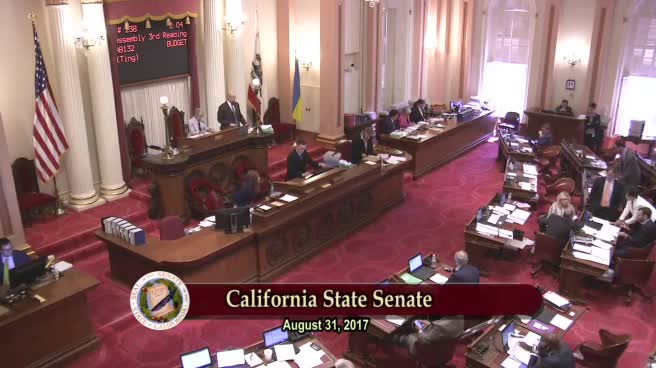
Bill Author

Bill Co-Author(s):