AB 1450: Court reporters: electronic transcripts.
- Session Year: 2017-2018
- House: Assembly
- Latest Version Date: 2017-10-06
Existing law requires an official reporter or official reporter pro tempore of the superior court to take down in shorthand specified information regarding the testimony and proceedings before the court in civil cases, felony cases, and misdemeanor or infraction cases on order of the court, and in only civil cases or felony cases, at the request of a party or counsel. Existing law authorizes a court, party, or other person entitled to a transcript to request that it be delivered in computer-readable form, except as specified.
This bill would instead require an official reporter or official reporter pro tempore to deliver a transcript in electronic form, in compliance with the California Rules of Court, to any court, party, or person entitled to the transcript, as specified, unless, among other things, the party or person requests the transcript in paper form. The bill would provide that an official reporter or official reporter pro tempore is not required to use a specific vendor, technology, or software to comply with this requirement unless he or she agrees with the court, party, or person entitled to the transcript to use a specific vendor, technology, or software.
Existing law requires an official reporter or official reporter pro tempore of the superior court to take down in shorthand specified information regarding the testimony and proceedings before the court in civil cases, felony cases, and misdemeanor or infraction cases on order of the court, and in only civil cases or felony cases, at the request of a party or counsel. Existing law authorizes a court, party, or other person entitled to a transcript to request that it be delivered in computer-readable form, except as specified.
This bill would instead require that all transcripts be delivered in electronic format to any court, party, or person entitled to the transcript, as specified, unless the transcript is requested to be delivered in paper form, the court lacks the technical ability to accept an electronic transcript and has received advance approval from the Judicial Council to only accept a transcript in paper form, or, until January 1, 2020, an official reporter or official reporter pro tempore has not acquired the technology to submit a transcript in electronic form and has provided advance notice of this fact. The bill would provide that a court or other entity is not allowed to require an official reporter or official reporter pro tempore to use a specific vendor or software.This bill would instead require an official reporter or official reporter pro tempore to deliver a transcript in electronic form, in compliance with the California Rules of Court, to any court, party, or person entitled to the transcript, as specified, unless, among other things, the party or person requests the transcript in paper form.
Existing law requires an official reporter or official reporter pro tempore of the superior court to take down in shorthand specified information regarding the testimony and proceedings before the court in civil cases, felony cases, and misdemeanor or infraction cases on order of the court, and in only civil cases or felony cases, at the request of a party or counsel. Existing law authorizes a court, party, or other person entitled to a transcript to request that it be delivered in computer-readable form, except as specified.
This bill would instead require that all transcripts be delivered in electronic format to any court, party, or person entitled to the transcript, as specified, unless the transcript is requested to be delivered in paper form. form, the court lacks the technical ability to accept an electronic transcript and has received advance approval from the Judicial Council to only accept a transcript in paper form, or, until January 1, 2020, an official reporter or official reporter pro tempore has not acquired the technology to submit a transcript in electronic form and has provided advance notice of this fact. The bill would provide that a court or other entity is not allowed to require an official reporter or official reporter pro tempore to use a specific vendor or software.
Existing law requires an official reporter or official reporter pro tempore of the superior court to take down in shorthand specified information regarding the testimony and proceedings before the court in civil cases, felony cases, and misdemeanor or infraction cases on order of the court, and in only civil cases or felony cases, at the request of a party or counsel. Existing law authorizes a court, party, or other person entitled to a transcript to request that it be delivered in computer-readable form, except as specified.
This bill would instead require that all transcripts be delivered in electronic format to any court, party, or person entitled to the transcript, as specified, unless the transcript is requested to be delivered in paper form.
(a)An official reporter or official reporter pro tempore shall deliver a transcript in electronic form, in compliance with the California Rules of Court, to any court, party, or person entitled to the transcript, unless any of the following apply:
(1)The party or person entitled to the transcript requests the reporters transcript in paper form.
(2)Prior to January 1, 2023, the court lacks the technical ability to use or store a transcript in electronic form pursuant to this section and provides advance notice of this fact to the official reporter or official reporter pro tempore.
(3)Prior to January 1, 2023, the official reporter or official reporter pro tempore lacks the technical ability to deliver a transcript in electronic form pursuant to this section and provides advance notice of this fact to the court, party, or person entitled to the transcript.
(b)If a paper transcript is delivered in lieu of an electronic transcript described in subdivision (a), within 120 days of the official reporter or official reporter pro tempore filing or delivering the paper transcript, the official reporter or official reporter pro tempore shall provide, upon request, a copy of the original transcript in full text-searchable portable document format (PDF) if the proceedings were produced with computer-aided transcription equipment. The copy of the original transcript in full text-searchable PDF format shall not be deemed to be an original transcript.
(c)Nothing in this section changes any requirement set forth in Section 69950 or 69954 of the Government Code, regardless of whether a transcript is delivered in electronic or paper form.
(d)Except as provided in subdivision (b), an electronic transcript delivered in accordance with this section shall be deemed to be an original transcript for all purposes, including any obligation of an attorney to maintain or deliver a file to a client.
(e)An electronic transcript shall comply with any format requirement imposed pursuant to subdivision (a). However, an official reporter or official reporter pro tempore shall not be required to use a specific vendor, technology, or software to comply with this section, unless the official reporter or official reporter pro tempore agrees with the court, party, or person entitled to the transcript to use a specific vendor, technology, or software. Absent that agreement, an official reporter or official reporter pro tempore may select the vendor, technology, and software to comply with this section and the California Rules of Court. In adopting transcript format requirements for the California Rules of Court, consideration shall be given on a technology-neutral basis to the availability of relevant vendors of transcript products, technologies, and software.
(f)After January 1, 2023, if new or updated rule of court format requirements for electronic transcripts necessitate a significant change in equipment or software owned by official reporters or official reporters pro tempore, the official reporters and official reporters pro tempore shall be given no less than one year to comply with the format requirements. If the change is necessary to address a security issue, then a reasonable time shall be given to comply with the new format requirements.
(a)An official reporter or official reporter pro tempore shall deliver a transcript in electronic form, in compliance with the California Rules of Court, to any court, party, or person entitled to the transcript, unless any of the following apply:
(1)The party or person entitled to the transcript requests the reporters transcript in paper form.
(2)Prior to January 1, 2023, the court lacks the technical ability to use or store a transcript in electronic form pursuant to this section and provides advance notice of this fact to the official reporter or official reporter pro tempore.
(3)Prior to January 1, 2023, the official reporter or official reporter pro tempore lacks the technical ability to deliver a transcript in electronic form pursuant to this section and provides advance notice of this fact to the court, party, or person entitled to the transcript.
(b)If a paper transcript is provided pursuant to subdivision (a), a copy of the original transcript ordered within 120 days of the filing or delivery of the transcript by the official reporter or official reporter pro tempore shall be delivered upon request in full text-searchable portable document format (PDF) if the proceedings were produced utilizing computer-aided transcription equipment.(b)If a paper transcript is delivered in lieu of an electronic transcript described in subdivision (a), within 120 days of the official reporter or official reporter pro tempore filing or delivering the paper transcript, the official reporter or official reporter pro tempore shall provide, upon request, a copy of the original transcript in full text-searchable portable document format (PDF) if the proceedings were produced with computer-aided transcription equipment. The copy of the original transcript in full text-searchable PDF format shall not be deemed to be an original transcript.
(c)Nothing in this section changes any requirement set forth in Section 69950 or 69954 of the Government Code, regardless of whether a transcript is delivered in electronic or paper form.
(d)Except as provided in subdivision (b), an electronic transcript delivered in accordance with this section shall be deemed to be an original transcript for all purposes, including any obligation of an attorney to maintain or deliver a file to a client.
(e)An electronic transcript shall comply with any format requirement imposed pursuant to subdivision (a). However, an official reporter or official reporter pro tempore shall not be required to use a specific vendor, technology, or software to comply with this section, unless the official reporter or official reporter pro tempore agrees with the court, party, or person entitled to the transcript to use a specific vendor, technology, or software. Absent that agreement, an official reporter or official reporter pro tempore may select the vendor, technology, and software to comply with this section and the California Rules of Court. In adopting transcript format requirements for the California Rules of Court, consideration shall be given on a technology-neutral basis to the availability of relevant vendors of transcript products, technologies, and software.
(f)After January 1, 2023, if new or updated rule of court format requirements for electronic transcripts necessitate a significant change in equipment or software owned by official reporters or official reporters pro tempore, the official reporters and official reporters pro tempore shall be given no less than one year to comply with the format requirements. If the change is necessary to address a security issue, then a reasonable time shall be given to comply with the new format requirements.
(a)An official reporter or official reporter pro tempore shall deliver a transcript in electronic form, in compliance with the California Rules of Court, to any court, party, or person entitled to the transcript, unless any of the following apply:
(1)The party or person entitled to the transcript requests the reporters transcript in paper form.
(2)If, prior to January 1, 2020, Prior to January 1, 2023, the court lacks the technical ability to use or store a transcript in electronic form pursuant to this section, the transcript may instead be delivered, upon request, in full text-searchable portable document format (PDF) or other searchable format approved by the court if the proceedings were produced utilizing computer-aided transcription equipment. section and provides advance notice of this fact to the official reporter or official reporter pro tempore.
(3)If, prior to January 1, 2020, Prior to January 1, 2023, the official reporter or official reporter pro tempore lacks the technical ability to deliver a transcript in electronic form pursuant to this section and provides advance notice of this fact to the court, party, or person entitled to the transcript, the transcript may instead be delivered, upon request, in full text-searchable portable document format (PDF) or other searchable format approved by the court if the proceedings were produced utilizing computer-aided transcription equipment. transcript.
(b)If a paper transcript is provided pursuant to subdivision (a), a copy of the original transcript ordered within 120 days of the filing or delivery of the transcript by the official reporter or official reporter pro tempore shall be delivered upon request in full text-searchable portable document format (PDF) if the proceedings were produced utilizing computer-aided transcription equipment.
(b)(c)Nothing in this section changes any requirement set forth in Section 69950 or 69954 of the Government Code, regardless of whether a transcript is delivered in electronic or paper form.
(c)An(d)Except as provided in subdivision (b), an electronic transcript delivered in accordance with this section shall be deemed to be an original transcript for all purposes, including any obligation of an attorney to maintain or deliver a file to a client.
(d)(e)An electronic transcript shall comply with any format requirement imposed pursuant to subdivision (a). However, an official reporter or official reporter pro tempore shall not be required to use a specific vendor vendor, technology, or software to comply with this section, unless the official reporter or official reporter pro tempore agrees with the court, party, or person entitled to the transcript to use a specific vendor vendor, technology, or software. Absent that agreement, an official reporter or official reporter pro tempore may select the technology vendor, technology, and software to comply with this section and the California Rules of Court. In adopting transcript format requirements for the California Rules of Court, consideration shall be given on a technology-neutral basis to the availability of relevant vendors of transcript products, technologies, and software.
(f)After January 1, 2023, if new or updated rule of court format requirements for electronic transcripts necessitate a significant change in equipment or software owned by official reporters or official reporters pro tempore, the official reporters and official reporters pro tempore shall be given no less than one year to comply with the format requirements. If the change is necessary to address a security issue, then a reasonable time shall be given to comply with the new format requirements.
(a)An official reporter or official reporter pro tempore shall deliver a transcript in electronic form, in compliance with the California Rules of Court, to any court, party, or person entitled to the transcript, unless any of the following apply:
(1)The party or person entitled to the transcript requests the reporters transcript in paper form.
(2)If, prior to January 1, 2020, the court lacks the technical ability to use or store a transcript in electronic form pursuant to this section, the transcript may instead be delivered, upon request, in full text-searchable portable document format (PDF) or other searchable format approved by the court if the proceedings were produced utilizing computer-aided transcription equipment.
(3)If, prior to January 1, 2020, the official reporter or official reporter pro tempore lacks the technical ability to deliver a transcript in electronic form pursuant to this section and provides advance notice of this fact to the court, party, or person entitled to the transcript, the transcript may instead be delivered, upon request, in full text-searchable portable document format (PDF) or other searchable format approved by the court if the proceedings were produced utilizing computer-aided transcription equipment.
(b)Nothing in this section changes any requirement set forth in Section 69950 or 69954 of the Government Code, regardless of whether a transcript is delivered in electronic or paper form.
(c)An electronic transcript delivered in accordance with this section shall be deemed to be an original transcript for all purposes, including any obligation of an attorney to maintain or deliver a file to a client.
(d)An electronic transcript shall comply with any format requirement imposed pursuant to subdivision (a). However, an official reporter or official reporter pro tempore shall not be required to use a specific vendor or software to comply with this section, unless the official reporter or official reporter pro tempore agrees with the court, party, or person entitled to the transcript to use a specific vendor or software. Absent that agreement, an official reporter or official reporter pro tempore may select the technology to comply with this section and the California Rules of Court.
(a)An official reporter or official reporter pro tempore shall deliver a transcript in electronic form to any court, party, or person entitled to the transcript, unless any of the following apply:
(1)The party or person entitled to the transcript requests the reporters transcript in paper form.
(2)The court lacks the technical ability to accept an electronic transcript and has received advance approval from the Judicial Council to only accept the reporters transcript in paper form.
(3)Until January 1, 2020, an official reporter or official reporter pro tempore has not acquired the technology to submit a transcript in electronic form and the official reporter or official reporter pro tempore has provided advance notice of this fact to the court.
(b)Except as specified in subdivision (c), a transcript delivered in electronic format shall comply with the California Rules of Court pertaining to the formatting of electronic transcripts.
(c)(1)Until January 1, 2020, the requirements of the California Rules of Court specifically relating to the electronic filing of transcripts shall apply only if the official reporter or official reporter pro tempore has the ability to comply with the requirements. Commencing January 1, 2020, an official reporter or official reporter pro tempore shall comply with the applicable California Rules of Court.
(2)Until January 1, 2020, an official reporter or official reporter pro tempore using a format that is not compliant with the requirements contained within the California Rules of Court specifically relating to the electronic filing of transcripts may electronically file transcripts upon approval by, or agreement with, the court.
(d)Nothing in this section changes any requirement set forth in Sections 69950 and 69954 of the Government Code, regardless of whether a transcript is delivered in electronic or paper form.
(e)An electronic transcript delivered in accordance with subdivisions (a) and (b) shall be deemed to be an original transcript for purposes of any obligation of an attorney to maintain or deliver a file for a client.
(f)Nothing in this section shall be construed to require an official reporter or official reporter pro tempore to use a specific vendor or software to comply with this section, or to allow a court or other entity to require an official reporter or official reporter pro tempore to use a specific vendor or software. An official reporter or official reporter pro tempore may select the appropriate technology to comply with this section.
(a)An official reporter or official reporter pro tempore shall deliver a transcript in electronic form to any court, party, or person entitled to the transcript, unless the court, party, or person entitled to the transcript requests the transcript in paper form.
(b)If the transcript described in paragraph (1) is delivered in electronic form, the transcript shall comply with the California Rules of Court pertaining to the formatting of electronic transcripts.
(c)Nothing in this section changes any requirement set forth in Section 69954 of the Government Code, regardless of whether a transcript is delivered in electronic or paper form.
(d)An electronic transcript delivered in accordance with subdivisions (a) and (b) shall be deemed to be an original transcript for purposes of any obligation of an attorney to maintain or deliver a file for a client.
|
Date
|
Status
|
|---|---|
| Oct 6, 2017 | Chaptered by Secretary of State - Chapter 532, Statutes of 2017. |
| Oct 6, 2017 | Approved by the Governor. |
| Sep 21, 2017 | Enrolled and presented to the Governor at 3:30 p.m. |
| Sep 13, 2017 | Senate amendments concurred in. To Engrossing and Enrolling. |
| Sep 13, 2017 | In Assembly. Concurrence in Senate amendments pending. May be considered on or after September 15 pursuant to Assembly Rule 77. |
| Sep 12, 2017 | Read third time. Passed. Ordered to the Assembly. |
| Sep 11, 2017 | Read second time. Ordered to third reading. |
| Sep 8, 2017 | Read third time and amended. Ordered to second reading. |
| Jul 20, 2017 | From Consent Calendar. |
| Jul 18, 2017 | Read second time. Ordered to Consent Calendar. |
| Jul 17, 2017 | From committee: Be placed on second reading file pursuant to Senate Rule 28.8 and ordered to consent calendar. |
| Jun 28, 2017 | From committee: Do pass and re-refer to Com. on APPR. with recommendation: To Consent Calendar. (Ayes 6. Noes 0.) (June 27). Re-referred to Com. on APPR. |
| Jun 19, 2017 | From committee chair, with author's amendments: Amend, and re-refer to committee. Read second time, amended, and re-referred to Com. on JUD. |
| Jun 8, 2017 | In committee: Set, first hearing. Hearing canceled at the request of author. |
| May 24, 2017 | Referred to Com. on JUD. |
| May 11, 2017 | In Senate. Read first time. To Com. on RLS. for assignment. |
| May 11, 2017 | Read third time. Passed. Ordered to the Senate. (Ayes 77. Noes 0. Page 1485.) |
| May 4, 2017 | Read second time. Ordered to Consent Calendar. |
| May 3, 2017 | From committee: Do pass. To Consent Calendar. (Ayes 16. Noes 0.) (May 3). |
| Apr 24, 2017 | Re-referred to Com. on APPR. |
| Apr 20, 2017 | Read second time and amended. |
| Apr 19, 2017 | From committee: Amend, and do pass as amended and re-refer to Com. on APPR. with recommendation: To Consent Calendar. (Ayes 11. Noes 0.) (April 18). |
| Apr 17, 2017 | Re-referred to Com. on JUD. |
| Apr 6, 2017 | From committee chair, with author's amendments: Amend, and re-refer to Com. on JUD. Read second time and amended. |
| Mar 16, 2017 | Referred to Com. on JUD. |
| Feb 19, 2017 | From printer. May be heard in committee March 21. |
| Feb 17, 2017 | Read first time. To print. |
|
Date
|
Description
|
Location
|
Votes
|
|
|---|---|---|---|---|
| Sep 13, 2017 | AB 1450 Obernolte Concurrence in Senate Amendments | Assembly Floor |
Passed |
|
| Sep 12, 2017 | Assembly 3rd Reading AB1450 Obernolte By Hertzberg | Senate Floor |
Passed |
|
| Jun 27, 2017 | Do pass, but first be re-referred to the Committee on [Appropriations] with the recommendation: To Consent Calendar | Senate Standing Committee on Judiciary |
Passed |
|
| May 11, 2017 | AB 1450 OBERNOLTE Consent Calendar Second Day Regular Session | Assembly Floor |
Passed |
|
| May 3, 2017 | Do pass. To Consent Calendar. | Assembly Standing Committee on Appropriations |
Passed |
|
| Apr 18, 2017 | Do pass as amended, and be re-referred to the Committee on [Appropriations] with recommendation: To Consent Calendar | Assembly Standing Committee on Judiciary |
Passed |
This list shows positions taken on this bill by organizations on the date displayed, which is linked to the original source.
Positions by individuals are not included.
|
Organization
|
Position
|
Date
|
|---|---|---|
| California Court Reporters Association | ** Support | Sep 11, 2017 |
| Court Reporters Board | ** Support | Sep 11, 2017 |
| San Diego County District Attorney | ** Support | Apr 14, 2017 |
CONCURRENCE IN SENATE AMENDMENTS
CSA1 Bill Id:AB 1450
Author:(Obernolte)
As Amended Ver:September 8, 2017
Majority vote
ASSEMBLY: | 77-0 | (May 11, 2017) | SENATE: | 40-0 | (September 12, 2017) |
Original Committee Reference: JUD.
SUMMARY: Requires the official reporter or official reporter pro tempore to deliver its transcripts to parties and the court in electronic form unless a party requests the transcript in paper form or other exceptions apply no later than 2023. This bill does not apply to deposition transcripts. Specifically, this bill:
- Requires an official reporter or official reporter pro tempore to deliver a transcript in electronic form in compliance with the California Rules of Court to any court, party, or person entitled to the transcript, unless any of the following apply:
- The party or person entitled to the transcript requests the reporter's transcript in paper form.
- Prior to January 1, 2023, the court lacks the technical ability to use or store a transcript in the electronic form complying with this section, and provides advance notice of this fact to the official reporter or official reporter pro tempore.
- Prior to January 1, 2023, the official reporter or official reporter pro tempore lacks the technical ability to deliver a transcript in electronic form pursuant to this section, and provides advance notice of this fact to the court, party or person entitled to the transcript.
- Specifies that if a paper transcript is delivered in lieu of an electronic transcript as provided, then within 120 days of the official reporter or official reporter pro tempore filing of delivering the paper transcript, the official reporter or official reporter pro tempore shall provide, upon request, a copy of the original transcript in full text-searchable portable document format (PDF) if the proceedings were produced with computer-aided transcription equipment. The copy of the original transcript in full text-searchable PDF format shall not be deemed to be an original transcript.
- States that nothing in this section the requirements of Government Code sections 69950 and 69954, whether a reporter's transcript is delivered in electronic or paper form.
- Any electronic transcript delivered in accordance with this section shall be construed as an original transcript for all purposes, including any obligation of an attorney to maintain or deliver a file to a client.
- An electronic transcript must comply with format requirements as provided, but an official reporter or official reporter pro tempore shall not be required to use a specific vendor or software to comply with this act unless the official reporter or official reporter pro tempore agrees with a court, party or person to use a specific vendor or software. Absent that agreement, an official reporter or official reporter pro tempore may select the vendor, technology, and software to comply with this section and the California Rules of Court. In adopting transcript format requirements for the California Rules of Court, consideration shall be given on a technology-neutral basis to the availability of relevant vendors of transcript products, technologies, and software.
- States that January 1, 2023, if new or updated rule of court format requirements for electronic transcripts necessitate a significant change in equipment or software owned by official reporters or official reporters pro tempore, the official reporters and official reporters pro tempore shall be given no less than one year to comply with the format requirements. If the change is necessary to address a security issue, then a reasonable time shall be given to comply with the new format requirements.
The Senate amendments:
- Delay the operative provisions requiring mandatory electronic transcripts until January 1, 2023, rather than January 1, 2020.
- Clarify that if a paper transcript is delivered in lieu of an electronic transcript as provided, then within 120 days of the official reporter or official reporter pro tempore filing of delivering the paper transcript, the official reporter or official reporter pro tempore shall provide, upon request, a copy of the original transcript in full text-searchable PDF if the proceedings were produced with computer-aided transcription equipment. The copy of the original transcript in full text-searchable PDF format shall not be deemed to be an original transcript.
- State that in adopting transcript format requirements for the California Rules of Court, the Judicial Council shall give consideration on a technology-neutral basis to the availability of relevant vendors of transcript products, technologies, and software.
- Specify that after January 1, 2023, if new or updated rule of court format requirements for electronic transcripts necessitate a significant change in equipment or software owned by official reporters or official reporters pro tempore, the official reporters and official reporters pro tempore shall be given no less than one year to comply with the format requirements. If the change is necessary to address a security issue, then a reasonable time shall be given to comply with the new format requirements.
- Make technical and conforming changes.
EXISTING LAW:
- Requires an official reporter or official reporter pro tempore of the superior court to take down in shorthand all testimony, objections made, rulings of the court, exceptions taken, arraignments, pleas, sentences, arguments of the attorneys to the jury, and statements and remarks made and oral instructions given by the judge or other judicial officer, as provided. (Code of Civil Procedure Section 269.)
- Provides that any court, party, or other person entitled to a transcript may request that it be delivered in computer-readable form, except that an original transcript shall be on paper. (Code of Civil Procedure Section 271(a))
- Provides that a copy of the original transcript ordered within 120 days of the filing or delivery of the transcript by the official reporter or official reporter pro tempore shall be delivered in computer-readable form upon request if the proceedings were produced utilizing computer-aided transcription equipment. (Ibid.)
- Requires the computer-readable transcript to be on disks in standard ASCII code, except as modified by standards adopted by the Judicial Council, unless otherwise agreed by the reporter and the court, party, or other person requesting the transcript. (Code of Civil Procedure Section 271(b))
- Requires that each disk be labeled with the case name and court number, the dates of proceedings contained on the disk, and the page and volume numbers of the data contained on the disk. Further requires, as provided, each disk to contain the identical volume divisions, pagination, line numbering, and text of the certified original paper transcript or any portion thereof. Also requires that each disk be sequentially numbered within the series of disks. (Ibid.)
- Specifies the following transcript-related fees:
- The fee for transcription for the original copy is $0.85 for each 100 words.
- The fee for each copy purchased at the same time by the court, party, or other person purchasing the original is $0.15 per 100 words.
- The fee for a first copy to any court, party, or other person who does not simultaneously purchase the original is $0.20 per 100 words, and $0.15 for each additional copy purchased at the same time. (Government Code Sections 69950(a); 69950(b))
- Provides that, notwithstanding 6), above, if a local trial court had established transcription fees in effect on January 1, 2012 based on an estimate as to the number of words or folios on a typical transcript page, those transcription fees shall be the transcription fees for proceedings in those trial courts, and the policy or practice for determining transcription fees in those trial courts shall not be unilaterally changed. (Government Code Section 69950(c).)
- Specifies that transcripts prepared by a reporter using computer assistance and delivered on a medium other than paper shall be compensated at the same rate set for paper transcripts, except the reporter may also charge an additional fee not to exceed the cost of the medium or any copies as provided. (Government Code Section 69954(a).)
- Specifies that any court, party, or person who has purchased a transcript may, without paying a further fee to the reporter, reproduce a copy or portion thereof as an exhibit pursuant to court order or rule, or for internal use, but shall not otherwise provide or sell a copy or copies to any other party or person. (Government Code Section 69954(d).)
- Establishes rules and requirements for court reporter transcripts, including but not limited to paper form, format, indexes, and pagination. (Rule of Court 8.144.)
FISCAL EFFECT: According to the Senate Appropriations Committee, pursuant to Senate Rule 28.8, negligible state costs.
COMMENTS: A court transcript is a verbatim record of what occurred at a court hearing. Without an official record of what transpired at a court proceeding, litigants may not be able to draft orders effectively and will have a difficult time appealing decisions. Moreover, those litigants attempting to recount what actually happened during their court proceedings will be unable to do so with any degree of accuracy.
Not surprisingly, court transcripts are an important part of maintaining access to justice. For example, when issuing a judgment in a contested family law matter, the judge often requires one of the parties to prepare a written judgment memorializing the orders of the court. Without a transcript, it is difficult for the parties to draw-up a judgment, and therefore enforce the orders made by the judge. Similarly, if a litigant seeks to modify a judgment based on a change of circumstances, a transcript is important to help the litigant understand and communicate to the court which circumstances the court initially considered when it made the custody or support order.
The Judicial Council continues to implement strategies to modernize court services that maintain access to justice and maximize judicial resources. In August 2014, the Judicial Council released its Strategic Plan for Technology (2014-2018) that sets out a roadmap for the adoption of technology solutions that further the administration of justice. (Judicial Council, Technology Planning Task Force, Strategic Plan for Technology (2014-2018).) In its plan, the Judicial Council established a number of guiding principles, including (among others): 1) allowing all court users to have impartial and effective access to justice; 2) providing services to self-represented litigants; 3) promoting innovative approaches while accommodating persons needing access through conventional means; 4) advancing court operational practices to make full use of technology; 5) and fostering and encouraging local innovation to spur possible wider implementation. Ultimately, the Judicial Council hopes to promote a “digital court” that allows courts and the public to access information faster, and achieves cost savings and operational efficiencies, such as eliminating or reducing costs associated with paper records.
A pilot project in Fresno County that required electronic transcripts in court proceedings appears to have been successful. Consistent with the Judicial Council's Strategic Plan for Technology, in May 2014, the Fresno County Superior Court (Fresno Superior Court) and Service Employee International Union, Local 521 (SEIU) – which represents the court-employed official realtime court reporters – entered into an agreement to voluntarily provide electronically delivered certified transcripts of court proceedings as a six-month pilot project. In that agreement, it was agreed that (among others things): 1) participation in the pilot would be voluntary for both the court and the court reporters; 2) court reporters would maintain their respective rights to transcripts (original or copies); 3) court reporters would be compensated the same paper rate consistent with existing law; and 4) death penalty cases would not be included. Around the same time, the Fresno Superior Court and the Court of Appeal, Fifth District, entered into an agreement, stipulating that reporter transcripts would be electronically transmitted and filed between the courts. According to the author and sponsor, the pilot project in Fresno County was successful and has been implemented in other counties. This bill seeks to expand the approach that has been successful in Fresno County and make it apply on a statewide basis.
Summary of the bill. This bill requires the official reporter or official reporter pro tempore to deliver its transcripts to parties and the court in electronic form unless either a party requests the transcript in paper form or other exceptions apply. This bill does not apply to deposition transcripts.
Although this bill requires the delivery of official transcripts in electronic form, this bill allows a grace period until January 1, 2023 for both the court and court reporters to meet technical capabilities. Consistent with the goals advanced by the Judicial Council, this bill requires the official reporter or official reporter pro tempore to deliver a transcript in electronic form unless certain conditions apply. For instance, this bill does not require the court reporter to deliver the transcript in electronic form if the party or person entitled to the transcript requests the transcript in paper form.
Additionally, this bill also does not require the court reporter to produce the transcript in electronic form if either of the following applies: 11) the court lacks the technical ability to use or store the transcript; or 22) the court reporter lacks the technical ability to deliver a transcript in electronic transcript. Presumably, it will take some time for the court and court reporters to change their systems or their equipment to comply with the provisions of this bill. Accordingly, it seems reasonable to delay required electronic transcripts if either the court or the court reporter does not have ability to comply with the requirement. However, this bill still ensures that during the grace period where paper transcripts are being utilized, a copy of the transcript is still delivered to the court in full text-searchable format as provided. This bill clarifies that that copy is not deemed to be the original.
This bill also provides additional compliance time after January 1, 2023 if new or updated rules of court would require a court reporter to make a significant change to their equipment or software. If the rule change is to address a security issue, the bill provides that the court reporter be given reasonable time to comply. Otherwise, this bill specifies that the additional grace period may not exceed a year.
In order to maintain robust competition among technologies, this bill includes safeguards to protect court reporters from being forced to use one electronic transcript vendor. To prevent specific technologies from becoming the sole vendor used by the courts, this bill prohibits a court reporter from being forced to use a specific vendor or software to prepare and produce an electronic transcript. Consistent with this goal, this bill also provides that if the Judicial Council establishes a rule of court, the Judicial Council shall give consideration on a technology-neutral basis to the availability of relevant vendors of transcript products, technologies, and software. The Judiciary Committee has learned that the Judicial Council is currently in the process of issuing a rule of court on this issue to minimize any potential delay should this bill become law.
This bill does not change how court reporters are compensated, nor does it affect their respective rights to transcripts. This bill provides that the compensation for the court reporter's production of a transcript is not affected by whether the transcript is delivered in electronic or paper form. Since the stenographic work does not appear to change whether the form is in paper or in PDF, it is reasonable that court reporters should be entitled to the same level of compensation provided under existing law. Indeed, some may argue that court reporters are not being adequately compensated as it is. (See Assembly Judiciary Committee analysis of AB 2629 (Hernández); March 18, 2016.) To that end, this bill further provides that any electronic transcript delivered in accordance with this bill shall be construed as an original transcript, which protects a court reporter's transcript rights.
Analysis Prepared by: Eric Dang / JUD. / (916) 319-2334 FN: 0002202
Office of Senate Floor Analyses (916) 651-1520 Fax: (916) 327-4478 | AB |
THIRD READING
Bill No: AB 1450
:
SENATE JUDICIARY COMMITTEE: 6-0, 6/27/17
AYES: Jackson, Moorlach, Anderson, Hertzberg, Stern, Wieckowski
NO VOTE RECORDED: Monning
SENATE APPROPRIATIONS COMMITTEE: Senate Rule 28.8
ASSEMBLY FLOOR: 77-0, 5/11/17 (Consent) - See last page for vote
SOURCE: California Court Reporters Association
DIGEST:
This bill requires official reporters or official reporters pro tempore to deliver transcripts in electronic form in compliance with California Rules of Court. This bill provides a five-year grace period for courts and reporters to modernize their equipment and overall technical abilities.
Senate Floor Amendments of 9/8/17 make clear that any copy of the original transcript that is provided, by request, in full text-searchable PDF format shall not be deemed to be an original transcript.
Existing law:
- Requires that an official reporter or official reporter pro tempore of the superior court take down in shorthand all testimony, objections made, rulings of the court, exceptions taken, arraignments, pleas, sentences, arguments of the attorneys to the jury, and statements and remarks made and oral instructions given by the judge or other judicial officer, in the following cases:
- A civil case, on the order of the court or at the request of a party;
- A felony case, on the order of the court or at the request of the prosecution, the defendant, or the attorney for the defendant; and
- A misdemeanor or infraction case, on the order of the court. (Code Civ. Proc. Sec. 269(a).)
- Provides that if a transcript is ordered by the court or requested by a party, or if a nonparty requests a transcript that the nonparty is entitled to receive, regardless of whether the nonparty was permitted to attend the proceeding to be transcribed, the official reporter or official reporter pro tempore shall, within a reasonable time after the trial of the case that the court designates, write the transcripts out, or the specific portions thereof as may be requested, in plain and legible longhand, or by typewriter, or other printing machine, and certify that the transcripts were correctly reported and transcribed, and when directed by the court, file the transcripts with the clerk of the court. (Code Civ. Proc. Sec. 269(b).)
- Provides that any court, party, or other person entitled to a transcript may request that it be delivered in computer-readable form, except that an original transcript shall be on paper. A copy of the original transcript ordered within 120 days of the filing or delivery of the transcript by the official reporter or official reporter pro tempore shall be delivered in computer-readable form upon request if the proceedings were produced utilizing computer-aided transcription equipment. (Code Civ. Proc. Sec. 271(a).)
- Provides that, except as modified by standards adopted by the Judicial Council, the computer-readable transcript shall be on disks in standard ASCII code, unless otherwise agreed by the reporter and the court, party, or other person requesting the transcript. Each disk shall be labeled with the case name and court number, the dates of proceedings contained on the disk, and the page and volume numbers of the data contained on the disk. Except where modifications are necessary to reflect corrections of a transcript, each disk as produced by the official reporter shall contain the identical volume divisions, pagination, line numbering, and text of the certified original paper transcript or any portion thereof. Each disk shall be sequentially numbered within the series of disks. (Code Civ. Proc. Sec. 271(b).)
This bill:
- Provides that an official reporter or official reporter pro tempore shall deliver a transcript in electronic form, in compliance with the California Rules of Court, to any court, party, or person entitled to the transcript, unless any of the following apply:
- The party or person entitled to the transcript requests the reporter’s transcript in paper form;
- Prior to January 1, 2023, the court lacks the technical ability to use or store a transcript in electronic form pursuant to this bill and provides advance notice of this fact to the official reporter or official reporter pro tempore; or
- Prior to January 1, 2023, the official reporter or official reporter pro tempore lacks the technical ability to deliver a transcript in electronic form pursuant to this bill and provides advance notice of this fact to the court, party, or person entitled to the transcript.
- Provides that if a paper transcript is provided pursuant to the exceptions listed in Section 271(a) of the Code of Civil Procedure, a copy of the original transcript ordered within 120 days of the filing or delivery of the transcript by the official reporter or official reporter pro tempore shall be delivered upon request in full text-searchable portable document format (PDF) if the proceedings were produced utilizing computer-aided transcription equipment. However, such a copy of the original transcript in full text-searchable PDF format shall not be deemed to be an original transcript. In all other cases, an electronic transcript delivered in accordance with Section 271 is deemed to be an original transcript for all purposes, including any obligation of an attorney to maintain or deliver a file to a client.
- Makes clear that it does not affect existing law regarding fees and compensation for transcripts as set forth in Sections 69950 and 69954 of the Government Code.
- Requires electronic transcripts to comply with format requirements imposed by rules of court. However, this bill prohibits an official reporter or official reporter pro tempore from being required to use a specific vendor, technology, or software to comply with these provisions, unless the official reporter or official reporter pro tempore agrees with the court, party, or person entitled to the transcript to use a specific vendor, technology, or software. However, absent such an agreement, an official reporter or official reporter pro tempore may select the vendor, technology, and software to comply with these provisions and the attendant California Rules of Court.
- Provides that in adopting transcript format requirements for the relevant rules of court, consideration shall be given on a technology-neutral basis to the availability of relevant vendors of transcript products, technologies, and software.
- Provides that if, after January 1, 2023, new or updated rule of court format requirements for electronic transcripts necessitate a significant change in equipment or software owned by official reporters or official reporters pro tempore, the official reporters and official reporters pro tempore shall be given no less than one year to comply with the format requirements. If the change is necessary to address a security issue, then a reasonable time must be given to comply with the new format requirements.
Background
Access to transcripts of court proceedings is a presumptive right under the First Amendment. (NBC Subsidiary (KNBC-TV), Inc. v. Superior Court (1999) 20 Cal.4th 1178, 1209.) The law requires an official reporter or official reporter pro tempore to take down all testimony, objections made, rulings of the court, exceptions taken, arraignments, pleas, sentences, arguments of the attorneys to the jury, and statements and remarks made and oral instructions given by the judge or other judicial officer in civil and criminal cases, as specified. Currently, the court or any person entitled to a transcript can request such a transcript be delivered in computer-readable form and such request must be met if timely ordered and if the proceedings were produced utilizing computer-aided transcription equipment. Existing law provides basic standards for such electronic reports.
This bill brings court transcripts and court reporting into the digital age by requiring official reporters or official reporters pro tempore to deliver transcripts in electronic form in compliance with rules of court that are being developed contemporaneous with this legislation. Pilot projects have been conducted throughout California in recent years, slowly introducing new technologies and systems into the courts. Given the success of those programs, the Court Reporters Association of California has sponsored this bill to require modernization of court reporting.
Comments
The author writes:
California has set high professional standards for creating a verbatim record both inside and outside of the courtroom. As the court reporting profession grows and technologies advance, court reporters have adopted new electronic transcripts that are more efficient for reporters and more user friendly for the courts and parties to a proceeding. Court reporters have found that an electronic form of transcript is more easily accessible to the courts and parties and is more user friendly for the reader. Advantages of electronic transcripts include the ability to search words or phrases, to secure confidential information, and to create a ‘bookmark’ for important information. Electronic transcripts are being adopted and piloted in several counties around the state. Court reporters are adopting electronic transcript delivery software and many courts are requesting electronic transcripts. Electronic transcripts benefit court users and the judicial system as a whole. They also alleviate strains on the court for storing bulky paper transcripts.
Ensuring Fairness as Systems Modernize
The movement toward digitizing our courts has been steady and few can deny the many benefits it provides. Here, electronic transcripts provide efficiencies for the courts, the parties, and the reporters involved. Electronic transcripts are more easily readable and searchable and allow for ease of access. Technological advances allow for special features such as “bookmarking” and hyperlinks. However, with the march toward modernizing court reporting and transcription, concerns about hardships to court reporters come to the forefront.
First, many courts and reporters may not be equipped to comply with specific electronic formatting requirements. This bill addresses these issues by providing a generous grace period until January 1, 2023, to allow courts and reporters to upgrade their systems and technical abilities. Furthermore, this bill builds in a future grace period when major format requirements are updated. It provides that if these new requirements necessitate a significant change in equipment or software, court reporters must be given at least a year before they are required to comply. These provisions facilitate modernization in a manner that ensures the technological mandates do not unfairly prejudice those involved.
Secondly, whenever new technological requirements are introduced to the courts, public policy dictates that attention be paid to whether those requirements create an overwhelming competitive advantage to one company that unduly restricts the options parties and courts have in complying therewith. This bill provides that electronic transcripts must comply with the format requirements dictated by rules of court. Concerns from a variety of labor groups have been expressed that such rules of court could drastically restrict the technology and vendor options available to their court reporter members. Portions of this bill speak to these concerns providing that court reporters cannot be required to use a specific vendor, technology, or software to comply with this section, unless all parties are in agreement otherwise. This bill provides that the court reporter may select the vendor, technology, and software to comply with the rules of court.
In addition, this bill provides that in adopting transcript format requirements for the relevant rules of court, consideration shall be given on a technology-neutral basis to the availability of relevant vendors of transcript products, technologies, and software. Together with the above provisions, this language provides clear instruction to Judicial Council that any rules of court must not be drafted so narrow or specific so as to allow for only one vendor or technology option for compliance.
FISCAL EFFECT: Appropriation: Fiscal Com.: Local:
California Court Reporters Association (source)
Court Reporters Board
Office of the District Attorney of San Diego County
None received
ARGUMENTS IN SUPPORT: The Office of the District Attorney of San Diego County writes in support of this bill, stating it “will allow the court reporters to adopt a new and more efficient means of delivering court transcripts to the court and all the parties interested.”
ASSEMBLY FLOOR: 77-0, 5/11/17
AYES: Acosta, Aguiar-Curry, Travis Allen, Arambula, Baker, Berman, Bigelow, Bloom, Bocanegra, Bonta, Brough, Burke, Caballero, Calderon, Cervantes, Chau, Chávez, Chen, Chiu, Choi, Chu, Cooley, Cooper, Cunningham, Dababneh, Daly, Eggman, Flora, Fong, Frazier, Friedman, Gallagher, Cristina Garcia, Eduardo Garcia, Gipson, Gloria, Gomez, Gonzalez Fletcher, Gray, Grayson, Harper, Holden, Irwin, Jones-Sawyer, Kalra, Kiley, Lackey, Levine, Limón, Low, Maienschein, Mathis, Mayes, McCarty, Medina, Melendez, Mullin, Muratsuchi, Nazarian, Obernolte, Quirk, Quirk-Silva, Reyes, Ridley-Thomas, Rodriguez, Rubio, Salas, Santiago, Steinorth, Mark Stone, Thurmond, Ting, Voepel, Waldron, Weber, Wood, Rendon
NO VOTE RECORDED: Dahle, O'Donnell, Patterson
9/11/17 9:09:26
Office of Senate Floor Analyses (916) 651-1520 Fax: (916) 327-4478 | AB |
THIRD READING
Bill No: AB 1450
:
SENATE JUDICIARY COMMITTEE: 6-0, 6/27/17
AYES: Jackson, Moorlach, Anderson, Hertzberg, Stern, Wieckowski
NO VOTE RECORDED: Monning
SENATE APPROPRIATIONS COMMITTEE: Senate Rule 28.8
ASSEMBLY FLOOR: 77-0, 5/11/17 (Consent) - See last page for vote
SOURCE: California Court Reporters Association
DIGEST:
This bill requires official reporters or official reporters pro tempore to deliver transcripts in electronic form in compliance with California Rules of Court. This bill provides a five-year grace period for courts and reporters to modernize their equipment and overall technical abilities.
Existing law:
- Requires that an official reporter or official reporter pro tempore of the superior court take down in shorthand all testimony, objections made, rulings of the court, exceptions taken, arraignments, pleas, sentences, arguments of the attorneys to the jury, and statements and remarks made and oral instructions given by the judge or other judicial officer, in the following cases:
- A civil case, on the order of the court or at the request of a party;
- A felony case, on the order of the court or at the request of the prosecution, the defendant, or the attorney for the defendant; and
- A misdemeanor or infraction case, on the order of the court. (Code Civ. Proc. Sec. 269(a).)
- Provides that if a transcript is ordered by the court or requested by a party, or if a nonparty requests a transcript that the nonparty is entitled to receive, regardless of whether the nonparty was permitted to attend the proceeding to be transcribed, the official reporter or official reporter pro tempore shall, within a reasonable time after the trial of the case that the court designates, write the transcripts out, or the specific portions thereof as may be requested, in plain and legible longhand, or by typewriter, or other printing machine, and certify that the transcripts were correctly reported and transcribed, and when directed by the court, file the transcripts with the clerk of the court. (Code Civ. Proc. Sec. 269(b).)
- Provides that any court, party, or other person entitled to a transcript may request that it be delivered in computer-readable form, except that an original transcript shall be on paper. A copy of the original transcript ordered within 120 days of the filing or delivery of the transcript by the official reporter or official reporter pro tempore shall be delivered in computer-readable form upon request if the proceedings were produced utilizing computer-aided transcription equipment. (Code Civ. Proc. Sec. 271(a).)
- Provides that, except as modified by standards adopted by the Judicial Council, the computer-readable transcript shall be on disks in standard ASCII code, unless otherwise agreed by the reporter and the court, party, or other person requesting the transcript. Each disk shall be labeled with the case name and court number, the dates of proceedings contained on the disk, and the page and volume numbers of the data contained on the disk. Except where modifications are necessary to reflect corrections of a transcript, each disk as produced by the official reporter shall contain the identical volume divisions, pagination, line numbering, and text of the certified original paper transcript or any portion thereof. Each disk shall be sequentially numbered within the series of disks. (Code Civ. Proc. Sec. 271(b).)
This bill:
- Provides that an official reporter or official reporter pro tempore shall deliver a transcript in electronic form, in compliance with the California Rules of Court, to any court, party, or person entitled to the transcript, unless any of the following apply:
- The party or person entitled to the transcript requests the reporter’s transcript in paper form;
- Prior to January 1, 2023, the court lacks the technical ability to use or store a transcript in electronic form pursuant to this bill and provides advance notice of this fact to the official reporter or official reporter pro tempore; or
- Prior to January 1, 2023, the official reporter or official reporter pro tempore lacks the technical ability to deliver a transcript in electronic form pursuant to this bill and provides advance notice of this fact to the court, party, or person entitled to the transcript.
- Provides that if a paper transcript is provided pursuant to the exceptions listed in Section 271(a) of the Code of Civil Procedure, a copy of the original transcript ordered within 120 days of the filing or delivery of the transcript by the official reporter or official reporter pro tempore shall be delivered upon request in full text-searchable portable document format (pdf) if the proceedings were produced utilizing computer-aided transcription equipment. In all other cases, an electronic transcript delivered in accordance with Section 271 is deemed to be an original transcript for all purposes, including any obligation of an attorney to maintain or deliver a file to a client.
- Makes clear that it does not affect existing law regarding fees and compensation for transcripts as set forth in Sections 69950 and 69954 of the Government Code.
- Requires electronic transcripts to comply with format requirements imposed by rules of court. However, this bill prohibits an official reporter or official reporter pro tempore from being required to use a specific vendor, technology, or software to comply with these provisions, unless the official reporter or official reporter pro tempore agrees with the court, party, or person entitled to the transcript to use a specific vendor, technology, or software. However, absent such an agreement, an official reporter or official reporter pro tempore may select the vendor, technology, and software to comply with these provisions and the attendant California Rules of Court.
- Provides that in adopting transcript format requirements for the relevant rules of court, consideration shall be given on a technology-neutral basis to the availability of relevant vendors of transcript products, technologies, and software.
- Provides that if, after January 1, 2023, new or updated rule of court format requirements for electronic transcripts necessitate a significant change in equipment or software owned by official reporters or official reporters pro tempore, the official reporters and official reporters pro tempore shall be given no less than one year to comply with the format requirements. If the change is necessary to address a security issue, then a reasonable time must be given to comply with the new format requirements.
Background
Access to transcripts of court proceedings is a presumptive right under the First Amendment. (NBC Subsidiary (KNBC-TV), Inc. v. Superior Court (1999) 20 Cal.4th 1178, 1209.) The law requires an official reporter or official reporter pro tempore to take down all testimony, objections made, rulings of the court, exceptions taken, arraignments, pleas, sentences, arguments of the attorneys to the jury, and statements and remarks made and oral instructions given by the judge or other judicial officer in civil and criminal cases, as specified. Currently, the court or any person entitled to a transcript can request such a transcript be delivered in computer-readable form and such request must be met if timely ordered and if the proceedings were produced utilizing computer-aided transcription equipment. Existing law provides basic standards for such electronic reports.
This bill brings court transcripts and court reporting into the digital age by requiring official reporters or official reporters pro tempore to deliver transcripts in electronic form in compliance with rules of court that are being developed contemporaneous with this legislation. Pilot projects have been conducted throughout California in recent years, slowly introducing new technologies and systems into the courts. Given the success of those programs, the Court Reporters Association of California has sponsored this bill to require modernization of court reporting.
Comments
The author writes:
California has set high professional standards for creating a verbatim record both inside and outside of the courtroom. As the court reporting profession grows and technologies advance, court reporters have adopted new electronic transcripts that are more efficient for reporters and more user friendly for the courts and parties to a proceeding. Court reporters have found that an electronic form of transcript is more easily accessible to the courts and parties and is more user friendly for the reader. Advantages of electronic transcripts include the ability to search words or phrases, to secure confidential information, and to create a ‘bookmark’ for important information. Electronic transcripts are being adopted and piloted in several counties around the state. Court reporters are adopting electronic transcript delivery software and many courts are requesting electronic transcripts. Electronic transcripts benefit court users and the judicial system as a whole. They also alleviate strains on the court for storing bulky paper transcripts.
Ensuring fairness as systems modernize
The movement toward digitizing our courts has been steady and few can deny the many benefits it provides. Here, electronic transcripts provide efficiencies for the courts, the parties, and the reporters involved. Electronic transcripts are more easily readable and searchable and allow for ease of access. Technological advances allow for special features such as “bookmarking” and hyperlinks. However, with the march toward modernizing court reporting and transcription, concerns about hardships to court reporters come to the forefront.
First, many courts and reporters may not be equipped to comply with specific electronic formatting requirements. This bill addresses these issues by providing a generous grace period until January 1, 2023, to allow courts and reporters to upgrade their systems and technical abilities. Furthermore, this bill builds in a future grace period when major format requirements are updated. It provides that if these new requirements necessitate a significant change in equipment or software, court reporters must be given at least a year before they are required to comply. These provisions facilitate modernization in a manner that ensures the technological mandates do not unfairly prejudice those involved.
Secondly, whenever new technological requirements are introduced to the courts, public policy dictates that attention be paid to whether those requirements create an overwhelming competitive advantage to one company that unduly restricts the options parties and courts have in complying therewith. This bill provides that electronic transcripts must comply with the format requirements dictated by rules of court. Concerns from a variety of labor groups have been expressed that such rules of court could drastically restrict the technology and vendor options available to their court reporter members. Portions of this bill speak to these concerns providing that court reporters cannot be required to use a specific vendor, technology, or software to comply with this section, unless all parties are in agreement otherwise. This bill provides that the court reporter may select the vendor, technology, and software to comply with the rules of court.
In addition, this bill provides that in adopting transcript format requirements for the relevant rules of court, consideration shall be given on a technology-neutral basis to the availability of relevant vendors of transcript products, technologies, and software. Together with the above provisions, this language provides clear instruction to Judicial Council that any rules of court must not be drafted so narrow or specific so as to allow for only one vendor or technology option for compliance.
FISCAL EFFECT: Appropriation: Fiscal Com.: Local:
California Court Reporters Association (source)
Court Reporters Board
Office of the District Attorney of San Diego County
OPPOSITION: (Verified 7/18/17)
None received
ARGUMENTS IN SUPPORT: The Office of the District Attorney of San Diego County writes in support of this bill, stating it “will allow the court reporters to adopt a new and more efficient means of delivering court transcripts to the court and all the parties interested.”
ASSEMBLY FLOOR: 77-0, 5/11/17
AYES: Acosta, Aguiar-Curry, Travis Allen, Arambula, Baker, Berman, Bigelow, Bloom, Bocanegra, Bonta, Brough, Burke, Caballero, Calderon, Cervantes, Chau, Chávez, Chen, Chiu, Choi, Chu, Cooley, Cooper, Cunningham, Dababneh, Daly, Eggman, Flora, Fong, Frazier, Friedman, Gallagher, Cristina Garcia, Eduardo Garcia, Gipson, Gloria, Gomez, Gonzalez Fletcher, Gray, Grayson, Harper, Holden, Irwin, Jones-Sawyer, Kalra, Kiley, Lackey, Levine, Limón, Low, Maienschein, Mathis, Mayes, McCarty, Medina, Melendez, Mullin, Muratsuchi, Nazarian, Obernolte, Quirk, Quirk-Silva, Reyes, Ridley-Thomas, Rodriguez, Rubio, Salas, Santiago, Steinorth, Mark Stone, Thurmond, Ting, Voepel, Waldron, Weber, Wood, Rendon
NO VOTE RECORDED: Dahle, O'Donnell, Patterson
Prepared by: Christian Kurpiewski / JUD. / (916) 651-4113
7/20/17 11:41:46
Senator Hannah-Beth Jackson, Chair
2017-2018 Regular Session
Bill No: AB 1450 (Author:Obernolte)
Version: June 19, 2017
Hearing Date: June 27, 2017
Fiscal: Yes
Urgency: No
Consultant: CK
SUBJECT
Court reporters: electronic transcripts
DESCRIPTION
This bill would require official reporters or official reporters pro tempore to deliver transcripts in electronic form in compliance with California Rules of Court. This bill would provide a five-year grace period for courts and reporters to modernize their equipment and overall technical abilities.
BACKGROUND
Access to transcripts of court proceedings is a presumptive right under the First Amendment. (NBC Subsidiary (KNBC-TV), Inc. v. Superior Court (1999) 20 Cal.4th 1178, 1209.) The law requires an official reporter or official reporter pro tempore to take down all testimony, objections made, rulings of the court, exceptions taken, arraignments, pleas, sentences, arguments of the attorneys to the jury, and statements and remarks made and oral instructions given by the judge or other judicial officer in civil and criminal cases, as specified. Currently, the court or any person entitled to a transcript can request such a transcript be delivered in computer-readable form and such request must be met if timely ordered and if the proceedings were produced utilizing computer-aided transcription equipment. Existing law provides basic standards for such electronic reports.
This bill would bring court transcripts and court reporting into the digital age by requiring official reporters or official reporters pro tempore to deliver transcripts in electronic form in compliance with rules of court that are being developed contemporaneous with this legislation. Pilot projects have been conducted throughout California in recent years, slowly introducing new technologies and systems into the courts. Given the success of those programs, the Court Reporters Association of California has sponsored this bill to require modernization of court reporting.
CHANGES TO EXISTING LAW
Existing law requires that an official reporter or official reporter pro tempore of the superior court take down in shorthand all testimony, objections made, rulings of the court, exceptions taken, arraignments, pleas, sentences, arguments of the attorneys to the jury, and statements and remarks made and oral instructions given by the judge or other judicial officer, in the following cases:
- a civil case, on the order of the court or at the request of a party;
- a felony case, on the order of the court or at the request of the prosecution, the defendant, or the attorney for the defendant; and
- a misdemeanor or infraction case, on the order of the court. (Code Civ. Proc. Sec. 269(a).)
Existing law provides that if a transcript is ordered by the court or requested by a party, or if a nonparty requests a transcript that the nonparty is entitled to receive, regardless of whether the nonparty was permitted to attend the proceeding to be transcribed, the official reporter or official reporter pro tempore shall, within a reasonable time after the trial of the case that the court designates, write the transcripts out, or the specific portions thereof as may be requested, in plain and legible longhand, or by typewriter, or other printing machine, and certify that the transcripts were correctly reported and transcribed, and when directed by the court, file the transcripts with the clerk of the court. (Code Civ. Proc. Sec. 269(b).)
Existing law provides that any court, party, or other person entitled to a transcript may request that it be delivered in computer-readable form, except that an original transcript shall be on paper. A copy of the original transcript ordered within 120 days of the filing or delivery of the transcript by the official reporter or official reporter pro tempore shall be delivered in computer-readable form upon request if the proceedings were produced utilizing computer-aided transcription equipment. (Code Civ. Proc. Sec. 271(a).)
Existing law provides that, except as modified by standards adopted by the Judicial Council, the computer-readable transcript shall be on disks in standard ASCII code, unless otherwise agreed by the reporter and the court, party, or other person requesting the transcript. Each disk shall be labeled with the case name and court number, the dates of proceedings contained on the disk, and the page and volume numbers of the data contained on the disk. Except where modifications are necessary to reflect corrections of a transcript, each disk as produced by the official reporter shall contain the identical volume divisions, pagination, line numbering, and text of the certified original paper transcript or any portion thereof. Each disk shall be sequentially numbered within the series of disks. (Code Civ. Proc. Sec. 271(b).)
This bill would provide that an official reporter or official reporter pro tempore shall deliver a transcript in electronic form, in compliance with the California Rules of Court, to any court, party, or person entitled to the transcript, unless any of the following apply:
- the party or person entitled to the transcript requests the reporter’s transcript in paper form;
- prior to January 1, 2023, the court lacks the technical ability to use or store a transcript in electronic form pursuant to this section and provides advance notice of this fact to the official reporter or official reporter pro tempore; or
- prior to January 1, 2023, the official reporter or official reporter pro tempore lacks the technical ability to deliver a transcript in electronic form pursuant to this section and provides advance notice of this fact to the court, party, or person entitled to the transcript.
This bill would provide that if a paper transcript is provided pursuant to the exceptions listed in Section 271(a) of the Code of Civil Procedure, a copy of the original transcript ordered within 120 days of the filing or delivery of the transcript by the official reporter or official reporter pro tempore shall be delivered upon request in full text-searchable portable document format (pdf) if the proceedings were produced utilizing computer-aided transcription equipment. In all other cases, an electronic transcript delivered in accordance with Section 271 would be deemed to be an original transcript for all purposes, including any obligation of an attorney to maintain or deliver a file to a client.
This bill would make clear that it does not affect existing law regarding fees and compensation for transcripts as set forth in Sections 69950 and 69954 of the Government Code.
This bill would require electronic transcripts to comply with format requirements imposed by rules of court. However, this bill would prohibit an official reporter or official reporter pro tempore from being required to use a specific vendor, technology, or software to comply with these provisions, unless the official reporter or official reporter pro tempore agrees with the court, party, or person entitled to the transcript to use a specific vendor, technology, or software. However, absent such an agreement, an official reporter or official reporter pro tempore may select the vendor, technology, and software to comply with these provisions and the attendant California Rules of Court.
This bill would provide that in adopting transcript format requirements for the relevant rules of court, consideration shall be given on a technology-neutral basis to the availability of relevant vendors of transcript products, technologies, and software.
This bill would provide that if, after January 1, 2023, new or updated rule of court format requirements for electronic transcripts necessitate a significant change in equipment or software owned by official reporters or official reporters pro tempore, the official reporters and official reporters pro tempore shall be given no less than one year to comply with the format requirements. If the change is necessary to address a security issue, then a reasonable time would have to be given to comply with the new format requirements.
COMMENT
1. Stated need for the bill
According to the author:
California has set high professional standards for creating a verbatim record both inside and outside of the courtroom. As the court reporting profession grows and technologies advance, court reporters have adopted new electronic transcripts that are more efficient for reporters and more user friendly for the courts and parties to a proceeding. Court reporters have found that an electronic form of transcript is more easily accessible to the courts and parties and is more user friendly for the reader. Advantages of electronic transcripts include the ability to search words or phrases, to secure confidential information, and to create a ‘bookmark’ for important information. Electronic transcripts are being adopted and piloted in several counties around the state. Court reporters are adopting electronic transcript delivery software and many courts are requesting electronic transcripts. Electronic transcripts benefit court users and the judicial system as a whole. They also alleviate strains on the court for storing bulky paper transcripts.
The Office of the District Attorney of San Diego County writes in support of the bill, stating it “will allow the court reporters to adopt a new and more efficient means of delivering court transcripts to the court and all the parties interested.”
2. Ensuring fairness as systems modernize
The movement toward digitizing our courts has been steady and few can deny the many benefits it provides. Here, electronic transcripts provide efficiencies for the courts, the parties, and the reporters involved. Electronic transcripts are more easily readable and searchable and allow for ease of access. Technological advances allow for special features such as “bookmarking” and hyperlinks. However, with the march toward modernizing court reporting and transcription, concerns about hardships to court reporters come to the forefront.
First, many courts and reporters may not be equipped to comply with specific electronic formatting requirements. This bill would address these issues by providing a generous grace period until January 1, 2023, to allow courts and reporters to upgrade their systems and technical abilities. Furthermore, this bill would build in a future grace period when major format requirements are updated. It would provide that if these new requirements necessitate a significant change in equipment or software, court reporters must be given at least a year before they are required to comply. These provisions facilitate modernization in a manner that ensures the technological mandates do not unfairly prejudice those involved.
Secondly, whenever new technological requirements are introduced to the courts, public policy dictates that attention be paid to whether those requirements create an overwhelming competitive advantage to one company that unduly restricts the options parties and courts have in complying therewith. This bill would provide that electronic transcripts must comply with the format requirements dictated by rules of court. Concerns from a variety of labor groups have been expressed that such rules of court could drastically restrict the technology and vendor options available to their court reporter members. Portions of this bill would speak to these concerns providing that court reporters cannot be required to use a specific vendor, technology, or software to comply with this section, unless all parties are in agreement otherwise. This bill would provide that the court reporter may select the vendor, technology, and software to comply with the rules of court.
In addition, this bill would provide that in adopting transcript format requirements for the relevant rules of court, consideration shall be given on a technology-neutral basis to the availability of relevant vendors of transcript products, technologies, and software. Together with the above provisions, this language provides clear instruction to Judicial Council that any rules of court must not be drafted so narrow or specific so as to allow for only one vendor or technology option for compliance.
Support: Office of the District Attorney of San Diego County
Opposition: None Known
HISTORY
Source: California Court Reporters Association
Related Pending Legislation: AB 976 (Berman, 2017) would expand the use of electronic filing and service in a variety of California courts. It would ensure that parties have access to multiple options for electronic filing service providers. This bill is currently in the Senate Judiciary Committee.
Prior Legislation: SB 1371 (Morrow, Ch. 71, Stats. 2002) consolidated court reporting statutes and made relevant clarifications and technical changes. The bill was part of a package of bills sponsored by the California Law Revision Commission to clean up the codes after trial court unification.
Prior Vote:
Assembly Floor (Ayes 77, Noes 0)
Assembly Appropriations Committee (Ayes 16, Noes 0)
Assembly Judiciary Committee (Ayes 11, Noes 0)
**************
Date of Hearing: May 3, 2017
ASSEMBLY COMMITTEE ON APPROPRIATIONS
Lorena Gonzalez Fletcher, Chair
ABPCA Bill Id:AB 1450
Author:(Obernolte) – As Amended Ver:April 20, 2017
Policy Committee: | Judiciary | Vote: | 11 - 0 |
|
| ||
|
|
Urgency: No State Mandated Local Program: No Reimbursable: No
SUMMARY:
This bill requires the official reporter, or official reporter pro tempore to deliver its transcripts to parties and the court in electronic form unless a party requests the transcript in paper form or specific conditions exist. This bill does not apply to deposition transcripts.
FISCAL EFFECT:
Unknown potential savings to the courts.
COMMENTS:
- Background. Existing law requires an official reporter or official reporter pro tempore of the superior court to take down in shorthand all testimony, objections made, rulings of the court, exceptions taken, arraignments, pleas, sentences, arguments of the attorneys to the jury, and statements and remarks made and oral instructions given by the judge or other judicial officer, as provided. Existing law also provides that any court, party, or other person entitled to a transcript may request that it be delivered in computer-readable form, except that an original transcript must be on paper.
- Purpose. Consistent with the Judicial Council’s Strategic Plan for Technology, the Fresno County Superior Court and Service Employee International Union, Local 521 (SEIU)—which represents the court-employed official realtime court reporters—entered into an agreement to engage in a pilot project to provide electronically delivered certified transcripts of court proceedings. It appears that pilot was successful for court reporters, the court, and parties alike, and according to the author and the sponsor, the California Court Reporters Association, the pilot has been successfully expanded to other counties.
According to the author, “AB 1450 updates the code to allow for electronic delivery, and ensures that minimum technology standards are followed (which will be adopted through a Rule of Court). This bill still allows paper transcripts to be requested.”
Analysis Prepared by: Jessica Peters / APPR. / (916) 319-2081
Date of Hearing: April 18, 2017
ASSEMBLY COMMITTEE ON JUDICIARY
Mark Stone, Chair
ABPCA Bill Id:AB 1450
Author:(Obernolte) – As Amended Ver:April 6, 2017
PROPOSED CONSENT (As Proposed to be Amended)
SUBJECT: COURT REPORTERS: ELECTRONIC TRANSCRIPTS
KEY ISSUE: IN ORDER TO PROMOTE THE GOALS OF adoptING technologICAL IMPROVEMENTS that further the administration of justice, SHOULD COURT REPORTERS BE REQUIRED TO PRODUCE THEIR TRANSCRIPTS IN ELECTRONIC FORM, BUT BE GIVEN A GRACE PERIOD TO ADAPT TO THIS IMPORTANT TECHNOLOGICAL CHANGE?
SYNOPSIS
A court transcript is a verbatim record of what occurred at a court hearing. Without an official record of what transpired at a court proceeding, litigants may not be able to draft orders effectively and will have a difficult time appealing decisions. Moreover, those litigants attempting to recount what actually happened during their court proceedings will be unable to do so with any degree of accuracy. Clearly, court transcripts are an important part of maintaining access to justice. In 2014, the Judicial Council released its Strategic Plan for Technology. Ultimately, the Judicial Council hopes to promote a “digital court” that allows courts and the public to access information faster, and achieves cost savings and operational efficiencies like eliminating or reducing costs associated with paper records.
Consistent with the Judicial Council’s Strategic Plan for Technology, the Fresno County Superior Court and Service Employee International Union, Local 521 (SEIU)—which represents the court-employed official realtime court reporters—entered into an agreement to engage in a pilot project to provide electronically delivered certified transcripts of court proceedings. It appears that pilot was successful for court reporters, the court, and parties alike, and according to the author and the sponsor, the California Court Reporters Association, the pilot has been successfully expanded to other counties.
Consistent with the Fresno pilot project, this bill, as proposed to be amended by the author, requires the official reporter or official reporter pro tempore to deliver its transcript to parties and the court in electronic form unless a party requests the transcript in paper form or other exceptions apply. To provide a grace period for implementation, this bill also gives the court and court reporters several years to make changes to their technologies. This bill is supported by the San Diego District Attorney and has no opposition on file.
SUMMARY: Requires the official reporter or official reporter pro tempore to deliver its transcripts to parties and the court in electronic form unless a party requests the transcript in paper form or other exceptions apply. This bill does not apply to deposition transcripts. Specifically, this bill:
- Requires an official reporter or official reporter pro tempore to deliver a transcript in electronic form in compliance with the California Rules of Court to any court, party, or person entitled to the transcript, unless any of the following apply:
- The party or person entitled to the transcript requests the reporter’s transcript in paper form.
- If, prior to January 1, 2020, the court lacks the technical ability to use or store a transcript in the electronic form complying with this section, the transcript may be delivered, upon request, in full text-searchable portable document format or other searchable format approved by the court if the proceedings were produced utilizing computer-aided transcription equipment.
- If, prior to January 1, 2020, the official reporter or official reporter pro tempore lacks the technical ability to deliver a transcript in the electronic form complying with this section, and provides advance notice of this fact to the court, party or person entitled to the transcript, the transcript may be delivered, upon request, in full text-searchable portable document format or other searchable format approved by the court if the proceedings were produced utilizing computer-aided transcription equipment.
- Nothing in this section alters the requirements of Government Code sections 69950 and 69954, whether a reporter’s transcript is delivered in electronic or paper form.
- Any electronic transcript delivered in accordance with this section shall be construed as an original transcript for all purposes, including any obligation of an attorney to maintain or deliver a file to a client.
- An electronic transcript must comply with format requirements as provided in subdivision (a), but an official reporter or official reporter pro tempore shall not be required to use a specific vendor or software to comply with this section unless the official reporter or official reporter pro tempore agrees with a court, party or person to use a specific vendor or software. Absent such agreement, an official reporter or official reporter pro tempore is authorized to select the technology to comply with this section and the California Rules of Court.
EXISTING LAW:
- Requires an official reporter or official reporter pro tempore of the superior court to take down in shorthand all testimony, objections made, rulings of the court, exceptions taken, arraignments, pleas, sentences, arguments of the attorneys to the jury, and statements and remarks made and oral instructions given by the judge or other judicial officer, as provided. (Code of Civil Procedure Section 269.)
- Provides that any court, party, or other person entitled to a transcript may request that it be delivered in computer-readable form, except that an original transcript shall be on paper. (Code of Civil Procedure Section 271 (a).)
- Provides that a copy of the original transcript ordered within 120 days of the filing or delivery of the transcript by the official reporter or official reporter pro tempore shall be delivered in computer-readable form upon request if the proceedings were produced utilizing computer-aided transcription equipment. (Ibid.)
- Requires the computer-readable transcript to be on disks in standard ASCII code, except as modified by standards adopted by the Judicial Council, unless otherwise agreed by the reporter and the court, party, or other person requesting the transcript. (Code of Civil Procedure Section 271 (b).)
- Requires that each disk be labeled with the case name and court number, the dates of proceedings contained on the disk, and the page and volume numbers of the data contained on the disk. Further requires, as provided, each disk to contain the identical volume divisions, pagination, line numbering, and text of the certified original paper transcript or any portion thereof. Also requires that each disk be sequentially numbered within the series of disks. (Ibid.)
- Specifies the following transcript-related fees:
- The fee for transcription for the original copy is $0.85 for each 100 words.
- The fee for each copy purchased at the same time by the court, party, or other person purchasing the original is $0.15 per 100 words.
- The fee for a first copy to any court, party, or other person who does not simultaneously purchase the original is $0.20 per 100 words, and $0.15 for each additional copy purchased at the same time. (Government Code Sections 69950 (a); 69950 (b).)
- Provides that, notwithstanding 6), above, if a local trial court had established transcription fees in effect on January 1, 2012 based on an estimate as to the number of words or folios on a typical transcript page, those transcription fees shall be the transcription fees for proceedings in those trial courts, and the policy or practice for determining transcription fees in those trial courts shall not be unilaterally changed. (Government Code Section 69950 (c).)
- Specifies that transcripts prepared by a reporter using computer assistance and delivered on a medium other than paper shall be compensated at the same rate set for paper transcripts, except the reporter may also charge an additional fee not to exceed the cost of the medium or any copies as provided. (Government Code Section 69954 (a).)
- Specifies that any court, party, or person who has purchased a transcript may, without paying a further fee to the reporter, reproduce a copy or portion thereof as an exhibit pursuant to court order or rule, or for internal use, but shall not otherwise provide or sell a copy or copies to any other party or person. (Government Code Section 69954 (d).)
- Establishes rules and requirements for court reporter transcripts, including but not limited to paper form, format, indexes, and pagination. (Rule of Court 8.144.)
FISCAL EFFECT: As currently in print this bill is keyed fiscal.
COMMENTS: A court transcript is a verbatim record of what occurred at a court hearing. Without an official record of what transpired at a court proceeding, litigants may not be able to draft orders effectively and will have a difficult time appealing decisions. Moreover, those litigants attempting to recount what actually happened during their court proceedings will be unable to do so with any degree of accuracy.
Access to a court transcript is an important component of access to justice. As this Committee is well-aware, court transcripts are an important part of maintaining access to justice. For example, when issuing a judgment in a contested family law matter, the judge often requires one of the parties to prepare a written judgment memorializing the orders of the court. Without a transcript, it is difficult for the parties to draw-up a judgment, and therefore enforce the orders made by the judge. Similarly, if a litigant seeks to modify a judgment based on a change of circumstances, a transcript is important to help the litigant understand and communicate to the court which circumstances the court initially considered when it made the custody or support order.
The Judicial Council continues to implement strategies to modernize court services that maintain access to justice and maximize judicial resources. In August 2014, the Judicial Council released its Strategic Plan for Technology (2014-2018) that sets out a roadmap for the adoption of technology solutions that further the administration of justice. (Judicial Council, Technology Planning Task Force, Strategic Plan for Technology (2014-2018) http://www.courts.ca.gov/documents/jctc-Court-Technology-Strategic-Plan.pdf.) In its plan, the Judicial Council established a number of guiding principles, including (among others): (1) allowing all court users to have impartial and effective access to justice; (2) providing services to self-represented litigants; (3) promoting innovative approaches while accommodating persons needing access through conventional means; (4) advancing court operational practices to make full use of technology; (5) and fostering and encouraging local innovation to spur possible wider implementation. (Ibid.) Ultimately, the Judicial Council hopes to promote a “digital court” that allows courts and the public to access information faster, and achieves cost savings and operational efficiencies, such as eliminating or reducing costs associated with paper records.
A pilot project in Fresno County that required electronic transcripts in court proceedings appears to have been successful. Consistent with the Judicial Council’s Strategic Plan for Technology, in May 2014, the Fresno County Superior Court (Fresno Superior Court) and Service Employee International Union, Local 521 (SEIU)—which represents the court-employed official realtime court reporters—entered into an agreement to voluntarily provide electronically delivered certified transcripts of court proceedings as a six-month pilot project. In that agreement, it was agreed that (among others things): (1) participation in the pilot would be voluntary for both the court and the court reporters; (2) court reporters would maintain their respective rights to transcripts (original or copies); (3) court reporters would be compensated the same paper rate consistent with existing law; and (4) death penalty cases would not be included. Around the same time, the Fresno Superior Court and the Court of Appeal, Fifth District, entered into an agreement, stipulating that reporter transcripts would be electronically transmitted and filed between the courts. According to the author and sponsor, the pilot project in Fresno County was successful and has been implemented in other counties. This bill seeks to expand the approach that has been successful in Fresno County and make it apply on a statewide basis.
Summary of the bill. This bill, as proposed to be amended by the author, requires the official reporter or official reporter pro tempore to deliver its transcripts to parties and the court in electronic form, unless a party requests the transcript in paper form or other exceptions apply. This bill does not apply to deposition transcripts.
Author’s statement. In support of the bill, the author writes:
California has set high professional standards for creating a verbatim record both inside and outside of the courtroom. As the court reporting profession grows and technologies advance, court reporters have adopted new electronic transcripts that are more efficient for reporters and more user friendly for the courts and parties to a proceeding. Court reporters have found that an electronic form of transcript is more easily accessible to the courts and parties and is more user friendly for the reader. Advantages of electronic transcripts include the ability to search words or phrases, to secure confidential information, and to create a ‘bookmark’ for important information. Electronic transcripts are being adopted and piloted in several counties around the state. Court reporters are adopting electronic transcript delivery software and many courts are requesting electronic transcripts. Electronic transcripts benefit court users and the judicial system as a whole. They also alleviate strains on the court for storing bulky paper transcripts.
Technically, this bill as proposed to be amended, does not require official transcripts to be in electronic form until January 1, 2020 because its reasonable exceptions allow for an implementation grace period for both the court and court reporters. As proposed to be amended, this bill—consistent with the goals advanced by the Judicial Council—requires the official reporter or official reporter pro tempore to deliver a transcript in electronic form, unless certain conditions apply. For instance, this bill as proposed to be amended reasonably does not require the court reporter to deliver the transcript in electronic form if the party or person entitled to the transcript requests the transcript in paper form.
Additionally, this bill also does not require the court reporter to produce the transcript in electronic form if either of the following applies: (1) the court lacks the technological ability to use or store the transcript; or (2) the court reporter does not have the technological ability to produce the electronic transcript. Presumably, it will take some time for the court and court reporters to change their systems or their equipment to comply with the provisions of this bill. Accordingly, it seems reasonable to delay required electronic transcripts if either the court or the court reporter does not have the technological ability to comply with the requirement. However, this bill still ensures that during the grace period, transcripts are delivered consistent with Rules of Court that require the transcripts to be delivered in full text-searchable format. These last two exceptions expire after January 1, 2020.
In order to maintain robust competition among technologies, this bill as proposed to be amended includes safeguards to protect court reporters from being forced to use one electronic transcript vendor. Consistent with policies advanced by this Committee to prevent specific technologies from being the sole vendor used by the courts and other access to justice partners, this bill prohibits a court reporter from being forced to use a specific vendor or software to prepare and produce an electronic transcript. However, to maintain consistency and standards among court transcripts, this bill as proposed to be amended requires the court reporter to comply with certain formatting rules established under California Rules of Court.
This bill does not change how court reporters are compensated, nor does it affect their respective rights to transcripts. This bill provides that the compensation for the court reporter’s production of a transcript is not affected by whether the transcript is delivered in electronic or paper form. Since the stenographic work does not appear to change whether the form is in paper or in pdf., it is reasonable that court reporters should be entitled to the same level of compensation provided under existing law. Indeed, some may argue that court reporters are not being adequately compensated as it is. (See Assembly Judiciary Committee analysis of AB 2629; March 18, 2016.) To that end, this bill further provides that any electronic transcript delivered in accordance with this bill shall be construed as an original transcript, which protects a court reporter’s transcript rights.
REGISTERED SUPPORT / OPPOSITION:
Support
California Court Reporters Association (sponsor)
San Diego County District Attorney
Opposition
None on file
Analysis Prepared by: Eric Dang / JUD. / (916) 319-2334
Discussed in Hearing
View Older Hearings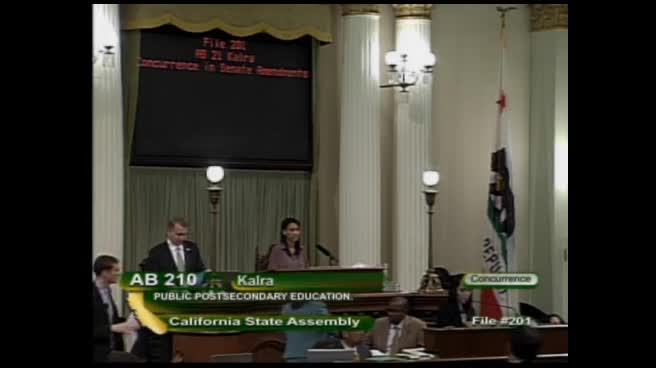
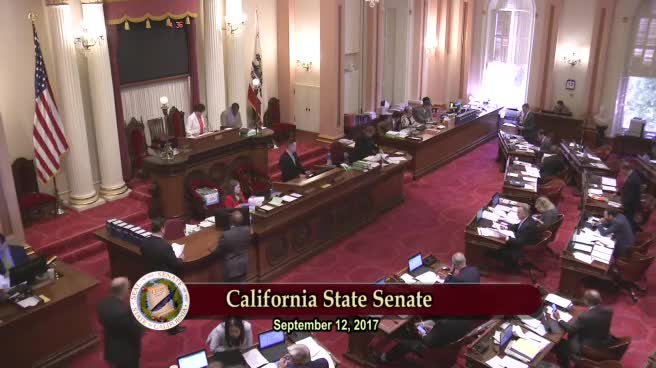
Bill Author

Bill Co-Author(s):