AB 1480: Pest control: violations and penalties: civil penalty.
- Session Year: 2017-2018
- House: Assembly
- Latest Version Date: 2017-07-31
(1)Under existing law, it is unlawful to use any fraud or misrepresentation in making an application to the Department of Pesticide Regulation for a license or for renewal of a license to conduct specified pest control operations or activities. A violation of this provision is a crime.
This bill would revise this provision to provide that it is unlawful to make any false or fraudulent statement, record, report or use any fraud or misrepresentation in connection with meeting any license requirement to conduct pest control operations or activities, as specified. The bill would also make it unlawful to cheat on or subvert a licensing examination. Since a violation of these provisions would be a misdemeanor under existing law, the bill would impose a state-mandated local program by creating new crimes.
(2)Existing law authorizes the civil prosecution of persons who violate specified provisions regarding pesticides and economic poisons and authorizes the Director of the Department of Pesticide Regulation, in lieu of civil prosecution, to levy a civil penalty against that person, as provided.
This bill would also authorize the director to levy a civil penalty under these provisions for any violation specified in (1) above.
(3)The California Constitution requires the state to reimburse local agencies and school districts for certain costs mandated by the state. Statutory provisions establish procedures for making that reimbursement.
This bill would provide that no reimbursement is required by this act for a specified reason.
(1)Under existing law, it is unlawful to use any fraud or misrepresentation in making an application to the Department of Pesticide Regulation for a license or for renewal of a license to conduct specified pest control operations or activities. A violation of this provision is a crime.
This bill would revise this provision to provide that it is unlawful to make any false or fraudulent statement, record, report or use any fraud or misrepresentation in connection with meeting any license requirement to conduct pest control operations or activities, as specified, or subverting a licensing examination. as specified. The bill would also make it unlawful to fail to follow any examination instruction or rule related to examination security. cheat on or subvert a licensing examination. Since a violation of these provisions would be a misdemeanor under existing law, the bill would impose a state-mandated local program by creating new crimes.
(2)Existing law authorizes the civil prosecution of persons who violate specified provisions regarding pesticides and economic poisons and authorizes the Director of the Department of Pesticide Regulation, in lieu of civil prosecution, to levy a civil penalty against that person, as provided.
This bill would also authorize the director to levy a civil penalty under these provisions for any violation specified in (1) above.
(3)The California Constitution requires the state to reimburse local agencies and school districts for certain costs mandated by the state. Statutory provisions establish procedures for making that reimbursement.
This bill would provide that no reimbursement is required by this act for a specified reason.
(1)Under existing law, it is unlawful to use any fraud or misrepresentation in making an application to the Department of Pesticide Regulation for a license or for renewal of a license to conduct specified pest control operations or activities. A violation of this provision is a crime.
This bill would revise this provision to provide that it is unlawful to make any false or fraudulent statement, record, report or use any fraud or misrepresentation in connection with meeting any license requirement to conduct pest control operations or activities, as specified, or subverting a licensing examination. The bill would also make it unlawful to fail to follow any examination instruction or rule related to examination security. Since a violation of these provisions would be a misdemeanor under existing law, the bill would impose a state-mandated local program by creating new crimes.
(2)Existing law authorizes the civil prosecution of persons who violate specified provisions regarding pesticides and economic poisons and authorizes the Director of the Department of Pesticide Regulation, in lieu of civil prosecution, to levy a civil penalty against that person, as provided.
This bill would also authorize the director to levy a civil penalty under these provisions for any violation specified in (1) above.
(3)The California Constitution requires the state to reimburse local agencies and school districts for certain costs mandated by the state. Statutory provisions establish procedures for making that reimbursement.
This bill would provide that no reimbursement is required by this act for a specified reason.
It is also unlawful for any person that is subject to this division to do any of the following:
(a)Make any false or fraudulent record or report.
(b)Operate in any county without first having registered with the commissioner.
(c)Operate equipment with incompetent or unqualified persons in charge of the equipment.
(d)Make any false or fraudulent statement, record, report or use any fraud or misrepresentation in connection with meeting any license requirement found in this division.
(e)Cheat on or subvert a licensing examination. As used in this subdivision, subvert includes, but is not limited to, the unauthorized possession, reproduction, or distribution of any portion of the licensing examination.
(f)Fail to comply with the provisions of Chapter 3 (commencing with Section 14001) of Division 7.
SEC. 2.Section 12999.4 of the Food and Agricultural Code is amended to read:12999.4.(a)In lieu of civil prosecution by the director, the director may levy a civil penalty against a person violating subdivision (d) or (e) of Section 11792 or Sections 12115, 12116, 12671, 12992, and 12993, Chapter 10 (commencing with Section 12400) of Division 6, Article 4.5 (commencing with Section 12841), Section 13186.5, Chapter 7.5 (commencing with Section 15300), or the regulations adopted pursuant to those provisions, of not more than five thousand dollars ($5,000) for each violation.
(b)Before a civil penalty is levied, the person charged with the violation shall be given a written notice of the proposed action, including the nature of the violation and the amount of the proposed penalty, and shall have the right to request a hearing within 20 days after receiving notice of the proposed action. A notice of the proposed action that is sent by certified mail to the last known address of the person charged shall be considered received even if delivery is refused or the notice is not accepted at that address. If a hearing is requested, notice of the time and place of the hearing shall be given at least 10 days before the date set for the hearing. Before the hearing, the person shall be given an opportunity to review the directors evidence. At the hearing, the person shall be given the opportunity to present evidence on his or her own behalf. If a hearing is not timely requested, the director may take the action proposed without a hearing.
(c)If the person against whom the director levied a civil penalty requested and appeared at a hearing, the person may seek review of the directors decision within 30 days of the date of the decision pursuant to Section 1094.5 of the Code of Civil Procedure.
(d)After the exhaustion of the review procedure provided in this section, the director, or his or her representative, may file a certified copy of a final decision of the director that directs the payment of a civil penalty and, if applicable, any order that denies a petition for a writ of administrative mandamus, with the clerk of the superior court of any county. Judgment shall be entered immediately by the clerk in conformity with the decision or order. Pursuant to Section 6103 of the Government Code, the clerk of the superior court shall not charge a fee for the performance of any official service required in connection with the entry of judgment pursuant to this section.
(e)Any money recovered under this section shall be paid into the Department of Pesticide Regulation Fund for use by the department, upon appropriation, in administering this division and Division 6 (commencing with Section 11401).
SEC. 3.No reimbursement is required by this act pursuant to Section 6 of Article XIIIB of the California Constitution because the only costs that may be incurred by a local agency or school district will be incurred because this act creates a new crime or infraction, eliminates a crime or infraction, or changes the penalty for a crime or infraction, within the meaning of Section 17556 of the Government Code, or changes the definition of a crime within the meaning of Section 6 of Article XIIIB of the California Constitution.
It is also unlawful for any person that is subject to this division to do any of the following:
(a)Make any false or fraudulent record or report.
(b)Operate in any county without first having registered with the commissioner.
(c)Operate equipment with incompetent or unqualified persons in charge of the equipment.
(d)Make any false or fraudulent statement, record, report or use any fraud or misrepresentation in connection with meeting any license requirement found in this division or subverting a licensing examination. division.
(e)Fail to follow any examination instruction or rule related to examination security.(e)Cheat on or subvert a licensing examination. As used in this subdivision, subvert includes, but is not limited to, the unauthorized possession, reproduction, or distribution of any portion of the licensing examination.
(f)Fail to comply with the provisions of Chapter 3 (commencing with Section 14001) of Division 7.
SEC. 2.Section 12999.4 of the Food and Agricultural Code is amended to read:12999.4.(a)In lieu of civil prosecution by the director, the director may levy a civil penalty against a person violating subdivision (d) or (e) of Section 11792 or Sections 12115, 12116, 12671, 12992, and 12993, Chapter 10 (commencing with Section 12400) of Division 6, Article 4.5 (commencing with Section 12841), Section 13186.5, Chapter 7.5 (commencing with Section 15300), or the regulations adopted pursuant to those provisions, of not more than five thousand dollars ($5,000) for each violation.
(b)Before a civil penalty is levied, the person charged with the violation shall be given a written notice of the proposed action, including the nature of the violation and the amount of the proposed penalty, and shall have the right to request a hearing within 20 days after receiving notice of the proposed action. A notice of the proposed action that is sent by certified mail to the last known address of the person charged shall be considered received even if delivery is refused or the notice is not accepted at that address. If a hearing is requested, notice of the time and place of the hearing shall be given at least 10 days before the date set for the hearing. Before the hearing, the person shall be given an opportunity to review the directors evidence. At the hearing, the person shall be given the opportunity to present evidence on his or her own behalf. If a hearing is not timely requested, the director may take the action proposed without a hearing.
(c)If the person against whom the director levied a civil penalty requested and appeared at a hearing, the person may seek review of the directors decision within 30 days of the date of the decision pursuant to Section 1094.5 of the Code of Civil Procedure.
(d)After the exhaustion of the review procedure provided in this section, the director, or his or her representative, may file a certified copy of a final decision of the director that directs the payment of a civil penalty and, if applicable, any order that denies a petition for a writ of administrative mandamus, with the clerk of the superior court of any county. Judgment shall be entered immediately by the clerk in conformity with the decision or order. No fees shall be charged by the clerk of the superior court Pursuant to Section 6103 of the Government Code, the clerk of the superior court shall not charge a fee for the performance of any official service required in connection with the entry of judgment pursuant to this section.
(e)Any money recovered under this section shall be paid into the Department of Pesticide Regulation Fund for use by the department, upon appropriation, in administering this division and Division 6 (commencing with Section 11401).
SEC. 3.No reimbursement is required by this act pursuant to Section 6 of Article XIIIB of the California Constitution because the only costs that may be incurred by a local agency or school district will be incurred because this act creates a new crime or infraction, eliminates a crime or infraction, or changes the penalty for a crime or infraction, within the meaning of Section 17556 of the Government Code, or changes the definition of a crime within the meaning of Section 6 of Article XIIIB of the California Constitution.
It is also unlawful for any person that is subject to this division to do any of the following:
(a)Make any false or fraudulent record or report.
(b)Operate in any county without first having registered with the commissioner.
(c)Operate equipment with incompetent or unqualified persons in charge of the equipment.
(d)Use Make any false or fraudulent statement, record, report or use any fraud or misrepresentation in making application for a license or for renewal of a license. connection with meeting any license requirement found in this division or subverting a licensing examination.
(e)Fail to follow any examination instruction or rule related to examination security.
(e)
(f)Fail to comply with the provisions of Chapter 3 (commencing with Section 14001), Division 7 of this code. 14001) of Division 7.
SEC. 2.Section 12999.4 of the Food and Agricultural Code is amended to read:12999.4.(a)In lieu of civil prosecution by the director, the director may levy a civil penalty against a person violating subdivision (d) of Section 11792 or Sections 12115, 12116, 12671, 12992, and 12993, Chapter 10 (commencing with Section 12400) of Division 6, Article 4.5 (commencing with Section 12841), Section 13186.5, Chapter 7.5 (commencing with Section 15300), or the regulations adopted pursuant to those provisions, of not more than five thousand dollars ($5,000) for each violation.
(b)Before a civil penalty is levied, the person charged with the violation shall be given a written notice of the proposed action, including the nature of the violation and the amount of the proposed penalty, and shall have the right to request a hearing within 20 days after receiving notice of the proposed action. A notice of the proposed action that is sent by certified mail to the last known address of the person charged shall be considered received even if delivery is refused or the notice is not accepted at that address. If a hearing is requested, notice of the time and place of the hearing shall be given at least 10 days before the date set for the hearing. Before the hearing, the person shall be given an opportunity to review the directors evidence. At the hearing, the person shall be given the opportunity to present evidence on his or her own behalf. If a hearing is not timely requested, the director may take the action proposed without a hearing.
(c)If the person against whom the director levied a civil penalty requested and appeared at a hearing, the person may seek review of the directors decision within 30 days of the date of the decision pursuant to Section 1094.5 of the Code of Civil Procedure.
(d)After the exhaustion of the review procedure provided in this section, the director, or his or her representative, may file a certified copy of a final decision of the director that directs the payment of a civil penalty and, if applicable, any order that denies a petition for a writ of administrative mandamus, with the clerk of the superior court of any county. Judgment shall be entered immediately by the clerk in conformity with the decision or order. No fees shall be charged by the clerk of the superior court for the performance of any official service required in connection with the entry of judgment pursuant to this section.
(e)Any money recovered under this section shall be paid into the Department of Pesticide Regulation Fund for use by the department, upon appropriation, in administering this division and Division 6 (commencing with Section 11401).
SEC. 3.No reimbursement is required by this act pursuant to Section 6 of Article XIIIB of the California Constitution because the only costs that may be incurred by a local agency or school district will be incurred because this act creates a new crime or infraction, eliminates a crime or infraction, or changes the penalty for a crime or infraction, within the meaning of Section 17556 of the Government Code, or changes the definition of a crime within the meaning of Section 6 of Article XIIIB of the California Constitution.
|
Date
|
Status
|
|---|---|
| Jul 31, 2017 | Chaptered by Secretary of State - Chapter 152, Statutes of 2017. |
| Jul 31, 2017 | Approved by the Governor. |
| Jul 18, 2017 | Enrolled and presented to the Governor at 12:45 p.m. |
| Jul 13, 2017 | In Assembly. Ordered to Engrossing and Enrolling. |
| Jul 13, 2017 | Read third time. Passed. Ordered to the Assembly. (Ayes 39. Noes 0. Page 2024.). |
| Jul 11, 2017 | Read second time. Ordered to Consent Calendar. |
| Jul 10, 2017 | From committee: Be placed on second reading file pursuant to Senate Rule 28.8 and ordered to consent calendar. |
| Jun 21, 2017 | From committee: Do pass and re-refer to Com. on APPR. with recommendation: To Consent Calendar. (Ayes 7. Noes 0.) (June 20). Re-referred to Com. on APPR. |
| Jun 7, 2017 | From committee: Do pass and re-refer to Com. on JUD. with recommendation: To Consent Calendar. (Ayes 7. Noes 0.) (June 7). Re-referred to Com. on JUD. |
| May 10, 2017 | Referred to Coms. on EQ. and JUD. |
| Apr 20, 2017 | In Senate. Read first time. To Com. on RLS. for assignment. |
| Apr 20, 2017 | Read third time. Passed. Ordered to the Senate. (Ayes 74. Noes 0. Page 1145.) |
| Apr 6, 2017 | Read second time. Ordered to Consent Calendar. |
| Apr 5, 2017 | From committee: Do pass. To Consent Calendar. (Ayes 17. Noes 0.) (April 5). |
| Mar 23, 2017 | Re-referred to Com. on APPR. |
| Mar 22, 2017 | Read second time and amended. |
| Mar 21, 2017 | From committee: Amend, and do pass as amended and re-refer to Com. on APPR. (Ayes 6. Noes 0.) (March 21). |
| Mar 13, 2017 | Referred to Com. on E.S. & T.M. |
| Feb 19, 2017 | From printer. May be heard in committee March 21. |
| Feb 17, 2017 | Read first time. To print. |
|
Date
|
Description
|
Location
|
Votes
|
|
|---|---|---|---|---|
| Jul 13, 2017 | Consent Calendar 2nd AB1480 | Senate Floor |
Passed |
|
| Jun 20, 2017 | Do pass, but first be re-referred to the Committee on [Appropriations] with the recommendation: To Consent Calendar | Senate Standing Committee on Judiciary |
Passed |
|
| Jun 7, 2017 | Do pass, but first be re-referred to the Committee on [Judiciary] with the recommendation: To Consent Calendar | Senate Standing Committee on Environmental Quality |
Passed |
|
| Apr 20, 2017 | Favorable (Higher Education Appropriations Subcommittee) | Assembly Floor |
Passed |
|
| Apr 5, 2017 | Do pass. To Consent Calendar. | Assembly Standing Committee on Appropriations |
Passed |
|
| Mar 21, 2017 | Do pass as amended and be re-referred to the Committee on [Appropriations] | Assembly Standing Committee on Environmental Safety and Toxic Materials |
Passed |
This list shows positions taken on this bill by organizations on the date displayed, which is linked to the original source.
Positions by individuals are not included.
|
Organization
|
Position
|
Date
|
|---|---|---|
| Breast Cancer Prevention Partners | ** Support | Jul 12, 2017 |
| California Department of Pesticide Regulation | ** Support | Mar 17, 2017 |
| California Rural Legal Assistance Foundation | ** Support | Jul 12, 2017 |
| department of pesticide regulation | ** Support | Jul 12, 2017 |
| Environmental Working Group | ** Support | Jul 12, 2017 |
| Pesticide Action Network North America | ** Support | Jul 12, 2017 |
| Support: | ** Support | Jul 12, 2017 |
Office of Senate Floor Analyses (916) 651-1520 Fax: (916) 327-4478 | AB |
CONSENT
Bill No: AB 1480
:
SENATE ENVIRONMENTAL QUALITY COMMITTEE: 7-0, 6/7/17
AYES: Wieckowski, Stone, Gaines, Hill, Lara, Skinner, Stern
SENATE JUDICIARY COMMITTEE: 7-0, 6/20/17
AYES: Jackson, Moorlach, Anderson, Hertzberg, Monning, Stern, Wieckowski
SENATE APPROPRIATIONS COMMITTEE: Senate Rule 28.8
ASSEMBLY FLOOR: 74-0, 4/20/17 (Consent) - See last page for vote
SOURCE: Department of Pesticide Regulation
DIGEST:
This bill authorizes the Director of the Department of Pesticide Regulation (DPR) to levy a civil penalty against a person who commits fraudulent activity related to the pesticide applicator licensing process.
Existing law:
- Provides that it is unlawful for a person to advertise, solicit, or operate as a pest control business, unless the person has a valid pest control business license issued by the Director of DPR.
- Requires every principal and branch office of a licensed pest control business to have at least one person in a supervisory position who holds a qualified applicator license.
- Provides that it is unlawful for any person to use any fraud or misrepresentation in applying for a pesticide applicator license or for a renewal of a license.
- Provides that it is unlawful for any person to act in a supervisory capacity or position for a pest control business, as specified, unless the person has a qualified applicator license.
- Provides that a qualified applicator license may be refused, revoked, or suspended by the Director of DPR after a hearing for several infractions, including making any false or fraudulent record or report.
- Provides that, in lieu of civil prosecution, the Director of DPR may levy a civil penalty of not more than $5,000 for each violation against a person who violates specified sections of the Food and Agriculture Code related to the Healthy Schools Act, structural pest control, pesticide sales, pesticide registration, and pesticide use licensing.
- Provides that a qualified applicator certificate or license may be refused, revoked, or suspended by the Director of DPR for several infractions, including making any false or fraudulent record or report. (3 Cal Code of Regulations 6534)
This bill authorizes the Director of DPR to levy a civil penalty against a person who commits fraudulent activity related to the pesticide applicator licensing process. Specifically, this bill:
- Expands upon existing statute related to the pesticide applicator licensing process by specifying that it is unlawful to make any false or fraudulent statement, record, or report in connection with meeting any pesticide applicator licensing requirement.
- Designates subversion of a pesticide applicator licensing examination as an unlawful activity under pest control operations law.
- Designates failure to follow any examination instruction or rule related to pesticide applicator examination security as an unlawful activity under pest control operations law.
- Authorizes the Director of DPR to, in lieu of civil prosecution, levy a civil penalty of not more than $5,000 for each violation against a person who commits fraudulent activity related to pesticide applicator licensing and licensing renewal requirements.
Background
- Pesticide applicator licensing program in California. In California, in 2014, professional pesticide applicators reportedly used approximately 188 million pounds of pesticide active ingredients over 91 million acres. DPR oversees California's pesticide applicator Licensing and Certification Program, which is designed to ensure that individuals and businesses who work with these pesticides possess up-to-date knowledge of state and federal pest control laws and regulations and of methods for safe, efficient, and effective pesticide application. The Licensing and Certification Program issues licenses and certificates to individuals and businesses that apply or sell pesticides; pest control dealers and brokers; individuals and businesses that advise on agricultural pesticide applications; and, pesticide applicators who use or supervise the use of restricted pesticides.
To obtain a license to apply pesticides or to supervise and advise on the application of pesticide applications, an applicant must, among other requirements, pass an initial examination in which she or he demonstrates knowledge of the laws and regulations governing pesticide use, effective pesticide application techniques that minimize impacts on public health and the environment, and the safety precautions necessary to prevent worker injury. Licenses are typically valid for two years. To renew a license, a licensee must, within the license period, complete prescribed continuing education hours from an approved continuing education course to ensure her or his continued competence and understanding of current pesticide law and application techniques. DPR requires between 20 and 40 continuing education hours, depending on the type of license. More than 250 approved continuing education courses are held throughout the state each year, and some approved continuing education courses are available online. Licensees are required to maintain records of the continuing education courses they have completed and to submit these records to DPR with their license renewal application.
- Fraud on pesticide applicator licenses. DPR has discovered an increasing amount of fraud related to pesticide applicator license applications and license renewal applications. Fraudulent activities during the licensing process include falsifying continuing education records; copying other applicants’ licensing examination answers; hiring individuals to pose as the applicant to take the licensing examination; using electronic devices to aid in answering licensing examination questions; and, stealing and distributing, often by selling, licensing examinations. Fraud relating to the pesticide licensing and licensing renewal process is particularly worrisome since licensed pesticide applicators handle some of the most dangerous pesticides.
- DPR’s current enforcement authority. DPR contends that the increase in incidents of fraud is likely a result of DPR’s limited ability to penalize perpetrators. DPR currently can only take an enforcement action against a suspect for committing fraud during the license application or renewal process by civil prosecution in state court. Civil prosecution requires referral to the Attorney General and substantial staff time and financial resources. As a result, DPR only takes enforcement action in the most egregious cases. DPR asserts that current narrow enforcement authority does not effectively deter fraudulent conduct, which enables uninformed individuals to apply dangerous pesticides, undermines the work of lawful applicators, and ultimately puts California’s people and environment at risk.
Changes under the bill. To strengthen DPR’s authority to take enforcement action against fraudulent actors, AB 1480 more clearly defines unlawful fraudulent activity. Current statute provides that it is unlawful for any person that is subject to pest control operations law to use any fraud or misrepresentation in applying for a license or for a renewal of a license. This bill will expand the list of unlawful activities related to pesticide application licensing to include making any false or fraudulent statement, record, or report in connection with meeting any pesticide applicator licensing requirement; subverting a pesticide applicator licensing examination; and, failing to follow examination instructions or rules related to pesticide applicator examination security. Thus, AB 1480 authorizes DPR to take enforcement action against a broader range of fraudulent activities, such as stealing and selling licensing examinations, not just those actions limited to persons directly applying for a license.
AB 1480 also authorizes DPR to administratively impose, without referral to the Attorney General, a civil penalty of up to $5,000 against individuals who commit fraud related to the pesticide applicator licensing and licensing renewal processes. This authority will enable DPR to take swift enforcement action against fraudulent actors in the same manner as other infractions.
Comments
- Purpose of Bill. According to the author, “Requiring pesticide applicators to maintain up-to-date knowledge and training on safe and effective pesticide application through the licensing process protects workers, public health, the environment and property. Unfortunately, DPR has detected an increase in fraud and cheating during the pesticide applicator licensing and renewal processes, indicating that some pesticide applicators may be operating with insufficient expertise. AB 1480 will reduce fraudulent activity related to the pesticide applicator licensing and licensing renewal processes in two ways. First, it will specify that it is unlawful for an individual to make a false or fraudulent statement, record, or report when applying for a license or renewing a license; to subvert a licensing examination; or, to fail to follow any examination instruction related to examination security. Second, it authorizes DPR to administratively impose a civil penalty against those who commit fraud related to the pesticide applicator licensing process. AB 1480 will enable DPR to take efficient enforcement action against fraudulent actors, which will help gain industry-wide compliance; deter future fraud on license applications and renewals; and, ensure that all licensees are knowledgeable about safe and effective pesticide application practices.”
FISCAL EFFECT: Appropriation: Fiscal Com.: Local:
SUPPORT:
Department of Pesticide Regulation (source)
Breast Cancer Prevention Partners
California Rural Legal Assistance Foundation
Environmental Working Group
Pesticide Action Network North America
OPPOSITION: (Verified 7/11/17)
None received
ASSEMBLY FLOOR: 74-0, 4/20/17
AYES: Acosta, Aguiar-Curry, Travis Allen, Arambula, Baker, Berman, Bigelow, Bloom, Bocanegra, Bonta, Burke, Caballero, Calderon, Cervantes, Chau, Chávez, Chen, Chiu, Chu, Cooley, Cooper, Cunningham, Dababneh, Dahle, Daly, Eggman, Flora, Fong, Frazier, Friedman, Cristina Garcia, Eduardo Garcia, Gipson, Gloria, Gomez, Gonzalez Fletcher, Gray, Grayson, Harper, Holden, Irwin, Jones-Sawyer, Kalra, Kiley, Lackey, Levine, Limón, Low, Maienschein, Mayes, McCarty, Medina, Melendez, Mullin, Muratsuchi, Nazarian, Obernolte, O'Donnell, Quirk, Quirk-Silva, Reyes, Rodriguez, Rubio, Salas, Santiago, Steinorth, Mark Stone, Thurmond, Ting, Voepel, Waldron, Weber, Wood, Rendon
NO VOTE RECORDED: Brough, Choi, Gallagher, Mathis, Patterson, Ridley-Thomas
7/12/17 15:29:40
**** END ****
Senator Hannah-Beth Jackson, Chair
2017-2018 Regular Session
Bill No: AB 1480 (Author:Quirk)
Version: March 22, 2017
Hearing Date: June 20, 2017
Fiscal: Yes
Urgency: No
Consultant: CK
SUBJECT
Pest control: violations and penalties: civil penalty
DESCRIPTION
This bill would expand the types of fraud or misconduct that are unlawful in connection with licensing pest control operations and would provide for certain civil penalties to punish such conduct.
BACKGROUND
Pest control operations are governed by the Food and Agricultural Code under the authority of the Secretary of Food and Agricultural. The ability to operate a pest control business or to apply pesticides involves a host of licensing requirements. Current law provides that it is unlawful to use any fraud or misrepresentation in making application for such licenses or for attendant renewals. However, there have been reports of increased fraud in connection with the licensing examinations of pesticide applicators. For instance, the Department of Pesticide Regulation (DPR) provided examples of Internet Web sites facilitating the sale of examination questions. This bill would address these issues by detailing what constitutes fraud in connection with the licensing requirements and would make it unlawful to cheat or subvert a licensing examination.
In response to many violations of these laws, the Secretary may bring a civil action through the Attorney General to collect civil penalties. However, DPR believes that providing the Secretary the ability to levy civil penalties will reduce the incidence of fraud in connection with licensing requirements and examinations. This bill would provide that power. This bill was previously heard in the Senate Environmental Quality Committee passing out on a 7-0 vote.
CHANGES TO EXISTING LAW
Existing law governs pest control operations in order to:
- provide for the proper, safe, and efficient use of pesticides essential for production of food and fiber and for protection of the public health and safety;
- protect the environment from environmentally harmful pesticides by prohibiting, regulating, or ensuring proper stewardship of those pesticides;
- assure the agricultural and pest control workers of safe working conditions where pesticides are present;
- permit agricultural pest control by competent and responsible licensees and permittees under strict control of the director and commissioners;
- assure consumers and users that pesticides are properly labeled and are appropriate for the use designated by the label and that state or local governmental dissemination of information on pesticidal uses of any registered pesticide product is consistent with the uses for which the product is registered; and
- encourage the development and implementation of pest management systems, stressing application of biological and cultural pest control techniques with selective pesticides when necessary to achieve acceptable levels of control with the least possible harm to nontarget organisms and the environment. (Food & Agr. Code Sec. 11501.)
Existing law provides that it is unlawful for a person to advertise, solicit, or operate as a pest control business, unless the person has a valid pest control business license. Every principal and branch office of such a business shall have at least one person in a supervisory position who holds a qualified applicator license. The qualified applicator license shall include the categories of pest control activities supervised by that person who is employed by that business. It is unlawful for any person to act in a supervisory capacity or position for a pest control business, as specified, unless the person has a qualified applicator license. (Food & Agr. Code Secs. 11701, 11701.5, 12201.1.)
Existing law provides that the director shall issue to each applicant that satisfies the requirements, as specified, a license which authorizes the applicant to perform the type or types of pest control activities specified in the license during the calendar year for which the license is issued, unless the license is sooner revoked or suspended. The license may be renewed annually upon application to the director. (Food & Agr. Code Sec. 11705, 11706.)
Existing law provides that applicants for a pest control business license shall do all of the following:
- submit information to the director covering the applicant’s business and personal qualifications that the director requires;
- designate in the application the qualified applicator who shall be responsible for the conduct of the principal office of the applicant and of each branch location;
- satisfy the director of the responsibility of the applicant as to equipment and facilities; personal responsibility to conduct the business; and financial ability to perform the work authorized by the license and to respond in damages for any illness, injury, or damage resulting from the work, which ability may be satisfied by insurance for personal injury and property damage in an amount prescribed by regulation of the director. (Food & Agr. Code Sec. 11702.)
Existing law makes it unlawful for any person that is subject to Division 6 (commencing with Section 11401) of the Food and Agricultural Code to do any of the following:
- make any false or fraudulent record or report;
- operate in any county without first having registered with the commissioner;
- operate equipment with incompetent or unqualified persons in charge of the equipment;
- use any fraud or misrepresentation in making application for a license or for renewal of a license; or
- fail to comply with the provisions of Chapter 3 (commencing with Section 14001), Division 7 of the Food and Agricultural Code. (Food & Agr. Code Sec. 11792.)
Existing law provides that a qualified applicator license may be refused, revoked, or suspended by the director, after a hearing, for any of the following:
- failure to comply with Division 6 (commencing with Section 11401) or Division 7 (commencing with Section 12501) of the Food and Agricultural Code, or regulations adopted pursuant to these divisions;
- making any false or fraudulent record or report;
- failure to ensure that the responsibilities of the pest control business specified in regulations are carried out; or
- failure to supervise operations, activities, and employees of the pest control business in a manner that ensures compliance with this division and Division 7 (commencing with Section 12501) pertaining to pesticides. (Food & Agr. Code Sec. 12205.)
Existing law provides that, upon a complaint by the director, the Attorney General may bring an action for civil penalties in any court of competent jurisdiction in this state against any person violating any provision of Division 6 (commencing with Section 11401) of the Food and Agricultural Code, or any regulation issued pursuant to it. (Food & Agr. Code Sec. 11894.)
Existing law provides that in lieu of civil prosecution by the director, the director may levy a civil penalty against a person violating Sections 12115, 12116, 12671, 12992, 12993, Chapter 10 (commencing with Section 12400) of Division 6, Article 4.5 (commencing with Section 12841), Section 13186.5, Chapter 7.5 (commencing with Section 15300) of the Food and Agricultural Code, or the regulations adopted pursuant to those provisions, of not more than five thousand dollars ($5,000) for each violation. (Food & Agr. Code Sec. 12999.4.)
This bill would provide that it is unlawful for any person that is subject to Division 6 (commencing with Section 11401) of the Food and Agricultural Code to make any false or fraudulent statement, record, report or use any fraud or misrepresentation in connection with meeting any pest control operations license requirement, or to cheat on or subvert a licensing examination. In lieu of civil prosecution by the director, the director may levy a civil penalty of up to $5000 against a person for each violation of those provisions. “Subvert” would include the unauthorized possession, reproduction, or distribution of any portion of the licensing examination.
COMMENT
1. Stated need for the bill
According to the author:
Requiring pesticide applicators to maintain up-to-date knowledge and training on safe and effective pesticide application through the licensing process protects workers, public health, the environment, and property. Unfortunately, the Department of Pesticide Regulation (DPR) has detected an increase in fraud and cheating during the pesticide applicator licensing and renewal processes, indicating that some pesticide applicators may be operating with insufficient expertise. AB 1480 will reduce fraudulent activity related to the pesticide applicator licensing and licensing renewal processes in two ways. First, it will specify that it is unlawful for an individual to make a false or fraudulent statement, record, or report when applying for a license or renewing a license; to subvert a licensing examination; or, to fail to follow any examination instruction related to examination security. Second, it authorizes DPR to administratively impose a civil penalty against those who commit fraud related to the pesticide applicator licensing process. AB 1480 will enable DPR to take efficient enforcement action against fraudulent actors, which will help gain industry-wide compliance; deter future fraud on license applications and renewals; and, ensure that all licensees are knowledgeable about safe and effective pesticide application practices.
Writing in support, the California Rural Legal Assistance Foundation states:
Licensed pest control professionals play a critical role in protecting workers and the environment when supervising pesticide applications and providing advice on appropriate pest control. It is critical that they are adequately qualified. This bill gives the Department of Pesticide Regulation the necessary tools to take action against fraud and security breaches during licensing exams.
The Breast Cancer Prevention Partners write in support: “As we collectively work to phase out the use of the most hazardous pesticides, state officials need to ensure that pesticides are in the hands of well-trained and licensed professionals.”
2. Strengthening health and safety through adequate enforcement of licensing laws
The Department of Pesticide Regulation (DPR), the sponsor of this bill, reports that there has been an alarming increase in instances of fraud in connection with pesticide applicator license applications and license renewal applications. DPR reports that individuals are making false statements on, and submitting fraudulent records with, these license applications and renewals.
Engaging in fraud in the licensing process undermines the regulatory scheme. The law makes clear the intent of the Legislature. These licensing laws were enacted for the following purposes:
- to provide for the proper, safe, and efficient use of pesticides essential for production of food and fiber and for protection of the public health and safety;
- protect the environment from environmentally harmful pesticides by prohibiting, regulating, or ensuring proper stewardship of those pesticides;
- assure the agricultural and pest control workers of safe working conditions where pesticides are present;
- permit agricultural pest control by competent and responsible licensees and permittees under strict control of the director and commissioners;
- assure consumers and users that pesticides are properly labeled and are appropriate for the use designated by the label and that state or local governmental dissemination of information on pesticidal uses of any registered pesticide product is consistent with the uses for which the product is registered; and
- encourage the development and implementation of pest management systems, stressing application of biological and cultural pest control techniques with selective pesticides when necessary to achieve acceptable levels of control with the least possible harm to nontarget organisms and the environment. (Food & Agr. Code Sec. 11501.)
In order to ensure these goals are carried out, the Secretary of Food and Agricultural must have the proper tools to root out fraud and swiftly respond to misconduct. This bill would enhance existing law to make clear what constitutes unlawful fraudulent conduct in connection with meeting licensing requirements and expands to specifically restrict cheating on or subverting a licensing examination. In order to allow more flexible enforcement of these laws, this bill would also empower the Secretary to levy civil penalties for committing such fraudulent conduct or undermining the licensing examinations.
The Pesticide Action Network writes in support: “Given evidence of historical fraud identified by DPR, the proposed legislation gives DPR the appropriate tools to reduce the likelihood of fraud by levying civil penalties against individuals that would cheat or misrepresent themselves on examinations or as part of continuing education activities that are part of ongoing licensing.” The Environmental Working Group also supports this bill, finding it will allow DPR “to take action against fraud or misrepresentation.”
Support: Breast Cancer Prevention Partners; California Rural Legal Assistance Foundation; Environmental Working Group; Pesticide Action Network North America
Opposition: None Known
HISTORY
Source: California Department of Pesticide Regulation
Related Pending Legislation: None Known
Prior Legislation: None Known
Prior Vote:
Senate Environmental Quality Committee (Ayes 7, Noes 0)
Assembly Floor (Ayes 74, Noes 0)
Assembly Appropriations Committee (Ayes 17, Noes 0)
Assembly Environmental Safety and Toxic Materials Committee (Ayes 6, Noes 0)
**************
SENATE COMMITTEE ON ENVIRONMENTAL QUALITY
Senator Wieckowski, Chair
2017 - 2018 Regular
Bill No: AB 1480
Author: | Quirk | ||
Version: | 3/22/2017 | Hearing Date: | 6/7/2017 |
Urgency: | No | Fiscal: | Yes |
Consultant: | Rachel Machi Wagoner | ||
SUBJECT: Pest control: violations and penalties: civil penalty
ANALYSIS:
Existing law:
- Provides that it is unlawful for a person to advertise, solicit, or operate as a pest control business, unless the person has a valid pest control business license issued by the director of the Department of Pesticide Regulation (DPR).
- Requires every principal and branch office of a licensed pest control business to have at least one person in a supervisory position who holds a qualified applicator license.
- Provides that it is unlawful for any person to use any fraud or misrepresentation in applying for a pesticide applicator license or for a renewal of a license.
- Provides that it is unlawful for any person to act in a supervisory capacity or position for a pest control business, as specified, unless the person has a qualified applicator license.
- Provides that a qualified applicator license may be refused, revoked, or suspended by the director of DPR after a hearing for several infractions, including making any false or fraudulent record or report.
- Provides that, in lieu of civil prosecution, the director of DPR may levy a civil penalty of not more than $5,000 for each violation against a person who violates specified sections of the Food and Agriculture Code related to the Healthy Schools Act, structural pest control, pesticide sales, pesticide registration, and pesticide use licensing.
- Provides that a qualified applicator certificate or license may be refused, revoked, or suspended by the director of DPR for several infractions, including making any false or fraudulent record or report. (3 Cal Code of Regulations 6534)
This bill:
- Authorizes the director of DPR to levy a civil penalty against a person who commits fraudulent activity related to the pesticide applicator licensing process. Specifically, this bill:
- Expands upon existing statute related to the pesticide applicator licensing process by specifying that it is unlawful to make any false or fraudulent statement, record, or report in connection with meeting any pesticide applicator licensing requirement.
- Designates subversion of a pesticide applicator licensing examination as an unlawful activity under pest control operations law.
- Designates failure to follow any examination instruction or rule related to pesticide applicator examination security as an unlawful activity under pest control operations law.
- Authorizes the director of DPR to, in lieu of civil prosecution, levy a civil penalty of not more than $5,000 for each violation against a person who commits fraudulent activity related to pesticide applicator licensing and licensing renewal requirements.
Background
- Pesticide applicator licensing program in California: In California, in 2014, professional pesticide applicators reportedly used approximately 188 million pounds of pesticide active ingredients over 91 million acres. DPR oversees California's pesticide applicator Licensing and Certification Program, which is designed to ensure that individuals and businesses who work with these pesticides possess up-to-date knowledge of state and federal pest control laws and regulations and of methods for safe, efficient, and effective pesticide application. The Licensing and Certification Program issues licenses and certificates to individuals and businesses that apply or sell pesticides; pest control dealers and brokers; individuals and businesses that advise on agricultural pesticide applications; and, pesticide applicators who use or supervise the use of restricted pesticides.
To obtain a license to apply pesticides or to supervise and advise on the application of pesticide applications, an applicant must, among other requirements, pass an initial examination in which she or he demonstrates knowledge of the laws and regulations governing pesticide use, effective pesticide application techniques that minimize impacts on public health and the environment, and the safety precautions necessary to prevent worker injury. Licenses are typically valid for two years. To renew a license, a licensee must, within the license period, complete prescribed continuing education hours from an approved continuing education course to ensure her or his continued competence and understanding of current pesticide law and application techniques. DPR requires between 20 and 40 continuing education hours, depending on the type of license. More than 250 approved continuing education courses are held throughout the state each year, and some approved continuing education courses are available online. Licensees are required to maintain records of the continuing education courses they have completed and to submit these records to DPR with their license renewal application.
- Fraud on pesticide applicator licenses: DPR has discovered an increasing amount of fraud related to pesticide applicator license applications and license renewal applications. Fraudulent activities during the licensing process include falsifying continuing education records; copying other applicants’ licensing examination answers; hiring individuals to pose as the applicant to take the licensing examination; using electronic devices to aid in answering licensing examination questions; and, stealing and distributing, often by selling, licensing examinations. Fraud relating to the pesticide licensing and licensing renewal process is particularly worrisome since licensed pesticide applicators handle some of the most dangerous pesticides.
- DPR’s current enforcement authority: DPR contends that the increase in incidents of fraud is likely a result of DPR’s limited ability to penalize perpetrators. DPR currently can only take an enforcement action against a suspect for committing fraud during the license application or renewal process by civil prosecution in state court. Civil prosecution requires referral to the Attorney General and substantial staff time and financial resources. As a result, DPR only takes enforcement action in the most egregious cases. DPR asserts that current narrow enforcement authority does not effectively deter fraudulent conduct, which enables uninformed individuals to apply dangerous pesticides, undermines the work of lawful applicators, and ultimately puts California’s people and environment at risk.
Changes under the bill: To strengthen DPR’s authority to take enforcement action against fraudulent actors, AB 1480 more clearly defines unlawful fraudulent activity. Current statute provides that it is unlawful for any person that is subject to pest control operations law to use any fraud or misrepresentation in applying for a license or for a renewal of a license. This bill will expand the list of unlawful activities related to pesticide application licensing to include making any false or fraudulent statement, record, or report in connection with meeting any pesticide applicator licensing requirement; subverting a pesticide applicator licensing examination; and, failing to follow examination instructions or rules related to pesticide applicator examination security. Thus, AB 1480 authorizes DPR to take enforcement action against a broader range of fraudulent activities, such as stealing and selling licensing examinations, not just those actions limited to persons directly applying for a license.
AB 1480 also authorizes DPR to administratively impose, without referral to the Attorney General, a civil penalty of up to $5,000 against individuals who commit fraud related to the pesticide applicator licensing and licensing renewal processes. This authority will enable DPR to take swift enforcement action against fraudulent actors in the same manner as other infractions.
Comments
- Purpose of Bill. According to the author, “Requiring pesticide applicators to maintain up-to-date knowledge and training on safe and effective pesticide application through the licensing process protects workers, public health, the environment and property. Unfortunately, DPR has detected an increase in fraud and cheating during the pesticide applicator licensing and renewal processes, indicating that some pesticide applicators may be operating with insufficient expertise. AB 1480 will reduce fraudulent activity related to the pesticide applicator licensing and licensing renewal processes in two ways. First, it will specify that it is unlawful for an individual to make a false or fraudulent statement, record, or report when applying for a license or renewing a license; to subvert a licensing examination; or, to fail to follow any examination instruction related to examination security. Second, it authorizes DPR to administratively impose a civil penalty against those who commit fraud related to the pesticide applicator licensing process. AB 1480 will enable DPR to take efficient enforcement action against fraudulent actors, which will help gain industry-wide compliance; deter future fraud on license applications and renewals; and, ensure that all licensees are knowledgeable about safe and effective pesticide application practices.”
DOUBLE REFERRAL:
If this measure is approved by the Senate Environmental Quality Committee, the do pass motion must include the action to re-refer the bill to the Senate Judiciary Committee.
SOURCE:
California Department of Pesticide Regulation
SUPPORT:
Breast Cancer Prevention Partners
California Rural Legal Assistance Foundation (CRLAF)
Environmental Working Group
Pesticide Action Network North America
OPPOSITION:
None received
-- END --
Date of Hearing: April 5, 2017
ASSEMBLY COMMITTEE ON APPROPRIATIONS
Lorena Gonzalez Fletcher, Chair
ABPCA Bill Id:AB 1480
Author:(Quirk) – As Amended Ver:March 22, 2017
Policy Committee: | Environmental Safety and Toxic Materials | Vote: | 6 - 0 |
Urgency: No State Mandated Local Program: Yes Reimbursable: No
SUMMARY:
This bill revises the violations and penalties associated with the laws governing the Department of Pesticide Regulation's (DPR) application process for licenses and license renewals for pesticide control operations or activities. Specifically, this bill:
- Specifies it is unlawful to make any false or fraudulent statement, record, or report in connection with meeting any license requirement.
- Specifies it is unlawful to cheat on, or subvert a licensing examination, as defined.
- Authorizes the director of DPR to levy a civil penalty in lieu of civil prosecution, of not more than $5,000 for each violation against a person who commits fraudulent activity related to pesticide licensing and licensing renewal requirements.
FISCAL EFFECT:
- Potential unknown DPR costs savings resulting from the avoidance of more costly civil prosecution through the Attorney General's office (special fund).
- Potential minor increased revenues resulting from civil penalties likely offset by increased staff resources necessary to investigate and fine individual violators (special fund).
COMMENTS:
- Purpose. According to the author, DPR has detected an increase in fraud and cheating during the pesticide applicator licensing and renewal processes, indicating that some pesticide applicators may be operating with insufficient expertise. This bill will reduce fraudulent activity related to the pesticide applicator licensing and licensing renewal processes.
- Background. In California, in 2014, professional pesticide applicators reportedly used approximately 188 million pounds of pesticide active ingredients over 91 million acres. DPR oversees California's pesticide applicator Licensing and Certification Program, which is designed to ensure that individuals and businesses who work with these pesticides possess up-to-date knowledge of state and federal pest control laws and regulations. The Licensing and Certification Program issues licenses and certificates to individuals and businesses that apply or sell pesticides; pest control dealers and brokers; individuals and businesses that advise on agricultural pesticide applications; and, pesticide applicators who use or supervise the use of restricted pesticides.
DPR has discovered an increasing amount of fraud related to pesticide applicator license applications and license renewal applications. Fraudulent activities during the licensing process include falsifying continuing education records; copying other applicants’ licensing examination answers; hiring individuals to pose as the applicant to take the licensing examination; using electronic devices to aid in answering licensing examination questions; and, stealing and distributing, often by selling, licensing examinations. Fraud relating to the pesticide licensing and licensing renewal process is particularly worrisome since licensed pesticide applicators handle some of the most dangerous pesticides.
Analysis Prepared by: Jennifer Galehouse / APPR. / (916) 319-2081
Date of Hearing: March 21, 2017
ASSEMBLY COMMITTEE ON ENVIRONMENTAL SAFETY AND TOXIC MATERIALS
Bill Quirk, Chair
ABPCA Bill Id:AB 1480 (
Author:Quirk) – As Introduced Ver:February 17, 2017
SUBJECT: Pest control: violations and penalties: civil penalty
SUMMARY: Authorizes the director of the Department of Pesticide Regulation (DPR) to levy a civil penalty against a person who commits fraudulent activity related to the pesticide applicator licensing process. Specifically, this bill:
- Expands upon existing statute related to the pesticide applicator licensing process by specifying that it is unlawful to make any false or fraudulent statement, record, or report in connection with meeting any pesticide applicator licensing requirement.
- Designates subversion of a pesticide applicator licensing examination as an unlawful activity under pest control operations law.
- Designates failure to follow any examination instruction or rule related to pesticide applicator examination security as an unlawful activity under pest control operations law.
- Authorizes the director of DPR to, in lieu of civil prosecution, levy a civil penalty of not more than $5,000 for each violation against a person who commits fraudulent activity related to pesticide applicator licensing and licensing renewal requirements.
EXISTING LAW:
- Provides that it is unlawful for a person to advertise, solicit, or operate as a pest control business, unless the person has a valid pest control business license issued by the director of DPR. (Food and Agriculture Code (FAC) § 11701)
- Requires every principal and branch office of a licensed pest control business to have at least one person in a supervisory position who holds a qualified applicator license. (FAC § 11701.5)
- Provides that it is unlawful for any person to use any fraud or misrepresentation in applying for a pesticide applicator license or for a renewal of a license. (Food and Agriculture Code (FAC) § 11792(d))
- Provides that it is unlawful for any person to act in a supervisory capacity or position for a pest control business, as specified, unless the person has a qualified applicator license. (FAC § 12201.1)
- Provides that a qualified applicator license may be refused, revoked, or suspended by the director of DPR after a hearing for several infractions, including making any false or fraudulent record or report. (FAC § 12205)
- Provides that, in lieu of civil prosecution, the director of DPR may levy a civil penalty of not more than $5,000 for each violation against a person who violates specified sections of the Food and Agriculture Code related to the Healthy Schools Act, structural pest control, pesticide sales, pesticide registration, and pesticide use licensing. (FAC § 12999.4(a))
- Provides that a qualified applicator certificate or license may be refused, revoked, or suspended by the director of DPR for several infractions, including making any false or fraudulent record or report. (3 Cal Code of Regulations 6534)
FISCAL EFFECT: Unknown.
COMMENTS:
Need for the bill: According to the author, "Requiring pesticide applicators to maintain up-to-date knowledge and training on safe and effective pesticide application through the licensing process protects workers, public health, the environment and property. Unfortunately, DPR has detected an increase in fraud and cheating during the pesticide applicator licensing and renewal processes, indicating that some pesticide applicators may be operating with insufficient expertise. AB 1480 will reduce fraudulent activity related to the pesticide applicator licensing and licensing renewal processes in two ways. First, it will specify that it is unlawful for an individual to make a false or fraudulent statement, record, or report when applying for a license or renewing a license; to subvert a licensing examination; or, to fail to follow any examination instruction related to examination security. Second, it authorizes DPR to administratively impose a civil penalty against those who commit fraud related to the pesticide applicator licensing process. AB 1480 will enable DPR to take efficient enforcement action against fraudulent actors, which will help gain industry-wide compliance; deter future fraud on license applications and renewals; and, ensure that all licensees are knowledgeable about safe and effective pesticide application practices."
Pesticide applicator licensing program in California: In California, in 2014, professional pesticide applicators reportedly used approximately 188 million pounds of pesticide active ingredients over 91 million acres. DPR oversees California's pesticide applicator Licensing and Certification Program, which is designed to ensure that individuals and businesses who work with these pesticides possess up-to-date knowledge of state and federal pest control laws and regulations and of methods for safe, efficient, and effective pesticide application. The Licensing and Certification Program issues licenses and certificates to individuals and businesses that apply or sell pesticides; pest control dealers and brokers; individuals and businesses that advise on agricultural pesticide applications; and, pesticide applicators who use or supervise the use of restricted pesticides.
To obtain a license to apply pesticides or to supervise and advise on the application of pesticide applications, an applicant must, among other requirements, pass an initial examination in which she or he demonstrates knowledge of the laws and regulations governing pesticide use, effective pesticide application techniques that minimize impacts on public health and the environment, and the safety precautions necessary to prevent worker injury. Licenses are typically valid for two years. To renew a license, a licensee must, within the license period, complete prescribed continuing education hours from an approved continuing education course to ensure her or his continued competence and understanding of current pesticide law and application techniques. DPR requires between 20 and 40 continuing education hours, depending on the type of license. More than 250 approved continuing education courses are held throughout the state each year, and some approved continuing education courses are available online. Licensees are required to maintain records of the continuing education courses they have completed and to submit these records to DPR with their license renewal application.
Fraud on pesticide applicator licenses: DPR has discovered an increasing amount of fraud related to pesticide applicator license applications and license renewal applications. Fraudulent activities during the licensing process include falsifying continuing education records; copying other applicants’ licensing examination answers; hiring individuals to pose as the applicant to take the licensing examination; using electronic devices to aid in answering licensing examination questions; and, stealing and distributing, often by selling, licensing examinations. Fraud relating to the pesticide licensing and licensing renewal process is particularly worrisome since licensed pesticide applicators handle some of the most dangerous pesticides.
DPR's current enforcement authority: DPR contends that the increase in incidents of fraud is likely a result of DPR’s limited ability to penalize perpetrators. DPR currently can only take an enforcement action against a suspect for committing fraud during the license application or renewal process by civil prosecution in state court. Civil prosecution requires referral to the Attorney General and substantial staff time and financial resources. As a result, DPR only takes enforcement action in the most egregious cases. DPR asserts that current narrow enforcement authority does not effectively deter fraudulent conduct, which enables uninformed individuals to apply dangerous pesticides, undermines the work of lawful applicators, and ultimately puts California’s people and environment at risk.
Changes under the bill: To strengthen DPR's authority to take enforcement action against fraudulent actors, AB 1480 more clearly defines unlawful fraudulent activity. Current statute provides that it is unlawful for any person that is subject to pest control operations law to use any fraud or misrepresentation in applying for a license or for a renewal of a license. This bill will expand the list of unlawful activities related to pesticide application licensing to include making any false or fraudulent statement, record, or report in connection with meeting any pesticide applicator licensing requirement; subverting a pesticide applicator licensing examination; and, failing to follow examination instructions or rules related to pesticide applicator examination security. Thus, AB 1480 authorizes DPR to take enforcement action against a broader range of fraudulent activities, such as stealing and selling licensing examinations, not just those actions limited to persons directly applying for a license.
AB 1480 also authorizes DPR to administratively impose, without referral to the Attorney General, a civil penalty of up to $5,000 against individuals who commit fraud related to the pesticide applicator licensing and licensing renewal processes. This authority will enable DPR to take swift enforcement action against fraudulent actors in the same manner as other infractions.
Committee amendments: The Committee may wish to amend the bill as follows:
- Clarify that fraudulent activity that is designated as unlawful includes stealing and distributing the licensing examination. Therefore, amend the bill as follows:
FAC § 12999.4(d) Make any false or fraudulent statement, record, report or use any fraud or misrepresentation in connection with meeting any license requirement found in this division or subverting a licensing examination.
(e) Fail to follow any examination instruction or rule related to examination security.
(e) Cheat on or subvert a licensing examination. Subversion includes, but is not limited to, the unauthorized possession, reproduction, or distribution of any portion of the licensing examination
- Include all fraudulent activities delineated in the bill in provisions that grant DPR the authority to level a civil penalty. Therefore, amend the bill as follows:
FAC § 12999.4 (a) In lieu of civil prosecution by the director, the director may levy a civil penalty against a person violating subdivision (d) or (e) of Section 11792…
- Make technical changes to existing enforcement provisions to ensure statutory consistency. Therefore, amend the bill as follows:
FAC § 12999.4 (d) No fees shall be charged by the clerk of the superior court Pursuant to Section 6103 of the Government Code, the clerk of the superior court shall not charge a fee for the performance of any official service required in connection with the entry of judgment pursuant to this section.
REGISTERED SUPPORT / OPPOSITION:
Support
California Department of Pesticide Regulation (sponsor)
Breast Cancer Prevention Partners
California Rural Legal Assistance Foundation (CRLAF)
Environmental Working Group
Pesticide Action Network North America
Opposition
None on file.
Analysis Prepared by: Shannon McKinney / E.S. & T.M. /
Discussed in Hearing
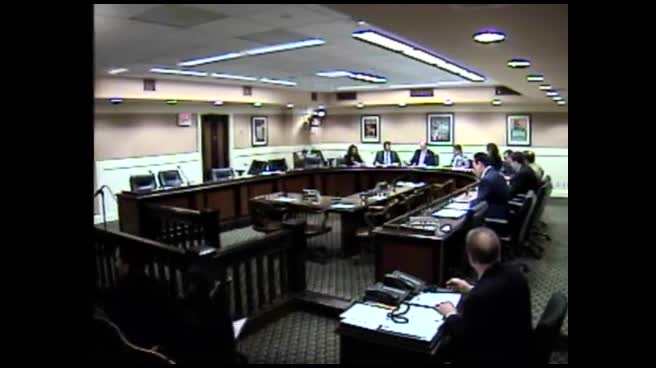 7MIN
Assembly Standing Committee on Environmental Safety and Toxic Materials
Bill Author

Bill Co-Author(s):