AB 149: Personal income taxes: Habitat for Humanity Voluntary Tax Contribution Fund.
- Session Year: 2017-2018
- House: Assembly
- Latest Version Date: 2017-10-02
Existing law authorizes an individual to contribute amounts in excess of his or her personal income tax liability for the support of specified funds. Under existing law, there are general administrative provisions applicable to these voluntary contributions, which, among other things, provide for the disbursement of contributions following repeal of the fund provisions and require undesignated funds to be transferred to the General Fund.
Existing law also provides that when establishing or extending these voluntary tax contribution funds the words voluntary tax contribution be included in the name of the fund, that the administering agency comply with specified Internet Web site reporting requirements, that the fund provisions remain in effect only until January 1 of the 7th calendar year following the first appearance of the voluntary tax contribution on the personal income tax return, that the required calendar year minimum contribution amount for the fund to continue appearing on the return is $250,000, and that the contributions be continuously appropriated from the fund to the administering entity.
This bill would allow an individual to designate on his or her personal income tax return that a specified amount in excess of his or her tax liability be transferred to the Habitat for Humanity Voluntary Tax Contribution Fund, which would be created by this bill. The bill would require the fund to meet an annual minimum contribution amount of $250,000, as specified. The bill would conform to those aforementioned requirements by requiring the Department of Housing and Community Development to comply with those Internet Web site reporting requirements and continuously appropriating those funds to the Franchise Tax Board, the Controller, and the Department of Housing and Community Development for disbursement to Habitat for Humanity of California, Inc., which represents and supports California Habitat for Humanity affiliates. The bill would require Habitat for Humanity of California, Inc., to submit, within a specified period of receiving a disbursement, a plan to the Department of Housing and Community Development for the use and distribution of moneys to Habitat for Humanity affiliates in California, as provided.
The bill would provide that these provisions would remain in effect only until January 1 of the 7th calendar year following the first appearance of the Habitat for Humanity Voluntary Tax Contribution Fund on the personal income tax return and would repeal the provisions as of December 1 of that year. The bill would provide for an earlier repeal if the Franchise Tax Board determines that the amount of contributions estimated to be received during the 2nd and later calendar years after its first appearance on a return will not at least equal the minimum contribution amount, in which case these provisions would be repealed on December 1 of that year.
By continuously appropriating these funds, this bill would make an appropriation.
Existing law authorizes an individual to contribute amounts in excess of his or her personal income tax liability for the support of specified funds. Under existing law, there are general administrative provisions applicable to these voluntary contributions, which, among other things, provide for the disbursement of contributions following repeal of the fund provisions and require undesignated funds to be transferred to the General Fund.
Existing law also provides that when establishing or extending these voluntary tax contribution funds the words voluntary tax contribution be included in the name of the fund, that the administering agency comply with specified Internet Web site reporting requirements, that the fund provisions remain in effect only until January 1 of the 7th calendar year following the first appearance of the voluntary tax contribution on the personal income tax return, that the required calendar year minimum contribution amount for the fund to continue appearing on the return is $250,000, and that the contributions be continuously appropriated from the fund to the administering entity.
This bill would allow an individual to designate on his or her personal income tax return that a specified amount in excess of his or her tax liability be transferred to the Habitat for Humanity Voluntary Tax Contribution Fund, which would be created by this bill. The bill would require the fund to meet an annual minimum contribution amount of $250,000, as specified. The bill would conform to those aforementioned requirements by requiring the Department of Housing and Community Development to comply with those Internet Web site reporting requirements and continuously appropriating those funds to the Franchise Tax Board, the Controller, and the Department of Housing and Community Development for disbursement to Habitat for Humanity of California, Inc., which represents and supports California Habitat for Humanity affiliates. The bill would require Habitat for Humanity of California, Inc., to submit, within a specified period of receiving a disbursement, a plan to the Department of Housing and Community Development for the use and distribution of moneys to Habitat for Humanity affiliates in California, as provided.
The bill would provide that these provisions would remain in effect only until January 1 of the 7th calendar year following the first appearance of the Habitat for Humanity Voluntary Tax Contribution Fund on the personal income tax return and would repeal the provisions as of December 1 of that year. The bill would provide for an earlier repeal if the Franchise Tax Board determines that the amount of contributions estimated to be received during the 2nd and later calendar years after its first appearance on a return will not at least equal the minimum contribution amount, in which case these provisions would be repealed on December 1 of that year.
By continuously appropriating these funds, this bill would make an appropriation.
Existing law authorizes an individual to contribute amounts in excess of his or her tax liability for the support of specified funds. Under existing law, there are general administrative provisions applicable to these voluntary contributions, which, among other things, specify when a voluntary contribution is to be placed on the return, provide for the disbursement of contributions following repeal of the fund provisions, and require undesignated funds to be transferred to the General Fund.
Existing law also specifies that when establishing or extending these voluntary tax contribution funds the words voluntary tax contribution be included in the name of the fund, that the administering agency comply with specified Internet Web site reporting requirements, that the fund provisions remain in effect only until January 1 of the 7th calendar year following the first appearance of the voluntary tax contribution on the personal income tax return, that the required calendar year minimum contribution amount for the fund to continue appearing on the return is $250,000, and that the contributions be continuously appropriated from the fund to the administering entity.
This bill would allow an individual to designate on his or her tax return that a specified amount in excess of his or her tax liability be transferred to the Habitat for Humanity Voluntary Tax Contribution Fund, which would be created by this bill. The bill would require the fund to meet an annual minimum contribution amount of $250,000, as specified. The bill would conform with to those aforementioned requirements by requiring the Department of Housing and Community Development to comply with those Internet Web site reporting requirements and continuously appropriating those funds to the Franchise Tax Board, the Controller, and the Department of Housing and Community Development for disbursement to Habitat for Humanity of California, Inc., which represents and supports California Habitat for Humanity affiliates. The bill would require Habitat for Humanity of California, Inc., to submit, within a specified period of receiving a disbursement, a plan to the Department of Housing and Community Development for the use and distribution of funds to Habitat for Humanity affiliates in California, as provided.
The bill would provide that these provisions would remain in effect only until January 1 of the 7th calendar year following the first appearance of the Habitat for Humanity Voluntary Tax Contribution Fund on the personal income tax return and would repeal the provisions as of December 1 of that year. The bill would provide for an earlier repeal if the Franchise Tax Board determines that the amount of contributions estimated to be received during the third 2nd and later calendar years after its first appearance on a return will not at least equal the minimum contribution amount, as defined, for that calendar year, amount, in which case these provisions would be repealed on December 1 of that year.
By continuously appropriating these funds, this bill would make an appropriation.
Existing law authorizes an individual to contribute amounts in excess of his or her tax liability for the support of specified funds. Under existing law, there are general administrative provisions applicable to these voluntary contributions, which, among other things, specify when a voluntary contribution is to be placed on the return, provide for the disbursement of contributions following repeal of the fund provisions, and require undesignated funds to be transferred to the General Fund.
Existing law also specifies that when establishing or extending these voluntary tax contribution funds the words voluntary tax contribution be included in the name of the fund, that the administering agency comply with specified Internet Web site reporting requirements, that the fund provisions remain in effect only until January 1 of the 7th calendar year following the first appearance of the voluntary tax contribution on the personal income tax return, that the required calendar year minimum contribution amount for the fund to continue appearing on the return is $250,000, and that the contributions be continuously appropriated from the fund to the administering entity.
This bill would allow an individual to designate on his or her tax return that a specified amount in excess of his or her tax liability be transferred to the Habitat for Humanity Voluntary Tax Contribution Fund, which would be created by this bill. The bill would conform with those aforementioned requirements by requiring the Department of Housing and Community Development to comply with those Internet Web site reporting requirements and continuously appropriating those funds to the Franchise Tax Board, the Controller, and the Department of Housing and Community Development for disbursement to Habitat for Humanity of California, Inc., which represents and supports California Habitat for Humanity affiliates. The bill would require Habitat for Humanity of California, Inc., to submit, within a specified period of receiving a disbursement, a plan to the Department of Housing and Community Development for the use and distribution of funds to Habitat for Humanity affiliates in California, as provided.
The bill would provide that these provisions would remain in effect only until January 1 of the 7th calendar year following the first appearance of the Habitat for Humanity Voluntary Tax Contribution Fund on the personal income tax return and would repeal the provisions as of December 1 of that year. The bill would provide for an earlier repeal if the Franchise Tax Board determines that the amount of contributions estimated to be received during the third and later calendar years after its first appearance on a return will not at least equal the minimum contribution amount, as defined, for that calendar year, in which case these provisions would be repealed on December 1 of that year.
By continuously appropriating these funds, this bill would make an appropriation.
Existing law requires, when a defendant first appears for arraignment on a charge of having committed a public offense, the magistrate to immediately inform the defendant that he or she has the right to the aid of counsel in every stage of the proceedings.This bill would require defense counsel, before a defendant pleads guilty or nolo contendere to an offense punishable as a felony, to inform the defendant that a felony conviction may result in various adverse consequences and that the plea may impact, among other things, the eligibility to obtain or maintain certain state professional licenses, to own or possess a firearm, and to enlist in the military. The bill would state that it is not the intent of the legislature that the failure of defense counsel to provide this information with respect to pleas accepted prior to January 1, 2018, require the vacation of judgment and withdrawal of a plea, constitutes grounds to find a conviction invalid, or provides grounds for appeal from the judgment or appealable order.Existing law requires, when a defendant first appears for arraignment on a charge of having committed a public offense, the magistrate to immediately inform the defendant that he or she has the right to the aid of counsel in every stage of the proceedings.
This bill would require defense counsel, before a defendant pleads guilty or nolo contendere to an offense punishable as a felony, to inform the defendant that a felony conviction may result in various adverse consequences and that the plea may impact, among other things, the eligibility to obtain or maintain certain state professional licenses, to own or possess a firearm, and to enlist in the military. The bill would state that it is not the intent of the legislature that the failure of defense counsel to provide this information with respect to pleas accepted prior to January 1, 2018, require the vacation of judgment and withdrawal of a plea, constitutes grounds to find a conviction invalid, or provides grounds for appeal from the judgment or appealable order.
(a)An individual may designate on the personal income tax return that a contribution in excess of the tax liability, if any, be made to the Habitat for Humanity Voluntary Tax Contribution Fund established by Section 18900.41. That designation is to be used as a voluntary contribution on the tax return.
(b)The contributions shall be in full dollar amounts and may be made individually by each signatory on a joint return.
(c)A designation under subdivision (a) shall be made for a taxable year on the original return for that taxable year, and once made shall be irrevocable. If payments and credits reported on the return, together with any other credits associated with the individuals account, do not exceed the individuals tax liability, the return shall be treated as though no designation has been made.
(d)The Franchise Tax Board shall revise the form of the return to include a space labeled Habitat for Humanity Voluntary Tax Contribution Fund to allow for the designation permitted under subdivision (a). The form shall also include in the instructions information that the contribution may be in the amount of one dollar ($1) or more and that the contribution shall be used to build affordable housing in California.
(e)A deduction shall be allowed under Article 6 (commencing with Section 17201) of Chapter 3 of Part 10 for any contribution made pursuant to subdivision (a).
(f)Notwithstanding any other law, a voluntary contribution designation for the Habitat for Humanity Voluntary Tax Contribution Fund shall not be added on the tax return until another voluntary contribution designation is removed or space is available, whichever occurs first.
18900.41.There is hereby established in the State Treasury the Habitat for Humanity Voluntary Tax Contribution Fund to receive contributions made pursuant to Section 18900.40. The Franchise Tax Board shall notify the Controller of both the amount of money paid by taxpayers in excess of their tax liability and the amount of refund money that taxpayers have designated pursuant to Section 18900.40 to be transferred to the Habitat for Humanity Voluntary Tax Contribution Fund. The Controller shall transfer from the Personal Income Tax Fund to the Habitat for Humanity Voluntary Tax Contribution Fund an amount not in excess of the sum of the amounts designated by individuals pursuant to Section 18900.40 for payment into that fund.
18900.42.(a)Notwithstanding Section 13340 of the Government Code, all money transferred to the Habitat for Humanity Voluntary Tax Contribution Fund shall be continuously appropriated and allocated as follows:
(1)To the Franchise Tax Board, the Controller, and the Department of Housing and Community Development for reimbursement of all costs incurred by the Franchise Tax Board, the Controller, and the Department of Housing and Community Development in connection with their duties under this article.
(2)(A)To the Department of Housing and Community Development for disbursement to Habitat for Humanity of California, Inc., a California nonprofit public benefit corporation representing and supporting California Habitat for Humanity affiliates as a state support organization.
(B)Habitat for Humanity of California, Inc., shall submit a plan to the Department of Housing and Community Development, within 60 calendar days of receiving a disbursement, for the use and competitive project specific distribution of moneys pursuant to this article to Habitat for Humanity affiliates in California that are in active status, as described on the Business Search page of the Secretary of States Internet Web site, and that are exempt from federal income taxation as an organization described in Section 501(c)(3) of the Internal Revenue Code.
(b)Habitat for Humanity of California, Inc., shall not use more than 5 percent of the moneys received pursuant to this article for administrative expenses.
(c)A Habitat for Humanity affiliate shall not use the moneys received pursuant to this article for administrative expenses or for purposes outside of California.
(d)Habitat for Humanity of California, Inc., shall submit an annual audit of the program to the Department of Housing and Community Development within 60 calendar days of the completion of the audit.
(e)The Department of Housing and Community Development shall comply with the Internet Web site reporting requirements described in Section 18873.
18900.43.(a)Except as otherwise provided in subdivision (b), this article shall remain in effect only until January 1 of the seventh calendar year following the first appearance of the Habitat for Humanity Voluntary Tax Contribution Fund on the personal income tax return, and is repealed as of December 1 of that year.
(b)(1)By September 1 of the second calendar year and each subsequent calendar year that the Habitat for Humanity Voluntary Tax Contribution Fund appears on the tax return, the Franchise Tax Board shall determine whether the amount of contributions estimated to be received during the calendar year will equal or exceed the minimum contribution amount determined by the Franchise Tax Board for the calendar year as described in paragraph (3). The Franchise Tax Board shall estimate the amount of contributions to be received by using the actual amounts received and an estimate of the contributions that will be received by the end of that calendar year.
(2)If the Franchise Tax Board determines that the amount of the contributions estimated to be received during a calendar year will not at least equal the minimum contribution amount for the calendar year, this article shall be inoperative with respect to taxable years beginning on or after January 1 of that calendar year and shall be repealed on December 1 of that year.
(3)For purposes of this section, the minimum contribution amount for a calendar year means two hundred fifty thousand dollars ($250,000) for the second calendar year after the first appearance of the Habitat for Humanity Voluntary Tax Contribution Fund on the personal income tax return and the following calendar years.
(a)An individual may designate on the personal income tax return that a contribution in excess of the tax liability, if any, be made to the Habitat for Humanity Voluntary Tax Contribution Fund established by Section 18900.41. That designation is to be used as a voluntary contribution on the tax return.
(b)The contributions shall be in full dollar amounts and may be made individually by each signatory on a joint return.
(c)A designation under subdivision (a) shall be made for a taxable year on the original return for that taxable year, and once made shall be irrevocable. If payments and credits reported on the return, together with any other credits associated with the individuals account, do not exceed the individuals tax liability, the return shall be treated as though no designation has been made.
(d)The Franchise Tax Board shall revise the form of the return to include a space labeled Habitat for Humanity Voluntary Tax Contribution Fund to allow for the designation permitted under subdivision (a). The form shall also include in the instructions information that the contribution may be in the amount of one dollar ($1) or more and that the contribution shall be used to build affordable housing in California.
(e)A deduction shall be allowed under Article 6 (commencing with Section 17201) of Chapter 3 of Part 10 for any contribution made pursuant to subdivision (a).
(f)Notwithstanding any other law, a voluntary contribution designation for the Habitat for Humanity Voluntary Tax Contribution Fund shall not be added on the tax return until another voluntary contribution designation is removed or space is available, whichever occurs first.
18900.41.There is hereby established in the State Treasury the Habitat for Humanity Voluntary Tax Contribution Fund to receive contributions made pursuant to Section 18900.40. The Franchise Tax Board shall notify the Controller of both the amount of money paid by taxpayers in excess of their tax liability and the amount of refund money that taxpayers have designated pursuant to Section 18900.40 to be transferred to the Habitat for Humanity Voluntary Tax Contribution Fund. The Controller shall transfer from the Personal Income Tax Fund to the Habitat for Humanity Voluntary Tax Contribution Fund an amount not in excess of the sum of the amounts designated by individuals pursuant to Section 18900.40 for payment into that fund.
18900.42.(a)Notwithstanding Section 13340 of the Government Code, all money transferred to the Habitat for Humanity Voluntary Tax Contribution Fund shall be continuously appropriated and allocated as follows:
(1)To the Franchise Tax Board, the Controller, and the Department of Housing and Community Development for reimbursement of all costs incurred by the Franchise Tax Board, the Controller, and the Department of Housing and Community Development in connection with their duties under this article.
(2)(A)To the Department of Housing and Community Development for disbursement to Habitat for Humanity of California, Inc., a California nonprofit public benefit corporation representing and supporting California Habitat for Humanity affiliates as a state support organization.
(B)Habitat for Humanity of California, Inc., shall submit a plan to the Department of Housing and Community Development, within 60 calendar days of receiving a disbursement, for the use and competitive project specific distribution of moneys pursuant to this article to Habitat for Humanity affiliates in California that are in active status, as described on the Business Search page of the Secretary of States Internet Web site, and that are exempt from federal income taxation as an organization described in Section 501(c)(3) of the Internal Revenue Code.
(b)Habitat for Humanity of California, Inc., shall not use more than 5 percent of the moneys received pursuant to this article for administrative expenses.
(c)A Habitat for Humanity affiliate shall not use the moneys received pursuant to this article for administrative expenses or for purposes outside of California.
(d)Habitat for Humanity of California, Inc., shall submit an annual audit of the program to the Department of Housing and Community Development within 60 calendar days of the completion of the audit.
(e)The Department of Housing and Community Development shall comply with the Internet Web site reporting requirements described in Section 18873.
18900.43.(a)Except as otherwise provided in subdivision (b), this article shall remain in effect only until January 1 of the seventh calendar year following the first appearance of the Habitat for Humanity Voluntary Tax Contribution Fund on the personal income tax return, and is repealed as of December 1 of that year.
(b)(1)By September 1 of the second calendar year and each subsequent calendar year that the Habitat for Humanity Voluntary Tax Contribution Fund appears on the tax return, the Franchise Tax Board shall determine whether the amount of contributions estimated to be received during the calendar year will equal or exceed the minimum contribution amount determined by the Franchise Tax Board for the calendar year as described in paragraph (3). The Franchise Tax Board shall estimate the amount of contributions to be received by using the actual amounts received and an estimate of the contributions that will be received by the end of that calendar year.
(2)If the Franchise Tax Board determines that the amount of the contributions estimated to be received during a calendar year will not at least equal the minimum contribution amount for the calendar year, this article shall be inoperative with respect to taxable years beginning on or after January 1 of that calendar year and shall be repealed on December 1 of that year.
(3)For purposes of this section, the minimum contribution amount for a calendar year means two hundred fifty thousand dollars ($250,000) for the second calendar year after the first appearance of the Habitat for Humanity Voluntary Tax Contribution Fund on the personal income tax return and the following calendar years.
(a)An individual may designate on the personal income tax return that a contribution in excess of the tax liability, if any, be made to the Habitat for Humanity Voluntary Tax Contribution Fund established by Section 18900.41. That designation is to be used as a voluntary contribution on the tax return.
(b)The contributions shall be in full dollar amounts and may be made individually by each signatory on a joint return.
(c)A designation under subdivision (a) shall be made for a taxable year on the original return for that taxable year, and once made shall be irrevocable. If payments and credits reported on the return, together with any other credits associated with the individuals account, do not exceed the individuals tax liability, the return shall be treated as though no designation has been made.
(d)The Franchise Tax Board shall revise the form of the return to include a space labeled Habitat for Humanity Voluntary Tax Contribution Fund to allow for the designation permitted under subdivision (a). The form shall also include in the instructions information that the contribution may be in the amount of one dollar ($1) or more and that the contribution shall be used to build affordable housing in California.
(e)A deduction shall be allowed under Article 6 (commencing with Section 17201) of Chapter 3 of Part 10 for any contribution made pursuant to subdivision (a).
(f)Notwithstanding any other law, a voluntary contribution designation for the Habitat for Humanity Voluntary Tax Contribution Fund shall not be added on the tax return until another voluntary contribution designation is removed or space is available, whichever occurs first.
18900.41.There is hereby established in the State Treasury the Habitat for Humanity Voluntary Tax Contribution Fund to receive contributions made pursuant to Section 18900.40. The Franchise Tax Board shall notify the Controller of both the amount of money paid by taxpayers in excess of their tax liability and the amount of refund money that taxpayers have designated pursuant to Section 18900.40 to be transferred to the Habitat for Humanity Voluntary Tax Contribution Fund. The Controller shall transfer from the Personal Income Tax Fund to the Habitat for Humanity Voluntary Tax Contribution Fund an amount not in excess of the sum of the amounts designated by individuals pursuant to Section 18900.40 for payment into that fund.
18900.42.(a)Notwithstanding Section 13340 of the Government Code, all money transferred to the Habitat for Humanity Voluntary Tax Contribution Fund shall be continuously appropriated and allocated as follows:
(1)To the Franchise Tax Board, the Controller, and the Department of Housing and Community Development for reimbursement of all costs incurred by the Franchise Tax Board, the Controller, and the Department of Housing and Community Development in connection with their duties under this article.
(2)(A)To the Department of Housing and Community Development for disbursement to Habitat for Humanity of California, Inc., a California nonprofit public benefit corporation representing and supporting California Habitat for Humanity affiliates as a state support organization.
(B)Habitat for Humanity of California, Inc., shall submit a plan to the Department of Housing and Community Development, within 60 calendar days of receiving a disbursement, for the use and competitive project specific distribution of moneys pursuant to this article to Habitat for Humanity affiliates in California that are in active status, as described on the Business Search page of the Secretary of States Internet Web site, and that are exempt from federal income taxation as an organization described in Section 501(c)(3) of the Internal Revenue Code.
(b)Habitat for Humanity of California, Inc., shall not use more than 5 percent of the moneys received pursuant to this article for administrative expenses.
(c)A Habitat for Humanity affiliate shall not use the moneys received pursuant to this article for administrative expenses or for purposes outside of California.
(d)Habitat for Humanity of California, Inc., shall submit an annual audit of the program to the Department of Housing and Community Development within 60 calendar days of the completion of the audit.
(e)The Department of Housing and Community Development shall comply with the Internet Web site reporting requirements described in Section 18873.
18900.43.(a)Except as otherwise provided in subdivision (b), this article shall remain in effect only until January 1 of the seventh calendar year following the first appearance of the Habitat for Humanity Voluntary Tax Contribution Fund on the personal income tax return, and is repealed as of December 1 of that year.
(b)(1)By September 1 of the third second calendar year and each subsequent calendar year that the Habitat for Humanity Voluntary Tax Contribution Fund appears on the tax return, the Franchise Tax Board shall do all of the following:
(A)Determine the minimum contribution amount required to be received during the next calendar year for the fund to appear on the tax return for the taxable year that includes that next calendar year.(B)Provide written notification to the Controller and the Department of Housing and Community Development of the amount determined in subparagraph (A).(C)Determine determine whether the amount of contributions estimated to be received during the calendar year will equal or exceed the minimum contribution amount determined by the Franchise Tax Board for the calendar year pursuant to subparagraph (A). as described in paragraph (3). The Franchise Tax Board shall estimate the amount of contributions to be received by using the actual amounts received and an estimate of the contributions that will be received by the end of that calendar year.
(2)If the Franchise Tax Board determines that the amount of the contributions estimated to be received during a calendar year will not at least equal the minimum contribution amount for the calendar year, this article shall be inoperative with respect to taxable years beginning on or after January 1 of that calendar year and shall be repealed on December 1 of that year.
(3)For purposes of this section, the minimum contribution amount for a calendar year means two hundred fifty thousand dollars ($250,000) for the third second calendar year after the first appearance of the Habitat for Humanity Voluntary Tax Contribution Fund on the personal income tax return or the minimum contribution amount as adjusted pursuant to subdivision (c). return and the following calendar years.
(c)For each calendar year, beginning with the third calendar year after the first appearance of the Habitat for Humanity Voluntary Tax Contribution Fund on the personal income tax return, the Franchise Tax Board shall adjust, on or before September 1 of that calendar year, the minimum contribution amount specified in subdivision (b) as follows:(1)The minimum contribution amount for the calendar year shall be an amount equal to the product of the minimum contribution amount for the prior calendar year multiplied by the inflation factor adjustment as specified in subparagraph (A) of paragraph (2) of subdivision (h) of Section 17041, rounded off to the nearest dollar.(2)The inflation factor adjustment used for the calendar year shall be based on the figures for the percentage change in the California Consumer Price Index for all items received on or before August 1 of the calendar year pursuant to paragraph (1) of subdivision (h) of Section 17041.(a)An individual may designate on the personal income tax return that a contribution in excess of the tax liability, if any, be made to the Habitat for Humanity Voluntary Tax Contribution Fund established by Section 18900.41. That designation is to be used as a voluntary contribution on the tax return.
(b)The contributions shall be in full dollar amounts and may be made individually by each signatory on a joint return.
(c)A designation under subdivision (a) shall be made for a taxable year on the original return for that taxable year, and once made shall be irrevocable. If payments and credits reported on the return, together with any other credits associated with the individuals account, do not exceed the individuals tax liability, the return shall be treated as though no designation has been made.
(d)The Franchise Tax Board shall revise the form of the return to include a space labeled Habitat for Humanity Voluntary Tax Contribution Fund to allow for the designation permitted under subdivision (a). The form shall also include in the instructions information that the contribution may be in the amount of one dollar ($1) or more and that the contribution shall be used to build affordable housing in California.
(e)A deduction shall be allowed under Article 6 (commencing with Section 17201) of Chapter 3 of Part 10 for any contribution made pursuant to subdivision (a).
(f)Notwithstanding any other law, a voluntary contribution designation for the Habitat for Humanity Voluntary Tax Contribution Fund shall not be added on the tax return until another voluntary contribution designation is removed or space is available, whichever occurs first.
18900.41.There is hereby established in the State Treasury the Habitat for Humanity Voluntary Tax Contribution Fund to receive contributions made pursuant to Section 18900.40. The Franchise Tax Board shall notify the Controller of both the amount of money paid by taxpayers in excess of their tax liability and the amount of refund money that taxpayers have designated pursuant to Section 18900.40 to be transferred to the Habitat for Humanity Voluntary Tax Contribution Fund. The Controller shall transfer from the Personal Income Tax Fund to the Habitat for Humanity Voluntary Tax Contribution Fund an amount not in excess of the sum of the amounts designated by individuals pursuant to Section 18900.40 for payment into that fund.
18900.42.(a)Notwithstanding Section 13340 of the Government Code, all money transferred to the Habitat for Humanity Voluntary Tax Contribution Fund shall be continuously appropriated and allocated as follows:
(1)To the Franchise Tax Board, the Controller, and the Department of Housing and Community Development for reimbursement of all costs incurred by the Franchise Tax Board, the Controller, and the Department of Housing and Community Development in connection with their duties under this article.
(2)(A)To the Department of Housing and Community Development for disbursement to Habitat for Humanity of California, Inc., a California nonprofit public benefit corporation representing and supporting California Habitat for Humanity affiliates as a state support organization.
(B)Habitat for Humanity of California, Inc., shall submit a plan to the Department of Housing and Community Development, within 60 calendar days of receiving a disbursement, for the use and competitive project specific distribution of moneys pursuant to this article to Habitat for Humanity affiliates in California that are in active status, as described on the Business Search page of the Secretary of States Internet Web site, and that are exempt from federal income taxation as an organization described in Section 501(c)(3) of the Internal Revenue Code.
(b)Habitat for Humanity of California, Inc., shall not use more than 5 percent of the moneys received pursuant to this article for administrative expenses.
(c)A Habitat for Humanity affiliate shall not use the moneys received pursuant to this article for administrative expenses or for purposes outside of California.
(d)Habitat for Humanity of California, Inc., shall submit an annual audit of the program to the Department of Housing and Community Development within 60 calendar days of the completion of the audit.
(e)The Department of Housing and Community Development shall comply with the Internet Web site reporting requirements described in Section 18873.
18900.43.(a)Except as otherwise provided in subdivision (b), this article shall remain in effect only until January 1 of the seventh calendar year following the first appearance of the Habitat for Humanity Voluntary Tax Contribution Fund on the personal income tax return, and is repealed as of December 1 of that year.
(b)(1)By September 1 of the third calendar year and each subsequent calendar year that the Habitat for Humanity Voluntary Tax Contribution Fund appears on the tax return, the Franchise Tax Board shall do all of the following:
(A)Determine the minimum contribution amount required to be received during the next calendar year for the fund to appear on the tax return for the taxable year that includes that next calendar year.
(B)Provide written notification to the Controller and the Department of Housing and Community Development of the amount determined in subparagraph (A).
(C)Determine whether the amount of contributions estimated to be received during the calendar year will equal or exceed the minimum contribution amount determined by the Franchise Tax Board for the calendar year pursuant to subparagraph (A). The Franchise Tax Board shall estimate the amount of contributions to be received by using the actual amounts received and an estimate of the contributions that will be received by the end of that calendar year.
(2)If the Franchise Tax Board determines that the amount of the contributions estimated to be received during a calendar year will not at least equal the minimum contribution amount for the calendar year, this article shall be inoperative with respect to taxable years beginning on or after January 1 of that calendar year and shall be repealed on December 1 of that year.
(3)For purposes of this section, the minimum contribution amount for a calendar year means two hundred fifty thousand dollars ($250,000) for the third calendar year after the first appearance of the Habitat for Humanity Voluntary Tax Contribution Fund on the personal income tax return or the minimum contribution amount as adjusted pursuant to subdivision (c).
(c)For each calendar year, beginning with the third calendar year after the first appearance of the Habitat for Humanity Voluntary Tax Contribution Fund on the personal income tax return, the Franchise Tax Board shall adjust, on or before September 1 of that calendar year, the minimum contribution amount specified in subdivision (b) as follows:
(1)The minimum contribution amount for the calendar year shall be an amount equal to the product of the minimum contribution amount for the prior calendar year multiplied by the inflation factor adjustment as specified in subparagraph (A) of paragraph (2) of subdivision (h) of Section 17041, rounded off to the nearest dollar.
(2)The inflation factor adjustment used for the calendar year shall be based on the figures for the percentage change in the California Consumer Price Index for all items received on or before August 1 of the calendar year pursuant to paragraph (1) of subdivision (h) of Section 17041.
SECTION 1.Section 858.2 is added to the Penal Code, to read:858.2.(a)Before a defendant pleads guilty or nolo contendere to any offense punishable as a felony under state law, defense counsel shall inform the defendant that a felony conviction may result in various adverse consequences for the defendant. Defense counsel shall inform the defendant that the plea of guilty or nolo contendere may impact all of the following:(1)Ability to obtain employment generally, and may make the defendant ineligible for employment in certain jobs.(2)The loss of voting rights while incarcerated and while on parole.(3)Eligibility to enlist in the military.(4)Eligibility to obtain or maintain certain state professional licenses.(5)Eligibility to serve on a jury.(6)Eligibility to own or possess a firearm.(7)Eligibility for federal health care programs if the felony is related to fraud involving a federal program, patient abuse, or drugs.(8)Eligibility for federal financial aid if the felony was committed while the defendant was receiving financial aid.(9)Eligibility for federal cash assistance if the felony is drug related.(10)Receipt of Supplemental Security Income.(11)Legal parental and child custody rights.(b)With respect to a plea accepted prior to January 1, 2018, it is not the intent of the Legislature that the failure of defense counsel to provide the information required by subdivision (a) requires the vacation of judgment and withdrawal of the plea, constitutes grounds for finding a prior conviction invalid, or provides grounds for appeal from the judgment or appealable order.(a)Before a defendant pleads guilty or nolo contendere to any offense punishable as a felony under state law, defense counsel shall inform the defendant that a felony conviction may result in various adverse consequences for the defendant. Defense counsel shall inform the defendant that the plea of guilty or nolo contendere may impact all of the following:
(1)Ability to obtain employment generally, and may make the defendant ineligible for employment in certain jobs.
(2)The loss of voting rights while incarcerated and while on parole.
(3)Eligibility to enlist in the military.
(4)Eligibility to obtain or maintain certain state professional licenses.
(5)Eligibility to serve on a jury.
(6)Eligibility to own or possess a firearm.
(7)Eligibility for federal health care programs if the felony is related to fraud involving a federal program, patient abuse, or drugs.
(8)Eligibility for federal financial aid if the felony was committed while the defendant was receiving financial aid.
(9)Eligibility for federal cash assistance if the felony is drug related.
(10)Receipt of Supplemental Security Income.
(11)Legal parental and child custody rights.
(b)With respect to a plea accepted prior to January 1, 2018, it is not the intent of the Legislature that the failure of defense counsel to provide the information required by subdivision (a) requires the vacation of judgment and withdrawal of the plea, constitutes grounds for finding a prior conviction invalid, or provides grounds for appeal from the judgment or appealable order.
|
Date
|
Status
|
|---|---|
| Oct 2, 2017 | Chaptered by Secretary of State - Chapter 398, Statutes of 2017. |
| Oct 2, 2017 | Approved by the Governor. |
| Sep 12, 2017 | Enrolled and presented to the Governor at 2:30 p.m. |
| Sep 5, 2017 | Senate amendments concurred in. To Engrossing and Enrolling. (Ayes 77. Noes 0.). |
| Aug 31, 2017 | In Assembly. Concurrence in Senate amendments pending. May be considered on or after September 2 pursuant to Assembly Rule 77. |
| Aug 31, 2017 | Read third time. Passed. Ordered to the Assembly. |
| Aug 23, 2017 | Ordered to special consent calendar. |
| Aug 22, 2017 | Read second time. Ordered to third reading. |
| Aug 21, 2017 | From committee: Do pass. (Ayes 7. Noes 0.) (August 21). |
| Jul 17, 2017 | Read second time and amended. Re-referred to Com. on APPR. |
| Jul 13, 2017 | From committee: Amend, and do pass as amended and re-refer to Com. on APPR. (Ayes 7. Noes 0.) (July 12). |
| Jul 6, 2017 | Re-referred to Com. on GOV. & F. |
| Jun 28, 2017 | Withdrawn from committee. |
| Jun 26, 2017 | From committee chair, with author's amendments: Amend, and re-refer to committee. Read second time, amended, and re-referred to Com. on PUB. S. |
| Jun 6, 2017 | In committee: Set, first hearing. Hearing canceled at the request of author. |
| May 10, 2017 | Referred to Com. on PUB. S. |
| Mar 23, 2017 | In Senate. Read first time. To Com. on RLS. for assignment. |
| Mar 23, 2017 | Read third time. Passed. Ordered to the Senate. (Ayes 62. Noes 1. Page 718.) |
| Mar 2, 2017 | Read second time. Ordered to third reading. |
| Mar 1, 2017 | From committee: Do pass. (Ayes 7. Noes 0.) (February 28). |
| Feb 13, 2017 | In committee: Hearing postponed by committee. |
| Jan 19, 2017 | Referred to Com. on PUB. S. |
| Jan 11, 2017 | From printer. May be heard in committee February 10. |
| Jan 10, 2017 | Read first time. To print. |
|
Date
|
Description
|
Location
|
Votes
|
|
|---|---|---|---|---|
| Sep 5, 2017 | AB 149 JONES-SAWYER Concurrence in Senate Amendments | Assembly Floor |
Passed |
|
| Aug 31, 2017 | Special Consent AB149 | Senate Floor |
Passed |
|
| Aug 21, 2017 | Do pass | Senate Standing Committee on Appropriations |
Passed |
|
| Jul 12, 2017 | Do pass as amended, but first amend, and re-refer to the Committee on [Appropriations] | Senate Standing Committee on Governance and Finance |
Passed |
|
| Mar 23, 2017 | AB 149 JONES-SAWYER Assembly Third Reading | Assembly Floor |
Passed |
|
| Feb 28, 2017 | Do pass. | Assembly Standing Committee on Public Safety |
Passed |
This list shows positions taken on this bill by organizations on the date displayed, which is linked to the original source.
Positions by individuals are not included.
|
Organization
|
Position
|
Date
|
|---|---|---|
| American Civil Liberties Union of California | ** Support | Feb 27, 2017 |
| California Attorneys For Criminal Justice | * Indeterminate | Mar 1, 2017 |
| California Public Defender Association | * Indeterminate | Mar 1, 2017 |
| California SEIU | * Indeterminate | Mar 1, 2017 |
| Firearms Policy Coalition | ** Support | Feb 27, 2017 |
| Friends Committee on Legislation California | * Indeterminate | Mar 1, 2017 |
| Habitat For Humanity California | ** Support | Aug 22, 2017 |
| National Elevator Industry, Inc. | * Indeterminate | Mar 1, 2017 |
| Teva Pharmaceuticals Usa Inc. | * Indeterminate | Mar 1, 2017 |
| Unidentified | * Support | Aug 21, 2017 |
CONCURRENCE IN SENATE AMENDMENTS
CSA1 Bill Id:AB 149
Author:(Jones-Sawyer)
As Amended Ver:July 17, 2017
Majority vote
ASSEMBLY: |
| (March 23, 2017) | SENATE: | 37-0 | (August 31, 2017) |
(Vote not relevant)
Original Committee Reference: PUB. S.
SUMMARY: Establishes the Habitat for Humanity Voluntary Tax Contribution Fund (Fund) and allows individuals to make a contribution to the Fund through the state personal income tax (PIT) return.
The Senate amendments delete the Assembly version of this bill, and instead:
- Allows individuals to designate on their PIT return that a contribution in excess of their tax liability, if any, be made to the Fund.
- Establishes the Fund in the State Treasury.
- Provides that all money transferred to the Fund is continuously appropriated and allocated as follows:
- To the Franchise Tax Board (FTB), State Controller, and Department of Housing and Community Development (HCD) for reimbursement of all cost incurred in administering the VCF; and,
- To HCD for disbursement to Habitat for Humanity of California, Inc., which is required to submit a plan to HCD, within 60 calendar days of receiving a disbursement, detailing its use and competitive project specific distribution of moneys to Habitat for Humanity affiliates in California, as specified. Habitat for Humanity of California, Inc. is also required to submit an annual audit of the program to HCD within 60 calendar days of the audit's completion, and is prohibited from using more than 5% of moneys received for administrative purposes. Habitat for Humanity affiliates are prohibited from using moneys received for administrative expenses or for purposes outside of California.
- Requires HCD to comply with Internet Web site reporting requirements.
- Provides for the Fund provisions' automatic sunset on January 1 of the seventh calendar year following the Fund's first appearance on the PIT return.
- Requires the Fund to meet a minimum contribution threshold of $250,000 in its second calendar year, and in each subsequent calendar year, to remain on the PIT return.
EXISTING LAW:
- Allows taxpayers to designate on their state PIT returns a contribution to any of the 19 voluntary contribution funds (VCFs) on the 2016 PIT return.
- Provides the following requirements for new or extended VCFs that take effect on or after January 2, 2017:
- Requires the words "voluntary tax contribution" to be included as part of the name of the fund.
- Requires the administering agency's Internet Web site to report the process for awarding money, the amount of money spent on administration, and an itemization of how program funds were awarded by the agency, including information regarding recipients of funds.
- Provides, unless otherwise specified, for each VCF's automatic sunset on January 1 of the seventh calendar year following the VCF's first appearance on the PIT return.
- Requires each VCF to meet a minimum contribution threshold of $250,000 in the second calendar year and each subsequent year to remain on the PIT return.
- Requires contributions made to each VCF to be continuously appropriated to the administering agency to be spent, as specified.
- Provides a specific sunset date for each VCF, except for the California Seniors Special Fund and the State Parks Protection Fund.
- Provides that the minimum annual contribution amounts required to remain in effect do not apply to the California Seniors Special Fund, the California Firefighters' Memorial Fund, and the California Peace Officer Memorial Foundation Fund.
AS PASSED BY THE ASSEMBLY, this bill required that defense counsel advise a defendant of various specified adverse consequences that may result from a guilty or no contest pleas to a felony offense prior to the defendant pleading guilty or no contest to a felony.
FISCAL EFFECT: According to the Senate Appropriations Committee:
- The FTB estimates that, beginning in 2018-19, this bill would result in an annual revenue loss of $8,000 (General Fund).
- The State Controller's Office, FTB, and HCD would be reimbursed for related administrative costs.
COMMENTS:
- So Many Causes, So Little Space: There are countless worthy causes that would benefit from the inclusion of a VCF on the state's PIT return. At the same time, space on the PIT return is limited. Thus, it could be argued that the current system for adding or extending VCFs on the form is subjective and essentially rewards organizations that can convince the Legislature to promote their fund on the form. Additionally, expanding the list of qualifying VCFs may have the unintended consequence of reducing the individual contributions that existing VCFs receive since they have to compete against a broader group of worthy causes, which could make it more difficult for existing VCFs to meet the $250,000 minimum requirement and cause them to fall off the tax return.
- Habitat for Humanity – Prior VCF: According to its Web site, Habitat for Humanity is a global nonprofit housing organization that partners with people and families in need of a decent and affordable home. Habitat for Humanity homeowners help build their own homes alongside volunteers and pay an affordable mortgage.
AB 1765 (Jones-Sawyer), Chapter 354, Statutes of 2014, originally established the Habitat for Humanity Fund as a VCF that first appeared on the 2014 tax return, but last appeared on the 2015 tax return because it failed to meet its minimum contribution threshold to remain on the next year's tax return. The prior VCF was administered by HCD, which awarded grants to Habitat for Humanity affiliates in California through a competitive, project-specific grant process.
This bill reestablishes a VCF for Habitat for Humanity. The proposed VCF would also be administered by HCD, but funds would be distributed directly to Habitat for Humanity of California, Inc., a state nonprofit public benefit corporation representing and supporting California Habitat for Humanity affiliates, which will then award grants to state affiliates through a competitive, project-specific process.
- New VCF Requirements: The Senate Governance and Finance Committee held an oversight hearing in 2015 that reviewed the status of California's VCFs and found a framework was needed to improve the current VCF system. The Committee found that donated funds could take years to reach the intended recipient, or, worse yet, the money would end up in state coffers. The Legislature created California's VCF system in 1982 with a noble intention – to make it easier for Californians to donate to charitable causes. To date, VCFs have raised over $100 million for various charitable causes, including social services, public health, and environmental protection.
SB 1476 (Senate Committee on Governance and Finance), Chapter 597, Statutes of 2016, established best practices and reforms needed to ensure that taxpayers' voluntary contributions are being put toward charitable purposes in a transparent and timely fashion. SB 1476 required the words "voluntary tax contribution" to be included in the name of the any new fund, required that specified information be made public on the administering agency's Internet Web site, lengthened the current five-year sunset to seven years, set a minimum contribution amount of $250,000 (not adjusted for inflation), and provided for the continuous appropriation of funds. This bill follows the best practices established by SB 1476.
- Substantial amendments: This bill was substantially amended in the Senate and the Assembly-approved provisions of this bill were deleted. This bill, as amended in the Senate is inconsistent with Assembly actions.
Analysis Prepared by: Irene Ho / REV. & TAX. / (916) 319-2098 FN: 0001502
Office of Senate Floor Analyses (916) 651-1520 Fax: (916) 327-4478 | AB |
THIRD READING
Bill No: AB 149
:
SENATE GOVERNANCE & FIN. COMMITTEE: 7-0, 7/12/17
AYES: McGuire, Nguyen, Beall, Hernandez, Hertzberg, Lara, Moorlach
SENATE APPROPRIATIONS COMMITTEE: 7-0, 8/21/17
AYES: Lara, Bates, Beall, Bradford, Hill, Nielsen, Wiener
ASSEMBLY FLOOR: Not relevant
SOURCE: Habitat for Humanity California
DIGEST:
This bill establishes the Habitat for Humanity Voluntary Contribution Fund in the State Treasury as a voluntary contribution fund on the state personal income tax return, and allows a deduction for any contribution made to the Fund.
ANALYSIS: Existing law authorizes an individual to contribute amounts in excess of his or her personal income tax liability for the support of specified funds. There are general administrative provisions applicable to these voluntary contributions, which, among other things, specify when a voluntary contribution is to be placed on the return, provide for the disbursement of contributions following repeal of the fund provisions, and require undesignated funds to be transferred to the General Fund.
This bill establishes the Habitat for Humanity Voluntary Contribution Fund in the State Treasury as a voluntary contribution fund on the state personal income tax return, and allows a deduction for any contribution made to the Fund.
FISCAL EFFECT: Appropriation: Fiscal Com.: Local:
According to the Senate Appropriations Committee:
- The Franchise Tax Board (FTB) estimates that, beginning in 2018-19, this bill would result in an annual revenue loss of $8,000 (General Fund).
- The State Controller’s Office (SCO), FTB, and the Department of Housing and Community Development (HCD) would be reimbursed for related administrative costs.
Habitat for Humanity California (source)
OPPOSITION: (Verified 8/22/17)
None received
8/22/17 11:07:07
**** END ****
SENATE COMMITTEE ON APPROPRIATIONS
Senator Ricardo Lara, Chair
2017 - 2018 Regular Session
AB 149 (Jones-Sawyer) - Personal income taxes: Habitat for Humanity Voluntary Tax Contribution Fund
Version: July 17, 2017 | Policy Vote: GOV. & F. 7 - 0 |
Urgency: No | Mandate: No |
Hearing Date: August 21, 2017 | Consultant: Robert Ingenito |
This bill does not meet the criteria for referral to the Suspense File.
Bill Summary:
AB 149 would authorize the Habitat for Humanity Voluntary Contribution Fund (Fund) in the State Treasury as a voluntary contribution fund on the state personal income tax return to fund affordable housing projects.
Fiscal Impact:
- The Franchise Tax Board (FTB) estimates that, beginning in 2018-19, this bill would result in an annual revenue loss of $8,000 (General Fund).
- The State Controller’s Office (SCO), FTB, and the Department of Housing and Community Development (HCD) would be reimbursed for related administrative costs.
Current law allows taxpayers to contribute money to one or more of 20 voluntary contribution funds (VCF) during the process of filing their state income tax return. These contributions are made from taxpayers' own resources, not from their tax liability, as is the case with federal tax returns. Check-off amounts are deductible as charitable contributions on taxpayers' returns during the subsequent tax year. With some exceptions, each VCF (1) has a sunset date, and (2) is required to meet a minimum contribution amount of $250,000, adjusted annually for inflation.
When a taxpayer contributes to a VCF, FTB deposits the total of all contributions, less an administrative fee, into the fund created as part of its legislative authorization. For some VCFs, taxpayers’ contributions are allocated to a state agency for use in a state-administered grant program. Other VCFs’ authorizing statutes direct administrative agencies to allocate donations to a private organization, such as the American Red Cross. Still other VCFs require SCO to send the funds directly to private organizations, such as the California Fire Foundation, without passing through an administrative agency. Like FTB, SCO and administrative agencies may deduct administration fees from the amount of donations each VCF receives.
In 2016, SB 1476 (Committee on Governance and Finance) established general provisions for all VCFs established or extended after January 2, 2017. Specifically, the bill: (1) set a minimum contribution amount of $250,000 beginning the second calendar year after the fund’s first appearance on the income tax return, with no inflation adjustment in subsequent years, (2) increased the current standard five-year sunset to seven years, (3) required administering agencies to post online the process for awarding money, the amount of money spent on administration, and an itemization of how program funds were awarded, including, but not limited to, information regarding recipients of funds, (4) provided that funds shall be continuously appropriated to the administering agency to be spent as prescribed in the bill that enacts the voluntary contribution, and (5) required “voluntary tax contribution” in the name of the fund.
Taxpayer contributions to VCFs have fallen significantly thus far in 2017. Between January and April this year, taxpayers have contributed $1.7 million to VCFs, compared to $3.4 million for the same period in 2016. Consequently, some or possibly all legislatively-authorized VCFs could not appear on the return for the 2017 tax year absent legislative action because contribution amounts won’t meet their statutory minimums. FTB attributes the decline to changes made to Intuit’s TurboTax product, which this year included the choice to donate to VCFs as part of a “landing table” that includes questions about more specific issues such as tax credits. In previous years, TurboTax had included the option for taxpayers to donate to VCFs as part of its general interview questions. Intuit indicates that they have remedied the issue for 2016 returns, which will apply to future tax years. However, because most returns have already been filed, legislative action is necessary to ensure that no VCF will be removed as a result of this year’s decreases. SB 503 (currently pending in the Assembly) would reset the minimum contribution amount to $0 for the 2016 tax year, thereby ensuring that each VCF on the 2016 tax return will appear on the 2017 return.
Habitat for Humanity is a nonprofit organization that has more than 1,500 local affiliates in the United States and more than 70 national organizations around the world. Habitat for Humanity estimates that it has helped to build or repair more than 800,000 houses worldwide. Prior legislation (AB 1765, Jones-Sawyer, 2014) authorized the Habitat for Humanity Fund as a VCF on the state income tax returns for 2014-15. That fund failed to meet the $250,000 contribution requirement in its second calendar year and was dropped from the tax form by FTB in 2016.
Proposed Law:
This bill would establish the Habitat for Humanity Voluntary Contribution Fund (Fund) in the State Treasury as a VCF on the state personal income tax return, and allow a deduction for any contribution made to the Fund. Additionally, this bill would continuously appropriate the amounts transferred to the Fund as follows: (1) to the FTB, the Controller, and HCD for reimbursement of all costs incurred in administering the Fund, and (2) to HCD for disbursement to Habitat for Humanity of California, Inc., a California nonprofit public benefit corporation representing and supporting California Habitat for Humanity affiliates as a state support organization.
Habitat for Humanity of California, Inc., must submit a plan to HCD within 60 calendar days of receiving a disbursement for the use and competitive project specific distribution of moneys to Habitat for Humanity affiliates in California that are in active status. The bill would limit administrative costs to five percent of the funds received. Additionally, a Habitat for Humanity affiliate would be prohibited from using the funds received for administrative expenses or for purposes outside of California.
Consistent with AB 1476, the VCF would be required to meet a minimum $250,000 threshold beginning in the second year.
Related Legislation:
SB 1476 (Committee on Governance and Finance, Chapter 597, Statutes of 2016) added general requirements applicable to VCFs added or extended on or after January 2, 2017.
Staff Comments:
The previous authorizing legislation (AB 1765) required HCD to award the VCF amounts through a competitive bid process, which proved time-consuming and expensive. This proposal would delegate that responsibility to Habitat for Humanity of California.
FTB notes that approximately 56 percent of taxpayers who contributed itemized their deductions. Assuming an average tax rate of six percent, FTB estimates the annual revenue loss from the bill would be $8,000.
Contributions related to the extension of the fund will be in made 2018 when the 2017 return is filed. The deduction for such contributions would be claimed on the 2018 return filed by April 15, 2019; consequently, revenue impact from the bill would not begin until 2018-19.
-- END --
SENATE COMMITTEE ON GOVERNANCE AND FINANCE
Senator Mike McGuire, Chair
2017 - 2018 Regular
Bill No: | AB 149 | Hearing Date: | 7/12/17 |
Author: | Jones-Sawyer | Tax Levy: | No |
Version: | 6/26/17 | Fiscal: | Yes |
Consultant: | Shea | ||
Personal income taxes: Habitat for Humanity Voluntary Tax Contribution Fund
Authorizes the Habitat for Humanity Voluntary Contribution Fund (Fund) in the State Treasury as a voluntary contribution fund on the state personal income tax return to fund affordable housing projects.
Background
Existing state law allows taxpayers to contribute money to voluntary contribution funds (VCFs), by checking a box on their state income tax returns. California law requires contributions made through VCFs, or tax check-offs, to be made from taxpayers’ own resources and not from their tax liability, as is possible on federal tax returns. Check-off amounts may be claimed as charitable contributions on taxpayers’ tax returns in the subsequent year. There are currently 20 check-offs listed on the tax return form, which raise between four and five million dollars annually.
The Legislature adds each VCF by statute. When a taxpayer contributes to VCFs, the Franchise Tax Board (FTB) deposits the total of all contributions, less an administrative fee, into the fund created as part of the VCF’s legislative authorization. For some VCFs, taxpayers’ contributions are allocated to a state agency for use in a state administered grant program. Other VCFs’ authorizing statutes direct administrative agencies to allocate donations to a private organization. For example, the Office of Emergency Services passes VCF funds to the American Red Cross. Other funds require the State Controller to send the funds directly to private organizations without passing through an administrative agency, such as the California Fire Foundation. The Controller and administrative agencies may deduct administrations fees from the amount of donations each VCF receives.
Last year, SB 1476 (Committee on Governance and Finance) established general provisions for all VCFs established or extended after January 2, 2017. Specifically, the bill:
- Set a minimum contribution amount of $250,000 beginning the second calendar year after the first appearance of the fund on the income tax return and eliminates the inflation adjustment in subsequent years.
- Lengthened the standard five year sunset to seven years.
- Required the administering agency to post online the process for awarding money, the amount of money spent on administration, and an itemization of how program funds were awarded by the agency, including, but not limited to, information regarding recipients of funds.
- Provided that funds shall be continuously appropriated to the administering agency to be spent as prescribed in the bill that enacts the voluntary contribution.
- Required “voluntary tax contribution” in the name of the fund.
VCF minimum contribution amounts. With a few exceptions, VCFs remain on the return until they are repealed by a sunset date or fail to generate a minimum contribution amount. In general, the minimum contribution amount is $250,000, beginning in the fund’s second year, and is adjusted yearly for inflation thereafter. The following check-offs do not have a minimum contribution requirement:
- California Firefighters’ Memorial Foundation Fund,
- California Peace Officer Memorial Foundation Fund, and
- California Seniors Special Fund.
Habitat for Humanity: According to its Website, Habitat for Humanity is a nonprofit, ecumenical Christian ministry "founded on the conviction that every man, woman and child should have a decent, safe and affordable place to live." The organization has more than 1,500 local affiliates in the United States and more than 70 national organizations around the world. Habitat for Humanity estimates that it has helped to build or repair more than 800,000 houses worldwide.
Prior Habitat for Humanity VCF. Prior legislation authorized the Habitat for Humanity Fund as a VCF on the state income tax returns for 2014-2015 (AB 1765, Jones-Sawyer, 2014). That fund failed to meet the $250,000 contribution requirement in its second calendar year and was dropped from the tax form by FTB in 2016.
AB 1765 required the Department of Housing and Community Development (HCD) to award the VCF amounts through a competitive bid process, which proved time-consuming and expensive. This proposal delegates that responsibility to Habitat for Humanity of California.
Habitat for Humanity wants to restore to the tax form a VCF to support its activities.
Proposed Law
Assembly Bill 149 establishes the Habitat for Humanity Voluntary Contribution Fund (Fund) in the State Treasury as a voluntary contribution fund on the state personal income tax return, and allows a deduction for any contribution made to the Fund. Additionally, this bill continuously appropriates the amounts transferred to the Fund as follows:
- To the FTB, the Controller, and HCD for reimbursement of all costs incurred in administering the Fund.
- To HCD for disbursement to Habitat for Humanity of California, Inc., a California nonprofit public benefit corporation representing and supporting California Habitat for Humanity affiliates as a state support organization.
- Habitat for Humanity of California, Inc., must submit a plan to HCD within 60 calendar days of receiving a disbursement for the use and competitive project specific distribution of moneys to Habitat for Humanity affiliates in California that are in active status.
- Administrative costs for Habitat for Humanity of California, Inc., would be limited to no more than 5 percent of the funds received.
- A Habitat for Humanity affiliate would be prohibited from using the funds received for administrative expenses or for purposes outside of California.
- Habitat for Humanity of California, Inc., would be required to submit an annual audit of the program to HCD within 60 calendar days of the completion of the audit.
State Revenue Impact
No estimate. Generally, FTB estimates annual revenue losses from new VCFs at $8,000 annually.
Comments
1. Purpose of the bill. According to the author, “With bond funding exhausted and redevelopment funds eliminated, California is facing virtually no state investment in affordable housing. At the same time, Habitat for Humanity, a faith-based nonprofit organization dedicated to building affordable homes for families with limited incomes, has built, rehabilitated, repaired or improved more than 400,000 houses worldwide, providing simple, decent and affordable shelter for more than 2 million people. However, redevelopment’s dissolvent in 2011 greatly impacted Habitat’s ability to fulfill its mission. Allowing individuals to donate via their income tax check return can raise hundreds of thousands of dollars for Habitat for Humanity. This money will be used for the sole purpose of building affordable housing throughout California. In Louisiana, the only other state that has a voluntary income tax check off, the affordable housing fund raises an average of $5 million annually.”
2. Second bite at the apple? As stated above, the prior Habitat for Humanity VCF dropped off of the tax form in 2016 for failing to meet the minimum contribution requirement. The minimum contribution requirement of $250,000 is intended to ensure that VCFs have sufficient public support to warrant placement on the tax return. The Committee may wish to consider the efficacy of the minimum contribution requirement by simply reinstating a checkoff that has just fallen off the tax return for failing to meet that requirement.
3. FTB memo on tax form capacity for new VCFs. At the request of this committee, FTB issued a memo dated June 19, 2017 which states that the income tax forms have the following capacity for new VCFs:
- Form 540 – 5 more funds
- Form 540 2EZ – 5 more funds
- Form 540NR (Long Form) – 5 more funds
- Form 541NR (Short Form) – 6 more funds
- Form 541 – 6 more funds
Presently, there a 7 VCF bills active in the 2017-18 legislative session. Once the tax forms reach their capacity, FTB has the authority under existing law to implement a “queuing system” under which a new VCF cannot be added to the tax form until an existing VCF is dropped (AB 132, Chavez, 2003). Alternatively, FTB could simply add another page to the affected tax forms. FTB indicates that they have not yet determined what course of action they will take if the capacity of the tax forms is reached.
4. Suggested Committee amendments. Assembly Bill 149 does not comply with SB 1476, in that it requires the Habitat for Humanity VCF to meet the minimum contribution amount in the third calendar year following its placement on the tax form, rather than the second calendar year. In addition, AB 149 indexes this amount for inflation, which is not required by SB 1476.
The Committee suggests technical amendments to conform AB 149 to the SB 1476 requirements for new VCFs; specifically, requiring the new VCF to meet the $250,000 minimum contribution requirement in its second calendar year on the tax form, rather than the third year, and deleting the inflation adjustment for that amount.
Assembly Actions
Not relevant to the version of this bill.
Support and Opposition
(verified 7/6/17)
Support: Habitat for Humanity California (Sponsor)
Opposition: Unknown
-- END --
SENATE COMMITTEE ON PUBLIC SAFETY
Senator Nancy Skinner, Chair
2017 - 2018 Regular
Bill No: AB 149 Hearing Date: June 6, 2017
Author: | Jones-Sawyer | ||
Version: | January 10, 2017 | ||
Urgency: | No | Fiscal: | No |
Consultant: | MK | ||
Subject: Criminal Procedure: Disclosure: Felony Conviction Consequences
HISTORY
Source: Author
Prior Legislation: AB 267 (Jones-Sawyer) Vetoed 2015
AB 142 (Fuentes) Vetoed 2011
AB 15 (Fuentes) Vetoed 2009
AB 806 (Fuentes) Vetoed 2010
Support: American Civil Liberties Union of California; California Attorneys for Criminal Justice; California Catholic Conference; California Public Defenders Association; Center on Juvenile and Criminal Justice; National Association of Social Workers, California Chapter
Opposition: None known
Assembly Floor Vote: 62 - 1
PURPOSE
The purpose of this bill is to require defense counsel to advise a defendant of various specified adverse consequences that may result from a guilty or no contest plea to a felony offense, prior to the defendant pleading guilty or no contest to a felony.
Existing law requires, prior to acceptance of a plea of guilty or nolo contendere to any offense punishable as a crime under state law, the court shall administer the following advisement on the record to the defendant: “[i]f you are not a citizen, you are hereby advised that the conviction of the offense for which you have been charged may have the consequences of deportation, exclusion from admission to the United States, or denial of naturalization pursuant to the laws of the United States. (Penal Code § 1016.5 (a).)
Existing law states that upon request, the court shall allow the defendant additional time to consider the appropriateness of the plea in light of the advisement as described in this section. (Penal Code § 1016.5 (b).)
Existing law provides if the court fails to advise the defendant as required by this section and the defendant shows that conviction of the offense to which defendant pleaded guilty or nolo contendere may have the consequences for the defendant of deportation, exclusion from admission to the United States or denial of naturalization pursuant to the laws of the United States, the court, on defendant’s motion, shall vacate the judgment and permit the defendant to withdraw the plea of guilty or nolo contendere, and enter a plea of not guilty. (Penal Code § 1016.5 (b).)
Existing law states that absent a record that the court provided the advisement required by this section, the defendant shall be presumed not to have received the required advisement. (Penal Code § 1016.5 (b).)
Existing law provides that with respect to pleas entered prior to January 1, 1978, it is not the intent of the Legislature that a court’s failure to provide the required advisement should require the vacation of judgment and withdrawal of the plea or constitute grounds for finding a prior conviction invalid. (Penal Code § 1016.5 (c).)
Existing law finds and declares that in many instances involving an individual who is not a citizen of the United States charged with an offense punishable as a crime under state law, a plea of guilty or nolo contendere is entered without the defendant knowing that a conviction of such offense is grounds for deportation, exclusion from admission to the United States, or denial of naturalization pursuant to the laws of the United States. Therefore, it is the intent of the Legislature in enacting this section to promote fairness to such accused individuals by requiring in such cases that acceptance of a guilty plea or plea of nolo contendere be preceded by an appropriate warning of the special consequences for such a defendant which may result from a plea. It is also the intent of the Legislature that the court in such cases shall grant the defendant a reasonable amount of time to negotiate with the prosecuting agency in the event the defendant or the defendant’s counsel was unaware of the possibility of deportation, exclusion from admission to the United States or denial of naturalization as a result of conviction. It is further the intent of the Legislature that at the time of the plea no defendant shall be required to disclose his or her legal status to the court. (Penal Code § 1016.5 (d).)
This bill states that prior to the defendant pleading guilty or no contest to a felony offense, defense counsel must inform the defendant that the plea of guilty or no contest may impact the following:
- The defendant's ability to obtain employment generally, and may make the defendant ineligible for employment in certain jobs;
- The loss of voting rights while incarcerated and while on parole;
- The eligibility of the defendant to enlist in the military;
- The eligibility to obtain or maintain certain state professional licenses;
- The eligibility to serve on a jury;
- The eligibility to own or possess a firearm;
- The eligibility for federal health care programs if the felony is related to fraud involving a federal program, patient abuse, or drugs;
- The eligibility for federal financial aid if the felony was committed while the defendant was receiving financial aid;
- The eligibility for federal cash assistance if the felony is drug related;
- The ability to receive Supplemental Security Income; and
- Legal parental and child custody rights.
This bill specifies that if defense counsel failed to provide this information prior to the entry of a plea prior to January 1, 2018, there is no requirement to vacate the judgment and withdraw the plea, no grounds for finding a prior conviction invalid, and does not provide grounds for appeal from the judgment.
COMMENTS
1. Need for This Bill
According to the author:
According to the Harvard University Institute of Politics’ Mass Incarceration Policy Group, one out of 100 adults is incarcerated, equaling more than 2.2 million Americans. The system has expanded in recent decades due to the War on Drugs, the implementation of mandatory minimum sentencing, and the prevalence of plea bargaining, a process that circumvents the Constitutional right to trial by jury. While there is a logical appeal to accept plea deals, which offer the possibility of reduced incarceration time, many individuals under arrest are routinely ill-informed about the consequences that result from pleading to a felony.
According to the New York Times, fewer than one in forty felony cases now make it to trial, as compared to 1970, when the ratio was about one in twelve. The decline has been even steeper in federal district courts. From 1986 to 2006 the ratio of pleas to trials nearly doubled, according to the Bureau of Justice.
In addition, AB 149 is not a new concept; it is simply expanding upon existing law. Currently judges are required to administer an advisement regarding possible deportation or expulsion from admission to the United States for the conviction of an offense; this bill only adds to the advisements and will inform defendants of the collateral consequences of accepting a plea and becoming a felon.
2. Pleas of Guilty or No Contest and the Consequences of Pleas
"Plea bargaining" refers to the resolution of a case without trial through negotiation between the prosecution and the defense.
- Generally
The most common form of plea bargaining is the guilty or no contest plea whereby the defendant admits guilty to the charges, or agrees to not contest the charges, thereby allowing the judge to find them guilty of one or more of the charged offenses. In accepting a plea, a court must make a finding that the guilty plea was made voluntarily, knowingly, and intelligently. In re Johnson (1965) 62 C2d 325; People v Garcia (1979) 98 CA3d Supp 14. A plea cannot be considered voluntary unless the defendant is informed of the charges pending against him or her. People v West (1970) 3 C3d 595.
- Advisement of Consequences of a Guilty or No Contest Plea
Prior to the acceptance of a plea of guilty or no contest, the court must advise the defendant of the direct consequences of the plea they are accepting. Bunnell v Superior Court (1975) 13 Cal.3d 592, 605. Plea consequences are considered "direct" if the consequence has "a definite, immediate and largely automatic effect on the range of the defendant's punishment." Torrey v Estelle (1991) 54 Cal.3d 1013, 1022. In Iowa v Tovar (2004) 541 US 77, the Supreme Court observed that the U.S. Constitution requires the trial court to inform the accused of the "range of allowable punishments." Generally, a defendant must be advised of the following direct consequences of a guilty or no contest plea:
- Immigration consequences of a conviction, including deportation, exclusion from admission to the United States, or denial of naturalization. (Penal Code § 1016.5, subd. (a).); People v Superior Court (Zamudio) (2000) 23 Cal.4th 183; People v Araujo (2016) 243 Cal.App.4th 759, 763. )
- The maximum parole period that the defendant might have to serve following the completion of any prison term imposed. (In re Moser (1993) 6 Cal.4th 342, 357; People v Avila (1994) 24 Cal.App.4th 1455. )
- The potential maximum sentence in the case. (In re Birch (1973) 10 Cal.3d 314. )
- Absolute or presumptive probation ineligibility. ( People v Caban (1983) 148 Cal.App.3d 706. )
- Fines, restitution fines, penalty assessments, and drug laboratory fees if applicable; People v Villalobos (2012) 54 Cal.4th 177, 186.
- Mandatory revocation of driving privileges on a driving under the influence conviction; and ( Corley v DMV (1990) 222 CA3d 72, 73)
- Registration requirements for the following:
- Arson offender registration (Pen. Code § 457.1.)
- Narcotics offender registration (Health & Saf. Code § 11590.)
- Sex offender registration. (Pen. Code §§ 290-290.023.)
- Withdrawing a Plea
At any time before judgment or within 6 months after an order granting probation, and if entry of judgment is suspended, the court may permit the withdrawal of a guilty plea and the entry of a not guilty plea on a showing of good cause. People v Miranda (2004) 123 CA4th 1124. "Good cause" to set aside a guilty plea is shown when the defendant demonstrates that "he or she was operating under mistake, ignorance, or any other factor overcoming the exercise of his or her free judgment, including inadvertence, fraud, or duress." People v Breslin (2012) 205 CA4th 1409. Common reasons for withdrawing a guilty plea or a plea of no contest include the following:
- Failure to advise the defendant of constitutional rights (People v Howard (1992) 1 Cal.4th 1132, 1175);
- Failure to specify the direct consequences of the plea (People v Walker (1991) 1 Cal.4th 1013, 1023);
- Failure to advise a defendant of immigration consequences of a guilty plea to a particular charge (Padilla v Kentucky (2010) 559 US 356);
- Violation of the plea bargain (People v Mancheno (1982) 32 Cal.3d 855, 860);
- Improper inducement to enter a plea (People v Bonwit (1985) 173 Cal.App.3d 828, 833); and,
- Improper sentence contemplated (People v Baries (1989) 209 CA3d 313, 319).
3. Effect of This Legislation
Under current law, accepting a plea of guilty to any offense, the court shall inform defendants that if not a citizen, the defendant may face consequences including deportation, exclusion from admission to the United States, or denial of naturalization. As noted above case law also requires a defendant be advised about other consequences that may result from a guilty plea
This bill will require the defense counsel to inform defendants of additional consequences associated with a felony conviction before the defendant accepts a plea of guilty to a felony.
-- END –
ASSEMBLY THIRD READING
ATR Bill Id:AB 149
Author:(Jones-Sawyer)
As Introduced Ver:January 10, 2017
Majority vote
Committee | Votes | Ayes | Noes |
Public Safety | 7-0 | Jones-Sawyer, Lackey, Cunningham, Gonzalez Fletcher, Quirk, Rubio, Santiago |
SUMMARY: Requires that defense counsel advise a defendant of various specified adverse consequences that may result from a guilty or no contest plea to a felony offense, prior to the defendant pleading guilty or no contest to a felony. Specifically, this bill:
- States that prior to the defendant pleading guilty or no contest to a felony offense, defense counsel must inform the defendant that the plea of guilty or no contest may impact the following:
- The defendant's ability to obtain employment generally, and may make the defendant ineligible for employment in certain jobs;
- The loss of voting rights while incarcerated and while on parole;
- The eligibility of the defendant to enlist in the military;
- The eligibility to obtain or maintain certain state professional licenses;
- The eligibility to serve on a jury;
- The eligibility to own or possess a firearm;
- The eligibility for federal health care programs if the felony is related to fraud involving a federal program, patient abuse, or drugs;
- The eligibility for federal financial aid if the felony was committed while the defendant was receiving financial aid;
- The eligibility for federal cash assistance if the felony is drug related;
- The ability to receive Supplemental Security Income; and
- Legal parental and child custody rights.
- Specifies that if defense counsel failed to provide this information prior to the entry of a plea prior to January 1, 2018, there is no requirement to vacate the judgment and withdraw the plea, no grounds for finding a prior conviction invalid, and does not provide grounds for appeal from the judgment.
EXISTING LAW:
- Requires, prior to acceptance of a plea of guilty or nolo contendere to any offense punishable as a crime under state law, the court shall administer the following advisement on the record to the defendant: "[i]f you are not a citizen, you are hereby advised that conviction of the offense for which you have been charged may have the consequences of deportation, exclusion from admission to the United States, or denial of naturalization pursuant to the laws of the United States."
- States that upon request, the court shall allow the defendant additional time to consider the appropriateness of the plea in light of the advisement as described in this section.
- Provides if the court fails to advise the defendant as required by this section and the defendant shows that conviction of the offense to which defendant pleaded guilty or nolo contendere may have the consequences for the defendant of deportation, exclusion from admission to the United States, or denial of naturalization pursuant to the laws of the United States, the court, on defendant's motion, shall vacate the judgment and permit the defendant to withdraw the plea of guilty or nolo contendere, and enter a plea of not guilty.
- States that absent a record that the court provided the advisement required by this section, the defendant shall be presumed not to have received the required advisement.
- Provides that with respect to pleas entered prior to January 1, 1978, it is not the intent of the Legislature that a court's failure to provide the required advisement should require the vacation of judgment and withdrawal of the plea or constitute grounds for finding a prior conviction invalid.
- Finds and declares that in many instances involving an individual who is not a citizen of the United States charged with an offense punishable as a crime under state law, a plea of guilty or nolo contendere is entered without the defendant knowing that a conviction of such offense is grounds for deportation, exclusion from admission to the United States, or denial of naturalization pursuant to the laws of the United States. Therefore, it is the intent of the Legislature in enacting this section to promote fairness to such accused individuals by requiring in such cases that acceptance of a guilty plea or plea of nolo contendere be preceded by an appropriate warning of the special consequences for such a defendant which may result from the plea. It is also the intent of the Legislature that the court in such cases shall grant the defendant a reasonable amount of time to negotiate with the prosecuting agency in the event the defendant or the defendant's counsel was unaware of the possibility of deportation, exclusion from admission to the United States, or denial of naturalization as a result of conviction. It is further the intent of the Legislature that at the time of the plea no defendant shall be required to disclose his or her legal status to the court.
FISCAL EFFECT: This bill is keyed non-fiscal by the Legislative Counsel.
COMMENTS: "Currently, upon arrest, police officers are required to inform a suspect of their Miranda rights, which includes a 'right to silence' warning given by police to criminal suspects in police custody. This bill, similarly, will inform defendants verbally of the civil rights they lose if they take a plea and become a felon. These rights range from a loss of certain professional licensure opportunities to forfeiture of eligibility to become a United States citizen.
"According to the Harvard University Institute of Politics' Mass Incarceration Policy Group, one out of 100 adults is incarcerated, equaling more than 2.2 million Americans.
"The system has expanded in recent decades due to the War on Drugs, the implementation of mandatory minimum sentencing, and the prevalence of plea bargaining, a process that circumvents the Constitutional right to trial by jury. While there is a logical appeal to plea deals, which offer a possibility to reduce time to be incarcerated, individuals under arrest, are not being informed adequately about the consequences that result from becoming a felon.
"According to the New York Times, 'Fewer than one in 40 felony cases now make it to trial, as compared to 1970, when the ratio was about one in twelve. The decline has been even steeper in federal district courts.' From 1986 to 2006 the ratio of pleas to trials nearly doubled, according to the Bureau of Justice Statistics."
Analysis Prepared by: Gabriel Caswell / PUB. S. / (916) 319-3745 FN: 0000019
Date of Hearing:
Counsel: Gabriel Caswell
ASSEMBLY COMMITTEE ON PUBLIC SAFETY
Reginald Byron Jones-Sawyer, Sr., Chair
ABPCA Bill Id:AB 149
Author:(Jones-Sawyer) – As Introduced Ver:January 10, 2017
SUMMARY: Requires that defense counsel advise a defendant of various specified adverse consequences that may result from a guilty or no contest plea to a felony offense, prior to the defendant pleading guilty or no contest to a felony. Specifically, this bill:
- States that prior to the defendant pleading guilty or no contest to a felony offense, defense counsel must inform the defendant that the plea of guilty or no contest may impact the following:
- The defendant's ability to obtain employment generally, and may make the defendant ineligible for employment in certain jobs;
- The loss of voting rights while incarcerated and while on parole;
- The eligibility of the defendant to enlist in the military;
- The eligibility to obtain or maintain certain state professional licenses;
- The eligibility to serve on a jury;
- The eligibility to own or possess a firearm;
- The eligibility for federal health care programs if the felony is related to fraud involving a federal program, patient abuse, or drugs;
- The eligibility for federal financial aid if the felony was committed while the defendant was receiving financial aid;
- The eligibility for federal cash assistance if the felony is drug related;
- The ability to receive Supplemental Security Income; and
- Legal parental and child custody rights.
- Specifies that if defense counsel failed to provide this information prior to the entry of a plea prior to January 1, 2018, there is no requirement to vacate the judgment and withdraw the plea, no grounds for finding a prior conviction invalid, and does not provide grounds for appeal from the judgment.
EXISTING LAW:
- Requires, prior to acceptance of a plea of guilty or nolo contendere to any offense punishable as a crime under state law, the court shall administer the following advisement on the record to the defendant: "[i]f you are not a citizen, you are hereby advised that conviction of the offense for which you have been charged may have the consequences of deportation, exclusion from admission to the United States, or denial of naturalization pursuant to the laws of the United States. (Pen. Code, § 1016.5, subd. (a).)
- States that upon request, the court shall allow the defendant additional time to consider the appropriateness of the plea in light of the advisement as described in this section. (Pen. Code, § 1016.5, subd. (b).)
- Provides if the court fails to advise the defendant as required by this section and the defendant shows that conviction of the offense to which defendant pleaded guilty or nolo contendere may have the consequences for the defendant of deportation, exclusion from admission to the United States, or denial of naturalization pursuant to the laws of the United States, the court, on defendant’s motion, shall vacate the judgment and permit the defendant to withdraw the plea of guilty or nolo contendere, and enter a plea of not guilty. (Pen. Code, § 1016.5, subd. (b).)
- States that absent a record that the court provided the advisement required by this section, the defendant shall be presumed not to have received the required advisement. (Pen. Code, § 1016.5, subd. (b).)
- Provides that with respect to pleas entered prior to January 1, 1978, it is not the intent of the Legislature that a court's failure to provide the required advisement should require the vacation of judgment and withdrawal of the plea or constitute grounds for finding a prior conviction invalid. (Pen. Code, § 1016.5, subd. (c).)
- Finds and declares that in many instances involving an individual who is not a citizen of the United States charged with an offense punishable as a crime under state law, a plea of guilty or nolo contendere is entered without the defendant knowing that a conviction of such offense is grounds for deportation, exclusion from admission to the United States, or denial of naturalization pursuant to the laws of the United States. Therefore, it is the intent of the Legislature in enacting this section to promote fairness to such accused individuals by requiring in such cases that acceptance of a guilty plea or plea of nolo contendere be preceded by an appropriate warning of the special consequences for such a defendant which may result from the plea. It is also the intent of the Legislature that the court in such cases shall grant the defendant a reasonable amount of time to negotiate with the prosecuting agency in the event the defendant or the defendant’s counsel was unaware of the possibility of deportation, exclusion from admission to the United States, or denial of naturalization as a result of conviction. It is further the intent of the Legislature that at the time of the plea no defendant shall be required to disclose his or her legal status to the court. (Pen. Code, § 1016.5, subd. (d.)
FISCAL EFFECT: Unknown
COMMENTS:
- Author's Statement: “Currently, upon arrest, police officers are required to inform a suspect of their Miranda rights, which includes a 'right to silence' warning given by police to criminal suspects in police custody. This bill, similarly, will inform defendants verbally of the civil rights they lose if they take a plea and become a felon. These rights range from a loss of certain professional licensure opportunities to forfeiture of eligibility to become a United States citizen.
"According to the Harvard University Institute of Politics’ Mass Incarceration Policy Group, one out of 100 adults is incarcerated, equaling more than 2.2 million Americans.
"The system has expanded in recent decades due to the War on Drugs, the implementation of mandatory minimum sentencing, and the prevalence of plea bargaining, a process that circumvents the Constitutional right to trial by jury. While there is a logical appeal to plea deals, which offer a possibility to reduce time to be incarcerated, individuals under arrest, are not being informed adequately about the consequences that result from becoming a felon.
"According to the New York Times, 'Fewer than one in 40 felony cases now make it to trial, as compared to 1970, when the ratio was about one in twelve. The decline has been even steeper in federal district courts.' From 1986 to 2006 the ratio of pleas to trials nearly doubled, according to the Bureau of Justice Statistics."
- Pleas of Guilty or No Contest and the Consequences of Pleas: "Plea bargaining" refers to the resolution of a case without trial through negotiation between the prosecution and the defense.
- Generally: The most common form of plea bargaining is the guilty or no contest plea whereby the defendant admits guilty to the charges, or agrees to not contest the charges, thereby allowing the judge to find them guilty of one or more of the charged offenses. In accepting a plea, a court must make a finding that the guilty plea was made voluntarily, knowingly, and intelligently. In re Johnson (1965) 62 C2d 325; People v Garcia (1979) 98 CA3d Supp 14. A plea cannot be considered voluntary unless the defendant is informed of the charges pending against him or her. People v West (1970) 3 C3d 595.
- Advisement of Consequences of a Guilty or No Contest Plea: Prior to the acceptance of a plea of guilty or no contest, the court must advise the defendant of the direct consequences of the plea they are accepting. Bunnell v Superior Court (1975) 13 Cal.3d 592, 605. Plea consequences are considered "direct" if the consequence has "a definite, immediate and largely automatic effect on the range of the defendant's punishment." Torrey v Estelle (1991) 54 Cal.3d 1013, 1022. In Iowa v Tovar (2004) 541 US 77, the Supreme Court observed that the U.S. Constitution requires the trial court to inform the accused of the "range of allowable punishments." Generally, a defendant must be advised of the following direct consequences of a guilty or no contest plea:
- Immigration consequences of a conviction, including deportation, exclusion from admission to the United States, or denial of naturalization. (Pen. Code § 1016.5, subd. (a).); People v Superior Court (Zamudio) (2000) 23 Cal.4th 183; People v Araujo (2016) 243 Cal.App.4th 759, 763.
- The maximum parole period that the defendant might have to serve following the completion of any prison term imposed; In re Moser (1993) 6 Cal.4th 342, 357; People v Avila (1994) 24 Cal.App.4th 1455.
- The potential maximum sentence in the case; In re Birch (1973) 10 Cal.3d 314.
- Absolute or presumptive probation ineligibility; People v Caban (1983) 148 Cal.App.3d 706.
- Fines, restitution fines, penalty assessments, and drug laboratory fees if applicable; People v Villalobos (2012) 54 Cal.4th 177, 186.
- Mandatory revocation of driving privileges on a driving under the influence conviction; and Corley v DMV (1990) 222 CA3d 72, 73
- Registration requirements for the following:
- Arson offender registration; (Pen. Code § 457.1.)
- Narcotics offender registration; and (Health & Saf. Code § 11590.)
- Sex offender registration. (Pen. Code §§ 290-290.023.)
- Withdrawing a Plea: At any time before judgment or within 6 months after an order granting probation, and if entry of judgment is suspended, the court may permit the withdrawal of a guilty plea and the entry of a not guilty plea on a showing of good cause. People v Miranda (2004) 123 CA4th 1124. "Good cause" to set aside a guilty plea is shown when the defendant demonstrates that "he or she was operating under mistake, ignorance, or any other factor overcoming the exercise of his or her free judgment, including inadvertence, fraud, or duress." People v Breslin (2012) 205 CA4th 1409. Common reasons for withdrawing a guilty plea or a plea of no contest include the following:
- Failure to advise the defendant of constitutional rights (People v Howard (1992) 1 Cal.4th 1132, 1175);
- Failure to specify the direct consequences of the plea (People v Walker (1991) 1 Cal.4th 1013, 1023);
- Failure to advise a defendant of immigration consequences of a guilty plea to a particular charge (Padilla v Kentucky (2010) 559 US 356);
- Violation of the plea bargain (People v Mancheno (1982) 32 Cal.3d 855, 860);
- Improper inducement to enter a plea (People v Bonwit (1985) 173 Cal.App.3d 828, 833); and,
- Improper sentence contemplated (People v Baries (1989) 209 CA3d 313, 319).
- Argument in Support: According to The California Attorneys for Criminal Justice, "Being charged and convicted of a felony has dire long-term consequences that a person will have to live with for the rest of their lives. Often times, defendants are not fully informed of the consequences of accepting a plea and being convicted of a felony. A felony conviction can prevent a person from gainfully acquiring employment, voting, receiving housing, serving on a jury, enlisting in the military, receiving financial aid, gaining child custody rights, or possessing a firearm, to name a few.
"California has one of the highest recidivism rates in the nation. Often times, the unknown consequences of a felony conviction prevents persons from successfully reentering into their communities upon release from incarceration. Removing or limiting the barriers to successful reentry is key to both lowering recidivism rates and helping formerly incarcerated persons reintegrate into society.
"AB 149 would provide an additional safeguard and provide essential information prior to the acceptance of a guilty plea. CACJ strongly supports this explicit expression of a defendant’s rights prior to taking a plea to an offense punishable by a felony. CACJ looks forward to working with the author to ensure that a standard form or admonition is created and provided to individuals who find themselves deciding whether to enter a plea or pursue his or her right to a jury trial. "
- Prior Legislation:
- AB 273 (Jones-Sawyer), of the 2015-2016 Legislative Session, required the court, prior to the acceptance of a guilty plea to a felony offense, to inform the defendant of the various consequences that may result from conviction of a felony. AB 149 was vetoed by the Governor.
- AB 142 (Fuentes), of the 2011-12 Legislative Session, required that courts advise defendants that if they are deported from the United States and return illegally, they could be charged with a separate federal offense. AB 142 was vetoed by the Governor.
- AB 806 (Fuentes),of the 2009-10 Legislative Session, required that courts advise defendants that if they are deported from the United States and return illegally, they could be charged with a separate federal offense. AB 806 was vetoed by the Governor.
- AB 15 (Fuentes), of the 2009-10 Legislative Session, required that courts advise defendants that if they are deported from the United States and return illegally, they could be charged with a separate federal offense. AB 806 was vetoed by the Governor.
- AB 273 (Jones-Sawyer), of the 2015-2016 Legislative Session, required the court, prior to the acceptance of a guilty plea to a felony offense, to inform the defendant of the various consequences that may result from conviction of a felony. AB 149 was vetoed by the Governor.
REGISTERED SUPPORT / OPPOSITION:
Support
American Civil Liberties Union of California
California Attorneys for Criminal Justice
California Public Defenders Association
Firearms Policy Coalition
Friends Committee on Legislation of California
Opposition
None
Analysis Prepared by:
Gabriel Caswell / PUB. S. /
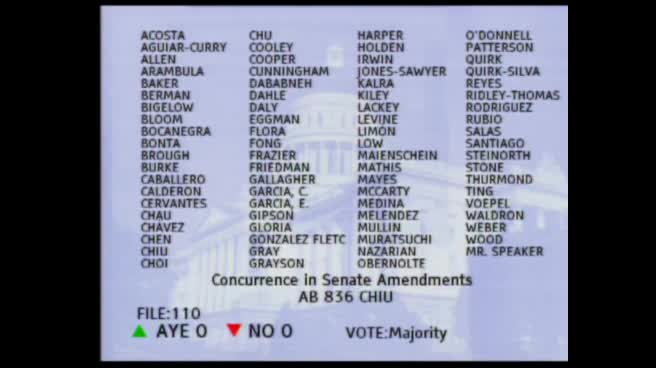
Bill Author
Bill Co-Author(s):