AB 1491: Sales of dogs and cats: contracts.
- Session Year: 2017-2018
- House: Assembly
- Latest Version Date: 2017-10-13
Existing law generally regulates formation and enforcement of contracts, including what constitutes an unlawful contract. Under existing law, a contract is unlawful if it is contrary to an express provision of law, contrary to the policy of express law, though not expressly prohibited, or otherwise contrary to good morals. Existing law, the Unruh Act, provides for the regulation of retail installment contracts, as defined. Existing law, the Karnette Rental-Purchase Act, provides for the regulation of rental-purchase agreements, as defined.
Existing law regulates the sale of dogs and cats in this state, including provisions governing the retail sale of dogs and cats.
This bill would declare a contract entered into on or after January 1, 2018, to transfer ownership of a dog or cat in which ownership is contingent upon the making of payments over a period of time subsequent to the transfer of possession of the dog or cat void as against public policy unless those payments are on an unsecured loan for the purchase of that animal. This bill would also declare a contract entered into on or after January 1, 2018, for the lease of a dog or cat that provides for or offers the option of transferring ownership of the dog or cat at the end of the lease term void as against public policy. The bill would require that the consumer taking possession of a dog or cat transferred under one of these contracts be deemed the owner of the dog or cat and be entitled to the return of all amounts paid under the contract.
Existing law generally regulates formation and enforcement of contracts, including what constitutes an unlawful contract. Under existing law, a contract is unlawful if it is contrary to an express provision of law, contrary to the policy of express law, though not expressly prohibited, or otherwise contrary to good morals. Existing law, the Unruh Act, provides for the regulation of retail installment contracts, as defined. Existing law, the Karnette Rental-Purchase Act, provides for the regulation of rental-purchase agreements, as defined.
Existing law regulates the sale of dogs and cats in this state, including provisions governing the retail sale of dogs and cats.
This bill would declare a contract entered into on or after January 1, 2018, to transfer ownership of a dog or cat in which ownership is contingent upon the making of payments over a period of time subsequent to the transfer of possession of the dog or cat void as against public policy unless those payments are on an unsecured loan for the purchase of that animal. This bill would also declare a contract entered into on or after January 1, 2018, for the lease of a dog or cat that provides for or offers the option of transferring ownership of the dog or cat at the end of the lease term void as against public policy. The bill would require that the consumer taking possession of a dog or cat transferred under one of these contracts be deemed the owner of the dog or cat and be entitled to the return of all amounts paid under the contract.
Existing law generally regulates formation and enforcement of contracts, including what constitutes an unlawful contract. Under existing law, a contract is unlawful if it is contrary to an express provision of law, contrary to the policy of express law, though not expressly prohibited, or otherwise contrary to good morals. Existing law, the Unruh Act, provides for the regulation of retail installment contracts, as defined. Existing law, the Karnette Rental-Purchase Act, provides for the regulation of rental-purchase agreements, as defined.
Existing law regulates the sale of dogs and cats in this state, including provisions governing the retail sale of dogs and cats.
This bill would declare a contract entered into on or after January 1, 2018, to transfer ownership of a dog or cat in which ownership is contingent upon the making of payments over a period of time subsequent to the transfer of possession of the dog or cat void as against public policy unless those payments are on an unsecured loan for the purchase of that animal. This bill would also declare a contract entered into on or after January 1, 2018, for the lease of a dog or cat that provides for or offers the option of transferring ownership of the dog or cat at the end of the lease term void as against public policy. The bill would require that the consumer taking possession of a dog or cat transferred under one of these contracts be deemed the owner of the dog or cat and be entitled to the return of all amounts paid under the contract.
Existing law generally regulates formation and enforcement of contracts, including what constitutes an unlawful contract. Under existing law, a contract is unlawful if it is contrary to an express provision of law, contrary to the policy of express law, though not expressly prohibited, or otherwise contrary to good morals. Existing law, the Unruh Act, provides for the regulation of retail installment contracts, as defined. Existing law, the Karnette Rental-Purchase Act, provides for the regulation of rental-purchase agreements, as defined.
Existing law regulates the sale of dogs and cats in this state, including provisions governing the retail sale of dogs and cats.
This bill would declare a contract entered into on or after January 1, 2018, to transfer ownership of a dog or cat in which ownership is contingent upon the making of payments over a period of time subsequent to the transfer of possession of the dog or cat void as against public policy unless those payments are on an unsecured loan for the purchase of that animal. This bill would also declare a contract entered into on or after January 1, 2018, for the lease of a dog or cat that provides for or offers the option of transferring ownership of the dog or cat at the end of the lease term void as against public policy. The bill would require that the consumer taking possession of a dog or cat transferred under the terms of one of these contracts be deemed the owner of the dog or cat and be entitled to return all amounts paid under the contract.
Existing law generally regulates formation and enforcement of contracts, including what constitutes an unlawful contract. Under existing law law, a contract is unlawful if it is contrary to an express provision of law, contrary to the policy of express law, though not expressly prohibited, or otherwise contrary to good morals. Existing law, the Unruh Act, provides for the regulation of retail installment contracts, as defined. Existing law, the Karnette Rental-Purchase Act, provides for the regulation of rental-purchase agreements, as defined.
Existing law regulates the sale of dogs and cats in this state, including provisions governing the retail sale of dogs and cats.
This bill would declare a contract entered into on or after January 1, 2018, to transfer ownership of a dog or cat in which ownership is contingent upon the making of payments over a period of time subsequent to the transfer of possession of the dog or cat void as against public policy unless those payments are on an unsecured loan for the purchase of that animal. This bill would also declare a contract entered into on or after January 1, 2018, for the lease of a dog or cat that provides for or offers the option of transferring ownership of the dog or cat at the end of the lease term void as against public policy. The bill would require that the consumer taking possession of a dog or cat transferred under the terms of one of these contracts be deemed the owner of the dog or cat and be entitled to return all amounts paid under the contract.
Existing law generally regulates formation and enforcement of contracts, including what constitutes an unlawful contract. Under existing law a contract is unlawful if it is contrary to an express provision of law, contrary to the policy of express law, though not expressly prohibited, or otherwise contrary to good morals. Existing law, the Unruh Act, provides for the regulation of retail installment contracts, as defined. Existing law, the Karnette Rental-Purchase Act, provides for the regulation of rental-purchase agreements, as defined.
Existing law regulates the sale of dogs and cats in this state, including provisions governing the retail sale of dogs and cats.
This bill would make it unlawful to offer pictures or otherwise make representations regarding a dog or cat that do not depict the actual dog or cat available for purchase by the public, make or disseminate any statement about the dog or cat being advertised for sale that is known, or by the exercise of reasonable care should be known, to be false or misleading, or make or disseminate any statement about the dog or cat being advertised for sale with the intent not to sell to the public the actual dog or cat so advertised. The bill would also make it unlawful to fail to withdraw in writing an advertisement for the sale of a dog or cat within 48 hours after selling the dog or cat or withdrawing the dog or cat from sale. The bill would make a person who violates these provisions subject to a civil penalty of not less than $500 and not more than $5,000 for each violation. The bill would authorize the Attorney General and local entities, as specified, to bring a civil action to assess and recover the civil penalty.This bill would declare a contract entered into on or after January 1, 2018, to transfer ownership of a dog or cat in which ownership is contingent upon the making of payments over a period of time subsequent to the transfer of possession of the dog or cat void as against public policy unless those payments are on an unsecured loan for the purchase of that animal. This bill would also declare a contract entered into on or after January 1, 2018, for the lease of a dog or cat void as against public policy. The bill would require that the consumer taking possession of a dog or cat transferred under the terms of one of these contracts be deemed the owner of the dog or cat and be entitled to return all amounts paid under the contract.
Existing law regulates the sale of dogs and cats in this state, including provisions governing the retail sale of dogs and cats.
This bill would make it unlawful to offer pictures or otherwise make representations regarding a dog or cat that do not depict the actual dog or cat available for purchase by the public, make or disseminate any statement about the dog or cat being advertised for sale that is known, or by the exercise of reasonable care should be known, to be false or misleading, or make or disseminate any statement about the dog or cat being advertised for sale with the intent not to sell to the public the actual dog or cat so advertised. The bill would also make it unlawful to fail to withdraw in writing an advertisement for the sale of a dog or cat within 48 hours after selling the dog or cat or withdrawing the dog or cat from sale. The bill would make a person who violates these provisions subject to a civil penalty of not less than $500 and not more than $5,000 for each violation. The bill would authorize the Attorney General and local entities, as specified, to bring a civil action to assess and recover the civil penalty.
(a)(1)Except as provided in paragraph (2), a contract entered into on or after January 1, 2018, to transfer ownership of a dog or cat in which ownership is contingent upon the making of payments over a period of time subsequent to the transfer of possession of the dog or cat is void as against public policy.
(2)Paragraph (1) shall not apply to payments to repay an unsecured loan for the purchase of the dog or cat.
(b)A contract entered into on or after January 1, 2018, for the lease of a dog or cat that provides for or offers the option of transferring ownership of the dog or cat at the end of the lease term is void as against public policy.
(c)In addition to any other remedies provided by law, the consumer taking possession of a dog or cat transferred under a contract described in paragraph (1) of subdivision (a) or in subdivision (b) shall be deemed the owner of the dog or cat and shall also be entitled to the return of all amounts the consumer paid under the contract.
(a)(1)Except as provided in paragraph (2), a contract entered into on or after January 1, 2018, to transfer ownership of a dog or cat in which ownership is contingent upon the making of payments over a period of time subsequent to the transfer of possession of the dog or cat is void as against public policy.
(2)Paragraph (1) shall not apply to payments to repay an unsecured loan for the purchase of the dog or cat.
(b)A contract entered into on or after January 1, 2018, for the lease of a dog or cat that provides for or offers the option of transferring ownership of the dog or cat at the end of the lease term is void as against public policy.
(c)In addition to any other remedies provided by law, the consumer taking possession of a dog or cat transferred under a contract described in paragraph (1) of subdivision (a) or in subdivision (b) shall be deemed the owner of the dog or cat and shall also be entitled to the return of all amounts the consumer paid under the contract.
(a)(1)Except as provided in paragraph (2), a contract entered into on or after January 1, 2018, to transfer ownership of a dog or cat in which ownership is contingent upon the making of payments over a period of time subsequent to the transfer of possession of the dog or cat is void as against public policy.
(2)Paragraph (1) shall not apply to payments to repay an unsecured loan for the purchase of the dog or cat.
(b)A contract entered into on or after January 1, 2018, for the lease of a dog or cat that provides for or offers the option of transferring ownership of the dog or cat at the end of the lease term is void as against public policy.
(c)In addition to any other remedies provided by law, the consumer taking possession of a dog or cat transferred under a contract described in paragraph (1) of subdivision (a) or in subdivision (b) shall be deemed the owner of the dog or cat and shall also be entitled to the return of all amounts the consumer paid under the contract.
(a)(1)Except as provided in paragraph (2), a contract entered into on or after January 1, 2018, to transfer ownership of a dog or cat in which ownership is contingent upon the making of payments over a period of time subsequent to the transfer of possession of the dog or cat is void as against public policy.
(2)Paragraph (1) shall not apply to payments to repay an unsecured loan for the purchase of the dog or cat.
(b)A contract entered into on or after January 1, 2018, for the lease of a dog or cat that provides for or offers the option of transferring ownership of the dog or cat at the end of the lease term is void as against public policy.
(c)In addition to any other remedies provided by law, the consumer taking possession of a dog or cat transferred under the terms of a contract described in paragraph (1) of subdivision (a) or in subdivision (b) shall be deemed the owner of the dog or cat and shall be entitled to the return of all amounts the consumer paid under the contract.
(a)(1)Except as provided in paragraph (2), a contract entered into on or after January 1, 2018, to transfer ownership of a dog or cat in which ownership is contingent upon the making of payments over a period of time subsequent to the transfer of possession of the dog or cat is void as against public policy.
(2)Paragraph (1) shall not apply to payments to repay an unsecured loan for the purchase of the dog or cat.
(b)A contract entered into on or after January 1, 2018, for the lease of a dog or cat that provides for or offers the option of transferring ownership of the dog or cat at the end of the lease term is void as against public policy.
(c)In addition to any other remedies provided by law, the consumer taking possession of a dog or cat transferred under the terms of a contract described in paragraph (1) of subdivision (a) or in subdivision (b) shall be deemed the owner of the dog or cat and shall be entitled to the return of all amounts the consumer paid under the contract.
(a)(1)Except as provided in paragraph (2), a contract entered into on or after January 1, 2018, to transfer ownership of a dog or cat in which ownership is contingent upon the making of payments over a period of time subsequent to the transfer of possession of the dog or cat is void as against public policy.
(2)Paragraph (1) shall not apply to payments to repay an unsecured loan for the purchase of the dog or cat.
(b)A contract entered into on or after January 1, 2018, for the lease of a dog or cat is void as against public policy.
(c)In addition to any other remedies provided by law, the consumer taking possession of a dog or cat transferred under the terms of a contract described in paragraph (1) of subdivision (a) or in subdivision (b) shall be deemed the owner of the dog or cat and shall be entitled to return all amounts paid under the contract.
SECTION 1.Article 4 (commencing with Section 122316) is added to Chapter 5 of Part 6 of Division 105 of the Health and Safety Code, to read:4.Sales of Dogs and Cats: Advertising122316.It is unlawful to do any of the following when advertising the sale of a dog or cat to the public in this state:(a)Offer pictures or otherwise make representations regarding a dog or cat that do not depict the actual dog or cat available for purchase by the public.(b)Make or disseminate any statement about the dog or cat being advertised for sale that is known, or by the exercise of reasonable care should be known, to be false or misleading.(c)Make or disseminate any statement about the dog or cat being advertised for sale with the intent not to sell to the public the actual dog or cat so advertised.122317.It is unlawful to fail to withdraw in writing an advertisement for the sale of a dog or cat within 48 hours after selling the dog or cat or withdrawing the dog or cat from sale.122318.(a)A person who violates this article is subject to a civil penalty of not less than five hundred dollars ($500) and not more than five thousand dollars ($5,000) for each violation.(b)The Attorney General, or the city attorney of the city or the district attorney or county counsel of the county in which a violation of this article occurs, may bring a civil action in a court of competent jurisdiction to assess and recover the civil penalty described in subdivision (a). The civil penalty, when collected, shall be payable, as appropriate, to the general fund of whichever governmental entity brought the action to assess the civil penalty.It is unlawful to do any of the following when advertising the sale of a dog or cat to the public in this state:
(a)Offer pictures or otherwise make representations regarding a dog or cat that do not depict the actual dog or cat available for purchase by the public.
(b)Make or disseminate any statement about the dog or cat being advertised for sale that is known, or by the exercise of reasonable care should be known, to be false or misleading.
(c)Make or disseminate any statement about the dog or cat being advertised for sale with the intent not to sell to the public the actual dog or cat so advertised.
122317.It is unlawful to fail to withdraw in writing an advertisement for the sale of a dog or cat within 48 hours after selling the dog or cat or withdrawing the dog or cat from sale.
122318.(a)A person who violates this article is subject to a civil penalty of not less than five hundred dollars ($500) and not more than five thousand dollars ($5,000) for each violation.
(b)The Attorney General, or the city attorney of the city or the district attorney or county counsel of the county in which a violation of this article occurs, may bring a civil action in a court of competent jurisdiction to assess and recover the civil penalty described in subdivision (a). The civil penalty, when collected, shall be payable, as appropriate, to the general fund of whichever governmental entity brought the action to assess the civil penalty.
|
Date
|
Status
|
|---|---|
| Oct 13, 2017 | Chaptered by Secretary of State - Chapter 761, Statutes of 2017. |
| Oct 13, 2017 | Approved by the Governor. |
| Sep 12, 2017 | Enrolled and presented to the Governor at 2:30 p.m. |
| Sep 5, 2017 | Senate amendments concurred in. To Engrossing and Enrolling. (Ayes 63. Noes 10.). |
| Aug 31, 2017 | In Assembly. Concurrence in Senate amendments pending. May be considered on or after September 2 pursuant to Assembly Rule 77. |
| Aug 31, 2017 | Read third time. Passed. Ordered to the Assembly. |
| Aug 23, 2017 | Read second time. Ordered to third reading. |
| Aug 22, 2017 | Read third time and amended. Ordered to second reading. |
| Jul 20, 2017 | Read second time. Ordered to third reading. |
| Jul 19, 2017 | From committee: Do pass. (Ayes 7. Noes 0.) (July 18). |
| Jul 3, 2017 | From committee chair, with author's amendments: Amend, and re-refer to committee. Read second time, amended, and re-referred to Com. on JUD. |
| Jun 19, 2017 | From committee: Do pass and re-refer to Com. on JUD. (Ayes 9. Noes 0.) (June 19). Re-referred to Com. on JUD. |
| May 24, 2017 | Referred to Coms. on B., P. & E.D. and JUD. |
| May 11, 2017 | In Senate. Read first time. To Com. on RLS. for assignment. |
| May 11, 2017 | Read third time. Passed. Ordered to the Senate. (Ayes 63. Noes 10. Page 1470.) |
| Apr 18, 2017 | Read second time. Ordered to third reading. |
| Apr 17, 2017 | Read second time and amended. Ordered returned to second reading. |
| Apr 6, 2017 | From committee: Amend, and do pass as amended. (Ayes 10. Noes 1.) (April 4). |
| Mar 28, 2017 | Re-referred to Com. on JUD. |
| Mar 27, 2017 | From committee chair, with author's amendments: Amend, and re-refer to Com. on JUD. Read second time and amended. |
| Mar 16, 2017 | Referred to Com. on JUD. |
| Feb 19, 2017 | From printer. May be heard in committee March 21. |
| Feb 17, 2017 | Read first time. To print. |
|
Date
|
Description
|
Location
|
Votes
|
|
|---|---|---|---|---|
| Sep 5, 2017 | AB 1491 CABALLERO Concurrence in Senate Amendments | Assembly Floor |
Passed |
|
| Aug 31, 2017 | Assembly 3rd Reading AB1491 Caballero et al. By Atkins | Senate Floor |
Passed |
|
| Jul 18, 2017 | Do pass | Senate Standing Committee on Judiciary |
Passed |
|
| Jun 19, 2017 | Do pass, but first be re-referred to the Committee on [Judiciary] | Senate Standing Committee on Business, Professions and Economic Development |
Passed |
|
| May 11, 2017 | AB 1491 CABALLERO Assembly Third Reading | Assembly Floor |
Passed |
|
| Apr 4, 2017 | Do pass as amended. | Assembly Standing Committee on Judiciary |
Passed |
This list shows positions taken on this bill by organizations on the date displayed, which is linked to the original source.
Positions by individuals are not included.
|
Organization
|
Position
|
Date
|
|---|---|---|
| Humane Society Of The United States | ** Support | Aug 23, 2017 |
| International Longshore Warehouse Union Local 13 | * Support | Apr 4, 2017 |
| Opposition | ** Against | Apr 2, 2017 |
| San Diego Humane Society | ** Support | Aug 23, 2017 |
| Social Compassion In Legislation | ** Support | Aug 23, 2017 |
| State Humane Association of California | ** Support | Aug 23, 2017 |
| The Animal Council | ** Against | Apr 2, 2017 |
CONCURRENCE IN SENATE AMENDMENTS
CSA1 Bill Id:AB 1491
Author:(Caballero)
As Amended Ver:August 22, 2017
Majority vote
ASSEMBLY: | 63-10 | (May 11, 2017) | SENATE: | 37-0 | (August 31, 2017) |
Original Committee Reference: JUD.
SUMMARY: Declares as void against public policy rent-to-own and other types of leasing contracts for pet dogs or cats that do not immediately transfer ownership of the animal to the purchaser. Specifically, this bill:
- Establishes that a contract entered into on or after January 1, 2018, to transfer ownership of a dog or cat in which ownership is contingent upon the making of payments over a period of time subsequent to the transfer of possession of the dog or cat is void as against public policy.
- Clarifies that 1) above does not apply to payments to repay an unsecured loan for the purchase of the dog or cat.
- Establishes that a contract entered into on or after January 1, 2018, for the lease of a dog or cat that provides for or offers the option of transferring ownership of the dog or cat at the end of the lease term is void as against public policy.
- Provides that in addition to any other remedies provided by law, the consumer taking possession of a dog or cat transferred under a contract described in 1) or 3) above shall be deemed the owner of the dog or cat and shall also be entitled to the return of all amounts the consumer paid under the contract.
The Senate amendments make a technical change and add several co-authors.
FISCAL EFFECT: None
COMMENTS: According to the author, consumer advocates and animal welfare advocates have raised concerns about a new kind of financing agreement being used by some pet stores in California – a contract where the consumer (often unwittingly) commits not to purchase, but to lease the desired dog or cat by making monthly payments that reflect near usurious financing rates. The author explains the need of the bill as follows:
[One] company partners with pet retailers to offer consumers puppy leasing options, akin to a "rent-to-own" scheme. The structure is much like a car lease, in which the consumer pays fixed monthly payments and is then given the opportunity to purchase the puppy, kitten, or other pet at the end of the term by making a balloon payment. At the end of the lease term, the lessee may have paid twice or even three times the amount of the initial cost that the pet otherwise would have cost. Unlike other common forms of financing, the company has structured the financing so that there are no restrictions on the fees or interest that are charged. Given the emotional nature of purchasing a new pet, families often do not take the time to fully understand the financial implications of the transaction. Once the true cost is realized, these families must decide if they can keep their new furry friends, or if they have to cancel their contract. In the event of a default or cancellation, the future welfare of the pet is put into question given that the lending company has no interest in maintaining the pet.
This bill would help by specifying that financing schemes that do not immediately transfer full ownership of a pet to a buyer may not be utilized to finance the purchase of a dog or cat. By precluding these types of transactions, we can protect consumers from unscrupulous lending practices involving the purchase of a pet and reduce the potential that the puppy, kitten or other animal will be relinquished to a shelter due to financial circumstances.
Recent reports of consumer experiences with pet leasing contracts raise significant consumer protection concerns. According to the author, the type of financing agreements for pet ownership identified by consumer advocates and highlighted in recent media reports are structured as leasing agreements rather than as lending agreements – in order to circumvent usury laws that cap what lenders can charge consumers – resulting in troubling examples of consumers charged exorbitant amounts beyond the cash price of the pet. The author cites a number of accounts appearing in recent media articles describing the experiences of consumers who, knowingly or unknowingly, entered into a leasing agreement for a pet dog or cat at extremely high rates of financing. For example:
One family thought they had bought a dog for $2,400 from a San Diego-area pet store, but without realizing it, had agreed to make 34 monthly lease payments of $165, after which they had the right to buy the dog for a balloon payment of about two months' rent. Under the lease agreement, they would have paid the equivalent of more than 70% in annualized interest—nearly twice what credit card lenders charge. In addition, the lender could take back the dog if a payment was missed, and the family would be on the hook for an early repayment charge if the dog ran away or died. (Patrick Clark, "I'm Renting a Dog?" Bloomberg (March 1, 2017). Available at: https://www.bloomberg.com/news/features/2017-03-01/i-m-renting-a-dog)
According to the author, these pet leasing contracts raise many consumer protection issues because: 1) the primary lending company engaged in this type of financing states that the company focuses the financing in underserved communities with little or no access to credit; 2) if a buyer could simply purchase the pet on a traditional credit card, they could avoid a large proportion of the cost; and 3) the company's CEO has stated that the financing is targeted to the purchase of goods that are highly emotional in nature. (Clark, supra.) For these reasons, the author believes that for many low income or uninformed buyers, pet leasing contracts amount to an predatory or unscrupulous financing scheme that often are calculated to lead the consumer to default on the contract.
Should existing law regulating rental-purchase agreements apply to the leasing of animals in the same way it currently applies to furniture, appliances, and other personal property? Although the contracts at issue in this bill are on their face structured as rent-to-own (RTO) lease agreements, some consumer lawyers have raised questions about whether these types of lease agreements for pets would hold up as leases under the federal Consumer Leasing Act if challenged in court. Although this theory has yet to be tested in court, supporters of this theory contend that dogs are uniquely different from other assets like furniture or vehicles because they cannot easily be taken back by the lessor, revalued and resold in the way a car is. (Clark, supra.) The Consumer Leasing Act contemplates that there is an "anticipated actual fair market value of the property upon lease expiration" that guides the decisions of the lessor and lessee (15 United States Code (U.S.C.) 41, Section 1667b), and unlike vehicles or other property that can be remarketed by the lessor after expiration or termination of a lease, it is not clear that this can be done for a pet dog or cat. As a practical matter, the author contends that consumers entering into RTO contracts at issue in this bill do not contemplate that they are only renting the pet for a period of months or years, to be returned at the expiration of the lease; and financers of these transactions have little experience repossessing or remarketing pets after the end of a lease because the event is so rare.
Pet leasing contracts may also threaten animal welfare. Whether these types of financing agreements are better regulated as loans rather than leases, supporters of the bill take the broader view that leases for dogs and cats should be deemed void against public policy because of the threat to animal welfare that they may create. Specifically, they contend that the repossession or potential repossession of pet dogs or cats pursuant to a lease contract creates unique animal welfare concerns that don't arise with respect to furniture, or other inanimate forms of property, and therefore it should be against the public policy of California to allow rent-to-own contracts for dogs and cats. The American Society for the Prevention of Cruelty to Animals (ASPCA) writes in support:
This type of "rent to own" scheme may be justifiable for some consumer goods, such as furniture or car tires, which can easily be repossessed. However, it is wholly ill-suited and unconscionable to utilize such a structure for the purchase of a dog or cat. Neither the financing scheme nor current California laws contemplate the responsibilities required to care for an animal in the event of repossession. As such, it is highly likely that the pet would be relinquished to an animal shelter in the event of the purchaser's default, resulting in a detriment to the purchaser, the financing company and, most importantly, the welfare of the animal. In closing, the ASPCA believes that this bill will protect consumers from unscrupulous lending practices involving the highly emotional purchase of a pet and reduce the potential that the puppy or kitten will be relinquished to an animal shelter due to financial circumstances.
Pet leasing agreements specifically contemplate several ways in which the pet could end up back in the possession of the lessor. First, the lessor may repossess the animal if the consumer defaults on the lease payments (increasingly likely given that the consumer presumably could not afford to buy the pet outright for the initial store price). Second, even if the consumer makes all the required monthly lease payments, he or she may decline to exercise the option to purchase the animal – effectively returning the pet to the lessor or financing company. Finally, the lessor may unilaterally repossess the pet if conditions of the lease are violated (e.g. it learns the animal is being mistreated or not being cared for properly).
According to proponents, the pet store that initially housed the dog or cat is no longer party to the transaction once the lease agreement is effective, and it is not unusual for the financing company to have assigned the contract to a third party company that primarily specializes in managing or collecting on debt obligations. Under these circumstances, what is to happen to the pet when the lease is terminated or expires? According to the articles cited by the author, Wags Lending says that return of pets after the full term of the contract is rare, and that it does take steps to find new homes for pets in cases where the lease was ended early, including trying to convince the pet store to take back the pet. However, as discussed above, it is hard to assess what remarket value or diminished "realized value" the asset has after repossession when the asset is a dog or cat that has been separated from the family that cared for it months or years previously.
Furthermore, a financing company or debt collection company is not in the business of re-homing pets or reselling them on the market, so it is conceivable and even likely that such pets will unfortunately end up being relinquished to animal shelters if they cannot be resold or found a new home by the company repossessing them. In support, the State Humane Association of California (SHAC) writes:
(E)xisting law does not anticipate that a rent-to-own contract would be utilized for a transaction involving a pet. Therefore, it does not address the complexities of maintaining and caring for a pet, including the eventualities of sickness or death and the treatment and disposition of the pet in case of default. The stakes are simply too high to make rent-to-own contracts involving pets anything but bad public policy.
For these reasons, the bill is also supported by several other animal welfare organizations, including the ASPCA, the Humane Society of the United States (HSUS), and the San Diego Humane Society. Because the bill only applies to leases of dogs and cats that contemplate transfer of ownership of the animal, and not the temporary lease of a breeding female for the purpose of breeding a litter, the bill is no longer opposed by the American Kennel Club and other dog enthusiasts who have traditionally utilized these breeding lease agreements without reported problems.
Analysis Prepared by: Anthony Lew / JUD. / (916) 319-2334 FN: 0001396
Office of Senate Floor Analyses (916) 651-1520 Fax: (916) 327-4478 | AB |
THIRD READING
Bill No: AB 1491
Amended: 8/22/17 in Senate
SENATE BUS., PROF. & ECON. DEV. COMMITTEE: 9-0, 6/19/17
AYES: Hill, Fuller, Dodd, Galgiani, Glazer, Hernandez, Newman, Pan, Wilk
SENATE JUDICIARY COMMITTEE: 7-0, 7/18/17
AYES: Jackson, Moorlach, Anderson, Hertzberg, Monning, Stern, Wieckowski
ASSEMBLY FLOOR: 63-10, 5/11/17 - See last page for vote
SOURCE: American Society for the Prevention of Cruelty to Animals
DIGEST:
This bill declares, as void against public policy, a contract for the purchase of a dog or cat which is made contingent on making of payments over a period of time, or other types of lease-to-own agreements that do not immediately transfer ownership of the animal to the purchaser.
Senate Floor Amendments of 8/22/17 make a technical change and add coauthors.
Existing law:
- Regulates retail installment contracts, defined as any contract for a retail installment sale between a buyer and seller which provides for (a) repayment in installments, whether or not such contract contains a title retention provision, and in which the buyer agrees to pay a finance charge or certain other conditions apply; or (b) payment in more than four installments. (Civil Code (CC) § 1802.6)
- Requires detailed disclosures of contract terms in a retail installment contract, including an itemization of the amount financed, the cash price, sales taxes, administrative finance charges, and the amount of down payment, among other things. Further requires the entire content of the contract, including all terms, obligations, and disclosures, to appear in a single document. (CC §§ 1803.1-1803.3)
- Provides that if the buyer defaults in the performance of obligations, the seller may repossess the goods, or sue for the contract balance. (CC § 1812.2)
- Regulates personal property rental transactions in which the renter has the option to apply a portion of the rent toward purchase of the property. Governs the rental of property for use by a consumer for personal, household, or family purposes for an initial term of 4 months or less. (CC § 1812.622 et seq.)
- Establishes the Lockyer-Polanco-Farr Pet Protection Act, related to the retail sale of dogs and cats. Requires that pet dealers possess a permit in order to sell dogs and cats and provide consumers disclosures related to the pet, including breeder information, health records, and any known health condition. Requires that breeders maintain facilities and care requirements for pets. Specifies civil penalties for violating these sections. (Health and Safety Code (HSC) §§ 122125-122220)
- Establishes the Polanco-Lockyer Pet Breeder Warranty Act, related to the sale of dogs by breeders. Defines a dog breeder as a person, firm, partnership, corporation that has sold, transferred or given away 20 or more dogs within one year that were bred and reared on the premises. Specifies information to disclose to the consumer, including records of diseases or illness. Requires dog breeders to maintain the health and safety of the dogs and prohibits them from knowingly selling a dog that is ill. (HSC §§ 122045-122110)
This bill:
- Establishes that a contract entered into on or after January 1, 2018 to transfer ownership of a dog or cat, in which ownership is contingent upon the making of payments over a period of time subsequent to the transfer of possession of the dog or cat, is void as against public policy.
- Clarifies that Item #1) above does not apply to payments to repay an unsecured loan for the purchase of the dog or cat.
- Establishes that a contract entered into on or after January 1, 2018 for the lease of a dog or cat, that provides for or offers the option of transferring ownership of the dog or cat at the end of the lease term, is void as against public policy.
- Provides that, in addition to any other remedies provided by law, the consumer taking possession of a dog or cat transferred under the terms of a contract described in Item #1) or #3) above shall be deemed the owner of the dog or cat and shall be entitled to the return of all amounts he or she paid under the contract.
Background
According to the author, consumer advocates and animal welfare advocates have raised concerns about a new kind of financing agreement being used by some pet stores in California that puts the safety and welfare of animals at risk—a contract where the consumer (often unwittingly) commits not to purchase, but to lease the desired dog or cat by making monthly payments that reflect near usurious financing fees to be charged that are predatory in nature. These are sometimes referred to as “puppy leasing agreements.”
Regulation of usury laws, retail installment contracts and rent-to-own agreements, generally. Usury is defined by Black's Law Dictionary (5th Ed.) as an unconscionable and exorbitant rate or amount of interest, and a usurious loan is one whose interest rates are determined to be in excess of those permitted by a jurisdiction's usury laws. Under the California Constitution, the interest rate limit for sales contracts is 12 percent, while the interest rate on judgments is limited to 7 percent. (Cal. Const. Article XV, Sec. 1.) However, there are many exceptions to the usury laws, including for large banks and financial institutions, as well as for certain loans secured by real property. In addition, if a consumer expressly agrees to an interest rate higher than the statutory limit, then they effectively waive these protections. As a result, many consumer contracts (including virtually all credit card agreements) legally employ interest rates that exceed these limits.
Existing law, the California Retail Installment Sales Act, generally known as the Unruh Act (not to be confused with the Unruh Civil Rights Act, Section 51 of the Civil Code), regulates consumer retail installment contracts for the sale of personal goods and services on time and revolving charge accounts. Generally speaking, the Unruh Act governs contracts that provide for the purchase to be paid in four or more installments, or which impose a finance charge, higher price, or other cost to the buyer in exchange for deferred payment. As originally enacted, the Unruh Act limited the interest rate that could be charged under such contracts, but those restrictions were removed in 1988 and no such restrictions exist today in California (although they do in other states).
Rent-to-own (RTO) contracts, also known as rental-purchase contracts, differ from retail installment contracts because there is a lessor-lessee relationship established until the lessee ultimately purchases the property, either by making all of the required monthly payments or by exercising an option to purchase the property before the scheduled end of the lease term, pursuant to the terms of the contract. Existing law, the Karnette Rental-Purchase Act (KR-P Act) governs consumer rental transactions of property for personal, household, or family purposes in which the renter has the option to apply a portion of the rent toward purchase of the property. In 2006, the Legislature enacted AB 594 (Karnette, Chapter 410, Statutes of 2006) to amend the KR-P Act to establish bright-line pricing limits that cap the cash price of the property and the total amount of payments that can be required under RTO contracts. RTO contracts are leases also subject to regulation under the federal Consumer Leasing Act.
Recent reports of consumer experiences with pet leasing contracts raise significant consumer protection concerns. According to the author, the type of financing agreements for pet ownership identified by consumer advocates and highlighted in recent media reports are structured as leasing agreements rather than as lending agreements--in order to circumvent usury laws that cap what lenders can charge consumers—resulting in troubling examples of consumers charged exorbitant amounts beyond the cash price of the pet. The author cites a number of accounts appearing in recent media articles describing the experiences of consumers who, knowingly or unknowingly, entered into a leasing agreement for a pet dog or cat at extremely high rates of financing. One family thought they had bought a dog for $2,400 from a San Diego-area pet store, but without realizing it, had agreed to make 34 monthly lease payments of $165, after which they had the right to buy the dog for a balloon payment of about two months' rent. (Patrick Clark, "I'm Renting a Dog?" Bloomberg (March 1, 2017).
Another family from Oceanside who entered into a leasing contract for a puppy that required 27 monthly payments totaling $2,687,after which they had the right to pay $93.52 to end the lease or twice that amount ($187.04) to purchase the pet, plus additional fees and taxes. The pet store's initial asking price for the puppy in this case was just $495. (Ashly McGlone, "Couple shocked at 'dog lease' deal." San Diego Union-Tribune (November 28, 2014.)
In both cases, the financing agreement offered at the pet store was through a company called Wags Lending, perhaps the most well-known of several companies that offer these types of financing agreements through pet stores in California. Started in 2013, Wags Lending was reportedly already used by 350 pet retail stores and breeders in 40 states by its first year of operation. According to a Bloomberg writer, Wags Lending charges effective interest rates ranging from about 36 percent to 170 percent on an annualized basis, based on sample rates published on its Web site. This fact is not immediately apparent because Wags doesn't show its pricing in terms of Annual Percentage Rate, since it asserts it is underwriting leases, not loans. Importantly, because the contracts at issue in this bill are deliberately structured as lease agreements rather than loan agreements, they are not subject to usury laws or other laws regulating lenders, and this is true not only in California but likely in many other states where these contracts are being used.
Pet leasing contracts may also threaten the safety and welfare of the animal. Whether these types of financing agreements are better regulated as loans rather than leases, the proponents of the bill take the broader view that leases for dogs and cats should be deemed void against public policy because of the threat to animal welfare that they may create. Specifically, they contend that the repossession or potential repossession of pet dogs or cats pursuant to a lease contract creates unique animal welfare concerns that don't arise with respect to furniture, appliances or other inanimate forms of property, and therefore it should be against the public policy of California to allow rent-to-own contracts for dogs and cats.
Pet leasing agreements specifically contemplate several ways in which the pet could end up back in the possession of the lessor. First, the lessor may repossess the animal if the consumer defaults on the lease payments (increasingly likely given that the consumer presumably could not afford to buy the pet outright for the initial store price). Second, even if the consumer makes all the required monthly lease payments, he or she may decline to exercise the option to purchase the animal—effectively returning the pet to the lessor or financing company. Finally, the lessor may unilaterally repossess the pet if conditions of the lease are violated (e.g. it learns the animal is being mistreated or not being cared for properly).
According to the proponents, the pet store that initially housed the dog or cat is no longer party to the transaction once the lease agreement is effective, and it is not unusual for the financing company to have assigned the contract to a third party company that primarily specializes in managing or collecting on debt obligations. Under these circumstances, what is to happen to the pet when the lease is terminated or expires?
According to the articles cited by the author, Wags Lending says that return of pets after the full term of the contract is rare, and that it does take steps to find new homes for pets in cases where the lease was ended early, including trying to convince the pet store to take back the pet. However, as discussed above, it is hard to assess what remarket value or diminished "realized value" the asset has after repossession when the asset is a dog or cat that has been separated from the family it lived with for months or years previously.
Furthermore, a financing company or debt collection company is not in the business of re-homing pets or reselling them on the market, so it is conceivable and even likely that such pets will unfortunately end up being relinquished to animal shelters if they cannot be resold or found a new home by the company repossessing them.
FISCAL EFFECT: Appropriation: Fiscal Com.: Local:
American Society for the Prevention of Cruelty to Animals (source)
Humane Society of the United States
San Diego Humane Society
State Humane Association of California
Social Compassion in Legislation
OPPOSITION: (Verified 8/23/17)
None received
ARGUMENTS IN SUPPORT: Supporters state that purchasing a puppy or kitten from a retailer or breeder can be costly. In some cases, the cost can rise to as high as several thousands of dollars. As a result, a developing trend has been to offer consumers financing options that make adopting a new pet appear to be more accessible. According to supporters, the RTO structure is like a car lease in which the consumer pays fixed monthly payments and is then given the opportunity to purchase the puppy, kitten, or other pet at the end of the term by making a balloon payment. At the end of the lease term, the lessee may have paid twice or even three times the amount of the initial cost that the pet otherwise would have cost.
Supporters are seriously concerned about this detrimental form of financing that is contrary to public policy, in that allows usurious fees to be charged to the consumer, is predatory in nature, and puts the safety and welfare of animals at risk.
ASSEMBLY FLOOR: 63-10, 5/11/17
AYES: Acosta, Aguiar-Curry, Arambula, Baker, Berman, Bloom, Bocanegra, Bonta, Burke, Caballero, Calderon, Cervantes, Chau, Chávez, Chiu, Choi, Chu, Cooley, Cooper, Cunningham, Dababneh, Daly, Eggman, Flora, Fong, Friedman, Cristina Garcia, Eduardo Garcia, Gipson, Gloria, Gomez, Gonzalez Fletcher, Gray, Grayson, Holden, Irwin, Jones-Sawyer, Kalra, Lackey, Levine, Limón, Low, Maienschein, McCarty, Medina, Mullin, Muratsuchi, Nazarian, Quirk, Quirk-Silva, Reyes, Ridley-Thomas, Rodriguez, Rubio, Salas, Santiago, Steinorth, Mark Stone, Thurmond, Ting, Weber, Wood, Rendon
NOES: Travis Allen, Bigelow, Brough, Chen, Harper, Kiley, Mathis, Mayes, Obernolte, Voepel
NO VOTE RECORDED: Dahle, Frazier, Gallagher, Melendez, O'Donnell, Patterson, Waldron
8/23/17 15:18:49
**** END ****
Office of Senate Floor Analyses (916) 651-1520 Fax: (916) 327-4478 | AB |
THIRD READING
Bill No: AB 1491
:
SENATE BUS., PROF. & ECON. DEV. COMMITTEE: 9-0, 6/19/17
AYES: Hill, Fuller, Dodd, Galgiani, Glazer, Hernandez, Newman, Pan, Wilk
SENATE JUDICIARY COMMITTEE: 7-0, 7/18/17
AYES: Jackson, Moorlach, Anderson, Hertzberg, Monning, Stern, Wieckowski
ASSEMBLY FLOOR: 63-10, 5/11/17 - See last page for vote
SOURCE: American Society for the Prevention of Cruelty to Animals
DIGEST:
This bill declares, as void against public policy, a contract for the purchase of a dog or cat which is made contingent on making of payments over a period of time, or other types of lease-to-own agreements that do not immediately transfer ownership of the animal to the purchaser.
Existing law:
- Regulates retail installment contracts, defined as any contract for a retail installment sale between a buyer and seller which provides for (a) repayment in installments, whether or not such contract contains a title retention provision, and in which the buyer agrees to pay a finance charge or certain other conditions apply; or (b) payment in more than four installments. (Civil Code (CC) § 1802.6)
- Requires detailed disclosures of contract terms in a retail installment contract, including an itemization of the amount financed, the cash price, sales taxes, administrative finance charges, and the amount of down payment, among other things. Further requires the entire content of the contract, including all terms, obligations, and disclosures, to appear in a single document. (CC §§ 1803.1-1803.3)
- Provides that if the buyer defaults in the performance of obligations, the seller may repossess the goods, or sue for the contract balance. (CC § 1812.2)
- Regulates personal property rental transactions in which the renter has the option to apply a portion of the rent toward purchase of the property. Governs the rental of property for use by a consumer for personal, household, or family purposes for an initial term of 4 months or less. (CC § 1812.622 et seq.)
- Establishes the Lockyer-Polanco-Farr Pet Protection Act, related to the retail sale of dogs and cats. Requires that pet dealers possess a permit in order to sell dogs and cats and provide consumers disclosures related to the pet, including breeder information, health records, and any known health condition. Requires that breeders maintain facilities and care requirements for pets. Specifies civil penalties for violating these sections. (Health and Safety Code (HSC) §§ 122125-122220)
- Establishes the Polanco-Lockyer Pet Breeder Warranty Act, related to the sale of dogs by breeders. Defines a dog breeder as a person, firm, partnership, corporation that has sold, transferred or given away 20 or more dogs within one year that were bred and reared on the premises. Specifies information to disclose to the consumer, including records of diseases or illness. Requires dog breeders to maintain the health and safety of the dogs and prohibits them from knowingly selling a dog that is ill. (HSC §§ 122045-122110)
This bill:
- Establishes that a contract entered into on or after January 1, 2018 to transfer ownership of a dog or cat, in which ownership is contingent upon the making of payments over a period of time subsequent to the transfer of possession of the dog or cat, is void as against public policy.
- Clarifies that Item #1) above does not apply to payments to repay an unsecured loan for the purchase of the dog or cat.
- Establishes that a contract entered into on or after January 1, 2018 for the lease of a dog or cat, that provides for or offers the option of transferring ownership of the dog or cat at the end of the lease term, is void as against public policy.
- Provides that, in addition to any other remedies provided by law, the consumer taking possession of a dog or cat transferred under the terms of a contract described in Item #1) or #3) above shall be deemed the owner of the dog or cat and shall be entitled to the return of all amounts he or she paid under the contract.
Background
According to the author, consumer advocates and animal welfare advocates have raised concerns about a new kind of financing agreement being used by some pet stores in California that puts the safety and welfare of animals at risk—a contract where the consumer (often unwittingly) commits not to purchase, but to lease the desired dog or cat by making monthly payments that reflect near usurious financing fees to be charged that are predatory in nature. These are sometimes referred to as “puppy leasing agreements.”
Regulation of usury laws, retail installment contracts and rent-to-own agreements, generally. Usury is defined by Black's Law Dictionary (5th Ed.) as an unconscionable and exorbitant rate or amount of interest, and a usurious loan is one whose interest rates are determined to be in excess of those permitted by a jurisdiction's usury laws. Under the California Constitution, the interest rate limit for sales contracts is 12 percent, while the interest rate on judgments is limited to 7 percent. (Cal. Const. Article XV, Sec. 1.) However, there are many exceptions to the usury laws, including for large banks and financial institutions, as well as for certain loans secured by real property. In addition, if a consumer expressly agrees to an interest rate higher than the statutory limit, then they effectively waive these protections. As a result, many consumer contracts (including virtually all credit card agreements) legally employ interest rates that exceed these limits.
Existing law, the California Retail Installment Sales Act, generally known as the Unruh Act (not to be confused with the Unruh Civil Rights Act, Section 51 of the Civil Code), regulates consumer retail installment contracts for the sale of personal goods and services on time and revolving charge accounts. Generally speaking, the Unruh Act governs contracts that provide for the purchase to be paid in four or more installments, or which impose a finance charge, higher price, or other cost to the buyer in exchange for deferred payment. As originally enacted, the Unruh Act limited the interest rate that could be charged under such contracts, but those restrictions were removed in 1988 and no such restrictions exist today in California (although they do in other states).
Rent-to-own (RTO) contracts, also known as rental-purchase contracts, differ from retail installment contracts because there is a lessor-lessee relationship established until the lessee ultimately purchases the property, either by making all of the required monthly payments or by exercising an option to purchase the property before the scheduled end of the lease term, pursuant to the terms of the contract. Existing law, the Karnette Rental-Purchase Act (KR-P Act) governs consumer rental transactions of property for personal, household, or family purposes in which the renter has the option to apply a portion of the rent toward purchase of the property. In 2006, the Legislature enacted AB 594 (Karnette, Chapter 410, Statutes of 2006) to amend the KR-P Act to establish bright-line pricing limits that cap the cash price of the property and the total amount of payments that can be required under RTO contracts. RTO contracts are leases also subject to regulation under the federal Consumer Leasing Act.
Recent reports of consumer experiences with pet leasing contracts raise significant consumer protection concerns. According to the author, the type of financing agreements for pet ownership identified by consumer advocates and highlighted in recent media reports are structured as leasing agreements rather than as lending agreements--in order to circumvent usury laws that cap what lenders can charge consumers—resulting in troubling examples of consumers charged exorbitant amounts beyond the cash price of the pet. The author cites a number of accounts appearing in recent media articles describing the experiences of consumers who, knowingly or unknowingly, entered into a leasing agreement for a pet dog or cat at extremely high rates of financing. One family thought they had bought a dog for $2,400 from a San Diego-area pet store, but without realizing it, had agreed to make 34 monthly lease payments of $165, after which they had the right to buy the dog for a balloon payment of about two months' rent. (Patrick Clark, "I'm Renting a Dog?" Bloomberg (March 1, 2017).
Another family from Oceanside who entered into a leasing contract for a puppy that required 27 monthly payments totaling $2,687,after which they had the right to pay $93.52 to end the lease or twice that amount ($187.04) to purchase the pet, plus additional fees and taxes. The pet store's initial asking price for the puppy in this case was just $495. (Ashly McGlone, "Couple shocked at 'dog lease' deal." San Diego Union-Tribune (November 28, 2014.)
In both cases, the financing agreement offered at the pet store was through a company called Wags Lending, perhaps the most well-known of several companies that offer these types of financing agreements through pet stores in California. Started in 2013, Wags Lending was reportedly already used by 350 pet retail stores and breeders in 40 states by its first year of operation. According to a Bloomberg writer, Wags Lending charges effective interest rates ranging from about 36 percent to 170 percent on an annualized basis, based on sample rates published on its Web site. This fact is not immediately apparent because Wags doesn't show its pricing in terms of Annual Percentage Rate, since it asserts it is underwriting leases, not loans. Importantly, because the contracts at issue in this bill are deliberately structured as lease agreements rather than loan agreements, they are not subject to usury laws or other laws regulating lenders, and this is true not only in California but likely in many other states where these contracts are being used.
Pet leasing contracts may also threaten the safety and welfare of the animal. Whether these types of financing agreements are better regulated as loans rather than leases, the proponents of the bill take the broader view that leases for dogs and cats should be deemed void against public policy because of the threat to animal welfare that they may create. Specifically, they contend that the repossession or potential repossession of pet dogs or cats pursuant to a lease contract creates unique animal welfare concerns that don't arise with respect to furniture, appliances or other inanimate forms of property, and therefore it should be against the public policy of California to allow rent-to-own contracts for dogs and cats.
Pet leasing agreements specifically contemplate several ways in which the pet could end up back in the possession of the lessor. First, the lessor may repossess the animal if the consumer defaults on the lease payments (increasingly likely given that the consumer presumably could not afford to buy the pet outright for the initial store price). Second, even if the consumer makes all the required monthly lease payments, he or she may decline to exercise the option to purchase the animal—effectively returning the pet to the lessor or financing company. Finally, the lessor may unilaterally repossess the pet if conditions of the lease are violated (e.g. it learns the animal is being mistreated or not being cared for properly).
According to the proponents, the pet store that initially housed the dog or cat is no longer party to the transaction once the lease agreement is effective, and it is not unusual for the financing company to have assigned the contract to a third party company that primarily specializes in managing or collecting on debt obligations. Under these circumstances, what is to happen to the pet when the lease is terminated or expires?
According to the articles cited by the author, Wags Lending says that return of pets after the full term of the contract is rare, and that it does take steps to find new homes for pets in cases where the lease was ended early, including trying to convince the pet store to take back the pet. However, as discussed above, it is hard to assess what remarket value or diminished "realized value" the asset has after repossession when the asset is a dog or cat that has been separated from the family it lived with for months or years previously.
Furthermore, a financing company or debt collection company is not in the business of re-homing pets or reselling them on the market, so it is conceivable and even likely that such pets will unfortunately end up being relinquished to animal shelters if they cannot be resold or found a new home by the company repossessing them.
FISCAL EFFECT: Appropriation: Fiscal Com.: Local:
American Society for the Prevention of Cruelty to Animals (source)
Humane Society of the United States
San Diego Humane Society
State Humane Association of California
Social Compassion in Legislation
None received
ARGUMENTS IN SUPPORT: Supporters state that purchasing a puppy or kitten from a retailer or breeder can be costly. In some cases, the cost can rise to as high as several thousands of dollars. As a result, a developing trend has been to offer consumers financing options that make adopting a new pet appear to be more accessible. According to supporters, the RTO structure is like a car lease in which the consumer pays fixed monthly payments and is then given the opportunity to purchase the puppy, kitten, or other pet at the end of the term by making a balloon payment. At the end of the lease term, the lessee may have paid twice or even three times the amount of the initial cost that the pet otherwise would have cost.
Supporters are seriously concerned about this detrimental form of financing that is contrary to public policy, in that allows usurious fees to be charged to the consumer, is predatory in nature, and puts the safety and welfare of animals at risk.
ASSEMBLY FLOOR: 63-10, 5/11/17
AYES: Acosta, Aguiar-Curry, Arambula, Baker, Berman, Bloom, Bocanegra, Bonta, Burke, Caballero, Calderon, Cervantes, Chau, Chávez, Chiu, Choi, Chu, Cooley, Cooper, Cunningham, Dababneh, Daly, Eggman, Flora, Fong, Friedman, Cristina Garcia, Eduardo Garcia, Gipson, Gloria, Gomez, Gonzalez Fletcher, Gray, Grayson, Holden, Irwin, Jones-Sawyer, Kalra, Lackey, Levine, Limón, Low, Maienschein, McCarty, Medina, Mullin, Muratsuchi, Nazarian, Quirk, Quirk-Silva, Reyes, Ridley-Thomas, Rodriguez, Rubio, Salas, Santiago, Steinorth, Mark Stone, Thurmond, Ting, Weber, Wood, Rendon
NOES: Travis Allen, Bigelow, Brough, Chen, Harper, Kiley, Mathis, Mayes, Obernolte, Voepel
NO VOTE RECORDED: Dahle, Frazier, Gallagher, Melendez, O'Donnell, Patterson, Waldron
8/17/17 11:33:45
**** END ****
Senator Hannah-Beth Jackson, Chair
2017-2018 Regular Session
Bill No: AB 1491 (Author:Caballero)
Version: July 3, 2017
Hearing Date: July 18, 2017
Fiscal: No
Urgency: No
Consultant: CK
SUBJECT
Sales of dogs and cats: contracts and advertising
DESCRIPTION
This bill would prohibit contracts that transfer possession of a dog or cat but do not immediately transfer ownership, as specified. This bill would provide that consumers taking possession of a dog or cat under such contracts would be deemed the owner of the animal and would entitle them to the return of all amounts paid.
BACKGROUND
The Unruh Retail Installment Sales Act governs retail sales contracts in which the goods are sold for a deferred payment in four or more installments. The act provides a series of limitations on what can be included in such contracts and the fees and charges that can be imposed on consumers. It also requires certain protective provisions to be included in such contracts and certain disclosures to be made.
The Karnette Rental-Purchase Act governs the use of rental-purchase agreements in retail sales. Such agreements involve a lessor renting or leasing property for use by a consumer for an initial term that may be renewed or extended where the consumer acquires an option or other legal right to become the owner of the property. The Karnette Act was passed to address the widespread use of these contracts, which fell outside of the coverage of the Unruh Retail Installment Sales Act.
The legislative findings supporting the Karnette Act state that consumers enter into rental-purchase contracts that do not adequately disclose the actual terms and cost of the transaction or the consumer’s liability for certain breaches of the contract, and contain unfair provisions, including unfair terms related to fees and charges, the exercise or the termination of purchase option rights, property loss and damage, and the repair or replacement of improperly functioning rental property. The Karnette Act was therefore passed to ensure that consumers would be protected from misrepresentations and unfair dealings by ensuring consumers are adequately informed of all relevant terms, including the cash price, periodic payments, total purchase price, and other applicable charges or fees, before they enter into rental-purchase contracts.
The Karnette Act was intended to do all of the following: (a) prohibit unfair or unconscionable conduct toward consumers in connection with rental-purchase transactions, (b) prohibit unfair contract terms, including unreasonable charges, (c) prevent the forfeiture of contract rights by consumers, (d) provide a right of reinstatement and a reasonable formula for the exercise of purchase option rights under a rental-purchase contract, (e) provide reasonable requirements for the servicing, repair, and replacement of improperly functioning rental property, and (f) cover rental-purchase transactions under existing laws, including laws governing debt collection, cosigners, home solicitation contracts, and warranties.
This bill addresses the use of these types of financing and contracting in connection with the ownership of cats and dogs. Evidence suggests that this is a growing practice and that some of the business practices being used are of questionable legality under existing law. In response, this bill would provide that these types of contracts in this context are void as a matter of public policy.
CHANGES TO EXISTING LAW
Existing law provides that contracts which are contrary to an express provision of law; contrary to the policy of express law; or otherwise contrary to good morals are unlawful. (Civ. Code Sec. 1667.)
Existing law, the Unruh Act, governs the use of retail installment contracts. (Civ. Code Sec. 1801 et seq.)
Existing law defines a “retail installment contract” to mean any contract for a retail installment sale between a buyer and seller, which provides for (a) repayment in installments, whether or not such contract contains a title retention provision, and in which the buyer agrees to pay a finance charge or an equivalent, or (b) which provides for payment in more than four installments. When taken or given in connection with a retail installment sale, the term includes but is not limited to a security agreement and a contract for the bailment or leasing of goods by which the bailee or lessee contracts to pay as compensation for their use a sum substantially equivalent to or in excess of their value and by which it is agreed that the bailee or lessee will become, or for no other or for a nominal consideration has the option of becoming, the owner of the goods upon full compliance with the terms of the contract. (Civ. Code Sec. 1802.6.)
Existing law places certain limitations on the terms and conditions of a retail installment contract, including restrictions on fees and charges. (Civ. Code Sec. 1805.1 et seq.) Certain prohibited contractual provisions include:
- the buyer agrees not to assert against a seller a claim or defense arising out of the sale or agrees not to assert against an assignee such a claim or defense other than as provided in Section 1804.2 of the Civil Code;
- the seller or holder of the contract or other person acting on his or her behalf is given authority to enter upon the buyer’s premises unlawfully or to commit any breach of the peace in the repossession of goods; and
- the buyer agrees to the payment of any charge by reason of the exercise of his or her right to rescind or void the contract. (Civ. Code Sec. 1804.1.)
Existing law, the Karnette Rental-Purchase Act, governs the use of rental-purchase transactions. A “rental-purchase agreement” is defined as an agreement between a lessor and a consumer pursuant to which the lessor rents or leases, for valuable consideration, personal property for use by a consumer for personal, family, or household purposes for an initial term not exceeding four months that may be renewed or otherwise extended, if under the terms of the agreement the consumer acquires an option or other legally enforceable right to become owner of the property. A rental-purchase agreement is considered a lease. (Civ. Code Sec. 1812.620 et seq.)
Existing law requires that every rental-purchase agreement be contained in a single document, setting forth all of the agreements of the lessor and the consumer with respect to the rights and obligations of each party. Every rental-purchase agreement shall be written in at least 10-point type in the same language as principally used in any oral sales presentation or negotiations leading to the execution of the agreement, and shall clearly and conspicuously disclose all of the following:
- the names of the lessor and the consumer, the lessor’s business address and telephone number, the consumer’s address, the date on which the agreement is executed, and a description of the property sufficient to identify it;
- whether the property subject to the rental-purchase agreement is new or used. If the property is new, the lessor shall disclose the model year or, if the model year is not known by the lessor, the date of the lessor’s acquisition of the property. If the property is used, the age or the model year shall be disclosed if known by the lessor;
- the minimum period for which the consumer is obligated under the rental-purchase agreement; the duration of the rental-purchase agreement if all regularly scheduled periodic payments are made, designated as the “rental period”; and the amount of each periodic payment;
- the total of payments and the total number of periodic payments necessary to acquire ownership of the property if the renter makes all regularly scheduled periodic payments;
- the cash price of the property subject to the rental purchase agreement;
- the cost of rental;
- the amount and purpose of any other payment or fee permitted by this title in addition to those specified pursuant to paragraphs (3) and (4), including any late payment fee;
- a statement that the total number and dollar amount of payments necessary to acquire ownership of the rental property disclosed under paragraph (4) does not include other fees permitted by this title, such as late payment fees, and that the consumer should read the rental-purchase agreement for an explanation of any applicable additional fees;
- whether the consumer is liable for loss or damage to the rental property and, if so, the maximum amount for which the consumer may be liable as provided in subdivision (a) of Section 1812.627;
- a notice that makes clear the consumer does not acquire ownership until all payments are made;
- a description of the consumer’s right to acquire ownership of the property before the end of the rental period as provided in subdivisions (a) and (b) of Section 1812.632;
- a description of the consumer’s reinstatement rights as provided in Section 1812.631;
- if warranty coverage is transferable to a consumer who acquires ownership of the property, a statement that the unexpired portion of all warranties provided by the manufacturer, distributor, or seller of the property that is the subject of the rental-purchase agreement will be transferred by the lessor to the consumer at the time the consumer acquires ownership of the property from the lessor; and
- a description of the lessor’s obligation to maintain the rental property and to repair or replace rental property that is not operating properly, as provided in Section 1812.633. (Civ. Code Sec. 1812.623.)
Existing law prohibits a rental-purchase agreement or any document that the lessor requests the consumer to sign from containing certain provisions, including provisions by which:
- the consumer authorizes the lessor or its agent to commit any breach of the peace in repossessing the rental property or to enter the consumer’s dwelling or other premises without obtaining the consumer’s consent at the time of entry;
- the consumer waives or agrees to waive any defense, counterclaim, or right the consumer may have against the lessor, its agent, or its successor in interest;
- the consumer is required to pay a downpayment, more than one advance periodic rental payment, or any other payment except a security deposit;
- the consumer grants a security interest in any property;
- except as authorized, the consumer is obligated to make any balloon payment; and
- the total of payments exceeds the amount permitted. (Civ. Code Sec. 1812.624(a).)
Existing law provides that any provision in a rental-purchase agreement that is prohibited shall be void and unenforceable and a violation of the Karnette Act. A rental-purchase agreement which contains any provision that is prohibited is voidable by the consumer. (Civ. Code Sec. 1812.624(b).)
This bill would provide that a contract entered into on or after January 1, 2018, to transfer ownership of a dog or cat in which ownership is contingent upon the making of payments over a period of time subsequent to the transfer of possession of the dog or cat, is void as against public policy. However, this provision would not apply to payments to repay an unsecured loan for the purchase of the dog or cat.
This bill would provide that a contract entered into on or after January 1, 2018, for the lease of a dog or cat that provides for or offers the option of transferring ownership of the dog or cat at the end of the lease term is void as against public policy.
This bill would provide that in addition to any other remedies provided by law, the consumer taking possession of a dog or cat transferred under such contracts as described above shall be deemed the owner of the dog or cat and shall be entitled to the return of all amounts the consumer paid under the contract.
COMMENT
1. Stated need for the bill
According to the author:
Leasing or renting pets has become an increasingly common practice, but it comes at a high price, both financially and emotionally. Furthermore, the lending has been structured to be predatory in nature. Often times, families that lease these puppies and kittens pay twice or even three times the amount of the initial cost that the pet otherwise would have cost! A household with access to traditional credit outlets could avoid these additional usury costs. Given the emotional nature of purchasing a new pet, families often do not take the time to fully understand the financial implications of the transaction. Once the true cost is realized, these families must decide if they can keep their new furry friends, or if they have to cancel their contract. In the event of a default or cancellation, the future welfare of the pet is put into question, given that the lending company has no interest in maintaining the pet. AB 1491 would help by specifying that financing schemes that do not immediately transfer full ownership of a pet to a buyer may not be utilized to finance the purchase of a dog or cat.
By precluding these types of transactions, we can protect consumers from unscrupulous lending practices involving the purchase of a pet and reduce the potential that the puppy, kitten or other animal will be relinquished to a shelter due to financial circumstances.
2. Contracting schemes ill-suited for the sale of dogs and cats
This bill comes in response to a growing practice of using various retail installment contracts or rent-to-own agreements in connection with the ownership of dogs and cats. The American Society for the Prevention of Cruelty to Animals (ASPCA), the sponsor of this bill, explains the function is to “specify that financing schemes in which a consumer intends to purchase a companion animal, but full ownership of the pet is not immediately transferred to the purchaser may not be utilized to finance the purchase of a dog or cat.” In fact, this bill would declare such contracts void as against public policy. A consumer taking possession of a dog or cat pursuant to such contracts would be declared the owners and be entitled to the return of all amounts paid in connection with the transaction.
Acknowledging that these contracting arrangements are justifiable in certain contexts, ASPCA argues these agreements are “wholly ill-suited and unconscionable” for the purchase of a dog or cat. It contends “[n]either the financing scheme nor current California laws contemplate the responsibilities required to care for an animal in the event of repossession. As such, it is highly likely that the pet would be relinquished to an animal shelter in the event of the purchaser’s default, resulting in a detriment to the purchaser, the financing company and, most importantly, the welfare of the animal.”
From a practical and moral perspective, the repossession of a pet pursuant to these types of contracts is problematic. Cats and dogs are not commodities. The laws governing these contracts fail to address the unique circumstances of transferring possession and ownership of these animals. It is arguably unlikely that companies providing such contracts or their associated debt collection companies are in the business of finding these pets new owners when the pets are repossessed, and there are not clear guidelines for how the animals would be handled upon a consumer’s default. While the Unruh and Karnette Acts have attempted to address the particular burdens these contracts place on consumers, they do not properly contemplate the transfer of cats and dogs.
The sponsor and those writing in support have provided numerous examples of the harm being done by these contracts in this context. Examples of consumers unwittingly entering into agreements to lease or to pay over installments for their dogs or cats while thinking that they were taking ownership at the point of sale. These types of contracts are often used to target a particular population. One business providing these types of contracts in unorthodox contexts such as cats and dogs, explained the attraction was to “niches where [they’re] dealing with emotional borrowers.” Such contracts can include provisions that allow companies to “take back the Pet wherever [they] find it and peacefully enter any property where the pet may be to do so.”
Social Compassion in Legislation writes in support: “Many consumers have reported that they were unaware that they had committed to paying two to three times the retail price of their pet utilizing the financing. Equally disturbing, some consumers have reported that they were unaware of that they were entering into a lease contract rather than a purchase contract for their new pet.”
Support: Social Compassion in Legislation
Opposition: None Known
HISTORY
Source: American Society for the Prevention of Cruelty to Animals
Related Pending Legislation: None Known
Prior Legislation: None Known
Prior Vote:
Senate Business, Professions and Economic Development Committee (Ayes 9, Noes 0)
Assembly Floor (Ayes 63, Noes 10)
Assembly Judiciary Committee (Ayes 10, Noes 1)
**************
SENATE COMMITTEE ON
BUSINESS, PROFESSIONS AND ECONOMIC DEVELOPMENT
Senator Jerry Hill, Chair
2017 - 2018 Regular
Bill No: Hearing Date: June 19, 2017
Author: | |||
Version: | April 17, 2017 | ||
Urgency: | No | Fiscal: | No |
Consultant: | Bill Gage | ||
Subject:
SUMMARY:
Declares as void against public policy a contract for the purchase of a dog or cat which is made contingent on making of payments over a period of time, or other types of lease-to-own agreements that do not immediately transfer ownership of the animal to the purchaser.
Existing law, the California Retail Installment Sales Act (generally known as the Unruh Act):
- Regulates retail installment contracts, defined as any contract for a retail installment sale between a buyer and seller which provides for (a) repayment in installments, whether or not such contract contains a title retention provision, and in which the buyer agrees to pay a finance charge or certain other conditions apply; or (b) payment in more than four installments. (Civil Code (CC) § 1802.6)
- Requires detailed disclosures, as specified, of contract terms in a retail installment contract, including an itemization of the amount financed, the cash price, sales taxes, administrative finance charges, and the amount of down payment, among other things. Further requires the entire content of the contract, including all terms, obligations, and disclosures, to appear in a single document.
(CC §§ 1803.1-1803.3) - Provides that if the buyer defaults in the performance of his obligations, the seller may repossess the goods, or sue for the contract balance. If the seller repossesses the goods, the buyer has ten days to redeem before the seller either sells the goods to cover the balance owing or retains the goods as full payment. (CC § 1812.2)
Existing law, the Karnette Rental-Purchase Act (KR-P Act):
- Regulates personal property rental transactions in which the renter has the option to apply a portion of the rent toward purchase of the property. Governs the rental of property for use by a consumer for personal, household, or family purposes for an initial term of 4 months or less. (CC § 1812.622 et seq.)
- Requires the rental purchase agreement to be in writing and to contain specified information, including a description of the property, the total number and the total amount of periodic payments necessary to acquire the property, and a notice to the consumer of his or her rights and obligations under the agreement.
(CC § 1812.623) - Specifies the parameters of the consumer's liability for loss of, or damage to, the property and those of permissible security deposits, and regulates the advertisement of rental-purchase agreements, including the sending of solicitation or other promotional materials. (CC §§ 1812.636-1812.641)
- Establishes bright-line pricing caps for the cash price of the property and the total of payments under rental-purchase contracts, as specified. (CC § 1812.644 (b) and (c))
Existing law, Unlawful Contracts:
- Provides generally that a contract is not lawful which is contrary to an express provision of law, to the policy of express law, or otherwise contrary to good morals. (CC §§ 1667-1670.8)
- Provides for specified contracts which are considered as either void as against public policy or as unlawful. (Id.)
Existing law, the Health and Safety Code:
- Establishes the Lockyer-Polanco-Farr Pet Protection Act, related to the retail sale of dogs and cats. Requires that pet dealers possess a permit in order to sell dogs and cats and provide consumers disclosures related to the pet, including breeder information, health records, and any known health condition. Requires that breeders maintain facilities and care requirements for pets. Specifies civil penalties for violating these sections. (Health and Safety Code (HSC) §§ 122125-122220)
- Establishes the Polanco-Lockyer Pet Breeder Warranty Act, related to the sale of dogs by breeders. Defines a dog breeder as a person, firm, partnership, corporation that has sold, transferred or given away 20 or more dogs within one year that were bred and reared on the premises. Specifies information to disclose to the consumer, including records of diseases or illness. Requires dog breeders to maintain the health and safety of the dogs and prohibits them from knowingly selling a dog that is ill. (HSC §§ 122045-122110)
- Prohibits pet stores from selling dogs or cats that are less than eight weeks old. (HSC § 122359)
This bill:
- Establishes that a contract entered into on or after January 1, 2018 to transfer ownership of a dog or cat, in which ownership is contingent upon the making of payments over a period of time subsequent to the transfer of possession of the dog or cat, is void as against public policy.
- Clarifies that Item #1) above does not apply to payments to repay an unsecured loan for the purchase of the dog or cat.
- Establishes that a contract entered into on or after January 1, 2018 for the lease of a dog or cat, that provides for or offers the option of transferring ownership of the dog or cat at the end of the lease term, is void as against public policy.
- Provides that, in addition to any other remedies provided by law, the consumer taking possession of a dog or cat transferred under the terms of a contract described in Item #1) or #3) above shall be deemed the owner of the dog or cat and shall be entitled to the return of all amounts he or she paid under the contract.
FISCAL EFFECT:
This bill is not keyed fiscal by Legislative Counsel.
COMMENTS:
- Purpose. This measure is sponsored by the American Society for the Prevention of Cruelty to Animals (ASPCA). According to the Author, consumer advocates and animal welfare advocates have raised concerns about a new kind of financing agreement being used by some pet stores in California that puts the safety and welfare of animals at risk—a contract where the consumer (often unwittingly) commits not to purchase, but to lease the desired dog or cat by making monthly payments that reflect near usurious financing fees to be charged that are predatory in nature. These are sometimes referred to as “puppy leasing agreements.”
As explained by the Author, existing California law regulates financial transactions to protect consumers under the KR-P Act and the Unruh Act. These laws provide specific requirements for the financing structure and disclosures that are intended to provide consumers with a better understanding of the transaction and prevent lending companies from charging usurious fees and interest on the transaction. Unfortunately, the puppy leasing agreements have not complied with these requirements. Furthermore, these laws do not anticipate these financing mechanisms would be utilized for a transaction involving a live animal. As such, existing law does not address the complexities of maintaining and caring for a companion animal, including the eventualities of sickness or death of the pet and the treatment and disposition of the pet in the case of default. This type of “good” is not appropriate for this type of financing due to these complexities and the need to ensure that the welfare of the animal, as well as the consumer, is protected.
As further explained by the Author, while the laws cited above should regulate these types of financial transactions, the puppy leasing companies have not complied with the disclosure, usury, and transparency requirements of the laws. Often times, families that lease these puppies and kittens pay twice, or even three times, the amount of the initial cost that the pet otherwise would have cost. A household with access to traditional credit outlets could avoid these additional usury costs. Given the emotional nature of purchasing a new pet, families often do not take the time to fully understand the financial implications of the transaction. Once the true cost is realized, these families must decide if they can keep their new furry friends, or if they have to cancel their contract. In the event of a default or cancellation, the future welfare of the pet is put into question given that the lending company has no interest in maintaining the pet.
This bill would help by specifying that financing schemes that do not immediately transfer full ownership of a pet to a buyer may not be utilized to finance the purchase of a dog or cat. The Author argues that by precluding these types of transactions, we can protect consumers from unscrupulous lending practices involving the purchase of a pet and reduce the potential that the puppy, kitten or other animal will be relinquished to a shelter due to financial circumstances.
Furthermore, as stated by the Author, these laws do not anticipate these financing mechanisms would be utilized for a transaction involving a live animal. As such, existing law does not address the complexities of maintaining and caring for a companion animal, including the eventualities of sickness or death of the pet and the treatment and disposition of the pet in the case of default. Leasing or renting pets has become an increasingly common practice, but it comes at a high price, both finically and emotionally. This type of “good” is not appropriate for this type of financing due to these complexities and the need to ensure that the welfare of the animal, as well as the consumer, is protected.
- Background.
- Regulation of usury laws, retail installment contracts and rent-to-own agreements, generally. Usury is defined by Black's Law Dictionary (5th Ed.) as an unconscionable and exorbitant rate or amount of interest, and a usurious loan is one whose interest rates are determined to be in excess of those permitted by a jurisdiction's usury laws. Under the California Constitution, the interest rate limit for sales contracts is 12 percent, while the interest rate on judgments is limited to 7 percent. (Cal. Const. Article XV, Sec. 1.) However, there are many exceptions to the usury laws, including for large banks and financial institutions, as well as for certain loans secured by real property. In addition, if a consumer expressly agrees to an interest rate higher than the statutory limit, then they effectively waive these protections. As a result, many consumer contracts (including virtually all credit card agreements) legally employ interest rates that exceed these limits.
Existing law, the California Retail Installment Sales Act, generally known as the Unruh Act (not to be confused with the Unruh Civil Rights Act, Section 51 of the Civil Code), regulates consumer retail installment contracts for the sale of personal goods and services on time and revolving charge accounts. Generally speaking, the Unruh Act governs contracts that provide for the purchase to be paid in four or more installments, or which impose a finance charge, higher price, or other cost to the buyer in exchange for deferred payment. As originally enacted, the Unruh Act limited the interest rate that could be charged under such contracts, but those restrictions were removed in 1988 and no such restrictions exist today in California (although they do in other states).
Rent-to-own (RTO) contracts, also known as rental-purchase contracts, differ from retail installment contracts because there is a lessor-lessee relationship established until the lessee ultimately purchases the property, either by making all of the required monthly payments or by exercising an option to purchase the property before the scheduled end of the lease term, pursuant to the terms of the contract. Existing law, the KR-P Act governs consumer rental transactions of property for personal, household, or family purposes in which the renter has the option to apply a portion of the rent toward purchase of the property. In 2006, the Legislature enacted AB 594 (Ch. 410, Stats. 2006) to amend the KR-P Act to establish bright-line pricing limits that cap the cash price of the property and the total amount of payments that can be required under RTO contracts. RTO contracts are leases also subject to regulation under the federal Consumer Leasing Act. - Recent reports of consumer experiences with pet leasing contracts raise significant consumer protection concerns. According to the Author, the type of financing agreements for pet ownership identified by consumer advocates and highlighted in recent media reports are structured as leasing agreements rather than as lending agreements--in order to circumvent usury laws that cap what lenders can charge consumers—resulting in troubling examples of consumers charged exorbitant amounts beyond the cash price of the pet. The Author cites a number of accounts appearing in recent media articles describing the experiences of consumers who, knowingly or unknowingly, entered into a leasing agreement for a pet dog or cat at extremely high rates of financing:
- Regulation of usury laws, retail installment contracts and rent-to-own agreements, generally. Usury is defined by Black's Law Dictionary (5th Ed.) as an unconscionable and exorbitant rate or amount of interest, and a usurious loan is one whose interest rates are determined to be in excess of those permitted by a jurisdiction's usury laws. Under the California Constitution, the interest rate limit for sales contracts is 12 percent, while the interest rate on judgments is limited to 7 percent. (Cal. Const. Article XV, Sec. 1.) However, there are many exceptions to the usury laws, including for large banks and financial institutions, as well as for certain loans secured by real property. In addition, if a consumer expressly agrees to an interest rate higher than the statutory limit, then they effectively waive these protections. As a result, many consumer contracts (including virtually all credit card agreements) legally employ interest rates that exceed these limits.
- One family thought they had bought a dog for $2,400 from a San Diego-area pet store, but without realizing it, had agreed to make 34 monthly lease payments of $165, after which they had the right to buy the dog for a balloon payment of about two months' rent. Under the lease agreement, they would have paid the equivalent of more than 70 percent in annualized interest—nearly twice what credit card lenders charge. In addition, the lender could take back the dog if a payment was missed, and the family would be on the hook for an early repayment charge if the dog ran away or died. (Patrick Clark, "I'm Renting a Dog?" Bloomberg (March 1, 2017).
- Another family from Oceanside who entered into a leasing contract for a puppy that required 27 monthly payments totaling $2,687,after which they had the right to pay $93.52 to end the lease or twice that amount ($187.04) to purchase the pet, plus additional fees and taxes. The pet store's initial asking price for the puppy in this case was just $495. The family asserted that no store employees explained they were signing up for a lease rather than a purchase, and ultimately they returned to the store the day after taking the dog home and cancelled the contract. (Ashly McGlone, "Couple shocked at 'dog lease' deal." San Diego Union-Tribune (November 28, 2014.)
In both cases, the financing agreement offered at the pet store was through a company called Wags Lending, perhaps the most well-known of several companies that offer these types of financing agreements through pet stores in California. Started in 2013, Wags Lending was reportedly already used by 350 pet retail stores and breeders in 40 states by its first year of operation. According to a Bloomberg writer, Wags Lending charges effective interest rates ranging from about 36 percent to 170 percent on an annualized basis, based on sample rates published on its website. This fact is not immediately apparent because Wags doesn't show its pricing in terms of Annual Percentage Rate, since it asserts it is underwriting leases, not loans. Importantly, because the contracts at issue in this bill are deliberately structured as lease agreements rather than loan agreements, they are not subject to usury laws or other laws regulating lenders, and this is true not only in California but likely in many other states where these contracts are being used.
According to the Author (referring to Wags Lending), the primary lending company engaged in this type of financing states that the company focuses the financing in underserved communities with little or no access to credit. Additionally, (the CEO) has stated that the financing is targeted to the purchase of goods that are highly emotional in nature. The predatory nature of the financing scheme raises a number of consumer protection issues. If a buyer could simply purchase the pet on a traditional credit card, they could avoid a large proportion of the cost. Instead, for many low income or uninformed buyers, this becomes an unscrupulous financing scheme that could result in financial strains requiring the consumer to default
The Assembly Judiciary Committee’s analysis dated April 4, 2017, refers to passages in the Bloomberg and San Diego Union-Tribune articles, cited above, including comments made by the CEO and founder of Wags Lending, to support the following contentions made by the Author. First, the closed-end lease model was selected from a number of different credit models under consideration specifically because it is exempt from usury laws in all 50 states. Second, the company's leasing agreements are intended to target consumers who don't have access to other forms of credit but still wish to acquire an expensive dog or cat by financing its purchase. And third, that the company specifically targets pet consumers (usually more expensive purebred animals) because of the emotional aspect of the purchase (quoting the CEO as saying "We like niches where we're dealing with emotional borrowers" to explain the types of purchases the parent company of Wags Lending chooses to finance.)
At the time of the Assembly Judiciary Committee analysis, the Committee had not received correspondence from Wags Lending or any other companies who offer pet leasing agreements. In the interest of balance, however, Committee staff noted that, in the same articles cited by the Author, Wags Lending has defended its business practices from charges that they are predatory in nature. Specifically, Wags Lending has contended that: (1) it is transparent in its advertising and its contracts about the leasing structure of these agreements, and that any consumer who entered into such a contract without realizing he or she was leasing-to-own the pet rather than purchasing it outright bears responsibility for signing the contract without reading it first; (2) it offers consumers with credit limitations a way to finance the purchase of an expensive purebred dog or cat that simply can't be found at animal shelters; and (3) it complies with all applicable federal and state leasing laws, and even offers a money-back guarantee for the first 30 days.
- Pet leasing contracts may also threaten the safety and welfare of the animal. Whether these types of financing agreements are better regulated as loans rather than leases, the proponents of the bill take the broader view that leases for dogs and cats should be deemed void against public policy because of the threat to animal welfare that they may create. Specifically, they contend that the repossession or potential repossession of pet dogs or cats pursuant to a lease contract creates unique animal welfare concerns that don't arise with respect to furniture, appliances or other inanimate forms of property, and therefore it should be against the public policy of California to allow rent-to-own contracts for dogs and cats.
Pet leasing agreements specifically contemplate several ways in which the pet could end up back in the possession of the lessor. First, the lessor may repossess the animal if the consumer defaults on the lease payments (increasingly likely given that the consumer presumably could not afford to buy the pet outright for the initial store price). Second, even if the consumer makes all the required monthly lease payments, he or she may decline to exercise the option to purchase the animal—effectively returning the pet to the lessor or financing company. Finally, the lessor may unilaterally repossess the pet if conditions of the lease are violated (e.g. it learns the animal is being mistreated or not being cared for properly).
According to the proponents, the pet store that initially housed the dog or cat is no longer party to the transaction once the lease agreement is effective, and it is not unusual for the financing company to have assigned the contract to a third party company that primarily specializes in managing or collecting on debt obligations. Under these circumstances, what is to happen to the pet when the lease is terminated or expires?
According to the articles cited by the Author, Wags Lending says that return of pets after the full term of the contract is rare, and that it does take steps to find new homes for pets in cases where the lease was ended early, including trying to convince the pet store to take back the pet. However, as discussed above, it is hard to assess what remarket value or diminished "realized value" the asset has after repossession when the asset is a dog or cat that has been separated from the family it lived with for months or years previously.
Furthermore, a financing company or debt collection company is not in the business of re-homing pets or reselling them on the market, so it is conceivable and even likely that such pets will unfortunately end up being relinquished to animal shelters if they cannot be resold or found a new home by the company repossessing them.
- Arguments in Support. The sponsors of this bill, the ASPCA, argue that the cost to purchase a puppy or kitten from a retailer or breeder can be costly. In some cases, the cost can rise to as high as several thousands of dollars. As a result, a developing trend has been to offer consumers financing options that make adopting a new pet appear to be more accessible. One such company partners with pet retailers to offer consumers puppy leasing options akin to a “rent-to-own” scheme. The structure is much like a car lease, in which the consumer pays fixed monthly payments and is then given the opportunity to purchase the puppy, kitten, or other pet at the end of the term by making a balloon payment. At the end of the lease term, the lessee may have paid twice or even three times the amount of the initial cost that the pet otherwise would have cost.
The ASPCA states that unlike other common forms of financing, the company has structured the financing so that there are no restrictions on the fees or interest that are charged, otherwise known as usurious financing rates. The structure of the financing raises a number of ethical questions. The primary lending company engaged in this type of financing states that the company focuses the financing in underserved communities with little or no access to credit. Additionally, the CEO of the company has stated that the financing is targeted to the purchase of goods that are highly emotional in nature. As a result of these factors, it is not surprising that 12 percent of their customers default or fail to live up to their deals. That figure is nearly six times greater than the national average for all delinquent commercial loans for the last quarter of 2015. According to the Federal Reserve, that figure is 2.19 percent. At the height of the mortgage crisis, the home delinquent rate in the first quarter of 2010 was 11.2 percent.
The ASPCA further states that the predatory nature of the financing scheme raises a number of consumer protection issues. If a buyer could simply purchase the pet on a traditional credit card, they could avoid a large proportion of the cost. Instead, for many low income or uninformed buyers, this becomes an unscrupulous financing scheme that could result in financial strains requiring the consumer to default and ultimately, creating long term damage to credit the credit of consumers.
The ASPCA also indicates that the probability of default leads to a second ethical question about what happens to the new pet if the consumer can no longer afford payments. The contract between the lending company and consumer fully removes the pet store from the transaction. As such, the likely answer in the case of default is that the animal will get relinquished to a shelter, further increasing the already outsized shelter population in California.
The Humane Society of the United States (HSUS), the San Diego Humane Society and Social Compassion in Legislation are also in support of this measure for the reasons as stated above and are seriously concerned about this detrimental form of financing that is contrary to public policy, in that allows usurious fees to be charged to the consumer, is predatory in nature, and puts the safety and welfare of animals at risk. Unlike other common forms of financing, companies that provide these arrangements have structured the financing so that there is no restriction on the fees or interest that are charged. These deficiencies are unique among similar financing mechanisms found in California law and do not provide consumers with a clear understanding of the transaction and does not prevent these lending companies from charging usurious fees. In addition to these significant deficiencies in the financing scheme, existing law does not anticipate that a leasing mechanism would be utilized for a transaction involving a live animal. Therefore, it does not address the complexities of maintaining and caring for a companion animal, including the eventualities of sickness or death of the pet and the treatment and disposition of the pet in case of default. As such, the practice of leasing should be prohibited in order to ensure that the welfare of the animal is protected.
NOTE:
Double-referral to Senate Committee on Judiciary, second.
SUPPORT AND OPPOSITION:
Support:
American Society for the Prevention of Cruelty to Animals (Sponsor)
Humane Society of the United States
San Diego Humane Society
State Humane Association of California
Social Compassion in Legislation
Opposition:
None on file as of June 13, 2017.
-- END --
ASSEMBLY THIRD READING
ATR Bill Id:AB 1491
Author:(Caballero)
As Amended Ver:April 17, 2017
Majority vote
Committee | Votes | Ayes | Noes |
Judiciary | 10-1 | Mark Stone, Cunningham, Chau, Chiu, Cristina Garcia, Holden, Kalra, Maienschein, Reyes, Ting | Kiley |
SUMMARY: Declares as void against public policy rent-to-own and other types of leasing contracts for pet dogs or cats that do not immediately transfer ownership of the animal to the purchaser. Specifically, this bill:
- Establishes that a contract entered into on or after January 1, 2018, to transfer ownership of a dog or cat in which ownership is contingent upon the making of payments over a period of time subsequent to the transfer of possession of the dog or cat is void as against public policy.
- Clarifies that 1) above does not apply to payments to repay an unsecured loan for the purchase of the dog or cat.
- Establishes that a contract entered into on or after January 1, 2018, for the lease of a dog or cat that provides for or offers the option of transferring ownership of the dog or cat at the end of the lease term is void as against public policy.
- Provides that in addition to any other remedies provided by law, the consumer taking possession of a dog or cat transferred under the terms of a contract described in 1) or 3) above shall be deemed the owner of the dog or cat and shall be entitled to the return of all amounts the consumer paid under the contract.
FISCAL EFFECT: None
COMMENTS: According to the author, consumer advocates and animal welfare advocates have raised concerns about a new kind of financing agreement being used by some pet stores in California—a contract where the consumer (often unwittingly) commits not to purchase, but to lease the desired dog or cat by making monthly payments that reflect near usurious financing rates. The author explains the need of the bill as follows:
[One] company partners with pet retailers to offer consumers puppy leasing options, akin to a "rent-to-own" scheme. The structure is much like a car lease, in which the consumer pays fixed monthly payments and is then given the opportunity to purchase the puppy, kitten, or other pet at the end of the term by making a balloon payment. At the end of the lease term, the lessee may have paid twice or even three times the amount of the initial cost that the pet otherwise would have cost. Unlike other common forms of financing, the company has structured the financing so that there are no restrictions on the fees or interest that are charged. Given the emotional nature of purchasing a new pet, families often do not take the time to fully understand the financial implications of the transaction. Once the true cost is realized, these families must decide if they can keep their new furry friends, or if they have to cancel their contract. In the event of a default or cancellation, the future welfare of the pet is put into question given that the lending company has no interest in maintaining the pet.
This bill would help by specifying that financing schemes that do not immediately transfer full ownership of a pet to a buyer may not be utilized to finance the purchase of a dog or cat. By precluding these types of transactions, we can protect consumers from unscrupulous lending practices involving the purchase of a pet and reduce the potential that the puppy, kitten or other animal will be relinquished to a shelter due to financial circumstances.
Recent reports of consumer experiences with pet leasing contracts raise significant consumer protection concerns. According to the author, the type of financing agreements for pet ownership identified by consumer advocates and highlighted in recent media reports are structured as leasing agreements rather than as lending agreements--in order to circumvent usury laws that cap what lenders can charge consumers—resulting in troubling examples of consumers charged exorbitant amounts beyond the cash price of the pet. The author cites a number of accounts appearing in recent media articles describing the experiences of consumers who, knowingly or unknowingly, entered into a leasing agreement for a pet dog or cat at extremely high rates of financing. For example:
One family thought they had bought a dog for $2,400 from a San Diego-area pet store, but without realizing it, had agreed to make 34 monthly lease payments of $165, after which they had the right to buy the dog for a balloon payment of about two months' rent. Under the lease agreement, they would have paid the equivalent of more than 70% in annualized interest—nearly twice what credit card lenders charge. In addition, the lender could take back the dog if a payment was missed, and the family would be on the hook for an early repayment charge if the dog ran away or died. (Patrick Clark, "I'm Renting a Dog?" Bloomberg (March 1, 2017). Available at: https://www.bloomberg.com/news/ features/2017-03-01/i-m-renting-a-dog.)
According to the author, these pet leasing contracts raise many consumer protection issues because: 1) the primary lending company engaged in this type of financing states that the company focuses the financing in underserved communities with little or no access to credit; 2) if a buyer could simply purchase the pet on a traditional credit card, they could avoid a large proportion of the cost; and 3) the company's CEO has stated that the financing is targeted to the purchase of goods that are highly emotional in nature. (Clark, supra.) For these reasons, the author believes that for many low income or uninformed buyers, pet leasing contracts amount to an predatory or unscrupulous financing scheme that often are calculated to lead the consumer to default on the contract.
Should existing law regulating rental-purchase agreements apply to the leasing of animals in the same way it currently applies to furniture, appliances, and other personal property? Although the contracts at issue in this bill are on their face structured as rent-to-own (RTO) lease agreements, some consumer lawyers have raised questions about whether these types of lease agreements for pets would hold up as leases under the federal Consumer Leasing Act if challenged in court. Although this theory has yet to be tested in court, supporters of this theory contend that dogs are uniquely different from other assets like furniture or vehicles because they cannot easily be taken back by the lessor, revalued and resold in the way a car is. (Clark, supra.) The Consumer Leasing Act contemplates that there is an "anticipated actual fair market value of the property upon lease expiration" that guides the decisions of the lessor and lessee (15 United States Code (U.S.C.) 41, Section 1667b), and unlike vehicles or other property that can be remarketed by the lessor after expiration or termination of a lease, it is not clear that this can be done for a pet dog or cat. As a practical matter, the author contends that consumers entering into RTO contracts at issue in this bill do not contemplate that they are only renting the pet for a period of months or years, to be returned at the expiration of the lease; and financers of these transactions have little experience repossessing or remarketing pets after the end of a lease because the event is so rare.
Pet leasing contracts may also threaten animal welfare. Whether these types of financing agreements are better regulated as loans rather than leases, supporters of the bill take the broader view that leases for dogs and cats should be deemed void against public policy because of the threat to animal welfare that they may create. Specifically, they contend that the repossession or potential repossession of pet dogs or cats pursuant to a lease contract creates unique animal welfare concerns that don't arise with respect to furniture, or other inanimate forms of property, and therefore it should be against the public policy of California to allow rent-to-own contracts for dogs and cats. The American Society for the Prevention of Cruelty to Animals (ASPCA) writes in support:
This type of "rent to own" scheme may be justifiable for some consumer goods, such as furniture or car tires, which can easily be repossessed. However, it is wholly ill-suited and unconscionable to utilize such a structure for the purchase of a dog or cat. Neither the financing scheme nor current California laws contemplate the responsibilities required to care for an animal in the event of repossession. As such, it is highly likely that the pet would be relinquished to an animal shelter in the event of the purchaser's default, resulting in a detriment to the purchaser, the financing company and, most importantly, the welfare of the animal.
In closing, the ASPCA believes that this bill will protect consumers from unscrupulous lending practices involving the highly emotional purchase of a pet and reduce the potential that the puppy or kitten will be relinquished to an animal shelter due to financial circumstances.
Pet leasing agreements specifically contemplate several ways in which the pet could end up back in the possession of the lessor. First, the lessor may repossess the animal if the consumer defaults on the lease payments (increasingly likely given that the consumer presumably could not afford to buy the pet outright for the initial store price). Second, even if the consumer makes all the required monthly lease payments, he or she may decline to exercise the option to purchase the animal—effectively returning the pet to the lessor or financing company. Finally, the lessor may unilaterally repossess the pet if conditions of the lease are violated (e.g. it learns the animal is being mistreated or not being cared for properly).
According to proponents, the pet store that initially housed the dog or cat is no longer party to the transaction once the lease agreement is effective, and it is not unusual for the financing company to have assigned the contract to a third party company that primarily specializes in managing or collecting on debt obligations. Under these circumstances, what is to happen to the pet when the lease is terminated or expires? According to the articles cited by the author, Wags Lending says that return of pets after the full term of the contract is rare, and that it does take steps to find new homes for pets in cases where the lease was ended early, including trying to convince the pet store to take back the pet. However, as discussed above, it is hard to assess what remarket value or diminished "realized value" the asset has after repossession when the asset is a dog or cat that has been separated from the family it lived with for months or years previously.
Furthermore, a financing company or debt collection company is not in the business of re-homing pets or reselling them on the market, so it is conceivable and even likely that such pets will unfortunately end up being relinquished to animal shelters if they cannot be resold or found a new home by the company repossessing them. In support, the State Humane Association of California (SHAC) writes:
(E)xisting law does not anticipate that a rent-to-own contract would be utilized for a transaction involving a pet. Therefore, it does not address the complexities of maintaining and caring for a pet, including the eventualities of sickness or death and the treatment and disposition of the pet in case of default. The stakes are simply too high to make rent-to-own contracts involving pets anything but bad public policy.
For these reasons, the bill is also supported by several other animal welfare organizations, including the ASPCA, the Humane Society of the United States (HSUS), and the San Diego Humane Society.
Recent amendments clarify that this bill only applies to leases of dogs and cats that contemplate transfer of ownership of the animal, and not the temporary lease of a breeding female for the purpose of breeding a litter. These amendments appear to address concerns raised by the American Kennel Club and other dog enthusiasts who have traditionally utilized these breeding lease agreements without reported problems.
Analysis Prepared by: Anthony Lew / JUD. / (916) 319-2334 FN: 0000108
Date of Hearing: April 4, 2017
ASSEMBLY COMMITTEE ON JUDICIARY
Mark Stone, Chair
ABPCA Bill Id:AB 1491
Author:(Caballero) – As Amended Ver:March 27, 2017
As Proposed to be Amended
SUBJECT: SALES OF DOGS AND CATS: CONTRACTS
KEY ISSUE: should rent-to-own leasing agreements for pet dogs and cats be deemed void as against public policy in california--particularly in light of concerns about consumer protection and the welfare of pets that are potentially repossessed by the lender or relinquished by a consumer who defaults on high lease payments?
SYNOPSIS
In the last few years, consumer advocates and animal welfare advocates have raised concerns about a new kind of financing agreement increasingly being offered in some pet stores in California—a contract where the consumer (sometimes unwittingly) commits not to purchase, but to lease a desired dog or cat by making monthly payments that reflect financing rates far more than can be charged under state laws regulating loans and other lending instruments. According to the author, recent reports of consumer experiences with pet leasing contracts raise significant consumer protection concerns, including that some families don't seem to be made aware that they are entering into a lease agreement, and some are paying two or three times more than the store price of the pet under these lease agreements compared to what they could have paid if they simply had access to traditional credit options.
This bill is strongly supported by animal welfare advocates like the American Society for the Prevention of Cruelty to Animals (ASPCA) and the Humane Society of the United States for an entirely independent set of reasons. These groups believe that rent-to-own contracts or any other lease or installment contracts that do not immediately transfer ownership to the purchaser are inherently problematic when the property being leased is a pet dog or cat, and therefore should be curtailed and declared void as against public policy. These lease contracts generally require the consumer to return the property to the lessor upon expiration of the lease, or early termination of the contract by either party, unless the consumer elects to exercise an early option to purchase the property. When that property is a pet dog or cat, the notion of repossession by a financing company or debt collection agency becomes problematic from an animal welfare standpoint because of the likelihood that the repossessed pet will end up in an animal shelter rather than being re-homed by the lessor, and also as some argue, because of the emotional relationship that families have with their pets. Because of this fundamental belief that the purchase of pet dogs and cats should not be subject to financed lease arrangements or rent-to-own contracts, this bill would declare future contracts of this type, entered into on or after the effective date of this bill, January 1, 2018, void as against public policy. Proposed author's amendments clarify that the bill applies only to pet leasing agreements that provide for or offer the option of transfer of ownership of the dog or cat at the end of the lease term—and therefore does not impact other types of lease agreements, such as those used by dog enthusiasts to temporarily lease a breeding female for mating purposes. As proposed to be amended, the bill has no known opposition, although at the time of this analysis, the Committee had yet to receive any correspondence from companies that employ pet leasing contracts in California.
SUMMARY: Declares as void against public policy rent-to-own and other types of leasing contracts for pet dogs or cats that do not immediately transfer of ownership of the animal to the purchaser. Specifically, this bill:
- Establishes that a contract entered into on or after January 1, 2018, to transfer ownership of a dog or cat in which ownership is contingent upon the making of payments over a period of time subsequent to the transfer of possession of the dog or cat is void as against public policy.
- Clarifies that 1) above does not apply to payments to repay an unsecured loan for the purchase of the dog or cat.
- Establishes that a contract entered into on or after January 1, 2018, for the lease of a dog or cat that provides for or offers the option of transfer of ownership of the dog or cat at the end of the lease term is void as against public policy.
- Provides that in addition to any other remedies provided by law, the consumer taking possession of a dog or cat transferred under the terms of a contract described in 1) or 3) above shall be deemed the owner of the dog or cat and shall be entitled to the return of all amounts he or she paid under the contract.
EXISTING LAW:
Pursuant to the Karnette Rental-Purchase Act (Civil Code Sec. 1812.620 et seq.):
- Regulates personal property rental transactions in which the renter has the option to apply a portion of the rent toward purchase of the property. The Karnette Act governs the rental of property for use by a consumer for personal, household, or family purposes for an initial term of 4 months or less. (Civil Code Sec. 1812.622 et seq. All further references are to this code unless otherwise specified.)
- Requires the rental purchase agreement to be in writing and to contain specified information, including a description of the property, the total number and the total amount of periodic payments necessary to acquire the property, and a notice to the consumer of his or her rights and obligations under the agreement. (Section 1812.623.)
- Specifies the parameters of the consumer's liability for loss of, or damage to, the property and those of permissible security deposits, and regulates the advertisement of rental-purchase agreements, including the sending of solicitation or other promotional materials. (Sections 1812.636 to 1812.641.)
- Establishes bright-line pricing caps for the cash price of the property and the total of payments under rental-purchase contracts. Specifically provides that the maximum cash price for the lessor's first rental of property subject to a rental-purchase agreement may not exceed 1.65 times the lessor's cost for computer systems and appliances; 1.7 times the lessor's cost for electronic sets, 1.9 times the lessor's cost for furniture; and 1.65 times the lessor's cost for all other items; further provides that the maximum total of payments may not exceed 2.25 times the maximum cash price that could have been charged for the first rental of the property. (Section 1812.644, subd. (b) and (c).)
Pursuant to the California Retail Installment Sales Act, generally known as the Unruh Act (Civil Code Section 1801 et seq.):
- Regulates retail installment contracts, defined as any contract for a retail installment sale between a buyer and seller which provides for (a) repayment in installments, whether or not such contract contains a title retention provision, and in which the buyer agrees to pay a finance charge or certain other conditions apply; or (b) payment in more than four installments. (Section 1802.6.)
- Requires detailed disclosures, as specified, of contract terms in a retail installment contract, including an itemization of the amount financed, the cash price, sales taxes, administrative finance charges, and the amount of down payment, among other things. Further requires the entire content of the contract, including all terms, obligations, and disclosures, to appear in a single document. (Sections 1803.1 to 1803.3.)
- Provides that if the buyer defaults in the performance of his obligations, the seller may repossess the goods, or sue for the contract balance. If the seller repossesses the goods, the buyer has ten days to redeem before the seller either sells the goods to cover the balance owing or retains the goods as full payment. (Section 1812.2.)
FISCAL EFFECT: As currently in print this bill is keyed non-fiscal.
COMMENTS: According to the author, consumer advocates and animal welfare advocates have raised concerns about a new kind of financing agreement being used by some pet stores in California—a contract where the consumer (often unwittingly) commits not to purchase, but to lease the desired dog or cat by making monthly payments that reflect near usurious financing rates. The author explains the need of the bill as follows:
[One] company partners with pet retailers to offer consumers puppy leasing options, akin to a “rent-to-own” scheme. The structure is much like a car lease, in which the consumer pays fixed monthly payments and is then given the opportunity to purchase the puppy, kitten, or other pet at the end of the term by making a balloon payment. At the end of the lease term, the lessee may have paid twice or even three times the amount of the initial cost that the pet otherwise would have cost. Unlike other common forms of financing, the company has structured the financing so that there are no restrictions on the fees or interest that are charged. Given the emotional nature of purchasing a new pet, families often do not take the time to fully understand the financial implications of the transaction. Once the true cost is realized, these families must decide if they can keep their new furry friends, or if they have to cancel their contract. In the event of a default or cancellation, the future welfare of the pet is put into question given that the lending company has no interest in maintaining the pet.
AB 1491 would help by specifying that financing schemes that do not immediately transfer full ownership of a pet to a buyer may not be utilized to finance the purchase of a dog or cat. By precluding these types of transactions, we can protect consumers from unscrupulous lending practices involving the purchase of a pet and reduce the potential that the puppy, kitten or other animal will be relinquished to a shelter due to financial circumstances.
Regulation of rent-to-own agreements, retail installment contracts, and usury laws, generally. Usury is defined by Black's Law Dictionary (5th Ed.) as an unconscionable and exorbitant rate or amount of interest, and a usurious loan is one whose interest rates are determined to be in excess of those permitted by a jurisdiction's usury laws. Under the California Constitution, the interest rate limit for sales contracts is 12%, while the interest rate on judgments is limited to 7%. (Cal. Const. Article XV, Sec. 1.) However, there are many exceptions to the usury laws, including for large banks and financial institutions, as well as for certain loans secured by real property. In addition, if a consumer expressly agrees to an interest rate higher than the statutory limit, then they effectively waive these protections. As a result, many consumer contracts (including virtually all credit card agreements) legally employ interest rates that exceed these limits.
Existing law, the California Retail Installment Sales Act, generally known as the Unruh Act (not to be confused with the Unruh Civil Rights Act, Section 51 of the Civil Code), regulates consumer retail installment contracts for the sale of personal goods and services on time and revolving charge accounts. (Civil Code Sec. 1801 et seq.) Generally speaking, the Unruh Act governs contracts that provide for the purchase to be paid in four or more installments, or which impose a finance charge, higher price, or other cost to the buyer in exchange for deferred payment. As originally enacted, the Unruh Act limited the interest rate that could be charged under such contracts, but those restrictions were removed in 1988 and no such restrictions exist today in California (although they do in other states).
Rent-to-own (RTO) contracts, also known as rental-purchase contracts, differ from retail installment contracts because there is a lessor-lessee relationship established until the lessee ultimately purchases the property, either by making all of the required monthly payments or by exercising an option to purchase the property before the scheduled end of the lease term, pursuant to the terms of the contract. Existing law, the Karnette Rental-Purchase Act governs consumer rental transactions of property for personal, household, or family purposes in which the renter has the option to apply a portion of the rent toward purchase of the property. (Civil Code Section 1812.620 et seq.) In 2006, the Legislature enacted AB 594 (Ch. 410, Stats. 2006) to amend the Karnette Act to establish bright-line pricing limits that cap the cash price of the property and the total amount of payments that can be required under RTO contracts. RTO contracts are leases also subject to regulation under the federal Consumer Leasing Act.
Recent reports of consumer experiences with pet leasing contracts raise significant consumer protection concerns. According to the author, the type of financing agreements for pet ownership identified by consumer advocates and highlighted in recent media reports are structured as leasing agreements rather than as lending agreements--in order to circumvent usury laws that cap what lenders can charge consumers—resulting in troubling examples of consumers charged exorbitant amounts beyond the cash price of the pet. The author cites a number of accounts appearing in recent media articles describing the experiences of consumers who, knowingly or unknowingly, entered into a leasing agreement for a pet dog or cat at extremely high rates of financing:
- One family thought they had bought a dog for $2,400 from a San Diego-area pet store, but without realizing it, had agreed to make 34 monthly lease payments of $165, after which they had the right to buy the dog for a balloon payment of about two months' rent. Under the lease agreement, they would have paid the equivalent of more than 70% in annualized interest—nearly twice what credit card lenders charge. In addition, the lender could take back the dog if a payment was missed, and the family would be on the hook for an early repayment charge if the dog ran away or died. (Patrick Clark, "I'm Renting a Dog?" Bloomberg (March 1, 2017). Available at: https://www.bloomberg.com/news/ features/2017-03-01/i-m-renting-a-dog.)
- Another family from Oceanside, CA who entered into a leasing contract for a puppy that required 27 monthly payments totaling $2,687, after which they had the right to pay $93.52 to end the lease or twice that amount ($187.04) to purchase the pet, plus additional fees and taxes. The pet store's initial asking price for the puppy in this case was just $495. The family asserted that no store employees explained they were signing up for a lease rather than a purchase, and ultimately they returned to the store the day after taking the dog home and cancelled the contract. (Ashly McGlone, "Couple shocked at 'dog lease' deal." San Diego Union-Tribune (November 28, 2014.) Available at: http://www.sandiegouniontribune.com/news/watchdog/sdut-oceanside-puppy-dog-lease-2014nov28-htmlstory.html)
In both cases, the financing agreement offered at the pet store was through a company called Wags Lending, perhaps the most well-known of several companies that offer these types of financing agreements through pet stores in California. Started in 2013, Wags Lending was reportedly already used by 350 pet retail stores and breeders in 40 states by its first year of operation. (Id.) According to a Bloomberg writer, Wags Lending charges effective interest rates ranging from about 36% to 170% on an annualized basis, based on sample rates published on its website. (Clark, supra.) This fact is not immediately apparent because Wags doesn't show its pricing in terms of APR, since it asserts it is underwriting leases, not loans. (Id.) Importantly, because the contracts at issue in this bill are deliberately structured as lease agreements rather than loan agreements, they are not subject to usury laws or other laws regulating lenders, and this is true not only in California but likely in many other states where these contracts are being used.
According to the author (referring to Wags Lending):
The primary lending company engaged in this type of financing states that the company focuses the financing in underserved communities with little or no access to credit. Additionally, (the CEO) has stated that the financing is targeted to the purchase of goods that are highly emotional in nature.
The predatory nature of the financing scheme raises a number of consumer protection issues. If a buyer could simply purchase the pet on a traditional credit card, they could avoid a large proportion of the cost. Instead, for many low income or uninformed buyers, this becomes an unscrupulous financing scheme that could result in financial strains requiring the consumer to default
The author's statement refers to passages in the Bloomberg and San Diego Union-Tribune articles, cited above, including comments made by the CEO and founder of Wags Lending, to support the following contentions. First, the closed-end lease model was selected from a number of different credit models under consideration specifically because it is exempt from usury laws in all 50 states. (Clark, supra.) Second, the company's leasing agreements are intended to target consumers who don't have access to other forms of credit but still wish to acquire an expensive dog or cat by financing its purchase. (Id.) And third, that the company specifically targets pet consumers (usually more expensive purebred animals) because of the emotional aspect of the purchase (Id., quoting the CEO as saying "We like niches where we're dealing with emotional borrowers" to explain the types of purchases the parent company of Wags Lending chooses to finance.)
At the time of this analysis, the Committee had not received correspondence from Wags Lending or any other companies who offer pet leasing agreements. In the interest of balance, however, Committee staff notes that, in the same articles cited by the author, Wags Lending has defended its business practices from charges that they are predatory in nature. Specifically, Wags Lending has contended that: (1) it is transparent in its advertising and its contracts about the leasing structure of these agreements, and that any consumer who entered into such a contract without realizing he or she was leasing-to-own the pet rather than purchasing it outright bears responsibility for signing the contract without reading it first; (2) it offers consumers with credit limitations a way to finance the purchase of an expensive purebred dog or cat that simply can't be found at animal shelters; and (3) it complies with all applicable federal and state leasing laws, and even offers a money-back guarantee for the first 30 days.
Should existing law regulating rental-purchase agreements apply to the leasing of animals in the same way it currently applies to furniture, appliances, and other personal property? Although the contracts at issue in this bill are on their face structured as RTO lease agreements, some consumer lawyers have raised questions about whether these types of lease agreements for pets would hold up as leases under the federal Consumer Leasing Act if challenged in court. Although this theory has yet to be tested in court, supporters of this theory contend that dogs are uniquely different from other assets like furniture or vehicles because they cannot easily be taken back by the lessor, revalued and resold in the way a car is. (Clark, supra.) The Consumer Leasing Act contemplates that there is an "anticipated actual fair market value of the property upon lease expiration" that guides the decisions of the lessor and lessee (15 U.S.C. 41, Sec. 1667b), and unlike vehicles or other property that can be remarketed by the lessor after expiration or termination of a lease, it is not clear that this can be done for a pet dog or cat. As a practical matter, the author contends that consumers entering into RTO contracts at issue in this bill do not contemplate that they are only renting the pet for a period of months or years, to be returned at the expiration of the lease; and financers of these transactions have little experience repossessing or remarketing pets after the end of a lease because the event is so rare. (McGlone, supra.)
Pet leasing contracts may also threaten animal welfare. Whether these types of financing agreements are better regulated as loans rather than leases, supporters of the bill take the broader view that leases for dogs and cats should be deemed void against public policy because of the threat to animal welfare that they may create. Specifically, they contend that the repossession or potential repossession of pet dogs or cats pursuant to a lease contract creates unique animal welfare concerns that don't arise with respect to furniture, appliances or other inanimate forms of property, and therefore it should be against the public policy of California to allow rent-to-own contracts for dogs and cats.
The ASPCA writes in support:
This type of “rent to own” scheme may be justifiable for some consumer goods, such as furniture or car tires, which can easily be repossessed. However, it is wholly ill-suited and unconscionable to utilize such a structure for the purchase of a dog or cat. Neither the financing scheme nor current California laws contemplate the responsibilities required to care for an animal in the event of repossession. s such, it is highly likely that the pet would be relinquished to an animal shelter in the event of the purchaser’s default, resulting in a detriment to the purchaser, the financing company and, most importantly, the welfare of the animal.
In closing, the ASPCA believes that AB 1491 will protect consumers from unscrupulous lending practices involving the highly emotional purchase of a pet and reduce the potential that the puppy or kitten will be relinquished to an animal shelter due to financial circumstances.
Pet leasing agreements specifically contemplate several ways in which the pet could end up back in the possession of the lessor. First, the lessor may repossess the animal if the consumer defaults on the lease payments (increasingly likely given that the consumer presumably could not afford to buy the pet outright for the initial store price). Second, even if the consumer makes all the required monthly lease payments, he or she may decline to exercise the option to purchase the animal—effectively returning the pet to the lessor or financing company. Finally, the lessor may unilaterally repossess the pet if conditions of the lease are violated (e.g. it learns the animal is being mistreated or not being cared for properly).
According to proponents, the pet store that initially housed the dog or cat is no longer party to the transaction once the lease agreement is effective, and it is not unusual for the financing company to have assigned the contract to a third party company that primarily specializes in managing or collecting on debt obligations. Under these circumstances, what is to happen to the pet when the lease is terminated or expires? According to the articles cited by the author, Wags Lending says that return of pets after the full term of the contract is rare, and that it does take steps to find new homes for pets in cases where the lease was ended early, including trying to convince the pet store to take back the pet. However, as discussed above, it is hard to assess what remarket value or diminished "realized value" the asset has after repossession when the asset is a dog or cat that has been separated from the family it lived with for months or years previously.
Furthermore, a financing company or debt collection company is not in the business of re-homing pets or reselling them on the market, so it is conceivable and even likely that such pets will unfortunately end up being relinquished to animal shelters if they cannot be resold or found a new home by the company repossessing them. In support, the State Humane Association of California (SHAC) writes:
(E)xisting law does not anticipate that a rent-to-own contract would be utilized for a transaction involving a pet. Therefore, it does not address the complexities of maintaining and caring for a pet, including the eventualities of sickness or death and the treatment and disposition of the pet in case of default. The stakes are simply too high to make rent-to-own contracts involving pets anything but bad public policy.
For these reasons, the bill is also supported by several other animal welfare organizations, including the ASPCA, the Humane Society of the United States (HSUS), and the San Diego Humane Society.
Proposed author's amendments to exclude breeding lease agreements used by dog enthusiasts. As currently in print, the bill provides that "any contract entered into on or after January 1, 2018 for the lease of a dog or cat" is void as against public policy. The Animal Council, a nonprofit based in Millbrae, CA, opposes the current version of the bill because they believe it is too broad and unnecessarily prohibits temporary leases of breeding females commonly used by dog enthusiasts to mate dogs and breed litters. They write:
The American Kennel Club has historically provided for leases of breeding females as a means for registrants to use these (contracts) to access quality breeding stock from limited and valued canine gene pools. . . (These) have always been legal contracts in California and are routinely used by a broad range of private parties in personal transactions. These transactions are not part of the recent commercial pet financing industry and should not be prohibited in an effort to protect consumers from unscrupulous business practices within this emerging business model.
In order to clarify that this bill is intended only to affect leases of dogs and cats that contemplate transfer of ownership of the animal, and not the temporary lease of a breeding female for the purpose of breeding a litter, the author proposes the following amendment:
On page 2, line 11, after "cat" insert: "that provides for or offers the option of transfer of ownership of the dog or cat at the end of the lease term"
In addition, the author proposes the following technical amendment to correct a minor drafting problem:
On page 3, line 2, delete "return all amounts" and replace with "the return of all amounts he or she paid"
ARGUMENTS IN SUPPORT: The State Humane Association of California writes that the emotional bonds between pets and pet owners should also be taken into account in deciding whether RTO contracts should be against public policy. SHAC states:
Setting aside the issue of whether RTO contracts are inherently unfair and predatory, a position held by many consumer advocates, they are categorically problematic in the context of pets. Although pets are generally treated as personal property under the law—no different than a television or dining room table—they serve an important social and emotional function in our lives. For example, in a 2015 Harris Poll, 95% of pet owners said they consider their pets to be members of the family. That we love our pets is undeniable. So to allow consumer transactions in which someone can spend years bonding with a cherished pet only to miss a payment and have the pet taken away is patently cruel and unconscionable. While there is no doubt that losing the family television would be disappointing, losing a beloved family pet would be unquestionably traumatic and heart-wrenching.
REGISTERED SUPPORT / OPPOSITION:
Support
American Society for the Prevention of Cruelty to Animals (ASPCA) (sponsor)
Humane Society of the United States (HSUS)
San Diego Humane Society
State Humane Association of California (SHAC)
Social Compassion in Legislation (SCIL)
Opposition (to previous version)
The Animal Council (now neutral)
Opposition
None on file
Analysis Prepared by: Anthony Lew / JUD. / (916) 319-2334
Discussed in Hearing
 57SEC
Assembly Floor
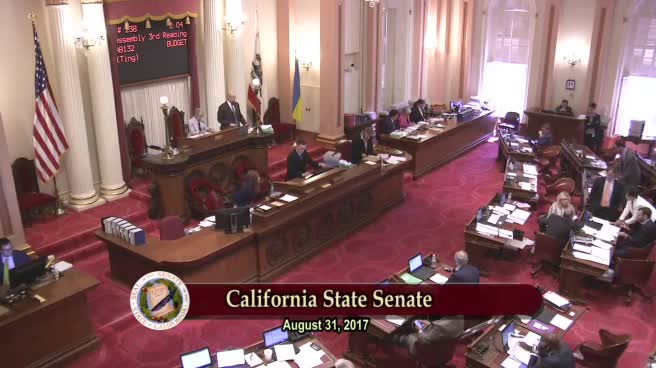 2MIN
Senate Floor
 6MIN
Senate Standing Committee on Judiciary
 7MIN
Senate Standing Committee on Business, Professions and Economic Development
 2MIN
Assembly Floor
 16MIN
Assembly Standing Committee on Judiciary
Bill Author

Bill Co-Author(s):