AB 1527: Cannabis: Cannabis Control Appeals Panel.
- Session Year: 2017-2018
- House: Assembly
- Latest Version Date: 2018-07-16
(1)The Control, Regulate and Tax Adult Use of Marijuana Act of 2016 (AUMA), an initiative measure approved as Proposition 64 at the November 8, 2016, statewide general election, authorizes a person who obtains a state license under AUMA to engage in commercial adult-use cannabis activity pursuant to that license and applicable local ordinances. The Medicinal and Adult-Use Cannabis Regulation and Safety Act (MAUCRSA), among other things, consolidates the licensure and regulation of commercial medicinal and adult-use cannabis activities. MAUCRSA establishes in state government a Cannabis Control Appeals Panel to review specified decisions of licensing authorities appealed by any person aggrieved by those decisions. MAUCRSA requires that the panel consist of one member appointed by the Senate Committee on Rules, one member appointed by the Speaker of the Assembly, and 3 members appointed by the Governor, as specified. MAUCRSA authorizes the Governor to remove from office a member of the panel appointed by the Governor. MAUCRSA authorizes the Legislature to remove any member of the panel from office for certain reasons.
This bill would eliminate the Legislatures power to remove a member of the panel for certain reasons and would provide that the members of the panel may be removed from office by their appointing authority.
(2)AUMA authorizes legislative amendment of its provisions with a 2/3 vote of both houses, without submission to the voters, to further its purposes and intent.
This bill would declare that its provisions further the purposes and intent of AUMA.
(3)This bill would declare that it is to take effect immediately as an urgency statute.
Existing law, the California Uniform Controlled Substances Act, makes various acts involving marijuana a crime except as authorized by law. Existing law, the Medical Cannabis Regulation and Safety Act (MCRSA), authorizes a person who obtains both a state license under MCRSA and an authorization under the relevant local license regulations to engage in commercial medical cannabis activity pursuant to those licenses, as specified. MCRSA generally divides responsibility for the state licensure and regulation of commercial medical cannabis activity between the Bureau of Marijuana Control (bureau) within the Department of Consumer Affairs, which serves as the lead state agency and administers provisions relating to the transportation, storage unrelated to manufacturing activities, testing, distribution, and sale of medical cannabis; the Department of Food and Agriculture, which administers provisions relating to the cultivation of medical cannabis; and the State Department of Public Health, which administers provisions relating to the manufacturing of medical cannabis. MCRSA specifies that criminal penalties continue to apply to an unlicensed person engaging in cannabis activity in violation of MCRSA.Existing law, the Control, Regulate and Tax Adult Use of Marijuana Act (AUMA), an initiative measure enacted by the approval of Proposition 64 at the November 8, 2016, statewide general election, authorizes a person 21 years of age or older to possess and use specified amounts of marijuana. AUMA also authorizes a person who obtains a state license under AUMA to engage in commercial marijuana activity, which does not include commercial medical cannabis activity, pursuant to that license and applicable local ordinances. AUMA generally divides responsibility for the state licensure and regulation of commercial nonmedical marijuana activity among the bureau, which serves as the lead state agency and administers provisions relating to the transportation, storage unrelated to manufacturing activities, distribution, and sale of nonmedical marijuana; the Department of Food and Agriculture, which administers provisions relating to the cultivation of nonmedical marijuana; and the State Department of Public Health, which administers provisions relating to the manufacturing and testing of nonmedical marijuana. AUMA requires those state licensing authorities to begin issuing licenses by January 1, 2018. AUMA establishes the Marijuana Control Appeals Panel to administer the provisions relating to appeals of a decision of the bureau or any licensing agency. AUMA prohibits the chief of the bureau and the Marijuana Control Appeals Panel (panel) from specified acts that would create a conflict of interest. AUMA specifies that criminal penalties continue to apply to an unlicensed person engaging in commercial nonmedical marijuana activity in violation of specified provisions. AUMA authorizes legislative amendment of its provisions with a 2/3 vote of both houses of the Legislature, without submission to the voters, to further its purposes and intent.This bill would prohibit a former employee of the bureau, a licensing authority, the panel, or a local jurisdiction who had specified regulatory or licensing responsibilities from being employed by a person or entity licensed under AUMA or MCRSA for a period of one year from the last date of employment by the bureau, licensing authority, panel, or local jurisdiction. The bill would prohibit a person or entity licensed under AUMA or MCRSA from employing a former employee of the bureau, a licensing authority, the panel, or a local jurisdiction who had specified regulatory or licensing responsibilities within one year of the last date of employment by the bureau, licensing authority, panel, or local jurisdiction. The bill would authorize the bureau or the licensing authority to suspend immediately the license of a licensee who violates this provision and to investigate and determine whether to revoke the license and whether to bar the licensee, or any person or entity acting as an agent of the licensee, from obtaining a license in the future. The bill would specify that a violation of these employment restrictions is not a crime.This bill would declare that its provisions further the purposes and intent of AUMA as specified.Existing law, the California Uniform Controlled Substances Act, makes various acts involving marijuana a crime except as authorized by law. Existing law, the Medical Cannabis Regulation and Safety Act (MCRSA), authorizes a person who obtains both a state license under MCRSA and an authorization under the relevant local license regulations to engage in commercial medical cannabis activity pursuant to those licenses, as specified. MCRSA generally divides responsibility for the state licensure and regulation of commercial medical cannabis activity between the Bureau of Marijuana Control (bureau) within the Department of Consumer Affairs, which serves as the lead state agency and administers provisions relating to the transportation, storage unrelated to manufacturing activities, testing, distribution, and sale of medical cannabis; the Department of Food and Agriculture, which administers provisions relating to the cultivation of medical cannabis; and the State Department of Public Health, which administers provisions relating to the manufacturing of medical cannabis. MCRSA specifies that criminal penalties continue to apply to an unlicensed person engaging in cannabis activity in violation of MCRSA.
Existing law, the Control, Regulate and Tax Adult Use of Marijuana Act (AUMA), an initiative measure enacted by the approval of Proposition 64 at the November 8, 2016, statewide general election, authorizes a person 21 years of age or older to possess and use specified amounts of marijuana. AUMA also authorizes a person who obtains a state license under AUMA to engage in commercial marijuana activity, which does not include commercial medical cannabis activity, pursuant to that license and applicable local ordinances. AUMA generally divides responsibility for the state licensure and regulation of commercial nonmedical marijuana activity among the bureau, which serves as the lead state agency and administers provisions relating to the transportation, storage unrelated to manufacturing activities, distribution, and sale of nonmedical marijuana; the Department of Food and Agriculture, which administers provisions relating to the cultivation of nonmedical marijuana; and the State Department of Public Health, which administers provisions relating to the manufacturing and testing of nonmedical marijuana. AUMA requires those state licensing authorities to begin issuing licenses by January 1, 2018. AUMA establishes the Marijuana Control Appeals Panel to administer the provisions relating to appeals of a decision of the bureau or any licensing agency. AUMA prohibits the chief of the bureau and the Marijuana Control Appeals Panel (panel) from specified acts that would create a conflict of interest. AUMA specifies that criminal penalties continue to apply to an unlicensed person engaging in commercial nonmedical marijuana activity in violation of specified provisions. AUMA authorizes legislative amendment of its provisions with a 2/3 vote of both houses of the Legislature, without submission to the voters, to further its purposes and intent.
This bill would prohibit a former employee of the bureau, a licensing authority, the panel, or a local jurisdiction who had specified regulatory or licensing responsibilities from being employed by a person or entity licensed under AUMA or MCRSA for a period of one year from the last date of employment by the bureau, licensing authority, panel, or local jurisdiction. The bill would prohibit a person or entity licensed under AUMA or MCRSA from employing a former employee of the bureau, a licensing authority, the panel, or a local jurisdiction who had specified regulatory or licensing responsibilities within one year of the last date of employment by the bureau, licensing authority, panel, or local jurisdiction. The bill would authorize the bureau or the licensing authority to suspend immediately the license of a licensee who violates this provision and to investigate and determine whether to revoke the license and whether to bar the licensee, or any person or entity acting as an agent of the licensee, from obtaining a license in the future. The bill would specify that a violation of these employment restrictions is not a crime.
This bill would declare that its provisions further the purposes and intent of AUMA as specified.
(a)(1)There is established in state government a Cannabis Control Appeals Panel which shall consist of the following members:
(A)One member appointed by the Senate Committee on Rules.
(B)One member appointed by the Speaker of the Assembly.
(C)Three members appointed by the Governor and subject to confirmation by a majority vote of all of the members elected to the Senate.
(2)Each member, at the time of his or her initial appointment, shall be a resident of a different county from the one in which either of the other members resides. Members of the panel shall receive an annual salary as provided for by Chapter 6 (commencing with Section 11550) of Part 1 of Division 3 of Title 2 of the Government Code.
(b)The members of the panel may be removed from office by their appointing authority.
SEC. 2.The Legislature finds and declares that this act furthers the purposes and intent of the Control, Regulate and Tax Adult Use of Marijuana Act of 2016.
SEC. 3.This act is an urgency statute necessary for the immediate preservation of the public peace, health, or safety within the meaning of Article IV of the California Constitution and shall go into immediate effect. The facts constituting the necessity are:
Licensing of commercial cannabis took place on January 1, 2018. Immediate clarification of procedures relating to the appointment of members to the Cannabis Control Appeals Panel is necessary to address disputes between applicants, licensees, and licensing authorities.
(a)(1)There is established in state government a Cannabis Control Appeals Panel which shall consist of the following members:
(A)One member appointed by the Senate Committee on Rules.
(B)One member appointed by the Speaker of the Assembly.
(C)Three members appointed by the Governor and subject to confirmation by a majority vote of all of the members elected to the Senate.
(2)Each member, at the time of his or her initial appointment, shall be a resident of a different county from the one in which either of the other members resides. Members of the panel shall receive an annual salary as provided for by Chapter 6 (commencing with Section 11550) of Part 1 of Division 3 of Title 2 of the Government Code.
(b)The members of the panel appointed pursuant to subparagraph (C) of paragraph (1) of subdivision (a) may be removed from office by the Governor, and the Legislature shall have the power, by a majority vote of all members elected to each house, to remove any member of the panel from office for dereliction of duty, corruption, or incompetency. their appointing authority.
(c)A concurrent resolution for the removal of any member of the panel may be introduced in the Legislature only if 5 Members of the Senate, or 10 Members of the Assembly, join as authors.SEC. 2.The Legislature finds and declares that this act furthers the purposes and intent of the Control, Regulate and Tax Adult Use of Marijuana Act of 2016.
SEC. 3.This act is an urgency statute necessary for the immediate preservation of the public peace, health, or safety within the meaning of Article IV of the California Constitution and shall go into immediate effect. The facts constituting the necessity are:
Licensing of commercial cannabis took place on January 1, 2018. Immediate clarification of procedures relating to the appointment of members to the Cannabis Control Appeals Panel is necessary to address disputes between applicants, licensees, and licensing authorities.
SECTION 1.Section 19302.3 is added to the Business and Professions Code, to read:19302.3.(a)A former employee of the bureau, a licensing authority, or a local jurisdiction who had commercial medical cannabis regulatory or licensing responsibilities shall not work for or represent a person or entity that holds a license under this chapter or Division 10 (commencing with Section 26000) for one year following his or her last date of employment with the bureau or licensing authority.(b)Notwithstanding Article 2 (commencing with Section 11357) of Chapter 6 of Division 10 of the Health and Safety Code and subdivision (c) of Section 19360, a violation of subdivision (a) shall not be a crime.SEC. 2.Section 19328.3 is added to the Business and Professions Code, to read:19328.3.(a)A licensee shall not employ a former employee of the bureau, a licensing authority, the Marijuana Control Appeals Panel established in Section 26040, or a local jurisdiction who had commercial medical cannabis regulatory or licensing responsibilities or commercial nonmedical marijuana regulatory or licensing responsibilities within one year of the last date of employment with the bureau, licensing authority, panel, or local jurisdiction.(b)The bureau or the licensing authority may suspend immediately the license of a licensee who violates subdivision (a) and shall investigate whether to revoke the license and whether to bar the licensee, or any person or entity acting as an agent or employee of the licensee, from obtaining a license in the future.(c)Notwithstanding Article 2 (commencing with Section 11357) of Chapter 6 of Division 10 of the Health and Safety Code, a violation of subdivision (a) shall not be a crime.SEC. 3.Section 26012.3 is added to the Business and Professions Code, to read:26012.3.(a)A former employee of the bureau, a licensing authority, or a local jurisdiction who had commercial marijuana regulatory or licensing responsibilities shall not work for or represent a person or entity that holds a license under this division or Chapter 3.5 (commencing with Section 19300) of Division 8 for one year following his or her last date of employment with the bureau or licensing authority.(b)Notwithstanding Article 2 (commencing with Section 11357) of Chapter 6 of Division 10 of the Health and Safety Code and subdivision (c) of Section 26038, a violation of subdivision (a) shall not be a crime.SEC. 4.Section 26041.3 is added to the Business and Professions Code, to read:26041.3.(a)A former employee of the Marijuana Control Appeals Panel who had regulatory or licensing responsibilities shall not work for or represent a person or entity that holds a license under this division or Chapter 3.5 (commencing with Section 19300) of Division 8 for one year following his or her last date of employment with the panel.(b)Notwithstanding Article 2 (commencing with Section 11357) of Chapter 6 of Division 10 of the Health and Safety Code and subdivision (c) of Section 26038, a violation of subdivision (a) shall not be a crime.SEC. 5.Section 26052.3 is added to the Business and Professions Code, to read:26052.3.(a)A licensee shall not employ a former employee of the bureau, a licensing authority, the Marijuana Control Appeals Panel, or a local jurisdiction who had commercial medical cannabis regulatory or licensing responsibilities or who had commercial nonmedical marijuana regulatory or licensing responsibilities within one year of the last date of employment with the bureau, licensing authority, panel, or local jurisdiction.(b)The bureau or the licensing authority may suspend immediately the license of a licensee who violates subdivision (a) and shall investigate whether to revoke the license and whether to bar the licensee, or any person or entity acting as an agent or employee of the licensee, from ever obtaining a license.(c)Notwithstanding Article 2 (commencing with Section 11357) of Chapter 6 of Division 10 of the Health and Safety Code, a violation of subdivision (a) shall not be a crime.SEC. 6.The Legislature finds and declares that Sections 3, 4, and 5 of this act, respectively adding Sections 26012.3, 26041.3, and 26052.3 to the Business and Professions Code, further the purposes and intent of the Control, Regulate and Tax Adult Use of Marijuana Act, because these amendments prevent licensees from hiring former employees of the Bureau of Marijuana Control, a licensing authority, the Marijuana Control Appeals Panel, or a local jurisdiction with regulatory or licensing responsibilities to circumvent and undermine the system of state licensing, regulation, and enforcement.(a)A former employee of the bureau, a licensing authority, or a local jurisdiction who had commercial medical cannabis regulatory or licensing responsibilities shall not work for or represent a person or entity that holds a license under this chapter or Division 10 (commencing with Section 26000) for one year following his or her last date of employment with the bureau or licensing authority.
(b)Notwithstanding Article 2 (commencing with Section 11357) of Chapter 6 of Division 10 of the Health and Safety Code and subdivision (c) of Section 19360, a violation of subdivision (a) shall not be a crime.
SEC. 2.Section 19328.3 is added to the Business and Professions Code, to read:19328.3.(a)A licensee shall not employ a former employee of the bureau, a licensing authority, the Marijuana Control Appeals Panel established in Section 26040, or a local jurisdiction who had commercial medical cannabis regulatory or licensing responsibilities or commercial nonmedical marijuana regulatory or licensing responsibilities within one year of the last date of employment with the bureau, licensing authority, panel, or local jurisdiction.
(b)The bureau or the licensing authority may suspend immediately the license of a licensee who violates subdivision (a) and shall investigate whether to revoke the license and whether to bar the licensee, or any person or entity acting as an agent or employee of the licensee, from obtaining a license in the future.
(c)Notwithstanding Article 2 (commencing with Section 11357) of Chapter 6 of Division 10 of the Health and Safety Code, a violation of subdivision (a) shall not be a crime.
SEC. 3.Section 26012.3 is added to the Business and Professions Code, to read:26012.3.(a)A former employee of the bureau, a licensing authority, or a local jurisdiction who had commercial marijuana regulatory or licensing responsibilities shall not work for or represent a person or entity that holds a license under this division or Chapter 3.5 (commencing with Section 19300) of Division 8 for one year following his or her last date of employment with the bureau or licensing authority.
(b)Notwithstanding Article 2 (commencing with Section 11357) of Chapter 6 of Division 10 of the Health and Safety Code and subdivision (c) of Section 26038, a violation of subdivision (a) shall not be a crime.
SEC. 4.Section 26041.3 is added to the Business and Professions Code, to read:26041.3.(a)A former employee of the Marijuana Control Appeals Panel who had regulatory or licensing responsibilities shall not work for or represent a person or entity that holds a license under this division or Chapter 3.5 (commencing with Section 19300) of Division 8 for one year following his or her last date of employment with the panel.
(b)Notwithstanding Article 2 (commencing with Section 11357) of Chapter 6 of Division 10 of the Health and Safety Code and subdivision (c) of Section 26038, a violation of subdivision (a) shall not be a crime.
SEC. 5.Section 26052.3 is added to the Business and Professions Code, to read:26052.3.(a)A licensee shall not employ a former employee of the bureau, a licensing authority, the Marijuana Control Appeals Panel, or a local jurisdiction who had commercial medical cannabis regulatory or licensing responsibilities or who had commercial nonmedical marijuana regulatory or licensing responsibilities within one year of the last date of employment with the bureau, licensing authority, panel, or local jurisdiction.
(b)The bureau or the licensing authority may suspend immediately the license of a licensee who violates subdivision (a) and shall investigate whether to revoke the license and whether to bar the licensee, or any person or entity acting as an agent or employee of the licensee, from ever obtaining a license.
(c)Notwithstanding Article 2 (commencing with Section 11357) of Chapter 6 of Division 10 of the Health and Safety Code, a violation of subdivision (a) shall not be a crime.
SEC. 6.The Legislature finds and declares that Sections 3, 4, and 5 of this act, respectively adding Sections 26012.3, 26041.3, and 26052.3 to the Business and Professions Code, further the purposes and intent of the Control, Regulate and Tax Adult Use of Marijuana Act, because these amendments prevent licensees from hiring former employees of the Bureau of Marijuana Control, a licensing authority, the Marijuana Control Appeals Panel, or a local jurisdiction with regulatory or licensing responsibilities to circumvent and undermine the system of state licensing, regulation, and enforcement.
|
Date
|
Status
|
|---|---|
| Jul 16, 2018 | Chaptered by Secretary of State - Chapter 95, Statutes of 2018. |
| Jul 16, 2018 | Approved by the Governor. |
| Jul 3, 2018 | Enrolled and presented to the Governor at 11:30 a.m. |
| Jun 28, 2018 | Urgency clause adopted. Senate amendments concurred in. To Engrossing and Enrolling. |
| Jun 26, 2018 | From committee: That the Senate amendments be concurred in. (Ayes 19. Noes 0.) (June 26). |
| Jun 25, 2018 | Re-referred to Com. on B. & P. pursuant to Assembly Rule 77.2. |
| Jun 21, 2018 | In Assembly. Concurrence in Senate amendments pending. May be considered on or after June 23 pursuant to Assembly Rule 77. |
| Jun 21, 2018 | Read third time. Passed. Ordered to the Assembly. |
| May 8, 2018 | Read second time. Ordered to third reading. |
| May 7, 2018 | From committee: Do pass. (Ayes 8. Noes 0.) (May 7). |
| Apr 5, 2018 | From committee chair, with author's amendments: Amend, and re-refer to committee. Read second time, amended, and re-referred to Com. on B., P. & E.D. |
| Jun 26, 2017 | In committee: Set, first hearing. Hearing canceled at the request of author. |
| May 24, 2017 | Referred to Com. on B., P. & E.D. |
| May 15, 2017 | In Senate. Read first time. To Com. on RLS. for assignment. |
| May 15, 2017 | Read third time. Passed. Ordered to the Senate. (Ayes 77. Noes 0. Page 1527.) |
| May 4, 2017 | Read second time. Ordered to third reading. |
| May 3, 2017 | From committee: Do pass. (Ayes 15. Noes 1.) (May 3). |
| Apr 26, 2017 | From committee: Do pass and re-refer to Com. on APPR. (Ayes 14. Noes 1.) (April 25). Re-referred to Com. on APPR. |
| Mar 27, 2017 | Referred to Com. on B. & P. |
| Feb 19, 2017 | From printer. May be heard in committee March 21. |
| Feb 17, 2017 | Read first time. To print. |
|
Date
|
Description
|
Location
|
Votes
|
|
|---|---|---|---|---|
| Jun 28, 2018 | AB 1527 JONES-SAWYER Concurrence - Urgency Added | Assembly Floor |
Passed |
|
| Jun 26, 2018 | With recommendation: That Senate amendments be concurred in. | Assembly Standing Committee on Business and Professions |
Passed |
|
| Jun 21, 2018 | Assembly 3rd Reading AB1527 Jones-Sawyer et al. By Hertzberg Urgency Clause | Senate Floor |
Passed |
|
| May 7, 2018 | Do pass | Senate Standing Committee on Business, Professions and Economic Development |
Passed |
|
| May 15, 2017 | AB 1527 COOLEY Assembly Third Reading | Assembly Floor |
Passed |
|
| May 3, 2017 | Do pass. | Assembly Standing Committee on Appropriations |
Passed |
|
| Apr 25, 2017 | Do pass and be re-referred to the Committee on [Appropriations] | Assembly Standing Committee on Business and Professions |
Passed |
This list shows positions taken on this bill by organizations on the date displayed, which is linked to the original source.
Positions by individuals are not included.
|
Organization
|
Position
|
Date
|
|---|---|---|
| California Growers Association | * Support | Apr 25, 2017 |
CONCURRENCE IN SENATE AMENDMENTS
CSA2 Bill Id:AB 1527
Author:(Jones-Sawyer, et al.)
As Amended Ver:April 5, 2018
2/3 vote
ASSEMBLY: |
| (May 15, 2017) | SENATE: | 36-0 | (June 21, 2018) |
(vote not relevant)
COMMITTEE VOTE: | 19-0 | (June 26, 2018) | RECOMMENDATION: | concur |
(Business and Professions)
Original Committee Reference: B. & P.
SUMMARY: Revises the requirements for removing a member of the Cannabis Control Appeals Panel.
The Senate amendments delete the previous contents of the bill and insert the current contents.
EXISTING LAW:
- Establishes the Medicinal and Adult-Use Cannabis Regulation and Safety Act (the Act) to establish a comprehensive system to control and regulate the cultivation, distribution, transport, storage, manufacturing, processing, and sale of both medical and adult-use cannabis. (Business and Professions Code Section (BPC) 26010)
- Prohibits the chief of the Bureau of Cannabis Control and the members of the Cannabis Control Appeals Panel from:
- Receiving any commission or profit from any person applying for or receiving any license or permit under the Act.
- Engaging in or having any interest in the sale or any insurance covering a licensee's business or premises.
- Engaging in or having any interest in the sale of equipment for use upon the premises of a licensee.
- Knowingly soliciting any licensee for the purchase of tickets for benefits or contributions for benefits.
- Knowingly requesting any licensee to donate or receive money, or any other thing of value, for the benefit of any person.
(BPC 26011)
- Establishes the Cannabis Control Appeals Panel.
- Establishes the membership of the Panel as follows:
- One member appointed by the Senate Committee on Rules.
- One member appointed by the Speaker of the Assembly.
- Three members appointed by the Governor and subject to confirmation by a majority vote of all the members elected to the Senate.
- Requires each member appointed by the Governor to be a resident of a different county from the other members appointed by the Governor.
- Authorizes the Governor to remove members appointed by the Governor.
- Authorizes the Legislature to remove any member of the panel for dereliction of duty, corruption, or incompetency, by a majority vote of all members selected to each house.
- Establishes the membership of the Panel as follows:
(BPC 26040)
- Authorizes any person aggrieved by the decisions of a licensing authority denying the person's application for a license, denying the person's renewal of any license, placing any license on probation, imposing any condition on any license, imposing any fine on any license, assessing any penalty on any license, or canceling, suspending, revoking, or otherwise disciplining any license, to appeal the decision to the Panel. (BPC 26043)
- Requires the Panel to review the licensing authority's decision, subject to any limitations imposed by the Legislature, and prohibits the Panel from receiving evidence beyond that which was considered by the licensing authority. (BPC 26043(b))
- Limits the review by the Panel to the following questions:
- Whether the licensing authority has proceeded without or in excess of its jurisdiction.
- Whether the licensing authority has proceeded in the manner required by law.
- Whether the decision is supported by the findings.
- Whether the findings are supported by substantial evidence in the light of the whole record.
(BPC 26043(c))
THIS BILL:
- Deletes the existing processes for removing members of the Cannabis Control Appeals Panel.
- Authorizes the members of the Panel to be removed from office by their appointing authority.
- Contains an urgency clause.
FISCAL EFFECT: This bill has been keyed non-fiscal by the Legislative Counsel.
COMMENTS:
Purpose. This bill is sponsored by the author. According to the author:
This bill authorizes the Legislature to remove their appointees to the Cannabis Control Appeals Panel. SB 94 (Committee on Budget and Fiscal Review, Chapter 27, Statutes of 2017) added two legislative appointments to the Appeals Panel, but the language did not include authorization for the Legislature to remove their appointees. Instead, appointees could only be removed by the Governor. Cleanup legislation (AB 133, Committee on Budget, Chapter 253, Statutes of 2017) to last year's trailer bill clarified that the Governor could not remove legislative appointments to the Cannabis Control Appeals Panel.
Additionally, concerns have been raised that giving the Legislature authority to remove both their appointees and the Governor's appointees could result in the removal of a majority of the members of the Appeals Panel. This bill repeals the authority of the Legislature to remove the Governor's appointees, limiting the power of the Legislature to remove only their appointees to the Cannabis Control Appeals Panel.
Background. The Control, Regulate and Tax Adult Use of Marijuana Act of 2016, also known as Prop 64, contained the original language establishing the Panel. The Panel first consisted of three gubernatorial appointees, subject to confirmation by the Senate. Prop 64 allowed the Governor to remove members for any reason, and that the Legislature was authorized, by a majority vote, to remove any member for "dereliction of duty, corruption or incompetency." Prop 64 also provided for the removal of Panel members by a concurrent resolution.
Subsequent legislation added two members to the Panel – one each from the Senate and Assembly, and clarified that the Governor may only remove members appointed by that office.
This bill states that members of the panel may be removed from office only by their appointing authority, and strikes language requiring Legislative removal predicated on a member's dereliction of duty, corruption or incompetency, thereby making all appointments at-will.
Analysis Prepared by: Brendan McCarthy / B. & P. / (916) 319-3301 FN: 0003615
Date of Hearing: June 26, 2018
ASSEMBLY COMMITTEE ON BUSINESS AND PROFESSIONS
Evan Low, Chair
ABPCA Bill Id:AB 1527
Author:(Jones-Sawyer, et al.) – As Amended Ver:April 5, 2018
Note: This bill was referred to the committee pursuant to Assembly Rule 77.2.
SUBJECT: Cannabis: Cannabis Control Appeals Panel
SUMMARY: Revises the requirements for removing a member of the Cannabis Control Appeals Panel.
EXISTING LAW:
- Establishes the Medicinal and Adult-Use Cannabis Regulation and Safety Act (the Act) to establish a comprehensive system to control and regulate the cultivation, distribution, transport, storage, manufacturing, processing, and sale of both medical and adult-use cannabis. (Business and Professions Code Section 26010)
- Prohibits the chief of the Bureau of Cannabis Control and the members of the Cannabis Control Appeals Panel from:
- Receiving any commission or profit from any person applying for or receiving any license or permit under the Act.
- Engaging in or having any interest in the sale or any insurance covering a licensee’s business or premises.
- Engaging in or having any interest in the sale of equipment for use upon the premises of a licensee.
- Knowingly soliciting any licensee for the purchase of tickets for benefits or contributions for benefits.
- Knowingly requesting any licensee to donate or receive money, or any other thing of value, for the benefit of any person.
(Business and Professions Code Section 26011)
- Establishes the Cannabis Control Appeals Panel.
- Establishes the membership of the Panel as follows:
- One member appointed by the Senate Committee on Rules.
- One member appointed by the Speaker of the Assembly.
- Three members appointed by the Governor and subject to confirmation by a majority vote of all the members elected to the Senate.
- Requires each member appointed by the Governor to be a resident of a different county from the other members appointed by the Governor.
- Authorizes the Governor to remove members appointed by the Governor.
- Authorizes the Legislature to remove any member of the panel for dereliction of duty, corruption, or incompetency, by a majority vote of all members selected to each house.
- Establishes the membership of the Panel as follows:
(Business and Professions Code Section 26040)
- Authorizes any person aggrieved by the decisions of a licensing authority denying the person’s application for a license, denying the person’s renewal of any license, placing any license on probation, imposing any condition on any license, imposing any fine on any license, assessing any penalty on any license, or canceling, suspending, revoking, or otherwise disciplining any license, to appeal the decision to the Panel. (Business and Professions Code Section 26043)
- Requires the Panel to review the licensing authority’s decision, subject to any limitations imposed by the Legislature, and prohibits the Panel from receiving evidence beyond that which was considered by the licensing authority. (Business and Professions Code Section 26043(b))
- Limits the review by the Panel to the following questions:
- Whether the licensing authority has proceeded without or in excess of its jurisdiction.
- Whether the licensing authority has proceeded in the manner required by law.
- Whether the decision is supported by the findings.
- Whether the findings are supported by substantial evidence in the light of the whole record.
(Business and Professions Code Section 26043(c))
THIS BILL:
- Deletes the existing processes for removing members of the Cannabis Control Appeals Panel.
- Authorizes the members of the Panel to be removed from office by their appointing authority.
- Contains an urgency clause.
FISCAL EFFECT: This bill has been keyed non-fiscal by Legislative Counsel.
COMMENTS:
Purpose. This bill is sponsored by the author. According to the author:
This bill authorizes the Legislature to remove their appointees to the Cannabis Control Appeals Panel. SB 94 (Committee on Budget and Fiscal Review, Chapter 27, Statutes of 2017) added two legislative appointments to the Appeals Panel, but the language did not include authorization for the Legislature to remove their appointees. Instead, appointees could only be removed by the Governor. Cleanup legislation (AB 133, Committee on Budget, Chapter 253, Statutes of 2017) to last year’s trailer bill clarified that the Governor could not remove legislative appointments to the Cannabis Control Appeals Panel.
Additionally, concerns have been raised that giving the Legislature authority to remove both their appointees and the Governor’s appointees could result in the removal of a majority of the members of the Appeals Panel. This bill repeals the authority of the Legislature to remove the Governor’s appointees, limiting the power of the Legislature to remove only their appointees to the Cannabis Control Appeals Panel.
Background. The Control, Regulate and Tax Adult Use of Marijuana Act of 2016, also known as Prop 64, contained the original language establishing the Panel. The Panel first consisted of three gubernatorial appointees, subject to confirmation by the Senate. Prop 64 allowed the Governor to remove members for any reason, and that the Legislature was authorized, by a majority vote, to remove any member for “dereliction of duty, corruption or incompetency.” Prop 64 also provided for the removal of Panel members by a concurrent resolution.
Subsequent legislation added two members to the Panel – one each from the Senate and Assembly, and clarified that the Governor may only remove members appointed by that office.
This bill states that members of the panel may be removed from office only by their appointing authority, and strikes language requiring Legislative removal predicated on a member’s dereliction of duty, corruption or incompetency, thereby making all appointments at-will.
Prior Related Legislation.
SB 94 (Committee on Budget and Fiscal Review, Chapter 27, Statutes of 2017) added two legislative appointments to the Appeals Panel.
AB 133 (Committee on Budget, Chapter 253, Statutes of 2017) specified that the Governor may only remove from office a member of the panel appointed by the Governor.
REGISTERED SUPPORT:
None on file.
REGISTERED OPPOSITION:
None on file.
Analysis Prepared by: Brendan McCarthy / B. & P. / (916) 319-3301
CONCURRENCE IN SENATE AMENDMENTS
CSA1 Bill Id:AB 1527
Author:(Jones-Sawyer, et al.)
As Amended Ver:April 5, 2018
2/3 vote. Urgency
ASSEMBLY: | 77-0 | (May 15, 2017) | SENATE: | 36-0 | (June 21, 2018) |
Original Committee Reference: B. & P.
SUMMARY: Revises the requirements for removing a member of the Cannabis Control Appeals Panel.
The Senate amendments Delete the previous contents of the bill and insert the current contents.
EXISTING LAW:
- Establishes the Medicinal and Adult-Use Cannabis Regulation and Safety Act (the Act) to establish a comprehensive system to control and regulate the cultivation, distribution, transport, storage, manufacturing, processing, and sale of both medical and adult-use cannabis. (Business and Professions Code Section 26010)
- Prohibits the chief of the Bureau of Cannabis Control and the members of the Cannabis Control Appeals Panel from:
- Receiving any commission or profit from any person applying for or receiving any license or permit under the Act.
- Engaging in or having any interest in the sale or any insurance covering a licensee's business or premises.
- Engaging in or having any interest in the sale of equipment for use upon the premises of a licensee.
- Knowingly soliciting any licensee for the purchase of tickets for benefits or contributions for benefits.
- Knowingly requesting any licensee to donate or receive money, or any other thing of value, for the benefit of any person.
(Business and Professions Code Section 26011)
- Establishes the Cannabis Control Appeals Panel.
- Establishes the membership of the Panel as follows:
- One member appointed by the Senate Committee on Rules.
- One member appointed by the Speaker of the Assembly.
- Three members appointed by the Governor and subject to confirmation by a majority vote of all the members elected to the Senate.
- Requires each member appointed by the Governor to be a resident of a different county from the other members appointed by the Governor.
- Authorizes the Governor to remove members appointed by the Governor.
- Authorizes the Legislature to remove any member of the panel for dereliction of duty, corruption, or incompetency, by a majority vote of all members selected to each house.
- Establishes the membership of the Panel as follows:
(Business and Professions Code Section 26040)
- Authorizes any person aggrieved by the decisions of a licensing authority denying the person's application for a license, denying the person's renewal of any license, placing any license on probation, imposing any condition on any license, imposing any fine on any license, assessing any penalty on any license, or canceling, suspending, revoking, or otherwise disciplining any license, to appeal the decision to the Panel. (Business and Professions Code Section 26043)
- Requires the Panel to review the licensing authority's decision, subject to any limitations imposed by the Legislature, and prohibits the Panel from receiving evidence beyond that which was considered by the licensing authority. (Business and Professions Code Section 26043(b))
- Limits the review by the Panel to the following questions:
- Whether the licensing authority has proceeded without or in excess of its jurisdiction.
- Whether the licensing authority has proceeded in the manner required by law.
- Whether the decision is supported by the findings.
- Whether the findings are supported by substantial evidence in the light of the whole record.
(Business and Professions Code Section 26043(c))
THIS BILL:
- Deletes the existing processes for removing members of the Cannabis Control Appeals Panel.
- Authorizes the members of the Panel to be removed from office by their appointing authority.
- Contains an urgency clause.
FISCAL EFFECT: This bill has been keyed non-fiscal by the Legislative Counsel.
COMMENTS:
Purpose. This bill is sponsored by the author. According to the author:
This bill authorizes the Legislature to remove their appointees to the Cannabis Control Appeals Panel. SB 94 (Committee on Budget and Fiscal Review, Chapter 27, Statutes of 2017) added two legislative appointments to the Appeals Panel, but the language did not include authorization for the Legislature to remove their appointees. Instead, appointees could only be removed by the Governor. Cleanup legislation (AB 133, Committee on Budget, Chapter 253, Statutes of 2017) to last year's trailer bill clarified that the Governor could not remove legislative appointments to the Cannabis Control Appeals Panel.
Additionally, concerns have been raised that giving the Legislature authority to remove both their appointees and the Governor's appointees could result in the removal of a majority of the members of the Appeals Panel. This bill repeals the authority of the Legislature to remove the Governor's appointees, limiting the power of the Legislature to remove only their appointees to the Cannabis Control Appeals Panel.
Background. The Control, Regulate and Tax Adult Use of Marijuana Act of 2016, also known as Prop 64, contained the original language establishing the Panel. The Panel first consisted of three gubernatorial appointees, subject to confirmation by the Senate. Prop 64 allowed the Governor to remove members for any reason, and that the Legislature was authorized, by a majority vote, to remove any member for "dereliction of duty, corruption or incompetency." Prop 64 also provided for the removal of Panel members by a concurrent resolution.
Subsequent legislation added two members to the Panel – one each from the Senate and Assembly, and clarified that the Governor may only remove members appointed by that office.
This bill states that members of the panel may be removed from office only by their appointing authority, and strikes language requiring Legislative removal predicated on a member's dereliction of duty, corruption or incompetency, thereby making all appointments at-will.
Analysis Prepared by: Brendan McCarthy / B. & P. / (916) 319-3301 FN: 0003572
Office of Senate Floor Analyses (916) 651-1520 Fax: (916) 327-4478 | AB |
THIRD READING
Bill No: AB 1527
:
SENATE BUS., PROF. & ECON. DEV. COMMITTEE: 8-0, 5/7/18
AYES: Hill, Fuller, Dodd, Galgiani, Glazer, Hernandez, Newman, Pan
NO VOTE RECORDED: Wilk
ASSEMBLY FLOOR: 77-0, 5/15/17 - See last page for vote
DIGEST:
This bill revises the authority to remove, and permissible reasons for removing, a member of the Cannabis Control Appeals Panel from office.
Existing law:
- Establishes Medicinal and Adult-Use Cannabis Regulation and Safety Act (Act) to establish a comprehensive system to control and regulate the cultivation, distribution, transport, storage, manufacturing, processing, and sale of both medical and adult-use cannabis. (Business and Professions Code (BPC) § 26010)
- Establishes the Cannabis Control Appeals Panel (Panel) consisting of the following members: (BPC § 26040 (a))
- One member appointed by the Senate Committee on Rules.
- One member appointed by the Speaker of the Assembly.
- Three members appointed by the Governor and subject to confirmation by a majority vote of all of the members elected to the Senate.
- Provides that gubernatorial appointee members of the Panel may be removed from office by the Governor, and the Legislature shall have the power by a majority vote to remove any member from office for dereliction of duty, corruption, or incompetency. A concurrent resolution for the removal of any member of the Panel may be introduced in the Legislature only if five Members of the Senate, or 10 Members of the Assembly, join as authors. (BPC § 26040 (b)(c))
- Requires the Panel to hear appeals from any person aggrieved by the decision of a licensing authority denying the person’s application for any license, denying the person’s renewal of any license, placing any license on probation, imposing any condition on any license, imposing any fine on any license, assessing any penalty on any license, or canceling, suspending, revoking, or otherwise disciplining any license as provided for under the Act. (BPC § 26043)
- Prohibits members of the Panel from doing any of the following:
- Receiving any commission or profit whatsoever, directly or indirectly, from any person applying for or receiving any license or permit under the Act.
- Engaging or having any interest in the sale or any insurance covering a licensee’s business or premises.
- Engaging or having any interest in the sale of equipment for use upon the premises of a licensee engaged in commercial cannabis activity.
- Knowingly soliciting any licensee for the purchase of tickets for benefits or contributions for benefits.
- Knowingly requesting any licensee to donate or receive money, or any other thing of value, for the benefit of any person whatsoever. (BPC § 26011)
This bill:
- Strikes provisions of law establishing the current authority and process for removing a member of the Panel and instead states that members of the Panel may be removed from office by their appointing authority.
- Strikes language limiting removal of Panel members by the Legislature for dereliction of duty, corruption, or incompetency.
- States that the Legislature finds and declares that this bill furthers the purposes and intent of the Act.
- Declares that an urgency clause is necessary to address disputes between applicants, licensees, and licensing authorities.
Background
According to the author’s office, “This bill authorizes the Legislature to remove their appointees to the Cannabis Control Appeals Panel. SB 94 (Committee on Budget and Fiscal Review, Chapter 27, Statutes of 2017) added two legislative appointments to the Appeals Panel, but the language did not include authorization for the Legislature to remove their appointees. Instead, appointees could only be removed by the Governor. Cleanup legislation (AB 133, Committee on Budget, Chapter 253, Statutes of 2017) to last year’s trailer bill clarified that the Governor could not remove legislative appointments to the Cannabis Control Appeals Panel….
“Additionally, concerns have been raised that giving the Legislature authority to remove both their appointees and the Governor’s appointees could result in the removal of a majority of the members of the Appeals Panel. This bill repeals the authority of the Legislature to remove the Governor’s appointees, limiting the power of the Legislature to remove only their appointees to the Cannabis Control Appeals Panel.”
The Control, Regulate and Tax Adult Use of Marijuana Act of 2016, also known as Proposition 64, contained the original language establishing the Panel. The Panel first consisted of three gubernatorial appointees, subject to confirmation by the Senate. Proposition 64 allowed the Governor to remove members for any reason, and that the Legislature was authorized, by a majority vote, to remove any member for “dereliction of duty, corruption or incompetency.” Proposition 64 also provided for the removal of Panel members by a concurrent resolution.
Subsequent legislation added two members to the Panel – one each from the Senate and Assembly, and clarified that the Governor may only remove members appointed by that office.
This bill states that members of the Panel may be removed from office only by their appointing authority, and strikes language requiring legislative removal predicated on the member dereliction of duty, corruption or incompetency, thereby making all appointments at-will.
FISCAL EFFECT: Appropriation: Fiscal Com.: Local:
None received
None received
ASSEMBLY FLOOR: 77-0, 5/15/17
AYES: Acosta, Aguiar-Curry, Arambula, Baker, Berman, Bigelow, Bloom, Bocanegra, Bonta, Brough, Burke, Caballero, Calderon, Cervantes, Chau, Chávez, Chen, Chiu, Choi, Chu, Cooley, Cooper, Cunningham, Dababneh, Dahle, Daly, Eggman, Flora, Fong, Frazier, Friedman, Gallagher, Cristina Garcia, Eduardo Garcia, Gipson, Gloria, Gomez, Gonzalez Fletcher, Gray, Grayson, Irwin, Jones-Sawyer, Kalra, Kiley, Lackey, Levine, Limón, Low, Maienschein, Mathis, Mayes, McCarty, Medina, Melendez, Mullin, Muratsuchi, Nazarian, Obernolte, O'Donnell, Patterson, Quirk, Quirk-Silva, Reyes, Ridley-Thomas, Rodriguez, Rubio, Salas, Santiago, Steinorth, Mark Stone, Thurmond, Ting, Voepel, Waldron, Weber, Wood, Rendon
NO VOTE RECORDED: Travis Allen, Harper, Holden
5/9/18 13:47:25
**** END ****
SENATE COMMITTEE ON
BUSINESS, PROFESSIONS AND ECONOMIC DEVELOPMENT
Senator Jerry Hill, Chair
2017 - 2018 Regular
Bill No: AB 1527 Hearing Date: May 7, 2018
Author: | Jones-Sawyer | ||
Version: |
| ||
Urgency: | Fiscal: | ||
Consultant: | |||
Subject: Cannabis: Cannabis Control Appeals Panel
SUMMARY:
Revises the authority to remove, and permissible reasons for removing, a member of the Cannabis Control Appeals Panel from office.
Existing law:
- Establishes Medicinal and Adult-Use Cannabis Regulation and Safety Act (Act) to establish a comprehensive system to control and regulate the cultivation, distribution, transport, storage, manufacturing, processing, and sale of both medical and adult-use cannabis. (Business and Professions Code (BPC) § 26010)
- Establishes the Cannabis Control Appeals Panel (Panel) consisting of the following members: (BPC § 26040 (a))
- One member appointed by the Senate Committee on Rules.
- One member appointed by the Speaker of the Assembly.
- Three members appointed by the Governor and subject to confirmation by a majority vote of all of the members elected to the Senate.
- Provides that gubernatorial appointee members of the Panel may be removed from office by the Governor, and the Legislature shall have the power by a majority vote to remove any member from office for dereliction of duty, corruption, or incompetency. A concurrent resolution for the removal of any member of the panel may be introduced in the Legislature only if 5 Members of the Senate, or 10 Members of the Assembly, join as authors. (BPC § 26040 (b)(c))
- Requires the Panel to hear appeals from any person aggrieved by the decision of a licensing authority denying the person’s application for any license, denying the person’s renewal of any license, placing any license on probation, imposing any condition on any license, imposing any fine on any license, assessing any penalty on any license, or canceling, suspending, revoking, or otherwise disciplining any license as provided for under the Act. (BPC § 26043)
- Prohibits members of the Panel from doing any of the following:
- Receive any commission or profit whatsoever, directly or indirectly, from any person applying for or receiving any license or permit under the Act.
- Engage or have any interest in the sale or any insurance covering a licensee’s business or premises.
- Engage or have any interest in the sale of equipment for use upon the premises of a licensee engaged in commercial cannabis activity.
- Knowingly solicit any licensee for the purchase of tickets for benefits or contributions for benefits.
- Knowingly request any licensee to donate or receive money, or any other thing of value, for the benefit of any person whatsoever.
This bill:
- Strikes provisions of law establishing the current authority and process for removing a member of the Panel and instead states that members of the panel may be removed from office by their appointing authority.
- Strikes language limiting removal of Panel members by the Legislature for dereliction of duty, corruption, or incompetency.
- States that the Legislature finds and declares that this bill furthers the purposes and intent of the Act.
- Declares that an urgency clause is necessary to address disputes between applicants, licensees, and licensing authorities.
FISCAL EFFECT: Unknown. This bill is not keyed by fiscal by the Legislative Counsel. This bill pertained to different subject matter when it was heard previously by the Assembly Appropriations Committee.
COMMENTS:
- Purpose. This bill is Author sponsored. According to the Author’s office, “This bill authorizes the Legislature to remove their appointees to the Cannabis Control Appeals Panel. SB 94 (Committee on Budget and Fiscal Review, Chapter 27, Statutes of 2017) added two legislative appointments to the Appeals Panel, but the language did not include authorization for the Legislature to remove their appointees. Instead, appointees could only be removed by the Governor. Cleanup legislation (AB 133, Committee on Budget, Chapter 253, Statutes of 2017) to last year’s trailer bill clarified that the Governor could not remove legislative appointments to the Cannabis Control Appeals Panel….
“Additionally, concerns have been raised that giving the Legislature authority to remove both their appointees and the Governor’s appointees could result in the removal of a majority of the members of the Appeals Panel. This bill repeals the authority of the Legislature to remove the Governor’s appointees, limiting the power of the Legislature to remove only their appointees to the Cannabis Control Appeals Panel.”
- Background. The Control, Regulate and Tax Adult Use of Marijuana Act of 2016, also known as Prop 64, contained the original language establishing the Panel. The Panel first consisted of three gubernatorial appointees, subject to confirmation by the Senate. Prop 64 allowed the Governor to remove members for any reason, and that the Legislature was authorized, by a majority vote, to remove any member for “dereliction of duty, corruption or incompetency.” Prop 64 also provided for the removal of Panel members by a concurrent resolution.
Subsequent legislation added two members to the Panel – one each from the Senate and Assembly, and clarified that the Governor may only remove members appointed by that office.
This bill states that members of the panel may be removed from office only by their appointing authority, and strikes language requiring Legislative removal predicated on the member dereliction of duty, corruption or incompetency, thereby making all appointments at-will.
- Related Legislation. AB 1793 (Bonta) requires the court to automatically resentence, redesignate, or dismiss cannabis-related convictions. (Status: This bill is currently pending in Assembly Appropriations Committee.)
- Prior Related Legislation. SB 94 (Committee on Budget and Fiscal Review, Chapter 27, Statutes of 2017) added two legislative appointments to the Appeals Panel.
AB 133 (Committee on Budget, Chapter 253, Statutes of 2017) specified that the Governor may only remove from office a member of the panel appointed by the Governor.
SUPPORT AND OPPOSITION:
Support:
None on file as of May 1, 2018
Opposition:
None on file as of May 1, 2018
-- END --
SENATE COMMITTEE ON
BUSINESS, PROFESSIONS AND ECONOMIC DEVELOPMENT
Senator Jerry Hill, Chair
2017 - 2018 Regular
Bill No: AB 1527 Hearing Date: June 26, 2017
Author: | Cooley | ||
Version: |
| ||
Urgency: | Fiscal: | ||
Consultant: | |||
Subject: State and local marijuana regulatory agencies: employees
SUMMARY:
Restricts the future employment of individuals employed by the Bureau of Cannabis Control, the California Department of Public Health’s Office of Manufactured Cannabis Safety, the California Department of Food and Agriculture’s CalCannabis Cultivation Licensing, the Cannabis Control Appeals Panel, or a local jurisdiction from working for or representing a person or entity that holds a cannabis license for one year following his or her last date of employment with the cannabis regulatory entity.
Existing law:
- Establishes the Bureau of Cannabis Control (Bureau) to administer the Medical Cannabis Regulation and Safety Act (Act) and the Control, Regulate and Tax Adult Use of Marijuana Act (AUMA) as it relates to the Bureau. (Business and Professions Code (BPC) § 26010)
- Delegates cannabis regulatory responsibilities as follows: (BPC § 26012)
- The Bureau shall create, issue, renew, discipline, suspend, or revoke licenses for the transportation, storage unrelated to manufacturing activities, distribution, and sale of cannabis.
- The Department of Food and Agriculture (DFA) shall have the authority to create, issue, and suspend or revoke cultivation licenses.
- The State Department of Public Health (DPH) shall have the authority to create, issue, and suspend or revoke manufacturing and testing licenses.
- Establishes a Cannabis Control Appeals Panel (Panel) consisting of five members, as specified, to which any person aggrieved by the decision of a licensing authority denying the person’s application for any license, denying the person’s renewal of any license, placing any license on probation, imposing any condition on any license, imposing any fine on any license, assessing any penalty on any license, or canceling, suspending, revoking, or otherwise disciplining any license as provided for under this division, may appeal. (BPC § 26040)
- Acknowledges the authority of a local jurisdiction to adopt and enforce local ordinances to regulate cannabis businesses including, but not limited to, local zoning and land use requirements, business license requirements, and requirements related to reducing exposure to secondhand smoke, or to completely prohibit the establishment or operation of one or more types of cannabis businesses licensed under the Act within the local jurisdiction. (BPC § 26200)
- Requires the Bureau to convene an advisory committee to advise the licensing authorities on the development of standards and regulations, including best practices and guidelines that protect public health and safety while ensuring a regulated environment for commercial cannabis activity that does not impose such barriers so as to perpetuate, rather than reduce and eliminate, the illicit market for cannabis. Requires the advisory committee members to include, but not be limited to, representatives of the cannabis industry, including medicinal cannabis, representatives of labor organizations, appropriate state and local agencies, persons who work directly with racially, ethnically, and economically diverse populations, public health experts, and other subject matter experts.
(BPC § 26014) - Prohibits a local elected official, chief administrative officer of a county, city manager, or general manager or chief administrator of a special district who held a position with a local government agency from acting as agent or attorney for, or otherwise representing, for compensation, any other person, if the appearance or communication is made for the purpose of influencing administrative or legislative action, or influencing any action or proceeding involving the issuance, amendment, awarding, or revocation of a permit, license, grant, or contract, or the sale or purchase of goods or property for a period of one year after leaving that office or employment. (Government Code (GOV) § 87406.3)
- Prohibits a former state administrative official from acting as an agent or attorney for, or otherwise representing, aiding, advising, counseling, consulting or assisting in the representation of, any other person for compensation before any court or state administrative agency with the intent to influence, in connection with any judicial, quasi-judicial or other proceeding if the State of California is a party or has a direct and substantial interest and the proceeding is one in which the former state administrative official participated after the termination of his or her employment or term of office. (GOV § 87402)
- Prohibits a member of the Legislature, for a period of one year after leaving office, from acting as an agent or attorney for, or otherwise representing for compensation, any other person by making any formal or informal appearance, or by making any oral or written communication, before the Legislature, any committee or subcommittee thereof, any present Member of the Legislature, or any officer or employee thereof, if the appearance or communication is made for the purpose of influencing legislative action. (GOV § 87406 (b))
- Prohibits a state officer, for a period of one year after leaving office, from acting as an agent or attorney for, or otherwise representing for compensation, any other person by making any formal or informal appearance, or by making any oral or written communication, before any state administrative agency, or any officer or employee thereof, if the appearance or communication is for the purpose of influencing administrative action, or influencing any action or proceeding involving the issuance, amendment, awarding, or revocation of a permit, license, grant, or contract, or the sale or purchase of goods or property. (GOV § 87406 (c))
- Prohibits a designated employee of a state administrative agency, any officer, employee, or consultant of a state administrative agency who holds a position which entails the making, or participation in the making, of decisions which may foreseeably have a material effect on any financial interest, and no member of a state administrative agency, for a period of one year after leaving office or employment, from acting as agent or attorney for, or otherwise representing for compensation, any other person, before any state administrative agency, or officer or employee thereof, for which he or she worked or represented during the
12 months before leaving office or employment, if the appearance or communication is made for the purpose of influencing administrative or legislative action, or influencing any action or proceeding involving the issuance, amendment, awarding, or revocation of a permit, license, grant, or contract, or the sale or purchase of goods or property. (GOV § 87406 (d)) - Prohibits a public official from making, participate in making, or using his or her official position to influence any governmental decision directly relating to any person with whom he or she is negotiating, or has any arrangement concerning, prospective employment. (GOV § 87407)
- Prohibits a member of the Board of Administration of the Public Employees’ Retirement System or an information technology or health benefits manager with a career executive assignment designation with the Public Employees’ Retirement System, for a period of four years after leaving that office or position, from acting as an agent or attorney for, or otherwise representing for compensation, any other person, except the state, by making a formal or informal appearance before, or an oral or written communication to, the Public Employees’ Retirement System, or an officer or employee thereof, if the appearance or communication is made for the purpose of influencing administrative or legislative action, or influencing an action or proceeding involving the issuance, amendment, awarding, or revocation of a permit, license, grant, or contract, or the sale or purchase of goods or property.
(GOV § 87408) - Prohibits a member of the California Gambling Control Commission, its executive director, chief, and any employee of the commission or department designated by regulation, from, for a period of three years after leaving office or terminating employment, acting as agent or attorney for, or otherwise representing for compensation, any other person by making any formal or informal appearance, or by making any oral or written communication, before the Commission, or any officer or employee thereof, if the appearance or communication is for the purpose of influencing administrative action, or influencing any action or proceeding involving the issuance, amendment, awarding, or revocation of a permit, license, or approval. (BPC § 19981)
- Declares that, except in specified circumstances, every contract by which anyone is restrained from engaging in a lawful profession, trade, or business of any kind is to that extent void. (BPC § 16600).
This bill:
- Prohibits a former employee of the Bureau, the Panel, a licensing authority, or a local jurisdiction who had commercial cannabis regulatory or licensing responsibilities from working for or representing a person or entity that holds a cannabis license for one year following his or her last date of employment with the Bureau, Panel, or licensing authority.
- Prohibits a cannabis licensee from employing a former employee of the Bureau, a licensing authority, the Panel, or a local jurisdiction who had commercial cannabis regulatory or licensing responsibilities within one year of the last date of employment with the Bureau, licensing authority, Panel, or local jurisdiction.
- Authorizes the Bureau or licensing authority to immediately suspend the license of a licensee who violates the employment prohibition restrictions and requires the investigation of whether to revoke the license and bar the licensee, or any person or entity acting as an agent or employee of the licensee, from obtaining a license in the future.
- Makes legislative findings and declarations that this bill furthers the purposes and intent of the Control, Regulate and Tax Adult Use of Marijuana Act, because this bill prevents licensees from hiring former employees of the Bureau, a licensing authority, the Panel, or a local jurisdiction with regulatory or licensing responsibilities to circumvent and undermine the system of state licensing, regulation, and enforcement.
FISCAL EFFECT:
This bill is keyed fiscal by Legislative Counsel. According to the Assembly Appropriations Committee analysis dated May 3, 2017, this bill has one-time costs to the Bureau, including costs in incorporate this restriction into disciplinary guidelines and regulations, which are expected to be minor and absorbable (Marijuana Control Fund). The Bureau may also incur some ongoing minor costs to respond to licensee inquiries as to whether a potential employee had responsibilities that would bar them from cannabis-related employment (Marijuana Control Fund).
COMMENTS:
- Purpose. This bill is Author sponsored. According to the Author’s office, “Until 2015 medical cannabis existed in a grey area of legality through a patchwork of Proposition 215, case law, and local ordinances. With the passage of the Medical Cannabis Regulation and Safety Act (MCRSA) in 2015, this industry finally had a framework for full licensure and regulation of the medical cannabis market. As this industry grows it is necessary to ensure that no undue influence or ‘revolving door’ exist between those who are regulated and those doing the regulation. This sort of prohibition can be seen under the Political Reform Act where former lawmakers are prohibited from lobbying for a year after leaving office (See Government Code § 87406). For the cannabis industry at this critical early stage, and in following the direction from the Cole Memo from the US Department of Justice, it is incredibly important that California have a robust regulatory system in place to prevent federal scrutiny and enforcement. AB 1527 ensures that a revolving door does not exist between the regulators and those being regulated by putting in place safeguards for one year so that undue influence cannot be used.”
- Cannabis Regulatory Background. California’s medical and non-medical cannabis licensing authorities are delegated at the state level to the Bureau, DFA, and DPH as follows (collectively, “licensing authorities”): (BPC § 26012)
- The Bureau regulates license activity related to the transportation, storage unrelated to manufacturing activities, distribution, and sale of cannabis.
- DFA is authorized to create, issue, and suspend or revoke cultivation licenses.
- DPH presides over manufacturing and testing licenses.
Local jurisdictions also regulate licensure by adopting and enforcing local ordinances to regulate cannabis businesses including, but not limited to, local zoning and land use requirements, business license requirements, and requirements related to reducing exposure to secondhand smoke, or to completely prohibit the establishment of cannabis businesses. A licensing authority is required to communicate with local jurisdictions prior to issuing a license to ensure the potential licensee’s compliance with local law.
This state and local regulatory framework exists in an effort to clarify cannabis requirements and provide transparency and predictability to the marketplace. A healthy business environment must be able to rely on a fair application and interpretation of law. To this end, each licensing authority’s decisions are subject to a notice and hearing for an aggrieved licensee or applicant. If an individual remains unsatisfied with the disposition of a case after this hearing, he or she may seek redress with Panel. The Panel may review the decision of a licensing authority to the extent of the following questions:
- Whether the licensing authority has proceeded without or in excess of its jurisdiction.
- Whether the licensing authority has proceeded in the manner required by law.
- Whether the decision is supported by the findings.
- Whether the findings are supported by substantial evidence in the light of the whole record.
The Panel’s decision may be further appealed to civil court.
- Current Employment Controls. In 1990, the Legislature passed the Milton Marks Postgovernmental Employment Restrictions Act, which prohibits state legislators and specified state agency officers and employees from being paid to represent another person in front of their former state agency for one year after leaving that agency. Since that time, numerous other employment restrictions have been passed affecting former state administrative officials, other elected state officers, former members of district boards, local elected officials, county chief administrative officers, city managers, general managers or chief administrators of a special district, members of the Board of Administration of the Public Employees’ Retirement System, the Teachers’ Retirement Board, certain employees of the State Teachers’ Retirement System, and certain other specified employees from future employment for various periods of time.
Each of these current laws specify a narrow range of individuals having prior specific regulatory authority from future employment for the purpose of influencing legislation, contracts, permits, judicial or quasi-judicial proceedings, or representation towards those ends for a limited period of time.
This bill broadly prohibits any former employee of a licensing authority, the Panel, or a local jurisdiction who had commercial cannabis regulatory responsibilities from working for, at any level, a person or entity that holds a cannabis license for one year following his or her last date of employment.
- Related Legislation. AB 666 (Vidak) prohibits a member of the California Gambling Control Commission (CGCC), the executive director, the chief, and any employee of the CGCC or Department of Justice (DOJ) who works on or supervises over gambling issues, for a period of two years after leaving office, from holding a direct or indirect interest in, hold employment with, represent, appear for, or negotiate on behalf of a gambling establishment, gambling enterprise, registrant, or licensee. (Status: This bill is pending in the Assembly Governmental Organization Committee.)
SB 94 (Committee on Budget and Fiscal Review) merges the medical and non-medical cannabis statutory structure and makes numerous changes, including allowing co-location of medical and non-medical cannabis, reversing the requirement of a mandatory distribution model, allows for the creation of cannabis cooperatives, and requires DFA to establish appellation and organic standards. (Status: This bill is in engrossing and enrolling.)
- Prior Legislation. SB 692 (Vidak, 2016) would have prohibited a member of the CGCC, the executive director, chief, and any employee of the CGCC or the DOJ from holding a direct or indirect interest in, holding employment with, representing, appearing for, or negotiating on behalf of a gambling establishment, gambling enterprise, registrant, or licensee for a period of two years after leaving office or employment. (Status: This bill was vetoed by Governor Brown, who stated, “This bill is overly broad. It applies to all 4,800 employees of the Department of Justice, regardless of whether they have any responsibilities related to gambling activities. A more targeted bill would be in order.”)
AB 873 (Furutani, Chapter 551, Statutes of 2011) strengthens existing restrictions on post-government employment activities by board members and high level staff at the California Public Employees’ Retirement System and the California State Teachers’ Retirement System.
AB 1678 (Negrete McLeod, Chapter 778, Statutes of 2003) extends to local public officials the prohibition on making, or using one's official position to influence, any governmental decision directly relating to any person with whom the public official is negotiating prospective employment.
SB 8 (Soto, Chapter 680, Statutes of 2005) prohibits an elected official of a county, city, or district, a chief administrative officer of a county, a city manager, or a general manager or chief administrator of a special district from acting as an agent or attorney for, or otherwise representing, for compensation, any other person by appearing before or communicating with the local government agency with which he or she was employed, for the purpose of influencing administrative or legislative action, or influencing any action or proceeding involving the issuance, amendment, awarding, or revocation of a permit, license, grant, or contract, or the sale or purchase of goods or property, for a period of one year after leaving that position.
SB 104 (Brulte, Chapter 10, Statutes of 1999) adds an exemption to the postgovernment employment restriction of the Political Reform Act of 1994 by allowing an elected official of a local government agency to represent that local agency before his or her former state agency if the appearance or communication is for the purpose of influencing legislative or administrative action on behalf of the local government agency.
- Policy Considerations. This bill’s provisions appear to be substantially broader and more restrictive than any current law restraining future employment. Because each licensing authority’s mandate is to regulate the cannabis market, every employee is therefore engaged in cannabis regulation, from the individual processing routine applications to the enforcement officer inspecting premises. This bill would prohibit every single employee of the Bureau, DFA’s CalCannabis, and DPH’s Office of Manufactured Cannabis Safety from any type of employment with any company holding a cannabis license, regardless of the individual’s level of responsibility within the regulatory entity, and irrespective of the type of employment sought from the licensee. There are currently 120 positions authorized at the Bureau, 63 at DPH, and 79 at DFA. It is projected that these figures will increase as the licensing program expands to full capacity.
Further, this bill also includes any individual from a local jurisdiction with cannabis regulatory responsibilities. Is this merely the local contact for the Bureau, or do these prohibitions extend to code enforcement officers? Does it include the entire staff of the building permit office? Local police? The Author’s office provides no figure for the number of state or local employees who would be affected by this bill, or how their level of regulatory involvement is or is not determinative. This bill is also notable for the entities it does not include; why aren’t employees of the State Board of Equalization included, which enforces taxation? Should Department of Justice (DOJ) attorneys working on cannabis issues also be considered?
This bill also authorizes the Bureau or licensing authority to immediately suspend the license of a licensee who violates the employment prohibition restrictions. This appears in contrast with current law, which affords a licensee the due process of a notice and hearing to defend against license actions. It is unclear why this violation warrants greater severity than any other cause of action.
Further, the state’s cannabis regulatory system does not go into effect until January 1, 2018, and it is unknown whether the current post-employment statutes and regulations are insufficient as to make such a broad employment prohibition necessary: Government Code § 87406 states:
No designated employee of a state administrative agency, any officer, employee, or consultant of a state administrative agency who holds a position which entails the making, or participation in the making, of decisions which may foreseeably have a material effect on any financial interest, and no member of a state administrative agency, for a period of one year after leaving office or employment, shall, for compensation, act as agent or attorney for, or otherwise represent, any other person, by making any formal or informal appearance, or by making any oral or written communication, before any state administrative agency, or officer or employee thereof, for which he or she worked or represented during the 12 months before leaving office or employment, if the appearance or communication is made for the purpose of influencing administrative or legislative action, or influencing any action or proceeding involving the issuance, amendment, awarding, or revocation of a permit, license, grant, or contract, or the sale or purchase of goods or property.
Essentially, this already prohibits any cannabis licensing authority employee who made decisions having a financial impact on a licensee from working with a licensee to influence decisionmaking at his or her prior workplace for a year after leaving. This is parallel to the employment restrictions placed on members of the Legislature mentioned in the Author’s background for this bill.
A recent attempt to address employment restrictions was a bill which Senator Videk authored (SB 692 in 2016) to deal with ongoing problems unique to California’s cardroom industry. It would have prohibited a member of the CGCC, the executive director, chief, and any employee of the CGCC or the DOJ from holding a direct or indirect interest in, holding employment with, representing, appearing for, or negotiating on behalf of a gambling establishment, gambling enterprise, registrant, or licensee for a period of two years after leaving office or employment. However, this bill was vetoed by the Governor, who stated, “This bill is overly broad. It applies to all 4,800 employees of the Department of Justice, regardless of whether they have any responsibilities related to gambling activities. A more targeted bill would be in order.” Sen. Vidak is trying again this year with SB 666, which presents a more narrowed focus.
SUPPORT AND OPPOSITION:
Support:
None on file as of June 20, 2017..
Opposition:
None on file as of June 20, 2017.
-- END --
ASSEMBLY THIRD READING
ATR Bill Id:AB 1527
Author:(Cooley)
As Introduced Ver:February 17, 2017
2/3 vote
Committee | Votes | Ayes | Noes |
Business & Professions | 14-1 | Low, Arambula, Baker, Bloom, Chiu, Cunningham, Dahle, Eggman, Gipson, Grayson, Holden, Irwin, Mullin, Ting | Brough |
Appropriations | 15-1 | Gonzalez Fletcher, Bigelow, Bloom, Bocanegra, Bonta, Calderon, Chau, Eggman, Fong, Friedman, Gallagher, Eduardo Garcia, Muratsuchi, Obernolte, Reyes | Brough |
SUMMARY: Places a one year prohibition on a state agency or local government employee from being hired by a cannabis business after leaving public employment. Specifically, this bill:
- Prohibits a licensee from employing a former employee of the Bureau, a licensing authority, the Marijuana Control Appeals Panel, or a local jurisdiction who had commercial medical cannabis regulatory or licensing responsibilities or commercial nonmedical marijuana regulatory or licensing responsibilities within one year of the last date of employment with the Bureau, licensing authority, panel, or local jurisdiction.
- Permits the bureau or the licensing authority to suspend immediately the license of a licensee and investigate whether to revoke the license and whether to bar the licensee, or any person or entity acting as an agent or employee of the licensee, from obtaining a license in the future.
- Prohibits a former employee of the bureau, a licensing authority, or a local jurisdiction who had commercial marijuana regulatory or licensing responsibilities from working for or representing a person or entity that holds a license for one year following his or her last date of employment with the bureau or licensing authority.
- Prohibits a former employee of the Marijuana Control Appeals Panel, who had regulatory or licensing responsibilities, from working for or representing a person or entity that holds a license for one year following his or her last date of employment with the panel.
- Specifies that a licensee shall not employ a former employee of the bureau, a licensing authority, the Marijuana Control Appeals Panel, or a local jurisdiction who had commercial medical cannabis regulatory or licensing responsibilities or who had commercial nonmedical marijuana regulatory or licensing responsibilities within one year of the last date of employment with the bureau, licensing authority, panel, or local jurisdiction.
- Permits the bureau or the licensing authority to suspend immediately the license of a licensee and shall investigate whether to revoke the license and whether to bar the licensee, or any person or entity acting as an agent or employee of the licensee, from ever obtaining a license.
FISCAL EFFECT: According to the Assembly Appropriations Committee, this bill will result in one-time costs to the Bureau of Marijuana Control, including costs in incorporate this restriction into disciplinary guidelines and regulations, are expected to be minor and absorbable. The Bureau may also incur some ongoing minor costs to respond to licensee inquiries as to whether a potential employee had responsibilities that would bar them from cannabis-related employment.
COMMENTS:
Purpose. The bill is sponsored by the author. According to the author, "Under the Medical Cannabis Regulation and Safety Act (MCRSA), California finally fulfilled the intent of Proposition 215 by creating a regulatory framework and licensing system for the medical cannabis industry. Challenges, however, still remain. Not the least of these is creating the regulatory framework under the Bureau of Cannabis Regulation while also complying with federal guidelines for states that have legalized medical and recreational cannabis. One way of bolstering the integrity of our regulatory framework is to ensure that no undue influence occurs between the medical cannabis industry and the regulators as the system is being designed and implemented. To that end, AB 1527 prohibits someone employed by the Bureau or other licensing authority from working for a licensee for a period of one year post-employment. It also prohibits a licensee from knowingly hiring a former Bureau or licensing employee for one year after their employment. It is a small step to safeguard the integrity of the Bureau and other licensing authorities during this initial period of creating a robust regulatory framework."
Background. Political Reform Act. According to information obtained from the Fair Political Practices Commission, in the aftermath of the Watergate scandal, California was the first state to pass a comprehensive political reform package. Proposition 9, known today as The Political Reform Act, was passed as a ballot measure by California voters in the June 1974 election. By including provisions regulating campaign finance, lobbying activity, and conflicts of interest, Proposition 9 represented the most significant state-level response to the culture of corruption that was believed to be so pervasive in the pre-Watergate years.
Milton Marks Post-governmental Employment Restrictions Act. In 1990, the Legislature passed legislation to prohibit state elected officers and specified state agency officers and employees from being paid to represent another person before their former state agency for one year after leaving that agency. In 2005, a similar law was added applying to certain local officers.
Other States. In June of 2015, Colorado passed Senate Bill 15-115. This measure established a six month ban on a state licensing authority employee, with regulatory oversight responsibilities for cannabis businesses licensed by the state, from working for or representing a cannabis business licensed by the state licensing authority for a period of 24 six months following his or her last day of employment with the state licensing authority.
Analysis Prepared by: Le Ondra Clark Harvey, Ph.D. / B. & P. / (916) 319-3301 FN: 0000254
Date of Hearing: May 3, 2017
ASSEMBLY COMMITTEE ON APPROPRIATIONS
Lorena Gonzalez Fletcher, Chair
ABPCA Bill Id:AB 1527
Author:(Cooley) – As Introduced Ver:February 17, 2017
Policy Committee: | Business and Professions | Vote: | 14 - 1 |
|
| ||
|
|
Urgency: No State Mandated Local Program: No Reimbursable: No
SUMMARY:
This bill establishes a one-year prohibition on employment in cannabis-related businesses for a person with commercial cannabis state or local regulatory or licensing responsibilities.
FISCAL EFFECT:
- One-time costs to the Bureau of Marijuana Control, including costs in incorporate this restriction into disciplinary guidelines and regulations, are expected to be minor and absorbable (Marijuana Control Fund).
- The Bureau may also incur some ongoing minor costs to respond to licensee inquiries as to whether a potential employee had responsibilities that would bar them from cannabis-related employment (Marijuana Control Fund).
COMMENTS:
Purpose and Background. Pursuant to voter propositions, medical and non-medical use of marijuana (also called cannabis) is now legal in the state. Beginning on January 1, 2018, the state is to issue licenses for cultivation, manufacturing, retail sale, transportation, storage, delivery and testing of medical and non-medical cannabis. Local jurisdictions also have permitting and regulatory authority. This bill is intended to ensure a bright line between persons involved in setting up and implementing the regulatory framework, and the cannabis licensees themselves, in order to prevent conflicts of interest.
Analysis Prepared by: Lisa Murawski / APPR. / (916) 319-2081
Date of Hearing: April 25, 2017
ASSEMBLY COMMITTEE ON BUSINESS AND PROFESSIONS
Evan Low, Chair
ABPCA Bill Id:AB 1527
Author:(Cooley) – As Introduced Ver:February 17, 2017
SUBJECT: State and local marijuana regulatory agencies: employees.
SUMMARY: Places a 1 year prohibition on a state agency or local government employee from being hired by a cannabis business after leaving public employment.
EXISTING LAW:
- Establishes the Bureau of Marijuana Control, also referred to as the Bureau of Medical Cannabis Regulation (Bureau), under the Department of Consumer Affairs (DCA), to establish a comprehensive system to control and regulate the cultivation, distribution, transport, storage, manufacturing, processing, and sale of cannabis products. (Business and Professions Code (BPC) § 26000 et seq.; BPC § 19302)
- Prevents elected officials from engaging in specified business activities or entering into business relationships in the year after their term has ended. (Government Code § 87406)
THIS BILL:
- Prohibits a licensee from employing a former employee of the Bureau, a licensing authority, the Marijuana Control Appeals Panel, or a local jurisdiction who had commercial medical cannabis regulatory or licensing responsibilities or commercial nonmedical marijuana regulatory or licensing responsibilities within one year of the last date of employment with the Bureau, licensing authority, panel, or local jurisdiction.
- Permits the bureau or the licensing authority to suspend immediately the license of a licensee and investigate whether to revoke the license and whether to bar the licensee, or any person or entity acting as an agent or employee of the licensee, from obtaining a license in the future.
- Prohibits a former employee of the bureau, a licensing authority, or a local jurisdiction who had commercial marijuana regulatory or licensing responsibilities from working for or representing a person or entity that holds a license for one year following his or her last date of employment with the bureau or licensing authority.
- Prohibits a former employee of the Marijuana Control Appeals Panel, who had regulatory or licensing responsibilities, from working for or representing a person or entity that holds a license for one year following his or her last date of employment with the panel.
- Specifies that a licensee shall not employ a former employee of the bureau, a licensing authority, the Marijuana Control Appeals Panel, or a local jurisdiction who had commercial medical cannabis regulatory or licensing responsibilities or who had commercial nonmedical marijuana regulatory or licensing responsibilities within one year of the last date of employment with the bureau, licensing authority, panel, or local jurisdiction.
- Permits the bureau or the licensing authority to suspend immediately the license of a licensee and shall investigate whether to revoke the license and whether to bar the licensee, or any person or entity acting as an agent or employee of the licensee, from ever obtaining a license.
FISCAL EFFECT: Unknown. This bill is keyed fiscal by the Legislative Counsel.
COMMENTS:
Purpose. The bill is sponsored by the author. According to the author, “Under the Medical Cannabis Regulation and Safety Act (MCRSA), California finally fulfilled the intent of Proposition 215 by creating a regulatory framework and licensing system for the medical cannabis industry. Challenges, however, still remain. Not the least of these is creating the regulatory framework under the Bureau of Cannabis Regulation while also complying with federal guidelines for states that have legalized medical and recreational cannabis. One way of bolstering the integrity of our regulatory framework is to ensure that no undue influence occurs between the medical cannabis industry and the regulators as the system is being designed and implemented. To that end, AB 1527 prohibits someone employed by the Bureau or other licensing authority from working for a licensee for a period of one year post-employment. It also prohibits a licensee from knowingly hiring a former Bureau or licensing employee for one year after their employment. It is a small step to safeguard the integrity of the Bureau and other licensing authorities during this initial period of creating a robust regulatory framework.”
Background. Political Reform Act. According to information obtained from the Fair Political Practices Commission, in the aftermath of the Watergate scandal, California was the first state to pass a comprehensive political reform package. Proposition 9, known today as The Political Reform Act, was passed as a ballot measure by California voters in the June 1974 election. By including provisions regulating campaign finance, lobbying activity, and conflicts of interest, Proposition 9 represented the most significant state-level response to the culture of corruption that was believed to be so pervasive in the pre-Watergate years.
Milton Marks Post-governmental Employment Restrictions Act. In 1990, the Legislature passed legislation to prohibit state elected officers and specified state agency officers and employees from being paid to represent another person before their former state agency for one year after leaving that agency. In 2005, a similar law was added applying to certain local officers.
Other States. In June of 2015, Colorado passed Senate Bill 15-115. This measure established a six month ban on a state licensing authority employee, with regulatory oversight responsibilities for cannabis businesses licensed by the state, from working for or representing a cannabis business licensed by the state licensing authority for a period of 24 six months following his or her last day of employment with the state licensing authority.
REGISTERED SUPPORT:
None on file.
REGISTERED OPPOSITION:
None on file.
Analysis Prepared by: Le Ondra Clark Harvey Ph.D. / B. & P. / (916) 319-3301
Date of Hearing: April 18, 2017
ASSEMBLY COMMITTEE ON BUSINESS AND PROFESSIONS
Rudy Salas, Chair
ABPCA Bill Id:AB 1527
Author:(Cooley) – As Introduced Ver:February 17, 2017
SUBJECT: State and local marijuana regulatory agencies: employees.
SUMMARY: Places a 1 year prohibition on a state agency or local government employee from being hired by a cannabis business after leaving public employment.
EXISTING LAW:
- Establishes the Bureau of Marijuana Control, also referred to as the Bureau of Medical Cannabis Regulation (Bureau), under the Department of Consumer Affairs (DCA), to establish a comprehensive system to control and regulate the cultivation, distribution, transport, storage, manufacturing, processing, and sale of cannabis products. (Business and Professions Code (BPC) § 26000 et seq.; BPC § 19302)
- Prevents elected officials from engaging in specified business activities or entering into business relationships in the year after their term has ended. (Government Code § 87406)
THIS BILL:
- Prohibits a licensee from employing a former employee of the Bureau, a licensing authority, the Marijuana Control Appeals Panel, or a local jurisdiction who had commercial medical cannabis regulatory or licensing responsibilities or commercial nonmedical marijuana regulatory or licensing responsibilities within one year of the last date of employment with the Bureau, licensing authority, panel, or local jurisdiction.
- Permits the bureau or the licensing authority to suspend immediately the license of a licensee and investigate whether to revoke the license and whether to bar the licensee, or any person or entity acting as an agent or employee of the licensee, from obtaining a license in the future.
- Prohibits a former employee of the bureau, a licensing authority, or a local jurisdiction who had commercial marijuana regulatory or licensing responsibilities from working for or representing a person or entity that holds a license for one year following his or her last date of employment with the bureau or licensing authority.
- Prohibits a former employee of the Marijuana Control Appeals Panel, who had regulatory or licensing responsibilities, from working for or representing a person or entity that holds a license for one year following his or her last date of employment with the panel.
- Specifies that a licensee shall not employ a former employee of the bureau, a licensing authority, the Marijuana Control Appeals Panel, or a local jurisdiction who had commercial medical cannabis regulatory or licensing responsibilities or who had commercial nonmedical marijuana regulatory or licensing responsibilities within one year of the last date of employment with the bureau, licensing authority, panel, or local jurisdiction.
- Permits the bureau or the licensing authority to suspend immediately the license of a licensee and shall investigate whether to revoke the license and whether to bar the licensee, or any person or entity acting as an agent or employee of the licensee, from ever obtaining a license.
FISCAL EFFECT: Unknown. This bill is keyed fiscal by the Legislative Counsel.
COMMENTS:
Purpose. The bill is sponsored by the author. According to the author, “Under the Medical Cannabis Regulation and Safety Act (MCRSA), California finally fulfilled the intent of Proposition 215 by creating a regulatory framework and licensing system for the medical cannabis industry. Challenges, however, still remain. Not the least of these is creating the regulatory framework under the Bureau of Cannabis Regulation while also complying with federal guidelines for states that have legalized medical and recreational cannabis. One way of bolstering the integrity of our regulatory framework is to ensure that no undue influence occurs between the medical cannabis industry and the regulators as the system is being designed and implemented. To that end, AB 1527 prohibits someone employed by the Bureau or other licensing authority from working for a licensee for a period of one year post-employment. It also prohibits a licensee from knowingly hiring a former Bureau or licensing employee for one year after their employment. It is a small step to safeguard the integrity of the Bureau and other licensing authorities during this initial period of creating a robust regulatory framework.”
Background. Political Reform Act. According to information obtained from the Fair Political Practices Commission, in the aftermath of the Watergate scandal, California was the first state to pass a comprehensive political reform package. Proposition 9, known today as The Political Reform Act, was passed as a ballot measure by California voters in the June 1974 election. By including provisions regulating campaign finance, lobbying activity, and conflicts of interest, Proposition 9 represented the most significant state-level response to the culture of corruption that was believed to be so pervasive in the pre-Watergate years.
Milton Marks Post-governmental Employment Restrictions Act. In 1990, the Legislature passed legislation to prohibit state elected officers and specified state agency officers and employees from being paid to represent another person before their former state agency for one year after leaving that agency. In 2005, a similar law was added applying to certain local officers.
Other States. In June of 2015, Colorado passed Senate Bill 15-115. This measure established a six month ban on a state licensing authority employee, with regulatory oversight responsibilities for cannabis businesses licensed by the state, from working for or representing a cannabis business licensed by the state licensing authority for a period of 24 six months following his or her last day of employment with the state licensing authority.
REGISTERED SUPPORT:
None on file.
REGISTERED OPPOSITION:
None on file.
Analysis Prepared by: Le Ondra Clark Harvey Ph.D. / B. & P. / (916) 319-3301
Discussed in Hearing
 2MIN
Senate Floor
 2MIN
Senate Standing Committee on Business, Professions and Economic Development
 1MIN
Assembly Floor
 2MIN
Assembly Standing Committee on Appropriations
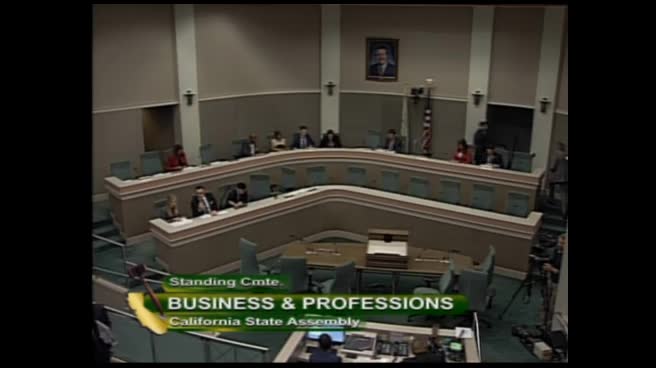 5MIN
Assembly Standing Committee on Business and Professions





Bill Co-Author(s):