AB 1541: Examination of prospective jurors.
- Session Year: 2017-2018
- House: Assembly
- Latest Version Date: 2017-09-26
Existing law requires the court, in a criminal case, to conduct an initial examination of prospective jurors. Upon completion of this initial examination, existing law grants counsel for each party the right to examine any of the prospective jurors, as specified. Existing law authorizes the court to limit the oral and direct questioning of prospective jurors, as specified.
This bill would require a trial judge to permit counsel for each party to conduct a jury examination that is calculated to discover bias or prejudice with regard to the circumstances of a particular case or the parties before the court. The bill would require the scope of the examination conducted by counsel to be within reasonable limits prescribed by the trial judge in the judges sound discretion, as specified. The bill would also require the trial judge to permit supplemental time for questioning based on individual responses or conduct of jurors that may evince attitudes inconsistent with suitability to serve as a fair and impartial juror in the particular case. The bill would require the trial judge to, in his or her sound discretion, consider the use of reasonable written questionnaires for jury examination when requested by counsel. The bill would also require the trial judge, at the earliest practical time, to provide the parties with the list of prospective jurors in the order in which they will be called to help facilitate the jury selection process.
Existing law requires the court, in a criminal case, to conduct an initial examination of prospective jurors. Upon completion of this initial examination, existing law grants counsel for each party the right to examine any of the prospective jurors, as specified. Existing law authorizes the court to limit the oral and direct questioning of prospective jurors, as specified.
This bill would require a trial judge to permit counsel for each party to conduct a jury examination that is calculated to discover bias or prejudice with regard to the circumstances of a particular case or the parties before the court. The bill would require the scope of the examination conducted by counsel to be within reasonable limits prescribed by the trial judge in his or her the judges sound discretion, as specified. The bill would also require the trial judge to permit supplemental time for questioning based on individual responses or conduct of jurors that may evince attitudes inconsistent with suitability to serve as a fair and impartial juror in the particular case. The bill would require the trial judge to, in his or her sound discretion, consider the use of reasonable written questionnaires for jury examination when requested by counsel. The bill would also require the court trial judge, at the earliest practical time, to provide the parties with the list of prospective jurors in the order in which they will be called to help facilitate the jury selection process.
Existing law requires the court, in a criminal case, to conduct an initial examination of prospective jurors. Upon completion of this initial examination, existing law grants counsel for each party the right to examine any of the prospective jurors, as specified. Existing law authorizes the court to limit the oral and direct questioning of prospective jurors, as specified.
This bill would require the court a trial judge to permit counsel for each party to conduct a jury examination that is calculated to discover bias or prejudice with regard to the circumstances of a particular case or the parties before the court. The bill would require the scope of the examination conducted by counsel to be within reasonable limits prescribed by the trial judge in his or her sound discretion, as specified. The bill would also require the trial judge to permit supplemental time for questioning based on specified factors. individual responses or conduct of jurors that may evince attitudes inconsistent with suitability to serve as a fair and impartial juror in the particular case. The bill would require the trial judge to, in his or her sound discretion, consider the use of reasonable written questionnaires for jury examination when requested by counsel. The bill would also require the judge court to provide the parties with the list of prospective jurors in the order in which they will be called to help facilitate the jury selection process.
Existing law requires the court, in a criminal case, to conduct an initial examination of prospective jurors. Upon completion of this initial examination, existing law grants counsel for each party the right to examine any of the prospective jurors, as specified. Existing law authorizes the court to limit the oral and direct questioning of prospective jurors, as specified.
This bill would require the court to utilize, as part of voir dire in a criminal case, a written questionnaire that is to be completed by all prospective jurors who are not excused for hardship and to be provided to each party prior to oral questioning on voir dire. The bill would also require the court to permit counsel for each party to conduct a jury examination that is calculated to discover bias or prejudice with regard to the circumstances of a particular case. case or the parties before the court. The bill would require the scope of the examination conducted by counsel to be within reasonable limits prescribed by the trial judge in his or her sound discretion, as specified. The bill would also require the judge to permit supplemental time for questioning based on specified factors. The bill would require the judge to, in his or her sound discretion, consider the use of reasonable written questionnaires for jury examination when requested by counsel. The bill would also require the judge to provide the parties with the list of prospective jurors in the order in which they will be called to help facilitate the jury selection process.
Existing law requires the court, in a criminal case, to conduct an initial examination of prospective jurors. Upon completion of this initial examination, existing law grants counsel for each party the right to examine any of the prospective jurors, as specified. Existing law authorizes the court to limit the oral and direct questioning of prospective jurors, as specified.
This bill would require the court to utilize, as part of voir dire in a criminal case, a written questionnaire that is to be completed by all prospective jurors who are not excused for hardship and to be provided to each party prior to oral questioning on voir dire. The bill would also require each party to receive at least one hour for oral questioning of the initial jury panel. The bill would also require the court to permit counsel for each party to conduct a jury examination that is calculated to discover bias or prejudice with regard to the circumstances of a particular case.
Existing law requires the court, in a criminal case, to conduct the an initial examination of prospective jurors. Upon completion of this initial examination, existing law grants counsel for each party the right to examine any of the prospective jurors, as specified. Existing law authorizes the court to limit the oral and direct questioning of prospective jurors, as specified.
This bill would require the court to utilize, as part of voir dire in a criminal case, a written questionnaire that is to be completed by all prospective jurors who are not excused for hardship. hardship and to be provided to each party prior to oral questioning on voir dire. The bill would also authorize the court, in the exercise of its discretion, to limit the oral and direct questioning of the initial panel of prospective jurors by counsel to one hour by each party. require each party to receive at least one hour for oral questioning of the initial jury panel.
Existing law requires the court, in a criminal case, to conduct the initial examination of prospective jurors. Upon completion of this initial examination, existing law grants counsel for each party the right to examine any of the prospective jurors, as specified.
This bill would require the court to utilize, as part of voir dire in a criminal case, a written questionnaire that is to be completed by all prospective jurors who are not excused for hardship. The bill would also authorize the court, in the exercise of its discretion, to limit the oral and direct questioning of the initial panel of prospective jurors by counsel to one hour by each party.
(a)To select a fair and impartial jury in a criminal jury trial, the trial judge shall conduct an initial examination of prospective jurors. At the first practical opportunity prior to voir dire, the trial judge shall consider the form and subject matter of voir dire questions. Before voir dire by the trial judge, the parties may submit questions to the trial judge. The trial judge may include additional questions requested by the parties as the trial judge deems proper.
(b)(1)Upon completion of the trial judges initial examination, counsel for each party shall have the right to examine, by oral and direct questioning, any of the prospective jurors. The scope of the examination conducted by counsel shall be within reasonable limits prescribed by the trial judge in the judges sound discretion subject to the provisions of this chapter. During any examination conducted by counsel for the parties, the trial judge shall permit liberal and probing examination calculated to discover bias or prejudice with regard to the circumstances of the particular case or the parties before the court. The fact that a topic has been included in the trial judges examination shall not preclude appropriate followup questioning in the same area by counsel. The trial judge should permit counsel to conduct voir dire examination without requiring prior submission of the questions unless a particular counsel engages in improper questioning.
(2)The trial judge shall not impose specific unreasonable or arbitrary time limits or establish an inflexible time limit policy for voir dire. As voir dire proceeds, the trial judge shall permit supplemental time for questioning based on individual responses or conduct of jurors that may evince attitudes inconsistent with suitability to serve as a fair and impartial juror in the particular case.
(3)For purposes of this section, an improper question is any question that, as its dominant purpose, attempts to precondition the prospective jurors to a particular result or indoctrinate the jury.
(c)In exercising the judges sound discretion, the trial judge shall consider all of the following:
(1)The amount of time requested by trial counsel.
(2)Any unique or complex legal or factual elements in the case.
(3)The length of the trial.
(4)The number of parties.
(5)The number of witnesses.
(d)Voir dire of any prospective jurors shall, where practicable, take place in the presence of the other jurors in all criminal cases, including death penalty cases. Examination of prospective jurors shall be conducted only in aid of the exercise of challenges for cause.
(e)The trial judge shall, in his or her sound discretion, consider reasonable written questionnaires when requested by counsel. If a questionnaire is utilized, the parties shall be given reasonable time to evaluate the responses to the questionnaires before oral questioning commences.
(f)To help facilitate the jury selection process, at the earliest practical time, the trial judge in a criminal trial shall provide the parties with the list of prospective jurors in the order in which they will be called.
(g)The trial judges exercise of discretion in the manner in which voir dire is conducted, including any limitation on the time that will be allowed for direct questioning of prospective jurors by counsel and any determination that a question is not in aid of the exercise of challenges for cause, is not cause for a conviction to be reversed, unless the exercise of that discretion results in a miscarriage of justice, as specified in Section 13 of Article VI of the California Constitution.
(a)To select a fair and impartial jury in a criminal jury trial, the trial judge shall conduct an initial examination of prospective jurors. At the first practical opportunity before prior to voir dire, the trial judge shall consider the form and subject matter of voir dire questions. Before voir dire by the trial judge, the parties may submit questions to the trial judge. The trial judge may include additional questions requested by the parties as he or she the trial judge deems proper.
(b)(1)Upon completion of the trial judges initial examination, counsel for each party shall have the right to examine, by oral and direct questioning, any of the prospective jurors. The scope of the examination conducted by counsel shall be within reasonable limits prescribed by the trial judge in his or her the judges sound discretion subject to the provisions of this chapter. During any examination conducted by counsel for the parties, the trial judge shall permit liberal and probing examination calculated to discover bias or prejudice with regard to the circumstances of the particular case or the parties before the court. The fact that a topic has been included in the trial judges examination shall not preclude appropriate followup questioning in the same area by counsel. The trial judge should permit counsel to conduct voir dire examination without requiring prior submission of the questions unless a particular counsel engages in improper questioning.
(2)The trial judge shall not impose specific unreasonable or arbitrary time limits or establish an inflexible time limit policy for voir dire. As voir dire proceeds, the trial judge shall permit supplemental time for questioning based on individual responses or conduct of jurors that may evince attitudes inconsistent with suitability to serve as a fair and impartial juror in the particular case.
(3)For purposes of this section, an improper question is any question that, as its dominant purpose, attempts to precondition the prospective jurors to a particular result or indoctrinate the jury.
(c)In exercising his or her the judges sound discretion, the trial judge shall consider all of the following:
(1)The amount of time requested by trial counsel.
(2)Any unique or complex legal or factual elements in the case.
(3)The length of the trial.
(4)The number of parties.
(5)The number of witnesses.
(d)Voir dire of any prospective jurors shall, where practicable, take place in the presence of the other jurors in all criminal cases, including death penalty cases. Examination of prospective jurors shall be conducted only in aid of the exercise of challenges for cause.
(e)The trial judge shall, in his or her sound discretion, consider reasonable written questionnaires when requested by counsel. If a questionnaire is utilized, the parties shall be given reasonable time to evaluate the responses to the questionnaires before oral questioning commences.
(f)To help facilitate the jury selection process, the court process, at the earliest practical time, the trial judge in a criminal trial shall provide the parties with the list of prospective jurors in the order in which they will be called.
(g)The trial judges exercise of discretion in the manner in which voir dire is conducted, including any limitation on the time that will be allowed for direct questioning of prospective jurors by counsel and any determination that a question is not in aid of the exercise of challenges for cause, is not cause for a conviction to be reversed, unless the exercise of that discretion results in a miscarriage of justice, as specified in Section 13 of Article VI of the California Constitution.
(a)To select a fair and impartial jury in a criminal jury trial, the court trial judge shall conduct an initial examination of prospective jurors. The court may submit to the prospective jurors At the first practical opportunity before voir dire, the trial judge shall consider the form and subject matter of voir dire questions. Before voir dire by the trial judge, the parties may submit questions to the trial judge. The trial judge may include additional questions requested by the parties as it he or she deems proper. Upon
(b)(1)Upon completion of the trial judges initial examination, counsel for each party shall have the right to examine, by oral and direct questioning, any of the prospective jurors in order to enable counsel to intelligently exercise challenges for cause. jurors. The scope of the examination conducted by counsel shall be within reasonable limits prescribed by the trial judge in his or her sound discretion subject to the provisions of this chapter. During any examination conducted by counsel for the parties, the trial judge shall permit liberal and probing examination calculated to discover bias or prejudice with regard to the circumstances of the particular case or the parties before the court. The fact that a topic has been included in the trial judges examination shall not preclude appropriate followup questioning in the same area by counsel. The trial judge should permit counsel to conduct voir dire examination without requiring prior submission of the questions unless a particular counsel engages in improper questioning.
(2)The trial judge shall not impose specific unreasonable or arbitrary time limits or establish an inflexible time limit policy for voir dire. As voir dire proceeds, the trial judge shall permit supplemental time for questioning based on individual responses or conduct of jurors that may evince attitudes inconsistent with suitability to serve as a fair and impartial juror in the particular case.
(3)For purposes of this section, an improper question is any question that, as its dominant purpose, attempts to precondition the prospective jurors to a particular result or indoctrinate the jury.
(b)(1)The scope of the examination conducted by counsel shall be within reasonable limits prescribed by the trial judge in the judges sound discretion subject to the provisions of this chapter. At the first practical opportunity before voir dire, the trial judge shall consider the form and subject matter of voir dire questions. The trial judge shall not impose specific unreasonable or arbitrary time limits or establish an inflexible time limit policy for voir dire. Voir dire of any prospective jurors shall, where practicable, occur in the presence of the other jurors in all criminal cases, including death penalty cases. Examination of prospective jurors shall be conducted only in aid of the exercise of challenges for cause. In exercising his or her sound discretion, the trial judge shall give due consideration to all of the following:(c)In exercising his or her sound discretion, the trial judge shall consider all of the following:
(A)(1)The amount of time requested by trial counsel.
(B)(2)Any unique or complex legal or factual elements in the case.
(C)(3)The length of the trial.
(D)(4)The number of parties.
(E)(5)The number of witnesses.
(2)As voir dire proceeds, the judge shall permit supplemental time for questioning based on any of the following:(A)Individual responses or conduct of jurors that may evince attitudes inconsistent with suitability to serve as a fair and impartial juror in the particular case.(B)The composition of the jury panel.(C)An unusual number of for cause challenges.(c)The trial judge should permit counsel to conduct voir dire examination without requiring prior submission of the questions unless a particular counsel engages in improper questioning. For purposes of this section, an improper question is any question that, as its dominant purpose, attempts to precondition the prospective jurors to a particular result or indoctrinate the jury. A court shall, in its sound discretion, consider reasonable written questionnaires when requested by counsel. If a questionnaire is utilized, the parties shall be given reasonable time to evaluate the responses to the questionnaires before oral questioning commences. To help facilitate the jury selection process, the judge in a criminal trial shall provide the parties with the list of prospective jurors in the order in which they will be called.(d)Voir dire of any prospective jurors shall, where practicable, take place in the presence of the other jurors in all criminal cases, including death penalty cases. Examination of prospective jurors shall be conducted only in aid of the exercise of challenges for cause.
(e)The trial judge shall, in his or her sound discretion, consider reasonable written questionnaires when requested by counsel. If a questionnaire is utilized, the parties shall be given reasonable time to evaluate the responses to the questionnaires before oral questioning commences.
(f)To help facilitate the jury selection process, the court in a criminal trial shall provide the parties with the list of prospective jurors in the order in which they will be called.
(d)(g)The trial courts judges exercise of its discretion in the manner in which voir dire is conducted, including any limitation on the time which that will be allowed for direct questioning of prospective jurors by counsel and any determination that a question is not in aid of the exercise of challenges for cause, is not cause for a conviction to be reversed, unless the exercise of that discretion results in a miscarriage of justice, as specified in Section 13 of Article VI of the California Constitution.
(a)To select a fair and impartial jury in a criminal jury trial, the court shall conduct an initial examination of prospective jurors. The court may submit to the prospective jurors additional questions requested by the parties as it deems proper. Upon completion of the judges initial examination, counsel for each party shall have the right to examine, by oral and direct questioning, any of the prospective jurors in order to enable counsel to intelligently exercise challenges for cause. During any examination conducted by counsel for the parties, the trial judge shall permit liberal and probing examination calculated to discover bias or prejudice with regard to the circumstances of the particular case or the parties before the court. The fact that a topic has been included in the judges examination shall not preclude appropriate questioning in the same area by counsel.
(b)(1)The scope of the examination conducted by counsel shall be within reasonable limits prescribed by the trial judge in the judges sound discretion subject to the provisions of this chapter. At the first practical opportunity before voir dire, the trial judge shall consider the form and subject matter of voir dire questions. The trial judge shall not impose specific unreasonable or arbitrary time limits or establish an inflexible time limit policy for voir dire. Voir dire of any prospective jurors shall, where practicable, occur in the presence of the other jurors in all criminal cases, including death penalty cases. Examination of prospective jurors shall be conducted only in aid of the exercise of challenges for cause. In exercising his or her sound discretion, the trial judge shall give due consideration to all of the following:
(A)The amount of time requested by trial counsel.
(B)Any unique or complex legal or factual elements in the case.
(C)The length of the trial.
(D)The number of parties.
(E)The number of witnesses.
(2)As voir dire proceeds, the judge shall permit supplemental time for questioning based on any of the following:
(A)Individual responses or conduct of jurors that may evince attitudes inconsistent with suitability to serve as a fair and impartial juror in the particular case.
(B)The composition of the jury panel.
(C)An unusual number of for cause challenges.
(c)The trial judge should permit counsel to conduct voir dire examination without requiring prior submission of the questions unless a particular counsel engages in improper questioning. For purposes of this section, an improper question is any question that, as its dominant purpose, attempts to precondition the prospective jurors to a particular result or indoctrinate the jury. A court shall, in its sound discretion, consider reasonable written questionnaires when requested by counsel. If a questionnaire is utilized, the parties shall be given reasonable time to evaluate the responses to the questionnaires before oral questioning commences. To help facilitate the jury selection process, the judge in a criminal trial shall provide the parties with the list of prospective jurors in the order in which they will be called.
(d)The trial courts exercise of its discretion in the manner in which voir dire is conducted, including any limitation on the time which will be allowed for direct questioning of prospective jurors by counsel and any determination that a question is not in aid of the exercise of challenges for cause, is not cause for a conviction to be reversed, unless the exercise of that discretion results in a miscarriage of justice, as specified in Section 13 of Article VI of the California Constitution.
SECTION 1.Section 223 of the Code of Civil Procedure is amended to read:223.(a)In a criminal case, the court shall conduct an initial examination of prospective jurors.(b)As part of voir dire, the court shall utilize a written questionnaire, that may include questions approved by the Judicial Council, which shall be completed by each prospective juror who is not excused for hardship. This subdivision does not prevent the court from using the written juror questionnaire for expedited jury trials, such as MC-003 prepared by the Judicial Council, or any other similarly written questionnaire.(c)Each party shall be provided a copy of the completed questionnaire prior to oral questioning on voir dire. The court may submit to the prospective jurors additional questions requested by the parties as it deems proper.(d)Upon completion of the courts initial examination, counsel for each party shall have the right to examine, by oral and direct questioning, any or all of the prospective jurors. The court may, in the exercise of its discretion, limit the oral and direct questioning of prospective jurors by counsel. The court may specify the maximum amount of time that counsel for each party may question an individual juror, or may specify an aggregate amount of time for each party, which can then be allocated among the prospective jurors by counsel. However, the court shall permit liberal and probing examination by counsel for each party that is calculated to discover bias or prejudice with regard to the circumstances of the particular case. The fact that a topic has been included in the courts examination shall not preclude appropriate questioning in the same area by counsel.(e)Voir dire of any prospective jurors shall, where practicable, occur in the presence of the other jurors in all criminal cases, including death penalty cases. Examination of prospective jurors shall be conducted only in aid of the exercise of challenges for cause.(f)The trial courts exercise of its discretion in the manner in which voir dire is conducted, including any limitation on the time which will be allowed for direct questioning of prospective jurors by counsel and any determination that a question is not in aid of the exercise of challenges for cause, is not cause for a conviction to be reversed, unless the exercise of that discretion results in a miscarriage of justice, as specified in Section 13 of Article VI of the California Constitution.(a)In a criminal case, the court shall conduct an initial examination of prospective jurors. As
(b)As part of voir dire, the court shall utilize a written questionnaire, that may include questions approved by the Judicial Council, which shall be completed by each prospective juror who is not excused for hardship. Each This subdivision does not prevent the court from using the written juror questionnaire for expedited jury trials, such as MC-003 prepared by the Judicial Council, or any other similarly written questionnaire.
(c)Each party shall be provided a copy of the completed questionnaire prior to oral questioning on voir dire. The court may submit to the prospective jurors additional questions requested by the parties as it deems proper. Upon
(d)Upon completion of the courts initial examination, counsel for each party shall have the right to examine, by oral and direct questioning, any or all of the prospective jurors. The court may, in the exercise of its discretion, limit the oral and direct questioning of prospective jurors by counsel. The court may specify the maximum amount of time that counsel for each party may question an individual juror, or may specify an aggregate amount of time for each party, which can then be allocated among the prospective jurors by counsel. Each party shall have a minimum of one hour for oral questioning of the initial jury panel. Voir However, the court shall permit liberal and probing examination by counsel for each party that is calculated to discover bias or prejudice with regard to the circumstances of the particular case. The fact that a topic has been included in the courts examination shall not preclude appropriate questioning in the same area by counsel.
(e)Voir dire of any prospective jurors shall, where practicable, occur in the presence of the other jurors in all criminal cases, including death penalty cases. Examination of prospective jurors shall be conducted only in aid of the exercise of challenges for cause.
The(f)The trial courts exercise of its discretion in the manner in which voir dire is conducted, including any limitation on the time which will be allowed for direct questioning of prospective jurors by counsel and any determination that a question is not in aid of the exercise of challenges for cause, is not cause for a conviction to be reversed, unless the exercise of that discretion results in a miscarriage of justice, as specified in Section 13 of Article VI of the California Constitution.
In a criminal case, the court shall conduct an initial examination of prospective jurors. As part of voir dire, the court shall utilize a written questionnaire, that may include questions approved by the Judicial Council, which shall be completed by each prospective juror who is not excused for hardship. Each party shall be provided a copy of the completed questionnaire prior to oral questioning on voir dire. The court may submit to the prospective jurors additional questions requested by the parties as it deems proper. Upon completion of the courts initial examination, counsel for each party shall have the right to examine, by oral and direct questioning, any or all of the prospective jurors. The court may, in the exercise of its discretion, limit the oral and direct questioning of the initial panel of prospective jurors by counsel to one hour by each party. prospective jurors by counsel. The court may specify the maximum amount of time that counsel for each party may question an individual juror, or may specify an aggregate amount of time for each party, which can then be allocated among the prospective jurors by counsel. Each party shall have a minimum of one hour for oral questioning of the initial jury panel. Voir dire of any prospective jurors shall, where practicable, occur in the presence of the other jurors in all criminal cases, including death penalty cases. Examination of prospective jurors shall be conducted only in aid of the exercise of challenges for cause.
The trial courts exercise of its discretion in the manner in which voir dire is conducted, including any limitation on the time which will be allowed for direct questioning of prospective jurors by counsel and any determination that a question is not in aid of the exercise of challenges for cause, is not cause for a conviction to be reversed, unless the exercise of that discretion results in a miscarriage of justice, as specified in Section 13 of Article VI of the California Constitution.
In a criminal case, the court shall conduct an initial examination of prospective jurors. As part of voir dire, the court shall utilize a written questionnaire questionnaire, that may include questions approved by the Judicial Council, which shall be completed by each prospective juror who is not excused for hardship. The court may submit to the prospective jurors additional questions requested by the parties as it deems proper. Upon completion of the courts initial examination, counsel for each party shall have the right to examine, by oral and direct questioning, any or all of the prospective jurors. The court may, in the exercise of its discretion, limit the oral and direct questioning of the initial panel of prospective jurors by counsel to one hour by each party. The court may specify the maximum amount of time that counsel for each party may question an individual juror, or may specify an aggregate amount of time for each party, which can then be allocated among the prospective jurors by counsel. Voir dire of any prospective jurors shall, where practicable, occur in the presence of the other jurors in all criminal cases, including death penalty cases. Examination of prospective jurors shall be conducted only in aid of the exercise of challenges for cause.
The trial courts exercise of its discretion in the manner in which voir dire is conducted, including any limitation on the time which will be allowed for direct questioning of prospective jurors by counsel and any determination that a question is not in aid of the exercise of challenges for cause, is not cause for a conviction to be reversed, unless the exercise of that discretion results in a miscarriage of justice, as specified in Section 13 of Article VI of the California Constitution.
In a criminal case, the court shall conduct an initial examination of prospective jurors. As part of voir dire, the court shall utilize a written questionnaire approved by the Judicial Council, which shall be completed by each prospective juror who is not excused for hardship. The court may submit to the prospective jurors additional questions requested by the parties as it deems proper. Upon completion of the courts initial examination, counsel for each party shall have the right to examine, by oral and direct questioning, any or all of the prospective jurors. The court may, in the exercise of its discretion, limit the oral and direct questioning of the initial panel of prospective jurors by counsel. counsel to one hour by each party. The court may specify the maximum amount of time that counsel for each party may question an individual juror, or may specify an aggregate amount of time for each party, which can then be allocated among the prospective jurors by counsel. Voir dire of any prospective jurors shall, where practicable, occur in the presence of the other jurors in all criminal cases, including death penalty cases. Examination of prospective jurors shall be conducted only in aid of the exercise of challenges for cause.
The trial courts exercise of its discretion in the manner in which voir dire is conducted, including any limitation on the time which will be allowed for direct questioning of prospective jurors by counsel and any determination that a question is not in aid of the exercise of challenges for cause, shall is not cause any for a conviction to be reversed reversed, unless the exercise of that discretion has resulted results in a miscarriage of justice, as specified in Section 13 of Article VI of the California Constitution.
|
Date
|
Status
|
|---|---|
| Sep 26, 2017 | Chaptered by Secretary of State - Chapter 302, Statutes of 2017. |
| Sep 26, 2017 | Approved by the Governor. |
| Sep 12, 2017 | Enrolled and presented to the Governor at 2:30 p.m. |
| Sep 5, 2017 | Senate amendments concurred in. To Engrossing and Enrolling. (Ayes 65. Noes 8.). |
| Aug 31, 2017 | In Assembly. Concurrence in Senate amendments pending. May be considered on or after September 2 pursuant to Assembly Rule 77. |
| Aug 31, 2017 | Read third time. Passed. Ordered to the Assembly. |
| Aug 23, 2017 | Read second time. Ordered to third reading. |
| Aug 22, 2017 | Read third time and amended. Ordered to second reading. |
| Jul 13, 2017 | Read second time. Ordered to third reading. |
| Jul 12, 2017 | From committee: Do pass. (Ayes 7. Noes 0.) (July 11). |
| Jun 29, 2017 | From committee chair, with author's amendments: Amend, and re-refer to committee. Read second time, amended, and re-referred to Com. on PUB. S. |
| Jun 14, 2017 | Referred to Com. on PUB. S. |
| Jun 5, 2017 | In Senate. Read first time. To Com. on RLS. for assignment. |
| Jun 1, 2017 | Read third time. Passed. Ordered to the Senate. (Ayes 62. Noes 12. Page 2038.) |
| May 30, 2017 | Read third time and amended. Ordered to third reading. (Page 1775.) |
| May 11, 2017 | Read second time. Ordered to third reading. |
| May 10, 2017 | Read second time and amended. Ordered returned to second reading. |
| May 9, 2017 | From committee: Amend, and do pass as amended. (Ayes 6. Noes 3.) (May 9). |
| May 1, 2017 | In committee: Set, first hearing. Hearing canceled at the request of author. |
| Apr 25, 2017 | Re-referred to Com. on JUD. |
| Apr 24, 2017 | From committee chair, with author's amendments: Amend, and re-refer to Com. on JUD. Read second time and amended. |
| Mar 28, 2017 | Re-referred to Com. on JUD. |
| Mar 27, 2017 | From committee chair, with author's amendments: Amend, and re-refer to Com. on JUD. Read second time and amended. |
| Mar 16, 2017 | Referred to Com. on JUD. |
| Feb 19, 2017 | From printer. May be heard in committee March 21. |
| Feb 17, 2017 | Read first time. To print. |
|
Date
|
Description
|
Location
|
Votes
|
|
|---|---|---|---|---|
| Sep 5, 2017 | AB 1541 KALRA Concurrence in Senate Amendments | Assembly Floor |
Passed |
|
| Aug 31, 2017 | Assembly 3rd Reading AB1541 Kalra et al. By Wiener | Senate Floor |
Passed |
|
| Jul 11, 2017 | Do pass | Senate Standing Committee on Public Safety |
Passed |
|
| Jun 1, 2017 | AB 1541 KALRA Assembly Third Reading | Assembly Floor |
Passed |
|
| May 9, 2017 | Do pass as amended. | Assembly Standing Committee on Judiciary |
Passed |
This list shows positions taken on this bill by organizations on the date displayed, which is linked to the original source.
Positions by individuals are not included.
|
Organization
|
Position
|
Date
|
|---|---|---|
| American Civil Liberties Union | ** Support | Aug 23, 2017 |
| Association of Deputy District Attorneys | ** Against | May 7, 2017 |
| California District Attorneys Association | ** Support | Aug 23, 2017 |
| California Judges Association | ** Against | May 7, 2017 |
| California Public Defenders Association | ** Support | Aug 23, 2017 |
| Judicial Council of California | ** Against | May 7, 2017 |
| Monterey County Superior Court | ** Against | May 7, 2017 |
| njp consulting | ** Support | Aug 23, 2017 |
| NJP Litigation | ** Support | May 7, 2017 |
| Santa Clara County | * Support | May 9, 2017 |
CONCURRENCE IN SENATE AMENDMENTS
CSA1 Bill Id:AB 1541
Author:(Kalra)
As Amended Ver:August 22, 2017
Majority vote
ASSEMBLY: | 62-12 | (June 1, 2017) | SENATE: | 38-0 | (August 31, 2017) |
Original Committee Reference: JUD.
SUMMARY: Prohibits the court from imposing specific unreasonable or arbitrary time limits or establishing an inflexible time limit policy for voir dire. Provides that during jury selection in a criminal case, the court shall permit liberal and probing examination calculated to discover bias or prejudice with regard to the circumstances of the particular case or the parties before the court. Specifically, this bill:
- Prohibits a trial judge from imposing specific unreasonable or arbitrary time limits or establishing an inflexible time limit policy for voir dire. As voir dire proceeds, the trial judge shall permit supplemental time for questioning based on individual responses or conduct of jurors that may evince attitudes inconsistent with suitability to serve as a fair and impartial juror in the particular case.
- Provides that the scope of the examination conducted by counsel shall be within reasonable limits prescribed by the trial judge in the judge's sound discretion as provided.
- Requires the trial judge to permit liberal and probing examination calculated to discover bias or prejudice with regard to the circumstances of the particular case or the parties before the court.
- Provides that the fact that a topic has been included in the trial judge's examination shall not preclude appropriate followup questioning in the same area by counsel. The trial judge should permit counsel to conduct voir dire examination without requiring prior submission of the questions unless a particular counsel engages in improper questioning.
- Specifies that when exercising the judge's sound discretion, the trial judge shall give due consideration to all of the following:
- The amount of time requested by trial counsel.
- Any unique or complex legal or factual elements in the case.
- The length of the trial.
- The number of parties.
- The number of witnesses.
- Requires the trial judge, in his or her sound discretion, to consider reasonable written questionnaires when requested by counsel. If a questionnaire is utilized, the parties shall be given reasonable time to evaluate the responses to the questionnaires before oral questioning commences.
- Requires the court in a criminal trial to provide the parties with the list of prospective jurors in the order in which they will be called at the earliest practical time.
- Clarifies that to select a fair and impartial jury in a criminal jury trial, the trial judge shall conduct an initial examination of prospective jurors. At the first practical opportunity prior to voir dire, the trial judge shall consider the form and subject matter of voir dire questions. Before voir dire by the trial judge, the parties may submit questions to the trial judge. The trial judge may include additional questions requested by the parties as the trial judge deems proper.
- Clarifies that upon completion of the trial judge's initial examination, counsel for each party shall have the right to examine, by oral and direct questioning, any of the prospective jurors.
- Clarifies that voir dire of any prospective jurors shall, where practicable, take place in the presence of the other jurors in all criminal cases, including death penalty cases. Examination of prospective jurors shall be conducted only in aid of the exercise of challenges for cause.
The Senate amendments
- Remove the requirement that a judge must permit supplemental questioning for questions based on the following:
- The composition of the jury panel.
- An unusual number of for cause challenges.
- Clarify that before voir dire by the trial judge, the parties may submit questions to the trial judge.
- Recast the bill's provisions and make other technical changes.
FISCAL EFFECT: None
COMMENTS: The Sixth Amendment of the United States Constitution requires that a criminal defendant be afforded not just with a jury, but with an impartial one. In an attempt to achieve an impartial jury, the court engages in voir dire, a formal, pre-trial examination process that helps to determine the qualification and suitability of a potential juror to serve on a specific case. It is hoped that during voir dire — through various questions posed by the court and attorneys — prospective jurors will provide verbal and non-verbal cues that will reveal information about a prospective juror's life, background, and experiences. Not surprisingly, the best jury is one that consists of persons who have a wealth of experiences and varying perspectives of the world. A jury that includes a wide spectrum of the community helps to ensure that the jury's deliberation (and verdict) ultimately reflects that community.
Every prospective juror has some type of bias because of their individual life experience. For example, a juror who has had a life-threatening experience with a hit-and-run driver probably would not be the best juror to sit on a jury for a case involving a hit-and-run accident. However, that same prospective juror might be very suitable for a case involving an alleged burglary, white collar crime, or another type of crime. A person who had a bad experience with an employee of a local police department might have a bias against that employee or even that entire department, but that same person might be perfectly capable of being unbiased on a tax evasion case or a child endangerment matter. Bias depends on the past experiences of each individual. Accordingly, procedures are in place to screen out bias during jury selection. A juror who is incompetent, incapacitated, or biased may be excused for cause. For example, a prospective juror who does not possess sufficient knowledge of the English language would likely be excused for cause. Additionally, a juror with a familial or employment relationship with one of the parties or witnesses is considered to have an implied bias, and could be excused for cause. Furthermore, a juror who reveals during questioning that he or she has already pre-judged the matter may also be excused for cause on grounds of actual bias.
Additionally, parties may rely on peremptory challenges to excuse jurors suspected of being incompetent, incapacitated, or biased. Generally, a juror who testifies that he or she can fairly apply the jury instructions will meet the legal standard of being unbiased. However, if such a juror is nevertheless suspected of being biased or not suitable to serve, a party or attorney can use a peremptory challenge to remove that juror. In fact, this is not uncommon. Studies have shown that many jurors deemed to be unbiased have significant jury bias, particularly in criminal cases. For example, some jurors begin their jury service with the adamant belief that a defendant must prove their innocence. Other jurors may expressly state that they believe that it is incumbent upon the defendant to testify in order to obtain a not guilty verdict. Still others commonly state, when questioned, that they would vote guilty at the beginning of the case, despite the fact that the defendant is presumed innocent.
Obviously, ferreting out bias is not an easy task especially if parties are not given ample time to conduct voir dire. Jurors who act with the best intentions may not immediately reveal to the court their opinions or feelings that might expose some form of inherent bias. Accordingly, parties and their attorneys rely on robust questioning and peremptory challenges to excuse jurors suspected of being potentially biased. However, given that judicial resources are limited, courts try to balance the goal of providing sufficient voir dire against the goal of maintaining efficient resolution of justice. Accordingly, judges are provided discretion to properly manage and balance these interests.
Proposition 115 – known as the Crime Victims Justice Reform Act – changed the rules governing how jurors are questioned and selected for criminal trials. In 1990, voters adopted Proposition 115, which (among other things) changed how voir dire was conducted in criminal trials. For example, prior to Proposition 115, voir dire could be conducted to aid the exercise of peremptory challenges. Under current law, voir dire is conducted only to aid the exercise of challenges for cause. California courts have held that this rule does not violate a criminal defendant's rights "unless it can be shown on the facts of a particular case that the scope of voir dire was so narrow that it constituted an abuse of discretion." (People v. Banner (1992) 3 Cal.App.4th 1315, 1324.)
Last year, the Legislature enacted a measure to reduce peremptory challenges in misdemeanor criminal cases. In 2016, the Budget Act included a public safety trailer bill that included a reduction in the number of peremptory challenges in misdemeanor criminal cases from 10 to six. In support of this reduction, the Judicial Council noted (in a bill similar to budget trailer language) that reducing peremptory challenges would reduce court costs and improve juror satisfaction. This reduction sunsets after January 1, 2021 and requires the Judicial Council to report to the Legislature on the reduction's impacts (SB 843 (Budget and Fiscal Review Committee), Chapter 33, Statutes of 2016).
Summary of this bill. The author states that many criminal trial judges are limiting oral voir dire to 15 minutes for the entire jury panel for each party. Given the recent reduction in peremptory challenges, these limits further prevent parties from engaging in robust voir dire in order to ferret out bias. Accordingly, this bill prohibits a criminal trial judge from imposing specific unreasonable or arbitrary time limits or establishing an inflexible time limit policy for voir dire — similar to a rule adopted for civil voir dire. Importantly, this bill requires criminal trial judges to consider several factors when they exercise their discretion over voir dire. These factors include the amount of time requested by counsel, and the unique or complex legal or factual elements of a case. Additionally, this bill requires a judge to permit supplemental time for questioning if prospective juror responses or conduct might reveal that the juror would be unsuitable, or be unfair or partial.
This bill prohibits a court from imposing unreasonable or arbitrary voir dire time limits— similar to the rule adopted for civil jury trials—but makes clear that courts continue to have significant discretion in managing voir dire. Under existing law for criminal cases, a court may limit counsel questioning of prospective jurors. Unlike in civil trials—where a judge is prohibited from establishing a blanket time limits—a criminal trial judge may specify the maximum amount of time that counsel has for each individual juror, or for the entire voir dire proceeding. Although it is unclear why the rules for civil and criminal voir dire are so far apart, not surprisingly, many criminal trial judges are relying on existing law to limit voir dire. This bill deletes these strict limitations, and instead, prohibits a court from imposing either specific unreasonable or arbitrary time limits or establishing an inflexible time limit policy for voir dire—similar to existing rules for civil voir dire.
While this bill makes clear that courts will continue to have significant discretion over voir dire, this bill also takes steps to ensure that judges do not abuse this discretion when they are managing voir dire. To this end, this bill requires a judge consider the following factors when managing voir dire: the amount of time requested by trial counsel; any unique or complex legal or factual elements in the case; the length of the trial; the number of parties; and the number of witnesses. Additionally, this bill requires a judge to permit supplemental time if a prospective juror's responses reveal that the juror may be unsuitable to serve. When this bill passed out of the Assembly, this bill would have required supplemental time on factors such as "the composition of the jury panel" and "an unusual number of for cause challenges." Amendments in the Senate remove these two other factors.
When this bill was first introduced, this bill would have required the court to utilize a written questionnaire during criminal voir dire. Due to the significant concerns raised by judges, this bill has been significantly amended to remove this requirement. Accordingly, this bill now would require judges — in their discretion — to consider reasonable written questions when requested by counsel. It is believed that this bill no longer has formal opposition.
Many provisions in this bill are nearly identical to the rules established for civil voir dire. Under existing law, during jury selection in civil trials, "the trial judge should permit liberal and probing examination calculated to discover bias or prejudice with regard to the circumstances of the particular case." Civil voir dire rules also require counsel examination to be "within reasonable limits prescribed by the trial judge" and permit counsel to conduct voir dire without prior submission of questions unless counsel engages in "improper questioning." Surprisingly, these rules continue to be absent in the criminal voir dire statutory scheme. Accordingly, this bill sensibly adopts many of the civil voir dire provisions without offending provisions enacted under Proposition 115 which limits criminal voir dire questioning to only the exercise of challenges for cause. (See Banner, supra, at 1324.)
SIMILAR LEGISLATION. SB 658 (Wiener) of the current legislative session, prevents a judge from establishing an inflexible time limit policy for civil voir dire. Given the similarities between this bill and SB 658, amendments have been taken in both bills in an attempt to bring some level of structural and organizational conformity while maintaining various respective policy differences when appropriate.
Analysis Prepared by: Eric Dang / JUD. / (916) 319-2334 FN: 0001413 FN:
Office of Senate Floor Analyses (916) 651-1520 Fax: (916) 327-4478 | AB |
THIRD READING
Bill No: AB 1541
Amended: 8/22/17 in Senate
SENATE PUBLIC SAFETY COMMITTEE: 7-0, 7/11/17
AYES: Skinner, Anderson, Bradford, Jackson, Mitchell, Stone, Wiener
ASSEMBLY FLOOR: 62-12, 6/1/17 - See last page for vote
SOURCE: California Public Defenders Association
DIGEST:
This bill requires a trial judge to permit counsel for each party to conduct a jury examination that is calculated to discover bias or prejudice with regard to the circumstances of a particular case or the parties before the court and to make related changes.
Senate Floor Amendments of 8/22/17 make a number of clarifying amendments including providing that the judge should give the attorneys the name of prospective jurors at “the earliest practical time.”
Existing law:
- Establishes that in all criminal prosecutions, the accused shall enjoy the right to a speedy and public trial, by an impartial jury of the state, as provided. (U.S. Const., 6th Amend.)
- Establishes the Trial Jury Selection and Management Act, which sets forth the rules and procedures for the selection of jurors, and the formation of trial juries for both civil and criminal cases in all trial courts of the state. (Code of Civil Procedure §190 et seq)
- States that, that with a few exceptions, all persons are eligible and qualified to be prospective trial jurors. (Code of Civil Procedure § 203 (a).)
- Provides that, with a few exceptions, no person shall be excluded from eligibility for jury service in the State of California for any reason. (Code of Civil Procedure §203 (b).)
- Requires a trial jury to consist of 12 persons, except that in civil actions and misdemeanor cases, the trial jury may consist of 12 or any number less than 12, upon which the parties may agree. (Code of Civil Procedure §220.)
- Provides that to select a fair and impartial jury in civil jury trials, the trial judge shall examine the prospective jurors. Upon completion of the judge’s initial examination, counsel for each party shall have the right to examine, by oral and direct questioning, any of the prospective jurors in order to enable counsel to intelligently exercise both peremptory challenges and challenges for cause. (Code of Civil Procedure § 222.5.)
- Provides that in a criminal case, the court shall conduct an initial examination of prospective jurors and may submit to the prospective jurors additional questions requested by the parties as it deems proper. Upon completion of the court’s initial examination, counsel for each party shall have the right to examine, by oral and direct questioning, any or all of the prospective jurors. (Code of Civil Procedure §223.)
- Allows the court, in the exercise of its discretion, to limit the oral and direct questioning of prospective jurors by counsel.
- Allows the court to specify the maximum amount of time that counsel for each party may question an individual juror, or may specify an aggregate amount of time for each party, which can then be allocated among the prospective jurors by counsel.
- Provides that voir dire of any prospective jurors shall, where practicable, occur in the presence of the other jurors in all criminal cases, including death penalty cases. Examination of prospective jurors shall be conducted only in aid of the exercise of challenges for cause.
- Establishes that the trial court’s exercise of its discretion—in the manner in which voir dire is conducted, including any limitation on the time which will be allowed for direct questioning of prospective jurors by counsel and any determination that a question is not in aid of the exercise of challenges for cause—shall not cause any conviction to be reversed unless the exercise of that discretion has resulted in a miscarriage of justice, as specified in Section 13 of Article VI of the California Constitution.
- Establishes that a challenge is an objection made to the trial jurors that may be taken by any party to the action. (Code of Civil Procedure §225.)
- Provides that a challenge to a prospective juror is made by either a challenge for cause or a peremptory challenge. (Code of Civil Procedure §225.)
- Provides that a challenge for cause may be for one of the following reasons:
- General disqualification—that the juror is disqualified from serving in the action on trial.
- Implied bias—as, when the existence of the facts as ascertained, in judgment of law disqualifies the juror.
- Actual bias—the existence of a state of mind on the part of the juror in reference to the case, or to any of the parties, which will prevent the juror from acting with entire impartiality, and without prejudice to the substantial rights of any party. (Code of Civil Procedure §225.)
- Provides that—commencing on January 1, 2017—if the offense charged is punishable with a maximum term of imprisonment of one year or less, the defendant is entitled to six and the state to six peremptory challenges. (Code of Civil Procedure §231 (b).)
- Requires the Judicial Council to conduct a study, and on or before January 1, 2020, to submit a report to the public safety committees of both houses of the Legislature on the reductions in peremptory challenges, including but not be limited to, an examination of the number of peremptory challenges used by the defendant and the state in misdemeanor jury trials, a representative sample of the types of cases that go to jury trial, and the resulting cost savings to the courts. (Code of Civil Procedure §231 (f).)
- Provides that parties are encouraged to submit a joint form questionnaire to be used with prospective jurors to help expedite the voir dire process. (Cal. Rules of Court, rule 3.1549.)
- Provides that for expedited jury trials, including jury voir dire, each side will be allowed five hours to present its case, including opening statements and closing arguments, unless the court, upon a finding of good cause, allows additional time. The amount of time allotted for each side includes the time that the side spends on cross-examination. The parties are encouraged to streamline the trial process by limiting the number of live witnesses. The goal is to complete an expedited jury trial within two trial days. (Cal. Rules of Court, rule 3.1550.)
- Requires the court to conduct a pre-voir dire conference, as provided. (Cal. Rules of Court, rule 4.200.)
- Allows the court to require counsel to submit in writing, and before the conference, all questions that counsel requests the court to ask of prospective jurors. This rule applies to questions to be asked either orally or by written questionnaire. The Juror Questionnaire for Criminal Cases (form MC-002) may be used. (Cal. Rules of Court, rule 4.201.)
- Provides that the examination of prospective jurors in a criminal case should include all questions necessary to insure the selection of a fair and impartial jury. (Cal. Stds. Jud. Admin., Standard 4.30 (a)(2).)
- Provides that the trial judge may want to use the Juror Questionnaire for Criminal Cases (form MC-002), an optional form and is not intended to constitute the complete examination of prospective jurors, to assist in the examination of prospective jurors and make the initial examination of prospective jurors more efficient; provides that if the court chooses to use form MC-002, its use and any supplemental questions must be discussed at the pre–voir dire conference required by rule 4.200; and advises that excusing jurors based on questionnaire answers alone is generally not advisable. (Cal. Stds. Jud. Admin., Standard 4.30 (b).)
- Establishes that no judgment shall be set aside, or new trial granted, in any cause, on the ground of misdirection of the jury, or of the improper admission or rejection of evidence, or for any error as to any matter of pleading, or for any error as to any matter of procedure, unless, after an examination of the entire cause, including the evidence, the court shall be of the opinion that the error complained of has resulted in a miscarriage of justice. (Cal. Const. Art. VI, Section 13.)
This bill:
- Deletes the existing Code of Civil Procedure Section 223.
- Provides that to select a fair and impartial jury in a criminal trial, the trial judge shall conduct an initial examination of prospective jurors.
- Provides that at the first practical opportunity before voir dire, the trial judge shall consider the form and subject matter of voir dire questions. And the party may submit questions to the trial judge.
- Provides that upon completion of the trial judge’s initial examination, counsel for each party shall have the right to examine, by oral and direct questioning, any of the prospective jurors.
- Provides that the scope of examination conducted by counsel shall be within reasonable limits prescribed by the trial judge.
- Provides that during any examination conducted by counsel for the parties, the trial judge shall permit liberal and probing examination calculated to discover bias or prejudice with regard to the circumstances of the particular case or the parties before the court.
- Provides that the fact that a topic has been included in the trial judge’s examination shall not preclude appropriate follow up questioning in the same area by counsel.
- Provides that the trial judge should permit counsel to conduct voir dire examination without requiring prior submission of the questions unless a particular counsel engages in improper questioning.
- Provides that the trial judge shall not impose specific unreasonable or arbitrary time limits or establish an inflexible time limit policy for voir dire. As voir dire proceeds, the trial judge shall permit supplemental time for questioning based on individual responses or conduct of jurors that may evince attitude inconsistent with suitability to serve as a fair and impartial juror in the particular case.
- Defines an “improper question” as any question that, as its dominant purpose, attempts to precondition the prospective jurors to a particular result or indoctrinate the jury.
- Provides that in exercising his or her sound discretion, the trial judge shall consider all of the following:
- The amount of time requested by trial counsel.
- Any unique or complex legal or factual elements in the cased.
- The length of the trial.
- The number of parties.
- The number of witnesses.
- Provides that voir dire of any prospective jurors shall, where practicable, take place in the presence of the other jurors in all criminal cases, including death penalty cases. Examination of prospective jurors shall be conducted only in aid of the exercise of challenges for cause.
- Provides that the trial judge shall, in his or her sound discretion, consider reasonable written questionnaires when requested by counsel. If a questionnaire is utilized, the parties shall be given reasonable time to evaluate the responses to the questionnaires before oral questioning commences.
- Provides that to help facilitate the jury selection process, the court in a criminal trial shall provide the parties with the list of prospective jurors in the order in which they will be called.
- Provides that the trial judge’s exercise of discretion in the manner in which voir dire is conducted, including any limitation on the time that will be allowed for direct questioning of prospective jurors by counsel and any determination that a question is not in aid of exercise of challenges for cause, is not cause for conviction to be reversed unless the exercise of that discretion results in a miscarriage of justice.
In 2016, the Budget Act included a public safety trailer bill that included a reduction in the number of peremptory challenges in misdemeanor criminal cases from ten to six. In support of this reduction, the Judicial Council noted (in a bill similar to budget trailer language) that reducing peremptory challenges would reduce court costs and improve juror satisfaction. Similar language had been in a number of bills over the year with support from the Judges Association and opposition from the California District Attorneys Association and the California Public Defenders Association.
This bill will require the judge to give the prosecution and defense in a criminal trial to be given time to examine jurors to determine if there is bias or prejudice with regards to the particular case. This bill further requires the trial judge to permit supplemental time for questioning based on individual responses or conduct of jurors that may evince attitudes inconsistent with suitability to serve as a fair and impartial juror in the particular case. The trial judge, in his or her sound discretion, should consider the use of reasonable written questionnaires for jury examination when requested by counsel. This bill also requires the court to provide the parties with the list of prospective jurors in the order in which they will be called to help facilitate the jury selection process.
FISCAL EFFECT: Appropriation: Fiscal Com.: Local:
California Public Defenders Association (source)
American Civil Liberties Union
California District Attorneys Association
NJP Consulting
OPPOSITION: (Verified 8/23/17)
ASSEMBLY FLOOR: 62-12, 6/1/17
AYES: Acosta, Aguiar-Curry, Arambula, Baker, Berman, Bloom, Bocanegra, Bonta, Burke, Caballero, Calderon, Cervantes, Chau, Chávez, Chiu, Chu, Cooley, Cooper, Cunningham, Dababneh, Daly, Eggman, Flora, Friedman, Gallagher, Cristina Garcia, Eduardo Garcia, Gipson, Gloria, Gomez, Gonzalez Fletcher, Grayson, Holden, Irwin, Jones-Sawyer, Kalra, Kiley, Levine, Limón, Low, Maienschein, Mathis, McCarty, Medina, Mullin, Muratsuchi, Nazarian, O'Donnell, Quirk, Reyes, Ridley-Thomas, Rodriguez, Santiago, Steinorth, Mark Stone, Thurmond, Ting, Voepel, Waldron, Weber, Wood, Rendon
NOES: Bigelow, Brough, Chen, Dahle, Gray, Harper, Lackey, Melendez, Obernolte, Patterson, Quirk-Silva, Salas
NO VOTE RECORDED: Travis Allen, Choi, Fong, Frazier, Mayes, Rubio
8/23/17 13:44:43
**** END ****
Office of Senate Floor Analyses (916) 651-1520 Fax: (916) 327-4478 | AB |
THIRD READING
Bill No: AB 1541
:
SENATE PUBLIC SAFETY COMMITTEE: 7-0, 7/11/17
AYES: Skinner, Anderson, Bradford, Jackson, Mitchell, Stone, Wiener
ASSEMBLY FLOOR: 62-12, 6/1/17 - See last page for vote
SOURCE: California Public Defenders Association
DIGEST:
This bill requires a trial judge to permit counsel for each party to conduct a jury examination that is calculated to discover bias or prejudice with regard to the circumstances of a particular case or the parties before the court and to make related changes.
Existing law:
- Establishes that in all criminal prosecutions, the accused shall enjoy the right to a speedy and public trial, by an impartial jury of the state, as provided. (U.S. Const., 6th Amend.)
- Establishes the Trial Jury Selection and Management Act, which sets forth the rules and procedures for the selection of jurors, and the formation of trial juries for both civil and criminal cases in all trial courts of the state. (Code of Civil Procedure §190 et seq)
- States that, that with a few exceptions, all persons are eligible and qualified to be prospective trial jurors. (Code of Civil Procedure § 203 (a).)
- Provides that, with a few exceptions, no person shall be excluded from eligibility for jury service in the State of California for any reason. (Code of Civil Procedure §203 (b).)
- Requires a trial jury to consist of 12 persons, except that in civil actions and misdemeanor cases, the trial jury may consist of 12 or any number less than 12, upon which the parties may agree. (Code of Civil Procedure §220.)
- Provides that to select a fair and impartial jury in civil jury trials, the trial judge shall examine the prospective jurors. Upon completion of the judge’s initial examination, counsel for each party shall have the right to examine, by oral and direct questioning, any of the prospective jurors in order to enable counsel to intelligently exercise both peremptory challenges and challenges for cause. (Code of Civil Procedure § 222.5.)
- Provides that in a criminal case, the court shall conduct an initial examination of prospective jurors and may submit to the prospective jurors additional questions requested by the parties as it deems proper. Upon completion of the court’s initial examination, counsel for each party shall have the right to examine, by oral and direct questioning, any or all of the prospective jurors. (Code of Civil Procedure §223.)
- Allows the court, in the exercise of its discretion, to limit the oral and direct questioning of prospective jurors by counsel.
- Allows the court to specify the maximum amount of time that counsel for each party may question an individual juror, or may specify an aggregate amount of time for each party, which can then be allocated among the prospective jurors by counsel.
- Provides that voir dire of any prospective jurors shall, where practicable, occur in the presence of the other jurors in all criminal cases, including death penalty cases. Examination of prospective jurors shall be conducted only in aid of the exercise of challenges for cause.
- Establishes that the trial court’s exercise of its discretion—in the manner in which voir dire is conducted, including any limitation on the time which will be allowed for direct questioning of prospective jurors by counsel and any determination that a question is not in aid of the exercise of challenges for cause—shall not cause any conviction to be reversed unless the exercise of that discretion has resulted in a miscarriage of justice, as specified in Section 13 of Article VI of the California Constitution.
- Establishes that a challenge is an objection made to the trial jurors that may be taken by any party to the action. (Code of Civil Procedure §225.)
- Provides that a challenge to a prospective juror is made by either a challenge for cause or a peremptory challenge. (Code of Civil Procedure §225.)
- Provides that a challenge for cause may be for one of the following reasons:
- General disqualification—that the juror is disqualified from serving in the action on trial.
- Implied bias—as, when the existence of the facts as ascertained, in judgment of law disqualifies the juror.
- Actual bias—the existence of a state of mind on the part of the juror in reference to the case, or to any of the parties, which will prevent the juror from acting with entire impartiality, and without prejudice to the substantial rights of any party. (Code of Civil Procedure §225.)
- Provides that—commencing on January 1, 2017—if the offense charged is punishable with a maximum term of imprisonment of one year or less, the defendant is entitled to six and the state to six peremptory challenges. (Code of Civil Procedure §231 (b).)
- Requires the Judicial Council to conduct a study, and on or before January 1, 2020, to submit a report to the public safety committees of both houses of the Legislature on the reductions in peremptory challenges, including but not be limited to, an examination of the number of peremptory challenges used by the defendant and the state in misdemeanor jury trials, a representative sample of the types of cases that go to jury trial, and the resulting cost savings to the courts. (Code of Civil Procedure §231 (f).)
- Provides that parties are encouraged to submit a joint form questionnaire to be used with prospective jurors to help expedite the voir dire process. (Cal. Rules of Court, rule 3.1549.)
- Provides that for expedited jury trials, including jury voir dire, each side will be allowed five hours to present its case, including opening statements and closing arguments, unless the court, upon a finding of good cause, allows additional time. The amount of time allotted for each side includes the time that the side spends on cross-examination. The parties are encouraged to streamline the trial process by limiting the number of live witnesses. The goal is to complete an expedited jury trial within two trial days. (Cal. Rules of Court, rule 3.1550.)
- Requires the court to conduct a pre-voir dire conference, as provided. (Cal. Rules of Court, rule 4.200.)
- Allows the court to require counsel to submit in writing, and before the conference, all questions that counsel requests the court to ask of prospective jurors. This rule applies to questions to be asked either orally or by written questionnaire. The Juror Questionnaire for Criminal Cases (form MC-002) may be used. (Cal. Rules of Court, rule 4.201.)
- Provides that the examination of prospective jurors in a criminal case should include all questions necessary to insure the selection of a fair and impartial jury. (Cal. Stds. Jud. Admin., Standard 4.30 (a)(2).)
- Provides that the trial judge may want to use the Juror Questionnaire for Criminal Cases (form MC-002), an optional form and is not intended to constitute the complete examination of prospective jurors, to assist in the examination of prospective jurors and make the initial examination of prospective jurors more efficient; provides that if the court chooses to use form MC-002, its use and any supplemental questions must be discussed at the pre–voir dire conference required by rule 4.200; and advises that excusing jurors based on questionnaire answers alone is generally not advisable. (Cal. Stds. Jud. Admin., Standard 4.30 (b).)
- Establishes that no judgment shall be set aside, or new trial granted, in any cause, on the ground of misdirection of the jury, or of the improper admission or rejection of evidence, or for any error as to any matter of pleading, or for any error as to any matter of procedure, unless, after an examination of the entire cause, including the evidence, the court shall be of the opinion that the error complained of has resulted in a miscarriage of justice. (Cal. Const. Art. VI, Section 13.)
This bill:
- Deletes the existing Code of Civil Procedure Section 223.
- Provides that to select a fair and impartial jury in a criminal trial, the trial judge shall conduct an initial examination of prospective jurors.
- Provides that at the first practical opportunity before voir dire, the trial judge shall consider the form and subject matter of voir dire questions. And the party may submit questions to the trial judge.
- Provides that upon completion of the trial judge’s initial examination, counsel for each party shall have the right to examine, by oral and direct questioning, any of the prospective jurors.
- Provides that the scope of examination conducted by counsel shall be within reasonable limits prescribed by the trial judge.
- Provides that during any examination conducted by counsel for the parties, the trial judge shall permit liberal and probing examination calculated to discover bias or prejudice with regard to the circumstances of the particular case or the parties before the court.
- Provides that the fact that a topic has been included in the trial judge’s examination shall not preclude appropriate follow up questioning in the same area by counsel.
- Provides that the trial judge should permit counsel to conduct voir dire examination without requiring prior submission of the questions unless a particular counsel engages in improper questioning.
- Provides that the trial judge shall not impose specific unreasonable or arbitrary time limits or establish an inflexible time limit policy for voir dire. As voir dire proceeds, the trial judge shall permit supplemental time for questioning based on individual responses or conduct of jurors that may evince attitude inconsistent with suitability to serve as a fair and impartial juror in the particular case.
- Defines an “improper question” as any question that, as its dominant purpose, attempts to precondition the prospective jurors to a particular result or indoctrinate the jury.
- Provides that in exercising his or her sound discretion, the trial judge shall consider all of the following:
- The amount of time requested by trial counsel.
- Any unique or complex legal or factual elements in the cased.
- The length of the trial.
- The number of parties.
- The number of witnesses.
- Provides that voir dire of any prospective jurors shall, where practicable, take place in the presence of the other jurors in all criminal cases, including death penalty cases. Examination of prospective jurors shall be conducted only in aid of the exercise of challenges for cause.
- Provides that the trial judge shall, in his or her sound discretion, consider reasonable written questionnaires when requested by counsel. If a questionnaire is utilized, the parties shall be given reasonable time to evaluate the responses to the questionnaires before oral questioning commences.
- Provides that to help facilitate the jury selection process, the court in a criminal trial shall provide the parties with the list of prospective jurors in the order in which they will be called.
- Provides that the trial judge’s exercise of discretion in the manner in which voir dire is conducted, including any limitation on the time that will be allowed for direct questioning of prospective jurors by counsel and any determination that a question is not in aid of exercise of challenges for cause, is not cause for conviction to be reversed unless the exercise of that discretion results in a miscarriage of justice.
In 2016, the Budget Act included a public safety trailer bill that included a reduction in the number of peremptory challenges in misdemeanor criminal cases from ten to six. In support of this reduction, the Judicial Council noted (in a bill similar to budget trailer language) that reducing peremptory challenges would reduce court costs and improve juror satisfaction. Similar language had been in a number of bills over the year with support from the Judges Association and opposition from the California District Attorneys Association and the California Public Defenders Association.
This bill will require the judge to give the prosecution and defense in a criminal trial to be given time to examine jurors to determine if there is bias or prejudice with regards to the particular case. This bill further requires the trial judge to permit supplemental time for questioning based on individual responses or conduct of jurors that may evince attitudes inconsistent with suitability to serve as a fair and impartial juror in the particular case. The trial judge, in his or her sound discretion, should consider the use of reasonable written questionnaires for jury examination when requested by counsel. This bill also requires the court to provide the parties with the list of prospective jurors in the order in which they will be called to help facilitate the jury selection process.
FISCAL EFFECT: Appropriation: Fiscal Com.: Local:
California Public Defenders Association (source)
American Civil Liberties Union
California District Attorneys Association
NJP Consulting
OPPOSITION: (Verified 7/13/17)
ASSEMBLY FLOOR: 62-12, 6/1/17
AYES: Acosta, Aguiar-Curry, Arambula, Baker, Berman, Bloom, Bocanegra, Bonta, Burke, Caballero, Calderon, Cervantes, Chau, Chávez, Chiu, Chu, Cooley, Cooper, Cunningham, Dababneh, Daly, Eggman, Flora, Friedman, Gallagher, Cristina Garcia, Eduardo Garcia, Gipson, Gloria, Gomez, Gonzalez Fletcher, Grayson, Holden, Irwin, Jones-Sawyer, Kalra, Kiley, Levine, Limón, Low, Maienschein, Mathis, McCarty, Medina, Mullin, Muratsuchi, Nazarian, O'Donnell, Quirk, Reyes, Ridley-Thomas, Rodriguez, Santiago, Steinorth, Mark Stone, Thurmond, Ting, Voepel, Waldron, Weber, Wood, Rendon
NOES: Bigelow, Brough, Chen, Dahle, Gray, Harper, Lackey, Melendez, Obernolte, Patterson, Quirk-Silva, Salas
NO VOTE RECORDED: Travis Allen, Choi, Fong, Frazier, Mayes, Rubio
7/14/17 13:48:42
**** END ****
SENATE COMMITTEE ON PUBLIC SAFETY
Senator Nancy Skinner, Chair
2017 - 2018 Regular
Bill No: AB 1541 Hearing Date: July 11, 2017
Author: | Kalra | ||
Version: | June 29, 2017 Amended | ||
Urgency: | No | Fiscal: | No |
Consultant: | MK | ||
Subject: Examination of prospective jurors
HISTORY
Source: California Public Defenders Association
Prior Legislation: None
Support: American Civil Liberties Union; California District Attorneys Association; NJP Consulting
Opposition: None known
Assembly Floor Vote: 62 - 12
PURPOSE
The purpose of this bill is to require a trial judge to permit counsel for each party to conduct a jury examination that is calculated to discover bias or prejudice with regard to the circumstances of a particular case or the parties before the court and to make related changes.
Existing law establishes that in all criminal prosecutions, the accused shall enjoy the right to a speedy and public trial, by an impartial jury of the state, as provided. (U.S. Const., 6th Amend.)
Existing law establishes the Trial Jury Selection and Management Act, which sets forth the rules and procedures for the selection of jurors, and the formation of trial juries for both civil and criminal cases in all trial courts of the state. (Code of Civil Procedure §190 et seq)
Existing law states that all persons are eligible and qualified to be prospective trial jurors, except the following:
- Persons who are not citizens of the United States.
- Persons who are less than 18 years of age.
- Persons who are not domiciliaries of the State of California, as defined.
- Persons who are not residents of the jurisdiction wherein they are summoned to serve.
- Persons who have been convicted of malfeasance in office or a felony, and whose civil rights have not been restored.
- Persons who are not possessed of sufficient knowledge of the English language, provided that no person shall be deemed incompetent solely because of the loss of sight or hearing in any degree or other disability which impedes the person’s ability to communicate or which impairs or interferes with the person’s mobility.
- Persons who are serving as grand or trial jurors in any court of this state.
- Persons who are the subject of conservatorship. (Code of Civil Procedure § 203 (a).)
Existing law provides that no person shall be excluded from eligibility for jury service in the State of California for any reason other than those reasons provided in 3) above. (Code of Civil Procedure §203 (b).)
Existing law requires a trial jury to consist of 12 persons, except that in civil actions and misdemeanor cases, the trial jury may consist of 12 or any number less than 12, upon which the parties may agree. (Code of Civil Procedure §220.)
Existing law provides that to select a fair and impartial jury in civil jury trials, the trial judge shall examine the prospective jurors. Upon completion of the judge’s initial examination, counsel for each party shall have the right to examine, by oral and direct questioning, any of the prospective jurors in order to enable counsel to intelligently exercise both peremptory challenges and challenges for cause. (Code of Civil Procedure § 222.5.)
- Provides that during jury selection in civil trials, during any examination conducted by counsel for the parties, the trial judge should permit liberal and probing examination calculated to discover bias or prejudice with regard to the circumstances of the particular case. The fact that a topic has been included in the judge’s examination should not preclude additional nonrepetitive or nonduplicative questioning in the same area by counsel.
- The trial judge should allow a brief opening statement by counsel for each party prior to the commencement of the oral questioning phase of the voir dire process.
- The scope of the examination conducted by counsel shall be within reasonable limits prescribed by the trial judge in the judge’s sound discretion. In exercising his or her sound discretion as to the form and subject matter of voir dire questions, the trial judge should consider, among other criteria, any unique or complex elements, legal or factual, in the case and the individual responses or conduct of jurors which may evince attitudes inconsistent with suitability to serve as a fair and impartial juror in the particular case. Specific unreasonable or arbitrary time limits shall not be imposed in any case. The trial judge shall not establish a blanket policy of a time limit for voir dire.
- The trial judge should permit counsel to conduct voir dire examination without requiring prior submission of the questions unless a particular counsel engages in improper questioning. For purposes of this section, an “improper question” is any question that, as its dominant purpose, attempts to precondition the prospective jurors to a particular result, indoctrinate the jury, or question the prospective jurors concerning the pleadings or the applicable law. A court shall not arbitrarily or unreasonably refuse to submit reasonable written questionnaires, the contents of which are determined by the court in its sound discretion, when requested by counsel. If a questionnaire is utilized, the parties should be given reasonable time to evaluate the responses to the questionnaires before oral questioning commences. To help facilitate the jury selection process, the judge in civil trials should provide the parties with both the alphabetical list and the list of prospective jurors in the order in which they will be called.
- In civil cases, the court may, upon stipulation by counsel for all the parties appearing in the action, permit counsel to examine the prospective jurors outside a judge’s presence.
Existing law provides that in a criminal case, the court shall conduct an initial examination of prospective jurors and may submit to the prospective jurors additional questions requested by the parties as it deems proper. Upon completion of the court’s initial examination, counsel for each party shall have the right to examine, by oral and direct questioning, any or all of the prospective jurors. (Code of Civil Procedure §223.)
- Allows the court, in the exercise of its discretion, to limit the oral and direct questioning of prospective jurors by counsel.
- Allows the court to specify the maximum amount of time that counsel for each party may question an individual juror, or may specify an aggregate amount of time for each party, which can then be allocated among the prospective jurors by counsel.
- Provides that voir dire of any prospective jurors shall, where practicable, occur in the presence of the other jurors in all criminal cases, including death penalty cases. Examination of prospective jurors shall be conducted only in aid of the exercise of challenges for cause.
- Establishes that the trial court’s exercise of its discretion—in the manner in which voir dire is conducted, including any limitation on the time which will be allowed for direct questioning of prospective jurors by counsel and any determination that a question is not in aid of the exercise of challenges for cause—shall not cause any conviction to be reversed unless the exercise of that discretion has resulted in a miscarriage of justice, as specified in Section 13 of Article VI of the California Constitution.
Existing law establishes that a challenge is an objection made to the trial jurors that may be taken by any party to the action. (Code of Civil Procedure §225.)
Existing law provides that a challenge to a prospective juror is made by either a challenge for cause or a peremptory challenge. (Code of Civil Procedure §225.)
Existing law provides that a challenge for cause may be for one of the following reasons:
- General disqualification—that the juror is disqualified from serving in the action on trial.
- Implied bias—as, when the existence of the facts as ascertained, in judgment of law disqualifies the juror.
- Actual bias—the existence of a state of mind on the part of the juror in reference to the case, or to any of the parties, which will prevent the juror from acting with entire impartiality, and without prejudice to the substantial rights of any party. (Code of Civil Procedure §225.)
Existing law provides that—commencing on January 1, 2017—if the offense charged is punishable with a maximum term of imprisonment of one year or less, the defendant is entitled to six and the state to six peremptory challenges. (Code of Civil Procedure §231 (b).)
Existing law requires the Judicial Council to conduct a study, and on or before January 1, 2020, to submit a report to the public safety committees of both houses of the Legislature on the reductions in peremptory challenges, including but not be limited to, an examination of the number of peremptory challenges used by the defendant and the state in misdemeanor jury trials, a representative sample of the types of cases that go to jury trial, and the resulting cost savings to the courts. (Code of Civil Procedure §231 (f).)
Existing law provides that parties are encouraged to submit a joint form questionnaire to be used with prospective jurors to help expedite the voir dire process. (Cal. Rules of Court, rule 3.1549.)
Existing law provides that for expedited jury trials, including jury voir dire, each side will be allowed five hours to present its case, including opening statements and closing arguments, unless the court, upon a finding of good cause, allows additional time. The amount of time allotted for each side includes the time that the side spends on cross-examination. The parties are encouraged to streamline the trial process by limiting the number of live witnesses. The goal is to complete an expedited jury trial within two trial days. (Cal. Rules of Court, rule 3.1550.)
Existing law requires the court to conduct a pre-voir dire conference, as provided. (Cal. Rules of Court, rule 4.200.)
Existing law allows the court to require counsel to submit in writing, and before the conference, all questions that counsel requests the court to ask of prospective jurors. This rule applies to questions to be asked either orally or by written questionnaire. The Juror Questionnaire for Criminal Cases (form MC-002) may be used. (Cal. Rules of Court, rule 4.201.)
Existing law provides that the examination of prospective jurors in a criminal case should include all questions necessary to insure the selection of a fair and impartial jury. (Cal. Stds. Jud. Admin., Standard 4.30 (a)(2).)
Existing law provides that the trial judge may want to use the Juror Questionnaire for Criminal Cases (form MC-002), an optional form and is not intended to constitute the complete examination of prospective jurors, to assist in the examination of prospective jurors and make the initial examination of prospective jurors more efficient; provides that if the court chooses to use form MC-002, its use and any supplemental questions must be discussed at the pre–voir dire conference required by rule 4.200; and advises that excusing jurors based on questionnaire answers alone is generally not advisable. (Cal. Stds. Jud. Admin., Standard 4.30 (b).)
Existing law establishes that no judgment shall be set aside, or new trial granted, in any cause, on the ground of misdirection of the jury, or of the improper admission or rejection of evidence, or for any error as to any matter of pleading, or for any error as to any matter of procedure, unless, after an examination of the entire cause, including the evidence, the court shall be of the opinion that the error complained of has resulted in a miscarriage of justice. (Cal. Const. Art. VI, Section 13.)
This bill deletes the existing Code of Civil Procedure Section 223.
This bill provides that to select a fair and impartial jury in a criminal trial, the trial judge shall conduct an initial examination of prospective jurors.
This bill provides that at the first practical opportunity before voir dire, the trial judge shall consider the form and subject matter of voir dire questions. And the party may submit questions to the trial judge.
This bill provides that upon completion of the trial judge’s initial examination, counsel for each party shall have the right to examine, by oral and direct questioning, any of the prospective jurors.
This bill provides that the scope of examination conducted by counsel shall be within reasonable limits prescribed by the trial judge.
This bill provides that during any examination conducted by counsel for the parties, the trial judge shall permit liberal and probing examination calculated to discover bias or prejudice with regard to the circumstances of the particular case or the parties before the court.
This bill provides that the fact that a topic has been included in the trial judge’s examination shall not preclude appropriate follow up questioning in the same area by counsel.
This bill provides that the trial judge should permit counsel to conduct voir dire examination without requiring prior submission of the questions unless a particular counsel engages in improper questioning.
This bill provides that the trial judge shall not impose specific unreasonable or arbitrary time limits or establish an inflexible time limit policy for voir dire. As voir dire proceeds, the trial judge shall permit supplemental time for questioning based on individual responses or conduct of jurors that may evince attitude inconsistent with suitability to serve as a fair and impartial juror in the particular case.
This bill defines an “improper question” as any question that, as its dominant purpose, attempts to precondition the prospective jurors to a particular result or indoctrinate the jury.
This bill provides that in exercising his or her sound discretion, the trial judge shall consider all of the following:
- The amount of time requested by trial counsel.
- Any unique or complex legal or factual elements in the cased.
- The length of the trial.
- The number of parties.
- The number of witnesses.
This bill provides that voir dire of any prospective jurors shall, where practicable, take place in the presence of the other jurors in all criminal cases, including death penalty cases. Examination of prospective jurors shall be conducted only in aid of the exercise of challenges for cause.
This bill provides that the trial judge shall, in his or her sound discretion, consider reasonable written questionnaires when requested by counsel. If a questionnaire is utilized, the parties shall be given reasonable time to evaluate the responses to the questionnaires before oral questioning commences.
This bill provides that to help facilitate the jury selection process, the court in a criminal trial shall provide the parties with the list of prospective jurors in the order in which they will be called.
This bill provides that the trial judge’s exercise of discretion in the manner in which voir dire is conducted, including any limitation on the time that will be allowed for direct questioning of prospective jurors by counsel and any determination that a question is not in aid of exercise of challenges for cause, is not cause for conviction to be reversed unless the exercise of that discretion results in a miscarriage of justice.
COMMENTS
1. Need for This Bill
According to the author:
In any criminal trial where a person’s liberty is at stake, it is critical for both sides to be able to ensure that each juror is fair and impartial. The recent reductions in peremptory challenges and the common limitations on proper attempts to examine jurors in the courtroom strengthens the need for AB 1541 in establishing guidance that courts must consider that ensures parties have sufficient information in juror selection and allow adequate time to question prospective jurors during voir dire for criminal trials.
Courtroom dynamics and possible lack of candor by jurors can make it difficult for the attorneys and judge to make this determination. In addition, the judge has the discretion to limit the examination of prospective jurors, and it is not uncommon for judges to limit the attorneys to a total of 15-30 minutes for their voir dire of the entire jury panel. AB 1541 clarifies the law and permits counsel to “liberal and probing examination” of prospective jurors to discover bias or prejudice and prohibits unreasonable or arbitrary time limits as a general court policy by the judge.
During the voir dire process, peremptory challenges are often used by attorneys on both sides to ensure fairness by allowing them to excuse jurors who they suspect, but cannot prove, are harboring biases. As part of the 2016-17 Public Safety Budget Trailer bill, SB 843, Chapter 33, Statutes of 2016, the number of peremptory challenges allowed to be used by both the prosecution and defense in criminal misdemeanor trials was reduced from ten to six. This significantly curtails the ability of counsel to remove jurors who may not be able to render a fair and impartial verdict.
Collectively, the policy set by reducing peremptory challenges and the limitations commonly imposed on attorneys in their attempts to properly examination a prospective juror create significant challenges for attorneys on both sides to select a fair and impartial jury.
The voir dire procedures in AB 1541 will help ensure a fair and impartial jury and therefore a fair trial.
Just last month, the United States Supreme Court decided Pena-Rodriguez v. Colorado (2017) 580 U.S. ___ [2017 WL 855760]. In the course of vacating the defendant’s conviction because a juror’s racial bias infected the jury deliberations and verdict, the high court observed that “[t]he advantages of careful voir dire” are designed to prevent racial bias. That observation applies with equal force to all kinds of bias. And just last year, the California Supreme Court reversed two death penalty cases more than 15 years after lengthy trials because the trial judges failed to conduct oral voir dire. (People v. Zaragoza (2016) 1 Cal.5th 21, 36-41; People v. Covarrubias (2016) 1 Cal.5th 838, 866.) The failure of the trial courts in these cases to take the time to elicit the relevant opinions of the respective jurors has delayed justice for defendants and victims, and could have been avoided had the trial judges simply taken the time to allow the prosecutors and defense counsel a reasonable amount of time to voir dire the potential jurors on these important issues.
2. The Sixth Amendment
A hallmark of the American legal system is the right to a jury trial. “The purpose of a jury is to guard against the exercise of arbitrary power—to make available the commonsense judgment of the community as a hedge against the overzealous or mistaken prosecutor…or perhaps [the] overconditioned or biased response of a judge.” (Taylor v. Louisiana (1975) 419 U.S. 522, 530.)
Specifically, the Sixth Amendment of the United States Constitution requires that a criminal defendant be afforded not just with a jury, but with an impartial one. As Chief Justice John Marshall has described, “[t]he great value of the trial by jury certainly consists in its fairness and impartiality. Those who most prize the institution, prize it because it furnishes a tribunal which may be expected to be uninfluenced by an undue bias of the mind…The jury should enter upon the trial with minds open to those impressions which the testimony and the law of the case ought to make, not with those [preconceived] opinions which will resist those impressions.” (United States v. Burr (1807) 25 F.Cas. 49, 50.)
3. Voir Dire and Peremptories
Juries are selected by a court process known as voir dire. During voir dire, prospective jurors are seated in the jury box and are asked—in front of other prospective jurors and the public—a series of questions to determine their competence and fitness to serve as jurors. During voir dire, parties (and their attorneys) will consider the facts and evidence involved in that particular case and compare and contrast that to the background and experience of a prospective juror. It is hoped that during voir dire—through various questions posed by the court and attorneys—that the prospective jurors will provide verbal and non-verbal cues that will reveal information about a prospective juror’s life, background, and experiences, demonstrating whether a prospective juror is biased or suitable to serve. Not surprisingly, the best jury is one that consists of persons who have a wealth of experiences and varying perspectives of the world. A jury that includes a wide spectrum of the community helps to ensure that the jury’s deliberation (and verdict) ultimately reflects that community.
A juror who is incompetent, incapacitated, or biased may be excused for cause. For example, a prospective juror who does not possess sufficient knowledge of the English language would likely be excused for cause. Additionally, a juror with a familial or employment relationship with one of the parties or witnesses is considered to have an implied bias, and could be excused for cause. Furthermore, a juror who reveals during questioning that he or she has already pre-judged the matter may also be excused for cause on grounds of actual bias.
Generally, a juror who testifies that he or she can fairly apply the jury instructions will meet the legal standard of being unbiased. However, if such a juror is nevertheless suspected of being biased or not suitable to serve, a party or attorney can use a peremptory challenge to remove that juror.
In 2016, the Budget Act included a public safety trailer bill that included a reduction in the number of peremptory challenges in misdemeanor criminal cases from ten to six. In support of this reduction, the Judicial Council noted (in a bill similar to budget trailer language) that reducing peremptory challenges would reduce court costs and improve juror satisfaction. Similar language had been in a number of bills over the year with support from the Judges Association and opposition from the California District Attorneys Association and the California Public Defenders Association.
4. Adequate Time to Examine Jurors
This bill will require the judge to give the prosecution and defense in a criminal trial to be given time to examine jurors to determine if there is bias or prejudice with regards to the particular case. The bill further requires the trial judge to permit supplemental time for questioning based on individual responses or conduct of jurors that may evince attitudes inconsistent with suitability to serve as a fair and impartial juror in the particular case. The trial judge, in his or her sound discretion, should consider the use of reasonable written questionnaires for jury examination when requested by counsel. The bill would also require the court to provide the parties with the list of prospective jurors in the order in which they will be called to help facilitate the jury selection process.
-- END –
ASSEMBLY THIRD READING
ATR Bill Id:AB 1541
Author:(Kalra)
As Amended Ver:May 30, 2017
Majority vote
Committee | Votes | Ayes | Noes |
Judiciary | 6-3 | Mark Stone, Chau, Chiu, Holden, Kalra, Ting | Cunningham, Kiley, Maienschein |
SUMMARY: Provides that during jury selection in a criminal case, the court shall permit liberal and probing examination calculated to discover bias or prejudice with regard to the circumstances of the particular case or the parties before the court. Prohibits the court from imposing specific unreasonable or arbitrary time limits or establishing an inflexible time limit policy for voir dire. Specifically, this bill:
- Clarifies that the court shall conduct an initial examination of prospective jurors. The court may submit to the prospective jurors additional questions requested by the parties as it deems proper. Upon completion of the judge's initial examination, counsel for each party shall have the right to examine, by oral and direct questioning, any of the prospective jurors in order to enable counsel to intelligently exercise challenges for cause.
- Provides that during any examination conducted by counsel for the parties, the trial judge shall permit liberal and probing examination calculated to discover bias or prejudice with regard to the circumstances of the particular case or the parties before the court. The fact that a topic has been included in the judge's examination shall not preclude appropriate questioning in the same area by counsel.
- Specifies that the scope of the examination conducted by counsel shall be within reasonable limits prescribed by the trial judge in the judge's sound discretion subject to the provisions of this chapter. At the first practical opportunity before voir dire, the trial judge shall consider the form and subject matter of voir dire questions.
- Prohibits the trial judge from imposing specific unreasonable or arbitrary time limits or establishing an inflexible time limit policy for voir dire.
- Clarifies that voir dire of any prospective jurors shall, where practicable, occur in the presence of the other jurors in all criminal cases, including death penalty cases. Examination of prospective jurors shall be conducted only in aid of the exercise of challenges for cause.
- Specifies that when exercising his or her sound discretion, the trial judge shall give due consideration to all of the following:
- The amount of time requested by trial counsel.
- Any unique or complex legal or factual elements in the case.
- The length of the trial.
- The number of parties.
- The number of witnesses.
- Provides that as voir dire proceeds, the judge shall permit supplemental time for questioning based on any of the following:
- Individual responses or conduct of jurors that may evince attitudes inconsistent with suitability to serve as a fair and impartial juror in the particular case.
- The composition of the jury panel.
- An unusual number of for cause challenges.
- States that the trial judge should permit counsel to conduct voir dire examination without requiring prior submission of the questions unless a particular counsel engages in improper questioning. For purposes of this section, an "improper question" is any question that, as its dominant purpose, attempts to precondition the prospective jurors to a particular result or indoctrinate the jury.
- Requires the court in its sound discretion to consider reasonable written questionnaires when requested by counsel. If a questionnaire is utilized, the parties shall be given reasonable time to evaluate the responses to the questionnaires before oral questioning commences.
- Requires the judge in a criminal trial to provide the parties with the list of prospective jurors in the order in which they will be called.
- Clarifies that the trial court's exercise of its discretion in the manner in which voir dire is conducted, including any limitation on the time which will be allowed for direct questioning of prospective jurors by counsel and any determination that a question is not in aid of the exercise of challenges for cause, is not cause for a conviction to be reversed, unless the exercise of that discretion results in a miscarriage of justice, as specified in Section 13 of Article VI of the California Constitution.
FISCAL EFFECT: None
COMMENTS: The Sixth Amendment of the United States Constitution requires that a criminal defendant be afforded not just with a jury, but with an impartial one. In an attempt to achieve an impartial jury, the court engages in voir dire, a formal, pre-trial examination process that helps to determine the qualification and suitability of a potential juror to serve on a specific case. During voir dire, prospective jurors are seated in the jury box and are asked – in front of other prospective jurors and the public – a series of questions to determine their competence and fitness to serve as jurors. During voir dire, parties (and their attorneys) will consider the facts and evidence involved in that particular case and compare and contrast that to the background and experience of a prospective juror. It is hoped that during voir dire – through various questions posed by the court and attorneys – that the prospective jurors will provide verbal and non-verbal cues that will reveal information about a prospective juror's life, background, and experiences, demonstrating whether a prospective juror is biased or suitable to serve. Not surprisingly, the best jury is one that consists of persons who have a wealth of experiences and varying perspectives of the world. A jury that includes a wide spectrum of the community helps to ensure that the jury's deliberation (and verdict) ultimately reflects that community.
Every prospective juror has some type of bias because of his or her individual life experience. Certainly, it is impossible to imagine a prospective juror without some kind of bias. For example, a juror who has had a life-threatening experience with a hit-and-run driver probably would not be the best juror to sit on a jury for a case involving a hit-and-run accident. However, that same prospective juror might be very suitable for a case involving an alleged burglary, white collar crime, or another type of crime. A person who had a bad experience with an employee of a local police department might have a bias against that employee or even that entire department, but that same person might be perfectly capable of being unbiased on a tax evasion case or a child endangerment matter. Bias depends on the past experiences of each individual.
Procedures are in place to screen out bias during jury selection: challenges for cause and peremptory challenges. A juror who is incompetent, incapacitated, or biased may be excused for cause. For example, a prospective juror who does not possess sufficient knowledge of the English language would likely be excused for cause. Additionally, a juror with a familial or employment relationship with one of the parties or witnesses is considered to have an implied bias, and could be excused for cause. Furthermore, a juror who reveals during questioning that he or she has already pre-judged the matter may also be excused for cause on grounds of actual bias.
Additionally, parties may rely on peremptory challenges to excuse jurors suspected of being incompetent, incapacitated, or biased. Generally, a juror who testifies that he or she can fairly apply the jury instructions will meet the legal standard of being unbiased. However, if such a juror is nevertheless suspected of being biased or not suitable to serve, a party or attorney can use a peremptory challenge to remove that juror. In fact, this is not uncommon. Studies have shown that many jurors deemed to be unbiased have significant jury bias, particularly in criminal cases. For example, some jurors begin their jury service with the adamant belief that a defendant must prove his or her innocence. Other jurors may expressly state that they believe that it is incumbent upon the defendant to testify in order to obtain a not guilty verdict. Still others commonly state, when questioned, that they would vote guilty at the beginning of the case, despite the fact that the defendant is presumed innocent.
Obviously, ferreting out bias is not always an easy task. Indeed, "[f]or voir dire to serve its purpose of exposing the biases of prospective jurors, it is obviously necessary that prospective jurors give truthful answers to the questions they are asked." (Brief of Petitioner at 12, Warger v. Shauers (2014) 135 S. Ct. 521 (No. 13-517).) But even jurors who act with the best intentions may not immediately reveal to the court their opinions or feelings that might expose some form of inherent bias. Accordingly, parties and their attorneys rely on robust questioning and peremptory challenges to excuse jurors suspected of being potentially biased. Indeed, without adequate voir dire, "the trial judge's responsibility to remove prospective jurors who will not be able impartially to follow the court's instructions and evaluate the evidence cannot be fulfilled. Similarly, lack of adequate voir dire impairs the defendant's right to exercise peremptory challenges where provided by statute or rule." (Rosales-Lopez v. United States (1981) 451 U.S. 182, 188. [citations omitted]; see also Comment: Limited Voir Dire: An Inadequate Safeguard of the Constitutional Right to an Impartial Jury, Mich. J. Race & L.)
Proposition 115 – known as the Crime Victims Justice Reform Act – changed the rules governing how jurors are questioned and selected for criminal trials. In 1990, voters adopted Proposition 115, which (among other things) changed how voir dire was conducted in criminal trials. For example, prior to Proposition 115, voir dire could be conducted to aid the exercise of peremptory challenges. Under current law, voir dire is conducted only to aid the exercise of challenges for cause. California courts have held that this rule does not violate a criminal defendant's rights "unless it can be shown on the facts of a particular case that the scope of voir dire was so narrow that it constituted an abuse of discretion." (People v. Banner (1992) 3 Cal.App.4th 1315, 1324.)
Last year, the Legislature enacted a measure to reduce peremptory challenges in misdemeanor criminal cases. In 2016, the Budget Act included a public safety trailer bill that included a reduction in the number of peremptory challenges in misdemeanor criminal cases from 10 to six. In support of this reduction, the Judicial Council noted (in a bill similar to budget trailer language) that reducing peremptory challenges would reduce court costs and improve juror satisfaction. This reduction sunsets after January 1, 2021 and requires the Judicial Council to report to the Legislature on the reduction's impacts (SB 843 (Budget and Fiscal Review Committee), Chapter 33, Statutes of 2016).
Summary of this bill. As a response to the reduction, this bill requires that in criminal cases, the court allow for liberal and probing examination calculated to discover bias or prejudice with regard to the circumstances of the particular case or the parties before the court. This bill also prohibits the court from imposing specific unreasonable or arbitrary time limits or establishing an inflexible time limit policy for voir dire. Rather, this bill requires the court to consider various factors when it limits voir dire.
This bill requires the court to permit parties to have liberal and probing examination to discover bias or prejudice. According to the author, many judges are currently limiting oral voir dire of the entire jury panel to 15 minutes of questioning by each party. Without imposing a minimum amount of time for oral questioning and to maintain judicial discretion, this bill prohibits the court from imposing specific unreasonable or arbitrary time limits or establishing an inflexible time limit policy for voir dire. When the court relies on its sound discretion to limit voir dire, this bill requires the court to consider various factors, including: the amount of time requested by trial counsel; any unique or complex legal or factual elements in the case; the length of the trial; the number of parties; and the number of witnesses. Additionally, this bill provides that as voir dire proceeds, the judge shall permit supplemental time for questioning based on any of the following: 1) Individual responses or conduct of jurors that may evince attitudes inconsistent with suitability to serve as a fair and impartial juror in the particular case; 2) the composition of the jury panel; and 3) an unusual number of for cause challenges.
This bill appears to lift the liberal and probing standard from civil cases. Under current law, during jury selection in civil trials, "the trial judge should permit liberal and probing examination calculated to discover bias or prejudice with regard to the circumstances of the particular case." Although current law does not define what "liberal and probing" means, it appears that this standard is intended to help attorneys in civil cases gather information to help excuse jurors for cause and on peremptory challenges. (See Clark Kelso, Final Report of the Blue Ribbon Commission on Jury System Improvement (1996) 47 Hastings L.J. 1433, 1476.) This bill clearly specifies that examination of prospective jurors shall be conducted only in aid of the exercise of challenges for cause.
Originally, this bill was opposed by the California Judges Association and the Judicial Council. However, the recent amendments have removed their opposition. For example, this bill no longer requires the court to use a written questionnaire. Instead, it provides the court discretion to consider the use of a reasonable written questionnaire when it is requested by counsel. However, this bill provides that if a questionnaire is utilized, the parties shall be given reasonable time to evaluate the responses to the questionnaires before oral questioning commences.
Analysis Prepared by: Eric Dang / JUD. / (916) 319-2334 FN: 0000858
ASSEMBLY THIRD READING
ATR Bill Id:AB 1541
Author:()
As Amended Ver:May 10, 2017
Majority vote
Committee | Votes | Ayes | Noes |
Judiciary | 6-3 | Mark Stone, Chau, Chiu, Holden, Kalra, Ting | Cunningham, Kiley, Maienschein |
SUMMARY: Provides that during jury selection in a criminal case, the court shall use a written jury questionnaire and provide a copy of the completed jury questionnaire to each party before oral questioning. Also allows each party to have liberal and probing examination calculated to discover bias or prejudice with regard to the circumstances of the particular case. Specifically, this bill:
- Requires the court to permit liberal and probing examination by counsel for each party that is calculated to discover bias or prejudice with regard to the circumstances of the particular case. The fact that a topic has been included in the court's examination shall not preclude appropriate questioning in the same area by counsel.
- Requires the court to utilize a written questionnaire – that may include questions approved by the Judicial Council – which shall be completed by each prospective juror who is not excused for hardship.
- Allows the court to use the written juror questionnaire for expedited civil jury trials, known as MC-003, or any other similarly written questionnaire.
- Provides that each party shall be provided a copy of the completed questionnaire prior to oral questioning on voir dire.
FISCAL EFFECT: None
COMMENTS: The Sixth Amendment of the United States Constitution requires that a criminal defendant be afforded not just with a jury, but with an impartial one. In an attempt to achieve an impartial jury, the court engages in voir dire, a formal, pre-trial examination process that helps to determine the qualification and suitability of a potential juror to serve on a specific case. During voir dire, prospective jurors are seated in the jury box and are asked – in front of other prospective jurors and the public – a series of questions to determine their competence and fitness to serve as jurors. During voir dire, parties (and their attorneys) will consider the facts and evidence involved in that particular case and compare and contrast that to the background and experience of a prospective juror. It is hoped that during voir dire – through various questions posed by the court and attorneys – that the prospective jurors will provide verbal and non-verbal cues that will reveal information about a prospective juror's life, background, and experiences, demonstrating whether a prospective juror is biased or suitable to serve. Not surprisingly, the best jury is one that consists of persons who have a wealth of experiences and varying perspectives of the world. A jury that includes a wide spectrum of the community helps to ensure that the jury's deliberation (and verdict) ultimately reflects that community.
Every prospective juror has some type of bias because of his or her individual life experience. Certainly, it is impossible to imagine a prospective juror without some kind of bias. For example, a juror who has had a life-threatening experience with a hit-and-run driver probably would not be the best juror to sit on a jury for a case involving a hit-and-run accident. However, that same prospective juror might be very suitable for a case involving an alleged burglary, white collar crime, or another type of crime. A person who had a bad experience with an employee of a local police department might have a bias against that employee or even that entire department, but that same person might be perfectly capable of being unbiased on a tax evasion case or a child endangerment matter. Bias depends on the past experiences of each individual.
Procedures are in place to screen out bias during jury selection: challenges for cause and peremptory challenges. A juror who is incompetent, incapacitated, or biased may be excused for cause. For example, a prospective juror who does not possess sufficient knowledge of the English language would likely be excused for cause. Additionally, a juror with a familial or employment relationship with one of the parties or witnesses is considered to have an implied bias, and could be excused for cause. Furthermore, a juror who reveals during questioning that he or she has already pre-judged the matter may also be excused for cause on grounds of actual bias.
Additionally, parties may rely on peremptory challenges to excuse jurors suspected of being incompetent, incapacitated, or biased. Generally, a juror who testifies that he or she can fairly apply the jury instructions will meet the legal standard of being unbiased. However, if such a juror is nevertheless suspected of being biased or not suitable to serve, a party or attorney can use a peremptory challenge to remove that juror. In fact, this is not uncommon. Studies have shown that many jurors deemed to be unbiased have significant jury bias, particularly in criminal cases. For example, some jurors begin their jury service with the adamant belief that a defendant must prove his or her innocence. Other jurors may expressly state that they believe that it is incumbent upon the defendant to testify in order to obtain a not guilty verdict. Still others commonly state, when questioned, that they would vote guilty at the beginning of the case, despite the fact that the defendant is presumed innocent.
Obviously, ferreting out bias is not always an easy task. Indeed, "[f]or voir dire to serve its purpose of exposing the biases of prospective jurors, it is obviously necessary that prospective jurors give truthful answers to the questions they are asked." (Brief of Petitioner at 12, Warger v. Shauers (2014) 135 S. Ct. 521 (No. 13-517).) But even jurors who act with the best intentions may not immediately reveal to the court their opinions or feelings that might expose some form of inherent bias. Accordingly, parties and their attorneys rely on robust questioning and peremptory challenges to excuse jurors suspected of being potentially biased. Indeed, without adequate voir dire, "the trial judge's responsibility to remove prospective jurors who will not be able impartially to follow the court's instructions and evaluate the evidence cannot be fulfilled. Similarly, lack of adequate voir dire impairs the defendant's right to exercise peremptory challenges where provided by statute or rule." (Rosales-Lopez v. United States (1981) 451 U.S. 182, 188. [citations omitted]; see also Comment: Limited Voir Dire: An Inadequate Safeguard of the Constitutional Right to an Impartial Jury, Mich. J. Race & L.)
Proposition 115 – known as the Crime Victims Justice Reform Act – changed the rules governing how jurors are questioned and selected for criminal trials. In 1990, voters adopted Proposition 115, which (among other things) changed how voir dire was conducted in criminal trials. For example, prior to Proposition 115, voir dire could be conducted to aid the exercise of peremptory challenges. Under current law, voir dire is conducted only to aid the exercise of challenges for cause. California courts have held that this rule does not violate a criminal defendant's rights "unless it can be shown on the facts of a particular case that the scope of voir dire was so narrow that it constituted an abuse of discretion." (People v. Banner (1992) 3 Cal.App.4th 1315, 1324.)
Last year, the Legislature enacted a measure to reduce peremptory challenges in misdemeanor criminal cases. In 2016, the Budget Act included a public safety trailer bill that included a reduction in the number of peremptory challenges in misdemeanor criminal cases from 10 to six. In support of this reduction, the Judicial Council noted (in a bill similar to budget trailer language) that reducing peremptory challenges would reduce court costs and improve juror satisfaction. This reduction sunsets after January 1, 2021 and requires the Judicial Council to report to the Legislature on the reduction's impacts (SB 843 (Budget and Fiscal Review Committee), Chapter 33, Statutes of 2016).
Summary of this bill. As a response to the reduction, this bill requires that in, criminal cases, the court allow for liberal and probing examination by counsel for each party that is calculated to discover bias or prejudice with regard to the circumstances of the particular case. This bill also requires the court to utilize a written jury questionnaire (that may include questions approved by the Judicial Council). This bill provides that a court may use the one-page juror questionnaire used for civil expedited jury trials or any other similarly written questionnaire.
This bill would require the court to use a written questionnaire and provide completed copies to each party prior to voir dire questioning. Under existing law, the court is required to conduct an initial examination of prospective jurors. However, existing law does not prescribe how the court must conduct that examination, or require the court to use a written questionnaire. Even so, it appears that many courts rely on written questionnaires (as opposed to oral questioning) to obtain general information from jurors. Indeed, the Standards of Judicial Administration encourage a court to use Judicial Council-approved forms like a "Juror Questionnaire for Criminal Cases (form MC-002) to assist in the examination of prospective jurors [because] Form MC-002 is a tool for trial judges to make the initial examination of prospective jurors more efficient." (Cal. Stds. Jud. Admin., Standard 4.30 (b).)
Given the prevalent use of these questionnaires, this bill requires the court to use a written questionnaire (that may include questions approved by the Judicial Council) during examination and to provide a copy of all completed questionnaires to the parties. In an attempt to address various concerns raised by stakeholders, this bill allows the court to utilize the one-page expedited juror questionnaire that is used in civil trials (or any other similarly written questionnaire). Under form MC-003, a juror is asked to provide important information like neighborhood or area where the jurors lives, basic employment information, education level, prior juror service, and whether the juror has expertise or training in certain subjects like law, medicine, or law enforcement. In order to allow a court to maintain judicial discretion on which juror questionnaire it may use, this bill authorizes the use of any other similarly written questionnaire. For example, the Sacramento superior court uses a basic one-page questionnaire that—in addition to questions provided on form MC-003 – asks a juror about whether the juror (or a close relative of the juror) has ever been a victim of a crime, or been arrested for a crime. Presumably, this Sacramento County questionnaire – aimed at eliciting general and basic information from the juror – would satisfy this standard. Although the author believes the written questionnaire will maximize judicial resources, the California Judges Association (CJA) opposes this bill, contending that the questionnaire requirement is burdensome and unnecessary.
This bill requires the court to permit parties to have liberal and probing examination to discover bias or prejudice. According to the author, many judges are currently limiting oral voir dire of the entire jury panel to 15 minutes of questioning by each party. Without imposing a minimum amount of time for oral questioning and to maintain judicial discretion, this bill requires the court to permit parties to have liberal and probing examination to discover bias or prejudice.
This bill appears to lift the liberal and probing standard from civil cases. Under current law, during jury selection in civil trials, "the trial judge should permit liberal and probing examination calculated to discover bias or prejudice with regard to the circumstances of the particular case." Although current law does not define what "liberal and probing" means, it appears that this standard is intended to help attorneys in civil cases gather information to help excuse jurors for cause and on peremptory challenges. (See Clark Kelso, Final Report of the Blue Ribbon Commission on Jury System Improvement (1996) 47 Hastings L.J. 1433, 1476.)
As previously stated, current law limits criminal voir dire only to aid the exercise of challenges for cause. On the one hand, it could be argued that this bill is intended to change the rules enacted under Proposition 115 to allow counsel to obtain information to excuse jurors on peremptory challenges. However, it seems that it is more likely that this bill is merely intended to allow parties to discover bias and prejudice for cause. In either interpretation, this language does not appear to affect existing judicial discretion in limiting voir dire.
This bill has become a proxy for the debate on the Legislature's recent enactment of reducing peremptory challenges in criminal misdemeanor cases. According to the California Judges Association, given that this bill is in part a response to the recent legislation limiting the number of peremptory challenges, it is too soon to determine whether the recent peremptory challenge reduction has impaired a defendant's rights in criminal cases. Moreover, our courts continue to lack adequate judicial resources and the Legislature continues to ask the judicial branch to come up with innovative solutions to create efficiencies and find opportunities to increase access to justice. Clearly, the reduction was one way for the courts to create judicial efficiencies. But as with everything, there must be a balance to ensure the efficiencies do not negatively impact access to justice. Arguably, ensuring that there is liberal and probing examination of prospective jurors during voir dire may reduce court efficiency, but at the same time, it may help ensure that a defendant is not being denied access to justice. While it appears that it may be too early to determine whether recent peremptory challenge reductions are negatively impacting criminal defendants, it seems safe to say that the reduction has created additional pressure on the parties (and the court) in criminal matters to ensure that a criminal defendant is afforded an impartial jury. Obviously, a wrong decision by a court on voir dire can lead to costly appeals and reversals. But perhaps more importantly, a wrong decision by a court on voir dire can deny a defendant of his or her constitutional rights.
Analysis Prepared by: Eric Dang / JUD. / (916) 319-2334 FN: 0000331
Date of Hearing:
ASSEMBLY COMMITTEE ON
, Chair
ABPCA Bill Id:
Author:() – As Ver:
As Proposed to be Amended
SUBJECT:
KEY ISSUE: IN ORDER TO ALLOW PARTIES TO MORE SUCCESSFULLY FERRET OUT BIAS DURING JURY SELECTION IN A CRIMINAL MATTER, SHOULD SEVERAL SAFEGUARDS—SUCH AS A JURY QUESTIONNAIRE and a REQUIREMENT FOR LIBERAL AND PROBING EXAMINATION TO DISCOVERY BIAS OR PREJUDICE—BE ADOPTED so that A CRIMINAL DEFENDANT’s RIGHT TO AN IMPARTIAL JURY AFFORDED UNDER THE SIXTH AMENDMENT is protected?
SYNOPSIS
The Sixth Amendment of the United States Constitution requires that a criminal defendant be afforded an impartial jury. Juries are selected through a process known as voir dire—a formal pretrial examination of prospective jurors to determine their suitability to serve on a jury. During voir dire, the court and the parties or their attorneys ask prospective jurors various questions with the hope that the prospective juror will provide verbal and non-verbal cues that will reveal whether a juror is biased or otherwise, not qualified. A juror may be excused for cause, or by a peremptory challenge. Accordingly, parties and their attorneys rely on robust questioning and peremptory challenges to excuse jurors suspected of being potentially biased. Last year, as part of the 2016 Budget Act, the Legislature enacted public safety budget trailer SB 843 (Committee on Budget and Fiscal Review, Chap. 33, Stats. 2016), which among other things, reduced the number of peremptory challenges in misdemeanor criminal cases from ten to six. This reduction sunsets as of January 1, 2021.
This bill, sponsored by the California Public Defenders Association, is in part, a response to that legislation. In order to help parties in criminal matters ferret out bias during jury selection, this bill requires that a court use a written jury questionnaire and provide a copy of the completed questionnaire to the parties. Additionally, this bill, as proposed to be amended, requires the court to allow each party to have liberal and probing examination by counsel to discover bias or prejudice. Originally, the bill would have required the court to allow each party to have one hour for oral questioning of the initial voir dire panel; the proposed amendments remove this language. This bill is supported by the ACLU, and by NJP Litigation—formerly known as the National Jury Project. Supporters of the bill argue that the current practice of many judges, who limit voir dire to 15 minutes per side, denies a party’s ability to have an impartial jury. The author will take these proposed amendments in this Committee. The bill summary and analysis reflect those amendments.
In opposition, the Judicial Council, the California Judges Association, and numerous individual judges argue that this bill is burdensome, unnecessary, interferes with judicial discretion, and is premature given the recent reduction in misdemeanor peremptory challenges.
SUMMARY: Provides that during jury selection in a criminal case, the court shall use a written jury questionnaire and provide a copy of the completed jury questionnaire to each party before oral questioning. Also allows each party to have liberal and probing examination calculated to discover bias or prejudice with regard to the circumstances of the particular case. Specifically, this bill:
- Requires the court to permit liberal and probing examination by counsel for each party that is calculated to discover bias or prejudice with regard to the circumstances of the particular case. The fact that a topic has been included in the court’s examination shall not preclude appropriate questioning in the same area by counsel.
- Requires the court to utilize a written questionnaire—that may include questions approved by the Judicial Council—which shall be completed by each prospective juror who is not excused for hardship.
- Allows the court to use the written juror questionnaire for expedited civil jury trials, known as MC-003, or any other similarly written questionnaire.
- Provides that each party shall be provided a copy of the completed questionnaire prior to oral questioning on voir dire.
EXISTING LAW:
- Establishes that in all criminal prosecutions, the accused shall enjoy the right to a speedy and public trial, by an impartial jury of the state, as provided. (U.S. Const., 6th Amend.)
- Establishes the Trial Jury Selection and Management Act, which sets forth the rules and procedures for the selection of jurors, and the formation of trial juries for both civil and criminal cases in all trial courts of the state. (Code of Civil Procedure Section 190 et seq. Unless otherwise stated, all further statutory references are to the Code of Civil Procedure.)
- States that all persons are eligible and qualified to be prospective trial jurors, except the following:
- Persons who are not citizens of the United States.
- Persons who are less than 18 years of age.
- Persons who are not domiciliaries of the State of California, as defined.
- Persons who are not residents of the jurisdiction wherein they are summoned to serve.
- Persons who have been convicted of malfeasance in office or a felony, and whose civil rights have not been restored.
- Persons who are not possessed of sufficient knowledge of the English language, provided that no person shall be deemed incompetent solely because of the loss of sight or hearing in any degree or other disability which impedes the person’s ability to communicate or which impairs or interferes with the person’s mobility.
- Persons who are serving as grand or trial jurors in any court of this state.
- Persons who are the subject of conservatorship. (Section 203 (a).)
- Provides that no person shall be excluded from eligibility for jury service in the State of California for any reason other than those reasons provided in 3) above. (Section 203 (b).)
- Requires a trial jury to consist of 12 persons, except that in civil actions and misdemeanor cases, the trial jury may consist of 12 or any number less than 12, upon which the parties may agree. (Section 220.)
- Provides that to select a fair and impartial jury in civil jury trials, the trial judge shall examine the prospective jurors. Upon completion of the judge’s initial examination, counsel for each party shall have the right to examine, by oral and direct questioning, any of the prospective jurors in order to enable counsel to intelligently exercise both peremptory challenges and challenges for cause. (Section 222.5.)
- Provides that during jury selection in civil trials, during any examination conducted by counsel for the parties, the trial judge should permit liberal and probing examination calculated to discover bias or prejudice with regard to the circumstances of the particular case. The fact that a topic has been included in the judge’s examination should not preclude additional nonrepetitive or nonduplicative questioning in the same area by counsel.
- The trial judge should allow a brief opening statement by counsel for each party prior to the commencement of the oral questioning phase of the voir dire process.
- The scope of the examination conducted by counsel shall be within reasonable limits prescribed by the trial judge in the judge’s sound discretion. In exercising his or her sound discretion as to the form and subject matter of voir dire questions, the trial judge should consider, among other criteria, any unique or complex elements, legal or factual, in the case and the individual responses or conduct of jurors which may evince attitudes inconsistent with suitability to serve as a fair and impartial juror in the particular case. Specific unreasonable or arbitrary time limits shall not be imposed in any case. The trial judge shall not establish a blanket policy of a time limit for voir dire.
- The trial judge should permit counsel to conduct voir dire examination without requiring prior submission of the questions unless a particular counsel engages in improper questioning. For purposes of this section, an “improper question” is any question that, as its dominant purpose, attempts to precondition the prospective jurors to a particular result, indoctrinate the jury, or question the prospective jurors concerning the pleadings or the applicable law. A court shall not arbitrarily or unreasonably refuse to submit reasonable written questionnaires, the contents of which are determined by the court in its sound discretion, when requested by counsel. If a questionnaire is utilized, the parties should be given reasonable time to evaluate the responses to the questionnaires before oral questioning commences. To help facilitate the jury selection process, the judge in civil trials should provide the parties with both the alphabetical list and the list of prospective jurors in the order in which they will be called.
- In civil cases, the court may, upon stipulation by counsel for all the parties appearing in the action, permit counsel to examine the prospective jurors outside a judge’s presence.
- Provides that in a criminal case, the court shall conduct an initial examination of prospective jurors and may submit to the prospective jurors additional questions requested by the parties as it deems proper. Upon completion of the court’s initial examination, counsel for each party shall have the right to examine, by oral and direct questioning, any or all of the prospective jurors. (Section 223.)
- Allows the court, in the exercise of its discretion, to limit the oral and direct questioning of prospective jurors by counsel.
- Allows the court to specify the maximum amount of time that counsel for each party may question an individual juror, or may specify an aggregate amount of time for each party, which can then be allocated among the prospective jurors by counsel.
- Provides that voir dire of any prospective jurors shall, where practicable, occur in the presence of the other jurors in all criminal cases, including death penalty cases. Examination of prospective jurors shall be conducted only in aid of the exercise of challenges for cause.
- Establishes that the trial court’s exercise of its discretion—in the manner in which voir dire is conducted, including any limitation on the time which will be allowed for direct questioning of prospective jurors by counsel and any determination that a question is not in aid of the exercise of challenges for cause—shall not cause any conviction to be reversed unless the exercise of that discretion has resulted in a miscarriage of justice, as specified in Section 13 of Article VI of the California Constitution.
- Establishes that a challenge is an objection made to the trial jurors that may be taken by any party to the action. (Section 225.)
- Provides that a challenge to a prospective juror is made by either a challenge for cause or a peremptory challenge. (Ibid.)
- Provides that a challenge for cause may be for one of the following reasons:
- General disqualification—that the juror is disqualified from serving in the action on trial.
- Implied bias—as, when the existence of the facts as ascertained, in judgment of law disqualifies the juror.
- Actual bias—the existence of a state of mind on the part of the juror in reference to the case, or to any of the parties, which will prevent the juror from acting with entire impartiality, and without prejudice to the substantial rights of any party. (Ibid.)
- Provides that—commencing on January 1, 2017—if the offense charged is punishable with a maximum term of imprisonment of one year or less, the defendant is entitled to six and the state to six peremptory challenges. (Section 231 (b).)
- Requires the Judicial Council to conduct a study, and on or before January 1, 2020, to submit a report to the public safety committees of both houses of the Legislature on the reductions in peremptory challenges, including but not be limited to, an examination of the number of peremptory challenges used by the defendant and the state in misdemeanor jury trials, a representative sample of the types of cases that go to jury trial, and the resulting cost savings to the courts. (Section 231 (f).)
- Provides that parties are encouraged to submit a joint form questionnaire to be used with prospective jurors to help expedite the voir dire process. (Cal. Rules of Court, rule 3.1549.)
- Provides that for expedited jury trials, including jury voir dire, each side will be allowed five hours to present its case, including opening statements and closing arguments, unless the court, upon a finding of good cause, allows additional time. The amount of time allotted for each side includes the time that the side spends on cross-examination. The parties are encouraged to streamline the trial process by limiting the number of live witnesses. The goal is to complete an expedited jury trial within two trial days. (Cal. Rules of Court, rule 3.1550.)
- Requires the court to conduct a pre-voir dire conference, as provided. (Cal. Rules of Court, rule 4.200.)
- Allows the court to require counsel to submit in writing, and before the conference, all questions that counsel requests the court to ask of prospective jurors. This rule applies to questions to be asked either orally or by written questionnaire. The Juror Questionnaire for Criminal Cases (form MC-002) may be used. (Cal. Rules of Court, rule 4.201.)
- Provides that the examination of prospective jurors in a criminal case should include all questions necessary to insure the selection of a fair and impartial jury. (Cal. Stds. Jud. Admin., Standard 4.30 (a)(2).)
- Provides that the trial judge may want to use the Juror Questionnaire for Criminal Cases (form MC-002), an optional form and is not intended to constitute the complete examination of prospective jurors, to assist in the examination of prospective jurors and make the initial examination of prospective jurors more efficient; provides that if the court chooses to use form MC-002, its use and any supplemental questions must be discussed at the pre–voir dire conference required by rule 4.200; and advises that excusing jurors based on questionnaire answers alone is generally not advisable. (Cal. Stds. Jud. Admin., Standard 4.30 (b).)
- Establishes that no judgment shall be set aside, or new trial granted, in any cause, on the ground of misdirection of the jury, or of the improper admission or rejection of evidence, or for any error as to any matter of pleading, or for any error as to any matter of procedure, unless, after an examination of the entire cause, including the evidence, the court shall be of the opinion that the error complained of has resulted in a miscarriage of justice. (Cal. Const. Art. VI, Section 13.)
FISCAL EFFECT: As currently in print this bill is keyed non-fiscal.
COMMENTS: A hallmark of the American legal system is the right to a jury trial. “The purpose of a jury is to guard against the exercise of arbitrary power—to make available the commonsense judgment of the community as a hedge against the overzealous or mistaken prosecutor…or perhaps [the] overconditioned or biased response of a judge.” (Taylor v. Louisiana (1975) 419 U.S. 522, 530.)
Specifically, the Sixth Amendment of the United States Constitution requires that a criminal defendant be afforded not just with a jury, but with an impartial one. As Chief Justice John Marshall has described, “[t]he great value of the trial by jury certainly consists in its fairness and impartiality. Those who most prize the institution, prize it because it furnishes a tribunal which may be expected to be uninfluenced by an undue bias of the mind…The jury should enter upon the trial with minds open to those impressions which the testimony and the law of the case ought to make, not with those [preconceived] opinions which will resist those impressions.” (United States v. Burr (1807) 25 F.Cas. 49, 50.)
To ferret out bias, the court engages in voir dire, a formal, pre-trial examination process that helps to determine the qualification and suitability of a potential juror to serve on a specific case. Juries are selected by a court process known as voir dire. During voir dire, prospective jurors are seated in the jury box and are asked—in front of other prospective jurors and the public—a series of questions to determine their competence and fitness to serve as jurors. During voir dire, parties (and their attorneys) will consider the facts and evidence involved in that particular case and compare and contrast that to the background and experience of a prospective juror. It is hoped that during voir dire—through various questions posed by the court and attorneys—that the prospective jurors will provide verbal and non-verbal cues that will reveal information about a prospective juror’s life, background, and experiences, demonstrating whether a prospective juror is biased or suitable to serve. Not surprisingly, the best jury is one that consists of persons who have a wealth of experiences and varying perspectives of the world. A jury that includes a wide spectrum of the community helps to ensure that the jury’s deliberation (and verdict) ultimately reflects that community.
Every prospective juror has some type of bias because of his or her individual life experience. Certainly, it is impossible to imagine a prospective juror without some kind of bias. For example, a juror who has had a life-threatening experience with a hit-and-run driver probably would not be the best juror to sit on a jury for a case involving a hit-and-run accident. However, that same prospective juror might be very suitable for a case involving an alleged burglary, white collar crime, or another type of crime. A person who had a bad experience with an employee of a local police department might have a bias against that employee or even that entire department, but that same person might be perfectly capable of being unbiased on a tax evasion case or a child endangerment matter. Bias depends on the past experiences of each individual.
Procedures are in place to screen out bias during jury selection: challenges for cause and peremptory challenges. A juror who is incompetent, incapacitated, or biased may be excused for cause. For example, a prospective juror who does not possess sufficient knowledge of the English language would likely be excused for cause. Additionally, a juror with a familial or employment relationship with one of the parties or witnesses is considered to have an implied bias, and could be excused for cause. Furthermore, a juror who reveals during questioning that he or she has already pre-judged the matter may also be excused for cause on grounds of actual bias.
Additionally, parties may rely on peremptory challenges to excuse jurors suspected of being incompetent, incapacitated, or biased. Generally, a juror who testifies that he or she can fairly apply the jury instructions will meet the legal standard of being unbiased. However, if such a juror is nevertheless suspected of being biased or not suitable to serve, a party or attorney can use a peremptory challenge to remove that juror. In fact, this is not uncommon. Studies have shown that many jurors deemed to be unbiased have significant jury bias, particularly in criminal cases. For example, some jurors begin their jury service with the adamant belief that a defendant must prove his or her innocence. Other jurors may expressly state that they believe that it is incumbent upon the defendant to testify in order to obtain a not guilty verdict. Still others commonly state, when questioned, that they would vote guilty at the beginning of the case, despite the fact that the defendant is presumed innocent.
Obviously, ferreting out bias is not always an easy task. Indeed, “[f]or voir dire to serve its purpose of exposing the biases of prospective jurors, it is obviously necessary that prospective jurors give truthful answers to the questions they are asked.” (Brief of Petitioner at 12, Warger v. Shauers (2014) 135 S. Ct. 521 (No. 13-517).) But even jurors who act with the best intentions may not immediately reveal to the court their opinions or feelings that might expose some form of inherent bias. Accordingly, parties and their attorneys rely on robust questioning and peremptory challenges to excuse jurors suspected of being potentially biased. Indeed, without adequate voir dire, “the trial judge's responsibility to remove prospective jurors who will not be able impartially to follow the court's instructions and evaluate the evidence cannot be fulfilled. Similarly, lack of adequate voir dire impairs the defendant's right to exercise peremptory challenges where provided by statute or rule.” (Rosales-Lopez v. United States (1981) 451 U.S. 182, 188. [citations omitted]; see also Comment: Limited Voir Dire: An Inadequate Safeguard of the Constitutional Right to an Impartial Jury, Mich. J. Race & L.)
Proposition 115—known as the Crime Victims Justice Reform Act—changed the rules governing how jurors are questioned and selected for criminal trials. In 1990, voters adopted Proposition 115, which (among other things) changed how voir dire was conducted in criminal trials. For example, prior to Proposition 115, voir dire could be conducted to aid the exercise of peremptory challenges. Under current law, voir dire is conducted only to aid the exercise of challenges for cause. California courts have held that this rule does not violate a criminal defendant’s rights “unless it can be shown on the facts of a particular case that the scope of voir dire was so narrow that it constituted an abuse of discretion.” (People v. Banner (1992) 3 Cal.App.4th 1315, 1324.)
Last year, the Legislature enacted a measure to reduce peremptory challenges in misdemeanor criminal cases. In 2016, the Budget Act included a public safety trailer bill that included a reduction in the number of peremptory challenges in misdemeanor criminal cases from ten to six. In support of this reduction, the Judicial Council noted (in a bill similar to budget trailer language) that reducing peremptory challenges would reduce court costs and improve juror satisfaction. In support of SB 213 (Block), the California Judges Association and the Judicial Council said:
Fewer peremptory challenges will reduce the time spent by law enforcement officers who remain on standby during jury selection, returning those officers to patrol duty sooner. Jurors likewise could return to productive work sooner. In addition to modest cost savings to the courts, savings to communities, particularly to both public and private employers, will be significant. Overall, a reduction in the number of misdemeanor peremptory challenges is expected to increase juror satisfaction, with no reduction in justice for anyone. (Assembly Public Safety analysis of AB 213; April 28, 2015.)
This reduction sunsets after January 1, 2021 and requires the Judicial Council to report to the Legislature on the reduction’s impacts (SB 843, Committee on Budget and Fiscal Review, Chap. 33, Stats. 2016).
Author’s statement. This bill appears to be, in part, a response to the recent reduction in peremptory challenges. In support of the bill, the author writes:
In any criminal trial where a person’s liberty is at stake, it is critical for both sides to be able to ensure that each juror is fair and impartial. The recent reductions in peremptory challenges and the common limitations on proper attempts to examine jurors in the courtroom strengthens the need for providing the court with sufficient information in juror selection and allowing adequate time to question prospective jurors during voir dire. For example, it is not uncommon for judges to limit the attorneys to a total of 15-30 minutes for their voir dire of the entire jury panel. This significantly curtails the ability of counsel to remove jurors who may not be able to render a fair and impartial verdict. The voir dire procedures in AB 1541 will help ensure a fair and impartial jury and therefore a fair trial.
Summary of this bill. Originally, this bill would have required the court—for jury selection in a criminal case—to give each party at least one hour of oral questioning during the initial jury panel. As proposed to be amended, this bill removes the one hour requirement and instead, requires the court to allow for liberal and probing examination by counsel for each party that is calculated to discover bias or prejudice with regard to the circumstances of the particular case.
This bill continues to require the court to utilize a written jury questionnaire (that may include questions approved by the Judicial Council). As proposed to be amended, however, this bill provides that a court may use the one-page juror questionnaire used for civil expedited jury trials or any other similarly written questionnaire.
This bill would require the court to use a written questionnaire and provide completed copies to each party prior to voir dire questioning. Under existing law, the court is required to conduct an initial examination of prospective jurors. However, existing law does not prescribe how the court must conduct that examination, or that the court use a written questionnaire. Even so, it appears that many courts rely on written questionnaires (as opposed to oral questioning) to obtain general information from jurors. Indeed, the Standards of Judicial Administration encourage a court to use Judicial Council-approved forms like a “Juror Questionnaire for Criminal Cases (form MC-002) to assist in the examination of prospective jurors [because] Form MC-002 is a tool for trial judges to make the initial examination of prospective jurors more efficient.” (Cal. Stds. Jud. Admin., Standard 4.30 (b).)
Given the prevalent use of these questionnaires, this bill sensibly requires the court to use a written questionnaire (that may include questions approved by the Judicial Council) during examination and to provide a copy of all completed questionnaires to the parties. In an attempt to address concerns raised by the Judicial Council and the California Judges Association, this bill as proposed to be amended allows the court to utilize the one-page expedited juror questionnaire that is used in civil trials (or any other similarly written questionnaire). Under form MC-003, a juror is asked to provide important information like neighborhood or area where the jurors lives, basic employment information, education level, prior juror service, and whether the juror has expertise or training in certain subjects like law, medicine, or law enforcement. In order to allow a court to maintain judicial discretion on which juror questionnaire it may use, this bill as proposed to be amended authorizes the use of any other similarly written questionnaire. For example, the Sacramento superior court uses a basic one-page questionnaire that—in addition to questions provided on form MC-003—asks a juror about whether the juror (or a close relative of the juror) has ever been a victim of a crime, or been arrested for a crime. Presumably, this Sacramento County questionnaire—aimed at eliciting general and basic information from the juror—would satisfy this standard.
Although the author believes the written questionnaire will maximize judicial resources, the California Judges Association (CJA)—remains opposed to this bill as proposed to be amended—stating that the questionnaire requirement is burdensome and unnecessary. CJA writes:
Currently, courts may use a questionnaire, in a variety of ways, at the discretion of the court depending on the facts and circumstances of cases. Some courts may use a written questionnaire regularly, some in particular circumstances, and some may use a written questionnaire as the basis for oral questions.
Mandating the use of a written questionnaire in all criminal cases would add hours to the jury selection process: jurors in each case would be given oral and written instructions for the questionnaire, time to complete the questionnaire, it would need to be copied (or if done in triplicate, separated), then distributed to the court clerk and counsel for each party, and then reviewed.
We question whether a one page questionnaire would elicit the type of information that would assist in jury selection. Written questionnaires are most meaningful when used once jurors are in the courtroom and after jurors are informed about the nature of the case. If a brief one-page questionnaire is used in the jury assembly room, it is also possible that once in the courtroom and after discussion between the court and counsel for the parties, a second questionnaire may be needed because of case-specific matters.
For prospective jurors with disabilities who need assistance completing the questionnaire, or for those with English language capacity sufficient for jury service but for whom completion of the questionnaire is difficult, it is unclear how or even if this would work on a large scale in the jury assembly room.
Juror privacy is also at issue. Mandating a jury questionnaire in all criminal cases will substantially increase the private information that is generated and that remains after the proceeding in the possession of counsel and the parties, with no restrictions its further use and no provision for its destruction.
The California Public Defenders Association (CPDA), in refuting these claims, argues that juror questionnaires will save time because questionnaires can be completed by prospective jurors while they are waiting in the jury assembly room, or even before they are summoned to a courtroom.
Given that this bill continues to allow the court to use a questionnaire approved by the Judicial Council, including allowing the use of a basic one-page questionnaire used in expedited civil jury trials, this modest requirement does not appear to be particularly burdensome especially if it is helpful to the particular parties (even if it may not be helpful to the court). However, to further clarify what kinds of questionnaires a court may use, the author may wish to consider an amendment that specifies that the court may use a written questionnaire designed to elicit basic identifying information about prospective jurors.
This bill, as proposed to be amended, requires the court to permit parties to have liberal and probing examination to discover bias or prejudice. As stated, this bill originally would have required the court to give each party at least one hour to question the initial jury panel. As proposed to be amended, this bill removes the one hour requirement and instead, requires the court to permit parties to have liberal and probing examination to discover bias or prejudice.
The sponsor of the bill argues that many judges are currently limiting oral voir dire of the entire jury panel to 15 minutes of questioning by each party:
The current voir dire practice of 15 minutes each party translates to roughly 30 seconds per juror. It is unreasonable to believe that an interview of 30 seconds is enough time to evaluate whether a prospective juror suffers from: (1) racial bias; (2) implicit bias; (3) bias against police officers or other potential prejudice; (4) will be able to work constructively with other jurors towards reaching a unanimous verdict; (5) is able to follow and apply the instructions given by the court; (6) and will be fair and impartial to both parties. All of these considerations are essential in determining the fitness of the individual to serve as a juror, and all of which are proper subjects of inquiry under the law. No potential employer would accept limiting the length of their potential employee job interviews to 30 seconds, and it is unreasonable to require the prosecution or the defense to suffer these limits when the stakes include an individual’s freedom, the public’s safety, and the possible imposition of the death penalty.
Accordingly, the author believes that this bill as proposed to be amended—to require the court to permit liberal and probing examination by counsel for each party that is calculated to discovery bias or prejudice with regard to the circumstances of the particular case—is a modest standard that will help promote a party’s ability to ferret out bias. CJA remains opposed to the proposed amendments. The CJA contends that “the proposed amendments are a rushed alternate approach that lack clarity and which suffer from lack of sufficient opportunity for consideration of alternate approaches.”
It is unclear whether the goal of the “liberal and probing” standard is intended to allow parties to engage in questioning that aid the exercise of peremptory challenges. Under current law, during jury selection in civil trials, “during any examination conducted by counsel for the parties, the trial judge should permit liberal and probing examination calculated to discover bias or prejudice with regard to the circumstances of the particular case.” (Section 222.5.) Although current law does not define what “liberal and probing” means, it appears that this standard is intended to help attorneys in civil cases gather information to help excuse jurors for cause and on peremptory challenges. (See Clark Kelso, Final Report of the Blue Ribbon Commission on Jury System Improvement (1996) 47 Hastings L.J. 1433, 1476.)
As proposed to be amended, this bill lifts this civil standard and applies it to criminal cases. However, it is unclear how this standard affects existing criminal rules. As previously stated, current law limits criminal voir dire only to aid the exercise of challenges for cause. On the one hand, it could be argued that this bill as proposed to be amended is intended to change the rules enacted under Proposition 115 to allow counsel to obtain information to excuse jurors on peremptory challenges. On the other hand, it could be argued that this bill is merely intended to allow parties to discover bias and prejudice for cause. In either interpretation, this language does not appear to affect existing judicial discretion in limiting voir dire. While it appears the author has in good faith taken a significant step to address the California Judges Association’s and the Judicial Council’s concern about judicial discretion and creating a statutory minimum amount of time for voir dire, the author may wish to consider adopting further amendments to clarify any possible confusion.
This bill has become a proxy for the debate on the Legislature’s recent enactment of reducing peremptory challenges in criminal misdemeanor cases. According to the CJA, given that this bill is in part a response to the recent legislation limiting the number of peremptory challenges, it is too soon to determine whether the recent peremptory challenge reduction has impaired a defendant’s rights in criminal cases. CJA notes that although misdemeanor peremptory challenges has been reduced to six to each side, that number still exceeds the national average (four on each side) and the average in federal court (three on each side). CJA writes:
We are aware of no allegation that the ability to effectively defend criminal cases in those states, in the federal system, or in the few months in California that the reduction has been effective, has been impaired by fewer available peremptory challenges. Furthermore, the reduction in peremptory challenges will sunset January 1, 2021 and provides for a report by January 1, 2020 by the Judicial Council.
In response, the California Public Defender Association writes:
AB 1541 is not limited to misdemeanor cases. It responds to the widespread failure of trial judges in all jury trials, including felony trials, murder trials, and death penalty trials, to provide counsel for both the prosecution and defense to conduct the reasonable amount of voir dire necessary to determine whether each juror will be fair and impartial to both parties. While the reduction of peremptory challenges in misdemeanor cases exacerbates the need to permit reasonable voir dire on bias and prejudice, the need exists in all criminal cases.
Additionally, the study cited by the Judicial Council, and specified under the 2016 Budget Trailer Bill, is not intended, designed to, or capable of evaluating whether individuals are serving as jurors despite having a bias or prejudice against one party or another. The study is limited to compiling numerical data and evaluating cost savings.
In the big picture, adding up to 90 minutes [assuming that most voir dire takes 30 minutes] to each case that does go to trial will have an insignificant impact on court resources, and is a small investment to insure that the jurors who sit in judgment in criminal cases are fair and impartial to both parties.
As this Committee is well-aware, our courts continue to lack adequate judicial resources. When there are not enough courtrooms and not enough judges, parties cannot get perfect trials, or perfect juries; indeed, it might be unreasonable to expect as much. The Judicial Council correctly points out that the Legislature continues to ask the judicial branch to come up with innovative solutions to create efficiencies and find opportunities to increase access to justice. Among those solutions was last year’s reduction in the number of peremptory challenges in misdemeanor cases. Clearly, the reduction is one way to create court efficiencies. But as with everything, there must be a balance to ensure the efficiencies do not negatively impact access to justice. Arguably, ensuring that there is liberal and probing examination of prospective jurors during voir dire may reduce court efficiency, but at the same time, it may help ensure that a defendant is not being denied access to justice.
While it appears that it may be too early to determine whether recent peremptory challenge reductions are negatively impacting criminal defendants, it seems safe to say that the reduction has created additional pressure on the parties (and the court) in criminal matters to ensure that a criminal defendant is afforded an impartial jury. Obviously, a wrong decision by a court on voir dire can lead to costly appeals and reversals. But perhaps more importantly, a wrong decision by a court on voir dire can deny a defendant of his or her constitutional rights.
ARGUMENTS IN SUPPORT: American Civil Liberties Union (ACLU) believes that this bill promotes impartial juries but still allows courts to maintain its judicial discretion:
Just last year, the California Supreme Court reversed two death penalty cases more than 15 years after lengthy trials because the trial judges failed to conduct oral voir dire. (People v. Zaragoza (2016) and People v. Covarrubias (2016).) The failure of the trial courts in these cases to take the time to elicit the relevant opinions of the respective jurors has delayed justice for defendants and victims, and could have been avoided had the trial judges simply allowed the prosecutors and defense counsel a reasonable amount of time to voir dire the potential jurors on these important issues.
ARGUMENTS IN OPPOSITION: The Judicial Council opposes this bill because it believes it is a premature response to the reduction in the number of peremptory challenges in misdemeanor cases enacted by the Public Safety Trailer Bill to the 2016 Budget Act. Additionally, it believes this bill is unnecessary, inefficient, burdensome, infringes on judicial discretion, and interferes with the ability of judges to manage their courtrooms:
First, with regard to requiring a written juror questionnaire in all criminal cases, the Judicial Council believes this is simply not necessary in all criminal cases and the determination of whether written questions are necessary is a core judicial function. For example, while a written questionnaire may be appropriate in a complicated felony trial, they are typically not necessary for simple misdemeanor trials.
Second, … The proposed amendments apparently would create a new standard for the oral and direct examination of jurors in a criminal case, borrowing language from the Code of Civil Procedure section 222.5, however the exact language remains unclear. While the council believes that looking to that code section as a model has merit, the council is concerned that there has not been sufficient time to consider the proposed language and how it would apply to voir dire in a criminal proceeding.
SIMILAR LEGISLATION: AB 2406 (Migden and Baugh, Ch. 192, Stats. 2000) restored the ability of prosecutors and defense attorneys to question prospective jurors in criminal cases within limits prescribed by the court.
SB 213 (Block, 2016) would have reduced the number of peremptory challenges in some criminal cases. SB 213 was held in Assembly Public Safety Committee.
SB 843 (Committee on Budget and Fiscal Review, Chap. 33, Stats. 2016) reduces the number of peremptory challenges in misdemeanor criminal cases from ten to six until January 2021.
SB 658 (Wiener) removes discretion from trial judges in conducting voir dire in civil cases. Recently passed the Senate Judiciary Committee 7-0.
REGISTERED SUPPORT / OPPOSITION:
Support
California Public Defenders Association (sponsor)
American Civil Liberties Union
NJP Litigation
Opposition
Judicial Council of California
Association of Deputy District Attorneys
California Judges Association
Monterey County Superior Court (previous version)
Various individuals
Analysis Prepared by:
Date of Hearing: May 2, 2017
ASSEMBLY COMMITTEE ON JUDICIARY
Mark Stone, Chair
ABPCA Bill Id:AB 1541
Author:(Kalra) – As Amended Ver:April 24, 2017
SUBJECT: EXAMINATION OF PROSPECTIVE JURORS
KEY ISSUE: IN ORDER TO ALLOW PARTIES TO MORE SUCCESSFULLY FERRET OUT BIAS DURING JURY SELECTION IN A CRIMINAL MATTER, SHOULD SEVERAL SAFEGUARDS—SUCH AS A JURY QUESTIONNAIRE and a MINIMUM OF one HOUR OF QUESTIONING per side—BE ADOPTED so that A CRIMINAL DEFENDANT’s RIGHT TO AN IMPARTIAL JURY AFFORDED UNDER THE SIXTH AMENDMENT is protected?
SYNOPSIS
The Sixth Amendment of the United States Constitution requires that a criminal defendant be afforded an impartial jury. Juries are selected through a process known as voir dire—a formal pretrial examination of prospective jurors to determine their suitability to serve on a jury. During voir dire, the court and the parties or their attorneys ask prospective jurors various questions with the hope that the prospective juror will provide verbal and non-verbal cues that will reveal whether a juror is biased or otherwise, not qualified. A juror may be excused for cause, or by a peremptory challenge. Accordingly, parties and their attorneys rely on robust questioning and peremptory challenges to excuse jurors suspected of being potentially biased. Last year, as part of the 2016 Budget Act, the Legislature enacted public safety budget trailer SB 843 (Committee on Budget and Fiscal Review, Chap. 33, Stats. 2016), which among other things, reduced the number of peremptory challenges in misdemeanor criminal cases from ten to six. This reduction sunsets as of January 1, 2021.
This bill, sponsored by the California Public Defenders Association, is in part, a response to that legislation. In order to help parties in criminal matters ferret out bias during jury selection, this bill requires that a court use a written jury questionnaire and provide a copy of the completed questionnaire to the parties. Additionally, this bill requires the court to give each of the parties at least one hour for oral questioning of the initial voir dire panel. This bill is supported by the ACLU, and by NJP Litigation—formerly known as the National Jury Project. Supporters of the bill argue that the current practice of many judges, who limit voir dire to 15 minutes per side, denies a party’s ability to have an impartial jury.
In opposition, the Judicial Council, the California Judges Association, and numerous individual judges argue that this bill is burdensome, unnecessary, interferes with judicial discretion, and is premature given the recent reduction in misdemeanor peremptory challenges.
SUMMARY: Provides that during jury selection in a criminal case, the court shall use a written jury questionnaire and provide a copy of the completed jury questionnaire to each party before oral questioning. Also allows each party to have at least one hour of oral questioning during the initial jury panel. Specifically, this bill:
- Requires the court to utilize a written questionnaire—that may include questions approved by the Judicial Council—which shall be completed by each prospective juror who is not excused for hardship.
- Provides that each party shall be provided a copy of the completed questionnaire prior to oral questioning on voir dire.
- Provides that each party shall have a minimum of one hour of oral questioning of the initial jury panel.
EXISTING LAW:
- Establishes that in all criminal prosecutions, the accused shall enjoy the right to a speedy and public trial, by an impartial jury of the state, as provided. (U.S. Const., 6th Amend.)
- Establishes the Trial Jury Selection and Management Act, which sets forth the rules and procedures for the selection of jurors, and the formation of trial juries for both civil and criminal cases in all trial courts of the state. (Code of Civil Procedure Section 190 et seq. Unless otherwise stated, all further statutory references are to the Code of Civil Procedure.)
- States that all persons are eligible and qualified to be prospective trial jurors, except the following:
- Persons who are not citizens of the United States.
- Persons who are less than 18 years of age.
- Persons who are not domiciliaries of the State of California, as defined.
- Persons who are not residents of the jurisdiction wherein they are summoned to serve.
- Persons who have been convicted of malfeasance in office or a felony, and whose civil rights have not been restored.
- Persons who are not possessed of sufficient knowledge of the English language, provided that no person shall be deemed incompetent solely because of the loss of sight or hearing in any degree or other disability which impedes the person’s ability to communicate or which impairs or interferes with the person’s mobility.
- Persons who are serving as grand or trial jurors in any court of this state.
- Persons who are the subject of conservatorship. (Section 203 (a).)
- Provides that no person shall be excluded from eligibility for jury service in the State of California for any reason other than those reasons provided in 3) above. (Section 203 (b).)
- Requires a trial jury to consist of 12 persons, except that in civil actions and misdemeanor cases, the trial jury may consist of 12 or any number less than 12, upon which the parties may agree. (Section 220.)
- Provides that in a criminal case, the court shall conduct an initial examination of prospective jurors and may submit to the prospective jurors additional questions requested by the parties as it deems proper. Upon completion of the court’s initial examination, counsel for each party shall have the right to examine, by oral and direct questioning, any or all of the prospective jurors. (Section 223.)
- Allows the court, in the exercise of its discretion, to limit the oral and direct questioning of prospective jurors by counsel.
- Allows the court to specify the maximum amount of time that counsel for each party may question an individual juror, or may specify an aggregate amount of time for each party, which can then be allocated among the prospective jurors by counsel.
- Provides that voir dire of any prospective jurors shall, where practicable, occur in the presence of the other jurors in all criminal cases, including death penalty cases. Examination of prospective jurors shall be conducted only in aid of the exercise of challenges for cause.
- Establishes that the trial court’s exercise of its discretion—in the manner in which voir dire is conducted, including any limitation on the time which will be allowed for direct questioning of prospective jurors by counsel and any determination that a question is not in aid of the exercise of challenges for cause—shall not cause any conviction to be reversed unless the exercise of that discretion has resulted in a miscarriage of justice, as specified in Section 13 of Article VI of the California Constitution.
- Establishes that a challenge is an objection made to the trial jurors that may be taken by any party to the action. (Section 225.)
- Provides that a challenge to a prospective juror is made by either a challenge for cause or a peremptory challenge. (Ibid.)
- Provides that a challenge for cause may be for one of the following reasons:
- General disqualification—that the juror is disqualified from serving in the action on trial.
- Implied bias—as, when the existence of the facts as ascertained, in judgment of law disqualifies the juror.
- Actual bias—the existence of a state of mind on the part of the juror in reference to the case, or to any of the parties, which will prevent the juror from acting with entire impartiality, and without prejudice to the substantial rights of any party. (Ibid.)
- Provides that—commencing on January 1, 2017—if the offense charged is punishable with a maximum term of imprisonment of one year or less, the defendant is entitled to six and the state to six peremptory challenges. (Section 231 (b).)
- Requires the Judicial Council to conduct a study, and on or before January 1, 2020, to submit a report to the public safety committees of both houses of the Legislature on the reductions in peremptory challenges, including but not be limited to, an examination of the number of peremptory challenges used by the defendant and the state in misdemeanor jury trials, a representative sample of the types of cases that go to jury trial, and the resulting cost savings to the courts. (Section 231 (f).)
- Provides that parties are encouraged to submit a joint form questionnaire to be used with prospective jurors to help expedite the voir dire process. (Cal. Rules of Court, rule 3.1549.)
- Provides that for expedited jury trials, including jury voir dire, each side will be allowed five hours to present its case, including opening statements and closing arguments, unless the court, upon a finding of good cause, allows additional time. The amount of time allotted for each side includes the time that the side spends on cross-examination. The parties are encouraged to streamline the trial process by limiting the number of live witnesses. The goal is to complete an expedited jury trial within two trial days. (Cal. Rules of Court, rule 3.1550.)
- Requires the court to conduct a pre-voir dire conference, as provided. (Cal. Rules of Court, rule 4.200.)
- Allows the court to require counsel to submit in writing, and before the conference, all questions that counsel requests the court to ask of prospective jurors. This rule applies to questions to be asked either orally or by written questionnaire. The Juror Questionnaire for Criminal Cases (form MC-002) may be used. (Cal. Rules of Court, rule 4.201.)
- Provides that the examination of prospective jurors in a criminal case should include all questions necessary to insure the selection of a fair and impartial jury. (Cal. Stds. Jud. Admin., Standard 4.30 (a)(2).)
- Provides that the trial judge may want to use the Juror Questionnaire for Criminal Cases (form MC-002), an optional form and is not intended to constitute the complete examination of prospective jurors, to assist in the examination of prospective jurors and make the initial examination of prospective jurors more efficient; provides that if the court chooses to use form MC-002, its use and any supplemental questions must be discussed at the pre–voir dire conference required by rule 4.200; and advises that excusing jurors based on questionnaire answers alone is generally not advisable. (Cal. Stds. Jud. Admin., Standard 4.30 (b).)
- Establishes that no judgment shall be set aside, or new trial granted, in any cause, on the ground of misdirection of the jury, or of the improper admission or rejection of evidence, or for any error as to any matter of pleading, or for any error as to any matter of procedure, unless, after an examination of the entire cause, including the evidence, the court shall be of the opinion that the error complained of has resulted in a miscarriage of justice. (Cal. Const. Art. VI, Section 13.)
FISCAL EFFECT: As currently in print this bill is keyed non-fiscal.
COMMENTS: A hallmark of the American legal system is the right to a jury trial. “The purpose of a jury is to guard against the exercise of arbitrary power—to make available the commonsense judgment of the community as a hedge against the overzealous or mistaken prosecutor…or perhaps [the] overconditioned or biased response of a judge.” (Taylor v. Louisiana (1975) 419 U.S. 522, 530.)
Specifically, the Sixth Amendment of the United States Constitution requires that a criminal defendant be afforded not just with a jury, but with an impartial one. As Chief Justice John Marshall has described, “[t]he great value of the trial by jury certainly consists in its fairness and impartiality. Those who most prize the institution, prize it because it furnishes a tribunal which may be expected to be uninfluenced by an undue bias of the mind…The jury should enter upon the trial with minds open to those impressions which the testimony and the law of the case ought to make, not with those [preconceived] opinions which will resist those impressions.” (United States v. Burr (1807) 25 F.Cas. 49, 50.)
To ferret out bias, the court engages in voir dire, a formal, pre-trial examination process that helps to determine the qualification and suitability of a potential juror to serve on a specific case. Juries are selected by a court process known as voir dire. During voir dire, prospective jurors are seated in the jury box and are asked—in front of other prospective jurors and the public—a series of questions to determine their competence and fitness to serve as jurors. During voir dire, parties (and their attorneys) will consider the facts and evidence involved in that particular case and compare and contrast that to the background and experience of a prospective juror. It is hoped that during voir dire—through various questions posed by the court and attorneys—that the prospective jurors will provide verbal and non-verbal cues that will reveal information about a prospective juror’s life, background, and experiences, demonstrating whether a prospective juror is biased or suitable to serve. Not surprisingly, the best jury is one that consists of persons who have a wealth of experiences and varying perspectives of the world. A jury that includes a wide spectrum of the community helps to ensure that the jury’s deliberation (and verdict) ultimately reflects that community.
Every prospective juror has some type of bias because of his or her individual life experience. Certainly, it is impossible to imagine a prospective juror without some kind of bias. For example, a juror who has had a life-threatening experience with a hit-and-run driver probably would not be the best juror to sit on a jury for a case involving a hit-and-run accident. However, that same prospective juror might be very suitable for a case involving an alleged burglary, white collar crime, or another type of crime. A person who had a bad experience with an employee of a local police department might have a bias against that employee or even that entire department, but that same person might be perfectly capable of being unbiased on a tax evasion case or a child endangerment matter. Bias depends on the past experiences of each individual.
Procedures are in place to screen out bias during jury selection: challenges for cause and peremptory challenges. A juror who is incompetent, incapacitated, or biased may be excused for cause. For example, a prospective juror who does not possess sufficient knowledge of the English language would likely be excused for cause. Additionally, a juror with a familial or employment relationship with one of the parties or witnesses is considered to have an implied bias, and could be excused for cause. Furthermore, a juror who reveals during questioning that he or she has already pre-judged the matter may also be excused for cause on grounds of actual bias.
Additionally, parties may rely on peremptory challenges to excuse jurors suspected of being incompetent, incapacitated, or biased. Generally, a juror who testifies that he or she can fairly apply the jury instructions will meet the legal standard of being unbiased. However, if such a juror is nevertheless suspected of being biased or not suitable to serve, a party or attorney can use a peremptory challenge to remove that juror. In fact, this is not uncommon. Studies have shown that many jurors deemed to be unbiased have significant jury bias, particularly in criminal cases. For example, some jurors begin their jury service with the adamant belief that a defendant must prove his or her innocence. Other jurors may expressly state that they believe that it is incumbent upon the defendant to testify in order to obtain a not guilty verdict. Still others commonly state, when questioned, that they would vote guilty at the beginning of the case, despite the fact that the defendant is presumed innocent.
Obviously, ferreting out bias is not always an easy task. Indeed, “[f]or voir dire to serve its purpose of exposing the biases of prospective jurors, it is obviously necessary that prospective jurors give truthful answers to the questions they are asked.” (Brief of Petitioner at 12, Warger v. Shauers (2014) 135 S. Ct. 521 (No. 13-517).) But even jurors who act with the best intentions may not immediately reveal to the court their opinions or feelings that might expose some form of inherent bias. Accordingly, parties and their attorneys rely on robust questioning and peremptory challenges to excuse jurors suspected of being potentially biased.
Last year, the Legislature enacted a measure to reduce peremptory challenges in misdemeanor criminal cases. In 2016, the Budget Act included a public safety trailer bill that included a reduction in the number of peremptory challenges in misdemeanor criminal cases from ten to six. In support of this reduction, the Judicial Council noted (in a bill similar to budget trailer language) that reducing peremptory challenges would reduce court costs and improve juror satisfaction. In support of SB 213 (Block), the California Judges Association and the Judicial Council said:
Fewer peremptory challenges will reduce the time spent by law enforcement officers who remain on standby during jury selection, returning those officers to patrol duty sooner. Jurors likewise could return to productive work sooner. In addition to modest cost savings to the courts, savings to communities, particularly to both public and private employers, will be significant. Overall, a reduction in the number of misdemeanor peremptory challenges is expected to increase juror satisfaction, with no reduction in justice for anyone. (Assembly Public Safety analysis of AB 213; April 28, 2015.)
This reduction sunsets after January 1, 2021 and requires the Judicial Council to report to the Legislature on the reduction’s impacts (SB 843, Committee on Budget and Fiscal Review, Chap. 33, Stats. 2016).
Author’s statement. This bill appears to be, in part, a response to the recent reduction in peremptory challenges. In support of the bill, the author writes:
In any criminal trial where a person’s liberty is at stake, it is critical for both sides to be able to ensure that each juror is fair and impartial. The recent reductions in peremptory challenges and the common limitations on proper attempts to examine jurors in the courtroom strengthens the need for providing the court with sufficient information in juror selection and allowing adequate time to question prospective jurors during voir dire. For example, it is not uncommon for judges to limit the attorneys to a total of 15-30 minutes for their voir dire of the entire jury panel. This significantly curtails the ability of counsel to remove jurors who may not be able to render a fair and impartial verdict. The voir dire procedures in AB 1541 will help ensure a fair and impartial jury and therefore a fair trial.
Summary of this bill. This bill requires the court—for jury selection in a criminal case—to utilize a written jury questionnaire (that may include questions approved by the Judicial Council), and to provide a copy of the completed questionnaire to the parties before oral questioning. This bill also requires the court to give each party at least one hour of oral questioning during the initial jury panel.
This bill would require the court to use a written questionnaire and provide completed copies to each party prior to voir dire questioning. Under existing law, the court is required to conduct an initial examination of prospective jurors. However, existing law does not prescribe how the court must conduct that examination, or that the court use a written questionnaire. Even so, it appears that many courts rely on written questionnaires (as opposed to oral questioning) to obtain information from jurors such as home address, level of education, and prior jury service. Indeed, the Standards of Judicial Administration encourage a court to use Judicial Council-approved forms like a “Juror Questionnaire for Criminal Cases (form MC-002) to assist in the examination of prospective jurors [because] Form MC-002 is a tool for trial judges to make the initial examination of prospective jurors more efficient.” (Cal. Stds. Jud. Admin., Standard 4.30 (b).)
Given the prevalent use of these questionnaires, this bill sensibly requires the court to use a written questionnaire (that may include questions approved by the Judicial Council) during examination and to provide a copy of all completed questionnaires to the parties.
Although the author believes the written questionnaire will maximize judicial resources, the California Judges Association (CJA)—in opposition to this bill—states that the questionnaire requirement is burdensome and unnecessary. CJA writes:
Currently, courts may use a questionnaire, in a variety of ways, at the discretion of the court depending on the facts and circumstances of cases. Some courts may use a written questionnaire regularly, some in particular circumstances, and some may use a written questionnaire as the basis for oral questions.
Mandating the use of a written questionnaire in all criminal cases would add hours to the jury selection process: jurors in each case would be given oral and written instructions for the questionnaire, time to complete the questionnaire, it would need to be copied (or if done in triplicate, separated), then distributed to the court clerk and counsel for each party, and then reviewed.
It is unclear how this would work for prospective jurors with limited English language capacity sufficient for jury service, and for others where completion of the questionnaire is difficult or impossible because of language, disability, or other limitations. A mandatory questionnaire also raises privacy concerns; private information about a juror’s address, marital status, children’s school, opinions about matters related or unrelated to the case, and more would be disseminated in writing without any real-time opportunity for objection and review.
The California Public Defenders Association (CPDA), in refuting these claims, argues that juror questionnaires will save time because questionnaires can be completed by prospective jurors while they are waiting in the jury assembly room, or even before they are summoned to a courtroom.
Given that many courts are already using a written questionnaire (and indeed, many are encouraged to use them), it seems reasonable to require the court to utilize the form. However, the author may wish to consider an amendment to the bill to clarify when the questionnaire should be provided to a juror, and consider instances when a court may not be required to use a questionnaire (e.g., when it does not advance the administration of justice).
Is the one-hour minimum unduly burdensome to the court? In most cases, probably not. As stated, this bill requires the court to give each party at least one hour to question the initial jury panel. Although current law does not specify a minimum or maximum time allocation for voir dire, in an expedited trial, parties are encouraged to use no more than five hours on each side to complete the voir dire process and trial unless there is good cause showing that more time is needed. (Cal. Rules of Court, rule 3.1550.) Clearly, the time it takes to present a case depends on the facts of the particular case. According to Judicial Council staff, the average voir dire process takes about 4 hours. But obviously, the true standard is to ensure that the voir dire process—whether its 15 minutes or 5 days—provides the criminal defendant with an impartial jury, as required under the Sixth Amendment.
The sponsor of the bill argues that many judges are currently limiting oral voir dire of the entire jury panel to 15 minutes of questioning by each party:
The current voir dire practice of 15 minutes each party translates to roughly 30 seconds per juror. It is unreasonable to believe that an interview of 30 seconds is enough time to evaluate whether a prospective juror suffers from: (1) racial bias; (2) implicit bias; (3) bias against police officers or other potential prejudice; (4) will be able to work constructively with other jurors towards reaching a unanimous verdict; (5) is able to follow and apply the instructions given by the court; (6) and will be fair and impartial to both parties. All of these considerations are essential in determining the fitness of the individual to serve as a juror, and all of which are proper subjects of inquiry under the law. No potential employer would accept limiting the length of their potential employee job interviews to 30 seconds, and it is unreasonable to require the prosecution or the defense to suffer these limits when the stakes include an individual’s freedom, the public’s safety, and the possible imposition of the death penalty.
In opposition, the CJA notes that in many misdemeanor cases, parties do not need a full hour to conduct oral voir dire. “The establishment of a floor of two hours for oral voir dire ignores that in many misdemeanor cases counsel for each party are regularly able to select a fair and impartial jury using only ten or fifteen minutes each of oral voir dire, and that even in other cases one hour per side is more than needed.”
There is no dispute that the goal of voir dire is to secure an impartial jury, consistent with constitutional principles and our common sense for fairness. Given that the average voir dire takes about four hours, it seems reasonable to allow each side at least one hour of questioning to conduct voir dire of the initial panel. Indeed, without adequate voir dire, “the trial judge's responsibility to remove prospective jurors who will not be able impartially to follow the court's instructions and evaluate the evidence cannot be fulfilled. Similarly, lack of adequate voir dire impairs the defendant's right to exercise peremptory challenges where provided by statute or rule.” (Rosales-Lopez v. United States (1981) 451 U.S. 182, 188. [citations omitted]; see also Comment: Limited Voir Dire: An Inadequate Safeguard of the Constitutional Right to an Impartial Jury, Mich. J. Race & L.) However, it also seems fair to say that there will be instances when the parties will not each need a full hour. To clarify that parties who do not need an hour may waive it, the author may wish to consider an amendment to clarify that the parties may stipulate to conducting voir dire in less than one hour.
This bill has become a proxy for the debate on the Legislature’s recent enactment of reducing peremptory challenges in criminal misdemeanor cases. According to the CJA, given that this bill is in part a response to the recent legislation limiting the number of peremptory challenges, it is too soon to determine whether the recent peremptory challenge reduction has impaired a defendant’s rights in criminal cases. CJA notes that although misdemeanor peremptory challenges has been reduced to six to each side, that number still exceeds the national average (four on each side) and the average in federal court (three on each side). CJA writes:
We are aware of no allegation that the ability to effectively defend criminal cases in those states, in the federal system, or in the few months in California that the reduction has been effective, has been impaired by fewer available peremptory challenges. Furthermore, the reduction in peremptory challenges will sunset January 1, 2021 and provides for a report by January 1, 2020 by the Judicial Council.
In response, the California Public Defender Association writes:
AB 1541 is not limited to misdemeanor cases. It responds to the widespread failure of trial judges in all jury trials, including felony trials, murder trials, and death penalty trials, to provide counsel for both the prosecution and defense to conduct the reasonable amount of voir dire necessary to determine whether each juror will be fair and impartial to both parties. While the reduction of peremptory challenges in misdemeanor cases exacerbates the need to permit reasonable voir dire on bias and prejudice, the need exists in all criminal cases.
Additionally, the study cited by the Judicial Council, and specified under the 2016 Budget Trailer Bill, is not intended, designed to, or capable of evaluating whether individuals are serving as jurors despite having a bias or prejudice against one party or another. The study is limited to compiling numerical data and evaluating cost savings.
In the big picture, adding up to 90 minutes [assuming that most voir dire takes 30 minutes] to each case that does go to trial will have an insignificant impact on court resources, and is a small investment to insure that the jurors who sit in judgment in criminal cases are fair and impartial to both parties.
As this Committee is well-aware, our courts continue to lack adequate judicial resources. When there are not enough courtrooms and not enough judges, parties cannot get perfect trials, or perfect juries; indeed, it might be unreasonable to expect as much. The Judicial Council correctly points out that the Legislature continues to ask the judicial branch to come up with innovative solutions to create efficiencies and find opportunities to increase access to justice. Among those solutions was last year’s reduction in the number of peremptory challenges in misdemeanor cases. Clearly, the reduction is one way to create court efficiencies. But as with everything, there must be a balance to ensure the efficiencies do not negatively impact access to justice. Arguably, increasing the time for voir dire may reduce court efficiency, but at the same time, it may help ensure that a defendant is not being denied access to justice.
While it appears that it may be too early to determine whether recent peremptory challenge reductions are negatively impacting criminal defendants, it seems safe to say that the reduction has created additional pressure on the parties (and the court) in criminal matters to ensure that a criminal defendant is afforded an impartial jury. Obviously, a wrong decision by a court on voir dire can lead to costly appeals and reversals. But perhaps more importantly, a wrong decision by a court on voir dire can deny a defendant of his or her constitutional rights.
ARGUMENTS IN SUPPORT: American Civil Liberties Union (ACLU) believes that this bill promotes impartial juries but still allows courts to maintain its judicial discretion:
Just last year, the California Supreme Court reversed two death penalty cases more than 15 years after lengthy trials because the trial judges failed to conduct oral voir dire. (People v. Zaragoza (2016) and People v. Covarrubias (2016).) The failure of the trial courts in these cases to take the time to elicit the relevant opinions of the respective jurors has delayed justice for defendants and victims, and could have been avoided had the trial judges simply allowed the prosecutors and defense counsel a reasonable amount of time to voir dire the potential jurors on these important issues.
Adding 30-45 minutes by the prosecution and defense to the voir dire process amounts to a total of 60-90 minutes, a negligible amount of time, especially when weighed against the substantial amounts of time required to conduct the trial over again if the verdict must be set aside because of a biased juror or a hung jury, and the hardship to the state, the victim, and the defendant.
ARGUMENTS IN OPPOSITION: The Judicial Council opposes this bill because it believes it is a premature response to the reduction in the number of peremptory challenges in misdemeanor cases enacted by the Public Safety Trailer Bill to the 2016 Budget Act. Additionally, it believes this bill is unnecessary, inefficient, burdensome, infringes on judicial discretion, and interferes with the ability of judges to manage their courtrooms:
First, with regard to requiring a written juror questionnaire in all criminal cases, the Judicial Council believes this is simply not necessary in all criminal cases and the determination of whether written questions are necessary is a core judicial function. For example, while a written questionnaire may be appropriate in a complicated felony trial, they are typically not necessary for simple misdemeanor trials.
Second, the provision requiring courts to provide a minimum of one hour each for counsel for each party in all criminal cases is equally problematic. The Council believes that in many misdemeanor cases counsel for each party are regularly able to select a fair and impartial jury using much less than an hour each of oral voir dire.
SIMILAR LEGISLATION: AB 2406 (Migden and Baugh, Ch. 192, Stats. 2000) restored the ability of prosecutors and defense attorneys to question prospective jurors in criminal cases within limits prescribed by the court.
SB 213 (Block, 2016) would have reduced the number of peremptory challenges in some criminal cases. Held in Assembly Public Safety Committee.
SB 843 (Committee on Budget and Fiscal Review, Chap. 33, Stats. 2016) reduces the number of peremptory challenges in misdemeanor criminal cases from ten to six until January 2021.
REGISTERED SUPPORT / OPPOSITION:
Support
California Public Defenders Association (sponsor)
American Civil Liberties Union
NJP Litigation
Opposition
Judicial Council of California
California Judges Association
Monterey County Superior Court
Various individuals
Analysis Prepared by: Eric Dang / JUD. / (916) 319-2334
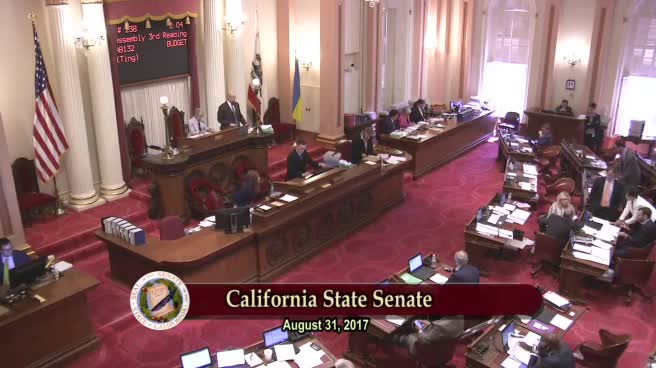
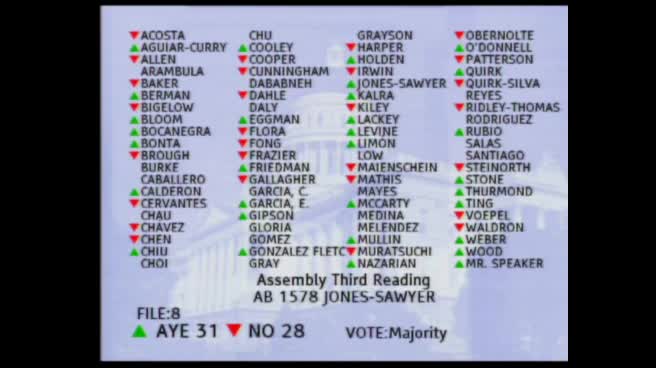
Bill Author

Bill Co-Author(s):
