AB 1550: School finance: school bonds: small school district.
- Session Year: 2017-2018
- House: Assembly
- Latest Version Date: 2017-10-03
Existing law authorizes the governing board of any school district or community college district to order an election and submit to the electors of the school district or community college district, as applicable, the question whether the bonds of the district should be issued and sold for the purpose of raising money for specified purposes, including, among other things, the supplying of school buildings and grounds with furniture, equipment, or necessary apparatus of a permanent nature.
Existing law authorizes the formation of a school facilities improvement district (SFID) by a school district or community college district and provides for the issuance of bonds for that district subject to specified requirements, including voter approval.
Existing law authorizes the governing board of a school district or community college district, as an alternative to issuing bonds pursuant to the above authorities, to pursue the authorization and issuance of bonds through an election pursuant to certain provisions of the California Constitution.
Existing law, the Joint Exercise of Powers Act, generally authorizes 2 or more public agencies, by agreement, to jointly exercise any common power.
This bill would authorize 2 or more small school districts, as defined, that have voter-approved authority to issue bonds pursuant to the above provisions to form a joint powers authority pursuant to the Joint Exercise of Powers Act for the purpose of issuing or selling those bonds to raise money for the purposes authorized. The bill would authorize a joint powers authority formed pursuant to these provisions to exercise the authority granted to a school district under the above specified authority for the issuing and selling of those bonds.
Existing law authorizes the governing board of any school district or community college district to order an election and submit to the electors of the school district or community college district, as applicable, the question whether the bonds of the district should be issued and sold for the purpose of raising money for specified purposes, including, among other things, the supplying of school buildings and grounds with furniture, equipment, or necessary apparatus of a permanent nature.
Existing law authorizes the formation of a school facilities improvement district (SFID) by a school district or community college district and provides for the issuance of bonds for that district subject to specified requirements, including voter approval.
Existing law authorizes the governing board of a school district or community college district, as an alternative to issuing bonds pursuant to the above authorities, to pursue the authorization and issuance of bonds through an election pursuant to certain provisions of the California Constitution.
Existing law, the Joint Exercise of Powers Act, generally authorizes 2 or more public agencies, by agreement, to jointly exercise any common power.
This bill would authorize 2 or more small school districts, as defined, that have voter-approved authority to issue bonds pursuant to the above provisions to form a joint powers authority pursuant to the Joint Exercise of Powers Act for the purpose of authorizing, issuing, and issuing or selling those bonds to raise money for specified purposes for the small school districts. the purposes authorized. The bill would authorize a joint powers authority formed pursuant to these provisions to exercise the authority granted to a school district under a the above specified law authority for the authorizing, issuing, issuing and selling of those bonds.
Existing law authorizes the governing board of any school district or community college district to order an election and submit to the electors of the school district or community college district, as applicable, the question whether the bonds of the district should be issued and sold for the purpose of raising money for specified purposes, including, among other things, the supplying of school buildings and grounds with furniture, equipment, or necessary apparatus of a permanent nature.
This bill would authorize a school district, whenever the school district issues and sells bonds pursuant to the provisions above, to enter into an agreement for credit enhancement with bond purchasers, as specified. If a school district enters into an agreement for credit enhancement, the bill would require, among other things, that the terms of the bond sale agreement specify that the Controller is required to make an apportionment from moneys in Section A of the State School Fund and the Education Protection Account designated for apportionment to the school district for the purpose of satisfying the debt service requirements of the bond sale agreement.Existing law, the Joint Exercise of Powers Act, generally authorizes 2 or more public agencies, by agreement, to jointly exercise any common power.
This bill would authorize 2 or more small school districts, as defined, to form a joint powers authority pursuant to the Joint Exercise of Powers Act for the purpose of authorizing, issuing, and selling bonds to raise money for specified purposes for the small school districts. The bill would authorize a joint powers authority formed pursuant to these provisions to exercise the authority granted to a school district under a specified law for the authorizing, issuing, and selling of bonds.
Existing law authorizes the governing board of any school district or community college district to order an election and submit to the electors of the school district or community college district, as applicable, the question whether the bonds of the district should be issued and sold for the purpose of raising money for specified purposes, including, among other things, the supplying of school buildings and grounds with furniture, equipment, or necessary apparatus of a permanent nature.
This bill would authorize a school district, whenever the school district issues and sells bonds pursuant to the provisions above, to enter into an agreement for credit enhancement with bond purchasers, as specified. If a school district enters into an agreement for credit enhancement, the bill would require, among other things, that the terms of the bond sale agreement specify that the Controller is required to make an apportionment from moneys in Section A of the State School Fund and the Education Protection Account designated for apportionment to the school district for the purpose of satisfying the debt service requirements of the bond sale agreement.
Existing law requires the governing board of a school district to certify twice during a fiscal year, within 45 days after the close of the period being reported, whether the school district is able to meet its financial obligations for the remainder of the fiscal year and for the subsequent fiscal year.This bill would extend that timeframe from 45 days to 50 days after the close of the period being reported.Existing law requires the governing board of a school district to certify twice during a fiscal year, within 45 days after the close of the period being reported, whether the school district is able to meet its financial obligations for the remainder of the fiscal year and for the subsequent fiscal year.
This bill would extend that timeframe from 45 days to 50 days after the close of the period being reported.
(a)Two or more small school districts that have had the issuance of bonds authorized by the voters pursuant to this chapter may form a joint powers authority in accordance with the provisions of Article 1 (commencing with Section 6500) of Chapter 5 of Division 7 of Title 1 of the Government Code for the purpose of issuing or selling those bonds for raising money for the purposes authorized.
(b)A joint powers authority described in subdivision (a) shall be deemed a school district for purposes of this chapter only and may exercise all authority granted to a school district under this chapter under the conditions imposed by this chapter for the issuance and sale of bonds.
(c)Each small school district shall be responsible for its respective voter-approved bonds pursuant to this chapter. A joint powers authority formed pursuant to this section shall serve the purpose of sharing administrative costs associated with the issuance and sale of bonds and shall not otherwise affect the terms of the respective voter-approved bonds.
(d)For purposes of this section, small school district means a school district with fewer than 2,501 units of average daily attendance.
SEC. 2.Section 15267 is added to the Education Code, to read:15267.(a)Two or more small school districts that have had the issuance of bonds authorized by the voters pursuant to this chapter may form a joint powers authority in accordance with the provisions of Article 1 (commencing with Section 6500) of Chapter 5 of Division 7 of Title 1 of the Government Code for the purpose of issuing or selling those bonds for raising money for the purposes authorized.
(b)A joint powers authority described in subdivision (a) shall be deemed a school district for purposes of this chapter only and may exercise all authority granted to a school district under this chapter under the conditions imposed by this chapter for the issuance and sale of bonds.
(c)Each small school district shall be responsible for its respective voter-approved bonds pursuant to this chapter. A joint powers authority formed pursuant to this section shall serve the purpose of sharing administrative costs associated with the issuance and sale of bonds and shall not otherwise affect the terms of the respective voter-approved bonds.
(d)For purposes of this section, small school district means a school district with fewer than 2,501 units of average daily attendance.
SEC. 3.Section 15302 is added to the Education Code, to read:15302.(a)Two or more small school districts that have had the issuance of bonds authorized by the voters pursuant to this chapter may form a joint powers authority in accordance with the provisions of Article 1 (commencing with Section 6500) of Chapter 5 of Division 7 of Title 1 of the Government Code for the purpose of issuing or selling those bonds for raising money for the purposes authorized.
(b)A joint powers authority described in subdivision (a) shall be deemed a school district for purposes of this chapter only and may exercise all authority granted to a school district under this chapter under the conditions imposed by this chapter for the issuance and sale of bonds.
(c)Each small school district shall be responsible for its respective voter-approved bonds pursuant to this chapter. A joint powers authority formed pursuant to this section shall serve the purpose of sharing administrative costs associated with the issuance and sale of bonds and shall not otherwise affect the terms of the respective voter-approved bonds.
(d)For purposes of this section, small school district means a school district with fewer than 2,501 units of average daily attendance.
(a)Two or more small school districts that have had the issuance of bonds authorized by the voters pursuant to this chapter may form a joint powers authority in accordance with the provisions of Article 1 (commencing with Section 6500) of Chapter 5 of Division 7 of Title 1 of the Government Code for the purpose of authorizing, issuing, and issuing or selling those bonds for raising money for the purposes specified in subdivision (a) of Section 15100 for the small school districts. authorized.
(b)A joint powers authority described in subdivision (a) shall be deemed a school district for purposes of this chapter only and may exercise all authority granted to a school district under this chapter under the conditions imposed by this chapter, including that the bonds shall be authorized, issued, and sold in the same manner as provided in this chapter. chapter for the issuance and sale of bonds.
(c)Each small school district shall be responsible for its respective voter-approved bonds pursuant to this chapter. A joint powers authority formed pursuant to this section shall serve the purpose of sharing administrative costs associated with the issuance and sale of bonds and shall not otherwise affect the terms of the respective voter-approved bonds.
(c)(d)For purposes of this section, small school district means a school district with fewer than 2,501 units of average daily attendance.
SEC. 2.Section 15267 is added to the Education Code, to read:15267.(a)Two or more small school districts that have had the issuance of bonds authorized by the voters pursuant to this chapter may form a joint powers authority in accordance with the provisions of Article 1 (commencing with Section 6500) of Chapter 5 of Division 7 of Title 1 of the Government Code for the purpose of issuing or selling those bonds for raising money for the purposes authorized.
(b)A joint powers authority described in subdivision (a) shall be deemed a school district for purposes of this chapter only and may exercise all authority granted to a school district under this chapter under the conditions imposed by this chapter for the issuance and sale of bonds.
(c)Each small school district shall be responsible for its respective voter-approved bonds pursuant to this chapter. A joint powers authority formed pursuant to this section shall serve the purpose of sharing administrative costs associated with the issuance and sale of bonds and shall not otherwise affect the terms of the respective voter-approved bonds.
(d)For purposes of this section, small school district means a school district with fewer than 2,501 units of average daily attendance.
SEC. 3.Section 15302 is added to the Education Code, to read:15302.(a)Two or more small school districts that have had the issuance of bonds authorized by the voters pursuant to this chapter may form a joint powers authority in accordance with the provisions of Article 1 (commencing with Section 6500) of Chapter 5 of Division 7 of Title 1 of the Government Code for the purpose of issuing or selling those bonds for raising money for the purposes authorized.
(b)A joint powers authority described in subdivision (a) shall be deemed a school district for purposes of this chapter only and may exercise all authority granted to a school district under this chapter under the conditions imposed by this chapter for the issuance and sale of bonds.
(c)Each small school district shall be responsible for its respective voter-approved bonds pursuant to this chapter. A joint powers authority formed pursuant to this section shall serve the purpose of sharing administrative costs associated with the issuance and sale of bonds and shall not otherwise affect the terms of the respective voter-approved bonds.
(d)For purposes of this section, small school district means a school district with fewer than 2,501 units of average daily attendance.
(a)Two or more small school districts may form a joint powers authority in accordance with the provisions of Article 1 (commencing with Section 6500) of Chapter 5 of Division 7 of Title 1 of the Government Code for the purpose of authorizing, issuing, and selling bonds for raising money for the purposes specified in subdivision (a) of Section 15100 for the small school districts.
(b)A joint powers authority described in subdivision (a) shall be deemed a school district for purposes of this chapter and may exercise all authority granted to a school district under this chapter under the conditions imposed by this chapter, including that the bonds shall be authorized, issued, and sold in the same manner as provided in this chapter.
(c)For purposes of this section, small school district means a school district with fewer than 2,501 units of average daily attendance.
SECTION 1.Section 15151 is added to the Education Code, to read:15151.Whenever, under this chapter, a school district issues and sells any bond, the school district may enter into an agreement for credit enhancement with bond purchasers as follows:(a)The terms of the bond sale agreement shall specify that the Controller shall make an apportionment from moneys in Section A of the State School Fund and the Education Protection Account designated for apportionment to the school district for the purpose of satisfying the debt service requirements of the bond sale agreement.(b)Any apportionment authorized pursuant to this section shall constitute a lien senior to any other apportionment or payment of State School Fund and Education Protection Account moneys to or for that school district not made pursuant to this section, with the exception of emergency apportionments made pursuant to Article 2.7 (commencing with Section 41329.50) of Chapter 3 of Part 24 of Division 3 of Title 2.(c)The school district shall provide a schedule of payments to the Office of the State Controller.(d)Any payment by the Controller to the bond purchaser shall satisfy that portion of the school districts debt obligation to that creditor.(e)The amount apportioned for a school district pursuant to this section is an allocation to the school district for purposes of subdivision (b) of Section 8 of Article XVI of the California Constitution. For purposes of computing the local control funding formula allocation pursuant to Section 42238.02, as implemented by Section 42238.03, for any school district, the local control funding formula allocation for any fiscal year in which funds are apportioned for the school district pursuant to this section shall include any amounts apportioned by the Controller pursuant to this section.(f)If the amount of debt payments vary from the schedule as a result of variable interest rates on the bonds, early redemptions, or changes in expenses, the school district shall amend or supplement the schedule accordingly and provide notice to the Controller.(g)No party, including the school district or any of its creditors, shall have any claim to the money apportioned or to be apportioned to the bond purchaser by the Controller pursuant to this section.Whenever, under this chapter, a school district issues and sells any bond, the school district may enter into an agreement for credit enhancement with bond purchasers as follows:
(a)The terms of the bond sale agreement shall specify that the Controller shall make an apportionment from moneys in Section A of the State School Fund and the Education Protection Account designated for apportionment to the school district for the purpose of satisfying the debt service requirements of the bond sale agreement.
(b)Any apportionment authorized pursuant to this section shall constitute a lien senior to any other apportionment or payment of State School Fund and Education Protection Account moneys to or for that school district not made pursuant to this section, with the exception of emergency apportionments made pursuant to Article 2.7 (commencing with Section 41329.50) of Chapter 3 of Part 24 of Division 3 of Title 2.
(c)The school district shall provide a schedule of payments to the Office of the State Controller.
(d)Any payment by the Controller to the bond purchaser shall satisfy that portion of the school districts debt obligation to that creditor.
(e)The amount apportioned for a school district pursuant to this section is an allocation to the school district for purposes of subdivision (b) of Section 8 of Article XVI of the California Constitution. For purposes of computing the local control funding formula allocation pursuant to Section 42238.02, as implemented by Section 42238.03, for any school district, the local control funding formula allocation for any fiscal year in which funds are apportioned for the school district pursuant to this section shall include any amounts apportioned by the Controller pursuant to this section.
(f)If the amount of debt payments vary from the schedule as a result of variable interest rates on the bonds, early redemptions, or changes in expenses, the school district shall amend or supplement the schedule accordingly and provide notice to the Controller.
(g)No party, including the school district or any of its creditors, shall have any claim to the money apportioned or to be apportioned to the bond purchaser by the Controller pursuant to this section.
SECTION 1.Section 42131 of the Education Code is amended to read:42131.(a)(1)Pursuant to the reports required by Section 42130, the governing board of each school district shall certify, in writing, within 50 days after the close of the period being reported, whether the school district is able to meet its financial obligations for the remainder of the fiscal year and, based on current forecasts, for the subsequent fiscal year. These certifications shall be based upon the governing board of the school districts assessment, on the basis of standards and criteria for fiscal stability adopted by the state board pursuant to Section 33127, of the school district budget, as revised to reflect current information regarding the adopted State Budget, school district property tax revenues pursuant to Sections 95 to 100, inclusive, of the Revenue and Taxation Code, and ending balances for the preceding fiscal year as reported pursuant to Section 42100. The certifications shall be classified as positive, qualified, or negative, as prescribed by the Superintendent for purposes of determining subsequent actions by the Superintendent, the Controller, or the county superintendent of schools, pursuant to subdivisions (b) and (c). These certifications shall be based upon the financial and budgetary reports required by Section 42130 but may include additional financial information known by the governing board of the school district to exist at the time of each certification. For purposes of this subdivision, a negative certification shall be assigned to any school district that, based upon current projections, will be unable to meet its financial obligations for the remainder of the fiscal year or the subsequent fiscal year. A qualified certification shall be assigned to any school district that, based upon current projections, may not meet its financial obligations for the current fiscal year or two subsequent fiscal years. A positive certification shall be assigned to any school district that, based upon current projections, will meet its financial obligations for the current fiscal year and subsequent two fiscal years.(2)(A)A copy of each certification and a copy of the report submitted to the governing board of the school district pursuant to Section 42130 shall be filed with the county superintendent of schools. If a county office of education receives a positive certification when it determines a negative or qualified certification should have been filed, or receives a qualified certification when it determines a negative certification should have been filed, the county superintendent of schools shall change the certification to negative or qualified, as appropriate, and, no later than 75 days after the close of the period being reported, shall provide notice of that action to the governing board of the school district and to the Superintendent. No later than five days after a school district receives notice from the county superintendent of schools of a change in the school districts certification to negative or qualified, the governing board of the school district may submit an appeal to the Superintendent regarding the validity of that change, in accordance with the criteria applied to those designations pursuant to this subdivision. No later than 10 days after receiving that appeal, the Superintendent shall determine the certification to be assigned to the school district and shall notify the governing board of the school district and the county superintendent of schools of that determination.(B)Copies of any certification in which the governing board of the school district is unable to certify unqualifiedly that these financial obligations will be met and a copy of the report submitted to the governing board of the school district pursuant to Section 42130 shall be sent by the county office of education to the Controller and the Superintendent at the time of the certification, together with a completed transmittal form provided by the Superintendent. Within 75 days after the close of the reporting period on all school district certifications that are classified as qualified or negative pursuant to this section, the appropriate county superintendent of schools shall submit to the Superintendent and the Controller his or her comments on those certifications and report any action proposed or taken pursuant to subdivision (b).(3)All reports and certifications required under this subdivision shall be in a format or on forms prescribed by the Superintendent and shall be based on standards and criteria for fiscal stability adopted by the state board pursuant to Section 33127.(4)This subdivision does not preclude the submission of additional budgetary or financial reports by the county superintendent of schools to the governing board of the school district, or to the Superintendent.(b)As to any school district having a negative or qualified certification, the county superintendent of schools shall exercise his or her authority, as necessary, pursuant to Section 42127.6.(c)Within 75 days after the close of each reporting period, each county superintendent of schools shall report to the Controller and the Superintendent as to whether the governing board of each of the school districts under his or her jurisdiction has submitted the certification required by subdivision (a). That report shall account for all school districts under the jurisdiction of the county office of education and indicate the type of certification filed by each school district.(d)The Controllers office may conduct an audit or review of the fiscal condition of any school district having a negative or qualified certification.(e)The governing board of each school district filing a qualified or negative certification for the second report required under Section 42130, or classified as qualified or negative by the county superintendent of schools, shall provide to the county superintendent of schools, the Controller, and the Superintendent no later than June 1, financial statement projections of the school districts fund and cash balances through June 30 for the period ending April 30. The governing boards of all other school districts are encouraged to develop a similar financial statement for use in developing the beginning fund balances of the school district for the ensuing fiscal year.(f)Any school district for which the county board of education serves as the governing board of the school district is not subject to subdivisions (a) to (e), inclusive, but is governed instead by the interim report, monitoring, and review procedures set forth in subdivision (l) of Section 1240 and in Article 2 (commencing with Section 1620) of Chapter 5 of Part 2.(a)(1)Pursuant to the reports required by Section 42130, the governing board of each school district shall certify, in writing, within 45 50 days after the close of the period being reported, whether the school district is able to meet its financial obligations for the remainder of the fiscal year and, based on current forecasts, for the subsequent fiscal year. These certifications shall be based upon the governing board of the school districts assessment, on the basis of standards and criteria for fiscal stability adopted by the state board pursuant to Section 33127, of the school district budget, as revised to reflect current information regarding the adopted State Budget, school district property tax revenues pursuant to Sections 95 to 100, inclusive, of the Revenue and Taxation Code, and ending balances for the preceding fiscal year as reported pursuant to Section 42100. The certifications shall be classified as positive, qualified, or negative, as prescribed by the Superintendent for purposes of determining subsequent actions by the Superintendent, the Controller, or the county superintendent of schools, pursuant to subdivisions (b) and (c). These certifications shall be based upon the financial and budgetary reports required by Section 42130 but may include additional financial information known by the governing board of the school district to exist at the time of each certification. For purposes of this subdivision, a negative certification shall be assigned to any school district that, based upon current projections, will be unable to meet its financial obligations for the remainder of the fiscal year or the subsequent fiscal year. A qualified certification shall be assigned to any school district that, based upon current projections, may not meet its financial obligations for the current fiscal year or two subsequent fiscal years. A positive certification shall be assigned to any school district that, based upon current projections, will meet its financial obligations for the current fiscal year and subsequent two fiscal years.
(2)(A)A copy of each certification and a copy of the report submitted to the governing board of the school district pursuant to Section 42130 shall be filed with the county superintendent of schools. If a county office of education receives a positive certification when it determines a negative or qualified certification should have been filed, or receives a qualified certification when it determines a negative certification should have been filed, the county superintendent of schools shall change the certification to negative or qualified, as appropriate, and, no later than 75 days after the close of the period being reported, shall provide notice of that action to the governing board of the school district and to the Superintendent. No later than five days after a school district receives notice from the county superintendent of schools of a change in the school districts certification to negative or qualified, the governing board of the school district may submit an appeal to the Superintendent regarding the validity of that change, in accordance with the criteria applied to those designations pursuant to this subdivision. No later than 10 days after receiving that appeal, the Superintendent shall determine the certification to be assigned to the school district and shall notify the governing board of the school district and the county superintendent of schools of that determination.
(B)Copies of any certification in which the governing board of the school district is unable to certify unqualifiedly that these financial obligations will be met and a copy of the report submitted to the governing board of the school district pursuant to Section 42130 shall be sent by the county office of education to the Controller and the Superintendent at the time of the certification, together with a completed transmittal form provided by the Superintendent. Within 75 days after the close of the reporting period on all school district certifications that are classified as qualified or negative pursuant to this section, the appropriate county superintendent of schools shall submit to the Superintendent and the Controller his or her comments on those certifications and report any action proposed or taken pursuant to subdivision (b).
(3)All reports and certifications required under this subdivision shall be in a format or on forms prescribed by the Superintendent and shall be based on standards and criteria for fiscal stability adopted by the state board pursuant to Section 33127.
(4)This subdivision does not preclude the submission of additional budgetary or financial reports by the county superintendent of schools to the governing board of the school district, or to the Superintendent.
(b)As to any school district having a negative or qualified certification, the county superintendent of schools shall exercise his or her authority, as necessary, pursuant to Section 42127.6.
(c)Within 75 days after the close of each reporting period, each county superintendent of schools shall report to the Controller and the Superintendent as to whether the governing board of each of the school districts under his or her jurisdiction has submitted the certification required by subdivision (a). That report shall account for all school districts under the jurisdiction of the county office of education and indicate the type of certification filed by each school district.
(d)The Controllers office may conduct an audit or review of the fiscal condition of any school district having a negative or qualified certification.
(e)The governing board of each school district filing a qualified or negative certification for the second report required under Section 42130, or classified as qualified or negative by the county superintendent of schools, shall provide to the county superintendent of schools, the Controller, and the Superintendent no later than June 1, financial statement projections of the school districts fund and cash balances through June 30 for the period ending April 30. The governing boards of all other school districts are encouraged to develop a similar financial statement for use in developing the beginning fund balances of the school district for the ensuing fiscal year.
(f)Any school district for which the county board of education serves as the governing board of the school district is not subject to subdivisions (a) to (f), (e), inclusive, but is governed instead by the interim report, monitoring, and review procedures set forth in subdivision (l) of Section 1240 and in Article 2 (commencing with Section 1620) of Chapter 5 of Part 2.
|
Date
|
Status
|
|---|---|
| Oct 3, 2017 | Chaptered by Secretary of State - Chapter 451, Statutes of 2017. |
| Oct 3, 2017 | Approved by the Governor. |
| Sep 13, 2017 | Enrolled and presented to the Governor at 4 p.m. |
| Sep 7, 2017 | Senate amendments concurred in. To Engrossing and Enrolling. |
| Aug 31, 2017 | In Assembly. Concurrence in Senate amendments pending. May be considered on or after September 2 pursuant to Assembly Rule 77. |
| Aug 31, 2017 | Read third time. Passed. Ordered to the Assembly. |
| Aug 23, 2017 | Ordered to special consent calendar. |
| Jul 13, 2017 | Read second time and amended. Ordered to third reading. |
| Jul 12, 2017 | From committee: Amend, and do pass as amended. (Ayes 7. Noes 0.) (July 12). |
| Jun 14, 2017 | From committee: Do pass and re-refer to Com. on GOV. & F. with recommendation: To Consent Calendar. (Ayes 7. Noes 0.) (June 14). Re-referred to Com. on GOV. & F. |
| Jun 1, 2017 | Referred to Coms. on ED. and GOV. & F. |
| May 18, 2017 | In Senate. Read first time. To Com. on RLS. for assignment. |
| May 18, 2017 | Read third time. Passed. Ordered to the Senate. (Ayes 69. Noes 0. Page 1621.) |
| May 15, 2017 | Read second time. Ordered to Consent Calendar. |
| May 11, 2017 | From committee: Do pass. To Consent Calendar. (Ayes 6. Noes 0.) (May 10). |
| Apr 26, 2017 | In committee: Set, first hearing. Hearing canceled at the request of author. |
| Apr 19, 2017 | Re-referred to Com. on ED. |
| Apr 18, 2017 | From committee chair, with author's amendments: Amend, and re-refer to Com. on ED. Read second time and amended. |
| Mar 20, 2017 | Re-referred to Com. on ED. |
| Mar 16, 2017 | From committee chair, with author's amendments: Amend, and re-refer to Com. on ED. Read second time and amended. |
| Mar 16, 2017 | Referred to Com. on ED. |
| Feb 19, 2017 | From printer. May be heard in committee March 21. |
| Feb 17, 2017 | Read first time. To print. |
|
Date
|
Description
|
Location
|
Votes
|
|
|---|---|---|---|---|
| Sep 7, 2017 | AB 1550 LIMÓN Concurrence in Senate Amendments | Assembly Floor |
Passed |
|
| Aug 31, 2017 | Special Consent Calendar # AB1550 | Senate Floor |
Passed |
|
| Jul 12, 2017 | Do pass as amended | Senate Standing Committee on Governance and Finance |
Passed |
|
| Jun 14, 2017 | Do pass, but first be re-referred to the Committee on [Governance and Finance] with the recommendation: To Consent Calendar | Senate Standing Committee on Education |
Passed |
|
| May 18, 2017 | AB 1550 LIMÓN Consent Calendar Second Day Regular Session | Assembly Floor |
Passed |
|
| May 10, 2017 | Do pass. To Consent Calendar. | Assembly Standing Committee on Education |
Passed |
This list shows positions taken on this bill by organizations on the date displayed, which is linked to the original source.
Positions by individuals are not included.
|
Organization
|
Position
|
Date
|
|---|---|---|
| California School Boards Association | ** Support | Jul 14, 2017 |
| small school districts' association | ** Support | Jul 14, 2017 |
| Unknown. | ** Against | Jul 7, 2017 |
CONCURRENCE IN SENATE AMENDMENTS
CSA1 Bill Id:AB 1550
Author:(Limón)
As Amended Ver:July 13, 2017
Majority vote
ASSEMBLY: | 69-0 | (May 18, 2017) | SENATE: | 37-0 | (August 31, 2017) |
Original Committee Reference: ED.
SUMMARY: Authorizes two or more small school districts that have had the issuance of bonds authorized by the voters to form a joint powers authority (JPA) for the purpose of issuing or selling those bonds for raising money for the purposes authorized by the bonds. Specifically, this bill:
- Specifies that a JPA shall be deemed a school district and may exercise all authority granted to a school district for the issuance and sale of bonds.
- Specifies that each small school district shall be responsible for its respective voter-approved bonds. Specifies that a JPA shall serve the purpose of sharing administrative costs associated with the issuance and sale of bonds and shall not otherwise affect the terms of the respective voter-approved bonds.
- Defines "small school district" as a school district with fewer than 2,501 units of average daily attendance (ADA).
The Senate amendments:
- Strike the authority of the JPA to authorize bonds.
- Add the provision requiring each small school district to be responsible for its respective voter-approved bond and clarifying that the role of the JPA is for sharing administrative costs.
- Add the provisions of the bill to the sections of law relating to Proposition 39 (2000) and School Facilities Improvement Districts (SFID).
FISCAL EFFECT: None. This bill is keyed non-fiscal by the Legislative Counsel.
COMMENTS: Background. School districts and community college districts pay for the construction and rehabilitation of school and community college facilities through a combination of state education bond funds, developer fees, local bond funds, and other local assessments, such as SFIDs. GO bonds must be approved by voters, who agree to an ad valorem (per assessed value of property) tax to pay for the bonds. Prior to 2001, passage of a local bond required a 2/3 supermajority vote. In 2000, voters approved Proposition 39, which provided an option for approval of a local education bond based on a 55% vote rather than a 2/3 vote.
Once bonds are authorized or approved by voters, districts can issue or sell the bonds. Under current law, school and community college districts can issue GO bonds under the provisions of the Education Code or under the provisions of the Government Code, which governs bond issuances for any city, city and county, special district, as well as school district or community college district. There are some notable differences between the two codes. The Government Code authorizes the term of bonds to be up to 40 years, whereas the Education Code limits term of bonds to 25 years. The Government Code authorizes issuers to issue on their own, whereas the Education Code requires school districts to go through county boards of supervisors. The Government Code authorizes a maximum interest rate of 12% whereas the Education Code limits interest rates to 8%.
Because GO bonds are backed by property taxes, which are seen as secure, they typically obtain the highest bond ratings and widest investor acceptance, which results in the lowest borrowing costs among various types of long-term bonds. Higher bond ratings result in lower interest rates. However, bond rating agencies perceive that some school districts' distressed financial conditions could pose a threat to those districts' GO bond payments, even though bonds are secured by property taxes and do not affect a district's general funds. As a result, districts in financial difficulty receive lower GO bond ratings than do districts in more stable financial condition.
The author states, "Small school districts, which constitute more than 600 of the 1,000 school districts in California, are oftentimes not eligible for an AAA bond rating, when they issue debt, because they are too small to have assets necessary to guarantee the borrowing." This bill is intended to assist small school districts, defined as school districts with 2500 or fewer ADA, in obtaining lower interest rates and reducing issuance costs.
This bill proposes to allow two or more small school districts to form a JPA for the purposes of issuing bonds in a larger pool. In theory, a JPA will allow multiple school districts to issue bonds jointly, thereby dividing issuance costs (e.g., fees for financial advisors, bond counsels, rating agencies, underwriters, etc.) among participating districts. It is unclear whether this bill will result in lower interest rates as each district may have variable ratings from rating companies and it is unknown how the rating companies will treat such a JPA.
Under current law enacted by SB 222 (Block), Chapter 78, Statutes of 2015, GO bonds issued by local governments, including school districts, are secured by a statutory lien on all revenues received. One of the purposes for the bill was to eliminate the risk of nonpayment and thereby enable school districts to receive better ratings and lower interest rates. According to the sponsor of this bill, the Small School Districts' Association, only one of the three primary rating agencies credits school districts with security through a lien. The sponsor states, "That one rating agency only recognizes the effect of SB 222 (2015) on the underlying rating, not the tax base rating, resulting in few benefits once underwriters actually sell those bonds to purchasers in a discerning bond market. The prejudice against small school districts in the bond market, though unwarranted, necessitates creative approaches to reducing overheard and other fixed costs."
This bill is modeled after authorization given to regional occupational center or program (ROC/P) operated by a JPA (Education Code Section 52319). There are also a number of authorizations in the Government Code (Section 6500 et seq.) allowing local governmental entities, such as cities and counties, to form JPAs for the purposes of incurring debt or levying taxes.
Amendments adopted in the Senate extend the authorization for small school districts to form a JPA to two other methods of issuing bonds: bonds approved with 55% vote (Proposition 39 bonds) and bonds approved through a SFID, which are special districts drawn by a school district and approved by homeowners. Senate amendments also clarify that the purpose of the JPA is to share administrative costs and does not affect the terms of bonds approved by voters.
Analysis Prepared by: Sophia Kwong Kim / ED. / (916) 319-2087 FN: 0001212
Office of Senate Floor Analyses (916) 651-1520 Fax: (916) 327-4478 | AB |
THIRD READING
Bill No: AB 1550
:
SENATE EDUCATION COMMITTEE: 7-0, 6/14/17
AYES: Allen, Wilk, Galgiani, Leyva, Mendoza, Pan, Vidak
SENATE GOVERNANCE & FIN. COMMITTEE: 7-0, 7/12/17
AYES: McGuire, Nguyen, Beall, Hernandez, Hertzberg, Lara, Moorlach
ASSEMBLY FLOOR: 69-0, 5/18/17 (Consent) - See last page for vote
SOURCE: Small School Districts’ Association
DIGEST:
This bill authorizes two or more small school districts that have had the issuance of bonds authorized by the voters to form a joint powers authority to issue and sell local bonds for construction and other related purposes.
Existing law:
- Authorizes school districts and community college districts to issue general obligation (GO) bonds upon approval by voters and establishes processes and guidelines for such issuances under the Education Code. Authorizes any city, county, city and county, school district, community college district, or special district to issue GO bonds, secured by the levy of ad valorem taxes, and establishes a process for such issuances under the Government Code.
- Specifies that the total amount of bonds issued by a school district shall not exceed 1.25 percent of the taxable property of the district and that the tax rate shall not exceed $30 per $100,000 of taxable property.
- Specifies that the total amount of bonds issued by a unified school district and a community college district shall not exceed 2.5 percent of the taxable property of the district and that the tax rate shall not exceed $60 per $100,000 of taxable property for a unified school district and $25 per $100,000 of taxable property for a community college district.
- Specifies that GO bonds issued and sold by or on behalf of a local agency shall be secured by a statutory lien on all revenues received pursuant to the levy and collection of the tax.
This bill authorizes two or more small school districts that have had the issuance of bonds authorized by the voters to form a joint powers authority to issue and sell local bonds for construction and other related purposes. Specifically, this bill:
Authorizes two or more small school districts to form a joint powers authority (JPA) to issue or sell bonds for construction and other related purposes.
- Specifies that a JPA formed pursuant to (1) shall be deemed a school district for purposes of issuing bonds only and may exercise all authority granted to a school district for purposes of issuing and selling bonds.
- Specifies that each small school district shall be responsible for its respective voter-approved bonds and that a joint powers authority formed for these purposes shall serve the purpose of sharing administrative costs associated with the issuance and sale of bonds and shall not otherwise affect the terms of the respective voter-approved bonds.
- Defines “small school district” for purposes of the bill as a school district with fewer than 2,501 units of average daily attendance (ADA).
Comments
- Need for the bill. According to the author, “Small school districts, which constitute more than 600 of the 1,000 school districts in California, are oftentimes not eligible for an AAA bond rating when they issue debt because they are too small to have assets necessary to guarantee the borrowing.”
This bill is intended to assist small school districts, defined as school districts with 2500 or fewer ADA, in obtaining lower interest rates and reducing issuance costs.
- Proposition 39 of 2000. California voters approved Proposition 39 in the 2000 general election. This proposition lowered the voting requirement for passage of local school bond measures from two-thirds to 55 percent. In addition, it allows property taxes to exceed the one percent cap in order to repay the bonds. To issue a bond under the lower voter threshold, certain requirements must be fulfilled:
- Bond proceeds can be used only for construction, rehabilitation, equipping school facilities, or acquisition/lease of real property for school facilities.
- A list of school projects to be funded must be included in the issuance and certification that the school board has evaluated safety, class size reduction, and information technology needs in developing the list.
- School boards are required to conduct annual, independent financial and performance audits until all bond funds have been spent to ensure that the bond funds have been used only for the projects listed in the measure.
- School districts increasingly rely on local bonds. According to the California Debt and Investment Advisory Commission, even though the voter approval process may be time intensive and costly to mount, California local governments have continued to rely on general obligation (GO) bonds as a financing tool to construct, acquire, and make improvements to real property such as public buildings, roads, school facilities, and equipment.
Once primarily used by public utilities for capital improvements, GO bonds now are primarily issued by school districts for K-12 improvements. Most of the GO bond issuances for education purposes occur in three regions of the state—Los Angeles, the Bay Area, and San Diego. However, even in other areas of the state, the use of local bonds for education has increased substantially.
- Bond issuance costs are higher for small school districts. A research brief by the Haas Institute, “Doubly Bound: The Costs of Issuing Municipal Bonds” included the following summary: “There are a variety of expenses associated with a bond issuance when a government sells bonds. The amount of funds borrowed is not equal to that received by the government due to the costs of issuance. Those costs are deducted from the bond proceeds before the bond proceeds reach the state or local level.
Based upon a study of the cost of issuance for 812 bond issuances since 2012, we found that costs of issuing bonds average 1.02 percent of the bond’s principal amount, but this percentage varied widely. There are examples of significant variance from this average. For example, a bond issuance for $2.1 million dollars for Dehesa School District incurred $200,138 in fees, over 9 percent of the principal amount. Had this issuance followed the 1.02 percent average, its issuance fees would have been nearer $21,000. In our findings, six California school districts incurred costs in excess of 8.5 percent.”
The brief makes several findings related to bond issuances, including that smaller issuers typically pay higher costs. Given this finding, could smaller school districts benefit from combining their bond issuances as authorized by this bill?
- Certain educational joint powers authorities can already issue local bonds. Regional occupational centers are career technical education programs allowing students from multiple schools or districts to participate in career training regardless of the geographical location of their residence in a county or region. Existing law allows these centers to be run by a single school district, a county, or two or more school districts that form a joint powers agreement (JPA). Centers run by school district JPAs are authorized to issue bonds for construction and other related purposes totaling no more than one-half of one percent of the taxable property of the area served by the center.
FISCAL EFFECT: Appropriation: Fiscal Com.: Local:
Small School Districts’ Association (source)
California School Boards Association
OPPOSITION: (Verified 7/14/17)
None received
ASSEMBLY FLOOR: 69-0, 5/18/17
AYES: Acosta, Travis Allen, Arambula, Baker, Berman, Bigelow, Bloom, Bocanegra, Bonta, Brough, Burke, Caballero, Cervantes, Chávez, Chen, Chiu, Choi, Chu, Cooley, Cooper, Cunningham, Dababneh, Dahle, Daly, Eggman, Flora, Fong, Gallagher, Cristina Garcia, Eduardo Garcia, Gomez, Gonzalez Fletcher, Gray, Grayson, Harper, Irwin, Jones-Sawyer, Kalra, Kiley, Lackey, Levine, Limón, Low, Maienschein, Mathis, Mayes, McCarty, Medina, Melendez, Muratsuchi, Nazarian, Obernolte, O'Donnell, Patterson, Quirk, Quirk-Silva, Reyes, Ridley-Thomas, Rodriguez, Rubio, Salas, Steinorth, Mark Stone, Thurmond, Ting, Voepel, Waldron, Weber, Wood
NO VOTE RECORDED: Aguiar-Curry, Calderon, Chau, Frazier, Friedman, Gipson, Gloria, Holden, Mullin, Santiago, Rendon
7/14/17 13:37:42
**** END ****
SENATE COMMITTEE ON GOVERNANCE AND FINANCE
Senator Mike McGuire, Chair
2017 - 2018 Regular
Bill No: | AB 1550 | Hearing Date: | 7/12/17 |
Author: | Limón | Tax Levy: | No |
Version: | 4/18/17 | Fiscal: | No |
Consultant: | Grinnell | ||
School finance: school bonds: small school district
Allows two or more small school districts to form a JPA for the purposes of authorizing, issuing, and selling school bonds.
Background
Joint Exercise of Powers Act. The Joint Exercise of Powers Act allows two or more public agencies, including school districts, to enter an agreement to jointly exercise any power held in common by the parties to the agreement. Each public agency must independently possess the authority to perform the activity that is to be performed jointly pursuant to a joint powers agreement. The courts have found that the Act grants no new powers to public agencies, but merely sets up a new procedure for the exercise of existing powers.
Sometimes an agreement creates a new, separate government called a joint powers authority (JPA). Public officials have created more than 700 JPAs, which are confederations of governments working together for common purposes. A joint powers agreement must state the purpose of the JPA or the power to be exercised, and must provide for the method by which the purpose will be accomplished or the manner in which the power will be exercised. A JPA may exercise only the powers expressly provided for in the agreement.
Public agencies use the JPA law and the related Marks-Roos Local Bond Pooling Act to form bond pools to finance public works, working capital, insurance needs, and other public benefit projects. JPAs can issue one large Marks-Roos Act bond and then loan the capital to local agencies, thus creating a “bond pool.” Bond pooling saves money on interest rates and finance charges. It also lets smaller local agencies enter the bond market.
School Bonds. When public agencies issue bonds, they borrow money from investors, who provide cash in exchange for the agencies’ commitment to repay the principal amount of the bond plus interest. Bonds are usually either revenue bonds, which repay investors out of revenue generated from the project the agency buys with bond proceeds, or general obligation (GO) bonds, which the public agency pays out of general revenues and are guaranteed by its full faith and credit.
The California Constitution requires counties, cities, and school districts to get voter approval for long-term debt (Section 1, Article XIIIA). Counties, cities, school districts, community college districts, and some special districts can issue GO bonds secured by ad valorem, property tax revenues with 2/3-voter approval. Proposition 39 (2000) allows school districts and school facility improvement districts to issue GO bonds to build, rehabilitate, or replace schools with 55% voter approval subject to certain conditions.
When a school or community college district’s voters authorize a GO bond, they authorize the county to increase the property tax rate in an amount necessary to repay the bond according to the schedule determined by its board. The tax applies to the assessed valuation of all property within the school or community college district, and is added onto each district residents’ property tax bill.
To issue a GO bond, a community college or school district first orders an election and approves ballot measure language. Second, the county registrar distributes a sample ballot containing the text of the measures, a projection of tax rates needed to repay the bond prepared by the district, a legal analysis from the county counsel, and arguments for and against the bond measure. If voters approve the measure, the district then passes a resolution to sell the bonds.
For many years, the Education Code provided the sole avenue for school and community college districts to sell GO Bonds, which limited the number of years a community college or school district could issue a bond to 25 years, with a maximum interest rate of 8%. Districts can issue bonds so long as the amount outstanding does not exceed 1.25% of the taxable property of the district, and that the tax rate shall not exceed $30 per $100,000 of taxable property. Today, districts can also issue bonds under the Government Code.
The Board of Supervisors in the county in which a community college or school district wants to sell bonds under the Education Code must approve a resolution authorizing the sale, either specific to the issue or a blanket resolution for all school districts. Under the Government Code, school districts can also sell bonds directly in a public sale, but only need board of supervisors’ approval to do so in a private sale.
Currently, school districts can enter into JPAs to sell bonds. However, the Education Code doesn’t specifically treat a JPA composed of school districts as an eligible bond issuer, but does allow school districts to jointly issue bonds to establish and maintain regional occupational center. Small school districts want JPAs formed by districts to be considered one issuer for purposes of authorizing, issuing, and selling bonds.
Proposed Law
Assembly Bill 1550 allows two or more small school districts to form a JPA for the purposes of authorizing, issuing, and selling bonds under the Education Code. The measure deems such a JPA a school district for purposes of the Education Code’s authorization to sell bonds. The bill defines “small school district” as one with fewer than 2,501 units of average daily attendance.
State Revenue Impact
No estimate.
Comments
1. Purpose of the bill. According to the author, “According to the author, Small school districts face obstacles when executing voter-approved bonds, including higher bond issuance costs relative to larger school districts, which results in students and taxpayers receiving less value for their educational dollars. This bill allows small districts to pool their overhead costs to reduce borrowing costs, such as the legal fees to draft the measure’s official statement, or the underwriting banking fees for placement or purchase of bonds. AB 1550 is necessary to lower the costs of bond insurance and reduce the amount of educational funds that go towards paying for debt service.”
2. Issuance costs. When government agencies issue bonds, they generally have to pay financial advisors, underwriters, bond counsel, and others to perform specified services necessary for the sale, often called “issuance costs.” Generally, agencies pay these costs from bond proceeds, so the higher the issuance costs, the fewer funds available to the agency to pay for projects. Smaller school districts often pay higher issuance costs on a percentage basis, as markets may have more familiarity with districts who issue more often, and smaller districts lack the economies of scale, where larger districts can spread the fixed costs of issuance across a larger bond issue. Small school districts argue that AB 1550 will reduce issuance costs by sharing these fixed costs among several districts, thereby allowing a greater percentage of the bond funding to go towards facilities rather than issuance costs. However, it’s unclear whether the bond market will ignore important factors when assessing the credit risk of one school district simply because its bonds were issued by a JPA that issues other school districts’ bonds too – investors will look solely to the ability of the creditworthiness of the district issuing the bond when pricing risk.
3. Clarity. As mentioned above, school districts can and have formed JPAs to issue school bonds. However, it’s less clear whether they would be considered a single issuer for purposes. AB 1550 provides explicit legislative authorization, thereby making it easier for bond attorneys to give unqualified opinions on the due authorization and delivery of the bonds.
4. Technicals. Committee staff recommends the technical amendments to amend Sections 15100.3, and add 15267, and 15302 to the Education Code, to ensure that JPAs formed under the bill can be considered issuers for each authorized form of school bond issuance under the Education Code, and to further provide that:
- Two or more small school districts that have voter-approved authorized bonds may form a JPA for the purpose of issuing or selling those bonds for raising money for the purposes authorized.
- A JPA formed under the bill shall be deemed a school district for purposes of the appropriate chapter, and may exercise all authority granted to a school district under the conditions imposed by the appropriate chapter for the issuance and sale of bonds.
- Each small school district shall be responsible for its respective voter-approved bonds pursuant to this chapter, and the formation of a JPA is for the purpose of reducing the costs associated with the issuance and sale of bonds and shall not otherwise effect the terms of the respective voter-approved bonds.
Assembly Actions
Assembly Education Committee: 6-0
Assembly Floor: 69-0
Support and Opposition
(7/7/17)
Support: California School Boards Association, Small School District Association, Sonoma County Office of Education.
Opposition: Unknown.
-- END --
SENATE COMMITTEE ON EDUCATION
Senator Benjamin Allen, Chair
2017 - 2018 Regular
Bill No: Hearing Date: June 14, 2017
Author: | Limón | ||
Version: |
| ||
Urgency: | Fiscal: | ||
Consultant: | |||
Subject:
NOTE: This bill has been referred to the Committees on Education and Governance and Finance. A "do pass" motion should include referral to the Committee on Governance and Finance.
SUMMARY
This bill authorizes two or more small school districts to form a joint powers authority to authorize, issue, and sell local bonds for construction and other related purposes.
BACKGROUND
Existing law:
- Authorizes school districts and community college districts to issue general obligation (GO) bonds upon approval by voters and establishes a process and guidelines for such issuances under the Education Code. Authorizes any city, county, city and county, school district, community college district, or special district to issue GO bonds, secured by the levy of ad valorem taxes, and establishes a process for such issuances under the Government Code.
- Specifies that the total amount of bonds issued by a school district shall not exceed 1.25 percent of the taxable property of the district and that the tax rate shall not exceed $30 per $100,000 of taxable property.
- Specifies that the total amount of bonds issued by a unified school district and a community college district shall not exceed 2.5 percent of the taxable property of the district and that the tax rate shall not exceed $60 per $100,000 of taxable property for a unified school district and $25 per $100,000 of taxable property for a community college district.
- Specifies that GO bonds issued and sold by or on behalf of a local agency shall be secured by a statutory lien on all revenues received pursuant to the levy and collection of the tax.
ANALYSIS
This bill:
- Authorizes two or more small school districts to form a joint powers authority (JPA) to authorize, issue, and sell bonds for construction and other related purposes.
- Specifies that a JPA shall be deemed a school district for purposes of issuing bonds and may exercise all authority granted to a school district, including that the bonds shall be authorized, issued and sold in the same manner as school districts.
- Defines “small school district” for purposes of the bill as a school district with fewer than 2,501 units of average daily attendance (ADA).
STAFF COMMENTS
- Need for the bill. According to the author, “Small school districts, which constitute more than 600 of the 1,000 school districts in California, are oftentimes not eligible for an AAA bond rating when they issue debt because they are too small to have assets necessary to guarantee the borrowing.”
This bill is intended to assist small school districts, defined as school districts with 2500 or fewer ADA, in obtaining lower interest rates and reducing issuance costs.
- Proposition 39 of 2000. California voters approved Proposition 39 in the 2000 general election. This proposition lowered the voting requirement for passage of local school bond measures from two-thirds to 55 percent. In addition, it allows property taxes to exceed the one percent cap in order to repay the bonds. To issue a bond under the lower voter threshold, certain requirements must be fulfilled:
- Bond proceeds can be used only for construction, rehabilitation, equipping school facilities, or acquisition/lease of real property for school facilities.
- A list of school projects to be funded must be included in the issuance and certification that the school board has evaluated safety, class size reduction, and information technology needs in developing the list.
- School boards are required to conduct annual, independent financial and performance audits until all bond funds have been spent to ensure that the bond funds have been used only for the projects listed in the measure.
- School districts increasingly rely on local bonds. According to the California Debt and Investment Advisory Commission, even though the voter approval process may be time intensive and costly to mount, California local governments have continued to rely on general obligation (GO) bonds as a financing tool to construct, acquire, and make improvements to real property such as public buildings, roads, school facilities, and equipment.
Once primarily used by public utilities for capital improvements, GO bonds now are primarily issued by school districts for K-12 improvements. Most of the GO bond issuances for education purposes occur in three regions of the state—Los Angeles, the Bay Area, and San Diego. However, even in other areas of the state, the use of local bonds for education has increased substantially.
- Bond issuance costs are higher for small school districts. A research brief by the Haas Institute, “Doubly Bound: The Costs of Issuing Municipal Bonds” included the following summary: “There are a variety of expenses associated with a bond issuance when a government sells bonds. The amount of funds borrowed is not equal to that received by the government due to the costs of issuance. Those costs are deducted from the bond proceeds before the bond proceeds reach the state or local level.
Based upon a study of the cost of issuance for 812 bond issuances since 2012, we found that costs of issuing bonds average 1.02 percent of the bond’s principal amount, but this percentage varied widely. There are examples of significant variance from this average. For example, a bond issuance for $2.1 million dollars for Dehesa School District incurred $200,138 in fees, over 9 percent of the principal amount. Had this issuance followed the 1.02 percent average, its issuance fees would have been nearer $21,000. In our findings, six California school districts incurred costs in excess of 8.5 percent.”
The brief makes several findings related to bond issuances, including that smaller issuers typically pay higher costs. Given this finding, could smaller school districts benefit from combining their bond issuances as authorized by this bill?
- Certain educational joint powers authorities can already issue local bonds. Regional occupational centers are career technical education programs allowing students from multiple schools or districts to participate in career training regardless of the geographical location of their residence in a county or region. Existing law allows these centers to be run by a single school district, a county, or two or more school districts that form a joint powers agreement (JPA). Centers run by school district JPAs are authorized to issue bonds for construction and other related purposes totaling no more than one-half of one percent of the taxable property of the area served by the center. Should other types of JPAs, such as those formed by two or more small school districts, also be provided this option to help meet their facilities and other related needs?
SUPPORT
Small School Districts’ Association (Sponsor)
California School Boards Association
OPPOSITION
None received
-- END --
Date of Hearing: May 10, 2017
ASSEMBLY COMMITTEE ON EDUCATION
Patrick O'Donnell, Chair
ABPCA Bill Id:AB 1550 (
Author:Limón) – As Amended Ver:April 18, 2017
SUBJECT: School finance: school bonds: small school district
SUMMARY: Authorizes two or more small school districts to form a joint powers authority (JPA) for the purpose of authorizing, issuing, and selling bonds for raising money for small school districts. Specifies that a JPA shall be deemed a school district for purposes of issuing bonds and may exercise all authority granted to a school district, including that the bonds shall be authorized, issued and sold in the same manner as school districts. Defines “small school district” as a school district with fewer than 2,501 units of average daily attendance (ADA).
EXISTING LAW:
- Authorizes school districts and community college districts to issue general obligation (GO) bonds upon approval by voters and establishes a process and guidelines for such issuances under the Education Code. Authorizes any city, county, city and county, school district, community college district, or special district to issue GO bonds, secured by the levy of ad valorem taxes, and establishes a process for such issuances under the Government Code. (Education Code (EC) Section 15100 et seq. and Government Code Section 53506 et seq.)
- Specifies that the total amount of bonds issued by a school district shall not exceed 1.25% of the taxable property of the district and that the tax rate shall not exceed $30 per $100,000 of taxable property. (EC Sections 15102 and 15268)
- Specifies that the total amount of bonds issued by a unified school district and a community college district shall not exceed 2.5% of the taxable property of the district and that the tax rate shall not exceed $60 per $100,000 of taxable property for a unified school district and $25 per $100,000 of taxable property for a community college district. (EC Sections 15106 and 15270)
- Specifies that GO bonds issued and sold by or on behalf of a local agency shall be secured by a statutory lien on all revenues received pursuant to the levy and collection of the tax. (EC Section 53515)
FISCAL EFFECT: None. This bill is keyed non-fiscal by the Legislative Counsel.
COMMENTS: Background. School districts and community college districts pay for the construction and rehabilitation of school and community college facilities through a combination of state education bond funds, developer fees, and local bond funds. GO bonds must be approved by voters, who agree to an ad valorem (per assessed value of property) tax to pay for the bonds. Prior to 2001, passage of a local bond required a 2/3 supermajority vote. In 2000, voters approved Proposition 39, which provided an option for approval of a local education bond based on a 55% vote rather than a 2/3 vote.
Once bonds are authorized or approved by voters, districts can issue or sell the bonds. Under current law, school and community college districts can issue GO bonds under the provisions of the Education Code or under the provisions of the Government Code, which governs bond issuances for any city, city and county, special district, as well as school district or community college district. There are some notable differences between the two codes. The Government Code authorizes the term of bonds to be up to 40 years, whereas the Education Code limits term of bonds to 25 years. The Government Code authorizes issuers to issue on their own, whereas the Education Code requires school districts to go through county boards of supervisors. The Government Code authorizes a maximum interest rate of 12% whereas the Education Code limits interest rates to 8%.
Because GO bonds are backed by property taxes, which are seen as secure, they typically obtain the highest bond ratings and widest investor acceptance, which results in the lowest borrowing costs among various types of long-term bonds. Higher bond ratings result in lower interest rates. However, bond rating agencies perceive that some school districts’ distressed financial conditions could pose a threat to those districts’ GO bond payments, even though bonds are secured by property taxes and do not affect a district’s general funds. As a result, districts in financial difficulty receive lower GO bond ratings than do districts in more stable financial condition.
The author states, “Small school districts, which constitute more than 600 of the 1,000 school districts in California, are oftentimes not eligible for an AAA bond rating, when they issue debt, because they are too small to have assets necessary to guarantee the borrowing.” This bill is intended to assist small school districts, defined as school districts with 2500 or fewer ADA, in obtaining lower interest rates and reducing issuance costs.
This bill proposes to allow two or more small school districts to form a JPA for the purposes of issuing bonds in a larger pool. In theory, a JPA will allow multiple school districts to issue bonds jointly, thereby dividing issuance costs (e.g., fees for financial advisors, bond counsels, rating agencies, underwriters, etc.) among participating districts. It is unclear whether this bill will result in lower interest rates as each district may have variable ratings from rating companies and it is unknown how the rating companies will treat such a JPA.
Under current law enacted by SB 222 (Block), Chapter 78, Statutes of 2015, GO bonds issued by local governments, including school districts, are secured by a statutory lien on all revenues received. One of the purposes for the bill was to eliminate the risk of nonpayment and thereby enable school districts to receive better ratings and lower interest rates. According to the sponsor of AB 1550, the Small School Districts’ Association, only one of the three primary rating agencies credits school districts with security through a lien. The sponsor states, “That one rating agency only recognizes the effect of SB 222 (2015) on the underlying rating, not the tax base rating, resulting in few benefits once underwriters actually sell those bonds to purchasers in a discerning bond market. The prejudice against small school districts in the bond market, though unwarranted, necessitates creative approaches to reducing overheard and other fixed costs.”
This bill is modeled after authorization given to regional occupational center or program (ROC/P) operated by a JPA (EC Section 52319). There are also a number of authorizations in the Government Code (Section 6500 et seq.) allowing local governmental entities, such as cities and counties, to form JPAs for the purposes of incurring debt or levying taxes.
Previous related legislation. SB 222 (Block), Chapter 78, Statutes of 2015, specifies that GO bonds issued and sold by local governments, including school districts, are secured by a statutory lien.
AB 1198 (Dababneh), introduced last session, establishes the California Credit Enhancement Program within the California School Finance Authority (CSFA) to establish a fund to be used to insure facility bonds issued by the CSFA in order to achieve lower cost alternatives for charter schools. The bill was vetoed by Governor Brown due to potential future cost concerns.
AB 2170 (Mullin), Chapter 386, Statutes of 2014, authorizes two or more public agencies to jointly exercise any power common to the contracting parties, including, but not limited to, the authority to levy a fee, assessment, or tax, even though one or more of the contracting agencies may be located outside this state.
REGISTERED SUPPORT / OPPOSITION:
Support
Small School Districts’ Association (sponsor)
California School Boards Association
Opposition
None on file
Analysis Prepared by: Sophia Kwong Kim / ED. / (916) 319-2087
Discussed in Hearing
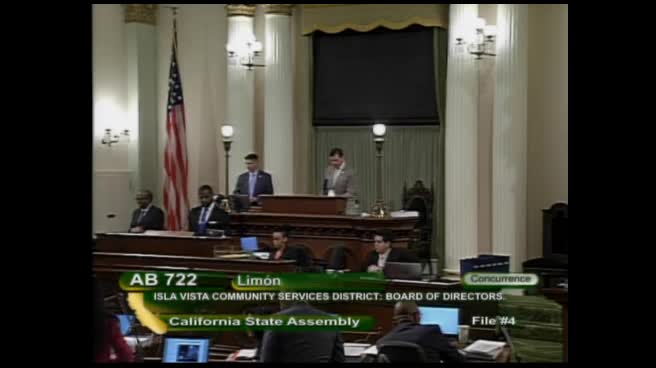 1MIN
Assembly Floor
 4MIN
Senate Standing Committee on Governance and Finance
Bill Author

Bill Co-Author(s):