AB 1567: Public postsecondary education: California State University: California Community Colleges: foster youth: Higher Education Outreach and Assistance Act for Foster Youth.
- Session Year: 2017-2018
- House: Assembly
- Latest Version Date: 2017-10-13
(1)Existing law establishes the California State University and the California Community Colleges as 2 of the segments of public postsecondary education in this state. Existing law also establishes the Higher Education Outreach and Assistance Act for Emancipated Foster Youth. The act imposes various requirements on the Trustees of the California State University and the Board of Governors of the California Community Colleges relating to outreach and retention services for foster youth in order to encourage their enrollment and retention at a campus of either segment. More specifically, the act requires the State Department of Social Services and county welfare departments, in coordination with the California State University and the California Community Colleges, to communicate with foster youth at 2 grade levels designated jointly by the 2 segments in order to facilitate the outreach and technical assistance efforts for those prospective students.
This bill would change the name of the act to the Higher Education Outreach and Assistance Act for Foster Youth.
The bill would also require the State Department of Social Services and county welfare departments, in coordination with the California State University and the California Community Colleges, to coordinate with staff of several designated entities, as appropriate, to verify eligibility of foster youth for participation in programs and other benefits.
The bill would require each campus of the California Community Colleges, upon admission of a foster youth, and each campus of the California State University, upon determination, through receipt of the Free Application for Federal Student Aid or through another means, that a student enrolled at, or applying to, that campus is a current or former foster youth and is eligible for financial aid, to notify that student about appropriate campus support programs, as specified, notify that student of his or her eligibility for financial aid, and provide that student with instructions for accessing the benefits for which he or she has qualified. The bill would specify that notification of students pursuant to this provision may be accomplished by methods including, but not necessarily limited to, inclusion of information in the letters of acceptance sent to foster youth who have been admitted to those campuses.
To the extent that this bill would impose new duties on community college districts and county welfare departments, the bill would impose a state-mandated local program.
(2)The California Constitution requires the state to reimburse local agencies and school districts for certain costs mandated by the state. Statutory provisions establish procedures for making that reimbursement.
This bill would provide that, if the Commission on State Mandates determines that the bill contains costs mandated by the state, reimbursement for those costs shall be made pursuant to the statutory provisions noted above.
(1)Existing law establishes the California State University and the California Community Colleges as 2 of the segments of public postsecondary education in this state. Existing law also establishes the Higher Education Outreach and Assistance Act for Emancipated Foster Youth. The act imposes various requirements on the Trustees of the California State University and the Board of Governors of the California Community Colleges relating to outreach and retention services for foster youth in order to encourage their enrollment and retention at a campus of either segment. More specifically, the act requires the State Department of Social Services and county welfare departments, in coordination with the California State University and the California Community Colleges, to communicate with foster youth at 2 grade levels designated jointly by the 2 segments in order to facilitate the outreach and technical assistance efforts for those prospective students.
This bill would change the name of the act to the Higher Education Outreach and Assistance Act for Foster Youth. The bill would additionally require the State Department of Social Services and county welfare departments, in coordination with the California State University and the California Community Colleges, to share relevant data, upon acceptance of the foster youth, as defined, at a campus of the California State University or the California Community Colleges, to ensure that the foster youth is offered access and enrollment in programs offered by his or her campus, including, but not necessarily limited to, the California State University Educational Opportunity Program and the California Community Colleges Extended Opportunity Programs and Services. The bill would require the collection, reporting, and housing of data required pursuant to this provision to be conducted both in a manner that ensures data integrity and security and that is in conformance with any federal and state laws relating to the confidentiality of student information.
The bill would also require the State Department of Social Services and county welfare departments, in coordination with the California State University and the California Community Colleges, to coordinate with staff of several designated entities, as appropriate, to verify eligibility of foster youth for participation in programs and other benefits.
The bill would require each campus of the California Community Colleges, upon admission of a foster youth, and each campus of the California State University, upon determination, through receipt of the Free Application for Federal Student Aid or through another means, that a student enrolled at, or applying to, that campus is a current or former foster youth and is eligible for financial aid, to notify that student about appropriate campus support programs, as specified, notify that student of his or her eligibility for financial aid, and provide that student with instructions for accessing the benefits for which he or she has qualified. The bill would specify that notification of students pursuant to this provision may be accomplished by methods including, but not necessarily limited to, inclusion of information in the letters of acceptance sent to foster youth who have been admitted to those campuses.
To the extent that this bill would impose new duties on community college districts and county welfare departments, the bill would impose a state-mandated local program.
(2)The California Constitution requires the state to reimburse local agencies and school districts for certain costs mandated by the state. Statutory provisions establish procedures for making that reimbursement.
This bill would provide that, if the Commission on State Mandates determines that the bill contains costs mandated by the state, reimbursement for those costs shall be made pursuant to the statutory provisions noted above.
(1)Existing law establishes the California State University and the California Community Colleges as 2 of the segments of public postsecondary education in this state. Existing law also establishes the Higher Education Outreach and Assistance Act for Emancipated Foster Youth. The act imposes various requirements on the Trustees of the California State University and the Board of Governors of the California Community Colleges relating to outreach and retention services for foster youth in order to encourage their enrollment and retention at a campus of either segment. More specifically, the act requires the State Department of Social Services and county welfare departments, in coordination with the California State University and the California Community Colleges, to communicate with foster youth at 2 grade levels designated jointly by the 2 segments in order to facilitate the outreach and technical assistance efforts for those prospective students.
This bill would change the name of the act to the Higher Education Outreach and Assistance Act for Foster Youth. The bill would additionally require the State Department of Social Services and county welfare departments, in coordination with the California State University and the California Community Colleges, to share relevant data, upon acceptance and enrollment of the foster youth, as defined, at a campus of the California State University or the California Community Colleges, to ensure that the foster youth is offered access and enrollment in programs offered by his or her campus, including, but not necessarily limited to, the California State University Educational Opportunity Program and the California Community Colleges Extended Opportunity Programs and Services. The bill would require the collection, reporting, and housing of data required pursuant to this provision to be conducted both in a manner that ensures data integrity and security and that is in conformance with any federal and state laws relating to the confidentiality of student information.
The bill would also require the State Department of Social Services and county welfare departments, in coordination with the California State University and the California Community Colleges, to coordinate with staff of several designated entities, as appropriate, to verify eligibility of foster youth for participation in programs and other benefits.
The bill would require each campus of the California Community Colleges, upon admission of a foster youth, and each campus of the California State University and the California Community Colleges, University, upon determination, through receipt of the Free Application for Federal Student Aid or through another means, that a student enrolled at, or applying to, that campus is a current or former foster youth and is eligible for financial aid, to notify that student about appropriate campus support programs, as specified, notify that student of his or her eligibility for financial aid, and provide that student with instructions for accessing the benefits for which he or she has qualified. The bill would specify that notification of students pursuant to this provision may be accomplished by methods including, but not necessarily limited to, inclusion of information in the letters of acceptance sent to foster youth who have been admitted to those campuses.
To the extent that this bill would impose new duties on community college districts and county welfare departments, the bill would impose a state-mandated local program.
(2)The California Constitution requires the state to reimburse local agencies and school districts for certain costs mandated by the state. Statutory provisions establish procedures for making that reimbursement.
This bill would provide that, if the Commission on State Mandates determines that the bill contains costs mandated by the state, reimbursement for those costs shall be made pursuant to the statutory provisions noted above.
(1)Existing law establishes the California State University and the California Community Colleges as 2 of the segments of public postsecondary education in this state. Existing law also establishes the Higher Education Outreach and Assistance Act for Emancipated Foster Youth. The act imposes various requirements on the Trustees of the California State University and the Board of Governors of the California Community Colleges relating to outreach and retention services for foster youth in order to encourage their enrollment and retention at a campus of either segment. More specifically, the act requires the State Department of Social Services and county welfare departments, in coordination with the California State University and the California Community Colleges, to communicate with foster youth at 2 grade levels designated jointly by the 2 segments in order to facilitate the outreach and technical assistance efforts for those prospective students.
This bill would change the name of the act to the Higher Education Outreach and Assistance Act for Foster Youth. The bill would additionally require the State Department of Social Services and county welfare departments, in coordination with the California State University and the California Community Colleges, to share relevant data, upon acceptance and enrollment of the foster youth youth, as defined, at a campus of the California State University or the California Community Colleges, to ensure that the foster youth is offered access and enrollment in programs offered by his or her campus, including, but not necessarily limited to, the California State University Educational Opportunity Program and the California Community Colleges Extended Opportunity Programs and Services. The bill would require the collection, reporting, and housing of data required pursuant to this provision to be conducted both in a manner that ensures data integrity and security and that is in conformance with any federal and state laws relating to the confidentiality of student information.
The bill would require each campus of the California State University and the California Community Colleges, upon determination, through receipt of the Free Application for Federal Student Aid or through another means, that a student enrolled at, or applying to, that campus is a current or former foster youth and is eligible for financial aid, to notify that student about appropriate campus support programs, as specified, notify that student of his or her eligibility for financial aid, and provide that student with instructions for accessing the benefits for which he or she has qualified.
To the extent that this bill would impose new duties on community college districts and county welfare departments, the bill would impose a state-mandated local program.
(2)The California Constitution requires the state to reimburse local agencies and school districts for certain costs mandated by the state. Statutory provisions establish procedures for making that reimbursement.
This bill would provide that, if the Commission on State Mandates determines that the bill contains costs mandated by the state, reimbursement for those costs shall be made pursuant to the statutory provisions noted above.
(1)Existing law establishes the California State University and the California Community Colleges as 2 of the segments of public postsecondary education in this state. Existing law also establishes the Higher Education Outreach and Assistance Act for Emancipated Foster Youth. The act imposes various requirements on the Trustees of the California State University and the Board of Governors of the California Community Colleges relating to outreach and retention services for foster youth in order to encourage their enrollment and retention at a campus of either segment. More specifically, the act requires the State Department of Social Services and county welfare departments, in coordination with the California State University and the California Community Colleges, to communicate with foster youth at 2 grade levels designated jointly by the 2 segments in order to facilitate the outreach and technical assistance efforts for those prospective students.
This bill would additionally require the State Department of Social Services and county welfare departments, in coordination with the California State University and the California Community Colleges, to share relevant data, upon acceptance and enrollment of the foster youth at a campus of the California State University or the California Community Colleges, to ensure that the foster youth is offered access and enrollment in programs offered by his or her campus, including, but not necessarily limited to, the California State University Educational Opportunity Program and the California Community Colleges Extended Opportunity Programs and Services. The bill would require the collection, reporting, and housing of data required pursuant to this provision to be conducted both in a manner that ensures data integrity and security and that is in conformance with any federal and state laws relating to the confidentiality of student information.
The bill would require each campus of the California State University and the California Community Colleges, upon determination, through receipt of the Free Application for Federal Student Aid or through another means, that a student enrolled at, or applying to, that campus is a current or former foster youth and is eligible for financial aid, to enroll notify that student in about appropriate campus support programs, as specified, notify that student of his or her eligibility for financial aid and of his or her enrollment in campus support programs, aid, and provide that student with instructions for accessing the benefits for which he or she has qualified.
To the extent that this bill would impose new duties on community college districts and county welfare departments, the bill would impose a state-mandated local program.
(2)The California Constitution requires the state to reimburse local agencies and school districts for certain costs mandated by the state. Statutory provisions establish procedures for making that reimbursement.
This bill would provide that, if the Commission on State Mandates determines that the bill contains costs mandated by the state, reimbursement for those costs shall be made pursuant to the statutory provisions noted above.
(1)Existing law establishes the California State University and the California Community Colleges as 2 of the segments of public postsecondary education in this state. Existing law also establishes the Higher Education Outreach and Assistance Act for Emancipated Foster Youth. The act imposes various requirements on the Trustees of the California State University and the Board of Governors of the California Community Colleges relating to outreach and retention services for foster youth in order to encourage their enrollment and retention at a campus of either segment. More specifically, the act requires the State Department of Social Services and county welfare departments, in coordination with the California State University and the California Community Colleges, to communicate with foster youth at 2 grade levels designated jointly by the 2 segments in order to facilitate the outreach and technical assistance efforts for those prospective students.
This bill would additionally require the State Department of Social Services and county welfare departments, in coordination with the California State University and the California Community Colleges, to share relevant data, upon acceptance and enrollment of the foster youth at a campus of the California State University or the California Community Colleges, to ensure that the foster youth is offered access and enrollment in programs offered by his or her campus, including, but not necessarily limited to, the California State University Educational Opportunity Program and the California Community Colleges Extended Opportunity Programs and Services. To
The bill would require each campus of the California State University and the California Community Colleges, upon determination, through receipt of the Free Application for Federal Student Aid or through another means, that a student enrolled at, or applying to, that campus is a current or former foster youth and is eligible for financial aid, to enroll that student in appropriate campus support programs, as specified, notify that student of his or her eligibility for financial aid and of his or her enrollment in campus support programs, and provide that student with instructions for accessing the benefits for which he or she has qualified.
To the extent that this bill would impose new duties on community college districts and county welfare departments, the bill would impose a state-mandated local program.
(2)The California Constitution requires the state to reimburse local agencies and school districts for certain costs mandated by the state. Statutory provisions establish procedures for making that reimbursement.
This bill would provide that, if the Commission on State Mandates determines that the bill contains costs mandated by the state, reimbursement for those costs shall be made pursuant to the statutory provisions noted above.
(1)Existing law establishes the California State University and the California Community Colleges as 2 of the segments of public postsecondary education in this state. Existing law also establishes the Higher Education Outreach and Assistance Act for Emancipated Foster Youth. The act imposes various requirements on the Trustees of the California State University and the Board of Governors of the California Community Colleges relating to outreach and retention services for foster youth in order to encourage their enrollment and retention at a campus of either segment. More specifically, the act requires the State Department of Social Services and county welfare departments, in coordination with the California State University and the California Community Colleges, to communicate with foster youth at 2 grade levels designated jointly by the 2 segments in order to facilitate the outreach and technical assistance efforts for those prospective students.
This bill would additionally require the State Department of Social Services and county welfare departments, in coordination with the California State University and the California Community Colleges, to share relevant data, upon acceptance and enrollment of the foster youth at a campus of the California State University or the California Community Colleges, to ensure that the foster youth is offered access and enrollment in programs offered by his or her campus, including, but not necessarily limited to, the California State University Educational Opportunity Program and the California Community Colleges Extended Opportunity Programs and Services. To the extent that this bill would impose new duties on community college districts and county welfare departments, the bill would impose a state-mandated local program.
(2)The California Constitution requires the state to reimburse local agencies and school districts for certain costs mandated by the state. Statutory provisions establish procedures for making that reimbursement.
This bill would provide that, if the Commission on State Mandates determines that the bill contains costs mandated by the state, reimbursement for those costs shall be made pursuant to the statutory provisions noted above.
This article shall be known, and may be cited as the Higher Education Outreach and Assistance Act for Foster Youth.
SEC. 3.Section 89341 of the Education Code is amended to read:89341.(a)The Legislature makes the following findings and declarations:
(1)Children who live in foster care are abused and neglected individuals for whom the state has assumed parental responsibility. Although foster care is designed to reunite those children, when appropriate, with their parents, or to place those children with an adoptive family, many children are neither reunited with their parents nor adopted. When those children reach the age of 18 years, the state terminates its responsibility. Given that, it is important that these youth have access to postsecondary education, including career technical education during their time in foster care to ensure their long-term economic security.
(2)In California, there are more than 60,000 children and youth in foster care, and approximately 8,000 are college-aged, between 18 and 21 years of age.
(3)While 40 percent of foster youth will enroll in college by 19 years of age, their rate of persistence and degree completion is lower than the general population. Just one in five foster youth will successfully complete 30 or more units. By 26 years of age, 8 percent of foster youth will have earned an associates degree or higher, compared to 46 percent of the general population. One of the critical hurdles for this student population to overcome is finding the financial resources to fund their education. Only 9 percent of foster youth receive the Cal Grant, Californias need-based financial aid award.
(4)Emancipated foster youth, who do not have parents to rely upon for support and guidance, suffer unique disadvantages compared to other students. While many students are preoccupied with academic pressures, the primary concerns cited by former foster youth are the absence of family support and the fear of spending the holidays alone. Emancipated foster youth need emotional support and specialized resources from sensitive university staff who understand the unusual circumstances and pressing needs of emancipated foster youth.
(b)Accordingly, the Legislature states its intent that the Trustees of the California State University and the Board of Governors of the California Community Colleges expand the access and retention programs of the university and the community colleges to include the following:
(1)Outreach services to foster youth to encourage their enrollment in a state university or a community college.
(2)Technical assistance to foster youth to assist those prospective students in completing admission applications and financial aid applications.
SEC. 4.Section 89342 of the Education Code is amended to read:89342.The Trustees of the California State University and Board of Governors of the California Community Colleges shall perform the following services to assist foster youth:
(a)Review housing issues for those foster youth living in college dormitories to ensure basic housing during the regular academic school year, including vacations and holidays other than summer break.
(b)Provide technical assistance and advice to campuses on ways in which to improve the delivery of services to foster youth.
(c)Commencing in the 199899 academic year, track the retention rates of students who voluntarily disclose to the university or community college their status as foster youth.
(d)For purposes of this article, foster youth includes former foster youth, and means a person in California whose dependency was established or continued by the court on or after the youths 16th birthday and who is no older than 25 years of age at the commencement of the academic year.
SEC. 5.Section 89344 of the Education Code is amended to read:89344.Representation on the appropriate California State University Advisory Councils shall be expanded to include at least one foster youth who is either a current or former student at the university.
SEC. 6.Section 89345 of the Education Code is amended to read:89345.The State University Educational Opportunity Program and California Community College Extended Opportunity Programs and Services shall ensure that identified foster youth are informed of services, including mentoring, provided by these programs.
SEC. 7.Section 89346 of the Education Code is amended to read:89346.(a)The State Department of Social Services and county welfare departments shall, in coordination with the California State University and the California Community Colleges, do both of the following:
(1)Communicate with foster youth at two grade levels designated jointly by the California State University and the California Community Colleges in order to facilitate the outreach and technical assistance efforts for those prospective students.
(2)Coordinate with staff of the California State University Educational Opportunity Program, the California Community Colleges Extended Opportunity Programs and Services, or Cooperating Agencies Foster Youth Educational Support, as appropriate, to verify eligibility of foster youth for participation in programs and other benefits.
(b)(1)Each campus of the California Community Colleges shall do all of the following upon admission of a foster youth, and each campus of the California State University shall do all of the following upon determination, through receipt of the Free Application for Federal Student Aid (FAFSA) or through another means, that a student enrolled at, or applying to, that campus is a current or former foster youth and is eligible for financial aid:
(A)Notify that student about appropriate campus support programs that may include, but are not necessarily limited to, the California State University Educational Opportunity Program, the California Community Colleges Extended Opportunity Programs and Services, and Cooperating Agencies Foster Youth Educational Support.
(B)Notify that student of his or her eligibility for financial aid.
(C)Provide that student with instructions for accessing the benefits for which he or she has qualified.
(2)Notification of students pursuant to this subdivision may be accomplished by methods that shall include, but not necessarily be limited to, inclusion of information in the letters of acceptance sent to foster youth who have been admitted to those campuses.
SEC. 8.If the Commission on State Mandates determines that this act contains costs mandated by the state, reimbursement to local agencies and school districts for those costs shall be made pursuant to Part 7 (commencing with Section 17500) of Division 4 of Title 2 of the Government Code.
This article shall be known, and may be cited as the Higher Education Outreach and Assistance Act for Foster Youth.
SEC. 3.Section 89341 of the Education Code is amended to read:89341.(a)The Legislature makes the following findings and declarations:
(1)Children who live in foster care are abused and neglected individuals for whom the state has assumed parental responsibility. Although foster care is designed to reunite those children, when appropriate, with their parents, or to place those children with an adoptive family, many children are neither reunited with their parents nor adopted. When those children reach the age of 18 years, the state terminates its responsibility. Given that, it is important that these youth have access to postsecondary education, including career technical education during their time in foster care to ensure their long-term economic security.
(2)In California, there are more than 60,000 children and youth in foster care, and approximately 8,000 are college-aged, between 18 and 21 years of age.
(3)While 40 percent of foster youth will enroll in college by 19 years of age, their rate of persistence and degree completion is lower than the general population. Just one in five foster youth will successfully complete 30 or more units. By 26 years of age, 8 percent of foster youth will have earned an associates degree or higher, compared to 46 percent of the general population. One of the critical hurdles for this student population to overcome is finding the financial resources to fund their education. Only 9 percent of foster youth receive the Cal Grant, Californias need-based financial aid award.
(4)Emancipated foster youth, who do not have parents to rely upon for support and guidance, suffer unique disadvantages compared to other students. While many students are preoccupied with academic pressures, the primary concerns cited by former foster youth are the absence of family support and the fear of spending the holidays alone. Emancipated foster youth need emotional support and specialized resources from sensitive university staff who understand the unusual circumstances and pressing needs of emancipated foster youth.
(b)Accordingly, the Legislature states its intent that the Trustees of the California State University and the Board of Governors of the California Community Colleges expand the access and retention programs of the university and the community colleges to include the following:
(1)Outreach services to foster youth to encourage their enrollment in a state university or a community college.
(2)Technical assistance to foster youth to assist those prospective students in completing admission applications and financial aid applications.
SEC. 4.Section 89342 of the Education Code is amended to read:89342.The Trustees of the California State University and Board of Governors of the California Community Colleges shall perform the following services to assist foster youth:
(a)Review housing issues for those foster youth living in college dormitories to ensure basic housing during the regular academic school year, including vacations and holidays other than summer break.
(b)Provide technical assistance and advice to campuses on ways in which to improve the delivery of services to foster youth.
(c)Commencing in the 199899 academic year, track the retention rates of students who voluntarily disclose to the university or community college their status as foster youth.
(d)For purposes of this article, foster youth includes former foster youth, and means a person in California whose dependency was established or continued by the court on or after the youths 16th birthday and who is no older than 25 years of age at the commencement of the academic year.
SEC. 5.Section 89344 of the Education Code is amended to read:89344.Representation on the appropriate California State University Advisory Councils shall be expanded to include at least one foster youth who is either a current or former student at the university.
SEC. 6.Section 89345 of the Education Code is amended to read:89345.The State University Educational Opportunity Program and California Community College Extended Opportunity Programs and Services shall ensure that identified foster youth are informed of services, including mentoring, provided by these programs.
SEC. 7.Section 89346 of the Education Code is amended to read:89346.(a)The State Department of Social Services and county welfare departments shall, in coordination with the California State University and the California Community Colleges, do all both of the following:
(1)Communicate with foster youth at two grade levels designated jointly by the California State University and the California Community Colleges in order to facilitate the outreach and technical assistance efforts for those prospective students.
(2)(A)Share relevant data, upon acceptance of the foster youth at a campus of the California State University or the California Community Colleges, to ensure that the foster youth is offered access and enrollment in programs offered by his or her campus, including, but not necessarily limited to, the California State University Educational Opportunity Program and the California Community Colleges Extended Opportunity Programs and Services.(B)The collection, reporting, and housing of data required pursuant to subparagraph (A) shall be conducted both in a manner that ensures data integrity and security and that is in conformance with any federal and state laws relating to the confidentiality of student information.(3)(2)Coordinate with staff of the California State University Educational Opportunity Program, the California Community Colleges Extended Opportunity Programs and Services, or Cooperating Agencies Foster Youth Educational Support, as appropriate, to verify eligibility of foster youth for participation in programs and other benefits.
(b)(1)Each campus of the California Community Colleges shall do all of the following upon admission of a foster youth, and each campus of the California State University shall do all of the following upon determination, through receipt of the Free Application for Federal Student Aid (FAFSA) or through another means, that a student enrolled at, or applying to, that campus is a current or former foster youth and is eligible for financial aid:
(A)Notify that student about appropriate campus support programs that may include, but are not necessarily limited to, the California State University Educational Opportunity Program, the California Community Colleges Extended Opportunity Programs and Services, and Cooperating Agencies Foster Youth Educational Support.
(B)Notify that student of his or her eligibility for financial aid.
(C)Provide that student with instructions for accessing the benefits for which he or she has qualified.
(2)Notification of students pursuant to this subdivision may be accomplished by methods that shall include, but not necessarily be limited to, inclusion of information in the letters of acceptance sent to foster youth who have been admitted to those campuses.
SEC. 8.If the Commission on State Mandates determines that this act contains costs mandated by the state, reimbursement to local agencies and school districts for those costs shall be made pursuant to Part 7 (commencing with Section 17500) of Division 4 of Title 2 of the Government Code.
This article shall be known, and may be cited as the Higher Education Outreach and Assistance Act for Foster Youth.
SEC. 3.Section 89341 of the Education Code is amended to read:89341.(a)The Legislature makes the following findings and declarations:
(1)Children who live in foster care are abused and neglected individuals for whom the state has assumed parental responsibility. Although foster care is designed to reunite those children, when appropriate, with their parents, or to place those children with an adoptive family, many children are neither reunited with their parents nor adopted. When those children reach the age of 18 years, the state terminates its responsibility. Given that, it is important that these youth have access to postsecondary education, including career technical education during their time in foster care to ensure their long-term economic security.
(2)In California, there are more than 60,000 children and youth in foster care, and approximately 8,000 are college-aged, between 18 and 21 years of age.
(3)While 40 percent of foster youth will enroll in college by 19 years of age, their rate of persistence and degree completion is lower than the general population. Just one in five foster youth will successfully complete 30 or more units. By 26 years of age, 8 percent of foster youth will have earned an associates degree or higher, compared to 46 percent of the general population. One of the critical hurdles for this student population to overcome is finding the financial resources to fund their education. Only 9 percent of foster youth receive the Cal Grant, Californias need-based financial aid award.
(4)Emancipated foster youth, who do not have parents to rely upon for support and guidance, suffer unique disadvantages compared to other students. While many students are preoccupied with academic pressures, the primary concerns cited by former foster youth are the absence of family support and the fear of spending the holidays alone. Emancipated foster youth need emotional support and specialized resources from sensitive university staff who understand the unusual circumstances and pressing needs of emancipated foster youth.
(b)Accordingly, the Legislature states its intent that the Trustees of the California State University and the Board of Governors of the California Community Colleges expand the access and retention programs of the university and the community colleges to include the following:
(1)Outreach services to foster youth to encourage their enrollment in a state university or a community college.
(2)Technical assistance to foster youth to assist those prospective students in completing admission applications and financial aid applications.
SEC. 4.Section 89342 of the Education Code is amended to read:89342.The Trustees of the California State University and Board of Governors of the California Community Colleges shall perform the following services to assist foster youth:
(a)Review housing issues for those emancipated foster youth living in college dormitories to ensure basic housing during the regular academic school year, including vacations and holidays other than summer break.
(b)Provide technical assistance and advice to campuses on ways in which to improve the delivery of services to foster youth.
(c)Commencing in the 199899 academic year, track the retention rates of students who voluntarily disclose to the university or community college their status as foster youth.
(d)For purposes of this article, foster youth includes former foster youth, and means a person in California whose dependency was established or continued by the court on or after the youths 16th birthday and who is no older than 25 years of age at the commencement of the academic year.
SEC. 5.Section 89344 of the Education Code is amended to read:89344.Representation on the appropriate California State University Advisory Councils shall be expanded to include at least one foster youth who is either a current or former student at the university.
SEC. 6.Section 89345 of the Education Code is amended to read:89345.The State University Educational Opportunity Program and California Community College Extended Opportunity Programs and Services shall ensure that identified foster youth are informed of services, including mentoring, provided by these programs.
SEC. 7.Section 89346 of the Education Code is amended to read:89346.(a)The State Department of Social Services and county welfare departments shall, in coordination with the California State University and the California Community Colleges, do both all of the following:
(1)Communicate with foster youth at two grade levels designated jointly by the California State University and the California Community Colleges in order to facilitate the outreach and technical assistance efforts for those prospective students.
(2)(A)Share relevant data, upon acceptance and enrollment of the foster youth at a campus of the California State University or the California Community Colleges, to ensure that the foster youth is offered access and enrollment in programs offered by his or her campus, including, but not necessarily limited to, the California State University Educational Opportunity Program and the California Community Colleges Extended Opportunity Programs and Services.
(B)The collection, reporting, and housing of data required pursuant to subparagraph (A) shall be conducted both in a manner that ensures data integrity and security and that is in conformance with any federal and state laws relating to the confidentiality of student information.
(3)Coordinate with staff of the California State University Educational Opportunity Program, the California Community Colleges Extended Opportunity Programs and Services, or Cooperating Agencies Foster Youth Educational Support, as appropriate, to verify eligibility of foster youth for participation in programs and other benefits.
(b)(1)Each campus of the California Community Colleges shall do all of the following upon admission of a foster youth, and each campus of the California State University and the California Community Colleges shall do all of the following upon determination, through receipt of the Free Application for Federal Student Aid (FAFSA) or through another means, that a student enrolled at, or applying to, that campus is a current or former foster youth and is eligible for financial aid:
(1)(A)Notify that student about appropriate campus support programs that may include, but are not necessarily limited to, the California State University Educational Opportunity Program, the California Community Colleges Extended Opportunity Programs and Services, and Cooperating Agencies Foster Youth Educational Support.
(2)(B)Notify that student of his or her eligibility for financial aid.
(3)(C)Provide that student with instructions for accessing the benefits for which he or she has qualified.
(2)Notification of students pursuant to this subdivision may be accomplished by methods that shall include, but not necessarily be limited to, inclusion of information in the letters of acceptance sent to foster youth who have been admitted to those campuses.
SEC. 8.If the Commission on State Mandates determines that this act contains costs mandated by the state, reimbursement to local agencies and school districts for those costs shall be made pursuant to Part 7 (commencing with Section 17500) of Division 4 of Title 2 of the Government Code.
This article shall be known, and may be cited as the Higher Education Outreach and Assistance Act for Emancipated Foster Youth.
SEC. 3.Section 89341 of the Education Code is amended to read:89341.(a)The Legislature makes the following findings and declarations:
(1)Children who live in foster care are abused and neglected individuals for whom the state has assumed parental responsibility. Although foster care is designed to reunite those children, when appropriate, with their parents, or to place those children with an adoptive family, many children are neither reunited with their parents nor adopted. When those children reach the age of 18 years, the state terminates its responsibility to those youth. Many of those youth are not prepared to sustain themselves independently. As a result, a disproportionate number of former foster youth are homeless, dependent on public assistance, unemployed, and more likely to commit suicide. Foster youth are also much less likely to attend college than other youth. responsibility. Given that, it is important that these youth have access to postsecondary education, including career technical education during their time in foster care to ensure their long-term economic security.
(2)In California, there are more than 90,000 children in foster care. Every year 4,000 youth leave foster care upon reaching the age of 18 years. While more than one-half of high school graduates go on to enroll in college, less than 25 percent of foster youth in California enroll in college. Of the foster youth who do enroll in college, only 7 percent enroll in a four-year university. 60,000 children and youth in foster care, and approximately 8,000 are college-aged, between 18 and 21 years of age.
(3)While the foster youth college enrollment rate is extremely low, the college dropout rate of foster youth is extremely high. Studies also indicate that while few former foster youth enroll in college, even fewer go on to earn a degree. Sixty-seven percent of all emancipated foster youth who enroll in college will drop out before graduation. 40 percent of foster youth will enroll in college by 19 years of age, their rate of persistence and degree completion is lower than the general population. Just one in five foster youth will successfully complete 30 or more units. By 26 years of age, 8 percent of foster youth will have earned an associates degree or higher, compared to 46 percent of the general population. One of the critical hurdles for this student population to overcome is finding the financial resources to fund their education. Only 10 9 percent of foster youth who apply for a receive the Cal Grant, Californias need-based financial aid award, actually ever receive that grant. award.
(4)Emancipated foster youth, who do not have parents to rely upon for support and guidance, suffer unique disadvantages compared to other students. While many students are preoccupied with academic pressures, the primary concerns cited by former foster youth are the absence of family support and the fear of spending the holidays alone. Emancipated foster youth need emotional support and specialized resources from sensitive university staff who understand the unusual circumstances and pressing needs of emancipated foster youth.
(b)Accordingly, the Legislature states its intent that the Trustees of the California State University and the Board of Governors of the California Community Colleges expand the access and retention programs of the university and the community colleges to include the following:
(1)Outreach services to foster youth to encourage their enrollment in a state university or a community college.
(2)Technical assistance to foster youth to assist those prospective students in completing admission applications and financial aid applications.
SEC. 4.Section 89342 of the Education Code is amended to read:89342.The Trustees of the California State University and Board of Governors of the California Community Colleges shall perform the following services to assist emancipated foster youth:
(a)Review housing issues for those emancipated foster youth living in college dormitories to ensure basic housing during the regular academic school year, including vacations and holidays other than summer break.
(b)Provide technical assistance and advice to campuses on ways in which to improve the delivery of services to emancipated foster youth.
(c)Commencing in the 1998-99 academic year, track the retention rates of students who voluntarily disclose to the university or community college their status as former emancipated foster youth.
(d)For purposes of this article, foster youth includes former foster youth, and means a person in California whose dependency was established or continued by the court on or after the youths 16th birthday and who is no older than 25 years of age at the commencement of the academic year.
SEC. 5.Section 89344 of the Education Code is amended to read:89344.Representation on the appropriate California State University Advisory Councils shall be expanded to include at least one former emancipated foster youth who is either a current or former student at the university.
SEC. 6.Section 89345 of the Education Code is amended to read:89345.The State University Educational Opportunity Program and California Community College Extended Opportunity Programs and Services shall ensure that identified emancipated foster youth are informed of services, including mentoring, provided by these programs.
SECTION 1.SEC. 7.Section 89346 of the Education Code is amended to read:89346.(a)The State Department of Social Services and county welfare departments shall, in coordination with the California State University and the California Community Colleges, do both of the following:
(1)Communicate with foster youth at two grade levels designated jointly by the California State University and the California Community Colleges in order to facilitate the outreach and technical assistance efforts for those prospective students.
(2)(A)Share relevant data, upon acceptance and enrollment of the foster youth at a campus of the California State University or the California Community Colleges, to ensure that the foster youth is offered access and enrollment in programs offered by his or her campus, including, but not necessarily limited to, the California State University Educational Opportunity Program and the California Community Colleges Extended Opportunity Programs and Services.
(B)The collection, reporting, and housing of data required pursuant to subparagraph (A) shall be conducted both in a manner that ensures data integrity and security and that is in conformance with any federal and state laws relating to the confidentiality of student information.
(b)Each campus of the California State University and the California Community Colleges shall do all of the following upon determination, through receipt of the Free Application for Federal Student Aid (FAFSA) or through another means, that a student enrolled at, or applying to, that campus is a current or former foster youth and is eligible for financial aid:
(1)Notify that student about appropriate campus support programs that may include, but are not necessarily limited to, the California State University Educational Opportunity Program, the California Community Colleges Extended Opportunity Programs and Services, and Cooperating Agencies Foster Youth Educational Support.
(2)Notify that student of his or her eligibility for financial aid.
(3)Provide that student with instructions for accessing the benefits for which he or she has qualified.
SEC. 2.SEC. 8.If the Commission on State Mandates determines that this act contains costs mandated by the state, reimbursement to local agencies and school districts for those costs shall be made pursuant to Part 7 (commencing with Section 17500) of Division 4 of Title 2 of the Government Code.
(a)The State Department of Social Services and county welfare departments shall, in coordination with the California State University and the California Community Colleges, do both of the following:
(1)Communicate with foster youth at two grade levels designated jointly by the California State University and the California Community Colleges in order to facilitate the outreach and technical assistance efforts for those prospective students.
(2)(A)Share relevant data, upon acceptance and enrollment of the foster youth at a campus of the California State University or the California Community Colleges, to ensure that the foster youth is offered access and enrollment in programs offered by his or her campus, including, but not necessarily limited to, the California State University Educational Opportunity Program and the California Community Colleges Extended Opportunity Programs and Services.
(B)The collection, reporting, and housing of data required pursuant to subparagraph (A) shall be conducted both in a manner that ensures data integrity and security and that is in conformance with any federal and state laws relating to the confidentiality of student information.
(b)Each campus of the California State University and the California Community Colleges shall do all of the following upon determination, through receipt of the Free Application for Federal Student Aid (FAFSA) or through another means, that a student enrolled at, or applying to, that campus is a current or former foster youth and is eligible for financial aid:
(1)Enroll that student in Notify that student about appropriate campus support programs that may include, but are not necessarily limited to, the California State University Educational Opportunity Program, the California Community Colleges Extended Opportunity Programs and Services, and Cooperating Agencies Foster Youth Educational Support.
(2)Notify that student of his or her eligibility for financial aid and of his or her enrollment in campus support programs, specifying the programs in which the student has been enrolled. aid.
(3)Provide that student with instructions for accessing the benefits for which he or she has qualified.
SEC. 2.If the Commission on State Mandates determines that this act contains costs mandated by the state, reimbursement to local agencies and school districts for those costs shall be made pursuant to Part 7 (commencing with Section 17500) of Division 4 of Title 2 of the Government Code.
(a)The State Department of Social Services and county welfare departments shall, in coordination with the California State University and the California Community Colleges, do both of the following:
(a)(1)Communicate with foster youth at two grade levels designated jointly by the California State University and the California Community Colleges in order to facilitate the outreach and technical assistance efforts for those prospective students.
(b)(2)Share relevant data, upon acceptance and enrollment of the foster youth at a campus of the California State University or the California Community Colleges, to ensure that the foster youth is offered access and enrollment in programs offered by his or her campus, including, but not necessarily limited to, the California State University Educational Opportunity Program and the California Community Colleges Extended Opportunity Programs and Services.
(b)Each campus of the California State University and the California Community Colleges shall do all of the following upon determination, through receipt of the Free Application for Federal Student Aid (FAFSA) or through another means, that a student enrolled at, or applying to, that campus is a current or former foster youth and is eligible for financial aid:
(1)Enroll that student in appropriate campus support programs that may include, but are not necessarily limited to, the California State University Educational Opportunity Program, the California Community Colleges Extended Opportunity Programs and Services, and Cooperating Agencies Foster Youth Educational Support.
(2)Notify that student of his or her eligibility for financial aid and of his or her enrollment in campus support programs, specifying the programs in which the student has been enrolled.
(3)Provide that student with instructions for accessing the benefits for which he or she has qualified.
SEC. 2.If the Commission on State Mandates determines that this act contains costs mandated by the state, reimbursement to local agencies and school districts for those costs shall be made pursuant to Part 7 (commencing with Section 17500) of Division 4 of Title 2 of the Government Code.
The State Department of Social Services and county welfare departments shall, in coordination with the California State University and the California Community Colleges, communicate do both of the following:
(a)Communicate with foster youth at two grade levels designated jointly by the California State University and the California Community Colleges in order to facilitate the outreach and technical assistance efforts for those prospective students.
(b)Share relevant data, upon acceptance and enrollment of the foster youth at a campus of the California State University or the California Community Colleges, to ensure that the foster youth is offered access and enrollment in programs offered by his or her campus, including, but not necessarily limited to, the California State University Educational Opportunity Program and the California Community Colleges Extended Opportunity Programs and Services.
SEC. 2.If the Commission on State Mandates determines that this act contains costs mandated by the state, reimbursement to local agencies and school districts for those costs shall be made pursuant to Part 7 (commencing with Section 17500) of Division 4 of Title 2 of the Government Code.
|
Date
|
Status
|
|---|---|
| Oct 13, 2017 | Chaptered by Secretary of State - Chapter 763, Statutes of 2017. |
| Oct 13, 2017 | Approved by the Governor. |
| Sep 21, 2017 | Enrolled and presented to the Governor at 3:30 p.m. |
| Sep 13, 2017 | Assembly Rule 77(a) suspended. |
| Sep 12, 2017 | In Assembly. Concurrence in Senate amendments pending. May be considered on or after September 14 pursuant to Assembly Rule 77. |
| Sep 11, 2017 | Read third time. Passed. Ordered to the Assembly. |
| Sep 5, 2017 | Read second time. Ordered to third reading. |
| Sep 1, 2017 | From committee: Amend, and do pass as amended. (Ayes 7. Noes 0.) (September 1). |
| Aug 21, 2017 | In committee: Referred to APPR. suspense file. |
| Jul 12, 2017 | From committee: Do pass and re-refer to Com. on APPR. (Ayes 7. Noes 0.) (July 11). Re-referred to Com. on APPR. |
| Jul 5, 2017 | From committee chair, with author's amendments: Amend, and re-refer to committee. Read second time, amended, and re-referred to Com. on HUMAN S. |
| Jun 21, 2017 | From committee: Do pass and re-refer to Com. on HUMAN S. with recommendation: To Consent Calendar. (Ayes 6. Noes 0.) (June 21). Re-referred to Com. on HUMAN S. |
| Jun 8, 2017 | Referred to Coms. on ED. and HUMAN S. |
| May 30, 2017 | In Senate. Read first time. To Com. on RLS. for assignment. |
| May 30, 2017 | Read third time. Passed. Ordered to the Senate. (Ayes 77. Noes 0. Page 1844.) |
| May 26, 2017 | From committee: Do pass. (Ayes 17. Noes 0.) (May 26). |
| May 17, 2017 | In committee: Set, first hearing. Referred to APPR. suspense file. |
| May 3, 2017 | Re-referred to Com. on APPR. |
| May 2, 2017 | Read second time and amended. |
| May 1, 2017 | From committee: Amend, and do pass as amended and re-refer to Com. on APPR. (Ayes 7. Noes 0.) (April 25). |
| Apr 20, 2017 | Re-referred to Com. on HUM. S. |
| Apr 19, 2017 | From committee: Do pass and re-refer to Com. on HUM. S. (Ayes 12. Noes 0.) (April 18). Re-referred to Com. on HUM. S. |
| Mar 27, 2017 | Re-referred to Com. on HIGHER ED. |
| Mar 23, 2017 | From committee chair, with author's amendments: Amend, and re-refer to Com. on HIGHER ED. Read second time and amended. |
| Mar 16, 2017 | Referred to Coms. on HIGHER ED. and HUM. S. |
| Feb 19, 2017 | From printer. May be heard in committee March 21. |
| Feb 17, 2017 | Read first time. To print. |
|
Date
|
Description
|
Location
|
Votes
|
|
|---|---|---|---|---|
| Sep 13, 2017 | AB 1567 HOLDEN Concurrence in Senate Amendments | Assembly Floor |
Passed |
|
| Sep 11, 2017 | Assembly 3rd Reading AB1567 Holden By Beall | Senate Floor |
Passed |
|
| Sep 1, 2017 | Do pass as amended | Senate Standing Committee on Appropriations |
Passed |
|
| Aug 21, 2017 | Placed on suspense file | Senate Standing Committee on Appropriations |
Passed |
|
| Jul 11, 2017 | Do pass, but first be re-referred to the Committee on [Appropriations] | Senate Standing Committee on Human Services |
Passed |
|
| Jun 21, 2017 | Do pass, but first be re-referred to the Committee on [Human Services] with the recommendation: To Consent Calendar | Senate Standing Committee on Education |
Passed |
|
| May 30, 2017 | AB 1567 HOLDEN Assembly Third Reading | Assembly Floor |
Passed |
|
| May 26, 2017 | Do pass. | Assembly Standing Committee on Appropriations |
Passed |
|
| Apr 25, 2017 | Do pass as amended and be re-referred to the Committee on [Appropriations] | Assembly Standing Committee on Human Services |
Passed |
|
| Apr 18, 2017 | Do pass and be re-referred to the Committee on [Human Services] | Assembly Standing Committee on Higher Education |
Passed |
This list shows positions taken on this bill by organizations on the date displayed, which is linked to the original source.
Positions by individuals are not included.
|
Organization
|
Position
|
Date
|
|---|---|---|
| All Saints Church Foster Care Project | ** Support | Sep 2, 2017 |
| Anti-Recidivism Coalition | ** Support | Sep 2, 2017 |
| ASPIRANET | ** Support | Sep 2, 2017 |
| California Catholic Conference | ** Support | Sep 2, 2017 |
| Children Now | ** Support | Sep 2, 2017 |
| Children'S Defense Fund - California | ** Support | Sep 2, 2017 |
| Clothes The Deal | ** Support | Sep 2, 2017 |
| Coalition for Engaged Education, C | ** Support | Sep 2, 2017 |
| Crittenton Services for Children and Families | ** Support | Sep 2, 2017 |
| Echoes of Hope | ** Support | Sep 2, 2017 |
| FORWARD Program | ** Support | Sep 2, 2017 |
| Hillsides | ** Support | Sep 2, 2017 |
| InsideOUT Writers | ** Support | Sep 2, 2017 |
| Journey House | ** Support | Sep 2, 2017 |
| Junior League of Orange County | ** Support | Sep 2, 2017 |
| Junior League of San Diego | ** Support | Sep 2, 2017 |
| Junior Leagues of California State Public Affairs Committee | ** Support | Sep 2, 2017 |
| National Association Of Social Workers, California Chapter | ** Support | Sep 2, 2017 |
| Public Counsel | ** Support | Apr 17, 2017 |
| Youth Justice Coalition | ** Support | Sep 2, 2017 |
CONCURRENCE IN SENATE AMENDMENTS
CSA1 Bill Id:AB 1567
Author:(Holden)
As Amended Ver:September 1, 2017
Majority vote
ASSEMBLY: | 77-0 | (May 30, 2017) | SENATE: | 40-0 | (September 11, 2017) |
Original Committee Reference: HIGHER ED.
SUMMARY: Requires the California Department of Social Services (CDSS) and county welfare departments to share relevant information regarding foster youth at a California State University (CSU) and the California Community Colleges (CCC), and requires each campus to communicate eligibility for financial aid and campus supports with applicants and enrolled students who are current or former foster youth.
The Senate amendments:
- Require CDSS and county welfare departs, in coordination with CSU and CCC, to coordinate with staff of the CSU Educational Opportunity Program (EOP), the CCC Extended Opportunity Programs and Services (EOPS), or Cooperating Agencies Foster Youth Educational Support (CAFYES), as appropriate, to verify eligibility of foster youth for participation in programs and other benefits.
- Specify that eligible students may be notified of their eligibility via letters of acceptance sent to foster youth who have been admitted.
- Make technical and clarifying changes.
EXISTING LAW:
- Confers upon the CSU Trustees the powers, duties, and functions with respect to the management, administration, and control of the CSU system (Education Code (EC) Section 66606).
- Establishes the CCC, a postsecondary education system consisting of community college districts; and, requires that the CCC shall be administered by the Board of Governors (EC Section 70900, et seq.).
- Establishes the CAFYES Program, which authorizes the CCC Office of the Chancellor to enter into agreements with up to 10 CCC districts to provide additional funds for services in support of postsecondary education for foster youth. In addition to the delivery of Student Success and Support Program services, services are to include when appropriate: outreach and recruitment, service coordination, counseling, book and supply grants, tutoring, independent living and financial literacy skills support, frequent in-person contact, career guidance, transfer counseling, child care and transportation assistance, and referrals to health services, mental health services, housing assistance, and other related services (EC Section 79220, et seq.).
- Requires, beginning March 31, 2018, and every two years thereafter, the CCC Board of Governors to submit a report to the Governor, Legislature, and the California Child Welfare Council describing its efforts to serve students who are current and former foster youth. Stipulates that the report must include a review on a campus-by-campus basis of the enrollment, retention, transfer, and completion rates of foster youth, including categorical funding of those programs. Further, the report must include recommendations on whether and how the program can be expanded to all community college districts and campuses (EC Section 79226).
- Requires CDSS and county welfare departments, in coordination with the CSU and CCC, to communicate with foster youth at two grade levels in order to provide outreach and technical assistance efforts for prospective foster youth students (EC Section 89346).
FISCAL EFFECT: According to the Senate Appropriations Committee, this measure would impose state reimbursable mandated costs for community college districts to comply with the bill’s various requirements intended to enable existing and former foster youth to access financial aid and other campus support programs that are available. The CCC Chancellor’s Office (CCCCO) estimates these costs to be approximately $360,000 in Proposition 98 General Fund costs. The CCCCO also estimates administrative costs of approximately $15,000 General Fund, while the CDSS indicates there would be no fiscal impact for its requirements.
COMMENTS: Background. Extended Opportunity Programs and Services (EOPS), a state funded program, was created to enable low income, educationally disadvantaged students "affected by language, social, and economic handicaps" to achieve a college education (SB 164 (Alquist), Chapter 1579, Statutes of 1969). EOPS works to help students succeed by providing educational opportunities, encouragement, and support services. Students are eligible for EOPS if they meet all of the following requirements:
- Is a California resident;
- Qualifies for the CCC BOG Tuition Fee Waiver (A or B) through the Financial Aid Office;
- Is enrolled full-time (12 or more units);
- Has completed less than 60 degree applicable college units; and,
- Is educationally disadvantaged as determined by EOPS.
Foster Youth. According to the Foundation for California Community Colleges, each year, approximately 4,000 of California's foster youth turn 18 and become independent, many without the necessary skills to support themselves. Special programs are needed in order to support foster students' academic and emotional needs; helping to set them up for success in college and beyond.
According to a 2013 study by the Center for Social Services and Research that measured the academic achievement of foster youth, students with disabilities, and low-income students, said groups, "Fared significantly worse than the general population in a range of areas, including, the percentage who initially enter community college and persist one year." Additionally, the Center found that by age 26, each of these student populations is much less likely to hold a post-secondary education degree: for foster youth, only 6%; low-income students, 10%; and, students with a disability, 29%. To note, approximately half of the population that is not low-income, disabled, or in foster care, hold a degree.
Purpose of the measure. According to the author, "While campuses may have active outreach and recruitment efforts to engage current and former foster youth, many eligible students remain unaware of the additional supportive programs that exist or how to access and enroll into them. AB 1567 seeks to directly enroll self-identified foster youth into the supportive programs they are eligible to benefit from."
Current practices of the CCC and CSU. Committee staff understands that the CCC and CSU remain committed to ensuring the unique needs of their current and former foster youth students are met. The CCC Office of the Chancellor created the Foster Youth Success Initiatives (FYSI) with the vision to create a statewide outreach and retention effort to better serve current and former foster youth. Committee staff understands that participation in FYSI is voluntary, due to limited resources; however, it appears that most of the services provided align to what this measure seeks establish.
Additionally, Committee staff understands that the CSU is in the process of building a question into the new CSUMentor: Cal State Apply (the online application for the CSU) that will specifically ask if an applicant is a current or former foster youth. This potentially will capture more students in said population if they did not self-report their status on their Free Application for Federal Student Aid (FAFSA) application.
Analysis Prepared by: Jeanice Warden / HIGHER ED. / (916) 319-3960 FN: 0001987
Office of Senate Floor Analyses (916) 651-1520 Fax: (916) 327-4478 | AB |
THIRD READING
Bill No: AB 1567
:
SENATE EDUCATION COMMITTEE: 6-0, 6/21/17
AYES: Allen, Galgiani, Leyva, Mendoza, Pan, Vidak
NO VOTE RECORDED: Wilk
SENATE HUMAN SERVICES COMMITTEE: 7-0, 7/11/17
AYES: Wiener, Berryhill, Glazer, Leyva, McGuire, Nguyen, Portantino
SENATE APPROPRIATIONS COMMITTEE: 7-0, 9/1/17
AYES: Lara, Bates, Beall, Bradford, Hill, Nielsen, Wiener
ASSEMBLY FLOOR: 77-0, 5/30/17 - See last page for vote
DIGEST:
This bill requires each campus of the California Community Colleges (CCC) to do all of the following upon admission of a foster youth, and each campus of the California State University (CSU) upon determination that a student is a foster youth, to notify the student of eligibility for financial aid and campus support programs, and provide instructions on how to access those benefits.
Existing law:
- States legislative intent that the Trustees of the CSU and the Board of Governors of the CCC expand the access and retention programs to include the following:
- Outreach services to foster youth to encourage their enrollment in a state university or a community college.
- Technical assistance to foster youth to assist those prospective students in completing admission applications and financial aid applications. (Education Code § 89341)
- Requires the Trustees of the CSU and Board of Governors of the CCC to perform the following services to assist emancipated foster youth:
- Review housing issues for those emancipated foster youth living in college dormitories to ensure basic housing during the regular academic school year, including vacations and holidays other than summer break.
- Provide technical assistance and advice to campuses on ways in which to improve the delivery of services to emancipated foster youth.
- Track the retention rates of students who voluntarily disclose to the university or community college their status as former emancipated foster youth. (EC § 89342)
- Requires the State University Educational Opportunity Program (EOP) and CCC Extended Opportunity Programs and Services (EOPS) to ensure that identified emancipated foster youth are informed of services, including mentoring, provided by these programs. (EC § 89345)
- Authorizes the Office of the Chancellor of the CCC to enter into agreements with up to 10 community college districts to provide additional funds for services in support of postsecondary education for foster youth under the Cooperating Agencies Foster Youth Educational Support program (CAFYES). (EC § 79220)
- Requires the Department of Social Services (DSS) and county welfare departments, in coordination with the CSU and CCC, to communicate with foster youth at two grade levels to facilitate the outreach and technical assistance efforts for those prospective students. (EC § 89346)
- Requires the California Student Aid Commission (CSAC) to provide outreach services and technical assistance to foster youth at the two grade levels designated jointly by the CSU and the CCC. Existing law requires DSS and county welfare departments to, in coordination with CSAC, communicate with foster youth at the two grade levels designated jointly by the CSU and the CCC in order to facilitate CSAC’s outreach and technical assistance efforts for those prospective students. (EC § 89347)
This bill:
- Requires each campus of the CCC to do all of the following upon admission of a foster youth, and each campus of the CSU upon determination, through receipt of the Free Application for Federal Student Aid (FAFSA) or through another means, that a student enrolled at or applying to that campus is a current or former foster youth and is eligible for financial aid:
- Notify that student about appropriate campus support programs that may include but are not limited to the CSU EOP, the CCC EOPS, and CAFYES.
- Notify that student of his or her eligibility for financial aid.
- Provide that student with instructions for accessing the benefits to which he or she has qualified.
- Authorizes notification of student to be accomplished by methods that must include, but not be limited to, inclusion of information in the letters of acceptance sent to foster youth who have been admitted to those campuses.
- Requires the DSS and county welfare department, in coordination with the CSU and CCC, to coordinate with staff of the CSU EOP, the CCC EOPS, or CAFYES, as appropriate, to verify eligibility of foster youth for participation in programs and other benefits.
- Defines “foster youth” to include former foster youth and to mean a person in California whose dependency was established or continued by the court on or after the youth’s 16th birthday and who is no older than 25 years of age at the beginning of the academic year.
- Deletes reference to “emancipated” foster youth to reflect the existing option for youth to remain in foster care up to age 21 years.
Comments
- Existing outreach. Many of the existing support programs and services for which foster youth are eligible include outreach and recruitment components, such as EOPS, and CAFYES, but often cannot access information about students’ foster youth status due to confidentiality concerns. For example, the CCC’s Foster Youth Success Initiatives, administered through financial aid offices, cannot necessarily inform the CCC CAFYES program that individual students are foster youth and therefore eligible for that program.
This bill requires the DSS and county welfare departments to coordinate with staff of the CSU EOP, the CCC EOPS, or CAFYES, as appropriate, to verify eligibility of foster youth for participation in programs and other benefits. - Heard in the Senate Human Services Committee. This bill was heard in the Senate Education and Human Services committees. Please refer to those committees’ policy analyses for additional information.
FISCAL EFFECT: Appropriation: Fiscal Com.: Local:
According to the Senate Appropriations Committee, this bill would impose state reimbursable mandated costs for community college districts to comply with the bill’s various requirements intended to enable existing and former foster youth to access financial aid and other campus support programs that are available. The Chancellor’s Office estimates these costs to be approximately $360,000 in Proposition 98 General Fund costs. The Chancellor’s Office also estimates administrative costs of approximately $15,000 General Fund, while the DSS indicates there would be no fiscal impact for its requirements.
Journey House (source)
All Saints Church Foster Care Project
Anti-Recidivism Coalition
Aspiranet
California Catholic Conference
Children Now
Children’s Defense Fund – California
Clothes the Deal
Coalition for Engaged Education, C/FORWARD Program
Crittenton Services for Children and Families
Echoes of Hope
Hillsides
InsideOUT Writers
Junior League of Orange County
Junior League of San Diego
Junior Leagues of California State Public Affairs Committee
National Association of Social Workers, California Chapter
Youth Justice Coalition
None received
ASSEMBLY FLOOR: 77-0, 5/30/17
AYES: Acosta, Aguiar-Curry, Travis Allen, Arambula, Baker, Berman, Bigelow, Bloom, Bocanegra, Bonta, Brough, Burke, Caballero, Calderon, Cervantes, Chávez, Chen, Chiu, Chu, Cooley, Cooper, Cunningham, Dababneh, Dahle, Daly, Flora, Fong, Frazier, Friedman, Gallagher, Cristina Garcia, Eduardo Garcia, Gipson, Gloria, Gomez, Gonzalez Fletcher, Gray, Grayson, Harper, Holden, Irwin, Jones-Sawyer, Kalra, Kiley, Lackey, Levine, Limón, Low, Maienschein, Mathis, Mayes, McCarty, Medina, Melendez, Mullin, Muratsuchi, Nazarian, Obernolte, O'Donnell, Patterson, Quirk, Quirk-Silva, Reyes, Ridley-Thomas, Rodriguez, Rubio, Salas, Santiago, Steinorth, Mark Stone, Thurmond, Ting, Voepel, Waldron, Weber, Wood, Rendon
NO VOTE RECORDED: Chau, Choi, Eggman
9/2/17 13:37:38
**** END ****
SENATE COMMITTEE ON APPROPRIATIONS
Senator Ricardo Lara, Chair
2017 - 2018 Regular Session
AB 1567 (Holden) - Public postsecondary education: California State University: California Community Colleges: foster youth: Higher Education Outreach and Assistance Act for Foster Youth
Version: July 5, 2017 | Policy Vote: ED. 6 - 0, HUMAN S. 7 - 0 |
Urgency: No | Mandate: Yes |
Hearing Date: September 1, 2017 | Consultant: Lenin Del Castillo |
Bill Summary:
The bill requires each campus of the California State University (CSU) and California Community Colleges (CCCs) upon determining that a student is a foster youth to notify that student of eligibility for financial aid and appropriate campus support programs, as specified, and provide that student with instructions for accessing those benefits. This bill also requires the Department of Social Services (DSS) and county welfare departments, in coordination with the CSU and the CCCs, to coordinate with staff of the CSU Educational Opportunity Program, the CCC Extended Opportunity Programs and Services, or Cooperating Agencies Foster Youth Educational Support, as appropriate, to verify eligibility of foster youth for participation in programs and other benefits.
*********** ANALYSIS ADDENDUM – SUSPENSE FILE ***********
The following information is revised to reflect amendments
adopted by the committee on September 1, 2017
Fiscal Impact:
State reimbursable mandated costs for community college districts to comply with the bill’s various requirements intended to enable existing and former foster youth to access financial aid and other campus support programs that are available. The Chancellor's Office estimates these costs to be approximately $360,000 in Proposition 98 General Fund costs. The Chancellor’s Office also estimates administrative costs of approximately $15,000 General Fund, while the DSS indicates there would be no fiscal impact for its requirements.
Author Amendments:
Remove the requirement for DSS and county welfare departments, in coordination with the CSU and CCCs, to share relevant data and ensure that foster youth are offered access and enrollment in campus programs.
-- END --
SENATE COMMITTEE ON
Senator Ricardo Lara, Chair
2017 - 2018 Regular Session
AB 1567 (Holden) - Public postsecondary education: California State University: California Community Colleges: foster youth: Higher Education Outreach and Assistance Act for Foster Youth
Version: | Policy Vote: |
Urgency: | Mandate: |
Hearing Date: | Consultant: |
This bill meets the criteria for referral to the Suspense File.
Bill Summary:
The bill requires each campus of the California State University (CSU) and California Community Colleges (CCCs) upon determining that a student is a foster youth to notify that student of eligibility for financial aid and appropriate campus support programs, as specified, and provide that student with instructions for accessing those benefits. This bill also requires the Department of Social Services (DSS) and county welfare departments, in coordination with the CSU and the CCCs, to share relevant data, upon acceptance of a foster youth, at a CSU campus or community college, to ensure that the foster youth is offered access and enrollment in programs offered by his or her campus.
Fiscal Impact:
- State reimbursable mandated costs for community college districts to comply with the bill’s various requirements intended to enable existing and former foster youth to access financial aid and other campus support programs that are available. Reimbursable activities include the identification and tracking of eligible students, notifying them about their eligibility, and providing instructions for accessing the benefits. The Chancellor's Office estimates approximately $4.6 million in Proposition 98 General Fund costs to the community college districts to perform the required activities. This estimate includes technology related costs necessary for data collection for each community college campus.
- The Chancellor’s Office estimates administrative costs of approximately $55,000 General Fund, while the DSS indicates administrative costs of $67,000 General Fund in 2017-18 and $106,000 thereafter.
Background:
Existing law states legislative intent that the Trustees of the CSU and the Board of Governors of the CCC expand the access and retention programs to include outreach services to foster youth to encourage their enrollment in a state university or a community college and technical assistance to foster youth to assist those prospective students in completing admission applications and financial aid applications.
Existing law also requires the Trustees of the CSU and Board of Governors of the CCC to perform the following services to assist emancipated foster youth:
- Review housing issues for those emancipated foster youth living in college dormitories to ensure basic housing during the regular academic school year, including vacations and holidays other than summer break.
- Provide technical assistance and advice to campuses on ways in which to improve the delivery of services to emancipated foster youth.
- Track the retention rates of students who voluntarily disclose to the university or community college their status as former emancipated foster youth.
Existing law requires the State University Educational Opportunity Program and California Community College Extended Opportunity Programs and Services to ensure that identified emancipated foster youth are informed of services, including mentoring, provided by these programs.
Further, existing law requires the DSS and county welfare departments, in coordination with the CSU and CCCs, to communicate with foster youth at two grade levels to facilitate the outreach and technical assistance efforts for those prospective students.
Proposed Law:
This bill requires each campus of the CSU and CCC to do all of the following upon determination, through receipt of the Free Application for Federal Student Aid (FAFSA) or through another means, that a student enrolled at or applying to that campus is a current or former foster youth and is eligible for financial aid:
- Notify that student about appropriate campus support programs that may include but are not limited to the CSU Educational Opportunity Program, the CCC Extended Opportunity Programs and Services, and Cooperating Agencies Foster Youth Educational Support.
- Notify that student of his or her eligibility for financial aid.
- Provide that student with instructions for accessing the benefits to which he or she has qualified.
Further, this bill requires the DSS and county welfare departments, in coordination with the CSU and CCC, to share relevant data, upon acceptance of the foster youth at a campus of the CSU or CCC, to ensure that the foster youth is offered access and enrollment in programs offered by his or her campus, including but not limited to the CSU’s Educational Opportunity Program and the CCC’s Extended Opportunity Programs and Services. This bill also requires the DSS and county welfare departments to coordinate with staff of the CSU Educational Opportunity Program, the CCC’s Extended Opportunity Programs and Services, or Cooperating Agencies Foster Youth Educational Support, as appropriate, to verify eligibility of foster youth for participation in programs and other benefits.
This bill requires the collection, reporting, and housing of data to be conducted both in a manner that ensures data integrity and security and that is in conformance with any federal and state laws relating to the confidentiality of student information.
This bill defines “foster youth” to include former foster youth and to mean a person in California whose dependency was established or continued by the court on or after the youth’s 16th birthday and who is no older than 25 years of age at the beginning of the academic year, and also deletes reference to “emancipated” foster youth to reflect the existing option for youth to remain in foster care up to age 21 years.
Related Legislation:
SB 12 (Beall) requires the California Student Aid Commission to work with the DSS to develop an automated system to verify a student’s status as a foster youth for the purposes of processing applications for state or federal financial aid, and expands the CAFYES Program from up to 10 community college districts to up to 20 community college districts. SB 12 is pending in the Assembly Appropriations Committee.
-- END --
SENATE COMMITTEE ON HUMAN SERVICES
Senator Wiener, Chair
2017 - 2018 Regular
Bill No: AB 1567
Author: | Holden | ||
Version: | July 5, 2017 | Hearing Date: | July 11, 2017 |
Urgency: | No | Fiscal: | Yes |
Consultant: | Mareva Brown | ||
Subject: Public postsecondary education: California State University: California Community Colleges: foster youth: Higher Education Outreach and Assistance Act for Foster Youth
SUMMARY
This bill requires the California Department of Social Services (CDSS) and county welfare departments, in coordination with the California State University (CSU) and the California Community Colleges (CCC), to share relevant data, upon acceptance of a foster youth, at a CSU campus or community college, to ensure that the foster youth is offered access and enrollment in programs offered by his or her campus, as specified. It requires the data collection and storage conform to relevant state and federal laws. The bill also requires each CSU and community college campus upon determining that a student is a current or former foster youth to notify that student about appropriate campus support programs, as specified, and provide that student with instructions for accessing the benefits for which he or she has qualified, and permits the notification to be made through letters of acceptance to the college.
ABSTRACT
Existing law:
- Establishes the jurisdiction of the dependency court over children who have suffered or are at substantial risk of suffering serious physical harm inflicted non accidentally upon the child by the child’s parent or guardian or as a the result of the failure or inability of his or her parent or guardian to provide adequate supervision. (WIC 300, et seq.)
- Defines a nonminor dependent as a foster child on and after January 1, 2012, who has attained 18 years of age while under an order of foster care placement and is not more than 21 years of age, and who has a transitional independent living case plan, as specified. (WIC 11400 (v))
- Establishes the California Student Aid Commission to examine the effectiveness of state-funded student aid programs, the aggregate financial need of students and potential students and other demographic and fiscal data. (ED 69510, et seq.)
- Establishes the Higher Education Outreach and Assistance Act for Emancipated Foster Youth and states Legislative intent that children who live in foster care are abused and neglected individuals for whom the state has assumed parental responsibility. (EDC 89340, et seq.)
- Requires the CSU and community colleges to ensure basic housing for foster youth during the regular academic year and during vacations and holidays, and to track the retention rates of students who voluntarily disclose their status as former emancipated foster youth. (EDC 89342)
- Requires the CSU Educational Opportunity Program (EOP) and community college Extended Opportunity Programs and Services (EOPS) to ensure that identified emancipated foster youth are informed of services, including mentoring. (EDC 89345)
- Requires CDSS and county welfare departments in coordination with the CSU and community colleges to communicate with foster youth in order to facilitate the outreach and technical assistance efforts for prospective students, as specified. (EDC 89346)
- Permits the Office of the Chancellor of the California Community Colleges to enter into agreements with up to 10 community college districts to provide additional funds for services in support of postsecondary education for foster youth under the Cooperating Agencies Foster Youth Educational Support program (CAFYES). (EDC 79220)
- Under federal law, permits information sharing of confidential information about foster care only for specific purposes. (45 CFR 205.50)
This bill:
- Updates statistics and statements in the Legislative findings including the addition of the finding that by 26 years of age, 8 percent of foster youth will have earned an associate’s degree or higher, compared to 46 percent of the general population.
- Deletes the word “emancipated” throughout the act and defines “foster youth” for purposes of this article to include former foster youth and to mean a person in California whose dependency was established or continued by the court on or after the youth’s 16th birthday and who is no older than 25 years of age at the commencement of the academic year.
- Requires CDSS and county welfare departments, along with CSU and the community colleges, to do the following:
- Share relevant data upon acceptance and enrollment of the foster youth in order to ensure that the foster youth is offered enrollment in programs offered by his or her campus, including the CSU EOP and the community colleges EOPS.
- Ensure collection, reporting and housing of data to be conducted both in a manner that ensures data integrity and security that conforms to state and federal student confidentiality laws.
- Coordinate with staff of the CSU EOP, the community colleges EOPS, or the Cooperating Agencies Foster Youth Educational Support, as appropriate, to verify eligibility of foster youth for participation in programs and other benefits.
- Requires each CSU and community college campus upon determination, through receipt of the Free Application for Federal Student Aid (FAFSA) or through another means, that a student enrolled at or applying to that campus is a current or former foster youth and is eligible for financial aid, to do the following:
- Notify that student about appropriate campus support programs that may include, but are not necessarily limited to, the CSU’s EOP, the community colleges’ EOPS, and the Cooperating Agencies Foster Youth Educational Support.
- Notify that student of his or her eligibility for financial aid.
- Provide the student with instructions for accessing the benefits for which he or she has qualified.
- Permits notification of students to be accomplished by methods that shall include, but not necessarily be limited to, inclusion of information in the letters of acceptance sent to foster youth who have been admitted to those campuses.
FISCAL IMPACT
An analysis by the Assembly Appropriations Committee identified significant reimbursable mandate costs incurred by community colleges. CCC have limited capabilities to store and exchange the required data. This bill would require CCC to identify, generate and track student-specific guidance, and correspond with students about academic support eligibility, availability, and access at respective colleges. CCC statewide would have to update forms/documents to identify students as foster youth and former foster youth and update online materials. The CCC Chancellor’s estimates approximately $4.5 million cost to CCC. These costs could be reimbursable should the Commission on State Mandates determine they are reimbursable state-mandated costs.
The Appropriations Committee also identified minor and absorbable costs to the CSU and unknown, but likely minor and absorbable costs, to CDSS and county welfare departments. The committee noted that existing law already requires CDSS and county welfare departments to coordinate with CSU and CCC to communicate with foster youth at two grade levels.
BACKGROUND AND DISCUSSION
Purpose of the bill:
According to the author, data shows that many factors contribute to poor educational outcomes for former foster youth, including the long-term effects of trauma, the negative experiences youth face while in the foster care system and the lack of adequate on-campus support for youth attending colleges and universities. “In an effort to improve educational outcomes among former foster youth in California, AB 1567 will automatically notify a foster youth of the supportive programs and financial aid they are eligible to benefit from to increase the number of foster youth who enroll in and utilize campus support programs.”
Background
Foster children have substantially lower success rates in primary, middle and high school than children who are not in the child welfare system. Just 29 percent of students in foster care score proficient or above in English language arts on the California Standards Test compared to 53 percent of students statewide. Foster youth had the lowest math achievement of all groups identified as at-risk: Just 37 percent of foster youth scored proficient or higher on the math portion of the California Standards Test compared with 60 percent of students statewide.
Foster youth also have the highest dropout rates and the lowest graduation rates. The single year dropout rate for students in foster care is 8 percent, compared with 3 percent of students statewide. High school graduation rates for students in foster care are 58 percent, compared with 84 percent of students statewide. These statistics translate into barriers for foster youth to attend college.
College attendance by foster youth
A 2010 report[1] by the Casey Family Programs cited estimates that only 7 to 13 percent of students from foster care enroll in higher education. Another study by the same organization found only about 2 percent of young people from foster care obtained bachelor’s degrees, in contrast to 24 percent of adults in the general adult population. In the spring of 2014, there were about 13,400 foster youth enrolled in all California community colleges, and substantially fewer in four-year colleges.
Financial Aid for Foster Youth
To be awarded a Chafee Grant or other financial aid, a student must complete the federal FAFSA form. The FAFSA asks for parental income in order to determine financial aid qualifications, but students can identify themselves as independent adults. Students also may identify themselves as foster youth by checking a box on the form. For a Chafee applicant, the California Student Aid Commission then seeks verification of foster youth status from the CDSS through an agreement that permits data matching only for that specific purpose.
For students applying for all other forms of financial aid, completion of the FAFSA form is also necessary, however there is no data match to verify that a student has been in foster care. The financial aid office at the student’s college or vocational school typically sends a letter or email to the student notifying them that verification of the foster youth status is needed in order to proceed with financial aid award. Similarly, if the Chafee data verification match is unable to verify foster youth status, the student must complete and mail the Foster Care Eligibility Certification Form, which requires the student to get documented verification from the county in which he or she was or is in foster care.
CDSS identified about 36,000 current or former foster youth who could be eligible for the California Chafee Grant for Foster Youth. The Chafee grant is a $5,000 annual stipend for youth who are attending college, or career and technical training, and who were in foster care between the ages of 16 and 18. According to CDSS, of the 4,609 foster youth who were eligible and applied for the Chafee grant in 2014-2015, just three-quarters of applicants, or 3,494 students, were awarded grants before funding ran out.
Related legislation:
SB 12 (Beall, 2017) requires the Student Aid Commission to work cooperatively with CDSS to verify foster youth status in order to access financial aid, and for county child welfare agencies to identify in the case plan of a child 16 years or older what responsible adult will help the child apply for college, as specified.
AB 766 (Friedman, 2017) expands the definition of a supervised independent living setting to include a minor foster child living in a college dormitory or other college-designated housing, as specified.
SB 1023 (Liu, Chapter 771, Statutes of 2014) established the CAFYES program as an extension intended to encourage the enrollment retention and transfer of current and former foster youth in California community colleges.
COMMENTS
This is one of several bills in this Legislative session intending to improve foster youths’ access to, and success in, college. Federal and state privacy laws prevent direct sharing of personal information about youths between social services and educational institutions. Foster youth are provided resources and information for higher education because they self-identify as current or former foster youth on their FAFSA financial aid application. This bill requires CDSS and the CSU and community college systems to share data in order to identify foster youth as they apply for college – without the student self-disclosing that information. It is unclear if state and federal statute will permit that information sharing, and there may be concerns about whether some students prefer to keep that information confidential.
PRIOR VOTES
Senate Education Committee: 6 - 0
Assembly Floor: | 77 - 0 |
Assembly Appropriations Committee: | 17 - 0 |
Assembly Higher Education Committee: | 12 - 0 |
POSITIONS
Support:
National Association of Social Workers, California Chapter
Aspiranet
The Junior League of San Diego
Oppose:
None received.
--END –
https://www.casey.org/supporting-success/ ↑
SENATE COMMITTEE ON EDUCATION
Senator Benjamin Allen, Chair
2017 - 2018 Regular
Bill No: AB 1567 Hearing Date: June 21, 2017
Author: | |||
Version: | May 2, 2017 | ||
Urgency: | No | Fiscal: | Yes |
Consultant: | Lynn Lorber | ||
Subject: Public postsecondary education: California State University: California Community Colleges: foster youth: Higher Education Outreach and Assistance Act for Foster Youth
NOTE: This bill has been referred to the Committees on Education and Human Services. A "do pass" motion should include referral to the Committee on Human Services.
SUMMARY
This bill requires each campus of the California State University (CSU) and the California Community Colleges (CCC), when determining that a student is a foster youth, to notify the student of eligibility for financial aid and campus support programs, and provide instructions on how to access those benefits. This bill also expands existing outreach to foster youth to include the sharing of data to ensure that foster youth are offered access and enrollment in programs offered by the campus.
BACKGROUND
Existing law:
- States legislative intent that the Trustees of the CSU and the Board of Governors of the CCC expand the access and retention programs to include the following:
- Outreach services to foster youth to encourage their enrollment in a state university or a community college.
- Technical assistance to foster youth to assist those prospective students in completing admission applications and financial aid applications. (Education Code § 89341)
- Outreach services to foster youth to encourage their enrollment in a state university or a community college.
- Requires the Trustees of the CSU and Board of Governors of the CCC to perform the following services to assist emancipated foster youth:
- Review housing issues for those emancipated foster youth living in college dormitories to ensure basic housing during the regular academic school year, including vacations and holidays other than summer break.
- Provide technical assistance and advice to campuses on ways in which to improve the delivery of services to emancipated foster youth.
- Track the retention rates of students who voluntarily disclose to the university or community college their status as former emancipated foster youth. (EC § 89342)
- Review housing issues for those emancipated foster youth living in college dormitories to ensure basic housing during the regular academic school year, including vacations and holidays other than summer break.
- Requires the State University Educational Opportunity Program and California Community College Extended Opportunity Programs and Services to ensure that identified emancipated foster youth are informed of services, including mentoring, provided by these programs. (EC § 89345)
- Requires the Department of Social Services (DSS) and county welfare departments, in coordination with the California State University (CSU) and California Community Colleges (CCC), to communicate with foster youth at two grade levels to facilitate the outreach and technical assistance efforts for those prospective students. (EC § 89346)
- Requires the Student Aid Commission to provide outreach services and technical assistance to foster youth at the two grade levels designated jointly by the CSU and the CCC. Existing law requires DSS and county welfare departments to, in coordination with the Student Aid Commission, communicate with foster youth at the two grade levels designated jointly by the CSU and the CCC in order to facilitate the Student Aid Commission’s outreach and technical assistance efforts for those prospective students. (EC § 89347)
ANALYSIS
This bill:
- Requires each campus of the CSU and CCC to do all of the following upon determination, through receipt of the Free Application for Federal Student Aid (FAFSA) or through another means, that a student enrolled at or applying to that campus is a current or former foster youth and is eligible for financial aid:
- Notify that student about appropriate campus support programs that may include but are not limited to the CSU Educational Opportunity Program, the CCC Extended Opportunity Programs and Services, and Cooperating Agencies Foster Youth Educational Support.
- Notify that student of his or her eligibility for financial aid.
- Provide that student with instructions for accessing the benefits to which he or she has qualified.
- Notify that student about appropriate campus support programs that may include but are not limited to the CSU Educational Opportunity Program, the CCC Extended Opportunity Programs and Services, and Cooperating Agencies Foster Youth Educational Support.
- Requires the DSS and county welfare department, in coordination with the CSU and CCC, to share relevant data, upon acceptance and enrollment of the foster youth at a campus of the CSU or CCC, to ensure that the foster youth is offered access and enrollment in programs offered by his or her campus, including but not limited to the CSU’s Educational Opportunity Program and the CCC’s Extended Opportunity Programs and Services.
- Requires the collection, reporting, and housing of data to be conducted both in a manner that ensures data integrity and security and that is in conformance with any federal and state laws relating to the confidentiality of student information.
- Defines “foster youth” to include former foster youth and to mean a person in California whose dependency was established or continued by the court on or after the youth’s 16th birthday and who is no older than 25 years of age at the beginning of the academic year.
- Deletes reference to “emancipated” foster youth to reflect the existing option for youth to remain in foster care up to age 21 years.
STAFF COMMENTS
- Need for the bill. According to the author, “Data shows that many factors contribute to poor educational outcomes for former foster youth, including the long-term effects of trauma, the negative experiences youth face while in the foster care system and the lack of adequate on-campus support for youth attending colleges and universities. Furthermore, a recent survey showed that former foster youth are often not accessing crucial resources in time to enroll and utilize while eligible. Evidence shows that those who access resources early have higher chances of achieving academic success. This bill helps to streamline the process by which a foster youth enrolls into educational assistance programs in a California Community College and a California State University. Furthermore, it ensures foster youth are offered access to enrollment of programs. By coordinating with financial aid offices on a college campus, students will receive notification of eligibility and auto enrollment into support programs.”
- Existing outreach. Many of the existing support programs and services for which foster youth are eligible include outreach and recruitment components, such as Extended Opportunity Programs and Services, and Cooperating Agencies Foster Youth Educational Support, but often cannot access information about students’ foster youth status due to confidentiality concerns. For example, the California Community College’s (CCC) Foster Youth Success Initiatives, administered through financial aid offices, cannot necessarily inform the CCC Cooperating Agencies Foster Youth Educational Support (CAFYES) program that individual students are foster youth and therefore eligible for that program.
This bill requires the Department of Social Services (DSS) and county welfare departments, in coordination with the California State University and CCC, to share relevant data to ensure that the foster youth is offered access and enrollment in programs offered by his or her campus. - Related legislation. SB 12 (Beall) (a) requires the California Student Aid Commission (CSAC) to work with the DSS to develop an automated system to verify a student’s status as a foster youth for the purposes of processing applications for state or federal financial aid; (b) expands the CAFYES Program from up to 10 community college districts to 20 community college districts; and, (c) requires the county child welfare case plan, for a youth who is at least 16 years of age, to identify the person who is to be responsible for assisting the youth with applications for postsecondary education and related financial aid. SB 12 is scheduled to be heard by the Assembly Human Services Committee on June 27.
- Fiscal impact. According to the Assembly Appropriations Committee, this bill would impose:
- Significant reimbursable mandate costs incurred by California Community Colleges (CCC). CCCs have limited capabilities to store and exchange the required data. This bill would require CCCs to identify, generate and track student specific guidance, and correspond with students about academic support eligibility, availability, and access at respective colleges. Statewide, CCCs would have to update forms/documents to identify students as foster youth and former foster youth and update online materials. The CCC Chancellor's Office estimates approximately $4.5 million cost to CCC. These costs could be reimbursable should the Commission on State Mandates determine they are reimbursable state-mandated costs.
- Minor and absorbable costs to the California State University (CSU).
- Unknown costs to the Department of Social Services (DSS) and county welfare departments. However, existing law already requires DSS and county welfare departments, to coordinate with CSU and CCC to communicate with foster youth at two grade levels.
- Significant reimbursable mandate costs incurred by California Community Colleges (CCC). CCCs have limited capabilities to store and exchange the required data. This bill would require CCCs to identify, generate and track student specific guidance, and correspond with students about academic support eligibility, availability, and access at respective colleges. Statewide, CCCs would have to update forms/documents to identify students as foster youth and former foster youth and update online materials. The CCC Chancellor's Office estimates approximately $4.5 million cost to CCC. These costs could be reimbursable should the Commission on State Mandates determine they are reimbursable state-mandated costs.
SUPPORT
Journey House (sponsor)
All Saints Church Foster Care Project
Anti-Recidivism Coalition
California Catholic Conference
Children Now
Children’s Defense Fund – California
Clothes the Deal
Coalition for Engaged Education, C/FORWARD Program
Crittenton Services for Children and Families
Echoes of Hope
Hillsides
InsideOUT Writers
Junior League of Orange County
Junior League of San Diego
Junior Leagues of California State Public Affairs Committee
National Association of Social Workers, California Chapter
Youth Justice Coalition
OPPOSITION
None received
-- END --
ASSEMBLY THIRD READING
ATR Bill Id:AB 1567
Author:(Holden)
As Amended Ver:May 2, 2017
Majority vote
Committee | Votes | Ayes | Noes |
Higher Education | 12-0 | Medina, Baker, Arambula, Bloom, Chávez, Irwin, Kiley, Levine, Low, Quirk-Silva, Santiago, Weber | |
Human Services | 7-0 | Rubio, Choi, Arambula, Maienschein, Reyes, Mark Stone, Gonzalez Fletcher | |
Appropriations | 17-0 | Gonzalez Fletcher, Bigelow, Bloom, Bocanegra, Bonta, Brough, Calderon, McCarty, Quirk, Fong, Friedman, Gallagher, Eduardo Garcia, Gray, Muratsuchi, Obernolte, Reyes |
|
SUMMARY: Requires the California Department of Social Services (CDSS) and county welfare departments to share relevant information regarding foster youth at a California State University (CSU) and the California Community Colleges (CCC), and requires each campus to communicate eligibility for financial aid and campus supports with applicants and enrolled students who are current or former foster youth.
EXISTING LAW:
- Confers upon the CSU Trustees the powers, duties, and functions with respect to the management, administration, and control of the CSU system (Education Code (EDC) Section 66606).
- Establishes the CCC, a postsecondary education system consisting of community college districts; and, requires that the CCC shall be administered by the Board of Governors (EDC Section 70900, et seq.).
- Establishes the Cooperating Agencies Foster Youth Educational Support (CAFYES) Program, which authorizes the CCC Office of the Chancellor to enter into agreements with up to 10 CCC districts to provide additional funds for services in support of postsecondary education for foster youth. In addition to the delivery of Student Success and Support Program services, services are to include when appropriate: outreach and recruitment, service coordination, counseling, book and supply grants, tutoring, independent living and financial literacy skills support, frequent in-person contact, career guidance, transfer counseling, child care and transportation assistance, and referrals to health services, mental health services, housing assistance, and other related services (EDC Section 79220, et seq.).
- Requires, beginning March 31, 2018, and every two years thereafter, the CCC Board of Governors to submit a report to the Governor, Legislature, and the California Child Welfare Council describing its efforts to serve students who are current and former foster youth. Stipulates that the report must include a review on a campus-by-campus basis of the enrollment, retention, transfer, and completion rates of foster youth, including categorical funding of those programs. Further, the report must include recommendations on whether and how the program can be expanded to all community college districts and campuses (EDC Section 79226).
- Requires CDSS and county welfare departments, in coordination with the CSU and CCC, to communicate with foster youth at two grade levels in order to provide outreach and technical assistance efforts for prospective foster youth students (EDC Section 89346).
FISCAL EFFECT: According to the Assembly Appropriations Committee:
- Significant reimbursable mandate costs incurred by CCC. CCCs have limited capabilities to store and exchange the required data. This bill would require CCCs to identify, generate and track student specific guidance, and correspond with students about academic support eligibility, availability, and access at respective colleges. Statewide, CCCs would have to update forms/documents to identify students as foster youth and former foster youth and update online materials. The CCC Chancellor's Office estimates approximately $4.5 million cost to CCC. These costs could be reimbursable should the Commission on State Mandates determine they are reimbursable state-mandated costs.
- Minor and absorbable costs to the CSU.
- Unknown costs to CDSS and county welfare departments. However, existing law already requires CDSS and county welfare departments, to coordinate with CSU and CCC to communicate with foster youth at two grade levels.
COMMENTS: Background. Extended Opportunity Programs and Services (EOPS), a state funded program, was created to enable low income, educationally disadvantaged students "affected by language, social, and economic handicaps" to achieve a college education (SB 164, Alquist, Chapter 1579, Statutes of 1969). EOPS works to help students succeed by providing educational opportunities, encouragement, and support services. Students are eligible for EOPS if they meet all of the following requirements:
- Is a California resident;
- Qualifies for the CCC BOG Tuition Fee Waiver (A or B) through the Financial Aid Office;
- Is enrolled full-time (12 or more units);
- Has completed less than 60 degree applicable college units; and,
- Is educationally disadvantaged as determined by EOPS.
Foster Youth. According to the Foundation for California Community Colleges, each year, approximately 4,000 of California's foster youth turn 18 and become independent, many without the necessary skills to support themselves. Special programs are needed in order to support foster students' academic and emotional needs; helping to set them up for success in college and beyond.
According to a 2013 study by the Center for Social Services and Research that measured the academic achievement of foster youth, students with disabilities, and low-income students, said groups, "Fared significantly worse than the general population in a range of areas, including, the percentage who initially enter community college and persist one year." Additionally, the Center found that by age 26, each of these student populations is much less likely to hold a post-secondary education degree: for foster youth, only 6%; low-income students, 10%; and, students with a disability, 29%. To note, approximately half of the population that is not low-income, disabled, or in foster care, hold a degree.
Purpose of the measure. According to the author, "While campuses may have active outreach and recruitment efforts to engage current and former foster youth, many eligible students remain unaware of the additional supportive programs that exist or how to access and enroll into them. AB 1567 seeks to directly enroll self-identified foster youth into the supportive programs they are eligible to benefit from."
Current practices of the CCC and CSU. Committee staff understands that the CCC and CSU remain committed to ensuring the unique needs of their current and former foster youth students are met. The CCC Office of the Chancellor created the Foster Youth Success Initiatives (FYSI) with the vision to create a statewide outreach and retention effort to better serve current and former foster youth. Committee staff understands that participation in FYSI is voluntary, due to limited resources; however, it appears that most of the services provided align to what this measure seeks establish.
Additionally, Committee staff understands that the CSU is in the process of building a question into the new CSUMentor: Cal State Apply (the online application for the CSU) that will specifically ask if an applicant is a current or former foster youth. This potentially will capture more students in said population if they did not self-report their status on their Free Application for Federal Student Aid (FAFSA) application.
Analysis Prepared by: Jeanice Warden / HIGHER ED. / (916) 319-3960 FN: 0000638
Date of Hearing: May 17, 2017
ASSEMBLY COMMITTEE ON APPROPRIATIONS
Lorena Gonzalez Fletcher, Chair
ABPCA Bill Id:AB 1567
Author:(Holden) – As Amended Ver:May 2, 2017
Policy Committee: | Higher Education | Vote: | 12 - 0 |
Human Services | 7 - 0 | ||
|
|
Urgency: No State Mandated Local Program: Yes Reimbursable: Yes
SUMMARY:
This bill requires the Department of Social Services (DSS) and county welfare departments to share relevant information regarding foster youth at a California State University (CSU) and the California Community Colleges (CCC), and requires each campus to communicate eligibility for financial aid and campus supports with applicants and enrolled students who are current or former foster youth. Specifically, this bill:
- Requires the DSS and county welfare departments in coordination with CSU and CCC, to share relevant data on a foster youth who has been accepted at and enrolled in a CSU or CCC.
- Requires the collection, reporting, and storage of data required by provisions of this bill to be carried out in a manner that ensures data integrity and security and is in conformance with any federal and state laws regarding the confidentiality of student information.
- Requires each campus of the CSU and CCC, once it has been determined that an applicant or enrolled student is a current or former foster youth, to notify the student about eligibility for financial aid; notify the student about appropriate campus support programs, that may include, but are not necessarily limited to, the CSU Education Opportunity Program (EOP), the CCC Extended Opportunity Programs and Services (EOPS), and Cooperating Agencies Foster Youth Educational Support (CAFYES); and provide the student with instructions regarding accessing the benefits for which he/she has qualified.
FISCAL EFFECT:
- Significant reimbursable mandate costs incurred by CCC. CCC’s have limited capabilities to store and exchange the required data. This bill would require CCC to identify, generate and track student specific guidance, and correspond with students about academic support eligibility, availability, and access at respective colleges. CCC statewide would have to update forms/documents to identify students as foster youth and former foster youth and update online materials. The CCC Chancellor’s estimates approximately $4.5 million cost to CCC. These costs could be reimbursable should the Commission on State Mandates determine they are reimbursable state-mandated costs.
- Minor and absorbable costs to the CSU.
- Unknown costs, but likely minor and absorbable, to the DSS and County Welfare Departments. Existing law already requires CDSS and county welfare departments, to coordinate with CSU and CCC to communicate with foster youth at two grade levels.
COMMENTS:
- Background. Existing law requires DSS and county welfare departments, in coordination with the CSU and CCC, to communicate with foster youth at two grade levels. California also established the CAFYES Program, which authorizes the CCC Office of the Chancellor to enter into agreements with up to 10 CCC districts to provide additional funds for services in support of postsecondary education for foster youth. In addition to the delivery of Student Success and Support Program services, services are to include when appropriate: outreach and recruitment, service coordination, counseling, book and supply grants, tutoring, independent living and financial literacy skills support, frequent in-person contact, career guidance, transfer counseling, child care and transportation assistance, and referrals to health services, mental health services, housing assistance, and other related services. The CCC Board of Governors must submit a report to the Governor, Legislature, and the California Child Welfare Council describing its efforts to serve students who are current and former foster youth beginning March 31, 2018 and every two years thereafter.
- Purpose. According to the author, "While campuses may have active outreach and recruitment efforts to engage current and former foster youth, many eligible students remain unaware of the additional supportive programs that exist or how to access and enroll into them. AB 1567 seeks to directly enroll self-identified foster youth into the supportive programs they are eligible to benefit from."
- Staff Comment. The CCC and CSU campuses are attempting to address the needs of foster youth and former foster youth given the limited funds available. The CCC Office of the Chancellor created the Foster Youth Success Initiatives (FYSI) with the vision to create a statewide outreach and retention effort to better serve current and former foster youth. Participation in FYSI is voluntary, due to limited resources; however, it appears that most of the services provided align to what this measure seeks establish. Additionally, the CSU is in the process of building a question into the new CSU Mentor and Cal State Apply (the online application for the CSU) that will specifically ask if an applicant is a current or former foster youth. This could potentially capture students who did not self-report their status on their FAFSA application.
- Related Legislation. SB 12 (Beall), which is pending a hearing in the Senate Appropriations Committee, expands the Cooperating Agencies Foster Youth Educational Support Program from up to 10 community college districts to 20 community college districts; and, requires the county child welfare case plan, for a youth who is at least 16 years of age, to identify the person who is to be responsible for assisting the youth with applications for postsecondary education and related financial aid.
Analysis Prepared by: Daisy Gonzales / APPR. / (916) 319-2081
Date of Hearing: April 25, 2017
ASSEMBLY COMMITTEE ON HUMAN SERVICES
Blanca Rubio, Chair
ABPCA Bill Id:AB 1567 (
Author:Holden) – As Amended Ver:April 19, 2017
SUBJECT: Public postsecondary education: California State University: California Community Colleges: foster youth
SUMMARY: Requires the Department of Social Services (DSS) and county welfare departments to, in coordination with the California State University (CSU) and the California Community Colleges (CCC), share relevant information regarding foster youth at a CSU or CCC campus, and requires each campus to share specified information with applicants and enrolled students who are current or former foster youth.
Specifically, this bill:
- Requires the DSS and county welfare departments to, in coordination with CSU and CCC, share relevant data on a foster youth who has been accepted at and enrolled in a CSU or CCC campus in order to ensure that the foster youth is offered access to and enrollment in campus programs including, but not limited to, the CSU Educational Opportunity Program and the CCC Extended Opportunity Programs and Services (EOPS).
- Requires the collection, reporting, and storage of data required by provisions of this bill to be carried out in a manner that ensures data integrity and security and is in conformance with any federal and state laws regarding the confidentiality of student information.
- Requires each campus of CSU and CCC to, once it has been determined that an applicant or enrolled student is a current or former foster youth and is eligible for financial aid, as specified, do all of the following:
- Notify the student about appropriate campus support programs, as specified;
- Notify the student of his/her eligibility for financial aid; and
- Provide the student with instructions regarding accessing the benefits for which he/she has qualified.
EXISTING LAW:
- Requires DSS and county welfare departments to, in coordination with CSU and CCC, communicate with foster youth at two grade levels designated jointly by CSU and CCC in order to facilitate outreach and technical assistance for those prospective students. (EDC 89346)
- Establishes the CCC EOPS to extend opportunities for community college education to all who may profit regardless of economic, social and educational status, and to encourage local community colleges to identify students affected by economic, language, and social disadvantages and encourage their enrollment and achievement of their educational objectives and goals. (EDC 69640 et seq.)
- Requires the CCC Board of Governors (BOG) to adopt regulations with the objective that the EOPS programs include qualified counseling staff, facilitation of transfer, and enrollment in courses necessary to develop successful study skills, as specified. Authorizes local community college governing boards to provide services that may include loans or grants for living costs, student fees, and transportation costs and also scholarships, work-experience and job placement programs. (EDC 69640 et seq.)
- Establishes the California State University Educational Opportunity Act to provide educational assistance and grants for undergraduate study at CSU to students who are economically disadvantaged or educationally and economically disadvantaged, but who display potential for success in accredited curricula. (EDC 89250 et seq.)
FISCAL EFFECT: Unknown.
COMMENTS:
Child Welfare Services: The purpose of California’s Child Welfare Services (CWS) system is to protect children from abuse and neglect and provide for their health and safety. When children are identified as being at risk of abuse, neglect or abandonment, county juvenile courts hold legal jurisdiction and children are served by the CWS system through the appointment of a social worker. Through this system, there are multiple opportunities for the custody of the child, or his or her placement outside of the home, to be evaluated, reviewed and determined by the judicial system, in consultation with the child's social worker, to help provide the best possible services to the child. The CWS system seeks to help children who have been removed from their homes reunify with their parents or guardians, whenever appropriate, or unite them with other individuals they consider to be family. There are currently over 60,000 children and youth in California’s child welfare system. Of those youth, 7,464 are between the ages of 18 and 21.
Foster youth and education: California’s public school system can play a vital role in ensuring that children in the child welfare system receive the foundation needed to find academic success, and the positive outcomes associated with an education, later in life. According to a 2013 study conducted by the Stuart Foundation entitled “At Greater Risk, California Foster Youth and the Path from High School to College,” only 45% of foster youth completed high school, compared to 53% of similarly disadvantaged youth and 79% of the general student population. Likewise, 43% of foster youth enrolled in a community college, compared to 46% of similarly disadvantaged youth and 59% of the general student population.
It is also important to note the difference in demographics between foster youth and the general youth population. According to the Stuart Foundation study, nearly a quarter of foster youth had a disability, compared to 10% of the general youth population; one-third of foster youth were of African-American descent compared to 10% of the general student population; and more than half of foster youth (56%) were female, though females make up one-half of general population youth. Similarly, foster youth in California were more likely to attend schools with low performance rankings; about half of foster youth attended schools in the bottom 30% of the school performance distribution based on California’s Academic Performance Index (API). Based on additional research, the study concluded that foster youth are less likely than other disadvantaged youth to complete high school, enroll in community college, or remain in community college for a second year. Status as a foster youth was directly correlated with a youth’s low rate of high school completion and lower rates of community college enrollment and persistence.
The study also found that by the age of 26, foster youth, students with disabilities, and low-income students were much less likely to hold a post-secondary education degree. Only 6% of foster youth, 10% of low-income students, and 29% of students with disabilities will ever hold a degree. By comparison, half of the population that is not low-income, living with disabilities, or in foster care, hold a degree.
Extended Opportunity Programs and Services (EOPS): The CCC system administers the EOPS program on its campuses and seeks to encourage the enrollment, retention, and transfer of students who face barriers due to language, social, economic and educational disadvantages. EOPS also seeks to facilitate the successful completion of student goals and objectives while in college by offering academic and support counseling, financial aid and other support services that extend beyond the traditional services offered on college campuses. Students are eligible for EOPS if they meet certain criteria, including financial and education requirements. Approximately 75,776 students participated in EOPS in 2014-15.
Need for this bill: According to the author, “In an effort to improve educational outcomes among former foster youth in California, [this bill] seeks to facilitate data sharing between California Community Colleges, California State Universities, and the State Department of Social Services and county welfare departments to increase the number of foster youth who enroll in and utilize campus support programs.”
Recommended amendments: In order to update the Higher Education Outreach and Assistance Act for Emancipated Foster Youth to, among other things, reflect changes pursuant to AB 12 (Beall), Chapter 559, Statutes of 2010, committee staff recommends the following technical amendments be inserted before line 1 of page 3 of the bill:
This article shall be known, and may be cited as the Higher Education Outreach and Assistance Act for Emancipated Foster Youth.
(a) The Legislature makes the following findings and declarations:
(1) Children who live in foster care are abused and neglected individuals for whom the state has assumed parental responsibility. Although foster care is designed to reunite those children, when appropriate, with their parents, or to place those children with an adoptive family, many children are neither reunited with their parents nor adopted. When those children reach the age of 18 21 years, the state terminates its responsibility to those youth. Given that, it is important that these youth have access to post-secondary education, including career and technical education during their time in foster care to ensure their long-term economic security. Many of those youth are not prepared to sustain themselves independently. As a result, a disproportionate number of former foster youth are homeless, dependent on public assistance, unemployed, and more likely to commit suicide. Foster youth are also much less likely to attend college than other youth.
(2) In California, there are more than 90,000 60,000 children and youth in foster care and approximately 8,000 are college-aged, between the ages of 18 and 21. Every year 4,000 youth leave foster care upon reaching the age of 18 years. While more than one-half of high school graduates go on to enroll in college, less than 25 percent of foster youth in California enroll in college. Of the foster youth who do enroll in college, only 7 percent enroll in a four-year university.
(3) While the 40% of foster youth will enroll in college by age 19, their rate of persistence and degree completion is lower than the general population. Just 1 in 5 foster youth will successfully complete 30 or more units. By age 26, 8% of foster youth will have earned an Associate’s Degree or higher, compared to 46% of the general population. college enrollment rate is extremely low, the college dropout rate of foster youth is extremely high. Studies also indicate that while few former foster youth enroll in college, even fewer go on to earn a degree. Sixty-seven percent of all emancipated foster youth who enroll in college will drop out before graduation. One of the critical hurdles for this student population to overcome is finding the financial resources to fund their education. Only 10 9 percent of foster youth receive who apply for a the Cal Grant, California’s need-based financial aid award. , actually ever receive that grant.
(4) Emancipated foster youth, who do not have parents to rely upon for support and guidance, suffer unique disadvantages compared to other students. While many students are preoccupied with academic pressures, the primary concerns cited by former foster youth are the absence of family support and the fear of spending the holidays alone. Emancipated foster youth need emotional support and specialized resources from sensitive university staff who understand the unusual circumstances and pressing needs of emancipated foster youth.
(b) Accordingly, the Legislature states its intent that the Trustees of the California State University and the Board of Governors of the California Community Colleges expand the access and retention programs of the university and the community colleges to include the following:
(1) Outreach services to foster youth to encourage their enrollment in a state university or a community college.
(2) Technical assistance to foster youth to assist those prospective students in completing admission applications and financial aid applications.
The Trustees of the California State University and Board of Governors of the California Community Colleges shall perform the following services to assist emancipated foster youth:
(a) Review housing issues for those emancipated foster youth living in college dormitories to ensure basic housing during the regular academic school year, including vacations and holidays other than summer break.
(b) Provide technical assistance and advice to campuses on ways in which to improve the delivery of services to emancipated foster youth.
(c) Commencing in the 1998-99 academic year, track the retention rates of students who voluntarily disclose to the university or community college their status as former emancipated foster youth.
(d) For purposes of the article, “foster youth” includes former foster youth, and means a person in California whose dependency was established or continued by the court on or after the youth’s 16th birthday and who is no older than 25 years of age at the commencement of the academic year.
The Trustees of the California State University and Board of Governors of the California Community Colleges shall evaluate the extent to which their current programs are meeting the needs of foster youth and how those outreach and retention services can be improved.
Representation on the appropriate California State University Advisory Councils shall be expanded to include at least one former emancipated foster youth who is either a current or former student at the university.
The State University Educational Opportunity Program and California Community College Extended Opportunity Programs and Services shall ensure that identified emancipated foster youth are informed of services, including mentoring, provided by these programs.
PRIOR LEGISLATION:
AB 595 (Gomez), Chapter 704, Statutes of 2013, required a community college district that administers a priority enrollment system to grant priority registration for enrollment to students in the EOPS programs and to students with disabilities, as defined.
AB 12 (Beall), Chapter 559, Statutes of 2010, established the California Fostering Connections to Success Act to extend transitional foster care services to eligible youth between 18 and 21 years of age, and require California to seek federal financial participation in kinship guardianship assistance payments.
AB 2463 (Caldera), Chapter 1129, Statutes of 1996, adopted the Higher Education Outreach and Assistance Act for Emancipated Foster Youth, which required CSU and CCC to provide outreach and services to foster youth in order to improve their access to, and retention in, programs of higher education.
SB 164 (Alquist), Chapter 1579, Statutes of 1969, created the EOPS program to enable low income, educationally disadvantaged students affected by language, social, and economic hardships to achieve a college education.
SECOND COMMITTEE OF REFERENCE. This bill was previously heard in the Assembly Committee on Higher Education on April 18, 2017, and was approved on a 12-0 vote.
REGISTERED SUPPORT / OPPOSITION:
Support
None on file.
Opposition
None on file.Analysis Prepared by: Daphne Hunt / HUM. S. / (916) 319-2089
Date of Hearing: April 18, 2017
ASSEMBLY COMMITTEE ON HIGHER EDUCATION
Jose Medina, Chair
ABPCA Bill Id:AB 1567 (
Author:Holden) – As Amended Ver:March 23, 2017
[Note: This bill is doubled referred to the Assembly Human Services Committee and will be heard by that Committee as it relates to issues under its jurisdiction.]
SUBJECT: Public postsecondary education: California State University: California Community Colleges: foster youth.
SUMMARY: Requires the California Community Colleges (CCC) and the California State University (CSU) to provide information to identified current and former foster youth. Specifically, this bill:
- Requires the CCC and CSU share relevant data with the California Department of Social Services (CDSS), upon acceptance and enrollment of a foster youth at a campus of the CCC or CSU, to ensure that the foster youth is offered access and enrollment in programs offered by his or her campus, including, but not necessarily limited to, the CSU Educational Opportunity Program (EOP) and the CCC Extended Opportunity Programs and Services (EOPS).
- Requires each campus of the CCC and CSU do all of the following upon determination, through receipt of the Free Application for Federal Student Aid (FAFSA) or through another means, that a student enrolled at, or applying to, that campus is a current or former foster youth and is eligible for financial aid:
- Enroll that student in appropriate campus support programs that may include, but are not necessarily limited to, the CSU EOP, the CCC EOPS, and Cooperating Agencies Foster Youth Educational Support (CAFYES);
- Notify that student of his or her eligibility for financial aid and of his or her enrollment in campus support programs, specifying the programs in which the student has been enrolled; and,
- Provide that student with instructions for accessing the benefits for which he or she has qualified.
EXISTING LAW:
- Confers upon the CSU Trustees the powers, duties, and functions with respect to the management, administration, and control of the CSU system (Education Code (EC) Section 66606).
- Establishes the CCC, a postsecondary education system consisting of community college districts; and, requires that the CCC shall be administered by the Board of Governors (EC Section 70900, et seq.).
- Establishes the CAFYES Program, which authorizes the CCC Office of the Chancellor to enter into agreements with up to 10 CCC districts to provide additional funds for services in support of postsecondary education for foster youth. In addition to the delivery of Student Success and Support Program services, services are to include when appropriate: outreach and recruitment, service coordination, counseling, book and supply grants, tutoring, independent living and financial literacy skills support, frequent in-person contact, career guidance, transfer counseling, child care and transportation assistance, and referrals to health services, mental health services, housing assistance, and other related services (EC Section 79220, et seq.).
- Requires, beginning March 31, 2018, and every two years thereafter, the CCC Board of Governors to submit a report to the Governor, Legislature, and the California Child Welfare Council describing its efforts to serve students who are current and former foster youth. Stipulates that the report must include a review on a campus-by-campus basis of the enrollment, retention, transfer, and completion rates of foster youth, including categorical funding of those programs. Further, the report must include recommendations on whether and how the program can be expanded to all community college districts and campuses (EC Section 79226).
- Requires CDSS and county welfare departments, in coordination with the CSU and CCC, to communicate with foster youth at two grade levels in order to provide outreach and technical assistance efforts for prospective foster youth students (EC Section 89346).
FISCAL EFFECT: Unknown.
COMMENTS: Background. Extended Opportunity Programs and Services, a state funded program, was created to enable low income, educationally disadvantaged students "affected by language, social, and economic handicaps" to achieve a college education (SB 164, Alquist, Chapter 1579, Statutes of 1969). EOPS works to help students succeed by providing educational opportunities, encouragement, and support services. Students are eligible for EOPS if they meet all of the following requirements:
- Is a California resident;
- Qualifies for the CCC BOG Tuition Fee Waiver (A or B) through the Financial Aid Office;
- Is enrolled full-time (12 or more units);
- Has completed less than 60 degree applicable college units; and,
- Is educationally disadvantaged as determined by EOPS.
Foster Youth. According to the Foundation for California Community Colleges, each year, approximately 4,000 of California's foster youth turn 18 and become independent, many without the necessary skills to support themselves. Special programs are needed in order to support foster students' academic and emotional needs; helping to set them up for success in college and beyond.
According to a 2013 study by the Center for Social Services and Research that measured the academic achievement of foster youth, students with disabilities, and low-income students, said groups, "Fared significantly worse than the general population in a range of areas, including, the percentage who initially enter community college and persist one year." Additionally, the Center found that by age 26, each of these student populations is much less likely to hold a post-secondary education degree: for foster youth, only six percent; low-income students, 10 percent; and, students with a disability, 29 percent. To note, approximately half of the population that is not low-income, disabled, or in foster care, hold a degree.
Purpose of the measure. According to the author, "While campuses may have active outreach and recruitment efforts to engage current and former foster youth, many eligible students remain unaware of the additional supportive programs that exist or how to access and enroll into them. AB 1567 seeks to directly enroll self-identified foster youth into the supportive programs they are eligible to benefit from."
Current practices of the CCC and CSU. Committee staff understands that the CCC and CSU remain committed to ensuring the unique needs of their current and former foster youth students are met. The CCC Office of the Chancellor created the Foster Youth Success Initiatives (FYSI) with the vision to create a statewide outreach and retention effort to better serve current and former foster youth. Committee staff understands that participation in FYSI is voluntary, due to limited resources; however, it appears that most of the services provided align to what this measure seeks establish.
Additionally, Committee staff understands that the CSU is in the process of building a question into the new CSUMentor: Cal State Apply (the online application for the CSU) that will specifically ask if an applicant is a current or former foster youth. This potentially will capture more students in said population if they did not self-report their status on their FAFSA application.
Policy considerations. Committee staff understands that due to limited funding, the various programs that this measure requires a foster student to automatically be enrolled in are at capacity. Without the presence of additional funding to increase the number of available seats and qualified staff to support the programs, the additional students who would automatically be enrolled may not actually benefit from the programs.
Committee staff recommends, and the author has agreed to accept the following amendment:
89346 (1) Enroll Notify that student in about appropriate campus support programs that may include, but are not necessarily limited to, the California State University Educational Opportunity Program, the California Community Colleges Extended Opportunity Programs and Services, and Cooperating Agencies Foster Youth Educational Support.
(2) Notify that student of his or her eligibility for financial aid. and of his or her enrollment in campus support programs, specifying the programs in which the student has been enrolled.
Additionally, as presently drafted, this measure requires the CSU and CCC to share data, as specified, with CDSS. However, the measure is silent as to how the data should be shared, which could violate the Family Educational Rights and Privacy Act (FERPA) (20 U.S.C. Section 1232g; 34 CFR Part 99), which is a federal law that protects the privacy of student education records.
Committee staff recommends, and the author has agreed to accept the following amendment:
The collection, reporting, and housing of data as required pursuant to (a) (2) shall be conducted both in a manner that ensures data integrity and security and that is in conformance with any federal and state laws on the confidentially of student information.
To note, due to upcoming legislative deadlines, the Assembly Human Services Committee will process the amendments referenced above.
Lastly, as noted in the "Current Practices of the CCC and CSU" section of this analysis, it appears as if the segments are continuing to create methods of ensuring current and former foster youth students receive the appropriate access to ensuring their success. It also appears that some of the programs and services currently available to this population cannot be accessed by all who are eligible due to limited funding.
Moving forward, the author may wish to work with the Appropriations and Budget Committees to see what, if any, additional funding can be appropriated to ensure that all current and former foster youth students have access to the variety of services and programs administered by the CCC and CSU.
Related legislation. SB 12 (Beall), which is pending a hearing in the Senate Human Services Committee, in part, expands the Cooperating Agencies Foster Youth Educational Support Program from up to 10 community college districts to 20 community college districts; and, requires the county child welfare case plan, for a youth who is at least 16 years of age, to identify the person who is to be responsible for assisting the youth with applications for postsecondary education and related financial aid.
REGISTERED SUPPORT / OPPOSITION:
Support
Anti-Recidivism Coalition
Children's Defense Fund-California
Clothes The Deal
Coalition for Engaged Education, C/FORWARD Program
Crittenton Services for Children and Families
Echoes of Hope
InsideOUT Writers
Journey House (sponsor)
National Association of Social Workers, California Chapter
Public Counsel
Youth Justice Coalition
Opposition
None on file
Analysis Prepared by: Jeanice Warden / HIGHER ED. / (916) 319-3960
Discussed in Hearing
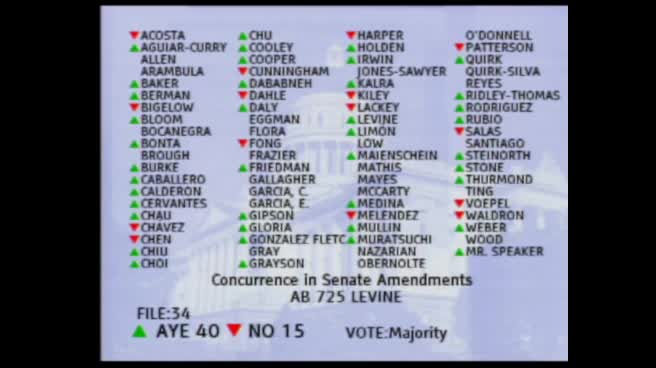 59SEC
Assembly Floor
 2MIN
Senate Floor
 1H
Senate Standing Committee on Appropriations
 5MIN
Senate Standing Committee on Human Services
 2MIN
Assembly Floor
 1H
Assembly Standing Committee on Appropriations
 8MIN
Assembly Standing Committee on Human Services
 9MIN
Assembly Standing Committee on Higher Education
Bill Author

Bill Co-Author(s):