AB 1660: Court reporter providers.
- Session Year: 2017-2018
- House: Assembly
- Latest Version Date: 2017-09-13
Existing law requires, upon court order or, in certain cases, upon request of a party to the action, an official court reporter or reporter pro tempore to take down in shorthand all testimony, objections made, rulings of the court, exceptions taken, arraignments, pleas, sentences, arguments of the attorneys to the jury, and statements and remarks made and oral instructions given by the judge or other judicial officer. Existing law requires shorthand reporters to be licensed and regulated by the Court Reporters Board of California, which is within the Department of Consumer Affairs. Existing law prohibits a person from being appointed to the position of official reporter of any court unless the person has first obtained a license to practice as a certified shorthand reporter from the Court Reporters Board of California. Existing law requires licensees to pay a fee that is deposited into the Court Reporters Fund, which is continuously appropriated. Existing law makes a violation of these provisions a misdemeanor.
This bill, on and after January 1, 2019, would authorize an individual or entity to engage in the business of providing or arranging for certified shorthand reporters for the transcription of court proceedings if specified conditions are met, including that an individual be a certified shorthand reporter, that an entity be a shorthand reporting corporation, or that the individual or entity be registered as a court reporter provider, as defined. The bill would require an individual or entity that registers with the board as a court reporter provider to adhere to the same laws and regulations that are applicable to the conduct of certified shorthand reporters, including the requirement for a licensee to pay a fee, as specified, that will be deposited into the Court Reporters Fund. By requiring a court reporter provider to pay a fee that is deposited into a continuously appropriated fund, the bill would make an appropriation. The bill would require the board to adopt regulations prescribing the process and procedure for registration as a court reporter provider. The bill would require the board to create and make available on its Internet Web site a directory of registered court reporter providers. Because a violation of these provisions would be a crime, the bill would impose a state-mandated local program.
The California Constitution requires the state to reimburse local agencies and school districts for certain costs mandated by the state. Statutory provisions establish procedures for making that reimbursement.
This bill would provide that no reimbursement is required by this act for a specified reason.
Existing law requires, upon court order or, in certain cases, upon request of a party to the action, an official court reporter or reporter pro tempore to take down in shorthand all testimony, objections made, rulings of the court, exceptions taken, arraignments, pleas, sentences, arguments of the attorneys to the jury, and statements and remarks made and oral instructions given by the judge or other judicial officer. Existing law requires shorthand reporters to be licensed and regulated by the Court Reporters Board of California, which is within the Department of Consumer Affairs. Existing law prohibits a person from being appointed to the position of official reporter of any court unless the person has first obtained a license to practice as a certified shorthand reporter from the Court Reporters Board of California. Existing law requires licensees to pay a fee that is deposited into the Court Reporters Fund, which is continuously appropriated. Existing law makes a violation of these provisions a misdemeanor.
This bill, on and after January 1, 2019, would authorize an individual or entity to engage in the business of providing or arranging for court certified shorthand reporters for the transcription of court proceedings if specified conditions are met, including that an individual be a certified shorthand reporter, that an entity be a shorthand reporting corporation corporation, or that the individual or entity be registered as a court reporter provider, as defined. The bill would require an individual or entity that registers with the board as a court reporter provider to adhere to the same laws and regulations that are applicable to the conduct of certified shorthand reporters, including the requirement for a licensee to pay a fee, as specified, that will be deposited into the Court Reporters Fund. By requiring a court reporter provider to pay a fee that is deposited into a continuously appropriated fund, the bill would make an appropriation. The bill would require the board to adopt regulations prescribing the process and procedure for registration as a court reporter provider. The bill would require the board to create and make available on its Internet Web site a directory of registered court reporter providers. Because a violation of these provisions would be a crime, the bill would impose a state-mandated local program.
The California Constitution requires the state to reimburse local agencies and school districts for certain costs mandated by the state. Statutory provisions establish procedures for making that reimbursement.
This bill would provide that no reimbursement is required by this act for a specified reason.
Existing law requires, upon court order or, in certain cases, upon request of a party to the action, an official court reporter or reporter pro tempore to take down in shorthand all testimony, objections made, rulings of the court, exceptions taken, arraignments, pleas, sentences, arguments of the attorneys to the jury, and statements and remarks made and oral instructions given by the judge or other judicial officer. Existing law requires shorthand reporters to be licensed and regulated by the Court Reporters Board of California, which is within the Department of Consumer Affairs. Existing law prohibits a person from being appointed to the position of official reporter of any court unless the person has first obtained a license to practice as a certified shorthand reporter from the Court Reporters Board of California. Existing law requires licensees to pay a fee that is deposited into the Court Reporters Fund, which is continuously appropriated. Existing law makes a violation of these provisions a misdemeanor.
This bill, on and after January 1, 2019, would authorize an individual or entity to engage in the business of providing or arranging for court reporters for the transcription of court proceedings if specified conditions are met, including that an individual be licensed by the board as a court reporter, a certified shorthand reporter, that an entity be a shorthand reporting corporation or that the individual or entity be registered as a court reporter provider, as defined. The bill would require an individual or entity that registers with the board as a court reporter provider to adhere to the same laws and regulations that are applicable to the conduct of certified shorthand reporters, including the requirement for a licensee to pay a fee, as specified, that will be deposited into the Court Reporters Reporters Fund. By requiring a court reporter provider to pay a fee that is deposited into a continuously appropriated fund, the bill would make an appropriation. The bill would require the board to adopt regulations prescribing the process and procedure for registration as a court reporter provider. The bill would require the board to create and make available on its Internet Web site a directory of registered court reporter providers. Because a violation of these provisions would be a crime, the bill would impose a state-mandated local program.
The California Constitution requires the state to reimburse local agencies and school districts for certain costs mandated by the state. Statutory provisions establish procedures for making that reimbursement.
This bill would provide that no reimbursement is required by this act for a specified reason.
Existing law requires, upon court order or, in certain cases, upon request of a party to the action, an official court reporter or reporter pro tempore to take down in shorthand all testimony, objections made, rulings of the court, exceptions taken, arraignments, pleas, sentences, arguments of the attorneys to the jury, and statements and remarks made and oral instructions given by the judge or other judicial officer. Existing law requires shorthand reporters to be licensed and regulated by the Court Reporters Board of California, which is within the Department of Consumer Affairs. Existing law prohibits a person from being appointed to the position of official reporter of any court unless the person has first obtained a license to practice as a certified shorthand reporter from the Court Reporters Board of California. Existing law requires licensees to pay a fee that is deposited into the Court Reporters Fund, which is continuously appropriated. Existing law makes a violation of these provisions a misdemeanor.
This bill, on and after January 1, 2019, would authorize an individual or entity to engage in the business of providing or arranging for court reporters for the transcription of court proceedings if specified conditions are met, including that an individual be licensed by the board as a court reporter, that an entity be a shorthand reporting corporation or that the individual or entity be registered as a court reporter provider. provider, as defined. The bill would require an individual or entity that registers with the board as a court reporter provider to adhere to the same laws and regulations that are applicable to the conduct of certified shorthand reporters, including the requirement for a licensee to pay a fee, as specified, that will be deposited into the Court Reporters Fund. By requiring a court reporter provider to pay a fee that is deposited into a continuously appropriated fund, the bill would make an appropriation. The bill would require the board to adopt regulations prescribing the process and procedure for registration as a court reporter provider. The bill would require the board to create and make available on its Internet Web site a directory of registered court reporter providers. Because a violation of these provisions would be a crime, the bill would impose a state-mandated local program.
The California Constitution requires the state to reimburse local agencies and school districts for certain costs mandated by the state. Statutory provisions establish procedures for making that reimbursement.
This bill would provide that no reimbursement is required by this act for a specified reason.
Existing law requires, upon court order or, in certain cases, upon request of a party to the action, an official court reporter or reporter pro tempore to take down in shorthand all testimony, objections made, rulings of the court, exceptions taken, arraignments, pleas, sentences, arguments of the attorneys to the jury, and statements and remarks made and oral instructions given by the judge or other judicial officer. Existing law requires shorthand reporters to be licensed and regulated by the Court Reporters Board of California, which is within the Department of Consumer Affairs. Existing law prohibits a person from being appointed to the position of official reporter of any court unless the person has first obtained a license to practice as a certified shorthand reporter from the Court Reporters Board of California. Existing law requires licensees to pay a fee that is deposited into the Court Reporters Fund, which is continuously appropriated. Existing law makes a violation of these provisions a misdemeanor.
This bill, on and after January 1, 2019, would authorize an individual or entity to engage in the business of providing or arranging for court reporters for the transcription of court proceedings if specified conditions are met, including that an individual be licensed by the board as a court reporter, that an entity be a shorthand reporting corporation or that the individual or entity be registered as a court reporter provider. The bill would require an individual or entity that registers with the board as a court reporter provider to adhere to the same laws and regulations that are applicable to the conduct of certified shorthand reporters, including the requirement for a licensee to pay a fee, as specified, that will be deposited into the Court Reporters Fund. By requiring a court reporter provider to pay a fee that is deposited into a continuously appropriated fund, the bill would make an appropriation. The bill would require the board to create and make available on its Internet Web site a directory of registered court reporter providers. Because a violation of these provisions would be a crime, the bill would impose a state-mandated local program.
The California Constitution requires the state to reimburse local agencies and school districts for certain costs mandated by the state. Statutory provisions establish procedures for making that reimbursement.
This bill would provide that no reimbursement is required by this act for a specified reason.
Existing law requires, upon court order or, in certain cases, upon request of a party to the action, an official court reporter or reporter pro tempore to take down in shorthand all testimony, objections made, rulings of the court, exceptions taken, arraignments, pleas, sentences, arguments of the attorneys to the jury, and statements and remarks made and oral instructions given by the judge or other judicial officer. Existing law requires shorthand reporters to be licensed and regulated by the Court Reporters Board of California, which is within the Department of Consumer Affairs. Existing law prohibits a person from being appointed to the position of official reporter of any court unless the person has first obtained a license to practice as a certified shorthand reporter from the Court Reporters Board of California. Existing law requires licensees to pay a fee that is deposited into the Court Reporters Fund, which is continuously appropriated. Existing law makes a violation of these provisions a misdemeanor.
This bill bill, on and after January 1, 2019, would authorize an individual or entity to engage in the business of providing or arranging for court reporters for the transcription of court proceedings if specified conditions are met, including that an individual be licensed by the board as a court reporter, that an entity be a shorthand reporting corporation or that the individual or entity be registered as a court reporter provider. The bill would require an individual or entity that registers with the board as a court reporter provider to adhere to the same laws and regulations that are applicable to the conduct of certified shorthand reporters, including the requirement for a licensee to pay a fee fee, as specified, that will be deposited into the Court Reporters Fund. By requiring a court reporter provider to pay a fee that is deposited into a continuously appropriated fund, the bill would make an appropriation. The bill would require the board to create and make available on its Internet Web site a directory of registered court reporter providers. Because a violation of these provisions would be a crime, the bill would impose a state-mandated local program.
The California Constitution requires the state to reimburse local agencies and school districts for certain costs mandated by the state. Statutory provisions establish procedures for making that reimbursement.
This bill would provide that no reimbursement is required by this act for a specified reason.
Existing law requires, upon court order or, in certain cases, upon request of a party to the action, an official court reporter or reporter pro tempore to take down in shorthand all testimony, objections made, rulings of the court, exceptions taken, arraignments, pleas, sentences, arguments of the attorneys to the jury, and statements and remarks made and oral instructions given by the judge or other judicial officer. Existing law requires shorthand reporters to be licensed and regulated by the Court Reporters Board of California, which is within the Department of Consumer Affairs. Existing law prohibits a person from being appointed to the position of official reporter of any court unless the person has first obtained a license to practice as a certified shorthand reporter from the Court Reporters Board of California. Existing law requires licensees to pay a fee that is deposited into the Court Reporters Fund, which is continuously appropriated. Existing law makes a violation of these provisions a misdemeanor.
This bill would authorize an individual or entity to engage in the business of providing or arranging for court reporters for the transcription of court proceedings if specified conditions are met, including that an individual be licensed by the board as a court reporter, that an entity be a shorthand reporting corporation or that the individual or entity be registered as a court reporter provider. The bill would require an individual or entity that registers with the board as a court reporter provider to adhere to the same laws and regulations that are applicable to the conduct of certified shorthand reporters, including the requirement for a licensee to pay a fee that will be deposited into the Court Reporters Fund. By requiring a court reporter provider to pay a fee that is deposited into a continuously appropriated fund, the bill would make an appropriation. Because a violation of these provisions would be a crime, the bill would impose a state-mandated local program.
The California Constitution requires the state to reimburse local agencies and school districts for certain costs mandated by the state. Statutory provisions establish procedures for making that reimbursement.
This bill would provide that no reimbursement is required by this act for a specified reason.
The California Environmental Quality Act (CEQA) requires a lead agency, as defined, to prepare, or cause to be prepared, and certify the completion of, an environmental impact report on a project that it proposes to carry out or approve that may have a significant effect on the environment or to adopt a negative declaration if it finds that the project will not have that effect. CEQA also requires a lead agency to prepare a mitigated negative declaration for a project that may have a significant effect on the environment if revisions in the project would avoid or mitigate that effect and there is no substantial evidence that the project, as revised, would have a significant effect on the environment.Existing law establishes various agencies in state government to protect and conserve natural resources.This bill would state the intent of the Legislature to enact legislation to improve Californias environmental quality and conservation.The California Environmental Quality Act (CEQA) requires a lead agency, as defined, to prepare, or cause to be prepared, and certify the completion of, an environmental impact report on a project that it proposes to carry out or approve that may have a significant effect on the environment or to adopt a negative declaration if it finds that the project will not have that effect. CEQA also requires a lead agency to prepare a mitigated negative declaration for a project that may have a significant effect on the environment if revisions in the project would avoid or mitigate that effect and there is no substantial evidence that the project, as revised, would have a significant effect on the environment.
Existing law establishes various agencies in state government to protect and conserve natural resources.
This bill would state the intent of the Legislature to enact legislation to improve Californias environmental quality and conservation.
For purposes of this article, the following terms have the following meanings:
(a)(1)Court reporter provider means a person or entity that does any of the following:
(A)Any act that constitutes shorthand reporting that occurs wholly or partly in this state.
(B)Recruits a resident of this state to provide shorthand reporting in this state.
(C)Contracts with a resident of this state by mail or otherwise that requires either party to perform certified shorthand reporting wholly or partly in this state.
(2)Court reporter provider does not mean a court, a party to litigation, an attorney of the party, or a full-time employee of the party or the attorney of the party, who provides or contracts for certified shorthand reporting for purposes related to the litigation.
(b)Registration means the procedures and requirements with which a person or entity shall comply in order to conduct business as a court reporter provider.
8051.(a)On and after January 1, 2019, an individual or entity may engage in the business of providing or arranging for certified shorthand reporters for the transcription of court proceedings pursuant to Section 8017 if one of the following requirements are met:
(1)The individual is a certified shorthand reporter pursuant to Section 8018.
(2)The entity is a shorthand reporting corporation as described in Section 8040.
(3)The individual or entity is registered with the board as a court reporter provider.
(b)(1)An individual or entity registered as a court reporter provider described in paragraph (3) of subdivision (a) shall be subject to the same laws and regulations that are applicable to the conduct of certified shorthand reporters.
(2)The board may charge a fee for the registration of individuals or entities described in paragraph (3) of subdivision (a) that shall not be more than reasonably necessary for the administration of a registration program.
(c)An individual or entity described in paragraph (1) or (2) of subdivision (a) shall not engage in the practice of shorthand reporting on behalf of an individual or entity that the individual knows or should know is not registered with the board as a court reporter provider and shall verify whether a person or entity is registered with the board as a court reporter provider before engaging in the practice of shorthand reporting on behalf of that person or entity.
(d)Nothing in this section shall be construed to prohibit a certified shorthand reporter, shorthand reporting corporation, or registered court reporter provider from providing long-term or multicase volume discounts or services ancillary to reporting and transcribing a deposition, arbitration, or judicial proceeding in contracts that are subject to laws related to shorthand reporting.
(e)Nothing in this section shall be construed to require an owner of a registered court reporter provider to be a certified shorthand reporter unless the owner practices shorthand reporting, as defined in Section 8017.
8052.(a)The board shall adopt regulations prescribing the process and procedure for registration as a court reporter provider. Applications for a certificate of registration shall include, at a minimum, all of the following:
(1)The name of the person or entity seeking registration.
(2)The business address and telephone number of the person or entity seeking registration.
(3)The name, address, and contact information for any individual designated by the registrant as a point of contact.
(b)A certificate of registration shall be valid for a period of one year unless that period is extended by the board.
(c)A registrant shall notify the board within 30 days, on a form developed by the board, of any additions, deletions, or changes in the names, addresses, and contact information for each of the persons or entities listed on its application.
8053.The board shall create and make available on its Internet Web site a directory of registered court reporter providers.
SEC. 2.No reimbursement is required by this act pursuant to Section 6 of Article XIIIB of the California Constitution because the only costs that may be incurred by a local agency or school district will be incurred because this act creates a new crime or infraction, eliminates a crime or infraction, or changes the penalty for a crime or infraction, within the meaning of Section 17556 of the Government Code, or changes the definition of a crime within the meaning of Section 6 of Article XIIIB of the California Constitution.
For purposes of this article, the following terms have the following meanings:
(a)(1)Court reporter provider means a person or entity that does any of the following:
(1)(A)Any act that constitutes shorthand reporting that occurs wholly or partly in this state.
(2)(B)Recruits a resident of this state to provide shorthand reporting in this state.
(3)(C)Contracts with a resident of this state by mail or otherwise that requires either party to perform certified shorthand reporting wholly or partly in this state.
(2)Court reporter provider does not mean a court, a party to litigation, an attorney of the party, or a full-time employee of the party or the attorney of the party, who provides or contracts for certified shorthand reporting for purposes related to the litigation.
(b)Registration means the procedures and requirements with which a person or entity shall comply in order to conduct business as a court reporter provider.
8051.(a)On and after January 1, 2019, an individual or entity may engage in the business of providing or arranging for court certified shorthand reporters for the transcription of court proceedings pursuant to Section 8017 if one of the following requirements are met:
(1)The individual is a certified shorthand reporter pursuant to Section 8018.
(2)The entity is a shorthand reporting corporation as described in Section 8040.
(3)The individual or entity is registered with the board as a court reporter provider.
(b)(1)An individual or entity registered as a court reporter provider described in paragraph (3) of subdivision (a) shall be subject to the same laws and regulations that are applicable to the conduct of certified shorthand reporters.
(2)The board may charge a fee for the registration of individuals or entities described in paragraph (3) of subdivision (a) that shall not be more than reasonably necessary for the administration of a registration program.
(c)An individual or entity described in paragraph (1) or (2) of subdivision (a) shall not engage in the practice of court shorthand reporting on behalf of an individual or entity that the individual knows or should know is not registered with the board as a court reporter provider, provider and shall verify whether a person or entity is registered with the board as a court reporter provider before engaging in the practice of court shorthand reporting on behalf of that person or entity.
(d)Nothing in this section shall be construed to prohibit a licensed court certified shorthand reporter, shorthand reporting corporation, or registered court reporter provider from providing long-term or multicase volume discounts or services ancillary to reporting and transcribing a deposition deposition, arbitration, or judicial proceeding in contracts that are subject to laws related to shorthand reporting.
(e)Nothing in this section shall be construed to require an owner of a registered court reporter provider to be a certified shorthand reporter unless the owner practices shorthand reporting, as defined in Section 8017.
8052.(a)The board shall adopt regulations prescribing the process and procedure for registration as a court reporter provider. Applications for a certificate of registration shall include, at a minimum, all of the following:
(1)The name of the person or entity seeking registration.
(2)The business address and telephone number of the person or entity seeking registration.
(3)The name, address, and contact information for any individual designated by the registrant as a point of contact.
(b)A certificate of registration shall be valid for a period of one year unless that period is extended by the board.
(c)A registrant shall notify the board within 30 days, on a form developed by the board, of any additions, deletions, or changes in the names, addresses, and contact information for each of the persons or entities listed on its application.
8053.The board shall create and make available on its Internet Web site a directory of registered court reporter providers.
SEC. 2.No reimbursement is required by this act pursuant to Section 6 of Article XIIIB of the California Constitution because the only costs that may be incurred by a local agency or school district will be incurred because this act creates a new crime or infraction, eliminates a crime or infraction, or changes the penalty for a crime or infraction, within the meaning of Section 17556 of the Government Code, or changes the definition of a crime within the meaning of Section 6 of Article XIIIB of the California Constitution.
For purposes of this article, the following terms have the following meanings:
(a)Court reporter provider means a person or entity that does any of the following:
(1)Any act that constitutes shorthand reporting that occurs wholly or partly in this state.
(2)Recruits a resident of this state to provide shorthand reporting in this state.
(3)Contracts with a resident of this state by mail or otherwise that requires either party to perform shorthand reporting wholly or partly in this state.
(b)Registration means the procedures and requirements with which a person or entity shall comply in order to conduct business as a court reporter provider.
8051.(a)On and after January 1, 2019, an individual or entity may engage in the business of providing or arranging for court reporters for the transcription of court proceedings pursuant to Section 8017 if one of the following requirements are met:
(1)The individual is licensed as a court reporter. a certified shorthand reporter pursuant to Section 8018.
(2)The entity is a shorthand reporting corporation as described in Section 8040.
(3)The individual or entity is registered with the board as a court reporter provider.
(b)(1)An individual or entity registered as a court reporter provider described in paragraph (3) of subdivision (a) shall be subject to the same laws and regulations that are applicable to the conduct of certified shorthand reporters.
(2)The board may charge a fee for the registration of individuals or entities described in paragraph (3) of subdivision (a) that shall not be more than reasonably necessary for the administration of a registration program.
(c)An individual or entity described in paragraph (1) or (2) of subdivision (a) shall not engage in the practice of court reporting on behalf of an individual or entity that is not registered with the board as a court reporter provider, and shall verify whether a person or entity is registered with the board as a court reporter provider before engaging in the practice of court reporting on behalf of that person or entity.
(d)Nothing in this section shall be construed to prohibit a licensed court reporter, shorthand reporting corporation, or registered court reporter provider from providing long-term or multicase volume discounts or services ancillary to reporting and transcribing a deposition or judicial proceeding in contracts that are subject to laws related to shorthand reporting.
(e)Nothing in this section shall be construed to require an owner of a registered court reporter provider to be a certified shorthand reporter unless the owner practices shorthand reporting, as defined in Section 8017.
8052.(a)The board shall adopt regulations prescribing the process and procedure for registration as a court reporter provider. Applications for a certificate of registration shall include, at a minimum, all of the following:
(1)The name of the person or entity seeking registration.
(2)The business address and telephone number of the person or entity seeking registration.
(3)The name, address, and contact information for any individual designated by the registrant as a point of contact.
(b)A certificate of registration shall be valid for a period of one year unless that period is extended by the board.
(c)A registrant shall notify the board within 30 days, on a form developed by the board, of any additions, deletions, or changes in the names, addresses, and contact information for each of the persons or entities listed on its application.
8052. 8053.The board shall create and make available on its Internet Web site a directory of registered court reporter providers.
SEC. 2.No reimbursement is required by this act pursuant to Section 6 of Article XIIIB of the California Constitution because the only costs that may be incurred by a local agency or school district will be incurred because this act creates a new crime or infraction, eliminates a crime or infraction, or changes the penalty for a crime or infraction, within the meaning of Section 17556 of the Government Code, or changes the definition of a crime within the meaning of Section 6 of Article XIIIB of the California Constitution.
For purposes of this article, the following terms have the following meanings:
(a)Court reporter provider means a person or entity that does any of the following:
(1)Any act that constitutes shorthand reporting that occurs wholly or partly in this state.
(2)Recruits a resident of this state to provide shorthand reporting in this state.
(3)Contracts with a resident of this state by mail or otherwise that requires either party to perform shorthand reporting wholly or partly in this state.
(b)Registration means the procedures and requirements with which a person or entity shall comply in order to conduct business as a court reporter provider.
8050.8051.(a)On and after January 1, 2019, an individual or entity may engage in the business of providing or arranging for court reporters for the transcription of court proceedings if one of the following requirements are met:
(1)The individual is licensed as a court reporter.
(2)The entity is a shorthand reporting corporation as described in Section 8040.
(3)The individual or entity is registered with the board as a court reporter provider.
(b)(1)An individual or entity registered as a court reporter provider described in paragraph (3) of subdivision (a) shall be subject to the same laws and regulations that are applicable to the conduct of certified shorthand reporters.
(2)The board may charge a fee for the registration of individuals or entities described in paragraph (3) of subdivision (a) that shall not be more than reasonably necessary for the administration of a registration program.
(c)An individual or entity described in paragraph (1) or (2) of subdivision (a) shall not engage in the practice of court reporting on behalf of an individual or entity that is not registered with the board as a court reporter provider, and shall verify whether a person or entity is registered with the board as a court reporter provider before engaging in the practice of court reporting on behalf of that person or entity.
(d)Nothing in this section shall be construed to prohibit a licensed court reporter, shorthand reporting corporation, or registered court reporter provider from providing long-term or multicase volume discounts or services ancillary to reporting and transcribing a deposition or judicial proceeding in contracts that are subject to laws related to shorthand reporting.
8052.(a)The board shall adopt regulations prescribing the process and procedure for registration as a court reporter provider. Applications for a certificate of registration shall include, at a minimum, all of the following:
(1)The name of the person or entity seeking registration.
(2)The business address and telephone number of the person or entity seeking registration.
(3)The name, address, and contact information for any individual designated by the registrant as a point of contact.
(b)A certificate of registration shall be valid for a period of one year unless that period is extended by the board.
(c)A registrant shall notify the board within 30 days, on a form developed by the board, of any additions, deletions, or changes in the names, addresses, and contact information for each of the persons or entities listed on its application.
8052.The board shall create and make available on its Internet Web site a directory of registered court reporter providers.
SEC. 2.No reimbursement is required by this act pursuant to Section 6 of Article XIIIB of the California Constitution because the only costs that may be incurred by a local agency or school district will be incurred because this act creates a new crime or infraction, eliminates a crime or infraction, or changes the penalty for a crime or infraction, within the meaning of Section 17556 of the Government Code, or changes the definition of a crime within the meaning of Section 6 of Article XIIIB of the California Constitution.
(a)On and after January 1, 2019, an individual or entity may engage in the business of providing or arranging for court reporters for the transcription of court proceedings if one of the following requirements are met:
(1)The individual is licensed as a court reporter.
(2)The entity is a shorthand reporting corporation as described in Section 8040.
(3)The individual or entity is registered with the board as a court reporter provider.
(b)(1)An individual or entity registered as a court reporter provider described in paragraph (3) of subdivision (a) shall be subject to the same laws and regulations that are applicable to the conduct of certified shorthand reporters.
(2)The board may charge a fee for the registration of individuals or entities described in paragraph (3) of subdivision (a) that shall not be more than reasonably necessary for the administration of a registration program.
(c)An individual or entity described in paragraph (1) or (2) of subdivision (a) shall not engage in the practice of court reporting on behalf of an individual or entity that is not registered with the board as a court reporter provider, and shall verify whether a person or entity is registered with the board as a court reporter provider before engaging in the practice of court reporting on behalf of that person or entity.
(d)Nothing in this section shall be construed to prohibit a licensed court reporter, shorthand reporting corporation, or registered court reporter provider from providing long-term or multicase volume discounts or services ancillary to reporting and transcribing a deposition or judicial proceeding in contracts that are subject to laws related to shorthand reporting.
8052.The board shall create and make available on its Internet Web site a directory of registered court reporter providers.
SEC. 2.No reimbursement is required by this act pursuant to Section 6 of Article XIIIB of the California Constitution because the only costs that may be incurred by a local agency or school district will be incurred because this act creates a new crime or infraction, eliminates a crime or infraction, or changes the penalty for a crime or infraction, within the meaning of Section 17556 of the Government Code, or changes the definition of a crime within the meaning of Section 6 of Article XIIIB of the California Constitution.
(a)An On and after January 1, 2019, an individual or entity may engage in the business of providing or arranging for court reporters for the transcription of court proceedings if one of the following requirements are met:
(1)The individual is licensed as a court reporter.
(2)The entity is a shorthand reporting corporation as described in Section 8040.
(3)The individual or entity is registered with the board as a court reporter provider.
(b)(1)An individual or entity registered as a court reporter provider described in paragraph (3) of subdivision (a) shall be subject to the same laws and regulations that are applicable to the conduct of certified shorthand reporters.
(2)The board may charge a fee for the registration of individuals or entities described in paragraph (3) of subdivision (a) that shall not be more than reasonably necessary for the administration of a registration program.
(c)An individual or entity described in paragraph (1) or (2) of subdivision (a) shall not engage in the practice of court reporting on behalf of an individual or entity that is not registered with the board as a court reporter provider, and shall verify whether a person or entity is registered with the board as a court reporter provider before engaging in the practice of court reporting on behalf of that person or entity.
8052.The board shall create and make available on its Internet Web site a directory of registered court reporter providers.
SEC. 2.No reimbursement is required by this act pursuant to Section 6 of Article XIIIB of the California Constitution because the only costs that may be incurred by a local agency or school district will be incurred because this act creates a new crime or infraction, eliminates a crime or infraction, or changes the penalty for a crime or infraction, within the meaning of Section 17556 of the Government Code, or changes the definition of a crime within the meaning of Section 6 of Article XIIIB of the California Constitution.
(a)An individual or entity may engage in the business of providing or arranging for court reporters for the transcription of court proceedings if one of the following requirements are met:
(1)The individual is licensed as a court reporter.
(2)The entity is a shorthand reporting corporation as described in Section 8040.
(3)The individual or entity is registered with the board as a court reporter provider.
(b)An individual or entity registered as a court reporter provider described in paragraph (3) of subdivision (a) shall be subject to the same laws and regulations that are applicable to the conduct of certified shorthand reporters.
(c)An individual or entity described in paragraph (1) or (2) of subdivision (a) shall not engage in the practice of court reporting on behalf of an individual or entity that is not registered with the board as a court reporter provider, and shall verify whether a person or entity is registered with the board as a court reporter provider before engaging in the practice of court reporting on behalf of that person or entity.
SEC. 2.No reimbursement is required by this act pursuant to Section 6 of Article XIIIB of the California Constitution because the only costs that may be incurred by a local agency or school district will be incurred because this act creates a new crime or infraction, eliminates a crime or infraction, or changes the penalty for a crime or infraction, within the meaning of Section 17556 of the Government Code, or changes the definition of a crime within the meaning of Section 6 of Article XIIIB of the California Constitution.
SECTION 1.It is the intent of the Legislature to enact legislation to improve Californias environmental quality and conservation.It is the intent of the Legislature to enact legislation to improve Californias environmental quality and conservation.
|
Date
|
Status
|
|---|---|
| Jan 12, 2018 | Stricken from file. |
| Jan 3, 2018 | Consideration of Governor's veto pending. |
| Oct 15, 2017 | Vetoed by Governor. |
| Sep 19, 2017 | Enrolled and presented to the Governor at 3 p.m. |
| Sep 11, 2017 | Senate amendments concurred in. To Engrossing and Enrolling. |
| Sep 7, 2017 | In Assembly. Concurrence in Senate amendments pending. May be considered on or after September 9 pursuant to Assembly Rule 77. |
| Sep 7, 2017 | Read third time. Passed. Ordered to the Assembly. |
| Sep 5, 2017 | Read second time. Ordered to third reading. |
| Sep 1, 2017 | Read third time and amended. Ordered to second reading. |
| Aug 29, 2017 | Read second time. Ordered to third reading. |
| Aug 28, 2017 | From committee: Be ordered to second reading pursuant to Senate Rule 28.8. |
| Aug 21, 2017 | In committee: Set, first hearing. Hearing canceled at the request of author. |
| Aug 21, 2017 | From committee chair, with author's amendments: Amend, and re-refer to committee. Read second time, amended, and re-referred to Com. on APPR. |
| Jul 10, 2017 | Read second time and amended. Re-referred to Com. on APPR. |
| Jul 6, 2017 | From committee: Amend, and do pass as amended and re-refer to Com. on APPR. (Ayes 5. Noes 1.) (July 3). |
| Jun 20, 2017 | From committee chair, with author's amendments: Amend, and re-refer to committee. Read second time, amended, and re-referred to Com. on B., P. & E.D. |
| Jun 8, 2017 | Referred to Com. on B., P. & E.D. |
| May 30, 2017 | In Senate. Read first time. To Com. on RLS. for assignment. |
| May 30, 2017 | Read third time. Passed. Ordered to the Senate. (Ayes 46. Noes 27. Page 1840.) |
| May 25, 2017 | Read second time. Ordered to third reading. |
| May 24, 2017 | From committee: Do pass. (Ayes 13. Noes 4.) (May 24). |
| May 3, 2017 | Re-referred to Com. on APPR. |
| May 2, 2017 | Read second time and amended. |
| May 1, 2017 | From committee: Amend, and do pass as amended and re-refer to Com. on APPR. (Ayes 9. Noes 4.) (April 25). |
| Apr 4, 2017 | Re-referred to Com. on B. & P. |
| Apr 3, 2017 | From committee chair, with author's amendments: Amend, and re-refer to Com. on B. & P. Read second time and amended. |
| Mar 30, 2017 | Referred to Com. on B. & P. |
| Feb 19, 2017 | From printer. May be heard in committee March 21. |
| Feb 17, 2017 | Read first time. To print. |
|
Date
|
Description
|
Location
|
Votes
|
|
|---|---|---|---|---|
| Sep 11, 2017 | AB 1660 KALRA Concurrence in Senate Amendments | Assembly Floor |
Passed |
|
| Sep 7, 2017 | Assembly 3rd Reading AB1660 Kalra By Hill | Senate Floor |
Passed |
|
| Jul 3, 2017 | Do pass as amended, but first amend, and re-refer to the Committee on [Appropriations] | Senate Standing Committee on Business, Professions and Economic Development |
Passed |
|
| May 30, 2017 | AB 1660 KALRA Assembly Third Reading | Assembly Floor |
Passed |
|
| May 24, 2017 | Do pass. | Assembly Standing Committee on Appropriations |
Passed |
|
| Apr 25, 2017 | Do pass as amended and be re-referred to the Committee on [Appropriations] | Assembly Standing Committee on Business and Professions |
Passed |
This list shows positions taken on this bill by organizations on the date displayed, which is linked to the original source.
Positions by individuals are not included.
|
Organization
|
Position
|
Date
|
|---|---|---|
| American Insurance Association | * Against Unless Amend | May 24, 2017 |
| Assembly Floor: 46-27, 5 | ** Against | Aug 30, 2017 |
| California Court Reporters Association | ** Support | Sep 5, 2017 |
| california court reporters board | ** Support | Sep 5, 2017 |
| Civil Justice Association Of California | * Against | May 24, 2017 |
| Court Reporters Board | * Support | May 24, 2017 |
| Deposition Reporters Association | ** Support | Sep 5, 2017 |
| Deposition Reporters Association Of California | * Support | Jul 3, 2017 |
| Esquire Deposition Services, LLC | ** Against | Sep 5, 2017 |
| Magna Legal Services | ** Against | Sep 5, 2017 |
| Personal Insurance Federation Of California | * Against Unless Amend | May 24, 2017 |
| Service Employees International Union California | ** Support | Sep 5, 2017 |
| The Court Reporters Board of California | * Support | Jul 3, 2017 |
| U.S. Legal Support, Inc. | ** Against | Sep 5, 2017 |
| veritext corp. | ** Against | Sep 5, 2017 |
GOVERNOR'S VETO
GV Bill Id:AB 1660
Author:(Kalra)
As Enrolled Ver:September 13, 2017
2/3 vote
ASSEMBLY: | 46-27 | (May 30, 2017) | SENATE: | 28-12 | (September 7, 2017) |
ASSEMBLY: | 53-24 | (September 11, 2017) |
Original Committee Reference: B. & P.
SUMMARY: Authorizes, beginning January 1 2019, an individual or entity to engage in the business of providing or arranging for court reporting services if specified conditions are met, including if an individual or entity is registered with the Court Reporters Board (CRB), as specified, and places certain prohibitions on engaging in the practice of court reporting with an individual or entity that is not registered with the CRB. Specifically, this bill:
- Authorizes an individual or entity to engage in the business of providing or arranging court reporters for the transcription of court proceedings if one of the following requirements are met:
- The individual is a certified shorthand reporter;
- The entity is a licensee-owned shorthand reporting corporation; or,
- The individual or entity is registered with the CRB as a court reporter provider.
- Specifies that an individual or entity registered with the CRB is subject to the same laws and regulations that are applicable to the conduct of certified shorthand reporters.
- Authorizes the CRB to charge a fee for registration, as specified.
- Requires the CRB to create and make available on its Internet Web site a directory of registered court reporter providers.
- Prohibits a certified shorthand reporter from engaging in the practice of court reporting on behalf of an individual or entity that is not registered with the CRB as a court reporter provider and requires the certified shorthand reporter to verify whether a person or entity is registered with the Board as a court reporter provider before engaging in the practice of court reporting on behalf of that person or entity.
The Senate amendments define "court reporter provider" and "registration;" clarify that nothing shall prohibit long-term or multicase volume discounts or services auxiliary to reporting and transcribing a deposition or judicial proceeding; clarify that there is no requirement that the owner of a registered court reporter provider be a certified shorthand reporter unless the owner practices shorthand reporting; and require the CRB to adopt regulations prescribing the process and procedure for registration as a "court reporter provider." Further Senate Amendments clarify that "court reporter provider" does not mean a court, a party to litigation, an attorney of the party, or a full-time employee of the party or the attorney of the party, who provides or contracts for certified shorthand reporting for purposes related to the litigation.
FISCAL EFFECT: According the Senate Appropriations Committee, pursuant to Senate Rule 28.8, negligible state costs.
COMMENTS:
Purpose. This bill is sponsored by the Court Reporters Board of California. According to the author, "[this bill] requires all individuals and businesses providing court reporting services must comply with the same laws and regulations to ensure services are honestly are accurately prepared. The bill does this by requiring out-of-state corporations that provide court reporting services to register with the Court Reporters Board of California. In so doing, [this bill] protects consumers of court reporting services from unfair practices and levels the playing field for all parties in order to uphold public trust in the integrity of the judicial process and fair oversight."
Background. Court Reporters Board. The CRB is responsible for licensing and disciplining certified shorthand reporters. Since 1972, the CRB has permitted the certification of individuals and at one time, the registration of shorthand reporting corporations. Currently, the CRB oversees approximately 7,000 certified shorthand reporters. In addition to the licensing and discipline functions, the CRB specifies the professional standards of practice (16 California Code of Regulations (CCR) Section 2475) for professionals, which include: 1) acting without bias toward, or prejudice against, any parties and/or their attorneys; 2) not entering into, arranging, or participating in a relationship that compromises the impartiality of the certified shorthand reporter, including but not limited to a relationship in which compensation for reporting services is based upon the outcome of the proceeding; and 3) maintaining confidentiality of information, among others.
Shorthand Reporters. The CRB establishes the educational requirements for certification including authorizing the minimal educational standards and approving schools. In order to qualify for licensure as a certified shorthand reporter, an individual must have a high school education, twelve months (or 1,400 hours) of full-time work experience related to making records of hearings, obtain a passing score on the California State Hearing Reporters Examination, and complete a course from an approved court-reporting school. Currently, certified shorthand reporters in California work in two separate capacities: 1) as an "official reporter" who works as a court reporter employed by a state court or 2) as a "freelance reporter" who is hired privately by court reporting businesses, firms, or attorneys to report depositions. Both official and freelance reporters are required to meet the same educational and examination qualifications. Laws governing all certified shorthand reporters are found in the Shorthand Reporters Act (Act) (Business and Professions Code (BPC) Section 8000 et seq.) and all licensed shorthand reporters are required to abide by the laws specified in the Act and other applicable statues and regulations. In addition, Codes governing deposition/freelance reporter practices can be found in the Code of Civil Procedure (CCP) Section 2025 et seq. The CRB is charged with enforcing the provisions of the Act and the regulations established by the CRB.
Shorthand Reporting Corporations. BPC Section 8044 specifies that each director, shareholder, and officer of a shorthand reporting corporation must be a licensed shorthand reporter. Business models for shorthand reporting corporations and other service providers vary throughout the state and country. While there are a number of licensee-owned corporations in California, there are a number of businesses that provide litigation services but are not currently under the jurisdiction of the CRB. The CRB does not register or certify corporations in California. BPC Sections 8044 and 8046 provide the CRB with authority over licensee-owned shorthand reporting corporations incorporated in California. However, the CRB currently does not have direct jurisdiction over corporations which have no license to discipline. Therefore, the CRB may have difficulty pursuing non-licensee owned corporations that it suspects may be offering or arranging for court reporting services through employment or independent contractors yet violating ethical codes of conduct that shorthand reporting corporations would have to follow. This bill would authorize an entity to engage in the business of providing or arranging for court reporter services if that entity is registered with the CRB. This bill would explicitly prohibit a licensee from providing shorthand reporting services for a person or entity that has not registered with the CRB and requires the CRB to make a directory of registered court reporter providers available on its Web site. In addition, this bill takes effect on January 1, 2019 in order to provide a sufficient amount of time for the CRB to establish a registration program.
The issue of shorthand reporting corporations was raised during the CRB's 2015 sunset review. At that time, it was noted in the Committee's staff background paper that, from the CRB's perspective, there are two frequent types of unlicensed activity, licensees allowing their license to lapse and corporations who arrange for court reporting services in violation of the Act. In the first situation, there are court reporters who neglect to renew their licenses on time but continue to report, which is unlicensed activity from the standpoint that they are working without a current license. The CRB issues citations and fines for this violation. The second type of unlicensed activity relates to foreign corporations who are offering court reporting services in California without authorization. In response to complaints about unethical gift giving (violation of 16 CCR Section 2475(a)(8)) and violations of the minimum transcript format standards (violation of 16 CCR Section 2473), a task force was appointed by the CRB in 2007, to study the issue of firm oversight. The members of the task force included small, medium and large-firm owners. Ultimately, the task force determined that a legislative fix was necessary to address this issue, which was included in AB 1461 (Ruskin) of 2009. That bill sought to clarify that in addition to corporations, a firm, partnership, sole proprietorship, or other business entity providing or arranging for shorthand reporting services (any entity offering or providing the services of a shorthand reporter) was barred from doing or failing to do any act that constitutes unprofessional conduct under any statute, rule or regulation pertaining to shorthand reporters or shorthand reporting. That bill died in the Assembly Appropriations Committee.
In 2010, the CRB received a complaint that United States (U.S.) Legal, a Texas-based corporation, was violating gift-giving provisions under 16 CCR 22475(b)(8). After investigation, the CRB issued a citation and fine, but U.S. Legal denied the CRB's jurisdiction to issue it the citation. In April of 2011, the CRB brought suit against U.S. Legal for declaratory relief (Court Reporters Board v. U.S. Legal). After a hearing, the Court ruled in an unpublished opinion that, even if U.S. Legal was rendering court reporting services in California and was in violation of gift-giving regulations, the CRB is not authorized to impose citations or fines against U.S. Legal because U.S. Legal was not a "professional corporation" but instead a "foreign professional corporation," as defined under the Corporations Code.
As currently drafted, this bill makes clear that an individual or entity registered with the CRB as a court reporter provider is subject to the same laws and regulations that are applicable to the conduct of certified shorthand reporters.
Last year, SB 270 (Mendoza) of 2015, was introduced and subsequently held in the Assembly Committee on Business and Professions. That bill faced opposition from foreign court reporting corporations, among others. While that bill initially sought to clarify the CRB's authority over foreign professional corporations and increase penalties for violations of law, the author proposed amendments that would have instead required those corporations to register with the CRB; and later required certain corporations to abide by only specified professional standards of practice.
This bill creates a new registration program for a Court Reporter Provider.
This bill affects matters that are currently under review by an appellate court. I would prefer to await the outcome of that case before deciding on the issues raised by this bill.
Analysis Prepared by: Robert Sumner / B. & P. / (916) 319-3301 FN: 0002479
CONCURRENCE IN SENATE AMENDMENTS
CSA1 Bill Id:AB 1660
Author:(Kalra)
As Amended Ver:September 1, 2017
Majority vote
ASSEMBLY: | 46-27 | (May 30, 2017) | SENATE: | 28-12 | (September 7, 2017) |
Original Committee Reference: B. & P.
SUMMARY: Authorizes, beginning January 1 2019, an individual or entity to engage in the business of providing or arranging for court reporting services if specified conditions are met, including if an individual or entity is registered with the Court Reporters Board (CRB), as specified, and places certain prohibitions on engaging in the practice of court reporting with an individual or entity that is not registered with the CRB. Specifically, this bill:
- Authorizes an individual or entity to engage in the business of providing or arranging court reporters for the transcription of court proceedings if one of the following requirements are met:
- The individual is a certified shorthand reporter;
- The entity is a licensee-owned shorthand reporting corporation; or,
- The individual or entity is registered with the CRB as a court reporter provider.
- Specifies that an individual or entity registered with the CRB is subject to the same laws and regulations that are applicable to the conduct of certified shorthand reporters.
- Authorizes the CRB to charge a fee for registration, as specified.
- Requires the CRB to create and make available on its Internet Web site a directory of registered court reporter providers.
- Prohibits a certified shorthand reporter from engaging in the practice of court reporting on behalf of an individual or entity that is not registered with the CRB as a court reporter provider and requires the certified shorthand reporter to verify whether a person or entity is registered with the Board as a court reporter provider before engaging in the practice of court reporting on behalf of that person or entity.
The Senate amendments define "court reporter provider" and "registration;" clarify that nothing shall prohibit long-term or multicase volume discounts or services auxiliary to reporting and transcribing a deposition or judicial proceeding; clarify that there is no requirement that the owner of a registered court reporter provider be a certified shorthand reporter unless the owner practices shorthand reporting; and require the CRB to adopt regulations prescribing the process and procedure for registration as a "court reporter provider." Further Senate Amendments clarify that "court reporter provider" does not mean a court, a party to litigation, an attorney of the party, or a full-time employee of the party or the attorney of the party, who provides or contracts for certified shorthand reporting for purposes related to the litigation.
FISCAL EFFECT: According the Senate Appropriations Committee, pursuant to Senate Rule 28.8, negligible state costs.
COMMENTS:
Purpose. This bill is sponsored by the Court Reporters Board of California. According to the author, "[this bill] requires all individuals and businesses providing court reporting services must comply with the same laws and regulations to ensure services are honestly are accurately prepared. The bill does this by requiring out-of-state corporations that provide court reporting services to register with the Court Reporters Board of California. In so doing, [this bill] protects consumers of court reporting services from unfair practices and levels the playing field for all parties in order to uphold public trust in the integrity of the judicial process and fair oversight."
Background. Court Reporters Board. The CRB is responsible for licensing and disciplining certified shorthand reporters. Since 1972, the CRB has permitted the certification of individuals and at one time, the registration of shorthand reporting corporations. Currently, the CRB oversees approximately 7,000 certified shorthand reporters. In addition to the licensing and discipline functions, the CRB specifies the professional standards of practice (16 California Code of Regulations (CCR) Section 2475) for professionals, which include: 1) acting without bias toward, or prejudice against, any parties and/or their attorneys; 2) not entering into, arranging, or participating in a relationship that compromises the impartiality of the certified shorthand reporter, including but not limited to a relationship in which compensation for reporting services is based upon the outcome of the proceeding; and 3) maintaining confidentiality of information, among others.
Shorthand Reporters. The CRB establishes the educational requirements for certification including authorizing the minimal educational standards and approving schools. In order to qualify for licensure as a certified shorthand reporter, an individual must have a high school education, twelve months (or 1,400 hours) of full-time work experience related to making records of hearings, obtain a passing score on the California State Hearing Reporters Examination, and complete a course from an approved court-reporting school. Currently, certified shorthand reporters in California work in two separate capacities: 1) as an "official reporter" who works as a court reporter employed by a state court or 2) as a "freelance reporter" who is hired privately by court reporting businesses, firms, or attorneys to report depositions. Both official and freelance reporters are required to meet the same educational and examination qualifications. Laws governing all certified shorthand reporters are found in the Shorthand Reporters Act (Act) (Business and Professions Code (BPC) Section 8000 et seq.) and all licensed shorthand reporters are required to abide by the laws specified in the Act and other applicable statues and regulations. In addition, Codes governing deposition/freelance reporter practices can be found in the Code of Civil Procedure (CCP) Section 2025 et seq. The CRB is charged with enforcing the provisions of the Act and the regulations established by the CRB.
Shorthand Reporting Corporations. BPC Section 8044 specifies that each director, shareholder, and officer of a shorthand reporting corporation must be a licensed shorthand reporter. Business models for shorthand reporting corporations and other service providers vary throughout the state and country. While there are a number of licensee-owned corporations in California, there are a number of businesses that provide litigation services but are not currently under the jurisdiction of the CRB. The CRB does not register or certify corporations in California. BPC Sections 8044 and 8046 provide the CRB with authority over licensee-owned shorthand reporting corporations incorporated in California. However, the CRB currently does not have direct jurisdiction over corporations which have no license to discipline. Therefore, the CRB may have difficulty pursuing non-licensee owned corporations that it suspects may be offering or arranging for court reporting services through employment or independent contractors yet violating ethical codes of conduct that shorthand reporting corporations would have to follow. This bill would authorize an entity to engage in the business of providing or arranging for court reporter services if that entity is registered with the CRB. This bill would explicitly prohibit a licensee from providing shorthand reporting services for a person or entity that has not registered with the CRB and requires the CRB to make a directory of registered court reporter providers available on its Web site. In addition, this bill takes effect on January 1, 2019 in order to provide a sufficient amount of time for the CRB to establish a registration program.
The issue of shorthand reporting corporations was raised during the CRB's 2015 sunset review. At that time, it was noted in the Committee's staff background paper that, from the CRB's perspective, there are two frequent types of unlicensed activity, licensees allowing their license to lapse and corporations who arrange for court reporting services in violation of the Act. In the first situation, there are court reporters who neglect to renew their licenses on time but continue to report, which is unlicensed activity from the standpoint that they are working without a current license. The CRB issues citations and fines for this violation. The second type of unlicensed activity relates to foreign corporations who are offering court reporting services in California without authorization. In response to complaints about unethical gift giving (violation of 16 CCR Section 2475(a)(8)) and violations of the minimum transcript format standards (violation of 16 CCR Section 2473), a task force was appointed by the CRB in 2007, to study the issue of firm oversight. The members of the task force included small, medium and large-firm owners. Ultimately, the task force determined that a legislative fix was necessary to address this issue, which was included in AB 1461 (Ruskin), of 2009. That bill sought to clarify that in addition to corporations, a firm, partnership, sole proprietorship, or other business entity providing or arranging for shorthand reporting services (any entity offering or providing the services of a shorthand reporter) was barred from doing or failing to do any act that constitutes unprofessional conduct under any statute, rule or regulation pertaining to shorthand reporters or shorthand reporting. That bill died in the Assembly Appropriations Committee.
In 2010, the CRB received a complaint that United States (U.S.) Legal, a Texas-based corporation, was violating gift-giving provisions under 16 CCR 22475(b)(8). After investigation, the CRB issued a citation and fine, but U.S. Legal denied the CRB's jurisdiction to issue it the citation. In April of 2011, the CRB brought suit against U.S. Legal for declaratory relief (Court Reporters Board v. U.S. Legal). After a hearing, the Court ruled in an unpublished opinion that, even if U.S. Legal was rendering court reporting services in California and was in violation of gift-giving regulations, the CRB is not authorized to impose citations or fines against U.S. Legal because U.S. Legal was not a "professional corporation" but instead a "foreign professional corporation," as defined under the Corporations Code.
As currently drafted, this bill makes clear that an individual or entity registered with the CRB as a court reporter provider is subject to the same laws and regulations that are applicable to the conduct of certified shorthand reporters.
Last year, SB 270, (Mendoza) of 2015, was introduced and subsequently held in the Assembly Committee on Business and Professions. That bill faced opposition from foreign court reporting corporations, among others. While that bill initially sought to clarify the CRB's authority over foreign professional corporations and increase penalties for violations of law, the author proposed amendments that would have instead required those corporations to register with the CRB; and later required certain corporations to abide by only specified professional standards of practice.
Analysis Prepared by: Robert Sumner / B. & P. / (916) 319-3301 FN: 0001752
Office of Senate Floor Analyses (916) 651-1520 Fax: (916) 327-4478 | AB |
THIRD READING
Bill No: AB 1660
Amended: 9/1/17 in Senate
SENATE BUS., PROF. & ECON. DEV. COMMITTEE: 5-1, 7/3/17
AYES: Hill, Dodd, Galgiani, Newman, Pan
NOES: Wilk
NO VOTE RECORDED: Fuller, Glazer, Hernandez
SENATE APPROPRIATIONS COMMITTEE: Senate Rule 28.8
ASSEMBLY FLOOR: 46-27, 5/30/17 - See last page for vote
SOURCE: California Court Reporters Board
Deposition Reporters Association
DIGEST:
This bill authorizes, beginning January 1, 2019, an individual or entity to engage in the business of providing or arranging for shorthand reporting services if specified conditions are met, including if an individual or entity is registered with the Court Reporters Board (CRB); provides a definition of a “court reporter provider”, as specified; and, places certain prohibitions on engaging in the practice of shorthand reporting with an individual or entity that is not registered with the CRB.
Senate Floor Amendments of 9/1/17 are technical and clarifying in nature. Specifically, the amendments replace the references to “court reporter” with “certified shorthand reporter”; clarify the definition of a “court reporter provider” to specify that a “court reporter provider” does not include a court, a party to litigation, an attorney of the party, or a full-time employee of the party of the attorney of the party who provides or contracts for certified shorthand reporting.
Existing law:
- Establishes the CRB under the jurisdiction of the Department of Consumer Affairs (DCA) for the licensure and regulation of certified shorthand reporters. (Business and Professions Code (BPC) § 8000 et seq.)
- Prohibits a person from engaging in the practice of shorthand reporting, as defined, unless that person holds a certificate issued by the CRB and is not a salaried, full-time employee of any department or agency of the state who is employed as a hearing reporter. (BPC § 8016)
- Defines the "practice of shorthand reporting" as the making, by means of written symbols or abbreviations in shorthand or machine shorthand writing, of a verbatim record or any oral court proceeding, deposition, court ordered hearing or arbitration, or proceeding before any grand jury, referee, or court commissioner and the accurate transcription thereof. (BPC § 8017)
- Defines a "shorthand reporting corporation" as a corporation which is authorized to render professional services, as defined in § 13401 in the Corporations Code, as long as that corporation and all of its shareholders, officers, directors, and employees rendering professional services who are certified shorthand reporters are in compliance with the Moscone-Knox Professional Corporations Act, as specified. (BPC § 8040)
- States that a shorthand reporting corporation cannot do or fail to do any act which would constitute unprofessional conduct under any statute, rule or regulation now or hereafter in effect which pertains to shorthand reporters or shorthand reporting, as specified. (BPC § 8046)
- Defines “professional services” to mean any type of professional services that may be lawfully rendered only pursuant to a license, certification, or registration authorized by the BPC, the Chiropractic Act, or the Osteopathic Act. (Corporations Code 13401(a))
This bill:
- Defines a “court reporter provider” to mean a person or entity that does any of the following:
- Any act that constitutes shorthand reporting that occurs wholly or partly in this state;
- Recruits a resident of this state to provide shorthand reporting; or,
- Contracts with a resident of this state by mail or otherwise that requires either party to perform certified shorthand reporting wholly or partly in this state.
- Any act that constitutes shorthand reporting that occurs wholly or partly in this state;
- Specifies that a “court reporter provider” does not mean a court, a party to litigation, an attorney of the party, or a full-time employee of the party or the attorney of the party, who provides or contracts for certified shorthand reporting for purposes related to the litigation.
- Defines “registration” to mean the procedures and requirements with which a person or entity must comply in order to conduct business as a court reporter provider.
- Authorizes an individual or entity to engage in the business of providing or arranging for certified shorthand reporters for the transcription of court proceedings if one of the following requirements are met:
- The individual is a licensed shorthand reporter;
- The entity is a licensee-owned shorthand reporting corporation; or,
- The individual or entity is registered with the CRB as a court reporter provider.
- Specifies that an individual or entity registered with the CRB is subject to the same laws and regulations that are applicable to the conduct of certified shorthand reporters.
- Authorizes the CRB to charge a fee for registration, and requires the CRB to create and make available on its Internet Web site a directory of registered court reporter providers.
- Prohibits a certified shorthand reporter from engaging in the practice of shorthand reporting on behalf of an individual or entity that is not registered with the CRB as a court reporter provider and requires the certified shorthand reporter to verify whether a person or entity is registered with the Board as a court reporter provider before engaging in the practice of court reporting on behalf of that person or entity, as specified.
- Clarifies that the provisions of the bill do not prohibit a certified shorthand reporter, shorthand reporting corporation, or registered court reporter provider from providing long-term or multicase volume discounts or services ancillary to reporting and transcribing a deposition or judicial proceeding in contracts that are subject to laws related to shorthand reporting, as specified.
- Requires the CRB to adopt regulations prescribing the process and procedure for registration as a “court reporter provider” as specified.
- Clarifies that the provisions of this bill do not require an owner of a registered court reporter provider to be a certified shorthand reporter unless the owner practices shorthand reporting, as specified.
- Specifies that the provisions of this bill take effect beginning January 1, 2019.
Background
Certified shorthand reporters are responsible for reporting depositions in legal cases as well as court proceedings. In addition to licensing and disciplinary functions, the CRB enforces the professional standards of practice (16 CCR § 2475) for certified shorthand professionals, which includes: 1) acting without bias toward, or prejudice against, any parties and/or their attorneys; 2) not entering into, arranging, or participating in a relationship that compromises the impartiality of the certified shorthand reporter, including but not limited to a relationship in which compensation for reporting services is based upon the outcome of the proceeding; and, 3) maintaining confidentiality of information, among others. The CRB is subject to a sunset review process which provides a formal mechanism for the DCA, the Legislature. The regulatory boards, bureaus and committees, interested parties, and stakeholders to make recommendations for improvements to the authority of consumer protection boards and bureaus. The registration program proposed by this bill will be included in any future sunset review of the CRB.
Shorthand Reporters. Currently, certified shorthand reporters in California work in two separate capacities: 1) as an "official reporter" who works as a court reporter employed by a state court or 2) as a "freelance reporter" who is hired privately by court reporting businesses, firms, or attorneys to report depositions. Both official and freelance reporters are required to meet the same educational and examination qualifications. Laws governing all certified shorthand reporters are found in the Shorthand Reporters Act (Act) (BPC § 8000 et seq.) and all licensed shorthand reporters are required to abide by the laws specified in the Act and other applicable statues and regulations. In addition, Codes governing deposition/freelance reporter practices can be found in the Code of Civil Procedure § 2025 et seq.
Shorthand Reporting Corporations. The CRB does not register or certify corporations in California because BPC § 8044 specifies that each director, shareholder, and officer of a shorthand reporting corporation must be a licensed shorthand reporter. Business models for shorthand reporting corporations and other service providers vary throughout the state and country. While there are licensee-owned corporations in California, there are a number of businesses that provide litigation services and contract with California-licensed certified shorthand reporters, but are not currently under the jurisdiction of the CRB as they are not licensees. BPC §§ 8044 and 8046 provide the CRB with authority over licensee-owned shorthand reporting corporations incorporated in California. However, the CRB currently does not have direct jurisdiction over corporations which have no license to discipline. Therefore, the CRB may have difficulty pursuing non-licensee owned corporations that it suspects may be offering or arranging for court reporting services through employment or independent contractors yet violating ethical codes of conduct that shorthand reporting corporations would have to follow. This bill authorizes an entity to engage in the business of providing or arranging for court reporter services if that entity is registered with the CRB. In addition, this bill explicitly prohibits a licensee from providing shorthand reporting services for a person or entity that has not registered with the CRB.
The issue of non-licensee owned corporations which provide shorthand reporting services in California was raised during the CRB’s 2015 sunset review. At that time, it was noted in the background paper prepared by Senate Business, Professions & Economic Development Committee staff that, from the CRB’s perspective, there are two frequent types of unlicensed activity: licensees allowing their license to lapse and corporations who arrange for court reporting services in violation of the Act. In the first situation, there are court reporters who neglect to renew their licenses on time but continue to report, which is unlicensed activity from the standpoint that they are working without a current license. The CRB issues citations and fines for this violation.
The second type of unlicensed activity relates to foreign corporations who are offering court reporting services in California without authorization. In response to complaints about unethical gift giving (violation of 16 California Code of Regulations (CCR) § 2475(a)(8)) and violations of the minimum transcript format standards (violation of 16 CCR § 2473), a task force was appointed by the CRB in 2007, to study the issue of firm oversight. The members of the task force included small, medium and large-firm owners. Ultimately, the task force determined that a legislative fix was necessary to address this issue, which was included in AB 1461 (Ruskin), of 2009. That bill sought to clarify that in addition to corporations, a firm, partnership, sole proprietorship, or other business entity providing or arranging for shorthand reporting services (any entity offering or providing the services of a shorthand reporter) was barred from doing or failing to do any act that constitutes unprofessional conduct under any statute, rule or regulation pertaining to shorthand reporters or shorthand reporting. That bill died in the Assembly Appropriations Committee.
In 2010, the CRB received a complaint that U.S. Legal, a Texas-based corporation, was violating gift-giving provisions under 16 CCR § 22475(b)(8). After investigation, the CRB issued a citation and fine, but U.S. Legal denied the CRB’s jurisdiction to issue it the citation. In April of 2011, the CRB brought suit against U.S. Legal for declaratory relief (Court Reporters Board v. U.S. Legal). After a hearing, the Court ruled in an unpublished opinion that, even if U.S. Legal was rendering court reporting services in California and was in violation of gift-giving regulations, the CRB is not authorized to impose citations or fines against U.S. Legal because U.S. Legal was not a “professional corporation” but instead a “foreign professional corporation,” as defined under the Corporations Code. Corporations Code § 13401(c) provides that, “‘Foreign professional corporation’ means a corporation organized under the laws of a state of the United States other than this state that is engaged in a profession of a type for which there is authorization in the BPC for the performance of professional services by a foreign professional corporation.”
As currently drafted, this bill specifies that an individual or entity registered with the CRB as a court reporter provider is subject to the same laws and regulations that are applicable to the conduct of certified shorthand reporters. This bill is not intended to permit a court reporter provider to engage of the practice of shorthand reporting as defined in BPC § 8017 or to use the title “certified shorthand reporter”.
Other states require some form of registration for corporations engaged in providing or arranging for court reporting services including Arizona, Nevada, Texas, Georgia, Michigan, and New Mexico.
Last session, SB 270 (Mendoza, 2015) was introduced and subsequently held in the Assembly Committee on Business and Professions. That bill faced opposition from foreign court reporting corporations, among others. While that bill initially sought to clarify the CRB’s authority over foreign professional corporations and increase penalties for violations of law, the author proposed amendments that would have instead required those corporations to register with the Board; and later required certain corporations to abide by only specified professional standards of practice.
FISCAL EFFECT: Appropriation: Fiscal Com.: Local:
California Court Reporters Board (co-source)
Deposition Reporters Association (co-source)
California Court Reporters Association
International Federation of Professional and Technical Engineers, Local 21
Service Employees International Union California
OPPOSITION: (Verified 8/28/17)
Esquire Deposition Services, LLC
Magna Legal Services
U.S. Legal Support, Inc.
Veritext Corp.
ARGUMENTS IN SUPPORT: The California Court Reporters Board writes in support, “The Court Reporters Board of California is sponsoring AB 1660 to ensure consumers of court reporting services in California are protected whether they secure those services through a licensee-owned firm or through a non-licensee-owned firm. There is room in the California court reporting market for all competition who are willing to follow the law as properly set out by the California Legislature.”
The California Court Reporters Association writes in support, “[This bill] ensures that consumers are protected from unethical behavior and the measure preserves the integrity of the deposition process. This bill does not single out any type of business, but levels the playing field, providing equal application of all ethical obligations.”
The Deposition Reporters Association writes in support, “Please vote yes on AB 1660, a modest bill that will aid in ensuring a level playing field between people and corporations that provide identical services to legal consumers by providing regulation less encompassing than the regulation imposed by Georgia and Texas, among other states.”
Service Employees International Union California and International Federation of Professional and Technical Engineers, Local 21, write that “every individual or entity providing vital services, such as a record of court proceedings, should adhere to the same rules no matter where they are located.”
ARGUMENTS IN OPPOSITION: Esquire Deposition Services, LLC, Magna Legal Services, U.S. Legal Support, Inc., and Veritext Corp write in opposition, “[This bill] would subject our clients to a completely unnecessary registration requirement with the California Court Reporting Board. Because this registration would be necessary to continue in business, and because the registration would presumably be subject to revocation by administrative action for violations of the court reporting laws and regulations, this “registration” requirement is simply a new licensing program by another name…Our members serve their clients by engaging the services of licensed court reporters and provide technological and administrative support for the transcripts created by reporters. They are similar to many other businesses which arrange for the provision of services by licensed professionals, but which are not themselves engaging in licensed activity.”
ASSEMBLY FLOOR: 46-27, 5/30/17
AYES: Aguiar-Curry, Arambula, Berman, Bloom, Bocanegra, Bonta, Burke, Caballero, Calderon, Chiu, Chu, Cooper, Frazier, Friedman, Gallagher, Cristina Garcia, Gipson, Gloria, Gomez, Gonzalez Fletcher, Gray, Holden, Irwin, Jones-Sawyer, Kalra, Levine, Limón, Low, McCarty, Medina, Mullin, Muratsuchi, Nazarian, O'Donnell, Quirk, Reyes, Ridley-Thomas, Rodriguez, Rubio, Santiago, Mark Stone, Thurmond, Ting, Weber, Wood, Rendon
NOES: Acosta, Travis Allen, Baker, Bigelow, Brough, Cervantes, Chávez, Chen, Cunningham, Dababneh, Dahle, Flora, Fong, Harper, Kiley, Lackey, Maienschein, Mathis, Mayes, Melendez, Obernolte, Patterson, Quirk-Silva, Salas, Steinorth, Voepel, Waldron
NO VOTE RECORDED: Chau, Choi, Cooley, Daly, Eggman, Eduardo Garcia, Grayson
9/5/17 17:39:12
**** END ****
Office of Senate Floor Analyses (916) 651-1520 Fax: (916) 327-4478 | AB |
THIRD READING
Bill No: AB 1660
:
SENATE BUS., PROF. & ECON. DEV. COMMITTEE: 5-1, 7/3/17
AYES: Hill, Dodd, Galgiani, Newman, Pan
NOES: Wilk
NO VOTE RECORDED: Fuller, Glazer, Hernandez
SENATE APPROPRIATIONS COMMITTEE: Senate Rule 28.8
ASSEMBLY FLOOR: 46-27, 5/30/17 - See last page for vote
SOURCE: California Court Reporters Board
Deposition Reporters Association
DIGEST:
This bill authorizes an individual or entity to engage in the business of providing or arranging for court reporting services if specified conditions are met, including if an individual or entity is registered with the Court Reporters Board (CRB) beginning January 1, 2019; and places certain prohibitions on engaging in the practice of court reporting with an individual or entity that is not registered with the CRB.
Existing law:
- Establishes the CRB under the jurisdiction of the Department of Consumer Affairs (DCA) for the licensure and regulation of certified shorthand reporters. (Business and Professions Code (BPC) § 8000 et seq.)
- Prohibits a person from engaging in the practice of shorthand reporting, as defined, unless that person holds a certificate issued by the CRB and is not a salaried, full-time employee of any department or agency of the state who is employed as a hearing reporter. (BPC § 8016)
- Defines the "practice of shorthand reporting" as the making, by means of written symbols or abbreviations in shorthand or machine shorthand writing, of a verbatim record or any oral court proceeding, deposition, court ordered hearing or arbitration, or proceeding before any grand jury, referee, or court commissioner and the accurate transcription thereof. (BPC § 8017)
- Defines a "shorthand reporting corporation" as a corporation which is authorized to render professional services, as defined in § 13401 in the Corporations Code, as long as that corporation and all of its shareholders, officers, directors, and employees rendering professional services who are certified shorthand reporters are in compliance with the Moscone-Knox Professional Corporations Act, as specified. (BPC § 8040)
- States that a shorthand reporting corporation cannot do or fail to do any act which would constitute unprofessional conduct under any statute, rule or regulation now or hereafter in effect which pertains to shorthand reporters or shorthand reporting, as specified. (BPC § 8046)
- Defines “professional services” to mean any type of professional services that may be lawfully rendered only pursuant to a license, certification, or registration authorized by the BPC, the Chiropractic Act, or the Osteopathic Act. (Corporations Code 13401(a))
This bill:
- Authorizes an individual or entity to engage in the business of providing or arranging court reporters for the transcription of court proceedings if one of the following requirements are met:
- The individual is a licensed court reporter;
- The entity is a licensee-owned shorthand reporting corporation; or,
- The individual or entity is registered with the CRB as a court reporter provider.
- Specifies that an individual or entity registered with the CRB is subject to the same laws and regulations that are applicable to the conduct of certified shorthand reporters.
- Authorizes the CRB to charge a fee for registration, and requires the CRB to create and make available on its Internet Web site a directory of registered court reporter providers.
- Prohibits a certified shorthand reporter from engaging in the practice of court reporting on behalf of an individual or entity that is not registered with the CRB as a court reporter provider and requires the certified shorthand reporter to verify whether a person or entity is registered with the Board as a court reporter provider before engaging in the practice of court reporting on behalf of that person or entity.
- Clarifies that the provisions of the bill do not prohibit a licensed court reporter, shorthand reporting corporation, or registered court reporter provider from providing long-term or multicase volume discounts or services ancillary to reporting and transcribing a deposition or judicial proceeding in contracts that are subject to laws related to shorthand reporting, as specified.
- Clarifies that the provisions of this bill do not require an owner of a registered court reporter provider to be a certified shorthand reporter unless the owner practices shorthand reporting, as specified.
- Specifies that the provisions of this bill take effect beginning January 1, 2019.
Background
Certified shorthand reporters are responsible for reporting depositions in legal cases as well as court proceedings. In addition to licensing and disciplinary functions, the CRB enforces the professional standards of practice (16 CCR § 2475) for certified shorthand professionals, which includes: 1) acting without bias toward, or prejudice against, any parties and/or their attorneys; 2) not entering into, arranging, or participating in a relationship that compromises the impartiality of the certified shorthand reporter, including but not limited to a relationship in which compensation for reporting services is based upon the outcome of the proceeding; and, 3) maintaining confidentiality of information, among others. The CRB is subject to a sunset review process which provides a formal mechanism for the DCA, the Legislature. the regulatory boards, bureaus and committees, interested parties, and stakeholders to make recommendations for improvements to the authority of consumer protection boards and bureaus. The registration program proposed by this bill will be included in any future sunset review of the CRB.
Shorthand Reporters. Currently, certified shorthand reporters in California work in two separate capacities: 1) as an "official reporter" who works as a court reporter employed by a state court or 2) as a "freelance reporter" who is hired privately by court reporting businesses, firms, or attorneys to report depositions. Both official and freelance reporters are required to meet the same educational and examination qualifications. Laws governing all certified shorthand reporters are found in the Shorthand Reporters Act (Act) (BPC § 8000 et seq.) and all licensed shorthand reporters are required to abide by the laws specified in the Act and other applicable statues and regulations. In addition, Codes governing deposition/freelance reporter practices can be found in the Code of Civil Procedure § 2025 et seq.
Shorthand Reporting Corporations. The CRB does not register or certify corporations in California because BPC § 8044 specifies that each director, shareholder, and officer of a shorthand reporting corporation must be a licensed shorthand reporter. Business models for shorthand reporting corporations and other service providers vary throughout the state and country. While there are licensee-owned corporations in California, there are a number of businesses that provide litigation services and contract with California-licensed certified shorthand reporters, but are not currently under the jurisdiction of the CRB as they are not licensees. BPC §§ 8044 and 8046 provide the CRB with authority over licensee-owned shorthand reporting corporations incorporated in California. However, the CRB currently does not have direct jurisdiction over corporations which have no license to discipline. Therefore, the CRB may have difficulty pursuing non-licensee owned corporations that it suspects may be offering or arranging for court reporting services through employment or independent contractors yet violating ethical codes of conduct that shorthand reporting corporations would have to follow. This bill authorizes an entity to engage in the business of providing or arranging for court reporter services if that entity is registered with the CRB. In addition, this bill explicitly prohibits a licensee from providing shorthand reporting services for a person or entity that has not registered with the CRB.
The issue of non-licensee owned corporations which provide shorthand reporting services in California was raised during the CRB’s 2015 sunset review. At that time, it was noted in the background paper prepared by Senate Business, Professions & Economic Development Committee staff that, from the CRB’s perspective, there are two frequent types of unlicensed activity: licensees allowing their license to lapse and corporations who arrange for court reporting services in violation of the Act. In the first situation, there are court reporters who neglect to renew their licenses on time but continue to report, which is unlicensed activity from the standpoint that they are working without a current license. The CRB issues citations and fines for this violation.
The second type of unlicensed activity relates to foreign corporations who are offering court reporting services in California without authorization. In response to complaints about unethical gift giving (violation of 16 California Code of Regulations (CCR) § 2475(a)(8)) and violations of the minimum transcript format standards (violation of 16 CCR § 2473), a task force was appointed by the CRB in 2007, to study the issue of firm oversight. The members of the task force included small, medium and large-firm owners. Ultimately, the task force determined that a legislative fix was necessary to address this issue, which was included in AB 1461 (Ruskin), of 2009. That bill sought to clarify that in addition to corporations, a firm, partnership, sole proprietorship, or other business entity providing or arranging for shorthand reporting services (any entity offering or providing the services of a shorthand reporter) was barred from doing or failing to do any act that constitutes unprofessional conduct under any statute, rule or regulation pertaining to shorthand reporters or shorthand reporting. That bill died in the Assembly Appropriations Committee.
In 2010, the CRB received a complaint that U.S. Legal, a Texas-based corporation, was violating gift-giving provisions under 16 CCR § 22475(b)(8). After investigation, the CRB issued a citation and fine, but U.S. Legal denied the CRB’s jurisdiction to issue it the citation. In April of 2011, the CRB brought suit against U.S. Legal for declaratory relief (Court Reporters Board v. U.S. Legal). After a hearing, the Court ruled in an unpublished opinion that, even if U.S. Legal was rendering court reporting services in California and was in violation of gift-giving regulations, the CRB is not authorized to impose citations or fines against U.S. Legal because U.S. Legal was not a “professional corporation” but instead a “foreign professional corporation,” as defined under the Corporations Code. Corporations Code § 13401(c) provides that, “‘Foreign professional corporation’ means a corporation organized under the laws of a state of the United States other than this state that is engaged in a profession of a type for which there is authorization in the BPC for the performance of professional services by a foreign professional corporation.”
As currently drafted, this bill specifies that an individual or entity registered with the CRB as a court reporter provider is subject to the same laws and regulations that are applicable to the conduct of certified shorthand reporters. This bill is not intended to permit a court reporter provider to engage of the practice of shorthand reporting as defined in BPC § 8017 or to use the title “certified shorthand reporter”.
Other states require some form of registration for corporations engaged in providing or arranging for court reporting services including Arizona, Nevada, Texas, Georgia, Michigan, and New Mexico.
Last session, SB 270 (Mendoza, 2015) was introduced and subsequently held in the Assembly Committee on Business and Professions. That bill faced opposition from foreign court reporting corporations, among others. While that bill initially sought to clarify the CRB’s authority over foreign professional corporations and increase penalties for violations of law, the author proposed amendments that would have instead required those corporations to register with the Board; and later required certain corporations to abide by only specified professional standards of practice.
FISCAL EFFECT: Appropriation: Fiscal Com.: Local:
California Court Reporters Board (co-source)
Deposition Reporters Association (co-source)
California Court Reporters Association
International Federation of Professional and Technical Engineers, Local 21
Service Employees International Union California
OPPOSITION: (Verified 8/28/17)
Esquire Deposition Services, LLC
Magna Legal Services
U.S. Legal Support, Inc.
Veritext Corp.
ARGUMENTS IN SUPPORT: The California Court Reporters Board writes in support, “The Court Reporters Board of California is sponsoring AB 1660 to ensure consumers of court reporting services in California are protected whether they secure those services through a licensee-owned firm or through a non-licensee-owned firm. There is room in the California court reporting market for all competition who are willing to follow the law as properly set out by the California Legislature.”
The California Court Reporters Association writes in support, “[This bill] ensures that consumers are protected from unethical behavior and the measure preserves the integrity of the deposition process. This bill does not single out any type of business, but levels the playing field, providing equal application of all ethical obligations.”
The Deposition Reporters Association writes in support, “Please vote yes on AB 1660, a modest bill that will aid in ensuring a level playing field between people and corporations that provide identical services to legal consumers by providing regulation less encompassing than the regulation imposed by Georgia and Texas, among other states.”
Service Employees International Union California and International Federation of Professional and Technical Engineers, Local 21, write that “every individual or entity providing vital services, such as a record of court proceedings, should adhere to the same rules no matter where they are located.”
ARGUMENTS IN OPPOSITION: Esquire Deposition Services, LLC, Magna Legal Services, U.S. Legal Support, Inc., and Veritext Corp write in opposition, “[This bill] would subject our clients to a completely unnecessary registration requirement with the California Court Reporting Board. Because this registration would be necessary to continue in business, and because the registration would presumably be subject to revocation by administrative action for violations of the court reporting laws and regulations, this “registration” requirement is simply a new licensing program by another name…Our members serve their clients by engaging the services of licensed court reporters and provide technological and administrative support for the transcripts created by reporters. They are similar to many other businesses which arrange for the provision of services by licensed professionals, but which are not themselves engaging in licensed activity.”
ASSEMBLY FLOOR: 46-27, 5/30/17
AYES: Aguiar-Curry, Arambula, Berman, Bloom, Bocanegra, Bonta, Burke, Caballero, Calderon, Chiu, Chu, Cooper, Frazier, Friedman, Gallagher, Cristina Garcia, Gipson, Gloria, Gomez, Gonzalez Fletcher, Gray, Holden, Irwin, Jones-Sawyer, Kalra, Levine, Limón, Low, McCarty, Medina, Mullin, Muratsuchi, Nazarian, O’Donnell, Quirk, Reyes, Ridley-Thomas, Rodriguez, Rubio, Santiago, Mark Stone, Thurmond, Ting, Weber, Wood, Rendon
NOES: Acosta, Travis Allen, Baker, Bigelow, Brough, Cervantes, Chávez, Chen, Cunningham, Dababneh, Dahle, Flora, Fong, Harper, Kiley, Lackey, Maienschein, Mathis, Mayes, Melendez, Obernolte, Patterson, Quirk-Silva, Salas, Steinorth, Voepel, Waldron
NO VOTE RECORDED: Chau, Choi, Cooley, Daly, Eggman, Eduardo Garcia, Grayson
8/30/17 11:48:14
SENATE COMMITTEE ON
BUSINESS, PROFESSIONS AND ECONOMIC DEVELOPMENT
Senator Jerry Hill, Chair
2017 - 2018 Regular
Bill No: AB 1660 Hearing Date: July 3, 2017
Author: | Kalra | ||
Version: |
| ||
Urgency: | Fiscal: | ||
Consultant: | |||
Subject: Court reporter providers
SUMMARY:
Authorizes an individual or entity to engage in the business of providing or arranging for court reporting services if specified conditions are met, including if an individual or entity is registered with the Court Reporters Board (CRB) beginning January 1, 2019; and places certain prohibitions on engaging in the practice of court reporting with an individual or entity that is not registered with the CRB.
Existing law:
- Establishes the CRB under the jurisdiction of the Department of Consumer Affairs (DCA) for the licensure and regulation of certified shorthand reporters. (Business and Professions Code (BPC) § 8000 et seq.)
- Prohibits a person from engaging in the practice of shorthand reporting, as defined, unless that person holds a certificate issued by the CRB and is not a salaried, full-time employee of any department or agency of the state who is employed as a hearing reporter. (BPC § 8016)
- Defines the "practice of shorthand reporting" as the making, by means of written symbols or abbreviations in shorthand or machine shorthand writing, of a verbatim record or any oral court proceeding, deposition, court ordered hearing or arbitration, or proceeding before any grand jury, referee, or court commissioner and the accurate transcription thereof. (BPC § 8017)
- Defines a "shorthand reporting corporation" as a corporation which is authorized to render professional services, as defined in § 13401 if the Corporations Code, as long as that corporation and all of its shareholders, officers, directors, and employees rendering professional services who are certified shorthand reporters are in compliance with the Moscone-Knox Professional Corporations Act, as specified. (BPC § 8040)
- States that a shorthand reporting corporation cannot do or fail to do any act which would constitute unprofessional conduct under any statute, rule or regulation now or hereafter in effect which pertains to shorthand reporters or shorthand reporting, and in conducting its practice it must observe and be bound by such statutes, rules, and regulations to the same extent as a person holding a license. (BPC § 8046)
This bill:
- Authorizes an individual or entity to engage in the business of providing or arranging court reporters for the transcription of court proceedings if one of the following requirements are met:
- The individual is a licensed court reporter;
- The entity is a licensee-owned shorthand reporting corporation; or,
- The individual or entity is registered with the CRB as a court reporter provider.
- Specifies that an individual or entity registered with the CRB is subject to the same laws and regulations that are applicable to the conduct of certified shorthand reporters.
- Authorizes the CRB to charge a fee for registration, as specified.
- Requires the CRB to create and make available on its Internet Web site a directory of registered court reporter providers.
- Prohibits a certified shorthand reporter from engaging in the practice of court reporting on behalf of an individual or entity that is not registered with the CRB as a court reporter provider and requires the certified shorthand reporter to verify whether a person or entity is registered with the Board as a court reporter provider before engaging in the practice of court reporting on behalf of that person or entity.
- Clarifies that the provisions of the bill do not prohibit a licensed court reporter, shorthand reporting corporation, or registered court reporter provider from providing long-term or multicase volume discounts or services ancillary to reporting and transcribing a deposition or judicial proceeding in contracts that are subject to laws related to shorthand reporting, as specified.
- Specifies that the provisions of this bill take effect beginning January 1, 2019.
FISCAL EFFECT:
This bill is keyed fiscal by Legislative Counsel. According to the Assembly Committee on Appropriations analysis dated May 24, 2017, “minor costs to the Board, covered by fees pursuant to the bill (Court Reporters Fund).”
COMMENTS:
- Purpose. This bill is sponsored by the California Court Reporters Board. According to the Author, “In this evolving free market and lucrative court reporting market, out-of-state court reporting firms have been violating existing statutes and regulations as it relates to court reporting in California...Thus, California-owned firms by licensees (often small business owners and minority owned) are at a disadvantage and are more heavily regulated than out-of-state firms by virtue of in-state firms respecting and following all laws mandated by this legislature.”
- The Court Reporters Board. The CRB is responsible for licensing and disciplining certified shorthand reporters. Certified shorthand reporters are responsible for reporting depositions in legal cases as well as court proceedings. Since 1972, the CRB has permitted the certification of individuals and at one time, the registration of shorthand reporting corporations. Currently, the CRB oversees approximately 7,000 certified shorthand reporters. In addition to licensing and disciplinary functions, the CRB enforces the professional standards of practice (16 CCR § 2475) for certified shorthand professionals, which includes: 1) acting without bias toward, or prejudice against, any parties and/or their attorneys; 2) not entering into, arranging, or participating in a relationship that compromises the impartiality of the certified shorthand reporter, including but not limited to a relationship in which compensation for reporting services is based upon the outcome of the proceeding; and 3) maintaining confidentiality of information, among others. The CRB is subject to a sunset review process which provides a formal mechanism for the DCA; the Legislature; the regulatory boards, bureaus and committees; interested parties; and stakeholders to make recommendations for improvements to the authority of consumer protection boards and bureaus. This is performed on a standard four-year cycle and was mandated by SB 2036 (McCorquodale, Chapter 908, Statutes of 1994.) Each eligible agency is required to submit to the Committees a report covering the entire period since last reviewed that includes, among other things, the purpose and necessity of the agency and any recommendations of the agency for changes or reorganization in order to better fulfill its purpose. The registration program proposed by this bill will be included in any future sunset review of the CRB.
- Shorthand Reporters. The CRB establishes the educational requirements for licensure by determining the minimal educational standards and approving schools. In order to qualify for licensure as a certified shorthand reporter, an individual must have a high school education and complete one of the following: twelve months (or 1,400 hours) of full-time work experience related to making records of hearings; obtain a passing score on the California State Hearing Reporters Examination; complete a course from an approved court-reporting school; or, have a certificate from the National Court Reporting Association. Currently, certified shorthand reporters in California work in two separate capacities: 1) as an "official reporter" who works as a court reporter employed by a state court or 2) as a "freelance reporter" who is hired privately by court reporting businesses, firms, or attorneys to report depositions. Both official and freelance reporters are required to meet the same educational and examination qualifications.
Laws governing all certified shorthand reporters are found in the Shorthand Reporters Act (Act) (BPC § 8000 et seq.) and all licensed shorthand reporters are required to abide by the laws specified in the Act and other applicable statues and regulations. In addition, Codes governing deposition/freelance reporter practices can be found in the Code of Civil Procedure § 2025 et seq. The CRB is charged with enforcing the provisions of the Act and the regulations established by the CRB. - Shorthand Reporting Corporations. The CRB does not register or certify corporations in California because BPC § 8044 specifies that each director, shareholder, and officer of a shorthand reporting corporation must be a licensed shorthand reporter. Business models for shorthand reporting corporations and other service providers vary throughout the state and country. While there are licensee-owned corporations in California, there are a number of businesses that provide litigation services and contract with California-licensed certified shorthand reporters, but are not currently under the jurisdiction of the CRB as they are not licensees. BPC §§ 8044 and 8046 provide the CRB with authority over licensee-owned shorthand reporting corporations incorporated in California. However, the CRB currently does not have direct jurisdiction over corporations which have no license to discipline. Therefore, the CRB may have difficulty pursuing non-licensee owned corporations that it suspects may be offering or arranging for court reporting services through employment or independent contractors yet violating ethical codes of conduct that shorthand reporting corporations would have to follow.
This bill would authorize an entity to engage in the business of providing or arranging for court reporter services if that entity is registered with the CRB. As currently drafted, it is unclear what the registration process would consist of including, but not limited to an approval or denial process, if any. In addition, this bill would explicitly prohibit a licensee from providing shorthand reporting services for a person or entity that has not registered with the CRB.
As noted by the Author, this bill is intended to address the CRB’s inability to address enforcement-related issues related to out-of-state court reporting firms which have been accused of violating existing statutes and regulations as it relates to court reporting in California. The issue of non-licensee owned corporations which provide shorthand reporting services in California was raised during the CRB's 2015 sunset review. At that time, it was noted in the background paper prepared by Committee staff that, from the CRB’s perspective, there are two frequent types of unlicensed activity: licensees allowing their license to lapse and corporations who arrange for court reporting services in violation of the Act. In the first situation, there are court reporters who neglect to renew their licenses on time but continue to report, which is unlicensed activity from the standpoint that they are working without a current license. The CRB issues citations and fines for this violation.
The second type of unlicensed activity relates to foreign corporations who are offering court reporting services in California without authorization. In response to complaints about unethical gift giving (violation of 16 California Code of Regulations (CCR) § 2475(a)(8)) and violations of the minimum transcript format standards (violation of 16 CCR § 2473), a task force was appointed by the CRB in 2007, to study the issue of firm oversight. The members of the task force included small, medium and large-firm owners. Ultimately, the task force determined that a legislative fix was necessary to address this issue, which was included in AB 1461 (Ruskin), of 2009. That bill sought to clarify that in addition to corporations, a firm, partnership, sole proprietorship, or other business entity providing or arranging for shorthand reporting services (any entity offering or providing the services of a shorthand reporter) was barred from doing or failing to do any act that constitutes unprofessional conduct under any statute, rule or regulation pertaining to shorthand reporters or shorthand reporting. That bill died in the Assembly Appropriations Committee.
In 2010, the CRB received a complaint that U.S. Legal, a Texas-based corporation, was violating gift-giving provisions under 16 CCR § 22475(b)(8). After investigation, the CRB issued a citation and fine, but U.S. Legal denied the CRB's jurisdiction to issue it the citation. In April of 2011, the CRB brought suit against U.S. Legal for declaratory relief (Court Reporters Board v. U.S. Legal). After a hearing, the Court ruled in an unpublished opinion that, even if U.S. Legal was rendering court reporting services in California and was in violation of gift-giving regulations, the CRB is not authorized to impose citations or fines against U.S. Legal because U.S. Legal was not a "professional corporation" but instead a "foreign professional corporation," as defined under the Corporations Code. Corporations Code
§ 13401(c) provides that, "'Foreign professional corporation' means a corporation organized under the laws of a state of the United States other than this state that is engaged in a profession of a type for which there is authorization in the BPC for the performance of professional services by a foreign professional corporation.”
As currently drafted, this bill specifies that an individual or entity registered with the CRB as a court reporter provider is subject to the same laws and regulations that are applicable to the conduct of certified shorthand reporters. This bill is not intended to permit a court reporter provider to engage of the practice of shorthand reporting as defined in BPC § 8017 or to use the title “certified shorthand reporter”.
A registration program for court reporter providers would not be unique to California. Other states require some form of registration for corporations engaged in providing or arranging for court reporting services including Arizona, Nevada, Texas, Georgia, Michigan, and New Mexico.
Last year, SB 270 (Mendoza) of 2015, was introduced and subsequently held in the Assembly Committee on Business and Professions. That bill faced opposition from foreign court reporting corporations, among others. While that bill initially sought to clarify the CRB's authority over foreign professional corporations and increase penalties for violations of law, the Author proposed amendments that would have instead required those corporations to register with the Board; and later required certain corporations to abide by only specified professional standards of practice.
The recent amendment to this bill which specify that the proposed provisions of this bill would not impact a corporation’s ability to enter into contracts, provide long-term or multicase discounts or services ancillary to reporting and transcribing a deposition or judicial proceeding in contracts that are subject to current laws related to shorthand reporting, was taken to address concerns from opponents that this bill would have impacted certain industries from contracting for litigation services and increase the cost of litigation services for businesses.
- Arguments in Support. The California Court Reporters Board writes in support, “The Court Reporters Board of California is sponsoring AB 1660 to ensure consumers of court reporting services in California are protected whether they secure those services through a licensee-owned firm or through a non-licensee-owned firm. There is room in the California court reporting market for all competition who are willing to follow the law as properly set out by the California Legislature.”
The California Court Reporters Association writes in support, “[This bill] ensures that consumers are protected from unethical behavior and the measure preserves the integrity of the deposition process. This bill does not single out any type of business, but levels the playing field, providing equal application of all ethical obligations.”
The Deposition Reporters Association writes in support, “Please vote yes on
AB 1660, a modest bill that will aid in ensuring a level playing field between people and corporations that provide identical services to legal consumers by providing regulation less encompassing than the regulation imposed by Georgia and Texas, among other states.”
- Arguments in Opposition. Esquire Deposition Services, LLC; Magna Legal Services; U.S. Legal Support, Inc.; and Veritext Corp write in opposition, “[This bill] would subject our clients to a completely unnecessary registration requirement with the California Court Reporting Board. Because this registration would be necessary to continue in business, and because the registration would presumably be subject to revocation by administrative action for violations of the court reporting laws and regulations, this “registration” requirement is simply a new licensing program by another name…Our members serve their clients by engaging the services of licensed court reporters and provide technological and administrative support for the transcripts created by reporters. They are similar to many other businesses which arrange for the provision of services by licensed professionals, but which are not themselves engaging in licensed activity.”
- Current Related Legislation. AB 1631 (Salas), prohibits a person or entity employing shorthand reporters or contracting with shorthand reporters for services from providing cash or cash equivalents of any amount for marketing purposes, as specified; and states that nothing in existing law limits a person or entity from entering into long-term or multi-case contracts with attorneys, law firms, or third parties that are financing all or part of the action, as specified, and requires the Attorney General (AG) to enforce the provisions of the bill. (Status: This bill failed passage in the Assembly Committee on Business and Professions.)
SB 484 (Roth), makes it unlawful for a person who is employed by or who independently contracts with an entity that arranges for deposition officers to give or receive any gift, incentive, reward, or anything of value as inducement or compensation in connection with the provision of services by a deposition officer. Although these practices are already prohibited under California regulatory law for covered persons and entities, this bill empowers the Attorney General, a district attorney, or a city attorney to enforce this professional standard of conduct against all specified persons engaging in this conduct. (Status: This bill is currently pending in the Assembly Committee on Judiciary.)
- Prior Related Legislation. SB 270 (Mendoza) of 2015, would have provided the CRB with broad powers of enforcement, as specified, over foreign or domestic corporations that offer or arrange for shorthand reporting services, as specified, in California, and clarified that the provisions of the bill do not regulate the setting of negotiated transcript fees and reasonable fees for non-contracting parties. (Status: This bill was held in the Assembly Committee on Business and Professions.)
AB 1461 (Ruskin) of 2009, would have prohibited a firm, partnership, sole proprietorship, or other business entity providing or arranging for shorthand reporting services, from doing or failing to do any act that constitutes unprofessional conduct under any statute, rule or regulation pertaining to shorthand reporters or shorthand reporting. (Status: This bill was held in the Assembly Committee on Appropriations.)
- Implementation Issues and Suggested Author’s Amendments
- Definition of “Court Reporter Provider”. As currently drafted, this bill authorizes an individual or entity to engage in the business of providing or arranging for court reporters if they meet certain criteria, one of which includes being a registered “court reporter provider”; however, without a definition, it may be unclear who would need to register under the provisions prescribed by this bill. In addition, this bill would prohibit a shorthand reporter from engaging in the practice of court reporting with an entity not registered as a court reporter provider. Without defining a court reporter provider, a licensee or a provider might be unaware of who needs to register with the CRB.
In order to clarify the Author should amend the bill as follows:
(a) For purposes of this section, an entity or individual is a court reporting provider if they engage in any of the following:
(1) Any act that constitutes shorthand reporting that occurs wholly or partly in this state;
(2) The individual or entity recruits a resident of this state to provide shorthand reporting in this state; or
(3) The individual or entity contracts with a resident of this state by mail or otherwise and either party is to perform shorthand reporting wholly or partly in this state.
- Registration Process. As currently drafted, this bill requires an individual or entity which engages in the business of providing or arranging for shorthand reporting services to register with the CRB if the individual or entity is not a certified shorthand reporter or a licensee-owned corporation. However, as currently drafted, this bill does not require the CRB to establish a registration program. In order to clarify this, the bill should be amended as follows:
(a)“For purposes of this section, “registration” means the procedures and requirements with which a person or entity shall comply in order to conduct business as a court reporter provider.
(b) The Board shall adopt regulations prescribing the process and procedure for registration as a “court reporter provider”. Applications for a certificate of registration shall include, at a minimum, all of the following:
(1)The name of the person or entity seeking registration;
(2)The business address and telephone number of the person or entity seeking registration; or,
(3)The name, address and contact information for each compliance agent;
(c) A certificate of registration as a court reporter provider shall be valid for a period of one-year unless otherwise extended or limited by the board.
(d) A registrant shall notify the board within 30 days, on a form developed by the board, of any additions, deletions, or changes in the names, addresses, and contact information for people listed on its application.
- Policy Issue: What laws and regulations applicable to the conduct of a certified shorthand reporter should a court reporter provider be subject to? The aim of this bill is to ensure a level playing field for entities engaged in the business of providing for court reporting services. This bill would subject court reporter providers to all of the same rules and regulations applicable to certified shorthand reporters and as currently drafted this may be unintentionally broad.
The Author may wish to continue to work with stakeholders to address this issue.
SUPPORT AND OPPOSITION:
Support:
California Court Reporters Board (Sponsor)
California Court Reporters Association
Deposition Reporters Association (Co-sponsor)
Service Employees International Union California
Opposition:
Esquire Deposition Services, LLC
Magna Legal Services
U.S. Legal Support, Inc.
Veritext Corp.
-- END --
ASSEMBLY THIRD READING
ATR Bill Id:AB 1660
Author:(Kalra)
As Amended Ver:May 2, 2017
Majority vote
Committee | Votes | Ayes | Noes |
Business & Professions | 9-4 | Low, Arambula, Bloom, Chiu, Grayson, Holden, Irwin, Mullin, Ting | Brough, Baker, Cunningham, Steinorth |
Appropriations | 13-4 | Gonzalez Fletcher, Bloom, Bocanegra, Bonta, Gloria, Chau, Quirk, Friedman, Gallagher, Eduardo Garcia, Jones-Sawyer, Muratsuchi, Reyes | Bigelow, Brough, Fong, Obernolte |
SUMMARY: Authorizes, beginning January 1, 2019, an individual or entity to engage in the business of providing or arranging for court reporting services if specified conditions are met, including if an individual or entity is registered with the Court Reporters Board (CRB), as specified, and places certain prohibitions on engaging in the practice of court reporting with an individual or entity that is not registered with the CRB. Specifically, this bill:
- Authorizes an individual or entity to engage in the business of providing or arranging court reporters for the transcription of court proceedings if one of the following requirements are met:
- The individual is a licensed court reporter;
- The entity is a licensee-owned shorthand reporting corporation; or,
- The individual or entity is registered with the CRB as a court reporter provider.
- Specifies that an individual or entity registered with the CRB is subject to the same laws and regulations that are applicable to the conduct of certified shorthand reporters.
- Authorizes the CRB to charge a fee for registration, as specified.
- Requires the CRB to create and make available on its Internet Web site a directory of registered court reporter providers.
- Prohibits a certified shorthand reporter from engaging in the practice of court reporting on behalf of an individual or entity that is not registered with the CRB a as a court reporter provider and requires the certified shorthand reporter to verify whether a person or entity is registered with the Board as a court reporter provider before engaging in the practice of court reporting on behalf of that person or entity.
FISCAL EFFECT: According to the Assembly Appropriations Committee, minor costs to the Board, covered by fees pursuant to the bill (Court Reporters Fund).
COMMENTS:
Purpose. This bill is sponsored by the Court Reporters Board of California. According to the author, "[this bill] requires all individuals and businesses providing court reporting services must comply with the same laws and regulations to ensure services are honestly are accurately prepared. The bill does this by requiring out-of-state corporations that provide court reporting services to register with the Court Reporters Board of California. In so doing, [this bill] protects consumers of court reporting services from unfair practices and levels the playing field for all parties in order to uphold public trust in the integrity of the judicial process and fair oversight."
Background. Court Reporters Board. The CRB is responsible for licensing and disciplining certified shorthand reporters. Since 1972, the CRB has permitted the certification of individuals and at one time, the registration of shorthand reporting corporations. Currently, the CRB oversees approximately 7,000 certified shorthand reporters. In addition to the licensing and discipline functions, the CRB specifies the professional standards of practice (16 California Code of Regulations (CCR) Section 2475) for professionals, which include: 1) acting without bias toward, or prejudice against, any parties and/or their attorneys; 2) not entering into, arranging, or participating in a relationship that compromises the impartiality of the certified shorthand reporter, including but not limited to a relationship in which compensation for reporting services is based upon the outcome of the proceeding; and 3) maintaining confidentiality of information, among others.
Shorthand Reporters. The CRB establishes the educational requirements for certification including authorizing the minimal educational standards and approving schools. In order to qualify for licensure as a certified shorthand reporter, an individual must have a high school education, 12 months (or 1,400 hours) of full-time work experience related to making records of hearings, obtain a passing score on the California State Hearing Reporters Examination, and complete a course from an approved court-reporting school. Currently, certified shorthand reporters in California work in two separate capacities: 1) as an "official reporter" who works as a court reporter employed by a state court or 2) as a "freelance reporter" who is hired privately by court reporting businesses, firms, or attorneys to report depositions. Both official and freelance reporters are required to meet the same educational and examination qualifications. Laws governing all certified shorthand reporters are found in the Shorthand Reporters Act (Act) (Business and Professions Code (BPC) Section 8000 et seq.) and all licensed shorthand reporters are required to abide by the laws specified in the Act and other applicable statues and regulations. In addition, Codes governing deposition/freelance reporter practices can be found in the Code of Civil Procedure (CCP) Section 2025 et seq. The CRB is charged with enforcing the provisions of the Act and the regulations established by the CRB.
Shorthand Reporting Corporations. BPC Section 8044 specifies that each director, shareholder, and officer of a shorthand reporting corporation must be a licensed shorthand reporter. Business models for shorthand reporting corporations and other service providers vary throughout the state and country. While there are a number of licensee-owned corporations in California, there are a number of businesses that provide litigation services but are not currently under the jurisdiction of the CRB. The CRB does not register or certify corporations in California. BPC Sections 8044 and 8046 provide the CRB with authority over licensee-owned shorthand reporting corporations incorporated in California. However, the CRB currently does not have direct jurisdiction over corporations which have no license to discipline. Therefore, the CRB may have difficulty pursuing non-licensee owned corporations that it suspects may be offering or arranging for court reporting services through employment or independent contractors yet violating ethical codes of conduct that shorthand reporting corporations would have to follow. This bill would authorize an entity to engage in the business of providing or arranging for court reporter services if that entity is registered with the CRB. This bill would explicitly prohibit a licensee from providing shorthand reporting services for a person or entity that has not registered with the CRB and requires the CRB to make a directory of registered court reporter providers available on its Web site. In addition, this bill takes effect on January 1, 2019, in order to provide a sufficient amount of time for the CRB to establish a registration program.
The issue of shorthand reporting corporations was raised during the CRB's 2015 sunset review. At that time, it was noted in the Committee's staff background paper that, from the CRB's perspective, there are two frequent types of unlicensed activity, licensees allowing their license to lapse and corporations who arrange for court reporting services in violation of the Act. In the first situation, there are court reporters who neglect to renew their licenses on time but continue to report, which is unlicensed activity from the standpoint that they are working without a current license. The CRB issues citations and fines for this violation. The second type of unlicensed activity relates to foreign corporations who are offering court reporting services in California without authorization. In response to complaints about unethical gift giving (violation of 16 CCR Section 2475(a)(8)) and violations of the minimum transcript format standards (violation of 16 CCR Section 2473), a task force was appointed by the CRB in 2007, to study the issue of firm oversight. The members of the task force included small, medium and large-firm owners. Ultimately, the task force determined that a legislative fix was necessary to address this issue, which was included in AB 1461 (Ruskin) of 2009. That bill sought to clarify that in addition to corporations, a firm, partnership, sole proprietorship, or other business entity providing or arranging for shorthand reporting services (any entity offering or providing the services of a shorthand reporter) was barred from doing or failing to do any act that constitutes unprofessional conduct under any statute, rule or regulation pertaining to shorthand reporters or shorthand reporting. That bill died in the Assembly Appropriations Committee.
In 2010, the CRB received a complaint that United States (U.S.) Legal, a Texas-based corporation, was violating gift-giving provisions under 16 CCR 22475(b)(8). After investigation, the CRB issued a citation and fine, but U.S. Legal denied the CRB's jurisdiction to issue it the citation. In April of 2011, the CRB brought suit against U.S. Legal for declaratory relief (Court Reporters Board v. U.S. Legal). After a hearing, the Court ruled in an unpublished opinion that, even if U.S. Legal was rendering court reporting services in California and was in violation of gift-giving regulations, the CRB is not authorized to impose citations or fines against U.S. Legal because U.S. Legal was not a "professional corporation" but instead a "foreign professional corporation," as defined under the Corporations Code.
As currently drafted, this bill makes clear that an individual or entity registered with the CRB as a court reporter provider is subject to the same laws and regulations that are applicable to the conduct of certified shorthand reporters.
Last year, SB 270, (Mendoza) of 2015, was introduced and subsequently held in the Assembly Committee on Business and Professions. That bill faced opposition from foreign court reporting corporations, among others. While that bill initially sought to clarify the CRB's authority over foreign professional corporations and increase penalties for violations of law, the author proposed amendments that would have instead required those corporations to register with the CRB; and later required certain corporations to abide by only specified professional standards of practice.
Analysis Prepared by: Elissa Silva / B. & P. / (916) 319-3301 FN: 0000514
Date of Hearing: May 24, 2017
ASSEMBLY COMMITTEE ON APPROPRIATIONS
Lorena Gonzalez Fletcher, Chair
ABPCA Bill Id:AB 1660
Author:(Kalra) – As Amended Ver:May 2, 2017
Policy Committee: | Business and Professions | Vote: | 9 - 4 |
Urgency: No State Mandated Local Program: Yes Reimbursable: No
SUMMARY:
This bill imposes minimum requirements for individuals or entities engaged in the business of providing or arranging for court reporters, for the transcription of court proceedings. Specifically, such individuals or entities must either be licensed as a court reporter, be a shorthand reporting corporation, or be registered with the board as a court reporter provider.
This bill also authorizes a registration fee, not to exceed reasonable administrative costs, and requires the Court Reporters Board (Board) to create and make available on its Internet Web site a directory of registered court reporter providers.
FISCAL EFFECT:
Minor costs to the Board, covered by fees pursuant to the bill (Court Reporters Fund).
COMMENTS:
- Purpose. This bill is sponsored by the Board to ensure non-licensee-owned firms are subject to oversight. The Board asserts out-of-state firms have operated successfully in California for a number of years, but that a growing number have boldly asserted they are not subject to the laws and regulations that govern the court reporting industry. This bill intends to provide the Board some oversight of these entities through registration.
- Background. The Board is responsible for licensing and disciplining certified shorthand reporters, approximately 7,000 in California. In recent years, the Board has attempted to assert jurisdiction over out-of-state providers of who are not licensees, who were accused of operating in violation of the Board's professional standards of practice. Because the Board's jurisdiction is limited to licensees, however, enforcement actions were unsuccessful.
- Support and Opposition. This bill is sponsored by the Board, and supported by the California Court Reporters Association and the Deposition Reporters Association. It is opposed by out-of-state organizations that, under the bill, would be required to be registered in order to provide services. Opponents argue the bill threatens legitimate, established business practices and could undermine the competitive market for deposition services.
- Related Legislation. AB 1631 (Salas) would have prohibited a person or entity employing shorthand reporters or contracting with shorthand reporters for services from providing cash or cash equivalents of any amount for marketing purposes. AB 1631 failed in the Assembly Committee on Business and Professions.
SB 484 (Roth) makes it unlawful for a person who is employed by or who independently contracts with an entity that arranges for deposition officers to give or receive compensation in connection with the provision of services by a deposition officer. AB 484 is pending referral in the Assembly.
- Prior Legislation. SB 270 (Mendoza), of the 2015-16 Legislative Session, would have provided the CRB with broad powers of enforcement, as specified, over foreign or domestic corporations that offer or arrange for shorthand reporting services, as specified, in California. AB 1631 was re-referred to Assembly Committee on Business and Professions pursuant to Assembly Rule 77.2, and was not heard.
AB 1461 (Ruskin), of the 2009-10 Legislative Session, would have prohibited business entities providing or arranging for shorthand reporting services, from doing or failing to do any act that constitutes unprofessional conduct under any statute, rule or regulation pertaining to shorthand reporters or shorthand reporting. AB 1461 was held in this Committee's on Suspense.
Analysis Prepared by: Lisa Murawski / APPR. / (916) 319-2081
Date of Hearing:
ASSEMBLY COMMITTEE ON BUSINESS AND PROFESSIONS
Evan Low, Chair
ABPCA Bill Id:AB 1660
Author:(Kalra) – As Amended Ver:April 3, 2017
SUBJECT: Court reporter providers.
SUMMARY: Authorizes an individual or entity to engage in the business of providing or arranging for court reporting services if specified conditions are met, including if an individual or entity is registered with the Court Reporters Board (CRB), as specified, and places certain prohibitions on engaging in the practice of court reporting with an individual or entity that is not registered with the CRB.
EXISTING LAW:
- Establishes the CRB under the jurisdiction of the Department of Consumer Affairs (DCA) for the licensure and regulation of certified shorthand reporters. (Business and Professions Code (BPC) Section 8000 et seq.)
- Prohibits a person from engaging in the practice of shorthand reporting, as defined, unless that person holds a certificate issued by the CRB and is not a salaried, full-time employee of any department or agency of the state who is employed as a hearing reporter. (BPC Section 8016)
- Defines the "practice of shorthand reporting" as the making, by means of written symbols or abbreviations in shorthand or machine shorthand writing, of a verbatim record or any oral court proceeding, deposition, court ordered hearing or arbitration, or proceeding before any grand jury, referee, or court commissioner and the accurate transcription thereof. (BPC Section 8017)
- Defines a "shorthand reporting corporation" as a corporation which is authorized to render professional services, as defined in Section 13401 if the Corporations Code, as long as that corporation and all of its shareholders, officers, directors, and employees rendering professional services who are certified shorthand reporters are in compliance with the Moscone-Knox Professional Corporations Act, as specified. (BPC Section 8040)
- States that a shorthand reporting corporation cannot do or fail to do any act the doing of which or the failure to do which would constitute unprofessional conduct under any statute, rule or regulation now or hereafter in effect which pertains to shorthand reporters or shorthand reporting, and in conducting its practice it must observe and be bound by such statutes, rules, and regulations to the same extent as a person holding a license. (BPC Section 8046)
THIS BILL:
- Authorizes an individual or entity to engage in the business of providing or arranging court reporters for the transcription of court proceedings if one of the following requirements are met:
- The individual is a licensed court reporter;
- The entity is a licensee-owned shorthand reporting corporation; or,
- The individual or entity is registered with the CRB as a court reporter provider.
- Specifies that an individual or entity registered with the CRB is subject to the same laws and regulations that are applicable to the conduct of certified shorthand reporters.
- Prohibits a certified shorthand reporter from engaging in the practice of court reporting on behalf of an individual or entity that is not registered with the CRB a as a court reporter provider and requires the certified shorthand reporter to verify whether a person or entity is registered with the Board as a court reporter provider before engaging in the practice of court reporting on behalf of that person or entity.
FISCAL EFFECT: Unknown. This bill is keyed fiscal by the Legislative Counsel.
COMMENTS:
Purpose. This bill is sponsored by the Court Reporters Board of California. According to the author, "[this bill] requires all individuals and businesses providing court reporting services must comply with the same laws and regulations to ensure services are honestly are accurately prepared. The bill does this by requiring out-of-state corporations that provide court reporting services to register with the Court Reporters Board of California. In so doing, [this bill] protects consumers of court reporting services from unfair practices and levels the playing field for all parties in order to uphold public trust in the integrity of the judicial process and fair oversight."
Background. Court Reporters Board. The CRB is responsible for licensing and disciplining certified shorthand reporters. Certified shorthand reporters are responsible for reporting depositions in legal cases as well as court proceedings. Since 1972, the CRB has permitted the certification of individuals and at one time, the registration of shorthand reporting corporations. Currently, the CRB oversees approximately 7,000 certified shorthand reporters. In addition to the licensing and discipline functions, the CRB specifies the professional standards of practice (16 CCR Section 2475) for professionals, which include: 1) acting without bias toward, or prejudice against, any parties and/or their attorneys; 2) not entering into, arranging, or participating in a relationship that compromises the impartiality of the certified shorthand reporter, including but not limited to a relationship in which compensation for reporting services is based upon the outcome of the proceeding; and 3) maintaining confidentiality of information, among others.
Shorthand Reporters. The CRB establishes the educational requirements for certification including authorizing the minimal educational standards and approving schools. In order to qualify for licensure as a certified shorthand reporter, an individual must have a high school education, twelve months (or 1,400 hours) of full-time work experience related to making records of hearings, obtain a passing score on the California State Hearing Reporters Examination, and complete a course from an approved court-reporting school. Currently, certified shorthand reporters in California work in two separate capacities: 1) as an "official reporter" who works as a court reporter employed by a state court or 2) as a "freelance reporter" who is hired privately by court reporting businesses, firms, or attorneys to report depositions. Both official and freelance reporters are required to meet the same educational and examination qualifications.
Laws governing all certified shorthand reporters are found in the Shorthand Reporters Act (Act) (BPC Section 8000 et seq.) and all licensed shorthand reporters are required to abide by the laws specified in the Act and other applicable statues and regulations. In addition, Codes governing deposition/freelance reporter practices can be found in the Code of Civil Procedure (CCP) Section 2025 et seq. The CRB is charged with enforcing the provisions of the Act and the regulations established by the CRB.
Shorthand Reporting Corporations. BPC Section 8044 specifies that each director, shareholder, and officer of a shorthand reporting corporation must be a licensed shorthand reporter. Business models for shorthand reporting corporations and other service providers vary throughout the state and country. While there are a number of licensee-owned corporations in California, there are a number of businesses that provide litigation services but are not currently under the jurisdiction of the CRB. The CRB does not register or certify corporations in California. BPC Sections 8044 and 8046 provide the CRB with authority over licensee-owned shorthand reporting corporations incorporated in California. However, the CRB currently does not have direct jurisdiction over corporations which have no license to discipline. Therefore, the CRB may have difficulty pursuing non-licensee owned corporations that it suspects may be offering or arranging for court reporting services through employment or independent contractors yet violating ethical codes of conduct that shorthand reporting corporations would have to follow. This bill would authorize an entity to engage in the business of providing or arranging for court reporter services if that entity is registered with the CRB. As currently drafted, it is unclear what the registration process would consist of including, but not limited to, the fee authority or approval/denial process, if any. In addition, this bill would explicitly prohibit a licensee from providing shorthand reporting services for a person or entity that has not registered with the CRB.
The issue of shorthand reporting corporations was raised during the CRB's 2015 sunset review. At that time, it was noted in the Committee's staff background paper that, from the CRB’s perspective, there are two frequent types of unlicensed activity, licensees allowing their license to lapse and corporations who arrange for court reporting services in violation of the Act. In the first situation, there are court reporters who neglect to renew their licenses on time but continue to report, which is unlicensed activity from the standpoint that they are working without a current license. The CRB issues citations and fines for this violation.
The second type of unlicensed activity relates to foreign corporations who are offering court reporting services in California without authorization. In response to complaints about unethical gift giving (violation of 16 CCR Section 2475(a)(8)) and violations of the minimum transcript format standards (violation of 16 CCR Section 2473), a task force was appointed by the CRB in 2007, to study the issue of firm oversight. The members of the task force included small, medium and large-firm owners. Ultimately, the task force determined that a legislative fix was necessary to address this issue, which was included in AB 1461 (Ruskin), of 2009. That bill sought to clarify that in addition to corporations, a firm, partnership, sole proprietorship, or other business entity providing or arranging for shorthand reporting services (any entity offering or providing the services of a shorthand reporter) was barred from doing or failing to do any act that constitutes unprofessional conduct under any statute, rule or regulation pertaining to shorthand reporters or shorthand reporting. That bill died in the Assembly Appropriations Committee.
In 2010, the CRB received a complaint that U.S. Legal, a Texas-based corporation, was violating gift-giving provisions under 16 CCR 22475(b)(8). After investigation, the CRB issued a citation and fine, but U.S. Legal denied the CRB's jurisdiction to issue it the citation. In April of 2011, the CRB brought suit against U.S. Legal for declaratory relief (Court Reporters Board v. U.S. Legal). After a hearing, the Court ruled in an unpublished opinion that, even if U.S. Legal was rendering court reporting services in California and was in violation of gift-giving regulations, the CRB is not authorized to impose citations or fines against U.S. Legal because U.S. Legal was not a "professional corporation" but instead a "foreign professional corporation," as defined under the Corporations Code. Corporations Code Section 13401(c) provides that, "'Foreign professional corporation' means a corporation organized under the laws of a state of the United States other than this state that is engaged in a profession of a type for which there is authorization in the BPC for the performance of professional services by a foreign professional corporation.”
As currently drafted, this bill makes clear that an individual or entity registered with the CRB as a court reporter provider is subject to the same laws and regulations that are applicable to the conduct of certified shorthand reporters.
Last year, SB 270, (Mendoza) of 2015, was introduced and subsequently held in the Assembly Committee on Business and Professions. That bill faced opposition from foreign court reporting corporations, among others. While that bill initially sought to clarify the CRB's authority over foreign professional corporations and increase penalties for violations of law, the author proposed amendments that would have instead required those corporations to register with the Board; and later required certain corporations to abide by only specified professional standards of practice.
Current Related Legislation. AB 1631 (Salas) of the current legislative session, prohibits a person or entity employing shorthand reporters or contracting with shorthand reporters for services from providing cash or cash equivalents of any amount for marketing purposes, as specified; and states that nothing in existing law limits a person or entity from entering into long-term or multi-case contracts with attorneys, law firms, or third parties that are financing all or part of the action, as specified, and requires the Attorney General (AG) to enforce the provisions of the bill. STATUS: This bill is currently pending in the Assembly Committee on Business and Professions.
SB 484 (Roth) of the current legislative session, make it unlawful for a person who is employed by or who independently contracts with an entity that arranges for deposition officers to give or receive any gift, incentive, reward, or anything of value as inducement or compensation in connection with the provision of services by a deposition officer. Although these practices are already prohibited under California regulatory law for covered persons and entities, this bill would empower the Attorney General, a district attorney, or a city attorney to enforce this professional standard of conduct against all specified persons engaging in this conduct. STATUS: This bill is currently pending on the Senate Floor.
Prior Related Legislation. SB 270 (Mendoza) of 2015, would have provided the CRB with broad powers of enforcement, as specified, over foreign or domestic corporations that offer or arrange for shorthand reporting services, as specified, in California, and clarified that the provisions of the bill do not regulate the setting of negotiated transcript fees and reasonable fees for non-contracting parties. NOTE: This bill was held in the Assembly Committee on Business and Professions.
AB 1461 (Ruskin) of 2009, would have prohibited a firm, partnership, sole proprietorship, or other business entity providing or arranging for shorthand reporting services, from doing or failing to do any act that constitutes unprofessional conduct under any statute, rule or regulation pertaining to shorthand reporters or shorthand reporting. NOTE: This bill was held in the Assembly Committee on Appropriations.
ARGUMENTS IN SUPPORT:
The California Court Reporters Board writes in support, "The [CRB] is sponsoring AB 1660 to ensure the consumers of court reporting services in California are protected whether they secure those services through a licensee-owned firm or through a non-licensee-owned firm. There is room in the California court reporting market for all competition who are willing to follow the law as properly set out by the California. While out-of-state firms have operated successfully in California for a number of years, it has only been within the last ten years or so that a growing number have boldly asserted that they are not subject to the laws and regulations that govern the court reporting industry and that the [CRB] has no jurisdiction over them."
The California Court Reporters Association writes in support, "[This bill] ensures that consumers are protected from unethical behavior and preserves the integrity of the deposition process. This bill does not single out any type of business, but levels the playing field; providing equal application of all ethical obligations. We urge you to support this bill."
The Deposition Reporters Association writes in support, "This bill is needed because out-of-state companies that are closely regulated in their home states as providers of court reporting services insist here in California that they do not provide court reporting services. Unlike in their home states, they are forcing the tiny California Board (7,000 licensees) to sue them to comply with California laws that protect consumers, the integrity of the judicial record, and ensure a fair and level competitive marketplace. The Board has candidly said before this Committee it simply does not have the money to sue these large companies so the law must be changed to make the Board’s important enforcement job easier."
ARGUMENTS IN OPPOSITION:
Esquire Deposition Services, LLC, Magna Legal Services, U.S. Legal Support, Inc. and Veritext Corporation write in opposition "By subjecting the business activities of these deposition services to companies the jurisdiction of the [CRB], [this bill] will threaten their ability provide competitive services to large users of deposition services, denying choice and potentially raising costs…Because [this bill] threatens legitimate, established business practices and could undermine the competitive market place for deposition services to the detriment of our clients, we would again respectfully request a "No" vote on this bill.
POLICY ISSUES FOR CONSIDERATION:
Concerns have been raised by the opposition that by subjecting an individual or entity to the jurisdiction of the CRB, this bill could infringe upon these entities’ ability to provide services to large users of deposition services. If the author's intent is to allow those practices which are not in violation of current shorthand reporter laws and regulations, that author may wish to clarify how this intent can be actualized.
It is unclear how this bill and AB 1631 (Salas) of the current legislative session will interact if both bills were to be chaptered. This bill would require specified corporations to register with the CRB and abide by all of the current laws and professional standards of practice for licensed shorthand reporters and would provide the CRB with broad enforcement authority, while AB 1631 would require entities to comply with only one provision related to the professional standards of practice and would require the AG to enforce the provisions of this bill.
IMPLEMENTATION ISSUES:
As currently drafted, this bill requires an individual or entity which engages in the business of providing or arranging for shorthand reporting services to register with the CRB if the individual or entity is not a certified shorthand reporter or a licensee-owned corporation. However, it is unclear what that registration process would entail, including any fees and an application approval and denial process.
In addition, this bill is scheduled to take effect on January 1, 2018, which does not provide sufficient time for the CRB to establish a registration program. In order to address this issue, the author may wish to amend the bill to provide more clarity about the registration process.
This bill also prohibits certified shorthand reporters from engaging in the practice of shorthand reporting on behalf of an individual or entity that is not registered with the CRB; however, it is unclear how a certified shorthand reporter would be able to have sufficient knowledge of those registered entities. The CRB should make this information easily accessible for certified shorthand reporters and the public.
In addition, as this bill prohibits certified shorthand reporters from engaging in the practice of court reporting services on behalf of an individual or entity who is not registered with the CRB, the bill should clarify this could subject the certified shorthand reporter to the CRB's current disciplinary standards.
Given the number of outstanding implementation concerns and potentially conflicting bills, the author may wish to convene stakeholder meetings to work on the issues going forward.
AMENDMENTS:
In order to address some of the implementation issues raised above, the author should amend the bill as follows:
- On page 3, line 7, after "(a)" insert, Commencing January 1, 2019
- On page 3, in between line 25 and 26 insert (a) The board may charge a fee for the registration of an individual or entity described in paragraph (3) of subdivision (a) which shall be no more than reasonably necessary for the administration of a registration program.
(b) The board shall create and make available on its Internet Web Site a directory of registered court reporter providers.
REGISTERED SUPPORT:
California Court Reporters Board (sponsor)
California Court Reporters Association
Deposition Reporters Association
REGISTERED OPPOSITION:
Esquire Deposition Services, LLC
Magna Legal Services
U.S. Legal Support, Inc.
Veritext Corporation
Analysis Prepared by: Elissa Silva / B. & P. / 916-319-3301
Discussed in Hearing
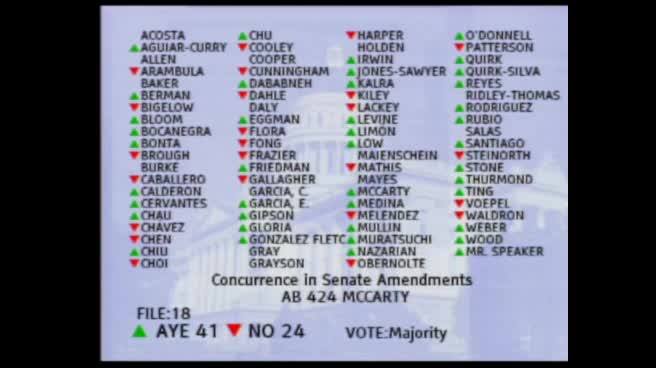 1MIN
Assembly Floor
 3MIN
Senate Floor
 41MIN
Senate Standing Committee on Business, Professions and Economic Development
 3MIN
Assembly Floor
 4MIN
Assembly Standing Committee on Appropriations
 17MIN
Assembly Standing Committee on Business and Professions
Bill Author

Bill Co-Author(s):