AB 1692: Judiciary omnibus.
- Session Year: 2017-2018
- House: Assembly
- Latest Version Date: 2017-09-27
(1)Existing law requires a court to set the contested issues for mediation when it appears on the face of a petition, application, or other pleading to obtain or modify a temporary or permanent custody or visitation order that custody, visitation, or both are contested.
This bill, until January 1, 2020, would authorize a party, prior to filing the petition, application, or other pleading to obtain or modify a temporary or permanent custody or visitation order, to request that the court set a custody or visitation issue for mediation and would authorize the court to do so.
(2)Existing law specifies the number of judges of the superior court for each county, and allocates additional judgeships to the various counties in accordance with uniform standards for factually determining additional need in each county, as approved by the Judicial Council, and other specified criteria. Existing law provides for the conversion of 146 subordinate judicial officer positions in eligible superior courts upon the occurrence of specified conditions, including that the proposed action is ratified by the Legislature, except that no more than 16 positions may be converted to judgeships in any fiscal year. Notwithstanding this provision, existing law authorizes up to 10 additional subordinate judicial officer positions to be converted to judgeships in any fiscal year if the conversions will result in a judge being assigned to a family law or juvenile law assignment previously presided over by a subordinate judicial officer and the proposed action is ratified by the Legislature.
This bill would ratify the authority of the Judicial Council to convert 10 subordinate judicial officer positions to judgeships in the 201718 fiscal year when the conversion will result in a judge being assigned to a family law or juvenile law assignment previously presided over by a subordinate judicial officer.
(3)Existing law provides the procedure by which a temporary restraining order and an injunction prohibiting harassment or abuse may be sought by, or on behalf of, specified persons.This bill would additionally authorize a court to issue an ex parte order enjoining a party from credibly impersonating or falsely personating another party.Because a violation of this court order would be punishable as contempt, a misdemeanor, this bill would create a new crime and would thereby impose a state-mandated local program.The California Constitution requires the state to reimburse local agencies and school districts for certain costs mandated by the state. Statutory provisions establish procedures for making that reimbursement.This bill would provide that no reimbursement is required by this act for a specified reason.(1)Existing law requires a court to set the contested issues for mediation when it appears on the face of a petition, application, or other pleading to obtain or modify a temporary or permanent custody or visitation order that custody, visitation, or both are contested.
This bill bill, until January 1, 2020, would authorize a party, prior to filing the petition, application, or other pleading to obtain or modify a temporary or permanent custody or visitation order, to request that the court set a custody or visitation issue for mediation and would authorize the court to do so.
(2)Existing law specifies the number of judges of the superior court for each county, and allocates additional judgeships to the various counties in accordance with uniform standards for factually determining additional need in each county, as approved by the Judicial Council, and other specified criteria. Existing law provides for the conversion of 146 subordinate judicial officer positions in eligible superior courts upon the occurrence of specified conditions, including that the proposed action is ratified by the Legislature, except that no more than 16 positions may be converted to judgeships in any fiscal year. Notwithstanding this provision, existing law authorizes up to 10 additional subordinate judicial officer positions to be converted to judgeships in any fiscal year if the conversions will result in a judge being assigned to a family law or juvenile law assignment previously presided over by a subordinate judicial officer and the proposed action is ratified by the Legislature.
This bill would ratify the authority of the Judicial Council to convert 10 subordinate judicial officer positions to judgeships in the 201718 fiscal year when the conversion will result in a judge being assigned to a family law or juvenile law assignment previously presided over by a subordinate judicial officer.
(3)Existing law provides the procedure by which a temporary restraining order and an injunction prohibiting harassment or abuse may be sought by, or on behalf of, specified persons.
This bill would additionally authorize a court to issue an ex parte order enjoining a party from credibly impersonating or falsely personating another party.
Because a violation of this court order would be punishable as contempt, a misdemeanor, this bill would create a new crime and would thereby impose a state-mandated local program.
The California Constitution requires the state to reimburse local agencies and school districts for certain costs mandated by the state. Statutory provisions establish procedures for making that reimbursement.
This bill would provide that no reimbursement is required by this act for a specified reason.
(1)Existing law requires a court to set the contested issues for mediation when it appears on the face of a petition, application, or other pleading to obtain or modify a temporary or permanent custody or visitation order that custody, visitation, or both are contested.
This bill would authorize a party, prior to filing the petition, application, or other pleading to obtain or modify a temporary or permanent custody or visitation order, to request that the court set a custody or visitation issue for mediation and would authorize the court to do so.
(2)Existing law specifies the number of judges of the superior court for each county, and allocates additional judgeships to the various counties in accordance with uniform standards for factually determining additional need in each county, as approved by the Judicial Council, and other specified criteria. Existing law provides for the conversion of 146 subordinate judicial officer positions in eligible superior courts upon the occurrence of specified conditions, including that the proposed action is ratified by the Legislature, except that no more than 16 positions may be converted to judgeships in any fiscal year. Notwithstanding this provision, existing law authorizes up to 10 additional subordinate judicial officer positions to be converted to judgeships in any fiscal year if the conversions will result in a judge being assigned to a family law or juvenile law assignment previously presided over by a subordinate judicial officer and the proposed action is ratified by the Legislature.
This bill would ratify the authority of the Judicial Council to convert 10 subordinate judicial officer positions to judgeships in the 201718 fiscal year when the conversion will result in a judge being assigned to a family law or juvenile law assignment previously presided over by a subordinate judicial officer.
(3)Existing law provides the procedure by which a temporary restraining order and an injunction prohibiting harassment or abuse may be sought by, or on behalf of, specified persons.
This bill would additionally authorize a court to issue an ex parte order enjoining a party from credibly impersonating or falsely personating another party.
Because a violation of this court order would be punishable as contempt, a misdemeanor, this bill would create a new crime and would thereby impose a state-mandated local program.
The California Constitution requires the state to reimburse local agencies and school districts for certain costs mandated by the state. Statutory provisions establish procedures for making that reimbursement.
This bill would provide that no reimbursement is required by this act for a specified reason.
(a)(1)If it appears on the face of a petition, application, or other pleading to obtain or modify a temporary or permanent custody or visitation order that custody, visitation, or both are contested, the court shall set the contested issues for mediation.
(2)Prior to filing the petition, application, or other pleading to obtain or modify a temporary or permanent custody or visitation order, a party to an existing case may request that the court set a custody or visitation issue for mediation, and the court may set that issue for mediation.
(b)Domestic violence cases shall be handled by Family Court Services in accordance with a separate written protocol approved by the Judicial Council. The Judicial Council shall adopt guidelines for services, other than services provided under this chapter, that courts or counties may offer to parents who have been unable to resolve their disputes. These services may include, but are not limited to, parent education programs, booklets, video recordings, or referrals to additional community resources.
(c)This section shall remain in effect only until January 1, 2020, and as of that date is repealed.
SEC. 2.Section 3170 is added to the Family Code, to read:3170.(a)If it appears on the face of a petition, application, or other pleading to obtain or modify a temporary or permanent custody or visitation order that custody, visitation, or both are contested, the court shall set the contested issues for mediation.
(b)Domestic violence cases shall be handled by Family Court Services in accordance with a separate written protocol approved by the Judicial Council. The Judicial Council shall adopt guidelines for services, other than services provided under this chapter, that courts or counties may offer to parents who have been unable to resolve their disputes. These services may include, but are not limited to, parent education programs, booklets, video recordings, or referrals to additional community resources.
(c)This section shall become operative on January 1, 2020.
SEC. 3.Section 69619.6 is added to the Government Code, to read:69619.6.(a)The Legislature hereby ratifies the authority of the Judicial Council to convert 10 subordinate judicial officer positions to judgeships in the 201718 fiscal year when the conversion will result in a judge being assigned to a family law or juvenile law assignment previously presided over by a subordinate judicial officer, pursuant to subparagraph (C) of paragraph (1) of subdivision (c) of Section 69615.
(b)The action described in subdivision (a) shall be in addition to any action that may be taken pursuant to the authority described in subparagraph (B) of paragraph (1) of subdivision (c) of Section 69615 to convert up to 16 subordinate judicial officer positions to judgeships.
(a)(1)If it appears on the face of a petition, application, or other pleading to obtain or modify a temporary or permanent custody or visitation order that custody, visitation, or both are contested, the court shall set the contested issues for mediation.
(2)Prior to filing the petition, application, or other pleading to obtain or modify a temporary or permanent custody or visitation order, a party to an existing case may request that the court set a custody or visitation issue for mediation, and the court may set that issue for mediation.
(b)Domestic violence cases shall be handled by Family Court Services in accordance with a separate written protocol approved by the Judicial Council. The Judicial Council shall adopt guidelines for services, other than services provided under this chapter, that courts or counties may offer to parents who have been unable to resolve their disputes. These services may include, but are not limited to, parent education programs, booklets, video recordings, or referrals to additional community resources.
(c)This section shall remain in effect only until January 1, 2020, and as of that date is repealed.
SEC. 5.SEC. 2.Section 3170 is added to the Family Code, to read:3170.(a)If it appears on the face of a petition, application, or other pleading to obtain or modify a temporary or permanent custody or visitation order that custody, visitation, or both are contested, the court shall set the contested issues for mediation.
(b)Domestic violence cases shall be handled by Family Court Services in accordance with a separate written protocol approved by the Judicial Council. The Judicial Council shall adopt guidelines for services, other than services provided under this chapter, that courts or counties may offer to parents who have been unable to resolve their disputes. These services may include, but are not limited to, parent education programs, booklets, video recordings, or referrals to additional community resources.
(c)This section shall become operative on January 1, 2020.
SEC. 6.SEC. 3.Section 69619.6 is added to the Government Code, to read:69619.6.(a)The Legislature hereby ratifies the authority of the Judicial Council to convert 10 subordinate judicial officer positions to judgeships in the 201718 fiscal year when the conversion will result in a judge being assigned to a family law or juvenile law assignment previously presided over by a subordinate judicial officer, pursuant to subparagraph (C) of paragraph (1) of subdivision (c) of Section 69615.
(b)The action described in subdivision (a) shall be in addition to any action that may be taken pursuant to the authority described in subparagraph (B) of paragraph (1) of subdivision (c) of Section 69615 to convert up to 16 subordinate judicial officer positions to judgeships.
All matter omitted in this version of the bill appears in the bill as amended in the Senate, June 27, 2017. (JR11)(a)(1)A person who has suffered harassment, as defined in subdivision (b), may seek a temporary restraining order and an order after hearing prohibiting harassment as provided in this section.
(2)A minor, under 12 years of age, accompanied by a duly appointed and acting guardian ad litem, shall be permitted to appear in court without counsel for the limited purpose of requesting or opposing a request for a temporary restraining order or order after hearing, or both, under this section as provided in Section 374.
(b)For purposes of this section:
(1)Course of conduct is a pattern of conduct composed of a series of acts over a period of time, however short, evidencing a continuity of purpose, including following or stalking an individual, making harassing telephone calls to an individual, or sending harassing correspondence to an individual by any means, including, but not limited to, the use of public or private mails, interoffice mail, facsimile, or email. Constitutionally protected activity is not included within the meaning of course of conduct.
(2)Credible threat of violence is a knowing and willful statement or course of conduct that would place a reasonable person in fear for his or her safety or the safety of his or her immediate family, and that serves no legitimate purpose.
(3)Harassment is unlawful violence, a credible threat of violence, or a knowing and willful course of conduct directed at a specific person that seriously alarms, annoys, or harasses the person, and that serves no legitimate purpose. The course of conduct must be that which would cause a reasonable person to suffer substantial emotional distress, and must actually cause substantial emotional distress to the petitioner.
(4)Petitioner means the person to be protected by the temporary restraining order and order after hearing and, if the court grants the petition, the protected person.
(5)Respondent means the person against whom the temporary restraining order and order after hearing are sought and, if the petition is granted, the restrained person.
(6)Temporary restraining order and order after hearing mean orders that include any of the following restraining orders, whether issued ex parte or after notice and hearing:
(A)An order enjoining a party from harassing, intimidating, molesting, attacking, striking, stalking, threatening, sexually assaulting, battering, credibly impersonating, as described in Section 528.5 of the Penal Code, falsely personating, as described in Section 529 of the Penal Code, abusing, telephoning, including, but not limited to, making annoying telephone calls, as described in Section 653m of the Penal Code, destroying personal property, contacting, either directly or indirectly, by mail or otherwise, or coming within a specified distance of, or disturbing the peace of, the petitioner. On a showing of good cause, in an order issued pursuant to this subparagraph in connection with an animal owned, possessed, leased, kept, or held by the petitioner, or residing in the residence or household of the petitioner, the court may do either or both of the following:
(i)Grant the petitioner exclusive care, possession, or control of the animal.
(ii)Order the respondent to stay away from the animal and refrain from taking, transferring, encumbering, concealing, molesting, attacking, striking, threatening, harming, or otherwise disposing of the animal.
(B)An order enjoining a party from specified behavior that the court determines is necessary to effectuate orders described in subparagraph (A).
(7)Unlawful violence is any assault or battery, or stalking as prohibited in Section 646.9 of the Penal Code, but does not include lawful acts of self-defense or defense of others.
(c)In the discretion of the court, on a showing of good cause, a temporary restraining order or order after hearing issued under this section may include other named family or household members.
(d)Upon filing a petition for orders under this section, the petitioner may obtain a temporary restraining order in accordance with Section 527, except to the extent this section provides an inconsistent rule. The temporary restraining order may include any of the restraining orders described in paragraph (6) of subdivision (b). A temporary restraining order may be issued with or without notice, based on a declaration that, to the satisfaction of the court, shows reasonable proof of harassment of the petitioner by the respondent, and that great or irreparable harm would result to the petitioner.
(e)A request for the issuance of a temporary restraining order without notice under this section shall be granted or denied on the same day that the petition is submitted to the court. If the petition is filed too late in the day to permit effective review, the order shall be granted or denied on the next day of judicial business in sufficient time for the order to be filed that day with the clerk of the court.
(f)A temporary restraining order issued under this section shall remain in effect, at the courts discretion, for a period not to exceed 21 days, or, if the court extends the time for hearing under subdivision (g), not to exceed 25 days, unless otherwise modified or terminated by the court.
(g)Within 21 days, or, if good cause appears to the court, 25 days from the date that a petition for a temporary order is granted or denied, a hearing shall be held on the petition. If a request for a temporary order is not made, the hearing shall be held within 21 days, or, if good cause appears to the court, 25 days, from the date that the petition is filed.
(h)The respondent may file a response that explains, excuses, justifies, or denies the alleged harassment, or may file a cross-petition under this section.
(i)At the hearing, the judge shall receive any testimony that is relevant, and may make an independent inquiry. If the judge finds by clear and convincing evidence that unlawful harassment exists, an order shall issue prohibiting the harassment.
(j)(1)In the discretion of the court, an order issued after notice and hearing under this section may have a duration of no more than five years, subject to termination or modification by further order of the court either on written stipulation filed with the court or on the motion of a party. The order may be renewed, upon the request of a party, for a duration of no more than five additional years, without a showing of any further harassment since the issuance of the original order, subject to termination or modification by further order of the court either on written stipulation filed with the court or on the motion of a party. A request for renewal may be brought any time within the three months before the order expires.
(2)The failure to state the expiration date on the face of the form creates an order with a duration of three years from the date of issuance.
(3)If an action is filed for the purpose of terminating or modifying a protective order before the expiration date specified in the order by a party other than the protected party, the party who is protected by the order shall be given notice, pursuant to subdivision (b) of Section 1005, of the proceeding by personal service or, if the protected party has satisfied the requirements of Chapter 3.1 (commencing with Section 6205) of Division 7 of Title 1 of the Government Code, by service on the Secretary of State. If the party who is protected by the order cannot be notified before the hearing for modification or termination of the protective order, the court shall deny the motion to modify or terminate the order without prejudice or continue the hearing until the party who is protected can be properly noticed and may, upon a showing of good cause, specify another method for service of process that is reasonably designed to afford actual notice to the protected party. The protected party may waive his or her right to notice if he or she is physically present in court and does not challenge the sufficiency of the notice.
(k)This section does not preclude either party from representation by private counsel or from appearing on the partys own behalf.
(l)In a proceeding under this section, if there are allegations of unlawful violence or credible threats of violence, a support person may accompany a party in court and, if the party is not represented by an attorney, may sit with the party at the table that is generally reserved for the party and the partys attorney. The support person is present to provide moral and emotional support for a person who alleges he or she is a victim of violence. The support person is not present as a legal adviser and may not provide legal advice. The support person may assist the person who alleges he or she is a victim of violence in feeling more confident that he or she will not be injured or threatened by the other party during the proceedings if the person who alleges he or she is a victim of violence and the other party are required to be present in close proximity. This subdivision does not preclude the court from exercising its discretion to remove the support person from the courtroom if the court believes the support person is prompting, swaying, or influencing the party assisted by the support person.
(m)Upon the filing of a petition under this section, the respondent shall be personally served with a copy of the petition, temporary restraining order, if any, and notice of hearing of the petition. Service shall be made at least five days before the hearing. The court may for good cause, on motion of the petitioner or on its own motion, shorten the time for service on the respondent.
(n)A notice of hearing under this section shall notify the respondent that if he or she does not attend the hearing, the court may make orders against him or her that could last up to five years.
(o)The respondent shall be entitled, as a matter of course, to one continuance, for a reasonable period, to respond to the petition.
(p)(1)Either party may request a continuance of the hearing, which the court shall grant on a showing of good cause. The request may be made in writing before or at the hearing, or orally at the hearing. The court may also grant a continuance on its own motion.
(2)If the court grants a continuance, any temporary restraining order that has been granted shall remain in effect until the end of the continued hearing, unless otherwise ordered by the court. In granting a continuance, the court may modify or terminate a temporary restraining order.
(q)(1)If a respondent named in a restraining order issued after a hearing has not been served personally with the order but has received actual notice of the existence and substance of the order through personal appearance in court to hear the terms of the order from the court, additional proof of service is not required for enforcement of the order.
(2)If the respondent named in a temporary restraining order is personally served with the order and notice of hearing with respect to a restraining order or protective order based on the temporary restraining order, but the respondent does not appear at the hearing, either personally or by an attorney, and the terms and conditions of the restraining order or protective order issued at the hearing are identical to the temporary restraining order, except for the duration of the order, the restraining order or protective order issued at the hearing may be served on the respondent by first-class mail sent to the respondent at the most current address for the respondent available to the court.
(3)The Judicial Council form for temporary orders issued pursuant to this subdivision shall contain a statement in substantially the following form:
If you have been personally served with this temporary restraining order and notice of hearing, but you do not appear at the hearing either in person or by a lawyer, and a restraining order that is the same as this temporary restraining order except for the expiration date is issued at the hearing, a copy of the restraining order will be served on you by mail at the following address: ____.
If that address is not correct or you wish to verify that the temporary restraining order was converted to a restraining order at the hearing without substantive change and to find out the duration of that order, contact the clerk of the court.
(r)(1)Information on a temporary restraining order or order after hearing relating to civil harassment issued by a court pursuant to this section shall be transmitted to the Department of Justice in accordance with either paragraph (2) or (3).
(2)The court shall order the petitioner or the attorney for the petitioner to deliver a copy of an order issued under this section, or reissuance, extension, modification, or termination of the order, and any subsequent proof of service, by the close of the business day on which the order, reissuance, extension, modification, or termination was made, to a law enforcement agency having jurisdiction over the residence of the petitioner and to any additional law enforcement agencies within the courts discretion as are requested by the petitioner.
(3)Alternatively, the court or its designee shall transmit, within one business day, to law enforcement personnel all information required under subdivision (b) of Section 6380 of the Family Code regarding any order issued under this section, or a reissuance, extension, modification, or termination of the order, and any subsequent proof of service, by either one of the following methods:
(A)Transmitting a physical copy of the order or proof of service to a local law enforcement agency authorized by the Department of Justice to enter orders into the California Law Enforcement Telecommunications System (CLETS).
(B)With the approval of the Department of Justice, entering the order or proof of service into CLETS directly.
(4)Each appropriate law enforcement agency shall make available information as to the existence and current status of orders issued under this section to law enforcement officers responding to the scene of reported harassment.
(5)An order issued under this section shall, on request of the petitioner, be served on the respondent, whether or not the respondent has been taken into custody, by any law enforcement officer who is present at the scene of reported harassment involving the parties to the proceeding. The petitioner shall provide the officer with an endorsed copy of the order and a proof of service that the officer shall complete and send to the issuing court.
(6)Upon receiving information at the scene of an incident of harassment that a protective order has been issued under this section, or that a person who has been taken into custody is the subject of an order, if the protected person cannot produce a certified copy of the order, a law enforcement officer shall immediately attempt to verify the existence of the order.
(7)If the law enforcement officer determines that a protective order has been issued but not served, the officer shall immediately notify the respondent of the terms of the order and shall at that time also enforce the order. Verbal notice of the terms of the order shall constitute service of the order and is sufficient notice for purposes of this section and for purposes of Section 29825 of the Penal Code.
(s)The prevailing party in an action brought under this section may be awarded court costs and attorneys fees, if any.
(t)Willful disobedience of a temporary restraining order or order after hearing granted under this section is punishable pursuant to Section 273.6 of the Penal Code.
(u)(1)A person subject to a protective order issued under this section shall not own, possess, purchase, receive, or attempt to purchase or receive a firearm or ammunition while the protective order is in effect.
(2)The court shall order a person subject to a protective order issued under this section to relinquish any firearms he or she owns or possesses pursuant to Section 527.9.
(3)A person who owns, possesses, purchases, or receives, or attempts to purchase or receive, a firearm or ammunition while the protective order is in effect is punishable pursuant to Section 29825 of the Penal Code.
(v)This section does not apply to any action or proceeding covered by Title 1.6C (commencing with Section 1788) of Part 4 of Division 3 of the Civil Code or by Division 10 (commencing with Section 6200) of the Family Code. This section does not preclude a petitioner from using other existing civil remedies.
(w)(1)The Judicial Council shall develop forms, instructions, and rules relating to matters governed by this section. The petition and response forms shall be simple and concise, and their use by parties in actions brought pursuant to this section is mandatory.
(2)A temporary restraining order or order after hearing relating to civil harassment issued by a court pursuant to this section shall be issued on forms adopted by the Judicial Council and that have been approved by the Department of Justice pursuant to subdivision (i) of Section 6380 of the Family Code. However, the fact that an order issued by a court pursuant to this section was not issued on forms adopted by the Judicial Council and approved by the Department of Justice shall not, in and of itself, make the order unenforceable.
(x)There is no filing fee for a petition that alleges that a person has inflicted or threatened violence against the petitioner, stalked the petitioner, or acted or spoken in any other manner that has placed the petitioner in reasonable fear of violence, and that seeks a protective or restraining order restraining stalking, future violence, or threats of violence, in an action brought pursuant to this section. A fee shall not be paid for a subpoena filed in connection with a petition alleging these acts. A fee shall not be paid for filing a response to a petition alleging these acts.
(y)(1)Subject to paragraph (4) of subdivision (b) of Section 6103.2 of the Government Code, there shall not be a fee for the service of process by a sheriff or marshal of a protective or restraining order to be issued, if either of the following conditions apply:
(A)The protective or restraining order issued pursuant to this section is based upon stalking, as prohibited by Section 646.9 of the Penal Code.
(B)The protective or restraining order issued pursuant to this section is based upon unlawful violence or a credible threat of violence.
(2)The Judicial Council shall prepare and develop forms for persons who wish to avail themselves of the services described in this subdivision.
SEC. 2.Section 527.8 of the Code of Civil Procedure is amended to read:527.8.(a)Any employer, whose employee has suffered unlawful violence or a credible threat of violence from any individual, that can reasonably be construed to be carried out or to have been carried out at the workplace, may seek a temporary restraining order and an order after hearing on behalf of the employee and, at the discretion of the court, any number of other employees at the workplace, and, if appropriate, other employees at other workplaces of the employer.
(b)For purposes of this section:
(1)Course of conduct is a pattern of conduct composed of a series of acts over a period of time, however short, evidencing a continuity of purpose, including following or stalking an employee to or from the place of work; entering the workplace; following an employee during hours of employment; making telephone calls to an employee; or sending correspondence to an employee by any means, including, but not limited to, the use of the public or private mails, interoffice mail, facsimile, or computer email.
(2)Credible threat of violence is a knowing and willful statement or course of conduct that would place a reasonable person in fear for his or her safety, or the safety of his or her immediate family, and that serves no legitimate purpose.
(3)Employer and employee mean persons defined in Section 350 of the Labor Code. Employer also includes a federal agency, the state, a state agency, a city, county, or district, and a private, public, or quasi-public corporation, or any public agency thereof or therein. Employee also includes the members of boards of directors of private, public, and quasi-public corporations and elected and appointed public officers. For purposes of this section only, employee also includes a volunteer or independent contractor who performs services for the employer at the employers worksite.
(4)Petitioner means the employer that petitions under subdivision (a) for a temporary restraining order and order after hearing.
(5)Respondent means the person against whom the temporary restraining order and order after hearing are sought and, if the petition is granted, the restrained person.
(6)Temporary restraining order and order after hearing mean orders that include any of the following restraining orders, whether issued ex parte or after notice and hearing:
(A)An order enjoining a party from harassing, intimidating, molesting, attacking, striking, stalking, threatening, sexually assaulting, battering, credibly impersonating, as described in Section 528.5 of the Penal Code, falsely personating, as described in Section 529 of the Penal Code, abusing, telephoning, including, but not limited to, making annoying telephone calls, as described in Section 653m of the Penal Code, destroying personal property, contacting, either directly or indirectly, by mail or otherwise, or coming within a specified distance of, or disturbing the peace of, the employee.
(B)An order enjoining a party from specified behavior that the court determines is necessary to effectuate orders described in subparagraph (A).
(7)Unlawful violence is any assault or battery, or stalking as prohibited in Section 646.9 of the Penal Code, but shall not include lawful acts of self-defense or defense of others.
(c)This section does not permit a court to issue a temporary restraining order or order after hearing prohibiting speech or other activities that are constitutionally protected, or otherwise protected by Section 527.3 or any other provision of law.
(d)In the discretion of the court, on a showing of good cause, a temporary restraining order or order after hearing issued under this section may include other named family or household members, or other persons employed at the employees workplace or workplaces.
(e)Upon filing a petition under this section, the petitioner may obtain a temporary restraining order in accordance with subdivision (a) of Section 527, if the petitioner also files a declaration that, to the satisfaction of the court, shows reasonable proof that an employee has suffered unlawful violence or a credible threat of violence by the respondent, and that great or irreparable harm would result to an employee. The temporary restraining order may include any of the protective orders described in paragraph (6) of subdivision (b).
(f)A request for the issuance of a temporary restraining order without notice under this section shall be granted or denied on the same day that the petition is submitted to the court, unless the petition is filed too late in the day to permit effective review, in which case the order shall be granted or denied on the next day of judicial business in sufficient time for the order to be filed that day with the clerk of the court.
(g)A temporary restraining order granted under this section shall remain in effect, at the courts discretion, for a period not to exceed 21 days, or if the court extends the time for hearing under subdivision (h), not to exceed 25 days, unless otherwise modified or terminated by the court.
(h)Within 21 days, or if good cause appears to the court, 25 days from the date that a petition for a temporary order is granted or denied, a hearing shall be held on the petition. If no request for temporary orders is made, the hearing shall be held within 21 days, or, if good cause appears to the court, 25 days, from the date that the petition is filed.
(i)The respondent may file a response that explains, excuses, justifies, or denies the alleged unlawful violence or credible threats of violence.
(j)At the hearing, the judge shall receive any testimony that is relevant and may make an independent inquiry. Moreover, if the respondent is a current employee of the entity requesting the order, the judge shall receive evidence concerning the employers decision to retain, terminate, or otherwise discipline the respondent. If the judge finds by clear and convincing evidence that the respondent engaged in unlawful violence or made a credible threat of violence, an order shall issue prohibiting further unlawful violence or threats of violence.
(k)(1)In the discretion of the court, an order issued after notice and hearing under this section may have a duration of not more than three years, subject to termination or modification by further order of the court either on written stipulation filed with the court or on the motion of a party. These orders may be renewed, upon the request of a party, for a duration of not more than three years, without a showing of any further violence or threats of violence since the issuance of the original order, subject to termination or modification by further order of the court either on written stipulation filed with the court or on the motion of a party. The request for renewal may be brought at any time within the three months before the expiration of the order.
(2)The failure to state the expiration date on the face of the form creates an order with a duration of three years from the date of issuance.
(3)If an action is filed for the purpose of terminating or modifying a protective order prior to the expiration date specified in the order by a party other than the protected party, the party who is protected by the order shall be given notice, pursuant to subdivision (b) of Section 1005, of the proceeding by personal service or, if the protected party has satisfied the requirements of Chapter 3.1 (commencing with Section 6205) of Division 7 of Title 1 of the Government Code, by service on the Secretary of State. If the party who is protected by the order cannot be notified prior to the hearing for modification or termination of the protective order, the court shall deny the motion to modify or terminate the order without prejudice or continue the hearing until the party who is protected can be properly noticed and may, upon a showing of good cause, specify another method for service of process that is reasonably designed to afford actual notice to the protected party. The protected party may waive his or her right to notice if he or she is physically present in court and does not challenge the sufficiency of the notice.
(l)This section does not preclude either party from representation by private counsel or from appearing on his or her own behalf.
(m)Upon filing of a petition under this section, the respondent shall be personally served with a copy of the petition, temporary restraining order, if any, and notice of hearing of the petition. Service shall be made at least five days before the hearing. The court may, for good cause, on motion of the petitioner or on its own motion, shorten the time for service on the respondent.
(n)A notice of hearing under this section shall notify the respondent that, if he or she does not attend the hearing, the court may make orders against him or her that could last up to three years.
(o)The respondent shall be entitled, as a matter of course, to one continuance, for a reasonable period, to respond to the petition.
(p)(1)Either party may request a continuance of the hearing, which the court shall grant on a showing of good cause. The request may be made in writing before or at the hearing or orally at the hearing. The court may also grant a continuance on its own motion.
(2)If the court grants a continuance, any temporary restraining order that has been granted shall remain in effect until the end of the continued hearing, unless otherwise ordered by the court. In granting a continuance, the court may modify or terminate a temporary restraining order.
(q)(1)If a respondent, named in a restraining order issued under this section after a hearing, has not been served personally with the order but has received actual notice of the existence and substance of the order through personal appearance in court to hear the terms of the order from the court, no additional proof of service is required for enforcement of the order.
(2)If the respondent named in a temporary restraining order is personally served with the order and notice of hearing with respect to a restraining order or protective order based on the temporary restraining order, but the person does not appear at the hearing, either personally or by an attorney, and the terms and conditions of the restraining order or protective order issued at the hearing are identical to the temporary restraining order, except for the duration of the order, then the restraining order or protective order issued at the hearing may be served on the person by first-class mail sent to that person at the most current address for the person available to the court.
(3)The Judicial Council form for temporary orders issued pursuant to this subdivision shall contain a statement in substantially the following form:
If you have been personally served with this temporary restraining order and notice of hearing, but you do not appear at the hearing either in person or by a lawyer, and a restraining order that is the same as this restraining order except for the expiration date is issued at the hearing, a copy of the order will be served on you by mail at the following address: ____.
If that address is not correct or you wish to verify that the temporary restraining order was converted to a restraining order at the hearing without substantive change and to find out the duration of that order, contact the clerk of the court.
(r)(1)Information on a temporary restraining order or order after hearing relating to workplace violence issued by a court pursuant to this section shall be transmitted to the Department of Justice in accordance with either paragraph (2) or (3).
(2)The court shall order the petitioner or the attorney for the petitioner to deliver a copy of any order issued under this section, or a reissuance, extension, modification, or termination of the order, and any subsequent proof of service, by the close of the business day on which the order, reissuance, extension, modification, or termination was made, to each law enforcement agency having jurisdiction over the residence of the petitioner and to any additional law enforcement agencies within the courts discretion as are requested by the petitioner.
(3)Alternatively, the court or its designee shall transmit, within one business day, to law enforcement personnel all information required under subdivision (b) of Section 6380 of the Family Code regarding any order issued under this section, or a reissuance, extension, modification, or termination of the order, and any subsequent proof of service, by either one of the following methods:
(A)Transmitting a physical copy of the order or proof of service to a local law enforcement agency authorized by the Department of Justice to enter orders into the California Law Enforcement Telecommunications System (CLETS).
(B)With the approval of the Department of Justice, entering the order or proof of service into CLETS directly.
(4)Each appropriate law enforcement agency shall make available information as to the existence and current status of these orders to law enforcement officers responding to the scene of reported unlawful violence or a credible threat of violence.
(5)At the request of the petitioner, an order issued under this section shall be served on the respondent, regardless of whether the respondent has been taken into custody, by any law enforcement officer who is present at the scene of reported unlawful violence or a credible threat of violence involving the parties to the proceedings. The petitioner shall provide the officer with an endorsed copy of the order and proof of service that the officer shall complete and send to the issuing court.
(6)Upon receiving information at the scene of an incident of unlawful violence or a credible threat of violence that a protective order has been issued under this section, or that a person who has been taken into custody is the subject of an order, if the petitioner or the protected person cannot produce an endorsed copy of the order, a law enforcement officer shall immediately attempt to verify the existence of the order.
(7)If the law enforcement officer determines that a protective order has been issued but not served, the officer shall immediately notify the respondent of the terms of the order and obtain the respondents address. The law enforcement officer shall at that time also enforce the order, but may not arrest or take the respondent into custody for acts in violation of the order that were committed prior to the verbal notice of the terms and conditions of the order. The law enforcement officers verbal notice of the terms of the order shall constitute service of the order and constitutes sufficient notice for the purposes of this section and for the purposes of Section 29825 of the Penal Code. The petitioner shall mail an endorsed copy of the order to the respondents mailing address provided to the law enforcement officer within one business day of the reported incident of unlawful violence or a credible threat of violence at which a verbal notice of the terms of the order was provided by a law enforcement officer.
(s)(1)A person subject to a protective order issued under this section shall not own, possess, purchase, receive, or attempt to purchase or receive a firearm or ammunition while the protective order is in effect.
(2)The court shall order a person subject to a protective order issued under this section to relinquish any firearms he or she owns or possesses pursuant to Section 527.9.
(3)Every person who owns, possesses, purchases, or receives, or attempts to purchase or receive a firearm or ammunition while the protective order is in effect is punishable pursuant to Section 29825 of the Penal Code.
(t)Any intentional disobedience of any temporary restraining order or order after hearing granted under this section is punishable pursuant to Section 273.6 of the Penal Code.
(u)This section shall not be construed as expanding, diminishing, altering, or modifying the duty, if any, of an employer to provide a safe workplace for employees and other persons.
(v)(1)The Judicial Council shall develop forms, instructions, and rules for relating to matters governed by this section. The forms for the petition and response shall be simple and concise, and their use by parties in actions brought pursuant to this section shall be mandatory.
(2)A temporary restraining order or order after hearing relating to unlawful violence or a credible threat of violence issued by a court pursuant to this section shall be issued on forms adopted by the Judicial Council of California and that have been approved by the Department of Justice pursuant to subdivision (i) of Section 6380 of the Family Code. However, the fact that an order issued by a court pursuant to this section was not issued on forms adopted by the Judicial Council and approved by the Department of Justice shall not, in and of itself, make the order unenforceable.
(w)There is no filing fee for a petition that alleges that a person has inflicted or threatened violence against an employee of the petitioner, or stalked the employee, or acted or spoken in any other manner that has placed the employee in reasonable fear of violence, and that seeks a protective or restraining order restraining stalking or future violence or threats of violence, in any action brought pursuant to this section. No fee shall be paid for a subpoena filed in connection with a petition alleging these acts. No fee shall be paid for filing a response to a petition alleging these acts.
(x)(1)Subject to paragraph (4) of subdivision (b) of Section 6103.2 of the Government Code, there shall be no fee for the service of process by a sheriff or marshal of a temporary restraining order or order after hearing to be issued pursuant to this section if either of the following conditions applies:
(A)The temporary restraining order or order after hearing issued pursuant to this section is based upon stalking, as prohibited by Section 646.9 of the Penal Code.
(B)The temporary restraining order or order after hearing issued pursuant to this section is based on unlawful violence or a credible threat of violence.
(2)The Judicial Council shall prepare and develop forms for persons who wish to avail themselves of the services described in this subdivision.
SEC. 3.Section 527.85 of the Code of Civil Procedure is amended to read:527.85.(a)Any chief administrative officer of a postsecondary educational institution, or an officer or employee designated by the chief administrative officer to maintain order on the school campus or facility, a student of which has suffered a credible threat of violence made off the school campus or facility from any individual which can reasonably be construed to be carried out or to have been carried out at the school campus or facility, may, with the written consent of the student, seek a temporary restraining order and an order after hearing on behalf of the student and, at the discretion of the court, any number of other students at the campus or facility who are similarly situated.
(b)For purposes of this section, the following definitions apply:
(1)Chief administrative officer means the principal, president, or highest ranking official of the postsecondary educational institution.
(2)Course of conduct means a pattern of conduct composed of a series of acts over a period of time, however short, evidencing a continuity of purpose, including any of the following:
(A)Following or stalking a student to or from school.
(B)Entering the school campus or facility.
(C)Following a student during school hours.
(D)Making telephone calls to a student.
(E)Sending correspondence to a student by any means, including, but not limited to, the use of the public or private mails, interoffice mail, facsimile, or computer email.
(3)Credible threat of violence means a knowing and willful statement or course of conduct that would place a reasonable person in fear for his or her safety, or the safety of his or her immediate family, and that serves no legitimate purpose.
(4)Petitioner means the chief administrative officer, or his or her designee, who petitions under subdivision (a) for a temporary restraining order and order after hearing.
(5)Postsecondary educational institution means a private institution of vocational, professional, or postsecondary education.
(6)Respondent means the person against whom the temporary restraining order and order after hearing are sought and, if the petition is granted, the restrained person.
(7)Student means an adult currently enrolled in or applying for admission to a postsecondary educational institution.
(8)Temporary restraining order and order after hearing mean orders that include any of the following restraining orders, whether issued ex parte, or after notice and hearing:
(A)An order enjoining a party from harassing, intimidating, molesting, attacking, striking, stalking, threatening, sexually assaulting, battering, credibly impersonating, as described in Section 528.5 of the Penal Code, falsely personating, as described in Section 529 of the Penal Code, abusing, telephoning, including, but not limited to, making annoying telephone calls, as described in Section 653m of the Penal Code, destroying personal property, contacting, either directly or indirectly, by mail or otherwise, or coming within a specified distance of, or disturbing the peace of, the student.
(B)An order enjoining a party from specified behavior that the court determines is necessary to effectuate orders described in subparagraph (A).
(9)Unlawful violence means any assault or battery, or stalking as prohibited in Section 646.9 of the Penal Code, but shall not include lawful acts of self-defense or defense of others.
(c)This section does not permit a court to issue a temporary restraining order or order after hearing prohibiting speech or other activities that are constitutionally protected, or otherwise protected by Section 527.3 or any other provision of law.
(d)In the discretion of the court, on a showing of good cause, a temporary restraining order or order after hearing issued under this section may include other named family or household members of the student, or other students at the campus or facility.
(e)Upon filing a petition under this section, the petitioner may obtain a temporary restraining order in accordance with subdivision (a) of Section 527, if the petitioner also files a declaration that, to the satisfaction of the court, shows reasonable proof that a student has suffered a credible threat of violence made off the school campus or facility by the respondent, and that great or irreparable harm would result to the student. The temporary restraining order may include any of the protective orders described in paragraph (8) of subdivision (b).
(f)A request for the issuance of a temporary restraining order without notice under this section shall be granted or denied on the same day that the petition is submitted to the court, unless the petition is filed too late in the day to permit effective review, in which case the order shall be granted or denied on the next day of judicial business in sufficient time for the order to be filed that day with the clerk of the court.
(g)A temporary restraining order granted under this section shall remain in effect, at the courts discretion, for a period not to exceed 21 days, or if the court extends the time for hearing under subdivision (h), not to exceed 25 days, unless otherwise modified or terminated by the court.
(h)Within 21 days, or if good cause appears to the court, within 25 days, from the date that a petition for a temporary order is granted or denied, a hearing shall be held on the petition. If no request for temporary orders is made, the hearing shall be held within 21 days, or if good cause appears to the court, 25 days, from the date the petition is filed.
(i)The respondent may file a response that explains, excuses, justifies, or denies the alleged credible threats of violence.
(j)At the hearing, the judge shall receive any testimony that is relevant and may make an independent inquiry. Moreover, if the respondent is a current student of the entity requesting the order, the judge shall receive evidence concerning the decision of the postsecondary educational institution decision to retain, terminate, or otherwise discipline the respondent. If the judge finds by clear and convincing evidence that the respondent made a credible threat of violence off the school campus or facility, an order shall be issued prohibiting further threats of violence.
(k)(1)In the discretion of the court, an order issued after notice and hearing under this section may have a duration of not more than three years, subject to termination or modification by further order of the court either on written stipulation filed with the court or on the motion of a party. These orders may be renewed, upon the request of a party, for a duration of not more than three years, without a showing of any further violence or threats of violence since the issuance of the original order, subject to termination or modification by further order of the court either on written stipulation filed with the court or on the motion of a party. The request for renewal may be brought at any time within the three months before the expiration of the order.
(2)The failure to state the expiration date on the face of the form creates an order with a duration of three years from the date of issuance.
(3)If an action is filed for the purpose of terminating or modifying a protective order prior to the expiration date specified in the order by a party other than the protected party, the party who is protected by the order shall be given notice, pursuant to subdivision (b) of Section 1005, of the proceeding by personal service or, if the protected party has satisfied the requirements of Chapter 3.1 (commencing with Section 6205) of Division 7 of Title 1 of the Government Code, by service on the Secretary of State. If the party who is protected by the order cannot be notified prior to the hearing for modification or termination of the protective order, the court shall deny the motion to modify or terminate the order without prejudice or continue the hearing until the party who is protected can be properly noticed and may, upon a showing of good cause, specify another method for service of process that is reasonably designed to afford actual notice to the protected party. The protected party may waive his or her right to notice if he or she is physically present in court and does not challenge the sufficiency of the notice.
(l)This section does not preclude either party from representation by private counsel or from appearing on his or her own behalf.
(m)Upon filing of a petition under this section, the respondent shall be personally served with a copy of the petition, temporary restraining order, if any, and notice of hearing of the petition. Service shall be made at least five days before the hearing. The court may, for good cause, on motion of the petitioner or on its own motion, shorten the time for service on the respondent.
(n)A notice of hearing under this section shall notify the respondent that if he or she does not attend the hearing, the court may make orders against him or her that could last up to three years.
(o)The respondent shall be entitled, as a matter of course, to one continuance, for a reasonable period, to respond to the petition.
(p)(1)Either party may request a continuance of the hearing, which the court shall grant on a showing of good cause. The request may be made in writing before or at the hearing or orally at the hearing. The court may also grant a continuance on its own motion.
(2)If the court grants a continuance, any temporary restraining order that has been granted shall remain in effect until the end of the continued hearing, unless otherwise ordered by the court. In granting a continuance, the court may modify or terminate a temporary restraining order.
(q)(1)If a respondent, named in an order issued under this section after a hearing, has not been served personally with the order but has received actual notice of the existence and substance of the order through personal appearance in court to hear the terms of the order from the court, no additional proof of service is required for enforcement of the order.
(2)If the respondent named in a temporary restraining order is personally served with the order and notice of hearing with respect to a restraining order or protective order based on the temporary restraining order, but the respondent does not appear at the hearing, either personally or by an attorney, and the terms and conditions of the restraining order or protective order issued at the hearing are identical to the temporary restraining order, except for the duration of the order, then the restraining order or protective order issued at the hearing may be served on the respondent by first-class mail sent to that person at the most current address for the respondent available to the court.
(3)The Judicial Council form for temporary orders issued pursuant to this subdivision shall contain a statement in substantially the following form:
If you have been personally served with a temporary restraining order and notice of hearing, but you do not appear at the hearing either in person or by a lawyer, and a restraining order that is the same as this temporary restraining order except for the expiration date is issued at the hearing, a copy of the order will be served on you by mail at the following address:____.
If that address is not correct or you wish to verify that the temporary restraining order was converted to a restraining order at the hearing without substantive change and to find out the duration of that order, contact the clerk of the court.
(r)(1)Information on a temporary restraining order or order after hearing relating to schoolsite violence issued by a court pursuant to this section shall be transmitted to the Department of Justice in accordance with either paragraph (2) or (3).
(2)The court shall order the petitioner or the attorney for the petitioner to deliver a copy of any order issued under this section, or a reissuance, extension, modification, or termination of the order, and any subsequent proof of service, by the close of the business day on which the order, reissuance, or termination of the order, and any proof of service, was made, to each law enforcement agency having jurisdiction over the residence of the petition and to any additional law enforcement agencies within the courts discretion as are requested by the petitioner.
(3)Alternatively, the court or its designee shall transmit, within one business day, to law enforcement personnel all information required under subdivision (b) of Section 6380 of the Family Code regarding any order issued under this section, or a reissuance, extension, modification, or termination of the order, and any subsequent proof of service, by either one of the following methods:
(A)Transmitting a physical copy of the order or proof of service to a local law enforcement agency authorized by the Department of Justice to enter orders into the California Law Enforcement Telecommunications System (CLETS).
(B)With the approval of the Department of Justice, entering the order or proof of service into CLETS directly.
(4)Each appropriate law enforcement agency shall make available information as to the existence and current status of these orders to law enforcement officers responding to the scene of reported unlawful violence or a credible threat of violence.
(5)At the request of the petitioner, an order issued under this section shall be served on the respondent, regardless of whether the respondent has been taken into custody, by any law enforcement officer who is present at the scene of reported unlawful violence or a credible threat of violence involving the parties to the proceedings. The petitioner shall provide the officer with an endorsed copy of the order and proof of service that the officer shall complete and send to the issuing court.
(6)Upon receiving information at the scene of an incident of unlawful violence or a credible threat of violence that a protective order has been issued under this section, or that a person who has been taken into custody is the subject of an order, if the petitioner or the protected person cannot produce an endorsed copy of the order, a law enforcement officer shall immediately attempt to verify the existence of the order.
(7)If the law enforcement officer determines that a protective order has been issued but not served, the officer shall immediately notify the respondent of the terms of the order and obtain the respondents address. The law enforcement officer shall at that time also enforce the order, but may not arrest or take the respondent into custody for acts in violation of the order that were committed prior to the verbal notice of the terms and conditions of the order. The law enforcement officers verbal notice of the terms of the order shall constitute service of the order and constitutes sufficient notice for the purposes of this section, and Section 29825 of the Penal Code. The petitioner shall mail an endorsed copy of the order to the respondents mailing address provided to the law enforcement officer within one business day of the reported incident of unlawful violence or a credible threat of violence at which a verbal notice of the terms of the order was provided by a law enforcement officer.
(s)(1)A person subject to a protective order issued under this section shall not own, possess, purchase, receive, or attempt to purchase or receive a firearm or ammunition while the protective order is in effect.
(2)The court shall order a person subject to a protective order issued under this section to relinquish any firearms he or she owns or possesses pursuant to Section 527.9.
(3)Every person who owns, possesses, purchases, or receives, or attempts to purchase or receive a firearm or ammunition while the protective order is in effect is punishable pursuant to Section 29825 of the Penal Code.
(t)Any intentional disobedience of any temporary restraining order or order after hearing granted under this section is punishable pursuant to Section 273.6 of the Penal Code.
(u)This section shall not be construed as expanding, diminishing, altering, or modifying the duty, if any, of a postsecondary educational institution to provide a safe environment for students and other persons.
(v)(1)The Judicial Council shall develop forms, instructions, and rules relating to matters governed by this section. The forms for the petition and response shall be simple and concise, and their use by parties in actions brought pursuant to this section shall be mandatory.
(2)A temporary restraining order or order after hearing relating to unlawful violence or a credible threat of violence issued by a court pursuant to this section shall be issued on forms adopted by the Judicial Council that have been approved by the Department of Justice pursuant to subdivision (i) of Section 6380 of the Family Code. However, the fact that an order issued by a court pursuant to this section was not issued on forms adopted by the Judicial Council and approved by the Department of Justice shall not, in and of itself, make the order unenforceable.
(w)There is no filing fee for a petition that alleges that a person has threatened violence against a student of the petitioner, or stalked the student, or acted or spoken in any other manner that has placed the student in reasonable fear of violence, and that seeks a protective or restraining order restraining stalking or future threats of violence, in any action brought pursuant to this section. No fee shall be paid for a subpoena filed in connection with a petition alleging these acts. No fee shall be paid for filing a response to a petition alleging these acts.
(x)(1)Subject to paragraph (4) of subdivision (b) of Section 6103.2 of the Government Code, there shall be no fee for the service of process by a sheriff or marshal of a temporary restraining order or order after hearing to be issued pursuant to this section if either of the following conditions applies:
(A)The temporary restraining order or order after hearing issued pursuant to this section is based upon stalking, as prohibited by Section 646.9 of the Penal Code.
(B)The temporary restraining order or order after hearing issued pursuant to this section is based upon a credible threat of violence.
(2)The Judicial Council shall prepare and develop forms for persons who wish to avail themselves of the services described in this subdivision.
SEC. 4.Section 3170 of the Family Code is amended to read:3170.(a)(1)If it appears on the face of a petition, application, or other pleading to obtain or modify a temporary or permanent custody or visitation order that custody, visitation, or both are contested, the court shall set the contested issues for mediation. Prior
(2)Prior to filing the petition, application, or other pleading to obtain or modify a temporary or permanent custody or visitation order, a party to an existing case may request that the court set a custody or visitation issue for mediation, and the court may set that issue for mediation.
(b)Domestic violence cases shall be handled by Family Court Services in accordance with a separate written protocol approved by the Judicial Council. The Judicial Council shall adopt guidelines for services, other than services provided under this chapter, that courts or counties may offer to parents who have been unable to resolve their disputes. These services may include, but are not limited to, parent education programs, booklets, video recordings, or referrals to additional community resources.
(c)This section shall remain in effect only until January 1, 2020, and as of that date is repealed.
SEC. 5.Section 3170 is added to the Family Code, to read:3170.(a)If it appears on the face of a petition, application, or other pleading to obtain or modify a temporary or permanent custody or visitation order that custody, visitation, or both are contested, the court shall set the contested issues for mediation.
(b)Domestic violence cases shall be handled by Family Court Services in accordance with a separate written protocol approved by the Judicial Council. The Judicial Council shall adopt guidelines for services, other than services provided under this chapter, that courts or counties may offer to parents who have been unable to resolve their disputes. These services may include, but are not limited to, parent education programs, booklets, video recordings, or referrals to additional community resources.
(c)This section shall become operative on January 1, 2020.
SEC. 5.SEC. 6.Section 69619.6 is added to the Government Code, to read:69619.6.(a)The Legislature hereby ratifies the authority of the Judicial Council to convert 10 subordinate judicial officer positions to judgeships in the 201718 fiscal year when the conversion will result in a judge being assigned to a family law or juvenile law assignment previously presided over by a subordinate judicial officer, pursuant to subparagraph (C) of paragraph (1) of subdivision (c) of Section 69615.
(b)The action described in subdivision (a) shall be in addition to any action that may be taken pursuant to the authority described in subparagraph (B) of paragraph (1) of subdivision (c) of Section 69615 to convert up to 16 subordinate judicial officer positions to judgeships.
SEC. 6.SEC. 7.Section 213.5 of the Welfare and Institutions Code is amended to read:213.5.(a)After a petition has been filed pursuant to Section 311 to declare a child a dependent child of the juvenile court, and until the time that the petition is dismissed or dependency is terminated, upon application in the manner provided by Section 527 of the Code of Civil Procedure or in the manner provided by Section 6300 of the Family Code, if related to domestic violence, the juvenile court has exclusive jurisdiction to issue ex parte orders (1) enjoining any person from molesting, attacking, striking, stalking, threatening, sexually assaulting, battering, credibly impersonating, as described in Section 528.5 of the Penal Code, falsely personating, as described in Section 529 of the Penal Code, harassing, telephoning, including, but not limited to, making annoying telephone calls, as described in Section 653m of the Penal Code, destroying the personal property, contacting, either directly or indirectly, by mail or otherwise, coming within a specified distance of, or disturbing the peace of the child or any other child in the household; and (2) excluding any person from the dwelling of the person who has care, custody, and control of the child. A court may also issue an ex parte order enjoining any person from molesting, attacking, striking, stalking, threatening, sexually assaulting, battering, credibly impersonating, as described in Section 528.5 of the Penal Code, falsely personating, as described in Section 529 of the Penal Code, harassing, telephoning, including, but not limited to, making annoying telephone calls, as described in Section 653m of the Penal Code, destroying the personal property, contacting, either directly or indirectly, by mail or otherwise, coming within a specified distance of, or disturbing the peace of any parent, legal guardian, or current caretaker of the child, regardless of whether the child resides with that parent, legal guardian, or current caretaker, upon application in the manner provided by Section 527 of the Code of Civil Procedure or, if related to domestic violence, in the manner provided by Section 6300 of the Family Code. A court may also issue an ex parte order enjoining any person from molesting, attacking, striking, stalking, threatening, sexually assaulting, battering, credibly impersonating, as described in Section 528.5 of the Penal Code, falsely personating, as described in Section 529 of the Penal Code, harassing, telephoning, including, but not limited to, making annoying telephone calls, as described in Section 653m of the Penal Code, destroying the personal property, contacting, either directly or indirectly, by mail or otherwise, coming within a specified distance of, or disturbing the peace of the childs current or former social worker or court appointed special advocate, upon application in the manner provided by Section 527 of the Code of Civil Procedure. On a showing of good cause, in an ex parte order issued pursuant to this subdivision in connection with an animal owned, possessed, leased, kept, or held by a person protected by the restraining order, or residing in the residence or household of a person protected by the restraining order, the court may do either or both of the following:
(1)Grant the applicant exclusive care, possession, or control of the animal.
(2)Order the restrained person to stay away from the animal and refrain from taking, transferring, encumbering, concealing, molesting, attacking, striking, threatening, harming, or otherwise disposing of the animal.
(b)After a petition has been filed pursuant to Section 601 or 602 to declare a child a ward of the juvenile court, and until the time that the petition is dismissed or wardship is terminated, upon application in the manner provided by Section 527 of the Code of Civil Procedure or, if related to domestic violence, in the manner provided by Section 6300 of the Family Code, the juvenile court may issue ex parte orders (1) enjoining any person from molesting, attacking, striking, stalking, threatening, sexually assaulting, battering, credibly impersonating, as described in Section 528.5 of the Penal Code, falsely personating, as described in Section 529 of the Penal Code, harassing, telephoning, including, but not limited to, making annoying telephone calls, as described in Section 653m of the Penal Code, destroying the personal property, contacting, either directly or indirectly, by mail or otherwise, coming within a specified distance of, or disturbing the peace of the child or any other child in the household; (2) excluding any person from the dwelling of the person who has care, custody, and control of the child; or (3) enjoining the child from contacting, threatening, stalking, or disturbing the peace of any person the court finds to be at risk from the conduct of the child, or with whom association would be detrimental to the child. A court may also issue an ex parte order enjoining any person from molesting, attacking, striking, stalking, threatening, sexually assaulting, battering, credibly impersonating, as described in Section 528.5 of the Penal Code, falsely personating, as described in Section 529 of the Penal Code, harassing, telephoning, including, but not limited to, making annoying telephone calls, as described in Section 653m of the Penal Code, destroying the personal property, contacting, either directly or indirectly, by mail or otherwise, coming within a specified distance of, or disturbing the peace of any parent, legal guardian, or current caretaker of the child, regardless of whether the child resides with that parent, legal guardian, or current caretaker, upon application in the manner provided by Section 527 of the Code of Civil Procedure or, if related to domestic violence, in the manner provided by Section 6300 of the Family Code. A court may also issue an ex parte order enjoining any person from molesting, attacking, striking, stalking, threatening, sexually assaulting, battering, credibly impersonating, as described in Section 528.5 of the Penal Code, falsely personating, as described in Section 529 of the Penal Code, harassing, telephoning, including, but not limited to, making annoying telephone calls, as described in Section 653m of the Penal Code, destroying the personal property, contacting, either directly or indirectly, by mail or otherwise, coming within a specified distance of, or disturbing the peace of the childs current or former probation officer or court appointed special advocate, upon application in the manner provided by Section 527 of the Code of Civil Procedure. On a showing of good cause, in an ex parte order issued pursuant to this subdivision in connection with an animal owned, possessed, leased, kept, or held by a person protected by the restraining order, or residing in the residence or household of a person protected by the restraining order, the court may do either or both of the following:
(1)Grant the applicant exclusive care, possession, or control of the animal.
(2)Order the respondent to stay away from the animal and refrain from taking, transferring, encumbering, concealing, molesting, attacking, striking, threatening, harming, or otherwise disposing of the animal.
(c)(1)If a temporary restraining order is granted without notice, the matter shall be made returnable on an order requiring cause to be shown why the order should not be granted, on the earliest day that the business of the court will permit, but not later than 21 days or, if good cause appears to the court, 25 days from the date the temporary restraining order is granted. The court may, on the motion of the person seeking the restraining order, or on its own motion, shorten the time for the service of the order to show cause on the person to be restrained.
(2)The respondent shall be entitled, as a matter of course, to one continuance, for a reasonable period, to respond to the petition.
(3)Either party may request a continuance of the hearing, which the court shall grant on a showing of good cause. The request may be made in writing before or at the hearing or orally at the hearing. The court may also grant a continuance on its own motion.
(4)If the court grants a continuance, any temporary restraining order that has been issued shall remain in effect until the end of the continued hearing, unless otherwise ordered by the court. In granting a continuance, the court may modify or terminate a temporary restraining order.
(5)A hearing pursuant to this section may be held simultaneously with any regularly scheduled hearings held in proceedings to declare a child a dependent child or ward of the juvenile court pursuant to Section 300, 601, or 602, or subsequent hearings regarding the dependent child or ward.
(d)(1)The juvenile court may issue, upon notice and a hearing, any of the orders set forth in subdivisions (a), (b), and (c). A restraining order granted pursuant to this subdivision shall remain in effect, in the discretion of the court, no more than three years, unless otherwise terminated by the court, extended by mutual consent of all parties to the restraining order, or extended by further order of the court on the motion of any party to the restraining order.
(2)If an action is filed for the purpose of terminating or modifying a protective order prior to the expiration date specified in the order by a party other than the protected party, the party who is protected by the order shall be given notice, pursuant to subdivision (b) of Section 1005 of the Code of Civil Procedure, of the proceeding by personal service or, if the protected party has satisfied the requirements of Chapter 3.1 (commencing with Section 6205) of Division 7 of Title 1 of the Government Code, by service on the Secretary of State. If the party who is protected by the order cannot be notified prior to the hearing for modification or termination of the protective order, the juvenile court shall deny the motion to modify or terminate the order without prejudice or continue the hearing until the party who is protected can be properly noticed and may, upon a showing of good cause, specify another method for service of process that is reasonably designed to afford actual notice to the protected party. The protected party may waive his or her right to notice if he or she is physically present and does not challenge the sufficiency of the notice.
(e)(1)The juvenile court may issue an order made pursuant to subdivision (a), (b), or (d) excluding a person from a residence or dwelling. This order may be issued for the time and on the conditions that the court determines, regardless of which party holds legal or equitable title or is the lessee of the residence or dwelling.
(2)The court may issue an order under paragraph (1) only on a showing of all of the following:
(A)Facts sufficient for the court to ascertain that the party who will stay in the dwelling has a right under color of law to possession of the premises.
(B)That the party to be excluded has assaulted or threatens to assault the other party or any other person under the care, custody, and control of the other party, or any minor child of the parties or of the other party.
(C)That physical or emotional harm would otherwise result to the other party, to any person under the care, custody, and control of the other party, or to any minor child of the parties or of the other party.
(f)An order issued pursuant to subdivision (a), (b), (c), or (d) shall state on its face the date of expiration of the order.
(g)All data with respect to a juvenile court protective order, or extension, modification, or termination thereof, granted pursuant to subdivision (a), (b), (c), or (d), shall be transmitted by the court or its designee, within one business day, to law enforcement personnel by either one of the following methods:
(1)Transmitting a physical copy of the order to a local law enforcement agency authorized by the Department of Justice to enter orders into the California Law Enforcement Telecommunications System (CLETS).
(2)With the approval of the Department of Justice, entering the order into CLETS directly.
(h)Any willful and knowing violation of any order granted pursuant to subdivision (a), (b), (c), or (d) shall be a misdemeanor punishable under Section 273.65 of the Penal Code.
(i)A juvenile court restraining order related to domestic violence issued by a court pursuant to this section shall be issued on forms adopted by the Judicial Council of California and that have been approved by the Department of Justice pursuant to subdivision (i) of Section 6380 of the Family Code. However, the fact that an order issued by a court pursuant to this section was not issued on forms adopted by the Judicial Council and approved by the Department of Justice shall not, in and of itself, make the order unenforceable.
(j)(1)Prior to a hearing on the issuance or denial of an order under this part, a search shall be conducted as described in subdivision (a) of Section 6306 of the Family Code.
(2)Prior to deciding whether to issue an order under this part, the court shall consider the following information obtained pursuant to a search conducted under paragraph (1): any conviction for a violent felony specified in Section 667.5 of the Penal Code or a serious felony specified in Section 1192.7 of the Penal Code; any misdemeanor conviction involving domestic violence, weapons, or other violence; any outstanding warrant; parole or probation status; any prior restraining order; and any violation of a prior restraining order.
(3)(A)If the results of the search conducted pursuant to paragraph (1) indicate that an outstanding warrant exists against the subject of the search, the court shall order the clerk of the court to immediately notify, by the most effective means available, appropriate law enforcement officials of any information obtained through the search that the court determines is appropriate. The law enforcement officials notified shall take all actions necessary to execute any outstanding warrants or any other actions, as appropriate and as soon as practicable.
(B)If the results of the search conducted pursuant to paragraph (1) indicate that the subject of the search is currently on parole or probation, the court shall order the clerk of the court to immediately notify, by the most effective means available, the appropriate parole or probation officer of any information obtained through the search that the court determines is appropriate. The parole or probation officer notified shall take all actions necessary to revoke any parole or probation, or any other actions, with respect to the subject person, as appropriate and as soon as practicable.
(k)Upon making any order for custody or visitation pursuant to this section, the court shall follow the procedures specified in subdivisions (c) and (d) of Section 6323 of the Family Code.
SEC. 7.SEC. 8.Section 15657.03 of the Welfare and Institutions Code is amended to read:15657.03.(a)(1)An elder or dependent adult who has suffered abuse, as defined in Section 15610.07, may seek protective orders as provided in this section.
(2)A petition may be brought on behalf of an abused elder or dependent adult by a conservator or a trustee of the elder or dependent adult, an attorney-in-fact of an elder or dependent adult who acts within the authority of a power of attorney, a person appointed as a guardian ad litem for the elder or dependent adult, or other person legally authorized to seek the relief.
(3)(A)A petition under this section may be brought on behalf of an elder or dependent adult by a county adult protective services agency in either of the following circumstances:
(i)If the elder or dependent adult has suffered abuse as defined in subdivision (b) and has an impaired ability to appreciate and understand the circumstances that place him or her at risk of harm.
(ii)If the elder or dependent adult has provided written authorization to a county adult protective services agency to act on his or her behalf.
(B)In the case of a petition filed pursuant to clause (i) of subparagraph (A) by a county adult protective services agency, a referral shall be made to the public guardian consistent with Section 2920 of the Probate Code prior to or concurrent with the filing of the petition, unless a petition for appointment of a conservator has already been filed with the probate court by the public guardian or another party.
(C)A county adult protective services agency shall be subject to any confidentiality restrictions that otherwise apply to its activities under law and shall disclose only those facts as necessary to establish reasonable cause for the filing of the petition, including, in the case of a petition filed pursuant to clause (i) of subparagraph (A), to establish the agencys belief that the elder or dependent adult has suffered abuse and has an impaired ability to appreciate and understand the circumstances that place him or her at risk, and as may be requested by the court in determining whether to issue an order under this section.
(b)For purposes of this section:
(1)Abuse has the meaning set forth in Section 15610.07.
(2)Conservator means the legally appointed conservator of the person or estate of the petitioner, or both.
(3)Petitioner means the elder or dependent adult to be protected by the protective orders and, if the court grants the petition, the protected person.
(4)Protective order means an order that includes any of the following restraining orders, whether issued ex parte, after notice and hearing, or in a judgment:
(A)An order enjoining a party from abusing, intimidating, molesting, attacking, striking, stalking, threatening, sexually assaulting, battering, credibly impersonating, as described in Section 528.5 of the Penal Code, falsely personating, as described in Section 529 of the Penal Code, harassing, telephoning, including, but not limited to, making annoying telephone calls, as described in Section 653m of the Penal Code, destroying personal property, contacting, either directly or indirectly, by mail or otherwise, or coming within a specified distance of, or disturbing the peace of, the petitioner, and, in the discretion of the court, on a showing of good cause, of other named family or household members or a conservator, if any, of the petitioner. On a showing of good cause, in an order issued pursuant to this subparagraph in connection with an animal owned, possessed, leased, kept, or held by the petitioner, or residing in the residence or household of the petitioner, the court may do either or both of the following:
(i)Grant the petitioner exclusive care, possession, or control of the animal.
(ii)Order the respondent to stay away from the animal and refrain from taking, transferring, encumbering, concealing, molesting, attacking, striking, threatening, harming, or otherwise disposing of the animal.
(B)An order excluding a party from the petitioners residence or dwelling, except that this order shall not be issued if legal or equitable title to, or lease of, the residence or dwelling is in the sole name of the party to be excluded, or is in the name of the party to be excluded and any other party besides the petitioner.
(C)An order enjoining a party from specified behavior that the court determines is necessary to effectuate orders described in subparagraph (A) or (B).
(5)Respondent means the person against whom the protective orders are sought and, if the petition is granted, the restrained person.
(c)An order may be issued under this section, with or without notice, to restrain any person for the purpose of preventing a recurrence of abuse, if a declaration shows, to the satisfaction of the court, reasonable proof of a past act or acts of abuse of the petitioning elder or dependent adult.
(d)Upon filing a petition for protective orders under this section, the petitioner may obtain a temporary restraining order in accordance with Section 527 of the Code of Civil Procedure, except to the extent this section provides a rule that is inconsistent. The temporary restraining order may include any of the protective orders described in paragraph (4) of subdivision (b). However, the court may issue an ex parte order excluding a party from the petitioners residence or dwelling only on a showing of all of the following:
(1)Facts sufficient for the court to ascertain that the party who will stay in the dwelling has a right under color of law to possession of the premises.
(2)That the party to be excluded has assaulted or threatens to assault the petitioner, other named family or household member of the petitioner, or a conservator of the petitioner.
(3)That physical or emotional harm would otherwise result to the petitioner, other named family or household member of the petitioner, or a conservator of the petitioner.
(e)A request for the issuance of a temporary restraining order without notice under this section shall be granted or denied on the same day that the petition is submitted to the court, unless the petition is filed too late in the day to permit effective review, in which case the order shall be granted or denied on the next day of judicial business in sufficient time for the order to be filed that day with the clerk of the court.
(f)Within 21 days, or, if good cause appears to the court, 25 days, from the date that a request for a temporary restraining order is granted or denied, a hearing shall be held on the petition. If no request for temporary orders is made, the hearing shall be held within 21 days, or, if good cause appears to the court, 25 days, from the date that the petition is filed.
(g)The respondent may file a response that explains or denies the alleged abuse.
(h)The court may issue, upon notice and a hearing, any of the orders set forth in paragraph (4) of subdivision (b). The court may issue, after notice and hearing, an order excluding a person from a residence or dwelling if the court finds that physical or emotional harm would otherwise result to the petitioner, other named family or household member of the petitioner, or conservator of the petitioner.
(i)(1)In the discretion of the court, an order issued after notice and a hearing under this section may have a duration of not more than five years, subject to termination or modification by further order of the court either on written stipulation filed with the court or on the motion of a party. These orders may be renewed upon the request of a party, either for five years or permanently, without a showing of any further abuse since the issuance of the original order, subject to termination or modification by further order of the court either on written stipulation filed with the court or on the motion of a party. The request for renewal may be brought at any time within the three months before the expiration of the order.
(2)The failure to state the expiration date on the face of the form creates an order with a duration of three years from the date of issuance.
(3)If an action is filed for the purpose of terminating or modifying a protective order prior to the expiration date specified in the order by a party other than the protected party, the party who is protected by the order shall be given notice, pursuant to subdivision (b) of Section 1005 of the Code of Civil Procedure, of the proceeding by personal service or, if the protected party has satisfied the requirements of Chapter 3.1 (commencing with Section 6205) of Division 7 of Title 1 of the Government Code, by service on the Secretary of State. If the party who is protected by the order cannot be notified prior to the hearing for modification or termination of the protective order, the court shall deny the motion to modify or terminate the order without prejudice or continue the hearing until the party who is protected can be properly noticed and may, upon a showing of good cause, specify another method for service of process that is reasonably designed to afford actual notice to the protected party. The protected party may waive his or her right to notice if he or she is physically present in court and does not challenge the sufficiency of the notice.
(j)In a proceeding under this section, a support person may accompany a party in court and, if the party is not represented by an attorney, may sit with the party at the table that is generally reserved for the party and the partys attorney. The support person is present to provide moral and emotional support for a person who alleges he or she is a victim of abuse. The support person is not present as a legal adviser and may not provide legal advice. The support person may assist the person who alleges he or she is a victim of abuse in feeling more confident that he or she will not be injured or threatened by the other party during the proceedings if the person who alleges he or she is a victim of abuse and the other party are required to be present in close proximity. This subdivision does not preclude the court from exercising its discretion to remove the support person from the courtroom if the court believes the support person is prompting, swaying, or influencing the party assisted by the support person.
(k)Upon the filing of a petition for protective orders under this section, the respondent shall be personally served with a copy of the petition, notice of the hearing or order to show cause, temporary restraining order, if any, and any declarations in support of the petition. Service shall be made at least five days before the hearing. The court may, on motion of the petitioner or on its own motion, shorten the time for service on the respondent.
(l)A notice of hearing under this section shall notify the respondent that if he or she does not attend the hearing, the court may make orders against him or her that could last up to five years.
(m)The respondent shall be entitled, as a matter of course, to one continuance, for a reasonable period, to respond to the petition.
(n)(1)Either party may request a continuance of the hearing, which the court shall grant on a showing of good cause. The request may be made in writing before or at the hearing or orally at the hearing. The court may also grant a continuance on its own motion.
(2)If the court grants a continuance, any temporary restraining order that has been granted shall remain in effect until the end of the continued hearing, unless otherwise ordered by the court. In granting a continuance, the court may modify or terminate a temporary restraining order.
(o)(1)If a respondent, named in an order issued under this section after a hearing, has not been served personally with the order but has received actual notice of the existence and substance of the order through personal appearance in court to hear the terms of the order from the court, no additional proof of service is required for enforcement of the order.
(2)If the respondent named in a temporary restraining order is personally served with the order and notice of hearing with respect to a restraining order or protective order based on the temporary restraining order, but the respondent does not appear at the hearing, either personally or by an attorney, and the terms and conditions of the restraining order or protective order issued at the hearing are identical to the temporary restraining order, except for the duration of the order, then the restraining order or protective order issued at the hearing may be served on the respondent by first-class mail sent to the respondent at the most current address for the respondent that is available to the court.
(3)The Judicial Council form for temporary orders issued pursuant to this subdivision shall contain a statement in substantially the following form:
If you have been personally served with a temporary restraining order and notice of hearing, but you do not appear at the hearing either in person or by a lawyer, and a restraining order that is the same as this temporary restraining order except for the expiration date is issued at the hearing, a copy of the order will be served on you by mail at the following address: ___.
If that address is not correct or you wish to verify that the temporary restraining order was converted to a restraining order at the hearing without substantive change and to find out the duration of that order, contact the clerk of the court.
(p)(1)Information on a protective order relating to elder or dependent adult abuse issued by a court pursuant to this section shall be transmitted to the Department of Justice in accordance with either paragraph (2) or (3).
(2)The court shall order the petitioner or the attorney for the petitioner to deliver a copy of an order issued under this section, or a reissuance, extension, modification, or termination of the order, and any subsequent proof of service, by the close of the business day on which the order, reissuance, extension, modification, or termination was made, to each law enforcement agency having jurisdiction over the residence of the petitioner, and to any additional law enforcement agencies within the courts discretion as are requested by the petitioner.
(3)Alternatively, the court or its designee shall transmit, within one business day, to law enforcement personnel all information required under subdivision (b) of Section 6380 of the Family Code regarding any order issued under this section, or a reissuance, extension, modification, or termination of the order, and any subsequent proof of service, by either one of the following methods:
(A)Transmitting a physical copy of the order or proof of service to a local law enforcement agency authorized by the Department of Justice to enter orders into the California Law Enforcement Telecommunications System (CLETS).
(B)With the approval of the Department of Justice, entering the order or proof of service into CLETS directly.
(4)Each appropriate law enforcement agency shall make available information as to the existence and current status of these orders to law enforcement officers responding to the scene of reported abuse.
(5)An order issued under this section shall, on request of the petitioner, be served on the respondent, whether or not the respondent has been taken into custody, by any law enforcement officer who is present at the scene of reported abuse involving the parties to the proceeding. The petitioner shall provide the officer with an endorsed copy of the order and a proof of service, which the officer shall complete and send to the issuing court.
(6)Upon receiving information at the scene of an incident of abuse that a protective order has been issued under this section, or that a person who has been taken into custody is the respondent to that order, if the protected person cannot produce an endorsed copy of the order, a law enforcement officer shall immediately attempt to verify the existence of the order.
(7)If the law enforcement officer determines that a protective order has been issued but not served, the officer shall immediately notify the respondent of the terms of the order and where a written copy of the order can be obtained, and the officer shall at that time also enforce the order. The law enforcement officers oral notice of the terms of the order shall constitute service of the order and is sufficient notice for the purposes of this section and for the purposes of Section 273.6 of the Penal Code.
(q)This section does not preclude either party from representation by private counsel or from appearing on the partys own behalf.
(r)There shall not be a filing fee for a petition, response, or paper seeking the reissuance, modification, or enforcement of a protective order filed in a proceeding brought pursuant to this section.
(s)Pursuant to paragraph (4) of subdivision (b) of Section 6103.2 of the Government Code, a petitioner shall not be required to pay a fee for law enforcement to serve an order issued under this section.
(t)The prevailing party in an action brought under this section may be awarded court costs and attorneys fees, if any.
(u)(1)A person subject to a protective order under this section shall not own, possess, purchase, receive, or attempt to receive a firearm or ammunition while the protective order is in effect.
(2)The court shall order a person subject to a protective order issued under this section to relinquish any firearms he or she owns or possesses pursuant to Section 527.9 of the Code of Civil Procedure.
(3)Every person who owns, possesses, purchases, or receives, or attempts to purchase or receive a firearm or ammunition while subject to a protective order issued under this section is punishable pursuant to Section 29825 of the Penal Code.
(4)This subdivision does not apply in a case in which a protective order issued under this section was made solely on the basis of financial abuse unaccompanied by force, threat, harassment, intimidation, or any other form of abuse.
(v)In a proceeding brought under paragraph (3) of subdivision (a), all of the following apply:
(1)Upon the filing of a petition for a protective order, the elder or dependent adult on whose behalf the petition has been filed shall receive a copy of the petition, a notice of the hearing, and any declarations submitted in support of the petition. The elder or dependent adult shall receive this information at least five days before the hearing. The court may, on motion of the petitioner or on its own motion, shorten the time for provision of this information to the elder or dependent adult.
(2)The adult protective services agency shall make reasonable efforts to assist the elder or dependent adult to attend the hearing and provide testimony to the court, if he or she wishes to do so. If the elder or dependent adult does not attend the hearing, the agency shall provide information to the court at the hearing regarding the reasons why the elder or dependent adult is not in attendance.
(3)Upon the filing of a petition for a protective order and upon issuance of an order granting the petition, the county adult protective services agency shall take all reasonable steps to provide for the safety of the elder or dependent adult, pursuant to Chapter 13 (commencing with Section 15750), which may include, but are not limited to, facilitating the location of alternative accommodations for the elder or dependent adult, if needed.
(w)Any willful disobedience of any temporary restraining order or restraining order after hearing granted under this section is punishable pursuant to Section 273.6 of the Penal Code.
(x)This section does not apply to any action or proceeding governed by Title 1.6C (commencing with Section 1788) of Part 4 of Division 3 of the Civil Code, Chapter 3 (commencing with Section 525) of Title 7 of Part 2 of the Code of Civil Procedure, or Division 10 (commencing with Section 6200) of the Family Code. This section does not preclude a petitioners right to use other existing civil remedies.
(y)The Judicial Council shall develop forms, instructions, and rules relating to matters governed by this section. The petition and response forms shall be simple and concise, and shall be used by parties in actions brought pursuant to this section.
(z)This section shall become operative on July 1, 2016.
SEC. 8.SEC. 9.No reimbursement is required by this act pursuant to Section 6 of Article XIIIB of the California Constitution because the only costs that may be incurred by a local agency or school district will be incurred because this act creates a new crime or infraction, eliminates a crime or infraction, or changes the penalty for a crime or infraction, within the meaning of Section 17556 of the Government Code, or changes the definition of a crime within the meaning of Section 6 of Article XIIIB of the California Constitution.
(a)(1)A person who has suffered harassment, as defined in subdivision (b), may seek a temporary restraining order and an order after hearing prohibiting harassment as provided in this section.
(2)A minor, under 12 years of age, accompanied by a duly appointed and acting guardian ad litem, shall be permitted to appear in court without counsel for the limited purpose of requesting or opposing a request for a temporary restraining order or order after hearing, or both, under this section as provided in Section 374.
(b)For purposes of this section:
(1)Course of conduct is a pattern of conduct composed of a series of acts over a period of time, however short, evidencing a continuity of purpose, including following or stalking an individual, making harassing telephone calls to an individual, or sending harassing correspondence to an individual by any means, including, but not limited to, the use of public or private mails, interoffice mail, facsimile, or email. Constitutionally protected activity is not included within the meaning of course of conduct.
(2)Credible threat of violence is a knowing and willful statement or course of conduct that would place a reasonable person in fear for his or her safety or the safety of his or her immediate family, and that serves no legitimate purpose.
(3)Harassment is unlawful violence, a credible threat of violence, or a knowing and willful course of conduct directed at a specific person that seriously alarms, annoys, or harasses the person, and that serves no legitimate purpose. The course of conduct must be that which would cause a reasonable person to suffer substantial emotional distress, and must actually cause substantial emotional distress to the petitioner.
(4)Petitioner means the person to be protected by the temporary restraining order and order after hearing and, if the court grants the petition, the protected person.
(5)Respondent means the person against whom the temporary restraining order and order after hearing are sought and, if the petition is granted, the restrained person.
(6)Temporary restraining order and order after hearing mean orders that include any of the following restraining orders, whether issued ex parte or after notice and hearing:
(A)An order enjoining a party from harassing, intimidating, molesting, attacking, striking, stalking, threatening, sexually assaulting, battering, credibly impersonating, as described in Section 528.5 of the Penal Code, falsely personating, as described in Section 529 of the Penal Code, abusing, telephoning, including, but not limited to, making annoying telephone calls, as described in Section 653m of the Penal Code, destroying personal property, contacting, either directly or indirectly, by mail or otherwise, or coming within a specified distance of, or disturbing the peace of, the petitioner. On a showing of good cause, in an order issued pursuant to this subparagraph in connection with an animal owned, possessed, leased, kept, or held by the petitioner, or residing in the residence or household of the petitioner, the court may do either or both of the following:
(i)Grant the petitioner exclusive care, possession, or control of the animal.
(ii)Order the respondent to stay away from the animal and refrain from taking, transferring, encumbering, concealing, molesting, attacking, striking, threatening, harming, or otherwise disposing of the animal.
(B)An order enjoining a party from specified behavior that the court determines is necessary to effectuate orders described in subparagraph (A).
(7)Unlawful violence is any assault or battery, or stalking as prohibited in Section 646.9 of the Penal Code, but does not include lawful acts of self-defense or defense of others.
(c)In the discretion of the court, on a showing of good cause, a temporary restraining order or order after hearing issued under this section may include other named family or household members.
(d)Upon filing a petition for orders under this section, the petitioner may obtain a temporary restraining order in accordance with Section 527, except to the extent this section provides an inconsistent rule. The temporary restraining order may include any of the restraining orders described in paragraph (6) of subdivision (b). A temporary restraining order may be issued with or without notice, based on a declaration that, to the satisfaction of the court, shows reasonable proof of harassment of the petitioner by the respondent, and that great or irreparable harm would result to the petitioner.
(e)A request for the issuance of a temporary restraining order without notice under this section shall be granted or denied on the same day that the petition is submitted to the court. If the petition is filed too late in the day to permit effective review, the order shall be granted or denied on the next day of judicial business in sufficient time for the order to be filed that day with the clerk of the court.
(f)A temporary restraining order issued under this section shall remain in effect, at the courts discretion, for a period not to exceed 21 days, or, if the court extends the time for hearing under subdivision (g), not to exceed 25 days, unless otherwise modified or terminated by the court.
(g)Within 21 days, or, if good cause appears to the court, 25 days from the date that a petition for a temporary order is granted or denied, a hearing shall be held on the petition. If a request for a temporary order is not made, the hearing shall be held within 21 days, or, if good cause appears to the court, 25 days, from the date that the petition is filed.
(h)The respondent may file a response that explains, excuses, justifies, or denies the alleged harassment, or may file a cross-petition under this section.
(i)At the hearing, the judge shall receive any testimony that is relevant, and may make an independent inquiry. If the judge finds by clear and convincing evidence that unlawful harassment exists, an order shall issue prohibiting the harassment.
(j)(1)In the discretion of the court, an order issued after notice and hearing under this section may have a duration of no more than five years, subject to termination or modification by further order of the court either on written stipulation filed with the court or on the motion of a party. The order may be renewed, upon the request of a party, for a duration of no more than five additional years, without a showing of any further harassment since the issuance of the original order, subject to termination or modification by further order of the court either on written stipulation filed with the court or on the motion of a party. A request for renewal may be brought any time within the three months before the order expires.
(2)The failure to state the expiration date on the face of the form creates an order with a duration of three years from the date of issuance.
(3)If an action is filed for the purpose of terminating or modifying a protective order before the expiration date specified in the order by a party other than the protected party, the party who is protected by the order shall be given notice, pursuant to subdivision (b) of Section 1005, of the proceeding by personal service or, if the protected party has satisfied the requirements of Chapter 3.1 (commencing with Section 6205) of Division 7 of Title 1 of the Government Code, by service on the Secretary of State. If the party who is protected by the order cannot be notified before the hearing for modification or termination of the protective order, the court shall deny the motion to modify or terminate the order without prejudice or continue the hearing until the party who is protected can be properly noticed and may, upon a showing of good cause, specify another method for service of process that is reasonably designed to afford actual notice to the protected party. The protected party may waive his or her right to notice if he or she is physically present in court and does not challenge the sufficiency of the notice.
(k)This section does not preclude either party from representation by private counsel or from appearing on the partys own behalf.
(l)In a proceeding under this section, if there are allegations of unlawful violence or credible threats of violence, a support person may accompany a party in court and, if the party is not represented by an attorney, may sit with the party at the table that is generally reserved for the party and the partys attorney. The support person is present to provide moral and emotional support for a person who alleges he or she is a victim of violence. The support person is not present as a legal adviser and may not provide legal advice. The support person may assist the person who alleges he or she is a victim of violence in feeling more confident that he or she will not be injured or threatened by the other party during the proceedings if the person who alleges he or she is a victim of violence and the other party are required to be present in close proximity. This subdivision does not preclude the court from exercising its discretion to remove the support person from the courtroom if the court believes the support person is prompting, swaying, or influencing the party assisted by the support person.
(m)Upon the filing of a petition under this section, the respondent shall be personally served with a copy of the petition, temporary restraining order, if any, and notice of hearing of the petition. Service shall be made at least five days before the hearing. The court may for good cause, on motion of the petitioner or on its own motion, shorten the time for service on the respondent.
(n)A notice of hearing under this section shall notify the respondent that if he or she does not attend the hearing, the court may make orders against him or her that could last up to five years.
(o)The respondent shall be entitled, as a matter of course, to one continuance, for a reasonable period, to respond to the petition.
(p)(1)Either party may request a continuance of the hearing, which the court shall grant on a showing of good cause. The request may be made in writing before or at the hearing, or orally at the hearing. The court may also grant a continuance on its own motion.
(2)If the court grants a continuance, any temporary restraining order that has been granted shall remain in effect until the end of the continued hearing, unless otherwise ordered by the court. In granting a continuance, the court may modify or terminate a temporary restraining order.
(q)(1)If a respondent named in a restraining order issued after a hearing has not been served personally with the order but has received actual notice of the existence and substance of the order through personal appearance in court to hear the terms of the order from the court, additional proof of service is not required for enforcement of the order.
(2)If the respondent named in a temporary restraining order is personally served with the order and notice of hearing with respect to a restraining order or protective order based on the temporary restraining order, but the respondent does not appear at the hearing, either personally or by an attorney, and the terms and conditions of the restraining order or protective order issued at the hearing are identical to the temporary restraining order, except for the duration of the order, the restraining order or protective order issued at the hearing may be served on the respondent by first-class mail sent to the respondent at the most current address for the respondent available to the court.
(3)The Judicial Council form for temporary orders issued pursuant to this subdivision shall contain a statement in substantially the following form:
If you have been personally served with this temporary restraining order and notice of hearing, but you do not appear at the hearing either in person or by a lawyer, and a restraining order that is the same as this temporary restraining order except for the expiration date is issued at the hearing, a copy of the restraining order will be served on you by mail at the following address: ____.
If that address is not correct or you wish to verify that the temporary restraining order was converted to a restraining order at the hearing without substantive change and to find out the duration of that order, contact the clerk of the court.
(r)(1)Information on a temporary restraining order or order after hearing relating to civil harassment issued by a court pursuant to this section shall be transmitted to the Department of Justice in accordance with either paragraph (2) or (3).
(2)The court shall order the petitioner or the attorney for the petitioner to deliver a copy of an order issued under this section, or reissuance, extension, modification, or termination of the order, and any subsequent proof of service, by the close of the business day on which the order, reissuance, extension, modification, or termination was made, to a law enforcement agency having jurisdiction over the residence of the petitioner and to any additional law enforcement agencies within the courts discretion as are requested by the petitioner.
(3)Alternatively, the court or its designee shall transmit, within one business day, to law enforcement personnel all information required under subdivision (b) of Section 6380 of the Family Code regarding any order issued under this section, or a reissuance, extension, modification, or termination of the order, and any subsequent proof of service, by either one of the following methods:
(A)Transmitting a physical copy of the order or proof of service to a local law enforcement agency authorized by the Department of Justice to enter orders into the California Law Enforcement Telecommunications System (CLETS).
(B)With the approval of the Department of Justice, entering the order or proof of service into CLETS directly.
(4)Each appropriate law enforcement agency shall make available information as to the existence and current status of orders issued under this section to law enforcement officers responding to the scene of reported harassment.
(5)An order issued under this section shall, on request of the petitioner, be served on the respondent, whether or not the respondent has been taken into custody, by any law enforcement officer who is present at the scene of reported harassment involving the parties to the proceeding. The petitioner shall provide the officer with an endorsed copy of the order and a proof of service that the officer shall complete and send to the issuing court.
(6)Upon receiving information at the scene of an incident of harassment that a protective order has been issued under this section, or that a person who has been taken into custody is the subject of an order, if the protected person cannot produce a certified copy of the order, a law enforcement officer shall immediately attempt to verify the existence of the order.
(7)If the law enforcement officer determines that a protective order has been issued but not served, the officer shall immediately notify the respondent of the terms of the order and shall at that time also enforce the order. Verbal notice of the terms of the order shall constitute service of the order and is sufficient notice for purposes of this section and for purposes of Section 29825 of the Penal Code.
(s)The prevailing party in an action brought under this section may be awarded court costs and attorneys fees, if any.
(t)Willful disobedience of a temporary restraining order or order after hearing granted under this section is punishable pursuant to Section 273.6 of the Penal Code.
(u)(1)A person subject to a protective order issued under this section shall not own, possess, purchase, receive, or attempt to purchase or receive a firearm or ammunition while the protective order is in effect.
(2)The court shall order a person subject to a protective order issued under this section to relinquish any firearms he or she owns or possesses pursuant to Section 527.9.
(3)A person who owns, possesses, purchases, or receives, or attempts to purchase or receive, a firearm or ammunition while the protective order is in effect is punishable pursuant to Section 29825 of the Penal Code.
(v)This section does not apply to any action or proceeding covered by Title 1.6C (commencing with Section 1788) of Part 4 of Division 3 of the Civil Code or by Division 10 (commencing with Section 6200) of the Family Code. This section does not preclude a petitioner from using other existing civil remedies.
(w)(1)The Judicial Council shall develop forms, instructions, and rules relating to matters governed by this section. The petition and response forms shall be simple and concise, and their use by parties in actions brought pursuant to this section is mandatory.
(2)A temporary restraining order or order after hearing relating to civil harassment issued by a court pursuant to this section shall be issued on forms adopted by the Judicial Council and that have been approved by the Department of Justice pursuant to subdivision (i) of Section 6380 of the Family Code. However, the fact that an order issued by a court pursuant to this section was not issued on forms adopted by the Judicial Council and approved by the Department of Justice shall not, in and of itself, make the order unenforceable.
(x)There is no filing fee for a petition that alleges that a person has inflicted or threatened violence against the petitioner, stalked the petitioner, or acted or spoken in any other manner that has placed the petitioner in reasonable fear of violence, and that seeks a protective or restraining order restraining stalking, future violence, or threats of violence, in an action brought pursuant to this section. A fee shall not be paid for a subpoena filed in connection with a petition alleging these acts. A fee shall not be paid for filing a response to a petition alleging these acts.
(y)(1)Subject to paragraph (4) of subdivision (b) of Section 6103.2 of the Government Code, there shall not be a fee for the service of process by a sheriff or marshal of a protective or restraining order to be issued, if either of the following conditions apply:
(A)The protective or restraining order issued pursuant to this section is based upon stalking, as prohibited by Section 646.9 of the Penal Code.
(B)The protective or restraining order issued pursuant to this section is based upon unlawful violence or a credible threat of violence.
(2)The Judicial Council shall prepare and develop forms for persons who wish to avail themselves of the services described in this subdivision.
SEC. 2.Section 527.8 of the Code of Civil Procedure is amended to read:527.8.(a)Any employer, whose employee has suffered unlawful violence or a credible threat of violence from any individual, that can reasonably be construed to be carried out or to have been carried out at the workplace, may seek a temporary restraining order and an order after hearing on behalf of the employee and, at the discretion of the court, any number of other employees at the workplace, and, if appropriate, other employees at other workplaces of the employer.
(b)For purposes of this section:
(1)Course of conduct is a pattern of conduct composed of a series of acts over a period of time, however short, evidencing a continuity of purpose, including following or stalking an employee to or from the place of work; entering the workplace; following an employee during hours of employment; making telephone calls to an employee; or sending correspondence to an employee by any means, including, but not limited to, the use of the public or private mails, interoffice mail, facsimile, or computer email.
(2)Credible threat of violence is a knowing and willful statement or course of conduct that would place a reasonable person in fear for his or her safety, or the safety of his or her immediate family, and that serves no legitimate purpose.
(3)Employer and employee mean persons defined in Section 350 of the Labor Code. Employer also includes a federal agency, the state, a state agency, a city, county, or district, and a private, public, or quasi-public corporation, or any public agency thereof or therein. Employee also includes the members of boards of directors of private, public, and quasi-public corporations and elected and appointed public officers. For purposes of this section only, employee also includes a volunteer or independent contractor who performs services for the employer at the employers worksite.
(4)Petitioner means the employer that petitions under subdivision (a) for a temporary restraining order and order after hearing.
(5)Respondent means the person against whom the temporary restraining order and order after hearing are sought and, if the petition is granted, the restrained person.
(6)Temporary restraining order and order after hearing mean orders that include any of the following restraining orders, whether issued ex parte or after notice and hearing:
(A)An order enjoining a party from harassing, intimidating, molesting, attacking, striking, stalking, threatening, sexually assaulting, battering, credibly impersonating, as described in Section 528.5 of the Penal Code, falsely personating, as described in Section 529 of the Penal Code, abusing, telephoning, including, but not limited to, making annoying telephone calls, as described in Section 653m of the Penal Code, destroying personal property, contacting, either directly or indirectly, by mail or otherwise, or coming within a specified distance of, or disturbing the peace of, the employee.
(B)An order enjoining a party from specified behavior that the court determines is necessary to effectuate orders described in subparagraph (A).
(7)Unlawful violence is any assault or battery, or stalking as prohibited in Section 646.9 of the Penal Code, but shall not include lawful acts of self-defense or defense of others.
(c)This section does not permit a court to issue a temporary restraining order or order after hearing prohibiting speech or other activities that are constitutionally protected, or otherwise protected by Section 527.3 or any other provision of law.
(d)In the discretion of the court, on a showing of good cause, a temporary restraining order or order after hearing issued under this section may include other named family or household members, or other persons employed at the employees workplace or workplaces.
(e)Upon filing a petition under this section, the petitioner may obtain a temporary restraining order in accordance with subdivision (a) of Section 527, if the petitioner also files a declaration that, to the satisfaction of the court, shows reasonable proof that an employee has suffered unlawful violence or a credible threat of violence by the respondent, and that great or irreparable harm would result to an employee. The temporary restraining order may include any of the protective orders described in paragraph (6) of subdivision (b).
(f)A request for the issuance of a temporary restraining order without notice under this section shall be granted or denied on the same day that the petition is submitted to the court, unless the petition is filed too late in the day to permit effective review, in which case the order shall be granted or denied on the next day of judicial business in sufficient time for the order to be filed that day with the clerk of the court.
(g)A temporary restraining order granted under this section shall remain in effect, at the courts discretion, for a period not to exceed 21 days, or if the court extends the time for hearing under subdivision (h), not to exceed 25 days, unless otherwise modified or terminated by the court.
(h)Within 21 days, or if good cause appears to the court, 25 days from the date that a petition for a temporary order is granted or denied, a hearing shall be held on the petition. If no request for temporary orders is made, the hearing shall be held within 21 days, or, if good cause appears to the court, 25 days, from the date that the petition is filed.
(i)The respondent may file a response that explains, excuses, justifies, or denies the alleged unlawful violence or credible threats of violence.
(j)At the hearing, the judge shall receive any testimony that is relevant and may make an independent inquiry. Moreover, if the respondent is a current employee of the entity requesting the order, the judge shall receive evidence concerning the employers decision to retain, terminate, or otherwise discipline the respondent. If the judge finds by clear and convincing evidence that the respondent engaged in unlawful violence or made a credible threat of violence, an order shall issue prohibiting further unlawful violence or threats of violence.
(k)(1)In the discretion of the court, an order issued after notice and hearing under this section may have a duration of not more than three years, subject to termination or modification by further order of the court either on written stipulation filed with the court or on the motion of a party. These orders may be renewed, upon the request of a party, for a duration of not more than three years, without a showing of any further violence or threats of violence since the issuance of the original order, subject to termination or modification by further order of the court either on written stipulation filed with the court or on the motion of a party. The request for renewal may be brought at any time within the three months before the expiration of the order.
(2)The failure to state the expiration date on the face of the form creates an order with a duration of three years from the date of issuance.
(3)If an action is filed for the purpose of terminating or modifying a protective order prior to the expiration date specified in the order by a party other than the protected party, the party who is protected by the order shall be given notice, pursuant to subdivision (b) of Section 1005, of the proceeding by personal service or, if the protected party has satisfied the requirements of Chapter 3.1 (commencing with Section 6205) of Division 7 of Title 1 of the Government Code, by service on the Secretary of State. If the party who is protected by the order cannot be notified prior to the hearing for modification or termination of the protective order, the court shall deny the motion to modify or terminate the order without prejudice or continue the hearing until the party who is protected can be properly noticed and may, upon a showing of good cause, specify another method for service of process that is reasonably designed to afford actual notice to the protected party. The protected party may waive his or her right to notice if he or she is physically present in court and does not challenge the sufficiency of the notice.
(l)This section does not preclude either party from representation by private counsel or from appearing on his or her own behalf.
(m)Upon filing of a petition under this section, the respondent shall be personally served with a copy of the petition, temporary restraining order, if any, and notice of hearing of the petition. Service shall be made at least five days before the hearing. The court may, for good cause, on motion of the petitioner or on its own motion, shorten the time for service on the respondent.
(n)A notice of hearing under this section shall notify the respondent that, if he or she does not attend the hearing, the court may make orders against him or her that could last up to three years.
(o)The respondent shall be entitled, as a matter of course, to one continuance, for a reasonable period, to respond to the petition.
(p)(1)Either party may request a continuance of the hearing, which the court shall grant on a showing of good cause. The request may be made in writing before or at the hearing or orally at the hearing. The court may also grant a continuance on its own motion.
(2)If the court grants a continuance, any temporary restraining order that has been granted shall remain in effect until the end of the continued hearing, unless otherwise ordered by the court. In granting a continuance, the court may modify or terminate a temporary restraining order.
(q)(1)If a respondent, named in a restraining order issued under this section after a hearing, has not been served personally with the order but has received actual notice of the existence and substance of the order through personal appearance in court to hear the terms of the order from the court, no additional proof of service is required for enforcement of the order.
(2)If the respondent named in a temporary restraining order is personally served with the order and notice of hearing with respect to a restraining order or protective order based on the temporary restraining order, but the person does not appear at the hearing, either personally or by an attorney, and the terms and conditions of the restraining order or protective order issued at the hearing are identical to the temporary restraining order, except for the duration of the order, then the restraining order or protective order issued at the hearing may be served on the person by first-class mail sent to that person at the most current address for the person available to the court.
(3)The Judicial Council form for temporary orders issued pursuant to this subdivision shall contain a statement in substantially the following form:
If you have been personally served with this temporary restraining order and notice of hearing, but you do not appear at the hearing either in person or by a lawyer, and a restraining order that is the same as this restraining order except for the expiration date is issued at the hearing, a copy of the order will be served on you by mail at the following address: ____.
If that address is not correct or you wish to verify that the temporary restraining order was converted to a restraining order at the hearing without substantive change and to find out the duration of that order, contact the clerk of the court.
(r)(1)Information on a temporary restraining order or order after hearing relating to workplace violence issued by a court pursuant to this section shall be transmitted to the Department of Justice in accordance with either paragraph (2) or (3).
(2)The court shall order the petitioner or the attorney for the petitioner to deliver a copy of any order issued under this section, or a reissuance, extension, modification, or termination of the order, and any subsequent proof of service, by the close of the business day on which the order, reissuance, extension, modification, or termination was made, to each law enforcement agency having jurisdiction over the residence of the petitioner and to any additional law enforcement agencies within the courts discretion as are requested by the petitioner.
(3)Alternatively, the court or its designee shall transmit, within one business day, to law enforcement personnel all information required under subdivision (b) of Section 6380 of the Family Code regarding any order issued under this section, or a reissuance, extension, modification, or termination of the order, and any subsequent proof of service, by either one of the following methods:
(A)Transmitting a physical copy of the order or proof of service to a local law enforcement agency authorized by the Department of Justice to enter orders into the California Law Enforcement Telecommunications System (CLETS).
(B)With the approval of the Department of Justice, entering the order or proof of service into CLETS directly.
(4)Each appropriate law enforcement agency shall make available information as to the existence and current status of these orders to law enforcement officers responding to the scene of reported unlawful violence or a credible threat of violence.
(5)At the request of the petitioner, an order issued under this section shall be served on the respondent, regardless of whether the respondent has been taken into custody, by any law enforcement officer who is present at the scene of reported unlawful violence or a credible threat of violence involving the parties to the proceedings. The petitioner shall provide the officer with an endorsed copy of the order and proof of service that the officer shall complete and send to the issuing court.
(6)Upon receiving information at the scene of an incident of unlawful violence or a credible threat of violence that a protective order has been issued under this section, or that a person who has been taken into custody is the subject of an order, if the petitioner or the protected person cannot produce an endorsed copy of the order, a law enforcement officer shall immediately attempt to verify the existence of the order.
(7)If the law enforcement officer determines that a protective order has been issued but not served, the officer shall immediately notify the respondent of the terms of the order and obtain the respondents address. The law enforcement officer shall at that time also enforce the order, but may not arrest or take the respondent into custody for acts in violation of the order that were committed prior to the verbal notice of the terms and conditions of the order. The law enforcement officers verbal notice of the terms of the order shall constitute service of the order and constitutes sufficient notice for the purposes of this section and for the purposes of Section 29825 of the Penal Code. The petitioner shall mail an endorsed copy of the order to the respondents mailing address provided to the law enforcement officer within one business day of the reported incident of unlawful violence or a credible threat of violence at which a verbal notice of the terms of the order was provided by a law enforcement officer.
(s)(1)A person subject to a protective order issued under this section shall not own, possess, purchase, receive, or attempt to purchase or receive a firearm or ammunition while the protective order is in effect.
(2)The court shall order a person subject to a protective order issued under this section to relinquish any firearms he or she owns or possesses pursuant to Section 527.9.
(3)Every person who owns, possesses, purchases purchases, or receives, or attempts to purchase or receive a firearm or ammunition while the protective order is in effect is punishable pursuant to Section 29825 of the Penal Code.
(t)Any intentional disobedience of any temporary restraining order or order after hearing granted under this section is punishable pursuant to Section 273.6 of the Penal Code.
(u)This section shall not be construed as expanding, diminishing, altering, or modifying the duty, if any, of an employer to provide a safe workplace for employees and other persons.
(v)(1)The Judicial Council shall develop forms, instructions, and rules for relating to matters governed by this section. The forms for the petition and response shall be simple and concise, and their use by parties in actions brought pursuant to this section shall be mandatory.
(2)A temporary restraining order or order after hearing relating to unlawful violence or a credible threat of violence issued by a court pursuant to this section shall be issued on forms adopted by the Judicial Council of California and that have been approved by the Department of Justice pursuant to subdivision (i) of Section 6380 of the Family Code. However, the fact that an order issued by a court pursuant to this section was not issued on forms adopted by the Judicial Council and approved by the Department of Justice shall not, in and of itself, make the order unenforceable.
(w)There is no filing fee for a petition that alleges that a person has inflicted or threatened violence against an employee of the petitioner, or stalked the employee, or acted or spoken in any other manner that has placed the employee in reasonable fear of violence, and that seeks a protective or restraining order restraining stalking or future violence or threats of violence, in any action brought pursuant to this section. No fee shall be paid for a subpoena filed in connection with a petition alleging these acts. No fee shall be paid for filing a response to a petition alleging these acts.
(x)(1)Subject to paragraph (4) of subdivision (b) of Section 6103.2 of the Government Code, there shall be no fee for the service of process by a sheriff or marshal of a temporary restraining order or order after hearing to be issued pursuant to this section if either of the following conditions applies:
(A)The temporary restraining order or order after hearing issued pursuant to this section is based upon stalking, as prohibited by Section 646.9 of the Penal Code.
(B)The temporary restraining order or order after hearing issued pursuant to this section is based on unlawful violence or a credible threat of violence.
(2)The Judicial Council shall prepare and develop forms for persons who wish to avail themselves of the services described in this subdivision.
SEC. 3.Section 527.85 of the Code of Civil Procedure is amended to read:527.85.(a)Any chief administrative officer of a postsecondary educational institution, or an officer or employee designated by the chief administrative officer to maintain order on the school campus or facility, a student of which has suffered a credible threat of violence made off the school campus or facility from any individual which can reasonably be construed to be carried out or to have been carried out at the school campus or facility, may, with the written consent of the student, seek a temporary restraining order and an order after hearing on behalf of the student and, at the discretion of the court, any number of other students at the campus or facility who are similarly situated.
(b)For purposes of this section, the following definitions apply:
(1)Chief administrative officer means the principal, president, or highest ranking official of the postsecondary educational institution.
(2)Course of conduct means a pattern of conduct composed of a series of acts over a period of time, however short, evidencing a continuity of purpose, including any of the following:
(A)Following or stalking a student to or from school.
(B)Entering the school campus or facility.
(C)Following a student during school hours.
(D)Making telephone calls to a student.
(E)Sending correspondence to a student by any means, including, but not limited to, the use of the public or private mails, interoffice mail, facsimile, or computer email.
(3)Credible threat of violence means a knowing and willful statement or course of conduct that would place a reasonable person in fear for his or her safety, or the safety of his or her immediate family, and that serves no legitimate purpose.
(4)Petitioner means the chief administrative officer, or his or her designee, who petitions under subdivision (a) for a temporary restraining order and order after hearing.
(5)Postsecondary educational institution means a private institution of vocational, professional, or postsecondary education.
(6)Respondent means the person against whom the temporary restraining order and order after hearing are sought and, if the petition is granted, the restrained person.
(7)Student means an adult currently enrolled in or applying for admission to a postsecondary educational institution.
(8)Temporary restraining order and order after hearing mean orders that include any of the following restraining orders, whether issued ex parte, or after notice and hearing:
(A)An order enjoining a party from harassing, intimidating, molesting, attacking, striking, stalking, threatening, sexually assaulting, battering, credibly impersonating, as described in Section 528.5 of the Penal Code, falsely personating, as described in Section 529 of the Penal Code, abusing, telephoning, including, but not limited to, making annoying telephone calls, as described in Section 653m of the Penal Code, destroying personal property, contacting, either directly or indirectly, by mail or otherwise, or coming within a specified distance of, or disturbing the peace of, the student.
(B)An order enjoining a party from specified behavior that the court determines is necessary to effectuate orders described in subparagraph (A).
(9)Unlawful violence means any assault or battery, or stalking as prohibited in Section 646.9 of the Penal Code, but shall not include lawful acts of self-defense or defense of others.
(c)This section does not permit a court to issue a temporary restraining order or order after hearing prohibiting speech or other activities that are constitutionally protected, or otherwise protected by Section 527.3 or any other provision of law.
(d)In the discretion of the court, on a showing of good cause, a temporary restraining order or order after hearing issued under this section may include other named family or household members of the student, or other students at the campus or facility.
(e)Upon filing a petition under this section, the petitioner may obtain a temporary restraining order in accordance with subdivision (a) of Section 527, if the petitioner also files a declaration that, to the satisfaction of the court, shows reasonable proof that a student has suffered a credible threat of violence made off the school campus or facility by the respondent, and that great or irreparable harm would result to the student. The temporary restraining order may include any of the protective orders described in paragraph (8) of subdivision (b).
(f)A request for the issuance of a temporary restraining order without notice under this section shall be granted or denied on the same day that the petition is submitted to the court, unless the petition is filed too late in the day to permit effective review, in which case the order shall be granted or denied on the next day of judicial business in sufficient time for the order to be filed that day with the clerk of the court.
(g)A temporary restraining order granted under this section shall remain in effect, at the courts discretion, for a period not to exceed 21 days, or if the court extends the time for hearing under subdivision (h), not to exceed 25 days, unless otherwise modified or terminated by the court.
(h)Within 21 days, or if good cause appears to the court, within 25 days, from the date that a petition for a temporary order is granted or denied, a hearing shall be held on the petition. If no request for temporary orders is made, the hearing shall be held within 21 days, or if good cause appears to the court, 25 days, from the date the petition is filed.
(i)The respondent may file a response that explains, excuses, justifies, or denies the alleged credible threats of violence.
(j)At the hearing, the judge shall receive any testimony that is relevant and may make an independent inquiry. Moreover, if the respondent is a current student of the entity requesting the order, the judge shall receive evidence concerning the decision of the postsecondary educational institution decision to retain, terminate, or otherwise discipline the respondent. If the judge finds by clear and convincing evidence that the respondent made a credible threat of violence off the school campus or facility, an order shall be issued prohibiting further threats of violence.
(k)(1)In the discretion of the court, an order issued after notice and hearing under this section may have a duration of not more than three years, subject to termination or modification by further order of the court either on written stipulation filed with the court or on the motion of a party. These orders may be renewed, upon the request of a party, for a duration of not more than three years, without a showing of any further violence or threats of violence since the issuance of the original order, subject to termination or modification by further order of the court either on written stipulation filed with the court or on the motion of a party. The request for renewal may be brought at any time within the three months before the expiration of the order.
(2)The failure to state the expiration date on the face of the form creates an order with a duration of three years from the date of issuance.
(3)If an action is filed for the purpose of terminating or modifying a protective order prior to the expiration date specified in the order by a party other than the protected party, the party who is protected by the order shall be given notice, pursuant to subdivision (b) of Section 1005, of the proceeding by personal service or, if the protected party has satisfied the requirements of Chapter 3.1 (commencing with Section 6205) of Division 7 of Title 1 of the Government Code, by service on the Secretary of State. If the party who is protected by the order cannot be notified prior to the hearing for modification or termination of the protective order, the court shall deny the motion to modify or terminate the order without prejudice or continue the hearing until the party who is protected can be properly noticed and may, upon a showing of good cause, specify another method for service of process that is reasonably designed to afford actual notice to the protected party. The protected party may waive his or her right to notice if he or she is physically present in court and does not challenge the sufficiency of the notice.
(l)This section does not preclude either party from representation by private counsel or from appearing on his or her own behalf.
(m)Upon filing of a petition under this section, the respondent shall be personally served with a copy of the petition, temporary restraining order, if any, and notice of hearing of the petition. Service shall be made at least five days before the hearing. The court may, for good cause, on motion of the petitioner or on its own motion, shorten the time for service on the respondent.
(n)A notice of hearing under this section shall notify the respondent that if he or she does not attend the hearing, the court may make orders against him or her that could last up to three years.
(o)The respondent shall be entitled, as a matter of course, to one continuance, for a reasonable period, to respond to the petition.
(p)(1)Either party may request a continuance of the hearing, which the court shall grant on a showing of good cause. The request may be made in writing before or at the hearing or orally at the hearing. The court may also grant a continuance on its own motion.
(2)If the court grants a continuance, any temporary restraining order that has been granted shall remain in effect until the end of the continued hearing, unless otherwise ordered by the court. In granting a continuance, the court may modify or terminate a temporary restraining order.
(q)(1)If a respondent, named in an order issued under this section after a hearing, has not been served personally with the order but has received actual notice of the existence and substance of the order through personal appearance in court to hear the terms of the order from the court, no additional proof of service is required for enforcement of the order.
(2)If the respondent named in a temporary restraining order is personally served with the order and notice of hearing with respect to a restraining order or protective order based on the temporary restraining order, but the respondent does not appear at the hearing, either personally or by an attorney, and the terms and conditions of the restraining order or protective order issued at the hearing are identical to the temporary restraining order, except for the duration of the order, then the restraining order or protective order issued at the hearing may be served on the respondent by first-class mail sent to that person at the most current address for the respondent available to the court.
(3)The Judicial Council form for temporary orders issued pursuant to this subdivision shall contain a statement in substantially the following form:
If you have been personally served with a temporary restraining order and notice of hearing, but you do not appear at the hearing either in person or by a lawyer, and a restraining order that is the same as this temporary restraining order except for the expiration date is issued at the hearing, a copy of the order will be served on you by mail at the following address:____.
If that address is not correct or you wish to verify that the temporary restraining order was converted to a restraining order at the hearing without substantive change and to find out the duration of that order, contact the clerk of the court.
(r)(1)Information on a temporary restraining order or order after hearing relating to schoolsite violence issued by a court pursuant to this section shall be transmitted to the Department of Justice in accordance with either paragraph (2) or (3).
(2)The court shall order the petitioner or the attorney for the petitioner to deliver a copy of any order issued under this section, or a reissuance, extension, modification, or termination of the order, and any subsequent proof of service, by the close of the business day on which the order, reissuance, or termination of the order, and any proof of service, was made, to each law enforcement agency having jurisdiction over the residence of the petition and to any additional law enforcement agencies within the courts discretion as are requested by the petitioner.
(3)Alternatively, the court or its designee shall transmit, within one business day, to law enforcement personnel all information required under subdivision (b) of Section 6380 of the Family Code regarding any order issued under this section, or a reissuance, extension, modification, or termination of the order, and any subsequent proof of service, by either one of the following methods:
(A)Transmitting a physical copy of the order or proof of service to a local law enforcement agency authorized by the Department of Justice to enter orders into the California Law Enforcement Telecommunications System (CLETS).
(B)With the approval of the Department of Justice, entering the order of or proof of service into CLETS directly.
(4)Each appropriate law enforcement agency shall make available information as to the existence and current status of these orders to law enforcement officers responding to the scene of reported unlawful violence or a credible threat of violence.
(5)At the request of the petitioner, an order issued under this section shall be served on the respondent, regardless of whether the respondent has been taken into custody, by any law enforcement officer who is present at the scene of reported unlawful violence or a credible threat of violence involving the parties to the proceedings. The petitioner shall provide the officer with an endorsed copy of the order and proof of service that the officer shall complete and send to the issuing court.
(6)Upon receiving information at the scene of an incident of unlawful violence or a credible threat of violence that a protective order has been issued under this section, or that a person who has been taken into custody is the subject of an order, if the petitioner or the protected person cannot produce an endorsed copy of the order, a law enforcement officer shall immediately attempt to verify the existence of the order.
(7)If the law enforcement officer determines that a protective order has been issued but not served, the officer shall immediately notify the respondent of the terms of the order and obtain the respondents address. The law enforcement officer shall at that time also enforce the order, but may not arrest or take the respondent into custody for acts in violation of the order that were committed prior to the verbal notice of the terms and conditions of the order. The law enforcement officers verbal notice of the terms of the order shall constitute service of the order and constitutes sufficient notice for the purposes of this section, and Section 29825 of the Penal Code. The petitioner shall mail an endorsed copy of the order to the respondents mailing address provided to the law enforcement officer within one business day of the reported incident of unlawful violence or a credible threat of violence at which a verbal notice of the terms of the order was provided by a law enforcement officer.
(s)(1)A person subject to a protective order issued under this section shall not own, possess, purchase, receive, or attempt to purchase or receive a firearm or ammunition while the protective order is in effect.
(2)The court shall order a person subject to a protective order issued under this section to relinquish any firearms he or she owns or possesses pursuant to Section 527.9.
(3)Every person who owns, possesses, purchases, or receives, or attempts to purchase or receive a firearm or ammunition while the protective order is in effect is punishable pursuant to Section 29825 of the Penal Code.
(t)Any intentional disobedience of any temporary restraining order or order after hearing granted under this section is punishable pursuant to Section 273.6 of the Penal Code.
(u)This section shall not be construed as expanding, diminishing, altering, or modifying the duty, if any, of a postsecondary educational institution to provide a safe environment for students and other persons.
(v)(1)The Judicial Council shall develop forms, instructions, and rules relating to matters governed by this section. The forms for the petition and response shall be simple and concise, and their use by parties in actions brought pursuant to this section shall be mandatory.
(2)A temporary restraining order or order after hearing relating to unlawful violence or a credible threat of violence issued by a court pursuant to this section shall be issued on forms adopted by the Judicial Council that have been approved by the Department of Justice pursuant to subdivision (i) of Section 6380 of the Family Code. However, the fact that an order issued by a court pursuant to this section was not issued on forms adopted by the Judicial Council and approved by the Department of Justice shall not, in and of itself, make the order unenforceable.
(w)There is no filing fee for a petition that alleges that a person has threatened violence against a student of the petitioner, or stalked the student, or acted or spoken in any other manner that has placed the student in reasonable fear of violence, and that seeks a protective or restraining order restraining stalking or future threats of violence, in any action brought pursuant to this section. No fee shall be paid for a subpoena filed in connection with a petition alleging these acts. No fee shall be paid for filing a response to a petition alleging these acts.
(x)(1)Subject to paragraph (4) of subdivision (b) of Section 6103.2 of the Government Code, there shall be no fee for the service of process by a sheriff or marshal of a temporary restraining order or order after hearing to be issued pursuant to this section if either of the following conditions applies:
(A)The temporary restraining order or order after hearing issued pursuant to this section is based upon stalking, as prohibited by Section 646.9 of the Penal Code.
(B)The temporary restraining order or order after hearing issued pursuant to this section is based upon a credible threat of violence.
(2)The Judicial Council shall prepare and develop forms for persons who wish to avail themselves of the services described in this subdivision.
SEC. 4.Section 3170 of the Family Code is amended to read:3170.(a)If it appears on the face of a petition, application, or other pleading to obtain or modify a temporary or permanent custody or visitation order that custody, visitation, or both are contested, the court shall set the contested issues for mediation. Prior to filing the petition, application, or other pleading to obtain or modify a temporary or permanent custody or visitation order, a party to an existing case may request that the court set a custody or visitation issue for mediation, and the court may set that issue for mediation.
(b)Domestic violence cases shall be handled by Family Court Services in accordance with a separate written protocol approved by the Judicial Council. The Judicial Council shall adopt guidelines for services, other than services provided under this chapter, that courts or counties may offer to parents who have been unable to resolve their disputes. These services may include, but are not limited to, parent education programs, booklets, video recordings, or referrals to additional community resources.
SEC. 5.Section 69619.6 is added to the Government Code, to read:69619.6.(a)The Legislature hereby ratifies the authority of the Judicial Council to convert 10 subordinate judicial officer positions to judgeships in the 201718 fiscal year when the conversion will result in a judge being assigned to a family law or juvenile law assignment previously presided over by a subordinate judicial officer, pursuant to subparagraph (C) of paragraph (1) of subdivision (c) of Section 69615.
(b)The action described in subdivision (a) shall be in addition to any action that may be taken pursuant to the authority described in subparagraph (B) of paragraph (1) of subdivision (c) of Section 69615 to convert up to 16 subordinate judicial officer positions to judgeships.
SEC. 6.Section 213.5 of the Welfare and Institutions Code is amended to read:213.5.(a)After a petition has been filed pursuant to Section 311 to declare a child a dependent child of the juvenile court, and until the time that the petition is dismissed or dependency is terminated, upon application in the manner provided by Section 527 of the Code of Civil Procedure or in the manner provided by Section 6300 of the Family Code, if related to domestic violence, the juvenile court has exclusive jurisdiction to issue ex parte orders (1) enjoining any person from molesting, attacking, striking, stalking, threatening, sexually assaulting, battering, credibly impersonating, as described in Section 528.5 of the Penal Code, falsely personating, as described in Section 529 of the Penal Code, harassing, telephoning, including, but not limited to, making annoying telephone calls, as described in Section 653m of the Penal Code, destroying the personal property, contacting, either directly or indirectly, by mail or otherwise, coming within a specified distance of, or disturbing the peace of the child or any other child in the household; and (2) excluding any person from the dwelling of the person who has care, custody, and control of the child. A court may also issue an ex parte order enjoining any person from molesting, attacking, striking, stalking, threatening, sexually assaulting, battering, credibly impersonating, as described in Section 528.5 of the Penal Code, falsely personating, as described in Section 529 of the Penal Code, harassing, telephoning, including, but not limited to, making annoying telephone calls, as described in Section 653m of the Penal Code, destroying the personal property, contacting, either directly or indirectly, by mail or otherwise, coming within a specified distance of, or disturbing the peace of any parent, legal guardian, or current caretaker of the child, regardless of whether the child resides with that parent, legal guardian, or current caretaker, upon application in the manner provided by Section 527 of the Code of Civil Procedure or, if related to domestic violence, in the manner provided by Section 6300 of the Family Code. A court may also issue an ex parte order enjoining any person from molesting, attacking, striking, stalking, threatening, sexually assaulting, battering, credibly impersonating, as described in Section 528.5 of the Penal Code, falsely personating, as described in Section 529 of the Penal Code, harassing, telephoning, including, but not limited to, making annoying telephone calls, as described in Section 653m of the Penal Code, destroying the personal property, contacting, either directly or indirectly, by mail or otherwise, coming within a specified distance of, or disturbing the peace of the childs current or former social worker or court appointed special advocate, upon application in the manner provided by Section 527 of the Code of Civil Procedure. On a showing of good cause, in an ex parte order issued pursuant to this subdivision in connection with an animal owned, possessed, leased, kept, or held by a person protected by the restraining order, or residing in the residence or household of a person protected by the restraining order, the court may do either or both of the following:
(1)Grant the applicant exclusive care, possession, or control of the animal.
(2)Order the restrained person to stay away from the animal and refrain from taking, transferring, encumbering, concealing, molesting, attacking, striking, threatening, harming, or otherwise disposing of the animal.
(b)After a petition has been filed pursuant to Section 601 or 602 to declare a child a ward of the juvenile court, and until the time that the petition is dismissed or wardship is terminated, upon application in the manner provided by Section 527 of the Code of Civil Procedure or, if related to domestic violence, in the manner provided by Section 6300 of the Family Code, the juvenile court may issue ex parte orders (1) enjoining any person from molesting, attacking, striking, stalking, threatening, sexually assaulting, battering, credibly impersonating, as described in Section 528.5 of the Penal Code, falsely personating, as described in Section 529 of the Penal Code, harassing, telephoning, including, but not limited to, making annoying telephone calls, as described in Section 653m of the Penal Code, destroying the personal property, contacting, either directly or indirectly, by mail or otherwise, coming within a specified distance of, or disturbing the peace of the child or any other child in the household; (2) excluding any person from the dwelling of the person who has care, custody, and control of the child; or (3) enjoining the child from contacting, threatening, stalking, or disturbing the peace of any person the court finds to be at risk from the conduct of the child, or with whom association would be detrimental to the child. A court may also issue an ex parte order enjoining any person from molesting, attacking, striking, stalking, threatening, sexually assaulting, battering, credibly impersonating, as described in Section 528.5 of the Penal Code, falsely personating, as described in Section 529 of the Penal Code, harassing, telephoning, including, but not limited to, making annoying telephone calls, as described in Section 653m of the Penal Code, destroying the personal property, contacting, either directly or indirectly, by mail or otherwise, coming within a specified distance of, or disturbing the peace of any parent, legal guardian, or current caretaker of the child, regardless of whether the child resides with that parent, legal guardian, or current caretaker, upon application in the manner provided by Section 527 of the Code of Civil Procedure or, if related to domestic violence, in the manner provided by Section 6300 of the Family Code. A court may also issue an ex parte order enjoining any person from molesting, attacking, striking, stalking, threatening, sexually assaulting, battering, credibly impersonating, as described in Section 528.5 of the Penal Code, falsely personating, as described in Section 529 of the Penal Code, harassing, telephoning, including, but not limited to, making annoying telephone calls, as described in Section 653m of the Penal Code, destroying the personal property, contacting, either directly or indirectly, by mail or otherwise, coming within a specified distance of, or disturbing the peace of the childs current or former probation officer or court appointed special advocate, upon application in the manner provided by Section 527 of the Code of Civil Procedure. On a showing of good cause, in an ex parte order issued pursuant to this subdivision in connection with an animal owned, possessed, leased, kept, or held by a person protected by the restraining order, or residing in the residence or household of a person protected by the restraining order, the court may do either or both of the following:
(1)Grant the applicant exclusive care, possession, or control of the animal.
(2)Order the respondent to stay away from the animal and refrain from taking, transferring, encumbering, concealing, molesting, attacking, striking, threatening, harming, or otherwise disposing of the animal.
(c)(1)If a temporary restraining order is granted without notice, the matter shall be made returnable on an order requiring cause to be shown why the order should not be granted, on the earliest day that the business of the court will permit, but not later than 21 days or, if good cause appears to the court, 25 days from the date the temporary restraining order is granted. The court may, on the motion of the person seeking the restraining order, or on its own motion, shorten the time for the service of the order to show cause on the person to be restrained.
(2)The respondent shall be entitled, as a matter of course, to one continuance, for a reasonable period, to respond to the petition.
(3)Either party may request a continuance of the hearing, which the court shall grant on a showing of good cause. The request may be made in writing before or at the hearing or orally at the hearing. The court may also grant a continuance on its own motion.
(4)If the court grants a continuance, any temporary restraining order that has been issued shall remain in effect until the end of the continued hearing, unless otherwise ordered by the court. In granting a continuance, the court may modify or terminate a temporary restraining order.
(5)A hearing pursuant to this section may be held simultaneously with any regularly scheduled hearings held in proceedings to declare a child a dependent child or ward of the juvenile court pursuant to Section 300, 601, or 602, or subsequent hearings regarding the dependent child or ward.
(d)(1)The juvenile court may issue, upon notice and a hearing, any of the orders set forth in subdivisions (a), (b), and (c). A restraining order granted pursuant to this subdivision shall remain in effect, in the discretion of the court, no more than three years, unless otherwise terminated by the court, extended by mutual consent of all parties to the restraining order, or extended by further order of the court on the motion of any party to the restraining order.
(2)If an action is filed for the purpose of terminating or modifying a protective order prior to the expiration date specified in the order by a party other than the protected party, the party who is protected by the order shall be given notice, pursuant to subdivision (b) of Section 1005 of the Code of Civil Procedure, of the proceeding by personal service or, if the protected party has satisfied the requirements of Chapter 3.1 (commencing with Section 6205) of Division 7 of Title 1 of the Government Code, by service on the Secretary of State. If the party who is protected by the order cannot be notified prior to the hearing for modification or termination of the protective order, the juvenile court shall deny the motion to modify or terminate the order without prejudice or continue the hearing until the party who is protected can be properly noticed and may, upon a showing of good cause, specify another method for service of process that is reasonably designed to afford actual notice to the protected party. The protected party may waive his or her right to notice if he or she is physically present and does not challenge the sufficiency of the notice.
(e)(1)The juvenile court may issue an order made pursuant to subdivision (a), (b), or (d) excluding a person from a residence or dwelling. This order may be issued for the time and on the conditions that the court determines, regardless of which party holds legal or equitable title or is the lessee of the residence or dwelling.
(2)The court may issue an order under paragraph (1) only on a showing of all of the following:
(A)Facts sufficient for the court to ascertain that the party who will stay in the dwelling has a right under color of law to possession of the premises.
(B)That the party to be excluded has assaulted or threatens to assault the other party or any other person under the care, custody, and control of the other party, or any minor child of the parties or of the other party.
(C)That physical or emotional harm would otherwise result to the other party, to any person under the care, custody, and control of the other party, or to any minor child of the parties or of the other party.
(f)An order issued pursuant to subdivision (a), (b), (c), or (d) shall state on its face the date of expiration of the order.
(g)All data with respect to a juvenile court protective order, or extension, modification, or termination thereof, granted pursuant to subdivision (a), (b), (c), or (d), shall be transmitted by the court or its designee, within one business day, to law enforcement personnel by either one of the following methods:
(1)Transmitting a physical copy of the order to a local law enforcement agency authorized by the Department of Justice to enter orders into the California Law Enforcement Telecommunications System (CLETS).
(2)With the approval of the Department of Justice, entering the order into CLETS directly.
(h)Any willful and knowing violation of any order granted pursuant to subdivision (a), (b), (c), or (d) shall be a misdemeanor punishable under Section 273.65 of the Penal Code.
(i)A juvenile court restraining order related to domestic violence issued by a court pursuant to this section shall be issued on forms adopted by the Judicial Council of California and that have been approved by the Department of Justice pursuant to subdivision (i) of Section 6380 of the Family Code. However, the fact that an order issued by a court pursuant to this section was not issued on forms adopted by the Judicial Council and approved by the Department of Justice shall not, in and of itself, make the order unenforceable.
(j)(1)Prior to a hearing on the issuance or denial of an order under this part, a search shall be conducted as described in subdivision (a) of Section 6306 of the Family Code.
(2)Prior to deciding whether to issue an order under this part, the court shall consider the following information obtained pursuant to a search conducted under paragraph (1): any conviction for a violent felony specified in Section 667.5 of the Penal Code or a serious felony specified in Section 1192.7 of the Penal Code; any misdemeanor conviction involving domestic violence, weapons, or other violence; any outstanding warrant; parole or probation status; any prior restraining order; and any violation of a prior restraining order.
(3)(A)If the results of the search conducted pursuant to paragraph (1) indicate that an outstanding warrant exists against the subject of the search, the court shall order the clerk of the court to immediately notify, by the most effective means available, appropriate law enforcement officials of any information obtained through the search that the court determines is appropriate. The law enforcement officials notified shall take all actions necessary to execute any outstanding warrants or any other actions, as appropriate and as soon as practicable.
(B)If the results of the search conducted pursuant to paragraph (1) indicate that the subject of the search is currently on parole or probation, the court shall order the clerk of the court to immediately notify, by the most effective means available, the appropriate parole or probation officer of any information obtained through the search that the court determines is appropriate. The parole or probation officer notified shall take all actions necessary to revoke any parole or probation, or any other actions, with respect to the subject person, as appropriate and as soon as practicable.
(k)Upon making any order for custody or visitation pursuant to this section, the court shall follow the procedures specified in subdivisions (c) and (d) of Section 6323 of the Family Code.
SEC. 7.Section 15657.03 of the Welfare and Institutions Code is amended to read:15657.03.(a)(1)An elder or dependent adult who has suffered abuse, as defined in Section 15610.07, may seek protective orders as provided in this section.
(2)A petition may be brought on behalf of an abused elder or dependent adult by a conservator or a trustee of the elder or dependent adult, an attorney-in-fact of an elder or dependent adult who acts within the authority of a power of attorney, a person appointed as a guardian ad litem for the elder or dependent adult, or other person legally authorized to seek the relief.
(3)(A)A petition under this section may be brought on behalf of an elder or dependent adult by a county adult protective services agency in either of the following circumstances:
(i)If the elder or dependent adult has suffered abuse as defined in subdivision (b) and has an impaired ability to appreciate and understand the circumstances that place him or her at risk of harm.
(ii)If the elder or dependent adult has provided written authorization to a county adult protective services agency to act on his or her behalf.
(B)In the case of a petition filed pursuant to clause (i) of subparagraph (A) by a county adult protective services agency, a referral shall be made to the public guardian consistent with Section 2920 of the Probate Code prior to or concurrent with the filing of the petition, unless a petition for appointment of a conservator has already been filed with the probate court by the public guardian or another party.
(C)A county adult protective services agency shall be subject to any confidentiality restrictions that otherwise apply to its activities under law and shall disclose only those facts as necessary to establish reasonable cause for the filing of the petition, including, in the case of a petition filed pursuant to clause (i) of subparagraph (A), to establish the agencys belief that the elder or dependent adult has suffered abuse and has an impaired ability to appreciate and understand the circumstances that place him or her at risk, and as may be requested by the court in determining whether to issue an order under this section.
(b)For purposes of this section:
(1)Abuse has the meaning set forth in Section 15610.07.
(2)Conservator means the legally appointed conservator of the person or estate of the petitioner, or both.
(3)Petitioner means the elder or dependent adult to be protected by the protective orders and, if the court grants the petition, the protected person.
(4)Protective order means an order that includes any of the following restraining orders, whether issued ex parte, after notice and hearing, or in a judgment:
(A)An order enjoining a party from abusing, intimidating, molesting, attacking, striking, stalking, threatening, sexually assaulting, battering, credibly impersonating, as described in Section 528.5 of the Penal Code, falsely personating, as described in Section 529 of the Penal Code, harassing, telephoning, including, but not limited to, making annoying telephone calls, as described in Section 653m of the Penal Code, destroying personal property, contacting, either directly or indirectly, by mail or otherwise, or coming within a specified distance of, or disturbing the peace of, the petitioner, and, in the discretion of the court, on a showing of good cause, of other named family or household members or a conservator, if any, of the petitioner. On a showing of good cause, in an order issued pursuant to this subparagraph in connection with an animal owned, possessed, leased, kept, or held by the petitioner, or residing in the residence or household of the petitioner, the court may do either or both of the following:
(i)Grant the petitioner exclusive care, possession, or control of the animal.
(ii)Order the respondent to stay away from the animal and refrain from taking, transferring, encumbering, concealing, molesting, attacking, striking, threatening, harming, or otherwise disposing of the animal.
(B)An order excluding a party from the petitioners residence or dwelling, except that this order shall not be issued if legal or equitable title to, or lease of, the residence or dwelling is in the sole name of the party to be excluded, or is in the name of the party to be excluded and any other party besides the petitioner.
(C)An order enjoining a party from specified behavior that the court determines is necessary to effectuate orders described in subparagraph (A) or (B).
(5)Respondent means the person against whom the protective orders are sought and, if the petition is granted, the restrained person.
(c)An order may be issued under this section, with or without notice, to restrain any person for the purpose of preventing a recurrence of abuse, if a declaration shows, to the satisfaction of the court, reasonable proof of a past act or acts of abuse of the petitioning elder or dependent adult.
(d)Upon filing a petition for protective orders under this section, the petitioner may obtain a temporary restraining order in accordance with Section 527 of the Code of Civil Procedure, except to the extent this section provides a rule that is inconsistent. The temporary restraining order may include any of the protective orders described in paragraph (4) of subdivision (b). However, the court may issue an ex parte order excluding a party from the petitioners residence or dwelling only on a showing of all of the following:
(1)Facts sufficient for the court to ascertain that the party who will stay in the dwelling has a right under color of law to possession of the premises.
(2)That the party to be excluded has assaulted or threatens to assault the petitioner, other named family or household member of the petitioner, or a conservator of the petitioner.
(3)That physical or emotional harm would otherwise result to the petitioner, other named family or household member of the petitioner, or a conservator of the petitioner.
(e)A request for the issuance of a temporary restraining order without notice under this section shall be granted or denied on the same day that the petition is submitted to the court, unless the petition is filed too late in the day to permit effective review, in which case the order shall be granted or denied on the next day of judicial business in sufficient time for the order to be filed that day with the clerk of the court.
(f)Within 21 days, or, if good cause appears to the court, 25 days, from the date that a request for a temporary restraining order is granted or denied, a hearing shall be held on the petition. If no request for temporary orders is made, the hearing shall be held within 21 days, or, if good cause appears to the court, 25 days, from the date that the petition is filed.
(g)The respondent may file a response that explains or denies the alleged abuse.
(h)The court may issue, upon notice and a hearing, any of the orders set forth in paragraph (4) of subdivision (b). The court may issue, after notice and hearing, an order excluding a person from a residence or dwelling if the court finds that physical or emotional harm would otherwise result to the petitioner, other named family or household member of the petitioner, or conservator of the petitioner.
(i)(1)In the discretion of the court, an order issued after notice and a hearing under this section may have a duration of not more than five years, subject to termination or modification by further order of the court either on written stipulation filed with the court or on the motion of a party. These orders may be renewed upon the request of a party, either for five years or permanently, without a showing of any further abuse since the issuance of the original order, subject to termination or modification by further order of the court either on written stipulation filed with the court or on the motion of a party. The request for renewal may be brought at any time within the three months before the expiration of the order.
(2)The failure to state the expiration date on the face of the form creates an order with a duration of three years from the date of issuance.
(3)If an action is filed for the purpose of terminating or modifying a protective order prior to the expiration date specified in the order by a party other than the protected party, the party who is protected by the order shall be given notice, pursuant to subdivision (b) of Section 1005 of the Code of Civil Procedure, of the proceeding by personal service or, if the protected party has satisfied the requirements of Chapter 3.1 (commencing with Section 6205) of Division 7 of Title 1 of the Government Code, by service on the Secretary of State. If the party who is protected by the order cannot be notified prior to the hearing for modification or termination of the protective order, the court shall deny the motion to modify or terminate the order without prejudice or continue the hearing until the party who is protected can be properly noticed and may, upon a showing of good cause, specify another method for service of process that is reasonably designed to afford actual notice to the protected party. The protected party may waive his or her right to notice if he or she is physically present in court and does not challenge the sufficiency of the notice.
(j)In a proceeding under this section, a support person may accompany a party in court and, if the party is not represented by an attorney, may sit with the party at the table that is generally reserved for the party and the partys attorney. The support person is present to provide moral and emotional support for a person who alleges he or she is a victim of abuse. The support person is not present as a legal adviser and may not provide legal advice. The support person may assist the person who alleges he or she is a victim of abuse in feeling more confident that he or she will not be injured or threatened by the other party during the proceedings if the person who alleges he or she is a victim of abuse and the other party are required to be present in close proximity. This subdivision does not preclude the court from exercising its discretion to remove the support person from the courtroom if the court believes the support person is prompting, swaying, or influencing the party assisted by the support person.
(k)Upon the filing of a petition for protective orders under this section, the respondent shall be personally served with a copy of the petition, notice of the hearing or order to show cause, temporary restraining order, if any, and any declarations in support of the petition. Service shall be made at least five days before the hearing. The court may, on motion of the petitioner or on its own motion, shorten the time for service on the respondent.
(l)A notice of hearing under this section shall notify the respondent that if he or she does not attend the hearing, the court may make orders against him or her that could last up to five years.
(m)The respondent shall be entitled, as a matter of course, to one continuance, for a reasonable period, to respond to the petition.
(n)(1)Either party may request a continuance of the hearing, which the court shall grant on a showing of good cause. The request may be made in writing before or at the hearing or orally at the hearing. The court may also grant a continuance on its own motion.
(2)If the court grants a continuance, any temporary restraining order that has been granted shall remain in effect until the end of the continued hearing, unless otherwise ordered by the court. In granting a continuance, the court may modify or terminate a temporary restraining order.
(o)(1)If a respondent, named in an order issued under this section after a hearing, has not been served personally with the order but has received actual notice of the existence and substance of the order through personal appearance in court to hear the terms of the order from the court, no additional proof of service is required for enforcement of the order.
(2)If the respondent named in a temporary restraining order is personally served with the order and notice of hearing with respect to a restraining order or protective order based on the temporary restraining order, but the respondent does not appear at the hearing, either personally or by an attorney, and the terms and conditions of the restraining order or protective order issued at the hearing are identical to the temporary restraining order, except for the duration of the order, then the restraining order or protective order issued at the hearing may be served on the respondent by first-class mail sent to the respondent at the most current address for the respondent that is available to the court.
(3)The Judicial Council form for temporary orders issued pursuant to this subdivision shall contain a statement in substantially the following form:
If you have been personally served with a temporary restraining order and notice of hearing, but you do not appear at the hearing either in person or by a lawyer, and a restraining order that is the same as this temporary restraining order except for the expiration date is issued at the hearing, a copy of the order will be served on you by mail at the following address: ___.
If that address is not correct or you wish to verify that the temporary restraining order was converted to a restraining order at the hearing without substantive change and to find out the duration of that order, contact the clerk of the court.
(p)(1)Information on a protective order relating to elder or dependent adult abuse issued by a court pursuant to this section shall be transmitted to the Department of Justice in accordance with either paragraph (2) or (3).
(2)The court shall order the petitioner or the attorney for the petitioner to deliver a copy of an order issued under this section, or a reissuance, extension, modification, or termination of the order, and any subsequent proof of service, by the close of the business day on which the order, reissuance, extension, modification, or termination was made, to each law enforcement agency having jurisdiction over the residence of the petitioner, and to any additional law enforcement agencies within the courts discretion as are requested by the petitioner.
(3)Alternatively, the court or its designee shall transmit, within one business day, to law enforcement personnel all information required under subdivision (b) of Section 6380 of the Family Code regarding any order issued under this section, or a reissuance, extension, modification, or termination of the order, and any subsequent proof of service, by either one of the following methods:
(A)Transmitting a physical copy of the order or proof of service to a local law enforcement agency authorized by the Department of Justice to enter orders into the California Law Enforcement Telecommunications System (CLETS).
(B)With the approval of the Department of Justice, entering the order or proof of service into CLETS directly.
(4)Each appropriate law enforcement agency shall make available information as to the existence and current status of these orders to law enforcement officers responding to the scene of reported abuse.
(5)An order issued under this section shall, on request of the petitioner, be served on the respondent, whether or not the respondent has been taken into custody, by any law enforcement officer who is present at the scene of reported abuse involving the parties to the proceeding. The petitioner shall provide the officer with an endorsed copy of the order and a proof of service, which the officer shall complete and send to the issuing court.
(6)Upon receiving information at the scene of an incident of abuse that a protective order has been issued under this section, or that a person who has been taken into custody is the respondent to that order, if the protected person cannot produce an endorsed copy of the order, a law enforcement officer shall immediately attempt to verify the existence of the order.
(7)If the law enforcement officer determines that a protective order has been issued but not served, the officer shall immediately notify the respondent of the terms of the order and where a written copy of the order can be obtained, and the officer shall at that time also enforce the order. The law enforcement officers oral notice of the terms of the order shall constitute service of the order and is sufficient notice for the purposes of this section and for the purposes of Section 273.6 of the Penal Code.
(q)This section does not preclude either party from representation by private counsel or from appearing on the partys own behalf.
(r)There shall not be a filing fee for a petition, response, or paper seeking the reissuance, modification, or enforcement of a protective order filed in a proceeding brought pursuant to this section.
(s)Pursuant to paragraph (4) of subdivision (b) of Section 6103.2 of the Government Code, a petitioner shall not be required to pay a fee for law enforcement to serve an order issued under this section.
(t)The prevailing party in an action brought under this section may be awarded court costs and attorneys fees, if any.
(u)(1)A person subject to a protective order under this section shall not own, possess, purchase, receive, or attempt to receive a firearm or ammunition while the protective order is in effect.
(2)The court shall order a person subject to a protective order issued under this section to relinquish any firearms he or she owns or possesses pursuant to Section 527.9 of the Code of Civil Procedure.
(3)Every person who owns, possesses, purchases, or receives, or attempts to purchase or receive a firearm or ammunition while subject to a protective order issued under this section is punishable pursuant to Section 29825 of the Penal Code.
(4)This subdivision does not apply in a case in which a protective order issued under this section was made solely on the basis of financial abuse unaccompanied by force, threat, harassment, intimidation, or any other form of abuse.
(v)In a proceeding brought under paragraph (3) of subdivision (a), all of the following apply:
(1)Upon the filing of a petition for a protective order, the elder or dependent adult on whose behalf the petition has been filed shall receive a copy of the petition, a notice of the hearing, and any declarations submitted in support of the petition. The elder or dependent adult shall receive this information at least five days before the hearing. The court may, on motion of the petitioner or on its own motion, shorten the time for provision of this information to the elder or dependent adult.
(2)The adult protective services agency shall make reasonable efforts to assist the elder or dependent adult to attend the hearing and provide testimony to the court, if he or she wishes to do so. If the elder or dependent adult does not attend the hearing, the agency shall provide information to the court at the hearing regarding the reasons why the elder or dependent adult is not in attendance.
(3)Upon the filing of a petition for a protective order and upon issuance of an order granting the petition, the county adult protective services agency shall take all reasonable steps to provide for the safety of the elder or dependent adult, pursuant to Chapter 13 (commencing with Section 15750), which may include, but are not limited to, facilitating the location of alternative accommodations for the elder or dependent adult, if needed.
(w)Any willful disobedience of any temporary restraining order or restraining order after hearing granted under this section is punishable pursuant to Section 273.6 of the Penal Code.
(x)This section does not apply to any action or proceeding governed by Title 1.6C (commencing with Section 1788) of Part 4 of Division 3 of the Civil Code, Chapter 3 (commencing with Section 525) of Title 7 of Part 2 of the Code of Civil Procedure, or Division 10 (commencing with Section 6200) of the Family Code. This section does not preclude a petitioners right to use other existing civil remedies.
(y)The Judicial Council shall develop forms, instructions, and rules relating to matters governed by this section. The petition and response forms shall be simple and concise, and shall be used by parties in actions brought pursuant to this section.
(z)This section shall become operative on July 1, 2016.
SEC. 8.No reimbursement is required by this act pursuant to Section 6 of Article XIIIB of the California Constitution because the only costs that may be incurred by a local agency or school district will be incurred because this act creates a new crime or infraction, eliminates a crime or infraction, or changes the penalty for a crime or infraction, within the meaning of Section 17556 of the Government Code, or changes the definition of a crime within the meaning of Section 6 of Article XIIIB of the California Constitution.
(a)(1)A person who has suffered harassment harassment, as defined in subdivision (b) (b), may seek a temporary restraining order and an order after hearing prohibiting harassment as provided in this section.
(2)A minor, under 12 years of age, accompanied by a duly appointed and acting guardian ad litem, shall be permitted to appear in court without counsel for the limited purpose of requesting or opposing a request for a temporary restraining order or order after hearing, or both, under this section as provided in Section 374.
(b)For purposes of this section:
(1)Course of conduct is a pattern of conduct composed of a series of acts over a period of time, however short, evidencing a continuity of purpose, including following or stalking an individual, making harassing telephone calls to an individual, or sending harassing correspondence to an individual by any means, including, but not limited to, the use of public or private mails, interoffice mail, facsimile, or email. Constitutionally protected activity is not included within the meaning of course of conduct.
(2)Credible threat of violence is a knowing and willful statement or course of conduct that would place a reasonable person in fear for his or her safety or the safety of his or her immediate family, and that serves no legitimate purpose.
(3)Harassment is unlawful violence, a credible threat of violence, or a knowing and willful course of conduct directed at a specific person that seriously alarms, annoys, or harasses the person, and that serves no legitimate purpose. The course of conduct must be that which would cause a reasonable person to suffer substantial emotional distress, and must actually cause substantial emotional distress to the petitioner.
(4)Petitioner means the person to be protected by the temporary restraining order and order after hearing and, if the court grants the petition, the protected person.
(5)Respondent means the person against whom the temporary restraining order and order after hearing are sought and, if the petition is granted, the restrained person.
(6)Temporary restraining order and order after hearing mean orders that include any of the following restraining orders, whether issued ex parte or after notice and hearing:
(A)An order enjoining a party from harassing, intimidating, molesting, attacking, striking, stalking, threatening, sexually assaulting, battering, credibly impersonating, as described in Section 528.5 of the Penal Code, falsely personating, as described in Section 529 of the Penal Code, abusing, telephoning, including, but not limited to, making annoying telephone calls, as described in Section 653m of the Penal Code, destroying personal property, contacting, either directly or indirectly, by mail or otherwise, or coming within a specified distance of, or disturbing the peace of, the petitioner. On a showing of good cause, in an order issued pursuant to this subparagraph in connection with an animal owned, possessed, leased, kept, or held by the petitioner, or residing in the residence or household of the petitioner, the court may do either or both of the following:
(i)Grant the petitioner exclusive care, possession, or control of the animal.
(ii)Order the respondent to stay away from the animal and refrain from taking, transferring, encumbering, concealing, molesting, attacking, striking, threatening, harming, or otherwise disposing of the animal.
(B)An order enjoining a party from specified behavior that the court determines is necessary to effectuate orders described in subparagraph (A).
(7)Unlawful violence is any assault or battery, or stalking as prohibited in Section 646.9 of the Penal Code, but does not include lawful acts of self-defense or defense of others.
(c)In the discretion of the court, on a showing of good cause, a temporary restraining order or order after hearing issued under this section may include other named family or household members.
(d)Upon filing a petition for orders under this section, the petitioner may obtain a temporary restraining order in accordance with Section 527, except to the extent this section provides an inconsistent rule. The temporary restraining order may include any of the restraining orders described in paragraph (6) of subdivision (b). A temporary restraining order may be issued with or without notice, based on a declaration that, to the satisfaction of the court, shows reasonable proof of harassment of the petitioner by the respondent, and that great or irreparable harm would result to the petitioner.
(e)A request for the issuance of a temporary restraining order without notice under this section shall be granted or denied on the same day that the petition is submitted to the court. If the petition is filed too late in the day to permit effective review, the order shall be granted or denied on the next day of judicial business in sufficient time for the order to be filed that day with the clerk of the court.
(f)A temporary restraining order issued under this section shall remain in effect, at the courts discretion, for a period not to exceed 21 days, or, if the court extends the time for hearing under subdivision (g), not to exceed 25 days, unless otherwise modified or terminated by the court.
(g)Within 21 days, or, if good cause appears to the court, 25 days from the date that a petition for a temporary order is granted or denied, a hearing shall be held on the petition. If a request for a temporary order is not made, the hearing shall be held within 21 days, or, if good cause appears to the court, 25 days, from the date that the petition is filed.
(h)The respondent may file a response that explains, excuses, justifies, or denies the alleged harassment, or may file a cross-petition under this section.
(i)At the hearing, the judge shall receive any testimony that is relevant, and may make an independent inquiry. If the judge finds by clear and convincing evidence that unlawful harassment exists, an order shall issue prohibiting the harassment.
(j)(1)In the discretion of the court, an order issued after notice and hearing under this section may have a duration of no more than five years, subject to termination or modification by further order of the court either on written stipulation filed with the court or on the motion of a party. The order may be renewed, upon the request of a party, for a duration of no more than five additional years, without a showing of any further harassment since the issuance of the original order, subject to termination or modification by further order of the court either on written stipulation filed with the court or on the motion of a party. A request for renewal may be brought any time within the three months before the order expires.
(2)The failure to state the expiration date on the face of the form creates an order with a duration of three years from the date of issuance.
(3)If an action is filed for the purpose of terminating or modifying a protective order before the expiration date specified in the order by a party other than the protected party, the party who is protected by the order shall be given notice, pursuant to subdivision (b) of Section 1005, of the proceeding by personal service or, if the protected party has satisfied the requirements of Chapter 3.1 (commencing with Section 6205) of Division 7 of Title 1 of the Government Code, by service on the Secretary of State. If the party who is protected by the order cannot be notified before the hearing for modification or termination of the protective order, the court shall deny the motion to modify or terminate the order without prejudice or continue the hearing until the party who is protected can be properly noticed and may, upon a showing of good cause, specify another method for service of process that is reasonably designed to afford actual notice to the protected party. The protected party may waive his or her right to notice if he or she is physically present in court and does not challenge the sufficiency of the notice.
(k)This section does not preclude either party from representation by private counsel or from appearing on the partys own behalf.
(l)In a proceeding under this section, if there are allegations of unlawful violence or credible threats of violence, a support person may accompany a party in court and, if the party is not represented by an attorney, may sit with the party at the table that is generally reserved for the party and the partys attorney. The support person is present to provide moral and emotional support for a person who alleges he or she is a victim of violence. The support person is not present as a legal adviser and may not provide legal advice. The support person may assist the person who alleges he or she is a victim of violence in feeling more confident that he or she will not be injured or threatened by the other party during the proceedings if the person who alleges he or she is a victim of violence and the other party are required to be present in close proximity. This subdivision does not preclude the court from exercising its discretion to remove the support person from the courtroom if the court believes the support person is prompting, swaying, or influencing the party assisted by the support person.
(m)Upon the filing of a petition under this section, the respondent shall be personally served with a copy of the petition, temporary restraining order, if any, and notice of hearing of the petition. Service shall be made at least five days before the hearing. The court may for good cause, on motion of the petitioner or on its own motion, shorten the time for service on the respondent.
(n)A notice of hearing under this section shall notify the respondent that if he or she does not attend the hearing, the court may make orders against him or her that could last up to five years.
(o)The respondent shall be entitled, as a matter of course, to one continuance, for a reasonable period, to respond to the petition.
(p)(1)Either party may request a continuance of the hearing, which the court shall grant on a showing of good cause. The request may be made in writing before or at the hearing, or orally at the hearing. The court may also grant a continuance on its own motion.
(2)If the court grants a continuance, any temporary restraining order that has been granted shall remain in effect until the end of the continued hearing, unless otherwise ordered by the court. In granting a continuance, the court may modify or terminate a temporary restraining order.
(q)(1)If a respondent named in a restraining order issued after a hearing has not been served personally with the order but has received actual notice of the existence and substance of the order through personal appearance in court to hear the terms of the order from the court, additional proof of service is not required for enforcement of the order.
(2)If the respondent named in a temporary restraining order is personally served with the order and notice of hearing with respect to a restraining order or protective order based on the temporary restraining order, but the respondent does not appear at the hearing, either personally or by an attorney, and the terms and conditions of the restraining order or protective order issued at the hearing are identical to the temporary restraining order, except for the duration of the order, the restraining order or protective order issued at the hearing may be served on the respondent by first-class mail sent to the respondent at the most current address for the respondent available to the court.
(3)The Judicial Council form for temporary orders issued pursuant to this subdivision shall contain a statement in substantially the following form:
If you have been personally served with this temporary restraining order and notice of hearing, but you do not appear at the hearing either in person or by a lawyer, and a restraining order that is the same as this temporary restraining order except for the expiration date is issued at the hearing, a copy of the restraining order will be served on you by mail at the following address: ____.
If that address is not correct or you wish to verify that the temporary restraining order was converted to a restraining order at the hearing without substantive change and to find out the duration of that order, contact the clerk of the court.
(r)(1)Information on a temporary restraining order or order after hearing relating to civil harassment issued by a court pursuant to this section shall be transmitted to the Department of Justice in accordance with either paragraph (2) or (3).
(2)The court shall order the petitioner or the attorney for the petitioner to deliver a copy of an order issued under this section, or reissuance, extension, modification, or termination of the order, and any subsequent proof of service, by the close of the business day on which the order, reissuance, extension, modification, or termination was made, to a law enforcement agency having jurisdiction over the residence of the petitioner and to any additional law enforcement agencies within the courts discretion as are requested by the petitioner.
(3)Alternatively, the court or its designee shall transmit, within one business day, to law enforcement personnel all information required under subdivision (b) of Section 6380 of the Family Code regarding any order issued under this section, or a reissuance, extension, modification, or termination of the order, and any subsequent proof of service, by either one of the following methods:
(A)Transmitting a physical copy of the order or proof of service to a local law enforcement agency authorized by the Department of Justice to enter orders into the California Law Enforcement Telecommunications System (CLETS).
(B)With the approval of the Department of Justice, entering the order or proof of service into CLETS directly.
(4)Each appropriate law enforcement agency shall make available information as to the existence and current status of orders issued under this section to law enforcement officers responding to the scene of reported harassment.
(5)An order issued under this section shall, on request of the petitioner, be served on the respondent, whether or not the respondent has been taken into custody, by any law enforcement officer who is present at the scene of reported harassment involving the parties to the proceeding. The petitioner shall provide the officer with an endorsed copy of the order and a proof of service that the officer shall complete and send to the issuing court.
(6)Upon receiving information at the scene of an incident of harassment that a protective order has been issued under this section, or that a person who has been taken into custody is the subject of an order, if the protected person cannot produce a certified copy of the order, a law enforcement officer shall immediately attempt to verify the existence of the order.
(7)If the law enforcement officer determines that a protective order has been issued but not served, the officer shall immediately notify the respondent of the terms of the order and shall at that time also enforce the order. Verbal notice of the terms of the order shall constitute service of the order and is sufficient notice for purposes of this section and for purposes of Section 29825 of the Penal Code.
(s)The prevailing party in an action brought under this section may be awarded court costs and attorneys fees, if any.
(t)Willful disobedience of a temporary restraining order or order after hearing granted under this section is punishable pursuant to Section 273.6 of the Penal Code.
(u)(1)A person subject to a protective order issued under this section shall not own, possess, purchase, receive, or attempt to purchase or receive a firearm or ammunition while the protective order is in effect.
(2)The court shall order a person subject to a protective order issued under this section to relinquish any firearms he or she owns or possesses pursuant to Section 527.9.
(3)A person who owns, possesses, purchases, or receives, or attempts to purchase or receive, a firearm or ammunition while the protective order is in effect is punishable pursuant to Section 29825 of the Penal Code.
(v)This section does not apply to any action or proceeding covered by Title 1.6C (commencing with Section 1788) of Part 4 of Division 3 of the Civil Code or by Division 10 (commencing with Section 6200) of the Family Code. This section does not preclude a petitioner from using other existing civil remedies.
(w)(1)The Judicial Council shall develop forms, instructions, and rules relating to matters governed by this section. The petition and response forms shall be simple and concise, and their use by parties in actions brought pursuant to this section is mandatory.
(2)A temporary restraining order or order after hearing relating to civil harassment issued by a court pursuant to this section shall be issued on forms adopted by the Judicial Council and that have been approved by the Department of Justice pursuant to subdivision (i) of Section 6380 of the Family Code. However, the fact that an order issued by a court pursuant to this section was not issued on forms adopted by the Judicial Council and approved by the Department of Justice shall not, in and of itself, make the order unenforceable.
(x)There is no filing fee for a petition that alleges that a person has inflicted or threatened violence against the petitioner, stalked the petitioner, or acted or spoken in any other manner that has placed the petitioner in reasonable fear of violence, and that seeks a protective or restraining order restraining stalking, future violence, or threats of violence, in an action brought pursuant to this section. A fee shall not be paid for a subpoena filed in connection with a petition alleging these acts. A fee shall not be paid for filing a response to a petition alleging these acts.
(y)(1)Subject to paragraph (4) of subdivision (b) of Section 6103.2 of the Government Code, there shall not be a fee for the service of process by a sheriff or marshal of a protective or restraining order to be issued, if either of the following conditions apply:
(A)The protective or restraining order issued pursuant to this section is based upon stalking, as prohibited by Section 646.9 of the Penal Code.
(B)The protective or restraining order issued pursuant to this section is based upon unlawful violence or a credible threat of violence.
(2)The Judicial Council shall prepare and develop forms for persons who wish to avail themselves of the services described in this subdivision.
SEC. 2.Section 527.8 of the Code of Civil Procedure is amended to read:527.8.(a)Any employer, whose employee has suffered unlawful violence or a credible threat of violence from any individual, that can reasonably be construed to be carried out or to have been carried out at the workplace, may seek a temporary restraining order and an order after hearing on behalf of the employee and, at the discretion of the court, any number of other employees at the workplace, and, if appropriate, other employees at other workplaces of the employer.
(b)For purposes of this section:
(1)Course of conduct is a pattern of conduct composed of a series of acts over a period of time, however short, evidencing a continuity of purpose, including following or stalking an employee to or from the place of work; entering the workplace; following an employee during hours of employment; making telephone calls to an employee; or sending correspondence to an employee by any means, including, but not limited to, the use of the public or private mails, interoffice mail, facsimile, or computer email.
(2)Credible threat of violence is a knowing and willful statement or course of conduct that would place a reasonable person in fear for his or her safety, or the safety of his or her immediate family, and that serves no legitimate purpose.
(3)Employer and employee mean persons defined in Section 350 of the Labor Code. Employer also includes a federal agency, the state, a state agency, a city, county, or district, and a private, public, or quasi-public corporation, or any public agency thereof or therein. Employee also includes the members of boards of directors of private, public, and quasi-public corporations and elected and appointed public officers. For purposes of this section only, employee also includes a volunteer or independent contractor who performs services for the employer at the employers worksite.
(4)Petitioner means the employer that petitions under subdivision (a) for a temporary restraining order and order after hearing.
(5)Respondent means the person against whom the temporary restraining order and order after hearing are sought and, if the petition is granted, the restrained person.
(6)Temporary restraining order and order after hearing mean orders that include any of the following restraining orders, whether issued ex parte or after notice and hearing:
(A)An order enjoining a party from harassing, intimidating, molesting, attacking, striking, stalking, threatening, sexually assaulting, battering, credibly impersonating, as described in Section 528.5 of the Penal Code, falsely personating, as described in Section 529 of the Penal Code, abusing, telephoning, including, but not limited to, making annoying telephone calls calls, as described in Section 653m of the Penal Code, destroying personal property, contacting, either directly or indirectly, by mail or otherwise, or coming within a specified distance of, or disturbing the peace of, the employee.
(B)An order enjoining a party from specified behavior that the court determines is necessary to effectuate orders described in subparagraph (A).
(7)Unlawful violence is any assault or battery, or stalking as prohibited in Section 646.9 of the Penal Code, but shall not include lawful acts of self-defense or defense of others.
(c)This section does not permit a court to issue a temporary restraining order or order after hearing prohibiting speech or other activities that are constitutionally protected, or otherwise protected by Section 527.3 or any other provision of law.
(d)In the discretion of the court, on a showing of good cause, a temporary restraining order or order after hearing issued under this section may include other named family or household members, or other persons employed at the employees workplace or workplaces.
(e)Upon filing a petition under this section, the petitioner may obtain a temporary restraining order in accordance with subdivision (a) of Section 527, if the petitioner also files a declaration that, to the satisfaction of the court, shows reasonable proof that an employee has suffered unlawful violence or a credible threat of violence by the respondent, and that great or irreparable harm would result to an employee. The temporary restraining order may include any of the protective orders described in paragraph (6) of subdivision (b).
(f)A request for the issuance of a temporary restraining order without notice under this section shall be granted or denied on the same day that the petition is submitted to the court, unless the petition is filed too late in the day to permit effective review, in which case the order shall be granted or denied on the next day of judicial business in sufficient time for the order to be filed that day with the clerk of the court.
(g)A temporary restraining order granted under this section shall remain in effect, at the courts discretion, for a period not to exceed 21 days, or if the court extends the time for hearing under subdivision (h), not to exceed 25 days, unless otherwise modified or terminated by the court.
(h)Within 21 days, or if good cause appears to the court, 25 days from the date that a petition for a temporary order is granted or denied, a hearing shall be held on the petition. If no request for temporary orders is made, the hearing shall be held within 21 days, or, if good cause appears to the court, 25 days, from the date that the petition is filed.
(i)The respondent may file a response that explains, excuses, justifies, or denies the alleged unlawful violence or credible threats of violence.
(j)At the hearing, the judge shall receive any testimony that is relevant and may make an independent inquiry. Moreover, if the respondent is a current employee of the entity requesting the order, the judge shall receive evidence concerning the employers decision to retain, terminate, or otherwise discipline the respondent. If the judge finds by clear and convincing evidence that the respondent engaged in unlawful violence or made a credible threat of violence, an order shall issue prohibiting further unlawful violence or threats of violence.
(k)(1)In the discretion of the court, an order issued after notice and hearing under this section may have a duration of not more than three years, subject to termination or modification by further order of the court either on written stipulation filed with the court or on the motion of a party. These orders may be renewed, upon the request of a party, for a duration of not more than three years, without a showing of any further violence or threats of violence since the issuance of the original order, subject to termination or modification by further order of the court either on written stipulation filed with the court or on the motion of a party. The request for renewal may be brought at any time within the three months before the expiration of the order.
(2)The failure to state the expiration date on the face of the form creates an order with a duration of three years from the date of issuance.
(3)If an action is filed for the purpose of terminating or modifying a protective order prior to the expiration date specified in the order by a party other than the protected party, the party who is protected by the order shall be given notice, pursuant to subdivision (b) of Section 1005, of the proceeding by personal service or, if the protected party has satisfied the requirements of Chapter 3.1 (commencing with Section 6205) of Division 7 of Title 1 of the Government Code, by service on the Secretary of State. If the party who is protected by the order cannot be notified prior to the hearing for modification or termination of the protective order, the court shall deny the motion to modify or terminate the order without prejudice or continue the hearing until the party who is protected can be properly noticed and may, upon a showing of good cause, specify another method for service of process that is reasonably designed to afford actual notice to the protected party. The protected party may waive his or her right to notice if he or she is physically present in court and does not challenge the sufficiency of the notice.
(l)This section does not preclude either party from representation by private counsel or from appearing on his or her own behalf.
(m)Upon filing of a petition under this section, the respondent shall be personally served with a copy of the petition, temporary restraining order, if any, and notice of hearing of the petition. Service shall be made at least five days before the hearing. The court may, for good cause, on motion of the petitioner or on its own motion, shorten the time for service on the respondent.
(n)A notice of hearing under this section shall notify the respondent that, if he or she does not attend the hearing, the court may make orders against him or her that could last up to three years.
(o)The respondent shall be entitled, as a matter of course, to one continuance, for a reasonable period, to respond to the petition.
(p)(1)Either party may request a continuance of the hearing, which the court shall grant on a showing of good cause. The request may be made in writing before or at the hearing or orally at the hearing. The court may also grant a continuance on its own motion.
(2)If the court grants a continuance, any temporary restraining order that has been granted shall remain in effect until the end of the continued hearing, unless otherwise ordered by the court. In granting a continuance, the court may modify or terminate a temporary restraining order.
(q)(1)If a respondent, named in a restraining order issued under this section after a hearing, has not been served personally with the order but has received actual notice of the existence and substance of the order through personal appearance in court to hear the terms of the order from the court, no additional proof of service is required for enforcement of the order.
(2)If the respondent named in a temporary restraining order is personally served with the order and notice of hearing with respect to a restraining order or protective order based on the temporary restraining order, but the person does not appear at the hearing, either personally or by an attorney, and the terms and conditions of the restraining order or protective order issued at the hearing are identical to the temporary restraining order, except for the duration of the order, then the restraining order or protective order issued at the hearing may be served on the person by first-class mail sent to that person at the most current address for the person available to the court.
(3)The Judicial Council form for temporary orders issued pursuant to this subdivision shall contain a statement in substantially the following form:
If you have been personally served with this temporary restraining order and notice of hearing, but you do not appear at the hearing either in person or by a lawyer, and a restraining order that is the same as this restraining order except for the expiration date is issued at the hearing, a copy of the order will be served on you by mail at the following address: ____.
If that address is not correct or you wish to verify that the temporary restraining order was converted to a restraining order at the hearing without substantive change and to find out the duration of that order, contact the clerk of the court.
(r)(1)Information on a temporary restraining order or order after hearing relating to workplace violence issued by a court pursuant to this section shall be transmitted to the Department of Justice in accordance with either paragraph (2) or (3).
(2)The court shall order the petitioner or the attorney for the petitioner to deliver a copy of any order issued under this section, or a reissuance, extension, modification, or termination of the order, and any subsequent proof of service, by the close of the business day on which the order, reissuance, extension, modification, or termination was made, to each law enforcement agency having jurisdiction over the residence of the petitioner and to any additional law enforcement agencies within the courts discretion as are requested by the petitioner.
(3)Alternatively, the court or its designee shall transmit, within one business day, to law enforcement personnel all information required under subdivision (b) of Section 6380 of the Family Code regarding any order issued under this section, or a reissuance, extension, modification, or termination of the order, and any subsequent proof of service, by either one of the following methods:
(A)Transmitting a physical copy of the order or proof of service to a local law enforcement agency authorized by the Department of Justice to enter orders into the California Law Enforcement Telecommunications System (CLETS).
(B)With the approval of the Department of Justice, entering the order or proof of service into CLETS directly.
(4)Each appropriate law enforcement agency shall make available information as to the existence and current status of these orders to law enforcement officers responding to the scene of reported unlawful violence or a credible threat of violence.
(5)At the request of the petitioner, an order issued under this section shall be served on the respondent, regardless of whether the respondent has been taken into custody, by any law enforcement officer who is present at the scene of reported unlawful violence or a credible threat of violence involving the parties to the proceedings. The petitioner shall provide the officer with an endorsed copy of the order and proof of service that the officer shall complete and send to the issuing court.
(6)Upon receiving information at the scene of an incident of unlawful violence or a credible threat of violence that a protective order has been issued under this section, or that a person who has been taken into custody is the subject of an order, if the petitioner or the protected person cannot produce an endorsed copy of the order, a law enforcement officer shall immediately attempt to verify the existence of the order.
(7)If the law enforcement officer determines that a protective order has been issued but not served, the officer shall immediately notify the respondent of the terms of the order and obtain the respondents address. The law enforcement officer shall at that time also enforce the order, but may not arrest or take the respondent into custody for acts in violation of the order that were committed prior to the verbal notice of the terms and conditions of the order. The law enforcement officers verbal notice of the terms of the order shall constitute service of the order and constitutes sufficient notice for the purposes of this section and for the purposes of Section 29825 of the Penal Code. The petitioner shall mail an endorsed copy of the order to the respondents mailing address provided to the law enforcement officer within one business day of the reported incident of unlawful violence or a credible threat of violence at which a verbal notice of the terms of the order was provided by a law enforcement officer.
(s)(1)A person subject to a protective order issued under this section shall not own, possess, purchase, receive, or attempt to purchase or receive a firearm or ammunition while the protective order is in effect.
(2)The court shall order a person subject to a protective order issued under this section to relinquish any firearms he or she owns or possesses pursuant to Section 527.9.
(3)Every person who owns, possesses, purchases or receives, or attempts to purchase or receive a firearm or ammunition while the protective order is in effect is punishable pursuant to Section 29825 of the Penal Code.
(t)Any intentional disobedience of any temporary restraining order or order after hearing granted under this section is punishable pursuant to Section 273.6 of the Penal Code.
(u)This section shall not be construed as expanding, diminishing, altering, or modifying the duty, if any, of an employer to provide a safe workplace for employees and other persons.
(v)(1)The Judicial Council shall develop forms, instructions, and rules for relating to matters governed by this section. The forms for the petition and response shall be simple and concise, and their use by parties in actions brought pursuant to this section shall be mandatory.
(2)A temporary restraining order or order after hearing relating to unlawful violence or a credible threat of violence issued by a court pursuant to this section shall be issued on forms adopted by the Judicial Council of California and that have been approved by the Department of Justice pursuant to subdivision (i) of Section 6380 of the Family Code. However, the fact that an order issued by a court pursuant to this section was not issued on forms adopted by the Judicial Council and approved by the Department of Justice shall not, in and of itself, make the order unenforceable.
(w)There is no filing fee for a petition that alleges that a person has inflicted or threatened violence against an employee of the petitioner, or stalked the employee, or acted or spoken in any other manner that has placed the employee in reasonable fear of violence, and that seeks a protective or restraining order restraining stalking or future violence or threats of violence, in any action brought pursuant to this section. No fee shall be paid for a subpoena filed in connection with a petition alleging these acts. No fee shall be paid for filing a response to a petition alleging these acts.
(x)(1)Subject to paragraph (4) of subdivision (b) of Section 6103.2 of the Government Code, there shall be no fee for the service of process by a sheriff or marshal of a temporary restraining order or order after hearing to be issued pursuant to this section if either of the following conditions applies:
(A)The temporary restraining order or order after hearing issued pursuant to this section is based upon stalking, as prohibited by Section 646.9 of the Penal Code.
(B)The temporary restraining order or order after hearing issued pursuant to this section is based on unlawful violence or a credible threat of violence.
(2)The Judicial Council shall prepare and develop forms for persons who wish to avail themselves of the services described in this subdivision.
SEC. 3.Section 527.85 of the Code of Civil Procedure is amended to read:527.85.(a)Any chief administrative officer of a postsecondary educational institution, or an officer or employee designated by the chief administrative officer to maintain order on the school campus or facility, a student of which has suffered a credible threat of violence made off the school campus or facility from any individual which can reasonably be construed to be carried out or to have been carried out at the school campus or facility, may, with the written consent of the student, seek a temporary restraining order and an order after hearing on behalf of the student and, at the discretion of the court, any number of other students at the campus or facility who are similarly situated.
(b)For purposes of this section, the following definitions apply:
(1)Chief administrative officer means the principal, president, or highest ranking official of the postsecondary educational institution.
(2)Course of conduct means a pattern of conduct composed of a series of acts over a period of time, however short, evidencing a continuity of purpose, including any of the following:
(A)Following or stalking a student to or from school.
(B)Entering the school campus or facility.
(C)Following a student during school hours.
(D)Making telephone calls to a student.
(E)Sending correspondence to a student by any means, including, but not limited to, the use of the public or private mails, interoffice mail, facsimile, or computer email.
(3)Credible threat of violence means a knowing and willful statement or course of conduct that would place a reasonable person in fear for his or her safety, or the safety of his or her immediate family, and that serves no legitimate purpose.
(4)Petitioner means the chief administrative officer, or his or her designee, who petitions under subdivision (a) for a temporary restraining order and order after hearing.
(5)Postsecondary educational institution means a private institution of vocational, professional, or postsecondary education.
(6)Respondent means the person against whom the temporary restraining order and order after hearing are sought and, if the petition is granted, the restrained person.
(7)Student means an adult currently enrolled in or applying for admission to a postsecondary educational institution.
(8)Temporary restraining order and order after hearing mean orders that include any of the following restraining orders, whether issued ex parte, or after notice and hearing:
(A)An order enjoining a party from harassing, intimidating, molesting, attacking, striking, stalking, threatening, sexually assaulting, battering, credibly impersonating, as described in Section 528.5 of the Penal Code, falsely personating, as described in Section 529 of the Penal Code, abusing, telephoning, including, but not limited to, making annoying telephone calls calls, as described in Section 653m of the Penal Code, destroying personal property, contacting, either directly or indirectly, by mail or otherwise, or coming within a specified distance of, or disturbing the peace of, the student.
(B)An order enjoining a party from specified behavior that the court determines is necessary to effectuate orders described in subparagraph (A).
(9)Unlawful violence means any assault or battery, or stalking as prohibited in Section 646.9 of the Penal Code, but shall not include lawful acts of self-defense or defense of others.
(c)This section does not permit a court to issue a temporary restraining order or order after hearing prohibiting speech or other activities that are constitutionally protected, or otherwise protected by Section 527.3 or any other provision of law.
(d)In the discretion of the court, on a showing of good cause, a temporary restraining order or order after hearing issued under this section may include other named family or household members of the student, or other students at the campus or facility.
(e)Upon filing a petition under this section, the petitioner may obtain a temporary restraining order in accordance with subdivision (a) of Section 527, if the petitioner also files a declaration that, to the satisfaction of the court, shows reasonable proof that a student has suffered a credible threat of violence made off the school campus or facility by the respondent, and that great or irreparable harm would result to the student. The temporary restraining order may include any of the protective orders described in paragraph (8) of subdivision (b).
(f)A request for the issuance of a temporary restraining order without notice under this section shall be granted or denied on the same day that the petition is submitted to the court, unless the petition is filed too late in the day to permit effective review, in which case the order shall be granted or denied on the next day of judicial business in sufficient time for the order to be filed that day with the clerk of the court.
(g)A temporary restraining order granted under this section shall remain in effect, at the courts discretion, for a period not to exceed 21 days, or if the court extends the time for hearing under subdivision (h), not to exceed 25 days, unless otherwise modified or terminated by the court.
(h)Within 21 days, or if good cause appears to the court, within 25 days, from the date that a petition for a temporary order is granted or denied, a hearing shall be held on the petition. If no request for temporary orders is made, the hearing shall be held within 21 days, or if good cause appears to the court, 25 days, from the date the petition is filed.
(i)The respondent may file a response that explains, excuses, justifies, or denies the alleged credible threats of violence.
(j)At the hearing, the judge shall receive any testimony that is relevant and may make an independent inquiry. Moreover, if the respondent is a current student of the entity requesting the order, the judge shall receive evidence concerning the decision of the postsecondary educational institution decision to retain, terminate, or otherwise discipline the respondent. If the judge finds by clear and convincing evidence that the respondent made a credible threat of violence off the school campus or facility, an order shall be issued prohibiting further threats of violence.
(k)(1)In the discretion of the court, an order issued after notice and hearing under this section may have a duration of not more than three years, subject to termination or modification by further order of the court either on written stipulation filed with the court or on the motion of a party. These orders may be renewed, upon the request of a party, for a duration of not more than three years, without a showing of any further violence or threats of violence since the issuance of the original order, subject to termination or modification by further order of the court either on written stipulation filed with the court or on the motion of a party. The request for renewal may be brought at any time within the three months before the expiration of the order.
(2)The failure to state the expiration date on the face of the form creates an order with a duration of three years from the date of issuance.
(3)If an action is filed for the purpose of terminating or modifying a protective order prior to the expiration date specified in the order by a party other than the protected party, the party who is protected by the order shall be given notice, pursuant to subdivision (b) of Section 1005, of the proceeding by personal service or, if the protected party has satisfied the requirements of Chapter 3.1 (commencing with Section 6205) of Division 7 of Title 1 of the Government Code, by service on the Secretary of State. If the party who is protected by the order cannot be notified prior to the hearing for modification or termination of the protective order, the court shall deny the motion to modify or terminate the order without prejudice or continue the hearing until the party who is protected can be properly noticed and may, upon a showing of good cause, specify another method for service of process that is reasonably designed to afford actual notice to the protected party. The protected party may waive his or her right to notice if he or she is physically present in court and does not challenge the sufficiency of the notice.
(l)This section does not preclude either party from representation by private counsel or from appearing on his or her own behalf.
(m)Upon filing of a petition under this section, the respondent shall be personally served with a copy of the petition, temporary restraining order, if any, and notice of hearing of the petition. Service shall be made at least five days before the hearing. The court may, for good cause, on motion of the petitioner or on its own motion, shorten the time for service on the respondent.
(n)A notice of hearing under this section shall notify the respondent that if he or she does not attend the hearing, the court may make orders against him or her that could last up to three years.
(o)The respondent shall be entitled, as a matter of course, to one continuance, for a reasonable period, to respond to the petition.
(p)(1)Either party may request a continuance of the hearing, which the court shall grant on a showing of good cause. The request may be made in writing before or at the hearing or orally at the hearing. The court may also grant a continuance on its own motion.
(2)If the court grants a continuance, any temporary restraining order that has been granted shall remain in effect until the end of the continued hearing, unless otherwise ordered by the court. In granting a continuance, the court may modify or terminate a temporary restraining order.
(q)(1)If a respondent, named in an order issued under this section after a hearing, has not been served personally with the order but has received actual notice of the existence and substance of the order through personal appearance in court to hear the terms of the order from the court, no additional proof of service is required for enforcement of the order.
(2)If the respondent named in a temporary restraining order is personally served with the order and notice of hearing with respect to a restraining order or protective order based on the temporary restraining order, but the respondent does not appear at the hearing, either personally or by an attorney, and the terms and conditions of the restraining order or protective order issued at the hearing are identical to the temporary restraining order, except for the duration of the order, then the restraining order or protective order issued at the hearing may be served on the respondent by first-class mail sent to that person at the most current address for the respondent available to the court.
(3)The Judicial Council form for temporary orders issued pursuant to this subdivision shall contain a statement in substantially the following form:
If you have been personally served with a temporary restraining order and notice of hearing, but you do not appear at the hearing either in person or by a lawyer, and a restraining order that is the same as this temporary restraining order except for the expiration date is issued at the hearing, a copy of the order will be served on you by mail at the following address:____.
If that address is not correct or you wish to verify that the temporary restraining order was converted to a restraining order at the hearing without substantive change and to find out the duration of that order, contact the clerk of the court.
(r)(1)Information on a temporary restraining order or order after hearing relating to schoolsite violence issued by a court pursuant to this section shall be transmitted to the Department of Justice in accordance with either paragraph (2) or (3).
(2)The court shall order the petitioner or the attorney for the petitioner to deliver a copy of any order issued under this section, or a reissuance, extension, modification, or termination of the order, and any subsequent proof of service, by the close of the business day on which the order, reissuance, or termination of the order, and any proof of service, was made, to each law enforcement agency having jurisdiction over the residence of the petition and to any additional law enforcement agencies within the courts discretion as are requested by the petitioner.
(3)Alternatively, the court or its designee shall transmit, within one business day, to law enforcement personnel all information required under subdivision (b) of Section 6380 of the Family Code regarding any order issued under this section, or a reissuance, extension, modification, or termination of the order, and any subsequent proof of service, by either one of the following methods:
(A)Transmitting a physical copy of the order or proof of service to a local law enforcement agency authorized by the Department of Justice to enter orders into the California Law Enforcement Telecommunications System (CLETS).
(B)With the approval of the Department of Justice, entering the order of proof of service into CLETS directly.
(4)Each appropriate law enforcement agency shall make available information as to the existence and current status of these orders to law enforcement officers responding to the scene of reported unlawful violence or a credible threat of violence.
(5)At the request of the petitioner, an order issued under this section shall be served on the respondent, regardless of whether the respondent has been taken into custody, by any law enforcement officer who is present at the scene of reported unlawful violence or a credible threat of violence involving the parties to the proceedings. The petitioner shall provide the officer with an endorsed copy of the order and proof of service that the officer shall complete and send to the issuing court.
(6)Upon receiving information at the scene of an incident of unlawful violence or a credible threat of violence that a protective order has been issued under this section, or that a person who has been taken into custody is the subject of an order, if the petitioner or the protected person cannot produce an endorsed copy of the order, a law enforcement officer shall immediately attempt to verify the existence of the order.
(7)If the law enforcement officer determines that a protective order has been issued but not served, the officer shall immediately notify the respondent of the terms of the order and obtain the respondents address. The law enforcement officer shall at that time also enforce the order, but may not arrest or take the respondent into custody for acts in violation of the order that were committed prior to the verbal notice of the terms and conditions of the order. The law enforcement officers verbal notice of the terms of the order shall constitute service of the order and constitutes sufficient notice for the purposes of this section, and Section 29825 of the Penal Code. The petitioner shall mail an endorsed copy of the order to the respondents mailing address provided to the law enforcement officer within one business day of the reported incident of unlawful violence or a credible threat of violence at which a verbal notice of the terms of the order was provided by a law enforcement officer.
(s)(1)A person subject to a protective order issued under this section shall not own, possess, purchase, receive, or attempt to purchase or receive a firearm or ammunition while the protective order is in effect.
(2)The court shall order a person subject to a protective order issued under this section to relinquish any firearms he or she owns or possesses pursuant to Section 527.9.
(3)Every person who owns, possesses, purchases, or receives, or attempts to purchase or receive a firearm or ammunition while the protective order is in effect is punishable pursuant to Section 29825 of the Penal Code.
(t)Any intentional disobedience of any temporary restraining order or order after hearing granted under this section is punishable pursuant to Section 273.6 of the Penal Code.
(u)This section shall not be construed as expanding, diminishing, altering, or modifying the duty, if any, of a postsecondary educational institution to provide a safe environment for students and other persons.
(v)(1)The Judicial Council shall develop forms, instructions, and rules relating to matters governed by this section. The forms for the petition and response shall be simple and concise, and their use by parties in actions brought pursuant to this section shall be mandatory.
(2)A temporary restraining order or order after hearing relating to unlawful violence or a credible threat of violence issued by a court pursuant to this section shall be issued on forms adopted by the Judicial Council that have been approved by the Department of Justice pursuant to subdivision (i) of Section 6380 of the Family Code. However, the fact that an order issued by a court pursuant to this section was not issued on forms adopted by the Judicial Council and approved by the Department of Justice shall not, in and of itself, make the order unenforceable.
(w)There is no filing fee for a petition that alleges that a person has threatened violence against a student of the petitioner, or stalked the student, or acted or spoken in any other manner that has placed the student in reasonable fear of violence, and that seeks a protective or restraining order restraining stalking or future threats of violence, in any action brought pursuant to this section. No fee shall be paid for a subpoena filed in connection with a petition alleging these acts. No fee shall be paid for filing a response to a petition alleging these acts.
(x)(1)Subject to paragraph (4) of subdivision (b) of Section 6103.2 of the Government Code, there shall be no fee for the service of process by a sheriff or marshal of a temporary restraining order or order after hearing to be issued pursuant to this section if either of the following conditions applies:
(A)The temporary restraining order or order after hearing issued pursuant to this section is based upon stalking, as prohibited by Section 646.9 of the Penal Code.
(B)The temporary restraining order or order after hearing issued pursuant to this section is based upon a credible threat of violence.
(2)The Judicial Council shall prepare and develop forms for persons who wish to avail themselves of the services described in this subdivision.
SEC. 4.Section 3170 of the Family Code is amended to read:3170.(a)If it appears on the face of a petition, application, or other pleading to obtain or modify a temporary or permanent custody or visitation order that custody, visitation, or both are contested, the court shall set the contested issues for mediation. Prior to filing the petition, application, or other pleading to obtain or modify a temporary or permanent custody or visitation order, a party may request that the court set a custody or visitation issue for mediation, and the court may set that issue for mediation.
(b)Domestic violence cases shall be handled by Family Court Services in accordance with a separate written protocol approved by the Judicial Council. The Judicial Council shall adopt guidelines for services, other than services provided under this chapter, that courts or counties may offer to parents who have been unable to resolve their disputes. These services may include, but are not limited to, parent education programs, booklets, video recordings, or referrals to additional community resources.
SEC. 5.Section 69619.6 is added to the Government Code, to read:69619.6.(a)The Legislature hereby ratifies the authority of the Judicial Council to convert 10 subordinate judicial officer positions to judgeships in the 201718 fiscal year when the conversion will result in a judge being assigned to a family law or juvenile law assignment previously presided over by a subordinate judicial officer, pursuant to subparagraph (C) of paragraph (1) of subdivision (c) of Section 69615.
(b)The action described in subdivision (a) shall be in addition to any action that may be taken pursuant to the authority described in subparagraph (B) of paragraph (1) of subdivision (c) of Section 69615 to convert up to 16 subordinate judicial officer positions to judgeships.
SEC. 6.Section 213.5 of the Welfare and Institutions Code is amended to read:213.5.(a)After a petition has been filed pursuant to Section 311 to declare a child a dependent child of the juvenile court, and until the time that the petition is dismissed or dependency is terminated, upon application in the manner provided by Section 527 of the Code of Civil Procedure or in the manner provided by Section 6300 of the Family Code, if related to domestic violence, the juvenile court has exclusive jurisdiction to issue ex parte orders (1) enjoining any person from molesting, attacking, striking, stalking, threatening, sexually assaulting, battering, credibly impersonating, as described in Section 528.5 of the Penal Code, falsely personating, as described in Section 529 of the Penal Code, harassing, telephoning, including, but not limited to, making annoying telephone calls calls, as described in Section 653m of the Penal Code, destroying the personal property, contacting, either directly or indirectly, by mail or otherwise, coming within a specified distance of, or disturbing the peace of the child or any other child in the household; and (2) excluding any person from the dwelling of the person who has care, custody, and control of the child. A court may also issue an ex parte order enjoining any person from molesting, attacking, striking, stalking, threatening, sexually assaulting, battering, credibly impersonating, as described in Section 528.5 of the Penal Code, falsely personating, as described in Section 529 of the Penal Code, harassing, telephoning, including, but not limited to, making annoying telephone calls calls, as described in Section 653m of the Penal Code, destroying the personal property, contacting, either directly or indirectly, by mail or otherwise, coming within a specified distance of, or disturbing the peace of any parent, legal guardian, or current caretaker of the child, regardless of whether the child resides with that parent, legal guardian, or current caretaker, upon application in the manner provided by Section 527 of the Code of Civil Procedure or, if related to domestic violence, in the manner provided by Section 6300 of the Family Code. A court may also issue an ex parte order enjoining any person from molesting, attacking, striking, stalking, threatening, sexually assaulting, battering, credibly impersonating, as described in Section 528.5 of the Penal Code, falsely personating, as described in Section 529 of the Penal Code, harassing, telephoning, including, but not limited to, making annoying telephone calls calls, as described in Section 653m of the Penal Code, destroying the personal property, contacting, either directly or indirectly, by mail or otherwise, coming within a specified distance of, or disturbing the peace of the childs current or former social worker or court appointed special advocate, upon application in the manner provided by Section 527 of the Code of Civil Procedure. On a showing of good cause, in an ex parte order issued pursuant to this subdivision in connection with an animal owned, possessed, leased, kept, or held by a person protected by the restraining order, or residing in the residence or household of a person protected by the restraining order, the court may do either or both of the following:
(1)Grant the applicant exclusive care, possession, or control of the animal.
(2)Order the restrained person to stay away from the animal and refrain from taking, transferring, encumbering, concealing, molesting, attacking, striking, threatening, harming, or otherwise disposing of the animal.
(b)After a petition has been filed pursuant to Section 601 or 602 to declare a child a ward of the juvenile court, and until the time that the petition is dismissed or wardship is terminated, upon application in the manner provided by Section 527 of the Code of Civil Procedure or, if related to domestic violence, in the manner provided by Section 6300 of the Family Code, the juvenile court may issue ex parte orders (1) enjoining any person from molesting, attacking, striking, stalking, threatening, sexually assaulting, battering, credibly impersonating, as described in Section 528.5 of the Penal Code, falsely personating, as described in Section 529 of the Penal Code, harassing, telephoning, including, but not limited to, making annoying telephone calls calls, as described in Section 653m of the Penal Code, destroying the personal property, contacting, either directly or indirectly, by mail or otherwise, coming within a specified distance of, or disturbing the peace of the child or any other child in the household; (2) excluding any person from the dwelling of the person who has care, custody, and control of the child; or (3) enjoining the child from contacting, threatening, stalking, or disturbing the peace of any person the court finds to be at risk from the conduct of the child, or with whom association would be detrimental to the child. A court may also issue an ex parte order enjoining any person from molesting, attacking, striking, stalking, threatening, sexually assaulting, battering, credibly impersonating, as described in Section 528.5 of the Penal Code, falsely personating, as described in Section 529 of the Penal Code, harassing, telephoning, including, but not limited to, making annoying telephone calls calls, as described in Section 653m of the Penal Code, destroying the personal property, contacting, either directly or indirectly, by mail or otherwise, coming within a specified distance of, or disturbing the peace of any parent, legal guardian, or current caretaker of the child, regardless of whether the child resides with that parent, legal guardian, or current caretaker, upon application in the manner provided by Section 527 of the Code of Civil Procedure or, if related to domestic violence, in the manner provided by Section 6300 of the Family Code. A court may also issue an ex parte order enjoining any person from molesting, attacking, striking, stalking, threatening, sexually assaulting, battering, credibly impersonating, as described in Section 528.5 of the Penal Code, falsely personating, as described in Section 529 of the Penal Code, harassing, telephoning, including, but not limited to, making annoying telephone calls calls, as described in Section 653m of the Penal Code, destroying the personal property, contacting, either directly or indirectly, by mail or otherwise, coming within a specified distance of, or disturbing the peace of the childs current or former probation officer or court appointed special advocate, upon application in the manner provided by Section 527 of the Code of Civil Procedure. On a showing of good cause, in an ex parte order issued pursuant to this subdivision in connection with an animal owned, possessed, leased, kept, or held by a person protected by the restraining order, or residing in the residence or household of a person protected by the restraining order, the court may do either or both of the following:
(1)Grant the applicant exclusive care, possession, or control of the animal.
(2)Order the respondent to stay away from the animal and refrain from taking, transferring, encumbering, concealing, molesting, attacking, striking, threatening, harming, or otherwise disposing of the animal.
(c)(1)If a temporary restraining order is granted without notice, the matter shall be made returnable on an order requiring cause to be shown why the order should not be granted, on the earliest day that the business of the court will permit, but not later than 21 days or, if good cause appears to the court, 25 days from the date the temporary restraining order is granted. The court may, on the motion of the person seeking the restraining order, or on its own motion, shorten the time for the service of the order to show cause on the person to be restrained.
(2)The respondent shall be entitled, as a matter of course, to one continuance, for a reasonable period, to respond to the petition.
(3)Either party may request a continuance of the hearing, which the court shall grant on a showing of good cause. The request may be made in writing before or at the hearing or orally at the hearing. The court may also grant a continuance on its own motion.
(4)If the court grants a continuance, any temporary restraining order that has been issued shall remain in effect until the end of the continued hearing, unless otherwise ordered by the court. In granting a continuance, the court may modify or terminate a temporary restraining order.
(5)A hearing pursuant to this section may be held simultaneously with any regularly scheduled hearings held in proceedings to declare a child a dependent child or ward of the juvenile court pursuant to Section 300, 601, or 602, or subsequent hearings regarding the dependent child or ward.
(d)(1)The juvenile court may issue, upon notice and a hearing, any of the orders set forth in subdivisions (a), (b), and (c). A restraining order granted pursuant to this subdivision shall remain in effect, in the discretion of the court, no more than three years, unless otherwise terminated by the court, extended by mutual consent of all parties to the restraining order, or extended by further order of the court on the motion of any party to the restraining order.
(2)If an action is filed for the purpose of terminating or modifying a protective order prior to the expiration date specified in the order by a party other than the protected party, the party who is protected by the order shall be given notice, pursuant to subdivision (b) of Section 1005 of the Code of Civil Procedure, of the proceeding by personal service or, if the protected party has satisfied the requirements of Chapter 3.1 (commencing with Section 6205) of Division 7 of Title 1 of the Government Code, by service on the Secretary of State. If the party who is protected by the order cannot be notified prior to the hearing for modification or termination of the protective order, the juvenile court shall deny the motion to modify or terminate the order without prejudice or continue the hearing until the party who is protected can be properly noticed and may, upon a showing of good cause, specify another method for service of process that is reasonably designed to afford actual notice to the protected party. The protected party may waive his or her right to notice if he or she is physically present and does not challenge the sufficiency of the notice.
(e)(1)The juvenile court may issue an order made pursuant to subdivision (a), (b), or (d) excluding a person from a residence or dwelling. This order may be issued for the time and on the conditions that the court determines, regardless of which party holds legal or equitable title or is the lessee of the residence or dwelling.
(2)The court may issue an order under paragraph (1) only on a showing of all of the following:
(A)Facts sufficient for the court to ascertain that the party who will stay in the dwelling has a right under color of law to possession of the premises.
(B)That the party to be excluded has assaulted or threatens to assault the other party or any other person under the care, custody, and control of the other party, or any minor child of the parties or of the other party.
(C)That physical or emotional harm would otherwise result to the other party, to any person under the care, custody, and control of the other party, or to any minor child of the parties or of the other party.
(f)An order issued pursuant to subdivision (a), (b), (c), or (d) shall state on its face the date of expiration of the order.
(g)All data with respect to a juvenile court protective order, or extension, modification, or termination thereof, granted pursuant to subdivision (a), (b), (c), or (d), shall be transmitted by the court or its designee, within one business day, to law enforcement personnel by either one of the following methods:
(1)Transmitting a physical copy of the order to a local law enforcement agency authorized by the Department of Justice to enter orders into the California Law Enforcement Telecommunications System (CLETS).
(2)With the approval of the Department of Justice, entering the order into CLETS directly.
(h)Any willful and knowing violation of any order granted pursuant to subdivision (a), (b), (c), or (d) shall be a misdemeanor punishable under Section 273.65 of the Penal Code.
(i)A juvenile court restraining order related to domestic violence issued by a court pursuant to this section shall be issued on forms adopted by the Judicial Council of California and that have been approved by the Department of Justice pursuant to subdivision (i) of Section 6380 of the Family Code. However, the fact that an order issued by a court pursuant to this section was not issued on forms adopted by the Judicial Council and approved by the Department of Justice shall not, in and of itself, make the order unenforceable.
(j)(1)Prior to a hearing on the issuance or denial of an order under this part, a search shall be conducted as described in subdivision (a) of Section 6306 of the Family Code.
(2)Prior to deciding whether to issue an order under this part, the court shall consider the following information obtained pursuant to a search conducted under paragraph (1): any conviction for a violent felony specified in Section 667.5 of the Penal Code or a serious felony specified in Section 1192.7 of the Penal Code; any misdemeanor conviction involving domestic violence, weapons, or other violence; any outstanding warrant; parole or probation status; any prior restraining order; and any violation of a prior restraining order.
(3)(A)If the results of the search conducted pursuant to paragraph (1) indicate that an outstanding warrant exists against the subject of the search, the court shall order the clerk of the court to immediately notify, by the most effective means available, appropriate law enforcement officials of any information obtained through the search that the court determines is appropriate. The law enforcement officials notified shall take all actions necessary to execute any outstanding warrants or any other actions, as appropriate and as soon as practicable.
(B)If the results of the search conducted pursuant to paragraph (1) indicate that the subject of the search is currently on parole or probation, the court shall order the clerk of the court to immediately notify, by the most effective means available, the appropriate parole or probation officer of any information obtained through the search that the court determines is appropriate. The parole or probation officer notified shall take all actions necessary to revoke any parole or probation, or any other actions, with respect to the subject person, as appropriate and as soon as practicable.
(k)Upon making any order for custody or visitation pursuant to this section, the court shall follow the procedures specified in subdivisions (c) and (d) of Section 6323 of the Family Code.
SEC. 7.Section 15657.03 of the Welfare and Institutions Code is amended to read:15657.03.(a)(1)An elder or dependent adult who has suffered abuse, as defined in Section 15610.07, may seek protective orders as provided in this section.
(2)A petition may be brought on behalf of an abused elder or dependent adult by a conservator or a trustee of the elder or dependent adult, an attorney-in-fact of an elder or dependent adult who acts within the authority of a power of attorney, a person appointed as a guardian ad litem for the elder or dependent adult, or other person legally authorized to seek the relief.
(3)(A)A petition under this section may be brought on behalf of an elder or dependent adult by a county adult protective services agency in either of the following circumstances:
(i)If the elder or dependent adult has suffered abuse as defined in subdivision (b) and has an impaired ability to appreciate and understand the circumstances that place him or her at risk of harm.
(ii)If the elder or dependent adult has provided written authorization to a county adult protective services agency to act on his or her behalf.
(B)In the case of a petition filed pursuant to clause (i) of subparagraph (A) by a county adult protective services agency, a referral shall be made to the public guardian consistent with Section 2920 of the Probate Code prior to or concurrent with the filing of the petition, unless a petition for appointment of a conservator has already been filed with the probate court by the public guardian or another party.
(C)A county adult protective services agency shall be subject to any confidentiality restrictions that otherwise apply to its activities under law and shall disclose only those facts as necessary to establish reasonable cause for the filing of the petition, including, in the case of a petition filed pursuant to clause (i) of subparagraph (A), to establish the agencys belief that the elder or dependent adult has suffered abuse and has an impaired ability to appreciate and understand the circumstances that place him or her at risk, and as may be requested by the court in determining whether to issue an order under this section.
(b)For purposes of this section:
(1)Abuse has the meaning set forth in Section 15610.07.
(2)Conservator means the legally appointed conservator of the person or estate of the petitioner, or both.
(3)Petitioner means the elder or dependent adult to be protected by the protective orders and, if the court grants the petition, the protected person.
(4)Protective order means an order that includes any of the following restraining orders, whether issued ex parte, after notice and hearing, or in a judgment:
(A)An order enjoining a party from abusing, intimidating, molesting, attacking, striking, stalking, threatening, sexually assaulting, battering, credibly impersonating, as described in Section 528.5 of the Penal Code, falsely personating, as described in Section 529 of the Penal Code, harassing, telephoning, including, but not limited to, making annoying telephone calls calls, as described in Section 653m of the Penal Code, destroying personal property, contacting, either directly or indirectly, by mail or otherwise, or coming within a specified distance of, or disturbing the peace of, the petitioner, and, in the discretion of the court, on a showing of good cause, of other named family or household members or a conservator, if any, of the petitioner. On a showing of good cause, in an order issued pursuant to this subparagraph in connection with an animal owned, possessed, leased, kept, or held by the petitioner, or residing in the residence or household of the petitioner, the court may do either or both of the following:
(i)Grant the petitioner exclusive care, possession, or control of the animal.
(ii)Order the respondent to stay away from the animal and refrain from taking, transferring, encumbering, concealing, molesting, attacking, striking, threatening, harming, or otherwise disposing of the animal.
(B)An order excluding a party from the petitioners residence or dwelling, except that this order shall not be issued if legal or equitable title to, or lease of, the residence or dwelling is in the sole name of the party to be excluded, or is in the name of the party to be excluded and any other party besides the petitioner.
(C)An order enjoining a party from specified behavior that the court determines is necessary to effectuate orders described in subparagraph (A) or (B).
(5)Respondent means the person against whom the protective orders are sought and, if the petition is granted, the restrained person.
(c)An order may be issued under this section, with or without notice, to restrain any person for the purpose of preventing a recurrence of abuse, if a declaration shows, to the satisfaction of the court, reasonable proof of a past act or acts of abuse of the petitioning elder or dependent adult.
(d)Upon filing a petition for protective orders under this section, the petitioner may obtain a temporary restraining order in accordance with Section 527 of the Code of Civil Procedure, except to the extent this section provides a rule that is inconsistent. The temporary restraining order may include any of the protective orders described in paragraph (4) of subdivision (b). However, the court may issue an ex parte order excluding a party from the petitioners residence or dwelling only on a showing of all of the following:
(1)Facts sufficient for the court to ascertain that the party who will stay in the dwelling has a right under color of law to possession of the premises.
(2)That the party to be excluded has assaulted or threatens to assault the petitioner, other named family or household member of the petitioner, or a conservator of the petitioner.
(3)That physical or emotional harm would otherwise result to the petitioner, other named family or household member of the petitioner, or a conservator of the petitioner.
(e)A request for the issuance of a temporary restraining order without notice under this section shall be granted or denied on the same day that the petition is submitted to the court, unless the petition is filed too late in the day to permit effective review, in which case the order shall be granted or denied on the next day of judicial business in sufficient time for the order to be filed that day with the clerk of the court.
(f)Within 21 days, or, if good cause appears to the court, 25 days, from the date that a request for a temporary restraining order is granted or denied, a hearing shall be held on the petition. If no request for temporary orders is made, the hearing shall be held within 21 days, or, if good cause appears to the court, 25 days, from the date that the petition is filed.
(g)The respondent may file a response that explains or denies the alleged abuse.
(h)The court may issue, upon notice and a hearing, any of the orders set forth in paragraph (4) of subdivision (b). The court may issue, after notice and hearing, an order excluding a person from a residence or dwelling if the court finds that physical or emotional harm would otherwise result to the petitioner, other named family or household member of the petitioner, or conservator of the petitioner.
(i)(1)In the discretion of the court, an order issued after notice and a hearing under this section may have a duration of not more than five years, subject to termination or modification by further order of the court either on written stipulation filed with the court or on the motion of a party. These orders may be renewed upon the request of a party, either for five years or permanently, without a showing of any further abuse since the issuance of the original order, subject to termination or modification by further order of the court either on written stipulation filed with the court or on the motion of a party. The request for renewal may be brought at any time within the three months before the expiration of the order.
(2)The failure to state the expiration date on the face of the form creates an order with a duration of three years from the date of issuance.
(3)If an action is filed for the purpose of terminating or modifying a protective order prior to the expiration date specified in the order by a party other than the protected party, the party who is protected by the order shall be given notice, pursuant to subdivision (b) of Section 1005 of the Code of Civil Procedure, of the proceeding by personal service or, if the protected party has satisfied the requirements of Chapter 3.1 (commencing with Section 6205) of Division 7 of Title 1 of the Government Code, by service on the Secretary of State. If the party who is protected by the order cannot be notified prior to the hearing for modification or termination of the protective order, the court shall deny the motion to modify or terminate the order without prejudice or continue the hearing until the party who is protected can be properly noticed and may, upon a showing of good cause, specify another method for service of process that is reasonably designed to afford actual notice to the protected party. The protected party may waive his or her right to notice if he or she is physically present in court and does not challenge the sufficiency of the notice.
(j)In a proceeding under this section, a support person may accompany a party in court and, if the party is not represented by an attorney, may sit with the party at the table that is generally reserved for the party and the partys attorney. The support person is present to provide moral and emotional support for a person who alleges he or she is a victim of abuse. The support person is not present as a legal adviser and may not provide legal advice. The support person may assist the person who alleges he or she is a victim of abuse in feeling more confident that he or she will not be injured or threatened by the other party during the proceedings if the person who alleges he or she is a victim of abuse and the other party are required to be present in close proximity. This subdivision does not preclude the court from exercising its discretion to remove the support person from the courtroom if the court believes the support person is prompting, swaying, or influencing the party assisted by the support person.
(k)Upon the filing of a petition for protective orders under this section, the respondent shall be personally served with a copy of the petition, notice of the hearing or order to show cause, temporary restraining order, if any, and any declarations in support of the petition. Service shall be made at least five days before the hearing. The court may, on motion of the petitioner or on its own motion, shorten the time for service on the respondent.
(l)A notice of hearing under this section shall notify the respondent that if he or she does not attend the hearing, the court may make orders against him or her that could last up to five years.
(m)The respondent shall be entitled, as a matter of course, to one continuance, for a reasonable period, to respond to the petition.
(n)(1)Either party may request a continuance of the hearing, which the court shall grant on a showing of good cause. The request may be made in writing before or at the hearing or orally at the hearing. The court may also grant a continuance on its own motion.
(2)If the court grants a continuance, any temporary restraining order that has been granted shall remain in effect until the end of the continued hearing, unless otherwise ordered by the court. In granting a continuance, the court may modify or terminate a temporary restraining order.
(o)(1)If a respondent, named in an order issued under this section after a hearing, has not been served personally with the order but has received actual notice of the existence and substance of the order through personal appearance in court to hear the terms of the order from the court, no additional proof of service is required for enforcement of the order.
(2)If the respondent named in a temporary restraining order is personally served with the order and notice of hearing with respect to a restraining order or protective order based on the temporary restraining order, but the respondent does not appear at the hearing, either personally or by an attorney, and the terms and conditions of the restraining order or protective order issued at the hearing are identical to the temporary restraining order, except for the duration of the order, then the restraining order or protective order issued at the hearing may be served on the respondent by first-class mail sent to the respondent at the most current address for the respondent that is available to the court.
(3)The Judicial Council form for temporary orders issued pursuant to this subdivision shall contain a statement in substantially the following form:
If you have been personally served with a temporary restraining order and notice of hearing, but you do not appear at the hearing either in person or by a lawyer, and a restraining order that is the same as this temporary restraining order except for the expiration date is issued at the hearing, a copy of the order will be served on you by mail at the following address:
If that address is not correct or you wish to verify that the temporary restraining order was converted to a restraining order at the hearing without substantive change and to find out the duration of that order, contact the clerk of the court.
(p)(1)Information on a protective order relating to elder or dependent adult abuse issued by a court pursuant to this section shall be transmitted to the Department of Justice in accordance with either paragraph (2) or (3).
(2)The court shall order the petitioner or the attorney for the petitioner to deliver a copy of an order issued under this section, or a reissuance, extension, modification, or termination of the order, and any subsequent proof of service, by the close of the business day on which the order, reissuance, extension, modification, or termination was made, to each law enforcement agency having jurisdiction over the residence of the petitioner, and to any additional law enforcement agencies within the courts discretion as are requested by the petitioner.
(3)Alternatively, the court or its designee shall transmit, within one business day, to law enforcement personnel all information required under subdivision (b) of Section 6380 of the Family Code regarding any order issued under this section, or a reissuance, extension, modification, or termination of the order, and any subsequent proof of service, by either one of the following methods:
(A)Transmitting a physical copy of the order or proof of service to a local law enforcement agency authorized by the Department of Justice to enter orders into the California Law Enforcement Telecommunications System (CLETS).
(B)With the approval of the Department of Justice, entering the order or proof of service into CLETS directly.
(4)Each appropriate law enforcement agency shall make available information as to the existence and current status of these orders to law enforcement officers responding to the scene of reported abuse.
(5)An order issued under this section shall, on request of the petitioner, be served on the respondent, whether or not the respondent has been taken into custody, by any law enforcement officer who is present at the scene of reported abuse involving the parties to the proceeding. The petitioner shall provide the officer with an endorsed copy of the order and a proof of service, which the officer shall complete and send to the issuing court.
(6)Upon receiving information at the scene of an incident of abuse that a protective order has been issued under this section, or that a person who has been taken into custody is the respondent to that order, if the protected person cannot produce an endorsed copy of the order, a law enforcement officer shall immediately attempt to verify the existence of the order.
(7)If the law enforcement officer determines that a protective order has been issued but not served, the officer shall immediately notify the respondent of the terms of the order and where a written copy of the order can be obtained, and the officer shall at that time also enforce the order. The law enforcement officers oral notice of the terms of the order shall constitute service of the order and is sufficient notice for the purposes of this section and for the purposes of Section 273.6 of the Penal Code.
(q)This section does not preclude either party from representation by private counsel or from appearing on the partys own behalf.
(r)There shall not be a filing fee for a petition, response, or paper seeking the reissuance, modification, or enforcement of a protective order filed in a proceeding brought pursuant to this section.
(s)Pursuant to paragraph (4) of subdivision (b) of Section 6103.2 of the Government Code, a petitioner shall not be required to pay a fee for law enforcement to serve an order issued under this section.
(t)The prevailing party in an action brought under this section may be awarded court costs and attorneys fees, if any.
(u)(1)A person subject to a protective order under this section shall not own, possess, purchase, receive, or attempt to receive a firearm or ammunition while the protective order is in effect.
(2)The court shall order a person subject to a protective order issued under this section to relinquish any firearms he or she owns or possesses pursuant to Section 527.9 of the Code of Civil Procedure.
(3)Every person who owns, possesses, purchases, or receives, or attempts to purchase or receive a firearm or ammunition while subject to a protective order issued under this section is punishable pursuant to Section 29825 of the Penal Code.
(4)This subdivision does not apply in a case in which a protective order issued under this section was made solely on the basis of financial abuse unaccompanied by force, threat, harassment, intimidation, or any other form of abuse.
(v)In a proceeding brought under paragraph (3) of subdivision (a), all of the following apply:
(1)Upon the filing of a petition for a protective order, the elder or dependent adult on whose behalf the petition has been filed shall receive a copy of the petition, a notice of the hearing, and any declarations submitted in support of the petition. The elder or dependent adult shall receive this information at least five days before the hearing. The court may, on motion of the petitioner or on its own motion, shorten the time for provision of this information to the elder or dependent adult.
(2)The adult protective services agency shall make reasonable efforts to assist the elder or dependent adult to attend the hearing and provide testimony to the court, if he or she wishes to do so. If the elder or dependent adult does not attend the hearing, the agency shall provide information to the court at the hearing regarding the reasons why the elder or dependent adult is not in attendance.
(3)Upon the filing of a petition for a protective order and upon issuance of an order granting the petition, the county adult protective services agency shall take all reasonable steps to provide for the safety of the elder or dependent adult, pursuant to Chapter 13 (commencing with Section 15750), which may include, but are not limited to, facilitating the location of alternative accommodations for the elder or dependent adult, if needed.
(w)Any willful disobedience of any temporary restraining order or restraining order after hearing granted under this section is punishable pursuant to Section 273.6 of the Penal Code.
(x)This section does not apply to any action or proceeding governed by Title 1.6C (commencing with Section 1788) of Part 4 of Division 3 of the Civil Code, Chapter 3 (commencing with Section 525) of Title 7 of Part 2 of the Code of Civil Procedure, or Division 10 (commencing with Section 6200) of the Family Code. This section does not preclude a petitioners right to use other existing civil remedies.
(y)The Judicial Council shall develop forms, instructions, and rules relating to matters governed by this section. The petition and response forms shall be simple and concise, and shall be used by parties in actions brought pursuant to this section.
(z)This section shall become operative on July 1, 2016.
SEC. 8.No reimbursement is required by this act pursuant to Section 6 of Article XIIIB of the California Constitution because the only costs that may be incurred by a local agency or school district will be incurred because this act creates a new crime or infraction, eliminates a crime or infraction, or changes the penalty for a crime or infraction, within the meaning of Section 17556 of the Government Code, or changes the definition of a crime within the meaning of Section 6 of Article XIIIB of the California Constitution.
|
Date
|
Status
|
|---|---|
| Sep 27, 2017 | Chaptered by Secretary of State - Chapter 330, Statutes of 2017. |
| Sep 27, 2017 | Approved by the Governor. |
| Sep 19, 2017 | Enrolled and presented to the Governor at 3 p.m. |
| Sep 11, 2017 | Senate amendments concurred in. To Engrossing and Enrolling. |
| Sep 6, 2017 | In Assembly. Concurrence in Senate amendments pending. May be considered on or after September 8 pursuant to Assembly Rule 77. |
| Sep 6, 2017 | Read third time. Passed. Ordered to the Assembly. |
| Sep 5, 2017 | Read second time. Ordered to third reading. |
| Sep 1, 2017 | From committee: Amend, and do pass as amended. (Ayes 7. Noes 0.) (September 1). |
| Jul 17, 2017 | In committee: Referred to APPR. suspense file. |
| Jun 27, 2017 | Read second time and amended. Re-referred to Com. on APPR. |
| Jun 26, 2017 | From committee: Amend, and do pass as amended and re-refer to Com. on APPR. with recommendation: To Consent Calendar. (Ayes 7. Noes 0.) (June 20). |
| Jun 8, 2017 | Referred to Com. on JUD. |
| May 30, 2017 | In Senate. Read first time. To Com. on RLS. for assignment. |
| May 30, 2017 | Read third time. Passed. Ordered to the Senate. (Ayes 77. Noes 0. Page 1844.) |
| May 26, 2017 | Read second time. Ordered to third reading. |
| Apr 26, 2017 | In committee: Set, first hearing. Referred to APPR. suspense file. |
| Apr 17, 2017 | Re-referred to Com. on APPR. |
| Apr 6, 2017 | Read second time and amended. |
| Apr 5, 2017 | From committee: Amend, and do pass as amended and re-refer to Com. on APPR. with recommendation: To Consent Calendar. (Ayes 11. Noes 0.) (April 4). |
| Mar 16, 2017 | Referred to Com. on JUD. |
| Feb 28, 2017 | From printer. May be heard in committee March 30. |
| Feb 27, 2017 | Read first time. To print. |
|
Date
|
Description
|
Location
|
Votes
|
|
|---|---|---|---|---|
| Sep 11, 2017 | AB 1692 JUD. Concurrence in Senate Amendments By STONE | Assembly Floor |
Passed |
|
| Sep 6, 2017 | Assembly 3rd Reading AB1692 JUD. (Stone) By Wieckowski | Senate Floor |
Passed |
|
| Sep 1, 2017 | Do pass as amended | Senate Standing Committee on Appropriations |
Passed |
|
| Jul 17, 2017 | Placed on suspense file | Senate Standing Committee on Appropriations |
Passed |
|
| Jun 20, 2017 | Do pass as amended, but first amend, and re-refer to the Committee on [Appropriations] with the recommendation: To Consent Calendar | Senate Standing Committee on Judiciary |
Passed |
|
| May 30, 2017 | AB 1692 JUD. Assembly Third Reading By STONE | Assembly Floor |
Passed |
|
| May 26, 2017 | Do pass. | Assembly Standing Committee on Appropriations |
Passed |
|
| Apr 4, 2017 | Do pass as amended, and be re-referred to the Committee on [Appropriations] with recommendation: To Consent Calendar | Assembly Standing Committee on Judiciary |
Passed |
This list shows positions taken on this bill by organizations on the date displayed, which is linked to the original source.
Positions by individuals are not included.
CONCURRENCE IN SENATE AMENDMENTS
CSA1 Bill Id:AB 1692
Author:(Committee on Judiciary)
As Amended Ver:September 1, 2017
Majority vote
ASSEMBLY: | 77-0 | (May 30, 2017) | SENATE: | 40-0 | (September 6, 2017) |
Original Committee Reference: JUD.
SUMMARY: Seeks to improve the handling of family law issues in California. Specifically, this bill:
- Ratifies the authority of the Judicial Council to convert 10 subordinate judicial officer positions (SJOs) to judgeships in 2017-18, provided the conversion of these positions will result in judges being assigned to family or juvenile law assignments previously presided over by an SJO. Provides that this authority is in addition to the existing authority provided to convert 16 SJOs to judges.
- Permits a court, until January 1, 2020, at a party's request, prior to the filing of a child custody or visitation petition, to set a custody or visitation issue for mediation.
The Senate amendments delete provisions providing protections in civil restraining orders from credibly impersonating or falsely personating a protected party and sunset pre-petition mediation.
EXISTING LAW:
- Provides that the Legislature shall prescribe the number of judges and provide for the officers and employees of each superior court. Provides that the Legislature may allow the trial courts to appoint officers such as commissioners to perform subordinate judicial duties. (California Constitution, Article VI, Sections 4, 22.)
- Authorizes the courts to appoint subordinate judicial officers, and sets forth their duties and titles. (Government Code Section 71622.)
- Authorizes the conversion of 16 SJOs positions in eligible superior courts to judgeships each fiscal year as specified. Authorizes the Judicial Council to convert up to an additional 10 SJOs to judgeships each year, upon vacancy and subsequent legislative authorization, if the conversion of these additional positions will result in judges being assigned to family or juvenile law assignments previously presided over by SJOs, but requires that such authority be ratified by the Legislature by statutory enactment. (Government Code Sections 69615-19.5.)
- Requires the court, if it appears on the face of a child custody or visitation petition that custody, visitation, or both are contested, to set the contested issues for mediation. (Family Code Section 3170.)
FISCAL EFFECT: According to the Senate Appropriations Committee, annual costs of about $300,000 (General Fund) to convert 10 SJO positions to judgeships. For each converted position, the cost is about $30,000 higher for a judgeship than for an SJO.
COMMENTS: This bill is the Committee's annual omnibus family law bill. It makes two non-controversial changes to family law, by allowing the courts to convert certain vacant SJO positions to judgeships and allowing courts, at parents' request, to provide optional, pre-hearing child custody mediation.
Subordinate Judicial Officer Conversions: This bill seeks to improve family and juvenile law cases by ratifying the Judicial Council's authority to convert 10 SJOs to judgeships in 2017-18, provided the conversion of these positions will result in a judge being assigned to a family or juvenile law assignment previously presided over by an SJO. This will increase the likelihood that these matters will be presided over by judges and not SJOs.
According to the Judicial Council, historically SJO positions were created and funded at the county level to address courts' needs for judicial-like resources when new judgeships were pending or not yet authorized by the Legislature. Unlike judges, SJOs are not directly accountable to the public, but due to the shortages of judges, are performing some of the most complex and sensitive judicial duties. Conversion of these positions to judgeships when they become vacant makes them more accountable to the public and, the Judicial Council contends, helps provide better trust and confidence in the courts.
Voluntary Option to Help Resolve Custody Disputes Before Motions are Filed: Family courts are required to provide mediation services for parents prior to their contested child custody hearings. (Family Code Section 3170.) This can help resolve or narrow disputes before the parties go to court and help them co-parent more harmoniously. Some parents with existing family cases before the court may be able to avoid a court hearing entirely, and even filing of the petition seeking a hearing, if they have the option of mediation prior to filing the petition, but that option does not exist in statute today. This bill allows (but does not require) courts to permit parents, at their request, to use mediation services even before the filing of a child custody petition. By clarifying that courts have this option, should parents request it, this bill helps provide parents with one more option to more easily and without the threat of court, resolve their custody or visitation issues. The bill sunsets this voluntary program on January 1, 2020.
Analysis Prepared by: Leora Gershenzon / JUD. / (916) 319-2334 FN: 0001754
Office of Senate Floor Analyses (916) 651-1520 Fax: (916) 327-4478 | AB |
THIRD READING
Bill No: AB 1692
Amended: 9/1/17 in Senate
SENATE JUDICIARY COMMITTEE: 7-0, 6/20/17
AYES: Jackson, Moorlach, Anderson, Hertzberg, Monning, Stern, Wieckowski
SENATE APPROPRIATIONS COMMITTEE: 7-0, 9/1/17
AYES: Lara, Bates, Beall, Bradford, Hill, Nielsen, Wiener
ASSEMBLY FLOOR: 77-0, 5/30/17 - See last page for vote
DIGEST:
This bill makes various changes to the Family Code, including allowing courts to convert certain vacant subordinate judicial officer (SJO) positions to judgeships; and allowing courts, at parents’ request, to provide optional, pre-hearing child custody mediation.
Existing law:
- Provides that the Legislature shall prescribe the number of judges and provide for the officers and employees of each superior court. (Cal. Const., art. VI, Sec. 4.)
- Authorizes the courts to appoint SJOs, and sets forth their duties and titles. (Gov. Code Sec. 71622.)
- Authorizes the conversion of 16 SJO positions in eligible superior courts to judgeships each fiscal year as specified. (Gov. Code Sec. 69615.)
- Provides Judicial Council the ability to convert up to an additional 10 SJOs to judgeships each year, upon vacancy and subsequent legislative authorization, if the conversion of these positions will result in judges being assigned to family or juvenile law assignments previously presided over by SJOs, but requires that such authority be ratified by the Legislature by statutory enactment. (Gov. Code Secs. 69615-69619.5.)
- Provides that the court shall set the contested issues for mediation, if it appears on the face of a child custody or visitation petition that custody, visitation, or both are contested. (Fam. Code Sec. 3170.)
This bill:
- Ratifies the authority of the Judicial Council to convert 10 SJO positions to judgeships in the 2017-18 fiscal year when the conversion will result in a judge being assigned to a family law or juvenile law assignment previously presided over by a SJO. Additionally, it provides that this authority is provided in addition to existing authority provided to convert 16 SJOs to judges.
- Provides that prior to filing the petition, application, or other pleading to obtain or modify a temporary or permanent custody or visitation order, a party to an existing case may request that the court set a custody or visitation issue for mediation, and the court may set that issue for mediation.
- Makes other noncontroversial, conforming updates to the family code.
Comments
Purpose of this bill. AB 1692 is the Assembly Judiciary Committee’s annual family law omnibus bill. This year’s bill makes two non-controversial changes to improve family law in California: The bill (1) provides the required annual legislative approval for conversion of vacant commissioner positions to judgeships in family and juvenile law; and (2) allows courts, at parents’ request, to provide optional, pre-hearing child custody mediation. These changes should help improve the operation of family law courts and their role in protecting the public.
Ratification of Judicial Council’s authority to convert 10 SJO positions to judgeships. Under existing law, the Legislature is responsible for prescribing the number of judges and providing for the officers and employees of each superior court. (Cal. Const., art. VI, Sec. 4.) Existing law further permits the Legislature to provide for, and the courts to appoint, SJOs to assist the courts in carrying out their duties. (Id. at Sec. 22; Gov. Code Sec. 71622.)
This bill ratifies the Judicial Council's authority to convert 10 SJOs to judgeships in 2017-18, provided the conversion of these positions will result in a judge being assigned to a family or juvenile law assignment previously presided over by an SJO. This will increase the likelihood that these matters will be presided over by judges and not SJOs, and help address the shortage of superior court judges in these courtrooms. AB 2882 (Committee on Judiciary, Chapter 474, Statutes of 2016), AB 1519 (Committee on Judiciary, Chapter 416, Statutes of 2015), AB 2745 (Committee on Judiciary, Chapter 311, Statutes of 2014), AB 1403 (Committee on Judiciary, Chapter 510, Statutes of 2013) and SB 405 (Corbett, Chapter 705, Statutes of 2011) provided the Judicial Council with this same ratification in 2016, 2015, 2014, 2013, 2012, and 2011 respectively.
Optional mediation for custody disputes prior to the filing of a motion. Existing law requires family courts provide mediation services for parents prior to their contested child custody hearings. (Fam. Code Sec. 3170.) As currently written, this mediation occurs if it appears on the face of a child custody or visitation petition that custody, visitation, or both are contested. (Id.) This bill allows the courts to permit parents, at the parents’ request, to use mediation services for deciding child custody or visitation prior to the filing of a custody or visitation petition. This change provides parents another option to discuss, and hopefully resolve, their custody or visitation issues without having to use the threat of a contested hearing. Additionally, this change could help with court resources, by providing this option prior to the petition of a contested hearing.
This bill was amended on April 6 to add the language “to an existing case.” This amendment was made to address concerns that this optional mediation may apply to instances where a petition for dissolution of marriage had not yet been filed. Some questions remain regarding how a parent would request such an order and how a court would issue an order for this mediation. Under existing law, the mediation is ordered in response to the filing of the petition regarding contested child custody. Since this bill specifically provides that a party may request and receive mediation prior to filing a petition, there would be no petition for the Court to grant an order in response to. The Judicial Council may wish to consider creating a Judicial Council form to create a pathway for a party to request this mediation prior to filing a petition, or it may be left to each county creating a local rule of court to facilitate this change.
FISCAL EFFECT: Appropriation: Fiscal Com.: Local: No
According to the Senate Appropriations Committee, annual costs of about $300,000 (General Fund) to convert 10 subordinate judicial officer (SJO) positions to judgeships. For each converted position, the cost is about $30,000 higher for a judgeship than for an SJO.
None received
OPPOSITION: (Verified 8/31/17)
None received
ASSEMBLY FLOOR: 77-0, 5/30/17
AYES: Acosta, Aguiar-Curry, Travis Allen, Arambula, Baker, Berman, Bigelow, Bloom, Bocanegra, Bonta, Brough, Burke, Caballero, Calderon, Cervantes, Chávez, Chen, Chiu, Chu, Cooley, Cooper, Cunningham, Dababneh, Dahle, Daly, Flora, Fong, Frazier, Friedman, Gallagher, Cristina Garcia, Eduardo Garcia, Gipson, Gloria, Gomez, Gonzalez Fletcher, Gray, Grayson, Harper, Holden, Irwin, Jones-Sawyer, Kalra, Kiley, Lackey, Levine, Limón, Low, Maienschein, Mathis, Mayes, McCarty, Medina, Melendez, Mullin, Muratsuchi, Nazarian, Obernolte, O'Donnell, Patterson, Quirk, Quirk-Silva, Reyes, Ridley-Thomas, Rodriguez, Rubio, Salas, Santiago, Steinorth, Mark Stone, Thurmond, Ting, Voepel, Waldron, Weber, Wood, Rendon
NO VOTE RECORDED: Chau, Choi, Eggman
Prepared by: Marisa Shea / JUD. / (916) 651-4113
9/3/17 17:58:41
**** END ****
SENATE COMMITTEE ON
Senator Ricardo Lara, Chair
2017 - 2018 Regular Session
AB 1692 (Committee on Judiciary) - Judiciary omnibus
Version: | Policy Vote: |
Urgency: | Mandate: No |
Hearing Date: | Consultant: |
Bill Summary:
:
AB 1692, the Assembly Committee on Judiciary omnibus family law bill, would make various changes to the Family Code.
*********** ANALYSIS ADDENDUM – SUSPENSE FILE ***********
The following information is revised to reflect amendments
adopted by the committee on September 1, 2017
Fiscal Impact:
Annual costs of about $300,000 (General Fund) to convert 10 subordinate judicial officer (SJO) positions to judgeships. For each converted position, the cost is about $30,000 higher for a judgeship than for an SJO.
Committee Amendments:
Strike provisions related to restraining orders.
-- END --
SENATE COMMITTEE ON APPROPRIATIONS
Senator Ricardo Lara, Chair
2017 - 2018 Regular Session
AB 1692 (Committee on Judiciary) - Judiciary omnibus
Version: June 27, 2017 | Policy Vote: JUD. 7 - 0 |
Urgency: No | Mandate: Yes |
Hearing Date: July 17, 2017 | Consultant: Shaun Naidu |
This bill meets the criteria for referral to the Suspense File.
Bill Summary:
AB 1692, the Assembly Committee on Judiciary omnibus family law bill, would make various changes to the Family Code.
Fiscal Impact:
- Position conversion: Annual costs of about $300,000 (General Fund) to convert 10 subordinate judicial officer (SJO) positions to judgeships. For each converted position, the cost is about $30,000 higher for a judgeship than for an SJO.
- Court: Unknown, potentially-significant cost pressures (General Fund*) to the court to adjudicate criminal contempt charges brought against defendants who are alleged to have disclosed or misused information made confidential pursuant to this measure.
Unknown, likely minor costs (General Fund*) to the court to consider requests to set a custody or visitation issue for mediation.
- Prosecution & incarceration: Unknown potential increase in non-reimbursable local enforcement and incarceration costs (local funds) to prosecute and incarcerate those charged with and found guilty of criminal contempt for violating a protective order that was issued by the expansion made by this bill. Costs would be offset, to a degree, by fee and assessment revenue.
*Trial Court Trust Fund
Background:
Existing law authorizes the conversion of 16 SJO positions to judgeships in eligible superior courts each fiscal year, as specified. Existing law also authorizes the Judicial Council to convert up to an additional 10 SJOs to judgeships each year, upon vacancy and subsequent legislative authorization, if the conversion of these additional positions will result in judges being assigned to family or juvenile law assignments previously presided over by SJOs. The Legislature must ratify the Judicial Council’s authority to convert the positions through statute.
Existing law permits the court to issue a temporary restraining order for civil harassment, workplace violence, postsecondary education violence, and elder or dependent adult abuse, among other things. A court is permitted to issues a protective order on behalf of a depended or ward of the juvenile court. Additionally, it is a crime to credibly, or falsely, impersonate another person.
Disobedience of a court order may be prosecuted as misdemeanor criminal contempt of court, punishable by imprisonment in the county jail for up to six months, a fine of up to $1,000, or both the imprisonment and fine. Consequently, criminal contempt proceedings are conducted like any other misdemeanor offense, meaning that any action to punish a violation is brought by the prosecution and the defendant is “entitled to the full panoply of substantive and due process rights” (People v. Kalnoki (1992) 7 Cal.App.4thSupp. 8, 11.), including the right to a jury trial.
Existing law also requires the court, if it appears on the face of a child custody or visitation petition that custody, visitation, or both are contested, to set the contested issues for mediation.
Proposed Law:
This bill would:
- Allow the court to convert certain vacant SJO positions to judgeships.
- Expand all types of civil restraining orders to include protection against credible impersonation and false personation, as those terms are defined.
- Allow the court, at a parent’s request, to set a custody or visitation issue mediation. This provision would remain in effect only until January 1, 2020.
Staff Comments:
The fiscal impact of the expansion of civil restraining orders cannot be known with certainty, as the actual impact will be dependent on numerous factors, including, but not limited to, how many restraining orders the court issues that include a prohibition on credible or false impersonation, how many of those orders are alleged to have been violated, prosecutorial discretion, and the factors unique to each case. As criminal contempt is punishable as a misdemeanor with the potential for incarceration, certain rights to the defendants are attached to the proceedings, including the right to a jury trial and the right to counsel (at public expense if the defendants are unable to afford the costs of representation).
-- END --
Senator Hannah-Beth Jackson, Chair
2017-2018 Regular Session
Bill No: AB 1692 (Author:Committee on Judiciary)
Version: April 6, 2017
Hearing Date: June 20, 2017
Fiscal: Yes
Urgency: No
Consultant: MS
SUBJECT
Judiciary omnibus
DESCRIPTION
This bill, sponsored by the Assembly Committee on Judiciary, would make various changes to the Family Code, including:
- allowing courts to convert certain vacant subordinate judicial officer positions to judgeships;
- allowing all types of civil restraining orders to include protection against credible impersonation and false personation; and
- allowing courts, at parents’ request, to provide optional, pre-hearing child custody mediation.
BACKGROUND
AB 1692 is the Assembly Committee on Judiciary’s annual omnibus family law bill, which seeks to improve the handling of family law cases in the courts. This bill would make a number of noncontroversial changes to family law and civil protection statutes in California, seeks to improve the handling of family law and juvenile court cases, better protect more victims of cyber abuse, and provide a process to help resolve custody disputes.
CHANGES TO EXISTING LAW
Existing law provides that the Legislature shall prescribe the number of judges and provide for the officers and employees of each superior court. (Cal. Const., art. VI, Sec. 4.)
Existing law authorizes the courts to appoint subordinate judicial officers (SJO), and sets forth their duties and titles. (Gov. Code Sec. 71622.)
Existing law authorizes the conversion of 16 SJO positions in eligible superior courts to judgeships each fiscal year as specified. (Gov. Code Sec. 69615.)
Existing law provides Judicial Council the ability to convert up to an additional 10 SJOs to judgeships each year, upon vacancy and subsequent legislative authorization, if the conversion of these positions will result in judges being assigned to family or juvenile law assignments previously presided over by SJOs, but requires that such authority be ratified by the Legislature by statutory enactment. (Gov. Code Secs. 69615-69619.5.)
Existing law provides that the court shall set the contested issues for mediation, if it appears on the face of a child custody or visitation petition that custody, visitation, or both are contested. (Fam. Code Sec. 3170.)
Existing law provides that a family court may issue a temporary restraining order for domestic violence prevention, as specified. As part of a domestic violence restraining order, existing law permits a court to enjoin an individual from, among other things, credible impersonating or falsely personating family or household members. (Fam. Code Secs. 241, 6220, 6300, 6320 et seq.)
Existing law provides that a court may issue a temporary restraining order for civil harassment, as specified. (Code Civ. Proc. Sec. 527.6.)
Existing law provides that a court may issue a temporary restraining order for workplace violence, as specified. (Code Civ. Proc. Sec. 527.8.)
Existing law provides that a court may issue a temporary restraining order for postsecondary education violence, as specified. (Code Civ. Proc. Sec. 527.85.)
Existing law provides that a court may issue a protective order on behalf of a dependent or ward of the juvenile court. (Welf. & Inst. Code Sec. 15657.03.)
Existing law provides that it is a crime to knowingly and without consent credibly impersonate another person through or on the Internet or by other electronic means for purposes of harming, intimidating, threatening, or defrauding another person. For the purposes of this provision, an impersonation is credible if another person would reasonably believe, or did reasonably believe, that the defendant was or is the person who was impersonated. (Pen. Code Sec. 528.5.)
Existing law provides that it is a crime to falsely personate another in either his or her private or official capacity, and in that assumed character do any of the following:
- become bail or surety for any party in any proceeding whatever, before any court or officer authorized to take that bail or surety;
- verify, publish, acknowledge, or prove, in the name of another person, any written instrument, with intent that the same may be recorded, delivered, or used as true; or
- do any other act whereby, if done by the person falsely personated, he or she might, in any event, become liable to any suit or prosecution, or to pay any sum of money, or to incur any charge, forfeiture, or penalty, or whereby any benefit might accrue to the party personating, or to any other person. (Pen. Code Sec. 529.)
This bill would provide that a court may, as part of a restraining order for civil harassment, workplace violence, postsecondary education violence, or a restraining order to protect a dependent child, a ward or an elderly or dependent adult, to prevent the restrained party from credibly impersonating or falsely personating, the protected party.
This bill would ratify the authority of the Judicial Council to convert 10 subordinate judicial officer positions to judgeships in the 2017-18 fiscal year when the conversion will result in a judge being assigned to a family law or juvenile law assignment previously presided over by a subordinate judicial officer (SJO). Additionally, it provides that this authority is provided in addition to existing authority provided to convert 16 SJOs to judges.
This bill would provide that prior to filing the petition, application, or other pleading to obtain or modify a temporary or permanent custody or visitation order, a party to an existing case may request that the court set a custody or visitation issue for mediation, and the court may set that issue for mediation.
COMMENT
- Stated need for this bill
According to the Author:
AB 1692 is the Assembly Judiciary Committee’s annual family law omnibus bill. This year’s bill makes three non-controversial changes to improve family law in California: The bill (1) provides the required annual legislative approval for conversion of vacant commissioner positions to judgeships in family and juvenile law; (2) allows all types of civil restraining orders to include protection against false impersonation; and (3) allows courts, at parents’ request, to provide optional, pre-hearing child custody mediation. These changes should help improve the operation of family law courts and their role in protecting the public.
- Ratification of Judicial Council’s authority to convert 10 subordinate judicial officer positions to judgeships
Under existing law, the Legislature is responsible for prescribing the number of judges and providing for the officers and employees of each superior court. (Cal. Const., art. VI, Sec. 4.) Existing law further permits the Legislature to provide for, and the courts to appoint, SJOs to assist the courts in carrying out their duties. (Id. at Sec. 22; Gov. Code Sec. 71622.)
In 2007, AB 159 (Jones, Chapter 722, Statutes of 2007), authorized the creation of an additional 50 new judgeships to be filled pursuant to budget authorization beginning May 2008. AB 159 also authorized the conversion of up to 162 subordinate judicial officer (SJO) positions to judgeship positions upon a voluntary vacancy of the SJO position, up to a maximum of 16 conversions per fiscal year. At the time AB 159 was passed, the Judicial Council stated the bill was needed because California was suffering from a severe shortage in the number of trial court judgeships. The Judicial Council asserted that a judicial gap was arising because trial court judicial positions had not kept pace with population growth, which in turn fuels additional court filings and court workload. (AB 159 (Jones, Chapter 722, Statutes of 2007), Senate Judiciary Committee Analysis, (July 10, 2007).)
In 2010, the continuing shortage of family and juvenile law judges was addressed by AB 2763 (Committee on Judiciary, Ch. 690, Stats. 2010) which provided the Judicial Council the ability to convert up to an additional 10 SJOs to judgeships each year, upon vacancy and subsequent legislative authorization, if the conversion of these positions would result in judges being assigned to family or juvenile law assignments previously presided over by SJOs, but requires that such authority be ratified by the Legislature by statutory enactment. (Gov. Code Secs. 69615-69619.5.) In support of AB 2763, the Judicial Council stated this about the use of SJOs:
Over the years, in the face of few or no new judgeships being created, courts have had to hire SJOs simply to meet the demands of their workload. As a result, these SJOs have not simply been assigned to perform subordinate judicial duties, but in many cases they are assigned as temporary judges, possessing the full power of judges. The Judicial Council believes that family law and juvenile law cases, among the courts’ most sensitive and often most complex, should be assigned to judges whenever possible. As a result of the growth in SJO positions (60 percent from 1989 to 1999, while the number of judges increased only by 1 percent over the same time period), it has been estimated that SJOs spend an average of 55 percent of their time working as temporary judges, and in large courts, the number is more like 75-80 percent. In practice, many SJOs are de facto judges, but without the accountability to the public or the authority and independence the Constitution provides. (AB 2763 (Committee on Judiciary, Ch. 690, Stats. 2010), Senate Judiciary Committee Analysis, (June 22, 2010).)
This bill ratifies the Judicial Council's authority to convert 10 SJOs to judgeships in 2017-18, provided the conversion of these positions will result in a judge being assigned to a family or juvenile law assignment previously presided over by an SJO. This will increase the likelihood that these matters will be presided over by judges and not SJOs, and help address the shortage of superior court judges in these courtrooms. AB 2882 (Judiciary, Ch. 474, Stats. 2016), AB 1519 (Judiciary, Ch. 416, Stats. 2015), AB 2745 (Judiciary, Ch. 311, Stats. 2014), AB 1403 (Judiciary, Ch. 510, Stats. 2013) and SB 405 (Corbett, Chap. 705, Stats. 2011) provided the Judicial Council with this same ratification in 2016, 2015, 2014, 2013, 2012, and 2011 respectively.
- Protecting against cyber abuse
In 2013, AB 157 (Campos, Ch. 260, Stats. 2013) added credible impersonation and false personation, as defined under the Penal Code, to the list of activities that may be enjoined under a protective order issued under the Domestic Violence Prevention Act. At the time, it was discussed how the Internet, which provides the easy and immediate free flow of information, allows for self-expression and education, but had also become a tool which abusers may use to harm victims. Online harassment and abuse was detailed in this committee’s analysis:
Cyber harassment is a common occurrence -- anonymous bloggers use hateful remarks and threats to attack the named. Often, as soon as online attention is drawn to a person, he or she becomes the victim of harassment. More often than not, the targets of online harassment are women, and the attacks involve remarks referring to their sexuality, or to sexual assault. The first case prosecuted under California cyber stalking law (enacted by AB 2351 (Hertzberg, Ch. 826, Stats. 1998) added threats communicated through an electronic communications device to criminal stalking law) involved a batterer who impersonated a woman who had rejected his romantic advances. He posted on Internet bulletin boards and chat rooms that she fanaticized about being raped, as well as her address and phone number. According to testimony, six different men showed up on various occasions at her apartment during a five-month period, saying they were responding to online ads and e-mails sent in her name that described fantasies of being raped. (Los Angeles Times, N. Hollywood Man Charged in 1st Cyber-Stalking Case, January 22, 1999, found at <http://articles.latimes.com/1999/ jan/22/news/mn-523> [as of May 29, 2013].) (AB 157 (Campos, Ch. 260, Stats. 2013) Senate Judiciary Committee Analysis, (June 4, 2013).)
Existing law provides that it is a crime to knowingly and without consent credibly impersonate another person through or on the Internet or by other electronic means for purposes of harming, intimidating, threatening, or defrauding another person. For the purposes of this provision, an impersonation is credible if another person would reasonably believe, or did reasonably believe, that the defendant was or is the person who was impersonated. (Pen. Code Sec. 528.5.) Existing law additionally provides that it is a crime to falsely personate another in either his or her private or official capacity, and in that assumed character do any of the following:
- become bail or surety for any party in any proceeding whatever, before any court or officer authorized to take that bail or surety;
- verify, publish, acknowledge, or prove, in the name of another person, any written instrument, with intent that the same may be recorded, delivered, or used as true; or
- do any other act whereby, if done by the person falsely personated, he might, in any event, become liable to any suit or prosecution, or to pay any sum of money, or to incur any charge, forfeiture, or penalty, or whereby any benefit might accrue to the party personating, or to any other person. (Pen. Code Sec. 529.)
Since the passage of AB 157, cyber abuse has become an increasingly common problem even outside the realm of domestic violence. This bill would thus expand the list of victims who may seek protection from online abuse and harassment by allowing a court to enjoin credible impersonation and false personation as part of non-domestic violence civil restraining orders for civil harassment, workplace violence, postsecondary education violence; or restraining orders to protect dependent children, wards or elderly or dependent adults. These protections, currently only granted in domestic violence restraining orders, would apply to all instances where a civil restraining order provides protections to vulnerable individuals who may be susceptible to this type of online abuse and harassment.
- Optional mediation for custody disputes prior to the filing of a motion
Existing law requires family courts provide mediation services for parents prior to their contested child custody hearings. (Fam. Code Sec. 3170.) As currently written, this mediation occurs if it appears on the face of a child custody or visitation petition that custody, visitation, or both are contested. (Id.) This bill would allow the courts to permit parents, at the parents’ request, to use mediation services for deciding child custody or visitation prior to the filing of a custody or visitation petition. This change would allow parents another option to discuss, and hopefully resolve, their custody or visitation issues without having to use the threat of a contested hearing. Additionally, this change could help with court resources, by providing this option prior to the petition of a contested hearing.
This bill was amended on April 6 to add the language “to an existing case.” This amendment was made to address concerns that this optional mediation may apply to instances where a petition for dissolution of marriage had not yet been filed. Some questions remain regarding how a parent would request such an order and how a court would issue an order for this mediation. Under existing law, the mediation is ordered in response to the filing of the petition regarding contested child custody. Since this bill specifically provides that a party may request and receive mediation prior to filing a petition, there would be no petition for the Court to grant an order in response to. The Judicial Council may wish to consider creating a Judicial Council form to create a pathway for a party to request this mediation prior to filing a petition, or it may be left to each county creating a local rule of court to facilitate this change.
In order to review the impact this has on California’s family courts, this Committee suggests including a three year sunset date for this mediation provision.
Support: None Known
Opposition: None Known
HISTORY
Source: Author
Related Pending Legislation:
SB 39 (Roth, 2017) would require that up to four vacant judgeships be allocated from superior courts with more authorized judgeships than their assessed judicial need to superior courts with fewer authorized judgeships than their assessed judicial need. This bill would also require that the allocation of vacant judgeships be in accordance with a methodology approved by the Judicial Council, as specified. This bill was held in Senate Appropriations.
AB 414 (Medina, 2017) is almost identical to SB 39. AB 414 is currently pending in the Senate Judiciary Committee. AB 414 differs from SB 39 in that it would allow the Judicial Council to decide whether a judgeship should be suspended after they notify the court with the vacant judgeship, the Legislature, and the Governor, and provide time and opportunity for public comment. SB 39 would require proposed suspensions be approved by the Governor in compliance with subdivision (c) of Section 16 of Article VI of the California Constitution.
Prior Legislation:
AB 2882 (Committee on Judiciary, Ch. 474, Stats. 2016) made a number of clarifying and/or technical changes to family law, in an attempt to improve the handling of family law cases in the courts.
AB 1519 (Committee on Judiciary, Ch. 416, Stats. 2015) made four clarifying and/or technical changes to family law.
AB 157 (Campos, Ch. 260, Stats. 2013) See Comment Two.
AB 2763 (Committee on Judiciary, Ch. 690, Stats. 2010) See Comment One.
AB 159 (Jones, Chapter 722, Statutes of 2007) See Comment One.
Prior Vote:
Assembly Floor (Ayes 77, Noes 0)
Assembly Appropriations Committee (Ayes 17, Noes 0)
Assembly Judiciary Committee (Ayes 11, Noes 0)
**************
ASSEMBLY THIRD READING
ATR Bill Id:AB 1692
Author:(Committee on Judiciary)
As Amended Ver:April 6, 2017
Majority vote
Committee | Votes | Ayes | Noes |
Judiciary | 11-0 | Mark Stone, Cunningham, Chau, Chiu, Cristina Garcia, Holden, Kalra, Kiley, Maienschein, Reyes, Ting | |
Appropriations | 17-0 | Gonzalez Fletcher, Bigelow, Bloom, Bocanegra, Bonta, Brough, Calderon, McCarty, Quirk, Fong, Friedman, Gallagher, Eduardo Garcia, Gray, Muratsuchi, Obernolte, Reyes |
|
SUMMARY: Seeks to improve the handling of family law and civil protection issues in California. Specifically, this bill:
- Ratifies the authority of the Judicial Council to convert 10 subordinate judicial officer positions (SJOs) to judgeships in 2017-18, provided the conversion of these positions will result in judges being assigned to family or juvenile law assignments previously presided over by an SJO. Provides that this authority is in addition to the existing authority provided to convert 16 SJOs to judges.
- Permits a court, as part of a restraining order for civil harassment, workplace violence, postsecondary education violence, or a restraining order to protect a dependent child, a ward or an elderly or dependent adult, to prevent the restrained party from credibly impersonating or falsely personating, as defined, the protected party.
- Permits a court at a party's request, prior to the filing of a child custody or visitation petition, to set a custody or visitation issue for mediation.
EXISTING LAW:
- Provides that the Legislature shall prescribe the number of judges and provide for the officers and employees of each superior court. Provides that the Legislature may allow the trial courts to appoint officers such as commissioners to perform subordinate judicial duties. (California Constitution, Article VI, Sections 4, 22.)
- Authorizes the courts to appoint subordinate judicial officers, and sets forth their duties and titles. (Government Code Section 71622.)
- Authorizes the conversion of 16 SJOs positions in eligible superior courts to judgeships each fiscal year as specified. Authorizes the Judicial Council to convert up to an additional 10 SJOs to judgeships each year, upon vacancy and subsequent legislative authorization, if the conversion of these additional positions will result in judges being assigned to family or juvenile law assignments previously presided over by SJOs, but requires that such authority be ratified by the Legislature by statutory enactment. (Government Code Sections 69615-19.5.)
- Requires the court, if it appears on the face of a child custody or visitation petition that custody, visitation, or both are contested, to set the contested issues for mediation. (Family Code Section 3170.)
- Permits a family court to issue a temporary restraining order for domestic violence prevention, as specified. Permits a court, as part of a domestic violence restraining order, to enjoin an individual from, among other things, credibly impersonating or falsely personating family or household members. (Family Code Sections 241, 6220, 6300, 6320 et seq.)
- Permits a court to issue a temporary restraining order for civil harassment, as specified. (Code of Civil Procedure Section 527.6.)
- Permits a court to issue a temporary restraining order for workplace violence, as specified. (Code of Civil Procedure Section 527.8.)
- Permits a court to issue a temporary restraining order for postsecondary education violence, as specified. (Code of Civil Procedure Section 527.85.)
- Permits a court to issue a protective order on behalf of a dependent or a ward of the juvenile court. (Welfare and Institutions Code Section 213.5.)
- Permits a court to issue a temporary restraining order for elder or dependent adult abuse, as specified. (Welfare and Institutions Code Section 15657.03.)
- Makes it a crime to knowingly and without consent credibly impersonate another person through or on the Internet or by other electronic means for purposes of harming, intimidating, threatening, or defrauding another person. (Penal Code Section 528.5.)
- Makes it a crime to falsely personate another in either his or her private or official capacity, as provided. (Penal Code Section 529.)
FISCAL EFFECT: According to the Assembly Appropriations Committee:
- Annual cost of about $300,000 to convert 10 SJOs to judgeships. For each converted position, the cost is about $30,000 higher for a judgeship than it is for an SJO.
- Potential nonreimbursable local costs for incarceration due to the expansion of activities that can be prohibited by a restraining order. These costs may be offset to some extent by fines and fees.
COMMENTS: This bill is the Committee's annual omnibus family law bill. It makes non-controversial changes to family law and civil protection statutes in California, including allowing the courts to convert certain vacant SJO positions to judgeships, allowing all types of civil restraining orders to include protection against false impersonation, and allowing courts, at parents' request, to provide optional, pre-hearing child custody mediation.
Subordinate Judicial Officer Conversions: This bill seeks to improve family and juvenile law cases by ratifying the Judicial Council's authority to convert 10 SJOs to judgeships in 2017-18, provided the conversion of these positions will result in a judge being assigned to a family or juvenile law assignment previously presided over by an SJO. This will increase the likelihood that these matters will be presided over by judges and not SJOs.
According to the Judicial Council, historically SJO positions were created and funded at the county level to address courts’ needs for judicial-like resources when new judgeships were pending or not yet authorized by the Legislature. Unlike judges, SJOs are not directly accountable to the public, but due to the shortages of judges, are performing some of the most complex and sensitive judicial duties. Conversion of these positions to judgeships when they become vacant makes them more accountable to the public and, the Judicial Council contends, helps provide better trust and confidence in the courts.
Protecting Against Cyberabuse: The growth of social media and online communications has had tremendous benefits for our society, but has also provided a new venue for abusers to torment their victims. Batterers can, with relative ease, impersonate their victims online in an effort to further abuse them. To combat this abuses, AB 157 (Campos), Chapter 260, Statutes of 2013, added credible impersonation and false personation, as defined under the Penal Code, to the list of activities that may be enjoined under a protective order issued under the Domestic Violence Prevention Act. That bill was passed partly as the result of a case prosecuted under California's cyberstalking law, which provided a chilling example of the harm that can be done through false impersonation and the need for protection against this type of abuse. According the U.S. Attorney General's account of the crime, a batterer impersonated a woman who had rejected his romantic advances and posted on Internet bulletin boards and chat rooms that she fantasized about being raped. He also posted her address and phone number. According to the account, men knocked on the woman's door at least six times saying they wanted to rape her. While that batterer was convicted of his crime, the Legislature determined that more had to be done to provide protection to victims to prevent this type of abuse before it occurs.
This bill expands the list of victims who may seek protection from online abuse by allowing a court to enjoin credible impersonation and false personation as part of non-domestic violence civil restraining orders for civil harassment, workplace violence, postsecondary education violence, or a restraining order to protect a dependent child, a ward or an elderly or dependent adult. As a result, this bill harmonizes the available relief across all civil restraining order statutes and provides the protections that vulnerable individuals need in a world where more and more abuse is perpetrated online.
Voluntary Option to Help Resolve Custody Disputes Before Motions are Filed: Family courts are required to provide mediation services for parents prior to their contested child custody hearings. (Family Code Section 3170.) This can help resolve or narrow disputes before the parties go to court and help them co-parent more harmoniously. Some parents with existing family cases before the court may be able to avoid a court hearing entirely, and even filing of the petition seeking a hearing, if they have the option of mediation prior to filing the petition, but that option does not exist in statute today. This bill allows (but does not require) courts to permit parents, at their request, to use mediation services even before the filing of a child custody petition. By clarifying that courts have this option, should parents request it, this bill helps provide parents with one more option to more easily and without the threat of court, resolve their custody or visitation issues.
Analysis Prepared by: Leora Gershenzon / JUD. / (916) 319-2334 FN: 0000624
Date of Hearing: April 26, 2017
ASSEMBLY COMMITTEE ON APPROPRIATIONS
Lorena Gonzalez Fletcher, Chair
ABPCA Bill Id:AB 1692
Author:(Committee on Judiciary) – As Amended Ver:April 6, 2017
Policy Committee: | Judiciary | Vote: | 11 - 0 |
Urgency: No State Mandated Local Program: Yes Reimbursable: No
SUMMARY:
This bill is the Judiciary Committee’s omnibus family law bill. Specifically, this bill:
- Ratifies the authority of the Judicial Council to convert 10 subordinate judicial officer positions (SJOs) to judgeships in 2017-18, provided the conversion of these positions will result in judges being assigned to family or juvenile law assignments previously presided over by an SJO. Provides that this authority is in addition to the existing authority provided to convert 16 SJOs to judges.
- Permits a court, as part of a restraining order, to prevent the restrained party from credibly impersonating or falsely personating the protected party. This applies for civil harassment, workplace violence, postsecondary education violence, or to protect a dependent child, a ward or an elderly or dependent adult.
- Permits a court at a party's request, prior to the filing of a child custody or visitation petition, to set a custody or visitation issue for mediation.
FISCAL EFFECT:
- Annual cost of about $300,000 to convert 10 SJOs to judgeships. For each converted position, the cost is about $30,000 higher for a judgeship than it is for an SJO.
- Potential nonreimbursable local costs for incarceration due to the expansion of activities that can be prohibited by a restraining order. These costs may be offset to some extent by fines and fees.
COMMENTS:
- Background. Existing law authorizes the conversion of 16 SJOs positions to judgeships in eligible superior courts each fiscal year, as specified. Existing law also authorizes the Judicial Council to convert up to an additional 10 SJOs to judgeships each year, upon vacancy and subsequent legislative authorization, if the conversion of these additional positions will result in judges being assigned to family or juvenile law assignments previously presided over by SJOs, but requires that such authority be ratified by the Legislature by statutory enactment.
Existing law permits a court to issue a temporary restraining order for civil harassment, workplace violence, postsecondary education violence, and elder or dependent adult abuse, among others. Existing law also permits a court to issues a protective order on behalf of a depended or ward of the juvenile court. While existing law makes it a crime to credibly, or falsely, impersonate another, state law does not specifically allow a restraining order to prohibit these activities.
Existing law also requires the court, if it appears on the face of a child custody or visitation petition that custody, visitation, or both are contested, to set the contested issues for mediation.
- Purpose. According to the Judiciary Committee analysis, this bill seeks to improve family and juvenile law cases by ratifying the Judicial Council's authority to convert 10 SJOs to judgeships in 2017-18, provided the conversion of these positions will result in a judge being assigned to a family or juvenile law assignment previously presided over by an SJO. This will increase the likelihood that these matters will be presided over by judges and not SJOs.
According to the Judiciary Committee analysis, this bill expands the list of victims who may seek protection from online abuse by allowing a court to enjoin credible impersonation and false personation as part of non-domestic violence civil restraining orders for civil harassment, workplace violence, postsecondary education violence, or a restraining order to protect a dependent child, a ward or an elderly or dependent adult. As a result, this bill harmonizes the available relief across all civil restraining order statutes and provides the protections that vulnerable individuals need in a world where more and more abuse is perpetrated online.
According to the Judiciary Committee analysis, this bill allows (but does not require) courts to permit parents, at their request, to use mediation services even before the filing of a child custody petition. By clarifying that courts have this option, should parents request it, this bill helps provide parents with one more option to more easily and without the threat of court, resolve their custody or visitation issues.
Analysis Prepared by: Jessica Peters / APPR. / (916) 319-2081
Date of Hearing: April 4, 2017
ASSEMBLY COMMITTEE ON JUDICIARY
Mark Stone, Chair
ABPCA Bill Id:AB 1692
Author:(Judiciary) – As Introduced Ver:February 27, 2017
PROPOSED CONSENT (As Proposed to be Amended)
SUBJECT: FAMILY LAW AND CIVIL PROTECTION
KEY ISSUE: TO IMPROVE THE HANDLING OF FAMILY LAW AND CIVIL PROTECTION MATTERS, SHOULD THE LEGISLATURE RATIFY THE JUDICIAL COUNCIL'S CONVERSION OF 10 SUBORDINATE JUDICIAL OFFICER POSITIONS TO JUDGES FOR FAMILY AND JUVENILE LAW, ENSURE THAT CIVIL RESTRAINING ORDERS PROTECT AGAINST ONLINE IMPERSONATION, AND ALLOW COURTS, IF PARENTS REQUEST, TO USE PRE-FILING MEDIATION TO RESOLVE CUSTODY DISPUTES?
SYNOPSIS
This bill is the Committee's annual omnibus family law bill. It makes a number of non-controversial changes to family law and civil protection statutes in California, including allowing courts to convert certain vacant subordinate judicial officer positions to judgeships, allowing all types of civil restraining orders to include protection against credible impersonation and false personation, and allowing courts, at parents' request, to provide optional, pre-hearing child custody mediation. These provisions should help improve the handling of family law and juvenile court cases, better protect more victims of cyberabuse, and provide a process to help resolve custody disputes before they go to court. There is no known opposition to this measure.
SUMMARY: Seeks to improve the handling of family law and civil protection issues in California. Specifically, this bill:
- Ratifies the authority of the Judicial Council to convert 10 subordinate judicial officer positions (SJOs) to judgeships in 2017-18, provided the conversion of these positions will result in judges being assigned to family or juvenile law assignments previously presided over by an SJO. Provides that this authority is in addition to the existing authority provided to convert 16 SJOs to judges.
- Permits a court, as part of a restraining order for civil harassment, workplace violence, postsecondary education violence, or a restraining order to protect a dependent child, a ward or an elderly or dependent adult, to prevent the restrained party from credibly impersonating or falsely personating, as defined, the protected party.
- Permits a court at a party's request, prior to the filing of a child custody or visitation petition, to set a custody or visitation issue for mediation.
EXISTING LAW:
- Provides that the Legislature shall prescribe the number of judges and provide for the officers and employees of each superior court. Provides that the Legislature may allow the trial courts to appoint officers such as commissioners to perform subordinate judicial duties. (California Constitution, Article VI, Sections 4, 22.)
- Authorizes the courts to appoint subordinate judicial officers, and sets forth their duties and titles. (Government Code Section 71622.)
- Authorizes the conversion of 16 SJOs positions in eligible superior courts to judgeships each fiscal year as specified. Authorizes the Judicial Council to convert up to an additional 10 SJOs to judgeships each year, upon vacancy and subsequent legislative authorization, if the conversion of these additional positions will result in judges being assigned to family or juvenile law assignments previously presided over by SJOs, but requires that such authority be ratified by the Legislature by statutory enactment. (Government Code Sections 69615-19.5.)
- Requires the court, if it appears on the face of a child custody or visitation petition that custody, visitation, or both are contested, to set the contested issues for mediation. (Family Code Section 3170.)
- Permits a family court to issue a temporary restraining order for domestic violence prevention, as specified. Permits a court, as part of a domestic violence restraining order, to enjoin an individual from, among other things, credibly impersonating or falsely personating family or household members. (Family Code Sections 241, 6220, 6300, 6320 et seq.)
- Permits a court to issue a temporary restraining order for civil harassment, as specified. (Code of Civil Procedure Section 527.6.)
- Permits a court to issue a temporary restraining order for workplace violence, as specified. (Code of Civil Procedure Section 527.8.)
- Permits a court to issue a temporary restraining order for postsecondary education violence, as specified. (Code of Civil Procedure Section 527.85.)
- Permits a court to issue a protective order on behalf of a dependent or a ward of the juvenile court. (Welfare and Institutions Code Section 213.5.)
- Permits a court to issue a temporary restraining order for elder or dependent adult abuse, as specified. (Welfare and Institutions Code Section 15657.03.)
- Makes it a crime to knowingly and without consent credibly impersonate another person through or on the Internet or by other electronic means for purposes of harming, intimidating, threatening, or defrauding another person. (Penal Code Section 528.5.)
- Makes it a crime to falsely personate another in either his or her private or official capacity, as provided. (Penal Code Section 529.)
FISCAL EFFECT: As currently in print this bill is keyed fiscal.
COMMENTS: This bill is the Committee's annual omnibus family law bill. It makes non-controversial changes to family law and civil protection statutes in California, including allowing the courts to convert certain vacant SJO positions to judgeships, allowing all types of civil restraining orders to include protection against false impersonation, and allowing courts, at parents' request, to provide optional, pre-hearing child custody mediation.
Subordinate Judicial Officer Conversions: This bill seeks to improve family and juvenile law cases by ratifying the Judicial Council's authority to convert 10 SJOs to judgeships in 2017-18, provided the conversion of these positions will result in a judge being assigned to a family or juvenile law assignment previously presided over by an SJO. This will increase the likelihood that these matters will be presided over by judges and not SJOs.
According to the Judicial Council, historically SJO positions were created and funded at the county level to address courts’ needs for judicial-like resources when new judgeships were pending or not yet authorized by the Legislature. Unlike judges, SJOs are not directly accountable to the public, but due to the shortages of judges, are performing some of the most complex and sensitive judicial duties. Conversion of these positions to judgeships when they become vacant makes them more accountable to the public and, the Judicial Council contends, helps provide better trust and confidence in the courts.
In 2007, AB 159 (Jones), Chap. 722, was enacted to address a severe shortage in the number of trial court judgeships. At that time, the Judicial Council noted potentially serious consequences flowing from this deficiency in judicial resources, including a significant decrease in Californians’ access to the courts, compromised public safety, an unstable business climate, and enormous backlogs in some courts that inhibit fair, timely, and equitable justice. That bill, in addition to authorizing 50 additional judges, authorized the conversion of 162 SJOs, upon vacancy, to judgeships to utilize the judicial resources more efficiently and properly limit SJOs to subordinate judicial duties. The stated findings and declarations supporting the legislation included the following:
It is the intent of the Legislature in enacting this section to restore an appropriate balance between subordinate judicial officers and judges in the trial courts by providing for the conversion, as needed, of subordinate judicial officer positions to judgeships in courts that assign subordinate judicial officers to act as temporary judges. The Legislature finds that these positions must be converted to judgeships in order to ensure that critical case types, including family, probate, and juvenile law matters, can be heard by judges. (Government Code Section 69615.)
In 2002 the Judicial Council identified family and juvenile law matters among those that are of such a nature as to require judges, rather than SJOs, to preside over them whenever possible. This Judicial Council policy has been echoed repeatedly. Among its many recommendations, the Blue Ribbon Commission on Children in Foster Care recommended that “[c]onsistent with Judicial Council policy, judges—not subordinate judicial officers—hear dependency and delinquency cases. Pending a full transition from subordinate judicial officers to judges (through reassignment or conversion of subordinate judicial officer positions to judgeships), presiding judges should continue the assignment of well-qualified and experienced subordinate judicial officers to juvenile court.”
Recognizing the particular need for judges in family and juvenile law cases, AB 2763 (Judiciary), Chap. 690, Stats. 2010, authorized the Judicial Council to convert up to an additional 10 SJOs to judgeships each year, if the conversion of these additional positions will result in a judge being assigned to a family or juvenile law assignment previously presided over by an SJO. However, such authorization must be ratified by the Legislature. This was done by the Legislature in 2015-16 (AB 2882 (Judiciary), Chap. 474, Stats. 2016; AB 1519 (Judiciary), Chap. 416, Stats. 2015); in 2014-15 (AB 2745 (Judiciary), Chap. 311, Stats. 2014), in 2013-14 (AB 1403 (Judiciary), Chap. 510, Stats. 2013) and in 2011-12 (SB 405 (Corbett), Chap. 705, Stats. 2011). This bill seeks to provide the Judicial Council with that same ratification for 2017-18.
Protecting Against Cyberabuse: The growth of social media and online communications has had tremendous benefits for our society, but has also provided a new venue for abusers to torment their victims. Batterers can, with relative ease, impersonate their victims in an effort to further abuse them. To combat this abuses, AB 157 (Campos), Chap. 260, Stats. 2013, added credible impersonation and false personation, as defined under the Penal Code, to the list of activities that may be enjoined under a protective order issued under the Domestic Violence Prevention Act. That bill was passed partly as the result of a case prosecuted under California's cyberstalking law, which provided a chilling example of the harm that can be done through false impersonation and the need for protection against this type of abuse. According the U.S. Attorney General's account of the crime, a batterer impersonated a woman who had rejected his romantic advances and posted on Internet bulletin boards and chat rooms that she fantasized about being raped. He also posted her address and phone number. According to the account, men knocked on the woman's door at least six times saying they wanted to rape her. While that batterer was convicted of his crime, the Legislature determined that more had to be done to provide protection to victims to prevent this type of abuse before it occurs.
This bill expands the list of victims who may seek protection from online abuse by allowing a court to enjoin credible impersonation and false personation as part of non-domestic violence civil restraining orders for civil harassment, workplace violence, postsecondary education violence, or a restraining order to protect a dependent child, a ward or an elderly or dependent adult. As a result, this bill harmonizes the available relief across all civil restraining order statutes and provides the protections that vulnerable individuals need in a world where more and more abuse is perpetrated online.
Voluntary Option to Help Resolve Custody Disputes Before Motions are Filed: Family courts are required to provide mediation services for parents prior to their contested child custody hearings. (Family Code Section 3170.) This can help resolve or narrow disputes before the parties go to court and help them co-parent more harmoniously. Some parents with existing family cases before the court may be able to avoid a court hearing entirely, and even filing of the petition seeking a hearing, if they have the option of mediation prior to filing the petition, but that option does not exist in statute today. This bill allows (but does not require) courts to permit parents, at their request, to use mediation services even before the filing of a child custody petition. By clarifying that courts have this option, should parents request it, this bill helps provide parents with one more option to more easily and without the threat of court, resolve their custody or visitation issues.
In order to ensure that this provision only applies to parties with existing cases before the family court, the Committee has agreed to amend the bill as follows:
On page 26, line 25, after "party" insert: to an existing case
REGISTERED SUPPORT / OPPOSITION:
Support
None on file
Opposition
None on file
Analysis Prepared by: Leora Gershenzon / JUD. / (916) 319-2334
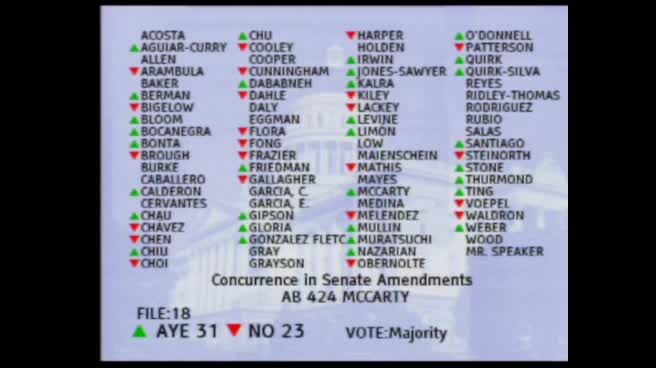


Bill Author
Bill Co-Author(s):