AB 1693: Civil actions: intervention.
- Session Year: 2017-2018
- House: Assembly
- Latest Version Date: 2017-07-24
Under existing law, any person who has an interest in a matter in litigation, or in the success of either of the parties, or an interest against both, may intervene in the action or proceeding. Existing law provides that a third person may become a party to an action or proceeding between other persons, either by joining the plaintiff in claiming what is sought by the complaint, uniting with the defendant in resisting the claims of the plaintiff, or demanding anything adversely to both the plaintiff and the defendant, by filing a complaint setting forth the grounds upon which the intervention rests, as specified.
This bill would require that a nonparty seeking to intervene in an action or proceeding, deemed the intervenor, petition the court for leave to intervene by noticed motion or ex parte application setting forth the grounds upon which the intervention rests, and would require the intervenor to include a copy of the proposed complaint in intervention or answer in intervention with the petition. If leave to intervene is granted by the court, the bill would also require the intervenor to serve the order, or notice of the courts decision or order, granting leave to intervene and the pleadings in intervention on all other parties in the action or proceeding, as specified. The bill would also recast some provisions of existing law and make conforming changes to other provisions of law.
Under existing law, any person who has an interest in a matter in litigation, or in the success of either of the parties, or an interest against both, may intervene in the action or proceeding. Existing law provides that a third person may become a party to an action or proceeding between other persons, either by joining the plaintiff in claiming what is sought by the complaint, uniting with the defendant in resisting the claims of the plaintiff, or demanding anything adversely to both the plaintiff and the defendant, by filing a complaint setting forth the grounds upon which the intervention rests, as specified.
This bill would require that a person nonparty seeking to intervene in an action or proceeding, deemed the intervenor, petition the court for leave to intervene by noticed motion or ex parte application setting forth the grounds upon which the intervention rests, and would require the intervenor to include a copy of the proposed complaint in intervention or answer in intervention with the petition. The If leave to intervene is granted by the court, the bill would also require the intervenor to serve the order, or notice of the courts decision or order, granting leave to intervene and the pleadings in intervention on all other parties in the action or proceeding, as specified. The bill would also recast some provisions of existing law and make conforming changes to other provisions of law.
Under existing law, any person who has an interest in a matter in litigation, or in the success of either of the parties, or an interest against both, may intervene in the action or proceeding. Existing law provides that a third person may become a party to an action or proceeding between other persons, either by joining the plaintiff in claiming what is sought by the complaint, uniting with the defendant in resisting the claims of the plaintiff, or demanding anything adversely to both the plaintiff and the defendant, by filing a complaint setting forth the grounds upon which the intervention rests, as specified.
This bill would require that a person seeking to intervene in an action or proceeding, deemed the intervenor, petition the court for leave to intervene by noticed motion or ex parte application setting forth the grounds upon which the intervention rests, and would require the intervenor to include a copy of the proposed complaint in intervention or answer in intervention with the petition. The bill would also require the intervenor to serve the order, or notice of the courts decision or order, granting leave to intervene and the pleadings in intervention on all other parties in the action or proceeding, as specified. The bill would also recast some provisions of existing law and make conforming changes to other provisions of law
(a)For purposes of this section:
(1)Defendant includes a cross-defendant.
(2)Plaintiff includes a cross-complainant.
(b)An intervention takes place when a nonparty, deemed an intervenor, becomes a party to an action or proceeding between other persons by doing any of the following:
(1)Joining a plaintiff in claiming what is sought by the complaint.
(2)Uniting with a defendant in resisting the claims of a plaintiff.
(3)Demanding anything adverse to both a plaintiff and a defendant.
(c)A nonparty shall petition the court for leave to intervene by noticed motion or ex parte application. The petition shall include a copy of the proposed complaint in intervention or answer in intervention and set forth the grounds upon which intervention rests.
(d)(1)The court shall, upon timely application, permit a nonparty to intervene in the action or proceeding if either of the following conditions is satisfied:
(A)A provision of law confers an unconditional right to intervene.
(B)The person seeking intervention claims an interest relating to the property or transaction that is the subject of the action and that person is so situated that the disposition of the action may impair or impede that persons ability to protect that interest, unless that persons interest is adequately represented by one or more of the existing parties.
(2)The court may, upon timely application, permit a nonparty to intervene in the action or proceeding if the person has an interest in the matter in litigation, or in the success of either of the parties, or an interest against both.
(e)If leave to intervene is granted by the court, the intervenor shall do both of the following:
(1)Separately file the complaint in intervention, answer in intervention, or both.
(2)Serve a copy of the order, or notice of the courts decision or order, granting leave to intervene and the pleadings in intervention as follows:
(A)A party to the action or proceeding who has not yet appeared shall be served in the same manner for service of summons pursuant to Article 3 (commencing with Section 415.10) of Chapter 4 of Title 5 of Part 2.
(B)A party who has appeared in the action or proceeding, whether represented by an attorney or not represented by an attorney, shall be served in the same manner for service of summons pursuant to Article 3 (commencing with Section 415.10) of Chapter 4 of Title 5 of Part 2, or in the manner provided by Chapter 5 (commencing with Section 1010) of Title 14 of Part 2.
(f)Within 30 days after service of a complaint in intervention or answer in intervention, a party may move, demur, or otherwise plead to the complaint in intervention or answer in intervention in the same manner as to an original complaint or answer.
SEC. 2.Section 1032 of the Code of Civil Procedure is amended to read:1032.(a)As used in this section, unless the context clearly requires otherwise:
(1)Complaint includes a cross-complaint.
(2)Defendant includes a cross-defendant, a person against whom a complaint is filed, or a party who files an answer in intervention.
(3)Plaintiff includes a cross-complainant or a party who files a complaint in intervention.
(4)Prevailing party includes the party with a net monetary recovery, a defendant in whose favor a dismissal is entered, a defendant where neither plaintiff nor defendant obtains any relief, and a defendant as against those plaintiffs who do not recover any relief against that defendant. If any party recovers other than monetary relief and in situations other than as specified, the prevailing party shall be as determined by the court, and under those circumstances, the court, in its discretion, may allow costs or not and, if allowed, may apportion costs between the parties on the same or adverse sides pursuant to rules adopted under Section 1034.
(b)Except as otherwise expressly provided by statute, a prevailing party is entitled as a matter of right to recover costs in any action or proceeding.
(c)Nothing in this section shall prohibit parties from stipulating to alternative procedures for awarding costs in the litigation pursuant to rules adopted under Section 1034.
SEC. 3.Section 1038 of the Code of Civil Procedure is amended to read:1038.(a)In any civil proceeding under the Government Claims Act (Division 3.6 (commencing with Section 810) of Title 1 of the Government Code) or for express or implied indemnity or for contribution in any civil action, the court, upon motion of the defendant or cross-defendant, shall, at the time of the granting of any summary judgment, motion for directed verdict, motion for judgment under Section 631.8, or any nonsuit dismissing the moving party other than the plaintiff, petitioner, cross-complainant, or intervenor, or at a later time set forth by rule of the Judicial Council adopted under Section 1034, determine whether or not the plaintiff, petitioner, cross-complainant, or intervenor brought the proceeding with reasonable cause and in the good faith belief that there was a justifiable controversy under the facts and law which warranted the filing of the complaint, petition, cross-complaint, or complaint or answer in intervention. If the court should determine that the proceeding was not brought in good faith and with reasonable cause, an additional issue shall be decided as to the defense costs reasonably and necessarily incurred by the party or parties opposing the proceeding, and the court shall render judgment in favor of that party in the amount of all reasonable and necessary defense costs, in addition to those costs normally awarded to the prevailing party. An award of defense costs under this section shall not be made except on notice contained in a partys papers and an opportunity to be heard.
(b)Defense costs, as used in this section, shall include reasonable attorneys fees, expert witness fees, the expense of services of experts, advisers, and consultants in defense of the proceeding, and where reasonably and necessarily incurred in defending the proceeding.
(c)This section shall be applicable only on motion made before the discharge of the jury or entry of judgment, and any party requesting the relief pursuant to this section waives any right to seek damages for malicious prosecution. Failure to make the motion shall not be deemed a waiver of the right to pursue a malicious prosecution action.
(d)This section shall only apply if the defendant or cross-defendant has made a motion for summary judgment, judgment under Section 631.8, directed verdict, or nonsuit and the motion is granted.
(a)For purposes of this section:
(1)Defendant includes a cross-defendant.
(2)Plaintiff includes a cross-complainant.
(b)An intervention takes place when a third person, nonparty, deemed an intervenor, becomes a party to an action or proceeding between other persons by doing any of the following:
(1)Joining a plaintiff in claiming what is sought by the complaint.
(2)Uniting with a defendant in resisting the claims of a plaintiff.
(3)Demanding anything adverse to both a plaintiff and a defendant.
(c)A third person seeking leave of court to intervene in an action or proceeding shall timely do the following:
(1)Petition
(c)A nonparty shall petition the court for leave to intervene by noticed motion or ex parte application. The petition shall set forth the grounds upon which intervention rests and shall include a copy of the proposed complaint in intervention or answer in intervention. intervention and set forth the grounds upon which intervention rests.
(2)Serve a copy of the documents submitted to the court in support of the request for intervention on all other parties who have appeared in the action or proceeding in the manner provided by Chapter 5 (commencing with Section 1010) of Title 14 of Part 2, or as prescribed by the California Rules of Court applicable to ex parte applications.(d)(1)The court shall, upon timely application, permit a third person nonparty to intervene in the action or proceeding if either of the following conditions is satisfied:
(A)A provision of law confers an unconditional right to intervene.
(B)The person seeking intervention claims an interest relating to the property or transaction that is the subject of the action and that person is so situated that the disposition of the action may impair or impede that persons ability to protect that interest, unless that persons interest is adequately represented by one or more of the existing parties.
(2)The court may, upon timely application, permit a third person nonparty to intervene in the action or proceeding if the person has an interest in the matter in litigation, or in the success of either of the parties, or an interest against both.
(e)If leave to intervene is granted by the court, the intervenor shall do both of the following:
(1)Separately file the complaint in intervention, answer in intervention, or both.
(2)Serve a copy of the order, or notice of the courts decision or order, granting leave to intervene and the pleadings in intervention on all other parties in the action or proceeding, including any parties who have not appeared, in the same manner for service of summons pursuant to Article 3 (commencing with Section 415.10) of Chapter 4 of Title 5 of Part 2, or in the manner provided by Chapter 5 (commencing with Section 1010) of Title 14 of Part 2. as follows:
(A)A party to the action or proceeding who has not yet appeared shall be served in the same manner for service of summons pursuant to Article 3 (commencing with Section 415.10) of Chapter 4 of Title 5 of Part 2.
(B)A party who has appeared in the action or proceeding, whether represented by an attorney or not represented by an attorney, shall be served in the same manner for service of summons pursuant to Article 3 (commencing with Section 415.10) of Chapter 4 of Title 5 of Part 2, or in the manner provided by Chapter 5 (commencing with Section 1010) of Title 14 of Part 2.
(f)Within 30 days after service of a complaint in intervention or answer in intervention, a party may move, demur, or otherwise plead to the complaint in intervention or answer in intervention in the same manner as to an original complaint or answer.
SEC. 2.Section 1032 of the Code of Civil Procedure is amended to read:1032.(a)As used in this section, unless the context clearly requires otherwise:
(1)Complaint includes a cross-complaint.
(2)Defendant includes a cross-defendant, a person against whom a complaint is filed, or a party who files an answer in intervention.
(3)Plaintiff includes a cross-complainant or a party who files a complaint in intervention.
(4)Prevailing party includes the party with a net monetary recovery, a defendant in whose favor a dismissal is entered, a defendant where neither plaintiff nor defendant obtains any relief, and a defendant as against those plaintiffs who do not recover any relief against that defendant. If any party recovers other than monetary relief and in situations other than as specified, the prevailing party shall be as determined by the court, and under those circumstances, the court, in its discretion, may allow costs or not and, if allowed, may apportion costs between the parties on the same or adverse sides pursuant to rules adopted under Section 1034.
(b)Except as otherwise expressly provided by statute, a prevailing party is entitled as a matter of right to recover costs in any action or proceeding.
(c)Nothing in this section shall prohibit parties from stipulating to alternative procedures for awarding costs in the litigation pursuant to rules adopted under Section 1034.
SEC. 3.Section 1038 of the Code of Civil Procedure is amended to read:1038.(a)In any civil proceeding under the Government Claims Act (Division 3.6 (commencing with Section 810) of Title 1 of the Government Code) or for express or implied indemnity or for contribution in any civil action, the court, upon motion of the defendant or cross-defendant, shall, at the time of the granting of any summary judgment, motion for directed verdict, motion for judgment under Section 631.8, or any nonsuit dismissing the moving party other than the plaintiff, petitioner, cross-complainant, or intervenor, or at a later time set forth by rule of the Judicial Council adopted under Section 1034, determine whether or not the plaintiff, petitioner, cross-complainant, or intervenor brought the proceeding with reasonable cause and in the good faith belief that there was a justifiable controversy under the facts and law which warranted the filing of the complaint, petition, cross-complaint, or complaint or answer in intervention. If the court should determine that the proceeding was not brought in good faith and with reasonable cause, an additional issue shall be decided as to the defense costs reasonably and necessarily incurred by the party or parties opposing the proceeding, and the court shall render judgment in favor of that party in the amount of all reasonable and necessary defense costs, in addition to those costs normally awarded to the prevailing party. An award of defense costs under this section shall not be made except on notice contained in a partys papers and an opportunity to be heard.
(b)Defense costs, as used in this section, shall include reasonable attorneys fees, expert witness fees, the expense of services of experts, advisers, and consultants in defense of the proceeding, and where reasonably and necessarily incurred in defending the proceeding.
(c)This section shall be applicable only on motion made before the discharge of the jury or entry of judgment, and any party requesting the relief pursuant to this section waives any right to seek damages for malicious prosecution. Failure to make the motion shall not be deemed a waiver of the right to pursue a malicious prosecution action.
(d)This section shall only apply if the defendant or cross-defendant has made a motion for summary judgment, judgment under Section 631.8, directed verdict, or nonsuit and the motion is granted.
(a)For purposes of this section:
(1)Defendant includes a cross-defendant.
(2)Plaintiff includes a cross-complainant.
(b)An intervention takes place when a third person, deemed an intervenor, becomes a party to an action or proceeding between other persons by doing any of the following:
(1)Joining a plaintiff in claiming what is sought by the complaint.
(2)Uniting with a defendant in resisting the claims of a plaintiff.
(3)Demanding anything adverse to both a plaintiff and a defendant.
(c)A third person seeking leave of court to intervene in an action or proceeding shall timely do the following:
(1)Petition the court for leave to intervene by noticed motion or ex parte application. The petition shall set forth the grounds upon which intervention rests and shall include a copy of the proposed complaint in intervention or answer in intervention.
(2)Serve a copy of the documents submitted to the court in support of the request for intervention on all other parties who have appeared in the action or proceeding in the manner provided by Chapter 5 (commencing with Section 1010) of Title 14 of Part 2, or as prescribed by the California Rules of Court applicable to ex parte applications.
(d)(1)The court shall, upon timely application, permit a third person to intervene in the action or proceeding if either of the following conditions is satisfied:
(b)If any provision(A)A provision of law confers an unconditional right to intervene or if the person.
(B)The person seeking intervention claims an interest relating to the property to or transaction which that is the subject of the action and that person is so situated that the disposition of the action may as a practical matter impair or impede that persons ability to protect that interest, unless that persons interest is adequately represented by existing parties, the court shall, upon timely application, permit that person to intervene. one or more of the existing parties.
(2)The court may, upon timely application, permit a third person to intervene in the action or proceeding if the person has an interest in the matter in litigation, or in the success of either of the parties, or an interest against both.
(e)If leave to intervene is granted by the court, the intervenor shall do both of the following:
(1)Separately file the complaint in intervention, answer in intervention, or both.
(2)Serve a copy of the order, or notice of the courts decision or order, granting leave to intervene and the pleadings in intervention on all other parties in the action or proceeding, including any parties who have not appeared, in the same manner for service of summons pursuant to Article 3 (commencing with Section 415.10) of Chapter 4 of Title 5 of Part 2, or in the manner provided by Chapter 5 (commencing with Section 1010) of Title 14 of Part 2.
(f)Within 30 days after service of a complaint in intervention or answer in intervention, a party may move, demur, or otherwise plead to the complaint in intervention or answer in intervention in the same manner as to an original complaint or answer.
SEC. 2.Section 1032 of the Code of Civil Procedure is amended to read:1032.(a)As used in this section, unless the context clearly requires otherwise:
(1)Complaint includes a cross-complaint.
(2)Defendant includes a cross-defendant or cross-defendant, a person against whom a complaint is filed. filed, or a party who files an answer in intervention.
(3)Plaintiff includes a cross-complainant or a party who files a complaint in intervention.
(4)Prevailing party includes the party with a net monetary recovery, a defendant in whose favor a dismissal is entered, a defendant where neither plaintiff nor defendant obtains any relief, and a defendant as against those plaintiffs who do not recover any relief against that defendant. When If any party recovers other than monetary relief and in situations other than as specified, the prevailing party shall be as determined by the court, and under those circumstances, the court, in its discretion, may allow costs or not and, if allowed allowed, may apportion costs between the parties on the same or adverse sides pursuant to rules adopted under Section 1034.
(b)Except as otherwise expressly provided by statute, a prevailing party is entitled as a matter of right to recover costs in any action or proceeding.
(c)Nothing in this section shall prohibit parties from stipulating to alternative procedures for awarding costs in the litigation pursuant to rules adopted under Section 1034.
SEC. 3.Section 1038 of the Code of Civil Procedure is amended to read:1038.(a)In any civil proceeding under the Government Claims Act (Division 3.6 (commencing with Section 810) of Title 1 of the Government Code) or for express or implied indemnity or for contribution in any civil action, the court, upon motion of the defendant or cross-defendant, shall, at the time of the granting of any summary judgment, motion for directed verdict, motion for judgment under Section 631.8, or any nonsuit dismissing the moving party other than the plaintiff, petitioner, cross-complainant, or intervenor, or at a later time set forth by rule of the Judicial Council adopted under Section 1034, determine whether or not the plaintiff, petitioner, cross-complainant, or intervenor brought the proceeding with reasonable cause and in the good faith belief that there was a justifiable controversy under the facts and law which warranted the filing of the complaint, petition, cross-complaint, or complaint or answer in intervention. If the court should determine that the proceeding was not brought in good faith and with reasonable cause, an additional issue shall be decided as to the defense costs reasonably and necessarily incurred by the party or parties opposing the proceeding, and the court shall render judgment in favor of that party in the amount of all reasonable and necessary defense costs, in addition to those costs normally awarded to the prevailing party. An award of defense costs under this section shall not be made except on notice contained in a partys papers and an opportunity to be heard.
(b)Defense costs, as used in this section, shall include reasonable attorneys attorneys fees, expert witness fees, the expense of services of experts, advisers, and consultants in defense of the proceeding, and where reasonably and necessarily incurred in defending the proceeding.
(c)This section shall be applicable only on motion made prior to before the discharge of the jury or entry of judgment, and any party requesting the relief pursuant to this section waives any right to seek damages for malicious prosecution. Failure to make the motion shall not be deemed a waiver of the right to pursue a malicious prosecution action.
(d)This section shall only apply if the defendant or cross-defendant has made a motion for summary judgment, judgment under Section 631.8, directed verdict, or nonsuit and the motion is granted.
|
Date
|
Status
|
|---|---|
| Jul 24, 2017 | Chaptered by Secretary of State - Chapter 131, Statutes of 2017. |
| Jul 24, 2017 | Approved by the Governor. |
| Jul 13, 2017 | Enrolled and presented to the Governor at 3 p.m. |
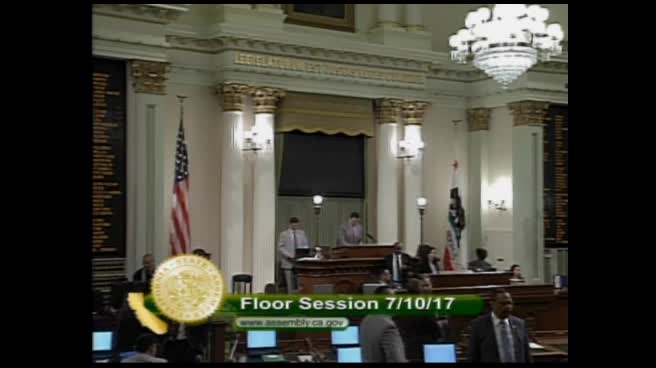
| Jul 10, 2017 | Senate amendments concurred in. To Engrossing and Enrolling. (Ayes 77. Noes 0. Page 2497.). |
| Jul 3, 2017 | In Assembly. Concurrence in Senate amendments pending. May be considered on or after July 5 pursuant to Assembly Rule 77. |
| Jul 3, 2017 | Read third time. Passed. Ordered to the Assembly. |
| Jun 22, 2017 | Read second time. Ordered to Consent Calendar. |
| Jun 21, 2017 | From committee: Do pass. To Consent Calendar. (Ayes 7. Noes 0.) (June 20). |
| Jun 12, 2017 | From committee chair, with author's amendments: Amend, and re-refer to committee. Read second time, amended, and re-referred to Com. on JUD. |
| May 10, 2017 | Referred to Com. on JUD. |
| Apr 17, 2017 | In Senate. Read first time. To Com. on RLS. for assignment. |
| Apr 17, 2017 | Read third time. Passed. Ordered to the Senate. (Ayes 76. Noes 0. Page 1017.) |
| Apr 5, 2017 | Read second time. Ordered to Consent Calendar. |
| Apr 4, 2017 | From committee: Do pass. To Consent Calendar. (Ayes 11. Noes 0.) (April 4). |
| Mar 16, 2017 | Referred to Com. on JUD. |
| Feb 28, 2017 | From printer. May be heard in committee March 30. |
| Feb 27, 2017 | Read first time. To print. |
|
Date
|
Description
|
Location
|
Votes
|
|
|---|---|---|---|---|
| Jul 10, 2017 | AB 1693 JUD. Concurrence in Senate Amendments By STONE | Assembly Floor |
Passed |
|
| Jul 3, 2017 | Consent Calendar 2nd AB1693 JUD. | Senate Floor |
Passed |
|
| Jun 20, 2017 | Do pass and be ordered to the Consent Calendar | Senate Standing Committee on Judiciary |
Passed |
|
| Apr 17, 2017 | Favorable | Assembly Floor |
Passed |
|
| Apr 4, 2017 | Do pass. To Consent Calendar. | Assembly Standing Committee on Judiciary |
Passed |
This list shows positions taken on this bill by organizations on the date displayed, which is linked to the original source.
Positions by individuals are not included.
|
Organization
|
Position
|
Date
|
|---|---|---|
| Conference of California Bar Associations | ** Support | Jun 22, 2017 |
CONCURRENCE IN SENATE AMENDMENTS
CSA1 Bill Id:AB 1693
Author:(Committee on Judiciary)
As Amended Ver:June 12, 2017
Majority vote
ASSEMBLY: | 76-0 | (April 17, 2017) | SENATE: | 33-0 | (July 3, 2017) |
Original Committee Reference: JUD.
SUMMARY: Allows a party seeking to intervene in an ongoing legal action the option of filing an answer-in-intervention, rather than a complaint-in-intervention. Specifically, this bill:
- Provides that a person seeking to intervene in an ongoing legal action shall timely seek leave of court by setting forth the grounds upon which the intervention rests and by lodging a complaint, an answer, or both.
- Provides that after a party has been granted leave to intervene, the intervenor shall:
- Separately file the complaint in intervention, answer in intervention, or both.
- Serve a copy of the order, or notice of the court's decision or order, granting leave to intervene and the pleadings in intervention.
- Makes other technical and conforming changes.
The Senate amendments clarify the manner in which specific parties are served a copy of the order, or notice of the court's decision, granting leave to intervene and the pleadings in intervention and make other technical changes.
EXISTING LAW:
- Provides that upon timely application, any person who has an interest in the matter in litigation, or in the success of either of the parties, or an interest against both, may intervene in the action or the proceeding. (Code of Civil Procedure Section 387. All further references are to this code, unless otherwise stated.)
- Provides that an intervention takes place when a third person is permitted to become a party to an action or proceeding between other persons, either by joining the plaintiff in claiming what is sought by the complaint, or by uniting with the defendant in resisting the claims of the plaintiff, or by demanding anything adversely to both the plaintiff and the defendant. Provides that the intervention is made by complaint, setting forth the grounds upon which the intervention rests, filed by leave of the court and served upon the parties, as provided. (Section 387(a).)
- Provides that a party served with a complaint in intervention may within 30 days after service move, demur, or otherwise plead to the complaint in the same manner as to an original complaint. (Ibid.)
- Requires a court, upon timely application, to permit a person to intervene if any provision of law confers an unconditional right to intervene or if the person seeking intervention claims an interest relating to the property or transaction which is the subject of the action and that person is so situated that the disposition of the action may as a practical matter impair or impede that person's ability to protect that interest, unless that person's interest is adequately represented by existing parties. (Section 387(b).)
- Provides that a plaintiff includes a cross-complainant or a party who files a complaint in intervention, and that a defendant includes a cross-defendant, or a person against whom a complaint is filed. (Section 1032.)
FISCAL EFFECT: None
COMMENTS: Intervention is a procedural mechanism that allows a third person to join an existing legal action. The main purpose of intervention is to prevent delay and discourage the multiplicity of lawsuits by creating an opportunity for those who are directly affected in the subject matter to join an action that has already been instituted. (Belt Casualty Co. v. Furman (1933) 218 Cal. 359, 362.) Generally, in order to intervene, a third person must request permission from the court, and demonstrate why he or she should be allowed to intervene. If permitted to intervene, the third person may join the plaintiff, the defendant, or sometimes, take a position that is adverse to both parties. Under existing law, an intervenor aligned with a defendant files a "complaint in intervention." This may be confusing for parties because a "complaint" is a pleading normally associated with a plaintiff.
Accordingly, this bill eliminates the confusion described above by allowing an intervenor to either file a complaint in intervention, an answer in intervention, or in some instances, both. This bill also adopts a good litigation practice to ensure that parties in an existing lawsuit are properly noticed after the court grants the intervention. To provide additional clarity to the procedure, this bill makes other technical changes.
An answer-in-intervention is not a new procedural device. California courts have long recognized that parties seeking to intervene may file an answer in intervention. (See People v. Rath Packing Co. (1978) 85 Cal. App. 3d 308, 317; Fuller v. San Bernardino Valley Municipal Water Dist. (1966) 242 Cal. App. 2d 52, 55; California Bank v. Stimson (1949) 89 Cal. App. 2d 552, 553; Miller v. Pierce (1944) 66 Cal. App. 2d 126, 130.) Since an answer in intervention already exists at common law, this bill will merely codify a well-established practice. There is, however, value in codifying this practice. This bill provides clarity to parties about the available pleading methods, particularly unrepresented parties who may be unfamiliar with intervention. Moreover, by establishing this practice in law, this bill should make it easier for parties to locate specific pleadings when searching through court's records and to determine the posture of an intervening party.
This bill ensures that once a court grants intervention, parties have sufficient notice about the intervenor and how to respond to the intervenor. In some instances, parties in a suit may not know that an intervention has been granted. This bill also codifies a best practice to require the intervenor (after the court has granted leave to intervene) to serve a copy of the order granting intervention, or a notice of the court's decision or order. To ensure that parties know how to appropriately respond to the intervenor, this bill also provides that after the court has granted intervention, the intervenor shall provide the pleadings in intervention on all parties in the action or proceeding, including any parties who have not appeared, in the same manner as service of summons. Under existing law, the intervenor is required to provide the pleadings pursuant to the summons statute before the court has granted intervention. However, it is unclear how an original party is supposed to treat this pleading, especially when the intervening party has not been granted leave to join the suit. This bill clarifies this procedure to ensure that original parties know how to properly respond to the intervenor after the court has granted intervention, and allows parties to treat the intervenor as if the intervenor was an original party to the action.
This bill does not seek to alter the rights of intervening parties. Although a complaint and an answer operate differently procedurally, this bill does not seek to alter the rights of intervening parties. For example, an intervening person who files an answer in intervention can still file a demurrer under the Code of Civil Procedure. To that end, this bill makes other technical and clarifying changes intended to clean-up a code section that has not been amended since 1977.
Analysis Prepared by: Eric Dang / JUD. / (916) 319-2334 FN: 0001034
Office of Senate Floor Analyses (916) 651-1520 Fax: (916) 327-4478 | AB |
CONSENT
Bill No: AB 1693
:
SENATE JUDICIARY COMMITTEE: 7-0, 6/20/17
AYES: Jackson, Moorlach, Anderson, Hertzberg, Monning, Stern, Wieckowski
ASSEMBLY FLOOR: 76-0, 4/17/17 (Consent) - See last page for vote
DIGEST:
This bill amends the statute governing interventions to recognize an “answer in intervention” in addition to the existing “complaint in intervention” and makes other clarifying and non-substantive changes to modernize that statute.
Existing law:
- Provides that an intervention takes place when a third person is permitted to become a party to an action or proceeding between other persons, either by: (a) joining the plaintiff in claiming what is sought by the complaint; (b) by uniting with the defendant in resisting the claims of the plaintiff; or (c) by demanding anything adversely to both the plaintiff and the defendant. (Code Civ. Proc. Sec. 387(a).)
- Provides that an intervention is made by complaint, setting forth the grounds upon which the intervention rests, filed by leave of the court and served upon the parties to the action or proceeding who have not appeared in the same manner as upon the commencement of an original action, and upon the attorneys of the parties who have appeared, or upon the party if he has appeared without an attorney, in the manner provided for service of summons or in the manner provided by existing law (relating to notices and filing and service of papers). (Code Civ. Proc. Sec. 387(a).)
- Provides that, upon timely application, any person who has an interest in the matter in litigation, or in the success of either of the parties, or an interest against both, may intervene in the action or proceeding (“permissive intervention”). (Code Civ. Proc. Sec. 387(a).)
- Provides that the court must allow intervention, upon timely application, under either of the following circumstances: (a) a provision of law confers an unconditional right to intervene; or (b) the person seeking intervention (1) claims an interest relating to the property or transaction that is the subject of the action, (2) is so situated that the action’s disposition may impair the person’s ability to protect that interest, and (3) is not adequately represented with regard to that interest by existing parties (“mandatory intervention”). (Code Civ. Proc. Sec. 387(b).)
- Provides that a party served with a complaint in intervention may, within 30 days after service, move, demur, or otherwise plead to the complaint in the same manner as to an original complaint. (Code Civ. Proc. Sec. 387(a).)
This bill:
- Provides that in order to intervene a nonparty must timely petition the court for leave to intervene in an action or proceeding by noticed motion or ex parte application. This bill requires the petition to include a copy of either a complaint in intervention or an answer in intervention setting forth the grounds upon which intervention rests.
- Provides that if leave to intervene is granted by the court, the intervenor shall file the pleading and serve a copy of the order, or notice of the court’s decision or order, granting leave to intervene, and the pleadings in intervention on the parties to the action or proceeding who have not appeared in the same manner as upon the commencement of an original action, and upon the attorneys of the parties who have appeared, or upon the party if he has appeared without an attorney, in the manner provided for service of summons or in the manner provided by Chapter 5 (commencing with Section 1010) of Title 14 of Part 2.
- Makes clear that “defendant” includes a cross-defendant and “plaintiff” includes a cross-complainant for purposes of this law.
- Reorganizes and recasts the substantive provisions of the statute on interventions and, in doing so, makes clarifying and non-substantive changes. This bill also updates several cross-references in other statutes.
Background
Under Code of Civil Procedure Section 387, “an intervention takes place when a third person is permitted to become a party to an action or proceeding between other persons, either by joining the plaintiff in claiming what is sought by the complaint, or by uniting with the defendant in resisting the claims of the plaintiff, or by demanding anything adversely to both the plaintiff and the defendant.” The intervention is made by complaint, setting forth the grounds upon which the intervention is made, filed by leave of the court, and served upon the parties, as specified.
The main purposes for allowing intervention are to avoid delay, avoid a multiplicity of actions, and “promote fairness by involving all parties potentially affected by a judgment.” (Simpson Redwood Co. v. State of California (1987) 196 Cal.App.3d 1192, 1199; see also City and County of San Francisco v. State of California (2005) 128 Cal.App.4th 1030, 1036 [section 387 “balances the interests of others who will be affected by the judgment against the interests of the original parties in pursuing their litigation unburdened by others”]; Belt Casualty Co. v. Furman (1933) 218 Cal. 359, 362 [main purpose is to avoid delay and multiplicity of actions].) The courts have held that Section 387 allowing intervention should be liberally construed. (See, e.g., Lindelli v. Town of San Anselmo (2006) 43 Cal.Rptr.3d 707, 712.)
An intervention may be permissive (within the court’s discretion) or mandatory. “To support permissive intervention, the proposed intervener’s interest must be direct [and immediate] rather than consequential, and it must be an interest that is capable of determination in the action.” (Lindelli, 43 Cal.Rptr.3d at 712.) The court must allow intervention when either: (1) a provision of law confers an unconditional right to intervene; or (2) the person seeking intervention has an interest in the subject of the action, is so situated that the action’s disposition may impair the person’s ability to protect that interest, and the person’s interest is not adequately represented by existing parties.
This bill updates and modernizes the statute on interventions and specifically recognizes the ability of a third person to file an “answer in intervention” instead of, or in addition to, a “complaint in intervention.”
Comments
The author writes:
Under existing law, when a third party wants to join an ongoing lawsuit, the third party must get permission from the court to intervene. To intervene, the third party files a “complaint in intervention,” regardless of whether the third party is on the side of the plaintiff, or the defendant.
This technical bill clarifies that an intervenor can also plead by filing an “answer in intervention” – a method that exists under common law, but not provided in statute. This bill also clarifies that intervenors must notify existing parties after the court has granted leave to intervene, rather than just before.
By establishing this practice in law, this bill should make it easier for parties to determine the position of an intervenor, and to locate specific pleadings when searching through the court’s records.
Modernizing statutory intervention in California
Under existing law, upon timely application, any person who has an interest in the matter in litigation, or in the success of either of the parties, or an interest against both, may intervene in the action or proceeding. The court must allow intervention in some circumstances, but the court always has discretion to allow an interested nonparty to intervene. (Code Civ. Proc. Sec. 387.) This bill reorganizes the statute and amends the terminology therein to reflect the various postures an intervenor may be taking upon intervention.
Complaints in intervention currently include answers in intervention
An intervenor may be aligning with a plaintiff in asserting claims against another party or aligning with a defendant in defending against asserted claims. The intervenor may also be demanding something from multiple existing parties. However, Section 387 of the Code of Civil Procedure currently provides that an intervenor may intervene by “complaint, setting forth the ground upon which the intervention rests.” The use of the term “complaint” for the pleading filed by an intervenor no matter the posture can be confusing and antithetical to its usual meaning.
This bill addresses this issue by providing that an intervenor may intervene by “complaint in intervention” or “answer in intervention.” This small adjustment in terminology can eliminate any confusion or unintended consequences of the existing language. Writing in support, the Conference of California Bar Associations states: “AB 1693 would help eliminate unnecessary confusion in the courts by specifying that an intervening party in litigation identify its pleading as a complaint in intervention, an answer in intervention, or a complaint and answer, as appropriate, rather than simply as a ‘complaint’ under all circumstances.”
This change in terminology is modest and sensible. In fact, answers in intervention, although not specifically provided by statute, have generally been a recognized form of pleading in practice. (See People v. Rath Packing Co. (1978) 85 Cal.App.3d 308, 317; Fuller v. San Bernardino Valley Municipal Water Dist. (1966) 242 Cal.App.2d 52, 55; California Bank v. Stimson (1949) 89 Cal.App.2d 552, 553; Miller v. Pierce (1944) 66 Cal.App.2d 126, 130.)
Reorganization and updated cross-references
Beyond adding the terminology regarding answers in intervention, this bill also significantly reorganizes Section 387. As the Assembly Judiciary Committee notes, this statute has not been updated since 1977. The reorganization and rewording properly modernizes the statute and provides increased clarity. It should be noted that the changes do not, and are not intended to, make material changes to the statute or its application. However, this bill lays out the process for an intervenor to seek leave of court, either by ex parte application or noticed motion. These additions do not change how leave is sought in practice. This bill also additionally requires an intervenor to serve a copy of the order, or notice of the court’s decision or order, granting leave to intervene and the pleadings in intervention on the parties.
Given the new terminology added by this bill, existing references to complaints in intervention will need to be updated accordingly where appropriate. This bill makes changes to two other sections of the Code of Civil Procedure to include this new language.
FISCAL EFFECT: Appropriation: Fiscal Com.: Local:
Conference of California Bar Associations
OPPOSITION: (Verified 6/21/17)
None received
ARGUMENTS IN SUPPORT: The Conference of California Bar Associations writes in support:
Entitling an [intervenor’s] pleadings as “complaint” in every instance, even if the [intervenor’s] interests are more closely aligned with those of the defendant, creates unnecessary confusion. An [intervenor] should be permitted to file a “complaint-in-intervention,” “answer-in-intervention,” or other pleading identifying its position so all parties to the action will understand where the intervener’s interests lie. AB 1693 would make this simple, common sense change in the law.
ASSEMBLY FLOOR: 76-0, 4/17/17
AYES: Acosta, Aguiar-Curry, Travis Allen, Arambula, Baker, Berman, Bigelow, Bloom, Bocanegra, Bonta, Burke, Caballero, Calderon, Cervantes, Chau, Chávez, Chen, Chiu, Choi, Chu, Cooley, Cooper, Dababneh, Dahle, Daly, Eggman, Flora, Fong, Frazier, Friedman, Gallagher, Eduardo Garcia, Gipson, Gloria, Gomez, Gonzalez Fletcher, Gray, Grayson, Harper, Holden, Irwin, Jones-Sawyer, Kalra, Kiley, Lackey, Levine, Limón, Low, Maienschein, Mayes, McCarty, Medina, Melendez, Mullin, Muratsuchi, Nazarian, Obernolte, O'Donnell, Patterson, Quirk, Quirk-Silva, Reyes, Ridley-Thomas, Rodriguez, Rubio, Salas, Santiago, Steinorth, Mark Stone, Thurmond, Ting, Voepel, Waldron, Weber, Wood, Rendon
NO VOTE RECORDED: Brough, Cunningham, Cristina Garcia, Mathis
Prepared by: Christian Kurpiewski / JUD. / (916) 651-4113
6/22/17 16:28:13
**** END ****
Senator Hannah-Beth Jackson, Chair
2017-2018 Regular Session
Bill No: AB 1693 (Author:Committee on Judiciary)
Version: June 12, 2017
Hearing Date: June 20, 2017
Fiscal: No
Urgency: No
Consultant: CK
SUBJECT
Civil actions: intervention
DESCRIPTION
This bill would amend the statute governing interventions to recognize an “answer in intervention” in addition to the existing “complaint in intervention” and would make other clarifying and non-substantive changes to modernize that statute.
BACKGROUND
Under Code of Civil Procedure Section 387, “an intervention takes place when a third person is permitted to become a party to an action or proceeding between other persons, either by joining the plaintiff in claiming what is sought by the complaint, or by uniting with the defendant in resisting the claims of the plaintiff, or by demanding anything adversely to both the plaintiff and the defendant.” The intervention is made by complaint, setting forth the grounds upon which the intervention is made, filed by leave of the court, and served upon the parties, as specified.
The main purposes for allowing intervention are to avoid delay, avoid a multiplicity of actions, and “promote fairness by involving all parties potentially affected by a judgment.” (Simpson Redwood Co. v. State of California (1987) 196 Cal.App.3d 1192, 1199; see also City and County of San Francisco v. State of California (2005) 128 Cal.App.4th 1030, 1036 [section 387 “balances the interests of others who will be affected by the judgment against the interests of the original parties in pursuing their litigation unburdened by others”]; Belt Casualty Co. v. Furman (1933) 218 Cal. 359, 362 [main purpose is to avoid delay and multiplicity of actions].) The courts have held that Section 387 allowing intervention should be liberally construed. (See, e.g., Lindelli v. Town of San Anselmo (2006) 43 Cal.Rptr.3d 707, 712.)
An intervention may be permissive (within the court’s discretion) or mandatory. “To support permissive intervention, the proposed intervener’s interest must be direct [and immediate] rather than consequential, and it must be an interest that is capable of determination in the action.” (Lindelli, 43 Cal.Rptr.3d at 712.) The court must allow intervention when either: (1) a provision of law confers an unconditional right to intervene; or (2) the person seeking intervention has an interest in the subject of the action, is so situated that the action’s disposition may impair the person’s ability to protect that interest, and the person’s interest is not adequately represented by existing parties.
This bill seeks to now update and modernize the statute on interventions and to specifically recognize the ability of a third person to file an “answer in intervention” instead of, or in addition to, a “complaint in intervention.”
CHANGES TO EXISTING LAW
Existing law provides that an intervention takes place when a third person is permitted to become a party to an action or proceeding between other persons, either by: (1) joining the plaintiff in claiming what is sought by the complaint; (2) by uniting with the defendant in resisting the claims of the plaintiff; or (3) by demanding anything adversely to both the plaintiff and the defendant. (Code Civ. Proc. Sec. 387(a).)
Existing law further provides that an intervention is made by complaint, setting forth the grounds upon which the intervention rests, filed by leave of the court and served upon the parties to the action or proceeding who have not appeared in the same manner as upon the commencement of an original action, and upon the attorneys of the parties who have appeared, or upon the party if he has appeared without an attorney, in the manner provided for service of summons or in the manner provided by existing law (relating to notices and filing and service of papers). (Code Civ. Proc. Sec. 387(a).)
Existing law provides that, upon timely application, any person who has an interest in the matter in litigation, or in the success of either of the parties, or an interest against both, may intervene in the action or proceeding (“permissive intervention”). (Code Civ. Proc. Sec. 387(a).)
Existing law provides that the court must allow intervention, upon timely application, under either of the following circumstances: (a) a provision of law confers an unconditional right to intervene; or (b) the person seeking intervention (1) claims an interest relating to the property or transaction that is the subject of the action, (2) is so situated that the action’s disposition may impair the person’s ability to protect that interest, and (3) is not adequately represented with regard to that interest by existing parties (“mandatory intervention”). (Code Civ. Proc. Sec. 387(b).)
Existing law provides that a party served with a complaint in intervention may, within 30 days after service, move, demur, or otherwise plead to the complaint in the same manner as to an original complaint. (Code Civ. Proc. Sec. 387(a).)
This bill would provide that in order to intervene a nonparty must timely petition the court for leave to intervene in an action or proceeding by noticed motion or ex parte application. This bill would require the petition to include a copy of either a complaint in intervention or an answer in intervention setting forth the grounds upon which intervention rests.
This bill would provide that if leave to intervene is granted by the court, the intervenor shall file the pleading and serve a copy of the order, or notice of the court’s decision or order, granting leave to intervene, and the pleadings in intervention on the parties to the action or proceeding who have not appeared in the same manner as upon the commencement of an original action, and upon the attorneys of the parties who have appeared, or upon the party if he has appeared without an attorney, in the manner provided for service of summons or in the manner provided by Chapter 5 (commencing with Section 1010) of Title 14 of Part 2.
This bill would make clear that “defendant” includes a cross-defendant and “plaintiff” includes a cross-complainant for purposes of this law.
This bill would largely reorganize and recast the substantive provisions of the statute on interventions and, in doing so, would make otherwise clarifying or non-substantive changes. This bill would also update several cross-references in other statutes.
COMMENT
1. Stated need for the bill
According to the author:
Under existing law, when a third party wants to join an ongoing lawsuit, the third party must get permission from the court to intervene. To intervene, the third party files a “complaint in intervention,” regardless of whether the third party is on the side of the plaintiff, or the defendant.
This technical bill clarifies that an intervenor can also plead by filing an “answer in intervention” – a method that exists under common law, but not provided in statute. This bill also clarifies that intervenors must notify existing parties after the court has granted leave to intervene, rather than just before.
By establishing this practice in law, this bill should make it easier for parties to determine the position of an intervenor, and to locate specific pleadings when searching through the court’s records.
The Conference of California Bar Associations writes in support:
Entitling an [intervenor’s] pleadings as “complaint” in every instance, even if the [intervenor’s] interests are more closely aligned with those of the defendant, creates unnecessary confusion. An [intervenor] should be permitted to file a “complaint-in-intervention,” “answer-in-intervention,” or other pleading identifying its position so all parties to the action will understand where the intervener’s interests lie. AB 1693 would make this simple, common sense change in the law.
2. Modernizing statutory intervention in California
Under existing law, upon timely application, any person who has an interest in the matter in litigation, or in the success of either of the parties, or an interest against both, may intervene in the action or proceeding. The court must allow intervention in some circumstances, but the court always has discretion to allow an interested nonparty to intervene. (Code Civ. Proc. Sec. 387.) This bill would reorganize the statute and amend the terminology therein to reflect the various postures an intervenor may be taking upon intervention.
- Complaints in intervention currently include answers in intervention
An intervenor may be aligning with a plaintiff in asserting claims against another party or aligning with a defendant in defending against asserted claims. The intervenor may also be demanding something from multiple existing parties. However, Section 387 of the Code of Civil Procedure currently provides that an intervenor may intervene by “complaint, setting forth the ground upon which the intervention rests.” The use of the term “complaint” for the pleading filed by an intervenor no matter the posture can be confusing and antithetical to its usual meaning.
This bill would address this issue by providing that an intervenor may intervene by “complaint in intervention” or “answer in intervention.” This small adjustment in terminology can eliminate any confusion or unintended consequences of the existing language. Writing in support, the Conference of California Bar Associations states: “AB 1693 would help eliminate unnecessary confusion in the courts by specifying that an intervening party in litigation identify its pleading as a complaint in intervention, an answer in intervention, or a complaint and answer, as appropriate, rather than simply as a ‘complaint’ under all circumstances.”
This change in terminology is modest and sensible. In fact, answers in intervention, although not specifically provided by statute, have generally been a recognized form of pleading in practice. (See People v. Rath Packing Co. (1978) 85 Cal.App.3d 308, 317; Fuller v. San Bernardino Valley Municipal Water Dist. (1966) 242 Cal.App.2d 52, 55; California Bank v. Stimson (1949) 89 Cal.App.2d 552, 553; Miller v. Pierce (1944) 66 Cal.App.2d 126, 130.)
- Reorganization and updated cross-references
Beyond adding the terminology regarding answers in intervention, this bill also significantly reorganizes Section 387. As the Assembly Judiciary Committee notes, this statute has not been updated since 1977. The reorganization and rewording properly modernizes the statute and provides increased clarity. It should be noted that the changes do not, and are not intended to, make material changes to the statute or its application. However, this bill would lay out the process for an intervenor to seek leave of court, either by ex parte application or noticed motion. These additions do not change how leave is sought in practice. This bill would also additionally require an intervenor to serve a copy of the order, or notice of the court’s decision or order, granting leave to intervene and the pleadings in intervention on the parties.
Given the new terminology added by this bill, existing references to complaints in intervention will need to be updated accordingly where appropriate. This bill would make changes to two other sections of the Code of Civil Procedure to include this new language.
Support: Conference of California Bar Associations
Opposition: None Known
HISTORY
Source: Assembly Judiciary Committee
Related Pending Legislation: None Known
Prior Legislation: AB 1796 (Wilk, 2016) would have made changes nearly identical to those made by this bill. The bill was held in the Senate Judiciary Committee.
Prior Vote:
Assembly Floor (Ayes 76, Noes 0)
Assembly Judiciary Committee (Ayes 11, Noes 0)
**************
Date of Hearing: April 4, 2017
ASSEMBLY COMMITTEE ON JUDICIARY
Mark Stone, Chair
ABPCA Bill Id:AB 1693
Author:(Committee on Judiciary) – As Introduced Ver:February 27, 2017
PROPOSED CONSENT
SUBJECT: CIVIL ACTIONS: INTERVENTION
KEY ISSUE: IN ORDER TO PROVIDE ADDITIONAL CLARITY IN THE LAW, SHOULD A NON-CONTROVERSIAL LITIGATION PRACTICE—WHICH ALLOWS A PERSON TO JOIN AN ONGOING LAWSUIT BY FILING AN ANSWER-IN-INTERVENTION, RATHER THAN A COMPLAINT-IN-INTERVENTION—BE CODIFIED?
SYNOPSIS
When a person who is not party to an existing lawsuit wants to join the ongoing lawsuit, he or she can seek intervention—a procedural mechanism which allows a third person to join, as either a plaintiff or a defendant, an ongoing legal action. After a court grants the intervention, the intervenor pleads by filing a “complaint in intervention.” However, since a complaint is normally associated with a plaintiff, the current intervention pleading method (i.e., complaint-in-intervention) makes it difficult for existing parties to determine which side the intervenor has joined. This non-controversial bill allows intervenors the option of filing an alternative intervention pleading of an “answer in intervention.” By codifying this existing practice, this bill will bring additional clarity to existing law and make it easier for parties to locate specific pleadings when searching through the court’s documents. Additionally, this bill codifies a good litigation practice that ensures existing parties are notified after the court has granted the intervenor’s request to join the suit. Furthermore, this bill clarifies the procedure so that parties know how to properly respond to the intervenor after intervention is granted and provides other technical and clarifying changes to a statute that has not been amended in over 40 years. There is no opposition to the bill on file.
SUMMARY: Allows a party seeking to intervene in an ongoing legal action the option of filing an answer-in-intervention, rather than a complaint-in-intervention. Specifically, this bill:
- Provides that a person seeking to intervene in an ongoing legal action shall timely seek leave of court by setting forth the grounds upon which the intervention rests and by lodging a complaint, an answer, or both.
- Provides that after a party has been granted leave to intervene, the intervenor shall:
- Separately file the complaint in intervention, answer in intervention, or both.
- Serve a copy of the order, or notice of the court’s decision or order, granting leave to intervene and the pleadings in intervention on all other parties in the action or proceeding, including any parties who have not appeared, in the same manner for service of summons, as provided.
- Makes other technical and conforming changes.
EXISTING LAW:
- Provides that upon timely application, any person who has an interest in the matter in litigation, or in the success of either of the parties, or an interest against both, may intervene in the action or the proceeding. (Code of Civil Procedure Section 387. All further references are to this code, unless otherwise stated.)
- Provides that an intervention takes place when a third person is permitted to become a party to an action or proceeding between other persons, either by joining the plaintiff in claiming what is sought by the complaint, or by uniting with the defendant in resisting the claims of the plaintiff, or by demanding anything adversely to both the plaintiff and the defendant. Provides that the intervention is made by complaint, setting forth the grounds upon which the intervention rests, filed by leave of the court and served upon the parties, as provided. (Section 387 (a).)
- Provides that a party served with a complaint in intervention may within 30 days after service move, demur, or otherwise plead to the complaint in the same manner as to an original complaint. (Ibid.)
- Requires a court, upon timely application, to permit a person to intervene if any provision of law confers an unconditional right to intervene or if the person seeking intervention claims an interest relating to the property or transaction which is the subject of the action and that person is so situated that the disposition of the action may as a practical matter impair or impede that person’s ability to protect that interest, unless that person’s interest is adequately represented by existing parties. (Section 387 (b).)
- Provides that a plaintiff includes a cross-complainant or a party who files a complaint in intervention, and that a defendant includes a cross-defendant, or a person against whom a complaint is filed. (Section 1032.)
FISCAL EFFECT: As currently in print this bill is keyed non-fiscal.
COMMENTS: Intervention is a procedural mechanism that allows a third person to join an existing legal action. The main purpose of intervention is to prevent delay and discourage the multiplicity of lawsuits by creating an opportunity for those who are directly affected in the subject matter to join an action that has already been instituted. (Belt Casualty Co. v. Furman (1933) 218 Cal. 359, 362.) Generally, in order to intervene, a third person must request permission from the court, and demonstrate why he or she should be allowed to intervene. If permitted to intervene, the third person may join the plaintiff, the defendant, or sometimes, take a position that is adverse to both parties. Under existing law, an intervenor aligned with a defendant files a “complaint in intervention.” This may be confusing for parties because a “complaint” is a pleading normally associated with a plaintiff.
This bill. Accordingly, this bill eliminates the confusion described above by allowing an intervenor to either file a complaint in intervention, an answer in intervention, or in some instances, both. This bill also adopts a good litigation practice to ensure that parties in an existing lawsuit are properly noticed after the court grants the intervention. To provide additional clarity to the procedure, this bill makes other technical changes.
An answer-in-intervention is not a new procedural device. California courts have long recognized that parties seeking to intervene may file an answer in intervention. (See People v. Rath Packing Co. (1978) 85 Cal. App. 3d 308, 317; Fuller v. San Bernardino Valley Municipal Water Dist. (1966) 242 Cal. App. 2d 52, 55; California Bank v. Stimson (1949) 89 Cal. App. 2d 552, 553; Miller v. Pierce (1944) 66 Cal. App. 2d 126, 130.) Since an answer in intervention already exists at common law, this bill will merely codify a well-established practice. There is, however, value in codifying this practice. This bill provides clarity to parties about the available pleading methods, particularly unrepresented parties who may be unfamiliar with intervention. Moreover, by establishing this practice in law, this bill should make it easier for parties to locate specific pleadings when searching through court’s records and to determine the posture of an intervening party.
This bill ensures that once a court grants intervention, parties have sufficient notice about the intervenor and how to respond to the intervenor. In some instances, parties in a suit may not know that an intervention has been granted. This bill also codifies a best practice to require the intervenor (after the court has granted leave to intervene) to serve a copy of the order granting intervention, or a notice of the court’s decision or order. To ensure that parties know how to appropriately respond to the intervenor, this bill also provides that after the court has granted intervention, the intervenor shall provide the pleadings in intervention on all parties in the action or proceeding, including any parties who have not appeared, in the same manner as service of summons. Under existing law, the intervenor is required to provide the pleadings pursuant to the summons statute before the court has granted intervention. However, it is unclear how an original party is supposed to treat this pleading, especially when the intervening party has not been granted leave to join the suit. This bill clarifies this procedure to ensure that original parties know how to properly respond to the intervenor after the court has granted intervention, and allows parties to treat the intervenor as if the intervenor was an original party to the action.
This bill does not seek to alter the rights of intervening parties. Although a complaint and an answer operate differently procedurally, this bill does not seek to alter the rights of intervening parties. For example, an intervening person who files an answer in intervention can still file a demurrer under the Code of Civil Procedure. To that end, this bill makes other technical and clarifying changes intended to clean-up a code section that has not been amended since 1977.
SIMILAR LEGISLATION: This bill is nearly identical to AB 1796 (Wilk, 2016). This bill was held in Senate Judiciary Committee.
REGISTERED SUPPORT / OPPOSITION:
Support
None on file
Opposition
None on file
Analysis Prepared by: Eric Dang / JUD. / (916) 319-2334
Bill Author
Bill Co-Author(s):