AB 170: Teacher credentialing.
- Session Year: 2017-2018
- House: Assembly
- Latest Version Date: 2017-07-24
Existing law establishes minimum requirements for the issuance of a preliminary teaching credential, multiple or single subject, which include possession of a baccalaureate degree in a subject other than professional education.
This bill would no longer require, for issuance of a multiple subject teaching credential or a preliminary multiple subject teaching credential, that the baccalaureate degree be in a subject other than professional education.
The commission shall do all of the following:
(a)Establish professional standards, assessments, and examinations for entry and advancement in the education profession. While the Legislature recognizes that the commission will exercise its prerogative to determine those requirements, it is the intent of the Legislature that standards, assessments, and examinations be developed and implemented for the following:
(1)(A)The preliminary teaching credential, to be granted upon possession of a baccalaureate degree from a regionally accredited institution in a subject other than professional education, completion of an accredited program of professional preparation, and either successful passage of an examination or assessment that has been adopted or approved by the commission in the subject or subjects appropriate to the grade level to be taught, to include college-level reading, writing, and mathematics skills, or completion of an accredited program of subject matter preparation and successful passage of the basic skills proficiency test as provided for in Article 4 (commencing with Section 44250). The commission shall uniformly consider the results of the basic skills proficiency test in conjunction with other pertinent information about the qualifications of each candidate for a preliminary credential, and may award the credential on the basis of the overall performance of a candidate as measured by several criteria of professional competence, provided that each candidate meets minimum standards set by the commission on each criterion. Upon application by a regionally accredited institution of higher education, the commission may categorically grant credit to coursework completed in an accredited program of professional preparation, as specified by this paragraph, by undergraduates of that institution, where the commission finds there are adequate assurances of the quality of necessary undergraduate instruction in the liberal arts and in the subject area or areas to be taught.
(B)Notwithstanding subparagraph (A), for multiple subject teaching credentials, the baccalaureate degree may be in the subject of professional education.
(2)The professional teaching credential, to be granted upon successful passage of a state examination or assessment in the subject or subjects appropriate to the grade level to be taught, to include college-level basic reading, writing, and mathematics skills, and completion of a period of beginning teacher support that includes assessments of ability to teach subject matter to pupils, ability to work well with pupils, classroom management, and instructional skills. A candidate who successfully passes the examination or assessment pursuant to paragraph (1) shall be deemed to have passed the state examination or assessment in the subject or subjects to be taught pursuant to this paragraph.
(b)Reduce and streamline the credential system to ensure teacher competence in the subject field or fields, while allowing greater flexibility in staffing local schools. The commission shall award the following types of credentials to applicants whose preparation and competence satisfy its standards:
(1)Basic teaching credentials for teaching in kindergarten, or any of the grades 1 to 12, inclusive, in public schools in the state.
(2)Credentials for teaching adult education classes and vocational education classes.
(3)Credentials for teaching specialties, including, but not necessarily limited to, bilingual education, early childhood education, and special education. The commission may grant credentials to any candidate who concurrently meets the commissions standards of preparation and competence for the preliminary basic teaching credential and the preliminary specialty credential.
(4)Credentials for school services, for positions including, but not limited to, administrators, school counselors, speech-language therapists, audiologists, school psychologists, library media teachers, supervisors of attendance, and school nurses.
The commission may establish standards and requirements for preliminary and professional credentials of each type.
(c)Review and, if necessary, revise the code of ethics for the teaching profession.
(d)Establish standards for the issuance and renewal of credentials, certificates, and permits. In setting standards, the commission shall seek to ensure, through its credentialing of teachers, that public school teachers satisfy all of the following criteria:
(1)Are academically talented.
(2)Are knowledgeable of the subjects to be taught in the classroom.
(3)Are creative and energetic.
(4)Have the human skills to motivate and inspire pupils to achieve their goals.
(5)Have the sensitivity to foster self-esteem in pupils through recognition that each pupil has his or her own goals, talents, and levels of development.
(6)Be willing to relate the educational process and their instructional strategies to meet the needs of pupils.
(7)Are able to work effectively with and motivate pupils from a variety of ethnic, socioeconomic, cultural, academic, and linguistic backgrounds.
(8)Have an understanding of principles and laws related to educational equity, and the equitable practice of the profession of education among all pupils regardless of their ethnicity, race, gender, age, religious background, primary language, or disabling condition.
(e)Determine the scope and authorization of credentials, to ensure competence in teaching and other educational services, and establish sanctions for the misuse of credentials and the misassignment of credentialholders. The commission may grant an added or supplementary authorization to a credentialholder who has met the requirements and standards of the commission for the added or supplementary authorization. The commission shall exempt the holder of a teaching credential obtained prior to January 1, 1974, who adds an authorization by successfully completing a commission-approved subject matter examination, from the requirements of subdivision (e) of Section 44259 and Section 44261.
(f)Collect, compile, and disseminate information regarding exemplary practices in supporting and assessing beginning teachers.
(g)Establish alternative methods for entry into the teaching profession, and into other certificated roles in the schools, by persons in varying circumstances, including persons who have been educated outside of California, provided that each applicant satisfies all of the requirements established by the commission. One alternative method shall be the successful completion of at least two years of classroom instruction under a district intern certificate, pursuant to Article 7.5 (commencing with Section 44325). In establishing alternative methods for entry into the teaching profession, the commission shall develop strategies to encourage classroom aides to become credentialed teachers.
(h)Adopt a framework and general standards for the accreditation of preparation programs for teachers and other certificated educators pursuant to Article 7 (commencing with Section 44320).
(i)Appoint classroom teachers, school administrators, other school services personnel, representatives of the public, and public or private higher education representatives to one or more standing committees, which shall be given authority to recommend to the commission standards relating to examinations, performance assessments, program accreditation, and licensing. The commission shall establish criteria for membership on those committees, and shall determine the terms of committee members. Appointments to standing committees by the commission shall reflect, to the extent feasible, the ethnic and cultural diversity of the California public schools.
(j)Consult with classroom teachers, faculty members from institutions of higher education that maintain accredited programs of professional preparation for teachers, administrators or other school services personnel, and other experts to aid in the development of examinations and assessments, and to study the impact of examinations and assessments on the teaching profession. To increase the fairness of its certification decisions, the commission may uniformly consider the results of tests, subtests, and assessments in conjunction with each other, and in conjunction with other pertinent information about the qualifications of each candidate. The commission may award credentials on the basis of average overall performances by candidates on several criteria of professional competence, provided that each candidate meets minimum standards set by the commission on each criterion.
(k)Adopt standards for all examinations and assessments which shall ensure that all prospective teachers demonstrate an understanding of the history and cultures of the major ethnic populations of this state and of teaching strategies for the acquisition of English language skills by non-English-speaking pupils.
(l)Determine the terms of credentials, certificates, and permits, except that no credential, certificate, or permit shall be valid for more than five years from the date of issuance. This article shall govern the issuance of any credential, certificate, or permit, except as follows:
(1)A credential, certificate, or permit shall remain in force as long as it is valid and continues to be valid under the laws and regulations that were in effect when it was issued.
(2)The commission shall grant teaching credentials pursuant to statutes that were in effect on December 31, 1988, to candidates who, prior to the effective date of regulations to implement subdivision (a), are in the process of meeting the requirements for teaching credentials that were in effect on December 31, 1988, except that neither enrollment as an undergraduate student nor receipt of a baccalaureate degree from a regionally accredited institution prior to the effective date of the regulations shall, by themselves, exempt a candidate from the requirements of subdivision (a). Enrollment in a preparation program for teachers prior to the effective date of the regulations shall not exempt a candidate from the requirements of paragraph (2) of subdivision (a), if the preliminary credential of the candidate was granted after the effective date of the regulations.
(m)Review requests from school districts, county offices of education, private schools, and postsecondary institutions for the waiver of one or more of the provisions of this chapter or other provisions governing the preparation or licensing of educators. The commission may grant a waiver upon its finding that professional preparation equivalent to that prescribed under the provision or provisions to be waived will be, or has been, completed by the credential candidate or candidates affected or that a waiver is necessary to accomplish any of the following:
(1)Give a local educational agency one semester or less to address unanticipated, immediate, short-term shortages of fully qualified educators by assigning a teacher who holds a basic teaching credential to teach outside of his or her credential authorization, with the teachers consent.
(2)Provide credential candidates additional time to complete a credential requirement.
(3)Allow local school districts or schools to implement an education reform or restructuring plan.
(4)Temporarily exempt from a specified credential requirement small, geographically isolated regions with severely limited ability to develop personnel.
(5)Provide other temporary exemptions when deemed appropriate by the commission.
No provision in this chapter may be waived under Section 33050 and 33051, after June 30, 1994, by the state board.
(n)It is the intent of the Legislature that the commission develop models for voluntary use by California colleges and universities that do not have these models in place, to assist in the screening of applications for admission to teacher education programs. The models shall give emphasis to the following qualifications of the applicants: academic talent, knowledge of subjects to be taught, basic academic skills, creativity, experience in working with children and adolescents, ability to motivate and inspire pupils, and willingness to relate education to pupils with a wide variety of cultural, ethnic, and academic backgrounds. The commission may continue to administer the state basic skills proficiency test, in order (1) to utilize the results of this test in awarding preliminary teaching credentials and emergency permits, and (2) to enable colleges and universities to utilize this test in conjunction with other appropriate sources of information in teacher preparation admission decisions. However, it is the intent of the Legislature that applicants for admission to teacher preparation programs may not be denied admission solely on the basis of state basic skills proficiency test results. The commission may recover the costs of administering and developing the test by charging examinees a fee for taking the test.
(o)It is the intent of the Legislature that the commission encourage colleges and universities to design and implement, by August 1, 1990, concentrated internship programs for persons who have attained a bachelors degree in the field in which they intend to teach. Those programs would be targeted at subject area shortages, would substitute for conventional training programs, and would include a full summer session of college-level coursework, a one-year internship, or the equivalent, a seminar throughout the internship, and a summer session following the internship. Educator preparation through internship programs shall be subject to Article 10 (commencing with Section 44370).
(p)Grant a field placement certificate to any candidate who has been admitted to an accredited program of professional preparation, and who must complete a supervised practicum in public elementary or secondary schools as a condition for completion of the program. The commission shall establish standards for the issuance of field placement certificates.
(q)Propose appropriate rules and regulations to implement the act which enacts this section.
(r)Adopt subject matter assessments for teaching credentials after developing those assessments jointly with the Superintendent.
SEC. 2.Section 44259 of the Education Code is amended to read:44259.(a)Except as provided in subparagraphs (A) and (C) of paragraph (3) of subdivision (b), each program of professional preparation for multiple or single subject teaching credentials shall not include more than two years of full-time study of professional preparation.
(b)The minimum requirements for the preliminary multiple or single subject teaching credential are all of the following:
(1)A baccalaureate degree or higher degree from a regionally accredited institution of postsecondary education. Except as provided in subparagraph (B) of paragraph (1) of subdivision (a) of Section 44225 and subdivision (c) of Section 44227, the baccalaureate degree shall not be in professional education. The commission shall encourage accredited institutions to offer undergraduate minors in education and special education to students who intend to become single subject credentialed teachers.
(2)Passage of the state basic skills proficiency test that is developed and administered by the commission pursuant to Section 44252.5.
(3)Satisfactory completion of a program of professional preparation that has been accredited by the Committee on Accreditation on the basis of standards of program quality and effectiveness that have been adopted by the commission. In accordance with the commissions assessment and performance standards, each program shall include a teaching performance assessment as set forth in Section 44320.2 that is aligned with the California Standards for the Teaching Profession. The commission shall ensure that each candidate recommended for a credential or certificate has demonstrated satisfactory ability to assist pupils to meet or exceed academic content and performance standards for pupils adopted by the state board pursuant to Section 60605. Programs that meet this requirement for professional preparation shall include any of the following:
(A)Integrated programs of subject matter preparation and professional preparation pursuant to subdivision (a) of Section 44259.1.
(B)Postbaccalaureate programs of professional preparation, pursuant to subdivision (d) of Section 44259.1.
(C)Internship programs of professional preparation, pursuant to Section 44321, Article 7.5 (commencing with Section 44325), Article 11 (commencing with Section 44380), and Article 3 (commencing with Section 44450) of Chapter 3.
(4)Study of alternative methods of developing English language skills, including the study of reading as described in subparagraphs (A) and (B), among all pupils, including those for whom English is a second language, in accordance with the commissions standards of program quality and effectiveness. The study of reading shall meet the following requirements:
(A)Commencing January 1, 1997, satisfactory completion of comprehensive reading instruction that is research based and includes all of the following:
(i)The study of organized, systematic, explicit skills including phonemic awareness, direct, systematic, explicit phonics, and decoding skills.
(ii)A strong literature, language, and comprehension component with a balance of oral and written language.
(iii)Ongoing diagnostic techniques that inform teaching and assessment.
(iv)Early intervention techniques.
(v)Guided practice in a clinical setting.
(B)For purposes of this section, direct, systematic, explicit phonics means phonemic awareness, spelling patterns, the direct instruction of sound/symbol codes and practice in connected text, and the relationship of direct, systematic, explicit phonics to the components set forth in clauses (i) to (v), inclusive, of subparagraph (A).
A program for the multiple subjects credential also shall include the study of integrated methods of teaching language arts.
(5)Completion of a subject matter program that has been approved by the commission on the basis of standards of program quality and effectiveness pursuant to Article 6 (commencing with Section 44310) or passage of a subject matter examination pursuant to Article 5 (commencing with Section 44280). The commission shall ensure that subject matter standards and examinations are aligned with the academic content and performance standards for pupils adopted by the state board pursuant to Section 60605.
(6)Demonstration of a knowledge of the principles and provisions of the Constitution of the United States pursuant to Section 44335.
(7)Commencing January 1, 2000, demonstration, in accordance with the commissions standards of program quality and effectiveness, of basic competency in the use of computers in the classroom as determined by one of the following:
(A)Successful completion of a commission-approved program or course.
(B)Successful passage of an assessment that is developed, approved, and administered by the commission.
(c)The minimum requirements for the clear multiple or single subject teaching credential shall include all of the following requirements:
(1)Possession of a valid preliminary teaching credential, as prescribed in subdivision (b), possession of a valid equivalent credential or certificate, or completion of equivalent requirements as determined by the commission.
(2)Except as provided in paragraph (3), completion of a program of beginning teacher induction, including one of the following:
(A)A program of beginning teacher support and assessment approved by the commission and the Superintendent pursuant to Section 44279.1, a provision of the Marian Bergeson Beginning Teacher Support and Assessment System.
(B)An alternative program of beginning teacher induction that is provided by one or more local educational agencies and has been approved by the commission and the Superintendent on the basis of initial review and periodic evaluations of the program in relation to appropriate standards of credential program quality and effectiveness that have been adopted by the commission, the Superintendent, and the state board pursuant to this subdivision. The standards for alternative programs shall encourage innovation and experimentation in the continuous preparation and induction of beginning teachers. An alternative program of beginning teacher induction that has met state standards pursuant to this subdivision may apply for state funding pursuant to Sections 44279.1 and 44279.2.
(C)An alternative program of beginning teacher induction that is sponsored by a regionally accredited college or university, in cooperation with one or more local school districts, that addresses the individual professional needs of beginning teachers and meets the commissions standards of induction. The commission shall ensure that preparation and induction programs that qualify candidates for professional credentials extend and refine each beginning teachers professional skills in relation to the California Standards for the Teaching Profession and the academic content and performance standards for pupils adopted by the state board pursuant to Section 60605.
(3)(A)If a candidate satisfies the requirements of subdivision (b), including completion of an accredited internship program of professional preparation, and if that internship program fulfills induction standards and is approved as set forth in this subdivision, the commission shall determine that the candidate has fulfilled the requirements of paragraph (2).
(B)If an approved induction program is verified as unavailable to a beginning teacher, or if the beginning teacher is required under the federal No Child Left Behind Act of 2001 (20 U.S.C. Sec. 6301 et seq.) to complete subject matter coursework to be qualified for a teaching assignment, the commission shall accept completion of an approved clear credential program after completion of a baccalaureate degree at a regionally accredited institution as fulfilling the requirements of paragraph (2). The commission shall adopt regulations to implement this subparagraph.
(4)Experience that includes the application of knowledge and skills previously acquired in a preliminary credential program, in accordance with commission standards, that addresses the following:
(A)Health education, including study of nutrition, cardiopulmonary resuscitation, and the physiological and sociological effects of abuse of alcohol, narcotics, and drugs and the use of tobacco. Training in cardiopulmonary resuscitation shall also meet the standards established by the American Heart Association or the American Red Cross.
(B)Field experience in methods of delivering appropriate educational services to pupils with exceptional needs in regular education programs.
(C)Advanced computer-based technology, including the uses of technology in educational settings.
(d)The commission shall develop and implement standards of program quality and effectiveness that provide for the areas of application listed in subparagraphs (A) to (C), inclusive, of paragraph (4) of subdivision (c), starting in professional preparation and continuing through induction.
(e)A credential that was issued before January 1, 1993, shall remain in force as long as it is valid under the laws and regulations that were in effect on the date it was issued. The commission shall not, by regulation, invalidate an otherwise valid credential, unless it issues to the holder of the credential, in substitution, a new credential authorized by another provision in this chapter that is no more restrictive than the credential for which it was substituted with respect to the kind of service authorized and the grades, classes, or types of schools in which it authorizes service.
(f)A credential program that is approved by the commission shall not deny an individual access to that program solely on the grounds that the individual obtained a teaching credential through completion of an internship program when that internship program has been accredited by the commission.
(g)Notwithstanding this section, persons who were performing teaching services as of January 1, 1999, pursuant to the language of this section that was in effect before that date, may continue to perform those services without complying with any requirements that may be added by the amendments adding this subdivision.
(h)Subparagraphs (A) and (B) of paragraph (4) of subdivision (b) do not apply to any person who, as of January 1, 1997, holds a multiple or single subject teaching credential, or to any person enrolled in a program of professional preparation for a multiple or single subject teaching credential as of January 1, 1997, who subsequently completes that program. It is the intent of the Legislature that the requirements of subparagraphs (A) and (B) of paragraph (4) of subdivision (b) be applied only to persons who enter a program of professional preparation on or after January 1, 1997.
The commission shall do all of the following:
(a)Establish professional standards, assessments, and examinations for entry and advancement in the education profession. While the Legislature recognizes that the commission will exercise its prerogative to determine those requirements, it is the intent of the Legislature that standards, assessments, and examinations be developed and implemented for the following:
(1)(A)The preliminary teaching credential, to be granted upon possession of a baccalaureate degree from a regionally accredited institution in a subject other than professional education, completion of an accredited program of professional preparation, and either successful passage of an examination or assessment that has been adopted or approved by the commission in the subject or subjects appropriate to the grade level to be taught, to include college-level reading, writing, and mathematics skills, or completion of an accredited program of subject matter preparation and successful passage of the basic skills proficiency test as provided for in Article 4 (commencing with Section 44250). The commission shall uniformly consider the results of the basic skills proficiency test in conjunction with other pertinent information about the qualifications of each candidate for a preliminary credential, and may award the credential on the basis of the overall performance of a candidate as measured by several criteria of professional competence, provided that each candidate meets minimum standards set by the commission on each criterion. Upon application by a regionally accredited institution of higher education, the commission may categorically grant credit to coursework completed in an accredited program of professional preparation, as specified by this paragraph, by undergraduates of that institution, where the commission finds there are adequate assurances of the quality of necessary undergraduate instruction in the liberal arts and in the subject area or areas to be taught.
(B)Notwithstanding subparagraph (A), for multiple subject teaching credentials, the baccalaureate degree may be in the subject of professional education.
(2)The professional teaching credential, to be granted upon successful passage of a state examination or assessment in the subject or subjects appropriate to the grade level to be taught, to include college-level basic reading, writing, and mathematics skills, and completion of a period of beginning teacher support that includes assessments of ability to teach subject matter to pupils, ability to work well with pupils, classroom management, and instructional skills. A candidate who successfully passes the examination or assessment pursuant to paragraph (1) shall be deemed to have passed the state examination or assessment in the subject or subjects to be taught pursuant to this paragraph.
(b)Reduce and streamline the credential system to ensure teacher competence in the subject field or fields, while allowing greater flexibility in staffing local schools. The commission shall award the following types of credentials to applicants whose preparation and competence satisfy its standards:
(1)Basic teaching credentials for teaching in kindergarten, or any of the grades 1 to 12, inclusive, in public schools in this the state.
(2)Credentials for teaching adult education classes and vocational education classes.
(3)Credentials for teaching specialties, including, but not necessarily limited to, bilingual education, early childhood education, and special education. The commission may grant credentials to any candidate who concurrently meets the commissions standards of preparation and competence for the preliminary basic teaching credential and the preliminary specialty credential.
(4)Credentials for school services, for positions including, but not limited to, administrators, school counselors, speech-language therapists, audiologists, school psychologists, library media teachers, supervisors of attendance, and school nurses.
The commission may establish standards and requirements for preliminary and professional credentials of each type.
(c)Review and, if necessary, revise the code of ethics for the teaching profession.
(d)Establish standards for the issuance and renewal of credentials, certificates, and permits. In setting standards, the commission shall seek to ensure, through its credentialing of teachers, that public school teachers satisfy all of the following criteria:
(1)Are academically talented.
(2)Are knowledgeable of the subjects to be taught in the classroom.
(3)Are creative and energetic.
(4)Have the human skills to motivate and inspire pupils to achieve their goals.
(5)Have the sensitivity to foster self-esteem in pupils through recognition that each pupil has his or her own goals, talents, and levels of development.
(6)Be willing to relate the educational process and their instructional strategies to meet the needs of pupils.
(7)Are able to work effectively with and motivate pupils from a variety of ethnic, socioeconomic, cultural, academic, and linguistic backgrounds.
(8)Have an understanding of principles and laws related to educational equity, and the equitable practice of the profession of education among all pupils regardless of their ethnicity, race, gender, age, religious background, primary language, or disabling condition.
(e)Determine the scope and authorization of credentials, to ensure competence in teaching and other educational services, and establish sanctions for the misuse of credentials and the misassignment of credentialholders. The commission may grant an added or supplementary authorization to a credentialholder who has met the requirements and standards of the commission for the added or supplementary authorization. The commission shall exempt the holder of a teaching credential obtained prior to January 1, 1974, who adds an authorization by successfully completing a commission-approved subject matter examination, from the requirements of subdivision (e) of Section 44259 and Sections 44261, 44261.5, and 44261.7. Section 44261.
(f)Collect, compile, and disseminate information regarding exemplary practices in supporting and assessing beginning teachers.
(g)Establish alternative methods for entry into the teaching profession, and into other certificated roles in the schools, by persons in varying circumstances, including persons who have been educated outside of California, provided that each applicant satisfies all of the requirements established by the commission. One alternative method shall be the successful completion of at least two years of classroom instruction under a district intern certificate, pursuant to Article 7.5 (commencing with Section 44325). In establishing alternative methods for entry into the teaching profession, the commission shall develop strategies to encourage classroom aides to become credentialed teachers.
(h)Adopt a framework and general standards for the accreditation of preparation programs for teachers and other certificated educators pursuant to Article 7 (commencing with Section 44320).
(i)Appoint classroom teachers, school administrators, other school services personnel, representatives of the public, and public or private higher education representatives to one or more standing committees, which shall be given authority to recommend to the commission standards relating to examinations, performance assessments, program accreditation, and licensing. The commission shall establish criteria for membership on those committees, and shall determine the terms of committee members. Appointments to standing committees by the commission shall reflect, to the extent feasible, the ethnic and cultural diversity of the California public schools.
(j)Consult with classroom teachers, faculty members from institutions of higher education that maintain accredited programs of professional preparation for teachers, administrators or other school services personnel, and other experts to aid in the development of examinations and assessments, and to study the impact of examinations and assessments on the teaching profession. To increase the fairness of its certification decisions, the commission may uniformly consider the results of tests, subtests, and assessments in conjunction with each other, and in conjunction with other pertinent information about the qualifications of each candidate. The commission may award credentials on the basis of average overall performances by candidates on several criteria of professional competence, provided that each candidate meets minimum standards set by the commission on each criterion.
(k)Adopt standards for all examinations and assessments which shall ensure that all prospective teachers demonstrate an understanding of the history and cultures of the major ethnic populations of this state and of teaching strategies for the acquisition of English language skills by non-English-speaking pupils.
(l)Determine the terms of credentials, certificates, and permits, except that no credential, certificate, or permit shall be valid for more than five years from the date of issuance. This article shall govern the issuance of any credential, certificate, or permit, except as follows:
(1)A credential, certificate, or permit shall remain in force as long as it is valid and continues to be valid under the laws and regulations that were in effect when it was issued.
(2)The commission shall grant teaching credentials pursuant to statutes that were in effect on December 31, 1988, to candidates who, prior to the effective date of regulations to implement subdivision (a), are in the process of meeting the requirements for teaching credentials that were in effect on December 31, 1988, except that neither enrollment as an undergraduate student nor receipt of a baccalaureate degree from a regionally accredited institution prior to the effective date of the regulations shall, by themselves, exempt a candidate from the requirements of subdivision (a). Enrollment in a preparation program for teachers prior to the effective date of the regulations shall not exempt a candidate from the requirements of paragraph (2) of subdivision (a), if the preliminary credential of the candidate was granted after the effective date of the regulations.
(m)Review requests from school districts, county offices of education, private schools, and postsecondary institutions for the waiver of one or more of the provisions of this chapter or other provisions governing the preparation or licensing of educators. The commission may grant a waiver upon its finding that professional preparation equivalent to that prescribed under the provision or provisions to be waived will be, or has been, completed by the credential candidate or candidates affected or that a waiver is necessary to accomplish any of the following:
(1)Give a local educational agency one semester or less to address unanticipated, immediate, short-term shortages of fully qualified educators by assigning a teacher who holds a basic teaching credential to teach outside of his or her credential authorization, with the teachers consent.
(2)Provide credential candidates additional time to complete a credential requirement.
(3)Allow local school districts or schools to implement an education reform or restructuring plan.
(4)Temporarily exempt from a specified credential requirement small, geographically isolated regions with severely limited ability to develop personnel.
(5)Provide other temporary exemptions when deemed appropriate by the commission.
No provision in this chapter may be waived under Section 33050 and 33051, after June 30, 1994, by the State Board of Education. state board.
(n)It is the intent of the Legislature that the commission develop models for voluntary use by California colleges and universities that do not have these models in place, to assist in the screening of applications for admission to teacher education programs. The models shall give emphasis to the following qualifications of the applicants: academic talent, knowledge of subjects to be taught, basic academic skills, creativity, experience in working with children and adolescents, ability to motivate and inspire pupils, and willingness to relate education to pupils with a wide variety of cultural, ethnic, and academic backgrounds. The commission may continue to administer the state basic skills proficiency test, in order (1) to utilize the results of this test in awarding preliminary teaching credentials and emergency permits, and (2) to enable colleges and universities to utilize this test in conjunction with other appropriate sources of information in teacher preparation admission decisions. However, it is the intent of the Legislature that applicants for admission to teacher preparation programs may not be denied admission solely on the basis of state basic skills proficiency test results. The commission may recover the costs of administering and developing the test by charging examinees a fee for taking the test.
(o)It is the intent of the Legislature that the commission encourage colleges and universities to design and implement, by August 1, 1990, concentrated internship programs for persons who have attained a bachelors degree in the field in which they intend to teach. Those programs would be targeted at subject area shortages, would substitute for conventional training programs, and would include a full summer session of college-level coursework, a one-year internship, or the equivalent, a seminar throughout the internship, and a summer session following the internship. Educator preparation through internship programs shall be subject to Article 10 (commencing with Section 44370).
(p)Grant a field placement certificate to any candidate who has been admitted to an accredited program of professional preparation, and who must complete a supervised practicum in public elementary or secondary schools as a condition for completion of the program. The commission shall establish standards for the issuance of field placement certificates.
(q)Propose appropriate rules and regulations to implement the act which enacts this section.
(r)Adopt subject matter assessments for teaching credentials after developing those assessments jointly with the Superintendent.
SEC. 2.Section 44259 of the Education Code is amended to read:44259.(a)Except as provided in subparagraphs (A) and (C) of paragraph (3) of subdivision (b), each program of professional preparation for multiple or single subject teaching credentials shall not include more than two years of full-time study of professional preparation.
(b)The minimum requirements for the preliminary multiple or single subject teaching credential are all of the following:
(1)A baccalaureate degree or higher degree from a regionally accredited institution of postsecondary education. Except as provided in subparagraph (B) of paragraph (1) of subdivision (a) of Section 44225 and subdivision (c) of Section 44227, the baccalaureate degree shall not be in professional education. The commission shall encourage accredited institutions to offer undergraduate minors in education and special education to students who intend to become single subject credentialed teachers.
(2)Passage of the state basic skills proficiency test that is developed and administered by the commission pursuant to Section 44252.5.
(3)Satisfactory completion of a program of professional preparation that has been accredited by the Committee on Accreditation on the basis of standards of program quality and effectiveness that have been adopted by the commission. In accordance with the commissions assessment and performance standards, each program shall include a teaching performance assessment as set forth in Section 44320.2 that is aligned with the California Standards for the Teaching Profession. The commission shall ensure that each candidate recommended for a credential or certificate has demonstrated satisfactory ability to assist pupils to meet or exceed academic content and performance standards for pupils adopted by the state board pursuant to Section 60605. Programs that meet this requirement for professional preparation shall include any of the following:
(A)Integrated programs of subject matter preparation and professional preparation pursuant to subdivision (a) of Section 44259.1.
(B)Postbaccalaureate programs of professional preparation, pursuant to subdivision (d) of Section 44259.1.
(C)Internship programs of professional preparation, pursuant to Section 44321, Article 7.5 (commencing with Section 44325), Article 11 (commencing with Section 44380), and Article 3 (commencing with Section 44450) of Chapter 3.
(4)Study of alternative methods of developing English language skills, including the study of reading as described in subparagraphs (A) and (B), among all pupils, including those for whom English is a second language, in accordance with the commissions standards of program quality and effectiveness. The study of reading shall meet the following requirements:
(A)Commencing January 1, 1997, satisfactory completion of comprehensive reading instruction that is research based and includes all of the following:
(i)The study of organized, systematic, explicit skills including phonemic awareness, direct, systematic, explicit phonics, and decoding skills.
(ii)A strong literature, language, and comprehension component with a balance of oral and written language.
(iii)Ongoing diagnostic techniques that inform teaching and assessment.
(iv)Early intervention techniques.
(v)Guided practice in a clinical setting.
(B)For purposes of this section, direct, systematic, explicit phonics means phonemic awareness, spelling patterns, the direct instruction of sound/symbol codes and practice in connected text, and the relationship of direct, systematic, explicit phonics to the components set forth in clauses (i) to (v), inclusive, of subparagraph (A).
A program for the multiple subjects credential also shall include the study of integrated methods of teaching language arts.
(5)Completion of a subject matter program that has been approved by the commission on the basis of standards of program quality and effectiveness pursuant to Article 6 (commencing with Section 44310) or passage of a subject matter examination pursuant to Article 5 (commencing with Section 44280). The commission shall ensure that subject matter standards and examinations are aligned with the academic content and performance standards for pupils adopted by the state board pursuant to Section 60605.
(6)Demonstration of a knowledge of the principles and provisions of the Constitution of the United States pursuant to Section 44335.
(7)Commencing January 1, 2000, demonstration, in accordance with the commissions standards of program quality and effectiveness, of basic competency in the use of computers in the classroom as determined by one of the following:
(A)Successful completion of a commission-approved program or course.
(B)Successful passage of an assessment that is developed, approved, and administered by the commission.
(c)The minimum requirements for the clear multiple or single subject teaching credential shall include all of the following requirements:
(1)Possession of a valid preliminary teaching credential, as prescribed in subdivision (b), possession of a valid equivalent credential or certificate, or completion of equivalent requirements as determined by the commission.
(2)Except as provided in paragraph (3), completion of a program of beginning teacher induction, including one of the following:
(A)A program of beginning teacher support and assessment approved by the commission and the Superintendent pursuant to Section 44279.1, a provision of the Marian Bergeson Beginning Teacher Support and Assessment System.
(B)An alternative program of beginning teacher induction that is provided by one or more local educational agencies and has been approved by the commission and the Superintendent on the basis of initial review and periodic evaluations of the program in relation to appropriate standards of credential program quality and effectiveness that have been adopted by the commission, the Superintendent, and the state board pursuant to this subdivision. The standards for alternative programs shall encourage innovation and experimentation in the continuous preparation and induction of beginning teachers. An alternative program of beginning teacher induction that has met state standards pursuant to this subdivision may apply for state funding pursuant to Sections 44279.1 and 44279.2.
(C)An alternative program of beginning teacher induction that is sponsored by a regionally accredited college or university, in cooperation with one or more local school districts, that addresses the individual professional needs of beginning teachers and meets the commissions standards of induction. The commission shall ensure that preparation and induction programs that qualify candidates for professional credentials extend and refine each beginning teachers professional skills in relation to the California Standards for the Teaching Profession and the academic content and performance standards for pupils adopted by the state board pursuant to Section 60605.
(3)(A)If a candidate satisfies the requirements of subdivision (b), including completion of an accredited internship program of professional preparation, and if that internship program fulfills induction standards and is approved as set forth in this subdivision, the commission shall determine that the candidate has fulfilled the requirements of paragraph (2).
(B)If an approved induction program is verified as unavailable to a beginning teacher, or if the beginning teacher is required under the federal No Child Left Behind Act of 2001 (20 U.S.C. Sec. 6301 et seq.) to complete subject matter coursework to be qualified for a teaching assignment, the commission shall accept completion of an approved clear credential program after completion of a baccalaureate degree at a regionally accredited institution as fulfilling the requirements of paragraph (2). The commission shall adopt regulations to implement this subparagraph.
(4)Experience that includes the application of knowledge and skills previously acquired in a preliminary credential program, in accordance with commission standards, that addresses the following:
(A)Health education, including study of nutrition, cardiopulmonary resuscitation, and the physiological and sociological effects of abuse of alcohol, narcotics, and drugs and the use of tobacco. Training in cardiopulmonary resuscitation shall also meet the standards established by the American Heart Association or the American Red Cross.
(B)Field experience in methods of delivering appropriate educational services to pupils with exceptional needs in regular education programs.
(C)Advanced computer-based technology, including the uses of technology in educational settings.
(d)The commission shall develop and implement standards of program quality and effectiveness that provide for the areas of application listed in subparagraphs (A) to (C), inclusive, of paragraph (4) of subdivision (c), starting in professional preparation and continuing through induction.
(e)A credential that was issued before January 1, 1993, shall remain in force as long as it is valid under the laws and regulations that were in effect on the date it was issued. The commission shall not, by regulation, invalidate an otherwise valid credential, unless it issues to the holder of the credential, in substitution, a new credential authorized by another provision in this chapter that is no more restrictive than the credential for which it was substituted with respect to the kind of service authorized and the grades, classes, or types of schools in which it authorizes service.
(f)A credential program that is approved by the commission shall not deny an individual access to that program solely on the grounds that the individual obtained a teaching credential through completion of an internship program when that internship program has been accredited by the commission.
(g)Notwithstanding this section, persons who were performing teaching services as of January 1, 1999, pursuant to the language of this section that was in effect before that date, may continue to perform those services without complying with any requirements that may be added by the amendments adding this subdivision.
(h)Subparagraphs (A) and (B) of paragraph (4) of subdivision (b) do not apply to any person who, as of January 1, 1997, holds a multiple or single subject teaching credential, or to any person enrolled in a program of professional preparation for a multiple or single subject teaching credential as of January 1, 1997, who subsequently completes that program. It is the intent of the Legislature that the requirements of subparagraphs (A) and (B) of paragraph (4) of subdivision (b) be applied only to persons who enter a program of professional preparation on or after January 1, 1997.
|
Date
|
Status
|
|---|---|
| Jul 24, 2017 | Chaptered by Secretary of State - Chapter 123, Statutes of 2017. |
| Jul 24, 2017 | Approved by the Governor. |
| Jul 12, 2017 | Enrolled and presented to the Governor at 11:30 a.m. |
| Jul 3, 2017 | In Assembly. Ordered to Engrossing and Enrolling. |
| Jul 3, 2017 | Read third time. Passed. Ordered to the Assembly. |
| Jun 27, 2017 | Read second time. Ordered to Consent Calendar. |
| Jun 26, 2017 | From committee: Be placed on second reading file pursuant to Senate Rule 28.8 and ordered to consent calendar. |
| Jun 7, 2017 | From committee: Do pass and re-refer to Com. on APPR. with recommendation: To Consent Calendar. (Ayes 7. Noes 0.) (June 7). Re-referred to Com. on APPR. |
| May 18, 2017 | Referred to Com. on ED. |
| May 4, 2017 | In Senate. Read first time. To Com. on RLS. for assignment. |
| May 4, 2017 | Read third time. Passed. Ordered to the Senate. (Ayes 76. Noes 0. Page 1388.) |
| Apr 27, 2017 | Read second time. Ordered to Consent Calendar. |
| Apr 26, 2017 | From committee: Do pass. To Consent Calendar. (Ayes 16. Noes 0.) (April 26). |
| Apr 6, 2017 | From committee: Do pass and re-refer to Com. on APPR. (Ayes 7. Noes 0.) (April 5). Re-referred to Com. on APPR. |
| Mar 22, 2017 | In committee: Hearing postponed by committee. |
| Jan 30, 2017 | Referred to Com. on ED. |
| Jan 18, 2017 | From printer. May be heard in committee February 17. |
| Jan 17, 2017 | Read first time. To print. |
|
Date
|
Description
|
Location
|
Votes
|
|
|---|---|---|---|---|
| Jul 3, 2017 | Consent Calendar 2nd AB170 | Senate Floor |
Passed |
|
| Jun 7, 2017 | Do pass, but first be re-referred to the Committee on [Appropriations] with the recommendation: To Consent Calendar | Senate Standing Committee on Education |
Passed |
|
| May 4, 2017 | AB 170 O'DONNELL Consent Calendar Second Day Regular Session | Assembly Floor |
Passed |
|
| Apr 26, 2017 | Do pass. To Consent Calendar. | Assembly Standing Committee on Appropriations |
Passed |
|
| Apr 5, 2017 | Do pass and be re-referred to the Committee on [Appropriations] | Assembly Standing Committee on Education |
Passed |
This list shows positions taken on this bill by organizations on the date displayed, which is linked to the original source.
Positions by individuals are not included.
|
Organization
|
Position
|
Date
|
|---|---|---|
| Association Of California School Administrators | ** Support | Jun 27, 2017 |
| California Association For Bilingual Education | ** Support | Jun 27, 2017 |
| California Association Of Suburban School Districts | ** Support | Jun 27, 2017 |
| California Catholic Conference | ** Support | Jun 27, 2017 |
| California Federation Of Teachers | ** Support | Jun 27, 2017 |
| California State PTA | ** Support | Jun 27, 2017 |
| California Together in CABE | * Support | Apr 5, 2017 |
| Californians Together | ** Support | Jun 27, 2017 |
| Education Trust - West | ** Support | Jun 27, 2017 |
| Edvoice | ** Support | Jun 27, 2017 |
| First 5 California | ** Support | Jun 27, 2017 |
| Los Angeles Unified School District | ** Support | Jun 27, 2017 |
| state superintendent of public instruction tom torlakson | ** Support | Jun 27, 2017 |
| Teachers of Tomorrow | ** Support | Jun 27, 2017 |
| Washington Unified School District | * Support | Apr 5, 2017 |
Office of Senate Floor Analyses (916) 651-1520 Fax: (916) 327-4478 | AB |
CONSENT
Bill No: AB 170
:
SENATE EDUCATION COMMITTEE: 7-0, 6/7/17
AYES: Allen, Wilk, Galgiani, Leyva, Mendoza, Pan, Vidak
SENATE APPROPRIATIONS COMMITTEE: Senate Rule 28.8
ASSEMBLY FLOOR: 76-0, 5/4/17 (Consent) - See last page for vote
DIGEST:
This bill authorizes an individual possessing a baccalaureate degree in professional education to be awarded a multiple subject preliminary teaching credential by the Commission on Teacher Credentialing (CTC).
ANALYSIS: Existing federal law permits, regarding eligibility for Pell Grants, students enrolled in teacher preparation programs to receive a basic grant if they meet certain requirements and are not enrolled in an institution of higher education that offers a baccalaureate degree in education.
Existing state law:
- Requires the CTC to establish professional standards, assessments, and examinations for entry and advancement in the education profession.
- States that the preliminary teaching credential is to be granted upon:
- Possession of a baccalaureate degree from a regionally accredited institution in a subject other than professional education.
- Completion of an accredited program of professional preparation, and either successful passage of an examination or assessment that has been adopted or approved by the CTC in the subject or subjects appropriate to the grade level to be taught, or completion of an accredited program of subject matter preparation and successful passage of a basic skills proficiency test.
- Establishes among the minimum requirements for the preliminary multiple or single subject teaching credential the possession of a baccalaureate degree or higher degree from a regionally accredited institution of postsecondary education.
- Requires the CTC to encourage accredited institutions to offer undergraduate minors in education and special education to students who intend to become teachers.
This bill removes the prohibition on the CTC from awarding multiple subject preliminary teaching credentials to individuals who possess baccalaureate degrees in professional education.
Background
- Education Major Prohibition. The prohibition on teachers majoring in education as undergraduates dates back to the Fisher Act of 1961. According to CTC history, “profound international and national happenings merged alternately with purely California considerations to result in a climatic session of the 1961 Legislature.” Notably, the 1961 Legislature dealt with “an aggressive drive by the Soviet Union toward some kind of world supremacy,” combined with a strong dislike and distrust of professional “educationalists.” The CTC history notes that “this storm of public criticism reached its peak in 1958, incited by the Soviet launch of Sputnik in fall of 1957.” Two organizations formed to lobby on this issue in the 1950s. The Council for Basic Education (which remained active until 2004) and the Committee for Improving Teacher Education, led by university presidents, Nobel laureates, an encyclopedia editor, and “pointedly lacking traditional professional educators.” These organizations argued that “…while professional education departments might be tolerated, they should serve a minor role in teacher preparation.” They argued that the schools “had added many ‘frills’ and non-essentials to the curriculum; they had employed teachers who had been thoroughly ‘brainwashed’ by the college departments of education.” They sought to “reduce drastically the ‘professional’ preparation of teachers.”
- Significant changes in education. Since the 1960s, public education in California has changed significantly, including the federal entitlement of students with disabilities to a free and appropriate education in the least restrictive environment, large numbers of English learners and a more culturally diverse student population, and the use of technology for instruction and assessments. Further, the adoption of the Common Core State Standards and an increasing focus on school climate and social and emotional learning in support of academic achievement require a higher level of pedagogical skill.
- How is subject matter expertise ensured? Teachers are required to demonstrate subject matter competence, either by passing an examination or completing a CTC-approved subject matter program, to earn their credential. Subject matter competency must be completed prior to student teaching. Moreover, federal law requires all teachers to be “highly qualified” in core academic subject areas. Each of these requirements would remain in place under this bill.
- Would universities develop education majors for teacher candidates? Due to restrictions at the federal level related to financial aid, it is unclear whether this bill will result in any new programs being designed by the universities. Specifically, federal law allows students receiving Pell Grants to extend their award for an additional year of post-baccalaureate study leading to a teaching credential. However, to be eligible for this Pell Grant extension, a student must be pursuing their credential from an institution that does not offer a baccalaureate degree in education. Therefore, absent a change in the law at the federal level, it may be unlikely that the universities would design new programs authorized by this bill that would cause other students to lose their Pell Grant eligibility.
- Need for the bill. According to the author, “Under current law, the only subject teachers cannot major in during college is education.
“AB 170 removes this prohibition for elementary and middle school teachers, allowing universities to design education majors for prospective teachers, giving faculty the flexibility to design and offer an education major if, in their professional opinion, such a program would strengthen their teachers’ preparation for the classroom. Teachers would still be required to pass a subject matter competency examination to earn their credential, and the major would still need to meet the subject matter standards of undergraduate preparation established by the CTC.
“The decision to prohibit teachers from majoring in education was made during the Sputnik-era, when subject matter knowledge was viewed as paramount, and pedagogical training was viewed as suspect and largely unnecessary. But while subject matter knowledge is clearly required for effective teaching, it is certainly not sufficient. The prohibition on majoring education has pushed training in the complex ‘how’ of teaching into an increasingly crowded, year or two of study.
“The current prohibition on studying education also predates many important developments in public education, including the inclusion of students with disabilities, large numbers of English learners, and the use of technology for instruction and assessment - changes which require a higher level of pedagogical skill. Recent movement toward a ‘common trunk’ of preparation for general education and special education teachers will also increase time required for pedagogical training.
“The advent of the Common Core State Standards and the Next Generation Science Standards - which emphasize inquiry, depth of understanding, communication, and application of concepts over rote memorization and teacher-directed learning – makes pedagogical skill even more critical.
“Authorizing multiple subject teachers to earn a baccalaureate degree in education would allow future teachers to spend more time gaining critical knowledge and skills about how to instruct our students.”
FISCAL EFFECT: Appropriation: Fiscal Com.: Local:
State Superintendent of Public Instruction Tom Torlakson
Association of California School Administrators
Education Trust - West
EdVoice
California Association for Bilingual Education
California Association of Suburban School Districts
California Catholic Conference
California Federation of Teachers
Californians Together
California State PTA
First 5 California
Los Angeles Unified School District
Teachers of Tomorrow
OPPOSITION: (Verified 6/26/17)
None received
ASSEMBLY FLOOR: 76-0, 5/4/17
AYES: Acosta, Aguiar-Curry, Arambula, Baker, Berman, Bloom, Bocanegra, Bonta, Brough, Burke, Caballero, Calderon, Cervantes, Chau, Chávez, Chen, Chiu, Choi, Chu, Cooley, Cooper, Cunningham, Dababneh, Dahle, Daly, Eggman, Flora, Fong, Frazier, Friedman, Gallagher, Eduardo Garcia, Gipson, Gloria, Gomez, Gonzalez Fletcher, Gray, Grayson, Harper, Holden, Irwin, Jones-Sawyer, Kalra, Kiley, Lackey, Levine, Limón, Low, Maienschein, Mathis, Mayes, McCarty, Medina, Melendez, Mullin, Muratsuchi, Nazarian, Obernolte, O'Donnell, Quirk, Quirk-Silva, Reyes, Ridley-Thomas, Rodriguez, Rubio, Salas, Santiago, Steinorth, Mark Stone, Thurmond, Ting, Voepel, Waldron, Weber, Wood, Rendon
NO VOTE RECORDED: Travis Allen, Bigelow, Cristina Garcia, Patterson
6/27/17 16:24:07
**** END ****
SENATE COMMITTEE ON EDUCATION
Senator Benjamin Allen, Chair
2017 - 2018 Regular
Bill No: Hearing Date: June 7, 2017
Author: | O'Donnell | ||
Version: |
| ||
Urgency: | Fiscal: | ||
Consultant: | |||
Subject:
SUMMARY
This bill authorizes an individual possessing a baccalaureate degree in professional education to be awarded a multiple subject preliminary teaching credential by the Commission on Teacher Credentialing (CTC).
BACKGROUND
Existing law:
- Requires the CTC to establish professional standards, assessments, and examinations for entry and advancement in the education profession.
- States that the preliminary teaching credential is to be granted upon:
- Possession of a baccalaureate degree from a regionally accredited institution in a subject other than professional education
- Completion of an accredited program of professional preparation, and either successful passage of an examination or assessment that has been adopted or approved by the commission in the subject or subjects appropriate to the grade level to be taught, or completion of an accredited program of subject matter preparation and successful passage of a basic skills proficiency test.
- Establishes among the minimum requirements for the preliminary multiple or single subject teaching credential the possession of a baccalaureate degree or higher degree from a regionally accredited institution of postsecondary education.
- Requires the CTC to encourage accredited institutions to offer undergraduate minors in education and special education to students who intend to become teachers.
- Federal law regarding eligibility for Pell Grants permits students enrolled in teacher preparation programs to receive a basic grant if they meet certain requirements and are not enrolled in an institution of higher education that offers a baccalaureate degree in education.
ANALYSIS
This bill removes the prohibition on the Commission on Teacher Credentialing (CTC) from awarding multiple subject preliminary teaching credentials to individuals who possess baccalaureate degrees in professional education.
STAFF COMMENTS
- Need for the bill. According to the author, “Under current law, the only subject teachers cannot major in during college is education.
AB 170 removes this prohibition for elementary and middle school teachers, allowing universities to design education majors for prospective teachers, giving faculty the flexibility to design and offer an education major if, in their professional opinion, such a program would strengthen their teachers’ preparation for the classroom. Teachers would still be required to pass a subject matter competency examination to earn their credential, and the major would still need to meet the subject matter standards of undergraduate preparation established by the Commission on Teacher Credentialing.
The decision to prohibit teachers from majoring in education was made during the Sputnik-era, when subject matter knowledge was viewed as paramount, and pedagogical training was viewed as suspect and largely unnecessary. But while subject matter knowledge is clearly required for effective teaching, it is certainly not sufficient. The prohibition on majoring education has pushed training in the complex “how” of teaching into an increasingly crowded, year or two of study.
The current prohibition on studying education also predates many important developments in public education, including the inclusion of students with disabilities, large numbers of English learners, and the use of technology for instruction and assessment - changes which require a higher level of pedagogical skill. Recent movement toward a “common trunk” of preparation for general education and special education teachers will also increase time required for pedagogical training.
The advent of the Common Core State Standards and the Next Generation Science Standards - which emphasize inquiry, depth of understanding, communication, and application of concepts over rote memorization and teacher-directed learning – makes pedagogical skill even more critical.
Authorizing multiple subject teachers to earn a baccalaureate degree in education would allow future teachers to spend more time gaining critical knowledge and skills about how to instruct our students.”
- Background on education major prohibition. The prohibition on teachers majoring in education as undergraduates dates back to the Fisher Act of 1961. According to CTC history, “profound international and national happenings merged alternately with purely California considerations to result in a climatic session of the 1961 Legislature.” Notably, the 1961 legislature dealt with “an aggressive drive by the Soviet Union toward some kind of world supremacy,” combined with a strong dislike and distrust of professional “educationalists.” The Commission on Teacher Credentialing (CTC) history notes that “this storm of public criticism reached its peak in 1958, incited by the Soviet launch of Sputnik in fall of 1957.” Two organizations formed to lobby on this issue in the 1950’s. The Council for Basic Education (which remained active until 2004) and the Committee for Improving Teacher Education, led by university presidents, Nobel laureates, an encyclopedia editor, and “pointedly lacking traditional professional educators.” These organizations argued that “…while professional education departments might be tolerated, they should serve a minor role in teacher preparation.” They argued that the schools “had added many ‘frills’ and non-essentials to the curriculum; they had employed teachers who had been thoroughly ‘brainwashed’ by the college departments of education.” They sought to “reduce drastically the ‘professional’ preparation of teachers.”
- Significant changes in education. Since the 1960’s, public education in California has changed significantly, including the federal entitlement of students with disabilities to a free and appropriate education in the least restrictive environment, large numbers of English learners and a more culturally diverse student population, and the use of technology for instruction and assessments. Further, the adoption of the Common Core State Standards and an increasing focus on school climate and social and emotional learning in support of academic achievement require a higher level of pedagogical skill.
- How is subject matter expertise ensured? Teachers are required to demonstrate subject matter competence, either by passing an examination or completing a CTC-approved subject matter program, to earn their credential. Subject matter competency must be completed prior to student teaching. Moreover, federal law requires all teachers to be “highly qualified” in core academic subject areas. Each of these requirements would remain in place under this bill.
- Would universities develop education majors for teacher candidates? Due to restrictions at the federal level related to financial aid, it is unclear whether this bill will result in any new programs being designed by the universities. Specifically, federal law allows students receiving Pell Grants to extend their award for an additional year of post-baccalaureate study leading to a teaching credential. However, to be eligible for this Pell Grant extension, a student must be pursuing their credential from an institution that does not offer a baccalaureate degree in education. Therefore, absent a change in the law at the federal level, it may be unlikely that the universities would design new programs authorized by this bill that would cause other students to lose their Pell Grant eligibility.
- Arguments in support. According to supporters of this bill, removing the prohibition on teaching candidates holding a degree in professional education authorizes universities to develop education majors that provide longer and more in-depth pedagogical training. The current practice of compressing everything a teacher is expected to know into a fifth-year of post-graduate study allows very little time for credential candidates to develop and practice their teaching techniques, including the field experience component—interning as a student teacher in a real classroom.
SUPPORT
Association of California School Administrators
Education Trust - West
EdVoice
California Association for Bilingual Education
California Association of Suburban School Districts
California Catholic Conference
California Federation of Teachers
Californians Together
California State PTA
First 5 California
Los Angeles Unified School District
State Superintendent of Public Instruction
Teachers of Tomorrow
OPPOSITION
None received
-- END --
Date of Hearing: April 26, 2017
ASSEMBLY COMMITTEE ON APPROPRIATIONS
Lorena Gonzalez Fletcher, Chair
ABPCA Bill Id:AB 170
Author:(O'Donnell) – As Introduced Ver:January 17, 2017
Policy Committee: | Education | Vote: | 6 - 0 |
|
| ||
|
|
Urgency: No State Mandated Local Program: No Reimbursable: No
SUMMARY: This bill removes the prohibition on elementary school teachers majoring in education as undergraduates and the prohibition on the Commission on Teacher Credentialing (CTC) to award multiple subject preliminary teaching credentials to individuals who possess baccalaureate degrees in professional education.
FISCAL EFFECT:
No direct fiscal impact to CTC. This bill provides another way for teachers to complete their CTC credential requirements.
COMMENTS:
- Purpose. The author states: “Under current law, the only subject teachers cannot major in during college is education. AB 170 removes this prohibition for elementary and middle school teachers, allowing universities to design education majors for prospective teachers, giving faculty the flexibility to design and offer an education major if, in their professional opinion, such a program would strengthen their teachers’ preparation for the classroom. Teachers would still be required to pass a subject matter competency examination to earn their credential, and the major would still need to meet the subject matter standards of undergraduate preparation established by the Commission on Teacher Credentialing.”
- Background. The prohibition on teachers majoring in education as undergraduates dates back to the Fisher Act of 1961. An extensive history of California’s teacher credentialing published by the CTC titled “A History of Policies and Forces Shaping California Teacher Credentialing,” notes that “profound international and national happenings merged alternately with purely California considerations to result in a climatic session of the 1961 Legislature.” Notably, the 1961 legislature dealt with “an aggressive drive by the Soviet Union toward some kind of world supremacy,” combined with a strong dislike and distrust of professional “educationalists.” The CTC history notes that “this storm of public criticism reached its peak in 1958, incited by the Soviet launch of Sputnik in fall of 1957.” Two organizations formed to lobby on this issue in the 1950’s. The Council for Basic Education (which remained active until 2004) and the Committee for Improving Teacher Education, led by university presidents, Nobel laureates, an encyclopedia editor, and “pointedly lacking traditional professional educators.” These organizations argued that, “while professional education departments might be tolerated, they should serve a minor role in teacher preparation.” They argued that the schools “had added many ‘frills’ and non-essentials to the curriculum; they had employed teachers who had been thoroughly ‘brainwashed’ by the college departments of education.” They sought to “reduce drastically the ‘professional’ preparation of teachers.”
The current prohibition on studying education predates many important developments in public education, including the inclusion of students with disabilities, large numbers of English learners, and the use of technology for instruction and assessment, which require a higher level of pedagogical skill. Authorizing multiple subject teachers to earn a baccalaureate degree in education will allow future teachers to spend more time gaining critical knowledge and skills about instruction.
Analysis Prepared by: Daisy Gonzales / APPR. / (916) 319-2081
Date of Hearing: April 5, 2017
ASSEMBLY COMMITTEE ON EDUCATION
Patrick O'Donnell, Chair
ABPCA Bill Id:AB 170 (
Author:O'Donnell) – As Introduced Ver:January 17, 2017
SUBJECT: Teacher credentialing
SUMMARY: Removes the prohibition on elementary school teachers majoring in education as undergraduates. Specifically, this bill:
Removes the prohibition on the Commission on Teacher Credentialing (CTC) awarding multiple subject preliminary teaching credentials to individuals who possess baccalaureate degrees in professional education.
EXISTING LAW:
Requires the CTC to establish professional standards, assessments, and examinations for entry and advancement in the education profession. (EC 44225).
States that the preliminary teaching credential is to be granted upon:
possession of a baccalaureate degree from a regionally accredited institution in a subject other than professional education
completion of an accredited program of professional preparation, and either successful passage of an examination or assessment that has been adopted or approved by the commission in the subject or subjects appropriate to the grade level to be taught, or completion of an accredited program of subject matter preparation and successful passage of a basic skills proficiency test.
- Establishes among the minimum requirements for the preliminary multiple or single subject teaching credential the possession of a baccalaureate degree or higher degree from a regionally accredited institution of postsecondary education.
- Requires the CTC to encourage accredited institutions to offer undergraduate minors in education and special education to students who intend to become teachers.
- Federal law regarding eligibility for Pell Grants permits students enrolled in teacher preparation programs to receive a basic grant if they meet certain requirements and are not enrolled in an institution of higher education that offers a baccalaureate degree in education.
FISCAL EFFECT: Unknown
COMMENTS:
Need for the bill. The author states: “Under current law, the only subject teachers cannot major in during college is education.
AB 170 removes this prohibition for elementary and middle school teachers, allowing universities to design education majors for prospective teachers, giving faculty the flexibility to design and offer an education major if, in their professional opinion, such a program would strengthen their teachers’ preparation for the classroom. Teachers would still be required to pass a subject matter competency examination to earn their credential, and the major would still need to meet the subject matter standards of undergraduate preparation established by the Commission on Teacher Credentialing.
The decision to prohibit teachers from majoring in education was made during the Sputnik-era, when subject matter knowledge was viewed as paramount, and pedagogical training was viewed as suspect and largely unnecessary. But while subject matter knowledge is clearly required for effective teaching, it is certainly not sufficient. The prohibition on majoring education has pushed training in the complex “how” of teaching into an increasingly crowded, year or two of study.
The current prohibition on studying education also predates many important developments in public education, including the inclusion of students with disabilities, large numbers of English learners, and the use of technology for instruction and assessment - changes which require a higher level of pedagogical skill. Recent movement toward a “common trunk” of preparation for general education and special education teachers will also increase time required for pedagogical training.
The advent of the Common Core State Standards and the Next Generation Science Standards - which emphasize inquiry, depth of understanding, communication, and application of concepts over rote memorization and teacher-directed learning – makes pedagogical skill even more critical.
Authorizing multiple subject teachers to earn a baccalaureate degree in education would allow future teachers to spend more time gaining critical knowledge and skills about how to instruct our students.”
The backstory: Sputnik, brainwashing, and a dentist. The prohibition on teachers majoring in education as undergraduates dates to the Fisher Act of 1961. Why was this prohibition put in place?
An extensive history of California teacher credentialing published by the CTC titled “A History of Policies and Forces Shaping California Teacher Credentialing” tells the story in remarkable detail.
This account notes that “profound international and national happenings merged alternately with purely California considerations to result in a climatic session of the 1961 Legislature,” notably “an aggressive drive by the Soviet Union toward some kind of world supremacy,” combined with a strong dislike and distrust of professional “educationalists.” The authors note that “this storm of public criticism reached its peak in 1958, incited by the Soviet launch of Sputnik in fall of 1957.” Though no evidence seems to have presented to support this view, “the perceived over-emphasis upon professional methodology in the preparation of teachers” emerged as a prime target in the effort to assign blame for the U.S. standing in the space race.
Two organizations formed to lobby on this issue in the 1950’s. The Council for Basic Education (which remained active until 2004) sought to “influence schools and, especially, the legislature to reform public school curricula and teacher education programs, and using “an incessant theme of attack… its influence accelerated greatly following Sputnik.” A second organization, the Committee for Improving Teacher Education was led by university presidents, Nobel laureates, and an encyclopedia editor, and “pointedly lacking traditional professional educators.”
These organizations argued that, “while professional education departments might be tolerated, they should serve a minor role in teacher preparation.” They argued that the schools “had added many ‘frills’ and non-essentials to the curriculum; they had employed teachers who had been thoroughly ‘brainwashed’ by the college departments of education.” They sought to “reduce drastically the ‘professional’ preparation of teachers.”
The advocacy of these organizations largely eclipsed a painstaking process which had been underway since 1954 - a “sustained and sincere effort to improve the confusing, variegated requirements and standards,” led by the President of the California Council on Teacher Education and the State Superintendent of Public Instruction. They had created a representative committee which had “conducted an intensive drive to reach statewide professional consensus on a new credential structure and on rigorous standards for preparation,” and had just completed their recommendations for improving credentialing when debate over the Fisher Act began.
The Legislature initially “showed little interest in the issue,” but in 1958, due to “near-universal distress about Soviet advances in science it acknowledged the growing political magnetism of the issue.” An editorial in the Sacramento Bee urged the creation of a joint Legislative-citizen commission on education. The Legislature established the Joint Interim Committee, which in turn appointed a Citizen’s Advisory Commission on Education, chaired by a Glendale dentist.
The Commission recommended, among other things, that all teacher education institutions should keep courses on methods to a minimum. Specifically, it recommended “(a) a significant decrease in the number of educational methods courses, (b) a year of postgraduate study for all credential candidates; and (c) a required subject-matter major other than education.” Rival bills were introduced to address the issue, and SB 57 (the Fisher Act) stalled in the Assembly Education Committee before becoming law, over the opposition of the California Teachers Association. Testimony from hearings on the Act indicates that at the time the proponents were not certain what course of study the academic major would involve.
While Sputnik served as a rallying point for the advocates who were unconvinced of the value of pedagogical training and who were skeptical about the progressive education movement,
it is also worth considering the Fisher Act in the social and economic context of post-War California. Massive population growth from high birth rates and migration to the West (yielding 50% growth between 1950 and 1960 alone) led to an explosion in the school-age population. According to the CTC’s account, schools struggled to meet the demand for qualified teachers, and the result was “generous use of ‘emergency’ or temporary credentials.” How much of the concern driving the Fisher Act was related to having underprepared teachers in California classrooms?
Isn’t “strong subject matter preparation and a concern for children” enough? The unresolved debate about the value of pedagogical training. In the CTC’s “A History of Policies and Forces Shaping California Teacher Credentialing,” a co-author discusses the debate over the appropriate balance between subject matter and pedagogical preparation. He notes that among those who held that pedagogical training should be reduced:
Embedded in this view was a persistent belief that strong subject matter preparation and a concern for children or youth is sufficient preparation for teaching. For these critics, the importance or value of pedagogy was quite small. They presumed that the techniques of teaching could be grasped through common sense or on the job...Those policy makers who acknowledged the need for some pedagogical training tended to argue for very limited exposure to purely pedagogical coursework.
He notes that this view persists, “even as the complexity of the classroom has increased and research clearly indicates the need for instructional skill and sensitivity that goes far beyond common sense.” Nearly sixty years after the Fisher Act,
Policy makers, and the general public, seem unconvinced that teaching is a true profession, requiring advanced technical training to be effective. The combination of the enduring low status of education programs on college and university campuses and the general belief that experience is the best teacher has generated a tension between theory and practice, the lecture hall and the field site, that is not found in any other profession.
Is California education in 2017 the same as it was in 1960? The Fisher Act of 1961 predates many important events which shape California’s public schools in 2017. Among them are:
- The Immigration and Nationality Act of 1965 and subsequent immigration and refugee policy, which has resulted in dramatically higher enrollments of English learners and a more culturally diverse school population
- The Individuals with Disabilities Education Act of 1974, which requires that students with exceptional needs receive a free and appropriate education in the least restrictive environment, and promotes the inclusion of special education students in mainstream settings
- Massive population growth, and economic changes resulting in the highest cost-of-living adjusted child poverty rate in the nation.
- The advent of the personal computer and the Internet, which has transformed access to information, the use of data in educational decision making, and nearly all other aspects of modern life
- Dramatic shifts in curriculum and instruction, including new instructional methods relating to the Common Core State Standards and Next Generation Science Standards, integrated and designated English language development for English learners, and a shift from traditional vocational education to instruction in academically integrated career pathways
- An increasing focus on school climate and social and emotional learning in support of academic achievement
Major in Fisheries Biology or Construction Management and become a teacher? Yes. Major in Education and meet the same subject matter requirements? No. Under current law, a teacher can major in any subject other than education and, as long as she has met the subject matter requirements and passed a subject matter examination, she can become a California teacher. However, a teacher who meets the same subject matter requirements but majors in education may not.
What does this bill require? This bill does not require any institution of higher education to establish an education major, and does not require any prospective teacher to major in education. This bill would allow faculty at each institution of higher education to develop and offer education majors for prospective teachers. The author’s intent is to give faculty the opportunity to design and offer such a major if, in their professional opinion, such a program would strengthen their teachers’ preparation for the classroom.
What would an education major look like, compared to liberal studies? Just as the proponents of the Fisher Act were uncertain about the content of an academic major in1961, it is difficult for many California educators to identify the content of an education major, since they have been prohibited for decades. Comparisons are also difficult because most other states permit teachers to earn their credential while earning their bachelor’s degree.
For that reason it may be useful to compare California’s liberal studies major to another state’s education major. A cursory comparison between the liberal studies major at a CSU campus and an elementary education major in Minnesota (not an integrated program) helps to identify a difference in the balance between subject matter and pedagogical training.
At the CSU campus a multiple subject teacher candidate majoring in liberal studies takes roughly 73 units in subject matter (language and literature, mathematics, science, history and social sciences, and visual and performing arts), and about 15 units in courses which offer more in depth study and pedagogical training. In contrast, a Minnesota teacher majoring in education takes 43 units in subject matter and 35 units in pedagogy. Both require a practicum course.
If California were to permit institutions to develop education majors for multiple subject teachers, the balance between subject matter and pedagogy would be determined by the faculty, who would have to ensure that their graduates met CTC’s standards for subject matter preparation. But, as illustrated above, an education major could allow teachers to devote more coursework to the study of pedagogy.
Retention is key to addressing the teacher shortage, and teachers well prepared in pedagogy stay in the classroom. Could permitting education majors support the training that keeps teachers in the profession? According to the Learning Policy Institute (LPI) the supply of new teachers in California is at a 12-year low. Enrollment in educator preparation programs dropped by more than 70 percent over the last decade, and has fallen below the number of estimated hires by school districts around the state.
The LPI notes that attrition is a key part of the shortage, reporting that the 8% national annual attrition rate for teachers is responsible for more than 90% of the current demand for teachers and a projected 85% or more in the years to come, and that reducing the number of teachers who leave the profession would significantly reduce the shortage.
According to the National Council for Accreditation of Teacher Education, research shows that well prepared teachers are more likely to remain in teaching. So what are the characteristics of teacher preparation prepare teachers so that they are more likely to stay in the profession, particularly early in their careers, when attrition is highest?
According to the Consortium for Policy Research in Education, pedagogical preparation has the biggest effect on retention early in a teacher’s career. Specifically, “those with more training in teaching methods and pedagogy—especially practice teaching, observation of other classroom teaching and feedback on their own teaching—were far less likely to leave teaching after their first year on the job.”
Permitting multiple subject teachers to major in education would enable teachers to increase their training in pedagogy, as well as begin it earlier. Education major courses could provide more and earlier opportunities for practice teaching, observations, and feedback on their own teaching. These opportunities are important components of pedagogical training which keep teachers in the profession, thereby assisting California in meeting the demand for qualified teachers.
What assurances would there be of subject matter preparation? If, under this measure, teachers could major in education as undergraduates, what would ensure that they receive sufficient subject matter preparation?
Teachers would still be required to pass a subject matter competency examination to earn their credential, and the major would still need to meet the subject matter standards of undergraduate preparation established by the CTC.
Pell Grant issue. Under federal law, a student may not receive a Pell grant for a fifth-year certification program if the campus where they intend to study offers an education major.
Pell Grants have a lifetime use limit of 12 full-time semesters or six years. According to the U.S. Department of Education, because students take six or more years to complete their undergraduate degree, some run out of eligibility before starting their credential program.
There are other forms of financial aid available for eligible students who want to continue their education, including TEACH Grants, CalGrants, State University Grants, Federal Work-Study funding, Federal Stafford and Perkins student loans.
How does this relate to integrated and fifth year credentialing programs? Current law authorizes teachers to complete a bachelors and a fifth year credentialing program, as well as an “integrated” (sometimes called blended) program in which they earn their credential while they are earning their bachelor’s degree.
This bill would not change either of these options in structure, but would allow the content within those program options to change from a liberal studies degree to an education degree. It probably would support the development of integrated programs for multiple subject teachers because it would allow for more pedagogical training in the undergraduate degree.
The crowded 5th year credential program. Teacher preparation programs are required to meet standards for educator preparation in order to be accredited. According to the CTC, since 1970 additional content has been added content have been added to the preliminary teaching credential program coursework since 1970. They include:
- Enhanced content in the teaching of reading (1998)
- Teaching English learners (EL) – formerly 12 semester units (1999)
- Competency in the use of computers (2000)
- Some health and mainstreaming content (2001)
- Theoretical content in health, mainstreaming, technology, teaching ELs (2006)
- Teaching Performance Assessment (2008)
State moving toward a “common trunk” for special and general education teacher preparation, requiring more pedagogical training. In 2015 the California Statewide Task Force on Special Education, comprised of the CTC, the State Board of Education, and the California Department of Education, published a report titled “One System: Reforming Education to Serve ALL Students.” Among other topics, this report addressed educator preparation for teachers of students with exceptional needs.
A key conclusion of those meetings was that the current system, which separates general education and special education preparation, has resulted in the dual problem that special education credential holders do not have sufficient background in the general education curriculum, and that general education teachers do not have sufficient training to meet the needs of special education students. The Task Force recommended that the state adopt a “common trunk” of preparation, in which candidates for credentials in both general and special education receive preparation in meeting the needs of all students.
If the state adopts this approach, additional pedagogical content will be required in multiple subject teachers’ preparation. If an education major were available, intuitions could begin instruction in this content during teachers’ undergraduate study, deepening their understanding and skills, relieving pressure on the already crowded 5th year credential program, and perhaps encouraging some prospective teachers to consider pursuing becoming a special education teacher - an area of severe shortage.
Prior legislation. SB 5 (Padilla) Chapter 171, Statutes of 2013 limits the duration of teacher credentialing programs to two years. An early version of the bill would have permitted teachers to major in education as undergraduates.
SB 1646 (Alpert) of the 2001-02 Session would have permitted education majors for multiple and single subject teaching credentials, and would have required the CSU to establish degree programs in elementary education, only if a federal waiver was granted to authorize students to be eligible for Pell Grants. This bill died on the Senate Inactive File.
REGISTERED SUPPORT / OPPOSITION:
Support
Association of California School Administrators
Education Trust - West
EdVoice
California Federation of Teachers
Californians Together
California Association for Bilingual Education
California Association of Suburban School Districts
California Federation of Teachers
Los Angeles Unified School District
State Superintendent of Public Instruction Tom Torlakson
Teachers of Tomorrow
Opposition
None on file
Analysis Prepared by: Tanya Lieberman / ED. / (916) 319-2087
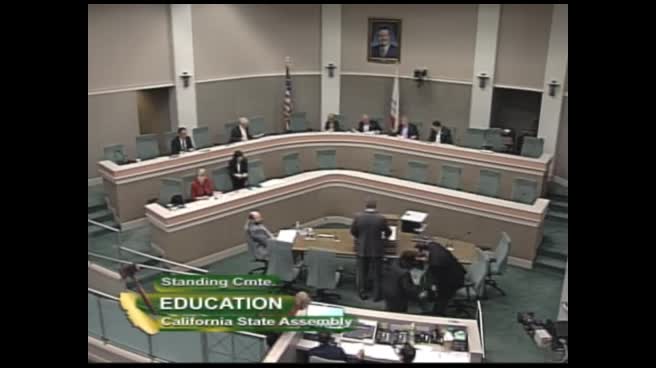
Bill Author

Bill Co-Author(s):