AB 1706: Healing arts: chiropractic practice: speech-language pathology and audiology and hearing aid dispensing: occupational therapy: physical therapy.
- Session Year: 2017-2018
- House: Assembly
- Latest Version Date: 2017-10-03
(1)Under existing law, violations of specified provisions relating to the registration, licensure, certification, or authorization required to engage in certain businesses and professions, including, among others, physical therapy, are punishable as infractions under specified circumstances.
This bill would provide that the practice of occupational therapy without a license is an infraction under this provision. By expanding the scope of a crime, this bill would impose a state-mandated local program.
(2)The Chiropractic Act, enacted by an initiative measure, provides for the licensure and regulation of chiropractors in this state by the State Board of Chiropractic Examiners. Existing law requires that the powers and duties of the board, as provided, be subject to review by the appropriate policy committees of the Legislature as if that act were scheduled to be repealed on January 1, 2018.
This bill would require that the powers and duties of the board, as provided, be subject to review by the appropriate policy committees of the Legislature as if that act were scheduled to be repealed on January 1, 2022.
(3)Existing law, the Speech-Language Pathologists and Audiologists and Hearing Aid Dispensers Licensure Act, provides for the licensure and regulation of speech-language pathologists, audiologists, and hearing aid dispensers by the Speech-Language Pathology and Audiology and Hearing Aid Dispensers Board, which is within the Department of Consumer Affairs. That act authorizes the board to appoint an executive officer. That act repeals the provisions establishing the board and the boards authority to appoint an executive officer on January 1, 2018.
This bill would extend the operation of the board and the boards authority to appoint an executive officer until January 1, 2022.
The act authorizes a superior court of a county, on application of the board, to issue an injunction or other appropriate restraining order against a person other than a licensed speech-language pathologist or audiologist for an act or practice in violation of that act. That act authorizes the board to suspend, revoke, or impose terms and conditions upon the license of a licensee for, among other things, a conviction, as defined, of a crime substantially related to the qualifications, functions, and duties of a speech-language pathologist, audiologist, or hearing aid dispenser. The act authorizes the board to prosecute a person for a violation of the provisions of the act relating to hearing aid dispensers, as specified.
This bill would exclude licensed hearing aid dispensers from the persons against whom a superior court of a county is authorized to issue an injunction or other appropriate restraining order for an act or practice in violation of that act. The bill would expand the definition of a conviction, for the above-mentioned disciplinary purposes, to include certain convictions subsequently dismissed by a court. The bill would authorize the board to prosecute a person for a violation of any provision of the act.
The act requires each applicant for a hearing aid dispensers license to take and pass a written examination and a practical examination, as specified. That act authorizes the board to issue a temporary hearing aid dispenser license to an applicant who, among other things, holds a hearing aid dispensers license in another state. That act also authorizes the board to issue a temporary hearing aid dispenser license to an applicant who proves to the satisfaction of the board that he or she will be supervised and trained by a hearing aid dispenser who is approved by the board. That act requires a temporary licensee who is supervised to take a licensure examination within the first 10 months after the temporary license is issued, and requires that the license expire if the temporary licensee fails to take the licensure examination.
This bill would rename the temporary license of supervised licensees as the trainee license and would make conforming changes. The bill would extend the time by when the licensee is required to take the examination to 12 months after the trainee license is issued.
The act establishes the Speech-Language Pathology and Audiology and Hearing Aid Dispensers Fund to carry out the purposes of the act and requires the board to pay all revenue received by the board pursuant to the act to the Treasurer for deposit in the fund.
This bill would specify that money in the fund shall be available upon appropriation by the Legislature.
(4)Existing law, the Occupational Therapy Practice Act, provides for the licensure and regulation of occupational therapists by the California Board of Occupational Therapy, which is within the Department of Consumer Affairs, and repeals the provisions establishing the board on January 1, 2018.
This bill would extend the operation of the board until January 1, 2022.
The act, among other things, prohibits a person from representing to the public by title, description of services, methods, or procedures, or otherwise, that the person is authorized to practice occupational therapy in this state, or from using specified professional abbreviations or any other words, letters, or symbols with the intent to represent that he or she practices occupational therapy, unless he or she is authorized to practice occupational therapy under the act.
This bill would authorize a licensee under the act who has earned a doctoral degree in occupational therapy (OTD) or, after adoption by the board of specified regulations, a doctoral degree in a related area of practice or study to use specified abbreviations and titles in communications, as provided.
(5)Existing law, the Physical Therapy Practice Act, provides for the licensure and regulation of physical therapists and physical therapist assistants by the Physical Therapy Board of California, which is within the Department of Consumer Affairs. That act requires the board to appoint an executive officer and authorizes the board to employ other persons, as specified. That act repeals the provisions establishing the board and the boards authority to appoint an executive officer and other personnel on January 1, 2018.
This bill would extend the operation of the board and the boards authority to appoint an executive officer and other personnel until January 1, 2022.
A license issued under the act expires at 12 a.m. on the last day of the birth month of the licensee during the 2nd year of a 2-year term, if not renewed. To renew a license, the act requires the licensee to, among other things, apply for renewal, pay the prescribed renewal fee, and submit proof satisfactory to the board that he or she has completed the required number of continuing education hours established by regulation by the board, as provided. The act exempts a licensee from the requirement to pay a renewal fee and submit proof of continuing education if he or she has applied to the board for retired license status and prohibits the holder of a retired license from practicing or assisting in the provision of, physical therapy unless he or she applies for renewal and meets specified requirements.
This bill would repeal the provision relating to retired license status as of January 1, 2019.
The act requires an applicant for a physical therapy license who has graduated from a physical therapist education program not approved by the board and not located in the United States to comply with specified requirements, including demonstrating proficiency in English by achieving a score specified by the board on the Test of English as a Foreign Language administered by the Educational Testing Services or such other examination as may be specified by the board by regulation.
This bill would instead allow an applicant, as described above, to demonstrate proficiency in English by achieving a score specified by the board on the Test of English as a Foreign Language or other means as prescribed by the board by regulation. The bill would also exempt from this requirement an applicant who has been awarded a bachelors degree or higher in a physical therapist educational program from a college, university, or professional training school in Australia, any part of Canada other than Quebec, Ireland, New Zealand, the United Kingdom, the United States, or an English-speaking country specified by the board.
The act establishes various fees for licensure as a physical therapist, including application, issuance, licensure, and renewal fees. The act authorizes the board to decrease or increase the amount of these fees to an amount that does not exceed the cost of the associated activity. The act requires the board to report to specified committees of the Legislature whenever it increases any fee, as provided.
This bill, with respect to the fees described above, would delete the statutory limitation that the decreased or increased amount be in an amount that does not exceed the cost of the associated activity. The bill would repeal the requirement that the board report to the specified committees of the Legislature whenever it increases a fee.
The act authorizes the board to establish a fee, as provided, for persons certified to perform electromyographical testing and requires that the fee be paid as provided in specified law.
This bill would make a technical change to this provision by correcting an erroneous cross-reference to other law.
The act establishes the Physical Therapy Fund and requires that all collections from persons licensed or seeking to be licensed be paid by the board into the fund. Under the act, money in the fund from fees is continuously appropriated for the purpose of executing the act.
This bill would, instead, make the money in the fund available only upon appropriation by the Legislature.
Under existing law, a violation of any provision of the act is a misdemeanor.
By changing the scope of a crime, this bill would impose a state-mandated local program.
(6)This bill would incorporate additional changes to Section 146 of the Business and Professions Code proposed by SB 798 to be operative only if this bill and SB 798 are enacted and this bill is enacted last.
(7)The California Constitution requires the state to reimburse local agencies and school districts for certain costs mandated by the state. Statutory provisions establish procedures for making that reimbursement.
This bill would provide that no reimbursement is required by this act for a specified reason.
(1)Under existing law, violations of specified provisions relating to the registration, licensure, certification, or authorization in order to engage in certain businesses and professions, including, among others, physical therapy, are punishable as infractions under specified circumstances.
This bill would provide that the practice of occupational therapy without a license is an infraction under this provision. By expanding the scope of a crime, this bill would impose a state-mandated local program.
(2)The Chiropractic Act, enacted by an initiative measure, provides for the licensure and regulation of chiropractors in this state by the State Board of Chiropractic Examiners. Existing law requires that the powers and duties of the board, as provided, be subject to review by the appropriate policy committees of the Legislature as if that act were scheduled to be repealed on January 1, 2018.
This bill would require that the powers and duties of the board, as provided, be subject to review by the appropriate policy committees of the Legislature as if that act were scheduled to be repealed on January 1, 2022.
(3)Existing law, the Speech-Language Pathologists and Audiologists and Hearing Aid Dispensers Licensure Act, provides for the licensure and regulation of speech-language pathologists, audiologists, and hearing aid dispensers by the Speech-Language Pathology and Audiology and Hearing Aid Dispensers Board, which is within the Department of Consumer Affairs. That act authorizes the board to appoint an executive officer. That act repeals the provisions establishing the board and the boards authority to appoint an executive officer on January 1, 2018.
This bill would extend the operation of the board and the boards authority to appoint an executive officer until January 1, 2022.
The act authorizes a superior court of a county, on application of the board, to issue an injunction or other appropriate restraining order against a person other than a licensed speech-language pathologist or audiologist for an act or practice in violation of that act. That act authorizes the board to suspend, revoke, or impose terms and conditions upon the license of a licensee for, among other things, a conviction, as defined, of a crime substantially related to the qualifications, functions, and duties of a speech-language pathologist, audiologist, or hearing aid dispenser. The act authorizes the board to prosecute a person for a violation of the provisions of the act relating to hearing aid dispensers, as specified.
This bill would exclude licensed hearing aid dispensers from the persons against whom a superior court of a county is authorized to issue an injunction or other appropriate restraining order for an act or practice in violation of that act. The bill would expand the definition of a conviction, for the above-mentioned disciplinary purposes, to include certain convictions subsequently dismissed by a court. The bill would authorize the board to prosecute a person for a violation of any provision of the act.
The act requires each applicant for a hearing aid dispensers license to take and pass a written examination and a practical examination, as specified. That act authorizes the board to issue a temporary hearing aid dispenser license to an applicant who, among other things, holds a hearing aid dispensers license in another state. That act also authorizes the board to issue a temporary hearing aid dispenser license to an applicant who proves to the satisfaction of the board that he or she will be supervised and trained by a hearing aid dispenser who is approved by the board. That act requires a temporary licensee who is supervised to take a licensure examination within the first 10 months after the temporary license is issued, and requires that the license expire if the temporary licensee fails to take the licensure examination.
This bill would rename the temporary license of supervised licensees as the trainee license and would make conforming changes. The bill would extend the time by when the licensee is required to take the examination to 12 months after the trainee license is issued.
The act establishes the Speech-Language Pathology and Audiology and Hearing Aid Dispensers Fund to carry out the purposes of the act and requires the board to pay all revenue received by the board pursuant to the act to the Treasurer for deposit in the fund.
This bill would specify that money in the fund shall be available upon appropriation by the Legislature.
(4)Existing law, the Occupational Therapy Practice Act, provides for the licensure and regulation of occupational therapists by the California Board of Occupational Therapy, which is within the Department of Consumer Affairs, and repeals the provisions establishing the board on January 1, 2018.
This bill would extend the operation of the board until January 1, 2022.
The act, among other things, prohibits a person from representing to the public by title, description of services, methods, or procedures, or otherwise, that the person is authorized to practice occupational therapy in this state, or from using specified professional abbreviations or any other words, letters, or symbols with the intent to represent that he or she practices occupational therapy, unless he or she is authorized to practice occupational therapy under the act.
This bill would authorize a licensee under the act who has earned a doctoral degree in occupational therapy (OTD) or, after adoption by the board of specified regulations, a doctoral degree in a related area of practice or study to use specified abbreviations and titles in communications, as provided.
(5)Existing law, the Physical Therapy Practice Act, provides for the licensure and regulation of physical therapists and physical therapist assistants by the Physical Therapy Board of California, which is within the Department of Consumer Affairs. That act requires the board to appoint an executive officer and authorizes the board to employ other persons, as specified. That act repeals the provisions establishing the board and the boards authority to appoint an executive officer and other personnel on January 1, 2018.
This bill would extend the operation of the board and the boards authority to appoint an executive officer and other personnel until January 1, 2022.
A license issued under the act expires at 12 a.m. on the last day of the birth month of the licensee during the 2nd year of a 2-year term, if not renewed. To renew a license, the act requires that the licensee to, among other things, apply for renewal, pay the prescribed renewal fee, and submit proof satisfactory to the board that he or she has completed the required number of continuing education hours established by regulation by the board, as provided. The act exempts a licensee from the requirement to pay a renewal fee and submit proof of continuing education if he or she has applied to the board for retired license status and prohibits the holder of a retired license from engaging in, or assisting in the provision of, the practice of physical therapy unless he or she applies for renewal and meets specified requirements.
This bill would repeal the provision relating to retired license status as of January 1, 2019.
The act requires an applicant for a physical therapy license who has graduated from a physical therapist education program not approved by the board and not located in the United States to comply with specified requirements, including demonstrating proficiency in English by achieving a score specified by the board on the Test of English as a Foreign Language administered by the Educational Testing Services or such other examination as may be specified by the board by regulation.
This bill would instead allow an applicant, as described above, to demonstrate proficiency in English by achieving a score specified by the board on the Test of English as a Foreign Language or other means as prescribed by the board by regulation. The bill would also exempt from this requirement an applicant who has been awarded a bachelors degree or higher in a physical therapist educational program from a college, university, or professional training school in Australia, any part of Canada other than Quebec, Ireland, New Zealand, the United Kingdom, the United States, or an English-speaking county specified by the board.
The act establishes various fees for licensure as a physical therapist, including application, issuance, licensure, and renewal. The act authorizes the board to decrease or increase the amount of these fees to an amount that does not exceed the cost of the associated activity. The act requires the board to report to specified committees of the Legislature whenever it increases any fee, as provided.
This bill, with respect to the fees described above, would delete the statutory limitation that the decreased or increased amount be in an amount that does not exceed the cost of the associated activity. The bill would repeal the requirement that the board report to the specified committees of the Legislature whenever it increases a fee.
The act authorizes the board to establish a fee, as provided, for persons certified to perform electromyographical testing and requires that the fee be paid as provided in specified law.
This bill would make a technical change to this provision by correcting an erroneous cross reference to other law.
The act establishes the Physical Therapy Fund and requires that all collections from persons licensed or seeking to be licensed be paid by the board into the fund. Under the act, money in the fund from fees is continuously appropriated for the purpose of executing the act.
This bill would, instead, make the money in the fund available only upon appropriation by the Legislature.
Under existing law, a violation of any provision of the act is a misdemeanor.
By changing the scope of a crime, this bill would impose a state-mandated local program.
(6)This bill would incorporate additional changes to Section 146 of the Business and Professions Code proposed by SB 798 to be operative only if this bill and SB 798 are enacted and this bill is enacted last.
(6)(7)The California Constitution requires the state to reimburse local agencies and school districts for certain costs mandated by the state. Statutory provisions establish procedures for making that reimbursement.
This bill would provide that no reimbursement is required by this act for a specified reason.
(1)Under existing law, violations of specified provisions relating to the registration, licensure, certification, or authorization in order to engage in certain businesses and professions, including, among others, physical therapy, are punishable as infractions under specified circumstances.
This bill would provide that the practice of occupational therapy without a license is an infraction under this provision. By expanding the scope of a crime, this bill would impose a state-mandated local program.
(2)The Chiropractic Act, enacted by an initiative measure, provides for the licensure and regulation of chiropractors in this state by the State Board of Chiropractic Examiners. Existing law requires that the powers and duties of the board, as provided, be subject to review by the appropriate policy committees of the Legislature as if that act were scheduled to be repealed on January 1, 2018.
This bill would require that the powers and duties of the board, as provided, be subject to review by the appropriate policy committees of the Legislature as if that act were scheduled to be repealed on January 1, 2022.
(3)Existing law, the Speech-Language Pathologists and Audiologists and Hearing Aid Dispensers Licensure Act, provides for the licensure and regulation of speech-language pathologists, audiologists, and hearing aid dispensers by the Speech-Language Pathology and Audiology and Hearing Aid Dispensers Board, which is within the Department of Consumer Affairs. That act authorizes the board to appoint an executive officer. That act repeals the provisions establishing the board and the boards authority to appoint an executive officer on January 1, 2018.
This bill would extend the operation of the board and the boards authority to appoint an executive officer until January 1, 2022.
The act authorizes a superior court of a county, on application of the board, to issue an injunction or other appropriate restraining order against a person other than a licensed speech-language pathologist or audiologist for an act or practice in violation of that act. That act authorizes the board to suspend, revoke, or impose terms and conditions upon the license of a licensee for, among other things, a conviction, as defined, of a crime substantially related to the qualifications, functions, and duties of a speech-language pathologist, audiologist, or hearing aid dispenser. The act authorizes the board to prosecute a person for a violation of the provisions of the act relating to hearing aid dispensers, as specified.
This bill would exclude licensed hearing aid dispensers from the persons against whom a superior court of a county is authorized to issue an injunction or other appropriate restraining order for an act or practice in violation of that act. The bill would expand the definition of a conviction, for the above-mentioned disciplinary purposes, to include certain convictions subsequently dismissed by a court. The bill would authorize the board to prosecute a person for a violation of any provision of the act.
The act requires each applicant for a hearing aid dispensers license to take and pass a written examination and a practical examination, as specified. That act authorizes the board to issue a temporary hearing aid dispenser license to an applicant who, among other things, holds a hearing aid dispensers license in another state. That act also authorizes the board to issue a temporary hearing aid dispenser license to an applicant who proves to the satisfaction of the board that he or she will be supervised and trained by a hearing aid dispenser who is approved by the board. That act requires a temporary licensee who is supervised to take a licensure examination within the first 10 months after the temporary license is issued, and requires that the license expire if the temporary licensee fails to take the licensure examination.
This bill would rename the temporary license of supervised licensees as the trainee license and would make conforming changes. The bill would extend the time by when the licensee is required to take the examination to 12 months after the trainee license is issued.
The act establishes the Speech-Language Pathology and Audiology and Hearing Aid Dispensers Fund to carry out the purposes of the act and requires the board to pay all revenue received by the board pursuant to the act to the Treasurer for deposit in the fund.
This bill would specify that money in the fund shall be available upon appropriation by the Legislature.
(4)Existing law, the Occupational Therapy Practice Act, provides for the licensure and regulation of occupational therapists by the California Board of Occupational Therapy, which is within the Department of Consumer Affairs, and repeals the provisions establishing the board on January 1, 2018.
This bill would extend the operation of the board until January 1, 2022.
The act, among other things, prohibits a person from representing to the public by title, description of services, methods, or procedures, or otherwise, that the person is authorized to practice occupational therapy in this state, or from using specified professional abbreviations or any other words, letters, or symbols with the intent to represent that he or she practices occupational therapy, unless he or she is authorized to practice occupational therapy under the act.
This bill would authorize a licensee under the act who has earned a doctoral degree in occupational therapy (OTD) or, after adoption by the board of specified regulations, a doctoral degree in a related area of practice or study to use specified abbreviations and titles in communications, as provided.
(5)Existing law, the Physical Therapy Practice Act, provides for the licensure and regulation of physical therapists and physical therapist assistants by the Physical Therapy Board of California, which is within the Department of Consumer Affairs. That act requires the board to appoint an executive officer and authorizes the board to employ other persons, as specified. That act repeals the provisions establishing the board and the boards authority to appoint an executive officer and other personnel on January 1, 2018.
This bill would extend the operation of the board and the boards authority to appoint an executive officer and other personnel until January 1, 2022.
A license issued under the act expires at 12 a.m. on the last day of the birth month of the licensee during the 2nd year of a 2-year term, if not renewed. To renew a license, the act requires that the licensee to, among other things, apply for renewal, pay the prescribed renewal fee, and submit proof satisfactory to the board that he or she has completed the required number of continuing education hours established by regulation by the board, as provided. The act exempts a licensee from the requirement to pay a renewal fee and submit proof of continuing education if he or she has applied to the board for retired license status and prohibits the holder of a retired license from engaging in, or assisting in the provision of, the practice of physical therapy unless he or she applies for renewal and meets specified requirements.
This bill would repeal the provision relating to retired license status as of January 1, 2019.
The act requires an applicant for a physical therapy license who has graduated from a physical therapist education program not approved by the board and not located in the United States to comply with specified requirements, including demonstrating proficiency in English by achieving a score specified by the board on the Test of English as a Foreign Language administered by the Educational Testing Services or such other examination as may be specified by the board by regulation.
This bill would instead allow an applicant, as described above, to demonstrate proficiency in English by achieving a score specified by the board on the Test of English as a Foreign Language or other means as prescribed by the board by regulation. The bill would also exempt from this requirement an applicant who has been awarded a bachelors degree or higher in a physical therapist educational program from a college, university, or professional training school in Australia, any part of Canada other than Quebec, Ireland, New Zealand, the United Kingdom, the United States, or an English-speaking county specified by the board.
The act establishes various fees for licensure as a physical therapist, including application, issuance, licensure, and renewal. The act authorizes the board to decrease or increase the amount of these fees to an amount that does not exceed the cost of the associated activity. The act requires the board to report to specified committees of the Legislature whenever it increases any fee, as provided.
This bill, with respect to the fees described above, would delete the statutory limitation that the decreased or increased amount be in an amount that does not exceed the cost of the associated activity. The bill would repeal the requirement that the board report to the specified committees of the Legislature whenever it increases a fee.
The act authorizes the board to establish a fee, as provided, for persons certified to perform electromyographical testing and requires that the fee be paid as provided in specified law.
This bill would make a technical change to this provision by correcting an erroneous cross reference to other law.
The act establishes the Physical Therapy Fund and requires that all collections from persons licensed or seeking to be licensed be paid by the board into the fund. Under the act, money in the fund from fees is continuously appropriated for the purpose of executing the act.
This bill would, instead, make the money in the fund available only upon appropriation by the Legislature.
Under existing law, a violation of any provision of the act is a misdemeanor.
By changing the scope of a crime, this bill would impose a state-mandated local program.
(6)The California Constitution requires the state to reimburse local agencies and school districts for certain costs mandated by the state. Statutory provisions establish procedures for making that reimbursement.
This bill would provide that no reimbursement is required by this act for a specified reason.
(1)Under existing law, violations of specified provisions relating to the registration, licensure, certification, or authorization in order to engage in certain businesses and professions, including, among others, physical therapy, are punishable as infractions under specified circumstances.
This bill would provide that the practice of occupational therapy without a license is an infraction under this provision. By expanding the scope of a crime, this bill would impose a state-mandated local program.
The(2)The Chiropractic Act, enacted by an initiative measure, provides for the licensure and regulation of chiropractors in this state by the State Board of Chiropractic Examiners. Existing law requires that the powers and duties of the board, as provided, be subject to review by the appropriate policy committees of the Legislature as if that act were scheduled to be repealed on January 1, 2018.
This bill would require that the powers and duties of the board, as provided, be subject to review by the appropriate policy committees of the Legislature as if that act were scheduled to be repealed on January 1, 2022.
Existing(3)Existing law, the Speech-Language Pathologists and Audiologists and Hearing Aid Dispensers Licensure Act, provides for the licensure and regulation of speech-language pathologists, audiologists, and hearing aid dispensers by the Speech-Language Pathology and Audiology and Hearing Aid Dispensers Board, which is within the Department of Consumer Affairs. That act authorizes the board to appoint an executive officer. That act repeals the provisions establishing the board and the boards authority to appoint an executive officer on January 1, 2018.
This bill would extend the operation of the board and the boards authority to appoint an executive officer until January 1, 2022.
The Speech-Language Pathologists and Audiologists and Hearing Aid Dispensers Licensure Act act authorizes a superior court of a county, on application of the board, to issue an injunction or other appropriate restraining order against a person other than a licensed speech-language pathologist or audiologist for an act or practice in violation of that act. That act authorizes the board to suspend, revoke, or impose terms and conditions upon the license of a licensee for, among other things, a conviction, as defined, of a crime substantially related to the qualifications, functions, and duties of a speech-language pathologist, audiologist, or hearing aid dispenser. The act authorizes the board to prosecute a person for a violation of the provisions of the act relating to hearing aid dispensers, as specified.
This bill would exclude licensed hearing aid dispensers from the persons against whom a superior court of a county is authorized to issue an injunction or other appropriate restraining order for an act or practice in violation of that act. The bill would expand the definition of a conviction, for the above-mentioned disciplinary purposes, to include certain convictions subsequently dismissed by a court. The bill would authorize the board to prosecute a person for a violation of any provision of the act.
The Speech-Language Pathologists and Audiologists and Hearing Aid Dispensers Licensure Act act requires each applicant for a hearing aid dispensers license to take and pass a written examination and a practical examination, as specified. That act authorizes the board to issue a temporary hearing aid dispenser license to an applicant who, among other things, holds a hearing aid dispensers license in another state. That act also authorizes the board to issue a temporary hearing aid dispenser license to an applicant who proves to the satisfaction of the board that he or she will be supervised and trained by a hearing aid dispenser who is approved by the board. That act requires a temporary licensee who is supervised to take a licensure examination within the first 10 months after the temporary license is issued, and requires that the license expire if the temporary licensee fails to take the licensure examination.
This bill would rename the temporary license of supervised licensees as the trainee license and would make conforming changes. The bill would extend the time by when the licensee is required to take the examination to 12 months after the trainee license is issued.
Existing(4)Existing law, the Occupational Therapy Practice Act, provides for the licensure and regulation of occupational therapists by the California Board of Occupational Therapy, which is within the Department of Consumer Affairs, and repeals the provisions establishing the board on January 1, 2018.
This bill would extend the operation of the board until January 1, 2022.
The act, among other things, prohibits a person from representing to the public by title, description of services, methods, or procedures, or otherwise, that the person is authorized to practice occupational therapy in this state, or from using specified professional abbreviations or any other words, letters, or symbols with the intent to represent that he or she practices occupational therapy, unless he or she is authorized to practice occupational therapy under the act.
This bill would authorize a licensee under the act who has earned a doctoral degree in occupational therapy (OTD) or, after adoption by the board of specified regulations, a doctoral degree in a related area of practice or study to use specified abbreviations and titles in communications, as provided.
Existing(5)Existing law, the Physical Therapy Practice Act, provides for the licensure and regulation of physical therapists and physical therapist assistants by the Physical Therapy Board of California, which is within the Department of Consumer Affairs. That act requires the board to appoint an executive officer and authorizes the board to employ other persons, as specified. That act repeals the provisions establishing the board and the boards authority to appoint an executive officer and other personnel on January 1, 2018.
This bill would extend the operation of the board and the boards authority to appoint an executive officer and other personnel until January 1, 2022.
A license issued under the act expires at 12 a.m. on the last day of the birth month of the licensee during the 2nd year of a 2-year term, if not renewed. To renew a license, the act requires that the licensee to, among other things, apply for renewal, pay the prescribed renewal fee, and submit proof satisfactory to the board that he or she has completed the required number of continuing education hours established by regulation by the board, as provided. The act exempts a licensee from the requirement to pay a renewal fee and submit proof of continuing education if he or she has applied to the board for retired license status and prohibits the holder of a retired license from engaging in, or assisting in the provision of, the practice of physical therapy unless he or she applies for renewal and meets specified requirements.
This bill would repeal the provision relating to retired license status as of January 1, 2019.
The act requires an applicant for a physical therapy license who has graduated from a physical therapist education program not approved by the board and not located in the United States to comply with specified requirements, including demonstrating proficiency in English by achieving a score specified by the board on the Test of English as a Foreign Language administered by the Educational Testing Services or such other examination as may be specified by the board by regulation.
This bill would instead allow an applicant, as described above, to demonstrate proficiency in English by achieving a score specified by the board on the Test of English as a Foreign Language or other means as prescribed by the board by regulation. The bill would also exempt from this requirement an applicant who has been awarded a bachelors degree or higher in a physical therapist educational program from a college, university, or professional training school in Australia, any part of Canada other than Quebec, Ireland, New Zealand, the United Kingdom, the United States, or an English-speaking county specified by the board.
The act establishes various fees for licensure as a physical therapist, including application, issuance, licensure, and renewal. The act authorizes the board to decrease or increase the amount of these fees to an amount that does not exceed the cost of the associated activity. The act requires the board to report to specified committees of the Legislature whenever it increases any fee, as provided.
This bill, with respect to the fees described above, would delete the statutory limitation that the decreased or increased amount be in an amount that does not exceed the cost of the associated activity. The bill would repeal the requirement that the board report to the specified committees of the Legislature whenever it increases a fee.
The act authorizes the board to establish a fee, as provided, for persons certified to perform electromyographical testing and requires that the fee be paid as provided in specified law.
This bill would make a technical change to this provision by correcting an erroneous cross reference to other law.
Under existing law, a violation of any provision of the act is a misdemeanor.
By changing the scope of a crime, this bill would impose a state-mandated local program.
(6)The California Constitution requires the state to reimburse local agencies and school districts for certain costs mandated by the state. Statutory provisions establish procedures for making that reimbursement.
This bill would provide that no reimbursement is required by this act for a specified reason.
The Chiropractic Act, enacted by an initiative measure, provides for the licensure and regulation of chiropractors in this state by the State Board of Chiropractic Examiners. Existing law requires that the powers and duties of the board, as provided, be subject to review by the appropriate policy committees of the Legislature as if that act were scheduled to be repealed on January 1, 2018.
This bill would require that the powers and duties of the board, as provided, be subject to review by the appropriate policy committees of the Legislature as if that act were scheduled to be repealed on January 1, 2022.
Existing law, the Speech-Language Pathologists and Audiologists and Hearing Aid Dispensers Licensure Act, provides for the licensure and regulation of speech-language pathologists, audiologists, and hearing aid dispensers by the Speech-Language Pathology and Audiology and Hearing Aid Dispensers Board, which is within the Department of Consumer Affairs. That act authorizes the board to appoint an executive officer. That act repeals the provisions establishing the board and the boards authority to appoint an executive officer on January 1, 2018.
This bill would extend the operation of the board and the boards authority to appoint an executive officer until January 1, 2022.
The Speech-Language Pathologists and Audiologists and Hearing Aid Dispensers Licensure Act authorizes a superior court of a county, on application of the board, to issue an injunction or other appropriate restraining order against a person other than a licensed speech-language pathologist or audiologist for an act or practice in violation of that act. That act authorizes the board to suspend, revoke, or impose terms and conditions upon the license of a licensee for, among other things, a conviction, as defined, of a crime substantially related to the qualifications, functions, and duties of a speech-language pathologist, audiologist, or hearing aid dispenser. The act authorizes the board to prosecute a person for a violation of the provisions of the act relating to hearing aid dispensers, as specified.
This bill would exclude licensed hearing aid dispensers from the persons against whom a superior court of a county is authorized to issue an injunction or other appropriate restraining order for an act or practice in violation of that act. The bill would expand the definition of a conviction, for the above-mentioned disciplinary purposes, to include certain convictions subsequently dismissed by a court. The bill would authorize the board to prosecute a person for a violation of any provision of the act.
The Speech-Language Pathologists and Audiologists and Hearing Aid Dispensers Licensure Act requires each applicant for a hearing aid dispensers license to take and pass a written examination and a practical examination, as specified. That act authorizes the board to issue a temporary hearing aid dispenser license to an applicant who, among other things, holds a hearing aid dispensers license in another state. That act also authorizes the board to issue a temporary hearing aid dispenser license to an applicant who proves to the satisfaction of the board that he or she will be supervised and trained by a hearing aid dispenser who is approved by the board. That act requires a temporary licensee who is supervised to take a licensure examination within the first 10 months after the temporary license is issued, and requires that the license expire if the temporary licensee fails to take the licensure examination.
This bill would rename the temporary license of supervised licensees as the trainee license and would make conforming changes. The bill would extend the time by when the licensee is required to take the examination to 12 months after the trainee license is issued.
Existing law, the Occupational Therapy Practice Act, provides for the licensure and regulation of occupational therapists by the California Board of Occupational Therapy, which is within the Department of Consumer Affairs, and repeals the provisions establishing the board on January 1, 2018.
This bill would extend the operation of the board until January 1, 2022.
Existing law, the Physical Therapy Practice Act, provides for the licensure and regulation of physical therapists and physical therapist assistants by the Physical Therapy Board of California, which is within the Department of Consumer Affairs. That act requires the board to appoint an executive officer and authorizes the board to employee employ other persons, as specified. That act repeals the provisions establishing the board and the boards authority to appoint an executive officer and other personnel on January 1, 2018.
This bill would extend the operation of the board and the boards authority to appoint an executive officer and other personnel until January 1, 2022.
The Chiropractic Act, enacted by an initiative measure, provides for the licensure and regulation of chiropractors in this state by the State Board of Chiropractic Examiners. Existing law requires that the powers and duties of the board, as provided, be subject to review by the appropriate policy committees of the Legislature as if that act were scheduled to be repealed on January 1, 2018.
This bill would require that the powers and duties of the board, as provided, be subject to review by the appropriate policy committees of the Legislature as if that act were scheduled to be repealed on January 1, 2022.
Existing law, the Speech-Language Pathologists and Audiologists and Hearing Aid Dispensers Licensure Act, provides for the licensure and regulation of speech-language pathologists, audiologists, and hearing aid dispensers by the Speech-Language Pathology and Audiology and Hearing Aid Dispensers Board, which is within the Department of Consumer Affairs. That act authorizes the board to appoint an executive officer. That act repeals the provisions establishing the board and the boards authority to appoint an executive officer on January 1, 2018.
This bill would extend the operation of the board and the boards authority to appoint an executive officer until January 1, 2022.
Existing law, the Occupational Therapy Practice Act, provides for the licensure and regulation of occupational therapists by the California Board of Occupational Therapy, which is within the Department of Consumer Affairs, and repeals the provisions establishing the board on January 1, 2018.
This bill would extend the operation of the board until January 1, 2022.
Existing law, the Physical Therapy Practice Act, provides for the licensure and regulation of physical therapists and physical therapist assistants by the Physical Therapy Board of California, which is within the Department of Consumer Affairs. That act requires the board to appoint an executive officer and authorizes the board to employee other persons, as specified. That act repeals the provisions establishing the board and the boards authority to appoint an executive officer and other personnel on January 1, 2018.
This bill would extend the operation of the board and the boards authority to appoint an executive officer and other personnel until January 1, 2022.
The Chiropractic Act, enacted by an initiative measure, provides for the licensure and regulation of chiropractors in this state by the State Board of Chiropractic Examiners. Existing law requires that the powers and duties of the board, as provided, be subject to review by the appropriate policy committees of the Legislature as if that act were scheduled to be repealed on January 1, 2018.
This bill would require that the powers and duties of the board, as provided, be subject to review by the appropriate policy committees of the Legislature as if that act were scheduled to be repealed on January 1, 2022.
Existing law, the Occupational Therapy Practice Act, provides for the licensure and regulation of occupational therapists by the California Board of Occupational Therapy, which is within the Department of Consumer Affairs, and repeals the provisions establishing the board on January 1, 2018.
This bill would extend the operation of the board until January 1, 2022.
Existing law, the Physical Therapy Practice Act, provides for the licensure and regulation of physical therapists and physical therapist assistants by the Physical Therapy Board of California, which is within the Department of Consumer Affairs. That act requires the board to appoint an executive officer and authorizes the board to employee other persons, as specified. That act repeals the provisions establishing the board and the boards authority to appoint an executive officer and other personnel on January 1, 2018.
This bill would extend the operation of the board and the boards authority to appoint an executive officer and other personnel until January 1, 2022.
(a)Notwithstanding any other provision of law, a violation of any code section listed in subdivision (c) is an infraction subject to the procedures described in Sections 19.6 and 19.7 of the Penal Code when either of the following applies:
(1)A complaint or a written notice to appear in court pursuant to Chapter 5c (commencing with Section 853.5) of Title 3 of Part 2 of the Penal Code is filed in court charging the offense as an infraction unless the defendant, at the time he or she is arraigned, after being advised of his or her rights, elects to have the case proceed as a misdemeanor.
(2)The court, with the consent of the defendant and the prosecution, determines that the offense is an infraction in which event the case shall proceed as if the defendant has been arraigned on an infraction complaint.
(b)Subdivision (a) does not apply to a violation of the code sections listed in subdivision (c) if the defendant has had his or her license, registration, or certificate previously revoked or suspended.
(c)The following sections require registration, licensure, certification, or other authorization in order to engage in certain businesses or professions regulated by this code:
(1)Sections 2052 and 2054.
(2)Section 2570.3.
(3)Section 2630.
(4)Section 2903.
(5)Section 3575.
(6)Section 3660.
(7)Sections 3760 and 3761.
(8)Section 4080.
(9)Section 4825.
(10)Section 4935.
(11)Section 4980.
(12)Section 4989.50.
(13)Section 4996.
(14)Section 4999.30.
(15)Section 5536.
(16)Section 6704.
(17)Section 6980.10.
(18)Section 7317.
(19)Section 7502 or 7592.
(20)Section 7520.
(21)Section 7617 or 7641.
(22)Subdivision (a) of Section 7872.
(23)Section 8016.
(24)Section 8505.
(25)Section 8725.
(26)Section 9681.
(27)Section 9840.
(28)Subdivision (c) of Section 9891.24.
(29)Section 19049.
(d)Notwithstanding any other law, a violation of any of the sections listed in subdivision (c), which is an infraction, is punishable by a fine of not less than two hundred fifty dollars ($250) and not more than one thousand dollars ($1,000). No portion of the minimum fine may be suspended by the court unless as a condition of that suspension the defendant is required to submit proof of a current valid license, registration, or certificate for the profession or vocation that was the basis for his or her conviction.
SEC. 1.5.Section 146 of the Business and Professions Code is amended to read:146.(a)Notwithstanding any other provision of law, a violation of any code section listed in subdivision (c) is an infraction subject to the procedures described in Sections 19.6 and 19.7 of the Penal Code when either of the following applies:
(1)A complaint or a written notice to appear in court pursuant to Chapter 5C (commencing with Section 853.5) of Title 3 of Part 2 of the Penal Code is filed in court charging the offense as an infraction unless the defendant, at the time he or she is arraigned, after being advised of his or her rights, elects to have the case proceed as a misdemeanor.
(2)The court, with the consent of the defendant and the prosecution, determines that the offense is an infraction in which event the case shall proceed as if the defendant has been arraigned on an infraction complaint.
(b)Subdivision (a) does not apply to a violation of the code sections listed in subdivision (c) if the defendant has had his or her license, registration, or certificate previously revoked or suspended.
(c)The following sections require registration, licensure, certification, or other authorization in order to engage in certain businesses or professions regulated by this code:
(1)Section 2474
(2)Sections 2052 and 2054.
(3)Section 2570.3.
(4)Section 2630.
(5)Section 2903.
(6)Section 3575.
(7)Section 3660.
(8)Sections 3760 and 3761.
(9)Section 4080.
(10)Section 4825.
(11)Section 4935.
(12)Section 4980.
(13)Section 4989.50.
(14)Section 4996.
(15)Section 4999.30.
(16)Section 5536.
(17)Section 6704.
(18)Section 6980.10.
(19)Section 7317.
(20)Section 7502 or 7592.
(21)Section 7520.
(22)Section 7617 or 7641.
(23)Subdivision (a) of Section 7872.
(24)Section 8016.
(25)Section 8505.
(26)Section 8725.
(27)Section 9681.
(28)Section 9840.
(29)Subdivision (c) of Section 9891.24.
(30)Section 19049.
(d)Notwithstanding any other law, a violation of any of the sections listed in subdivision (c), which is an infraction, is punishable by a fine of not less than two hundred fifty dollars ($250) and not more than one thousand dollars ($1,000). No portion of the minimum fine may be suspended by the court unless as a condition of that suspension the defendant is required to submit proof of a current valid license, registration, or certificate for the profession or vocation that was the basis for his or her conviction.
SEC. 2.Section 1000 of the Business and Professions Code is amended to read:1000.(a)The law governing practitioners of chiropractic is found in an initiative act entitled An act prescribing the terms upon which licenses may be issued to practitioners of chiropractic, creating the State Board of Chiropractic Examiners and declaring its powers and duties, prescribing penalties for violation hereof, and repealing all acts and parts of acts inconsistent herewith, adopted by the electors November 7, 1922.
(b)The State Board of Chiropractic Examiners is within the Department of Consumer Affairs.
(c)Notwithstanding any other law, the powers and duties of the State Board of Chiropractic Examiners, as set forth in this article and under the act creating the board, shall be subject to review by the appropriate policy committees of the Legislature. The review shall be performed as if this chapter were scheduled to be repealed as of January 1, 2022.
SEC. 3.Section 2531 of the Business and Professions Code is amended to read:2531.(a)There is in the Department of Consumer Affairs the Speech-Language Pathology and Audiology and Hearing Aid Dispensers Board in which the enforcement and administration of this chapter are vested. The Speech-Language Pathology and Audiology and Hearing Aid Dispensers Board shall consist of nine members, three of whom shall be public members.
(b)This section shall remain in effect only until January 1, 2022, and as of that date is repealed.
(c)Notwithstanding any other law, the repeal of this section renders the board subject to review by the appropriate policy committees of the Legislature.
SEC. 4.Section 2531.75 of the Business and Professions Code is amended to read:2531.75.(a)The board may appoint a person exempt from civil service who shall be designated as an executive officer and who shall exercise the powers and perform the duties delegated by the board and vested in him or her by this chapter.
(b)This section shall remain in effect only until January 1, 2022, and as of that date is repealed.
SEC. 5.Section 2533.1 of the Business and Professions Code is amended to read:2533.1.A plea or verdict of guilty or a conviction following a plea of nolo contendere made to a charge substantially related to the qualifications, functions, and duties of a speech-language pathologist or audiologist is deemed to be a conviction within the meaning of this article. The board may order a licensee be disciplined or denied a license as provided in Section 2533 when the time for appeal has elapsed, or the judgment of conviction has been affirmed on appeal, or when an order granting probation is made suspending the imposition of sentence irrespective of a subsequent order under Section 1203.4, 1203.4a, or 1203.41 of the Penal Code allowing the person to withdraw his or her plea of guilty and to enter a plea of not guilty, or setting aside the verdict of guilty, or dismissing the accusation, information or indictment.
SEC. 6.Section 2533.4 of the Business and Professions Code is amended to read:2533.4.Whenever a person other than a licensed speech-language pathologist, hearing aid dispenser, or audiologist has engaged in an act or practice which constitutes an offense under this chapter, a superior court of any county, on application of the board, may issue an injunction or other appropriate order restraining the conduct. Proceedings under this section shall be governed by Chapter 3 (commencing with Section 525) of Title 7 of Part 2 of the Code of Civil Procedure. The board may commence action in the superior court under this section on its own motion.
SEC. 7.Section 2534 of the Business and Professions Code is amended to read:2534.There is in the State Treasury the Speech-Language Pathology and Audiology and Hearing Aid Dispensers Fund. The board shall report to the Controller at the beginning of each month for the month preceding the amount and source of all revenue received by it pursuant to this chapter and shall pay the entire amount thereof to the Treasurer for deposit in the Speech-Language Pathology and Audiology and Hearing Aid Dispensers Fund. All money in the Speech-Language Pathology and Audiology and Hearing Aid Dispensers Fund shall be available, upon appropriation by the Legislature, to carry out the purposes of this chapter.
SEC. 8.Section 2538.19 of the Business and Professions Code is amended and renumbered to read:2533.5.(a)The board may prosecute a person for a violation of this chapter.
(b)The board shall hear and decide a matter, including, but not limited to, a contested case or a petition for reinstatement or modification of probation, or may assign the matter to an administrative law judge in accordance with the Administrative Procedure Act. Except as otherwise provided in this chapter, a hearing shall be conducted in accordance with Chapter 5 (commencing with Section 11500) of Part 1 of Division 3 of Title 2 of the Government Code.
SEC. 9.Section 2538.10 of the Business and Professions Code is amended to read:2538.10.For the purposes of this article, the following definitions shall apply:
(a)Advertise and its variants include the use of a newspaper, magazine, or other publication, book, notice, circular, pamphlet, letter, handbill, poster, bill, sign, placard, card, label, tag, window display, store sign, radio, or television announcement, or any other means or methods now or hereafter employed to bring to the attention of the public the practice of fitting or selling of hearing aids.
(b)License means a hearing aid dispensers license issued pursuant to this article and includes a temporary or trainee license.
(c)Licensee means a person holding a license.
(d)Hearing aid means any wearable instrument or device designed for, or offered for the purpose of, aiding or compensating for impaired human hearing.
(e)Fund means the Speech-Language Pathology and Audiology and Hearing Aid Dispensers Fund.
SEC. 10.Section 2538.28 of the Business and Professions Code is amended to read:2538.28.(a)An applicant who has fulfilled the requirements of Section 2538.24, and has made application therefor, and who proves to the satisfaction of the board that he or she will be supervised and trained by a hearing aid dispenser who is approved by the board may have a trainee license issued to him or her. The trainee license shall entitle the trainee licensee to fit or sell hearing aids as set forth in regulations of the board. The supervising dispenser shall be responsible for any acts or omissions committed by a trainee licensee under his or her supervision that may constitute a violation of this chapter.
(b)The board shall adopt regulations setting forth criteria for its refusal to approve a hearing aid dispenser to supervise a trainee licensee, including procedures to appeal that decision.
(c)A trainee license issued pursuant to this section is effective and valid for six months from date of issue. The board may renew the trainee license for an additional period of six months. Except as provided in subdivision (d), the board shall not issue more than two renewals of a trainee license to any applicant. Notwithstanding subdivision (d), if a trainee licensee who is entitled to renew a trainee license does not renew the trainee license and applies for a new trainee license at a later time, the new trainee license shall only be issued and renewed subject to the limitations set forth in this subdivision.
(d)A new trainee license may be issued pursuant to this section if a trainee license issued pursuant to subdivision (c) has lapsed for a minimum of three years from the expiration or cancellation date of the previous trainee license. The board may issue only one new trainee license under this subdivision.
SEC. 11.Section 2538.29 of the Business and Professions Code is amended to read:2538.29.A trainee licensed under Section 2538.28 shall take the licensure examination within the first 12 months after the trainee license is issued. Failure to take the licensure examination within that time shall result in expiration of the trainee license, and it shall not be renewed unless the trainee licensee has first taken the licensure examination. The board, however, may in its discretion renew the trainee license if the licensee failed to take the licensure examination due to illness or other hardship.
SEC. 12.Section 2538.30 of the Business and Professions Code is amended to read:2538.30.(a)A temporary or trainee licensee shall not be the sole proprietor of, manage, or independently operate a business which engages in the fitting or sale of hearing aids.
(b)A temporary or trainee licensee shall not advertise or otherwise represent that he or she holds a license as a hearing aid dispenser.
SEC. 13.Section 2538.34 of the Business and Professions Code is amended to read:2538.34.(a)Every licensee who engages in the practice of fitting or selling hearing aids shall have and maintain an established retail business address to engage in that fitting or selling, routinely open for service to customers or clients. The address of the licensees place of business shall be registered with the board as provided in Section 2538.33.
(b)Except as provided in subdivision (c), if a licensee maintains more than one place of business within this state, he or she shall apply for and procure a duplicate license for each branch office maintained. The application shall state the name of the person and the location of the place or places of business for which the duplicate license is desired.
(c)A hearing aid dispenser may, without obtaining a duplicate license for a branch office, engage on a temporary basis in the practice of fitting or selling hearing aids at the primary or branch location of another licensees business or at a location or facility that he or she may use on a temporary basis, provided that the hearing aid dispenser notifies the board in advance in writing of the dates and addresses of those businesses, locations, or facilities at which he or she will engage in the practice of fitting or selling hearing aids.
SEC. 14.Section 2538.35 of the Business and Professions Code is amended to read:2538.35.A licensee shall, upon the consummation of a sale of a hearing aid, deliver to the purchaser a written receipt, signed by or on behalf of the licensee, containing all of the following:
(a)The date of consummation of the sale.
(b)Specifications as to the make, serial number, and model number of the hearing aid or aids sold.
(c)The address of the principal place of business of the licensee, and the address and office hours at which the licensee shall be available for fitting or postfitting adjustments and servicing of the hearing aid or aids sold.
(d)A statement to the effect that the aid or aids delivered to the purchaser are used or reconditioned, as the case may be, if that is the fact.
(e)The number of the licensees license and the name and license number of any other hearing aid dispenser, temporary licensee, or trainee licensee, who provided any recommendation or consultation regarding the purchase of the hearing aid.
(f)The terms of any guarantee or written warranty, required by Section 1793.02 of the Civil Code, made to the purchaser with respect to the hearing aid or hearing aids.
SEC. 15.Section 2538.38 of the Business and Professions Code is amended to read:2538.38.A licensee shall, upon the consummation of a sale of a hearing aid, keep and maintain records in his or her office or place of business at all times and each record shall be kept and maintained for a seven-year period. All records related to the sale and fitting of hearing aids shall be open to inspection by the board or its authorized representatives upon reasonable notice. The records kept shall include:
(a)Results of test techniques as they pertain to fitting of the hearing aid.
(b)A copy of the written receipt required by Section 2538.35 and the written recommendation and receipt required by Section 2538.36 when applicable.
(c)Records of maintenance or calibration of equipment used in the practice of fitting or selling hearing aids.
SEC. 16.Section 2570.18 of the Business and Professions Code is amended to read:2570.18.(a)A person shall not represent to the public by title, education, or background, or by description of services, methods, or procedures, or otherwise, that the person is authorized to practice occupational therapy in this state, unless authorized to practice occupational therapy under this chapter.
(b)Unless licensed to practice as an occupational therapist under this chapter, a person may not use the professional abbreviations O.T., O.T.R., or O.T.R./L., or Occupational Therapist, or Occupational Therapist Registered, or any other words, letters, or symbols with the intent to represent that the person practices or is authorized to practice occupational therapy.
(c)A licensee who has earned a doctoral degree in occupational therapy (OTD) or, after adoption of the regulations described in subdivision (e), a doctoral degree in a related area of practice or study may do the following:
(1)In a written communication, use the initials OTD, DrPH, PhD, or EdD, as applicable, following the licensees name.
(2)In a written communication, use the title Doctor or the abbreviation Dr. preceding the licensees name, if the licensees name is immediately followed by an unabbreviated specification of the applicable doctoral degree held by the licensee.
(3)In a spoken communication while engaged in the practice of occupational therapy, use the title Doctor preceding the licensees name, if the licensee specifies that he or she is an occupational therapy practitioner.
(d)A doctoral degree described in subdivision (c) shall be granted by an institution and program accredited by the Western Association of Schools and Colleges, the Accreditation Council on Occupational Therapy Education, or by an accrediting agency recognized by the National Commission on Accrediting or the United States Department of Education that the board determines is equivalent to the Western Association of Schools and Colleges.
(e)The board shall define, by regulation, the doctoral degrees that are in a related area of practice or study for purposes of subdivision (c).
(f)Unless licensed to assist in the practice of occupational therapy as an occupational therapy assistant under this chapter, a person may not use the professional abbreviations O.T.A., O.T.A/L., C.O.T.A., C.O.T.A./L., or Occupational Therapy Assistant, Licensed Occupational Therapy Assistant, or any other words, letters, or symbols, with the intent to represent that the person assists in, or is authorized to assist in, the practice of occupational therapy as an occupational therapy assistant.
(g)The unauthorized practice or representation as an occupational therapist or as an occupational therapy assistant constitutes an unfair business practice under Section 17200 and false and misleading advertising under Section 17500.
SEC. 17.Section 2570.19 of the Business and Professions Code is amended to read:2570.19.(a)There is hereby created a California Board of Occupational Therapy, hereafter referred to as the board. The board shall enforce and administer this chapter.
(b)The members of the board shall consist of the following:
(1)Three occupational therapists who shall have practiced occupational therapy for five years.
(2)One occupational therapy assistant who shall have assisted in the practice of occupational therapy for five years.
(3)Three public members who shall not be licentiates of the board, of any other board under this division, or of any board referred to in Section 1000 or 3600.
(c)The Governor shall appoint the three occupational therapists and one occupational therapy assistant to be members of the board. The Governor, the Senate Committee on Rules, and the Speaker of the Assembly shall each appoint a public member. Not more than one member of the board shall be appointed from the full-time faculty of any university, college, or other educational institution.
(d)All members shall be residents of California at the time of their appointment. The occupational therapist and occupational therapy assistant members shall have been engaged in rendering occupational therapy services to the public, teaching, or research in occupational therapy for at least five years preceding their appointments.
(e)The public members may not be or have ever been occupational therapists or occupational therapy assistants or in training to become occupational therapists or occupational therapy assistants. The public members may not be related to, or have a household member who is, an occupational therapist or an occupational therapy assistant, and may not have had, within two years of the appointment, a substantial financial interest in a person regulated by the board.
(f)The Governor shall appoint two board members for a term of one year, two board members for a term of two years, and one board member for a term of three years. Appointments made thereafter shall be for four-year terms, but no person shall be appointed to serve more than two consecutive terms. Terms shall begin on the first day of the calendar year and end on the last day of the calendar year or until successors are appointed, except for the first appointed members who shall serve through the last calendar day of the year in which they are appointed, before commencing the terms prescribed by this section. Vacancies shall be filled by appointment for the unexpired term. The board shall annually elect one of its members as president.
(g)The board shall meet and hold at least one regular meeting annually in the Cities of Sacramento, Los Angeles, and San Francisco. The board may convene from time to time until its business is concluded. Special meetings of the board may be held at any time and place designated by the board.
(h)Notice of each meeting of the board shall be given in accordance with the Bagley-Keene Open Meeting Act (Article 9 (commencing with Section 11120) of Chapter 1 of Part 1 of Division 3 of Title 2 of the Government Code).
(i)Members of the board shall receive no compensation for their services, but shall be entitled to reasonable travel and other expenses incurred in the execution of their powers and duties in accordance with Section 103.
(j)The appointing power shall have the power to remove any member of the board from office for neglect of any duty imposed by state law, for incompetency, or for unprofessional or dishonorable conduct.
(k)This section shall remain in effect only until January 1, 2022, and as of that date is repealed.
(l)Notwithstanding any other law, the repeal of this section renders the board subject to review by the appropriate policy committees of the Legislature.
SEC. 18.Section 2602 of the Business and Professions Code is amended to read:2602.(a)The Physical Therapy Board of California, hereafter referred to as the board, shall enforce and administer this chapter.
(b)This section shall remain in effect only until January 1, 2022, and as of that date is repealed.
(c)Notwithstanding any other law, the repeal of this section renders the board subject to review by the appropriate policy committees of the Legislature.
SEC. 19.Section 2607.5 of the Business and Professions Code is amended to read:2607.5.(a)The board may employ an executive officer exempt from the provisions of the State Civil Service Act (Part 2 (commencing with Section 18500) of Division 5 of Title 2 of the Government Code) and may also employ investigators, legal counsel, physical therapist consultants, and other assistance as it may deem necessary to carry out this chapter. The board may fix the compensation to be paid for services and may incur other expenses as it may deem necessary. Investigators employed by the board shall be provided special training in investigating physical therapy practice activities.
(b)The Attorney General shall act as legal counsel for the board for any judicial and administrative proceedings and his or her services shall be a charge against it.
(c)This section shall remain in effect only until January 1, 2022, and as of that date is repealed.
SEC. 20.Section 2648.7 of the Business and Professions Code is amended to read:2648.7.(a)A licensee is exempt from the payment of the renewal fee and from meeting the requirements set forth in Section 2649 if he or she has applied to the board for retired license status. A holder of a license in retired status pursuant to this section shall not engage in the practice of, or assist in the provision of, physical therapy unless the licensee applies for renewal and meets all of the requirements as set forth in Section 2644.
(b)This section shall remain in effect only until January 1, 2019, and as of that date is repealed.
SEC. 21.Section 2653 of the Business and Professions Code is amended to read:2653.An applicant for a license as a physical therapist who has graduated from a physical therapist education program that is not approved by the board and is not located in the United States shall do all of the following:
(a)Furnish documentary evidence satisfactory to the board, that he or she has completed a professional degree in a physical therapist educational program substantially equivalent at the time of his or her graduation to that issued by a board approved physical therapist education program. The professional degree must entitle the applicant to practice as a physical therapist in the country where the diploma was issued. The applicant shall meet the educational requirements set forth in paragraph (2) of subdivision (a) of Section 2650. The board may require an applicant to submit documentation of his or her education to a credentials evaluation service for review and a report to the board.
(b)(1)Except as provided in paragraph (2), demonstrate proficiency in English by achieving a score specified by the board on the Test of English as a Foreign Language administered by the Educational Testing Services or other means as may be specified by the board by regulation.
(2)An applicant shall be exempt from the requirement under paragraph (1) if the applicant has been awarded a bachelors degree or higher in a physical therapist educational program from a college, university, or professional training school in Australia, any part of Canada other than Quebec, Ireland, New Zealand, the United Kingdom, the United States, or another English-speaking country specified by the board.
(c)Complete nine months of clinical service in a location approved by the board under the supervision of a physical therapist licensed by a United States jurisdiction, in a manner satisfactory to the board. The applicant shall have passed the written examination required in Section 2636 prior to commencing the period of clinical service. The board shall require the supervising physical therapist to evaluate the applicant and report his or her findings to the board. The board may in its discretion waive all or part of the required clinical service pursuant to guidelines set forth in its regulations. During the period of clinical service, the applicant shall be identified as a physical therapist license applicant. If an applicant fails to complete the required period of clinical service, the board may, for good cause shown, allow the applicant to complete another period of clinical service.
SEC. 22.Section 2682 of the Business and Professions Code is amended to read:2682.There is in the State Treasury the Physical Therapy Fund. All collections from persons licensed or seeking to be licensed shall be paid by the board into the Physical Therapy Fund after reporting to the Controller at the beginning of each month the amount and source of the collections. All money in the Physical Therapy Fund shall be available, upon appropriation by the Legislature, for the exclusive purpose of executing this chapter.
SEC. 23.Section 2688 of the Business and Professions Code is amended to read:2688.The amount of fees assessed in connection with licenses issued under this chapter is as follows:
(a)(1)The fee for an application for licensure as a physical therapist submitted to the board prior to March 1, 2009, shall be seventy-five dollars ($75). The fee for an application submitted under Section 2653 to the board prior to March 1, 2009, shall be one hundred twenty-five dollars ($125).
(2)The fee for an application for licensure as a physical therapist submitted to the board on or after March 1, 2009, shall be one hundred twenty-five dollars ($125). The fee for an application submitted under Section 2653 to the board on or after March 1, 2009, shall be two hundred dollars ($200).
(3)Notwithstanding paragraphs (1) and (2), the board may decrease or increase the amount of an application fee under this subdivision, but in no event shall the application fee amount exceed three hundred dollars ($300).
(b)The examination and reexamination fees for the physical therapist examination, physical therapist assistant examination, and the examination to demonstrate knowledge of the California rules and regulations related to the practice of physical therapy shall be the actual cost to the board of the development and writing of, or purchase of the examination, and grading of each written examination, plus the actual cost of administering each examination. The board, at its discretion, may require the licensure applicant to pay the fee for the examinations required by Section 2636 directly to the organization conducting the examination.
(c)(1)The fee for a physical therapist license issued prior to March 1, 2009, shall be seventy-five dollars ($75).
(2)The fee for a physical therapist license issued on or after March 1, 2009, shall be one hundred dollars ($100).
(3)Notwithstanding paragraphs (1) and (2), the board may decrease or increase the amount of the fee under this subdivision, but in no event shall the fee to issue the license exceed one hundred fifty dollars ($150).
(d)(1)The fee to renew a physical therapist license that expires prior to April 1, 2009, shall be one hundred fifty dollars ($150).
(2)The fee to renew a physical therapist license that expires on or after April 1, 2009, shall be two hundred dollars ($200).
(3)Notwithstanding paragraphs (1) and (2), the board may decrease or increase the amount of the renewal fee under this subdivision, but in no event shall the renewal fee amount exceed three hundred dollars ($300).
(e)(1)The fee for application and for issuance of a physical therapist assistant license shall be seventy-five dollars ($75) for an application submitted to the board prior to March 1, 2009.
(2)The fee for application and for issuance of a physical therapist assistant license shall be one hundred twenty-five dollars ($125) for an application submitted to the board on or after March 1, 2009. The fee for an application submitted under Section 2653 to the board on or after March 1, 2009, shall be two hundred dollars ($200).
(3)Notwithstanding paragraphs (1) and (2), the board may decrease or increase the amount of the fee under this subdivision, but in no event shall the application fee amount exceed three hundred dollars ($300).
(f)(1)The fee to renew a physical therapist assistant license that expires prior to April 1, 2009, shall be one hundred fifty dollars ($150).
(2)The fee to renew a physical therapist assistant license that expires on or after April 1, 2009, shall be two hundred dollars ($200).
(3)Notwithstanding paragraphs (1) and (2), the board may decrease or increase the amount of the renewal fee under this subdivision, but in no event shall the renewal fee amount exceed three hundred dollars ($300).
(g)Notwithstanding Section 163.5, the delinquency fee shall be 50 percent of the renewal fee in effect.
(h)(1)The duplicate wall certificate fee shall be fifty dollars ($50). The duplicate renewal receipt fee amount shall be fifty dollars ($50).
(2)Notwithstanding paragraph (1), the board may decrease or increase the amount of the fee under this subdivision to an amount that does not exceed the cost of issuing duplicates, but in no event shall that fee exceed one hundred dollars ($100).
(i)(1)The endorsement or letter of good standing fee shall be sixty dollars ($60).
(2)Notwithstanding paragraph (1), the board may decrease or increase the amount of the fee under this subdivision to an amount that does not exceed the cost of issuing an endorsement or letter, but in no event shall the fee amount exceed one hundred dollars ($100).
SEC. 24.Section 2688.5 of the Business and Professions Code is repealed.SEC. 25.Section 2689 of the Business and Professions Code is amended to read:2689.(a)The board may establish by regulation suitable application and renewal fees of not more than two hundred dollars ($200), for persons certified to perform electromyographical testing pursuant to Section 2620.5, based upon the cost of operating the certification program. The application fee shall be paid by the applicant at the time the application is filed and the renewal fee shall be paid as provided in Section 2644.
(b)The board shall charge an examination and reexamination fee of five hundred dollars ($500) to applicants who are examined and who have been found to otherwise meet the boards standards for certification.
SEC. 26.Section 1.5 of this bill incorporates amendments to Section 146 of the Business and Professions Code proposed by both this bill and Senate Bill 798. That section shall only become operative if (1) both bills are enacted and become effective on or before January 1, 2018, (2) each bill amends Section 146 of the Business and Professions Code, and (3) this bill is enacted after Senate Bill 798, in which case Section 1 of this bill shall not become operative.
SEC. 27.No reimbursement is required by this act pursuant to Section 6 of Article XIIIB of the California Constitution because the only costs that may be incurred by a local agency or school district will be incurred because this act creates a new crime or infraction, eliminates a crime or infraction, or changes the penalty for a crime or infraction, within the meaning of Section 17556 of the Government Code, or changes the definition of a crime within the meaning of Section 6 of Article XIIIB of the California Constitution.
(a)Notwithstanding any other provision of law, a violation of any code section listed in subdivision (c) is an infraction subject to the procedures described in Sections 19.6 and 19.7 of the Penal Code when either of the following applies:
(1)A complaint or a written notice to appear in court pursuant to Chapter 5c (commencing with Section 853.5) of Title 3 of Part 2 of the Penal Code is filed in court charging the offense as an infraction unless the defendant, at the time he or she is arraigned, after being advised of his or her rights, elects to have the case proceed as a misdemeanor.
(2)The court, with the consent of the defendant and the prosecution, determines that the offense is an infraction in which event the case shall proceed as if the defendant has been arraigned on an infraction complaint.
(b)Subdivision (a) does not apply to a violation of the code sections listed in subdivision (c) if the defendant has had his or her license, registration, or certificate previously revoked or suspended.
(c)The following sections require registration, licensure, certification, or other authorization in order to engage in certain businesses or professions regulated by this code:
(1)Sections 2052 and 2054.
(2)Section 2570.3.
(3)Section 2630.
(4)Section 2903.
(5)Section 3575.
(6)Section 3660.
(7)Sections 3760 and 3761.
(8)Section 4080.
(9)Section 4825.
(10)Section 4935.
(11)Section 4980.
(12)Section 4989.50.
(13)Section 4996.
(14)Section 4999.30.
(15)Section 5536.
(16)Section 6704.
(17)Section 6980.10.
(18)Section 7317.
(19)Section 7502 or 7592.
(20)Section 7520.
(21)Section 7617 or 7641.
(22)Subdivision (a) of Section 7872.
(23)Section 8016.
(24)Section 8505.
(25)Section 8725.
(26)Section 9681.
(27)Section 9840.
(28)Subdivision (c) of Section 9891.24.
(29)Section 19049.
(d)Notwithstanding any other law, a violation of any of the sections listed in subdivision (c), which is an infraction, is punishable by a fine of not less than two hundred fifty dollars ($250) and not more than one thousand dollars ($1,000). No portion of the minimum fine may be suspended by the court unless as a condition of that suspension the defendant is required to submit proof of a current valid license, registration, or certificate for the profession or vocation that was the basis for his or her conviction.
SEC. 1.5.Section 146 of the Business and Professions Code is amended to read:146.(a)Notwithstanding any other provision of law, a violation of any code section listed in subdivision (c) is an infraction subject to the procedures described in Sections 19.6 and 19.7 of the Penal Code when either of the following applies:
(1)A complaint or a written notice to appear in court pursuant to Chapter 5c 5C (commencing with Section 853.5) of Title 3 of Part 2 of the Penal Code is filed in court charging the offense as an infraction unless the defendant, at the time he or she is arraigned, after being advised of his or her rights, elects to have the case proceed as a misdemeanor.
(2)The court, with the consent of the defendant and the prosecution, determines that the offense is an infraction in which event the case shall proceed as if the defendant has been arraigned on an infraction complaint.
(b)Subdivision (a) does not apply to a violation of the code sections listed in subdivision (c) if the defendant has had his or her license, registration, or certificate previously revoked or suspended.
(c)The following sections require registration, licensure, certification, or other authorization in order to engage in certain businesses or professions regulated by this code:
(1)Section 2474
(1)(2)Sections 2052 and 2054.
(2)(3)Section 2630. 2570.3
(3)(4)Section 2903. 2630
(4)(5)Section 3575. 2903
(5)(6)Section 3660. 3575
(7)Section 3660.
(6)(8)Sections 3760 and 3761.
(7)(9)Section 4080.
(8)(10)Section 4825.
(9)(11)Section 4935.
(10)(12)Section 4980.
(11)(13)Section 4989.50.
(12)(14)Section 4996.
(13)(15)Section 4999.30.
(14)(16)Section 5536.
(15)(17)Section 6704.
(16)(18)Section 6980.10.
(17)(19)Section 7317.
(18)(20)Section 7502 or 7592.
(19)(21)Section 7520.
(20)(22)Section 7617 or 7641.
(21)(23)Subdivision (a) of Section 7872.
(22)(24)Section 8016.
(23)(25)Section 8505.
(24)(26)Section 8725.
(25)(27)Section 9681.
(26)(28)Section 9840.
(27)(29)Subdivision (c) of Section 9891.24.
(28)(30)Section 19049.
(d)Notwithstanding any other law, a violation of any of the sections listed in subdivision (c), which is an infraction, is punishable by a fine of not less than two hundred fifty dollars ($250) and not more than one thousand dollars ($1,000). No portion of the minimum fine may be suspended by the court unless as a condition of that suspension the defendant is required to submit proof of a current valid license, registration, or certificate for the profession or vocation that was the basis for his or her conviction.
SEC. 2.Section 1000 of the Business and Professions Code is amended to read:1000.(a)The law governing practitioners of chiropractic is found in an initiative act entitled An act prescribing the terms upon which licenses may be issued to practitioners of chiropractic, creating the State Board of Chiropractic Examiners and declaring its powers and duties, prescribing penalties for violation hereof, and repealing all acts and parts of acts inconsistent herewith, adopted by the electors November 7, 1922.
(b)The State Board of Chiropractic Examiners is within the Department of Consumer Affairs.
(c)Notwithstanding any other law, the powers and duties of the State Board of Chiropractic Examiners, as set forth in this article and under the act creating the board, shall be subject to review by the appropriate policy committees of the Legislature. The review shall be performed as if this chapter were scheduled to be repealed as of January 1, 2022.
SEC. 3.Section 2531 of the Business and Professions Code is amended to read:2531.(a)There is in the Department of Consumer Affairs the Speech-Language Pathology and Audiology and Hearing Aid Dispensers Board in which the enforcement and administration of this chapter are vested. The Speech-Language Pathology and Audiology and Hearing Aid Dispensers Board shall consist of nine members, three of whom shall be public members.
(b)This section shall remain in effect only until January 1, 2022, and as of that date is repealed.
(c)Notwithstanding any other law, the repeal of this section renders the board subject to review by the appropriate policy committees of the Legislature.
SEC. 4.Section 2531.75 of the Business and Professions Code is amended to read:2531.75.(a)The board may appoint a person exempt from civil service who shall be designated as an executive officer and who shall exercise the powers and perform the duties delegated by the board and vested in him or her by this chapter.
(b)This section shall remain in effect only until January 1, 2022, and as of that date is repealed.
SEC. 5.Section 2533.1 of the Business and Professions Code is amended to read:2533.1.A plea or verdict of guilty or a conviction following a plea of nolo contendere made to a charge substantially related to the qualifications, functions, and duties of a speech-language pathologist or audiologist is deemed to be a conviction within the meaning of this article. The board may order a licensee be disciplined or denied a license as provided in Section 2533 when the time for appeal has elapsed, or the judgment of conviction has been affirmed on appeal, or when an order granting probation is made suspending the imposition of sentence irrespective of a subsequent order under Section 1203.4, 1203.4a, or 1203.41 of the Penal Code allowing the person to withdraw his or her plea of guilty and to enter a plea of not guilty, or setting aside the verdict of guilty, or dismissing the accusation, information or indictment.
SEC. 6.Section 2533.4 of the Business and Professions Code is amended to read:2533.4.Whenever a person other than a licensed speech-language pathologist, hearing aid dispenser, or audiologist has engaged in an act or practice which constitutes an offense under this chapter, a superior court of any county, on application of the board, may issue an injunction or other appropriate order restraining the conduct. Proceedings under this section shall be governed by Chapter 3 (commencing with Section 525) of Title 7 of Part 2 of the Code of Civil Procedure. The board may commence action in the superior court under this section on its own motion.
SEC. 7.Section 2534 of the Business and Professions Code is amended to read:2534.There is in the State Treasury the Speech-Language Pathology and Audiology and Hearing Aid Dispensers Fund. The board shall report to the Controller at the beginning of each month for the month preceding the amount and source of all revenue received by it pursuant to this chapter and shall pay the entire amount thereof to the Treasurer for deposit in the Speech-Language Pathology and Audiology and Hearing Aid Dispensers Fund. All money in the Speech-Language Pathology and Audiology and Hearing Aid Dispensers Fund shall be available, upon appropriation by the Legislature, to carry out the purposes of this chapter.
SEC. 8.Section 2538.19 of the Business and Professions Code is amended and renumbered to read:2533.5.(a)The board may prosecute a person for a violation of this chapter.
(b)The board shall hear and decide a matter, including, but not limited to, a contested case or a petition for reinstatement or modification of probation, or may assign the matter to an administrative law judge in accordance with the Administrative Procedure Act. Except as otherwise provided in this chapter, a hearing shall be conducted in accordance with Chapter 5 (commencing with Section 11500) of Part 1 of Division 3 of Title 2 of the Government Code.
SEC. 9.Section 2538.10 of the Business and Professions Code is amended to read:2538.10.For the purposes of this article, the following definitions shall apply:
(a)Advertise and its variants include the use of a newspaper, magazine, or other publication, book, notice, circular, pamphlet, letter, handbill, poster, bill, sign, placard, card, label, tag, window display, store sign, radio, or television announcement, or any other means or methods now or hereafter employed to bring to the attention of the public the practice of fitting or selling of hearing aids.
(b)License means a hearing aid dispensers license issued pursuant to this article and includes a temporary or trainee license.
(c)Licensee means a person holding a license.
(d)Hearing aid means any wearable instrument or device designed for, or offered for the purpose of, aiding or compensating for impaired human hearing.
(e)Fund means the Speech-Language Pathology and Audiology and Hearing Aid Dispensers Fund.
SEC. 10.Section 2538.28 of the Business and Professions Code is amended to read:2538.28.(a)An applicant who has fulfilled the requirements of Section 2538.24, and has made application therefor, and who proves to the satisfaction of the board that he or she will be supervised and trained by a hearing aid dispenser who is approved by the board may have a trainee license issued to him or her. The trainee license shall entitle the trainee licensee to fit or sell hearing aids as set forth in regulations of the board. The supervising dispenser shall be responsible for any acts or omissions committed by a trainee licensee under his or her supervision that may constitute a violation of this chapter.
(b)The board shall adopt regulations setting forth criteria for its refusal to approve a hearing aid dispenser to supervise a trainee licensee, including procedures to appeal that decision.
(c)A trainee license issued pursuant to this section is effective and valid for six months from date of issue. The board may renew the trainee license for an additional period of six months. Except as provided in subdivision (d), the board shall not issue more than two renewals of a trainee license to any applicant. Notwithstanding subdivision (d), if a trainee licensee who is entitled to renew a trainee license does not renew the trainee license and applies for a new trainee license at a later time, the new trainee license shall only be issued and renewed subject to the limitations set forth in this subdivision.
(d)A new trainee license may be issued pursuant to this section if a trainee license issued pursuant to subdivision (c) has lapsed for a minimum of three years from the expiration or cancellation date of the previous trainee license. The board may issue only one new trainee license under this subdivision.
SEC. 11.Section 2538.29 of the Business and Professions Code is amended to read:2538.29.A trainee licensed under Section 2538.28 shall take the licensure examination within the first 12 months after the trainee license is issued. Failure to take the licensure examination within that time shall result in expiration of the trainee license, and it shall not be renewed unless the trainee licensee has first taken the licensure examination. The board, however, may in its discretion renew the trainee license if the licensee failed to take the licensure examination due to illness or other hardship.
SEC. 12.Section 2538.30 of the Business and Professions Code is amended to read:2538.30.(a)A temporary or trainee licensee shall not be the sole proprietor of, manage, or independently operate a business which engages in the fitting or sale of hearing aids.
(b)A temporary or trainee licensee shall not advertise or otherwise represent that he or she holds a license as a hearing aid dispenser.
SEC. 13.Section 2538.34 of the Business and Professions Code is amended to read:2538.34.(a)Every licensee who engages in the practice of fitting or selling hearing aids shall have and maintain an established retail business address to engage in that fitting or selling, routinely open for service to customers or clients. The address of the licensees place of business shall be registered with the board as provided in Section 2538.33.
(b)Except as provided in subdivision (c), if a licensee maintains more than one place of business within this state, he or she shall apply for and procure a duplicate license for each branch office maintained. The application shall state the name of the person and the location of the place or places of business for which the duplicate license is desired.
(c)A hearing aid dispenser may, without obtaining a duplicate license for a branch office, engage on a temporary basis in the practice of fitting or selling hearing aids at the primary or branch location of another licensees business or at a location or facility that he or she may use on a temporary basis, provided that the hearing aid dispenser notifies the board in advance in writing of the dates and addresses of those businesses, locations, or facilities at which he or she will engage in the practice of fitting or selling hearing aids.
SEC. 14.Section 2538.35 of the Business and Professions Code is amended to read:2538.35.A licensee shall, upon the consummation of a sale of a hearing aid, deliver to the purchaser a written receipt, signed by or on behalf of the licensee, containing all of the following:
(a)The date of consummation of the sale.
(b)Specifications as to the make, serial number, and model number of the hearing aid or aids sold.
(c)The address of the principal place of business of the licensee, and the address and office hours at which the licensee shall be available for fitting or postfitting adjustments and servicing of the hearing aid or aids sold.
(d)A statement to the effect that the aid or aids delivered to the purchaser are used or reconditioned, as the case may be, if that is the fact.
(e)The number of the licensees license and the name and license number of any other hearing aid dispenser, temporary licensee, or trainee licensee, who provided any recommendation or consultation regarding the purchase of the hearing aid.
(f)The terms of any guarantee or written warranty, required by Section 1793.02 of the Civil Code, made to the purchaser with respect to the hearing aid or hearing aids.
SEC. 15.Section 2538.38 of the Business and Professions Code is amended to read:2538.38.A licensee shall, upon the consummation of a sale of a hearing aid, keep and maintain records in his or her office or place of business at all times and each record shall be kept and maintained for a seven-year period. All records related to the sale and fitting of hearing aids shall be open to inspection by the board or its authorized representatives upon reasonable notice. The records kept shall include:
(a)Results of test techniques as they pertain to fitting of the hearing aid.
(b)A copy of the written receipt required by Section 2538.35 and the written recommendation and receipt required by Section 2538.36 when applicable.
(c)Records of maintenance or calibration of equipment used in the practice of fitting or selling hearing aids.
SEC. 16.Section 2570.18 of the Business and Professions Code is amended to read:2570.18.(a)A person shall not represent to the public by title, education, or background, or by description of services, methods, or procedures, or otherwise, that the person is authorized to practice occupational therapy in this state, unless authorized to practice occupational therapy under this chapter.
(b)Unless licensed to practice as an occupational therapist under this chapter, a person may not use the professional abbreviations O.T., O.T.R., or O.T.R./L., or Occupational Therapist, or Occupational Therapist Registered, or any other words, letters, or symbols with the intent to represent that the person practices or is authorized to practice occupational therapy.
(c)A licensee who has earned a doctoral degree in occupational therapy (OTD) or, after adoption of the regulations described in subdivision (e), a doctoral degree in a related area of practice or study may do the following:
(1)In a written communication, use the initials OTD, DrPH, PhD, or EdD, as applicable, following the licensees name.
(2)In a written communication, use the title Doctor or the abbreviation Dr. preceding the licensees name, if the licensees name is immediately followed by an unabbreviated specification of the applicable doctoral degree held by the licensee.
(3)In a spoken communication while engaged in the practice of occupational therapy, use the title Doctor preceding the licensees name, if the licensee specifies that he or she is an occupational therapy practitioner.
(d)A doctoral degree described in subdivision (c) shall be granted by an institution and program accredited by the Western Association of Schools and Colleges, the Accreditation Council on Occupational Therapy Education, or by an accrediting agency recognized by the National Commission on Accrediting or the United States Department of Education that the board determines is equivalent to the Western Association of Schools and Colleges.
(e)The board shall define, by regulation, the doctoral degrees that are in a related area of practice or study for purposes of subdivision (c).
(f)Unless licensed to assist in the practice of occupational therapy as an occupational therapy assistant under this chapter, a person may not use the professional abbreviations O.T.A., O.T.A/L., C.O.T.A., C.O.T.A./L., or Occupational Therapy Assistant, Licensed Occupational Therapy Assistant, or any other words, letters, or symbols, with the intent to represent that the person assists in, or is authorized to assist in, the practice of occupational therapy as an occupational therapy assistant.
(g)The unauthorized practice or representation as an occupational therapist or as an occupational therapy assistant constitutes an unfair business practice under Section 17200 and false and misleading advertising under Section 17500.
SEC. 17.Section 2570.19 of the Business and Professions Code is amended to read:2570.19.(a)There is hereby created a California Board of Occupational Therapy, hereafter referred to as the board. The board shall enforce and administer this chapter.
(b)The members of the board shall consist of the following:
(1)Three occupational therapists who shall have practiced occupational therapy for five years.
(2)One occupational therapy assistant who shall have assisted in the practice of occupational therapy for five years.
(3)Three public members who shall not be licentiates of the board, of any other board under this division, or of any board referred to in Section 1000 or 3600.
(c)The Governor shall appoint the three occupational therapists and one occupational therapy assistant to be members of the board. The Governor, the Senate Committee on Rules, and the Speaker of the Assembly shall each appoint a public member. Not more than one member of the board shall be appointed from the full-time faculty of any university, college, or other educational institution.
(d)All members shall be residents of California at the time of their appointment. The occupational therapist and occupational therapy assistant members shall have been engaged in rendering occupational therapy services to the public, teaching, or research in occupational therapy for at least five years preceding their appointments.
(e)The public members may not be or have ever been occupational therapists or occupational therapy assistants or in training to become occupational therapists or occupational therapy assistants. The public members may not be related to, or have a household member who is, an occupational therapist or an occupational therapy assistant, and may not have had, within two years of the appointment, a substantial financial interest in a person regulated by the board.
(f)The Governor shall appoint two board members for a term of one year, two board members for a term of two years, and one board member for a term of three years. Appointments made thereafter shall be for four-year terms, but no person shall be appointed to serve more than two consecutive terms. Terms shall begin on the first day of the calendar year and end on the last day of the calendar year or until successors are appointed, except for the first appointed members who shall serve through the last calendar day of the year in which they are appointed, before commencing the terms prescribed by this section. Vacancies shall be filled by appointment for the unexpired term. The board shall annually elect one of its members as president.
(g)The board shall meet and hold at least one regular meeting annually in the Cities of Sacramento, Los Angeles, and San Francisco. The board may convene from time to time until its business is concluded. Special meetings of the board may be held at any time and place designated by the board.
(h)Notice of each meeting of the board shall be given in accordance with the Bagley-Keene Open Meeting Act (Article 9 (commencing with Section 11120) of Chapter 1 of Part 1 of Division 3 of Title 2 of the Government Code).
(i)Members of the board shall receive no compensation for their services, but shall be entitled to reasonable travel and other expenses incurred in the execution of their powers and duties in accordance with Section 103.
(j)The appointing power shall have the power to remove any member of the board from office for neglect of any duty imposed by state law, for incompetency, or for unprofessional or dishonorable conduct.
(k)This section shall remain in effect only until January 1, 2022, and as of that date is repealed.
(l)Notwithstanding any other law, the repeal of this section renders the board subject to review by the appropriate policy committees of the Legislature.
SEC. 18.Section 2602 of the Business and Professions Code is amended to read:2602.(a)The Physical Therapy Board of California, hereafter referred to as the board, shall enforce and administer this chapter.
(b)This section shall remain in effect only until January 1, 2022, and as of that date is repealed.
(c)Notwithstanding any other law, the repeal of this section renders the board subject to review by the appropriate policy committees of the Legislature.
SEC. 19.Section 2607.5 of the Business and Professions Code is amended to read:2607.5.(a)The board may employ an executive officer exempt from the provisions of the State Civil Service Act (Part 2 (commencing with Section 18500) of Division 5 of Title 2 of the Government Code) and may also employ investigators, legal counsel, physical therapist consultants, and other assistance as it may deem necessary to carry out this chapter. The board may fix the compensation to be paid for services and may incur other expenses as it may deem necessary. Investigators employed by the board shall be provided special training in investigating physical therapy practice activities.
(b)The Attorney General shall act as legal counsel for the board for any judicial and administrative proceedings and his or her services shall be a charge against it.
(c)This section shall remain in effect only until January 1, 2022, and as of that date is repealed.
SEC. 20.Section 2648.7 of the Business and Professions Code is amended to read:2648.7.(a)A licensee is exempt from the payment of the renewal fee and from meeting the requirements set forth in Section 2649 if he or she has applied to the board for retired license status. A holder of a license in retired status pursuant to this section shall not engage in the practice of, or assist in the provision of, physical therapy unless the licensee applies for renewal and meets all of the requirements as set forth in Section 2644.
(b)This section shall remain in effect only until January 1, 2019, and as of that date is repealed.
SEC. 21.Section 2653 of the Business and Professions Code is amended to read:2653.An applicant for a license as a physical therapist who has graduated from a physical therapist education program that is not approved by the board and is not located in the United States shall do all of the following:
(a)Furnish documentary evidence satisfactory to the board, that he or she has completed a professional degree in a physical therapist educational program substantially equivalent at the time of his or her graduation to that issued by a board approved physical therapist education program. The professional degree must entitle the applicant to practice as a physical therapist in the country where the diploma was issued. The applicant shall meet the educational requirements set forth in paragraph (2) of subdivision (a) of Section 2650. The board may require an applicant to submit documentation of his or her education to a credentials evaluation service for review and a report to the board.
(b)(1)Except as provided in paragraph (2), demonstrate proficiency in English by achieving a score specified by the board on the Test of English as a Foreign Language administered by the Educational Testing Services or other means as may be specified by the board by regulation.
(2)An applicant shall be exempt from the requirement under paragraph (1) if the applicant has been awarded a bachelors degree or higher in a physical therapist educational program from a college, university, or professional training school in Australia, any part of Canada other than Quebec, Ireland, New Zealand, the United Kingdom, the United States, or another English-speaking country specified by the board.
(c)Complete nine months of clinical service in a location approved by the board under the supervision of a physical therapist licensed by a United States jurisdiction, in a manner satisfactory to the board. The applicant shall have passed the written examination required in Section 2636 prior to commencing the period of clinical service. The board shall require the supervising physical therapist to evaluate the applicant and report his or her findings to the board. The board may in its discretion waive all or part of the required clinical service pursuant to guidelines set forth in its regulations. During the period of clinical service, the applicant shall be identified as a physical therapist license applicant. If an applicant fails to complete the required period of clinical service, the board may, for good cause shown, allow the applicant to complete another period of clinical service.
SEC. 22.Section 2682 of the Business and Professions Code is amended to read:2682.There is in the State Treasury the Physical Therapy Fund. All collections from persons licensed or seeking to be licensed shall be paid by the board into the Physical Therapy Fund after reporting to the Controller at the beginning of each month the amount and source of the collections. All money in the Physical Therapy Fund shall be available, upon appropriation by the Legislature, for the exclusive purpose of executing this chapter.
SEC. 23.Section 2688 of the Business and Professions Code is amended to read:2688.The amount of fees assessed in connection with licenses issued under this chapter is as follows:
(a)(1)The fee for an application for licensure as a physical therapist submitted to the board prior to March 1, 2009, shall be seventy-five dollars ($75). The fee for an application submitted under Section 2653 to the board prior to March 1, 2009, shall be one hundred twenty-five dollars ($125).
(2)The fee for an application for licensure as a physical therapist submitted to the board on or after March 1, 2009, shall be one hundred twenty-five dollars ($125). The fee for an application submitted under Section 2653 to the board on or after March 1, 2009, shall be two hundred dollars ($200).
(3)Notwithstanding paragraphs (1) and (2), the board may decrease or increase the amount of an application fee under this subdivision, but in no event shall the application fee amount exceed three hundred dollars ($300).
(b)The examination and reexamination fees for the physical therapist examination, physical therapist assistant examination, and the examination to demonstrate knowledge of the California rules and regulations related to the practice of physical therapy shall be the actual cost to the board of the development and writing of, or purchase of the examination, and grading of each written examination, plus the actual cost of administering each examination. The board, at its discretion, may require the licensure applicant to pay the fee for the examinations required by Section 2636 directly to the organization conducting the examination.
(c)(1)The fee for a physical therapist license issued prior to March 1, 2009, shall be seventy-five dollars ($75).
(2)The fee for a physical therapist license issued on or after March 1, 2009, shall be one hundred dollars ($100).
(3)Notwithstanding paragraphs (1) and (2), the board may decrease or increase the amount of the fee under this subdivision, but in no event shall the fee to issue the license exceed one hundred fifty dollars ($150).
(d)(1)The fee to renew a physical therapist license that expires prior to April 1, 2009, shall be one hundred fifty dollars ($150).
(2)The fee to renew a physical therapist license that expires on or after April 1, 2009, shall be two hundred dollars ($200).
(3)Notwithstanding paragraphs (1) and (2), the board may decrease or increase the amount of the renewal fee under this subdivision, but in no event shall the renewal fee amount exceed three hundred dollars ($300).
(e)(1)The fee for application and for issuance of a physical therapist assistant license shall be seventy-five dollars ($75) for an application submitted to the board prior to March 1, 2009.
(2)The fee for application and for issuance of a physical therapist assistant license shall be one hundred twenty-five dollars ($125) for an application submitted to the board on or after March 1, 2009. The fee for an application submitted under Section 2653 to the board on or after March 1, 2009, shall be two hundred dollars ($200).
(3)Notwithstanding paragraphs (1) and (2), the board may decrease or increase the amount of the fee under this subdivision, but in no event shall the application fee amount exceed three hundred dollars ($300).
(f)(1)The fee to renew a physical therapist assistant license that expires prior to April 1, 2009, shall be one hundred fifty dollars ($150).
(2)The fee to renew a physical therapist assistant license that expires on or after April 1, 2009, shall be two hundred dollars ($200).
(3)Notwithstanding paragraphs (1) and (2), the board may decrease or increase the amount of the renewal fee under this subdivision, but in no event shall the renewal fee amount exceed three hundred dollars ($300).
(g)Notwithstanding Section 163.5, the delinquency fee shall be 50 percent of the renewal fee in effect.
(h)(1)The duplicate wall certificate fee shall be fifty dollars ($50). The duplicate renewal receipt fee amount shall be fifty dollars ($50).
(2)Notwithstanding paragraph (1), the board may decrease or increase the amount of the fee under this subdivision to an amount that does not exceed the cost of issuing duplicates, but in no event shall that fee exceed one hundred dollars ($100).
(i)(1)The endorsement or letter of good standing fee shall be sixty dollars ($60).
(2)Notwithstanding paragraph (1), the board may decrease or increase the amount of the fee under this subdivision to an amount that does not exceed the cost of issuing an endorsement or letter, but in no event shall the fee amount exceed one hundred dollars ($100).
SEC. 24.Section 2688.5 of the Business and Professions Code is repealed.SEC. 25.Section 2689 of the Business and Professions Code is amended to read:2689.(a)The board may establish by regulation suitable application and renewal fees of not more than two hundred dollars ($200), for persons certified to perform electromyographical testing pursuant to Section 2620.5, based upon the cost of operating the certification program. The application fee shall be paid by the applicant at the time the application is filed and the renewal fee shall be paid as provided in Section 2644.
(b)The board shall charge an examination and reexamination fee of five hundred dollars ($500) to applicants who are examined and who have been found to otherwise meet the boards standards for certification.
SEC. 26.Section 1.5 of this bill incorporates amendments to Section 146 of the Business and Professions Code proposed by both this bill and Senate Bill 798. That section shall only become operative if (1) both bills are enacted and become effective on or before January 1, 2018, (2) each bill amends Section 146 of the Business and Professions Code, and (3) this bill is enacted after Senate Bill 798, in which case Section 1 of this bill shall not become operative.
SEC. 26.SEC. 27.No reimbursement is required by this act pursuant to Section 6 of Article XIIIB of the California Constitution because the only costs that may be incurred by a local agency or school district will be incurred because this act creates a new crime or infraction, eliminates a crime or infraction, or changes the penalty for a crime or infraction, within the meaning of Section 17556 of the Government Code, or changes the definition of a crime within the meaning of Section 6 of Article XIIIB of the California Constitution.
(a)Notwithstanding any other provision of law, a violation of any code section listed in subdivision (c) is an infraction subject to the procedures described in Sections 19.6 and 19.7 of the Penal Code when either of the following applies:
(1)A complaint or a written notice to appear in court pursuant to Chapter 5c (commencing with Section 853.5) of Title 3 of Part 2 of the Penal Code is filed in court charging the offense as an infraction unless the defendant, at the time he or she is arraigned, after being advised of his or her rights, elects to have the case proceed as a misdemeanor.
(2)The court, with the consent of the defendant and the prosecution, determines that the offense is an infraction in which event the case shall proceed as if the defendant has been arraigned on an infraction complaint.
(b)Subdivision (a) does not apply to a violation of the code sections listed in subdivision (c) if the defendant has had his or her license, registration, or certificate previously revoked or suspended.
(c)The following sections require registration, licensure, certification, or other authorization in order to engage in certain businesses or professions regulated by this code:
(1)Sections 2052 and 2054.
(2)Section 2570.3.
(3)Section 2630.
(4)Section 2903.
(5)Section 3575.
(6)Section 3660.
(7)Sections 3760 and 3761.
(8)Section 4080.
(9)Section 4825.
(10)Section 4935.
(11)Section 4980.
(12)Section 4989.50.
(13)Section 4996.
(14)Section 4999.30.
(15)Section 5536.
(16)Section 6704.
(17)Section 6980.10.
(18)Section 7317.
(19)Section 7502 or 7592.
(20)Section 7520.
(21)Section 7617 or 7641.
(22)Subdivision (a) of Section 7872.
(23)Section 8016.
(24)Section 8505.
(25)Section 8725.
(26)Section 9681.
(27)Section 9840.
(28)Subdivision (c) of Section 9891.24.
(29)Section 19049.
(d)Notwithstanding any other law, a violation of any of the sections listed in subdivision (c), which is an infraction, is punishable by a fine of not less than two hundred fifty dollars ($250) and not more than one thousand dollars ($1,000). No portion of the minimum fine may be suspended by the court unless as a condition of that suspension the defendant is required to submit proof of a current valid license, registration, or certificate for the profession or vocation that was the basis for his or her conviction.
SEC. 2.Section 1000 of the Business and Professions Code is amended to read:1000.(a)The law governing practitioners of chiropractic is found in an initiative act entitled An act prescribing the terms upon which licenses may be issued to practitioners of chiropractic, creating the State Board of Chiropractic Examiners and declaring its powers and duties, prescribing penalties for violation hereof, and repealing all acts and parts of acts inconsistent herewith, adopted by the electors November 7, 1922.
(b)The State Board of Chiropractic Examiners is within the Department of Consumer Affairs.
(c)Notwithstanding any other law, the powers and duties of the State Board of Chiropractic Examiners, as set forth in this article and under the act creating the board, shall be subject to review by the appropriate policy committees of the Legislature. The review shall be performed as if this chapter were scheduled to be repealed as of January 1, 2022.
SEC. 3.Section 2531 of the Business and Professions Code is amended to read:2531.(a)There is in the Department of Consumer Affairs the Speech-Language Pathology and Audiology and Hearing Aid Dispensers Board in which the enforcement and administration of this chapter are vested. The Speech-Language Pathology and Audiology and Hearing Aid Dispensers Board shall consist of nine members, three of whom shall be public members.
(b)This section shall remain in effect only until January 1, 2022, and as of that date is repealed.
(c)Notwithstanding any other law, the repeal of this section renders the board subject to review by the appropriate policy committees of the Legislature.
SEC. 4.Section 2531.75 of the Business and Professions Code is amended to read:2531.75.(a)The board may appoint a person exempt from civil service who shall be designated as an executive officer and who shall exercise the powers and perform the duties delegated by the board and vested in him or her by this chapter.
(b)This section shall remain in effect only until January 1, 2022, and as of that date is repealed.
SEC. 5.Section 2533.1 of the Business and Professions Code is amended to read:2533.1.A plea or verdict of guilty or a conviction following a plea of nolo contendere made to a charge substantially related to the qualifications, functions, and duties of a speech-language pathologist or audiologist is deemed to be a conviction within the meaning of this article. The board may order a licensee be disciplined or denied a license as provided in Section 2533 when the time for appeal has elapsed, or the judgment of conviction has been affirmed on appeal, or when an order granting probation is made suspending the imposition of sentence irrespective of a subsequent order under Section 1203.4, 1203.4a, or 1203.41 of the Penal Code allowing the person to withdraw his or her plea of guilty and to enter a plea of not guilty, or setting aside the verdict of guilty, or dismissing the accusation, information or indictment.
SEC. 6.Section 2533.4 of the Business and Professions Code is amended to read:2533.4.Whenever a person other than a licensed speech-language pathologist, hearing aid dispenser, or audiologist has engaged in an act or practice which constitutes an offense under this chapter, a superior court of any county, on application of the board, may issue an injunction or other appropriate order restraining the conduct. Proceedings under this section shall be governed by Chapter 3 (commencing with Section 525) of Title 7 of Part 2 of the Code of Civil Procedure. The board may commence action in the superior court under this section on its own motion.
SEC. 7.Section 2534 of the Business and Professions Code is amended to read:2534.There is in the State Treasury the Speech-Language Pathology and Audiology and Hearing Aid Dispensers Fund. The board shall report to the Controller at the beginning of each month for the month preceding the amount and source of all revenue received by it pursuant to this chapter and shall pay the entire amount thereof to the Treasurer for deposit in the Speech-Language Pathology and Audiology and Hearing Aid Dispensers Fund, which fund is hereby created Fund. All money in the Speech-Language Pathology and Audiology and Hearing Aid Dispensers Fund shall be available, upon appropriation by the Legislature, to carry out the purposes of this chapter.
SEC. 7.SEC. 8.Section 2538.19 of the Business and Professions Code is amended and renumbered to read:2533.5.(a)The board may prosecute a person for a violation of this chapter.
(b)The board shall hear and decide a matter, including, but not limited to, a contested case or a petition for reinstatement or modification of probation, or may assign the matter to an administrative law judge in accordance with the Administrative Procedure Act. Except as otherwise provided in this chapter, a hearing shall be conducted in accordance with Chapter 5 (commencing with Section 11500) of Part 1 of Division 3 of Title 2 of the Government Code.
SEC. 8.SEC. 9.Section 2538.10 of the Business and Professions Code is amended to read:2538.10.For the purposes of this article, the following definitions shall apply:
(a)Advertise and its variants include the use of a newspaper, magazine, or other publication, book, notice, circular, pamphlet, letter, handbill, poster, bill, sign, placard, card, label, tag, window display, store sign, radio, or television announcement, or any other means or methods now or hereafter employed to bring to the attention of the public the practice of fitting or selling of hearing aids.
(b)License means a hearing aid dispensers license issued pursuant to this article and includes a temporary or trainee license.
(c)Licensee means a person holding a license.
(d)Hearing aid means any wearable instrument or device designed for, or offered for the purpose of, aiding or compensating for impaired human hearing.
(e)Fund means the Speech-Language Pathology and Audiology and Hearing Aid Dispensers Fund.
SEC. 9.SEC. 10.Section 2538.28 of the Business and Professions Code is amended to read:2538.28.(a)An applicant who has fulfilled the requirements of Section 2538.24, and has made application therefor, and who proves to the satisfaction of the board that he or she will be supervised and trained by a hearing aid dispenser who is approved by the board may have a trainee license issued to him or her. The trainee license shall entitle the trainee licensee to fit or sell hearing aids as set forth in regulations of the board. The supervising dispenser shall be responsible for any acts or omissions committed by a trainee licensee under his or her supervision that may constitute a violation of this chapter.
(b)The board shall adopt regulations setting forth criteria for its refusal to approve a hearing aid dispenser to supervise a trainee licensee, including procedures to appeal that decision.
(c)A trainee license issued pursuant to this section is effective and valid for six months from date of issue. The board may renew the trainee license for an additional period of six months. Except as provided in subdivision (d), the board shall not issue more than two renewals of a trainee license to any applicant. Notwithstanding subdivision (d), if a trainee licensee who is entitled to renew a trainee license does not renew the trainee license and applies for a new trainee license at a later time, the new trainee license shall only be issued and renewed subject to the limitations set forth in this subdivision.
(d)A new trainee license may be issued pursuant to this section if a trainee license issued pursuant to subdivision (c) has lapsed for a minimum of three years from the expiration or cancellation date of the previous trainee license. The board may issue only one new trainee license under this subdivision.
SEC. 10.SEC. 11.Section 2538.29 of the Business and Professions Code is amended to read:2538.29.A trainee licensed under Section 2538.28 shall take the licensure examination within the first 12 months after the trainee license is issued. Failure to take the licensure examination within that time shall result in expiration of the trainee license, and it shall not be renewed unless the trainee licensee has first taken the licensure examination. The board, however, may in its discretion renew the trainee license if the licensee failed to take the licensure examination due to illness or other hardship.
SEC. 11.SEC. 12.Section 2538.30 of the Business and Professions Code is amended to read:2538.30.(a)A temporary or trainee licensee shall not be the sole proprietor of, manage, or independently operate a business which engages in the fitting or sale of hearing aids.
(b)A temporary or trainee licensee shall not advertise or otherwise represent that he or she holds a license as a hearing aid dispenser.
SEC. 12.SEC. 13.Section 2538.34 of the Business and Professions Code is amended to read:2538.34.(a)Every licensee who engages in the practice of fitting or selling hearing aids shall have and maintain an established retail business address to engage in that fitting or selling, routinely open for service to customers or clients. The address of the licensees place of business shall be registered with the board as provided in Section 2538.33.
(b)Except as provided in subdivision (c), if a licensee maintains more than one place of business within this state, he or she shall apply for and procure a duplicate license for each branch office maintained. The application shall state the name of the person and the location of the place or places of business for which the duplicate license is desired.
(c)A hearing aid dispenser may, without obtaining a duplicate license for a branch office, engage on a temporary basis in the practice of fitting or selling hearing aids at the primary or branch location of another licensees business or at a location or facility that he or she may use on a temporary basis, provided that the hearing aid dispenser notifies the board in advance in writing of the dates and addresses of those businesses, locations, or facilities at which he or she will engage in the practice of fitting or selling hearing aids.
SEC. 13.SEC. 14.Section 2538.35 of the Business and Professions Code is amended to read:2538.35.A licensee shall, upon the consummation of a sale of a hearing aid, deliver to the purchaser a written receipt, signed by or on behalf of the licensee, containing all of the following:
(a)The date of consummation of the sale.
(b)Specifications as to the make, serial number, and model number of the hearing aid or aids sold.
(c)The address of the principal place of business of the licensee, and the address and office hours at which the licensee shall be available for fitting or postfitting adjustments and servicing of the hearing aid or aids sold.
(d)A statement to the effect that the aid or aids delivered to the purchaser are used or reconditioned, as the case may be, if that is the fact.
(e)The number of the licensees license and the name and license number of any other hearing aid dispenser, temporary licensee, or trainee licensee, who provided any recommendation or consultation regarding the purchase of the hearing aid.
(f)The terms of any guarantee or written warranty, required by Section 1793.02 of the Civil Code, made to the purchaser with respect to the hearing aid or hearing aids.
SEC. 14.SEC. 15.Section 2538.38 of the Business and Professions Code is amended to read:2538.38.A licensee shall, upon the consummation of a sale of a hearing aid, keep and maintain records in his or her office or place of business at all times and each record shall be kept and maintained for a seven-year period. All records related to the sale and fitting of hearing aids shall be open to inspection by the board or its authorized representatives upon reasonable notice. The records kept shall include:
(a)Results of test techniques as they pertain to fitting of the hearing aid.
(b)A copy of the written receipt required by Section 2538.35 and the written recommendation and receipt required by Section 2538.36 when applicable.
(c)Records of maintenance or calibration of equipment used in the practice of fitting or selling hearing aids.
SEC. 15.SEC. 16.Section 2570.18 of the Business and Professions Code is amended to read:2570.18.(a)A person shall not represent to the public by title, education, or background, or by description of services, methods, or procedures, or otherwise, that the person is authorized to practice occupational therapy in this state, unless authorized to practice occupational therapy under this chapter.
(b)Unless licensed to practice as an occupational therapist under this chapter, a person may not use the professional abbreviations O.T., O.T.R., or O.T.R./L., or Occupational Therapist, or Occupational Therapist Registered, or any other words, letters, or symbols with the intent to represent that the person practices or is authorized to practice occupational therapy.
(c)A licensee who has earned a doctoral degree in occupational therapy (OTD) or, after adoption of the regulations described in subdivision (e), a doctoral degree in a related area of practice or study may do the following:
(1)In a written communication, use the initials OTD, DrPH, PhD, or EdD, as applicable, following the licensees name.
(2)In a written communication, use the title Doctor or the abbreviation Dr. preceding the licensees name, if the licensees name is immediately followed by an unabbreviated specification of the applicable doctoral degree held by the licensee.
(3)In a spoken communication while engaged in the practice of occupational therapy, use the title Doctor preceding the licensees name, if the licensee specifies that he or she is an occupational therapy practitioner.
(d)A doctoral degree described in subdivision (c) shall be granted by an institution and program accredited by the Western Association of Schools and Colleges, the Accreditation Council on Occupational Therapy Education, or by an accrediting agency recognized by the National Commission on Accrediting or the United States Department of Education that the board determines is equivalent to the Western Association of Schools and Colleges.
(e)The board shall define, by regulation, the doctoral degrees that are in a related area of practice or study for purposes of subdivision (c).
(f)Unless licensed to assist in the practice of occupational therapy as an occupational therapy assistant under this chapter, a person may not use the professional abbreviations O.T.A., O.T.A/L., C.O.T.A., C.O.T.A./L., or Occupational Therapy Assistant, Licensed Occupational Therapy Assistant, or any other words, letters, or symbols, with the intent to represent that the person assists in, or is authorized to assist in, the practice of occupational therapy as an occupational therapy assistant.
(g)The unauthorized practice or representation as an occupational therapist or as an occupational therapy assistant constitutes an unfair business practice under Section 17200 and false and misleading advertising under Section 17500.
SEC. 16.SEC. 17.Section 2570.19 of the Business and Professions Code is amended to read:2570.19.(a)There is hereby created a California Board of Occupational Therapy, hereafter referred to as the board. The board shall enforce and administer this chapter.
(b)The members of the board shall consist of the following:
(1)Three occupational therapists who shall have practiced occupational therapy for five years.
(2)One occupational therapy assistant who shall have assisted in the practice of occupational therapy for five years.
(3)Three public members who shall not be licentiates of the board, of any other board under this division, or of any board referred to in Section 1000 or 3600.
(c)The Governor shall appoint the three occupational therapists and one occupational therapy assistant to be members of the board. The Governor, the Senate Committee on Rules, and the Speaker of the Assembly shall each appoint a public member. Not more than one member of the board shall be appointed from the full-time faculty of any university, college, or other educational institution.
(d)All members shall be residents of California at the time of their appointment. The occupational therapist and occupational therapy assistant members shall have been engaged in rendering occupational therapy services to the public, teaching, or research in occupational therapy for at least five years preceding their appointments.
(e)The public members may not be or have ever been occupational therapists or occupational therapy assistants or in training to become occupational therapists or occupational therapy assistants. The public members may not be related to, or have a household member who is, an occupational therapist or an occupational therapy assistant, and may not have had, within two years of the appointment, a substantial financial interest in a person regulated by the board.
(f)The Governor shall appoint two board members for a term of one year, two board members for a term of two years, and one board member for a term of three years. Appointments made thereafter shall be for four-year terms, but no person shall be appointed to serve more than two consecutive terms. Terms shall begin on the first day of the calendar year and end on the last day of the calendar year or until successors are appointed, except for the first appointed members who shall serve through the last calendar day of the year in which they are appointed, before commencing the terms prescribed by this section. Vacancies shall be filled by appointment for the unexpired term. The board shall annually elect one of its members as president.
(g)The board shall meet and hold at least one regular meeting annually in the Cities of Sacramento, Los Angeles, and San Francisco. The board may convene from time to time until its business is concluded. Special meetings of the board may be held at any time and place designated by the board.
(h)Notice of each meeting of the board shall be given in accordance with the Bagley-Keene Open Meeting Act (Article 9 (commencing with Section 11120) of Chapter 1 of Part 1 of Division 3 of Title 2 of the Government Code).
(i)Members of the board shall receive no compensation for their services, but shall be entitled to reasonable travel and other expenses incurred in the execution of their powers and duties in accordance with Section 103.
(j)The appointing power shall have the power to remove any member of the board from office for neglect of any duty imposed by state law, for incompetency, or for unprofessional or dishonorable conduct.
(k)This section shall remain in effect only until January 1, 2022, and as of that date is repealed.
(l)Notwithstanding any other law, the repeal of this section renders the board subject to review by the appropriate policy committees of the Legislature.
SEC. 17.SEC. 18.Section 2602 of the Business and Professions Code is amended to read:2602.(a)The Physical Therapy Board of California, hereafter referred to as the board, shall enforce and administer this chapter.
(b)This section shall remain in effect only until January 1, 2022, and as of that date is repealed.
(c)Notwithstanding any other law, the repeal of this section renders the board subject to review by the appropriate policy committees of the Legislature.
SEC. 18.SEC. 19.Section 2607.5 of the Business and Professions Code is amended to read:2607.5.(a)The board may employ an executive officer exempt from the provisions of the State Civil Service Act (Part 2 (commencing with Section 18500) of Division 5 of Title 2 of the Government Code) and may also employ investigators, legal counsel, physical therapist consultants, and other assistance as it may deem necessary to carry out this chapter. The board may fix the compensation to be paid for services and may incur other expenses as it may deem necessary. Investigators employed by the board shall be provided special training in investigating physical therapy practice activities.
(b)The Attorney General shall act as legal counsel for the board for any judicial and administrative proceedings and his or her services shall be a charge against it.
(c)This section shall remain in effect only until January 1, 2022, and as of that date is repealed.
SEC. 19.SEC. 20.Section 2648.7 of the Business and Professions Code is amended to read:2648.7.(a)A licensee is exempt from the payment of the renewal fee and from meeting the requirements set forth in Section 2649 if he or she has applied to the board for retired license status. A holder of a license in retired status pursuant to this section shall not engage in the practice of, or assist in the provision of, physical therapy unless the licensee applies for renewal and meets all of the requirements as set forth in Section 2644.
(b)This section shall remain in effect only until January 1, 2019, and as of that date is repealed.
SEC. 20.SEC. 21.Section 2653 of the Business and Professions Code is amended to read:2653.An applicant for a license as a physical therapist who has graduated from a physical therapist education program that is not approved by the board and is not located in the United States shall do all of the following:
(a)Furnish documentary evidence satisfactory to the board, that he or she has completed a professional degree in a physical therapist educational program substantially equivalent at the time of his or her graduation to that issued by a board approved physical therapist education program. The professional degree must entitle the applicant to practice as a physical therapist in the country where the diploma was issued. The applicant shall meet the educational requirements set forth in paragraph (2) of subdivision (a) of Section 2650. The board may require an applicant to submit documentation of his or her education to a credentials evaluation service for review and a report to the board.
(b)(1)Except as provided in paragraph (2), demonstrate proficiency in English by achieving a score specified by the board on the Test of English as a Foreign Language administered by the Educational Testing Services or other means as may be specified by the board by regulation.
(2)An applicant shall be exempt from the requirement under paragraph (1) if the applicant has been awarded a bachelors degree or higher in a physical therapist educational program from a college, university, or professional training school in Australia, any part of Canada other than Quebec, Ireland, New Zealand, the United Kingdom, the United States, or another English-speaking country specified by the board.
(c)Complete nine months of clinical service in a location approved by the board under the supervision of a physical therapist licensed by a United States jurisdiction, in a manner satisfactory to the board. The applicant shall have passed the written examination required in Section 2636 prior to commencing the period of clinical service. The board shall require the supervising physical therapist to evaluate the applicant and report his or her findings to the board. The board may in its discretion waive all or part of the required clinical service pursuant to guidelines set forth in its regulations. During the period of clinical service, the applicant shall be identified as a physical therapist license applicant. If an applicant fails to complete the required period of clinical service, the board may, for good cause shown, allow the applicant to complete another period of clinical service.
SEC. 22.Section 2682 of the Business and Professions Code is amended to read:2682.There is in the State Treasury the Physical Therapy Fund. All collections from persons licensed or seeking to be licensed shall be paid by the board into the fund Physical Therapy Fund after reporting to the Controller at the beginning of each month the amount and source of the collections. All money in the Physical Therapy Fund is appropriated shall be available, upon appropriation by the Legislature, for the exclusive purpose of executing this chapter.
SEC. 21.SEC. 23.Section 2688 of the Business and Professions Code is amended to read:2688.The amount of fees assessed in connection with licenses issued under this chapter is as follows:
(a)(1)The fee for an application for licensure as a physical therapist submitted to the board prior to March 1, 2009, shall be seventy-five dollars ($75). The fee for an application submitted under Section 2653 to the board prior to March 1, 2009, shall be one hundred twenty-five dollars ($125).
(2)The fee for an application for licensure as a physical therapist submitted to the board on or after March 1, 2009, shall be one hundred twenty-five dollars ($125). The fee for an application submitted under Section 2653 to the board on or after March 1, 2009, shall be two hundred dollars ($200).
(3)Notwithstanding paragraphs (1) and (2), the board may decrease or increase the amount of an application fee under this subdivision, but in no event shall the application fee amount exceed three hundred dollars ($300).
(b)The examination and reexamination fees for the physical therapist examination, physical therapist assistant examination, and the examination to demonstrate knowledge of the California rules and regulations related to the practice of physical therapy shall be the actual cost to the board of the development and writing of, or purchase of the examination, and grading of each written examination, plus the actual cost of administering each examination. The board, at its discretion, may require the licensure applicant to pay the fee for the examinations required by Section 2636 directly to the organization conducting the examination.
(c)(1)The fee for a physical therapist license issued prior to March 1, 2009, shall be seventy-five dollars ($75).
(2)The fee for a physical therapist license issued on or after March 1, 2009, shall be one hundred dollars ($100).
(3)Notwithstanding paragraphs (1) and (2), the board may decrease or increase the amount of the fee under this subdivision, but in no event shall the fee to issue the license exceed one hundred fifty dollars ($150).
(d)(1)The fee to renew a physical therapist license that expires prior to April 1, 2009, shall be one hundred fifty dollars ($150).
(2)The fee to renew a physical therapist license that expires on or after April 1, 2009, shall be two hundred dollars ($200).
(3)Notwithstanding paragraphs (1) and (2), the board may decrease or increase the amount of the renewal fee under this subdivision, but in no event shall the renewal fee amount exceed three hundred dollars ($300).
(e)(1)The fee for application and for issuance of a physical therapist assistant license shall be seventy-five dollars ($75) for an application submitted to the board prior to March 1, 2009.
(2)The fee for application and for issuance of a physical therapist assistant license shall be one hundred twenty-five dollars ($125) for an application submitted to the board on or after March 1, 2009. The fee for an application submitted under Section 2653 to the board on or after March 1, 2009, shall be two hundred dollars ($200).
(3)Notwithstanding paragraphs (1) and (2), the board may decrease or increase the amount of the fee under this subdivision, but in no event shall the application fee amount exceed three hundred dollars ($300).
(f)(1)The fee to renew a physical therapist assistant license that expires prior to April 1, 2009, shall be one hundred fifty dollars ($150).
(2)The fee to renew a physical therapist assistant license that expires on or after April 1, 2009, shall be two hundred dollars ($200).
(3)Notwithstanding paragraphs (1) and (2), the board may decrease or increase the amount of the renewal fee under this subdivision, but in no event shall the renewal fee amount exceed three hundred dollars ($300).
(g)Notwithstanding Section 163.5, the delinquency fee shall be 50 percent of the renewal fee in effect.
(h)(1)The duplicate wall certificate fee shall be fifty dollars ($50). The duplicate renewal receipt fee amount shall be fifty dollars ($50).
(2)Notwithstanding paragraph (1), the board may decrease or increase the amount of the fee under this subdivision to an amount that does not exceed the cost of issuing duplicates, but in no event shall that fee exceed one hundred dollars ($100).
(i)(1)The endorsement or letter of good standing fee shall be sixty dollars ($60).
(2)Notwithstanding paragraph (1), the board may decrease or increase the amount of the fee under this subdivision to an amount that does not exceed the cost of issuing an endorsement or letter, but in no event shall the fee amount exceed one hundred dollars ($100).
SEC. 22.SEC. 24.Section 2688.5 of the Business and Professions Code is repealed.SEC. 23.SEC. 25.Section 2689 of the Business and Professions Code is amended to read:2689.(a)The board may establish by regulation suitable application and renewal fees of not more than two hundred dollars ($200), for persons certified to perform electromyographical testing pursuant to Section 2620.5, based upon the cost of operating the certification program. The application fee shall be paid by the applicant at the time the application is filed and the renewal fee shall be paid as provided in Section 2644.
(b)The board shall charge an examination and reexamination fee of five hundred dollars ($500) to applicants who are examined and who have been found to otherwise meet the boards standards for certification.
SEC. 24.SEC. 26.No reimbursement is required by this act pursuant to Section 6 of Article XIIIB of the California Constitution because the only costs that may be incurred by a local agency or school district will be incurred because this act creates a new crime or infraction, eliminates a crime or infraction, or changes the penalty for a crime or infraction, within the meaning of Section 17556 of the Government Code, or changes the definition of a crime within the meaning of Section 6 of Article XIIIB of the California Constitution.
(a)Notwithstanding any other provision of law, a violation of any code section listed in subdivision (c) is an infraction subject to the procedures described in Sections 19.6 and 19.7 of the Penal Code when either of the following applies:
(1)A complaint or a written notice to appear in court pursuant to Chapter 5c (commencing with Section 853.5) of Title 3 of Part 2 of the Penal Code is filed in court charging the offense as an infraction unless the defendant, at the time he or she is arraigned, after being advised of his or her rights, elects to have the case proceed as a misdemeanor.
(2)The court, with the consent of the defendant and the prosecution, determines that the offense is an infraction in which event the case shall proceed as if the defendant has been arraigned on an infraction complaint.
(b)Subdivision (a) does not apply to a violation of the code sections listed in subdivision (c) if the defendant has had his or her license, registration, or certificate previously revoked or suspended.
(c)The following sections require registration, licensure, certification, or other authorization in order to engage in certain businesses or professions regulated by this code:
(1)Sections 2052 and 2054.
(2)Section 2570.3.
(2)(3)Section 2630.
(3)(4)Section 2903.
(4)(5)Section 3575.
(5)(6)Section 3660.
(6)(7)Sections 3760 and 3761.
(7)(8)Section 4080.
(8)(9)Section 4825.
(9)(10)Section 4935.
(10)(11)Section 4980.
(11)(12)Section 4989.50.
(12)(13)Section 4996.
(13)(14)Section 4999.30.
(14)(15)Section 5536.
(15)(16)Section 6704.
(16)(17)Section 6980.10.
(17)(18)Section 7317.
(18)(19)Section 7502 or 7592.
(19)(20)Section 7520.
(20)(21)Section 7617 or 7641.
(21)(22)Subdivision (a) of Section 7872.
(22)(23)Section 8016.
(23)(24)Section 8505.
(24)(25)Section 8725.
(25)(26)Section 9681.
(26)(27)Section 9840.
(27)(28)Subdivision (c) of Section 9891.24.
(28)(29)Section 19049.
(d)Notwithstanding any other law, a violation of any of the sections listed in subdivision (c), which is an infraction, is punishable by a fine of not less than two hundred fifty dollars ($250) and not more than one thousand dollars ($1,000). No portion of the minimum fine may be suspended by the court unless as a condition of that suspension the defendant is required to submit proof of a current valid license, registration, or certificate for the profession or vocation that was the basis for his or her conviction.
SECTION 1.SEC. 2.Section 1000 of the Business and Professions Code is amended to read:1000.(a)The law governing practitioners of chiropractic is found in an initiative act entitled An act prescribing the terms upon which licenses may be issued to practitioners of chiropractic, creating the State Board of Chiropractic Examiners and declaring its powers and duties, prescribing penalties for violation hereof, and repealing all acts and parts of acts inconsistent herewith, adopted by the electors November 7, 1922.
(b)The State Board of Chiropractic Examiners is within the Department of Consumer Affairs.
(c)Notwithstanding any other law, the powers and duties of the State Board of Chiropractic Examiners, as set forth in this article and under the act creating the board, shall be subject to review by the appropriate policy committees of the Legislature. The review shall be performed as if this chapter were scheduled to be repealed as of January 1, 2022.
SEC. 2.SEC. 3.Section 2531 of the Business and Professions Code is amended to read:2531.(a)There is in the Department of Consumer Affairs the Speech-Language Pathology and Audiology and Hearing Aid Dispensers Board in which the enforcement and administration of this chapter are vested. The Speech-Language Pathology and Audiology and Hearing Aid Dispensers Board shall consist of nine members, three of whom shall be public members.
(b)This section shall remain in effect only until January 1, 2022, and as of that date is repealed.
(c)Notwithstanding any other law, the repeal of this section renders the board subject to review by the appropriate policy committees of the Legislature.
SEC. 3.SEC. 4.Section 2531.75 of the Business and Professions Code is amended to read:2531.75.(a)The board may appoint a person exempt from civil service who shall be designated as an executive officer and who shall exercise the powers and perform the duties delegated by the board and vested in him or her by this chapter.
(b)This section shall remain in effect only until January 1, 2022, and as of that date is repealed.
SEC. 4.SEC. 5.Section 2533.1 of the Business and Professions Code is amended to read:2533.1.A plea or verdict of guilty or a conviction following a plea of nolo contendere made to a charge substantially related to the qualifications, functions, and duties of a speech-language pathologist or audiologist is deemed to be a conviction within the meaning of this article. The board may order a licensee be disciplined or denied a license as provided in Section 2533 when the time for appeal has elapsed, or the judgment of conviction has been affirmed on appeal, or when an order granting probation is made suspending the imposition of sentence irrespective of a subsequent order under Section 1203.4, 1203.4a, or 1203.41 of the Penal Code allowing the person to withdraw his or her plea of guilty and to enter a plea of not guilty, or setting aside the verdict of guilty, or dismissing the accusation, information or indictment.
SEC. 5.SEC. 6.Section 2533.4 of the Business and Professions Code is amended to read:2533.4.Whenever a person other than a licensed speech-language pathologist, hearing aid dispenser, or audiologist has engaged in an act or practice which constitutes an offense under this chapter, a superior court of any county, on application of the board, may issue an injunction or other appropriate order restraining the conduct. Proceedings under this section shall be governed by Chapter 3 (commencing with Section 525) of Title 7 of Part 2 of the Code of Civil Procedure. The board may commence action in the superior court under this section on its own motion.
SEC. 6.SEC. 7.Section 2538.19 of the Business and Professions Code is amended and renumbered to read:2533.5.(a)The board may prosecute a person for a violation of this chapter.
(b)The board shall hear and decide a matter, including, but not limited to, a contested case or a petition for reinstatement or modification of probation, or may assign the matter to an administrative law judge in accordance with the Administrative Procedure Act. Except as otherwise provided in this chapter, a hearing shall be conducted in accordance with Chapter 5 (commencing with Section 11500) of Part 1 of Division 3 of Title 2 of the Government Code.
SEC. 7.SEC. 8.Section 2538.10 of the Business and Professions Code is amended to read:2538.10.For the purposes of this article, the following definitions shall apply:
(a)Advertise and its variants include the use of a newspaper, magazine, or other publication, book, notice, circular, pamphlet, letter, handbill, poster, bill, sign, placard, card, label, tag, window display, store sign, radio, or television announcement, or any other means or methods now or hereafter employed to bring to the attention of the public the practice of fitting or selling of hearing aids.
(b)License means a hearing aid dispensers license issued pursuant to this article and includes a temporary or trainee license.
(c)Licensee means a person holding a license.
(d)Hearing aid means any wearable instrument or device designed for, or offered for the purpose of, aiding or compensating for impaired human hearing.
(e)Fund means the Speech-Language Pathology and Audiology and Hearing Aid Dispensers Fund.
SEC. 8.SEC. 9.Section 2538.28 of the Business and Professions Code is amended to read:2538.28.(a)An applicant who has fulfilled the requirements of Section 2538.24, and has made application therefor, and who proves to the satisfaction of the board that he or she will be supervised and trained by a hearing aid dispenser who is approved by the board may have a trainee license issued to him or her. The trainee license shall entitle the trainee licensee to fit or sell hearing aids as set forth in regulations of the board. The supervising dispenser shall be responsible for any acts or omissions committed by a trainee licensee under his or her supervision that may constitute a violation of this chapter.
(b)The board shall adopt regulations setting forth criteria for its refusal to approve a hearing aid dispenser to supervise a trainee licensee, including procedures to appeal that decision.
(c)A trainee license issued pursuant to this section is effective and valid for six months from date of issue. The board may renew the trainee license for an additional period of six months. Except as provided in subdivision (d), the board shall not issue more than two renewals of a trainee license to any applicant. Notwithstanding subdivision (d), if a trainee licensee who is entitled to renew a trainee license does not renew the trainee license and applies for a new trainee license at a later time, the new trainee license shall only be issued and renewed subject to the limitations set forth in this subdivision.
(d)A new trainee license may be issued pursuant to this section if a trainee license issued pursuant to subdivision (c) has lapsed for a minimum of three years from the expiration or cancellation date of the previous trainee license. The board may issue only one new trainee license under this subdivision.
SEC. 9.SEC. 10.Section 2538.29 of the Business and Professions Code is amended to read:2538.29.A trainee licensed under Section 2538.28 shall take the licensure examination within the first 12 months after the trainee license is issued. Failure to take the licensure examination within that time shall result in expiration of the trainee license, and it shall not be renewed unless the trainee licensee has first taken the licensure examination. The board, however, may in its discretion renew the trainee license if the licensee failed to take the licensure examination due to illness or other hardship.
SEC. 10.SEC. 11.Section 2538.30 of the Business and Professions Code is amended to read:2538.30.(a)A temporary or trainee licensee shall not be the sole proprietor of, manage, or independently operate a business which engages in the fitting or sale of hearing aids.
(b)A temporary or trainee licensee shall not advertise or otherwise represent that he or she holds a license as a hearing aid dispenser.
SEC. 11.SEC. 12.Section 2538.34 of the Business and Professions Code is amended to read:2538.34.(a)Every licensee who engages in the practice of fitting or selling hearing aids shall have and maintain an established retail business address to engage in that fitting or selling, routinely open for service to customers or clients. The address of the licensees place of business shall be registered with the board as provided in Section 2538.33.
(b)Except as provided in subdivision (c), if a licensee maintains more than one place of business within this state, he or she shall apply for and procure a duplicate license for each branch office maintained. The application shall state the name of the person and the location of the place or places of business for which the duplicate license is desired.
(c)A hearing aid dispenser may, without obtaining a duplicate license for a branch office, engage on a temporary basis in the practice of fitting or selling hearing aids at the primary or branch location of another licensees business or at a location or facility that he or she may use on a temporary basis, provided that the hearing aid dispenser notifies the board in advance in writing of the dates and addresses of those businesses, locations, or facilities at which he or she will engage in the practice of fitting or selling hearing aids.
SEC. 12.SEC. 13.Section 2538.35 of the Business and Professions Code is amended to read:2538.35.A licensee shall, upon the consummation of a sale of a hearing aid, deliver to the purchaser a written receipt, signed by or on behalf of the licensee, containing all of the following:
(a)The date of consummation of the sale.
(b)Specifications as to the make, serial number, and model number of the hearing aid or aids sold.
(c)The address of the principal place of business of the licensee, and the address and office hours at which the licensee shall be available for fitting or postfitting adjustments and servicing of the hearing aid or aids sold.
(d)A statement to the effect that the aid or aids delivered to the purchaser are used or reconditioned, as the case may be, if that is the fact.
(e)The number of the licensees license and the name and license number of any other hearing aid dispenser, temporary licensee, or trainee licensee, who provided any recommendation or consultation regarding the purchase of the hearing aid.
(f)The terms of any guarantee or written warranty, required by Section 1793.02 of the Civil Code, made to the purchaser with respect to the hearing aid or hearing aids.
SEC. 13.SEC. 14.Section 2538.38 of the Business and Professions Code is amended to read:2538.38.A licensee shall, upon the consummation of a sale of a hearing aid, keep and maintain records in his or her office or place of business at all times and each record shall be kept and maintained for a seven-year period. All records related to the sale and fitting of hearing aids shall be open to inspection by the board or its authorized representatives upon reasonable notice. The records kept shall include:
(a)Results of test techniques as they pertain to fitting of the hearing aid.
(b)A copy of the written receipt required by Section 2538.35 and the written recommendation and receipt required by Section 2538.36 when applicable.
(c)Records of maintenance or calibration of equipment used in the practice of fitting or selling hearing aids.
SEC. 15.Section 2570.18 of the Business and Professions Code is amended to read:2570.18.(a)A person shall not represent to the public by title, education, or background, or by description of services, methods, or procedures, or otherwise, that the person is authorized to practice occupational therapy in this state, unless authorized to practice occupational therapy under this chapter.
(b)Unless licensed to practice as an occupational therapist under this chapter, a person may not use the professional abbreviations O.T., O.T.R., or O.T.R./L., or Occupational Therapist, or Occupational Therapist Registered, or any other words, letters, or symbols with the intent to represent that the person practices or is authorized to practice occupational therapy.
(c)A licensee who has earned a doctoral degree in occupational therapy (OTD) or, after adoption of the regulations described in subdivision (e), a doctoral degree in a related area of practice or study may do the following:
(1)In a written communication, use the initials OTD, DrPH, PhD, or EdD, as applicable, following the licensees name.
(2)In a written communication, use the title Doctor or the abbreviation Dr. preceding the licensees name, if the licensees name is immediately followed by an unabbreviated specification of the applicable doctoral degree held by the licensee.
(3)In a spoken communication while engaged in the practice of occupational therapy, use the title Doctor preceding the licensees name, if the licensee specifies that he or she is an occupational therapy practitioner.
(d)A doctoral degree described in subdivision (c) shall be granted by an institution and program accredited by the Western Association of Schools and Colleges, the Accreditation Council on Occupational Therapy Education, or by an accrediting agency recognized by the National Commission on Accrediting or the United States Department of Education that the board determines is equivalent to the Western Association of Schools and Colleges.
(e)The board shall define, by regulation, the doctoral degrees that are in a related area of practice or study for purposes of subdivision (c).
(c)(f)Unless licensed to assist in the practice of occupational therapy as an occupational therapy assistant under this chapter, a person may not use the professional abbreviations O.T.A., O.T.A/L., C.O.T.A., C.O.T.A./L., or Occupational Therapy Assistant, Licensed Occupational Therapy Assistant, or any other words, letters, or symbols, with the intent to represent that the person assists in, or is authorized to assist in, the practice of occupational therapy as an occupational therapy assistant.
(d)(g)The unauthorized practice or representation as an occupational therapist or as an occupational therapy assistant constitutes an unfair business practice under Section 17200 and false and misleading advertising under Section 17500.
SEC. 14.SEC. 16.Section 2570.19 of the Business and Professions Code is amended to read:2570.19.(a)There is hereby created a California Board of Occupational Therapy, hereafter referred to as the board. The board shall enforce and administer this chapter.
(b)The members of the board shall consist of the following:
(1)Three occupational therapists who shall have practiced occupational therapy for five years.
(2)One occupational therapy assistant who shall have assisted in the practice of occupational therapy for five years.
(3)Three public members who shall not be licentiates of the board, of any other board under this division, or of any board referred to in Section 1000 or 3600.
(c)The Governor shall appoint the three occupational therapists and one occupational therapy assistant to be members of the board. The Governor, the Senate Committee on Rules, and the Speaker of the Assembly shall each appoint a public member. Not more than one member of the board shall be appointed from the full-time faculty of any university, college, or other educational institution.
(d)All members shall be residents of California at the time of their appointment. The occupational therapist and occupational therapy assistant members shall have been engaged in rendering occupational therapy services to the public, teaching, or research in occupational therapy for at least five years preceding their appointments.
(e)The public members may not be or have ever been occupational therapists or occupational therapy assistants or in training to become occupational therapists or occupational therapy assistants. The public members may not be related to, or have a household member who is, an occupational therapist or an occupational therapy assistant, and may not have had, within two years of the appointment, a substantial financial interest in a person regulated by the board.
(f)The Governor shall appoint two board members for a term of one year, two board members for a term of two years, and one board member for a term of three years. Appointments made thereafter shall be for four-year terms, but no person shall be appointed to serve more than two consecutive terms. Terms shall begin on the first day of the calendar year and end on the last day of the calendar year or until successors are appointed, except for the first appointed members who shall serve through the last calendar day of the year in which they are appointed, before commencing the terms prescribed by this section. Vacancies shall be filled by appointment for the unexpired term. The board shall annually elect one of its members as president.
(g)The board shall meet and hold at least one regular meeting annually in the Cities of Sacramento, Los Angeles, and San Francisco. The board may convene from time to time until its business is concluded. Special meetings of the board may be held at any time and place designated by the board.
(h)Notice of each meeting of the board shall be given in accordance with the Bagley-Keene Open Meeting Act (Article 9 (commencing with Section 11120) of Chapter 1 of Part 1 of Division 3 of Title 2 of the Government Code).
(i)Members of the board shall receive no compensation for their services, but shall be entitled to reasonable travel and other expenses incurred in the execution of their powers and duties in accordance with Section 103.
(j)The appointing power shall have the power to remove any member of the board from office for neglect of any duty imposed by state law, for incompetency, or for unprofessional or dishonorable conduct.
(k)This section shall remain in effect only until January 1, 2022, and as of that date is repealed.
(l)Notwithstanding any other law, the repeal of this section renders the board subject to review by the appropriate policy committees of the Legislature.
SEC. 15.SEC. 17.Section 2602 of the Business and Professions Code is amended to read:2602.(a)The Physical Therapy Board of California, hereafter referred to as the board, shall enforce and administer this chapter.
(b)This section shall remain in effect only until January 1, 2022, and as of that date is repealed.
(c)Notwithstanding any other law, the repeal of this section renders the board subject to review by the appropriate policy committees of the Legislature.
SEC. 16.SEC. 18.Section 2607.5 of the Business and Professions Code is amended to read:2607.5.(a)The board may employ an executive officer exempt from the provisions of the State Civil Service Act (Part 2 (commencing with Section 18500) of Division 5 of Title 2 of the Government Code) and may also employ investigators, legal counsel, physical therapist consultants, and other assistance as it may deem necessary to carry out this chapter. The board may fix the compensation to be paid for services and may incur other expenses as it may deem necessary. Investigators employed by the board shall be provided special training in investigating physical therapy practice activities.
(b)The Attorney General shall act as legal counsel for the board for any judicial and administrative proceedings and his or her services shall be a charge against it.
(c)This section shall remain in effect only until January 1, 2022, and as of that date is repealed.
SEC. 19.Section 2648.7 of the Business and Professions Code is amended to read:2648.7.(a)A licensee is exempt from the payment of the renewal fee and from meeting the requirements set forth in Section 2649 if he or she has applied to the board for retired license status. A holder of a license in retired status pursuant to this section shall not engage in the practice of, or assist in the provision of, physical therapy unless the licensee applies for renewal and meets all of the requirements as set forth in Section 2644.
(b)This section shall remain in effect only until January 1, 2019, and as of that date is repealed.
SEC. 20.Section 2653 of the Business and Professions Code is amended to read:2653.An applicant for a license as a physical therapist who has graduated from a physical therapist education program that is not approved by the board and is not located in the United States shall do all of the following:
(a)Furnish documentary evidence satisfactory to the board, that he or she has completed a professional degree in a physical therapist educational program substantially equivalent at the time of his or her graduation to that issued by a board approved physical therapist education program. The professional degree must entitle the applicant to practice as a physical therapist in the country where the diploma was issued. The applicant shall meet the educational requirements set forth in paragraph (2) of subdivision (a) of Section 2650. The board may require an applicant to submit documentation of his or her education to a credentials evaluation service for review and a report to the board.
(b)Demonstrate (1)Except as provided in paragraph (2), demonstrate proficiency in English by achieving a score specified by the board on the Test of English as a Foreign Language administered by the Educational Testing Services or such other examination means as may be specified by the board by regulation.
(2)An applicant shall be exempt from the requirement under paragraph (1) if the applicant has been awarded a bachelors degree or higher in a physical therapist educational program from a college, university, or professional training school in Australia, any part of Canada other than Quebec, Ireland, New Zealand, the United Kingdom, the United States, or another English-speaking country specified by the board.
(c)Complete nine months of clinical service in a location approved by the board under the supervision of a physical therapist licensed by a United States jurisdiction, in a manner satisfactory to the board. The applicant shall have passed the written examination required in Section 2636 prior to commencing the period of clinical service. The board shall require the supervising physical therapist to evaluate the applicant and report his or her findings to the board. The board may in its discretion waive all or part of the required clinical service pursuant to guidelines set forth in its regulations. During the period of clinical service, the applicant shall be identified as a physical therapist license applicant. If an applicant fails to complete the required period of clinical service, the board may, for good cause shown, allow the applicant to complete another period of clinical service.
SEC. 21.Section 2688 of the Business and Professions Code is amended to read:2688.The amount of fees assessed in connection with licenses issued under this chapter is as follows:
(a)(1)The fee for an application for licensure as a physical therapist submitted to the board prior to March 1, 2009, shall be seventy-five dollars ($75). The fee for an application submitted under Section 2653 to the board prior to March 1, 2009, shall be one hundred twenty-five dollars ($125).
(2)The fee for an application for licensure as a physical therapist submitted to the board on or after March 1, 2009, shall be one hundred twenty-five dollars ($125). The fee for an application submitted under Section 2653 to the board on or after March 1, 2009, shall be two hundred dollars ($200).
(3)Notwithstanding paragraphs (1) and (2), the board may decrease or increase the amount of an application fee under this subdivision to an amount that does not exceed the cost of administering the application process, subdivision, but in no event shall the application fee amount exceed three hundred dollars ($300).
(b)The examination and reexamination fees for the physical therapist examination, physical therapist assistant examination, and the examination to demonstrate knowledge of the California rules and regulations related to the practice of physical therapy shall be the actual cost to the board of the development and writing of, or purchase of the examination, and grading of each written examination, plus the actual cost of administering each examination. The board, at its discretion, may require the licensure applicant to pay the fee for the examinations required by Section 2636 directly to the organization conducting the examination.
(c)(1)The fee for a physical therapist license issued prior to March 1, 2009, shall be seventy-five dollars ($75).
(2)The fee for a physical therapist license issued on or after March 1, 2009, shall be one hundred dollars ($100).
(3)Notwithstanding paragraphs (1) and (2), the board may decrease or increase the amount of the fee under this subdivision to an amount that does not exceed the cost of administering the process to issue the license, subdivision, but in no event shall the fee to issue the license exceed one hundred fifty dollars ($150).
(d)(1)The fee to renew a physical therapist license that expires prior to April 1, 2009, shall be one hundred fifty dollars ($150).
(2)The fee to renew a physical therapist license that expires on or after April 1, 2009, shall be two hundred dollars ($200).
(3)Notwithstanding paragraphs (1) and (2), the board may decrease or increase the amount of the renewal fee under this subdivision to an amount that does not exceed the cost of the renewal process, subdivision, but in no event shall the renewal fee amount exceed three hundred dollars ($300).
(e)(1)The fee for application and for issuance of a physical therapist assistant license shall be seventy-five dollars ($75) for an application submitted to the board prior to March 1, 2009.
(2)The fee for application and for issuance of a physical therapist assistant license shall be one hundred twenty-five dollars ($125) for an application submitted to the board on or after March 1, 2009. The fee for an application submitted under Section 2653 to the board on or after March 1, 2009, shall be two hundred dollars ($200).
(3)Notwithstanding paragraphs (1) and (2), the board may decrease or increase the amount of the fee under this subdivision to an amount that does not exceed the cost of administering the application process, subdivision, but in no event shall the application fee amount exceed three hundred dollars ($300).
(f)(1)The fee to renew a physical therapist assistant license that expires prior to April 1, 2009, shall be one hundred fifty dollars ($150).
(2)The fee to renew a physical therapist assistant license that expires on or after April 1, 2009, shall be two hundred dollars ($200).
(3)Notwithstanding paragraphs (1) and (2), the board may decrease or increase the amount of the renewal fee under this subdivision to an amount that does not exceed the cost of the renewal process, subdivision, but in no event shall the renewal fee amount exceed three hundred dollars ($300).
(g)Notwithstanding Section 163.5, the delinquency fee shall be 50 percent of the renewal fee in effect.
(h)(1)The duplicate wall certificate fee shall be fifty dollars ($50). The duplicate renewal receipt fee amount shall be fifty dollars ($50).
(2)Notwithstanding paragraph (1), the board may decrease or increase the amount of the fee under this subdivision to an amount that does not exceed the cost of issuing duplicates, but in no event shall that fee exceed one hundred dollars ($100).
(i)(1)The endorsement or letter of good standing fee shall be sixty dollars ($60).
(2)Notwithstanding paragraph (1), the board may decrease or increase the amount of the fee under this subdivision to an amount that does not exceed the cost of issuing an endorsement or letter, but in no event shall the fee amount exceed one hundred dollars ($100).
SEC. 22.Section 2688.5 of the Business and Professions Code is repealed.2688.5.The board shall submit a report to the fiscal and appropriate policy committees of the legislature whenever the board increases any fee. The report shall specify the justification for the increase and the percentage of the fee increase to be used for enforcement purposes.SEC. 23.Section 2689 of the Business and Professions Code is amended to read:2689.(a)The board may establish by regulation suitable application and renewal fees of not more than two hundred dollars ($200), for persons certified to perform electromyographical testing pursuant to Section 2620.5, based upon the cost of operating the certification program. The application fee shall be paid by the applicant at the time the application is filed and the renewal fee shall be paid as provided in Section 2683. 2644.
(b)The board shall charge an examination and reexamination fee of five hundred dollars ($500) to applicants who are examined and who have been found to otherwise meet the boards standards for certification.
SEC. 24.No reimbursement is required by this act pursuant to Section 6 of Article XIIIB of the California Constitution because the only costs that may be incurred by a local agency or school district will be incurred because this act creates a new crime or infraction, eliminates a crime or infraction, or changes the penalty for a crime or infraction, within the meaning of Section 17556 of the Government Code, or changes the definition of a crime within the meaning of Section 6 of Article XIIIB of the California Constitution.
(a)The law governing practitioners of chiropractic is found in an initiative act entitled An act prescribing the terms upon which licenses may be issued to practitioners of chiropractic, creating the State Board of Chiropractic Examiners and declaring its powers and duties, prescribing penalties for violation hereof, and repealing all acts and parts of acts inconsistent herewith, adopted by the electors November 7, 1922.
(b)The State Board of Chiropractic Examiners is within the Department of Consumer Affairs.
(c)Notwithstanding any other law, the powers and duties of the State Board of Chiropractic Examiners, as set forth in this article and under the act creating the board, shall be subject to review by the appropriate policy committees of the Legislature. The review shall be performed as if this chapter were scheduled to be repealed as of January 1, 2022.
SEC. 2.Section 2531 of the Business and Professions Code is amended to read:2531.(a)There is in the Department of Consumer Affairs the Speech-Language Pathology and Audiology and Hearing Aid Dispensers Board in which the enforcement and administration of this chapter are vested. The Speech-Language Pathology and Audiology and Hearing Aid Dispensers Board shall consist of nine members, three of whom shall be public members.
(b)This section shall remain in effect only until January 1, 2022, and as of that date is repealed.
(c)Notwithstanding any other law, the repeal of this section renders the board subject to review by the appropriate policy committees of the Legislature.
SEC. 3.Section 2531.75 of the Business and Professions Code is amended to read:2531.75.(a)The board may appoint a person exempt from civil service who shall be designated as an executive officer and who shall exercise the powers and perform the duties delegated by the board and vested in him or her by this chapter.
(b)This section shall remain in effect only until January 1, 2022, and as of that date is repealed.
SEC. 4.Section 2533.1 of the Business and Professions Code is amended to read:2533.1.A plea or verdict of guilty or a conviction following a plea of nolo contendere made to a charge substantially related to the qualifications, functions, and duties of a speech-language pathologist or audiologist is deemed to be a conviction within the meaning of this article. The board may order a licensee be disciplined or denied a license as provided in Section 2533 when the time for appeal has elapsed, or the judgment of conviction has been affirmed on appeal, or when an order granting probation is made suspending the imposition of sentence irrespective of a subsequent order under Section 1203.4 1203.4, 1203.4a, or 1203.41 of the Penal Code allowing the person to withdraw his or her plea of guilty and to enter a plea of not guilty, or setting aside the verdict of guilty, or dismissing the accusation, information or indictment.
SEC. 5.Section 2533.4 of the Business and Professions Code is amended to read:2533.4.Whenever any a person other than a licensed speech-language pathologist pathologist, hearing aid dispenser, or audiologist has engaged in any an act or practice which constitutes an offense against under this chapter, a superior court of any county, on application of the board, may issue an injunction or other appropriate order restraining that the conduct. Proceedings under this section shall be governed by Chapter 3 (commencing with Section 525) of Title 7 of Part 2 of the Code of Civil Procedure. The board may commence action in the superior court under this section on its own motion.
SEC. 6.Section 2538.19 of the Business and Professions Code is amended and renumbered to read:2538.19.2533.5.(a)The board may prosecute any and all persons a person for any a violation of this article. chapter.
(b)The board shall hear and decide all matters, a matter, including, but not limited to, any a contested case or any a petition for reinstatement or modification of probation, or may assign any of those matters the matter to an administrative law judge in accordance with the Administrative Procedure Act. Except as otherwise provided in this chapter, all hearings a hearing shall be conducted in accordance with Chapter 5 (commencing with Section 11500) of Part 1 of Division 3 of Title 2 of the Government Code.
SEC. 7.Section 2538.10 of the Business and Professions Code is amended to read:2538.10.For the purposes of this article, the following definitions shall apply:
(a)Advertise and its variants include the use of a newspaper, magazine, or other publication, book, notice, circular, pamphlet, letter, handbill, poster, bill, sign, placard, card, label, tag, window display, store sign, radio, or television announcement, or any other means or methods now or hereafter employed to bring to the attention of the public the practice of fitting or selling of hearing aids.
(b)License means a hearing aid dispensers license issued pursuant to this article and includes a temporary or trainee license.
(c)Licensee means a person holding a license.
(d)Hearing aid means any wearable instrument or device designed for, or offered for the purpose of, aiding or compensating for impaired human hearing.
(e)Fund means the Speech-Language Pathology and Audiology and Hearing Aid Dispensers Fund.
SEC. 8.Section 2538.28 of the Business and Professions Code is amended to read:2538.28.(a)An applicant who has fulfilled the requirements of Section 2538.24, and has made application therefor, and who proves to the satisfaction of the board that he or she will be supervised and trained by a hearing aid dispenser who is approved by the board may have a temporary trainee license issued to him or her. The temporary trainee license shall entitle the temporary trainee licensee to fit or sell hearing aids as set forth in regulations of the board. The supervising dispenser shall be responsible for any acts or omissions committed by a temporary trainee licensee under his or her supervision that may constitute a violation of this chapter.
(b)The board shall adopt regulations setting forth criteria for its refusal to approve a hearing aid dispenser to supervise a temporary trainee licensee, including procedures to appeal that decision.
(c)A temporary trainee license issued pursuant to this section is effective and valid for six months from date of issue. The board may renew the temporary trainee license for an additional period of six months. Except as provided in subdivision (d), the board shall not issue more than two renewals of a temporary trainee license to any applicant. Notwithstanding subdivision (d), if a temporary trainee licensee who is entitled to renew a temporary trainee license does not renew the temporary trainee license and applies for a new temporary trainee license at a later time, the new temporary trainee license shall only be issued and renewed subject to the limitations set forth in this subdivision.
(d)A new temporary trainee license may be issued pursuant to this section if a temporary trainee license issued pursuant to subdivision (c) has lapsed for a minimum of three years from the expiration or cancellation date of the previous temporary trainee license. The bureau board may issue only one new temporary trainee license under this subdivision.
SEC. 9.Section 2538.29 of the Business and Professions Code is amended to read:2538.29.A temporary licensee trainee licensed under Section 2538.28 shall take the license licensure examination within the first 10 12 months after the temporary trainee license is issued. Failure to take the license licensure examination within that time shall result in expiration of the temporary trainee license, and it shall not be renewed unless the temporary trainee licensee has first taken the licensure examination. The board, however, may in its discretion renew the temporary trainee license if the licensee failed to take the necessary licensure examination due to illness or other hardship.
SEC. 10.Section 2538.30 of the Business and Professions Code is amended to read:2538.30.(a)A temporary or trainee licensee shall not be the sole proprietor of, manage, or independently operate a business which engages in the fitting or sale of hearing aids.
(b)A temporary or trainee licensee shall not advertise or otherwise represent that he or she holds a license as a hearing aid dispenser.
SEC. 11.Section 2538.34 of the Business and Professions Code is amended to read:2538.34.(a)Every licensee who engages in the practice of fitting or selling hearing aids shall have and maintain an established retail business address to engage in that fitting or selling, routinely open for service to customers or clients. The address of the licensees place of business shall be registered with the bureau board as provided in Section 2538.33.
(b)Except as provided in subdivision (c), if a licensee maintains more than one place of business within this state, he or she shall apply for and procure a duplicate license for each branch office maintained. The application shall state the name of the person and the location of the place or places of business for which the duplicate license is desired.
(c)A hearing aid dispenser may, without obtaining a duplicate license for a branch office, engage on a temporary basis in the practice of fitting or selling hearing aids at the primary or branch location of another licensees business or at a location or facility that he or she may use on a temporary basis, provided that the hearing aid dispenser notifies the board in advance in writing of the dates and addresses of those businesses, locations, or facilities at which he or she will engage in the practice of fitting or selling hearing aids.
SEC. 12.Section 2538.35 of the Business and Professions Code is amended to read:2538.35.A licensee shall, upon the consummation of a sale of a hearing aid, deliver to the purchaser a written receipt, signed by or on behalf of the licensee, containing all of the following:
(a)The date of consummation of the sale.
(b)Specifications as to the make, serial number, and model number of the hearing aid or aids sold.
(c)The address of the principal place of business of the licensee, and the address and office hours at which the licensee shall be available for fitting or postfitting adjustments and servicing of the hearing aid or aids sold.
(d)A statement to the effect that the aid or aids delivered to the purchaser are used or reconditioned, as the case may be, if that is the fact.
(e)The number of the licensees license and the name and license number of any other hearing aid dispenser or dispenser, temporary licensee licensee, or trainee licensee, who provided any recommendation or consultation regarding the purchase of the hearing aid.
(f)The terms of any guarantee or written warranty, required by Section 1793.02 of the Civil Code, made to the purchaser with respect to the hearing aid or hearing aids.
SEC. 13.Section 2538.38 of the Business and Professions Code is amended to read:2538.38.A licensee shall, upon the consummation of a sale of a hearing aid, keep and maintain records in his or her office or place of business at all times and each record shall be kept and maintained for a seven-year period. All records related to the sale and fitting of hearing aids shall be open to inspection by the bureau board or its authorized representatives upon reasonable notice. The records kept shall include:
(a)Results of test techniques as they pertain to fitting of the hearing aid.
(b)A copy of the written receipt required by Section 2538.35 and the written recommendation and receipt required by Section 2538.36 when applicable.
(c)Records of maintenance or calibration of equipment used in the practice of fitting or selling hearing aids.
SEC. 4.SEC. 14.Section 2570.19 of the Business and Professions Code is amended to read:2570.19.(a)There is hereby created a California Board of Occupational Therapy, hereafter referred to as the board. The board shall enforce and administer this chapter.
(b)The members of the board shall consist of the following:
(1)Three occupational therapists who shall have practiced occupational therapy for five years.
(2)One occupational therapy assistant who shall have assisted in the practice of occupational therapy for five years.
(3)Three public members who shall not be licentiates of the board, of any other board under this division, or of any board referred to in Section 1000 or 3600.
(c)The Governor shall appoint the three occupational therapists and one occupational therapy assistant to be members of the board. The Governor, the Senate Committee on Rules, and the Speaker of the Assembly shall each appoint a public member. Not more than one member of the board shall be appointed from the full-time faculty of any university, college, or other educational institution.
(d)All members shall be residents of California at the time of their appointment. The occupational therapist and occupational therapy assistant members shall have been engaged in rendering occupational therapy services to the public, teaching, or research in occupational therapy for at least five years preceding their appointments.
(e)The public members may not be or have ever been occupational therapists or occupational therapy assistants or in training to become occupational therapists or occupational therapy assistants. The public members may not be related to, or have a household member who is, an occupational therapist or an occupational therapy assistant, and may not have had, within two years of the appointment, a substantial financial interest in a person regulated by the board.
(f)The Governor shall appoint two board members for a term of one year, two board members for a term of two years, and one board member for a term of three years. Appointments made thereafter shall be for four-year terms, but no person shall be appointed to serve more than two consecutive terms. Terms shall begin on the first day of the calendar year and end on the last day of the calendar year or until successors are appointed, except for the first appointed members who shall serve through the last calendar day of the year in which they are appointed, before commencing the terms prescribed by this section. Vacancies shall be filled by appointment for the unexpired term. The board shall annually elect one of its members as president.
(g)The board shall meet and hold at least one regular meeting annually in the Cities of Sacramento, Los Angeles, and San Francisco. The board may convene from time to time until its business is concluded. Special meetings of the board may be held at any time and place designated by the board.
(h)Notice of each meeting of the board shall be given in accordance with the Bagley-Keene Open Meeting Act (Article 9 (commencing with Section 11120) of Chapter 1 of Part 1 of Division 3 of Title 2 of the Government Code).
(i)Members of the board shall receive no compensation for their services, but shall be entitled to reasonable travel and other expenses incurred in the execution of their powers and duties in accordance with Section 103.
(j)The appointing power shall have the power to remove any member of the board from office for neglect of any duty imposed by state law, for incompetency, or for unprofessional or dishonorable conduct.
(k)This section shall remain in effect only until January 1, 2022, and as of that date is repealed.
(l)Notwithstanding any other law, the repeal of this section renders the board subject to review by the appropriate policy committees of the Legislature.
SEC. 5.SEC. 15.Section 2602 of the Business and Professions Code is amended to read:2602.(a)The Physical Therapy Board of California, hereafter referred to as the board, shall enforce and administer this chapter.
(b)This section shall remain in effect only until January 1, 2022, and as of that date is repealed.
(c)Notwithstanding any other law, the repeal of this section renders the board subject to review by the appropriate policy committees of the Legislature.
SEC. 6.SEC. 16.Section 2607.5 of the Business and Professions Code is amended to read:2607.5.(a)The board may employ an executive officer exempt from the provisions of the State Civil Service Act (Part 2 (commencing with Section 18500) of Division 5 of Title 2 of the Government Code) and may also employ investigators, legal counsel, physical therapist consultants, and other assistance as it may deem necessary to carry out this chapter. The board may fix the compensation to be paid for services and may incur other expenses as it may deem necessary. Investigators employed by the board shall be provided special training in investigating physical therapy practice activities.
(b)The Attorney General shall act as legal counsel for the board for any judicial and administrative proceedings and his or her services shall be a charge against it.
(c)This section shall remain in effect only until January 1, 2022, and as of that date is repealed.
(a)The law governing practitioners of chiropractic is found in an initiative act entitled An act prescribing the terms upon which licenses may be issued to practitioners of chiropractic, creating the State Board of Chiropractic Examiners and declaring its powers and duties, prescribing penalties for violation hereof, and repealing all acts and parts of acts inconsistent herewith, adopted by the electors November 7, 1922.
(b)The State Board of Chiropractic Examiners is within the Department of Consumer Affairs.
(c)Notwithstanding any other law, the powers and duties of the State Board of Chiropractic Examiners, as set forth in this article and under the act creating the board, shall be subject to review by the appropriate policy committees of the Legislature. The review shall be performed as if this chapter were scheduled to be repealed as of January 1, 2022.
SEC. 2.Section 2531 of the Business and Professions Code is amended to read:2531.(a)There is in the Department of Consumer Affairs the Speech-Language Pathology and Audiology and Hearing Aid Dispensers Board in which the enforcement and administration of this chapter are vested. The Speech-Language Pathology and Audiology and Hearing Aid Dispensers Board shall consist of nine members, three of whom shall be public members.
(b)This section shall remain in effect only until January 1, 2018, 2022, and as of that date is repealed, unless a later enacted statute, that is enacted before January 1, 2018, deletes or extends that date. Notwithstanding repealed.
(c)Notwithstanding any other law, the repeal of this section renders the board subject to review by the appropriate policy committees of the Legislature.
SEC. 3.Section 2531.75 of the Business and Professions Code is amended to read:2531.75.(a)The board may appoint a person exempt from civil service who shall be designated as an executive officer and who shall exercise the powers and perform the duties delegated by the board and vested in him or her by this chapter.
(b)This section shall remain in effect only until January 1, 2018 2022, and as of that date is repealed, unless a later enacted statute, that is enacted before January 1, 2018, deletes or extends that date. repealed.
SEC. 2.SEC. 4.Section 2570.19 of the Business and Professions Code is amended to read:2570.19.(a)There is hereby created a California Board of Occupational Therapy, hereafter referred to as the board. The board shall enforce and administer this chapter.
(b)The members of the board shall consist of the following:
(1)Three occupational therapists who shall have practiced occupational therapy for five years.
(2)One occupational therapy assistant who shall have assisted in the practice of occupational therapy for five years.
(3)Three public members who shall not be licentiates of the board, of any other board under this division, or of any board referred to in Section 1000 or 3600.
(c)The Governor shall appoint the three occupational therapists and one occupational therapy assistant to be members of the board. The Governor, the Senate Committee on Rules, and the Speaker of the Assembly shall each appoint a public member. Not more than one member of the board shall be appointed from the full-time faculty of any university, college, or other educational institution.
(d)All members shall be residents of California at the time of their appointment. The occupational therapist and occupational therapy assistant members shall have been engaged in rendering occupational therapy services to the public, teaching, or research in occupational therapy for at least five years preceding their appointments.
(e)The public members may not be or have ever been occupational therapists or occupational therapy assistants or in training to become occupational therapists or occupational therapy assistants. The public members may not be related to, or have a household member who is, an occupational therapist or an occupational therapy assistant, and may not have had, within two years of the appointment, a substantial financial interest in a person regulated by the board.
(f)The Governor shall appoint two board members for a term of one year, two board members for a term of two years, and one board member for a term of three years. Appointments made thereafter shall be for four-year terms, but no person shall be appointed to serve more than two consecutive terms. Terms shall begin on the first day of the calendar year and end on the last day of the calendar year or until successors are appointed, except for the first appointed members who shall serve through the last calendar day of the year in which they are appointed, before commencing the terms prescribed by this section. Vacancies shall be filled by appointment for the unexpired term. The board shall annually elect one of its members as president.
(g)The board shall meet and hold at least one regular meeting annually in the Cities of Sacramento, Los Angeles, and San Francisco. The board may convene from time to time until its business is concluded. Special meetings of the board may be held at any time and place designated by the board.
(h)Notice of each meeting of the board shall be given in accordance with the Bagley-Keene Open Meeting Act (Article 9 (commencing with Section 11120) of Chapter 1 of Part 1 of Division 3 of Title 2 of the Government Code).
(i)Members of the board shall receive no compensation for their services, but shall be entitled to reasonable travel and other expenses incurred in the execution of their powers and duties in accordance with Section 103.
(j)The appointing power shall have the power to remove any member of the board from office for neglect of any duty imposed by state law, for incompetency, or for unprofessional or dishonorable conduct.
(k)This section shall remain in effect only until January 1, 2022, and as of that date is repealed.
(l)Notwithstanding any other law, the repeal of this section renders the board subject to review by the appropriate policy committees of the Legislature.
SEC. 3.SEC. 5.Section 2602 of the Business and Professions Code is amended to read:2602.(a)The Physical Therapy Board of California, hereafter referred to as the board, shall enforce and administer this chapter.
(b)This section shall remain in effect only until January 1, 2022, and as of that date is repealed.
(c)Notwithstanding any other law, the repeal of this section renders the board subject to review by the appropriate policy committees of the Legislature.
SEC. 4.SEC. 6.Section 2607.5 of the Business and Professions Code is amended to read:2607.5.(a)The board may employ an executive officer exempt from the provisions of the State Civil Service Act (Part 2 (commencing with Section 18500) of Division 5 of Title 2 of the Government Code) and may also employ investigators, legal counsel, physical therapist consultants, and other assistance as it may deem necessary to carry out this chapter. The board may fix the compensation to be paid for services and may incur other expenses as it may deem necessary. Investigators employed by the board shall be provided special training in investigating physical therapy practice activities.
(b)The Attorney General shall act as legal counsel for the board for any judicial and administrative proceedings and his or her services shall be a charge against it.
(c)This section shall remain in effect only until January 1, 2022, and as of that date is repealed.
(a)The law governing practitioners of chiropractic is found in an initiative act entitled An act prescribing the terms upon which licenses may be issued to practitioners of chiropractic, creating the State Board of Chiropractic Examiners and declaring its powers and duties, prescribing penalties for violation hereof, and repealing all acts and parts of acts inconsistent herewith, adopted by the electors November 7, 1922.
(b)The State Board of Chiropractic Examiners is within the Department of Consumer Affairs.
(c)Notwithstanding any other law, the powers and duties of the State Board of Chiropractic Examiners, as set forth in this article and under the act creating the board, shall be subject to review by the appropriate policy committees of the Legislature. The review shall be performed as if this chapter were scheduled to be repealed as of January 1, 2018. 2022.
SECTION 1.SEC. 2.Section 2570.19 of the Business and Professions Code is amended to read:2570.19.(a)There is hereby created a California Board of Occupational Therapy, hereafter referred to as the board. The board shall enforce and administer this chapter.
(b)The members of the board shall consist of the following:
(1)Three occupational therapists who shall have practiced occupational therapy for five years.
(2)One occupational therapy assistant who shall have assisted in the practice of occupational therapy for five years.
(3)Three public members who shall not be licentiates of the board, of any other board under this division, or of any board referred to in Section 1000 or 3600.
(c)The Governor shall appoint the three occupational therapists and one occupational therapy assistant to be members of the board. The Governor, the Senate Committee on Rules, and the Speaker of the Assembly shall each appoint a public member. Not more than one member of the board shall be appointed from the full-time faculty of any university, college, or other educational institution.
(d)All members shall be residents of California at the time of their appointment. The occupational therapist and occupational therapy assistant members shall have been engaged in rendering occupational therapy services to the public, teaching, or research in occupational therapy for at least five years preceding their appointments.
(e)The public members may not be or have ever been occupational therapists or occupational therapy assistants or in training to become occupational therapists or occupational therapy assistants. The public members may not be related to, or have a household member who is, an occupational therapist or an occupational therapy assistant, and may not have had, within two years of the appointment, a substantial financial interest in a person regulated by the board.
(f)The Governor shall appoint two board members for a term of one year, two board members for a term of two years, and one board member for a term of three years. Appointments made thereafter shall be for four-year terms, but no person shall be appointed to serve more than two consecutive terms. Terms shall begin on the first day of the calendar year and end on the last day of the calendar year or until successors are appointed, except for the first appointed members who shall serve through the last calendar day of the year in which they are appointed, before commencing the terms prescribed by this section. Vacancies shall be filled by appointment for the unexpired term. The board shall annually elect one of its members as president.
(g)The board shall meet and hold at least one regular meeting annually in the Cities of Sacramento, Los Angeles, and San Francisco. The board may convene from time to time until its business is concluded. Special meetings of the board may be held at any time and place designated by the board.
(h)Notice of each meeting of the board shall be given in accordance with the Bagley-Keene Open Meeting Act (Article 9 (commencing with Section 11120) of Chapter 1 of Part 1 of Division 3 of Title 2 of the Government Code).
(i)Members of the board shall receive no compensation for their services, but shall be entitled to reasonable travel and other expenses incurred in the execution of their powers and duties in accordance with Section 103.
(j)The appointing power shall have the power to remove any member of the board from office for neglect of any duty imposed by state law, for incompetency, or for unprofessional or dishonorable conduct.
(k)This section shall remain in effect only until January 1, 2022, and as of that date is repealed.
(l)Notwithstanding any other law, the repeal of this section renders the board subject to review by the appropriate policy committees of the Legislature.
SEC. 2.SEC. 3.Section 2602 of the Business and Professions Code is amended to read:2602.(a)The Physical Therapy Board of California, hereafter referred to as the board, shall enforce and administer this chapter.
(b)This section shall remain in effect only until January 1, 2022, and as of that date is repealed.
(c)Notwithstanding any other law, the repeal of this section renders the board subject to review by the appropriate policy committees of the Legislature.
SEC. 3.SEC. 4.Section 2607.5 of the Business and Professions Code is amended to read:2607.5.(a)The board may employ an executive officer exempt from the provisions of the State Civil Service Act (Part 2 (commencing with Section 18500) of Division 5 of Title 2 of the Government Code) and may also employ investigators, legal counsel, physical therapist consultants, and other assistance as it may deem necessary to carry out this chapter. The board may fix the compensation to be paid for services and may incur other expenses as it may deem necessary. Investigators employed by the board shall be provided special training in investigating physical therapy practice activities.
(b)The Attorney General shall act as legal counsel for the board for any judicial and administrative proceedings and his or her services shall be a charge against it.
(c)This section shall remain in effect only until January 1, 2022, and as of that date is repealed.
(a)There is hereby created a California Board of Occupational Therapy, hereafter referred to as the board. The board shall enforce and administer this chapter.
(b)The members of the board shall consist of the following:
(1)Three occupational therapists who shall have practiced occupational therapy for five years.
(2)One occupational therapy assistant who shall have assisted in the practice of occupational therapy for five years.
(3)Three public members who shall not be licentiates of the board, of any other board under this division, or of any board referred to in Section 1000 or 3600.
(c)The Governor shall appoint the three occupational therapists and one occupational therapy assistant to be members of the board. The Governor, the Senate Committee on Rules, and the Speaker of the Assembly shall each appoint a public member. Not more than one member of the board shall be appointed from the full-time faculty of any university, college, or other educational institution.
(d)All members shall be residents of California at the time of their appointment. The occupational therapist and occupational therapy assistant members shall have been engaged in rendering occupational therapy services to the public, teaching, or research in occupational therapy for at least five years preceding their appointments.
(e)The public members may not be or have ever been occupational therapists or occupational therapy assistants or in training to become occupational therapists or occupational therapy assistants. The public members may not be related to, or have a household member who is, an occupational therapist or an occupational therapy assistant, and may not have had, within two years of the appointment, a substantial financial interest in a person regulated by the board.
(f)The Governor shall appoint two board members for a term of one year, two board members for a term of two years, and one board member for a term of three years. Appointments made thereafter shall be for four-year terms, but no person shall be appointed to serve more than two consecutive terms. Terms shall begin on the first day of the calendar year and end on the last day of the calendar year or until successors are appointed, except for the first appointed members who shall serve through the last calendar day of the year in which they are appointed, before commencing the terms prescribed by this section. Vacancies shall be filled by appointment for the unexpired term. The board shall annually elect one of its members as president.
(g)The board shall meet and hold at least one regular meeting annually in the Cities of Sacramento, Los Angeles, and San Francisco. The board may convene from time to time until its business is concluded. Special meetings of the board may be held at any time and place designated by the board.
(h)Notice of each meeting of the board shall be given in accordance with the Bagley-Keene Open Meeting Act (Article 9 (commencing with Section 11120) of Chapter 1 of Part 1 of Division 3 of Title 2 of the Government Code).
(i)Members of the board shall receive no compensation for their services, but shall be entitled to reasonable travel and other expenses incurred in the execution of their powers and duties in accordance with Section 103.
(j)The appointing power shall have the power to remove any member of the board from office for neglect of any duty imposed by state law, for incompetency, or for unprofessional or dishonorable conduct.
(k)This section shall remain in effect only until January 1, 2018, 2022, and as of that date is repealed, unless a later enacted statute, that is enacted before January 1, 2018, deletes or extends that date. Notwithstanding repealed.
(l)Notwithstanding any other law, the repeal of this section renders the board subject to review by the appropriate policy committees of the Legislature.
SEC. 2.Section 2602 of the Business and Professions Code is amended to read:2602.(a)The Physical Therapy Board of California, hereafter referred to as the board, shall enforce and administer this chapter.
This(b)This section shall remain in effect only until January 1, 2018, 2022, and as of that date is repealed, unless a later enacted statute, that is enacted before January 1, 2018, deletes or extends that date. repealed.
Notwithstanding(c)Notwithstanding any other provision of law, the repeal of this section renders the board subject to review by the appropriate policy committees of the Legislature.
SEC. 3.Section 2607.5 of the Business and Professions Code is amended to read:2607.5.(a)The board may employ an executive officer exempt from the provisions of the State Civil Service Act (Part 2 (commencing with Section 18500) of Division 5 of Title 2 of the Government Code) and may also employ investigators, legal counsel, physical therapist consultants, and other assistance as it may deem necessary to carry out this chapter. The board may fix the compensation to be paid for services and may incur other expenses as it may deem necessary. Investigators employed by the board shall be provided special training in investigating physical therapy practice activities.
(b)The Attorney General shall act as legal counsel for the board for any judicial and administrative proceedings and his or her services shall be a charge against it.
(c)This section shall remain in effect only until January 1, 2018, 2022, and as of that date is repealed, unless a later enacted statute, that is enacted before January 1, 2018, deletes or extends that date. repealed.
|
Date
|
Status
|
|---|---|
| Oct 3, 2017 | Chaptered by Secretary of State - Chapter 454, Statutes of 2017. |
| Oct 3, 2017 | Approved by the Governor. |
| Sep 26, 2017 | Enrolled and presented to the Governor at 3 p.m. |
| Sep 15, 2017 | From committee: That the Senate amendments be concurred in. (Ayes 15. Noes 0.) (September 14). |
| Sep 14, 2017 | Joint Rule 62(a) suspended. |
| Sep 13, 2017 | Assembly Rule 77(a) suspended. |
| Sep 13, 2017 | Re-referred to Com. on B. & P. pursuant to Assembly Rule 77.2. |
| Sep 12, 2017 | In Assembly. Concurrence in Senate amendments pending. May be considered on or after September 14 pursuant to Assembly Rule 77. |
| Sep 11, 2017 | Read third time. Passed. Ordered to the Assembly. |
| Sep 7, 2017 | Read second time. Ordered to third reading. |
| Sep 6, 2017 | Read third time and amended. Ordered to second reading. |
| Sep 5, 2017 | Read second time. Ordered to third reading. |
| Sep 1, 2017 | From committee: Amend, and do pass as amended. (Ayes 7. Noes 0.) (September 1). |
| Aug 21, 2017 | In committee: Referred to APPR. suspense file. |
| Jul 11, 2017 | From committee: Do pass and re-refer to Com. on APPR. (Ayes 9. Noes 0.) (July 10). Re-referred to Com. on APPR. |
| Jul 5, 2017 | From committee chair, with author's amendments: Amend, and re-refer to committee. Read second time, amended, and re-referred to Com. on B., P. & E.D. |
| Jul 3, 2017 | From committee chair, with author's amendments: Amend, and re-refer to committee. Read second time, amended, and re-referred to Com. on B., P. & E.D. |
| Jun 13, 2017 | From committee chair, with author's amendments: Amend, and re-refer to committee. Read second time, amended, and re-referred to Com. on B., P. & E.D. |
| Jun 8, 2017 | Referred to Com. on B., P. & E.D. |
| May 30, 2017 | In Senate. Read first time. To Com. on RLS. for assignment. |
| May 30, 2017 | Read third time. Passed. Ordered to the Senate. (Ayes 75. Noes 0. Page 1849.) |
| May 26, 2017 | From committee: Do pass. (Ayes 17. Noes 0.) (May 26). |
| May 10, 2017 | In committee: Set, first hearing. Referred to APPR. suspense file. |
| May 3, 2017 | Re-referred to Com. on APPR. |
| May 2, 2017 | Read second time and amended. |
| May 1, 2017 | From committee: Amend, and do pass as amended and re-refer to Com. on APPR. with recommendation: To Consent Calendar. (Ayes 15. Noes 0.) (April 25). |
| Mar 16, 2017 | Referred to Com. on B. & P. |
| Mar 3, 2017 | From printer. May be heard in committee April 2. |
| Mar 2, 2017 | Read first time. To print. |
|
Date
|
Description
|
Location
|
Votes
|
|
|---|---|---|---|---|
| Sep 15, 2017 | AB 1706 Business and Professions Concurrence in Senate Amendments | Assembly Floor |
Passed |
|
| Sep 14, 2017 | Do pass. | Assembly Standing Committee on Business and Professions |
Passed |
|
| Sep 14, 2017 | With recommendation: That Senate amendments be concurred in. | Assembly Standing Committee on Business and Professions |
Passed |
|
| Sep 11, 2017 | Assembly 3rd Reading AB1706 B. & P. (Low) By Hill | Senate Floor |
Passed |
|
| Sep 1, 2017 | Do pass as amended | Senate Standing Committee on Appropriations |
Passed |
|
| Aug 21, 2017 | Placed on suspense file | Senate Standing Committee on Appropriations |
Passed |
|
| Jul 10, 2017 | Do pass, but first be re-referred to the Committee on [Appropriations] | Senate Standing Committee on Business, Professions and Economic Development |
Passed |
|
| May 30, 2017 | AB 1706 B. & P. Assembly Third Reading By LOW | Assembly Floor |
Passed |
|
| May 26, 2017 | Do pass. | Assembly Standing Committee on Appropriations |
Passed |
|
| Apr 25, 2017 | Do pass as amended, and be re-referred to the Committee on [Appropriations] with recommendation: To Consent Calendar | Assembly Standing Committee on Business and Professions |
Passed |
This list shows positions taken on this bill by organizations on the date displayed, which is linked to the original source.
Positions by individuals are not included.
|
Organization
|
Position
|
Date
|
|---|---|---|
| California Academy Of Audiology | ** Support | Sep 8, 2017 |
| Occupational Therapy Association Of California | ** Support | Sep 8, 2017 |
| Support And Opposition: | ** Support | Jul 7, 2017 |
CONCURRENCE IN SENATE AMENDMENTS
CSA2 Bill Id:AB 1706
Author:(Committee on Business and Professions)
As Amended Ver:September 6, 2017
Majority vote
ASSEMBLY: | 75-0 | (May 30, 2017) | SENATE: | 39-0 | (September 11, 2017) |
COMMITTEE VOTE: | 15-0 | (September 14, 2017) | RECOMMENDATION: | concur |
B. & P.
Original Committee Reference: B. & P.
SUMMARY: Requires legislative review of the Board of Chiropractic Examiners (BCE) before January 1, 2022; extends the operation of the Speech-Language Pathology Audiology and Hearing Aid Dispensers Board (SLPAHADB), Physical Therapy Board of California (PTBC) and California Board of Occupational Therapy (CBOT) until 2022; and makes changes to the entities' practice acts intended to improve their efficiency and effectiveness. Specifically, this bill:
- Extends the date for legislative review of the BCE to January 1, 2022.
- Extends the operation of the SLPAHADB until January 1, 2022, makes technical changes, and specifies that money in the SLPAHAD Fund shall be available upon appropriation by the Legislature.
- Extends the operation of the PTBC and the PTBC's authority to appoint an executive officer until January 1, 2022. Specifies that money in the Physical Therapy Fund is available only upon appropriation by the Legislature
- Clarifies the PTBC's retired license authority by deleting practice act authority as of January 1, 2019, allowing PTBC to rely on the general provisions.
- Exempts an applicant from the requirement to achieve a board-specified score on the Test of English as a Foreign Language (TOEFL) if the applicant has been awarded a bachelor's degree or higher in a PT educational program from a college, university, or professional training school in Australia, any part of Canada other than Quebec, Ireland, New Zealand, the United Kingdom, the United States, or another English-speaking country specified by PTBC.
- Deletes a restriction under current law on PTBC's use of fees and deletes a requirement under current law for PTBC to report to Legislature every time fees are increased.
- Corrects an incorrect cross-reference in the Physical Therapy Practice Act.
- Extends the operation of the CBOT until January 1, 2022.
- Adds OTs to the list of professions for which unlicensed practice can be prosecuted as an infraction.
- Authorizes OTs who have earned a doctoral degree in occupational therapy (OTD) or, after adoption of regulations, a doctoral degree in a related area of practice or study, to:
- Use the initials OTD, DrPH, PhD, or EdD, in a written communication, following the licensee's name.
- Use the title "Doctor" or the abbreviation "Dr." in a written communication, preceding the licensee's name, if the licensee's name is immediately followed by an unabbreviated specification of the applicable doctoral degree held by the licensee.
- Use the title "Doctor" in a spoken communication, preceding the licensee's name, if the licensee specifies that he or she is an OT practitioner.
The Senate amendments added the extension of the SLPAHADB, the substantive portions of the bill beyond the sunset date extensions, and chaptering language.
FISCAL EFFECT: According to the Senate Appropriations Committee:
- Ongoing costs of $2 million per year for the continued operation of the Speech-Language Pathology Audiology and Hearing Aid Dispensers Board (Speech-Language Pathology and Audiology and Hearing Aid Dispensers Fund).
- Ongoing costs of $5 million per year for the continued operation of the Physical Therapy Board of California (Physical Therapy Fund).
- Minor costs to adopt regulations by the Physical Therapy Board of California (Physical Therapy Fund).
- Ongoing costs of $2 million per year for the continued operation of the California Board of Occupational Therapy (Occupational Therapy Fund).
- Minor costs to adopt regulations and take enforcement actions, due to changes in the bill, for the Board of Occupational Therapy (Occupational Therapy Fund).
COMMENTS:
Purpose. Legislation is needed this year to extend the sunset date for the boards set to be repealed on January 1, 2018. The legislative changes reflected in this bill are solutions to issues raised in the boards' sunset review reports, committee staff background papers, and during the boards' sunset review hearings on February 27, 2017 and March 6, 2017.
Background. As noted above, in February and March of this year the Assembly Business and Professions Committee and the Senate Business, Professions and Economic Development Committee (Committees) conducted joint oversight hearings. The purpose of the hearings was to review 12 regulatory boards within the DCA and one regulatory entity outside of the DCA. The sunset bills are intended to implement legislative changes recommended in the respective background reports drafted by the Committees for the agencies reviewed this year. During the sunset review hearings, the Committees take public testimony and evaluate the eligible agency prior to the date the agency is scheduled to be repealed. An eligible agency is allowed to sunset unless the Legislature enacts a law to extend, consolidate, or reorganize the eligible agency.
The Sunset Review Process. The sunset review process provides a formal mechanism for the DCA, the Legislature, the regulatory boards, bureaus and committees, interested parties, and stakeholders to make recommendations for improvements to the authority of consumer protection boards and bureaus. This is performed on a standard four-year cycle and was mandated by SB 2036 (McCorquodale), Chapter 908, Statutes of 1994. Each eligible agency is required to submit to the Committees a report covering the entire period since last reviewed that includes, among other things, the purpose and necessity of the agency and any recommendations of the agency for changes or reorganization in order to better fulfill its purpose.
BCE. The purpose of the BCE is to protect California consumers from fraudulent, negligent, or incompetent practices of chiropractic care. The BCE was established by an initiative act and thus does not have a sunset date. However, it is reviewed every four years as if it had a sunset, keeping in practice with other boards. The BCE was last reviewed in 2013. This bill extends the BCE's review date.
SLPAHADB. The purpose of the SLPAHADB is to protect California consumers by promoting standards and enforcing the laws and regulations that ensure the qualifications and competence of providers of speech-language pathology, audiology and hearing aid dispensing services. The SLPAHADB was last reviewed in 2013. This bill extends the SLPAHADB and contains several of the technical fixes requested in the SLPAHADB's 2016 Sunset Review Report (pages 75-84).
CBOT. The purpose of the CBOT is to protect consumers through regulation of the practice of occupational therapy in California. Specifically, the CBOT administers the licensing and enforcement programs for occupational therapists (OTs), occupational therapy assistants (OTAs), and occupational therapy aides. The CBOT was last reviewed in 2013. This bill extends the CBOT and contains several of the technical fixes requested in the CBOT's 2016 Sunset Review Report (Attachment F).
PTBC. The purpose of the PTBC is to protect consumers from incompetent, unprofessional, and fraudulent practice through regulation of practitioners. Specifically, the PTBC administers the licensing and enforcement programs for physical therapists (PTs), physical therapist assistants (PTAs), and unlicensed physical therapy aides. The PTBC was last reviewed in 2013. This bill extends the PTBC and contains several of the technical fixes requested in the PTBC's 2016 Sunset Review Report (pages 94-96).
Analysis Prepared by: Vincent Chee / B. & P. / (916) 319-3301 FN: 0002404
Date of Hearing:
ASSEMBLY COMMITTEE ON BUSINESS AND PROFESSIONS
Evan Low, Chair
ABPCA Bill Id:AB 1706
Author:(Committee on Business and Professions) – As Amended Ver:September 6, 2017
SUBJECT: Healing arts: chiropractic practice: speech-language pathology and audiology and hearing aid dispensing: occupational therapy: physical therapy.
SUMMARY: Requires legislative review of the Board of Chiropractic Examiners (BCE) before January 1, 2022; extends the operation of the Speech-Language Pathology Audiology and Hearing Aid Dispensers Board (SLPAHADB), Physical Therapy Board of California (PTBC) and California Board of Occupational Therapy (CBOT) until 2022; and makes changes to the entities’ practice acts intended to improve their efficiency and effectiveness.
EXISTING LAW:
- Establishes the BCE to license and regulate the practice of chiropractic. (The Chiropractic Initiative Act of California, an uncodified initiative act approved by electors November 7, 1922)
- Requires the BCE to be reviewed as if it were scheduled to be repealed on January 1, 2018. (Business and Professions Code (BPC) § 1000)
- Establishes the SLPAHADB within the Department of Consumer Affairs (DCA) until January 1, 2018, to license and regulate speech-language pathologists, speech language pathology assistants, speech-language pathology aides, audiologists, dispensing audiologists and hearing aid dispensers. (BPC § 2530 et seq.)
- Establishes the CBOT within the DCA until January 1, 2018, to license and regulate occupational therapists (OTs) and occupational therapy assistants (OTAs). (BPC § 3716)
- Establishes the PTBC within the DCA until January 1, 2018, to license and regulate physical therapists (PTs) and physical therapist assistants (PTAs). (BPC § 2602; 2607.5)
THIS BILL:
- Extends the date for legislative review of the BCE to January 1, 2022.
- Extends the operation of the SLPAHADB until January 1, 2022, makes technical changes, and specifies that money in the SLPAHAD Fund shall be available upon appropriation by the Legislature.
- Extends the operation of the PTBC and the PTBC's authority to appoint an executive officer until January 1, 2022. Specifies that money in the Physical Therapy Fund is available only upon appropriation by the Legislature
- Clarifies the PTBC's retired license authority by deleting practice act authority as of January 1, 2019, allowing PTBC to rely on the general provisions.
- Exempts an applicant from the requirement to achieve a board-specified score on the Test of English as a Foreign Language (TOEFL) if the applicant has been awarded a bachelor’s degree or higher in a PT educational program from a college, university, or professional training school in Australia, any part of Canada other than Quebec, Ireland, New Zealand, the United Kingdom, the U.S., or another English-speaking country specified by PTBC.
- Deletes a restriction under current law on PTBC’s use of fees and deletes a requirement under current law for PTBC to report to Legislature every time fees are increased.
- Corrects an incorrect cross-reference in the Physical Therapy Practice Act.
- Extends the operation of the CBOT until January 1, 2022.
- Adds OTs to the list of professions for which unlicensed practice can be prosecuted as an infraction.
- Authorizes OTs who have earned a doctoral degree in occupational therapy (OTD) or, after adoption of regulations, a doctoral degree in a related area of practice or study, to:
- Use the initials OTD, DrPH, PhD, or EdD, in a written communication, following the licensee’s name.
- Use the title “Doctor” or the abbreviation “Dr.” in a written communication, preceding the licensee’s name, if the licensee’s name is immediately followed by an unabbreviated specification of the applicable doctoral degree held by the licensee.
- Use the title “Doctor” in a spoken communication, preceding the licensee’s name, if the licensee specifies that he or she is an OT practitioner.
FISCAL EFFECT: According to the Senate Appropriations Committee:
- Ongoing costs of $2 million per year for the continued operation of the Speech-Language Pathology Audiology and Hearing Aid Dispensers Board (Speech-Language Pathology and Audiology and Hearing Aid Dispensers Fund).
- Ongoing costs of $5 million per year for the continued operation of the Physical Therapy Board of California (Physical Therapy Fund).
- Minor costs to adopt regulations by the Physical Therapy Board of California (Physical Therapy Fund).
- Ongoing costs of $2 million per year for the continued operation of the California Board of Occupational Therapy (Occupational Therapy Fund).
- Minor costs to adopt regulations and take enforcement actions, due to changes in the bill, for the Board of Occupational Therapy (Occupational Therapy Fund).
COMMENTS:
Purpose. Legislation is needed this year to extend the sunset date for the boards set to be repealed on January 1, 2018. The legislative changes reflected in this bill are solutions to issues raised in the boards' sunset review reports, committee staff background papers, and during the boards' sunset review hearings on February 27, 2017 and March 6, 2017.
Background. As noted above, in February and March of this year the Assembly Business and Professions Committee and the Senate Business, Professions and Economic Development Committee (Committees) conducted joint oversight hearings. The purpose of the hearings was to review 12 regulatory boards within the DCA and one regulatory entity outside of the DCA. The sunset bills are intended to implement legislative changes recommended in the respective background reports drafted by the Committees for the agencies reviewed this year. During the sunset review hearings, the Committees take public testimony and evaluate the eligible agency prior to the date the agency is scheduled to be repealed. An eligible agency is allowed to sunset unless the Legislature enacts a law to extend, consolidate, or reorganize the eligible agency.
The Sunset Review Process. The sunset review process provides a formal mechanism for the DCA, the Legislature, the regulatory boards, bureaus and committees, interested parties, and stakeholders to make recommendations for improvements to the authority of consumer protection boards and bureaus. This is performed on a standard four-year cycle and was mandated by SB 2036 (McCorquodale), Chapter 908, Statutes of 1994. Each eligible agency is required to submit to the Committees a report covering the entire period since last reviewed that includes, among other things, the purpose and necessity of the agency and any recommendations of the agency for changes or reorganization in order to better fulfill its purpose.
BCE. The purpose of the BCE is to protect California consumers from fraudulent, negligent, or incompetent practices of chiropractic care. The BCE was established by an initiative act and thus does not have a sunset date. However, it is reviewed every four years as if it had a sunset, keeping in practice with other boards. The BCE was last reviewed in 2013. This bill extends the BCE's review date.
SLPAHADB. The purpose of the SLPAHADB is to protect California consumers by promoting standards and enforcing the laws and regulations that ensure the qualifications and competence of providers of speech-language pathology, audiology and hearing aid dispensing services. The SLPAHADB was last reviewed in 2013. This bill extends the SLPAHADB and contains several of the technical fixes requested in the SLPAHADB's 2016 Sunset Review Report (pages 75-84).
CBOT. The purpose of the CBOT is to protect consumers through regulation of the practice of occupational therapy in California. Specifically, the CBOT administers the licensing and enforcement programs for occupational therapists (OTs), occupational therapy assistants (OTAs), and occupational therapy aides. The CBOT was last reviewed in 2013. This bill extends the CBOT and contains several of the technical fixes requested in the CBOT's 2016 Sunset Review Report (Attachment F).
PTBC. The purpose of the PTBC is to protect consumers from incompetent, unprofessional, and fraudulent practice through regulation of practitioners. Specifically, the PTBC administers the licensing and enforcement programs for physical therapists (PTs), physical therapist assistants (PTAs), and unlicensed physical therapy aides. The PTBC was last reviewed in 2013. This bill extends the PTBC and contains several of the technical fixes requested in the PTBC's 2016 Sunset Review Report (pages 94-96).
Current Related Legislation. AB 1229 (Low) of the current Legislative Session extends the operation of the Board of Vocational Nursing and Psychiatric Technicians (BVNPT) until January 1, 2021; authorizes the Governor to appoint an executive officer until January 1, 2020; specifies that, if the BVNPT becomes inoperative or is repealed, the director of the Department of Consumer Affairs (DCA) is authorized to assume the duties of the BVNPT; requires the BVNPT to submit specified reports to the Legislature until 2020; authorizes the DCA director to evaluate the BVNPT's licensing program; requires BVNPT staff to meet periodically with the DCA’s Division of Investigation; and authorizes the DCA director to determine the need for and to implement necessary changes to the BVNPT's enforcement program. Pursuant to Assembly Rule 77.2, AB 1229 is also set to be heard in this Committee today.
AB 1705 (Low) of the current Legislative Session establishes title protection for guide dog instructors upon the sunset of the State Board of Guide Dogs for the Blind on January 1, 2018. Pursuant to Assembly Rule 77.2, AB 1705 is also set to be heard in this Committee today.
AB 1708 (Low) of the current Legislative Session extends the operation of the California Board of Optometry (CBO) and the authority to appoint an executive officer to January 1, 2022; clarifies the Board’s inspection authority; permits the CBO to query the National Practitioner Data Bank (NPDB) and collect a fee for that purpose; revises the CBO's review for out-of-state applicants; subjects the Optometry Fund to appropriation by the Legislature; and deletes the CBO's requirement to issue a Letter of Sponsorship. Pursuant to Assembly Rule 77.2, AB 1708 is also set to be heard in this Committee today.
SB 547 (Hill) of the current Legislative Session, among other technical changes requested by various DCA entities, extends the operation of the California Council for Interior design until January 1, 2022, and raises the fees for several DCA entities projecting budget deficits, including the BCE. STATUS: As of September 14, 2017, SB 547 is pending on the Assembly Floor.
SB 796 (Hill) of the current Legislative Session requires the DCA to review and update its uniform standards for substance-abusing healing arts licensees; extends the Respiratory Care Board until January 1, 2022; extends the Naturopathic Medicine Committee (NMC) until January 1, 2022; updates continuing education (CE) requirements for Naturopathic Doctors (NDs) and CE providers; requires naturopathic medical programs to evaluate an ND applicant's military training for credit; and codifies the NMC's fees established in regulation. STATUS: As of September 14, 2017, SB 796 is pending engrossment and enrollment.
SB 797 (Hill) of the current Legislative Session would have allowed the BVNPT to sunset as of January 1, 2018. STATUS: SB 797 was substantially amended and no longer deals with the BVNPT.
SB 798 (Hill) of the current Legislative Session extends the operation of the Medical Board of California (MBC) and Medical Practice Act until 2022 and subjects the Osteopathic Medical Board of California (OMBC) and Osteopathic Act (OMBC Act) to review by the appropriate policy committees of the Legislature, to be performed as if the OMBC Act were scheduled to be repealed as of 2022, and makes various changes to the MBC Act and OMBC Act intended to improve oversight of physicians and surgeons and osteopathic physicians and surgeons. STATUS: As of September 14, 2017, SB 798 is pending engrossment and enrollment.
SB 799 (Hill) of the current Legislative Session extends the operation of the Board of Registered Nursing (BRN) until January 1, 2022; increases the threshold for insurers that provide liability insurance to Registered Nurses (RNs) to report specified settlement or arbitration awards to the BRN; defines "insurer" to include a licensee or the licensee's counsel; requires the California Research Bureau to prepare and deliver a report to the Legislature by January 1, 2019, that evaluates RN complaint reporting mechanisms; requires the BRN to report to the Legislature its plan for the approval of continuing education opportunities and its progress implementing the plan; and makes other technical and clarifying changes. STATUS: As of September 14, 2017, SB 799 is pending engrossment and enrollment.
Prior Related Legislation. AB 1707 (Low), Chapter 174, Statutes of 2017 delayed the date by which the Dental Board of California (DBC) must determine an alternative way, other than the current exam, to measure registered dental assistant (RDA) competency and included an urgency clause. NOTE: AB 1707 was substantially amended to delete the SLPAHADB extension contained in this bill and inserted the current language.
REGISTERED SUPPORT:
California Academy of Audiology
Occupational Therapy Association of California
REGISTERED OPPOSITION:
None on file.
Analysis Prepared by: Vincent Chee / B. & P. / (916) 319-3301
CONCURRENCE IN SENATE AMENDMENTS
CSA1 Bill Id:AB 1706
Author:(Committee on Business and Professions)
As Amended Ver:September 6, 2017
Majority vote
ASSEMBLY: | 75-0 | (May 30, 2017) | SENATE: | 39-0 | (September 11, 2017) |
Original Committee Reference: B. & P.
SUMMARY: Requires legislative review of the Board of Chiropractic Examiners (BCE) before January 1, 2022; extends the operation of the Speech-Language Pathology Audiology and Hearing Aid Dispensers Board (SLPAHADB), Physical Therapy Board of California (PTBC) and California Board of Occupational Therapy (CBOT) until 2022; and makes changes to the entities' practice acts intended to improve their efficiency and effectiveness. Specifically, this bill:
- Extends the date for legislative review of the BCE to January 1, 2022.
- Extends the operation of the SLPAHADB until January 1, 2022 and makes technical changes intended to improve efficiency and effectiveness. Specifies that money in the SLPAHAD Fund shall be available upon appropriation by the Legislature.
- Extends the operation of the PTBC and the PTBC's authority to appoint an executive officer until January 1, 2022. Specifies that money in the Physical Therapy Fund is available only upon appropriation by the Legislature
- Clarifies the PTBC's retired license authority by deleting practice act authority as of January 1, 2019, allowing PTBC to rely on the general provisions.
- Exempts an applicant from the requirement to achieve a board-specified score on the Test of English as a Foreign Language (TOEFL) if the applicant has been awarded a bachelor's degree or higher in a PT educational program from a college, university, or professional training school in Australia, any part of Canada other than Quebec, Ireland, New Zealand, the United Kingdom, the United States, or another English-speaking country specified by PTBC.
- Deletes a restriction under current law on PTBC's use of fees and deletes a requirement under current law for PTBC to report to Legislature every time fees are increased.
- Corrects an incorrect cross-reference in the Physical Therapy Practice Act.
- Extends the operation of the CBOT until January 1, 2022.
- Adds OTs to the list of professions for which unlicensed practice can be prosecuted as an infraction.
- Authorizes OTs who have earned a doctoral degree in occupational therapy (OTD) or, after adoption of regulations, a doctoral degree in a related area of practice or study, to:
- Use the initials OTD, DrPH, PhD, or EdD, in a written communication, following the licensee's name
- Use the title "Doctor" or the abbreviation "Dr." in a written communication, preceding the licensee's name, if the licensee's name is immediately followed by an unabbreviated specification of the applicable doctoral degree held by the licensee.
- Use the title "Doctor" in a spoken communication, preceding the licensee's name, if the licensee specifies that he or she is an OT practitioner.'
The Senate amendments added the extension of the SLPAHADB, the substantive portions of the bill beyond the sunset date extensions, and chaptering language.
FISCAL EFFECT: According to the Senate Appropriations Committee:
- Ongoing costs of $2 million per year for the continued operation of the Speech-Language Pathology Audiology and Hearing Aid Dispensers Board (Speech-Language Pathology and Audiology and Hearing Aid Dispensers Fund).
- Ongoing costs of $5 million per year for the continued operation of the Physical Therapy Board of California (Physical Therapy Fund).
- Minor costs to adopt regulations by the Physical Therapy Board of California (Physical Therapy Fund).
- Ongoing costs of $2 million per year for the continued operation of the California Board of Occupational Therapy (Occupational Therapy Fund).
- Minor costs to adopt regulations and take enforcement actions, due to changes in the bill, for the Board of Occupational Therapy (Occupational Therapy Fund).
COMMENTS:
Purpose. Legislation is needed this year to extend the sunset date for the boards set to be repealed on January 1, 2018. The legislative changes reflected in this bill are solutions to issues raised in the boards' sunset review reports, committee staff background papers, and during the boards' sunset review hearings on February 27, 2017, and March 6, 2017.
Background. As noted above, in February and March of this year the Assembly Business and Professions Committee and the Senate Business, Professions and Economic Development Committee (Committees) conducted joint oversight hearings. The purpose of the hearings was to review 12 regulatory boards within the DCA and one regulatory entity outside of the DCA. The sunset bills are intended to implement legislative changes recommended in the respective background reports drafted by the Committees for the agencies reviewed this year. During the sunset review hearings, the Committees take public testimony and evaluate the eligible agency prior to the date the agency is scheduled to be repealed. An eligible agency is allowed to sunset unless the Legislature enacts a law to extend, consolidate, or reorganize the eligible agency.
BCE. The purpose of the BCE is to protect California consumers from fraudulent, negligent, or incompetent practices of chiropractic care. The BCE was established by an initiative act and thus does not have a sunset date. However, it is reviewed every four years as if it had a sunset, keeping in practice with other boards. The BCE was last reviewed in 2013.
SLPAHADB. The purpose of the SLPAHADB is to protect California consumers by promoting standards and enforcing the laws and regulations that ensure the qualifications and competence of providers of speech-language pathology, audiology and hearing aid dispensing services. The SLPAHADB was last reviewed in 2013.
CBOT. The purpose of the CBOT is to protect consumers through regulation of the practice of occupational therapy in California. Specifically, the CBOT administers the licensing and enforcement programs for occupational therapists (OTs), occupational therapy assistants (OTAs), and occupational therapy aides. The CBOT was last reviewed in 2013.
PTBC. The purpose of the PTBC is to protect consumers from incompetent, unprofessional, and fraudulent practice through regulation of practitioners. Specifically, the PTBC administers the licensing and enforcement programs for physical therapists (PTs), physical therapist assistants (PTAs), and unlicensed physical therapy aides. The PTBC was last reviewed in 2013.
Analysis Prepared by: Vincent Chee / B. & P. / (916) 319-3301 FN: 0001990
Office of Senate Floor Analyses (916) 651-1520 Fax: (916) 327-4478 | AB 1706 |
THIRD READING
Bill No: AB 1706
Author: Committee on Business and Professions
Amended: 9/6/17 in Senate
SENATE BUS., PROF. & ECON. DEV. COMMITTEE: 9-0, 7/10/17
AYES: Hill, Fuller, Dodd, Galgiani, Glazer, Hernandez, Newman, Pan, Wilk
SENATE APPROPRIATIONS COMMITTEE: 7-0, 9/1/17
AYES: Lara, Bates, Beall, Bradford, Hill, Nielsen, Wiener
ASSEMBLY FLOOR: 75-0, 5/30/17 - See last page for vote
SUBJECT: Healing arts: chiropractic practice: speech-language pathology and audiology and hearing aid dispensing: occupational therapy: physical therapy
DIGEST:
This bill extends the operation of the Speech-Language Pathology Audiology and Hearing Aid Dispensers Board (SLPAHADB), Physical Therapy Board of California (PTBC) and California Board of Occupational Therapy (CBOT) until 2022 and makes changes to the entities’ practice acts intended to improve efficiency and effectiveness. Requires legislative review of the Board of Chiropractic Examiners (BCE) before January 1, 2022.
Senate Floor Amendments of 9/6/17 add double-jointing language to remove chaptering conflicts with SB 798 (Hill).
Existing law:
- Requires the BCE to be reviewed as if it were scheduled to be repealed on January 1, 2018. (Business and Professions Code (BPC) § 1000)
- Establishes the SLPAHADB within the Department of Consumer Affairs (DCA) until January 1, 2018, with licensing and regulatory authority for speech-language pathologists, speech language pathology assistants, speech-language pathology aides, audiologists, dispensing audiologists and hearing aid dispensers. (BPC § 2530 et seq.)
- Provides for the licensure, approval, and regulation of physical therapists (PTs) and physical therapist assistants (PTAs) by the PTBC within the DCA until January 1, 2018, and subjects the PTBC to review by the appropriate policy committees of the Legislature. (BPC §§ 2602; 2607.5)
- Provides for the licensure and regulation of occupational therapists (OTs) by the CBOT within the DCA until January 1, 2018, and provides that the repeal of these provisions subjects the CBOT to review by the appropriate policy committees of the Legislature. (BPC § 3716)
This bill:
- Extends the date for legislative review of the BCE to January 1, 2022.
- Extends the operation of the SLPAHADB until January 1, 2022 and makes technical changes intended to improve efficiency and effectiveness. Specifies that money in the SLPAHAD Fund shall be available upon appropriation by the Legislature.
- Extends the operation of the PTBC and the PTBC's authority to appoint an executive officer until January 1, 2022. Specifies that money in the PT Fund is available only upon appropriation by the Legislature
- Clarifies the PTBC's retired license authority by deleting practice act authority as of January 1, 2019, allowing PTBC to rely on the general provisions.
- Exempts an applicant from the requirement to achieve a board-specified score on the Test of English as a Foreign Language if the applicant has been awarded a bachelor’s degree or higher in a PT educational program from a college, university, or professional training school in Australia, any part of Canada other than Quebec, Ireland, New Zealand, the United Kingdom, the U.S., or another English-speaking country specified by PTBC.
- Deletes a restriction under current law on PTBC’s use of fees and deletes a requirement under current law for PTBC to report to Legislature every time fees are increased.
- Makes technical changes intended to improve the efficiency and effectiveness of PTBC.
- Extends the operation of the CBOT until January 1, 2022.
- Adds OTs to the list of professions for which unlicensed practice can be prosecuted as an infraction.
- Authorizes OTs who have earned a doctoral degree in occupational therapy (OTD) or, after adoption of regulations, a doctoral degree in a related area of practice or study, to:
- Use the initials OTD, DrPH, PhD, or EdD, in a written communication, following the licensee’s name
- Use the title “Doctor” or the abbreviation “Dr.” in a written communication, preceding the licensee’s name, if the licensee’s name is immediately followed by an unabbreviated specification of the applicable doctoral degree held by the licensee.
- Use the title “Doctor” in a spoken communication, preceding the licensee’s name, if the licensee specifies that he or she is an OT practitioner.
Background
Beginning in 2016, the Senate Business and Professions Committee and the Assembly Business and Professions Committee (Committees) began their comprehensive sunset review oversight of 13 regulatory entities and the DCA which included: the Medical Board of California, Osteopathic Medical Board of California, California Council for Interior Design Certification, BCE, State Board of Guide Dogs for the Blind, Naturopathic Medicine Committee, CBOT, California State Board of Optometry, PTBC, Board of Registered Nursing, Respiratory Care Board of California, SLPAHADB and Board of Vocational Nursing and Psychiatric Technicians. The Committees conducted three oversight hearings in February and March. This bill and the accompanying sunset bills are intended to implement legislative changes as recommended by staff of the Committees and which are reflected in the Background Papers prepared by Committee staff for each agency and program reviewed this year.
FISCAL EFFECT: Appropriation: Fiscal Com.: Local:
According to the Senate Appropriations Committee, this bill will result in ongoing costs of $2 million per year for the continued operation of the SLPAHADB, ongoing costs of $5 million per year for the continued operation of the PTBC, minor costs for PTBC to adopt regulations, ongoing costs of $2 million per year for the continued operation of the CBOT and minor costs for CBOT to adopt regulations and take enforcement actions.
California Academy of Audiology
Occupational Therapy Association of California
None received
ASSEMBLY FLOOR: 75-0, 5/30/17
AYES: Acosta, Aguiar-Curry, Travis Allen, Arambula, Baker, Berman, Bigelow, Bloom, Bocanegra, Bonta, Brough, Burke, Caballero, Calderon, Cervantes, Chávez, Chiu, Chu, Cooley, Cooper, Cunningham, Dababneh, Dahle, Daly, Flora, Fong, Frazier, Friedman, Gallagher, Cristina Garcia, Eduardo Garcia, Gipson, Gloria, Gomez, Gonzalez Fletcher, Gray, Grayson, Harper, Irwin, Jones-Sawyer, Kalra, Kiley, Lackey, Levine, Limón, Low, Maienschein, Mathis, Mayes, McCarty, Medina, Melendez, Mullin, Muratsuchi, Nazarian, Obernolte, O'Donnell, Patterson, Quirk, Quirk-Silva, Reyes, Ridley-Thomas, Rodriguez, Rubio, Salas, Santiago, Steinorth, Mark Stone, Thurmond, Ting, Voepel, Waldron, Weber, Wood, Rendon
NO VOTE RECORDED: Chau, Chen, Choi, Eggman, Holden
Prepared by: Sarah Mason / B., P. & E.D. /
9/8/17 10:48:59
**** END ****
Office of Senate Floor Analyses (916) 651-1520 Fax: (916) 327-4478 | AB |
THIRD READING
Bill No: AB 1706
: 9/1/17
SENATE BUS., PROF. & ECON. DEV. COMMITTEE: 9-0, 7/10/17
AYES: Hill, Fuller, Dodd, Galgiani, Glazer, Hernandez, Newman, Pan, Wilk
SENATE APPROPRIATIONS COMMITTEE: 7-0, 9/1/17
AYES: Lara, Bates, Beall, Bradford, Hill, Nielsen, Wiener
ASSEMBLY FLOOR: 75-0, 5/30/17 - See last page for vote
DIGEST:
This bill extends the operation of the Speech-Language Pathology Audiology and Hearing Aid Dispensers Board (SLPAHADB), Physical Therapy Board of California (PTBC) and California Board of Occupational Therapy (CBOT) until 2022 and makes changes to the entities’ practice acts intended to improve efficiency and effectiveness. Requires legislative review of the Board of Chiropractic Examiners (BCE) before January 1, 2022.
Existing law:
- Requires the BCE to be reviewed as if it were scheduled to be repealed on January 1, 2018. (Business and Professions Code (BPC) § 1000)
- Establishes the SLPAHADB within the Department of Consumer Affairs (DCA) until January 1, 2018, with licensing and regulatory authority for speech-language pathologists, speech language pathology assistants, speech-language pathology aides, audiologists, dispensing audiologists and hearing aid dispensers. (BPC § 2530 et seq.)
- Provides for the licensure, approval, and regulation of physical therapists (PTs) and physical therapist assistants (PTAs) by the PTBC within the DCA until January 1, 2018, and subjects the PTBC to review by the appropriate policy committees of the Legislature. (BPC §§ 2602; 2607.5)
- Provides for the licensure and regulation of occupational therapists (OTs) by the CBOT within the DCA until January 1, 2018, and provides that the repeal of these provisions subjects the CBOT to review by the appropriate policy committees of the Legislature. (BPC § 3716)
This bill:
- Extends the date for legislative review of the BCE to January 1, 2022.
- Extends the operation of the SLPAHADB until January 1, 2022 and makes technical changes intended to improve efficiency and effectiveness. Specifies that money in the SLPAHAD Fund shall be available upon appropriation by the Legislature.
- Extends the operation of the PTBC and the PTBC's authority to appoint an executive officer until January 1, 2022. Specifies that money in the PT Fund is available only upon appropriation by the Legislature
- Clarifies the PTBC's retired license authority by deleting practice act authority as of January 1, 2019, allowing PTBC to rely on the general provisions.
- Exempts an applicant from the requirement to achieve a board-specified score on the Test of English as a Foreign Language if the applicant has been awarded a bachelor’s degree or higher in a PT educational program from a college, university, or professional training school in Australia, any part of Canada other than Quebec, Ireland, New Zealand, the United Kingdom, the U.S., or another English-speaking country specified by PTBC.
- Deletes a restriction under current law on PTBC’s use of fees and deletes a requirement under current law for PTBC to report to Legislature every time fees are increased.
- Makes technical changes intended to improve the efficiency and effectiveness of PTBC.
- Extends the operation of the CBOT until January 1, 2022.
- Adds OTs to the list of professions for which unlicensed practice can be prosecuted as an infraction.
- Authorizes OTs who have earned a doctoral degree in occupational therapy (OTD) or, after adoption of regulations, a doctoral degree in a related area of practice or study, to:
- Use the initials OTD, DrPH, PhD, or EdD, in a written communication, following the licensee’s name
- Use the title “Doctor” or the abbreviation “Dr.” in a written communication, preceding the licensee’s name, if the licensee’s name is immediately followed by an unabbreviated specification of the applicable doctoral degree held by the licensee.
- Use the title “Doctor” in a spoken communication, preceding the licensee’s name, if the licensee specifies that he or she is an OT practitioner.
Background
Beginning in 2016, the Senate Business and Professions Committee and the Assembly Business and Professions Committee (Committees) began their comprehensive sunset review oversight of 13 regulatory entities and the DCA which included: the Medical Board of California, Osteopathic Medical Board of California, California Council for Interior Design Certification, BCE, State Board of Guide Dogs for the Blind, Naturopathic Medicine Committee, CBOT, California State Board of Optometry, PTBC, Board of Registered Nursing, Respiratory Care Board of California, SLPAHADB and Board of Vocational Nursing and Psychiatric Technicians. The Committees conducted three oversight hearings in February and March. This bill and the accompanying sunset bills are intended to implement legislative changes as recommended by staff of the Committees and which are reflected in the Background Papers prepared by Committee staff for each agency and program reviewed this year.
FISCAL EFFECT: Appropriation: Fiscal Com.: Local:
According to the Senate Appropriations Committee, this bill will result in ongoing costs of $2 million per year for the continued operation of the SLPAHADB, ongoing costs of $5 million per year for the continued operation of the PTBC, minor costs for PTBC to adopt regulations, ongoing costs of $2 million per year for the continued operation of the CBOT and minor costs for CBOT to adopt regulations and take enforcement actions.
California Academy of Audiology
Occupational Therapy Association of California
None received
ASSEMBLY FLOOR: 75-0, 5/30/17
AYES: Acosta, Aguiar-Curry, Travis Allen, Arambula, Baker, Berman, Bigelow, Bloom, Bocanegra, Bonta, Brough, Burke, Caballero, Calderon, Cervantes, Chávez, Chiu, Chu, Cooley, Cooper, Cunningham, Dababneh, Dahle, Daly, Flora, Fong, Frazier, Friedman, Gallagher, Cristina Garcia, Eduardo Garcia, Gipson, Gloria, Gomez, Gonzalez Fletcher, Gray, Grayson, Harper, Irwin, Jones-Sawyer, Kalra, Kiley, Lackey, Levine, Limón, Low, Maienschein, Mathis, Mayes, McCarty, Medina, Melendez, Mullin, Muratsuchi, Nazarian, Obernolte, O'Donnell, Patterson, Quirk, Quirk-Silva, Reyes, Ridley-Thomas, Rodriguez, Rubio, Salas, Santiago, Steinorth, Mark Stone, Thurmond, Ting, Voepel, Waldron, Weber, Wood, Rendon
NO VOTE RECORDED: Chau, Chen, Choi, Eggman, Holden
9/4/17 12:40:53
**** END ****
SENATE COMMITTEE ON
Senator Ricardo Lara, Chair
2017 - 2018 Regular Session
AB 1706 (Committee on Business and Professions) - Healing arts: chiropractic practice: speech-language pathology and audiology and hearing aid dispensing: occupational therapy: physical therapy
Version: | Policy Vote: |
Urgency: | Mandate: |
Hearing Date: | Consultant: |
Bill Summary:
AB 1706 would extend the operation of three licensing boards – the Speech-Language Pathology Audiology and Hearing Aid Dispensers Board, the Physical Therapy Board of California, and the California Board of Occupational Therapy.
*********** ANALYSIS ADDENDUM – SUSPENSE FILE ***********
The following information is revised to reflect amendments
adopted by the committee on September 1, 2017
Fiscal Impact:
- Ongoing costs of $2 million per year for the continued operation of the Speech-Language Pathology Audiology and Hearing Aid Dispensers Board (Speech-Language Pathology and Audiology and Hearing Aid Dispensers Fund).
- Ongoing costs of $5 million per year for the continued operation of the Physical Therapy Board of California (Physical Therapy Fund).
- Minor costs to adopt regulations by the Physical Therapy Board of California (Physical Therapy Fund).
- Ongoing costs of $2 million per year for the continued operation of the California Board of Occupational Therapy (Occupational Therapy Fund).
- Minor costs to adopt regulations and take enforcement actions, due to changes in the bill, for the Board of Occupational Therapy (Occupational Therapy Fund).
Committee Amendments:
Make the Speech-Language Pathology and Audiology and Hearing Aid Dispensers Fund and the Physical Therapy Fund subject to appropriation by the Legislature.
-- END --
SENATE COMMITTEE ON APPROPRIATIONS
Senator Ricardo Lara, Chair
2017 - 2018 Regular Session
AB 1706 (Committee on Business and Professions) - Healing arts: chiropractic practice: speech-language pathology and audiology and hearing aid dispensing: occupational therapy: physical therapy
Version: July 5, 2017 | Policy Vote: B., P. & E.D. 9 - 0 |
Urgency: No | Mandate: Yes |
Hearing Date: August 21, 2017 | Consultant: Brendan McCarthy |
This bill meets the criteria for referral to the Suspense File.
Bill Summary:
AB 1706 would extend the operation of three licensing boards – the Speech-Language Pathology Audiology and Hearing Aid Dispensers Board, the Physical Therapy Board of California, and the California Board of Occupational Therapy.
Fiscal Impact:
- Ongoing costs of $2 million per year for the continued operation of the Speech-Language Pathology Audiology and Hearing Aid Dispensers Board (Speech-Language Pathology and Audiology and Hearing Aid Dispensers Fund).
- Ongoing costs of $5 million per year for the continued operation of the Physical Therapy Board of California (Physical Therapy Fund).
- Minor costs to adopt regulations by the Physical Therapy Board of California (Physical Therapy Fund).
- Ongoing costs of $2 million per year for the continued operation of the California Board of Occupational Therapy (Occupational Therapy Fund).
- Minor costs to adopt regulations and take enforcement actions, due to changes in the bill, for the Board of Occupational Therapy (Occupational Therapy Fund).
Background:
The Speech-Language Pathology Audiology and Hearing Aid Dispensers Board licenses about 23,000 licensees, in several professions relating to hearing.
The Physical Therapy Board of California licenses and regulates about 28,000 physical therapists and 7,500 physical therapy assistants. Physical therapists in independent practice treat patients who have disabilities resulting from accidents, congenital defects or illnesses.
The Occupational Therapy Board of California licenses and regulates about 12,800 occupational therapists and 2,800 occupational therapy assistants. Occupational Therapists work with people suffering from various disabilities to develop, improve, or restore functional daily living skills.
Under current law, the authorizing statutes for each of the above boards sunset on January 1, 2018.
The Board of Chiropractic Examiners licenses about 13,000 chiropractors and protects California consumers from fraudulent, negligent, or incompetent practices of chiropractic care. This board was established by an initiative act and thus does not have a sunset, but is reviewed every four years as if it had a sunset, keeping in practice with other boards.
Proposed Law:
AB 1706 would extend the operation for three licensing boards – the Speech-Language Pathology Audiology and Hearing Aid Dispensers Board, the Physical Therapy Board of California, and the California Board of Occupational Therapy.
In addition to extending the operation of those boards, the bill would:
- Clarify the Physical Therapy Board’s retired license authority;
- Exempt a license applicant from the requirement to achieve an established score on the Test of English as a Foreign Language if the applicant meets certain educational requirements;
- Delete a restriction on the use of fee revenues by the Physical Therapy Board;
- Specify the manner in which licensees with a doctoral degree in occupational therapy may use the title “doctor”;
- Extend the date for the next review of the Board of Chiropractic Examiners until January 1, 2022;
- Make various technical and clarifying changes.
Related Legislation:
This bill is one of several sunset extension bills authored by the chairs of the Senate and Assembly Business and Professions Committees to review and extend the operation of licensing boards and bureaus within the Department of Consumer Affairs.
Staff Comments:
The only costs that may be incurred by a local agency relate to crimes and infractions. Under the California Constitution, such costs are not reimbursable by the state.
-- END --
SENATE COMMITTEE ON
BUSINESS, PROFESSIONS AND ECONOMIC DEVELOPMENT
Senator Jerry Hill, Chair
2017 - 2018 Regular
Bill No: Hearing Date: July 10, 2017
Author: | |||
Version: | July 5, 2017 | ||
Urgency: | No | Fiscal: | Yes |
Consultant: | Sarah Mason | ||
Subject:
SUMMARY:
Extends the operation of the Speech-Language Pathology Audiology and Hearing Aid Dispensers Board (SLPAHADB), Physical Therapy Board of California (PTBC) and California Board of Occupational Therapy (CBOT) until 2022 and makes changes to the entities’ practice acts intended to improve efficiency and effectiveness. Requires legislative review of the Board of Chiropractic Examiners (BCE) before January 1, 2022.
Existing law:
- Requires the BCE to be reviewed as if it were scheduled to be repealed on January 1, 2018. (Business and Professions Code (BPC) § 1000)
- Establishes the SLPAHADB within the Department of Consumer Affairs (DCA) until January 1, 2018 with licensing and regulatory authority for speech-language pathologists, speech language pathology assistants, speech-language pathology aides, audiologists, dispensing audiologists and hearing aid dispensers.
(BPC § 2530 et seq.) - Provides for the licensure, approval, and regulation of physical therapists (PTs) and physical therapist assistants (PTAs) by the PTBC within the DCA until January 1, 2018, and subjects the PTBC to review by the appropriate policy committees of the Legislature. (BPC §§ 2602; 2607.5)
- Provides for the licensure and regulation of occupational therapists (OTs) by the California Board of Occupational Therapy (CBOT) within the DCA until January 1, 2018, and provides that the repeal of these provisions subjects the CBOT to review by the appropriate policy committees of the Legislature. (BPC § 3716)
This bill:
- Extends the date for legislative review of the Board of Chiropractic Examiners (BCE) to January 1, 2022.
- Extends the operation of the SLPAHADB until January 1, 2022 and makes technical changes intended to improve efficiency and effectiveness.
- Extends the operation of the PTBC and the PTBC's authority to appoint an executive officer until January 1, 2022.
- Clarifies the PTBC's retired license authority by deleting practice act authority as of January 1, 2019, allowing PTBC to rely on the general provisions.
- Exempts an applicant from the requirement to achieve a board-specified score on the Test of English as a Foreign Language (TOEFL) if the applicant has been awarded a bachelor’s degree or higher in a PT educational program from a college, university, or professional training school in Australia, any part of Canada other than Quebec, Ireland, New Zealand, the United Kingdom, the U.S., or another English-speaking country specified by PTBC.
- Deletes a restriction under current law on PTBC’s use of fees and deletes a requirement under current law for PTBC to report to Legislature every time fees are increased.
- Makes technical changes intended to improve the efficiency and effectiveness of PTBC.
- Extends the operation of the CBOT until January 1, 2022.
- Adds OTs to the list of professions for which unlicensed practice can be prosecuted as an infraction.
- Authorizes OTs who have earned a doctoral degree in occupational therapy (OTD) or, after adoption of regulations, a doctoral degree in a related area of practice or study, to:
- Use the initials OTD, DrPH, PhD, or EdD, in a written communication, following the licensee’s name
- Use the title “Doctor” or the abbreviation “Dr.” in a written communication, preceding the licensee’s name, if the licensee’s name is immediately followed by an unabbreviated specification of the applicable doctoral degree held by the licensee.
- Use the title “Doctor” in a spoken communication, preceding the licensee’s name, if the licensee specifies that he or she is an OT practitioner.
FISCAL EFFECT:
Unknown. This bill is keyed fiscal by Legislative Counsel.
COMMENTS:
- Purpose. The Author is the Sponsor of this measure. According to the Author, “legislation is needed this year to extend the sunset date for the boards set to be repealed on January 1, 2018. The legislative changes that will be reflected in this bill are solutions to issues raised in the boards' sunset review reports, Committee staff background papers, and during the boards' sunset review hearings on February 27, 2017 and March 6, 2017.”
- Oversight Hearings and Sunset Review of Licensing Boards and Programs. Beginning in 2016, the Senate Business and Professions Committee and the Assembly Business and Professions Committee (Committees) began their comprehensive sunset review oversight of 13 regulatory entities and the DCA which included: the Medical Board of California, Osteopathic Medical Board of California, California Council for Interior Design Certification, BCE, State Board of Guide Dogs for the Blind, Naturopathic Medicine Committee, CBOT, California State Board of Optometry, PTBC, Board of Registered Nursing, Respiratory Care Board of California, SLPAHADB and Board of Vocational Nursing and Psychiatric Technicians. The Committees conducted three oversight hearings in February and March. This bill and the accompanying sunset bills are intended to implement legislative changes as recommended by staff of the Committees and which are reflected in the Background Papers prepared by Committee staff for each agency and program reviewed this year.
- Background on BCE. The BCE’s primary mandate is to enforce the Chiropractic Initiative Act (Act). The Act became effective on December 21, 1922, through an initiative measure approved by the voters of California on November 7, 1922. The Act created the BCE to establish standards for chiropractic education and services. The BCE aims to protect and serve the consumers of California through the enforcement and licensing of the chiropractic profession. The BCE currently licenses and regulates approximately 13,000 California licensed chiropractors and 20 chiropractic schools and colleges. The BCE’s mandates include examining applicants in order to issue licenses, approving Chiropractic schools and denying, suspending or revoking licenses. As the BCE was established by the Act, it does not have a sunset date. However, it is reviewed every four years as if it had a sunset, keeping in practice with other boards. The BCE was last reviewed in 2013.
- Background on SLPAHADB. AB 1535 (Jones, Chapter 309, Statutes of 2009), created the SLPAHADB by combining the regulatory programs of the Speech-Language Pathology Audiology Board and Hearing Aid Dispensers Bureau. SLPAHADB exists to protect the public by licensing and regulating speech-language pathologists, audiologists, and hearing aid dispensers who provide speech and hearing services to Californians. SLPAHADB sets licensing standards, examination requirements, enforces standards of conduct, investigates complaints against licensed and unlicensed practitioners, and takes disciplinary action when appropriate. SLPAHADB licenses and regulates more than 23,000 licensees including 14,860 speech-language pathologists, 556 audiologists, 1,045 dispensing audiologists, and 996 hearing aid dispensers, among a total of 11 separate professions. Each profession has its own scope of practice, entry-level requirements, and professional settings, with some overlap in treated pathologies and rehabilitation.
SLPAHADB is comprised of 9 members; 6 professional and 3 public members. The professional members consist of two speech-language pathologists, two hearing aid dispensers, and two audiologists, one of which must be a dispensing audiologist. In addition to the professional members, one public member must be a licensed, Board certified physician and surgeon in otolaryngology. All of these members (except two) are appointed by the Governor. The remaining public members are appointed individually by the Senate Rules Committee and Speaker of the Assembly. The SLPAHAD was last reviewed in 2013 and at that time received a four year sunset extension. - Background on CBOT. The purpose of the CBOT is to protect consumers through regulation of the practice of occupational therapy in California. Specifically, the CBOT administers the licensing and enforcement programs for OTs, occupational therapy assistants (OTAs), and occupational therapy aides. Initially, regulation was limited to a title protection statute, which prohibited the use of titles such as “occupational therapist” or “O.T.” without meeting specific requirements. In 2000, the Legislature passed the first iteration of the Occupational Therapy Practice Act. The Practice Act establishes the CBOT and specified the scope, licensing requirements and fees, and penalties for violations of the Practice Act, including unlicensed practice. Under the Practice Act, it is a misdemeanor to practice occupational therapy or hold oneself out as being able to practice occupational therapy, via titles or other methods, unless licensed or otherwise authorized by law. The CBOT oversees over 12,000 OTs and 2,500 OTAs. During each of the last three fiscal years the CBOT issued a combined average of 1,018 licenses and renewed a combined average of 6,849 licenses. The CBOT’s mandates include administering, coordinating, and enforcing the provisions of the Practice Act, evaluating the qualifications of applicants, approving the examinations for licensure and adopting rules relating to professional conduct to carry out the purpose of the Practice Act.
- Background on PTBC. The purpose of the PTBC is to protect consumers from incompetent, unprofessional, and fraudulent practice through regulation of practitioners. Specifically, the PTBC administers the licensing and enforcement programs for PTs, PTAs, and unlicensed physical therapy aides. The PTBC also establishes and clarifies state-specific process and practice standards through administrative rulemaking. The PTBC was last reviewed in 2013.
In California, regulation of the practice of physical therapy began in 1953 when the Legislature passed the Physical Therapy Practice Act. Initially, the Practice Act established the Physical Therapy Examining Committee (PTEC) as a committee under the Medical Board of California (MBC). Between 1971 and 1996, amendments to the Practice Act shifted regulatory responsibility over physical therapy away from the MBC to the PTEC and eventually renamed and converted the PETC into its own board, the PTBC. Currently, the Practice Act establishes the PTBC and its duties, physical therapy scope of practice, licensing requirements, fees, and penalties for violations of the Practice Act, including unlicensed practice. The Practice Act makes it unlawful to practice, offer to practice, physical therapy for compensation, or claim to be a PT unless licensed under the Practice Act or otherwise authorized by law. The Practice Act authorizes licensed PTs to practice physical therapy and licensed PTAs to assist in the provision of physical therapy under the supervision of a licensed PT. As of FY 2015/16, the PTBC regulates approximately 31,000 PTs and 6,700 PTAs. It also oversees approximately 60 certifications in electromyographical testing. The PTBC’s mandates include evaluating the qualifications of applicants for licensure, providing for the examinations of PTs and PTAs and establish a passing score for each examination, issuing all licenses for the practice of physical therapy in California, suspending and revoking licenses and otherwise enforce the provisions of the Practice Act, administering a continuing competency program, participating as a member in the Delegate Assembly, and in applicable committee meetings, of the Federation of State Boards of Physical Therapy, publishing, at least annually, a newsletter that includes, but is not limited to, actions taken by the PTBC, disciplinary actions, and relevant statutory and regulatory changes, providing for the timely orientation and training of professional and public member appointees to the PTBC directly related to PTBC licensing and disciplinary functions and PTBC rules, policies, and procedures, and adopting and administering a program of education in matters relevant to the regulation of physical therapy.
The PTBC is composed of seven members. It has a professional member majority – four professional members, including one involved in physical therapy education, and three public members. The Governor appoints five members in total, all four professional members and one of the public members. The Senate Rules Committee and the Assembly Speaker each appoint one public member each.
- Review of the PTBC – Issues Identified and Recommended Changes. The following are some of the major issues pertaining to PTBC along with background information concerning the particular issue. Recommendations were made by Committee staff regarding the particular issue areas which needed to be addressed.
- Issue: Should the requirement that the PTBC submit a report to the Legislature whenever the PTBC increases a fee be deleted?
Background: The PTBC has an atypical reporting requirement under the Practice Act. BPC § 2688.5 specifies that the PTBC must submit a report to the fiscal and appropriate policy committees of the Legislature whenever the PTBC increases any fee. The section also requires that the report specifies the justification for the increase and the percentage of the fee increase to be used for enforcement purposes. This appears to be a mechanism to ensure compliance with the fee limitation.
Recommendation and Proposed Statutory Change: The PTBC should discuss the history of this requirement and whether the PTBC treats the report differently than the Initial Statement of Reasons published when promulgating regulations. If the report is duplicative, the Committees may wish to remove the requirement.
This bill deletes requirement to report to Legislature every time fees are increased.
- Issue: Should the Practice Act be amended to exempt applicants from other countries that speak English from the Test of English as a Foreign Language (TOEFL) requirement?
Background: BPC § 2653 requires all applicants who graduated from a non-accredited physical therapy program outside the United States to demonstrate English proficiency. This is accomplished by passing the TOEFL examination or any other exam the PTBC specifies.
However, there is no exemption for applicants who graduated from a physical therapy education program in a country where English is the primary language. The PTBC identified this requirement as a potential barrier to licensure because the requirement can delay application processing. While the PTBC has tried to exempt applicants through the regulatory process, the Office of Administrative Law determined that it is outside the PTBC’s authority.
Therefore, the PTBC recommends adding an initial exemption for foreign educated applicants that is consistent with the exemption for healthcare worker visas established by the United States Citizenship and Immigration Service (Title 8, Code of Federal Regulations, § 212.15(i)(3)). Currently, there are seven counties: Australia, Canada (except Quebec), Ireland, New Zealand, the United Kingdom, or the United States. The PTBC believes that providing this exemption maintains the balance between consumer protection and reducing unnecessary barriers to licensure.
Recommendation and Proposed Statutory Change. The Committees may wish to exempt the identified applicants and authorize the PTBC to waive the condition to account for other circumstances on a case-by-case basis.
This bill exempts properly trained applicants from English-speaking countries from the TOEFL exam.
SUPPORT AND OPPOSITION:
Support:
California Academy of Audiology
Occupational Therapy Association of California
Opposition:
None on file as of July 5, 2017.
-- END --
ASSEMBLY THIRD READING
ATR Bill Id:AB 1706
Author:(Committee on Business and Professions)
As Amended Ver:May 2, 2017
Majority vote
Committee | Votes | Ayes | Noes |
Business & Professions | 15-0 | Low, Brough, Arambula, Baker, Bloom, Chiu, Cunningham, Dahle, Eggman, Grayson, Holden, Irwin, Mullin, Steinorth, Ting | |
Appropriations | 17-0 | Gonzalez Fletcher, Bigelow, Bloom, Bocanegra, Bonta, Brough, Calderon, McCarty, Quirk, Fong, Friedman, Gallagher, Eduardo Garcia, Gray, Muratsuchi, Obernolte, Reyes |
|
SUMMARY: Changes the date for review of the Board of Chiropractic Examiners (BCE) to January 1, 2022, and extends the sunset dates for the California Board of Occupational Therapy (CBOT), the Physical Therapy Board of California (PTBC), and the PTBC's authority to appoint an executive officer until January 1, 2022.
FISCAL EFFECT:
- Cost of approximately $ 4.2 million per year, for four additional years, to continue the operation of the Physical Therapy Board beyond the current January 1, 2018, sunset (Physical Therapy Fund).
- Cost of approximately $ 1.3 million per year, for four additional years, to continue the operation of the Board of Occupational Therapy beyond the current January 1, 2018, sunset (Occupational Therapy Fund).
COMMENTS:
Purpose. Legislation is needed this year to extend the sunset date for the board set to be repealed on January 1, 2018. The legislative changes that will be reflected in this bill are solutions to issues raised in the boards' sunset review reports, committee staff background papers, and during the boards' sunset review hearings on February 27, 2017 and March 6, 2017.
Background. As noted above, in February and March of this year the Assembly Business and Professions Committee and the Senate Business, Professions and Economic Development Committee (Committees) conducted joint oversight hearings. The purpose of the hearings was to review 12 regulatory boards within the DCA and one regulatory entity outside of the DCA. The sunset bills are intended to implement legislative changes recommended in the respective background reports drafted by the Committees for the agencies reviewed this year. During the sunset review hearings, the Committees take public testimony and evaluate the eligible agency prior to the date the agency is scheduled to be repealed. An eligible agency is allowed to sunset unless the Legislature enacts a law to extend, consolidate, or reorganize the eligible agency.
BCE. The BCE licenses about 13,000 chiropractors and protects California consumers from fraudulent, negligent, or incompetent practices of chiropractic care. The BCE was established by an initiative act and thus does not have a sunset date. However, it is reviewed every four years as if it had a sunset, keeping in practice with other boards. The BCE was last reviewed in 2013.
CBOT. The purpose of the CBOT is to protect consumers through regulation of the practice of occupational therapy in California. Specifically, the CBOT administers the licensing and enforcement programs for occupational therapists (OTs), occupational therapy assistants (OTAs), and occupational therapy aides. The CBOT was last reviewed in 2013
PTBC. The purpose of the PTBC is to protect consumers from incompetent, unprofessional, and fraudulent practice through regulation of practitioners. Specifically, the PTBC administers the licensing and enforcement programs for physical therapists (PTs), physical therapist assistants (PTAs), and unlicensed physical therapy aides. The PTBC was last reviewed in 2013.
Analysis Prepared by: Vincent Chee / B. & P. / (916) 319-3301 FN: 0000677
Date of Hearing: May 10, 2017
ASSEMBLY COMMITTEE ON APPROPRIATIONS
Lorena Gonzalez Fletcher, Chair
ABPCA Bill Id:AB 1706
Author:(Committee on Business and Professions) – As Amended Ver:May 2, 2017
Policy Committee: | Business and Professions | Vote: | 15 - 0 |
Urgency: No State Mandated Local Program: No Reimbursable: No
SUMMARY:
This bill extends the sunset date of the Physical Therapy Board and the Board of Occupational Therapy, as well as the authority for the Physical Therapy Board to appoint an Executive Officer, by four years, until January 1, 2022.
It also changes the date for review of the Board of Chiropractic Examiners to January 1, 2022.
FISCAL EFFECT:
- Cost of approximately $ 4.2 million per year, for four additional years, to continue the operation of the Physical Therapy Board beyond the current January 1, 2018, sunset (Physical Therapy Fund).
- Cost of approximately $ 1.3 million per year, for four additional years, to continue the operation of the Board of Occupational Therapy beyond the current January 1, 2018, sunset (Occupational Therapy Fund).
COMMENTS:
- Purpose. This bill extends the sunset for two Boards for an additional four years. In early 2017, the Senate Business, Professions, and Economic Development Committee and the Assembly Business and Professions Committee conducted joint oversight hearings to review 12 regulatory entities. Sunset review bills such as this one are intended to implement any changes identified as a result of the hearings and extend regulatory authority for entities reviewed at the hearings. No major issues have been raised with the operations of these Boards.
- Physical Therapy. The Physical Therapy Board of California licenses and regulates about 28,000 physical therapists and 7,500 physical therapy assistants. Physical therapists in independent practice treat patients who have disabilities resulting from accidents, congenital defects or illnesses.
- Chiropractic. The Board of Chiropractic Examiners licenses about 13,000 chiropractors and protects California consumers from fraudulent, negligent, or incompetent practices of chiropractic care. This board was established by an initiative act and thus does not have a sunset, but is reviewed every four years as if it had a sunset, keeping in practice with other boards.
- Occupational Therapy. The Occupational Therapy Board of California licenses and regulates about 12,800 occupational therapists and 2,800 occupational therapy assistants. Occupational Therapists work with people suffering from various disabilities to develop, improve, or restore functional daily living skills.
Analysis Prepared by: Lisa Murawski / APPR. / (916) 319-2081
Date of Hearing:
ASSEMBLY COMMITTEE ON BUSINESS AND PROFESSIONS
Evan Low, Chair
ABPCA Bill Id:AB 1706
Author:(Committee on Business and Professions) – As Introduced Ver:March 2, 2017
SUBJECT: Healing arts: occupational therapy: physical therapy.
SUMMARY: Extends the operation of the California Board of Occupational Therapy (CBOT), the operation of the Physical Therapy Board of California (PTBC), and the PTBC's authority to appoint an executive officer and other personnel until January 1, 2022.
EXISTING LAW:
- Provides for the licensure and regulation of occupational therapists, as defined, by the CBOT within the Department of Consumer Affairs (DCA) until January 1, 2018, and provides that the repeal of these provisions subjects the CBOT to review by the appropriate policy committees of the Legislature. (BPC § 3716)
- Provides for the licensure, approval, and regulation of physical therapists and physical therapist assistants by the PTBC within the DCA until January 1, 2018, and subjects the PTBC to review by the appropriate policy committees of the Legislature. (BPC § 2602; 2607.5)
THIS BILL:
- Extends the sunset dates of the CBOT and PTBC until January 1, 2022.
FISCAL EFFECT: Unknown. This bill is keyed fiscal by the Legislative Counsel.
COMMENTS:
Purpose. Unless legislation is carried this year to extend the sunset date for the boards specified under this bill, they will be repealed on January 1, 2018. The legislative changes that will be reflected in this bill are solutions to issues raised in the committee staff background paper and during the sunset review hearings on February 27, 2017 and March 6, 2017.
Background. In February and March of 2017, the Assembly Business and Professions Committee and the Senate Business, Professions and Economic Development Committee (Committees) conducted multiple joint oversight hearings to review 12 regulatory boards within the DCA and one regulatory entity outside of the DCA. The sunset bills are intended to implement legislative changes recommended in the respective background reports drafted by the Committees for the agencies reviewed this year. During the sunset review hearings, the Committees take public testimony and evaluate the eligible agency prior to the date the agency is scheduled to be repealed. An eligible agency is allowed to sunset unless the Legislature enacts a law to extend, consolidate, or reorganize the eligible agency.
The Sunset Review Process. The sunset review process provides a formal mechanism for the DCA, the Legislature, the regulatory boards, bureaus and committees, interested parties, and stakeholders to make recommendations for improvements to the authority of consumer protection boards and bureaus. This is performed on a standard four-year cycle and was mandated by SB 2036 (McCorquodale), Chapter 908, Statutes of 1994. Each eligible agency is required to submit to the Committees a report covering the entire period since last reviewed that includes, among other things, the purpose and necessity of the agency and any recommendations of the agency for changes or reorganization in order to better fulfill its purpose. During the sunset review hearings, the Committees take public testimony and evaluate the eligible agency prior to the date the agency is scheduled to be repealed. An eligible agency is allowed to sunset unless the Legislature enacts a law to extend, consolidate, or reorganize the eligible agency.
CBOT. The CBOT is a licensing board under the DCA. The purpose of the CBOT is to protect consumers through regulation of the practice of occupational therapy in California. Specifically, the CBOT administers the licensing and enforcement programs for occupational therapists (OTs), occupational therapy assistants (OTAs), and occupational therapy aides. The CBOT also establishes and clarifies state-specific process and practice standards through administrative rulemaking. The CBOT was last reviewed in 2013
PTBC. The purpose of the PTBC is to protect consumers from incompetent, unprofessional, and fraudulent practice through regulation of practitioners. Specifically, the PTBC administers the licensing and enforcement programs for physical therapists (PTs), physical therapist assistants (PTAs), and unlicensed physical therapy aides. The PTBC also establishes and clarifies state-specific process and practice standards through administrative rulemaking. The PTBC was last reviewed in 2013.
Prior Related Legislation. SB 198 (Lieu), reorganizes, revises, recasts and updates the Physical Therapy Practice Act and extended, until January 1, 2018, the authority of the PTBC to administer the Act and appoint an executive officer.
SB 305 (Price), Chapter 516, Statutes of 2013, extended, until January 1, 2018, the sunset dates for the Naturopathic Medicine Committee, the Speech-Language Pathology and Audiology and Hearing Aid Dispensers Board, the CBOT, the Board of Optometry, and the Respiratory Care Board of California; subjected the Board of Chiropractic Examiners (BCE) and the Osteopathic Medical Board to review by the appropriate policy committees of the legislature, and made other technical changes.
AMENDMENTS:
Because the BCE was created via initiative act, it does not have a sunset date. The following amendment will update the language requiring the BCE to be reviewed consistent with other healing arts boards under the DCA and, subject to the recommendation of the Committees, specify the time for review:
Section 1000 of the Business and Professions Code is amended to read:
1000. (a) The law governing practitioners of chiropractic is found in an initiative act entitled “An act prescribing the terms upon which licenses may be issued to practitioners of chiropractic, creating the State Board of Chiropractic Examiners and declaring its powers and duties, prescribing penalties for violation hereof, and repealing all acts and parts of acts inconsistent herewith,” adopted by the electors November 7, 1922.
(b) The State Board of Chiropractic Examiners is within the Department of Consumer Affairs.
(c) Notwithstanding any other law, the powers and duties of the State Board of Chiropractic Examiners, as set forth in this article and under the act creating the board, shall be subject to review by the appropriate policy committees of the Legislature. The review shall be performed as if this chapter were scheduled to be repealed as of January 1, 2018. 2022.
REGISTERED SUPPORT:
Occupational Therapy Association of California
REGISTERED OPPOSITION:
None on file.
Analysis Prepared by: Vincent Chee / B. & P. / 916-319-3301
Discussed in Hearing
 50SEC
Assembly Floor
 2MIN
Assembly Standing Committee on Business and Professions
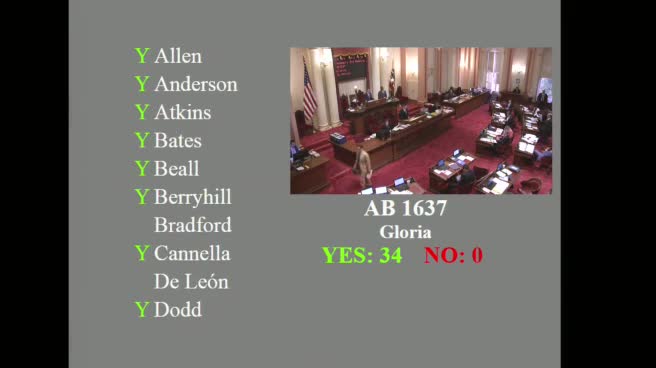 1MIN
Senate Floor
 1H
Senate Standing Committee on Appropriations
 1MIN
Senate Standing Committee on Business, Professions and Economic Development
 50SEC
Assembly Floor
 1H
Assembly Standing Committee on Appropriations
Bill Author
Bill Co-Author(s):