AB 1728: Health care districts: board of directors.
- Session Year: 2017-2018
- House: Assembly
- Latest Version Date: 2017-09-23
The Local Health Care District Law provides for local health care districts that govern certain health care facilities. Each health care district has a board of directors with specific duties and powers respecting the creation, administration, and maintenance of the district, including purchasing, receiving, having, taking, holding, leasing, using, and enjoying property.
This bill would require the board of directors to adopt an annual budget in a public meeting, on or before September 1 of each year, that conforms to generally accepted accounting and budgeting procedures for special districts, establish and maintain an Internet Web site that lists contact information for the district, and adopt annual policies for providing assistance or grant funding, if the district provides assistance or grants. By increasing the duties of the board of directors, relating to disclosure of public records and other duties, this bill would impose a state-mandated local program.
The California Constitution requires local agencies, for the purpose of ensuring public access to the meetings of public bodies and the writings of public officials and agencies, to comply with a statutory enactment that amends or enacts laws relating to public records or open meetings and contains findings demonstrating that the enactment furthers the constitutional requirements relating to this purpose.
This bill would make legislative findings to that effect.
The California Constitution requires the state to reimburse local agencies and school districts for certain costs mandated by the state. Statutory provisions establish procedures for making that reimbursement.
This bill would provide that with regard to certain mandates no reimbursement is required by this act for a specified reason.
With regard to any other mandates, this bill would provide that, if the Commission on State Mandates determines that the bill contains costs so mandated by the state, reimbursement for those costs shall be made pursuant to the statutory provisions noted above.
The board of directors shall do all of the following:
(a)Adopt an annual budget in a public meeting, on or before September 1 of each year, that conforms to generally accepted accounting and budgeting procedures for special districts.
(b)Establish and maintain an Internet Web site that lists contact information for the district. The Internet Web site may also list any of the following:
(1)The adopted budget.
(2)A list of current board members.
(3)Information regarding public meetings required pursuant to Section 32106 or the Ralph M. Brown Act (Chapter 9 (commencing with Section 54950) of Part 1 of Division 2 of Title 5 of the Government Code).
(4)A municipal service review or special study conducted by a local agency formation commission pursuant to the Cortese-Knox-Hertzberg Local Government Reorganization Act of 2000 (Division 3 (commencing with Section 56000) of Title 5 of the Government Code), if any.
(5)Recipients of grant funding or assistance provided by the district, if any.
(6)Audits of the districts accounts and records pursuant to Section 26909 of the Government Code or Section 32133 of this code.
(7)Annual financial reports to the Controller, submitted pursuant to Section 53890 of the Government Code.
(8)Any other information the board deems relevant.
(c)Adopt annual policies for providing assistance or grant funding, if the district provides assistance or grants pursuant to Section 32126.5 or any other law. This policy shall include all of the following:
(1)A nexus between the allocation of assistance and grant funding with health care and the mission of the district.
(2)A process for the district to ensure allocated grant funding is spent consistently with the grant application and the mission and purpose of the district.
SEC. 2.The Legislature finds and declares that Section 1 of this act, which adds Section 32139 of the Health and Safety Code, furthers, within the meaning of paragraph (7) of subdivision (b) of Section 3 of Article I of the California Constitution, the purposes of that constitutional section as it relates to the right of public access to the meetings of local public bodies or the writings of local public officials and local agencies. Pursuant to paragraph (7) of subdivision (b) of Section 3 of Article I of the California Constitution, the Legislature makes the following findings:
By requiring health care districts to post specified information on their Internet Web site, this act increases public access to public records, and thereby furthers the purposes of paragraph (7) of subdivision (b) of Section 3 of Article I of the California Constitution.
SEC. 3.No reimbursement is required by this act pursuant to Section 6 of Article XIII B of the California Constitution because the only costs that may be incurred by a local agency or school district under this act would result from a legislative mandate that is within the scope of paragraph (7) of subdivision (b) of Section 3 of Article I of the California Constitution.
However, if the Commission on State Mandates determines that this act contains other costs mandated by the state, reimbursement to local agencies and school districts for those costs shall be made pursuant to Part 7 (commencing with Section 17500) of Division 4 of Title 2 of the Government Code.
|
Date
|
Status
|
|---|---|
| Sep 23, 2017 | Chaptered by Secretary of State - Chapter 265, Statutes of 2017. |
| Sep 23, 2017 | Approved by the Governor. |
| Sep 7, 2017 | Enrolled and presented to the Governor at 3 p.m. |
| Aug 31, 2017 | In Assembly. Ordered to Engrossing and Enrolling. |
| Aug 31, 2017 | Read third time. Passed. Ordered to the Assembly. |
| Aug 23, 2017 | Ordered to special consent calendar. |
| Aug 22, 2017 | Read second time. Ordered to third reading. |
| Aug 21, 2017 | From committee: Do pass. (Ayes 7. Noes 0.) (August 21). |
| Jul 12, 2017 | From committee: Do pass and re-refer to Com. on APPR. with recommendation: To Consent Calendar. (Ayes 7. Noes 0.) (July 12). Re-referred to Com. on APPR. |
| Jun 1, 2017 | Referred to Com. on GOV. & F. |
| May 18, 2017 | In Senate. Read first time. To Com. on RLS. for assignment. |
| May 18, 2017 | Read third time. Passed. Ordered to the Senate. (Ayes 69. Noes 0. Page 1620.) |
| May 11, 2017 | Read second time. Ordered to Consent Calendar. |
| May 10, 2017 | From committee: Do pass. To Consent Calendar. (Ayes 17. Noes 0.) (May 10). |
| Apr 27, 2017 | From committee: Do pass and re-refer to Com. on APPR. with recommendation: To Consent Calendar. (Ayes 9. Noes 0.) (April 26). Re-referred to Com. on APPR. |
| Apr 3, 2017 | Referred to Com. on L. GOV. |
| Mar 23, 2017 | From printer. May be heard in committee April 22. |
| Mar 22, 2017 | Read first time. To print. |
|
Date
|
Description
|
Location
|
Votes
|
|
|---|---|---|---|---|
| Aug 31, 2017 | Special Consent Calendar # AB1728 L. GOV. | Senate Floor |
Passed |
|
| Aug 21, 2017 | Do pass | Senate Standing Committee on Appropriations |
Passed |
|
| Jul 12, 2017 | Do pass, but first be re-referred to the Committee on [Appropriations] with the recommendation: To Consent Calendar | Senate Standing Committee on Governance and Finance |
Passed |
|
| May 18, 2017 | AB 1728 L. GOV. Consent Calendar Second Day Regular Session | Assembly Floor |
Passed |
|
| May 10, 2017 | Do pass. To Consent Calendar. | Assembly Standing Committee on Appropriations |
Passed |
|
| Apr 26, 2017 | Do pass and be re-referred to the Committee on [Appropriations] with recommendation: To Consent Calendar | Assembly Standing Committee on Local Government |
Passed |
This list shows positions taken on this bill by organizations on the date displayed, which is linked to the original source.
Positions by individuals are not included.
|
Organization
|
Position
|
Date
|
|---|---|---|
| 1 individual | ** Support | Aug 23, 2017 |
| Association of California Healthcare Districts | ** Support | Aug 23, 2017 |
| California Association of LAFCOs | ** Support | Aug 23, 2017 |
| California Association of Local Agency Formation Commissions | ** Support | Apr 25, 2017 |
| California Special Districts Association | ** Support | Aug 23, 2017 |
| Riverside LAFCO | ** Support | Aug 23, 2017 |
| Unknown. | ** Against | Jul 7, 2017 |
Office of Senate Floor Analyses (916) 651-1520 Fax: (916) 327-4478 | AB 1728 |
THIRD READING
Bill No: AB 1728
Author: Committee on Local Government
Introduced: 3/22/17
SENATE GOVERNANCE & FIN. COMMITTEE: 7-0, 7/12/17
AYES: McGuire, Nguyen, Beall, Hernandez, Hertzberg, Lara, Moorlach
SENATE APPROPRIATIONS COMMITTEE: 7-0, 8/21/17
AYES: Lara, Bates, Beall, Bradford, Hill, Nielsen, Wiener
ASSEMBLY FLOOR: 69-0, 5/18/17 (Consent) - See last page for vote
SUBJECT: Health care districts: board of directors
DIGEST:
This bill requires healthcare districts to adopt an annual budget, adopt a grant funding policy, and establish an Internet Web site.
Existing law establishes the Local Health Care District Law that defines the powers and duties of healthcare districts, including contracting with and making grants to provider groups and clinics in the community.
This bill:
- Requires the board of directors of a healthcare district to adopt an annual budget during a public meeting on or before September 1 of each year. The budget must conform to generally accepted accounting and budgeting procedures.
- Requires healthcare districts to establish and maintain an Internet Web site that lists contact information for the district. The Web site may also contain any of the following information:
- The adopted budget.
- A list of current board members.
- Information regarding the district’s public meetings.
- Municipal service reviews conducted by the local LAFCO.
- Recipients of grant funding.
- Financial audits.
- Annual financial reports that are sent to the State Controller.
- Any other information the board of the district deems relevant.
- Requires the board of directors for a healthcare district to adopt annual policies for financial assistance or grant funding provided by the district. The policies must include the following:
- A nexus between the allocation of assistance and grant funding with healthcare and the mission of the district.
- A process for the district to ensure all allocated grant funding is spent consistently with the grant application and the mission of the district.
Background
Healthcare Districts. To respond to the inadequacy of acute care services in rural areas, the Legislature enacted the Local Hospital District Law to provide medically underserved areas without access to hospital facilities with a source of tax dollars that could be used to construct and operate community hospitals. SB 1169 (Maddy, 1994) changed the name of the principal act to 'The Local Healthcare District Law' to better reflect the shift in the provision of healthcare services outside hospital settings.
The powers and duties granted to healthcare districts under existing law have remained largely unchanged while the demographics of areas being served by the districts, the access to and provision of healthcare services, and the districts themselves have significantly changed. For example, following the change in law in 1994, over one-third of the healthcare districts in California have either closed or sold their hospital, thus moving away from the original legislative intent of 'hospital districts.'
There are currently 79 healthcare districts in California. Of the total, 38 healthcare districts own and operate a hospital, five districts own, but do not operate, a hospital; and 36 healthcare districts do not own or operate a hospital. Of the 36 districts that do not own or operate a hospital, 19 districts provide direct services (like ambulance or clinic services), and 17 districts do not provide direct services, and instead administer grant funding as their sole purpose.
Recent Controversy. Recent controversies have brought greater statewide attention to healthcare districts in the following areas: overall fiscal management, compliance with the Brown Act and conflict of interest laws, executive compensation policies, lack of provision of direct healthcare services, and overall accountability and transparency issues for healthcare districts.
The Assembly Committee on Accountability and Administrative Review conducted several hearings in 2012 regarding healthcare districts, and focused specifically on healthcare districts that do not operate hospitals, but were maintaining reserve balances in the tens of millions of dollars. Additionally, the Legislative Analyst's Office (LAO) produced a report entitled, "Overview of Health Care Districts" in April, 2012, in response to several healthcare districts that have declared bankruptcy since 2000.
At least 14 healthcare districts have filed for bankruptcy since 1994: Los Medanos Hospital District, Contra Costa County (1994); Heffernan Memorial Hospital District, Imperial County (1996); Corcoran Hospital District, Kings County (1996); Kingsburg Hospital District, Fresno County (1997); Southern Humboldt Community Healthcare District, Humboldt County (1999); Chowchilla Memorial Hospital District, Madera County (2000); Sierra Valley District Hospital, Sierra County (2000); Alta Healthcare District, Tulare County (2001); Coalinga Regional Medical Center, Fresno County (2003); Indian Valley Healthcare District, Plumas County (2003); Valley Health System, Riverside County (2008); Sierra Kings Healthcare District, Fresno County (2009); Mendocino Coast Healthcare District, Mendocino County (2012); Palm Drive Hospital District, Sonoma County (2007 and 2014); and, West Contra Costa Healthcare District, Contra Costa County (2006 and 2016).
Additionally, according to the LAO report, several Local Agency Formation Commissions (LAFCOs) have considered dissolving districts. Five districts have been dissolved or otherwise reorganized since 2000. Since that time, the Contra Costa County LAFCO consolidated Mount Diablo Healthcare District into the City of Concord. The Mount Diablo Healthcare District did not operate a hospital and concerns were expressed about the amount of revenue spent on administrative costs, instead of on grant funding for community health needs. A 2012 Bureau of State Audits report on Salinas Valley Memorial Health Care System found that the district's board violated open meeting laws when granting overly generous compensation, retirement, and benefits to its chief executive officer. Most recently the discussion in the Legislature has focused on healthcare districts that no longer operate hospitals, and no longer provide any direct healthcare services to the community.
The Assembly Committee on Local Government wants to improve transparency and accountability of healthcare districts governance and modernize the principal act that governs healthcare districts to recognize changes in technology and the types of services some healthcare districts are providing.
Comments
Purpose of the bill. According to the Assembly Committee on Local Government, “AB 1728 will help to ensure greater transparency and accountability for healthcare districts. This committee bill seeks to modernize the principal act for healthcare districts to better reflect changes in technology, but also to recognize the changing dynamics of healthcare districts and the types of services they provide. The majority of healthcare districts receive property tax dollars. This bill will ensure that taxpayers have access to basic information and can see how funds are being spent.”
Oversight Hearing. The Assembly Local Government Committee held an oversight hearing on healthcare districts on March 8, 2017. This bill addresses several issues identified in the oversight hearing.
- Web sites. This bill requires all healthcare districts to establish and maintain a Web site. The Assembly Local Government Committee identified 10 healthcare districts that do not have a Web site.
- Grant Policies. Not all healthcare districts administer grant funding, but for some districts that is their sole purpose, following the closure of a hospital or clinic. AB 1728 requires healthcare districts that provide grant funding to adopt grant funding policies. The adoption of grant policies will help ensure the funding is spent to further the mission of healthcare districts in a transparent and accountable manner.
- Budget. There is no explicit requirement in the principal act for healthcare districts to adopt a budget. Under existing law, a number of special act-special districts as well as principal acts for community services districts, county air pollution control districts, fire protection districts, municipal water districts, transit districts, recreation and park districts, and mosquito abatement and vector control districts contain a requirement to adopt a budget. This bill will make clear that the adoption of an annual budget is required.
Mandate. The Legislative Counsel’s Office says that AB 1728 would impose a state-mandated local program because it imposes new duties upon local agencies. The California Constitution generally requires the state government to reimburse the costs of new or expanded state mandated local programs. However, on June 3, 2014, California voters approved Proposition 42, which amended the California Constitution to require local agencies to comply with the California Public Records Act and local open meetings laws, the Brown Act. Proposition 42 also requires local agencies to comply with any subsequent statutory enactment amending either the Brown or Public Records Acts that contain specified findings that the newly enacted statute furthers specified constitutional provisions guaranteeing public access to public agency meetings and records. AB 1728 contains legislative findings that the bill furthers the purpose of Section 3 of Article I of the California Constitution. As a result, AB 1728 disclaims the state’s responsibility for reimbursing local governments’ costs of complying with the bill’s requirements.
FISCAL EFFECT: Appropriation: No Fiscal Com.: Yes Local: Yes
According to the Senate Appropriations Committee, potentially reimbursable, but likely minor, state-mandated local costs for healthcare districts to comply with requirements of the bill. (General Fund)
Association of California Healthcare Districts
California Special Districts Association
California Association of LAFCOs
Riverside LAFCO
1 individual
OPPOSITION: (Verified 8/23/17)
None received
ASSEMBLY FLOOR: 69-0, 5/18/17
AYES: Acosta, Travis Allen, Arambula, Baker, Berman, Bigelow, Bloom, Bocanegra, Bonta, Brough, Burke, Caballero, Cervantes, Chávez, Chen, Chiu, Choi, Chu, Cooley, Cooper, Cunningham, Dababneh, Dahle, Daly, Eggman, Flora, Fong, Gallagher, Cristina Garcia, Eduardo Garcia, Gomez, Gonzalez Fletcher, Gray, Grayson, Harper, Irwin, Jones-Sawyer, Kalra, Kiley, Lackey, Levine, Limón, Low, Maienschein, Mathis, Mayes, McCarty, Medina, Melendez, Muratsuchi, Nazarian, Obernolte, O'Donnell, Patterson, Quirk, Quirk-Silva, Reyes, Ridley-Thomas, Rodriguez, Rubio, Salas, Steinorth, Mark Stone, Thurmond, Ting, Voepel, Waldron, Weber, Wood
NO VOTE RECORDED: Aguiar-Curry, Calderon, Chau, Frazier, Friedman, Gipson, Gloria, Holden, Mullin, Santiago, Rendon
Prepared by: Jimmy MacDonald / GOV. & F. / (916) 651-4119
8/23/17 16:25:29
**** END ****
SENATE COMMITTEE ON APPROPRIATIONS
Senator Ricardo Lara, Chair
2017 - 2018 Regular Session
AB 1728 (Committee on Local Government) - Health care districts: board of directors
Version: March 22, 2017 | Policy Vote: GOV. & F. 7 - 0 |
Urgency: No | Mandate: Yes |
Hearing Date: August 21, 2017 | Consultant: Mark McKenzie |
This bill does not meet the criteria for referral to the Suspense File.
Bill Summary:
AB 1728 would require a healthcare district’s board of directors to adopt an annual budget in a public meeting, establish and maintain a website that lists contact information for the district, and adopt annual policies for providing assistance or grant funding, as specified.
Fiscal Impact:
- Potentially reimbursable, but likely minor, state-mandated local costs for healthcare districts to comply with requirements of the bill. (General Fund)
See staff comments.
Background:
Existing law authorizes the formation of healthcare districts, which are special districts formed to build and operate hospitals and other healthcare facilities in underserved areas. Healthcare districts are governed by a locally-elected five member board of directors with specific powers and duties, which have remained largely unchanged while the demographics of district service areas, access to and provision of healthcare services, and the districts themselves have changed significantly.
There are currently 79 healthcare districts in California. Of the total, 38 healthcare districts own and operate a hospital, five districts own, but do not operate, a hospital, and 36 healthcare districts do not own or operate a hospital. Of the 36 districts that do not own or operate a hospital, 19 districts provide direct services (like ambulance or clinic services), and 17 districts do not provide direct services, and instead administer grant funding as their sole purpose.
Recent controversies have brought greater statewide attention to healthcare districts in the following areas: overall fiscal management, compliance with the Brown Act and conflict of interest laws, executive compensation policies, lack of provision of direct healthcare services, and overall issues regarding accountability and transparency.
Proposed Law:
AB 1728 would require the board of directors of a healthcare district to do all of the following:
- Adopt an annual budget in a public meeting by September 1 of each year that conforms to specified accounting and budgeting principles for special districts.
- Establish and maintain a website that lists district contact information. The website may also contain the adopted budget, a list of current board members, information on public meetings, specified municipal service reviews or special studies, recipients of district grant funding or assistance, audits of district accounts and records, annual financial reports to the State Controller, or any other relevant information.
- Adopt annual policies for providing assistance or grant funding, as specified, including:
- A nexus between the allocation of assistance and grant funding with health care and the district’s mission.
- A process for the district to ensure allocated funding is spent consistently with the grant application and the district’s mission.
Staff Comments:
This bill addresses several issues identified at an oversight hearing on healthcare districts conducted by the Assembly Local Government Committee on March 8, 2017. The bill is intended to enhance the accountability and transparency of healthcare districts by requiring the adoption of an annual budget, ensuring district contact information is readily accessible on a website, and requiring districts that administer grant funding to adopt annual policies for providing assistance and funding.
The bill includes a legislative finding that it furthers the purposes of the California Constitution as it relates to the rights of public access to meetings of local public bodies or the writings of local public officials, by requiring districts to post specified information on their respective websites. Proposition 42, approved by the voters on June 3, 2014, amended the Constitution to require local agencies to comply with the California Public Records Act (PRA) and the Ralph M. Brown Act (Brown Act), and with any subsequent statutory enactment amending those Acts that contain specified findings demonstrating that the statutory enactment furthers the purposes of those Acts. Proposition 42 also disclaims state reimbursement for legislative mandates related to those provisions and any amendments to those provisions, as specified. Since this bill adds a new section within the Local Healthcare District Law, and does not specifically amend the PRA or Brown Act, it is unclear whether the Proposition 42 reimbursement disclaimer would be applicable, regardless of the findings in the bill.
The bill imposes a state-mandated local program by requiring healthcare districts to adopt an annual budget in a public meeting, establish and maintain a website, and adopt annual policies for providing grant funding and assistance, if applicable. It is unlikely that the Commission on State Mandates (Commission) would find the latter provision to be a reimbursable mandate because there is no requirement for healthcare districts to provide grant funding and assistance. To the extent a healthcare district files a reimbursement claim in the future and the Commission determines that the requirements to publicly adopt an annual budget and establish and maintain a website are reimbursable mandates, the bill could result in a General Fund impact. Staff notes, however, that local costs to comply with these provisions would likely be minor and it appears unlikely that a district would file reimbursement claim with the Commission.
-- END --
SENATE COMMITTEE ON GOVERNANCE AND FINANCE
Senator Mike McGuire, Chair
2017 - 2018 Regular
Bill No: | AB 1728 | Hearing Date: | 7/12/17 |
Author: | Committee on Local Government | Tax Levy: | No |
Version: | 3/22/17 | Fiscal: | Yes |
Consultant: | MacDonald | ||
Health care districts: board of directors
Requires healthcare districts to adopt an annual budget, adopt a grant funding policy, and establish an Internet website.
Background
Healthcare Districts. To respond to the inadequacy of acute care services in rural areas, the Legislature enacted the Local Hospital District Law to provide medically underserved areas without access to hospital facilities with a source of tax dollars that could be used to construct and operate community hospitals. SB 1169 (Maddy, 1994) changed the name of the principal act to 'The Local Healthcare District Law' to better reflect the shift in the provision of healthcare services outside hospital settings.
The powers and duties granted to healthcare districts under existing law have remained largely unchanged while the demographics of areas being served by the districts, the access to and provision of healthcare services, and the districts themselves have significantly changed. For example, following the change in law in 1994, over one-third of the healthcare districts in California have either closed or sold their hospital, thus moving away from the original legislative intent of 'hospital districts.'
There are currently 79 healthcare districts in California. Of the total, 38 healthcare districts own and operate a hospital, five districts own, but do not operate, a hospital; and 36 healthcare districts do not own or operate a hospital. Of the 36 districts that do not own or operate a hospital, 19 districts provide direct services (like ambulance or clinic services), and 17 districts do not provide direct services, and instead administer grant funding as their sole purpose.
Recent Controversy. Recent controversies have brought greater statewide attention to healthcare districts in the following areas: overall fiscal management, compliance with the Brown Act and conflict of interest laws, executive compensation policies, lack of provision of direct healthcare services, and overall accountability and transparency issues for healthcare districts.
The Assembly Committee on Accountability and Administrative Review conducted several hearings in 2012 regarding healthcare districts, and focused specifically on healthcare districts that do not operate hospitals, but were maintaining reserve balances in the tens of millions of dollars. Additionally, the Legislative Analyst's Office (LAO) produced a report entitled, "Overview of Health Care Districts" in April, 2012, in response to several healthcare districts that have declared bankruptcy since 2000.
At least 14 healthcare districts have filed for bankruptcy since 1994: Los Medanos Hospital District, Contra Costa County (1994); Heffernan Memorial Hospital District, Imperial County (1996); Corcoran Hospital District, Kings County (1996); Kingsburg Hospital District, Fresno County (1997); Southern Humboldt Community Healthcare District, Humboldt County (1999); Chowchilla Memorial Hospital District, Madera County (2000); Sierra Valley District Hospital, Sierra County (2000); Alta Healthcare District, Tulare County (2001); Coalinga Regional Medical Center, Fresno County (2003); Indian Valley Healthcare District, Plumas County (2003); Valley Health System, Riverside County (2008); Sierra Kings Healthcare District, Fresno County (2009); Mendocino Coast Healthcare District, Mendocino County (2012); Palm Drive Hospital District, Sonoma County (2007 and 2014); and, West Contra Costa Healthcare District, Contra Costa County (2006 and 2016).
Additionally, according to the LAO report, several Local Agency Formation Commissions (LAFCOs) have considered dissolving districts. Five districts have been dissolved or otherwise reorganized since 2000. Since that time, the Contra Costa County LAFCO consolidated Mount Diablo Healthcare District into the City of Concord. The Mount Diablo Healthcare District did not operate a hospital and concerns were expressed about the amount of revenue spent on administrative costs, instead of on grant funding for community health needs. A 2012 Bureau of State Audits report on Salinas Valley Memorial Health Care System found that the district's board violated open meeting laws when granting overly generous compensation, retirement, and benefits to its chief executive officer. Most recently the discussion in the Legislature has focused on healthcare districts that no longer operate hospitals, and no longer provide any direct healthcare services to the community.
The Assembly Committee on Local Government wants to improve transparency and accountability of healthcare districts governance and modernize the principal act that governs healthcare districts to recognize changes in technology and the types of services some healthcare districts are providing.
Proposed Law
Assembly Bill 1728 requires the board of directors of a healthcare district to adopt an annual budget during a public meeting on or before September 1 of each year. The budget must conform to generally accepted accounting and budgeting procedures.
This bill requires healthcare districts to establish and maintain an Internet Website that lists contact information for the district. The website may also contain any of the following information:
- The adopted budget.
- A list of current board members.
- Information regarding the district’s public meetings.
- Municipal service reviews conducted by the local LAFCO.
- Recipients of grant funding.
- Financial audits.
- Annual financial reports that are sent to the State Controller.
- Any other information the board of the district deems relevant.
AB 1728 requires the board of directors for a healthcare district to adopt annual policies for financial assistance or grant funding provided by the district. The policies must include the following:
- A nexus between the allocation of assistance and grant funding with healthcare and the mission of the district.
- A process for the district to ensure all allocated grant funding is spent consistently with the grant application and the mission of the district.
State Revenue Impact
No estimate.
Comments
- Purpose of the bill. According to the Assembly Committee on Local Government, “AB 1728 will help to ensure greater transparency and accountability for healthcare districts. This committee bill seeks to modernize the principal act for healthcare districts to better reflect changes in technology, but also to recognize the changing dynamics of healthcare districts and the types of services they provide. The majority of healthcare districts receive property tax dollars. This bill will ensure that taxpayers have access to basic information and can see how funds are being spent.”
- Oversight Hearing. The Assembly Local Government Committee held an oversight hearing on healthcare districts on March 8, 2017. This bill addresses several issues identified in the oversight hearing.
- Websites. This bill requires all healthcare districts to establish and maintain a website. The Assembly Local Government Committee identified 10 healthcare districts that do not have a website.
- Grant Policies. Not all healthcare districts administer grant funding, but for some districts that is their sole purpose, following the closure of a hospital or clinic. AB 1728 requires healthcare districts that provide grant funding to adopt grant funding policies. The adoption of grant policies will help ensure the funding is spent to further the mission of healthcare districts in a transparent and accountable manner.
- Budget. There is no explicit requirement in the principal act for healthcare districts to adopt a budget. Under existing law, a number of special act-special districts as well as principal acts for community services districts, county air pollution control districts, fire protection districts, municipal water districts, transit districts, recreation and park districts, and mosquito abatement and vector control districts contain a requirement to adopt a budget. This bill will make clear that the adoption of an annual budget is required.
- Mandate. The Legislative Counsel’s Office says that AB 1728 would impose a state-mandated local program because it imposes new duties upon local agencies. The California Constitution generally requires the state government to reimburse the costs of new or expanded state mandated local programs. However, on June 3, 2014, California voters approved Proposition 42, which amended the California Constitution to require local agencies to comply with the California Public Records Act and local open meetings laws, the Brown Act. Proposition 42 also requires local agencies to comply with any subsequent statutory enactment amending either the Brown or Public Records Acts that contain specified findings that the newly enacted statute furthers specified constitutional provisions guaranteeing public access to public agency meetings and records. AB 1728 contains legislative findings that the bill furthers the purpose of Section 3 of Article I of the California Constitution. As a result, AB 1728 disclaims the state’s responsibility for reimbursing local governments’ costs of complying with the bill’s requirements.
Assembly Actions
Assembly Local Government 9-0
Assembly Appropriations 17-0
Assembly Floor 69-0
Support and Opposition
(7/7/17)
Support: Association of California Healthcare Districts; California Special Districts Association; California Association of LAFCOs; Riverside LAFCO; 1 individual.
Opposition: Unknown.
-- END --
Date of Hearing: May 10, 2017
ASSEMBLY COMMITTEE ON APPROPRIATIONS
Lorena Gonzalez Fletcher, Chair
ABPCA Bill Id:AB 1728
Author:(Committee on Local Government) – As Introduced Ver:March 22, 2017
Policy Committee: | Local Government | Vote: | 9 - 0 |
|
| ||
|
|
Urgency: No State Mandated Local Program: Yes Reimbursable: Yes
SUMMARY:
This bill requires a board of directors of a healthcare district to: 1) adopt an annual budget in a public meeting that conforms to generally accepted accounting and budgeting procedures for special districts; 2) establish and maintain an Internet Web site that includes contact information for the healthcare district; and 3) adopt annual policies for providing assistance or grant funding.
FISCAL EFFECT:
- Potentially reimbursable state mandate costs to healthcare districts that provide assistance or grant funding to adopt annual policies. These costs are minor and it is unlikely a district would file a reimbursement claim with the Commission on State Mandates.
- Minor non-reimbursable costs to healthcare districts to adopt annual budgets in a public meeting and to post the required information on their websites. These costs are not reimbursable because they fall under Proposition 42 of 2014, which eliminated reimbursement to local agencies for costs of complying with the California Public Records Act and the Ralph M. Brown Act.
COMMENTS:
- Purpose. This bill seeks to ensure greater transparency and accountability for healthcare districts by modernizing their principal act to better reflect changes in technology and changes in the services they provide.
The California Association of Local Agency Formation Commissions states, "Effective governance is increased by requiring all healthcare districts to adopt annual budget in an open, public and time specific process. District transparency and public awareness is enhanced through the website requirements outlined in the bill, which increases access to information for the public, especially those whom the district is serving. Developing and adopting grant funding policies create an increased level of accountability for districts providing those services. We view all of these governance, transparency, and accountability enhancements positively and as additional tools to help LAFCos in their role of ensuring oversight of healthcare districts."
- Background. There are 79 healthcare districts in California. Of the total, 38 healthcare districts own and operate a hospital, five districts own, but do not operate a hospital, and 36 healthcare districts do not own or operate a hospital. Of the 36 districts that do not own or operate a hospital, 19 districts provide direct services (like ambulance or clinic services), and 17 districts do not provide direct services, and instead, administer grant funding as their sole purpose.
The powers and duties granted to healthcare districts under existing law have remained largely unchanged while the demographics of the areas being served by the districts, access and provision of healthcare services, and the districts themselves have vastly changed. Since 1994, 14 healthcare districts have filed for bankruptcy, and over one-third of the healthcare districts in California have either closed or sold their hospital, thus moving away from the original legislative intent of 'hospital districts.'
Recent controversies have brought greater statewide attention to healthcare districts regarding overall fiscal management, compliance with the Brown Act and conflict of interest laws, executive compensation policies, lack of provision of direct healthcare services, and overall accountability and transparency issues for healthcare districts.
The Local Government Committee held an oversight hearing on healthcare districts on March 8, 2017. This bill addresses several issues identified in the oversight hearing.
Analysis Prepared by: Jennifer Swenson / APPR. / (916) 319-2081
Date of Hearing: April 26, 2017
ASSEMBLY COMMITTEE ON LOCAL GOVERNMENT
Cecilia Aguiar-Curry, Chair
ABPCA Bill Id:AB 1728 (
Author:Committee on Local Government) – As Introduced Ver:March 22, 2017
SUBJECT: Health care districts: board of directors.
SUMMARY: Requires a board of directors of a healthcare district to adopt an annual budget and grant funding policy, and to establish an Internet website. Specifically, this bill:
- Requires the board of directors of a healthcare district to do all of the following:
- Adopt an annual budget in a public meeting, on or before September 1 of each year, that conforms to generally accepted accounting and budgeting procedures for special districts;
- Establish and maintain an Internet Web site that includes contact information for the healthcare district. Provides that the website may list any of the following;
- The adopted budget;
- A list of current board members;
- Information regarding public meetings required, pursuant to the Ralph M. Brown Act (Brown Act);
- A municipal service review or special study conducted by a local agency formation commission (LAFCO), pursuant to existing law;
- Recipients of grant funding or assistance provided by the district, if any;
- Audits of the district's accounts and records required by existing law;
- Annual financial reports submitted to the California State Controller, pursuant to existing law; and,
- Any other information the board deems relevant.
- Adopt annual policies for providing assistance or grant funding. Requires the policy to include the following:
- A nexus between the allocation of assistance and grant funding with health care and the mission of the district; and,
- A process for the district to ensure allocated grant funding spent consistently with the grant application and the mission and purpose of the district.
- Finds and declares that Section 1 of the bill furthers, within the meaning of paragraph (7) of subdivision (b) of Section 3 of Article I of the California Constitution, the purposes of that constitutional section as it relates to the right of public access to the meetings of local public bodies or the writings of local public officials and local agencies, and declares, pursuant to paragraph (7) of subdivision (b) of Section 3 of Article I of the California Constitution, that the Legislature makes the following findings: By requiring healthcare districts to post specified information on their Internet Website, this bill increases access to public records and furthers the purpose of Section 3 of Article I of the California Constitution.
- Provides that no reimbursement is required by this bill because the only costs that may be incurred by a local agency or school district under this act would result from a legislative mandate that is within the scope of paragraph (7) of subdivision (b) of Section 3 of Article I of the California Constitution. Requires if the Commission on State Mandates determines that this bill contains costs mandated by the state, reimbursement to local agencies and school districts for those costs shall be made, pursuant to current laws governing state mandated costs.
FISCAL EFFECT: This bill is keyed fiscal.
COMMENTS:
- History. Near the end of World War II, California faced a severe shortage of hospital beds. To respond to the inadequacy of acute care services in rural areas, the Legislature enacted the Local Hospital District Law, to provide medically underserved areas without access to hospital facilities a source of tax dollars that could be used to construct and operate community hospitals. SB 1169 (Maddy) of 1994, changed the name of the principal act to 'The Local Healthcare District Law' to better reflect the shift in the provision of healthcare services outside hospital settings.
The powers and duties granted to healthcare districts under existing law have remained largely unchanged while the demographics of areas being served by the districts, access and provision of healthcare services, and the districts themselves have vastly changed. For example, following the change in law in 1994, 14 healthcare districts have filed for bankruptcy, and over one-third of the healthcare districts in California have either closed or sold their hospital, thus moving away from the original legislative intent of 'hospital districts.'
There are currently 79 healthcare districts in California. Of the total, 38 healthcare districts own and operate a hospital, five districts own, but do not operate a hospital, and 36 healthcare districts do not own or operate a hospital. Of the 36 districts that do not own or operate a hospital, 19 districts provide direct services (like ambulance or clinic services), and 17 districts do not provide direct services, and instead, administer grant funding as their sole purpose.
- Recent Controversy. Recent controversies have brought greater statewide attention to healthcare districts in the following areas: overall fiscal management, compliance with the Brown Act and conflict of interest laws, executive compensation policies, lack of provision of direct healthcare services, and overall accountability and transparency issues for healthcare districts.
The Committee on Accountability and Administrative Review conducted several hearings in 2012 regarding healthcare districts, and focused specifically on healthcare districts that do not operate hospitals, but were maintaining reserve balances in the tens of millions of dollars. Additionally, the Legislative Analyst's Office (LAO) produced a report entitled, "Overview of Health Care Districts" in April 2012 in response to several healthcare districts that have declared bankruptcy since 2000.
The Committee is aware of 14 healthcare districts that have filed for bankruptcy: Los Medanos Hospital District, Contra Costa County (1994); Heffernan Memorial Hospital District, Imperial County (1996); Corcoran Hospital District, Kings County (1996); Kingsburg Hospital District, Fresno County (1997); Southern Humboldt Community Healthcare District, Humboldt County (1999); Chowchilla Memorial Hospital District, Madera County (2000); Sierra Valley District Hospital, Sierra County (2000); Alta Healthcare District, Tulare County (2001); Coalinga Regional Medical Center, Fresno County (2003); Indian Valley Healthcare District, Plumas County (2003); Valley Health System, Riverside County (2008); Sierra Kings Healthcare District, Fresno County (2009); Mendocino Coast Healthcare District, Mendocino County (2012); Palm Drive Hospital District, Sonoma County (2007 and 2014); and, West Contra Costa Healthcare District, Contra Costa County (2006 and 2016).
Additionally, according to the LAO report, several LAFCOs have considered dissolving districts. Five districts have been dissolved or otherwise reorganized since 2000. Since that time, the Contra Costa County LAFCO consolidated Mount Diablo Healthcare District into the City of Concord. The Mount Diablo Healthcare District did not operate a hospital and concerns were expressed about the amount of revenue spent on administrative costs, instead of on grant funding for community health needs.
A 2012 Bureau of State Audits' report on Salinas Valley Memorial Health Care System found that the District's board violated open meeting laws to grant overly generous compensation, retirement, and benefits to the chief executive officer. This Committee heard several bills addressing the employment contract between a healthcare district and hospital administrator.
Most recently the discussion in the Legislature has focused on healthcare districts that no longer operate hospitals, and no longer provide any direct healthcare services to the community.
- Oversight Hearing. The Local Government Committee held an oversight hearing on healthcare districts on March 8, 2017. This bill addresses several issues identified in the oversight hearing.
Websites. The Committee extended invitations to several healthcare districts that do have websites and whose contact information was difficult to obtain. A number of these districts no longer administer any services. The Committee is aware of 10 healthcare districts that do not have a website.
Grant Policies. Not all healthcare districts administer grant funding, but for some districts that is their main purpose following the closure of a hospital or clinic. One participant at the hearing discussed a robust grant program in which the governing board has established grant policies. This policy requires the grant applicant to demonstrate how their innovations, provision of patient service improvement, or operational improvements would contribute to the expansion of the mission of the healthcare district. Additionally, the district's adopted policy prohibits the allocation of funding to other government agencies, unless it is for the education or scholarship program for the training of health works and professionals. Grant recipients must also agree to the fiscal and programmatic monitoring and requirements established by the district. On the other hand, a municipal service review for one healthcare district detailed that majority of grants funds went to high school sports and dance programs and for a sober grad night. The municipal service review did question if this was the best use of property tax dollars given the physician shortage and medically underserved population within the district. While local healthcare needs may differ from one district to another, the requirement that funding should be allocated to support the mission of the district in a transparent and fiscally responsible manner should apply evenly to all districts.
Budget. There is no explicit requirement in the principal act for healthcare districts to adopt a budget. Under existing law, a number of special act-special districts as well as principal acts for community services districts, county air pollution control districts, fire protection districts, municipal water districts, transit districts, recreation and park districts, and mosquito abatement and vector control districts contain a requirement to adopt a budget.
- Bill Summary. This bill requires healthcare districts to do the following: 1) Establish and maintain an internet website, which must include contact information for the district; 2) Adopt an annual budget; and, 3) Adopt annual policies for providing assistance or grant funding to ensure funding is spent on healthcare services consistent with the mission and purpose of the district. Not all healthcare districts face the same challenges and many already comply with some of these requirements. This bill is a modest approach to establish a minimum level of transparency and accountability yet retains local control.
- Arguments in Support. The California Association of Local Agency Formation Commissions argues, "Effective governance is increased by requiring all healthcare districts to adopt annual budget in an open, public and time specific process. District transparency and public awareness is enhanced through the website requirements outlined in the bill, which increases access to information for the public, especially those whom the district is serving. Developing and adopting grant funding policies create an increased level of accountability for districts providing those services. We view all of these governance, transparency, and accountability enhancements positively and as additional tools to help LAFCos in their role of ensuring oversight of healthcare districts."
- Arguments in Opposition. None on file.
REGISTERED SUPPORT / OPPOSITION:
Support
Association of California Healthcare Districts
California Special Districts Association
California Association of Local Agency Formation Commissions
Opposition
None on file
Analysis Prepared by: Misa Lennox / L. GOV. / (916) 319-3958
Discussed in Hearing
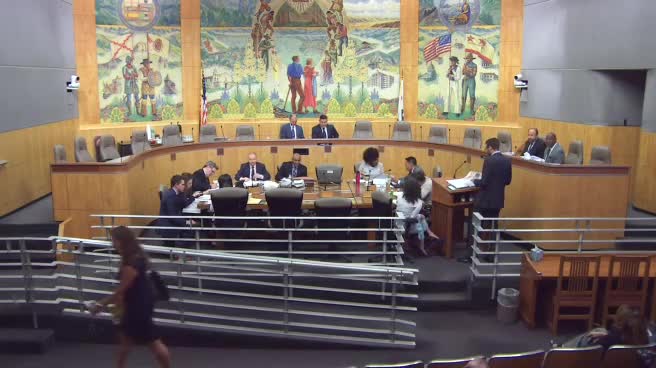 2MIN
Senate Standing Committee on Appropriations
Bill Author
Bill Co-Author(s):