AB 174: Tribal gaming: compact ratification.
- Session Year: 2017-2018
- House: Assembly
- Latest Version Date: 2017-10-03
Existing federal law, the Indian Gaming Regulatory Act of 1988, provides for the negotiation and execution of tribal-state gaming compacts for the purpose of authorizing certain types of gaming on Indian lands within a state. The California Constitution authorizes the Governor to negotiate and conclude tribal-state gaming compacts, subject to ratification by the Legislature. Existing law expressly ratifies a number of tribal-state gaming compacts, and amendments of tribal-state gaming compacts, between the State of California and specified Indian tribes.
The California Environmental Quality Act (CEQA) requires a lead agency to prepare, or cause to be prepared, and certify the completion of, an environmental impact report on a project, as defined, that it proposes to carry out or approve that may have a significant effect on the environment, as defined, or to adopt a negative declaration if it finds that the project will not have that effect.
This bill would ratify the amendment to the tribal-state gaming compact entered into between the State of California and the United Auburn Indian Community, executed on August 18, 2017. The bill would provide that, in deference to tribal sovereignty, certain actions related to that compact are not projects for purposes of CEQA.
This bill would declare that it is to take effect immediately as an urgency statute.
Existing federal law, the Indian Gaming Regulatory Act of 1988, provides for the negotiation and execution of tribal-state gaming compacts for the purpose of authorizing certain types of gaming on Indian lands within a state. The California Constitution authorizes the Governor to negotiate and conclude tribal-state gaming compacts, subject to ratification by the Legislature. Existing law expressly ratifies a number of tribal-state gaming compacts, and amendments of tribal-state gaming compacts, between the State of California and specified Indian tribes.
The California Environmental Quality Act (CEQA) requires a lead agency to prepare, or cause to be prepared, and certify the completion of, an environmental impact report on a project, as defined, that it proposes to carry out or approve that may have a significant effect on the environment, as defined, or to adopt a negative declaration if it finds that the project will not have that effect.
This bill would ratify the amendment to the tribal-state gaming compact entered into between the State of California and the United Auburn Indian Community, executed on August 23, 18, 2017. The bill would provide that, in deference to tribal sovereignty, certain actions related to that compact are not projects for purposes of CEQA.
This bill would declare that it is to take effect immediately as an urgency statute.
Existing federal law, the Indian Gaming Regulatory Act of 1988, provides for the negotiation and execution of tribal-state gaming compacts for the purpose of authorizing certain types of gaming on Indian lands within a state. The California Constitution authorizes the Governor to negotiate and conclude tribal-state gaming compacts, subject to ratification by the Legislature. Existing law expressly ratifies a number of tribal-state gaming compacts, and amendments of tribal-state gaming compacts, between the State of California and specified Indian tribes.
The California Environmental Quality Act (CEQA) requires a lead agency to prepare, or cause to be prepared, and certify the completion of, an environmental impact report on a project, as defined, that it proposes to carry out or approve that may have a significant effect on the environment, as defined, or to adopt a negative declaration if it finds that the project will not have that effect.
This bill would ratify the amendment to the tribal-state gaming compact entered into between the State of California and the United Auburn Indian Community, executed on August 23, 2017. The bill would provide that, in deference to tribal sovereignty, certain actions related to that compact are not projects for purposes of CEQA.
This bill would declare that it is to take effect immediately as an urgency statute.
Existing law creates the California Transportation Commission, with various powers and duties relative to the programming of transportation capital projects and allocation of funds to those projects pursuant to the state transportation improvement program and various other transportation funding programs.Existing law provides that the commission consists of 13 members, 11 voting members, of which 9 are appointed by the Governor subject to Senate confirmation, 1 is appointed by the Senate Committee on Rules, and 1 is appointed by the Speaker of the Assembly, and 2 Members of the Legislature who are appointed as nonvoting ex officio members.This bill would require that at least one voting member reside in a rural county with a population of less than 100,000 individuals.Existing law creates the California Transportation Commission, with various powers and duties relative to the programming of transportation capital projects and allocation of funds to those projects pursuant to the state transportation improvement program and various other transportation funding programs.
Existing law provides that the commission consists of 13 members, 11 voting members, of which 9 are appointed by the Governor subject to Senate confirmation, 1 is appointed by the Senate Committee on Rules, and 1 is appointed by the Speaker of the Assembly, and 2 Members of the Legislature who are appointed as nonvoting ex officio members.
This bill would require that at least one voting member reside in a rural county with a population of less than 100,000 individuals.
(a)The amendment to the tribal-state gaming compact entered into in accordance with the federal Indian Gaming Regulatory Act of 1988 (18 U.S.C. Secs. 1166 to 1168, inclusive, and 25 U.S.C. Sec. 2701 et seq.) between the State of California and the United Auburn Indian Community, executed on August 18, 2017, is hereby ratified.
(b)(1)In deference to tribal sovereignty, none of the following shall be deemed a project for purposes of the California Environmental Quality Act (Division 13 (commencing with Section 21000) of the Public Resources Code):
(A)The execution of an amendment to the tribal-state gaming compact ratified by this section.
(B)The execution of the amended tribal-state gaming compact ratified by this section.
(C)The execution of an intergovernmental agreement between a tribe and a county or city government negotiated pursuant to the express authority of, or as expressly referenced in, the amended tribal-state gaming compact ratified by this section.
(D)The execution of an intergovernmental agreement between a tribe and the Department of Transportation, or other state agency, negotiated pursuant to the express authority of, or as expressly referenced in, the amended tribal-state gaming compact ratified by this section.
(E)The on-reservation impacts of compliance with the terms of the amended tribal-state gaming compact ratified by this section.
(2)Except as expressly provided in this section, this subdivision does not exempt a city, county, or city and county, or the Department of Transportation, or any state agency or local jurisdiction, from the requirements of the California Environmental Quality Act.
SEC. 2.This act is an urgency statute necessary for the immediate preservation of the public peace, health, or safety within the meaning of Article IV of the California Constitution and shall go into immediate effect. The facts constituting the necessity are:
In order to enhance, at the earliest possible time, the economic development, long-term stability, and self-sufficiency of the United Auburn Indian Community, and to protect the interests of the tribe and its members, the surrounding community, and the California public, it is necessary for this act to take effect immediately.
(a)The amendment to the tribal-state gaming compact entered into in accordance with the federal Indian Gaming Regulatory Act of 1988 (18 U.S.C. Secs. 1166 to 1168, inclusive, and 25 U.S.C. Sec. 2701 et seq.) between the State of California and the United Auburn Indian Community, executed on August 23, 18, 2017, is hereby ratified.
(b)(1)In deference to tribal sovereignty, none of the following shall be deemed a project for purposes of the California Environmental Quality Act (Division 13 (commencing with Section 21000) of the Public Resources Code):
(A)The execution of an amendment to the tribal-state gaming compact ratified by this section.
(B)The execution of the amended tribal-state gaming compact ratified by this section.
(C)The execution of an intergovernmental agreement between a tribe and a county or city government negotiated pursuant to the express authority of, or as expressly referenced in, the amended tribal-state gaming compact ratified by this section.
(D)The execution of an intergovernmental agreement between a tribe and the Department of Transportation, or other state agency, negotiated pursuant to the express authority of, or as expressly referenced in, the amended tribal-state gaming compact ratified by this section.
(E)The on-reservation impacts of compliance with the terms of the amended tribal-state gaming compact ratified by this section.
(2)Except as expressly provided in this section, this subdivision does not exempt a city, county, or city and county, or the Department of Transportation, or any state agency or local jurisdiction, from the requirements of the California Environmental Quality Act.
SEC. 2.This act is an urgency statute necessary for the immediate preservation of the public peace, health, or safety within the meaning of Article IV of the California Constitution and shall go into immediate effect. The facts constituting the necessity are:
In order to enhance, at the earliest possible time, the economic development, long-term stability, and self-sufficiency of the United Auburn Indian Community, and to protect the interests of the tribe and its members, the surrounding community, and the California public, it is necessary for this act to take effect immediately.
(a)The amendment to the tribal-state gaming compact entered into in accordance with the federal Indian Gaming Regulatory Act of 1988 (18 U.S.C. Secs. 1166 to 1168, inclusive, and 25 U.S.C. Sec. 2701 et seq.) between the State of California and the United Auburn Indian Community, executed on August 23, 2017, is hereby ratified.
(b)(1)In deference to tribal sovereignty, none of the following shall be deemed a project for purposes of the California Environmental Quality Act (Division 13 (commencing with Section 21000) of the Public Resources Code):
(A)The execution of an amendment to the tribal-state gaming compact ratified by this section.
(B)The execution of the amended tribal-state gaming compact ratified by this section.
(C)The execution of an intergovernmental agreement between a tribe and a county or city government negotiated pursuant to the express authority of, or as expressly referenced in, the amended tribal-state gaming compact ratified by this section.
(D)The execution of an intergovernmental agreement between a tribe and the Department of Transportation, or other state agency, negotiated pursuant to the express authority of, or as expressly referenced in, the amended tribal-state gaming compact ratified by this section.
(E)The on-reservation impacts of compliance with the terms of the amended tribal-state gaming compact ratified by this section.
(2)Except as expressly provided in this section, this subdivision does not exempt a city, county, or city and county, or the Department of Transportation, or any state agency or local jurisdiction, from the requirements of the California Environmental Quality Act.
SEC. 2.This act is an urgency statute necessary for the immediate preservation of the public peace, health, or safety within the meaning of Article IV of the California Constitution and shall go into immediate effect. The facts constituting the necessity are:
In order to enhance, at the earliest possible time, the economic development, long-term stability, and self-sufficiency of the United Auburn Indian Community, and to protect the interests of the tribe and its members, the surrounding community, and the California public, it is necessary for this act to take effect immediately.
SECTION 1.Section 14502 of the Government Code is amended to read:14502.The commission consists of 13 members appointed as follows:(a)Nine members shall be appointed by the Governor with the advice and consent of the Senate. One member shall be appointed by the Speaker of the Assembly and one member shall be appointed by the Senate Committee on Rules, with neither of these members subject to confirmation by the Senate. A member appointed pursuant to this subdivision shall not simultaneously hold an elected public office, or serve on any local or regional public board or commission with business before the commission.(b)One Member of the Senate appointed by the Senate Committee on Rules and one Member of the Assembly appointed by the Speaker of the Assembly shall be ex officio members without vote and shall participate in the activities of the commission to the extent that such participation is not incompatible with their positions as Members of the Legislature.(c)Notwithstanding any other provision of law, a voting member of the commission may serve on the High-Speed Rail Authority as established in Division 19.5 (commencing with Section 185000) of the Public Utilities Code.(d)(1)At least one voting member shall reside in a rural county with a population of less than 100,000 individuals.(2)When an appointment is made to the commission after January 1, 2018, the Governor, Speaker of the Assembly, and Senate Committee on Rules shall ensure that it is made in conformance with this subdivision.The commission consists of 13 members appointed as follows:
(a)Nine members shall be appointed by the Governor with the advice and consent of the Senate. One member shall be appointed by the Speaker of the Assembly and one member shall be appointed by the Senate Committee on Rules, with neither of these members subject to confirmation by the Senate. A member appointed pursuant to this subdivision shall not simultaneously hold an elected public office, or serve on any local or regional public board or commission with business before the commission.
(b)One Member of the Senate appointed by the Senate Committee on Rules and one Member of the Assembly appointed by the Speaker of the Assembly shall be ex officio members without vote and shall participate in the activities of the commission to the extent that such participation is not incompatible with their positions as Members of the Legislature.
(c)Notwithstanding any other provision of law, a voting member of the commission may serve on the High-Speed Rail Authority as established in Division 19.5 (commencing with Section 185000) of the Public Utilities Code.
(d)(1)At least one voting member shall reside in a rural county with a population of less than 100,000 individuals.
(2)When an appointment is made to the commission after January 1, 2018, the Governor, Speaker of the Assembly, and Senate Committee on Rules shall ensure that it is made in conformance with this subdivision.
|
Date
|
Status
|
|---|---|
| Oct 3, 2017 | Chaptered by Secretary of State - Chapter 435, Statutes of 2017. |
| Oct 3, 2017 | Approved by the Governor. |
| Sep 13, 2017 | Enrolled and presented to the Governor at 4 p.m. |
| Sep 7, 2017 | Urgency clause adopted. Senate amendments concurred in. To Engrossing and Enrolling. |
| Sep 5, 2017 | In Assembly. Concurrence in Senate amendments pending. May be considered on or after September 7 pursuant to Assembly Rule 77. |
| Sep 5, 2017 | Read third time. Urgency clause adopted. Passed. Ordered to the Assembly. |
| Sep 1, 2017 | Read second time. Ordered to third reading. |
| Aug 31, 2017 | Withdrawn from committee. |
| Aug 30, 2017 | From committee chair, with author's amendments: Amend, and re-refer to committee. Read second time, amended, and re-referred to Com. on RLS. |
| Aug 29, 2017 | Withdrawn from committee. |
| Aug 28, 2017 | From committee chair, with author's amendments: Amend, and re-refer to committee. Read second time, amended, and re-referred to Com. on T. & H. |
| Jul 11, 2017 | In committee: Set, first hearing. Hearing canceled at the request of author. |
| May 24, 2017 | Referred to Com. on T. & H. |
| May 11, 2017 | In Senate. Read first time. To Com. on RLS. for assignment. |
| May 11, 2017 | Read third time. Passed. Ordered to the Senate. (Ayes 70. Noes 2. Page 1473.) |
| May 4, 2017 | Read second time. Ordered to third reading. |
| May 3, 2017 | From committee: Do pass. (Ayes 16. Noes 0.) (May 3). |
| Apr 25, 2017 | From committee: Do pass and re-refer to Com. on APPR. (Ayes 11. Noes 2.) (April 24). Re-referred to Com. on APPR. |
| Apr 17, 2017 | In committee: Hearing postponed by committee. |
| Jan 30, 2017 | Referred to Com. on TRANS. |
| Jan 18, 2017 | From printer. May be heard in committee February 17. |
| Jan 17, 2017 | Read first time. To print. |
|
Date
|
Description
|
Location
|
Votes
|
|
|---|---|---|---|---|
| Sep 7, 2017 | AB 174 BIGELOW Concurrence - Urgency Added | Assembly Floor |
Passed |
|
| Sep 5, 2017 | Assembly 3rd Reading AB174 Bigelow By Gaines Urgency Clause | Senate Floor |
Passed |
|
| May 11, 2017 | AB 174 BIGELOW Assembly Third Reading | Assembly Floor |
Passed |
|
| May 3, 2017 | Do pass. | Assembly Standing Committee on Appropriations |
Passed |
|
| Apr 24, 2017 | Do pass and be re-referred to the Committee on [Appropriations] | Assembly Standing Committee on Transportation |
Passed |
This list shows positions taken on this bill by organizations on the date displayed, which is linked to the original source.
Positions by individuals are not included.
|
Organization
|
Position
|
Date
|
|---|---|---|
| Alpine County Board of Supervisors | ** Support | Apr 21, 2017 |
| Amador County Board of Supervisors | ** Support | Jul 6, 2017 |
| Amador County Transportation Commission | ** Support | Jul 6, 2017 |
| Calaveras Council of Governments | ** Support | Jul 6, 2017 |
| California Senior Legislature | ** Support | Jul 6, 2017 |
| El Dorado County Board of Supervisors | ** Support | Jul 6, 2017 |
| El Dorado County Transportation Commission | ** Support | Apr 21, 2017 |
| Fresno Chamber of Commerce | ** Support | Jul 6, 2017 |
| Glenn County Board of Supervisors | ** Support | Jul 6, 2017 |
| Joint Chambers Commission of El Dorado County | ** Support | Jul 6, 2017 |
| Mariposa County Board of Supervisors | ** Support | Jul 6, 2017 |
| Mendocino County Board of Supervisors | ** Support | Jul 6, 2017 |
| Modoc County Board of Supervisors | ** Support | Jul 6, 2017 |
| Mono County Board of Supervisors | ** Support | Jul 6, 2017 |
| Rural County Representatives of California | ** Support | Jul 6, 2017 |
| Self-Help Counties | ** Against | Apr 21, 2017 |
| Self-Help Counties Coalition | ** Against | Jul 6, 2017 |
| Sierra County Board of Supervisors | ** Support | Jul 6, 2017 |
| Tehama County Board of Supervisors | ** Support | Jul 6, 2017 |
| Tuolumne Board of Supervisors | ** Support | Apr 21, 2017 |
| Tuolumne County Board of Supervisors | ** Support | Jul 6, 2017 |
| Tuolumne County Transportation Council | ** Support | Jul 6, 2017 |
| Yuba County | * Support | Apr 24, 2017 |
CONCURRENCE IN SENATE AMENDMENTS
CSA1 Bill Id:AB 174
Author:(Bigelow)
As Amended Ver:August 30, 2017
2/3 vote. Urgency
ASSEMBLY: |
| (May 11, 2017) | SENATE: | 40-0 | (September 5, 2017) |
(Vote not relevant)
Original Committee Reference: TRANS.
SUMMARY: Ratifies the amended and restated tribal-state gaming compact (Compact) entered into between the State of California and the United Auburn Indian Community (Tribe) executed on August 18, 2017.
The Senate amendments delete the Assembly version of this bill and instead:
- On August 18, 2017, the United Auburn Indian Community, a federally-recognized sovereign Indian tribe (Tribe) and the State of California (State) entered into an Amended and Restated Tribal-State Gaming Compact (Compact), pursuant to the Indian Gaming Regulatory Act of 1988 (IGRA), and any successor statute or amendments.
- The Compact amendments do not change the Tribe's overall payment obligation, but rather redirects a specific portion to a newly created fund (see below) and makes other changes consistent with more recent compacts. i.e., provisions for credits, revenue sharing with non-gaming and limited-gaming tribes, regulatory oversight, employment discrimination, environmental protections, and problem gambling.
- The Tribe has further agreed to contribute into the Special Distribution Fund (SDF) to offset the State's regulatory costs, which include programs that provide education, counseling and treatment for Californians affected by problem gambling, as specified.
- Currently, the Tribe pays $15 million per year into the State's General Fund. However, it receives a credit of up to $9 million per year in exchange for payments to Placer County, state agencies, or other local jurisdictions to finance infrastructure projects on non-Indian lands in Placer County that benefit the Tribe and the surrounding community. This Compact provides for the establishment of the Local Community Fund (LCF), into which the Tribe shall deposit $6 million annually. The LCF shall be managed by the Tribe to make or provide funding for, or make investments in, mutually beneficial projects. Deposits into the LCF will be made in lieu of revenue contributions to the General Fund, as specified in the 2015 Compact.
- The Tribe shall pay $18 million annually to the California Gambling Control Commission (CGCC), for deposit into the Revenue Sharing Trust Fund (RSTF) or the Tribal Nation Grant Fund (TNGF). From these payments to the RSTF or the TNGF, the State agrees to provide the Tribe with an annual credit of up to $9 million for funding local government infrastructure, diversification of the Tribe's economic base, projects that benefit tribal members, other Indians and Indian tribes, services provided by local jurisdictions, and projects that have particular social or environmental value provide valuable benefits to the Tribe and its gaming facility. This annual payment and allocation remains unchanged from the 2015 Compact.
- The Compact: a) provides a regulatory framework that respects the role of the tribal gaming agency as the primary regulator while also ensuring that state gaming regulators fulfill their responsibilities; b) furthers minimum internal controls; c) furthers provisions in the Tribe's existing 2015 Compact that address mitigation of off-reservation impacts of gaming related projects; and, d) furthers provisions to protect the health and safety of patrons, guests, and employees.
- Provide that, in deference to tribal sovereignty, certain actions are not deemed projects for purposes of the California Environmental Quality Act (CEQA); and, stipulate, except as expressly provided, that none of the provisions shall be construed to exempt a city, county, or city and county, or the Department of Transportation from CEQA requirements.
- Provide once effective, the Compact shall be in full force and effect for State law purposes until December 31, 2041. This remains unchanged from the 2015 Compact.
- Contain an urgency clause, allowing this bill to take effect immediately upon enactment.
EXISTING LAW:
- Provides, under the Indian Gaming Regulatory Act (IGRA), for the negotiation and conclusion of compacts between federally recognized Indian tribes and the State for the purpose of conducting Class III gaming activities on Indian lands within a State as a means of promoting tribal economic development, self-sufficiency, and strong tribal governments.
- Authorizes expressly a number of tribal-state gaming compacts between the State of California and specified Indian tribes.
- Authorizes the conduct of Class III gaming activities to the extent such activities are permitted by state law, a gaming compact has been concluded by a federally recognized tribe and the State, and the compact has been approved by the Secretary of the Interior.
- Limits the operation of Class III gaming activities to Indian lands acquired on or before October 17, 1988. Provides for certain exceptions to conduct gaming activities on Indian lands acquired after October 17, 1988.
- Defines Indian lands to mean all lands within the limits of any Indian reservation, and any lands title to which is either held in trust by the United States (U.S.) for the benefit of any Indian tribe, or individual, or held by any Indian tribe or individual subject to restriction by the U.S. against alienation and over which an Indian tribe exercises governmental power.
- Requires the State to negotiate to conclude a compact in good faith with an Indian tribe having jurisdiction over the Indian lands upon which the Class III gaming activity is to be conducted. Provides the U.S. district courts with jurisdiction over any cause of action initiated by a tribal government alleging that the State failed to negotiate in good faith to conclude a compact. Prescribes the remedy, mediation supervised by the courts, if it is found that the State failed to negotiate in good faith to conclude a compact.
- Authorizes the Governor, under the California Constitution, to negotiate and conclude compacts, subject to ratification by the Legislature.
FISCAL EFFECT: Unknown
COMMENTS: On August 31, 2017, the Assembly Governmental Organization Committee held an informational hearing on the amended and restated tribal-state gaming compact between the State of California and the United Auburn Indian Community.
Brief History and Background: The Tribe is a federally recognized Native America tribe consisting mostly of Miwok and Maidu Indians indigenous to the Sacramento Valley region. The historic Auburn Rancheria is located in the Sierra Nevada foothills near Auburn, in the County, California. The Tribe has an enrolled population of just over 200 members. The Tribe is governed by a tribal council, which consists of the chairperson, vice-chairperson, treasurer, secretary and council member at large.
According to information provided by the Tribe, the Auburn Rancheria was officially established in 1917 when the United States government purchased 20 acres on the south side of Auburn for a mixed group of Nisenan Maidu and Miwok Indians that had been living at the site for many years. Many members fled to join the Foothill Nisenan at the Auburn village and roundhouse after being chased out of Sutter, Yuba and Sacramento counties by American settlers in the late 1800s.
In 1935, 36 adult members of the Auburn Rancheria participated in self-governance elections conducted by the Bureau of Indian Affairs. In 1953, Congress enacted the Rancheria Act, which led to the termination of federal recognition of the Auburn Rancheria in 1967. Most of the tribe's land at the former Auburn Rancheria was subsequently lost to tribal ownership.
In 1991, the Auburn Indians reorganized and adopted a new tribal constitution. In 1994, Congress passed the Auburn Indian Recognition Act, restoring the Tribe's federal recognition as an Indian tribe. The Tribe signed a 1999 tribal-state gaming compact and acquired 50 acres in the Sunset Industrial Area for a casino and 1,100 acres in Sheridan for tribal housing. These parcels were taken into trust by the federal government, and in June 2003, the Thunder Valley Casino Resort opened in Lincoln, CA.
The Tribe's casino has approximately 2,600 Class III gaming devices (slot machines), offers 103 table games, a live poker room with space for 240 players, 14 restaurants and bars, a hotel, and both indoor and outdoor entertainment venues. The casino resort complex also employs approximately 2,500 people. Since opening the casino/resort, the Tribe has been able to open a K-8 school for tribal children, a pre-school, foster care homes, and a program to support tribal elders. The Tribe provides health care and wellness programs and free college and skills training to its members.
In 2004, the Tribe and the State entered into an amendment to the 1999 Compact, which, among other things, significantly increased the gaming operation's earning potential and revenue payments to the State. The amended 2004 Compact allowed for unlimited numbers of slot machines, but those numbers were based on escalating flat fee per device over the Tribe's 2004-device count of 1907. The 2004 amended Compact also provided for a payment of $2 million per year to the RSTF and payments to the state's General Fund that amounted to $40.4 million in 2014.
In July 2011, the U.S. Supreme Court ruled (Rincon v. Schwarzenegger) that payments to California's general fund constituted an illegal tax on a tribe. The court ruled that since the California Constitution already provided tribal gaming exclusivity, the state was not giving something of value in return for such payments. The "Rincon decision" has changed the dynamics of tribal-state compact negotiations, as it limit a state's ability to collect revenue for general fund purposes. Specifically, the State cannot demand revenue sharing as a condition for concluding a compact.
In 2015, the Tribe and the State entered into the amended and restated tribal-state gaming compact (2015 Compact) designed to enhance the Tribe's economic development and self-sufficiency and to protect the health, safety and general welfare interests of the Tribe and its citizens, the surrounding community, and the California public, and to promote and secure long-term stability, mutual respect, and mutual benefits. Under the 2015 Compact, the Tribe is required to contribute to the RSTF, the TNGF, and the SDF. The Tribes current total payment obligation is approximately $38 million annually. AB 315 (Bigelow), Chapter 512, Statutes of 2015, ratified the 2015 Compact.
The 2015 Compact's preamble stated, "that since the time that the State and the Tribe entered into the 2004 amended Compact, circumstances in the overall economy and the casino gaming market have changed and that the Tribe and the State desire to enter into this compact to ensure that the Tribe is the primary beneficiary of the gaming operation and can continue to fund essential tribal government services through gaming revenue."
According to the Governor's office, "this Compact with the Tribe conforms various provisions of its 2015 Compact to those of more recent compacts. The Tribe and the State desire to enter into this Compact to refine various provisions in order to ensure that the Tribe remains the primary beneficiary of the gaming operation and can continue to fund essential tribal government services through gaming revenue; that the gaming operation operates in accordance with the highest standards; and, the Tribe strengthens the exceptional relationship it has built and maintained with local governments and residents of the surrounding communities."
The Compact's preamble states, "the Tribe and the State have a common interest in ensuring the Revenue Sharing Trust Fund which benefits non-gaming and limited gaming tribes is adequately funded. The Tribe and the State believe that providing credits and funding for local government infrastructure, diversification of the Tribe's economic base, projects that benefit tribal members, other Indians and Indian tribes, services provided by local jurisdictions, and projects that have particular social or environmental value provide valuable benefits to the Tribe and its gaming facility."
Furthermore, the Compact's preamble states, "the Tribe and the State share an interest in mitigating the off-reservation impacts of the gaming facility, affording meaningful consumer and employee protections in connection with the operations of the gaming facility, fairly regulating the gaming activities conducted at the gaming facility, and fostering a good-neighbor relationship. The State and the Tribe agree that all terms of this Amended and Restated Tribal-State Gaming Compact are intended to be binding and enforceable."
Key Provisions and Financial Terms of Compact:
Authorized Gaming Facilities: The Tribe may establish and operate not more than two gaming facilities, and only on those Indian lands held in trust for the Tribe and on which gaming may lawfully be conducted under IGRA. Those lands are legally described in, and represented in Appendix A in the Compact. This provision remains the same as the 2015 Compact.
Scope of Class III Gaming Authorized: The Tribe is authorized (which is unchanged) to operate up to 3,500 gaming devices (slot machines), banking or percentage card games, and any devices or games that are authorized under state law to the California State Lottery, provided that the Tribe will not offer such games through use of the Internet unless others in the state not affiliated with or licensed by the California State Lottery are permitted to do so under state and federal law. The Tribe shall not engage in Class III Gaming that is not expressly authorized in the Compact.
Payments to the Special Distribution Fund (SDF): The existing 2015 Compact provides that the Tribe will pay up to $3 million per year into the SDF in order to cover the costs incurred by the State for regulation. The amendments create a formula to cover the Tribe's pro-rata share of the costs incurred by the State in the performance of its regulatory duties, as defined. In addition, the Tribe has agreed to pay an additional $1.1 million into the SDF to ensure it remains solvent. The Tribe's pro-rata share of regulatory costs is capped at three $3 million under the Compact amendments, as specified.
Revenue Contribution: The Tribe shall pay to the State annually a revenue contribution of $9 million, as specified. (Compact Section 4.5 (Section 4.5))
Provision for Credits Related to Payments Due to State Under Section 4.5: The State agrees to provide the Tribe with an annual credit for up to $9 million of the payments otherwise due under Section 4.5 for the following purposes: payments by the Tribe to the County of Placer, State agency and/or other local jurisdictions for purposes of financing infrastructure projects, including but not limited to construction, repair, maintenance and improvements of structures and facilities, on non-Indian lands in Placer County that benefit the Tribe's gaming operation and the surrounding community, as defined.
Provision for Local Community Fund: The LCF is a fund established and managed by the Tribe to make or provide funding for, or make investments in, the mutually beneficial projects and purposes specified below. The Tribe shall pay into and manage the Local Community Credit Fund. The Tribe shall make quarterly payments into the fund totaling $6 million per year. (Compact Section 4.7)
The Local Community Fund may be used for the following purposes:
- Grants by the Tribe to charter schools, or non-profit or civic organizations operating facilities or providing services within the County, for cultural programs, fire services, emergency medical services, problem gambling programs, law enforcement, public transit, education, tourism, youth athletics and other youth programs, persons with disabilities or other services or infrastructure improvements that in part serve off-reservation needs of County residents, cultural, educational or recreational programs, and services offered by the Tribe that benefit the community;
- To promote investments in facilities, infrastructure, or other projects that generate sustained job creation and ensure the financial longevity of the Tribe, the Tribe may utilize up to 20-percent of the Local Community Fund for the purpose of making payments to the principal amount on its debt services which are secured by the assets of the gaming operation;
- Investments by the Tribe in water treatment or conservation projects or wastewater treatment that, in part, serve the gaming facility or any improvements incorporating water conservation or treatment technology on real property owned by the Tribe;
- Grants to Native Americans who are not members of the Tribe, or to other federally-recognized tribes or Native American tribes regardless of their federal recognition status, for educational, cultural, or vocational purposes, support for Indian child welfare programs or for governmental or general welfare purposes;
- Investments, loans, or other financial obligations including actual payments used to secure loans, to or for the benefit of other federally recognized tribes for any purpose, including gaming; and
- Costs of recycling programs, and any improvements incorporating recycling technology, that, in part, serve the gaming facility, or other on or off-reservation needs within Placer County.
Revenue Sharing Trust Fund or the Tribal Nation Grant Fund: The Tribe shall pay $18 million annually to the CGCC, for deposit into the Revenue Sharing Trust Fund or the Tribal Nation Grant Fund. (Compact Section 5.2.)
Credits Applied to the RSTF or the TNGF: The State agrees to provide the Tribe with an annual credit for up to $9million of the payments (RSTF or TNGF) otherwise due under Section 5.2 for the following:
- Payments by the Tribe to the County of Placer and local jurisdictions operating facilities or providing services within the County for purposes of improved fire, law enforcement, public transit, education, tourism, and other services and infrastructure improvements that serve off-reservation needs of County residents as well as those of the Tribe and not otherwise required by section 10.8. Such payments shall be subject to approval by the County or local jurisdiction in the County.
- Payments by the Tribe to reimburse Placer County for any loss of property tax revenues, sales tax revenues to the County that would otherwise be due for retail sales at the Tribe's gaming facility or transient occupancy tax at the Tribe's hotel if it were not located on Indian lands. Such reimbursements shall be subject to approval by the County.
- Payments to support operating expenses and capital improvements for non-tribal governmental agencies or facilities operating within Placer County.
- Non-gaming related capital investments and economic development projects by the Tribe that provide mutual benefits to the Tribe and the State because, for instance, they have particular cultural, social or environmental value, or diversify the sources of revenue for the Tribe's general fund.
- Investments in, and any funds, including excise taxes, paid to the State, including excise taxes, in connection with, renewable energy projects that, in part, serve the gaming facility, to include facilities that incorporate charging stations for electric or other zero-emission vehicles that are available to patrons and employees of the gaming facility, as defined.
- Payments (not including direct or indirect state or federal funding) to support capital improvements and operating expenses for facilities within California that provide health care services to tribal members, Indians, and non-Indians.
- Grants to Indians of Maidu or Miwok descent, who are not members of the Tribe, for educational, cultural or vocational purposes, or to other federally-recognized tribes for governmental or general welfare purposes.
Additional Terms of Compact:
Gaming Ordinance and Regulations: Provides that all gaming activities conducted under this Compact shall, at a minimum, comply with 1) a gaming ordinance duly adopted by the Tribe and approved in accordance with IGRA, 2) all rules, regulations, procedures, specifications, and standards duly adopted by the National Indian Gaming Commission (NIGC), the Tribal Gaming Agency, and the CGCC, and 3) the provisions of this Compact, as specified.
Tribal Ownership, Management, and Control of Gaming Operations: The gaming operations authorized under this Compact shall be owned solely by the Tribe.
Prohibitions Regarding Minors: Provides the Tribe shall prohibit persons under the age of 21 years from being present in any room or area in which gaming activities are being conducted unless the person is en route to a non-gaming area of the gaming facility, or is employed at the gaming facility in a capacity other than as a gaming employee.
Licensing Requirements and Procedures: Provides that all persons in any way connected with the gaming operation or gaming facility who are required to be licensed or to submit to a background investigation under IGRA, and any others required to be licensed under this Compact, including, without limitation, all gaming employees, gaming resource suppliers, financial sources, and any other person having a significant influence over the gaming operation, must be licensed by the Tribal Gaming Agency and cannot have had any determination of suitability denied or revoked by the CGCC. In addition, every gaming employee must obtain, and thereafter maintain current, a valid tribal gaming license, as specified.
Employment Discrimination: The Compact expands workplace discrimination and harassment provisions which require the Tribe to adopt and comply with tribal law that is no less stringent than federal and state laws forbidding harassment (sexual or otherwise) in the workplace. It forbids employers from discriminating against employees on the basis of race, color, religion, ancestry, national origin, gender, marital status, medical condition, sexual orientation, age, or disability, and forbidding employers from retaliation against persons who oppose discrimination or participate in employment discrimination proceedings. However, it does allow for a preference in hiring members of federally recognized Indian tribes.
The Compact requires the Tribe to obtain and maintain an employment practices liability insurance policy providing coverage of at least $3 million per occurrence for unlawful harassment, retaliation, or employment discrimination. The Tribe agrees to waive sovereign immunity in connection with any claim for harassment, retaliation, or employment discrimination arising out of the claimant's employment, connection with, relating to the gaming operation.
A claim may be resolved either by binding arbitration before a JAMS arbitrator, or in the Tribe's tribal court system. Resolution of the dispute before the tribal court or shall be at no cost to the claimant (excluding claimant's attorney's fees). The cost and expenses of the JAMS Arbitration shall be initially borne equally by the parties but the arbitrator may award costs to the prevailing party not to exceed those allowable in a suit in California Superior Court. The amendments also spell out an appeal process should either party be dissatisfied with the outcome.
Compliance Enforcement: Provides that it is the responsibility of the Tribal Gaming Agency to conduct on-site gaming regulation and control in order to enforce the terms of this Compact, IGRA, any applicable NIGC and CGCC regulations, and the tribal gaming ordinance with respect to gaming operation and facility compliance, and to protect the integrity of the gaming activities, the reputation of the Tribe and the gaming operation for honesty and fairness, and the confidence of patrons that tribal government gaming in California meets the highest standards of regulation and internal controls. To meet those responsibilities, the tribal gaming agency shall adopt and enforce regulations, procedures, and practices.
Inspection and Testing of Slot Machines: Provides that slot machines will have to be tested, approved and certified by an independent gaming test laboratory or state governmental gaming test laboratory to ensure they are being operated according to specified technical standards. Also, requires the Tribal Gaming Agency to maintain adequate records that demonstrate compliance with software and hardware specifications. The CGCC would be authorized to annually conduct up to four random inspections of slot machines in operation to confirm that the slot machines are operating in conformance with these standards.
Minimum Internal Control Standards (MICS): The Compact requires the Tribe to conduct its gaming activities pursuant to an internal control system that implements MICS that are no less stringent than specified MICS of the NIGC. It requires gaming to operate pursuant to a written internal control system that reasonably assures that assets are safeguarded and accountability over assets is maintained, liabilities are properly recorded and contingent liabilities are properly disclosed, financial records are accurate and reliable, transactions are performed in accordance with the Tribe's authorization. The Tribe is required to provide to the CGCC, upon written request, a copy of the independent certified public accountant agreed-upon procedures report conducted annually for submission to the NIGC pursuant to federal law. This report verifies that the gaming operation is in compliance with the NIGC's minimum internal control standards.
NIGC Audit Reports: The Tribe shall provide to the CGCC upon written request a copy of the independent certified public accountant agreed-upon procedures report conducted, as defined.
Intergovernmental Agreement With County: The Memorandum of Understanding made as of January 18, 2000, and as amended in July 2003, by and between the County of Placer and the Tribe constitutes an Intergovernmental Agreement within the meaning of Section 10.8.8, and covers all projects commenced during the term of this Compact unless the County and Tribe agree otherwise.
Program to Mitigate Problem Gambling: Rather than just relying on the problem gambling programs funded by the SDF as under the existing compact, the amendments require the Tribe to establish a program for the mitigation of pathological and problem gambling, as specified.
Alcohol Provisions: Makes it explicit that the purchase, sale, and service of alcoholic beverages shall be subject to state law – the Alcoholic Beverage Control (ABC) Act.
Tobacco Smoke: The Tribe agrees to provide a non-smoking area in the casino and to utilize a ventilation system that exhausts tobacco smoke to the extent reasonably feasible under state-of-the-art technology existing as of the date of the construction or significant renovation. The Tribe agrees not to offer or sell tobacco products, including but not limited to smokeless tobacco products or e-cigarettes, to anyone younger than the minimum age specified in state law to lawfully purchase tobacco products.
Amendment by Agreement: Provides that the terms and conditions of this Compact may be amended at any time by the mutual and written agreement of both parties, provided that each party voluntarily consents to such negotiations in writing. Any amendments to this Compact shall be deemed to supersede, supplant and extinguish all previous understandings and agreements on the subject.
Effective Date: Once effective, this Compact shall be in full force and effect for State law purposes until December 31, 2041.
Additional Background Information:
IGRA: In 1988, Congress enacted the IGRA to provide a statutory basis for the operation and regulation of gaming on Indian lands. IGRA provides that an Indian tribe may conduct gaming activity on Indian lands if the activity "is not specifically prohibited by federal law and is conducted within a State which does not prohibit such gaming activity."
IGRA distinguishes between three classes of gaming (Class I, Class II, and Class III) and provides for different forms of regulation for each class. Class I gaming includes "social games" for minor prizes or "traditional forms of Indian gaming." Class II gaming is defined to include bingo and card games that are explicitly authorized by the laws of the state, or that are not explicitly prohibited by the laws of the state and are played at any location in the State, so long as the card games are played in conformity with those laws and regulations. Class III gaming includes such things as slot machines, casino games and banked card games such as black jack and baccarat. Class III gaming may only be conducted under terms of a compact negotiated between an Indian tribe and a State.
IGRA was enacted against a legal background in which Indian tribes and individuals generally are exempt from state taxation within their own territory. IGRA provides that with the exception of assessments permitted under the statute, to defray the State's costs of regulating gaming activity, IGRA shall not be interpreted as conferring upon a State authority to impose any tax, fee, charge, or other assessment upon an Indian tribe to engage in Class III activity. Nor may a State refuse to enter into negotiations based on the lack of authority to impose such a tax, fee, charge, or other assessment.
When a tribe requests negotiations for a Class III compact, IGRA requires the State to negotiate with the Indian tribe in good faith. IGRA provides a comprehensive process to prevent an impasse in compact negotiations, which is triggered when a tribe files suit alleging that the State has refused to negotiate or has failed to negotiate in good faith.
Before 2000, the California Constitution prohibited Class III gaming. In 2000, California voters approved Proposition 1A which had been proposed by the Governor and passed by the Legislature. Proposition 1A amended the California Constitution to permit the State to negotiate compacts with federally recognized Indian tribes for certain Class III gaming activities. Because non-Indian parties were still forbidden from operating gaming facilities, Proposition 1A granted Indian tribes a "constitutionally protected monopoly on most types of Class III games in California."
Rincon Decision: In 2004, the Rincon Band of Mission Indians sued the State in federal court after negotiations for a new gambling agreement with then-Governor Schwarzenegger came to a standstill. The Tribe believed the Governor was violating federal law by insisting that tribes pay money into the state's General Fund in exchange for more slot machines.
In July 2011, the U.S. Supreme Court declined to review a Ninth Circuit Court's decision that ruled the state could not require the Rincon Band tribe to pay a percentage of slot machine revenue into California's General Fund for more gaming devices. The Ninth Circuit had affirmed a lower court decision that the new financial concessions were nothing more than a state tax on tribal casino revenues, which is prohibited by IGRA. The court concluded that a "non-negotiable, mandatory payment of 10% of net win into the State treasury for unrestricted use yields public revenue and is [therefore] a tax and that the court was therefore required to consider the State's demand as evidence of bad faith under IGRA's statutes."
The Rincon decision has changed the dynamics of tribal-state compact negotiations in California.
Special Distribution Fund (SDF): Existing law creates the SDF in the State Treasury for the receipt of revenue contributions made by tribal governments pursuant to the terms of the 1999 model Tribal-State Gaming compacts and authorizes the Legislature to appropriate money from the SDF for the following purposes: 1) grants for programs designed to address gambling addiction; 2) grants for the support of state and local government agencies impacted by tribal government gaming; 3) compensation for regulatory costs incurred by CGCC and the Department of Justice in connection with the implementation and administration of compacts; 4) payment of shortfalls that may occur in the Indian Gaming RSTF; 5) disbursements for the purpose of implementing the terms of tribal labor relations ordinances promulgated in accordance with the terms of the 1999 compacts; and, 6) any other purpose specified by law. The distribution formula "sunsets" on January 1, 2021.
Revenue Sharing Trust Fund (RSTF): Existing law creates in the State Treasury the RSTF for the receipt and deposit of moneys derived from gaming device license fees that are paid into the RSTF pursuant to the terms of specified tribal-state gaming compacts for the purpose of making distributions to non-compacted California tribes (e.g., federally-recognized non-gaming tribes and tribes that operate casinos with fewer than 350 slot machines). Revenue in the RSTF is available to CGCC, upon appropriation by the Legislature, for making distributions of $1.1 million annually to non-compact tribes. The RSTF was created as part of the 1999 compacts, which, in conjunction with the passage of Proposition 1A, created gaming compacts with approximately 60 California tribes. Non-compact tribes are considered third-party beneficiaries of the 1999 compacts.
Tribal Nation Grant Fund (TNGF): This particular fund (referenced in recent compacts) was created to complement the RSTF and provides for the distribution of funds to non-gaming tribes, upon application of such tribes for purposes related to effective self-governance, self-determined community, and economic development. Payments from this fund are intended to be made to non-gaming tribes on a "need" basis, upon application.
Prior legislation: SB 404 (De León), Chapter 229, Statutes of 2016, ratified the tribal-state gaming compact entered into between the State of California and the Viejas Band of Kumeyaay Indians, executed on June 22, 2016.
SB 187 (Hall), Chapter 306, Statutes of 2016, ratified the tribal-state gaming compact entered into between the State of California and the Jamul Indian Village, executed August 4, 2016.
SB 1313 (Hall), Chapter 310, Statutes of 2016, ratified the tribal-state gaming compact entered into between the State of California and the Yocha Dehe Wintun Nation, executed on August 4, 2016.
AB 2915 (Eduardo Garcia), Chapter 240, Statutes of 2016, ratified an amendment to the 2006 tribal state gaming compact entered into between the State of California and the Agua Caliente Band of Cahuilla Indians, executed on August 4, 2016.
AB 2358 (Gonzalez), Chapter 298, Statutes 2016, ratified the tribal-state gaming compact entered into between the State of California and the Pechanga Band of Luiseno Indians, executed August 4, 2016.
AB 1977 (Wood), Chapter 296, Statutes of 2016, ratified the first amendment to the 2006 tribal-state gaming compact entered into between the State of California and the Yurok Tribe, executed August 4, 2016.
AB 1767 (Bigelow), Chapter 291, Statutes 2016, ratified first amendment to the 2015 tribal-state gaming compact entered into between the State of California and the Jackson Rancheria Band of Miwuk Indians, executed on June 22, 2016.
AB 1282 (Gray), Chapter 287, Statutes 2016, ratified the tribal-state gaming compact entered into between the State of California and the Buena Vista Rancheria of Me-Wuk Indians, executed on June 28, 2016.
AB 629 (Gonzalez), Chapter 160, Statutes 2016, ratified the tribal-state gaming compact entered into between the State of California and the Pala Band of Mission Indians, executed on May 6, 2016.
AB 466 (Brown), Chapter 285, Statutes of 2016, ratified an amendment to the 2006 tribal-state gaming compact entered into between the State of California and the San Manuel Band of Mission Indians, executed on August 16, 2016.
AB 291 (Atkins), Chapter 284, Statutes of 2016, ratified the tribal-state gaming compact entered into between the State of California and the Barona Band of Mission Indians, executed on June 22, 2016.
AB 795 (Atkins), Chapter 520, Statutes of 2015, ratified the tribal-state gaming compact entered into between the State of California and the Sycuan Band of Kumeyaay Nation, executed on September 2, 2015.
AB 1540 (Gray), Chapter 531, Statutes of 2015, ratified the tribal-state gaming compact entered into between the State of California and the Santa Ynez Band of Chumash Indians, executed on August 26, 2015.
AB 315 (Bigelow), Chapter 512, Statutes of 2015, ratified the amended and restated tribal-state gaming compact entered into between the State of California and the United Auburn Indian Community, executed on August 14, 2015.
AB 475 (Bigelow), Chapter 8, Statutes of 2015, ratified the tribal-state gaming compact entered into between the State of California and Jackson Rancheria Band of Miwuk Indians, executed on February 1, 2015.
SB 1356 (De León), Chapter 314, Statutes of 2014, ratified the amendment to the tribal-state gaming compact entered into between the State of California and the Viejas Band of Kumeyaay Indians, executed on August 12, 2014.
SB 1224 (Correa), Chapter 300, Statutes of 2014, ratified the tribal-state gaming compact entered into between the State of California and the Karuk Tribe, executed on December 4, 2013.
AB 1245 (V. Manuel Pérez), Chapter 462, Statutes of 2013, ratified the tribal-state gaming compact entered into between the State of California and the Ramona Band of Cahuilla Indians located in Riverside County, executed on June 10, 2013.
AB 277 (Hall), Chapter 51, Statutes of 2013, ratified two new compacts entered into between the State of California and the following tribes: North Fork Rancheria, executed on August 31, 2012 and the Wiyot Tribe, executed on March 20, 2013.
AB 1267 (Hall), Chapter 6, Statutes of 2013, ratified the amended tribal-state gaming compact entered into between the State of California and the Shingle Springs Band of Miwok Indians, executed on November 15, 2012.
SB 668 (Fuller), Chapter 67, Statutes of 2013, ratified the tribal-state gaming compact entered into between the State of California and the Fort Independence Indian Community of Paiute Indians, executed on February 28, 2013.
AB 517 (Hall), Chapter 12, Statutes of 2012, ratified the tribal-state gaming compact entered into between the State of California and the Federated Indians of Graton Rancheria of Sonoma County, executed on March 27, 2012.
AB 787 (Chesbro), Chapter 340, Statutes of 2012, ratified the amendment to the tribal-state gaming compact entered into between the State of California and the Coyote Valley Band of Pomo Indians, executed on July 25, 2012.
AB 1418 (Hall), Chapter 412, Statutes of 2011, repealed those provisions ratifying the tribal-state gaming compact entered into between the State of California and Pinoleville Pomo Nation, executed on March 9, 2009 and instead ratified the tribal-state gaming compact entered into between the State of California and the Pinoleville Pomo Nation, executed on August 8, 2011. Ratification of this revised compact authorized the Tribe to operate up to 900 slot machines with up to 15% of the casino's net win from the slots designated for local communities, gambling mitigation and regulation, instead of requiring revenue contributions be made to the General Fund as provided by the 2009 compact.
AB 1020 (Chesbro), Chapter 27, Statutes of 2011, repealed the ratification of the tribal-state gaming compact entered into between the State of California and the Habematolel Pomo of Upper Lake, executed on September 2, 2009, and instead ratified a new tribal-state gaming compact entered into between the State of California and the Habematolel Pomo of Upper Lake, executed on March 17, 2011. Ratification of this revised compact authorized the Tribe to operate up to 750 slot machines with up to 15% of the net-win from those gaming devices being paid to the SDF and the RSTF, instead of requiring revenue contributions be made to the General Fund as provided by the 2009 compact.
SB 89 (Budget Committee), Chapter 1, Statutes of 2010, ratified the tribal-state gaming compact entered into between the State of California and the Habematolel Pomo of Upper Lake, executed on September 2, 2009.
AB 122 (Coto), Chapter 3, Statutes of 2010, ratified the tribal-state gaming compact entered into between the State of California and the Pinoleville Pomo Nation, executed on March 10, 2009.
AB 3072 (Price), Chapter 334, Statutes of 2008, ratified the first amendment to a tribal-state gaming compact entered into between the State of California and the Shingle Springs Band of Miwok Indians, executed on June 30, 2008.
SB 106 (Wiggins), Chapter 37, Statutes of 2007, ratified a new compact between the State of California and the Yurok Tribe of the Yurok Reservation (Yurok).
SB 174 (Ducheny), Chapter 38, Statutes of 2007, ratified the first compact amendment to the compact between the State of California and Sycuan.
SB 175 (Ducheny), Chapter 39, Statutes of 2007, ratified the first compact amendment to the compact between the State of California and Morongo.
SB 903 (Padilla), Chapter 40, Statutes of 2007, ratified the first compact amendment to the compact between the State of California and Pechanga.
SB 941 (Padilla), Chapter 226, Statutes of 2007, ratified the first compact amendment to the compact between the State of California and San Manuel.
SB 957 (Torlakson), Chapter 41, Statutes of 2007, ratified the first compact amendment to the compact between the State of California and Agua Caliente.
SB 470 (Ducheny), Chapter 527, Statutes of 2006, ratified the first amendment to the compact between the State and the Quechan Tribe of the Fort Yuma Reservation (Quechan).
SB 1117 (Burton), Chapter 856, Statutes of 2004, ratified two new and two amended compacts entered into between the State and the following tribes: Coyote Valley Band of Pomo Indians (new compact); Fort Mojave Indian Tribe (new compact); Buena Vista Rancheria of Me-Wuk Indians (amended compact); and, Ewiiaapaayp Band of Kumeyaay Indians (amended compact).
AB 687 (Nuñez), Chapter 91, Statutes of 2004, ratified amendments to five compacts entered into between the State and the following tribes: Pala Band of Mission Indians; Pauma Band of Luiseno Mission Indians of the Pauma and Yuima Reservation; Rumsey Band of Wintun Indians; United Auburn Indian Communities; and, Viejas Group of Kumeyaay Indians. Also, provided for the issuance of bonds in an amount not to exceed $1.5 billion by the California Infrastructure and Economic Development Bank and required the net proceeds of the sale of the compact assets to be deposited in the Traffic Congestion Relief Fund and the Transportation Deferred Investment Fund.
SB 930 (Ducheny), Chapter 802, Statutes of 2003, ratified a compact between the State of California and the Torres-Martinez Desert Cahuilla Indians.
SB 411 (Ducheny), Chapter 790, Statutes of 2003, ratified compacts between the State of California and the La Posta Band of Diegueno Mission Indians and the Santa Ysabel Band of Diegueno Mission Indians in San Diego County.
Proposition 1A (Adopted by the People of California on March 7, 2000) modified the prohibition against casinos and lotteries in the California Constitution to authorize the Governor to negotiate compacts, subject to legislative ratification, for the operation of slot machines, lottery games, and banking and percentage card games by federally recognized Indian tribes on Indian lands in California, in accordance with federal law. Authorized slot machines, lottery games, and banking and percentage card games to be conducted and operated on Indian lands subject to the compacts.
AB 1385 (Battin), Chapter 874, Statutes of 1999, designated the Governor as the state officer responsible for negotiating and executing compacts between the state and federally recognized Indian tribes located in the state. Also, ratified 57 compacts and created two special funds in the State Treasury (SDF and RSTF), as specified.
Proposition 5 (Adopted by the People of California on November 3, 1998) specified the terms and conditions of mandatory compacts between the State and tribal governments for class III gambling on Indian lands; amended California law to allow slot machines and banked card games at tribal casinos; provided for contributions to trust funds benefiting non-gaming tribes, statewide emergency medical care programs, and programs benefiting communities near tribes; and, allowed tribes to retain a monopoly on authorized gambling. Proposition 5 was found to be unconstitutional because it amended a provision of the Government Code and did not amend the Constitution. The proposition was invalidated in its entirety, save the final sentence of Government Code Section 98005, containing the state's consent to federal suits brought by California tribes pursuant to IGRA.
SB 287 (Burton), Chapter 409, Statutes of 1998, ratified 11 compacts negotiated between the State of California and Indian tribes that permitted class III video gaming devices on tribal lands and established a process for ratifying other compacts.
Analysis Prepared by: Eric Johnson / G.O. / (916) 319-2531 FN: 0001885
Office of Senate Floor Analyses (916) 651-1520 Fax: (916) 327-4478 | AB |
THIRD READING
Bill No: AB 174
:
PRIOR VOTES NOT RELEVANT
NOTE: On August 31, 2017, the Senate Governmental Organization Committee held an informational hearing on the amended tribal-state gaming compact between the State of California and the United Auburn Indian Community.
DIGEST:
This bill ratifies the amended tribal-state gaming compact (Compact) entered into between the State of California and the United Auburn Indian Community (hereafter “Tribe”) executed on August 18, 2017.
Existing law:
- Provides, under the Indian Gaming Regulatory Act (IGRA), for the negotiation and conclusion of compacts between federally recognized Indian tribes and the State for the purpose of conducting Class III gaming activities on Indian lands within a State as a means of promoting tribal economic development, self-sufficiency, and strong tribal governments.
- Authorizes expressly a number of tribal-state gaming compacts between the State of California and specified Indian tribes.
- Authorizes the conduct of Class III gaming activities to the extent such activities are permitted by state law, a gaming compact has been concluded by a federally recognized tribe and the State, and the compact has been approved by the Secretary of the Interior.
- Limits the operation of Class III gaming activities to Indian lands acquired on or before October 17, 1988. Provides for certain exceptions to conduct gaming activities on Indian lands acquired after October 17, 1988.
- Defines “Indian lands” to mean all lands within the limits of any Indian reservation, and any lands title to which is either held in trust by the United States for the benefit of any Indian tribe, or individual, or held by any Indian tribe or individual subject to restriction by the U.S. against alienation and over which an Indian tribe exercises governmental power.
- Requires the State to negotiate to conclude a compact in good faith with an Indian tribe having jurisdiction over the Indian lands upon which the Class III gaming activity is to be conducted. Provides the U.S. district courts with jurisdiction over any cause of action initiated by a tribal government alleging that the State failed to negotiate in good faith to conclude a compact. Prescribes the remedy, mediation supervised by the courts, if it is found that the State failed to negotiate in good faith to conclude a compact.
- Authorizes the Governor, under the California Constitution, to negotiate and conclude compacts, subject to ratification by the Legislature.
This bill:
- Ratifies the Compact between the State of California and the Tribe executed on August 18, 2017.
- Provides that in deference to tribal sovereignty, certain actions are not deemed projects for purposes of the California Environmental Quality Act (CEQA).
- Stipulates, except as expressly provided, that none of the provisions shall be construed to exempt a city, county, or city, and county, or the Department of Transportation, or any state agency or local jurisdictions, from CEQA requirements.
- Contains an urgency clause.
Background
The amendment to the Compact between the State of California and the Tribe was executed on August 18, 2017. The Amended Compact does not change the Tribe’s overall payment obligation, but rather redirects some of those payments.
Specifically, instead of paying $6 million to the General Fund, the Tribe will pay that amount into a Local Community Fund to be used for programs benefitting the local community, including law enforcement, education, infrastructure, recycling, and grants to other tribes.
The Amended Compact also establishes credit for up to $9 million to help reduce or eliminate the obligation of the Revenue Sharing Trust Fund (RSTF) eligible tribes that operate gaming facilities to pay their share of the State’s regulatory costs. Under the Tribe’s current Compact the Tribe is required to pay $18 million into the RSTF or the Tribal Nation Grant Fund (TNGF).
The regulatory, environmental protection, public health, safety provisions, employment discrimination, minimum internal controls, problem gambling, and State assistance provisions have been updated to conform to similar provisions in recent compacts.
In 2015, the Tribe entered into a tribal-state compact [AB 315 (Bigelow, Chapter 512, Statutes of 2015)] that authorized it to operate a maximum of 3,500 slot machines at no more than two gaming facilities, and only on those Indian lands held in trust for the Tribe.
The 2015 compact superseded a 2004 amended compact [AB 687 (Nuñez), Chapter 91, Statutes of 2004] between the Tribe and the State of California. The 2004 Amended Compact replaced the Tribe’s initial compact signed in 1999 with Governor Gray Davis, who negotiated gambling agreements with more than 60 tribes. The 2004 Amended Compact allowed the Tribe to operate an unlimited number of Class III slot machines in exchange for payments, as defined, to the state General Fund for machines added after ratification of the compact. Under the 1999 compact, the Tribe could not operate more than 2,000 gaming devices. In 2014, the Tribe’s payments to the General Fund amounted to approximately $40.4 million. Additionally, under the 2004 amended compact the Tribe agreed to pay $2 million yearly into the RSTF.
According to the Amended Compact preamble, this Amended Compact refines various provisions in order to ensure that the Tribe remains the primary beneficiary of the Gaming Operation and can continue to fund essential tribal government services through gaming revenue; that the Gaming Operation operates in accordance with the highest standards; and, the Tribe strengthens the exceptional relationship it has built and maintained with local governments and residents of the surrounding communities. The terms also specify that both the State and the Tribe agree that this Amended Compact is designed to enhance the Tribe’s economic development and self-sufficiency and to protect the health, safety, and general welfare interests of the Tribe and its citizens, the surrounding community, and the California public, and to promote and secure long-term stability, mutual respect, and mutual benefits.
Once effective (legislative ratification and federal approval required), this Compact will be in full force and effect for State law purposes until December 31, 2041.
Brief History of the United Auburn Indian Community. The Auburn Rancheria was officially established in 1917 when the United States Government purchased 20 acres on the south side of Auburn for a mixed group of Nisenan Maidu and Miwok Indians that had been living at the site for many years. Many had fled to join the Foothill Nisenan at the Auburn village and roundhouse after being chased out of Sutter, Yuba, and Sacramento counties by American settlers in the late 1800s.
In 1935, 36 adult members of the Auburn Rancheria participated in self-governance elections conducted by the Bureau of Indian Affairs. In 1953, Congress enacted the Rancheria Act, which led to the termination of federal recognition of the Auburn Rancheria in 1967. Most of the Tribe’s land at the former Auburn Rancheria was subsequently lost to tribal ownership.
In 1991, the Auburn Indians reorganized and adopted a new tribal constitution. In 1994, the Auburn Indian Recognition Act was passed by Congress, restoring the Tribe’s federal recognition as an Indian tribe, now called the United Auburn Indian Community. The Tribe signed the 1999 tribal-state gaming compact and acquired 50 acres in the Sunset Industrial Area for a casino and 1,100 acres in Sheridan for tribal housing. These parcels were taken into trust by the federal government, and in 2003, Thunder Valley Casino Resort opened in Lincoln, CA.
The Tribe has noted that in 2000, it signed a ground breaking memorandum of understanding with Placer County, which has been recognized as meeting the local agreement requirement in subsequent compact amendments. The casino operated for seven years under a management contract with Station Casinos, based in Las Vegas, NV. In 2010, the Tribe completed a casino expansion, including a hotel tower and assumed management of its facility.
In 2004, the United Auburn Indian Community, among several other tribes, signed a new Compact with Governor Arnold Schwarzenegger. That Compact allowed for an unlimited number of slot machines, but those numbers were effectively limited by a steeply escalating flat fee per gaming device over the Tribe’s 2004 device count of 1,907. The 2004 Compact also provided for a payment of $2 million per year to the RSTF and payments to the state’s General Fund that amounted to $40.4 million in 2014.
In 2013, the courts ruled (See Rincon Decision below) that such payments could not be required in a tribal-state compact unless the state provided something to the tribe of equal value. The court ruled that since the California constitution already provided Class III exclusivity, the State was not giving something of value in return for the payments. The court also noted that its decision did not invalidate existing compacts such as United Auburn’s.
The Tribe notes that it has 328 members. Since opening Thunder Valley Casino Resort, the Tribe has been able to establish a K-8 school for tribal children, a pre-school, foster care homes, and a program to support tribal elders. The Tribe also provides health care and wellness programs and free college and skills training to its members.
The Tribe operates the Thunder Valley Casino-Resort which includes over 250,000 square feet of gaming space, a 300-room hotel, 14 restaurants and bars, outdoor pool and spa. The Casino includes more than 2,900 slot machines, 110 table games, and a 35-table poker room. In addition, the Tribe also operates the Whitney Oaks Golf Club.
DETAILS OF THE AMENDED COMPACT:
The Amended Compact does not change the Tribe’s overall payment obligation, but rather redirects some of the payments. Specifically, instead of paying $6 million to the General Fund, the Tribe will pay that amount into a Local Community Fund to be used for the following programs:
- Grants by the Tribe to charter schools, or nonprofit or civic organizations operating facilities or providing services within the county, for cultural programs, fire services, emergency medical services, problem gambling programs, law enforcement, public transit, education, tourism, youth athletics and other youth programs, persons with disabilities or other services or infrastructure improvements that in part serve off-reservation needs of County residents. This includes, among other things, the cost of providing cultural, educational or recreational programs, and services offered by the Tribe that benefit the community.
- To promote continue economic growth that benefits the Tribe and surrounding community through investments in facilities, infrastructure, or other projects that generate sustained job creation and ensure the financial longevity of the Tribe, the Tribe may utilize up to 20% of the monies deposited into the Local Community Fund annually for the purpose of making payments to the principal amount of its debt services which are secured by the assets of the Gaming Operation.
- Investments by the Tribe in water treatment or conservation projects or wastewater treatment that, in part, serve the Gaming Facility or any improvements incorporating water conservation or treatment technology on real property owned by the Tribe.
- Grants to Native Americans who are not members of the Tribe, or grants to other federally-recognized tribes or other Native Americans tribes regardless of their federal recognition status, for educational cultural, or vocational purposes, support for Indian child welfare programs or for governmental or general welfare purposes.
- Investments, loans, or other financial obligations including actual payments used to secure loans, to or for the benefit of other federally recognized tribes for any purpose, including gaming.
- Cost of recycling programs, and any improvements incorporating recycling technology, that, in part, serves the Gaming Facility or other on or off-reservation needs within the County.
The Amended Compact also establishes credit for up to $9 million to help reduce or eliminate the obligation of the RSTF eligible tribes that operate gaming facilities to pay their share of the State’s regulatory costs. Under the Tribe’s current Compact the Tribe is required to pay $18 million into the RSTF or the TNGF.
The regulatory, environmental protection, public health, safety provisions, employment discrimination, minimum internal controls, problem gambling, and State assistance provisions have been updated to conform to similar provisions in recent compacts.
ADDITIONAL BACKGROUND INFORMATION:
Indian Gaming Regulatory Act. In 1988, Congress enacted IGRA to provide a statutory basis for the operation and regulation of gaming on Indian lands. IGRA provides that an Indian tribe may conduct gaming activity on Indian lands if the activity “is not specifically prohibited by federal law and is conducted within a State which does not prohibit such gaming activity.”
IGRA distinguishes between three classes of gaming (Class I, Class II, and Class III) and provides for different forms of regulation for each class. Class I gaming includes “social games” for minor prizes or “traditional forms of Indian gaming.” Class II gaming is defined to include bingo and card games that are explicitly authorized by the laws of the state, or that are not explicitly prohibited by the laws of the state and are played at any location in the State, so long as the card games are played in conformity with those laws and regulations. Class III gaming includes such things as slot machines, casino games, and banked card games such as black jack and baccarat. Class III gaming may only be conducted under terms of a compact negotiated between an Indian tribe and a State.
IGRA was enacted against a legal background in which Indian tribes and individuals generally are exempt from state taxation within their own territory. IGRA provides that with the exception of assessments permitted under the statute, to defray the State’s costs of regulating gaming activity, IGRA shall not be interpreted as conferring upon a State authority to impose any tax, fee, charge, or other assessment upon an Indian tribe to engage in Class III activity. Nor may a State refuse to enter into negotiations based on the lack of authority to impose such a tax, fee, charge, or other assessment.
When a tribe requests negotiations for a Class III compact, IGRA requires the State to negotiate with the Indian tribe in good faith. IGRA provides a comprehensive process to prevent an impasse in compact negotiations, which is triggered when a tribe files suit alleging that the State has refused to negotiate or has failed to negotiate in good faith.
Before 2000, the California Constitution prohibited Class III gaming. In 2000, California voters approved Proposition 1A, which had been proposed by the Governor and passed by the Legislature. Proposition 1A amended the California Constitution to permit the State to negotiate compacts with federally recognized Indian tribes for certain Class III gaming activities. Because non-Indian parties were still forbidden from operating gaming facilities, Proposition 1A granted Indian tribes a “constitutionally protected monopoly on most types of Class III games in California.”
Rincon Decision. The U.S. Supreme Court in July 2011 refused to consider the decision of the Ninth Circuit Court of Appeals rejecting a Class III Tribal-State Gaming Compact negotiated by then Governor Schwarzenegger with the Rincon Band of Luiseno Mission Indians. The issue of this case's impact on Indian gaming throughout the country has been a topic of great debate.
As noted, IGRA authorizes states to receive compensation for costs related to tribal gaming such as regulation and gaming addiction, and to offset the effects of casinos on surrounding communities. However, states are prohibited from assessing taxes on tribal casino revenues, so unjustified payments to a state's General Fund are no longer permissible unless the tribes are getting something in return for the required payments, such as those authorized by IGRA.
Any payments to the State, above those needed to mitigate impacts of gaming must be in exchange for a benefit deemed "exclusive" to the tribe.
The Rincon Band challenged the legality of California's "second generation" compacts pursuant to which the signatory tribes would be entitled to increase their slot machine count in return for paying percentages of the new slot machine revenue to the state's General Fund. The Ninth Circuit had affirmed a lower court decision that the new financial concessions were nothing more than a state tax on tribal casino revenues which is prohibited by IGRA.
The Rincon Band refused to sign the amended compact which had already been executed by several other tribes choosing instead to demand that it be given the expanded gaming opportunity without making the new financial concessions. The Ninth Circuit Court of Appeals concluded that a “non-negotiable, mandatory payment of 10% of net win into the State treasury for unrestricted use yields public revenue, and is [therefore] a tax, and that the court was therefore required to consider the State’s demand as evidence of bad faith under IGRA’s statutes.”
The court noted that “the State could rebut the presumption of bad faith by demonstrating that the revenue demanded was to be used for the public interest, public safety, criminality, financial integrity, and adverse economic impacts on existing activities, but the State’s need for general tax revenue was insufficient to demonstrate good faith.”
Special Distribution Fund. Existing law creates the SDF in the State Treasury for the receipt of revenue contributions made by tribal governments pursuant to the terms of the 1999 model Tribal-State Gaming Compacts and authorizes the Legislature to appropriate money from the SDF for the following purposes: grants for programs designed to address gambling addiction; grants for the support of state and local government agencies impacted by tribal government gaming; compensation for regulatory costs incurred by the CGCC and DOJ in connection with the implementation and administration of compacts; (d) payment of shortfalls that may occur in the RSTF; disbursements for the purpose of implementing the terms of tribal labor relations ordinances promulgated in accordance with the terms of the 1999 compacts; and, any other purpose specified by law. (Pursuant to compact renegotiations that took place with several of the larger gaming tribes during the Schwarzenegger administration, revenue from those tribes is directed into the State General Fund, instead of the SDF.)
Current law establishes a method of calculating the distribution of appropriations from the SDF for grants to local government agencies impacted by tribal gaming. This method includes a requirement that the State Controller, in consultation with the CGCC, deposit funds into County Tribal Casino Accounts and Individual Tribal Casino Accounts based upon a process that takes into consideration whether the county has tribes that pay, or do not pay, into the SDF.
Revenue Sharing Trust Fund. Existing law creates in the State Treasury the RSTF for the receipt and deposit of moneys derived from gaming device license fees that are paid into the RSTF pursuant to the terms of specified tribal-state gaming compacts for the purpose of making distributions to non-compacted California tribes (e.g., federally-recognized non-gaming tribes and tribes that operate casinos with fewer than 350 slot machines).
Revenue in the RSTF is available to CGCC, upon appropriation by the Legislature, for making distributions of $1.1 million annually to non-compact tribes. The RSTF was created as part of the 1999 compacts, which, in conjunction with the passage of Proposition 1A, created gaming compacts with approximately 60 California tribes. Non-compact tribes are considered third-party beneficiaries of the 1999 compacts.
Tribal Nation Grant Fund. This particular fund (referenced in recent compacts) was created to complement the RSTF and provides for the distribution of funds to non-gaming tribes, upon application of such tribes for purposes related to effective self-governance, self-determined community, and economic development. Payments from this fund are intended to be made to non-gaming tribes on a “need” basis, upon application. Payments from the TNGF are expected to begin in 2018.
Related/Prior Legislation
AB 174 (Bigelow) would ratify the tribal-state gaming compact entered into between the State of California and the United Auburn Indian Community, executed on August 18, 2017. (Pending in Senate Rules Committee)
AB 253 (Bigelow) would ratify the tribal-state gaming compact entered into between the State of California and the Tuolumne Band of Me-Wuk Indians, executed on August 18, 2017. (Pending in Senate Governmental Organization Committee)
AB 1606 (Cooper) would ratify the tribal-state gaming compact entered into between the State of California and the Wilton Rancheria, executed on July 19, 2017. (Pending on the Governor’s Desk)
SB 187 (Hall, Chapter 306, Statutes of 2016) ratified the tribal-state gaming compact entered into between the State of California and the Jamul Indian Village, executed August 4, 2016.
SB 404 (De León, Chapter 229, Statutes of 2016) ratified the tribal-state gaming compact entered into between the State of California and the Viejas Band of Kumeyaay Indians, executed on June 22, 2016.
SB 1313 (Hall, Chapter 310, Statutes of 2016) ratified the tribal-state gaming compact entered into between the State of California and the Yocha Dehe Wintun Nation, executed on August 4, 2016.
AB 2915 (Garcia, Chapter 240, Statutes of 216) ratified an amendment to the 2006 tribal state gaming compact entered into between the State of California and the Agua Caliente Band of Cahuilla Indians, executed on August 4, 2016.
AB 2358 (Gonzalez, Chapter 298, Statutes 2016) ratified the tribal-state gaming compact entered into between the State of California and the Pechanga Band of Luiseno Indians, executed August 4, 2016.
AB 1977 (Wood, Chapter 296, Statutes of 2016) ratified the first amendment to the 2006 tribal-state gaming compact entered into between the State of California and the Yurok Tribe, executed August 4, 2016.
AB 1767 (Bigelow, Chapter 291, Statutes 2016) ratified first amendment to the 2015 tribal-state gaming compact entered into between the State of California and the Jackson Rancheria Band of Miwuk Indians, executed on June 22, 2016.
AB 1282 (Gray, Chapter 287, Statutes 2016) ratified the tribal-state gaming compact entered into between the State of California and the Buena Vista Rancheria of Me-Wuk Indians, executed on June 28, 2016.
AB 629 (Gonzalez, Chapter 160, Statutes 2016) ratified the tribal-state gaming compact entered into between the State of California and the Pala Band of Mission Indians, executed on May 6, 2016.
AB 466 (Brown, Chapter 285, Statutes of 2016) ratified an amendment to the 2006 tribal-state gaming compact entered into between the State of California and the San Manuel Band of Mission Indians, executed on August 16, 2016.
AB 291 (Atkins, Chapter 284, Statutes of 2016) ratified the tribal-state gaming compact entered into between the State of California and the Barona Band of Mission Indians, executed on June 22, 2016.
AB 795 (Atkins, Chapter 520, Statutes of 2015) ratified the tribal-state gaming compact entered into between the State of California and the Sycuan Band of Kumeyaay Nation, executed on September 2, 2015.
AB 1540 (Gray, Chapter 531, Statutes of 2015) ratified the tribal-state gaming compact entered into between the State of California and the Santa Ynez Band of Chumash Indians, executed on August 26, 2015.
AB 315 (Bigelow, Chapter 512, Statutes of 2015) ratified the amended and restated tribal-state gaming compact entered into between the State of California and the United Auburn Indian Community, executed on August 14, 2015.
AB 475 (Bigelow, Chapter 8, Statutes of 2015) ratified the tribal-state gaming compact entered into between the State of California and Jackson Rancheria Band of Miwuk Indians, executed on February 1, 2015.
SB 1356 (De León, Chapter 314, Statutes of 2014) ratified the amendment to the tribal-state gaming compact entered into between the State of California and the Viejas Band of Kumeyaay Indians, executed on August 12, 2014.
SB 1224 (Correa, Chapter 300, Statutes of 2014) ratified the tribal-state gaming compact entered into between the State of California and the Karuk Tribe, executed on December 4, 2013.
FISCAL EFFECT: Appropriation: Fiscal Com.: Local:
Jack Duran, County of Placer Board of Supervisors, District 1
Robert M. Weygandt, County of Placer Board of Supervisors, District 2
None received
ASSEMBLY FLOOR: 70-2, 5/11/17
AYES: Acosta, Aguiar-Curry, Travis Allen, Arambula, Baker, Berman, Bigelow, Bloom, Bocanegra, Bonta, Brough, Burke, Caballero, Calderon, Cervantes, Chau, Chávez, Chen, Chiu, Choi, Cooley, Cooper, Cunningham, Dababneh, Daly, Eggman, Flora, Fong, Friedman, Gallagher, Cristina Garcia, Eduardo Garcia, Gipson, Gomez, Gonzalez Fletcher, Gray, Harper, Holden, Irwin, Jones-Sawyer, Kalra, Kiley, Lackey, Levine, Low, Maienschein, Mathis, Mayes, McCarty, Medina, Melendez, Muratsuchi, Nazarian, Obernolte, Quirk, Quirk-Silva, Reyes, Ridley-Thomas, Rodriguez, Rubio, Salas, Santiago, Steinorth, Thurmond, Ting, Voepel, Waldron, Weber, Wood, Rendon
NOES: Frazier, Mark Stone
NO VOTE RECORDED: Chu, Dahle, Gloria, Grayson, Limón, Mullin, O'Donnell, Patterson
9/1/17 15:29:13
**** END ****
SENATE COMMITTEE ON TRANSPORTATION AND HOUSING
Senator Jim Beall, Chair
2017 - 2018 Regular
Bill No: Hearing Date: 7/11/2017
Author: | Bigelow | ||
Version: | 1/17/2017 | ||
Urgency: | No | Fiscal: | Yes |
Consultant: | Randy Chinn | ||
SUBJECT:
DIGEST: This bill requires at least one voting member of the California Transportation Commission (CTC) to reside in a rural county with a population of less than 100,000 individuals.
ANALYSIS:
Existing law:
- Directs CTC to advise and assist the Secretary of Transportation and the Legislature in formulating and evaluating state policies and plans for transportation programs in the state.
- Provides CTC with 13 members, appointed as follows:
- Nine members appointed by the Governor with the advice and consent of the Senate;
- One member appointed by the Speaker of the Assembly;
- One member appointed by the Senate Rules Committee; and,
- Two ex-officio, non-voting members appointed one each from the State Senate and Assembly.
- Provides that, other than ex-officio members, CTC members hold office for terms of four years.
- Requires, in appointing members of CTC, that the Governor make every effort to assure that there is a geographic balance of representation, with members from northern and southern areas and from the urban and rural areas of the state, and provides that each member is to serve the state at large.
This bill requires that at least one voting member of the CTC reside in a rural county with a population of less than 100,000 individuals.
COMMENTS:
- Author’s Statement. “Time and time again rural California is underrepresented, underfunded, and fighting for their voices to be heard. It is impossible for the Commission to adequately meet the needs of our demographically diverse state when such portions are without a voice. AB 174 diversifies the CTC by requiring at least one voting member to reside in a county of 100,000 people or less.”
- What’s the Problem? Current law requires the Governor to “make every effort to assure that there is a geographic balance of representation on the commission as a whole, with members from the northern and southern areas and from the urban and rural areas of the state.” Therefore, state law already addresses the author’s concerns. Moreover, current law requires each CTC member to represent the state at large. To support the claim that small counties aren’t getting a fair shake, the author notes that last May, when the CTC cut $754 million from scheduled projects due to a funding shortfall, 30% of the projects cut were in counties with a population of less than 100,000. But the dollar value of the projects cut in those counties was 15.9% of the total, a much smaller percentage.
- Disproportionate? Twenty-three of California’s 58 counties have populations of less than 100,000. Yet those counties collectively have a population of less than one million, less than 3% of California’s total. Requiring one of 11 voting CTC members to be from one of those counties would give those counties 9% of the CTC votes. This appears to provide rural counties with disproportionate representation on the CTC.
- Representing Everyone. Setting aside one commissioner slot for a small rural county is a slippery slope which will naturally lead to the atomization of the CTC, with every interest group desiring a commissioner representing their narrow interest. This seems unwise, particularly given that an integrated transportation system is a matter of statewide interest and that commissioners are required by law to serve the state at large. Consequently, the committee may wish to hold this bill.
Related Legislation:
AB 179 (Cervantes, 2017) — requires one of the voting members of the CTC to have experience working with California communities that are most significantly burdened by high levels of pollution. This bill is pending in this committee.
AB 1982 (Bloom, 2016) — would have added two members representing disadvantaged communities to CTC. This bill failed in the Assembly.
AB 1290 (John A. Pérez, 2013) — would have modified the composition of the CTC and imposed new duties relative to assessing progress in implementing sustainable communities strategies. This bill was vetoed.
Assembly Votes:
Floor: 70-2
Appropriations: 16-0
Transportation: 11-2
FISCAL EFFECT: Appropriation: No Fiscal Com.: Yes Local: No
POSITIONS: (Communicated to the committee before noon on Wednesday,
July 5, 2017.)
SUPPORT:
Amador County Board of Supervisors
Amador County Transportation Commission
Calaveras Council of Governments
California Senior Legislature
El Dorado County Board of Supervisors
Fresno Chamber of Commerce
Glenn County Board of Supervisors
Joint Chambers Commission of El Dorado County
Mariposa County Board of Supervisors
Mendocino County Board of Supervisors
Modoc County Board of Supervisors
Mono County Board of Supervisors
Patty Borelli, Chair – El Dorado County Transportation Commission
Rural County Representatives of California
Sierra County Board of Supervisors
Tehama County Board of Supervisors
Tuolumne County Board of Supervisors
Tuolumne County Transportation Council
OPPOSITION:
Self-Help Counties Coalition
-- END --
ASSEMBLY THIRD READING
ATR Bill Id:AB 174
Author:(Bigelow)
As Introduced Ver:January 17, 2017
Majority vote
Committee | Votes | Ayes | Noes |
Transportation | 11-2 | Fong, Aguiar-Curry, Baker, Berman, Bocanegra, Daly, Friedman, Harper, Mathis, Nazarian, O'Donnell | Frazier, Chu |
Appropriations | 16-0 | Gonzalez Fletcher, Bigelow, Bloom, Bocanegra, Bonta, Brough, Calderon, Chau, Eggman, Fong, Friedman, Gallagher, Eduardo Garcia, Muratsuchi, Obernolte, Reyes |
|
SUMMARY: Requires at least one voting member of the California Transportation Commission (CTC) to reside in a rural county with a population of less than 100,000 individuals.
EXISTING LAW:
- Directs CTC to advise and assist the Secretary of Transportation and the Legislature in formulating and evaluating state policies and plans for transportation programs in the state.
- Establishes CTC with 13 members, appointed as follows:
- Nine members appointed by the Governor with the advice and consent of the Senate;
- One member appointed by the Speaker of the Assembly;
- One member appointed by the Senate Rules Committee; and,
- Two ex-officio, non-voting members appointed from the State Senate and Assembly, usually the respective chairs of the transportation policy committee in each house.
- Provides that, other than ex-officio members, CTC members hold office for terms of four years.
- Requires, in appointing members of CTC, that the Governor make every effort to assure that there is a geographic balance of representation, with members from northern and southern areas and from the urban and rural areas of the state, and provides that each member is to serve the state at large.
FISCAL EFFECT: According to the Assembly Appropriations Committee, potential minor costs in the thousands of dollars from transportation special funds for potentially higher reimbursable travel costs for the member who resides in a rural county, to the extent that fewer travel options exist, or further distances must be traversed for that member to travel to required CTC meetings and business.
COMMENTS: The Legislature originally created the CTC in 1978 as a result of concerns that the state lacked a single, unified transportation policy. The 13-member commission is responsible for programming and allocating of funds for the construction of highway, passenger rail, active transportation, aeronautics, and transit improvements throughout California. CTC also advises and assists the Secretary of the California State Transportation Agency and the Legislature in formulating and evaluating state policies and plans for California's transportation programs. CTC's responsibilities include developing and adopting guidelines for the following programs and plans:
- State Highway and Operations Program;
- Active Transportation Program;
- State Transportation Improvement Program;
- Regional Transportation Plan; and,
- California Transportation Plan.
In introducing this bill, the author intends to "ensure the voices of small, rural California counties are heard on the commission."
Committee concerns:
- This bill is a nearly identical restatement of existing law, which provides, "In appointing members, the Governor shall make every effort to assure that there is a geographic balance of representation on the commission as a whole, with members from the northern and southern areas and from the urban and rural areas of the state. Each member of the commission shall represent the state at large." This bill is somewhat more prescriptive than existing law in that it specifically requires representation of small rural counties with populations under 100,000.
- Any frustration with current transportation planning, programming and investments is misplaced. Existing law weighs in heavily to direct expected outcomes in transportation planning and programming, leaving CTC with minimal ability to substantially affect an alternative outcome even it if so chose. Furthermore, all of the current CTC commissioners appointed by the Governor have been appointed Governor Brown. If advocates are unhappy with CTC outcomes, their efforts would be more appropriately directed either to the Legislature, to adopt laws more in line with the advocates' desired outcomes, or to the Governor, who has unrestricted authority to appoint CTC commissioners, other than the commissioners must represent the state geographically, including both rural and urban areas.
Please see the policy committee analysis for full discussion of this bill.
Analysis Prepared by: Janet Dawson / TRANS. / (916) 319-2093 FN: 0000271
Date of Hearing: May 3, 2017
ASSEMBLY COMMITTEE ON APPROPRIATIONS
Lorena Gonzalez Fletcher, Chair
ABPCA Bill Id:AB 174
Author:(Bigelow) – As Introduced Ver:January 17, 2017
Policy Committee: | Transportation | Vote: | 11 - 2 |
|
| ||
|
|
Urgency: No State Mandated Local Program: No Reimbursable: No
SUMMARY:
This bill requires at least one voting member of the California Transportation Commission (CTC) to reside in a rural county with a population of less than 100,000 individuals. Specifically, this bill requires that when an appointment is made to the CTC after January 1, 2018, the Governor, Speaker of the Assembly and the Senate Committee on Rules must ensure that the appointment conforms to the requirement to have at least one rural member.
FISCAL EFFECT:
Potential minor costs in the thousands of dollars from transportation special funds for potentially higher reimbursable travel costs for the member who resides in a rural county, to the extent that fewer travel options exist, or further distances must be traversed for that member to travel to required CTC meetings and business.
COMMENTS:
- Background. Existing law establishes the CTC with 11 voting members and two ex-officio members. The 11 voting members include nine members appointed by the Governor with the advice and consent of the Senate, one member appointed by the Speaker of the Assembly, and one member appointment by the Senate Rules Committee.
- Purpose. According to the author, “This bill provides a small solution to the issue of underrepresentation for rural counties in California. By requiring one voting member of the CTC to live in a county with a population of less than 100,000, it ensures folks in rural California have their voices heard when it comes to transportation policies.”
- Related Legislation. AB 179 (Cervantes), which is also currently in this committee, requires one of the voting members of CTC to have prescribed experience, such as experience in public health effects of transportation, air pollution, and disadvantaged communities. AB 179 also specifies that the new requirement be complied with as part of appointments made after January 1, 2018.
Analysis Prepared by: Jessica Peters / APPR. / (916) 319-2081
Date of Hearing: April 24, 2017
ASSEMBLY COMMITTEE ON TRANSPORTATION
Jim Frazier, Chair
ABPCA Bill Id:AB 174 (
Author:Bigelow) – As Introduced Ver:January 17, 2017
SUBJECT: California Transportation Commission: membership
SUMMARY: Requires at least one voting member of the California Transportation Commission (CTC) to reside in a rural county with a population of less than 100,000 individuals.
EXISTING LAW:
- Directs CTC to advise and assist the Secretary of Transportation and the Legislature in formulating and evaluating state policies and plans for transportation programs in the state.
- Establishes CTC with 13 members, appointed as follows:
- Nine members appointed by the Governor with the advice and consent of the Senate;
- One member appointed by the Speaker of the Assembly;
- One member appointed by the Senate Rules Committee; and,
- Two ex-officio, non-voting members appointed from the State Senate and Assembly, usually the respective chairs of the transportation policy committee in each house.
- Provides that, other than ex-officio members, CTC members hold office for terms of four years.
- Requires, in appointing members of CTC, that the Governor make every effort to assure that there is a geographic balance of representation, with members from northern and southern areas and from the urban and rural areas of the state, and provides that each member is to serve the state at large.
FISCAL EFFECT: Unknown
COMMENTS: The Legislature originally created the CTC in 1978 as a result of concerns that the state lacked a single, unified transportation policy. The 13-member commission is responsible for programming and allocating of funds for the construction of highway, passenger rail, active transportation, aeronautics, and transit improvements throughout California. CTC also advises and assists the Secretary of the California State Transportation Agency and the Legislature in formulating and evaluating state policies and plans for California's transportation programs. CTC's responsibilities include developing and adopting guidelines for the following programs and plans:
- State Highway and Operations Program;
- Active Transportation Program;
- State Transportation Improvement Program;
- Regional Transportation Plan; and,
- California Transportation Plan.
In introducing this bill, the author intends to "ensure the voices of small, rural California counties are heard on the commission."
Committee concerns:
- This bill is a nearly identical restatement of existing law, which provides, "In appointing members, the Governor shall make every effort to assure that there is a geographic balance of representation on the commission as a whole, with members from the northern and southern areas and from the urban and rural areas of the state. Each member of the commission shall represent the state at large." This bill is somewhat more prescriptive than existing law in that it specifically requires representation of small rural counties with populations under 100,000.
- Any frustration with current transportation planning, programming and investments is misplaced. Existing law weighs in heavily to direct expected outcomes in transportation planning and programming, leaving CTC with minimal ability to substantially affect an alternative outcome even it if so chose. Furthermore, all of the current CTC commissioners appointed by the Governor have been appointed Governor Brown. If advocates are unhappy with CTC outcomes, their efforts would be more appropriately directed either to the Legislature, to adopt laws more in line with the advocates' desired outcomes, or to the Governor, who has unrestricted authority to appoint CTC commissioners, other than the commissioners must represent the state geographically, including both rural and urban areas.
- It is unclear what specific problem this bill seeks to address. The author suggests that, because none of sitting CTC commissioners reportedly lives in a rural county, "it is impossible for the commission to meet their mission as a unified voice for transportation issues in California without a representative from a small rural county of under 100,000 people." The author's office, however, was unable to provide specific evidence to support the assertion. Consequently, it is difficult to evaluate whether this bill addresses a compelling problem or not.
Related legislation: AB 179 (Cervantes) would require 1 of the 11 voting members of CTC to have prescribed experience, such as experience in public health effects of transportation, air pollution, and disadvantaged communities. AB 179 is scheduled to be heard by this committee on April 24, 2017.
Previous legislation: AB 1982 (Bloom) of 2016 would have added two members representing disadvantaged communities to CTC. AB 1982 failed passage in this committee.
AB 2382 (Lopez) of 2016 would have required that at least one member of the California High-Speed Rail Authority Board appointed by the Governor be a person who is from a disadvantaged community. AB 2382 failed passage in this committee.
AB 1288 (Atkins), Chapter 586, Statutes of 2015, added two additional legislative appointees to the ARB with expertise in environmental justice.
AB 1290 (John A. Pérez) of 2013 would have modified the composition of the CTC and imposed new duties relative to assessing progress in implementing sustainable communities strategies. AB 1290 was vetoed by the Governor on the grounds that the Governor's Reorganization Plan, which had recently gone into effect, would satisfy the author's objectives.
AB 441 (Monning), Chapter 365, Statutes of 2012, requires CTC to attach to its guidelines for preparing regional transportation plans a summary of policies, practices, or projects that promote health that metropolitan planning organizations can use in regional transportation plans.
REGISTERED SUPPORT / OPPOSITION:
Support
Alpine County Board of Supervisors
Calaveras Council of Governments
El Dorado County Board of Supervisors
El Dorado County Transportation Commission
Fresno Chamber of Commerce
Glenn County Board of Supervisors
Joint Chambers Commission of El Dorado County
Modoc County Board of Supervisors
Rural County Representatives of California
Tehama County Board of Supervisors
Tuolumne Board of Supervisors
Tuolumne County Transportation Council
Yuba County Board of Supervisors
Opposition
Self-Help Counties
Analysis Prepared by: Janet Dawson / TRANS. /
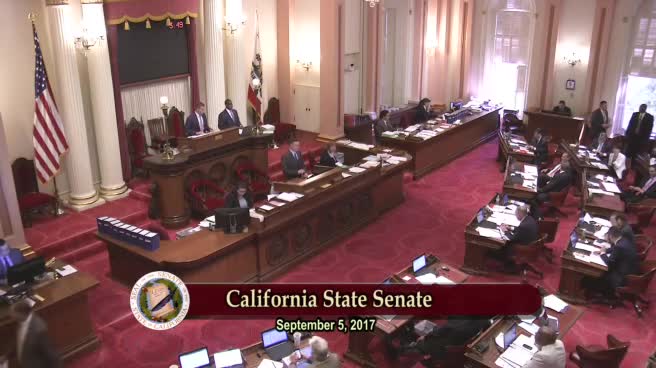
Bill Author

Bill Co-Author(s):