AB 1785: Medi-Cal eligibility: assets.
- Session Year: 2017-2018
- House: Assembly
- Latest Version Date: 2018-07-18
Existing law provides for the Medi-Cal program, which is administered by the State Department of Health Care Services, under which qualified low-income individuals receive health care services. The Medi-Cal program is, in part, governed and funded by federal Medicaid Program provisions. Existing law requires, with some exceptions, a Medi-Cal applicants or beneficiarys income and resources be determined based on modified adjusted gross income (MAGI), as specified. Existing law prohibits the use of an assets or resources test for individuals whose income eligibility is determined based on modified adjusted gross income.
This bill would exclude the principal and interest of a 529 savings plan, as defined, from consideration for purposes of any asset or resources test to determine eligibility for Medi-Cal benefits with respect to an applicant or beneficiary whose eligibility is not determined using MAGI-based financial methods, as specified. The bill would exclude qualified distributions from a 529 savings account from consideration for purposes of any income test to determine eligibility for Medi-Cal benefits with respect to an applicant or beneficiary. The bill would require the department to seek any necessary approvals from the federal Centers for Medicare and Medicaid Services and to implement the bill only in a manner that is consistent with federal Medicaid law and regulations, and only to the extent that the necessary approvals are obtained and federal financial participation is not jeopardized.
Existing law provides for the Medi-Cal program, which is administered by the State Department of Health Care Services, under which qualified low-income individuals receive health care services. The Medi-Cal program is, in part, governed and funded by federal Medicaid Program provisions. Existing law requires, with some exceptions, a Medi-Cal applicants or beneficiarys income and resources be determined based on modified adjusted gross income (MAGI), as specified. Existing law prohibits the use of an assets or resources test for individuals whose income eligibility is determined based on modified adjusted gross income.
This bill would exclude the principal and interest of a 529 savings plan, as defined, from consideration for purposes of any asset or resources test to determine eligibility for Medi-Cal benefits with respect to an applicant or beneficiary whose eligibility is not determined using MAGI-based financial methods, as specified. The bill would exclude qualified distributions from a 529 savings account from consideration for purposes of any income test to determine eligibility for Medi-Cal benefits with respect to an applicant or beneficiary. The bill would require the department to seek any necessary approvals from the federal Centers for Medicare and Medicaid Services and to implement the bill only in a manner that is consistent with federal Medicaid law and regulations, and only to the extent that the necessary approvals are obtained and federal financial participation is not jeopardized.
Existing law provides for the Medi-Cal program, which is administered by the State Department of Health Care Services, under which qualified low-income individuals receive health care services. The Medi-Cal program is, in part, governed and funded by federal Medicaid Program provisions. Existing law requires, with some exceptions, a Medi-Cal applicants or beneficiarys income and resources be determined based on modified adjusted gross income (MAGI), as specified. Existing law prohibits the use of an assets or resources test for individuals whose income eligibility is determined based on modified adjusted gross income.
This bill would exclude the principal and interest of a 529 college savings plan, as defined, from consideration for purposes of any asset or resources test to determine eligibility for Medi-Cal benefits with respect to an applicant or beneficiary whose eligibility is not determined using MAGI-based financial methods, as specified. The bill would exclude qualified distributions from a 529 savings account from consideration for purposes of any income test to determine eligibility for Medi-Cal benefits with respect to an applicant or beneficiary. The bill would require the department to seek any necessary approvals from the federal Centers for Medicare and Medicaid Services and to implement the bill only in a manner that is consistent with federal Medicaid law and regulations, and only to the extent that the necessary approvals are obtained and federal financial participation is not jeopardized.
Existing law provides for the Medi-Cal program, which is administered by the State Department of Health Care Services, under which qualified low-income individuals receive health care services. The Medi-Cal program is, in part, governed and funded by federal Medicaid Program provisions. Existing law requires, with some exceptions, a Medi-Cal applicants or beneficiarys income and resources be determined based on modified adjusted gross income (MAGI), as specified. Existing law prohibits the use of an assets or resources test for individuals whose income eligibility is determined based on modified adjusted gross income.
This bill would exclude the principal and interest of a 529 college savings plan, as defined, from consideration for purposes of any asset or resources test to determine eligibility for Medi-Cal benefits with respect to an applicant or beneficiary whose eligibility is not determined using MAGI-based financial methods, as specified. The bill would require the department to seek any necessary approvals from the federal Centers for Medicare and Medicaid Services and to implement the bill only in a manner that is consistent with federal Medicaid law and regulations, and only to the extent that the necessary approvals are obtained and federal financial participation is not jeopardized.
The Legislature finds and declares all of the following:
(a)The qualified tuition program, established under Section 529 of the Internal Revenue Code, is an important tax-advantaged investment vehicle in the United States designed to encourage families to save for the future education expenses of family members.
(b)Pursuant to the federal Tax Cuts and Jobs Act of 2017 (Public Law 115-97), qualified education expenses include expenses related to tuition in connection with enrollment or attendance at an elementary or secondary public, private, or religious school.
(c)Research shows that children of families that maintain savings of any amount are more likely to attend and graduate from college.
(d)The financial stability and economic mobility of all Californians, including low-income families, depends, in part, on access to education.
SEC. 2.Section 14005.38 is added to the Welfare and Institutions Code, to read:14005.38.(a)The principal and interest of a 529 savings plan shall be excluded from consideration for purposes of any asset or resources test to determine eligibility for Medi-Cal benefits with respect to an applicant or beneficiary whose eligibility is not determined using MAGI-based financial methods.
(b)The qualified distributions from a 529 savings account shall be excluded from consideration for purposes of any income test to determine eligibility for Medi-Cal benefits with respect to an applicant or beneficiary.
(c)The following definitions shall apply for purposes of this section:
(1)529 savings plan means a qualified tuition program that satisfies the requirements of Section 529 of the Internal Revenue Code.
(2)MAGI-based financial methods means income calculated using the financial methodologies described in Section 1396a(e)(14) of Title 42 of the United States Code, and as added by the federal Patient Protection and Affordable Care Act (Public Law 111-148) as originally enacted and as amended by the federal Health Care and Education Reconciliation Act of 2010 (Public Law 111-152) and any subsequent amendments.
(d)The department shall seek any necessary approvals from the federal Centers for Medicare and Medicaid Services to implement this section. The department shall implement this section only in a manner that is consistent with federal Medicaid law and regulations, and only to the extent that the necessary approvals are obtained and federal financial participation is not jeopardized.
The Legislature finds and declares all of the following:
(a)The qualified tuition program, established under Section 529 of the Internal Revenue Code, is an important tax-advantaged investment vehicle in the United States designed to encourage families to save for the future education expenses of family members.
(b)Pursuant to the federal Tax Cuts and Jobs Act of 2017 (Public Law 115-97), qualified education expenses include expenses related to tuition in connection with enrollment or attendance at an elementary or secondary public, private, or religious school.
(c)Research shows that children of families that maintain savings of any amount are more likely to attend and graduate from college.
(d)The financial stability and economic mobility of all Californians, including low-income families, depends, in part, on access to education.
SEC. 2.Section 14005.38 is added to the Welfare and Institutions Code, to read:14005.38.(a)The principal and interest of a 529 savings plan shall be excluded from consideration for purposes of any asset or resources test to determine eligibility for Medi-Cal benefits with respect to an applicant or beneficiary whose eligibility is not determined using MAGI-based financial methods.
(b)The qualified distributions from a 529 savings account shall be excluded from consideration for purposes of any income test to determine eligibility for Medi-Cal benefits with respect to an applicant or beneficiary.
(c)The following definitions shall apply for purposes of this section:
(1)529 savings plan means a qualified tuition program that satisfies the requirements of Section 529 of the Internal Revenue Code.
(2)MAGI-based financial methods means income calculated using the financial methodologies described in Section 1396a(e)(14) of Title 42 of the United States Code, and as added by the federal Patient Protection and Affordable Care Act (Public Law 111-148) as originally enacted and as amended by the federal Health Care and Education Reconciliation Act of 2010 (Public Law 111-152) and any subsequent amendments.
(d)The department shall seek any necessary approvals from the federal Centers for Medicare and Medicaid Services to implement this section. The department shall implement this section only in a manner that is consistent with federal Medicaid law and regulations, and only to the extent that the necessary approvals are obtained and federal financial participation is not jeopardized.
The Legislature finds and declares all of the following:
(a)The qualified tuition program, established under Section 529 of the Internal Revenue Code, is an important tax-advantaged investment vehicle in the United States designed to encourage families to save for the future education expenses of family members.
(b)Pursuant to the federal Tax Cuts and Jobs Act of 2017 (Public Law 115-97), qualified education expenses include expenses related to tuition in connection with enrollment or attendance at an elementary or secondary public, private, or religious school.
(c)Research shows that children of families that maintain savings of any amount are more likely to attend and graduate from college.
(d)The financial stability and economic mobility of all Californians, including low-income families, depends, in part, on access to education.
SECTION 1.SEC. 2.Section 14005.38 is added to the Welfare and Institutions Code, to read:14005.38.(a)The principal and interest of a 529 college savings plan shall be excluded from consideration for purposes of any asset or resources test to determine eligibility for Medi-Cal benefits with respect to an applicant or beneficiary whose eligibility is not determined using MAGI-based financial methods.
(b)The qualified distributions from a 529 savings account shall be excluded from consideration for purposes of any income test to determine eligibility for Medi-Cal benefits with respect to an applicant or beneficiary.
(b)(c)The following definitions shall apply for purposes of this section:
(1)529 college savings plan means a qualified tuition program that satisfies the requirements of Section 529 of the Internal Revenue Code.
(2)MAGI-based financial methods means income calculated using the financial methodologies described in Section 1396a(e)(14) of Title 42 of the United States Code, and as added by the federal Patient Protection and Affordable Care Act (Public Law 111-148) as originally enacted and as amended by the federal Health Care and Education Reconciliation Act of 2010 (Public Law 111-152) and any subsequent amendments.
(c)(d)The department shall seek any necessary approvals from the federal Centers for Medicare and Medicaid Services to implement this section. The department shall implement this section only in a manner that is consistent with federal Medicaid law and regulations, and only to the extent that the necessary approvals are obtained and federal financial participation is not jeopardized.
(a)The principal and interest of a 529 college savings plan shall be excluded from consideration for purposes of any asset or resources test to determine eligibility for Medi-Cal benefits with respect to an applicant or beneficiary whose eligibility is not determined using MAGI-based financial methods.
(b)The following definitions shall apply for purposes of this section:
(1)529 college savings plan means a qualified tuition program that satisfies the requirements of Section 529 of the Internal Revenue Code.
(2)MAGI-based financial methods means income calculated using the financial methodologies described in Section 1396a(e)(14) of Title 42 of the United States Code, and as added by the federal Patient Protection and Affordable Care Act (Public Law 111-148) as originally enacted and as amended by the federal Health Care and Education Reconciliation Act of 2010 (Public Law 111-152) and any subsequent amendments.
(c)The department shall seek any necessary approvals from the federal Centers for Medicare and Medicaid Services to implement this section. The department shall implement this section only in a manner that is consistent with federal Medicaid law and regulations, and only to the extent that the necessary approvals are obtained and federal financial participation is not jeopardized.
|
Date
|
Status
|
|---|---|
| Jul 18, 2018 | Chaptered by Secretary of State - Chapter 121, Statutes of 2018. |
| Jul 18, 2018 | Approved by the Governor. |
| Jul 10, 2018 | Enrolled and presented to the Governor at 3 p.m. |
| Jul 3, 2018 | In Assembly. Ordered to Engrossing and Enrolling. |
| Jul 2, 2018 | Read third time. Passed. Ordered to the Assembly. |
| Jun 26, 2018 | Read second time. Ordered to Consent Calendar. |
| Jun 25, 2018 | From committee: Be ordered to second reading file pursuant to Senate Rule 28.8 and ordered to Consent Calendar. |
| Jun 6, 2018 | From committee: Do pass and re-refer to Com. on APPR. with recommendation: To Consent Calendar. (Ayes 8. Noes 0.) (June 6). Re-referred to Com. on APPR. |
| May 17, 2018 | Referred to Com. on HEALTH. |
| May 3, 2018 | In Senate. Read first time. To Com. on RLS. for assignment. |
| May 3, 2018 | Read third time. Passed. Ordered to the Senate. |
| Apr 26, 2018 | Read second time. Ordered to Consent Calendar. |
| Apr 25, 2018 | From committee: Do pass. To Consent Calendar. (Ayes 17. Noes 0.) (April 25). |
| Apr 12, 2018 | Re-referred to Com. on APPR. |
| Apr 11, 2018 | Read second time and amended. |
| Apr 10, 2018 | From committee: Amend, and do pass as amended and re-refer to Com. on APPR. (Ayes 15. Noes 0.) (April 3). |
| Jan 22, 2018 | Referred to Com. on HEALTH. |
| Jan 9, 2018 | From printer. May be heard in committee February 8. |
| Jan 8, 2018 | Read first time. To print. |
|
Date
|
Description
|
Location
|
Votes
|
|
|---|---|---|---|---|
| Jul 2, 2018 | Consent Calendar AB1785 | Senate Floor |
Passed |
|
| Jun 6, 2018 | Do pass, but first be re-referred to the Committee on [Appropriations] with the recommendation: To Consent Calendar | Senate Standing Committee on Health |
Passed |
|
| May 3, 2018 | AB 1785 NAZARIAN Consent Calendar Second Day Regular Session | Assembly Floor |
Passed |
|
| Apr 25, 2018 | Do pass. To Consent Calendar. | Assembly Standing Committee on Appropriations |
Passed |
|
| Apr 3, 2018 | Do pass as amended and be re-referred to the Committee on [Appropriations] | Assembly Standing Committee on Health |
Passed |
This list shows positions taken on this bill by organizations on the date displayed, which is linked to the original source.
Positions by individuals are not included.
|
Organization
|
Position
|
Date
|
|---|---|---|
| Alameda County Board of Supervisors | ** Support | Jun 26, 2018 |
| American Academy Of Pediatrics, California | ** Support | Jun 26, 2018 |
| American Federation of State, County, and Municipal Employees | ** Support | Jun 26, 2018 |
| Asian Law Alliance | ** Support | Jun 26, 2018 |
| California Advocates for Nursing Home Reform | ** Support | Jun 26, 2018 |
| California Asset Building Coalition | ** Support | Jun 26, 2018 |
| California Catholic Conference | ** Support | Jun 26, 2018 |
| California Federation Of Teachers | ** Support | Jun 26, 2018 |
| California Health+ Advocates | ** Support | Jun 26, 2018 |
| California Rural Legal Assistance Foundation | ** Support | Jun 26, 2018 |
| California School Employees Association | ** Support | Jun 26, 2018 |
| California State Treasurer John Chiang | ** Support | Jun 26, 2018 |
| Congress of California Seniors | ** Support | Jun 26, 2018 |
| County Welfare Directors Association | ** Support | Jun 26, 2018 |
| Disability Rights California | ** Support | Jun 26, 2018 |
| Earn | ** Support | Jun 26, 2018 |
| East Bay Community Law Center | ** Support | Jun 26, 2018 |
| Health Access California | ** Support | Jun 26, 2018 |
| National Association Of Social Workers, California Chapter | ** Support | Jun 26, 2018 |
| National Health Law Program | ** Support | Jun 26, 2018 |
| Opportunity Fund | ** Support | Jun 26, 2018 |
| San Francisco Office of Financial Empowerment | ** Support | Jun 26, 2018 |
| United Ways Of California | ** Support | Jun 26, 2018 |
| western center on law & poverty | ** Support | Jun 26, 2018 |
Office of Senate Floor Analyses (916) 651-1520 Fax: (916) 327-4478 | AB |
CONSENT
Bill No: AB 1785
:
SENATE HEALTH COMMITTEE: 8-0, 6/6/18
AYES: Hernandez, Nguyen, Leyva, Mitchell, Monning, Nielsen, Pan, Roth
NO VOTE RECORDED: Newman
SENATE APPROPRIATIONS COMMITTEE: Senate Rule 28.8
ASSEMBLY FLOOR: 71-0, 5/3/18 (Consent) - See last page for vote
DIGEST:
This bill requires the principal and interest of a 529 savings plan to be excluded from consideration for purposes of any asset or resources test to determine eligibility for Medi-Cal benefits for an applicant or beneficiary whose eligibility is determined using non-Modified Adjusted Gross Income-based financial methods. Requires the qualified distributions from a 529 savings account to be excluded from consideration for purposes of any income test to determine eligibility for Medi-Cal benefits for an applicant or beneficiary.
Existing law:
- Establishes the Medi-Cal program, administered by the Department of Health Care Services (DHCS), under which low income individuals are eligible for medical coverage. [WIC §14000, et seq.]
- Requires, when determining eligibility for Medi-Cal benefits, an applicant’s or beneficiary’s income and resources to be determined, counted, and valued in accordance with the requirements of a specified provision of federal Medicaid law added by the Affordable Care Act (ACA), which prohibits the use of an assets or resources test for individuals whose income eligibility is determined based on Modified Adjusted Gross Income (MAGI). [42 U.S. Code §1396(a), WIC §14005.64]
- Requires, when determining the eligibility of applicants and beneficiaries using the MAGI-based financial methods, the five percent income disregard required under a specified provisions of the ACA to be applied. [42 U.S. Code §1396(a), WIC §14005.64]
- Defines “MAGI-based financial methods” as income calculated using the financial methodologies described in a specified provision of federal Medicaid law added by the ACA. [Title 42 U.S. Code §1396(a), WIC §14005.64]
- Requires DHCS to implement, interpret, or make specific the MAGI-related provisions described above by means of all-county letters, plan letters, plan or provider bulletins, or similar instructions until the time that regulations are adopted. Requires DHCS thereafter to adopt regulations in accordance with the requirements of the Administrative Procedure Act. [WIC §14005.64]
- Requires, for purposes of determining Medi-Cal eligibility for medically needy persons, medically needy family persons, and state-only Medi-Cal persons, resources to be determined, defined, counted, and valued in accordance with federal Medicaid law governing resources. [WIC §14006]
This bill:
- Requires the principal and interest of a Section 529 savings plan to be excluded from consideration for purposes of any asset or resources test to determine eligibility for Medi-Cal benefits for an applicant or beneficiary whose eligibility is determined using non-MAGI-based financial methods.
- Requires the qualified distributions from a 529 savings account to be excluded from consideration for any income test to determine eligibility for Medi-Cal benefits for an applicant or beneficiary.
- Requires DHCS to seek any necessary approvals from the federal Centers for Medicare and Medicaid Services to implement this bill.
- Requires DHCS to implement this bill only in a manner that is consistent with federal Medicaid law and regulations, and only to the extent that the necessary approvals are obtained and federal financial participation is not jeopardized.
- Makes legislative findings and declarations that the qualified tuition program, established under Section 529 of the Internal Revenue Code, is an important tax-advantaged investment vehicle designed to encourage families to save for the future education expenses of family members, that qualified education expenses include expenses related to tuition in connection with enrollment or attendance at an elementary or secondary public, private, or religious school, that research shows that children of families that maintain savings of any amount are more likely to attend and graduate from college, and the financial stability and economic mobility of all Californians, including low-income families, depends, in part, on access to education.
Comments
- Author’s statement. According to the author, families who proactively save for a child’s post-secondary education should not be penalized with a reduction or loss of vital public benefits. While California does a good job of preventing asset limits from being a barrier to savings for low-income families on the whole, there is still one population of people who aren’t exempt. Those who are eligible for Medi-Cal using non-MAGI—typically the elderly, disabled, or those in long-term care—are still subject to these limits. This bill simply helps to close the door on asset limits for this Medi-Cal population, not just those determined by MAGI. This ensures that no one, especially grandparents facing decision about their health care, are penalized for investing in the future education of the young people in their lives.
- Medi-Cal eligibility rules on income and assets. Medi-Cal eligibility is complex, and there are multiple different pathways to coverage. Some individuals are categorically eligible for Medi-Cal, meaning they are enrolled in Medi-Cal on the basis of being enrolled in another program, such as CalWORKS. Other individuals are eligible based on being low-income only (such as pregnant women, children, and adults age 19 to 64 with incomes below 138% of the federal poverty level (FPL)), and others based on being low-income and having limited assets and resources (such as aged and disabled individuals and medically needy persons). Examples of assets include bank accounts, retirement plans, cars, and a home. Some types of income and assets are exempt or not counted (“disregarded”) for purposes of determining Medi-Cal eligibility. For example, MAGI income eligibility under federal law is 133% of the FPL, but federal law also requires a five percent income disregard, effectively making eligibility 138% of the FPL.
The ACA introduced a new income counting methodology for Medi-Cal and people applying for federal premium tax and cost-sharing subsidies known as MAGI. The MAGI rules apply to the newly eligible adults (“expansion adults” age 19 to 64, primarily adults without minor children), pregnant women, parents and caretaker relatives, and children, including the Childrens Health Insurance Program-funded Targeted Low-Income Children’s Program, advanced premium tax credits (APTC) and cost-sharing reductions (CSR) offered through Covered California; and Medi-Cal Access Program for pregnant women. The MAGI methodology does not consider assets or resources other than income. DHCS published guidance that indicates what is counted as income for purposes of MAGI Medi-Cal and for APTC and CSRs in Covered California.
If an individual does not qualify for Medi-Cal under the MAGI rules, the individual may nevertheless qualify for Medi-Cal because they are aged, blind, or disabled, a foster child or a former foster child, a refugee, or someone seeking care for a particular medical condition that is covered under a limited scope program. These programs are known collectively as “Non-MAGI Medi-Cal” and they have their own income rules, and, in some cases, no income limitations at all (such as former foster youth). Most non-MAGI programs that count income still have limits on what resources an individual may have besides income to qualify for Medi-Cal (often referred to as an “asset test”). However, the rules vary by the particular non-MAGI Medi-Cal program. For example, the Medicare Savings Programs have a countable resource limit of $4,000 for an individual and $6,000 for a married couple, while the 250% Working Disabled Program has a resource limit of $2,000 for an individual and $3,000 for a couple.
- Medi-Cal eligibility and 529 plans. A 529 plan is an investment account that offers tax-free earnings growth and tax-free withdrawals when the funds are used to pay for qualified education expenses. This bill affects both MAGI and non-MAGI determinations of Medi-Cal eligibility.
The first part of this bill excludes the principal and interest of a 529 savings plan from consideration for any non-MAGI Medi-Cal eligibility-related asset or resources test. Currently, DHCS indicates the principal and interest of a 529 account are included in the non-MAGI Medi-Cal eligibility determination for both account owners (those who set up the account) and account beneficiaries (those who the funds are being saved for). For non-MAGI Medi-Cal eligibility, principal is counted as property, and interest is counted as irregular income for Medi-Cal eligibility if it exceeds $60. For MAGI Medi-Cal eligibility, DHCS indicates 529 college savings accounts are already not countable income to account holders or beneficiaries so long as the funds are used for educational expenses and there is no asset test for MAGI, so this provision in effect codifies current practice for Medi-Cal MAGI eligibility determinations.
The second part of this bill excludes the qualified distributions from a 529 savings account from any income test to determine eligibility for Medi-Cal benefits for an applicant or beneficiary. This provision applies to both MAGI and non-MAGI Medi-Cal eligibility determinations.
DHCS indicates qualified distributions from a 529 plan are already not considered income for MAGI Medi-Cal. For non-MAGI Medi-Cal, DHCS indicates in some circumstances qualified distributions from a 529 plan are considered income. For example, if the designated beneficiary uses any portion of the qualified distribution from a 529 for a purpose other than for his or her educational expenses, or no longer intends to use the funds for educational expenses, the funds are considered income in the month the funds are used, or in the month the individual no longer intends to use the funds for educational expenses.
FISCAL EFFECT: Appropriation: No Fiscal Com.: Yes Local: No
California State Treasurer John Chiang
Alameda County Board of Supervisors
American Academy of Pediatrics, California
American Federation of State, County, and Municipal Employees
Asian Law Alliance
California Advocates for Nursing Home Reform
California Asset Building Coalition
California Catholic Conference
California Federation of Teachers
California Health+ Advocates
California Rural Legal Assistance Foundation
California School Employees Association
City and County of San Francisco Treasurer José Cisneros
Congress of California Seniors
County Welfare Directors Association
Disability Rights California
EARN
East Bay Community Law Center
Health Access California
National Association of Social Workers, California Chapter
National Health Law Program
Opportunity Fund
San Francisco Office of Financial Empowerment
United Ways of California
Western Center on Law & Poverty
OPPOSITION: (Verified 6/25/18)
None received
ARGUMENTS IN SUPPORT: This bill is supported by consumer and legal aid groups who advocate on behalf of Medi-Cal beneficiaries. The East Bay Community Law Center (EBCLC) writes in support that asset limits present a serious barrier to savings for families who rely on public assistance. Existing law prohibits an assets or resources test for individuals whose income eligibility is determined based on MAGI. However, non-MAGI-based applicants are subject to these tests to qualify for Medi-Cal. By removing 529 accounts from determining Medi-Cal eligibility, families can prioritize higher education without having to compromise vital social safety-net programs. Further, families who opened a 529 savings account and find themselves unemployed or face a change in their income should have access to social safety-net programs, such as Medi-Cal, in a time of financial hardship.
EBCLC writes that low-income parents and grandparents who understand the importance of attending higher education and want to secure a financial future for their children and grandchildren should not have to risk access to Medi-Cal. Saving for higher education has shown to increase access and encourage more students to attend and graduate. Studies have shown that children with college savings of less than $500 are three times more likely to enroll in higher education and four times more likely to graduate from college. EBCLC writes that the state needs to continue to encourage low-income families to save for the future and remove any barriers or disincentives that keep them from doing so, and this bill is a necessary step to ensure California does its part to prevent asset limits from creating a barrier to savings for low-income families.
ASSEMBLY FLOOR: 71-0, 5/3/18
AYES: Acosta, Aguiar-Curry, Arambula, Baker, Berman, Bigelow, Bloom, Bonta, Brough, Burke, Calderon, Carrillo, Cervantes, Chau, Chávez, Chen, Chiu, Chu, Cooley, Cooper, Cunningham, Dahle, Daly, Eggman, Flora, Fong, Frazier, Friedman, Gallagher, Eduardo Garcia, Gipson, Gloria, Gonzalez Fletcher, Gray, Harper, Holden, Irwin, Jones-Sawyer, Kalra, Kamlager-Dove, Kiley, Lackey, Levine, Limón, Low, Maienschein, Mathis, Mayes, McCarty, Medina, Melendez, Mullin, Muratsuchi, Nazarian, Obernolte, O'Donnell, Patterson, Quirk, Reyes, Rodriguez, Rubio, Salas, Santiago, Steinorth, Mark Stone, Thurmond, Ting, Waldron, Weber, Wood, Rendon
NO VOTE RECORDED: Travis Allen, Caballero, Choi, Cristina Garcia, Grayson, Quirk-Silva, Voepel
6/26/18 13:09:49
**** END ****
SENATE COMMITTEE ON HEALTH
Senator Ed Hernandez, O.D., Chair
BILL NO: AB 1785
AUTHOR: | Nazarian | ||
VERSION: | April 11, 2018 | ||
HEARING DATE: | June 6, 2018 | ||
CONSULTANT: | Scott Bain | ||
SUBJECT: Medi-Cal eligibility: assets.
SUMMARY:
Requires the principal and interest of a 529 savings plan to be excluded from consideration for purposes of any asset or resources test to determine eligibility for Medi-Cal benefits for an applicant or beneficiary whose eligibility is determined using non-Modified Adjusted Gross Income-based financial methods. Requires the qualified distributions from a 529 savings account to be excluded from consideration for purposes of any income test to determine eligibility for Medi-Cal benefits for an applicant or beneficiary.
Existing law:
- Establishes the Medi-Cal program, administered by the Department of Health Care Services (DHCS), under which low income individuals are eligible for medical coverage. [WIC §14000, et seq.]
- Makes adults and parents with incomes up to 138% of the federal poverty level (FPL) who are under age 65 eligible for Medi-Cal, and makes children with incomes up to 266% of the FPL eligible for Medi-Cal, including providing full-scope Medi-Cal benefits to undocumented children through age 18. [WIC §14005.60, 14005.64, 14005.27, 14005.64, and 14007.8]
- Requires, when determining eligibility for Medi-Cal benefits, an applicant’s or beneficiary’s income and resources to be determined, counted, and valued in accordance with the requirements of a specified provision of federal Medicaid law added by the Affordable Care Act (ACA), which prohibits the use of an assets or resources test for individuals whose income eligibility is determined based on Modified Adjusted Gross Income (MAGI). [42 U.S. Code §1396(a), WIC §14005.64]
- Requires, when determining the eligibility of applicants and beneficiaries using the MAGI-based financial methods, the five percent income disregard required under a specified provisions of the ACA to be applied. [42 U.S. Code §1396(a), WIC §14005.64]
- Defines “MAGI-based financial methods” as income calculated using the financial methodologies described in a specified provision of federal Medicaid law added by the ACA. [Title 42 U.S. Code §1396(a), WIC §14005.64]
- Requires DHCS to implement, interpret, or make specific the MAGI-related provisions described above by means of all-county letters, plan letters, plan or provider bulletins, or similar instructions until the time that regulations are adopted. Requires DHCS thereafter to adopt regulations in accordance with the requirements of the Administrative Procedure Act. [WIC §14005.64]
- Requires, for purposes of determining Medi-Cal eligibility for medically needy persons, medically needy family persons, and state-only Medi-Cal persons, resources to be determined, defined, counted, and valued in accordance with federal Medicaid law governing resources. [WIC §14006]
This bill:
- Requires the principal and interest of a Section 529 savings plan to be excluded from consideration for purposes of any asset or resources test to determine eligibility for Medi-Cal benefits for an applicant or beneficiary whose eligibility is determined using non-MAGI-based financial methods.
- Requires the qualified distributions from a 529 savings account to be excluded from consideration for any income test to determine eligibility for Medi-Cal benefits for an applicant or beneficiary.
- Requires DHCS to seek any necessary approvals from the federal Centers for Medicare and Medicaid Services to implement this bill.
- Requires DHCS to implement this bill only in a manner that is consistent with federal Medicaid law and regulations, and only to the extent that the necessary approvals are obtained and federal financial participation is not jeopardized.
- Makes legislative findings and declarations that the qualified tuition program, established under Section 529 of the Internal Revenue Code, is an important tax-advantaged investment vehicle designed to encourage families to save for the future education expenses of family members, that qualified education expenses include expenses related to tuition in connection with enrollment or attendance at an elementary or secondary public, private, or religious school, that research shows that children of families that maintain savings of any amount are more likely to attend and graduate from college, and the financial stability and economic mobility of all Californians, including low-income families, depends, in part, on access to education.
FISCAL EFFECT:
According to the Assembly Appropriations Committee, minor costs to DHCS to make systems changes and seek necessary federal approvals (GF/federal). No substantive increase in the number of beneficiaries is expected, as DHCS states the number of applicants found ineligible due to funds in a 529 college savings accounts in excess of applicable property limit is negligible. In other words, persons to whom this bill applies are likely to be found eligible for Medi-Cal regardless of the bill.
PRIOR VOTES:
Assembly Floor: | 71 - 0 |
Assembly Appropriations Committee: | 17 - 0 |
Assembly Health Committee: | 15 - 0 |
COMMENTS:
- Author’s statement. According to the author, families who proactively save for a child’s post-secondary education should not be penalized with a reduction or loss of vital public benefits. While California does a good job of preventing asset limits from being a barrier to savings for low-income families on the whole, there is still one population of people who aren’t exempt. Those who are eligible for Medi-Cal using non-modified gross adjusted income—typically the elderly, disabled, or those in long-term care—are still subject to these limits. This bill simply helps to close the door on asset limits for this Medi-Cal population, not just those determined by MAGI. This ensures that no one, especially grandparents facing decision about their health care, are penalized for investing in the future education of the young people in their lives.
- Medi-Cal eligibility rules on income and assets. Medi-Cal eligibility is complex, and there are multiple different pathways to coverage. Some individuals are categorically eligible for Medi-Cal, meaning they are enrolled in Medi-Cal on the basis of being enrolled in another program, such as CalWORKS. Other individuals are eligible based on being low-income only (such as pregnant women, children, and adults age 19 to 64 with incomes below 138% of the FPL), and others based on being low-income and having limited assets and resources (such as aged and disabled individuals and medically needy persons). Examples of assets include bank accounts, retirement plans, cars, and a home. Some types of income and assets are exempt or not counted (“disregarded”) for purposes of determining Medi-Cal eligibility. For example, MAGI income eligibility under federal law is 133% of the FPL, but federal law also requires a five percent income disregard, effectively making eligibility 138% of the FPL.
The ACA introduced a new income counting methodology for Medi-Cal and people applying for federal premium tax and cost-sharing subsidies known as MAGI. The MAGI rules apply to the newly eligible adults (“expansion adults” age 19 to 64, primarily adults without minor children), pregnant women, parents and caretaker relatives, and children, including the Childrens Health Insurance Program-funded Targeted Low-Income Children’s Program, advanced premium tax credits (APTC) and cost-sharing reductions (CSR) offered through Covered California; and Medi-Cal Access Program for pregnant women. The MAGI methodology does not consider assets or resources other than income. DHCS published guidance that indicates what is counted as income for purposes of MAGI Medi-Cal and for APTC and CSRs in Covered California.
If an individual does not qualify for Medi-Cal under the MAGI rules, the individual may nevertheless qualify for Medi-Cal because they are aged, blind, or disabled, a foster child or a former foster child, a refugee, or someone seeking care for a particular medical condition that is covered under a limited scope program. These programs are known collectively as “Non-MAGI Medi-Cal” and they have their own income rules, and, in some cases, no income limitations at all (such as former foster youth). Most non-MAGI programs that count income still have limits on what resources an individual may have besides income to qualify for Medi-Cal (often referred to as an “asset test”). However, the rules vary by the particular non-MAGI Medi-Cal program. For example, the Medicare Savings Programs have a countable resource limit of $4,000 for an individual and $6,000 for a married couple, while the 250% Working Disabled Program has a resource limit of $2,000 for an individual and $3,000 for a couple.
- Medi-Cal eligibility and 529 plans. A 529 plan is an investment account that offers tax-free earnings growth and tax-free withdrawals when the funds are used to pay for qualified education expenses. This bill affects both MAGI and non-MAGI determinations of Medi-Cal eligibility.
The first part of this bill excludes the principal and interest of a 529 savings plan from consideration for any non-MAGI Medi-Cal eligibility-related asset or resources test. Currently, DHCS indicates the principal and interest of a 529 account are included in the non-MAGI Medi-Cal eligibility determination for both account owners (those who set up the account) and account beneficiaries (those who the funds are being saved for). For non-MAGI Medi-Cal eligibility, principal is counted as property, and interest is counted as irregular income for Medi-Cal eligibility if it exceeds $60. For MAGI Medi-Cal eligibility, DHCS indicates 529 college savings accounts are already not countable income to account holders or beneficiaries so long as the funds are used for educational expenses and there is no asset test for MAGI, so this provision in effect codifies current practice for Medi-Cal MAGI eligibility determinations.
The second part of this bill excludes the qualified distributions from a 529 savings account from any income test to determine eligibility for Medi-Cal benefits for an applicant or beneficiary. This provision applies to both MAGI and non-MAGI Medi-Cal eligibility determinations.
DHCS indicates qualified distributions from a 529 plan are already not considered income for MAGI Medi-Cal. For non-MAGI Medi-Cal, DHCS indicates in some circumstances qualified distributions from a 529 plan are considered income. For example, if the designated beneficiary uses any portion of the qualified distribution from a 529 for a purpose other than for his or her educational expenses, or no longer intends to use the funds for educational expenses, the funds are considered income in the month the funds are used, or in the month the individual no longer intends to use the funds for educational expenses.
- Prior legislation. AB X1 1 (Perez, Chapter 3, Statutes of 2013-14 First Extraordinary Session) implemented specified Medicaid provisions of the ACA, including the expansion of federal Medicaid coverage to low-income adults with incomes between 0 to 138% of the FPL. AB X1 1 also implemented a number of the Medicaid ACA provisions to simplify the eligibility, enrollment and renewal processes for Medi-Cal, including provisions requiring the use of MAGI.
- Support. This bill is supported by consumer and legal aid groups who advocate on behalf of Medi-Cal beneficiaries. The East Bay Community Law Center (EBCLC) writes in support that asset limits present a serious barrier to savings for families who rely on public assistance. Existing law prohibits an assets or resources test for individuals whose income eligibility is determined based on MAGI. However, non-MAGI-based applicants are subject to these tests to qualify for Medi-Cal. By removing 529 accounts from determining Medi-Cal eligibility, families can prioritize higher education without having to compromise vital social safety-net programs. Further, families who opened a 529 savings account and find themselves unemployed or face a change in their income should have access to social safety-net programs, such as Medi-Cal, in a time of financial hardship.
EBCLC writes that low-income parents and grandparents who understand the importance of attending higher education and want to secure a financial future for their children and grandchildren should not have to risk access to Medi-Cal. Saving for higher education has shown to increase access and encourage more students to attend and graduate. Studies have shown that children with college savings of less than $500 are three times more likely to enroll in higher education and four times more likely to graduate from college. EBCLC writes that the state needs to continue to encourage low income families to save for the future and remove any barriers or disincentives that keep them from doing so, and this bill is a necessary step to ensure California does its part to prevent asset limits from creating a barrier to savings for low-income families.
SUPPORT AND OPPOSITION:
Support: American Academy of Pediatrics, California
American Federation of State, County, and Municipal Employees
Asian Law Alliance
California Advocates for Nursing Home Reform
California Asset Building Coalition
California Catholic Conference
California Federation of Teachers
California Health+ Advocates
California Rural Legal Assistance Foundation
California School Employees Association
City and County of San Francisco Treasurer José Cisneros
Congress of California Seniors
County Welfare Directors Association
Disability Rights California
EARN
East Bay Community Law Center
Health Access California
National Association of Social Workers, California Chapter
National Health Law Program
Opportunity Fund
San Francisco Office of Financial Empowerment
United Ways of California
Western Center on Law & Poverty
Oppose: None received
-- END --
Date of Hearing: April 25, 2018
ASSEMBLY COMMITTEE ON APPROPRIATIONS
Lorena Gonzalez Fletcher, Chair
ABPCA Bill Id:AB 1785
Author:(Nazarian) – As Amended Ver:April 11, 2018
Policy Committee: | Health | Vote: | 15 - 0 |
Urgency: No State Mandated Local Program: No Reimbursable: No
SUMMARY:
This bill excludes the principal and interest of a 529 savings plan from consideration for purposes of any asset or resources test to determine eligibility for Medi-Cal benefits.
FISCAL EFFECT:
Minor costs to the Department of Health Care Services (DHCS) to make systems changes and seek necessary federal approvals (GF/federal). No substantive increase in the number of beneficiaries is expected, as DHCS states the number of applicants found ineligible due to funds in a 529 college savings accounts in excess of applicable property limit is negligible. In other words, persons to whom this bill applies are likely to be found eligible for Medi-Cal regardless of the bill.
COMMENTS:
- Purpose. The purpose of this bill is to ensure families who proactively save for a child’s post-secondary education are not penalized by being made ineligible for Medi-Cal. Numerous health advocacy groups support this bill, and it has no opposition.
- Background. 529 college savings plans are established pursuant to federal law to allow for tax-free growth and disbursements as a means to encourage college savings. Also pursuant to federal law, many individuals are eligible for Medi-Cal based purely on "modified adjusted grow income" (MAGI), but for other eligibility categories there are limits on assets a beneficiary can possess. MAGI is the basis for determining Medicaid income eligibility for most children, pregnant women, parents, and adults. Elderly or disabled persons, or persons in long-term care, are subject to an asset test. This bill would prohibit the principal and interest of a 529 savings plan from counting as an asset and thereby disqualifying someone for Medi-Cal coverage.
Analysis Prepared by: Lisa Murawski / APPR. / (916) 319-2081
Date of Hearing: April 3, 2018
ASSEMBLY COMMITTEE ON HEALTH
Jim Wood, Chair
ABPCA Bill Id:AB 1785
Author:(Nazarian) – As Introduced Ver:January 8, 2018
SUBJECT: Medi-Cal eligibility: assets.
SUMMARY: Excludes the principal and interest of a 529 college savings plan from consideration for purposes of any asset or resources test to determine eligibility for Medi-Cal benefits for those applicants or beneficiaries whose eligibility is determined using non-Modified Adjusted Gross Income (non-MAGI) based financial methods. Requires the Department of Health Care Services (DHCS) to seek any necessary approvals from the federal Centers for Medicare and Medicaid Services to implement this bill, and to implement this bill in a manner consistent with federal Medicaid law and only to the extent that the necessary approvals are obtained and federal financial participation is not jeopardized.
EXISTING LAW:
- Establishes the Medi-Cal program, administered by DHCS, under which health care services are provided to qualified, low-income persons.
- Establishes a schedule of benefits for Medi-Cal beneficiaries, which includes inpatient and outpatient hospital services. Provides Medi-Cal services through various types of managed care plans.
FISCAL EFFECT: This bill has not yet been analyzed by a fiscal committee.
COMMENTS:
- PURPOSE OF THIS BILL. According to the author, families who proactively save for a child’s post-secondary education should not be penalized with a reduction or loss of vital public benefits. While California does a good job of preventing asset limits from being a barrier to savings for low-income families on the whole, there is still one population of people who are not exempt. Those who are eligible for Medi-Cal using MAGI, typically the elderly, disabled or those in long-term care, are still subject to these limits. This bill closes the door on asset limits for all Medi-Cal populations, not just those determined by MAGI. The author concludes, this ensures that no one, especially grandparents facing decision about their healthcare, are penalized for investing in the future education of the young people in their lives.
- BACKGROUND. Under Medi-Cal, there are different rules for counting income and household size for purposes of eligibility. The non-MAGI Medi-Cal programs generally serve low-income individuals who are seniors or have disabilities; children and families who are linked to Medi-Cal through other public benefit programs or are in special circumstances such as foster care; and, individuals in need of specific treatment such as tuberculosis, breast cancer, or HIV/AIDS. Non-MAGI Medi-Cal is not always free. Income is used to determine if a person or family is eligible for free Medi-Cal or Medi-Cal with a share of cost. Income that exceeds the Medi-Cal income limit becomes the monthly share of cost. A share of cost is similar to a monthly deductible. It is the amount of medical expenses that a Medi-Cal beneficiary must pay or be obligated to pay before Medi-Cal will cover any medical expenses. Income includes earnings from a job, unemployment benefits, disability benefits, self-employment income, retirement benefits, interest on assets, child or spousal support, and other means of income or support. There are also property (includes land, houses, bank accounts, stocks, bonds, and cash on hand, trusts and vehicles) limits for non-MAGI Medi-Cal, depending on family size and program category.
The federal Patient Protection and Affordable Care Act (ACA) introduced the MAGI methodology in defining a family’s size and income for eligibility. The MAGI rules apply to the following programs: expansion adults (ages 19-64 that became eligible for Medi-cal under the ACA), parents and caretaker relatives, pregnant women, and children. In general, unless an individual gets Medi-Cal through a linked program such as Supplemental Security Income or CalWORKS, or due to former foster youth status, Medi-Cal eligibility is reviewed for the MAGI programs before looking to the Non-MAGI programs. MAGI formula does not count certain income including, for example, Veterans’ benefits, child support received, and scholarships, grants, and awards used for education purposes. MAGI/Expansion Medi-Cal will also allow other income deductions that are not permitted under traditional Medi-Cal income calculations, including for example, alimony paid and pretax contributions for expenses such as child care or retirement.- 529 Plans. Authorized under Section 529 of the Internal Revenue Code, a 529 plan is a tax-advantaged savings plan designed to encourage saving for future college costs. Also known as “qualified tuition plans,” 529 plans are sponsored by states, state agencies, or educational institutions. All 50 states and the District of Columbia sponsor at least one type of 529 plan. Prepaid tuition plans and college savings plans are the two types of 529 plans. Prepaid tuition plans let a college saver or account holder purchase units or credits at participating colleges and universities for future tuition and mandatory fees at current prices for the beneficiary. Prepaid tuition plans usually cannot be used to pay for future room and board. Most prepaid tuition plans are sponsored by state governments and have residency requirements for the college saver and/or beneficiary. Additionally, prepaid plans are not guaranteed by the federal government but some state governments guarantee the money paid into the plan. Alternately, college savings plans let a college saver open an investment account to save for the beneficiary’s future qualified higher education expenses (tuition, mandatory fees and room and board). College savings plans can generally be used at any college or university, including sometimes at non-U.S. colleges and universities. All college savings plans are sponsored by state governments, but only a few have residency requirements for the college saver and/or beneficiary. Many states offer tax benefits for contributions to a 529 plan. These could include deducting contributions from state income tax or matching grants but college savers may only be eligible for these benefits if investment is made in a 529 plan sponsored by the account holder’s state of residence. Additionally, if 529 account withdrawals are used for qualified higher education expenses, earnings in the 529 account are not subject to federal income tax and, in most cases, state income tax. However, if withdrawals are not used for qualified higher education expenses, they will be subject to state and federal income taxes and an additional 10% federal tax penalty on earnings
- Achieving a Better Life Experience Act (ABLE) Accounts. On December 19, 2014, President Obama signed the Stephen Beck, Jr. ABLE Act of 2014, which allows individuals who became blind or disabled before reaching age 26 to create tax-free savings accounts. ABLE accounts generally follow the same rules as educations savings accounts allowed by 529 plans: individuals can make nondeductible cash contributions to an ABLE account in the name of a specified beneficiary, and earnings can grow tax-free. ABLE account distributions are also not included in the beneficiary’s income so long as they are used for qualified services for the beneficiary and distributions do not exceed the cost of the qualified services. The ABLE Act directed states to establish one ABLE account for each beneficiary who is a resident of that state.
In 2015, the California Legislature enacted SB 324 (Pavley), Chapter 796, Statutes of 2015 and AB 449 (Irwin), Chapter 774, Statutes of 2016, to comprehensively implement ABLE accounts in California. Under the California ABLE Act (CalABLE), to be eligible, a beneficiary must be entitled to benefits based on blindness and disability under the Social Security Act, with onset before 26 years of age, and have a disability certificate filed pursuant to ABLE Act requirements. CalABLE also created the ABLE trust with specified powers, as well as an ABLE board with specified membership within the State Treasurer’s Office to administer the program, among other functions. Under CalABLE, moneys, contributions and any distribution for qualified disability expenses from, an ABLE account, not to exceed $100,000 will not count toward determining eligibility for a state or local means-tested program, including Medi-Cal.
- SUPPORT. The Asian Law Alliance, the Western Center on Law and Poverty and Congress of California Seniors state that this bill is a necessary step to ensure California does its part in preventing asset limits from creating a barrier to savings for low-income families. The Treasurer of the City and County of San Francisco, the California Asset Building Coalition and the CaliforniaHealth Advocates state that with this bill, families can prioritize higher education without having to compromise vital social safety-net programs.
- SUGGESTED AMENDMENTS. As written, this bill only excludes the principal and interest of a 529 plan from determining eligibility. Consistent with CalABLE Accounts, the author may wish to consider excluding qualified distributions from being counted as income under this bill.
- AUTHOR’S AMENDMENTS. The author would like to amend this bill to add the following findings and declarations:
- “529” college savings plans are an important tool for families to save for higher education;
- Research shows that students, even those from low-income families, with any amount of savings are more likely to attend and graduate from college;
- Access to college plays a significant role in financial stability and economic mobility for low-income families; and,
- Pursuant to the federal Tax Cuts and Jobs Act of 2017, parents can now use money saved in a 529 college savings plan to pay for tuition for elementary or secondary public, private, or religious school.
REGISTERED SUPPORT / OPPOSITION:
Support
José Cisneros, Treasurer, City and County of San Francisco
Asian Law Alliance
California Advocates for Nursing Home Reform
California Asset Building Coalition
California Catholic Conference, Inc.
California Federation of Teachers
CaliforniaHealth Advocates
California Rural Legal Assistance Foundation
California School Employees Association
Congress of California Seniors
EARN
National Association of Social Workers, California Chapter
Opportunity Fund
San Francisco Office of Financial Empowerment
United Ways of California
Western Center on Law & Poverty
Opposition
None on file
Analysis Prepared by: Rosielyn Pulmano / HEALTH / (916) 319-2097

Bill Author
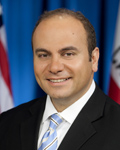
Bill Co-Author(s):