AB 184: Sea level rise planning: database.
- Session Year: 2017-2018
- House: Assembly
- Latest Version Date: 2017-09-28
Existing law requires the Natural Resources Agency, in collaboration with the Ocean Protection Council, to create, update biannually, and post on an Internet Web site a Planning for Sea Level Rise Database describing steps being taken throughout the state to prepare for, and adapt to, sea level rise. Existing law further requires that various public agencies and private entities provide to the agency, on a biannual basis, sea level rise planning information, as defined, that is under the control or jurisdiction of the public agencies or private entities, and requires the agency to determine the information necessary for inclusion in the database, as prescribed. Existing law repeals these provisions on January 1, 2018.
This bill would postpone that repeal until January 1, 2023.
Existing law requires the Natural Resources Agency, in collaboration with the Ocean Protection Council, to create, update biannually, and post on an Internet Web site a Planning for Sea Level Rise Database describing steps being taken throughout the state to prepare for, and adapt to, sea level rise. Existing law further requires that various public agencies and private entities provide to the agency, on a biannual basis, sea level rise planning information, as defined, that is under the control or jurisdiction of the public agencies or private entities, and requires the agency to determine the information necessary for inclusion in the database, as prescribed. Existing law repeals these provisions on January 1, 2018.
This bill would eliminate the January 1, 2018, repeal date of those provisions. postpone that repeal until January 1, 2023.
Existing law requires the Natural Resources Agency, in collaboration with the Ocean Protection Council, to create, update biannually, and post on an Internet Web site a Planning for Sea Level Rise Database describing steps being taken throughout the state to prepare for, and adapt to, sea level rise. Existing law further requires that various public agencies and private entities provide to the agency, on a biannual basis, sea level rise planning information, as defined, that is under the control or jurisdiction of the public agencies or private entities, and requires the agency to determine the information necessary for inclusion in the database, as prescribed. Existing law repeals these provisions on January 1, 2018.
This bill would eliminate the January 1, 2018, repeal date of those provisions.
This division shall remain in effect only until January 1, 2023, and as of that date is repealed, unless a later enacted statute, that is enacted before January 1, 2023, deletes or extends that date.
This division shall remain in effect only until January 1, 2023, and as of that date is repealed, unless a later enacted statute, that is enacted before January 1, 2023, deletes or extends that date.
This division shall remain in effect only until January 1, 2018, 2023, and as of that date is repealed, unless a later enacted statute, that is enacted before January 1, 2018, 2023, deletes or extends that date.
SECTION 1.Section 30968 of the Public Resources Code is repealed.|
Date
|
Status
|
|---|---|
| Sep 28, 2017 | Chaptered by Secretary of State - Chapter 338, Statutes of 2017. |
| Sep 28, 2017 | Approved by the Governor. |
| Sep 12, 2017 | Enrolled and presented to the Governor at 2:30 p.m. |
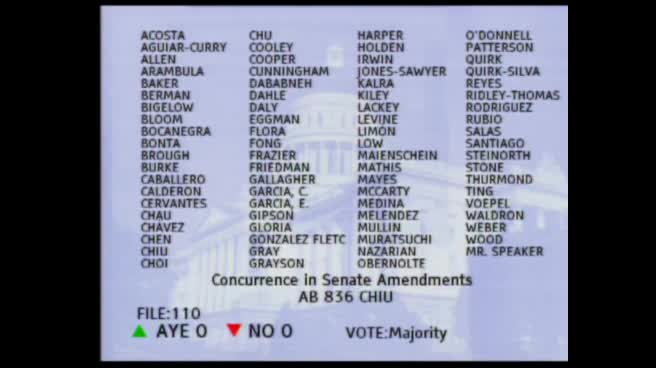
| Sep 5, 2017 | Senate amendments concurred in. To Engrossing and Enrolling. (Ayes 65. Noes 11.). |
| Aug 31, 2017 | In Assembly. Concurrence in Senate amendments pending. May be considered on or after September 2 pursuant to Assembly Rule 77. |
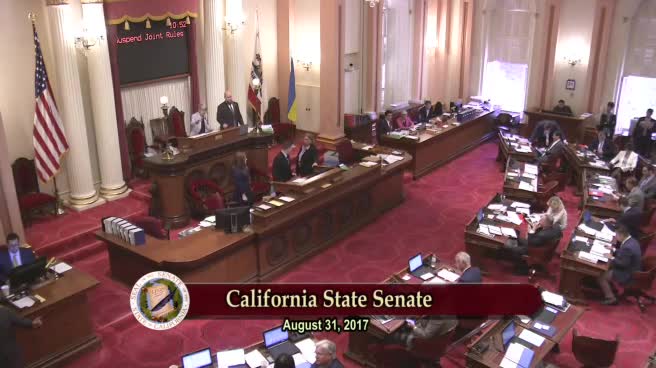
| Aug 31, 2017 | Read third time. Passed. Ordered to the Assembly. |
| Jun 27, 2017 | Read second time. Ordered to third reading. |
| Jun 26, 2017 | From committee: Be ordered to second reading pursuant to Senate Rule 28.8. |
| Jun 13, 2017 | From committee: Do pass and re-refer to Com. on APPR. (Ayes 7. Noes 2.) (June 13). Re-referred to Com. on APPR. |
| May 23, 2017 | From committee chair, with author's amendments: Amend, and re-refer to committee. Read second time, amended, and re-referred to Com. on N.R. & W. |
| May 10, 2017 | Referred to Com. on N.R. & W. |
| Apr 27, 2017 | In Senate. Read first time. To Com. on RLS. for assignment. |
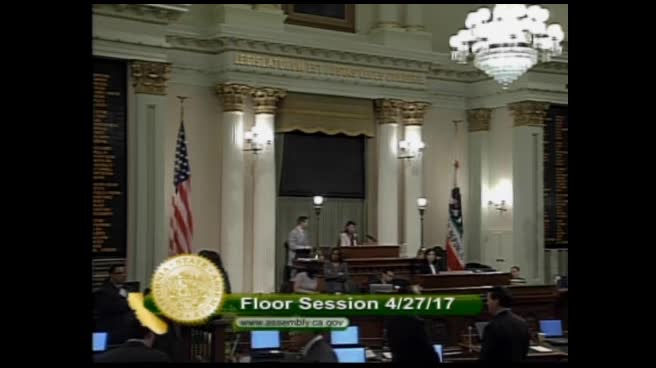
| Apr 27, 2017 | Read third time. Passed. Ordered to the Senate. (Ayes 63. Noes 9. Page 1263.) |
| Apr 6, 2017 | Read second time. Ordered to third reading. |
| Apr 5, 2017 | Coauthors revised. |
| Mar 30, 2017 | Coauthors revised. |
| Mar 21, 2017 | From committee: Do pass and re-refer to Com. on APPR. (Ayes 9. Noes 1.) (March 20). Re-referred to Com. on APPR. |
| Jan 30, 2017 | Referred to Com. on NAT. RES. |
| Jan 20, 2017 | From printer. May be heard in committee February 19. |
| Jan 19, 2017 | Read first time. To print. |
|
Date
|
Description
|
Location
|
Votes
|
|
|---|---|---|---|---|
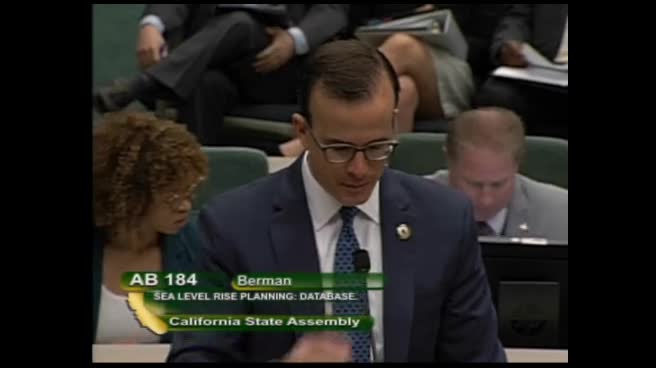
| Sep 5, 2017 | AB 184 BERMAN Concurrence in Senate Amendments | Assembly Floor |
Passed |
|
| Aug 31, 2017 | Assembly 3rd Reading AB184 Berman et al. By Hill | Senate Floor |
Passed |
|
| Jun 13, 2017 | Do pass, but first be re-referred to the Committee on [Appropriations] | Senate Standing Committee on Natural Resources and Water |
Passed |
|
| Apr 27, 2017 | AB 184 BERMAN Assembly Third Reading | Assembly Floor |
Passed |
|
| Apr 5, 2017 | Do pass. | Assembly Standing Committee on Appropriations |
Passed |
|
| Mar 20, 2017 | Do pass and be re-referred to the Committee on [Appropriations] | Assembly Standing Committee on Natural Resources |
Passed |
This list shows positions taken on this bill by organizations on the date displayed, which is linked to the original source.
Positions by individuals are not included.
|
Organization
|
Position
|
Date
|
|---|---|---|
| Audubon California | * Support | Mar 20, 2017 |
| California League Of Conservation Voters | ** Support | Jun 28, 2017 |
| California State Association Of Counties | ** Support | Jun 28, 2017 |
| Cities Association of Santa Clara County | ** Support | Jun 28, 2017 |
| East Bay Regional Park District | ** Support | Jun 28, 2017 |
| Heal The Bay | ** Support | Jun 28, 2017 |
| Nature Conservancy | ** Support | Jun 28, 2017 |
| Ocean Conservancy | ** Support | Jun 28, 2017 |
| Pacific Coast Shellfish Growers Association | ** Support | Jun 28, 2017 |
| Pacific Coastal Fish Grower's Association | * Support | Mar 20, 2017 |
| Project Lead The Way Inc. | * Support | Mar 20, 2017 |
| San Mateo County Board of Supervisors | ** Support | Jun 28, 2017 |
| Santa Clara County Board of Supervisors | ** Support | Jun 28, 2017 |
| Sierra Club California | ** Support | Jun 28, 2017 |
| Silicon Valley Leadership Group | ** Support | Jun 28, 2017 |
| The Ocean Conservancy | * Support | Mar 20, 2017 |
| Union Of Concerned Scientists | ** Support | Jun 28, 2017 |
| Water Replenishment District Of Southern California | ** Support | Jun 28, 2017 |
CONCURRENCE IN SENATE AMENDMENTS
CSA1 Bill Id:AB 184
Author:(Berman)
As Amended Ver:May 23, 2017
Majority vote
ASSEMBLY: | 63-9 | (April 27, 2017) | SENATE: | 35-4 | (August 31, 2017) |
Original Committee Reference: NAT. RES.
SUMMARY: Extends the sunset of January 1, 2018 for the Planning for Sea Level Rise Database (PSLRD) to January 1, 2023.
The Senate amendments extend the sunset for PSLRD rather than eliminating it.
EXISTING LAW:
- Authorizes the California Coastal Conservancy (Conservancy) to address the impacts and potential impacts of climate change on coastal resources and to award grants to public agencies and nonprofit organizations for this purpose.
- Requires a local trustee of granted public trust lands whose annual gross public trust revenues exceed $250,000 to prepare and submit to the State Lands Commission an assessment of how it proposes to address sea level rise.
- Requires local governments within the coastal zone to prepare a Local Coastal Program (LCP). Authorizes any local government to request the California Coastal Commission (Commission) to prepare a LCP for the local government. Requires a LCP to contain a public access component to assure that maximum public access to the coast and public recreation areas is provided. Requires Commission approval of a local government's LCP or any amendments to that LCP.
- Creates the California Climate Resilience Account, and requires funds in that account to be expended by the Conservancy, the Commission, and the San Francisco Bay Conservation and Development Commission for coastal zone management planning and implementation activities to address the risks and impacts of climate change, sea level rise, and associated extreme events to coastal and bay communities and natural resources.
- Creates the Planning for PSLRD to be managed by the Natural Resources Agency (NRA). Requires various public and private entities to provide NRA with existing sea level rise planning information that is to be posted and updated biannually on the PSLRD.
- Requires NRA to update its climate adaptation strategy, the Safeguarding California Plan, by July 1, 2017, and every three years thereafter, by coordinating adaptation activities among lead state agencies in each sector.
- Establishes a Climate-Safe Infrastructure Working Group to examine how to integrate scientific data concerning projected climate change impacts into state infrastructure engineering.
FISCAL EFFECT: According to the Senate Appropriations Committee, pursuant to Senate Rule 28.8, negligible state costs.
COMMENTS: Climate risks in California include sea level rise, changes in precipitation that increase the risk of both drought and flooding, and increases in temperatures that can affect air quality and habitat. According to Ocean Protection Council (OPC), climate change has already caused eight inches of sea level rise at the San Francisco tidal gauge and scientists project an additional three to 5.5 feet or more of rising sea levels by 2100, within the lifetime of children born today. These higher water levels amplify the flooding that occurs during El Niño periods and coastal storms. California is responding to these risks through various efforts, including the recently passed Water Quality, Supply, and Infrastructure Improvement Act of 2014 (Proposition 1), which has several categories of funding for responding to drought conditions or flooding brought by climate change and dealing with sea level rise. Of the over $7 billion allocated in the bond, $3.6 billion could be spent on projects that deal in some way with adaptation.
In addition, the Commission has been working with coastal zone local governments to update their local coastal programs to address shoreline hazards and sea level rise. On August 12, 2015, the Commission unanimously adopted the Sea Level Rise Policy Guidance document that provides an overview of best available science on sea level rise for California and recommends steps for addressing sea level rise in Commission planning and regulatory actions. This will help coastal local governments to make planning decisions that will take into account sea level rise and identify infrastructure and property that is at risk.
In 2014, AB 2516 (Gordon), Chapter 522, Statutes of 2014, was signed into law, which established the statewide online Planning for Sea Level Rise Database. In May 2015, OPC staff released a draft survey for public comment, held a public webinar, and then distributed a revised survey to the entities listed in AB 2516 as being required to report to NRA on sea level rise planning information. AB 2516 required entities to report to NRA by July 1, 2015 and to repeat the survey twice a year until the repeal of the bill in January 1, 2018. OPC has compiled the database and posted it on its Web site. Some entities have submitted information while other sectors, such as airports, have, for the most part, not. Currently, OPC is also working with UC Berkeley's Climate Readiness Institute to update and improve PSLRD. Through this process OPC may have recommendations on how to improve PSLRD later in the year to make it more clear, useful, and readily accessible.
Analysis Prepared by: Michael Jarred / NAT. RES. / (916) 319-2092 FN: 0001084
Office of Senate Floor Analyses (916) 651-1520 Fax: (916) 327-4478 | AB |
THIRD READING
Bill No: AB 184
:
SENATE NATURAL RES. & WATER COMMITTEE: 7-2, 6/13/17
AYES: Hertzberg, Allen, Atkins, Hueso, Jackson, Monning, Stern
NOES: Stone, Vidak
SENATE APPROPRIATIONS COMMITTEE: Senate Rule 28.8
ASSEMBLY FLOOR: 63-9, 4/27/17 - See last page for vote
DIGEST: This bill extends the sunset for the Planning for Sea Level Rise Database for five years, until January 1, 2023. This database is composed of information from a variety of state agencies and other entities, such as ports and airports, which are required to report on sea level rise projects and planning information to the Natural Resources Agency twice per year. Sea level rise planning information is defined as studies, programs, modeling, mapping, cost-benefit analyses, vulnerability assessments, adaptation assessments, and local coastal programs that have been developed for the purposes of addressing or preparing for sea level rise.
Existing law:
- Directs the California Coastal Conservancy (Conservancy) to address the impacts and potential impacts of climate change on coastal resources and to award grants to public agencies and nonprofit organizations for this purpose.
- Authorizes the State Lands Commission (Commission) to grant certain sovereign public trust lands to local municipalities to manage in trust for the people of California. Pursuant to Public Resources Code §6311.5(c), a local trustee of granted public trust lands whose annual gross public trust revenues exceed $250,000 is required to prepare and submit to the Commission an assessment of how it proposes to address sea level rise on or before July 1, 2019.
- Establishes, pursuant to AB 2516 (Gordon, Chapter 522, Statutes of 2014), the Planning for Sea Level Rise Database, and the following requirements:
- Entities required to report to the Natural Resources Agency twice per year include:
- Airports within the California coastal zone of San Francisco Bay area.
- The California Coastal Commission.
- The State Energy Resources Conservation and Development Commission (commonly known as the California Energy Commission).
- Ports located in the California coastal zone or San Francisco Bay area.
- The Department of Transportation.
- Investor-owned utilities located in the California coastal zone or San Francisco Bay.
- Publicly owned electric and natural gas utilities located in the California coastal zone or San Francisco Bay area.
- Regional water quality control boards.
- San Francisco Bay Conservation and Development Commission.
- The Conservancy.
- The Commission.
- The State Water Resources Control Board.
- The Natural Resources Agency, in collaboration with the Ocean Protection Council, is required to create and post on an Internet Web site the Planning for Sea Level Rise Database. This database would describe and aggregate the steps being taken throughout the state to prepare for, and adapt to, sea level rise, updated on a biannual basis with information provided by public and private entities, as specified.
- “Sea level rise planning information” is defined as studies, programs, modeling, mapping, cost-benefit analyses, vulnerability assessments, adaptation assessments, and local coastal programs that have been developed for the purposes of addressing or preparing for sea level rise.
- The provisions instituting the Planning for Sea Level Rise Database sunset on January 1, 2018.
- Entities required to report to the Natural Resources Agency twice per year include:
This bill extends the sunset for the Planning for Sea Level Rise Database for five years, until January 1, 2023.
Background
- Executive Order S-13-08 (Schwarzenegger) ordered the California Natural Resources Agency through the Climate Action Team, to coordinate with local, regional, state and federal public and private entities to develop, by 2009, a state “Climate Adaptation Strategy,” which has subsequently been updated. The Ocean Protection Council, which had been established in 2004 (Public Resources Code §§35600 et seq.) in part to coordinate the activities of state agencies relative to the conservation of ocean resources, led the development of the 2009 California Climate Adaptation Strategy.
Comments
- How many contributions have there been to the database since the program’s inception? In total, the database includes 186 projects since the program began in 2015. The current database includes project details, such as information on the funding for projects, as well as whether a project included information on storms, shoreline change, and flooding, among others. The Commission, the California Coastal Commission, the California Energy Commission, cities, water quality control boards, airports, the Los Angeles Department of Water and Power, Pacific Gas and Electric, and ports, among others, have contributed project descriptions in 2015 and updates in August 2016.
- How much sea-level rise? According to a report on Sea-Level Rise in California (Rising Seas in California: An Update on Sea-Level Rise Science) from April 2017 by a working group from the California Ocean Protection Council Science Advisory Team, the likely (67% probability) total increase in sea level by 2100, relative to the 1999-2009 mean sea level, will range from 0.3-1.8 feet for Crescent City, 1.2-2.7 feet for San Francisco Bay, and 1-2.8 feet for La Jolla. This does not include short-term events, such as storm surges or large tidal swings. Furthermore, more extreme scenarios, although less likely, are projected as possible and are therefore worth mentioning. For instance, predictions from the same study indicate that a sea level rise of 3-6 feet is within the possible range of outcomes, and some scenarios predict as much as 10 feet of sea level rise. Theses ranges are dependent on emissions of greenhouse gases, the rate of ice-melting in Antarctica or Greenland and other factors, which are some of the components scientists use when modeling these scenarios.
- Mean sea level rise is not the only consideration for assessments of risk. Several seasonal and daily factors impact the area of current land that may be exposed to inundation as a result of sea level rise, including tidal variability, and elevated water during El Niño seasons or specific storm events.
- Armoring the coast can have consequences elsewhere. According to studies from researchers at the U.S. Geologic Survey, armoring of beaches to protect shorelines in certain areas from high sea levels and waves can cause erosion and destruction of beach habitat in other areas. Therefore, coordination among agencies and regions is desirable.
- Both human communities and important infrastructure are potentially vulnerable. This includes economically important coastal agriculture, fishing fleets, and aquaculture operations, as well as transportation corridors, power generation, and public access to natural lands. For example, a recent KPBS news report, with comments from researchers at Scripps Institution of Oceanography, noted that the nuclear power plant at San Onofre is potentially vulnerable to inundation by sea water by 2100.
- The Planning for Sea Level Rise Database serves many useful purposes. Because the risks of sea level rise may be similar among nearby and geographically separate communities, this program and database could encourage the development of tools and collaboration among local communities themselves, and promote coordination among state agencies. This database may also enable regular analyses to determine which regions of the state are addressing sea level rise and perhaps more importantly, where there are gaps relative to particular infrastructure or communities.
- The five-year sunset extension will provide a window that could be used to improve the usability and effectiveness of the database. At this point, the database has only been operational for two years (2015 and 2016), and therefore most projects have been updated only once. Future updates, and the initiation of new projects, whether those include predictive models or adaptation of infrastructure, a five-year extension may provide the time necessary to assess and make improvements to the database to enhance coordination.
FISCAL EFFECT: Appropriation: Fiscal Com.: Local:
California League of Conservation Voters
California State Association of Counties
Cities Association of Santa Clara County
East Bay Regional Park District
Heal the Bay
Nature Conservancy
Ocean Conservancy
Pacific Coast Shellfish Growers Association
San Mateo County Board of Supervisors
Santa Clara County Board of Supervisors
Sierra Club California
Silicon Valley Leadership Group
Union of Concerned Scientists
Water Replenishment District of Southern California
OPPOSITION: (Verified 6/27/17)
None received
ARGUMENTS IN SUPPORT: The authors argue that “the database is an educational tool that is beneficial to the state, local governments, and the public by showing actions taken to address sea level rise, enabling a more effective and coordinated response. To be an effective tool, the database must be current and is required to be updated biannually. However, existing law repeals the database on January 1, 2018. Therefore, legislation is required in order for the database to continue.”
Furthermore, the authors argue that California communities and critical infrastructure are vulnerable and that this educational tool is too valuable to end.
ASSEMBLY FLOOR: 63-9, 4/27/17
AYES: Acosta, Aguiar-Curry, Arambula, Baker, Berman, Bloom, Bocanegra, Bonta, Burke, Caballero, Chau, Chávez, Chiu, Chu, Cooper, Cunningham, Dababneh, Daly, Eggman, Flora, Frazier, Friedman, Cristina Garcia, Eduardo Garcia, Gipson, Gloria, Gonzalez Fletcher, Gray, Grayson, Holden, Irwin, Jones-Sawyer, Kalra, Kiley, Lackey, Levine, Limón, Low, Maienschein, Mathis, Mayes, McCarty, Medina, Mullin, Muratsuchi, Nazarian, Obernolte, O'Donnell, Quirk, Quirk-Silva, Reyes, Rodriguez, Rubio, Salas, Santiago, Steinorth, Mark Stone, Thurmond, Ting, Voepel, Weber, Wood, Rendon
NOES: Travis Allen, Bigelow, Chen, Dahle, Fong, Harper, Melendez, Patterson, Waldron
NO VOTE RECORDED: Brough, Calderon, Cervantes, Choi, Cooley, Gallagher, Gomez, Ridley-Thomas
6/28/17 15:21:18
**** END ****
SENATE COMMITTEE ON NATURAL RESOURCES AND WATER
Senator Robert Hertzberg, Chair
2017 - 2018 Regular
Bill No: AB Hearing Date: June 13, 2017
Author: | Berman | ||
Version: | May 23, 2017 | ||
Urgency: | No | Fiscal: | Yes |
Consultant: | Mike Peterson | ||
Subject: Sea level rise planning: database
BACKGROUND AND EXISTING LAW
- Sea level rise is important for California communities in part because more than two thirds of the population live in the coastal zone or the San Francisco Bay area. Consequently, sea level rise may be a threat to a wide range of structures, communities, and economies.
- Executive Order S-13-08 (Schwarzenegger) ordered the California Natural Resources Agency through the Climate Action Team, to coordinate with local, regional, state and federal public and private entities to develop, by 2009, a state “Climate Adaptation Strategy,” which has subsequently been updated. The Ocean Protection Council, which had been established in 2004 (Public Resources Code §§35600 et seq.) in part to coordinate the activities of state agencies relative to the conservation of ocean resources, led the development of the 2009 California Climate Adaptation Strategy.
- Existing law directs the California Coastal Conservancy (Conservancy) to address the impacts and potential impacts of climate change on coastal resources and to award grants to public agencies and nonprofit organizations for this purpose.
- Existing law authorizes the State Lands Commission (Commission) to grant certain sovereign public trust lands to local municipalities to manage in trust for the people of California. Pursuant to Public Resources Code §6311.5(c), a local trustee of granted public trust lands whose annual gross public trust revenues exceed $250,000 is required to prepare and submit to the Commission an assessment of how it proposes to address sea level rise on or before July 1, 2019.
- Pursuant to AB 2516 (Gordon, c. 522, Stats. 2014), existing law establishes the Planning for Sea Level Rise Database, and the following requirements:
- Entities required to report to the Natural Resources Agency twice per year include:
- Airports within the California coastal zone of San Francisco Bay area.
- The California Coastal Commission.
- The State Energy Resources Conservation and Development Commission (commonly known as the California Energy Commission).
- Ports located in the California coastal zone or San Francisco Bay area.
- The Department of Transportation.
- Investor-owned utilities located in the California coastal zone or San Francisco Bay.
- Publicly owned electric and natural gas utilities located in the California coastal zone or San Francisco Bay area.
- Regional water quality control boards.
- San Francisco Bay Conservation and Development Commission.
- The Conservancy.
- The Commission.
- The State Water Resources Control Board.
- The Natural Resources Agency, in collaboration with the Ocean Protection Council, is required to create and post on an Internet Web site the Planning for Sea Level Rise Database. This database would describe and aggregate the steps being taken throughout the state to prepare for, and adapt to, sea level rise, updated on a biannual basis with information provided by public and private entities, as specified.
- “Sea level rise planning information” is defined as studies, programs, modeling, mapping, cost-benefit analyses, vulnerability assessments, adaptation assessments, and local coastal programs that have been developed for the purposes of addressing or preparing for sea level rise.
- The provisions instituting the Planning for Sea Level Rise Database sunset on January 1, 2018.
- Entities required to report to the Natural Resources Agency twice per year include:
PROPOSED LAW
This bill:
- Extends the sunset for the Planning for Sea Level Rise Database for 5 years, until January 1, 2023.
ARGUMENTS IN SUPPORT
The authors argue that “the database is an educational tool that is beneficial to the state, local governments, and the public by showing actions taken to address sea level rise, enabling a more effective and coordinated response. To be an effective tool, the database must be current and is required to be updated biannually. However, existing law repeals the database on January 1, 2018. Therefore, legislation is required in order for the database to continue.”
Furthermore, the authors argue that California communities and critical infrastructure are vulnerable and that this educational tool is too valuable to end.
ARGUMENTS IN OPPOSITION
None Received
COMMENTS
- How many contributions have there been to the database since the program’s inception? In total the database includes 186 projects since the program began in 2015. The current database includes project details, such as information on the funding for projects, as well as whether a project included information on storms, shoreline change, and flooding, among others. The Commission, the California Coastal Commission, the California Energy Commission, cities, water quality control boards, airports, the Los Angeles Department of Water and Power, Pacific Gas and Electric, and ports, among others, have contributed project descriptions in 2015 and updates in August 2016.
- How much sea-level rise? According to a report on Sea-Level Rise in California (Rising Seas in California: An Update on Sea-Level Rise Science) from April 2017 by a working group from the California Ocean Protection Council Science Advisory Team, the likely (67% probability) total increase in sea level by 2100, relative to the 1999-2009 mean sea level, will range from 0.3-1.8 feet for Crescent City, 1.2-2.7 feet for San Francisco Bay, and 1-2.8 feet for La Jolla. This does not include short-term events, such as storm surges or large tidal swings. Furthermore, more extreme scenarios, although less likely, are projected as possible and are therefore worth mentioning. For instance, predictions from the same study indicate that a sea level rise of 3-6 feet is within the possible range of outcomes, and some scenarios predict as much as 10 feet of sea level rise. Theses ranges are dependent on emissions of greenhouse gases, the rate of ice-melting in Antarctica or Greenland and other factors, which are some of the components scientists use when modeling these scenarios.
- Mean sea level rise is not the only consideration for assessments of risk. Several seasonal and daily factors impact the area of current land that may be exposed to inundation as a result of sea level rise, including tidal variability, and elevated water during El Nino seasons or specific storm events.
- Armoring the coast can have consequences elsewhere. According to studies from researchers at the US Geologic Survey, armoring of beaches to protect shorelines in certain areas from high sea levels and waves can cause erosion and destruction of beach habitat in other areas. Therefore, coordination among agencies and regions is desirable.
- Both human communities and important infrastructure are potentially vulnerable. This includes economically important coastal agriculture, fishing fleets, and aquaculture operations, as well as transportation corridors, power generation, and public access to natural lands. For example, a recent KPBS news report, with comments from researchers at Scripps Institution of Oceanography, noted that the nuclear power plant at San Onofre is potentially vulnerable to inundation by sea water by 2100.
- The Planning for Sea Level Rise Database serves many useful purposes. Because the risks of sea level rise may be similar among nearby and geographically separate communities, this program and database could encourage the development of tools and collaboration among local communities themselves, and promote coordination among state agencies. This database may also enable regular analyses to determine which regions of the state are addressing sea level rise and perhaps more importantly, where there are gaps relative to particular infrastructure or communities.
- The five-year sunset extension will provide a window that could be used to improve the usability and effectiveness of the database. At this point, the database has only been operational for two years (2015 and 2016), and therefore most projects have been updated only once. Future updates, and the initiation of new projects, whether those include predictive models or adaptation of infrastructure, a five year extension may provide the time necessary to assess and make improvements to the database to enhance coordination.
SUPPORT
California State Association of Counties
East Bay Regional Park District
Heal the Bay
Nature Conservancy
Ocean Conservancy
Pacific Coast Shellfish Growers Association
San Mateo County Board of Supervisors
Santa Clara County Board of Supervisors
Sierra Club California
Silicon Valley Leadership Group
The California League of Conservation Voters
Water Replenishment District of Southern California
OPPOSITION
None Received
-- END --
ASSEMBLY THIRD READING
ATR Bill Id:
Author:(Berman)
As Introduced Ver:January 19, 2017
Majority vote
Committee | Votes | Ayes | Noes |
Natural Resources | 9-1 | Cristina Garcia, Acosta, Chau, Eggman, Flora, Limón, McCarty, Muratsuchi, Mark Stone | Travis Allen |
Appropriations | 13-4 | Gonzalez Fletcher, Bloom, Bocanegra, Bonta, Calderon, Chau, Eggman, Friedman, Eduardo Garcia, Gray, Muratsuchi, Obernolte, Reyes | Bigelow, Brough, Fong, Gallagher |
SUMMARY: Eliminates the sunset of January 1, 2018 for the Planning for Sea Level Rise Database (PSLRD) managed by Natural Resources Agency (NRA).
EXISTING LAW:
- Authorizes the California Coastal Conservancy (Conservancy) to address the impacts and potential impacts of climate change on coastal resources and to award grants to public agencies and nonprofit organizations for this purpose.
- Requires a local trustee of granted public trust lands whose annual gross public trust revenues exceed $250,000 to prepare and submit to the State Lands Commission an assessment of how it proposes to address sea level rise.
- Requires local governments within the coastal zone to prepare a Local Coastal Program (LCP). Authorizes any local government to request the California Coastal Commission (Commission) to prepare a LCP for the local government. Requires a LCP to contain a public access component to assure that maximum public access to the coast and public recreation areas is provided. Requires Commission approval of a local government's LCP or any amendments to that LCP.
- Creates the California Climate Resilience Account, and requires funds in that account to be expended by the Conservancy, the Commission, and the San Francisco Bay Conservation and Development Commission for coastal zone management planning and implementation activities to address the risks and impacts of climate change, sea level rise, and associated extreme events to coastal and bay communities and natural resources.
- Creates the Planning for Sea Level Rise Database (PSLRD) to be managed by the Natural Resources Agency (NRA). Requires various public and private entities to provide NRA with existing sea level rise planning information that is to be posted and updated biannually on the PSLRD.
- Requires NRA to update its climate adaptation strategy, the Safeguarding California Plan, by July 1, 2017, and every three years thereafter, by coordinating adaptation activities among lead state agencies in each sector.
- Establishes a Climate-Safe Infrastructure Working Group to examine how to integrate scientific data concerning projected climate change impacts into state infrastructure engineering.
FISCAL EFFECT: According to the Assembly Appropriations Committee, annual ongoing costs of $65,000 (General Fund or Cost of Implementation Account) for the NRA to maintain and update the database.
COMMENTS: Climate risks in California include sea level rise, changes in precipitation that increase the risk of both drought and flooding, and increases in temperatures that can affect air quality and habitat. According to Ocean Protection Council (OPC), climate change has already caused eight inches of sea level rise at the San Francisco tidal gauge and scientists project an additional 3 to 5.5 feet or more of rising sea levels by 2100, within the lifetime of children born today. These higher water levels amplify the flooding that occurs during El Niño periods and coastal storms. California is responding to these risks through various efforts, including the recently passed Water Quality, Supply, and Infrastructure Improvement Act of 2014 (Proposition 1), which has several categories of funding for responding to drought conditions or flooding brought by climate change and dealing with sea level rise. Of the over $7 billion allocated in the bond, $3.6 billion could be spent on projects that deal in some way with adaptation.
In addition, the Commission has been working with coastal zone local governments to update their local coastal programs to address shoreline hazards and sea level rise. On August 12, 2015, the Commission unanimously adopted the Sea Level Rise Policy Guidance document that provides an overview of best available science on sea level rise for California and recommends steps for addressing sea level rise in Commission planning and regulatory actions. This will help coastal local governments to make planning decisions that will take into account sea level rise and identify infrastructure and property that is at risk.
In 2014, AB 2516 (Gordon), Chapter 522, Statutes of 2014, was signed into law, which established the statewide online Planning for Sea Level Rise Database. In May 2015, OPC staff released a draft survey for public comment, held a public webinar, and then distributed a revised survey to the entities listed in AB 2516 as being required to report to NRA on sea level rise planning information. AB 2516 required entities to report to NRA by July 1, 2015 and to repeat the survey twice a year until the repeal of the bill in January 1, 2018. OPC has compiled the database and posted it on its Web site. Some entities have submitted information while other sectors, such as airports, have, for the most part, not. Currently, OPC is also working with UC Berkeley's Climate Readiness Institute to update and improve PSLRD. Through this process OPC may have recommendations on how to improve PSLRD later in the year to make it more clear, useful, and readily accessible. The author is in communication with NRA and OPC and is open to reviewing any recommended changes to PSLRD.
Analysis Prepared by: Michael Jarred / NAT. RES. / (916) 319-2092 FN: 0000114
Date of Hearing: April 5, 2017
ASSEMBLY COMMITTEE ON APPROPRIATIONS
Lorena Gonzalez Fletcher, Chair
ABPCA Bill Id:AB 184
Author:(Berman) – As Introduced Ver:January 19, 2017
Policy Committee: | Natural Resources | Vote: | 9 - 1 |
Urgency: No State Mandated Local Program: No Reimbursable: No
SUMMARY:
This bill eliminates the sunset date of January 1, 2018 for the Planning for Sea Level Rise Database (database) managed by Natural Resources Agency (NRA).
FISCAL EFFECT:
Annual ongoing costs of $65,000 (GF or Cost of Implementation Account) for the NRA to maintain and update the database.
COMMENTS:
- Purpose. According to the author, across California, our communities are threatened by sea level rise. Our homes, roads, and critical infrastructure are all vulnerable. California has been a leader in addressing the impacts of climate change and created a first of its kind sea level rise database. This educational tool is too valuable to end.
This bill deletes the January 1, 2018, sunset date to permanently continue California’s database to ensure California remains vigilant in our efforts to prepare and adapt to sea level rise.
- Background. In 2014, AB 2516 (Gordon), Chapter 522, Statutes of 2014, established the statewide online Planning for Sea Level Rise Database.
The database is overseen by NRA in coordination with the Ocean Protection Council (OPC). The database provides sea level rise planning information, which includes studies, modeling, mapping, cost-benefit analysis, vulnerability assessments, adaptation projects, as well as statuses and updates of Local Coastal Programs.
The database is an educational tool that is beneficial to the state, local governments, and the public by showing actions taken to address sea level rise, enabling a more effective and coordinated response. To be an effective tool, the database must be current and is required to be updated biannually.
- Potential Future Revisions. In May 2015, OPC staff released a draft survey for public comment, held a public webinar, and then distributed a revised survey to the entities listed in AB 2516 as being required to report to NRA on sea level rise planning information. AB 2516 required entities to report to NRA by July 1, 2015, and to repeat the survey twice a year until the repeal of the bill in January 1, 2018. OPC has compiled the database and posted it on its website. Some entities have submitted information while other sectors, such as airports, have, for the most part, not participated. Currently, OPC is also working with UC Berkeley’s Climate Readiness Institute to update and improve the database.
Through this process, OPC may have recommendations later in the year, on how to improve the database in order to make it more useful, and readily accessible. The author is in communication with NRA and OPC and is open to reviewing any recommended changes.
The Committee requests the author continue to keep the Chair updated on revisions to this bill, particularly as it affects the fiscal impact, as it moves through the process.
Analysis Prepared by: Jennifer Galehouse / APPR. / (916) 319-2081
Date of Hearing: March 20, 2017
ASSEMBLY COMMITTEE ON NATURAL RESOURCES
Cristina Garcia, Chair
ABPCA Bill Id:AB 184 (
Author:Berman) – As Introduced Ver:January 19, 2017
SUBJECT: Sea level rise planning: database
SUMMARY: Eliminates the sunset of January 1, 2018 for the Planning for Sea Level Rise Database (PSLRD) managed by Natural Resources Agency (NRA).
EXISTING LAW:
- Authorizes the California Coastal Conservancy (Conservancy) to address the impacts and potential impacts of climate change on coastal resources and to award grants to public agencies and nonprofit organizations for this purpose.
- Requires a local trustee of granted public trust lands whose annual gross public trust revenues exceed $250,000 to prepare and submit to the State Lands Commission an assessment of how it proposes to address sea level rise.
- Requires local governments within the coastal zone to prepare a Local Coastal Program (LCP). Authorizes any local government to request the California Coastal Commission (Commission) to prepare a LCP for the local government. Requires a LCP to contain a public access component to assure that maximum public access to the coast and public recreation areas is provided. Requires Commission approval of a local government’s LCP or any amendments to that LCP.
- Creates the California Climate Resilience Account, and requires funds in that account to be expended by the Conservancy, the Commission, and the San Francisco Bay Conservation and Development Commission for coastal zone management planning and implementation activities to address the risks and impacts of climate change, sea level rise, and associated extreme events to coastal and bay communities and natural resources.
- Creates the PSLRD to be managed by NRA. Requires various public and private entities to provide NRA with existing sea level rise planning information that is to be posted and updated biannually on the PSLRD.
- Requires NRA to update its climate adaptation strategy, the Safeguarding California Plan, by July 1, 2017, and every three years thereafter, by coordinating adaptation activities among lead state agencies in each sector.
- Establishes a Climate-Safe Infrastructure Working Group to examine how to integrate scientific data concerning projected climate change impacts into state infrastructure engineering.
FISCAL EFFECT: Unknown
COMMENTS:
- Author’s statement:
In 2014, AB 2516 (Gordon), Chapter 522, Statutes of 2014, was signed into law, which established the statewide online Planning for Sea Level Rise Database.
The database is overseen by NRA in coordination with the Ocean Protection Council (OPC). The database provides sea level rise planning information, which includes studies, modeling, mapping, cost-benefit analysis, vulnerability assessments, adaptation projects as well as statuses and updates of Local Coastal Programs. The database is an educational tool that is beneficial to the state, local governments, and the public by showing actions taken to address sea level rise, enabling a more effective and coordinated response. To be an effective tool, the database must be current and is required to be updated biannually. Existing law repeals the database on January 1, 2018. Therefore, legislation is required in order for the database to continue.
Across California, our communities are threatened by sea level rise. Our homes, roads, and critical infrastructure are all vulnerable. California has been a leader in addressing the impacts of climate change and created a first of its kind sea level rise database. This educational tool is too valuable to end.
AB 184 would delete the January 1, 2018 sunset date to permanently continue California’s PSLRD. This bill is necessary to ensure California remains vigilant in our efforts to prepare and adapt to sea level rise.
- Adaptation. In 2009, NRA described adaptation as a relatively new concept in California policy. NRA stated that adaptation means, “efforts that respond to the impacts of climate change – adjustments in natural or human systems to actual or expected climate changes to minimize harm or take advantage of beneficial opportunities.”
California’s adaptation efforts can be traced back to 2008, when Governor Schwarzenegger ordered the NRA, through the Climate Action Team, to coordinate with local, regional, state, federal, public, and private entities to develop, by 2009, the state’s Climate Adaptation Strategy. Governor Schwarzenegger’s Executive Order required the strategy to summarize the best known science on climate change impacts for California, assess California's vulnerability to the identified impacts, and outline solutions that can be implemented within and across state agencies to promote resiliency. As a result, NRA drafted The 2009 California Climate Adaptation Strategy. The state’s Climate Adaptation Strategy represents the work of seven sector-specific working groups led by 12 state agencies, boards, commissions, and numerous stakeholders. The state’s Climate Adaptation Strategy proposes a comprehensive set of recommendations designed to inform and guide California decision makers as they begin to develop policies that will protect the state, its residents, and its resources from a range of climate change impacts. In July of 2014, NRA released an update to the 2009 California Climate Adaptation Strategy entitled Safeguarding California: Reducing Climate Risk, which now services as the state’s primary adaptation planning document.
Climate risks in California include sea level rise, changes in precipitation that increase the risk of both drought and flooding, and increases in temperatures that can affect air quality and habitat. According to OPC, climate change has already caused 8 inches of sea level rise at the San Francisco tidal gauge and scientists project an additional 3 to 5.5 feet or more of rising sea levels by 2100, within the lifetime of children born today. These higher water levels amplify the flooding that occurs during El Niño periods and coastal storms. California is responding to these risks through various efforts, including the recently passed Water Quality, Supply, and Infrastructure Improvement Act of 2014 (Proposition 1), which has several categories of funding for responding to drought conditions or flooding brought by climate change and dealing with sea level rise. Of the over $7 billion allocated in the bond, $3.6 billion could be spent on projects that deal in some way with adaptation.
In addition, the Commission has been working with coastal zone local governments to update their local coastal programs to address shoreline hazards and sea level rise. On August 12, 2015, the Commission unanimously adopted the Sea Level Rise Policy Guidance document that provides an overview of best available science on sea level rise for California and recommends steps for addressing sea level rise in Commission planning and regulatory actions. This will help coastal local governments to make planning decisions that will take into account sea level rise and identify infrastructure and property that is at risk.
- Implementation. In May 2015, OPC staff released a draft survey for public comment, held a public webinar, and then distributed a revised survey to the entities listed in AB 2516 as being required to report to NRA on sea level rise planning information. AB 2516 required entities to report to NRA by July 1, 2015 and to repeat the survey twice a year until the repeal of the bill in January 1, 2018. OPC has compiled the database and posted it on its website. Some entities have submitted information while other sectors, such as airports, have, for the most part, not. Currently, OPC is also working with UC Berkeley’s Climate Readiness Institute to update and improve PSLRD. Through this process OPC may have recommendations on how to improve PSLRD later in the year to make it more clear, useful, and readily accessible. The author is in communication with NRA and OPC and is open to reviewing any recommended changes to PSLRD.
- Prior Legislation.
SB 246 (Wieckowski), Chapter 606, Statutes of 2015, establishes the Integrated Climate Adaptation and Resiliency Program administered by Office of Planning and Research to work with and assist local and regional efforts for climate adaptation and resilience.
AB 1482 (Gordon), Chapter 603, Statutes of 2015, requires NRA to update the state’s climate adaptation strategy, by July 1, 2017, and every three years thereafter by coordinating adaption activities among lead state agencies in each sector. This bill also requires the relevant state agencies to maximize specified objectives across sectors to address vulnerabilities identified in the state’s climate adaptation strategy.
AB 2800 (Quirk), Chapter 580, Statutes of 2016, establishes a Climate-Safe Infrastructure Working Group to examine how to integrate scientific data concerning projected climate change impacts into state infrastructure engineering.
REGISTERED SUPPORT / OPPOSITION:
Support
California League of Conservation Voters
Heal the Bay
Ocean Conservancy
Pacific Coast Shellfish Growers Association
Santa Clara County Board of Supervisors
Sierra Club California
The Nature Conservancy
Opposition
None on file
Analysis Prepared by: Michael Jarred / NAT. RES. /
Bill Author








