AB 1861: Pupil instruction: human trafficking: use of social media and mobile device applications.
- Session Year: 2017-2018
- House: Assembly
- Latest Version Date: 2018-09-27
Existing law, the California Healthy Youth Act, requires school districts to ensure that all pupils in grades 7 to 12, inclusive, receive comprehensive sexual health education and human immunodeficiency virus (HIV) prevention education, as specified. Under the act, this instruction includes, among other things, information about human trafficking, as specified.
This bill would require the information about human trafficking to also include information on how social media and mobile device applications are used for human trafficking. By imposing additional duties on school districts, the bill would impose a state-mandated local program.
This bill would incorporate additional changes to Section 51934 of the Education Code proposed by AB 1868 to be operative only if this bill and AB 1868 are enacted and this bill is enacted last.
The California Constitution requires the state to reimburse local agencies and school districts for certain costs mandated by the state. Statutory provisions establish procedures for making that reimbursement.
This bill would provide that, if the Commission on State Mandates determines that the bill contains costs mandated by the state, reimbursement for those costs shall be made pursuant to the statutory provisions noted above.
Existing law, the California Healthy Youth Act, requires school districts to ensure that all pupils in grades 7 to 12, inclusive, receive comprehensive sexual health education and human immunodeficiency virus (HIV) prevention education, as specified. Under the act, this instruction includes, among other things, information about human trafficking, as specified.
This bill would require the information about human trafficking to also include information on, and would require each school district maintaining any of grades 7 to 12, inclusive, to provide training and education to parents and guardians on, on how social media and mobile device applications are used for human trafficking. By imposing additional duties on school districts, the bill would impose a state-mandated local program.
The California Constitution requires the state to reimburse local agencies and school districts for certain costs mandated by the state. Statutory provisions establish procedures for making that reimbursement.
This bill would provide that, if the Commission on State Mandates determines that the bill contains costs mandated by the state, reimbursement for those costs shall be made pursuant to the statutory provisions noted above.
Existing law, the California Healthy Youth Act, requires school districts to ensure that all pupils in grades 7 to 12, inclusive, receive comprehensive sexual health education and human immunodeficiency virus (HIV) prevention education, as specified. Under the act, this instruction includes, among other things, information about human trafficking, as specified.
This bill would require the information about human trafficking to also include information on, and would require each school district maintaining any of grades 7 to 12, inclusive, to provide training and education to parents and guardians on, how social media and mobile device applications are used for human trafficking. By imposing additional duties on school districts, the bill would impose a state-mandated local program.
The California Constitution requires the state to reimburse local agencies and school districts for certain costs mandated by the state. Statutory provisions establish procedures for making that reimbursement.
This bill would provide that, if the Commission on State Mandates determines that the bill contains costs mandated by the state, reimbursement for those costs shall be made pursuant to the statutory provisions noted above.
(a)Each school district shall ensure that all pupils in grades 7 to 12, inclusive, receive comprehensive sexual health education and HIV prevention education from instructors trained in the appropriate courses. Each pupil shall receive this instruction at least once in junior high or middle school and at least once in high school. This instruction shall include all of the following:
(1)Information on the nature of HIV, as well as other sexually transmitted infections, and their effects on the human body.
(2)Information on the manner in which HIV and other sexually transmitted infections are and are not transmitted, including information on the relative risk of infection according to specific behaviors, including sexual activities and injection drug use.
(3)Information that abstinence from sexual activity and injection drug use is the only certain way to prevent HIV and other sexually transmitted infections and abstinence from sexual intercourse is the only certain way to prevent unintended pregnancy. This instruction shall provide information about the value of delaying sexual activity while also providing medically accurate information on other methods of preventing HIV and other sexually transmitted infections and pregnancy.
(4)Information about the effectiveness and safety of all federal Food and Drug Administration (FDA) approved methods that prevent or reduce the risk of contracting HIV and other sexually transmitted infections, including use of antiretroviral medication, consistent with the federal Centers for Disease Control and Prevention.
(5)Information about the effectiveness and safety of reducing the risk of HIV transmission as a result of injection drug use by decreasing needle use and needle sharing.
(6)Information about the treatment of HIV and other sexually transmitted infections, including how antiretroviral therapy can dramatically prolong the lives of many people living with HIV and reduce the likelihood of transmitting HIV to others.
(7)Discussion about social views on HIV and AIDS, including addressing unfounded stereotypes and myths regarding HIV and AIDS and people living with HIV. This instruction shall emphasize that successfully treated HIV-positive individuals have a normal life expectancy, all people are at some risk of contracting HIV, and the only way to know if one is HIV-positive is to get tested.
(8)Information about local resources, how to access local resources, and pupils legal rights to access local resources for sexual and reproductive health care such as testing and medical care for HIV and other sexually transmitted infections and pregnancy prevention and care, as well as local resources for assistance with sexual assault and intimate partner violence.
(9)Information about the effectiveness and safety of all FDA-approved contraceptive methods in preventing pregnancy, including, but not limited to, emergency contraception. Instruction on pregnancy shall include an objective discussion of all legally available pregnancy outcomes, including, but not limited to, all of the following:
(A)Parenting, adoption, and abortion.
(B)Information on the law on surrendering physical custody of a minor child 72 hours of age or younger, pursuant to Section 1255.7 of the Health and Safety Code and Section 271.5 of the Penal Code.
(C)The importance of prenatal care.
(10)Information about sexual harassment, sexual assault, sexual abuse, and human trafficking. Information on human trafficking shall include both of the following:
(A)Information on the prevalence, nature, and strategies to reduce the risk of human trafficking, techniques to set healthy boundaries, and how to safely seek assistance.
(B)Information on how social media and mobile device applications are used for human trafficking.
(11)Information about adolescent relationship abuse and intimate partner violence, including the early warning signs thereof.
(b)A school district may provide comprehensive sexual health education or HIV prevention education consisting of age-appropriate instruction earlier than grade 7 using instructors trained in the appropriate courses. A school district that elects to offer comprehensive sexual health education or HIV prevention education earlier than grade 7 may provide age appropriate and medically accurate information on any of the general topics contained in paragraphs (1) to (11), inclusive, of subdivision (a).
SEC. 1.5.Section 51934 of the Education Code is amended to read:51934.(a)Each school district shall ensure that all pupils in grades 7 to 12, inclusive, receive comprehensive sexual health education and HIV prevention education from instructors trained in the appropriate courses. Each pupil shall receive this instruction at least once in junior high or middle school and at least once in high school. This instruction shall include all of the following:
(1)Information on the nature of HIV, as well as other sexually transmitted infections, and their effects on the human body.
(2)Information on the manner in which HIV and other sexually transmitted infections are and are not transmitted, including information on the relative risk of infection according to specific behaviors, including sexual activities and injection drug use.
(3)Information that abstinence from sexual activity and injection drug use is the only certain way to prevent HIV and other sexually transmitted infections and abstinence from sexual intercourse is the only certain way to prevent unintended pregnancy. This instruction shall provide information about the value of delaying sexual activity while also providing medically accurate information on other methods of preventing HIV and other sexually transmitted infections and pregnancy.
(4)Information about the effectiveness and safety of all federal Food and Drug Administration (FDA) approved methods that prevent or reduce the risk of contracting HIV and other sexually transmitted infections, including use of antiretroviral medication, consistent with the federal Centers for Disease Control and Prevention.
(5)Information about the effectiveness and safety of reducing the risk of HIV transmission as a result of injection drug use by decreasing needle use and needle sharing.
(6)Information about the treatment of HIV and other sexually transmitted infections, including how antiretroviral therapy can dramatically prolong the lives of many people living with HIV and reduce the likelihood of transmitting HIV to others.
(7)Discussion about social views on HIV and AIDS, including addressing unfounded stereotypes and myths regarding HIV and AIDS and people living with HIV. This instruction shall emphasize that successfully treated HIV-positive individuals have a normal life expectancy, all people are at some risk of contracting HIV, and the only way to know if one is HIV-positive is to get tested.
(8)Information about local resources, how to access local resources, and pupils legal rights to access local resources for sexual and reproductive health care such as testing and medical care for HIV and other sexually transmitted infections and pregnancy prevention and care, as well as local resources for assistance with sexual assault and intimate partner violence.
(9)Information about the effectiveness and safety of all FDA-approved contraceptive methods in preventing pregnancy, including, but not limited to, emergency contraception. Instruction on pregnancy shall include an objective discussion of all legally available pregnancy outcomes, including, but not limited to, all of the following:
(A)Parenting, adoption, and abortion.
(B)Information on the law on surrendering physical custody of a minor child 72 hours of age or younger, pursuant to Section 1255.7 of the Health and Safety Code and Section 271.5 of the Penal Code.
(C)The importance of prenatal care.
(10)Information about sexual harassment, sexual assault, sexual abuse, and human trafficking. Information on human trafficking shall include both of the following:
(A) Information on the prevalence, nature, and strategies to reduce the risk of human trafficking, techniques to set healthy boundaries, and how to safely seek assistance.
(B)Information on how social media and mobile device applications are used for human trafficking.
(11)Information about adolescent relationship abuse and intimate partner violence, including the early warning signs thereof.
(b)A school district may provide optional instruction, as part of comprehensive sexual health education and HIV prevention education, regarding the potential risks and consequences of creating and sharing sexually suggestive or sexually explicit materials through cellular telephones, social networking Internet Web sites, computer networks, or other digital media.
(c)A school district may provide comprehensive sexual health education or HIV prevention education consisting of age-appropriate instruction earlier than grade 7 using instructors trained in the appropriate courses. A school district that elects to offer comprehensive sexual health education or HIV prevention education earlier than grade 7 may provide age appropriate and medically accurate information on any of the general topics contained in paragraphs (1) to (11), inclusive, of subdivision (a).
SEC. 2.Section 1.5 of this bill incorporates amendments to Section 51934 of the Education Code proposed by both this bill and Assembly Bill 1868. That section shall only become operative if (1) both bills are enacted and become effective on or before January 1, 2019, (2) each bill amends Section 51934 of the Education Code, and (3) this bill is enacted after Assembly Bill 1868, in which case Section 1 of this bill shall not become operative.
SEC. 3.If the Commission on State Mandates determines that this act contains costs mandated by the state, reimbursement to local agencies and school districts for those costs shall be made pursuant to Part 7 (commencing with Section 17500) of Division 4 of Title 2 of the Government Code.
(a)Each school district shall ensure that all pupils in grades 7 to 12, inclusive, receive comprehensive sexual health education and HIV prevention education from instructors trained in the appropriate courses. Each pupil shall receive this instruction at least once in junior high or middle school and at least once in high school. This instruction shall include all of the following:
(1)Information on the nature of HIV, as well as other sexually transmitted infections, and their effects on the human body.
(2)Information on the manner in which HIV and other sexually transmitted infections are and are not transmitted, including information on the relative risk of infection according to specific behaviors, including sexual activities and injection drug use.
(3)Information that abstinence from sexual activity and injection drug use is the only certain way to prevent HIV and other sexually transmitted infections and abstinence from sexual intercourse is the only certain way to prevent unintended pregnancy. This instruction shall provide information about the value of delaying sexual activity while also providing medically accurate information on other methods of preventing HIV and other sexually transmitted infections and pregnancy.
(4)Information about the effectiveness and safety of all federal Food and Drug Administration (FDA) approved methods that prevent or reduce the risk of contracting HIV and other sexually transmitted infections, including use of antiretroviral medication, consistent with the federal Centers for Disease Control and Prevention.
(5)Information about the effectiveness and safety of reducing the risk of HIV transmission as a result of injection drug use by decreasing needle use and needle sharing.
(6)Information about the treatment of HIV and other sexually transmitted infections, including how antiretroviral therapy can dramatically prolong the lives of many people living with HIV and reduce the likelihood of transmitting HIV to others.
(7)Discussion about social views on HIV and AIDS, including addressing unfounded stereotypes and myths regarding HIV and AIDS and people living with HIV. This instruction shall emphasize that successfully treated HIV-positive individuals have a normal life expectancy, all people are at some risk of contracting HIV, and the only way to know if one is HIV-positive is to get tested.
(8)Information about local resources, how to access local resources, and pupils legal rights to access local resources for sexual and reproductive health care such as testing and medical care for HIV and other sexually transmitted infections and pregnancy prevention and care, as well as local resources for assistance with sexual assault and intimate partner violence.
(9)Information about the effectiveness and safety of all FDA-approved contraceptive methods in preventing pregnancy, including, but not limited to, emergency contraception. Instruction on pregnancy shall include an objective discussion of all legally available pregnancy outcomes, including, but not limited to, all of the following:
(A)Parenting, adoption, and abortion.
(B)Information on the law on surrendering physical custody of a minor child 72 hours of age or younger, pursuant to Section 1255.7 of the Health and Safety Code and Section 271.5 of the Penal Code.
(C)The importance of prenatal care.
(10)Information about sexual harassment, sexual assault, sexual abuse, and human trafficking. Information on human trafficking shall include both of the following:
(A)Information on the prevalence, nature, and strategies to reduce the risk of human trafficking, techniques to set healthy boundaries, and how to safely seek assistance.
(B)Information on how social media and mobile device applications are used for human trafficking.
(11)Information about adolescent relationship abuse and intimate partner violence, including the early warning signs thereof.
(b)A school district may provide comprehensive sexual health education or HIV prevention education consisting of age-appropriate instruction earlier than grade 7 using instructors trained in the appropriate courses. A school district that elects to offer comprehensive sexual health education or HIV prevention education earlier than grade 7 may provide age appropriate and medically accurate information on any of the general topics contained in paragraphs (1) to (11), inclusive, of subdivision (a).
SEC. 1.5.Section 51934 of the Education Code is amended to read:51934.(a)Each school district shall ensure that all pupils in grades 7 to 12, inclusive, receive comprehensive sexual health education and HIV prevention education from instructors trained in the appropriate courses. Each pupil shall receive this instruction at least once in junior high or middle school and at least once in high school. This instruction shall include all of the following:
(1)Information on the nature of HIV, as well as other sexually transmitted infections, and their effects on the human body.
(2)Information on the manner in which HIV and other sexually transmitted infections are and are not transmitted, including information on the relative risk of infection according to specific behaviors, including sexual activities and injection drug use.
(3)Information that abstinence from sexual activity and injection drug use is the only certain way to prevent HIV and other sexually transmitted infections and abstinence from sexual intercourse is the only certain way to prevent unintended pregnancy. This instruction shall provide information about the value of delaying sexual activity while also providing medically accurate information on other methods of preventing HIV and other sexually transmitted infections and pregnancy.
(4)Information about the effectiveness and safety of all federal Food and Drug Administration (FDA) approved methods that prevent or reduce the risk of contracting HIV and other sexually transmitted infections, including use of antiretroviral medication, consistent with the federal Centers for Disease Control and Prevention.
(5)Information about the effectiveness and safety of reducing the risk of HIV transmission as a result of injection drug use by decreasing needle use and needle sharing.
(6)Information about the treatment of HIV and other sexually transmitted infections, including how antiretroviral therapy can dramatically prolong the lives of many people living with HIV and reduce the likelihood of transmitting HIV to others.
(7)Discussion about social views on HIV and AIDS, including addressing unfounded stereotypes and myths regarding HIV and AIDS and people living with HIV. This instruction shall emphasize that successfully treated HIV-positive individuals have a normal life expectancy, all people are at some risk of contracting HIV, and the only way to know if one is HIV-positive is to get tested.
(8)Information about local resources, how to access local resources, and pupils legal rights to access local resources for sexual and reproductive health care such as testing and medical care for HIV and other sexually transmitted infections and pregnancy prevention and care, as well as local resources for assistance with sexual assault and intimate partner violence.
(9)Information about the effectiveness and safety of all FDA-approved contraceptive methods in preventing pregnancy, including, but not limited to, emergency contraception. Instruction on pregnancy shall include an objective discussion of all legally available pregnancy outcomes, including, but not limited to, all of the following:
(A)Parenting, adoption, and abortion.
(B)Information on the law on surrendering physical custody of a minor child 72 hours of age or younger, pursuant to Section 1255.7 of the Health and Safety Code and Section 271.5 of the Penal Code.
(C)The importance of prenatal care.
(10)Information about sexual harassment, sexual assault, sexual abuse, and human trafficking. Information on human trafficking shall include information both of the following:
(A) Information on the prevalence, nature, and strategies to reduce the risk of human trafficking, techniques to set healthy boundaries, and how to safely seek assistance.
(B)Information on how social media and mobile device applications are used for human trafficking.
(11)Information about adolescent relationship abuse and intimate partner violence, including the early warning signs thereof.
(b)A school district may provide optional instruction, as part of comprehensive sexual health education and HIV prevention education, regarding the potential risks and consequences of creating and sharing sexually suggestive or sexually explicit materials through cellular telephones, social networking Internet Web sites, computer networks, or other digital media.
(b)(c)A school district may provide comprehensive sexual health education or HIV prevention education consisting of age-appropriate instruction earlier than grade 7 using instructors trained in the appropriate courses. A school district that elects to offer comprehensive sexual health education or HIV prevention education earlier than grade 7 may provide age appropriate and medically accurate information on any of the general topics contained in paragraphs (1) to (11), inclusive, of subdivision (a).
SEC. 2.Section 1.5 of this bill incorporates amendments to Section 51934 of the Education Code proposed by both this bill and Assembly Bill 1868. That section shall only become operative if (1) both bills are enacted and become effective on or before January 1, 2019, (2) each bill amends Section 51934 of the Education Code, and (3) this bill is enacted after Assembly Bill 1868, in which case Section 1 of this bill shall not become operative.
SEC. 2. SEC. 3.If the Commission on State Mandates determines that this act contains costs mandated by the state, reimbursement to local agencies and school districts for those costs shall be made pursuant to Part 7 (commencing with Section 17500) of Division 4 of Title 2 of the Government Code.
(a)Each school district shall ensure that all pupils in grades 7 to 12, inclusive, receive comprehensive sexual health education and HIV prevention education from instructors trained in the appropriate courses. Each pupil shall receive this instruction at least once in junior high or middle school and at least once in high school. This instruction shall include all of the following:
(1)Information on the nature of HIV, as well as other sexually transmitted infections, and their effects on the human body.
(2)Information on the manner in which HIV and other sexually transmitted infections are and are not transmitted, including information on the relative risk of infection according to specific behaviors, including sexual activities and injection drug use.
(3)Information that abstinence from sexual activity and injection drug use is the only certain way to prevent HIV and other sexually transmitted infections and abstinence from sexual intercourse is the only certain way to prevent unintended pregnancy. This instruction shall provide information about the value of delaying sexual activity while also providing medically accurate information on other methods of preventing HIV and other sexually transmitted infections and pregnancy.
(4)Information about the effectiveness and safety of all federal Food and Drug Administration (FDA) approved methods that prevent or reduce the risk of contracting HIV and other sexually transmitted infections, including use of antiretroviral medication, consistent with the federal Centers for Disease Control and Prevention.
(5)Information about the effectiveness and safety of reducing the risk of HIV transmission as a result of injection drug use by decreasing needle use and needle sharing.
(6)Information about the treatment of HIV and other sexually transmitted infections, including how antiretroviral therapy can dramatically prolong the lives of many people living with HIV and reduce the likelihood of transmitting HIV to others.
(7)Discussion about social views on HIV and AIDS, including addressing unfounded stereotypes and myths regarding HIV and AIDS and people living with HIV. This instruction shall emphasize that successfully treated HIV-positive individuals have a normal life expectancy, all people are at some risk of contracting HIV, and the only way to know if one is HIV-positive is to get tested.
(8)Information about local resources, how to access local resources, and pupils legal rights to access local resources for sexual and reproductive health care such as testing and medical care for HIV and other sexually transmitted infections and pregnancy prevention and care, as well as local resources for assistance with sexual assault and intimate partner violence.
(9)Information about the effectiveness and safety of all FDA-approved contraceptive methods in preventing pregnancy, including, but not limited to, emergency contraception. Instruction on pregnancy shall include an objective discussion of all legally available pregnancy outcomes, including, but not limited to, all of the following:
(A)Parenting, adoption, and abortion.
(B)Information on the law on surrendering physical custody of a minor child 72 hours of age or younger, pursuant to Section 1255.7 of the Health and Safety Code and Section 271.5 of the Penal Code.
(C)The importance of prenatal care.
(10)(A)Information about sexual harassment, sexual assault, sexual abuse, and human trafficking. Information on human trafficking shall include both of the following:
(i)(A)Information on the prevalence, nature, and strategies to reduce the risk of human trafficking, techniques to set healthy boundaries, and how to safely seek assistance.
(ii)(B)Information on how social media and mobile device applications are used for human trafficking.
(B)Each school district maintaining any of grades 7 to 12, inclusive, shall provide training and education to parents and guardians on how social media and mobile device applications are used for human trafficking. Training and education may include a handout sent home with pupils as part of the notice issued pursuant to Section 48980.(11)Information about adolescent relationship abuse and intimate partner violence, including the early warning signs thereof.
(b)A school district may provide comprehensive sexual health education or HIV prevention education consisting of age-appropriate instruction earlier than grade 7 using instructors trained in the appropriate courses. A school district that elects to offer comprehensive sexual health education or HIV prevention education earlier than grade 7 may provide age appropriate and medically accurate information on any of the general topics contained in paragraphs (1) to (11), inclusive, of subdivision (a).
SEC. 2.If the Commission on State Mandates determines that this act contains costs mandated by the state, reimbursement to local agencies and school districts for those costs shall be made pursuant to Part 7 (commencing with Section 17500) of Division 4 of Title 2 of the Government Code.
(a)Each school district shall ensure that all pupils in grades 7 to 12, inclusive, receive comprehensive sexual health education and HIV prevention education from instructors trained in the appropriate courses. Each pupil shall receive this instruction at least once in junior high or middle school and at least once in high school. This instruction shall include all of the following:
(1)Information on the nature of HIV, as well as other sexually transmitted infections, and their effects on the human body.
(2)Information on the manner in which HIV and other sexually transmitted infections are and are not transmitted, including information on the relative risk of infection according to specific behaviors, including sexual activities and injection drug use.
(3)Information that abstinence from sexual activity and injection drug use is the only certain way to prevent HIV and other sexually transmitted infections and abstinence from sexual intercourse is the only certain way to prevent unintended pregnancy. This instruction shall provide information about the value of delaying sexual activity while also providing medically accurate information on other methods of preventing HIV and other sexually transmitted infections and pregnancy.
(4)Information about the effectiveness and safety of all federal Food and Drug Administration (FDA) approved methods that prevent or reduce the risk of contracting HIV and other sexually transmitted infections, including use of antiretroviral medication, consistent with the federal Centers for Disease Control and Prevention.
(5)Information about the effectiveness and safety of reducing the risk of HIV transmission as a result of injection drug use by decreasing needle use and needle sharing.
(6)Information about the treatment of HIV and other sexually transmitted infections, including how antiretroviral therapy can dramatically prolong the lives of many people living with HIV and reduce the likelihood of transmitting HIV to others.
(7)Discussion about social views on HIV and AIDS, including addressing unfounded stereotypes and myths regarding HIV and AIDS and people living with HIV. This instruction shall emphasize that successfully treated HIV-positive individuals have a normal life expectancy, all people are at some risk of contracting HIV, and the only way to know if one is HIV-positive is to get tested.
(8)Information about local resources, how to access local resources, and pupils legal rights to access local resources for sexual and reproductive health care such as testing and medical care for HIV and other sexually transmitted infections and pregnancy prevention and care, as well as local resources for assistance with sexual assault and intimate partner violence.
(9)Information about the effectiveness and safety of all FDA-approved contraceptive methods in preventing pregnancy, including, but not limited to, emergency contraception. Instruction on pregnancy shall include an objective discussion of all legally available pregnancy outcomes, including, but not limited to, all of the following:
(A)Parenting, adoption, and abortion.
(B)Information on the law on surrendering physical custody of a minor child 72 hours of age or younger, pursuant to Section 1255.7 of the Health and Safety Code and Section 271.5 of the Penal Code.
(C)The importance of prenatal care.
(10)(A)Information about sexual harassment, sexual assault, sexual abuse, and human trafficking. Information on human trafficking shall include information both of the following:
(i)Information on the prevalence, nature, and strategies to reduce the risk of human trafficking, techniques to set healthy boundaries, and how to safely seek assistance.
(ii)Information on how social media and mobile device applications are used for human trafficking.
(B)Each school district maintaining any of grades 7 to 12, inclusive, shall provide training and education to parents and guardians on how social media and mobile device applications are used for human trafficking. Training and education may include a handout sent home with pupils as part of the notice issued pursuant to Section 48980.
(11)Information about adolescent relationship abuse and intimate partner violence, including the early warning signs thereof.
(b)A school district may provide comprehensive sexual health education or HIV prevention education consisting of age-appropriate instruction earlier than grade 7 using instructors trained in the appropriate courses. A school district that elects to offer comprehensive sexual health education or HIV prevention education earlier than grade 7 may provide age appropriate and medically accurate information on any of the general topics contained in paragraphs (1) to (11), inclusive, of subdivision (a).
SEC. 2.If the Commission on State Mandates determines that this act contains costs mandated by the state, reimbursement to local agencies and school districts for those costs shall be made pursuant to Part 7 (commencing with Section 17500) of Division 4 of Title 2 of the Government Code.
|
Date
|
Status
|
|---|---|
| Sep 27, 2018 | Chaptered by Secretary of State - Chapter 807, Statutes of 2018. |
| Sep 27, 2018 | Approved by the Governor. |
| Aug 24, 2018 | Enrolled and presented to the Governor at 4:30 p.m. |
| Aug 20, 2018 | Senate amendments concurred in. To Engrossing and Enrolling. |
| Aug 14, 2018 | In Assembly. Concurrence in Senate amendments pending. May be considered on or after August 16 pursuant to Assembly Rule 77. |
| Aug 13, 2018 | Read third time. Passed. Ordered to the Assembly. |
| Aug 9, 2018 | Read second time. Ordered to third reading. |
| Aug 8, 2018 | Read third time and amended. Ordered to second reading. |
| Jun 26, 2018 | Read second time. Ordered to third reading. |
| Jun 25, 2018 | From committee: Be ordered to second reading pursuant to Senate Rule 28.8. |
| Jun 6, 2018 | From committee: Do pass and re-refer to Com. on APPR. (Ayes 6. Noes 0.) (June 6). Re-referred to Com. on APPR. |
| May 3, 2018 | Referred to Com. on ED. |
| Apr 19, 2018 | In Senate. Read first time. To Com. on RLS. for assignment. |
| Apr 19, 2018 | Read third time. Passed. Ordered to the Senate. (Ayes 71. Noes 0.) |
| Apr 12, 2018 | Read second time. Ordered to Consent Calendar. |
| Apr 11, 2018 | From committee: Do pass. To Consent Calendar. (Ayes 15. Noes 0.) (April 11). |
| Mar 22, 2018 | From committee: Do pass and re-refer to Com. on APPR. (Ayes 6. Noes 0.) (March 21). Re-referred to Com. on APPR. |
| Mar 14, 2018 | Re-referred to Com. on ED. |
| Mar 13, 2018 | From committee chair, with author's amendments: Amend, and re-refer to Com. on ED. Read second time and amended. |
| Jan 29, 2018 | Referred to Com. on ED. |
| Jan 11, 2018 | From printer. May be heard in committee February 10. |
| Jan 10, 2018 | Read first time. To print. |
|
Date
|
Description
|
Location
|
Votes
|
|
|---|---|---|---|---|
| Aug 20, 2018 | AB 1861 RODRIGUEZ Concurrence in Senate Amendments | Assembly Floor |
Passed |
|
| Aug 13, 2018 | Assembly 3rd Reading AB1861 Rodriguez By Mitchell | Senate Floor |
Passed |
|
| Jun 6, 2018 | Do pass, but first be re-referred to the Committee on [Appropriations] | Senate Standing Committee on Education |
Passed |
|
| Apr 19, 2018 | AB 1861 RODRIGUEZ Consent Calendar Second Day Regular Session | Assembly Floor |
Passed |
|
| Apr 11, 2018 | Do pass. To Consent Calendar. | Assembly Standing Committee on Appropriations |
Passed |
|
| Mar 21, 2018 | Do pass and be re-referred to the Committee on [Appropriations] | Assembly Standing Committee on Education |
Passed |
This list shows positions taken on this bill by organizations on the date displayed, which is linked to the original source.
Positions by individuals are not included.
|
Organization
|
Position
|
Date
|
|---|---|---|
| California Catholic Conference | ** Support | Aug 10, 2018 |
| California Federation Of Teachers | ** Support | Aug 10, 2018 |
| California Police Chiefs Association | ** Support | Aug 10, 2018 |
| California School Boards Association | ** Support | Aug 10, 2018 |
| California State Parent Teacher Association | * Support | Jun 6, 2018 |
| California State PTA | ** Support | Mar 19, 2018 |
| California Teachers Association | ** Support | Aug 10, 2018 |
| Catholic Church of California | * Support | Mar 21, 2018 |
| Common Sense Kids Action | ** Support | Aug 10, 2018 |
| Department Of Finance | ** Against | Jun 5, 2018 |
| Education for the Catholic Church | * Support | Jun 6, 2018 |
| House Of Ruth | ** Support | Mar 19, 2018 |
| Jewish Pacific Affairs Committee Of California | ** Support | Aug 10, 2018 |
| Junior League of San Diego | ** Support | Aug 10, 2018 |
| Junior Leagues of California State Public Affairs Committee | ** Support | Aug 10, 2018 |
| Los Angeles County Professional Peace Officers Association | ** Support | Aug 10, 2018 |
| Love Never Fails | ** Support | Aug 10, 2018 |
| Lynch Foundation for Children | ** Support | Aug 10, 2018 |
| National Association For Missing And Exploited Children | ** Support | Aug 10, 2018 |
| Open Door | * Support | Mar 21, 2018 |
| Open Door | * Support | Mar 21, 2018 |
| Pomona Police Department | ** Support | Aug 10, 2018 |
| San Bernardino County Human Trafficking Task Force | * Support | Mar 21, 2018 |
| saved in america | ** Support | Aug 10, 2018 |
| The Family Assistance Program | ** Support | Mar 19, 2018 |
CONCURRENCE IN SENATE AMENDMENTS
CSA1 Bill Id:AB 1861
Author:(Rodriguez)
As Amended Ver:August 8, 2018
Majority vote
ASSEMBLY: | 71-0 | (April 19, 2018) | SENATE: | 36-0 | (August 13, 2018) |
Original Committee Reference: ED.
SUMMARY: Requires school districts to ensure that all pupils in grades seven to 12 receive information on how social media and mobile device applications are used for human trafficking, as part of comprehensive sexual health education.
The Senate amendments add double-jointing language to avoid chaptering out issues with AB 1868 (Cunningham) of the current legislative session.
FISCAL EFFECT: According to the Senate Appropriations Committee, pursuant to Senate Rule 28.8, negligible state costs.
Analysis Prepared by: Naomi Ondrasek / ED. / (916) 319-2087 FN: 0003974
Office of Senate Floor Analyses (916) 651-1520 Fax: (916) 327-4478 | AB |
THIRD READING
Bill No: AB 1861
:
SENATE EDUCATION COMMITTEE: 6-0, 6/6/18
AYES: Allen, Wilk, Galgiani, Leyva, Pan, Vidak
SENATE APPROPRIATIONS COMMITTEE: Senate Rule 28.8
ASSEMBLY FLOOR: 71-0, 4/19/18 (Consent) - See last page for vote
DIGEST:
This bill adds information on how social media and mobile device applications are used for human trafficking to the required comprehensive sexual health education and HIV prevention education instruction on human trafficking for pupils in grades 7 to 12.
Senate Floor Amendments of 8/8/18 add double-jointing language to resolve chaptering issues with AB 1868 (Cunningham).
Existing law:
- Requires each school district to ensure that all pupils in grades 7 to 12, inclusive, receive comprehensive sexual health education and HIV prevention education from instructors trained in the appropriate courses. (Education Code § 51934)
- Requires each pupil to receive comprehensive sexual health education and HIV prevention education instruction at least once in junior high or middle school and at least once in high school. (EC § 51934)
- Requires the comprehensive sexual health education and HIV prevention education instruction to include, among other topics related to HIV and reproduction, information about sexual harassment, sexual assault, adolescent relationship abuse, intimate partner violence, and sex trafficking. (EC § 51934)
- Requires the Instructional Quality Commission (IQC), when the “Health Framework for California Public Schools” (health framework) is next revised after January 1, 2017, to consider including comprehensive information for kindergarten and grades 1 to 8, inclusive, on the development of healthy relationships, which shall be age and developmentally appropriate and consistent with the health education standards adopted by the State Board of Education. (EC § 33546)
- Requires the IQC, if it includes comprehensive information on the development of healthy relationships in the health framework, to comply with both of the following:
- Ensure information included in the health framework is research-based and appropriate for pupils of all races, genders, sexual orientations, gender identities, and ethnic and cultural backgrounds. This may include, but shall not be limited to, reviewing other states’ curricula.
- Consult with teachers and educators with expertise in a curriculum for developing healthy relationships. (EC § 33546)
- Specifies, for purposes of 4) and 5) above, that the development of healthy relationships includes, but is not limited to, all of the following:
- Understanding the principles of treating one another with respect, dignity, and kindness.
- Demonstrating the ability to use interpersonal communication skills to address and resolve disagreement and conflict.
- Recognizing when and how to respond to dangerous or other situations that may result in the bullying, harassment, harming, or hurting of another person. (EC § 33546)
This bill adds information on how social media and mobile device applications are used for human trafficking to the required comprehensive sexual health education and HIV prevention education instruction on human trafficking for pupils in grades 7 to 12.
Comments
- Need for the bill. According to the author, “According to the US Department of Justice, there are nearly 2 million children worldwide exploited in global sex trades. American children are at risk of being trafficked for commercial sex and forced labor every day, with about 100,000-300,000 being trafficked every year.
“Technological and social media advances have given traffickers, otherwise known as “groomers,” the ability to lure and exploit a greater number of children and teenagers into human trafficking circles through online mass messaging, versus luring victims individually on the streets.
“Traffickers worldwide quickly adapt to the latest social media trends that are most popular with youth, making it easier to identify victims who are depressed, socially isolated, have poor self-esteem, or have little to no supervision, through what they share on social media. This vulnerable population is more susceptible to the deceit of those who attempt to traffic them, and on average are between the ages of 12-14. In addition, human trafficking is a $150 billion-a-year global industry. In the US alone, it generates $9.8 billion a year.
“In an effort to raise awareness of human trafficking, in 2017, the Governor signed legislation regarding education on human trafficking awareness and prevention in mandated sexual health education courses that take place in middle and high school. AB 1861 would further this by ensuring social media use is addressed with students.”
- Human trafficking and schools. According to the California Department of Justice, “human trafficking is a modern form of slavery [which]…involves controlling a person through force, fraud, or coercion to exploit the victim for forced labor, sexual exploitation, or both.” In 2015, the U.S. Department of Education released a report titled “Human Trafficking in America’s Schools” which argued that “everyone who is part of the school community—administrators, teachers, bus drivers, maintenance personnel, food service staff, resource officers, and other school community members—has the potential to be an advocate for child victims of human trafficking.” The report noted that in order to maintain healthy school environments, school personnel should be knowledgeable about the signs and symptoms of trafficking, ways to support disclosure, and the steps to take when there is a suspicion of trafficking. The report noted that many victims experience severe physical, emotional, and psychological trauma, which may manifest as problematic behaviors, such as aggression and truancy. Trafficking is also associated with learning disabilities.
The report recommended that, to have an effective anti-trafficking protocol, schools should, at a minimum:
- Develop, adopt, enforce, and implement a policy to address child trafficking.
- Make sure all school personnel are properly trained on the policy.
- Make certain campus security is in place so that all visitors are screened.
- Provide programs and roles for parents and guardians to make them part of their children’s safety and security, both at school and while going to and from school.
- Assess the environmental structure and take every possible step to help make it safe.
- Partner with local law enforcement experts to provide a parent awareness program on the dangers and warning signs of child sex trafficking.
- Partner with local law enforcement agencies to protect the routes that students use to travel to and from schools.
- Technology-facilitated human trafficking. As noted in the Assembly Education Committee’s analysis, “Although empirical research on the use of technology in human trafficking is sparse, anecdotal accounts have raised enough concern to prompt issuance of multiple reports on the topic. From 2011 through 2015, the University of Southern California’s Annenberg Center on Communication and Leadership Policy released three reports that summarize existing research on the use of technology in human trafficking: ‘Human Trafficking Online,’ ‘The Rise of Mobile and the Diffusion of Technology-Facilitated Trafficking,’ and ‘Technology and Labor Trafficking in a Network Society.’ The authors define ‘technology’ as communication technologies that allow users to exchange digital information over various networks, including the Internet, online social networks, and mobile phones. They state that the use of online technologies has increased rapidly over the past several years, such that 79 percent of the population uses the Internet and nearly half use at least one social networking site. The authors further report that the pervasive use of online networking provides traffickers with unprecedented opportunities to connect with, groom, and exploit greater numbers of victims, while at the same time allowing traffickers to maintain anonymity and escape prosecution.
“The authors claim that while it is difficult to measure the exact number of persons exploited by traffickers using technology, a small number of studies, in addition to interviews with law enforcement and analyses of phone numbers associated with online classified advertising, demonstrate the role of technology—particularly mobile phones—in human trafficking. Research revealed that in 2006, there were an estimated 569 arrests for Internet-facilitated commercial sexual exploitation of children in the United States, and that 36 percent of these cases involved persons who used the Internet to purchase or sell access to children. Websites and social networking applications that have been used by prosecuted traffickers include Facebook, Twitter, Craigslist, and Backpage.”
- Health curriculum framework under revision. The state’s health framework was last revised in 2003. It does not reflect the state’s health content standards, which were adopted in 2008. The California Department of Education Web site notes that the sections on family living are inconsistent with current law. The health curriculum framework revision is now underway, and final adoption by the State Board of Education is scheduled for May 2019. Four focus group meetings were held in the fall of 2016. The Curriculum Framework and Evaluation Criteria Committees have been chosen and held meetings between May 2017 and January 2018.
The IQC approved the Draft Health Education Framework for public review and comment on March 23, 2018, including an entire appendix specific to sex trafficking. As it relates to sex trafficking and technology, the approved draft includes the following language relating to identifying potential recruiting activities: “In addition to identifying areas on school campuses, online recruitment and internet safety should also be addressed. Students and staff can continue to work collaboratively to identify unsafe social media apps and websites to increase safety and awareness.”
Related/Prior Legislation
AB 1868 (Cunningham, 2018) expressly authorizes school districts to provide optional instruction, as part of the age-appropriate comprehensive sexual health education and HIV prevention education that school districts are required to provide, regarding the potential risks and consequences of creating and sharing sexually-suggestive or explicit materials through cell phones, social networking sites, computer networks, or other digital media. AB 1868 is pending on the Senate Floor.
AB 1227 (Bonta and Low, Chapter 558, Statutes of 2017) added information on human trafficking to the required comprehensive sexual health education and HIV prevention education instruction on sexual harassment, sexual assault, adolescent relationship abuse and intimate partner violence for students in grades 7 to 12. AB 1227 also expanded the scope of the Commercially Sexually Exploited Children Program to include children who may become victims of commercial sexual exploitation.
AB 643 (Frazier, Chapter 574, Statutes of 2017) added information on the early warning signs of adolescent relationship abuse and intimate partner violence to the required comprehensive sexual health education and HIV prevention education instruction on adolescent relationship abuse and intimate partner violence for pupils in grades 7 to 12.
SB 1435 (Jackson, Chapter 633, Statutes of 2016) required the IQC, when the health curriculum framework is next revised after January 1, 2017, to consider including comprehensive information for kindergarten and grades 1 to 8, inclusive, on the development of healthy relationships, as specified.
AB 329 (Weber, Chapter 398, Statues of 2015) required schools to provide comprehensive sexual health education in grades 7-12, and modifies the currently required components of sexual health education and HIV/AIDS prevention education.
SB 1165 (Mitchell, Chapter 713, Statutes of 2014) required the IQC to consider including sexual abuse and sex trafficking prevention education in the health framework when it is next revised.
FISCAL EFFECT: Appropriation: Fiscal Com.: Local:
California Catholic Conference
California Federation of Teachers
California Police Chiefs Association
California School Boards Association
California Teachers Association
Common Sense Kids Action
Jewish Pacific Affairs Committee of California
Junior League of San Diego
Junior Leagues of California State Public Affairs Committee
Los Angeles County Professional Peace Officers Association
Love Never Fails
Lynch Foundation for Children
National Association for Missing and Exploited Children
Pomona Police Department
Saved in America
None received
ASSEMBLY FLOOR: 71-0, 4/19/18
AYES: Acosta, Aguiar-Curry, Travis Allen, Arambula, Baker, Berman, Bigelow, Bloom, Bonta, Brough, Burke, Caballero, Carrillo, Cervantes, Chau, Chávez, Chen, Chiu, Choi, Chu, Cooley, Cooper, Cunningham, Dahle, Daly, Eggman, Flora, Fong, Frazier, Friedman, Gallagher, Gipson, Gloria, Gonzalez Fletcher, Gray, Grayson, Harper, Holden, Irwin, Jones-Sawyer, Kalra, Kamlager-Dove, Kiley, Lackey, Levine, Limón, Low, Maienschein, Mathis, Mayes, McCarty, Medina, Muratsuchi, Nazarian, Obernolte, O'Donnell, Patterson, Quirk-Silva, Reyes, Rubio, Salas, Santiago, Steinorth, Mark Stone, Thurmond, Ting, Voepel, Waldron, Weber, Wood, Rendon
NO VOTE RECORDED: Calderon, Cristina Garcia, Eduardo Garcia, Melendez, Mullin, Quirk, Rodriguez
8/10/18 11:20:10
**** END ****
Office of Senate Floor Analyses (916) 651-1520 Fax: (916) 327-4478 | AB |
THIRD READING
Bill No: AB 1861
:
SENATE EDUCATION COMMITTEE: 6-0, 6/6/18
AYES: Allen, Wilk, Galgiani, Leyva, Pan, Vidak
SENATE APPROPRIATIONS COMMITTEE: Senate Rule 28.8
ASSEMBLY FLOOR: 71-0, 4/19/18 (Consent) - See last page for vote
DIGEST:
This bill adds information on how social media and mobile device applications are used for human trafficking to the required comprehensive sexual health education and HIV prevention education instruction on human trafficking for pupils in grades 7 to 12.
Existing law:
- Requires each school district to ensure that all pupils in grades 7 to 12, inclusive, receive comprehensive sexual health education and HIV prevention education from instructors trained in the appropriate courses. (Education Code § 51934)
- Requires each pupil to receive comprehensive sexual health education and HIV prevention education instruction at least once in junior high or middle school and at least once in high school. (EC § 51934)
- Requires the comprehensive sexual health education and HIV prevention education instruction to include, among other topics related to HIV and reproduction, information about sexual harassment, sexual assault, adolescent relationship abuse, intimate partner violence, and sex trafficking. (EC § 51934)
- Requires the Instructional Quality Commission (IQC), when the “Health Framework for California Public Schools” (health framework) is next revised after January 1, 2017, to consider including comprehensive information for kindergarten and grades 1 to 8, inclusive, on the development of healthy relationships, which shall be age and developmentally appropriate and consistent with the health education standards adopted by the State Board of Education. (EC § 33546)
- Requires the IQC, if it includes comprehensive information on the development of healthy relationships in the health framework, to comply with both of the following:
- Ensure information included in the health framework is research-based and appropriate for pupils of all races, genders, sexual orientations, gender identities, and ethnic and cultural backgrounds. This may include, but shall not be limited to, reviewing other states’ curricula.
- Consult with teachers and educators with expertise in a curriculum for developing healthy relationships. (EC § 33546)
- Specifies, for purposes of 4) and 5) above, that the development of healthy relationships includes, but is not limited to, all of the following:
- Understanding the principles of treating one another with respect, dignity, and kindness.
- Demonstrating the ability to use interpersonal communication skills to address and resolve disagreement and conflict.
- Recognizing when and how to respond to dangerous or other situations that may result in the bullying, harassment, harming, or hurting of another person. (EC § 33546)
This bill adds information on how social media and mobile device applications are used for human trafficking to the required comprehensive sexual health education and HIV prevention education instruction on human trafficking for pupils in grades 7 to 12.
Comments
- Need for the bill. According to the author, “According to the US Department of Justice, there are nearly 2 million children worldwide exploited in global sex trades. American children are at risk of being trafficked for commercial sex and forced labor every day, with about 100,000-300,000 being trafficked every year.
“Technological and social media advances have given traffickers, otherwise known as “groomers,” the ability to lure and exploit a greater number of children and teenagers into human trafficking circles through online mass messaging, versus luring victims individually on the streets.
“Traffickers worldwide quickly adapt to the latest social media trends that are most popular with youth, making it easier to identify victims who are depressed, socially isolated, have poor self-esteem, or have little to no supervision, through what they share on social media. This vulnerable population is more susceptible to the deceit of those who attempt to traffic them, and on average are between the ages of 12-14. In addition, human trafficking is a $150 billion-a-year global industry. In the US alone, it generates $9.8 billion a year.
“In an effort to raise awareness of human trafficking, in 2017, the Governor signed legislation regarding education on human trafficking awareness and prevention in mandated sexual health education courses that take place in middle and high school. AB 1861 would further this by ensuring social media use is addressed with students.”
- Human trafficking and schools. According to the California Department of Justice, “human trafficking is a modern form of slavery [which]…involves controlling a person through force, fraud, or coercion to exploit the victim for forced labor, sexual exploitation, or both.” In 2015, the U.S. Department of Education released a report titled “Human Trafficking in America’s Schools” which argued that “everyone who is part of the school community—administrators, teachers, bus drivers, maintenance personnel, food service staff, resource officers, and other school community members—has the potential to be an advocate for child victims of human trafficking.” The report noted that in order to maintain healthy school environments, school personnel should be knowledgeable about the signs and symptoms of trafficking, ways to support disclosure, and the steps to take when there is a suspicion of trafficking. The report noted that many victims experience severe physical, emotional, and psychological trauma, which may manifest as problematic behaviors, such as aggression and truancy. Trafficking is also associated with learning disabilities.
The report recommended that, to have an effective anti-trafficking protocol, schools should, at a minimum:
- Develop, adopt, enforce, and implement a policy to address child trafficking.
- Make sure all school personnel are properly trained on the policy.
- Make certain campus security is in place so that all visitors are screened.
- Provide programs and roles for parents and guardians to make them part of their children’s safety and security, both at school and while going to and from school.
- Assess the environmental structure and take every possible step to help make it safe.
- Partner with local law enforcement experts to provide a parent awareness program on the dangers and warning signs of child sex trafficking.
- Partner with local law enforcement agencies to protect the routes that students use to travel to and from schools.
- Technology-facilitated human trafficking. As noted in the Assembly Education Committee’s analysis, “Although empirical research on the use of technology in human trafficking is sparse, anecdotal accounts have raised enough concern to prompt issuance of multiple reports on the topic. From 2011 through 2015, the University of Southern California’s Annenberg Center on Communication and Leadership Policy released three reports that summarize existing research on the use of technology in human trafficking: ‘Human Trafficking Online,’ ‘The Rise of Mobile and the Diffusion of Technology-Facilitated Trafficking,’ and ‘Technology and Labor Trafficking in a Network Society.’ The authors define ‘technology’ as communication technologies that allow users to exchange digital information over various networks, including the Internet, online social networks, and mobile phones. They state that the use of online technologies has increased rapidly over the past several years, such that 79 percent of the population uses the Internet and nearly half use at least one social networking site. The authors further report that the pervasive use of online networking provides traffickers with unprecedented opportunities to connect with, groom, and exploit greater numbers of victims, while at the same time allowing traffickers to maintain anonymity and escape prosecution.
“The authors claim that while it is difficult to measure the exact number of persons exploited by traffickers using technology, a small number of studies, in addition to interviews with law enforcement and analyses of phone numbers associated with online classified advertising, demonstrate the role of technology—particularly mobile phones—in human trafficking. Research revealed that in 2006, there were an estimated 569 arrests for Internet-facilitated commercial sexual exploitation of children in the United States, and that 36 percent of these cases involved persons who used the Internet to purchase or sell access to children. Websites and social networking applications that have been used by prosecuted traffickers include Facebook, Twitter, Craigslist, and Backpage.”
- Health curriculum framework under revision. The state’s health framework was last revised in 2003. It does not reflect the state’s health content standards, which were adopted in 2008. The California Department of Education Web site notes that the sections on family living are inconsistent with current law. The health curriculum framework revision is now underway, and final adoption by the State Board of Education is scheduled for May 2019. Four focus group meetings were held in the fall of 2016. The Curriculum Framework and Evaluation Criteria Committees have been chosen and held meetings between May 2017 and January 2018.
The IQC approved the Draft Health Education Framework for public review and comment on March 23, 2018, including an entire appendix specific to sex trafficking. As it relates to sex trafficking and technology, the approved draft includes the following language relating to identifying potential recruiting activities: “In addition to identifying areas on school campuses, online recruitment and internet safety should also be addressed. Students and staff can continue to work collaboratively to identify unsafe social media apps and websites to increase safety and awareness.”
Related/Prior Legislation
AB 1868 (Cunningham, 2018) expressly authorizes school districts to provide optional instruction, as part of the age-appropriate comprehensive sexual health education and HIV prevention education that school districts are required to provide, regarding the potential risks and consequences of creating and sharing sexually-suggestive or explicit materials through cell phones, social networking sites, computer networks, or other digital media. AB 1868 is pending on the Senate Floor.
AB 1227 (Bonta and Low, Chapter 558, Statutes of 2018) added information on human trafficking to the required comprehensive sexual health education and HIV prevention education instruction on sexual harassment, sexual assault, adolescent relationship abuse and intimate partner violence for students in grades 7 to 12. AB 1227 also expanded the scope of the Commercially Sexually Exploited Children Program to include children who may become victims of commercial sexual exploitation.
AB 643 (Frazier, Chapter 574, Statutes of 2018) added information on the early warning signs of adolescent relationship abuse and intimate partner violence to the required comprehensive sexual health education and HIV prevention education instruction on adolescent relationship abuse and intimate partner violence for pupils in grades 7 to 12.
SB 1435 (Jackson, Chapter 633, Statutes of 2016) required the IQC, when the health curriculum framework is next revised after January 1, 2017, to consider including comprehensive information for kindergarten and grades 1 to 8, inclusive, on the development of healthy relationships, as specified.
AB 329 (Weber, Chapter 398, Statues of 2015) required schools to provide comprehensive sexual health education in grades 7-12, and modifies the currently required components of sexual health education and HIV/AIDS prevention education.
SB 1165 (Mitchell, Chapter 713, Statutes of 2014) required the IQC to consider including sexual abuse and sex trafficking prevention education in the health framework when it is next revised.
FISCAL EFFECT: Appropriation: Fiscal Com.: Local:
California Catholic Conference
California Federation of Teachers
California Police Chiefs Association
California School Boards Association
California Teachers Association
Common Sense Kids Action
Jewish Pacific Affairs Committee of California
Junior League of San Diego
Junior Leagues of California State Public Affairs Committee
Los Angeles County Professional Peace Officers Association
Love Never Fails
Lynch Foundation for Children
National Association for Missing and Exploited Children
Pomona Police Department
Saved in America
OPPOSITION: (Verified 6/25/18)
None received
ASSEMBLY FLOOR: 71-0, 4/19/18
AYES: Acosta, Aguiar-Curry, Travis Allen, Arambula, Baker, Berman, Bigelow, Bloom, Bonta, Brough, Burke, Caballero, Carrillo, Cervantes, Chau, Chávez, Chen, Chiu, Choi, Chu, Cooley, Cooper, Cunningham, Dahle, Daly, Eggman, Flora, Fong, Frazier, Friedman, Gallagher, Gipson, Gloria, Gonzalez Fletcher, Gray, Grayson, Harper, Holden, Irwin, Jones-Sawyer, Kalra, Kamlager-Dove, Kiley, Lackey, Levine, Limón, Low, Maienschein, Mathis, Mayes, McCarty, Medina, Muratsuchi, Nazarian, Obernolte, O'Donnell, Patterson, Quirk-Silva, Reyes, Rubio, Salas, Santiago, Steinorth, Mark Stone, Thurmond, Ting, Voepel, Waldron, Weber, Wood, Rendon
NO VOTE RECORDED: Calderon, Cristina Garcia, Eduardo Garcia, Melendez, Mullin, Quirk, Rodriguez
6/26/18 13:09:51
**** END ****
SENATE COMMITTEE ON EDUCATION
Senator Benjamin Allen, Chair
2017 - 2018 Regular
Bill No: AB 1861 Hearing Date: June 6, 2018
Author: | |||
Version: | March 13, 2018 | ||
Urgency: | No | Fiscal: | Yes |
Consultant: | Brandon Darnell | ||
Subject: Pupil instruction: human trafficking: use of social media and mobile device applications.
SUMMARY
This bill adds information on how social media and mobile device applications are used for human trafficking to the required comprehensive sexual health education and HIV prevention education instruction on human trafficking for pupils in grades 7 to 12.
BACKGROUND
Existing law:
- Requires each school district to ensure that all pupils in grades 7 to 12, inclusive, receive comprehensive sexual health education and HIV prevention education from instructors trained in the appropriate courses. (Education Code § 51934)
- Requires each pupil to receive comprehensive sexual health education and HIV prevention education instruction at least once in junior high or middle school and at least once in high school. (EC § 51934)
- Requires the comprehensive sexual health education and HIV prevention education instruction to include, among other topics related to HIV and reproduction, information about sexual harassment, sexual assault, adolescent relationship abuse, intimate partner violence, and sex trafficking. (EC § 51934)
- Requires the Instructional Quality Commission (IQC), when the “Health Framework for California Public Schools” (health framework) is next revised after January 1, 2017, to consider including comprehensive information for kindergarten and grades 1 to 8, inclusive, on the development of healthy relationships, which shall be age and developmentally appropriate and consistent with the health education standards adopted by the State Board of Education. (EC § 33546)
- Requires the IQC, if it includes comprehensive information on the development of healthy relationships in the health framework, to comply with both of the following:
- Ensure information included in the health framework is research-based and appropriate for pupils of all races, genders, sexual orientations, gender identities, and ethnic and cultural backgrounds. This may include, but shall not be limited to, reviewing other states’ curricula.
- Consult with teachers and educators with expertise in a curriculum for developing healthy relationships. (EC § 33546)
- Specifies, for purposes of (5) and (6) above, that the development of healthy relationships includes, but is not limited to, all of the following:
- Understanding the principles of treating one another with respect, dignity, and kindness.
- Demonstrating the ability to use interpersonal communication skills to address and resolve disagreement and conflict.
- Recognizing when and how to respond to dangerous or other situations that may result in the bullying, harassment, harming, or hurting of another person. (EC § 33546)
ANALYSIS
This bill adds information on how social media and mobile device applications are used for human trafficking to the required comprehensive sexual health education and HIV prevention education instruction on human trafficking for pupils in grades 7 to 12.
STAFF COMMENTS
- Need for the bill. According to the author, “According to the US Department of Justice, there are nearly 2 million children worldwide exploited in global sex trades. American children are at risk of being trafficked for commercial sex and forced labor every day, with about 100,000-300,000 being trafficked every year.
Technological and social media advances have given traffickers, otherwise known as “groomers,” the ability to lure and exploit a greater number of children and teenagers into human trafficking circles through online mass messaging, versus luring victims individually on the streets.
Traffickers worldwide quickly adapt to the latest social media trends that are most popular with youth, making it easier to identify victims who are depressed, socially isolated, have poor self-esteem, or have little to no supervision, through what they share on social media. This vulnerable population is more susceptible to the deceit of those who attempt to traffic them, and on average are between the ages of 12-14. In addition, human trafficking is a $150 billion-a-year global industry. In the US alone, it generates $9.8 billion a year.
In an effort to raise awareness of human trafficking, in 2017, the Governor signed legislation regarding education on human trafficking awareness and prevention in mandated sexual health education courses that take place in middle and high school. AB 1861 would further this by ensuring social media use is addressed with students.
- Human trafficking and schools. According to the California Department of Justice, “human trafficking is a modern form of slavery [which]…involves controlling a person through force, fraud, or coercion to exploit the victim for forced labor, sexual exploitation, or both.” In 2015, the U.S. Department of Education released a report titled “Human Trafficking in America’s Schools” which argued that “everyone who is part of the school community—administrators, teachers, bus drivers, maintenance personnel, food service staff, resource officers, and other school community members—has the potential to be an advocate for child victims of human trafficking.” The report noted that in order to maintain healthy school environments, school personnel should be knowledgeable about the signs and symptoms of trafficking, ways to support disclosure, and the steps to take when there is a suspicion of trafficking. The report noted that many victims experience severe physical, emotional, and psychological trauma, which may manifest as problematic behaviors, such as aggression and truancy. Trafficking is also associated with learning disabilities.
The report recommended that, to have an effective anti-trafficking protocol, schools should, at a minimum:
a) Develop, adopt, enforce, and implement a policy to address child trafficking.
b) Make sure all school personnel are properly trained on the policy.
c) Make certain campus security is in place so that all visitors are screened.
d) Provide programs and roles for parents and guardians to make them part of their children’s safety and security, both at school and while going to and from school.
e) Assess the environmental structure and take every possible step to help make it safe.
f) Partner with local law enforcement experts to provide a parent awareness program on the dangers and warning signs of child sex trafficking.
g) Partner with local law enforcement agencies to protect the routes that students use to travel to and from schools.
3) Technology-facilitated human trafficking. As noted in the Assembly Education Committee’s analysis, “Although empirical research on the use of technology in human trafficking is sparse, anecdotal accounts have raised enough concern to prompt issuance of multiple reports on the topic. From 2011 through 2015, the University of Southern California’s Annenberg Center on Communication and Leadership Policy released three reports that summarize existing research on the use of technology in human trafficking: “Human Trafficking Online,” “The Rise of Mobile and the Diffusion of Technology-Facilitated Trafficking,” and “Technology and Labor Trafficking in a Network Society.” The authors define “technology” as communication technologies that allow users to exchange digital information over various networks, including the Internet, online social networks, and mobile phones. They state that the use of online technologies has increased rapidly over the past several years, such that 79 percent of the population uses the Internet and nearly half use at least one social networking site. The authors further report that the pervasive use of online networking provides traffickers with unprecedented opportunities to connect with, groom, and exploit greater numbers of victims, while at the same time allowing traffickers to maintain anonymity and escape prosecution.
The authors claim that while it is difficult to measure the exact number of persons exploited by traffickers using technology, a small number of studies, in addition to interviews with law enforcement and analyses of phone numbers associated with online classified advertising, demonstrate the role of technology—particularly mobile phones—in human trafficking. Research revealed that in 2006, there were an estimated 569 arrests for Internet-facilitated commercial sexual exploitation of children in the United States, and that 36 percent of these cases involved persons who used the Internet to purchase or sell access to children. Websites and social networking applications that have been used by prosecuted traffickers include Facebook, Twitter, Craigslist, and Backpage.”
- Health curriculum framework under revision. The state’s health framework was last revised in 2003. It does not reflect the state’s health content standards, which were adopted in 2008. The California Department of Education (CDE’s) Web site notes that the sections on family living are inconsistent with current law.
Work on revising the health framework was initiated in 2008. In 2009 the state’s fiscal emergency halted all work on instructional materials adoptions and framework revisions until the 2013-14 school year by AB 4 X2 (Evans, Chapter 2, Statutes of 2009). That suspension was later extended until the 2015-16 school year by SB 70 (Committee on Budget, Chapter 7, Statutes of 2011).
The health curriculum framework revision is now underway, and final adoption by the State Board of Education is scheduled for May 2019. Four focus group meetings were held in the fall of 2016. The Curriculum Framework and Evaluation Criteria Committees have been chosen and held meetings between May 2017 and January 2018.
The Budget Act of 2016 included $362,000 in one-time funds for the revision of the health framework, editorial charges associated with the development of the science framework, and the operational expenses of the Instructional Quality Commission (IQC). The 2016 Budget also included $135,000 for the CDE to contract with a researcher/writer with expertise in sex trafficking and sexual abuse to draft a section of the health framework for consideration by the IQC. This appropriation is related to SB 1165 (Mitchell, Chapter 713, Statutes of 2014), which requires the IQC to consider including sexual abuse and sex trafficking prevention education in the health framework when it is next revised.
The IQC approved the Draft Health Education Framework for public review and comment on March 23, 2018, including an entire appendix specific to sex trafficking. As it relates to sex trafficking and technology, the approved draft includes the following language relating to identifying potential recruiting activities: “In addition to identifying areas on school campuses, online recruitment and internet safety should also be addressed. Students and staff can continue to work collaboratively to identify unsafe social media apps and websites to increase safety and awareness.”
5) Previous legislation. AB 1868 (Cunningham, 2018) Authorizes school districts to provide instruction, as part of comprehensive sexual health education, on the potential risks and consequences of creating and sharing sexually-suggestive or explicit materials through cell phones, social networking sites, computer networks, or other digital media. AB 1868 is scheduled to be heard in this committee on June 13, 2018.
AB 1227 (Bonta and Low, Chapter 558, Statutes of 2018) adds information on human trafficking to the required comprehensive sexual health education and HIV prevention education instruction on sexual harassment, sexual assault, adolescent relationship abuse and intimate partner violence for students in grades 7-12. AB 1227 also expands the scope of the Commercially Sexually Exploited Children Program to include children who may become victims of commercial sexual exploitation.
AB 643 (Frazier, Chapter 574, Statutes of 2018) adds information on the early warning signs of adolescent relationship abuse and intimate partner violence to the required comprehensive sexual health education and HIV prevention education instruction on adolescent relationship abuse and intimate partner violence for pupils in grades 7 to 12.
AB 329 (Weber, Chapter 398, Statues of 2015) requires schools to provide comprehensive sexual health education in grades 7-12, and modifies the currently required components of sexual health education and HIV/AIDS prevention education.
SB 1435 (Jackson, Chapter 633, Statutes of 2016) requires the Instructional Quality Commission (IQC), when the health curriculum framework is next revised after January 1, 2017, to consider including comprehensive information for kindergarten and grades 1 to 8, inclusive, on the development of healthy relationships, as specified.
SB 1165 (Mitchell, Chapter 713, Statutes of 2014), requires the IQC to consider including sexual abuse and sex trafficking prevention education in the health framework when it is next revised.
SB 855 (Senate Committee on Budget and Fiscal Review, Chapter 29, Statutes of 2014), created the Commercial Sexual Exploitation of Children Program, which is an optional program for counties that provide funds for expenditures related to the costs of implementing the program, prevention and intervention services related to children who are victims of commercial sexual exploitation.
SUPPORT
California Catholic Conference
California Federation of Teachers
California School Boards Association
California Teachers Association
Common Sense Kids Action
Jewish Pacific Affairs Committee of California (JPAC)
Junior League of San Diego
Junior Leagues of California State Public Affairs Committee
Los Angeles County Professional Peace Officers Association
Love Never Fails
Lynch Foundation for Children
National Association for Missing and Exploited Children (NAMEC)
Pomona Police Department
Saved in America
OPPOSITION
Department of Finance
-- END --
Date of Hearing: April 11, 2018
ASSEMBLY COMMITTEE ON APPROPRIATIONS
Lorena Gonzalez Fletcher, Chair
ABPCA Bill Id:AB 1861
Author:(Rodriguez) – As Amended Ver:March 13, 2018
Policy Committee: | Education | Vote: | 6 - 0 |
|
| ||
|
|
Urgency: No State Mandated Local Program: Yes Reimbursable: Yes
SUMMARY: This bill requires information on the use of social media and mobile device applications for human trafficking be added to the comprehensive sexual health education instruction schools, since 2016, have been required to provide students once in middle school and once in high school. School districts already are required to provide information on human trafficking as part of this curriculum.
FISCAL EFFECT:
Unknown, potentially minor Proposition 98 General Fund mandate costs in the low thousands of dollars were the Commission on State Mandates (CSM) to determine that adding information on social media’s role in human trafficking to school district’s comprehensive sexual health education was an unfunded mandate. To date, schools have not filed a test claim with the CSM for the comprehensive sexual health education instruction they must provide.
COMMENTS:
- Purpose. According to the author:
Human trafficking has been introduced in the current sexual health education classes. However, current law does not specifically require that social media awareness be taught. Emphasizing the social media aspect is critical to preventing human trafficking due to the fact that most criminal transactions and luring occur via the web.
- Background. The California Healthy Youth Act already requires school districts to ensure that all students receive comprehensive sexual health education, which includes information about human trafficking. This law has been in effect since January 1, 2016. The State Board of Education (SBE) generally adopts instructional materials for schools to use to help them teach required content. Instructional materials related to comprehensive sexual health education currently are in development and are to be adopted by SBE by May 2019. The SBE indicates that information about social media’s role in human trafficking likely will be included in these materials.
Analysis Prepared by: Natasha Collins / APPR. / (916) 319-2081
Date of Hearing: March 21, 2018
ASSEMBLY COMMITTEE ON EDUCATION
Patrick O'Donnell, Chair
ABPCA Bill Id:AB 1861 (
Author:Rodriguez) – As Amended Ver:March 13, 2018
SUBJECT: Pupil instruction: human trafficking: use of social media and mobile device applications
SUMMARY: Requires school districts to educate students on the use of social media and mobile device applications in human trafficking. Specifically, this bill:
- Requires that students receive instruction on how social media and mobile device applications are used in human trafficking, by adding it to the content included in comprehensive sexual health education.
EXISTING LAW:
- Requires school districts to provide comprehensive sexual health education, delivered by trained instructors, to all students in grades 7 to 12, at least once in middle school and once in high school.
- Requires instructors to undergo periodic continuation instruction, to ensure that they are aware of the most recent findings relevant to sexual health education.
- Requires that comprehensive sexual health education include information on the prevalence and nature of human trafficking, and strategies for reducing the risk of human trafficking, techniques to set healthy boundaries, and how to seek assistance.
- Requires that parents or guardians be given the right to excuse their child from all or part of human trafficking prevention education.
- Authorizes the California Department of Education (CDE) to make available on its website resources on sexual abuse and sex trafficking prevention for professional learning purposes.
FISCAL EFFECT: This bill has been keyed a state-mandated local program by the Office of Legislative Counsel.
COMMENTS:
Need for the bill. The author’s office states: “According to the US Department of Justice, there are nearly 2 million children worldwide exploited in global sex trades. American children are at risk of being trafficked for commercial sex and forced labor every day, with about 100,000-300,000 being trafficked every year.
Technological and social media advances have given traffickers, otherwise known as “groomers,” the ability to lure and exploit a greater number of children and teenagers into human trafficking circles through online mass messaging, versus luring victims individually on the streets.
Traffickers worldwide quickly adapt to the latest social media trends that are most popular with youth, making it easier to identify victims who are depressed, socially isolated, have poor self-esteem, or have little to no supervision, through what they share on social media. This vulnerable population is more susceptible to the deceit of those who attempt to traffic them, and on average are between the ages of 12-14. In addition, human trafficking is a $150 billion-a-year global industry. In the US alone, it generates $9.8 billion a year.
Human trafficking has been introduced in the current sexual health education classes, however current law does not specifically require that social media awareness be taught. Emphasizing the social media aspect is critical to preventing human trafficking due to the fact that most criminal transactions and luring occur via the web.”
Human trafficking and schools. According to the California Department of Justice, “human trafficking is a modern form of slavery [which]…involves controlling a person through force, fraud, or coercion to exploit the victim for forced labor, sexual exploitation, or both.”
The International Labour Organization estimates that currently, global human trafficking collects $150 billion per year and impacts 20.9 million victims, of whom 68% are trapped in forced labor, 26% are children, and 55% are women and girls. Furthermore, the National Center for Missing and Exploited Children estimates that of the 25,000 runaways reported to their organization in 2017, 1 in 7 were likely child sex trafficking victims, of whom 88% were in social services or foster care at the time they went missing.
In 2015, the U.S. Department of Education released a report titled “Human Trafficking in America’s Schools,” which noted that victims experience severe physical, emotional, and psychological trauma, which may manifest as problematic behaviors, such as aggression and truancy. Trafficking is also associated with learning disabilities. The report further argued that “everyone who is part of the school community—administrators, teachers, bus drivers, maintenance personnel, food service staff, resource officers, and other school community members—has the potential to be an advocate for child victims of human trafficking.” The report noted that in order to maintain healthy school environments, school personnel should be knowledgeable about the signs and symptoms of trafficking, ways to support disclosure, and the steps to take when there is a suspicion of trafficking.
A 2015 study conducted through University of San Diego and Point Loma Nazarene University of gang-related sex trafficking further suggests that trafficking is a real risk for students in some schools. This research was the first to use schools as a source of data for sex trafficking research. The study, which included focus groups at 20 area high schools, reported that between 8,830 and 11,773 victims—mostly girls—were trafficked in San Diego County each year.
All of the 20 San Diego high schools confirmed that recruitment of their students for sex trafficking was occurring. School personnel reported a total of 69 distinctly named gangs, of which 31 were seen as involved in sex trafficking. In total, the high school staff in 20 high schools across the county identified 417 reported victims along with an additional 60 suspected victims in the past 5 years (averaging approximately 95 victims at least suspected per year).
The study’s authors recommended that San Diego County increase resources for the training of school personnel in identifiers and protocols, as well as awareness training for students from middle and high schools.
Technology-facilitated human trafficking. Although empirical research on the use of technology in human trafficking is sparse, anecdotal accounts have raised enough concern to prompt issuance of multiple reports on the topic. From 2011 through 2015, the University of Southern California’s Annenberg Center on Communication and Leadership Policy released three reports that summarize existing research on the use of technology in human trafficking: “Human Trafficking Online,” “The Rise of Mobile and the Diffusion of Technology-Facilitated Trafficking,” and “Technology and Labor Trafficking in a Network Society.” The authors define “technology” as communication technologies that allow users to exchange digital information over various networks, including the Internet, online social networks, and mobile phones. They state that the use of online technologies has increased rapidly over the past several years, such that 79% of the population uses the Internet and nearly half use at least one social networking site. The authors further report that the pervasive use of online networking provides traffickers with unprecedented opportunities to connect with, groom, and exploit greater numbers of victims, while at the same time allowing traffickers to maintain anonymity and escape prosecution.
The authors claim that while it is difficult to measure the exact number of persons exploited by traffickers using technology, a small number of studies, in addition to interviews with law enforcement and analyses of phone numbers associated with online classified advertising, demonstrate the role of technology—particularly mobile phones—in human trafficking. Research revealed that in 2006, there were an estimated 569 arrests for Internet-facilitated commercial sexual exploitation of children in the United States, and that 36% of these cases involved persons who used the Internet to purchase or sell access to children. Websites and social networking applications that have been used by prosecuted traffickers include Facebook, Twitter, Craigslist, and Backpage.
Expected inclusion of trafficking and technology in revised health curriculum framework. In 2008, the Instructional Quality Commission (IQC) began the process of revising the Health Education Framework to reflect current health education statutes, as well as the state’s health content standards, adopted by the State Board of Education (SBE) in 2008. However, AB 4 X2 (Evans) Chapter 2, Statutes of 2009 halted all work on instructional materials adoptions and framework revisions until the 2013-14 school year, a response to the state’s fiscal emergency. That suspension was later extended until the 2015-16 school year by SB 70 (Committee on Budget), Chapter 7, Statutes of 2011.
The health curriculum framework revision has since been reinitiated, and final adoption by SBE is scheduled for May 2019. Since appointment of the Curriculum Framework and Evaluation Criteria Committee in March 2017, six committee meetings have been held. At two of these meetings, group discussions specifically focused on instruction on the topic of sex trafficking. The first publicly-reviewable draft of the new framework will be available between April and June 2018.
According to CDE, the most recent draft of the revised Health Education Framework includes content on explaining to students how traffickers use social media apps to find, groom, and exploit victims. The draft states that traffickers can use the anonymity of apps and other social media platforms to gain the trust of potential victims, and to coax victims into sharing sexually-explicit photographs of themselves, which may subsequently be used to blackmail or coerce vulnerable individuals into sex trafficking.
The 2016 budget included $135,000 for the CDE to contract with a researcher/writer with expertise in sex trafficking and sexual abuse to draft a section of the health framework for consideration by the IQC. This appropriation is related to SB 1165 (Mitchell), Chapter 713, Statutes of 2014, which requires the IQC to consider including sexual abuse and sex trafficking prevention education in the health framework revision.
Status of comprehensive sexual health mandate implementation. While the mandate to provide comprehensive sexual health education, including instruction on sex trafficking, has been effective since January 1, 2016, instructional materials aligned to the content required by law will not be adopted until well after the Health Curriculum Framework is completed and adopted in May 2019.
In the interim, schools are required by law to provide this instruction, and school districts may look to the CDE for guidance on how to meet the requirements of the law. Although the CDE website now describes the laws regulating delivery and content for comprehensive sexual health education, the website still incorrectly states that schools are not required to provide comprehensive sexual health education. Furthermore, although the department website includes a link to “Curriculum Guidance,” this ultimately brings users to a now defunct website for the California Healthy Kids Resource Center, which was once administered by the Alameda County Office of Education. Because school districts look to the state for guidance, the Committee may wish to consider whether the state is providing sufficient guidance to school districts about implementation of the comprehensive sexual health education curriculum.
Related legislation. AB 1868 (Cunningham) of this Session authorizes school districts to include, as part of comprehensive sexual health education, instruction on the risks and consequences of creating or sharing sexually suggestive or explicit materials using cellular telephones, social networking websites, computer networks, or other digital media.
SB 1104 (Roth) of this Session requires school districts to work with their schools to identify appropriate methods for informing parents and guardians of human trafficking prevention resources, and to implement the identified methods by a specified date.
AB 2601 (Weber) of this Session requires charter schools to ensure that all pupils in 7th through 12th grade receive comprehensive sexual health education and HIV prevention education.
Prior legislation. AB 329 (Weber), Chapter 398, Statues of 2015 requires schools to provide comprehensive sexual health education in grades 7-12, and modified the required components of sexual health education and HIV/AIDS prevention education.
SB 1435 (Jackson) Chapter 633, Statutes of 2016 requires, when the health curriculum framework is next revised after January 1, 2017, the IQC to consider including comprehensive information for kindergarten and grades 1 to 8, inclusive, on the development of healthy relationships, as specified.
SB 1165 (Mitchell), Chapter 713, Statutes of 2014, requires the IQC to consider including sexual abuse and sex trafficking prevention education in the health framework when it is next revised.
SB 855 (Senate Committee on Budget and Fiscal Review), Chapter 29, Statutes of 2014, created the CSEC Program, which is an optional program for counties that provides funds for prevention and intervention services related to children who are victims of commercial sexual exploitation.
REGISTERED SUPPORT/OPPOSITION:
Support
California Catholic Conference
California State PTA
Common Sense Kids Action
The Family Assistance Program
House of Ruth
Love Never Fails
Pomona Police Department
Opposition
None on file
Analysis Prepared by: Naomi Ondrasek/ ED. / (916) 319-2087
Pupil instruction: human trafficking: use of social media and mobile device applications.
Click here to enter text.
Discussed in Hearing
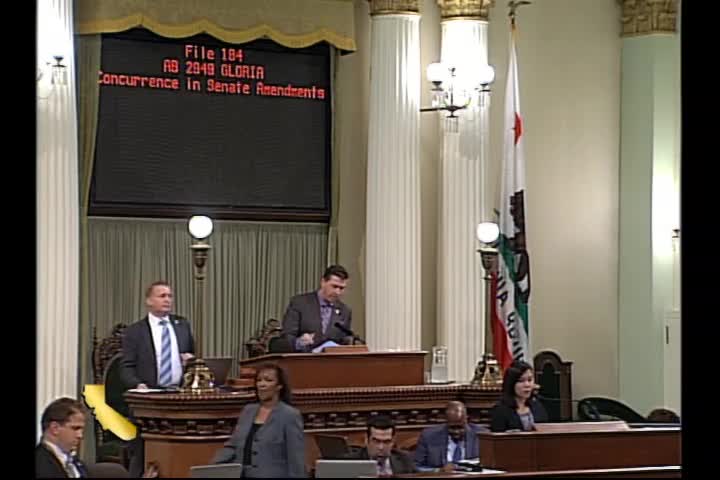 49SEC
Assembly Floor
 2MIN
Senate Floor
 3MIN
Senate Standing Committee on Education
 7MIN
Assembly Standing Committee on Education
Bill Author

Bill Co-Author(s):