AB 1872: Firearms: unsafe handguns.
- Session Year: 2017-2018
- House: Assembly
- Latest Version Date: 2018-06-28
Existing law prohibits the manufacture, importation, sale, or transfer of an unsafe handgun, as defined. Existing law exempts from this prohibition sales to specified law enforcement agencies or other specified government agencies for use by specified employees and sales to specified peace officers.
This bill would add to the list of exempt handgun sales the sale to a harbor or port district for use by specified employees, a harbor or port police department, or a harbor or port police officer, as described.
(a)A person in this state who manufactures or causes to be manufactured, imports into the state for sale, keeps for sale, offers or exposes for sale, gives, or lends an unsafe handgun shall be punished by imprisonment in a county jail not exceeding one year.
(b)This section shall not apply to any of the following:
(1)The manufacture in this state, or importation into this state, of a prototype handgun when the manufacture or importation is for the sole purpose of allowing an independent laboratory certified by the Department of Justice pursuant to Section 32010 to conduct an independent test to determine whether that handgun is prohibited by Sections 31900 to 32110, inclusive, and, if not, allowing the department to add the firearm to the roster of handguns that may be sold in this state pursuant to Section 32015.
(2)The importation or lending of a handgun by employees or authorized agents of entities determining whether the weapon is prohibited by this section.
(3)Firearms listed as curios or relics, as defined in Section 478.11 of Title 27 of the Code of Federal Regulations.
(4)The sale or purchase of a handgun, if the handgun is sold to, or purchased by, the Department of Justice, a police department, a sheriffs official, a marshals office, the Department of Corrections and Rehabilitation, the Department of the California Highway Patrol, any district attorneys office, any federal law enforcement agency, or the military or naval forces of this state or of the United States for use in the discharge of their official duties. This section does not prohibit the sale to, or purchase by, sworn members of these agencies of a handgun.
(5)The sale, purchase, or delivery of a handgun, if the sale, purchase, or delivery of the handgun is made pursuant to subdivision (d) of Section 10334 of the Public Contract Code.
(6)Subject to the limitations set forth in subdivision (c), the sale or purchase of a handgun, if the handgun is sold to, or purchased by, any of the following entities or sworn members of these entities who have satisfactorily completed the firearms portion of a training course prescribed by the Commission on Peace Officer Standards and Training pursuant to Section 832:
(A)The Department of Parks and Recreation.
(B)The Department of Alcoholic Beverage Control.
(C)The Division of Investigation of the Department of Consumer Affairs.
(D)The Department of Motor Vehicles.
(E)The Fraud Division of the Department of Insurance.
(F)The State Department of State Hospitals.
(G)The Department of Fish and Wildlife.
(H)The State Department of Developmental Services.
(I)The Department of Forestry and Fire Protection.
(J)A county probation department.
(K)The Los Angeles World Airports, as defined in Section 830.15.
(L)A K12 public school district for use by a school police officer, as described in Section 830.32.
(M)A municipal water district for use by a park ranger, as described in Section 830.34.
(N)A county for use by a welfare fraud investigator or inspector, as described in Section 830.35.
(O)A county for use by the coroner or the deputy coroner, as described in Section 830.35.
(P)The Supreme Court and the courts of appeal for use by marshals of the Supreme Court and bailiffs of the courts of appeal, and coordinators of security for the judicial branch, as described in Section 830.36.
(Q)A fire department or fire protection agency of a county, city, city and county, district, or the state for use by either of the following:
(i)A member of an arson-investigating unit, regularly paid and employed in that capacity pursuant to Section 830.37.
(ii)A member other than a member of an arson-investigating unit, regularly paid and employed in that capacity pursuant to Section 830.37.
(R)The University of California Police Department, or the California State University Police Departments, as described in Section 830.2.
(S)A California Community College police department, as described in Section 830.32.
(T)A harbor or port district or other entity employing peace officers described in subdivision (b) of Section 830.33, the San Diego Unified Port District Harbor Police, and the Harbor Department of the City of Los Angeles.
(c)(1)Notwithstanding Section 26825, a person licensed pursuant to Sections 26700 to 26915, inclusive, shall not process the sale or transfer of an unsafe handgun between a person who has obtained an unsafe handgun pursuant to an exemption specified in paragraph (6) of subdivision (b) and a person who is not exempt from the requirements of this section.
(2)(A)A person who obtains an unsafe handgun pursuant to paragraph (6) of subdivision (b) shall, when leaving the handgun in an unattended vehicle, lock the handgun in the vehicles trunk, lock the handgun in a locked container and place the container out of plain view, or lock the handgun in a locked container that is permanently affixed to the vehicles interior and not in plain view.
(B)A violation of subparagraph (A) is an infraction punishable by a fine not exceeding one thousand dollars ($1,000).
(C)For purposes of this paragraph, the following definitions shall apply:
(i)Vehicle has the same meaning as defined in Section 670 of the Vehicle Code.
(ii)A vehicle is unattended when a person who is lawfully carrying or transporting a handgun in the vehicle is not within close proximity to the vehicle to reasonably prevent unauthorized access to the vehicle or its contents.
(iii)Locked container has the same meaning as defined in Section 16850.
(D)Subparagraph (A) does not apply to a peace officer during circumstances requiring immediate aid or action that are within the course of his or her official duties.
(E)This paragraph does not supersede any local ordinance that regulates the storage of handguns in unattended vehicles if the ordinance was in effect before January 1, 2017.
(d)Violations of subdivision (a) are cumulative with respect to each handgun and shall not be construed as restricting the application of any other law. However, an act or omission punishable in different ways by this section and other provisions of law shall not be punished under more than one provision, but the penalty to be imposed shall be determined as set forth in Section 654.
(a)A person in this state who manufactures or causes to be manufactured, imports into the state for sale, keeps for sale, offers or exposes for sale, gives, or lends an unsafe handgun shall be punished by imprisonment in a county jail not exceeding one year.
(b)This section shall not apply to any of the following:
(1)The manufacture in this state, or importation into this state, of a prototype handgun when the manufacture or importation is for the sole purpose of allowing an independent laboratory certified by the Department of Justice pursuant to Section 32010 to conduct an independent test to determine whether that handgun is prohibited by Sections 31900 to 32110, inclusive, and, if not, allowing the department to add the firearm to the roster of handguns that may be sold in this state pursuant to Section 32015.
(2)The importation or lending of a handgun by employees or authorized agents of entities determining whether the weapon is prohibited by this section.
(3)Firearms listed as curios or relics, as defined in Section 478.11 of Title 27 of the Code of Federal Regulations.
(4)The sale or purchase of a handgun, if the handgun is sold to, or purchased by, the Department of Justice, a police department, a sheriffs official, a marshals office, the Department of Corrections and Rehabilitation, the Department of the California Highway Patrol, any district attorneys office, any federal law enforcement agency, or the military or naval forces of this state or of the United States for use in the discharge of their official duties. This section does not prohibit the sale to, or purchase by, sworn members of these agencies of a handgun.
(5)The sale, purchase, or delivery of a handgun, if the sale, purchase, or delivery of the handgun is made pursuant to subdivision (d) of Section 10334 of the Public Contract Code.
(6)Subject to the limitations set forth in subdivision (c), the sale or purchase of a handgun, if the handgun is sold to, or purchased by, any of the following entities or sworn members of these entities who have satisfactorily completed the firearms portion of a training course prescribed by the Commission on Peace Officer Standards and Training pursuant to Section 832:
(A)The Department of Parks and Recreation.
(B)The Department of Alcoholic Beverage Control.
(C)The Division of Investigation of the Department of Consumer Affairs.
(D)The Department of Motor Vehicles.
(E)The Fraud Division of the Department of Insurance.
(F)The State Department of State Hospitals.
(G)The Department of Fish and Wildlife.
(H)The State Department of Developmental Services.
(I)The Department of Forestry and Fire Protection.
(J)A county probation department.
(K)The Los Angeles World Airports, as defined in Section 830.15.
(L)A K12 public school district for use by a school police officer, as described in Section 830.32.
(M)A municipal water district for use by a park ranger, as described in Section 830.34.
(N)A county for use by a welfare fraud investigator or inspector, as described in Section 830.35.
(O)A county for use by the coroner or the deputy coroner, as described in Section 830.35.
(P)The Supreme Court and the courts of appeal for use by marshals of the Supreme Court and bailiffs of the courts of appeal, and coordinators of security for the judicial branch, as described in Section 830.36.
(Q)A fire department or fire protection agency of a county, city, city and county, district, or the state for use by either of the following:
(i)A member of an arson-investigating unit, regularly paid and employed in that capacity pursuant to Section 830.37.
(ii)A member other than a member of an arson-investigating unit, regularly paid and employed in that capacity pursuant to Section 830.37.
(R)The University of California Police Department, or the California State University Police Departments, as described in Section 830.2.
(S)A California Community College police department, as described in Section 830.32.
(T)A harbor or port district or other entity employing peace officers described in subdivision (b) of Section 830.33, the San Diego Unified Port District Harbor Police, and the Harbor Department of the City of Los Angeles.
(c)(1)Notwithstanding Section 26825, a person licensed pursuant to Sections 26700 to 26915, inclusive, shall not process the sale or transfer of an unsafe handgun between a person who has obtained an unsafe handgun pursuant to an exemption specified in paragraph (6) of subdivision (b) and a person who is not exempt from the requirements of this section.
(2)(A)A person who obtains an unsafe handgun pursuant to paragraph (6) of subdivision (b) shall, when leaving the handgun in an unattended vehicle, lock the handgun in the vehicles trunk, lock the handgun in a locked container and place the container out of plain view, or lock the handgun in a locked container that is permanently affixed to the vehicles interior and not in plain view.
(B)A violation of subparagraph (A) is an infraction punishable by a fine not exceeding one thousand dollars ($1,000).
(C)For purposes of this paragraph, the following definitions shall apply:
(i)Vehicle has the same meaning as defined in Section 670 of the Vehicle Code.
(ii)A vehicle is unattended when a person who is lawfully carrying or transporting a handgun in the vehicle is not within close proximity to the vehicle to reasonably prevent unauthorized access to the vehicle or its contents.
(iii)Locked container has the same meaning as defined in Section 16850.
(D)Subparagraph (A) does not apply to a peace officer during circumstances requiring immediate aid or action that are within the course of his or her official duties.
(E)This paragraph does not supersede any local ordinance that regulates the storage of handguns in unattended vehicles if the ordinance was in effect before the date of the enactment of the act that added this subparagraph. January 1, 2017.
(d)Violations of subdivision (a) are cumulative with respect to each handgun and shall not be construed as restricting the application of any other law. However, an act or omission punishable in different ways by this section and other provisions of law shall not be punished under more than one provision, but the penalty to be imposed shall be determined as set forth in Section 654.
|
Date
|
Status
|
|---|---|
| Jun 28, 2018 | Chaptered by Secretary of State - Chapter 56, Statutes of 2018. |
| Jun 28, 2018 | Approved by the Governor. |
| Jun 19, 2018 | Enrolled and presented to the Governor at 4:45 p.m. |
| Jun 14, 2018 | In Assembly. Ordered to Engrossing and Enrolling. |
| Jun 14, 2018 | Read third time. Passed. Ordered to the Assembly. |
| May 16, 2018 | Read second time. Ordered to third reading. |
| May 15, 2018 | From committee: Do pass. (Ayes 7. Noes 0.) (May 15). |
| Apr 19, 2018 | Referred to Com. on PUB. S. |
| Mar 15, 2018 | In Senate. Read first time. To Com. on RLS. for assignment. |
| Mar 15, 2018 | Read third time. Passed. Ordered to the Senate. |
| Mar 7, 2018 | Read second time. Ordered to third reading. |
| Mar 6, 2018 | From committee: Do pass. (Ayes 6. Noes 0.) (March 6). |
| Jan 29, 2018 | Referred to Com. on PUB. S. |
| Jan 17, 2018 | From printer. May be heard in committee February 16. |
| Jan 16, 2018 | Read first time. To print. |
|
Date
|
Description
|
Location
|
Votes
|
|
|---|---|---|---|---|
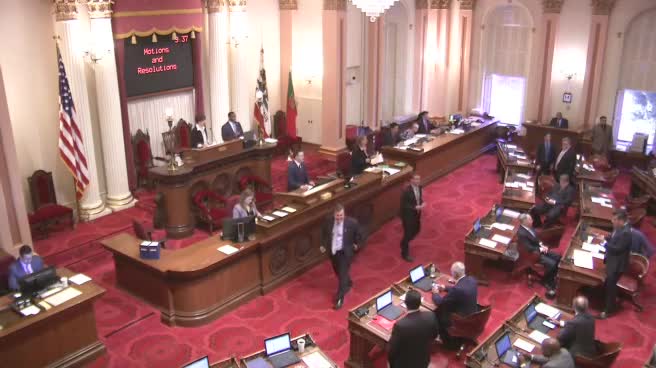
| Jun 14, 2018 | Assembly 3rd Reading AB1872 Voepel By Moorlach | Senate Floor |
Passed |
|
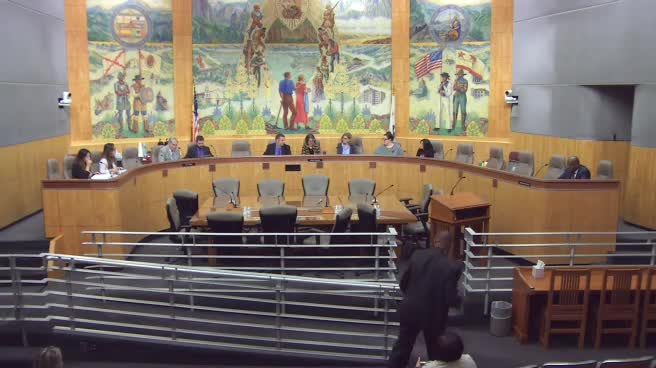
| May 15, 2018 | Do pass | Senate Standing Committee on Public Safety |
Passed |
|
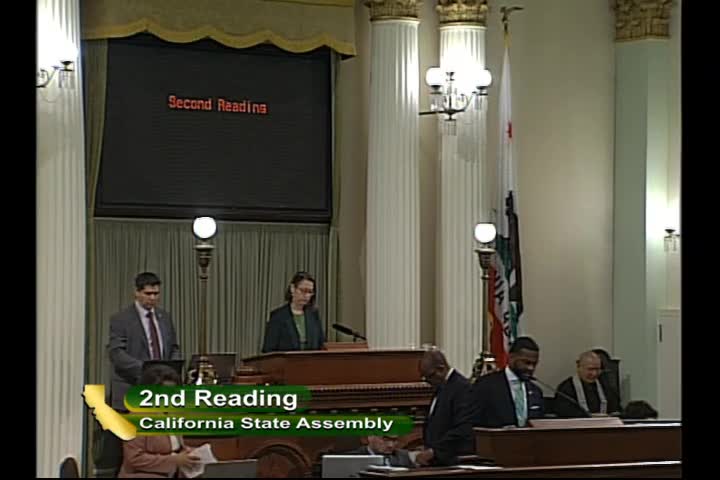
| Mar 15, 2018 | A - 148261, Second Reading | Assembly Floor |
Passed |
|
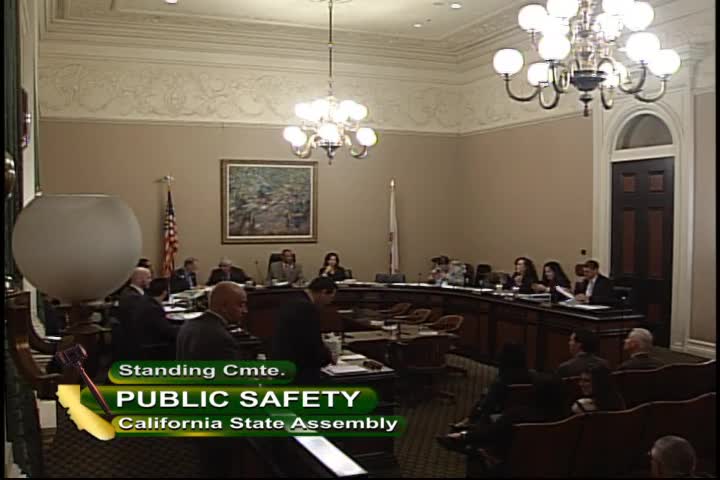
| Mar 6, 2018 | Do pass. | Assembly Standing Committee on Public Safety |
Passed |
This list shows positions taken on this bill by organizations on the date displayed, which is linked to the original source.
Positions by individuals are not included.
|
Organization
|
Position
|
Date
|
|---|---|---|
| Firearms Policy Coalition | ** Against | May 16, 2018 |
| Gun Owners Of San Diego County | ** Against | Mar 5, 2018 |
Office of Senate Floor Analyses (916) 651-1520 Fax: (916) 327-4478 | AB |
THIRD READING
Bill No: AB 1872
:
SENATE PUBLIC SAFETY COMMITTEE: 7-0, 5/15/18
AYES: Skinner, Anderson, Bradford, Jackson, Mitchell, Stone, Wiener
ASSEMBLY FLOOR: 63-0, 3/15/18 - See last page for vote
DIGEST:
This bill exempts sworn peace officers of a harbor or port district including the San Diego Unified Port District Harbor Police, and the Harbor Department of the City of Los Angeles who have satisfactorily completed the Commission on Peace Officer Standards and Training (POST) firearms training course from the state prohibition relating to the sale or purchase of an unsafe handgun.
Existing law:
- Requires, commencing January 1, 2001, that any person in California who manufactures or causes to be manufactured, imports into the state for sale, keeps for sale, offers or exposes for sale, gives, or lends any unsafe handgun shall be punished by imprisonment in a county jail not exceeding one year. (Pen. Code § 32000, subd. (a).) Specifies that this section shall not apply to any of the following:
- The manufacture in California, or importation into this state, of any prototype pistol, revolver, or other firearm capable of being concealed upon the person when the manufacture or importation is for the sole purpose of allowing an independent laboratory certified by the Department of Justice (DOJ) to conduct an independent test to determine whether that pistol, revolver, or other firearm capable of being concealed upon the person is prohibited, inclusive, and, if not, allowing the DOJ to add the firearm to the roster of pistols, revolvers, and other firearms capable of being concealed upon the person that may be sold in this state;
- The importation or lending of a pistol, revolver, or other firearm capable of being concealed upon the person by employees or authorized agents of entities determining whether the weapon is prohibited by this section;
- Firearms listed as curios or relics, as defined in federal law; or
- The sale or purchase of any pistol, revolver, or other firearm capable of being concealed upon the person, if the pistol, revolver, or other firearm is sold to, or purchased by, the DOJ, any police department, any sheriff's official, any marshal's office, the Youth and Adult Correctional Agency, the California Highway Patrol, any district attorney's office, or the military or naval forces of this state or of the United States for use in the discharge of their official duties. Nor shall anything in this section prohibit the sale to, or purchase by, sworn members of these agencies of any pistol, revolver, or other firearm capable of being concealed upon the person. (Pen. Code, § 32000, subd. (b).)
- Specifies that violations of the unsafe handgun provisions are cumulative with respect to each handgun and shall not be construed as restricting the application of any other law. (Pen. Code, § 32000, subd. (c).)
- Defines "unsafe handgun" as “any pistol, revolver, or other firearm capable of being concealed upon the person, as specified, which lacks various safety mechanisms, as specified.” (Pen. Code, § 31910.)
- Requires any concealable firearm manufactured in California, imported for sale, kept for sale, or offered for sale to be tested within a reasonable period of time by an independent laboratory, certified by the DOJ, to determine whether it meets required safety standards, as specified. (Pen. Code, § 32010).
- Requires the DOJ, on and after January 1, 2001, to compile, publish, and thereafter maintain a roster listing all of the pistols, revolvers, and other firearms capable of being concealed upon the person that have been tested by a certified testing laboratory, have been determined not to be unsafe handguns, and may be sold in this state, as specified. The roster shall list, for each firearm, the manufacturer, model number, and model name. (Pen. Code, § 32015, subd, (a).)
- Provides that the DOJ may charge every person in California who is licensed as a manufacturer of firearms, as specified, and any person in California who manufactures or causes to be manufactured, imports into California for sale, keeps for sale, or offers or exposes for sale any pistol, revolver, or other firearm capable of being concealed upon the person in California, an annual fee not exceeding the costs of preparing, publishing, and maintaining the roster of firearms determined not be unsafe, and the costs of research and development, report analysis, firearms storage, and other program infrastructure costs, as specified. (Pen. Code, § 32015, subd. (b)(1).)
- Provides that the Attorney General (AG) may annually test up to five percent of the handgun models listed on the roster that have been found to be not unsafe. (Pen. Code, § 30020, subd. (a).)
- States that a handgun removed from the roster for failing the above retesting may be reinstated to the roster if all of the following are met:
- The manufacturer petitions the AG for reinstatement of the handgun model;
- The manufacturer pays the DOJ for all the costs related to the reinstatement testing of the handgun model, including purchase of the handgun, prior to reinstatement testing;
- The reinstatement testing of the handguns shall be in accordance with specified retesting procedures;
- The three handguns samples shall only be tested once. If the sample fails it may not be retested;
- If the handgun model successfully passes testing for reinstatement, as specified, the AG shall reinstate the handgun model on the roster of not unsafe handguns;
- Requires the handgun manufacturer to provide the AG with the complete testing history for the handgun model; and,
- Allows the AG, at any time, to further retest any handgun model that has been reinstated to the roster. (Pen. Code, § 32025, subds. (a)-(g).)
- Provides that a firearm may be deemed to be listed on the roster of not unsafe handguns if a firearm made by the same manufacturer is already listed and the unlisted firearm differs from the listed firearm in one or more of the following features:
- Finish, including, but not limited to bluing, chrome plating or engraving;
- The material from which the grips are made;
- The shape or texture of the grips, so long as the difference in grip shape or texture that does not in any way alter the dimensions, material, linkage, or functioning of the magazine well, the barrel, the chamber, or any of the components of the firing mechanism of the firearm; and,
- Any other purely cosmetic feature that does not in any way alter the dimensions, material, linkage, or functioning of the magazine well, the barrel, the chamber, or any of the components of the firing mechanism of the firearm. (Pen Code, § 32030, subd. (a).)
- Requires any manufacturer seeking to have a firearm listed as being similar to an already listed firearm to provide the DOJ with the following:
- The model designation of the listed firearm;
- The model designation of each firearm that the manufacturer seeks to have listed on the roster of not unsafe handguns; and
- Requires a manufacturer to make a statement under oath that each unlisted firearm for which listing is sought differs from the listed firearm in only one or more specified ways, and is otherwise identical to the listed firearm. (Pen Code, § 32030, subd. (b).)
This bill exempts sworn peace officers of a harbor or port district including the San Diego Unified Port District Harbor Police, and the Harbor Department of the City of Los Angeles who have satisfactorily completed the Commission on POST firearms training course from the state prohibition relating to the sale or purchase of an unsafe handgun.
SB 15 (Polanco, Chapter 248, Statutes of 1999) made it a misdemeanor for any person in California to manufacture, import for sale, offer for sale, give, or lend any unsafe handgun, as defined, with certain specific exceptions. SB 15 defined an “unsafe handgun” as follows: (1) does not have a requisite safety device; (2) does not meet specified firing tests; and, (3) does not meet a specified drop safety test.
SB 489 (Scott, Chapter 500, Statutes of 2003) added to the unsafe handgun law requirements for semiautomatic pistols that became effective in 2006 and 2007. The bill required that for a new semiautomatic center-fire pistol firearm to be added to the roster it has to be equipped with a chamber load indicator[1] and a magazine disconnect[2] (if it has a detachable magazine). The bill also required that all semiautomatic rimfire pistols, with a detachable magazine, have a magazine disconnect. All firearms that were on the not unsafe handgun list prior to the effective dates were essentially grandfathered in.
AB 1471 (Feuer, Chapter 572, Statutes of 2007) added “microstamping” as a requirement for a firearm to be placed on the not unsafe handgun roster beginning January 1, 2010, “provided that the Department of Justice certifies that the technology used to create the imprint is available to more than one manufacturer unencumbered by any patent restrictions.” As discussed above, the DOJ issued the certification on May 17, 2013. Like the other provisions, the “microstamping” requirement did not apply to firearms already on the roster.
Current law exempts handguns from the safety testing requirements that are sold to, or purchased by, the DOJ, any police department, any sheriff’s official, any marshal’s office, the Youth and Adult Correctional Agency, the California Highway Patrol, any district attorney’s office, or the military. Sworn members of those agencies are also exempted from the ban on buying or selling handguns that are not on the DOJ’s “not unsafe” handgun roster. The law, additionally, allows sworn members of these agencies to sell an off-roster handgun to someone who is not exempt.
Until recently, a number of law enforcement agencies, and officers, have been able to purchase off-roster firearms. There was, evidently, some confusion among dealers as to who qualifies for the roster exemptions. When this was discovered by the DOJ, the dealers were issued cited and the DOJ reminded the dealers that only listed law enforcement agencies are allowed to purchase off-roster firearms.
SB 2165 (Bonta, Chapter 640, Statutes of 2016) allowed all law enforcement officers listed in “Chapter 4.5 of Title 3 of Part 2 of the Penal Code,” who have completed firearms training, to purchase off-roster handguns.
This bill adds sworn peace officers of a harbor or port district including the San Diego Unified Port District Harbor Police, and the Harbor Department of the City of Los Angeles who have satisfactorily completed the Commission on POST firearms training course from the state prohibition relating to the sale or purchase of an unsafe handgun.
FISCAL EFFECT: Appropriation: Fiscal Com.: Local:
None received
OPPOSITION: (Verified 5/15/18)
Firearms Policy Coalition
ASSEMBLY FLOOR: 63-0, 3/15/18
AYES: Acosta, Aguiar-Curry, Travis Allen, Baker, Berman, Bloom, Bonta, Burke, Caballero, Calderon, Carrillo, Cervantes, Chiu, Choi, Chu, Cooley, Cooper, Cunningham, Dahle, Eggman, Flora, Fong, Frazier, Friedman, Gallagher, Eduardo Garcia, Gipson, Gloria, Gonzalez Fletcher, Grayson, Harper, Holden, Irwin, Jones-Sawyer, Kalra, Kiley, Lackey, Levine, Low, Maienschein, Mayes, McCarty, Mullin, Muratsuchi, Obernolte, O'Donnell, Patterson, Quirk, Quirk-Silva, Reyes, Rodriguez, Rubio, Salas, Santiago, Steinorth, Mark Stone, Thurmond, Ting, Voepel, Waldron, Weber, Wood, Rendon
NO VOTE RECORDED: Arambula, Bigelow, Brough, Chau, Chávez, Chen, Daly, Cristina Garcia, Gray, Limón, Mathis, Medina, Melendez, Nazarian
Prepared by: Gabe Caswell / PUB. S. /
5/16/18 10:26:25
**** END ****
A chamber load indicator is a device that plainly indicates that a cartridge is in the firing chamber. (Penal Code § 16380.) ↑
A magazine disconnect is a mechanism that prevents a semiautomatic pistol from operating when a detachable magazine is not inserted in the semiautomatic pistol. (Penal Code § 16900.) ↑
SENATE COMMITTEE ON PUBLIC SAFETY
Senator Nancy Skinner, Chair
2017 - 2018 Regular
Bill No: AB 1872 Hearing Date: May 15, 2018
Author: | Voepel | ||
Version: | January 16, 2018 | ||
Urgency: | No | Fiscal: | No |
Consultant: | GC | ||
Subject: Firearms: Unsafe Handguns
HISTORY
Source: Author
Prior Legislation: AB 2165 (Bonta), Ch. 640, Stats. 2016
Support: Unknown
Opposition: None known
Assembly Floor Vote: 63 - 0
PURPOSE
The purpose of this bill is to exempt sworn peace officers of a harbor or port district including the San Diego Unified Port District Harbor Police, and the Harbor Department of the City of Los Angeles who have satisfactorily completed the Commission on Peace Officer Standards and Training (POST) firearms training course from the state prohibition relating to the sale or purchase of an unsafe handgun.
Existing law requires commencing January 1, 2001, that any person in California who manufactures or causes to be manufactured, imports into the state for sale, keeps for sale, offers or exposes for sale, gives, or lends any unsafe handgun shall be punished by imprisonment in a county jail not exceeding one year. (Pen. Code § 32000, subd. (a).) Specifies that this section shall not apply to any of the following:
- The manufacture in California, or importation into this state, of any prototype pistol, revolver, or other firearm capable of being concealed upon the person when the manufacture or importation is for the sole purpose of allowing an independent laboratory certified by the Department of Justice (DOJ) to conduct an independent test to determine whether that pistol, revolver, or other firearm capable of being concealed upon the person is prohibited, inclusive, and, if not, allowing the department to add the firearm to the roster of pistols, revolvers, and other firearms capable of being concealed upon the person that may be sold in this state;
- The importation or lending of a pistol, revolver, or other firearm capable of being concealed upon the person by employees or authorized agents of entities determining whether the weapon is prohibited by this section;
- Firearms listed as curios or relics, as defined in federal law;
- The sale or purchase of any pistol, revolver, or other firearm capable of being concealed upon the person, if the pistol, revolver, or other firearm is sold to, or purchased by, the Department of Justice, any police department, any sheriff's official, any marshal's office, the Youth and Adult Correctional Agency, the California Highway Patrol, any district attorney's office, or the military or naval forces of this state or of the United States for use in the discharge of their official duties. Nor shall anything in this section prohibit the sale to, or purchase by, sworn members of these agencies of any pistol, revolver, or other firearm capable of being concealed upon the person; (Pen. Code, § 32000, subd. (b).)
Existing law specifies that violations of the unsafe handgun provisions are cumulative with respect to each handgun and shall not be construed as restricting the application of any other law; (Pen. Code, § 32000, subd. (c).)
Existing law defines "unsafe handgun" as “any pistol, revolver, or other firearm capable of being concealed upon the person, as specified, which lacks various safety mechanisms, as specified.” (Pen. Code, § 31910.)
Existing law requires any concealable firearm manufactured in California, imported for sale, kept for sale, or offered for sale to be tested within a reasonable period of time by an independent laboratory, certified by the state Department of Justice (DOJ), to determine whether it meets required safety standards, as specified. (Pen. Code, § 32010.
Existing law requires DOJ, on and after January 1, 2001, to compile, publish, and thereafter maintain a roster listing all of the pistols, revolvers, and other firearms capable of being concealed upon the person that have been tested by a certified testing laboratory, have been determined not to be unsafe handguns, and may be sold in this state, as specified. The roster shall list, for each firearm, the manufacturer, model number, and model name. (Pen. Code, § 32015, subd, (a).)
Existing law provides that DOJ may charge every person in California who is licensed as a manufacturer of firearms, as specified, and any person in California who manufactures or causes to be manufactured, imports into California for sale, keeps for sale, or offers or exposes for sale any pistol, revolver, or other firearm capable of being concealed upon the person in California, an annual fee not exceeding the costs of preparing, publishing, and maintaining the roster of firearms determined not be unsafe, and the costs of research and development, report analysis, firearms storage, and other program infrastructure costs, as specified. (Pen. Code, § 32015, subd. (b)(1).)
Existing law provides that the Attorney General (AG) may annually test up to 5 percent of the handgun models listed on the roster that have been found to be not unsafe. (Pen. Code, § 30020, subd. (a).)
Existing law states that a handgun removed from the roster for failing the above retesting may be reinstated to the roster if all of the following are met:
- The manufacturer petitions the AG for reinstatement of the handgun model;
- The manufacturer pays the DOJ for all the costs related to the reinstatement testing of the handgun model, including purchase of the handgun, prior to reinstatement testing;
- The reinstatement testing of the handguns shall be in accordance with specified retesting procedures;
- The three handguns samples shall only be tested once. If the sample fails it may not be retested;
- If the handgun model successfully passes testing for reinstatement, as specified, the AG shall reinstate the handgun model on the roster of not unsafe handguns;
- Requires the handgun manufacturer to provide the AG with the complete testing history for the handgun model; and,
- Allows the AG, at any time, to further retest any handgun model that has been reinstated to the roster. (Pen. Code, § 32025, subds. (a)-(g).)
Existing law provides that a firearm may be deemed to be listed on the roster of not unsafe handguns if a firearm made by the same manufacturer is already listed and the unlisted firearm differs from the listed firearm in one or more of the following features:
- Finish, including, but not limited to bluing, chrome plating or engraving;
- The material from which the grips are made;
- The shape or texture of the grips, so long as the difference in grip shape or texture that does not in any way alter the dimensions, material, linkage, or functioning of the magazine well, the barrel, the chamber, or any of the components of the firing mechanism of the firearm; and,
- Any other purely cosmetic feature that does not in any way alter the dimensions, material, linkage, or functioning of the magazine well, the barrel, the chamber, or any of the components of the firing mechanism of the firearm. (Pen Code, § 32030, subd. (a).)
Existing law requires any manufacturer seeking to have a firearm listed as being similar to an already listed firearm to provide the DOJ with the following:
- The model designation of the listed firearm;
- The model designation of each firearm that the manufacturer seeks to have listed on the roster of not unsafe handguns; and
- Requires a manufacturer to make a statement under oath that each unlisted firearm for which listing is sought differs from the listed firearm in only one or more specified ways, and is otherwise identical to the listed firearm. (Pen Code, § 32030, subd. (b).)
This bill exempts sworn peace officers of a harbor or port district including the San Diego Unified Port District Harbor Police, and the Harbor Department of the City of Los Angeles who have satisfactorily completed the Commission on Peace Officer Standards and Training (POST) firearms training course from the state prohibition relating to the sale or purchase of an unsafe handgun.
COMMENTS
- Need for This Bill
AB 1872 is a simple housekeeping amendment consistent with the spirit of AB 2165, passed in the 2015-2016 session. This measure adds previously excluded Harbor and Port Police to the list of officers exempt from the state prohibition relating to the sale or purchase of an unsafe handgun. To avoid the training and safety concerns that may arise by forcing them to resort to weapons with which they may not be as familiar, these trained law enforcement officers should be allowed to continue using the handguns they prefer.
- Safe Handgun Law and the Effect of This Bill
SB 15 (Polanco), Chapter 248, Statutes of 1999, made it a misdemeanor for any person in California to manufacture, import for sale, offer for sale, give, or lend any unsafe handgun, as
defined, with certain specific exceptions. SB 15 defined an “unsafe handgun” as follows: (a) does not have a requisite safety device; (b) does not meet specified firing tests; and, (c) does not meet a specified drop safety test.
SB 489 (Scott), Chapter 500, Statutes of 2003, added to the unsafe handgun law requirements for semiautomatic pistols that became effective in 2006 and 2007. The legislation requires that for a new semiautomatic center-fire pistol firearm to be added to the roster it has to be equipped with a chamber load indicator[1] and a magazine disconnect[2] (if it has a detachable magazine). The legislation also requires that all semiautomatic rimfire pistols, with a detachable magazine, have a magazine disconnect. All firearms that were on the not unsafe handgun list prior to the effective dates were essentially grandfathered in. Those who supported SB 489 argued:
It is just common sense that handgun should include a chamber load indicator that makes it clear whether the weapon is loaded. Since cheap disposable cameras can clearly count down the number of pictures left, it is inexcusable that handguns do not indicate when a bullet is in the chamber. Magazine safety disconnects would also greatly reduce the number of unintentional accidental shootings by ensuring that when the magazine is removed the gun will not fire.
(http://leginfo.ca.gov/pub/03-04/bill/sen/sb_0451-500/sb_489_cfa_20030630_ 103204_asm_comm.html.)
AB 1471 (Feuer), Chapter 572, Statutes of 2007, added “microstamping” as a requirement for a firearm to be placed on the not unsafe handgun roster beginning January 1, 2010, “provided that the Department of Justice certifies that the technology used to create the imprint is available to more than one manufacturer unencumbered by any patent restrictions.” As discussed above, the Department of Justice issued the certification on May 17, 2013. Like the other provisions, the “microstamping” requirement did not apply to firearms already on the roster. The author of AB 1471 provided the rationale for the additional requirement,
AB 1471 will help law enforcement identify and apprehend armed gang members before they inflict more harm on others, including innocent bystanders. In instances of drive-by shootings, where the only evidence at the crime scene may be a spent cartridge case, law enforcement could quickly obtain a critical lead.
(http://leginfo.ca.gov/pub/07-08/bill/asm/ab_1451-1500/ab_1471_cfa_20070625_ 130933_sen_comm.html.)
Current law exempts handguns from the safety testing requirements that are sold to, or purchased by, the Department of Justice, any police department, any sheriff’s official, any marshal’s office, the Youth and Adult Correctional Agency, the California Highway Patrol, any district attorney’s office, or the military. Sworn members of those agencies are also exempted from the ban on buying or selling handguns that are not on DOJ’s “not unsafe” handgun roster. The law, additionally, allows sworn members of these agencies to sell an off-roster handgun to someone who is not exempt.
Until recently, a number of law enforcement agencies, and officers, have been able to purchase off-roster firearms. There was, evidently, some confusion among dealers as to who qualifies for the roster exemptions. When this was discovered by DOJ, the dealers were issued cited and DOJ reminded the dealers that only listed law enforcement agencies are allowed to purchase off-roster firearms. DOJ, additionally, added the following to their website:
Non-Roster Handguns (Unsafe Handguns)
The following agencies may purchase non-roster firearms for use in the discharge of their official duties:
Department of Justice
A police department
A sheriff’s official
A marshal’s office
The Department of Corrections and Rehabilitation
The California Highway Patrol
Any district attorney’s office
Any federal law enforcement agency
The military or naval forces of this state or of the United States (Pen. Code, § 32000, subd. (b)(4).)
Penal Code section 32000 does not prohibit the sale to, or purchase by, sworn members of the above agencies of a handgun.
(http://oag.ca.gov/firearms/exemptpo.)
SB 2165 (Bonta), Ch. 640, Stats. of 2016 allowed all law enforcement officers listed in “Chapter 4.5 of Title 3 of Part 2 of the Penal Code,” who have completed firearms training, to purchase off-roster handguns. These categories of officers include those employed by:
- Department of Fish and Game (Penal Code § 830.2)
- Department of Parks and Recreation (Penal Code § 830.2)
- Department of Forestry and Fire Protection (Penal Code § 830.2)
- Department of Alcoholic Beverage Control (Penal Code § 830.2)
- Division of Investigation of the Department of Consumer Affairs (Penal Code § 830.3)
- Department of Motor Vehicles (Penal Code § 830.3)
- California Horse Racing Board (Penal Code § 830.3)
- The State Fire Marshall (Penal Code § 830.3)
- Food and Drug section of the Department of Public Health (Penal Code § 830.3)
- Division of Labor Standards Enforcement (Penal Code § 830.3)
- State Department of Health Care Services (Penal Code § 830.3)
- Bureau of Fraudulent Claims of the Department of Insurance (Penal Code § 830.3)
- Department of Housing and Community Development (Penal Code § 830.3)
- Office of the Controller (Penal Code § 830.3)
- Department of Business Oversight (Penal Code § 830.3)
- Contractors’ State Licensing Board (Penal Code § 830.3)
- Law enforcement branch of the Office of Emergency Services (Penal Code § 830.3)
- Secretary of State (Penal Code § 830.3)
- California State Lottery (Penal Code § 830.3)
- Investigation Division of the Employment Development Department (Penal Code § 830.3)
- California Science Center (Penal Code § 830.3)
- Franchise Tax Board (Penal Code § 830.3)
- Department of Managed Health Care (Penal Code § 830.3)
- Office of Protective Services, State Department of Developmental Services (Penal Code § 830.3)
- Department of State Hospitals and State Department of Developmental Services. (Penal Code § 830.37.)
- Hastings College of the Law (Penal Code § 830.4)
- Los Angeles World Airport (Penal Code § 830.15)
Broader categories of peace officers that SB 2165 (Bonta) exempted include:
- A housing authority patrol officer employed by the housing authority of a city, district, county, or city and county, as specified. (Penal Code § 830.31)
- Persons designated as a security officer by a county water district, as specified. (Penal Code § 830.34)
- The security director of the public utilities commission of a city and county, as specified. (Penal Code § 830.34)
- Persons employed as a park ranger by a municipal water district, as specified. (Penal Code § 830.34)
- Welfare fraud investigator or inspector, regularly employed and paid in that capacity by a county, as specified. (Penal Code § 830.35)
- The coroner and deputy coroners, regularly employed and paid in that capacity, of a county, as specified. (Penal Code § 830.35)
- The Sergeant-at-Arms of each house of the Legislature, as specified. (Penal Code § 830.36.)
- Marshals of the Supreme Court and bailiffs of the courts of appeal, and coordinators of security for the judicial branch, as specified. (Penal Code § 830.36.)
- Court service officer in a county of the second class and third class, as specified. (Penal Code § 830.36.)
- Members of an arson-investigating unit, regularly paid and employed in that capacity, of a fire department or fire protection agency of a county, city, city and county, district, or the state, as specified. (Penal Code § 830.37.)
- Members other than members of an arson-investigating unit, regularly paid and employed in that capacity, of a fire department or fire protection agency of a county, city, city and county, district, or the state, as specified. (Penal Code § 830.37.)
- Voluntary fire wardens as are designated by the Director of Forestry and Fire Protection, as specified. (Penal Code § 830.37.)
- A probation officer or deputy probation officer. (Penal Code § 830.5)
- Any airport security officer, airport policeman, or airport special officer, regularly employed and paid by a city, county, city and county, or district. (Penal Code § 832.1)
Based on information provided by Peace Officer Standards and Training (POST), thousands of officers fall into the categories listed above.
This bill would add sworn peace officers of a harbor or port district including the San Diego Unified Port District Harbor Police, and the Harbor Department of the City of Los Angeles who have satisfactorily completed the Commission on Peace Officer Standards and Training (POST) firearms training course from the state prohibition relating to the sale or purchase of an unsafe handgun.
-- END –
A chamber load indicator is a device that plainly indicates that a cartridge is in the firing chamber. (Penal Code § 16380.) ↑
A magazine disconnect is a mechanism that prevents a semiautomatic pistol from operating when a detachable magazine is not inserted in the semiautomatic pistol. (Penal Code § 16900.) ↑
ASSEMBLY THIRD READING
ATR Bill Id:AB 1872
Author:(Voepel)
As Introduced Ver:January 16, 2018
Majority vote
Committee | Votes | Ayes | Noes |
Public Safety | 6-0 | Jones-Sawyer, Lackey, Carrillo, Gonzalez Fletcher, Quirk, Santiago |
SUMMARY: Exempts sworn peace officers of a harbor or port district including the San Diego Unified Port District Harbor Police, and the Harbor Department of the City of Los Angeles who have satisfactorily completed the Commission on Peace Officer Standards and Training (POST) firearms training course from the state prohibition relating to the sale or purchase of an unsafe handgun.
EXISTING LAW:
- Requires commencing January 1, 2001, that any person in California who manufactures or causes to be manufactured, imports into the state for sale, keeps for sale, offers or exposes for sale, gives, or lends any unsafe handgun shall be punished by imprisonment in a county jail not exceeding one year. (Penal Code Section 32000(a).) Specifies that this section shall not apply to any of the following:
- The manufacture in California, or importation into this state, of any prototype pistol, revolver, or other firearm capable of being concealed upon the person when the manufacture or importation is for the sole purpose of allowing an independent laboratory certified by the Department of Justice (DOJ) to conduct an independent test to determine whether that pistol, revolver, or other firearm capable of being concealed upon the person is prohibited, inclusive, and, if not, allowing the department to add the firearm to the roster of pistols, revolvers, and other firearms capable of being concealed upon the person that may be sold in this state;
- The importation or lending of a pistol, revolver, or other firearm capable of being concealed upon the person by employees or authorized agents of entities determining whether the weapon is prohibited by this section;
- Firearms listed as curios or relics, as defined in federal law;
- The sale or purchase of any pistol, revolver, or other firearm capable of being concealed upon the person, if the pistol, revolver, or other firearm is sold to, or purchased by, the Department of Justice, any police department, any sheriff's official, any marshal's office, the Youth and Adult Correctional Agency, the California Highway Patrol, any district attorney's office, or the military or naval forces of this state or of the United States for use in the discharge of their official duties. Nor shall anything in this section prohibit the sale to, or purchase by, sworn members of these agencies of any pistol, revolver, or other firearm capable of being concealed upon the person;
- Specifies that violations of the unsafe handgun provisions are cumulative with respect to each handgun and shall not be construed as restricting the application of any other law;
- Defines "unsafe handgun" as "any pistol, revolver, or other firearm capable of being concealed upon the person, as specified, which lacks various safety mechanisms, as specified."
- Requires any concealable firearm manufactured in California, imported for sale, kept for sale, or offered for sale to be tested within a reasonable period of time by an independent laboratory, certified by the state Department of Justice (DOJ), to determine whether it meets required safety standards, as specified.
- Requires DOJ, on and after January 1, 2001, to compile, publish, and thereafter maintain a roster listing all of the pistols, revolvers, and other firearms capable of being concealed upon the person that have been tested by a certified testing laboratory, have been determined not to be unsafe handguns, and may be sold in this state, as specified. The roster shall list, for each firearm, the manufacturer, model number, and model name.
- Provides that DOJ may charge every person in California who is licensed as a manufacturer of firearms, as specified, and any person in California who manufactures or causes to be manufactured, imports into California for sale, keeps for sale, or offers or exposes for sale any pistol, revolver, or other firearm capable of being concealed upon the person in California, an annual fee not exceeding the costs of preparing, publishing, and maintaining the roster of firearms determined not be unsafe, and the costs of research and development, report analysis, firearms storage, and other program infrastructure costs, as specified.
- Provides that the Attorney General (AG) may annually test up to 5% of the handgun models listed on the roster that have been found to be not unsafe.
- States that a handgun removed from the roster for failing the above retesting may be reinstated to the roster if all of the following are met:
- The manufacturer petitions the AG for reinstatement of the handgun model;
- The manufacturer pays the DOJ for all the costs related to the reinstatement testing of the handgun model, including purchase of the handgun, prior to reinstatement testing;
- The reinstatement testing of the handguns shall be in accordance with specified retesting procedures;
- The three handguns samples shall only be tested once. If the sample fails it may not be retested;
- If the handgun model successfully passes testing for reinstatement, as specified, the AG shall reinstate the handgun model on the roster of not unsafe handguns;
- Requires the handgun manufacturer to provide the AG with the complete testing history for the handgun model; and,
- Allows the AG, at any time, to further retest any handgun model that has been reinstated to the roster.
- Provides that a firearm may be deemed to be listed on the roster of not unsafe handguns if a firearm made by the same manufacturer is already listed and the unlisted firearm differs from the listed firearm in one or more of the following features:
- Finish, including, but not limited to bluing, chrome plating or engraving;
- The material from which the grips are made;
- The shape or texture of the grips, so long as the difference in grip shape or texture that does not in any way alter the dimensions, material, linkage, or functioning of the magazine well, the barrel, the chamber, or any of the components of the firing mechanism of the firearm; and,
- Any other purely cosmetic feature that does not in any way alter the dimensions, material, linkage, or functioning of the magazine well, the barrel, the chamber, or any of the components of the firing mechanism of the firearm.
- Requires any manufacturer seeking to have a firearm listed as being similar to an already listed firearm to provide the DOJ with the following:
- The model designation of the listed firearm;
- The model designation of each firearm that the manufacturer seeks to have listed on the roster of not unsafe handguns; and
- Requires a manufacturer to make a statement under oath that each unlisted firearm for which listing is sought differs from the listed firearm in only one or more specified ways, and is otherwise identical to the listed firearm.
FISCAL EFFECT: Unknown. This bill is keyed non-fiscal by the Legislative Counsel.
COMMENTS: According to the author, "AB 1872 is a simple housekeeping amendment consistent with the spirit of AB 2165, passed in the 2015-2016 session. This measure adds previously excluded Harbor and Port Police to the list of officers exempt from the state prohibition relating to the sale or purchase of an unsafe handgun. To avoid the training and safety concerns that may arise by forcing them to resort to weapons with which they may not be as familiar, these trained law enforcement officers should be allowed to continue using the handguns they prefer."
Analysis Prepared by: Gregory Pagan / PUB. S. / (916) 319-3744 FN: 0002600
Date of Hearing:
Chief Counsel: Gregory Pagan
ASSEMBLY COMMITTEE ON PUBLIC SAFETY
Reginald Byron Jones-Sawyer, Sr., Chair
ABPCA Bill Id:AB 1872
Author:(Voepel) – As Introduced Ver:January 16, 2018
SUMMARY: Exempts sworn peace officers of a harbor or port district including the San Diego Unified Port District Harbor Police, and the Harbor Department of the City of Los Angeles who have satisfactorily completed the Commission on Peace Officer Standards and Training (POST) firearms training course from the state prohibition relating to the sale or purchase of an unsafe handgun.
EXISTING LAW:
- Requires commencing January 1, 2001, that any person in California who manufactures or causes to be manufactured, imports into the state for sale, keeps for sale, offers or exposes for sale, gives, or lends any unsafe handgun shall be punished by imprisonment in a county jail not exceeding one year. (Pen. Code § 32000, subd. (a).) Specifies that this section shall not apply to any of the following:
- The manufacture in California, or importation into this state, of any prototype pistol, revolver, or other firearm capable of being concealed upon the person when the manufacture or importation is for the sole purpose of allowing an independent laboratory certified by the Department of Justice (DOJ) to conduct an independent test to determine whether that pistol, revolver, or other firearm capable of being concealed upon the person is prohibited, inclusive, and, if not, allowing the department to add the firearm to the roster of pistols, revolvers, and other firearms capable of being concealed upon the person that may be sold in this state;
- The importation or lending of a pistol, revolver, or other firearm capable of being concealed upon the person by employees or authorized agents of entities determining whether the weapon is prohibited by this section;
- Firearms listed as curios or relics, as defined in federal law;
- The sale or purchase of any pistol, revolver, or other firearm capable of being concealed upon the person, if the pistol, revolver, or other firearm is sold to, or purchased by, the Department of Justice, any police department, any sheriff's official, any marshal's office, the Youth and Adult Correctional Agency, the California Highway Patrol, any district attorney's office, or the military or naval forces of this state or of the United States for use in the discharge of their official duties. Nor shall anything in this section prohibit the sale to, or purchase by, sworn members of these agencies of any pistol, revolver, or other firearm capable of being concealed upon the person; (Pen. Code, § 32000, subd. (b).)
- The manufacture in California, or importation into this state, of any prototype pistol, revolver, or other firearm capable of being concealed upon the person when the manufacture or importation is for the sole purpose of allowing an independent laboratory certified by the Department of Justice (DOJ) to conduct an independent test to determine whether that pistol, revolver, or other firearm capable of being concealed upon the person is prohibited, inclusive, and, if not, allowing the department to add the firearm to the roster of pistols, revolvers, and other firearms capable of being concealed upon the person that may be sold in this state;
- Specifies that violations of the unsafe handgun provisions are cumulative with respect to each handgun and shall not be construed as restricting the application of any other law; (Pen. Code, § 32000, subd. (c).)
- Defines "unsafe handgun" as “any pistol, revolver, or other firearm capable of being concealed upon the person, as specified, which lacks various safety mechanisms, as specified.” (Pen. Code, § 31910.)
- Requires any concealable firearm manufactured in California, imported for sale, kept for sale, or offered for sale to be tested within a reasonable period of time by an independent laboratory, certified by the state Department of Justice (DOJ), to determine whether it meets required safety standards, as specified. (Pen. Code, § 32010.
- Requires DOJ, on and after January 1, 2001, to compile, publish, and thereafter maintain a roster listing all of the pistols, revolvers, and other firearms capable of being concealed upon the person that have been tested by a certified testing laboratory, have been determined not to be unsafe handguns, and may be sold in this state, as specified. The roster shall list, for each firearm, the manufacturer, model number, and model name. (Pen. Code, § 32015, subd, (a).)
- Provides that DOJ may charge every person in California who is licensed as a manufacturer of firearms, as specified, and any person in California who manufactures or causes to be manufactured, imports into California for sale, keeps for sale, or offers or exposes for sale any pistol, revolver, or other firearm capable of being concealed upon the person in California, an annual fee not exceeding the costs of preparing, publishing, and maintaining the roster of firearms determined not be unsafe, and the costs of research and development, report analysis, firearms storage, and other program infrastructure costs, as specified. (Pen. Code, § 32015, subd. (b)(1).)
- Provides that the Attorney General (AG) may annually test up to 5 percent of the handgun models listed on the roster that have been found to be not unsafe. (Pen. Code, § 30020, subd. (a).)
- States that a handgun removed from the roster for failing the above retesting may be reinstated to the roster if all of the following are met:
- The manufacturer petitions the AG for reinstatement of the handgun model;
- The manufacturer pays the DOJ for all the costs related to the reinstatement testing of the handgun model, including purchase of the handgun, prior to reinstatement testing;
- The reinstatement testing of the handguns shall be in accordance with specified retesting procedures;
- The three handguns samples shall only be tested once. If the sample fails it may not be retested;
- If the handgun model successfully passes testing for reinstatement, as specified, the AG shall reinstate the handgun model on the roster of not unsafe handguns;
- Requires the handgun manufacturer to provide the AG with the complete testing history for the handgun model; and,
- Allows the AG, at any time, to further retest any handgun model that has been reinstated to the roster. (Pen. Code, § 32025, subds. (a)-(g).)
- The manufacturer petitions the AG for reinstatement of the handgun model;
- Provides that a firearm may be deemed to be listed on the roster of not unsafe handguns if a firearm made by the same manufacturer is already listed and the unlisted firearm differs from the listed firearm in one or more of the following features:
- Finish, including, but not limited to bluing, chrome plating or engraving;
- The material from which the grips are made;
- The shape or texture of the grips, so long as the difference in grip shape or texture that does not in any way alter the dimensions, material, linkage, or functioning of the magazine well, the barrel, the chamber, or any of the components of the firing mechanism of the firearm; and,
- Any other purely cosmetic feature that does not in any way alter the dimensions, material, linkage, or functioning of the magazine well, the barrel, the chamber, or any of the components of the firing mechanism of the firearm. (Pen Code, § 32030, subd. (a).)
- Finish, including, but not limited to bluing, chrome plating or engraving;
- Requires any manufacturer seeking to have a firearm listed as being similar to an already listed firearm to provide the DOJ with the following:
- The model designation of the listed firearm;
- The model designation of each firearm that the manufacturer seeks to have listed on the roster of not unsafe handguns; and
- Requires a manufacturer to make a statement under oath that each unlisted firearm for which listing is sought differs from the listed firearm in only one or more specified ways, and is otherwise identical to the listed firearm. (Pen Code, § 32030, subd. (b).)
- The model designation of the listed firearm;
FISCAL EFFECT: Unknown
COMMENTS:
- Author's Statement: According to the author, "AB 1872 is a simple housekeeping amendment consistent with the spirit of AB 2165, passed in the 2015-2016 session. This measure adds previously excluded Harbor and Port Police to the list of officers exempt from the state prohibition relating to the sale or purchase of an unsafe handgun. To avoid the training and safety concerns that may arise by forcing them to resort to weapons with which they may not be as familiar, these trained law enforcement officers should be allowed to continue using the handguns they prefer.
- Argument in Support: None submitted
- Argument in Opposition: According to the Firearms Policy Coalition, "Many handguns that are overwhelmingly in common use for lawful purposes across the United States are not available for sale to law-abiding Californians (i.e. they are “off Roster”). Any handgun that is ‘safe’ enough for a law enforcement officer to buy, possess, and carry for duty or personal use is safe enough for law-abiding Californians to buy, posses, and carry for their personal self-defense.
"AB 1872 stands for the proposition that the ‘common folk’ of California, the law-abiding people who would choose a safe, modern handgun not listed in the Department of Justice’s ever-shrinking handgun Roster, have fewer fundamental rights than the people they employ.
"AB 1872 does not protect or advance the right to keep and bear arms of all law-abiding Californians. AB 1872 is not a rational, equitable, or thoughtful measure built on broad stakeholder input and consensus. And AB 1872 is a problematic and constitutionally-offensive bill that deals yet another special favor to one well-connected special interest group and puts law-abiding licensed gun dealers at risk of losing their license, losing their business and potentially going to jail (and losing their own gun rights.)"
- Prior Legislation: AB 2165 (Bonta), Chapter 640, Statutes of 2016, provided that specified peace officers, who have satisfactorily completed the Commission on Peace Officer Standards and Training (POST) prescribed firearms training course, shall be exempt from the state prohibition relating to the sale or purchase of an unsafe handgun.
REGISTERED SUPPORT / OPPOSITION:
Support
None
Opposition
Firearms Policy Coalition
Gun Owners of San Diego County
Analysis Prepared by:
Gregory Pagan / PUB. S. / (916) 319-3744
Discussed in Hearing
 3MIN
Senate Floor
 7MIN
Senate Standing Committee on Public Safety
 2MIN
Assembly Floor
 6MIN
Assembly Standing Committee on Public Safety
Bill Author

Bill Co-Author(s):