AB 188: Vehicle retirement and replacement.
- Session Year: 2017-2018
- House: Assembly
- Latest Version Date: 2017-10-10
(1)Existing law creates the enhanced fleet modernization program to provide compensation for the retirement and replacement of passenger vehicles and light-duty and medium-duty trucks that are high polluters.
This bill would require the State Air Resources Board, no later than July 1, 2019, to update the guidelines for the enhanced fleet modernization program to make applicable to light-duty pickup trucks the same standard for miles per gallon that is applicable to minivans, as specified.
(2)This bill would incorporate additional changes to Section 44125 of the Health and Safety Code proposed by AB 630 to be operative only if this bill and AB 630 are enacted and this bill is enacted last.
Existing law creates the enhanced fleet modernization program to provide compensation for the retirement and replacement of passenger vehicles and light-duty and medium-duty trucks that are high polluters.
This bill would require the State Air Resources Board, no later than March 2018, July 1, 2019, to update the guidelines for the enhanced fleet modernization program to make applicable to light-duty pickup trucks the same standard for miles per gallon that is applicable to minivans, as specified.
Existing law creates the enhanced fleet modernization program to provide compensation for the retirement of passenger vehicles and light-duty and medium-duty trucks that are high polluters.
This bill would require the State Air Resources Board, no later than March 2018, to update the guidelines for the enhanced fleet modernization program to make applicable to light-duty pickup trucks the same standard for miles per gallon that is applicable to minivans, as specified.
(a)No later than July 1, 2009, the state board, in consultation with the bureau, shall adopt a program to commence on January 1, 2010, that allows for the voluntary retirement of passenger vehicles and light-duty and medium-duty trucks that are high polluters. The program shall be administered by the bureau pursuant to guidelines adopted by the state board.
(b)No later than June 30, 2015, the state board, in consultation with the bureau, shall update the program established pursuant to subdivision (a). The program shall continue to be administered by the bureau pursuant to guidelines updated and adopted by the state board.
(c)The guidelines shall ensure all of the following:
(1)Vehicles retired pursuant to the program are permanently removed from operation and retired at a dismantler under contract with the bureau.
(2)Districts retain their authority to administer vehicle retirement programs otherwise authorized under law.
(3)The program is available for high polluting passenger vehicles and light-duty and medium-duty trucks that have been continuously registered in California for two years prior to acceptance into the program or otherwise proven to have been driven primarily in California for the last two years and have not been registered in another state or country in the last two years. The guidelines may require a vehicle to take, complete, or pass a smog check inspection.
(4)The program is focused where the greatest air quality impact can be identified.
(5)(A)Compensation for retired vehicles shall be at least one thousand five hundred dollars ($1,500) for a low-income motor vehicle owner, as defined in Section 44062.1, and no more than one thousand dollars ($1,000) for all other motor vehicle owners.
(B)Replacement or a mobility option may be an option for all motor vehicle owners and may be in addition to compensation for vehicles retired pursuant to subparagraph (A). For low-income motor vehicle owners, as defined in Section 44062.1, compensation toward a replacement vehicle or mobility option shall be no less than two thousand five hundred dollars ($2,500). Compensation toward a replacement vehicle for all other motor vehicle owners shall not exceed compensation for low-income motor vehicle owners.
(C)Compensation for either retired or replacement vehicles or a mobility option for low-income motor vehicle owners may be increased as necessary to maximize the air quality benefits of the program while also ensuring participation by low-income motor vehicle owners, as defined in Section 44062.1. Increases in compensation amounts may be based on factors, including, but not limited to, the age of the retired or replaced vehicle, the emissions benefits of the retired or replaced vehicle, the emissions impact of any replacement vehicle, participation by low-income motor vehicle owners, as defined in Section 44062.1, and the location of the vehicle in an area of the state with the poorest air quality.
(6)Cost-effectiveness and impacts on disadvantaged and low-income populations are considered. Program eligibility may be limited on the basis of income to ensure the program adequately serves persons of low or moderate income.
(7)Provisions that coordinate the vehicle retirement and replacement and mobility option components of the program with the vehicle retirement component of the bureaus Consumer Assistance Program, established pursuant to other provisions of this chapter, to ensure vehicle owners participate in the appropriate program to maximize emissions reductions.
(8)Streamlined administration to simplify participation while protecting the accountability of moneys spent.
(9)Specific steps to ensure the vehicle replacement and mobility option component of the program is available in areas designated as federal extreme nonattainment.
(10)A requirement that vehicles eligible for retirement have sufficient remaining life. Demonstration of sufficient remaining life may include proof of current registration, passing a recent smog check inspection, or passing another test similar to a smog check inspection.
(d)When updating the guidelines to the program established pursuant to subdivision (a), the state board shall study and consider all the following elements:
(1)Methods of financial assistance other than vouchers.
(2)An option for automobile dealerships or other used car sellers to accept cars for retirement, provided the cars are dismantled consistent with the requirements of the program.
(3)An incentive structure with varied incentive amounts to maximize program participation and cost-effective emissions reductions.
(4)Increased emphasis on the replacement of high polluters with cleaner vehicles or the increased use of public transit and car sharing that results in the increased utilization of the vehicle replacement and mobility option component of the program.
(5)Increased emphasis on the reduction of greenhouse gas emissions through increased vehicle efficiency or transit and car sharing use as a result of the program.
(6)Increased partnerships and outreach with community-based organizations.
(e)No later than July 1, 2019, the state board shall update the guidelines for the program established pursuant to subdivision (a) to make applicable to light-duty pickup trucks the same standard for miles per gallon that is applicable to minivans. This subdivision shall apply to only purchasers who are retiring a light-duty pickup truck.
(f)For purposes of this section, the following terms have the following meanings:
(1)Car sharing has the same definition as in Section 44258.
(2)Mobility option means a voucher for public transit or car sharing.
SEC. 1.5.Section 44125 of the Health and Safety Code is amended to read:44125.(a)(1)No later than July 1, 2009, the state board, in consultation with the bureau, shall adopt a program to commence on January 1, 2010, that allows for the voluntary retirement of passenger vehicles and light-duty and medium-duty trucks that are high polluters. The program shall be administered by the bureau pursuant to guidelines adopted by the state board.
(2)No later than July 1, 2019, the state board shall update the guidelines for the program established pursuant to this subdivision to make applicable to light-duty pickup trucks the same standard for miles per gallon that is applicable to minivans. This subdivision shall apply to only purchasers who are retiring a light-duty pickup truck.
(b)Beginning in the 201819 fiscal year, and every fiscal year thereafter, the state board, in consultation with the bureau, shall set specific, measurable goals for the retirement of passenger vehicles and light- and medium-duty trucks that are high polluters.
(c)(1)The state board, in consultation with the bureau, shall take steps to meet the goals set forth pursuant to subdivision (b). The steps shall include, but need not be limited to, updating the guidelines for both the program and Clean Cars 4 All no later than July 1, 2018.
(2)The program shall continue to be administered by the bureau pursuant to guidelines adopted by the state board.
(d)The guidelines shall ensure all of the following:
(1)Vehicles retired pursuant to the program are permanently removed from operation and retired at a dismantler under contract with the bureau.
(2)Districts retain their authority to administer vehicle retirement programs otherwise authorized by law.
(3)The program is available for high-polluter passenger vehicles and light-duty and medium-duty trucks that have been continuously registered in California for two years prior to acceptance into the program or otherwise proven to have been driven primarily in California for the last two years and have not been registered in another state or country in the last two years. The guidelines may require a vehicle to take, complete, or pass a smog check inspection.
(4)The program is focused where the greatest air quality impact can be identified.
(5)The program is focused on achieving improvements to air quality and benefits to low-income state residents through the retirement of high-polluter passenger motor vehicles owned by low-income state residents.
(6)(A)Compensation for retired vehicles is at least one thousand five hundred dollars ($1,500) for a low-income motor vehicle owner and not more than one thousand dollars ($1,000) for all other motor vehicle owners.
(B)Replacement or a mobility option may be an option for all motor vehicle owners and may be in addition to compensation for vehicles retired pursuant to subparagraph (A). For low-income motor vehicle owners, compensation toward a replacement vehicle or mobility option shall be no less than two thousand five hundred dollars ($2,500). Compensation toward a replacement vehicle for all other motor vehicle owners shall not exceed compensation for low-income motor vehicle owners.
(C)Compensation for either retired or replacement vehicles or a mobility option for low-income motor vehicle owners may be increased as necessary to maximize the air quality benefits of the program while also ensuring participation by low-income motor vehicle owners. Increases in compensation amounts may be based on factors, including, but not limited to, the age of the retired or replaced vehicle, the emissions benefits of the retired or replaced vehicle, the emissions impact of any replacement vehicle, participation by low-income motor vehicle owners, and the location of the vehicle in an area of the state with the poorest air quality.
(7)Cost-effectiveness and impacts on disadvantaged and low-income populations are considered. Program eligibility may be limited on the basis of income to ensure the program adequately serves persons of low or moderate income.
(8)Provisions coordinate the vehicle retirement and replacement and mobility option components of the program with the vehicle retirement component of the bureaus Consumer Assistance Program, established pursuant to other provisions of this chapter, and Clean Cars 4 All to ensure vehicle owners participate in the appropriate program to maximize participation and emissions reductions.
(9)Where applicable, there is improved coordination, integration, and partnerships with other programs that target disadvantaged communities and receive moneys from the Greenhouse Gas Reduction Fund, created pursuant to Section 16428.8 of the Government Code.
(10)Provisions enhance the prescreening of applicants to the program, if determined by the state board to be appropriate.
(11)Specific steps ensure the vehicle replacement and mobility option component of the program is available in areas designated as federal extreme nonattainment.
(12)A requirement that vehicles eligible for retirement have sufficient remaining life. Demonstration of sufficient remaining life may include proof of current registration, completing a recent smog check inspection, or completing another test similar to a smog check inspection.
SEC. 2.Section 1.5 of this bill incorporates amendments to Section 44125 of the Health and Safety Code proposed by both this bill and Assembly Bill 630. That section shall only become operative if (1) both bills are enacted and become effective on or before January 1, 2018, (2) each bill amends Section 44125 of the Health and Safety Code, and (3) this bill is enacted after Assembly Bill 630, in which case Section 1 of this bill shall not become operative.
(a)No later than July 1, 2009, the state board, in consultation with the bureau, shall adopt a program to commence on January 1, 2010, that allows for the voluntary retirement of passenger vehicles and light-duty and medium-duty trucks that are high polluters. The program shall be administered by the bureau pursuant to guidelines adopted by the state board.
(b)No later than June 30, 2015, the state board, in consultation with the bureau, shall update the program established pursuant to subdivision (a). The program shall continue to be administered by the bureau pursuant to guidelines updated and adopted by the state board.
(c)The guidelines shall ensure all of the following:
(1)Vehicles retired pursuant to the program are permanently removed from operation and retired at a dismantler under contract with the bureau.
(2)Districts retain their authority to administer vehicle retirement programs otherwise authorized under law.
(3)The program is available for high polluting passenger vehicles and light-duty and medium-duty trucks that have been continuously registered in California for two years prior to acceptance into the program or otherwise proven to have been driven primarily in California for the last two years and have not been registered in another state or country in the last two years. The guidelines may require a vehicle to take, complete, or pass a smog check inspection.
(4)The program is focused where the greatest air quality impact can be identified.
(5)(A)Compensation for retired vehicles shall be at least one thousand five hundred dollars ($1,500) for a low-income motor vehicle owner, as defined in Section 44062.1, and no more than one thousand dollars ($1,000) for all other motor vehicle owners.
(B)Replacement or a mobility option may be an option for all motor vehicle owners and may be in addition to compensation for vehicles retired pursuant to subparagraph (A). For low-income motor vehicle owners, as defined in Section 44062.1, compensation toward a replacement vehicle or mobility option shall be no less than two thousand five hundred dollars ($2,500). Compensation toward a replacement vehicle for all other motor vehicle owners shall not exceed compensation for low-income motor vehicle owners.
(C)Compensation for either retired or replacement vehicles or a mobility option for low-income motor vehicle owners may be increased as necessary to maximize the air quality benefits of the program while also ensuring participation by low-income motor vehicle owners, as defined in Section 44062.1. Increases in compensation amounts may be based on factors, including, but not limited to, the age of the retired or replaced vehicle, the emissions benefits of the retired or replaced vehicle, the emissions impact of any replacement vehicle, participation by low-income motor vehicle owners, as defined in Section 44062.1, and the location of the vehicle in an area of the state with the poorest air quality.
(6)Cost-effectiveness and impacts on disadvantaged and low-income populations are considered. Program eligibility may be limited on the basis of income to ensure the program adequately serves persons of low or moderate income.
(7)Provisions that coordinate the vehicle retirement and replacement and mobility option components of the program with the vehicle retirement component of the bureaus Consumer Assistance Program, established pursuant to other provisions of this chapter, to ensure vehicle owners participate in the appropriate program to maximize emissions reductions.
(8)Streamlined administration to simplify participation while protecting the accountability of moneys spent.
(9)Specific steps to ensure the vehicle replacement and mobility option component of the program is available in areas designated as federal extreme nonattainment.
(10)A requirement that vehicles eligible for retirement have sufficient remaining life. Demonstration of sufficient remaining life may include proof of current registration, passing a recent smog check inspection, or passing another test similar to a smog check inspection.
(d)When updating the guidelines to the program established pursuant to subdivision (a), the state board shall study and consider all the following elements:
(1)Methods of financial assistance other than vouchers.
(2)An option for automobile dealerships or other used car sellers to accept cars for retirement, provided the cars are dismantled consistent with the requirements of the program.
(3)An incentive structure with varied incentive amounts to maximize program participation and cost-effective emissions reductions.
(4)Increased emphasis on the replacement of high polluters with cleaner vehicles or the increased use of public transit and car sharing that results in the increased utilization of the vehicle replacement and mobility option component of the program.
(5)Increased emphasis on the reduction of greenhouse gas emissions through increased vehicle efficiency or transit and car sharing use as a result of the program.
(6)Increased partnerships and outreach with community-based organizations.
(e)No later than July 1, 2019, the state board shall update the guidelines for the program established pursuant to subdivision (a) to make applicable to light-duty pickup trucks the same standard for miles per gallon that is applicable to minivans. This subdivision shall apply to only purchasers who are retiring a light-duty pickup truck.
(f)For purposes of this section, the following terms have the following meanings:
(1)Car sharing has the same definition as in Section 44258.
(2)Mobility option means a voucher for public transit or car sharing.
SEC. 1.5.Section 44125 of the Health and Safety Code is amended to read:44125.(a)(1)No later than July 1, 2009, the state board, in consultation with the bureau, shall adopt a program to commence on January 1, 2010, that allows for the voluntary retirement of passenger vehicles and light-duty and medium-duty trucks that are high polluters. The program shall be administered by the bureau pursuant to guidelines adopted by the state board.
(b)No later than June 30, 2015, the state board, in consultation with the bureau, shall update the program established pursuant to subdivision (a).(2)No later than July 1, 2019, the state board shall update the guidelines for the program established pursuant to this subdivision to make applicable to light-duty pickup trucks the same standard for miles per gallon that is applicable to minivans. This subdivision shall apply to only purchasers who are retiring a light-duty pickup truck.
(b)Beginning in the 201819 fiscal year, and every fiscal year thereafter, the state board, in consultation with the bureau, shall set specific, measurable goals for the retirement of passenger vehicles and light- and medium-duty trucks that are high polluters.
(c)(1)The state board, in consultation with the bureau, shall take steps to meet the goals set forth pursuant to subdivision (b). The steps shall include, but need not be limited to, updating the guidelines for both the program and Clean Cars 4 All no later than July 1, 2018.
The(2)The program shall continue to be administered by the bureau pursuant to guidelines updated and adopted by the state board.
(c)(d)The guidelines shall ensure all of the following:
(1)Vehicles retired pursuant to the program are permanently removed from operation and retired at a dismantler under contract with the bureau.
(2)Districts retain their authority to administer vehicle retirement programs otherwise authorized under by law.
(3)The program is available for high polluting high-polluter passenger vehicles and light-duty and medium-duty trucks that have been continuously registered in California for two years prior to acceptance into the program or otherwise proven to have been driven primarily in California for the last two years and have not been registered in another state or country in the last two years. The guidelines may require a vehicle to take, complete, or pass a smog check inspection.
(4)The program is focused where the greatest air quality impact can be identified.
(5)The program is focused on achieving improvements to air quality and benefits to low-income state residents through the retirement of high-polluter passenger motor vehicles owned by low-income state residents.
(5)(6)(A)Compensation for retired vehicles shall be is at least one thousand five hundred dollars ($1,500) for a low-income motor vehicle owner, as defined in Section 44062.1, and no owner and not more than one thousand dollars ($1,000) for all other motor vehicle owners.
(B)Replacement or a mobility option may be an option for all motor vehicle owners and may be in addition to compensation for vehicles retired pursuant to subparagraph (A). For low-income motor vehicle owners, as defined in Section 44062.1, compensation toward a replacement vehicle or mobility option shall be no less than two thousand five hundred dollars ($2,500). Compensation toward a replacement vehicle for all other motor vehicle owners shall not exceed compensation for low-income motor vehicle owners.
(C)Compensation for either retired or replacement vehicles or a mobility option for low-income motor vehicle owners may be increased as necessary to maximize the air quality benefits of the program while also ensuring participation by low-income motor vehicle owners, as defined in Section 44062.1. owners. Increases in compensation amounts may be based on factors, including, but not limited to, the age of the retired or replaced vehicle, the emissions benefits of the retired or replaced vehicle, the emissions impact of any replacement vehicle, participation by low-income motor vehicle owners, as defined in Section 44062.1, and the location of the vehicle in an area of the state with the poorest air quality.
(6)(7)Cost-effectiveness and impacts on disadvantaged and low-income populations are considered. Program eligibility may be limited on the basis of income to ensure the program adequately serves persons of low or moderate income.
(7)(8)Provisions that coordinate the vehicle retirement and replacement and mobility option components of the program with the vehicle retirement component of the bureaus Consumer Assistance Program, established pursuant to other provisions of this chapter, and Clean Cars 4 All to ensure vehicle owners participate in the appropriate program to maximize participation and emissions reductions.
(8)Streamlined administration to simplify participation while protecting the accountability of moneys spent.(9)Where applicable, there is improved coordination, integration, and partnerships with other programs that target disadvantaged communities and receive moneys from the Greenhouse Gas Reduction Fund, created pursuant to Section 16428.8 of the Government Code.
(10)Provisions enhance the prescreening of applicants to the program, if determined by the state board to be appropriate.
(9)(11)Specific steps to ensure the vehicle replacement and mobility option component of the program is available in areas designated as federal extreme nonattainment.
(10)(12)A requirement that vehicles eligible for retirement have sufficient remaining life. Demonstration of sufficient remaining life may include proof of current registration, passing completing a recent smog check inspection, or passing completing another test similar to a smog check inspection.
(d)When updating the guidelines to the program established pursuant to subdivision (a), the state board shall study and consider all the following elements:(1)Methods of financial assistance other than vouchers.(2)An option for automobile dealerships or other used car sellers to accept cars for retirement, provided the cars are dismantled consistent with the requirements of the program.(3)An incentive structure with varied incentive amounts to maximize program participation and cost-effective emissions reductions.(4)Increased emphasis on the replacement of high polluters with cleaner vehicles or the increased use of public transit and car sharing that results in the increased utilization of the vehicle replacement and mobility option component of the program.(5)Increased emphasis on the reduction of greenhouse gas emissions through increased vehicle efficiency or transit and car sharing use as a result of the program.(6)Increased partnerships and outreach with community-based organizations.(e)For purposes of this section, the following terms have the following meanings:(1)Car sharing has the same definition as in Section 44258.(2)Mobility option means a voucher for public transit or car sharing.SEC. 2.Section 1.5 of this bill incorporates amendments to Section 44125 of the Health and Safety Code proposed by both this bill and Assembly Bill 630. That section shall only become operative if (1) both bills are enacted and become effective on or before January 1, 2018, (2) each bill amends Section 44125 of the Health and Safety Code, and (3) this bill is enacted after Assembly Bill 630, in which case Section 1 of this bill shall not become operative.
(a)No later than July 1, 2009, the state board, in consultation with the bureau, shall adopt a program to commence on January 1, 2010, that allows for the voluntary retirement of passenger vehicles and light-duty and medium-duty trucks that are high polluters. The program shall be administered by the bureau pursuant to guidelines adopted by the state board.
(b)No later than June 30, 2015, the state board, in consultation with the bureau, shall update the program established pursuant to subdivision (a). The program shall continue to be administered by the bureau pursuant to guidelines updated and adopted by the state board.
(c)The guidelines shall ensure all of the following:
(1)Vehicles retired pursuant to the program are permanently removed from operation and retired at a dismantler under contract with the bureau.
(2)Districts retain their authority to administer vehicle retirement programs otherwise authorized under law.
(3)The program is available for high polluting passenger vehicles and light-duty and medium-duty trucks that have been continuously registered in California for two years prior to acceptance into the program or otherwise proven to have been driven primarily in California for the last two years and have not been registered in another state or country in the last two years. The guidelines may require a vehicle to take, complete, or pass a smog check inspection.
(4)The program is focused where the greatest air quality impact can be identified.
(5)(A)Compensation for retired vehicles shall be at least one thousand five hundred dollars ($1,500) for a low-income motor vehicle owner, as defined in Section 44062.1, and no more than one thousand dollars ($1,000) for all other motor vehicle owners.
(B)Replacement or a mobility option may be an option for all motor vehicle owners and may be in addition to compensation for vehicles retired pursuant to subparagraph (A). For low-income motor vehicle owners, as defined in Section 44062.1, compensation toward a replacement vehicle or mobility option shall be no less than two thousand five hundred dollars ($2,500). Compensation toward a replacement vehicle for all other motor vehicle owners shall not exceed compensation for low-income motor vehicle owners.
(C)Compensation for either retired or replacement vehicles or a mobility option for low-income motor vehicle owners may be increased as necessary to maximize the air quality benefits of the program while also ensuring participation by low-income motor vehicle owners, as defined in Section 44062.1. Increases in compensation amounts may be based on factors, including, but not limited to, the age of the retired or replaced vehicle, the emissions benefits of the retired or replaced vehicle, the emissions impact of any replacement vehicle, participation by low-income motor vehicle owners, as defined in Section 44062.1, and the location of the vehicle in an area of the state with the poorest air quality.
(6)Cost-effectiveness and impacts on disadvantaged and low-income populations are considered. Program eligibility may be limited on the basis of income to ensure the program adequately serves persons of low or moderate income.
(7)Provisions that coordinate the vehicle retirement and replacement and mobility option components of the program with the vehicle retirement component of the bureaus Consumer Assistance Program, established pursuant to other provisions of this chapter, to ensure vehicle owners participate in the appropriate program to maximize emissions reductions.
(8)Streamlined administration to simplify participation while protecting the accountability of moneys spent.
(9)Specific steps to ensure the vehicle replacement and mobility option component of the program is available in areas designated as federal extreme nonattainment.
(10)A requirement that vehicles eligible for retirement have sufficient remaining life. Demonstration of sufficient remaining life may include proof of current registration, passing a recent smog check inspection, or passing another test similar to a smog check inspection.
(d)When updating the guidelines to the program established pursuant to subdivision (a), the state board shall study and consider all the following elements:
(1)Methods of financial assistance other than vouchers.
(2)An option for automobile dealerships or other used car sellers to accept cars for retirement, provided the cars are dismantled consistent with the requirements of the program.
(3)An incentive structure with varied incentive amounts to maximize program participation and cost-effective emissions reductions.
(4)Increased emphasis on the replacement of high polluters with cleaner vehicles or the increased use of public transit and car sharing that results in the increased utilization of the vehicle replacement and mobility option component of the program.
(5)Increased emphasis on the reduction of greenhouse gas emissions through increased vehicle efficiency or transit and car sharing use as a result of the program.
(6)Increased partnerships and outreach with community-based organizations.
(e)No later than March 2018, July 1, 2019, the state board shall update the guidelines for the program established pursuant to subdivision (a) to make applicable to light-duty pickup trucks the same standard for miles per gallon that is applicable to minivans. This subdivision shall apply to only purchasers who are retiring a light-duty pickup truck.
(f)For purposes of this section, the following terms have the following meanings:
(1)Car sharing has the same definition as in Section 44258.
(2)Mobility option means a voucher for public transit or car sharing.
(a)No later than July 1, 2009, the state board, in consultation with the bureau, shall adopt a program to commence on January 1, 2010, that allows for the voluntary retirement of passenger vehicles and light-duty and medium-duty trucks that are high polluters. The program shall be administered by the bureau pursuant to guidelines adopted by the state board.
(b)No later than June 30, 2015, the state board, in consultation with the bureau, shall update the program established pursuant to subdivision (a). The program shall continue to be administered by the bureau pursuant to guidelines updated and adopted by the state board.
(c)The guidelines shall ensure all of the following:
(1)Vehicles retired pursuant to the program are permanently removed from operation and retired at a dismantler under contract with the bureau.
(2)Districts retain their authority to administer vehicle retirement programs otherwise authorized under law.
(3)The program is available for high polluting passenger vehicles and light-duty and medium-duty trucks that have been continuously registered in California for two years prior to acceptance into the program or otherwise proven to have been driven primarily in California for the last two years and have not been registered in another state or country in the last two years. The guidelines may require a vehicle to take, complete, or pass a smog check inspection.
(4)The program is focused where the greatest air quality impact can be identified.
(5)(A)Compensation for retired vehicles shall be at least one thousand five hundred dollars ($1,500) for a low-income motor vehicle owner, as defined in Section 44062.1, and no more than one thousand dollars ($1,000) for all other motor vehicle owners.
(B)Replacement or a mobility option may be an option for all motor vehicle owners and may be in addition to compensation for vehicles retired pursuant to subparagraph (A). For low-income motor vehicle owners, as defined in Section 44062.1, compensation toward a replacement vehicle or mobility option shall be no less than two thousand five hundred dollars ($2,500). Compensation toward a replacement vehicle for all other motor vehicle owners shall not exceed compensation for low-income motor vehicle owners.
(C)Compensation for either retired or replacement vehicles or a mobility option for low-income motor vehicle owners may be increased as necessary to maximize the air quality benefits of the program while also ensuring participation by low-income motor vehicle owners, as defined in Section 44062.1. Increases in compensation amounts may be based on factors, including, but not limited to, the age of the retired or replaced vehicle, the emissions benefits of the retired or replaced vehicle, the emissions impact of any replacement vehicle, participation by low-income motor vehicle owners, as defined in Section 44062.1, and the location of the vehicle in an area of the state with the poorest air quality.
(6)Cost-effectiveness and impacts on disadvantaged and low-income populations are considered. Program eligibility may be limited on the basis of income to ensure the program adequately serves persons of low or moderate income.
(7)Provisions that coordinate the vehicle retirement and replacement and mobility option components of the program with the vehicle retirement component of the bureaus Consumer Assistance Program, established pursuant to other provisions of this chapter, to ensure vehicle owners participate in the appropriate program to maximize emissions reductions.
(8)Streamlined administration to simplify participation while protecting the accountability of moneys spent.
(9)Specific steps to ensure the vehicle replacement and mobility option component of the program is available in areas designated as federal extreme nonattainment.
(10)A requirement that vehicles eligible for retirement have sufficient remaining life. Demonstration of sufficient remaining life may include proof of current registration, passing a recent smog check inspection, or passing another test similar to a smog check inspection.
(d)When updating the guidelines to the program established pursuant to subdivision (a), the state board shall study and consider all the following elements:
(1)Methods of financial assistance other than vouchers.
(2)An option for automobile dealerships or other used car sellers to accept cars for retirement, provided the cars are dismantled consistent with the requirements of the program.
(3)An incentive structure with varied incentive amounts to maximize program participation and cost-effective emissions reductions.
(4)Increased emphasis on the replacement of high polluters with cleaner vehicles or the increased use of public transit and car sharing that results in the increased utilization of the vehicle replacement and mobility option component of the program.
(5)Increased emphasis on the reduction of greenhouse gas emissions through increased vehicle efficiency or transit and car sharing use as a result of the program.
(6)Increased partnerships and outreach with community-based organizations.
(e)No later than March 2018, the state board shall update the guidelines for the program established pursuant to subdivision (a) to make applicable to light-duty pickup trucks the same standard for miles per gallon that is applicable to minivans. This subdivision shall apply to only purchasers who are retiring a light-duty pickup truck.
(e)(f)For purposes of this section, the following terms have the following meanings:
(1)Car sharing has the same definition as in Section 44258.
(2)Mobility option means a voucher for public transit or car sharing.
REVISIONS: HeadingLine 2.|
Date
|
Status
|
|---|---|
| Oct 10, 2017 | Chaptered by Secretary of State - Chapter 629, Statutes of 2017. |
| Oct 10, 2017 | Approved by the Governor. |
| Sep 20, 2017 | Enrolled and presented to the Governor at 4:30 p.m. |
| Sep 13, 2017 | Assembly Rule 77(a) suspended. |
| Sep 13, 2017 | In Assembly. Concurrence in Senate amendments pending. May be considered on or after September 15 pursuant to Assembly Rule 77. |
| Sep 12, 2017 | Read third time. Passed. Ordered to the Assembly. |
| Sep 11, 2017 | Read second time. Ordered to third reading. |
| Sep 8, 2017 | Action rescinded whereby the bill was read third time, passed, and to Assembly. |
| Sep 5, 2017 | In Senate. Held at Desk. |
| Sep 5, 2017 | Ordered to the Senate. |
| Aug 31, 2017 | In Assembly. Ordered to Engrossing and Enrolling. |
| Aug 31, 2017 | Read third time. Passed. Ordered to the Assembly. |
| Aug 23, 2017 | Ordered to special consent calendar. |
| Aug 22, 2017 | Read second time. Ordered to third reading. |
| Aug 21, 2017 | From committee: Do pass. (Ayes 6. Noes 0.) (August 21). |
| Jul 13, 2017 | In committee: Hearing postponed by committee. |
| Jul 6, 2017 | From committee: Do pass and re-refer to Com. on APPR. (Ayes 7. Noes 0.) (July 5). Re-referred to Com. on APPR. |
| Jun 28, 2017 | From committee: Do pass and re-refer to Com. on EQ. with recommendation: To Consent Calendar. (Ayes 12. Noes 0.) (June 27). Re-referred to Com. on EQ. |
| Jun 14, 2017 | Referred to Coms. on T. & H. and EQ. |
| Jun 1, 2017 | In Senate. Read first time. To Com. on RLS. for assignment. |
| May 31, 2017 | Read third time. Passed. Ordered to the Senate. (Ayes 77. Noes 0. Page 1924.) |
| May 30, 2017 | Read second time. Ordered to third reading. |
| May 26, 2017 | From committee: Amend, and do pass as amended. (Ayes 16. Noes 0.) (May 26). |
| Apr 26, 2017 | In committee: Set, first hearing. Referred to APPR. suspense file. |
| Mar 28, 2017 | From committee: Do pass and re-refer to Com. on APPR. (Ayes 14. Noes 0.) (March 27). Re-referred to Com. on APPR. |
| Jan 30, 2017 | Referred to Com. on TRANS. |
| Jan 20, 2017 | From printer. May be heard in committee February 19. |
| Jan 19, 2017 | Read first time. To print. |
|
Date
|
Description
|
Location
|
Votes
|
|
|---|---|---|---|---|
| Sep 13, 2017 | AB 188 Salas Concurrence in Senate Amendments | Assembly Floor |
Passed |
|
| Sep 12, 2017 | Assembly 3rd Reading AB188 Salas et al. By Lara | Senate Floor |
Passed |
|
| Aug 31, 2017 | Special Consent Calendar # AB188 | Senate Floor |
Passed |
|
| Aug 21, 2017 | Do pass | Senate Standing Committee on Appropriations |
Passed |
|
| Jul 5, 2017 | Do pass, but first be re-referred to the Committee on [Appropriations] | Senate Standing Committee on Environmental Quality |
Passed |
|
| Jun 27, 2017 | Do pass, but first be re-referred to the Committee on [Environmental Quality] with the recommendation: To Consent Calendar | Senate Standing Committee on Transportation and Housing |
Passed |
|
| May 31, 2017 | AB 188 SALAS Assembly Third Reading | Assembly Floor |
Passed |
|
| May 26, 2017 | Do pass as amended. | Assembly Standing Committee on Appropriations |
Passed |
|
| Mar 27, 2017 | Do pass and be re-referred to the Committee on [Appropriations] | Assembly Standing Committee on Transportation |
Passed |
This list shows positions taken on this bill by organizations on the date displayed, which is linked to the original source.
Positions by individuals are not included.
|
Organization
|
Position
|
Date
|
|---|---|---|
| City Of Arvin | ** Support | Sep 9, 2017 |
| city of avenal | ** Support | Sep 9, 2017 |
| City Of Lemoore | ** Support | Sep 9, 2017 |
| City Of McFarland | ** Support | Sep 9, 2017 |
| city of wasco | ** Support | Sep 9, 2017 |
| Dolores Huerta Foundation | ** Support | Sep 9, 2017 |
| greater lamont chamber of commerce | ** Support | Sep 9, 2017 |
| San Joaquin Valley Air Pollution Control District | ** Support | Sep 9, 2017 |
| Valley CAN | ** Support | Mar 24, 2017 |
| Valley Clean Air Now | * Support | Aug 21, 2017 |
CONCURRENCE IN SENATE AMENDMENTS
CSA1 Bill Id:AB 188
Author:(Salas)
As Amended Ver:September 8, 2017
Majority vote
ASSEMBLY: | 77-0 | (May 31, 2017) | SENATE: | 40-0 | (September 12, 2017) |
Original Committee Reference: TRANS.
SUMMARY: Requires the California Air Resources Board (ARB), no later than July 1, 2019, to update the Enhanced Fleet Modernization Program (EFMP) guidelines to allow certain light-duty trucks to qualify as replacement vehicles under the program, provided that the vehicles meet the program's fuel efficiency standard for minivans and that a high-polluting light-duty pickup truck is retired by the purchaser.
The Senate amendments add provisions from AB 630 (Cooper) of the current legislative session, to avoid chaptering out conflicts.
FISCAL EFFECT: According to the Senate Appropriations Committee:
- One-time ARB contract costs of approximately $100,000 in 2017-18 to update minivan and pickup truck fuel economy standards and ensure the program's continued achievement of air quality benefits and greenhouse gas emission reductions.
- Minor and absorbable ARB costs in 2018-19 to update EFMP guidelines.
COMMENTS: California has some of the most severe air pollution problems in the country and the South Coast and San Joaquin air basins, which contain over half of the state's population, are designated as extreme non-attainment areas. Nationally and statewide, the transportation sector is responsible for a major portion of air pollution, and in California, the transportation sector accounts for approximately 80% of hazardous emissions. According to ARB, 75% of vehicular air pollution in the state is caused by just 25% of the fleet.
To help get older, high-polluting cars off of California roads, the Consumer Assistance Program (CAP) was created to accelerate voluntary retirement of high-polluting vehicles and provide monetary incentives to vehicle owners to participate. Under this program owners who scrap their vehicles that have failed their last smog test are given $1,000 ($1,500 for low income consumers).
To ensure that as many as possible older, high polluting cars are replaced with cleaner cars, EFMP was also established. This program, which is administered by ARB and Bureau of Automotive Repair, provides for the voluntary retirement of passenger vehicles and light- and medium-duty trucks that are high polluters. Unlike CAP, however, EFMP allows vehicles to be retired without first having to fail a smog test, and offers a $1,000 voucher ($1,500 for low-income owners) to retire and replace a high-polluting vehicle.
EFMP guidelines, developed by ARB, dictate which types of cars are eligible replacement vehicles. Generally, replacement vehicles eligible under EFMP include vehicles that are eight years old or newer and meet a specified fuel economy rating. For example, this year, the oldest qualifying vehicle under EFMP would be 2010 models and with a 22 mile per gallon (mpg) fuel economy rating. Qualifying 2011 model year vehicles, however, must have a 25 mpg fuel economy rating, with the mpg increasing annually per CAFE standards.
When the EFMP guidelines were established, ARB set a lower fuel economy scale for minivans seemingly in consideration that these vehicles are more commonly "family cars" and typically carry a greater number of passengers. If an EFMP participant, for example, opted to replace their high-polluting car with minivan, a qualifying 2010 model year minivan would need to meet a 19 mpg fuel economy rating.
In addition to EFMP, ARB has also initiated the Plus-Up program as part of the Charge Ahead Initiative of 2014 to enhance its retire and replace efforts in extreme non-attainment areas. Plus-Up, which includes two established programs, one in the San Joaquin Valley Air District and the other in the South Coast Air District, offers rebates over and above EFMP to encourage the purchase of cleaner cars (that meet EFMP requirements) or provide qualifying individuals with public transit vouchers.
The author points out that in the agriculturally-oriented Central Valley in particular, many residents use light-duty pickup trucks for work purposes. He notes that many of these vehicles are driven by low- and moderate-income individuals who qualify for retire and replace programs such as EFMP and Plus-Up. However, the author asserts that because of the fuel economy rating requirements established in the EFMP guidelines, these individuals are no longer able to replace their dirty light-duty pickups in-kind (with another pickup) because as of this year there are no pickups available that meet the more stringent fuel economy ratings established in the EFMP guidelines. The author contends that not being able to replace a pickup truck in-kind keeps many individuals from participating in the program and, instead, these individuals continue to drive their existing vehicles to the detriment of California's air quality and emissions reduction goals.
If pickup trucks are allowed to meet the same standard set for minivans in EFMP, there would be a number of these light-duty pickup trucks available as replacement vehicles and, as a result, more individuals would utilize the program. In the 2010 model year, if the minivan fuel economy rating were applied, approximately 10 light-duty pickups would qualify as replacement vehicles under the program.
Committee comments: The goal of EFMP is to replace high-polluting cars with cleaner ones to improve air quality and reduce emissions and nowhere is this more important than in California's severe non-attainment areas. While it stands to reason that replacing dirty cars with the cleanest possible vehicles is best, no gains can be made if an individual is unwilling to participate in the program because the replacement vehicles being offered do not meet their needs. This bill would make important strides to a beneficial outcome.
Analysis Prepared by: Victoria Alvarez / TRANS. / (916) 319-2093 FN: 0002243
Office of Senate Floor Analyses (916) 651-1520 Fax: (916) 327-4478 | AB |
THIRD READING
Bill No: AB 188
: 9/8/17
SENATE TRANS. & HOUSING COMMITTEE: 12-0, 6/27/17
AYES: Beall, Cannella, Allen, Atkins, Bates, Gaines, McGuire, Mendoza, Morrell, Roth, Wieckowski, Wiener
NO VOTE RECORDED: Skinner
SENATE ENVIRONMENTAL QUALITY COMMITTEE: 7-0, 7/5/17
AYES: Wieckowski, Stone, Gaines, Hill, Lara, Skinner, Stern
SENATE APPROPRIATIONS COMMITTEE: 6-0, 8/21/17
AYES: Lara, Beall, Bradford, Hill, Nielsen, Wiener
NO VOTE RECORDED: Bates
ASSEMBLY FLOOR: 77-0, 5/31/17 - See last page for vote
DIGEST:
This bill expands eligibility for light-duty pickup trucks as replacement vehicles under the Enhanced Fleet Modernization Program (EFMP).
Senate Floor Amendments of 9/8/17 resolve chaptering conflicts with AB 630 (Cooper) and add Assemblymember Eduardo Garcia as a coauthor.
Existing law:
- Establishes the smog check program, administered by the Bureau of Automotive Repair (BAR). This program generally requires vehicles to undergo emissions testing every two years, with some exceptions including gas-powered vehicles manufactured prior to 1976, alternatively fueled vehicles, and vehicles six years old or newer.
- Establishes the Consumer Assistance Program (CAP), also administered by BAR. CAP provides assistance to low-income owners of vehicles that have failed a smog test, in the form of a repair cost waiver, repair cost assistance, or a monetary incentive of up to $1,500 to retire the vehicle.
- Establishes EFMP, administered by the state Air Resources Board (ARB) and BAR. EFMP provides for the voluntary “retirement” (scrappage) of high-polluting passenger vehicles and light- and medium-duty trucks. The vehicle must be currently registered as operable and must have been continuously registered for two years prior to the application; unless the owner can demonstrate that the vehicle has been operated in California during that period. EFMP is funded by an additional $1 surcharge on the vehicle registration fee. EFMP has a statewide component and a local component.
Under the statewide component of EFMP, ARB administers a program, authorized in the San Joaquin Valley and South Coast air districts, to replace high-polluting vehicles. In addition to the “retirement” vouchers described above, the local EFMP program offers a $2,500 “replacement” voucher to low-income vehicle owners to replace a high-polluting vehicle by either purchasing a vehicle eight years old or newer, or using the voucher toward public transit.
In addition, ARB administers the EFMP Plus-Up Program (Plus-Up) in the San Joaquin and South Coast air districts. Plus-Up provides additional incentives above and beyond EFMP base incentives for individuals in disadvantaged communities who retire high-polluting vehicles and replace them with used or new hybrid, plug-in hybrid, or zero emission vehicles. Eligible participants can receive additional incentives ranging from $1,500 to $5,000, depending on the vehicle type that is purchased. EFMP, Plus-Up, and Clean Vehicle Rebate Program rebates can be “stacked” for a total of up to $12,000.
This bill requires ARB, no later than July 1, 2019, to update the EFMP guidelines to make the miles per gallon (mpg) standard for minivans also applicable to light-duty pickup trucks.
Background
Under EFMP, a vehicle weighing up to 10,000 pounds, including a passenger vehicle, truck, sport utility vehicle, or van, is eligible for “retirement” (provided other program requirements are met). A “replacement” vehicle must meet or exceed a 35 mpg fuel economy rating; be a plug-in hybrid or zero-emission vehicle; or be at least eight years old with a fuel economy rating as follows:
- 2006-09: 19 mpg (minivans) or 20 mpg (all other vehicles).
- 2010: 19 mpg (minivans) or 22 mpg (all other vehicles).
- 2011: 21 mpg (minivans) or 25 mpg (all other vehicles).
- 2012: 21 mpg (minivans) or 28 mpg (all other vehicles).
- 2013: 21 mpg (minivans) or 29 mpg (all other vehicles).
- 2014: 21 mpg (minivans) or 30 mpg (all other vehicles).
- 2015: 21 mpg (minivans) or 31 mpg (all other vehicles).
Comments
- Purpose. The author states that there is an increasing demand to replace older, high-polluting light-duty pickup trucks with more fuel-efficient ones. However, the current fuel efficiency requirements of EFMP make even the most fuel-efficient light-duty truck models ineligible for replacement. This bill makes more light-duty trucks eligible as replacement vehicles under EFMP in order to put more clean vehicles on our roads and reduce air pollution.
- Encouraging replacement of pickup trucks. This bill expands the minivan fuel standard to light-duty pickup trucks, making more pickup trucks eligible as replacement vehicles under EFMP. For example, under this bill, a participant could replace a high-polluting pickup truck with a 2010 pickup truck with a 19 mpg rating, rather than having to meet a 22 mpg standard. (The minivan fuel economy standard is lower in recognition of the fact that minivans tend to carry more passengers at a time.) Including pickup trucks in the minivan fuel economy standard will likely encourage more owners of older, high-polluting pickup trucks to participate in the program because they will be able to replace their old pickup truck with a newer one, rather than having to switch to a passenger vehicle. By the same token, it could encourage an owner of a high-polluting passenger vehicle to trade in their car for a pickup truck. However, the air quality benefits to be gained by removing older, high-polluting pickup trucks from the road will likely outweigh any concessions made to allow newer, less fuel efficient trucks to replace them.
- What trucks would qualify? According to ARB, only four pickup trucks meet the standard EFMP combined fuel efficiency requirement of 22 mpg for model year 2010 replacement vehicles, and no pickup trucks meet the 2011 through 2017 requirements. In comparison, many trucks meet the EFMP minivan fuel economy standards: 15 models meet the 2010 replacement requirement, 41 models meet the 2011 through 2015 requirement, and eight models meet the 2016 and 2017 requirement.
FISCAL EFFECT: Appropriation: Fiscal Com.: Local:
According to the Senate Appropriations Committee:
- One-time ARB contract costs of approximately $100,000 in 2017-18 to update minivan and pickup truck fuel economy standards and ensure the program’s continued achievement of air quality benefits and greenhouse gas emission reductions. (Enhanced Fleet Modernization Subaccount)
- Minor and absorbable ARB costs in 2018-19 to update EFMP guidelines. (Enhanced Fleet Modernization Subaccount)
City of Arvin
City of Avenal
City of Lemoore
City of McFarland
City of Wasco
Dolores Huerta Foundation
Greater Lamont Chamber of Commerce
San Joaquin Valley Air Pollution Control District
None received
ARGUMENTS IN SUPPORT: The San Joaquin Valley Air Pollution Control District states that this bill will allow lower-income residents to participate in EFMP by replacing their older, higher emitting vehicle with a newer, lower emitting vehicle that meets their work needs.
ASSEMBLY FLOOR: 77-0, 5/31/17
AYES: Acosta, Aguiar-Curry, Travis Allen, Arambula, Baker, Berman, Bigelow, Bloom, Bocanegra, Bonta, Brough, Burke, Caballero, Calderon, Cervantes, Chau, Chávez, Chen, Chiu, Chu, Cooley, Cooper, Cunningham, Dababneh, Dahle, Daly, Flora, Fong, Frazier, Friedman, Gallagher, Cristina Garcia, Eduardo Garcia, Gipson, Gloria, Gomez, Gonzalez Fletcher, Gray, Grayson, Harper, Holden, Irwin, Jones-Sawyer, Kalra, Kiley, Lackey, Levine, Limón, Low, Maienschein, Mathis, Mayes, McCarty, Medina, Mullin, Muratsuchi, Nazarian, Obernolte, O'Donnell, Patterson, Quirk, Quirk-Silva, Reyes, Ridley-Thomas, Rodriguez, Rubio, Salas, Santiago, Steinorth, Mark Stone, Thurmond, Ting, Voepel, Waldron, Weber, Wood, Rendon
NO VOTE RECORDED: Choi, Eggman, Melendez
9/9/17 16:06:27
**** END ****
Office of Senate Floor Analyses (916) 651-1520 Fax: (916) 327-4478 | AB |
THIRD READING
Bill No: AB 188
:
SENATE TRANS. & HOUSING COMMITTEE: 12-0, 6/27/17
AYES: Beall, Cannella, Allen, Atkins, Bates, Gaines, McGuire, Mendoza, Morrell, Roth, Wieckowski, Wiener
NO VOTE RECORDED: Skinner
SENATE ENVIRONMENTAL QUALITY COMMITTEE: 7-0, 7/5/17
AYES: Wieckowski, Stone, Gaines, Hill, Lara, Skinner, Stern
SENATE APPROPRIATIONS COMMITTEE: 6-0, 8/21/17
AYES: Lara, Beall, Bradford, Hill, Nielsen, Wiener
NO VOTE RECORDED: Bates
ASSEMBLY FLOOR: 77-0, 5/31/17 - See last page for vote
DIGEST:
This bill expands eligibility for light-duty pickup trucks as replacement vehicles under the Enhanced Fleet Modernization Program (EFMP).
Existing law:
- Establishes the smog check program, administered by the Bureau of Automotive Repair (BAR). This program generally requires vehicles to undergo emissions testing every two years, with some exceptions including gas-powered vehicles manufactured prior to 1976, alternatively fueled vehicles, and vehicles six years old or newer.
- Establishes the Consumer Assistance Program (CAP), also administered by BAR. CAP provides assistance to low-income owners of vehicles that have failed a smog test, in the form of a repair cost waiver, repair cost assistance, or a monetary incentive of up to $1,500 to retire the vehicle.
- Establishes EFMP, administered by the state Air Resources Board (ARB) and BAR. EFMP provides for the voluntary “retirement” (scrappage) of high-polluting passenger vehicles and light- and medium-duty trucks. The vehicle must be currently registered as operable and must have been continuously registered for two years prior to the application; unless the owner can demonstrate that the vehicle has been operated in California during that period. EFMP is funded by an additional $1 surcharge on the vehicle registration fee. EFMP has a statewide component and a local component.
Under the statewide component of EFMP, ARB administers a program, authorized in the San Joaquin Valley and South Coast air districts, to replace high-polluting vehicles. In addition to the “retirement” vouchers described above, the local EFMP program offers a $2,500 “replacement” voucher to low-income vehicle owners to replace a high-polluting vehicle by either purchasing a vehicle eight years old or newer, or using the voucher toward public transit.
In addition, ARB administers the EFMP Plus-Up Program (Plus-Up) in the San Joaquin and South Coast air districts. Plus-Up provides additional incentives above and beyond EFMP base incentives for individuals in disadvantaged communities who retire high-polluting vehicles and replace them with used or new hybrid, plug-in hybrid, or zero emission vehicles. Eligible participants can receive additional incentives ranging from $1,500 to $5,000, depending on the vehicle type that is purchased. EFMP, Plus-Up, and Clean Vehicle Rebate Program rebates can be “stacked” for a total of up to $12,000.
This bill requires ARB, no later than July 1, 2019, to update the EFMP guidelines to make the miles per gallon (mpg) standard for minivans also applicable to light-duty pickup trucks.
Background
Under EFMP, a vehicle weighing up to 10,000 pounds, including a passenger vehicle, truck, sport utility vehicle, or van, is eligible for “retirement” (provided other program requirements are met). A “replacement” vehicle must meet or exceed a 35 mpg fuel economy rating; be a plug-in hybrid or zero-emission vehicle; or be at least eight years old with a fuel economy rating as follows:
- 2006-09: 19 mpg (minivans) or 20 mpg (all other vehicles).
- 2010: 19 mpg (minivans) or 22 mpg (all other vehicles).
- 2011: 21 mpg (minivans) or 25 mpg (all other vehicles).
- 2012: 21 mpg (minivans) or 28 mpg (all other vehicles).
- 2013: 21 mpg (minivans) or 29 mpg (all other vehicles).
- 2014: 21 mpg (minivans) or 30 mpg (all other vehicles).
- 2015: 21 mpg (minivans) or 31 mpg (all other vehicles).
Comments
- Purpose. The author states that there is an increasing demand to replace older, high-polluting light-duty pickup trucks with more fuel-efficient ones. However, the current fuel efficiency requirements of EFMP make even the most fuel-efficient light-duty truck models ineligible for replacement. This bill makes more light-duty trucks eligible as replacement vehicles under EFMP in order to put more clean vehicles on our roads and reduce air pollution.
- Encouraging replacement of pickup trucks. This bill expands the minivan fuel standard to light-duty pickup trucks, making more pickup trucks eligible as replacement vehicles under EFMP. For example, under this bill, a participant could replace a high-polluting pickup truck with a 2010 pickup truck with a 19 mpg rating, rather than having to meet a 22 mpg standard. (The minivan fuel economy standard is lower in recognition of the fact that minivans tend to carry more passengers at a time.) Including pickup trucks in the minivan fuel economy standard will likely encourage more owners of older, high-polluting pickup trucks to participate in the program because they will be able to replace their old pickup truck with a newer one, rather than having to switch to a passenger vehicle. By the same token, it could encourage an owner of a high-polluting passenger vehicle to trade in their car for a pickup truck. However, the air quality benefits to be gained by removing older, high-polluting pickup trucks from the road will likely outweigh any concessions made to allow newer, less fuel efficient trucks to replace them.
- What trucks would qualify? According to ARB, only four pickup trucks meet the standard EFMP combined fuel efficiency requirement of 22 mpg for model year 2010 replacement vehicles, and no pickup trucks meet the 2011 through 2017 requirements. In comparison, many trucks meet the EFMP minivan fuel economy standards: 15 models meet the 2010 replacement requirement, 41 models meet the 2011 through 2015 requirement, and eight models meet the 2016 and 2017 requirement.
FISCAL EFFECT: Appropriation: Fiscal Com.: Local:
According to the Senate Appropriations Committee:
- One-time ARB contract costs of approximately $100,000 in 2017-18 to update minivan and pickup truck fuel economy standards and ensure the program’s continued achievement of air quality benefits and greenhouse gas emission reductions. (Enhanced Fleet Modernization Subaccount)
- Minor and absorbable ARB costs in 2018-19 to update EFMP guidelines. (Enhanced Fleet Modernization Subaccount)
City of Arvin
City of Avenal
City of Lemoore
City of McFarland
City of Wasco
Dolores Huerta Foundation
Greater Lamont Chamber of Commerce
San Joaquin Valley Air Pollution Control District
OPPOSITION: (Verified 8/22/17)
None received
ARGUMENTS IN SUPPORT: The San Joaquin Valley Air Pollution Control District states that this bill will allow lower-income residents to participate in EFMP by replacing their older, higher emitting vehicle with a newer, lower emitting vehicle that meets their work needs.
ASSEMBLY FLOOR: 77-0, 5/31/17
AYES: Acosta, Aguiar-Curry, Travis Allen, Arambula, Baker, Berman, Bigelow, Bloom, Bocanegra, Bonta, Brough, Burke, Caballero, Calderon, Cervantes, Chau, Chávez, Chen, Chiu, Chu, Cooley, Cooper, Cunningham, Dababneh, Dahle, Daly, Flora, Fong, Frazier, Friedman, Gallagher, Cristina Garcia, Eduardo Garcia, Gipson, Gloria, Gomez, Gonzalez Fletcher, Gray, Grayson, Harper, Holden, Irwin, Jones-Sawyer, Kalra, Kiley, Lackey, Levine, Limón, Low, Maienschein, Mathis, Mayes, McCarty, Medina, Mullin, Muratsuchi, Nazarian, Obernolte, O'Donnell, Patterson, Quirk, Quirk-Silva, Reyes, Ridley-Thomas, Rodriguez, Rubio, Salas, Santiago, Steinorth, Mark Stone, Thurmond, Ting, Voepel, Waldron, Weber, Wood, Rendon
NO VOTE RECORDED: Choi, Eggman, Melendez
8/22/17 16:14:23
**** END ****
SENATE COMMITTEE ON APPROPRIATIONS
Senator Ricardo Lara, Chair
2017 - 2018 Regular Session
AB 188 (Salas) - Vehicle retirement and replacement
Version: May 26, 2017 | Policy Vote: T. & H. 12 - 0, E.Q. 7 - 0 |
Urgency: No | Mandate: No |
Hearing Date: August 21, 2017 | Consultant: Mark McKenzie |
This bill does not meet the criteria for referral to the Suspense File.
Bill Summary:
AB 188 would require the California Air Resources Board (ARB) to update guidelines for the Enhanced Fleet Modernization Program (EFMP) to apply the same fuel economy standards to light-duty pickup trucks that are applicable to minivans, if a purchaser is retiring a light-duty pickup truck. This would have the effect of expanding the available options for consumers who wish to purchase a light-duty pickup truck as a replacement vehicle.
Fiscal Impact:
- One-time ARB contract costs of approximately $100,000 in 2017-18 to update minivan and pickup truck fuel economy standards and ensure the program’s continued achievement of air quality benefits and greenhouse gas emission reductions. (Enhanced Fleet Modernization Subaccount)
- Minor and absorbable ARB costs in 2018-19 to update EFMP guidelines. (Enhanced Fleet Modernization Subaccount)
Background:
Existing law establishes a vehicle retirement program and a retire-and-replace program. The Bureau of Automotive Repair (BAR), as part of its Consumer Assistance Program (CAP), administers a “retirement-only” program that provides $1,500 vouchers to low-income vehicle owners to retire a high-polluting vehicle. CAP is funded by $6 of the Smog Abatement Fee (paid to register vehicles less than six model years old and therefore exempt from smog check), in addition to citation fees imposed by BAR on smog stations.
ARB administers the EFMP in consultation with BAR. EFMP is a “retire-and-replacement” program that allows for the voluntary retirement of high-polluting passenger vehicles and light-duty and medium-duty trucks and subsequent purchase of cleaner replacement vehicles. EFMP is funded by an additional $1 surcharge on vehicle registrations, and is currently only authorized in the San Joaquin Valley and South Coast air districts. In addition to the “retirement” vouchers described above, the EFMP program offers a $2,500 “replacement” voucher to low-income vehicle owners to replace a high-polluting vehicle by purchasing a vehicle eight years old or newer. The total EFMP incentive amount can be as high as $4,500 if a replacement vehicle is a hybrid with a fuel economy rating of at least 35 miles per gallon (mpg), a plug-in hybrid, or a battery electric vehicle, but the incentive is $4,000 for conventional and other hybrid replacement vehicles.
Existing EFMP guidelines require replacement vehicles to meet specified minimum criteria, including certain fuel economy ratings that increase over time in accordance with Corporate Average Fuel Economy (CAFE) Standards as follows:
- 2006-09: 19 mpg (minivans) or 20 mpg (all other vehicles);
- 2010: 19 mpg (minivans) or 22 mpg (all other vehicles);
- 2011: 21 mpg (minivans) or 25 mpg (all other vehicles);
- 2012: 21 mpg (minivans) or 28 mpg (all other vehicles);
- 2013: 21 mpg (minivans) or 29 mpg (all other vehicles);
- 2014: 21 mpg (minivans) or 30 mpg (all other vehicles);
- 2015: 21 mpg (minivans) or 31 mpg (all other vehicles).
ARB guidelines establish lower fuel standards for minivans because they are assumed to carry more passengers than other light-duty vehicles. According to ARB, only four pickup truck models meet the standard EFMP combined fuel-efficiency requirement of 22 mpg for model year 2010 replacement vehicles, excluding minivans. There are no pickup trucks on the market that meet the applicable fuel economy standards for model years 2011 through 2017. There are numerous pickup truck models on the market that are eight years old or newer that meet the fuel economy standards for minivans
Proposed Law:
AB 188 would require ARB to update EFMP guidelines by July 1, 2019 to make the fuel economy standards for light-duty pickup trucks the same as the standards that are applicable to minivans. These standards would only apply to purchasers who are retiring a light-duty pickup truck.
Related Legislation:
AB 630 (Cooper), which is also being heard in this committee today, would establish a modified version of the EFMP Plus-Up Program in statute as the Clean Cars 4 All program, as specified.
Staff Comments:
This bill would likely encourage current owners of older, high-polluting pickup trucks to participate in the EFMP, because it would allow those who wish to continue to drive a truck rather than a passenger vehicle to purchase a newer pickup truck as a replacement vehicle. As a result of the bill, ARB will incur contracting costs of approximately $100,000 to update the standards for both minivans and pickup trucks to ensure that the program revisions do not have a negative impact on air quality and emission benefits of the program.
-- END --
SENATE COMMITTEE ON ENVIRONMENTAL QUALITY
Senator Wieckowski, Chair
2017 - 2018 Regular
Bill No: AB 188
Author: | Salas | ||
Version: | 5/26/2017 | Hearing Date: | 7/5/2017 |
Urgency: | No | Fiscal: | Yes |
Consultant: | Joanne Roy | ||
SUBJECT: Vehicle retirement and replacement.
ANALYSIS:
Existing law:
- Under the California Alternative and Renewable Fuel, Vehicle Technology, Clean Air, and Carbon Reduction Act of 2007, requires the State Energy Resources Conservation and Development Commission (commonly referred to as the California Energy Commission) (CEC) to implement the Alternative and Renewable Fuels and Vehicle Technology Program (ARFVTP) to provide funding measures to specified entities to develop and deploy technologies and alternative and renewable fuels in the marketplace to help attain the state’s climate change policies. (Health and Safety Code (HSC) §43865 et seq.)
- Creates the Air Quality Improvement Program (AQIP), to be administered by the California Air Resources Board (ARB) in consultation with local air districts, to fund air quality improvement projects. (HSC §44274).
- Creates the Enhanced Fleet Modernization Program (EFMP) developed by the Air Resources Board (ARB), in consultation with the Bureau of Automotive Repair (BAR), that allows for the voluntary retirement of high-polluting passenger vehicles and light-duty and medium-duty trucks. (HSC §44125).
- Authorizes ARB to adopt EFMP guidelines to ensure, among other things, that the program is available for high-polluting passenger vehicles and light- and medium-duty trucks that have been continuously registered in California.
- Pursuant to EFMP guidelines, requires replacement vehicles, among other things, meet specified minimum criteria including certain fuel economy ratings that increase over time in accordance with Corporate Average Fuel Economy (CAFE) standards.
- Establishes the Charge Ahead California Initiative SB 1275 (de León, Chapter 530, Statutes of 2014), which, among other things, established the goal of placing at least one million zero emissions vehicles (ZEVs) and near-zero emission vehicles (NZEVs) into service by January 1, 2023, and increasing access to ZEVs and NZEVs for low- and moderate-income individuals and disadvantaged communities.
This bill:
- Requires the California Air Resources Board (ARB), no later than July 1, 2019, to update the Enhanced Fleet Modernization Program (EFMP) guidelines to allow light-duty trucks to qualify as replacement vehicles under the program, provided that the vehicles meet the program's fuel efficiency standard for minivans.
- Specifies that this bill applies only to purchasers who are retiring a light-duty pickup truck.
Background
- General background. Pursuant to the federal Clean Air Act, the United States Environmental Protection Agency establishes National Ambient Air Quality Standards (NAAQS) that apply to outdoor air throughout the country. These federal standards exist for several air pollutants due to their negative impact on public health above specified concentrations, including ozone, particulate matter (PM), nitrogen oxide (NOx), oxides of sulfer (SOx), carbon monoxide, and lead. Regions that do not meet the NAAQS are designated non-attainment areas.
In California, the South Coast and San Joaquin air basins are both non-attainment areas and as such are required to develop and implement comprehensive plans to attain and maintain federal air quality standards. Because transportation emissions are considered a primary source of air pollutants (such as NOx and PM emissions), plans to help achieve attainment typically involve efforts to increase the retirement of dirty vehicles and replacing them with cleaner cars. - California efforts to reduce vehicle emissions. California has implemented a number of programs to help reduce vehicle emissions. According to ARB, among the various programs for light-duty vehicle investments are the following:
- EFMP and EFMP Plus-Up (car scrap & replace). The car scrap and replace program (EFMP and EFMP Plus-Up) has been available in the South Coast Air Quality Management District (SCAQMD) and San Joaquin Valley Air Pollution Control District (SJVAPCD) since July 1, 2015. In fiscal year (FY) 2016-17, a budget of $60 million was approved. Since the start of this program through December 31, 2016, this program has replaced 1,726 vehicles in SCAQMD (54%) and SJVAPCD (46%).
- Statewide Clean Vehicle Rebate Project (CVRP). CVRP provides consumers with vehicle rebates on a first-come, first-served basis for new passenger plug-in hybrid (PHEV) or battery electric vehicles (BEV). The program is available to California residents that meet income eligibility requirements and California-based businesses. Consumers with household incomes less than or equal to 300% of the federal poverty level are eligible for an increased rebate amount. In FY 2016-17, a budget of $133 million was approved for this rebate program.
- Vehicle financing assistance for lower-income consumers. Financing assistance helps eligible consumers access loans to buy or lease a new or used clean vehicle, such as a conventional hybrid vehicle (HEV), plug-in hybrid (PHEV), or battery electric vehicle (BEV) at a reduced price. In FY 2016-17, a budget of $6 million was approved to fund local financing assistance projects and to help launch a statewide financing assistance program.
- Car sharing and mobility options. The program is intended to help launch car sharing services that use clean transportation options, including plug-in hybrid (PHEV) or battery electric vehicles (BEV), and serve disadvantaged communities. Since 2014, $3.1 million has been used to develop two car sharing services in Los Angeles and Sacramento.
- Agricultural Worker Vanpools (AWV) in San Joaquin Valley. AWV is a new pilot project that provides expanded access to reliable, clean transportation vanpools for agricultural workers in the San Joaquin Valley’s disadvantaged communities. In 2016-17, $3 million was allocated for this purpose.
- Increased Public Fleet Incentives for CVRP-eligible vehicles. Increased public fleet incentives is a set-aside within CVRP that provides increased incentives for public entities that own and operate vehicles in disadvantaged communities. The Public Fleet Pilot Project rebate replaces the standard CVRP rebate for eligible public entities and offers rebates of up to $15,000. In 2016-17, $3 million was allocated to public fleet projects.
- Air Quality Improvement Program (AQIP). The AQIP, which was established by the California Alternative and Renewable Fuel, Vehicle Technology, Clean Air, and Carbon Reduction Act of 2007 (AB 118 Nuñez, Chapter 750, Statutes of 2007), is a voluntary incentive program administered by ARB to finance, through grants, revolving loans, or loan guarantees, projects that improve air quality, promote research on the air quality impacts of alternative fuels and advanced technology vehicles, and support work force training.
AQIP is funded through, among other things, surcharges on vehicle registration fees and a portion of the Smog Abatement Fee (paid to register vehicles less than six model years old and therefore exempt from smog check). AQIP also receives Greenhouse Gas Reduction Fund (GGRF) moneys. - Clean Vehicle Rebate Project (CVRP). CVRP, which is part of AQIP, is funded by ARB and administered by the Center for Sustainable Energy, and promotes the production and use of zero-emission vehicles, including electric, plug-in hybrid electric and fuel-cell vehicles. CVRP enables the purchaser or lessee of an eligible vehicle to receive a rebate. A consumer can apply for a rebate within 18 months of purchasing or leasing an eligible vehicle. The consumer must retain ownership of the vehicle in California for at least 30 consecutive months after the purchase or lease date or reimburse ARB for part of or the entire rebate amount. Rebates are distributed on a first-come, first-served basis and issued within 90 days of application approval. CVRP provides a rebate of up to $5,000 for purchasing or leasing a new zero-emission vehicle or plug-in hybrid electric vehicle.
- Public Fleet Pilot Project. Administered by the Center for Sustainable Energy (CSE) for ARB, the Public Fleet Pilot Project offers up to $15,000 in rebates for the purchase of new, eligible zero-emission and plug-in hybrid light-duty vehicles. The project replaces standard CVRP rebates with increased incentives for public agencies operating in the state’s disadvantaged communities. The Public Fleet Pilot Project benefits these communities by providing immediate air pollution emission reductions while stimulating local deployment of zero-emission and plug-in hybrid electric light-duty vehicles. The Public Fleet Pilot Project is administered as a set-aside within CVRP.
- EFMP and EFMP Plus-Up (car scrap & replace). The car scrap and replace program (EFMP and EFMP Plus-Up) has been available in the South Coast Air Quality Management District (SCAQMD) and San Joaquin Valley Air Pollution Control District (SJVAPCD) since July 1, 2015. In fiscal year (FY) 2016-17, a budget of $60 million was approved. Since the start of this program through December 31, 2016, this program has replaced 1,726 vehicles in SCAQMD (54%) and SJVAPCD (46%).
Comments
- Purpose of Bill. According to the author, “There is an increasing demand to replace older, high-polluting light-duty pickup trucks for more fuel-efficient light-duty trucks. However, the current fuel efficiency requirements of the Enhanced Fleet Modernization Program (EFMP) make even the most fuel-efficient light-duty truck models ineligible to qualify for vehicle retirement and replacement. AB 188 makes light-duty trucks and minivans eligible under the state vehicle replacement program in order to put more clean vehicles on our roads and reduce air pollution.”
- Are minivans and light-duty trucks equivalent? This bill allows light-duty trucks to qualify as replacement vehicles under EFMP, provided that the vehicles meet the program’s fuel efficiency standard for minivans.
According to ARB, there is no significant difference between minivans and smaller-sized light-duty pickup trucks. Both vehicle types have similar powertrain platforms, and gross vehicle weight ratings (GVWR) (less than 6,000 pounds). Larger light-duty pickup trucks will have higher GVWRs (between 6,000 pounds and 10,000 pounds) when compared to minivans, and may have different engine platforms that will have increased emissions. All light-duty trucks and minivans are required to meet the same emission standards. ARB estimates there are roughly 6 million light-duty trucks in the current vehicle fleet. - What trucks would qualify? According to ARB, only four pickup trucks meet the standard EFMP combined fuel-efficiency requirement of 22 miles per gallon (MPG) for model year 2010 replacement vehicles (except minivans): Chevrolet: Silverado 15 Hybrid 2WD; Ford: Ranger 2WD; GMC: Sierra 15 Hybrid 2WD; and, Toyota: Tacoma 2WD. However, there are no pickup trucks meeting applicable EFMP fuel efficiency requirements for model years 2011 through 2017.
In comparison, many more trucks meet the EFMP minivan fuel economy standards. There are a variety of truck models by Chevrolet, Ford, GMC, Nissan, Ram, Suzuki, and Toyota that meet EMP minivan fuel economy standards. There are 15 models of trucks that meet EFMP minivan fuel economy requirement of 19 MPG for model year 2010 replacement vehicles. For model years 2011 through 2015, which has a 21 MPG minimum for minivans, there are 41 truck models that meet this standard. For model years 2016 and 2017, there are 8 models of trucks that meet the EFMP minivan fuel economy requirement.
Related/Prior Legislation
SB 498 (Skinner) would require ARB to study its programs relating to light-duty ZEVs and report to the Legislature on its findings. SB 498 is pending hearing in the Assembly Transportation Committee.
SB 79 (Allen) would have exempted from the state share of the sales and use tax purchases of used low- or zero-emission vehicles when the purchaser trades in an older vehicle. SB 79 was held on suspense in the Senate Appropriations Committee.
AB 33 (Quirk) would require the Public Utilities Commission by March 30, 2018, to authorize investor-owned utilities (IOUs) to offer programs and investments in residential electric vehicle service equipment. AB 33 is pending hearing in the Senate Energy, Utilities and Communications Committee.
AB 188 (Salas) would require ARB to update the EFMP guidelines to allow participants to replace their vehicles with a light-duty truck so long as they are retiring a pickup truck and the replacement truck meets fuel efficiency standards set for minivans. AB 188 is set for hearing on July 5, 2017 in the Senate Environmental Quality Committee.
AB 193 (Cervantes) would create a new program to incentivize the purchase and use of used zero-emission vehicles or near-zero-emission vehicles. AB 193 is pending hearing in the Senate Environmental Quality Committee.
AB 544 (Bloom) would amend the current high-occupancy vehicle lane sticker program for EVs. AB 544 is pending hearing in the Senate Transportation and Housing Committee.
AB 615 (Cooper) is an urgency measure that would make permanent the current income restrictions in the CVRP program that were imposed by last year’s budget. AB 615 is set for hearing on July 5, 2017 in the Senate Environmental Quality Committee.
AB 630 (Cooper) would codify the existing EFMP Plus-Up program in statute, with certain modifications, and apply the program statewide. AB 630 is set for hearing on July 5, 2017 in the Senate Environmental Quality Committee.
AB 964 (Gomez) is similar to this bill in that it would create a new program to help low-income and high financial risk individuals buy low-emission vehicles using qualified loans. AB 964 is set for hearing on July 5, 2017 in the Senate Environmental Quality Committee.
AB 1081 (Burke) would exempt from state sales tax the value of a vehicle traded in to purchase a cleaner car. AB 1081 was held on Suspense in the Assembly Appropriations Committee.
AB 1082 (Burke) would require IOUs to develop a program for the installation of vehicle charging stations at school facilities for use by faculty, students, and parents with electricity provided at time-of-use rates. AB 1082 is pending hearing in the Senate Energy, Utilities and Communications Committee.
AB 1083 (Burke) would require IOUs to create a charging network at all state parks and beaches by July 31, 2018, with electricity provided at time-of-use rates. AB 1082 is pending hearing in the Senate Energy, Utilities and Communications Committee.
SB 32 (Pavley, Chapter 249, Statutes of 2016) requires ARB to ensure that statewide GHG emissions are reduced to at least 40% below the 1990 level by December 31, 2030.
AB 904 (Perea) of 2015 was essentially the same as AB 193 (Cervantes) of 2017, in that it would create the CRVRP. AB 904 was held on the Senate Appropriations Committee Suspense File.
SB 1275 (de León, Chapter 530, Statutes of 2014) established the Charge Ahead California Initiative to place in service at least 1.0 million zero-emission and near-zero-emission vehicles by January 1, 2023, with a focus on disadvantaged and low-and-moderate-income communities.
AB 32 (Núñez, Pavley, Chapter 488, Statutes of 2006) established the California Global Warming Solutions Act of 2006, which requires ARB to monitor and regulate sources of GHG emissions that cause global warming in order to reduce emissions of GHG, as specified.
DOUBLE REFERRAL:
This measure was heard in Senate Transportation and Housing Committee on June 27, 2017, and passed out of committee with a vote of 12-0.
SOURCE:
Author
SUPPORT:
City of Arvin
City of Avenal
City of Lemoore
City of McFarland
City of Wasco
The Dolores Huerta Foundation
Greater Lamont Chamber of Commerce
San Joaquin Valley Air Pollution Control District
Valley Clean Air Now
OPPOSITION:
None received
-- END –
SENATE COMMITTEE ON TRANSPORTATION AND HOUSING
Senator Jim Beall, Chair
2017 - 2018 Regular
Bill No: Hearing Date: 6/27/2017
Author: | Salas | ||
Version: | 5/26/2017 | ||
Urgency: | No | Fiscal: | Yes |
Consultant: | Erin Riches | ||
SUBJECT: .
DIGEST: This bill expands eligibility for light-duty pickup trucks as replacement vehicles under the Enhanced Fleet Modernization Program (EFMP).
ANALYSIS:
Existing law:
- Establishes the smog check program, administered by the Bureau of Automotive Repair (BAR). This program generally requires vehicles to undergo emissions testing every two years, with some exceptions including gas-powered vehicles manufactured prior to 1976, alternatively fueled vehicles, and vehicles six years old or newer.
- Establishes the Consumer Assistance Program (CAP), also administered by BAR. CAP provides assistance to low-income owners of vehicles that have failed a smog test, in the form of a repair cost waiver, repair cost assistance, or a monetary incentive of up to $1,500 to retire the vehicle.
- Establishes EFMP, administered by the state Air Resources Board (ARB) and BAR. EFMP provides for the voluntary “retirement” (scrappage) of high-polluting passenger vehicles and light- and medium-duty trucks. The vehicle must be currently registered as operable and must have been continuously registered for two years prior to the application; unless the owner can demonstrate that the vehicle has been operated in California during that period. EFMP is funded by an additional $1 surcharge on the vehicle registration fee. EFMP has a statewide component and a local component.
Under the statewide component of EFMP, ARB administers a program, authorized in the San Joaquin Valley and South Coast air districts, to replace high-polluting vehicles. In addition to the “retirement” vouchers described above, the local EFMP program offers a $2,500 “replacement” voucher to low-income vehicle owners to replace a high-polluting vehicle by either purchasing a vehicle eight years old or newer, or using the voucher toward public transit.
In addition, ARB administers the EFMP Plus-Up Program (Plus-Up) in the San Joaquin and South Coast air districts. Plus-Up provides additional incentives above and beyond EFMP base incentives for individuals in disadvantaged communities who retire high-polluting vehicles and replace them with used or new hybrid, plug-in hybrid, or zero emission vehicles. Eligible participants can receive additional incentives ranging from $1,500 to $5,000, depending on the vehicle type that is purchased. EFMP, Plus-Up, and Clean Vehicle Rebate Program rebates can be “stacked” for a total of up to $12,000.
This bill requires ARB, no later than July 1, 2019, to update the EFMP guidelines to make the miles per gallon standard for minivans also applicable to light-duty pickup trucks.
COMMENTS:
- Purpose. The author states that there is an increasing demand to replace older, high-polluting light-duty pickup trucks with more fuel-efficient ones. However, the current fuel efficiency requirements of EFMP make even the most fuel-efficient light-duty truck models ineligible for replacement. This bill makes more light-duty trucks eligible as replacement vehicles under EFMP in order to put more clean vehicles on our roads and reduce air pollution.
- Encouraging replacement of pickup trucks. Under EFMP, a vehicle weighing up to 10,000 pounds, including a passenger vehicle, truck, sport utility vehicle, or van, is eligible for “retirement” (provided other program requirements are met). A “replacement” vehicle must meet or exceed a 35 mpg fuel economy rating; be a plug-in hybrid or zero-emission vehicle; or be at least eight years old with a fuel economy rating as follows:
- 2006-09: 19 mpg (minivans) or 20 mpg (all other vehicles);
- 2010: 19 mpg (minivans) or 22 mpg (all other vehicles);
- 2011: 21 mpg (minivans) or 25 mpg (all other vehicles);
- 2012: 21 mpg (minivans) or 28 mpg (all other vehicles);
- 2013: 21 mpg (minivans) or 29 mpg (all other vehicles);
- 2014: 21 mpg (minivans) or 30 mpg (all other vehicles);
- 2015: 21 mpg (minivans) or 31 mpg (all other vehicles).
This bill would expand the minivan fuel standard to light-duty pickup trucks, making more pickup trucks eligible as replacement vehicles under EFMP. For example, under this bill, a participant could replace a high-polluting pickup truck with a 2010 pickup truck with a 19 mpg rating, rather than having to meet a 22 mpg standard. (The minivan fuel economy standard is lower in recognition of the fact that minivans tend to carry more passengers at a time.) Including pickup trucks in the minivan fuel economy standard will likely encourage more owners of older, high-polluting pickup trucks to participate in the program because they will be able to replace their old pickup truck with a newer one, rather than having to switch to a passenger vehicle. By the same token, it could encourage an owner of a high-polluting passenger vehicle to trade in their car for a pickup truck. However, the air quality benefits to be gained by removing more older, high-polluting pickup trucks from the road will likely outweigh any concessions made to allow newer, less fuel efficient trucks to replace them.
- Double referral. This bill has also been referred to the Environmental Quality Committee.
Related Legislation:
AB 630 (Cooper, 2017) — would establish EFMP Plus-Up in statute and add provisions to improve the performance of EFMP. This bill will be heard in the Environmental Quality Committee on July 5th and has also been referred to this committee.
Assembly Votes:
Floor: 77-0
Approps: 16-0
Trans: 14-0
FISCAL EFFECT: Appropriation: No Fiscal Com.: Yes Local: No
POSITIONS: (Communicated to the committee before noon on Wednesday,
June 21, 2017.)
SUPPORT:
City of Arvin
City of Avenal
City of Lemoore
City of McFarland
City of Wasco
Dolores Huerta Foundation
Greater Lamont Chamber of Commerce
OPPOSITION:
None received.
-- END --
ASSEMBLY THIRD READING
ATR Bill Id:AB 188
Author:(Salas)
As Amended Ver:May 26, 2017
Majority vote
Committee | Votes | Ayes | Noes |
Transportation | 14-0 | Frazier, Fong, Aguiar-Curry, Baker, Berman, Bocanegra, Chu, Daly, Friedman, Harper, Mathis, Medina, Nazarian, O'Donnell | |
Appropriations | 16-0 | Gonzalez Fletcher, Bigelow, Bloom, Bocanegra, Bonta, Brough, Calderon, McCarty, Quirk, Fong, Friedman, Gallagher, Eduardo Garcia, Gray, Muratsuchi, Reyes |
|
SUMMARY: Requires the California Air Resources Board (ARB), no later than July 1, 2019, to update the Enhanced Fleet Modernization Program (EFMP) guidelines to allow certain light-duty trucks to qualify as replacement vehicles under the program, provided that the vehicles meet the program's fuel efficiency standard for minivans and that a high-polluting light-duty pickup truck is retired by the purchaser.
FISCAL EFFECT: According to the Assembly Appropriations Committee, ARB anticipates increased one-time contract costs of $100,000 (EFMP funds) over an 18- month period to update the minivan and pick-up truck per gallon requirements to ensure greenhouse gas benefit goals are achieved. Because this bill requires ARB to update the guidelines in three rather than 18 months, it is reasonable to assume costs would be much greater, perhaps twice as much or more, if it is even possible to update guidelines in such a short timeframe.
COMMENTS: California has some of the most severe air pollution problems in the country and the South Coast and San Joaquin air basins, which contain over half of the state’s population, are designated as extreme non-attainment areas. Nationally and statewide, the transportation sector is responsible for a major portion of air pollution, and in California, the transportation sector accounts for approximately 80% of hazardous emissions. According to ARB, 75% of vehicular air pollution in the state is caused by just 25% of the fleet.
To help get older, high-polluting cars off of California roads, the Consumer Assistance Program (CAP) was created to accelerate voluntary retirement of high-polluting vehicles and provide monetary incentives to vehicle owners to participate. Under this program owners who scrap their vehicles that have failed their last smog test are given $1,000 ($1,500 for low income consumers).
To ensure that as many as possible older, high polluting cars are replaced with cleaner cars, EFMP was also established. This program, which is administered by ARB and BAR, provides for the voluntary retirement of passenger vehicles and light- and medium-duty trucks that are high polluters. Unlike CAP, however, EFMP allows vehicles to be retired without first having to fail a smog test, and offers a $1,000 voucher ($1,500 for low-income owners) to retire and replace a high-polluting vehicle.
EFMP guidelines, developed by ARB, dictate which types of cars are eligible replacement vehicles. Generally, replacement vehicles eligible under EFMP include vehicles that are eight years old or newer and meet a specified fuel economy rating. For example, this year, the oldest qualifying vehicle under EFMP would be 2010 models and with a 22 mile per gallon (mpg) fuel economy rating. Qualifying 2011 model year vehicles, however, must have a 25 mpg fuel economy rating, with the mpg increasing annually per CAFE standards.
When the EFMP guidelines were established, ARB set a lower fuel economy scale for minivans seemingly in consideration that these vehicles are more commonly "family cars" and typically carry a greater number of passengers. If an EFMP participant, for example, opted to replace their high-polluting car with minivan, a qualifying 2010 model year minivan would need to meet a 19 mpg fuel economy rating.
In addition to EFMP, ARB has also initiated the Plus-Up program as part of the Charge Ahead Initiative of 2014 to enhance its retire and replace efforts in extreme non-attainment areas. Plus-Up, which includes two established programs, one in the San Joaquin Valley Air District and the other in the South Coast Air District, offers rebates over and above EFMP to encourage the purchase of cleaner cars (that meet EFMP requirements) or provide qualifying individuals with public transit vouchers.
The author points out that in the agriculturally-oriented Central Valley in particular, many residents use light-duty pickup trucks for work purposes. He notes that many of these vehicles are driven by low- and moderate-income individuals who qualify for retire and replace programs such as EFMP and Plus-Up. However, the author asserts that because of the fuel economy rating requirements established in the EFMP guidelines, these individuals are no longer able to replace their dirty light-duty pickups in-kind (with another pickup) because as of this year there are no pickups available that meet the more stringent fuel economy ratings established in the EFMP guidelines. The author contends that not being able to replace a pickup truck in-kind keeps many individuals from participating in the program and, instead, these individuals continue to drive their existing vehicles to the detriment of California's air quality and emissions reduction goals.
If pickup trucks are allowed to meet the same standard set for minivans in EFMP, there would be a number of these light-duty pickup trucks available as replacement vehicles and, as a result, more individuals would utilize the program. In the 2010 model year, if the minivan fuel economy rating were applied, approximately 10 light-duty pickups would qualify as replacement vehicles under the program.
Committee comments: The goal of EFMP is to replace high-polluting cars with cleaner ones to improve air quality and reduce emissions and nowhere is this more important than in California's severe non-attainment areas. While it stands to reason that replacing dirty cars with the cleanest possible vehicles is best, no gains can be made if an individual is unwilling to participate in the program because the replacement vehicles being offered do not meet their needs. This bill would make important strides to a beneficial outcome.
Please see the policy committee analysis for full discussion of this bill.
Analysis Prepared by: Victoria Alvarez / TRANS. / (916) 319-2093 FN: 0000770
Date of Hearing: April 26, 2017
ASSEMBLY COMMITTEE ON APPROPRIATIONS
Lorena Gonzalez Fletcher, Chair
ABPCA Bill Id:AB 188
Author:(Salas) – As Introduced Ver:January 19, 2017
Policy Committee: | Transportation | Vote: | 14 - 0 |
|
| ||
|
|
Urgency: No State Mandated Local Program: No Reimbursable: No
SUMMARY:
This bill requires the California Air Resources Board (ARB) to update the Enhanced Fleet Modernization Program (EFMP) guidelines by March 2018, to allow applicants retiring a high-polluting light-duty pickup truck to replace their vehicle with a light-duty pickup truck that meets the program's fuel economy standards for minivans.
FISCAL EFFECT:
ARB anticipates increased one-time contract costs of $100,000 (EFMP funds) over an 18-month period to update the minivan and pick-up truck per gallon requirements to ensure GHG benefit goals are achieved. Because this bill requires ARB to update the guidelines in 3-months, rather than 18 months, it is reasonable to assume costs would be much greater, perhaps twice as much or more, if it is even possible to update guidelines in such a short timeframe.
COMMENTS:
- Purpose. According to the author, in the agriculturally-oriented Central Valley, many people use light-duty pickup trucks for work purposes. Many of these vehicles are driven by low and moderate income individuals who would otherwise qualify for retire-and-replace programs such as EFMP. However, these individuals are not able to replace their dirty light-duty pickups with newer pickups using the EFMP program because as of this year there are no pickups available that meet the program's more stringent fuel economy ratings.
The author contends that not being able to replace a pickup truck in-kind keeps many individuals from participating in the program and instead, these individuals continue to drive their existing vehicles to the detriment of California's air quality and emissions reduction goals.
- Background. AB 118 (Núñez), Chapter 750, Statutes of 2007, created the California Alternative and Renewable Fuel, Vehicle Technology, Clean Air, and Carbon Reduction Act of 2007 and temporarily raised various vehicle and vessel registration fees and smog abatement fees. The statute created three new accounts into which the resulting revenue are placed to pay for the programs, as follows:
- Alternative and Renewable Fuel and Vehicle Technology Fund. With estimated annual revenues of about $115 million, this fund provides resources to the California Energy Commission (CEC) for financial awards to further the development and commercialization of technologies for renewable and nonpetroleum fuels and vehicle technologies that help to achieve the state's climate change goals.
- Air Quality Improvement Fund. Bringing in about $38 million each year, the AQI Fund provides resources for ARB to award competitive grants for air quality improvement projects related to fuel and vehicle technologies.
- Enhanced Fleet Modernization Subaccount. With annual revenues of about $32 million, this subaccount of the High Polluter Removal and Repair Account used by the Bureau of Automotive Repair, pursuant to regulations established by ARB, provides financial compensation for the retirement of high-polluting California vehicles.
The collection of the AB 118 fees was authorized until 2024 pursuant to AB 8 (Perea), Chapter 401, Statutes of 2013.
- Enhanced Fleet Modernization Program. EFMP provides for the voluntary retirement of passenger vehicles and light- and medium-duty trucks by offering a $1,000 or $1,500 (for low-income individuals) voucher to retire and replace a high-polluting vehicle. The program guidelines, developed by ARB, determine what types of vehicles are eligible as replacement vehicles. Generally, eligible replacement vehicles are eight years old or newer and meet specified fuel economy ratings. Because minivans are assumed to carry multiple passengers, ARB guidelines set lower fuel economy scales for replacement vehicles. This bill requires ARB to adopt the same standards for light-duty trucks as minivans. ARB has determined that under this bill, they will adopt a new standard for both types of vehicles.
- Implementation Concerns. As written, this bill would take effect January 1, 2018. As previously noted, under this bill, the ARB is required to review its minivan replacement eligibility guideline and develop a new guideline to apply to both minivans and light-duty trucks. This effort could take between 18 months and two years. The author may wish to revise the deadline in the bill to July 1, 2019, to allow enough time to accomplish this effort.
Analysis Prepared by: Jennifer Galehouse / APPR. / (916) 319-2081
Date of Hearing: March 27, 2017
ASSEMBLY COMMITTEE ON TRANSPORTATION
Jim Frazier, Chair
ABPCA Bill Id:AB 188 (
Author:Salas) – As Introduced Ver:January 19, 2017
SUBJECT: Vehicle retirement
SUMMARY: Requires the California Air Resources Board (ARB), no later than March 2018, to update the Enhanced Fleet Modernization Program (EFMP) guidelines to allow certain light-duty trucks to qualify as replacement vehicles under the program, provided that the vehicles meet the program's fuel efficiency standard for minivans and that a high-polluting light-duty pickup truck is retired by the purchaser.
EXISTING LAW:
- Establishes the California Alternative and Renewable Fuel, Vehicle Technology, Clean Air, and Carbon Reduction Act of 2007 [AB 118 (Núñez), Chapter 750, Statutes of 2007], funded through temporary increases in vehicle and registration fees as well as smog abatement and special identification license plate fees. Collection of these fees was authorized until 2024 pursuant to AB 8 (Perea), Chapter 401, Statutes of 2013.
- Establishes the Air Quality Improvement Program (AQIP), administered by ARB in consultation with local air districts utilizing AB 118 monies to support efforts to reduce criteria pollutants, improve air quality, and provide research for alternative fuels and vehicles, vessels, and equipment technologies.
- Establishes the EFMP, pursuant to AQIP, that authorizes ARB, in consultation with the Bureau of Automotive Repair (BAR), to permanently remove high-polluting vehicles from operation through voluntary retirement.
- Authorizes ARB to adopt EFMP guidelines to ensure, among other things, that the program is available for high-polluting passenger vehicles and light- and medium-duty trucks that have been continuously registered in California.
- Requires, pursuant to EFMP guidelines, that replacement vehicles, among other things, meet certain minimum criteria including specified fuel economy ratings that increase over time in accordance with Corporate Average Fuel Economy (CAFE) standards.
- Establishes the Charge Ahead California Initiative pursuant to SB 1275 (de León), Chapter 530, Statutes of 2014, that, among other things, established the goal of placing at least one million zero emissions vehicles (ZEV) and near-zero emission vehicles (NZEV) into service by January 1, 2023, and increasing access to ZEVs and NZEVs for, low- and moderate-income individuals and disadvantaged communities (DACs).
FISCAL EFFECT: Unknown
COMMENTS: The federal Clean Air Act, and its implementing regulations are intended to protect public health and environmental quality by reducing pollution from various sources. Under the federal Clean Air Act, the Environmental Protection Agency (EPA) establishes National Ambient Air Quality Standards (NAAQS) that apply for outdoor air throughout the country. Regions that do not meet the NAAQS are designated as non-attainment areas. The Clean Air Act sets deadlines for attainment based on the severity of non-attainment and requires states to develop comprehensive plans to attain and maintain air quality standards for designated non-attainment areas.
California has some of the most severe air pollution problems in the country and the South Coast and San Joaquin air basins, which contain over half of the state’s population, are designated as extreme non-attainment areas. Nationally and statewide, the transportation sector is responsible for a major portion of air pollution, and in California, the transportation sector accounts for approximately 80% of hazardous emissions. According to ARB, 75% of vehicular air pollution in the state is caused by just 25% of the fleet.
To help get older, high-polluting cars off of California roads, the Consumer Assistance Program (CAP) was created to accelerate voluntary retirement of high-polluting vehicles and provide monetary incentives to vehicle owners to participate. Under this program owners who scrap their vehicles that have failed their last smog test are given $1,000 ($1,500 for low income consumers).
To ensure that as many as possible older, high polluting cars are replaced with cleaner cars, EFMP was established. This program, which is administered by ARB and BAR, provides for the voluntary retirement of passenger vehicles and light- and medium-duty trucks that are high polluters. Unlike CAP, however, EFMP allows vehicles to be retired without first having to fail a smog test, and offers a $1,000 voucher ($1,500 for low-income owners) to retire and replace a high-polluting vehicle.
EFMP guidelines, developed by ARB, dictate which types of cars are eligible replacement vehicles. Generally, replacement vehicles eligible under EFMP include vehicles that are eight years old or newer and meet a specified fuel economy rating. For example, this year, the oldest qualifying vehicle under EFMP would be 2010 models and with a 22 mile per gallon (mpg) fuel economy rating. Qualifying 2011 model year vehicles, however, must have a 25 mpg fuel economy rating, with the mpg increasing annually per CAFE standards.
When the EFMP guidelines were established, ARB set a lower fuel economy scale for minivans seemingly in consideration that these vehicles are more commonly "family cars" and typically carry a greater number of passengers. If an EFMP participant, for example, opted to replace their high-polluting car with minivan, a qualifying 2010 model year minivan would need to meet a 19 mpg fuel economy rating.
In addition to EFMP, ARB has also initiated the Plus-Up program as part of the Charge Ahead Initiative of 2014 to enhance its retire and replace efforts in extreme non-attainment areas. Plus-Up, which includes two established programs, one in the San Joaquin Valley Air District and the other in the South Coast Air District, offers rebates over and above EFMP to encourage the purchase of cleaner cars (that meet EFMP requirements) or provide qualifying individuals with public transit vouchers.
The author points out that in the agriculturally-oriented Central Valley in particular, many residents use light-duty pickup trucks for work purposes. He notes that many of these vehicles are driven by low- and moderate-income individuals who qualify for retire and replace programs such as EFMP and Plus-Up. However, the author asserts that because of the fuel economy rating requirements established in the EFMP guidelines, these individuals are no longer able to replace their dirty light-duty pickups in-kind (with another pickup) because as of this year there are no pickups available that meet the more stringent fuel economy ratings established in the EFMP guidelines. The author contends that not being able to replace a pickup truck in-kind keeps many individuals from participating in the program and, instead, these individuals continue to drive their existing vehicles to the detriment of California's air quality and emissions reduction goals.
If pickup trucks are allowed to meet the same standard set for minivans in EFMP, there would be a number of these light-duty pickup trucks available as replacement vehicles and, as a result, more individuals would utilize the program. In the 2010 model year, if the minivan fuel economy rating were applied, approximately 10 light-duty pickups would qualify as replacement vehicles under the program.
Writing in support of this bill, Valley Clean Air Now (Valley CAN) notes that ARB has made great strides in serving DACs in California's Central Valley by combining emission reduction goals and reducing economic barriers to obtaining cleaner cars. Valley CAN notes, however, that improvements can be made to better meet the unique needs of Central Valley residents--such as providing the opportunity for individuals to replace their high-polluting vehicles in-kind with newer, more fuel-efficient models. Valley CAN supports in-kind replacement such as that proposed in this bill because it would allow the existing programs to better meet many low-income Central Valley resident's needs while continuing to make incremental improvements in air quality and greenhouse gas (GHG) reduction.
Committee comments: The goal of EFMP is to replace high-polluting cars with cleaner ones to improve air quality and reduce emissions and nowhere is this more important than in California's severe non-attainment areas. While it stands to reason that replacing dirty cars with the cleanest possible vehicles is best, no gains can be made if an individual is unwilling to participate in the program because the replacement vehicles being offered do not meet their needs. This bill would make important strides to a beneficial outcome.
Related legislation: AB 630 (Cooper) would require ARB to expand EFMP to assist in meeting the state's GHG reduction and clean air goals and would require ARB to establish and report on progress toward achieving program goals. AB 630 passed out of this committee on a 10-4 vote on March 20, 2017, and is awaiting a hearing in the Assembly Appropriations Committee.
Previous legislation: AB 118 (Núñez), Chapter 750, Statutes of 2007, created the California Alternative and Renewable Fuel, Vehicle Technology, Clean Air, and Carbon Reduction Act of 2007 that required the Commission to implement the program and provide funding measures to specified entities to develop and deploy technologies and alternative and renewable fuels in the marketplace to help attain the state’s climate change policies.
AB 8 (Perea), Chapter 401, Statutes of 2013, extended until January 1, 2024, extra fees on vehicle registrations, boat registrations, and tire sales in order to fund the programs that support the production, distribution, and sale of alternative fuels and vehicle technologies, as well as air emissions reduction efforts.
SB 1275 (de León), Chapter 530, Statutes of 2014, established the Charge Ahead Initiative, to, among other things, provide incentives to increase the availability of ZEVs and NZEVs, particularly to low-income and moderate-income consumers and DACs.
REGISTERED SUPPORT / OPPOSITION:
Support
Valley CAN
Opposition
None on file
Analysis Prepared by: Victoria Alvarez / TRANS. /
Discussed in Hearing
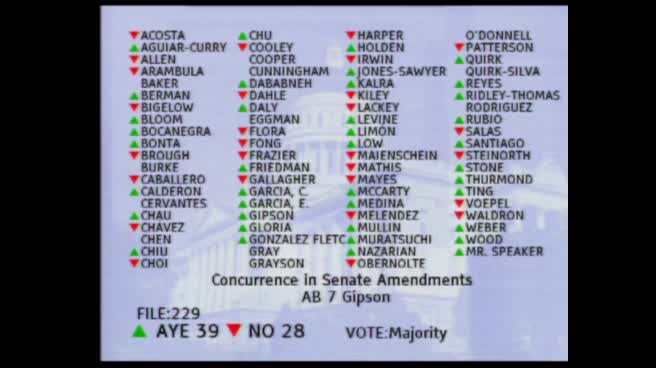 1MIN
Assembly Floor
 2MIN
Senate Floor
 3MIN
Senate Standing Committee on Appropriations
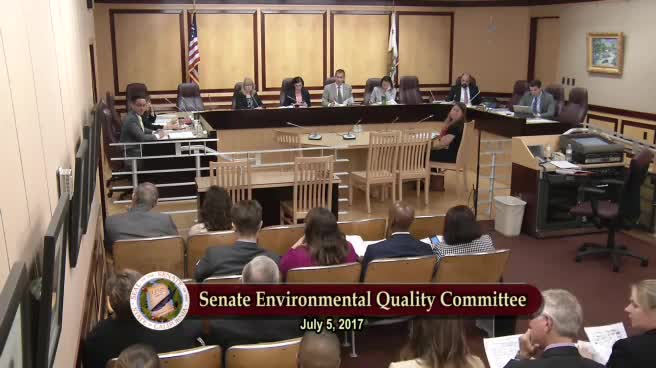 4MIN
Senate Standing Committee on Environmental Quality
 50SEC
Assembly Floor
 1H
Assembly Standing Committee on Appropriations
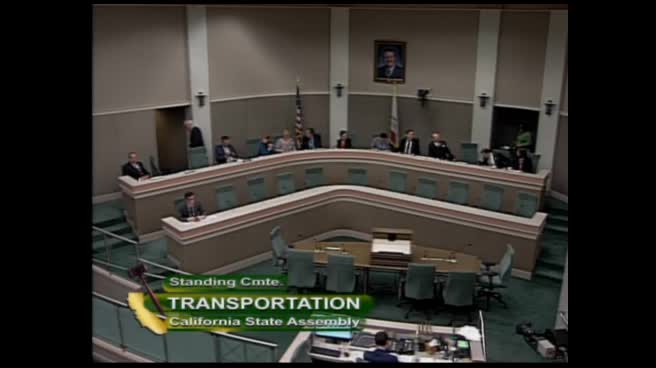 4MIN
Assembly Standing Committee on Transportation
Bill Author




