AB 1893: Maternal mental health: federal funding.
- Session Year: 2017-2018
- House: Assembly
- Latest Version Date: 2018-07-20
Existing law finds and declares that prenatal care, delivery service, postpartum care, and neonatal and infant care are essential services necessary to assure maternal and infant health. Existing law requires the State Department of Public Health to develop and maintain a statewide community-based comprehensive perinatal services program to, among other program objectives, ensure the appropriate level of maternal, newborn, and pediatric care services necessary to provide the healthiest outcome for mother and infant.
This bill would require the department to investigate and apply for federal funding opportunities regarding maternal mental health, as specified. This bill would require the department to notify the Legislature on or before January 1, 2020, on the departments efforts to secure and utilize the federal funding it receives.
Existing law finds and declares that prenatal care, delivery service, postpartum care care, and neonatal and infant care are essential services necessary to assure maternal and infant health. Existing law requires the State Department of Public Health to develop and maintain a statewide community-based comprehensive perinatal services program to, among other program objectives, ensure the appropriate level of maternal, newborn, and pediatric care services necessary to provide the healthiest outcome for mother and infant.
This bill would require the department to investigate and apply for federal funding opportunities regarding maternal mental health, as specified, and to prepare a report to specified. This bill would require the department to notify the Legislature on or before January 1, 2020, on how the department plans to use the departments efforts to secure and utilize the federal funding it receives. receives.
Existing law finds and declares that prenatal care, delivery service, postpartum care and neonatal and infant care are essential services necessary to assure maternal and infant health. Existing law requires the State Department of Public Health to develop and maintain a statewide community-based comprehensive perinatal services program to, among other program objectives, ensure the appropriate level of maternal, newborn, and pediatric care services necessary to provide the healthiest outcome for mother and infant.
This bill would require the department to investigate and apply for federal funding opportunities regarding maternal mental health, as specified, and to prepare a report to the Legislature on or before January 1, 2020, on how the department plans to use the federal funding it receives.
(a)The State Department of Public Health shall investigate and apply for federal funding opportunities, including, but not limited to, the grant available pursuant to Section 10005 of the federal 21st Century Cures Act (Public Law 114-146), to support maternal mental health, to the extent that programs are financed, in whole, by federal funds.
(b)The department shall notify the Legislature on or before January 1, 2020, on the departments efforts to secure and utilize the federal funding it receives from the requirement specified in subdivision (a).
(c)This section shall remain in effect only until January 1, 2023, and as of that date is repealed, unless a later enacted statute that is enacted before January 1, 2023, deletes or extends that date.
(a)The State Department of Public Health shall investigate and apply for federal funding opportunities regarding maternal mental health, opportunities, including, but not limited to, the grant available pursuant to Section 10005 of the federal 21st Century Cures Act (Public Law 114-146). 114-146), to support maternal mental health, to the extent that programs are financed, in whole, by federal funds.
(b)(1)The department shall prepare a report to notify the Legislature on or before January 1, 2020, on how the department plans to use the departments efforts to secure and utilize the federal funding it receives from the requirement specified in subdivision (a).
(2)A report to be submitted pursuant to paragraph (1) shall be submitted in compliance with Section 9795 of the Government Code. (3)The requirement for submitting a report pursuant to paragraph (1) is inoperative on January 1, 2024, pursuant to Section 10231.5 of the Government Code.(c)This section shall remain in effect only until January 1, 2023, and as of that date is repealed, unless a later enacted statute that is enacted before January 1, 2023, deletes or extends that date.
(a)The State Department of Public Health shall investigate and apply for federal funding opportunities regarding maternal mental health, including, but not limited to, the grant available pursuant to Section 10005 of the federal 21st Century Cures Act (Public Law 114-146).
(b)(1)The department shall prepare a report to the Legislature on or before January 1, 2020, on how the department plans to use the federal funding it receives from the requirement specified in subdivision (a).
(2)A report to be submitted pursuant to paragraph (1) shall be submitted in compliance with Section 9795 of the Government Code.
(3)The requirement for submitting a report pursuant to paragraph (1) is inoperative on January 1, 2024, pursuant to Section 10231.5 of the Government Code.
REVISIONS: HeadingLine 2.|
Date
|
Status
|
|---|---|
| Jul 20, 2018 | Chaptered by Secretary of State - Chapter 140, Statutes of 2018. |
| Jul 20, 2018 | Approved by the Governor. |
| Jul 10, 2018 | Enrolled and presented to the Governor at 3 p.m. |
| Jul 3, 2018 | In Assembly. Ordered to Engrossing and Enrolling. |
| Jul 2, 2018 | Read third time. Passed. Ordered to the Assembly. |
| Jun 26, 2018 | Read second time. Ordered to Consent Calendar. |
| Jun 25, 2018 | From committee: Be ordered to second reading file pursuant to Senate Rule 28.8 and ordered to Consent Calendar. |
| Jun 6, 2018 | From committee: Do pass and re-refer to Com. on APPR. with recommendation: To Consent Calendar. (Ayes 8. Noes 0.) (June 6). Re-referred to Com. on APPR. |
| May 3, 2018 | Referred to Com. on HEALTH. |
| Apr 19, 2018 | In Senate. Read first time. To Com. on RLS. for assignment. |
| Apr 19, 2018 | Read third time. Passed. Ordered to the Senate. (Ayes 73. Noes 0.) |
| Apr 10, 2018 | Read second time. Ordered to third reading. |
| Apr 9, 2018 | Read second time and amended. Ordered returned to second reading. |
| Apr 5, 2018 | From committee: Amend, and do pass as amended. (Ayes 15. Noes 0.) (April 4). |
| Mar 21, 2018 | From committee: Do pass and re-refer to Com. on APPR. with recommendation: To Consent Calendar. (Ayes 15. Noes 0.) (March 20). Re-referred to Com. on APPR. |
| Mar 6, 2018 | Coauthors revised. |
| Feb 5, 2018 | Referred to Com. on HEALTH. |
| Jan 19, 2018 | From printer. May be heard in committee February 18. |
| Jan 18, 2018 | Read first time. To print. |
|
Date
|
Description
|
Location
|
Votes
|
|
|---|---|---|---|---|
| Jul 2, 2018 | Consent Calendar AB1893 | Senate Floor |
Passed |
|
| Jun 6, 2018 | Do pass, but first be re-referred to the Committee on [Appropriations] with the recommendation: To Consent Calendar | Senate Standing Committee on Health |
Passed |
|
| Apr 19, 2018 | AB 1893 MAIENSCHEIN Assembly Third Reading | Assembly Floor |
Passed |
|
| Apr 4, 2018 | Do pass as amended. | Assembly Standing Committee on Appropriations |
Passed |
|
| Mar 20, 2018 | Do pass and be re-referred to the Committee on [Appropriations] with recommendation: To Consent Calendar | Assembly Standing Committee on Health |
Passed |
This list shows positions taken on this bill by organizations on the date displayed, which is linked to the original source.
Positions by individuals are not included.
|
Organization
|
Position
|
Date
|
|---|---|---|
| 2020 Mom | ** Support | Jun 26, 2018 |
| America'S Physician Groups | ** Support | Jun 26, 2018 |
| American Academy of Pediatrics | ** Support | Jun 26, 2018 |
| American College of Obstetricians and Gynecologists | ** Support | Jun 26, 2018 |
| BreastfeedLA | ** Support | Jun 26, 2018 |
| California Academy of Child & Adolescent Psychiatry | ** Support | Jun 26, 2018 |
| California Access Coalition | ** Support | Jun 26, 2018 |
| California Council Of Community Behavioral Health Agencies | ** Support | Jun 26, 2018 |
| California Task force on Mental Health | * Support | Apr 4, 2018 |
| Children Now | ** Support | Jun 26, 2018 |
| Community Health Improvement Partners | ** Support | Jun 26, 2018 |
| County Behavioral Health Directors Association of California | ** Support | Jun 26, 2018 |
| Department Of Finance | ** Against | Jun 26, 2018 |
| Depression And Bipolar Support Alliance | ** Support | Jun 26, 2018 |
| Disability Rights California | ** Support | Jun 26, 2018 |
| Great Beginnings For Black Babies | ** Support | Jun 26, 2018 |
| Improving Birth | ** Support | Jun 26, 2018 |
| Improving Birth.Org | ** Support | Apr 5, 2018 |
| Maternal and Child Health Access | ** Support | Jun 26, 2018 |
| maternal mental health now | ** Support | Jun 26, 2018 |
| Mental Health America of California | ** Support | Jun 26, 2018 |
| Monterey County | ** Support | Jun 26, 2018 |
| Mothers Strong | ** Support | Jun 26, 2018 |
| Postpartum Health Alliance | ** Support | Jun 26, 2018 |
| Postpartum Support International | ** Support | Jun 26, 2018 |
| Solid Start | ** Support | Jun 26, 2018 |
| st. joseph center | ** Support | Jun 26, 2018 |
| Steinberg Institute | ** Support | Jun 26, 2018 |
| The Fed Is Best Foundation | ** Support | Jun 26, 2018 |
| Thebluedotproject | ** Support | Jun 26, 2018 |
| Victor Community Support Services | ** Support | Jun 26, 2018 |
Office of Senate Floor Analyses (916) 651-1520 Fax: (916) 327-4478 | AB |
CONSENT
Bill No: AB 1893
:
SENATE HEALTH COMMITTEE: 8-0, 6/6/18
AYES: Hernandez, Nguyen, Leyva, Mitchell, Monning, Nielsen, Pan, Roth
NO VOTE RECORDED: Newman
SENATE APPROPRIATIONS COMMITTEE: Senate Rule 28.8
ASSEMBLY FLOOR: 73-0, 4/19/18 - See last page for vote
SUBJECT: Maternal mental health: federal funding
Maternal Mental Health NOW
DIGEST:
This bill requires the Department of Public Health (DPH) to investigate and apply for federal funding opportunities to support maternal mental health (MMH), as specified. This bill requires DPH to notify the Legislature of its efforts to secure and utilize federal funds it receives. This bill sunsets on January 1, 2023.
Existing law:
- Establishes DPH to be vested with all the duties, powers, purposes, functions, responsibilities, and jurisdiction as they relate to public health, as specified. [HSC §131050]
- Requires DPH to maintain a program that addresses the special needs of high-risk pregnant women and infants, as specified. Defines “high-risk pregnant woman” as a woman considered highly likely for any reason to suffer personal mortality or morbidity from her pregnancy, or to deliver a defective, disabled, high-risk, or stillborn infant. [HSC §123560, 123565]
This bill:
- Requires DPH to investigate and apply for federal funding opportunities, including, but not limited to, the grant available pursuant to Section 10005 of the federal 21st Century Cures Act (Public Law 114-146), to support MMH, to the extent programs are financed, in whole, by federal funds.
- Requires DPH to notify the Legislature on or before January 1, 2020, on its efforts to secure and utilize the federal funding it receives pursuant to 1) above.
- Sunsets on January 1, 2023, and repeals its provisions as of that date, unless a later enacted statute enacted before January 1, 2023, deletes or extends that date.
Background
- California Task Force report. According to an April 2017 report by the California Task Force on the Status of MMH Care (CTF report), ACR 148 (Lowenthal, Chapter 96, Statutes of 2014) requested the formation of a task force to study, review, and identify the following: current barriers to screening and diagnosis; current treatment options for both those who are privately insured and those who receive care through the public health system; evidence-based and emerging treatment options that are scalable in public and private health settings; the needs of both providers and patients in order to improve diagnosis and treatment. According to the CTF report, up to one in five (20%) of new or expectant mothers will experience a mental health disorder during pregnancy or the first year following childbirth, including depression, anxiety, and postpartum psychosis, which is less prevalent but the most severe. Depression affects more than 16 million adults each year, and maternal depression is the most common complication of pregnancy in the U.S. All women are at risk of maternal stress and MMH disorders, and the prevalence can soar up to 50% among those living in poverty, compared to 15% to 20% among the general population.
- Impacts of MMH in California. According to the CTF report, untreated MMH disorders significantly and negatively impact the short- and long-term health and well-being of affected mothers and their children, which can lead to adverse birth outcomes, impaired maternal-infant bonding, poor infant growth, childhood emotional and behavioral problems, and significant medical and economic costs. Even when MMH disorders are detected, treatment occurs in less than 15% of identified cases. MMH disorders encompass a range of mental health conditions, and can occur for the first time during the perinatal period or even exist before conception and continuing, or worsening, during the perinatal period. Women who have had prior episodes of depression or anxiety are especially vulnerable at any time during the perinatal period. The CTF report cites Maternal and Infant Health Assessment data that shows the highest prevalence of depressive symptoms during and after pregnancy was found among Black and Hispanic women, women of lower educational attainment, women who are Medi-Cal beneficiaries, and women in poverty. The large proportion of California’s birthing population (44%) with income levels at or below the federal poverty guideline (FPG) experience the highest prevalence of maternal depressive symptoms (28.4%) while symptoms decrease significantly (11.8%) among those with income exceeding 300% of FPG. Maternal depression contributes to the $210.5 billion economic burden the U.S. faces each year for major depressive disorders through absenteeism at work, lost productivity, direct treatment costs, and expenditures related to suicide. The CTF report states the annual cost of not treating a mother with depression is $7,200 in lost income and productivity, with an additional $15,300 attributed to the child, totaling $22,500. The CTF report states that MMH disorders cost California an estimated $2.25 billion each year.
- Screening recommendations. In May 2015, the American College of Obstetricians and Gynecologists (ACOG) issued Committee Opinion Number 630, “Screening for Perinatal Depression,” which recommends that clinicians screen patients at least once during the perinatal period for depression and anxiety symptoms with particularly close monitoring, evaluation, and assessment for women with current depression or anxiety, a history of perinatal mood disorders, or risk factors for perinatal mood disorders. ACOG’s opinion also states that screening by itself is insufficient and systems should be in place to ensure follow-up for diagnosis and treatment. The CTF report states that in January 2016, the U.S. Preventive Services Task Force released a revised recommendation, following ACOG’s opinion, for depression screening for all adults, including pregnant and postpartum women, along with adequate systems, similar to ACOG’s recommendation, to ensure accurate diagnosis, effective treatment, and appropriate follow-up. The American Academy of Pediatrics Bright Futures and Mental Health Task Force states that primary care pediatricians have a unique opportunity to identify maternal depression, and screening can be integrated into the well-child care schedule and included in the prenatal visit. The Bright Future Periodicity table suggests screening should occur by one month, and at two months, four months, and six months postpartum.
- 21st Century Cures Act. On December 13, 2016, President Obama signed the 21st Century Cures Act (Cures Act), which included several mental health provisions, including measures to require parity between insurance coverage for mental and physical health, programs to support early intervention for psychosis, and funds to address the opioid epidemic. The Cures Act also adopted language from the Bringing Postpartum Depression Out of the Shadows Act of 2015, which provides $5 million each fiscal year from 2018 to 2022 to a minimum of three states in the form of grants that support identification and treatment of maternal depression and other MMH disorders. Funds are to be used by states for training and information to health care providers, including obstetrician-gynecologists, pediatricians, psychiatrists, other mental health care providers, and adult primary care clinicians in screening, treatment, follow-up, and community referrals for maternal depression, and may include psychiatric consultations, the use of telehealth technologies, and the formation of linkages of community resources. Congress has made the appropriation for these purposes this year. This bill requires DPH to apply for these grant funds.
Comments
Author’s statement. According to the author, mothers during pregnancy and post-pregnancy go through a wave of different emotions, but when suffering from a mental health disorder, one can become distant, anxious, or emotionally detached, even experiencing upsetting emotions and thoughts. Spouses, children, and other family members suffer too as the mother struggles with these symptoms, which often go unacknowledged, unscreened, and untreated. California needs more resources dedicated to helping perinatal women, and this available federal funding can help the state do just that.
FISCAL EFFECT: Appropriation: Fiscal Com.: Local:
2020 Mom (co-source)
Maternal Mental Health NOW (co-source)
America’s Physician Groups
American Academy of Pediatrics
American College of Obstetricians and Gynecologists
BreastfeedLA
California Academy of Child & Adolescent Psychiatry
California Access Coalition
California Council of Community Behavioral Health Agencies
Children Now
Community Health Improvement Partners
County Behavioral Health Directors Association of California
Depression and Bipolar Support Alliance
Disability Rights California
Great Beginnings for Black Babies
Improving Birth
Maternal and Child Health Access
Mental Health America of California
Monterey County
Mothers Strong
Postpartum Health Alliance
Postpartum Support International
Solid Start
St. Joseph Center
Steinberg Institute
The Fed is Best Foundation
TheBlueDotProject
Victor Community Support Services
OPPOSITION: (Verified 6/26/18)
Department of Finance
ARGUMENTS IN SUPPORT: 2020 Mom and Maternal Mental Health NOW, cosponsors, along with other supporters, largely women and children advocates and health care providers, argue that federal funding made available by the Cures Act for maternal depression is crucial for the prevention and treatment of maternal anxiety and depressive disorders that can arise up to two years postpartum. Left untreated, such disorders can negatively affect the overall health of families with newborns. Supporters cite DPH’s recent data, which found that one in five mothers experience depressive symptoms during pregnancy and postpartum, and that anxiety and depressive disorders disproportionately affect low-income Black and Hispanic women. Supporters state that current funding for MMH has been insufficient to address the scale of the growing threat to public health, and that research confirms effective prevention and early intervention has benefits, such as reducing the risk of trauma resulting from disrupted attachment and bonding between parents and their child; mitigating the risk of adverse familial outcomes, including marital discord and divorce, child abuse and neglect, and maternal suicide or infanticide; and beneficially impacting child growth and development, and reducing suffering for women facing MMH challenges.
ARGUMENTS IN OPPOSITION: The Department of Finance (DOF) argues that DPH routinely applies for federal funding throughout the year as part of its normal course of business, and to the extent federal funds are available, DPH has historically applied for federal grant opportunities when appropriate. DOF states that DPH reports on its federal funding grants on a quarterly basis, and given that the federal funding opportunity announcement specified in this bill has not yet been released, there may be a required state match that could create a General Fund cost pressure.
ASSEMBLY FLOOR: 73-0, 4/19/18
AYES: Acosta, Aguiar-Curry, Travis Allen, Arambula, Baker, Berman, Bigelow, Bloom, Bonta, Brough, Burke, Caballero, Carrillo, Cervantes, Chau, Chávez, Chen, Chiu, Choi, Chu, Cooley, Cooper, Cunningham, Dahle, Daly, Eggman, Flora, Fong, Frazier, Friedman, Gallagher, Eduardo Garcia, Gipson, Gloria, Gonzalez Fletcher, Gray, Grayson, Harper, Holden, Irwin, Jones-Sawyer, Kalra, Kamlager-Dove, Kiley, Lackey, Levine, Limón, Low, Maienschein, Mathis, Mayes, McCarty, Medina, Muratsuchi, Nazarian, Obernolte, O'Donnell, Patterson, Quirk-Silva, Reyes, Rodriguez, Rubio, Salas, Santiago, Steinorth, Mark Stone, Thurmond, Ting, Voepel, Waldron, Weber, Wood, Rendon
NO VOTE RECORDED: Calderon, Cristina Garcia, Melendez, Mullin, Quirk
6/26/18 13:09:49
**** END ****
SENATE COMMITTEE ON HEALTH
Senator Ed Hernandez, O.D., Chair
BILL NO: AB 1893
AUTHOR: | Maienschein | ||
VERSION: | April 9, 2018 | ||
HEARING DATE: | June 6, 2018 | ||
CONSULTANT: | Reyes Diaz | ||
SUBJECT: Maternal mental health: federal funding
SUMMARY:
Requires the Department of Public Health (DPH) to investigate and apply for federal funding opportunities to support maternal mental health, as specified. Requires DPH to notify the Legislature of its efforts to secure and utilize federal funds it receives. Sunsets this bill on January 1, 2023.
Existing law:
- Establishes DPH to be vested with all the duties, powers, purposes, functions, responsibilities, and jurisdiction as they relate to public health, as specified. [HSC §131050]
- Requires DPH to maintain a program that addresses the special needs of high-risk pregnant women and infants, as specified. Defines “high-risk pregnant woman” as a woman considered highly likely for any reason to suffer personal mortality or morbidity from her pregnancy, or to deliver a defective, disabled, high-risk, or stillborn infant. [HSC §123560, 123565]
This bill:
- Requires DPH to investigate and apply for federal funding opportunities, including, but not limited to, the grant available pursuant to Section 10005 of the federal 21st Century Cures Act (Public Law 114-146), to support maternal mental health (MMH), to the extent programs are financed, in whole, by federal funds.
- Requires DPH to notify the Legislature on or before January 1, 2020, on its efforts to secure and utilize the federal funding it receives pursuant to 1) above.
- Sunsets this bill on January 1, 2023, and repeals its provisions as of that date, unless a later enacted statute enacted before January 1, 2023, deletes or extends that date.
FISCAL EFFECT:
According to the Assembly Appropriations Committee, minor and absorbable costs to DPH.
PRIOR VOTES:
Assembly Floor: | 73 - 0 |
Assembly Appropriations Committee: | 15 - 0 |
Assembly Health Committee: | 15 - 0 |
COMMENTS:
- Author’s statement. According to the author, mothers during pregnancy and post-pregnancy go through a wave of different emotions, but when suffering from a mental health disorder, one can become distant, anxious, or emotionally detached, even experiencing upsetting emotions and thoughts. Spouses, children, and other family members suffer too as the mother struggles with these symptoms, which often go unacknowledged, unscreened, and untreated. California needs more resources dedicated to helping perinatal women, and this available federal funding can help the state do just that.
- Background. According to an April 2017 report by the California Task Force on the Status of MMH Care (CTF report), ACR 148 (Lowenthal, Chapter 96, Statutes of 2014) requested the formation of a task force to study, review, and identify the following: current barriers to screening and diagnosis; current treatment options for both those who are privately insured and those who receive care through the public health system; evidence-based and emerging treatment options that are scalable in public and private health settings; the needs of both providers and patients in order to improve diagnosis and treatment. According to the CTF report, up to one in five (20%) of new or expectant mothers will experience a mental health disorder during pregnancy or the first year following childbirth, including depression, anxiety, and postpartum psychosis, which is less prevalent but the most severe. Depression affects more than 16 million adults each year, and maternal depression is the most common complication of pregnancy in the U.S. All women are at risk of maternal stress and MMH disorders, and the prevalence can soar up to 50% among those living in poverty, compared to 15% to 20% among the general population.
- Impacts of MMH in California. According to the CTF report, untreated MMH disorders significantly and negatively impact the short- and long-term health and well-being of affected mothers and their children, which can lead to adverse birth outcomes, impaired maternal-infant bonding, poor infant growth, childhood emotional and behavioral problems, and significant medical and economic costs. Even when MMH disorders are detected, treatment occurs in less than 15% of identified cases. MMH disorders encompass a range of mental health conditions, and can occur for the first time during the perinatal period or even exist before conception and continuing, or worsening, during the perinatal period. Women who have had prior episodes of depression or anxiety are especially vulnerable at any time during the perinatal period. The CTF report cites Maternal and Infant Health Assessment (MIHA) data that shows the highest prevalence of depressive symptoms during and after pregnancy was found among Black and Hispanic women, women of lower educational attainment, women who are Medi-Cal beneficiaries, and women in poverty. The large proportion of California’s birthing population (44%) with income levels at or below the federal poverty guideline (FPG) experience the highest prevalence of maternal depressive symptoms (28.4%) while symptoms decrease significantly (11.8%) among those with income exceeding 300% of FPG. Maternal depression contributes to the $210.5 billion economic burden the U.S. faces each year for major depressive disorders through absenteeism at work, lost productivity, direct treatment costs, and expenditures related to suicide. The CTF report states the annual cost of not treating a mother with depression is $7,200 in lost income and productivity, with an additional $15,300 attributed to the child, totaling $22,500. The CTF report states that MMH disorders cost California an estimated $2.25 billion each year.
- Screening recommendations. In May 2015, the American College of Obstetricians and Gynecologists (ACOG) issued Committee Opinion Number 630, “Screening for Perinatal Depression,” which recommends that clinicians screen patients at least once during the perinatal period for depression and anxiety symptoms with particularly close monitoring, evaluation, and assessment for women with current depression or anxiety, a history of perinatal mood disorders, or risk factors for perinatal mood disorders. ACOG’s opinion also states that screening by itself is insufficient and systems should be in place to ensure follow-up for diagnosis and treatment. The CTF report states that in January 2016, the U.S. Preventive Services Task Force released a revised recommendation, following ACOG’s opinion, for depression screening for all adults, including pregnant and postpartum women, along with adequate systems, similar to ACOG’s recommendation, to ensure accurate diagnosis, effective treatment, and appropriate follow-up. The American Academy of Pediatrics Bright Futures and Mental Health Task Force states that primary care pediatricians have a unique opportunity to identify maternal depression, and screening can be integrated into the well-child care schedule and included in the prenatal visit. The Bright Future Periodicity table suggests screening should occur by one month, and at two months, four months, and six months postpartum.
- 21st Century Cures Act. On December 13, 2016, President Obama signed the 21st Century Cures Act (Cures Act), which included several mental health provisions, including measures to require parity between insurance coverage for mental and physical health, programs to support early intervention for psychosis, and funds to address the opioid epidemic. The Cures Act also adopted language from the Bringing Postpartum Depression Out of the Shadows Act of 2015, which provides $5 million each fiscal year from 2018 to 2022 to a minimum of three states in the form of grants that support identification and treatment of maternal depression and other MMH disorders. Funds are to be used by states for training and information to health care providers, including obstetrician-gynecologists, pediatricians, psychiatrists, other mental health care providers, and adult primary care clinicians in screening, treatment, follow-up, and community referrals for maternal depression, and may include psychiatric consultations, the use of telehealth technologies, and the formation of linkages of community resources. Congress has made the appropriation for these purposes this year. This bill requires DPH to apply for these grant funds.
- Related legislation. AB 2193 (Maienschein) requires health plans and health insurers to report specified information to existing quality management programs to develop resources to ensure specified providers receive screening support. Requires specified health care providers to screen a mother for MMH conditions during pregnancy or during the postpartum period, or both, as specified. AB 2193 is pending in the Senate.
AB 3032 (Frazier) requires a general acute care hospital or special hospital that has a perinatal unit to develop and implement, by January 1, 2020, a quality management program relating to MMH disorders, including education and information for women and families regarding the range of MMH disorders and available local treatment resources, and any other service the hospital determines should be included in the program to provide optimal care to patients. AB 3032 is pending in this Committee.
ACR 180 (Waldron) dedicates the month of May 2018 as MMH Awareness Month. ACR 180 is pending on the Senate Floor.
- Prior legislation. AB 244 (Cervantes of 2017) would have created a pilot program in counties that elect to participate to increase the capacity of health providers that serve pregnant and postpartum women to prevent, identify, and manage postpartum depression and other mental health conditions. AB 244 was not heard in the Assembly Health Committee.
ACR 148 (Lowenthal, Chapter 96, Statutes of 2014) requests the California MMH Collaborative, a nonprofit organization, to establish a task force on the status of MMH care.
- Support. 2020 Mom and Maternal Mental Health NOW, cosponsors, along with other supporters, largely women and children advocates and health care providers, argue that federal funding made available by the Cures Act for maternal depression is crucial for the prevention and treatment of maternal anxiety and depressive disorders that can arise up to two years postpartum. Left untreated, such disorders can negatively affect the overall health of families with newborns. Supporters cite DPH’s recent data, which found that one in five mothers experience depressive symptoms during pregnancy and postpartum, and that anxiety and depressive disorders disproportionately affect low-income Black and Hispanic women. Supporters state that current funding for MMH has been insufficient to address the scale of the growing threat to public health, and that research confirms effective prevention and early intervention has benefits, such as reducing the risk of trauma resulting from disrupted attachment and bonding between parents and their child; mitigating the risk of adverse familial outcomes, including marital discord and divorce, child abuse and neglect, and maternal suicide or infanticide; and beneficially impacting child growth and development, and reducing suffering for women facing MMH challenges.
SUPPORT AND OPPOSITION:
Support: 2020 Mom (cosponsor)
Maternal Mental Health NOW (cosponsor)
America’s Physician Groups
American Academy of Pediatrics
American College of Obstetricians and Gynecologists
BreastfeedLA
California Academy of Child & Adolescent Psychiatry
California Access Coalition
California Council of Community Behavioral Health Agencies
Children Now
Community Health Improvement Partners
County Behavioral Health Directors Association of California
Depression and Bipolar Support Alliance
Disability Rights California
The Fed is Best Foundation
Great Beginnings for Black Babies
Improving Birth
Maternal and Child Health Access
Mental Health America of California
Monterey County
Mothers Strong
Postpartum Health Alliance
Postpartum Support International
Solid Start
St. Joseph Center
Steinberg Institute
TheBlueDotProject
Victor Community Support Services
Oppose: None received
-- END --
ASSEMBLY THIRD READING
ATR Bill Id:AB 1893
Author:(Maienschein)
As Introduced Ver:January 18, 2018
Majority vote
Committee | Votes | Ayes | Noes |
Health | 15-0 | Wood, Maienschein, Aguiar-Curry, Bonta, Burke, Carrillo, Flora, Limón, McCarty, Nazarian, Rodriguez, Santiago, Obernolte, Thurmond, Waldron | |
Appropriations | 15-0 | Gonzalez Fletcher, Bigelow, Bloom, Bonta, Calderon, Carrillo, Chau, Eggman, Fong, Friedman, Gallagher, Eduardo Garcia, Obernolte, Quirk, Reyes |
|
SUMMARY: Requires the State Department of Public Health (DPH) to investigate and apply for federal funding opportunities, including, but not limited to, the grant available pursuant to the federal 21st Century Cures Act (Cures Act), Section 1005 to support maternal mental health (MMH), to the extent that programs are financed in whole, by federal funds; requires DPH to notify the Legislature on or before January 1, 2020, on DPH's efforts to secure and utilize the federal funding.
EXISTING LAW: Establishes within DPH, the Maternal, Child and Adolescent Health Division to work with statewide and local partners to develop systems that protect and improve the health of California's reproductive-aged and pregnant women, infants, children, adolescents, and their families.
FISCAL EFFECT: According to the Assembly Appropriations Committee, minor and absorbable costs to DPH.
COMMENTS: According to the author, during pregnancy and post-pregnancy, mothers go through a wave of different emotions, but when suffering from a mental health disorder, one can become distant, anxious, or emotionally detached, even experiencing upsetting emotions and thoughts. The author states that spouses, children, and other family members suffer too as the mother struggles with these symptoms, which often go unacknowledged, unscreened, and untreated. The author concludes that California needs more resources dedicated to helping perinatal women, and this available federal funding can help the state do just that.
- MMH. Maternal depression is the most common complication of pregnancy in the United States, surpassing gestational diabetes and preeclampsia combined. Maternal depression presents a significant early risk to proper child development, the mother-infant bond, and the family. Maternal depression screening and treatment is an important tool to protect the child from the potential adverse physical and developmental effects of maternal depression. According to the American Academy of Pediatrics, screening mothers for maternal depression is a best practice for primary care pediatricians and can be integrated into the well-child care schedule, as well as included in the prenatal visit.
- Cures Act. The Cures Act, signed December 13, 2016 by President Obama, promotes and funds the acceleration of research into preventing and curing serious illnesses; accelerates drug and medical device development; attempts to address the opioid abuse crisis; and tries to improve mental health service delivery.
- One of the provisions, the Bringing Post-partum Depression Out of the Shadows Act, if funded, would provide $5 million each fiscal year from 2018-22 to be provided to a minimum of three states in the form of grants that support identification and treatment of maternal depression and other MMH disorders. These funds would be used by states for training and information to health care providers including obstetrician-gynecologists, pediatricians, psychiatrists, mental health care providers, and adult primary care clinicians on screening, treatment, follow-up, and community referrals for prenatal depression. This may include psychiatric consultations, the use of telehealth technologies, and the formation of linkages of community resources.
The most recent spending plan passed by Congress and signed by President Trump provides $5 million for the Screening and Treatment for Maternal Depression program as authorized by the Cures Act. The federal Health Resources & Services Administration is directed to make grants to states to establish, improve, or maintain programs to train professionals to screen, assess, and treat for maternal depression in women who are pregnant or who have given birth within the preceding 12 months.
2020 Mom is the cosponsor of this bill and states that the March 2017 report noted that DPH can play a critical role, including development of a public health awareness campaign, which this bill will help to develop. Maternal Mental Health NOW is a co-sponsor and believes, with federal support, California will have the capacity to expand programs that have been proven to be effective, and to reach the most vulnerable mothers and children in our communities.
BreastfeedLA supports this bill, noting that recent data from DPH's Maternal and Infant Health Assessment found that about one in five (21.5%) mothers experience depressive symptoms during pregnancy or postpartum. BreastfeedLA states that current funding for MMH has been insufficient to address the scale of this growing threat to public health and early diagnosis and treatment will curb the estimated $2.25 billion dollars in lost wages and productivity, treatment, and other expenditures resulting from untreated maternal depression.
This bill has no known opposition.
Analysis Prepared by: Lara Flynn / HEALTH / (916) 319-2097 FN: 0002664
Date of Hearing: March 20, 2018
ASSEMBLY COMMITTEE ON HEALTH
Jim Wood, Chair
ABPCA Bill Id:AB 1893
Author:(Maienschein) – As Introduced Ver:January 18, 2018
SUBJECT: Maternal mental health: federal funding.
SUMMARY: Requires the State Department of Public Health (DPH) to investigate and apply for federal funding opportunities regarding maternal mental health (MMH), including, but not limited to, the grant available pursuant to Section 10005 of the federal 21st Century Cures Act (Cures Act); requires DPH to prepare a report to the Legislature on or before January 1, 2020, on how DPH plans to use the federal funding; and, deletes this reporting requirement on January 1, 2024.
EXISTING LAW:
- Establishes within DPH, the Maternal, Child and Adolescent Health Division to work with statewide and local partners to develop systems that protect and improve the health of California's reproductive-aged and pregnant women, infants, children, adolescents, and their families.
- Establishes the Medi-Cal program, administered by the Department of Health Care Services (DHCS), which provides comprehensive health benefits to low-income children, their parents or caretaker relatives, pregnant women, elderly, blind or disabled persons, nursing home residents, and refugees who meet specified eligibility criteria.
- Establishes, under the terms of a federal Medicaid waiver, a managed care program providing Medi-Cal specialty mental health services for eligible low-income persons administered through local county Mental Health Plans under contract with the state.
FISCAL EFFECT: This bill has not yet been analyzed by a fiscal committee.
COMMENTS:
- PURPOSE OF THIS BILL. According to the author, during pregnancy and post-pregnancy, mothers go through a wave of different emotions, but when suffering from a mental health disorder, one can become distant, anxious, or emotionally detached, even experiencing upsetting emotions and thoughts. The author states that spouses, children, and other family members suffer too as the mother struggles with these symptoms, which often go unacknowledged, unscreened, and untreated. The author concludes that California needs more resources dedicated to helping perinatal women, and this available federal funding can help the state do just that.
- BACKGROUND. ACR 148 (Lowenthal), Resolution Chapter 96, Statutes of 2014, sponsored by the California Legislative Women's Caucus, requested the formation of a MMH task force to study, review, and identify: a) current barriers to screening and diagnosis; b) current treatment options for both those who are privately insured and those who receive care through the public health system; and, c) evidence based data on emerging treatment options that are scalable in public and private health settings. The MMH Task Force Implementation Steering Committee was asked to identify the needs of both providers and patients in order to improve diagnosis and treatment. On March 1, 2017, the MMH task force released a white paper (March 2017 report) that identified gaps in the current effort to identify and treat MMH disorders and provides recommendations that address physician capacity, treatment shortages, screening and referral, an awareness campaign, and action steps for stakeholder groups.
- MMH. According to the March 2017 report, MMH disorders, including depression, anxiety, and the much more rare but serious, postpartum psychosis, affect one in five women (20%), during pregnancy or the first year following childbirth. Among those living in poverty, up to 50% may be affected. Maternal depression is the most common complication of pregnancy in the United States, surpassing gestational diabetes and preeclampsia combined. Maternal depression presents a significant early risk to proper child development, the mother-infant bond, and the family. Maternal depression screening and treatment is an important tool to protect the child from the potential adverse physical and developmental effects of maternal depression. According to the American Academy of Pediatrics (AAP), screening mothers for maternal depression is a best practice for primary care pediatricians and can be integrated into the well-child care schedule, as well as included in the prenatal visit.
- Clinical recommendations for screening. In May of 2015, the American Congress of Obstetricians and Gynecologists published Committee Opinion Number 630, recommending that clinicians screen patients at least once during the perinatal period for depression and anxiety symptoms using a standardized, validated tool. In January 2016, the U.S. Preventive Services Task Force (USPSTF) released a revised recommendation for depression screening of all adults, including pregnant and postpartum women. The USPSTF noted that screening should be implemented with adequate systems in place to ensure accurate diagnosis, effective treatment, and appropriate follow up. In February 2016, the National Council on Patient Safety in Women's Health Care issued the Maternal Mental Health Bundle, providing high-level direction to health care providers in office and hospital settings on how to implement MMH screening and treatment, and the most recent AAP Bright Futures Guidelines recommends postpartum depression screening from the one-month through the six-month well-child visit.
- Cures Act. The Cures Act, signed December 13, 2016 by President Obama, promotes and funds the acceleration of research into preventing and curing serious illnesses; accelerates drug and medical device development; attempts to address the opioid abuse crisis; and tries to improve mental health service delivery.
One of the provisions, the Bringing Post-partum Depression Out of the Shadows Act, if funded, would provide $5 million each fiscal year from 2018-22 to be provided to a minimum of three states in the form of grants that support identification and treatment of maternal depression and other MMH disorders. These funds would be used by states for training and information to health care providers including obstetrician-gynecologists, pediatricians, psychiatrists, mental health care providers, and adult primary care clinicians on screening, treatment, follow-up, and community referrals for perinatal depression. This may include psychiatric consultations, the use of telehealth technologies, and the formation of linkages of community resources. This bill directs DPH to apply for these unappropriated funds. - Existing state funding from the Cures Act. This bill is focused on funds for MMH; however, Cures Act funds are also available for Community Mental Health Services Block Grants (MHBG). The federal Substance Abuse & Mental Health Services Administration (SAMHSA), Center for Mental Health Services provides grant funds to establish or expand an organized community-based system of care for providing non-Title XIX mental health services to children with serious emotional disturbances and adults with serious mental illness. States are required to submit an application for each fiscal year the State is seeking funds. These funds are used to: i) carry out the State plan contained in the application; ii) evaluate programs and services; and, iii) conduct planning, administration, and educational activities related to the provision of services.
DHCS submitted a MHBG State Plan on September 1, 2015, for Fiscal Years 2016-17 and 2017-18. It was approved by SAMHSA, and DHCS is currently receiving MHBG funding for Fiscal Year 2017-18. DHCS also submitted a MHBG State Plan to SAMHSA on September 1, 2017, for Fiscal Years 2018-19 and 2019-20. SAMHSA approved DHCS’ plan, and DHCS will begin receiving funding for Fiscal Year 2018-19 beginning on July 1, 2018.
- MMH. According to the March 2017 report, MMH disorders, including depression, anxiety, and the much more rare but serious, postpartum psychosis, affect one in five women (20%), during pregnancy or the first year following childbirth. Among those living in poverty, up to 50% may be affected. Maternal depression is the most common complication of pregnancy in the United States, surpassing gestational diabetes and preeclampsia combined. Maternal depression presents a significant early risk to proper child development, the mother-infant bond, and the family. Maternal depression screening and treatment is an important tool to protect the child from the potential adverse physical and developmental effects of maternal depression. According to the American Academy of Pediatrics (AAP), screening mothers for maternal depression is a best practice for primary care pediatricians and can be integrated into the well-child care schedule, as well as included in the prenatal visit.
- SUPPORT. 2020 Mom is the cosponsor of this bill and states that the March 2017 report noted that DPH can play a critical role, including development of a public health awareness campaign, which this bill will help to develop. Maternal Mental Health NOW is a co-sponsor and believes, with federal support, California will have the capacity to expand programs that have been proven to be effective, and to reach the most vulnerable mothers and children in our communities.
BreastfeedLA supports this bill, noting that recent data from DPH's Maternal and Infant Health Assessment found that about one in five (21.5%) mothers experience depressive symptoms during pregnancy or postpartum. BreastfeedLA states that current funding for MMH has been insufficient to address the scale of this growing threat to public health and early diagnosis and treatment will curb the estimated $2.25 billion dollars in lost wages and productivity, treatment, and other expenditures resulting from untreated maternal depression.
The Postpartum Health Alliance and TheBlueDotProject support this bill and state that MMH disorders form the most common complication of pregnancy, impacting over 100,000 California women and families each year, yet research suggests only 15% of women will receive some form of treatment. The supporters conclude that it is critical that we take action now. - RELATED LEGISLATION.
- AB 2018 (Maienschein) adds psychiatric trainees who have committed to working in county mental health plans or county mental health plan contracted services to the list of healthcare providers eligible to participate in the Steven M. Thompson Physician Corps Loan Repayment Program. AB 2018 is currently pending a hearing in the Assembly Health Committee.
- AB 2193 (Maienschein) would require health care service plans and health insurers to develop, by July 1, 2019, a case management program that is available for enrollees and insureds and their treating providers when the provider determines that an enrollee or insured may have a MMH condition, as specified. AB 2193 is currently pending a hearing in the Assembly Health Committee.
- PREVIOUS LEGISLATION.
- AB 244 (Limon) would have created a pilot program in counties that elect to participate, including Riverside County, to increase the capacity of health providers that serve pregnant and postpartum women to prevent, identify, and manage postpartum depression and other mental health conditions. AB 244 was not heard in Assembly Health at the request of the author.
- AB 861 (Maienschein) of 2015 would have required DHCS to apply to the federal Secretary of Health and Human Services for the planning grant awarded for the purpose of developing proposals to participate in demonstration programs to improve mental health services furnished by certified community behavioral health clinics to Medi-Cal beneficiaries. AB 861 was vetoed by Governor Brown, whose veto message read, in part: "The department has not been awarded the federal grant nor approved as one of eight states to participate in the federal demonstration program. As such, this bill is premature."
- POLICY COMMENT. As noted in the background above, specific funding under Section 10005 (screening and treatment for maternal depression) of the 21st Century Cures Act has not been released. The Committee may wish to consider whether or not this bill is premature.
REGISTERED SUPPORT / OPPOSITION:
Support
2020 Mom (cosponsor)
Maternal Mental Health NOW (cosponsor)
American Academy of Pediatrics, California
BreastfeedLA
Disability Rights California
Improving Birth.org
Maternal and Child Health Access
Mental Health America of California
Monterey County Board of Supervisors
Postpartum Health Alliance
Steinberg Institute
St. Joseph Center
Solid Start
TheBlueDotProject
The Fed Is Best Foundation
Opposition
None on file.
Analysis Prepared by: Lara Flynn / HEALTH / (916) 319-2097
Date of Hearing: April 4, 2018
ASSEMBLY COMMITTEE ON APPROPRIATIONS
Lorena Gonzalez Fletcher, Chair
ABPCA Bill Id:AB 1893
Author:(Maienschein) – As Introduced Ver:January 18, 2018
Policy Committee: | Health | Vote: | 15-0 |
Urgency: No State Mandated Local Program: No Reimbursable: No
SUMMARY:
This bill requires the California Department of Public Health (CDPH) to investigate and apply for federal funding opportunities regarding maternal mental health, as specified, and prepare a report to the Legislature on or before January 1, 2020, on how the department plans to use the federal funding.
FISCAL EFFECT:
Minor and absorbable costs to CDPH.
COMMENTS:
- Purpose. Maternal mental health conditions, such as post-partum depression, anxiety, and psychosis, affect about one in five mothers in California, and research shows these conditions are often undiagnosed and untreated. This bill requires CDPH to seek funding related to maternal mental health in order to address this public health issue.
- Background. Pursuant to ACR 148 (Lowenthal), Resolution Chapter 96, Statutes of 2014, and with private funding support, the California Task Force on the Status of Maternal Mental Health Care was convened and released a white paper in 2017. This bill is consistent with a recommendation from the white paper that CDPH conduct a public awareness and outreach campaign, contingent on available funding.
- Related Legislation. AB 2193 (Maienschein) requires health care providers to screen women for maternal mental health conditions during pregnancy and the postpartum period, and requires health plans to develop case management programs for women with maternal mental health conditions.
ACR 180 (Waldron) designates May 2018 as Maternal Mental Health Awareness Month.
- Staff Comments. Given the uncertainty of federal budget appropriations for the grant specified in the legislation the author might consider requiring the department to apply only if funding is available. In addition, if the application for funding and subsequent report is intended to be a time-limited activity, the author might consider inserting a sunset to the bill. Finally, the author might consider removing the requirement for a legislative report, and instead require the department to notify the Legislature about funded activities. Notification should also be contingent on the department receiving funding. Narrative reports submitted to the federal government about how the grant is used can also be shared with the Legislature upon request.
Analysis Prepared by: Lisa Murawski / APPR. / (916) 319-2081
Discussed in Hearing
View Older Hearings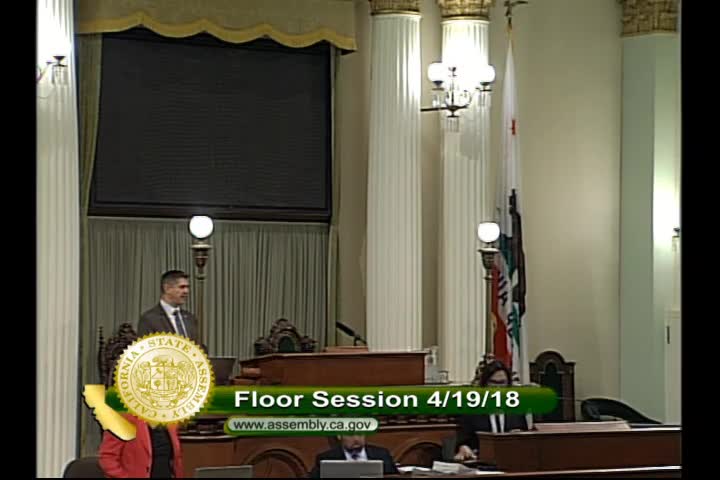
Bill Author

Bill Co-Author(s):