AB 1895: California DREAM Loan Program: repayment, deferment, and forbearance.
- Session Year: 2017-2018
- House: Assembly
- Latest Version Date: 2018-09-26
The California DREAM Loan Program provides that a student attending a participating campus of the University of California or California State University may receive a loan, referred to as a DREAM loan, through the program if the student satisfies specified requirements, including a requirement that the student be exempt from paying nonresident tuition or meet equivalent requirements adopted by the Regents of the University of California. The program requires that repayment of the DREAM loan commence following a 6-month grace period that begins when a student graduates or ceases to maintain at least half-time enrollment in a degree or certificate program. The program requires a participating campus to determine eligibility for deferment or forbearance of a DREAM loan in accordance with the standards set forth in specified federal law.
This bill would require a participating campus, on or before January 1, 2020, to adopt procedures allowing a borrower to select an income-based repayment plan for the repayment of a DREAM loan, as specified.
The California DREAM Loan Program provides that a student attending a participating campus of the University of California or California State University may receive a loan, referred to as a DREAM loan, through the program if the student satisfies specified requirements, including a requirement that the student be exempt from paying nonresident tuition or meet equivalent requirements adopted by the Regents of the University of California. The program requires that repayment of the DREAM loan commence following a 6-month grace period that begins when a student graduates or ceases to maintain at least half-time enrollment in a degree or certificate program. The program requires a participating campus to determine eligibility for deferment or forbearance of a DREAM loan in accordance with the standards set forth in specified federal law.
This bill would require a participating campus, on or before January 1, 2020, to adopt procedures for allowing a borrower to select an income-based repayment plan for the repayment of a DREAM loan, as specified.
The California DREAM Loan Program provides that a student attending a participating campus of the University of California or California State University may receive a loan, referred to as a DREAM loan, through the program if the student satisfies specified requirements, including a requirement that the student be exempt from paying nonresident tuition or meet equivalent requirements adopted by the Regents of the University of California. The program requires that repayment of the DREAM loan commence following a 6-month grace period that begins when a student graduates or ceases to maintain at least half-time enrollment in a degree or certificate program. The program requires a participating campus to determine eligibility for deferment or forbearance of a DREAM loan in accordance with the standards set forth in specified federal law.
This bill would require a participating campus, on or before January 1, 2020, to adopt procedures for a borrower to select an income-based repayment plan for the repayment of a DREAM loan, as specified.
(a)The amount of a DREAM loan offered to an individual student by a participating institution shall be determined by the institution, subject to the following provisions:
(1)The loan may not exceed the financial need of the student.
(2)No student may borrow more than four thousand dollars ($4,000) under this program within a single academic year.
(3)No student may borrow more than twenty thousand dollars ($20,000) in the aggregate under the program from any one participating institution.
(b)The interest rate for loans issued under the program shall be the same as the then-current interest rate for undergraduate loans under the William D. Ford Federal Direct Loan Program.
(c)Except as provided in subdivision (d), the standard repayment term for a DREAM loan shall be 10 years. Repayment shall commence following a six-month grace period that begins when a student graduates or ceases to maintain at least half-time enrollment in a degree or certificate program.
(d)On or before January 1, 2020, a participating institution shall adopt procedures allowing a borrower to select an income-based repayment plan for the repayment of a DREAM loan, in accordance with the standards set forth in the William D. Ford Federal Direct Loan Program for income-based repayment plans.
(e)Interest shall not accrue on a DREAM loan during periods of at least half-time enrollment in a degree or certificate program or during the six-month grace period specified in subdivision (c).
(f)Eligibility for deferment or forbearance of a DREAM loan shall be determined by the participating institution in accordance with the standards set forth in the William D. Ford Federal Direct Loan Program.
(g)Participating institutions shall use a common promissory note, approved by the Treasurer, to issue DREAM loans.
(a)The amount of the a DREAM loan offered to an individual student by a participating institution shall be determined by the institution, subject to the following provisions:
(1)The loan may not exceed the financial need of the student.
(2)No student may borrow more than four thousand dollars ($4,000) under this program within a single academic year.
(3)No student may borrow more than twenty thousand dollars ($20,000) in the aggregate under the program from any one participating institution.
(b)The interest rate for loans issued under the program shall be the same as the then-current interest rate for undergraduate loans under the William D. Ford Federal Direct Loan Program.
(c)Except as provided in subdivision (d), the standard repayment term for a DREAM loan shall be 10 years. Repayment shall commence following a six-month grace period that begins when a student graduates or ceases to maintain at least half-time enrollment in a degree or certificate program.
(d)On or before January 1, 2020, a participating institution shall adopt procedures allowing a borrower to select an income-based repayment plan for the repayment of a DREAM loan, in accordance with the standards set forth in the William D. Ford Federal Direct Loan Program for income-based repayment plans.
(e)Interest shall not accrue on a DREAM loan during periods of at least half-time enrollment in a degree or certificate program or during the six-month grace period specified in subdivision (c).
(f)Eligibility for deferment or forbearance of a DREAM loan shall be determined by the participating institution in accordance with the standards set forth in the William D. Ford Federal Direct Loan Program.
(g)Participating institutions shall use a common promissory note, approved by the Treasurer, to issue DREAM loans.
(a)The amount of the DREAM loan offered to an individual student by a participating institution shall be determined by the institution, subject to the following provisions:
(1)The loan may not exceed the financial need of the student.
(2)No student may borrow more than four thousand dollars ($4,000) under this program within a single academic year.
(3)No student may borrow more than twenty thousand dollars ($20,000) in the aggregate under the program from any one participating institution.
(b)The interest rate for loans issued under the program shall be the same as the then-current interest rate for undergraduate loans under the William D. Ford Federal Direct Loan Program.
(c)The Except as provided in subdivision (d), the standard repayment term for a DREAM loan shall be 10 years. Repayment shall commence following a six-month grace period that begins when a student graduates or ceases to maintain at least half-time enrollment in a degree or certificate program.
(d)On or before January 1, 2020, a participating institution shall adopt procedures for allowing a borrower to select an income-based repayment plan for the repayment of a DREAM loan, in accordance with the standards set forth in the William D. Ford Federal Direct Loan Program for income-based repayment plans.
(e)Interest shall not accrue on a DREAM loan during periods of at least half-time enrollment in a degree or certificate program or during the six-month grace period specified in subdivision (c).
(f)Eligibility for deferment or forbearance of a DREAM loan shall be determined by the participating institution in accordance with the standards set forth in the William D. Ford Federal Direct Loan Program.
(g)Participating institutions shall use a common promissory note, approved by the Treasurer, to issue DREAM loans.
REVISIONS: HeadingLine 2.(a)The amount of the DREAM loan offered to an individual student by a participating institution shall be determined by the institution, subject to the following provisions:
(1)The loan may not exceed the financial need of the student.
(2)No student may borrow more than four thousand dollars ($4,000) under this program within a single academic year.
(3)No student may borrow more than twenty thousand dollars ($20,000) in the aggregate under the program from any one participating institution.
(b)The interest rate for loans issued under the program shall be the same as the then-current interest rate for undergraduate loans under the William D. Ford Federal Direct Loan Program.
(c)The standard repayment term for a DREAM loan shall be 10 years. Repayment shall commence following a six-month grace period that begins when a student graduates or ceases to maintain at least half-time enrollment in a degree or certificate program.
(d)On or before January 1, 2020, a participating institution shall adopt procedures for a borrower to select an income-based repayment plan for the repayment of a DREAM loan, in accordance with the standards set forth in the William D. Ford Federal Direct Loan Program for income-based repayment plans.
(d)(e)Interest shall not accrue on a DREAM loan during periods of at least half-time enrollment in a degree or certificate program or during the six-month grace period specified in subdivision (c).
(e)(f)Eligibility for deferment or forbearance of a DREAM loan shall be determined by the participating institution in accordance with the standards set forth in the William D. Ford Federal Direct Loan Program.
(f)(g)Participating institutions shall use a common promissory note, approved by the Treasurer, to issue DREAM loans.
|
Date
|
Status
|
|---|---|
| Sep 26, 2018 | Chaptered by Secretary of State - Chapter 747, Statutes of 2018. |
| Sep 26, 2018 | Approved by the Governor. |
| Sep 4, 2018 | Enrolled and presented to the Governor at 3 p.m. |
| Aug 27, 2018 | Senate amendments concurred in. To Engrossing and Enrolling. |
| Aug 22, 2018 | In Assembly. Concurrence in Senate amendments pending. May be considered on or after August 24 pursuant to Assembly Rule 77. |
| Aug 21, 2018 | Read third time. Passed. Ordered to the Assembly. |
| Aug 20, 2018 | Read second time. Ordered to third reading. |
| Aug 17, 2018 | From committee: Amend, and do pass as amended. (Ayes 5. Noes 1.) (August 16). |
| Jun 25, 2018 | In committee: Referred to APPR. suspense file. |
| Jun 13, 2018 | From committee: Do pass and re-refer to Com. on APPR. (Ayes 7. Noes 0.) (June 13). Re-referred to Com. on APPR. |
| Jun 7, 2018 | Referred to Com. on ED. |
| May 30, 2018 | In Senate. Read first time. To Com. on RLS. for assignment. |
| May 29, 2018 | Read third time. Passed. Ordered to the Senate. |
| May 25, 2018 | Coauthors revised. |
| Apr 18, 2018 | In committee: Set, first hearing. Referred to APPR. suspense file. |
| Mar 19, 2018 | Re-referred to Com. on APPR. |
| Mar 15, 2018 | Read second time and amended. |
| Mar 14, 2018 | From committee: Amend, and do pass as amended and re-refer to Com. on APPR. (Ayes 11. Noes 0.) (March 13). |
| Feb 5, 2018 | Referred to Com. on HIGHER ED. |
| Jan 19, 2018 | From printer. May be heard in committee February 18. |
| Jan 18, 2018 | Read first time. To print. |
|
Date
|
Description
|
Location
|
Votes
|
|
|---|---|---|---|---|
| Aug 27, 2018 | AB 1895 CALDERON Concurrence in Senate Amendments | Assembly Floor |
Passed |
|
| Aug 21, 2018 | Assembly 3rd Reading AB1895 Calderon et al. By Lara | Senate Floor |
Passed |
|
| Aug 16, 2018 | Do pass as amended | Senate Standing Committee on Appropriations |
Passed |
|
| Jun 25, 2018 | Placed on suspense file | Senate Standing Committee on Appropriations |
Passed |
|
| Jun 13, 2018 | Do pass, but first be re-referred to the Committee on [Appropriations] | Senate Standing Committee on Education |
Passed |
|
| May 29, 2018 | AB 1895 CALDERON Assembly Third Reading | Assembly Floor |
Passed |
|
| May 25, 2018 | Do pass. | Assembly Standing Committee on Appropriations |
Passed |
|
| Mar 13, 2018 | Do pass as amended and be re-referred to the Committee on [Appropriations] | Assembly Standing Committee on Higher Education |
Passed |
This list shows positions taken on this bill by organizations on the date displayed, which is linked to the original source.
Positions by individuals are not included.
|
Organization
|
Position
|
Date
|
|---|---|---|
| California Immigrant Policy Center | ** Support | Mar 12, 2018 |
| California State University | * Indeterminate | Mar 13, 2018 |
| Coalition for Humane Immigrant Rights | ** Support | Aug 19, 2018 |
| Community College League of California | ** Support | Aug 19, 2018 |
| Educators for Fair Consideration | ** Support | Aug 19, 2018 |
| Hispanic Association Of Colleges And Universities | ** Support | Aug 19, 2018 |
| Kid City Hope Place | ** Support | Aug 19, 2018 |
| Leticia A Network | ** Support | Mar 12, 2018 |
| Los Angeles Area Chamber Of Commerce | ** Support | Aug 19, 2018 |
| MALDEF | ** Support | Aug 19, 2018 |
| Southern California College Access Network | ** Support | Aug 19, 2018 |
| Students Making A Change | ** Support | Aug 19, 2018 |
| The Campaign for College Opportunity | ** Support | Aug 19, 2018 |
| The Education Trust-West | ** Support | Aug 19, 2018 |
| The Institute for College Access and Success | ** Support | Aug 19, 2018 |
| The Ucla Civil Rights Project | ** Support | Aug 19, 2018 |
| University of California | * Indeterminate | Mar 13, 2018 |
| Usc Rosier Pullias Center For Higher Education | ** Support | Aug 19, 2018 |
| Youn Invincibles | ** Support | Aug 19, 2018 |
CONCURRENCE IN SENATE AMENDMENTS
CSA1 Bill Id:AB 1895
Author:(Calderon)
As Amended Ver:August 17, 2018
Majority vote
ASSEMBLY: | 60-0 | (May 29, 2018) | SENATE: | 31-5 | (August 21, 2018) |
Original Committee Reference: HIGHER ED.
SUMMARY: Requires University of California (UC) and California State University (CSU) campuses participating in the state Development, Relief and Education for Alien Minors (DREAM) Loan Program to adopt procedures to allow undocumented students to access an income-based student loan repayment plan by January 1, 2020.
The Senate amendments make technical changes and add a co-author.
EXISTING LAW:
- Exempts specified California nonresidents from paying nonresident tuition at UC, CSU, and California Community Colleges (CCC), also known as the AB 540 nonresident tuition waiver (AB 540 (Firebaugh and Maldonado) Chapter 814, Statutes of 2001), if they meet all of the following: (Education Code (EC) Section 68130.5.)
- Attended or attained credits at a California high school, an adult school, a CCC campus, or a combination of these entities, for the equivalent of three or more years; or completed three or more years of full-time high school coursework, and a total of three or more years of attendance in California elementary schools, California secondary schools, or a combination of such elementary and secondary schools.
- Graduated from a California high school or attained an equivalent degree; attained a CCC associate degree; or fulfilled the minimum transfer requirements from a CCC campus to a UC or CSU campus.
- Registered or attended an accredited California higher education institution beginning after fall of the 2001-02 academic year; and,
- If an undocumented student has filed an affidavit stating that the student has filed an application to legalize his or her immigration status or will file such an application as soon as he or she is eligible to so do.
- Authorizes, beginning January 1, 2013, AB 540 students to be eligible to apply for, and participate in, any student financial aid program administered by the State of California to the full extent permitted by federal law (EC Section 66021.6.).
- Authorizes, beginning January 1, 2013, AB 540 students attending UC, CSU, or the CCC to be eligible to receive a scholarship derived from nonstate funds, as received by the respective segment for the purpose of scholarships (EC Section 66021.7.).
- Establishes the Dream Loan Program at UC and CSU campuses that elect to participate in the program. Under the program, an AB 540 student meeting specified requirements, including demonstrating financial need, may obtain a loan of up to $4,000 per academic year, up to a maximum of $20,000. The repayment term for the loan is 10 years, and repayment commences following a six-month grace period commencing when the student graduates or ceases to maintain at least half-time enrollment. Eligibility for deferment or forbearance of loan repayments is consistent with the federal direct student loan program (EC Section 70033.).
- Requires the annual Budget Act to allocate funding to participating institutions based on the number of AB 540 students who applied for state financial aid in the prior academic year. Participating institutions must at least match the state allocation using the institution's discretionary funds. Both the state and local funding is deposited into a DREAM revolving fund. Loan repayments are also deposited into the revolving fund and are intended to reduce the annual state and campus contributions equally (EC Section 70035.).
FISCAL EFFECT: According to the Senate Appropriations Committee:
- The UC estimates one-time costs of $150,000 to $200,000 to adopt an infrastructure to support an income-driven repayment plan program which includes the development of forms and procedures, and ongoing costs of about $100,000 to administer the program (General Fund).
- The CSU indicates one-time costs likely in the hundreds of thousands of dollars to adopt an infrastructure to support an income-driven repayment plan program, and ongoing costs in the hundreds of thousands of dollars to administer the program (General Fund). CSU notes there is uncertainty in their administrative costs because they use a third party vendor to handle billing and are not clear what additional costs requiring income-based billing would incur. CSU also notes costs would depend on the number of students who utilize the program.
- There could be cost pressures to the UC and CSU as the use of income-based repayment plans could reduce program revenue from loan repayments, which would then extend the time that state and institutional resources will be required to fund the program before it becomes self-supporting.
COMMENTS: Background. Though AB 540 students are exempt from nonresident tuition charges and are eligible for state financial aid programs, these students are ineligible for federal student loans available to other students for filling gaps in their higher education funding. The DREAM Loan Program (SB 1210, Lara, Chapter 754, Statutes of 2014) was established to provide loans to undocumented UC and CSU students who demonstrate financial need. The program is funded through the state General Fund, with matching funds provided by UC and CSU. All UC campuses and 22 CSU campuses are participating in the program.
Participating students can apply for loans of up to $4,000 per year and up to a maximum of $20,000. SB 1210 requires that loans be repaid over 10 years, which is consistent with the standard repayment plan for federal direct student loans. Repaid monies are deposited into the program's revolving fund, to be used for future DREAM loans. As envisioned, repayment revenues to the revolving fund will increase over time, as more former students are repaying their DREAM loans, and state and institutional funding will commensurately decline, with the program eventually become self-supporting.
Program Funding and Loan Activity.
UC. The 2015 and 2016 Budget Acts each allocated $2.5 million in state General Funds, and the 2017 Budget Act designated an additional $1 million. Per the program's requirements, these monies were matched by UC. In its preliminary annual report to the Legislature on institution financial aid (January 2018), UC indicates that, for 2016-17, $3.9 million in DREAM loans were made to 1,384 students, for an average loan of $2,800. For 2017-18, UC expects to disburse $5.4 million in loans to about 2,900 students.
CSU. The 2015 Budget Act allocated $1 million from the General Fund, which CSU matched with $1 million in lottery funds. Loan approvals for 2015-16 totaled only $523,000 for 280 students. No additional state funds were provided for 2016-17, and the program was funded with the prior-year carryover revenues ($1.4 million) and $600,000 in CSU lottery revenues. In 2016-17, 506 students received loans totaling $1,365,000, for an average loan of $2,700. The 2017 Budget Act allocated an additional $2 million to CSU from the General Fund for the program.
Purpose. As mentioned above, current law requires that DREAM loans be repaid within 10 years, with at least equal payments, and regardless of the recipients' ability to pay. According to the author's office, this lack of repayment flexibility is problematic for the following three reasons. First, a DREAM loan recipient faces the uncertainty of repayment if they cannot be lawfully employed in the United States. This is particularly the case in light of the current threat to the Deferred Action of Childhood Arrival (DACA) program, which has provided qualifying undocumented youth with renewable, two-year terms of deportation relief and work eligibility. Second, an undocumented student worried about repaying a loan may be dissuaded from pursuing a career in public service or non-profit work because of limited entry-level pay. Finally, Latino students, who are the largest population of undocumented Californians, historically tend to experience wage discrimination, and thus lower pay.
This bill would provide repayment flexibility by requiring UC and CSU to offer to DREAM loan borrowers the option of an income-based repayment plan that is consistent with one of the four income-driven repayment options available to participants in the federal direct student loan program. Under this income-based option, a borrower pays 10% of their discretionary income monthly for 20 years. Any remaining loan balance would be forgiven if the loan is not fully repaid at the end of the 20-year period. Periods when the loan is deferred, due to the borrower demonstrating economic hardship, and periods when a required payment is zero count toward the total repayment period. Whether the borrower has a balance left to be forgiven at the end of their repayment period depends on a number of factors, such as how quickly the borrower's income rises and how large their income is relative to their debt. Because of these factors, a loan may be fully repaid before the end of the repayment period.
Segments' Concerns. CSU maintains that adding this additional repayment option will likely increase administrative costs, which are limited by statute to 5% of total loan awards annually. CSU is also concerned about the self-sustainability of the program, as the use of income-based repayment plans will to some extent reduce program revenue from loan repayments, which will extend the time that state and CSU resources will be required to fund the program. CSU notes that, consistent with the federal student loan program, campuses can approve a deferment of DREAM loan repayments for up to three years for unemployment and up to three years for economic hardship, for a total of up to six years of deferment.
UC cites similar concerns regarding increased administrative costs and added state and university costs due to the program taking longer to become self-supporting. UC also notes the current ability to provide relief to borrowers through deferment or forbearance. It should be noted that, in order to reduce the additional administrative burden, the author is proposing that only one of the four income-driven options available to federal student loan borrowers would be available to DREAM loan recipients.
Analysis Prepared by: Jeanice Warden / HIGHER ED. / (916) 319-3960 FN: 0004555
Office of Senate Floor Analyses (916) 651-1520 Fax: (916) 327-4478 | AB |
THIRD READING
Bill No: AB 1895
Amended: 8/17/18 in Senate
SENATE EDUCATION COMMITTEE: 7-0, 6/13/18
AYES: Allen, Wilk, Galgiani, Leyva, McGuire, Pan, Vidak
SENATE APPROPRIATIONS COMMITTEE: 5-1, 8/16/18
AYES: Portantino, Beall, Bradford, Hill, Wiener
NOES: Nielsen
NO VOTE RECORDED: Bates
ASSEMBLY FLOOR: 60-0, 5/29/18 - See last page for vote
DIGEST:
This bill requires, by January 1, 2020, a University of California (UC) and California State University (CSU) campuses participating in the state DREAM Loan Program to adopt procedures allowing a borrower to select an income-based repayment plan for the repayment of a DREAM Loan, as specified.
Existing law:
- Exempts specified California nonresidents from paying nonresident tuition at UC, CSU, and California Community Colleges (CCC), also known as the AB 540 nonresident tuition waiver, if they meet all of the following: (Education Code§ 68130.5.)
- Attended or attained credits at a California high school, an adult school, a CCC campus, or a combination of these entities, for the equivalent of three or more years; or completed three or more years of full-time high school coursework, and a total of three or more years of attendance in California elementary schools, California secondary schools, or a combination of such elementary and secondary schools.
- Graduated from a California high school or attained an equivalent degree; attained a CCC associate degree; or fulfilled the minimum transfer requirements from a CCC campus to a UC or CSU campus.
- Registered or attended an accredited California higher education institution beginning after fall of the 2001-02 academic year; and,
- If an undocumented student has filed an affidavit stating that the student has filed an application to legalize his or her immigration status or will file such an application as soon as he or she is eligible to so do.
- Authorizes, beginning January 1, 2013, AB 540 students to be eligible to apply for, and participate in, any student financial aid program administered by the State of California to the full extent permitted by federal law. (EC § 66021.6.)
- Authorizes, beginning January 1, 2013, AB 540 students attending UC, CSU, or the CCC to be eligible to receive a scholarship derived from nonstate funds, as received by the respective segment for the purpose of scholarships (EC § 66021.7.).
- Establishes the Dream Loan Program at UC and CSU campuses that elect to participate in the program. Under the program, an AB 540 student meeting specified requirements, including demonstrating financial need, may obtain a loan of up to $4,000 per academic year, up to a maximum of $20,000. The repayment term for the loan is 10 years, and repayment commences following a six-month grace period commencing when the student graduates or ceases to maintain at least half-time enrollment. Eligibility for deferment or forbearance of loan repayments is consistent with the federal direct student loan program. (EC § 70033.)
- Requires the annual Budget Act to allocate funding to participating institutions based on the number of AB 540 students who applied for state financial aid in the prior academic year. Participating institutions must at least match the state allocation using the institution's discretionary funds. Both the state and local funding is deposited into a DREAM revolving fund. Loan repayments are also deposited into the revolving fund and are intended to reduce the annual state and campus contributions equally. (EC § 70035.)
This bill:
- Requires, by January 1, 2020, a UC and CSU campuses participating in the state DREAM Loan Program to adopt procedures allowing a borrower to select an income-based repayment plan for the repayment of a DREAM Loan, in accordance with the standards set forth in the William D. Ford Federal Direct Loan Program for income-based repayment plans.
- Makes conforming changes.
Comments
- Need for the bill. Existing law provides repayment terms for DREAM Loans that is limited to standard repayment plans. Under this standard repayment plan, after a six month grace period, students make at least equal payments, over a ten year period, regardless of ability to pay.
According to the author, “the lack of flexibility in payment is problematic for three reasons. First, a student who risk taking out DREAM loans will face the uncertainty of repayment if they cannot be lawfully employed in the United States. Second, a student who is undocumented who is worried about repaying a loan may be dissuaded from pursuing a career in public service or non-profit work because of limited entry level pay. Finally, Latino students, who are the largest population of people who are undocumented in California, experience historic wage discrimination (based on research). By creating income based repayment plans for DREAM Loans, our public universities communicate to these students they have the same opportunities to pursue an education as their peers. Without flexibility in repayment, students may forgo DREAM Loans use for educational opportunities if they do not see a viable path to repaying loans. One simple change we can make is allowing more flexibility in repayment of DREAM Loans.”
This bill seeks to offer Dream Loan applicants with an income-based repayment option that mirrors the federal loan program.
- California Dream Loan program. Existing law establishes the California Dream Loan Program, a voluntary campus-based student loan program, patterned after the Federal Direct Loan Program. Both the State and the university contribute (1:1 match) to the loan fund until the program becomes self-sustaining. This program serves undocumented AB 540 students at UC and CSU who, under the terms of the California Dream Act, became eligible for state and institutional grant programs but are ineligible for federal student loan programs. For the 2015-16 academic year, 280 CSU students and 434 UC students received funding and in the following year, 536 CSU students and 1,384 UC students received a loan. The average award per UC student was $2,696 and $2,697 at CSU.
- How would it work? The bill specifies that each segment offer one income- based repayment plan option, in accordance with the federal loan program. Under the federal loan program, an income-driven repayment plan sets a monthly student loan payment at an amount that is intended to be affordable based on your income and family size. The federal program offers four income-based repayment plans and most loans are discharged after 20 years or 25 years depending on the plan. In contrast, under current law the repayment term for a Dream loan is 10 years. This bill allows the CSU and UC to adopt procedures to implement the loan repayment program.
- Segments' Concerns. CSU maintains that adding this additional repayment option will likely increase administrative costs, which are limited by statute to 5 percent of total loan awards annually. CSU is also concerned about the self-sustainability of the program, as the use of income-based repayment plans will to some extent reduce program revenue from loan repayments, which will extend the time that state and CSU resources will be required to fund the program. CSU notes that, consistent with the federal student loan program, campuses can approve a deferment of DREAM Loan repayments for up to three years for unemployment and up to three years for economic hardship, for a total of up to six years of deferment.
UC cites similar concerns regarding increased administrative costs and added state and university costs due to the program taking longer to become self-supporting. UC also notes the current ability to provide relief to borrowers through deferment or forbearance. It should be noted that, in order to reduce the additional administrative burden, the author is proposing that only one of the four income-driven options available to federal student loan borrowers would be available to DREAM Loan recipients.
FISCAL EFFECT: Appropriation: Fiscal Com.: Local:
According to the Senate Appropriations Committee:
- The UC estimates one-time costs of $150,000 to $200,000 to adopt an infrastructure to support an income-driven repayment plan program which includes the development of forms and procedures, and ongoing costs of about $100,000 to administer the program (General Fund).
- The CSU indicates one-time costs likely in the hundreds of thousands of dollars to adopt an infrastructure to support an income-driven repayment plan program, and ongoing costs in the hundreds of thousands of dollars to administer the program (General Fund). CSU notes there is uncertainty in their administrative costs because they use a third party vendor to handle billing and are not clear what additional costs requiring income-based billing would incur. CSU also notes costs would depend on the number of students who utilize the program.
- There could be cost pressures to the UC and CSU as the use of income-based repayment plans could reduce program revenue from loan repayments, which would then extend the time that state and institutional resources will be required to fund the program before it becomes self-supporting.
Coalition for Humane Immigrant Rights
Community College League of California
Educators for Fair Consideration
Hispanic Association of Colleges and Universities
Kid City Hope Place
Los Angeles Area Chamber of Commerce
MALDEF
Southern California College Access Network
Students Making a Change
The Campaign for College Opportunity
The Education Trust-West
The Institute for College Access and Success
The UCLA Civil Rights Project
USC Rosier Pullias Center for Higher Education
Youn Invincibles
OPPOSITION: (Verified 8/16/18)
None received
ASSEMBLY FLOOR: 60-0, 5/29/18
AYES: Acosta, Aguiar-Curry, Arambula, Baker, Berman, Bloom, Bonta, Burke, Caballero, Calderon, Carrillo, Cervantes, Chau, Chávez, Chiu, Chu, Cooley, Cooper, Cunningham, Daly, Eggman, Frazier, Friedman, Cristina Garcia, Eduardo Garcia, Gipson, Gloria, Gonzalez Fletcher, Gray, Grayson, Holden, Irwin, Jones-Sawyer, Kalra, Kamlager-Dove, Lackey, Levine, Limón, Low, Maienschein, Mayes, McCarty, Medina, Mullin, Muratsuchi, Nazarian, O'Donnell, Quirk, Quirk-Silva, Reyes, Rodriguez, Rubio, Salas, Santiago, Mark Stone, Thurmond, Ting, Weber, Wood, Rendon
NO VOTE RECORDED: Travis Allen, Bigelow, Brough, Chen, Choi, Dahle, Flora, Fong, Gallagher, Harper, Kiley, Mathis, Melendez, Obernolte, Patterson, Steinorth, Voepel, Waldron
8/19/18 13:47:17
**** END ****
SENATE COMMITTEE ON APPROPRIATIONS
Senator Anthony Portantino, Chair
2017 - 2018 Regular Session
AB 1895 (Calderon) - California DREAM Loan Program: repayment, deferment, and forbearance
Version: March 15, 2018 | Policy Vote: ED. 7 - 0 |
Urgency: No | Mandate: No |
Hearing Date: August 16, 2018 | Consultant: Lenin Del Castillo |
Bill Summary:
This bill requires, by January 1, 2020, University of California (UC) and California State University (CSU) campuses participating in the state DREAM Loan Program to adopt procedures allowing a borrower to select an income-based repayment plan for the repayment of a DREAM Loan.
*********** ANALYSIS ADDENDUM – SUSPENSE FILE ***********
The following information is revised to reflect amendments
adopted by the committee on August 16, 2018
Fiscal Impact:
- The UC estimates one-time costs of $150,000 to $200,000 to adopt an infrastructure to support an income-driven repayment plan program which includes the development of forms and procedures, and ongoing costs of about $100,000 to administer the program (General Fund).
- The CSU indicates one-time costs likely in the hundreds of thousands of dollars to adopt an infrastructure to support an income-driven repayment plan program, and ongoing costs in the hundreds of thousands of dollars to administer the program (General Fund). CSU notes there is uncertainty in their administrative costs because they use a third party vendor to handle billing and are not clear what additional costs requiring income-based billing would incur. CSU also notes costs would depend on the number of students who utilize the program.
- There could be cost pressures to the UC and CSU as the use of income-based repayment plans could reduce program revenue from loan repayments, which would then extend the time that state and institutional resources will be required to fund the program before it becomes self-supporting.
Author Amendments:
Make technical changes and add a coauthor.
-- END --
SENATE COMMITTEE ON
Senator Anthony Portantino, Chair
2017 - 2018 Regular Session
AB 1895 (Calderon) - California DREAM Loan Program: repayment, deferment, and forbearance
Version: | Policy Vote: |
Urgency: | Mandate: |
Hearing Date: | Consultant: |
This bill meets the criteria for referral to the Suspense File.
Bill Summary:
This bill requires, by January 1, 2020, University of California (UC) and California State University (CSU) campuses participating in the state DREAM Loan Program to adopt procedures allowing a borrower to select an income-based repayment plan for the repayment of a DREAM Loan.
Fiscal Impact:
- The UC estimates one-time costs of $150,000 to $200,000 to adopt an infrastructure to support an income-driven repayment plan program which includes the development of forms and procedures, and ongoing costs of about $100,000 to administer the program (General Fund).
- The CSU indicates one-time costs likely in the hundreds of thousands of dollars to adopt an infrastructure to support an income-driven repayment plan program, and ongoing costs in the hundreds of thousands of dollars to administer the program (General Fund). CSU notes there is uncertainty in their administrative costs because they use a third party vendor to handle billing and are not clear what additional costs requiring income-based billing would incur. CSU also notes costs would depend on the number of students who utilize the program.
- There could be cost pressures to the UC and CSU as the use of income-based repayment plans could reduce program revenue from loan repayments, which would then extend the time that state and institutional resources will be required to fund the program before it becomes self-supporting.
Background:
Existing law exempts specified California nonresidents from paying nonresident tuition at UC, CSU, and the California Community Colleges (CCCs), also known as the AB 540 nonresident tuition waiver, if they meet all of the following:
- Attended or attained credits at a California high school, an adult school, a CCC campus, or a combination of these entities, for the equivalent of three or more years; or completed three or more years of full-time high school coursework, and a total of three or more years of attendance in California elementary schools, California secondary schools, or a combination of such elementary and secondary schools.
- Graduated from a California high school or attained an equivalent degree; attained a CCC associate degree; or fulfilled the minimum transfer requirements from a CCC campus to a UC or CSU campus.
- Registered or attended an accredited California higher education institution beginning after the 2001-02 academic year; and,
- If an undocumented student has filed an affidavit stating that the student has filed an application to legalize his or her immigration status or will file such an application as soon as he or she is eligible to so do.
Existing law authorizes AB 540 students to be eligible to apply for, and participate in, any student financial aid program administered by the state to the full extent permitted by federal law. AB 540 students attending UC, CSU, or the CCCs are eligible to receive a scholarship derived from nonstate funds, as received by the respective segment for the purpose of scholarships.
Existing law establishes the Dream Loan Program at UC and CSU campuses that elect to participate in the program. Under this program, an AB 540 student meeting specified requirements, including demonstrating financial need, may obtain a loan of up to $4,000 per academic year, up to a maximum of $20,000. The repayment term for the loan is 10 years, which commences following a six-month grace period after the student graduates or ceases to maintain at least half-time enrollment. Eligibility for deferment or forbearance of loan repayments is consistent with the federal direct student loan program.
Existing law requires the annual Budget Act to allocate funding to participating institutions based on the number of AB 540 students who applied for state financial aid in the prior academic year. Participating institutions must at least match the state allocation using the institution's discretionary funds. Both state and local funding are deposited into a DREAM revolving fund with loan repayments also being deposited into fund which are intended to reduce the annual state and campus contributions equally.
Proposed Law:
This bill requires, by January 1, 2020, a UC and CSU campuses participating in the state DREAM Loan Program to adopt procedures allowing a borrower to select an income-based repayment plan for the repayment of a DREAM Loan, in accordance with the standards set forth in the William D. Ford Federal Direct Loan Program for income-based repayment plans.
Staff Comments:
The California Dream Loan Program is a voluntary campus-based student loan program, patterned after the Federal Direct Loan Program. Both the state and the institution contribute (1:1 match) to the fund until the program becomes self-sustaining. This program serves undocumented AB 540 students at UC and CSU who, under the terms of the California Dream Act, became eligible for state and institutional grant programs but are ineligible for federal student loan programs. For the 2015-16 academic year, 280 CSU students and 434 UC students received funding; for 2016-17, 536 CSU students and 1,384 UC students received a loan. The average award per UC student was $2,696 and $2,697 at CSU.
The bill specifies that each segment offer one income-based repayment plan option, in accordance with the federal loan program. Under the federal loan program, an income-driven repayment plan sets a monthly student loan payment at an amount that is intended to be affordable based on your income and family size. The federal program offers four income-based repayment plans and most loans are discharged after 20 years or 25 years. In contrast, the current repayment term for a Dream loan is 10 years.
The 2015 Budget Act and 2016 Budget Act each provided $2.5 million General Fund to the UC DREAM Loan Program, and the 2017 Budget Act provided an additional $1 million. Per the program's requirements, these monies were matched by UC. In its preliminary annual report to the Legislature on institution financial aid (January 2018), UC indicates, for 2016-17, $3.9 million in DREAM loans were made to 1,384 students with an average loan of $2,800. For 2017-18, UC expects to disburse $5.4 million in loans to about 2,900 students.
The 2015 Budget Act provided $1 million General Fund for the CSU DREAM Loan Program, which CSU matched with $1 million in lottery funds. Loan approvals for 2015-16 totaled only $523,000 for 280 students. No additional state funds were provided for 2016-17, and the program was funded with the prior-year carryover revenues ($1.4 million) and $600,000 in CSU lottery revenues. For 2016-17, 506 students received loans totaling $1,365,000 with an average loan of $2,700. The 2017 Budget Act provided an additional $2 million General Fund to the CSU for the program.
-- END --
SENATE COMMITTEE ON EDUCATION
Senator Benjamin Allen, Chair
2017 - 2018 Regular
Bill No: AB 1895 Hearing Date: June 13, 2018
Author: | |||
Version: | March 15, 2018 | ||
Urgency: | No | Fiscal: | Yes |
Consultant: | Olgalilia Ramirez | ||
Subject: California DREAM Loan Program: repayment, deferment, and forbearance.
SUMMARY
This bill requires, by January 1, 2020, a University of California (UC) and California State University (CSU) campuses participating in the state DREAM Loan Program to adopt procedures allowing a borrower to select an income-based repayment plan for the repayment of a DREAM Loan, as specified.
BACKGROUND
Existing law:
- Exempts specified California nonresidents from paying nonresident tuition at UC, CSU, and California Community Colleges (CCC), also known as the AB 540 nonresident tuition waiver, if they meet all of the following: (Education Code§ 68130.5.)
- Attended or attained credits at a California high school, an adult school, a CCC campus, or a combination of these entities, for the equivalent of three or more years; or completed three or more years of full-time high school coursework, and a total of three or more years of attendance in California elementary schools, California secondary schools, or a combination of such elementary and secondary schools.
- Graduated from a California high school or attained an equivalent degree; attained a CCC associate degree; or fulfilled the minimum transfer requirements from a CCC campus to a UC or CSU campus.
- Registered or attended an accredited California higher education institution beginning after fall of the 2001-02 academic year; and,
- If an undocumented student has filed an affidavit stating that the student has filed an application to legalize his or her immigration status or will file such an application as soon as he or she is eligible to so do.
- Authorizes, beginning January 1, 2013, AB 540 students to be eligible to apply for, and participate in, any student financial aid program administered by the State of California to the full extent permitted by federal law. (EC § 66021.6.)
- Authorizes, beginning January 1, 2013, AB 540 students attending UC, CSU, or the CCC to be eligible to receive a scholarship derived from nonstate funds, as received by the respective segment for the purpose of scholarships (EC § 66021.7.).
- Establishes the Dream Loan Program at University of California (UC) and California State University (CSU) campuses that elect to participate in the program. Under the program, an AB 540 student meeting specified requirements, including demonstrating financial need, may obtain a loan of up to $4,000 per academic year, up to a maximum of $20,000. The repayment term for the loan is 10 years, and repayment commences following a six-month grace period commencing when the student graduates or ceases to maintain at least half-time enrollment. Eligibility for deferment or forbearance of loan repayments is consistent with the federal direct student loan program. (EC § 70033.)
- Requires the annual Budget Act to allocate funding to participating institutions based on the number of AB 540 students who applied for state financial aid in the prior academic year. Participating institutions must at least match the state allocation using the institution's discretionary funds. Both the state and local funding is deposited into a DREAM revolving fund. Loan repayments are also deposited into the revolving fund and are intended to reduce the annual state and campus contributions equally. (EC § 70035.)
ANALYSIS
This bill:
- This bill requires, by January 1, 2020, a UC and CSU campuses participating in the state DREAM Loan Program to adopt procedures allowing a borrower to select an income-based repayment plan for the repayment of a DREAM Loan, in accordance with the standards set forth in the William D. Ford Federal Direct Loan Program for income-based repayment plans.
- Makes conforming changes.
STAFF COMMENTS
- Need for the bill. As mentioned in the background of this analysis, existing law provides repayment terms for DREAM Loans that is limited to standard repayment plans. Under this standard repayment plan, after a six month grace period, students make at least equal payments, over a ten year period, regardless of ability to pay.
According to the author, “the lack of flexibility in payment is problematic for three reasons. First, a student who risk taking out DREAM loans will face the uncertainty of repayment if they cannot be lawfully employed in the United States. Second, a student who is undocumented who is worried about repaying a loan may be dissuaded from pursuing a career in public service or non-profit work because of limited entry level pay. Finally, Latino students, who are the largest population of people who are undocumented in California, experience historic wage discrimination (based on research). By creating income based repayment plans for DREAM Loans, our public universities communicate to these students they have the same opportunities to pursue an education as their peers. Without flexibility in repayment, students may forgo DREAM Loans use for educational opportunities if they do not see a viable path to repaying loans. One simple change we can make is allowing more flexibility in repayment of DREAM Loans.”
This bill seeks to offer Dream Loan applicants with an income-based repayment option that mirrors the federal loan program.
- California Dream Loan program. Existing law establishes the California Dream Loan Program, a voluntary campus-based student loan program, patterned after the Federal Direct Loan Program. Both the State and the university contribute (1:1 match) to the loan fund until the program becomes self-sustaining. This program serves undocumented AB 540 students at University of California (UC) and California State University (CSU) who, under the terms of the California Dream Act, became eligible for state and institutional grant programs but are ineligible for federal student loan programs. For the 2015-16 academic year, 280 CSU students and 434 UC students received funding and in the following year, 536 CSU students and 1,384 UC students received a loan. The average award per UC student was $2,696 and $2,697 at CSU.
- How would it work? The bill specifies that each segment offer one income- based repayment plan option, in accordance with the federal loan program. Under the federal loan program, an income-driven repayment plan sets a monthly student loan payment at an amount that is intended to be affordable based on your income and family size. The federal program offers four income-based repayment plans and most loans are discharged after 20 years or 25 years depending on the plan. In contrast, under current law the repayment term for a Dream loan is 10 years. This bill allows the CSU and UC to adopt procedures to implement the loan repayment program.
- Who is eligible for a Dream loan? Students who are eligible for the AB 540 nonresident tuition waiver and are Cal Grant recipients, among other things, are eligible for a Dream Loan. Staff notes that some students may have Deferred Action for Childhood Arrivals (DACA) status. DACA is a federal process that defers removal action of an individual for a specified number of years. It allows those who are eligible to have work authorization. A person can be eligible for both the exemption established by AB 540 and DACA status or just either one. The state and federal programs are independent of each other.
- Segments' Concerns. CSU maintains that adding this additional repayment option will likely increase administrative costs, which are limited by statute to 5 percent of total loan awards annually. CSU is also concerned about the self-sustainability of the program, as the use of income-based repayment plans will to some extent reduce program revenue from loan repayments, which will extend the time that state and CSU resources will be required to fund the program. CSU notes that, consistent with the federal student loan program, campuses can approve a deferment of DREAM Loan repayments for up to three years for unemployment and up to three years for economic hardship, for a total of up to six years of deferment.
UC cites similar concerns regarding increased administrative costs and added state and university costs due to the program taking longer to become self-supporting. UC also notes the current ability to provide relief to borrowers through deferment or forbearance. It should be noted that, in order to reduce the additional administrative burden, the author is proposing that only one of the four income-driven options available to federal student loan borrowers would be available to DREAM Loan recipients.
SUPPORT
Coalition for Humane Immigrant Rights
Community College League of California
Educators for Fair Consideration
Hispanic Association of Colleges and Universities
Kid City Hope Place
Los Angeles Area Chamber of Commerce
MALDEF
Southern California College Access Network
Students Making a Change
The Campaign for College Opportunity
The Education Trust-West
The Institute for College Access and Success
The UCLA Civil Rights Project
USC Rosier Pullias Center for Higher Education
Youn Invincibles
OPPOSITION
None received
-- END --
ASSEMBLY THIRD READING
ATR Bill Id:AB 1895
Author:(Calderon)
As Amended Ver:March 15, 2018
Majority vote
Committee | Votes | Ayes | Noes |
Higher Education | 11-0 | Medina, Baker, Arambula, Bloom, Chávez, Irwin, Levine, Low, Quirk-Silva, Santiago, Weber | |
Appropriations | 12-0 | Gonzalez Fletcher, Bloom, Bonta, Calderon, Carrillo, Chau, Eggman, Friedman, Eduardo Garcia, Nazarian, Quirk, Reyes |
|
SUMMARY: Requires University of California (UC) and California State University (CSU) campuses participating in the state DREAM Loan Program to adopt procedures to allow undocumented students to access an income-based student loan repayment plan by January 1, 2020.
EXISTING LAW:
- Exempts specified California nonresidents from paying nonresident tuition at UC, CSU, and California Community Colleges (CCC), also known as the AB 540 nonresident tuition waiver, if they meet all of the following: (Education Code (EC) Section 68130.5.)
- Attended or attained credits at a California high school, an adult school, a CCC campus, or a combination of these entities, for the equivalent of three or more years; or completed three or more years of full-time high school coursework, and a total of three or more years of attendance in California elementary schools, California secondary schools, or a combination of such elementary and secondary schools.
- Graduated from a California high school or attained an equivalent degree; attained a CCC associate degree; or fulfilled the minimum transfer requirements from a CCC campus to a UC or CSU campus.
- Registered or attended an accredited California higher education institution beginning after fall of the 2001-02 academic year; and,
- If an undocumented student has filed an affidavit stating that the student has filed an application to legalize his or her immigration status or will file such an application as soon as he or she is eligible to so do.
- Authorizes, beginning January 1, 2013, AB 540 students to be eligible to apply for, and participate in, any student financial aid program administered by the State of California to the full extent permitted by federal law (EC Section 66021.6.).
- Authorizes, beginning January 1, 2013, AB 540 students attending UC, CSU, or the CCC to be eligible to receive a scholarship derived from nonstate funds, as received by the respective segment for the purpose of scholarships (EC Section 66021.7.).
- Establishes the Dream Loan Program at UC and CSU campuses that elect to participate in the program. Under the program, an AB 540 student meeting specified requirements, including demonstrating financial need, may obtain a loan of up to $4,000 per academic year, up to a maximum of $20,000. The repayment term for the loan is 10 years, and repayment commences following a six-month grace period commencing when the student graduates or ceases to maintain at least half-time enrollment. Eligibility for deferment or forbearance of loan repayments is consistent with the federal direct student loan program (EC Section 70033.).
- Requires the annual Budget Act to allocate funding to participating institutions based on the number of AB 540 students who applied for state financial aid in the prior academic year. Participating institutions must at least match the state allocation using the institution's discretionary funds. Both the state and local funding is deposited into a DREAM revolving fund. Loan repayments are also deposited into the revolving fund and are intended to reduce the annual state and campus contributions equally (EC Section 70035.).
FISCAL EFFECT: According to the Assembly Appropriations Committee:
- One-time General Fund (GF) costs to the UC of $150,000 to $200,000 to adopt an infrastructure to support an income-driven repayment plan program, including the development of forms and procedures. Ongoing GF costs of about $100,000 to administer the program.
- One-time GF costs to the CSU, likely in the hundreds of thousands of dollars, to adopt an infrastructure to support an income-driven repayment plan program, including the development of forms and procedures. Ongoing GF costs, likely in the hundreds of thousands of dollars, to administer the program.
- Potential GF cost pressures to UC and CSU if they receive smaller loan repayments from students under the income-based repayment plan than they would have under traditional loan repayment plans.
COMMENTS: Background. Though AB 540 students are exempt from nonresident tuition charges and are eligible for state financial aid programs, these students are ineligible for federal student loans available to other students for filling gaps in their higher education funding. The DREAM Loan Program (SB 1210, Lara, Chapter 754, Statutes of 2014) was established to provide loans to undocumented UC and CSU students who demonstrate financial need. The program is funded through the state General Fund, with matching funds provided by UC and CSU. All UC campuses and 22 CSU campuses are participating in the program.
Participating students can apply for loans of up to $4,000 per year and up to a maximum of $20,000. SB 1210 requires that loans be repaid over 10 years, which is consistent with the standard repayment plan for federal direct student loans. Repaid monies are deposited into the program's revolving fund, to be used for future DREAM loans. As envisioned, repayment revenues to the revolving fund will increase over time, as more former students are repaying their DREAM loans, and state and institutional funding will commensurately decline, with the program eventually become self-supporting.
Program Funding and Loan Activity.
UC. The 2015 and 2016 Budget Acts each allocated $2.5 million in state General Funds, and the 2017 Budget Act designated an additional $1 million. Per the program's requirements, these monies were matched by UC. In its preliminary annual report to the Legislature on institution financial aid (January 2018), UC indicates that, for 2016-17, $3.9 million in DREAM loans were made to 1,384 students, for an average loan of $2,800. For 2017-18, UC expects to disburse $5.4 million in loans to about 2,900 students.
CSU. The 2015 Budget Act allocated $1 million from the General Fund, which CSU matched with $1 million in lottery funds. Loan approvals for 2015-16 totaled only $523,000 for 280 students. No additional state funds were provided for 2016-17, and the program was funded with the prior-year carryover revenues ($1.4 million) and $600,000 in CSU lottery revenues. In 2016-17, 506 students received loans totaling $1,365,000, for an average loan of $2,700. The 2017 Budget Act allocated an additional $2 million to CSU from the General Fund for the program.
Purpose. As mentioned above, current law requires that DREAM loans be repaid within 10 years, with at least equal payments, and regardless of the recipients' ability to pay. According to the author's office, this lack of repayment flexibility is problematic for the following three reasons. First, a DREAM loan recipient faces the uncertainty of repayment if they cannot be lawfully employed in the United States. This is particularly the case in light of the current threat to the Deferred Action of Childhood Arrival (DACA) program, which has provided qualifying undocumented youth with renewable, two-year terms of deportation relief and work eligibility. Second, an undocumented student worried about repaying a loan may be dissuaded from pursuing a career in public service or non-profit work because of limited entry-level pay. Finally, Latino students, who are the largest population of undocumented Californians, historically tend to experience wage discrimination, and thus lower pay.
This bill would provide repayment flexibility by requiring UC and CSU to offer to DREAM loan borrowers the option of an income-based repayment plan that is consistent with one of the four income-driven repayment options available to participants in the federal direct student loan program. Under this income-based option, a borrower pays 10% of their discretionary income monthly for 20 years. Any remaining loan balance would be forgiven if the loan is not fully repaid at the end of the 20-year period. Periods when the loan is deferred, due to the borrower demonstrating economic hardship, and periods when a required payment is zero count toward the total repayment period. Whether the borrower has a balance left to be forgiven at the end of their repayment period depends on a number of factors, such as how quickly the borrower's income rises and how large their income is relative to their debt. Because of these factors, a loan may be fully repaid before the end of the repayment period.
Segments' Concerns. CSU maintains that adding this additional repayment option will likely increase administrative costs, which are limited by statute to 5% of total loan awards annually. CSU is also concerned about the self-sustainability of the program, as the use of income-based repayment plans will to some extent reduce program revenue from loan repayments, which will extend the time that state and CSU resources will be required to fund the program. CSU notes that, consistent with the federal student loan program, campuses can approve a deferment of DREAM loan repayments for up to three years for unemployment and up to three years for economic hardship, for a total of up to six years of deferment.
UC cites similar concerns regarding increased administrative costs and added state and university costs due to the program taking longer to become self-supporting. UC also notes the current ability to provide relief to borrowers through deferment or forbearance. It should be noted that, in order to reduce the additional administrative burden, the author is proposing that only one of the four income-driven options available to federal student loan borrowers would be available to DREAM loan recipients.
Analysis Prepared by: Jeanice Warden / HIGHER ED. / (916) 319-3960 FN: 0003178
Date of Hearing: April 18, 2018
ASSEMBLY COMMITTEE ON APPROPRIATIONS
Lorena Gonzalez Fletcher, Chair
ABPCA Bill Id:AB 1895
Author:(Calderon) – As Amended Ver:March 15, 2018
Policy Committee: | Higher Education | Vote: | 11 - 0 |
|
| ||
|
|
Urgency: No State Mandated Local Program: No Reimbursable: No
SUMMARY: This bill requires University of California (UC) and California State University (CSU) campuses participating in the state DREAM Loan Program to adopt procedures to allow undocumented students to access an income-based student loan repayment plan by January 1, 2020.
FISCAL EFFECT:
- One-time General Fund (GF) costs to the UC of $150,000 to $200,000 to adopt an infrastructure to support an income-driven repayment plan program, including the development of forms and procedures. Ongoing GF costs of about $100,000 to administer the program. Specifically, to collect and review documentation of income levels, regularly adjusting payment amounts, billing, and general counseling.
- One-time GF costs to the CSU, likely in the hundreds of thousands of dollars, to adopt an infrastructure to support an income-driven repayment plan program, including the development of forms and procedures. Ongoing GF costs, likely in the hundreds of thousands of dollars, to administer the program. CSU notes there is uncertainty in their administrative costs because they use a third party vendor to handle billing and are not clear what additional costs requiring income-based billing would incur. CSU also notes costs would depend on the number of students who utilize the program.
- Potential GF cost pressures to UC and CSU if they receive smaller loan repayments from students under the income-based repayment plan than they would have under traditional loan repayment plans. In this case, institutions may need to absorb some of these costs. However, students with income-driven repayment plans would pay more interest over time because their loan term is longer, which could offset these costs. Additional cost pressures in the long-term if campuses are required to provide loan forgiveness to students who are unable to pay off their loans.
COMMENTS:
- Purpose. The author indicates that allowing undocumented students to select to pay off loans using an income-based repayment plan could help them avoid delinquency if they cannot pay off their loans.
- Background. Most students with American citizenship may take out federal student loans to fund their postsecondary education. Students generally have two options to repay these loans: a) A standard repayment plan, which typically requires borrowers to pay off their loans over ten years, or b) an income-based repayment plan, which typically requires borrowers to pay 10% of their discretionary income monthly for 20 years. The federal government forgives any remaining loan balance if the loan is not fully repaid at the end of the 20-year period.
Undocumented students are not allowed to take out federal student loans for their higher education. SB 1210 (Lara), of the 2013-14 Legislative Session, established the DREAM Loan Program to provide loans to undocumented UC and CSU students who demonstrate financial need. The DREAM Loan Program is funded through the state General Fund, with UC and CSU providing matching funds. All UC campuses and 22 CSU campuses participate in the program. Participating students may apply for loans of up to $4,000 per year and up to a maximum of $20,000. Consistent with the standard repayment plan for most federal student loans, SB 1210 requires students to pay off their DREAM loans over ten years and does not provide an income-based repayment plan option. Also, consistent with most federal student loans, campuses may issue loan deferment to students for up to three years for unemployment, and up to three years for economic hardship. In total, campuses may issue deferment to these students for up to six years, during which time the loans do not accrue additional interest.
- UC’s DREAM Loan Funding. The 2015 Budget Act and 2016 Budget Act each allocated $2.5 million for the GF to the UC DREAM Loan Program, and the 2017 Budget Act designated an additional $1 million. Per the program's requirements, these monies were matched by UC. In its preliminary annual report to the Legislature on institution financial aid (January 2018), UC indicates, for 2016-17, $3.9 million in DREAM loans were made to 1,384 students, for an average loan of $2,800. For 2017-18, UC expects to disburse $5.4 million in loans to about 2,900 students.
- CSU DREAM Loan Funding. The 2015 Budget Act allocated $1 million from the GF to the CSU DREAM Loan Program, which CSU matched with $1 million in lottery funds. Loan approvals for 2015-16 totaled only $523,000 for 280 students. No additional state funds were provided for 2016-17, and the program was funded with the prior-year carryover revenues ($1.4 million) and $600,000 in CSU lottery revenues. In 2016-17, 506 students received loans totaling $1,365,000, for an average loan of $2,700. The 2017 Budget Act allocated an additional $2 million to CSU from the General Fund for the program.
- Sustainability of Program. Currently, repaid DREAM loan monies are deposited into the program's revolving fund, to be used for future DREAM loans. As envisioned, repayment revenues to the revolving fund will increase over time, as more former students are repaying their DREAM loans. State and institutional funding will commensurately decline, with the program eventually become self-supporting over several years. To the extent offering income-based repayment plans reduces monthly payments, this proposal could increase the amount of time it will take for the DREAM Loan Program to become self-sustaining, therefore requiring more ongoing investments on the part of institutions.
Analysis Prepared by: Natasha Collins / APPR. / (916) 319-2081
Date of Hearing: March 13, 2018
ASSEMBLY COMMITTEE ON HIGHER EDUCATION
Jose Medina, Chair
ABPCA Bill Id:AB 1895 (
Author:Calderon) – As Introduced Ver:January 18, 2018
SUBJECT: California DREAM Loan Program: alternative repayment option
SUMMARY: This bill requires University of California (UC) campuses and California State University (CSU) campuses participating in the state DREAM Loan Program to, by January 1, 2020, adopt procedures for a loan borrower to select an income-based repayment plan in accordance with existing federal law for such plans, as applied to federal direct student loans.
EXISTING LAW:
- Exempts specified California nonresidents from paying nonresident tuition at UC, CSU, and California Community Colleges (CCC), also known as the AB 540 nonresident tuition waiver, if they meet all of the following: (Education Code (EC) Sect. 68130.5.)
- Attended or attained credits at a California high school, an adult school, a CCC campus, or a combination of these entities, for the equivalent of three or more years; or completed three or more years of full-time high school coursework, and a total of three or more years of attendance in California elementary schools, California secondary schools, or a combination of such elementary and secondary schools.
- Graduated from a California high school or attained an equivalent degree; attained a CCC associate degree; or fulfilled the minimum transfer requirements from a CCC campus to a UC or CSU campus.
- Registered or attended an accredited California higher education institution beginning after fall of the 2001-02 academic year; and,
- If an undocumented student has filed an affidavit stating that the student has filed an application to legalize his or her immigration status or will file such an application as soon as he or she is eligible to so do.
- Authorizes, beginning January 1, 2013, AB 540 students to be eligible to apply for, and participate in, any student financial aid program administered by the State of California to the full extent permitted by federal law. (EC Sect. 66021.6.)
- Authorizes, beginning January 1, 2013, AB 540 students attending UC, CSU, or the CCC to be eligible to receive a scholarship derived from nonstate funds, as received by the respective segment for the purpose of scholarships. (EC Sect. 66021.7.)
- Establishes the Dream Loan Program at UC and CSU campuses that elect to participate in the program. Under the program, an AB 540 student meeting specified requirements, including demonstrating financial need, may obtain a loan of up to $4,000 per academic year, up to a maximum of $20,000. The repayment term for the loan is 10 years, and repayment commences following a six-month grace period commencing when the student graduates or ceases to maintain at least half-time enrollment. Eligibility for deferment or forbearance of loan repayments is consistent with the federal direct student loan program. (EC Sect. 70033.)
- Requires the annual Budget Act to allocate funding to participating institutions based on the number of AB 540 students who applied for state financial aid in the prior academic year. Participating institutions must at least match the state allocation using the institution's discretionary funds. Both the state and local funding is deposited into a DREAM revolving fund. Loan repayments are also deposited into the revolving fund and are intended to reduce the annual state and campus contributions equally. (EC Sect. 70035.)
FISCAL EFFECT: Unknown
COMMENTS: Background. Though AB 540 students are exempt from nonresident tuition charges and are eligible for state financial aid programs, these students are ineligible for federal student loans available to other students for filling gaps in their higher education funding. The DREAM Loan Program (SB 1210, Lara, Chapter 754, Statutes of 2014) was established to provide loans to undocumented UC and CSU students who demonstrate financial need. The program is funded through the state General Fund, with matching funds provided by UC and CSU. All UC campuses and 22 CSU campuses are participating in the program.
Participating students can apply for loans of up to $4,000 per year and up to a maximum of $20,000. SB 1210 requires that loans be repaid over 10 years, which is consistent with the standard repayment plan for federal direct student loans. Repaid monies are deposited into the program's revolving fund, to be used for future DREAM loans. As envisioned, repayment revenues to the revolving fund will increase over time, as more former students are repaying their DREAM loans, and state and institutional funding will commensurately decline, with the program eventually become self-supporting.
Program Funding and Loan Activity.
UC. The 2015 and 2016 Budget Acts each allocated $2.5 million in state General Funds, and the 2017 Budget Act designated an additional $1 million. Per the program's requirements, these monies were matched by UC. In its preliminary annual report to the Legislature on institution financial aid (January 2018), UC indicates that, for 2016-17, $3.9 million in DREAM loans were made to 1,384 students, for an average loan of $2,800. For 2017-18, UC expects to disburse $5.4 million in loans to about 2,900 students.
CSU. The 2015 Budget Act allocated $1 million from the General Fund, which CSU matched with $1 million in lottery funds. Loan approvals for 2015-16 totaled only $523,000 for 280 students. No additional state funds were provided for 2016-17, and the program was funded with the prior-year carryover revenues ($1.4 million) and $600,000 in CSU lottery revenues. In 2016-17, 506 students received loans totaling $1,365,000, for an average loan of $2,700. The 2017 Budget Act allocated an additional $2 million to CSU from the General Fund for the program.
Purpose. As mentioned above, current law requires that DREAM loans be repaid within 10 years, with at least equal payments, and regardless of the recipients' ability to pay. According to the author's office, this lack of repayment flexibility is problematic for the following three reasons. First, a DREAM loan recipient faces the uncertainty of repayment if they cannot be lawfully employed in the United States. This is particularly the case in light of the current threat to the Deferred Action of Childhood Arrival (DACA) program, which has provided qualifying undocumented youth with renewable, two-year terms of deportation relief and work eligibility. Second, an undocumented student worried about repaying a loan may be dissuaded from pursuing a career in public service or non-profit work because of limited entry-level pay. Finally, Latino students, who are the largest population of undocumented Californians, historically tend to experience wage discrimination, and thus lower pay.
AB 1895 would provide repayment flexibility by requiring UC and CSU to offer to DREAM loan borrowers the option of an income-based repayment plan that is consistent with one of the four income-driven repayment options available to participants in the federal direct student loan program. Under this income-based option, a borrower pays 10% of their discretionary income monthly for 20 years. Any remaining loan balance would be forgiven if the loan is not fully repaid at the end of the 20-year period. Periods when the loan is deferred, due to the borrower demonstrating economic hardship, and periods when a required payment is zero count toward the total repayment period. Whether the borrower has a balance left to be forgiven at the end of their repayment period depends on a number of factors, such as how quickly the borrower's income rises and how large their income is relative to their debt. Because of these factors, a loan may be fully repaid before the end of the repayment period.
Segments' Concerns. CSU maintains that adding this additional repayment option will likely increase administrative costs, which are limited by statute to 5% of total loan awards annually. CSU is also concerned about the self-sustainability of the program, as the use of income-based repayment plans will to some extent reduce program revenue from loan repayments, which will extend the time that state and CSU resources will be required to fund the program. CSU notes that, consistent with the federal student loan program, campuses can approve a deferment of DREAM loan repayments for up to three years for unemployment and up to three years for economic hardship, for a total of up to six years of deferment.
UC cites similar concerns regarding increased administrative costs and added state and university costs due to the program taking longer to become self-supporting. UC also notes the current ability to provide relief to borrowers through deferment or forbearance. It should be noted that, in order to reduce the additional administrative burden, the author is proposing that only one of the four income-driven options available to federal student loan borrowers would be available to DREAM loan recipients.
Amendments. The author has agreed to the following clarifying amendments:
On page 2, line 15, strike "The" and insert "Except as provided in subdivision (d), the"
On page 2, line 20, strike "for" and insert "allowing".
REGISTERED SUPPORT / OPPOSITION:
Support
California Immigrant Policy Center
The Campaign for College Opportunity
Leticia A Network
Los Angeles Area Chamber of Commerce
Pullias Center for Higher Education, University of Southern California
Southern California College Access Network
Opposition
None on file.
Analysis Prepared by: Chuck Nicol / HIGHER ED. / (916) 319-3960
Discussed in Hearing
 57SEC
Assembly Floor
 2MIN
Senate Floor
 1H
Senate Standing Committee on Appropriations
 8MIN
Senate Standing Committee on Education
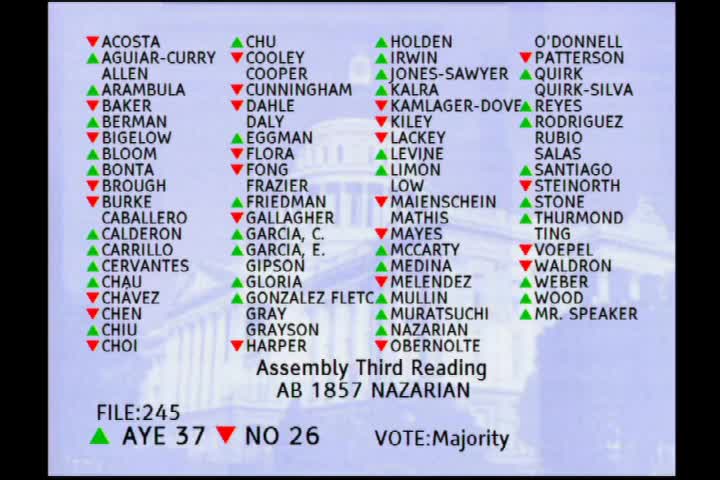 1MIN
Assembly Floor
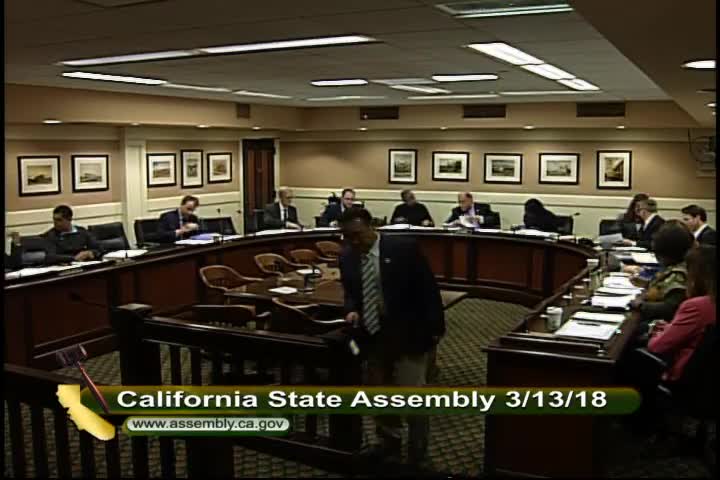 8MIN
Assembly Standing Committee on Higher Education
Bill Author


