AB 1903: Firearms: buyback programs: gift cards.
- Session Year: 2017-2018
- House: Assembly
- Latest Version Date: 2018-08-15
Existing law requires that a firearms sale, loan, or transfer be completed through a licensed firearms dealer if neither party to the transaction holds a dealers license. Existing law exempts several firearms transactions from that requirement, including the sale, delivery, or transfer of a firearm to an authorized representative of a government entity as part of an authorized, voluntary program in which the government entity is buying or receiving weapons from private individuals.
This bill would, for purposes of a voluntary firearms buyback program, as defined, prohibit a city, city and county, county, or the state, in exchange for a firearm, from dispensing a gift card whose issuer is a seller of goods or services that holds a firearms dealers license or an ammunition vendor license.
Existing law requires that a firearms sale, loan, or transfer be completed through a licensed firearms dealer if neither party to the transaction holds a dealers license. Existing law exempts several firearms transactions from that requirement, including the sale, delivery, or transfer of a firearm to an authorized representative of a government entity as part of an authorized, voluntary program in which the government entity is buying or receiving weapons from private individuals.
This bill would, for purposes of a voluntary firearms buyback program, as defined, prohibit a city, city and county, county, or the state, in exchange for a firearm, from dispensing a gift card whose issuer is a seller of goods or services that holds a firearms dealers license.
(a)For purposes of a voluntary firearms buyback program, a city, city and county, county, or the state shall not, in exchange for a firearm, dispense a gift card whose issuer is a seller of goods or services that holds a firearms dealers license issued pursuant to Sections 26700 to 26915, inclusive, or an ammunition vendor license pursuant to Section 30342.
(b)For purposes of this section, voluntary firearms buyback program means a program or event that is consistent with Section 27850 and in which an authorized representative of a city, city and county, county, or the state buys or receives firearms from the public for purposes of reducing the number of firearms in the community.
(c)A city, city and county, county, and the state shall not renew or modify an existing contract in a manner that would violate subdivision (a).
(a)For purposes of a voluntary firearms buyback program, a city, city and county, county, or the state shall not, in exchange for a firearm, dispense a gift card whose issuer is a seller of goods or services that holds a firearms dealers license issued pursuant to Sections 26700 to 26915, inclusive. inclusive, or an ammunition vendor license pursuant to Section 30342.
(b)For purposes of this section, voluntary firearms buyback program means a program or event that is consistent with Section 27850 and in which an authorized representative of a city, city and county, county, or the state buys or receives firearms from the public for purposes of reducing the number of firearms in the community.
(c)A city, city and county, county, and the state shall not renew or modify an existing contract in a manner that would violate subdivision (a).
(a)For purposes of a voluntary firearms buyback program, a city, city and county, county, or the state shall not, in exchange for a firearm, dispense a gift card whose issuer is a seller of goods or services that holds a firearms dealers license issued pursuant to Sections 26700 to 26915, inclusive.
(b)For purposes of this section, voluntary firearms buyback program means a program or event that is consistent with Section 27850 and in which an authorized representative of a city, city and county, county, or the state buys or receives firearms from the public for purposes of reducing the number of firearms in the community.
(c)A city, city and county, county, and the state shall not renew or modify an existing contract in a manner that would violate subdivision (a).
|
Date
|
Status
|
|---|---|
| Sep 28, 2018 | Vetoed by Governor. |
| Aug 20, 2018 | Enrolled and presented to the Governor at 3 p.m. |
| Aug 14, 2018 | In Assembly. Ordered to Engrossing and Enrolling. |
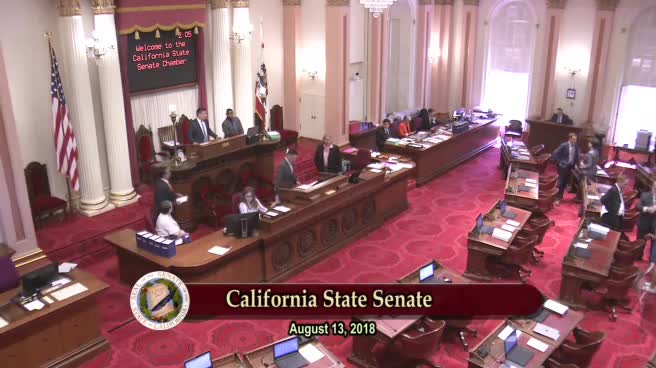
| Aug 13, 2018 | Read third time. Passed. Ordered to the Assembly. |
| Jun 26, 2018 | Read second time. Ordered to third reading. |
| Jun 25, 2018 | From committee: Be ordered to second reading pursuant to Senate Rule 28.8. |
| Jun 13, 2018 | From committee: Do pass and re-refer to Com. on APPR. (Ayes 5. Noes 2.) (June 12). Re-referred to Com. on APPR. |
| Apr 19, 2018 | Referred to Com. on PUB. S. |
| Apr 9, 2018 | In Senate. Read first time. To Com. on RLS. for assignment. |
| Apr 9, 2018 | Read third time. Passed. Ordered to the Senate. |
| Apr 5, 2018 | Read second time. Ordered to third reading. |
| Apr 4, 2018 | From committee: Do pass. (Ayes 11. Noes 4.) (April 4). |
| Mar 6, 2018 | From committee: Do pass and re-refer to Com. on APPR. (Ayes 5. Noes 1.) (March 6). Re-referred to Com. on APPR. |
| Feb 28, 2018 | Re-referred to Com. on PUB. S. |
| Feb 27, 2018 | From committee chair, with author's amendments: Amend, and re-refer to Com. on PUB. S. Read second time and amended. |
| Feb 5, 2018 | Referred to Com. on PUB. S. |
| Jan 23, 2018 | From printer. May be heard in committee February 22. |
| Jan 22, 2018 | Read first time. To print. |
|
Date
|
Description
|
Location
|
Votes
|
|
|---|---|---|---|---|
| Aug 13, 2018 | Assembly 3rd Reading AB1903 Gonzalez Fletcher By Bradford | Senate Floor |
Passed |
|
| Jun 12, 2018 | Do pass, but first be re-referred to the Committee on [Appropriations] | Senate Standing Committee on Public Safety |
Passed |
|
| Apr 9, 2018 | AB 1903 GONZALEZ FLETCHER Assembly Third Reading | Assembly Floor |
Passed |
|
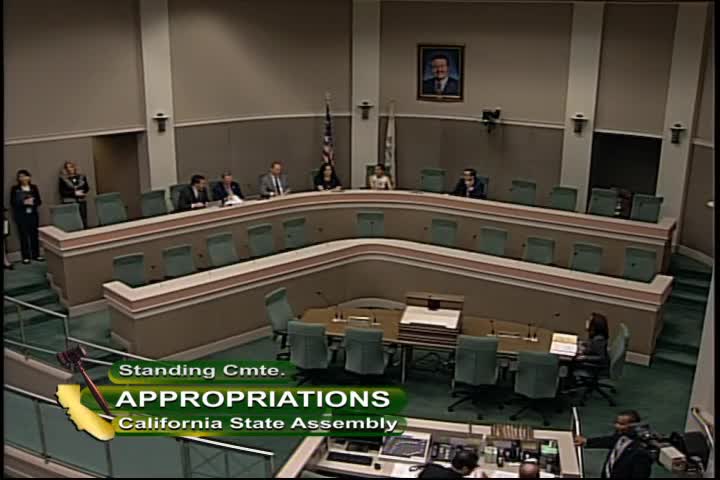
| Apr 4, 2018 | Do pass. | Assembly Standing Committee on Appropriations |
Passed |
|
| Mar 6, 2018 | Do pass and be re-referred to the Committee on [Appropriations] | Assembly Standing Committee on Public Safety |
Passed |
This list shows positions taken on this bill by organizations on the date displayed, which is linked to the original source.
Positions by individuals are not included.
|
Organization
|
Position
|
Date
|
|---|---|---|
| 26 Individuals | ** Support | Jun 27, 2018 |
| American Academy of Pediatrics | ** Support | Jun 27, 2018 |
| Bay Area Student Activists | ** Support | Jun 27, 2018 |
| California Association Of Federal Firearms Licensees, Inc. | * Against | Jun 12, 2018 |
| California Federation Of Teachers | ** Support | Jun 27, 2018 |
| California Police Chiefs Association | ** Support | Jun 27, 2018 |
| Firearms Policy Coalition | ** Against | Jun 27, 2018 |
| PURPOSE | ** Against | Jun 11, 2018 |
| San Diegans For Gun Violence Prevention | ** Support | Jun 27, 2018 |
| Women Against Gun Violence | ** Support | Jun 27, 2018 |
GOVERNOR'S VETO
GV Bill Id:AB 1903
Author:(Gonzalez Fletcher)
As Enrolled Ver:August 20, 2018
2/3 vote
Committee | Votes | Ayes | Noes |
Public Safety | 5-1 | Jones-Sawyer, Carrillo, Gonzalez Fletcher, Quirk, Santiago | Kiley |
Appropriations | 11-4 | Gonzalez Fletcher, Bloom, Bonta, Calderon, Carrillo, Chau, Eggman, Friedman, Eduardo Garcia, Quirk, Reyes | Bigelow, Fong, Gallagher, Obernolte |
ASSEMBLY: | 51-20 | (April 9, 2018) | SENATE: | 26-10 | (August 13, 2018) |
SUMMARY: This bill would prohibit a city, county, or the state from providing a gift card for a business that sells guns or ammunition, in exchange for a gun, when the government organization is operating a voluntary gun buyback program.
EXISTING LAW:
- Allows firearms transfers when neither party is a licensed dealer if both of the following requirements are satisfied:
- The sale, delivery, or transfer is to an authorized representative of a city, city and county, county, or state government, or of the federal government, and is for the governmental entity; and
- The entity is acquiring the weapon as part of an authorized, voluntary program in which the entity is buying or receiving weapons from private individuals.
- Specifies that any weapons acquired as part of a gun buyback program, shall be disposed of pursuant to the applicable Penal Code sections.
- Provides that when any firearm is in the possession of any officer of the state, or of a county, city, or city and county, and the firearm is an exhibit filed in any criminal action or proceeding which is no longer needed or is unclaimed or abandoned property, which has been in the possession of the officer for at least 180 days, the firearm shall be sold, or destroyed, as provided.
- Provides that upon conviction of a defendant for an offense that prohibits an individual from possessing firearms, shall be surrendered to one of the following:
- The sheriff of a county;
- The chief of police or other head of a municipal police department of any city or city and county;
- The chief of police of any campus of the University of California or the California State University; or
- The Commissioner of the California Highway Patrol.
- Specifies that upon conviction of a defendant for an offense, any firearm used in the commission of a crime, shall be surrendered to one of the officials listed above.
- Allows an officer to whom weapons are surrendered, as specified, to annually, between the first and 10th days of July, in each year, offer the weapons, which the officer in charge of them considers to have value with respect to sporting, recreational, or collection purposes, for sale at public auction to properly licensed persons.
- States that if a weapon is not of the type that can be sold to the public, generally, or is not sold as specified, the weapon shall be destroyed so that it can no longer be used as a weapon, except upon the certificate of a judge of a court of record, or of the district attorney of the county, that the retention of it is necessary or proper to the ends of justice.
- Specifies that no stolen weapon shall be sold or destroyed pursuant to Penal Code Section 18005(a) or (c) unless reasonable notice is given to its lawful owner, if the lawful owner's identity and address can be reasonably ascertained.
FISCAL EFFECT: According to the Assembly Appropriations Committee, negligible fiscal effect.
COMMENTS: According to the author, "Assembly Bill 1903 would prevent public agencies from handing out gift cards to any store or retailer that possess a firearm dealer's license or an ammunition dealer's license in exchange for a gun during a gun buyback event. Using taxpayer resources to hand out gift cards to gun and ammunition dealers is both outrageous and counterproductive at a time when gun violence is a national epidemic.
"While there might be an argument to provide law enforcement agencies the flexibility to design and implement their gun buyback programs, the law remains silent on various key aspects of a gun buyback program. Without clear guidelines, gun buyback programs can be unknowingly issuing gift cards to retailers that sell firearms or firearm ammunition. This could result in people trading-up their firearms – meaning individuals use the money they received during a gun buyback program to purchase a newer gun. Furthermore, handing out gift cards to these retailers rewards businesses that contribute to gun proliferation, which is the opposite of the goal of a gun buyback program."
This bill would, for purposes of a voluntary firearms buyback program, prohibit a local government from dispensing a gift card whose issuer holds a firearms dealer's license.
I understand the author's intent, but I do not believe local firearm buyback programs need to be micromanaged to this degree.
Analysis Prepared by: David Billingsley / PUB. S. / (916) 319-3744 FN: 0005362
Office of Senate Floor Analyses (916) 651-1520 Fax: (916) 327-4478 | AB |
THIRD READING
Bill No: AB 1903
:
SENATE PUBLIC SAFETY COMMITTEE: 5-2, 6/12/18
AYES: Skinner, Bradford, Jackson, Mitchell, Wiener
NOES: Anderson, Stone
SENATE APPROPRIATIONS COMMITTEE: Senate Rule 28.8
ASSEMBLY FLOOR: 51-20, 4/9/18 - See last page for vote
DIGEST:
This bill prohibits a city, county, or the state from providing a gift card for a business that sells guns or ammunition, in exchange for a gun, when the government organization is operating a voluntary gun buyback program.
Existing law:
- Allows firearms transfers when neither party is a licensed dealer if both of the following requirements are satisfied:
- The sale, delivery, or transfer is to an authorized representative of a city, city and county, county, or state government, or of the federal government, and is for the governmental entity; and (Pen. Code, § 27850, subd. (a).)
- The entity is acquiring the weapon as part of an authorized, voluntary program in which the entity is buying or receiving weapons from private individuals. (Pen. Code, § 27850, subd. (a).)
- The sale, delivery, or transfer is to an authorized representative of a city, city and county, county, or state government, or of the federal government, and is for the governmental entity; and (Pen. Code, § 27850, subd. (a).)
- Specifies that any weapons acquired as part of a gun buy back program, shall be disposed of pursuant to the applicable Penal Code sections. (Pen. Code, § 27850, subd. (b).)
- Provides that when any firearm is in the possession of any officer of the state, or of a county, city, or city and county, and the firearm is an exhibit filed in any criminal action or proceeding which is no longer needed or is unclaimed or abandoned property, which has been in the possession of the officer for at least 180 days, the firearm shall be sold, or destroyed, as provided. (Pen. Code, § 34000, subd. (a).)
- Provides that upon conviction of a defendant for an offense that prohibits an individual from possessing firearms, shall be surrendered to one of the following:
- The sheriff of a county;
- The chief of police or other head of a municipal police department of any city or city and county;
- The chief of police of any campus of the University of California or the California State University; or
- The Commissioner of the California Highway Patrol. (Pen. Code, § 18000.)
- The sheriff of a county;
- Specifies that upon conviction of a defendant for an offense, any firearm used in the commission of a crime, shall be surrendered to one of the officials listed above. (Pen. Code, § 18000.)
- Allows an officer to whom weapons are surrendered, as specified, to annually, between the 1st and 10th days of July, in each year, offer the weapons, which the officer in charge of them considers to have value with respect to sporting, recreational, or collection purposes, for sale at public auction to properly licensed persons. (Pen. Code, § 18005, subd. (a).)
- States that if a weapon is not of the type that can be sold to the public, generally, or is not sold as specified, the weapon shall be destroyed so that it can no longer be used as a weapon, except upon the certificate of a judge of a court of record, or of the district attorney of the county, that the retention of it is necessary or proper to the ends of justice. (Pen. Code, § 18005, subd. (c).)
- Specifies that no stolen weapon shall be sold or destroyed pursuant to subdivision (a) or (c) unless reasonable notice is given to its lawful owner, if the lawful owner’s identity and address can be reasonably ascertained. (Pen. Code, § 18005, subd. (d).)
This bill:
- Prohibits for purposes of a voluntary firearms buyback program, a city, city and county, county, or the state shall not, in exchange for a firearm, dispense a gift card whose issuer is a seller of goods or services that holds a firearms dealer’s license issued pursuant to Sections 26700 to 26915, inclusive, or an ammunition vendor license pursuant to Section 30342.
- Defines, for purposes of this section, “voluntary firearms buyback program” means a program or event that is consistent with Section 27850 and in which an authorized representative of a city, city and county, county, or the state buys or receives firearms from the public for purposes of reducing the number of firearms in the community.
- Provides that a city, city and county, county, and the state shall not renew or modify an existing contract in a manner that would violate the provisions of this bill.
Background
A number of local jurisdictions in California and throughout the country conduct gun buyback programs. Gun buyback programs are intended remove firearms from the community. In exchange for firearms received, law enforcement agencies have given out cash, grocery and other retail gift cards, and other items. The Los Angeles Police Department (LAPD) is one agency which operates a gun buyback program. The buybacks conducted by LAPD have netted more than 16,000 guns since they started in 2009. The guns are melted down, and some of the metal is reused as construction material. Among the 772 guns turned in at this year's buyback, which took place in South Los Angeles and the San Fernando Valley, were 370 handguns, 220 rifles, 142 shotguns and 40 assault weapons. Police officers handed out about $81,000 in gift cards, with about $10,000 donated by Gun by Gun, a nonprofit gun violence prevention group. Individuals that turned in guns could receive a $100 Target gift card for surrendering handguns, shotguns and rifles. Those turning in assault rifles qualified for a $200 gift card.
Alex Tabarrok, professor of economics at George Mason University, discussed the efficacy of gun buyback programs in a 2015 article. Professor Tabarrok stated that gun buyback programs do not significantly reduce the number of guns in a community with buyback events that collect, on average, fewer than 1,000 firearms. Professor Tabarrok said that “In the United States, there are hundreds of millions of guns and even if a city buys up some of them, that’s not going to have any effect on how many guns people actually have. People can still go out and buy more guns.”
Another problem described by Professor Tabarrok is “gun entrepreneurs” who take advantage of gun buyback programs. Gun entrepreneurs are private sellers that look to profit from gun buyback programs. Professor Tabarrok specifically pointed to a 2008 buyback in Oakland, California, where police bought handguns and assault rifles for $250 each. The event attracted local gun dealers, who bought cheap guns out-of-state and sold them back to the government for a profit. A 2006 Boston buyback also attracted out-of-state gun dealers looking to offload some of their old inventory. (Id.)
Another issue detracts from the effectiveness of gun buyback programs is the type of firearms that are typically turned in during the programs. “The main drawback to gun buyback programs is that they tend to get junk guns or guns that have been with a family for a long period of time,” says James Pasco, executive director of the Fraternal Order of Police. “They’re not catching the nine-millimeter and forty-caliber semiautomatic handguns that are so prevalent in violent crime today.”
Given some of the potential abuses of gun buyback programs, there is a policy concern that a buyback program should not be used as a mean to turn in old guns for money/or money substitute like a gift card that can then be used to purchase a new firearm. This bill would ensure that if gift cards were exchanged for firearms, the gift card itself could not be used at an establishment that sells guns or ammunition. This type of limitation is an effort to ensure that a gun buyback program does not contribute to new guns in the community. However, a gift card that has monetary value serves to increase the total available resources an individual has to make purchases, even if the gift card itself cannot be used to purchase an item such as a firearm.
FISCAL EFFECT: Appropriation: Fiscal Com.: Local:
American Academy of Pediatrics
Bay Area Student Activists
California Federation of Teachers
California Police Chiefs Association
San Diegans for Gun Violence Prevention
Women Against Gun Violence
26 Individuals
OPPOSITION: (Verified 6/25/18)
Firearms Policy Coalition
ARGUMENT IN SUPPORT: According to San Diegans for Gun Violence Prevention,
“San Diegans for Gun Violence Prevention is a coalition comprised of members from the Brady Campaign to Prevent Gun Violence, Moms Demand Action for Gun Sense in America, Sandy Hook Promise, Survivors Empowered, the Community Assistance Support Team and a number of San Diego civic and faith-based organizations. We have participated in gun buyback programs with the San Diego Police Department and have questioned them on the wisdom of providing gift cards that could be used to purchase a new weapon. While the officers we have spoken to do not see the program as problematic, we believe that AB 1903 will provide an extra level of security that will prevent a person from turning in an old weapon for a new one. It closes a loophole that will keep guns off our street.
“While gift cards have become the most popular incentive in firearm buyback programs there are no existing guidelines regarding which retail gift cards are used in these programs. By providing a gift card to a retailer to a retailer such as WalMart that, along with its many other products, sells guns and ammunition, defeats the purpose of a gun buyback program. These cards open a revolving door that allows individuals to upgrade their weapons rather than get those weapons off the streets.
“AB 1903 would prohibit government agencies from providing a gift card from a retailer that holds a firearms’ license in exchange for a firearm from a private individual. By restricting the use of gift cards from gun retailers, we can prevent individual from trading up to the newest firearms on the market.”
ARGUMENT IN OPPOSITION: According to the Firearms Policy Coalition,
“AB 1903 altogether misses the bigger picture about firearms “buyback” programs. These events actually hurt public safety, undermine California’s more than 5,000 criminal laws, and allow violent criminals and murderers to not only dispose of evidence (i.e., guns used in crime) but in most cases get paid for doing as much with no questions asked.
“As it is currently written, AB 1903 does not improve public safety and it simply does not make sense. What would make sense is to require that law enforcement agencies which administer and/or oversee firearm buyback events retain a basic record of those who turn in a gun, including identifying information about the make, model, and configuration of firearms that are turned over in case a firearm is later determined to have been involved in a crime and the police need to follow up. Another common-sense way that AB 1903 could actually do something productive would be to require that all firearms turned in at buyback events be affirmatively associated with an individual (perhaps through California’s existing AFS centralized database), traced using law enforcement crime and ballistics databases, and that any person handing over a firearm be run through the State’s APPS database. These things alone might help solve a murder mystery.
“Assembly Bill 1903 would prohibit a state or local government from dispensing a gift card whose issuer is seller of goods or services that holds a firearms dealer’s license. Obviously, this measure is intended to expressly discriminate against only law-abiding California small businesses that take extraordinary measure to comply with an incredible number of complex federal, state, and local laws on the commercial sales of firearms—businesses which are necessary for Californians to lawfully access and exercise their fundamental constitutional rights. AB 1903 does not advance public safety at all. And it walks right past the real issues of firearm buybacks to take a political cheap shot at licensed California gun dealers and their customers.
“AB 1903 should be amended to either proscribe entirely the wasteful use of public resources in gun buyback programs, or, at the very least, ensure that ‘gun buyback’ programs do not result in criminals getting paid to dispose of evidence.”
ASSEMBLY FLOOR: 51-20, 4/9/18
AYES: Aguiar-Curry, Arambula, Baker, Berman, Bloom, Bonta, Burke, Caballero, Calderon, Carrillo, Cervantes, Chau, Chiu, Chu, Cooley, Cooper, Daly, Eggman, Frazier, Friedman, Eduardo Garcia, Gipson, Gloria, Gonzalez Fletcher, Grayson, Holden, Irwin, Jones-Sawyer, Kalra, Levine, Limón, Low, Maienschein, McCarty, Medina, Mullin, Muratsuchi, Nazarian, O'Donnell, Quirk, Quirk-Silva, Reyes, Rodriguez, Rubio, Salas, Santiago, Mark Stone, Thurmond, Ting, Weber, Rendon
NOES: Acosta, Travis Allen, Bigelow, Brough, Chávez, Choi, Cunningham, Dahle, Fong, Gallagher, Harper, Kiley, Lackey, Mathis, Mayes, Melendez, Patterson, Steinorth, Voepel, Waldron
NO VOTE RECORDED: Chen, Flora, Cristina Garcia, Gray, Obernolte, Wood
6/27/18 10:28:22
**** END ****
SENATE COMMITTEE ON PUBLIC SAFETY
Senator Nancy Skinner, Chair
2017 - 2018 Regular
Bill No: AB 1903 Hearing Date: June 12, 2018
Author: | Gonzalez Fletcher | ||
Version: | February 27, 2018 | ||
Urgency: | No | Fiscal: | Yes |
Consultant: | GC | ||
Subject: Firearms: Buyback Programs: Gift Cards
HISTORY
Source: Author
Prior Legislation: AB 2662 (Gatto), 2013-2014, held Senate Rules Committee
AB 232 (Ting), 2013-2014, never heard in Assembly Public Safety
AB 566 (Koretz), 2001-2002, held Assembly Appropriations
AB 2487 (Pacheco), 1999-2000, held Assembly Appropriations
SB 1496 (Solis), 1999-2000, held Assembly Appropriations
Support: American Academy of Pediatrics; Bay Area Student Activists; California Federation of Teachers; California Police Chiefs Association; San Diegans for Gun Violence Prevention; Women Against Gun Violence; Individuals
Opposition: Firearms Policy Coalition
Assembly Floor Vote: 51 - 20
PURPOSE
The purpose of this bill is to prohibit a city, county, or the state from providing a gift card for a business that sells guns or ammunition, in exchange for a gun, when the government organization is operating a voluntary gun buyback program.
Existing law allows firearms transfers when neither party is a licensed dealer if both of the following requirements are satisfied:
- The sale, delivery, or transfer is to an authorized representative of a city, city and county, county, or state government, or of the federal government, and is for the governmental entity; and (Pen. Code, § 27850, subd. (a).)
- The entity is acquiring the weapon as part of an authorized, voluntary program in which the entity is buying or receiving weapons from private individuals. (Pen. Code, § 27850, subd. (a).)
Existing law specifies that any weapons acquired as part of a gun buy back program, shall be disposed of pursuant to the applicable Penal Code sections. (Pen. Code, § 27850, subd. (b).)
Existing law provides that when any firearm is in the possession of any officer of the state, or of a county, city, or city and county, and the firearm is an exhibit filed in any criminal action or proceeding which is no longer needed or is unclaimed or abandoned property, which has been in the possession of the officer for at least 180 days, the firearm shall be sold, or destroyed, as provided. (Pen. Code, § 34000, subd. (a).)
Existing law provides that upon conviction of a defendant for an offense that prohibits an individual from possessing firearms, shall be surrendered to one of the following:
- The sheriff of a county;
- The chief of police or other head of a municipal police department of any city or city and county;
- The chief of police of any campus of the University of California or the California State University; or
- The Commissioner of the California Highway Patrol. (Pen. Code, § 18000.)
Existing law specifies that upon conviction of a defendant for an offense, any firearm used in the commission of a crime, shall be surrendered to one of the officials listed above. (Pen. Code, § 18000.)
Existing law allows an officer to whom weapons are surrendered, as specified, to annually, between the 1st and 10th days of July, in each year, offer the weapons, which the officer in charge of them considers to have value with respect to sporting, recreational, or collection purposes, for sale at public auction to properly licensed persons. (Pen. Code, § 18005, subd. (a).)
Existing law states that if a weapon is not of the type that can be sold to the public, generally, or is not sold as specified, the weapon shall be destroyed so that it can no longer be used as a weapon, except upon the certificate of a judge of a court of record, or of the district attorney of the county, that the retention of it is necessary or proper to the ends of justice. (Pen. Code, § 18005, subd. (c).)
Existing law specifies that no stolen weapon shall be sold or destroyed pursuant to subdivision (a) or (c) unless reasonable notice is given to its lawful owner, if the lawful owner’s identity and address can be reasonably ascertained. (Pen. Code, § 18005, subd. (d).)
This bill prohibits, for purposes of a voluntary firearms buyback program, a city, city and county, county, or the state shall not, in exchange for a firearm, dispense a gift card whose issuer is a seller of goods or services that holds a firearms dealer’s license issued pursuant to Sections 26700 to 26915, inclusive, or an ammunition vendor license pursuant to Section 30342.
This bill defines, for purposes of this section, “voluntary firearms buyback program” means a program or event that is consistent with Section 27850 and in which an authorized representative of a city, city and county, county, or the state buys or receives firearms from the public for purposes of reducing the number of firearms in the community.
This bill provides that a city, city and county, county, and the state shall not renew or modify an existing contract in a manner that would violate the provisions of this bill.
COMMENTS
- Need for This Bill
According to the author:
Under current law, there is very little description about how a gun buyback program should be implemented. While there is a legitimate argument to provide law enforcement agencies the flexibility to design and implement their gun buyback programs, the law remains silent on various key aspects of the program. State law prescribes that government entities are exempt from being required to hold a firearm dealer’s license in order to facilitate the voluntary transfer of firearms from private individuals, and furthermore describes the disposal of weapons pursuant to Section 34000 or Sections 18000 and 18005 of the Penal Code. State law is silent on all other keys aspects of a gun buyback, particularly on the guidelines and parameters of the incentive.
Government entities have no guidelines over what sort of incentives can be used in the transfer of a firearm from a private individual. As a result, agencies might provide gift cards to a retailer that also sells firearms and ammunition. By handing out gift cards to retailers that sell firearms and ammunition, individuals may be able to return older firearms in exchange for gift cards that can be used in the purchase of a newer firearm. A 1999 article in the journal Law and Order cited research that found that some gun buyback participants interviewed in a survey reported their intentions to use the money from the buyback program to purchase newer firearms.
Assembly Bill 1903 would prevent public agencies from handing out gift cards to any store or retailer that possess a firearm dealer’s license or an ammunition dealer’s license in exchange for a gun during a gun buyback event. Using taxpayer resources to hand out gift cards to gun and ammunition dealers is both outrageous and counterproductive at a time when gun violence is a national epidemic.
- Local Gun Buyback Programs
A number of local jurisdictions in California and throughout the country conduct gun buyback programs. Gun buyback programs are intended remove firearms from the community. In exchange for firearms received, law enforcement agencies have given out cash, grocery and other retail gift cards, and other items. The Los Angeles Police Department is one agency which operates a gun buyback program. The buybacks conducted by LAPD have netted more than 16,000 guns since they started in 2009. The guns are melted down, and some of the metal is reused as construction material. Among the 772 guns turned in at this year's buyback, which took place in South Los Angeles and the San Fernando Valley, were 370 handguns, 220 rifles, 142 shotguns and 40 assault weapons. Police officers handed out about $81,000 in gift cards, with about $10,000 donated by Gun by Gun, a nonprofit gun violence prevention group.[1] Individuals that turned in guns could receive a $100 Target gift card for surrendering handguns, shotguns and rifles. Those turning in assault rifles qualified for a $200 gift card.
- Questions About the Efficacy of Gun Buyback Programs
Alex Tabarrok, professor of economics at George Mason University, discussed the efficacy of gun buyback programs in a 2015 article. Professor Tabarrok stated that gun buyback programs do not significantly reduce the number of guns in a community with buyback events that collect, on average, fewer than 1,000 firearms. Professor Tabarrok said that “In the United States, there are hundreds of millions of guns and even if a city buys up some of them, that’s not going to have any effect on how many guns people actually have. People can still go out and buy more guns.” [2]
Another problem described by Professor Tabarrok is “gun entrepreneurs” who take advantage of gun buyback programs. Gun entrepreneurs are private sellers that look to profit from gun buyback programs. Professor Tabarrok specifically pointed to a 2008 buyback in Oakland, California, where police bought handguns and assault rifles for $250 each. The event attracted local gun dealers, who bought cheap guns out-of-state and sold them back to the government for a profit. A 2006 Boston buyback also attracted out-of-state gun dealers looking to offload some of their old inventory. (Id.)
Another issue detracts from the effectiveness of gun buyback programs is the type of firearms that are typically turned in during the programs. “The main drawback to gun buyback programs is that they tend to get junk guns or guns that have been with a family for a long period of time,” says James Pasco, executive director of the Fraternal Order of Police. “They’re not catching the nine-millimeter and forty-caliber semiautomatic handguns that are so prevalent in violent crime today.”
- Prohibition on Use of Gift Cards from Retailers that Sell Firearms in Gun Buyback Programs
Given some of the potential abuses of gun buyback programs, there is a policy concern that a buyback program should not be used as a mean to turn in old guns for money/or money substitute like a gift card that can then be used to purchase a new firearm. This bill would ensure that if gift cards were exchanged for firearms, the gift card itself could not be used at an establishment that sells guns or ammunition. This type of limitation is an effort to ensure that a gun buyback program does not contribute to new guns in the community. However, a gift card that has monetary value serves to increase the total available resources an individual has to make purchases, even if the gift card itself cannot be used to purchase an item such as a firearm.
- Argument in Support
According to San Diegans for Gun Violence Prevention:
San Diegans for Gun Violence Prevention is a coalition comprised of members from the Brady Campaign to Prevent Gun Violence, Moms Demand Action for Gun Sense in America, Sandy Hook Promise, Survivors Empowered, the Community Assistance Support Team and a number of San Diego civic and faith-based organizations. We have participated in gun buyback programs with the San Diego Police Department and have questioned them on the wisdom of providing gift cards that could be used to purchase a new weapon. While the officers we have spoken to do not see the program as problematic, we believe that AB 1903 will provide an extra level of security that will prevent a person from turning in an old weapon for a new one. It closes a loophole that will keep guns off our street.
While gift cards have become the most popular incentive in firearm buyback programs there are no existing guidelines regarding which retail gift cards are used in these programs. By providing a gift card to a retailer to a retailer such as WalMart that, along with its many other products, sells guns and ammunition, defeats the purpose of a gun buyback program. These cards open a revolving door that allows individuals to upgrade their weapons rather than get those weapons off the streets.
AB 1903 would prohibit government agencies from providing a gift card from a retailer that holds a firearms’ license in exchange for a firearm from a private individual. By restricting the use of gift cards from gun retailers, we can prevent individual from trading up to the newest firearms on the market.
- Argument in Opposition
According to the Firearms Policy Coalition:
AB 1903 altogether misses the bigger picture about firearms “buyback” programs. These events actually hurt public safety, undermine California’s more than 5,000 criminal laws, and allow violent criminals and murderers to not only dispose of evidence (i.e., guns used in crime) but in most cases get paid for doing as much with no questions asked.
As it is currently written, AB 1903 does not improve public safety and it simply does not make sense. What would make sense is to require that law enforcement agencies which administer and/or oversee firearm buyback events retain a basic record of those who turn in a gun, including identifying information about the make, model, and configuration of firearms that are turned over in case a firearm is later determined to have been involved in a crime and the police need to follow up. Another common-sense way that AB 1903 could actually do something productive would be to require that all firearms turned in at buyback events be affirmatively associated with an individual (perhaps through California’s existing AFS centralized database), traced using law enforcement crime and ballistics databases, and that any person handing over a firearm be run through the State’s APPS database. These things alone might help solve a murder mystery.
Assembly Bill 1903 would prohibit a state or local government from dispensing a gift card whose issuer is seller of goods or services that holds a firearms dealer’s license. Obviously, this measure is intended to expressly discriminate against only law-abiding California small businesses that take extraordinary measure to comply with an incredible number of complex federal, state, and local laws on the commercial sales of firearms—businesses which are necessary for Californians to lawfully access and exercise their fundamental constitutional rights. AB 1903
does not advance public safety at all. And it walks right past the real issues of firearm buybacks to take a political cheap shot at licensed California gun dealers and their customers.
AB 1903 should be amended to either proscribe entirely the wasteful use of public resources in gun buyback programs, or, at the very least, ensure that ‘gun buyback’ programs do not result in criminals getting paid to dispose of evidence.
-- END –
ASSEMBLY THIRD READING
ATR Bill Id:AB 1903
Author:(Gonzalez Fletcher)
As Amended Ver:February 27, 2018
Majority vote
Committee | Votes | Ayes | Noes |
Public Safety | 5-1 | Jones-Sawyer, Carrillo, Gonzalez Fletcher, Quirk, Santiago | Kiley |
Appropriations | 11-4 | Gonzalez Fletcher, Bloom, Bonta, Calderon, Carrillo, Chau, Eggman, Friedman, Eduardo Garcia, Quirk, Reyes | Bigelow, Fong, Gallagher, Obernolte |
SUMMARY: This bill would prohibit a city, county, or the state from providing a gift card for a business that sells guns or ammunition, in exchange for a gun, when the government organization is operating a voluntary gun buyback program.
EXISTING LAW:
- Allows firearms transfers when neither party is a licensed dealer if both of the following requirements are satisfied:
- The sale, delivery, or transfer is to an authorized representative of a city, city and county, county, or state government, or of the federal government, and is for the governmental entity; and
- The entity is acquiring the weapon as part of an authorized, voluntary program in which the entity is buying or receiving weapons from private individuals.
- Specifies that any weapons acquired as part of a gun buyback program, shall be disposed of pursuant to the applicable Penal Code sections.
- Provides that when any firearm is in the possession of any officer of the state, or of a county, city, or city and county, and the firearm is an exhibit filed in any criminal action or proceeding which is no longer needed or is unclaimed or abandoned property, which has been in the possession of the officer for at least 180 days, the firearm shall be sold, or destroyed, as provided.
- Provides that upon conviction of a defendant for an offense that prohibits an individual from possessing firearms, shall be surrendered to one of the following:
- The sheriff of a county;
- The chief of police or other head of a municipal police department of any city or city and county;
- The chief of police of any campus of the University of California or the California State University; or
- The Commissioner of the California Highway Patrol.
- Specifies that upon conviction of a defendant for an offense, any firearm used in the commission of a crime, shall be surrendered to one of the officials listed above.
- Allows an officer to whom weapons are surrendered, as specified, to annually, between the first and 10th days of July, in each year, offer the weapons, which the officer in charge of them considers to have value with respect to sporting, recreational, or collection purposes, for sale at public auction to properly licensed persons.
- States that if a weapon is not of the type that can be sold to the public, generally, or is not sold as specified, the weapon shall be destroyed so that it can no longer be used as a weapon, except upon the certificate of a judge of a court of record, or of the district attorney of the county, that the retention of it is necessary or proper to the ends of justice.
- Specifies that no stolen weapon shall be sold or destroyed pursuant to Penal Code Section 18005, subdivision (a) or (c) unless reasonable notice is given to its lawful owner, if the lawful owner's identity and address can be reasonably ascertained.
FISCAL EFFECT: According to the Assembly Appropriations Committee, negligible fiscal effect.
COMMENTS: According to the author, "Assembly Bill 1903 would prevent public agencies from handing out gift cards to any store or retailer that possess a firearm dealer's license or an ammunition dealer's license in exchange for a gun during a gun buyback event. Using taxpayer resources to hand out gift cards to gun and ammunition dealers is both outrageous and counterproductive at a time when gun violence is a national epidemic.
"While there might be an argument to provide law enforcement agencies the flexibility to design and implement their gun buyback programs, the law remains silent on various key aspects of a gun buyback program. Without clear guidelines, gun buyback programs can be unknowingly issuing gift cards to retailers that sell firearms or firearm ammunition. This could result in people trading-up their firearms – meaning individuals use the money they received during a gun buyback program to purchase a newer gun. Furthermore, handing out gift cards to these retailers rewards businesses that contribute to gun proliferation, which is the opposite of the goal of a gun buyback program."
Analysis Prepared by: David Billingsley / PUB. S. / (916) 319-3744 FN: 0002657
Date of Hearing: April 4, 2018
ASSEMBLY COMMITTEE ON APPROPRIATIONS
Lorena Gonzalez Fletcher, Chair
ABPCA Bill Id:AB 1903
Author:(Gonzalez Fletcher) – As Amended Ver:February 27, 2018
Policy Committee: | Public Safety | Vote: | 5 - 1 |
|
| ||
|
|
Urgency: No State Mandated Local Program: No Reimbursable: No
SUMMARY:
This bill prohibits a city, county, or the state from providing a gift card for a business that sells guns or ammunition, in exchange for a gun, when the government organization is operating a voluntary gun buyback program.
FISCAL EFFECT:
Negligible fiscal effect.
COMMENTS:
- Background. A number of local jurisdictions in California and throughout the country conduct gun buyback programs. Gun buyback programs are intended to remove firearms from the community. In exchange for firearms received, law enforcement agencies have given out cash, grocery and other retail gift cards, and other items. Under existing law, law enforcement agencies are allowed to provide retail gift cards to stores that sell guns or ammunition to a person that turns in a gun at a gun buyback program.
- Purpose. According to the author:
Assembly Bill 1903 would prevent public agencies from handing out gift cards to any store or retailer that possess a firearm dealer’s license or an ammunition dealer’s license in exchange for a gun during a gun buyback event. Using taxpayer resources to hand out gift cards to gun and ammunition dealers is both outrageous and counterproductive at a time when gun violence is a national epidemic.
- Prior Legislation.
AB 2662 (Gatto), of the 2013-2014 Legislative Session, would have required a city, county, city and county, or state government entity operating a voluntary firearm buyback program to process functioning handguns received pursuant to the program by either performing ballistics testing, a firearms trace, or by cataloging and storing the handgun, as specified. AB 2662 was held in the Senate Rules Committee.
AB 232 (Ting), of the 2013-2014 Legislative Session, would have provided for state personal income tax credits, as specified, in exchange for specified firearms given to law enforcement in a gun buyback program and for corporate state tax credits, as specified, for monetary contributions to a gun buyback program administered by local law enforcement. AB 232 was referred to the Assembly Public Safety Committee but was not heard by that committee.
Analysis Prepared by: Jessica Peters / APPR. / (916) 319-2081
Date of Hearing:
Counsel: David Billingsley
ASSEMBLY COMMITTEE ON PUBLIC SAFETY
Reginald Byron Jones-Sawyer, Sr., Chair
ABPCA Bill Id:AB 1903
Author:(Gonzalez Fletcher) – As Amended Ver:February 27, 2018
SUMMARY:
This bill would prohibit a city, county, or the state from providing a gift card for a business that sells guns or ammunition, in exchange for a gun, when the government organization is operating a voluntary gun buyback program.
EXISTING LAW:
- Allows firearms transfers when neither party is a licensed dealer if both of the following requirements are satisfied:
- The sale, delivery, or transfer is to an authorized representative of a city, city and county, county, or state government, or of the federal government, and is for the governmental entity; and (Pen. Code, § 27850, subd. (a).)
- The entity is acquiring the weapon as part of an authorized, voluntary program in which the entity is buying or receiving weapons from private individuals. (Pen. Code, § 27850, subd. (a).)
- The sale, delivery, or transfer is to an authorized representative of a city, city and county, county, or state government, or of the federal government, and is for the governmental entity; and (Pen. Code, § 27850, subd. (a).)
- Specifies that any weapons acquired as part of a gun buy back program, shall be disposed of pursuant to the applicable Penal Code sections. (Pen. Code, § 27850, subd. (b).)
- Provides that when any firearm is in the possession of any officer of the state, or of a county, city, or city and county, and the firearm is an exhibit filed in any criminal action or proceeding which is no longer needed or is unclaimed or abandoned property, which has been in the possession of the officer for at least 180 days, the firearm shall be sold, or destroyed, as provided. (Pen. Code, § 34000, subd. (a).)
- Provides that upon conviction of a defendant for an offense that prohibits an individual from possessing firearms, shall be surrendered to one of the following:
- The sheriff of a county;
- The chief of police or other head of a municipal police department of any city or city and county;
- The chief of police of any campus of the University of California or the California State University; or
- The Commissioner of the California Highway Patrol. (Pen. Code, § 18000.)
- The sheriff of a county;
- Specifies that upon conviction of a defendant for an offense, any firearm used in the commission of a crime, shall be surrendered to one of the officials listed above. (Pen. Code, § 18000.)
- Allows an officer to whom weapons are surrendered, as specified, to annually, between the 1st and 10th days of July, in each year, offer the weapons, which the officer in charge of them considers to have value with respect to sporting, recreational, or collection purposes, for sale at public auction to properly licensed persons. (Pen. Code, § 18005, subd. (a).)
- States that if a weapon is not of the type that can be sold to the public, generally, or is not sold as specified, the weapon shall be destroyed so that it can no longer be used as a weapon, except upon the certificate of a judge of a court of record, or of the district attorney of the county, that the retention of it is necessary or proper to the ends of justice. (Pen. Code, § 18005, subd. (c).)
- Specifies that no stolen weapon shall be sold or destroyed pursuant to subdivision (a) or (c) unless reasonable notice is given to its lawful owner, if the lawful owner’s identity and address can be reasonably ascertained. (Pen. Code, § 18005, subd. (d).)
FISCAL EFFECT:
Unknown
COMMENTS:
- Author's Statement: According to the author, “Assembly Bill 1903 would prevent public agencies from handing out gift cards to any store or retailer that possess a firearm dealer’s license or an ammunition dealer’s license in exchange for a gun during a gun buyback event. Using taxpayer resources to hand out gift cards to gun and ammunition dealers is both outrageous and counterproductive at a time when gun violence is a national epidemic.
“While there might be an argument to provide law enforcement agencies the flexibility to design and implement their gun buyback programs, the law remains silent on various key aspects of a gun buyback program. Without clear guidelines, gun buyback programs can be unknowingly issuing gift cards to retailers that sell firearms or firearm ammunition. This could result in people trading-up their firearms – meaning individuals use the money they received during a gun buyback program to purchase a newer gun. Furthermore, handing out gift cards to these retailers rewards businesses that contribute to gun proliferation, which is the opposite of the goal of a gun buyback program.”
- Local Gun Buyback Programs: A number of local jurisdictions in California and throughout the country conduct gun buyback programs. Gun buyback programs are intended remove firearms from the community. In exchange for firearms received, law enforcement agencies have given out cash, grocery and other retail gift cards, and other items. The Los Angeles Police Department is one agency which operates a gun buyback program. The buybacks conducted by LAPD have netted more than 16,000 guns since they started in 2009. The guns are melted down, and some of the metal is reused as construction material. Among the 772 guns turned in at this year's buyback, which took place in South Los Angeles and the San Fernando Valley, were 370 handguns, 220 rifles, 142 shotguns and 40 assault weapons. Police officers handed out about $81,000 in gift cards, with about $10,000 donated by Gun by Gun, a nonprofit gun violence prevention group. (http://www.latimes.com/local/lanow/la-me-lapd-guns-20170519-story.html)
Individuals that turned in guns could receive a $100 Target gift card for surrendering handguns, shotguns and rifles. Those turning in assault rifles qualified for a $200 gift card. - Questions About the Efficacy of Gun Buyback Programs: Alex Tabarrok, professor of economics at George Mason University, discussed the efficacy of gun buyback programs in a 2015 article. Professor Tabarrok stated that gun buyback programs do not significantly reduce the number of guns in a community with buyback events that collect, on average, fewer than 1,000 firearms. Professor Tabarrok said that “In the United States, there are hundreds of millions of guns and even if a city buys up some of them, that’s not going to have any effect on how many guns people actually have. People can still go out and buy more guns.” (https://www.thetrace.org/2015/07/gun-buyback-study-effectivness/)
Another problem described by Professor Tabarrok is “gun entrepreneurs” who take advantage of gun buyback programs. Gun entrepreneurs are private sellers that look to profit from gun buyback programs. Professor Tabarrok specifically pointed to a 2008 buyback in Oakland, California, where police bought handguns and assault rifles for $250 each. The event attracted local gun dealers, who bought cheap guns out-of-state and sold them back to the government for a profit. A 2006 Boston buyback also attracted out-of-state gun dealers looking to offload some of their old inventory. (Id.)
Another issue detracts from the effectiveness of gun buyback programs is the type of firearms that are typically turned in during the programs. “The main drawback to gun buyback programs is that they tend to get junk guns or guns that have been with a family for a long period of time,” says James Pasco, executive director of the Fraternal Order of Police. “They’re not catching the nine-millimeter and forty-caliber semiautomatic handguns that are so prevalent in violent crime today.” - Prohibition on Use of Gift Cards from Retailers that Sell Firearms in Gun Buyback Programs: Given some of the potential abuses of gun buyback programs, there is a policy concern that a buyback program should not be used as a mean to turn in old guns for money/or money substitute like a gift card that can then be used to purchase a new firearm. This bill would ensure that if gift cards were exchanged for firearms, the gift card itself could not be used at an establishment that sells guns or ammunition. This type of limitation is an effort to ensure that a gun buyback program does not contribute to new guns in the community. However, a gift card that has monetary value serves to increase the total available resources an individual has to make purchases, even if the gift card itself cannot be used to purchase an item such as a firearm.
- Argument in Support: According to San Diegans for Gun Violence Prevention, “San Diegans for Gun Violence Prevention is a coalition comprised of members from the Brady Campaign to Prevent Gun Violence, Moms Demand Action for Gun Sense in America, Sandy Hook Promise, Survivors Empowered, the Community Assistance Support Team and a number of San Diego civic and faith-based organizations. We have participated in gun buyback programs with the San Diego Police Department and have questioned them on the wisdom of providing gift cards that could be used to purchase a new weapon. While the officers we have spoken to do not see the program as problematic, we believe that AB 1903 will provide an extra level of security that will prevent a person from turning in an old weapon for a new one. It closes a loophole that will keep guns off our street.
“While gift cards have become the most popular incentive in firearm buyback programs there are no existing guidelines regarding which retail gift cards are used in these programs. By providing a gift card to a retailer to a retailer such as WalMart that, along with its many other products, sells guns and ammunition, defeats the purpose of a gun buyback program. These cards open a revolving door that allows individuals to upgrade their weapons rather than get those weapons off the streets.
“AB 1903 would prohibit government agencies from providing a gift card from a retailer that holds a firearms’ license in exchange for a firearm from a private individual. By restricting the use of gift cards from gun retailers, we can prevent individual from trading up to the newest firearms on the market.”
- Argument in Opposition: According to the Firearms Policy Coalition, “. . ., AB 1903 altogether misses the bigger picture about firearms “buyback” programs: These events actually hurt public safety, undermine California’s more than 5,000 criminal laws, and allow violent criminals and murderers to not only dispose of evidence (i.e., guns used in crime) but in most cases get paid for doing as much with no questions asked.
“As it is currently written, AB 1903 does not improve public safety and it simply does not make sense. What would make sense is to require that law enforcement agencies which administer and/or oversee firearm buyback events retain a basic record of those who turn in a gun, including identifying information about the make, model, and configuration of firearms that are turned over in case a firearm is later determined to have been involved in a crime and the police need to follow up. Another common-sense way that AB 1903 could actually do something productive would be to require that all firearms turned in at buyback events be affirmatively associated with an individual (perhaps through California’s existing AFS centralized database), traced using law enforcement crime and ballistics databases, and that any person handing over a firearm be run through the State’s APPS database. These things alone might help solve a murder mystery.
“Assembly Bill 1903 would prohibit a state or local government from dispensing a gift card whose issuer is seller of goods or services that holds a firearms dealer’s license. Obviously, this measure is intended to expressly discriminate against only law-abiding California small businesses that take extraordinary measure to comply with an incredible number of complex federal, state, and local laws on the commercial sales of firearms—businesses which are necessary for Californians to lawfully access and exercise their fundamental constitutional rights. AB 1903 does not advance public safety at all. And it walks right past the real issues of firearm buybacks to take a political cheap shot at licensed California gun dealers and their customers.
“AB 1903 should be amended to either proscribe entirely the wasteful use of public resources in gun buyback programs, or, at the very least, ensure that ‘gun buyback’ programs do not result in criminals getting paid to dispose of evidence.” - Related Legislation:
- AB 1927 (Bonta), would require the DOJ to establish a secure Internet Website that would allow a person to voluntarily add his or her name to a firearms "Do Not Sell List." AB 1927 is set for hearing on March 20, 2018 in the Assembly Public Safety Committee.
- AB 1927 (Bonta), would require the DOJ to establish a secure Internet Website that would allow a person to voluntarily add his or her name to a firearms "Do Not Sell List." AB 1927 is set for hearing on March 20, 2018 in the Assembly Public Safety Committee.
- Prior Legislation:
- AB 2662 (Gatto), of the 2013-2014 Legislative Session, would have required a city, county, city and county, or state government entity operating a voluntary firearm buy-back program to process functioning handguns received pursuant to the program by either performing ballistics testing, a firearms trace, or by cataloging and storing the handgun, as specified. AB 2662 was held in the Senate Rules Committee.
- AB 232 (Ting), of the 2013-2014 Legislative Session, would have provided for state personal income tax credits, as specified, in exchange for specified firearms given to law enforcement in a gun buyback program and for corporate state tax credits, as specified, for monetary contributions to a gun buyback program administered by local law enforcement. AB 232 was never heard in the Assembly Public Safety Committee.
- AB 566 (Koretz), of the 2001-2002 Legislative Session, would have would have established a program, administered by the Department of Justice, to enable participating local law enforcement agencies to buy back assault weapons, as specified. AB 566 was held in the Assembly Appropriations Committee.
- AB 2487 (Robert Pacheco), of the 1999-2000 Legislative Session, would have established a gun buyback program. AB 2487 was held on the Assembly Appropriations Committee suspense file.
- SB 1496 (Solis), of the 1999-2000 Legislative Session, would have established a gun buyback pilot program. SB 1496 was held on the Assembly Appropriations Committee suspense file.
- AB 2662 (Gatto), of the 2013-2014 Legislative Session, would have required a city, county, city and county, or state government entity operating a voluntary firearm buy-back program to process functioning handguns received pursuant to the program by either performing ballistics testing, a firearms trace, or by cataloging and storing the handgun, as specified. AB 2662 was held in the Senate Rules Committee.
REGISTERED SUPPORT / OPPOSITION:
Support
San Diegans for Gun Violence Prevention
Opposition
Firearms Policy Coalition
Analysis Prepared by:
David Billingsley / PUB. S. / (916) 319-3744

Bill Author

Bill Co-Author(s):