AB 193: Zero-Emission Assurance Project.
- Session Year: 2017-2018
- House: Assembly
- Latest Version Date: 2018-09-13
Existing law establishes the Air Quality Improvement Program that is administered by the State Air Resources Board for the purposes of funding projects related to, among other things, the reduction of criteria air pollutants and improvement of air quality. Pursuant to its existing statutory authority, the state board has established the Clean Vehicle Rebate Project, as a part of the Air Quality Improvement Program, to promote the production and use of zero-emission vehicles by providing rebates for the purchase of new zero-emission vehicles.
This bill would require the state board, until July 31, 2025, to establish the Zero-Emission Assurance Project to provide rebates for the replacement of or a vehicle service contract, as defined, for a battery, fuel cell, or related components for an eligible used vehicle. The bill would require the state board to submit a specified report on the Zero-Emission Assurance Project to the Legislature no later than January 1, 2024.
Existing law establishes the Air Quality Improvement Program that is administered by the State Air Resources Board for the purposes of funding projects related to, among other things, the reduction of criteria air pollutants and improvement of air quality. Pursuant to its existing statutory authority, the state board has established the Clean Vehicle Rebate Project, as a part of the Air Quality Improvement Program, to promote the production and use of zero-emission vehicles by providing rebates for the purchase of new zero-emission vehicles.
The California Global Warming Solutions Act of 2006 designates the state board as the state agency charged with monitoring and regulating sources of emissions of greenhouse gases. The act authorizes the state board to include the use of market-based compliance mechanisms. Existing law requires all moneys, except for fines and penalties, collected by the state board as part of a market-based compliance mechanism to be deposited in the Greenhouse Gas Reduction Fund and to be available upon appropriation by the Legislature.This bill would require the state board board, until July 31, 2025, to establish the Electric Vehicle Consumer Battery and Fuel Cell Zero-Emission Assurance Project to provide rebates either for the replacement of or a vehicle service contract, as defined, for a battery, fuel cell, or related components for an eligible used vehicle or for a vehicle service contract to cover unexpected vehicle repairs not covered by the manufacturers warranty related to unique problems in eligible used vehicles, as specified. The bill would authorize moneys, upon appropriation, from the Greenhouse Gas Reduction Fund to be allocated by the state board for the Electric Vehicle Consumer Battery and Fuel Cell Assurance Project. vehicle. The bill would require the state board to submit a specified report on the Zero-Emission Assurance Project to the Legislature no later than January 1, 2024.
Existing law establishes the Air Quality Improvement Program that is administered by the State Air Resources Board for the purposes of funding projects related to, among other things, the reduction of criteria air pollutants and improvement of air quality. Pursuant to its existing statutory authority, the state board has established the Clean Vehicle Rebate Project, as a part of the Air Quality Improvement Program, to promote the production and use of zero-emission vehicles by providing rebates for the purchase of new zero-emission vehicles.
The California Global Warming Solutions Act of 2006 designates the state board as the state agency charged with monitoring and regulating sources of emissions of greenhouse gases. The act authorizes the state board to include the use of market-based compliance mechanisms. Existing law requires all moneys, except for fines and penalties, collected by the state board as part of a market-based compliance mechanism to be deposited in the Greenhouse Gas Reduction Fund and to be available upon appropriation by the Legislature.
This bill would require the state board to establish the Clean Reused Vehicle Rebate Project, as a part of the Air Quality Improvement Program, Electric Vehicle Consumer Battery and Fuel Cell Assurance Project to provide rebates either for the acquisition of an eligible used vehicle, as defined; the replacement or refurbishment of an electric vehicle battery and or a vehicle service contract, as defined, for a battery, fuel cell, or related components for an eligible used vehicle or a vehicle service contract, as defined, for the battery or related components; or a or for a vehicle service contract to cover unexpected vehicle repairs not covered by the manufacturers warranty related to unique problems in eligible used vehicles, as specified. The bill would make the implementation of the Clean Reused Vehicle Rebate Project contingent upon an appropriation of moneys for those purposes in the annual Budget Act or another statute. authorize moneys, upon appropriation, from the Greenhouse Gas Reduction Fund to be allocated by the state board for the Electric Vehicle Consumer Battery and Fuel Cell Assurance Project.
Existing law establishes the Air Quality Improvement Program that is administered by the State Air Resources Board for the purposes of funding projects related to, among other things, the reduction of criteria air pollutants and improvement of air quality. Pursuant to its existing statutory authority, the state board has established the Clean Vehicle Rebate Project, as a part of the Air Quality Improvement Program, to promote the production and use of zero-emission vehicles by providing rebates for the purchase of new zero-emission vehicles.
This bill would require the state board to establish the Clean Reused Vehicle Rebate Project, as a part of the Air Quality Improvement Program, to provide rebates for the acquisition of an eligible used vehicle, as defined; the replacement or refurbishment of an electric vehicle battery and related components for an eligible used vehicle or a vehicle service contract, as defined, for the battery or related components; or a vehicle service contract to cover unexpected vehicle repairs not covered by the manufacturers warranty related to unique problems in eligible used vehicles, as specified. The bill would make the implementation of the Clean Reused Vehicle Rebate Project contingent upon an appropriation of moneys for those purposes in the annual Budget Act or another statute.
Existing law establishes the Air Quality Improvement Program that is administered by the State Air Resources Board for the purposes of funding projects related to, among other things, the reduction of criteria air pollutants and improvement of air quality. Pursuant to its existing statutory authority, the state board has established the Clean Vehicle Rebate Project, as a part of the Air Quality Improvement Program, to promote the production and use of zero-emission vehicles by providing rebates for the purchase of new zero-emission vehicles.
This bill would require the state board to establish the Clean Reused Vehicle Rebate Project, as a part of the Air Quality Improvement Program, to provide rebates for the acquisition of an eligible used vehicle, as defined; the replacement or refurbishment of an electric vehicle battery and related components for an eligible used vehicle or a vehicle service contract, as defined, for the battery or related components; or a vehicle service contract to cover unexpected vehicle repairs not covered by the manufacturers warranty related to unique problems in eligible used vehicles, as specified.
Existing law establishes the Air Quality Improvement Program that is administered by the State Air Resources Board for the purposes of funding projects related to, among other things, the reduction of criteria air pollutants and improvement of air quality. Pursuant to its existing statutory authority, the state board has established the Clean Vehicle Rebate Project, as a part of the Air Quality Improvement Program, to promote the production and use of zero-emission vehicles by providing rebates for the purchase of new zero-emission vehicles.
This bill would require the state board to establish the Clean Reused Vehicle Rebate Project, as a part of the Air Quality Improvement Program, to provide rebates or other incentives for the acquisition of an eligible used vehicle, as defined; the replacement or refurbishment of a an electric vehicle battery and related components for an eligible used vehicle or an extended warranty a vehicle service contract, as defined, for the battery or related components; or an extended a vehicle service warranty contract to cover unexpected vehicle repairs not covered by the manufacturers warranty related to unique problems in eligible used vehicles, as specified.
Existing law establishes the Air Quality Improvement Program that is administered by the State Air Resources Board for the purposes of funding projects related to, among other things, the reduction of criteria air pollutants and improvement of air quality. Pursuant to its existing statutory authority, the state board has established the Clean Vehicle Rebate Project, as a part of the Air Quality Improvement Program, to promote the production and use of zero-emission vehicles by providing rebates for the purchase of new zero-emission vehicles.
This bill would require the state board to establish the Clean Reused Vehicle Rebate Project, as a part of the Air Quality Improvement Program, to provide rebates or other incentives for the acquisition of an eligible used vehicle, as defined; the replacement or refurbishment of a battery and related components for an eligible used vehicle or an extended warranty for the battery or related components; or an extended service warranty to cover unexpected vehicle repairs not covered by the manufacturers warranty related to unique problems in eligible used vehicles, as specified.
(a)For purposes of this section, the following terms mean the following:
(1)Eligible used vehicle means a zero- or near-zero emission vehicle, as those terms are defined in Section 44258, and may include, but need not be limited to, any of the following:
(A)A battery electric vehicle.
(B)A fuel cell vehicle.
(C)A plug-in hybrid vehicle.
(2)Used vehicle has the same meaning as set forth in Section 665 of the Vehicle Code.
(3)Vehicle service contract has the same meaning as set forth in Section 12800 of the Insurance Code.
(b)The state board shall establish the Zero-Emission Assurance Project (ZAP) by allocating moneys, available upon appropriation from the Legislature in the annual Budget Act or other statute, to provide an applicant with a rebate for the replacement of a battery, fuel cell, or related components for an eligible used vehicle; for a vehicle service contract for the battery, fuel cell, or related components; or for all of these.
(c)A rebate issued pursuant to the Zero-Emission Assurance Project shall be limited to one per vehicle.
(d)The state board shall establish minimum eligibility criteria for an applicant to be eligible for a rebate pursuant to the Zero-Emission Assurance Project based on the both of the following:
(1)The relevant vehicle performance criteria, including, but not limited to, all of the following:
(A)Decreased battery storage capacity.
(B)Decreased vehicle range.
(C)Decreased fuel cell power output.
(2)An eligible applicant has an annual household income that is at or below 80 percent of the statewide median income or has a median household income at or below the threshold designated as low income by the Department of Housing and Community Developments list of state income limits adopted pursuant to Section 50093.
(e)The state board shall coordinate the Zero-Emission Assurance Project with the Clean Vehicle Rebate Project, established as part of the Air Quality Improvement Program established pursuant to this article, the enhanced fleet modernization program, established pursuant to Article 11 (commencing with Section 44125) of Chapter 5, and the Charge Ahead California Initiative, established pursuant to Chapter 8.5 (commencing with Section 44258), including, but not limited to, all of the following:
(1)Ensuring appropriate outreach and targeting to low- and moderate-income households in an effort to encourage participation.
(2)Expanding financing mechanisms, including, but not limited to, a loan or loan-loss reserve credit enhancement program to increase consumer access to zero-emission and near-zero-emission vehicle financing and leasing options that can help lower expenditures on transportation and prequalification or point-of-sale rebates or other methods to increase participation rates among low- and moderate-income consumers.
(f)In implementing this section, the state board shall collaborate with other state departments and agencies to enforce safeguards against fraudulent activity by sellers and acquirers of eligible used vehicles that are in accordance with other state laws.
(g)(1)No later than January 1, 2024, the state board shall submit a report to the Legislature that includes, but is not limited to, all of the following:
(A)The number of rebates issued pursuant to the Zero-Emission Assurance Project.
(B)The total cost to administer the Zero-Emission Assurance Project.
(C)A quantitative analysis of the Zero-Emission Assurance Projects emissions benefits.
(D)A quantitative analysis of the impacts of the Zero-Emission Assurance Project on low-income consumer buyer decisions in the zero- and near-zero emission vehicle markets.
(2)A report to be submitted pursuant to this subdivision shall be submitted in compliance with Section 9795 of the Government Code.
(h)The implementation of this section is contingent on an appropriation of moneys for those purposes in the annual Budget Act or other statute.
(i)This section shall become inoperative on July 31, 2025, and, as of January 1, 2026, is repealed.
(a)For purposes of this section, the following terms mean the following:
(1)Eligible used vehicle means a plug-in hybrid or zero-emission vehicle, including, but not limited to, a battery electric vehicle and a fuel-cell electric vehicle. zero- or near-zero emission vehicle, as those terms are defined in Section 44258, and may include, but need not be limited to, any of the following:
(A)A battery electric vehicle.
(B)A fuel cell vehicle.
(C)A plug-in hybrid vehicle.
(2)Low income means a household with a household income at or below 80 percent of the statewide median income or with a household income at or below the threshold designated as low income by the Department of Housing and Community Development on its list of state income limits adopted pursuant to Section 50093.(3)(2)Used vehicle has the same meaning as set forth in Section 665 of the Vehicle Code.
(4)(3)Vehicle service contract has the same meaning as set forth in Section 12800 of the Insurance Code.
(b)No later than July 1, 2019, the The state board shall establish the Electric Vehicle Consumer Battery and Fuel Cell Zero-Emission Assurance Project, Project (ZAP) by allocating moneys, available upon appropriation from the Legislature, from the Greenhouse Gas Reduction Fund, created pursuant to Section 16428.8 of the Government Code, Legislature in the annual Budget Act or other statute, to provide an applicant with either of the following: a rebate for the replacement of a battery, fuel cell, or related components for an eligible used vehicle; for a vehicle service contract for the battery, fuel cell, or related components; or for all of these.
(1)A rebate for the replacement of a battery, fuel cell, or related components for an eligible used vehicle, for a vehicle service contract for the battery, fuel cell, or related components, or for all of these.(2)A rebate for a vehicle service contract to cover unexpected vehicle repairs not covered by the manufacturers warranty related to unique problems in eligible used vehicles.(c)A rebate issued pursuant to this section the Zero-Emission Assurance Project shall be limited to one per vehicle.
(d)An applicant who applies for a rebate available pursuant to subdivision (b) shall be low income.(d)The state board shall establish minimum eligibility criteria for an applicant to be eligible for a rebate pursuant to the Zero-Emission Assurance Project based on the both of the following:
(1)The relevant vehicle performance criteria, including, but not limited to, all of the following:
(A)Decreased battery storage capacity.
(B)Decreased vehicle range.
(C)Decreased fuel cell power output.
(2)An eligible applicant has an annual household income that is at or below 80 percent of the statewide median income or has a median household income at or below the threshold designated as low income by the Department of Housing and Community Developments list of state income limits adopted pursuant to Section 50093.
(e)The state board shall coordinate the Electric Vehicle Consumer Battery and Fuel Cell Zero-Emission Assurance Project with the Clean Vehicle Rebate Project, established as part of the Air Quality Improvement Program established pursuant to this article, the enhanced fleet modernization program, established pursuant to Article 11 (commencing with Section 44125) of Chapter 5, and the Charge Ahead California Initiative, established pursuant to Chapter 8.5 (commencing with Section 44258), including, but not limited to, all of the following:
(1)Coordinating eligibility pursuant to this section with eligibility for the enhanced fleet modernization program.(2)(1)Ensuring appropriate outreach and targeting to low- and moderate-income households in an effort to encourage participation.
(3)(2)Expanding financing mechanisms, including, but not limited to, a loan or loan-loss reserve credit enhancement program to increase consumer access to zero-emission and near-zero-emission vehicle financing and leasing options that can help lower expenditures on transportation and prequalification or point-of-sale rebates or other methods to increase participation rates among low- and moderate-income consumers.
(f)In implementing this section, the state board shall collaborate with other state departments and agencies to enforce safeguards against fraudulent activity by sellers and acquirers of eligible used vehicles that are in accordance with other state laws.
(g)(1)No later than January 1, 2024, the state board shall submit a report to the Legislature that includes, but is not limited to, all of the following:
(A)The number of rebates issued pursuant to the Zero-Emission Assurance Project.
(B)The total cost to administer the Zero-Emission Assurance Project.
(C)A quantitative analysis of the Zero-Emission Assurance Projects emissions benefits.
(D)A quantitative analysis of the impacts of the Zero-Emission Assurance Project on low-income consumer buyer decisions in the zero- and near-zero emission vehicle markets.
(2)A report to be submitted pursuant to this subdivision shall be submitted in compliance with Section 9795 of the Government Code.
(h)The implementation of this section is contingent on an appropriation of moneys for those purposes in the annual Budget Act or other statute.
(i)This section shall become inoperative on July 31, 2025, and, as of January 1, 2026, is repealed.
(a)For purposes of this section, the following terms mean the following:
(1)Eligible used vehicle only includes the same categories of vehicles that are eligible for a rebate under the Clean Vehicle Rebate Project.(1)Eligible used vehicle means a plug-in hybrid or zero-emission vehicle, including, but not limited to, a battery electric vehicle and a fuel-cell electric vehicle.
(2)Low income means a household with a household income at or below 80 percent of the statewide median income or with a household income at or below the threshold designated as low income by the Department of Housing and Community Development on its list of state income limits adopted pursuant to Section 50093.
(2)(3)Used vehicle has the same meaning as set forth in Section 665 of the Vehicle Code.
(3)(4)Vehicle service contract has the same meaning as set forth in Section 12800 of the Insurance Code.
(b)No later than July 1, 2019, the state board shall establish, as a part of the Air Quality Improvement Program, the Clean Reused Vehicle Rebate Project to provide an applicant with any of the following:(b)No later than July 1, 2019, the state board shall establish the Electric Vehicle Consumer Battery and Fuel Cell Assurance Project, by allocating moneys, available upon appropriation from the Legislature, from the Greenhouse Gas Reduction Fund, created pursuant to Section 16428.8 of the Government Code, to provide an applicant with either of the following:
(1)A rebate with a value of up to one thousand eight hundred dollars ($1,800) for the acquisition of an eligible used vehicle from a licensed dealer.(2)(1)A rebate for the replacement or refurbishment of an electric vehicle battery and a battery, fuel cell, or related components for an eligible used vehicle, for a vehicle service contract for the battery and battery, fuel cell, or related components, or for both. all of these.
(3)(2)A rebate for a vehicle service contract to cover unexpected vehicle repairs not covered by the manufacturers warranty related to unique problems in eligible used vehicles.
(c)(1)A rebate issued pursuant to this section shall be limited to one per vehicle.
(2)A rebate issued pursuant to this section shall be limited to a vehicle whose previous owners have not received a rebate for that vehicle pursuant to the Clean Vehicle Rebate Project, established as part of the Air Quality Improvement Program established pursuant to this article.(d)An applicant who applies for a rebate available pursuant to subdivision (b) shall be given priority if he or she meets either of the following criteria:(1)Has an annual household income that is less than 60 percent of either the relevant countywide or citywide annual median household income.(2)Resides in a district that has been designated by the state board as not meeting any one state ambient air quality standard.(d)An applicant who applies for a rebate available pursuant to subdivision (b) shall be low income.
(e)The state board shall coordinate the Clean Reused Vehicle Rebate Electric Vehicle Consumer Battery and Fuel Cell Assurance Project with the Clean Vehicle Rebate Project, established as part of the Air Quality Improvement Program established pursuant to this article, the enhanced fleet modernization program, established pursuant to Article 11 (commencing with Section 44125) of Chapter 5, and the Charge Ahead California Initiative, established pursuant to Chapter 8.5 (commencing with Section 44258), including, but not limited to, all of the following:
(1)Coordinating eligibility pursuant to this section with eligibility for the enhanced fleet modernization program.
(2)Ensuring appropriate outreach and targeting to low- and moderate-income households in an effort to encourage participation.
(3)Expanding financing mechanisms, including, but not limited to, a loan or loan-loss reserve credit enhancement program to increase consumer access to zero-emission and near-zero-emission vehicle financing and leasing options that can help lower expenditures on transportation and prequalification or point-of-sale rebates or other methods to increase participation rates among low- and moderate-income consumers.
(f)In implementing this section, the state board shall collaborate with other state departments and agencies to enforce safeguards against fraudulent activity by sellers and acquirers of eligible used vehicles that are in accordance with other state laws.
(g)The implementation of this section is contingent upon the appropriation of moneys for those purposes in the annual Budget Act or another statute.(a)For purposes of this section, the following terms mean the following:
(1)Eligible used vehicle only includes the same categories of vehicles that are eligible for a rebate under the Clean Vehicle Rebate Project.
(2)Used vehicle has the same meaning as set forth in Section 665 of the Vehicle Code.
(3)Vehicle service contract has the same meaning as set forth in Section 12800 of the Insurance Code.
(b)No later than July 1, 2019, the state board shall establish, as a part of the Air Quality Improvement Program, the Clean Reused Vehicle Rebate Project to provide an applicant with any of the following:
(1)A rebate with a value of up to one thousand eight hundred dollars ($1,800) for the acquisition of an eligible used vehicle from a licensed dealer.
(2)A rebate for the replacement or refurbishment of an electric vehicle battery and related components for an eligible used vehicle, for a vehicle service contract for the battery and related components, or for both.
(3)A rebate for a vehicle service contract to cover unexpected vehicle repairs not covered by the manufacturers warranty related to unique problems in eligible used vehicles.
(c)(1)A rebate issued pursuant to this section shall be limited to one per vehicle.
(2)A rebate issued pursuant to this section shall be limited to a vehicle whose previous owners have not received a rebate for that vehicle pursuant to the Clean Vehicle Rebate Project, established pursuant to Section 44274. as part of the Air Quality Improvement Program established pursuant to this article.
(d)An applicant who applies for a rebate available pursuant to subdivision (b) shall be given priority if he or she meets either of the following criteria:
(1)Has an annual household income that is less than 60 percent of either the relevant countywide or citywide annual median household income.
(2)Resides in a district that has been designated by the state board as not meeting any one state ambient air quality standard.
(e)The state board shall coordinate the Clean Reused Vehicle Rebate Project with the Clean Vehicle Rebate Project, established as part of the Air Quality Improvement Program established pursuant to this article, the enhanced fleet modernization program, established pursuant to Article 11 (commencing with Section 44125) of Chapter 5, and the Charge Ahead California Initiative, established pursuant to Chapter 8.5 (commencing with Section 44258), including, but not limited to, all of the following:
(1)Coordinating eligibility pursuant to this section with eligibility for the enhanced fleet modernization program.
(2)Ensuring appropriate outreach and targeting to low- and moderate-income households in an effort to encourage participation.
(3)Expanding financing mechanisms, including, but not limited to, a loan or loan-loss reserve credit enhancement program to increase consumer access to zero-emission and near-zero-emission vehicle financing and leasing options that can help lower expenditures on transportation and prequalification or point-of-sale rebates or other methods to increase participation rates among low- and moderate-income consumers.
(f)In implementing this section, the state board shall collaborate with other state departments and agencies to enforce safeguards against fraudulent activity by sellers and acquirers of eligible used vehicles that are in accordance with other state laws.
(g)The implementation of this section is contingent upon the appropriation of moneys for those purposes in the annual Budget Act or another statute.
(a)For purposes of this section, the following terms mean the following:
(1)Eligible used vehicle only includes the same categories of vehicles that are eligible for a rebate under the Clean Vehicle Rebate Project.
(2)Used vehicle has the same meaning as set forth in Section 665 of the Vehicle Code.
(3)Vehicle service contract has the same meaning as set forth in Section 12800 of the Insurance Code.
(b)No later than July 1, 2019, the state board shall establish, as a part of the Air Quality Improvement Program, the Clean Reused Vehicle Rebate Project to provide an applicant with any of the following:
(1)A rebate with a value of up to one thousand eight hundred dollars ($1,800) for the acquisition of an eligible used vehicle from a licensed dealer.
(2)A rebate for the replacement or refurbishment of an electric vehicle battery and related components for an eligible used vehicle, for a vehicle service contract for the battery and related components, or for both.
(3)A rebate for a vehicle service contract to cover unexpected vehicle repairs not covered by the manufacturers warranty related to unique problems in eligible used vehicles.
(c)(1)A rebate issued pursuant to this section shall be limited to one per vehicle.
(2)A rebate issued pursuant to this section shall be limited to a vehicle whose previous owners have not received a rebate for that vehicle pursuant to the Clean Vehicle Rebate Project, established pursuant to Section 44274.
(d)An applicant who applies for a rebate available pursuant to subdivision (b) shall be given priority if he or she meets either of the following criteria:
(1)Has an annual household income that is less than 60 percent of either the relevant countywide or citywide annual median household income.
(2)Resides in a district that has been designated by the state board as not meeting any one state ambient air quality standard.
(e)The state board shall coordinate the Clean Reused Vehicle Rebate Project with the Clean Vehicle Rebate Project, established as part of the Air Quality Improvement Program established pursuant to this article, the enhanced fleet modernization program, established pursuant to Article 11 (commencing with Section 44125) of Chapter 5, and the Charge Ahead California Initiative, established pursuant to Chapter 8.5 (commencing with Section 44258), including, but not limited to, all of the following:
(1)Coordinating eligibility pursuant to this section with eligibility for the enhanced fleet modernization program.
(2)Ensuring appropriate outreach and targeting to low- and moderate-income households in an effort to encourage participation.
(3)Expanding financing mechanisms, including, but not limited to, a loan or loan-loss reserve credit enhancement program to increase consumer access to zero-emission and near-zero-emission vehicle financing and leasing options that can help lower expenditures on transportation and prequalification or point-of-sale rebates or other methods to increase participation rates among low- and moderate-income consumers.
(f)In implementing this section, the state board shall collaborate with other state departments and agencies to enforce safeguards against fraudulent activity by sellers and acquirers of eligible used vehicles that are in accordance with other state laws.
(g)The implementation of this section is contingent upon the appropriation of moneys for those purposes in the annual Budget Act or another statute.
(a)For purposes of this section, the following terms mean the following:
(1)Eligible used vehicle only includes the same categories of vehicles that are eligible for a rebate under the Clean Vehicle Rebate Project.
(2)Used vehicle has the same meaning as set forth in Section 665 of the Vehicle Code.
(3)Vehicle service contract has the same meaning as set forth in Section 12800 of the Insurance Code.
(b)No later than July 1, 2019, the state board shall establish, as a part of the Air Quality Improvement Program, the Clean Reused Vehicle Rebate Project to provide an applicant with any of the following:
(1)A rebate with a value of up to one thousand eight hundred dollars ($1,800) for the acquisition of an eligible used vehicle from a licensed dealer.
(2)A rebate for the replacement or refurbishment of an electric vehicle battery and related components for an eligible used vehicle, for a vehicle service contract for the battery and related components, or for both.
(3)A rebate for a vehicle service contract to cover unexpected vehicle repairs not covered by the manufacturers warranty related to unique problems in eligible used vehicles.
(c)A rebate issued pursuant to this section shall be limited to one per vehicle.
(d)An applicant who applies for a rebate available pursuant to subdivision (b) shall be given priority if he or she meets either of the following criteria:
(1)Has an annual household income that is less than 60 percent of either the relevant countywide or citywide annual median household income.
(2)Resides in a district that has been designated by the state board as not meeting any one state ambient air quality standard.
(e)The state board shall coordinate the Clean Reused Vehicle Rebate Project with the Clean Vehicle Rebate Project, established as part of the Air Quality Improvement Program established pursuant to this article, the enhanced fleet modernization program, established pursuant to Article 11 (commencing with Section 44125) of Chapter 5, and the Charge Ahead California Initiative, established pursuant to Chapter 8.5 (commencing with Section 44285), 44258), including, but not limited to, all of the following:
(1)Coordinating eligibility pursuant to this section with eligibility for the enhanced fleet modernization program.
(2)Ensuring appropriate outreach and targeting to low- and moderate-income households in an effort to encourage participation.
(3)Expanding financing mechanisms, including, but not limited to, a loan or loan-loss reserve credit enhancement program to increase consumer access to zero-emission and near-zero-emission vehicle financing and leasing options that can help lower expenditures on transportation and prequalification or point-of-sale rebates or other methods to increase participation rates among low- and moderate-income consumers.
(f)In implementing this section, the state board shall collaborate with other state departments and agencies to enforce safeguards against fraudulent activity by sellers and acquirers of eligible used vehicles that are in accordance with other state laws.
(a)For purposes of this section, the following terms mean the following:
(1)Eligible used vehicle only includes the same categories of vehicles that are eligible for a rebate under the Clean Vehicle Rebate Project.
(2)Used vehicle has the same meaning as set forth in Section 665 of the Vehicle Code.
(3)Vehicle service contract has the same meaning as set forth in Section 12800 of the Insurance Code.
(b)No later than July 1, 2019, the state board shall establish, as a part of the Air Quality Improvement Program, the Clean Reused Vehicle Rebate Project to provide an applicant with any of the following:
(1)A rebate or other incentive with a value of up to one thousand eight hundred dollars ($1,800) for the acquisition of an eligible used vehicle from a licensed dealer.
(2)A rebate or other incentive for the replacement or refurbishment of a an electric vehicle battery and related components for an eligible used vehicle, for an extended warranty a vehicle service contract for the battery and related components, or for both.
(3)A rebate or other incentive for an extended a vehicle service warranty contract to cover unexpected vehicle repairs not covered by the manufacturers warranty related to unique problems in eligible used vehicles.
(c)A rebate or other incentive issued pursuant to this section shall be limited to one per vehicle.
(d)Rebates or other incentives issued pursuant to this section shall be limited to low- and moderate-income consumers residing in disadvantaged communities, as identified pursuant to Section 39711.(e)Notwithstanding subdivision (d), a rebate or other incentive available pursuant to paragraph (1) of subdivision (b) shall only be issued to an applicant who resides in one of the following:(1)A county where less than 2 percent of the total rebates of the Clean Vehicle Rebate Project, established as part of the Air Quality Improvement Program established pursuant to this article, have been issued.(d)An applicant who applies for a rebate available pursuant to subdivision (b) shall be given priority if he or she meets either of the following criteria:
(1)Has an annual household income that is less than 60 percent of either the relevant countywide or citywide annual median household income.
(2)A Resides in a district that has been designated by the state board as being in nonattainment and as not meeting the federal any one state ambient air quality standards. standard.
(f)(e)The state board shall coordinate the Clean Reused Vehicle Rebate Project with the Clean Vehicle Rebate Project, established as part of the Air Quality Improvement Program established pursuant to this article, the enhanced fleet modernization program, established pursuant to Article 11 (commencing with Section 44125) of Chapter 5, and the Charge Ahead California Initiative, established pursuant to Chapter 8.5 (commencing with Section 44285), including, but not limited to, all of the following:
(1)Coordinating eligibility pursuant to this section with eligibility for the enhanced fleet modernization program.
(2)Ensuring appropriate outreach and targeting to low- and moderate-income households in an effort to encourage participation.
(3)Expanding financing mechanisms, including, but not limited to, a loan or loan-loss reserve credit enhancement program to increase consumer access to zero-emission and near-zero-emission vehicle financing and leasing options that can help lower expenditures on transportation and prequalification or point-of-sale rebates or other methods to increase participation rates among low- and moderate-income consumers.
(g)(1)The state board shall establish safeguards for the project established pursuant to this section to prevent both of the following:(A)Fraudulent activity by the sellers and acquirers of eligible used vehicles.(B)Practices that could prevent the intended recipients of rebates or other incentives from benefiting from this section.(2)For purposes of this subdivision, fraudulent activity may include raising the price of eligible used vehicles in a manner that partially or completely captures a rebate or other incentive issued pursuant to this section.(f)In implementing this section, the state board shall collaborate with other state departments and agencies to enforce safeguards against fraudulent activity by sellers and acquirers of eligible used vehicles that are in accordance with other state laws.
(a)For purposes of this section, the following terms mean the following:
(1)Eligible used vehicle only includes the same categories of vehicles that are eligible for a rebate under the Clean Vehicle Rebate Project.
(2)Used vehicle has the same meaning as set forth in Section 665 of the Vehicle Code.
(b)No later than July 1, 2019, the state board shall establish, as a part of the Air Quality Improvement Program, the Clean Reused Vehicle Rebate Project to provide an applicant with any of the following:
(1)A rebate or other incentive with a value of up to one thousand eight hundred dollars ($1,800) for the acquisition of an eligible used vehicle from a licensed dealer.
(2)A rebate or other incentive for the replacement or refurbishment of a battery and related components for an eligible used vehicle, for an extended warranty for the battery and related components, or for both.
(3)A rebate or other incentive for an extended service warranty to cover unexpected vehicle repairs not covered by the manufacturers warranty related to unique problems in eligible used vehicles.
(c)A rebate or other incentive issued pursuant to this section shall be limited to one per vehicle.
(d)Rebates or other incentives issued pursuant to this section shall be limited to low- and moderate-income consumers residing in disadvantaged communities, as identified pursuant to Section 39711.
(e)Notwithstanding subdivision (d), a rebate or other incentive available pursuant to paragraph (1) of subdivision (b) shall only be issued to an applicant who resides in one of the following:
(1)A county where less than 2 percent of the total rebates of the Clean Vehicle Rebate Project, established as part of the Air Quality Improvement Program established pursuant to this article, have been issued.
(2)A district that has been designated by the state board as being in nonattainment and as not meeting the federal ambient air quality standards.
(f)The state board shall coordinate the Clean Reused Vehicle Rebate Project with the Clean Vehicle Rebate Project, established as part of the Air Quality Improvement Program established pursuant to this article, the enhanced fleet modernization program, established pursuant to Article 11 (commencing with Section 44125) of Chapter 5, and the Charge Ahead California Initiative, established pursuant to Chapter 8.5 (commencing with Section 44285), including, but not limited to, all of the following:
(1)Coordinating eligibility pursuant to this section with eligibility for the enhanced fleet modernization program.
(2)Ensuring appropriate outreach and targeting to low- and moderate-income households in an effort to encourage participation.
(3)Expanding financing mechanisms, including, but not limited to, a loan or loan-loss reserve credit enhancement program to increase consumer access to zero-emission and near-zero-emission vehicle financing and leasing options that can help lower expenditures on transportation and prequalification or point-of-sale rebates or other methods to increase participation rates among low- and moderate-income consumers.
(g)(1)The state board shall establish safeguards for the project established pursuant to this section to prevent both of the following:
(A)Fraudulent activity by the sellers and acquirers of eligible used vehicles.
(B)Practices that could prevent the intended recipients of rebates or other incentives from benefiting from this section.
(2)For purposes of this subdivision, fraudulent activity may include raising the price of eligible used vehicles in a manner that partially or completely captures a rebate or other incentive issued pursuant to this section.
|
Date
|
Status
|
|---|---|
| Sep 13, 2018 | Chaptered by Secretary of State - Chapter 363, Statutes of 2018. |
| Sep 13, 2018 | Approved by the Governor. |
| Aug 28, 2018 | Enrolled and presented to the Governor at 3 p.m. |
| Aug 23, 2018 | Senate amendments concurred in. To Engrossing and Enrolling. |
| Aug 20, 2018 | In Assembly. Concurrence in Senate amendments pending. May be considered on or after August 22 pursuant to Assembly Rule 77. |
| Aug 20, 2018 | Read third time. Passed. Ordered to the Assembly. |
| Aug 14, 2018 | From committee: That the measure be returned to Senate Floor for consideration. (Ayes 10. Noes 3.) (August 14) |
| Aug 8, 2018 | From committee chair, with author's amendments: Amend, and re-refer to committee. Read second time, amended, and re-referred to Com. on T. & H. |
| Aug 6, 2018 | From committee: Be re-referred to Com. on T. & H. pursuant to Senate Rule 29.10(b). (Ayes 5. Noes 0.) Re-referred to Com. on T. & H. |
| Aug 6, 2018 | Read second time. Ordered to third reading. |
| Jul 5, 2018 | Read third time and amended. Ordered to second reading. |
| Jul 3, 2018 | Read second time. Ordered to third reading. |
| Jul 2, 2018 | From inactive file. |
| Sep 12, 2017 | Ordered to inactive file at the request of Senator Roth. |
| Sep 11, 2017 | Read second time. Ordered to third reading. |
| Sep 8, 2017 | Read third time and amended. Ordered to second reading. |
| Sep 5, 2017 | Read second time. Ordered to third reading. |
| Sep 1, 2017 | From committee: Do pass. (Ayes 5. Noes 2.) (September 1). |
| Aug 21, 2017 | In committee: Referred to APPR. suspense file. |
| Jul 13, 2017 | In committee: Hearing postponed by committee. |
| Jul 6, 2017 | From committee: Do pass and re-refer to Com. on APPR. (Ayes 4. Noes 1.) (July 5). Re-referred to Com. on APPR. |
| Jun 29, 2017 | Read second time and amended. Re-referred to Com. on EQ. |
| Jun 28, 2017 | From committee: Amend, and do pass as amended and re-refer to Com. on EQ. (Ayes 9. Noes 3.) (June 27). |
| Jun 19, 2017 | From committee chair, with author's amendments: Amend, and re-refer to committee. Read second time, amended, and re-referred to Com. on T. & H. |
| Jun 14, 2017 | Referred to Coms. on T. & H. and EQ. |
| Jun 1, 2017 | In Senate. Read first time. To Com. on RLS. for assignment. |
| May 31, 2017 | Read third time. Passed. Ordered to the Senate. (Ayes 56. Noes 20. Page 1952.) |
| May 30, 2017 | Read second time and amended. Ordered returned to second reading. |
| May 26, 2017 | From committee: Amend, and do pass as amended. (Ayes 12. Noes 5.) (May 26). |
| May 17, 2017 | In committee: Set, first hearing. Referred to APPR. suspense file. |
| Apr 25, 2017 | From committee: Do pass and re-refer to Com. on APPR. (Ayes 10. Noes 3.) (April 24). Re-referred to Com. on APPR. |
| Jan 30, 2017 | Referred to Com. on TRANS. |
| Jan 20, 2017 | From printer. May be heard in committee February 19. |
| Jan 19, 2017 | Read first time. To print. |
|
Date
|
Description
|
Location
|
Votes
|
|
|---|---|---|---|---|
| Aug 23, 2018 | AB 193 CERVANTES Concurrence in Senate Amendments | Assembly Floor |
Passed |
|
| Aug 20, 2018 | Assembly 3rd Reading AB193 Cervantes et al. By Roth | Senate Floor |
Passed |
|
| Aug 14, 2018 | That the measure be returned to Senate Floor for consideration. Ordered to third reading. | Senate Standing Committee on Transportation and Housing |
Passed |
|
| Sep 1, 2017 | Do pass | Senate Standing Committee on Appropriations |
Passed |
|
| Aug 21, 2017 | Placed on suspense file | Senate Standing Committee on Appropriations |
Passed |
|
| Jul 5, 2017 | Do pass, but first be re-referred to the Committee on [Appropriations] | Senate Standing Committee on Environmental Quality |
Passed |
|
| Jun 27, 2017 | Do pass as amended, but first amend, and re-refer to the Committee on [Environmental Quality] | Senate Standing Committee on Transportation and Housing |
Passed |
|
| May 31, 2017 | AB 193 CERVANTES Assembly Third Reading | Assembly Floor |
Passed |
|
| May 26, 2017 | Do pass as amended. | Assembly Standing Committee on Appropriations |
Passed |
|
| Apr 24, 2017 | Do pass and be re-referred to the Committee on [Appropriations] | Assembly Standing Committee on Transportation |
Passed |
This list shows positions taken on this bill by organizations on the date displayed, which is linked to the original source.
Positions by individuals are not included.
|
Organization
|
Position
|
Date
|
|---|---|---|
| American Lung Association | * Support | Jul 5, 2017 |
| Bay Area Air Quality Management District | * Against Unless Amend | Apr 24, 2017 |
| BERNIER CARR & ASSOCIATES | * Support | Apr 24, 2017 |
| California Electric Transportation Coalition | ** Support | Aug 15, 2018 |
| California New Car Dealers Association | ** Support | Aug 15, 2018 |
| Charge Ahead California | ** Support | Aug 15, 2018 |
| Coalition For Clean Air | ** Support | Aug 15, 2018 |
| Communities for a Better Environment | ** Support | Aug 15, 2018 |
| Environment California | ** Support | Aug 15, 2018 |
| Environmental California | * Support | Apr 24, 2017 |
| Greenlining Institute | ** Support | Aug 15, 2018 |
| Natural Resources Defense Council | ** Support | Aug 15, 2018 |
| NextGen Climate | * Support | Jul 5, 2017 |
| South Coast Air Quality Management District | ** Support | Aug 15, 2018 |
CONCURRENCE IN SENATE AMENDMENTS
CSA1 Bill Id:AB 193
Author:(Cervantes and Calderon)
As Amended Ver:August 8, 2018
Majority vote
ASSEMBLY: | 56-20 | (May 31, 2018) | SENATE: | 29-10 | (August 20, 2018) |
Original Committee Reference: TRANS.
SUMMARY: Requires Air Resources Board (ARB) to create a new program to incentivize the purchase and use of used zero-emission vehicles (ZEVs) or near-zero-emission vehicles (NZEVs).
The Senate amendments:
- Revise, rename and recast the Assembly version of the rebate program, the Clean Reused Vehicle Rebate Project (CRVRP), to the Zero-Emission Assurance Project (ZAP) to instead require ARB, upon appropriation by the Legislature, to issue rebates solely for the replacement of a battery, fuel cell, or related components for an eligible used vehicle; a vehicle service contract for the battery, fuel cell, or related components; or all of these.
- Remove from the Assembly version the requirements that ARB issue a rebate for:
- The acquisition of an eligible used ZEV or NZEVs;
- The refurbishment of an electric vehicle (EV) battery and related components; and,
- A vehicle service contract to cover unexpected vehicle repairs not covered by the manufacturer's warranty related to unique problems of eligible used vehicles.
- Remove from the Assembly version the requirement that ARB prioritize rebates to individuals who have an annual household income of less than 60% of either the relevant countywide or citywide annual medium household income or resides in an area that does not meet state ambient air quality standards.
- Require ARB to establish minimum eligibility criteria for an applicant to be eligible for a ZAP rebate based on both of the following:
- Relevant vehicle performance criteria, including but not limited to decreased battery storage capacity; decreased vehicle range; and decreased fuel cell power output.
- Annual household income that is at or below 80% of statewide median income or has a median income at or below the threshold designated as low income by the state Department of Housing and Community Development.
- Require ARB to submit a report to the Legislature by January 1, 2024, that includes, but is not limited to: the number of rebated issued pursuant to ZAP; the total cost to administer ZAP; A quantitative analysis of ZAP's emissions benefits; and, a quantitative analysis of the impacts of ZAP on low-income consumer buyer decisions in the ZEV and NZEV vehicle markets.
- Sunset ZAP on July 31, 2025.
AS PASSED BY THE ASSEMBLY, this bill:
- Required ARB, no later than July 2019, to establish, as part of the Air Quality Improvement Program (AQIP), CRVRP that provides the following incentives for the purchase of used ZEVs or NZEVs: a rebate with a value of up to $1,800 for the acquisition of an eligible used ZEV or NZEV from a licensed dealer; a rebate for the replacement or refurbishment of an EV battery and related components or a vehicle service contract for the battery and related components (or both) for an eligible used ZEV or NZEV; and, a rebate for a vehicle service contract to cover unexpected vehicle repairs not covered by the manufacturer's warranty related to unique problems of eligible used vehicles.
- Limited rebates to one per vehicle.
- Prioritized CRVRP rebates to individuals who have an annual household income of less than 60% of either the relevant countywide or citywide annual medium household income or resides in an area that does not meet state ambient air quality standards.
- Required ARB to coordinate the CRVRP with the Clean Vehicle Rebate Project (CVRP), the Enhanced Fleet Modernization Program (EFMP) and the Charge Ahead California Initiative, established pursuant to SB 1275 (de León), Chapter 530, Statutes of 2014 to accomplish similar goals; and to collaborate with other state departments and agencies to enforce safeguards against fraudulent activities by buyers and sellers of eligible used vehicles.
FISCAL EFFECT: According to the Senate Appropriations Committee:
- ARB estimates it would incur costs of approximately $500,000 and 3 Program Year (PY) of staff to develop and administer the program, if funding is appropriated. (Air Quality Improvement Fund or Greenhouse Gas Reduction Fund – GGRF)
- Ongoing cost pressures, likely in the tens of millions annually, to provide local assistance funding for CRVRP incentives (Air Quality Improvement Fund or GGRF). For illustrative purposes, ARB has issued an average of approximately $60 million annually in rebates under CVRP since 2010.
COMMENTS: The author writes that, realistically, new ZEVs and NZEVs are only available to wealthy consumers because their high price makes them too expensive for many middle class or lower income Californians, especially for those living in disadvantaged communities. By introducing this bill, the author intends to make used clean cars more affordable and accessible to low-income Californians and, in doing so, help to reduce air pollution, reduce greenhouse gases (GHGs), and spur technological development in clean energy technology.
California has established a number of policies, goals, and programs to improve air quality and reduce GHG emissions. Most notably, AB 32 (Núñez), Chapter 488, Statutes of 2006, established the goal of reducing GHG emissions to 1990 levels by the year 2020 and, more recently, SB 32 (Pavley) Chapter 248, Statutes of 2016, established the more aggressive goal of reducing emissions 40% below 1990 levels by 2030. Along with establishing emissions reduction goals, AB 32 allowed for the establishment, by regulation, of cap-and-trade, that includes the use of market-based mechanisms with funds deposited into GGRF used to fund emission reduction programs.
Using GGRF monies, as well as funds from vehicle license fees, ARB and local air districts have initiated a variety of incentive programs aimed at placing more ZEVs and NZEVs into service on California roadways in an attempt to reduce the significant emissions generated from the passenger vehicle fleet. One such program is the CVRP that provide rebates on the purchase of new ZEVs and NZEVs. Specifically, CVRP offers rebates on a first-come, first-served basis with rebate amounts ranging from $900 to $5,000 with additional funds offered to low-income consumers. These incentives, coupled with federal tax incentives offered on ZEVs and NZEVs, substantially lower the cost of purchasing or leasing these vehicles. Additionally, ARB is in the process expanding a pilot program mandated in the Charge Ahead to offer financing assistance to qualifying low-income buyers using CVRP to purchase or lease a new ZEV or NZEV. While it is true that historically CVRP has been used predominantly by higher-income earners, the Legislature has established income-caps on these programs to make rebates more widely available to low- and moderate-income individuals.
In addition to CVRP, there are a number of programs that provide incentives for individuals who opt to scrap or scrap and replace their high-polluting vehicles and replace them with cleaner cars such as ZEV and NZEVs. For example, the Consumer Assistance Program (CAP), administered by Bureau of Automotive Repair provides incentives for the voluntary retirement of high-polluting vehicles from operation in the state through the purchase and dismantling of these vehicles. The program is available to owners when their vehicles fail to pass a smog check inspection providing $1,000 for owners ($1,500 for low-income vehicle owners) who scrap their high polluting cars.
Incentive monies offered through the car scrap program can be added to incentives provided under other programs such as CVRP or EFMP and used toward the purchase of a cleaner car (such as ZEVs or NZEVs). For the EFMP program, also administered by ARB in partnership with local air districts, an additional $1,500 is offered to qualifying individuals to purchase a cleaner car. Additionally, EFMP Plus-Up provides low-income individuals living in severe non-attainment areas an additional $2,500 "replacement" voucher over and above the "base" EFMP "retirement" voucher of $1,500. If a low-income individual living in a disadvantaged community in a severe non-attainment area wishes to purchase a ZEV or NZEV, he or she can "stack" additional incentives on top of these two vouchers. Depending on income and the type of replacement vehicle selected, the owner can receive up to $12,000 total toward the purchase of a replacement vehicle, in the case of ZEVs and NZEVs can range from $10,000 to $14,000. For low-income buyers who need to put additional money down to purchase a ZEV or NZEV, ARB also offers financing assistance programs that provides loans to qualifying low-income buyers allows them to pay off their balance in monthly installments. This, coupled with savings on the purchase of gasoline and reduced maintenance costs, can result in substantially lower overall costs of ZEV and NZEV ownership for qualifying individuals.
While it was laudable that the author wished to improve access to used ZEVs and NZEVs for low-income consumers to help the state achieve its climate change goals, this bill raised the following concerns when it was heard in the Assembly:
- The Assembly version of the bill required ARB to issue rebates to applicants for the purchase of a used ZEV or NZEV which substantially duplicated the efforts of many existing ARB programs. As mentioned, ARB already has various programs that incentivize the purchase of ZEVs and NZEVs and target populations that are low income or are from disadvantaged communities. The author narrowed the bill in the Senate to incentivize the purchase of used ZEVs and NZEVs by targeting rebates for the replacement of batteries and fuel cells. The cost of a replacement battery varies depending on the vehicle and can be upwards of several thousand dollars. The author reasons that replacing a battery can be very costly and may serve as concern or deterrent for a driver to buy a used ZEV or NZEV. Further, the author reasons that providing rebates for this purpose will help better target low income drivers, who are more accustomed to buying used vehicles.
- While the secondary (used) market for ZEVs and NZEVs is still in its infancy, preliminary survey data from the University of California Davis has found that "early used ZEVs and NZEVs buyers still have relatively high incomes (average household income of $173,400) compared with average car-owning households, although slightly less than new ZEVs and NZEVs buyers (average household income of $227,000). The survey results suggest very limited penetration rate of lower-income households and low-income communities." Considering the relative infancy of the secondary market and many of these batteries still being under warranty, it is unclear if a rebate for the replacement of a ZEV or NZEV battery will be enough to entice a low-income driver into buying a clean used vehicle and allow for the penetration of these drivers into the secondary market. However, it is clear that more needs to be done to meet the states ZEV adoption goals. Amendments taken in the Senate add a reporting requirement and a sunset. The reporting requirement and sunset date will give the Legislature the opportunity to evaluate the effectiveness of the ZAP and its intended goals.
Analysis Prepared by: Cynthia Alvarez & Victoria Alvarez / TRANS. / (916) 319-2093 FN: 0004426
Office of Senate Floor Analyses (916) 651-1520 Fax: (916) 327-4478 | AB |
THIRD READING
Bill No: AB 193
:
SENATE TRANS. & HOUSING COMMITTEE: 9-3, 6/27/17
AYES: Beall, Cannella, Allen, Atkins, McGuire, Mendoza, Roth, Skinner, Wiener
NOES: Bates, Gaines, Morrell
NO VOTE RECORDED: Wieckowski
SENATE ENVIRONMENTAL QUALITY COMMITTEE: 4-1, 7/5/17
AYES: Hill, Lara, Skinner, Stern
NOES: Gaines
NO VOTE RECORDED: Wieckowski, Stone
SENATE APPROPRIATIONS COMMITTEE: 5-2, 9/1/17
AYES: Lara, Beall, Bradford, Hill, Wiener
NOES: Bates, Nielsen
SENATE TRANS. & HOUSING COMMITTEE: 10-3, 8/14/18 (Pursuant to Senate Rule 29.10)
AYES: Beall, Cannella, Allen, Dodd, Galgiani, McGuire, Roth, Skinner, Wieckowski, Wiener
NOES: Gaines, Morrell, Vidak
ASSEMBLY FLOOR: 56-20, 5/31/17 - See last page for vote
SUBJECT: Zero-Emission Assurance Project
DIGEST:
This bill requires the state Air Resources Board (ARB) to establish the Zero-Emission Assurance Project (ZAP) to help encourage purchases of used zero-emission vehicles (ZEVs) and near-ZEVs.
Existing law:
- Establishes the Air Quality Improvement Program (AQIP), which is administered by the ARB in consultation with local air districts.
- Provides that the Clean Vehicle Rebate Project (CVRP), which is part of AQIP, is administered by ARB’s contractor, the California Center for Sustainable Energy. CVRP provides rebates to incentivize the purchase or lease of clean vehicles.
- Establishes the Enhanced Fleet Modernization Program (EFMP) under ARB. EFMP provides for the voluntary “retirement” (scrappage) of high-polluting passenger vehicles and light- and medium-duty trucks.
This bill:
- Requires ARB to establish the ZAP, upon legislative or budget appropriation by the Legislature, to provide an applicant with a rebate of an unspecified amount for replacement of a battery, fuel cell, or related components for an eligible used vehicle; a vehicle service contract for the battery, fuel cell, or related components; or all of these.
- Prohibits the ZAP from issuing more than one rebate per vehicle.
- Requires ARB to establish minimum criteria for rebate eligibility based on both of the following:
- Relevant vehicle performance criteria, including, but not limited to, decreased battery storage capacity, decreased vehicle range, and decreased fuel cell power output.
- Annual household income that is either below 80% of statewide median income or at or below the threshold designated as low income by the state Department of Housing and Community Development.
- Defines an eligible used vehicle as ZEV or near-ZEV, including, but not limited to, a battery electric vehicle, fuel-cell electric vehicle, or plug-in hybrid electric vehicle.
- Requires ARB to coordinate the ZAP with the CVRP and the Charge Ahead California Initiative, including, but not limited to:
- Ensuring appropriate outreach and targeting to low- and moderate-income households in an effort to encourage participation.
- Expanding financing mechanisms, including, but not limited to, a loan or loan-loss reserve credit enhancement program and prequalification or point-of-sale rebates or other methods to increase participation rates among low- and moderate-income consumers.
- Requires ARB to collaborate with other state departments and agencies to enforce safeguards against fraudulent activity by sellers and acquirers of eligible used vehicles that are in accordance with other state laws.
- Requires ARB, by January 1, 2024, to submit a report to the Legislature, including, but not limited to:
- The number of rebates issued under the ZAP.
- The total cost of program administration.
- A quantitative analysis of the greenhouse gas and criteria pollutant impacts and emissions benefits of the program.
- A quantitative analysis of the impacts the ZAP has had on low-income consumer buyer decisions in ZEV and near-ZEV markets.
- Sunsets this bill on July 31, 2025.
Background
AQIP
Existing law establishes AQIP, which is administered by the state Air Resources Board (ARB) in consultation with local air districts. AQIP is funded through, among other things, a surcharge on vehicle registration fees and a portion of the smog abatement fee (paid to register vehicles less than six model years old and therefore exempt from smog check). AQIP also receives a significant amount of Greenhouse Gas Reduction Fund (GGRF) monies. AQIP, which encompasses multiple programs, provides competitive grants to fund projects to improve the air quality impacts of alternative fuels and vehicles, vessels, and equipment technologies.
CVRP
Existing law establishes CVRP, which is administered by ARB’s contractor, the California Center for Sustainable Energy. CVRP provides rebates to incentivize the purchase or lease of clean vehicles, as follows:
- Hydrogen fuel cell vehicle $5,000
- Battery electric vehicle $2,500
- Plug-in hybrid electric vehicle $1,500
- Zero emission motorcycle $900
For vehicles purchased after November 1, 2016, income limits apply (with the exception of fuel cell vehicles). An applicant’s household income must not exceed $150,000 for single filers, $204,000 for head of household filers, or $300,000 for joint filers. (These income limits will sunset on January 1, 2019.) In addition, individuals with household incomes of less than 300% of the federal poverty level are eligible for an additional rebate of $2,000.
There is no cap on the number of rebates that may be issued, but rebates are subject to funding availability and the program has more than once been forced to stop issuing rebates and create a wait list due to lack of funds. The program is currently accepting applications. As of July 3, 2018, CVRP had issued 247,020 rebates ($549 million). The lion’s share has been issued in two air districts: Bay Area (36%) and South Coast (43%); about 3% of rebates have been issued in the San Joaquin air district.
EFMP
Existing law also establishes EFMP under ARB. EFMP provides for the voluntary “retirement” (scrappage) of high-polluting passenger vehicles and light- and medium-duty trucks. The vehicle must be currently registered as operable and must have been continuously registered for two years prior to the application; unless the owner can demonstrate that the vehicle has been operated in California during that period. EFMP is funded by an additional $1 surcharge on the vehicle registration fee. EFMP has a statewide component and a local component.
Under the statewide component, ARB administers a program, authorized in the San Joaquin Valley and South Coast air districts, to replace high-polluting vehicles. In addition to the “retirement” vouchers described above, the local EFMP program offers a $2,500 “replacement” voucher to low-income vehicle owners to replace a high-polluting vehicle by either purchasing a vehicle eight years old or newer, or using the voucher toward public transit.
In addition, ARB administers the EFMP Plus-Up Program (Plus-Up) in the San Joaquin and South Coast air districts. Plus-Up provides additional incentives above and beyond EFMP base incentives for individuals in disadvantaged communities who retire high-polluting vehicles and replace them with used or new hybrid, plug-in hybrid, or zero emission vehicles (ZEVs). Eligible participants can receive additional incentives ranging from $1,500 to $5,000, depending on the vehicle type that is purchased. The EFMP, Plus-Up, and CVRP rebates can be “stacked” for a total of up to $12,000.
Charge Ahead Initiative
In March 2012, Governor Brown issued an Executive Order setting a goal of 1.5 million zero emission vehicles on California roads by 2025. SB 1275 (De Leon, Chapter 530, Statutes of 2014) builds on this goal by establishing the Charge Ahead Initiative at ARB, which outlines a vision of placing one million electric cars, trucks, and buses on California’s roads by 2023. SB 1275 directs ARB to provide incentives to increase the availability of ZEVs and near-ZEVs for disadvantaged, low-income, and moderate-income communities and consumers. It also directs ARB to establish income limits for CVRP eligibility (as noted above). In January 2018, Governor Brown issued an Executive Order setting a goal of five million ZEVs on California roads by 2030.
Comments
- Purpose. The author states that the continued use of clean cars by California consumers is a positive development for both our economy and our environment. However, clean cars are realistically available to only the wealthy. The high price of many clean car models often makes them too expensive for many middle class or lower-income Californians to buy new, especially in our state’s disadvantaged communities. This bill will create a rebate program for used clean cars to make them more affordable and accessible to more Californians. This will not only save more consumers money at the gas pump, but will also reduce air pollution and spur technological development in clean energy technology.
- Program targeting. This bill is aimed at individuals with household income at or below 80% of state median income, or at or below the low income threshold. Most federal and state housing programs define “low income” as 51-80% of area median income. Income designations vary across the state; for example, in San Francisco, household “low income” is designated as $117,500, in Los Angeles it is $77,500, and in Sacramento County it is $80,100. State median income is currently designated as $77,500, meaning that 80% of median is $62,000.
- Double subsidies? Although this bill provides that the ZAP may only provide one rebate per vehicle, it does not prevent a vehicle that has already received a CVRP rebate, from receiving a ZAP rebate. The intent of CVRP is to help put more clean vehicles on the road, while the intent of the ZAP is to help put low-income people into used clean vehicles; the ZAP would not actually add any clean vehicles to California’s roads. (Similarly, the federal government provides a tax credit of up to $7,500 for an all-electric or plug-in hybrid vehicle, but only for new vehicles.) The author states the ZAP would help fund replacement batteries and related components, rather than simply providing another cash subsidy like CVRP. In addition, the author states that by helping people finance used ZEVs and near-ZEVs, this bill will get more people comfortable with clean vehicles and move them toward buying a new ZEV or near-ZEV in the future.
- Duplication? Pursuant to legislative directives, ARB administers numerous programs aimed at helping to get low- and middle-income consumers into the clean car market. The author states that clean vehicles tend to be prohibitively expensive for lower income individuals. However, the Legislature has established income caps on CVRP, as well as on a pilot program mandated in the Charge Ahead Initiative to offer financing assistance to qualifying low-income buyers using CVRP to purchase or lease a new ZEV or near-ZEV. In addition, EFMP, EFMP Plus-Up, and the Consumer Assistance Program all offer assistance to low-income owners to retire their high-polluting cars, and in many cases incentives from multiple programs can be combined to provide a total of up to $12,000 for a low-income consumer wishing to retire a high-polluting vehicle and obtain a cleaner one. The author states that this bill aims to reach individuals who are accustomed to dealing with the used vehicle market and are not yet ready to consider a brand-new vehicle.
- Senate Rule 29.10(b) referral. When this bill was initially heard in policy committee in June 2017, it required ARB to establish a Clean Reused Vehicle Rebate Project. The bill was placed on the Senate Inactive File in July 2017. In July 2018, it was pulled off the Inactive File and amended. Because it was substantially amended on the Senate Floor, the Senate Rules Committee referred it, pursuant to Senate Rule 29.10(b), to the Senate Transportation and Housing Committee to consider the new amendments. The author worked with the Senate Transportation and Housing Committee, the Senate Environmental Quality Committee, and the Assembly Transportation Committee over the summer recess to address a number of concerns. The current version of this bill (August 8, 2018) makes the following amendments, which reflect those negotiations:
- Rename the program to the ZAP.
- Clarify that an eligible vehicle must be ZEV or near-ZEV.
- Eliminate vehicle service contracts for unexpected vehicle repairs unique to ZEVs or near-ZEVs, from program eligibility.
- Delete the July 1, 2019 start date, delete GGRF as the funding source, and make the bill contingent upon legislative or budget appropriation.
- Require ARB to establish minimum eligibility criteria based on relevant vehicle performance criteria, as specified.
- Require ARB to report to the Legislature on the program.
- Sunset the bill on July 31, 2025.
Related/Prior Legislation
AB 904 (Perea, 2015) would have established a Clean Reused Vehicle Rebate Project under AQIP. The bill was held on the suspense file in the Senate Appropriations Committee.
FISCAL EFFECT: Appropriation: Fiscal Com.: Local:
California Electric Transportation Coalition
California New Car Dealers Association
Charge Ahead California
Coalition for Clean Air
Communities for a Better Environment
Environment California
Greenlining Institute
Natural Resources Defense Council
South Coast Air Quality Management District
OPPOSITION: (Verified 8/14/18)
None received
ARGUMENTS IN SUPPORT: Supporters state that a larger deployment of ZEVs is needed to bring clean air and economic opportunities to underserved Californians and meet the state’s air quality and climate goals; this bill incentivizes the use of clean vehicles.
ASSEMBLY FLOOR: 56-20, 5/31/17
AYES: Aguiar-Curry, Arambula, Baker, Berman, Bloom, Bocanegra, Bonta, Burke, Caballero, Calderon, Cervantes, Chau, Chiu, Chu, Cooley, Cooper, Dababneh, Daly, Frazier, Friedman, Cristina Garcia, Eduardo Garcia, Gipson, Gloria, Gomez, Gonzalez Fletcher, Gray, Grayson, Holden, Irwin, Jones-Sawyer, Kalra, Levine, Limón, Low, Maienschein, McCarty, Medina, Mullin, Muratsuchi, Nazarian, O'Donnell, Quirk, Quirk-Silva, Reyes, Ridley-Thomas, Rodriguez, Rubio, Salas, Santiago, Mark Stone, Thurmond, Ting, Weber, Wood, Rendon
NOES: Acosta, Travis Allen, Bigelow, Brough, Chávez, Cunningham, Dahle, Flora, Fong, Gallagher, Harper, Kiley, Lackey, Mathis, Mayes, Obernolte, Patterson, Steinorth, Voepel, Waldron
NO VOTE RECORDED: Chen, Choi, Eggman, Melendez
8/15/18 14:17:30
**** END ****
SENATE COMMITTEE ON TRANSPORTATION AND HOUSING
Senator Jim Beall, Chair
2017 - 2018 Regular
Bill No: AB 193 Hearing Date: 8/14/2018
Author: | Cervantes | ||
Version: | 8/8/18 Amended | ||
Urgency: | No | Fiscal: | Yes |
Consultant: | Erin Riches | ||
SUBJECT: Zero-Emission Assurance Project
DIGEST: This bill requires the state Air Resources Board (ARB) to establish the Zero-Emission Assurance Project (ZAP) to help encourage purchases of used zero-emission vehicles (ZEVs) and near-ZEVs.
ANALYSIS:
Existing law:
Air Quality Improvement Program (AQIP)
Existing law establishes AQIP, which is administered by the state Air Resources Board (ARB) in consultation with local air districts. AQIP is funded through, among other things, a surcharge on vehicle registration fees and a portion of the smog abatement fee (paid to register vehicles less than six model years old and therefore exempt from smog check). AQIP also receives a significant amount of Greenhouse Gas Reduction Fund (GGRF) monies. AQIP, which encompasses multiple programs, provides competitive grants to fund projects to improve the air quality impacts of alternative fuels and vehicles, vessels, and equipment technologies.
Clean Vehicle Rebate Project (CVRP)
CVRP is administered by ARB’s contractor, the California Center for Sustainable Energy. CVRP provides rebates to incentivize the purchase or lease of clean vehicles, as follows:
- Hydrogen fuel cell vehicle $5,000
- Battery electric vehicle $2,500
- Plug-in hybrid electric vehicle $1,500
- Zero emission motorcycle $900
For vehicles purchased after November 1, 2016, income limits apply (with the exception of fuel cell vehicles). An applicant’s household income must not exceed $150,000 for single filers, $204,000 for head of household filers, or $300,000 for joint filers. (These income limits will sunset on January 1, 2019.) In addition, individuals with household incomes of less than 300% of the federal poverty level are eligible for an additional rebate of $2,000.
There is no cap on the number of rebates that may be issued, but rebates are subject to funding availability and the program has more than once been forced to stop issuing rebates and create a wait list due to lack of funds. The program is currently accepting applications. As of July 3, 2018, CVRP had issued 247,020 rebates ($549 million). The lion’s share has been issued in two air districts: Bay Area (36%) and South Coast (43%); about 3% of rebates have been issued in the San Joaquin air district.
Enhanced Fleet Modernization Program (EFMP)
Existing law also establishes EFMP under ARB. EFMP provides for the voluntary “retirement” (scrappage) of high-polluting passenger vehicles and light- and medium-duty trucks. The vehicle must be currently registered as operable and must have been continuously registered for two years prior to the application, unless the owner can demonstrate that the vehicle has been operated in California during that period. EFMP is funded by an additional $1 surcharge on the vehicle registration fee. EFMP has a statewide component and a local component.
Under the statewide component, ARB administers a program, authorized in the San Joaquin Valley and South Coast air districts, to replace high-polluting vehicles. In addition to the “retirement” vouchers described above, the local EFMP program offers a $2,500 “replacement” voucher to low-income vehicle owners to replace a high-polluting vehicle by either purchasing a vehicle eight years old or newer, or using the voucher toward public transit.
In addition, ARB administers the EFMP Plus-Up Program (Plus-Up) in the San Joaquin and South Coast air districts. Plus-Up provides additional incentives above and beyond EFMP base incentives for individuals in disadvantaged communities who retire high-polluting vehicles and replace them with used or new hybrid, plug-in hybrid, or zero emission vehicles (ZEVs). Eligible participants can receive additional incentives ranging from $1,500 to $5,000, depending on the vehicle type that is purchased. The EFMP, Plus-Up, and CVRP rebates can be “stacked” for a total of up to $12,000.
Charge Ahead Initiative
In March 2012, Governor Brown issued an Executive Order setting a goal of 1.5 million zero emission vehicles on California roads by 2025. SB 1275 (De Leon, Chapter 530, Statutes of 2014) builds on this goal by establishing the Charge Ahead Initiative at ARB, which outlines a vision of placing one million electric cars, trucks, and buses on California’s roads by 2023. SB 1275 directs ARB to provide incentives to increase the availability of ZEVs and near-ZEVs for disadvantaged, low-income, and moderate-income communities and consumers. It also directs ARB to establish income limits for CVRP eligibility (as noted above). In January 2018, Governor Brown issued an Executive Order setting a goal of five million ZEVs on California roads by 2030.
This bill:
- Requires ARB to establish the ZAP, upon legislative or budget appropriation by the Legislature, to provide an applicant with a rebate of an unspecified amount for replacement of a battery, fuel cell, or related components for an eligible used vehicle; a vehicle service contract for the battery, fuel cell, or related components; or all of these.
- Prohibits the ZAP from issuing more than one rebate per vehicle.
- Requires ARB to establish minimum criteria for rebate eligibility based on both of the following:
- Relevant vehicle performance criteria, including but not limited to decreased battery storage capacity, decreased vehicle range, and decreased fuel cell power output.
- Annual household income that is either below 80% of statewide median income or at or below the threshold designated as low income by the state Department of Housing and Community Development.
- Defines an eligible used vehicle as ZEV or near-ZEV, including but not limited to a battery electric vehicle, fuel-cell electric vehicle, or plug-in hybrid electric vehicle.
- Requires ARB to coordinate the ZAP with the CVRP and the Charge Ahead California Initiative, including but not limited to:
- Ensuring appropriate outreach and targeting to low- and moderate-income households in an effort to encourage participation.
- Expanding financing mechanisms, including, but not limited to, a loan or loan-loss reserve credit enhancement program and prequalification or point-of-sale rebates or other methods to increase participation rates among low- and moderate-income consumers.
- Requires ARB to collaborate with other state departments and agencies to enforce safeguards against fraudulent activity by sellers and acquirers of eligible used vehicles that are in accordance with other state laws.
- Requires ARB, by January 1, 2024, to submit a report to the Legislature, including but not limited to:
- The number of rebates issued under the ZAP.
- The total cost of program administration.
- A quantitative analysis of the greenhouse gas and criteria pollutant impacts and emissions benefits of the program.
- A quantitative analysis of the impacts the ZAP has had on low-income consumer buyer decisions in ZEV and near-ZEV markets.
- Sunsets this bill on July 31, 2025.
COMMENTS
- Purpose. The author states that the continued use of clean cars by California consumers is a positive development for both our economy and our environment. However, clean cars are realistically available to only the wealthy. The high price of many clean car models often makes them too expensive for many middle class or lower-income Californians to buy new, especially in our state’s disadvantaged communities. This bill will create a rebate program for used clean cars to make them more affordable and accessible to more Californians. This will not only save more consumers money at the gas pump, but will also reduce air pollution and spur technological development in clean energy technology.
- Program targeting. This bill is aimed at individuals with household income at or below 80% of state median income, or at or below the low income threshold. Most federal and state housing programs define “low income” as 51-80% of area median income (AMI). Income designations vary across the state; for example, in San Francisco, household “low income” is designated as $117,500, in Los Angeles it is $77,500, and in Sacramento County it is $80,100. State median income is currently designated as $77,500, meaning that 80% of median is $62,000.
- Double subsidies? Although this bill provides that the ZAP may only provide one rebate per vehicle, it does not prevent a vehicle that has already received a CVRP rebate, from receiving a ZAP rebate. The intent of CVRP is to help put more clean vehicles on the road, while the intent of the ZAP is to help put low-income people into used clean vehicles; the ZAP would not actually add any clean vehicles to California’s roads. (Similarly, the federal government provides a tax credit of up to $7,500 for an all-electric or plug-in hybrid vehicle, but only for new vehicles.) The author states the ZAP would help fund replacement batteries and related components, rather than simply providing another cash subsidy like CVRP. In addition, the author states that by helping people finance used ZEVs and near-ZEVs, this bill will get more people comfortable with clean vehicles and move them toward buying a new ZEV or near-ZEV in the future.
- Duplication? Pursuant to legislative directives, ARB administers numerous programs aimed at helping to get low- and middle-income consumers into the clean car market. The author states that clean vehicles tend to be prohibitively expensive for lower income individuals. However, the Legislature has established income caps on CVRP, as well as on a pilot program mandated in the Charge Ahead Initiative to offer financing assistance to qualifying low-income buyers using CVRP to purchase or lease a new ZEV or near-ZEV. In addition, EFMP, EFMP Plus-Up, and the Consumer Assistance Program all offer assistance to low-income owners to retire their high-polluting cars, and in many cases incentives from multiple programs can be combined to provide a total of up to $12,000 for a low-income consumer wishing to retire a high-polluting vehicle and obtain a cleaner one. The author states that this bill aims to reach individuals who are accustomed to dealing with the used vehicle market and are not yet ready to consider a brand-new vehicle.
- Senate Rule 29.10(b) referral. When this bill was initially heard in this committee in June 2017, it required ARB to establish a Clean Reused Vehicle Rebate Project (CRVRP). To address committee concerns about the program potentially siphoning off money from CVRP or other AQIP programs, the author amended the bill to condition it upon legislative appropriation. To address committee concerns about the state subsidizing the same vehicle multiple times, the author amended the bill to provide that the CRVRP could only provide vouchers to vehicles that had not already received a CVRP rebate. The bill passed out of this committee and the Environmental Quality Committee but was placed on the Senate Inactive File in July 2017.
In July 2018, this bill was pulled off the Inactive File and amended by the author to rename the program as the Electric Vehicle Consumer Battery and Fuel Cell Assurance Project; expand the program to cover additional types of vehicles; broaden program eligibility; remove the provision limiting the bill to vehicles that had not already received a CVRP rebate; and designate the Greenhouse Gas Reduction Fund (GGRF) as the funding source. Because it was substantially amended on the Senate Floor, the Senate Rules Committee referred the amended bill, pursuant to Senate Rule 29.10(b), to the Transportation and Housing Committee to consider the new amendments.
The author worked with this committee, the Environmental Quality Committee, and the Assembly Transportation Committee over the summer recess to address a number of concerns. The current version of this bill (August 9, 2018) makes the following amendments, which reflect those negotiations:
- Rename the program to the ZAP.
- Clarify that an eligible vehicle must be ZEV or near-ZEV.
- Eliminate vehicle service contracts for unexpected vehicle repairs unique to ZEVs or near-ZEVs, from program eligibility.
- Delete the July 1, 2019 start date, delete GGRF as the funding source, and make the bill contingent upon legislative or budget appropriation.
- Require ARB to establish minimum eligibility criteria based on relevant vehicle performance criteria, as specified.
- Require ARB to report to the Legislature on the program.
- Sunset the bill on July 31, 2025.
Related Legislation:
AB 904 (Perea, 2015) — would have established a Clean Reused Vehicle Rebate Project under AQIP. This bill was held on the suspense file in the Senate Appropriations Committee.
FISCAL EFFECT: Appropriation: Fiscal Com.: Local:
POSITIONS: (Communicated to the committee before noon on Wednesday, August 8, 2018)
SUPPORT:
California Electric Transportation Coalition
California New Car Dealers Association
Charge Ahead California
Coalition for Clean Air
Communities for a Better Environment
Environment California
Greenlining Institute
Natural Resources Defense Council
South Coast Air Quality Management District
OPPOSITION:
None received.
-- END --
Office of Senate Floor Analyses (916) 651-1520 Fax: (916) 327-4478 | AB |
THIRD READING
Bill No: AB 193
: 9/8/17
SENATE TRANS. & HOUSING COMMITTEE: 9-3, 6/27/17
AYES: Beall, Cannella, Allen, Atkins, McGuire, Mendoza, Roth, Skinner, Wiener
NOES: Bates, Gaines, Morrell
NO VOTE RECORDED: Wieckowski
SENATE ENVIRONMENTAL QUALITY COMMITTEE: 4-1, 7/5/17
AYES: Hill, Lara, Skinner, Stern
NOES: Gaines
NO VOTE RECORDED: Wieckowski, Stone
SENATE APPROPRIATIONS COMMITTEE: 5-2, 9/1/17
AYES: Lara, Beall, Bradford, Hill, Wiener
NOES: Bates, Nielsen
ASSEMBLY FLOOR: 56-20, 5/31/17 - See last page for vote
DIGEST:
This bill requires the state Air Resources Board (ARB) to establish a Clean Reused Vehicle Rebate Project (CRVRP).
Senate Floor Amendments of 9/8/17 make a technical change and add Assemblymember Ting as a coauthor.
Existing law:
- Establishes the Air Quality Improvement Program (AQIP), which is administered by the ARB in consultation with local air districts.
- Provides that the Clean Vehicle Rebate Project (CVRP), which is part of AQIP, is administered by ARB’s contractor, the California Center for Sustainable Energy. CVRP provides rebates to incentivize the purchase or lease of clean vehicles.
- Establishes the Enhanced Fleet Modernization Program (EFMP) under ARB. EFMP provides for the voluntary “retirement” (scrappage) of high-polluting passenger vehicles and light- and medium-duty trucks.
This bill:
- Requires ARB to establish, no later than July 1, 2019, the CRVRP under AQIP, to provide an applicant with any of the following:
- A rebate of up to $1,800 for the acquisition of an eligible used vehicle from a licensed dealer.
- A rebate for the replacement or refurbishment of an electric vehicle battery and related components for an eligible used vehicle, a vehicle service contract for the battery and related components, or both.
- A rebate for a vehicle service contract to cover unexpected vehicle repairs not covered by the manufacturer’s warranty related to unique problems in eligible used vehicles.
- Prohibits the CRVRP from issuing more than rebate per vehicle.
- Prohibits the CRVRP from issuing a rebate to a vehicle whose previous owners received a CVRP rebate.
- Requires the CRVRP to prioritize an applicant who:
- Has an annual household income that is less than 60% of either the relevant countywide or citywide annual median household income; or
- Resides in a district that has been designated by ARB as not meeting any one state ambient air quality standard.
- Requires ARB to coordinate the CRVRP with the CVRP and the Charge Ahead California Initiative, including, but not limited to, the following:
- Coordinating CRVRP eligibility with EFMP eligibility.
- Ensuring appropriate outreach and targeting to low- and moderate-income households in an effort to encourage participation.
- Expanding financing mechanisms, including, but not limited to, a loan or loan-loss reserve credit enhancement program and prequalification or point-of-sale rebates or other methods to increase participation rates among low- and moderate-income consumers.
- Requires ARB to collaborate with other state departments and agencies to enforce safeguards against fraudulent activity by sellers and acquirers of eligible used vehicles that are in accordance with other state laws.
Background
AQIP
Existing law establishes AQIP, which is administered by the state Air Resources Board (ARB) in consultation with local air districts. AQIP is funded through, among other things, a surcharge on vehicle registration fees and a portion of the smog abatement fee (paid to register vehicles less than six model years old and therefore exempt from smog check). AQIP also receives a significant amount of Greenhouse Gas Reduction Fund (GGRF) monies. AQIP, which encompasses multiple programs, provides competitive grants to fund projects to improve the air quality impacts of alternative fuels and vehicles, vessels, and equipment technologies.
CVRP
CVRP, which is part of AQIP, is administered by ARB’s contractor, the California Center for Sustainable Energy. CVRP provides rebates to incentivize the purchase or lease of clean vehicles, as follows:
- Zero emission vehicle: hydrogen fuel cell $5,000
- Zero emission vehicle: battery electric $2,500
- Plug-in hybrid electric vehicle $1,500
- Zero emission motorcycle $900
An individual can apply for a rebate within 18 months of purchasing or leasing an eligible vehicle. The individual must retain ownership of the vehicle in California for at least 30 consecutive months after the purchase or lease date, or reimburse ARB at least partially for the rebate and must agree to not tamper with the vehicle’s emissions control system.
For vehicles purchased after November 1, 2016, income limits apply (with the exception of fuel cell vehicles). An applicant’s household income must not exceed $150,000 for single filers, $204,000 for head of household filers, or $300,000 for joint filers. In addition, individuals with household incomes of less than 300% of the federal poverty level are eligible for an additional rebate of $2,000.
There is no cap on the number of rebates that may be issued, but rebates are subject to funding availability and the program has more than once been forced to stop issuing rebates and create a wait list due to lack of funds. The program is currently accepting applications. As of June 1, 2017, CVRP had issued 193,186 rebates ($420 million). The lion’s shares (about 80%) have been issued in two air districts: Bay Area and South Coast. Only about 3% of rebates have been issued in the San Joaquin air district.
EFMP
Existing law also establishes EFMP under ARB. EFMP provides for the voluntary “retirement” (scrappage) of high-polluting passenger vehicles and light- and medium-duty trucks. The vehicle must be currently registered as operable and must have been continuously registered for two years prior to the application, unless the owner can demonstrate that the vehicle has been operated in California during that period. EFMP is funded by an additional $1 surcharge on the vehicle registration fee. EFMP has a statewide component and a local component.
Under the statewide component, ARB administers a program, authorized in the San Joaquin Valley and South Coast air districts, to replace high-polluting vehicles. In addition to the “retirement” vouchers described above, the local EFMP program offers a $2,500 “replacement” voucher to low-income vehicle owners to replace a high-polluting vehicle by either purchasing a vehicle eight years old or newer, or using the voucher toward public transit.
In addition, ARB administers the EFMP Plus-Up Program (Plus-Up) in the San Joaquin and South Coast air districts. Plus-Up provides additional incentives above and beyond EFMP base incentives for individuals in disadvantaged communities who retire high-polluting vehicles and replace them with used or new hybrid, plug-in hybrid, or zero emission vehicles (ZEVs). Eligible participants can receive additional incentives ranging from $1,500 to $5,000, depending on the vehicle type that is purchased. The EFMP, Plus-Up, and CVRP rebates can be “stacked” for a total of up to $12,000.
Charge Ahead Initiative
In March 2012, Governor Brown issued an Executive Order setting a goal of 1.5 million zero emission vehicles on California roads by 2025. SB 1275 (De Leon, Chapter 530, Statutes of 2014) builds on this goal by establishing the Charge Ahead Initiative at ARB, which outlines a vision of placing one million electric cars, trucks, and buses on California’s roads by 2023. SB 1275 directs ARB to provide incentives to increase the availability of ZEVs and near-ZEVs for disadvantaged, low-income, and moderate-income communities and consumers. It also directs ARB to establish income limits for CVRP eligibility (as noted above).
Comments
- Purpose. The author states that the continued use of clean cars by California consumers is a positive development for both our economy and our environment. However, clean cars are realistically available to only the wealthy. The high price of many clean car models often makes them too expensive for many middle class or lower-income Californians to buy new, especially in our state’s disadvantaged communities. This bill will create a rebate program for used clean cars to make them more affordable and accessible to more Californians. This will not only save more consumers money at the gas pump, but will also reduce air pollution and spur technological development in clean energy technology.
- Program targeting. This bill requires the CRVRP to prioritize an applicant who has an annual household income of less than 60% of the county or city median. Most federal and state housing programs define “very low income” as 31-50% of area median income (AMI) and “low income” as 51-80% of AMI. Thus, this provision generally targets the program toward low income individuals.
This bill also requires the CRVRP to prioritize an applicant who lives in an air district that has been designated by ARB as not attaining any one state ambient air quality standard. The federal Clean Air Act requires all air districts in the nation to meet certain air quality standards; those that fail to meet the standards are deemed “non-attainment” areas. According to ARB’s Mobile Source Strategy (May 2016), both the South Coast and San Joaquin air basins are classified as non-attainment. Thus, this provision helps focus the program on the South Coast and San Joaquin districts.
- Where will the money come from? While this bill places the CRVRP under AQIP, it does not specify a funding source or provide new funding. Currently, CVRP is highly subscribed and has more than once run out of funds midyear and been forced to establish a waiting list. For this reason, the bill was amended in policy committee to be dependent upon legislative appropriation.
- How many times should the state subsidize the same vehicle? Although this bill provides that CRVRP may only provide one voucher per vehicle, it does not address whether a vehicle may also receive a CVRP voucher. The intent of CVRP is to help put more clean vehicles on the road; while providing an additional voucher to a vehicle under CRVRP would help low- and moderate-income buyers and leasers obtain a used clean vehicle, it would not actually put any additional clean vehicles on the road. For this reason, the bill was amended in policy committee to exclude vehicles from CRVRP eligibility that have already received a CVRP voucher.
- Duplicative of other efforts? Pursuant to legislative directives, ARB is currently in the process of implementing numerous programs aimed at helping to get low- and middle-income consumers into the clean car market. The author states that clean vehicles tend to be prohibitively expensive for lower income individuals. However, the Legislature has established income caps on CVRP, as well as on a pilot program mandated in the Charge Ahead Initiative to offer financing assistance to qualifying low-income buyers using CVRP to purchase or lease a new ZEV or near-ZEV. In addition, EFMP, EFMP Plus-Up, and the Consumer Assistance Program all offer assistance to low-income owners to retire their high-polluting cars, and in many cases incentives from multiple programs can be combined to provide a total of up to $12,000 for a low-income consumer wishing to retire a high-polluting vehicle and obtain a cleaner one.
FISCAL EFFECT: Appropriation: Fiscal Com.: Local:
According to the Senate Appropriations Committee:
- ARB estimates it would incur costs of approximately $500,000 and 3 PY of staff to develop and administer the program, if funding is appropriated. (AQIF or GGRF)
- Ongoing cost pressures, likely in the tens of millions annually, to provide local assistance funding for CRVRP incentives (AQIF or GGRF). For illustrative purposes, ARB has issued an average of approximately $60 million annually in rebates under CVRP since 2010.
California Electric Transportation Coalition
California New Car Dealers Association
Charge Ahead California
Coalition for Clean Air
Communities for a Better Environment
Environment California
Greenlining Institute
Natural Resources Defense Council
South Coast Air Quality Management District
None received
ARGUMENTS IN SUPPORT: Charge Ahead California and others state that expansion of used electric vehicles throughout California is critical to the progress of the state’s air quality and climate change goals. This bill will help direct necessary resources to incentivize the use of clean vehicles.
ASSEMBLY FLOOR: 56-20, 5/31/17
AYES: Aguiar-Curry, Arambula, Baker, Berman, Bloom, Bocanegra, Bonta, Burke, Caballero, Calderon, Cervantes, Chau, Chiu, Chu, Cooley, Cooper, Dababneh, Daly, Frazier, Friedman, Cristina Garcia, Eduardo Garcia, Gipson, Gloria, Gomez, Gonzalez Fletcher, Gray, Grayson, Holden, Irwin, Jones-Sawyer, Kalra, Levine, Limón, Low, Maienschein, McCarty, Medina, Mullin, Muratsuchi, Nazarian, O'Donnell, Quirk, Quirk-Silva, Reyes, Ridley-Thomas, Rodriguez, Rubio, Salas, Santiago, Mark Stone, Thurmond, Ting, Weber, Wood, Rendon
NOES: Acosta, Travis Allen, Bigelow, Brough, Chávez, Cunningham, Dahle, Flora, Fong, Gallagher, Harper, Kiley, Lackey, Mathis, Mayes, Obernolte, Patterson, Steinorth, Voepel, Waldron
NO VOTE RECORDED: Chen, Choi, Eggman, Melendez
9/9/17 16:06:27
**** END ****
Office of Senate Floor Analyses (916) 651-1520 Fax: (916) 327-4478 | AB |
THIRD READING
Bill No: AB 193
:
SENATE TRANS. & HOUSING COMMITTEE: 9-3, 6/27/17
AYES: Beall, Cannella, Allen, Atkins, McGuire, Mendoza, Roth, Skinner, Wiener
NOES: Bates, Gaines, Morrell
NO VOTE RECORDED: Wieckowski
SENATE ENVIRONMENTAL QUALITY COMMITTEE: 4-1, 7/5/17
AYES: Hill, Lara, Skinner, Stern
NOES: Gaines
NO VOTE RECORDED: Wieckowski, Stone
SENATE APPROPRIATIONS COMMITTEE: 5-2, 9/1/17
AYES: Lara, Beall, Bradford, Hill, Wiener
NOES: Bates, Nielsen
ASSEMBLY FLOOR: 56-20, 5/31/17 - See last page for vote
DIGEST:
This bill requires the state Air Resources Board (ARB) to establish a Clean Reused Vehicle Rebate Project (CRVRP).
Existing law:
- Establishes the Air Quality Improvement Program (AQIP), which is administered by the ARB in consultation with local air districts.
- Provides that the Clean Vehicle Rebate Project (CVRP), which is part of AQIP, is administered by ARB’s contractor, the California Center for Sustainable Energy. CVRP provides rebates to incentivize the purchase or lease of clean vehicles.
- Establishes the Enhanced Fleet Modernization Program (EFMP) under ARB. EFMP provides for the voluntary “retirement” (scrappage) of high-polluting passenger vehicles and light- and medium-duty trucks.
This bill:
- Requires ARB to establish, no later than July 1, 2019, the CRVRP under AQIP, to provide an applicant with any of the following:
- A rebate of up to $1,800 for the acquisition of an eligible used vehicle from a licensed dealer.
- A rebate for the replacement or refurbishment of an electric vehicle battery and related components for an eligible used vehicle, a vehicle service contract for the battery and related components, or both.
- A rebate for a vehicle service contract to cover unexpected vehicle repairs not covered by the manufacturer’s warranty related to unique problems in eligible used vehicles.
- Prohibits the CRVRP from issuing more than rebate per vehicle.
- Prohibits the CRVRP from issuing a rebate to a vehicle whose previous owners received a CVRP rebate.
- Requires the CRVRP to prioritize an applicant who:
- Has an annual household income that is less than 60% of either the relevant countywide or citywide annual median household income; or
- Resides in a district that has been designated by ARB as not meeting any one state ambient air quality standard.
- Requires ARB to coordinate the CRVRP with the CVRP and the Charge Ahead California Initiative, including, but not limited to, the following:
- Coordinating CRVRP eligibility with EFMP eligibility.
- Ensuring appropriate outreach and targeting to low- and moderate-income households in an effort to encourage participation.
- Expanding financing mechanisms, including, but not limited to, a loan or loan-loss reserve credit enhancement program and prequalification or point-of-sale rebates or other methods to increase participation rates among low- and moderate-income consumers.
- Requires ARB to collaborate with other state departments and agencies to enforce safeguards against fraudulent activity by sellers and acquirers of eligible used vehicles that are in accordance with other state laws.
Background
AQIP
Existing law establishes AQIP, which is administered by the state Air Resources Board (ARB) in consultation with local air districts. AQIP is funded through, among other things, a surcharge on vehicle registration fees and a portion of the smog abatement fee (paid to register vehicles less than six model years old and therefore exempt from smog check). AQIP also receives a significant amount of Greenhouse Gas Reduction Fund (GGRF) monies. AQIP, which encompasses multiple programs, provides competitive grants to fund projects to improve the air quality impacts of alternative fuels and vehicles, vessels, and equipment technologies.
CVRP
CVRP, which is part of AQIP, is administered by ARB’s contractor, the California Center for Sustainable Energy. CVRP provides rebates to incentivize the purchase or lease of clean vehicles, as follows:
- Zero emission vehicle: hydrogen fuel cell $5,000
- Zero emission vehicle: battery electric $2,500
- Plug-in hybrid electric vehicle $1,500
- Zero emission motorcycle $900
An individual can apply for a rebate within 18 months of purchasing or leasing an eligible vehicle. The individual must retain ownership of the vehicle in California for at least 30 consecutive months after the purchase or lease date, or reimburse ARB at least partially for the rebate and must agree to not tamper with the vehicle’s emissions control system.
For vehicles purchased after November 1, 2016, income limits apply (with the exception of fuel cell vehicles). An applicant’s household income must not exceed $150,000 for single filers, $204,000 for head of household filers, or $300,000 for joint filers. In addition, individuals with household incomes of less than 300% of the federal poverty level are eligible for an additional rebate of $2,000.
There is no cap on the number of rebates that may be issued, but rebates are subject to funding availability and the program has more than once been forced to stop issuing rebates and create a wait list due to lack of funds. The program is currently accepting applications. As of June 1, 2017, CVRP had issued 193,186 rebates ($420 million). The lion’s shares (about 80%) have been issued in two air districts: Bay Area and South Coast. Only about 3% of rebates have been issued in the San Joaquin air district.
EFMP
Existing law also establishes EFMP under ARB. EFMP provides for the voluntary “retirement” (scrappage) of high-polluting passenger vehicles and light- and medium-duty trucks. The vehicle must be currently registered as operable and must have been continuously registered for two years prior to the application, unless the owner can demonstrate that the vehicle has been operated in California during that period. EFMP is funded by an additional $1 surcharge on the vehicle registration fee. EFMP has a statewide component and a local component.
Under the statewide component, ARB administers a program, authorized in the San Joaquin Valley and South Coast air districts, to replace high-polluting vehicles. In addition to the “retirement” vouchers described above, the local EFMP program offers a $2,500 “replacement” voucher to low-income vehicle owners to replace a high-polluting vehicle by either purchasing a vehicle eight years old or newer, or using the voucher toward public transit.
In addition, ARB administers the EFMP Plus-Up Program (Plus-Up) in the San Joaquin and South Coast air districts. Plus-Up provides additional incentives above and beyond EFMP base incentives for individuals in disadvantaged communities who retire high-polluting vehicles and replace them with used or new hybrid, plug-in hybrid, or zero emission vehicles (ZEVs). Eligible participants can receive additional incentives ranging from $1,500 to $5,000, depending on the vehicle type that is purchased. The EFMP, Plus-Up, and CVRP rebates can be “stacked” for a total of up to $12,000.
Charge Ahead Initiative
In March 2012, Governor Brown issued an Executive Order setting a goal of 1.5 million zero emission vehicles on California roads by 2025. SB 1275 (De Leon, Chapter 530, Statutes of 2014) builds on this goal by establishing the Charge Ahead Initiative at ARB, which outlines a vision of placing one million electric cars, trucks, and buses on California’s roads by 2023. SB 1275 directs ARB to provide incentives to increase the availability of ZEVs and near-ZEVs for disadvantaged, low-income, and moderate-income communities and consumers. It also directs ARB to establish income limits for CVRP eligibility (as noted above).
Comments
- Purpose. The author states that the continued use of clean cars by California consumers is a positive development for both our economy and our environment. However, clean cars are realistically available to only the wealthy. The high price of many clean car models often makes them too expensive for many middle class or lower-income Californians to buy new, especially in our state’s disadvantaged communities. This bill will create a rebate program for used clean cars to make them more affordable and accessible to more Californians. This will not only save more consumers money at the gas pump, but will also reduce air pollution and spur technological development in clean energy technology.
- Program targeting. This bill requires the CRVRP to prioritize an applicant who has an annual household income of less than 60% of the county or city median. Most federal and state housing programs define “very low income” as 31-50% of area median income (AMI) and “low income” as 51-80% of AMI. Thus, this provision generally targets the program toward low income individuals.
This bill also requires the CRVRP to prioritize an applicant who lives in an air district that has been designated by ARB as not attaining any one state ambient air quality standard. The federal Clean Air Act requires all air districts in the nation to meet certain air quality standards; those that fail to meet the standards are deemed “non-attainment” areas. According to ARB’s Mobile Source Strategy (May 2016), both the South Coast and San Joaquin air basins are classified as non-attainment. Thus, this provision helps focus the program on the South Coast and San Joaquin districts.
- Where will the money come from? While this bill places the CRVRP under AQIP, it does not specify a funding source or provide new funding. Currently, CVRP is highly subscribed and has more than once run out of funds midyear and been forced to establish a waiting list. For this reason, the bill was amended in policy committee to be dependent upon legislative appropriation.
- How many times should the state subsidize the same vehicle? Although this bill provides that CRVRP may only provide one voucher per vehicle, it does not address whether a vehicle may also receive a CVRP voucher. The intent of CVRP is to help put more clean vehicles on the road; while providing an additional voucher to a vehicle under CRVRP would help low- and moderate-income buyers and leasers obtain a used clean vehicle, it would not actually put any additional clean vehicles on the road. For this reason, the bill was amended in policy committee to exclude vehicles from CRVRP eligibility that have already received a CVRP voucher.
- Duplicative of other efforts? Pursuant to legislative directives, ARB is currently in the process of implementing numerous programs aimed at helping to get low- and middle-income consumers into the clean car market. The author states that clean vehicles tend to be prohibitively expensive for lower income individuals. However, the Legislature has established income caps on CVRP, as well as on a pilot program mandated in the Charge Ahead Initiative to offer financing assistance to qualifying low-income buyers using CVRP to purchase or lease a new ZEV or near-ZEV. In addition, EFMP, EFMP Plus-Up, and the Consumer Assistance Program all offer assistance to low-income owners to retire their high-polluting cars, and in many cases incentives from multiple programs can be combined to provide a total of up to $12,000 for a low-income consumer wishing to retire a high-polluting vehicle and obtain a cleaner one.
FISCAL EFFECT: Appropriation: Fiscal Com.: Local:
According to the Senate Appropriations Committee:
- ARB estimates it would incur costs of approximately $500,000 and 3 PY of staff to develop and administer the program, if funding is appropriated. (AQIF or GGRF)
- Ongoing cost pressures, likely in the tens of millions annually, to provide local assistance funding for CRVRP incentives (AQIF or GGRF). For illustrative purposes, ARB has issued an average of approximately $60 million annually in rebates under CVRP since 2010.
California Electric Transportation Coalition
California New Car Dealers Association
Charge Ahead California
Coalition for Clean Air
Communities for a Better Environment
Environment California
Greenlining Institute
Natural Resources Defense Council
South Coast Air Quality Management District
OPPOSITION: (Verified 9/1//17)
None received
ARGUMENTS IN SUPPORT: Charge Ahead California and others state that expansion of used electric vehicles throughout California is critical to the progress of the state’s air quality and climate change goals. This bill will help direct necessary resources to incentivize the use of clean vehicles.
ASSEMBLY FLOOR: 56-20, 5/31/17
AYES: Aguiar-Curry, Arambula, Baker, Berman, Bloom, Bocanegra, Bonta, Burke, Caballero, Calderon, Cervantes, Chau, Chiu, Chu, Cooley, Cooper, Dababneh, Daly, Frazier, Friedman, Cristina Garcia, Eduardo Garcia, Gipson, Gloria, Gomez, Gonzalez Fletcher, Gray, Grayson, Holden, Irwin, Jones-Sawyer, Kalra, Levine, Limón, Low, Maienschein, McCarty, Medina, Mullin, Muratsuchi, Nazarian, O'Donnell, Quirk, Quirk-Silva, Reyes, Ridley-Thomas, Rodriguez, Rubio, Salas, Santiago, Mark Stone, Thurmond, Ting, Weber, Wood, Rendon
NOES: Acosta, Travis Allen, Bigelow, Brough, Chávez, Cunningham, Dahle, Flora, Fong, Gallagher, Harper, Kiley, Lackey, Mathis, Mayes, Obernolte, Patterson, Steinorth, Voepel, Waldron
NO VOTE RECORDED: Chen, Choi, Eggman, Melendez
9/4/17 12:19:25
**** END ****
SENATE COMMITTEE ON
Senator Ricardo Lara, Chair
2017 - 2018 Regular Session
AB 193 (Cervantes) - Air Quality Improvement Program: Clean Reused Vehicle Rebate Project
Version: | Policy Vote: |
Urgency: | Mandate: |
Hearing Date: | Consultant: |
This bill meets the criteria for referral to the Suspense File.
Bill Summary:
AB 193 would require the State Air Resources Board (ARB) to establish a Clean Reused Vehicle Rebate Project (CRVRP) within the Air Quality Improvement Program (AQIP) by July 1, 2019 to provide rebates for the acquisition of used clean vehicles, for replacement or refurbishment of batteries and related components, and for specified service contracts.
Fiscal Impact:
- ARB estimates it would incur costs of approximately $500,000 and 3 PY of staff to develop and administer the program, if funding is appropriated. (Air Quality Improvement Fund or Greenhouse Gas Reduction Fund – GGRF)
- Ongoing cost pressures, likely in the tens of millions annually, to provide local assistance funding for CRVRP incentives (Air Quality Improvement Fund or GGRF). For illustrative purposes, ARB has issued an average of approximately $60 million annually in rebates under CVRP since 2010.
Background:
Existing law establishes AQIP, which is administered by ARB in consultation with local air districts, to provide competitive grants to fund projects to reduce criteria air pollutants, improve air quality, and support research to improve the air quality impacts of alternative fuels and vehicles, vessels, and equipment technologies. AQIP encompasses several programs and is partially funded through surcharges on vehicle registration fees and a portion of the Smog Abatement Fee (paid to register vehicles less than six model years old and therefore exempt from smog check), as well as GGRF monies.
Existing law establishes the Clean Vehicle Rebate Program (CVRP), within the AQIP, to promote accelerated widespread commercialization of zero-emission vehicles by providing rebates of up to $5,000 for the purchase or lease of an eligible light-duty vehicle. This program was not created through statute, but developed and initiated by ARB pursuant to its existing statutory authority through AQIP. Specified income limits apply for applicants purchasing a vehicle after November 1, 2016. As of June 1, 2017, 193,186 CVRP rebates had been issued since March 2010, at a cost of approximately $420 million. There is no cap on the number of rebates that may be issued, but rebates are subject to funding availability and the program has been oversubscribed in recent years. When funding is exhausted, applicants are placed on a wait list, and issued rebates in the order that they applied when funding is allocated in the next funding cycle.
Existing law establishes the Enhanced Fleet Modernization Subaccount to implement the Enhanced Fleet Modernization Program (EFMP), which was developed by ARB in consultation with the Bureau of Automotive Repair (BAR), and allows for the voluntary retirement of high-polluting passenger vehicles and light-duty and medium-duty trucks. EFMP is funded by an additional $1 surcharge on vehicle registrations, and has both a local and state administered component.
Under the statewide component, BAR administers a “retirement-only” program as part of its Consumer Assistance Program (CAP) that provides $1,500 vouchers to low-income vehicle owners, or a $1,000 voucher to other owners, to retire a high-polluting vehicle. CAP is funded by $6 of the Smog Abatement Fee and citation fees imposed by BAR on smog stations.
Under the local component, ARB administers a program, authorized in the San Joaquin Valley and South Coast air districts, to replace high-polluting vehicles. In addition to the “retirement” vouchers described above, the local EFMP program offers a $2,500 “replacement” voucher to low-income vehicle owners to replace a high-polluting vehicle by either purchasing a vehicle eight years old or newer, or using the voucher towards specified alternative transportation mobility options.
ARB is also currently implementing the new EFMP Plus-Up Program (Plus-Up) in the San Joaquin and South Coast air districts. Plus-Up provides additional incentives above and beyond EFMP base incentives for individuals in disadvantaged communities who retire high-polluting vehicles and replace them with used or new hybrid, plug-in hybrid, or zero-emission vehicles. Eligible participants can receive additional incentives ranging from $1,500 to $5,000, depending on the vehicle type that is purchased and the applicant’s income level. The EFMP, Plus-Up, and CVRP rebates can be “stacked” for a maximum of $14,000 in total incentives. The ARB is currently working with local air districts to expand EFMP Plus-Up to disadvantaged communities in Sacramento, San Diego, and the San Francisco Bay Area.
Proposed Law:
AB 193 would require ARB to establish CRVRP by July 1, 2019 to provide an applicant with any of the following incentives for a single vehicle whose previous owners had not received a CVRP rebate:
- A rebate with a value of up to $1,800 for the acquisition of an eligible used vehicle from a licensed dealer.
- A rebate for the replacement or refurbishment of an electric vehicle battery and related components of an eligible used vehicle, or a vehicle service contract for those items, or both.
- A rebate for a vehicle service contract to cover unexpected vehicle repairs not covered by the manufacturer’s warranty related to unique problems in eligible used vehicles.
This bill would also do the following:
- Require that priority be provided to an applicant who has an annual household income of less than 60% of the local median income or that resides in a district that does not meet any one state ambient air quality standard.
- Require ARB to coordinate the CRVRP with the CRRP, the EFMP, and the Charge Ahead Initiative, including all of the following: (1) coordinating eligibility with eligibility for EFMP; (2) ensuring appropriate outreach and targeting to eligible households to encourage participation; and (3) expanding financing mechanisms, including a loan or loan-loss reserve credit enhancement program and prequalification or point-of-sale rebates, as specified.
- Require ARB to coordinate with other state entities to enforce safeguards against fraudulent activity by sellers and acquirers of eligible used vehicles, as specified.
- Specify that implementation of the CRVRP is contingent upon the appropriation of funds for the purposes of the program in the Budget Act or another statute.
Related Legislation:
AB 904 (Perea), which was held on this Committee’s Suspense File in 2015, was substantially similar to this bill.
Staff Comments:
There has been high demand for new vehicle rebates issued under the existing CVRP; it has been fully subscribed in past years, and oversubscribed in several fiscal years. The creation and funding of a second AQIP rebate program through the proposed CRVRP would likely mean that fewer resources could be dedicated to the existing CVRP. The programs would compete for the same funding sources (the Air Quality Improvement Fund and GGRF). In addition, there are currently several other programs that provide state incentives towards the purchase of used clean vehicles in disadvantaged communities in nonattainment areas, including the “Plus-Up” Program and “retire and replace” program under the EFMP. This bill creates a new statewide incentive program that would be duplicative of those programs.
ARB indicates it would need 3 additional PY of staff at a cost of approximately $500,000 to develop and administer the CRVRP created by this bill. To the extent the program created by this bill diverts funding away from the CVRP and EFMP programs, some of ARB’s ongoing staffing costs could potentially be covered by shifting resources from existing programs.
-- END --
SENATE COMMITTEE ON ENVIRONMENTAL QUALITY
Senator Wieckowski, Chair
2017 - 2018 Regular
Bill No: AB 193
Author: | Cervantes and Calderon | ||
Version: | 6/29/2017 | Hearing Date: | 7/5/2017 |
Urgency: | No | Fiscal: | Yes |
Consultant: | David Ernest García | ||
SUBJECT: Air Quality Improvement Program: Clean Reused Vehicle Rebate Project.
ANALYSIS:
Existing federal law:
- The Federal Clean Air Act (FCAA) and its implementing regulations set National Ambient Air Quality Standards (NAAQS) for six criteria pollutants, designate air basins that do not achieve NAAQS as nonattainment, allow only California to set vehicular emissions standards stricter than the federal government, and allow other states to adopt either the federal or California vehicular emissions standards. (42 U.S.C. §7401 et seq.)
Existing state law:
- Establishes the Air Resources Board (ARB) as the air pollution control agency in California and requires the ARB, among other things, to control emissions from a wide array of mobile sources and implement the FCAA. (Health and Safety Code (HSC) §39500 et seq.)
- Establishes Sections 1962.1, 1962.2, and 1962.3 of Title 13 of the California Code of Regulations (Zero-Emission Vehicle (ZEV) Mandate) that requires large volume and intermediate volume vehicle manufacturers that sell cars in California to produce ZEVs, as specified.
- Requires, under the California Global Warming Solutions Act of 2006 (also known as AB 32), ARB to determine the 1990 statewide greenhouse gas (GHG) emissions level and approve a statewide GHG emissions limit that is equivalent to that level to be achieved by 2020. (HSC §38500 et seq.)
- Allows ARB until December 31, 2020, under certain circumstances, to adopt regulations that utilize market-based compliance mechanisms. (HSC §38562)
- Requires ARB to ensure that statewide GHG emissions are reduced to at least 40% below the 1990 level by December 31, 2030. (HSC §38566)
- Establishes the Greenhouse Gas Reduction Fund (GGRF) in the State Treasury, requires all moneys, except for fines and penalties, collected pursuant to a market-based mechanism be deposited in the fund. (Government Code (GOV) §16428.8)
- Establishes the Air Quality Improvement Program (AQIP), administered by ARB in consultation with local air districts, to fund programs that reduce criteria air pollutants, improve air quality, and provide research for alternative fuels and vehicles, vessels, and equipment technologies. (HSC §44274 et seq.)
- Establishes the Clean Vehicle Rebate Project (CVRP) under the AQIP.
- Establishes the Clean Vehicle Rebate Project (CVRP) under the AQIP.
- Requires ARB, as a part of its funding plan for AQIP, to develop income-based eligibility requirements for CVRP. (HSC §44258.4)
- Reduced the income caps proposed by ARB and sunset that income cap reduction on July 1, 2017. (HSC §44274.3)
This bill:
- Defines “eligible used vehicle” to only include the same categories of vehicles that are eligible for a rebate under the CVRP.
- Defines “used vehicle” to have the same meaning as set in Vehicle Code §665.
- Defines “vehicle service contract” to have the same meaning as set in Insurance Code §128000.
- Requires ARB, no later than July 1, 2019, to establish, as a part of the AQIP, the Clean Reused Vehicle Rebate Project (CRVRP) to provide an applicant with any of the following:
- A rebate with a value of up to $1,800 for the purchase of an eligible used vehicle.
- A rebate for the replacement or refurbishment of an electric vehicle battery or related components for an eligible used vehicle, or for a vehicle service contract for the battery and related components, or both.
- A rebate for a vehicle service contract to cover unexpected expenses not covered by the manufacturer’s warranty if those expenses are unique to an eligible used vehicle.
- A rebate with a value of up to $1,800 for the purchase of an eligible used vehicle.
- Allows only one rebate per vehicle purchased.
- Prioritizes applicants to CRVRP if they have an annual household income that is less than 60% of the countywide or citywide annual median household income or if they reside in an air basin that does not meet any one ambient air quality standard.
- Requires ARB to coordinate CRVRP with CVRP and other ARB programs, in order to, among other things, ensure appropriate outreach to low- and moderate-income households.
- Requires ARB to work with other state agencies to protect against fraud.
- Specifies that CRVRP implementation is contingent upon appropriation by the Legislature.
- Prohibits a vehicle that has already received a rebate under CVRP from receiving a rebate under CRVRP.
Background
- Health Impacts of Air Pollution. When not adequately controlled, air pollution has dire consequences on the health and safety of both people and the environment. Poor air quality causes the lungs to constrict, resulting in wheezing, shortness of breath and chest tightness, especially during exercise or physical activity.
It is well known that air pollution causes asthma. According to the Centers for Disease Control and Prevention, nationwide 7.4% of adults and 8.6% of children have been diagnosed with asthma. In California, the numbers are significantly higher: 13.1% of adults and 12.5% of children have been diagnosed with asthma. Lower income and minority groups are disproportionately affected by asthma due to their increased exposure to air pollution.
Depending on exposure, air pollution alone can cause an increased risk of cardiovascular and respiratory illness, lung disease, cancerous tumors, birth defects, premature births, developmental disorders, central nervous system damage, intellectual disability, persistent memory impairments, epilepsy, dementia, and premature death. - Air Quality Standards. The Federal Clean Air Act (FCAA) passed in 1963 and has been revised many times thereafter. The FCAA and its implementing regulations are intended to protect public health and environmental quality by limiting and reducing pollution from various sources. Under the FCAA, the United States Environmental Protection Agency (US EPA) establishes National Ambient Air Quality Standards (NAAQS) that apply to outdoor air throughout the country.
In 1969 and 1971, ARB set the first air quality standards for ozone, Particulate Matter (PM), oxides of nitrogen (NOx), oxides of sulfur (SOx), and carbon monoxide due to their negative impacts on public health above specified concentrations.
The federal government followed suit and set NAAQS for six “criteria pollutants.” These included ground-level ozone, PM, NOx, SOx, and carbon monoxide, and added lead. Now, the US EPA reviews each NAAQS at five-year intervals to ensure that the standards are based on the most recent scientific information.
Regions that do not meet the national standards for any one of the standards are designated “nonattainment areas.” The FCAA sets deadlines for attainment based on the severity of nonattainment and requires states to develop comprehensive plans, known as the state implementation plan (SIP), to attain and maintain air-quality standards for each area designated nonattainment for an NAAQS. - Vehicles and Air Pollution. Vehicles are one of the primary sources of air pollution nationally. As such, the FCAA authorizes US EPA to establish and regulate emissions standards for mobile sources.
California, due to its preexisting vehicle-emission standards and severe motor vehicle air pollution problems, is authorized under the FCAA to implement separate mobile emission standards from the federal government. Other states may choose to follow either the national standard or the stricter California standards.
State law assigns the ARB with primary responsibility for control of mobile-source air pollution, including adoption of rules for reducing vehicle emissions, the specification of vehicular fuel composition, emissions control devices, and engine standards. - Zero Emission Vehicle (ZEV) Regulation. The Zero Emission Vehicle (ZEV) Regulation requires large volume and intermediate volume vehicle manufacturers that sell cars in California to produce ZEVs (such as battery electric and fuel cell vehicles), clean plug-in hybrids, clean hybrids and clean gasoline vehicles with near-zero tail pipe emissions. In general, the ZEV regulation requires that 15% of new car sales be ZEVs by 2025. This target is intended to achieve 1.5 million ZEVs on the road by 2025 as directed under Governor Brown’s Executive Order B-16-2012.
Under the FCAA, other states may choose to adopt California’s air quality standards. Currently, 10 states (including California) follow California’s rules, which include the ZEV regulation. - California’s 2016 ZEV Action Plan Update. According to the 2016 update to California’s ZEV Action Plan, California is one of the world’s largest markets for light-duty ZEVs, with Plug-In Electric Vehicle (PEV) ownership in the state exceeding 230,000 vehicles. As of last year, Californians drive 47% of all ZEVs on the road in the United States; the United States as a whole accounts for approximately one-third of the world ZEV market. Battery Electric Vehicles (BEV) and Plug-in Hybrid Electric Vehicles (PHEV) comprise the majority of ZEVs on California’s roads today.
The metropolitan regions of Los Angeles, San Diego and the San Francisco Bay Area lead the state in PEV sales. ZEV adoption has been greatest in Los Angeles County and Santa Clara County, followed by Alameda, Orange, and San Diego Counties. Statewide, nearly 60% of issued rebates have been for BEVs, while 40% have been for PHEVs. - Clean Vehicle Rebate Project (CVRP). The CVRP is funded by ARB and administered by the Center for Sustainable Energy, in order to promote the production and use of zero-emission vehicles, including electric, plug-in hybrid electric and fuel cell vehicles. CVRP enables the purchaser or lessee of an eligible vehicle to receive a rebate. A consumer can apply for a rebate within 18 months of purchasing or leasing an eligible vehicle. The consumer must retain ownership of the vehicle in California for at least 30 consecutive months after the purchase or lease date or reimburse ARB for part of or the entire rebate amount. Rebates are distributed on a first-come, first-served basis and issued within 90 days of application approval.
CVRP provides a rebate of up to $5,000 for purchasing or leasing a new zero-emission vehicle or plug-in hybrid electric vehicle. Specifically, a consumer may obtain a $5,000 rebate for a hydrogen fuel cell vehicle; a $2,500 rebate for a zero-emission, battery electric vehicle; a $1,500 voucher for a plug-in hybrid electric vehicle; or, a $900 rebate for a neighborhood electric vehicle or a zero-emission motorcycle. There is no cap on the number of rebates that may be issued, but rebates are subject to funding availability and the program has more than once been forced to stop issuing rebates and create a waiting list due to funds running out.
CVRP was initially designed to achieve 1.5 million ZEVs on the road by 2025 as directed under Governor Brown’s Executive Order B-16-2012. - Other ARB Incentive Programs.
- Enhanced Fleet Modernization Program (EFMP). The EFMP enables a vehicle owner to retire a high-polluting passenger vehicle or light- or medium-duty truck. A vehicle need not have failed a smog test to qualify for EFMP, but it must meet ARB’s definition of high polluting. Under the statewide component of EFMP, ARB administers a program, in consultation with the California Bureau of Automotive Repair, to scrap high-polluting vehicles. Under this program, EFMP offers a $1,500 voucher to low-income vehicle owners (household income at or below 225% of federal poverty level), or a $1,000 voucher to all other vehicle owners, to retire a high-polluting vehicle. EFMP does not place technology restrictions on the kind of vehicle that a consumer may purchase, only that the vehicle meets certain emission standards.
- EFMP Plus-Up. EFMP also has a vehicle replacement component, known as EFMP Plus-Up. Under EFMP Plus-Up, a low-income owner can get a $2,500 “replacement” voucher in addition to the $1,500 base EFMP “retirement” voucher. The owner may use the funds to either purchase a car that is less than eight years old or to obtain a public transit voucher. If a low-income owner lives in a disadvantaged community in one of these air districts, and wants to purchase a hybrid, plug-in hybrid, or battery electric vehicle, he or she can “stack” additional incentives on top of these two vouchers. Depending on the owner’s income and the type of replacement vehicle, the owner can receive up to $12,000 toward the purchase of a new car. The ARB is currently working with local air districts to expand EFMP Plus-Up to disadvantaged communities in Sacramento, San Diego, and the bay area.
- Enhanced Fleet Modernization Program (EFMP). The EFMP enables a vehicle owner to retire a high-polluting passenger vehicle or light- or medium-duty truck. A vehicle need not have failed a smog test to qualify for EFMP, but it must meet ARB’s definition of high polluting. Under the statewide component of EFMP, ARB administers a program, in consultation with the California Bureau of Automotive Repair, to scrap high-polluting vehicles. Under this program, EFMP offers a $1,500 voucher to low-income vehicle owners (household income at or below 225% of federal poverty level), or a $1,000 voucher to all other vehicle owners, to retire a high-polluting vehicle. EFMP does not place technology restrictions on the kind of vehicle that a consumer may purchase, only that the vehicle meets certain emission standards.
Comments
- Purpose of Bill. According to the author, “the continued use of clean cars by California consumers is a positive development for both our economy and our environment. However, clean cars are realistically available to only the wealthy. The high price of many clean car models often makes them too expensive for many middle class or lower income Californians to buy new, especially in our state’s disadvantaged communities.
“AB 193 will create a rebate program for used clean cars to make them more affordable and accessible to more Californians. This will not only save more consumers money at the gas pump, but will also reduce air pollution and spur technological development in clean energy technology.” - Duplicative and cost-ineffective. As noted in the background, ARB already has the EFMP and EFMP-Plus Up programs to provide financial incentives that can be used for the purchase of an eligible used vehicle. AB 193 proposes to add a completely duplicative program, with incredible administrative complexity and burden, in order to provide financial incentives for a subset of the vehicles that are otherwise available under EFMP and EFMP Plus-Up.
Rather than spend ongoing money on the administration of a new, duplicative program, it would be more cost-effective to increase the budget of EFMP and EFMP Plus-Up.
The author argues that CVRP, which is only available for the purchase of new ZEVs, should have a companion program for used vehicles because only more affluent consumers can afford new ZEVs. As noted in the background, CVRP was designed to achieve 1.5 million ZEVs on the road by 2025 as directed under Governor Brown’s Executive Order B-16-2012. This goal is independent of the types of consumers owning these vehicles; the goal is to create the market, which will naturally bring down prices and increase the charging/refueling infrastructure necessary to support widespread ZEV adoption.
Regardless, an interested consumer, especially those targeted by this bill, could get into a new ZEV for as little as $100-$200 per month. Given that, why should California spend money trying to incentivize low- and moderate-income households to purchase used ZEVs that will be less reliable, have limited range, and cost more to maintain than a new ZEV? Surely the state would do better to spend its limited resources providing low- and moderate-income households access to new ZEVs.
The committee may wish to consider whether this bill should move forward.
Related/Prior Legislation
SB 498 (Skinner, 2017) requires ARB to study its programs relating to light-duty ZEVs and report to the Legislature on its findings. SB 498 is pending hearing in the Assembly Transportation Committee.
SB 79 (Allen, 2017) would have exempted from the state share of the sales and use tax purchases of used low- or zero-emission vehicles when the purchaser trades in an older vehicle. SB 79 was held on suspense in the Senate Appropriations Committee.
AB 33 (Quirk, 2017) would require the Public Utilities Commission by March 30, 2018, to authorize investor-owned utilities (IOUs) to offer programs and investments in residential electric vehicle service equipment. AB 33 is pending hearing in the Senate Energy, Utilities and Communications Committee.
AB 188 (Salas, 2017) would require ARB to update the EFMP guidelines to allow participants to replace their vehicles with a light-duty truck so long as they are retiring a pickup truck and the replacement truck meets the fuel efficiency standard set for minivans. AB 188 is set for hearing on July 5, 2017 in the Senate Environmental Quality Committee.
AB 544 (Bloom) would amend the current high-occupancy vehicle lane sticker program for EVs. AB 544 is pending hearing in the Senate Transportation and Housing Committee.
AB 615 (Cooper, 2017) is an urgency measure that would make permanent the current income restrictions in the CVRP program that were imposed by last year’s budget. AB 615 is set for hearing on July 5, 2017 in the Senate Environmental Quality Committee.
AB 630 (Cooper, 2017) would codify the existing EFMP Plus-Up program in statute, with certain modifications, and apply the program statewide. AB 630 is set for hearing on July 5, 2017 in the Senate Environmental Quality Committee.
AB 964 (Gomez, 2017) is similar to this bill in that it would create a new program to help low-income and high financial risk individuals buy low-emission vehicles using qualified loans. AB 964 is set for hearing on July 5, 2017 in the Senate Environmental Quality Committee.
AB 1081 (Burke, 2017) would exempt from state sales tax the value of a vehicle traded in to purchase a cleaner car. AB 1081 was held on Suspense in the Assembly Appropriations Committee.
AB 1082 (Burke, 2017) would require IOUs to develop a program for the installation of vehicle charging stations at school facilities for use by faculty, students, and parents with electricity provided at time-of-use rates. AB 1082 is set for hearing on July 3, 2017 in the Senate Energy, Utilities and Communications Committee.
AB 1083 (Burke, 2017) would require IOUs to create a charging network at all state parks and beaches by July 31, 2018, with electricity provided at time-of-use rates. AB 1083 is set for hearing on July 3, 2017 in the Senate Energy, Utilities and Communications Committee.
SB 32 (Pavley, Chapter 249, Statutes of 2016) requires ARB to ensure that statewide GHG emissions are reduced to at least 40% below the 1990 level by December 31, 2030.
AB 904 (Perea, 2015) was essentially the same as AB 193 (Cervantes), in that it would create the CRVRP. AB 904 was held on Suspense in the Senate Appropriations Committee.
SB 1275 (de León, Chapter 530, Statutes of 2014) established the Charge Ahead California Initiative to place in service at least 1.0 million zero-emission and near-zero-emission vehicles by January 1, 2023, with a focus on disadvantaged and low-and-moderate-income communities.
AB 32 (Núñez, Pavley, Chapter 488, Statutes of 2006) established the California Global Warming Solutions Act of 2006, which requires ARB to monitor and regulate sources of GHG emissions that cause global warming in order to reduce emissions of GHG, as specified.
DOUBLE REFERRAL:
This measure was heard in Senate Transportation and Housing Committee on June 27, 2017, and passed out of committee with a vote of 9-3.
SOURCE:
Author
SUPPORT:
California New Car Dealers Association
Coalition for Clean Air
Communities for a Better Environment
Environment California
The Greenlining Institute
Natural Resources Defense Council
South Coast Air Quality Management District
OPPOSITION:
None received
-- END --
SENATE COMMITTEE ON TRANSPORTATION AND HOUSING
Senator Jim Beall, Chair
2017 - 2018 Regular
Bill No: Hearing Date: 6/27/2017
Author: | Cervantes | ||
Version: | 6/19/2017 Amended | ||
Urgency: | No | Fiscal: | Yes |
Consultant: | Erin Riches | ||
SUBJECT: .
DIGEST: This bill requires the state Air Resources Board (ARB) to establish a Clean Reused Vehicle Rebate Project (CRVRP).
ANALYSIS:
Air Quality Improvement Program (AQIP)
Existing law establishes AQIP, which is administered by the state Air Resources Board (ARB) in consultation with local air districts. AQIP is funded through, among other things, a surcharge on vehicle registration fees and a portion of the smog abatement fee (paid to register vehicles less than six model years old and therefore exempt from smog check). AQIP also receives a significant amount of Greenhouse Gas Reduction Fund (GGRF) monies. AQIP, which encompasses multiple programs, provides competitive grants to fund projects to improve the air quality impacts of alternative fuels and vehicles, vessels, and equipment technologies.
Clean Vehicle Rebate Project (CVRP)
CVRP, which is part of AQIP, is administered by ARB’s contractor, the California Center for Sustainable Energy. CVRP provides rebates to incentivize the purchase or lease of clean vehicles, as follows:
- Zero emission vehicle: hydrogen fuel cell $5,000
- Zero emission vehicle: battery electric $2,500
- Plug-in hybrid electric vehicle $1,500
- Zero emission motorcycle $900
An individual can apply for a rebate within 18 months of purchasing or leasing an eligible vehicle. The individual must retain ownership of the vehicle in California for at least 30 consecutive months after the purchase or lease date, or reimburse ARB at least partially for the rebate and must agree to not tamper with the vehicle’s emissions control system.
For vehicles purchased after November 1, 2016, income limits apply (with the exception of fuel cell vehicles). An applicant’s household income must not exceed $150,000 for single filers, $204,000 for head of household filers, or $300,000 for joint filers. In addition, individuals with household incomes of less than 300% of the federal poverty level are eligible for an additional rebate of $2,000.
There is no cap on the number of rebates that may be issued, but rebates are subject to funding availability and the program has more than once been forced to stop issuing rebates and create a wait list due to lack of funds. The program is currently accepting applications. As of June 1, 2017, CVRP had issued 193,186 rebates ($420 million). The lion’s shares (about 80%) have been issued in two air districts: Bay Area and South Coast. Only about 3% of rebates have been issued in the San Joaquin air district.
Enhanced Fleet Modernization Program (EFMP)
Existing law also establishes EFMP under ARB. EFMP provides for the voluntary “retirement” (scrappage) of high-polluting passenger vehicles and light- and medium-duty trucks. The vehicle must be currently registered as operable and must have been continuously registered for two years prior to the application, unless the owner can demonstrate that the vehicle has been operated in California during that period. EFMP is funded by an additional $1 surcharge on the vehicle registration fee. EFMP has a statewide component and a local component.
Under the statewide component, ARB administers a program, authorized in the San Joaquin Valley and South Coast air districts, to replace high-polluting vehicles. In addition to the “retirement” vouchers described above, the local EFMP program offers a $2,500 “replacement” voucher to low-income vehicle owners to replace a high-polluting vehicle by either purchasing a vehicle eight years old or newer, or using the voucher toward public transit.
In addition, ARB administers the EFMP Plus-Up Program (Plus-Up) in the San Joaquin and South Coast air districts. Plus-Up provides additional incentives above and beyond EFMP base incentives for individuals in disadvantaged communities who retire high-polluting vehicles and replace them with used or new hybrid, plug-in hybrid, or zero emission vehicles. Eligible participants can receive additional incentives ranging from $1,500 to $5,000, depending on the vehicle type that is purchased. The EFMP, Plus-Up, and CVRP rebates can be “stacked” for a total of up to $12,000.
Charge Ahead Initiative
In March 2012, Governor Brown issued an Executive Order setting a goal of 1.5 million zero emission vehicles on California roads by 2025. SB 1275 (De Leon, Chapter 530, Statutes of 2014) builds on this goal by establishing the Charge Ahead Initiative at ARB, which outlines a vision of placing one million electric cars, trucks, and buses on California’s roads by 2023. SB 1275 directs ARB to provide incentives to increase the availability of ZEVs and near-ZEVs for disadvantaged, low-income, and moderate-income communities and consumers. It also directs ARB to establish income limits for CVRP eligibility (as noted above).
This bill:
- Requires ARB to establish, no later than July 1, 2019, the CRVRP under AQIP, to provide an applicant with any of the following:
- A rebate of up to $1,800 for the acquisition of an eligible used vehicle from a licensed dealer.
- A rebate for the replacement or refurbishment of an electric vehicle battery and related components for an eligible used vehicle, a vehicle service contract for the battery and related components, or both.
- A rebate for a vehicle service contract to cover unexpected vehicle repairs not covered by the manufacturer’s warranty related to unique problems in eligible used vehicles.
- Prohibits the CRVRP from issuing more than rebate per vehicle.
- Requires the CRVRP to prioritize an applicant who:
- Has an annual household income that is less than 60% of either the relevant countywide or citywide annual median household income; or
- Resides in a district that has been designated by ARB as not meeting any one state ambient air quality standard.
- Requires ARB to coordinate the CRVRP with the CVRP and the Charge Ahead California Initiative, including but not limited to the following:
- Coordinating CRVRP eligibility with EFMP eligibility.
- Ensuring appropriate outreach and targeting to low- and moderate-income households in an effort to encourage participation.
- Expanding financing mechanisms, including but not limited to a loan or loan-loss reserve credit enhancement program and prequalification or point-of-sale rebates or other methods to increase participation rates among low- and moderate-income consumers.
- Requires ARB to collaborate with other state departments and agencies to enforce safeguards against fraudulent activity by sellers and acquirers of eligible used vehicles that are in accordance with other state laws.
COMMENTS:
- Purpose. The author states that the continued use of clean cars by California consumers is a positive development for both our economy and our environment. However, clean cars are realistically available to only the wealthy. The high price of many clean car models often makes them too expensive for many middle class or lower-income Californians to buy new, especially in our state’s disadvantaged communities. This bill will create a rebate program for used clean cars to make them more affordable and accessible to more Californians. This will not only save more consumers money at the gas pump, but will also reduce air pollution and spur technological development in clean energy technology.
- Program targeting. This bill requires the CRVRP to prioritize an applicant who has an annual household income of less than 60% of the county or city median. Most federal and state housing programs define “very low income” as 31-50% of area median income (AMI) and “low income” as 51-80% of AMI. Thus, this provision generally targets the program toward low income individuals.
This bill also requires the CRVRP to prioritize an applicant who lives in an air district that has been designated by ARB as not attaining any one state ambient air quality standard. The federal Clean Air Act requires all air districts in the nation to meet certain air quality standards; those that fail to meet the standards are deemed “non-attainment” areas. According to ARB’s Mobile Source Strategy (May 2016), both the South Coast and San Joaquin air basins are classified as non-attainment. Thus, this provision helps focus the program on the South Coast and San Joaquin districts.
- Where will the money come from? While this bill places the CRVRP under AQIP, it does not specify a funding source or provide new funding. Currently, CVRP is highly subscribed and has more than once run out of funds midyear and been forced to establish a waiting list. The California Electric Transportation Coalition, which has taken a “support if amended” position on this bill, expresses support for expanding access to the cleanest vehicles but seeks amendments to ensure that these efforts do not impinge on already limited Greenhouse Gas Reduction Fund monies. The author will accept an amendment to condition this bill upon legislative appropriation.
- How many times should the state subsidize the same vehicle? Although this bill provides that CRVRP may only provide one voucher per vehicle, it does not address whether a vehicle may also receive a CVRP voucher. The intent of CVRP is to help put more clean vehicles on the road; while providing an additional voucher to a vehicle under CRVRP would help low- and moderate-income buyers and leasers obtain a used clean vehicle, it would not actually put any additional clean vehicles on the road. The author will accept an amendment to exclude vehicles from CRVRP eligibility that have already received a CVRP voucher.
- Duplicative of other efforts? Pursuant to legislative directives, ARB is currently in the process of implementing numerous programs aimed at helping to get low- and middle-income consumers into the clean car market. The author states that clean vehicles tend to be prohibitively expensive for lower income individuals. However, the Legislature has established income caps on CVRP, as well as on a pilot program mandated in the Charge Ahead Initiative to offer financing assistance t qualifying low-income buyers using CVRP to purchase or lease a new ZEV or near-SEV. In addition, EFMP, EFMP Plus-Up, and the Consumer Assistance Program all offer assistance to low-income owners to retire their high-polluting cars, and in many cases incentives from multiple programs can be combined to provide a total of up to $12,000 for a low-income consumer wishing to retire a high-polluting vehicle and obtain a cleaner one. The committee may wish to consider whether it is necessary to add another program to the mix.
- Double-referred. This bill has also been referred to the Environmental Quality Committee.
Related Legislation:
AB 615 (Cooper, 2017) — deletes the July 1, 2017 sunset on the income restriction provisions of CVRP. This bill will be heard in the Environmental Quality Committee on July 5th and has also been referred to this committee.
AB 964 (Gomez, 2017) — creates the California Affordable Clean Vehicle Program to assist low-income individuals to purchase or lease zero-emission vehicles or plug-in hybrid electric vehicles. This bill will be heard in the Environmental Quality Committee on July 5th and has also been referred to this committee.
AB 1184 (Ting, 2017) — requires the California Public Utilities Commission to establish a California Electric Vehicle Initiative to incentivize the purchase of electric vehicles in the state. This bill will be heard in the Energy, Utilities and Commerce Committee on July 3rd.
AB 904 (Perea, 2015) — would have established a Clean Reused Vehicle Rebate Project under AQIP. This bill was held on the suspense file in the Senate Appropriations Committee.
Assembly Votes:
Floor: 56-20
Approps: 12-5
Trans: 10-3
FISCAL EFFECT: Appropriation: No Fiscal Com.: Yes Local: No
POSITIONS: (Communicated to the committee before noon on Wednesday,
June 21, 2017.)
SUPPORT:
California New Car Dealers Association
Coalition for Clean Air
Communities for a Better Environment
Environment California
Greenlining Institute
Natural Resources Defense Council
South Coast Air Quality Management District
OPPOSITION:
None received.
-- END --
ASSEMBLY THIRD READING
ATR Bill Id:AB 193
Author:(Cervantes)
As Amended Ver:May 30, 2017
Majority vote
Committee | Votes | Ayes | Noes |
Transportation | 10-3 | Frazier, Aguiar-Curry, Berman, Bocanegra, Chu, Daly, Friedman, Medina, Nazarian, O'Donnell | Fong, Harper, Mathis |
Appropriations | 12-5 | Gonzalez Fletcher, Bloom, Bocanegra, Bonta, Calderon, McCarty, Quirk, Friedman, Eduardo Garcia, Gray, Muratsuchi, Reyes | Bigelow, Brough, Fong, Gallagher, Obernolte |
SUMMARY: Creates a new program to incentivize the purchase and use of used zero-emission vehicles (ZEVs) or near-zero-emission vehicles (NZEVs). Specifically, this bill:
- Requires California Air Resources Board (ARB), no later than July 2019, to establish, as part of the Air Quality Improvement Program (AQIP), the Clean Reused Vehicle Rebate Project (CRVRP) that provides the following incentives for the purchase of used ZEVs or NZEVs:
- A rebate with a value of up to $1,800 for the acquisition of an eligible used ZEV or NZEV from a licensed dealer;
- A rebate for the replacement or refurbishment of an electric vehicle (EV) battery and related components or a vehicle service contract for the battery and related components (or both) for an eligible used ZEV or NZEV; and,
- A rebate for a vehicle service contract to cover unexpected vehicle repairs not covered by the manufacturer's warranty related to unique problems of eligible used vehicles.
- Limits rebates to one per vehicle.
- Prioritizes CRVRP rebates to individuals who have an annual household income of less than 60% of either the relevant countywide or citywide annual medium household income or resides in an area that does not meet state ambient air quality standards.
- Requires ARB to coordinate the CRVRP with the Enhanced Fleet Modernization Program (EFMP) and the Charge Ahead California Initiative, established pursuant to SB 1275
(de León), Chapter 530, Statutes of 2014 to accomplish similar goals. - Requires ARB to collaborate with other state departments and agencies to enforce safeguards against fraudulent activities by buyers and sellers of eligible used vehicles.
- Defines a variety of terms.
FISCAL EFFECT: According to the Assembly Appropriations Committee, increased ARB ongoing annual administrative costs of up to $680,000 to develop and implement the program (Air Quality Improvement Fund.)
COMMENTS: The author writes that, realistically, new ZEVs and NZEVs are only available to wealthy consumers because their high price makes them too expensive for many middle class or lower income Californians, especially for those living in DACs. By introducing this bill, the author intends to make used clean cars more affordable and accessible to low-income Californians and, in doing so, help to reduce air pollution, reduce GHGs, and spur technological development in clean energy technology.
California has established a number of policies, goals, and programs to improve air quality and reduce GHG emissions. Most notably, AB 32 established the goal of reducing GHG emissions to 1990 levels by the year 2020 and, more recently, SB 32, Chapter 248, Statutes of 2016, established the more aggressive goal of reducing emissions 40% below 1990 levels by 2030. Along with establishing emissions reduction goals, AB 32 allowed for the establishment, by regulation, of cap-and-trade, that includes the use of market-based mechanisms with funds deposited into GGRF used exclusively to fund emission reduction programs.
Using GGRF monies, as well as funds from vehicle license fees, ARB and local air districts have initiated a variety of incentive programs aimed at placing more ZEVs and NZEVs into service on California roadways in an attempt to reduce the significant emissions generated from the passenger vehicle fleet. One such program is the CVRP that provide rebates on the purchase of new ZEVs and NZEVs. Specifically, CVRP offers rebates on a first-come, first-served basis with rebate amounts ranging from $900 to $5,000 with additional funds offered to low-income consumers. These incentives, coupled with federal tax incentives offered on ZEVs and NZEVs, substantially lowers the cost of purchasing or leasing these vehicles. Additionally, ARB is in the process expanding a pilot program mandated in the Charge Ahead to offer financing assistance to qualifying low-income buyers using CVRP to purchase or lease a new ZEV or NZEV. While it is true that historically CVRP has been used predominantly by higher-income earners, the Legislature has established income-caps on these programs to make rebates more widely available to low- and moderate-income individuals.
In addition to CVRP, there are a number of programs that provide incentives for individuals who opt to scrap or scrap and replace their high-polluting vehicles and replace them with cleaner cars such as ZEV and NZEVs. For example, the Consumer Assistance Program (CAP), administered by Bureau of Automotive Repair provides incentives for the voluntary retirement of high-polluting vehicles from operation in the state through the purchase and dismantling of these vehicles. The program is available to owners when their vehicles fail to pass a smog check inspection providing $1,000 for owners ($1,500 for low-income vehicle owners) who scrap their high polluting cars.
Incentive monies offered through the car scrap program can be added to incentives provided under other programs such as CVRP or EFMP and used toward the purchase of a cleaner car (such as ZEVs or NZEVs). For the EFMP program, also administered by ARB in partnership with local air districts, an additional $1,500 is offered to qualifying individuals to purchase a cleaner car. Additionally, EFMP Plus-Up, created by the Charge Ahead Initiative, provides low-income individuals living in severe non-attainment areas an additional $2,500 “replacement” voucher over and above the "base" EFMP “retirement” voucher of $1,500. If a low-income individual living in a DAC in a severe non-attainment area wishes to purchase a ZEV or NZEV, he or she can “stack” additional incentives on top of these two vouchers. Depending on income and the type of replacement vehicle selected, the owner can receive up to $12,000 total toward the purchase of a replacement vehicle, in the case of ZEVs and NZEVs can range from $10,000 to $14,000. For low-income buyers who need to put additional money down to purchase a ZEV or NZEV, ARB also offers financing assistance programs that provides loans to qualifying low-income buyers allows them to pay off their balance in monthly installments. Low income buyers who have turned in high-polluting cars and used a combination of various incentive programs report that they are able to purchase used ZEVs and NZEVs with payments as low as $50 per month. This, coupled with savings on the purchase of gasoline and reduced maintenance costs, can result in substantially lower overall costs of ZEV and NZEV ownership for qualifying individuals.
While it is laudable that the author wishes to improve access to used ZEVs and NZEVs for low-income consumers to help the state achieve its climate change goals, this bill raises the following concerns:
- The program created by this bill substantially duplicates the efforts of many existing ARB programs. While it could be argued that certain incentives offered in the proposed CRVRP, such as vehicle service contracts and battery replacement or refurbishment options, are not offered under existing programs, if the author would like ARB to include these incentives, it would make more sense to add these components into an existing program rather than creating an entirely new program to offer these incentives.
- This bill fails to address how the CRVRP would be funded.
- While the program calls upon ARB to provide safeguards against fraudulent activity in the CRVRP, preventing fraud in a program that involves limiting rebates on vehicle resales as well as warranties and battery replacement on these cars will be difficult at best.
Please see the policy committee analysis for full discussion of this bill.
Analysis Prepared by: Victoria Alvarez / TRANS. / (916) 319-2093 FN: 0000768
Date of Hearing: May 17, 2017
ASSEMBLY COMMITTEE ON APPROPRIATIONS
Lorena Gonzalez Fletcher, Chair
ABPCA Bill Id:AB 193
Author:(Cervantes) – As Introduced Ver:January 19, 2017
Policy Committee: | Transportation | Vote: | 10 - 3 |
|
| ||
|
|
Urgency: No State Mandated Local Program: No Reimbursable: No
SUMMARY:
This bill establishes an incentive program for the purchase and use of used zero-emission vehicles (ZEVs) and near-zero-emission vehicles (NZEVs). Specifically, this bill:
- Requires ARB to establish the Clean Reused Vehicle Rebate Project (CRVRP) within the Air Quality Improvement Program (AQIP) by July 2019, to provide the following incentives:
- Rebates or other incentives with a value of up to $1,800 for the acquisition of an eligible used ZEV or NZEV from a licensed dealer;
- Rebates or other incentives for the replacement or refurbishment of a battery and related components for an eligible used ZEV or NZEV; and,
- Rebate or other incentives for an extended service warranty to cover unexpected vehicle repairs not covered by the manufacturer's warranty related to unique problems of eligible used vehicles.
- Limits rebates or other incentives issued to one per vehicle.
- Limits rebates or other incentives to low- and moderate-income consumers living in disadvantaged communities (DACs) or in counties where less than 2% of total rebates of Clean Air Vehicle Rebate Project (CVRP) rebates have been issued and in air districts designated by ARB as non-attainment areas.
- Requires ARB to coordinate the CRVRP with the Enhanced Fleet Modernization Program (EFMP) and the Charge Ahead California Initiative, established pursuant to SB 1275
(de León), Chapter 530, Statutes of 2014 to accomplish similar goals. - Requires ARB to establish safeguards for the CRVRP to prevent fraudulent activity in the program.
FISCAL EFFECT:
Increased ARB ongoing annual administrative costs of approximately $680,000 to develop and implement the program (Air Quality Improvement Fund.)
COMMENTS:
- Purpose. According to the author, new ZEVs and NZEVs are only available to wealthy consumers because their high price makes them too expensive for many middle class or lower income Californians, especially for those living in DACs. By introducing this bill, the author intends to make used clean cars more affordable and accessible to low-income Californians and, in doing so, help to reduce air pollution, reduce greenhouse gases (GHGs), and spur technological development in clean energy technology.
- Background. AB 118 (Núñez), Chapter 750, Statutes of 2007, established the Alternative and Renewable Fuels and Vehicle Technology (ARFVT) program, the EFMP, and the AQIP to promote vehicle and fuel technology to reduce air pollution and GHG emissions. Pursuant to its authority under AQIP, the Air Resources Board (ARB) developed CVRP. CVRP, which is administered by ARB’s contractor, the California Center for Sustainable Energy (CSE), is intended to encourage and accelerate the purchase and use of ZEVs and NZEVs to help improve air quality and reduce GHG emissions.
Since CVRP was launched in 2010, 163,000 rebates have been issued at a cost of $349 million. The program is oversubscribed with demand outpacing funding nearly every year. When the funding is exhausted, applicants are "waitlisted" and are issued rebates in the order they applied when monies are allocated in the next funding cycle.
The Charge Ahead Initiative, administered by ARB operates pursuant to the goal of placing at least one million ZEVs and NZEVs into service on California roadways by January 1, 2023, and increasing accessibility to these vehicles for disadvantaged, low-income, and moderate-income individuals and those living in DACs.
- Related Legislation. There are currently ten bills pending before this Committee, including this bill, to provide clean vehicle incentives as follows:
AB 33 (Quirk) requires the California Public Utilities Commission (PUC) by March 30, 2018, to authorize IOUs to offer programs and investments in residential electric vehicle service equipment. AB 33 requires rates to be given at a grid-integrated rate levels.
AB 188 (Salas) requires ARB to update the Enhanced Fleet Modernization Program (EFMP) guidelines to allow participants to replace their vehicle with light-duty trucks so long as they are retiring a pickup truck and the replacement truck meets the fuel efficiency standards for minivans.
AB 193 (Cervantes) establishes a Clean Vehicle Rebate Program (CVRP) program for used vehicles. Incentives may also be used for the replacement or refurbishment of a battery or an extended service warranty to cover repair costs associated with “unique problems” in eligible used vehicles. Eligibility is restricted to low- and moderate-income customers in disadvantaged communities and who live in either a nonattainment air basin or has received minimal amounts from the CVRP program in the past.
AB 544 (Bloom) creates a new program (upon expiration of the existing program) to allow super ultra-low emission vehicles and transitional zero-emission vehicles access to high-occupancy vehicle lanes for an approximately four-year period, regardless of vehicle occupancy level.
AB 964 (Gomez) creates the California Affordable Clean Vehicle Program (loan guarantee program) at the California Pollution Control Financing Authority to assist low-income or high risk individuals in the purchase of low-emission vehicles.
AB 1081 (Burke) provides a sales tax exemption for the value of a vehicle traded in to purchase a clean vehicle.
AB 1082 (Burke) requires investor-owned utilities (IOUs) to develop a program for the installation of vehicle charging stations at school facilities for the use by faculty, students, and parents. Electricity will be provided at time-of-use rates.
AB 1083 (Burke) requires investor-owned utilities (IOUs) to create a charging network at all state parks and beaches by July 31, 2018. Electricity will be provided at time-of-use rates.
AB 1259 (Calderon) creates a Capital Access Loan Program at the Pollution Control Financing Authority to assist low- and middle-income families with the purchase or lease of electric vehicles.
AB 1341 (Calderon) excludes up to $40,000 from state sales tax on the purchase of used near-zero emission or zero-emission vehicles for low-income purchasers. Allows a personal income tax credit (ranging $1,500-$5,000) for the purchase of certain plug-in hybrid vehicles and all battery electric and hydrogen fuel cell vehicles, with an additional $500 credit allowed for low-income purchasers. The tax credit may be assigned to a financing entity.
Analysis Prepared by: Jennifer Galehouse / APPR. / (916) 319-2081
Date of Hearing: April 24, 2017
ASSEMBLY COMMITTEE ON TRANSPORTATION
Jim Frazier, Chair
ABPCA Bill Id:AB 193 (
Author:Cervantes) – As Introduced Ver:January 19, 2017
SUBJECT: Air Quality Improvement Program: Clean Reused Vehicle Rebate Project
SUMMARY: This bill establishes a new program to incentivize the purchase and use of used zero-emission vehicles (ZEVs) or near-zero-emission vehicles (NZEVs). Specifically, this bill:
- Requires ARB, no later than July 2019, to establish, as part of the Air Quality Improvement Program (AQIP), the Clean Reused Vehicle Rebate Project (CRVRP) that provides the applicant with any of the following incentives:
- A rebate or other incentive with a value of up to $1,800 for the acquisition of an eligible used ZEV or NZEV from a licensed dealer;
- A rebate or other incentive for the replacement or refurbishment of a battery and related components for an eligible used ZEV or NZEV; and,
- A rebate or other incentive for an extended service warranty to cover unexpected vehicle repairs not covered by the manufacturer's warranty related to unique problems of eligible used vehicles.
- Limits rebates or other incentives issued to one per vehicle.
- Limits rebates or other incentives to low- and moderate-income consumers living in disadvantaged communities (DACs) or in counties where less than 2% of total rebates of Clean Air Vehicle Rebate Project (CVRP) rebates have been issued and in air districts designated by the California Air Resources Board (ARB) as non-attainment areas.
- Requires ARB to coordinate the CRVRP with the Enhanced Fleet Modernization Program (EFMP) and the Charge Ahead California Initiative, established pursuant to SB 1275
(de León), Chapter 530, Statutes of 2014 to accomplish similar goals. - Requires ARB to establish safeguards for the CRVRP to prevent fraudulent activity in the program.
- Defines a variety of terms.
EXISTING LAW:
- Establishes the Global Warming Solutions Act of 2006, AB 32 (Núñez), Chapter 244, Statutes of 2006, that requires ARB to establish programs to reduce greenhouse gas (GHG) emissions to 1990 levels by 2020 including the use of market-based mechanisms (cap-and-trade) to comply with these regulations.
- Ensures that statewide GHG emissions are reduced to at least 40% below the 1990 level by 2030, pursuant to SB 32 (Pavley), Chapter 249, Statutes of 2016.
- Creates AQIP, administered by ARB, in consultation with local air districts, to provide competitive grants to fund projects to reduce criteria air pollutants, improve air quality, and support research to improve the air quality impacts of alternative fuels and vehicles, vessels, and equipment technologies.
- Creates CVRP, within the AQIP, to promote accelerated widespread commercialization and use of ZEVs and NZEVs by providing rebates of up to $5,000 for the purchase or lease of per eligible light-duty vehicle plus additional incentive amounts for low-income individuals.
- Creates EFMP administered by ARB that allows for the voluntary retirement and replacement of high-polluting passenger vehicles and light-duty and medium-duty trucks.
- Creates the Advanced Clean Cars Program administered by ARB that sets forth air quality and emissions reductions requirements for certain vehicle models and assures the development of certain clean air vehicles.
- Establishes the Charge Ahead Initiative administered by ARB with the goal of placing at least one million ZEVs and NZEVs into service on California roadways by January 1, 2023, and increasing accessibility to these vehicles for disadvantaged, low-income, and moderate-income individuals and those living in DACs.
- Establishes the Greenhouse Gas Reduction Fund (GGRF) in the State Treasury, requires all moneys, except for fines and penalties, collected pursuant to a market-based mechanism be deposited in the fund and requires the Department of Finance, in consultation with ARB and any other relevant state agency, to develop, as specified, a three-year investment plan for the moneys deposited in the GGRF.
- Generally defines “used vehicle” as a vehicle that has been sold, previously been registered with the Department of Motor Vehicles, has been sold and operated upon the highways, or has been registered in another state or country.
FISCAL EFFECT: Unknown
COMMENTS: The author writes that, realistically, new ZEVs and NZEVs are only available to wealthy consumers because their high price makes them too expensive for many middle class or lower income Californians, especially for those living in DACs. By introducing this bill, the author intends to make used clean cars more affordable and accessible to low-income Californians and, in doing so, help to reduce air pollution, reduce GHGs, and spur technological development in clean energy technology.
California has established a number of policies, goals, and programs to improve air quality and reduce GHG emissions. Most notably, AB 32 established the goal of reducing GHG emissions to 1990 levels by the year 2020 and, more recently, SB 32, Chapter 248, Statutes of 2016, established the more aggressive goal of reducing emissions 40% below 1990 levels by 2030. Along with establishing emissions reduction goals, AB 32 allowed for the establishment, by regulation, of cap-and-trade, that includes the use of market-based mechanisms with funds deposited into GGRF used exclusively to fund emission reduction programs.
Using GGRF monies, as well as funds from vehicle license fees, ARB and local air districts have initiated a variety of incentive programs aimed at placing more ZEVs and NZEVs into service on California roadways in an attempt to reduce the significant emissions generated from the passenger vehicle fleet. One such program is the CVRP that provide rebates on the purchase of new ZEVs and NZEVs. Specifically, CVRP offers rebates on a first-come, first-served basis with rebate amounts ranging from $900 to $5,000 with additional funds offered to low-income consumers. These incentives, coupled with federal tax incentives offered on ZEVs and NZEVs, substantially lowers the cost of purchasing or leasing these vehicles. Additionally, ARB is in the process expanding a pilot program mandated in the Charge Ahead to offer financing assistance to qualifying low-income buyers using CVRP to purchase or lease a new ZEV or NZEV. While it is true that historically CVRP has been used predominantly by higher-income earners, the Legislature has established income-caps on these programs to make rebates more widely available to low- and moderate-income individuals.
In addition to CVRP, there are a number of programs that provide incentives for individuals who opt to scrap or scrap and replace their high-polluting vehicles and replace them with cleaner cars such as ZEV and NZEVs. For example, the Consumer Assistance Program (CAP), administered by Bureau of Automotive Repair provides incentives for the voluntary retirement of high-polluting vehicles from operation in the state through the purchase and dismantling of these vehicles. The program is available to owners when their vehicles fail to pass a smog check inspection providing $1,000 for owners ($1,500 for low-income vehicle owners) who scrap their high polluting cars.
Incentive monies offered through the car scrap program can be added to incentives provided under other programs such as CVRP or EFMP and used toward the purchase of a cleaner car (such as ZEVs or NZEVs). For the EFMP program, also administered by ARB in partnership with local air districts, an additional $1,500 is offered to qualifying individuals to purchase a cleaner car. Additionally, EFMP Plus-Up, created by the Charge Ahead Initiative, provides low-income individuals living in severe non-attainment areas an additional $2,500 “replacement” voucher over and above the "base" EFMP “retirement” voucher of $1,500. If a low-income individual living in a DAC in a severe non-attainment area wishes to purchase a ZEV or NZEV, he or she can “stack” additional incentives on top of these two vouchers. Depending on income and the type of replacement vehicle selected, the owner can receive up to $12,000 total toward the purchase of a replacement vehicle, in the case of ZEVs and NZEVs can range from $10,000 to $14,000. For low-income buyers who need to put additional money down to purchase a ZEV or NZEV, ARB also offers financing assistance programs that provides loans to qualifying low-income buyers allows them to pay off their balance in monthly installments. Low income buyers who have turned in high-polluting cars and used a combination of various incentive programs report that they are able to purchase used ZEVs and NZEVs with payments as low as $50 per month. This, coupled with savings on the purchase of gasoline and reduced maintenance costs, can result in substantially lower overall costs of ZEV and NZEV ownership for qualifying individuals.
Committee concerns: While it is laudable that the author wishes to improve access to used ZEVs and NZEVs for low-income consumers to help the state achieve its climate change goals, this bill raises the following concerns.
- The program created by this bill substantially duplicates the efforts of many existing ARB programs. While it could be argued that certain incentives offered in the proposed CRVRP, such as extended warranties and battery replacement or refurbishment options, are not offered under existing programs, if the author would like ARB to include these incentives, it would make more sense to add these components into an existing program rather than creating an entirely new program to offer these incentives.
- This bill fails to address how the CRVRP would be funded.
- While the program calls upon ARB to provide safeguards against fraudulent activity in the CRVRP, preventing fraud in a program that involves limiting rebates on vehicle resales as well as warranties and battery replacement on these cars will be difficult at best.
- The bill does not require dealers to provide prospective used ZEV and NZEV buyers with information that ensures the vehicle meets their needs. For example, a buyer who uses a rebate to purchase a used EV may later find that the vehicle's limited range presents a problem or that they do not have access to charging infrastructure.
- It is also important to note that this bill is one over 10 bills introduced in the Assembly this session (see related legislation below) that seeks to further incentivize the purchase and use of ZEVs and NZEVs. While more incentives may be needed to ensure full market adoption of ZEVs and NZEVs particularly for low-income individuals in DACs, the fact that the multitude of incentive programs already in existence has not "moved the needle" with respect to market adoption is concerning. Given that this is only one of many bills introduced this year to create and enhance ZEV and NZEV incentive programs, the Legislature may wish to pause, gather the data, and develops a comprehensive strategy to attack the issue of ZEV market adoption rather than to continue to pursue a patchwork approach with respect to incentive programs.
Related legislation: AB 33 (Quirk) would require the Public Utilities Commission by March 30, 2018, to authorize investor owned utilities (IOUs) to offer programs and investments in residential electric vehicle service equipment. AB 33 is set to be heard by the Assembly Communications and Conveyance Committee on April 26, 2017.
AB 188 (Salas) would require ARB to update the EFMP guidelines to allow participants to replace their vehicles with a light-duty truck so long as they are retiring a pickup truck and the replacement truck meets fuel efficiency standard set for minivans. AB 188 passed out of this committee on March 27, 2017, with a 14-0 vote and is awaiting a hearing in the Assembly Appropriations Committee.
AB 193 (Cervantes) would require ARB to create a program that incentivizes the purchase and use of used clean air vehicles by low- and moderate income individuals living in areas of the state with poor air quality and where existing clean air vehicle rebate programs have been underutilized. AB 193 is set to be heard by this committee on April 24, 2017.
AB 544 (Bloom) would amend the current high occupancy vehicle lane sticker program for EVs. AB 544 is set to be heard by this committee on April 24, 2017.
AB 615 (Cooper) is an urgency measure that would make permanent the current income restrictions in the CVRP program that were imposed by last year's budget. AB 615 passed out of this committee on March 20, 2017, with a 13-0 vote and is awaiting a hearing by the Assembly Appropriations Committee.
AB 964 (Gomez) is similar to this bill in that it would create a new program (The California Affordable Clean Vehicle Program) to be administered by the California Pollution Control Financing Authority, to help low-income and high financial risk individuals buy low-emission vehicles using qualified loans. AB 964 passed out of this committee on April 17, 2017, with a 10-3 vote and is scheduled to be heard by the Assembly Natural Resources Committee on April 24, 2017.
AB 1081 (Burke) would exempt from state sales tax the value of a vehicle traded in to purchase a cleaner car. AB 1081 passed out of the Assembly Revenue and Taxation Committee on April 17, 2017, with a 9-1 vote and is awaiting a hearing in the Assembly Appropriations Committee.
AB 1082 (Burke) would require IOUs to develop a program for the installation of vehicle charging stations at school facilities for use by faculty, students, and parents with electricity provided at time-of-use rates. AB 1082 passed out of the Assembly Communications and Conveyance Committee on April 6, 2016, with a 10-3 vote and is set to be heard by the Assembly Education Committee on April 26, 2016.
AB 1083 (Burke) would require IOUs to create a charging network at all state parks and beaches by July 31, 2018, with electricity provided at time-of-use rates. AB 1082 passed out of the Assembly Communications and Conveyance Committee on April 5, 2017, with a 10-3 vote and is set to be heard by the Assembly Water, Parks, and Wildlife Committee on April 25, 2016.
AB 1341 (Calderon) would establish tax credits, deductions, and exemptions to incentivize the deployment of ZEVs and NZEVs. AB 1341 passed out of this committee on April 17, 2017, with a 9-2 vote and is set to be heard by the Assembly Revenue and Taxation Committee on April 24, 2017.
Previous legislation: SB 32 (Pavley), Chapter 249, Statute of 2016, required ARB to ensure that statewide GHG emissions are reduced to at least 40% below the 1990 level by 2030.
AB 904 (Perea) of 2015 was essentially the same as AB 193 (Cervantes) of 2017, in that it would create the CRVRP. AB 904 was held on the Senate Appropriations Committee Suspense File.
SB 1275 (de León), Chapter 530, Statutes of 2014, established the Charge Ahead California Initiative under ARB to provide incentives to increase the availability of zero-emission vehicles and near-zero-emission vehicles, particularly in disadvantaged communities.
AB 32 (Núñez), Chapter 488, Statutes of 2006, required ARB to develop and implement regulations necessary to reduce
REGISTERED SUPPORT / OPPOSITION:
Support
California Electric Transportation Coalition
California New Car Dealers Association
South Coast Air Quality Management District
Opposition
None on file
Analysis Prepared by: Victoria Alvarez / TRANS. / (916) 319-2093
Discussed in Hearing
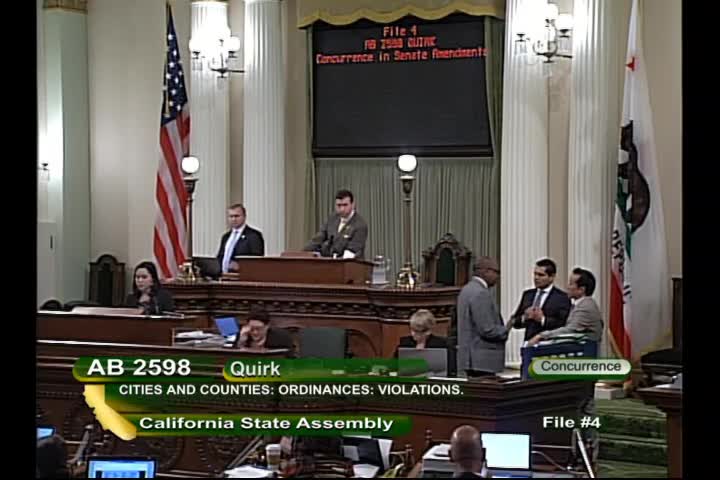 1MIN
Assembly Floor
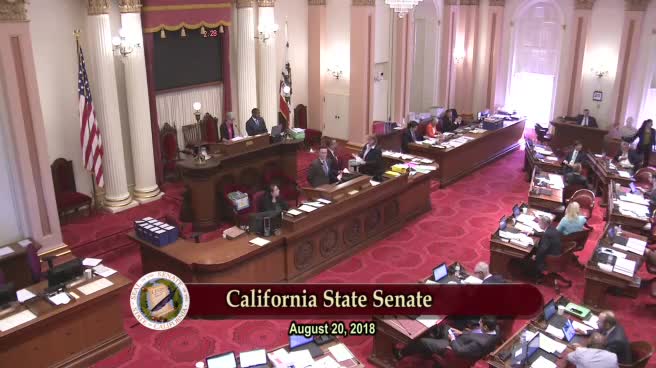 2MIN
Senate Floor
 4MIN
Senate Standing Committee on Transportation and Housing
 1H
Senate Standing Committee on Appropriations
 12MIN
Senate Standing Committee on Environmental Quality
 12MIN
Senate Standing Committee on Transportation and Housing
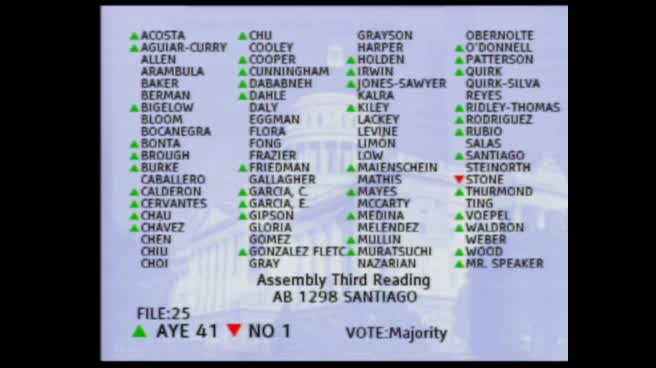 1MIN
Assembly Floor
 1H
Assembly Standing Committee on Appropriations


Bill Co-Author(s):
