AB 1947: Petitions: compensation for signatures.
- Session Year: 2017-2018
- House: Assembly
- Latest Version Date: 2018-08-24
Under existing law, a person who is 18 years of age or older may circulate an initiative, referendum, or recall petition.
This bill would provide that a person or organization who pays a person money or any other thing of value based on the number of signatures obtained on a state or local initiative, referendum, or recall petition is guilty of a misdemeanor punishable by a specified fine, imprisonment, or both that fine and imprisonment. By creating a new crime, the bill would impose a state-mandated local program.
The California Constitution requires the state to reimburse local agencies and school districts for certain costs mandated by the state. Statutory provisions establish procedures for making that reimbursement.
This bill would provide that no reimbursement is required by this act for a specified reason.
Under existing law, a person who is 18 years of age or older may circulate an initiative, referendum, or recall petition.
This bill would provide that it is a misdemeanor for a person to pay or to receive a person or organization who pays a person money or any other thing of value based on the number of signatures obtained on a state or local initiative, referendum, or recall petition and would prescribe penalties for this crime. is guilty of a misdemeanor punishable by a specified fine, imprisonment, or both that fine and imprisonment. By creating a new crime, the bill would impose a state-mandated local program.
The California Constitution requires the state to reimburse local agencies and school districts for certain costs mandated by the state. Statutory provisions establish procedures for making that reimbursement.
This bill would provide that no reimbursement is required by this act for a specified reason.
Under existing law, a person who is 18 years of age or older may circulate an initiative, referendum, or recall petition.
This bill would provide that it is a misdemeanor for a person to pay or to receive money or any other thing of value based on the number of signatures obtained on a state or local initiative, referendum, or recall petition and would prescribe penalties for this crime. By creating a new crime, the bill would impose a state-mandated local program.
The California Constitution requires the state to reimburse local agencies and school districts for certain costs mandated by the state. Statutory provisions establish procedures for making that reimbursement.
This bill would provide that no reimbursement is required by this act for a specified reason.
(a)A person or organization who pays a person money or any other thing of value based on the number of signatures obtained on a state or local initiative, referendum, or recall petition is guilty of a misdemeanor punishable by a fine not to exceed twenty-five thousand dollars ($25,000), or by imprisonment in a county jail not to exceed one year, or by both that fine and imprisonment.
(b)This section does not prohibit the payment for signature gathering not based, either directly or indirectly, on the number of signatures obtained on a state or local initiative, referendum, or recall petition.
SEC. 2.No reimbursement is required by this act pursuant to Section 6 of Article XIIIB of the California Constitution because the only costs that may be incurred by a local agency or school district will be incurred because this act creates a new crime or infraction, eliminates a crime or infraction, or changes the penalty for a crime or infraction, within the meaning of Section 17556 of the Government Code, or changes the definition of a crime within the meaning of Section 6 of Article XIIIB of the California Constitution.
(a)A person or organization who pays a person money or any other thing of value based on the number of signatures obtained on a state or local initiative, referendum, or recall petition shall be punished is guilty of a misdemeanor punishable by a fine not to exceed twenty-five thousand dollars ($25,000), or by imprisonment in a county jail not to exceed one year, or by both that fine and imprisonment.
(2)A person who is paid based on the number of signatures obtained on a state or local initiative, referendum, or recall petition shall be punished by a fine not to exceed one thousand dollars ($1,000), or by imprisonment in a county jail not to exceed six months, or by both that fine and imprisonment.(c)(b)This section does not prohibit the payment for signature gathering not based, either directly or indirectly, on the number of signatures obtained on a state or local initiative, referendum, or recall petition.
SEC. 2.No reimbursement is required by this act pursuant to Section 6 of Article XIIIB of the California Constitution because the only costs that may be incurred by a local agency or school district will be incurred because this act creates a new crime or infraction, eliminates a crime or infraction, or changes the penalty for a crime or infraction, within the meaning of Section 17556 of the Government Code, or changes the definition of a crime within the meaning of Section 6 of Article XIIIB of the California Constitution.
(a)It is unlawful for a person to pay or to receive money or any other thing of value based on the number of signatures obtained on a state or local initiative, referendum, or recall petition.
(b)Violation of this section is a misdemeanor, as follows:
(1)A person or organization who pays a person based on the number of signatures obtained on a state or local initiative, referendum, or recall petition shall be punished by a fine not to exceed twenty-five thousand dollars ($25,000), or by imprisonment in a county jail not to exceed one year, or by both that fine and imprisonment.
(2)A person who is paid based on the number of signatures obtained on a state or local initiative, referendum, or recall petition shall be punished by a fine not to exceed one thousand dollars ($1,000), or by imprisonment in a county jail not to exceed six months, or by both that fine and imprisonment.
(c)This section does not prohibit the payment for signature gathering not based, either directly or indirectly, on the number of signatures obtained on a state or local initiative, referendum, or recall petition.
SEC. 2.No reimbursement is required by this act pursuant to Section 6 of Article XIIIB of the California Constitution because the only costs that may be incurred by a local agency or school district will be incurred because this act creates a new crime or infraction, eliminates a crime or infraction, or changes the penalty for a crime or infraction, within the meaning of Section 17556 of the Government Code, or changes the definition of a crime within the meaning of Section 6 of Article XIIIB of the California Constitution.
|
Date
|
Status
|
|---|---|
| Sep 18, 2018 | Vetoed by Governor. |
| Aug 28, 2018 | Enrolled and presented to the Governor at 3 p.m. |
| Aug 23, 2018 | In Assembly. Ordered to Engrossing and Enrolling. |
| Aug 23, 2018 | Read third time. Passed. Ordered to the Assembly. |
| Aug 17, 2018 | From committee: Do pass. (Ayes 5. Noes 2.) (August 16). |
| Jun 25, 2018 | In committee: Referred to APPR. suspense file. |
| Jun 6, 2018 | From committee: Do pass and re-refer to Com. on APPR. (Ayes 4. Noes 1.) (June 6). Re-referred to Com. on APPR. |
| May 10, 2018 | Referred to Com. on E. & C.A. |
| Apr 30, 2018 | In Senate. Read first time. To Com. on RLS. for assignment. |
| Apr 30, 2018 | Read third time. Passed. Ordered to the Senate. |
| Apr 5, 2018 | Read second time. Ordered to third reading. |
| Apr 4, 2018 | From committee: Do pass. (Ayes 11. Noes 4.) (April 4). |
| Apr 3, 2018 | Re-referred to Com. on APPR. |
| Apr 2, 2018 | From committee chair, with author's amendments: Amend, and re-refer to Com. on APPR. Read second time and amended. |
| Mar 21, 2018 | From committee: Do pass and re-refer to Com. on APPR. (Ayes 5. Noes 1.) (March 21). Re-referred to Com. on APPR. |
| Feb 8, 2018 | Referred to Com. on E. & R. |
| Jan 30, 2018 | From printer. May be heard in committee March 1. |
| Jan 29, 2018 | Read first time. To print. |
|
Date
|
Description
|
Location
|
Votes
|
|
|---|---|---|---|---|
| Aug 23, 2018 | Assembly 3rd Reading AB1947 Low By Stern | Senate Floor |
Passed |
|
| Aug 16, 2018 | Do pass | Senate Standing Committee on Appropriations |
Passed |
|
| Jun 25, 2018 | Placed on suspense file | Senate Standing Committee on Appropriations |
Passed |
|
| Jun 6, 2018 | Do pass, but first be re-referred to the Committee on [Appropriations] | Senate Standing Committee on Elections and Constitutional Amendments |
Passed |
|
| Apr 30, 2018 | AB 1947 LOW Assembly Third Reading | Assembly Floor |
Passed |
|
| Apr 4, 2018 | Do pass. | Assembly Standing Committee on Appropriations |
Passed |
|
| Mar 21, 2018 | Do pass and be re-referred to the Committee on [Appropriations] | Assembly Standing Committee on Elections and Redistricting |
Passed |
This list shows positions taken on this bill by organizations on the date displayed, which is linked to the original source.
Positions by individuals are not included.
|
Organization
|
Position
|
Date
|
|---|---|---|
| ACLU of California | * Support | Mar 21, 2018 |
| California Chamber Of Commerce | ** Against | Aug 18, 2018 |
| California Professional Firefighters | ** Support | Aug 18, 2018 |
| California Taxpayers Association | ** Against | Aug 18, 2018 |
| Howard Jarvis Taxpayer Association | ** Against | Aug 18, 2018 |
| League Of Women Voters Of California | ** Against | Aug 18, 2018 |
| Murrieta Chamber of Commerce | ** Against | Aug 18, 2018 |
| San Diego Regional Chamber Of Commerce | ** Against | Aug 18, 2018 |
| Southwest California Legislative Council | ** Against | Aug 18, 2018 |
| Wildomar Chamber Of Commerce | ** Against | Aug 18, 2018 |
GOVERNOR'S VETO
GV Bill Id:AB 1947
Author:(Low)
As Enrolled Ver:August 28, 2018
2/3 vote
Committee | Votes | Ayes | Noes |
Elections | 5-1 | Berman, Calderon, Low, Mullin, Weber | Harper |
Appropriations | 11-4 | Gonzalez Fletcher, Bloom, Bonta, Calderon, Carrillo, Chau, Eggman, Friedman, Eduardo Garcia, Quirk, Reyes | Bigelow, Fong, Gallagher, Obernolte |
ASSEMBLY: | 50-26 | (April 30, 2018) | SENATE: | 25-14 | (August 23, 2018) |
SUMMARY: Prohibits a person or organization that pays circulators to collect signatures on an initiative, referendum, or recall petition from paying those circulators on a per-signature basis. Specifically, this bill:
- Makes it a misdemeanor for a person or organization to pay money or any other thing of value to another person based on the number of signatures obtained on a state or local initiative, referendum, or recall petition. Provides that a violation is punishable by a fine of up to $25,000, imprisonment in a county jail for up to a year, or by both the fine and imprisonment.
- Specifies that this bill does not prohibit the payment for signature gathering that is not based, either directly or indirectly, on the number of signatures obtained on a state or local initiative, referendum, or recall petition.
FISCAL EFFECT: According to the Assembly Appropriations Committee:
- Minor Department of Justice enforcement costs of less than $25,000 annually, offset to some extent by fine revenues.
- Unknown, likely minor non-reimbursable costs to cities and counties for prosecution and incarceration, offset to some extent by fine revenues.
COMMENTS: According to the author, "Some signature gathering firms compensate circulators based on the number of signatures they collect, which is known as 'bounty hunting'. These bounty hunters have an incentive to do whatever they can to get an individual's signature – even deceit the person or cheat the system. In order to qualify for the ballot, some initiative proponents qualify their initiatives by illegally misinforming voters and forging names. AB 1947 helps maintain the integrity of the initiative process by eliminating the incentive for paid signature gatherers to approach individuals aggressively and spread misinformation."
According to information from the National Conference on State Legislatures, 24 states, including California, allow voters through the initiative to propose laws, constitutional amendments, or both through a petition process. Twenty-three states, including California, allow voters through the referendum process to petition to demand a popular vote on a new law passed by the Legislature. Nineteen states, including California, permit state officers to be removed from office before the end of the term of office through the recall process.
At least five states (Arizona, Montana, North Dakota, Oregon, and South Dakota) limit the ability of initiative or referendum proponents to pay signature gatherers on a per-signature basis. One state (Nebraska) recently repealed a state law that prohibited petition circulators from being paid on a per-signature basis, while another state (Wyoming) recently repealed a state law that restricted initiative proponents from paying signature gatherers on a per-signature basis while continuing to ban payments on a per-signature basis for referendum petitions. Laws to ban per-signature payments in at least six other states (Colorado, Idaho, Maine, Mississippi, Ohio, and Washington) have been invalidated by courts. Alaska does not ban payments that are made on a per-signature basis, but prohibits any such payment that is greater than $1 per signature.
In 1988, the United States Supreme Court ruled that a Colorado prohibition against the use of paid circulators for initiative petitions violated the First Amendment's right of free speech. Writing for a unanimous court, Justice Stevens noted that "[t]he State's interest in protecting the integrity of the initiative process does not justify the prohibition because the State has failed to demonstrate that it is necessary to burden appellees' ability to communicate their message in order to meet its concerns" (Meyer v. Grant (1988), 486 U.S. 414). In 1999, the United States Supreme Court examined a Colorado law that provided a number of other restrictions on the signature collection process for ballot initiatives. In that case the court ruled that there must be a compelling state interest to justify any restrictions on initiative petition circulation (Buckley v. American Constitutional Law Foundation (1999), 525 U.S. 182).
Although the United States Supreme Court has not ruled on the constitutionality of prohibiting payment for signature collection on a per-signature basis, a number of federal courts have considered challenges to such laws, with the courts reaching different conclusions about the constitutionality of per-signature payment bans. In light of the differing opinions reached by various federal courts on the constitutionality of laws that prohibit payments on a per-signature basis for signature gathering on petitions, it is unclear whether this bill, if enacted, would be upheld in a court challenge.
This bill is similar to SB 168 (Corbett) of 2011, which was vetoed by Governor Brown. In his veto message, the Governor stated that "per-signature payment is often the most cost-effective method for collecting the hundreds of thousands of signatures needed to qualify a ballot measure," and that "[e]liminating this option will drive up the cost of circulating ballot measures, thereby further favoring the wealthiest interests."
Please see the policy committee analysis for a full discussion of this bill.
This bill prohibits paying circulators to collect signatures on an initiative, referendum, or recall petition on a per-signature basis.
As I stated in my veto message of an almost identical bill—SB 168 of 2011—"per signature payment is often the most cost-effective method for collecting the hundreds of thousands of signatures needed to qualify a ballot measure. Eliminating this option will drive up the cost of circulating ballot measures, thereby further favoring the wealthiest interests."
While I understand the potential abuses of the current per-signature payment system, my perspective has not changed since 2011.
I cannot sign this bill.
Analysis Prepared by: Ethan Jones / E. & R. / (916) 319-2094 FN: 0005247
Office of Senate Floor Analyses (916) 651-1520 Fax: (916) 327-4478 | AB |
THIRD READING
Bill No: AB 1947
:
SENATE ELECTIONS & C.A. COMMITTEE: 4-1, 6/6/18
AYES: Stern, Allen, Hertzberg, Leyva
NOES: Anderson
SENATE APPROPRIATIONS COMMITTEE: 5-2, 8/16/18
AYES: Portantino, Beall, Bradford, Hill, Wiener
NOES: Bates, Nielsen
ASSEMBLY FLOOR: 50-26, 4/30/18 - See last page for vote
DIGEST:
This bill prohibits paying circulators to collect signatures on an initiative, referendum, or recall petition on a per-signature basis.
Existing law:
- Requires a state or local initiative petition to contain the following notice in 12-point type before the portion of the petition for voters' signatures:
NOTICE TO THE PUBLIC
THIS PETITION MAY BE CIRCULATED BY A PAID SIGNATURE GATHERER OR A VOLUNTEER. YOU HAVE THE RIGHT TO ASK.
- Makes it a misdemeanor for a person to do any of the following:
- While circulating a state or local initiative, referendum, or recall petition, intentionally misrepresent or intentionally make a false statement concerning the contents, purport, or effect of the petition to any person who signs or is requested to sign the petition.
- Willfully and knowingly circulate, publish, or exhibit any false statement or misrepresentation concerning the contents, purport, or effect of a state or local initiative, referendum, or recall petition for the purpose of obtaining any signature to, or persuading or influencing any person to sign, that petition.
- While circulating a state or local initiative petition, intentionally make a false statement in response to an inquiry by a voter as to whether the circulator is paid or a volunteer.
- Provides that a person, company, organization, company official, or other organizational officer in charge of a person who circulates an initiative, referendum, or recall petition who knowingly directs an affiant to make a false affidavit or who knows or reasonably should know that an affiant has made a false affidavit concerning an initiative, referendum, or recall petition or the signatures appended thereto is punishable by a fine not exceeding $5,000, by imprisonment in a county jail not exceeding one year, or by both the fine and imprisonment.
- Provides that upon conviction of specified prohibited conduct related to the circulation of petitions, a court may order as a condition of probation that the convicted person be prohibited from receiving money or other valuable consideration for gathering signatures on an initiative, referendum, or recall petition.
This bill:
- Prohibits a person or organization to pay money or any other thing of value to another person based on the number of signatures obtained on a state or local initiative, referendum, or recall petition.
- Provides that a violation is a misdemeanor punishable by a fine of up to $25,000, imprisonment in a county jail for up to a year, or by both the fine and imprisonment.
- Specifies that this bill does not prohibit the payment for signature gathering that is not based, either directly or indirectly, on the number of signatures obtained on a state or local initiative, referendum, or recall petition.
Background
Initiative, Referendum, and Recall & Other States. According to information from the National Conference on State Legislatures, 24 states, including California, allow voters through the initiative to propose laws, constitutional amendments, or both through a petition process. Twenty-three states, including California, allow voters through the referendum process to petition to demand a popular vote on a new law passed by the Legislature. Nineteen states, including California, permit state officers to be removed from office before the end of the term of office through the recall process.
At least five states (Arizona, Montana, North Dakota, Oregon, and South Dakota) limit the ability of initiative or referendum proponents to pay signature gatherers on a per-signature basis. One state (Nebraska) recently repealed a state law that prohibited petition circulators from being paid on a per-signature basis, while another state (Wyoming) recently repealed a state law that restricted initiative proponents from paying signature gatherers on a per-signature basis while continuing to ban payments on a per-signature basis for referendum petitions. Laws to ban per-signature payments in at least six other states (Colorado, Idaho, Maine, Mississippi, Ohio, and Washington) have been invalidated by courts (additional details are available below). Alaska does not ban payments that are made on a per-signature basis, but prohibits any such payment that is greater than $1 per signature.
Payment for Signature Gathering and Constitutional Issues. In 1988, the United States Supreme Court ruled that a Colorado prohibition against the use of paid circulators for initiative petitions violated the First Amendment's right of free speech. Writing for a unanimous court, Justice Stevens noted that "[t]he State's interest in protecting the integrity of the initiative process does not justify the prohibition because the State has failed to demonstrate that it is necessary to burden appellees' ability to communicate their message in order to meet its concerns." Meyer v. Grant (1988), 486 U.S. 414. The Meyer court, however, did not address the issue of whether a state may regulate the manner in which circulators are paid.
In 1999, the United States Supreme Court examined a Colorado law that provided a number of other restrictions on the signature collection process for ballot initiatives. In that case the court ruled that there must be a compelling state interest to justify any restrictions on initiative petition circulation. Buckley v. American Constitutional Law Foundation (1999), 525 U.S. 182.
In Buckley, the court invalidated Colorado's requirement that paid petition circulators wear a badge identifying themselves and identifying that they are paid circulators. The court stated that the requirement to wear badges inhibits participation in the petitioning process.
Although the United States Supreme Court has not ruled on the constitutionality of prohibiting payment for signature collection on a per-signature basis, a number of federal courts have considered challenges to such laws, with the courts reaching different conclusions about the constitutionality of per-signature payment bans.
In February 2001, the Eighth Circuit Court of Appeals ruled that a North Dakota law prohibiting payment for signature collection on a per-signature basis was consistent with the United States Constitution and with the Supreme Court's rulings in Buckley and Meyer. In reaching this decision, the court noted that the state "produced sufficient evidence that the regulation is necessary to insure the integrity of the initiative process," and also noted that no evidence was presented "that payment by the hour, rather than on commission, would in any way burden [the] ability to collect signatures." Initiative & Referendum Institute v. Jaeger (2001), 241 F.3d 614.
In February 2006, the Ninth Circuit Court of Appeals ruled that an Oregon law that prohibited payment to electoral petition signature gatherers on a piece-work or per-signature basis did not impose a severe burden under the First Amendment, and therefore did not unconstitutionally burden core political speech. The court found that Oregon had an "important regulatory interest in preventing fraud and its appearances in its electoral processes," and that prohibiting the payment of signature gatherers on a per-signature basis was reasonably related to that interest. Prete v. Bradbury (2006), 438 F.3d 949.
In October 2006, the Second Circuit Court of Appeals upheld a New York law that prohibited payment of any compensation to individuals hired to circulate electoral petitions if that compensation is contingent on the number of signatures obtained. Because New York does not have the initiative process, the law applies only to nomination petitions for candidates and to petitions to qualify a new political party. In its decision upholding the law, the Court referenced the decisions in the Eighth and Ninth Circuits, and noted that "[l]ike our sister circuits, we find the record presented to us provides insufficient support for a claim that the ban on per-signature payment is akin to the complete prohibition on paying petition circulators that was deemed unconstitutional in Meyer, or that the alternative methods of payment it leaves available are insufficient." Person v. New York State Board of Elections (2006), 467 F.3d 141.
On the other hand, the Sixth Circuit Court of Appeals struck down an Ohio law that made it a felony to pay anyone for gathering signatures on election-related petitions on any basis other than time worked. In its decision, the Court noted that while Ohio's interest in eliminating election fraud is a compelling state interest, "there is no evidence in the record that most, many, or even more than a de minimis number of circulators who were paid by signature engaged in fraud in the past." The court further noted that "[t]here is little dispute that operating under a per-time-only system will increase the costs of both proposing an initiative and qualifying it for the ballot," and cited evidence presented that professional coordinators and circulators were less interested in working under a per-time-only system. At the same time, however, the Court discussed the rulings in the Second, Eighth, and Ninth Circuits, noting that unlike the laws that were upheld in North Dakota, Oregon, and New York, the Ohio law was more restrictive and had harsher criminal sanctions for violations.
Specifically, the court noted that the laws in North Dakota, Oregon, and New York banned payments made on a per-signature basis, while Ohio banned all payment to circulators except on a per-time basis. The court noted that unlike the laws considered by appellate courts in other circuits, the Ohio law would prohibit bonuses to circulators based on productivity or longevity, would prohibit a person employing circulators from setting a minimum signature requirement, and could even prohibit a person employing circulators from terminating a circulator who consistently did not collect enough signatures. Additionally, the court noted that a violation of the Ohio law was a felony, compared to misdemeanor penalties for violations in North Dakota, Oregon, and New York. Although the court recognized these distinctions between the Ohio law and the laws upheld by three other appellate circuits, the court refused to discuss whether it would uphold an Ohio law that was similar to Oregon's, North Dakota's, or New York's. Citizens for Tax Reform et al. v. Deters et al. (2008), 518 F.3d 375.
A number of federal district courts have struck down bans on per-signature payments in other states, however. In 1994, a federal district court struck down a Washington law that made it illegal to pay gatherers of signatures on initiative and referendum petitions on a per-signature basis, noting in its decision that the state had failed to provide any "proof of fraud stemming specifically from the payment per signature method of collection." Limit v. Maleng (1994), 874 F.Supp. 1138. In 1997, a district court struck down a similar Mississippi law, citing evidence presented that the "payment of a flat daily rate to Mississippi circulators had yielded poor results," and concluding that the state had failed to prove "actual fraud or threat to citizens' confidence in government posed by…circulators who were paid per signature." Term Limits Leadership Council, Inc. v. Clark (1997), 984 F.Supp. 470. Federal district courts also struck down similar laws in Maine (On Our Terms '97 PAC v. Secretary of State of State of Maine (1999), 101 F.Supp.2d 19) and in Idaho (Idaho Coalition United for Bears v. Cenarrusa (2001), 234 F.Supp.2d 1159). More recently, a Colorado court issued a permanent injunction against a Colorado law that prohibited a petition circulator from being paid more than twenty percent of his or her compensation on a per-signature basis (Independence Institute v. Gessler (2013), 936 F.Supp.2d 1256).
In light of the differing opinions reached by various federal courts on the constitutionality of laws that prohibit payments on a per-signature basis for signature gathering on petitions, it is unclear whether this bill, if enacted, would be upheld in a court challenge.
Petition Fraud. According to information from the Secretary of State's office, between 1994 and 2015, the office opened 273 cases investigating potential petition fraud, of which 50 cases were referred for prosecution. These figures do not include petition fraud investigations that may have been conducted by other law enforcement agencies around the state.
Related/Prior Legislation
SB 168 (Corbett, 2011), which was vetoed by Governor Brown, was similar to this bill. In his veto message, the Governor stated that "per-signature payment is often the most cost-effective method for collecting the hundreds of thousands of signatures needed to qualify a ballot measure," and that "[e]liminating this option will drive up the cost of circulating ballot measures, thereby further favoring the wealthiest interests."
SB 34 (Corbett, 2009), which was vetoed by Governor Schwarzenegger, was identical to SB 168.
AB 2946 (Leno, 2006), which was also similar to this bill, was also vetoed by Governor Schwarzenegger.
FISCAL EFFECT: Appropriation: Fiscal Com.: Local:
According to the Senate Appropriations Committee:
- Court: Unknown, potentially-significant workload cost pressures to the court to adjudicate charges brought against defendants who pay a signature gatherer based on the number of signatures as proscribed by this bill. While the superior courts are not funded on a workload basis, an increase in workload could result in delayed court services and would put pressure on the General Fund to fund additional staff and resources. (General Fund*)
- Prosecution & incarceration: Unknown potential increase in non-reimbursable local enforcement and incarceration costs to prosecute and incarcerate those charged with and found guilty of conduct proscribed by this bill. Costs would be offset, to a degree, by fee and assessment revenue. (Local funds)
California Professional Firefighters
OPPOSITION: (Verified 8/13/18)
California Chamber of Commerce
California Taxpayers Association
Howard Jarvis Taxpayer Association
League of Women Voters of California
Murrieta Chamber of Commerce
San Diego Regional Chamber of Commerce
Southwest California Legislative Council
Wildomar Chamber of Commerce
ARGUMENTS IN SUPPORT: According to the author, in recent years, it has become a common experience to get approached outside a local grocery or retail store by signature gatherers. Many individuals have been approached by aggressive signature gatherers that mislead them into signing petitions they otherwise would not endorse. This practice degrades the integrity of direct democracy and our initiative process.
Some signature gathering firms compensate circulators based on the number of signatures they collect, which is known as “bounty hunting”. These bounty hunters have an incentive to do whatever they can to get an individual’s signature – even deceit the person or cheat the system. In order to qualify for the ballot, some initiative proponents qualify their initiatives by illegally misinforming voters and forging names. AB 1947 helps maintain the integrity of the initiative process by eliminating the incentive for paid signature gatherers to approach individuals aggressively and spread misinformation.
The last time an initiative qualified for the ballot with all signatures collected by volunteers was in the 1990s. Over the last two decades, the need to collect hundreds of thousands of signatures within a limited timeframe has resulted in the creation of petition management firms who pay signature gatherers based on the number of signatures they collect.
ARGUMENTS IN OPPOSITION: In a coalition letter in opposition to this bill, the California Chamber of Commerce and others write:
“...it is unclear how limiting the payment type for signatures will ensure that the public will receive better information when petitioners approach them. Indeed, AB 1947 is likely to limit how far and wide these important election materials are disseminated and even exclude certain areas as petitioners attempt to reach as many California voters as possible.
The current process serves as a check and balance on government. By making it harder to qualify ballot measures you are denying Californians the right to address grievances with government through initiatives, referendums and recalls. The people cherish direct democracy and this would eliminate that opportunity.”
ASSEMBLY FLOOR: 50-26, 4/30/18
AYES: Aguiar-Curry, Arambula, Berman, Bloom, Bonta, Burke, Caballero, Calderon, Carrillo, Cervantes, Chau, Chiu, Chu, Cooper, Eggman, Frazier, Friedman, Eduardo Garcia, Gipson, Gloria, Gonzalez Fletcher, Gray, Grayson, Holden, Irwin, Jones-Sawyer, Kalra, Kamlager-Dove, Levine, Limón, Low, McCarty, Medina, Mullin, Muratsuchi, Nazarian, O'Donnell, Quirk, Quirk-Silva, Reyes, Rodriguez, Rubio, Salas, Santiago, Mark Stone, Thurmond, Ting, Weber, Wood, Rendon
NOES: Acosta, Travis Allen, Baker, Bigelow, Brough, Chávez, Chen, Choi, Cooley, Cunningham, Dahle, Flora, Fong, Gallagher, Harper, Kiley, Lackey, Maienschein, Mathis, Mayes, Melendez, Obernolte, Patterson, Steinorth, Voepel, Waldron
NO VOTE RECORDED: Daly, Cristina Garcia
8/18/18 13:45:45
**** END ****
SENATE COMMITTEE ON
Senator Anthony Portantino, Chair
2017 - 2018 Regular Session
AB 1947 (Low) - Petitions: compensation for signatures
Version: | Policy Vote: |
Urgency: | Mandate: |
Hearing Date: | Consultant: |
This bill meets the criteria for referral to the Suspense File.
Bill Summary:
AB 1947 would criminalize the paying of money or any other thing of value to a person based on the number of signatures collected for an initiative, referendum, or recall petition.
Fiscal Impact:
- Court: Unknown, potentially-significant workload cost pressures to the court to adjudicate charges brought against defendants who pay a signature gatherer based on the number of signatures as proscribed by this measure. While the superior courts are not funded on a workload basis, an increase in workload could result in delayed court services and would put pressure on the General Fund to fund additional staff and resources. (General Fund*)
- Prosecution & incarceration: Unknown potential increase in non-reimbursable local enforcement and incarceration costs to prosecute and incarcerate those charged with and found guilty of conduct proscribed by this bill. Costs would be offset, to a degree, by fee and assessment revenue. (Local funds)
*Trial Court Trust Fund
Background:
Existing law provides that notwithstanding any other provision of law, whenever an initiative, referendum, recall, nominating petition or paper, or any other petition or paper, is required to be signed by voters of a county, city, school district, or special district subject to petitioning, only a person who is an eligible registered voter at the time of signing the petition or paper is entitled to sign the petition or paper. At the time of signing a petition or paper, a signer must personally affix his or her signature, printed name, and place of residence, as specified. A person is prohibited from circulating a state or local initiative, referendum, or recall petition or nominating paper unless he or she is 18 years of age or older. Wherever a petition or paper is submitted to the elections official, each section of the petition or paper have attached to it must be accompanied by a declaration signed by the circulator under penalty of perjury, setting forth, in the circulator’s own hand, the following:
- The printed name of the circulator;
- The residence address of the circulator, as specified;
- The dates between which all the signatures to the petition or paper were obtained;
- That the circulator circulated that section and witnessed the appended signatures being written;
- That according to the best information and belief of the circulator, each signature is the genuine signature of the person whose name it purports to be; and
- That the circulator is 18 years of age or older.
Additionally, a state or local initiative petition required to be signed by voters must contain in 12-point type, before the portion of the petition for voters’ signatures, printed names, and residence addresses, the following language:
NOTICE TO THE PUBLIC
THIS PETITION MAY BE CIRCULATED BY A PAID SIGNATURE GATHERER OR A VOLUNTEER. YOU HAVE THE RIGHT TO ASK.
Moreover, existing law provides that the following is a misdemeanor crime:
- Circulating, as principal or agent, or having charge or control of the circulation of, or obtaining signatures to, any state or local initiative, referendum or recall petition, intentionally misrepresents or intentionally makes any false statement concerning the contents, purport or effect of the petition to any person who signs, or who desires to sign, or who is requested to sign, or who makes inquiries with reference to it, or to whom it is presented for his or her signature;
- A person who willfully and knowingly circulates, publishes, or exhibits any false statement or misrepresentation concerning the contents, purport or effect of any state or local initiative, referendum, or recall petition for the purpose of obtaining any signature to, or persuading or influencing any person to sign, that petition;
- Circulating, as principal or agent, or having charge or control of the circulation of, or obtaining signatures to, any state or local initiative, intentionally making any false statement in response to any inquiry by any voter as to whether he or she is a paid signature gatherer or a volunteer;
- A person who refuses to allow a prospective signer to read the measure or petition if working for the proponent or proponents of an initiative or referendum measure or recall petition;
- A person who covers or otherwise obscures the summary of the measure prepared by the Attorney General from the view of a prospective signer if working for the proponent or proponents of a statewide initiative or referendum measure;
- A person who offers or gives money or other valuable consideration to another in exchange for that person’s signature on a state, county, municipal, or district initiative, referendum, or recall petition;
- A person who knowingly or willfully permits the list of signatures on an initiative, referendum, or recall petition to be used for any purpose other than qualification of the initiative or referendum measure or recall question for the ballot, except as provided;
- A person who solicits any circulator to affix to any initiative, referendum, or recall petition any false or forged signature, or to cause or permit a false or forged signature to be affixed; or
- A person who knowingly signs his or her own name more than once to any initiative, referendum, or recall petition, or signs his or her name to that petition knowing himself or herself at the time of signing not to be qualified to sign it.
Proposed Law:
This bill would make it a misdemeanor, punishable by incarceration in county jail for up to one year, a fine of up to $25,000, or both the fine and incarceration, for a person or organization to pay a person money or any other thing of value based on the number of signatures obtained on a state or local initiative, referendum, or recall petition. Additionally, AB 1947 would provide that the payment for signature gathering not based, either directly or indirectly, on the number of signatures obtained is not prohibited.
Related Legislation:
SB 1394 (Newman, 2018), in part, would criminalize the paying a person on a signature-collected basis for an initiative, referendum, or recall petition. SB 1394 has been referred to the Assembly Committee on Elections and Redistricting.
Staff Comments:
The fiscal impact of this bill cannot be known with certainty, as the actual impact will be dependent on numerous factors, including, but not limited to, judicial and prosecutorial discretion, the criminal history of a defendant, and the factors unique to each case. As the crime created by this bill is punishable as a misdemeanor with the potential for incarceration, certain rights to the defendants are attached to the proceedings, including the right to a jury trial and the right to counsel (at public expense if the defendants are unable to afford the costs of representation) which could lead to lengthier and more complex court proceedings. Consequently, to the extent that the court adjudicates a dozen or more of these new crimes, on average, that otherwise would not have been filed or resulted in a criminal action but for the alleged violation of paying a petition signature gatherer on a per-signature basis, court costs of this bill would surpass the Suspense File threshold.
-- END --
SENATE COMMITTEE ON
ELECTIONS AND CONSTITUTIONAL AMENDMENTS
Senator Henry Stern, Chair
2017 - 2018 Regular
Bill No: 1947 Hearing Date: 6/6/18
Author: | Low | ||
Version: |
| ||
Urgency: | Fiscal: | ||
Consultant: | |||
Subject:
DIGEST
This bill prohibits paying circulators to collect signatures on an initiative, referendum, or recall petition on a per-signature basis.
ANALYSIS
Existing law:
- Requires a state or local initiative petition to contain the following notice in 12-point type before the portion of the petition for voters' signatures:
NOTICE TO THE PUBLIC
THIS PETITION MAY BE CIRCULATED BY A PAID SIGNATURE GATHERER OR A VOLUNTEER. YOU HAVE THE RIGHT TO ASK.
- Makes it a misdemeanor for a person to do any of the following:
- While circulating a state or local initiative, referendum, or recall petition, intentionally misrepresent or intentionally make a false statement concerning the contents, purport, or effect of the petition to any person who signs or is requested to sign the petition.
- Willfully and knowingly circulate, publish, or exhibit any false statement or misrepresentation concerning the contents, purport, or effect of a state or local initiative, referendum, or recall petition for the purpose of obtaining any signature to, or persuading or influencing any person to sign, that petition.
- While circulating a state or local initiative petition, intentionally make a false statement in response to an inquiry by a voter as to whether the circulator is paid or a volunteer.
- While circulating a state or local initiative, referendum, or recall petition, intentionally misrepresent or intentionally make a false statement concerning the contents, purport, or effect of the petition to any person who signs or is requested to sign the petition.
- Provides that a person, company, organization, company official, or other organizational officer in charge of a person who circulates an initiative, referendum, or recall petition who knowingly directs an affiant to make a false affidavit or who knows or reasonably should know that an affiant has made a false affidavit concerning an initiative, referendum, or recall petition or the signatures appended thereto is punishable by a fine not exceeding $5,000, by imprisonment in a county jail not exceeding one year, or by both the fine and imprisonment.
- Provides that upon conviction of specified prohibited conduct related to the circulation of petitions, a court may order as a condition of probation that the convicted person be prohibited from receiving money or other valuable consideration for gathering signatures on an initiative, referendum, or recall petition.
This bill:
- Prohibits a person or organization to pay money or any other thing of value to another person based on the number of signatures obtained on a state or local initiative, referendum, or recall petition.
- Provides that a violation is a misdemeanor punishable by a fine of up to $25,000, imprisonment in a county jail for up to a year, or by both the fine and imprisonment.
- Specifies that this bill does not prohibit the payment for signature gathering that is not based, either directly or indirectly, on the number of signatures obtained on a state or local initiative, referendum, or recall petition.
BACKGROUND
Initiative, Referendum, and Recall & Other States. According to information from the National Conference on State Legislatures (NCSL), 24 states, including California, allow voters through the initiative to propose laws, constitutional amendments, or both through a petition process. Twenty-three states, including California, allow voters through the referendum process to petition to demand a popular vote on a new law passed by the Legislature. Nineteen states, including California, permit state officers to be removed from office before the end of the term of office through the recall process.
At least five states (Arizona, Montana, North Dakota, Oregon, and South Dakota) limit the ability of initiative or referendum proponents to pay signature gatherers on a per-signature basis. One state (Nebraska) recently repealed a state law that prohibited petition circulators from being paid on a per-signature basis, while another state (Wyoming) recently repealed a state law that restricted initiative proponents from paying signature gatherers on a per-signature basis while continuing to ban payments on a per-signature basis for referendum petitions. Laws to ban per-signature payments in at least six other states (Colorado, Idaho, Maine, Mississippi, Ohio, and Washington) have been invalidated by courts (additional details are available below). Alaska does not ban payments that are made on a per-signature basis, but prohibits any such payment that is greater than $1 per signature.
Payment for Signature Gathering and Constitutional Issues. In 1988, the United States Supreme Court ruled that a Colorado prohibition against the use of paid circulators for initiative petitions violated the First Amendment's right of free speech. Writing for a unanimous court, Justice Stevens noted that "[t]he State's interest in protecting the integrity of the initiative process does not justify the prohibition because the State has failed to demonstrate that it is necessary to burden appellees' ability to communicate their message in order to meet its concerns." Meyer v. Grant (1988), 486 U.S. 414. The Meyer court, however, did not address the issue of whether a state may regulate the manner in which circulators are paid.
In 1999, the United States Supreme Court examined a Colorado law that provided a number of other restrictions on the signature collection process for ballot initiatives. In that case the court ruled that there must be a compelling state interest to justify any restrictions on initiative petition circulation. Buckley v. American Constitutional Law Foundation (1999), 525 U.S. 182.
In Buckley, the court invalidated Colorado's requirement that paid petition circulators wear a badge identifying themselves and identifying that they are paid circulators. The court stated that the requirement to wear badges inhibits participation in the petitioning process.
Although the United States Supreme Court has not ruled on the constitutionality of prohibiting payment for signature collection on a per-signature basis, a number of federal courts have considered challenges to such laws, with the courts reaching different conclusions about the constitutionality of per-signature payment bans.
In February 2001, the Eighth Circuit Court of Appeals ruled that a North Dakota law prohibiting payment for signature collection on a per-signature basis was consistent with the United States Constitution and with the Supreme Court's rulings in Buckley and Meyer. In reaching this decision, the court noted that the state "produced sufficient evidence that the regulation is necessary to insure the integrity of the initiative process," and also noted that no evidence was presented "that payment by the hour, rather than on commission, would in any way burden [the] ability to collect signatures." Initiative & Referendum Institute v. Jaeger (2001), 241 F.3d 614.
In February 2006, the Ninth Circuit Court of Appeals ruled that an Oregon law that prohibited payment to electoral petition signature gatherers on a piece-work or per-signature basis did not impose a severe burden under the First Amendment, and therefore did not unconstitutionally burden core political speech. The court found that Oregon had an "important regulatory interest in preventing fraud and its appearances in its electoral processes," and that prohibiting the payment of signature gatherers on a per-signature basis was reasonably related to that interest. Prete v. Bradbury (2006), 438 F.3d 949.
In October 2006, the Second Circuit Court of Appeals upheld a New York law that prohibited payment of any compensation to individuals hired to circulate electoral petitions if that compensation is contingent on the number of signatures obtained. Because New York does not have the initiative process, the law applies only to nomination petitions for candidates and to petitions to qualify a new political party. In its decision upholding the law, the Court referenced the decisions in the Eighth and Ninth Circuits, and noted that "[l]ike our sister circuits, we find the record presented to us provides insufficient support for a claim that the ban on per-signature payment is akin to the complete prohibition on paying petition circulators that was deemed unconstitutional in Meyer, or that the alternative methods of payment it leaves available are insufficient." Person v. New York State Board of Elections (2006), 467 F.3d 141.
On the other hand, the Sixth Circuit Court of Appeals struck down an Ohio law that made it a felony to pay anyone for gathering signatures on election-related petitions on any basis other than time worked. In its decision, the Court noted that while Ohio's interest in eliminating election fraud is a compelling state interest, "there is no evidence in the record that most, many, or even more than a de minimis number of circulators who were paid by signature engaged in fraud in the past." The court further noted that "[t]here is little dispute that operating under a per-time-only system will increase the costs of both proposing an initiative and qualifying it for the ballot," and cited evidence presented that professional coordinators and circulators were less interested in working under a per-time-only system. At the same time, however, the Court discussed the rulings in the Second, Eighth, and Ninth Circuits, noting that unlike the laws that were upheld in North Dakota, Oregon, and New York, the Ohio law was more restrictive and had harsher criminal sanctions for violations.
Specifically, the court noted that the laws in North Dakota, Oregon, and New York banned payments made on a per-signature basis, while Ohio banned all payment to circulators except on a per-time basis. The court noted that unlike the laws considered by appellate courts in other circuits, the Ohio law would prohibit bonuses to circulators based on productivity or longevity, would prohibit a person employing circulators from setting a minimum signature requirement, and could even prohibit a person employing circulators from terminating a circulator who consistently did not collect enough signatures. Additionally, the court noted that a violation of the Ohio law was a felony, compared to misdemeanor penalties for violations in North Dakota, Oregon, and New York. Although the court recognized these distinctions between the Ohio law and the laws upheld by three other appellate circuits, the court refused to discuss whether it would uphold an Ohio law that was similar to Oregon's, North Dakota's, or New York's. Citizens for Tax Reform et al. v. Deters et al. (2008), 518 F.3d 375.
A number of federal district courts have struck down bans on per-signature payments in other states, however. In 1994, a federal district court struck down a Washington law that made it illegal to pay gatherers of signatures on initiative and referendum petitions on a per-signature basis, noting in its decision that the state had failed to provide any "proof of fraud stemming specifically from the payment per signature method of collection." Limit v. Maleng (1994), 874 F.Supp. 1138. In 1997, a district court struck down a similar Mississippi law, citing evidence presented that the "payment of a flat daily rate to Mississippi circulators had yielded poor results," and concluding that the state had failed to prove "actual fraud or threat to citizens' confidence in government posed by…circulators who were paid per signature." Term Limits Leadership Council, Inc. v. Clark (1997), 984 F.Supp. 470. Federal district courts also struck down similar laws in Maine (On Our Terms '97 PAC v. Secretary of State of State of Maine (1999), 101 F.Supp.2d 19) and in Idaho (Idaho Coalition United for Bears v. Cenarrusa (2001), 234 F.Supp.2d 1159). More recently, a Colorado court issued a permanent injunction against a Colorado law that prohibited a petition circulator from being paid more than twenty percent of his or her compensation on a per-signature basis (Independence Institute v. Gessler (2013), 936 F.Supp.2d 1256).
In light of the differing opinions reached by various federal courts on the constitutionality of laws that prohibit payments on a per-signature basis for signature gathering on petitions, it is unclear whether this bill, if enacted, would be upheld in a court challenge.
Petition Fraud. According to information from the Secretary of State's office, between 1994 and 2015, the office opened 273 cases investigating potential petition fraud, of which 50 cases were referred for prosecution. These figures do not include petition fraud investigations that may have been conducted by other law enforcement agencies around the state.
Labor Law Implications. This bill prohibits the payment of individuals on a per-signature basis for collecting signatures on petitions. Typically, in California, those individuals who are paid to circulate petitions or register voters on a per-signature or per-piece basis are independent contractors. However, to the extent that this bill forces individuals who are paid to circulate petitions or register voters to be paid an hourly wage, this bill could also result in these individuals being considered employees under California law. As such, the individual, corporation, or group paying individuals to circulate petitions may be required to pay minimum wage, provide workers compensation insurance and unemployment insurance for its employees, etc.
COMMENTS
- According to the author: In recent years, it has become a common experience to get approached outside a local grocery or retail store by signature gatherers. Many individuals have been approached by aggressive signature gatherers that mislead them into signing petitions they otherwise would not endorse. This practice degrades the integrity of direct democracy and our initiative process.
Some signature gathering firms compensate circulators based on the number of signatures they collect, which is known as “bounty hunting”. These bounty hunters have an incentive to do whatever they can to get an individual’s signature – even deceit the person or cheat the system. In order to qualify for the ballot, some initiative proponents qualify their initiatives by illegally misinforming voters and forging names. AB 1947 helps maintain the integrity of the initiative process by eliminating the incentive for paid signature gatherers to approach individuals aggressively and spread misinformation.
The last time an initiative qualified for the ballot with all signatures collected by volunteers was in the 1990’s. Over the last two decades, the need to collect hundreds of thousands of signatures within a limited timeframe has resulted in the creation of petition management firms who pay signature gatherers based on the number of signatures they collect. - Arguments in Support: In support of this bill, California Professional Firefighters writes:
Gone are the days when the initiative process was driven by average Californians compelled to act when lawmakers wouldn't. Petition circulators were once almost universally unpaid, and signature gathering campaigns failed most often from a lack of volunteers. An inability to qualify a measure for the ballot was simply a sign that proponents needed more time to recruit an army of volunteers with which to cultivate sufficient grassroots support. Without both public support and devoted volunteers, previous initiative campaigns couldn't generate the required number of petition signatures to qualify for the ballot. The system, on its own, eliminated proposals that lacked true citizen support, which ultimately meant they weren't ready to become law.
Unfortunately today, however, any wealthy individual with a checkbook and the desire to weigh in politically can almost unilaterally put an initiative on the ballot given the existing regulatory framework. It has become evident in recent election cycles that there is a critical need to restore balance and fairness to the signature gathering process, as well as return the system back to the people and end the tyranny of modern day "robber baron railroad officials." AB 1947 is needed to strengthen the integrity of the process by which proposed petitions qualify for the ballot, while at the same time erode incentives for fraud and deceit.
- Arguments in Opposition: In a coalition letter in opposition to this bill, the California Chamber of Commerce and others write:
“...it is unclear how limiting the payment type for signatures will ensure that the public will receive better information when petitioners approach them. Indeed, AB 1947 is likely to limit how far and wide these important election materials are disseminated and even exclude certain areas as petitioners attempt to reach as many California voters as possible.
The current process serves as a check and balance on government. By making it harder to qualify ballot measures you are denying Californians the right to address grievances with government through initiatives, referendums and recalls. The people cherish direct democracy and this would eliminate that opportunity.”
RELATED/PRIOR LEGISLATION
SB 1394 (Newman), which is similar to this bill, is currently pending referral in the Assembly.
SB 168 (Corbett) of 2011, which was vetoed by Governor Brown, was similar to this bill. In his veto message, the Governor stated that "per-signature payment is often the most cost-effective method for collecting the hundreds of thousands of signatures needed to qualify a ballot measure," and that "[e]liminating this option will drive up the cost of circulating ballot measures, thereby further favoring the wealthiest interests."
SB 34 (Corbett) of 2009, which was vetoed by Governor Schwarzenegger, was identical to SB 168.
AB 2946 (Leno) of 2006, which was also similar to this bill was also vetoed by Governor Schwarzenegger.
PRIOR ACTION
Assembly Floor: | 50 - 26 |
Assembly Appropriations Committee: | 11 - 4 |
Assembly Committee: | 5 - 1 |
POSITIONS
Sponsor: Author
Support: California Professional Firefighters
Oppose: California Chamber of Commerce
California Taxpayers Association
Howard Jarvis Taxpayer Association
League of Women Voters of California
Murrieta Chamber of Commerce
San Diego Regional Chamber of Commerce
Southwest California Legislative Council
Wildomar Chamber of Commerce
-- END –
ASSEMBLY THIRD READING
ATR Bill Id:AB 1947
Author:(Low)
As Amended Ver:April 2, 2018
Majority vote
Committee | Votes | Ayes | Noes |
Elections | 5-1 | Berman, Calderon, Low, Mullin, Weber | Harper |
Appropriations | 11-4 | Gonzalez Fletcher, Bloom, Bonta, Calderon, Carrillo, Chau, Eggman, Friedman, Eduardo Garcia, Quirk, Reyes | Bigelow, Fong, Gallagher, Obernolte |
SUMMARY: Prohibits a person or organization that pays circulators to collect signatures on an initiative, referendum, or recall petition from paying those circulators on a per-signature basis. Specifically, this bill:
- Makes it a misdemeanor for a person or organization to pay money or any other thing of value to another person based on the number of signatures obtained on a state or local initiative, referendum, or recall petition. Provides that a violation is punishable by a fine of up to $25,000, imprisonment in a county jail for up to a year, or by both the fine and imprisonment.
- Specifies that this bill does not prohibit the payment for signature gathering that is not based, either directly or indirectly, on the number of signatures obtained on a state or local initiative, referendum, or recall petition.
FISCAL EFFECT: According to the Assembly Appropriations Committee:
- Minor Department of Justice enforcement costs of less than $25,000 annually, offset to some extent by fine revenues.
- Unknown, likely minor non-reimbursable costs to cities and counties for prosecution and incarceration, offset to some extent by fine revenues.
COMMENTS: According to the author, "Some signature gathering firms compensate circulators based on the number of signatures they collect, which is known as 'bounty hunting'. These bounty hunters have an incentive to do whatever they can to get an individual's signature – even deceit the person or cheat the system. In order to qualify for the ballot, some initiative proponents qualify their initiatives by illegally misinforming voters and forging names. AB 1947 helps maintain the integrity of the initiative process by eliminating the incentive for paid signature gatherers to approach individuals aggressively and spread misinformation."
According to information from the National Conference on State Legislatures, 24 states, including California, allow voters through the initiative to propose laws, constitutional amendments, or both through a petition process. Twenty-three states, including California, allow voters through the referendum process to petition to demand a popular vote on a new law passed by the Legislature. Nineteen states, including California, permit state officers to be removed from office before the end of the term of office through the recall process.
At least five states (Arizona, Montana, North Dakota, Oregon, and South Dakota) limit the ability of initiative or referendum proponents to pay signature gatherers on a per-signature basis. One state (Nebraska) recently repealed a state law that prohibited petition circulators from being paid on a per-signature basis, while another state (Wyoming) recently repealed a state law that restricted initiative proponents from paying signature gatherers on a per-signature basis while continuing to ban payments on a per-signature basis for referendum petitions. Laws to ban per-signature payments in at least six other states (Colorado, Idaho, Maine, Mississippi, Ohio, and Washington) have been invalidated by courts. Alaska does not ban payments that are made on a per-signature basis, but prohibits any such payment that is greater than $1 per signature.
In 1988, the United States Supreme Court ruled that a Colorado prohibition against the use of paid circulators for initiative petitions violated the First Amendment's right of free speech. Writing for a unanimous court, Justice Stevens noted that "[t]he State's interest in protecting the integrity of the initiative process does not justify the prohibition because the State has failed to demonstrate that it is necessary to burden appellees' ability to communicate their message in order to meet its concerns" (Meyer v. Grant (1988), 486 U.S. 414). In 1999, the United States Supreme Court examined a Colorado law that provided a number of other restrictions on the signature collection process for ballot initiatives. In that case the court ruled that there must be a compelling state interest to justify any restrictions on initiative petition circulation (Buckley v. American Constitutional Law Foundation (1999), 525 U.S. 182).
Although the United States Supreme Court has not ruled on the constitutionality of prohibiting payment for signature collection on a per-signature basis, a number of federal courts have considered challenges to such laws, with the courts reaching different conclusions about the constitutionality of per-signature payment bans. In light of the differing opinions reached by various federal courts on the constitutionality of laws that prohibit payments on a per-signature basis for signature gathering on petitions, it is unclear whether this bill, if enacted, would be upheld in a court challenge.
According to information from the Secretary of State's office, between 1994 and 2015, the office opened 273 cases investigating potential petition fraud, of which 50 cases were referred for prosecution. These figures do not include petition fraud investigations that may have been conducted by other law enforcement agencies around the state.
This bill is similar to SB 168 (Corbett) of 2011, which was vetoed by Governor Brown. In his veto message, the Governor stated that "per-signature payment is often the most cost-effective method for collecting the hundreds of thousands of signatures needed to qualify a ballot measure," and that "[e]liminating this option will drive up the cost of circulating ballot measures, thereby further favoring the wealthiest interests."
Please see the policy committee analysis for a full discussion of this bill.
Analysis Prepared by: Ethan Jones / E. & R. / (916) 319-2094 FN: 0002640
Date of Hearing: April 4, 2018
ASSEMBLY COMMITTEE ON APPROPRIATIONS
Lorena Gonzalez Fletcher, Chair
ABPCA Bill Id:AB 1947
Author:(Low) – As Amended Ver:April 2, 2018
Policy Committee: | Elections and Redistricting | Vote: | 5 - 1 |
|
| ||
|
|
Urgency: No State Mandated Local Program: Yes Reimbursable: No
SUMMARY:
This bill provides a person or organization who pays another person based on the number of signatures obtained on a petition is punishable by a fine of up to $25,000, imprisonment in a county jail for up to a year, or by both the fine and imprisonment.
Additionally, this bill provides it does not prohibit the payment for signature gathering that is not based, either directly or indirectly, on the number of signatures obtained on a state or local initiative, referendum, or recall petition.
FISCAL EFFECT:
- Minor Department of Justice (DOJ) enforcement costs of less than $25,000 annually, offset to some extent by fine revenues.
- Unknown, likely minor non-reimbursable costs to cities and counties for prosecution and incarceration, offset to some extent by fine revenues.
COMMENTS:
- Purpose. According to the author, “AB 1947 helps maintain the integrity of the initiative process by eliminating the incentive for paid signature gatherers to approach individuals aggressively and spread misinformation.”
Further, according to the Secretary of State's office, between 1994 and 2015, the office opened 273 cases investigating potential petition fraud, of which 50 cases were referred for prosecution. These figures do not include petition fraud investigations that may have been conducted by other law enforcement agencies around the state. Convictions include violations for misinforming voters, forging signatures, placing carbon copies under signatures to use one person’s signature for multiple petitions and copying names from phonebooks. By removing the incentive for collecting more signatures, this bill may reduce the incidences of petition fraud.
- Background. According to the National Conference on State Legislatures (NCSL), 24 states, including California, allow voters to propose laws and constitutional amendments through a petition process. Twenty-three states, including California, allow voters through the referendum process to petition to demand a popular vote on new laws passed by the Legislature. Nineteen states, including California, permit state elected officers to be removed from office through the recall process.
At least five states (Arizona, Montana, North Dakota, Oregon, and South Dakota) limit the ability of initiative or referendum proponents to pay signature gatherers on a per-signature basis. Nebraska recently repealed its law prohibiting petition circulators from being paid on a per-signature basis, while Wyoming recently repealed its law restricting initiative proponents from paying signature gatherers on a per-signature basis while continuing to ban payments on a per-signature basis for referendum petitions.
Laws to ban per-signature payments in at least six other states (Colorado, Idaho, Maine, Mississippi, Ohio, and Washington) have been invalidated by courts. Alaska does not ban payments on a per-signature basis, but prohibits payments greater than $1 per signature.
Although the United States Supreme Court has not ruled on the constitutionality of payment for signature collection on a per-signature basis, a number of federal courts have considered challenges to such laws, with the courts reaching different conclusions. In light of the differing opinions reached by various federal courts, it is unclear whether this bill, if enacted, would be upheld in a court challenge.
- Support and Opposition. This bill is supported by the California Professional Firefighters who state, “AB 1947 is needed to strengthen the integrity of the process by which proposed petitions qualify for the ballot, while at the same time erode incentives for fraud and deceit.” This bill is opposed by the California Chamber of Commerce and others who contend, “By outlawing payment for signature collection on a per signature basis, AB 1947 would make it prohibitively expensive to do an initiative or a recall and next to impossible to do a referendum.”
- Related and Previous Legislation. SB 1394 (Newman), is similar to this bill but also allows private individuals to bring civil actions and recover civil penalties. SB 1394 is set for hearing on April 3, 2018, in the Senate Committee on Elections & Constitutional Amendments.
This bill is identical to SB 168 (Corbett) of 2011, which was vetoed by Governor Brown. In his veto message, the Governor stated that "per-signature payment is often the most cost-effective method for collecting the hundreds of thousands of signatures needed to qualify a ballot measure," and that "[e]liminating this option will drive up the cost of circulating ballot measures, thereby further favoring the wealthiest interests."
Analysis Prepared by: Jennifer Galehouse / APPR. / (916) 319-2081
Date of Hearing: March 21, 2018
ASSEMBLY COMMITTEE ON ELECTIONS AND REDISTRICTING
Marc Berman, Chair
ABPCA Bill Id:AB 1947 (
Author:Low) – As Introduced Ver:January 29, 2018
SUBJECT: Petitions: compensation for signatures.
SUMMARY: Prohibits a person who gathers signatures on an initiative, referendum, or recall petition from being paid on a per-signature basis. Specifically, this bill:
- Makes it unlawful for a person to pay or to receive money or any other thing of value based on the number of signatures obtained on a state or local initiative, referendum, or recall petition.
- Provides that a violation of this bill is a misdemeanor, punishable as follows:
- A person or organization who pays another person based on the number of signatures obtained on a petition is punishable by a fine of up to $25,000, imprisonment in a county jail for up to a year, or by both the fine and imprisonment.
- A person who is paid based on the number of signatures obtained on a petition is punishable by a fine of up to $1,000, imprisonment in a county jail for up to six months, or by both the fine and imprisonment.
- Specifies that this bill does not prohibit the payment for signature gathering that is not based, either directly or indirectly, on the number of signatures obtained on a state or local initiative, referendum, or recall petition.
EXISTING LAW:
- Permits voters to propose statutes or amendments to the state Constitution by initiative.
- Permits voters to approve or reject statutes or parts of statutes approved by the Legislature, except as specified, by referendum.
- Permits voters to remove an elective officer from state or local office before the end of the term of office, as specified, by recall.
- Permits any person who is 18 years of age or older to circulate a state or local initiative, referendum, or recall petition.
- Requires a state or local initiative petition to contain the following notice in 12-point type before the portion of the petition for voters' signatures:
NOTICE TO THE PUBLIC
THIS PETITION MAY BE CIRCULATED BY A PAID SIGNATURE GATHERER OR A VOLUNTEER. YOU HAVE THE RIGHT TO ASK. - Makes it a misdemeanor for a person to do any of the following:
- While circulating a state or local initiative, referendum, or recall petition, intentionally misrepresent or intentionally make a false statement concerning the contents, purport, or effect of the petition to any person who signs or is requested to sign the petition.
- Willfully and knowingly circulate, publish, or exhibit any false statement or misrepresentation concerning the contents, purport, or effect of a state or local initiative, referendum, or recall petition for the purpose of obtaining any signature to, or persuading or influencing any person to sign, that petition.
- While circulating a state or local initiative petition, intentionally make a false statement in response to an inquiry by a voter as to whether the circulator is paid or a volunteer.
- Provides that a person, company, organization, company official, or other organizational officer in charge of a person who circulates an initiative, referendum, or recall petition who knowingly directs an affiant to make a false affidavit or who knows or reasonably should know that an affiant has made a false affidavit concerning an initiative, referendum, or recall petition or the signatures appended thereto is punishable by a fine not exceeding $5,000, by imprisonment in a county jail not exceeding one year, or by both the fine and imprisonment.
- Provides that upon conviction of any of the conduct described above in 6) or 7), among other conduct, a court may order as a condition of probation that the convicted person be prohibited from receiving money or other valuable consideration for gathering signatures on an initiative, referendum, or recall petition.
FISCAL EFFECT: Unknown. State-mandated local program; contains a crimes and infractions disclaimer.
COMMENTS:
- Purpose of the Bill: According to the author:
In recent years, it has become a common experience to get approached outside a local grocery or retail store by signature gatherers. Many individuals have been approached by aggressive signature gatherers that mislead them into signing petitions they otherwise would not endorse. This practice degrades the integrity of direct democracy and our initiative process.
Some signature gathering firms compensate circulators based on the number of signatures they collect, which is known as "bounty hunting". These bounty hunters have an incentive to do whatever they can to get an individual's signature – even deceit the person or cheat the system. In order to qualify for the ballot, some initiative proponents qualify their initiatives by illegally misinforming voters and forging names. AB 1947 helps maintain the integrity of the initiative process by eliminating the incentive for paid signature gatherers to approach individuals aggressively and spread misinformation.
- Initiative, Referendum, and Recall & Other States: According to information from the National Conference on State Legislatures (NCSL), 24 states, including California, allow voters through the initiative to propose laws, constitutional amendments, or both through a petition process. Twenty-three states, including California, allow voters through the referendum process to petition to demand a popular vote on a new law passed by the Legislature. Nineteen states, including California, permit state officers to be removed from office before the end of the term of office through the recall process.
At least five states (Arizona, Montana, North Dakota, Oregon, and South Dakota) limit the ability of initiative or referendum proponents to pay signature gatherers on a per-signature basis. One state (Nebraska) recently repealed a state law that prohibited petition circulators from being paid on a per-signature basis, while another state (Wyoming) recently repealed a state law that restricted initiative proponents from paying signature gatherers on a per-signature basis while continuing to ban payments on a per-signature basis for referendum petitions. Laws to ban per-signature payments in at least six other states (Colorado, Idaho, Maine, Mississippi, Ohio, and Washington) have been invalidated by courts (additional details are available below). Alaska does not ban payments that are made on a per-signature basis, but prohibits any such payment that is greater than $1 per signature. - Payment for Signature Gathering and Constitutional Issues: In 1988, the United States Supreme Court ruled that a Colorado prohibition against the use of paid circulators for initiative petitions violated the First Amendment's right of free speech. Writing for a unanimous court, Justice Stevens noted that "[t]he State's interest in protecting the integrity of the initiative process does not justify the prohibition because the State has failed to demonstrate that it is necessary to burden appellees' ability to communicate their message in order to meet its concerns." Meyer v. Grant (1988), 486 U.S. 414. The Meyer court, however, did not address the issue of whether a state may regulate the manner in which circulators are paid.
In 1999, the United States Supreme Court examined a Colorado law that provided a number of other restrictions on the signature collection process for ballot initiatives. In that case the court ruled that there must be a compelling state interest to justify any restrictions on initiative petition circulation. Buckley v. American Constitutional Law Foundation (1999), 525 U.S. 182.
In Buckley, the court invalidated Colorado's requirement that paid petition circulators wear a badge identifying themselves and identifying that they are paid circulators. The court stated that the requirement to wear badges inhibits participation in the petitioning process.
Although the United States Supreme Court has not ruled on the constitutionality of prohibiting payment for signature collection on a per-signature basis, a number of federal courts have considered challenges to such laws, with the courts reaching different conclusions about the constitutionality of per-signature payment bans.
In February 2001, the Eighth Circuit Court of Appeals ruled that a North Dakota law prohibiting payment for signature collection on a per-signature basis was consistent with the United States Constitution and with the Supreme Court's rulings in Buckley and Meyer. In reaching this decision, the court noted that the state "produced sufficient evidence that the regulation is necessary to insure the integrity of the initiative process," and also noted that no evidence was presented "that payment by the hour, rather than on commission, would in any way burden [the] ability to collect signatures." Initiative & Referendum Institute v. Jaeger (2001), 241 F.3d 614.
In February 2006, the Ninth Circuit Court of Appeals ruled that an Oregon law that prohibited payment to electoral petition signature gatherers on a piece-work or per-signature basis did not impose a severe burden under the First Amendment, and therefore did not unconstitutionally burden core political speech. The court found that Oregon had an "important regulatory interest in preventing fraud and its appearances in its electoral processes," and that prohibiting the payment of signature gatherers on a per-signature basis was reasonably related to that interest. Prete v. Bradbury (2006), 438 F.3d 949.
In October 2006, the Second Circuit Court of Appeals upheld a New York law that prohibited payment of any compensation to individuals hired to circulate electoral petitions if that compensation is contingent on the number of signatures obtained. Because New York does not have the initiative process, the law applies only to nomination petitions for candidates and to petitions to qualify a new political party. In its decision upholding the law, the Court referenced the decisions in the Eighth and Ninth Circuits, and noted that "[l]ike our sister circuits, we find the record presented to us provides insufficient support for a claim that the ban on per-signature payment is akin to the complete prohibition on paying petition circulators that was deemed unconstitutional in Meyer, or that the alternative methods of payment it leaves available are insufficient." Person v. New York State Board of Elections (2006), 467 F.3d 141.
On the other hand, the Sixth Circuit Court of Appeals struck down an Ohio law that made it a felony to pay anyone for gathering signatures on election-related petitions on any basis other than time worked. In its decision, the Court noted that while Ohio's interest in eliminating election fraud is a compelling state interest, "there is no evidence in the record that most, many, or even more than a de minimis number of circulators who were paid by signature engaged in fraud in the past." The court further noted that "[t]here is little dispute that operating under a per-time-only system will increase the costs of both proposing an initiative and qualifying it for the ballot," and cited evidence presented that professional coordinators and circulators were less interested in working under a per-time-only system. At the same time, however, the Court discussed the rulings in the Second, Eighth, and Ninth Circuits, noting that unlike the laws that were upheld in North Dakota, Oregon, and New York, the Ohio law was more restrictive and had harsher criminal sanctions for violations.
Specifically, the court noted that the laws in North Dakota, Oregon, and New York banned payments made on a per-signature basis, while Ohio banned all payment to circulators except on a per-time basis. The court noted that unlike the laws considered by appellate courts in other circuits, the Ohio law would prohibit bonuses to circulators based on productivity or longevity, would prohibit a person employing circulators from setting a minimum signature requirement, and could even prohibit a person employing circulators from terminating a circulator who consistently did not collect enough signatures. Additionally, the court noted that a violation of the Ohio law was a felony, compared to misdemeanor penalties for violations in North Dakota, Oregon, and New York. Although the court recognized these distinctions between the Ohio law and the laws upheld by three other appellate circuits, the court refused to discuss whether it would uphold an Ohio law that was similar to Oregon's, North Dakota's, or New York's. Citizens for Tax Reform et al. v. Deters et al. (2008), 518 F.3d 375.
A number of federal district courts have struck down bans on per-signature payments in other states, however. In 1994, a federal district court struck down a Washington law that made it illegal to pay gatherers of signatures on initiative and referendum petitions on a per-signature basis, noting in its decision that the state had failed to provide any "proof of fraud stemming specifically from the payment per signature method of collection." Limit v. Maleng (1994), 874 F.Supp. 1138. In 1997, a district court struck down a similar Mississippi law, citing evidence presented that the "payment of a flat daily rate to Mississippi circulators had yielded poor results," and concluding that the state had failed to prove "actual fraud or threat to citizens' confidence in government posed by…circulators who were paid per signature." Term Limits Leadership Council, Inc. v. Clark (1997), 984 F.Supp. 470. Federal district courts also struck down similar laws in Maine (On Our Terms '97 PAC v. Secretary of State of State of Maine (1999), 101 F.Supp.2d 19) and in Idaho (Idaho Coalition United for Bears v. Cenarrusa (2001), 234 F.Supp.2d 1159). More recently, a Colorado court issued a permanent injunction against a Colorado law that prohibited a petition circulator from being paid more than twenty percent of his or her compensation on a per-signature basis (Independence Institute v. Gessler (2013), 936 F.Supp.2d 1256).
In light of the differing opinions reached by various federal courts on the constitutionality of laws that prohibit payments on a per-signature basis for signature gathering on petitions, it is unclear whether this bill, if enacted, would be upheld in a court challenge. - Petition Fraud: According to information from the Secretary of State's office, between 1994 and 2015, the office opened 273 cases investigating potential petition fraud, of which 50 cases were referred for prosecution. These figures do not include petition fraud investigations that may have been conducted by other law enforcement agencies around the state.
- Labor Law Implications: This bill prohibits the payment of individuals on a per-signature basis for collecting signatures on petitions. Typically, in California, those individuals who are paid to circulate petitions or register voters on a per-signature or per-piece basis are independent contractors. However, to the extent that this bill forces individuals who are paid to circulate petitions or register voters to be paid an hourly wage, this bill could also result in these individuals being considered employees under California law. As such, the individual, corporation, or group paying individuals to circulate petitions may be required to pay minimum wage, provide workers compensation insurance and unemployment insurance for its employees, and maintain a payroll system.
- Increased Costs: As noted above in comment #5, those individuals or groups paying signature collectors may be required to provide certain benefits such as unemployment insurance and workers compensation insurance. This may result in higher costs to those groups that pay individuals to circulate petitions. In addition, prohibiting payment of individuals on a per-signature basis could increase costs because it may become more difficult to measure the work product of petition circulators. Potential increased costs may be partially offset if, by reducing the incentive to submit fraudulently-obtained signatures, this legislation results in paid circulators submitting fewer such signatures.
- Arguments in Support: In support of this bill, California Professional Firefighters writes:
Gone are the days when the initiative process was driven by average Californians compelled to act when lawmakers wouldn't. Petition circulators were once almost universally unpaid, and signature gathering campaigns failed most often from a lack of volunteers. An inability to qualify a measure for the ballot was simply a sign that proponents needed more time to recruit an army of volunteers with which to cultivate sufficient grassroots support. Without both public support and devoted volunteers, previous initiative campaigns couldn't generate the required number of petition signatures to qualify for the ballot. The system, on its own, eliminated proposals that lacked true citizen support, which ultimately meant they weren't ready to become law.
Unfortunately today, however, any wealthy individual with a checkbook and the desire to weigh in politically can almost unilaterally put an initiative on the ballot given the existing regulatory framework. It has become evident in recent election cycles that there is a critical need to restore balance and fairness to the signature gathering process, as well as return the system back to the people and end the tyranny of modern day "robber baron railroad officials." AB 1947 is needed to strengthen the integrity of the process by which proposed petitions qualify for the ballot, while at the same time erode incentives for fraud and deceit.
- Arguments in Opposition: In a coalition letter in opposition to this bill, the California Chamber of Commerce and others write:
AB 1947 would have the unintended consequence of limiting the public's role in the ballot process. By outlawing payment for signature collection on a per signature basis, AB 1947 would make it prohibitively expensive to do an initiative or a recall and next to impossible to do a referendum.
In addition, there is no compelling evidence that there is rampant fraud with this type of payment. According to the Secretary of State's Election Fraud Investigation Unit (EFIU), between 1994 and 2010, the EFIU opened 240 cases for falsifying petitions, of which 46 were sent to district attorneys for prosecution, resulting in 33 convictions. During that timeframe over 100 initiatives were placed on the ballot requiring millions of signatures. Opening 240 cases resulting in 33 convictions is hardly a representation of rampant fraud.
Furthermore, it is unclear how limiting the payment type for signatures will ensure that the public will receive better information when petitioners approach them. Indeed, AB 1947 is likely to limit how far and wide these important election materials are disseminated and even exclude certain areas as petitioners attempt to reach as many California voters as possible.
- Related Legislation: SB 1394 (Newman), which is pending in the Senate Committee on Elections & Constitutional Amendments, is similar to this bill, except that it also would permit a private individual to bring a civil action to enforce the bill and to recover the civil penalty imposed by the bill, as specified.
- Previous Legislation: This bill is identical to SB 168 (Corbett) of 2011, which was vetoed by Governor Brown. In his veto message, the Governor stated that "per-signature payment is often the most cost-effective method for collecting the hundreds of thousands of signatures needed to qualify a ballot measure," and that "[e]liminating this option will drive up the cost of circulating ballot measures, thereby further favoring the wealthiest interests."
SB 34 (Corbett) of 2009, which was vetoed by Governor Schwarzenegger, was identical to SB 168 and this bill.
AB 2946 (Leno) of 2006, contained provisions similar to this bill to prohibit payment on per-signature basis for individuals circulating petitions. AB 2946 was vetoed by Governor Schwarzenegger.
AB 1367 (Berman), Chapter 848, Statutes of 2017, provides that a person, company, organization, company official, or other organizational officer in charge of a person who circulates an initiative, referendum, or recall petition who knowingly directs an affiant to make a false affidavit or who knows or reasonably should know that an affiant has made a false affidavit concerning an initiative, referendum, or recall petition or the signatures appended thereto is punishable by a fine not exceeding $5,000, by imprisonment in a county jail not exceeding one year, or by both the fine and imprisonment.
REGISTERED SUPPORT / OPPOSITION:
Support
California Professional Firefighters
Opposition
California Chamber of Commerce
Howard Jarvis Taxpayers Association
Murrieta Chamber of Commerce
Southwest California Legislative Council
Wildomar Chamber of Commerce
Analysis Prepared by: Ethan Jones / E. & R. / (916) 319-2094
Discussed in Hearing
 12MIN
Senate Floor
 1H
Senate Standing Committee on Appropriations
 7MIN
Senate Standing Committee on Elections and Constitutional Amendments
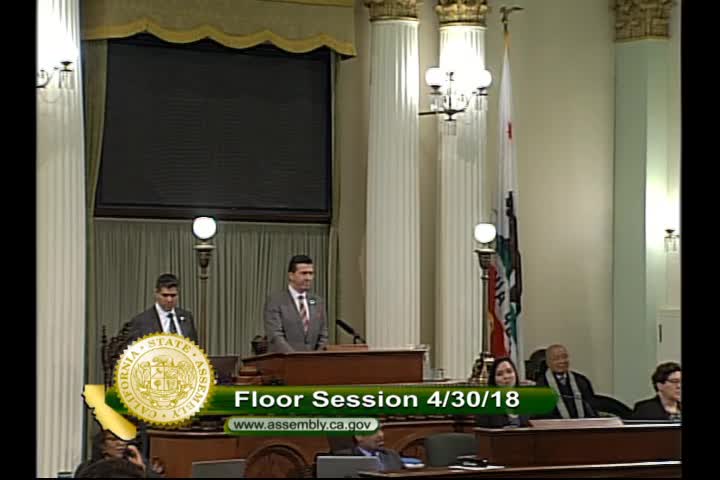 5MIN
Assembly Floor
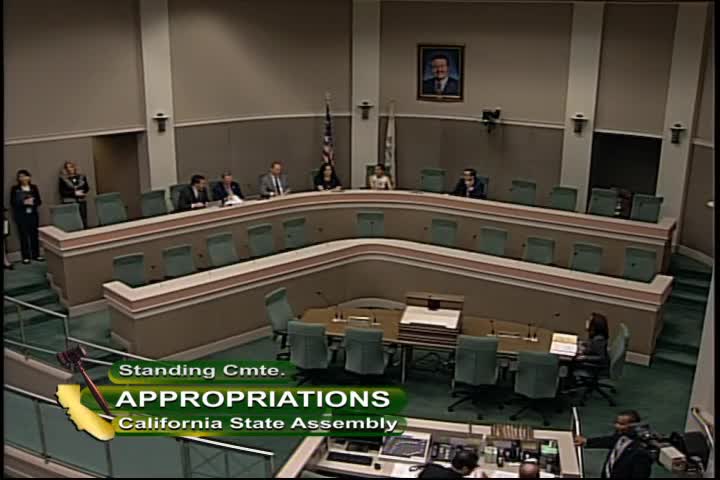 2MIN
Assembly Standing Committee on Appropriations
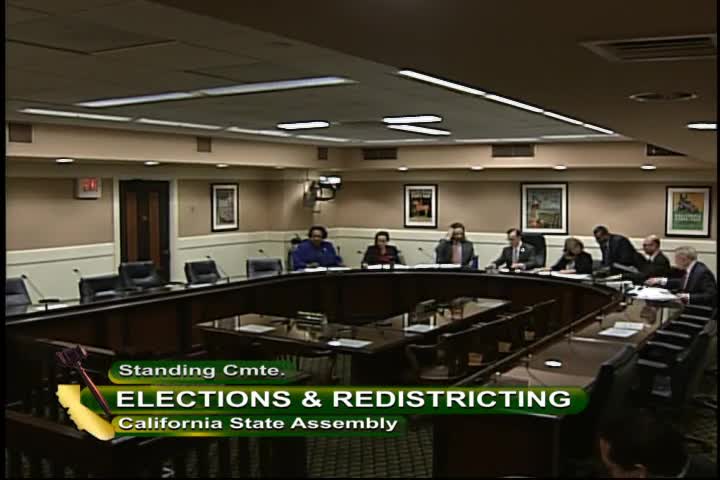 22MIN
Assembly Standing Committee on Elections and Redistricting
Bill Author

Bill Co-Author(s):