AB 1953: Skilled nursing facilities: disclosure of interests in business providing services.
- Session Year: 2017-2018
- House: Assembly
- Latest Version Date: 2018-09-14
Existing law requires each applicant for a license to operate a skilled nursing facility or intermediate care facility to disclose to the State Department of Public Health, among other things, the names and addresses of any person or organization, or both, having an ownership or control interest of 5% or more in a management company that operates, or is proposed to operate, the facility.
Existing law requires an organization that operates, conducts, owns, or maintains a health facility, and the officers of the health facility, to make and file with the Office of Statewide Health Planning and Development, at the times as the office requires, a report that includes certain accounting information, including, but not limited to, a balance sheet detailing assets, liabilities, and net worth of the health facility, a statement of income, expenses, and operating surplus or deficit, and a statement of cashflows. Existing law provides civil penalties for a violation of that provision.
As part of that report, effective January 1, 2020, this bill would require an organization that operates, conducts, owns, or maintains a skilled nursing facility to additionally report to the office whether the licensee, or a general partner, director, or officer of the licensee, has an ownership or control interest of 5% or more in a related party, as defined, that provides any service to the skilled nursing facility. The bill would specifically require the licensee under those circumstances to disclose all services provided to the skilled nursing facility, the number of individuals who provide that service at the skilled nursing facility, and any other information requested by the office. If goods, fees, and services collectively worth $10,000 or more per year are to be delivered to the skilled nursing facility, the bill would require the disclosure to include the related partys profit and loss statement and the Payroll-Based Journal public use data of the previous quarter for the skilled nursing facilitys direct caregivers.
Existing law requires each applicant for a license to operate a skilled nursing facility or intermediate care facility to disclose to the State Department of Public Health, among other things, the names and addresses of any person or organization, or both, having an ownership or control interest of 5% or more in a management company that operates, or is proposed to operate, the facility.
Existing law requires an organization that operates, conducts, owns, or maintains a health facility, and the officers of the health facility, to make and file with the Office of Statewide Health Planning and Development, at the times as the office requires, a report that includes certain accounting information, including, but not limited to, a balance sheet detailing assets, liabilities, and net worth of the health facility, a statement of income, expenses, and operating surplus or deficit, and a statement of cashflows. Existing law provides civil penalties for a violation of that provision.
As part of that report, effective January 1, 2020, this bill would require an organization that operates, conducts, owns owns, or maintains a skilled nursing facility to additionally report to the office whether the licensee, or a general partner, director, or officer of the licensee, has an ownership or control interest of 5% or more in a related party, as defined, that provides any service to the skilled nursing facility. The bill would specifically require the licensee under those circumstances to disclose all services provided to the skilled nursing facility, the number of individuals who provide that service at the skilled nursing facility, and any other information requested by the office. If goods, fees, and services collectively worth $10,000 or more per year are to be delivered to the skilled nursing facility, the bill would require the disclosure to include the related partys profit and loss statement and the Payroll-Based Journal public use data for of the previous quarter for the skilled nursing facilitys direct caregivers.
Existing law requires each applicant for a license to operate a skilled nursing facility or intermediate care facility to disclose to the State Department of Public Health, among other things, the names and addresses of any person or organization, or both, having an ownership or control interest of 5% or more in a management company that operates, or is proposed to operate, the facility. A failure to disclose this information is a basis for an action to revoke or deny a license. Existing law requires these disclosures to be available to the public, as specified, and further requires a licensee to update these disclosures to the department within 30 calendar days of a change. A violation of these provisions is a crime.
Existing law requires an organization that operates, conducts, owns, or maintains a health facility, and the officers of the health facility, to make and file with the Office of Statewide Health Planning and Development, at the times as the office requires, a report that includes certain accounting information, including, but not limited to, a balance sheet detailing assets, liabilities, and net worth of the health facility, a statement of income, expenses, and operating surplus or deficit, and a statement of cashflows. Existing law provides civil penalties for a violation of that provision.
ThisAs part of that report, effective January 1, 2020, this bill would require similar disclosures to the Office of Statewide Health Planning and Development by an applicant for a license to operate a skilled nursing facility and by an organization that operates, conducts, owns or maintains a skilled nursing facility licensee relating to additionally report to the office whether the licensee, or a general partner, director, or officer of the licensee, has an ownership or control interest of 5% or more in a related party, as defined, that provides, or is proposed to provide, provides any service to the skilled nursing facility. The bill would specifically require the applicant or licensee to disclose all services provided, or to be provided, provided to the skilled nursing facility, the number of individuals who are intended to provide that service at the skilled nursing facility facility, and any other information requested by the office. If goods, fees, and services collectively worth $10,000 or more per year are to be delivered to the skilled nursing facility, the bill would require the disclosure to include the related partys profit and loss statement and the Payroll-Based Journal public use data for the previous quarter for the skilled nursing facilitys direct caregivers.
By expanding the required disclosures by an applicant or licensee of a health care facility, the bill would expand the scope of a crime, thereby imposing a state-mandated local program.(2)The California Constitution requires the state to reimburse local agencies and school districts for certain costs mandated by the state. Statutory provisions establish procedures for making that reimbursement.This bill would provide that no reimbursement is required by this act for a specified reason.(1)Existing law requires each applicant for a license to operate a skilled nursing facility or intermediate care facility to disclose to the State Department of Public Health, among other things, the names and addresses of any person or organization, or both, having an ownership or control interest of 5% or more in a management company that operates, or is proposed to operate, the facility. A failure to disclose this information is a basis for an action to revoke or deny a license. Existing law requires these disclosures to be available to the public, as specified, and further requires a licensee to update these disclosures to the department within 30 calendar days of a change. A violation of these provisions is a crime.
This bill would require similar disclosures to the Office of Statewide Health Planning and Development by an applicant for a license to operate a skilled nursing facility and by a skilled nursing facility licensee relating to an ownership or control interest of 5% or more in a related party, as defined, that provides, or is proposed to provide, any service to the skilled nursing facility. The bill would specifically require the applicant or licensee to disclose all services provided, or to be provided, to the skilled nursing facility, the number of individuals who are intended to provide that service at the skilled nursing facility and any other information requested by the department. office. If goods, fees, and services collectively worth $10,000 or more per year are to be delivered to the skilled nursing facility, the bill would require the disclosure to include the related partys profit and loss statement and detailed information on the Payroll-Based Journal public use data for the previous quarter for the skilled nursing facilitys direct care staff, as specified. caregivers.
The bill would require a notice of any proposed change in the information required by a skilled nursing facility pursuant to any of the above-described provisions to be provided to the department in writing, and to be posted on all doors of the facility, as specified, no later than 60 days prior to the proposed change.By expanding the required disclosures by an applicant or licensee of a health care facility, the bill would expand the scope of a crime, thereby imposing a state-mandated local program.
(2)The California Constitution requires the state to reimburse local agencies and school districts for certain costs mandated by the state. Statutory provisions establish procedures for making that reimbursement.
This bill would provide that no reimbursement is required by this act for a specified reason.
(1)Existing law requires each applicant for a license to operate a skilled nursing facility or intermediate care facility to disclose to the State Department of Public Health, among other things, the names and addresses of any person or organization, or both, having an ownership or control interest of 5% or more in a management company that operates, or is proposed to operate, the facility. A failure to disclose this information is a basis for an action to revoke or deny a license. Existing law requires these disclosures to be available to the public, as specified, and further requires a licensee to update these disclosures to the state department within 30 calendar days of a change. A violation of these provisions is a crime.
This bill would require similar disclosures by an applicant for a license to operate a skilled nursing facility or and by a skilled nursing facility licensee relating to an ownership or control interest of 5% or more in a corporation, sole proprietorship, or partnership, related party, as defined, that provides, or is proposed to provide, any service to the skilled nursing facility. The bill would specifically require the applicant or licensee to disclose all services provided, or to be provided, to the skilled nursing facility, the number of individuals who are intended to provide that service at the skilled nursing facility and any other information requested by the department. By If goods, fees, and services collectively worth $10,000 or more per year are to be delivered to the skilled nursing facility, the bill would require the disclosure to include the related partys profit and loss statement and detailed information on the skilled nursing facilitys direct care staff, as specified.
The bill would require a notice of any proposed change in the information required by a skilled nursing facility pursuant to any of the above-described provisions to be provided to the department in writing, and to be posted on all doors of the facility, as specified, no later than 60 days prior to the proposed change.
By expanding the required disclosures by a an applicant or licensee of a health care facility, the bill would expand the scope of a crime, thereby imposing a state-mandated local program.
(2)The California Constitution requires the state to reimburse local agencies and school districts for certain costs mandated by the state. Statutory provisions establish procedures for making that reimbursement.
This bill would provide that no reimbursement is required by this act for a specified reason.
(1)Existing law requires each applicant for a license to operate a skilled nursing facility or intermediate care facility to disclose to the State Department of Public Health, among other things, the names and addresses of any person or organization, or both, having an ownership or control interest of 5% or more in a management company that operates, or is proposed to operate, the facility. A failure to disclose this information is a basis for an action to revoke or deny a license. Existing law requires these disclosures to be available to the public, as specified, and further requires a licensee to update these disclosures to the state department within 30 calendar days of a change.
This bill would require similar disclosures by an applicant for a license to operate a skilled nursing facility or by a skilled nursing facility licensee relating to an ownership or control interest of 5% or more in a corporation, sole proprietorship, or partnership, that provides, or is proposed to provide, any service to the skilled nursing facility. The bill would specifically require the applicant or licensee to disclose the number of individuals who are intended to provide that service at the skilled nursing facility and any other information requested by the department. By expanding the required disclosures by a licensee of a health care facility, the bill would expand the scope of a crime, thereby imposing a state-mandated local program.
(2)The California Constitution requires the state to reimburse local agencies and school districts for certain costs mandated by the state. Statutory provisions establish procedures for making that reimbursement.
This bill would provide that no reimbursement is required by this act for a specified reason.
(a)Each organization that operates, conducts, owns, or maintains a skilled nursing facility licensed pursuant to subdivision (c) of Section 1250 shall file with the office as part of the information required in subdivisions (a) to (e), inclusive, of Section 128735, whether the licensee, or a general partner, director, or officer of the licensee, has an ownership or control interest of 5 percent or more in a related party that provides any service to the skilled nursing facility. If the licensee, or the general partner, director, or officer of the licensee has such an interest, the licensee shall disclose all services provided to the skilled nursing facility, the number of individuals who provide that service at the skilled nursing facility, and any other information requested by the office. If goods, fees, and services collectively worth ten thousand dollars ($10,000) or more per year are delivered to the skilled nursing facility, the disclosure required pursuant to this subdivision shall include the related partys profit and loss statement, and the Payroll-Based Journal public use data of the previous quarter for the skilled nursing facilitys direct caregivers.
(b)For purposes of this section, all of the following definitions shall apply:
(1)Direct caregiver shall have the same meaning as that term is defined in Section 1276.65.
(2)Profit and loss statement means the most recent annual statement on profits and losses finalized by a related party for the most recent year available.
(3)Related party means an organization related to the licensee provider or that is under common ownership or control, as defined in Section 413.17(b) of Title 42 of the Code of Federal Regulations.
(c)Current licensees shall provide the information required by this section to the office in a manner prescribed by the office.
(d)The provisions of this section shall become effective on January 1, 2020.
(a)Each organization that operates, conducts, owns, or maintains a skilled nursing facility licensed pursuant to subdivision (c) of Section 1250 shall file with the office as part of the information required in subdivisions (a) to (e), inclusive, of Section 128735, whether the licensee, or a general partner, director, or officer of the licensee, has an ownership or control interest of 5 percent or more in a related party that provides any service to the skilled nursing facility. If the licensee, or the general partner, director, or officer of the licensee has such an interest, the licensee shall disclose all services provided to the skilled nursing facility, the number of individuals who provide that service at the skilled nursing facility, and any other information requested by the office. If goods, fees, and services collectively worth ten thousand dollars ($10,000) or more per year are delivered to the skilled nursing facility, the disclosure required pursuant to this subdivision shall include the related partys profit and loss statement, and the Payroll-Based Journal public use data of the previous quarter for the skilled nursing facilitys direct caregivers.
(b)For purposes of this section, all of the following definitions shall apply:
(1)Direct caregiver shall have the same meaning as that term is defined in Section 1276.65.
(2)Profit and loss statement means the most recent annual statement on profits and losses finalized by a related party for the most recent year available.
(3)Related party means any organization that the licensee is, to a significant extent, associated or affiliated with, has control of, or is controlled by. an organization related to the licensee provider or that is under common ownership or control, as defined in Section 413.17(b) of Title 42 of the Code of Federal Regulations.
(c)Current licensees shall provide the information required by this section to the office in a manner prescribed by the office.
(d)The provisions of this section shall become effective on January 1, 2020.
(a)Each organization that operates, conducts, owns, or maintains a skilled nursing facility licensed pursuant to subdivision (c) of Section 1250 shall file with the office as part of the information required in subdivisions (a) to (e), inclusive, of Section 128735, whether the licensee, or a general partner, director, or officer of the licensee, has an ownership or control interest of 5 percent or more in a related party that provides any service to the skilled nursing facility. If the licensee, or the general partner, director, or officer of the licensee has such an interest, the licensee shall disclose all services provided to the skilled nursing facility, the number of individuals who provide that service at the skilled nursing facility, and any other information requested by the office. If goods, fees, and services collectively worth ten thousand dollars ($10,000) or more per year are delivered to the skilled nursing facility, the disclosure required pursuant to this subdivision shall include the related partys profit and loss statement, and the Payroll-Based Journal public use data of the previous quarter for the skilled nursing facilitys direct caregivers.
(b)For purposes of this section, all of the following definitions shall apply:
(1)Direct caregiver shall have the same meaning as that term is defined in Section 1276.65.
(2)Profit and loss statement means the most recent annual statement on profits and losses finalized by a related party for the most recent year available.
(3)Related party means any organization that the licensee is, to a significant extent, associated or affiliated with, has control of, or is controlled by.
(c)Current licensees shall provide the information required by this section to the office in a manner prescribed by the office.
(d)The provisions of this section shall become effective on January 1, 2020.
SECTION 1.Section 1267.5 of the Health and Safety Code is amended to read:1267.5.(a)(1)Each applicant for a license to operate a skilled nursing facility or intermediate care facility shall disclose to the state department the name and business address of each general partner if the applicant is a partnership, or each director and officer if the applicant is a corporation, and each person having a beneficial ownership interest of 5 percent or more in the applicant corporation or partnership.(2)If any person described in paragraph (1) has served or currently serves as an administrator, general partner, trustee or trust applicant, sole proprietor of any applicant or licensee who is a sole proprietorship, executor, or corporate officer or director of, or has held a beneficial ownership interest of 5 percent or more in, any other skilled nursing facility or intermediate care facility or in any community care facility licensed pursuant to Chapter 3 (commencing with Section 1500) of this division, the applicant shall disclose the relationship to the state department, including the name and current or last address of the health facility or community care facility and the date the relationship commenced and, if applicable, the date it was terminated.(3)(A)If the facility is operated by, or proposed to be operated in whole or part under, a management contract, the names and addresses of any person or organization, or both, having an ownership or control interest of 5 percent or more in the management company shall be disclosed to the state department. This provision shall not apply if the management company has submitted an application for licensure with the state department and has complied with paragraph (1).(B)If the management company is a subsidiary of one or more other organizations, the information shall include the names and addresses of the parent organizations of the management company and the names and addresses of any officer or director of the parent organizations. The failure to comply with this subparagraph may result in action to revoke or deny a license. However, once the information that is required under this subparagraph is provided, the action to revoke the license shall terminate.(4)(A)Each applicant for a license to operate a skilled nursing facility, and each licensee of a skilled nursing facility, shall disclose to the Office of Statewide Health Planning and Development whether the applicant or licensee, or a general partner, director, or officer of the applicant or licensee, has an ownership or control interest of 5 percent or more in a related party that provides, or is proposed to provide, any service to the skilled nursing facility. If the applicant or licensee, or the general partner, director, or officer of the applicant or licensee, has such an interest, the applicant or licensee shall disclose all services provided, or to be provided, to the skilled nursing facility, the number of individuals who are intended to provide that service at the skilled nursing facility, and any other information requested by the office. If goods, fees, and services collectively worth ten thousand dollars ($10,000) or more per year are to be delivered to the skilled nursing facility, the disclosure required pursuant to this paragraph shall include the related partys profit and loss statement and the Payroll-Based Journal public use data of the previous quarter for the skilled nursing facilitys direct caregivers.(B)For purposes of this paragraph, all of the following definitions apply:(i)Company means any person, partnership, association, company, holding company, limited liability company, or corporation.(ii)Direct caregiver shall have the same meaning as that term is defined in Section 1276.65.(iii)Family association means a relationship by birth, marriage, or domestic partnership.(iv)Profit and loss statement means the most recent annual statement on profits and losses finalized by a related party, for the related party and the skilled nursing facility, for the most recent year available.(v)Related party means any organization that the applicant or licensee is, to a significant extent, associated or affiliated with, has control of, or is controlled by.(C)The information required by this paragraph shall be provided to the office on the same reporting form for which the information specified in Section 128730 is reported.(5)If the applicant or licensee is a subsidiary of one or more other organizations, the information shall include the names and addresses of the parent organizations of the subsidiary and the names and addresses of any officer or director of the parent organizations.(6)The information required by paragraphs (1) to (3), inclusive, and the information required by paragraph (4) shall be provided to the state department and the office, respectfully, upon initial application for licensure, and any change in the information shall be provided to the state department or the office, as appropriate, within 30 calendar days of that change.(7)Except as provided in subparagraph (B) of paragraph (3), the failure to comply with this section may result in action to revoke or deny a license.(8)The information required by this section shall be made available to the public upon request, shall be included in the public file of the facility, and by July 1, 2002, shall be included in the departments automated certification licensing administration information management system.(b)On and after January 1, 1990, no person may acquire a beneficial interest of 5 percent or more in any corporation or partnership licensed to operate a skilled nursing facility or intermediate care facility, or in any management company under contract with a licensee of a skilled nursing facility or intermediate care facility, nor may any person become an officer or director of, or general partner in, a corporation, partnership, or management company of this type without the prior written approval of the state department. Each application for departmental approval pursuant to this subdivision shall include the information specified in subdivision (a) as regards the person for whom the application is made.The state department shall approve or disapprove the application within 30 days after receipt thereof, unless the state department, with just cause, extends the application review period beyond 30 days.(c)The state department may deny approval of a license application or of an application for approval under subdivision (b) if a person named in the application, as required by this section, was an officer, director, general partner, or owner of a 5-percent or greater beneficial interest in a licensee of, or in a management company under contract with a licensee of, a skilled nursing facility, intermediate care facility, community care facility, or residential care facility for the elderly at a time when one or more violations of law were committed therein that resulted in suspension or revocation of its license, or at a time when a court-ordered receiver was appointed pursuant to Section 1327, or at a time when a final Medi-Cal decertification action was taken under federal law. However, the prior suspension, revocation, or court-ordered receivership of a license shall not be grounds for denial of the application if the applicant shows to the satisfaction of the state department (1) that the person in question took every reasonably available action to prevent the violation or violations that resulted in the disciplinary action and (2) that he or she took every reasonably available action to correct the violation or violations once he or she knew, or with the exercise of reasonable diligence should have known of, the violation or violations.(d)No application shall be denied pursuant to this section until the state department first (1) provides the applicant with notice in writing of grounds for the proposed denial of application, and (2) affords the applicant an opportunity to submit additional documentary evidence in opposition to the proposed denial.(e)Nothing in this section shall cause any individual to be personally liable for any civil penalty assessed pursuant to Chapter 2.4 (commencing with Section 1417) or create any new criminal or civil liability contrary to general laws limiting that liability.(f)This section shall not apply to a bank, trust company, financial institution, title insurer, controlled escrow company, or underwritten title company to which a license is issued in a fiduciary capacity.(g)As used in this section, person has the same meaning as specified in Section 19.(h)This section shall not apply to the directors of a nonprofit corporation exempt from taxation under Section 23701d of the Revenue and Taxation Code that operates a skilled nursing facility or intermediate care facility in conjunction with a licensed residential facility, where the directors serve without financial compensation and are not compensated by the nonprofit corporation in any other capacity.SEC. 2.No reimbursement is required by this act pursuant to Section 6 of Article XIIIB of the California Constitution because the only costs that may be incurred by a local agency or school district will be incurred because this act creates a new crime or infraction, eliminates a crime or infraction, or changes the penalty for a crime or infraction, within the meaning of Section 17556 of the Government Code, or changes the definition of a crime within the meaning of Section 6 of Article XIIIB of the California Constitution.(a)(1)Each applicant for a license to operate a skilled nursing facility or intermediate care facility shall disclose to the state department the name and business address of each general partner if the applicant is a partnership, or each director and officer if the applicant is a corporation, and each person having a beneficial ownership interest of 5 percent or more in the applicant corporation or partnership.
(2)If any person described in paragraph (1) has served or currently serves as an administrator, general partner, trustee or trust applicant, sole proprietor of any applicant or licensee who is a sole proprietorship, executor, or corporate officer or director of, or has held a beneficial ownership interest of 5 percent or more in, any other skilled nursing facility or intermediate care facility or in any community care facility licensed pursuant to Chapter 3 (commencing with Section 1500) of this division, the applicant shall disclose the relationship to the state department, including the name and current or last address of the health facility or community care facility and the date the relationship commenced and, if applicable, the date it was terminated.
(3)(A)If the facility is operated by, or proposed to be operated in whole or part under, a management contract, the names and addresses of any person or organization, or both, having an ownership or control interest of 5 percent or more in the management company shall be disclosed to the state department. This provision shall not apply if the management company has submitted an application for licensure with the state department and has complied with paragraph (1).
(B)If the management company is a subsidiary of one or more other organizations, the information shall include the names and addresses of the parent organizations of the management company and the names and addresses of any officer or director of the parent organizations. The failure to comply with this subparagraph may result in action to revoke or deny a license. However, once the information that is required under this subparagraph is provided, the action to revoke the license shall terminate.
(4)(A)Each applicant for a license to operate a skilled nursing facility, and each licensee of a skilled nursing facility, shall disclose to the state department Office of Statewide Health Planning and Development whether the applicant or licensee, or a general partner, director, or officer of the applicant or licensee, has an ownership or control interest of 5 percent or more in a related party that provides, or is proposed to provide, any service to the skilled nursing facility. If the applicant or licensee, or the general partner, director, or officer of the applicant or licensee, has such an interest, the applicant or licensee shall disclose all services provided, or to be provided, to the skilled nursing facility, the number of individuals who are intended to provide that service at the skilled nursing facility, and any other information requested by the department. office. If goods, fees, and services collectively worth ten thousand dollars ($10,000) or more per year are to be delivered to the skilled nursing facility, the disclosure required pursuant to this paragraph shall include the related partys profit and loss statement and detailed information on the Payroll-Based Journal public use data of the previous quarter for the skilled nursing facilitys direct care staff, including, but not limited to, regular hours and wages, overtime hours and wages, and employee health and welfare benefits, but excluding personal identifying information of the direct care staff. caregivers.
(B)For purposes of this paragraph, all of the following definitions apply:
(i)Company means any person, partnership, association, company, holding company, limited liability company, or corporation.
(ii)Direct care staff means all skilled nursing facility staff who are trained and experienced in the care of residents of the skilled nursing facility and who directly provide program and nursing services to residents. Administrative and licensed personnel shall be considered direct care staff when directly providing program and nursing services to residents.(ii)Direct caregiver shall have the same meaning as that term is defined in Section 1276.65.
(iii)Family association means a relationship by birth, marriage, or domestic partnership.
(iv)Profit and loss statement means the most recent annual statement on profits and losses finalized by a related party, for the related party and the skilled nursing facility, for the most recent year available.
(v)Related party includes, but is not limited to, any company related to the applicant or licensee through family association, common ownership, or control or business association with any of the owners, operators, or officials of the applicant or licensee.(v)Related party means any organization that the applicant or licensee is, to a significant extent, associated or affiliated with, has control of, or is controlled by.
(C)The information required by this paragraph shall be provided to the office on the same reporting form for which the information specified in Section 128730 is reported.
(5)If the applicant or licensee is a subsidiary of one or more other organizations, the information shall include the names and addresses of the parent organizations of the subsidiary and the names and addresses of any officer or director of the parent organizations.
(6)The information required by this subdivision paragraphs (1) to (3), inclusive, and the information required by paragraph (4) shall be provided to the state department and the office, respectfully, upon initial application for licensure. For purposes of an intermediate care facility, licensure, and any change in the information shall be provided to the state department or the office, as appropriate, within 30 calendar days of that change. For purposes of a skilled nursing facility, a notice of any proposed change in the information shall be provided to the department in writing no later than 60 days prior to the proposed change, and a notice of the proposed change shall also be posted on all doors providing ingress to, or egress from, the facility no later than 60 days prior to the proposed change.
(7)Except as provided in subparagraph (B) of paragraph (3), the failure to comply with this section may result in action to revoke or deny a license.
(8)The information required by this section shall be made available to the public upon request, shall be included in the public file of the facility, and by July 1, 2002, shall be included in the departments automated certification licensing administration information management system.
(b)On and after January 1, 1990, no person may acquire a beneficial interest of 5 percent or more in any corporation or partnership licensed to operate a skilled nursing facility or intermediate care facility, or in any management company under contract with a licensee of a skilled nursing facility or intermediate care facility, nor may any person become an officer or director of, or general partner in, a corporation, partnership, or management company of this type without the prior written approval of the state department. Each application for departmental approval pursuant to this subdivision shall include the information specified in subdivision (a) as regards the person for whom the application is made.
The state department shall approve or disapprove the application within 30 days after receipt thereof, unless the state department, with just cause, extends the application review period beyond 30 days.
(c)The state department may deny approval of a license application or of an application for approval under subdivision (b) if a person named in the application, as required by this section, was an officer, director, general partner, or owner of a 5-percent or greater beneficial interest in a licensee of, or in a management company under contract with a licensee of, a skilled nursing facility, intermediate care facility, community care facility, or residential care facility for the elderly at a time when one or more violations of law were committed therein that resulted in suspension or revocation of its license, or at a time when a court-ordered receiver was appointed pursuant to Section 1327, or at a time when a final Medi-Cal decertification action was taken under federal law. However, the prior suspension, revocation, or court-ordered receivership of a license shall not be grounds for denial of the application if the applicant shows to the satisfaction of the state department (1) that the person in question took every reasonably available action to prevent the violation or violations that resulted in the disciplinary action and (2) that he or she took every reasonably available action to correct the violation or violations once he or she knew, or with the exercise of reasonable diligence should have known of, the violation or violations.
(d)No application shall be denied pursuant to this section until the state department first (1) provides the applicant with notice in writing of grounds for the proposed denial of application, and (2) affords the applicant an opportunity to submit additional documentary evidence in opposition to the proposed denial.
(e)Nothing in this section shall cause any individual to be personally liable for any civil penalty assessed pursuant to Chapter 2.4 (commencing with Section 1417) or create any new criminal or civil liability contrary to general laws limiting that liability.
(f)This section shall not apply to a bank, trust company, financial institution, title insurer, controlled escrow company, or underwritten title company to which a license is issued in a fiduciary capacity.
(g)As used in this section, person has the same meaning as specified in Section 19.
(h)This section shall not apply to the directors of a nonprofit corporation exempt from taxation under Section 23701d of the Revenue and Taxation Code that operates a skilled nursing facility or intermediate care facility in conjunction with a licensed residential facility, where the directors serve without financial compensation and are not compensated by the nonprofit corporation in any other capacity.
SEC. 2.No reimbursement is required by this act pursuant to Section 6 of Article XIIIB of the California Constitution because the only costs that may be incurred by a local agency or school district will be incurred because this act creates a new crime or infraction, eliminates a crime or infraction, or changes the penalty for a crime or infraction, within the meaning of Section 17556 of the Government Code, or changes the definition of a crime within the meaning of Section 6 of Article XIIIB of the California Constitution.
(a)(1)Each applicant for a license to operate a skilled nursing facility or intermediate care facility shall disclose to the state department the name and business address of each general partner if the applicant is a partnership, or each director and officer if the applicant is a corporation, and each person having a beneficial ownership interest of 5 percent or more in the applicant corporation or partnership.
(2)If any person described in paragraph (1) has served or currently serves as an administrator, general partner, trustee or trust applicant, sole proprietor of any applicant or licensee who is a sole proprietorship, executor, or corporate officer or director of, or has held a beneficial ownership interest of 5 percent or more in, any other skilled nursing facility or intermediate care facility or in any community care facility licensed pursuant to Chapter 3 (commencing with Section 1500) of this division, the applicant shall disclose the relationship to the state department, including the name and current or last address of the health facility or community care facility and the date the relationship commenced and, if applicable, the date it was terminated.
(3)(A)If the facility is operated by, or proposed to be operated in whole or part under, a management contract, the names and addresses of any person or organization, or both, having an ownership or control interest of 5 percent or more in the management company shall be disclosed to the state department. This provision shall not apply if the management company has submitted an application for licensure with the state department and has complied with paragraph (1).
(B)If the management company is a subsidiary of one or more other organizations, the information shall include the names and addresses of the parent organizations of the management company and the names and addresses of any officer or director of the parent organizations. The failure to comply with this subparagraph may result in action to revoke or deny a license. However, once the information that is required under this subparagraph is provided, the action to revoke the license shall terminate.
(4)(A)Each applicant for a license to operate a skilled nursing facility facility, and each licensee of a skilled nursing facility, shall disclose to the state department whether the applicant or licensee, or a general partner, director, or officer of the applicant, applicant or licensee, has an ownership or control interest of 5 percent or more in a corporation, sole proprietorship, or partnership, related party that provides, or is proposed to provide, any service to the skilled nursing facility. If the applicant or licensee, or the general partner, director, or officer of the applicant or licensee, has such an interest, the applicant or licensee shall disclose all services provided, or to be provided, to the skilled nursing facility, the number of individuals who are intended to provide that service at the skilled nursing facility, and any other information requested by the department. If goods, fees, and services collectively worth ten thousand dollars ($10,000) or more per year are to be delivered to the skilled nursing facility, the disclosure required pursuant to this paragraph shall include the related partys profit and loss statement and detailed information on the skilled nursing facilitys direct care staff, including, but not limited to, regular hours and wages, overtime hours and wages, and employee health and welfare benefits, but excluding personal identifying information of the direct care staff.
(B)For purposes of this paragraph, all of the following definitions apply:
(i)Company means any person, partnership, association, company, holding company, limited liability company, or corporation.
(ii)Direct care staff means all skilled nursing facility staff who are trained and experienced in the care of residents of the skilled nursing facility and who directly provide program and nursing services to residents. Administrative and licensed personnel shall be considered direct care staff when directly providing program and nursing services to residents.
(iii)Family association means a relationship by birth, marriage, or domestic partnership.
(iv)Profit and loss statement means the most recent annual statement on profits and losses finalized by a related party, for the related party and the skilled nursing facility, for the most recent year available.
(v)Related party includes, but is not limited to, any company related to the applicant or licensee through family association, common ownership, or control or business association with any of the owners, operators, or officials of the applicant or licensee.
(5)If the applicant or licensee is a subsidiary of one or more other organizations, the information shall include the names and addresses of the parent organizations of the subsidiary and the names and addresses of any officer or director of the parent organizations.
(6)The information required by this subdivision shall be provided to the state department upon initial application for licensure, and licensure. For purposes of an intermediate care facility, any change in the information shall be provided to the state department within 30 calendar days of that change. For purposes of a skilled nursing facility, a notice of any proposed change in the information shall be provided to the department in writing no later than 60 days prior to the proposed change, and a notice of the proposed change shall also be posted on all doors providing ingress to, or egress from, the facility no later than 60 days prior to the proposed change.
(7)Except as provided in subparagraph (B) of paragraph (3), the failure to comply with this section may result in action to revoke or deny a license.
(8)The information required by this section shall be made available to the public upon request, shall be included in the public file of the facility, and by July 1, 2002, shall be included in the departments automated certification licensing administration information management system.
(b)On and after January 1, 1990, no person may acquire a beneficial interest of 5 percent or more in any corporation or partnership licensed to operate a skilled nursing facility or intermediate care facility, or in any management company under contract with a licensee of a skilled nursing facility or intermediate care facility, nor may any person become an officer or director of, or general partner in, a corporation, partnership, or management company of this type without the prior written approval of the state department. Each application for departmental approval pursuant to this subdivision shall include the information specified in subdivision (a) as regards the person for whom the application is made.
The state department shall approve or disapprove the application within 30 days after receipt thereof, unless the state department, with just cause, extends the application review period beyond 30 days.
(c)The state department may deny approval of a license application or of an application for approval under subdivision (b) if a person named in the application, as required by this section, was an officer, director, general partner, or owner of a 5-percent or greater beneficial interest in a licensee of, or in a management company under contract with a licensee of, a skilled nursing facility, intermediate care facility, community care facility, or residential care facility for the elderly at a time when one or more violations of law were committed therein that resulted in suspension or revocation of its license, or at a time when a court-ordered receiver was appointed pursuant to Section 1327, or at a time when a final Medi-Cal decertification action was taken under federal law. However, the prior suspension, revocation, or court-ordered receivership of a license shall not be grounds for denial of the application if the applicant shows to the satisfaction of the state department (1) that the person in question took every reasonably available action to prevent the violation or violations that resulted in the disciplinary action and (2) that he or she took every reasonably available action to correct the violation or violations once he or she knew, or with the exercise of reasonable diligence should have known of, the violation or violations.
(d)No application shall be denied pursuant to this section until the state department first (1) provides the applicant with notice in writing of grounds for the proposed denial of application, and (2) affords the applicant an opportunity to submit additional documentary evidence in opposition to the proposed denial.
(e)Nothing in this section shall cause any individual to be personally liable for any civil penalty assessed pursuant to Chapter 2.4 (commencing with Section 1417) or create any new criminal or civil liability contrary to general laws limiting that liability.
(f)This section shall not apply to a bank, trust company, financial institution, title insurer, controlled escrow company, or underwritten title company to which a license is issued in a fiduciary capacity.
(g)As used in this section, person has the same meaning as specified in Section 19.
(h)This section shall not apply to the directors of a nonprofit corporation exempt from taxation under Section 23701d of the Revenue and Taxation Code that operates a skilled nursing facility or intermediate care facility in conjunction with a licensed residential facility, where the directors serve without financial compensation and are not compensated by the nonprofit corporation in any other capacity.
SEC. 2.No reimbursement is required by this act pursuant to Section 6 of Article XIIIB of the California Constitution because the only costs that may be incurred by a local agency or school district will be incurred because this act creates a new crime or infraction, eliminates a crime or infraction, or changes the penalty for a crime or infraction, within the meaning of Section 17556 of the Government Code, or changes the definition of a crime within the meaning of Section 6 of Article XIIIB of the California Constitution.
(a) (1) Each applicant for a license to operate a skilled nursing facility or intermediate care facility shall disclose to the state department the name and business address of each general partner if the applicant is a partnership, or each director and officer if the applicant is a corporation, and each person having a beneficial ownership interest of 5 percent or more in the applicant corporation or partnership.
(2) If any person described in paragraph (1) has served or currently serves as an administrator, general partner, trustee or trust applicant, sole proprietor of any applicant or licensee who is a sole proprietorship, executor, or corporate officer or director of, or has held a beneficial ownership interest of 5 percent or more in, any other skilled nursing facility or intermediate care facility or in any community care facility licensed pursuant to Chapter 3 (commencing with Section 1500) of this division, the applicant shall disclose the relationship to the state department, including the name and current or last address of the health facility or community care facility and the date the relationship commenced and, if applicable, the date it was terminated.
(3) (A) If the facility is operated by, or proposed to be operated in whole or part under, a management contract, the names and addresses of any person or organization, or both, having an ownership or control interest of 5 percent or more in the management company shall be disclosed to the state department. This provision shall not apply if the management company has submitted an application for licensure with the state department and has complied with paragraph (1).
(B) If the management company is a subsidiary of one or more other organizations, the information shall include the names and addresses of the parent organizations of the management company and the names and addresses of any officer or director of the parent organizations. The failure to comply with this subparagraph may result in action to revoke or deny a license. However, once the information that is required under this subparagraph is provided, the action to revoke the license shall terminate.
(4)Each applicant for a license to operate a skilled nursing facility shall disclose to the state department whether the applicant or a general partner, director, or officer of the applicant, has an ownership or control interest of 5 percent or more in a corporation, sole proprietorship, or partnership, that provides, or is proposed to provide, any service to the skilled nursing facility. If the applicant or general partner, director, or officer of the applicant has such an interest, the applicant shall disclose all services provided, or to be provided, to the skilled nursing facility, the number of individuals who are intended to provide that service at the skilled nursing facility, and any other information requested by the department.
(4)(5)If the applicant or licensee is a subsidiary of one or more other organizations, the information shall include the names and addresses of the parent organizations of the subsidiary and the names and addresses of any officer or director of the parent organizations.
(5)(6)The information required by this subdivision shall be provided to the state department upon initial application for licensure, and any change in the information shall be provided to the state department within 30 calendar days of that change.
(6)(7)Except as provided in subparagraph (B) of paragraph (3), the failure to comply with this section may result in action to revoke or deny a license.
(7)(8)The information required by this section shall be made available to the public upon request, shall be included in the public file of the facility, and by July 1, 2002, shall be included in the departments automated certification licensing administration information management system.
(b) On and after January 1, 1990, no person may acquire a beneficial interest of 5 percent or more in any corporation or partnership licensed to operate a skilled nursing facility or intermediate care facility, or in any management company under contract with a licensee of a skilled nursing facility or intermediate care facility, nor may any person become an officer or director of, or general partner in, a corporation, partnership, or management company of this type without the prior written approval of the state department. Each application for departmental approval pursuant to this subdivision shall include the information specified in subdivision (a) as regards the person for whom the application is made.
The state department shall approve or disapprove the application within 30 days after receipt thereof, unless the state department, with just cause, extends the application review period beyond 30 days.
(c) The state department may deny approval of a license application or of an application for approval under subdivision (b) if a person named in the application, as required by this section, was an officer, director, general partner, or owner of a 5-percent or greater beneficial interest in a licensee of, or in a management company under contract with a licensee of, a skilled nursing facility, intermediate care facility, community care facility, or residential care facility for the elderly at a time when one or more violations of law were committed therein that resulted in suspension or revocation of its license, or at a time when a court-ordered receiver was appointed pursuant to Section 1327, or at a time when a final Medi-Cal decertification action was taken under federal law. However, the prior suspension, revocation, or court-ordered receivership of a license shall not be grounds for denial of the application if the applicant shows to the satisfaction of the state department (1) that the person in question took every reasonably available action to prevent the violation or violations that resulted in the disciplinary action and (2) that he or she took every reasonably available action to correct the violation or violations once he or she knew, or with the exercise of reasonable diligence should have known of, the violation or violations.
(d) No application shall be denied pursuant to this section until the state department first (1) provides the applicant with notice in writing of grounds for the proposed denial of application, and (2) affords the applicant an opportunity to submit additional documentary evidence in opposition to the proposed denial.
(e) Nothing in this section shall cause any individual to be personally liable for any civil penalty assessed pursuant to Chapter 2.4 (commencing with Section 1417) or create any new criminal or civil liability contrary to general laws limiting that liability.
(f) This section shall not apply to a bank, trust company, financial institution, title insurer, controlled escrow company, or underwritten title company to which a license is issued in a fiduciary capacity.
(g) As used in this section, person has the same meaning as specified in Section 19.
(h) This section shall not apply to the directors of a nonprofit corporation exempt from taxation under Section 23701d of the Revenue and Taxation Code that operates a skilled nursing facility or intermediate care facility in conjunction with a licensed residential facility, where the directors serve without financial compensation and are not compensated by the nonprofit corporation in any other capacity.
SEC. 2.No reimbursement is required by this act pursuant to Section 6 of Article XIIIB of the California Constitution because the only costs that may be incurred by a local agency or school district will be incurred because this act creates a new crime or infraction, eliminates a crime or infraction, or changes the penalty for a crime or infraction, within the meaning of Section 17556 of the Government Code, or changes the definition of a crime within the meaning of Section 6 of Article XIIIB of the California Constitution.
|
Date
|
Status
|
|---|---|
| Sep 14, 2018 | Chaptered by Secretary of State - Chapter 383, Statutes of 2018. |
| Sep 14, 2018 | Approved by the Governor. |
| Sep 6, 2018 | Enrolled and presented to the Governor at 3 p.m. |
| Aug 29, 2018 | Assembly Rule 77 suspended. |
| Aug 28, 2018 | In Assembly. Concurrence in Senate amendments pending. May be considered on or after August 30 pursuant to Assembly Rule 77. |
| Aug 28, 2018 | Read third time. Passed. Ordered to the Assembly. |
| Aug 22, 2018 | Read second time. Ordered to third reading. |
| Aug 21, 2018 | Read third time and amended. Ordered to second reading. |
| Aug 17, 2018 | From committee: Do pass. (Ayes 5. Noes 0.) (August 16). |
| Aug 13, 2018 | In committee: Referred to APPR. suspense file. |
| Aug 6, 2018 | In committee: Hearing postponed by committee. |
| Aug 6, 2018 | From committee chair, with author's amendments: Amend, and re-refer to committee. Read second time, amended, and re-referred to Com. on APPR. |
| Jun 25, 2018 | Read second time and amended. Re-referred to Com. on APPR. |
| Jun 21, 2018 | From committee: Amend, and do pass as amended and re-refer to Com. on APPR. (Ayes 8. Noes 0.) (June 20). |
| Jun 4, 2018 | From committee chair, with author's amendments: Amend, and re-refer to committee. Read second time, amended, and re-referred to Com. on HEALTH. |
| May 10, 2018 | Referred to Com. on HEALTH. |
| Apr 30, 2018 | In Senate. Read first time. To Com. on RLS. for assignment. |
| Apr 30, 2018 | Read third time. Passed. Ordered to the Senate. |
| Apr 26, 2018 | Read second time. Ordered to third reading. |
| Apr 25, 2018 | From committee: Do pass. (Ayes 12. Noes 5.) (April 25). |
| Apr 18, 2018 | From committee: Do pass and re-refer to Com. on APPR. (Ayes 12. Noes 0.) (April 17). Re-referred to Com. on APPR. |
| Feb 8, 2018 | Referred to Com. on HEALTH. |
| Jan 30, 2018 | From printer. May be heard in committee March 1. |
| Jan 29, 2018 | Read first time. To print. |
|
Date
|
Description
|
Location
|
Votes
|
|
|---|---|---|---|---|
| Aug 29, 2018 | AB 1953 WOOD Concurrence in Senate Amendments | Assembly Floor |
Passed |
|
| Aug 28, 2018 | Assembly 3rd Reading AB1953 Wood By McGuire | Senate Floor |
Passed |
|
| Aug 16, 2018 | Do pass | Senate Standing Committee on Appropriations |
Passed |
|
| Aug 13, 2018 | Placed on suspense file | Senate Standing Committee on Appropriations |
Passed |
|
| Jun 20, 2018 | Do pass as amended, but first amend, and re-refer to the Committee on [Appropriations] | Senate Standing Committee on Health |
Passed |
|
| Apr 30, 2018 | AB 1953 WOOD Assembly Third Reading | Assembly Floor |
Passed |
|
| Apr 25, 2018 | Do pass. | Assembly Standing Committee on Appropriations |
Passed |
|
| Apr 17, 2018 | Do pass and be re-referred to the Committee on [Appropriations] | Assembly Standing Committee on Health |
Passed |
This list shows positions taken on this bill by organizations on the date displayed, which is linked to the original source.
Positions by individuals are not included.
|
Organization
|
Position
|
Date
|
|---|---|---|
| AARP California | ** Support | Aug 22, 2018 |
| Association Of Regional Center Agencies | ** Support | Aug 22, 2018 |
| California Alliance For Retired Americans | ** Support | Aug 22, 2018 |
| California Commission on Aging | ** Support | Aug 22, 2018 |
| California Council For The Advancement Of Pharmacy | ** Support | Aug 22, 2018 |
| California Long-Term Care Ombudsman Association | ** Support | Aug 22, 2018 |
| Congress of California Seniors | ** Support | Aug 22, 2018 |
| Consumer Attorneys Of California | ** Support | Aug 22, 2018 |
| SEIU California | ** Support | Aug 22, 2018 |
CONCURRENCE IN SENATE AMENDMENTS
CSA1 Bill Id:AB 1953
Author:(Wood)
As Amended Ver:August 21, 2018
Majority vote
ASSEMBLY: | 58-15 | (April 30, 2018) | SENATE: | 37-0 | (August 28, 2018) |
Original Committee Reference: HEALTH
SUMMARY: Expands the disclosure requirements that applicants for a skilled nursing facility (SNF) license must make to the Department of Public Health (DPH) to include whether or not the applicant or a general partner, director, or officer of the applicant has an ownership or control interest of 5% or more in a corporation, sole proprietorship, or partnership that provides any service to the SNF. Requires an applicant, with such interest, to disclose all services provided to the SNF, the number of individuals who are intended to provide that service at the SNF, and any other information requested by DPH.
The Senate amendments limit the disclosure requirements to current SNF licensees; move required reporting from DPH to the Office of Statewide Health Planning and Development (OSHPD); revise the definition of "related party" to conform to federal regulations; and, delay implementation to January 1, 2020.
FISCAL EFFECT: According to the Senate Appropriations Committee, costs to OSHPD as follows:
- One-time $113,000 (Health Data and Planning Fund) in fiscal year (FY) 2019-20 and $101,000 (Health Data and Planning Fund), ongoing, for 1.0 permanent, full-time Health Program Auditor II to assist in development of regulations and accounting system changes, as well as reviewing submitted data to ensure consistency with OSHPD's accounting and reporting system. Staff notes a corresponding increase in expenditure authority would be needed to account for the cost of increased expenditures.
- One-time information technology contracting resources for project management and business analysis of $75,000 (Health Data and Planning Fund) in FY 2019-20 and system software development and engineering at a cost of $175,000 (Health Data and Planning Fund).
- Increase in expenditure authority for the Health Planning and Data Fund, in a commensurate amount to pay for the cost of additional resources.
COMMENTS: According to the author, the majority of SNFs in California are operated by large companies. In what has become an increasingly common business arrangement, owners of nursing homes outsource a wide variety of goods and services to companies in which they have a financial interest or control. According to an analysis of nursing home financial records by Kaiser Health News, nearly three-quarters of nursing homes in the United States (more than 11,000) have such business dealings, known as related party transactions. Some homes even contract out basic functions like management or rent their own building from a sister corporation, saying it is simply an efficient way of running businesses and can help minimize taxes. However, these arrangements offer another advantage: owners can establish highly favorable contracts in which their nursing homes pay more than what might be paid in a competitive market. Owners then siphon off higher profits, which are not recorded on the nursing home's accounts. In 2015, nursing homes paid related companies $11 billion, a tenth of their spending, according to financial disclosures the homes submitted to Medicare. A Kaiser Health News analysis of federal inspection and quality records reveals that nursing homes that outsource to related organizations tend to have significant shortcomings: they have fewer nurses and aides per patient, they have higher rates of patient injuries and unsafe practices, and they are the subject of complaints almost twice as often as independent homes. The author concludes that this bill will provide additional information regarding the prevalence and cost of SNF's related party transactions in California.
Under existing law, DPH, Department of Health Care Services (DHCS), and OSHPD each play a role in establishing the rate-setting methodology for SNFs, overseeing SNFs' reimbursements, licensing and certifying SNFs for Medi-Cal reimbursements, overseeing SNFs facilities costs or other reporting requirements related to Medi-Cal payments. For example, DPH ensures compliance with state and federal regulation in its role as the state survey agency for the Centers for Medicare and Medicaid Services for which it certifies facilities to receive Medicare and Medi-Cal reimbursements and investigates complaints about long-term care facilities. DHCS administers the Medi-Cal rate-setting system that reflects the costs and staffing levels associated with quality of care for residents in SNFs. DPH works in partnership with DHCS in implementing the SNF Quality and Accountability Program, which encourages and incentivizes SNFs to implement quality improvements.
Finally, OSHPD is the single state agency tasked with collecting a variety of health facility or clinic data for use by all state agencies. The data collected includes, among other things, data required by the Medi-Cal cost reports. One of the elements required to be reported by health facilities, including SNFs, are certain related party transactions. This information is reported on OSHPDs "Long-Term Care Facility Integrated Disclosure and Medi-Cal Cost Report Form." However, it is unclear whether any reporting forms require the SNFs to indicate whether related-party transactions were negotiated at arm's length and/or reflect prevailing market rates.
Analysis Prepared by: Lara Flynn / HEALTH / (916) 319-2097 FN: 0005031
Office of Senate Floor Analyses (916) 651-1520 Fax: (916) 327-4478 | AB 1953 |
THIRD READING
Bill No: AB 1953
Amended: 8/21/18 in Senate
SENATE HEALTH COMMITTEE: 8-0, 6/20/18
AYES: Pan, Nguyen, Beall, Hernandez, Leyva, Mitchell, Monning, Roth
NO VOTE RECORDED: Nielsen
SENATE APPROPRIATIONS COMMITTEE: 5-0, 8/16/18
AYES: Portantino, Beall, Bradford, Hill, Wiener
NO VOTE RECORDED: Bates, Nielsen
ASSEMBLY FLOOR: 58-15, 4/30/18 - See last page for vote
SUBJECT: Skilled nursing facilities: disclosure of interests in business providing services
DIGEST:
This bill requires skilled nursing facilities (SNFs) to disclose to the Office of Statewide Health Planning and Development (OSHPD) whether the SNF, or any partner, director or officer of the SNF, has an ownership or control interest of 5% or more in a related party that provides any service to the SNF.
Senate Floor Amendments of 8/21/18 clarify the definition of “related party” by cross-referencing specified federal regulations.
Existing law:
- Provides for the licensure of health facilities, including skilled nursing facilities (SNFs), and intermediate care facilities (ICFs) by the Department of Public Health (DPH). [HSC §1250, et seq.]
- Defines a “SNF” as a health facility that provides skilled nursing care and supportive care to patients whose primary need is for availability of skilled nursing care on an extended basis. [HSC §1250(c)]
- Defines an “ICF” as a health facility that provides inpatient care to ambulatory or nonambulatory patients who have recurring need for skilled nursing supervision and need supportive care, but who do not require availability of continuous skilled nursing care. [HSC §1250(d)]
- Requires each applicant for a license to operate a SNF or ICF to disclose to DPH the name and business address of each general partner if the applicant is a partnership, or each director and officer if the applicant is a corporation, and each person having a beneficial ownership interest of 5% or more. Requires any of these persons who have ever been an administrator or corporate officer, or have ever held an ownership interest of 5% or more in any other SNF or ICF or any licensed community care facility, to disclose this information to DPH. [HSC §1267.5(a)]
- Requires the information required in 4) above to be provided to DPH upon initial application for licensure, and any change in the information to be provided within 30 calendar days of that change. [HSC §1267.5(a)]
- Designates OSHPD as the state agency designated to collect health facility data for use by all state agencies, including data required in Medi-Cal cost reports, and various financial data reports. [HSC §128730]
This bill:
- Requires each organization that operates, conducts, owns, or maintains a SNF, to disclose to OSHPD, as part of an existing reporting requirement, whether the licensee, or a general partner, director, or officer of the licensee, has an ownership or control interest of 5% or more in a related party that provides any service to the SNF. Requires, if one of these persons has such an interest, to disclose all services provided, the number of individuals who provide that service, and any other information requested by OSHPD.
- Requires the disclosure of services provided by related parties, as described in 1) above, to include the related party’s profit and loss statement, and the Payroll-Based Journal public use data of the previous quarter for the SNF’s direct caregivers, if goods, fees, and services worth $10,000 or more per year are delivered to the SNF.
- Defines the following terms for purposes of this bill:
- “Direct caregiver” has the same meaning as it is defined in existing law pertaining to staffing ratios in SNFs;
- “Profit and loss statement” means the most recent annual statement on profits and losses finalized by a related party for the most recent year available; and,
- “Related party” is an organization related to the licensee provider or that is under common ownership or control, as defined in federal regulations, as specified.
- Requires current licensees to provide the information required by this bill to OSHPD in a manner prescribed by OSHPD.
- Delays the effective date of this bill to January 1, 2020.
Comments
- Author’s statement. According to the author, the majority of SNFs in California are operated by large companies which are increasingly outsourcing services to companies in which they have a financial interest or control. According to an analysis of nursing home financial records by Kaiser Health News, nearly three-quarters of nursing homes in the United States (more than 11,000) have such business dealings, known as related party transactions. Some homes contract out basic functions like management or rent their building from a sister corporation. These arrangements allow owners to establish highly favorable contracts in which their nursing homes pay more than what might be paid in a competitive market. Owners then siphon off higher profits, which are not recorded on the nursing home’s accounts. In 2015, nursing homes paid related parties $11 billion, a tenth of their spending, according to financial disclosures the homes submitted to Medicare. A Kaiser Health News analysis of federal inspection and quality records reveals that nursing homes that outsource to related parties tend to have significant shortcomings: they have fewer nurses and aides per patient, they have higher rates of patient injuries and unsafe practices, and they are the subject of complaints almost twice as often as independent homes. This bill will provide additional information regarding the prevalence and cost of SNF's related party transactions in California.
- California State Auditor report and related party transactions. At the request of the Joint Legislative Audit Committee, the California State Auditor published an audit of SNFs in May of 2018, subtitling the report “Absent Effective State Oversight, Substandard Quality of Care Has Continued.” The report concluded that the State has not adequately addressed ongoing deficiencies related to the quality of care that SNFs provide, and that from 2006 to 2015, the number of substandard care deficiencies that SNFs received increased by 31%, while deficiencies that caused or were likely to cause serious injury, harm, or death increased by 35%.
The State Auditor reviewed three of the largest private operators of SNFs in California: Brius, Plum, and Longwood. According to the State Auditor, while the net income of the rest of the industry in California decreased, the net income of these three companies increased by tens of millions of dollars. The State Auditor found that the owners of these three companies were able to earn income, separate from the revenue their facilities earned from Medicare, Medi-Cal, or managed care, when their facilities obtained goods and services from related parties, or other businesses that they or their family members owned or controlled. For example, related parties may provide goods such as medical supplies and equipment, laundry and linens, and food to the SNF. Related parties may also provide therapy services, maintenance services, financial consulting, and administrative services, and SNFs frequently lease their buildings from related-party property owners. These related party transactions are common in the industry, and are legally allowable, although the Centers for Medicare and Medicaid Services (CMS) and Medi-Cal take measures to limit the possibility that it might pay for profits from related party transactions. For example, the cost for such transactions are not allowed to exceed the price of comparable transactions procured elsewhere. According to the State Auditor, the three companies paid between $37.2 million and $65.7 million to related parties from 2007 through 2015; however, the report also found that the companies properly disclosed most of the potential related-party transactions, and that the Medi-Cal audit process ensured that Medi-Cal did not pay for profits realized from any of these transactions. - Payroll-Based Journal. The CMS has developed a system, called the Payroll-Based Journal (PBJ), to allow SNFs to submit staffing and census information, which is required to be reported to CMS under the Affordable Care Act. CMS uses staffing data to gauge its impact on quality of care in nursing homes, and it is used in the Nursing Home Five Star Quality Rating System to help consumers understand the level and differences of staffing in nursing homes. Beginning November 1, 2017, CMS began posting a public use file containing PBJ staffing data submitted by long-term care facilities, which includes the hours nursing staff are paid to work each day, for each facility, by category of nursing staff.
FISCAL EFFECT: Appropriation: No Fiscal Com.: Yes Local: No
According to the Senate Appropriations Committee, OSHPD notes the following:
- $113,000 (Health Data and Planning Fund) in FY 2019-20 and $101,000 (Health Data and Planning Fund), ongoing, for 1.0 permanent, full-time Health Program Auditor II to assist in development of regulations and accounting system changes, as well as reviewing submitted data to ensure consistency with OSHPD’s accounting and reporting system. Staff notes a corresponding increase in expenditure authority would be needed to account for the cost of increased expenditures.
- One-time information technology contracting resources for project management and business analysis of $75,000 (Health Data and Planning Fund) in FY 2019-20 and system software development and engineering at a cost of $175,000 (Health Data and Planning Fund).
- Increase in expenditure authority for the Health Planning and Data Fund, in a commensurate amount to pay for the cost of additional resources.
AARP California
Association of Regional Center Agencies
California Alliance for Retired Americans
California Commission on Aging
California Council for the Advancement of Pharmacy
California Long-Term Care Ombudsman Association
Congress of California Seniors
Consumer Attorneys of California
SEIU California
OPPOSITION: (Verified 8/22/18)
None received
ARGUMENTS IN SUPPORT: AARP California states in support that it strongly believes that state governments should develop and implement a standardized way in which facilities disclose the names of all parties with ownership control, or lease, financial, or operational interests in facilities. AARP California states that it supports legislation that reduces deceptive ownership and operational structuring of facilities, and that this bill increases the transparency of business practices in SNFs. The Association of Regional Center Agencies (ARCA) states in support that it is not inherently inappropriate for a licensee, through a separate business entity, to provide services for a SNF. ARCA states that the merits of this bill are that it is a data-gathering proposal and does not seek to prevent these arrangements, and instead will ensure a greater degree of information is available to the overseeing department. The California Commission on Aging (CCA) states that the sad fact is that corporate interests with poor quality ratings can easily change names or hide behind business spin-offs to continue operating in the lucrative skilled nursing field. CCA states that it supports giving regulators information on SNF ownership interests, and that this is essential in helping the state track bad actors in the field. SEIU California states in support that nursing home companies form complex corporate structures to maximize corporate profit and limit financial liability. SEIU California states that this bill would address the types of transparency and accountability concerns raised in the State Auditor report.
ASSEMBLY FLOOR: 58-15, 4/30/18
AYES: Aguiar-Curry, Arambula, Baker, Berman, Bloom, Bonta, Burke, Caballero, Calderon, Carrillo, Cervantes, Chau, Chávez, Chiu, Chu, Cooley, Cooper, Daly, Eggman, Frazier, Friedman, Eduardo Garcia, Gipson, Gloria, Gonzalez Fletcher, Gray, Grayson, Holden, Irwin, Jones-Sawyer, Kalra, Kamlager-Dove, Lackey, Levine, Limón, Low, Maienschein, McCarty, Medina, Mullin, Muratsuchi, Nazarian, O'Donnell, Quirk, Quirk-Silva, Reyes, Rodriguez, Rubio, Salas, Santiago, Steinorth, Mark Stone, Thurmond, Ting, Waldron, Weber, Wood, Rendon
NOES: Acosta, Travis Allen, Bigelow, Brough, Chen, Cunningham, Dahle, Fong, Gallagher, Harper, Kiley, Melendez, Obernolte, Patterson, Voepel
NO VOTE RECORDED: Choi, Flora, Cristina Garcia, Mathis, Mayes
Prepared by: Vincent D. Marchand / HEALTH / (916) 651-4111
8/22/18 15:00:00
Office of Senate Floor Analyses (916) 651-1520 Fax: (916) 327-4478 | AB 1953 |
THIRD READING
Bill No: AB 1953
Amended: 8/6/18 in Senate
SENATE HEALTH COMMITTEE: 8-0, 6/20/18
AYES: Pan, Nguyen, Beall, Hernandez, Leyva, Mitchell, Monning, Roth
NO VOTE RECORDED: Nielsen
SENATE APPROPRIATIONS COMMITTEE: 5-0, 8/16/18
AYES: Portantino, Beall, Bradford, Hill, Wiener
NO VOTE RECORDED: Bates, Nielsen
ASSEMBLY FLOOR: 58-15, 4/30/18 - See last page for vote
SUBJECT: Skilled nursing facilities: disclosure of interests in business providing services
DIGEST:
This bill requires skilled nursing facilities (SNFs) to disclose to the Office of Statewide Health Planning and Development (OSHPD) whether the SNF, or any partner, director or officer of the SNF, has an ownership or control interest of 5% or more in a related party that provides any service to the SNF.
Existing law:
- Provides for the licensure of health facilities, including skilled nursing facilities (SNFs), and intermediate care facilities (ICFs) by the Department of Public Health (DPH). [HSC §1250, et seq.]
- Defines a “SNF” as a health facility that provides skilled nursing care and supportive care to patients whose primary need is for availability of skilled nursing care on an extended basis. [HSC §1250(c)]
- Defines an “ICF” as a health facility that provides inpatient care to ambulatory or nonambulatory patients who have recurring need for skilled nursing supervision and need supportive care, but who do not require availability of continuous skilled nursing care. [HSC §1250(d)]
- Requires each applicant for a license to operate a SNF or ICF to disclose to DPH the name and business address of each general partner if the applicant is a partnership, or each director and officer if the applicant is a corporation, and each person having a beneficial ownership interest of 5% or more. Requires any of these persons who have ever been an administrator or corporate officer, or have ever held an ownership interest of 5% or more in any other SNF or ICF or any licensed community care facility, to disclose this information to DPH. [HSC §1267.5(a)]
- Requires the information required in 4) above to be provided to DPH upon initial application for licensure, and any change in the information to be provided within 30 calendar days of that change. [HSC §1267.5(a)]
- Designates OSHPD as the state agency designated to collect health facility data for use by all state agencies, including data required in Medi-Cal cost reports, and various financial data reports. [HSC §128730]
This bill:
- Requires each organization that operates, conducts, owns, or maintains a SNF, to disclose to OSHPD, as part of an existing reporting requirement, whether the licensee, or a general partner, director, or officer of the licensee, has an ownership or control interest of 5% or more in a related party that provides any service to the SNF. Requires, if one of these persons has such an interest, to disclose all services provided, the number of individuals who provide that service, and any other information requested by OSHPD.
- Requires the disclosure of services provided by related parties, as described in 1) above, to include the related party’s profit and loss statement, and the Payroll-Based Journal public use data of the previous quarter for the SNF’s direct caregivers, if goods, fees, and services worth $10,000 or more per year are delivered to the SNF.
- Defines the following terms for purposes of this bill:
- “Direct caregiver” has the same meaning as it is defined in existing law pertaining to staffing ratios in SNFs;
- “Profit and loss statement” means the most recent annual statement on profits and losses finalized by a related party for the most recent year available; and,
- “Related party” is any organization that the applicant or licensee is, to a significant extent, associated or affiliated with, has control of, or is controlled by.
- Requires current licensees to provide the information required by this bill to OSHPD in a manner prescribed by OSHPD.
- Delays the effective date of this bill to January 1, 2020.
Comments
- Author’s statement. According to the author, the majority of SNFs in California are operated by large companies which are increasingly outsourcing services to companies in which they have a financial interest or control. According to an analysis of nursing home financial records by Kaiser Health News, nearly three-quarters of nursing homes in the United States (more than 11,000) have such business dealings, known as related party transactions. Some homes contract out basic functions like management or rent their building from a sister corporation. These arrangements allow owners to establish highly favorable contracts in which their nursing homes pay more than what might be paid in a competitive market. Owners then siphon off higher profits, which are not recorded on the nursing home’s accounts. In 2015, nursing homes paid related parties $11 billion, a tenth of their spending, according to financial disclosures the homes submitted to Medicare. A Kaiser Health News analysis of federal inspection and quality records reveals that nursing homes that outsource to related parties tend to have significant shortcomings: they have fewer nurses and aides per patient, they have higher rates of patient injuries and unsafe practices, and they are the subject of complaints almost twice as often as independent homes. This bill will provide additional information regarding the prevalence and cost of SNF's related party transactions in California.
- California State Auditor report and related party transactions. At the request of the Joint Legislative Audit Committee, the California State Auditor published an audit of SNFs in May of 2018, subtitling the report “Absent Effective State Oversight, Substandard Quality of Care Has Continued.” The report concluded that the State has not adequately addressed ongoing deficiencies related to the quality of care that SNFs provide, and that from 2006 to 2015, the number of substandard care deficiencies that SNFs received increased by 31%, while deficiencies that caused or were likely to cause serious injury, harm, or death increased by 35%.
The State Auditor reviewed three of the largest private operators of SNFs in California: Brius, Plum, and Longwood. According to the State Auditor, while the net income of the rest of the industry in California decreased, the net income of these three companies increased by tens of millions of dollars. The State Auditor found that the owners of these three companies were able to earn income, separate from the revenue their facilities earned from Medicare, Medi-Cal, or managed care, when their facilities obtained goods and services from related parties, or other businesses that they or their family members owned or controlled. For example, related parties may provide goods such as medical supplies and equipment, laundry and linens, and food to the SNF. Related parties may also provide therapy services, maintenance services, financial consulting, and administrative services, and SNFs frequently lease their buildings from related-party property owners. These related party transactions are common in the industry, and are legally allowable, although the Centers for Medicare and Medicaid Services (CMS) and Medi-Cal take measures to limit the possibility that it might pay for profits from related party transactions. For example, the cost for such transactions are not allowed to exceed the price of comparable transactions procured elsewhere. According to the State Auditor, the three companies paid between $37.2 million and $65.7 million to related parties from 2007 through 2015; however, the report also found that the companies properly disclosed most of the potential related-party transactions, and that the Medi-Cal audit process ensured that Medi-Cal did not pay for profits realized from any of these transactions. - Payroll-Based Journal. The CMS has developed a system, called the Payroll-Based Journal (PBJ), to allow SNFs to submit staffing and census information, which is required to be reported to CMS under the Affordable Care Act. CMS uses staffing data to gauge its impact on quality of care in nursing homes, and it is used in the Nursing Home Five Star Quality Rating System to help consumers understand the level and differences of staffing in nursing homes. Beginning November 1, 2017, CMS began posting a public use file containing PBJ staffing data submitted by long-term care facilities, which includes the hours nursing staff are paid to work each day, for each facility, by category of nursing staff.
FISCAL EFFECT: Appropriation: No Fiscal Com.: Yes Local: No
According to the Senate Appropriations Committee, OSHPD notes the following:
- $113,000 (Health Data and Planning Fund) in FY 2019-20 and $101,000 (Health Data and Planning Fund), ongoing, for 1.0 permanent, full-time Health Program Auditor II to assist in development of regulations and accounting system changes, as well as reviewing submitted data to ensure consistency with OSHPD’s accounting and reporting system. Staff notes a corresponding increase in expenditure authority would be needed to account for the cost of increased expenditures.
- One-time information technology contracting resources for project management and business analysis of $75,000 (Health Data and Planning Fund) in FY 2019-20 and system software development and engineering at a cost of $175,000 (Health Data and Planning Fund).
- Increase in expenditure authority for the Health Planning and Data Fund, in a commensurate amount to pay for the cost of additional resources.
AARP California
Association of Regional Center Agencies
California Alliance for Retired Americans
California Commission on Aging
California Council for the Advancement of Pharmacy
California Long-Term Care Ombudsman Association
Congress of California Seniors
Consumer Attorneys of California
SEIU California
OPPOSITION: (Verified 8/15/18)
None received
ARGUMENTS IN SUPPORT: AARP California states in support that it strongly believes that state governments should develop and implement a standardized way in which facilities disclose the names of all parties with ownership control, or lease, financial, or operational interests in facilities. AARP California states that it supports legislation that reduces deceptive ownership and operational structuring of facilities, and that this bill increases the transparency of business practices in SNFs. The Association of Regional Center Agencies (ARCA) states in support that it is not inherently inappropriate for a licensee, through a separate business entity, to provide services for a SNF. ARCA states that the merits of this bill are that it is a data-gathering proposal and does not seek to prevent these arrangements, and instead will ensure a greater degree of information is available to the overseeing department. The California Commission on Aging (CCA) states that the sad fact is that corporate interests with poor quality ratings can easily change names or hide behind business spin-offs to continue operating in the lucrative skilled nursing field. CCA states that it supports giving regulators information on SNF ownership interests, and that this is essential in helping the state track bad actors in the field. SEIU California states in support that nursing home companies form complex corporate structures to maximize corporate profit and limit financial liability. SEIU California states that this bill would address the types of transparency and accountability concerns raised in the State Auditor report.
ASSEMBLY FLOOR: 58-15, 4/30/18
AYES: Aguiar-Curry, Arambula, Baker, Berman, Bloom, Bonta, Burke, Caballero, Calderon, Carrillo, Cervantes, Chau, Chávez, Chiu, Chu, Cooley, Cooper, Daly, Eggman, Frazier, Friedman, Eduardo Garcia, Gipson, Gloria, Gonzalez Fletcher, Gray, Grayson, Holden, Irwin, Jones-Sawyer, Kalra, Kamlager-Dove, Lackey, Levine, Limón, Low, Maienschein, McCarty, Medina, Mullin, Muratsuchi, Nazarian, O'Donnell, Quirk, Quirk-Silva, Reyes, Rodriguez, Rubio, Salas, Santiago, Steinorth, Mark Stone, Thurmond, Ting, Waldron, Weber, Wood, Rendon
NOES: Acosta, Travis Allen, Bigelow, Brough, Chen, Cunningham, Dahle, Fong, Gallagher, Harper, Kiley, Melendez, Obernolte, Patterson, Voepel
NO VOTE RECORDED: Choi, Flora, Cristina Garcia, Mathis, Mayes
Prepared by: Vincent D. Marchand / HEALTH / (916) 651-4111
8/18/18 13:23:28
**** END ****
SENATE COMMITTEE ON APPROPRIATIONS
Senator Anthony Portantino, Chair
2017 - 2018 Regular Session
AB 1953 (Wood) - Skilled nursing facilities: disclosure of interests in business providing services
Version: August 6, 2018 | Policy Vote: HEALTH 8 - 0 |
Urgency: No | Mandate: Yes |
Hearing Date: August 13, 2018 | Consultant: Samantha Lui |
This bill meets the criteria for referral to the Suspense File.
Bill Summary:
Effective January 1, 2020, requires skilled nursing facilities (SNF) to disclose to the Office of Statewide Health Planning and Development (OSHPD) whether the SNF, or any partner, director or officer of the SNF, has an ownership or control interest of 5% or more in a related party that provides any service to the SNF.
Fiscal Impact:
According to the Office of Statewide Health Planning and Development (OSHPD):
- $113,000 (Health Data and Planning Fund) in FY 2019-20 and $101,000 (Health Data and Planning Fund), ongoing, for 1.0 permanent, full-time Health Program Auditor II to assist in development of regulations and accounting system changes, as well as reviewing submitted data to ensure consistency with OSHPD’s accounting and reporting system. Staff notes a corresponding increase in expenditure authority would be needed to account for the cost of increased expenditures.
- One-time information technology contracting resources for project management and business analysis of $75,000 (Health Data and Planning Fund) in FY 2019-20 and system software development and engineering at a cost of $175,000 (Health Data and Planning Fund). For additional detail, please see Staff Comments.
- Increase in expenditure authority for the Health Planning and Data Fund, in a commensurate amount to pay for the cost of additional resources.
Background:
- The Department of Public Health licenses health facilities, including skilled nursing facilities (SNFs) and intermediate care facilities (ICFs). A SNF is a health facility that provides skilled nursing care and supportive care to patients whose primary need is for availability of skilled nursing care on an extended basis. An ICF is a health facility that provides inpatient care to ambulatory or non-ambulatory patients who have recurring need for skilled nursing supervision and need supportive care, but who do not require availability of continuous skilled nursing care.
Current law requires each applicant for a license to operate a SNF or ICF to disclose to CDPH the name and business address of each general partner if the applicant is a partnership, or each director and officer if the applicant is a corporation, and each person having a beneficial ownership interest of 5 percent or more; and, any of these persons who have ever been an administrator or corporate officer, or have ever held an ownership interest of 5 percent or more in any other SNF or ICF or any licensed community care facility, must also disclose this information to CDPH. [HSC §1267.5(a)]
The Office of Statewide Health Planning and Development monitors the construction, renovation, and seismic safety of hospitals and SNFs, and provides loan assistance to specified in-need California families. In addition, since 1986, OSHPD serves as the single repository for the state’s health facility or clinic data for use by all state agencies.
Proposed Law:
Assembly Bill 1953 requires, among other provisions:
- Requires each organization that operates, conducts, owns, or maintains a SNF licensed to file with the office as part of the information required in law, whether the licensee, or a general partner, director, or officer of the licensee, has an ownership or control interest of 5 percent or more in a related party that provides any service to the skilled nursing facility. If the licensee, or the general partner, director, or officer of the licensee has such an interest, the licensee must disclose all services provided to the skilled nursing facility, the number of individuals who provide that service at the skilled nursing facility, and any other information requested by the office. If goods, fees, and services collectively worth ten thousand dollars ($10,000) or more per year are delivered to the skilled nursing facility, the disclosure required pursuant to this subdivision shall include the related party’s profit and loss statement, and the Payroll-Based Journal public use data of the previous quarter for the skilled nursing facility’s direct caregivers.
- Provides definitions for the following terms: “direct caregiver”, “profit and loss statement”, and “related party”.
- Requires current licensees to provide the information required by the bill to the office in a manner prescribed by OSHPD.
- Makes the bill’s provisions effective on January 1, 2020.
Related Legislation:
AB 275 (Wood, Chapter 185, Statutes of 2017) revised the procedures for when a long-term health care facility plans to close or there is otherwise a change in the status of their license resulting in a need to transfer residents by, among other things, requiring written notice to residents to be made 60 days in advance, rather than 30; requiring the facility to hold a community meeting for residents; and adding requirements to the proposed relocation plans that facilities are required to have approved by DPH, including identifying the number of affected residents and identifying the availability of alternative beds within the community as part of the proposed relocation plan.
Staff Comments:
Staff notes the one-time IT contracting resources are anticipated to address analyze the necessary system changes to collect the required information within the current report forms, specifically to conduct business analysis and develop system requirements and design, and for programming and software engineering.
-- END --
SENATE COMMITTEE ON HEALTH
Senator Dr. Richard Pan, Chair
BILL NO: AB 1953
AUTHOR: | Wood | ||
VERSION: | June 4, 2018 | ||
HEARING DATE: | June 20, 2018 | ||
CONSULTANT: | Vincent D. Marchand | ||
SUBJECT: Skilled nursing facilities: disclosure of interests in business providing services
SUMMARY:
Requires skilled nursing facilities (SNF) to disclose to the Department of Public Health whether the SNF, or any partner, director or officer of the SNF, has an ownership or control interest of 5% or more in a related party that provides any service to the SNF. Requires the disclosure to include the related party’s profit and loss statement, and information related to wages and benefits of the SNF’s direct care staff, if the related party provides services worth $10,000 or more per year to the SNF.
Existing law:
- Provides for the licensure of health facilities, including skilled nursing facilities (SNFs), and intermediate care facilities (ICFs) by the Department of Public Health (DPH). [HSC §1250, et seq.]
- Defines a “SNF” as a health facility that provides skilled nursing care and supportive care to patients whose primary need is for availability of skilled nursing care on an extended basis. [HSC §1250(c)]
- Defines an “ICF” as a health facility that provides inpatient care to ambulatory or nonambulatory patients who have recurring need for skilled nursing supervision and need supportive care, but who do not require availability of continuous skilled nursing care. [HSC §1250(d)]
- Requires each applicant for a license to operate a SNF or ICF to disclose to DPH the name and business address of each general partner if the applicant is a partnership, or each director and officer if the applicant is a corporation, and each person having a beneficial ownership interest of 5% or more. Requires any of these persons who have ever been an administrator or corporate officer, or have ever held an ownership interest of 5% or more in any other SNF or ICF or any licensed community care facility, to disclose this information to DPH. [HSC §1267.5(a)]
- Requires the information required in 4) above to be provided to DPH upon initial application for licensure, and any change in the information to be provided within 30 calendar days of that change. [HSC §1267.5(a)]
- Designates the Office of Statewide Health Planning and Development (OSHPD) as the state agency designated to collect health facility data for use by all state agencies, including data required in Medi-Cal cost reports, and various financial data reports. [HSC §128730]
This bill:
- Requires each SNF licensee, and each applicant for a license to operate a SNF, to disclose to DPH whether the applicant or licensee, or a general partner, director, or officer of the applicant or licensee, has an ownership or control interest of 5% or more in a related party that provides, or is proposed to provide, any service to the SNF. Requires, if one of these persons has such an interest, to disclose all services provided or proposed to be provided, the number of individuals who are intended to provide that service, and any other information requested by DPH.
- Requires the disclosure of services provided by related parties, as described in 1) above, to include the related party’s profit and loss statement, and detailed information on the SNF’s direct care staff, including, but not limited to, regular and overtime hours and wages, and employee health and welfare benefits, if goods, fees, and services worth $10,000 or more per year are to be delivered to the SNF.
- Defines the following terms for purposes of this bill:
- “Company” is any person, partnership, association, company, holding company, limited liability company, or corporation;
- “Direct care staff is all SNF staff who are trained and experienced in the care of residents of the SNF and who directly provide program and nursing services to residents. Requires administrative and licensed personnel to be considered direct care staff when directly providing program and nursing services to residents;
- “Family association” means a relationship by birth, marriage, or domestic partnership;
- “Profit and loss statement” means the most recent annual statement on profits and losses finalized by a related party, for the related party and the SNF, for the most recent year available; and,
- “Related party” includes, but is not limited to, any company related to the applicant or licensee through family association, common ownership, or control or business association with any of the owners, operators, or officials of the applicant or licensee.
- Revises the time period in which a SNF is required to provide notice to DPH of any change in the disclosures related to ownership interests, currently required within 30 days of a change, to instead require notice in writing of any proposed change no later than 60 days prior to the proposed change, and to also post a notice of the proposed change on all doors providing ingress to, or egress from, the SNF.
FISCAL EFFECT:
According to the Assembly Appropriations Committee, costs to DPH are expected to be minor and absorbable (Licensing and Certification Fund).
PRIOR VOTES:
Assembly Floor: | 58 - 15 |
Assembly Appropriations Committee: | 12 - 5 |
Assembly Health Committee: | 12 - 0 |
COMMENTS:
- Author’s statement. According to the author, the majority of SNFs in California are operated by large companies which are increasingly outsourcing services to companies in which they have a financial interest or control. According to an analysis of nursing home financial records by Kaiser Health News, nearly three-quarters of nursing homes in the United States (more than 11,000) have such business dealings, known as related party transactions. Some homes contract out basic functions like management or rent their building from a sister corporation. These arrangements allow owners to establish highly favorable contracts in which their nursing homes pay more than what might be paid in a competitive market. Owners then siphon off higher profits, which are not recorded on the nursing home’s accounts. In 2015, nursing homes paid related parties $11 billion, a tenth of their spending, according to financial disclosures the homes submitted to Medicare. A Kaiser Health News analysis of federal inspection and quality records reveals that nursing homes that outsource to related parties tend to have significant shortcomings: they have fewer nurses and aides per patient, they have higher rates of patient injuries and unsafe practices, and they are the subject of complaints almost twice as often as independent homes. This bill will provide additional information regarding the prevalence and cost of SNF's related party transactions in California.
- California State Auditor report and related party transactions. At the request of the Joint Legislative Audit Committee, the California State Auditor published an audit of SNFs in May of 2018, subtitling the report “Absent Effective State Oversight, Substandard Quality of Care Has Continued.” The report concluded that the State has not adequately addressed ongoing deficiencies related to the quality of care that SNFs provide, and that from 2006 to 2015, the number of substandard care deficiencies that SNFs received increased by 31%, while deficiencies that caused or were likely to cause serious injury, harm, or death increased by 35%.
The State Auditor reviewed three of the largest private operators of SNFs in California: Brius, Plum, and Longwood. According to the State Auditor, while the net income of the rest of the industry in California decreased, the net income of these three companies increased by tens of millions of dollars. The State Auditor found that the owners of these three companies were able to earn income, separate from the revenue their facilities earned from Medicare, Medi-Cal, or managed care, when their facilities obtained goods and services from related parties, or other businesses that they or their family members owned or controlled. For example, related parties may provide goods such as medical supplies and equipment, laundry and linens, and food to the SNF. Related parties may also provide therapy services, maintenance services, financial consulting, and administrative services, and SNFs frequently lease their buildings from related-party property owners. These related party transactions are common in the industry, and are legally allowable, although CMS and Medi-Cal take measures to limit the possibility that it might pay for profits from related party transactions. For example, the cost for such transactions are not allowed to exceed the price of comparable transactions procured elsewhere. According to the State Auditor, the three companies paid between $37.2 million and $65.7 million to related parties from 2007 through 2015; however, the report also found that the companies properly disclosed most of the potential related-party transactions, and that the Medi-Cal audit process ensured that Medi-Cal did not pay for profits realized from any of these transactions. - Payroll-Based Journal. The Centers for Medicare and Medicaid Services (CMS) has developed a system, called the Payroll-Based Journal (PBJ), to allow SNFs to submit staffing and census information, which is required to be reported to CMS under the Affordable Care Act. CMS uses staffing data to gauge its impact on quality of care in nursing homes, and it is used in the Nursing Home Five Star Quality Rating System to help consumers understand the level and differences of staffing in nursing homes. Beginning November 1, 2017, CMS began posting a public use file containing PBJ staffing data submitted by long-term care facilities, which includes the hours nursing staff are paid to work each day, for each facility, by category of nursing staff.
- Prior legislation. AB 275 (Wood, Chapter 185, Statutes of 2017) revised the procedures for when a long-term health care facility plans to close or there is otherwise a change in the status of their license resulting in a need to transfer residents by, among other things, requiring written notice to residents to be made 60 days in advance, rather than 30; requiring the facility to hold a community meeting for residents; and adding requirements to the proposed relocation plans that facilities are required to have approved by DPH, including identifying the number of affected residents and identifying the availability of alternative beds within the community as part of the proposed relocation plan.
- Support. AARP California states in support that it strongly believes that state governments should develop and implement a standardized way in which facilities disclose the names of all parties with ownership control, or lease, financial, or operational interests in facilities. AARP California states that it supports legislation that reduces deceptive ownership and operational structuring of facilities, and that this bill increases the transparency of business practices in SNFs. The Association of Regional Center Agencies (ARCA) states in support that it is not inherently inappropriate for a licensee, through a separate business entity, to provide services for a SNF. ARCA states that the merits of this bill are that it is a data-gathering proposal and does not seek to prevent these arrangements, and instead will ensure a greater degree of information is available to the overseeing department. The California Commission on Aging (CCA) states that the sad fact is that corporate interests with poor quality ratings can easily change names or hide behind business spin-offs to continue operating in the lucrative skilled nursing field. CCA states that it supports giving regulators information on SNF ownership interests, and that this is essential in helping the state track bad actors in the field. SEIU California states in support that nursing home companies form complex corporate structures to maximize corporate profit and limit financial liability. SEIU California states that this bill would address the types of transparency and accountability concerns raised in the State Auditor report.
- Support if amended. California Advocates for Nursing Home Reform (CANHR) states that rampant self-dealing by nursing homes is causing harm, suffering and sometimes death to nursing home residents throughout California. According to CANHR, nursing home chains routinely divert large amounts of public funds intended for care and staffing to complex webs of companies they control or own. CANHR states that submitting profit and loss statements of related parties is a good first step in exposing the extent of self-dealing. However, CANHR states that instead of submitting the profit and loss statements to DPH, the bill should be amended to require they be cross reported to OSHPD and to the Department of Health Care Services. Additionally, CANHR recommends that this bill prohibit profit taking from related party transactions; add facilities, leases, and financing arrangements to the related party transactions that would trigger the disclosure requirement; and require OSHPD to publicly disclose the profit and loss statements on its website.
- Author’s amendments. The author is proposing to amend the bill as follows:
- Require the related party disclosures to be reported to OSHPD, rather than DPH;
- Revise the reporting of information related to direct care staff wages and benefits, when related party transactions are worth more than $10,000, to instead require the reporting of the previous quarter of the PBJ public use data, which contains information on direct care staffing (see comment #3 above);
- Conform the definition of “direct care staff” to the “direct caregiver” definition in existing law;
- Conform the definition of “related party” to the definition in federal CMS regulations; and,
- Delete the requirement to provide 60 days advance notice of any change in the required disclosures, and the requirement to post a notice of the proposed change on all doors at the SNF.
SUPPORT AND OPPOSITION:
Support: AARP California
Association of Regional Center Agencies
California Commission on Aging
California Long-Term Care Ombudsman Association
Consumer Attorneys of California
SEIU California
Oppose: None received
-- END --
ASSEMBLY THIRD READING
ATR Bill Id:AB 1953
Author:(Wood)
As Introduced Ver:January 29, 2018
Majority vote
Committee | Votes | Ayes | Noes |
Health | 12-0 | Wood, Aguiar-Curry, Bonta, Burke, Carrillo, Limón, McCarty, Nazarian, Rodriguez, Santiago, Thurmond, Waldron | |
Appropriations | 12-5 | Gonzalez Fletcher, Bloom, Bonta, Calderon, Carrillo, Chau, Eggman, Friedman, Eduardo Garcia, Nazarian, Quirk, Reyes | Bigelow, Brough, Fong, Gallagher, Obernolte |
SUMMARY: Expands the disclosure requirements that applicants for a skilled nursing facility (SNF) license must make to the Department of Public Health (DPH) to include whether or not the applicant or a general partner, director, or officer of the applicant has an ownership or control interest of 5% or more in a corporation, sole proprietorship, or partnership that provides any service to the SNF. Requires an applicant, with such interest, to disclose all services provided to the SNF, the number of individuals who are intended to provide that service at the SNF, and any other information requested by DPH.
FISCAL EFFECT: According to the Assembly Appropriations Committee, costs to DPH are expected to be minor and absorbable (Licensing and Certification Fund).
COMMENTS: According to the author, the majority of SNFs in California are operated by large companies. In what has become an increasingly common business arrangement, owners of nursing homes outsource a wide variety of goods and services to companies in which they have a financial interest or control. According to an analysis of nursing home financial records by Kaiser Health News, nearly three-quarters of nursing homes in the United States (more than 11,000) have such business dealings, known as related party transactions. Some homes even contract out basic functions like management or rent their own building from a sister corporation, saying it is simply an efficient way of running businesses and can help minimize taxes. However, these arrangements offer another advantage: owners can establish highly favorable contracts in which their nursing homes pay more than what might be paid in a competitive market. Owners then siphon off higher profits, which are not recorded on the nursing home's accounts. In 2015, nursing homes paid related companies $11 billion, a tenth of their spending, according to financial disclosures the homes submitted to Medicare. A Kaiser Health News analysis of federal inspection and quality records reveals that nursing homes that outsource to related organizations tend to have significant shortcomings: they have fewer nurses and aides per patient, they have higher rates of patient injuries and unsafe practices, and they are the subject of complaints almost twice as often as independent homes. The author concludes that this bill will provide additional information regarding the prevalence and cost of SNF's related party transactions in California.
- Oversight of SNFs. Under existing law, DPH, Department of Health Care Services (DHCS), and the Office of Statewide Health Planning and Development (OSHPD) each play a role in establishing the rate-setting methodology for SNFs, overseeing SNFs' reimbursements, licensing and certifying SNFs for Medi-Cal reimbursements, overseeing SNFs facilities costs or other reporting requirements related to Medi-Cal payments. For example, DPH ensures compliance with state and federal regulation in its role as the state survey agency for the Centers for Medicare and Medicaid Services for which it certifies facilities to receive Medicare and Medi-Cal reimbursements and investigates complaints about long-term care facilities. DHCS administers the Medi-Cal rate-setting system that reflects the costs and staffing levels associated with quality of care for residents in SNFs. DPH works in partnership with DHCS in implementing the SNF Quality and Accountability Program, which encourages and incentivizes SNFs to implement quality improvements.
Finally, OSHPD is the single state agency tasked with collecting a variety of health facility or clinic data for use by all state agencies. The data collected includes, among other things, data required by the Medi-Cal cost reports. One of the elements required to be reported by health facilities, including SNFs, are certain related party transactions. This information is reported on OSHPDs "Long-Term Care Facility Integrated Disclosure and Medi-Cal Cost Report Form." However, it is unclear whether any reporting forms require the SNFs to indicate whether related-party transactions were negotiated at arm's length and/or reflect prevailing market rates.
- Pending State Audit. Medi-Cal reimbursement rate methodology for SNFs is facility-specific and cost-based. It is a complicated methodology that reimburses facilities based on various cost categories, up to certain caps, and subject to peer grouping provisions. Medi-Cal pays for two-thirds of all nursing home care in the state. If a facility incurred excess costs beyond what is expected in a competitive market, it is possible a portion could be reflected in SNF costs and passed on to the state through the development of higher reimbursement rates. A pending state audit, due May 1, 2018, is examining a specific SNF provider and assessing whether related-party transactions affect Medi-Cal rate and reimbursement policies, practices, and processes.
The California Commission on Aging supports this bill, stating that, the sad fact is that corporate interests with poor quality ratings can easily change names or hid behind business spin-offs to continue operating in the lucrative skilled nursing field. Giving regulators information on SNF ownership interests is essential in helping the state track bad actors in the field.
There is no opposition to this bill.
Analysis Prepared by: Lara Flynn / HEALTH / (916) 319-2097 FN: 0002736
Date of Hearing: April 25, 2018
ASSEMBLY COMMITTEE ON APPROPRIATIONS
Lorena Gonzalez Fletcher, Chair
ABPCA Bill Id:AB 1953
Author:(Wood) – As Introduced Ver:January 29, 2018
Policy Committee: | Health | Vote: | 12 - 0 |
Urgency: No State Mandated Local Program: Yes Reimbursable: No
SUMMARY:
This bill expands existing disclosures related to skilled nursing facility (SNF) ownership to also include disclosures of ownership or control interest of 5% or more in a corporation, sole proprietorship, or partnership that provides, or is proposed to provide, any service to the SNF.
FISCAL EFFECT:
Costs to the California Department of Public Health (CDPH) are expected to be minor and absorbable (Licensing and Certification Fund).
COMMENTS:
- Purpose. This author-sponsored bill addresses concerns that SNF owners may also have business interests in the companies providing services to the SNF, leading to anti-competitive practices that result in higher prices. The California Commission on Aging supports this bill and it has no opposition.
- Background. Current law requires SNFs to report data to three different state departments for various oversight purposes, including quality improvement, licensing, and rate-setting. According to a 2017 Kaiser Health News analysis of nursing home financial records, in what has become an increasingly common business arrangement, SNF owners outsource a wide variety of goods and services to companies in which they have a financial interest or that they control. This practice has evoked concern that existing disclosures are inadequate to disentangle whether owners are profiting from these so-called related-party transactions.
Medi-Cal reimbursement rate methodology for SNFs is facility-specific and cost-based. It is a complicated methodology that reimburses facilities based on various cost categories, up to certain caps, and subject to peer grouping provisions. Medi-Cal pays for two-thirds of all nursing home care in the state. If a facility incurred excess costs beyond what is expected in a competitive market, it is possible a portion could be reflected in SNF costs and passed on to the state through the development of higher reimbursement rates. A pending state audit, due May 1, 2018, is examining a specific SNF provider and assessing whether related-party transactions affect Medi-Cal rate and reimbursement policies, practices, and processes.
Analysis Prepared by: Lisa Murawski / APPR. / (916) 319-2081
Date of Hearing: April 17, 2018
ASSEMBLY COMMITTEE ON HEALTH
Jim Wood, Chair
ABPCA Bill Id:AB 1953
Author:(Wood) – As Introduced Ver:January 29, 2018
SUBJECT: Skilled nursing facilities: disclosure of interests in business providing services.
SUMMARY: Expands the disclosure requirements that applicants for a skilled nursing facility (SNF) license must make to the Department of Public Health (DPH) to include whether or not the applicant or a general partner, director, or officer of the applicant has an ownership or control interest of 5% or more in a corporation, sole proprietorship, or partnership that provides any service to the SNF. Requires an applicant, with such interest, to disclose all services provided to the SNF, the number of individuals who are intended to provide that service at the SNF, and any other information requested by DPH.
EXISTING LAW:
- Requires applicants for a license to operate a SNF or intermediate care facility (ICF) to disclose to DPH the name and business address of each general partner if the applicant is a partnership, or each director and officer if the applicant is a corporation, and each person having a beneficial ownership interest of 5% or more in the applicant corporation or partnership.
- Requires, if any person described in 1) above has served or currently serves as an administrator, general partner, trustee or trust applicant, sole proprietor of any applicant or licensee who is, or has, held a similar position, or held a beneficial ownership interest of 5% or more in any other SNF, ICF, or community care facility (CLF), to disclose the relationship to DPH, including the name and current or last address of the facility and the date the relationship commenced, and if applicable, was terminated.
- Requires, if the facility is operated by, or proposed to be operated in whole or part under a management contract, the names and addresses of any person or organization, or both, having an ownership or control interest of 5% or more in the management company, be disclosed to DPH.
- Requires, if the management company is a subsidiary of one or more other organizations, the disclosure in 3) above to include the names and addresses of the parent organizations of the management company and the names and addresses of any officer of director of the parent organizations. Specifies that failure to comply may result in an action to revoke or deny a license.
- Specifies that DPH may deny approval of a license application if a person named in the application was an officer, director general partner, or owner of a five percent or greater beneficial interest in a licensee of, or in a management company under contract with a SNF, ICF, or CLF, or residential care facility for the elderly at a time when one or more violations of law were committed that resulted in the suspension or revocation of its license.
FISCAL EFFECT: This bill has not yet been analyzed by a fiscal committee.
COMMENTS:
- PURPOSE OF THIS BILL. According to the author, the majority of SNFs in California are operated by large companies. In what has become an increasingly common business arrangement, owners of nursing homes outsource a wide variety of goods and services to companies in which they have a financial interest or control. According to an analysis of nursing home financial records by Kaiser Health News, nearly three-quarters of nursing homes in the United States (more than 11,000) have such business dealings, known as related party transactions. Some homes even contract out basic functions like management or rent their own building from a sister corporation, saying it is simply an efficient way of running businesses and can help minimize taxes. However, these arrangements offer another advantage: owners can establish highly favorable contracts in which their nursing homes pay more than what might be paid in a competitive market. Owners then siphon off higher profits, which are not recorded on the nursing home’s accounts. In 2015, nursing homes paid related companies $11 billion, a tenth of their spending, according to financial disclosures the homes submitted to Medicare. A Kaiser Health News analysis of federal inspection and quality records reveals that nursing homes that outsource to related organizations tend to have significant shortcomings: they have fewer nurses and aides per patient, they have higher rates of patient injuries and unsafe practices, and they are the subject of complaints almost twice as often as independent homes. The author concludes that this bill will provide additional information regarding the prevalence and cost of SNF's related party transactions in California.
- BACKGROUND.
- Oversight of SNFs. Under existing law, DPH, Department of Health Care Services (DHCS), and the Office of Statewide Health Planning and Development (OSHPD) each play a role in establishing the rate-setting methodology for SNFs, overseeing SNFs' reimbursements, licensing and certifying SNFs for Medi-Cal reimbursements, overseeing SNFs facilities costs or other reporting requirements related to Medi-Cal payments. For example, DPH ensures compliance with state and federal regulation in its role as the state survey agency for the Centers for Medicare and Medicaid Services for which it certifies facilities to receive Medicare and Medi-Cal reimbursements and investigates complaints about long-term care (LTC) facilities. DHCS administers the Medi-Cal rate-setting system that reflects the costs and staffing levels associated with quality of care for residents in SNFs. DPH works in partnership with DHCS in implementing the SNF Quality and Accountability Program, which encourages and incentivizes SNFs to implement quality improvements.
Finally, OSHPD is the single state agency tasked with collecting a variety of health facility or clinic data for use by all state agencies. The data collected includes, among other things, data required by the Medi-Cal cost reports. One of the elements required to be reported by health facilities, including SNFs, are certain related party transactions. This information is reported on OSHPDs "Long-Term Care Facility Integrated Disclosure and Medi-Cal Cost Report Form." However, it is unclear whether any reporting forms require the SNFs to indicate whether related-party transactions were negotiated at arm's length and/or reflect prevailing market rates. - Pending State Audit. Currently the State Auditor is investigating concerns that there are insufficient safeguards in place to prevent large nursing home companies and their related organizations from inappropriately benefitting from related-party transactions. OSHPD's annual "Long-Term Care Facility Integrated Disclosure and Medi-Cal Cost Report" appears to be drafted in a way that prevents respondents from reporting all related-party transactions, and it is unclear whether any reporting forms require the SNF to indicate whether related-party transactions reflect prevailing market rates.
- Oversight of SNFs. Under existing law, DPH, Department of Health Care Services (DHCS), and the Office of Statewide Health Planning and Development (OSHPD) each play a role in establishing the rate-setting methodology for SNFs, overseeing SNFs' reimbursements, licensing and certifying SNFs for Medi-Cal reimbursements, overseeing SNFs facilities costs or other reporting requirements related to Medi-Cal payments. For example, DPH ensures compliance with state and federal regulation in its role as the state survey agency for the Centers for Medicare and Medicaid Services for which it certifies facilities to receive Medicare and Medi-Cal reimbursements and investigates complaints about long-term care (LTC) facilities. DHCS administers the Medi-Cal rate-setting system that reflects the costs and staffing levels associated with quality of care for residents in SNFs. DPH works in partnership with DHCS in implementing the SNF Quality and Accountability Program, which encourages and incentivizes SNFs to implement quality improvements.
- SUPPORT. The California Commission on Aging supports this bill, stating that, the sad fact is that corporate interests with poor quality ratings can easily change names or hid behind business spin-offs to continue operating in the lucrative skilled nursing field. Giving regulators information on SNF ownership interests is essential in helping the state track bad actors in the field.
- RELATED LEGISLATION. AB 1335 (Kalra) changes the causation requirement that DPH must use when making a determination in Class AA violations for LTC facilities from direct proximate cause to a substantial factor. Defines substantial factor to mean more than a remote or trivial factor, but does not have to be the only cause of the death, and that conduct is not a substantial factor in causing the death if the death would have occurred without that conduct. AB 1335 is currently pending in the Senate Health Committee.
- PREVIOUS LEGISLATION. AB 275 (Wood) Chapter 185, Statutes of 2017 extends the timeline and notice periods that LTC facilities are required to give residents, their families, DPH, DHCS, and the Office of the State LTC Ombudsman when they are planning to close. Clarifies and strengthens requirements to medically and socially assess residents in order to prevent and reduce transfer trauma. Requires LTC facilities, as part of their relocation plans, to provide specific information regarding the number of residents who do not have the capacity to make decisions for themselves, the availability of alternative LTC beds in the community, and the reason for the proposed closure.
- POLICY COMMENT. As this bill moves forward the author may want to consider amending the bill to ensure that DPH, DHCS, and OSHPD work together to ensure that all agencies have information regarding SNFs' use of related-party transactions.
REGISTERED SUPPORT / OPPOSITION:
Support
California Commission on Aging
Opposition
None on file.
Analysis Prepared by: Lara Flynn / HEALTH / (916) 319-2097
Discussed in Hearing
 1MIN
Assembly Floor
 2MIN
Senate Floor
 1H
Senate Standing Committee on Appropriations
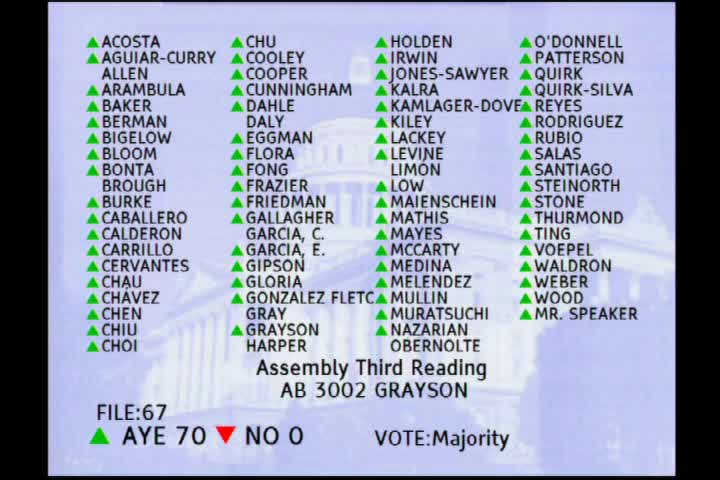 1MIN
Assembly Floor
 1MIN
Assembly Standing Committee on Appropriations
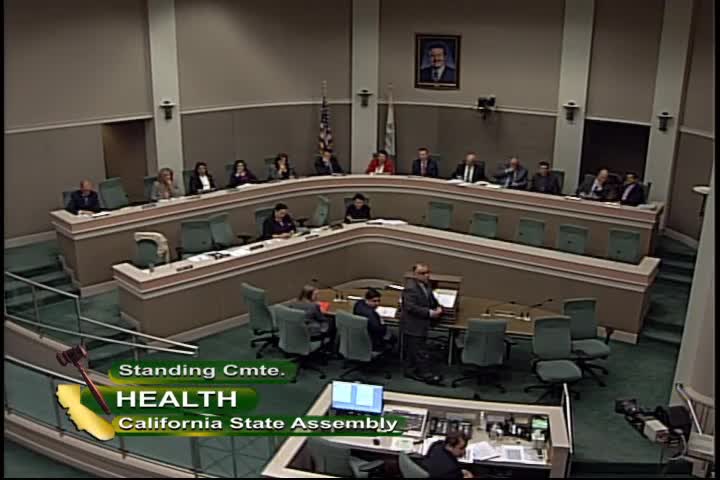 2MIN
Assembly Standing Committee on Health
Bill Author

Bill Co-Author(s):