AB 1959: Telecommunications: universal service programs.
- Session Year: 2017-2018
- House: Assembly
- Latest Version Date: 2018-09-05
Existing law, the federal Telecommunications Act of 1996, establishes a program of cooperative federalism for the regulation of telecommunications to attain the goal of local competition, while implementing specific, predictable, and sufficient federal and state mechanisms to preserve and advance universal service, consistent with certain universal service principles. The universal service principles include the principle that consumers in all regions of the nation, including low-income consumers and those in rural, insular, and high-cost areas, should have access to telecommunications and information services, including interexchange services and advanced telecommunications and information services, that are reasonably comparable to those services provided in urban areas and that are available at rates that are reasonably comparable to rates charged for similar services in urban areas.
Existing law authorizes the Public Utilities Commission to supervise and regulate every public utility in the state, including telephone corporations, and to fix just and reasonable rates and charges for public utilities. Existing law establishes the states 6 universal service funds in the State Treasury, including the California High-Cost Fund-A Administrative Committee Fund and the California High-Cost Fund-B Administrative Committee Fund, and provides that moneys in each of the states universal service funds are the proceeds of rates and are held in trust for the benefit of ratepayers and to compensate telephone corporations for their costs of providing universal service. Moneys in the funds may only be expended to accomplish specified telecommunications universal service programs, upon appropriation in the annual Budget Act or upon supplemental appropriation. Existing law, until January 1, 2019, requires the commission to develop, implement, and maintain a suitable program to establish a fair and equitable local rate structure aided by universal service rate support to small independent telephone corporations that serve rural areas and are subject to rate-of-return regulation by the commission (the CHCF-A program). Existing law, until January 1, 2019, requires the commission to develop, implement, and maintain a suitable, competitively neutral, and broad-based program to establish a fair and equitable local rate support structure aided by universal service rate support to telephone corporations serving areas where the cost of providing services exceeds rates charged by providers, as determined by the commission (the CHCF-B program).
This bill would extend the CHCF-A program and CHCF-B program requirements to January 1, 2023.
Under existing law, a violation of the Public Utilities Act or an order or direction of the commission is a crime.
Because the CHCF-A program and CHCF-B program, that are extended under the provisions of this bill, are within the act and a decision or order of the commission implements the programs requirements, the bill would impose a state-mandated local program by expanding the definition of a crime.
The California Constitution requires the state to reimburse local agencies and school districts for certain costs mandated by the state. Statutory provisions establish procedures for making that reimbursement.
This bill would provide that no reimbursement is required by this act for a specified reason.
This bill would declare that it is to take effect immediately as an urgency statute.
Existing law, the federal Telecommunications Act of 1996, establishes a program of cooperative federalism for the regulation of telecommunications to attain the goal of local competition, while implementing specific, predictable, and sufficient federal and state mechanisms to preserve and advance universal service, consistent with certain universal service principles. The universal service principles include the principle that consumers in all regions of the nation, including low-income consumers and those in rural, insular, and high-cost areas, should have access to telecommunications and information services, including interexchange services and advanced telecommunications and information services, that are reasonably comparable to those services provided in urban areas and that are available at rates that are reasonably comparable to rates charged for similar services in urban areas.
Existing law authorizes the Public Utilities Commission to supervise and regulate every public utility in the state, including telephone corporations, and to fix just and reasonable rates and charges for the public utility. Existing law establishes the states 6 universal service funds in the State Treasury, including the California High-Cost Fund-A Administrative Committee Fund and the California High-Cost Fund-B Administrative Committee Fund, and provides that moneys in each of the states universal service funds are the proceeds of rates and are held in trust for the benefit of ratepayers and to compensate telephone corporations for their costs of providing universal service. Moneys in the funds may only be expended to accomplish specified telecommunications universal service programs, upon appropriation in the annual Budget Act or upon supplemental appropriation. Existing law, until January 1, 2019, requires the commission to develop, implement, and maintain a suitable program to establish a fair and equitable local rate structure aided by universal service rate support to small independent telephone corporations that serve rural areas and are subject to rate-of-return regulation by the commission (the CHCF-A program). Existing law, until January 1, 2019, requires the commission to develop, implement, and maintain a suitable, competitively neutral, and broad-based program to establish a fair and equitable local rate support structure aided by universal service rate support to telephone corporations serving areas where the cost of providing services exceeds rates charged by providers, as determined by the commission (the CHCF-B program).
This bill would extend the CHCF-A program and CHCF-B program requirements to January 1, 2023.
Under existing law, a violation of the Public Utilities Act or an order or direction of the commission is a crime.
Because the CHCF-A program and CHCF-B program, that are extended under the provisions of this bill, are within the act and a decision or order of the commission implements the programs requirements, the bill would impose a state-mandated local program by expanding the definition of a crime.
The California Constitution requires the state to reimburse local agencies and school districts for certain costs mandated by the state. Statutory provisions establish procedures for making that reimbursement.
This bill would provide that no reimbursement is required by this act for a specified reason.
This bill would declare that it is to take effect immediately as an urgency statute.
(a)The commission shall exercise its regulatory authority to maintain the California High-Cost Fund-A Administrative Committee Fund program (CHCF-A program) to provide universal service rate support to small independent telephone corporations in amounts sufficient to meet the revenue requirements established by the commission through rate-of-return regulation in furtherance of the states universal service commitment to the continued affordability and widespread availability of safe, reliable, high-quality communications services in rural areas of the state.
(b)For purposes of this section, the following terms have the following meanings:
(1)Carrier of last resort means a telephone corporation that is required to fulfill all reasonable requests for service within its service territory.
(2)Rate base means the value of a telephone corporations plant and equipment that is reasonably necessary to provide regulated voice services and access to advanced services, and upon which the telephone corporation is entitled to a fair opportunity to earn a reasonable rate of return.
(3)Rate design means the mix of end user rates, high-cost support, and other revenue sources that are targeted to provide a fair opportunity to meet the revenue requirement of the telephone corporation.
(4)Rate-of-return regulation means a regulatory structure whereby the commission establishes a telephone corporations revenue requirements, and then fashions a rate design to provide the company a fair opportunity to meet the revenue requirement.
(5)Revenue requirement means the amount that is necessary for a telephone corporation to recover its reasonable expenses and tax liabilities and earn a reasonable rate of return on its rate base.
(6)Small independent telephone corporations are rural incumbent local exchange carriers subject to commission regulation.
(c)In administering the CHCF-A program the commission shall do all of the following:
(1)Continue to set rates to be charged by the small independent telephone corporations in accordance with Sections 451, 454, 455, and 728.
(2)Employ rate-of-return regulation to determine a small independent telephone corporations revenue requirement in a manner that provides revenues and earnings sufficient to allow the telephone corporation to deliver safe, reliable, high-quality voice communication service and fulfill its obligations as a carrier of last resort in its service territory, and to afford the telephone corporation a fair opportunity to earn a reasonable return on its investments, attract capital for investment on reasonable terms, and ensure the financial integrity of the telephone corporation.
(3)Ensure that rates charged to customers of small independent telephone corporations are just and reasonable and are reasonably comparable to rates charged to customers of urban telephone corporations.
(4)Provide universal service rate support from the California High-Cost Fund-A Administrative Committee Fund to small independent telephone corporations in an amount sufficient to supply the portion of the revenue requirement that cannot reasonably be provided by the customers of each small independent telephone corporation after receipt of federal universal service rate support.
(5)Promote customer access to advanced services and deployment of broadband-capable facilities in rural areas that is reasonably comparable to that in urban areas, consistent with national communications policy.
(6)Include all reasonable investments necessary to provide for the delivery of high-quality voice communication services and the deployment of broadband-capable facilities in the rate base of small independent telephone corporations.
(7)Ensure that support is not excessive so that the burden on all contributors to the CHCF-A program is limited.
(d)In order to participate in the CHCF-A program, a small independent telephone corporation shall meet all of the following requirements:
(1)Be subject to rate-of-return regulation.
(2)Be subject to the commissions regulation of telephone corporations pursuant to this division.
(3)Be a carrier of last resort in their service territory.
(4)Qualify as a rural telephone company under federal law (47 U.S.C. Sec. 153(44)).
(e)Upon request from the commission, a small independent telephone corporation that receives support from the CHCF-A program shall provide information regarding revenues derived from the provision of unregulated Internet access service by that corporation or its affiliate within that corporations telephone service territory. The commission shall treat as confidential any information provided pursuant to this subdivision.
(f)The commission shall structure the CHCF-A program so that any charge imposed to promote the goals of universal service reasonably equals the value of the benefits of universal service to contributing entities and their subscribers.
(g)This section shall remain in effect only until January 1, 2023, and as of that date is repealed, unless a later enacted statute, that is enacted before January 1, 2023, deletes or extends that date.
SEC. 2.Section 276.5 of the Public Utilities Code is amended to read:276.5.(a)The commission shall develop, implement, and maintain a suitable, competitively neutral, and broad-based program to establish a fair and equitable local rate support structure aided by universal service rate support to telephone corporations serving areas where the cost of providing services exceeds rates charged by providers, as determined by the commission. The program shall be known, and may be cited, as the California High-Cost Fund-B Administrative Committee Fund program or CHCF-B program. The purpose of the program shall be to promote the goals of universal telephone service and to reduce any disparity in the rates charged by those companies. Except as otherwise explicitly provided, this subdivision does not limit the manner in which the commission collects and disburses funds, and does not limit the manner in which it may include or exclude the revenue of contributing entities in structuring the program.
(b)The commission shall structure the CHCF-B program so that any charge imposed to promote the goals of universal service reasonably equals the value of the benefits of universal service to contributing entities and their subscribers.
(c)The commission shall investigate reducing the level of universal service rate support, or elimination of universal service rate support in service areas with demonstrated competition.
(d)This section shall remain in effect only until January 1, 2023, and as of that date is repealed, unless a later enacted statute, that is enacted before January 1, 2023, deletes or extends that date.
SEC. 3.No reimbursement is required by this act pursuant to Section 6 of Article XIIIB of the California Constitution because the only costs that may be incurred by a local agency or school district will be incurred because this act creates a new crime or infraction, eliminates a crime or infraction, or changes the penalty for a crime or infraction, within the meaning of Section 17556 of the Government Code, or changes the definition of a crime within the meaning of Section 6 of Article XIIIB of the California Constitution.
SEC. 4.This act is an urgency statute necessary for the immediate preservation of the public peace, health, or safety within the meaning of Article IV of the California Constitution and shall go into immediate effect. The facts constituting the necessity are:
To ensure that the Public Utilities Commission has the necessary statutory direction to fund the states universal service programs at the earliest possible time, it is necessary for this act to take effect immediately.
(a)The commission shall exercise its regulatory authority to maintain the California High-Cost Fund-A Administrative Committee Fund program (CHCF-A program) to provide universal service rate support to small independent telephone corporations in amounts sufficient to meet the revenue requirements established by the commission through rate-of-return regulation in furtherance of the states universal service commitment to the continued affordability and widespread availability of safe, reliable, high-quality communications services in rural areas of the state.
(b)For purposes of this section, the following terms have the following meanings:
(1)Carrier of last resort means a telephone corporation that is required to fulfill all reasonable requests for service within its service territory.
(2)Rate base means the value of a telephone corporations plant and equipment that is reasonably necessary to provide regulated voice services and access to advanced services, and upon which the telephone corporation is entitled to a fair opportunity to earn a reasonable rate of return.
(3)Rate design means the mix of end user rates, high-cost support, and other revenue sources that are targeted to provide a fair opportunity to meet the revenue requirement of the telephone corporation.
(4)Rate-of-return regulation means a regulatory structure whereby the commission establishes a telephone corporations revenue requirements, and then fashions a rate design to provide the company a fair opportunity to meet the revenue requirement.
(5)Revenue requirement means the amount that is necessary for a telephone corporation to recover its reasonable expenses and tax liabilities and earn a reasonable rate of return on its rate base.
(6)Small independent telephone corporations are rural incumbent local exchange carriers subject to commission regulation.
(c)In administering the CHCF-A program the commission shall do all of the following:
(1)Continue to set rates to be charged by the small independent telephone corporations in accordance with Sections 451, 454, 455, and 728.
(2)Employ rate-of-return regulation to determine a small independent telephone corporations revenue requirement in a manner that provides revenues and earnings sufficient to allow the telephone corporation to deliver safe, reliable, high-quality voice communication service and fulfill its obligations as a carrier of last resort in its service territory, and to afford the telephone corporation a fair opportunity to earn a reasonable return on its investments, attract capital for investment on reasonable terms, and ensure the financial integrity of the telephone corporation.
(3)Ensure that rates charged to customers of small independent telephone corporations are just and reasonable and are reasonably comparable to rates charged to customers of urban telephone corporations.
(4)Provide universal service rate support from the California High-Cost Fund-A Administrative Committee Fund to small independent telephone corporations in an amount sufficient to supply the portion of the revenue requirement that cannot reasonably be provided by the customers of each small independent telephone corporation after receipt of federal universal service rate support.
(5)Promote customer access to advanced services and deployment of broadband-capable facilities in rural areas that is reasonably comparable to that in urban areas, consistent with national communications policy.
(6)Include all reasonable investments necessary to provide for the delivery of high-quality voice communication services and the deployment of broadband-capable facilities in the rate base of small independent telephone corporations.
(7)Ensure that support is not excessive so that the burden on all contributors to the CHCF-A program is limited.
(d)In order to participate in the CHCF-A program, a small independent telephone corporation shall meet all of the following requirements:
(1)Be subject to rate-of-return regulation.
(2)Be subject to the commissions regulation of telephone corporations pursuant to this division.
(3)Be a carrier of last resort in their service territory.
(4)Qualify as a rural telephone company under federal law (47 U.S.C. Sec. 153(44)).
(e)Upon request from the commission, a small independent telephone corporation that receives support from the CHCF-A program shall provide information regarding revenues derived from the provision of unregulated Internet access service by that corporation or its affiliate within that corporations telephone service territory. The commission shall treat as confidential any information provided pursuant to this subdivision.
(f)The commission shall structure the CHCF-A program so that any charge imposed to promote the goals of universal service reasonably equals the value of the benefits of universal service to contributing entities and their subscribers.
(g)This section shall remain in effect only until January 1, 2019, 2023, and as of that date is repealed, unless a later enacted statute, that is enacted before January 1, 2019, 2023, deletes or extends that date.
SEC. 2.Section 276.5 of the Public Utilities Code is amended to read:276.5.(a)The commission shall develop, implement, and maintain a suitable, competitively neutral, and broad-based program to establish a fair and equitable local rate support structure aided by universal service rate support to telephone corporations serving areas where the cost of providing services exceeds rates charged by providers, as determined by the commission. The program shall be known, and may be cited, as the California High-Cost Fund-B Administrative Committee Fund program or CHCF-B program. The purpose of the program shall be to promote the goals of universal telephone service and to reduce any disparity in the rates charged by those companies. Except as otherwise explicitly provided, this subdivision does not limit the manner in which the commission collects and disburses funds, and does not limit the manner in which it may include or exclude the revenue of contributing entities in structuring the program.
(b)The commission shall structure the CHCF-B program so that any charge imposed to promote the goals of universal service reasonably equals the value of the benefits of universal service to contributing entities and their subscribers.
(c)The commission shall investigate reducing the level of universal service rate support, or elimination of universal service rate support in service areas with demonstrated competition.
(d)This section shall remain in effect only until January 1, 2019, 2023, and as of that date is repealed, unless a later enacted statute, that is enacted before January 1, 2019, 2023, deletes or extends that date.
SEC. 3.No reimbursement is required by this act pursuant to Section 6 of Article XIIIB of the California Constitution because the only costs that may be incurred by a local agency or school district will be incurred because this act creates a new crime or infraction, eliminates a crime or infraction, or changes the penalty for a crime or infraction, within the meaning of Section 17556 of the Government Code, or changes the definition of a crime within the meaning of Section 6 of Article XIIIB of the California Constitution.
SEC. 4.This act is an urgency statute necessary for the immediate preservation of the public peace, health, or safety within the meaning of Article IV of the California Constitution and shall go into immediate effect. The facts constituting the necessity are:
To ensure that the Public Utilities Commission has the necessary statutory direction to fund the states universal service programs at the earliest possible time, it is necessary for this act to take effect immediately.
|
Date
|
Status
|
|---|---|
| Sep 5, 2018 | Chaptered by Secretary of State - Chapter 256, Statutes of 2018. |
| Sep 5, 2018 | Approved by the Governor. |
| Aug 24, 2018 | Enrolled and presented to the Governor at 4:30 p.m. |
| Aug 20, 2018 | In Assembly. Ordered to Engrossing and Enrolling. |
| Aug 20, 2018 | Read third time. Urgency clause adopted. Passed. Ordered to the Assembly. |
| Aug 17, 2018 | From committee: Do pass. (Ayes 7. Noes 0.) (August 16). |
| Aug 6, 2018 | In committee: Referred to APPR. suspense file. |
| Jun 19, 2018 | From committee: Do pass and re-refer to Com. on APPR. (Ayes 11. Noes 0.) (June 19). Re-referred to Com. on APPR. |
| Jun 7, 2018 | Referred to Com. on E., U. & C. |
| May 30, 2018 | In Senate. Read first time. To Com. on RLS. for assignment. |
| May 29, 2018 | Read third time. Urgency clause adopted. Passed. Ordered to the Senate. |
| May 25, 2018 | From committee: Do pass. (Ayes 15. Noes 0.) (May 25). |
| May 2, 2018 | In committee: Set, first hearing. Referred to APPR. suspense file. |
| Apr 25, 2018 | In committee: Hearing postponed by committee. |
| Apr 11, 2018 | From committee: Do pass and re-refer to Com. on APPR. (Ayes 13. Noes 0.) (April 11). Re-referred to Com. on APPR. |
| Feb 8, 2018 | Referred to Com. on C. & C. |
| Jan 31, 2018 | From printer. May be heard in committee March 2. |
| Jan 30, 2018 | Read first time. To print. |
|
Date
|
Description
|
Location
|
Votes
|
|
|---|---|---|---|---|
| Aug 20, 2018 | Assembly 3rd Reading AB1959 Wood et al. By Fuller Urgency Clause | Senate Floor |
Passed |
|
| Aug 16, 2018 | Do pass | Senate Standing Committee on Appropriations |
Passed |
|
| Aug 6, 2018 | Placed on suspense file | Senate Standing Committee on Appropriations |
Passed |
|
| Jun 19, 2018 | Do pass, but first be re-referred to the Committee on [Appropriations] | Senate Standing Committee on Energy, Utilities and Communications |
Passed |
|
| May 29, 2018 | AB 1959 WOOD Third Reading Urgency | Assembly Floor |
Passed |
|
| May 25, 2018 | Do pass. | Assembly Standing Committee on Appropriations |
Passed |
|
| Apr 11, 2018 | Do pass and be re-referred to the Committee on [Appropriations] | Assembly Standing Committee on Communications and Conveyance |
Passed |
This list shows positions taken on this bill by organizations on the date displayed, which is linked to the original source.
Positions by individuals are not included.
|
Organization
|
Position
|
Date
|
|---|---|---|
| At&T | ** Support | Aug 18, 2018 |
| California Association of Competitive Telecommunications Companies | ** Against | Aug 18, 2018 |
| California Cable & Telecommunications Association | ** Against | Jun 15, 2018 |
| California Center for Rural Policy | ** Support | Aug 18, 2018 |
| California Communications Association | ** Support | Aug 18, 2018 |
| California Independent Telecommunications Companies | ** Support | Aug 18, 2018 |
| CalTel | * Against | Apr 11, 2018 |
| Forest Hill Telephone Company | * Support | Apr 11, 2018 |
| Frontier Communications | ** Support | Aug 18, 2018 |
| League Of California Cities | ** Support | Aug 18, 2018 |
| Office of Ratepayer Advocates | ** Support | Aug 18, 2018 |
| Office Of Ratepayer Advocates - Cpuc | ** Support | Apr 24, 2018 |
| Rural County Representatives of California | ** Support | Aug 18, 2018 |
| TERN | * Support | Apr 11, 2018 |
| Volcano Telephone Company | * Support | Apr 11, 2018 |
Office of Senate Floor Analyses (916) 651-1520 Fax: (916) 327-4478 | AB |
THIRD READING
Bill No: AB 1959
:
SENATE ENERGY, U. & C. COMMITTEE: 11-0, 6/19/18
AYES: Hueso, Morrell, Bradford, Cannella, Hertzberg, Hill, McGuire, Skinner, Stern, Vidak, Wiener
SENATE APPROPRIATIONS COMMITTEE: 7-0, 8/16/18
AYES: Portantino, Bates, Beall, Bradford, Hill, Nielsen, Wiener
ASSEMBLY FLOOR: 75-0, 5/29/18 - See last page for vote
SOURCE: California Communications Association
California Independent Telecommunications Companies
Frontier Communications
DIGEST:
This bill extends the sunset dates for the California High Cost Fund (CHCF) programs A and B from January 1, 2019, to January 1, 2023.
Existing law:
- Requires the California Public Utilities Commission (CPUC) to maintain the CHCF-A program, which provides support to small independent telephone companies in rural, high-cost areas of the state to ensure residents’ access to affordable telecommunications services in these communities. (Public Utilities Code §275.6)
- Requires the CPUC to maintain the CHCF-B program, which provides support to large telecommunications “Carriers of Last Resort” in high-cost areas of the state to ensure residents’ access to basic telephone services. (Public Utilities Code §276)
- Sunsets the CHCF-A and CHCF-B programs on January 1, 2019. (Public Utilities Code §§275.6 and 276.5)
- Authorizes the CPUC to on its own order, whenever it determines it to be necessary, conduct financial audits, of the revenues required to be collected and submitted to universal service funds, including the CHCF-A and CHCF-B funds. (Public Utilities Code §274)
- Gives the Federal Communications Commission (FCC) the authority to administer federal universal service programs to ensure that consumers in rural areas have access to telecommunications and information services at rates that are reasonably comparable to similar services provided in urban areas. (47 U.S.C. §254)
This bill:
- Extends the sunset date for the CHCF-A program from January 1, 2019, to January 1, 2023.
- Extends the sunset date for the CHCF-B program from January 1, 2019, to January 1, 2023.
Background
The CHCF-A and CHCF-B are two of several universal service programs administered by the CPUC to support the goal of providing all California residents with access to telecommunications services at affordable rates. Since the creation of CHCF-A and CHCF-B, legislation has extended the sunset dates for these programs several times and made adjustments to the programs. Under existing law, CHCF-A and CHCF-B are scheduled to sunset on January 1, 2019.
Creation of the High Cost Fund. The CPUC established California’s High Cost Fund in 1988 pursuant to AB 1466 (N. Waters, Chapter 755, Statutes of 1987), which required the CPUC to develop a program to reduce telephone rate disparities between small independent telephone companies serving rural areas and companies serving urban areas. The High Cost Fund subsidized small to mid-sized telephone companies serving rural and small metropolitan communities through fund transfers administered by Pacific Bell.
Creation of CHCF-A and CHCF-B. In 1995, the CPUC issued a decision opening California’s local exchanges to competition between companies. Prior to this decision, local telephone service was generally provided by one utility in each service territory. In 1996, The CPUC issued a decision modifying the High Cost Fund to address increased competition between different types of carriers in local exchange markets. These modifications included splitting the High Cost Fund into the CHCF-A and CHCF-B programs. The CHCF-A program supports small telephone companies serving rural areas. The CHCF-B program supports the larger Carriers of Last Resort (COLRs) that have an obligation to provide basic services in high-cost communities. In addition to establishing these two different programs, the CPUC’s decision also relieved Pacific Bell of its administrative duties for the High Cost Fund by making the CPUC the administrator of CHCF-A and CHCF-B.
CHCF-A. Under existing law, the CHCF-A program provides rate support to small independent telephone corporations. This rate assistance is intended to ensure that residents in rural communities can access telecommunications services, including broadband services, at rates comparable to those for similar services in urban areas. Rural telecommunications rates can significantly exceed urban rates due to higher infrastructure costs and a lack of economies of scale. CHCF-A is intended to reduce the rate disparities that can occur between rural and urban consumers, improving access and affordability. The program is funded by a surcharge on in-state telecommunications services applied to all consumers’ bills. This surcharge is collected by carriers and deposited into an account administered by the CPUC.
CHCF-B. The CHCF-B program provides subsidies to large telecommunications companies that provide basic telephone services as COLRs in high-cost areas. The CPUC currently defines a high-cost area as a territory in which the cost per landline is $36 or higher. CHCF-B subsidies are intended to ensure that residents in high-cost areas can remain connected to essential services by enabling these carriers to keep rates at an affordable level. CHCF-B subsidies are also funded through a surcharge on applied to consumers’ telecommunications bills.
Access to telecommunications services. While universal service programs have helped improve access to telecommunications services, some communities continue to have disproportionately low access to services. In 2010, the CPUC completed a report on the affordability of basic telephone services pursuant to SB 780 (Wiggins, Chapter 342, Statutes of 2008). This report included results from statewide surveys of residents in the CHCF-B high cost areas. The surveys showed that Latinos, individuals between 18 and 29 years of age, and Californians earning between $24,000 and $34,000 per year face the highest risk of discontinuing landline phone service due to affordability concerns. Multiple reports, including studies from the Brookings Institution and Pew Research Center, show that affordability is a significant driver for telecommunications access.
Currently, most areas covered by the CHCF-A and B programs are rural communities. Rural consumers continue to have lower access to affordable, high-quality telecommunications services, including broadband. According to the FCC’s 2018 Broadband Deployment Report, approximately eight percent of all Americans lack access to broadband services that meet FCC quality standards. For rural Americans, this access gap is approximately 31 percent. In urban communities, the gap is two percent. Prior FCC progress reports noted that residents in rural and urban communities adopt broadband services at similar percentages when high-quality services are accessible in both communities.
Competition in local markets. Local exchange markets are generally divided between two types of carriers: incumbent local exchange carriers (ILECs) and competitive local exchange carriers (CLECs). ILECs are carriers already established in the market and CLECs are competing companies entering the market. Not all local exchange markets are fully competitive. Large and mid-sized ILEC territories have been opened to wireline competition; however, the small ILEC markets are still closed to wireline competition. In 2014, the CPUC explored the question of whether the CPUC should open ILEC markets to wireline CLEC competition. Proponents of increased competition argued that opening the small ILEC market would enhance access to higher quality telecommunications services through greater competition. Opponents pointed out that increased competition could hinder universal service because CLECs are not required to act as COLRs and could selectively serve certain customers, leaving those that remained with small ILECs to shoulder higher costs. ILECs argued that these higher costs could make small ILECs more reliant on CHCF-A fund subsidies. In its decision (R. 11-11-007), the CPUC declined to open the small ILEC market to CLEC competition, citing concerns regarding universal service goals in small ILEC markets. Competition and affordability can be considered separately because competition in telecommunications markets does not necessarily increase the affordability of services for all Californians. This bill would continue to address affordability in high cost areas of the state by extending the sunset date of two programs that help contain costs in these regions.
B-Fund surplus. Between 2008 and 2011, the State of California General Fund borrowed $134 million from the CHCF-B fund to address General Fund shortfalls. Starting in 2014, the State started repaying the $134 million with interest. Since 2014, a surplus in the CHCF-B fund has led CPUC to set the program’s surcharge at zero. In April 2017, the CPUC released an audit report on the B-Fund. The report recommended that the CPUC analyze options for spending the surplus in the B-Fund and reconcile the fund balance on a periodic basis.
The CPUC Communications Division conducted an analysis as recommended by the audit and released its findings in May 2018. According to the analysis, the B-Fund has a surplus balance of approximately $128 million, which includes $41.4 million in unappropriated liquid funds and $86.4 million in unpaid loans. The analysis presented the following 4 options for spending the surplus funds:
- Gradually decrease the surplus through naturally occurring expenditures from the B-Fund over several years.
- Use the surplus to reimburse B-Fund carriers for fire preparedness safety requirements established by the CPUC.
- Transfer the surplus to support other universal service programs.
- Refund surplus to telecommunications carriers that pay into the B-Fund.
The Communications Division analysis recommended implementing the first option, which would gradually reduce the surplus over time through status quo operations. The CPUC estimates that implementing this option will reduce $41.4 liquid funds to zero in two years, and the entire $128 million surplus would take five years to eliminate.
Back to the future. The CPUC’s analysis of the B-Fund also noted that following CPUC changes in the high-cost threshold, the amount of subsidies dispensed by the B-Fund decreased. Additionally, B-Fund carriers are serving fewer landlines as COLRs, reducing the amount of subsidies needed. Despite these reductions, Californians’ access to high-quality telecommunications is still impacted by service availability and cost. Legislation has regularly extended the sunset dates for the CHCF programs A and B since 1987; however, the CPUC has not examined affordability and accessibility issues related to these programs since 2010. Telecommunications markets and technology have changed significantly since the last time the CPUC explored these issues for high-cost areas. It would be beneficial for the CPUC to explore barriers to affordability and accessibility of telecommunications services in high-cost areas and identify options for addressing those barriers.
Related/Prior Legislation
SB 1364 (Fuller, Chapter 520, Statutes of 2014) extended the sunset date for the CHCF programs A and B from January 1, 2015, to January 1, 2019. The bill also encouraged the CPUC to maximize the use of federal funding when administering universal service programs.
SB 3 (Padilla, Chapter 695, Statutes of 2011) extended the sunset date for the CHCF programs A and B from January 1, 2012, to January 1, 2015.
SB 780 (Wiggins, Chapter 342, Statutes of 2008) extended the sunset dates for the CHCF programs A and B and required the CPUC to submit a report on the affordability of basic telephone services within the CHCF-B service territories by July 1, 2010.
AB 1466 (N. Waters, Chapter 755, Statutes of 1987) required the CPUC to develop a program to reduce rate disparities between small independent telephone companies serving rural areas and those companies serving urban areas.
AB 1348 (Moore, Chapter 1143, Statutes of 1983) created the Universal Telephone Service Fund and established the goal of providing access to basic telephone service at affordable rates to all California residents.
FISCAL EFFECT: Appropriation: Fiscal Com.: Local:
According to the Senate Appropriations Committee:
- Ongoing revenue to the CHCFA likely in the tens of millions of dollars annually, from the CHCF-A telecommunications customer surcharge, to be expended each year by the CPUC to support small rural telephone companies.
- Ongoing expenditures from the CHCFB, likely in the low tens of millions of dollars, to be expended by the CPUC to support telecommunication companies providing service in high-cost areas.
- Ongoing annual costs (special funds), of approximately $1 million to $1.5 million to the CPUC to administer the CHCF-A program and the CHCF-B program, respectively.
- Unknown, but likely several hundreds of thousands of dollars annually, to the state as a customer of telecommunications services who pays the CHCF-A and CHCF-B surcharges.
California Communications Association (co-source)
California Independent Telecommunications Companies (co-source)
Frontier Communications (co-source)
AT&T
California Center for Rural Policy
League of California Cities
Office of Ratepayer Advocates
Rural County Representatives of California
OPPOSITION: (Verified 8/16/18)
California Association of Competitive Telecommunications Companies
ARGUMENTS IN SUPPORT: According to the author, “AB 1959 allows California to continue its commitment of providing each individual access to high quality, affordable, and reliable telecommunication services. The highly variable landscape of California poses unique issues in ensuring widespread and affordable services. Providing telephone services in rural regions can be difficult with sparsely populated areas paired with rough terrain. Building and maintaining telecommunication networks in rural regions would result in a high cost for these customers without support from California’s High Cost Fund-A and B programs. AB 1959 will help keep rates affordable in high cost areas so residents can stay connected to essential services. Telecommunication services are an integral aspect of everyone’s day-to-day lives, but also play a crucial role in public safety. AB 1959 is essential in continuing to keep all Californians connected.”
ARGUMENTS IN OPPOSITION: The California Association of Competitive Telecommunications Companies opposes this bill unless it is amended to require the CPUC to authorize wireline competition in the small ILEC territories.
ASSEMBLY FLOOR: 75-0, 5/29/18
AYES: Acosta, Aguiar-Curry, Travis Allen, Arambula, Baker, Berman, Bloom, Bonta, Brough, Burke, Caballero, Calderon, Carrillo, Cervantes, Chau, Chávez, Chen, Chiu, Choi, Chu, Cooley, Cooper, Cunningham, Dahle, Daly, Eggman, Flora, Fong, Frazier, Friedman, Gallagher, Cristina Garcia, Eduardo Garcia, Gipson, Gloria, Gonzalez Fletcher, Gray, Grayson, Holden, Irwin, Jones-Sawyer, Kalra, Kamlager-Dove, Lackey, Levine, Limón, Low, Maienschein, Mathis, Mayes, McCarty, Medina, Melendez, Mullin, Muratsuchi, Nazarian, Obernolte, O'Donnell, Patterson, Quirk, Quirk-Silva, Reyes, Rodriguez, Rubio, Salas, Santiago, Steinorth, Mark Stone, Thurmond, Ting, Voepel, Waldron, Weber, Wood, Rendon
NO VOTE RECORDED: Bigelow, Harper, Kiley
8/18/18 13:47:28
**** END ****
SENATE COMMITTEE ON APPROPRIATIONS
Senator Anthony Portantino, Chair
2017 - 2018 Regular Session
AB 1959 (Wood) - Telecommunications: universal service programs
Version: January 30, 2018 | Policy Vote: E., U., & C. 11 - 0 |
Urgency: Yes | Mandate: Yes |
Hearing Date: August 6, 2018 | Consultant: Ashley Ames |
This bill meets the criteria for referral to the Suspense File.
Bill Summary:
This bill would extend the sunset date on two programs to subsidize communications service in mainly rural areas of the state with higher-than-average costs of service, to promote affordability and universal service.
Fiscal Impact:
- Ongoing revenue to the California High Cost Fund-A (CHCFA) likely in the tens of millions of dollars annually, from the CHCF-A telecommunications customer surcharge, to be expended each year by the California Public Utilities Commission (CPUC) to support small rural telephone companies.
- Ongoing expenditures from the California High Cost Fund-B (CHCFB), likely in the low tens of millions of dollars, to be expended by the CPUC to support telecommunication companies providing service in high-cost areas.
- Ongoing annual costs (special funds), of approximately $1 million to $1.5 million to the CPUC to administer the CHCF-A program and the CHCF-B program, respectively.
- Unknown, but likely several hundreds of thousands of dollars annually, to the state as a customer of telecommunications services who pays the CHCF-A and CHCF-B surcharges.
Background:
Statute establishes a number of programs to further the goal of universal telephone service. Two such programs are CHCF-A and CHCF-B. Though the programs vary in their specifics, each provides subsidies to telecommunications companies that provide telecommunications service in areas of the state that are expensive to service— generally, areas that are sparsely populated and featuring rugged terrain. Statute also declares funding for the CHCF-A program to be critical to public health and safety.
The Legislature has repeatedly extended both programs over the years.
Proposed Law:
This bill would extend the sunset date on two programs to subsidize communications service in mainly rural areas of the state with higher-than-average costs of service, in order to promote affordability and universal service. Specifically, this bill would:
- Extend, from January 1, 2019, to January 1, 2023, the California High Cost Fund-A (CHCF-A) program to provide rate support to small, independent telephone corporations to promote customer access to advanced services and deployment of broadband-capable facilities in rural areas that is reasonably comparable to that in urban areas.
- Extend, from January 1, 2019, to January 1, 2023, the California High Cost Fund-B (CHCF-B) program to subsidize carriers of last resort (COLRs) to provide basic local telephone service to residential customers in high-cost areas to keep basic telephone service affordable and to meet universal service goals.
-- END --
SENATE COMMITTEE ON ENERGY, UTILITIES AND COMMUNICATIONS
Senator Ben Hueso, Chair
2017 - 2018 Regular
Bill No: AB 1959 Hearing Date: 6/19/18
Author: | Wood | ||
Version: | 1/30/2018 As Introduced | ||
Urgency: | Yes | Fiscal: | Yes |
Consultant: | Sarah Smith | ||
SUBJECT: Telecommunications: universal service programs
DIGEST: This bill would extend the sunset dates for the California High Cost Fund (CHCF) programs A and B from January 1, 2019, to January 1, 2023.
ANALYSIS:
Existing law:
- Requires the California Public Utilities Commission (CPUC) to maintain the CHCF-A program, which provides support to small independent telephone companies in rural, high-cost areas of the state to ensure residents’ access to affordable telecommunications services in these communities. (Public Utilities Code §275.6)
- Requires the CPUC to maintain the CHCF-B program, which provides support to large telecommunications “Carriers of Last Resort” in high-cost areas of the state to ensure residents’ access to basic telephone services. (Public Utilities Code §276)
- Sunsets the CHCF-A and CHCF-B programs on January 1, 2019. (Public Utilities Code §§275.6 and 276.5)
- Authorizes the CPUC to on its own order, whenever it determines it to be necessary, conduct financial audits, of the revenues required to be collected and submitted to universal service funds, including the CHCF-A and CHCF-B funds. (Public Utilities Code §274)
- Gives the Federal Communications Commission (FCC) the authority to administer federal universal service programs to ensure that consumers in rural areas have access to telecommunications and information services at rates that are reasonably comparable to similar services provided in urban areas. (47 U.S.C. §254)
This bill:
- Extends the sunset date for the CHCF-A program from January 1, 2019, to January 1, 2023.
- Extends the sunset date for the CHCF-B program from January 1, 2019, to January 1, 2023.
Background
The CHCF-A and CHCF-B are two of several universal service programs administered by the CPUC to support the goal of providing all California residents with access to telecommunications services at affordable rates. Since the creation of CHCF-A and CHCF-B, legislation has extended the sunset dates for these programs several times and made adjustments to the programs. Under existing law, CHCF-A and CHCF-B are scheduled to sunset on January 1, 2019.
Creation of the High Cost Fund. The CPUC established California’s High Cost Fund in 1988 pursuant to AB 1466 (N. Waters, Chapter 755, Statutes of 1987), which required the CPUC to develop a program to reduce telephone rate disparities between small independent telephone companies serving rural areas and companies serving urban areas. The High Cost Fund subsidized small to mid-sized telephone companies serving rural and small metropolitan communities through fund transfers administered by Pacific Bell.
Creation of CHCF-A and CHCF-B. In 1995, the CPUC issued a decision opening California’s local exchanges to competition between companies. Prior to this decision, local telephone service was generally provided by one utility in each service territory. In 1996, The CPUC issued a decision modifying the High Cost Fund to address increased competition between different types of carriers in local exchange markets. These modifications included splitting the High Cost Fund into the CHCF-A and CHCF-B programs. The CHCF-A program supports small telephone companies serving rural areas. The CHCF-B program supports the larger Carriers of Last Resort (COLRs) that have an obligation to provide basic services in high-cost communities. In addition to establishing these two different programs, the CPUC’s decision also relieved Pacific Bell of its administrative duties for the High Cost Fund by making the CPUC the administrator of CHCF-A and CHCF-B.
CHCF-A. Under existing law, the CHCF-A program provides rate support to small independent telephone corporations. This rate assistance is intended to ensure that residents in rural communities can access telecommunications services, including broadband services, at rates comparable to those for similar services in urban areas. Rural telecommunications rates can significantly exceed urban rates due to higher infrastructure costs and a lack of economies of scale. CHCF-A is intended to reduce the rate disparities that can occur between rural and urban consumers, improving access and affordability. The program is funded by a surcharge on in-state telecommunications services applied to all consumers’ bills. This surcharge is collected by carriers and deposited into an account administered by the CPUC.
CHCF-B. The CHCF-B program provides subsidies to large telecommunications companies that provide basic telephone services as COLRs in high-cost areas. The CPUC currently defines a high-cost area as a territory in which the cost per landline is $36 or higher. CHCF-B subsidies are intended to ensure that residents in high-cost areas can remain connected to essential services by enabling these carriers to keep rates at an affordable level. CHCF-B subsidies are also funded through a surcharge on applied to consumers’ telecommunications bills.
Access to telecommunications services. While universal service programs have helped improve access to telecommunications services, some communities continue to have disproportionately low access to services. In 2010, the CPUC completed a report on the affordability of basic telephone services pursuant to SB 780 (Wiggins, Chapter 342, Statutes of 2008). This report included results from statewide surveys of residents in the CHCF-B high cost areas. The surveys showed that Latinos, individuals between 18 and 29 years of age, and Californians earning between $24,000 and $34,000 per year face the highest risk of discontinuing landline phone service due to affordability concerns. Multiple reports, including studies from the Brookings Institution and Pew Research Center, show that affordability is a significant driver for telecommunications access.
Currently, most areas covered by the CHCF-A and B programs are rural communities. Rural consumers continue to have lower access to affordable, high-quality telecommunications services, including broadband. According to the FCC’s 2018 Broadband Deployment Report, approximately eight percent of all Americans lack access to broadband services that meet FCC quality standards. For rural Americans, this access gap is approximately 31 percent. In urban communities, the gap is two percent. Prior FCC progress reports noted that residents in rural and urban communities adopt broadband services at similar percentages when high-quality services are accessible in both communities.
Competition in local markets. Local exchange markets are generally divided between two types of carriers: incumbent local exchange carriers (ILECs) and competitive local exchange carriers (CLECs). ILECs are carriers already established in the market and CLECs are competing companies entering the market. Not all local exchange markets are fully competitive. Large and mid-sized ILEC territories have been opened to wireline competition; however, the small ILEC markets are still closed to wireline competition. In 2014, the CPUC explored the question of whether the CPUC should open ILEC markets to wireline CLEC competition. Proponents of increased competition argued that opening the small ILEC market would enhance access to higher quality telecommunications services through greater competition. Opponents pointed out that increased competition could hinder universal service because CLECs are not required to act as COLRs and could selectively serve certain customers, leaving those that remained with small ILECs to shoulder higher costs. ILECs argued that these higher costs could make small ILECs more reliant on CHCF-A fund subsidies. In its decision (R. 11-11-007), the CPUC declined to open the small ILEC market to CLEC competition, citing concerns regarding universal service goals in small ILEC markets.
B-Fund surplus. Between 2008 and 2011, the State of California General Fund borrowed $134 million from the CHCF-B fund to address General Fund shortfalls. Starting in 2014, the State started repaying the $134 million with interest. Since 2014, a surplus in the CHCF-B fund has led CPUC to set the program’s surcharge at zero. In April 2017, the CPUC released an audit report on the B-Fund. The report recommended that the CPUC analyze options for spending the surplus in the B-Fund and reconcile the fund balance on a periodic basis.
The CPUC Communications Division conducted an analysis as recommended by the audit and released its findings in May 2018. According to the analysis, the B-Fund has a surplus balance of approximately $128 million, which includes $41.4 million in unappropriated liquid funds and $86.4 million in unpaid loans. The analysis presented the following 4 options for spending the surplus funds:
- Gradually decrease the surplus through naturally occurring expenditures from the B-Fund over several years.
- Use the surplus to reimburse B-Fund carriers for fire preparedness safety requirements established by the CPUC.
- Transfer the surplus to support other universal service programs.
- Refund surplus to telecommunications carriers that pay into the B-Fund.
The Communications Division analysis recommended implementing the first option, which would gradually reduce the surplus over time through status quo operations. The CPUC estimates that implementing this option will reduce $41.4 liquid funds to zero in two years, and the entire $128 million surplus would take five years to eliminate.
Back to the future. The CPUC’s analysis of the B-Fund also noted that following CPUC changes in the high-cost threshold, the amount of subsidies dispensed by the B-Fund decreased. Additionally, B-Fund carriers are serving fewer landlines as COLRs, reducing the amount of subsidies needed. Despite these reductions, Californians’ access to high-quality telecommunications is still impacted by service availability and cost. Legislation has regularly extended the sunset dates for the CHCF programs A and B since 1987; however, the CPUC has not examined affordability and accessibility issues related to these programs since 2010. Telecommunications markets and technology have changed significantly since the last time the CPUC explored these issues for high-cost areas. It would be beneficial for the CPUC to explore barriers to affordability and accessibility of telecommunications services in high-cost areas and identify options for addressing those barriers.
Prior/Related Legislation
SB 1364 (Fuller, Chapter 520, Statutes of 2014) extended the sunset date for the CHCF programs A and B from January 1, 2015, to January 1, 2019. The bill also encouraged the CPUC to maximize the use of federal funding when administering universal service programs.
SB 3 (Padilla, Chapter 695, Statutes of 2011) extended the sunset date for the CHCF programs A and B from January 1, 2012, to January 1, 2015.
SB 780 (Wiggins, Chapter 342, Statutes of 2008) extended the sunset dates for the CHCF programs A and B and required the CPUC to submit a report on the affordability of basic telephone services within the CHCF-B service territories by July 1, 2010.
AB 1466 (N. Waters, Chapter 755, Statutes of 1987) required the CPUC to develop a program to reduce rate disparities between small independent telephone companies serving rural areas and those companies serving urban areas.
AB 1348 (Moore, Chapter 1143, Statutes of 1983) created the Universal Telephone Service Fund and established the goal of providing access to basic telephone service at affordable rates to all California residents.
FISCAL EFFECT: Appropriation: No Fiscal Com.: Yes Local: Yes
SUPPORT:
California Communications Association (Co-Sponsor)
California Independent Telecommunications Companies (Co-Sponsor)
Frontier Communications (Co-Sponsor)
AT&T
California Center for Rural Policy
League of California Cities
Office of Ratepayer Advocates
Rural County Representatives of California
OPPOSITION:
California Association of Competitive Telecommunications Companies
California Cable & Telecommunications Association
ARGUMENTS IN SUPPORT: According to the author:
“AB 1959 allows California to continue its commitment of providing each individual access to high quality, affordable, and reliable telecommunication services. The highly variable landscape of California poses unique issues in ensuring widespread and affordable services. Providing telephone services in rural regions can be difficult with sparsely populated areas paired with rough terrain. Building and maintaining telecommunication networks in rural regions would result in a high cost for these customers without support from California’s High Cost Fund-A and B programs. AB 1959 will help keep rates affordable in high cost areas so residents can stay connected to essential services. Telecommunication services are an integral aspect of everyone’s day-to-day lives, but also play a crucial role in public safety. AB 1959 is essential in continuing to keep all Californians connected.”
ARGUMENTS IN OPPOSITION: The California Cable and Telecommunications Association (CCTA) and the California Association of Competitive Telecommunications Companies are opposed to this bill unless it is amended to ensure that the small local exchange carrier markets are opened to greater competition. Additionally, CCTA opposes this bill unless it is amended to eliminate the CHCF-B fund. In its opposition letter, CCTA states, “The B-Fund’s minimal amount indicates that it is no longer necessary to ensure affordable basic service, and as a result, the Fund currently only services to subsidize certain providers in a growing competitive market.”
-- END --
ASSEMBLY THIRD READING
ATR Bill Id:AB 1959
Author:(Wood)
As Introduced Ver:January 30, 2018
2/3 vote. Urgency
Committee | Votes | Ayes | Noes |
Communications | 13-0 | Santiago, Obernolte, Bonta, Cervantes, Eduardo Garcia, Holden, Wood, Maienschein, Mathis, O'Donnell, Patterson, Quirk-Silva, Rodriguez | |
Appropriations | 15-0 | Gonzalez Fletcher, Bloom, Bonta, Calderon, Carrillo, Chau, Eggman, Fong, Friedman, Gallagher, Eduardo Garcia, Nazarian, Obernolte, Quirk, Reyes |
SUMMARY: Extends the sunset date for the California High Cost Fund-A (CHCF-A) and High Cost Fund-B (CHCF-B) from January 1, 2019, to January 1, 2023, and adds an urgency clause.
FISCAL EFFECT: According to the Assembly Appropriations Committee, this bill would have the following cost:
- Ongoing revenue, likely in the mid-tens of millions of dollars annually, from the CHCF-A telecommunications customer surcharge, to be expended each year by the California Public Utilities Commission (CPUC) to support small rural telephone companies. (The CPUC adjusts the CHCF-A surcharge annually. Currently, the CPUC sets the CHCF-A surcharge at 0.35% collected by telecommunications companies from all end users.)
- Ongoing expenditures, likely in the low-tens of millions of dollars, to be expended by the CPUC to support telecommunications companies providing service in high-cost areas. (The CPUC adjusts the CHCF-B surcharge annually. Currently, the CPUC sets the CHCF-B surcharge at 0.00%, in light of a surplus in the CHCF-B fund.)
- Ongoing annual costs, of approximately $1 million to $1.5 million and approximately $400,000 to $1.5 million, to the CPUC to administer the CHCF-A program and the CHCF-B program, respectively.
- Unknown but significant costs, likely several hundreds of thousands of dollars annually, to the State of California as a customer of telecommunications services who pays the CHCF-A and CHCF-B surcharges. These costs are difficult to calculate because the state pays them through many discrete, disparate telecommunications billings.
COMMENTS:
- Author's Statement: According to the author, "AB 1959 allows California to continue its commitment of providing each individual access to high quality, affordable and reliable telecommunication services. The highly variable landscape of California poses unique issues in ensuring widespread and affordable services. Providing telephone services in rural regions can be difficult with sparsely populated areas paired with rough terrain. Building and maintaining telecommunication networks in rural regions would result in high cost for these customers without support from [CHCF-A and CHCF-B]. AB 1959 will help keep rates affordable in high cost areas so residents can stay connected to essential services. Telecommunications services are an integral aspect of everyone's day-to-day lives, but also play a crucial role in public safety. AB 1959 is essential in continuing to keep all Californians connected."
- Background: The CPUC is tasked with developing and implementing programs to advance universal access to necessary services, such as telephone and broadband services. To do so, the CPUC implements a number of universal service programs, including the CHCF-A and CHCF-B. The CHCF-A and CHCF-B provides support for providers serving high-cost areas to ensure that rates remain reasonable and comparable to rates throughout the rest of the state. Such universal service programs are funded through a surcharge on each customer's phone bill.
- High Cost Fund-A & High Cost Fund-B: The CHCF-A provides support for small independent telephone companies who are under rate-of-return regulations. This means that the rates for service charged by each company are set by the CPUC at amounts sufficient to cover each company's costs, including profit. These small independent telephone companies are also carriers of last resort (COLR) meaning they are obligated to serve all the customers in their service area. The CHCF-B provides support to large telephone companies who are COLRs for providing basic telephone service to all residential customers within designated high-cost service areas. Large COLRs that currently draw CHCF-B funds include AT&T and Frontier Communications. This bill extends the sunset date for the CHCF-A and CHCF-B from January 1, 2019, to January 1, 2023.
Extension of the funds would continue to allow small and large providers to guarantee affordable access to telephone services, especially in rural areas of the state where the cost of providing and maintaining service might be economically unfeasible given the difficulties in terrain, the higher cost of maintenance and repairs, and the lower number of subscribers. Absent the funds, companies would need to recover their costs from other sources, such as increasing rates on their customers or reducing investments in infrastructure. This could degrade the quality of service for such customers and threaten the economic viability of some companies; ultimately undermining the state's goal of universal telephone service.
Analysis Prepared by: Edmond Cheung / C. & C. / (916) 319-2637 FN: 0003039
Date of Hearing: May 2, 2018
ASSEMBLY COMMITTEE ON APPROPRIATIONS
Lorena Gonzalez Fletcher, Chair
ABPCA Bill Id:AB 1959
Author:(Wood) – As Introduced Ver:January 30, 2018
Policy Committee: | Communications and Conveyance | Vote: | 13 - 0 |
|
| ||
|
|
Urgency: Yes State Mandated Local Program: Yes Reimbursable: No
SUMMARY:
This bill extends the sunset date on two programs to subsidize communications service in mainly rural areas of the state with higher-than-average costs of service, to promote affordability and universal service. Specifically, this bill:
- Extends, from January 1, 2019, to January 1, 2023, the California High Cost Fund-A (CHCF-A) program to provide rate support to small, independent telephone corporations to promote customer access to advanced services and deployment of broadband-capable facilities in rural areas that is reasonably comparable to that in urban areas
- Extends, from January 1, 2019, to January 1, 2023, the California High Cost Fund-B (CHCF-B) program to subsidize carriers of last resort (COLRs) to provide basic local telephone service to residential customers in high-cost areas to keep basic telephone service affordable and to meet universal service goals.
FISCAL EFFECT:
- Ongoing revenue (CHCF-A Administrative Committee Fund), likely in the mid-tens of millions of dollars annually, from the CHCF-A telecommunications customer surcharge, to be expended each year by the California Public Utilities Commission (CPUC) to support small rural telephone companies. (The CPUC adjusts the CHCF-A surcharge annually. Currently, the CPUC sets the CHCF-A surcharge at 0.35% collected by telecommunications companies from all end users.)
- Ongoing expenditures (CHCF-B Administrative Committee Fund), likely in the low-tens of millions of dollars, to be expended by the CPUC to support telecommunication companies providing service in high-cost areas. (The CPUC adjusts the CHCF-B surcharge annually. Currently, the CPUC sets the CHCF-B surcharge at 0.00%, in light of a surplus in the CHCF-B fund.)
- Ongoing annual costs (special funds), of approximately $1 million to $1.5 million and approximately $400,000 to $1.5 million, to the CPUC to administer the CHCF-A program and the CHCF-B program, respectively.
- Unknown but significant costs, likely several hundreds of thousands of dollars annually, to the State of California as a customer of telecommunications services who pays the CHCF-A and CHCF-B surcharges. These costs are difficult to calculate because the state pays them through many discrete, disparate telecommunications billings.
COMMENTS:
- Purpose. According the to the author, building and maintaining telecommunications networks in rural regions would result in high costs without support of the CHCF-A and CHCF-B programs. The author contends this bill will help keep rates affordable in high-cost areas, thereby continuing the state’s commitment to high-quality, affordable, and reliable telecommunications service for every Californian.
- Background. Statute establishes a number of programs to further the goal of universal telephone service, that is, high-quality basic telephone service at affordable rates to the greatest number of citizens. Two such programs are CHCF-A and CHCF-B. Though the programs vary in their specifics, each provides subsidies to telecommunications companies that provide telecommunications service in areas of the state that are expensive to service—generally, areas that are sparsely populated and featuring rugged terrain. Statute also declares funding for the CHCF-A program to be critical to public health and safety. This is because, according to statute, such funding pays for maintenance of universal public telephone service throughout the state.
According to the CPUC, in 2017, the CHCF-A program supported 52,228 lines in remote, rural areas of the state at a total program cost of $49.2 million. The average monthly CHCF-A subsidy was $61.29 per line. The CPUC also reports the CHCF-B, during the same year, supported 106,743 lines at a total program cost of $22.3 million. The average monthly CHCF-B subsidy was $12.18 per line.
The Legislature has repeatedly extended both programs over the years.
- What happens if the programs go away? As noted above, the Legislature established each program to further the state’s goal of universal telephone service. Without the subsidies, ratepayers in the CHCF-A and CHCF-B areas would likely pay more—possibly a lot more—for basic telephone service. However, the dynamics that lead to higher rates vary for each program.
Telephone companies that receive subsidies from the CHCF-A program are small telephone companies offering service according to rate-of-return regulation. Such regulation means the rates for service charged by each company is set by the CPUC at amounts sufficient to cover each company’s costs, including profit. The CPUC sets these rates during a periodic “general rate case” for each company. Absent the CHCF-A subsidy, these small telephone companies would need to recover their costs from some source. Likely, they would raise rates substantially on their small customer bases and reduce investment in infrastructure. Ratepayers would face significantly higher costs for telephone service and, potentially, degraded service. Some ratepayers may cancel service. If enough ratepayers did so, these small companies might go out of business. As a result, there would be no telephone service provided in these rural areas.
The situation differs somewhat for the companies subsidized by the CHCF-B program. These are large companies—AT&T, Verizon, Frontier, for example—that serve both high-cost rural areas and lower-cost urban areas and whose rates the CPUC does not regulate. (The CPUC formally decided that sufficient competition exists to check the rates of these companies, so rate-of-return regulation is unnecessary.) Like the CHCF-A companies, these companies are known as “carriers of last resort,” meaning they are obligated, within certain territories, to provide service to every customer who requests it, even if doing so is uneconomic.
Absence of CHCF-B subsidies does not threaten the overall economic viability of these large companies, at least in the near term; however, they would need to recover the previously subsidized costs from somewhere. As noted above, these companies operate in competitive markets, as well as markets in which the extent of competition is debatable. Cancellation of the CHCF-B subsidy would leave these companies with the economically unenviable choice of increasing prices on potentially price-sensitive urban customers who have options for telecommunications service, or concentrating price increases on customers in the high-cost areas where the company is legally obligated to provide telephone service to every customer who requests it and where comparable service may not exist. If the company choses the latter option, customers in high-cost areas would face dramatically higher prices for basic telephone service, unless they cancel service altogether. Neither outcome would further the state’s goal of universal telephone service.
In the longer term, the companies that receive subsidies from the CHCF-B program may question the economic logic of continuing to provide service, absent the subsidies.
Analysis Prepared by: Jay Dickenson / APPR. / (916) 319-2081
Date of Hearing: April 11, 2018
ASSEMBLY COMMITTEE ON COMMUNICATIONS AND CONVEYANCE
Miguel Santiago, Chair
ABPCA Bill Id:AB 1959 (
Author:Wood) – As Introduced Ver:January 30, 2018
SUBJECT: Telecommunications: universal service programs
SUMMARY: Extends the sunset date for the California High Cost Fund-A (CHCF-A) and High Cost Fund-B (CHCF-B) from January 1, 2019 to January 1, 2023, and adds an urgency clause.
EXISTING LAW:
- Requires the California Public Utilities Commission (CPUC) to exercise its regulatory authority to maintain the CHCF-A Administrative Committee Fund program to provide universal service rate support to small independent telephone corporations in amounts sufficient to meet the revenue requirements established by the CPUC through rate-of-return regulation in furtherance of the state’s universal service commitment to the continued affordability and widespread availability of safe, reliable, high-quality communications services in rural areas of the state. (Public Utilities Code (PUC) Section 275.6)
- Requires the CPUC to develop, implement, and maintain a suitable, competitively neutral, and broad-based program to establish a fair and equitable local rate support structure aided by universal service rate support to telephone corporations serving areas where the cost of providing services exceeds rates charged by providers, as determined by the CPUC. The program shall be known, and may be cited, as the CHCF-B Administrative Committee Fund program or CHCF-B program. The purpose of the program shall be to promote the goals of universal telephone service and to reduce any disparity in the rates charged by those companies. (PUC Section 276.5)
- Sunsets the CHCF-A and CHCF-B program on January 1, 2019. (PUC Section 275.6 and Section 276.5)
- Establishes the following funds within the State Treasury:
- The CHCF-A Administrative Committee Fund;
- The CHCF-B Administrative Committee Fund;
- The Universal Lifeline Telephone Service Trust Administrative Committee Fund;
- The Deaf and Disabled Telecommunications Program Administrative Committee Fund;
- The California Teleconnect Fund Administrative Committee Fund; and,
- The California Advanced Services Fund. (PUC Section 270)
- Requires the CPUC to require interconnected Voice over Internet Protocol (VoIP) service providers to collect and remit surcharges on their California intrastate revenues in support of specified public purpose program funds. (PUC Section 285)
- Establishes the CHCF-A Administrative Committee, which is an advisory board to advise the CPUC regarding the development, implementation, and administration of a program to provide for transfer payments to small independent telephone corporations providing local exchange services in high-cost rural and small metropolitan areas in the state to create fair and equitable local rate structures, as specified, and to carry out the program pursuant to the CPUC’s direction, control, and approval. (PUC Section 275)
- Establishes the CHCF-B Administrative Committee, which is an advisory board to advise the CPUC regarding the development, implementation, and administration of a program to provide for transfer payments to telephone corporations providing local exchange services in high-cost areas in the state to create fair and equitable local rate structures, as specified, and to carry out the program pursuant to the CPUC’s direction, control, and approval. (PUC Section 276)
- Specifies that it is the intent of the Legislature that all telecommunications markets subject to CPUC jurisdiction be opened to competition not later than January 1, 1997. The CPUC shall take steps to ensure that competition in telecommunications markets is fair and that the state’s universal service policy is observed. (PUC Section 709.5)
FISCAL EFFECT: Unknown. This bill has been keyed fiscal by the Legislative Counsel.
COMMENTS:
- Author’s Statement: According to the author, “AB 1959 allows California to continue its commitment of providing each individual access to high quality, affordable and reliable telecommunication services. The highly variable landscape of California poses unique issues in ensuring widespread and affordable services. Providing telephone services in rural regions can be difficult with sparsely populated areas paired with rough terrain. Building and maintaining telecommunication networks in rural regions would result in high cost for these customers without support from California’s High Cost Fund-A and B programs. AB 1959 will help keep rates affordable in high cost areas so residents can stay connected to essential services. Telecommunications services are an integral aspect of everyone’s day-to-day lives, but also play a crucial role in public safety. AB 1959 is essential in continuing to keep all Californians connected.”
- Background: Ensuring that everyone has access to safe, reliable, and high-quality telecommunications service is a bedrock principle of telecommunications policy. The CPUC is tasked with developing and implementing programs to advance universal access to necessary services, such as telephone and broadband services. To do so, the CPUC implements a number of public programs to promote universal service, including the CHCF-A, CHCF-B, the California Lifeline Program, the California Teleconnect Fund, the Deaf & Disabled Telecommunications Program, and the California Advanced Services Fund.
Such universal service programs are generally developed to provide support either for providers in areas of the state where it might not make economic sense to provide telecommunications services due to the difficulties in building and/or providing services, such as rural, remote, and sparsely populated areas; or support for individuals who are low income, deaf and disabled, or living in or serving disadvantage communities and institutions, that otherwise might struggle to access affordable telecommunications services. Universal service programs serve to give as many subscribers as possible access to the telecommunications network; further complimenting the network and advancing the State’s telecommunications objectives.
The universal service programs are funded through a surcharge on each customer’s phone bill for landline, wireless, and VoIP services. The surcharge for each program is typically adjusted on an annual basis to ensure adequate funding to cover carrier claims and administrative costs. As of March 1, 2018, the total surcharge for all universal service programs is 7.24 percent of each customer’s phone bill for intrastate telecommunications service.
- High Cost Fund-A: The CHCF-A and CHCF-B are universal service programs that support providers serving rural, high-cost areas. Combined with federal funding, CHCF-A and CHCF-B ensure rates for Californians in such areas remain reasonable and comparable to rates throughout the rest of the state. The CHCF-A provides support for rural small independent telephone companies, also known as Rural Local Exchange Carriers (RLECs), who are under rate-of-return regulations. These RLECs are carriers of last resort (COLR) meaning they are obligated to serve all the customers in their service area.
The level of support received by CHCF-A carriers is determined as part of a CPUC rate proceeding, either through a general rate case proceeding or an advice letter. The CPUC calculates a revenue requirement need by the carrier to cover expenses, a return on capital investment, and a profit. This includes all reasonable investments necessary to provide for the delivery of high-quality voice communication services and the deployment of broadband-capable facilities. As of March 1, 2018, the surcharge for CHCF-A is 0.35 percent of each customer’s phone bill for intrastate telecommunications service.
Currently 13 RLECs are eligible for CHCF-A funds:
- Calaveras Telephone Company
- California-Oregon Telephone Company
- Ducor Telephone Company
- Foresthill Telephone Company
- Happy Valley Telephone Company
- Hornitos Telephone Company
- Kerman Telephone Company
- Pinnacles Telephone Company
- The Ponderosa Telephone Company
- Sierra Telephone Company
- Siskiyou Telephone Company
- The Volcano Telephone Company
- Winterhaven Telephone Company
Of the 13 RLECs listed, three do not currently draw CHCF-A funds:
- Happy Valley Telephone Company
- Hornitos Telephone Company
- Winterhaven Telephone Company
The CPUC continues to have an open proceeding (R. 11-11-007) to review CHCF-A as it responds to market, regulatory, and technological changes.
- High Cost Fund-B: The CHCF-B provides support to large telephone companies who are COLRs for providing basic telephone service to all residential customers within designated high-cost service areas. Large COLRs that currently draw CHCF-B funds include AT&T and Frontier Communications. High cost areas are high-cost Census Block Groups in the providers service area where the cost of service exceeds $36 per month. In 2014, the CPUC reduced the CHCF-B surcharge rate to zero percent reflecting the repayment of a $134 million loan to the State. As of March 1, 2018, the surcharge for CHCF-B remains at zero percent of each customer’s phone bill for intrastate telecommunications service.
This bill extends the sunset date for the CHCF-A and CHCF-B from January 1, 2019 to January 1, 2023. This bill would be the eighth extension of these programs and allows the Legislature to reexamine its effectiveness and how best to utilize funds to advance the state’s overall telecommunications goals. Extension of the fund would continue to allow small and large providers to guarantee affordable access to telephone services throughout California, especially in rural areas of the state where the cost of providing and maintaining service might be economically unfeasible given the difficulties in terrain, the higher cost of maintenance and repairs, especially in high risk fire areas, and the lower number of subscribers.
- Competition in High-Cost Areas: The CPUC is tasked with developing and implementing policies for the telecommunications industry, including ensuring fair, affordable universal access to telecommunications services, while also removing barriers that prevent a fully competitive market. There has been debate over whether competition and the elimination of subsidies in high-cost areas could actually promote better service and lower cost for customers without undermining the states universal service principles.
Certain providers, such as cable and video service providers or competitive local exchange carriers, are generally free to compete in any service area; however, there is some prohibition in offering certain voice services in RLEC service territories. Proponents argue that RLEC service territories should be fully opened to competition because it would benefit customers by advancing infrastructure deployment by competitors that do not and cannot rely on high cost subsidies, promote broadband adoption, and offers many rural consumers voice and other broadband service already available to their urban counterparts.
Opponents to competition in RLEC service territories argue that unlike them, other providers are not COLRs. Hence, they are not obligated to serve all customers in a service area. Competitors are free to become COLRs, which would allow them to receive certain subsidies, but with that comes additional rules and requirements that a provider may not wish to take on. Without COLR obligations, non-COLRs could potentially cherry pick or serve only small portions of RLEC service territories that are more economically profitable. Doing so would further reduce the number of customers for RLECs; potentially increasing the cost for all remaining customers and ultimately hampering a RLECs economic ability to continue service in such high-cost areas.
In 2014, the CPUC issued an interim decision (D. 14-12-084) where they preliminarily concluded that it was not in the public interest to open RLEC service territories to wireline competition at the time because of the unique characteristics of the territories and the public safety, reliability, affordability, and economic developments goals of the State. The CPUC did acknowledge the need for more studies and is currently considering the issue in Phase II of Rulemaking 11-11-007. However, certain providers argue that the study has been delayed and it is unclear if or when the study will be completed.
Furthermore, some providers argue that the CHCF-B is no longer necessary to ensure affordable basic service and should be eliminated. Proponents argue that the fund has been declining over the years as more population growth occurs, and CHCF-B carriers have access to significant amounts of subsidies from other federal and state programs to help modernize their telecommunications networks. Opponents argue that other providers are currently free to compete in CHCF-B carrier service areas, but arguably they have not done so because such high-cost areas are still not economically viable for them to serve. Eliminating the CHCF-B could potentially increase cost for customer in high-cost areas without any guarantees that an alternative provider, that is not a COLR, will decide to enter and stay in the market to provide better service and keep cost down. However, proponents argue that the CHCF-B has reached a point in which it is likely providing excessive cost recovery for COLRs in a growing competitive market and that the CPUC should also conduct a proceeding examining the issue.
- Arguments in Support: According to the California’s Independent Telecommunications Companies, a co-sponsor of the bill, “Building and maintaining telecommunications networks in rural areas is extremely expensive on a per customer basis due to tough terrain, extreme weather, greater distances between customers, and sparse populations. Due to these factors, there’s generally no business case for providing affordable telephone services in rural areas without cost support from federal and state universal service programs. AB 1959 will keep rural customers’ telephone service affordable, while providing access to services that would be otherwise unavailable in remote regions of the state.”
- Arguments in Opposition: According to the California Cable & Telecommunications Association, “The regulatory restrictions on the opening of Small Independent Telephone Corporations markets to wireline competition must be eliminated because it only serves to constrain investment in advanced networks in rural, sparsely populated areas of California, and because it denies consumers in these service territories the choice of service offerings available in non-CHCF-A service areas. [In addition,] unsubsidized providers of advanced telecommunications services provide competitive offerings in most, if not all of the service territories of the B-Fund carriers. Given the minimal amount of B-Fund monies at stake, and the significant amounts of subsidies provided to the current B-Fund [carriers of last resort], as well as the existence of unsubsidized providers, there is no argument to be advanced that the B-Fund is necessary to ensure affordable basic service.”
- Previous Legislation: SB1364 (Fuller) of 2014 extends the sunset date of the CHCF-A and CHCF-B universal telecommunications service programs until January 1, 2019. Status: Chaptered by the Secretary of State, Chapter 520, Statutes of 2014.
SB 379 (Fuller) of 2012 modifies the CHCF-A program to align the Federal Communications Commission's modification of the federal universal service program to allow high-cost support for the California Independent Telecommunications Companies broadband-capable facilities in rural areas. Status: Chaptered by the Secretary of State, Chapter 729, Statutes of 2012.
SB 3 (Padilla) of 2011 extends the sunset date for the CHCF-A and CHCF-B collections until January 1, 2015, and requires VoIP service providers to collect and remit surcharges to state universal service programs. Status: Chaptered by the Secretary of State, Chapter 695, Statutes of 2011.
SB780 (Wiggins) of 2008 extends the sunset date for the CHCF-A program from January 1, 2009 to January 1, 2013, and CHCF-B program from January 1, 2009 to January 1, 2012. Status: Chaptered by the Secretary of State, Chapter 342, Statutes of 2008.
REGISTERED SUPPORT / OPPOSITION:
Support
California Communications Association (co-sponsor)
California’s Independent Telecommunications Companies (co-sponsor)
Frontier Communications (co-sponsor)
AT&T
Office of Ratepayer Advocates - CPUC
Opposition
California Association of Competitive Telecommunications Companies (unless amended)
California Cable & Telecommunications Association (unless amended)
Analysis Prepared by: Edmond Cheung / C. & C. / (916) 319-2637
Discussed in Hearing
 3MIN
Senate Floor
 1H
Senate Standing Committee on Appropriations
 6MIN
Senate Standing Committee on Energy, Utilities and Communications
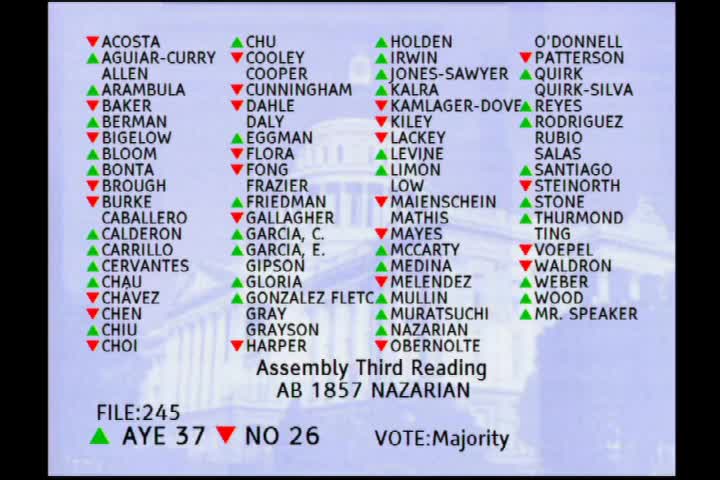 1MIN
Assembly Floor
 17MIN