AB 1961: Postsecondary education: student housing and meal plans.
- Session Year: 2017-2018
- House: Assembly
- Latest Version Date: 2018-09-10
Under existing law, the segments of postsecondary education in this state are the University of California, the California State University, the California Community Colleges, independent institutions of higher education, and private postsecondary educational institutions.
This bill would require each institution of higher education with a physical presence in this state to separately list the cost of institutionally operated housing and meal plans on all Internet Web sites and documents it provides to students for purposes of advertising or otherwise displaying the student costs associated with institutionally operated housing.
Under existing law, the segments of postsecondary education in this state are the University of California, the California State University, the California Community Colleges, independent institutions of higher education, and private postsecondary educational institutions.
This bill would require each institution of higher education receiving state funds for student financial assistance to, as a condition of receipt of the funds, institution of higher education with a physical presence in this state to separately list the cost of institutionally operated housing and meal plans on all Internet Web sites and documents it provides to students for purposes of advertising or otherwise displaying the student costs associated with institutionally operated housing. The bill would prohibit each of these institutions, as a condition of receipt of the funds, from requiring a student to have a campus meal plan in order to live in institutionally operated housing.
Under existing law, the segments of postsecondary education in this state are the University of California, the California State University, the California Community Colleges, independent institutions of higher education, and private postsecondary educational institutions.
This bill would require each institution of higher education receiving state funds for student financial assistance to, as a condition of receipt of the funds, separately list the cost of university-operated institutionally operated housing and meal plans on all Internet Web sites and documents it provides to students for purposes of advertising or otherwise displaying the student costs associated with university-operated institutionally operated housing. The bill would prohibit each of these institutions, as a condition of receipt of the funds, from requiring a student to have a campus meal plan in order to live in university-operated institutionally operated housing.
Under existing law, the segments of postsecondary education in this state are the University of California, the California State University, the California Community Colleges, independent institutions of higher education, and private postsecondary educational institutions.
This bill would require each institution of higher education receiving state funds for student financial assistance to, as a condition of receipt of the funds, separately list the cost of university-operated housing and meal plans on all Internet Web sites and documents it provides to students for purposes of advertising or otherwise displaying the student costs associated with university-operated housing. The bill would prohibit each of these institutions, as a condition of receipt of the funds, from requiring a student to have a campus meal plan in order to live in university-operated housing.
Each institution of higher education with a physical presence in this state shall separately list the cost of institutionally operated housing and meal plans on all Internet Web sites and documents it provides to students for purposes of advertising or otherwise displaying the student costs associated with institutionally operated housing.
Each institution of higher education with a physical presence in this state shall separately list the cost of institutionally operated housing and meal plans on all Internet Web sites and documents it provides to students for purposes of advertising or otherwise displaying the student costs associated with institutionally operated housing.
(a)Each institution of higher education in the with a physical presence in this state receiving state funds for student financial assistance shall, as a condition of receipt of the funds, shall separately list the cost of institutionally operated housing and meal plans on all Internet Web sites and documents it provides to students for purposes of advertising or otherwise displaying the student costs associated with institutionally operated housing.
(b)No institution of higher education in the state receiving state funds for student financial assistance shall, as a condition of receipt of the funds, require a student to have a campus meal plan as a condition of him or her living in institutionally operated housing.(a)Each institution of higher education in the state receiving state funds for student financial assistance shall, as a condition of receipt of the funds, separately list the cost of university-operated institutionally operated housing and meal plans on all Internet Web sites and documents it provides to students for purposes of advertising or otherwise displaying the student costs associated with university-operated institutionally operated housing.
(b)No institution of higher education in the state receiving state funds for student financial assistance shall, as a condition of receipt of the funds, require a student to have a campus meal plan as a condition of him or her living in university-operated institutionally operated housing.
(a)Each institution of higher education in the state receiving state funds for student financial assistance shall, as a condition of receipt of the funds, separately list the cost of university-operated housing and meal plans on all Internet Web sites and documents it provides to students for purposes of advertising or otherwise displaying the student costs associated with university-operated housing.
(b)No institution of higher education in the state receiving state funds for student financial assistance shall, as a condition of receipt of the funds, require a student to have a campus meal plan as a condition of him or her living in university-operated housing.
|
Date
|
Status
|
|---|---|
| Sep 10, 2018 | Chaptered by Secretary of State - Chapter 314, Statutes of 2018. |
| Sep 10, 2018 | Approved by the Governor. |
| Aug 30, 2018 | Enrolled and presented to the Governor at 4:30 p.m. |
| Aug 24, 2018 | In Assembly. Ordered to Engrossing and Enrolling. |
| Aug 24, 2018 | Read third time. Passed. Ordered to the Assembly. |
| Aug 21, 2018 | Ordered to special consent calendar. |
| Aug 17, 2018 | From committee: Do pass. (Ayes 7. Noes 0.) (August 16). |
| Jul 2, 2018 | In committee: Referred to APPR. suspense file. |
| Jun 20, 2018 | From committee: Do pass and re-refer to Com. on APPR. (Ayes 7. Noes 0.) (June 20). Re-referred to Com. on APPR. |
| Jun 7, 2018 | Referred to Com. on ED. |
| May 31, 2018 | In Senate. Read first time. To Com. on RLS. for assignment. |
| May 30, 2018 | Read third time. Passed. Ordered to the Senate. |
| May 29, 2018 | Read second time. Ordered to third reading. |
| May 25, 2018 | From committee: Amend, and do pass as amended. (Ayes 14. Noes 0.) (May 25). |
| Apr 18, 2018 | In committee: Set, first hearing. Referred to APPR. suspense file. |
| Mar 19, 2018 | Re-referred to Com. on HIGHER ED. |
| Mar 15, 2018 | Read second time and amended. |
| Mar 14, 2018 | From committee: Amend, and do pass as amended and re-refer to Com. on APPR. (Ayes 8. Noes 2.) (March 13). |
| Feb 8, 2018 | Referred to Com. on HIGHER ED. |
| Jan 31, 2018 | From printer. May be heard in committee March 2. |
| Jan 30, 2018 | Read first time. To print. |
|
Date
|
Description
|
Location
|
Votes
|
|
|---|---|---|---|---|
| Aug 24, 2018 | Special Consent AB1961 | Senate Floor |
Passed |
|
| Aug 16, 2018 | Do pass | Senate Standing Committee on Appropriations |
Passed |
|
| Jul 2, 2018 | Placed on suspense file | Senate Standing Committee on Appropriations |
Passed |
|
| Jun 20, 2018 | Do pass, but first be re-referred to the Committee on [Appropriations] | Senate Standing Committee on Education |
Passed |
|
| May 30, 2018 | AB 1961 CHOI Assembly Third Reading | Assembly Floor |
Passed |
|
| May 25, 2018 | Do pass as amended. | Assembly Standing Committee on Appropriations |
Passed |
|
| Mar 13, 2018 | Do pass as amended and be re-referred to the Committee on [Appropriations] | Assembly Standing Committee on Higher Education |
Passed |
This list shows positions taken on this bill by organizations on the date displayed, which is linked to the original source.
Positions by individuals are not included.
|
Organization
|
Position
|
Date
|
|---|---|---|
| Association of Independent California Colleges and Universities | * Indeterminate | Mar 13, 2018 |
| California State Student Association | * Indeterminate | Mar 13, 2018 |
| California State University | * Indeterminate | Mar 13, 2018 |
| UC Student Association | * Support | Jul 2, 2018 |
Office of Senate Floor Analyses (916) 651-1520 Fax: (916) 327-4478 | AB |
THIRD READING
Bill No: AB 1961
:
SENATE EDUCATION COMMITTEE: 7-0, 6/20/18
AYES: Allen, Wilk, Galgiani, Leyva, McGuire, Pan, Vidak
SENATE APPROPRIATIONS COMMITTEE: 7-0, 8/16/18
AYES: Portantino, Bates, Beall, Bradford, Hill, Nielsen, Wiener
ASSEMBLY FLOOR: 76-0, 5/30/18 - See last page for vote
DIGEST:
This bill requires each institution of higher education with a physical presence in this state to separately list the cost of institutionally operated housing and meal plans on all Web sites and documents it provides to students for purposes of advertising or otherwise displaying the student costs associated with institutionally operated housing.
Existing law:
- Requires, pursuant to federal law, the United States Secretary of Education to make publicly available on the College Navigator website specified information about each institution of higher education that participates in federal financial aid programs, among many other things, the cost of attendance for first-time, full-time undergraduate students who live on campus and for those who live off-campus. Existing regulations also require, for public institutions of higher education, information on those costs for residents and non-residents. (United States Code, Title 20, § 1015a)
- Defines, pursuant to federal law, “cost of attendance” as:
- Tuition and fees normally assessed, including costs for required equipment, materials or supplies.
- An allowance for books, supplies, transportation, and miscellaneous personal expenses including a computer.
- An allowance, as determined by the institution, for room and board costs, as specified.
- For students enrolled less than half-time, tuition and fees and an allowance for specified costs.
- Allowances for students who are engaged in work study, are incarcerated, have dependents or are disabled. (20 USC § 1087ll)
- Tuition and fees normally assessed, including costs for required equipment, materials or supplies.
- Requires, pursuant to state law, the University of California (UC) to report biennially to the Legislature and the Department of Finance, by October 1 of each even-numbered year, on the total costs of education at the UC. (Education Code § 92670)
- Requires the costs to be reported on both a systemwide and campus-by-campus basis for any report submitted after January 1, 2017. Existing law requires a report prepared after January 1, 2017, to include information on costs, disaggregated by campus, based on the methodology developed by the National Association of College and University Business Officers in its February 2002 report, and other methodologies determined by the UC. (EC § 92670)
- Requires each campus of the California State University (CSU), and requests each campus of the UC, to annually post on its Web site information about the market cost of a one-bedroom apartment in the areas surrounding the campus. (EC § 66014.2
- Requires the Regents of the UC and the Trustees of the CSU to annually provide the Legislature, by February 1, of each year, with detailed information regarding expenditures of revenues derived from student fees and uses of institutional financial aid, and provide information regarding the systemwide average total cost of attendance per student. (EC § 66028.6)
- Defines “cost of attendance” as the mandatory systemwide fees, books and supplies, room and board, transportation, and miscellaneous personal expenses for an undergraduate California resident student, as used in determining financial aid eligibility. (EC § 66028.1)
This bill requires each institution of higher education with a physical presence in this state to separately list the cost of institutionally operated housing and meal plans on all Web sites and documents it provides to students for purposes of advertising or otherwise displaying the student costs associated with institutionally operated housing.
Comments
Need for the bill. According to the author, “Students attending UC Irvine this year are expected to pay nearly $27,000 in tuition, fees, and living expenses, and that number is just an estimate. There clearly exists in current practice a lack of financial transparency when it comes to the cost of living in campus provided housing. Not only are meal plans a required purchase on many campuses as a requisite for living in campus housing, but the costs of those meal plans are comingled with the costs of room and board on several university websites and materials provided to families. That lack of transparency is to the detriment of students.”
Applicability. This bill applies to all institution of higher education with a physical presence in this state, including public and private institutions. A sample review of UC, CSU, and independent institutions’ Web sites shows that some institutions already separately list housing and meal plan costs, while others list housing and meals plans as a combined package.
FISCAL EFFECT: Appropriation: Fiscal Com.: Local:
According to the Senate Appropriations Committee:
- This bill could result in minor General Fund costs, likely in the low tens of thousands of dollars, for the UC and CSU to separate the costs of student housing and meal plans and publish them on Web sites and other documents. Many CSU campuses already separate these costs on Web sites and other documents.
- Many of the state’s community college districts do not offer housing and meal plans so it appears the bill’s provisions will not apply to these districts. But for the community college campuses and districts that do offer housing and meal plans, this bill could result in additional costs for them to comply which would likely be determined to be reimbursable by the Commission on State Mandates. Assuming a cost of up to $5,000 per affected district, statewide Proposition 98 General Fund costs could be in the low tens of thousands of dollars per year.
None received
OPPOSITION: (Verified 8/16/18)
None received
ASSEMBLY FLOOR: 76-0, 5/30/18
AYES: Acosta, Aguiar-Curry, Travis Allen, Arambula, Baker, Berman, Bigelow, Bloom, Bonta, Brough, Burke, Caballero, Calderon, Carrillo, Cervantes, Chau, Chávez, Chen, Chiu, Choi, Chu, Cooley, Cooper, Cunningham, Dahle, Daly, Flora, Fong, Friedman, Gallagher, Cristina Garcia, Eduardo Garcia, Gipson, Gloria, Gonzalez Fletcher, Gray, Grayson, Harper, Holden, Irwin, Jones-Sawyer, Kalra, Kamlager-Dove, Kiley, Lackey, Levine, Limón, Low, Maienschein, Mathis, Mayes, McCarty, Medina, Melendez, Mullin, Muratsuchi, Nazarian, Obernolte, O'Donnell, Patterson, Quirk, Quirk-Silva, Reyes, Rodriguez, Rubio, Salas, Santiago, Steinorth, Mark Stone, Thurmond, Ting, Voepel, Waldron, Weber, Wood, Rendon
NO VOTE RECORDED: Eggman, Frazier
8/18/18 13:47:28
**** END ****
SENATE COMMITTEE ON APPROPRIATIONS
Senator Anthony Portantino, Chair
2017 - 2018 Regular Session
AB 1961 (Choi) - Postsecondary education: student housing and meal plans
Version: May 25, 2018 | Policy Vote: ED. 7 - 0 |
Urgency: No | Mandate: No |
Hearing Date: July 2, 2018 | Consultant: Lenin Del Castillo |
This bill meets the criteria for referral to the Suspense File.
Bill Summary:
This bill requires each institution of higher education with a physical presence in this state to separately list the cost of institutionally operated housing and meal plans on all websites and documents it provides to students for purposes of advertising or otherwise displaying the student costs associated with institutionally operated housing.
Fiscal Impact:
- This bill could result in minor General Fund costs, likely in the low tens of thousands of dollars, for the University of California (UC) and California State University (CSU) to separate the costs of student housing and meal plans and publish them on websites and other documents. Many CSU campuses already separate these costs on websites and other documents.
- Many of the state’s community college districts do not offer housing and meal plans so it appears the bill’s provisions would not apply to these districts. But for the community college campuses and districts that do offer housing and meal plans, this bill could result in additional costs for them to comply which would likely be determined to be reimbursable by the Commission on State Mandates. Assuming a cost of up to $5,000 per affected district, statewide Proposition 98 General Fund costs could be in the low tens of thousands of dollars per year.
Background:
Existing law requires the University of California (UC) to report biennially to the Legislature and the Department of Finance, by October 1 of each even-numbered year, on the total costs of education at the UC. The report is required to identify the costs of undergraduate education, graduate academic education, graduate professional education, and research activities. It also requires all four of these categories to be reported in total and disaggregated separately by specified disciplines.
Further, the costs are to be reported on both a systemwide and campus-by-campus basis for any report submitted after January 1, 2017. Existing law requires a report prepared after January 1, 2017, to include information on costs, disaggregated by campus, based on the methodology developed by the National Association of College and University Business Officers in its February 2002 report, and other methodologies determined by the University of California.
Existing law requires the Regents of the UC and the Trustees of the CSU to annually provide the Legislature, by February 1 of each year, with detailed information regarding expenditures of revenues derived from student fees and uses of institutional financial aid, and provide information regarding the systemwide average total cost of attendance per student. The “cost of attendance” is defined as the mandatory systemwide fees, books and supplies, room and board, transportation, and miscellaneous personal expenses for an undergraduate California resident student, as used in determining financial aid eligibility.
Proposed Law:
This bill requires each institution of higher education with a physical presence in this state to separately list the cost of institutionally operated housing and meal plans on all websites and documents it provides to students for purposes of advertising or otherwise displaying the student costs associated with institutionally operated housing.
Related Legislation:
AB 1064 (Calderon, 2017) would have required the CSU to conduct a survey every three years at each campus to determine the average student’s annual discretionary expenses, excluding tuition and fees, to attend the campus. AB 1064 was vetoed by the Governor, whose veto message read:
While I understand the desire to provide students and families with detailed and accurate cost information on all aspects of college attendance, the bill requires too many data points to be collected, analyzed and reported by each campus at not trivial expense.
If the Board of Trustees is dissatisfied with the way cost estimates are currently reported to the U.S. Department of Education's College Navigator, then the Board should decide what information is most valuable and how much funding should be allocated to its collection and dissemination.
SB 307 (Nguyen, 2017) requests the UC to convene a task force, consisting of three representatives from the UC, the CSU, and the California Community Colleges, selected by the governing boards of each segment, for the purpose of conducting a study to determine the extent, causes, and effects of housing insecurity and homelessness of current and future students. SB 307 was held in the Assembly Appropriations Committee.
-- END --
SENATE COMMITTEE ON EDUCATION
Senator Benjamin Allen, Chair
2017 - 2018 Regular
Bill No: Hearing Date: June 20, 2018
Author: | Choi | ||
Version: |
| ||
Urgency: | Fiscal: | ||
Consultant: | |||
Subject: .
SUMMARY
This bill requires each institution of higher education with a physical presence in this state to separately list the cost of institutionally operated housing and meal plans on all websites and documents it provides to students for purposes of advertising or otherwise displaying the student costs associated with institutionally operated housing.
BACKGROUND
Existing law:
- Requires, pursuant to federal law, the United States Secretary of Education to make publicly available on the College Navigator website specified information about each institution of higher education that participates in federal financial aid programs, among many other things, the cost of attendance for first-time, full-time undergraduate students who live on campus and for those who live off-campus. Existing regulations also require, for public institutions of higher education, information on those costs for residents and non-residents. (United States Code, Title 20, § 1015a)
- Defines, pursuant to federal law, “cost of attendance” as:
- Tuition and fees normally assessed, including costs for required equipment, materials or supplies.
- An allowance for books, supplies, transportation, and miscellaneous personal expenses including a computer.
- An allowance, as determined by the institution, for room and board costs, as specified.
- For students enrolled less than half-time, tuition and fees and an allowance for specified costs.
- Allowances for students who are engaged in work study, are incarcerated, have dependents or are disabled. (20 USC § 1087ll)
- Tuition and fees normally assessed, including costs for required equipment, materials or supplies.
- Requires, pursuant to state law, the University of California to report biennially to the Legislature and the Department of Finance, by October 1 of each even-numbered year, on the total costs of education at the University of California (UC). (Education Code § 92670)
- Requires the costs to be reported on both a systemwide and campus-by-campus basis for any report submitted after January 1, 2017. Existing law requires a report prepared after January 1, 2017, to include information on costs, disaggregated by campus, based on the methodology developed by the National Association of College and University Business Officers in its February 2002 report, and other methodologies determined by the UC. (EC § 92670)
- Requires each campus of the California State University (CSU), and requests each campus of the UC, to annually post on its website information about the market cost of a one-bedroom apartment in the areas surrounding the campus. (EC § 66014.2
- Requires the Regents of the UC and the Trustees of the CSU to annually provide the Legislature, by February 1, of each year, with detailed information regarding expenditures of revenues derived from student fees and uses of institutional financial aid, and provide information regarding the systemwide average total cost of attendance per student. (EC § 66028.6)
- Defines “cost of attendance” as the mandatory systemwide fees, books and supplies, room and board, transportation, and miscellaneous personal expenses for an undergraduate California resident student, as used in determining financial aid eligibility. (EC § 66028.1)
ANALYSIS
This bill requires each institution of higher education with a physical presence in this state to separately list the cost of institutionally operated housing and meal plans on all websites and documents it provides to students for purposes of advertising or otherwise displaying the student costs associated with institutionally operated housing.
STAFF COMMENTS
- Need for the bill. According to the author, “Students attending UC Irvine this year are expected to pay nearly $27,000 in tuition, fees, and living expenses, and that number is just an estimate. There clearly exists in current practice a lack of financial transparency when it comes to the cost of living in campus provided housing. Not only are meal plans a required purchase on many campuses as a requisite for living in campus housing, but the costs of those meal plans are comingled with the costs of room and board on several university websites and materials provided to families. That lack of transparency is to the detriment of students.”
- Applicability. This bill applies to all institution of higher education with a physical presence in this state, including public and private institutions. A sample review of UC, CSU, and independent institutions’ websites shows that some institutions already separately list housing and meal plan costs, while others list housing and meals plans as a combined package.
- Fiscal impact. According to the Assembly Appropriations Committee, this bill would impose:
- Minor General Fund cost pressures, likely in the low tens of thousands of dollars, for the University of California (UC) to separate the costs of student housing and meal plans and publish them on websites and other documents.
- Minor General Fund cost pressures, likely in the low thousands of dollars, for California State University (CSU) to separate the costs of student housing and meal plans and publish them on websites and other documents. Many CSU campuses already separate these costs on websites and other documents.
- Minor General Fund cost pressures, likely in the low tens of thousands of dollars, for the University of California (UC) to separate the costs of student housing and meal plans and publish them on websites and other documents.
- Prior legislation. AB 1064 (Calderon, 2017) would have required the CSU to conduct a survey every three years at each campus to determine the average student’s annual discretionary expenses, excluding tuition and fees, to attend the campus. AB 1064 was vetoed by the Governor, whose veto message read:
While I understand the desire to provide students and families with detailed and accurate cost information on all aspects of college attendance, the bill requires too many data points to be collected, analyzed and reported by each campus at not trivial expense.
If the Board of Trustees is dissatisfied with the way cost estimates are currently reported to the U.S. Department of Education's College Navigator, then the Board should decide what information is most valuable and how much funding should be allocated to its collection and dissemination.
SB 307 (Nguyen, 2017) requests the UC to convene a task force, consisting of three representatives from the UC, the CSU, and the California Community Colleges, selected by the governing boards of each segment, for the purpose of conducting a study to determine the extent, causes, and effects of housing insecurity and homelessness of current and future students. SB 307 was held in the Assembly Appropriations Committee.
SUPPORT
None received
OPPOSITION
None received
-- END --
ASSEMBLY THIRD READING
ATR Bill Id:AB 1961
Author:(Choi)
As Amended Ver:May 25, 2018
Majority vote
Committee | Votes | Ayes | Noes |
Higher Education | 8-2 | Baker, Bloom, Chávez, Kiley, Levine, Patterson, Quirk-Silva, Santiago | Irwin, Weber |
Appropriations | 14-0 | Gonzalez Fletcher, Bigelow, Bloom, Calderon, Carrillo, Chau, Eggman, Fong, Friedman, Gallagher, Eduardo Garcia, Obernolte, Quirk, Reyes |
|
SUMMARY: Requires each institution of higher learning (i. e. University of California (UC), California State University (CSU), California Community Colleges (CCC), and independent colleges and universities) with a physical presence in the state to separately list the cost of institutionally operated housing and meal plans on all Internet Web sites and documents it provides to students for purposes of advertising or otherwise displaying the student costs associated with institutionally operated housing.
EXISTING LAW:
- Authorizes the establishment and maintenance of student housing facilities at any CSU campus (Education Code (EC) Section 90000).
- Under the State University Revenue Bond Act of 1947, authorizes the CSU Board of Trustees to construct operate and control certain facilities, including student housing and boarding facilities, and to establish charges for use of such facilities (Education Code (EC) Section 90010, et seq.).
- Under the UC Dormitory Revenue Bond Act of 1947, authorizes the UC Board of Regents to construct operate and control certain facilities, including student housing and boarding facilities, and to establish charges for use of such facilities (EC Section 92400, et seq.).
FISCAL EFFECT: According to the Assembly Appropriations Committee:
- Minor General Fund (GF) cost pressures, likely in the low tens of thousands of dollars, for UC to separate the costs of student housing and meal plans and publish them on websites and other documents.
- Minor GF cost pressures, likely in the low thousands of dollars, for CSU to separate the costs of student housing and meal plans and publish them on websites and other documents. Many CSU campuses already separate these costs on websites and other documents.
COMMENTS: Purpose. The author has introduced this bill to increase transparency regarding the cost of college attendance and to increase student choice toward controlling students' total costs of education. According to the author's office, "There clearly exists in current practice a lack of financial transparency when it comes to the cost of living in campus provided housing. Not only are meal plans a required purchase on many campuses as a requisite for living in campus housing, but the costs of those meal plans are comingled with the costs of room and board on several university websites and materials provided to families. That lack of transparency and freedom of choice is to the detriment of students."
Based on a sample review of UC, CSU, and independent institution websites, some institutions already separately list housing and meal plan costs, while others do not.
Analysis Prepared by: Jeanice Warden / HIGHER ED. / (916) 319-3960 FN: 0003322
Date of Hearing: April 18, 2018
ASSEMBLY COMMITTEE ON APPROPRIATIONS
Lorena Gonzalez Fletcher, Chair
ABPCA Bill Id:AB 1961
Author:(Choi) – As Amended Ver:March 15, 2018
Policy Committee: | Higher Education | Vote: | 8 - 2 |
|
| ||
|
|
Urgency: No State Mandated Local Program: No Reimbursable: No
SUMMARY: This bill requires each public and private higher education institution to (1) separately list the costs of institutionally operated student housing and meal plans on all relevant websites and documents and (2) prohibits these institutions from requiring a student to have a campus meal plan as a condition of living in institutionally operated housing.
FISCAL EFFECT:
- General Fund cost pressures of between $15 and $20 million annually for the University of California (UC) system to make up for the loss of meal plan revenue. (This assumes 10% of UC’s annual student residents who currently are required to purchase a meal plan opt out. Revenue losses would increase were more students to opt out.) Minor General Fund cost pressures, likely in the low tens of thousands of dollars, for UC to separate the costs of student housing and meal plans and publish them on websites and other documents. Potential cost savings for UC student financial aid programs, depending on the number of low-income students who opt out of meal plans (described below).
- General Fund cost pressures of about $4.5 million annually for the California State University (CSU) system to make up for the loss of meal plan revenue. (This assumes 10% of CSU’s annual student residents who currently are required to purchase a meal plan opt out.) Revenue losses would increase were more students to opt out. Minor General Fund cost pressures, likely in the low thousands of dollars, for CSU to separate the costs of student housing and meal plans and publish them on websites and other documents. Many CSU campuses already separate these costs on websites and other documents.
- Annual revenue losses resulting from foregone meal plan revenue, likely in the range of the hundreds of thousands, to low millions of dollars for private higher education institutions. No costs to the state because it is not required to reimburse private institutions for expenses resulting from new requirements. Minor costs to private higher education institutions to separate the costs of student housing and meal plans and publish them on websites and other documents. Potential cost savings for private student financial aid programs, depending on the number of low-income students who opt out of meal plans (described below).
COMMENTS:
- Purpose. The author intends to increase transparency regarding the total cost of college attendance and to provide students with greater ability to control their cost of attendance as it pertains to meal plans.
- Institutional Concerns. Institutions of higher education note campuses contract out for food services, which entails specified revenue guarantees. They indicate a reduction in meal plan use could create contract issues and could increase the cost of meal plans for other students. They also note students living in dorms generally do not have access to facilities to prepare, cook, or store food and may not be in locations convenient to other food services, such as grocery stores or restaurants.
- Meal Plans and Student Financial Aid. “Costs of attendance” calculations for the purposes of financial aid add together students’ direct higher education expenses, such as tuition, and their indirect expenses, such as food and housing. In the case of UC, low-income students have their costs of attendance covered with UC’s institutional aid. (Institutional aid is funding institutions of higher education set aside to help needy students cover their educational expenses.) Were UC students receiving institutional aid to opt out of meal plans, UC presumably would experience some cost savings and could use these funds for other purposes. This is because meal plans typically are more expensive to students than purchasing food and preparing it themselves. CSU provides institutional aid only to cover tuition costs, so would not experience the same effect. Some private colleges and universities, however, provide institutional aid to cover meal plans and could experience this effect.
Analysis Prepared by: Natasha Collins / APPR. / (916) 319-2081
Date of Hearing: March 13, 2018
ASSEMBLY COMMITTEE ON HIGHER EDUCATION
Jose Medina, Chair
ABPCA Bill Id:AB 1961 (
Author:Choi) – As Introduced Ver:January 30, 2018
SUBJECT: Postsecondary education: student housing and meal plans
SUMMARY: This bill (a) requires each public and private higher education institution, as a condition of receiving any state funds for student financial assistance, to list separately the costs of institutionally-operated student housing and meal plans on all relevant websites and documents provided to inform students of such costs and (b) prohibits such institutions from requiring a student to have a campus meal plan as a condition of living in institutionally-operated housing.
EXISTING LAW:
- Authorizes the establishment and maintenance of student housing facilities at any California State University (CSU) campus. (Education Code (EC) Sect. 90000.)
- Under the State University Revenue Bond Act of 1947, authorizes the CSU Board of Trustees to construct operate and control certain facilities, including student housing and boarding facilities, and to establish charges for use of such facilities. (EC Sect. 90010 et seq.)
- Under the University of California (UC) Dormitory Revenue Bond Act of 1947, authorizes the UC Board of Regents to construct operate and control certain facilities, including student housing and boarding facilities, and to establish charges for use of such facilities. (EC Sect. 92400 et seq.)
FISCAL EFFECT: Unknown
COMMENTS: Purpose. The author has introduced this bill to increase transparency regarding the cost of college attendance and to increase student choice toward controlling students' total costs of education. According to the author's office, "There clearly exists in current practice a lack of financial transparency when it comes to the cost of living in campus provided housing. Not only are meal plans a required purchase on many campuses as a requisite for living in campus housing, but the costs of those meal plans are comingled with the costs of room and board on several university websites and materials provided to families. That lack of transparency and freedom of choice is to the detriment of students."
AB 1961 requires that housing costs and meal plan costs be presented separately to students and prohibits the state's public and private higher education institutions from requiring those students residing in housing operated by an institution to purchase a meal plan from the institution.
Based on a sample review of UC, CSU, and independent institution websites, some institutions already separately list housing and meal plan costs, while others do not. This provision of the bill does not appear problematic, and, where not currently in practice, would enhance the information provided to students and their families regarding college costs. There are concerns with the bill's other provision, as discussed below.
Concerns. While not yet taking a formal position on this bill, the segments expressed a variety of concerns.
CSU notes that some campuses contract out on a multi-year basis for food services. As these contracts have specified revenue guarantees, a reduction in meal plan use could create contract issues and/or could increase the cost of meal plans for other students. Noting that students living in dorms are not allowed to have hot plates or toaster ovens in their rooms for safety reasons, CSU questions how a student might get prepared meals similar in cost and nutritional value to those offered in dining halls, particularly for those campuses in more remote areas not close to grocery stores and other food options. CSU is also concerned about students simply going without a meal plan to save money, but becoming food insecure.
The Association of Independent California Colleges and Universities (AICCU) expressed similar concerns as CSU, and in particular noted that, for some schools, the amount of institutionally-operated housing is so small that if enough students opted out of a meal plan, the school might not be able to meet minimum guarantees to food service vendors.
UC believes that having a meal plan is in the best interests of its students with respect to their need for access to convenient, nutritious and affordable and high-quality food, particularly since on-campus students generally do not have access to facilities to prepare, cook or store foodstuffs. UC also expressed a concern regarding being able to separate meal plan costs from all other student housing-related costs.
The California Community Colleges notes that only nine of their 114 campuses have dormitories, with most being in remote areas not convenient to alternative food services.
Policy Issue. As outlined above, the segments offer some valid concerns with respect to prohibiting mandatory meal plans for students residing in campus-operated housing. On the other hand, providing students and their families with a choice in this matter, as argued by the author, is not an unreasonable approach. Students are, after all, young adults who face all kinds of other choices that come with adulthood. Practically speaking, given the convenience of purchasing a meal plan, the lack of adequate or safe food preparation facilities in dormitories, and the general lack of viable food service alternatives in proximity to student housing at many campuses, the vast majority of students housed on campus would likely elect to continue purchasing meal plans, even if given an option not to do so. It should be noted that, based on the sample of campus websites reviewed, students generally have a choice of meal plans, with costs varying by the number of meals purchased per week under each plan. In addition, even if this bill was enacted, institutions would not be prohibited from informing students – new students in particular - of the advantages of a meal plan.
Clarifying Amendment. To clarify that this measure applies to both universities and colleges, on page 2, lines 6, 9, and 13 replace the term "university-operated housing" with "institutionally-operated housing".
REGISTERED SUPPORT / OPPOSITION:
Support
None on file.
Opposition
None on file.
Analysis Prepared by: Chuck Nicol / HIGHER ED. / (916) 319-3960
Discussed in Hearing
 1H
Senate Standing Committee on Appropriations
 3MIN
Senate Standing Committee on Appropriations
 2MIN
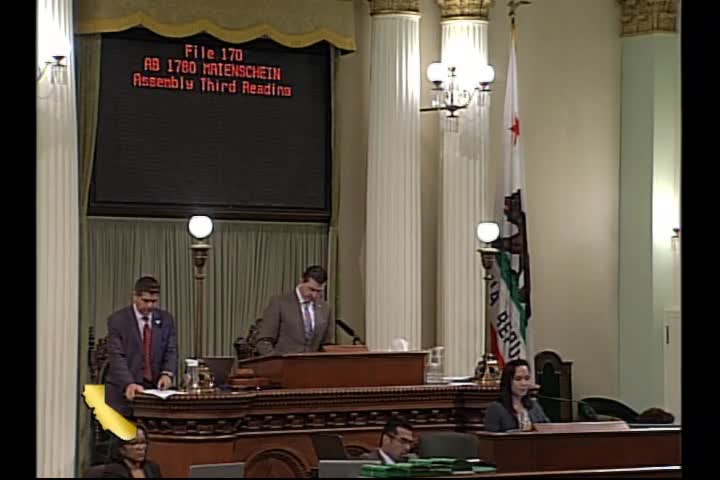
Assembly Floor
 4MIN
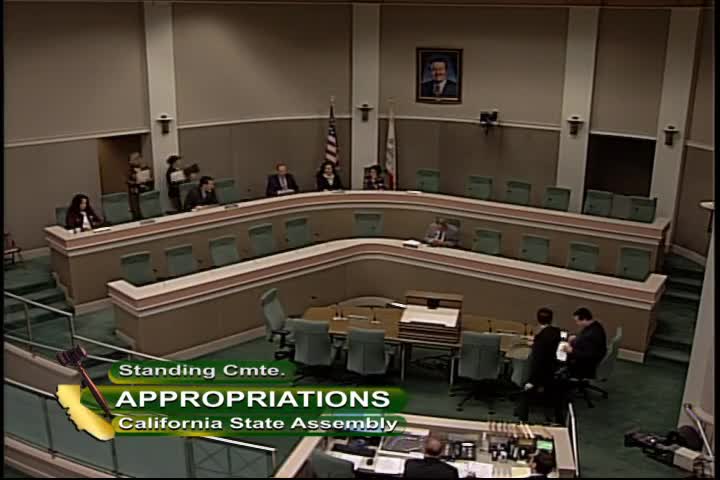
Assembly Standing Committee on Appropriations
 28MIN
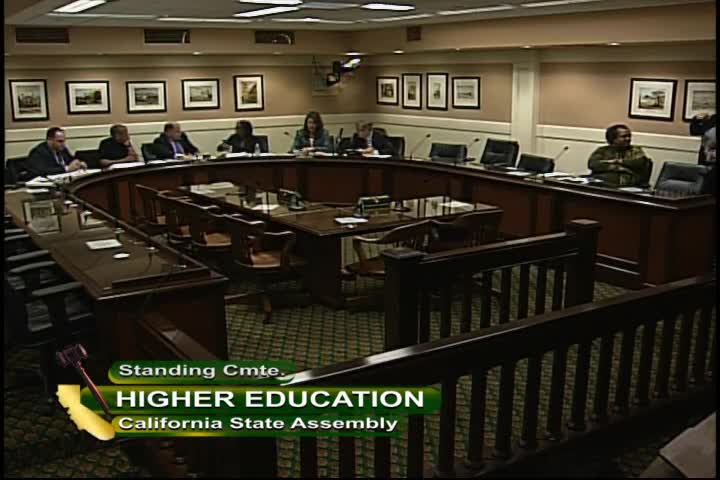
Assembly Standing Committee on Higher Education
Bill Author

Bill Co-Author(s):