AB 1962: Education finance: local control funding formula: unduplicated pupils: foster youth: dependent child of a tribal court.
- Session Year: 2017-2018
- House: Assembly
- Latest Version Date: 2018-09-26
Existing law establishes a public school financing system that requires state funding for county superintendents of schools, school districts, and charter schools to be calculated pursuant to a local control funding formula, as specified. Existing law requires funding pursuant to the local control funding formula to include, in addition to a base grant, supplemental and concentration grant add-ons that are based on the percentage of certain categories of pupils, known as unduplicated pupils, served by the county superintendent of schools, school district, or charter school. Existing law includes among unduplicated pupils, a pupil who is classified as an English learner, eligible for a free or reduced-price meal, or a foster youth, as defined, and requires county superintendents of schools, school districts, and charter schools to submit and report data relating to these pupils.
This bill, no later than the 202021 fiscal year, would include in that definition of foster youth a dependent child of a court of an Indian tribe, consortium of tribes, or tribal organization who is the subject of a petition filed in the tribal court in accordance with the tribes law, provided the child would also meet one of the descriptions of specified existing law describing when a child may be adjudged a dependent child of the juvenile court. To the extent this provision would impose additional duties on county superintendents of schools, school districts, and charter schools in relation to submitting and reporting data relating to these pupils, the bill would impose a state-mandated local program.
Existing law requires the State Department of Education and the State Department of Social Services to enter into a memorandum of understanding on or before February 1, 2014, that requires the State Department of Social Services, at least once per week, to share disaggregated information related to foster youth with the State Department of Education.
This bill would exempt the State Department of Social Services from collecting or sharing specified information relating to a dependent child of a court of an Indian tribe, consortium of tribes, or tribal organization as described above.
The California Constitution requires the state to reimburse local agencies and school districts for certain costs mandated by the state. Statutory provisions establish procedures for making that reimbursement.
This bill would provide that, if the Commission on State Mandates determines that the bill contains costs mandated by the state, reimbursement for those costs shall be made pursuant to the statutory provisions noted above.
Existing law establishes a public school financing system that requires state funding for county superintendents of schools, school districts, and charter schools to be calculated pursuant to a local control funding formula, as specified. Existing law requires funding pursuant to the local control funding formula to include, in addition to a base grant, supplemental and concentration grant add-ons that are based on the percentage of certain categories of pupils, known as unduplicated pupils, served by the county superintendent of schools, school district, or charter school. Existing law includes among unduplicated pupils, a pupil who is classified as an English learner, eligible for a free or reduced-price meal, or a foster youth, as defined, and requires county superintendents of schools, school districts, and charter schools to submit and report data relating to these pupils.
This bill, commencing with the 201920 no later than the 202021 fiscal year, would include in that definition of foster youth a dependent child of a court of an Indian tribe, consortium of tribes, or tribal organization who is the subject of a petition filed in the tribal court in accordance with the tribes law, provided the child would also meet one of the descriptions of specified existing law describing when a child may be adjudged a dependent child of the juvenile court. To the extent this provision would impose additional duties on county superintendents of schools, school districts, and charter schools in relation to submitting and reporting data relating to these pupils, the bill would impose a state-mandated local program.
Existing law requires the State Department of Education and the State Department of Social Services to enter into a memorandum of understanding on or before February 1, 2014, that requires the State Department of Social Services, at least once per week, to share disaggregated information related to foster youth with the State Department of Education.
This bill would exempt the State Department of Social Services from collecting or sharing specified information relating to a dependent child of a court of an Indian tribe, consortium of tribes, or tribal organization as described above.
The California Constitution requires the state to reimburse local agencies and school districts for certain costs mandated by the state. Statutory provisions establish procedures for making that reimbursement.
This bill would provide that, if the Commission on State Mandates determines that the bill contains costs mandated by the state, reimbursement for those costs shall be made pursuant to the statutory provisions noted above.
Existing law establishes a public school financing system that requires state funding for county superintendents of schools, school districts, and charter schools to be calculated pursuant to a local control funding formula, as specified. Existing law requires funding pursuant to the local control funding formula to include, in addition to a base grant, supplemental and concentration grant add-ons that are based on the percentage of certain categories of pupils, known as unduplicated pupils, served by the county superintendent of schools, school district, or charter school. Existing law includes among unduplicated pupils, a pupil who is classified as an English learner, eligible for a free or reduced-price meal, or a foster youth, as defined, and requires county superintendents of schools, school districts, and charter schools to submit and report data relating to these pupils.
This bill, commencing with the 201920 fiscal year, would include in that definition of foster youth a dependent child who is in foster care under the placement and care responsibility of a court of an Indian tribe, consortium of tribes, or tribal organization. organization who is the subject of a petition filed in the tribal court in accordance with the tribes law, provided the child would also meet one of the descriptions of specified existing law describing when a child may be adjudged a dependent child of the juvenile court. To the extent this provision would impose additional duties on county superintendents of schools, school districts, and charter schools in relation to submitting and reporting data relating to these pupils, the bill would impose a state-mandated local program.
The California Constitution requires the state to reimburse local agencies and school districts for certain costs mandated by the state. Statutory provisions establish procedures for making that reimbursement.
This bill would provide that, if the Commission on State Mandates determines that the bill contains costs mandated by the state, reimbursement for those costs shall be made pursuant to the statutory provisions noted above.
Existing law establishes a public school financing system that requires state funding for county superintendents of schools, school districts, and charter schools to be calculated pursuant to a local control funding formula, as specified. Existing law requires funding pursuant to the local control funding formula to include, in addition to a base grant, supplemental and concentration grant add-ons that are based on the percentage of certain categories of pupils, known as unduplicated pupils, served by the county superintendent of schools, school district, or charter school. Existing law includes among unduplicated pupils, a pupil who is classified as an English learner, eligible for a free or reduced-price meal, or a foster youth, as defined, and requires county superintendents of schools, school districts, and charter schools to submit and report data relating to these pupils.
This bill, commencing with the 201920 fiscal year, would include in that definition of foster youth a child who is in foster care under the placement and care responsibility of an Indian tribe, consortium of tribes, or tribal organization. To the extent this provision would impose additional duties on county superintendents of schools, school districts, and charter schools in relation to submitting and reporting data relating to these pupils, the bill would impose a state-mandated local program.
The California Constitution requires the state to reimburse local agencies and school districts for certain costs mandated by the state. Statutory provisions establish procedures for making that reimbursement.
This bill would provide that, if the Commission on State Mandates determines that the bill contains costs mandated by the state, reimbursement for those costs shall be made pursuant to the statutory provisions noted above.
For purposes of Section 42238.02, the following definitions shall apply:
(a)Eligible for free or reduced-price meals means determined to meet federal income eligibility criteria, either through completing an application for the federal National School Lunch Program or through an alternative household income data collection form, or deemed to be categorically eligible for free or reduced-price meals under the federal National School Lunch Program, as described in Part 245 of Title 7 of the Code of Federal Regulations.
(1)A school participating in a special assistance alternative authorized by Section 11(a)(1) of the federal Richard B. Russell National School Lunch Act (Public Law 113-79), including Provision 2, Provision 3, or the Community Eligibility Provision, may establish a base year for purposes of the local control funding formula by determining the pupils at the school who are eligible for free or reduced-price meals and using each pupils eligibility status in that base year to report eligibility for up to each of the following three school years. The school may include between base year eligibility determinations, any newly enrolled pupils who are determined to be eligible for free or reduced-price meals or any current pupils found to be newly eligible for free or reduced-price meals as identified through a local or state direct certification match or another categorical designation.
(2)A school that uses the special assistance alternative shall maintain information on each pupils eligibility status and annually submit information on that status in the California Longitudinal Pupil Achievement Data System pursuant to paragraph (2) of subdivision (b) of Section 42238.02 or subparagraph (A) of paragraph (3) of subdivision (b) of Section 2574, as applicable.
(3)For a pupil who transfers to a school using a special assistance alternative and who is transferring between schools within the same school district, documentation supporting eligibility for that pupil for purposes of the local control funding formula may be transferred from the pupils old school to the pupils new school, as long as the documentation supporting eligibility for that pupil is less than four years old and is updated at least once every four years.
(4)To the extent permitted by federal law, a school may choose to establish a new base year for purposes of the federal National School Lunch Program at the same time the school establishes a new base year for purposes of the local control funding formula. A school may use federal National School Lunch Program application forms to collect household income data as permitted under the federal National School Lunch Program. If the use of federal National School Lunch Program application forms is not permitted, a school shall use alternative household income data collection forms.
(5)An alternative household income data collection form shall be confidential and shall not be shared by the school other than as necessary for purposes of determining funding allocations under the local control funding formula and for assessing the accountability of that funding. An alternative household income data collection form shall contain, at a minimum, all of the following information:
(A)Information sufficient to identify the pupil or pupils.
(B)Information sufficient to determine that the pupil or household meets federal income eligibility criteria sufficient to qualify for either a free or reduced-priced meal under the federal Richard B. Russell National School Lunch Act (Public Law 113-79).
(C)Certification that the information is true and correct by the pupils adult household member.
(6)Paragraphs (1) and (3) are effective commencing with the 201415 fiscal year.
(b)Foster youth means any of the following:
(1)A child who is the subject of a petition filed pursuant to Section 300 of the Welfare and Institutions Code, whether or not the child has been removed from his or her home by the juvenile court pursuant to Section 319 or 361 of the Welfare and Institutions Code.
(2)A child who is the subject of a petition filed pursuant to Section 602 of the Welfare and Institutions Code, has been removed from his or her home by the juvenile court pursuant to Section 727 of the Welfare and Institutions Code, and is in foster care as defined by subdivision (d) of Section 727.4 of the Welfare and Institutions Code.
(3)A nonminor under the transition jurisdiction of the juvenile court, as described in Section 450 of the Welfare and Institutions Code, who satisfies all of the following criteria:
(A)He or she has attained 18 years of age while under an order of foster care placement by the juvenile court, and is not more than 19 years of age on or after January 1, 2012, not more than 20 years of age on or after January 1, 2013, and not more than 21 years of age, on or after January 1, 2014, and as described in Section 10103.5 of the Welfare and Institutions Code.
(B)He or she is in foster care under the placement and care responsibility of the county welfare department, county probation department, Indian tribe, consortium of tribes, or tribal organization that entered into an agreement pursuant to Section 10553.1 of the Welfare and Institutions Code.
(C)He or she is participating in a transitional independent living case plan pursuant to Section 475(8) of the federal Social Security Act (42 U.S.C. Sec. 675), as contained in the federal Fostering Connections to Success and Increasing Adoptions Act of 2008 (Public Law 110-351), as described in Section 11403 of the Welfare and Institutions Code.
(4)(A)A dependent child of the court of an Indian tribe, consortium of tribes, or tribal organization who is the subject of a petition filed in the tribal court pursuant to the tribal courts jurisdiction in accordance with the tribes law, provided that the child would also meet one of the descriptions in Section 300 of the Welfare and Institutions Code describing when a child may be adjudged a dependent child of the juvenile court.
(B)This paragraph is effective no later than the 202021 fiscal year.
(c)Pupils of limited English proficiency means pupils who do not have the clearly developed English language skills of comprehension, speaking, reading, and writing necessary to receive instruction only in English at a level substantially equivalent to pupils of the same age or grade whose primary language is English. English learner shall have the same meaning as provided for in subdivision (a) of Section 306 and as pupils of limited English proficiency.
SEC. 2.Section 49085 of the Education Code is amended to read:49085.(a)On or before February 1, 2014, the department and the State Department of Social Services shall develop and enter into a memorandum of understanding that shall, at a minimum, require the State Department of Social Services, at least once per week, to share with the department both of the following:
(1)Disaggregated information on children and youth in foster care sufficient for the department to identify pupils in foster care.
(2)Disaggregated data on children and youth in foster care that is helpful to county offices of education and other local educational agencies responsible for ensuring that pupils in foster care receive appropriate educational supports and services.
(b)To the extent allowable under federal law, the department shall regularly identify pupils in foster care and designate those pupils in the California Longitudinal Pupil Achievement Data System or any future data system used by the department to collect disaggregated pupil outcome data.
(c)To the extent allowable under federal law, the Superintendent, on or before July 1 of each even-numbered year, shall report to the Legislature and the Governor on the educational outcomes for pupils in foster care at both the individual schoolsite level and school district level. The report shall include, but is not limited to, all of the following:
(1)Individual schoolsite level and school district level educational outcome data for each local educational agency that enrolls at least 15 pupils in foster care, each county in which at least 15 pupils in foster care attend school, and for the entire state.
(2)The number of pupils in foster care statewide and by each local educational agency.
(3)The academic achievement of pupils in foster care.
(4)The incidence of suspension and expulsion for pupils in foster care.
(5)Truancy rates, attendance rates, and dropout rates for pupils in foster care.
(d)To the extent allowable under federal law, the department, at least once per week, shall do all of the following:
(1)Inform school districts and charter schools of any pupils enrolled in those school districts or charter schools who are in foster care.
(2)Inform county offices of education of any pupils enrolled in schools in the county who are in foster care.
(3)Provide schools districts, county office of education, and charter schools disaggregated data helpful to ensuring pupils in foster care receive appropriate educational supports and services.
(e)(i)For purposes of this section pupil in foster care has the same meaning as foster youth, as defined in Section 42238.01.
(ii)Nothing in this section shall require the State Department of Social Services to collect, nor share with the department, any information regarding the population described in paragraph (4) of subdivision (b) of Section 42238.01.
SEC. 3.If the Commission on State Mandates determines that this act contains costs mandated by the state, reimbursement to local agencies and school districts for those costs shall be made pursuant to Part 7 (commencing with Section 17500) of Division 4 of Title 2 of the Government Code.
For purposes of Section 42238.02, the following definitions shall apply:
(a)Eligible for free or reduced-price meals means determined to meet federal income eligibility criteria, either through completing an application for the federal National School Lunch Program or through an alternative household income data collection form, or deemed to be categorically eligible for free or reduced-price meals under the federal National School Lunch Program, as described in Part 245 of Title 7 of the Code of Federal Regulations.
(1)A school participating in a special assistance alternative authorized by Section 11(a)(1) of the federal Richard B. Russell National School Lunch Act (Public Law 113-79), including Provision 2, Provision 3, or the Community Eligibility Provision, may establish a base year for purposes of the local control funding formula by determining the pupils at the school who are eligible for free or reduced-price meals and using each pupils eligibility status in that base year to report eligibility for up to each of the following three school years. The school may include between base year eligibility determinations, any newly enrolled pupils who are determined to be eligible for free or reduced-price meals or any current pupils found to be newly eligible for free or reduced-price meals as identified through a local or state direct certification match or another categorical designation.
(2)A school that uses the special assistance alternative shall maintain information on each pupils eligibility status and annually submit information on that status in the California Longitudinal Pupil Achievement Data System pursuant to paragraph (2) of subdivision (b) of Section 42238.02 or subparagraph (A) of paragraph (3) of subdivision (b) of Section 2574, as applicable.
(3)For a pupil who transfers to a school using a special assistance alternative and who is transferring between schools within the same school district, documentation supporting eligibility for that pupil for purposes of the local control funding formula may be transferred from the pupils old school to the pupils new school, as long as the documentation supporting eligibility for that pupil is less than four years old and is updated at least once every four years.
(4)To the extent permitted by federal law, a school may choose to establish a new base year for purposes of the federal National School Lunch Program at the same time the school establishes a new base year for purposes of the local control funding formula. A school may use federal National School Lunch Program application forms to collect household income data as permitted under the federal National School Lunch Program. If the use of federal National School Lunch Program application forms is not permitted, a school shall use alternative household income data collection forms.
(5)An alternative household income data collection form shall be confidential and shall not be shared by the school other than as necessary for purposes of determining funding allocations under the local control funding formula and for assessing the accountability of that funding. An alternative household income data collection form shall contain, at a minimum, all of the following information:
(A)Information sufficient to identify the pupil or pupils.
(B)Information sufficient to determine that the pupil or household meets federal income eligibility criteria sufficient to qualify for either a free or reduced-priced meal under the federal Richard B. Russell National School Lunch Act (Public Law 113-79).
(C)Certification that the information is true and correct by the pupils adult household member.
(6)Paragraphs (1) and (3) are effective commencing with the 201415 fiscal year.
(b)Foster youth means any of the following:
(1)A child who is the subject of a petition filed pursuant to Section 300 of the Welfare and Institutions Code, whether or not the child has been removed from his or her home by the juvenile court pursuant to Section 319 or 361 of the Welfare and Institutions Code.
(2)A child who is the subject of a petition filed pursuant to Section 602 of the Welfare and Institutions Code, has been removed from his or her home by the juvenile court pursuant to Section 727 of the Welfare and Institutions Code, and is in foster care as defined by subdivision (d) of Section 727.4 of the Welfare and Institutions Code.
(3)A nonminor under the transition jurisdiction of the juvenile court, as described in Section 450 of the Welfare and Institutions Code, who satisfies all of the following criteria:
(A)He or she has attained 18 years of age while under an order of foster care placement by the juvenile court, and is not more than 19 years of age on or after January 1, 2012, not more than 20 years of age on or after January 1, 2013, and not more than 21 years of age, on or after January 1, 2014, and as described in Section 10103.5 of the Welfare and Institutions Code.
(B)He or she is in foster care under the placement and care responsibility of the county welfare department, county probation department, Indian tribe, consortium of tribes, or tribal organization that entered into an agreement pursuant to Section 10553.1 of the Welfare and Institutions Code.
(C)He or she is participating in a transitional independent living case plan pursuant to Section 475(8) of the federal Social Security Act (42 U.S.C. Sec. 675), as contained in the federal Fostering Connections to Success and Increasing Adoptions Act of 2008 (Public Law 110-351), as described in Section 11403 of the Welfare and Institutions Code.
(4)(A)A dependent child of the court of an Indian tribe, consortium of tribes, or tribal organization who is the subject of a petition filed in the tribal court pursuant to the tribal courts jurisdiction in accordance with the tribes law, provided that the child would also meet one of the descriptions in Section 300 of the Welfare and Institutions Code describing when a child may be adjudged a dependent child of the juvenile court.
(B)This paragraph is effective commencing with the 201920 no later than the 202021 fiscal year.
(c)Pupils of limited English proficiency means pupils who do not have the clearly developed English language skills of comprehension, speaking, reading, and writing necessary to receive instruction only in English at a level substantially equivalent to pupils of the same age or grade whose primary language is English. English learner shall have the same meaning as provided for in subdivision (a) of Section 306 and as pupils of limited English proficiency.
SEC. 2.Section 49085 of the Education Code is amended to read:49085.(a)On or before February 1, 2014, the department and the State Department of Social Services shall develop and enter into a memorandum of understanding that shall, at a minimum, require the State Department of Social Services, at least once per week, to share with the department both of the following:
(1)Disaggregated information on children and youth in foster care sufficient for the department to identify pupils in foster care.
(2)Disaggregated data on children and youth in foster care that is helpful to county offices of education and other local educational agencies responsible for ensuring that pupils in foster care receive appropriate educational supports and services.
(b)To the extent allowable under federal law, the department shall regularly identify pupils in foster care and designate those pupils in the California Longitudinal Pupil Achievement Data System or any future data system used by the department to collect disaggregated pupil outcome data.
(c)To the extent allowable under federal law, the Superintendent, on or before July 1 of each even-numbered year, shall report to the Legislature and the Governor on the educational outcomes for pupils in foster care at both the individual schoolsite level and school district level. The report shall include, but is not limited to, all of the following:
(1)Individual schoolsite level and school district level educational outcome data for each local educational agency that enrolls at least 15 pupils in foster care, each county in which at least 15 pupils in foster care attend school, and for the entire state.
(2)The number of pupils in foster care statewide and by each local educational agency.
(3)The academic achievement of pupils in foster care.
(4)The incidence of suspension and expulsion for pupils in foster care.
(5)Truancy rates, attendance rates, and dropout rates for pupils in foster care.
(d)To the extent allowable under federal law, the department, at least once per week, shall do all of the following:
(1)Inform school districts and charter schools of any pupils enrolled in those school districts or charter schools who are in foster care.
(2)Inform county offices of education of any pupils enrolled in schools in the county who are in foster care.
(3)Provide schools districts, county office of education, and charter schools disaggregated data helpful to ensuring pupils in foster care receive appropriate educational supports and services.
(e)(i)For purposes of this section pupil in foster care has the same meaning as foster youth, as defined in Section 42238.01.
(ii)Nothing in this section shall require the State Department of Social Services to collect, nor share with the department, any information regarding the population described in paragraph (4) of subdivision (b) of Section 42238.01.
SEC. 2.SEC. 3.If the Commission on State Mandates determines that this act contains costs mandated by the state, reimbursement to local agencies and school districts for those costs shall be made pursuant to Part 7 (commencing with Section 17500) of Division 4 of Title 2 of the Government Code.
For purposes of Section 42238.02, the following definitions shall apply:
(a)Eligible for free or reduced-price meals means determined to meet federal income eligibility criteria, either through completing an application for the federal National School Lunch Program or through an alternative household income data collection form, or deemed to be categorically eligible for free or reduced-price meals under the federal National School Lunch Program, as described in Part 245 of Title 7 of the Code of Federal Regulations.
(1)A school participating in a special assistance alternative authorized by Section 11(a)(1) of the federal Richard B. Russell National School Lunch Act (Public Law 113-79), including Provision 2, Provision 3, or the Community Eligibility Provision, may establish a base year for purposes of the local control funding formula by determining the pupils at the school who are eligible for free or reduced-price meals and using each pupils eligibility status in that base year to report eligibility for up to each of the following three school years. The school may include between base year eligibility determinations, any newly enrolled pupils who are determined to be eligible for free or reduced-price meals or any current pupils found to be newly eligible for free or reduced-price meals as identified through a local or state direct certification match or another categorical designation.
(2)A school that uses the special assistance alternative shall maintain information on each pupils eligibility status and annually submit information on that status in the California Longitudinal Pupil Achievement Data System pursuant to paragraph (2) of subdivision (b) of Section 42238.02 or subparagraph (A) of paragraph (3) of subdivision (b) of Section 2574, as applicable.
(3)For a pupil who transfers to a school using a special assistance alternative and who is transferring between schools within the same school district, documentation supporting eligibility for that pupil for purposes of the local control funding formula may be transferred from the pupils old school to the pupils new school, as long as the documentation supporting eligibility for that pupil is less than four years old and is updated at least once every four years.
(4)To the extent permitted by federal law, a school may choose to establish a new base year for purposes of the federal National School Lunch Program at the same time the school establishes a new base year for purposes of the local control funding formula. A school may use federal National School Lunch Program application forms to collect household income data as permitted under the federal National School Lunch Program. If the use of federal National School Lunch Program application forms is not permitted, a school shall use alternative household income data collection forms.
(5)An alternative household income data collection form shall be confidential and shall not be shared by the school other than as necessary for purposes of determining funding allocations under the local control funding formula and for assessing the accountability of that funding. An alternative household income data collection form shall contain, at a minimum, all of the following information:
(A)Information sufficient to identify the pupil or pupils.
(B)Information sufficient to determine that the pupil or household meets federal income eligibility criteria sufficient to qualify for either a free or reduced-priced meal under the federal Richard B. Russell National School Lunch Act (Public Law 113-79).
(C)Certification that the information is true and correct by the pupils adult household member.
(6)Paragraphs (1) and (3) are effective commencing with the 201415 fiscal year.
(b)Foster youth means any of the following:
(1)A child who is the subject of a petition filed pursuant to Section 300 of the Welfare and Institutions Code, whether or not the child has been removed from his or her home by the juvenile court pursuant to Section 319 or 361 of the Welfare and Institutions Code.
(2)A child who is the subject of a petition filed pursuant to Section 602 of the Welfare and Institutions Code, has been removed from his or her home by the juvenile court pursuant to Section 727 of the Welfare and Institutions Code, and is in foster care as defined by subdivision (d) of Section 727.4 of the Welfare and Institutions Code.
(3)A nonminor under the transition jurisdiction of the juvenile court, as described in Section 450 of the Welfare and Institutions Code, who satisfies all of the following criteria:
(A)He or she has attained 18 years of age while under an order of foster care placement by the juvenile court, and is not more than 19 years of age on or after January 1, 2012, not more than 20 years of age on or after January 1, 2013, and not more than 21 years of age, on or after January 1, 2014, and as described in Section 10103.5 of the Welfare and Institutions Code.
(B)He or she is in foster care under the placement and care responsibility of the county welfare department, county probation department, Indian tribe, consortium of tribes, or tribal organization that entered into an agreement pursuant to Section 10553.1 of the Welfare and Institutions Code.
(C)He or she is participating in a transitional independent living case plan pursuant to Section 475(8) of the federal Social Security Act (42 U.S.C. Sec. 675), as contained in the federal Fostering Connections to Success and Increasing Adoptions Act of 2008 (Public Law 110-351), as described in Section 11403 of the Welfare and Institutions Code.
(4)(A)A child who is in foster care under the placement and care responsibility of an Indian tribe, consortium of tribes, or tribal organization. dependent child of the court of an Indian tribe, consortium of tribes, or tribal organization who is the subject of a petition filed in the tribal court pursuant to the tribal courts jurisdiction in accordance with the tribes law, provided that the child would also meet one of the descriptions in Section 300 of the Welfare and Institutions Code describing when a child may be adjudged a dependent child of the juvenile court.
(B)This paragraph is effective commencing with the 201920 fiscal year.
(c)Pupils of limited English proficiency means pupils who do not have the clearly developed English language skills of comprehension, speaking, reading, and writing necessary to receive instruction only in English at a level substantially equivalent to pupils of the same age or grade whose primary language is English. English learner shall have the same meaning as provided for in subdivision (a) of Section 306 and as pupils of limited English proficiency.
SEC. 2.If the Commission on State Mandates determines that this act contains costs mandated by the state, reimbursement to local agencies and school districts for those costs shall be made pursuant to Part 7 (commencing with Section 17500) of Division 4 of Title 2 of the Government Code.
For purposes of Section 42238.02, the following definitions shall apply:
(a)Eligible for free or reduced-price meals means determined to meet federal income eligibility criteria, either through completing an application for the federal National School Lunch Program or through an alternative household income data collection form, or deemed to be categorically eligible for free or reduced-price meals under the federal National School Lunch Program, as described in Part 245 of Title 7 of the Code of Federal Regulations.
(1)A school participating in a special assistance alternative authorized by Section 11(a)(1) of the federal Richard B. Russell National School Lunch Act (Public Law 113-79), including Provision 2, Provision 3, or the Community Eligibility Provision, may establish a base year for purposes of the local control funding formula by determining the pupils at the school who are eligible for free or reduced-price meals and using each pupils eligibility status in that base year to report eligibility for up to each of the following three school years. The school may include between base year eligibility determinations, any newly enrolled pupils who are determined to be eligible for free or reduced-price meals or any current pupils found to be newly eligible for free or reduced-price meals as identified through a local or state direct certification match or another categorical designation.
(2)A school that uses the special assistance alternative shall maintain information on each pupils eligibility status and annually submit information on that status in the California Longitudinal Pupil Achievement Data System pursuant to paragraph (2) of subdivision (b) of Section 42238.02 or subparagraph (A) of paragraph (3) of subdivision (b) of Section 2574, as applicable.
(3)For a pupil who transfers to a school using a special assistance alternative and who is transferring between schools within the same school district, documentation supporting eligibility for that pupil for purposes of the local control funding formula may be transferred from the pupils old school to the pupils new school, as long as the documentation supporting eligibility for that pupil is less than four years old and is updated at least once every four years.
(4)To the extent permitted by federal law, a school may choose to establish a new base year for purposes of the federal National School Lunch Program at the same time the school establishes a new base year for purposes of the local control funding formula. A school may use federal National School Lunch Program application forms to collect household income data as permitted under the federal National School Lunch Program. If the use of federal National School Lunch Program application forms is not permitted, a school shall use alternative household income data collection forms.
(5)An alternative household income data collection form shall be confidential and shall not be shared by the school other than as necessary for purposes of determining funding allocations under the local control funding formula and for assessing the accountability of that funding. An alternative household income data collection form shall contain, at a minimum, all of the following information:
(A)Information sufficient to identify the pupil or pupils.
(B)Information sufficient to determine that the pupil or household meets federal income eligibility criteria sufficient to qualify for either a free or reduced-priced meal under the federal Richard B. Russell National School Lunch Act (Public Law 113-79).
(C)Certification that the information is true and correct by the pupils adult household member.
(6)Paragraphs (1) and (3) are effective commencing with the 201415 fiscal year.
(b)Foster youth means any of the following:
(1)A child who is the subject of a petition filed pursuant to Section 300 of the Welfare and Institutions Code, whether or not the child has been removed from his or her home by the juvenile court pursuant to Section 319 or 361 of the Welfare and Institutions Code.
(2)A child who is the subject of a petition filed pursuant to Section 602 of the Welfare and Institutions Code, has been removed from his or her home by the juvenile court pursuant to Section 727 of the Welfare and Institutions Code, and is in foster care as defined by subdivision (d) of Section 727.4 of the Welfare and Institutions Code.
(3)A nonminor under the transition jurisdiction of the juvenile court, as described in Section 450 of the Welfare and Institutions Code, who satisfies all of the following criteria:
(A)He or she has attained 18 years of age while under an order of foster care placement by the juvenile court, and is not more than 19 years of age on or after January 1, 2012, not more than 20 years of age on or after January 1, 2013, and not more than 21 years of age, on or after January 1, 2014, and as described in Section 10103.5 of the Welfare and Institutions Code.
(B)He or she is in foster care under the placement and care responsibility of the county welfare department, county probation department, Indian tribe, consortium of tribes, or tribal organization that entered into an agreement pursuant to Section 10553.1 of the Welfare and Institutions Code.
(C)He or she is participating in a transitional independent living case plan pursuant to Section 475(8) of the federal Social Security Act (42 U.S.C. Sec. 675), as contained in the federal Fostering Connections to Success and Increasing Adoptions Act of 2008 (Public Law 110-351), as described in Section 11403 of the Welfare and Institutions Code.
(4)(A)A child who is in foster care under the placement and care responsibility of an Indian tribe, consortium of tribes, or tribal organization.
(B)This paragraph is effective commencing with the 201920 fiscal year.
(c)Pupils of limited English proficiency means pupils who do not have the clearly developed English language skills of comprehension, speaking, reading, and writing necessary to receive instruction only in English at a level substantially equivalent to pupils of the same age or grade whose primary language is English. English learner shall have the same meaning as provided for in subdivision (a) of Section 306 and as pupils of limited English proficiency.
SEC. 2.If the Commission on State Mandates determines that this act contains costs mandated by the state, reimbursement to local agencies and school districts for those costs shall be made pursuant to Part 7 (commencing with Section 17500) of Division 4 of Title 2 of the Government Code.
|
Date
|
Status
|
|---|---|
| Sep 26, 2018 | Chaptered by Secretary of State - Chapter 748, Statutes of 2018. |
| Sep 26, 2018 | Approved by the Governor. |
| Sep 6, 2018 | Enrolled and presented to the Governor at 3 p.m. |
| Aug 29, 2018 | Senate amendments concurred in. To Engrossing and Enrolling. |
| Aug 24, 2018 | In Assembly. Concurrence in Senate amendments pending. May be considered on or after August 26 pursuant to Assembly Rule 77. |
| Aug 24, 2018 | Read third time. Passed. Ordered to the Assembly. |
| Aug 21, 2018 | Ordered to special consent calendar. |
| Aug 17, 2018 | From committee: Do pass. (Ayes 7. Noes 0.) (August 16). |
| Jun 25, 2018 | In committee: Referred to APPR. suspense file. |
| Jun 6, 2018 | From committee: Do pass and re-refer to Com. on APPR. with recommendation: To Consent Calendar. (Ayes 6. Noes 0.) (June 6). Re-referred to Com. on APPR. |
| May 14, 2018 | From committee chair, with author's amendments: Amend, and re-refer to committee. Read second time, amended, and re-referred to Com. on ED. |
| May 10, 2018 | Referred to Com. on ED. |
| Apr 26, 2018 | In Senate. Read first time. To Com. on RLS. for assignment. |
| Apr 26, 2018 | Read third time. Passed. Ordered to the Senate. |
| Apr 19, 2018 | Read second time. Ordered to Consent Calendar. |
| Apr 18, 2018 | From committee: Do pass. To Consent Calendar. (Ayes 15. Noes 0.) (April 18). |
| Apr 4, 2018 | Re-referred to Com. on APPR. |
| Apr 3, 2018 | Read second time and amended. |
| Apr 2, 2018 | From committee: Amend, and do pass as amended and re-refer to Com. on APPR. with recommendation: To Consent Calendar. (Ayes 6. Noes 0.) (March 21). |
| Feb 8, 2018 | Referred to Com. on ED. |
| Jan 31, 2018 | From printer. May be heard in committee March 2. |
| Jan 30, 2018 | Read first time. To print. |
|
Date
|
Description
|
Location
|
Votes
|
|
|---|---|---|---|---|
| Aug 29, 2018 | AB 1962 WOOD Concurrence in Senate Amendments | Assembly Floor |
Passed |
|
| Aug 24, 2018 | Special Consent AB1962 | Senate Floor |
Passed |
|
| Aug 16, 2018 | Do pass | Senate Standing Committee on Appropriations |
Passed |
|
| Jun 25, 2018 | Placed on suspense file | Senate Standing Committee on Appropriations |
Passed |
|
| Jun 6, 2018 | Do pass, but first be re-referred to the Committee on [Appropriations] with the recommendation: To Consent Calendar | Senate Standing Committee on Education |
Passed |
|
| Apr 26, 2018 | AB 1962 WOOD Consent Calendar Second Day Regular Session | Assembly Floor |
Passed |
|
| Apr 18, 2018 | Do pass. To Consent Calendar. | Assembly Standing Committee on Appropriations |
Passed |
|
| Mar 21, 2018 | Do pass as amended, and be re-referred to the Committee on [Appropriations] with recommendation: To Consent Calendar | Assembly Standing Committee on Education |
Passed |
This list shows positions taken on this bill by organizations on the date displayed, which is linked to the original source.
Positions by individuals are not included.
|
Organization
|
Position
|
Date
|
|---|---|---|
| California Tribal Business Alliance | ** Support | Aug 18, 2018 |
| Klamath-Trinity Joint Unified School District | ** Support | Aug 18, 2018 |
| Rincon Band Of Luiseno Indians | ** Support | Aug 18, 2018 |
| small school districts' association | ** Support | Aug 18, 2018 |
| Yurok Tribe | ** Support | Aug 18, 2018 |
CONCURRENCE IN SENATE AMENDMENTS
CSA1 Bill Id:AB 1962
Author:(Wood)
As Amended Ver:May 14, 2018
Majority vote
ASSEMBLY: | 74-0 | (April 26, 2018) | SENATE: | 39-0 | (August 24, 2018) |
Original Committee Reference: ED.
SUMMARY: Amends the definition of foster youth for Local Control Funding Formula (LCFF) purposes by including a student who is in foster care under the placement and care responsibility of an Indian tribe, as a result of which the student would generate the same additional LCFF funding other foster youth receive.
The Senate amendments change the starting date from 2019-20 to 2020-21 and clarify that the State Department of Social Service is not required to include information on foster youth in Indian tribes in its report to the California Department of Education.
EXISTING LAW: Establishes the LCFF, which provides funding to local education agencies partly on the basis on the number of students in foster care.
FISCAL EFFECT: According to the Senate Appropriations Committee:
- By expanding the definition of foster youth to include students under the placement and care of an Indian tribe for purposes of generating the same increased amounts of LCFF funding that other foster youth receive, this bill could result additional Proposition 98 General Fund costs, likely in the tens of thousands of dollars each year.
- This bill would also result in General Fund costs of approximately $62,000 each year for the California Department of Education to make the necessary changes in the state's data system to track this foster youth population.
COMMENTS:
School districts receive the bulk of their funding under the LCFF based on average daily attendance in four grade spans, with each grade span having a unique base rate. The K-3 and high school base rates are increased to recognize the costs associated with class size reduction in the very early grades and career technical education offerings in high school. The LCFF also provides additional funds for particular student groups. Specifically, each English learner, low-income and foster youth student in a district generates an additional 20% of the qualifying student's grade span base rate. Districts whose English learner, low-income, and foster youth student populations exceed 55% of their enrollment receive an additional 50% of the adjusted base grant for each student above the 55% threshold. For the purposes of generating supplemental and concentration funding, a district's student count is based on a three-year rolling average, and students that meet more than one category (e.g. low-income and foster youth) are counted only once.
Some school districts enroll students who have been designated as foster youth by a tribal organization pursuant to its sovereign authority under federal law. However, these students are not recognized by state law as foster youth for purposes of generating LCFF funds, unlike other foster youth students unless they are also identified as low-income. While the CDE projects that the new definition proposed by this measure could yield a potential increase of up to 500 students for LCFF purposes, it is likely that many of these students are low income and may already be included. But in some instances, they may not be identified as low income because the individuals they are placed with may not complete the necessary paperwork to certify the student's low-income status.
This bill changes the definition of "foster youth" for state funding and accountability purposes by adding the following, effective no later than the 2020-21 fiscal year: a dependent child of the court of an Indian tribe, consortium of tribes, or tribal organization who is the subject of a petition filed in the tribal court pursuant to the tribal court's jurisdiction in accordance with the tribe's law, provided that the child would also meet one of the descriptions in Section 300 of the Welfare and Institutions Code describing when a child may be adjudged a dependent child of the juvenile court.
Analysis Prepared by: Rick Pratt / ED. / (916) 319-2087 FN: 0004324
Office of Senate Floor Analyses (916) 651-1520 Fax: (916) 327-4478 | AB |
THIRD READING
Bill No: AB 1962
:
SENATE EDUCATION COMMITTEE: 6-0, 6/6/18
AYES: Allen, Wilk, Galgiani, Leyva, Pan, Vidak
SENATE APPROPRIATIONS COMMITTEE: 7-0, 8/16/18
AYES: Portantino, Bates, Beall, Bradford, Hill, Nielsen, Wiener
ASSEMBLY FLOOR: 74-0, 4/26/18 (Consent) - See last page for vote
DIGEST:
This bill changes the definition of “foster youth” for state funding and accountability purposes for local educational agencies (LEAs) under the Local Control Funding Formula (LCFF).
Existing law:
- Establishes the LCFF, with per-pupil funding targets adjusted for different student grade levels, and including supplemental funding for LEAs serving students who are low-income, English learners, or foster youth. The LCFF replaced almost all sources of state funding for LEAs, including most categorical programs, with general purpose funding including few spending restrictions.
In addition to creating a new funding formula, the 2013 LCFF legislation established new rules relating to school district transparency and accountability. Specifically, under the new rules, districts are required to adopt Local Control and Accountability Plans (LCAPs). Each LCAP must include a school district’s annual goals, including but not limited to, how services for students who are low-income, English learners, or foster youth will be increased in proportion to the additional funding these students generate.
- Defines, for LCFF and LCAP purposes, “foster youth” as any of the following:
- A child who is the subject of a petition filed pursuant to Section 300 of the Welfare and Institutions Code, whether or not the child has been removed from his or her home by the juvenile court pursuant to Section 319 or 361 of the Welfare and Institutions Code.
- A child who is the subject of a petition filed pursuant to Section 602 of the Welfare and Institutions Code, has been removed from his or her home by the juvenile court pursuant to Section 727 of the Welfare and Institutions Code, and is in foster care as defined by subdivision (d) of Section 727.4 of the Welfare and Institutions Code.
- A nonminor under the transition jurisdiction of the juvenile court, as described in Section 450 of the Welfare and Institutions Code, who satisfies all of the following criteria:
- He or she has attained 18 years of age while under an order of foster care placement by the juvenile court, and is not more than 19 years of age on or after January 1, 2012, not more than 20 years of age on or after January 1, 2013, and not more than 21 years of age, on or after January 1, 2014, and as described in Section 10103.5 of the Welfare and Institutions Code.
- He or she is in foster care under the placement and care responsibility of the county welfare department, county probation department, Indian tribe, consortium of tribes, or tribal organization that entered into an agreement pursuant to Section 10553.1 of the Welfare and Institutions Code.
- He or she is participating in a transitional independent living case plan pursuant to Section 475(8) of the federal Social Security Act (42 U.S.C. Sec. 675), as contained in the federal Fostering Connections to Success and Increasing Adoptions Act of 2008 (Public Law 110-351), as described in Section 11403 of the Welfare and Institutions Code.
This bill changes the definition of “foster youth” for state funding and accountability purposes by adding the following, effective no later than the 2020-21 fiscal year:
- A dependent child of the court of an Indian tribe, consortium of tribes, or tribal organization who is the subject of a petition filed in the tribal court pursuant to the tribal court’s jurisdiction in accordance with the tribe’s law, provided that the child would also meet one of the descriptions in Section 300 of the Welfare and Institutions Code describing when a child may be adjudged a dependent child of the juvenile court.
Comments
- Need for the bill. According to the author, “some districts enroll students who have been designated as foster youth by a tribal organization pursuant to its sovereign authority under federal law, and not by the county system. Existing law includes within the definition of foster youth non-minors that have been so designated by an Indian tribe, consortium of tribes, or tribal organization, but this excludes students under 18 years of age. Accordingly, these students are not included within the LCFF and do not generate the additional funding that all other foster youth do unless they are also low income.”
- Components of the Local Control Funding Formula (LCFF). School districts receive the bulk of their funding under the LCFF based on average daily attendance in four grade spans, with each grade span having a unique base rate. Each year, the base rates are increased by a cost–of–living adjustment. The K-3 and high school base rates are further increased to recognize the costs associated with class size reduction in the very early grades and career technical education offerings in high school. The differences among the grade span rates are largely based on historical funding factors, and are intended to recognize the generally higher costs of education at higher grade levels.
The Local Control Funding Formula (LCFF) provides additional funds for particular student groups. Under the formula, each English-learning, low-income, and foster youth student in a district generates an additional 20 percent of the qualifying student’s grade span base rate. Districts whose English-learning, low-income, and foster youth student populations exceed 55 percent of their enrollment receive an additional 50 percent of the adjusted base grant for each student above the 55 percent threshold. For the purposes of generating supplemental and concentration funding, a district’s student count is based on a three-year rolling average, and students that meet more than one category (e.g. low-income and foster youth) are counted only once.
- Accountability and transparency provisions related to foster youth. In addition to creating a new funding formula, the 2013 LCFF legislation established new rules relating to school district transparency and accountability. Specifically, under the new rules, districts are required to adopt LCAPs. Each LCAP must include a school district’s annual goals in each of the eight state priority areas, which are intended to encompass the key ingredients of high-quality educational programs. The LCAPs must include both district-wide goals and goals for each numerically significant student subgroup in the district. To be numerically significant, a district must have at least 30 students in a subgroup, with the exception of foster youth, for which districts must have at least 15 students. Further, LCAPs must cover how services for students who are low-income, English learners, or foster youth will be increased in proportion to the additional funding these students generate.
- Foster youth designations by tribal organizations. As the author states, some districts enroll students who have been designated as foster youth by a tribal organization pursuant to its sovereign authority under federal law. These students are not recognized by state law as foster youth for the purposes of LCFF. Consequently, these students only generate additional funding for districts if they are low-income or English-learners. While the vast majority of tribal foster students are low income, there have been cases in which the paperwork necessary to certify low-income status was not completed. The often shorter-term and transitory nature of foster student placements can make paperwork collection difficult, which was the intent of including all other foster youth designations in the original LCFF legislation.
FISCAL EFFECT: Appropriation: Fiscal Com.: Local:
According to the Senate Appropriations Committee:
- By expanding the definition of foster youth to include students under the placement and care of an Indian tribe for purposes of generating the same increased amounts of LCFF funding that other foster youth receive, this bill could result additional Proposition 98 General Fund costs, likely in the tens of thousands of dollars each year.
- This bill would also result in General Fund costs of approximately $62,000 each year for the California Department of Education to make the necessary changes in the state’s data system to track this foster youth population.
California Tribal Business Alliance
Klamath-Trinity Joint Unified School District
Rincon Band of Luiseño Indians
Small School Districts’ Association
Yurok Tribe
OPPOSITION: (Verified 8/16/18)
None received
ASSEMBLY FLOOR: 74-0, 4/26/18
AYES: Acosta, Aguiar-Curry, Arambula, Baker, Berman, Bigelow, Bloom, Bonta, Brough, Burke, Caballero, Calderon, Carrillo, Cervantes, Chau, Chávez, Chen, Chiu, Choi, Chu, Cooley, Cooper, Cunningham, Dahle, Daly, Eggman, Flora, Frazier, Friedman, Gallagher, Eduardo Garcia, Gipson, Gloria, Gonzalez Fletcher, Gray, Grayson, Harper, Holden, Irwin, Jones-Sawyer, Kalra, Kamlager-Dove, Kiley, Lackey, Levine, Limón, Low, Maienschein, Mathis, Mayes, McCarty, Medina, Melendez, Mullin, Muratsuchi, Nazarian, Obernolte, O'Donnell, Patterson, Quirk, Quirk-Silva, Reyes, Rubio, Salas, Santiago, Steinorth, Mark Stone, Thurmond, Ting, Voepel, Waldron, Weber, Wood, Rendon
NO VOTE RECORDED: Travis Allen, Fong, Cristina Garcia, Rodriguez
8/18/18 14:18:54
**** END ****
SENATE COMMITTEE ON APPROPRIATIONS
Senator Anthony Portantino, Chair
2017 - 2018 Regular Session
AB 1962 (Wood) - Education finance: local control funding formula: unduplicated pupils: foster youth: dependent child of a tribal court
Version: May 14, 2018 | Policy Vote: ED. 6 - 0 |
Urgency: No | Mandate: Yes |
Hearing Date: June 25, 2018 | Consultant: Lenin Del Castillo |
This bill meets the criteria for referral to the Suspense File.
Bill Summary:
This bill changes the definition of “foster youth” for state funding and accountability purposes for local educational agencies (LEAs) under the Local Control Funding Formula (LCFF).
Fiscal Impact:
- By expanding the definition of foster youth to include students under the placement and care of an Indian tribe for purposes of generating the same increased amounts of LCFF funding that other foster youth receive, this bill could result additional Proposition 98 General Fund costs, likely in the tens of thousands of dollars each year.
- This bill would also result in General Fund costs of approximately $62,000 each year for the California Department of Education to make the necessary changes in the state’s data system to track this foster youth population.
Background:
The LCFF establishes per-pupil funding targets, with adjustments for different student grade levels, and includes supplemental funding for LEAs serving students who are low-income, English learners, or foster youth. The LCFF replaced almost all sources of state funding for LEAs, including most categorical programs, with general purpose funding including few spending restrictions.
In addition to creating a new funding formula, the 2013 LCFF legislation established new rules relating to school district transparency and accountability. Specifically, districts are required to adopt Local Control and Accountability Plans (LCAPs). Each LCAP must include a school district’s annual goals, including but not limited to, how services for students who are low-income, English learners, or foster youth will be increased in proportion to the additional funding these students generate.
Existing law defines “foster youth” as any of the following for LCFF and LCAP purposes:
- A child who is the subject of a petition filed pursuant to Section 300 of the Welfare and Institutions Code, whether or not the child has been removed from his or her home by the juvenile court pursuant to Section 319 or 361 of the Welfare and Institutions Code.
- A child who is the subject of a petition filed pursuant to Section 602 of the Welfare and Institutions Code, has been removed from his or her home by the juvenile court pursuant to Section 727 of the Welfare and Institutions Code, and is in foster care as defined by subdivision (d) of Section 727.4 of the Welfare and Institutions Code.
- A nonminor under the transition jurisdiction of the juvenile court, as described in Section 450 of the Welfare and Institutions Code, who satisfies all of the following criteria:
- He or she has attained 18 years of age while under an order of foster care placement by the juvenile court, and is not more than 19 years of age on or after January 1, 2012, not more than 20 years of age on or after January 1, 2013, and not more than 21 years of age, on or after January 1, 2014, and as described in Section 10103.5 of the Welfare and Institutions Code.
- He or she is in foster care under the placement and care responsibility of the county welfare department, county probation department, Indian tribe, consortium of tribes, or tribal organization that entered into an agreement pursuant to Section 10553.1 of the Welfare and Institutions Code.
- He or she is participating in a transitional independent living case plan pursuant to Section 475(8) of the federal Social Security Act (42 U.S.C. Sec. 675), as contained in the federal Fostering Connections to Success and Increasing Adoptions Act of 2008 (Public Law 110-351), as described in Section 11403 of the Welfare and Institutions Code.
Proposed Law:
This bill changes the definition of “foster youth” for state funding and accountability purposes by adding the following, effective no later than the 2020-21 fiscal year: a dependent child of the court of an Indian tribe, consortium of tribes, or tribal organization who is the subject of a petition filed in the tribal court pursuant to the tribal court’s jurisdiction in accordance with the tribe’s law, provided that the child would also meet one of the descriptions in Section 300 of the Welfare and Institutions Code describing when a child may be adjudged a dependent child of the juvenile court.
Staff Comments:
School districts receive the bulk of their funding under the LCFF based on average daily attendance in four grade spans, with each grade span having a unique base rate. The K-3 and high school base rates are increased to recognize the costs associated with class size reduction in the very early grades and career technical education offerings in high school. The LCFF also provides additional funds for particular student groups. Specifically, each English learner, low-income, and foster youth student in a district generates an additional 20 percent of the qualifying student’s grade span base rate. Districts whose English learner, low-income, and foster youth student populations exceed 55 percent of their enrollment receive an additional 50 percent of the adjusted base grant for each student above the 55 percent threshold. For the purposes of generating supplemental and concentration funding, a district’s student count is based on a three-year rolling average, and students that meet more than one category (e.g. low-income and foster youth) are counted only once.
Some school districts enroll students who have been designated as foster youth by a tribal organization pursuant to its sovereign authority under federal law. However, these students are not recognized by state law as foster youth for purposes of generating LCFF funds, unlike other foster youth students unless they are also identified as low-income. While the CDE projects that the new definition proposed by this measure could yield a potential increase of up to 500 students for LCFF purposes, it is likely that many of these students are low income and may already be included. But in some instances, they may not be identified as low income because the individuals they are placed with may not complete the necessary paperwork to certify the student’s low-income status.
-- END --
SENATE COMMITTEE ON EDUCATION
Senator Benjamin Allen, Chair
2017 - 2018 Regular
Bill No: Hearing Date: June 6, 2018
Author: | |||
Version: |
| ||
Urgency: | Fiscal: | ||
Consultant: | |||
Subject:
SUMMARY
This bill changes the definition of “foster youth” for state funding and accountability purposes for local educational agencies (LEAs) under the Local Control Funding Formula (LCFF).
BACKGROUND
In 2013, the LCFF was enacted. The LCFF establishes per-pupil funding targets, with adjustments for different student grade levels, and includes supplemental funding for LEAs serving students who are low-income, English learners, or foster youth. The LCFF replaced almost all sources of state funding for LEAs, including most categorical programs, with general purpose funding including few spending restrictions.
In addition to creating a new funding formula, the 2013 LCFF legislation established new rules relating to school district transparency and accountability. Specifically, under the new rules, districts are required to adopt Local Control and Accountability Plans (LCAPs). Each LCAP must include a school district’s annual goals, including but not limited to, how services for students who are low-income, English learners, or foster youth will be increased in proportion to the additional funding these students generate.
For LCFF and LCAP purposes, “foster youth” is defined as any of the following:
- A child who is the subject of a petition filed pursuant to Section 300 of the Welfare and Institutions Code, whether or not the child has been removed from his or her home by the juvenile court pursuant to Section 319 or 361 of the Welfare and Institutions Code.
- A child who is the subject of a petition filed pursuant to Section 602 of the Welfare and Institutions Code, has been removed from his or her home by the juvenile court pursuant to Section 727 of the Welfare and Institutions Code, and is in foster care as defined by subdivision (d) of Section 727.4 of the Welfare and Institutions Code.
- A nonminor under the transition jurisdiction of the juvenile court, as described in Section 450 of the Welfare and Institutions Code, who satisfies all of the following criteria:
- He or she has attained 18 years of age while under an order of foster care placement by the juvenile court, and is not more than 19 years of age on or after January 1, 2012, not more than 20 years of age on or after January 1, 2013, and not more than 21 years of age, on or after January 1, 2014, and as described in Section 10103.5 of the Welfare and Institutions Code.
- He or she is in foster care under the placement and care responsibility of the county welfare department, county probation department, Indian tribe, consortium of tribes, or tribal organization that entered into an agreement pursuant to Section 10553.1 of the Welfare and Institutions Code.
- He or she is participating in a transitional independent living case plan pursuant to Section 475(8) of the federal Social Security Act (42 U.S.C. Sec. 675), as contained in the federal Fostering Connections to Success and Increasing Adoptions Act of 2008 (Public Law 110-351), as described in Section 11403 of the Welfare and Institutions Code.
ANALYSIS
This bill changes the definition of “foster youth” for state funding and accountability purposes by adding the following, effective no later than the 2020-21 fiscal year:
- A dependent child of the court of an Indian tribe, consortium of tribes, or tribal organization who is the subject of a petition filed in the tribal court pursuant to the tribal court’s jurisdiction in accordance with the tribe’s law, provided that the child would also meet one of the descriptions in Section 300 of the Welfare and Institutions Code describing when a child may be adjudged a dependent child of the juvenile court.
STAFF COMMENTS
- Need for the bill. According to the author, “some districts enroll students who have been designated as foster youth by a tribal organization pursuant to its sovereign authority under federal law, and not by the county system. Existing law includes within the definition of foster youth non-minors that have been so designated by an Indian tribe, consortium of tribes, or tribal organization, but this excludes students under 18 years of age. Accordingly, these students are not included within the LCFF and do not generate the additional funding that all other foster youth do unless they are also low income.”
- Components of the Local Control Funding Formula (LCFF). School districts receive the bulk of their funding under the LCFF based on average daily attendance in four grade spans, with each grade span having a unique base rate. Each year, the base rates are increased by a cost–of–living adjustment. The K-3 and high school base rates are further increased to recognize the costs associated with class size reduction in the very early grades and career technical education offerings in high school. The differences among the grade span rates are largely based on historical funding factors, and are intended to recognize the generally higher costs of education at higher grade levels.
The Local Control Funding Formula (LCFF) provides additional funds for particular student groups. Under the formula, each English-learning, low-income, and foster youth student in a district generates an additional 20 percent of the qualifying student’s grade span base rate. Districts whose English-learning, low-income, and foster youth student populations exceed 55 percent of their enrollment receive an additional 50 percent of the adjusted base grant for each student above the 55 percent threshold. For the purposes of generating supplemental and concentration funding, a district’s student count is based on a three-year rolling average, and students that meet more than one category (e.g. low-income and foster youth) are counted only once.
- Accountability and transparency provisions related to foster youth. In addition to creating a new funding formula, the 2013 LCFF legislation established new rules relating to school district transparency and accountability. Specifically, under the new rules, districts are required to adopt Local Control and Accountability Plans (LCAPs). Each LCAP must include a school district’s annual goals in each of the eight state priority areas, which are intended to encompass the key ingredients of high-quality educational programs. The LCAPs must include both district-wide goals and goals for each numerically significant student subgroup in the district. To be numerically significant, a district must have at least 30 students in a subgroup, with the exception of foster youth, for which districts must have at least 15 students. Further, LCAPs must cover how services for students who are low-income, English learners, or foster youth will be increased in proportion to the additional funding these students generate.
- Foster youth designations by tribal organizations. As the author states, some districts enroll students who have been designated as foster youth by a tribal organization pursuant to its sovereign authority under federal law. These students are not recognized by state law as foster youth for the purposes of LCFF. Consequently, these students only generate additional funding for districts if they are low-income or English-learners. While the vast majority of tribal foster students are low income, there have been cases in which the paperwork necessary to certify low-income status was not completed. The often shorter-term and transitory nature of foster student placements can make paperwork collection difficult, which was the intent of including all other foster youth designations in the original LCFF legislation.
SUPPORT
California Tribal Business Alliance
Klamath-Trinity Joint Unified School District
Rincon Band of Luiseño Indians
Small School Districts’ Association
Yurok Tribe
OPPOSITION
None received
-- END --
Date of Hearing: April 18, 2018
ASSEMBLY COMMITTEE ON APPROPRIATIONS
Lorena Gonzalez Fletcher, Chair
ABPCA Bill Id:AB 1962
Author:(Wood) – As Amended Ver:April 3, 2018
Policy Committee: | Education | Vote: | 6 - 0 |
|
| ||
|
|
Urgency: No State Mandated Local Program: Yes Reimbursable: No
SUMMARY: This bill amends the definition of foster youth for Local Control Funding Formula (LCFF) purposes by including a student who is in foster care under the placement and care responsibility of an Indian tribe such that the student would generate the same additional LCFF funding other foster youth receive. It specifies this change shall take effect beginning with the 2019-20 fiscal year.
FISCAL EFFECT:
- Ongoing Proposition 98 General Fund (GF) costs, likely in the low tens of thousands of dollars annually, to provide supplemental LCFF to newly identified foster youth. Funding likely would increase by about $1,500 per student. It is unlikely that more than 50 students would be identified, because most foster youth already generate supplemental LCFF because they are low income, as described in more detail below.
- One-time and ongoing GF costs for the CDE of approximately $62,000, based on new workload for staff to make the necessary changes in state’s data system that stores foster youth information.
COMMENTS:
- LCFF Supplemental and Concentration Grants. Existing law requires state funding for school districts to be calculated pursuant to LCFF. School districts receive a per-student base grant amount (roughly $7,000, depending on their grade level) and a supplemental grant of 20% of the base grant and for each student who is considered low income, an English learner, or a foster youth. School districts receive an additional concentration grant of 50% of the base grant for low income, English learner, or foster youth above a certain threshold (55% of district enrollment).
- Tribal Foster Student. Some districts enroll students who have been designated as foster youth by a tribal organization pursuant to its sovereign authority under federal law. These students are not recognized by state law as foster youth for the purposes of LCFF. Accordingly, these students may not generate the additional LCFF funding that all other foster students do unless they also are identified as a low-income student. While the vast majority of tribal foster students are low income, in a few cases, they may not be identified as such because the individuals they are placed with are required to file paperwork certifying the student’s low-income status. The often shorter-term and transitory nature of foster student placements can make paperwork collection difficult. Consequently, these students may not be identified for additional funding.
- Timing Issues. The CDE notes timing issues with this bill. Specifically, they indicate that they could not make the necessary change to their data systems in time to comply with the 2019-20 fiscal year implementation requirement of this bill. CDE indicates that because of other work orders, the earliest any changes could be made to the system is the 2020-2021 fiscal year.
Analysis Prepared by: Natasha Collins / APPR. / (916) 319-2081
Date of Hearing: March 21, 2018
ASSEMBLY COMMITTEE ON EDUCATION
Patrick O'Donnell, Chair
ABPCA Bill Id:AB 1962 (
Author:Wood) – As Introduced Ver:January 30, 2018
SUBJECT: Education finance: local control funding formula: unduplicated pupils: foster youth: Indian tribe placement
SUMMARY: Amends the definition of foster youth for LCFF purposes by including a child who is in foster care under the placement and care responsibility of an Indian tribe. Specifically, this bill:
- Provides that a child who is in foster care under the placement and care responsibility of an Indian tribe, consortium of tribes, or tribal organization shall be included within definition of foster care for purposes of the Local Control Funding Formula (LCFF).
- States that this change shall take effect beginning with the 2019-20 fiscal year.
EXISTING LAW:
- Establishes the LCFF, which provides additional funds to school districts, county offices of education, and charter schools on the basis of students who are low income, English learners, or foster youth.
- Defines "foster youth" to mean any of the following:
- A child who is the subject of a petition filed pursuant to specified provisions of the Welfare and Institutions Code, whether or not the child has been removed from his or her home by the juvenile court pursuant to Section 319 or 361 of the Welfare and Institutions Code;
- A child who has been removed from his or her home by the juvenile court and is in foster care as defined by the Welfare and Institutions Code; or
- A non-minor under the transition jurisdiction of the juvenile court, who satisfies all of the following criteria:
- Has attained 18 years of age while under an order of foster care placement by the juvenile court, and is not more than 19 years of age on or after January 1, 2012, not more than 20 years of age on or after January 1, 2013, and not more than 21 years of age, on or after January 1, 2014, and as described in Section 10103.5 of the Welfare and Institutions Code;
- Is in foster care under the placement and care responsibility of the county welfare department, county probation department, Indian tribe, consortium of tribes, or tribal organization that entered into an agreement with the Director of Human Services; and
- Is participating in a transitional independent living case plan, as specified.
FISCAL EFFECT: Legislative Counsel has keyed this a state-mandated local program
COMMENTS: According to the author's office, some districts enroll students who have been designated as foster youth by a tribal organization pursuant to its sovereign authority under federal law, and not by the county system. Existing law includes within the definition of foster youth non-minors that have been so designated by an Indian tribe, consortium of tribes, or tribal organization, but this excludes students under 18 years of age. Accordingly, these students are not included within the LCFF and do not generate the additional funding that all other foster youth do unless they are also low income.
To be designated as a foster youth, either by a juvenile court or by a tribe (for non-minors), an individual must meet specified statutory criteria. As written, this bill does not require that these same criteria be applied to the designation of minor Indian youth as foster youth. As a result, a tribe could apply a more liberal definition that would allow a school district to receive additional funding for students that do not meet the definition of foster youth for all other school districts. To prevent this, staff recommends that the bill be amended to require tribes to use existing Welfare and Institutions Code criteria for designating an individual as a foster youth (for LCFF purposes only) in order to ensure consistency across jurisdictions.
REGISTERED SUPPORT / OPPOSITION:
Support
Klamath-Trinity Joint Unified School District
Rincon Band of Luiseño Indians
Opposition
None received
Analysis Prepared by: Rick Pratt / ED. / (916) 319-2087
Discussed in Hearing
View Older Hearings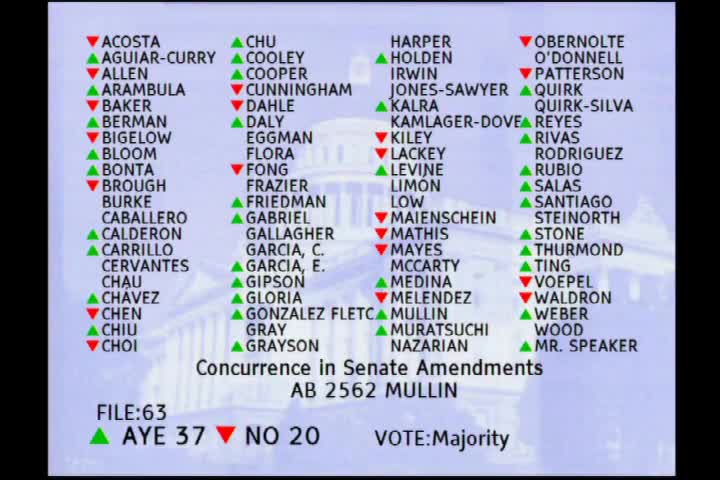

Bill Author

Bill Co-Author(s):