AB 1987: Discovery: postconviction.
- Session Year: 2017-2018
- House: Assembly
- Latest Version Date: 2018-09-18
(1)Existing law requires, in a case in which a sentence of death or life in prison without the possibility of parole has been imposed, a court to order that a defendant be provided reasonable access to discovery materials upon prosecution of a postconviction writ of habeas corpus or a motion to vacate judgment and a showing that good faith efforts to obtain discovery materials from trial counsel were made and were unsuccessful. Existing law defines discovery materials for these purposes as materials in the possession of the prosecuting and law enforcement authorities to which the defendant would have been entitled at time of trial.
This bill would expand this right of access to discovery materials to any case in which a defendant is convicted of a serious or violent felony resulting in a sentence of 15 years or more. By authorizing the court to require local agencies to provide access to physical evidence under certain circumstances, this bill would impose a state-mandated local program.
The bill would, in a case in which a sentence other than death or life in prison without the possibility of parole has been imposed, if a court has entered a previous order granting discovery pursuant to the above provision, authorize a subsequent order granting discovery to be made in the courts discretion. The bill would require a subsequent request for discovery to include a statement by the person requesting discovery as to whether he or she has previously been granted an order for discovery.
This bill would, in cases involving a conviction resulting in a sentence of 15 years or more for a serious or violent felony, require trial counsel to retain a copy of his or her clients files for the term of his or her imprisonment.
The bill would also request the State Bar to study the issue of closed-client file release and retention by defense attorneys and prosecutors in criminal cases, as specified.
The California Constitution requires the state to reimburse local agencies and school districts for certain costs mandated by the state. Statutory provisions establish procedures for making that reimbursement.
This bill would provide that, if the Commission on State Mandates determines that the bill contains costs mandated by the state, reimbursement for those costs shall be made pursuant to the statutory provisions noted above.
(1)Existing law requires, in a case in which a sentence of death or life in prison without the possibility of parole has been imposed, a court to order that a defendant be provided reasonable access to discovery materials upon prosecution of a postconviction writ of habeas corpus or a motion to vacate judgment and a showing that good faith efforts to obtain discovery materials from trial counsel were made and were unsuccessful. Existing law defines discovery materials for these purposes as materials in the possession of the prosecuting and law enforcement authorities to which the defendant would have been entitled at time of trial.
This bill would expand this right of access to discovery materials to any case in which a defendant is convicted of a serious or violent felony resulting in a sentence of 15 years or more. By authorizing the court to require local agencies to provide access to physical evidence under certain circumstances, this bill would impose a state-mandated local program.
The bill would, in a case in which a sentence other than death or life in prison without the possibility of parole has been imposed, if a court has entered a previous order granting discovery pursuant to the above provision, authorize a subsequent order granting discovery to be made in the courts discretion. The bill would require a subsequent request for discovery to include a statement by the person requesting discovery as to whether he or she has previously been granted an order for discovery.
(2)Existing law makes it the duty of an attorney to support the Constitution and laws of the United States and California, to maintain respect due to the courts of justice, and to maintain his or her clients confidence, among other duties.This bill would make it a duty of an attorney, in criminal matters would, in cases involving a conviction resulting in a sentence of 15 years or more for a serious or violent felony, require trial counsel to retain a copy of his or her clients files for the term of his or her imprisonment.
The bill would also request the State Bar to study the issue of closed-client file release and retention by defense attorneys and prosecutors in criminal cases, as specified.
The California Constitution requires the state to reimburse local agencies and school districts for certain costs mandated by the state. Statutory provisions establish procedures for making that reimbursement.
This bill would provide that, if the Commission on State Mandates determines that the bill contains costs mandated by the state, reimbursement for those costs shall be made pursuant to the statutory provisions noted above.
Existing
(1)Existing law requires, in a case in which a sentence of death or life in prison without the possibility of parole has been imposed, a court to order that a defendant be provided reasonable access to discovery materials upon prosecution of a postconviction writ of habeas corpus or a motion to vacate judgment and a showing that good faith efforts to obtain discovery materials from trial counsel were made and were unsuccessful. Existing law defines discovery materials for these purposes as materials in the possession of the prosecuting and law enforcement authorities to which the defendant would have been entitled at time of trial.
This bill would expand this right of access to discovery materials to any case in which a defendant is convicted of a serious or violent felony, a conviction felony resulting in a sentence of 15 years or more, or a conviction for specified crimes. more. By authorizing the court to require local agencies to provide access to physical evidence under certain circumstances, this bill would impose a state-mandated local program.
The bill would, in a case in which a sentence other than death or life in prison without the possibility of parole has been imposed, if a court has entered a previous order granting discovery pursuant to the above provision, authorize a subsequent order granting discovery to be made in the courts discretion. The bill would require a subsequent request for discovery to include a statement by the person requesting discovery as to whether he or she has previously been granted an order for discovery.
(2)Existing law makes it the duty of an attorney to support the Constitution and laws of the United States and California, to maintain respect due to the courts of justice, and to maintain his or her clients confidence, among other duties.
The bill would, in cases This bill would make it a duty of an attorney, in criminal matters involving a conviction resulting in a sentence of 15 years or more for a serious or violent felony, require the attorney for the defendant to retain a copy of his or her clients files for the term of his or her imprisonment.
The California Constitution requires the state to reimburse local agencies and school districts for certain costs mandated by the state. Statutory provisions establish procedures for making that reimbursement.
This bill would provide that, if the Commission on State Mandates determines that the bill contains costs mandated by the state, reimbursement for those costs shall be made pursuant to the statutory provisions noted above.
Existing law requires, in a case in which a sentence of death or life in prison without the possibility of parole has been imposed, a court to order that a defendant be provided reasonable access to discovery materials upon prosecution of a postconviction writ of habeas corpus or a motion to vacate judgment and a showing that good faith efforts to obtain discovery materials from trial counsel were made and were unsuccessful. Existing law defines discovery materials for these purposes as materials in the possession of the prosecuting and law enforcement authorities to which the defendant would have been entitled at time of trial.
This bill would expand this right of access to discovery materials to any case in which a defendant is convicted of a serious or violent felony, a conviction resulting in a sentence of 15 years or more, or a conviction for specified crimes. The bill would specify that the prosecution or law enforcement authorities are under no obligation to search for or obtain materials not currently possessed. By authorizing the court to require local agencies to provide access to physical evidence under certain circumstances, this bill would impose a state-mandated local program.
The bill would, in a case in which a sentence other than death or life in prison without the possibility of parole has been imposed, if a court has entered a previous order granting discovery pursuant to the above provision, authorize a subsequent order granting discovery to be made in the courts discretion. The bill would require a subsequent request for discovery to include a statement by the person requesting discovery as to whether he or she has previously been granted an order for discovery.
The bill would, in cases involving a conviction resulting in a sentence of 15 years or more for a serious or violent felony, require the attorney for the defendant to retain a copy of his or her clients files for the term of his or her imprisonment.
The California Constitution requires the state to reimburse local agencies and school districts for certain costs mandated by the state. Statutory provisions establish procedures for making that reimbursement.
This bill would provide that, if the Commission on State Mandates determines that the bill contains costs mandated by the state, reimbursement for those costs shall be made pursuant to the statutory provisions noted above.
Existing law requires, in a case in which a sentence of death or life in prison without the possibility of parole has been imposed, a court to order that a defendant be provided reasonable access to discovery materials upon prosecution of a postconviction writ of habeas corpus or a motion to vacate judgment and a showing that good faith efforts to obtain discovery materials from trial counsel were made and were unsuccessful. Existing law defines discovery materials for these purposes as materials in the possession of the prosecuting and law enforcement authorities to which the defendant would have been entitled at time of trial.
This bill would expand this right of access to discovery materials to any case in which a defendant is convicted of a serious or violent felony, a conviction resulting in a sentence of 15 years or more, or a conviction for specified crimes. The bill would specify that the prosecution or law enforcement authorities are under no obligation to search for or obtain materials not currently possessed. By authorizing the court to require local agencies to provide access to physical evidence under certain circumstances, this bill would impose a state-mandated local program.
The California Constitution requires the state to reimburse local agencies and school districts for certain costs mandated by the state. Statutory provisions establish procedures for making that reimbursement.
This bill would provide that, if the Commission on State Mandates determines that the bill contains costs mandated by the state, reimbursement for those costs shall be made pursuant to the statutory provisions noted above.
The Legislature finds and declares that post-conviction discovery promotes the fair administration of justice in seeking to assure that innocent persons do not remain unjustly incarcerated and that the availability and integrity of a clients file in such cases are necessary to the accomplishment of this important public protection objective.
SEC. 2.Section 1054.9 of the Penal Code is amended to read:1054.9.(a)In a case involving a conviction of a serious felony or a violent felony resulting in a sentence of 15 years or more, upon the prosecution of a postconviction writ of habeas corpus or a motion to vacate a judgment, or in preparation to file that writ or motion, and on a showing that good faith efforts to obtain discovery materials from trial counsel were made and were unsuccessful, the court shall, except as provided in subdivision (b) or (d), order that the defendant be provided reasonable access to any of the materials described in subdivision (c).
(b)Notwithstanding subdivision (a), in a case in which a sentence other than death or life in prison without the possibility of parole has been imposed, if a court has entered a previous order granting discovery pursuant to this section, a subsequent order granting discovery pursuant to subdivision (a) may be made in the courts discretion. A request for discovery subject to this subdivision shall include a statement by the person requesting discovery as to whether he or she has previously been granted an order for discovery pursuant to this section.
(c)For purposes of this section, discovery materials means materials in the possession of the prosecution and law enforcement authorities to which the same defendant would have been entitled at time of trial.
(d)In response to a writ or motion satisfying the conditions in subdivision (a), the court may order that the defendant be provided access to physical evidence for the purpose of examination, including, but not limited to, any physical evidence relating to the investigation, arrest, and prosecution of the defendant only upon a showing that there is good cause to believe that access to physical evidence is reasonably necessary to the defendants effort to obtain relief. The procedures for obtaining access to physical evidence for purposes of postconviction DNA testing are provided in Section 1405, and this section does not provide an alternative means of access to physical evidence for those purposes.
(e)The actual costs of examination or copying pursuant to this section shall be borne or reimbursed by the defendant.
(f)This section does not require the retention of any discovery materials not otherwise required by law or court order.
(g)In criminal matters involving a conviction for a serious or a violent felony resulting in a sentence of 15 years or more, trial counsel shall retain a copy of a former clients files for the term of his or her imprisonment. An electronic copy is sufficient only if every item in the file is digitally copied and preserved.
(h)As used in this section, a serious felony is a conviction of a felony enumerated in subdivision (c) of Section 1192.7.
(i)As used in this section, a violent felony is a conviction of a felony enumerated in subdivision (c) of Section 667.5.
(j)The changes made to this section by the act that added this subdivision are intended to only apply prospectively.
SEC. 3.Consistent with the obligation of the State Bar of California to make public protection its highest priority, the State Bar is requested to study the issue of closed-client file release and retention by defense attorneys and prosecutors in criminal cases. If the State Bar studies the issue, it shall ascertain whether an attorneys duties related to file release and retention upon the finality of a case or the termination of the attorney-client relationship are clear in light of the Rules of Professional Conduct that become operative on November 1, 2018. To the extent the State Bar finds there are generally applicable file release and retention duties that are not sufficiently apparent in the specific context of post-conviction discovery, the State Bar shall consider issuing an advisory ethics opinion that makes those duties evident. If the State Bar finds that any file release or retention duties in the new rules are deficient in protecting clients and the public in the context of post conviction discovery, the State Bar shall consider adopting an appropriate new or amended Rule of Professional Conduct for submission to the Supreme Court of California for the Supreme Courts consideration and possible approval.
SEC. 4.If the Commission on State Mandates determines that this act contains costs mandated by the state, reimbursement to local agencies and school districts for those costs shall be made pursuant to Part 7 (commencing with Section 17500) of Division 4 of Title 2 of the Government Code.
The Legislature finds and declares that post-conviction discovery promotes the fair administration of justice in seeking to assure that innocent persons do not remain unjustly incarcerated and that the availability and integrity of a clients file in such cases are necessary to the accomplishment of this important public protection objective.
SEC. 4.SEC. 2.Section 1054.9 of the Penal Code is amended to read:1054.9.(a)In a case involving a conviction of a serious felony or a violent felony resulting in a sentence of 15 years or more, upon the prosecution of a postconviction writ of habeas corpus or a motion to vacate a judgment, or in preparation to file that writ or motion, and on a showing that good faith efforts to obtain discovery materials from trial counsel were made and were unsuccessful, the court shall, except as provided in subdivision (b) or (d), order that the defendant be provided reasonable access to any of the materials described in subdivision (c).
(b)Notwithstanding subdivision (a), in a case in which a sentence other than death or life in prison without the possibility of parole has been imposed, if a court has entered a previous order granting discovery pursuant to this section, a subsequent order granting discovery pursuant to subdivision (a) may be made in the courts discretion. A request for discovery subject to this subdivision shall include a statement by the person requesting discovery as to whether he or she has previously been granted an order for discovery pursuant to this section.
(c)For purposes of this section, discovery materials means materials in the possession of the prosecution and law enforcement authorities to which the same defendant would have been entitled at time of trial.
(d)In response to a writ or motion satisfying the conditions in subdivision (a), the court may order that the defendant be provided access to physical evidence for the purpose of examination, including, but not limited to, any physical evidence relating to the investigation, arrest, and prosecution of the defendant only upon a showing that there is good cause to believe that access to physical evidence is reasonably necessary to the defendants effort to obtain relief. The procedures for obtaining access to physical evidence for purposes of postconviction DNA testing are provided in Section 1405, and this section does not provide an alternative means of access to physical evidence for those purposes.
(e)The actual costs of examination or copying pursuant to this section shall be borne or reimbursed by the defendant.
(f)This section does not require the retention of any discovery materials not otherwise required by law or court order.
(g)In criminal matters involving a conviction for a serious or a violent felony resulting in a sentence of 15 years or more, trial counsel shall retain a copy of a former clients files for the term of his or her imprisonment. An electronic copy is sufficient only if every item in the file is digitally copied and preserved.
(g)(h)As used in this section, a serious felony is a conviction of a felony enumerated in subdivision (c) of Section 1192.7.
(h)(i)As used in this section, a violent felony is a conviction of a felony enumerated in subdivision (c) of Section 667.5.
(j)The changes made to this section by the act that added this subdivision are intended to only apply prospectively.
SEC. 3.Consistent with the obligation of the State Bar of California to make public protection its highest priority, the State Bar is requested to study the issue of closed-client file release and retention by defense attorneys and prosecutors in criminal cases. If the State Bar studies the issue, it shall ascertain whether an attorneys duties related to file release and retention upon the finality of a case or the termination of the attorney-client relationship are clear in light of the Rules of Professional Conduct that become operative on November 1, 2018. To the extent the State Bar finds there are generally applicable file release and retention duties that are not sufficiently apparent in the specific context of post-conviction discovery, the State Bar shall consider issuing an advisory ethics opinion that makes those duties evident. If the State Bar finds that any file release or retention duties in the new rules are deficient in protecting clients and the public in the context of post conviction discovery, the State Bar shall consider adopting an appropriate new or amended Rule of Professional Conduct for submission to the Supreme Court of California for the Supreme Courts consideration and possible approval.
SEC. 5.SEC. 4.If the Commission on State Mandates determines that this act contains costs mandated by the state, reimbursement to local agencies and school districts for those costs shall be made pursuant to Part 7 (commencing with Section 17500) of Division 4 of Title 2 of the Government Code.
It is the duty of an attorney to do all of the following:
(a)To support the Constitution and laws of the United States and of this state.
(b)To maintain the respect due to the courts of justice and judicial officers.
(c)To counsel or maintain those actions, proceedings, or defenses only as appear to him or her legal or just, except the defense of a person charged with a public offense.
(d)To employ, for the purpose of maintaining the causes confided to him or her those means only as are consistent with truth, and never to seek to mislead the judge or any judicial officer by an artifice or false statement of fact or law.
(e)(1)To maintain inviolate the confidence, and at every peril to himself or herself to preserve the secrets, of his or her client.
(2)Notwithstanding paragraph (1), an attorney may, but is not required to, reveal confidential information relating to the representation of a client to the extent that the attorney reasonably believes the disclosure is necessary to prevent a criminal act that the attorney reasonably believes is likely to result in death of, or substantial bodily harm to, an individual.
(f)To advance no fact prejudicial to the honor or reputation of a party or witness, unless required by the justice of the cause with which he or she is charged.
(g)Not to encourage either the commencement or the continuance of an action or proceeding from any corrupt motive of passion or interest.
(h)Never to reject, for any consideration personal to himself or herself, the cause of the defenseless or the oppressed.
(i)To cooperate and participate in any disciplinary investigation or other regulatory or disciplinary proceeding pending against himself or herself. However, this subdivision shall not be construed to deprive an attorney of any privilege guaranteed by the Fifth Amendment to the Constitution of the United States, or any other constitutional or statutory privileges. This subdivision shall not be construed to require an attorney to cooperate with a request that requires him or her to waive any constitutional or statutory privilege or to comply with a request for information or other matters within an unreasonable period of time in light of the time constraints of the attorneys practice. Any exercise by an attorney of any constitutional or statutory privilege shall not be used against the attorney in a regulatory or disciplinary proceeding against him or her.
(j)To comply with the requirements of Section 6002.1.
(k)To comply with all conditions attached to any disciplinary probation, including a probation imposed with the concurrence of the attorney.
(l)To keep all agreements made in lieu of disciplinary prosecution with the agency charged with attorney discipline.
(m)To respond promptly to reasonable status inquiries of clients and to keep clients reasonably informed of significant developments in matters with regard to which the attorney has agreed to provide legal services.
(n)In criminal matters involving a conviction for a serious felony or a violent felony resulting in a sentence of 15 years or more, to retain a copy of a former clients files for the term of his or her imprisonment. An electronic copy is sufficient only if every item in the file is digitally copied and preserved.
(n)(o)To provide copies to the client of certain documents under time limits and as prescribed in a rule of professional conduct which the board shall adopt.
(o)(p)To report to the agency charged with attorney discipline, in writing, within 30 days of the time the attorney has knowledge of any of the following:
(1)The filing of three or more lawsuits in a 12-month period against the attorney for malpractice or other wrongful conduct committed in a professional capacity.
(2)The entry of judgment against the attorney in a civil action for fraud, misrepresentation, breach of fiduciary duty, or gross negligence committed in a professional capacity.
(3)The imposition of judicial sanctions against the attorney, except for sanctions for failure to make discovery or monetary sanctions of less than one thousand dollars ($1,000).
(4)The bringing of an indictment or information charging a felony against the attorney.
(5)The conviction of the attorney, including any verdict of guilty, or plea of guilty or no contest, of a felony, or a misdemeanor committed in the course of the practice of law, or in a manner in which a client of the attorney was the victim, or a necessary element of which, as determined by the statutory or common law definition of the misdemeanor, involves improper conduct of an attorney, including dishonesty or other moral turpitude, or an attempt or a conspiracy or solicitation of another to commit a felony or a misdemeanor of that type.
(6)The imposition of discipline against the attorney by a professional or occupational disciplinary agency or licensing board, whether in California or elsewhere.
(7)Reversal of judgment in a proceeding based in whole or in part upon misconduct, grossly incompetent representation, or willful misrepresentation by an attorney.
(8)As used in this subdivision, against the attorney includes claims and proceedings against any firm of attorneys for the practice of law in which the attorney was a partner at the time of the conduct complained of and any law corporation in which the attorney was a shareholder at the time of the conduct complained of unless the matter has to the attorneys knowledge already been reported by the law firm or corporation.
(9)The State Bar may develop a prescribed form for the making of reports required by this section, usage of which it may require by rule or regulation.
(10)This subdivision is only intended to provide that the failure to report as required herein may serve as a basis of discipline.
SEC. 2.Section 6086.1 of the Business and Professions Code is amended to read:6086.1.(a)(1)Subject to subdivision (b), and except as otherwise provided by law, hearings and records of original disciplinary proceedings in the State Bar Court shall be public, following a notice to show cause.
(2)Subject to subdivision (b), and except as otherwise provided by law, hearings and records of the following matters shall be public:
(A)Filings for involuntary inactive enrollment or restriction under subdivision (a), (c), (d), or (e) of Section 6007.
(B)Petitions for reinstatement under Section 6078.
(C)Proceedings for suspension or disbarment under Section 6101 or 6102.
(D)Payment information from the Client Security Fund pursuant to Section 6140.5.
(E)Actions to cease a law practice or assume a law practice under Section 6180 or 6190.
(b)All disciplinary investigations are confidential until the time that formal charges are filed and all investigations of matters identified in paragraph (2) of subdivision (a) are confidential until the formal proceeding identified in paragraph (2) of subdivision (a) is instituted. These investigations shall not be disclosed pursuant to any state law, including, but not limited to, the California Public Records Act (Chapter 3.5 (commencing with Section 6250) of Division 7 of Title 1 of the Government Code). This confidentiality requirement may be waived under any of the following exceptions:
(1)The member whose conduct is being investigated may waive confidentiality.
(2)The Chief Trial Counsel or President of the State Bar may waive confidentiality, but only when warranted for protection of the public. Under those circumstances, after private notice to the member, the Chief Trial Counsel or President of the State Bar may issue, if appropriate, one or more public announcements or make information public confirming the fact of an investigation or proceeding, clarifying the procedural aspects and current status, and defending the right of the member to a fair hearing. If the Chief Trial Counsel or President of the State Bar for any reason declines to exercise the authority provided by this paragraph, or disqualifies himself or herself from acting under this paragraph, he or she shall designate someone to act in his or her behalf. Conduct of a member that is being inquired into by the State Bar but that is not the subject of a formal investigation shall not be disclosed to the public.
(3)The Chief Trial Counsel or his or her designee may waive confidentiality pursuant to Section 6044.5.
(c)Notwithstanding the confidentiality of investigations, the State Bar shall disclose to any member of the public so inquiring, any information reasonably available to it pursuant to subdivision (o) (p) of Section 6068, and to Sections 6086.7, 6086.8, and 6101, concerning a member of the State Bar which is otherwise a matter of public record, including civil or criminal filings and dispositions.
SEC. 3.Section 6086.15 of the Business and Professions Code is amended to read:6086.15.(a)The State Bar shall issue an Annual Discipline Report by April 30 of each year describing the performance and condition of the State Bar discipline system, including all matters that affect public protection. The report shall cover the previous calendar year and shall include accurate and complete descriptions of all of the following:
(1)The existing backlog of cases within the discipline system, including the number of complaints as of December 31 of the preceding year that were pending beyond six months after receipt without dismissal, admonition, or the filing of a notice of disciplinary charges. In addition to written complaints received by the State Bar, the backlog of cases shall include other matters opened in the Office of the Chief Trial Counsel and pending beyond six months after receipt without the filing of notices of disciplinary charges, or the initiation of other disciplinary proceedings in the State Bar Court for the purpose of seeking the imposition of discipline against a member of the State Bar, and tables showing time periods beyond six months and the number in each category and a discussion of the reason for the extended periods.
(2)The number of inquiries and complaints and their disposition.
(3)The number, average pending times, and types of matters self-reported by members of the State Bar pursuant to subdivision (o) (p) of Section 6068 and subdivision (c) of Section 6086.8.
(4)The number, average pending times, and types of matters reported by other sources pursuant to Sections 6086.7, 6086.8, 6091.1, subdivision (b) of Section 6101, and Section 6175.6.
(5)The speed of complaint handling and dispositions by type, measured by the median and the average processing times.
(6)The number, average pending times, and types of filed notices of disciplinary charges and formal disciplinary outcomes.
(7)The number, average pending times, and types of other matters, including petitions to terminate practice pursuant to Section 6180 or 6190, interim suspensions and license restrictions pursuant to Section 6007, motions to enforce a binding arbitration award, judgment, or agreement pursuant to subdivision (d) of Section 6203, motions to revoke probation, letters of warning, private reprovals, admonitions, and agreements in lieu of discipline.
(8)The number, average pending times, and outcomes of complaints involving a State Bar member who has been disbarred or who has resigned, and is engaged in the unauthorized practice of law, including referrals to district attorneys, city attorneys, or other prosecuting authorities, or petitions to terminate practice pursuant to Section 6180.
(9)The number, average pending times, and outcomes of complaints against nonattorneys engaged in the unauthorized practice of law, including referrals to district attorneys, city attorneys, or other prosecuting authorities; petitions to terminate practice pursuant to Section 6126.3; or referrals to prosecuting authorities or actions by the State Bar pursuant to Section 6126.7.
(10)A description of the condition of the Client Security Fund, including an accounting of payouts.
(11)An accounting of the cost of the discipline system by function.
(b)The Annual Discipline Report shall include statistical information presented in a consistent manner for year-to-year comparison and shall compare the information required under subdivision (a) to similar information for the previous three years.
(c)The Annual Discipline Report shall be presented to the Chief Justice of California, to the Governor, to the Speaker of the Assembly, to the President pro Tempore of the Senate, and to the Assembly and Senate Judiciary Committees, for their consideration and shall be considered a public document.
SECTION 1.SEC. 4.Section 1054.9 of the Penal Code is amended to read:1054.9.(a)In a case involving a conviction of a serious felony or a violent felony, a conviction resulting in a sentence of 15 years or more, or a conviction for an offense specified in subdivision (g), felony resulting in a sentence of 15 years or more, upon the prosecution of a postconviction writ of habeas corpus or a motion to vacate a judgment, or in preparation to file that writ or motion, and on a showing that good faith efforts to obtain discovery materials from trial counsel were made and were unsuccessful, the court shall, except as provided in subdivision (b) or (d), order that the defendant be provided reasonable access to any of the materials described in subdivision (c).
(b)Notwithstanding subdivision (a), in a case in which a sentence other than death or life in prison without the possibility of parole has been imposed, if a court has entered a previous order granting discovery pursuant to this section, a subsequent order granting discovery pursuant to subdivision (a) may be made in the courts discretion. A request for discovery subject to this subdivision shall include a statement by the person requesting discovery as to whether he or she has previously been granted an order for discovery pursuant to this section.
(c)For purposes of this section, discovery materials means materials in the possession of the prosecution and law enforcement authorities to which the same defendant would have been entitled at time of trial.
(d)In response to a writ or motion satisfying the conditions in subdivision (a), the court may order that the defendant be provided access to physical evidence for the purpose of examination, including, but not limited to, any physical evidence relating to the investigation, arrest, and prosecution of the defendant only upon a showing that there is good cause to believe that access to physical evidence is reasonably necessary to the defendants effort to obtain relief. The procedures for obtaining access to physical evidence for purposes of postconviction DNA testing are provided in Section 1405, and this section does not provide an alternative means of access to physical evidence for those purposes.
(e)The actual costs of examination or copying pursuant to this section shall be borne or reimbursed by the defendant.
(f)This section does not require the retention of any discovery materials not otherwise required by law or court order.
(g)This section applies to a conviction for an offense described in Section 261, 262, 269, 286, 288, 288a, 288.7, or 289, an aggravated assault in violation of Section 273ab, or any conviction that results in a life sentence, including, but not limited, a sentence imposed pursuant to Section 667, 667.61, 667.71, or 1170.12.(h)In a case involving a conviction resulting in a sentence of 15 years or more for a serious or violent felony, the attorney for the defendant shall retain a copy of his or her clients files for the term of his or her imprisonment. An electronic copy is sufficient to satisfy the requirement of this subdivision only if every item in the file is digitally copied and preserved. (i)(g)As used in this section, a serious felony is a conviction of a felony enumerated in subdivision (c) of Section 1192.7.
(j)(h)As used in this section, a violent felony is a conviction of a felony enumerated in subdivision (c) of Section 667.5.
SEC. 2.SEC. 5.If the Commission on State Mandates determines that this act contains costs mandated by the state, reimbursement to local agencies and school districts for those costs shall be made pursuant to Part 7 (commencing with Section 17500) of Division 4 of Title 2 of the Government Code.
(a)In a case involving a serious felony or a violent felony, a conviction resulting in a sentence of 15 years or more, or a conviction for an offense specified in subdivision (g), upon the prosecution of a postconviction writ of habeas corpus or a motion to vacate a judgment, or in preparation to file that writ or motion, and on a showing that good faith efforts to obtain discovery materials from trial counsel were made and were unsuccessful, the court shall, except as provided in subdivision (b) or (d), order that the defendant be provided reasonable access to any of the materials described in subdivision (c).
(b)Notwithstanding subdivision (a), in a case in which a sentence other than death or life in prison without the possibility of parole has been imposed, if a court has entered a previous order granting discovery pursuant to this section, a subsequent order granting discovery pursuant to subdivision (a) may be made in the courts discretion. A request for discovery subject to this subdivision shall include a statement by the person requesting discovery as to whether he or she has previously been granted an order for discovery pursuant to this section.
(c)For purposes of this section, discovery materials means materials in the possession of the prosecution and law enforcement authorities to which the same defendant would have been entitled at time of trial. The prosecution and law enforcement authorities are under no obligation to search for or obtain materials not currently possessed.
(d)In response to a writ or motion satisfying the conditions in subdivision (a), the court may order that the defendant be provided access to physical evidence for the purpose of examination, including, but not limited to, any physical evidence relating to the investigation, arrest, and prosecution of the defendant only upon a showing that there is good cause to believe that access to physical evidence is reasonably necessary to the defendants effort to obtain relief. The procedures for obtaining access to physical evidence for purposes of postconviction DNA testing are provided in Section 1405, and this section does not provide an alternative means of access to physical evidence for those purposes.
(e)The actual costs of examination or copying pursuant to this section shall be borne or reimbursed by the defendant.
(f)This section does not require the retention of any discovery materials not otherwise required by law or court order.
(g)This section applies to a conviction for an offense described in Section 261, 262, 269, 286, 288, 288a, 288.7, or 289, an aggravated assault in violation of Section 273ab, or any conviction that results in a life sentence, including, but not limited, a sentence imposed pursuant to Section 667, 667.61, 667.71, or 1170.12.
(h)In a case involving a conviction resulting in a sentence of 15 years or more for a serious or violent felony, the attorney for the defendant shall retain a copy of his or her clients files for the term of his or her imprisonment. An electronic copy is sufficient to satisfy the requirement of this subdivision only if every item in the file is digitally copied and preserved.
(i)As used in this section, a serious felony is a conviction of a felony enumerated in subdivision (c) of Section 1192.7.
(j)As used in this section, a violent felony is a conviction of a felony enumerated in subdivision (c) of Section 667.5.
SEC. 2.If the Commission on State Mandates determines that this act contains costs mandated by the state, reimbursement to local agencies and school districts for those costs shall be made pursuant to Part 7 (commencing with Section 17500) of Division 4 of Title 2 of the Government Code.
(a)In a case involving a serious felony or a violent felony, a conviction resulting in a sentence of 15 years or more, or a conviction for an offense specified in subdivision (f), (g), upon the prosecution of a postconviction writ of habeas corpus or a motion to vacate a judgment, or in preparation to file that writ or motion, and on a showing that good faith efforts to obtain discovery materials from trial counsel were made and were unsuccessful, the court shall, except as provided in subdivision (c), (b) or (d), order that the defendant be provided reasonable access to any of the materials described in subdivision (b). (c).
(b)Notwithstanding subdivision (a), in a case in which a sentence other than death or life in prison without the possibility of parole has been imposed, if a court has entered a previous order granting discovery pursuant to this section, a subsequent order granting discovery pursuant to subdivision (a) may be made in the courts discretion. A request for discovery subject to this subdivision shall include a statement by the person requesting discovery as to whether he or she has previously been granted an order for discovery pursuant to this section.
(b)(c)For purposes of this section, discovery materials means materials in the possession of the prosecution and law enforcement authorities to which the same defendant would have been entitled at time of trial. The prosecution and law enforcement authorities are under no obligation to search for or obtain materials not currently possessed.
(c)(d)In response to a writ or motion satisfying the conditions in subdivision (a), the court may order that the defendant be provided access to physical evidence for the purpose of examination, including, but not limited to, any physical evidence relating to the investigation, arrest, and prosecution of the defendant only upon a showing that there is good cause to believe that access to physical evidence is reasonably necessary to the defendants effort to obtain relief. The procedures for obtaining access to physical evidence for purposes of postconviction DNA testing are provided in Section 1405, and this section does not provide an alternative means of access to physical evidence for those purposes.
(d)(e)The actual costs of examination or copying pursuant to this section shall be borne or reimbursed by the defendant.
(e)(f)This section does not require the retention of any discovery materials not otherwise required by law or court order.
(f)(g)This section applies to a conviction for a sex an offense described in Section 261, 262, 269, 286, 288, 288a, 288.7, or 289, an aggravated assault on a child in violation of Section 273ab, or any conviction that results in a life sentence that results in a life sentence, including, but not limited, a sentence imposed pursuant to Section 667, 667.61, 667.71, or 1170.12.
(h)In a case involving a conviction resulting in a sentence of 15 years or more for a serious or violent felony, the attorney for the defendant shall retain a copy of his or her clients files for the term of his or her imprisonment. An electronic copy is sufficient to satisfy the requirement of this subdivision only if every item in the file is digitally copied and preserved.
(g)(1)As(i)As used in this section, a serious felony is a conviction of a felony enumerated in subdivision (c) of Section 1192.7.
(h)(j)As used in this section, a violent felony is a conviction of a felony enumerated in subdivision (c) of Section 667.5.
SEC. 2.If the Commission on State Mandates determines that this act contains costs mandated by the state, reimbursement to local agencies and school districts for those costs shall be made pursuant to Part 7 (commencing with Section 17500) of Division 4 of Title 2 of the Government Code.
(a)Upon In a case involving a serious felony or a violent felony, a conviction resulting in a sentence of 15 years or more, or a conviction for an offense specified in subdivision (f), upon the prosecution of a postconviction writ of habeas corpus or a motion to vacate a judgment in a case in which a sentence of death or of life in prison without the possibility of parole has been imposed, judgment, or in preparation to file that writ or motion, and on a showing that good faith efforts to obtain discovery materials from trial counsel were made and were unsuccessful, the court shall, except as provided in subdivision (c), order that the defendant be provided reasonable access to any of the materials described in subdivision (b).
(b)For purposes of this section, discovery materials means materials in the possession of the prosecution and law enforcement authorities to which the same defendant would have been entitled at time of trial. The prosecution and law enforcement authorities are under no obligation to search for or obtain materials not currently possessed.
(c)In response to a writ or motion satisfying the conditions in subdivision (a), court may order that the defendant be provided access to physical evidence for the purpose of examination, including, but not limited to, any physical evidence relating to the investigation, arrest, and prosecution of the defendant only upon a showing that there is good cause to believe that access to physical evidence is reasonably necessary to the defendants effort to obtain relief. The procedures for obtaining access to physical evidence for purposes of postconviction DNA testing are provided in Section 1405, and nothing in this section shall does not provide an alternative means of access to physical evidence for those purposes.
(d)The actual costs of examination or copying pursuant to this section shall be borne or reimbursed by the defendant.
(e)This section does not require the retention of any discovery materials not otherwise required by law or court order.
(f)This section applies to a conviction for a sex offense described in Section 261, 262, 269, 286, 288, 288a, 288.7, or 289, an aggravated assault on a child in violation of Section 273ab, or any conviction that results in a life sentence that results in a life sentence, including, but not limited, a sentence imposed pursuant to Section 667, 667.61, 667.71, or 1170.12.
(g)(1)As used in this section, a serious felony is a conviction of a felony enumerated in subdivision (c) of Section 1192.7.
(h)As used in this section, a violent felony is a conviction of a felony enumerated in subdivision (c) of Section 667.5.
SEC. 2.If the Commission on State Mandates determines that this act contains costs mandated by the state, reimbursement to local agencies and school districts for those costs shall be made pursuant to Part 7 (commencing with Section 17500) of Division 4 of Title 2 of the Government Code.
|
Date
|
Status
|
|---|---|
| Sep 18, 2018 | Chaptered by Secretary of State - Chapter 482, Statutes of 2018. |
| Sep 18, 2018 | Approved by the Governor. |
| Sep 6, 2018 | Enrolled and presented to the Governor at 3 p.m. |
| Aug 29, 2018 | Assembly Rule 77 suspended. |
| Aug 28, 2018 | In Assembly. Concurrence in Senate amendments pending. May be considered on or after August 30 pursuant to Assembly Rule 77. |
| Aug 28, 2018 | Read third time. Passed. Ordered to the Assembly. |
| Aug 24, 2018 | Read second time. Ordered to third reading. |
| Aug 23, 2018 | Read third time and amended. Ordered to second reading. |
| Aug 9, 2018 | From Consent Calendar. |
| Aug 7, 2018 | Read second time. Ordered to Consent Calendar. |
| Aug 6, 2018 | From committee: Be ordered to second reading file pursuant to Senate Rule 28.8 and ordered to Consent Calendar. |
| Jun 26, 2018 | From committee: Do pass and re-refer to Com. on APPR. with recommendation: To Consent Calendar. (Ayes 7. Noes 0.) (June 26). Re-referred to Com. on APPR. |
| Jun 13, 2018 | In committee: Set, first hearing. Hearing canceled at the request of author. |
| May 30, 2018 | Referred to Com. on PUB. S. |
| May 17, 2018 | In Senate. Read first time. To Com. on RLS. for assignment. |
| May 17, 2018 | Read third time. Passed. Ordered to the Senate. |
| May 10, 2018 | Read second time. Ordered to Consent Calendar. |
| May 9, 2018 | From committee: Do pass. To Consent Calendar. (Ayes 16. Noes 0.) (May 9). |
| Apr 19, 2018 | Re-referred to Com. on APPR. |
| Apr 18, 2018 | From committee chair, with author's amendments: Amend, and re-refer to Com. on APPR. Read second time and amended. |
| Apr 16, 2018 | Re-referred to Com. on APPR. |
| Apr 12, 2018 | Read second time and amended. |
| Apr 11, 2018 | From committee: Amend, and do pass as amended and re-refer to Com. on APPR. with recommendation: To Consent Calendar. (Ayes 7. Noes 0.) (April 10). |
| Apr 5, 2018 | Re-referred to Com. on PUB. S. |
| Apr 4, 2018 | From committee chair, with author's amendments: Amend, and re-refer to Com. on PUB. S. Read second time and amended. |
| Apr 3, 2018 | In committee: Set, second hearing. Hearing canceled at the request of author. |
| Mar 20, 2018 | In committee: Set, first hearing. Hearing canceled at the request of author. |
| Feb 8, 2018 | Referred to Com. on PUB. S. |
| Feb 2, 2018 | From printer. May be heard in committee March 4. |
| Feb 1, 2018 | Read first time. To print. |
|
Date
|
Description
|
Location
|
Votes
|
|
|---|---|---|---|---|
| Aug 29, 2018 | AB 1987 LACKEY Concurrence in Senate Amendments | Assembly Floor |
Passed |
|
| Aug 28, 2018 | Assembly 3rd Reading AB1987 Lackey et al. By Skinner | Senate Floor |
Passed |
|
| Jun 26, 2018 | Do pass, but first be re-referred to the Committee on [Appropriations] with the recommendation: To Consent Calendar | Senate Standing Committee on Public Safety |
Passed |
|
| May 17, 2018 | AB 1987 LACKEY Consent Calendar Second Day Regular Session | Assembly Floor |
Passed |
|
| May 9, 2018 | Do pass. To Consent Calendar. | Assembly Standing Committee on Appropriations |
Passed |
|
| Apr 10, 2018 | Do pass as amended, and be re-referred to the Committee on [Appropriations] with recommendation: To Consent Calendar | Assembly Standing Committee on Public Safety |
Passed |
This list shows positions taken on this bill by organizations on the date displayed, which is linked to the original source.
Positions by individuals are not included.
|
Organization
|
Position
|
Date
|
|---|---|---|
| American Civil Liberties Union | ** Support | Aug 24, 2018 |
| California Attorneys For Criminal Justice | ** Support | Aug 24, 2018 |
| California Innocence Coalition | ** Support | Aug 24, 2018 |
| California Innocence Project | ** Support | Apr 9, 2018 |
| California Public Defenders Association | ** Support | Aug 24, 2018 |
| Ella Baker Center For Human Rights | ** Support | Aug 24, 2018 |
CONCURRENCE IN SENATE AMENDMENTS
CSA1 Bill Id:AB 1987
Author:(Lackey)
As Amended Ver:August 23, 2018
Majority vote
ASSEMBLY: | 73-0 | (May 17, 2018) | SENATE: | 38-0 | (August 28, 2018) |
Original Committee Reference: PUB. S.
SUMMARY: Expands the availability of a post-conviction motion for discovery materials to include cases where a defendant was convicted of a serious or violent felony and sentenced to 15 years or more.
The Senate amendments:
- Move the provisions requiring trial counsel to retain a copy of their clients' files in specified criminal matters from the Businesses and Professions Code to the Penal Code.
- Specify that the provisions of this bill apply prospectively only.
- Request that the California State Bar study the issue of closed-client file release and retention by defense attorneys and prosecutors in criminal cases.
- Make legislative findings and declarations.
EXISTING LAW:
- Requires a court to order that discovery materials be produced to a defendant who has been convicted and sentenced to death or life in prison without the possibility of parole if the defendant has shown a good faith effort to obtain the materials from the criminal defense attorney who represented him or her at the time of the conviction.
- Defines ''discovery materials'' in the post-conviction context as materials in the possession of the prosecution and law enforcement authorities to which the defendant would have been entitled to at the time of trial.
- Provides that a court may allow the defendant access to physical evidence relating to the investigation, arrest, and prosecution of the defendant if he or she makes a showing of good cause to believe that access to physical evidence is reasonably necessary to the defendant's effort to obtain relief.
AS PASSED BY THE ASSEMBLY, this bill:
- Expanded the availability of a post-conviction motion for discovery materials to include cases where a defendant was convicted of a serious or violent felony and sentenced to 15 years or more.
- Required a defendant bringing a motion for post-conviction discovery to state whether he or she has previously been granted discovery.
- Gave the court discretion to grant (or deny) a subsequent motion for discovery if the defendant has previously been granted discovery.
- Required a criminal defense attorney to retain his or her client's file throughout the duration of that client's prison sentence if the client was convicted of a serious or violent felony and sentenced to 15 years or more.
- Allowed a criminal defense attorney to keep an electronic copy of the file only if every item of the file is digitally copied and preserved.
FISCAL EFFECT: According to the Senate Appropriations Committee, pursuant to Senate Rule 28.8, negligible state costs.
COMMENTS: According to the author, ''AB 1987 would expand the post-conviction right to discovery materials in cases where a defendant was convicted of a serious or violent felony. This simple change to current law would allow for post-conviction discovery access to the defense in the most high stakes cases, increase the efficiency of post-conviction review, and allow innocent people to dramatically reduce the amount of time they spend behind bars for crimes they did not commit.
''According to the California Innocence Coalition, cases worthy of post-conviction review, on average, take 3 – 4 years to review and investigate before they can be in a position to potentially litigate innocence. The largest contributor to that immense amount of time is the inability to obtain evidence supporting their claim of innocence.''
Analysis Prepared by: Matthew Fleming / PUB. S. / (916) 319-3744 FN: 0004897
Office of Senate Floor Analyses (916) 651-1520 Fax: (916) 327-4478 | AB |
THIRD READING
Bill No: AB 1987
: 8/23/18
SENATE PUBLIC SAFETY COMMITTEE: 7-0, 6/26/18
AYES: Skinner, Anderson, Bradford, Jackson, Mitchell, Stone, Wiener
SENATE APPROPRIATIONS COMMITTEE: Senate Rule 28.8
ASSEMBLY FLOOR: 73-0, 5/17/18 (Consent) - See last page for vote
SOURCE: California Innocence Coalition
DIGEST:
This bill expands the availability of a post-conviction motion for discovery materials to include cases where a defendant was convicted of a serious or violent felony and sentenced to 15 years or more.
Senate Floor Amendments of 8/23/18 move the requirement that trial counsel retain a copy of a former client’s files for the term of his or her imprisonment if he or she is convicted of a violent felony resulting in a sentence of 15 years or more to a different section and request that the State Bar study the issue of release and retention of closed-client files by defense attorneys and prosecutors and to issue advisory ethics opinion on the issue if they find it necessary.
Existing law:
- Requires a court to order that discovery materials be produced to a defendant who has been convicted and sentenced to death or life in prison without the possibility of parole if the defendant has shown a good faith effort to obtain the materials from the criminal defense attorney who represented him or her at the time of the conviction. (Penal Code § 1054.9 (a).)
- Defines “discovery materials” in the post-conviction context as “materials in the possession of the prosecution and law enforcement authorities to which the defendant would have been entitled to at the time of trial.” (Penal Code § 1054.9 (b).)
- Provides that a court may allow the defendant access to physical evidence relating to the investigation, arrest, and prosecution of the defendant if he or she makes a showing of good cause to believe that access to physical evidence is reasonably necessary to the defendant’s effort to obtain relief. (Penal Code § 1054.9 (c).)
This bill:
- Expands the availability of a post-conviction motion for discovery materials to include cases where a defendant was convicted of a serious or violent felony and sentenced to 15 years or more.
- Requires a defendant bringing a motion for post-conviction discovery to state whether he or she has previously been granted discovery.
- Gives the court discretion to grant (or deny) a subsequent motion for discovery if the defendant has previously been granted discovery.
- Requires a criminal defense attorney to retain his or her client’s file throughout the duration of that client’s prison sentence if the client was convicted of a serious or violent felony and sentenced to 15 years or more. An electronic copy is sufficient only if every item in the file is digitally copied and preserved.
Background
Discovery in Post-Conviction Cases
“Post-conviction discovery” is generally understood in the legal community as the provision of materials and documents to defendants after they have been convicted at the trial level and exhausted their appeals. Current law limits post-conviction discovery to only those cases in which a person is sentenced to death or life without parole. This bill expands the kinds of cases in which a defendant can seek and obtain post-conviction discovery to cases where a person was convicted of a violent or serious felony and sentenced to 15 years in prison or more.
There are four categories of evidence or documents that may be necessary for a person attempting to establish his or her innocence in the post-conviction context. Those are documents or materials that either (1) the prosecution did provide at time of trial but have since become lost to the defendant; (2) the prosecution should have provided at time of trial because they came within the scope of a discovery order the trial court actually issued at that time, a statutory duty to provide discovery, or the constitutional duty to disclose exculpatory evidence; (3) the prosecution should have provided at time of trial because the defense specifically requested them at that time and was entitled to receive them; or (4) the prosecution had no obligation to provide at time of trial absent a specific defense request, but to which the defendant would have been entitled at time of trial had the defendant specifically requested them. (Davis v. Superior Court (2016) 1 Cal. App. 5th 881, 886.)
FISCAL EFFECT: Appropriation: Fiscal Com.: Local:
California Innocence Coalition (source)
American Civil Liberties Union
California Attorneys for Criminal Justice
California Public Defenders Association
Ella Baker Center for Human Rights
OPPOSITION: (Verified 8/23/18)
ASSEMBLY FLOOR: 73-0, 5/17/18
AYES: Acosta, Aguiar-Curry, Travis Allen, Arambula, Baker, Berman, Bigelow, Bloom, Bonta, Brough, Burke, Caballero, Calderon, Carrillo, Cervantes, Chau, Chávez, Chen, Chiu, Choi, Chu, Cooley, Cooper, Cunningham, Dahle, Daly, Eggman, Flora, Fong, Frazier, Friedman, Gallagher, Eduardo Garcia, Gipson, Gloria, Gonzalez Fletcher, Gray, Grayson, Harper, Holden, Irwin, Jones-Sawyer, Kalra, Kamlager-Dove, Kiley, Lackey, Levine, Limón, Low, Maienschein, Mathis, Mayes, McCarty, Medina, Mullin, Nazarian, Obernolte, O'Donnell, Patterson, Quirk, Quirk-Silva, Reyes, Rodriguez, Rubio, Salas, Mark Stone, Thurmond, Ting, Voepel, Waldron, Weber, Wood, Rendon
NO VOTE RECORDED: Cristina Garcia, Melendez, Muratsuchi, Santiago, Steinorth
8/24/18 14:45:15
**** END ****
Office of Senate Floor Analyses (916) 651-1520 Fax: (916) 327-4478 | AB |
THIRD READING
Bill No: AB 1987
:
SENATE PUBLIC SAFETY COMMITTEE: 7-0, 6/26/18
AYES: Skinner, Anderson, Bradford, Jackson, Mitchell, Stone, Wiener
SENATE APPROPRIATIONS COMMITTEE: Senate Rule 28.8
ASSEMBLY FLOOR: 73-0, 5/17/18 (Consent) - See last page for vote
SOURCE: California Innocence Coalition
DIGEST:
This bill expands the availability of a post-conviction motion for discovery materials to include cases where a defendant was convicted of a serious or violent felony and sentenced to 15 years or more.
Existing law:
- Requires a court to order that discovery materials be produced to a defendant who has been convicted and sentenced to death or life in prison without the possibility of parole if the defendant has shown a good faith effort to obtain the materials from the criminal defense attorney who represented him or her at the time of the conviction. (Penal Code § 1054.9 (a).)
- Defines “discovery materials” in the post-conviction context as” materials in the possession of the prosecution and law enforcement authorities to which the defendant would have been entitled to at the time of trial.” (Penal Code § 1054.9 (b).)
- Provides that a court may allow the defendant access to physical evidence relating to the investigation, arrest, and prosecution of the defendant if he or she makes a showing of good cause to believe that access to physical evidence is reasonably necessary to the defendant’s effort to obtain relief. (Penal Code § 1054.9 (c).)
This bill:
- Expands the availability of a post-conviction motion for discovery materials to include cases where a defendant was convicted of a serious or violent felony and sentenced to 15 years or more.
- Requires a defendant bringing a motion for post-conviction discovery to state whether he or she has previously been granted discovery.
- Gives the court discretion to grant (or deny) a subsequent motion for discovery if the defendant has previously been granted discovery.
- Requires a criminal defense attorney to retain his or her client’s file throughout the duration of that client’s prison sentence if the client was convicted of a serious or violent felony and sentenced to 15 years or more. An electronic copy is sufficient only if every item in the file is digitally copied and preserved.
Background
Discovery in Post-Conviction Cases
“Post-conviction discovery” is generally understood in the legal community as the provision of materials and documents to defendants after they have been convicted at the trial level and exhausted their appeals. Current law limits post-conviction discovery to only those cases in which a person is sentenced to death or life without parole. This bill expands the kinds of cases in which a defendant can seek and obtain post-conviction discovery to cases where a person was convicted of a violent or serious felony and sentenced to 15 years in prison or more.
There are four categories of evidence or documents that may be necessary for a person attempting to establish his or her innocence in the post-conviction context. Those are documents or materials that either (1) the prosecution did provide at time of trial but have since become lost to the defendant; (2) the prosecution should have provided at time of trial because they came within the scope of a discovery order the trial court actually issued at that time, a statutory duty to provide discovery, or the constitutional duty to disclose exculpatory evidence; (3) the prosecution should have provided at time of trial because the defense specifically requested them at that time and was entitled to receive them; or (4) the prosecution had no obligation to provide at time of trial absent a specific defense request, but to which the defendant would have been entitled at time of trial had the defendant specifically requested them. (Davis v. Superior Court (2016) 1 Cal. App. 5th 881, 886.)
FISCAL EFFECT: Appropriation: Fiscal Com.: Local:
California Innocence Coalition (source)
American Civil Liberties Union
California Attorneys for Criminal Justice
California Public Defenders Association
Ella Baker Center for Human Rights
ASSEMBLY FLOOR: 73-0, 5/17/18
AYES: Acosta, Aguiar-Curry, Travis Allen, Arambula, Baker, Berman, Bigelow, Bloom, Bonta, Brough, Burke, Caballero, Calderon, Carrillo, Cervantes, Chau, Chávez, Chen, Chiu, Choi, Chu, Cooley, Cooper, Cunningham, Dahle, Daly, Eggman, Flora, Fong, Frazier, Friedman, Gallagher, Eduardo Garcia, Gipson, Gloria, Gonzalez Fletcher, Gray, Grayson, Harper, Holden, Irwin, Jones-Sawyer, Kalra, Kamlager-Dove, Kiley, Lackey, Levine, Limón, Low, Maienschein, Mathis, Mayes, McCarty, Medina, Mullin, Nazarian, Obernolte, O'Donnell, Patterson, Quirk, Quirk-Silva, Reyes, Rodriguez, Rubio, Salas, Mark Stone, Thurmond, Ting, Voepel, Waldron, Weber, Wood, Rendon
NO VOTE RECORDED: Cristina Garcia, Melendez, Muratsuchi, Santiago, Steinorth
8/10/18 10:53:11
**** END ****
SENATE COMMITTEE ON PUBLIC SAFETY
Senator Nancy Skinner, Chair
2017 - 2018 Regular
Bill No: AB 1987 Hearing Date: June 26, 2018
Author: | Lackey | ||
Version: | April 18, 2018 | ||
Urgency: | No | Fiscal: | Yes |
Consultant: | MK | ||
Subject: Discovery: Postconviction
HISTORY
Source: California Innocence Coalition
Prior Legislation: SB 1391 (Burton) Chapter 1105, Stats. 2002
Support: American Civil Liberties Union; California Attorneys for Criminal Justice; California Public Defenders Association; Ella Baker Center for Human Rights
Opposition: None known
Assembly Floor Vote: 73 - 0
PURPOSE
The purpose of this bill is to expand the availability of a post-conviction motion for discovery materials to include cases where a defendant was convicted of a serious or violent felony and sentenced to 15 years or more.
Existing law requires a court to order that discovery materials be produced to a defendant who has been convicted and sentenced to death or life in prison without the possibility of parole if the defendant has shown a good faith effort to obtain the materials from the criminal defense attorney who represented him or her at the time of the conviction. (Penal Code, § 1054.9 (a).)
Existing law defines “discovery materials” in the post-conviction context as” materials in the possession of the prosecution and law enforcement authorities to which the defendant would have been entitled to at the time of trial.” (Penal Code, § 1054.9 (b).)
Existing law provides that a court may allow the defendant access to physical evidence relating to the investigation, arrest, and prosecution of the defendant if he or she makes a showing of good cause to believe that access to physical evidence is reasonably necessary to the defendant’s effort to obtain relief. (Penal Code, § 1054.9 (c).)
Existing law requires a court to order that discovery materials be produced to a defendant who has been convicted and sentenced to death or life in prison without the possibility of parole if the defendant has shown a good faith effort to obtain the materials from the criminal defense attorney who represented him or her at the time of the conviction. (Penal Code § 1054.9 (a).)
Existing law defines “discovery materials” in the post-conviction context as” materials in the possession of the prosecution and law enforcement authorities to which the defendant would have been entitled to at the time of trial.” (Penal Code § 1054.9 (b).)
Existing law provides that a court may allow the defendant access to physical evidence relating to the investigation, arrest, and prosecution of the defendant if he or she makes a showing of good cause to believe that access to physical evidence is reasonably necessary to the defendant’s effort to obtain relief. (Penal Code § 1054.9 (c).)
This bill expands the availability of a post-conviction motion for discovery materials to include cases where a defendant was convicted of a serious or violent felony and sentenced to 15 years or more.
This bill requires a defendant bringing a motion for post-conviction discovery to state whether he or she has previously been granted discovery.
This bill gives the court discretion to grant (or deny) a subsequent motion for discovery if the defendant has previously been granted discovery.
This bill requires a criminal defense attorney to retain his or her client’s file throughout the duration of that client’s prison sentence if the client was convicted of a serious or violent felony and sentenced to 15 years or more. An electronic copy is sufficient only if every item in the file is digitally copied and preserved.
COMMENTS
1. Need for This Bill
According to the author:
AB 1987 would expand the post-conviction right to discovery materials in cases where a defendant was convicted of a serious or violent felony. This simple change to current law would allow for post-conviction discovery access to the defense in the most high stakes cases, increase the efficiency of post-conviction review, and allow innocent people to dramatically reduce the amount of time they spend behind bars for crimes they did not commit.
According to the California Innocence Coalition, cases worthy of post-conviction review, on average, take 3 – 4 years to review and investigate before they can be in a position to potentially litigate innocence. The largest contributor to that immense amount of time is the inability to obtain evidence supporting their claim of innocence.
2. Discovery in Post-Conviction Cases
“Post-conviction discovery” is generally understood in the legal community as the provision of materials and documents to defendants after they have been convicted at the trial level and exhausted their appeals. Current law limits post-conviction discovery to only those cases in which a person is sentenced to death or life without parole. This bill would expand the kinds of cases in which a defendant can seek and obtain post-conviction discovery to cases where a person was convicted of a violent or serious felony and sentenced to 15 years in prison or more.
There are four categories of evidence or documents that may be necessary for a person attempting to establish his or her innocence in the post-conviction context. Those are documents or materials that either (1) the prosecution did provide at time of trial but have since become lost to the defendant; (2) the prosecution should have provided at time of trial because they came within the scope of a discovery order the trial court actually issued at that time, a statutory duty to provide discovery, or the constitutional duty to disclose exculpatory evidence; (3) the prosecution should have provided at time of trial because the defense specifically requested them at that time and was entitled to receive them; or (4) the prosecution had no obligation to provide at time of trial absent a specific defense request, but to which the defendant would have been entitled at time of trial had the defendant specifically requested them. (Davis v. Superior Court (2016) 1 Cal. App. 5th 881, 886.)
3. The Need for this Bill and the California Innocence Project
The sponsor of the bill, the California Innocence Project is a law school clinical program that exclusively works on post-conviction cases where there is evidence of actual innocence. (<https://californiainnocenceproject.org/>) According to their website:
The California Innocence Project (CIP) is a law school clinical program at California Western School of Law dedicated to releasing wrongfully convicted inmates and providing an outstanding educational experience to the students enrolled in the clinic.
Founded in 1999, CIP reviews more than 2,000 claims of innocence from California inmates each year. Students who participate in the year-long clinic work alongside CIP staff attorneys on cases where there is strong evidence of factual innocence. Together, they have secured the release of many innocent people who otherwise may have spent the rest of their lives in prison.
Clinic students assist in investigation and litigation by locating and re-interviewing witnesses, examining new evidence, filing motions, securing experts, and providing support to attorneys during evidentiary hearings and trials. CIP has trained more than 200 students who have gone on to become highly successful criminal defense attorneys, criminal prosecutors, Assistant Attorneys General, and civil attorneys; all of whom, after their experience in CIP, believe in a fair and honest justice system and realize there is always room for improvement in the law.
On its website, the California Innocence Project provides numerous examples of individuals they have successfully exonerated through their efforts. Many of those cases involved some sort of sentence that fell short of the death penalty or life in prison without the possibility of parole.
4. Maintenance of Client Files
This bill requires criminal defense attorneys to maintain their client files for the duration of the client’s imprisonment when he or she was sentenced to 15 years or more. The may keep the file electronically provided every document is filed. This is consistent with California ethics rules. (See Formal Opinion No. 2001-147 Cal. State Bar Standing Committee on Professional Responsibility and Conduct.)
5. According to the bill’s sponsor, the California Innocence Coalition;
The California Innocence Coalition is proud to sponsor AB 1987, a bill that would
improve retention of client files and expand the post-conviction right to discovery materials in cases where a defendant was convicted of a serious or violent felony and sentenced to 15 years or more. This expansion will allow for a more efficient system of post-conviction review and better share the responsibility between the State and the defense community to maintain critical records in the highest stakes criminal cases.
The California Innocence Coalition consists of three innocence projects in California, the California Innocence Project, the Northern California Innocence Project and the Loyola Project for the Innocent. The mission of our projects is to protect the rights of the innocent and to promote a fair and effective criminal justice system by advocating for change in California laws and policy. Collectively, the California Innocence Coalition has won the freedom of over 50 wrongly imprisoned individuals who collectively spent over 517 years in prison for crimes they did not commit.
The California Innocence Coalition provides pro-bono representation to inmates who, unlike those serving on death row, do not have the right to post-conviction attorneys yet are serving life-long sentences. Our cases on average take 3-4 years to review and investigate before we are in a position to potentially file a habeas petition or motion to vacate in a case of wrongful conviction. We strive to gather all of the documents in the case by reaching out to defense counsel, appellate counsel and the inmate, but there are often situations where the trial files have been destroyed, lost, or incomplete. Under current law we have no avenue to obtain the discovery in these cases unless we get a sympathetic District Attorney's office to give us those documents. We are fortunate enough to have some great working relationships with DA offices and can obtain documents that way, but in other counties we are unable to obtain documents because the law does not allow us to. AB 1987 proposes legislation to ensure the maintenance of the discovery by the defense, enforces a good faith effort by the defendant to obtain it, and if all that fails, access to it through district attorney offices.
The vast majority of felony convictions would be unaffected by the change in this law, as only those individuals who did not retain their legal documents from trial—and who are interested in challenging their conviction through a habeas process—would be interested in obtaining these documents. To mitigate concerns about privacy and cost, all of the limitations and protections in place to protect victims and witnesses are still in effect and applicable because post-conviction discovery encompasses any items that would have been accessible to the defendant at the time of trial. Additionally, California law already ensures that the costs of copying or examination is borne or reimbursed by the defendant.
AB 1987 will provide a simple fix to current legislation to allow for post-conviction discovery access to the defense in high stake cases and increase the efficiency of post-conviction review, reducing the amount of time innocent men and woman remain behind bars for crimes they did not commit.
-- END –
Date of Hearing: May 9, 2018
ASSEMBLY COMMITTEE ON APPROPRIATIONS
Lorena Gonzalez Fletcher, Chair
ABPCA Bill Id:AB 1987
Author:(Lackey) – As Amended Ver:April 18, 2018
Policy Committee: | Public Safety | Vote: | 7 - 0 |
|
| ||
|
|
Urgency: No State Mandated Local Program: Yes Reimbursable: No
SUMMARY:
This bill expands the availability of a post-conviction motion for discovery materials to include cases where a defendant was convicted of a serious or violent felony and sentenced to 15 years or more. Specifically, this bill:
- Expands the availability of a post-conviction motion for discovery materials to include cases where a defendant was convicted of a serious or violent felony and sentenced to 15 years or more.
- Gives the court discretion to grant or deny a subsequent motion for discovery if the defendant has previously been granted discovery.
- Requires a criminal defense attorney to retain the attorney’s client’s file throughout the duration of that client’s prison sentence if the client was convicted of a serious or violent felony and sentenced to 15 years or more.
- Allows a criminal defense attorney to keep an electronic copy of the file only if every item of the file is digitally copied and preserved.
FISCAL EFFECT:
Minor and absorbable costs to the Department of Justice and the courts.
COMMENTS:
Background and purpose. “Post-conviction discovery” is generally understood in the legal community as the provision of materials and documents to defendants after they have been convicted at trial and exhausted their appeals. Current law limits post-conviction discovery to only those cases in which a person is sentenced to death or life without parole. This bill would expand the kinds of cases in which a defendant can seek and obtain post-conviction discovery to cases where a person was convicted of a violent or serious felony and sentenced to 15 years in prison or more. According to the author:
AB 1987 would expand the post-conviction right to discovery materials in cases where a defendant was convicted of a serious or violent felony. This simple change to current law would allow for post-conviction discovery access to the defense in the most high stakes cases, increase the efficiency of post-conviction review, and allow innocent people to dramatically reduce the amount of time they spend behind bars for crimes they did not commit.
Analysis Prepared by: Jessica Peters / APPR. / (916) 319-2081
Date of Hearing:
Counsel: Matthew Fleming
ASSEMBLY COMMITTEE ON PUBLIC SAFETY
Reginald Byron Jones-Sawyer, Sr., Chair
ABPCA Bill Id:AB 1987
Author:(Lackey) – As Amended Ver:April 4, 2018
As Proposed to be Amended in Committee
SUMMARY:
Expands the availability of a post-conviction motion for discovery materials to include cases where a defendant was convicted of a serious or violent felony and sentenced to 15 years or more. Specifically, this bill:
- Expands the availability of a post-conviction motion for discovery materials to include cases where a defendant was convicted of a serious or violent felony and sentenced to 15 years or more.
- Requires a defendant bringing a motion for post-conviction discovery to state whether he or she has previously been granted discovery.
- Gives the court discretion to grant (or deny) a subsequent motion for discovery if the defendant has previously been granted discovery.
- Requires a criminal defense attorney to retain his or her client’s file throughout the duration of that client’s prison sentence if the client was convicted of a serious or violent felony and sentenced to 15 years or more.
- Allows a criminal defense attorney to keep an electronic copy of the file only if every item of the file is digitally copied and preserved.
EXISTING LAW:
- Requires a court to order that discovery materials be produced to a defendant who has been convicted and sentenced to death or life in prison without the possibility of parole if the defendant has shown a good faith effort to obtain the materials from the criminal defense attorney who represented him or her at the time of the conviction. (Pen. Code, § 1054.9, subd. (a).)
- Defines “discovery materials” in the post-conviction context as” materials in the possession of the prosecution and law enforcement authorities to which the defendant would have been entitled to at the time of trial.” (Pen. Code, § 1054.9, subd. (b).)
- Provides that a court may allow the defendant access to physical evidence relating to the investigation, arrest, and prosecution of the defendant if he or she makes a showing of good cause to believe that access to physical evidence is reasonably necessary to the defendant’s effort to obtain relief. (Pen. Code, § 1054.9, subd. (c).)
FISCAL EFFECT:
Unknown
COMMENTS:
- Author's Statement: According to the author, “AB 1987 would expand the post-conviction right to discovery materials in cases where a defendant was convicted of a serious or violent felony. This simple change to current law would allow for post-conviction discovery access to the defense in the most high stakes cases, increase the efficiency of post-conviction review, and allow innocent people to dramatically reduce the amount of time they spend behind bars for crimes they did not commit.
“According to the California Innocence Coalition, cases worthy of post-conviction review, on average, take 3 – 4 years to review and investigate before they can be in a position to potentially litigate innocence. The largest contributor to that immense amount of time is the inability to obtain evidence supporting their claim of innocence.”
- Discovery in Post-Conviction Cases: “Post-conviction discovery” is generally understood in the legal community as the provision of materials and documents to defendants after they have been convicted at the trial level and exhausted their appeals. Current law limits post-conviction discovery to only those cases in which a person is sentenced to death or life without parole. This bill would expand the kinds of cases in which a defendant can seek and obtain post-conviction discovery to cases where a person was convicted of a violent or serious felony and sentenced to 15 years in prison or more.
There are four categories of evidence or documents that may be necessary for a person attempting to establish his or her innocence in the post-conviction context. Those are documents or materials that either (1) the prosecution did provide at time of trial but have since become lost to the defendant; (2) the prosecution should have provided at time of trial because they came within the scope of a discovery order the trial court actually issued at that time, a statutory duty to provide discovery, or the constitutional duty to disclose exculpatory evidence; (3) the prosecution should have provided at time of trial because the defense specifically requested them at that time and was entitled to receive them; or (4) the prosecution had no obligation to provide at time of trial absent a specific defense request, but to which the defendant would have been entitled at time of trial had the defendant specifically requested them. (Davis v. Superior Court (2016) 1 Cal. App. 5th 881, 886.)
- The Need for this Bill and the California Innocence Project: The sponsor of the bill, the California Innocence Project is a law school clinical program that exclusively works on post-conviction cases where there is evidence of actual innocence. (<https://californiainnocenceproject.org/>) According to their website:
The California Innocence Project (CIP) is a law school clinical program at California Western School of Law dedicated to releasing wrongfully convicted inmates and providing an outstanding educational experience to the students enrolled in the clinic.
Founded in 1999, CIP reviews more than 2,000 claims of innocence from California inmates each year. Students who participate in the year-long clinic work alongside CIP staff attorneys on cases where there is strong evidence of factual innocence. Together, they have secured the release of many innocent people who otherwise may have spent the rest of their lives in prison.
Clinic students assist in investigation and litigation by locating and re-interviewing witnesses, examining new evidence, filing motions, securing experts, and providing support to attorneys during evidentiary hearings and trials. CIP has trained more than 200 students who have gone on to become highly successful criminal defense attorneys, criminal prosecutors, Assistant Attorneys General, and civil attorneys; all of whom, after their experience in CIP, believe in a fair and honest justice system and realize there is always room for improvement in the law.
On its website, the California Innocence Project provides numerous examples of individuals they have successfully exonerated through their efforts. Many of those cases involved some sort of sentence that fell short of the death penalty or life in prison without the possibility of parole. The shorter sentence did not make these individuals less deserving of a second chance to review their case, but under current law it did make the availability of discovery materials much more difficult to obtain. Therefore, the work of the California Innocence Project is strong evidence that this bill presents a step in the right direction.
- Maintenance of Client Files and the Duty of the Prosecution: This bill seeks to appropriately balance the burdens of both the prosecutor and the defense attorney in maintaining files. Requiring defense attorneys to maintain their client files for the duration of the client’s imprisonment when he or she was sentenced to 15 years or more is reasonable, and consistent with California ethics rules. (See Formal Opinion No. 2001-147 Cal. State Bar Standing Committee on Professional Responsibility and Conduct.)
With regard to the prosecution, the bill states that prosecutors and law enforcement are under no obligation to search for additional evidence not currently possessed. That sentence, however, is merely a restatement of existing law. (See In re Steele (2004) 32 Cal. 4th 682, 695.) The proposed amendments will strike that language. - Argument in Support: According to the bill’s sponsor, the California Innocence Project: “The California Innocence Coalition is proud to sponsor AB 1987, a bill that would
improve retention of client files and expand the post-conviction right to discovery materials in cases where a defendant was convicted of a serious or violent felony and sentenced to 15 years or more. This expansion will allow for a more efficient system of post-conviction review and better share the responsibility between the State and the defense community to maintain critical records in the highest stakes criminal cases.
“The California Innocence Coalition consists of three innocence projects in California, the
California Innocence Project, the Northern California Innocence Project and the Loyola Project for the Innocent. The mission of our projects is to protect the rights of the innocent and to promote a fair and effective criminal justice system by advocating for change in California laws and policy. Collectively, the California Innocence Coalition has won the freedom of over 50 wrongly imprisoned individuals who collectively spent over 517 years in prison for crimes they did not commit.
The California Innocence Coalition provides pro-bono representation to inmates who,
unlike those serving on death row, do not have the right to post-conviction attorneys yet are serving life-long sentences. Our cases on average take 3-4 years to review and investigate before we are in a position to potentially file a habeas petition or motion to vacate in a case of wrongful conviction. We strive to gather all of the documents in the case by reaching out to defense counsel, appellate counsel and the inmate, but there are often situations where the trial files have been destroyed, lost, or incomplete. Under current law we have no avenue to obtain the discovery in these cases unless we get a sympathetic District Attorney's office to give us those documents. We are fortunate enough to have some great working relationships with DA offices and can obtain documents that way, but in other counties we are unable to obtain documents because the law does not allow us to. AB 1987 proposes legislation to ensure the maintenance of the discovery by the defense, enforces a good faith effort by the defendant to obtain it, and if all that fails, access to it through district attorney offices.
The vast majority of felony convictions would be unaffected by the change in this law, as
only those individuals who did not retain their legal documents from trial—and who are interested in challenging their conviction through a habeas process—would be interested in obtaining these documents. To mitigate concerns about privacy and cost, all of the limitations and protections in place to protect victims and witnesses are still in effect and applicable because post-conviction discovery encompasses any items that would have been accessible to the defendant at the time of trial. Additionally, California law already ensures that the costs of copying or examination is borne or reimbursed by the defendant.
AB 1987 will provide a simple fix to current legislation to allow for post-conviction
discovery access to the defense in high stake cases and increase the efficiency of post-conviction review, reducing the amount of time innocent men and woman remain behind bars for crimes they did not commit.
- Prior Legislation: SB 1391 (Burton) Chapter 1105, Statutes of 2002 established a discovery procedure for defendants who had been convicted and sentenced to death or life in prison without the possibility of parole.
REGISTERED SUPPORT / OPPOSITION:
Support
American Civil Liberties Union
California Innocence Project
California Public Defender’s Association
Opposition
None
Analysis Prepared by:
Matthew Fleming / PUB. S. / (916) 319-3744
Discussed in Hearing
View Older Hearings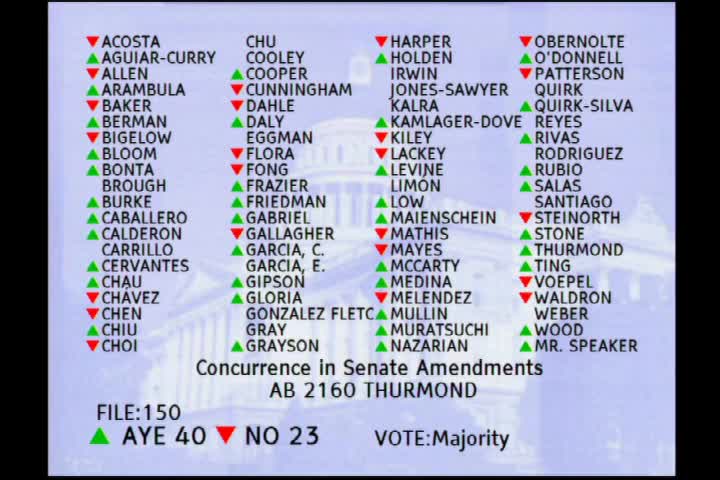
Bill Author

Bill Co-Author(s):
