AB 1994: Sex offenders: county or local custodial facilities.
- Session Year: 2017-2018
- House: Assembly
- Latest Version Date: 2018-09-27
Existing law requires specified sex offenders to register with local law enforcement within five working days of coming into, or changing his or her residence within, a city, county, or city and county. If the persons new address is in a Department of Corrections and Rehabilitation facility or state mental institution, existing law requires an official of the institution to forward the registrants change of address information to the Department of Justice within 90 days.
This bill would instead require the change of address to be forwarded within 15 working days of both receipt and release of the person. The bill would also require an official with a county or local custodial facility that receives or releases a sex offender registrant to forward his or her change of address information to the Department of Justice. By imposing duties on local officials, this bill would impose a state-mandated local program.
The California Constitution requires the state to reimburse local agencies and school districts for certain costs mandated by the state. Statutory provisions establish procedures for making that reimbursement.
This bill would provide that, if the Commission on State Mandates determines that the bill contains costs mandated by the state, reimbursement for those costs shall be made pursuant to the statutory provisions noted above.
Existing law requires specified sex offenders to register with local law enforcement within five working days of coming into, or changing his or her residence within, a city, county, or city and county. If the persons new address is in a Department of Corrections and Rehabilitation facility or state mental institution, existing law requires an official of the institution to forward the registrants change of address information to the Department of Justice within 90 days.
This bill would instead require the change of address to be forwarded within 15 working days of receipt or release both receipt and release of the person. The bill would also require an official with a county or local custodial facility that receives or releases a sex offender registrant to forward his or her change of address information to the Department of Justice. By imposing duties on local officials, this bill would impose a state-mandated local program.
The California Constitution requires the state to reimburse local agencies and school districts for certain costs mandated by the state. Statutory provisions establish procedures for making that reimbursement.
This bill would provide that, if the Commission on State Mandates determines that the bill contains costs mandated by the state, reimbursement for those costs shall be made pursuant to the statutory provisions noted above.
Existing law requires specified sex offenders to register with local law enforcement within five working days of coming into, or changing his or her residence within, a city, county, or city and county. If the persons new address is in a Department of Corrections and Rehabilitation facility or state mental institution, existing law requires an official of the institution to forward the registrants change of address information to the Department of Justice within 90 days.
This bill would instead require the change of address to be forwarded within 15 working days of receipt or release of the person. The bill would also require an official with a county or local custodial facility that receives or releases a sex offender registrant to forward his or her change of address information to the Department of Justice. By imposing duties on local officials, this bill would impose a state-mandated local program.
The California Constitution requires the state to reimburse local agencies and school districts for certain costs mandated by the state. Statutory provisions establish procedures for making that reimbursement.
This bill would provide that, if the Commission on State Mandates determines that the bill contains costs mandated by the state, reimbursement for those costs shall be made pursuant to the statutory provisions noted above.
Existing law requires specified sex offenders to register with local law enforcement within five working days of coming into, or changing his or her residence within, a city, county, or city and county. If the persons new address is in a Department of Corrections and Rehabilitation facility or state mental institution, existing law requires an official of the institution to forward the registrants change of address information to the Department of Justice within 90 days.
This bill would instead require the change of address to be forwarded within 15 working days of receipt of the person. The bill would also require an official with a county or local custodial facility that receives a sex offender registrant to forward his or her change of address information to the Department of Justice. By imposing duties on local officials, this bill would impose a state-mandated local program.
The California Constitution requires the state to reimburse local agencies and school districts for certain costs mandated by the state. Statutory provisions establish procedures for making that reimbursement.
This bill would provide that, if the Commission on State Mandates determines that the bill contains costs mandated by the state, reimbursement for those costs shall be made pursuant to the statutory provisions noted above.
(a)A person who was last registered at a residence address pursuant to the Act who changes his or her residence address, whether within the jurisdiction in which he or she is currently registered or to a new jurisdiction inside or outside the state, shall, in person, within five working days of the move, inform the law enforcement agency or agencies with which he or she last registered of the move, the new address or transient location, if known, and any plans he or she has to return to California.
(b)If the person does not know the new residence address or location at the time of the move, the registrant shall, in person, within five working days of the move, inform the last registering agency or agencies that he or she is moving. The person shall later notify the last registering agency or agencies, in writing, sent by certified or registered mail, of the new address or location within five working days of moving into the new residence address or location, whether temporary or permanent.
(c)The law enforcement agency or agencies shall, within three working days after receipt of this information, forward a copy of the change of address information to the Department of Justice. The Department of Justice shall forward appropriate registration data to the law enforcement agency or agencies having local jurisdiction of the new place of residence.
(d)If the person is being admitted to or released from a Department of Corrections and Rehabilitation facility, a county or local custodial facility, or state mental institution, an official of the place of incarceration, placement, or commitment shall, within 15 working days of both receipt and release of the person, forward the registrants change of address information to the Department of Justice in a manner prescribed by the department. If the person is being admitted to the facility, the agency need not provide a physical address for the registrant but shall indicate that he or she is serving a period of incarceration or commitment in a facility under the agencys jurisdiction. This subdivision shall apply to persons received in a department facility, county or local custodial facility, or state mental institution on or after January 1, 1999. The Department of Justice shall forward the change of address information to the agency with which the person last registered.
SEC. 2.If the Commission on State Mandates determines that this act contains costs mandated by the state, reimbursement to local agencies and school districts for those costs shall be made pursuant to Part 7 (commencing with Section 17500) of Division 4 of Title 2 of the Government Code.
(a)Any A person who was last registered at a residence address pursuant to the Act who changes his or her residence address, whether within the jurisdiction in which he or she is currently registered or to a new jurisdiction inside or outside the state, shall, in person, within five working days of the move, inform the law enforcement agency or agencies with which he or she last registered of the move, the new address or transient location, if known, and any plans he or she has to return to California.
(b)If the person does not know the new residence address or location at the time of the move, the registrant shall, in person, within five working days of the move, inform the last registering agency or agencies that he or she is moving. The person shall later notify the last registering agency or agencies, in writing, sent by certified or registered mail, of the new address or location within five working days of moving into the new residence address or location, whether temporary or permanent.
(c)The law enforcement agency or agencies shall, within three working days after receipt of this information, forward a copy of the change of address information to the Department of Justice. The Department of Justice shall forward appropriate registration data to the law enforcement agency or agencies having local jurisdiction of the new place of residence.
(d)If the person is being admitted to or released from a Department of Corrections and Rehabilitation facility, a county or local custodial facility, or state mental institution, an official of the place of incarceration, placement, or commitment shall, within 15 working days of both receipt and release of the person, forward the registrants change of address information to the Department of Justice in a manner prescribed by the department. If the person is being admitted to the facility, the agency need not provide a physical address for the registrant but shall indicate that he or she is serving a period of incarceration or commitment in a facility under the agencys jurisdiction. This subdivision shall apply to persons received in a department facility, county or local custodial facility, or state mental institution on or after January 1, 1999. The Department of Justice shall forward the change of address information to the agency with which the person last registered.
SEC. 2.If the Commission on State Mandates determines that this act contains costs mandated by the state, reimbursement to local agencies and school districts for those costs shall be made pursuant to Part 7 (commencing with Section 17500) of Division 4 of Title 2 of the Government Code.
(a)Any person who was last registered at a residence address pursuant to the Act who changes his or her residence address, whether within the jurisdiction in which he or she is currently registered or to a new jurisdiction inside or outside the state, shall, in person, within five working days of the move, inform the law enforcement agency or agencies with which he or she last registered of the move, the new address or transient location, if known, and any plans he or she has to return to California.
(b)If the person does not know the new residence address or location at the time of the move, the registrant shall, in person, within five working days of the move, inform the last registering agency or agencies that he or she is moving. The person shall later notify the last registering agency or agencies, in writing, sent by certified or registered mail, of the new address or location within five working days of moving into the new residence address or location, whether temporary or permanent.
(c)The law enforcement agency or agencies shall, within three working days after receipt of this information, forward a copy of the change of address information to the Department of Justice. The Department of Justice shall forward appropriate registration data to the law enforcement agency or agencies having local jurisdiction of the new place of residence.
(d)If the person is being admitted to or released from a Department of Corrections and Rehabilitation facility, a county or local custodial facility, or state mental institution, an official of the place of incarceration, placement, or commitment shall, within 15 working days of receipt or release both receipt and release of the person, forward the registrants change of address information to the Department of Justice. Justice in a manner prescribed by the department. If the person is being admitted to the facility, the agency need not provide a physical address for the registrant but shall indicate that he or she is serving a period of incarceration or commitment in a facility under the agencys jurisdiction. This subdivision shall apply to persons received in a department facility, county or local custodial facility, or state mental institution on or after January 1, 1999. The Department of Justice shall forward the change of address information to the agency with which the person last registered.
SEC. 2.If the Commission on State Mandates determines that this act contains costs mandated by the state, reimbursement to local agencies and school districts for those costs shall be made pursuant to Part 7 (commencing with Section 17500) of Division 4 of Title 2 of the Government Code.
(a)Any person who was last registered at a residence address pursuant to the Act who changes his or her residence address, whether within the jurisdiction in which he or she is currently registered or to a new jurisdiction inside or outside the state, shall, in person, within five working days of the move, inform the law enforcement agency or agencies with which he or she last registered of the move, the new address or transient location, if known, and any plans he or she has to return to California.
(b)If the person does not know the new residence address or location at the time of the move, the registrant shall, in person, within five working days of the move, inform the last registering agency or agencies that he or she is moving. The person shall later notify the last registering agency or agencies, in writing, sent by certified or registered mail, of the new address or location within five working days of moving into the new residence address or location, whether temporary or permanent.
(c)The law enforcement agency or agencies shall, within three working days after receipt of this information, forward a copy of the change of address information to the Department of Justice. The Department of Justice shall forward appropriate registration data to the law enforcement agency or agencies having local jurisdiction of the new place of residence.
(d)If the persons new address is in person is being admitted to or released from a Department of Corrections and Rehabilitation facility, a county or local custodial facility, or state mental institution, an official of the place of incarceration, placement, or commitment shall, within 15 working days of receipt or release of the person, forward the registrants change of address information to the Department of Justice. The If the person is being admitted to the facility, the agency need not provide a physical address for the registrant but shall indicate that he or she is serving a period of incarceration or commitment in a facility under the agencys jurisdiction. This subdivision shall apply to persons received in a department facility, county or local custodial facility, or state mental institution on or after January 1, 1999. The Department of Justice shall forward the change of address information to the agency with which the person last registered.
SEC. 2.If the Commission on State Mandates determines that this act contains costs mandated by the state, reimbursement to local agencies and school districts for those costs shall be made pursuant to Part 7 (commencing with Section 17500) of Division 4 of Title 2 of the Government Code.
REVISIONS: HeadingLine 2.(a)Any person who was last registered at a residence address pursuant to the Act who changes his or her residence address, whether within the jurisdiction in which he or she is currently registered or to a new jurisdiction inside or outside the state, shall, in person, within five working days of the move, inform the law enforcement agency or agencies with which he or she last registered of the move, the new address or transient location, if known, and any plans he or she has to return to California.
(b)If the person does not know the new residence address or location at the time of the move, the registrant shall, in person, within five working days of the move, inform the last registering agency or agencies that he or she is moving. The person shall later notify the last registering agency or agencies, in writing, sent by certified or registered mail, of the new address or location within five working days of moving into the new residence address or location, whether temporary or permanent.
(c)The law enforcement agency or agencies shall, within three working days after receipt of this information, forward a copy of the change of address information to the Department of Justice. The Department of Justice shall forward appropriate registration data to the law enforcement agency or agencies having local jurisdiction of the new place of residence.
(d)If the persons new address is in a Department of Corrections and Rehabilitation facility facility, a county or local custodial facility, or state mental institution, an official of the place of incarceration, placement, or commitment shall, within 90 15 working days of receipt of the person, forward the registrants change of address information to the Department of Justice. The agency need not provide a physical address for the registrant but shall indicate that he or she is serving a period of incarceration or commitment in a facility under the agencys jurisdiction. This subdivision shall apply to persons received in a department facility facility, county or local custodial facility, or state mental institution on or after January 1, 1999. The Department of Justice shall forward the change of address information to the agency with which the person last registered.
SEC. 2.If the Commission on State Mandates determines that this act contains costs mandated by the state, reimbursement to local agencies and school districts for those costs shall be made pursuant to Part 7 (commencing with Section 17500) of Division 4 of Title 2 of the Government Code.
|
Date
|
Status
|
|---|---|
| Sep 27, 2018 | Chaptered by Secretary of State - Chapter 811, Statutes of 2018. |
| Sep 27, 2018 | Approved by the Governor. |
| Sep 6, 2018 | Enrolled and presented to the Governor at 3 p.m. |
| Aug 29, 2018 | Senate amendments concurred in. To Engrossing and Enrolling. |
| Aug 24, 2018 | In Assembly. Concurrence in Senate amendments pending. May be considered on or after August 26 pursuant to Assembly Rule 77. |
| Aug 24, 2018 | Read third time. Passed. Ordered to the Assembly. |
| Aug 6, 2018 | Read second time. Ordered to third reading. |
| Jul 5, 2018 | Read third time and amended. Ordered to second reading. |
| Jun 28, 2018 | From Consent Calendar. |
| Jun 26, 2018 | Read second time. Ordered to Consent Calendar. |
| Jun 25, 2018 | From committee: Be ordered to second reading file pursuant to Senate Rule 28.8 and ordered to Consent Calendar. |
| May 15, 2018 | From committee: Do pass and re-refer to Com. on APPR. with recommendation: To Consent Calendar. (Ayes 7. Noes 0.) (May 15). Re-referred to Com. on APPR. |
| May 2, 2018 | From committee chair, with author's amendments: Amend, and re-refer to committee. Read second time, amended, and re-referred to Com. on PUB. S. |
| Apr 25, 2018 | Referred to Com. on PUB. S. |
| Apr 12, 2018 | In Senate. Read first time. To Com. on RLS. for assignment. |
| Apr 12, 2018 | Read third time. Passed. Ordered to the Senate. |
| Apr 5, 2018 | Read second time. Ordered to Consent Calendar. |
| Apr 4, 2018 | From committee: Do pass. To Consent Calendar. (Ayes 15. Noes 0.) (April 4). |
| Mar 21, 2018 | Coauthors revised. |
| Feb 14, 2018 | Re-referred to Com. on PUB. S. |
| Feb 13, 2018 | From committee chair, with author's amendments: Amend, and re-refer to Com. on PUB. S. Read second time and amended. |
| Feb 12, 2018 | Referred to Com. on PUB. S. |
| Feb 2, 2018 | From printer. May be heard in committee March 4. |
| Feb 1, 2018 | Read first time. To print. |
|
Date
|
Description
|
Location
|
Votes
|
|
|---|---|---|---|---|
| Aug 29, 2018 | AB 1994 CERVANTES Concurrence in Senate Amendments | Assembly Floor |
Passed |
|
| Aug 24, 2018 | Assembly 3rd Reading AB1994 Cervantes et al. By Galgiani | Senate Floor |
Passed |
|
| May 15, 2018 | Do pass, but first be re-referred to the Committee on [Appropriations] with the recommendation: To Consent Calendar | Senate Standing Committee on Public Safety |
Passed |
|
| Apr 12, 2018 | AB 1994 CERVANTES Consent Calendar Second Day Regular Session | Assembly Floor |
Passed |
|
| Apr 4, 2018 | Do pass. To Consent Calendar. | Assembly Standing Committee on Appropriations |
Passed |
|
| Mar 20, 2018 | Do pass and be re-referred to the Committee on [Appropriations] with recommendation: To Consent Calendar | Assembly Standing Committee on Public Safety |
Passed |
This list shows positions taken on this bill by organizations on the date displayed, which is linked to the original source.
Positions by individuals are not included.
|
Organization
|
Position
|
Date
|
|---|---|---|
| Attorney General's Office | ** Support | Aug 7, 2018 |
| California District Attorneys Association | ** Support | Aug 7, 2018 |
| California Police Chiefs Association | ** Support | Aug 7, 2018 |
| Riverside County Sheriff'S Department | ** Support | Mar 20, 2018 |
| Riverside Sheriffs' Association | ** Support | Aug 7, 2018 |
CONCURRENCE IN SENATE AMENDMENTS
CSA1 Bill Id:AB 1994
Author:(Cervantes)
As Amended Ver:July 5, 2018
Majority vote
ASSEMBLY: | 68-0 | (April 12, 2018) | SENATE: | 39-0 | (August 24, 2018) |
Original Committee Reference: PUB. S.
SUMMARY: Requires an official with the California Department of Corrections and Rehabilitation (CDCR), a state mental institution, and a county or local custodial facility, that admits or releases an individual required to register as a sex offender, to forward the individual's change of address information to the Department of Justice (DOJ) within 15 days of receiving and releasing the individual.
The Senate amendments
- Require an official with CDCR, a state mental institution, and a county or local custodial facility, to forward the change of address information of an individual required to register as a sex offender, to the DOJ within 15 days of both receiving and releasing the individual.
- State that the official shall forward the change of address information to the DOJ in a manner prescribed by the DOJ.
EXISTING LAW:
- Requires every person who is convicted of a specified sex offense, while residing, attending school, or working in California, to register with the local law enforcement in the city or county in which he or she is residing, within five working days of coming into or changing his or her residence within any city, county, or campus in California, pursuant to the Sex Offender Registration Act.
- Requires a registrant to register annually within five working days of his or her birthday.
- Requires a registrant living as a transient in California to update his or her registration every 30 days.
- States that a registrant who changes his or her residential address, shall, within five working days of the move, inform the law enforcement agency where the person was last registered of the move and new address.
- Requires law enforcement agencies to forward a copy of the change of address information to the DOJ within three working days after the receipt of the information.
- Requires the DOJ to forward appropriate registration data to the law enforcement agency or agencies having local jurisdiction of the registrant's new place of residence.
- States that if a registrant's new address is in CDCR, or a state mental institution, an official of the place of incarceration or commitment shall forward the registrant's change of address informant to the DOJ within 90 days and requires the DOJ to forward the change of address information to the agency with which the person last registered.
- States that when a person who is required to register is discharged from jail, state or federal prison, or other institution, he or she shall be informed by the institution of his or her duty to register, and the official in charge of the institution shall obtain the address where the person expects to reside and release the information to the DOJ, the local law enforcement agencies where the person expects to reside, and the prosecuting agency that prosecuted the registrant.
- States that any person who is required to register and is released on probation shall, prior to release be informed of his or her duty to register by the probation department, and the probation department shall obtain the address where the person expects to reside and, within three days, release the information to the DOJ and the local law enforcement agencies where the person expects to reside.
- States that any person who is granted conditional release without supervised probation, shall prior to release, be informed of his or her duty to register by the court, and the court shall obtain the address where the person expects to reside and, within three days, release the information to the DOJ and the local law enforcement agencies where the person expects to reside.
- Requires a registrant to reregister upon release from incarceration, placement, commitment, or release on probation, unless the period of incarceration was less than 30 days and the registrant returns to the last registered address.
- Provides that if a person fails to register upon release from incarceration, a district attorney in the jurisdiction where the person is paroled or on probation shall have the authority to prosecute the person for failing to register.
- States that it is a misdemeanor to willfully fail to register pursuant to these provisions, if a person is required to register based on a misdemeanor conviction, punishable by imprisonment in the county jail not to exceed one year.
- States that it is a felony to willfully fail to register pursuant to these provisions, if a person is required to register based on a felony conviction, punishable by imprisonment in the state prison for 16 months, or two or three years.
- Provides that a tier one offender is subject to registration for a minimum of 10 years, a tier two offender is subject to registration for a minimum of 20 years; and a tier three offender is subject to registration for life.
- States that the minimum time period for the completion of the required registration period in tier one or two commences on the date of release from incarceration, placement, or commitment, including any related civil commitment on the registerable offense.
- States that the minimum time for the completion of the required registration period for a designated tier is tolled during any period of subsequent incarceration, placement, or commitment, including any subsequent civil commitment.
- Specifies that arrests not resulting in conviction, adjudication, or revocation of probation or parole shall not toll the required registration period.
AS PASSED BY THE ASSEMBLY, this bill required an official with the CDCR, a state mental institution, and a county or local custodial facility, to forward the change of address information of an individual required to register as a sex offender to the DOJ within 15 days of receiving or releasing the individual.
FISCAL EFFECT: According to the Senate Appropriations Committee, pursuant to Senate Rule 28.8, negligible state costs.
COMMENTS: According to the author, ''Under existing law, state prisons and state hospitals are required to notify the Department of Justice (DOJ) when a registered sex offender is admitted to their facilities. However, there is no law that similarly requires county jails to notify DOJ when a registered sex offender is either admitted to or released from their custody. This loophole means that it is possible that neither law enforcement nor the public are notified when a registered sex offender has been released into their communities.
''AB 1994 would close this loophole by requiring county jails to notify DOJ when a registered sex offender has been admitted to or released from their custody. This bill will help keep our communities safe by providing law enforcement with more tools to track registered sex offenders.''
Please see the policy committee analysis for a full discussion of this bill.
Analysis Prepared by: Liah Burnley / PUB. S. / (916) 319-3744 FN: 0003630
Office of Senate Floor Analyses (916) 651-1520 Fax: (916) 327-4478 | AB |
THIRD READING
Bill No: AB 1994
:
SENATE PUBLIC SAFETY COMMITTEE: 7-0, 5/15/18
AYES: Skinner, Anderson, Bradford, Jackson, Mitchell, Stone, Wiener
SENATE APPROPRIATIONS COMMITTEE: Senate Rule 28.8
ASSEMBLY FLOOR: 68-0, 4/12/18 (Consent) - See last page for vote
SOURCE: Attorney General’s Office
DIGEST:
This bill requires the California Department of Corrections and Rehabilitation (CDCR), a state mental institution, and a county or local custodial facility to forward a sex offender registrant’s change of address information to the Department of Justice (DOJ) within 15 days of the person’s receipt and release.
Senate Floor Amendments of 7/5/18 add coauthors.
Existing law:
- Requires every person convicted of a specified sex offense, for the rest of his or her life while residing in California, or while attending school or working in California, to register with the chief of police of the city in which he or she is residing, or the sheriff of the county if he or she is residing in an unincorporated area or city that has no police department, and, additionally, with the chief of police of a campus of the University of California, the California State University, or community college if he or she is residing upon the campus or in any of its facilities, within five working days of coming into, or changing his or her residence within, any city, county, or city and county, or campus in which he or she temporarily resides, and to register thereafter in accordance with the Sex Offender Registration Act. (Pen. Code, § 290, subd. (b) & (c).)
- Requires a person to register annually within five working days of his or her birthday. (Pen. Code, § 290.012, subd. (a).)
- Requires a person living as a transient in California to update his or her registration at least every 30 days. (Pen. Code, § 290.012, subd. (c).)
- Requires a person who changes his or her residential address to inform the law enforcement agency where the person was last registered of the move and new address within five working days of the move. (Pen. Code, § 290.013, subd. (a).)
- Requires law enforcement agencies to forward a copy of the change of address information to the DOJ within three working days after the receipt of the information. (Pen. Code, § 290.013, subd. (c).)
- Requires the DOJ to forward appropriate registration data to the law enforcement agency or agencies having local jurisdiction of the registrant’s new place of residence. (Pen. Code, § 290.013, subd. (c).)
- Provides that if a person’s new address is in a CDCR facility or a state mental institution, an official of the place of incarceration, placement, or commitment is required to forward the registrant’s change of address to the DOJ within 90 days of receipt of the person. Requires the DOJ to forward the change of address information to the agency with which the person last registered. (Pen. Code, § 290.013, subd. (d).)
- Requires a person to register, or to reregister if he or she has previously registered, upon release from incarceration, placement, commitment, or release on probation, except as specified. (Pen. Code, § 290.015, subd. (a).)
- Requires the registering law enforcement agency or agencies to forward the registration information to the DOJ within three days of the person’s registration. (Pen. Code, § 290.015, subd. (b).)
- Provides that if a person fails to register upon release from incarceration, a district attorney in the jurisdiction where the person is paroled or on probation may request that a warrant be issued for the person’s arrest and has the authority to prosecute the person for failing to register. Provides that if the person was not on parole, probation, postrelease community supervision or mandatory supervision at the time of release, the district attorney in the following applicable jurisdiction has the authority to prosecute that person, as specified. (Pen. Code, § 290.015, subd. (c).)
This bill requires CDCR, a state mental institution, and a county or local custodial facility to forward a sex offender registrant’s change of address information to the DOJ within 15 days of the person’s receipt or release.
Background
Under existing law, a sex offender registrant is required to register with the local law enforcement agency where he or she resides. Registrants must re-register annually. If a registrant moves, he or she must notify the local law enforcement agency where he or she was last registered of the move and provide the agency with his or her new address within five working days of the move. When a registrant’s new address is a CDCR facility or state hospital, an official with the respective department must forward the registrant’s change of address to the DOJ within 90 days of receipt of the person. The DOJ is then required to forward the change of address information to the agency with which the person last registered. Institutions other than CDCR facilities and state hospitals, such as county jails, are not required to notify the DOJ when a registrant is received or admitted.
Generally, a sex offender registrant is required to register, or reregister if previously registered, upon release from incarceration, placement, commitment, or release on probation. An official in charge of the place of confinement or commitment must obtain the address where the registrant is planning to move upon release, and must send that information to the DOJ. This information is sent via a paper form and does not include the registrant’s release date.
This bill makes several changes to the current notification requirements. First, it shortens the timeline a CDCR facility or state hospital has to notify the DOJ of a registrant’s receipt from the current 90 days to 15 working days. Second, it would include county and local custodial facilities in the mandate to notify the DOJ upon the receipt of a sex offender registrant. Finally, it requires all CDCR facilities, county jails, and state mental institutions to notify the DOJ of the release of a registrant within 15 working days of the registrant’s release.
FISCAL EFFECT: Appropriation: Fiscal Com.: Local:
Attorney General’s Office (source)
California District Attorneys Association
California Police Chiefs Association
Riverside Sheriffs’ Association
OPPOSITION: (Verified 7/25/18)
None received
ASSEMBLY FLOOR: 68-0, 4/12/18
AYES: Acosta, Aguiar-Curry, Travis Allen, Arambula, Baker, Berman, Bigelow, Bonta, Brough, Burke, Caballero, Calderon, Carrillo, Cervantes, Chau, Chávez, Chen, Chiu, Choi, Chu, Cooley, Cooper, Cunningham, Dahle, Daly, Eggman, Flora, Fong, Frazier, Friedman, Gallagher, Eduardo Garcia, Gipson, Gloria, Gonzalez Fletcher, Grayson, Harper, Holden, Irwin, Kalra, Kiley, Lackey, Levine, Maienschein, Mathis, Mayes, McCarty, Medina, Melendez, Muratsuchi, Nazarian, Obernolte, O'Donnell, Patterson, Quirk, Quirk-Silva, Reyes, Rodriguez, Rubio, Salas, Mark Stone, Thurmond, Ting, Voepel, Waldron, Weber, Wood, Rendon
NO VOTE RECORDED: Bloom, Cristina Garcia, Gray, Jones-Sawyer, Limón, Low, Mullin, Santiago, Steinorth
Prepared by: Stephanie Jordan / PUB. S. /
8/7/18 17:33:48
**** END ****
Office of Senate Floor Analyses (916) 651-1520 Fax: (916) 327-4478 | AB |
THIRD READING
Bill No: AB 1994
:
SENATE PUBLIC SAFETY COMMITTEE: 7-0, 5/15/18
AYES: Skinner, Anderson, Bradford, Jackson, Mitchell, Stone, Wiener
SENATE APPROPRIATIONS COMMITTEE: Senate Rule 28.8
ASSEMBLY FLOOR: 68-0, 4/12/18 (Consent) - See last page for vote
SOURCE: Attorney General’s Office
DIGEST:
This bill requires the California Department of Corrections and Rehabilitation (CDCR), a state mental institution, and a county or local custodial facility to forward a sex offender registrant’s change of address information to the Department of Justice (DOJ) within 15 days of the person’s receipt and release.
Existing law:
- Requires every person convicted of a specified sex offense, for the rest of his or her life while residing in California, or while attending school or working in California, to register with the chief of police of the city in which he or she is residing, or the sheriff of the county if he or she is residing in an unincorporated area or city that has no police department, and, additionally, with the chief of police of a campus of the University of California, the California State University, or community college if he or she is residing upon the campus or in any of its facilities, within five working days of coming into, or changing his or her residence within, any city, county, or city and county, or campus in which he or she temporarily resides, and to register thereafter in accordance with the Sex Offender Registration Act. (Pen. Code, § 290, subd. (b) & (c).)
- Requires a person to register annually within five working days of his or her birthday. (Pen. Code, § 290.012, subd. (a).)
- Requires a person living as a transient in California to update his or her registration at least every 30 days. (Pen. Code, § 290.012, subd. (c).)
- Requires a person who changes his or her residential address to inform the law enforcement agency where the person was last registered of the move and new address within five working days of the move. (Pen. Code, § 290.013, subd. (a).)
- Requires law enforcement agencies to forward a copy of the change of address information to the DOJ within three working days after the receipt of the information. (Pen. Code, § 290.013, subd. (c).)
- Requires the DOJ to forward appropriate registration data to the law enforcement agency or agencies having local jurisdiction of the registrant’s new place of residence. (Pen. Code, § 290.013, subd. (c).)
- Provides that if a person’s new address is in a CDCR facility or a state mental institution, an official of the place of incarceration, placement, or commitment is required to forward the registrant’s change of address to the DOJ within 90 days of receipt of the person. Requires the DOJ to forward the change of address information to the agency with which the person last registered. (Pen. Code, § 290.013, subd. (d).)
- Requires a person to register, or to reregister if he or she has previously registered, upon release from incarceration, placement, commitment, or release on probation, except as specified. (Pen. Code, § 290.015, subd. (a).)
- Requires the registering law enforcement agency or agencies to forward the registration information to the DOJ within three days of the person’s registration. (Pen. Code, § 290.015, subd. (b).)
- Provides that if a person fails to register upon release from incarceration, a district attorney in the jurisdiction where the person is paroled or on probation may request that a warrant be issued for the person’s arrest and has the authority to prosecute the person for failing to register. Provides that if the person was not on parole, probation, postrelease community supervision or mandatory supervision at the time of release, the district attorney in the following applicable jurisdiction has the authority to prosecute that person, as specified. (Pen. Code, § 290.015, subd. (c).)
- Provides that when any person who is required to register is released, discharged, or paroled from a jail, state or federal prison, school, road camp, or other institution where he or she was confined, he or she must be informed of his or her duty to register by the official in charge of the place of confinement or hospital prior to discharge, parole, or release. Provides that the official require the person to read and sign any form that may be required by the DOJ, stating that the duty of the person to register has been explained to the person. Requires the official in charge of the place of confinement or hospital to obtain the address where the person expects to reside upon his or her discharge, parole, or release and to report the address to the DOJ. Requires the official to forward a current photograph of the person to the DOJ. (Pen. Code, § 290.017, subd. (a).)
- Requires the official in charge of the place of confinement or hospital to give one copy of the form to the person and to send one copy to the DOJ and one copy to the appropriate law enforcement agency or agencies having jurisdiction over the place the person expects to reside upon discharge, parole, or release. Provides that if the conviction that makes the person subject to registration is a felony conviction, the official in charge must, not later than 45 days prior to the scheduled release of the person, send one copy to the appropriate law enforcement agency or agencies having local jurisdiction where the person expects to reside upon discharge, parole, or release; one copy to the prosecuting agency that prosecuted the person; and one copy to the DOJ. The official in charge of the place of confinement or hospital must retain one copy. (Pen. Code, § 290.017, subd. (b).)
- Requires any person who is required to register and who is released on probation, to be informed of the duty to register by the probation department prior to release or discharge. Provides that the probation officer require the person to read and sign any form that may be required by the DOJ, stating that the duty of the person to register has been explained to him or her. Requires the probation officer to obtain the address where the person expects to reside upon release or discharge and to report the address to the DOJ within three days. Requires the probation officer to give one copy of the form to the person, send one copy to the DOJ, and forward one copy to the appropriate law enforcement agency or agencies having local jurisdiction where the person expects to reside upon his or her discharge, parole, or release. (Pen. Code, § 290.017, subd. (c).)
- Requires any person who is required to register and who is granted conditional release without supervised probation, or discharged upon payment of a fine, to be informed of the duty to register in open court by the court in which the person has been convicted prior to release or discharge. Provides that the court require the person to read and sign any form that may be required by the DOJ, stating that the duty of the person to register has been explained to him or her. Requires the court to obtain the address where the person expects to reside upon release or discharge and shall report the address to the DOJ within three days. Requires the court to give one copy of the form to the person, send one copy to the DOJ, and forward one copy to the appropriate law enforcement agency or agencies having local jurisdiction where the person expects to reside upon his or her discharge, parole, or release. (Pen. Code, § 290.017, subd. (d).)
- Provides that a person who is required to register based on a misdemeanor conviction or juvenile adjudication who willfully violates any requirement of the act is guilty of a misdemeanor punishable by imprisonment in a county jail not exceeding one year. (Pen. Code, § 290.018, subd. (a).)
- Provides that a person who is required to register based on a felony conviction or juvenile adjudication who willfully violates any requirement of the act or who has a prior conviction or juvenile adjudication for the offense of failing to register under the act and who subsequently and willfully violates any requirement of the act is guilty of a felony and shall be punished by imprisonment in the state prison for 16 months, or two or three years, except as provided. (Pen. Code, § 290.018, subd. (b).)
This bill requires CDCR, a state mental institution, and a county or local custodial facility to forward a sex offender registrant’s change of address information to the DOJ within 15 days of the person’s receipt or release.
Background
Under existing law, a sex offender registrant is required to register with the local law enforcement agency where he or she resides. Registrants must re-register annually. If a registrant moves, he or she must notify the local law enforcement agency where he or she was last registered of the move and provide the agency with his or her new address within five working days of the move. When a registrant’s new address is a CDCR facility or state hospital, an official with the respective department must forward the registrant’s change of address to the DOJ within 90 days of receipt of the person. The DOJ is then required to forward the change of address information to the agency with which the person last registered. Institutions other than CDCR facilities and the state hospitals, such as county jails, are not required to notify the DOJ when a registrant is received or admitted.
Generally, a sex offender registrant is required to register, or reregister if previously registered, upon release from incarceration, placement, commitment, or release on probation. Before a person is released, discharged, or paroled from a jail, prison, state hospital, or other institution, he or she must be informed of his or her duty to register as a sex offender. He or she must sign a DOJ form indicating that the duty to register was explained to him or her. This form is then sent to the DOJ. An official in charge of the place of confinement or commitment must also obtain the address where the registrant is planning to move upon release, and must send that information to the DOJ. The official is also required to send the DOJ form to the law enforcement agency where the registrant expects to live upon release. If the registrant was convicted of a felony sex offense, then the official must send the DOJ form to the prosecuting agency that prosecuted the person, the law enforcement agency where the person expects to reside upon release, and the DOJ at least 45 days prior to the scheduled release of the person. If a person is released on probation, then the probation officer must explain the duty to register and obtain the DOJ form signed by the registrant to send to the DOJ and local law enforcement agency where the registrant is planning to move. If the person is granted conditional release without supervised probation, then the court will perform duties similar to those of the probation officer.
The primary effects of this bill are: 1) to shorten the timeline a CDCR facility or state hospital has to notify the DOJ of a registrant’s receipt from the current 90 days to 15 working days; 2) to include county and local custodial facilities in the mandate to notify the DOJ upon the receipt of a sex offender registrant; and 3) to require all CDCR facilities, county jails, and state mental institutions to notify the DOJ of the release of a registrant within 15 working days of the registrant’s release. Under current law, all state prisons, local correctional facilities, and state hospitals are required to notify the DOJ of a registrant’s new address upon release, discharge, or parole. In cases where the registrant was convicted of a felony sex offense, the institution must notify the DOJ, the local law enforcement agency where the registrant is planning to reside, and the prosecuting attorney’s office of the release of the registrant 45 days prior to his or her scheduled release. Therefore, the mandate in this bill establishing a timeline for notifying the DOJ of a registrant’s release would only affect registrants convicted of misdemeanor sex offenses given that the timeline for notifying the DOJ of a felony sex offender registrant’s release is already specified in statute and occurs much earlier than the one in this bill.
FISCAL EFFECT: Appropriation: Fiscal Com.: Local:
Attorney General’s Office (source)
California District Attorneys Association
California Police Chiefs Association
Riverside Sheriffs’ Association
OPPOSITION: (Verified 6/25/18)
None received
ASSEMBLY FLOOR: 68-0, 4/12/18
AYES: Acosta, Aguiar-Curry, Travis Allen, Arambula, Baker, Berman, Bigelow, Bonta, Brough, Burke, Caballero, Calderon, Carrillo, Cervantes, Chau, Chávez, Chen, Chiu, Choi, Chu, Cooley, Cooper, Cunningham, Dahle, Daly, Eggman, Flora, Fong, Frazier, Friedman, Gallagher, Eduardo Garcia, Gipson, Gloria, Gonzalez Fletcher, Grayson, Harper, Holden, Irwin, Kalra, Kiley, Lackey, Levine, Maienschein, Mathis, Mayes, McCarty, Medina, Melendez, Muratsuchi, Nazarian, Obernolte, O'Donnell, Patterson, Quirk, Quirk-Silva, Reyes, Rodriguez, Rubio, Salas, Mark Stone, Thurmond, Ting, Voepel, Waldron, Weber, Wood, Rendon
NO VOTE RECORDED: Bloom, Cristina Garcia, Gray, Jones-Sawyer, Limón, Low, Mullin, Santiago, Steinorth
Prepared by: Stephanie Jordan / PUB. S. /
6/28/18 13:31:55
**** END ****
SENATE COMMITTEE ON PUBLIC SAFETY
Senator Nancy Skinner, Chair
2017 - 2018 Regular
Bill No: AB 1994 Hearing Date: May 15, 2018
Author: | Cervantes | ||
Version: | May 2, 2018 | ||
Urgency: | No | Fiscal: | Yes |
Consultant: | SJ | ||
Subject: Sex Offenders: County or Local Custodial Facilities
HISTORY
Source: Attorney General’s Office
Prior Legislation: None
Support: California District Attorneys Association; California Police Chiefs Association; Riverside Sheriffs’ Association
Opposition: None known
Assembly Floor Vote: 68 - 0
PURPOSE
The purpose of this bill is to require the California Department of Corrections and Rehabilitation (CDCR), a state mental institution, and a county or local custodial facility to forward a sex offender registrant’s change of address information to the Department of Justice (DOJ) within 15 days of the person’s receipt and release.
Existing law requires every person convicted of a specified sex offense, for the rest of his or her life while residing in California, or while attending school or working in California, to register with the chief of police of the city in which he or she is residing, or the sheriff of the county if he or she is residing in an unincorporated area or city that has no police department, and, additionally, with the chief of police of a campus of the University of California, the California State University, or community college if he or she is residing upon the campus or in any of its facilities, within five working days of coming into, or changing his or her residence within, any city, county, or city and county, or campus in which he or she temporarily resides, and to register thereafter in accordance with the Sex Offender Registration Act. (Pen. Code, § 290, subd. (b) & (c).)
Existing law requires a person to register annually within five working days of his or her birthday. (Pen. Code, § 290.012, subd. (a).)
Existing law requires a person living as a transient in California to update his or her registration at least every 30 days. (Pen. Code, § 290.012, subd. (c).)
Existing law requires a person who changes his or her residential address to inform the law enforcement agency where the person was last registered of the move and new address within five working days of the move. (Pen. Code, § 290.013, subd. (a).)
Existing law requires law enforcement agencies to forward a copy of the change of address information to the DOJ within three working days after the receipt of the information. (Pen. Code, § 290.013, subd. (c).)
Existing law requires the DOJ to forward appropriate registration data to the law enforcement agency or agencies having local jurisdiction of the registrant’s new place of residence. (Pen. Code, § 290.013, subd. (c).)
Existing law provides that if a person’s new address is in a CDCR facility or a state mental institution, an official of the place of incarceration, placement, or commitment is required to forward the registrant’s change of address to the DOJ within 90 days of receipt of the person. Requires the DOJ to forward the change of address information to the agency with which the person last registered. (Pen. Code, § 290.013, subd. (d).)
Existing law requires a person to register, or to reregister if he or she has previously registered, upon release from incarceration, placement, commitment, or release on probation, except as specified. (Pen. Code, § 290.015, subd. (a).)
Existing law requires the registering law enforcement agency or agencies to forward the registration information to the DOJ within three days of the person’s registration. (Pen. Code, § 290.015, subd. (b).)
Existing law provides that if a person fails to register upon release from incarceration, a district attorney in the jurisdiction where the person is paroled or on probation may request that a warrant be issued for the person’s arrest and has the authority to prosecute the person for failing to register. Provides that if the person was not on parole, probation, postrelease community supervision or mandatory supervision at the time of release, the district attorney in the following applicable jurisdiction has the authority to prosecute that person, as specified. (Pen. Code, § 290.015, subd. (c).)
Existing law provides that when any person who is required to register is released, discharged, or paroled from a jail, state or federal prison, school, road camp, or other institution where he or she was confined, he or she must be informed of his or her duty to register by the official in charge of the place of confinement or hospital prior to discharge, parole, or release. Provides that the official require the person to read and sign any form that may be required by the DOJ, stating that the duty of the person to register has been explained to the person. Requires the official in charge of the place of confinement or hospital to obtain the address where the person expects to reside upon his or her discharge, parole, or release and to report the address to the DOJ. Requires the official to forward a current photograph of the person to the DOJ. (Pen. Code, § 290.017, subd. (a).)
Existing law requires the official in charge of the place of confinement or hospital to give one copy of the form to the person and to send one copy to the DOJ and one copy to the appropriate law enforcement agency or agencies having jurisdiction over the place the person expects to reside upon discharge, parole, or release. Provides that if the conviction that makes the person subject to registration is a felony conviction, the official in charge must, not later than 45 days prior to the scheduled release of the person, send one copy to the appropriate law enforcement agency or agencies having local jurisdiction where the person expects to reside upon discharge, parole, or release; one copy to the prosecuting agency that prosecuted the person; and one copy to the DOJ. The official in charge of the place of confinement or hospital must retain one copy. (Pen. Code, § 290.017, subd. (b).)
Existing law requires any person who is required to register and who is released on probation, to be informed of the duty to register by the probation department prior to release or discharge. Provides that the probation officer require the person to read and sign any form that may be required by the DOJ, stating that the duty of the person to register has been explained to him or her. Requires the probation officer to obtain the address where the person expects to reside upon release or discharge and to report the address to the DOJ within three days. Requires the probation officer to give one copy of the form to the person, send one copy to the DOJ, and forward one copy to the appropriate law enforcement agency or agencies having local jurisdiction where the person expects to reside upon his or her discharge, parole, or release. (Pen. Code, § 290.017, subd. (c).)
Existing law requires any person who is required to register and who is granted conditional release without supervised probation, or discharged upon payment of a fine, to be informed of the duty to register in open court by the court in which the person has been convicted prior to release or discharge. Provides that the court require the person to read and sign any form that may be required by the DOJ, stating that the duty of the person to register has been explained to him or her. Requires the court to obtain the address where the person expects to reside upon release or discharge and shall report the address to the DOJ within three days. Requires the court to give one copy of the form to the person, send one copy to the DOJ, and forward one copy to the appropriate law enforcement agency or agencies having local jurisdiction where the person expects to reside upon his or her discharge, parole, or release. (Pen. Code, § 290.017, subd. (d).)
Existing law provides that a person who is required to register based on a misdemeanor conviction or juvenile adjudication who willfully violates any requirement of the act is guilty of a misdemeanor punishable by imprisonment in a county jail not exceeding one year. (Pen. Code, § 290.018, subd. (a).)
Existing law provides that a person who is required to register based on a felony conviction or juvenile adjudication who willfully violates any requirement of the act or who has a prior conviction or juvenile adjudication for the offense of failing to register under the act and who subsequently and willfully violates any requirement of the act is guilty of a felony and shall be punished by imprisonment in the state prison for 16 months, or two or three years, except as provided. (Pen. Code, § 290.018, subd. (b).)
This bill requires CDCR, a state mental institution, and a county or local custodial facility to forward a sex offender registrant’s change of address information to the DOJ within 15 days of the person’s receipt or release.
COMMENTS
- Need for This Bill
According to the author:
Under existing law, state prisons and state hospitals are required to notify the DOJ when a registered sex offender is admitted to their facilities. However, there is no law that similarly requires county jails to notify DOJ when a registered sex offender is either admitted to or released from their custody. This loophole means that it is possible that neither law enforcement nor the public are notified when a registered sex offender has been released into their communities.
AB 1994 would close this loophole by requiring county jails to notify DOJ when a registered sex offender has been admitted to or released from their custody. This bill will help keep our communities safe by providing law enforcement with more tools to track registered sex offenders.
- Existing Registration Requirements
Under existing law, a sex offender registrant is required to register with the local law enforcement agency where he or she resides. Registrants must re-register annually. If a registrant moves, he or she must notify the local law enforcement agency where he or she was last registered of the move and provide the agency with his or her new address within five working days of the move. When a registrant’s new address is a CDCR facility or state hospital, an official with the respective department must forward the registrant’s change of address to the DOJ within 90 days of receipt of the person. The DOJ is then required to forward the change of address information to the agency with which the person last registered. Institutions other than CDCR facilities and the state hospitals, such as county jails, are not required to notify the DOJ when a registrant is received or admitted.
Generally, a sex offender registrant is required to register, or reregister if previously registered, upon release from incarceration, placement, commitment, or release on probation. Before a person is released, discharged, or paroled from a jail, prison, state hospital, or other institution, he or she must be informed of his or her duty to register as a sex offender. He or she must sign a DOJ form indicating that the duty to register was explained to him or her. This form is then sent to the DOJ. An official in charge of the place of confinement or commitment must also obtain the address where the registrant is planning to move upon release, and must send that information to the DOJ. The official is also required to send the DOJ form to the law enforcement agency where the registrant expects to live upon release. If the registrant was convicted of a felony sex offense, then the official must send the DOJ form to the prosecuting agency that prosecuted the person, the law enforcement agency where the person expects to reside upon release, and the DOJ at least 45 days prior to the scheduled release of the person. If a person is released on probation, then the probation officer must explain the duty to register and obtain the DOJ form signed by the registrant to send to the DOJ and local law enforcement agency where the registrant is planning to move. If the person is granted conditional release without supervised probation, then the court will perform duties similar to those of the probation officer.
The primary effects of this bill are: 1) to shorten the timeline a CDCR facility or state hospital has to notify the DOJ of a registrant’s receipt from the current 90 days to 15 working days; 2) to include county and local custodial facilities in the mandate to notify the DOJ upon the receipt of a sex offender registrant; and 3) to require all CDCR facilities, county jails, and state mental institutions to notify the DOJ of the release of a registrant within 15 working days of the registrant’s release. Under current law, all state prisons, local correctional facilities, and state hospitals are required to notify the DOJ of a registrant’s new address upon release, discharge, or parole. In cases where the registrant was convicted of a felony sex offense, the institution must notify the DOJ, the local law enforcement agency where the registrant is planning to reside, and the prosecuting attorney’s office of the release of the registrant 45 days prior to his or her scheduled release. Therefore, the mandate in this bill establishing a timeline for notifying the DOJ of a registrant’s release would only affect registrants convicted of misdemeanor sex offenses given that the timeline for notifying the DOJ of a felony sex offender registrant’s release is already specified in statute and occurs much earlier than the one in this bill.
- Argument in Support
According to the Attorney General’s Office, the bill’s sponsor:
AB 1994 . . . would shorten the timeframe, from 90 days to 15 days, that state incarceration facilities and state mental institutions must provide the DOJ with change-of-address information for sex offender registrants that are admitted to or released from such facilities. The bill would also subject county jails to this same reporting requirement.
. . . As custodian of the state’s Sex Offender Registry, the DOJ is required to ensure that sex offender records are complete, accurate and up-to-date. Under current statutory reporting requirements, some registrants are incorrectly shown as “in-violation” for failing to register when they are actually in custody, creating unnecessary public alarm. Conversely, there have also been scenarios of registrants being released into a community without local law enforcement’s knowledge. In these situations, several months or longer may pass before the omission is detected, resulting in registered sex offenders moving in and out of a community without the knowledge of the DOJ, law enforcement or the public.
. . . Requiring facilities that house sex offender registrants to timely and accurately report to the DOJ on the admission or release of such individuals is absolutely indispensable.
-- END --
Date of Hearing: April 4, 2018
ASSEMBLY COMMITTEE ON APPROPRIATIONS
Lorena Gonzalez Fletcher, Chair
ABPCA Bill Id:AB 1994
Author:(Cervantes) – As Amended Ver:February 13, 2018
Policy Committee: | Public Safety | Vote: | 7 - 0 |
|
| ||
|
|
Urgency: No State Mandated Local Program: Yes Reimbursable: No
SUMMARY:
This bill requires an official with the California Department of Corrections and Rehabilitation (CDCR), a state mental institution, or a county or local jail that receives or releases a sex offender registrant to forward the registrant’s change of address information to the Department of Justice (DOJ) within 15 days of receipt or release of the registrant.
FISCAL EFFECT:
- Minor and absorbable costs to CDCR and the Department of State Hospitals (DSH) to forward change of address information within 15 days for admissions and releases.
- Minor local costs, unlikely to reaching the threshold of a reimbursable state mandate, to forward change of address information within 15 days for admissions and releases.
COMMENTS:
- Background. When a sex offender is incarcerated in CDCR or DSH, these facilities are required to notify DOJ within 90 days of the offender’s new address at the facility. When a sex offender is released from incarceration, the releasing institution must inform the offender of the requirement to register as a sex offender, obtain the address where the offender plans to reside after release, and provide the address to DOJ, the agency that prosecuted the offender, and law enforcement agencies in the jurisdiction where the offender plans to reside. Currently, there are no requirements regarding how quickly a releasing institution must give the offender’s new address to DOJ. In addition, all detention facilities, including local jails, are required to provide information to DOJ on either the admission or release of an offender within 30 of such an action.
- Purpose. According to the author:
Under existing law, state prisons and state hospitals are required to notify the Department of Justice (DOJ) when a registered sex offender is admitted to their facilities. However, there is no law that similarly requires county jails to notify DOJ when a registered sex offender is either admitted to or released from their custody. This loophole means that it is possible that neither law enforcement nor the public are notified when a registered sex offender has been released into their communities.
AB 1994 would close this loophole by requiring county jails to notify DOJ when a registered sex offender has been admitted to or released from their custody. This bill will help keep our communities safe by providing law enforcement with more tools to track registered sex offenders.
- Related legislation. AB 2080 (Cervantes), of the 2017-2018 Legislative Session, would require a detention facility to report both admissions and detentions to the DOJ for all offenders. This bill is pending hearing in the Assembly Public Safety Committee.
Analysis Prepared by: Jessica Peters / APPR. / (916) 319-2081
Date of Hearing:
Counsel: Liah Burnley
ASSEMBLY COMMITTEE ON PUBLIC SAFETY
Reginald Byron Jones-Sawyer, Sr., Chair
ABPCA Bill Id:AB 1994
Author:(Cervantes) – As Amended Ver:February 13, 2018
SUMMARY:
Requires an official with the California Department of Corrections and Rehabilitation (CDCR), a state mental institution, and a county or local custodial facility, that receives or releases a sex offender registrant, to forward the registrant’s change of address information to the Department of Justice (DOJ) within 15 days.
EXISTING LAW:
- Requires every person who is convicted of a specified sex offense, while residing, attending school, or working in California, to register with the local law enforcement in the city or county in which he or she is residing, within five working days of coming into or changing his or her residence within any city, county, or campus in California, pursuant to the Sex Offender Registration Act. (Pen. Code, § 290.)
- Requires a registrant to register annually within five working days of his or her birthday. (Pen. Code, § 290.012 subd. (a).)
- Requires a registrant living as a transient in California to update his or her registration every 30 days. (Pen. Code, § 290.12 subd. (c).)
- States that a registrant who changes his or her residential address, shall, within five working days of the move, inform the law enforcement agency where the person was last registered of the move and new address. (Pen. Code, § 290.013 subd. (a).)
- Requires law enforcement agencies to forward a copy of the change of address information to the DOJ within three working days after the receipt of the information. (Pen. Code, § 290.013 subd. (c).)
- Requires the DOJ to forward appropriate registration data to the law enforcement agency or agencies having local jurisdiction of the registrant’s new place of residence. (Pen. Code, § 290.013 subd. (c).)
- States that if a registrant’s new address is in CDCR, or a state mental institution, an official of the place of incarceration or commitment shall forward the registrant’s change of address informant to the DOJ within 90 days and requires the DOJ to forward the change of address information to the agency with which the person last registered. (Pen. Code, § 290.013 subd. (d).)
- States that when a person who is required to register is discharged from jail, state or federal prison, or other institution, he or she shall be informed by the institution of his or her duty to register, and the official in charge of the institution shall obtain the address where the person expects to reside and release the information to the DOJ, the local law enforcement agencies where the person expects to reside, and the prosecuting agency that prosecuted the registrant. (Pen. Code, § 290.17.)
- States that any person who is required to register and is released on probation shall, prior to release be informed of his or her duty to register by the probation department, and the probation department shall obtain the address where the person expects to reside and, within three days, release the information to the DOJ and the local law enforcement agencies where the person expects to reside. (Pen. Code, § 290.17.)
- States that any person who is granted conditional release without supervised probation, shall prior to release, be informed of his or her duty to register by the court, and the court shall obtain the address where the person expects to reside and, within three days, release the information to the DOJ and the local law enforcement agencies where the person expects to reside. (Pen. Code, § 290.17.)
- Requires a registrant to reregister upon release from incarceration, placement, commitment, or release on probation, unless the period of incarceration was less than 30 days and the registrant returns to the last registered address. (Pen. Code, § 290.015.)
- Provides that if a person fails to register upon release from incarceration, a district attorney in the jurisdiction where the person is paroled or on probation shall have the authority to prosecute the person for failing to register. (Pen. Code, § 290.15.)
- States that it is a misdemeanor to willfully fail to register pursuant to these provisions, if a person is required to register based on a misdemeanor conviction, punishable by imprisonment in the county jail not to exceed one year. (Pen. Code, § 290.18, subd. (a).)
- States that it is a felony to willfully fail to register pursuant to these provisions, if a person is required to register based on a felony conviction, punishable by imprisonment in the state prison for 16 months, or two or three years. (Pen. Code, § 290.18, subd. (b).)
- Provides that a tier one offender is subject to registration for a minimum of 10 years, a tier two offender is subject to registration for a minimum of 20 years; and a tier three offender is subject to registration for life. (Pen. Code, § 290, subd. (d).)
- States that the minimum time period for the completion of the required registration period in tier one or two commences on the date of release from incarceration, placement, or commitment, including any related civil commitment on the registerable offense. (Pen. Code, § 290, subd. (e).)
- States that the minimum time for the completion of the required registration period for a designated tier is tolled during any period of subsequent incarceration, placement, or commitment, including any subsequent civil commitment. (Pen. Code, § 290, subd. (e).)
- Specifies that arrests not resulting in conviction, adjudication, or revocation of probation or parole shall not toll the required registration period. (Pen. Code, § 290, subd. (e).)
FISCAL EFFECT:
Unknown
COMMENTS:
- Author's Statement: According to the author, “Under existing law, state prisons and state hospitals are required to notify the Department of Justice (DOJ) when a registered sex offender is admitted to their facilities. However, there is no law that similarly requires county jails to notify DOJ when a registered sex offender is either admitted to or released from their custody. This loophole means that it is possible that neither law enforcement nor the public are notified when a registered sex offender has been released into their communities.
“AB 1994 would close this loophole by requiring county jails to notify DOJ when a registered sex offender has been admitted to or released from their custody. This bill will help keep our communities safe by providing law enforcement with more tools to track registered sex offenders.”
- Existing Registration Requirements upon Release from Custody: Under existing law, local law enforcement agencies and the DOJ are provided information about a registrant’s address upon release from custody from CDCR, state mental facilities, and local and county jails. (Pen. Code, §§ 290 - 290.018, et seq.) Upon release from incarceration, local custody officials, courts, and probation officers are required to update local law enforcement and the DOJ with information about the registrants address. (Id.) Local law enforcement agencies are informed by an official at the institution that releases a person who is required to register and intends to reside in that agency’s jurisdiction. (Id.) Additionally, a person who is required to register must be given notice of their duty to register upon release from custody, must re-register within five working days whenever they change residences—even if temporary, must re-register annually within five working days of their birthday, and if the person is transient, he or she must re-register every 30 days. (Id.) A district attorney with the appropriate jurisdiction is authorized to seek an arrest warrant and prosecute a person who fails to re-register within the specified time period. (Id.) A person who fails to re-register is guilty of a misdemeanor or felony punishable by incarceration in county jail or prison. (Id.)
This bill would add an additional requirement on local and county custodial facilities to provide the DOJ change of address information within 15 days of receiving or releasing a person who is required to register.
- Argument in Support: According to the Riverside County Sheriff’s Association, “AB 1994 seeks to close the loophole in existing law to ensure that law enforcement and the public are notified when a registered sex offender has been released into their communities after detention in a county jail.
“As of 12/31/2017, the Riverside County Sheriff is unaware of the location of more than one out of every ten Riverside sex offenders. Hundreds of convicted sex offenders may be living anywhere in the county without supervision.”
- Related Legislation: AB 2080 (Cervantes), of the 2017-2018 Legislative Session, would require a detention facility to report both admissions and detentions to the DOJ. This bill is pending in Assembly Public Safety Committee.
- Prior Legislation:
- AB 1312 (Gonzalez Fletcher), Chapter Statutes of 2017, required a prosecutor, upon written request by the victim, to provide the defendant’s information on a sex offender registry to a victim of sexual assault.
- SB 384 (Weiner), Chapter 541, Statues of 2017, established procedures for termination from the sex offender registry for a registered sex offender who is a tier one or tier two offender and who completes his or her mandated minimum registration period under specified conditions.
REGISTERED SUPPORT / OPPOSITION:
Support
California Police Chief’s Association
Riverside County Sheriff’s Department
Opposition
None.
Analysis Prepared by:
Liah Burnley / PUB. S. / (916) 319-3744
Discussed in Hearing
View Older Hearings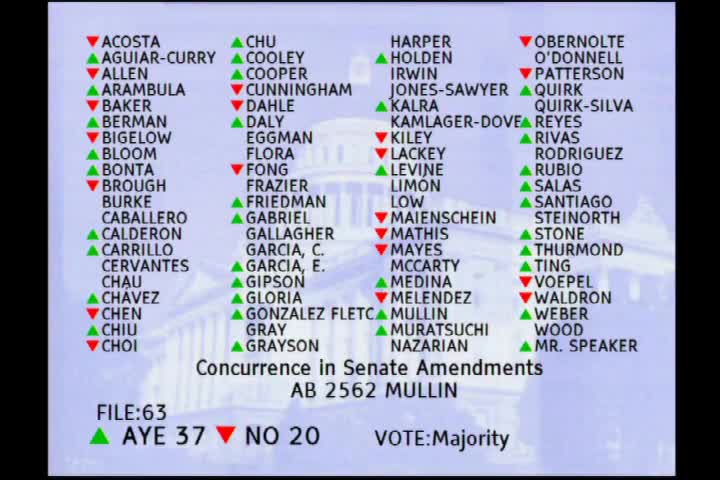

Bill Author

Bill Co-Author(s):




