AB 20: Public employee retirement systems: divestment: Dakota Access Pipeline.
- Session Year: 2017-2018
- House: Assembly
- Latest Version Date: 2017-10-08
The California Constitution authorizes the Legislature to prohibit, by statute, investments of a retirement board if it is in the public interest to do so and if the prohibition satisfies the boards standards of fiduciary care and loyalty.
Existing law prohibits the boards of administration of the Public Employees Retirement System and the State Teachers Retirement System from investing funds in a company with active business operations in Sudan, as specified, from investing in a company that has certain business operations in Iran, as specified, and from investing in thermal coal companies, as defined.
This bill would require the boards of administration of the Public Employees Retirement System and the State Teachers Retirement System to make a specified report, on or before April 1, 2018, to the Legislature and the Governor regarding investments in the Dakota Access Pipeline, as defined. The bill would declare the intent of the Legislature that the boards, on or before April 1, 2018, review and consider factors related to tribal sovereignty and indigenous tribal rights as part of the boards investment policies related to environmental, social, and governance issues. The bill would provide that it does not require a board to take any action unless the board determines in good faith that the action is consistent with the boards fiduciary responsibilities established in the constitution. The bill would make additional related legislative findings and declarations.
The California Constitution authorizes the Legislature to prohibit, by statute, investments of a retirement board if it is in the public interest to do so and if the prohibition satisfies the boards standards of fiduciary care and loyalty.
Existing law prohibits the boards of administration of the Public Employees Retirement System and the State Teachers Retirement System from investing funds in a company with active business operations in Sudan, as specified, from investing in a company that has certain business operations in Iran, as specified, and from investing in thermal coal companies, as defined.
This bill would require the boards of administration of the Public Employees Retirement System and the State Teachers Retirement System to make a specified report, on or before April 1, 2018, to the Legislature and the Governor regarding investments in the Dakota Access Pipeline, as defined. The bill would require declare the intent of the Legislature that the boards, on or before April 1, 2018, to review and consider factors related to tribal sovereignty and indigenous tribal rights when selecting or rejecting investments. as part of the boards investment policies related to environmental, social, and governance issues. The bill would provide that it does not require a board to take any action unless the board determines in good faith that the action is consistent with the boards fiduciary responsibilities established in the constitution. The bill would make additional related legislative findings and declarations.
The California Constitution authorizes the Legislature to prohibit, by statute, investments of a retirement board if it is in the public interest to do so and if the prohibition satisfies the boards standards of fiduciary care and loyalty.
Existing law prohibits the boards of administration of the Public Employees Retirement System and the State Teachers Retirement System from investing funds in a company with active business operations in Sudan, as specified, from investing in a company that has certain business operations in Iran, as specified, and from investing in thermal coal companies, as defined.
This bill would require the boards of administration of the Public Employees Retirement System and the State Teachers Retirement System to make a specified report, on or before April 1, 2018, to the Legislature and the Governor regarding investments in the Dakota Access Pipeline, as defined. The bill would require the boards, on or before April 1, 2018, to consider factors related to tribal sovereignty and indigenous tribal rights when selecting or rejecting investments. The bill would provide that it does not require a board to take any action unless the board determines in good faith that the action is consistent with the boards fiduciary responsibilities established in the constitution. The bill would make related legislative findings and declarations.
The California Constitution authorizes the Legislature to prohibit, by statute, investments of a retirement board if it is in the public interest to do so and if the prohibition satisfies the boards standards of fiduciary care and loyalty.
Existing law prohibits the boards of administration of the Public Employees Retirement System and the State Teachers Retirement System from investing funds in a company with active business operations in Sudan, as specified, from investing in a company that has certain business operations in Iran, as specified, and from investing in thermal coal companies, as defined.
This bill would prohibit require the boards of administration of the Public Employees Retirement System and the State Teachers Retirement System, on and after January 1, 2018, from making additional investments or renewing investments in a company constructing, or funding the construction of, System to make a specified report, on or before April 1, 2018, to the Legislature and the Governor regarding investments in the Dakota Access Pipeline, as defined. This The bill would require the boards, on or before July 1, 2018, to liquidate their investments in a company constructing, or funding the construction of, the Dakota Access Pipeline. April 1, 2018, to consider factors related to tribal sovereignty and indigenous tribal rights when selecting or rejecting investments. The bill would provide that it does not require a board to take any action unless the board determines in good faith that the action is consistent with the boards fiduciary responsibilities established in the constitution. The bill would make related legislative findings and declarations.
The California Constitution authorizes the Legislature to prohibit, by statute, investments of a retirement board if it is in the public interest to do so and if the prohibition satisfies the boards standards of fiduciary care and loyalty.
Existing law prohibits the boards of administration of the Public Employees Retirement System and the State Teachers Retirement System from investing funds in a company with active business operations in Sudan, as specified, from investing in a company that has certain business operations in Iran, as specified, and from investing in thermal coal companies, as defined.
This bill would prohibit the boards of administration of the Public Employees Retirement System and the State Teachers Retirement System, on and after January 1, 2018, from making additional investments or renewing investments in a company constructing, or funding the construction of, the Dakota Access Pipeline, as defined. This bill would require the boards, on or before July 1, 2018, to liquidate their investments in a company constructing, or funding the construction of, the Dakota Access Pipeline. The bill would provide that it does not require a board to take any action unless the board determines in good faith that the action is consistent with the boards fiduciary responsibilities established in the constitution. The bill would make related legislative findings and declarations.
The Legislature finds and declares all of the following:
(a)The Dakota Access Pipeline that is being built in the southern region of North Dakota was originally planned to run north of Bismarck, North Dakota, but for a variety of reasons, including environmental concerns regarding potential harm to the water supply of Bismarck and surrounding communities, it was rerouted south.
(b)The Dakota Access Pipeline is now routed just north and upstream of the Standing Rock Sioux Reservation. Thousands of people representing over 200 indigenous tribes have set up camp in an effort to block the construction of the pipeline through sacred land and, most significantly, to protect the water supply that the Sioux tribe there relies upon for its survival.
(c)The hostility of local law enforcement and the North Dakota National Guard against unarmed protestors has reached dangerous levels. In recent confrontations, law enforcement has used water cannons against unarmed protesters in frigid temperatures, in addition to the ongoing use of rubber bullets and chemical agents.
(d)As Californians, we must hold ourselves to a high standard of conduct, including how we invest our pension funds. This includes, morally and fiscally, the millions of dollars that the Public Employees Retirement System and the State Teachers Retirement System have invested in the Dakota Access Pipeline.
SEC. 2.Section 7513.72 is added to the Government Code, to read:7513.72.(a)As used in this section:
(1)Board means the Board of Administration of the Public Employees Retirement System or the Teachers Retirement Board of the State Teachers Retirement System, as applicable.
(2)Company means a sole proprietorship, organization, association, corporation, partnership, venture, or other entity, or its subsidiary or affiliate, that exists for profitmaking purposes or to otherwise secure economic advantage.
(3)Dakota Access Pipeline means the oil pipeline connecting the Bakken oil fields in northwest North Dakota to Illinois, traveling through South Dakota and Iowa, that runs north and upstream of the Standing Rock Sioux Reservation.
(4)Investment means the purchase, ownership, or control of publicly issued stock, corporate bonds, or other debt instruments issued by a company.
(5)Public employee retirement funds means the Public Employees Retirement Fund described in Section 20062 of this code and the Teachers Retirement Fund described in Section 22167 of the Education Code.
(b)On or before April 1, 2018, the board shall file a report with the Legislature, in compliance with Section 9795, and the Governor that shall include the following:
(1)A list of investments the board has in companies constructing, or funding the construction of, the Dakota Access Pipeline.
(2)A list of companies identified pursuant to paragraph (1) with which the board has constructively engaged, including:
(A)A detailed description of the board and its staffs engagement activities with each company, including, but not limited to, the number of engagement interactions with each company.
(B)A detailed description of the results of the engagement, including, but not limited to, agreements reached between the board and the company.
(C)An evaluation as to the efficacy of the engagement, including, but not limited to, whether the engagement resulted in a change of action by the investing firm or company with which funds were invested.
(c)It is the intent of the Legislature that on or before April 1, 2018, the board review and consider factors related to tribal sovereignty and indigenous tribal rights as part of the boards investment policies related to environmental, social, and governance issues.
(d)Nothing in this section shall require a board to take action as described in this section unless the board determines in good faith that the action described in this section is consistent with the fiduciary responsibilities of the board described in Section 17 of Article XVI of the California Constitution.
The Legislature finds and declares all of the following:
(a)The Dakota Access Pipeline that is being built in the southern region of North Dakota was originally planned to run north of Bismarck, North Dakota, but for a variety of reasons, including environmental concerns regarding potential harm to the water supply of Bismarck and surrounding communities, it was rerouted south.
(b)The Dakota Access Pipeline is now routed just north and upstream of the Standing Rock Sioux Reservation. Thousands of people representing over 200 indigenous tribes have set up camp in an effort to block the construction of the pipeline through sacred land and, most significantly, to protect the water supply that the Sioux tribe there relies upon for its survival.
(c)The hostility of local law enforcement and the North Dakota National Guard against unarmed protestors has reached dangerous levels. In recent confrontations, law enforcement has used water cannons against unarmed protesters in frigid temperatures, in addition to the ongoing use of rubber bullets and chemical agents.
(d)As Californians, we must hold ourselves to a high standard of conduct, including how we invest our pension funds. This includes, morally and fiscally, the millions of dollars that the Public Employees Retirement System and the State Teachers Retirement System have invested in the Dakota Access Pipeline.
SEC. 2.Section 7513.72 is added to the Government Code, to read:7513.72.(a)As used in this section:
(1)Board means the Board of Administration of the Public Employees Retirement System or the Teachers Retirement Board of the State Teachers Retirement System, as applicable.
(2)Company means a sole proprietorship, organization, association, corporation, partnership, venture, or other entity, or its subsidiary or affiliate, that exists for profitmaking purposes or to otherwise secure economic advantage.
(3)Dakota Access Pipeline means the oil pipeline connecting the Bakken oil fields in northwest North Dakota to Illinois, traveling through South Dakota and Iowa, that runs north and upstream of the Standing Rock Sioux Reservation.
(4)Investment means the purchase, ownership, or control of publicly issued stock, corporate bonds, or other debt instruments issued by a company.
(5)Public employee retirement funds means the Public Employees Retirement Fund described in Section 20062 of this code and the Teachers Retirement Fund described in Section 22167 of the Education Code.
(b)On or before April 1, 2018, the board shall file a report with the Legislature, in compliance with Section 9795, and the Governor that shall include the following:
(1)A list of investments the board has in companies constructing, or funding the construction of, the Dakota Access Pipeline.
(2)A list of companies identified pursuant to paragraph (1) with which the board has constructively engaged, including:
(A)A detailed description of the board and its staffs engagement activities with each company, including, but not limited to, the number of engagement interactions with each company.
(B)A detailed description of the results of the engagement, including, but not limited to, agreements reached between the board and the company.
(C)An evaluation as to the efficacy of the engagement, including, but not limited to, whether the engagement resulted in a change of action by the investing firm or company with which funds were invested.
(c)On It is the intent of the Legislature that on or before April 1, 2018, the board shall include review and consider factors related to tribal sovereignty and indigenous tribal rights in as part of the boards consideration of investment policies related to environmental, social, and governance issues when selecting or rejecting investments. issues.
(d)Nothing in this section shall require a board to take action as described in this section unless the board determines in good faith that the action described in this section is consistent with the fiduciary responsibilities of the board described in Section 17 of Article XVI of the California Constitution.
The Legislature finds and declares all of the following:
(a)The Dakota Access Pipeline that is being built in the southern region of North Dakota was originally planned to run north of Bismarck, North Dakota, but for a variety of reasons, including environmental concerns regarding potential harm to the water supply of Bismarck and surrounding communities, it was rerouted south.
(b)The Dakota Access Pipeline is now routed just north and upstream of the Standing Rock Sioux Reservation. Thousands of people representing over 200 indigenous tribes have set up camp in an effort to block the construction of the pipeline through sacred land and, most significantly, to protect the water supply that the Sioux tribe there relies upon for its survival.
(c)The hostility of local law enforcement and the North Dakota National Guard against unarmed protestors has reached dangerous levels. In recent confrontations, law enforcement has used water cannons against unarmed protesters in frigid temperatures, in addition to the ongoing use of rubber bullets and chemical agents.
(d)As Californians, we must hold ourselves to a high standard of conduct, including how we invest our pension funds. Both This includes, morally and fiscally, the millions of dollars that the Public Employees Retirement System and the State Teachers Retirement System have invested in the Dakota Access Pipeline can be better spent elsewhere. Pipeline.
(e)The time has come for us as a state to divest from fossil fuels and focus on emerging technologies and clean, renewable energy. Because water is life, the most immediate action we should take is to divest from the Dakota Access Pipeline.SEC. 2.Section 7513.72 is added to the Government Code, to read:7513.72.(a)As used in this section:
(1)Board means the Board of Administration of the Public Employees Retirement System or the Teachers Retirement Board of the State Teachers Retirement System, as applicable.
(2)Company means a sole proprietorship, organization, association, corporation, partnership, venture, or other entity, or its subsidiary or affiliate, that exists for profitmaking purposes or to otherwise secure economic advantage.
(3)Dakota Access Pipeline means the oil pipeline connecting the Bakken oil fields in northwest North Dakota to Illinois, traveling through South Dakota and Iowa, that runs north and upstream of the Standing Rock Sioux Reservation.
(4)Investment means the purchase, ownership, or control of publicly issued stock, corporate bonds, or other debt instruments issued by a company.
(5)Public employee retirement funds means the Public Employees Retirement Fund described in Section 20062 of this code and the Teachers Retirement Fund described in Section 22167 of the Education Code.
(b)On or before April 1, 2018, the board shall file a report with the Legislature, in compliance with Section 9795, and the Governor that shall include the following:
(1)A list of investments the board has in companies constructing, or funding the construction of, the Dakota Access Pipeline.
(2)A list of companies identified pursuant to paragraph (1) with which the board has constructively engaged, including:
(A)A detailed description of the board and its staffs engagement activities with each company, including, but not limited to, the number of engagement interactions with each company.
(B)A detailed description of the results of the engagement, including, but not limited to, agreements reached between the board and the company.
(C)An evaluation as to the efficacy of the engagement, including, but not limited to, whether the engagement resulted in a change of action by the investing firm or company with which funds were invested.
(c)On or before April 1, 2018, the board shall include factors related to tribal sovereignty and indigenous tribal rights in the boards consideration of environmental, social, and governance issues when selecting or rejecting investments.
(d)Nothing in this section shall require a board to take action as described in this section unless the board determines in good faith that the action described in this section is consistent with the fiduciary responsibilities of the board described in Section 17 of Article XVI of the California Constitution.
The Legislature finds and declares all of the following:
(a)The Dakota Access Pipeline that is being built in the southern region of North Dakota was originally planned to run north of Bismark, Bismarck, North Dakota, but for a variety of reasons, including environmental concerns regarding potential harm to the water supply of Bismarck and surrounding communities, it was rerouted south.
(b)The Dakota Access Pipeline is now routed just north and upstream of the Standing Rock Sioux Reservation. Thousands of people representing over 200 indigenous tribes have set up camp in an effort to block the construction of the pipeline through sacred land and, most significantly, to protect the water supply that the Sioux tribe there relies upon for its survival.
(c)The hostility of local law enforcement and the North Dakota national guard National Guard against unarmed protestors has reached dangerous levels. In recent confrontations, law enforcement has used water cannons against unarmed protesters in frigid temperatures, in addition to the ongoing use of rubber bullets and chemical agents.
(d)As Californians, we must hold ourselves to a high standard of conduct, including how we invest our pension funds. Both morally and fiscally, the millions of dollars that the Public Employees Retirement System and the State Teachers Retirement System have invested in the Dakota Access Pipeline can be better spent elsewhere.
(e)The time has come for us as a state to divest from fossil fuels and focus on emerging technologies and clean, renewable energy. Because water is life, the most immediate action we should take is to divest from the Dakota Access Pipeline.
SEC. 2.Section 7513.72 is added to the Government Code, to read:7513.72.(a)As used in this section:
(1)Board means the Board of Administration of the Public Employees Retirement System or the Teachers Retirement Board of the State Teachers Retirement System, as applicable.
(2)Company means a sole proprietorship, organization, association, corporation, partnership, venture, or other entity, or its subsidiary or affiliate, that exists for profit-making profitmaking purposes or to otherwise secure economic advantage.
(3)Dakota Access Pipeline means the oil pipeline connecting the Bakken oil fields in northwest North Dakota to Illinois, traveling through South Dakota and Iowa, that runs north and upstream of the Standing Rock Sioux Reservation.
(4)Investment means the purchase, ownership, or control of publicly issued stock, corporate bonds, or other debt instruments issued by a company.
(5)Public employee retirement funds means the Public Employees Retirement Fund described in Section 20062 of this code and the Teachers Retirement Fund described in Section 22167 of the Education Code.
(b)On and after January 1, 2018, the board shall not make additional investments or renew existing investments of public employee retirement funds in a company constructing, or funding the construction of, the Dakota Access Pipeline.(c)On or before July 1, 2018, the board shall liquidate its investments in a company constructing, or funding the construction of, the Dakota Access Pipeline.(b)On or before April 1, 2018, the board shall file a report with the Legislature, in compliance with Section 9795, and the Governor that shall include the following:
(1)A list of investments the board has in companies constructing, or funding the construction of, the Dakota Access Pipeline.
(2)A list of companies identified pursuant to paragraph (1) with which the board has constructively engaged, including:
(A)A detailed description of the board and its staffs engagement activities with each company, including, but not limited to, the number of engagement interactions with each company.
(B)A detailed description of the results of the engagement, including, but not limited to, agreements reached between the board and the company.
(C)An evaluation as to the efficacy of the engagement, including, but not limited to, whether the engagement resulted in a change of action by the investing firm or company with which funds were invested.
(c)On or before April 1, 2018, the board shall include factors related to tribal sovereignty and indigenous tribal rights in the boards consideration of environmental, social, and governance issues when selecting or rejecting investments.
(d)Nothing in this section shall require a board to take action as described in this section unless the board determines in good faith that the action described in this section is consistent with the fiduciary responsibilities of the board described in Section 17 of Article XVI of the California Constitution.
The Legislature finds and declares all of the following:
(a)The Dakota Access Pipeline that is being built in the southern region of North Dakota was originally planned to run north of Bismark, North Dakota, but for a variety of reasons, including environmental concerns regarding potential harm to the water supply of Bismarck and surrounding communities, it was rerouted south.
(b)The Dakota Access Pipeline is now routed just north and upstream of the Standing Rock Sioux Reservation. Thousands of people representing over 200 indigenous tribes have set up camp in an effort to block the construction of the pipeline through sacred land and, most significantly, to protect the water supply that the Sioux tribe there relies upon for its survival.
(c)The hostility of local law enforcement and the North Dakota national guard against unarmed protestors has reached dangerous levels. In recent confrontations, law enforcement has used water cannons against unarmed protesters in frigid temperatures, in addition to the ongoing use of rubber bullets and chemical agents.
(d)As Californians, we must hold ourselves to a high standard of conduct, including how we invest our pension funds. Both morally and fiscally, the millions of dollars that the Public Employees Retirement System and the State Teachers Retirement System have invested in the Dakota Access Pipeline can be better spent elsewhere.
(e)The time has come for us as a state to divest from fossil fuels and focus on emerging technologies and clean, renewable energy. Because water is life, the most immediate action we should take is to divest from the Dakota Access Pipeline.
SEC. 2.Section 7513.72 is added to the Government Code, to read:7513.72.(a)As used in this section:
(1)Board means the Board of Administration of the Public Employees Retirement System or the Teachers Retirement Board of the State Teachers Retirement System, as applicable.
(2)Company means a sole proprietorship, organization, association, corporation, partnership, venture, or other entity, or its subsidiary or affiliate, that exists for profit-making purposes or to otherwise secure economic advantage.
(3)Dakota Access Pipeline means the oil pipeline connecting the Bakken oil fields in northwest North Dakota to Illinois, traveling through South Dakota and Iowa, that runs north and upstream of the Standing Rock Sioux Reservation.
(4)Investment means the purchase, ownership, or control of publicly issued stock, corporate bonds, or other debt instruments issued by a company.
(5)Public employee retirement funds means the Public Employees Retirement Fund described in Section 20062 of this code and the Teachers Retirement Fund described in Section 22167 of the Education Code.
(b)On and after January 1, 2018, the board shall not make additional investments or renew existing investments of public employee retirement funds in a company constructing, or funding the construction of, the Dakota Access Pipeline.
(c)On or before July 1, 2018, the board shall liquidate its investments in a company constructing, or funding the construction of, the Dakota Access Pipeline.
(d)Nothing in this section shall require a board to take action as described in this section unless the board determines in good faith that the action described in this section is consistent with the fiduciary responsibilities of the board described in Section 17 of Article XVI of the California Constitution.
|
Date
|
Status
|
|---|---|
| Oct 8, 2017 | Chaptered by Secretary of State - Chapter 575, Statutes of 2017. |
| Oct 8, 2017 | Approved by the Governor. |
| Sep 12, 2017 | Enrolled and presented to the Governor at 2:30 p.m. |
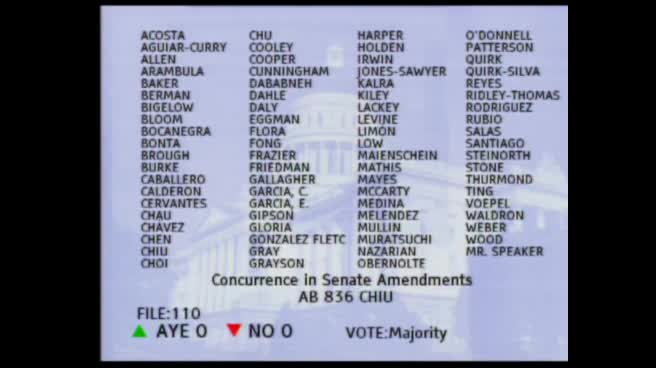
| Sep 5, 2017 | Senate amendments concurred in. To Engrossing and Enrolling. (Ayes 46. Noes 28.). |
| Aug 31, 2017 | In Assembly. Concurrence in Senate amendments pending. May be considered on or after September 2 pursuant to Assembly Rule 77. |
| Aug 31, 2017 | Read third time. Passed. Ordered to the Assembly. |
| Aug 22, 2017 | Read second time. Ordered to third reading. |
| Aug 21, 2017 | From committee: Be ordered to second reading pursuant to Senate Rule 28.8. |
| Jul 12, 2017 | Read second time and amended. Re-referred to Com. on APPR. |
| Jul 11, 2017 | From committee: Amend, and do pass as amended and re-refer to Com. on APPR. (Ayes 3. Noes 2.) (July 10). |
| Jun 14, 2017 | Referred to Com. on P.E. & R. |
| Jun 1, 2017 | In Senate. Read first time. To Com. on RLS. for assignment. |
| May 31, 2017 | Read third time. Passed. Ordered to the Senate. (Ayes 50. Noes 24. Page 1908.) |
| May 30, 2017 | Read second time. Ordered to third reading. |
| May 26, 2017 | From committee: Do pass. (Ayes 12. Noes 5.) (May 26). |
| May 3, 2017 | In committee: Set, first hearing. Referred to APPR. suspense file. |
| Apr 25, 2017 | Re-referred to Com. on APPR. |
| Apr 24, 2017 | Read second time and amended. |
| Apr 20, 2017 | From committee: Amend, and do pass as amended and re-refer to Com. on APPR. (Ayes 4. Noes 2.) (April 19). |
| Apr 18, 2017 | Re-referred to Com. on P.E., R., & S.S. |
| Apr 17, 2017 | From committee chair, with author's amendments: Amend, and re-refer to Com. on P.E., R., & S.S. Read second time and amended. |
| Jan 19, 2017 | Referred to Com. on P.E., R., & S.S. |
| Dec 6, 2016 | From printer. May be heard in committee January 5. |
| Dec 5, 2016 | Read first time. To print. |
|
Date
|
Description
|
Location
|
Votes
|
|
|---|---|---|---|---|
| Sep 5, 2017 | AB 20 KALRA Concurrence in Senate Amendments | Assembly Floor |
Passed |
|
| Aug 31, 2017 | Assembly 3rd Reading AB20 Kalra By Pan | Senate Floor |
Passed |
|
| Jul 10, 2017 | Do pass as amended, but first amend, and re-refer to the Committee on [Appropriations] | Senate Standing Committee on Public Employment and Retirement |
Passed |
|
| May 31, 2017 | AB 20 KALRA Assembly Third Reading | Assembly Floor |
Passed |
|
| May 26, 2017 | Do pass. | Assembly Standing Committee on Appropriations |
Passed |
|
| Apr 19, 2017 | Do pass as amended and be re-referred to the Committee on [Appropriations] | Assembly Standing Committee on Public Employees, Retirement, and Social Security |
Passed |
This list shows positions taken on this bill by organizations on the date displayed, which is linked to the original source.
Positions by individuals are not included.
|
Organization
|
Position
|
Date
|
|---|---|---|
| California Bankers Association | ** Against | Aug 23, 2017 |
| California Chamber Of Commerce | ** Against | Aug 23, 2017 |
| California Federation Of Teachers | * Support | Apr 19, 2017 |
| California Nurses Association | ** Support | Jul 5, 2017 |
| California Police Chiefs Association, Inc. | ** Against | Apr 18, 2017 |
| California Professional Firefighters | ** Support | Aug 23, 2017 |
| California Public Employees' Retirement System, Oppose Unless Amended | ** Against | Jul 5, 2017 |
| California Retired Teachers Association | ** Against | Jul 5, 2017 |
| California Special District Association | * Against | Apr 19, 2017 |
| California State Teachers Retirement System | * Indeterminate | Apr 19, 2017 |
| California State Teachers' Retirement System, Oppose Unless Amended | ** Against | Jul 5, 2017 |
| California Teachers Association | ** Support | Aug 23, 2017 |
| California Young Democrats | ** Support | Jul 5, 2017 |
| CalPERS | * Neutral | Jul 10, 2017 |
| City of Vista | ** Against | Jul 5, 2017 |
| Costa Mesa Sanitary District | ** Against | Jul 5, 2017 |
| Faculty Association Of California Community Colleges | * Support | Apr 19, 2017 |
| Federated Indians Of Graton Rancheria | ** Support | Aug 23, 2017 |
| National Association of Social Workers | * Support | Apr 19, 2017 |
| National Association Of Social Workers, California Chapter | ** Support | Aug 23, 2017 |
| National Education Association | * Support | Apr 19, 2017 |
| National Federation Of Independent Business | ** Against | Aug 23, 2017 |
| National Nurses United | ** Support | Jul 5, 2017 |
| Peace Officers Research Association Of California | ** Against | Jul 5, 2017 |
| School Employers Association Of California | ** Against | Jul 5, 2017 |
CONCURRENCE IN SENATE AMENDMENTS
CSA1 Bill Id:AB 20
Author:(Kalra)
As Amended Ver:July 12, 2017
Majority vote
ASSEMBLY: | 50-24 | (May 31, 2017) | SENATE: | 24-14 | (August 31, 2017) |
Original Committee Reference: P.E.,R., & S.S.
SUMMARY: Requires the California State Teachers' Retirement System (CalSTRS) and California Public Employees' Retirement System (CalPERS) to report to the Legislature and the Governor, on or before April 1, 2018, information regarding investments in, and engagement with, companies constructing or funding the construction of the Dakota Access Pipeline (DAPL).
The Senate amendments declare legislative intent that CalSTRS and CalPERS review and consider factors related to tribal sovereignty and indigenous tribal rights as part of their respective investment policies related to environmental, social and governance issues.
EXISTING LAW:
- Provides, pursuant to the California Constitution Article XVI, Section 17, that:
- The boards of California's public retirement systems have "plenary authority and fiduciary responsibility for [the] investment of monies and administration of the system."
- "The members of the retirement board of a public pension or retirement system shall discharge their duties with respect to the system solely in the interest of, and for the exclusive purposes of providing benefits to, participants and their beneficiaries, minimizing employer contributions thereto, and defraying reasonable expenses of administrating the system…[and] the board shall diversify the investments of the system so as to minimize the risk of loss and to maximize the rate of return unless under the circumstances it is clearly prudent to do so."
- The Legislature retains its authority to, by statute, "continue to prohibit certain investments by a retirement board where it is in the public interest to do so, and provided that the prohibition satisfies the standards of fiduciary care and loyalty required of a retirement board pursuant to this section."
FISCAL EFFECT: According to the Senate Appropriations Committee, pursuant to Senate Rule 28.8, this bill would result in negligible state cost.
COMMENTS: Among the largest institutional investors in the country, and each investing billions of dollars across asset classes, CalPERS and CalSTRS both employ direct engagement as a way to leverage their market capital towards achieving a desired change or outcome.
Rather than divesting, which can limit investment opportunities, decrease diversification, increase risk, limit returns and increase unfunded liabilities, direct engagement allows both systems, as large investors, opportunities to leverage their ongoing investments.
Analysis Prepared by: Michael Bolden / P.E.,R., & S.S. / (916) 319-3957 FN: 0001335
Office of Senate Floor Analyses (916) 651-1520 Fax: (916) 327-4478 | AB |
THIRD READING
Bill No: AB 20
:
SENATE PUBLIC EMP. & RET. COMMITTEE: 3-2, 7/10/17
AYES: Pan, Leyva, Portantino
NOES: Morrell, Moorlach
SENATE APPROPRIATIONS COMMITTEE: Senate Rule 28.8
ASSEMBLY FLOOR: 50-24, 5/31/17 - See last page for vote
DIGEST:
This bill states that it is the Legislature’s intent that the boards of the California Public Employees’ Retirement System (CalPERS) and the California State Teachers’ Retirement System (CalSTRS) to review and consider, on or before April 1, 2018, factors related to tribal sovereignty and indigenous tribal rights as part of the board’s investment policies related to environmental, social, and governance issues.
Existing law:
- Provides under Article XVI, Section 17 of the California Constitution that the boards of California’s public retirement systems have “plenary authority and fiduciary responsibility for [the] investment of monies and administration of the system.”
- Provides under the California Constitution that “the members of the retirement board of a public pension or retirement system shall discharge their duties with respect to the system solely in the interest of, and for the exclusive purposes of providing benefits to, participants and their beneficiaries, minimizing employer contributions thereto, and defraying reasonable expenses of administrating the system…[and] the board shall diversify the investments of the system so as to minimize the risk of loss and to maximize the rate of return unless under the circumstances it is clearly prudent to do so.”
This bill:
- States that it is the Legislature’s intent that on or before April 1, 2018, CalPERS and CalSTRS review and consider factors related to tribal sovereignty and indigenous tribal rights as part of the board’s investment policies related to environmental, social, and governance issues.
- Requires, on or before April 1, 2018, CalPERS and CalSTRS to file a report to the Legislature and Governor that includes the following:
- A list of their investments in companies constructing, or funding the construction of, the Dakota Access Pipeline.
- A list of companies, as specified, with which CalPERS and CalSTRS have constructively engaged, including:
- A detailed description of CalPERS and CalSTRS’ engagement activities with each company, including, but not limited to, the number of engagement interactions with each company.
- A detailed description of the results of the engagement, including but not limited to agreements reached between the board and the company.
- An evaluation as to the efficacy of the engagement, including but not limited to whether the engagement resulted in a change of action by the investing firm or company with which the funds were invested.
- Makes findings and declarations related to the Dakota Access Pipeline.
- Defines “Dakota Access Pipeline” as the oil pipeline connecting the Bakken oil fields in northwest North Dakota to Illinois, traveling through South Dakota and Iowa, that runs north and upstream of the Standing Rock Sioux Reservation.
- Defines “investment” as the purchase, ownership, or control of publicly issued stock, corporate bonds, or other debt instruments issued by a company.
- Defines “public employee retirement funds” as CalPERS and CalSTRS, as specified.
- Provides that nothing shall require CalPERS and CalSTRS to take action unless their respective boards determine in good faith that the action described is consistent with their fiduciary responsibilities.
FISCAL EFFECT: Appropriation: Fiscal Com.: Local:
California Professional Firefighters
California Teachers Association
Federated Indians of Graton Rancheria
National Association of Social Workers, California Chapter
OPPOSITION: (Verified 8/23/17)
California Bankers Association
California Chamber of Commerce
National Federation of Independent Business
ARGUMENTS IN SUPPORT: The California Teachers Association writes, “The CTA has had numerous conversations with CalSTRS regarding their engagement on this project and believes the Legislature will gain greater insight through the engagement process.”
ARGUMENTS IN OPPOSITION: The California Chamber of Commerce writes, “The purpose of the report is to discourage investments in companies constructing or funding the pipeline, which could ultimately harm California businesses…[and] yields nothing of public policy value.”
ASSEMBLY FLOOR: 50-24, 5/31/17
AYES: Aguiar-Curry, Arambula, Berman, Bloom, Bocanegra, Bonta, Burke, Caballero, Calderon, Cervantes, Chau, Chiu, Chu, Cooley, Dababneh, Daly, Frazier, Friedman, Cristina Garcia, Eduardo Garcia, Gipson, Gloria, Gomez, Gonzalez Fletcher, Gray, Holden, Irwin, Jones-Sawyer, Kalra, Levine, Limón, Low, McCarty, Medina, Mullin, Nazarian, O'Donnell, Quirk, Quirk-Silva, Reyes, Ridley-Thomas, Rodriguez, Rubio, Santiago, Mark Stone, Thurmond, Ting, Weber, Wood, Rendon
NOES: Acosta, Travis Allen, Baker, Bigelow, Brough, Chávez, Chen, Cunningham, Dahle, Flora, Fong, Gallagher, Harper, Kiley, Lackey, Maienschein, Mathis, Mayes, Obernolte, Patterson, Salas, Steinorth, Voepel, Waldron
NO VOTE RECORDED: Choi, Cooper, Eggman, Grayson, Melendez, Muratsuchi
8/23/17 14:57:26
**** END ****
SENATE COMMITTEE ON
PUBLIC EMPLOYMENT AND RETIREMENT
Dr. Richard Pan, Chair
2017 - 2018 Regular
Bill No: AB 20 Hearing Date: 7/10/17
Author: | Kalra | ||
Version: | 4/24/17 As amended | ||
Urgency: | No | Fiscal: | Yes |
Consultant: | Korinne Sugasawara | ||
Subject: Public employee retirement systems: divestment: Dakota Access Pipeline
SOURCE: Author
ASSEMBLY VOTES:
Assembly Floor: | 50 - 24 |
Assembly Appropriations Committee: | 12 - 5 |
Assembly Public Employees, Retirement/Soc Sec Committee: | 4 - 2 |
DIGEST: This bill requires California State Teachers’ Retirement System (CalSTRS) and California Public Employees’ Retirement System (CalPERS) to report to the Legislature and the Governor, on or before April 1, 2018, information regarding investments in, and engagement with, companies constructing or funding the construction of the Dakota Access Pipeline. This bill also requires CalSTRS and CalPERS to consider factors related to tribal sovereignty and indigenous tribal rights when selecting or rejecting investments.
ANALYSIS:
Existing law:
- Provides under Article XVI, Section 17 of the California Constitution that the boards of California’s public retirement systems have “plenary authority and fiduciary responsibility for [the] investment of monies and administration of the system.”
- Provides under the California Constitution that “the members of the retirement board of a public pension or retirement system shall discharge their duties with respect to the system solely in the interest of, and for the exclusive purposes of providing benefits to, participants and their beneficiaries, minimizing employer contributions thereto, and defraying reasonable expenses of administrating the system…[and] the board shall diversify the investments of the system so as to minimize the risk of loss and to maximize the rate of return unless under the circumstances it is clearly prudent to do so.”
- Provides under the California Constitution that the Legislature retains its authority to, by statute, “continue to prohibit certain investments by a retirement board where it is in the public interest to do so, and provided that the prohibition satisfies the standards of fiduciary care and loyalty required of a retirement board pursuant to this section.”
This bill:
- Requires, on or before April 1, 2018, CalPERS and CalSTRS to include factors related to tribal sovereignty and indigenous tribal rights in the board’s consideration of environmental, social, and governance issues when selecting or rejecting investments.
- Requires, on or before April 1, 2018, CalPERS and CalSTRS to file a report to the Legislature and Governor that includes the following:
- A list of investments the companies constructing, or funding the construction of, the Dakota Access Pipeline.
- A list of companies, as specified, that CalPERS and CalSTRS have constructively engaged, including:
- A detailed description of CalPERS and CalSTRS and their staff’s engagement activities with each company, including, but not limited to, the number of engagement interactions with each company.
- A detailed description of the results of the engagement, including but not limited to agreements reached between the board and the company.
- An evaluation as to the efficacy of the engagement, including but not limited to whether the engagement resulted in a change of action by the investing firm or company with which the funds were invested.
- Makes findings and declarations related to the Dakota Access Pipeline (DAPL).
- Defines “Dakota Access Pipeline” as the oil pipeline connecting the Bakken oil fields in northwest North Dakota to Illinois, traveling through South Dakota and Iowa, that runs north and upstream of the Standing Rock Sioux Reservation.
- Defines “investment” as the purchase, ownership, or control of publicly issued stock, corporate bonds, or other debt instruments issued by a company.
- Defines “public employee retirement funds” as the California Public Employees’ Retirement Fund (CalPERS) and California Teachers’ Retirement Fund (CalSTRS), as specified.
- Provides that nothing shall require CalPERS and CalSTRS to take action unless the board determines in good faith that the action described is consistent with its fiduciary responsibilities.
Background
The Dakota Access Pipeline
The DAPL is an underground oil pipeline project that covers a distance of nearly 1,200 miles, from northwest North Dakota to a terminalling hub in southern Illinois. Several Native American tribal nations and environmental groups expressed concerns about and protested the DAPL for its potential adverse impacts on the nearby Standing Rock Sioux reservation and the environment. On June 1, 2017 the DAPL began commercial service.
California’s Retirement Systems
CalPERS and CalSTRS are among the largest public pension systems in the county, each investing billions of dollars across multiple asset classes. Investment returns sustain a large portion of each retirement system’s ability to provide pensions and retirement benefits to their members. A 2015 analysis by Wilshire Associates found that previous divestment efforts have collectively reduced the present value of the CalPERS portfolio by a range of $3.8 to $8.3 billion.
Investor Engagement
CalPERS and CalSTRS both employ direct engagement as a way to leverage their market capital towards achieving a desired change or outcome. Rather than divesting, which can limit investment opportunities, decrease diversification, increase risk, and limit returns, direct engagement allows both systems, as large investors, opportunities for leverage.
Staff Concerns
Current language in the bill requires CalPERS and CalSTRS to include factors related to tribal sovereignty and indigenous tribal rights when selecting or rejecting investments. However, the California Constitution vests “sole and exclusive” responsibility with the board of a public pension or retirement system for the administration of and investment of money into a public retirement system. As such, this bill as currently written appears to infringe on a constitutional mandate for the boards of CalPERS and CalSTRS to ensure the solvency of their respective systems.
Related/Prior Legislation
AB 946 (Ting, 2017), of the current legislative session would prohibit CalPERS and CalSTRS from investing in companies engaged in business related to the Trump Administration’s “border wall.”
AB 1597 (Nazarian, 2017), of the current legislative session would prohibit CalPERS and CalSTRS from investing in any investment vehicle issued by, owned, controlled, or managed by the government of Turkey.
AB 1551 (Allen, 2016), held in the Assembly, would have required public retirement funds, on or after January 1, 2017, to make no additional investments or renew existing investments in business firms or financial institutions that engage in business practices in furtherance of the boycott of Israel, among other provisions.
AB 2283 (Calderon, 2016), held in the Assembly Public Employee, Retirement and Social Security Committee, would have required CalPERS and CalSTRS to evaluate their investments in securitized home rental properties and ensure certain requirements were met, as specified, prior to investing or reinvesting in securitized home rental properties, among other provisions.
AB 2650 (Nazarian, 2016), held in the Assembly Appropriations Committee, would have prohibited CalPERS and CalSTRS from investing public employee retirement funds in specified investments issued by, owned, controlled, or managed by the government of Turkey.
AB 1410 (Nazarian, 2015), held in Assembly Appropriations Committee, would have prohibited CalPERS and CalSTRS from investing retirement funds in specified investments issued by, owned, controlled, or managed by the government of Turkey.
SB 185 (De Leon, Chapter 605, Statutes of 2015), prohibits CalPERS and CalSTRS from investing in thermal coal companies, as specified, among other provisions.
FISCAL EFFECT: Appropriation: No Fiscal Com.: Yes Local: No
According to the Assembly Appropriations Committee, this bill would incur “one time administrative costs of approximately $50,000 total for CalPERS and CalSTRS to complete the [required] studies.”
SUPPORT:
California Nurses Association/National Nurses United
California Professional Firefighters
California Teachers Association
California Young Democrats
National Association of Social Workers, California Chapter
OPPOSITION:
California Bankers Association
California Chamber of Commerce
California Public Employees’ Retirement System, Oppose Unless Amended
California Retired Teachers Association
California State Teachers’ Retirement System, Oppose Unless Amended
City of Vista
Costa Mesa Sanitary District
National Federation of Independent Business
Peace Officers Research Association of California
School Employers Association of California
ARGUMENTS IN SUPPORT:
According to the author’s office “AB 20 is a representation of efforts to stand shoulder to shoulder, in solidarity with the Standing Rock Sioux Tribe to demonstrate and speak to the shared goals of decreasing our dependence on fossil fuels and respecting the sovereign rights of Native American Tribes.”
The California Nurses Association writes, “Nurses know that the transport of dangerous crude oil via the DAPL—underneath the Missouri River and across multiple state lines—impacts the water source of up to 17 million people. Pipelines have proven to leak, contaminating water supplies and leading to respiratory ailments and numerous over negative health impacts.”
ARGUMENTS IN OPPOSITION:
According to CalPERS, “By directing CalPERS to consider goals that do not directly relate to its operations and benefits when investing retirement system assets, and to engage with portfolio companies in a specified manner, AB 20 improperly imposes a mandate on the CalPERS Board of Administration and is duplicative of CalPERS’ current DAPL engagement activities. This mandate to make investment decisions and conduct corporate engagement and reporting activities in a specific manner is inconsistent with the Board’s plenary authority over investment decisions and its fiduciary duty to maximize risk-adjusted returns and defray reasonable administrative expenses as required by the California Constitution.”
CalSTRS writes they have “historically advocated that active and direct engagement is the best way to resolve issues. A report to the Legislature on CalSTRS engagement with companies involved with the Dakota Access Pipeline would demonstrate what types of efforts have taken place and what the outcomes of those efforts are…However, the board’s policy is to oppose legislation that restricts its investment authority…[as] delineated in the California Constitution and [this authority] is especially important as investment returns affect the 2014 funding plan (AB 1469, Bonta) which placed CalSTRS on a trajectory toward full funding.”
ASSEMBLY THIRD READING
ATR Bill Id:AB 20
Author:(Kalra)
As Amended Ver:April 24, 2017
Majority vote
Committee | Votes | Ayes | Noes |
Public Employees | 4-2 | Rodriguez, Cervantes, Cooley, O'Donnell | Travis Allen, Gallagher |
Appropriations | 12-5 | Gonzalez Fletcher, Bloom, Bocanegra, Bonta, Calderon, McCarty, Quirk, Friedman, Eduardo Garcia, Gray, Muratsuchi, Reyes | Bigelow, Brough, Fong, Gallagher, Obernolte |
SUMMARY: Requires the Boards of California Public Employees' Retirement System (CalPERS) and the California State Teachers' Retirement System (CalSTRS) to submit a report to the Legislature and Governor regarding investments in, and engagement activities with, companies constructing, or funding the construction of the Dakota Access Pipeline (DAPL). Specifically, this bill:
- Makes findings and declarations related to the DAPL.
- Defines "Dakota Access Pipeline" as the oil pipeline connecting the Bakken oil fields in northwest North Dakota to Illinois, traveling through South Dakota and Iowa, that runs north and upstream of the Standing Rock Sioux Reservation.
- Defines "investment" to mean the purchase, ownership or control of publicly issued stock, corporate bonds or other debt instruments issued by a company.
- Requires, on or before April 1, 2018, CalPERS and CalSTRS to file a report to the Legislature and Governor with the following:
- A list of investments CalPERS and CalSTRS has in companies constructing, or funding the construction of the DAPL.
- A list of companies constructing, or funding the construction of the DAPL that CalPERS and CalSTRS have constructively engaged, including:
- A detailed description of the systems' engagement activities with each company, including, but not limited to, the number of engagement interactions with each company.
- A detailed description of the results of the engagement, including, but not limited to agreements reached between the board and the company.
- An evaluation as to the efficacy of the engagement, including, but not limited to, whether the engagement resulted in a change of action by the investing firm or company with which funds were invested.
- Requires, on or before April 1, 2018, the board to include factors related to tribal sovereignty and indigenous tribal rights in the board's consideration of environmental, social, and governance issues when selecting or rejecting investments.
- Provides that nothing shall require a board to take action, unless the board determines in good faith that the action is consistent with its fiduciary responsibilities.
EXISTING LAW: As provided in the California Constitution by Proposition 162, the California Pension Protection Act of 1992, the boards of California's public retirement systems have "plenary authority and fiduciary responsibility for investment of monies and administration of the system."
Under Proposition 162, the Legislature also retained its authority to, by statute, "continue to prohibit certain investments by a retirement board where it is in the public interest to do so, and provided that the prohibition satisfies the standards of fiduciary care and loyalty required of a retirement board pursuant to this section."
The California Constitution also states, "The members of the retirement board of a public pension or retirement system shall discharge their duties with respect to the system solely in the interest of, and for the exclusive purposes of providing benefits to, participants and their beneficiaries, minimizing employer contributions thereto, and defraying reasonable expenses of administering the system."
FISCAL EFFECT: According to the Assembly Appropriations Committee, this bill would result in one time administrative costs of approximately $50,000 total for CalPERS and CalSTRS to complete the studies, as required by this bill.
COMMENTS:
- Divestment versus Active Engagement: CalPERS and CalSTRS are among the largest public pension systems in the country, and each invests billions across asset classes as a means of helping to sustain their respective funds towards ensuring solvency, and providing retirement and benefits to their respective members.
To achieve social, moral or political purposes, divestment by the systems requires the removal of all investments in a company. A useful tool, however, divestment adversely affects the retirement fund portfolios and removes opportunities for these funds to advance positive change through shareholder advocacy.
Through 'active engagement' as a current investor, CalPERS and CalSTRS can leverage their market capital towards achieving the desired change or outcome. Instead of divesting from the DAPL project, this measure employs active engagement as an alternative tool used by the systems, and acknowledges that without the investment, the systems' leverage to effectuate change is significantly reduced, minimal, or nonexistent.
- Please see the policy committee analysis for a full discussion of this bill.
Analysis Prepared by: Michael Bolden / P.E.,R., & S.S. / (916) 319-3957 FN: 0000504
Date of Hearing: May 3, 2017
ASSEMBLY COMMITTEE ON APPROPRIATIONS
Lorena Gonzalez Fletcher, Chair
ABPCA Bill Id:AB 20
Author:(Kalra) – As Amended Ver:April 24, 2017
Policy Committee: | Public Employees, Retirement/Soc Sec | Vote: | 4 - 2 |
|
| ||
|
|
Urgency: No State Mandated Local Program: No Reimbursable: No
SUMMARY:
This bill requires, by April 1, 2018, the California Public Employees’ Retirement System (CalPERS) and the California State Teachers’ Retirement System (CalSTRS) to file a report with the Legislature and the Governor that reviews investments in, and engagement of, companies constructing, or funding the construction of, the Dakota Access Pipeline (DAPL). This bill also requires CalPERS and CalSTRS to include factors related to tribal sovereignty and indigenous tribal rights in their consideration of environmental, social, and governance issues when selecting or rejecting investments.
FISCAL EFFECT:
One time administrative costs of approximately $50,000 total for CalPERS and CalSTRS to complete the studies, as required by this bill.
COMMENTS:
- DAPL. The DAPL is a 1,168 mile-long underground pipeline that will, when completed, carry crude oil from Stanley, North Dakota to Pakota, Illinois, passing through South Dakota and Iowa. The $3.78 billion project began construction in 2016 and as of November 2016, was 87% completed.
- Purpose. Supporters of AB 20 note that DAPL jeopardizes public health, contributes to the climate crisis, and disrespects sovereign land. The author notes that it is important for California to uphold its core values and start a focused dialogue on critical issues like clean energy and tribal sovereignty.
- Engagement vs Divestment. AB 20 will require CalPERS and CalSTRS to submit a report identifying, for one, their engagement of companies involved in the construction of DAPL. In doing so, this bill highlights a core debate over how large institutional investors like the state’s two largest retirement funds can influence companies to be better social actors. Both CalPERS and CalSTRS argue that divestment – the act of removing all investments in companies for a social, moral, or political purpose – adversely affects the retirement fund portfolios and removes opportunities for these funds to advance positive change through shareholder advocacy. The two funds argue that engagement, which involves aligned interests working in concert, is a better approach to influencing companies.
- Related legislation. AB 946 (Ting), which prohibits CalPERs and CalSTRS from investing in companies engaged in business related to building a border wall, is currently pending in the Assembly Committee on Public Employees, Retirement, and Social Security. AB 1597 (Nazarian), which prohibits CalSTRS and CalPERS from investing in any investment vehicle issued, owned, controlled, or managed by the government of Turkey, is pending in this committee.
Analysis Prepared by: Luke Reidenbach / APPR. / (916) 319-2081
Discussed in Hearing
 3MIN
Assembly Floor
 9MIN
Senate Floor
 12MIN
Senate Standing Committee on Public Employment and Retirement
 2MIN
Assembly Floor
 1H
Assembly Standing Committee on Appropriations
 23MIN
Assembly Standing Committee on Public Employees, Retirement, and Social Security
Bill Author

Bill Co-Author(s):