AB 2019: Health care districts.
- Session Year: 2017-2018
- House: Assembly
- Latest Version Date: 2018-09-05
The Local Health Care District Law provides for local health care districts that govern certain health care facilities. Each health care district has a board of directors with specific duties and powers respecting the creation, administration, and maintenance of the district. Existing law requires the board of directors to establish and maintain an Internet Web site that may include specified information, such as a list of current board members and recipients of grant funding or assistance provided by the district, if any, and to adopt annual policies for providing assistance or grant funding, as specified. Existing law authorizes certain health care districts to use the design-build process when contracting for the construction of a hospital or other buildings in those districts, as specified.
This bill would require the board of directors to include specified information, such as the districts policy for providing assistance or grant funding, on the districts Internet Web site. The bill would require that policy to contain, among other things, the districts plan for distributing grant funds for each fiscal year and a process for providing, accepting, and reviewing grant applications. The bill would also require the board to, upon filing a petition under federal bankruptcy law, provide written notice within 10 business days to the local agency formation commission of the principal county in which the district is located. The bill would require a district that is authorized and elects to use the design-build process, as specified, for the construction of housing to require that at least 20% of the residential units constructed be subject to a recorded affordability restriction for at least 55 years and be affordable to lower income households, very low income households, extremely low income households, and persons and families of low or moderate income, as defined, unless the city, county, or city and county in which the district is predominantly located has adopted a local ordinance that requires a greater percentage of the units be affordable to those groups or unless the construction is for purposes of building workforce housing, health facilities, or retirement facilities, as specified. By increasing the duties of the board of directors, including duties related to disclosure of public records, the bill would impose a state-mandated local program.
Existing law, the California Public Records Act, requires state and local agencies to make their records available for public inspection, unless an exemption from disclosure applies.
This bill would require each health care district, in implementing the California Public Records Act, to maintain an Internet Web site in accordance with the provisions described above. Because the bill would require health care districts to perform additional duties, it would impose a state-mandated local program.
The California Constitution requires local agencies, for the purpose of ensuring public access to the meetings of public bodies and the writings of public officials and agencies, to comply with a statutory enactment that amends or enacts laws relating to public records or open meetings and contains findings demonstrating that the enactment furthers the constitutional requirements relating to this purpose.
This bill would make legislative findings to that effect.
The California Constitution requires the state to reimburse local agencies and school districts for certain costs mandated by the state. Statutory provisions establish procedures for making that reimbursement.
This bill would provide that with regard to certain mandates no reimbursement is required by this act for a specified reason.
With regard to any other mandates, this bill would provide that, if the Commission on State Mandates determines that the bill contains costs so mandated by the state, reimbursement for those costs shall be made pursuant to the statutory provisions noted above.
The Local Health Care District Law provides for local health care districts that govern certain health care facilities. Each health care district has a board of directors with specific duties and powers respecting the creation, administration, and maintenance of the district. Existing law requires the board of directors to establish and maintain an Internet Web site that may include specified information, such as a list of current board members and recipients of grant funding or assistance provided by the district, if any, and to adopt annual policies for providing assistance or grant funding, as specified. Existing law authorizes certain health care districts to use the design-build process when contracting for the construction of a hospital or other buildings in those districts, as specified.
This bill would require the board of directors to include specified information, such as the districts policy for providing assistance or grant funding, on the districts Internet Web site. The bill would require that policy to contain, among other things, the districts plan for distributing grant funds for each fiscal year and a process for providing, accepting, and reviewing grant applications. The bill would also require the board to, upon filing a petition under federal bankruptcy law, provide written notice within 10 business days to the local agency formation commission of the principal county in which the district is located. The bill would require a district that is authorized and elects to use the design-build process, as specified, for the construction of housing to require that at least 20% of the residential units constructed be subject to a recorded affordability restriction for at least 55 years and be affordable to lower income households, very low income households, extremely low income households, and persons and families of low or moderate income, as defined, unless the city, county, or city and county in which the district is predominantly located has adopted a local ordinance that requires a greater percentage of the units be affordable to those groups or unless the construction is for purposes of building workforce housing, health facilities, or retirement facilities, as specified. By increasing the duties of the board of directors, including duties related to disclosure of public records, the bill would impose a state-mandated local program.
The California Constitution requires local agencies, for the purpose of ensuring public access to the meetings of public bodies and the writings of public officials and agencies, to comply with a statutory enactment that amends or enacts laws relating to public records or open meetings and contains findings demonstrating that the enactment furthers the constitutional requirements relating to this purpose.
This bill would make legislative findings to that effect.
The California Constitution requires the state to reimburse local agencies and school districts for certain costs mandated by the state. Statutory provisions establish procedures for making that reimbursement.
This bill would provide that with regard to certain mandates no reimbursement is required by this act for a specified reason.
With regard to any other mandates, this bill would provide that, if the Commission on State Mandates determines that the bill contains costs so mandated by the state, reimbursement for those costs shall be made pursuant to the statutory provisions noted above.
The Local Health Care District Law provides for local health care districts that govern certain health care facilities. Each health care district has a board of directors with specific duties and powers respecting the creation, administration, and maintenance of the district. Existing law requires the board of directors to establish and maintain an Internet Web site that may include specified information, such as a list of current board members and recipients of grant funding or assistance provided by the district, if any, and to adopt annual policies for providing assistance or grant funding, as specified. Existing law authorizes certain health care districts to use the design-build process when contracting for the construction of a hospital or other buildings in those districts, as specified.
This bill would require the board of directors to include specified information, such as the districts policy for providing assistance or grant funding, on the districts Internet Web site. The bill would require that policy to contain, among other things, the districts plan for distributing grant funds for each fiscal year and a process for providing, accepting, and reviewing grant applications. The bill would also require the board to, upon filing a petition under federal bankruptcy law, provide written notice within 10 business days to the local agency formation commission of the principal county in which the district is located. The bill would require a district that is authorized and elects to use the design-build process, as specified, for the construction of housing to require that at least 20% of the residential units constructed be subject to a recorded affordability restriction for at least 55 years and be affordable to lower income households, very low income households, extremely low income households, and persons and families of low or moderate income, as defined, unless the city, county, or city and county in which the district is predominantly located has adopted a local ordinance that requires a greater percentage of the units be affordable to those groups or unless the construction is for purposes of building health facilities or retirement facilities that exclusively provide care or supportive services to the elderly, disabled adults, or individuals with dementia. workforce housing, health facilities, or retirement facilities, as specified. By increasing the duties of the board of directors, including duties related to disclosure of public records, the bill would impose a state-mandated local program.
The California Constitution requires local agencies, for the purpose of ensuring public access to the meetings of public bodies and the writings of public officials and agencies, to comply with a statutory enactment that amends or enacts laws relating to public records or open meetings and contains findings demonstrating that the enactment furthers the constitutional requirements relating to this purpose.
This bill would make legislative findings to that effect.
The California Constitution requires the state to reimburse local agencies and school districts for certain costs mandated by the state. Statutory provisions establish procedures for making that reimbursement.
This bill would provide that with regard to certain mandates no reimbursement is required by this act for a specified reason.
With regard to any other mandates, this bill would provide that, if the Commission on State Mandates determines that the bill contains costs so mandated by the state, reimbursement for those costs shall be made pursuant to the statutory provisions noted above.
The Local Health Care District Law provides for local health care districts that govern certain health care facilities. Each health care district has a board of directors with specific duties and powers respecting the creation, administration, and maintenance of the district. Existing law requires the board of directors to establish and maintain an Internet Web site that may include specified information, such as a list of current board members and recipients of grant funding or assistance provided by the district, if any, and to adopt annual policies for providing assistance or grant funding, as specified. Existing law authorizes certain health care districts to use the design-build process when contracting for the construction of a hospital or other buildings in those districts, as specified.
This bill would require the board of directors to include specified information, such as the districts policy for providing assistance or grant funding, on the districts Internet Web site. The bill would require that policy to contain, among other things, the districts plan for distributing grant funds for each fiscal year and a process for providing, accepting, and reviewing grant applications. The bill would also require the board to, upon filing a petition under federal bankruptcy law, provide written notice within 10 business days to the local agency formation commission of the principal county in which the district is located. The bill would require a district that is authorized and elects to use the design-build process, as specified, for the construction of housing to require that at least 20% of the residential units constructed be subject to a recorded affordability restriction for at least 55 years and be affordable to lower income households, very low income households, extremely low income households, and persons and families of low or moderate income, as defined, unless the city, county, or city and county in which the district is predominantly located has adopted a local ordinance that requires a greater percentage of the units be affordable to those groups. groups or unless the construction is for purposes of building health facilities or retirement facilities that exclusively provide care or supportive services to the elderly, disabled adults, or individuals with dementia. By increasing the duties of the board of directors, including duties related to disclosure of public records, this the bill would impose a state-mandated local program.
The California Constitution requires local agencies, for the purpose of ensuring public access to the meetings of public bodies and the writings of public officials and agencies, to comply with a statutory enactment that amends or enacts laws relating to public records or open meetings and contains findings demonstrating that the enactment furthers the constitutional requirements relating to this purpose.
This bill would make legislative findings to that effect.
The California Constitution requires the state to reimburse local agencies and school districts for certain costs mandated by the state. Statutory provisions establish procedures for making that reimbursement.
This bill would provide that with regard to certain mandates no reimbursement is required by this act for a specified reason.
With regard to any other mandates, this bill would provide that, if the Commission on State Mandates determines that the bill contains costs so mandated by the state, reimbursement for those costs shall be made pursuant to the statutory provisions noted above.
The Local Health Care District Law provides for local health care districts that govern certain health care facilities. Each health care district has a board of directors with specific duties and powers respecting the creation, administration, and maintenance of the district. Existing law requires the board of directors to establish and maintain an Internet Web site that may include specified information, such as a list of current board members and recipients of grant funding or assistance provided by the district, if any, and to adopt annual policies for providing assistance or grant funding, as specified. Existing law authorizes certain health care districts to use the design-build process when contracting for the construction of a hospital or other buildings in those districts, as specified.
This bill would require the board of directors to include specified information, such as the districts policy for providing assistance or grant funding, on the districts Internet Web site. The bill would require that policy to contain, among other things, the districts plan for distributing grant funds for each fiscal year and a process for providing, accepting, and reviewing grant applications. The bill would also require the board to, upon filing a petition under federal bankruptcy law, provide written notice within 10 business days to the local agency formation commission of the principal county in which the district is located. The bill would require a district that is authorized and elects to use the design-build process, as specified, for the construction of housing to require that at least 20% of the residential units constructed be subject to a recorded affordability restriction for at least 55 years and be affordable to lower income households, very low income households, extremely low income households, and persons and families of low or moderate income, as defined, unless the city, county, or city and county in which the district is predominantly located has adopted a local ordinance that requires a greater percentage of the units be affordable to those groups. By increasing the duties of the board of directors, including duties related to disclosure of public records, this bill would impose a state-mandated local program.
The California Constitution requires local agencies, for the purpose of ensuring public access to the meetings of public bodies and the writings of public officials and agencies, to comply with a statutory enactment that amends or enacts laws relating to public records or open meetings and contains findings demonstrating that the enactment furthers the constitutional requirements relating to this purpose.
This bill would make legislative findings to that effect.
The California Constitution requires the state to reimburse local agencies and school districts for certain costs mandated by the state. Statutory provisions establish procedures for making that reimbursement.
This bill would provide that with regard to certain mandates no reimbursement is required by this act for a specified reason.
With regard to any other mandates, this bill would provide that, if the Commission on State Mandates determines that the bill contains costs so mandated by the state, reimbursement for those costs shall be made pursuant to the statutory provisions noted above.
Existing law, the Local Health Care District Law, regulates local health care districts. Existing law authorizes local health care districts to exercise specified powers, including purchasing and using property for the benefit of the district and exercising the power of eminent domain to acquire real or personal property necessary to the exercise of the districts powers. Existing law authorizes a district to include incorporated or unincorporated territory, or both, or territory in one or more counties, subject to specified limitations.This bill would make technical, nonsubstantive changes to a provision of the Local Health Care District Law.Existing law, the Local Health Care District Law, regulates local health care districts. Existing law authorizes local health care districts to exercise specified powers, including purchasing and using property for the benefit of the district and exercising the power of eminent domain to acquire real or personal property necessary to the exercise of the districts powers. Existing law authorizes a district to include incorporated or unincorporated territory, or both, or territory in one or more counties, subject to specified limitations.
This bill would make technical, nonsubstantive changes to a provision of the Local Health Care District Law.
In implementing this chapter, each health care district shall maintain an Internet Web site in accordance with subdivision (b) of Section 32139 of the Health and Safety Code.
SEC. 2.Section 32132.96 is added to the Health and Safety Code, to read:32132.96.(a)Except as provided in subdivision (b), (c), or (d), a district that is authorized and elects to use the design-build process described in Chapter 4 (commencing with Section 22160) of Part 3 of Division 2 of the Public Contract Code for the construction of housing shall require that at least 20 percent of the residential units constructed be subject to a recorded affordability restriction for at least 55 years and be affordable to all of the following:
(1)Lower income households, as defined in Section 50079.5.
(2)Very low income households, as defined in Section 50105.
(3)Extremely low income households, as defined in Section 50106.
(4)Persons and families of low or moderate income, as defined in Section 50093.
(b)Subdivision (a) shall not apply if the city, county, or city and county in which the district is predominantly located has adopted a local ordinance that requires a greater percentage of the units be affordable to lower income households, very low income households, extremely low income households, and persons and families of low or moderate income.
(c)Subdivision (a) shall not apply to any district that is authorized and elects to use the design-build process described in Chapter 4 (commencing with Section 22160) of Part 3 of Division 2 of the Public Contract Code for the construction of any health facilities or retirement facilities exclusively providing care or supportive services to the elderly, disabled adults, or individuals with dementia, including, but not limited to, residential care facilities for the elderly.
(d)Subdivision (a) shall not apply to any district that is authorized and elects to use the design-build process described in Chapter 4 (commencing with Section 22160) of Part 3 of Division 2 of the Public Contract Code for the construction of workforce housing that is otherwise required by local ordinance.
SEC. 3.Section 32139 of the Health and Safety Code is amended to read:32139.The board of directors shall do all of the following:
(a)Adopt an annual budget in a public meeting, on or before September 1 of each year, that conforms to generally accepted accounting and budgeting procedures for special districts.
(b)Establish and maintain an Internet Web site that lists contact information for the district. The Internet Web site shall also list all of the following:
(1)The adopted budget.
(2)A list of current board members.
(3)Information regarding public meetings required pursuant to Section 32106 or the Ralph M. Brown Act (Chapter 9 (commencing with Section 54950) of Part 1 of Division 2 of Title 5 of the Government Code).
(4)A municipal service review or special study conducted by a local agency formation commission pursuant to the Cortese-Knox-Hertzberg Local Government Reorganization Act of 2000 (Division 3 (commencing with Section 56000) of Title 5 of the Government Code), if any. The board may comply with this paragraph by posting a link on its Internet Web site to another government Internet Web site that contains the specified information.
(5)Recipients of grant funding or assistance provided by the district, if any.
(6)Audits of the districts accounts and records pursuant to Section 26909 of the Government Code or Section 32133 of this code. The board may comply with this paragraph by posting a link on its Internet Web site to another government Internet Web site that contains the specified information.
(7)Annual financial reports to the Controller, submitted pursuant to Section 53890 of the Government Code. The board may comply with this paragraph by posting a link on its Internet Web site to another government Internet Web site that contains the specified information.
(8)The districts policy for providing assistance or grant funding described in subdivision (c).
(9)Any other information the board deems relevant.
(c)Adopt annual policies for providing assistance or grant funding, if the district provides assistance or grants pursuant to Section 32126.5 or any other law. This policy shall include all of the following:
(1)A nexus between the allocation of assistance and grant funding with health care and the mission of the district.
(2)A process for the district to ensure allocated grant funding is spent consistently with the grant application and the mission and purpose of the district, including, but not limited to, requirements that a grant recipient must meet, such as grant contract terms and conditions, fiscal and programmatic monitoring by the district, and reporting to the district.
(3)The districts plan for distributing grant funds for each fiscal year.
(4)A process for providing, accepting, and reviewing grant applications.
(5)A prohibition against individual meetings regarding grant applications between a grant applicant and a district board member, officer, or staff outside of the districts established grant awards process. A districts established grant awards process may include the provision of technical assistance to grant applicants, upon request, by district grant program staff.
(6)Beginning January 1, 2020, guidelines for all of the following:
(A)Awarding grants to underserved individuals and communities, and to organizations that meet the needs of underserved individuals and communities.
(B)Considering the circumstances under which grants may be awarded to multiple or single recipients, and exceptions to these circumstances.
(C)Evaluating the financial need of grant applicants.
(D)Considering the types of programs eligible for grant funding, including direct patient care, preventive care, and wellness programs.
(E)Considering the circumstances under which grants may be provided to prior grant recipients, and exceptions to these circumstances.
(F)Considering sponsorships of charitable events.
(G)Funding other government agencies.
(H)Awarding grants to, and limiting funds for, foundations that are sponsored or controlled by, or associated with, a separate grant recipient.
SEC. 4.Section 32140 is added to the Health and Safety Code, to read:32140.Upon filing a petition under federal bankruptcy law, the board of directors shall provide written notice within 10 business days to the local agency formation commission of the principal county in which it is located.
SEC. 5.The Legislature finds and declares that Section 1 of this act, which adds Section 6270.7 to the Government Code, and Section 2 of this act, which amends Section 32139 of the Health and Safety Code, further, within the meaning of paragraph (7) of subdivision (b) of Section 3 of Article I of the California Constitution, the purposes of that constitutional section as it relates to the right of public access to the meetings of local public bodies or the writings of local public officials and local agencies. Pursuant to paragraph (7) of subdivision (b) of Section 3 of Article I of the California Constitution, the Legislature makes the following findings:
By requiring health care districts to post specified information on their Internet Web site, this act increases public access to public records, and thereby furthers the purposes of paragraph (7) of subdivision (b) of Section 3 of Article I of the California Constitution.
SEC. 6.No reimbursement is required by this act pursuant to Section 6 of Article XIIIB of the California Constitution because the only costs that may be incurred by a local agency or school district under this act would result from a legislative mandate that is within the scope of paragraph (7) of subdivision (b) of Section 3 of Article I of the California Constitution.
However, if the Commission on State Mandates determines that this act contains other costs mandated by the state, reimbursement to local agencies and school districts for those costs shall be made pursuant to Part 7 (commencing with Section 17500) of Division 4 of Title 2 of the Government Code.
In implementing this chapter, each health care district shall maintain an Internet Web site in accordance with subdivision (b) of Section 32139 of the Health and Safety Code.
SECTION 1.SEC. 2.Section 32132.96 is added to the Health and Safety Code, to read:32132.96.(a)Except as provided in subdivision (b), (c), or (d), a district that is authorized and elects to use the design-build process described in Chapter 4 (commencing with Section 22160) of Part 3 of Division 2 of the Public Contract Code for the construction of housing shall require that at least 20 percent of the residential units constructed be subject to a recorded affordability restriction for at least 55 years and be affordable to all of the following:
(1)Lower income households, as defined in Section 50079.5.
(2)Very low income households, as defined in Section 50105.
(3)Extremely low income households, as defined in Section 50106.
(4)Persons and families of low or moderate income, as defined in Section 50093.
(b)Subdivision (a) shall not apply if the city, county, or city and county in which the district is predominantly located has adopted a local ordinance that requires a greater percentage of the units be affordable to lower income households, very low income households, extremely low income households, and persons and families of low or moderate income.
(c)Subdivision (a) shall not apply to any district that is authorized and elects to use the design-build process described in Chapter 4 (commencing with Section 22160) of Part 3 of Division 2 of the Public Contract Code for the construction of any health facilities or retirement facilities exclusively providing care or supportive services to the elderly, disabled adults, or individuals with dementia, including, but not limited to, residential care facilities for the elderly.
(d)Subdivision (a) shall not apply to any district that is authorized and elects to use the design-build process described in Chapter 4 (commencing with Section 22160) of Part 3 of Division 2 of the Public Contract Code for the construction of workforce housing that is otherwise required by local ordinance.
SEC. 2.SEC. 3.Section 32139 of the Health and Safety Code is amended to read:32139.The board of directors shall do all of the following:
(a)Adopt an annual budget in a public meeting, on or before September 1 of each year, that conforms to generally accepted accounting and budgeting procedures for special districts.
(b)Establish and maintain an Internet Web site that lists contact information for the district. The Internet Web site shall also list all of the following:
(1)The adopted budget.
(2)A list of current board members.
(3)Information regarding public meetings required pursuant to Section 32106 or the Ralph M. Brown Act (Chapter 9 (commencing with Section 54950) of Part 1 of Division 2 of Title 5 of the Government Code).
(4)A municipal service review or special study conducted by a local agency formation commission pursuant to the Cortese-Knox-Hertzberg Local Government Reorganization Act of 2000 (Division 3 (commencing with Section 56000) of Title 5 of the Government Code), if any. The board may comply with this paragraph by posting a link on its Internet Web site to another government Internet Web site that contains the specified information.
(5)Recipients of grant funding or assistance provided by the district, if any.
(6)Audits of the districts accounts and records pursuant to Section 26909 of the Government Code or Section 32133 of this code. The board may comply with this paragraph by posting a link on its Internet Web site to another government Internet Web site that contains the specified information.
(7)Annual financial reports to the Controller, submitted pursuant to Section 53890 of the Government Code. The board may comply with this paragraph by posting a link on its Internet Web site to another government Internet Web site that contains the specified information.
(8)The districts policy for providing assistance or grant funding described in subdivision (c).
(9)Any other information the board deems relevant.
(c)Adopt annual policies for providing assistance or grant funding, if the district provides assistance or grants pursuant to Section 32126.5 or any other law. This policy shall include all of the following:
(1)A nexus between the allocation of assistance and grant funding with health care and the mission of the district.
(2)A process for the district to ensure allocated grant funding is spent consistently with the grant application and the mission and purpose of the district, including, but not limited to, requirements that a grant recipient must meet, such as grant contract terms and conditions, fiscal and programmatic monitoring by the district, and reporting to the district.
(3)The districts plan for distributing grant funds for each fiscal year.
(4)A process for providing, accepting, and reviewing grant applications.
(5)A prohibition against individual meetings regarding grant applications between a grant applicant and a district board member, officer, or staff outside of the districts established grant awards process. A districts established grant awards process may include the provision of technical assistance to grant applicants, upon request, by district grant program staff.
(6)Beginning January 1, 2020, guidelines for all of the following:
(A)Awarding grants to underserved individuals and communities, and to organizations that meet the needs of underserved individuals and communities.
(B)Considering the circumstances under which grants may be awarded to multiple or single recipients, and exceptions to these circumstances.
(C)Evaluating the financial need of grant applicants.
(D)Considering the types of programs eligible for grant funding, including direct patient care, preventive care, and wellness programs.
(E)Considering the circumstances under which grants may be provided to prior grant recipients, and exceptions to these circumstances.
(F)Considering sponsorships of charitable events.
(G)Funding other government agencies.
(H)Awarding grants to, and limiting funds for, foundations that are sponsored or controlled by, or associated with, a separate grant recipient.
SEC. 3.SEC. 4.Section 32140 is added to the Health and Safety Code, to read:32140.Upon filing a petition under federal bankruptcy law, the board of directors shall provide written notice within 10 business days to the local agency formation commission of the principal county in which it is located.
SEC. 4.SEC. 5.The Legislature finds and declares that Section 1 of this act, which adds Section 6270.7 to the Government Code, and Section 2 of this act, which amends Section 32139 of the Health and Safety Code, furthers, further, within the meaning of paragraph (7) of subdivision (b) of Section 3 of Article I of the California Constitution, the purposes of that constitutional section as it relates to the right of public access to the meetings of local public bodies or the writings of local public officials and local agencies. Pursuant to paragraph (7) of subdivision (b) of Section 3 of Article I of the California Constitution, the Legislature makes the following findings:
By requiring health care districts to post specified information on their Internet Web site, this act increases public access to public records, and thereby furthers the purposes of paragraph (7) of subdivision (b) of Section 3 of Article I of the California Constitution.
SEC. 5.SEC. 6.No reimbursement is required by this act pursuant to Section 6 of Article XIIIB of the California Constitution because the only costs that may be incurred by a local agency or school district under this act would result from a legislative mandate that is within the scope of paragraph (7) of subdivision (b) of Section 3 of Article I of the California Constitution.
However, if the Commission on State Mandates determines that this act contains other costs mandated by the state, reimbursement to local agencies and school districts for those costs shall be made pursuant to Part 7 (commencing with Section 17500) of Division 4 of Title 2 of the Government Code.
(a)Except as provided in subdivision (b), (c), or (d), a district that is authorized and elects to use the design-build process described in Chapter 4 (commencing with Section 22160) of Part 3 of Division 2 of the Public Contract Code for the construction of housing shall require that at least 20 percent of the residential units constructed be subject to a recorded affordability restriction for at least 55 years and be affordable to all of the following:
(1)Lower income households, as defined in Section 50079.5.
(2)Very low income households, as defined in Section 50105.
(3)Extremely low income households, as defined in Section 50106.
(4)Persons and families of low or moderate income, as defined in Section 50093.
(b)Subdivision (a) shall not apply if the city, county, or city and county in which the district is predominantly located has adopted a local ordinance that requires a greater percentage of the units be affordable to lower income households, very low income households, extremely low income households, and persons and families of low or moderate income.
(c)Subdivision (a) shall not apply to any district that is authorized and elects to use the design-build process described in Chapter 4 (commencing with Section 22160) of Part 3 of Division 2 of the Public Contract Code for the construction of any health facilities or retirement facilities exclusively providing care or supportive services to the elderly, disabled adults, or individuals with dementia, including, but not limited to, residential care facilities for the elderly.
(d)Subdivision (a) shall not apply to any district that is authorized and elects to use the design-build process described in Chapter 4 (commencing with Section 22160) of Part 3 of Division 2 of the Public Contract Code for the construction of workforce housing that is otherwise required by local ordinance.
SEC. 2.Section 32139 of the Health and Safety Code is amended to read:32139.The board of directors shall do all of the following:
(a)Adopt an annual budget in a public meeting, on or before September 1 of each year, that conforms to generally accepted accounting and budgeting procedures for special districts.
(b)Establish and maintain an Internet Web site that lists contact information for the district. The Internet Web site shall also list all of the following:
(1)The adopted budget.
(2)A list of current board members.
(3)Information regarding public meetings required pursuant to Section 32106 or the Ralph M. Brown Act (Chapter 9 (commencing with Section 54950) of Part 1 of Division 2 of Title 5 of the Government Code).
(4)A municipal service review or special study conducted by a local agency formation commission pursuant to the Cortese-Knox-Hertzberg Local Government Reorganization Act of 2000 (Division 3 (commencing with Section 56000) of Title 5 of the Government Code), if any. The board may comply with this paragraph by posting a link on its Internet Web site to another government Internet Web site that contains the specified information.
(5)Recipients of grant funding or assistance provided by the district, if any.
(6)Audits of the districts accounts and records pursuant to Section 26909 of the Government Code or Section 32133 of this code. The board may comply with this paragraph by posting a link on its Internet Web site to another government Internet Web site that contains the specified information.
(7)Annual financial reports to the Controller, submitted pursuant to Section 53890 of the Government Code. The board may comply with this paragraph by posting a link on its Internet Web site to another government Internet Web site that contains the specified information.
(8)The districts policy for providing assistance or grant funding described in subdivision (c).
(9)Any other information the board deems relevant.
(c)Adopt annual policies for providing assistance or grant funding, if the district provides assistance or grants pursuant to Section 32126.5 or any other law. This policy shall include all of the following:
(1)A nexus between the allocation of assistance and grant funding with health care and the mission of the district.
(2)A process for the district to ensure allocated grant funding is spent consistently with the grant application and the mission and purpose of the district, including, but not limited to, requirements that a grant recipient must meet, such as grant contract terms and conditions, fiscal and programmatic monitoring by the district, and reporting to the district.
(3)The districts plan for distributing grant funds for each fiscal year.
(4)A process for providing, accepting, and reviewing grant applications.
(5)A prohibition against individual meetings regarding grant applications between a grant applicant and a district board member, officer, or staff outside of the districts established grant awards process. A districts established grant awards process may include the provision of technical assistance to grant applicants, upon request, by district grant program staff.
(6)Beginning January 1, 2020, guidelines for all of the following:
(A)Awarding grants to underserved individuals and communities, and to organizations that meet the needs of underserved individuals and communities.
(B)Considering the circumstances under which grants may be awarded to multiple or single recipients, and exceptions to these circumstances.
(C)Evaluating the financial need of grant applicants.
(D)Considering the types of programs eligible for grant funding, including direct patient care, preventive care, and wellness programs.
(E)Considering the circumstances under which grants may be provided to prior grant recipients, and exceptions to these circumstances.
(F)Considering sponsorships of charitable events.
(G)Funding other government agencies.
(H)Awarding grants to, and limiting funds for, foundations that are sponsored or controlled by, or associated with, a separate grant recipient.
SEC. 3.Section 32140 is added to the Health and Safety Code, to read:32140.Upon filing a petition under federal bankruptcy law, the board of directors shall provide written notice within 10 business days to the local agency formation commission of the principal county in which it is located.
SEC. 4.The Legislature finds and declares that Section 2 of this act, which amends Section 32139 of the Health and Safety Code, furthers, within the meaning of paragraph (7) of subdivision (b) of Section 3 of Article I of the California Constitution, the purposes of that constitutional section as it relates to the right of public access to the meetings of local public bodies or the writings of local public officials and local agencies. Pursuant to paragraph (7) of subdivision (b) of Section 3 of Article I of the California Constitution, the Legislature makes the following findings:
By requiring health care districts to post specified information on their Internet Web site, this act increases public access to public records, and thereby furthers the purposes of paragraph (7) of subdivision (b) of Section 3 of Article I of the California Constitution.
SEC. 5.No reimbursement is required by this act pursuant to Section 6 of Article XIIIB of the California Constitution because the only costs that may be incurred by a local agency or school district under this act would result from a legislative mandate that is within the scope of paragraph (7) of subdivision (b) of Section 3 of Article I of the California Constitution.
However, if the Commission on State Mandates determines that this act contains other costs mandated by the state, reimbursement to local agencies and school districts for those costs shall be made pursuant to Part 7 (commencing with Section 17500) of Division 4 of Title 2 of the Government Code.
(a)Except as provided in subdivision (b) or (c), (b), (c), or (d), a district that is authorized and elects to use the design-build process described in Chapter 4 (commencing with Section 22160) of Part 3 of Division 2 of the Public Contract Code for the construction of housing shall require that at least 20 percent of the residential units constructed be subject to a recorded affordability restriction for at least 55 years and be affordable to all of the following:
(1)Lower income households, as defined in Section 50079.5.
(2)Very low income households, as defined in Section 50105.
(3)Extremely low income households, as defined in Section 50106.
(4)Persons and families of low or moderate income, as defined in Section 50093.
(b)Subdivision (a) shall not apply if the city, county, or city and county in which the district is predominantly located has adopted a local ordinance that requires a greater percentage of the units be affordable to lower income households, very low income households, extremely low income households, and persons and families of low or moderate income.
(c)Subdivision (a) shall not apply to any district that is authorized and elects to use the design-build process described in Chapter 4 (commencing with Section 22160) of Part 3 of Division 2 of the Public Contract Code for the construction of any health facilities or retirement facilities exclusively providing care or supportive services to the elderly, disabled adults, or individuals with dementia, including, but not limited to, residential care facilities for the elderly.
(d)Subdivision (a) shall not apply to any district that is authorized and elects to use the design-build process described in Chapter 4 (commencing with Section 22160) of Part 3 of Division 2 of the Public Contract Code for the construction of workforce housing that is otherwise required by local ordinance.
SEC. 2.Section 32139 of the Health and Safety Code is amended to read:32139.The board of directors shall do all of the following:
(a)Adopt an annual budget in a public meeting, on or before September 1 of each year, that conforms to generally accepted accounting and budgeting procedures for special districts.
(b)Establish and maintain an Internet Web site that lists contact information for the district. The Internet Web site shall also list all of the following:
(1)The adopted budget.
(2)A list of current board members.
(3)Information regarding public meetings required pursuant to Section 32106 or the Ralph M. Brown Act (Chapter 9 (commencing with Section 54950) of Part 1 of Division 2 of Title 5 of the Government Code).
(4)A municipal service review or special study conducted by a local agency formation commission pursuant to the Cortese-Knox-Hertzberg Local Government Reorganization Act of 2000 (Division 3 (commencing with Section 56000) of Title 5 of the Government Code), if any. The board may comply with this paragraph by posting a link on its Internet Web site to another government Internet Web site that contains the specified information.
(5)Recipients of grant funding or assistance provided by the district, if any.
(6)Audits of the districts accounts and records pursuant to Section 26909 of the Government Code or Section 32133 of this code. The board may comply with this paragraph by posting a link on its Internet Web site to another government Internet Web site that contains the specified information.
(7)Annual financial reports to the Controller, submitted pursuant to Section 53890 of the Government Code. The board may comply with this paragraph by posting a link on its Internet Web site to another government Internet Web site that contains the specified information.
(8)The districts policy for providing assistance or grant funding described in subdivision (c).
(9)Any other information the board deems relevant.
(c)Adopt annual policies for providing assistance or grant funding, if the district provides assistance or grants pursuant to Section 32126.5 or any other law. This policy shall include all of the following:
(1)A nexus between the allocation of assistance and grant funding with health care and the mission of the district.
(2)A process for the district to ensure allocated grant funding is spent consistently with the grant application and the mission and purpose of the district, including, but not limited to, requirements that a grant recipient must meet, such as grant contract terms and conditions, fiscal and programmatic monitoring by the district, and reporting to the district.
(3)The districts plan for distributing grant funds for each fiscal year.
(4)A process for providing, accepting, and reviewing grant applications.
(5)A prohibition against individual meetings regarding grant applications between a grant applicant and a district board member, officer, or staff outside of the districts established grant awards process.
(6)Beginning January 1, 2020, guidelines for all of the following:
(A)Awarding grants to underserved individuals and communities, and to organizations that meet the needs of underserved individuals and communities.
(B)Awarding grants to multiple recipients with the goal of preventing more than 50 percent of grant funds from being awarded to a single recipient, and exceptions to this goal.(B)Considering the circumstances under which grants may be awarded to multiple or single recipients, and exceptions to these circumstances.
(C)Evaluating the financial need of grant applicants.
(D)Considering whether organizations that do not provide direct patient care programs will be eligible for grant funding and, if so, under what criteria.(E)Funding limitations for prior grant recipients, and exceptions to these limitations.(D)Considering the types of programs eligible for grant funding, including direct patient care, preventive care, and wellness programs.
(E)Considering the circumstances under which grants may be provided to prior grant recipients, and exceptions to these circumstances.
(F)Considering sponsorships of charitable events.
(G)Funding other government agencies.
(H)Awarding grants to, and limiting funds for, foundations that are sponsored or controlled by, or associated with, a separate grant recipient.
SEC. 3.Section 32140 is added to the Health and Safety Code, to read:32140.Upon filing a petition under federal bankruptcy law, the board of directors shall provide written notice within 10 business days to the local agency formation commission of the principal county in which it is located.
SEC. 4.The Legislature finds and declares that Section 2 of this act, which amends Section 32139 of the Health and Safety Code, furthers, within the meaning of paragraph (7) of subdivision (b) of Section 3 of Article I of the California Constitution, the purposes of that constitutional section as it relates to the right of public access to the meetings of local public bodies or the writings of local public officials and local agencies. Pursuant to paragraph (7) of subdivision (b) of Section 3 of Article I of the California Constitution, the Legislature makes the following findings:
By requiring health care districts to post specified information on their Internet Web site, this act increases public access to public records, and thereby furthers the purposes of paragraph (7) of subdivision (b) of Section 3 of Article I of the California Constitution.
SEC. 5.No reimbursement is required by this act pursuant to Section 6 of Article XIII B of the California Constitution because the only costs that may be incurred by a local agency or school district under this act would result from a legislative mandate that is within the scope of paragraph (7) of subdivision (b) of Section 3 of Article I of the California Constitution.
However, if the Commission on State Mandates determines that this act contains other costs mandated by the state, reimbursement to local agencies and school districts for those costs shall be made pursuant to Part 7 (commencing with Section 17500) of Division 4 of Title 2 of the Government Code.
(a)Except as provided in subdivision (b), (b) or (c), a district that is authorized and elects to use the design-build process described in Chapter 4 (commencing with Section 22160) of Part 3 of Division 2 of the Public Contract Code for the construction of housing shall require that at least 20 percent of the residential units constructed be subject to a recorded affordability restriction for at least 55 years and be affordable to all of the following:
(1)Lower income households, as defined in Section 50079.5.
(2)Very low income households, as defined in Section 50105.
(3)Extremely low income households, as defined in Section 50106.
(4)Persons and families of low or moderate income, as defined in Section 50093.
(b)Subdivision (a) shall not apply if the city, county, or city and county in which the district is predominantly located has adopted a local ordinance that requires a greater percentage of the units be affordable to lower income households, very low income households, extremely low income households, and persons and families of low or moderate income.
(c)Subdivision (a) shall not apply to any district that is authorized and elects to use the design-build process described in Chapter 4 (commencing with Section 22160) of Part 3 of Division 2 of the Public Contract Code for the construction of any health facilities or retirement facilities exclusively providing care or supportive services to the elderly, disabled adults, or individuals with dementia, including, but not limited to, residential care facilities for the elderly.
SEC. 2.Section 32139 of the Health and Safety Code is amended to read:32139.The board of directors shall do all of the following:
(a)Adopt an annual budget in a public meeting, on or before September 1 of each year, that conforms to generally accepted accounting and budgeting procedures for special districts.
(b)Establish and maintain an Internet Web site that lists contact information for the district. The Internet Web site shall also list all of the following:
(1)The adopted budget.
(2)A list of current board members.
(3)Information regarding public meetings required pursuant to Section 32106 or the Ralph M. Brown Act (Chapter 9 (commencing with Section 54950) of Part 1 of Division 2 of Title 5 of the Government Code).
(4)A municipal service review or special study conducted by a local agency formation commission pursuant to the Cortese-Knox-Hertzberg Local Government Reorganization Act of 2000 (Division 3 (commencing with Section 56000) of Title 5 of the Government Code), if any. The board may comply with this paragraph by posting a link on its Internet Web site to another government Internet Web site that contains the specified information.
(5)Recipients of grant funding or assistance provided by the district, if any.
(6)Audits of the districts accounts and records pursuant to Section 26909 of the Government Code or Section 32133 of this code. The board may comply with this paragraph by posting a link on its Internet Web site to another government Internet Web site that contains the specified information.
(7)Annual financial reports to the Controller, submitted pursuant to Section 53890 of the Government Code. The board may comply with this paragraph by posting a link on its Internet Web site to another government Internet Web site that contains the specified information.
(8)The districts policy for providing assistance or grant funding described in subdivision (c).
(9)Any other information the board deems relevant.
(c)Adopt annual policies for providing assistance or grant funding, if the district provides assistance or grants pursuant to Section 32126.5 or any other law. This policy shall include all of the following:
(1)A nexus between the allocation of assistance and grant funding with health care and the mission of the district.
(2)A process for the district to ensure allocated grant funding is spent consistently with the grant application and the mission and purpose of the district, including, but not limited to, requirements that a grant recipient must meet, such as grant contract terms and conditions, fiscal and programmatic monitoring by the district, and reporting to the district.
(3)The districts plan for distributing grant funds for each fiscal year.
(4)A process for providing, accepting, and reviewing grant applications.
(5)A prohibition against individual meetings regarding grant applications between a grant applicant and a district board member, officer, or staff outside of the districts established grant awards process.
(6)Beginning January 1, 2020, guidelines for all of the following:
(A)Awarding grants to underserved individuals and communities, and to organizations that meet the needs of underserved individuals and communities.
(B)Awarding grants to multiple recipients with the goal of preventing more than 50 percent of grant funds from being awarded to a single recipient, and exceptions to this goal.
(C)Evaluating the financial need of grant applicants.
(D)Considering whether organizations that do not provide direct patient care programs will be eligible for grant funding and, if so, under what criteria.
(E)Funding limitations for prior grant recipients, and exceptions to these limitations.
(F)Considering sponsorships of charitable events.
(G)Funding other government agencies.
(H)Awarding grants to, and limiting funds for, foundations that are sponsored or controlled by, or associated with, a separate grant recipient.
SEC. 3.Section 32140 is added to the Health and Safety Code, to read:32140.Upon filing a petition under federal bankruptcy law, the board of directors shall provide written notice within 10 business days to the local agency formation commission of the principal county in which it is located.
SEC. 4.The Legislature finds and declares that Section 2 of this act, which amends Section 32139 of the Health and Safety Code, furthers, within the meaning of paragraph (7) of subdivision (b) of Section 3 of Article I of the California Constitution, the purposes of that constitutional section as it relates to the right of public access to the meetings of local public bodies or the writings of local public officials and local agencies. Pursuant to paragraph (7) of subdivision (b) of Section 3 of Article I of the California Constitution, the Legislature makes the following findings:
By requiring health care districts to post specified information on their Internet Web site, this act increases public access to public records, and thereby furthers the purposes of paragraph (7) of subdivision (b) of Section 3 of Article I of the California Constitution.
SEC. 5.No reimbursement is required by this act pursuant to Section 6 of Article XIII B of the California Constitution because the only costs that may be incurred by a local agency or school district under this act would result from a legislative mandate that is within the scope of paragraph (7) of subdivision (b) of Section 3 of Article I of the California Constitution.
However, if the Commission on State Mandates determines that this act contains other costs mandated by the state, reimbursement to local agencies and school districts for those costs shall be made pursuant to Part 7 (commencing with Section 17500) of Division 4 of Title 2 of the Government Code.
(a)Except as provided in subdivision (b), a district that is authorized and elects to use the design-build process described in Chapter 4 (commencing with Section 22160) of Part 3 of Division 2 of the Public Contract Code for the construction of housing shall require that at least 20 percent of the residential units constructed be subject to a recorded affordability restriction for at least 55 years and be affordable to all of the following:
(1)Lower income households, as defined in Section 50079.5.
(2)Very low income households, as defined in Section 50105.
(3)Extremely low income households, as defined in Section 50106.
(4)Persons and families of low or moderate income, as defined in Section 50093.
(b)Subdivision (a) shall not apply if the city, county, or city and county in which the district is predominantly located has adopted a local ordinance that requires a greater percentage of the units be affordable to lower income households, very low income households, extremely low income households, and persons and families of low or moderate income.
SEC. 2.Section 32139 of the Health and Safety Code is amended to read:32139.The board of directors shall do all of the following:
(a)Adopt an annual budget in a public meeting, on or before September 1 of each year, that conforms to generally accepted accounting and budgeting procedures for special districts.
(b)Establish and maintain an Internet Web site that lists contact information for the district. The Internet Web site may shall also list any all of the following:
(1)The adopted budget.
(2)A list of current board members.
(3)Information regarding public meetings required pursuant to Section 32106 or the Ralph M. Brown Act (Chapter 9 (commencing with Section 54950) of Part 1 of Division 2 of Title 5 of the Government Code).
(4)A municipal service review or special study conducted by a local agency formation commission pursuant to the Cortese-Knox-Hertzberg Local Government Reorganization Act of 2000 (Division 3 (commencing with Section 56000) of Title 5 of the Government Code), if any. The board may comply with this paragraph by posting a link on its Internet Web site to another government Internet Web site that contains the specified information.
(5)Recipients of grant funding or assistance provided by the district, if any.
(6)Audits of the districts accounts and records pursuant to Section 26909 of the Government Code or Section 32133 of this code. The board may comply with this paragraph by posting a link on its Internet Web site to another government Internet Web site that contains the specified information.
(7)Annual financial reports to the Controller, submitted pursuant to Section 53890 of the Government Code. The board may comply with this paragraph by posting a link on its Internet Web site to another government Internet Web site that contains the specified information.
(8)The districts policy for providing assistance or grant funding described in subdivision (c).
(8)(9)Any other information the board deems relevant.
(c)Adopt annual policies for providing assistance or grant funding, if the district provides assistance or grants pursuant to Section 32126.5 or any other law. This policy shall include all of the following:
(1)A nexus between the allocation of assistance and grant funding with health care and the mission of the district.
(2)A process for the district to ensure allocated grant funding is spent consistently with the grant application and the mission and purpose of the district. district, including, but not limited to, requirements that a grant recipient must meet, such as grant contract terms and conditions, fiscal and programmatic monitoring by the district, and reporting to the district.
(3)The districts plan for distributing grant funds for each fiscal year.
(4)A process for providing, accepting, and reviewing grant applications.
(5)A prohibition against individual meetings regarding grant applications between a grant applicant and a district board member, officer, or staff outside of the districts established grant awards process.
(6)Beginning January 1, 2020, guidelines for all of the following:
(A)Awarding grants to underserved individuals and communities, and to organizations that meet the needs of underserved individuals and communities.
(B)Awarding grants to multiple recipients with the goal of preventing more than 50 percent of grant funds from being awarded to a single recipient, and exceptions to this goal.
(C)Evaluating the financial need of grant applicants.
(D)Considering whether organizations that do not provide direct patient care programs will be eligible for grant funding and, if so, under what criteria.
(E)Funding limitations for prior grant recipients, and exceptions to these limitations.
(F)Considering sponsorships of charitable events.
(G)Funding other government agencies.
(H)Awarding grants to, and limiting funds for, foundations that are sponsored or controlled by, or associated with, a separate grant recipient.
SEC. 3.Section 32140 is added to the Health and Safety Code, to read:32140.Upon filing a petition under federal bankruptcy law, the board of directors shall provide written notice within 10 business days to the local agency formation commission of the principal county in which it is located.
SEC. 4.The Legislature finds and declares that Section 2 of this act, which amends Section 32139 of the Health and Safety Code, furthers, within the meaning of paragraph (7) of subdivision (b) of Section 3 of Article I of the California Constitution, the purposes of that constitutional section as it relates to the right of public access to the meetings of local public bodies or the writings of local public officials and local agencies. Pursuant to paragraph (7) of subdivision (b) of Section 3 of Article I of the California Constitution, the Legislature makes the following findings:
By requiring health care districts to post specified information on their Internet Web site, this act increases public access to public records, and thereby furthers the purposes of paragraph (7) of subdivision (b) of Section 3 of Article I of the California Constitution.
SEC. 5.No reimbursement is required by this act pursuant to Section 6 of Article XIII B of the California Constitution because the only costs that may be incurred by a local agency or school district under this act would result from a legislative mandate that is within the scope of paragraph (7) of subdivision (b) of Section 3 of Article I of the California Constitution.
However, if the Commission on State Mandates determines that this act contains other costs mandated by the state, reimbursement to local agencies and school districts for those costs shall be made pursuant to Part 7 (commencing with Section 17500) of Division 4 of Title 2 of the Government Code.
SECTION 1.Section 32121 of the Health and Safety Code is amended to read:32121.Each local health care district shall have and may exercise the following powers:(a)To have and use a corporate seal and alter it at its pleasure.(b)To sue and be sued in all courts and places and in all actions and proceedings whatever.(c)To purchase, receive, have, take, hold, lease, use, and enjoy property of every kind and description within and without the limits of the district, and to control, dispose of, convey, and encumber the same and create a leasehold interest in the same for the benefit of the district.(d)To exercise the right of eminent domain for the purpose of acquiring real or personal property of every kind necessary to the exercise of any of the powers of the district.(e)To establish one or more trusts for the benefit of the district, to administer any trust declared or created for the benefit of the district, to designate one or more trustees for trusts created by the district, to receive by gift, devise, or bequest, and hold in trust or otherwise, property, including corporate securities of all kinds, situated in this state or elsewhere, and where not otherwise provided, dispose of the same for the benefit of the district.(f)To employ legal counsel to advise the board of directors in all matters pertaining to the business of the district, to perform the functions in respect to the legal affairs of the district as the board may direct, and to call upon the district attorney of the county in which the greater part of the land in the district is situated for legal advice and assistance in all matters concerning the district, except that if that county has a county counsel, the directors may call upon the county counsel for legal advice and assistance.(g)To employ any officers and employees, including, but not limited to, architects and consultants, the board of directors deems necessary to carry on properly the business of the district.(h)To prescribe the duties and powers of the health care facility administrator, secretary, and other officers and employees of any health care facilities of the district, to establish offices as may be appropriate and to appoint board members or employees to those offices, and to determine the number of, and appoint, all officers and employees and to fix their compensation. The officers and employees shall hold their offices or positions at the pleasure of the boards of directors.(i)To do any and all things that an individual might do that are necessary for, and to the advantage of, a health care facility and a nurses training school, or a child care facility for the benefit of employees of the health care facility or residents of the district.(j)To establish, maintain, and operate, or provide assistance in the operation of, one or more health facilities or health services, including, but not limited to, outpatient programs, services, and facilities; retirement programs, services, and facilities; chemical dependency programs, services, and facilities; or other health care programs, services, and facilities and activities at any location within or without the district for the benefit of the district and the people served by the district.Health care facilities, as used in this subdivision, means those facilities defined in subdivision (b) of Section 32000.1 and specifically includes freestanding chemical dependency recovery units. Health facilities, as used in this subdivision, may also include those facilities defined in subdivision (d) of Section 15432 of the Government Code.(k)To do any and all other acts and things necessary to carry out this division.(l)To acquire, maintain, and operate ambulances or ambulance services within and without the district.(m)To establish, maintain, and operate, or provide assistance in the operation of, free clinics, diagnostic and testing centers, health education programs, wellness and prevention programs, rehabilitation, aftercare, and any other health care services provider, groups, and organizations that are necessary for the maintenance of good physical and mental health in the communities served by the district.(n)To establish and operate in cooperation with its medical staff a coinsurance plan between the health care district and the members of its attending medical staff.(o)To establish, maintain, and carry on its activities through one or more corporations, joint ventures, or partnerships for the benefit of the health care district.(p)(1)To transfer, at fair market value, any part of its assets to one or more corporations to operate and maintain the assets. A transfer pursuant to this paragraph shall be deemed to be at fair market value if an independent consultant, with expertise in methods of appraisal and valuation and in accordance with applicable governmental and industry standards for appraisal and valuation, determines that fair and reasonable consideration is to be received by the district for the transferred district assets. Before the district transfers, pursuant to this paragraph, 50 percent or more of the districts assets to one or more corporations, in sum or by increment, the elected board shall, by resolution, submit to the voters of the district a measure proposing the transfer. The measure shall be placed on the ballot of a special election held upon the request of the district or the ballot of the next regularly scheduled election occurring at least 88 days after the resolution of the board. If a majority of the voters voting on the measure vote in its favor, the transfer shall be approved. The campaign disclosure requirements applicable to local measures provided under Chapter 4 (commencing with Section 84100) of Title 9 of the Government Code shall apply to this election.(2)To transfer, for the benefit of the communities served by the district, in the absence of adequate consideration, any part of the assets of the district, including, without limitation, real property, equipment, and other fixed assets, current assets, and cash, relating to the operation of the districts health care facilities to one or more nonprofit corporations to operate and maintain the assets.(A)A transfer of 50 percent or more of the districts assets, in sum or by increment, pursuant to this paragraph shall be deemed to be for the benefit of the communities served by the district only if all of the following occur:(i)The transfer agreement and all arrangements necessary thereto are fully discussed in advance of the district board decision to transfer the assets of the district in at least five properly noticed open and public meetings in compliance with Section 32106 and the Ralph M. Brown Act (Chapter 9 (commencing with Section 54950) of Part 1 of Division 2 of Title 5 of the Government Code).(ii)The transfer agreement provides that the health care district shall approve all initial board members of the nonprofit corporation and any subsequent board members as may be specified in the transfer agreement.(iii)The transfer agreement provides that all assets transferred to the nonprofit corporation, and all assets accumulated by the corporation during the term of the transfer agreement arising out of, or from, the operation of the transferred assets, are to be transferred back to the district upon termination of the transfer agreement, including any extension of the transfer agreement.(iv)The transfer agreement commits the nonprofit corporation to operate and maintain the districts health care facilities and its assets for the benefit of the communities served by the district.(v)The transfer agreement requires that any funds received from the district at the outset of the agreement or any time thereafter during the term of the agreement be used only to reduce district indebtedness, to acquire needed equipment for the district health care facilities, to operate, maintain, and make needed capital improvements to the districts health care facilities, to provide supplemental health care services or facilities for the communities served by the district, or to conduct other activities that would further a valid public purpose if undertaken directly by the district.(vi)The transfer agreement includes the appraised fair market value, from an independent consultant with expertise in methods of appraisal and valuation and in accordance with applicable governmental and industry standards for appraisal and valuation, of any asset transferred pursuant to this paragraph.(vii)The appraisal that is used to determine the fair market value that is included within the transfer agreement is performed within the six months preceding the date on which the district approves the transfer agreement.(B)A transfer of 10 percent or more but less than 50 percent of the districts assets, in sum or by increment, pursuant to this paragraph shall be deemed to be for the benefit of the communities served by the district only if both of the following occur:(i)The transfer agreement and all arrangements necessary thereto are fully discussed in advance of the district board decision to transfer the assets of the district in at least two properly noticed open and public meetings in compliance with Section 32106 and the Ralph M. Brown Act (Chapter 9 (commencing with Section 54950) of Part 1 of Division 2 of Title 5 of the Government Code).(ii)The transfer agreement meets all of the requirements of clauses (iii) to (v), inclusive, of subparagraph (A).(C)Before the district transfers, pursuant to this paragraph, 50 percent or more of the districts assets to one or more nonprofit corporations, in sum or by increment, the elected board shall, by resolution, submit to the voters of the district a measure proposing the transfer. The resolution shall identify the asset proposed to be transferred, its appraised fair market value, and the full consideration that the district is to receive in exchange for the transfer. The appraisal shall be performed by an independent consultant with expertise in methods of appraisal and valuation and in accordance with applicable governmental and industry standards for appraisal and valuation within the six months preceding the date on which the district approves the resolution. The measure shall be placed on the ballot of a special election held upon the request of the district or the ballot of the next regularly scheduled election occurring at least 88 days after the resolution of the board. If a majority of the voters voting on the measure vote in its favor, the transfer shall be approved. The campaign disclosure requirements applicable to local measures provided under Chapter 4 (commencing with Section 84100) of Title 9 of the Government Code shall apply to this election.(D)Notwithstanding the other provisions of this paragraph, a health care district shall not transfer any portion of its assets to a private nonprofit organization that is owned or controlled by a religious creed, church, or sectarian denomination in the absence of adequate consideration.(3)If the district board has previously transferred less than 50 percent of the districts assets pursuant to this subdivision, before any additional assets are transferred, the board shall hold a public hearing and shall make a public determination that the additional assets to be transferred will not, in combination with any assets previously transferred, equal 50 percent or more of the total assets of the district.(4)The amendments to this subdivision made during the 199192 Regular Session, the amendments made to this subdivision and to Section 32126 made during the 199394 Regular Session, and the amendments made to this subdivision during the 201112 Regular Session, shall only apply to transfers made on or after the effective dates of the acts amending this subdivision. The amendments to this subdivision made during those sessions shall not apply to either of the following:(A)A district that has discussed and adopted a board resolution prior to September 1, 1992, that authorizes the development of a business plan for an integrated delivery system.(B)A lease agreement, transfer agreement, or both between a district and a nonprofit corporation that were in full force and effect as of September 1, 1992, for as long as that lease agreement, transfer agreement, or both remain in full force and effect.(5)Notwithstanding paragraph (4), if substantial amendments are proposed to be made to a transfer agreement described in subparagraph (A) or (B) of paragraph (4), the amendments shall be fully discussed in advance of the district boards decision to adopt the amendments in at least two properly noticed open and public meetings in compliance with Section 32106 and the Ralph M. Brown Act (Chapter 9 (commencing with Section 54950) of Part 1 of Division 2 of Title 5 of the Government Code).(6)Notwithstanding paragraphs (4) and (5), a transfer agreement described in subparagraph (A) or (B) of paragraph (4) that provided for the transfer of less than 50 percent of a districts assets shall be subject to the requirements of this subdivision when subsequent amendments to that transfer agreement would result in the transfer, in sum or by increment, of 50 percent or more of a districts assets to the nonprofit corporation.(7)For purposes of this subdivision, a transfer means the transfer of ownership of the assets of a district. A lease of the real property or the tangible personal property of a district shall not be subject to this subdivision except as specified in Section 32121.4 and as required under Section 32126.(8)Districts that request a special election pursuant to paragraph (1) or (2) shall reimburse counties for the costs of that special election as prescribed pursuant to Section 10520 of the Elections Code.(9)(A)Nothing in this section, including subdivision (j), shall be construed to permit a local district to obtain or be issued a single consolidated license to operate a separate physical plant as a skilled nursing facility or an intermediate care facility that is not located within the boundaries of the district.(B)Notwithstanding subparagraph (A), Eastern Plumas Health Care District may obtain and be issued a single consolidated license to operate a separate physical plant as a skilled nursing facility or an intermediate care facility that is located on the campus of the Sierra Valley District Hospital. This subparagraph shall have no application to any other district and is intended only to address the urgent need to preserve skilled nursing or intermediate care services within the rural County of Sierra.(C)Subparagraph (B) shall only remain operative until the Sierra Valley District Hospital is annexed by the Eastern Plumas Health Care District. In no event shall the Eastern Plumas Health Care District increase the number of licensed beds at the Sierra Valley District Hospital during the operative period of subparagraph (B).(10)A transfer of any of the assets of a district to one or more nonprofit corporations to operate and maintain the assets shall not be required to meet paragraphs (1) to (9), inclusive, of this subdivision if all of the following conditions apply at the time of the transfer:(A)The district has entered into a loan that is insured by the State of California under Chapter 1 (commencing with Section 129000) of Part 6 of Division 107.(B)The district is in default of its loan obligations, as determined by the Office of Statewide Health Planning and Development.(C)The Office of Statewide Health Planning and Development and the district, in their best judgment, agree that the transfer of some or all of the assets of the district to a nonprofit corporation or corporations is necessary to cure the default, and will obviate the need for foreclosure. This cure of default provision shall be applicable prior to the office foreclosing on district hospital assets. After the office has foreclosed on district hospital assets, or otherwise taken possession in accordance with law, the office may exercise all of its powers to deal with and dispose of hospital property.(D)The transfer and all arrangements necessary thereto are discussed in advance of the transfer in at least one properly noticed open and public meeting in compliance with Section 32106 and the Ralph M. Brown Act (Chapter 9 (commencing with Section 54950) of Part 1 of Division 2 of Title 5 of the Government Code). The meeting referred to in this paragraph shall be noticed and held within 90 days of notice in writing to the district by the office of an event of default. If the meeting is not held within this 90-day period, the district shall be deemed to have waived this requirement to have a meeting.(11)If a transfer under paragraph (10) is a lease, the lease shall provide that the assets shall revert to the district at the conclusion of the leasehold interest. If the transfer is a sale, the proceeds shall be used first to retire the obligation insured by the office, then to retire any other debts of the district. After providing for debts, any remaining funds shall revert to the district.(12)A health care district shall report to the Attorney General, within 30 days of any transfer of district assets to one or more nonprofit or for-profit corporations, the type of transaction and the entity to whom the assets were transferred or leased.(q)To contract for bond insurance, letters of credit, remarketing services, and other forms of credit enhancement and liquidity support for its bonds, notes, and other indebtedness and to enter into reimbursement agreements, monitoring agreements, remarketing agreements, and similar ancillary contracts in connection therewith.(r)To establish, maintain, operate, participate in, or manage capitated health care service plans, health maintenance organizations, preferred provider organizations, and other managed health care systems and programs properly licensed by the Department of Insurance or the Department of Managed Care, at any location within or without the district for the benefit of residents of communities served by the district. However, that activity shall not be deemed to result in, or constitute, the giving or lending of the districts credit, assets, surpluses, cash, or tangible goods to, or in aid of, any person, association, or corporation in violation of Section 6 of Article XVI of the California Constitution.Nothing in this section shall be construed to authorize activities that corporations and other artificial legal entities are prohibited from conducting by Section 2400 of the Business and Professions Code.Any agreement to provide health care coverage that is a health care service plan, as defined in subdivision (f) of Section 1345, shall be subject to Chapter 2.2 (commencing with Section 1340) of Division 2, unless exempted pursuant to Section 1343 or 1349.2.A district shall not provide health care coverage for any employee of an employer operating within the communities served by the district, unless the Legislature specifically authorizes, or has authorized in this section or elsewhere, the coverage.Nothing in this section shall be construed to authorize any district to contribute its facilities to any joint venture that could result in transfer of the facilities from district ownership.(s)To provide health care coverage to members of the districts medical staff, employees of the medical staff members, and the dependents of both groups, on a self-pay basis.Each local health care district shall have and may exercise the following powers:
(a)To have and use a corporate seal and alter it at its pleasure.
(b)To sue and be sued in all courts and places and in all actions and proceedings whatever.
(c)To purchase, receive, have, take, hold, lease, use, and enjoy property of every kind and description within and without the limits of the district, and to control, dispose of, convey, and encumber the same and create a leasehold interest in the same for the benefit of the district.
(d)To exercise the right of eminent domain for the purpose of acquiring real or personal property of every kind necessary to the exercise of any of the powers of the district.
(e)To establish one or more trusts for the benefit of the district, to administer any trust declared or created for the benefit of the district, to designate one or more trustees for trusts created by the district, to receive by gift, devise, or bequest, and hold in trust or otherwise, property, including corporate securities of all kinds, situated in this state or elsewhere, and where not otherwise provided, dispose of the same for the benefit of the district.
(f)To employ legal counsel to advise the board of directors in all matters pertaining to the business of the district, to perform the functions in respect to the legal affairs of the district as the board may direct, and to call upon the district attorney of the county in which the greater part of the land in the district is situated for legal advice and assistance in all matters concerning the district, except that if that county has a county counsel, the directors may call upon the county counsel for legal advice and assistance.
(g)To employ any officers and employees, including including, but not limited to, architects and consultants, the board of directors deems necessary to carry on properly the business of the district.
(h)To prescribe the duties and powers of the health care facility administrator, secretary, and other officers and employees of any health care facilities of the district, to establish offices as may be appropriate and to appoint board members or employees to those offices, and to determine the number of, and appoint, all officers and employees and to fix their compensation. The officers and employees shall hold their offices or positions at the pleasure of the boards of directors.
(i)To do any and all things that an individual might do that are necessary for, and to the advantage of, a health care facility and a nurses training school, or a child care facility for the benefit of employees of the health care facility or residents of the district.
(j)To establish, maintain, and operate, or provide assistance in the operation of, one or more health facilities or health services, including, but not limited to, outpatient programs, services, and facilities; retirement programs, services, and facilities; chemical dependency programs, services, and facilities; or other health care programs, services, and facilities and activities at any location within or without the district for the benefit of the district and the people served by the district.
Health care facilities, as used in this subdivision, means those facilities defined in subdivision (b) of Section 32000.1 and specifically includes freestanding chemical dependency recovery units. Health facilities, as used in this subdivision, may also include those facilities defined in subdivision (d) of Section 15432 of the Government Code.
(k)To do any and all other acts and things necessary to carry out this division.
(l)To acquire, maintain, and operate ambulances or ambulance services within and without the district.
(m)To establish, maintain, and operate, or provide assistance in the operation of, free clinics, diagnostic and testing centers, health education programs, wellness and prevention programs, rehabilitation, aftercare, and any other health care services provider, groups, and organizations that are necessary for the maintenance of good physical and mental health in the communities served by the district.
(n)To establish and operate in cooperation with its medical staff a coinsurance plan between the hospital health care district and the members of its attending medical staff.
(o)To establish, maintain, and carry on its activities through one or more corporations, joint ventures, or partnerships for the benefit of the health care district.
(p)(1)To transfer, at fair market value, any part of its assets to one or more corporations to operate and maintain the assets. A transfer pursuant to this paragraph shall be deemed to be at fair market value if an independent consultant, with expertise in methods of appraisal and valuation and in accordance with applicable governmental and industry standards for appraisal and valuation, determines that fair and reasonable consideration is to be received by the district for the transferred district assets. Before the district transfers, pursuant to this paragraph, 50 percent or more of the districts assets to one or more corporations, in sum or by increment, the elected board shall, by resolution, submit to the voters of the district a measure proposing the transfer. The measure shall be placed on the ballot of a special election held upon the request of the district or the ballot of the next regularly scheduled election occurring at least 88 days after the resolution of the board. If a majority of the voters voting on the measure vote in its favor, the transfer shall be approved. The campaign disclosure requirements applicable to local measures provided under Chapter 4 (commencing with Section 84100) of Title 9 of the Government Code shall apply to this election.
(2)To transfer, for the benefit of the communities served by the district, in the absence of adequate consideration, any part of the assets of the district, including, without limitation, real property, equipment, and other fixed assets, current assets, and cash, relating to the operation of the districts health care facilities to one or more nonprofit corporations to operate and maintain the assets.
(A)A transfer of 50 percent or more of the districts assets, in sum or by increment, pursuant to this paragraph shall be deemed to be for the benefit of the communities served by the district only if all of the following occur:
(i)The transfer agreement and all arrangements necessary thereto are fully discussed in advance of the district board decision to transfer the assets of the district in at least five properly noticed open and public meetings in compliance with Section 32106 and the Ralph M. Brown Act (Chapter 9 (commencing with Section 54950) of Part 1 of Division 2 of Title 5 of the Government Code).
(ii)The transfer agreement provides that the hospital health care district shall approve all initial board members of the nonprofit corporation and any subsequent board members as may be specified in the transfer agreement.
(iii)The transfer agreement provides that all assets transferred to the nonprofit corporation, and all assets accumulated by the corporation during the term of the transfer agreement arising out of, or from, the operation of the transferred assets, are to be transferred back to the district upon termination of the transfer agreement, including any extension of the transfer agreement.
(iv)The transfer agreement commits the nonprofit corporation to operate and maintain the districts health care facilities and its assets for the benefit of the communities served by the district.
(v)The transfer agreement requires that any funds received from the district at the outset of the agreement or any time thereafter during the term of the agreement be used only to reduce district indebtedness, to acquire needed equipment for the district health care facilities, to operate, maintain, and make needed capital improvements to the districts health care facilities, to provide supplemental health care services or facilities for the communities served by the district, or to conduct other activities that would further a valid public purpose if undertaken directly by the district.
(vi)The transfer agreement includes the appraised fair market value, from an independent consultant with expertise in methods of appraisal and valuation and in accordance with applicable governmental and industry standards for appraisal and valuation, of any asset transferred pursuant to this paragraph.
(vii)The appraisal that is used to determine the fair market value that is included within the transfer agreement is performed within the six months preceding the date on which the district approves the transfer agreement.
(B)A transfer of 10 percent or more but less than 50 percent of the districts assets, in sum or by increment, pursuant to this paragraph shall be deemed to be for the benefit of the communities served by the district only if both of the following occur:
(i)The transfer agreement and all arrangements necessary thereto are fully discussed in advance of the district board decision to transfer the assets of the district in at least two properly noticed open and public meetings in compliance with Section 32106 and the Ralph M. Brown Act (Chapter 9 (commencing with Section 54950) of Part 1 of Division 2 of Title 5 of the Government Code).
(ii)The transfer agreement meets all of the requirements of clauses (iii) to (v), inclusive, of subparagraph (A).
(C)Before the district transfers, pursuant to this paragraph, 50 percent or more of the districts assets to one or more nonprofit corporations, in sum or by increment, the elected board shall, by resolution, submit to the voters of the district a measure proposing the transfer. The resolution shall identify the asset proposed to be transferred, its appraised fair market value, and the full consideration that the district is to receive in exchange for the transfer. The appraisal shall be performed by an independent consultant with expertise in methods of appraisal and valuation and in accordance with applicable governmental and industry standards for appraisal and valuation within the six months preceding the date on which the district approves the resolution. The measure shall be placed on the ballot of a special election held upon the request of the district or the ballot of the next regularly scheduled election occurring at least 88 days after the resolution of the board. If a majority of the voters voting on the measure vote in its favor, the transfer shall be approved. The campaign disclosure requirements applicable to local measures provided under Chapter 4 (commencing with Section 84100) of Title 9 of the Government Code shall apply to this election.
(D)Notwithstanding the other provisions of this paragraph, a hospital health care district shall not transfer any portion of its assets to a private nonprofit organization that is owned or controlled by a religious creed, church, or sectarian denomination in the absence of adequate consideration.
(3)If the district board has previously transferred less than 50 percent of the districts assets pursuant to this subdivision, before any additional assets are transferred, the board shall hold a public hearing and shall make a public determination that the additional assets to be transferred will not, in combination with any assets previously transferred, equal 50 percent or more of the total assets of the district.
(4)The amendments to this subdivision made during the 199192 Regular Session, the amendments made to this subdivision and to Section 32126 made during the 199394 Regular Session, and the amendments made to this subdivision during the 201112 Regular Session, shall only apply to transfers made on or after the effective dates of the acts amending this subdivision. The amendments to this subdivision made during those sessions shall not apply to either of the following:
(A)A district that has discussed and adopted a board resolution prior to September 1, 1992, that authorizes the development of a business plan for an integrated delivery system.
(B)A lease agreement, transfer agreement, or both between a district and a nonprofit corporation that were in full force and effect as of September 1, 1992, for as long as that lease agreement, transfer agreement, or both remain in full force and effect.
(5)Notwithstanding paragraph (4), if substantial amendments are proposed to be made to a transfer agreement described in subparagraph (A) or (B) of paragraph (4), the amendments shall be fully discussed in advance of the district boards decision to adopt the amendments in at least two properly noticed open and public meetings in compliance with Section 32106 and the Ralph M. Brown Act (Chapter 9 (commencing with Section 54950) of Part 1 of Division 2 of Title 5 of the Government Code).
(6)Notwithstanding paragraphs (4) and (5), a transfer agreement described in subparagraph (A) or (B) of paragraph (4) that provided for the transfer of less than 50 percent of a districts assets shall be subject to the requirements of this subdivision when subsequent amendments to that transfer agreement would result in the transfer, in sum or by increment, of 50 percent or more of a districts assets to the nonprofit corporation.
(7)For purposes of this subdivision, a transfer means the transfer of ownership of the assets of a district. A lease of the real property or the tangible personal property of a district shall not be subject to this subdivision except as specified in Section 32121.4 and as required under Section 32126.
(8)Districts that request a special election pursuant to paragraph (1) or (2) shall reimburse counties for the costs of that special election as prescribed pursuant to Section 10520 of the Elections Code.
(9)(A)Nothing in this section, including subdivision (j), shall be construed to permit a local district to obtain or be issued a single consolidated license to operate a separate physical plant as a skilled nursing facility or an intermediate care facility that is not located within the boundaries of the district.
(B)Notwithstanding subparagraph (A), Eastern Plumas Health Care District may obtain and be issued a single consolidated license to operate a separate physical plant as a skilled nursing facility or an intermediate care facility that is located on the campus of the Sierra Valley District Hospital. This subparagraph shall have no application to any other district and is intended only to address the urgent need to preserve skilled nursing or intermediate care services within the rural County of Sierra.
(C)Subparagraph (B) shall only remain operative until the Sierra Valley District Hospital is annexed by the Eastern Plumas Health Care District. In no event shall the Eastern Plumas Health Care District increase the number of licensed beds at the Sierra Valley District Hospital during the operative period of subparagraph (B).
(10)A transfer of any of the assets of a district to one or more nonprofit corporations to operate and maintain the assets shall not be required to meet paragraphs (1) to (9), inclusive, of this subdivision if all of the following conditions apply at the time of the transfer:
(A)The district has entered into a loan that is insured by the State of California under Chapter 1 (commencing with Section 129000) of Part 6 of Division 107.
(B)The district is in default of its loan obligations, as determined by the Office of Statewide Health Planning and Development.
(C)The Office of Statewide Health Planning and Development and the district, in their best judgment, agree that the transfer of some or all of the assets of the district to a nonprofit corporation or corporations is necessary to cure the default, and will obviate the need for foreclosure. This cure of default provision shall be applicable prior to the office foreclosing on district hospital assets. After the office has foreclosed on district hospital assets, or otherwise taken possession in accordance with law, the office may exercise all of its powers to deal with and dispose of hospital property.
(D)The transfer and all arrangements necessary thereto are discussed in advance of the transfer in at least one properly noticed open and public meeting in compliance with Section 32106 and the Ralph M. Brown Act (Chapter 9 (commencing with Section 54950) of Part 1 of Division 2 of Title 5 of the Government Code). The meeting referred to in this paragraph shall be noticed and held within 90 days of notice in writing to the district by the office of an event of default. If the meeting is not held within this 90-day period, the district shall be deemed to have waived this requirement to have a meeting.
(11)If a transfer under paragraph (10) is a lease, the lease shall provide that the assets shall revert to the district at the conclusion of the leasehold interest. If the transfer is a sale, the proceeds shall be used first to retire the obligation insured by the office, then to retire any other debts of the district. After providing for debts, any remaining funds shall revert to the district.
(12)A health care district shall report to the Attorney General, within 30 days of any transfer of district assets to one or more nonprofit or for-profit corporations, the type of transaction and the entity to whom the assets were transferred or leased.
(q)To contract for bond insurance, letters of credit, remarketing services, and other forms of credit enhancement and liquidity support for its bonds, notes, and other indebtedness and to enter into reimbursement agreements, monitoring agreements, remarketing agreements, and similar ancillary contracts in connection therewith.
(r)To establish, maintain, operate, participate in, or manage capitated health care service plans, health maintenance organizations, preferred provider organizations, and other managed health care systems and programs properly licensed by the Department of Insurance or the Department of Managed Care, at any location within or without the district for the benefit of residents of communities served by the district. However, that activity shall not be deemed to result in, or constitute, the giving or lending of the districts credit, assets, surpluses, cash, or tangible goods to, or in aid of, any person, association, or corporation in violation of Section 6 of Article XVI of the California Constitution.
Nothing in this section shall be construed to authorize activities that corporations and other artificial legal entities are prohibited from conducting by Section 2400 of the Business and Professions Code.
Any agreement to provide health care coverage that is a health care service plan, as defined in subdivision (f) of Section 1345, shall be subject to Chapter 2.2 (commencing with Section 1340) of Division 2, unless exempted pursuant to Section 1343 or 1349.2.
A district shall not provide health care coverage for any employee of an employer operating within the communities served by the district, unless the Legislature specifically authorizes, or has authorized in this section or elsewhere, the coverage.
Nothing in this section shall be construed to authorize any district to contribute its facilities to any joint venture that could result in transfer of the facilities from district ownership.
(s)To provide health care coverage to members of the districts medical staff, employees of the medical staff members, and the dependents of both groups, on a self-pay basis.
|
Date
|
Status
|
|---|---|
| Sep 5, 2018 | Chaptered by Secretary of State - Chapter 257, Statutes of 2018. |
| Sep 5, 2018 | Approved by the Governor. |
| Aug 28, 2018 | Enrolled and presented to the Governor at 3 p.m. |
| Aug 23, 2018 | Senate amendments concurred in. To Engrossing and Enrolling. |
| Aug 20, 2018 | In Assembly. Concurrence in Senate amendments pending. May be considered on or after August 22 pursuant to Assembly Rule 77. |
| Aug 20, 2018 | Read third time. Passed. Ordered to the Assembly. |
| Aug 16, 2018 | Read second time. Ordered to third reading. |
| Aug 15, 2018 | Read third time and amended. Ordered to second reading. |
| Aug 8, 2018 | Read second time. Ordered to third reading. |
| Aug 7, 2018 | From committee: Do pass. (Ayes 5. Noes 2.) (August 6). |
| Jun 25, 2018 | From committee chair, with author's amendments: Amend, and re-refer to committee. Read second time, amended, and re-referred to Com. on APPR. |
| Jun 20, 2018 | From committee: Do pass and re-refer to Com. on APPR. (Ayes 5. Noes 1.) (June 20). Re-referred to Com. on APPR. |
| Jun 13, 2018 | From committee chair, with author's amendments: Amend, and re-refer to committee. Read second time, amended, and re-referred to Com. on GOV. & F. |
| Jun 6, 2018 | In committee: Hearing postponed by committee. |
| May 24, 2018 | Referred to Com. on GOV. & F. |
| May 15, 2018 | In Senate. Read first time. To Com. on RLS. for assignment. |
| May 14, 2018 | Read third time. Passed. Ordered to the Senate. |
| May 10, 2018 | Read second time. Ordered to third reading. |
| May 9, 2018 | From committee: Do pass. (Ayes 11. Noes 5.) (May 9). |
| May 2, 2018 | In committee: Hearing postponed by committee. |
| May 1, 2018 | Re-referred to Com. on APPR. |
| Apr 30, 2018 | From committee chair, with author's amendments: Amend, and re-refer to Com. on APPR. Read second time and amended. |
| Apr 19, 2018 | From committee: Do pass and re-refer to Com. on APPR. (Ayes 6. Noes 2.) (April 18). Re-referred to Com. on APPR. |
| Apr 2, 2018 | Re-referred to Com. on L. GOV. |
| Mar 22, 2018 | Referred to Com. on L. GOV. |
| Feb 6, 2018 | From printer. May be heard in committee March 8. |
| Feb 5, 2018 | Read first time. To print. |
|
Date
|
Description
|
Location
|
Votes
|
|
|---|---|---|---|---|
| Aug 23, 2018 | AB 2019 AGUIAR-CURRY Concurrence in Senate Amendments | Assembly Floor |
Passed |
|
| Aug 20, 2018 | Assembly 3rd Reading AB2019 Aguiar-Curry By McGuire | Senate Floor |
Passed |
|
| Aug 6, 2018 | Do pass | Senate Standing Committee on Appropriations |
Passed |
|
| Jun 20, 2018 | Do pass, but first be re-referred to the Committee on [Appropriations] | Senate Standing Committee on Governance and Finance |
Passed |
|
| May 14, 2018 | AB 2019 AGUIAR-CURRY Assembly Third Reading | Assembly Floor |
Passed |
|
| May 9, 2018 | Do pass. | Assembly Standing Committee on Appropriations |
Passed |
|
| Apr 18, 2018 | Do pass and be re-referred to the Committee on [Appropriations] | Assembly Standing Committee on Local Government |
Passed |
This list shows positions taken on this bill by organizations on the date displayed, which is linked to the original source.
Positions by individuals are not included.
|
Organization
|
Position
|
Date
|
|---|---|---|
| Association of California Healthcare Districts | ** Support | Aug 18, 2018 |
| Beach Cities Health District | ** Support | Aug 18, 2018 |
| Beach Cities Health District; California News Publishers Association | ** Support | Jun 18, 2018 |
| California Association of Local Agency Formation Commissions (CALAFCO) | * Indeterminate | Apr 18, 2018 |
| California News Publishers Association | ** Support | Aug 18, 2018 |
| Department Of Finance | ** Against | Aug 8, 2018 |
| Unknown. | ** Against | Jun 18, 2018 |
CONCURRENCE IN SENATE AMENDMENTS
CSA1 Bill Id:AB 2019
Author:(Aguiar-Curry)
As Amended Ver:August 15, 2018
Majority vote
ASSEMBLY: | 52-24 | (May 14, 2018) | SENATE: | 26-12 | (August 20, 2018) |
Original Committee Reference: L. GOV.
SUMMARY: Requires set-asides for affordable units when a healthcare district uses design-build to construct housing, requires healthcare districts to post additional information online, expands what healthcare districts must include in their grant policies, and requires healthcare districts to notify their local agency formation commission (LAFCO) when a district files for bankruptcy.
The Senate amendments:
- Clarify that healthcare districts, in implementing the Public Records Act, shall maintain an Internet Web site (website) in accordance with the provisions of this bill.
- Provide an exemption to this bill's requirements regarding affordable housing for the construction of workforce housing that is otherwise required by local ordinance.
- Allow a healthcare district's established grant awards process to include the provision of technical assistance to grant applicants, upon request, by district program staff.
- Delete a requirement that healthcare district grant policies include guidelines for awarding grants to multiple recipients with the goal of preventing more than 50% of grant funds from being awarded to a single recipient, and exceptions to this goal, and instead require grant policies to include guidelines for considering the circumstances under which grants may be awarded to multiple or single recipients, and exceptions to these circumstances.
- Delete a requirement that healthcare district grant policies include guidelines for considering whether organizations that do not provide direct patient care programs will be eligible for grant funding and, if so, under what criteria, and instead require grant policies to include guidelines for considering the types of programs eligible for grant funding, including direct patient care, preventive care, and wellness programs.
- Delete a requirement that healthcare district grant policies include guidelines for funding limitations for prior grant recipients, and exceptions to these limitations, and instead require grant policies to include guidelines for considering the circumstances under which grants may be provided to prior grant recipients, and exceptions to these circumstances.
- Make conforming changes.
FISCAL EFFECT: According to the Senate Appropriations Committee, potentially reimbursable, but likely minor, state-mandated local costs for healthcare districts to comply with requirements of the bill. (General Fund)
COMMENTS:
- Bill Summary. This bill requires healthcare districts that use the design-build procurement process to construct housing to set aside at least 20% of the units for lower, very low, and extremely low income households. The bill provides exemptions from this requirement for health facilities or retirement facilities that exclusively provide care or supportive services for to the elderly, disabled adults, or individuals with dementia, and for the construction of workforce housing that is otherwise required by local ordinance.
This bill also requires healthcare districts to post specified information on their websites, including: the district's adopted budget; a list of current board members; information regarding public meetings; recipients of grant funding and the district's policy for providing grants; and, specified audits, financial reports and LAFCO reviews that current law requires for healthcare districts.
This bill also adds specified elements that healthcare districts must include in their grant policies, including:
- Requirements that a grant recipient must meet, such as contract terms and conditions, fiscal and programmatic monitoring by the district, and reporting to the district;
- The district's plan for distributing grant funds for each fiscal year;
- A process for providing, accepting, and reviewing grant applications;
- A prohibition against individual meetings regarding grant applications between grant applicants and board members, officers or staff outside the district's grant award process, although this process may include the provision of technical assistance to grant applicants, upon request, by district program staff; and,
- Beginning January 1, 2020, guidelines for additional elements, such as awarding grants
to underserved individuals and communities, evaluating the financial need of applicants, considering eligibility for the types of programs eligible for funding, and other grant policy guidelines.
This bill requires healthcare districts, in implementing the Public Records Act, to maintain a website in accordance with the provisions of this bill.
This bill also requires a healthcare district to provide written notice to its respective LAFCO when filing for bankruptcy. This bill is sponsored by the author.
- Author's Statement. According to the author, "The Assembly Local Government Committee held an oversight hearing on healthcare districts in March of 2017. AB 1728 (Committee on Local Government), Chapter 265, Statutes of 2017, provided a solution to several issues identified during this hearing. AB 1728 required healthcare districts to: establish and maintain an internet website that includes the district's contact information; adopt an annual budget; and, adopt grant policies that help ensure funding is awarded for healthcare consistent with the district's mission and purpose.
"AB 2019 builds on the foundation established by AB 1728 by requiring healthcare districts to post additional information on their internet websites, including: the district's adopted budget; a list of current board members; information regarding public meetings; recipients of grant funding and the district's policy for providing grants; and, specified audits, financial reports and LAFCO reviews that current law requires for healthcare districts. AB 2019 also adds specified elements that healthcare districts must include in their grant policies, to ensure that grants are awarded and monitored with a fair, transparent and accountable process.
"AB 2019 requires a healthcare district to provide written notice to the respective LAFCO when filing for bankruptcy, to ensure appropriate oversight and accountability. AB 2019 also requires healthcare districts that use the design-build procurement process to construct housing to set aside at least 20% of the units for lower, very low, and extremely low income households, consistent with the state's affordable housing policies and goals."
- Background. Near the end of World War II, California faced a severe shortage of hospital beds. To respond to the inadequacy of acute care services in rural areas, the Legislature enacted the Local Hospital District Law, to provide medically underserved areas without access to hospital facilities a source of tax dollars that could be used to construct and operate community hospitals. SB 1169 (Maddy) of 1994, changed the name of the principal act to 'The Local Healthcare District Law' to better reflect the shift in the provision of healthcare services outside hospital settings.
The powers and duties granted to healthcare districts under existing law have remained largely unchanged while the demographics of areas being served by the districts, access and provision of healthcare services, and the districts themselves have vastly changed. For example, following the change in law in 1994, 14 healthcare districts have filed for bankruptcy, and over one-third of the healthcare districts in California have either closed or sold their hospital, thus moving away from the original legislative intent of 'hospital districts.'
There are currently 79 healthcare districts in California. Of the total, 38 healthcare districts own and operate a hospital, five districts own, but do not operate a hospital, and 36 healthcare districts do not own or operate a hospital. Of the 36 districts that do not own or operate a hospital, 19 districts provide direct services (like ambulance or clinic services), and 17 districts do not provide direct services, and instead, administer grant funding as their sole purpose.
- Recent Controversy. Recent controversies have brought greater statewide attention to healthcare districts in the following areas: overall fiscal management, compliance with the Brown Act and conflict of interest laws, executive compensation policies, lack of provision of direct healthcare services, and overall accountability and transparency issues for healthcare districts.
The Accountability and Administrative Review Committee conducted several hearings in 2012 regarding healthcare districts, and focused specifically on healthcare districts that do not operate hospitals, but were maintaining reserve balances in the tens of millions of dollars. Additionally, the Legislative Analyst's Office (LAO) produced a report entitled, "Overview of Health Care Districts" in April 2012 in response to several healthcare districts that have declared bankruptcy since 2000.
Additionally, according to the LAO report, several LAFCOs have considered dissolving districts. Five districts have been dissolved or otherwise reorganized since 2000. Since that time, the Contra Costa County LAFCO consolidated Mount Diablo Healthcare District into the City of Concord. The Mount Diablo Healthcare District did not operate a hospital and concerns were expressed about the amount of revenue spent on administrative costs, instead of on grant funding for community health needs.
A 2012 Bureau of State Audits' report on Salinas Valley Memorial Health Care System found that the District's board violated open meeting laws to grant overly generous compensation, retirement, and benefits to the chief executive officer. The Local Government Committee heard several bills addressing the employment contract between a healthcare district and hospital administrator. More recently, the discussion in the Legislature has focused on healthcare districts that no longer operate hospitals, and no longer provide any direct healthcare services to the community, but award grants as their sole purpose.
- Proposition 42. Proposition 42 was passed by voters on June 3, 2014, and requires all local governments to comply with the Public Records Act and the Brown Act and with any subsequent changes to those Acts. Proposition 42 also eliminated reimbursement to local agencies for costs of complying with the Public Records Act and the Brown Act.
This bill contains language that says that the Legislature finds and declares that this bill furthers the purpose of the California Constitution as it relates to the right of public access to the meetings of local public bodies or the writings of local public officials and local agencies. Pursuant to paragraph (7) of subdivision (b) of Section 3 of Article I of the Constitution, the bill also includes a finding that states, "By requiring health care districts to post specified information on their Internet Web site, this act increases public access to public records, and thereby furthers the purposes of paragraph (7) of subdivision (b) of Section 3 of Article I of the California Constitution."
This bill specifies that no reimbursement for local agencies to implement the bill's provisions is necessary because "the only costs that may be incurred by a local agency or school district…would result from a legislative mandate that is within the scope of paragraph (7) of subdivision (b) of Section 3 of Article I of the California Constitution. However, if the Commission on State Mandates determines that this act contains other costs mandated by the state, reimbursement to local agencies and school districts for those costs shall be made pursuant to Part 7 (commencing with Section 17500) of Division 4 of Title 2 of the Government Code."
- State Mandate. This bill is keyed a state mandate, which means the state could be required to reimburse local agencies and school districts for implementing the bill's provisions if the Commission on State Mandates determines that the bill contains costs mandated by the state.
- Arguments in Support. The Association of California Healthcare Districts (ACHD), in support, states, "As amended, AB 2019 provides guidance to Healthcare Districts and transparency for the public they serve. While most Healthcare Districts are meeting or exceeding such standards, we recognize that there are some that may not. ACHD remains committed to supporting and promoting the good work of our Member Districts and to help elevate those who are not yet there. To that end, we are focused on additional educational efforts to assist our Members in incorporating best practices, like those outlined in AB 2019, into their daily work and will continue to recognize those that go above and beyond."
- Arguments in Opposition. The Department of Finance, opposed to the June 25, 2018, version of the bill, raised concerns that the bill was not a legislative change to the Ralph M. Brown Act or the California Public Records Act and would therefore pose a potential reimbursable mandate.
Analysis Prepared by: Angela Mapp / L. GOV. / (916) 319-3958 FN: 0004216
Office of Senate Floor Analyses (916) 651-1520 Fax: (916) 327-4478 | AB |
THIRD READING
Bill No: AB 2019
:
SENATE GOVERNANCE & FIN. COMMITTEE: 5-1, 6/20/18
AYES: McGuire, Beall, Hernandez, Hertzberg, Lara
NOES: Moorlach
NO VOTE RECORDED: Nguyen
SENATE APPROPRIATIONS COMMITTEE: 5-2, 8/6/18
AYES: Portantino, Beall, Bradford, Hill, Wiener
NOES: Bates, Nielsen
ASSEMBLY FLOOR: 52-24, 5/14/18 - See last page for vote
DIGEST:
This bill establishes certain requirements for healthcare districts regarding housing construction, grant policies, and Web sites.
Senate Floor Amendments of 8/15/18 add a cross reference to the bill’s Web site requirements to the Public Records Act.
Existing law:
- Establishes the right of the public to inspect the records of government agencies, under the “Public Records Act.”
- Allows for the creation of healthcare districts to construct and operate community hospitals and perform other health services in underserved areas.
- Allows healthcare districts to exercise various powers, including to lease or own property; build and operate healthcare facilities and services, including emergency services, free clinics, diagnostic and testing centers, health education programs, wellness and prevention programs, rehabilitation, and aftercare; to provide assistance to other entities to carry out those services; and to sell their assets.
- Allows the Beach Cities Health District and the Peninsula Health Care District to use the design-build procurement method to assign contracts for the construction of facilities or other buildings in those districts.
- Creates a local agency formation commission (LAFCO) in each county to control the boundaries of cities, county service areas, and most special districts, including healthcare districts.
- Requires healthcare districts to:
- Adopt an annual budget in a public meeting on or before September 1 of each year, which must conform to generally accepted accounting and budgeting procedures for special districts.
- Maintain a Web site that lists contact information for the district, and may contain any of the following:
- The adopted budget;
- A list of current board members;
- Information regarding public meetings;
- A relevant municipal service review or special study conducted by a LAFCO;
- Recipients of grant funding or assistance provided by the district, if any;
- Audits of the district’s accounts and records;
- Annual financial reports to the Controller; or
- Any other information the board deems relevant.
- Requires, if a healthcare district provides financial assistance or grants, the district to also adopt an annual policy that describes the nexus between the allocation of assistance and grant funding with the provision of health care services and the mission of the district. The annual policy must also include a process for the district to ensure allocated grant funding is spent consistently with the grant application and the mission and purpose of the district.
This bill:
- Requires a healthcare district that is authorized and elects to use the design-build process for the construction of housing to make at least 20% of the residential units constructed subject to a recorded affordability restriction for at least 55 years and be affordable to moderate or lower income households. If a local inclusionary zoning ordinance requires a higher percentage of affordable units, that percentage applies instead of the 20% requirement.
- Exempts from the 20% affordability requirement any district that uses design-build for:
- Projects that must have a higher affordability percentage under a local ordinance;
- Facilities that are exclusively for providing care to the elderly, disabled adults, or individuals with dementia; or
- Workforce housing that is required under a local ordinance.
- Requires—rather than allows, as under current law—a healthcare district's board to post the following information on the district's Internet Web site:
- The adopted budget;
- A list of current board members;
- Information regarding public meetings;
- A relevant municipal service review or special study conducted by a LAFCO;
- Recipients of grant funding or assistance provided by the district, if any;
- Audits of the district’s accounts and records;
- Annual financial reports to the Controller; or
- Any other information the board deems relevant.
- Allows a district to comply with the requirements to post municipal service reviews or special studies, audits, and annual financial reports by providing a link to another government Web site that contains the information.
- Requires additional content to be contained in a district’s grant policies, specifically:
- Requirements that a grant recipient must meet, such as grant contract terms and conditions, fiscal and programmatic monitoring by the district, and reporting to the district;
- The district’s plan for distributing grant funds for each fiscal year;
- A process for providing, accepting, and reviewing grant applications; and
- A prohibition against individual meetings regarding grant applications between a grant applicant and a district board member, officer, or staff outside of the district’s established grant awards process. However, a district may provide technical assistance to grant applicants.
- Requires, beginning on January 1, 2020, a district’s grant policy also include guidelines for all of the following:
- Awarding grants to underserved individuals and communities and organizations that serve them;
- Considering the circumstances under which grants may be awarded to multiple or single recipients, and exceptions to those circumstances;
- Evaluating the financial need of grant applicants;
- Considering the types of programs eligible for grant funding;
- Considering when previous grant recipients can receive subsequent grants;
- Considering sponsorships of charitable events;
- Funding other government agencies; and
- Awarding grants to foundations that are associated with a separate grant recipient.
- Requires a healthcare district to post on the district's Web site the district’s grant policy.
- Requires the board of directors to notify the applicable LAFCO within 10 days of the district filing bankruptcy.
- Adds a cross reference to the bill’s Web site requirements to the Public Records Act.
Background
The powers and duties granted to healthcare districts under existing law have remained largely unchanged while the demographics of areas being served by the districts, access and provision of healthcare services, and the districts themselves have vastly changed. For example, following the change in law in 1994, 14 healthcare districts have filed for bankruptcy, and over one-third of the healthcare districts in California have either closed or sold their hospital, thus moving away from the original legislative intent of “hospital districts.”
There are currently 79 healthcare districts in California. Of the total, 38 healthcare districts own and operate a hospital, five districts own, but do not operate a hospital, and 36 healthcare districts neither own nor operate a hospital. Of the 36 districts that do not own or operate a hospital, 19 districts provide direct services (like ambulance or clinic services), and 17 districts do not provide direct services, and instead administer grant funding as their sole purpose.
Recent controversies have brought greater statewide attention to healthcare districts in the following areas: overall fiscal management, compliance with the Brown Act and conflict of interest laws, executive compensation policies, lack of provision of direct healthcare services, and overall accountability and transparency issues for healthcare districts. In response, the Legislature enacted AB 1728 (Committee on Local Government, Chapter 265, Statutes of 2017) to begin to address these concerns. Building on the Legislature’s work last year to improve healthcare district operations, the author wants to take further steps to increase transparency among healthcare districts.
Comments
- Purpose of the bill. According to the author, “AB 2019 builds on the foundation established by AB 1728 (Committee on Local Government), Chapter 265, Statutes of 2017, which required healthcare districts to adopt grant policies and annual budgets and post very basic information on their websites. AB 2019 requires healthcare districts to post additional information on their websites, such as their budgets, board members, grant policies, and certain reports that current law already requires for healthcare districts. AB 2019 also adds elements that healthcare districts must include in their grant policies, given that nearly 20% of healthcare districts engage in no other activity except awarding grants. AB 2019 also requires a healthcare district to provide written notice to its Local Agency Formation Commission when filing for bankruptcy to ensure appropriate oversight. Finally, existing law allows two healthcare districts to use design-build for housing projects and AB 2019 requires a 20% set-aside on these projects for low-income households, consistent with California’s affordable housing policies. Health facilities or retirement facilities exclusively providing care or supportive services to the elderly, disabled adults, or individuals with dementia are exempt from this requirement. This bill is a modest addition to the work started by AB 1728 to strengthen transparency and accountability for healthcare districts while preserving local control.”
- Why me? Healthcare districts have had their challenges, but they are far from the only type of special district with these sorts of issues. For example, various water districts throughout the state have been the subject of audits and grand jury reports questioning their practices, and in some cases, the need for their existence. A 2009 San Mateo County Grand Jury report identified a water district—since dissolved—that had sold its water infrastructure and had shifted to providing other unrelated services, as well as rebates for water conservation. More recently, a 2015 report by the State Auditor found that the Central Basin Municipal Water District board spent thousands of dollars on constituent outreach in a manner that was unrelated to the districts main mission. Many of the requirements in AB 2019 are commonsense reforms that could improve special district governance and transparency generally, such as the additional website requirements that the bill imposes on healthcare districts. Should these requirements be applied more generally to all special districts?
FISCAL EFFECT: Appropriation: Fiscal Com.: Local:
Association of California Healthcare Districts
Beach Cities Health District
California News Publishers Association
OPPOSITION: (Verified 8/16/18)
None received
ASSEMBLY FLOOR: 52-24, 5/14/18
AYES: Aguiar-Curry, Arambula, Berman, Bloom, Bonta, Burke, Caballero, Calderon, Carrillo, Cervantes, Chau, Chiu, Chu, Cooley, Cooper, Daly, Eggman, Frazier, Friedman, Eduardo Garcia, Gipson, Gloria, Gonzalez Fletcher, Grayson, Holden, Irwin, Jones-Sawyer, Kalra, Kamlager-Dove, Levine, Limón, Low, Maienschein, McCarty, Medina, Mullin, Muratsuchi, Nazarian, O'Donnell, Quirk, Quirk-Silva, Reyes, Rodriguez, Rubio, Salas, Santiago, Mark Stone, Thurmond, Ting, Weber, Wood, Rendon
NOES: Acosta, Travis Allen, Baker, Bigelow, Brough, Chávez, Chen, Choi, Cunningham, Dahle, Flora, Fong, Gallagher, Harper, Kiley, Lackey, Mathis, Mayes, Melendez, Obernolte, Patterson, Steinorth, Voepel, Waldron
NO VOTE RECORDED: Cristina Garcia, Gray
8/18/18 14:03:35
**** END ****
Office of Senate Floor Analyses (916) 651-1520 Fax: (916) 327-4478 | AB |
THIRD READING
Bill No: AB 2019
:
SENATE GOVERNANCE & FIN. COMMITTEE: 5-1, 6/20/18
AYES: McGuire, Beall, Hernandez, Hertzberg, Lara
NOES: Moorlach
NO VOTE RECORDED: Nguyen
SENATE APPROPRIATIONS COMMITTEE: 5-2, 8/6/18
AYES: Portantino, Beall, Bradford, Hill, Wiener
NOES: Bates, Nielsen
ASSEMBLY FLOOR: 52-24, 5/14/18 - See last page for vote
DIGEST:
This bill establishes certain requirements for healthcare districts regarding housing construction, grant policies, and Web sites.
Existing law:
- Allows for the creation of healthcare districts to construct and operate community hospitals and perform other health services in underserved areas.
- Allows healthcare districts to exercise various powers, including to lease or own property; build and operate healthcare facilities and services, including emergency services, free clinics, diagnostic and testing centers, health education programs, wellness and prevention programs, rehabilitation, and aftercare; to provide assistance to other entities to carry out those services; and to sell their assets.
- Allows the Beach Cities Health District and the Peninsula Health Care District to use the design-build procurement method to assign contracts for the construction of facilities or other buildings in those districts.
- Creates a local agency formation commission (LAFCO) in each county to control the boundaries of cities, county service areas, and most special districts, including healthcare districts.
- Requires healthcare districts to:
- Adopt an annual budget in a public meeting on or before September 1 of each year, which must conform to generally accepted accounting and budgeting procedures for special districts.
- Maintain a Web site that lists contact information for the district, and may contain any of the following:
- The adopted budget;
- A list of current board members;
- Information regarding public meetings;
- A relevant municipal service review or special study conducted by a LAFCO;
- Recipients of grant funding or assistance provided by the district, if any;
- Audits of the district’s accounts and records;
- Annual financial reports to the Controller; or
- Any other information the board deems relevant.
- Requires, if a healthcare district provides financial assistance or grants, the district to also adopt an annual policy that describes the nexus between the allocation of assistance and grant funding with the provision of health care services and the mission of the district. The annual policy must also include a process for the district to ensure allocated grant funding is spent consistently with the grant application and the mission and purpose of the district.
This bill:
- Requires a healthcare district that is authorized and elects to use the design-build process for the construction of housing to make at least 20% of the residential units constructed subject to a recorded affordability restriction for at least 55 years and be affordable to moderate or lower income households. If a local inclusionary zoning ordinance requires a higher percentage of affordable units, that percentage applies instead of the 20% requirement.
- Exempts from the 20% affordability requirement any district that uses design-build for facilities that are exclusively for providing care to the elderly, disabled adults, or individuals with dementia, as well as any district that uses design-build to construct workforce housing that is required under a local ordinance.
- Requires—rather than allows, as under current law—a healthcare district's board to post the following information on the district's Internet Web site:
- The adopted budget;
- A list of current board members;
- Information regarding public meetings;
- A relevant municipal service review or special study conducted by a LAFCO;
- Recipients of grant funding or assistance provided by the district, if any;
- Audits of the district’s accounts and records;
- Annual financial reports to the Controller; or
- Any other information the board deems relevant.
- Allows a district to comply with the requirements to post municipal service reviews or special studies, audits, and annual financial reports by providing a link to another government Web site that contains the information.
- Requires additional content to be contained in a district’s grant policies, specifically:
- Requirements that a grant recipient must meet, such as grant contract terms and conditions, fiscal and programmatic monitoring by the district, and reporting to the district;
- The district’s plan for distributing grant funds for each fiscal year;
- A process for providing, accepting, and reviewing grant applications; and
- A prohibition against individual meetings regarding grant applications between a grant applicant and a district board member, officer, or staff outside of the district’s established grant awards process.
- Requires, beginning on January 1, 2020, a district’s grant policy also include guidelines for all of the following:
- Awarding grants to underserved individuals and communities and organizations that serve them;
- Considering the circumstances under which grants may be awarded to multiple or single recipients, and exceptions to those circumstances;
- Evaluating the financial need of grant applicants;
- Considering the types of programs eligible for grant funding;
- Considering when previous grant recipients can receive subsequent grants;
- Considering sponsorships of charitable events;
- Funding other government agencies; and
- Awarding grants to foundations that are associated with a separate grant recipient.
- Requires a healthcare district to post on the district's Web site the district’s grant policy.
- Requires the board of directors to notify the applicable LAFCO within 10 days of the district filing bankruptcy.
Background
The powers and duties granted to healthcare districts under existing law have remained largely unchanged while the demographics of areas being served by the districts, access and provision of healthcare services, and the districts themselves have vastly changed. For example, following the change in law in 1994, 14 healthcare districts have filed for bankruptcy, and over one-third of the healthcare districts in California have either closed or sold their hospital, thus moving away from the original legislative intent of “hospital districts.”
There are currently 79 healthcare districts in California. Of the total, 38 healthcare districts own and operate a hospital, five districts own, but do not operate a hospital, and 36 healthcare districts neither own nor operate a hospital. Of the 36 districts that do not own or operate a hospital, 19 districts provide direct services (like ambulance or clinic services), and 17 districts do not provide direct services, and instead administer grant funding as their sole purpose.
Recent controversies have brought greater statewide attention to healthcare districts in the following areas: overall fiscal management, compliance with the Brown Act and conflict of interest laws, executive compensation policies, lack of provision of direct healthcare services, and overall accountability and transparency issues for healthcare districts. In response, the Legislature enacted AB 1728 (Committee on Local Government, Chapter 265, Statutes of 2017) to begin to address these concerns. Building on the Legislature’s work last year to improve healthcare district operations, the author wants to take further steps to increase transparency among healthcare districts.
Comments
- Purpose of the bill. According to the author, “AB 2019 builds on the foundation established by AB 1728 (Committee on Local Government), Chapter 265, Statutes of 2017, which required healthcare districts to adopt grant policies and annual budgets and post very basic information on their websites. AB 2019 requires healthcare districts to post additional information on their websites, such as their budgets, board members, grant policies, and certain reports that current law already requires for healthcare districts. AB 2019 also adds elements that healthcare districts must include in their grant policies, given that nearly 20% of healthcare districts engage in no other activity except awarding grants. AB 2019 also requires a healthcare district to provide written notice to its Local Agency Formation Commission when filing for bankruptcy to ensure appropriate oversight. Finally, existing law allows two healthcare districts to use design-build for housing projects and AB 2019 requires a 20% set-aside on these projects for low-income households, consistent with California’s affordable housing policies. Health facilities or retirement facilities exclusively providing care or supportive services to the elderly, disabled adults, or individuals with dementia are exempt from this requirement. This bill is a modest addition to the work started by AB 1728 to strengthen transparency and accountability for healthcare districts while preserving local control.”
- Why me? Healthcare districts have had their challenges, but they are far from the only type of special district with these sorts of issues. For example, various water districts throughout the state have been the subject of audits and grand jury reports questioning their practices, and in some cases, the need for their existence. A 2009 San Mateo County Grand Jury report identified a water district—since dissolved—that had sold its water infrastructure and had shifted to providing other unrelated services, as well as rebates for water conservation. More recently, a 2015 report by the State Auditor found that the Central Basin Municipal Water District board spent thousands of dollars on constituent outreach in a manner that was unrelated to the districts main mission. Many of the requirements in AB 2019 are commonsense reforms that could improve special district governance and transparency generally, such as the additional website requirements that the bill imposes on healthcare districts. Should these requirements be applied more generally to all special districts?
FISCAL EFFECT: Appropriation: Fiscal Com.: Local:
Association of California Healthcare Districts
Beach Cities Health District
California News Publishers Association
Department of Finance
ASSEMBLY FLOOR: 52-24, 5/14/18
AYES: Aguiar-Curry, Arambula, Berman, Bloom, Bonta, Burke, Caballero, Calderon, Carrillo, Cervantes, Chau, Chiu, Chu, Cooley, Cooper, Daly, Eggman, Frazier, Friedman, Eduardo Garcia, Gipson, Gloria, Gonzalez Fletcher, Grayson, Holden, Irwin, Jones-Sawyer, Kalra, Kamlager-Dove, Levine, Limón, Low, Maienschein, McCarty, Medina, Mullin, Muratsuchi, Nazarian, O'Donnell, Quirk, Quirk-Silva, Reyes, Rodriguez, Rubio, Salas, Santiago, Mark Stone, Thurmond, Ting, Weber, Wood, Rendon
NOES: Acosta, Travis Allen, Baker, Bigelow, Brough, Chávez, Chen, Choi, Cunningham, Dahle, Flora, Fong, Gallagher, Harper, Kiley, Lackey, Mathis, Mayes, Melendez, Obernolte, Patterson, Steinorth, Voepel, Waldron
NO VOTE RECORDED: Cristina Garcia, Gray
8/8/18 18:28:16
**** END ****
SENATE COMMITTEE ON
Senator Anthony Portantino, Chair
2017 - 2018 Regular Session
AB 2019 (Aguiar-Curry) - Health care districts
Version: | Policy Vote: |
Urgency: | Mandate: |
Hearing Date: | Consultant: |
This bill does not meet the criteria for referral to the Suspense File.
Bill Summary:
AB 2019 would require a healthcare district to post specified information on its website, require the inclusion of additional information and guidelines it its annual policies for providing assistance or grant funding, and require districts that elect to use the design-build procurement method for the construction of housing to make at least 20% of constructed units subject to a 55-year affordability restriction.
Fiscal Impact:
- Potentially reimbursable, but likely minor, state-mandated local costs for healthcare districts to comply with requirements of the bill. (General Fund)
See staff comments.
Background:
Existing law authorizes the formation of healthcare districts, which are special districts formed to build and operate hospitals and other healthcare facilities in underserved areas. Healthcare districts are governed by a locally-elected five member board of directors with specific powers and duties, which have remained largely unchanged while the demographics of district service areas, access to and provision of healthcare services, and the districts themselves have changed significantly.
There are currently 79 healthcare districts in California. Of the total, 38 healthcare districts own and operate a hospital, five districts own, but do not operate, a hospital, and 36 healthcare districts do not own or operate a hospital. Of the 36 districts that do not own or operate a hospital, 19 districts provide direct services (like ambulance or clinic services), and 17 districts do not provide direct services, and instead administer grant funding as their sole purpose. Existing law authorizes two healthcare districts (the Beach Cities Health District and the Peninsula Health Care District) to use the design-build procurement method for contracts related to the construction of facilities or other buildings in those districts.
Recent controversies have brought greater statewide attention to healthcare districts in the following areas: overall fiscal management, compliance with the Brown Act and conflict of interest laws, executive compensation policies, lack of provision of direct healthcare services, and overall issues regarding accountability and transparency.
Existing law, as enacted by AB 1728 (Assembly Local Government Committee), Chap. 265/2017, now requires require a healthcare district’s board of directors to adopt an annual budget in a public meeting, establish and maintain a website that lists contact information for the district, and adopt annual policies for providing assistance or grant funding, as specified. A healthcare district may also include any of the following information on its website: the district’s adopted budget, a list of current board members, information on public meetings, specified municipal service reviews or special studies, recipients of district grant funding or assistance, audits of district accounts and records, annual financial reports to the State Controller, or any other relevant information.
Proposed Law:
AB 2019 would impose the following new requirements on healthcare districts:
- Require, rather than authorize, a district’s board of directors to include the specified information on its website (see above), and to also post the district’s policy for providing assistance or grant funding.
- Authorize the board to post a link on its website to comply with the requirement to post district audits, annual financial reports, and municipal service reviews or special studies conducted by a local agency formation commission (LAFCO).
- Require a district’s policies for providing assistance and grant funding to include the following additional information:
- Specified information regarding the requirements that a grant recipient must meet to ensure funding is used appropriately.
- The district’s plan for distributing grant funds for each fiscal year.
- A process for providing, accepting, and reviewing grant applications.
- A prohibition against individual meetings regarding grant applications between a grant applicant and district board members, officers, or staff outside of the established grant awards process.
- Require a district’s grant policies to also include guidelines for all of the following, as of January 1, 2020:
- Awarding grants to underserved individuals and communities, and to organizations that serve them.
- Considering the circumstances under which grants may be awarded to multiple or single recipients, and exceptions to those circumstances.
- Evaluating the financial need of grant applicants.
- Considering the types of programs eligible for grant funding.
- Considering when previous grant recipients can receive subsequent grants.
- Considering sponsorships of charitable events.
- Funding other government agencies
- Awarding grants to, and limiting funds for, foundations that are associated with a separate grant recipient.
- Require a district that is authorized and elects to use design-build procurement to construct housing to make at least 20% of the constructed residential units subject to a recorded affordability restriction for at least 55 years, and be affordable for persons of moderate or lower income households, as specified.
- Require a district’s board to provide written notice to the LAFCO of the principal county in which it is located within 10 business days of a bankruptcy filing.
Related Legislation:
AB 1728 (Assembly Local Government Committee), Chap. 265/2017, requires require a healthcare district’s board of directors to adopt an annual budget in a public meeting, establish and maintain a website that lists contact information for the district, and adopt annual policies for providing assistance or grant funding, as specified.
Staff Comments:
The bill imposes a state-mandated local program by requiring, rather than authorizing, a healthcare district to post specified information on its website, and expanding the information that must be included in a district’s annual policies for providing assistance or grant funding, if applicable. It is unlikely that the Commission on State Mandates (Commission) would find the latter provision to be a reimbursable mandate because there is no requirement for healthcare districts to provide grant funding and assistance. To the extent a healthcare district files a reimbursement claim in the future and the Commission determines that the requirements to post specified information on its website constitutes a reimbursable mandate, the bill could result in a General Fund impact. Staff notes, however, that local costs to comply with these provisions would likely be minor and it appears unlikely that a district would file reimbursement claim with the Commission.
The bill includes a legislative finding that it furthers the purposes of the California Constitution as it relates to the rights of public access to meetings of local public bodies or the writings of local public officials, by requiring districts to post specified information on their respective websites. Proposition 42, approved by the voters on June 3, 2014, amended the Constitution to require local agencies to comply with the California Public Records Act (PRA) and the Ralph M. Brown Act (Brown Act), and with any subsequent statutory enactment amending those Acts that contain specified findings demonstrating that the statutory enactment furthers the purposes of those Acts. Proposition 42 also disclaims state reimbursement for legislative mandates related to those provisions and any amendments to those provisions, as specified. Since this bill adds a new section within the Local Healthcare District Law, and does not specifically amend the PRA or Brown Act, it is unclear whether the Proposition 42 reimbursement disclaimer would be applicable, regardless of the findings in the bill.
-- END --
SENATE COMMITTEE ON GOVERNANCE AND FINANCE
Senator Mike McGuire, Chair
2017 - 2018 Regular
Bill No: | AB 2019 | Hearing Date: | 6/20/18 |
Author: | Aguiar-Curry | Tax Levy: | No |
Version: | 6/13/18 | Fiscal: | Yes |
Consultant: | Favorini-Csorba | ||
Health care districts
Establishes certain requirements for healthcare districts regarding housing construction, grant policies, and websites.
Background
Near the end of World War II, California faced a severe shortage of hospital beds. To respond to the inadequacy of acute care services in rural areas, the Legislature enacted the Local Hospital District Law, to provide medically underserved areas without access to hospital facilities a source of tax dollars that could be used to construct and operate community hospitals. SB 1169 (Maddy, 1994) changed the name of the principal act to “The Local Healthcare District Law” to better reflect the shift in the provision of healthcare services outside hospital settings.
The powers and duties granted to healthcare districts under existing law have remained largely unchanged while the demographics of areas being served by the districts, access and provision of healthcare services, and the districts themselves have vastly changed. For example, following the change in law in 1994, 14 healthcare districts have filed for bankruptcy, and over one-third of the healthcare districts in California have either closed or sold their hospital, thus moving away from the original legislative intent of “hospital districts.”
State law allows healthcare districts to exercise various powers, including to lease or own property; build and operate healthcare facilities and services, including emergency services, free clinics, diagnostic and testing centers, health education programs, wellness and prevention programs, rehabilitation, and aftercare; to provide assistance to other entities to carry out those services; and to sell their assets. In addition, the Legislature has authorized two healthcare districts—the Beach Cities Health District and the Peninsula Health Care District—to use the design-build procurement method to assign contracts for the construction of facilities or other buildings in those districts.
There are currently 79 healthcare districts in California. Of the total, 38 healthcare districts own and operate a hospital, five districts own, but do not operate a hospital, and 36 healthcare districts neither own nor operate a hospital. Of the 36 districts that do not own or operate a hospital, 19 districts provide direct services (like ambulance or clinic services), and 17 districts do not provide direct services, and instead administer grant funding as their sole purpose.
Healthcare districts, like other special districts, are subject to review in a municipal service review or special study by a local agency formation commission (LAFCO) to examine the efficiency and effectiveness of the services they provide. Similarly, healthcare districts must also receive approval from LAFCO to exercise its powers or change its boundaries.
Recent controversy. Recent controversies have brought greater statewide attention to healthcare districts in the following areas: overall fiscal management, compliance with the Brown Act and conflict of interest laws, executive compensation policies, lack of provision of direct healthcare services, and overall accountability and transparency issues for healthcare districts.
The Assembly Committee on Accountability and Administrative Review conducted several hearings in 2012 regarding healthcare districts, and focused specifically on healthcare districts that do not operate hospitals, but were maintaining reserve balances in the tens of millions of dollars. Additionally, the Legislative Analyst's Office (LAO) produced a report entitled, "Overview of Health Care Districts" in April 2012 in response to several healthcare districts that have declared bankruptcy since 2000.
Additionally, according to the LAO report, several LAFCOs have considered dissolving districts. Five districts have been dissolved or otherwise reorganized since 2000. Since that time, the Contra Costa County LAFCO consolidated Mount Diablo Healthcare District into the City of Concord. The Mount Diablo Healthcare District did not operate a hospital and concerns were expressed about the amount of revenue spent on administrative costs, instead of on grant funding for community health needs.
A 2012 Bureau of State Audits' report on Salinas Valley Memorial Health Care System found that the District's board violated open meeting laws to grant overly generous compensation, retirement, and benefits to the chief executive officer. This Committee heard several bills addressing the employment contract between a healthcare district and hospital administrator.
More recently, the discussion in the Legislature has focused on healthcare districts that no longer operate hospitals, and no longer provide any direct healthcare services to the community, but only award grants to other entities.
The Assembly Local Government Committee held an oversight hearing on healthcare districts on March 8, 2017. The Assembly Local Government Committee raised several concerns, including that:
- At least 10 healthcare districts did not have a website;
- For some districts, administering grant programs is their sole purpose following the closure of a hospital or clinic, but not all districts have adopted policies for grants; and
- There is no explicit requirement in the principal act for healthcare districts to adopt a budget.
Last year, the Legislature enacted AB 1728 (Committee on Local Government) to begin to address these concerns. As a result of that legislation, healthcare districts must now adopt an annual budget in a public meeting on or before September 1 of each year, which must conform to generally accepted accounting and budgeting procedures for special districts. Healthcare districts must also maintain a website that lists contact information for the district, and may contain any of the following:
- The adopted budget;
- A list of current board members;
- Information regarding public meetings;
- A relevant municipal service review or special study conducted by a LAFCO;
- Recipients of grant funding or assistance provided by the district, if any;
- Audits of the district’s accounts and records;
- Annual financial reports to the Controller; or
- Any other information the board deems relevant.
If a healthcare district provides financial assistance or grants, the district must now also adopt an annual policy that describes the nexus between the allocation of assistance and grant funding with the provision of health care services and the mission of the district. The annual policy must also include a process for the district to ensure allocated grant funding is spent consistently with the grant application and the mission and purpose of the district.
Also in 2017, the state’s Little Hoover Commission issued a report examining whether California taxpayers are well-served by special districts, and whether consolidation or dissolution of some special districts would improve local government operations and efficiency. The Commission also specifically examined healthcare districts because of the Legislature’s recent interest in the subject. The Commission found that many rural healthcare districts continue to fulfill their intended mission of providing medical services to underserved areas. The Commission also found that in areas that have urbanized, healthcare districts often have changed roles because other healthcare providers have entered a now-competitive market where previously the healthcare district was the main provider. In some cases, these districts provide preventative care services that meet local needs, but in others, the Commission argued that LAFCOs could do more to assess whether every healthcare district should continue to operate. The Commission also suggested, among other things, that the Legislature should update the healthcare district statutes to reflect their current mission, encourage districts to use better performance measures and increase accountability into their grant giving, and help districts address inequities within counties to ensure that a wide group of residents benefit from tax-subsidized health care.
Building on the Legislature’s work last year to improve healthcare district operations, the author wants to take further steps to increase transparency among healthcare districts.
Proposed Law
Assembly Bill 2019 makes various changes to the requirements on and powers of healthcare districts.
AB 2019 requires a healthcare district that is authorized and elects to use the design-build process for the construction of housing to make at least 20% of the residential units constructed subject to a recorded affordability restriction for at least 55 years and be affordable to moderate or lower income households. If a local inclusionary zoning ordinance requires a higher percentage of affordable units, that percentage applies instead of the 20% requirement. AB 2019 also exempts from the 20% affordability requirement any district that uses design-build for facilities that are exclusively for providing care to the elderly, disabled adults, or individuals with dementia, as well as any district that uses design-build to construct workforce housing that is required under a local ordinance.
AB 2019 also requires—rather than allows, as under current law—a healthcare district's board to post the following information on the district's Internet Web site (website):
- The adopted budget;
- A list of current board members;
- Information regarding public meetings;
- A relevant municipal service review or special study conducted by a LAFCO;
- Recipients of grant funding or assistance provided by the district, if any;
- Audits of the district’s accounts and records;
- Annual financial reports to the Controller; or
- Any other information the board deems relevant.
AB 2019 allows a district to comply with the requirements to post municipal service reviews or special studies, audits, and annual financial reports by providing a link to another government website that contains the information.
AB 2019 requires additional content to be contained in a district’s grant policies, specifically:
- Requirements that a grant recipient must meet, such as grant contract terms and conditions, fiscal and programmatic monitoring by the district, and reporting to the district;
- The district’s plan for distributing grant funds for each fiscal year;
- A process for providing, accepting, and reviewing grant applications; and
- A prohibition against individual meetings regarding grant applications between a grant applicant and a district board member, officer, or staff outside of the district’s established grant awards process.
Beginning on January 1, 2020, a district’s grant policy must also include guidelines for all of the following:
- Awarding grants to underserved individuals and communities and organizations that serve them;
- Considering the circumstances under which grants may be awarded to multiple or single recipients, and exceptions to those circumstances;
- Evaluating the financial need of grant applicants;
- Considering the types of programs eligible for grant funding;
- Considering when previous grant recipients can receive subsequent grants;
- Considering sponsorships of charitable events;
- Funding other government agencies; and
- Awarding grants to foundations that are associated with a separate grant recipient.
The bill also requires a healthcare district to post on the district's website the district’s grant policy.
AB 2019 also requires the board of directors to notify the applicable LAFCO within 10 days of the district filing bankruptcy.
State Revenue Impact
No estimate.
Comments
1. Purpose of the bill. According to the author, “AB 2019 builds on the foundation established by AB 1728 (Committee on Local Government), Chapter 265, Statutes of 2017, which required healthcare districts to adopt grant policies and annual budgets and post very basic information on their websites. AB 2019 requires healthcare districts to post additional information on their websites, such as their budgets, board members, grant policies, and certain reports that current law already requires for healthcare districts. AB 2019 also adds elements that healthcare districts must include in their grant policies, given that nearly 20% of healthcare districts engage in no other activity except awarding grants. AB 2019 also requires a healthcare district to provide written notice to its Local Agency Formation Commission when filing for bankruptcy to ensure appropriate oversight. Finally, existing law allows two healthcare districts to use design-build for housing projects and AB 2019 requires a 20% set-aside on these projects for low-income households, consistent with California’s affordable housing policies. Health facilities or retirement facilities exclusively providing care or supportive services to the elderly, disabled adults, or individuals with dementia are exempt from this requirement. This bill is a modest addition to the work started by AB 1728 to strengthen transparency and accountability for healthcare districts while preserving local control.”
2. Why me? Healthcare districts have had their challenges, but they are far from the only type of special district with these sorts of issues. For example, various water districts throughout the state have been the subject of audits and grand jury reports questioning their practices, and in some cases, the need for their existence. A 2009 San Mateo County Grand Jury report identified a water district—since dissolved—that had sold its water infrastructure and had shifted to providing other unrelated services, as well as rebates for water conservation. More recently, a 2015 report by the State Auditor found that the Central Basin Municipal Water District board spent thousands of dollars on constituent outreach in a manner that was unrelated to the districts main mission. Many of the requirements in AB 2019 are commonsense reforms that could improve special district governance and transparency generally, such as the additional website requirements that the bill imposes on healthcare districts. Should these requirements be applied more generally to all special districts?
3. Sale of hospitals. AB 2019 requires healthcare districts to notify LAFCOs within 10 days of bankruptcy. This requirement ensures that LAFCOs are aware of developments that can significantly affect how healthcare services are delivered in their county. But bankruptcy isn’t the only way the provision of healthcare services can change: as discussed earlier, many healthcare districts have sold their hospitals and shifted their activities to provide more preventative care or wellness programs. To ensure that LAFCOs have an up to date picture of healthcare services in their county, the Committee may wish to consider amending AB 2019 to also require a healthcare district to notify the board within 10 days of transferring ownership of a hospital.
4. Mandate. The California Constitution generally requires the state government to reimburse the costs of new or expanded state mandated local programs. Because AB 2019 requires healthcare districts to perform additional duties, including making additional information publicly available, Legislative Counsel’s Office says that AB 2019 creates a new state-mandated local program. But this bill disclaims the state's responsibility for reimbursing local agencies for this new requirement with a finding that the act ensures the public’s right of access to information about the conduct of their governmental agencies. That’s consistent with the California Constitution because California voters eliminated the state’s responsibility to pay local governments for compliance with the Brown Act and its amendments in 2012 (Proposition 42). The bill also provides that if it contains other mandates, reimbursement must be made according to existing statutory provisions.
5. Related legislation. In addition to AB 1728, the Legislature has considered numerous bills regarding healthcare districts in recent years, including some measures to grant healthcare districts design-build authority and others to dissolve or otherwise direct the operations of specific healthcare districts:
- AB 2737 (Bonta, 2016) requires specified healthcare districts to spend at least 80% of their annual budget on community grants awarded to organizations that provide direct health services, and prohibits more than 20% of their annual budget from being spent on administrative expenses. The parameters of AB 2737 were established to address concerns over the operations of the Eden Township Healthcare District.
- AB 2471 (Quirk, 2016) would have required Alameda County LAFCO to order the dissolution of the Eden Township Healthcare District, if the District met specified criteria. This bill was placed on the inactive file in the Senate.
- SB 957 (Hueso, 2016) allows healthcare districts that own or operate hospitals or clinics to use design-build contracting for the construction of those facilities.
- SB 994 (Hill and Allen) of 2016 would have authorized, until January 1, 2022, the Beach Cities Healthcare District and the Peninsula Healthcare District to use the design-build process for the construction of facilities or other buildings in those districts. This bill was never heard in the Assembly.
- SB 793 (Hill, 2017) authorizes until January 1, 2023, the Peninsula Health Care District, the Midpeninsula Regional Open Space District, and the Santa Clara Valley Open-Space Authority to use the design-build process for the construction of facilities or other buildings in those districts.
- An earlier version of SB 448 (Wieckowski, 2017) would have required special districts to file a statement of purpose and authorized LAFCOs to use a streamlined dissolution process for special districts that did not submit a statement of purpose listing previous attempts to consolidate or dissolve the district, among other information. However, as chaptered, SB 448 applied a streamlined process to only those districts that have had no financial transactions, assets, debts, or liabilities in the past fiscal year.
AB 2019 extends the trend of increasing oversight of healthcare districts, but takes a more modest approach than some previous efforts.
Assembly Actions
Assembly Local Government Committee: 6-2
Assembly Appropriations Committee: 11-5
Assembly Floor: 52-24
Support and Opposition
(6/15/18)
Support: Beach Cities Health District; California News Publishers Association
Opposition: Unknown.
-- END --
ASSEMBLY THIRD READING
ATR Bill Id:AB 2019
Author:(Aguiar-Curry)
As Amended Ver:April 30, 2018
Majority vote
Committee | Votes | Ayes | Noes |
Local Government | 6-2 | Aguiar-Curry, Bloom, Caballero, Cooley, Grayson, Mark Stone | Lackey, Voepel |
Appropriations | 11-5 | Gonzalez Fletcher, Bloom, Bonta, Calderon, Carrillo, Chau, Friedman, Eduardo Garcia, Nazarian, Quirk, Reyes | Bigelow, Brough, Fong, Gallagher, Flora |
SUMMARY: Requires set-asides for affordable units when a healthcare district uses design-build to construct housing, requires healthcare districts to post additional information online, expands what healthcare districts must include in their grant policies, and requires healthcare districts to notify their local agency formation commission (LAFCO) when a district files for bankruptcy. Specifically, this bill:
- Requires a healthcare district that is authorized and elects to use the design-build process authorized for local agencies for the construction of housing to require at least 20% of the residential units constructed to be subject to a recorded affordability restriction for at least 55 years and be affordable to lower income households, very low income households, extremely low income households, and persons and families of low or moderate income, as specified.
- Provides that 1), above, shall not apply if the city, county, or city and county in which the district is predominantly located has adopted a local ordinance that requires a greater percentage of the units be affordable to lower income households, very low income households, extremely low income households, and persons and families of low or moderate income.
- Provides that 1), above, shall not apply to any district that is authorized and elects to use the design-build process authorized for local agencies for the construction of any health facilities or retirement facilities exclusively providing care or supportive services to the elderly, disabled adults, or individuals with dementia, including, but not limited to, residential care facilities for the elderly.
- Requires, rather than allows, a healthcare district's board to post the following information on the district's Internet Web site (website):
- The district's adopted budget;
- A list of the district's current board members;
- Information regarding public meetings required pursuant to the Local Health Care District Law or the Ralph M. Brown Act (Brown Act);
- A municipal service review (MSR) or special study conducted by a LAFCO pursuant to the Cortese-Knox-Hertzberg Local Government Reorganization Act of 2000, if any. The board may comply with this requirement by posting a link on its website to another government website that contains the specified information;
- Recipients of grant funding or assistance provided by the district, if any;
- Audits of the district's accounts and records prepared pursuant to existing law. The board may comply with this requirement by posting a link on its website to another government website that contains the specified information;
- Annual financial reports to the Controller, submitted pursuant to existing law. The board may comply with this paragraph by posting a link on its website to another government website that contains the specified information; and,
- Any other information the board deems relevant.
- Additionally requires a healthcare district board to post on the district's website the district's policy for providing assistance or grant funding.
- Requires a healthcare district's annual policy for providing assistance or grant funding to include the following:
- Requirements that a grant recipient must meet, such as grant contract terms and conditions, fiscal and programmatic monitoring by the district, and reporting to the district;
- The district's plan for distributing grant funds for each fiscal year;
- A process for providing, accepting, and reviewing grant applications;
- A prohibition against individual meetings regarding grant applications between a grant applicant and a district board member, officer, or staff outside of the district's established grant awards process;
- Beginning January 1, 2020, guidelines for all of the following:
- Awarding grants to underserved individuals and communities, and to organizations that meet the needs of underserved individuals and communities;
- Awarding grants to multiple recipients with the goal of preventing more than 50% of grant funds from being awarded to a single recipient, and exceptions to this goal;
- Evaluating the financial need of grant applicants;
- Considering whether organizations that do not provide direct patient care programs will be eligible for grant funding and, if so, under what criteria;
- Funding limitations for prior grant recipients, and exceptions to these limitations;
- Considering sponsorships of charitable events;
- Funding other government agencies; and,
- Awarding grants to, and limiting funds for, foundations that are sponsored or controlled by, or associated with, a separate grant recipient.
- Requires, upon filing a petition under federal bankruptcy law, the board of directors of a healthcare district to provide written notice within 10 business days to the LAFCO of the principal county in which it is located.
- Finds and declares that this bill furthers, within the meaning of the California Constitution Article I, Section 3(b)(7), the purposes of that constitutional section as it relates to the right of public access to the meetings of local public bodies or the writings of local public officials and local agencies, and declares, pursuant to the California Constitution Article I, Section 3(b)(7), that the Legislature makes the following findings: By requiring health care districts to post specified information on their website, this act increases public access to public records, and thereby furthers the purposes of the California Constitution Article I, Section 3(b)(7).
- Provides that no reimbursement is required by this bill because the only costs that may be incurred by a local agency or school district under this act would result from a legislative mandate that is within the scope of the California Constitution Article I, Section 3(b)(7). However, if the Commission on State Mandates determines that this act contains other costs mandated by the state, reimbursement to local agencies and school districts for those costs shall be made pursuant to existing law governing state mandates.
EXISTING LAW:
- Provides for local healthcare districts, which govern certain health care facilities and services. Each healthcare district has specific duties and powers respecting the creation, administration, and maintenance of the healthcare district, including the authority to purchase, receive, take, hold, lease, use, and enjoy property of every kind and description within and without the boundaries of the healthcare district.
- Allows the Beach Cities Health District and the Peninsula Health Care District to use the design-build procurement method to assign contracts for the construction of facilities or other buildings in the district.
- Requires the board of directors of healthcare districts to do all of the following:
- Adopt an annual budget in a public meeting, on or before September 1 of each year, that conforms to generally accepted accounting and budgeting procedures for special districts;
- Establish and maintain an Internet Web site that lists contact information for the district. The Internet Web site may also list any of the following:
- The district's adopted budget;
- A list of the district's current board members;
- Information regarding public meetings required pursuant to the Local Health Care District Law or the Brown Act;
- An MSR or special study conducted by a LAFCO pursuant to the Cortese-Knox-Hertzberg Local Government Reorganization Act of 2000, if any;
- Recipients of grant funding or assistance provided by the district, if any;
- Audits of the district's accounts and records prepared pursuant to existing law;
- Annual financial reports to the Controller, submitted pursuant to existing law; and,
- Any other information the board deems relevant.
- Requires healthcare districts to adopt annual policies for providing assistance or grant funding, if the district provides assistance or grants, which must include the following:
- A nexus between the allocation of assistance and grant funding with health care and the mission of the district; and,
- A process for the district to ensure allocated grant funding is spent consistently with the grant application and the mission and purpose of the district.
FISCAL EFFECT: According to the Assembly Appropriations Committee:
- Potentially reimbursable state mandated local costs to healthcare districts that provide assistance or grant funding to include additional information in their district policies, and to districts that construct housing to comply with affordable housing set-aside requirements. These costs are minor and it is unlikely a district would file a reimbursement claim with the Commission on State Mandates.
- Minor costs to healthcare districts to post the required information on their websites. Most of these costs are not reimbursable because they fall under Proposition 42 of 2014, which eliminated reimbursement to local agencies for costs of complying with the California Public Records Act and the Ralph M. Brown Act.
COMMENTS:
- Bill Summary. This bill requires healthcare districts that use the design-build procurement process to construct housing to set aside at least 20% of the units for lower, very low, and extremely low income households
It also requires healthcare districts to post specified information on their internet websites, including: the district's adopted budget; a list of current board members; information regarding public meetings; recipients of grant funding and the district's policy for providing grants; and, specified audits, financial reports and LAFCO reviews that current law requires for healthcare districts.
This bill also adds specified elements that healthcare districts must include in their grant policies, including:
- Requirements that a grant recipient must meet, such as contract terms and conditions, fiscal and programmatic monitoring by the district, and reporting to the district;
- The district's plan for distributing grant funds for each fiscal year;
- A process for providing, accepting, and reviewing grant applications;
- A prohibition against individual meetings regarding grant applications between grant applicants and board members, officers or staff outside the district's grant award process; and,
- Beginning January 1, 2020, guidelines for additional elements, such as awarding grants to underserved individuals and communities, evaluating the financial need of applicants, considering eligibility for applicants that don't provide direct patient care programs, and other grant policy guidelines.
This bill also requires a healthcare district to provide written notice to its respective LAFCO when filing for bankruptcy.
This bill is sponsored by the author.
- Author's Statement. According to the author, "The Assembly Local Government Committee held an oversight hearing on healthcare districts in March of 2017. AB 1728 (Committee on Local Government), Chapter 265, Statutes of 2017, provided a solution to several issues identified during this hearing. AB 1728 required healthcare districts to: establish and maintain an internet website that includes the district's contact information; adopt an annual budget; and, adopt grant policies that help ensure funding is awarded for healthcare consistent with the district's mission and purpose.
"AB 2019 builds on the foundation established by AB 1728 by requiring healthcare districts to post additional information on their internet websites, including: the district's adopted budget; a list of current board members; information regarding public meetings; recipients of grant funding and the district's policy for providing grants; and, specified audits, financial reports and LAFCO reviews that current law requires for healthcare districts. AB 2019 also adds specified elements that healthcare districts must include in their grant policies, to ensure that grants are awarded and monitored with a fair, transparent and accountable process that encourages healthcare districts to award grants to organizations that provide direct healthcare programs to underserved communities and individuals.
"AB 2019 requires a healthcare district to provide written notice to the respective LAFCO when filing for bankruptcy, to ensure appropriate oversight and accountability. AB 2019 also requires healthcare districts that use the design-build procurement process to construct housing to set aside at least 20% of the units for lower, very low, and extremely low income households, consistent with the state's affordable housing policies and goals.
"Each healthcare district is a unique agency and some already comply with many of these requirements. This bill is a modest addition to the work started by AB 1728 to strengthen transparency and accountability for healthcare districts while preserving local control."
- Background. Near the end of World War II, California faced a severe shortage of hospital beds. To respond to the inadequacy of acute care services in rural areas, the Legislature enacted the Local Hospital District Law, to provide medically underserved areas without access to hospital facilities a source of tax dollars that could be used to construct and operate community hospitals. SB 1169 (Maddy), Chapter 696, Statutes of 1994, changed the name of the principal act to 'The Local Healthcare District Law' to better reflect the shift in the provision of healthcare services outside hospital settings.
The powers and duties granted to healthcare districts under existing law have remained largely unchanged while the demographics of areas being served by the districts, access and provision of healthcare services, and the districts themselves have vastly changed. For example, following the change in law in 1994, 14 healthcare districts have filed for bankruptcy, and over one-third of the healthcare districts in California have either closed or sold their hospital, thus moving away from the original legislative intent of 'hospital districts.'
There are currently 79 healthcare districts in California. Of the total, 38 healthcare districts own and operate a hospital, five districts own, but do not operate a hospital, and 36 healthcare districts do not own or operate a hospital. Of the 36 districts that do not own or operate a hospital, 19 districts provide direct services (like ambulance or clinic services), and 17 districts do not provide direct services, and instead, administer grant funding as their sole purpose.
- Recent Controversy. Recent controversies have brought greater statewide attention to healthcare districts in the following areas: overall fiscal management, compliance with the Brown Act and conflict of interest laws, executive compensation policies, lack of provision of direct healthcare services, and overall accountability and transparency issues for healthcare districts.
The Committee on Accountability and Administrative Review conducted several hearings in 2012 regarding healthcare districts, and focused specifically on healthcare districts that do not operate hospitals, but were maintaining reserve balances in the tens of millions of dollars. Additionally, the Legislative Analyst's Office (LAO) produced a report entitled, "Overview of Health Care Districts" in April 2012 in response to several healthcare districts that have declared bankruptcy since 2000.
Additionally, according to the LAO report, several LAFCOs have considered dissolving districts. Five districts have been dissolved or otherwise reorganized since 2000. Since that time, the Contra Costa County LAFCO consolidated Mount Diablo Healthcare District into the City of Concord. The Mount Diablo Healthcare District did not operate a hospital and concerns were expressed about the amount of revenue spent on administrative costs, instead of on grant funding for community health needs.
A 2012 Bureau of State Audits' report on Salinas Valley Memorial Health Care System found that the District's board violated open meeting laws to grant overly generous compensation, retirement, and benefits to the chief executive officer. This Committee heard several bills addressing the employment contract between a healthcare district and hospital administrator.
More recently, the discussion in the Legislature has focused on healthcare districts that no longer operate hospitals, and no longer provide any direct healthcare services to the community, but award grants as their sole purpose.
- Concerns. The Association of California Healthcare Districts (ACHD) has expressed concerns with this bill, stating, "ACHD supported last year's AB 1728, which directed all Healthcare Districts to have a maintained website, adopt an annual budget, and develop a policy for issuing community grants, if that district does provide grants. New, additional requirements contained in AB 2019, including a mandate for all Healthcare Districts to have a website with specific components, go further than what exists in statute for any other local public entity.
"While many Healthcare Districts have grants policies to guide their investments in community grants, the provisions of AB 2019 are extremely specific and wide-ranging. Some provisions, like the prohibition against individual meetings regarding grant applications between a grant applicant and a district board member or staff outside of the grants award process, seem particularly onerous since districts are already subject to conflict of interest laws. The genesis of and necessity for these provisions are not clear to us.
"We respectfully suggest that AB 2019 treats Healthcare Districts differently from other special districts or local agencies for that matter. It is unclear to us why healthcare districts are singled out in this manner when there are likely many other local agencies facing challenges with transparency and certainly few of them that have been under the same kind of legislative scrutiny and have worked so diligently to improve."
- Proposition 42. Proposition 42 was passed by voters on June 3, 2014, and requires all local governments to comply with the Public Records Act and the Brown Act and with any subsequent changes to those Acts. Proposition 42 also eliminated reimbursement to local agencies for costs of complying with the Public Records Act and the Brown Act.
This bill contains language that says that the Legislature finds and declares that this bill furthers the purpose of the California Constitution as it relates to the right of public access to the meetings of local public bodies or the writings of local public officials and local agencies. Pursuant to the California Constitution Article I Section 3 subdivision (b) paragraph (7), the bill also includes a finding that states, "This act ensures that more Californians can meaningfully participate in the meetings of legislative bodies of local agencies."
This bill specifies that no reimbursement for local agencies to implement the bill's provisions is necessary because "the only costs that may be incurred by a local agency or school district…would result from a legislative mandate that is within the scope of paragraph (7) of subdivision (b) of Section 3 of Article I of the California Constitution."
- State Mandate. This bill is keyed a state mandate, which means the state could be required to reimburse local agencies and school districts for implementing the bill's provisions if the Commission on State Mandates determines that the bill contains costs mandated by the state.
- Arguments in Support. None on file.
- Arguments in Opposition. None on file.
Analysis Prepared by: Angela Mapp / L. GOV. / (916) 319-3958 FN: 0002872
Date of Hearing: May 9, 2018
ASSEMBLY COMMITTEE ON APPROPRIATIONS
Lorena Gonzalez Fletcher, Chair
ABPCA Bill Id:AB 2019
Author:(Aguiar-Curry) – As Amended Ver:April 30, 2018
Policy Committee: | Local Government | Vote: | 6 - 2 |
|
| ||
|
|
Urgency: No State Mandated Local Program: Yes Reimbursable: Yes
SUMMARY:
The bill requires healthcare districts to post specified information on their websites and adds specified elements that healthcare districts must include in their grant policies. This bill also requires healthcare districts that use the design-build procurement process to construct housing to set aside at least 20% of the units for lower, very low, and extremely low-income households, with exceptions for certain health and retirement facilities, consistent with the state's affordable housing policies and goals.
This bill builds on last year’s AB 1728 (Committee on Local Government), Chapter 265, Statutes of 2017, which provided greater transparency and accountability for healthcare districts by modernizing their principal act.
FISCAL EFFECT:
- Potentially reimbursable state mandated local costs to healthcare districts that provide assistance or grant funding to include additional information in their district policies, and to districts that construct housing to comply with affordable housing set-aside requirements. These costs are minor and it is unlikely a district would file a reimbursement claim with the Commission on State Mandates.
- Minor costs to healthcare districts to post the required information on their websites. Most of these costs are not reimbursable because they fall under Proposition 42 of 2014, which eliminated reimbursement to local agencies for costs of complying with the California Public Records Act and the Ralph M. Brown Act.
COMMENTS:
- Purpose. This bill seeks to further strengthen transparency and accountability for healthcare districts. According to the author:
The Assembly Local Government Committee held an oversight hearing on healthcare districts in March of 2017. AB 1728 (Committee on Local Government), Chapter 265, Statutes of 2017, addressed several issues identified during this hearing. AB 1728 required healthcare districts to establish and maintain an internet website that includes the district's contact information, adopt an annual budget, and adopt grant policies that help ensure funding is awarded for healthcare consistent with the district's mission and purpose.
AB 2019 builds on the foundation established by AB 1728 by requiring healthcare districts to post additional information on their websites and add specified elements in their grant policies, to ensure that grants are awarded and monitored with a fair, transparent and accountable process.
- Background. There are 79 healthcare districts in California. Of the total, 38 healthcare districts own and operate a hospital; five districts own, but do not operate a hospital; and 36 healthcare districts do not own or operate a hospital. Of the 36 districts that do not own or operate a hospital, 19 districts provide direct services (like ambulance or clinic services) and 17 districts do not provide direct services and instead, administer grant funding as their sole purpose.
Recent controversies have brought greater statewide attention to healthcare districts regarding overall fiscal management, compliance with the Brown Act and conflict of interest laws, executive compensation policies, lack of provision of direct healthcare services, and overall accountability and transparency issues for healthcare districts. More recently, the discussion in the Legislature has focused on healthcare districts that no longer operate hospitals and no longer provide direct healthcare services to the community, but award grants as their sole purpose.
Analysis Prepared by: Jennifer Swenson / APPR. / (916) 319-2081
Date of Hearing: April 18, 2018
ASSEMBLY COMMITTEE ON LOCAL GOVERNMENT
Cecilia Aguiar-Curry, Chair
ABPCA Bill Id:AB 2019 (
Author:Aguiar-Curry) – As Amended Ver:March 22, 2018
SUBJECT: Health care districts.
SUMMARY: Requires set-asides for affordable units when a healthcare district uses design-build to construct housing, requires healthcare districts to post additional information online, expands what healthcare districts must include in their grant policies, and requires healthcare districts to notify their local agency formation commission (LAFCO) when a district files for bankruptcy. Specifically, this bill:
- Requires a healthcare district that is authorized and elects to use the design-build process authorized for local agencies for the construction of housing to require at least 20% of the residential units constructed to be subject to a recorded affordability restriction for at least 55 years and be affordable to lower income households, very low income households, extremely low income households, and persons and families of low or moderate income, as specified.
- Provides that 1), above, shall not apply if the city, county, or city and county in which the district is predominantly located has adopted a local ordinance that requires a greater percentage of the units be affordable to lower income households, very low income households, extremely low income households, and persons and families of low or moderate income.
- Requires, rather than allows, a healthcare district's board to post the following information on the district's Internet Web site (website):
- The district's adopted budget;
- A list of the district's current board members;
- Information regarding public meetings required pursuant to the Local Health Care District Law or the Ralph M. Brown Act (Brown Act);
- A municipal service review (MSR) or special study conducted by a LAFCO pursuant to the Cortese-Knox-Hertzberg Local Government Reorganization Act of 2000, if any. The board may comply with this requirement by posting a link on its website to another government website that contains the specified information;
- Recipients of grant funding or assistance provided by the district, if any;
- Audits of the district's accounts and records prepared pursuant to existing law. The board may comply with this requirement by posting a link on its website to another government website that contains the specified information;
- Annual financial reports to the Controller, submitted pursuant to existing law. The board may comply with this paragraph by posting a link on its website to another government website that contains the specified information; and,
- Any other information the board deems relevant.
- Additionally requires a healthcare district board to post on the district's website the district’s policy for providing assistance or grant funding.
- Requires a healthcare district's annual policy for providing assistance or grant funding to include the following:
- Requirements that a grant recipient must meet, such as grant contract terms and conditions, fiscal and programmatic monitoring by the district, and reporting to the district;
- The district’s plan for distributing grant funds for each fiscal year;
- A process for providing, accepting, and reviewing grant applications;
- A prohibition against individual meetings regarding grant applications between a grant applicant and a district board member, officer, or staff outside of the district’s established grant awards process;
- Beginning January 1, 2020, guidelines for all of the following:
- Awarding grants to underserved individuals and communities, and to organizations that meet the needs of underserved individuals and communities;
- Awarding grants to multiple recipients with the goal of preventing more than 50% of grant funds from being awarded to a single recipient, and exceptions to this goal;
- Evaluating the financial need of grant applicants;
- Considering whether organizations that do not provide direct patient care programs will be eligible for grant funding and, if so, under what criteria;
- Funding limitations for prior grant recipients, and exceptions to these limitations;
- Considering sponsorships of charitable events;
- Funding other government agencies; and,
- Awarding grants to, and limiting funds for, foundations that are sponsored or controlled by, or associated with, a separate grant recipient.
- Requires, upon filing a petition under federal bankruptcy law, the board of directors of a healthcare district to provide written notice within 10 business days to the LAFCO of the principal county in which it is located.
- Finds and declares that this bill furthers, within the meaning of paragraph (7) of subdivision (b) of Section 3 of Article I of the California Constitution, the purposes of that constitutional section as it relates to the right of public access to the meetings of local public bodies or the writings of local public officials and local agencies, and declares, pursuant to paragraph (7) of subdivision (b) of Section 3 of Article I of the California Constitution, that the Legislature makes the following findings: By requiring health care districts to post specified information on their website, this act increases public access to public records, and thereby furthers the purposes of paragraph (7) of subdivision (b) of Section 3 of Article I of the California Constitution.
- Provides that no reimbursement is required by this bill because the only costs that may be incurred by a local agency or school district under this act would result from a legislative mandate that is within the scope of paragraph (7) of subdivision (b) of Section 3 of Article I of the California Constitution. However, if the Commission on State Mandates determines that this act contains other costs mandated by the state, reimbursement to local agencies and school districts for those costs shall be made pursuant to existing law governing state mandates.
EXISTING LAW:
- Provides for local healthcare districts, which govern certain health care facilities and services. Each healthcare district has specific duties and powers respecting the creation, administration, and maintenance of the healthcare district, including the authority to purchase, receive, take, hold, lease, use, and enjoy property of every kind and description within and without the boundaries of the healthcare district.
- Allows the Beach Cities Health District and the Peninsula Health Care District to use the design-build procurement method to assign contracts for the construction of facilities or other buildings in the district.
- Requires the board of directors of healthcare districts to do all of the following:
- Adopt an annual budget in a public meeting, on or before September 1 of each year, that conforms to generally accepted accounting and budgeting procedures for special districts;
- Establish and maintain an Internet Web site that lists contact information for the district. The Internet Web site may also list any of the following:
- The district's adopted budget;
- A list of the district's current board members;
- Information regarding public meetings required pursuant to the Local Health Care District Law or the Ralph M. Brown Act (Brown Act);
- An MSR or special study conducted by a LAFCO pursuant to the Cortese-Knox-Hertzberg Local Government Reorganization Act of 2000, if any;
- Recipients of grant funding or assistance provided by the district, if any;
- Audits of the district's accounts and records prepared pursuant to existing law;
- Annual financial reports to the Controller, submitted pursuant to existing law; and,
- Any other information the board deems relevant.
- Requires healthcare districts to adopt annual policies for providing assistance or grant funding, if the district provides assistance or grants, which must include the following:
- A nexus between the allocation of assistance and grant funding with health care and the mission of the district; and,
- A process for the district to ensure allocated grant funding is spent consistently with the grant application and the mission and purpose of the district.
FISCAL EFFECT: This bill is keyed fiscal.
COMMENTS:
- Bill Summary. This bill requires healthcare districts that use the design-build procurement process to construct housing to set aside at least 20% of the units for lower, very low, and extremely low income households
It also requires healthcare districts to post specified information on their internet websites, including: the district's adopted budget; a list of current board members; information regarding public meetings; recipients of grant funding and the district's policy for providing grants; and, specified audits, financial reports and LAFCO reviews that current law requires for healthcare districts.
This bill also adds specified elements that healthcare districts must include in their grant policies, including:
- Requirements that a grant recipient must meet, such as contract terms and conditions, fiscal and programmatic monitoring by the district, and reporting to the district;
- The district's plan for distributing grant funds for each fiscal year;
- A process for providing, accepting, and reviewing grant applications;
- A prohibition against individual meetings regarding grant applications between grant applicants and board members, officers or staff outside the district's grant award process; and,
- Beginning January 1, 2020, guidelines for additional elements, such as awarding grants
to underserved individuals and communities, evaluating the financial need of applicants, considering eligibility for applicants that don't provide direct patient care programs, and other grant policy guidelines.
This bill also requires a healthcare district to provide written notice to its respective LAFCO when filing for bankruptcy.
This bill is sponsored by the author.
- Author's Statement. According to the author, "The Assembly Local Government Committee held an oversight hearing on healthcare districts in March of 2017. AB 1728 (Committee on Local Government), Chapter 265, Statutes of 2017, provided a solution to several issues identified during this hearing. AB 1728 required healthcare districts to: establish and maintain an internet website that includes the district's contact information; adopt an annual budget; and, adopt grant policies that help ensure funding is awarded for healthcare consistent with the district's mission and purpose.
"AB 2019 builds on the foundation established by AB 1728 by requiring healthcare districts to post additional information on their internet websites, including: the district's adopted budget; a list of current board members; information regarding public meetings; recipients
of grant funding and the district's policy for providing grants; and, specified audits, financial reports and LAFCO reviews that current law requires for healthcare districts. AB 2019 also adds specified elements that healthcare districts must include in their grant policies, to ensure that grants are awarded and monitored with a fair, transparent and accountable process that encourages healthcare districts to award grants to organizations that provide direct healthcare programs to underserved communities and individuals.
"AB 2019 requires a healthcare district to provide written notice to the respective LAFCO when filing for bankruptcy, to ensure appropriate oversight and accountability. AB 2019 also requires healthcare districts that use the design-build procurement process to construct housing to set aside at least 20% of the units for lower, very low, and extremely low income households, consistent with the state's affordable housing policies and goals.
"Each healthcare district is a unique agency and some already comply with many of these requirements. This bill is a modest addition to the work started by AB 1728 to strengthen transparency and accountability for healthcare districts while preserving local control."
- Background. Near the end of World War II, California faced a severe shortage of hospital beds. To respond to the inadequacy of acute care services in rural areas, the Legislature enacted the Local Hospital District Law, to provide medically underserved areas without access to hospital facilities a source of tax dollars that could be used to construct and operate community hospitals. SB 1169 (Maddy) of 1994, changed the name of the principal act to 'The Local Healthcare District Law' to better reflect the shift in the provision of healthcare services outside hospital settings.
The powers and duties granted to healthcare districts under existing law have remained largely unchanged while the demographics of areas being served by the districts, access and provision of healthcare services, and the districts themselves have vastly changed. For example, following the change in law in 1994, 14 healthcare districts have filed for bankruptcy, and over one-third of the healthcare districts in California have either closed or sold their hospital, thus moving away from the original legislative intent of 'hospital districts.'
There are currently 79 healthcare districts in California. Of the total, 38 healthcare districts own and operate a hospital, five districts own, but do not operate a hospital, and 36 healthcare districts do not own or operate a hospital. Of the 36 districts that do not own or operate a hospital, 19 districts provide direct services (like ambulance or clinic services), and 17 districts do not provide direct services, and instead, administer grant funding as their sole purpose.
- Recent Controversy. Recent controversies have brought greater statewide attention to healthcare districts in the following areas: overall fiscal management, compliance with the Brown Act and conflict of interest laws, executive compensation policies, lack of provision of direct healthcare services, and overall accountability and transparency issues for healthcare districts.
The Committee on Accountability and Administrative Review conducted several hearings in 2012 regarding healthcare districts, and focused specifically on healthcare districts that do not operate hospitals, but were maintaining reserve balances in the tens of millions of dollars. Additionally, the Legislative Analyst's Office (LAO) produced a report entitled, "Overview of Health Care Districts" in April 2012 in response to several healthcare districts that have declared bankruptcy since 2000.
Additionally, according to the LAO report, several LAFCOs have considered dissolving districts. Five districts have been dissolved or otherwise reorganized since 2000. Since that time, the Contra Costa County LAFCO consolidated Mount Diablo Healthcare District into the City of Concord. The Mount Diablo Healthcare District did not operate a hospital and concerns were expressed about the amount of revenue spent on administrative costs, instead of on grant funding for community health needs.
A 2012 Bureau of State Audits' report on Salinas Valley Memorial Health Care System found that the District's board violated open meeting laws to grant overly generous compensation, retirement, and benefits to the chief executive officer. This Committee heard several bills addressing the employment contract between a healthcare district and hospital administrator.
More recently, the discussion in the Legislature has focused on healthcare districts that no longer operate hospitals, and no longer provide any direct healthcare services to the community, but award grants as their sole purpose.
- Concerns. The Association of California Healthcare Districts (ACHD) has expressed concerns with this bill, stating, "ACHD supported last year’s AB 1728, which directed all Healthcare Districts to have a maintained website, adopt an annual budget, and develop a policy for issuing community grants, if that district does provide grants. New, additional requirements contained in AB 2019, including a mandate for all Healthcare Districts to have a website with specific components, go further than what exists in statute for any other local public entity.
"While many Healthcare Districts have grants policies to guide their investments in community grants, the provisions of AB 2019 are extremely specific and wide-ranging. Some provisions, like the prohibition against individual meetings regarding grant applications between a grant applicant and a district board member or staff outside of the grants award process, seem particularly onerous since districts are already subject to conflict of interest laws. The genesis of and necessity for these provisions are not clear to us.
"We respectfully suggest that AB 2019 treats Healthcare Districts differently from other special districts or local agencies for that matter. It is unclear to us why healthcare districts are singled out in this manner when there are likely many other local agencies facing challenges with transparency and certainly few of them that have been under the same kind of legislative scrutiny and have worked so diligently to improve."
- Proposition 42. Proposition 42 was passed by voters on June 3, 2014, and requires all local governments to comply with the Public Records Act and the Brown Act and with any subsequent changes to those Acts. Proposition 42 also eliminated reimbursement to local agencies for costs of complying with the Public Records Act and the Brown Act.
This bill contains language that says that the Legislature finds and declares that this bill furthers the purpose of the California Constitution as it relates to the right of public access to the meetings of local public bodies or the writings of local public officials and local agencies. Pursuant to paragraph (7) of subdivision (b) of Section 3 of Article I of the Constitution, the bill also includes a finding that states, "This act ensures that more Californians can meaningfully participate in the meetings of legislative bodies of local agencies."
This bill specifies that no reimbursement for local agencies to implement the bill's provisions is necessary because "the only costs that may be incurred by a local agency or school district…would result from a legislative mandate that is within the scope of paragraph (7)
of subdivision (b) of Section 3 of Article I of the California Constitution."
- State Mandate. This bill is keyed a state mandate, which means the state could be required to reimburse local agencies and school districts for implementing the bill's provisions if the Commission on State Mandates determines that the bill contains costs mandated by the state.
- Arguments in Support. None on file.
- Arguments in Opposition. None on file.
REGISTERED SUPPORT / OPPOSITION:
Support
None on file
Concerns
Association of California Healthcare Districts
Opposition
None on file
Analysis Prepared by: Angela Mapp / L. GOV. / (916) 319-3958
Discussed in Hearing
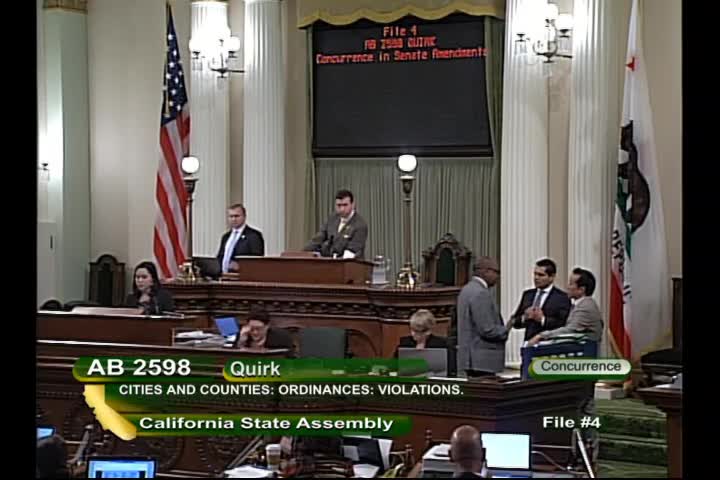 54SEC
Assembly Floor
 2MIN
Senate Floor
 2MIN
Senate Standing Committee on Appropriations
 2MIN
Assembly Floor
 2MIN
Assembly Standing Committee on Appropriations
 11MIN
Assembly Standing Committee on Local Government
Bill Author

Bill Co-Author(s):