AB 2031: Public contracts: school facility projects: bidding requirements.
- Session Year: 2017-2018
- House: Assembly
- Latest Version Date: 2018-09-19
Existing law requires a prospective bidder for a construction contract for certain school facility projects to submit a prequalification questionnaire and financial statement, under oath, as part of the bidding process and requires each prospective bidder to submit a bid by completing and executing a standardized proposal form. Existing law requires the Director of Industrial Relations to submit a report to the Legislature, by January 1, 2018, on whether violations of the Labor Code on school district projects have decreased during the years these provisions are applicable to contracts. Existing law makes all of the above-specified provisions inoperative on January 1, 2019, and repeals them on July 1, 2019.
This bill would extend the operation of the bills provisions indefinitely and would eliminate the reporting requirement. By extending the operation of the crime of perjury, the bill would impose a state-mandated local program.
The California Constitution requires the state to reimburse local agencies and school districts for certain costs mandated by the state. Statutory provisions establish procedures for making that reimbursement.
This bill would provide that no reimbursement is required by this act for a specified reason.
(a)This section applies only to public projects, as defined in subdivision (c) of Section 22002, for which the governing board of the school district uses funds received pursuant to the Leroy F. Greene School Facilities Act of 1998 (Chapter 12.5 (commencing with Section 17070.10) of Part 10 of Division 1 of Title 1 of the Education Code) or any funds received, including funds reimbursed, from any future state school bond for a public project that involves a projected expenditure of one million dollars ($1,000,000) or more.
(b)If the governing board of the school district enters into a contract meeting the criteria of subdivision (a), then the governing board of the school district shall require that prospective bidders for a construction contract complete and submit to the governing board of the school district a standardized prequalification questionnaire and financial statement. The questionnaire and financial statement shall be verified under oath by the bidder in the manner in which civil pleadings in civil actions are verified. The questionnaires and financial statements are not public records and shall not be open to public inspection.
(c)The governing board of the school district shall adopt and apply a uniform system of rating bidders on the basis of the completed questionnaires and financial statements. This system shall also apply to a person, firm, or corporation that constructs a building described in Section 17406 or 17407 of the Education Code.
(d)The questionnaire and financial statement described in subdivision (b), and the uniform system of rating bidders described in subdivision (c), shall cover, at a minimum, the issues covered by the standardized questionnaire and model guidelines for rating bidders developed by the Department of Industrial Relations pursuant to subdivision (a) of Section 20101.
(e)Each prospective bidder shall be furnished by the school district letting the contract with a standardized proposal form that, when completed and executed, shall be submitted as his or her bid. Bids not presented on the forms so furnished shall be disregarded.
(f)A proposal form required pursuant to subdivision (e) shall not be accepted from any person or other entity that is required to submit a completed questionnaire and financial statement for prequalification pursuant to subdivision (b) or from any person or other entity that uses a subcontractor that is required to submit a completed questionnaire and financial statement for prequalification pursuant to subdivision (b), but has not done so at least 10 business days before the date fixed for the public opening of sealed bids or has not been prequalified for at least five business days before that date. The school district may require the completed questionnaire and financial statement for prequalification to be submitted more than 10 business days before the fixed date for the public opening of sealed bids. The school district may also require the prequalification more than five business days before the fixed date.
(g)(1)The governing board of the school district may establish a process for prequalifying prospective bidders pursuant to this section on a quarterly or annual basis and a prequalification pursuant to this process shall be valid for one calendar year following the date of initial prequalification.
(2)The governing board of the school district shall establish a process to prequalify a person, firm, or corporation, including, but not limited to, the prime contractor and, if used, an electrical, mechanical, and plumbing subcontractor, to construct a building described in Section 17406 or 17407 of the Education Code on a quarterly or annual basis. A prequalification pursuant to this process shall be valid for one calendar year following the date of initial prequalification.
(h)This section does not preclude the governing board of the school district from prequalifying or disqualifying a subcontractor of any specialty classification described in Section 7058 of the Business and Professions Code.
(i)For purposes of this section, bidders shall include both of the following:
(1)A prime contractor, as defined in Section 4113, that is either of the following:
(A)A general engineering contractor described in Section 7056 of the Business and Professions Code.
(B)A general building contractor described in Section 7057 of the Business and Professions Code.
(2)If utilized, each electrical, mechanical, and plumbing contractor, whether as a prime contractor or as a subcontractor, as defined in Section 4113.
(j)If a public project covered by this section includes electrical, mechanical, or plumbing components that will be performed by electrical, mechanical, or plumbing contractors, a list of prequalified general contractors and electrical, mechanical, and plumbing subcontractors shall be made available by the school district to all bidders at least five business days before the dates fixed for the public opening of sealed bids. The school district may require the list to be made available more than five business days before the fixed dates for the public opening of sealed bids.
(k)For purposes of this section, electrical, mechanical, and plumbing subcontractors are contractors licensed pursuant to Section 7058 of the Business and Professions Code, specifically contractors holding C-4, C-7, C-10, C-16, C-20, C-34, C-36, C-38, C-42, C-43, and C-46 licenses, pursuant to regulations of the Contractors State License Board.
(l)This section does not apply to a school district with an average daily attendance of less than 2,500.
(m)(1)This section applies only to contracts awarded on or after January 1, 2014.
(2)The amendments made to this section by Chapter 408 of the Statutes of 2014 apply only to contracts awarded on or after January 1, 2015.
SEC. 2.No reimbursement is required by this act pursuant to Section 6 of Article XIIIB of the California Constitution because the only costs that may be incurred by a local agency or school district will be incurred because this act creates a new crime or infraction, eliminates a crime or infraction, or changes the penalty for a crime or infraction, within the meaning of Section 17556 of the Government Code, or changes the definition of a crime within the meaning of Section 6 of Article XIIIB of the California Constitution.
(a)This section applies only to public projects, as defined in subdivision (c) of Section 22002, for which the governing board of the school district uses funds received pursuant to the Leroy F. Greene School Facilities Act of 1998 (Chapter 12.5 (commencing with Section 17070.10) of Part 10 of Division 1 of Title 1 of the Education Code) or any funds received, including funds reimbursed, from any future state school bond for a public project that involves a projected expenditure of one million dollars ($1,000,000) or more.
(b)If the governing board of the school district enters into a contract meeting the criteria of subdivision (a), then the governing board of the school district shall require that prospective bidders for a construction contract complete and submit to the governing board of the school district a standardized prequalification questionnaire and financial statement. The questionnaire and financial statement shall be verified under oath by the bidder in the manner in which civil pleadings in civil actions are verified. The questionnaires and financial statements are not public records and shall not be open to public inspection.
(c)The governing board of the school district shall adopt and apply a uniform system of rating bidders on the basis of the completed questionnaires and financial statements. This system shall also apply to a person, firm, or corporation that constructs a building described in Section 17406 or 17407 of the Education Code.
(d)The questionnaire and financial statement described in subdivision (b), and the uniform system of rating bidders described in subdivision (c), shall cover, at a minimum, the issues covered by the standardized questionnaire and model guidelines for rating bidders developed by the Department of Industrial Relations pursuant to subdivision (a) of Section 20101.
(e)Each prospective bidder shall be furnished by the school district letting the contract with a standardized proposal form that, when completed and executed, shall be submitted as his or her bid. Bids not presented on the forms so furnished shall be disregarded.
(f)A proposal form required pursuant to subdivision (e) shall not be accepted from any person or other entity that is required to submit a completed questionnaire and financial statement for prequalification pursuant to subdivision (b) or from any person or other entity that uses a subcontractor that is required to submit a completed questionnaire and financial statement for prequalification pursuant to subdivision (b), but has not done so at least 10 business days before the date fixed for the public opening of sealed bids or has not been prequalified for at least five business days before that date. The school district may require the completed questionnaire and financial statement for prequalification to be submitted more than 10 business days before the fixed date for the public opening of sealed bids. The school district may also require the prequalification more than five business days before the fixed date.
(g)(1)The governing board of the school district may establish a process for prequalifying prospective bidders pursuant to this section on a quarterly or annual basis and a prequalification pursuant to this process shall be valid for one calendar year following the date of initial prequalification.
(2)The governing board of the school district shall establish a process to prequalify a person, firm, or corporation, including, but not limited to, the prime contractor and, if used, an electrical, mechanical, and plumbing subcontractor, to construct a building described in Section 17406 or 17407 of the Education Code on a quarterly or annual basis. A prequalification pursuant to this process shall be valid for one calendar year following the date of initial prequalification.
(h)This section does not preclude the governing board of the school district from prequalifying or disqualifying a subcontractor of any specialty classification described in Section 7058 of the Business and Professions Code.
(i)For purposes of this section, bidders shall include both of the following:
(1)A prime contractor, as defined in Section 4113, that is either of the following:
(A)A general engineering contractor described in Section 7056 of the Business and Professions Code.
(B)A general building contractor described in Section 7057 of the Business and Professions Code.
(2)If utilized, each electrical, mechanical, and plumbing contractor, whether as a prime contractor or as a subcontractor, as defined in Section 4113.
(j)If a public project covered by this section includes electrical, mechanical, or plumbing components that will be performed by electrical, mechanical, or plumbing contractors, a list of prequalified general contractors and electrical, mechanical, and plumbing subcontractors shall be made available by the school district to all bidders at least five business days before the dates fixed for the public opening of sealed bids. The school district may require the list to be made available more than five business days before the fixed dates for the public opening of sealed bids.
(k)For purposes of this section, electrical, mechanical, and plumbing subcontractors are contractors licensed pursuant to Section 7058 of the Business and Professions Code, specifically contractors holding C-4, C-7, C-10, C-16, C-20, C-34, C-36, C-38, C-42, C-43, and C-46 licenses, pursuant to regulations of the Contractors State License Board.
(l)This section does not apply to a school district with an average daily attendance of less than 2,500.
(m)(1)This section applies only to contracts awarded on or after January 1, 2014.
(2)The amendments made to this section by Chapter 408 of the Statutes of 2014 apply only to contracts awarded on or after January 1, 2015.
(n)(1)On or before January 1, 2018, the Director of Industrial Relations shall (A) submit a report to the Legislature evaluating whether, during the years this section has applied to contracts, violations of the Labor Code on school district projects have decreased as compared to the same number of years immediately preceding the enactment of this section, and (B) recommend improvements to the system for prequalifying contractors and subcontractors on school district projects.(2)A report to be submitted pursuant to this subdivision shall be submitted in compliance with Section 9795 of the Government Code.(o)This section shall become inoperative on January 1, 2019, and, as of July 1, 2019, is repealed.SEC. 2.No reimbursement is required by this act pursuant to Section 6 of Article XIIIB of the California Constitution because the only costs that may be incurred by a local agency or school district will be incurred because this act creates a new crime or infraction, eliminates a crime or infraction, or changes the penalty for a crime or infraction, within the meaning of Section 17556 of the Government Code, or changes the definition of a crime within the meaning of Section 6 of Article XIIIB of the California Constitution.
REVISIONS: HeadingLine 2.|
Date
|
Status
|
|---|---|
| Sep 19, 2018 | Chaptered by Secretary of State - Chapter 534, Statutes of 2018. |
| Sep 19, 2018 | Approved by the Governor. |
| Aug 27, 2018 | Enrolled and presented to the Governor at 3 p.m. |
| Aug 22, 2018 | In Assembly. Ordered to Engrossing and Enrolling. |
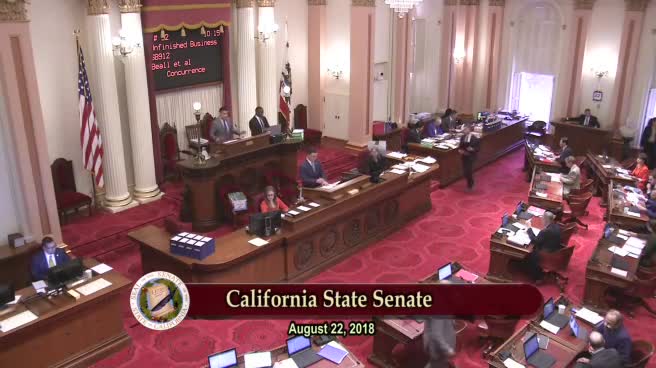
| Aug 22, 2018 | Read third time. Passed. Ordered to the Assembly. |
| Aug 17, 2018 | From committee: Do pass. (Ayes 7. Noes 0.) (August 16). |
| Jun 25, 2018 | In committee: Referred to APPR. suspense file. |
| Jun 13, 2018 | From committee: Do pass and re-refer to Com. on APPR. (Ayes 7. Noes 0.) (June 13). Re-referred to Com. on APPR. |
| Jun 7, 2018 | Referred to Com. on ED. |
| May 30, 2018 | In Senate. Read first time. To Com. on RLS. for assignment. |
| May 29, 2018 | Read third time. Passed. Ordered to the Senate. |
| May 25, 2018 | Coauthors revised. |
| Apr 11, 2018 | In committee: Set, first hearing. Referred to APPR. suspense file. |
| Mar 22, 2018 | From committee: Do pass and re-refer to Com. on APPR. with recommendation: To Consent Calendar. (Ayes 6. Noes 0.) (March 21). Re-referred to Com. on APPR. |
| Mar 5, 2018 | Referred to Com. on ED. |
| Feb 7, 2018 | From printer. May be heard in committee March 9. |
| Feb 6, 2018 | Read first time. To print. |
|
Date
|
Description
|
Location
|
Votes
|
|
|---|---|---|---|---|
| Aug 22, 2018 | Assembly 3rd Reading AB2031 O'Donnell et al. By Hernandez | Senate Floor |
Passed |
|
| Aug 16, 2018 | Do pass | Senate Standing Committee on Appropriations |
Passed |
|
| Jun 25, 2018 | Placed on suspense file | Senate Standing Committee on Appropriations |
Passed |
|
| Jun 13, 2018 | Do pass, but first be re-referred to the Committee on [Appropriations] | Senate Standing Committee on Education |
Passed |
|
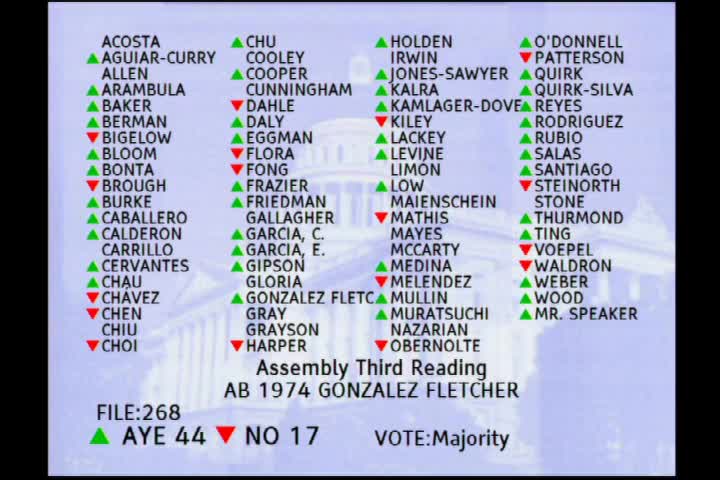
| May 29, 2018 | AB 2031 O'DONNELL Assembly Third Reading | Assembly Floor |
Passed |
|
| May 25, 2018 | Do pass. | Assembly Standing Committee on Appropriations |
Passed |
|
| Mar 21, 2018 | Do pass and be re-referred to the Committee on [Appropriations] with recommendation: To Consent Calendar | Assembly Standing Committee on Education |
Passed |
This list shows positions taken on this bill by organizations on the date displayed, which is linked to the original source.
Positions by individuals are not included.
|
Organization
|
Position
|
Date
|
|---|---|---|
| Air Conditioning & Refrigeration Contractors Association | ** Support | Aug 18, 2018 |
| Air Conditioning Sheet Metal Association | ** Support | Aug 18, 2018 |
| California Chapters of the National Electrical Contractors Association | ** Support | Aug 18, 2018 |
| California Federation Of Teachers | ** Support | Aug 18, 2018 |
| California State Association Of Electrical Workers | ** Support | Aug 18, 2018 |
| California State Pipe Trades Council | ** Support | Aug 18, 2018 |
| International Union Of Elevator Contractors | ** Support | Aug 18, 2018 |
| Los Angeles Unified School District | ** Support | Aug 18, 2018 |
| Northern California Allied Trades | ** Support | Aug 18, 2018 |
| State Building and Construction Trades Council | ** Support | Aug 18, 2018 |
| The Plumbing, Heating, Cooling Contractors of California | * Indeterminate | Jun 13, 2018 |
| United Contractors | ** Support | Aug 18, 2018 |
| Wall and Ceiling Alliance | ** Support | Aug 18, 2018 |
| Western States Council Of Sheet Metal Workers | ** Support | Aug 18, 2018 |
| Western Wall & Ceiling Contractors Association | ** Support | Aug 18, 2018 |
Office of Senate Floor Analyses (916) 651-1520 Fax: (916) 327-4478 | AB |
THIRD READING
Bill No: AB 2031
:
SENATE EDUCATION COMMITTEE: 7-0, 6/13/18
AYES: Allen, Wilk, Galgiani, Leyva, McGuire, Pan, Vidak
SENATE APPROPRIATIONS COMMITTEE: 7-0, 8/16/18
AYES: Portantino, Bates, Beall, Bradford, Hill, Nielsen, Wiener
ASSEMBLY FLOOR: 78-0, 5/29/18 - See last page for vote
DIGEST:
This bill removes the January 1, 2019 sunset date on the requirement of general contractors and specified subcontractors to complete and submit a prequalification questionnaire and financial statement prior to bidding on school construction projects.
Existing law:
- Requires school districts with an average daily attendance over 2,500 to establish a process for prequalifying general contractors and if utilized, each electrical, mechanical and plumbing contractor for public works projects over $1 million and funded by state school facility bond funds. (Public Contract Code (PCC) Section 20111.6)
- Requires the governing board of a school district meeting the requirements in 1) above, to do the following:
- Require prospective bidders for a construction contract to complete and submit to the governing board of the school district a standardized prequalification questionnaire and financial statement.
- Adopt and apply a uniform system of rating bidders based on the completed questionnaires and financial statements. (PCC Section 20111.6)
- Requires the questionnaire, financial statement and the uniform system of rating bidders to cover, at a minimum, the issues covered by the standardized questionnaire and model guidelines for rating bidders developed by the Department of Industrial Relations (DIR). (PCC Section 20111.6)
- Authorizes the governing board of a school district to establish a process to prequalify a person, firm, or corporation on a quarterly or annual basis. Specifies that a prequalification shall be valid for one calendar year following the date of initial prequalification. (PCC Section 20111.6)
- Requires, on or before January 1, 2018, the Director of DIR to submit a report to the Legislature evaluating whether, during the years the prequalification requirement is in effect, violations of the Labor Code on school district projects have decreased as compared to the same number of years immediately preceding the enactment of the requirement, and recommend any improvements. (PCC Section 20111.6)
- Requires the governing board of a school district to competitively bid and award to the lowest bidder contracts involving the following:
- An expenditure of $50,000 or more for the purchase of equipment, materials, or supplies, services (except for construction services), and repairs.
- An expenditure of $15,000 or more for a public contract project defined as construction, reconstruction, erection, alteration, renovation, improvement, demolition, repair, painting or repainting of any publicly owned, leased, or operated facility. (PCC Sections 20111 and 22002)
- Establishes the Local Agency Public Construction Act, which authorizes a public entity to establish a prequalification process and requires the DIR, in collaboration with affected agencies and interested parties, to develop model guidelines for rating bidders, and drafting a standardized questionnaire that may be used by public entities. (PCC 20100 et seq.)
- Establishes the Leroy F. Greene School Facilities Act of 1998 and requires the State Allocation Board to allocate to applicant school districts prescribed per-unhoused-pupil state funding for construction and modernization of school facilities, including hardship funding, and supplemental funding for site development and acquisition. (Education Code 17070.35)
This bill removes the January 1, 2019 sunset date on the requirement of general contractors and specified subcontractors to complete and submit a prequalification questionnaire and financial statement prior to bidding on school construction projects. Further, this bill removes the requirement for the Director of the DIR to complete a report to the Legislature.
Comments
- Need for the bill. According to the author, “The prequalification process requires contractors and major subcontractors to provide detailed information regarding the company and its financial status.”
Contractors are assigned points on a rating system based on the information provided. Local educational agencies can exclude bids from companies that do not meet minimum points and can limit the size of projects a company may bid on based on the points earned. Prequalification may be conducted annually or quarterly.”
“While there is no guarantee that a company that meets minimum points will not have financial problems or provide substandard work, this process reduces the risk of selecting a contractor based solely on a low bid. These prequalification requirements are set to sunset on January 1, 2019.”
- Public project competitive bidding. Under current law, school districts are required to competitively bid any public works contract over $15,000 and award the contract to the lowest responsible bidder. Alternative methods for awarding contracts include: (a) design-build, with a school district issuing a request for proposal for both the design and construction of projects; (b) best value, allowing school districts to consider factors other than cost; and (c) job order contracting, based on prices for specific construction tasks.
- Prequalification process for prospective bidders. In 2012, AB 1565 (Fuentes, Chapter 808, Statutes of 2012) established a five-year pilot requiring school districts using state bond funds must establish a prequalification process requiring prospective bidders for public works contracts of $1 million or more to complete a standardized questionnaire and submit financial statements. This requirement is intended to mitigate the risk of school districts entering into contracts with substandard companies.
The questionnaire is provided by school districts, and may require contractors to provide detailed information regarding (a) the company’s financial status, including whether the company has been in bankruptcy or involved in a civil lawsuit; (b) licensing information; (c) prior public contracting experience; (d) whether the contractor has been involved or been found to have violated any federal, state or local laws; and (e) whether the contractor has violated any labor and health and safety laws.
Since the enactment of AB 1565, several other contracting methods have also incorporated a prequalification requirement, including lease-leaseback, design- build, and job order contracting. This bill eliminates the January 1, 2019 sunset date to make the prequalification requirement permanent and strikes the obsolete reporting requirement.
- Lease-leaseback and lease-to-own. Lease-leaseback is a process whereby a governing board of a school district may, through a competitive bidding process, rent district property for a minimum of $1 a year to any person, firm, or corporation. The person, firm, or corporation constructs the school building and rents the facility back to the school district. At the end of the lease, the district resumes title to the building and site.
In a lease-to-own agreement, the governing board of a school district may, through a competitive bidding process, enter into a contract with a person, firm, or corporation to construct the building on a designated site and lease the property to the school district. The school district gets the title at the end of the lease.
- Job order contracting. Job order contracting is a procedure that allows for the awarding of contracts based on prices for specific construction tasks rather than bids for a specific project. A catalog or book identifies all work that could be performed, typically maintenance or modernization, and the unit prices for each of those tasks. The tasks are based on accepted industry standards and prices include the cost of materials, labor, and equipment for performing the work, but exclude overhead and profit. A contractor, who has been prequalified, rather than bid a total price for the project, will bid an adjustment factor, which reflects specified costs, to the preset unit prices.
Selection of the contractors is based on the lowest responsible bidder. This process is intended to reduce costs and accelerate completion of smaller projects; it is not generally viewed as an appropriate method of contracting for large, complex construction projects that require extensive or innovative design or are likely to encounter changes and revisions during constructions.
FISCAL EFFECT: Appropriation: Fiscal Com.: Local:
According to the Senate Appropriations Committee, by extending the existing prequalification process indefinitely, this bill could result in significant cost pressure on the current and future General Obligation bonds provided for K-12 school construction projects. The exact costs will depend on how many construction projects school districts undertake, the amount of resources spent on reviewing and approving contractor applications, and the number of appeals that must be addressed from contractors that are denied prequalification. The cost per project to prequalify can be in the tens of thousands dollars.
Air Conditioning & Refrigeration Contractors Association
Air Conditioning Sheet Metal Association
California Chapters of the National Electrical Contractors Association
California Federation of Teachers
California Legislative Conference of the Plumbing, Heating, and Piping Industry
California State Association of Electrical Workers
California State Pipe Trades Council
International Union of Elevator Contractors
Los Angeles Unified School District
Northern California Allied Trades
State Building and Construction Trades Council
United Contractors
Wall and Ceiling Alliance
Western States Council of Sheet Metal Workers
Western Wall & Ceiling Contractors Association
OPPOSITION: (Verified 8/16/18)
None received
ARGUMENTS IN SUPPORT: The Los Angeles Unified School District (LAUSD) supports this bill and states, “The Los Angeles Unified School District has utilized a prequalification process ever since the LAUSD began work on its $20 billion school construction program and has seen a multitude of benefits in prequalifying our bidders. When schools were trying to build schools during the Great Recession, school districts were receiving bids from a number of contractors that may or may not be qualified or capable to build schools in California. Current law also requires a school district to accept the lowest responsible bidder which can result in low bids and high change orders costing millions more in additional work. By prequalifying all bidders, the LAUSD has been able to control costs and ensure projects are completed on time.”
ASSEMBLY FLOOR: 78-0, 5/29/18
AYES: Acosta, Aguiar-Curry, Travis Allen, Arambula, Baker, Berman, Bigelow, Bloom, Bonta, Brough, Burke, Caballero, Calderon, Carrillo, Cervantes, Chau, Chávez, Chen, Chiu, Choi, Chu, Cooley, Cooper, Cunningham, Dahle, Daly, Eggman, Flora, Fong, Frazier, Friedman, Gallagher, Cristina Garcia, Eduardo Garcia, Gipson, Gloria, Gonzalez Fletcher, Gray, Grayson, Harper, Holden, Irwin, Jones-Sawyer, Kalra, Kamlager-Dove, Kiley, Lackey, Levine, Limón, Low, Maienschein, Mathis, Mayes, McCarty, Medina, Melendez, Mullin, Muratsuchi, Nazarian, Obernolte, O'Donnell, Patterson, Quirk, Quirk-Silva, Reyes, Rodriguez, Rubio, Salas, Santiago, Steinorth, Mark Stone, Thurmond, Ting, Voepel, Waldron, Weber, Wood, Rendon
8/18/18 13:47:29
**** END ****
SENATE COMMITTEE ON APPROPRIATIONS
Senator Anthony Portantino, Chair
2017 - 2018 Regular Session
AB 2031 (O'Donnell) - Public contracts: school facility projects: bidding requirements
Version: February 6, 2018 | Policy Vote: ED. 7 - 0 |
Urgency: No | Mandate: Yes |
Hearing Date: June 25, 2018 | Consultant: Lenin Del Castillo |
This bill meets the criteria for referral to the Suspense File.
Bill Summary:
This bill removes the January 1, 2019 sunset date on the requirement for general contractors and specified subcontractors to complete and submit a prequalification questionnaire and financial statement prior to bidding on school construction projects.
Fiscal Impact:
By extending the existing prequalification process indefinitely, this bill could result in significant cost pressure on the current and future General Obligation bonds provided for K-12 school construction projects. The exact costs will depend on how many construction projects school districts undertake, the amount of resources spent on reviewing and approving contractor applications, and the number of appeals that must be addressed from contractors that are denied prequalification. The cost per project to prequalify can be in the tens of thousands dollars.
Background:
Existing law requires school districts with an average daily attendance (ADA) over 2,500 to establish a process for prequalifying general contractors and if utilized, each electrical, mechanical and plumbing contractor for public works projects over $1 million and funded by state school facility bond funds. School district governing boards meeting these requirements shall:
- Require prospective bidders for a construction contract to complete and submit to the governing board of the school district a standardized prequalification questionnaire and financial statement.
- Adopt and apply a uniform system of rating bidders based on the completed questionnaires and financial statements.
Existing law requires the questionnaire, financial statement and the uniform system of rating bidders to cover, at a minimum, the issues covered by the standardized questionnaire and model guidelines for rating bidders developed by the Department of Industrial Relations (DIR).
Existing law authorizes the governing board of a school district to establish a process to prequalify a person, firm, or corporation on a quarterly or annual basis. It specifies that a prequalification shall be valid for one calendar year following the date of initial prequalification.
Existing law requires the governing board of a school district to competitively bid and award to the lowest bidder contracts involving an expenditure of $50,000 or more for the purchase of equipment, materials, or supplies, services (except for construction services), and repairs and an expenditure of $15,000 or more for a public contract project defined as construction, reconstruction, erection, alteration, renovation, improvement, demolition, repair, painting or repainting of any publicly owned, leased, or operated facility.
Existing law requires, on or before January 1, 2018, the Director of DIR to submit a report to the Legislature evaluating whether, during the years the prequalification requirement is in effect, violations of the Labor Code on school district projects have decreased as compared to the same number of years immediately preceding the enactment of the requirement, and recommend any improvements.
Proposed Law:
This bill removes the January 1, 2019 sunset date on the requirement of general contractors and specified subcontractors to complete and submit a prequalification questionnaire and financial statement prior to bidding on school construction projects. Further, this bill removes the requirement for the Director of the DIR to complete a report to the Legislature.
Staff Comments:
In 2012, AB 1565 (Fuentes), Chapter 808, Statutes of 2012, established a five-year pilot requiring school districts using state bond funds to establish a prequalification process requiring prospective bidders for public works contracts of $1 million or more to complete a standardized questionnaire and submit financial statements. The questionnaire is provided by school districts, and may require contractors to provide detailed information, including the company’s financial status, whether the company has been in bankruptcy or involved in a civil lawsuit, licensing information and whether the contractor has violated any labor and health and safety laws.
While the prequalification process is intended to mitigate the risk of school districts entering into contracts with substandard companies, it can create additional work and upfront costs for schools seeking construction funding. The costs could stem from the related activities or potential appeals from contractors that are denied pre-qualification. This could then create cost pressure on existing and future schools bonds that would be expended on these activities. Additionally, to the extent that the universe of bidders is narrowed by the process, schools may end up paying more in state and local bond funds for construction projects. It can also lead to situations where a contractor presents a low bid and then issues change orders after the project has begun, which can drive increased costs and lead to delays in completion.
For some districts, using a prequalification process can save them money in the long term because they are likely to engage more qualified contractors who produce higher quality work and have fewer change orders.
-- END --
SENATE COMMITTEE ON EDUCATION
Senator Benjamin Allen, Chair
2017 - 2018 Regular
Bill No: AB 2031 Hearing Date: June 13, 2018
Author: | |||
Version: | February 6, 2018 | ||
Urgency: | No | Fiscal: | Yes |
Consultant: | Ian Johnson | ||
Subject: Public contracts: school facility projects: bidding requirements.
SUMMARY
This bill removes the January 1, 2019 sunset date on the requirement of general contractors and specified subcontractors to complete and submit a prequalification questionnaire and financial statement prior to bidding on school construction projects.
BACKGROUND
Existing law:
- Requires school districts with an average daily attendance (ADA) over 2,500 to establish a process for prequalifying general contractors and if utilized, each electrical, mechanical and plumbing contractor for public works projects over $1 million and funded by state school facility bond funds. (Public Contract Code (PCC) Section 20111.6)
- Requires the governing board of a school district meeting the requirements in (1) to do the following:
- Require prospective bidders for a construction contract to complete and submit to the governing board of the school district a standardized prequalification questionnaire and financial statement.
- Adopt and apply a uniform system of rating bidders based on the completed questionnaires and financial statements. (PCC Section 20111.6)
- Requires the questionnaire, financial statement and the uniform system of rating bidders to cover, at a minimum, the issues covered by the standardized questionnaire and model guidelines for rating bidders developed by the Department of Industrial Relations. (PCC Section 20111.6)
- Authorizes the governing board of a school district to establish a process to prequalify a person, firm, or corporation on a quarterly or annual basis. Specifies that a prequalification shall be valid for one calendar year following the date of initial prequalification. (PCC Section 20111.6)
- Requires, on or before January 1, 2018, the Director of DIR to submit a report to the Legislature evaluating whether, during the years the prequalification requirement is in effect, violations of the Labor Code on school district projects have decreased as compared to the same number of years immediately preceding the enactment of the requirement, and recommend any improvements. (PCC Section 20111.6)
- Requires the governing board of a school district to competitively bid and award to the lowest bidder contracts involving the following:
- An expenditure of $50,000 or more for the purchase of equipment, materials, or supplies, services (except for construction services), and repairs.
- An expenditure of $15,000 or more for a public contract project defined as construction, reconstruction, erection, alteration, renovation, improvement, demolition, repair, painting or repainting of any publicly owned, leased, or operated facility. (PCC Sections 20111 and 22002)
- Establishes the Local Agency Public Construction Act, which authorizes a public entity to establish a prequalification process and requires the Department of Industrial Relations, in collaboration with affected agencies and interested parties, to develop model guidelines for rating bidders, and drafting a standardized questionnaire that may be used by public entities. (PCC 20100 et seq.)
- Establishes the Leroy F. Greene School Facilities Act of 1998 and requires the State Allocation Board (SAB) to allocate to applicant school districts prescribed per-unhoused-pupil state funding for construction and modernization of school facilities, including hardship funding, and supplemental funding for site development and acquisition. (Education Code 17070.35)
ANALYSIS
This bill removes the January 1, 2019 sunset date on the requirement of general contractors and specified subcontractors to complete and submit a prequalification questionnaire and financial statement prior to bidding on school construction projects. Further, this bill removes the requirement for the Director of the DIR to complete a report to the Legislature.
STAFF COMMENTS
- Need for the bill. According to the author, “The prequalification process requires contractors and major subcontractors to provide detailed information regarding the company and its financial status.”
Contractors are assigned points on a rating system based on the information provided. Local educational agencies can exclude bids from companies that do not meet minimum points and can limit the size of projects a company may bid on based on the points earned. Prequalification may be conducted annually or quarterly.”
“While there is no guarantee that a company that meets minimum points will not have financial problems or provide substandard work, this process reduces the risk of selecting a contractor based solely on a low bid. These prequalification requirements are set to sunset on January 1, 2019.”
- Public project competitive bidding. Under current law, school districts are required to competitively bid any public works contract over $15,000 and award the contract to the lowest responsible bidder. Alternative methods for awarding contracts include: (1) design-build, with a school district issuing a request for proposal for both the design and construction of projects; (2) best value, allowing school districts to consider factors other than cost; and (3) job order contracting, based on prices for specific construction tasks.
- Prequalification process for prospective bidders. In 2012, AB 1565 (Fuentes), Chapter 808, Statutes of 2012, established a five-year pilot requiring school districts using state bond funds must establish a prequalification process requiring prospective bidders for public works contracts of $1 million or more to complete a standardized questionnaire and submit financial statements. This requirement is intended to mitigate the risk of school districts entering into contracts with substandard companies.
The questionnaire is provided by school districts, and may require contractors to provide detailed information regarding (1) the company’s financial status, including whether the company has been in bankruptcy or involved in a civil lawsuit; (2) licensing information; (3) prior public contracting experience; (4) whether the contractor has been involved or been found to have violated any federal, state or local laws; and (5) whether the contractor has violated any labor and health and safety laws.
Since the enactment of AB 1565, several other contracting methods have also incorporated a prequalification requirement, including lease-leaseback, design- build, and job order contracting. This bill eliminates the January 1, 2019 sunset date to make the prequalification requirement permanent and strikes the obsolete reporting requirement.
- Lease-leaseback and lease-to-own. Lease-leaseback is a process whereby a governing board of a school district may, through a competitive bidding process, rent district property for a minimum of $1 a year to any person, firm, or corporation. The person, firm, or corporation constructs the school building and rents the facility back to the school district. At the end of the lease, the district resumes title to the building and site.
In a lease-to-own agreement, the governing board of a school district may, through a competitive bidding process, enter into a contract with a person, firm, or corporation to construct the building on a designated site and lease the property to the school district. The school district gets the title at the end of the lease.
- Job order contracting. Job order contracting is a procedure that allows for the awarding of contracts based on prices for specific construction tasks rather than bids for a specific project. A catalog or book identifies all work that could be performed, typically maintenance or modernization, and the unit prices for each of those tasks. The tasks are based on accepted industry standards and prices include the cost of materials, labor, and equipment for performing the work, but exclude overhead and profit. A contractor, who has been prequalified, rather than bid a total price for the project, will bid an adjustment factor, which reflects specified costs, to the preset unit prices.
Selection of the contractors is based on the lowest responsible bidder. This process is intended to reduce costs and accelerate completion of smaller projects; it is not generally viewed as an appropriate method of contracting for large, complex construction projects that require extensive or innovative design or are likely to encounter changes and revisions during constructions.
- Arguments in support. The Los Angeles Unified School District (LAUSD) supports the bill and states, “The Los Angeles Unified School District has utilized a prequalification process ever since the LAUSD began work on its $20 billion school construction program and has seen a multitude of benefits in prequalifying our bidders. When schools were trying to build schools during the Great Recession, school districts were receiving bids from a number of contractors that may or may not be qualified or capable to build schools in California. Current law also requires a school district to accept the lowest responsible bidder which can result in low bids and high change orders costing millions more in additional work. By prequalifying all bidders, the LAUSD has been able to control costs and ensure projects are completed on time.”
SUPPORT
Air Conditioning Sheet Metal Association
Air Conditioning & Refrigeration Contractors Association
California Chapters of the National Electrical Contractors Association
California Federation of Teachers
California Legislative Conference of the Plumbing, Heating, and Piping Industry
California State Association of Electrical Workers
California State Pipe Trades Council
International Union of Elevator Contractors
Los Angeles Unified School District
Northern California Allied Trades
State Building and Construction Trades Council
United Contractors
Wall and Ceiling Alliance
Western States Council of Sheet Metal Workers
Western Wall & Ceiling Contractors Association
OPPOSITION
None received
-- END --
ASSEMBLY THIRD READING
ATR Bill Id:AB 2031
Author:(O'Donnell)
As Introduced Ver:February 6, 2018
Majority vote
Committee | Votes | Ayes | Noes |
Education | 6-0 | O'Donnell, Kiley, Lackey, Kalra, Thurmond, Weber | |
Appropriations | 16-0 | Gonzalez Fletcher, Bigelow, Bloom, Bonta, Calderon, Carrillo, Chau, Eggman, Fong, Friedman, Gallagher, Eduardo Garcia, Nazarian, Obernolte, Quirk, Reyes |
|
SUMMARY: Eliminates the January 1, 2019 sunset date requiring general contractors and specified subcontractors to complete and submit a prequalification questionnaire and financial statement prior to bidding on school construction projects. Strikes the requirement for the Director of the Department of Industrial Relations (DIR) to complete a report to the Legislature by January 1, 2018.
EXISTING LAW:
- Requires school districts with an average daily attendance (ADA) over 2,500 to establish a process for prequalifying general contractors and if utilized, each electrical, mechanical and plumbing contractor for public works projects over $1 million and funded by state school facility bond funds. (Public Contract Code (PCC) Section 20111.6)
- Requires the governing board of a school district meeting the requirements in (1) to do the following:
- Require prospective bidders for a construction contract to complete and submit to the governing board of the school district a standardized prequalification questionnaire and financial statement.
- Adopt and apply a uniform system of rating bidders based on the completed questionnaires and financial statements. (PCC Section 20111.6)
- Requires the questionnaire, financial statement and the uniform system of rating bidders to cover, at a minimum, the issues covered by the standardized questionnaire and model guidelines for rating bidders developed by the DIR. (PCC Section 20111.6)
- Authorizes the governing board of a school district to establish a process to prequalify a person, firm, or corporation on a quarterly or annual basis. Specifies that a prequalification shall be valid for one calendar year following the date of initial prequalification. (PCC Section 20111.6)
- Requires, on or before January 1, 2018, the Director of DIR to submit a report to the Legislature evaluating whether, during the years the prequalification requirement is in effect, violations of the Labor Code on school district projects have decreased as compared to the same number of years immediately preceding the enactment of the requirement, and recommend any improvements. (PCC Section 20111.6)
- Requires the governing board of a school district to competitively bid and award to the lowest bidder contracts involving the following:
- An expenditure of $50,000 or more for the purchase of equipment, materials, or supplies, services (except for construction services), and repairs.
- An expenditure of $15,000 or more for a public contract project defined as construction, reconstruction, erection, alteration, renovation, improvement, demolition, repair, painting or repainting of any publicly owned, leased, or operated facility. (PCC Sections 20111 and 22002)
- Establishes the Local Agency Public Construction Act, which authorizes a public entity to establish a prequalification process and requires the DIR, in collaboration with affected agencies and interested parties, to develop model guidelines for rating bidders, and drafting a standardized questionnaire that may be used by public entities. (PCC 20100 et seq.)
- Establishes the Leroy F. Greene School Facilities Act of 1998 and requires the State Allocation Board (SAB) to allocate to applicant school districts prescribed per-unhoused-pupil state funding for construction and modernization of school facilities, including hardship funding, and supplemental funding for site development and acquisition. (Education Code 17070.35)
FISCAL EFFECT: According to the Assembly Appropriations Committee, unknown one-time and ongoing Proposition 98 General Fund and/or school facilities bond fund costs to school districts likely in the hundreds of thousands of dollars. Costs depend on how many construction projects school districts undertake, their methodology for reviewing and verifying contractor applications, and the number of appeals they must process from contractors denied prequalification. Individual school districts report costs ranging from the low thousands of dollars to over ten thousand dollars to prequalify projects. Were half of the approximately 130 eligible school districts to undertake a project requiring a prequalification at the cost of $5,000, statewide costs would be $325,000. Because this bill extends an existing requirement, some school districts indicate they have already paid a portion of costs to use the prequalification process.
COMMENTS: Background. Under the Local Agency Public Construction Act, enacted by AB 574 (Hertzberg), Chapter 972, Statutes of 1999, public agencies are authorized, but not required, to establish a process whereby prospective bidders are evaluated and prequalified to bid on public works projects. Public agencies can establish a prequalification procedure for single projects or for any projects that may be put out to bid over the next year. The prequalification process entails the completion of a questionnaire and submission of financial statements that are verified under oath by the bidder. Public agencies are required to adopt a uniform rating system to determine the minimum requirements permitted for qualification to bid and the type and size of contracts for which each bidder is eligible to bid, and maintain an appeals process to allow prospective bidders to dispute their proposed prequalification rating.
AB 574 directed the DIR to develop a questionnaire and a uniform rating system that can be used by public agencies. DIR also established a rating system that includes recommended scores for questions that are scorable.
Prequalification Requirement. In 2012, AB 1565 (Fuentes), Chapter 808, Statutes of 2012, established a five-year pilot requiring school districts with more than 2,500 ADA to establish a prequalification process for projects over $1 million and funded by state school facility bond funds. The bill allows school districts to design their own questionnaires, but requires the questionnaires to cover, at a minimum, the issues covered by the standardized questionnaire and model guidelines for rating bidders developed by DIR.
The prequalification process requires contractors and if utilized, electrical, mechanical, and plumbing subcontractors, to provide detailed information regarding the company and its financial status. This includes information on licensure and prior contracting experience (whether the contractor has completed other public works projects). Contractors and major subcontractors must also disclose whether the company has been in bankruptcy, involved in a civil lawsuit, or involved in the violation of any federal, state or local laws.
Contractors are assigned points on a rating system based on the information provided. Local agencies can limit the size of projects a company may bid on based on the points earned through this system. AB 1565 authorized school districts to require prequalification to be conducted annually or quarterly. Districts state that prequalification can save money by soliciting contracts from more qualified bidders who produce higher quality work and have fewer change orders. While there is no guarantee that a company that meets minimum points will not have financial problems or provide substandard work, this process reduces the risk of selecting a contractor based solely on a low bid. Under current law, a school district must either accept the lowest responsible bidder for any public works contract over $15,000 or not accept any bid and reopen the bidding process, which may cause project delay. Since the enactment of AB 1565, several other contracting methods have also incorporated a prequalification requirement, including lease-leaseback, design build, and job order contracting.
This bill eliminates the January 1, 2019 sunset date to make the prequalification requirement permanent and strikes the obsolete reporting requirement.
The Los Angeles Unified School District (LAUSD) supports the bill and states, "The Los Angeles Unified School District has utilized a prequalification process ever since the LAUSD began work on its $20 billion school construction program and has seen a multitude of benefits in prequalifying our bidders. When schools were trying to build schools during the Great Recession, school districts were receiving bids from a number of contractors that may or may not be qualified or capable to build schools in California. Current law also requires a school district to accept the lowest responsible bidder which can result in low bids and high change orders costing millions more in additional work. By prequalifying all bidders, the LAUSD has been able to control costs and ensure projects are completed on time."
In November 2016, voters approved Proposition 51, which provides $7 billion for the construction and modernization of K-12 school facilities.
Report by DIR. AB 1565 requires the Director of the DIR to submit a report to the Legislature by January 1, 2018 evaluating whether the number of labor code violations has decreased during the time period prequalification is in effect compared with the same time period prior to the requirement. According to the DIR, the report is not yet complete.
Analysis Prepared by: Sophia Kwong Kim / ED. / (916) 319-2087 FN: 0003196
Date of Hearing: April 11, 2018
ASSEMBLY COMMITTEE ON APPROPRIATIONS
Lorena Gonzalez Fletcher, Chair
ABPCA Bill Id:AB 2031
Author:(O'Donnell) – As Introduced Ver:February 6, 2018
Policy Committee: | Education | Vote: | 6 - 0 |
Urgency: No State Mandated Local Program: Yes Reimbursable: No
SUMMARY: This bill eliminates the January 1, 2019, sunset date for AB 1565 (Fuentes), of the 2011-12 Legislative Session, which requires general contractors and specified subcontractors to complete and submit a prequalification questionnaire and financial statement prior to bidding on certain school construction projects in school districts with more than 2,500 students in average daily attendance (ADA) funded by statewide school facilities bonds.
FISCAL EFFECT:
Unknown one-time and ongoing Proposition 98 General Fund and/or school facilities bond fund costs to school districts likely in the hundreds of thousands of dollars. Costs depend on how many construction projects school districts undertake, their methodology for reviewing and verifying contractor applications, and the number of appeals they must process from contractors denied prequalification. Individual school districts report costs ranging from the low thousands of dollars to over ten thousand dollars to prequalify projects. Were half of the approximately 130 eligible school districts to undertake a project requiring a prequalification at the cost of $5,000, statewide costs would be $325,000.
COMMENTS:
- Background. AB 1565 (Fuentes), of the 2011-12 Legislative Session, established a five-year pilot requiring school districts with more than 2,500 ADA to use a prequalification process for projects funded by state school facility bond funds over $1 million. The prequalification process requires potential contractors and specified subcontractors to provide school districts with various types of information, including licensure, prior contracting experience, and disclosures of violations of federal, state, or local laws. AB 1565 also required the Director of the Department of Industrial Relations (DIR) to submit a report to the Legislature by January 1, 2018, evaluating the effectiveness of the pilot in reducing labor code violations. According to the DIR, the report is not complete.
- District Feedback. Several districts indicate using a prequalification process can save them money in the longer term because they engage more qualified contractors who produce higher quality work and have fewer change orders. Some contractors will present a low bid, then issue change orders after the project has begun, which can drive costs and slow projects. Other districts, however, indicate they have been unable to determine if the process has resulted in higher quality projects or fewer change orders and the prequalification process may be limiting their bidding pool, which could drive up project costs. Lastly, some school districts indicate that although the prequalification process only applies only to projects that are $1 million worth of work, they are required to use the process to prequalify certain subcontractors who perform work worth less because it is part of the larger project, which can drive up prequalification costs.
- Staff Comments. Because this bill extends an existing requirement, some school districts indicate they have already paid a portion of costs to use the prequalification process. For example, one of the significant costs associated with a prequalification process is reviewing applications. Several districts indicate they purchased software to complete this process as part of the pilot program.
Legislative Counsel indicates this bill may impose a reimbursable mandate. However, school districts generally elect to undertake facilities projects, so it is unlikely continuing to require a prequalification process would be reimbursable.
Analysis Prepared by: Natasha Collins / APPR. / (916) 319-2081
Date of Hearing: March 21, 2018
ASSEMBLY COMMITTEE ON EDUCATION
Patrick O'Donnell, Chair
ABPCA Bill Id:AB 2031 (
Author:O'Donnell) – As Introduced Ver:February 6, 2018
SUBJECT: Public contracts: school facility projects: bidding requirements
SUMMARY: Eliminates the January 1, 2019 sunset date requiring general contractors and specified subcontractors to complete and submit a prequalification questionnaire and financial statement prior to bidding on school construction projects. Strikes the requirement for the Director of the Department of Industrial Relations (DIR) to complete a report to the Legislature.
EXISTING LAW:
- Requires school districts with an average daily attendance (ADA) over 2,500 to establish a process for prequalifying general contractors and if utilized, each electrical, mechanical and plumbing contractor for public works projects over $1 million and funded by state school facility bond funds. (Public Contract Code (PCC) Section 20111.6)
- Requires the governing board of a school district meeting the requirements in (1) to do the following:
- Require prospective bidders for a construction contract to complete and submit to the governing board of the school district a standardized prequalification questionnaire and financial statement.
- Adopt and apply a uniform system of rating bidders based on the completed questionnaires and financial statements. (PCC Section 20111.6)
- Requires the questionnaire, financial statement and the uniform system of rating bidders to cover, at a minimum, the issues covered by the standardized questionnaire and model guidelines for rating bidders developed by the DIR. (PCC Section 20111.6)
- Authorizes the governing board of a school district to establish a process to prequalify a person, firm, or corporation on a quarterly or annual basis. Specifies that a prequalification shall be valid for one calendar year following the date of initial prequalification. (PCC Section 20111.6)
- Requires, on or before January 1, 2018, the Director of DIR to submit a report to the Legislature evaluating whether, during the years the prequalification requirement is in effect, violations of the Labor Code on school district projects have decreased as compared to the same number of years immediately preceding the enactment of the requirement, and recommend any improvements. (PCC Section 20111.6)
- Requires the governing board of a school district to competitively bid and award to the lowest bidder contracts involving the following:
- An expenditure of $50,000 or more for the purchase of equipment, materials, or supplies, services (except for construction services), and repairs.
- An expenditure of $15,000 or more for a public contract project defined as construction, reconstruction, erection, alteration, renovation, improvement, demolition, repair, painting or repainting of any publicly owned, leased, or operated facility. (PCC Sections 20111 and 22002)
- Establishes the Local Agency Public Construction Act, which authorizes a public entity to establish a prequalification process and requires the DIR, in collaboration with affected agencies and interested parties, to develop model guidelines for rating bidders, and drafting a standardized questionnaire that may be used by public entities. (PCC 20100 et seq.)
- Establishes the Leroy F. Greene School Facilities Act of 1998 and requires the State Allocation Board (SAB) to allocate to applicant school districts prescribed per-unhoused-pupil state funding for construction and modernization of school facilities, including hardship funding, and supplemental funding for site development and acquisition. (Education Code 17070.35)
FISCAL EFFECT: Unknown.
COMMENTS: Background. Under the Local Agency Public Construction Act, enacted by AB 574 (Hertzberg), Chapter 972, Statutes of 1999, public agencies are authorized, but not required, to establish a process whereby prospective bidders are evaluated and prequalified to bid on public works projects. Public agencies can establish a prequalification procedure for single projects or for any projects that may be put out to bid over the next year. The prequalification process entails the completion of a questionnaire and submission of financial statements that are verified under oath by the bidder. Public agencies are required to adopt a uniform rating system to determine the minimum requirements permitted for qualification to bid and the type and size of contracts for which each bidder is eligible to bid, and maintain an appeals process to allow prospective bidders to dispute their proposed prequalification rating.
AB 574 directed the DIR to develop a questionnaire and a uniform rating system that can be used by public agencies. DIR also established a rating system that includes recommended scores for questions that are scorable.
Prequalification Requirement. In 2012, AB 1565 (Fuentes), Chapter 808, Statutes of 2012, established a five-year pilot requiring school districts with more than 2,500 ADA to establish a prequalification process for projects over $1 million and funded by state school facility bond funds. The bill allows school districts to design their own questionnaires, but requires the questionnaires to cover, at a minimum the issues covered by the standardized questionnaire and model guidelines for rating bidders developed by DIR.
The prequalification process requires contractors and if utilized, electrical, mechanical, and plumbing subcontractors, to provide detailed information regarding the company and its financial status. This includes information on licensure and prior contracting experience (whether the contractor has completed other public works projects). Contractors and major subcontractors must also disclose whether the company has been in bankruptcy, involved in a civil lawsuit, or involved in the violation of any federal, state or local laws.
Contractors are assigned points on a rating system based on the information provided. Local agencies can limit the size of projects a company may bid on based on the points earned through this system. AB 1565 authorized school districts to require prequalification to be conducted annually or quarterly. While there is no guarantee that a company that meets minimum points will not have financial problems or provide substandard work, this process reduces the risk of selecting a contractor based solely on a low bid.[1] Prior to prequalification, a school district must either accept the lowest bid or not accept any bid and reopen the bidding process, which may cause project delay.
Since the enactment of AB 1565, several other contracting methods have also incorporated a prequalification requirement, including lease-leaseback, design build, and job order contracting.
This bill eliminates the January 1, 2019 sunset date to make the prequalification requirement permanent and strikes the obsolete reporting requirement.
The Los Angeles Unified School District (LAUSD) supports the bill and states, “The Los Angeles Unified School District has utilized a prequalification process ever since the LAUSD began work on its $20 billion school construction program and has seen a multitude of benefits in prequalifying our bidders. When schools were trying to build schools during the Great Recession, school districts were receiving bids from a number of contractors that may or may not be qualified or capable to build schools in California. Current law also requires a school district to accept the lowest responsible bidder which can result in low bids and high change orders costing millions more in additional work. By prequalifying all bidders, the LAUSD has been able to control costs and ensure projects are completed on time.”
Report by DIR. AB 1565 requires the Director of the DIR to submit a report to the Legislature by January 1, 2018 evaluating whether the number of labor code violations has decreased during the time period prequalification is in effect compared with the same time period prior to the requirement. According to the DIR, the report is not yet complete.
REGISTERED SUPPORT / OPPOSITION:
Support
California State Association of Electrical Workers
California State Pipe Trades Council
International Union of Elevator Contractors
Los Angeles Unified School District
Western States Council of Sheet Metal Workers
Opposition
None on file
Analysis Prepared by: Sophia Kwong Kim / ED. / (916) 319-2087
Under current law, school districts must accept the lowest responsible bidder for any public works contract over $15,000. ↑
Discussed in Hearing
 2MIN
Senate Floor
 1H
Senate Standing Committee on Appropriations
 3MIN
Senate Standing Committee on Education
 2MIN
Assembly Floor
Bill Author

Bill Co-Author(s):
