AB 2035: Affordable housing authorities.
- Session Year: 2017-2018
- House: Assembly
- Latest Version Date: 2018-09-28
Existing law authorizes a city, county, or city and county to adopt a resolution creating an affordable housing authority with powers limited to providing low- and moderate-income housing and affordable workforce housing, as provided, by means of tax increment financing. Existing law defines various terms for these purposes.
This bill would additionally define the terms authorizing resolution and property tax increment for these purposes. The bill would additionally revise these provisions to limit the authority to providing low- and moderate-income housing and affordable housing, as specified.
Existing law sets forth the composition of the governing board of an authority created pursuant to these provisions and requires the governing board to be an odd number with at least 5 or 7 members, at least 3 of which are required to be appointed by the legislative body of the city or county, as specified.
This bill would, in the case of an authority created by a city and county, require the governing board to include appointments made by the mayor in the same number as are appointed by the legislative body of the city and county, as specified.
Existing law authorizes specified local entities to adopt a resolution to provide property tax increment revenues to the authority. Existing law requires that housing funds expended by an authority be spent in proportion to the share of the regional housing need allocated to the city, county, or city and county for income categories for low, very low, and moderate-income housing.
This bill would require the resolution provision for receipt of property tax increment to become effective in the property tax year that begins after the December 1 immediately following the adoption of a resolution to provide property tax revenues to the authority. The bill would additionally authorize the repeal of the resolution by giving the county auditor-controller at least 90 days notice prior to the end of the current fiscal year, as specified. The bill would establish alternative purposes for which housing funds may be spent, including expending all housing funds for the development of very low income housing or for one or more activities relating to the rehabilitation, expansion, or construction of emergency shelters, supportive housing, or transitional housing, or a combination of that development and one or more of those activities. The bill would also require the county auditor-controller to deduct any costs incurred by the county in administering these provisions, prior to distributing property tax increment to the authority.
Existing law additionally authorizes specified local entities to adopt a resolution allocating other tax revenues to the authority, subject to certain requirements.
This bill would authorize the repeal of this resolution, as specified.
Existing law authorizes an authority to take specified actions, including issuing bonds in conformity with provisions governing the issuance of general obligation bonds.
This bill would additionally authorize an authority to issue bonds in conformity with the Housing Authorities Law and to finance water, sewer, or other public infrastructure necessary to support the development of affordable housing.
Existing law requires the authority to contract for an independent audit every 5 years beginning in the calendar year in which the authority has allocated a cumulative total of more than $1,000,000 in property tax revenues or other revenues, including any proceeds of a debt issuance, as specified.
This bill would instead require an authority to contract for an independent audit commencing in the calendar year in which the authority has been allocated a cumulative total of more than $1,000,000 in revenues, including any proceeds of a debt issuance, and annually thereafter.
The bill would additionally require any proceeding to attack, review, set aside, void, or annul the creation of an authority, the adoption of an affordable housing plan, the allocation of tax revenues to an authority, or the issuance of bonds by an authority to be commenced within 30 days of the enactment of the resolution authorizing the action.
Existing law authorizes a city, county, or city and county to adopt a resolution creating an affordable housing authority with powers limited to providing low- and moderate-income housing and affordable workforce housing, as provided, by means of tax increment financing. Existing law defines various terms for these purposes.
This bill would additionally define the terms authorizing resolution and property tax increment for these purposes. The bill would additionally revise these provisions to limit the authority to providing low- and moderate-income housing and affordable housing, as specified.
Existing law sets forth the composition of the governing board of an authority created pursuant to these provisions and requires the governing board to be an odd number with at least 5 or 7 members, at least 3 of which are required to be appointed by the legislative body of the city or county, as specified.
This bill would, in the case of an authority created by a city and county, require the governing board to include appointments made by the mayor in the same number as are appointed by the legislative body of the city and county, as specified.
Existing law authorizes specified local entities to adopt a resolution to provide property tax increment revenues to the authority. Existing law requires that housing funds expended by an authority be spent in proportion to the share of the regional housing need allocated to the city, county, or city and county for income categories for low, very low, and moderate-income housing.
This bill would require the resolution provision for receipt of property tax increment to become effective in the property tax year that begins after the December 1 immediately following the adoption of a resolution to provide property tax revenues to the authority. The bill would additionally authorize the repeal of the resolution by giving the county auditor-controller at least 90 days notice prior to the end of the current fiscal year, as specified. The bill would establish alternative purposes for which housing funds may be spent, including expending all housing funds for the development of very low income housing or for one or more activities relating to the rehabilitation, expansion, or construction of emergency shelters, supportive housing, or transitional housing, or a combination of that development and one or more of those activities. The bill would also require the county auditor-controller to deduct any costs incurred by the county in administering these provisions, prior to distributing property tax increment to the authority.
Existing law additionally authorizes specified local entities to adopt a resolution allocating other tax revenues to the authority, subject to certain requirements.
This bill would authorize the repeal of this resolution, as specified.
Existing law authorizes an authority to take specified actions, including issuing bonds in conformity with provisions governing the issuance of general obligation bonds.
This bill would additionally authorize an authority to issue bonds in conformity with the Housing Authorities Law and to finance water, sewer, or other public infrastructure necessary to support the development of affordable housing.
Existing law requires the authority to contract for an independent audit every 5 years beginning in the calendar year in which the authority has allocated a cumulative total of more than $1,000,000 in property tax revenues or other revenues, including any proceeds of a debt issuance, as specified.
This bill would instead require an authority to contract for an independent audit commencing in the calendar year in which the authority has been allocated a cumulative total of more than $1,000,000 in revenues, including any proceeds of a debt issuance, and annually thereafter.
The bill would additionally require any proceeding to attack, review, set aside, void, or annul the creation of an authority, the adoption of an affordable housing plan, the allocation of tax revenues to an authority, or the issuance of bonds by an authority to be commenced within 30 days of the enactment of the resolution authorizing the action.
Existing law authorizes a city, county, or city and county to adopt a resolution creating an affordable housing authority with powers limited to providing low- and moderate-income housing and affordable workforce housing, as provided, by means of tax increment financing. Existing law defines various terms for these purposes.
This bill would additionally define the terms authorizing resolution and property tax increment for these purposes. The bill would additionally revise these provisions to limit the authority to providing low- and moderate-income housing and affordable housing, as specified.
Existing law sets forth the composition of the governing board of an authority created pursuant to these provisions and requires the governing board to be an odd number with at least 5 or 7 members, at least 3 of which are required to be appointed by the legislative body of the city or county, as specified.
This bill would, in the case of an authority created by a city and county, require the governing board to include appointments made by the mayor in the same number as are appointed by the legislative body of the city and county, as specified.
Existing law authorizes specified local entities to adopt a resolution to provide property tax increment revenues to the authority. Existing law requires that housing funds expended by an authority be spent in proportion to the share of the regional housing need allocated to the city, county, or city and county for income categories for low, very low, and moderate-income housing.
This bill would require the resolution provision for receipt of property tax increment to become effective in the property tax year that begins after the December 1 immediately following the adoption of a resolution to provide property tax revenues to the authority. The bill would additionally authorize the repeal of the resolution by giving the county auditor-controller at least 90 days notice prior to the end of the current fiscal year, as specified. The bill would establish alternative purposes for which housing funds may be spent, including expending all housing funds for the development of very low income housing or for one or more activities relating to the rehabilitation, expansion, or construction of emergency shelters, supportive housing, or transitional housing, or ,any or a combination of all three. that development and one or more of those activities. The bill would also require the county auditor-controller to deduct any costs incurred by the county in administering these provisions, prior to distributing property tax increment to the authority.
Existing law additionally authorizes specified local entities to adopt a resolution allocating other tax revenues to the authority, subject to certain requirements.
This bill would authorize the repeal of this resolution, as specified.
Existing law authorizes an authority to take specified actions, including issuing bonds in conformity with provisions governing the issuance of general obligation bonds.
This bill would additionally authorize an authority to issue bonds in conformity with the Housing Authorities Law and to finance water, sewer, or other public infrastructure necessary to support the development of affordable housing.
Existing law requires the authority to contract for an independent audit every 5 years beginning in the calendar year in which the authority has allocated a cumulative total of more than $1,000,000 in property tax revenues or other revenues, including any proceeds of a debt issuance, as specified.
This bill would instead require an authority to contract for an independent audit commencing in the calendar year in which the authority has been allocated a cumulative total of more than $1,000,000 in revenues, including any proceeds of a debt issuance, and annually thereafter.
The bill would additionally require any proceeding to attack, review, set aside, void, or annul the creation of an authority, the adoption of an affordable housing plan, the allocation of tax revenues to an authority, or the issuance of bonds by an authority to be commenced within 30 days of the enactment of the resolution authorizing the action.
Existing law authorizes a city, county, or city and county to adopt a resolution creating an affordable housing authority with powers limited to providing low- and moderate-income housing and affordable workforce housing, as provided, by means of tax increment financing. Existing law defines various terms for these purposes.
This bill would additionally define the terms authorizing resolution and property tax increment for these purposes. The bill would additionally revise these provisions to limit the authority to providing low- and moderate-income housing and affordable housing, as specified.
Existing law sets forth the composition of the governing board of an authority created pursuant to these provisions and requires the governing board to be an odd number with at least 5 or 7 members, at least 3 of which are required to be appointed by the legislative body of the city or county, as specified.
This bill would, in the case of an authority created by a city and county, require the governing board to include appointments made by the mayor in the same amount number as are appointed by the legislative body of the city and county, as specified.
Existing law authorizes specified local entities to adopt a resolution to provide property tax increment revenues to the authority. Existing law requires that housing funds expended by an authority be spent in proportion to the share of the regional housing need allocated to the city, county, or city and county for income categories for low, very low, and moderate-income housing.
This bill would require the resolution provision for receipt of property tax increment to become effective in the property tax year that begins after the December 1 immediately following the adoption of a resolution to provide property tax revenues to the authority. The bill would additionally authorize the repeal of the resolution by giving the county auditor-controller at least 90 days notice prior to the end of the current fiscal year, as specified. The bill would establish alternative purposes for which housing funds may be spent, including expending all housing funds for the development of very low income housing or for one or more activities relating to the rehabilitation, expansion, or construction of emergency shelters, supportive housing, or transitional housing, or ,any combination of all three. The bill would also require the county auditor-controller to deduct any costs incurred by the county in administering these provisions, prior to distributing property tax increment to the authority.
Existing law additionally authorizes specified local entities to adopt a resolution allocating other tax revenues to the authority, subject to certain requirements.
This bill would authorize the repeal of this resolution, as specified.
Existing law authorizes an authority to issue take specified actions, including issuing bonds in conformity with provisions governing the issuance of general obligation bonds.
This bill would additionally authorize an authority to issue bonds in conformity with the Housing Authorities Law. Law and to finance water, sewer, or other public infrastructure necessary to support the development of affordable housing.
Existing law requires the authority to contract for an independent audit every 5 years beginning in the calendar year in which the authority has allocated a cumulative total of more than $1,000,000 in property tax revenues or other revenues, including any proceeds of a debt issuance, as specified.
This bill would instead require an authority to contract for an independent audit commencing in the fiscal calendar year in which the authority has been allocated a cumulative total of more than $1,000,000 in revenues, including any proceeds of a debt issuance, and annually thereafter.
The bill would additionally require any proceeding to attack, review, set aside, void, or annul the creation of an authority, the adoption of an affordable housing plan, the allocation of tax revenues to an authority, or the issuance of bonds by an authority to be commenced within 30 days of the enactment of the resolution authorizing the action.
Existing law authorizes a city, county, or city and county to adopt a resolution creating an affordable housing authority with powers limited to providing low- and moderate-income housing and affordable workforce housing, as provided, by means of tax increment financing. Existing law defines various terms for these purposes.
This bill would additionally define the terms authorizing resolution and property tax increment for these purposes. The bill would additionally revise these provisions to limit the authority to providing low- and moderate-income housing and affordable housing, as specified.
Existing law sets forth the composition of the governing board of an authority created pursuant to these provisions and requires the governing board to be an odd number with at least 5 or 7 members, at least 3 of which are required to be appointed by the legislative body of the city or county, as specified.
This bill would, in the case of an authority created by a city and county, require the governing board to include appointments made by the mayor in the same amount as are appointed by the legislative body of the city and county, as specified.
Existing law authorizes specified local entities to adopt a resolution to provide property tax increment revenues to the authority.
This bill would require the resolution provision for receipt of property tax increment to become effective in the property tax year that begins after the December 1 immediately following the adoption of a resolution to provide property tax revenues to the authority. The bill would additionally authorize the repeal of the resolution by giving the county auditor-controller at least 90 days notice prior to the end of the current fiscal year, as specified. The bill would also require the county auditor-controller to deduct any costs incurred by the county in administering these provisions, prior to distributing property tax increment to the authority.
Existing law additionally authorizes specified local entities to adopt a resolution allocating other tax revenues to the authority, subject to certain requirements.
This bill would authorize the repeal of this resolution, as specified.
Existing law authorizes an authority to issue bonds in conformity with provisions governing the issuance of general obligation bonds.
This bill would additionally authorize an authority to issue bonds in conformity with the Housing Authorities Law.
Existing law requires the authority to contract for an independent audit every 5 years beginning in the calendar year in which the authority has allocated a cumulative total of more than $1,000,000 in property tax revenues or other revenues, including any proceeds of a debt issuance, as specified.
This bill would instead require an authority to contract for an independent audit commencing in the fiscal year in which the authority has been allocated a cumulative total of more than $1,000,000 in revenues, including any proceeds of a debt issuance, and annually thereafter.
The bill would additionally require any proceeding to attack, review, se set aside, void, or annul the creation of an authority, the adoption of an affordable housing plan, the allocation of tax revenues to an authority, or the issuance of bonds by an authority to be commenced within 30 days of the enaction enactment of the resolution authorizing the action.
Existing law authorizes a city, county, or city and county to adopt a resolution creating an affordable housing authority with powers limited to providing low- and moderate-income housing and affordable workforce housing, as provided, by means of tax increment financing. Existing law defines various terms for these purposes.
This bill would additionally define the terms authorizing resolution and property tax increment for these purposes.
Existing law sets forth the composition of the governing board of an authority created pursuant to these provisions and requires the governing board to be an odd number with at least 5 or 7 members, at least 3 of which are required to be appointed by the legislative body of the city or county, as specified.
This bill would, in the case of an authority created by a city and county, require the governing board to include appointments made by the mayor in the same amount as are appointed by the legislative body of the city and county, as specified.
Existing law authorizes specified local entities to adopt a resolution to provide property tax increment revenues to the authority.
This bill would require the resolution provision for receipt of property tax increment to become effective in the property tax year that begins after the December 1 immediately following the adoption of a resolution to provide property tax revenues to the authority. The bill would additionally authorize the repeal of the resolution by giving the county auditor-controller at least 90 days notice prior to the end of the current fiscal year, as specified. The bill would also require the county auditor-controller to deduct any costs incurred by the county in administering these provisions, prior to distributing property tax increment to the authority.
Existing law additionally authorizes specified local entities to adopt a resolution allocating other tax revenues to the authority, subject to certain requirements.
This bill would authorize the repeal of this resolution, as specified.
Existing law authorizes an authority to issue bonds in conformity with provisions governing the issuance of general obligation bonds.
This bill would additionally authorize an authority to issue bonds in conformity with the Housing Authorities Law.
Existing law requires the authority to contract for an independent audit every 5 years beginning in the calendar year in which the authority has allocated a cumulative total of more than $1,000,000 in property tax revenues or other revenues, including any proceeds of a debt issuance, as specified.
This bill would instead require an authority to contract for an independent audit commencing in the fiscal year in which the authority has been allocated a cumulative total of more than $1,000,000 in revenues, including any proceeds of a debt issuance, and annually thereafter.
The bill would additionally require any proceeding to attack, review, se aside, void, or annul the creation of an authority, the adoption of an affordable housing plan, the allocation of tax revenues to an authority, or the issuance of bonds by an authority to be commenced within 30 days of the enaction of the resolution authorizing the action.
Existing law authorizes a city, county, or city and county to adopt a resolution creating an affordable housing authority with powers limited to providing low- and moderate-income housing and affordable workforce housing, as provided provided, by means of tax increment financing. Existing law defines various terms for these purposes, including the term real property. purposes.
This bill would make nonsubstantive changes to the definition of real property.This bill would additionally define the terms authorizing resolution and property tax increment for these purposes.
Existing law sets forth the composition of the governing board of an authority created pursuant to these provisions and requires the governing board to be an odd number with at least 5 or 7 members, at least 3 of which are required to be appointed by the legislative body of the city or county, as specified.
This bill would, in the case of an authority created by a city and county, require the governing board to include appointments made by the mayor in the same amount as are appointed by the legislative body of the city and county, as specified.
Existing law authorizes specified local entities to adopt a resolution to provide property tax increment revenues to the authority.
This bill would require the resolution provision for receipt of property tax increment to become effective in the property tax year that begins after the December 1 immediately following the adoption of a resolution to provide property tax revenues to the authority. The bill would additionally authorize the repeal of the resolution by giving the county auditor-controller at least 90 days notice prior to the end of the current fiscal year, as specified. The bill would also require the county auditor-controller to deduct any costs incurred by the county in administering these provisions, prior to distributing property tax increment to the authority.
Existing law additionally authorizes specified local entities to adopt a resolution allocating other tax revenues to the authority, subject to certain requirements.
This bill would authorize the repeal of this resolution, as specified.
Existing law authorizes an authority to issue bonds in conformity with provisions governing the issuance of general obligation bonds.
This bill would additionally authorize an authority to issue bonds in conformity with the Housing Authorities Law.
Existing law requires the authority to contract for an independent audit every 5 years beginning in the calendar year in which the authority has allocated a cumulative total of more than $1,000,000 in property tax revenues or other revenues, including any proceeds of a debt issuance, as specified.
This bill would instead require an authority to contract for an independent audit commencing in the fiscal year in which the authority has been allocated a cumulative total of more than $1,000,000 in revenues, including any proceeds of a debt issuance, and annually thereafter.
The bill would additionally require any proceeding to attack, review, se aside, void, or annul the creation of an authority, the adoption of an affordable housing plan, the allocation of tax revenues to an authority, or the issuance of bonds by an authority to be commenced within 30 days of the enaction of the resolution authorizing the action.
Existing law authorizes a city, county, or city and county to adopt a resolution creating an affordable housing authority with powers limited to providing low- and moderate-income housing and affordable workforce housing, as provided. Existing law defines various terms for these purposes, including the term real property.
This bill would make nonsubstantive changes to the definition of real property.
For purposes of this division, the following terms have the following meanings:
(a)Affordable housing means housing with an affordable housing cost, as defined in Section 50052.5 of the Health and Safety Code, or affordable rent, as defined in Section 50053 of the Health and Safety Code, for households whose gross income does not exceed 120 percent of the area median income.
(b)Authority means an affordable housing authority created pursuant to this division.
(c)Authorizing resolution means a resolution adopted pursuant to subdivision (a) of Section 62251 creating an authority.
(d)Consenting local agency means a local agency that has adopted a resolution of its governing body consenting to the affordable housing investment plan.
(e)Plan means an affordable housing investment plan adopted pursuant to Section 62252. The plan shall be deemed to be the plan described in Section 16 of Article XVI of the California Constitution.
(f)Property tax increment means that portion of the ad valorem taxes, as defined under subdivision (a) of Section 1 of Article XIII A of the California Constitution, levied each year in excess of the amount levied by or for a taxing agency upon the total sum of the assessed value of the taxable property in the boundaries of an authority as defined in the resolution first establishing the authority, as shown upon the assessment roll used in connection with the taxation of that property by the taxing agency as of the last equalized roll prior to either the effective date of the authorizing resolution or, if specified in the authorizing resolution, another fiscal year no more than five years prior to the effective date of the authorizing resolution. Property tax increment shall not include taxable properties located within the boundaries of a former redevelopment agency dissolved pursuant to Section 34172 of the Health and Safety Code unless and until all obligations of the former redevelopment agency have been retired and the successor agency to the former redevelopment agency has fully dissolved. Following dissolution, for purposes of calculating property tax increment for those taxable properties located within the boundaries of a former redevelopment agency, the fiscal year following final dissolution shall serve as the last equalized roll.
(g)Real property means any of the following:
(1)Land, including land under water and waterfront property.
(2)Buildings, structures, fixtures, and improvements on the land.
(3)Any property appurtenant to, or used in connection with, the land.
(4)Every estate, interest, privilege, easement, franchise, and right in land, including rights-of-way, terms for years, and liens, charges, or encumbrances by way of judgment, mortgage, or otherwise and the indebtedness secured by those liens.
SEC. 2.Section 62251 of the Government Code is amended to read:62251.(a)A city, county, or city and county may adopt a resolution creating an affordable housing authority that shall be limited to providing low- and moderate-income housing and affordable housing pursuant to this division. An authority created pursuant to this division is a public body, corporate and politic. An authority shall be deemed to be an agency described in subdivision (b) of Section 16 of Article XVI of the California Constitution only for purposes of receiving property tax increment revenues.
(b)(1)A school entity, as defined in subdivision (f) of Section 95 of the Revenue and Taxation Code, may not participate in an authority created pursuant to this section.
(2)A successor agency, as defined in subdivision (j) of Section 34171 of the Health and Safety Code, may not participate in an authority created pursuant to this part, and an entity created pursuant to this part shall not receive any portion of the property tax revenues or other moneys distributed pursuant to Section 34188 of the Health and Safety Code.
(3)An authority formed by a city or county that created a redevelopment agency that was dissolved pursuant to Part 1.85 (commencing with Section 34170) of Division 24 of the Health and Safety Code shall not become effective until the successor agency or designated local authority for the former redevelopment agency has adopted findings of fact stating all of the following:
(A)The agency has received a finding of completion from the Department of Finance pursuant to Section 34179.7 of the Health and Safety Code.
(B)Former redevelopment agency assets that are the subject of litigation against the state, where the city or county or its successor agency or designated local authority are a named plaintiff, have not been or will not be used to benefit any efforts of an authority formed under this part unless the litigation has been resolved by entry of a final judgment by any court of competent jurisdiction and any appeals have been exhausted.
(C)The agency has complied with all orders of the Controller pursuant to Section 34167.5 of the Health and Safety Code.
(c)The governing board of an authority created pursuant to this division shall be an odd number of members with at least five or seven members in total, as follows:
(1)(A)In the case of an authority formed by a city, at least three members of the city council appointed by the city council.
(B)In the case of an authority formed by a county, at least three members of the board of supervisors appointed by the board of supervisors.
(C)In the case of an authority created jointly by a city and a county, at least three members of the city council and three members of the board of supervisors.
(D)In the case of an authority created by a city and county, the mayor shall appoint the same number of members as are appointed by the legislative body of the city and county. Appointments made pursuant to this subparagraph shall not be subject to review by the legislative body of the city and county.
(2)At least one member of the public who lives or works within the boundaries of the city or county that created the authority.
(d)The boundaries of an authority created pursuant to this division may be identical to the boundaries of the city or county that created the authority.
SEC. 3.Section 62252 of the Government Code is amended to read:62252.(a)An authority created pursuant to this division shall, by resolution, create a Low and Moderate Income Housing Fund and adopt an affordable housing investment plan that may include either or both of the following:
(1)A provision for the receipt of property tax increment generated within the area.
(2)A provision for the receipt of any tax revenues allocated to the authority pursuant to subdivision (b) of Section 62253.
(b)The plan shall include each of the following elements:
(1)A statement of the principal goals and objectives of the plan.
(2)An affordable housing program that describes how the authority will fulfill its objective and if duties and activities will be assigned to a city or county housing department or public housing authority.
(3)The estimated amount that will be deposited in the Low and Moderate Income Housing Fund during each of the next five years.
(4)Estimates of the number of new, rehabilitated, or price restricted residential units to be assisted during each of the five years and estimates of the expenditures of moneys from the Low and Moderate Income Housing Fund during each of the five years.
(5)A description of how the program will implement the requirements for expenditures of funds in the Low and Moderate Income Housing Fund over a 10-year period at various income levels.
(6)Estimates of the number of units, if any, to be developed by the authority for very low, low-, and moderate-income households during the next five years.
(7)A fiscal analysis setting forth the projected receipt of revenue and projected expenses over a five-year planning horizon, including the potential issuance of bonds backed by property tax increment revenues pursuant to subdivision (a) of Section 62253 during the term of the plan.
(8)Time limits as follows:
(A)Forty-five years for the establishing of loans, advances, and indebtedness.
(B)Forty-five years for repayment of all of the authoritys debts and obligations, and fulfilling all of the authoritys housing obligations. The plan shall specify that an authority shall dissolve as a legal entity in no more than 45 years, and that no further taxes shall be allocated to the authority thereafter. Nothing in this subparagraph shall be interpreted to prohibit an authority from refinancing outstanding debt solely to reduce interest costs.
(9)A feasible method or plan for relocation of families and persons to be temporarily or permanently displaced from housing facilities in the plan area. The method or plan shall be consistent with the requirements of Section 62256.
(c)The authority shall hold a public hearing before adopting an affordable housing investment plan. The authority shall provide notice of that hearing in accordance with Section 6062. The authority shall consider any comments made on the plan at that hearing before adopting the plan.
SEC. 4.Section 62253 of the Government Code is amended to read:62253.(a)(1)At any time before or after adoption of the plan, any city, county, or special district, other than a school entity as defined in subdivision (n) of Section 95 of the Revenue and Taxation Code or a successor agency as defined in subdivision (j) of Section 34171, that receives ad valorem property taxes from property located within an area may adopt a resolution directing the county auditor-controller to allocate its share of property tax increment within the area covered by the plan to the authority. The resolution adopted pursuant to this subdivision may direct the county auditor-controller to allocate less than the full amount of the property tax increment, and to establish a maximum amount of time in years that the allocation takes place. These amounts shall be allocated to the authority and, when collected, shall be held in a separate fund by the authority. Before adopting a resolution pursuant to this subdivision, a city, county, or special district shall approve a memorandum of understanding with the authority governing the use of property tax increment funds by the authority for administrative and overhead expenses.
(2)The provision for the receipt of property tax increment shall become effective in the property tax year that begins after the December 1 immediately following the adoption of a resolution pursuant paragraph (1). A resolution adopted pursuant to paragraph (1) shall be provided to the county auditor-controller no later than the December 1 immediately following its adoption.
(3)A resolution adopted pursuant to this subdivision may be repealed and be of no further effect beginning in the fiscal year following the adoption of any repeal, by giving the county auditor-controller at least 90 days notice prior to the end of the current fiscal year, provided, however, that the county auditor-controller shall continue to allocate the taxing entitys share of ad valorem property taxes that have been pledged to the repayment of debt issued by the authority to the authority until that debt has been fully repaid, including by means of a refinancing or refunding, unless otherwise agreed upon by the authority and the taxing entity. For purposes of determining the annual amount of a taxing entitys share of ad valorem property taxes that shall continue to be allocated to an authority following a repeal, the annual amount allocated for all years until the debt has been fully repaid shall be the maximum amount required to service the debt for any single annual period as provided in the authoritys debt service schedule.
(4)When the loans, advances, and indebtedness of an authority, if any, and interest thereon, have been paid, or the maximum amount of time in years has passed in accordance with a resolution adopted pursuant to this subdivision, all funds thereafter received from taxes upon the taxable property in the authoritys boundaries shall be paid into the funds of the respective taxing agencies as taxes on all other property are paid.
(5)All of the taxes levied and collected upon the taxable property in the boundaries of the authority shall be paid into the funds of the respective taxing agencies as though the authority had not been created unless the total assessed valuation of the taxable property in the boundaries of an authority exceeds the total assessed value of the taxable property in the boundaries as shown by the last equalized assessment roll.
(b)(1)At any time before or after the adoption of the plan, a city, county, or special district, other than a school entity as defined in subdivision (n) of Section 95 of the Revenue and Taxation Code or a successor agency as defined in subdivision (j) of Section 34171, may adopt a resolution to allocate tax revenues of that entity to the authority, including revenues derived from local sales and use taxes imposed pursuant to the Bradley-Burns Uniform Local Sales and Use Tax Law (Part 1.5 (commencing with Section 7200) of Division 2 of the Revenue and Taxation Code) or transactions and use taxes imposed pursuant to the Transactions and Use Tax Law (Part 1.6 (commencing with Section 7251) of the Revenue and Taxation Code), provided that both of the following apply:
(A)The use of those revenues by the authority for purposes of this division is consistent with the purposes for which that tax was imposed.
(B)The boundaries of the authority are coterminous with the city or county that established the authority.
(2)A resolution adopted pursuant to this subdivision may be repealed and be of no further effect, provided, however, that the tax revenues allocated to the authority that have been pledged to the repayment of debt issued by the authority shall continue to be so allocated until that debt has been fully repaid, including by means of a refinancing or refunding, unless otherwise agreed upon by the authority and the taxing entity.
(c)A minimum of 95 percent of the allocated property tax increment revenues pursuant to subdivision (a), and allocated tax revenues pursuant to subdivision (b), shall be used to increase, improve, and preserve the communitys supply of housing for low, very low, and moderate-income households. Not more than 5 percent of allocated revenues may be used for administration.
(d)Housing funds expended by an authority shall be spent in one of the following ways:
(1)All housing funds expended in proportion to the share of the regional housing need allocated to the city, county, or city and county for each income category pursuant to Section 65584 for low, very low, and moderate-income housing.
(2)All housing funds expended for the development of very low income housing.
(3)All housing funds expended for one or more of the following activities:
(A)Rehabilitation, expansion, or construction of one or more of the following:
(i)An emergency shelter, as defined in subdivision (e) of Section 50801 of the Health and Safety Code.
(ii)Supportive housing, as defined in subdivision (b) of Section 50675.14 of the Health and Safety Code.
(iii)Transitional housing, as defined in subdivision (h) of Section 50675.2 or subdivision (i) of Section 50801 of the Health and Safety Code.
(B)(i)Not more than 5 percent of all housing funds may be used for ancillary services and assistance.
(ii)An authority shall not use the proceeds of bonds for the purposes specified in clause (i).
(C)Any activity authorized by paragraph (2) or (7) of subdivision (a) of Section 50803 of the Health and Safety Code.
(4)All housing funds expended for the development of very low income housing and one or more of the activities listed in paragraph (3).
(e)Prior to distributing property tax increment to the authority, the county auditor-controller shall deduct any costs incurred by the county in administering the provisions of this division.
(f)This section shall not be construed to do any of the following:
(1)Reduce any allocations of excess, additional, or remaining funds that would otherwise have been allocated to county superintendents of schools, cities, counties, and cities and counties pursuant to clause (i) of subparagraph (B) of paragraph (4) of subdivision (d) of Section 97.2, clause (i) of subparagraph (B) of paragraph (4) of subdivision (d) of Sections 97.3, or Article 4 (commencing with Section 98) of Chapter 6 of Part 0.5 of Division 1, of the Revenue and Taxation Code had this section not been enacted.
(2)Alter in any way the manner in which ad valorem property tax revenue is allocated among taxing entities in a county that have not passed a resolution pursuant to subdivision (a).
(3)Alter in any way the manner in which ad valorem property tax revenue growth from fiscal year to fiscal year is otherwise determined or allocated in a county.
(4)Alter in any way the ad valorem property tax revenue allocations required under Article 4 (commencing with Section 98) of Chapter 6 of Part 0.5 of Division 1 of the Revenue and Taxation Code.
(5)Alter in any way the calculations performed pursuant to Section 95.3 of the Revenue and Taxation Code.
(6)Alter in any way the manner in which ad valorem property tax revenue is allocated pursuant to Section 75.70 of the Revenue and Taxation Code.
(7)Alter in any way the manner in which calculations are performed pursuant to Section 97.70 of the Revenue and Taxation Code.
SEC. 5.Section 62254 of the Government Code is amended to read:62254.An authority may do any of the following:
(a)Provide for low- and moderate-income housing and affordable housing in accordance with this division.
(b)Remedy or remove a release of hazardous substances pursuant to the Polanco Redevelopment Act (Article 12.5 (commencing with Section 33459) of Chapter 4 of Part 1 of Division 24 of the Health and Safety Code) or Chapter 6.10 (commencing with Section 25403) of Division 20 of the Health and Safety Code.
(c)Provide for seismic retrofits of existing buildings in accordance with all applicable laws and regulations.
(d)Acquire and transfer real property in accordance with Section 62260. The authority shall retain controls and establish restrictions or covenants running with the land sold or leased for private use for the periods of time and under the conditions as provided in the plan. The establishment of these controls is a public purpose under this division.
(e)Issue bonds in conformity with Article 4.5 (commencing with Section 53506) and Article 5 (commencing with Section 53510) of Chapter 3 of Part 1 of Division 2 of Title 5, or Article 5 (commencing with Section 34350) of Chapter 1 of Part 2 of Division 24 of the Health and Safety Code, provided that if any provision thereof conflicts with this division, this division shall control.
(f)(1)Borrow money, receive grants, or accept financial or other assistance or investment from the state or the federal government or any other public agency or private lending institution for any project within its area of operation, and comply with any conditions of a loan or grant. An authority may qualify for funding as a disadvantaged community pursuant to Section 79505.5 of the Water Code or as defined by Section 56033.5. An authority may also enter into an agreement with a qualified community development entity, as defined by Section 45D(c) of the Internal Revenue Code, to coordinate investments of funds derived from the New Markets Tax Credit with those of the authority in instances where coordination offers opportunities for greater efficiency of investments to improve conditions described in subdivisions (c) and (d) within the territorial jurisdiction of the authority.
(2)Receive funds allocated to it pursuant to a resolution adopted by a city, county, or special district to transfer these funds from a source described in subdivision (d), (e), or (f) of Section 53398.75, subject to any requirements upon, or imposed by, the city, county, or special district as to the use of these funds.
(g)Adopt an affordable housing plan pursuant to Section 62252.
(h)Make loans or grants for owners or tenants to improve, rehabilitate, or retrofit buildings or structures within the plan area.
(i)Construct foundations, platforms, and other like structural forms necessary for the provision or utilization of air rights sites for buildings to be used for purposes of providing affordable housing pursuant to this division.
(j)Finance water, sewer, or other public infrastructure necessary to support the development of affordable housing pursuant to this division.
SEC. 6.Section 62255 of the Government Code is amended to read:62255.Commencing in the calendar year in which the authority has allocated a cumulative total of more than one million dollars ($1,000,000) in property tax increment revenues pursuant to subdivision (a) of Section 62253 or other revenues pursuant to subdivision (b) of Section 62253, including any proceeds of a debt issuance, and each year thereafter, the authority shall contract for an independent audit conducted in accordance with generally accepted governmental auditing standards.
SEC. 7.Section 62261.1 is added to the Government Code, to read:62261.1.Any action or proceeding to attack, review, set aside, void, or annul the creation of an authority, the adoption of an affordable housing plan pursuant to Section 62252, the allocation of tax revenues to an authority pursuant to Section 62253, or the issuance of bonds by an authority shall be commenced within 30 days after the enactment of the resolution authorizing the action. Consistent with the time limitations of this section, an action or proceeding with respect to an allocation of tax revenues to, or the issuance of bonds by, an authority shall be brought pursuant to Chapter 9 (commencing with Section 860) of Title 10 of Part 2 of the Code of Civil procedure. An authority that receives an allocation of tax revenues pursuant to 62253 or that issues bonds, warrants, contracts, obligations, or other evidences of indebtedness may bring an action in the superior court of the county in which the authority is located to determine the validity of the bonds, warrants, contracts, obligations, or evidences of indebtedness pursuant to Chapter 9 (commencing with Section 860) of Title 10 of Part 2 of the Code of Civil Procedure.
For purposes of this division, the following terms have the following meanings:
(a)Affordable housing means housing with an affordable housing cost, as defined in Section 50052.5 of the Health and Safety Code, or affordable rent, as defined in Section 50053 of the Health and Safety Code, for households whose gross income does not exceed 120 percent of the area median income.
(b)Authority means an affordable housing authority created pursuant to this division.
(c)Authorizing resolution means a resolution adopted pursuant to subdivision (a) of Section 62251 creating an authority.
(d)Consenting local agency means a local agency that has adopted a resolution of its governing body consenting to the affordable housing investment plan.
(e)Plan means an affordable housing investment plan adopted pursuant to Section 62252. The plan shall be deemed to be the plan described in Section 16 of Article XVI of the California Constitution.
(f)Property tax increment means that portion of the ad valorem taxes, as defined under subdivision (a) of Section 1 of Article XIII A of the California Constitution, levied each year in excess of the amount levied by or for a taxing agency upon the total sum of the assessed value of the taxable property in the boundaries of an authority as defined in the resolution first establishing the authority, as shown upon the assessment roll used in connection with the taxation of that property by the taxing agency as of the last equalized roll prior to either the effective date of the authorizing resolution or, if specified in the authorizing resolution, another fiscal year no more than five years prior to the effective date of the authorizing resolution. Property tax increment shall not include taxable properties located within the boundaries of a former redevelopment agency dissolved pursuant to Section 34172 of the Health and Safety Code unless and until all obligations of the former redevelopment agency have been retired and the successor agency to the former redevelopment agency has fully dissolved. Following dissolution, for purposes of calculating property tax increment for those taxable properties located within the boundaries of a former redevelopment agency, the fiscal year following final dissolution shall serve as the last equalized roll.
(g)Real property means any of the following:
(1)Land, including land under water and waterfront property.
(2)Buildings, structures, fixtures, and improvements on the land.
(3)Any property appurtenant to, or used in connection with, the land.
(4)Every estate, interest, privilege, easement, franchise, and right in land, including rights-of-way, terms for years, and liens, charges, or encumbrances by way of judgment, mortgage, or otherwise and the indebtedness secured by those liens.
SEC. 2.Section 62251 of the Government Code is amended to read:62251.(a)A city, county, or city and county may adopt a resolution creating an affordable housing authority that shall be limited to providing low- and moderate-income housing and affordable housing pursuant to this division. An authority created pursuant to this division is a public body, corporate and politic. An authority shall be deemed to be an agency described in subdivision (b) of Section 16 of Article XVI of the California Constitution only for purposes of receiving property tax increment revenues.
(b)(1)A school entity, as defined in subdivision (f) of Section 95 of the Revenue and Taxation Code, may not participate in an authority created pursuant to this section.
(2)A successor agency, as defined in subdivision (j) of Section 34171 of the Health and Safety Code, may not participate in an authority created pursuant to this part, and an entity created pursuant to this part shall not receive any portion of the property tax revenues or other moneys distributed pursuant to Section 34188 of the Health and Safety Code.
(3)An authority formed by a city or county that created a redevelopment agency that was dissolved pursuant to Part 1.85 (commencing with Section 34170) of Division 24 of the Health and Safety Code shall not become effective until the successor agency or designated local authority for the former redevelopment agency has adopted findings of fact stating all of the following:
(A)The agency has received a finding of completion from the Department of Finance pursuant to Section 34179.7 of the Health and Safety Code.
(B)Former redevelopment agency assets that are the subject of litigation against the state, where the city or county or its successor agency or designated local authority are a named plaintiff, have not been or will not be used to benefit any efforts of an authority formed under this part unless the litigation has been resolved by entry of a final judgment by any court of competent jurisdiction and any appeals have been exhausted.
(C)The agency has complied with all orders of the Controller pursuant to Section 34167.5 of the Health and Safety Code.
(c)The governing board of an authority created pursuant to this division shall be an odd number of members with at least five or seven members in total, as follows:
(1)(A)In the case of an authority formed by a city, at least three members of the city council appointed by the city council.
(B)In the case of an authority formed by a county, at least three members of the board of supervisors appointed by the board of supervisors.
(C)In the case of an authority created jointly by a city and a county, at least three members of the city council and three members of the board of supervisors.
(D)In the case of an authority created by a city and county, the mayor shall appoint the same number of members as are appointed by the legislative body of the city and county. Appointments made pursuant to this subparagraph shall not be subject to review by the legislative body of the city and county.
(2)At least one member of the public who lives or works within the boundaries of the city or county that created the authority.
(d)The boundaries of an authority created pursuant to this division may be identical to the boundaries of the city or county that created the authority.
SEC. 3.Section 62252 of the Government Code is amended to read:62252.(a)An authority created pursuant to this division shall, by resolution, create a Low and Moderate Income Housing Fund and adopt an affordable housing investment plan that may include either or both of the following:
(1)A provision for the receipt of property tax increment generated within the area.
(2)A provision for the receipt of any tax revenues allocated to the authority pursuant to subdivision (b) of Section 62253.
(b)The plan shall include each of the following elements:
(1)A statement of the principal goals and objectives of the plan.
(2)An affordable housing program that describes how the authority will fulfill its objective and if duties and activities will be assigned to a city or county housing department or public housing authority.
(3)The estimated amount that will be deposited in the Low and Moderate Income Housing Fund during each of the next five years.
(4)Estimates of the number of new, rehabilitated, or price restricted residential units to be assisted during each of the five years and estimates of the expenditures of moneys from the Low and Moderate Income Housing Fund during each of the five years.
(5)A description of how the program will implement the requirements for expenditures of funds in the Low and Moderate Income Housing Fund over a 10-year period at various income levels.
(6)Estimates of the number of units, if any, to be developed by the authority for very low, low-, and moderate-income households during the next five years.
(7)A fiscal analysis setting forth the projected receipt of revenue and projected expenses over a five-year planning horizon, including the potential issuance of bonds backed by property tax increment revenues pursuant to subdivision (a) of Section 62253 during the term of the plan.
(8)Time limits as follows:
(A)Forty-five years for the establishing of loans, advances, and indebtedness.
(B)Forty-five years for repayment of all of the authoritys debts and obligations, and fulfilling all of the authoritys housing obligations. The plan shall specify that an authority shall dissolve as a legal entity in no more than 45 years, and that no further taxes shall be allocated to the authority thereafter. Nothing in this subparagraph shall be interpreted to prohibit an authority from refinancing outstanding debt solely to reduce interest costs.
(9)A feasible method or plan for relocation of families and persons to be temporarily or permanently displaced from housing facilities in the plan area. The method or plan shall be consistent with the requirements of Section 62256.
(c)The authority shall hold a public hearing before adopting an affordable housing investment plan. The authority shall provide notice of that hearing in accordance with Section 6062. The authority shall consider any comments made on the plan at that hearing before adopting the plan.
SEC. 4.Section 62253 of the Government Code is amended to read:62253.(a)(1)At any time before or after adoption of the plan, any city, county, or special district, other than a school entity as defined in subdivision (n) of Section 95 of the Revenue and Taxation Code or a successor agency as defined in subdivision (j) of Section 34171, that receives ad valorem property taxes from property located within an area may adopt a resolution directing the county auditor-controller to allocate its share of property tax increment within the area covered by the plan to the authority. The resolution adopted pursuant to this subdivision may direct the county auditor-controller to allocate less than the full amount of the property tax increment, and to establish a maximum amount of time in years that the allocation takes place. These amounts shall be allocated to the authority and, when collected, shall be held in a separate fund by the authority. Before adopting a resolution pursuant to this subdivision, a city, county, or special district shall approve a memorandum of understanding with the authority governing the use of property tax increment funds by the authority for administrative and overhead expenses.
(2)The provision for the receipt of property tax increment shall become effective in the property tax year that begins after the December 1 immediately following the adoption of a resolution pursuant paragraph (1). A resolution adopted pursuant to paragraph (1) shall be provided to the county auditor-controller no later than the December 1 immediately following its adoption.
(3)A resolution adopted pursuant to this subdivision may be repealed and be of no further effect beginning in the fiscal year following the adoption of any repeal, by giving the county auditor-controller at least 90 days notice prior to the end of the current fiscal year, provided, however, that the county auditor-controller shall continue to allocate the taxing entitys share of ad valorem property taxes that have been pledged to the repayment of debt issued by the authority to the authority until that debt has been fully repaid, including by means of a refinancing or refunding, unless otherwise agreed upon by the authority and the taxing entity. For purposes of determining the annual amount of a taxing entitys share of ad valorem property taxes that shall continue to be allocated to an authority following a repeal, the annual amount allocated for all years until the debt has been fully repaid shall be the maximum amount required to service the debt for any single annual period as provided in the authoritys debt service schedule.
(4)When the loans, advances, and indebtedness of an authority, if any, and interest thereon, have been paid, or the maximum amount of time in years has passed in accordance with a resolution adopted pursuant to this subdivision, all funds thereafter received from taxes upon the taxable property in the authoritys boundaries shall be paid into the funds of the respective taxing agencies as taxes on all other property are paid.
(5)All of the taxes levied and collected upon the taxable property in the boundaries of the authority shall be paid into the funds of the respective taxing agencies as though the authority had not been created unless the total assessed valuation of the taxable property in the boundaries of an authority exceeds the total assessed value of the taxable property in the boundaries as shown by the last equalized assessment roll.
(b)(1)At any time before or after the adoption of the plan, a city, county, or special district, other than a school entity as defined in subdivision (n) of Section 95 of the Revenue and Taxation Code or a successor agency as defined in subdivision (j) of Section 34171, may adopt a resolution to allocate tax revenues of that entity to the authority, including revenues derived from local sales and use taxes imposed pursuant to the Bradley-Burns Uniform Local Sales and Use Tax Law (Part 1.5 (commencing with Section 7200) of Division 2 of the Revenue and Taxation Code) or transactions and use taxes imposed pursuant to the Transactions and Use Tax Law (Part 1.6 (commencing with Section 7251) of the Revenue and Taxation Code), provided that both of the following apply:
(A)The use of those revenues by the authority for purposes of this division is consistent with the purposes for which that tax was imposed.
(B)The boundaries of the authority are coterminous with the city or county that established the authority.
(2)A resolution adopted pursuant to this subdivision may be repealed and be of no further effect, provided, however, that the tax revenues allocated to the authority that have been pledged to the repayment of debt issued by the authority shall continue to be so allocated until that debt has been fully repaid, including by means of a refinancing or refunding, unless otherwise agreed upon by the authority and the taxing entity.
(c)A minimum of 95 percent of the allocated property tax increment revenues pursuant to subdivision (a), and allocated tax revenues pursuant to subdivision (b), shall be used to increase, improve, and preserve the communitys supply of housing for low, very low, and moderate-income households. Not more than 5 percent of allocated revenues may be used for administration.
(d)Housing funds expended by an authority shall be spent in one of the following ways:
(1)All housing funds expended in proportion to the share of the regional housing need allocated to the city, county, or city and county for each income category pursuant to Section 65584 for low, very low, and moderate-income housing.
(2)All housing funds expended for the development of very low income housing.
(3)All housing funds expended for one or more of the following activities:
(A)Rehabilitation, expansion, or construction of one or more of the following:
(i)An emergency shelter, as defined in subdivision (e) of Section 50801 of the Health and Safety Code.
(ii)Supportive housing, as defined in subdivision (b) of Section 50675.14 of the Health and Safety Code.
(iii)Transitional housing, as defined in subdivision (h) of Section 50675.2 or subdivision (i) of Section 50801 of the Health and Safety Code.
(B)(i)Not more than 5 percent of all housing funds may be used for ancillary services and assistance.
(ii)An authority shall not use the proceeds of bonds for the purposes specified in clause (i).
(C)Any activity authorized by paragraph (2) or (7) of subdivision (a) of Section 50803 of the Health and Safety Code.
(4)All housing funds expended for the development of very low income housing and one or more of the activities listed in paragraph (3).
(e)Prior to distributing property tax increment to the authority, the county auditor-controller shall deduct any costs incurred by the county in administering the provisions of this division.
(f)This section shall not be construed to do any of the following:
(1)Reduce any allocations of excess, additional, or remaining funds that would otherwise have been allocated to county superintendents of schools, cities, counties, and cities and counties pursuant to clause (i) of subparagraph (B) of paragraph (4) of subdivision (d) of Section 97.2, clause (i) of subparagraph (B) of paragraph (4) of subdivision (d) of Sections 97.3, or Article 4 (commencing with Section 98) of Chapter 6 of Part 0.5 of Division 1, of the Revenue and Taxation Code had this section not been enacted.
(2)Alter in any way the manner in which ad valorem property tax revenue is allocated among taxing entities in a county that have not passed a resolution pursuant to subdivision (a).
(3)Alter in any way the manner in which ad valorem property tax revenue growth from fiscal year to fiscal year is otherwise determined or allocated in a county.
(4)Alter in any way the ad valorem property tax revenue allocations required under Article 4 (commencing with Section 98) of Chapter 6 of Part 0.5 of Division 1 of the Revenue and Taxation Code.
(5)Alter in any way the calculations performed pursuant to Section 95.3 of the Revenue and Taxation Code.
(6)Alter in any way the manner in which ad valorem property tax revenue is allocated pursuant to Section 75.70 of the Revenue and Taxation Code.
(7)Alter in any way the manner in which calculations are performed pursuant to Section 97.70 of the Revenue and Taxation Code.
SEC. 5.Section 62254 of the Government Code is amended to read:62254.An authority may do any of the following:
(a)Provide for low- and moderate-income housing and affordable housing in accordance with this division.
(b)Remedy or remove a release of hazardous substances pursuant to the Polanco Redevelopment Act (Article 12.5 (commencing with Section 33459) of Chapter 4 of Part 1 of Division 24 of the Health and Safety Code) or Chapter 6.10 (commencing with Section 25403) of Division 20 of the Health and Safety Code.
(c)Provide for seismic retrofits of existing buildings in accordance with all applicable laws and regulations.
(d)Acquire and transfer real property in accordance with Section 62260. The authority shall retain controls and establish restrictions or covenants running with the land sold or leased for private use for the periods of time and under the conditions as provided in the plan. The establishment of these controls is a public purpose under this division.
(e)Issue bonds in conformity with Article 4.5 (commencing with Section 53506) and Article 5 (commencing with Section 53510) of Chapter 3 of Part 1 of Division 2 of Title 5, or Article 5 (commencing with Section 34350) of Chapter 1 of Part 2 of Division 24 of the Health and Safety Code, provided that if any provision thereof conflicts with this division, this division shall control.
(f)(1)Borrow money, receive grants, or accept financial or other assistance or investment from the state or the federal government or any other public agency or private lending institution for any project within its area of operation, and comply with any conditions of a loan or grant. An authority may qualify for funding as a disadvantaged community pursuant to Section 79505.5 of the Water Code or as defined by Section 56033.5. An authority may also enter into an agreement with a qualified community development entity, as defined by Section 45D(c) of the Internal Revenue Code, to coordinate investments of funds derived from the New Markets Tax Credit with those of the authority in instances where coordination offers opportunities for greater efficiency of investments to improve conditions described in subdivisions (c) and (d) within the territorial jurisdiction of the authority.
(2)Receive funds allocated to it pursuant to a resolution adopted by a city, county, or special district to transfer these funds from a source described in subdivision (d), (e), or (f) of Section 53398.75, subject to any requirements upon, or imposed by, the city, county, or special district as to the use of these funds.
(g)Adopt an affordable housing plan pursuant to Section 62252.
(h)Make loans or grants for owners or tenants to improve, rehabilitate, or retrofit buildings or structures within the plan area.
(i)Construct foundations, platforms, and other like structural forms necessary for the provision or utilization of air rights sites for buildings to be used for purposes of providing affordable housing pursuant to this division.
(j)Finance water, sewer, or other public infrastructure necessary to support the development of affordable housing pursuant to this division.
SEC. 6.Section 62255 of the Government Code is amended to read:62255.Commencing in the calendar year in which the authority has allocated a cumulative total of more than one million dollars ($1,000,000) in property tax increment revenues pursuant to subdivision (a) of Section 62253 or other revenues pursuant to subdivision (b) of Section 62253, including any proceeds of a debt issuance, and each year thereafter, the authority shall contract for an independent audit conducted in accordance with generally accepted governmental auditing standards.
SEC. 7.Section 62261.1 is added to the Government Code, to read:62261.1.Any action or proceeding to attack, review, set aside, void, or annul the creation of an authority, the adoption of an affordable housing plan pursuant to Section 62252, the allocation of tax revenues to an authority pursuant to Section 62253, or the issuance of bonds by an authority shall be commenced within 30 days after the enactment of the resolution authorizing the action. Consistent with the time limitations of this section, an action or proceeding with respect to an allocation of tax revenues to, or the issuance of bonds by, an authority shall be brought pursuant to Chapter 9 (commencing with Section 860) of Title 10 of Part 2 of the Code of Civil procedure. An authority that receives an allocation of tax revenues pursuant to 62253 or that issues bonds, warrants, contracts, obligations, or other evidences of indebtedness may bring an action in the superior court of the county in which the authority is located to determine the validity of the bonds, warrants, contracts, obligations, or evidences of indebtedness pursuant to Chapter 9 (commencing with Section 860) of Title 10 of Part 2 of the Code of Civil Procedure.
For purposes of this division, the following terms have the following meanings:
(a)Affordable housing means housing with an affordable housing cost, as defined in Section 50052.5 of the Health and Safety Code, or affordable rent, as defined in Section 50053 of the Health and Safety Code, for households whose gross income does not exceed 120 percent of the area median income.
(b)Authority means an affordable housing authority created pursuant to this division.
(c)Authorizing resolution means a resolution adopted pursuant to subdivision (a) of Section 62251 creating an authority.
(d)Consenting local agency means a local agency that has adopted a resolution of its governing body consenting to the affordable housing investment plan.
(e)Plan means an affordable housing investment plan adopted pursuant to Section 62252. The plan shall be deemed to be the plan described in Section 16 of Article XVI of the California Constitution.
(f)Property tax increment means that portion of the ad valorem taxes, as defined under subdivision (a) of Section 1 of Article XIII A of the California Constitution, levied each year in excess of the amount levied by or for a taxing agency upon the total sum of the assessed value of the taxable property in the boundaries of an authority as defined in the resolution first establishing the authority, as shown upon the assessment roll used in connection with the taxation of that property by the taxing agency as of the last equalized roll prior to either the effective date of the authorizing resolution or, if specified in the authorizing resolution, another fiscal year no more than five years prior to the effective date of the authorizing resolution. Property tax increment shall not include taxable properties located within the boundaries of a former redevelopment agency dissolved pursuant to Section 34172 of the Health and Safety Code unless and until all obligations of the former redevelopment agency have been retired and the successor agency to the former redevelopment agency has fully dissolved. Following dissolution, for purposes of calculating property tax increment for those taxable properties located within the boundaries of a former redevelopment agency, the fiscal year following final dissolution shall serve as the last equalized roll.
(g)Real property means any of the following:
(1)Land, including land under water and waterfront property.
(2)Buildings, structures, fixtures, and improvements on the land.
(3)Any property appurtenant to, or used in connection with, the land.
(4)Every estate, interest, privilege, easement, franchise, and right in land, including rights-of-way, terms for years, and liens, charges, or encumbrances by way of judgment, mortgage, or otherwise and the indebtedness secured by those liens.
SEC. 2.Section 62251 of the Government Code is amended to read:62251.(a)A city, county, or city and county may adopt a resolution creating an affordable housing authority that shall be limited to providing low- and moderate-income housing and affordable housing pursuant to this division. An authority created pursuant to this division is a public body, corporate and politic. An authority shall be deemed to be an agency described in subdivision (b) of Section 16 of Article XVI of the California Constitution only for purposes of receiving property tax increment revenues.
(b)(1)A school entity, as defined in subdivision (f) of Section 95 of the Revenue and Taxation Code, may not participate in an authority created pursuant to this section.
(2)A successor agency, as defined in subdivision (j) of Section 34171 of the Health and Safety Code, may not participate in an authority created pursuant to this part, and an entity created pursuant to this part shall not receive any portion of the property tax revenues or other moneys distributed pursuant to Section 34188 of the Health and Safety Code.
(3)An authority formed by a city or county that created a redevelopment agency that was dissolved pursuant to Part 1.85 (commencing with Section 34170) of Division 24 of the Health and Safety Code shall not become effective until the successor agency or designated local authority for the former redevelopment agency has adopted findings of fact stating all of the following:
(A)The agency has received a finding of completion from the Department of Finance pursuant to Section 34179.7 of the Health and Safety Code.
(B)Former redevelopment agency assets that are the subject of litigation against the state, where the city or county or its successor agency or designated local authority are a named plaintiff, have not been or will not be used to benefit any efforts of an authority formed under this part unless the litigation has been resolved by entry of a final judgment by any court of competent jurisdiction and any appeals have been exhausted.
(C)The agency has complied with all orders of the Controller pursuant to Section 34167.5 of the Health and Safety Code.
(c)The governing board of an authority created pursuant to this division shall be an odd number of members with at least five or seven members in total, as follows:
(1)(A)In the case of an authority formed by a city, at least three members of the city council appointed by the city council.
(B)In the case of an authority formed by a county, at least three members of the board of supervisors appointed by the board of supervisors.
(C)In the case of an authority created jointly by a city and a county, at least three members of the city council and three members of the board of supervisors.
(D)In the case of an authority created by a city and county, the mayor shall appoint the same number of members as are appointed by the legislative body of the city and county. Appointments made pursuant to this subparagraph shall not be subject to review by the legislative body of the city and county.
(2)At least one member of the public who lives or works within the boundaries of the city or county that created the authority.
(d)The boundaries of an authority created pursuant to this division may be identical to the boundaries of the city or county that created the authority.
SEC. 3.Section 62252 of the Government Code is amended to read:62252.(a)An authority created pursuant to this division shall, by resolution, create a Low and Moderate Income Housing Fund and adopt an affordable housing investment plan that may include either or both of the following:
(1)A provision for the receipt of property tax increment generated within the area.
(2)A provision for the receipt of any tax revenues allocated to the authority pursuant to subdivision (b) of Section 62253.
(b)The plan shall include each of the following elements:
(1)A statement of the principal goals and objectives of the plan.
(2)An affordable housing program that describes how the authority will fulfill its objective and if duties and activities will be assigned to a city or county housing department or public housing authority.
(3)The estimated amount that will be deposited in the Low and Moderate Income Housing Fund during each of the next five years.
(4)Estimates of the number of new, rehabilitated, or price restricted residential units to be assisted during each of the five years and estimates of the expenditures of moneys from the Low and Moderate Income Housing Fund during each of the five years.
(5)A description of how the program will implement the requirements for expenditures of funds in the Low and Moderate Income Housing Fund over a 10-year period at various income levels.
(6)Estimates of the number of units, if any, to be developed by the authority for very low, low-, and moderate-income households during the next five years.
(7)A fiscal analysis setting forth the projected receipt of revenue and projected expenses over a five-year planning horizon, including the potential issuance of bonds backed by property tax increment revenues pursuant to subdivision (a) of Section 62253 during the term of the plan.
(8)Time limits as follows:
(A)Forty-five years for the establishing of loans, advances, and indebtedness.
(B)Forty-five years for repayment of all of the authoritys debts and obligations, and fulfilling all of the authoritys housing obligations. The plan shall specify that an authority shall dissolve as a legal entity in no more than 45 years, and that no further taxes shall be allocated to the authority thereafter. Nothing in this subparagraph shall be interpreted to prohibit an authority from refinancing outstanding debt solely to reduce interest costs.
(9)A feasible method or plan for relocation of families and persons to be temporarily or permanently displaced from housing facilities in the plan area. The method or plan shall be consistent with the requirements of Section 62256.
(c)The authority shall hold a public hearing before adopting an affordable housing investment plan. The authority shall provide notice of that hearing in accordance with Section 6062. The authority shall consider any comments made on the plan at that hearing before adopting the plan.
SEC. 4.Section 62253 of the Government Code is amended to read:62253.(a)(1)At any time before or after adoption of the plan, any city, county, or special district, other than a school entity as defined in subdivision (n) of Section 95 of the Revenue and Taxation Code or a successor agency as defined in subdivision (j) of Section 34171, that receives ad valorem property taxes from property located within an area may adopt a resolution directing the county auditor-controller to allocate its share of property tax increment within the area covered by the plan to the authority. The resolution adopted pursuant to this subdivision may direct the county auditor-controller to allocate less than the full amount of the property tax increment, and to establish a maximum amount of time in years that the allocation takes place. These amounts shall be allocated to the authority and and, when collected, shall be held in a separate fund by the authority. Before adopting a resolution pursuant to this subdivision, a city, county, or special district shall approve a memorandum of understanding with the authority governing the authoritys use of property tax increment funds by the authority for administrative and overhead expenses.
(2)The provision for the receipt of property tax increment shall become effective in the property tax year that begins after the December 1 immediately following the adoption of a resolution pursuant paragraph (1). A resolution adopted pursuant to paragraph (1) shall be provided to the county auditor-controller no later than the December 1 immediately following its adoption.
(3)A resolution adopted pursuant to this subdivision may be repealed and be of no further effect beginning in the fiscal year following the adoption of any repeal, by giving the county auditor-controller at least 90 days notice prior to the end of the current fiscal year, provided, however, that the county auditor-controller shall continue to allocate the taxing entitys share of ad valorem property taxes that have been pledged to the repayment of debt issued by the authority to the authority until that debt has been fully repaid, including by means of a refinancing or refunding, unless otherwise agreed upon by the authority and the taxing entity. For purposes of determining the annual amount of a taxing entitys share of ad valorem property taxes that shall continue to be allocated to an authority following a repeal, the annual amount allocated for all years until the debt has been fully repaid shall be the maximum amount required to service the debt for any single annual period as provided in the authoritys debt service schedule.
(4)When the loans, advances, and indebtedness of an authority, if any, and interest thereon, have been paid, or the maximum amount of time in years has passed in accordance with a resolution adopted pursuant to this subdivision, all funds thereafter received from taxes upon the taxable property in the authoritys boundaries shall be paid into the funds of the respective taxing agencies as taxes on all other property are paid.
(5)All of the taxes levied and collected upon the taxable property in the boundaries of the authority shall be paid into the funds of the respective taxing agencies as though the authority had not been created unless the total assessed valuation of the taxable property in the boundaries of an authority exceeds the total assessed value of the taxable property in the boundaries as shown by the last equalized assessment roll.
(b)(1)At any time before or after the adoption of the plan, a city, county, or special district, other than a school entity as defined in subdivision (n) of Section 95 of the Revenue and Taxation Code or a successor agency as defined in subdivision (j) of Section 34171, may adopt a resolution to allocate tax revenues of that entity to the authority, including revenues derived from local sales and use taxes imposed pursuant to the Bradley-Burns Uniform Local Sales and Use Tax Law (Part 1.5 (commencing with Section 7200) of Division 2 of the Revenue and Taxation Code) or transactions and use taxes imposed pursuant to the Transactions and Use Tax Law (Part 1.6 (commencing with Section 7251) of the Revenue and Taxation Code), provided that both of the following apply:
(A)The use of those revenues by the authority for purposes of this division is consistent with the purposes for which that tax was imposed.
(B)The boundaries of the authority are coterminous with the city or county that established the authority.
(2)A resolution adopted pursuant to this subdivision may be repealed and be of no further effect, provided, however, that the tax revenues allocated to the authority that have been pledged to the repayment of debt issued by the authority shall continue to be so allocated until that debt has been fully repaid, including by means of a refinancing or refunding, unless otherwise agreed upon by the authority and the taxing entity.
(c)A minimum of 95 percent of the allocated property tax increment revenues pursuant to subdivision (a), and allocated tax revenues pursuant to subdivision (b), shall be used to increase, improve, and preserve the communitys supply of housing for low, very low, and moderate-income households. Not more than 5 percent of allocated revenues may be used for administration.
(d)Housing funds expended by an authority shall be spent in one of the following ways:
(1)All housing funds expended in proportion to the share of the regional housing need allocated to the city, county, or city and county for each income category pursuant to Section 65584 for low, very low, and moderate-income housing.
(2)All housing funds expended for the development of very low income housing.
(3)All housing funds expended for one or more of the following activities:
(A)Rehabilitation, expansion, or construction of one or more of the following:
(i)An emergency shelter, as defined in subdivision (e) of Section 50801 of the Health and Safety Code.
(ii)Supportive housing, as defined in subdivision (b) of Section 50675.14 of the Health and Safety Code.
(iii)Transitional housing, as defined in subdivision (h) of Section 50675.2 or subdivision (i) of Section 50801 of the Health and Safety Code.
(B)(i)Not more than 5 percent of all housing funds may be used for ancillary services and assistance.
(ii)An authority shall not use the proceeds of bonds for the purposes specified in clause (i).
(C)Any activity authorized by paragraph (2) or (7) of subdivision (a) of Section 50803 of the Health and Safety Code.
(4)All housing funds expended for the development of very low income housing and one or more of the activities listed in paragraph (3).
(e)Prior to distributing property tax increment to the authority, the county auditor-controller shall deduct any costs incurred by the county in administering the provisions of this division.
(f)This section shall not be construed to do any of the following:
(1)Reduce any allocations of excess, additional, or remaining funds that would otherwise have been allocated to county superintendents of schools, cities, counties, and cities and counties pursuant to clause (i) of subparagraph (B) of paragraph (4) of subdivision (d) of Section 97.2, clause (i) of subparagraph (B) of paragraph (4) of subdivision (d) of Sections 97.3, or Article 4 (commencing with Section 98) of Chapter 6 of Part 0.5 of Division 1, of the Revenue and Taxation Code had this section not been enacted.
(2)Alter in any way the manner in which ad valorem property tax revenue is allocated among taxing entities in a county that have not passed a resolution pursuant to subdivision (a).
(3)Alter in any way the manner in which ad valorem property tax revenue growth from fiscal year to fiscal year is otherwise determined or allocated in a county.
(4)Alter in any way the ad valorem property tax revenue allocations required under Article 4 (commencing with Section 98) of Chapter 6 of Part 0.5 of Division 1 of the Revenue and Taxation Code.
(5)Alter in any way the calculations performed pursuant to Section 95.3 of the Revenue and Taxation Code.
(6)Alter in any way the manner in which ad valorem property tax revenue is allocated pursuant to Section 75.70 of the Revenue and Taxation Code.
(7)Alter in any way the manner in which calculations are performed pursuant to Section 97.70 of the Revenue and Taxation Code.
SEC. 5.Section 62254 of the Government Code is amended to read:62254.An authority may do any of the following:
(a)Provide for low- and moderate-income housing and affordable housing in accordance with this division.
(b)Remedy or remove a release of hazardous substances pursuant to the Polanco Redevelopment Act (Article 12.5 (commencing with Section 33459) of Chapter 4 of Part 1 of Division 24 of the Health and Safety Code) or Chapter 6.10 (commencing with Section 25403) of Division 20 of the Health and Safety Code.
(c)Provide for seismic retrofits of existing buildings in accordance with all applicable laws and regulations.
(d)Acquire and transfer real property in accordance with Section 62260. The authority shall retain controls and establish restrictions or covenants running with the land sold or leased for private use for the periods of time and under the conditions as provided in the plan. The establishment of these controls is a public purpose under this division.
(e)Issue bonds in conformity with Article 4.5 (commencing with Section 53506) and Article 5 (commencing with Section 53510) of Chapter 3 of Part 1 of Division 2 of Title 5, or Article 5 (commencing with Section 34350) of Chapter 1 of Part 2 of Division 24 of the Health and Safety Code, provided that if any provision thereof conflicts with this division, this division shall control.
(f)(1)Borrow money, receive grants, or accept financial or other assistance or investment from the state or the federal government or any other public agency or private lending institution for any project within its area of operation, and comply with any conditions of a loan or grant. An authority may qualify for funding as a disadvantaged community pursuant to Section 79505.5 of the Water Code or as defined by Section 56033.5. An authority may also enter into an agreement with a qualified community development entity, as defined by Section 45D(c) of the Internal Revenue Code, to coordinate investments of funds derived from the New Markets Tax Credit with those of the authority in instances where coordination offers opportunities for greater efficiency of investments to improve conditions described in subdivisions (c) and (d) within the territorial jurisdiction of the authority.
(2)Receive funds allocated to it pursuant to a resolution adopted by a city, county, or special district to transfer these funds from a source described in subdivision (d), (e), or (f) of Section 53398.75, subject to any requirements upon, or imposed by, the city, county, or special district as to the use of these funds.
(g)Adopt an affordable housing plan pursuant to Section 62252.
(h)Make loans or grants for owners or tenants to improve, rehabilitate, or retrofit buildings or structures within the plan area.
(i)Construct foundations, platforms, and other like structural forms necessary for the provision or utilization of air rights sites for buildings to be used for purposes of providing affordable housing pursuant to this division.
(j)Finance water, sewer, or other public infrastructure necessary to support the development of affordable housing pursuant to this division.
SEC. 6.Section 62255 of the Government Code is amended to read:62255.Commencing in the calendar year in which the authority has allocated a cumulative total of more than one million dollars ($1,000,000) in property tax increment revenues pursuant to subdivision (a) of Section 62253 or other revenues pursuant to subdivision (b) of Section 62253, including any proceeds of a debt issuance, and each year thereafter, the authority shall contract for an independent audit conducted in accordance with generally accepted governmental auditing standards.
SEC. 7.Section 62261.1 is added to the Government Code, to read:62261.1.Any action or proceeding to attack, review, set aside, void, or annul the creation of an authority, the adoption of an affordable housing plan pursuant to Section 62252, the allocation of tax revenues to an authority pursuant to Section 62253, or the issuance of bonds by an authority shall be commenced within 30 days after the enactment of the resolution authorizing the action. Consistent with the time limitations of this section, an action or proceeding with respect to an allocation of tax revenues to, or the issuance of bonds by, an authority shall be brought pursuant to Chapter 9 (commencing with Section 860) of Title 10 of Part 2 of the Code of Civil procedure. An authority that receives an allocation of tax revenues pursuant to 62253 or that issues bonds, warrants, contracts, obligations, or other evidences of indebtedness may bring an action in the superior court of the county in which the authority is located to determine the validity of the bonds, warrants, contracts, obligations, or evidences of indebtedness pursuant to Chapter 9 (commencing with Section 860) of Title 10 of Part 2 of the Code of Civil Procedure.
For purposes of this division, the following terms have the following meanings:
(a)Affordable housing means housing with an affordable housing cost, as defined in Section 50052.5 of the Health and Safety Code, or affordable rent, as defined in Section 50053 of the Health and Safety Code, for households whose gross income does not exceed 120 percent of the area median income.
(b)Authority means an affordable housing authority created pursuant to this division.
(c)Authorizing resolution means a resolution adopted pursuant to subdivision (a) of Section 62251 creating an authority.
(d)Consenting local agency means a local agency that has adopted a resolution of its governing body consenting to the affordable housing investment plan.
(e)Plan means an affordable housing investment plan adopted pursuant to Section 62252. The plan shall be deemed to be the plan described in Section 16 of Article XVI of the California Constitution.
(f)Property tax increment means that portion of the ad valorem taxes, as defined under subdivision (a) of Section 1 of Article XIII A of the California Constitution, levied each year in excess of the amount levied by or for a taxing agency upon the total sum of the assessed value of the taxable property in the boundaries of an authority as defined in the resolution first establishing the authority, as shown upon the assessment roll used in connection with the taxation of that property by the taxing agency as of the last equalized roll prior to either the effective date of the authorizing resolution or, if specified in the authorizing resolution, another fiscal year no more than five years prior to the effective date of the authorizing resolution. Property tax increment shall not include taxable properties located within the boundaries of a former redevelopment agency dissolved pursuant to Section 34172 of the Health and Safety Code unless and until all obligations of the former redevelopment agency have been retired and the successor agency to the former redevelopment agency has fully dissolved. Following dissolution, for purposes of calculating property tax increment for those taxable properties located within the boundaries of a former redevelopment agency, the fiscal year following final dissolution shall serve as the last equalized roll.
(g)Real property means any of the following:
(1)Land, including land under water and waterfront property.
(2)Buildings, structures, fixtures, and improvements on the land.
(3)Any property appurtenant to, or used in connection with, the land.
(4)Every estate, interest, privilege, easement, franchise, and right in land, including rights-of-way, terms for years, and liens, charges, or encumbrances by way of judgment, mortgage, or otherwise and the indebtedness secured by those liens.
SEC. 2.Section 62251 of the Government Code is amended to read:62251.(a)A city, county, or city and county may adopt a resolution creating an affordable housing authority that shall be limited to providing low- and moderate-income housing and affordable housing pursuant to this division. An authority created pursuant to this division is a public body, corporate and politic. An authority shall be deemed to be an agency described in subdivision (b) of Section 16 of Article XVI of the California Constitution only for purposes of receiving property tax increment revenues.
(b)(1)A school entity, as defined in subdivision (f) of Section 95 of the Revenue and Taxation Code, may not participate in an authority created pursuant to this section.
(2)A successor agency, as defined in subdivision (j) of Section 34171 of the Health and Safety Code, may not participate in an authority created pursuant to this part, and an entity created pursuant to this part shall not receive any portion of the property tax revenues or other moneys distributed pursuant to Section 34188 of the Health and Safety Code.
(3)An authority formed by a city or county that created a redevelopment agency that was dissolved pursuant to Part 1.85 (commencing with Section 34170) of Division 24 of the Health and Safety Code shall not become effective until the successor agency or designated local authority for the former redevelopment agency has adopted findings of fact stating all of the following:
(A)The agency has received a finding of completion from the Department of Finance pursuant to Section 34179.7 of the Health and Safety Code.
(B)Former redevelopment agency assets that are the subject of litigation against the state, where the city or county or its successor agency or designated local authority are a named plaintiff, have not been or will not be used to benefit any efforts of an authority formed under this part unless the litigation has been resolved by entry of a final judgment by any court of competent jurisdiction and any appeals have been exhausted.
(C)The agency has complied with all orders of the Controller pursuant to Section 34167.5 of the Health and Safety Code.
(c)The governing board of an authority created pursuant to this division shall be an odd number of members with at least five or seven members in total, as follows:
(1)(A)In the case of an authority formed by a city, at least three members of the city council appointed by the city council.
(B)In the case of an authority formed by a county, at least three members of the board of supervisors appointed by the board of supervisors.
(C)In the case of an authority created jointly by a city and a county, at least three members of the city council and three members of the board of supervisors.
(D)In the case of an authority created by a city and county, the mayor shall appoint the same number of members as are appointed by the legislative body of the city and county. Appointments made pursuant to this subparagraph shall not be subject to review by the legislative body of the city and county.
(2)At least one member of the public who lives or works within the boundaries of the city or county that created the authority.
(d)The boundaries of an authority created pursuant to this division may be identical to the boundaries of the city or county that created the authority.
SEC. 3.Section 62252 of the Government Code is amended to read:62252.(a)An authority created pursuant to this division shall, by resolution, create a Low and Moderate Income Housing Fund and adopt an affordable housing investment plan that may include either or both of the following:
(1)A provision for the receipt of property tax increment generated within the area.
(2)A provision for the receipt of any tax revenues allocated to the authority pursuant to subdivision (b) of Section 62253.
(b)The plan shall include each of the following elements:
(1)A statement of the principal goals and objectives of the plan.
(2)An affordable housing program that describes how the authority will fulfill its objective and if duties and activities will be assigned to a city or county housing department or public housing authority.
(3)The estimated amount that will be deposited in the Low and Moderate Income Housing Fund during each of the next five years.
(4)Estimates of the number of new, rehabilitated, or price restricted residential units to be assisted during each of the five years and estimates of the expenditures of moneys from the Low and Moderate Income Housing Fund during each of the five years.
(5)A description of how the program will implement the requirements for expenditures of funds in the Low and Moderate Income Housing Fund over a 10-year period at various income levels.
(6)Estimates of the number of units, if any, to be developed by the authority for very low, low-, and moderate-income households during the next five years.
(7)A fiscal analysis setting forth the projected receipt of revenue and projected expenses over a five-year planning horizon, including the potential issuance of bonds backed by property tax increment revenues pursuant to subdivision (a) of Section 62253 during the term of the plan.
(8)Time limits as follows:
(A)Forty-five years for the establishing of loans, advances, and indebtedness.
(B)Forty-five years for repayment of all of the authoritys debts and obligations, and fulfilling all of the authoritys housing obligations. The plan shall specify that an authority shall dissolve as a legal entity in no more than 45 years, and that no further taxes shall be allocated to the authority thereafter. Nothing in this subparagraph shall be interpreted to prohibit an authority from refinancing outstanding debt solely to reduce interest costs.
(9)A feasible method or plan for relocation of families and persons to be temporarily or permanently displaced from housing facilities in the plan area. The method or plan shall be consistent with the requirements of Section 62256.
(c)The authority shall hold a public hearing before adopting an affordable housing investment plan. The authority shall provide notice of that hearing in accordance with Section 6062. The authority shall consider any comments made on the plan at that hearing before adopting the plan.
SEC. 4.Section 62253 of the Government Code is amended to read:62253.(a)(1)At any time before or after adoption of the plan, any city, county, or special district, other than a school entity as defined in subdivision (n) of Section 95 of the Revenue and Taxation Code or a successor agency as defined in subdivision (j) of Section 34171, that receives ad valorem property taxes from property located within an area may adopt a resolution directing the county auditor-controller to allocate its share of property tax increment within the area covered by the plan to the authority. The resolution adopted pursuant to this subdivision may direct the county auditor-controller to allocate less than the full amount of the property tax increment, and to establish a maximum amount of time in years that the allocation takes place. These amounts shall be allocated to the authority and when collected, shall be held in a separate fund by the authority. Before adopting a resolution pursuant to this subdivision, a city, county, or special district shall approve a memorandum of understanding with the authority governing the authoritys use of property tax increment funds for administrative and overhead expenses.
(2)The provision for the receipt of property tax increment shall become effective in the property tax year that begins after the December 1 immediately following the adoption of a resolution pursuant paragraph (1). A resolution adopted pursuant to paragraph (1) shall be provided to the county auditor-controller no later than the December 1 immediately following its adoption.
(3)A resolution adopted pursuant to this subdivision may be repealed and be of no further effect beginning in the fiscal year following the adoption of any repeal, by giving the county auditor-controller at least 90 days notice prior to the end of the current fiscal year, provided, however, that the county auditor-controller shall continue to allocate the taxing entitys share of ad valorem property taxes that have been pledged to the repayment of debt issued by the authority to the authority until that debt has been fully repaid, including by means of a refinancing or refunding, unless otherwise agreed upon by the authority and the taxing entity. For purposes of determining the annual amount of a taxing entitys share of ad valorem property taxes that shall continue to be allocated to an authority following a repeal, the annual amount allocated for all years until the debt has been fully repaid shall be the maximum amount required to service the debt for any single annual period as provided in the authoritys debt service schedule.
(4)When the loans, advances, and indebtedness of an authority, if any, and interest thereon, have been paid, or the maximum amount of time in years has passed in accordance with a resolution adopted pursuant to this subdivision, all funds thereafter received from taxes upon the taxable property in the authoritys boundaries shall be paid into the funds of the respective taxing agencies as taxes on all other property are paid.
(5)All of the taxes levied and collected upon the taxable property in the boundaries of the authority shall be paid into the funds of the respective taxing agencies as though the authority had not been created unless the total assessed valuation of the taxable property in the boundaries of an authority exceeds the total assessed value of the taxable property in the boundaries as shown by the last equalized assessment roll.
(b)(1)At any time before or after the adoption of the plan, a city, county, or special district, other than a school entity as defined in subdivision (n) of Section 95 of the Revenue and Taxation Code or a successor agency as defined in subdivision (j) of Section 34171, may adopt a resolution to allocate tax revenues of that entity to the authority, including revenues derived from local sales and use taxes imposed pursuant to the Bradley-Burns Uniform Local Sales and Use Tax Law (Part 1.5 (commencing with Section 7200) of Division 2 of the Revenue and Taxation Code) or transactions and use taxes imposed pursuant to the Transactions and Use Tax Law (Part 1.6 (commencing with Section 7251) of the Revenue and Taxation Code), provided that both of the following apply:
(A)The use of those revenues by the authority for purposes of this division is consistent with the purposes for which that tax was imposed.
(B)The boundaries of the authority are coterminous with the city or county that established the authority.
(2)A resolution adopted pursuant to this subdivision may be repealed and be of no further effect, provided, however, that the tax revenues allocated to the authority that have been pledged to the repayment of debt issued by the authority shall continue to be so allocated until that debt has been fully repaid, including by means of a refinancing or refunding, unless otherwise agreed upon by the authority and the taxing entity.
(c)A minimum of 95 percent of the allocated property tax increment revenues pursuant to subdivision (a), and allocated tax revenues pursuant to subdivision (b), shall be used to increase, improve, and preserve the communitys supply of housing for low, very low, and moderate-income households. Not more than 5 percent of allocated revenues may be used for administration.
(d)Housing funds expended by an authority shall be spent in proportion one of the following ways:
(1)All housing funds expended in proportion to the share of the regional housing need allocated to the city, county, or city and county for each income category pursuant to Section 65584 for low, very low, and moderate-income housing.
(2)All housing funds expended for the development of very low income housing.
(3)All housing funds expended for one or more of the following activities:
(A)Rehabilitation, expansion, or construction of one or more of the following:
(i)An emergency shelter, as defined in subdivision (e) of Section 50801 of the Health and Safety Code.
(ii)Supportive housing, as defined in subdivision (b) of Section 50675.14 of the Health and Safety Code.
(iii)Transitional housing, as defined in subdivision (h) of Section 50675.2 or subdivision (i) of Section 50801 of the Health and Safety Code.
(B)(i)Not more than 5 percent of all housing funds may be used for ancillary services and assistance.
(ii)An authority shall not use the proceeds of bonds for the purposes specified in clause (i).
(C)Any activity authorized by paragraph (2) or (7) of subdivision (a) of Section 50803 of the Health and Safety Code.
(4)All housing funds expended for the development of very low income housing and one or more of the activities listed in paragraph (3).
(e)Prior to distributing property tax increment to the authority, the county auditor-controller shall deduct any costs incurred by the county in administering the provisions of this division.
(f)This section shall not be construed to do any of the following:
(1)Reduce any allocations of excess, additional, or remaining funds that would otherwise have been allocated to county superintendents of schools, cities, counties, and cities and counties pursuant to clause (i) of subparagraph (B) of paragraph (4) of subdivision (d) of Section 97.2, clause (i) of subparagraph (B) of paragraph (4) of subdivision (d) of Sections 97.3, or Article 4 (commencing with Section 98) of Chapter 6 of Part 0.5 of Division 1, of the Revenue and Taxation Code had this section not been enacted.
(2)Alter in any way the manner in which ad valorem property tax revenue is allocated among taxing entities in a county that have not passed a resolution pursuant to subdivision (a).
(3)Alter in any way the manner in which ad valorem property tax revenue growth from fiscal year to fiscal year is otherwise determined or allocated in a county.
(4)Alter in any way the ad valorem property tax revenue allocations required under Article 4 (commencing with Section 98) of Chapter 6 of Part 0.5 of Division 1 of the Revenue and Taxation Code.
(5)Alter in any way the calculations performed pursuant to Section 95.3 of the Revenue and Taxation Code.
(6)Alter in any way the manner in which ad valorem property tax revenue is allocated pursuant to Section 75.70 of the Revenue and Taxation Code.
(7)Alter in any way the manner in which calculations are performed pursuant to Section 97.70 of the Revenue and Taxation Code.
SEC. 5.Section 62254 of the Government Code is amended to read:62254.An authority may do any of the following:
(a)Provide for low- and moderate-income housing and affordable housing in accordance with this division.
(b)Remedy or remove a release of hazardous substances pursuant to the Polanco Redevelopment Act (Article 12.5 (commencing with Section 33459) of Chapter 4 of Part 1 of Division 24 of the Health and Safety Code) or Chapter 6.10 (commencing with Section 25403) of Division 20 of the Health and Safety Code.
(c)Provide for seismic retrofits of existing buildings in accordance with all applicable laws and regulations.
(d)Acquire and transfer real property in accordance with Section 62260. The authority shall retain controls and establish restrictions or covenants running with the land sold or leased for private use for the periods of time and under the conditions as provided in the plan. The establishment of these controls is a public purpose under this division.
(e)Issue bonds in conformity with Article 4.5 (commencing with Section 53506) and Article 5 (commencing with Section 53510) of Chapter 3 of Part 1 of Division 2 of Title 5, or Article 5 (commencing with Section 34350) of Chapter 1 of Part 2 of Division 24 of the Health and Safety Code, provided that if any provision thereof conflicts with this division, this division shall control.
(f)(1)Borrow money, receive grants, or accept financial or other assistance or investment from the state or the federal government or any other public agency or private lending institution for any project within its area of operation, and comply with any conditions of a loan or grant. An authority may qualify for funding as a disadvantaged community pursuant to Section 79505.5 of the Water Code or as defined by Section 56033.5. An authority may also enter into an agreement with a qualified community development entity, as defined by Section 45D(c) of the Internal Revenue Code, to coordinate investments of funds derived from the New Markets Tax Credit with those of the authority in instances where coordination offers opportunities for greater efficiency of investments to improve conditions described in subdivisions (c) and (d) within the territorial jurisdiction of the authority.
(2)Receive funds allocated to it pursuant to a resolution adopted by a city, county, or special district to transfer these funds from a source described in subdivision (d), (e), or (f) of Section 53398.75, subject to any requirements upon, or imposed by, the city, county, or special district as to the use of these funds.
(g)Adopt an affordable housing plan pursuant to Section 62252.
(h)Make loans or grants for owners or tenants to improve, rehabilitate, or retrofit buildings or structures within the plan area.
(i)Construct foundations, platforms, and other like structural forms necessary for the provision or utilization of air rights sites for buildings to be used for purposes of providing affordable housing pursuant to this division.
(j)Finance water, sewer, or other public infrastructure necessary to support the development of affordable housing pursuant to this division.
SEC. 6.Section 62255 of the Government Code is amended to read:62255.Commencing in the calendar year in which the authority has allocated a cumulative total of more than one million dollars ($1,000,000) in property tax increment revenues pursuant to subdivision (a) of Section 62253 or other revenues pursuant to subdivision (b) of Section 62253, including any proceeds of a debt issuance, and each year thereafter, the authority shall contract for an independent audit conducted in accordance with generally accepted governmental auditing standards.
SEC. 7.Section 62261.1 is added to the Government Code, to read:62261.1.Any action or proceeding to attack, review, set aside, void, or annul the creation of an authority, the adoption of an affordable housing plan pursuant to Section 62252, the allocation of tax revenues to an authority pursuant to Section 62253, or the issuance of bonds by an authority shall be commenced within 30 days after the enactment of the resolution authorizing the action. Consistent with the time limitations of this section, an action or proceeding with respect to an allocation of tax revenues to, or the issuance of bonds by, an authority shall be brought pursuant to Chapter 9 (commencing with Section 860) of Title 10 of Part 2 of the Code of Civil procedure. An authority that receives an allocation of tax revenues pursuant to 62253 or that issues bonds, warrants, contracts, obligations, or other evidences of indebtedness may bring an action in the superior court of the county in which the authority is located to determine the validity of the bonds, warrants, contracts, obligations, or evidences of indebtedness pursuant to Chapter 9 (commencing with Section 860) of Title 10 of Part 2 of the Code of Civil Procedure.
For purposes of this division, the following terms have the following meanings:
(a)Affordable workforce housing means housing with an affordable housing cost, as defined in Section 50093 of the Health and Safety Code. 50052.5 of the Health and Safety Code, or affordable rent, as defined in Section 50053 of the Health and Safety Code, for households whose gross income does not exceed 120 percent of the area median income.
(b)Authority means an affordable housing authority created pursuant to this division.
(c)Authorizing resolution means a resolution adopted pursuant to subdivision (a) of Section 62251 creating an authority.
(d)Consenting local agency means a local agency that has adopted a resolution of its governing body consenting to the affordable housing investment plan.
(e)Plan means an affordable housing investment plan adopted pursuant to Section 62252. The plan shall be deemed to be the plan described in Section 16 of Article XVI of the California Constitution.
(f)Property tax increment means that portion of the ad valorem taxes, as defined under subdivision (a) of Section 1 of Article XIII A of the California Constitution, levied each year in excess of the amount levied by or for a taxing agency upon the total sum of the assessed value of the taxable property in the boundaries of an authority as defined in the resolution first establishing the authority, as shown upon the assessment roll used in connection with the taxation of that property by the taxing agency as of the last equalized roll prior to either the effective date of the authorizing resolution or, if specified in the authorizing resolution, another fiscal year no more than five years prior to the effective date of the authorizing resolution. Property tax increment shall not include taxable properties located within the boundaries of a former redevelopment agency dissolved pursuant to Section 34172 of the Health and Safety Code unless and until all obligations of the former redevelopment agency have been retired and the successor agency to the former redevelopment agency has fully dissolved. Following dissolution, for purposes of calculating property tax increment for those taxable properties located within the boundaries of a former redevelopment agency, the fiscal year following final dissolution shall serve as the last equalized roll.
(g)Real property means any of the following:
(1)Land, including land under water and waterfront property.
(2)Buildings, structures, fixtures, and improvements on the land.
(3)Any property appurtenant to, or used in connection with, the land.
(4)Every estate, interest, privilege, easement, franchise, and right in land, including rights-of-way, terms for years, and liens, charges, or encumbrances by way of judgment, mortgage, or otherwise and the indebtedness secured by those liens.
SEC. 2.Section 62251 of the Government Code is amended to read:62251.(a)A city, county, or city and county may adopt a resolution creating an affordable housing authority that shall be limited to providing low- and moderate-income housing and affordable workforce housing pursuant to this division. An authority created pursuant to this division is a public body, corporate and politic. An authority shall be deemed to be an agency described in subdivision (b) of Section 16 of Article XVI of the California Constitution only for purposes of receiving property tax increment revenues.
(b)(1)A school entity, as defined in subdivision (f) of Section 95 of the Revenue and Taxation Code, may not participate in an authority created pursuant to this section.
(2)A successor agency, as defined in subdivision (j) of Section 34171 of the Health and Safety Code, may not participate in an authority created pursuant to this part, and an entity created pursuant to this part shall not receive any portion of the property tax revenues or other moneys distributed pursuant to Section 34188 of the Health and Safety Code.
(3)An authority formed by a city or county that created a redevelopment agency that was dissolved pursuant to Part 1.85 (commencing with Section 34170) of Division 24 of the Health and Safety Code shall not become effective until the successor agency or designated local authority for the former redevelopment agency has adopted findings of fact stating all of the following:
(A)The agency has received a finding of completion from the Department of Finance pursuant to Section 34179.7 of the Health and Safety Code.
(B)Former redevelopment agency assets that are the subject of litigation against the state, where the city or county or its successor agency or designated local authority are a named plaintiff, have not been or will not be used to benefit any efforts of an authority formed under this part unless the litigation has been resolved by entry of a final judgment by any court of competent jurisdiction and any appeals have been exhausted.
(C)The agency has complied with all orders of the Controller pursuant to Section 34167.5 of the Health and Safety Code.
(c)The governing board of an authority created pursuant to this division shall be an odd number of members with at least five or seven members in total, as follows:
(1)(A)In the case of an authority formed by a city, at least three members of the city council appointed by the city council.
(B)In the case of an authority formed by a county, at least three members of the board of supervisors appointed by the board of supervisors.
(C)In the case of an authority created jointly by a city and a county, at least three members of the city council and three members of the board of supervisors.
(D)In the case of an authority created by a city and county, the mayor shall appoint the same number of members as are appointed by the legislative body of the city and county. Appointments made pursuant to this subparagraph shall not be subject to review by the legislative body of the city and county.
(2)At least one member of the public who lives or works within the boundaries of the city or county that created the authority.
(d)The boundaries of an authority created pursuant to this division may be identical to the boundaries of the city or county that created the authority.
SEC. 3.Section 62252 of the Government Code is amended to read:62252.(a)An authority created pursuant to this division shall, by resolution, create a Low and Moderate Income Housing Fund and adopt an affordable housing investment plan that may include either or both of the following:
(1)A provision for the receipt of property tax increment generated within the area.
(2)A provision for the receipt of any tax revenues allocated to the authority pursuant to subdivision (b) of Section 62253.
(b)The plan shall include each of the following elements:
(1)A statement of the principal goals and objectives of the plan.
(2)An affordable housing program that describes how the authority will fulfill its objective and if duties and activities will be assigned to a city or county housing department or public housing authority.
(3)The estimated amount that will be deposited in the Low and Moderate Income Housing Fund during each of the next five years.
(4)Estimates of the number of new, rehabilitated, or price restricted residential units to be assisted during each of the five years and estimates of the expenditures of moneys from the Low and Moderate Income Housing Fund during each of the five years.
(5)A description of how the program will implement the requirements for expenditures of funds in the Low and Moderate Income Housing Fund over a 10-year period at various income levels.
(6)Estimates of the number of units, if any, to be developed by the authority for very low, low-, and moderate-income households during the next five years.
(7)A fiscal analysis setting forth the projected receipt of revenue and projected expenses over a five-year planning horizon, including the potential issuance of bonds backed by property tax increment revenues pursuant to subdivision (a) of Section 62253 during the term of the plan.
(8)Time limits as follows:
(A)Forty-five years for the establishing of loans, advances, and indebtedness.
(B)Forty-five years for repayment of all of the authoritys debts and obligations, and fulfilling all of the authoritys housing obligations. The plan shall specify that an authority shall dissolve as a legal entity in no more than 45 years, and that no further taxes shall be allocated to the authority thereafter. Nothing in this subparagraph shall be interpreted to prohibit an authority from refinancing outstanding debt solely to reduce interest costs.
(9)A feasible method or plan for relocation of families and persons to be temporarily or permanently displaced from housing facilities in the plan area. The method or plan shall be consistent with the requirements of Section 62256.
(c)The authority shall hold a public hearing before adopting an affordable housing investment plan. The authority shall provide notice of that hearing in accordance with Section 6062. The authority shall consider any comments made on the plan at that hearing before adopting the plan.
SEC. 4.Section 62253 of the Government Code is amended to read:62253.(a)(1)At any time before or after adoption of the plan, any city, county, or special district, other than a school entity as defined in subdivision (n) of Section 95 of the Revenue and Taxation Code or a successor agency as defined in subdivision (j) of Section 34171, that receives ad valorem property taxes from property located within an area may adopt a resolution directing the county auditor-controller to allocate its share of property tax increment within the area covered by the plan to the authority. The resolution adopted pursuant to this subdivision may direct the county auditor-controller to allocate less than the full amount of the property tax increment, and to establish a maximum amount of time in years that the allocation takes place. These amounts shall be allocated to the authority and when collected, shall be held in a separate fund by the authority. Before adopting a resolution pursuant to this subdivision, a city, county, or special district shall approve a memorandum of understanding with the authority governing the authoritys use of property tax increment funds for administrative and overhead expenses.
(2)The provision for the receipt of property tax increment shall become effective in the property tax year that begins after the December 1 immediately following the adoption of a resolution pursuant paragraph (1). A resolution adopted pursuant to paragraph (1) shall be provided to the county auditor-controller no later than the December 1 immediately following its adoption.
(3)A resolution adopted pursuant to this subdivision may be repealed and be of no further effect beginning in the fiscal year following the adoption of any repeal, by giving the county auditor-controller at least 90 days notice prior to the end of the current fiscal year, provided, however, that the county auditor-controller shall continue to allocate the taxing entitys share of ad valorem property taxes that have been pledged to the repayment of debt issued by the authority to the authority until that debt has been fully repaid, including by means of a refinancing or refunding, unless otherwise agreed upon by the authority and the taxing entity. For purposes of determining the annual amount of a taxing entitys share of ad valorem property taxes that shall continue to be allocated to an authority following a repeal, the annual amount allocated for all years until the debt has been fully repaid shall be the maximum amount required to service the debt for any single annual period as provided in the authoritys debt service schedule.
(4)When the loans, advances, and indebtedness of an authority, if any, and interest thereon, have been paid, or the maximum amount of time in years has passed in accordance with a resolution adopted pursuant to this subdivision, all funds thereafter received from taxes upon the taxable property in the authoritys boundaries shall be paid into the funds of the respective taxing agencies as taxes on all other property are paid.
(5)All of the taxes levied and collected upon the taxable property in the boundaries of the authority shall be paid into the funds of the respective taxing agencies as though the authority had not been created unless the total assessed valuation of the taxable property in the boundaries of an authority exceeds the total assessed value of the taxable property in the boundaries as shown by the last equalized assessment roll.
(b)(1)At any time before or after the adoption of the plan, a city, county, or special district, other than a school entity as defined in subdivision (n) of Section 95 of the Revenue and Taxation Code or a successor agency as defined in subdivision (j) of Section 34171, may adopt a resolution to allocate tax revenues of that entity to the authority, including revenues derived from local sales and use taxes imposed pursuant to the Bradley-Burns Uniform Local Sales and Use Tax Law (Part 1.5 (commencing with Section 7200) of Division 2 of the Revenue and Taxation Code) or transactions and use taxes imposed pursuant to the Transactions and Use Tax Law (Part 1.6 (commencing with Section 7251) of the Revenue and Taxation Code), provided that both of the following apply:
(A)The use of those revenues by the authority for purposes of this division is consistent with the purposes for which that tax was imposed.
(B)The boundaries of the authority are coterminous with the city or county that established the authority.
(2)A resolution adopted pursuant to this subdivision may be repealed and be of no further effect, provided, however, that the tax revenues allocated to the authority that have been pledged to the repayment of debt issued by the authority shall continue to be so allocated until that debt has been fully repaid, including by means of a refinancing or refunding, unless otherwise agreed upon by the authority and the taxing entity.
(c)A minimum of 95 percent of the allocated property tax increment revenues pursuant to subdivision (a), and allocated tax revenues pursuant to subdivision (b), shall be used to increase, improve, and preserve the communitys supply of housing for low, very low, and moderate-income households. Not more than 5 percent of allocated revenues may be used for administration.
(d)Housing funds expended by an authority shall be spent in proportion to the share of the regional housing need allocated to the city, county, or city and county for each income category pursuant to Section 65584 for low, very low, and moderate-income housing.
(e)Prior to distributing property tax increment to the authority, the county auditor-controller shall deduct any costs incurred by the county in administering the provisions of this division.
(f)This section shall not be construed to do any of the following:
(1)Reduce any allocations of excess, additional, or remaining funds that would otherwise have been allocated to county superintendents of schools, cities, counties, and cities and counties pursuant to clause (i) of subparagraph (B) of paragraph (4) of subdivision (d) of Section 97.2, clause (i) of subparagraph (B) of paragraph (4) of subdivision (d) of Sections 97.3, or Article 4 (commencing with Section 98) of Chapter 6 of Part 0.5 of Division 1, of the Revenue and Taxation Code had this section not been enacted.
(2)Alter in any way the manner in which ad valorem property tax revenue is allocated among taxing entities in a county that have not passed a resolution pursuant to subdivision (a).
(3)Alter in any way the manner in which ad valorem property tax revenue growth from fiscal year to fiscal year is otherwise determined or allocated in a county.
(4)Alter in any way the ad valorem property tax revenue allocations required under Article 4 (commencing with Section 98) of Chapter 6 of Part 0.5 of Division 1 of the Revenue and Taxation Code.
(5)Alter in any way the calculations performed pursuant to Section 95.3 of the Revenue and Taxation Code.
(6)Alter in any way the manner in which ad valorem property tax revenue is allocated pursuant to Section 75.70 of the Revenue and Taxation Code.
(7)Alter in any way the manner in which calculations are performed pursuant to Section 97.70 of the Revenue and Taxation Code.
SEC. 5.Section 62254 of the Government Code is amended to read:62254.An authority may do any of the following:
(a)Provide for low- and moderate-income housing and affordable workforce housing in accordance with this division.
(b)Remedy or remove a release of hazardous substances pursuant to the Polanco Redevelopment Act (Article 12.5 (commencing with Section 33459) of Chapter 4 of Part 1 of Division 24 of the Health and Safety Code) or Chapter 6.10 (commencing with Section 25403) of Division 20 of the Health and Safety Code.
(c)Provide for seismic retrofits of existing buildings in accordance with all applicable laws and regulations.
(d)Acquire and transfer real property in accordance with Section 62260. The authority shall retain controls and establish restrictions or covenants running with the land sold or leased for private use for the periods of time and under the conditions as provided in the plan. The establishment of these controls is a public purpose under this division.
(e)Issue bonds in conformity with Article 4.5 (commencing with Section 53506) and Article 5 (commencing with Section 53510) of Chapter 3 of Part 1 of Division 2 of Title 5, or Article 5 (commencing with Section 34350) of Chapter 1 of Part 2 of Division 24 of the Health and Safety Code, provided that if any provision thereof conflicts with this division, this division shall control.
(f)(1)Borrow money, receive grants, or accept financial or other assistance or investment from the state or the federal government or any other public agency or private lending institution for any project within its area of operation, and comply with any conditions of a loan or grant. An authority may qualify for funding as a disadvantaged community pursuant to Section 79505.5 of the Water Code or as defined by Section 56033.5. An authority may also enter into an agreement with a qualified community development entity, as defined by Section 45D(c) of the Internal Revenue Code, to coordinate investments of funds derived from the New Markets Tax Credit with those of the authority in instances where coordination offers opportunities for greater efficiency of investments to improve conditions described in subdivisions (c) and (d) within the territorial jurisdiction of the authority.
(2)Receive funds allocated to it pursuant to a resolution adopted by a city, county, or special district to transfer these funds from a source described in subdivision (d), (e), or (f) of Section 53398.75, subject to any requirements upon, or imposed by, the city, county, or special district as to the use of these funds.
(g)Adopt an affordable housing plan pursuant to Section 62252.
(h)Make loans or grants for owners or tenants to improve, rehabilitate, or retrofit buildings or structures within the plan area.
(i)Construct foundations, platforms, and other like structural forms necessary for the provision or utilization of air rights sites for buildings to be used for purposes of providing affordable housing pursuant to this division.
SEC. 6.Section 62255 of the Government Code is amended to read:62255.Commencing in the calendar year in which the authority has allocated a cumulative total of more than one million dollars ($1,000,000) in property tax increment revenues pursuant to subdivision (a) of Section 62253 or other revenues pursuant to subdivision (b) of Section 62253, including any proceeds of a debt issuance, and each year thereafter, the authority shall contract for an independent audit conducted in accordance with generally accepted governmental auditing standards.
SEC. 7.Section 62261.1 is added to the Government Code, to read:62261.1.Any action or proceeding to attack, review, set aside, void, or annul the creation of an authority, the adoption of an affordable housing plan pursuant to Section 62252, the allocation of tax revenues to an authority pursuant to Section 62253, or the issuance of bonds by an authority shall be commenced within 30 days after the enactment of the resolution authorizing the action. Consistent with the time limitations of this section, an action or proceeding with respect to an allocation of tax revenues to, or the issuance of bonds by, an authority shall be brought pursuant to Chapter 9 (commencing with Section 860) of Title 10 of Part 2 of the Code of Civil procedure. An authority that receives an allocation of tax revenues pursuant to 62253 or that issues bonds, warrants, contracts, obligations, or other evidences of indebtedness may bring an action in the superior court of the county in which the authority is located to determine the validity of the bonds, warrants, contracts, obligations, or evidences of indebtedness pursuant to Chapter 9 (commencing with Section 860) of Title 10 of Part 2 of the Code of Civil Procedure.
For purposes of this division, the following terms have the following meanings:
(a)Affordable workforce housing means housing with an affordable housing cost, as defined in Section 50093 of the Health and Safety Code.
(b)Authority means an affordable housing authority created pursuant to this division.
(c)Authorizing resolution means a resolution adopted pursuant to subdivision (a) of Section 62251 creating an authority.
(d)Consenting local agency means a local agency that has adopted a resolution of its governing body consenting to the affordable housing investment plan.
(e)Plan means an affordable housing investment plan adopted pursuant to Section 62252. The plan shall be deemed to be the plan described in Section 16 of Article XVI of the California Constitution.
(f)Property tax increment means that portion of the ad valorem taxes, as defined under subdivision (a) of Section 1 of Article XIII A of the California Constitution, levied each year in excess of the amount levied by or for a taxing agency upon the total sum of the assessed value of the taxable property in the boundaries of an authority as defined in the resolution first establishing the authority, as shown upon the assessment roll used in connection with the taxation of that property by the taxing agency as of the last equalized roll prior to either the effective date of the authorizing resolution or, if specified in the authorizing resolution, another fiscal year no more than five years prior to the effective date of the authorizing resolution. Property tax increment shall not include taxable properties located within the boundaries of a former redevelopment agency dissolved pursuant to Section 34172 of the Health and Safety Code unless and until all obligations of the former redevelopment agency have been retired and the successor agency to the former redevelopment agency has fully dissolved. Following dissolution, for purposes of calculating property tax increment for those taxable properties located within the boundaries of a former redevelopment agency, the fiscal year following final dissolution shall serve as the last equalized roll.
(g)Real property means any of the following:
(1)Land, including land under water and waterfront property.
(2)Buildings, structures, fixtures, and improvements on the land.
(3)Any property appurtenant to, or used in connection with, the land.
(4)Every estate, interest, privilege, easement, franchise, and right in land, including rights-of-way, terms for years, and liens, charges, or encumbrances by way of judgment, mortgage, or otherwise and the indebtedness secured by those liens.
SEC. 2.Section 62251 of the Government Code is amended to read:62251.(a)A city, county, or city and county may adopt a resolution creating an affordable housing authority that shall be limited to providing low- and moderate-income housing and affordable workforce housing pursuant to this division. An authority created pursuant to this division is a public body, corporate and politic. An authority shall be deemed to be an agency described in subdivision (b) of Section 16 of Article XVI of the California Constitution only for purposes of receiving property tax increment revenues.
(b)(1)A school entity, as defined in subdivision (f) of Section 95 of the Revenue and Taxation Code, may not participate in an authority created pursuant to this section.
(2)A successor agency, as defined in subdivision (j) of Section 34171 of the Health and Safety Code, may not participate in an authority created pursuant to this part, and an entity created pursuant to this part shall not receive any portion of the property tax revenues or other moneys distributed pursuant to Section 34188 of the Health and Safety Code.
(3)An authority formed by a city or county that created a redevelopment agency that was dissolved pursuant to Part 1.85 (commencing with Section 34170) of Division 24 of the Health and Safety Code shall not become effective until the successor agency or designated local authority for the former redevelopment agency has adopted findings of fact stating all of the following:
(A)The agency has received a finding of completion from the Department of Finance pursuant to Section 34179.7 of the Health and Safety Code.
(B)Former redevelopment agency assets that are the subject of litigation against the state, where the city or county or its successor agency or designated local authority are a named plaintiff, have not been or will not be used to benefit any efforts of an authority formed under this part unless the litigation has been resolved by entry of a final judgment by any court of competent jurisdiction and any appeals have been exhausted.
(C)The agency has complied with all orders of the Controller pursuant to Section 34167.5 of the Health and Safety Code.
(c)The governing board of an authority created pursuant to this division shall be an odd number of members with at least five or seven members in total, as follows:
(1)(A)At In the case of an authority formed by a city, at least three members of the city council or the board of supervisors appointed by the city council or the board of supervisors. council.
(B)In the case of an authority formed by a county, at least three members of the board of supervisors appointed by the board of supervisors.
(B)(C)In the case of an authority created jointly by a city and county authority jointly, a county, at least three members of the city council and three members of the board of supervisors.
(C)(D)In the case of an authority created by a city and county, the mayor shall appoint the same number of members as are appointed by the legislative body of the city and county. Appointments made pursuant to this subparagraph shall not be subject to review by the legislative body of the city and county.
(2)At least one member of the public who lives or works within the boundaries of the city or county that created the authority.
(d)The boundaries of an authority created pursuant to this division may be identical to the boundaries of the city or county that created the authority.
SEC. 3.Section 62252 of the Government Code is amended to read:62252.(a)An authority created pursuant to this division shall, by resolution, create a Low and Moderate Income Housing Fund and adopt an affordable housing investment plan that may include either or both of the following:
(1)A provision for the receipt of property tax increment generated within the area.
(2)A provision for the receipt of any tax revenues allocated to the authority pursuant to subdivision (b) of Section 62253.
(b)The plan shall include each of the following elements:
(1)A statement of the principal goals and objectives of the plan.
(2)An affordable housing program that describes how the authority will fulfill its objective and if duties and activities will be assigned to a city or county housing department or public housing authority.
(3)The estimated amount that will be deposited in the Low and Moderate Income Housing Fund during each of the next five years.
(4)Estimates of the number of new, rehabilitated, or price restricted residential units to be assisted during each of the five years and estimates of the expenditures of moneys from the Low and Moderate Income Housing Fund during each of the five years.
(5)A description of how the program will implement the requirements for expenditures of funds in the Low and Moderate Income Housing Fund over a 10-year period at various income levels.
(6)Estimates of the number of units, if any, to be developed by the authority for very low, low-, and moderate-income households during the next five years.
(7)A fiscal analysis setting forth the projected receipt of revenue and projected expenses over a five-year planning horizon, including the potential issuance of bonds backed by property tax increment revenues pursuant to subdivision (a) of Section 62253 during the term of the plan.
(8)Time limits as follows:
(A)Forty-five years for the establishing of loans, advances, and indebtedness.
(B)Forty-five years for repayment of all of the authoritys debts and obligations, and fulfilling all of the authoritys housing obligations. The plan shall specify that an authority shall dissolve as a legal entity in no more than 45 years, and that no further taxes shall be allocated to the authority thereafter. Nothing in this subparagraph shall be interpreted to prohibit an authority from refinancing outstanding debt solely to reduce interest costs.
(9)A feasible method or plan for relocation of families and persons to be temporarily or permanently displaced from housing facilities in the plan area. The method or plan shall be consistent with the requirements of Section 62256.
(c)The authority shall hold a public hearing before adopting an affordable housing investment plan. The authority shall provide notice of that hearing in accordance with Section 6062. The authority shall consider any comments made on the plan at that hearing before adopting the plan.
SEC. 4.Section 62253 of the Government Code is amended to read:62253.(a)(1)At any time before or after adoption of the plan, any city, county, or special district, other than a school entity as defined in subdivision (n) of Section 95 of the Revenue and Taxation Code or a successor agency as defined in subdivision (j) of Section 34171, that receives ad valorem property taxes from property located within an area may adopt a resolution directing the county auditor-controller to allocate its share of property tax increment within the area covered by the plan to the authority. The resolution adopted pursuant to this subdivision may direct the county auditor-controller to allocate less than the full amount of the property tax increment, and to establish a maximum amount of time in years that the allocation takes place. These amounts shall be allocated to the authority and when collected, shall be held in a separate fund by the authority. Before adopting a resolution pursuant to this subdivision, a city, county, or special district shall approve a memorandum of understanding with the authority governing the authoritys use of property tax increment funds for administrative and overhead expenses.
(2)The provision for the receipt of property tax increment shall become effective in the property tax year that begins after the December 1 immediately following the adoption of a resolution pursuant paragraph (1). A resolution adopted pursuant to paragraph (1) shall be provided to the county auditor-controller no later than the December 1 immediately following its adoption.
(3)A resolution adopted pursuant to this subdivision may be repealed and be of no further effect beginning in the fiscal year following the adoption of any repeal, by giving the county auditor-controller at least 90 days notice prior to the end of the current fiscal year, provided, however, that the county auditor-controller shall continue to allocate the taxing entitys share of ad valorem property taxes that have been pledged to the repayment of debt issued by the authority to the authority until that debt has been fully repaid, including by means of a refinancing or refunding, unless otherwise agreed upon by the authority and the taxing entity. For purposes of determining the annual amount of a taxing entitys share of ad valorem property taxes that shall continue to be allocated to an authority following a repeal, the annual amount allocated for all years until the debt has been fully repaid shall be the maximum amount required to service the debt for any single annual period as provided in the authoritys debt service schedule.
(4)When the loans, advances, and indebtedness of an authority, if any, and interest thereon, have been paid, or the maximum amount of time in years has passed in accordance with a resolution adopted pursuant to this subdivision, all funds thereafter received from taxes upon the taxable property in the authoritys boundaries shall be paid into the funds of the respective taxing agencies as taxes on all other property are paid.
(5)All of the taxes levied and collected upon the taxable property in the boundaries of the authority shall be paid into the funds of the respective taxing agencies as though the authority had not been created unless the total assessed valuation of the taxable property in the boundaries of an authority exceeds the total assessed value of the taxable property in the boundaries as shown by the last equalized assessment roll.
(b)(1)At any time before or after the adoption of the plan, a city, county, or special district, other than a school entity as defined in subdivision (n) of Section 95 of the Revenue and Taxation Code or a successor agency as defined in subdivision (j) of Section 34171, may adopt a resolution to allocate tax revenues of that entity to the authority, including revenues derived from local sales and use taxes imposed pursuant to the Bradley-Burns Uniform Local Sales and Use Tax Law (Part 1.5 (commencing with Section 7200) of Division 2 of the Revenue and Taxation Code) or transactions and use taxes imposed pursuant to the Transactions and Use Tax Law (Part 1.6 (commencing with Section 7251) of the Revenue and Taxation Code), provided that both of the following apply:
(A)The use of those revenues by the authority for purposes of this division is consistent with the purposes for which that tax was imposed.
(B)The boundaries of the authority are coterminous with the city or county that established the authority.
(2)A resolution adopted pursuant to this subdivision may be repealed and be of no further effect, provided, however, that the tax revenues allocated to the authority that have been pledged to the repayment of debt issued by the authority shall continue to be so allocated until that debt has been fully repaid, including by means of a refinancing or refunding, unless otherwise agreed upon by the authority and the taxing entity.
(c)A minimum of 95 percent of the allocated property tax increment revenues pursuant to subdivision (a), and allocated tax revenues pursuant to subdivision (b), shall be used to increase, improve, and preserve the communitys supply of housing for low, very low, and moderate-income households. Not more than 5 percent of allocated revenues may be used for administration.
(d)Housing funds expended by an authority shall be spent in proportion to the share of the regional housing need allocated to the city, county, or city and county for each income category pursuant to Section 65584 for low, very low, and moderate-income housing.
(e)Prior to distributing property tax increment to the authority, the county auditor-controller shall deduct any costs incurred by the county in administering the provisions of this division.
(f)This section shall not be construed to do any of the following:
(1)Reduce any allocations of excess, additional, or remaining funds that would otherwise have been allocated to county superintendents of schools, cities, counties, and cities and counties pursuant to clause (i) of subparagraph (B) of paragraph (4) of subdivision (d) of Section 97.2, clause (i) of subparagraph (B) of paragraph (4) of subdivision (d) of Sections 97.3, or Article 4 (commencing with Section 98) of Chapter 6 of Part 0.5 of Division 1, of the Revenue and Taxation Code had this section not been enacted.
(2)Alter in any way the manner in which ad valorem property tax revenue is allocated among taxing entities in a county that have not passed a resolution pursuant to subdivision (a).
(3)Alter in any way the manner in which ad valorem property tax revenue growth from fiscal year to fiscal year is otherwise determined or allocated in a county.
(4)Alter in any way the ad valorem property tax revenue allocations required under Article 4 (commencing with Section 98) of Chapter 6 of Part 0.5 of Division 1 of the Revenue and Taxation Code.
(5)Alter in any way the calculations performed pursuant to Section 95.3 of the Revenue and Taxation Code.
(6)Alter in any way the manner in which ad valorem property tax revenue is allocated pursuant to Section 75.70 of the Revenue and Taxation Code.
(7)Alter in any way the manner in which calculations are performed pursuant to Section 97.70 of the Revenue and Taxation Code.
SEC. 5.Section 62254 of the Government Code is amended to read:62254.An authority may do any of the following:
(a)Provide for low- and moderate-income housing and affordable workforce housing in accordance with this division.
(b)Remedy or remove a release of hazardous substances pursuant to the Polanco Redevelopment Act (Article 12.5 (commencing with Section 33459) of Chapter 4 of Part 1 of Division 24 of the Health and Safety Code) or Chapter 6.10 (commencing with Section 25403) of Division 20 of the Health and Safety Code.
(c)Provide for seismic retrofits of existing buildings in accordance with all applicable laws and regulations.
(d)Acquire and transfer real property in accordance with Section 62260. The authority shall retain controls and establish restrictions or covenants running with the land sold or leased for private use for the periods of time and under the conditions as provided in the plan. The establishment of these controls is a public purpose under this division.
(e)Issue bonds in conformity with Article 4.5 (commencing with Section 53506) and Article 5 (commencing with Section 53510) of Chapter 3 of Part 1 of Division 2 of Title 5, or Article 5 (commencing with Section 34350) of Chapter 1 of Part 2 of Division 24 of the Health and Safety Code, provided that if any provision thereof conflicts with this division, this division shall control.
(f)(1)Borrow money, receive grants, or accept financial or other assistance or investment from the state or the federal government or any other public agency or private lending institution for any project within its area of operation, and comply with any conditions of a loan or grant. An authority may qualify for funding as a disadvantaged community pursuant to Section 79505.5 of the Water Code or as defined by Section 56033.5. An authority may also enter into an agreement with a qualified community development entity, as defined by Section 45D(c) of the Internal Revenue Code, to coordinate investments of funds derived from the New Markets Tax Credit with those of the authority in instances where coordination offers opportunities for greater efficiency of investments to improve conditions described in subdivisions (c) and (d) within the territorial jurisdiction of the authority.
(2)Receive funds allocated to it pursuant to a resolution adopted by a city, county, or special district to transfer these funds from a source described in subdivision (d), (e), or (f) of Section 53398.75, subject to any requirements upon, or imposed by, the city, county, or special district as to the use of these funds.
(g)Adopt an affordable housing plan pursuant to Section 62252.
(h)Make loans or grants for owners or tenants to improve, rehabilitate, or retrofit buildings or structures within the plan area.
(i)Construct foundations, platforms, and other like structural forms necessary for the provision or utilization of air rights sites for buildings to be used for purposes of providing affordable housing pursuant to this division.
SEC. 6.Section 62255 of the Government Code is amended to read:62255.Commencing in the calendar year in which the authority has allocated a cumulative total of more than one million dollars ($1,000,000) in property tax increment revenues pursuant to subdivision (a) of Section 62253 or other revenues pursuant to subdivision (b) of Section 62253, including any proceeds of a debt issuance, and each year thereafter, the authority shall contract for an independent audit conducted in accordance with generally accepted governmental auditing standards.
SEC. 7.Section 62261.1 is added to the Government Code, to read:62261.1.Any action or proceeding to attack, review, set aside, void, or annul the creation of an authority, the adoption of an affordable housing plan pursuant to Section 62252, the allocation of tax revenues to an authority pursuant to Section 62253, or the issuance of bonds by an authority shall be commenced within 30 days after the enactment of the resolution authorizing the action. Consistent with the time limitations of this section, an action or proceeding with respect to an allocation of tax revenues to, or the issuance of bonds by, an authority shall be brought pursuant to Chapter 9 (commencing with Section 860) of Title 10 of Part 2 of the Code of Civil procedure. An authority that receives an allocation of tax revenues pursuant to 62253 or that issues bonds, warrants, contracts, obligations, or other evidences of indebtedness may bring an action in the superior court of the county in which the authority is located to determine the validity of the bonds, warrants, contracts, obligations, or evidences of indebtedness pursuant to Chapter 9 (commencing with Section 860) of Title 10 of Part 2 of the Code of Civil Procedure.
For purposes of this division, the following terms have the following meanings:
(a)Affordable workforce housing means housing with an affordable housing cost, as defined in Section 50052.5 50093 of the Health and Safety Code, or affordable rent, as defined in Section 50053 of the Health and Safety Code, for households whose gross income does not exceed 120 percent of the area median income. Code.
(b)Authority means an affordable housing authority created pursuant to this division.
(c)Authorizing resolution means a resolution adopted pursuant to subdivision (a) of Section 62251 creating an authority.
(c)(d)Consenting local agency means a local agency that has adopted a resolution of its governing body consenting to the affordable housing investment plan.
(d)(e)Plan means an affordable housing investment plan adopted pursuant to Section 62252. The plan shall be deemed to be the plan described in Section 16 of Article XVI of the California Constitution.
(f)Property tax increment means that portion of the ad valorem taxes, as defined under subdivision (a) of Section 1 of Article XIII A of the California Constitution, levied each year in excess of the amount levied by or for a taxing agency upon the total sum of the assessed value of the taxable property in the boundaries of an authority as defined in the resolution first establishing the authority, as shown upon the assessment roll used in connection with the taxation of that property by the taxing agency as of the last equalized roll prior to either the effective date of the authorizing resolution or, if specified in the authorizing resolution, another fiscal year no more than five years prior to the effective date of the authorizing resolution. Property tax increment shall not include taxable properties located within the boundaries of a former redevelopment agency dissolved pursuant to Section 34172 of the Health and Safety Code unless and until all obligations of the former redevelopment agency have been retired and the successor agency to the former redevelopment agency has fully dissolved. Following dissolution, for purposes of calculating property tax increment for those taxable properties located within the boundaries of a former redevelopment agency, the fiscal year following final dissolution shall serve as the last equalized roll.
(e)(g)Real property means any of the following:
(1)Land, including land under water and waterfront property.
(2)Buildings, structures, fixtures, and improvements on the land.
(3)Any property appurtenant to, or used in connection with, the land.
(4)Every estate, interest, privilege, easement, franchise, and right in land, including rights-of-way, terms for years, and liens, charges, or encumbrances by way of judgment, mortgage, or otherwise and the indebtedness secured by those liens.
SEC. 2.Section 62251 of the Government Code is amended to read:62251.(a)A city, county, or city and county may adopt a resolution creating an affordable housing authority that shall be limited to providing low- and moderate-income housing and affordable workforce housing pursuant to this division. An authority created pursuant to this division is a public body, corporate and politic. The An authority shall be deemed to be the an agency described in subdivision (b) of Section 16 of Article XVI of the California Constitution only for purposes of receiving property tax increment revenues.
(b)(1)A school entity, as defined in subdivision (f) of Section 95 of the Revenue and Taxation Code, may not participate in an authority created pursuant to this section.
(2)A successor agency, as defined in subdivision (j) of Section 34171 of the Health and Safety Code, may not participate in an authority created pursuant to this part, and an entity created pursuant to this part shall not receive any portion of the property tax revenues or other moneys distributed pursuant to Section 34188 of the Health and Safety Code.
(3)An authority formed by a city or county that created a redevelopment agency that was dissolved pursuant to Part 1.85 (commencing with Section 34170) of Division 24 of the Health and Safety Code shall not become effective until the successor agency or designated local authority for the former redevelopment agency has adopted findings of fact stating all of the following:
(A)The agency has received a finding of completion from the Department of Finance pursuant to Section 34179.7 of the Health and Safety Code.
(B)Former redevelopment agency assets that are the subject of litigation against the state, where the city or county or its successor agency or designated local authority are a named plaintiff, have not been or will not be used to benefit any efforts of an authority formed under this part unless the litigation has been resolved by entry of a final judgment by any court of competent jurisdiction and any appeals have been exhausted.
(C)The agency has complied with all orders of the Controller pursuant to Section 34167.5 of the Health and Safety Code.
(c)The governing board of an authority created pursuant to this division shall be an odd number of members with at least five or seven members in total, as follows:
(1)(A)At least three members of the city council or the board of supervisors appointed by the city council or the board of supervisors.
(B)In the case of an authority created by a city and county authority jointly, at least three members of the city council and three members of the board of supervisors.
(C)In the case of an authority created by a city and county, the mayor shall appoint the same number of members as are appointed by the legislative body of the city and county. Appointments made pursuant to this subparagraph shall not be subject to review by the legislative body of the city and county.
(2)At least one member of the public who lives or works within the boundaries of the city or county that created the authority.
(d)The boundaries of an authority created pursuant to this division may be identical to the boundaries of the city or county that created the authority.
SEC. 3.Section 62252 of the Government Code is amended to read:62252.(a)An authority created pursuant to this division shall, by resolution, create a Low and Moderate Income Housing Fund and adopt an affordable housing investment plan that may include either or both of the following:
(1)A provision for the receipt of property tax increment funds generated within the area.
(2)A provision for the receipt of any tax revenues allocated to the authority pursuant to subdivision (b) of Section 62253.
(b)The plan shall include each of the following elements:
(1)A statement of the principal goals and objectives of the plan.
(2)An affordable housing program that describes how the authority will fulfill its objective and if duties and activities will be assigned to a city or county housing department or public housing authority.
(3)The estimated amount that will be deposited in the Low and Moderate Income Housing Fund during each of the next five years.
(4)Estimates of the number of new, rehabilitated, or price restricted residential units to be assisted during each of the five years and estimates of the expenditures of moneys from the Low and Moderate Income Housing Fund during each of the five years.
(5)A description of how the program will implement the requirements for expenditures of funds in the Low and Moderate Income Housing Fund over a 10-year period at various income levels.
(6)Estimates of the number of units, if any, to be developed by the authority for very low, low-, and moderate-income households during the next five years.
(7)A fiscal analysis setting forth the projected receipt of revenue and projected expenses over a five-year planning horizon, including the potential issuance of bonds backed by property tax increment revenues pursuant to subdivision (a) of Section 62253 during the term of the plan. Bonds shall be issued in conformity with Article 4.5 (commencing with Section 53506) and Article 5 (commencing with Section 53510) of Chapter 3 of Part 1 of Division 2 of Title 5.
(8)Time limits as follows:
(A)Forty-five years for the establishing of loans, advances, and indebtedness.
(B)Forty-five years for repayment of all of the authoritys debts and obligations, and fulfilling all of the authoritys housing obligations. The plan shall specify that an authority shall dissolve as a legal entity in no more than 45 years, and that no further taxes shall be allocated to the authority thereafter. Nothing in this subparagraph shall be interpreted to prohibit an authority from refinancing outstanding debt solely to reduce interest costs.
(9)A feasible method or plan for relocation of families and persons to be temporarily or permanently displaced from housing facilities in the plan area. The method or plan shall be consistent with the requirements of Section 62256.
(c)The authority shall hold a public hearing before adopting an affordable housing investment plan. The authority shall provide notice of that hearing in accordance with Section 6062. The authority shall consider any comments made on the plan at that hearing before adopting the plan.
SEC. 4.Section 62253 of the Government Code is amended to read:62253.(a)(1)At any time before or after adoption of the plan, any city, county, or special district, other than a school entity as defined in subdivision (n) of Section 95 of the Revenue and Taxation Code or a successor agency as defined in subdivision (j) of Section 34171, that receives ad valorem property taxes from property located within an area may adopt a resolution directing the county auditor-controller to allocate its share of property tax increment funds within the area covered by the plan to the authority. The resolution adopted pursuant to this subdivision may direct the county auditor-controller to allocate less than the full amount of the property tax increment, and to establish a maximum amount of time in years that the allocation takes place. A resolution adopted pursuant to this section for an affordable housing authority may be repealed and be of no further effect by giving the county auditor-controller 90 days notice; provided, however, that the county auditor-controller shall continue to allocate to the authority the taxing entitys share of ad valorem property taxes that have been pledged to the repayment of debt issued by the authority until the debt has been fully repaid. These amounts shall be allocated to the authority and when collected, shall be held in a separate fund by the authority. Before adopting a resolution pursuant to this subdivision, a city, county, or special district shall approve a memorandum of understanding with the authority governing the authoritys use of property tax increment funds for administrative and overhead expenses.
(2)The provision for the receipt of property tax increment shall become effective in the property tax year that begins after the December 1 immediately following the adoption of a resolution pursuant paragraph (1). A resolution adopted pursuant to paragraph (1) shall be provided to the county auditor-controller no later than the December 1 immediately following its adoption.
(3)A resolution adopted pursuant to this subdivision may be repealed and be of no further effect beginning in the fiscal year following the adoption of any repeal, by giving the county auditor-controller at least 90 days notice prior to the end of the current fiscal year, provided, however, that the county auditor-controller shall continue to allocate the taxing entitys share of ad valorem property taxes that have been pledged to the repayment of debt issued by the authority to the authority until that debt has been fully repaid, including by means of a refinancing or refunding, unless otherwise agreed upon by the authority and the taxing entity. For purposes of determining the annual amount of a taxing entitys share of ad valorem property taxes that shall continue to be allocated to an authority following a repeal, the annual amount allocated for all years until the debt has been fully repaid shall be the maximum amount required to service the debt for any single annual period as provided in the authoritys debt service schedule.
(4)When the loans, advances, and indebtedness of an authority, if any, and interest thereon, have been paid, or the maximum amount of time in years has passed in accordance with a resolution adopted pursuant to this subdivision, all funds thereafter received from taxes upon the taxable property in the authoritys boundaries shall be paid into the funds of the respective taxing agencies as taxes on all other property are paid.
(5)All of the taxes levied and collected upon the taxable property in the boundaries of the authority shall be paid into the funds of the respective taxing agencies as though the authority had not been created unless the total assessed valuation of the taxable property in the boundaries of an authority exceeds the total assessed value of the taxable property in the boundaries as shown by the last equalized assessment roll.
(b)(1)At any time before or after the adoption of the plan, a city, county, or special district, other than a school entity as defined in subdivision (n) of Section 95 of the Revenue and Taxation Code or a successor agency as defined in subdivision (j) of Section 34171, may adopt a resolution to allocate tax revenues of that entity to the authority, including revenues derived from local sales and use taxes imposed pursuant to the Bradley-Burns Uniform Local Sales and Use Tax Law (Part 1.5 (commencing with Section 7200) of Division 2 of the Revenue and Taxation Code) or transactions and use taxes imposed pursuant to the Transactions and Use Tax Law (Part 1.6 (commencing with Section 7251) of the Revenue and Taxation Code), provided that both of the following apply:
(1)(A)The use of those revenues by the authority for purposes of this division is consistent with the purposes for which that tax was imposed.
(2)(B)The boundaries of the authority are coterminous with the city or county that established the authority.
(2)A resolution adopted pursuant to this subdivision may be repealed and be of no further effect, provided, however, that the tax revenues allocated to the authority that have been pledged to the repayment of debt issued by the authority shall continue to be so allocated until that debt has been fully repaid, including by means of a refinancing or refunding, unless otherwise agreed upon by the authority and the taxing entity.
(c)A minimum of 95 percent of the allocated property tax increment revenues pursuant to subdivision (a), and allocated tax revenues pursuant to subdivision (b), shall be used to increase, improve, and preserve the communitys supply of housing for low, very low, and moderate-income households. Not more than 5 percent of allocated revenues may be used for administration.
(d)Housing funds expended by an authority shall be spent in proportion to the share of the regional housing need allocated to the city, county, or city and county for each income category pursuant to Section 65584 for low, very low, and moderate-income housing.
(e)Prior to distributing property tax increment to the authority, the county auditor-controller shall deduct any costs incurred by the county in administering the provisions of this division.
(f)This section shall not be construed to do any of the following:
(1)Reduce any allocations of excess, additional, or remaining funds that would otherwise have been allocated to county superintendents of schools, cities, counties, and cities and counties pursuant to clause (i) of subparagraph (B) of paragraph (4) of subdivision (d) of Section 97.2, clause (i) of subparagraph (B) of paragraph (4) of subdivision (d) of Sections 97.3, or Article 4 (commencing with Section 98) of Chapter 6 of Part 0.5 of Division 1, of the Revenue and Taxation Code had this section not been enacted.
(2)Alter in any way the manner in which ad valorem property tax revenue is allocated among taxing entities in a county that have not passed a resolution pursuant to subdivision (a).
(3)Alter in any way the manner in which ad valorem property tax revenue growth from fiscal year to fiscal year is otherwise determined or allocated in a county.
(4)Alter in any way the ad valorem property tax revenue allocations required under Article 4 (commencing with Section 98) of Chapter 6 of Part 0.5 of Division 1 of the Revenue and Taxation Code.
(5)Alter in any way the calculations performed pursuant to Section 95.3 of the Revenue and Taxation Code.
(6)Alter in any way the manner in which ad valorem property tax revenue is allocated pursuant to Section 75.70 of the Revenue and Taxation Code.
(7)Alter in any way the manner in which calculations are performed pursuant to Section 97.70 of the Revenue and Taxation Code.
SEC. 5.Section 62254 of the Government Code is amended to read:62254.An authority may do all any of the following:
(a)Provide for low- and moderate-income housing and affordable workforce housing in accordance with this division.
(b)Remedy or remove a release of hazardous substances pursuant to the Polanco Redevelopment Act (Article 12.5 (commencing with Section 33459) of Chapter 4 of Part 1 of Division 24 of the Health and Safety Code) or Chapter 6.10 (commencing with Section 25403) of Division 20 of the Health and Safety Code.
(c)Provide for seismic retrofits of existing buildings in accordance with all applicable laws and regulations.
(d)Acquire and transfer real property in accordance with Section 62260. The authority shall retain controls and establish restrictions or covenants running with the land sold or leased for private use for the periods of time and under the conditions as provided in the plan. The establishment of these controls is a public purpose under this division.
(e)Issue bonds in conformity with Article 4.5 (commencing with Section 53506) and Article 5 (commencing with Section 53510) of Chapter 3 of Part 1 of Division 2 of Title 5. 5, or Article 5 (commencing with Section 34350) of Chapter 1 of Part 2 of Division 24 of the Health and Safety Code, provided that if any provision thereof conflicts with this division, this division shall control.
(f)(1)Borrow money, receive grants, or accept financial or other assistance or investment from the state or the federal government or any other public agency or private lending institution for any project within its area of operation, and comply with any conditions of a loan or grant. An authority may qualify for funding as a disadvantaged community pursuant to Section 79505.5 of the Water Code or as defined by Section 56033.5. An authority may also enter into an agreement with a qualified community development entity, as defined by Section 45D(c) of the Internal Revenue Code, to coordinate investments of funds derived from the New Markets Tax Credit with those of the authority in instances where coordination offers opportunities for greater efficiency of investments to improve conditions described in subdivisions (c) and (d) within the territorial jurisdiction of the authority.
(2)Receive funds allocated to it pursuant to a resolution adopted by a city, county, or special district to transfer these funds from a source described in subdivision (d), (e), or (f) of Section 53398.75, subject to any requirements upon, or imposed by, the city, county, or special district as to the use of these funds.
(g)Adopt an affordable housing plan pursuant to Section 62252.
(h)Make loans or grants for owners or tenants to improve, rehabilitate, or retrofit buildings or structures within the plan area.
(i)Construct foundations, platforms, and other like structural forms necessary for the provision or utilization of air rights sites for buildings to be used for purposes of providing affordable housing pursuant to this division.
SEC. 6.Section 62255 of the Government Code is amended to read:62255.Every five years, beginning Commencing in the calendar year in which the authority has allocated a cumulative total of more than one million dollars ($1,000,000) in property tax increment revenues pursuant to subdivision (a) of Section 62253 or other revenues pursuant to subdivision (b) of Section 62253, including any proceeds of a debt issuance, and each year thereafter, the authority shall contract for an independent audit conducted in accordance with generally accepted governmental auditing standards.
SEC. 7.Section 62261.1 is added to the Government Code, to read:62261.1.Any action or proceeding to attack, review, set aside, void, or annul the creation of an authority, the adoption of an affordable housing plan pursuant to Section 62252, the allocation of tax revenues to an authority pursuant to Section 62253, or the issuance of bonds by an authority shall be commenced within 30 days after the enactment of the resolution authorizing the action. Consistent with the time limitations of this section, an action or proceeding with respect to an allocation of tax revenues to, or the issuance of bonds by, an authority shall be brought pursuant to Chapter 9 (commencing with Section 860) of Title 10 of Part 2 of the Code of Civil procedure. An authority that receives an allocation of tax revenues pursuant to 62253 or that issues bonds, warrants, contracts, obligations, or other evidences of indebtedness may bring an action in the superior court of the county in which the authority is located to determine the validity of the bonds, warrants, contracts, obligations, or evidences of indebtedness pursuant to Chapter 9 (commencing with Section 860) of Title 10 of Part 2 of the Code of Civil Procedure.
For purposes of this division, the following terms have the following meanings:
(a)Affordable workforce housing means housing with an affordable housing cost, as defined in Section 50052.5 of the Health and Safety Code, or affordable rent, as defined in Section 50053 of the Health and Safety Code, for households whose gross income does not exceed 120 percent of the area median income.
(b)Authority means an affordable housing authority created pursuant to this division.
(c)Consenting local agency means a local agency that has adopted a resolution of its governing body consenting to the affordable housing investment plan.
(d)Plan means an affordable housing investment plan adopted pursuant to Section 62252. The plan shall be deemed to be the plan described in Section 16 of Article XVI of the California Constitution.
(e)Real property means any of the following:
(1)Land, including land under water and waterfront property.
(2)Buildings, structures, fixtures, and improvements on the land.
(3)Any property appurtenant to to, or used in connection with with, the land.
(4)Every estate, interest, privilege, easement, franchise, and right in land, including rights-of-way, terms for years, and liens, charges, or encumbrances by way of judgment, mortgage, or otherwise and the indebtedness secured by those liens.
|
Date
|
Status
|
|---|---|
| Sep 28, 2018 | Chaptered by Secretary of State - Chapter 862, Statutes of 2018. |
| Sep 28, 2018 | Approved by the Governor. |
| Sep 6, 2018 | Enrolled and presented to the Governor at 3 p.m. |
| Aug 29, 2018 | Assembly Rule 77 suspended. |
| Aug 28, 2018 | In Assembly. Concurrence in Senate amendments pending. May be considered on or after August 30 pursuant to Assembly Rule 77. |
| Aug 28, 2018 | Read third time. Passed. Ordered to the Assembly. |
| Aug 27, 2018 | Read second time. Ordered to third reading. |
| Aug 24, 2018 | Read third time and amended. Ordered to second reading. |
| Aug 22, 2018 | Read second time. Ordered to third reading. |
| Aug 21, 2018 | Read third time and amended. Ordered to second reading. |
| Jul 5, 2018 | Read second time. Ordered to third reading. |
| Jul 3, 2018 | From committee: Do pass. (Ayes 10. Noes 3.) (July 3). |
| Jun 20, 2018 | From committee: Do pass and re-refer to Com. on T. & H. (Ayes 5. Noes 0.) (June 20). Re-referred to Com. on T. & H. |
| Jun 7, 2018 | Referred to Coms. on GOV. & F. and T. & H. |
| May 31, 2018 | In Senate. Read first time. To Com. on RLS. for assignment. |
| May 30, 2018 | Read third time. Passed. Ordered to the Senate. |
| May 17, 2018 | Read second time. Ordered to third reading. |
| May 16, 2018 | Read second time and amended. Ordered returned to second reading. |
| May 15, 2018 | From committee: Amend, and do pass as amended. (Ayes 6. Noes 1.) (May 9). |
| Apr 17, 2018 | Re-referred to Com. on H. & C.D. |
| Apr 16, 2018 | Read second time and amended. |
| Apr 12, 2018 | From committee: Amend, and do pass as amended and re-refer to Com. on H. & C.D. (Ayes 6. Noes 3.) (April 11). |
| Mar 21, 2018 | Re-referred to Com. on L. GOV. |
| Mar 20, 2018 | From committee chair, with author's amendments: Amend, and re-refer to Com. on L. GOV. Read second time and amended. |
| Mar 19, 2018 | Referred to Coms. on L. GOV. and H. & C.D. |
| Feb 7, 2018 | From printer. May be heard in committee March 9. |
| Feb 6, 2018 | Read first time. To print. |
|
Date
|
Description
|
Location
|
Votes
|
|
|---|---|---|---|---|
| Aug 29, 2018 | AB 2035 MULLIN Concurrence in Senate Amendments | Assembly Floor |
Passed |
|
| Aug 28, 2018 | Assembly 3rd Reading AB2035 Mullin et al. By Wieckowski | Senate Floor |
Passed |
|
| Jul 3, 2018 | Do pass | Senate Standing Committee on Transportation and Housing |
Passed |
|
| Jun 20, 2018 | Do pass, but first be re-referred to the Committee on [Transportation and Housing] | Senate Standing Committee on Governance and Finance |
Passed |
|
| May 30, 2018 | AB 2035 MULLIN Assembly Third Reading | Assembly Floor |
Passed |
|
| May 9, 2018 | Do pass as amended. | Assembly Standing Committee on Housing and Community Development |
Passed |
|
| Apr 11, 2018 | Do pass as amended and be re-referred to the Committee on [Housing and Community Development] | Assembly Standing Committee on Local Government |
Passed |
This list shows positions taken on this bill by organizations on the date displayed, which is linked to the original source.
Positions by individuals are not included.
|
Organization
|
Position
|
Date
|
|---|---|---|
| California Apartment Association | ** Support | Aug 27, 2018 |
| California Association Of Realtors | * Support | Apr 11, 2018 |
| Habitat For Humanity | ** Support | Aug 27, 2018 |
| Howard Jarvis Taxpayers' Association | ** Against | Aug 27, 2018 |
| League Of California Cities | ** Support | Jun 28, 2018 |
| Non-Profit Housing Association | ** Support | Aug 27, 2018 |
| Non-Profit Housing Association of Northern California | ** Support | Jun 28, 2018 |
| Nonprofit Housing Association Northern California | * Support | May 9, 2018 |
CONCURRENCE IN SENATE AMENDMENTS
CSA1 Bill Id:AB 2035
Author:(Mullin)
As Amended Ver:August 24, 2018
Majority vote
ASSEMBLY: | 54-23 | (May 30, 2018) | SENATE: | 26-11 | (August 28, 2018) |
Original Committee Reference: L. GOV.
SUMMARY: Makes a number of administrative and technical changes to Affordable Housing Authority (AHA) Law.
The Senate amendments:
- Revise and expand language related to how an AHA can expend funds.
- Allow an AHA to finance water, sewer, or other public infrastructure necessary to support the development of affordable housing, as specified.
- Add a co-author.
FISCAL EFFECT: None
COMMENTS:
- Background on AHA Law and Bill Summary. AB 1598 (Mullin), Chapter 764, Statutes of 2017, authorizes a city or county to create an affordable housing authority, modeled after Community Revitalization and Investment Authority (CRIA) law, to fund activities related to the promotion and development of affordable housing. AB 1598 specifies that the authority can capture property tax increment, or revenues from a local sales and use tax or transactions and use tax, provided that the use of those revenues by the authority is consistent with the purposes for which that tax was imposed. The bill also contained the process for forming the authority, the governance structure of the authority, and requires the authority to adopt an affordable housing investment plan and what that plan must contain, as well as a requirement for the authority to comply with the Ralph M. Brown Act, Public Records Act, and the Political Reform Act.
This bill makes a number of technical and clarifying changes to Affordable Housing Authority law, and is sponsored by the author. This bill requires property tax increment from a taxing entity that has adopted a resolution to allocate its share of property tax to be held in a separate fund by the authority; specifies the date in which the receipt of property tax increment will become effective; revises requirements for taxing entities to repeal a resolution, and when that resolution will be effective; requires the county auditor-controller, prior to distributing property tax increment to the authority, to deduct any costs incurred by the county; revises audit requirements for the AHA; and, provides clarity in how ad valorem property tax revenues and other local government revenues streams will be treated should an AHA be formed. This bill also revises and expands definitions used throughout AHA law, and includes other minor, technical and conforming changes.
- Author's Statement. According to the author, "AB 2035 is a follow-up to AB 1598 (Mullin), which was signed into law, allowing cities and counties to create Affordable Housing Authorities to fund the promotion and development of affordable housing through local tax increment financing, without raising taxes. AB 2035 clarifies Affordable Housing Authority law to ensure tax increment financing for affordable housing can be implemented."
- Arguments in Support. Supporters argue that this bill will provide clarity to taxing entities and local auditor-controllers on how to address complexities in the local property tax increment framework.
- Arguments in Opposition. Opponents argue that the bill continues to perpetuate the issues raised in AB 1598, including the use of eminent domain and the allowance of bonds issued without voter approval.
Analysis Prepared by: Debbie Michel / L. GOV. / (916) 319-3958 FN: 0005042
Office of Senate Floor Analyses (916) 651-1520 Fax: (916) 327-4478 | AB |
THIRD READING
Bill No: AB 2035
: 8/24/18
SENATE GOVERNANCE & FIN. COMMITTEE: 5-0, 6/20/18
AYES: McGuire, Beall, Hernandez, Hertzberg, Lara
NO VOTE RECORDED: Nguyen, Moorlach
SENATE TRANS. & HOUSING COMMITTEE: 10-3, 7/3/18
AYES: Beall, Cannella, Allen, Dodd, Galgiani, McGuire, Roth, Skinner, Wieckowski, Wiener
NOES: Gaines, Morrell, Vidak
ASSEMBLY FLOOR: 54-23, 5/30/18 - See last page for vote
DIGEST:
This bill makes administrative and technical changes to statutes governing affordable housing authorities.
Senate Floor Amendments of 8/24/18 add Assembly Member Frazier as a coauthor.
Senate Floor Amendments of 8/21/18 allow housing funds generated by an authority to be used for lower-income housing, as specified, and allow financing of infrastructure needed to support housing.
Existing law:
- Allows a city, county, or city and county to adopt a resolution creating an affordable housing authority to provide low- and moderate-income housing and affordable workforce housing.
- Requires the governing board of an authority to be an odd number of members with at least five or seven members in total, as follows:
- At least three members of the city council or the board of supervisors appointed by the city council or the board of supervisors;
- In the case of an authority created by a city and county authority jointly, at least three members of the city council and three members of the board of supervisors, and;
- At least one member of the public who lives or works within the boundaries of the city or county that created the authority.
- Requires an authority to, by resolution, create a Low and Moderate Income Housing Fund and adopt an affordable housing investment plan with certain specified contents.
- Requires the authority to hold a public hearing before adopting a plan, and requires the authority to provide notice of that hearing, as specified.
- Allows any city, county, or special district, as specified, to adopt a resolution directing the county auditor-controller to allocate its share of property tax increment funds within the area covered by the plan to the authority.
- Allows a taxing entity, via resolution, to allocate other revenues to the authority, including revenues derived from local sales and use taxes imposed pursuant to the Bradley-Burns Uniform Local Sales and Use Tax Law, or transactions and use taxes imposed pursuant to the Transactions and Use Tax Law, in specified circumstances.
- Prohibits a school entity, as defined, and a successor agency to a redevelopment agency from participating in an authority. Allows a city or county that created a redevelopment agency that was dissolved to form an authority only if certain conditions are met, such as receiving a finding of completion from the Department of Finance.
- Requires a minimum of 95% of the allocated property tax increment revenues pursuant to 6), above, and allocated tax revenues pursuant to 7), above, to be used to increase, improve, and preserve the community’s supply of housing for low-, very low-, and moderate-income households.
- Allows an authority to do all of the following:
- Provide for low- and moderate-income housing and affordable workforce housing;
- Remedy or remove a release of hazardous substances, as specified;
- Provide for seismic retrofits of existing buildings;
- Acquire and transfer real property, as specified;
- Issue bonds, as specified;
- Borrow money, receive grants, or accept financial or other assistance or investment from the state or the federal government or any other public agency or private lending institution for any project within its area of operation, and comply with any conditions of a loan or grant;
- Adopt a plan;
- Make loans or grants for owners of tenants to improve, rehabilitate, or retrofit buildings or structures within the plan area; and,
- Construct foundations, platforms, and other like structural forms necessary for the provision or utilization of air rights sites for buildings to be used for the purposes of providing affordable housing.
- Requires housing funds spent by an authority to be spent for housing in proportion to the share of the regional housing need allocated to the city, county, or city and county for low, very low, and moderate-income housing.
- Requires an authority to contract for an independent audit every five years.
This bill:
- Allows housing funds generated by an authority to also be used for (in addition to types of housing in proportion to the city or county’s regional housing needs allocation):
- The development of very low-income housing;
- Rehabilitation, expansion, or construction of an emergency shelter, supportive housing, or transitional housing;
- Not more than five percent of total housing funds for ancillary services and assistance, so long as bond funds are not used for these purposes.
- Any combination of the above.
- Allows an authority to finance water, sewer, or other public infrastructure needed to support affordable housing development.
- Recasts the provisions of law that specify an authority’s governing board and adds a provision for an authority that is formed by a city and county [the City and County of San Francisco] to be governed by a board with the same number of appointees made by the mayor and the board of supervisors. Those appointments are not subject to review by the board of supervisors.
- Revises the requirements for adopting a resolution and allocating tax shares from taxing entities to the authority to:
- Add an effective date of December 1 of the year in which the resolution is passed for property tax contributions to commence;
- Specify that repealed resolution will be of no further effect beginning in the fiscal year following the adoption of any repeal, by giving the auditor-controller at least 90 days’ notice prior to the end of the current fiscal year;
- Provide that the auditor-controller shall continue to allocate the taxing entity’s share that has been pledged to the repayment of debt issue by the authority until that debt has been fully repaid, including by means of a refinancing or refunding;
- Specify how that annual amount of a taxing entity’s share will be determined; and,
- Provide that property taxes must be allocated as if the authority has not been created after all debt has been paid or the maximum amount of time has passed under the resolution.
- Allows the auditor-controller to deduct from the increment distributed to the authority the costs incurred by the county in administering the provisions of the authority statute.
- Revises independent auditing requirements from every five years to every year once the authority has allocated a cumulative total of more than $1 million dollars in property tax increment revenues, and other revenues, as specified, including any debt issuance.
- Clarifies that the authority statutes shall not be construed to alter in any way the manner in which ad valorem property tax revenues and other revenue streams related to the Educational Revenue Augmentation Fund (ERAF), tax equity allocation to cities, and other specified portions of existing law.
- Provides that the property tax increment does not include the property tax increment from properties within the boundaries of former redevelopment agencies that still have outstanding obligations.
- Requires any action to challenge the formation of an authority or other related actions must commence within 30 days after the enactment of the resolution authorizing the action and allows the authority to bring a validation action.
- Makes technical changes to the provisions of authority statutes governing bond issuance and other technical and conforming changes.
Comments
Purpose of the bill. As often occurs with complex statutes, AB 1598 (Mullin, Chapter 764, Statutes of 2017), which authorized the formation of affordable housing authorities, contained some errors and confusing provisions, such as incomplete descriptions of administrative processes to ensure that tax increment funds flow to the appropriate entities and provide a robust basis for issuing debt. AB 2035 makes several changes to address issues that have been identified since AB 1598 was enacted. These changes will allow the authority formation and administration process to proceed smoothly, ultimately leading to additional, and sorely needed, affordable housing production in the state.
Related/Prior Legislation
AB 1792 (Frazier, 2018) authorizes an authority to fund public infrastructure needed to support housing. The bill is pending action on the Senate Floor.
FISCAL EFFECT: Appropriation: Fiscal Com.: Local:
California Apartment Association
Habitat for Humanity
Non-Profit Housing Association
OPPOSITION: (Verified 8/24/18)
Howard Jarvis Taxpayers’ Association
ASSEMBLY FLOOR: 54-23, 5/30/18
AYES: Aguiar-Curry, Arambula, Berman, Bloom, Bonta, Burke, Caballero, Calderon, Carrillo, Chau, Chiu, Chu, Cooley, Cooper, Daly, Eggman, Frazier, Friedman, Cristina Garcia, Eduardo Garcia, Gipson, Gloria, Gonzalez Fletcher, Gray, Grayson, Holden, Irwin, Jones-Sawyer, Kalra, Kamlager-Dove, Levine, Limón, Low, Maienschein, McCarty, Medina, Mullin, Muratsuchi, Nazarian, O'Donnell, Quirk, Quirk-Silva, Reyes, Rodriguez, Rubio, Salas, Santiago, Steinorth, Mark Stone, Thurmond, Ting, Weber, Wood, Rendon
NOES: Acosta, Travis Allen, Baker, Bigelow, Brough, Cervantes, Chávez, Chen, Choi, Cunningham, Dahle, Flora, Fong, Gallagher, Harper, Kiley, Lackey, Mathis, Melendez, Obernolte, Patterson, Voepel, Waldron
NO VOTE RECORDED: Mayes
8/27/18 19:43:09
**** END ****
Office of Senate Floor Analyses (916) 651-1520 Fax: (916) 327-4478 | AB |
THIRD READING
Bill No: AB 2035
: 8/21/18
SENATE GOVERNANCE & FIN. COMMITTEE: 5-0, 6/20/18
AYES: McGuire, Beall, Hernandez, Hertzberg, Lara
NO VOTE RECORDED: Nguyen, Moorlach
SENATE TRANS. & HOUSING COMMITTEE: 10-3, 7/3/18
AYES: Beall, Cannella, Allen, Dodd, Galgiani, McGuire, Roth, Skinner, Wieckowski, Wiener
NOES: Gaines, Morrell, Vidak
ASSEMBLY FLOOR: 54-23, 5/30/18 - See last page for vote
DIGEST:
This bill makes administrative and technical changes to statutes governing affordable housing authorities.
Senate Floor Amendments of 8/21/18 allow housing funds generated by an authority to be used for lower-income housing, as specified, and allow financing of infrastructure needed to support housing.
Existing law:
- Allows a city, county, or city and county to adopt a resolution creating an affordable housing authority to provide low- and moderate-income housing and affordable workforce housing.
- Requires the governing board of an authority to be an odd number of members with at least five or seven members in total, as follows:
- At least three members of the city council or the board of supervisors appointed by the city council or the board of supervisors;
- In the case of an authority created by a city and county authority jointly, at least three members of the city council and three members of the board of supervisors, and;
- At least one member of the public who lives or works within the boundaries of the city or county that created the authority.
- Requires an authority to, by resolution, create a Low and Moderate Income Housing Fund and adopt an affordable housing investment plan with certain specified contents.
- Requires the authority to hold a public hearing before adopting a plan, and requires the authority to provide notice of that hearing, as specified.
- Allows any city, county, or special district, as specified, to adopt a resolution directing the county auditor-controller to allocate its share of property tax increment funds within the area covered by the plan to the authority.
- Allows a taxing entity, via resolution, to allocate other revenues to the authority, including revenues derived from local sales and use taxes imposed pursuant to the Bradley-Burns Uniform Local Sales and Use Tax Law, or transactions and use taxes imposed pursuant to the Transactions and Use Tax Law, in specified circumstances.
- Prohibits a school entity, as defined, and a successor agency to a redevelopment agency from participating in an authority. Allows a city or county that created a redevelopment agency that was dissolved to form an authority only if certain conditions are met, such as receiving a finding of completion from the Department of Finance.
- Requires a minimum of 95% of the allocated property tax increment revenues pursuant to 6), above, and allocated tax revenues pursuant to 7), above, to be used to increase, improve, and preserve the community’s supply of housing for low-, very low-, and moderate-income households.
- Allows an authority to do all of the following:
- Provide for low- and moderate-income housing and affordable workforce housing;
- Remedy or remove a release of hazardous substances, as specified;
- Provide for seismic retrofits of existing buildings;
- Acquire and transfer real property, as specified;
- Issue bonds, as specified;
- Borrow money, receive grants, or accept financial or other assistance or investment from the state or the federal government or any other public agency or private lending institution for any project within its area of operation, and comply with any conditions of a loan or grant;
- Adopt a plan;
- Make loans or grants for owners of tenants to improve, rehabilitate, or retrofit buildings or structures within the plan area; and,
- Construct foundations, platforms, and other like structural forms necessary for the provision or utilization of air rights sites for buildings to be used for the purposes of providing affordable housing.
- Requires housing funds spent by an authority to be spent for housing in proportion to the share of the regional housing need allocated to the city, county, or city and county for low, very low, and moderate-income housing.
- Requires an authority to contract for an independent audit every five years.
This bill:
- Allows housing funds generated by an authority to also be used for (in addition to types of housing in proportion to the city or county’s regional housing needs allocation):
- The development of very low-income housing;
- Rehabilitation, expansion, or construction of an emergency shelter, supportive housing, or transitional housing;
- Not more than five percent of total housing funds for ancillary services and assistance, so long as bond funds are not used for these purposes.
- Any combination of the above.
- Allows an authority to finance water, sewer, or other public infrastructure needed to support affordable housing development.
- Recasts the provisions of law that specify an authority’s governing board and adds a provision for an authority that is formed by a city and county [the City and County of San Francisco] to be governed by a board with the same number of appointees made by the mayor and the board of supervisors. Those appointments are not subject to review by the board of supervisors.
- Revises the requirements for adopting a resolution and allocating tax shares from taxing entities to the authority to:
- Add an effective date of December 1 of the year in which the resolution is passed for property tax contributions to commence;
- Specify that repealed resolution will be of no further effect beginning in the fiscal year following the adoption of any repeal, by giving the auditor-controller at least 90 days’ notice prior to the end of the current fiscal year;
- Provide that the auditor-controller shall continue to allocate the taxing entity’s share that has been pledged to the repayment of debt issue by the authority until that debt has been fully repaid, including by means of a refinancing or refunding;
- Specify how that annual amount of a taxing entity’s share will be determined; and,
- Provide that property taxes must be allocated as if the authority has not been created after all debt has been paid or the maximum amount of time has passed under the resolution.
- Allows the auditor-controller to deduct from the increment distributed to the authority the costs incurred by the county in administering the provisions of the authority statute.
- Revises independent auditing requirements from every five years to every year once the authority has allocated a cumulative total of more than $1 million dollars in property tax increment revenues, and other revenues, as specified, including any debt issuance.
- Clarifies that the authority statutes shall not be construed to alter in any way the manner in which ad valorem property tax revenues and other revenue streams related to the Educational Revenue Augmentation Fund (ERAF), tax equity allocation to cities, and other specified portions of existing law.
- Provides that the property tax increment does not include the property tax increment from properties within the boundaries of former redevelopment agencies that still have outstanding obligations.
- Requires any action to challenge the formation of an authority or other related actions must commence within 30 days after the enactment of the resolution authorizing the action and allows the authority to bring a validation action.
- Makes technical changes to the provisions of authority statutes governing bond issuance and other technical and conforming changes.
Comments
Purpose of the bill. As often occurs with complex statutes, AB 1598 (Mullin, Chapter 764, Statutes of 2017), which authorized the formation of affordable housing authorities, contained some errors and confusing provisions, such as incomplete descriptions of administrative processes to ensure that tax increment funds flow to the appropriate entities and provide a robust basis for issuing debt. AB 2035 makes several changes to address issues that have been identified since AB 1598 was enacted. These changes will allow the authority formation and administration process to proceed smoothly, ultimately leading to additional, and sorely needed, affordable housing production in the state.
Related/Prior Legislation
AB 1792 (Frazier, 2018) authorizes an authority to fund public infrastructure needed to support housing. The bill is pending action on the Senate Floor.
FISCAL EFFECT: Appropriation: Fiscal Com.: Local:
California Apartment Association
Habitat for Humanity
Non-Profit Housing Association
OPPOSITION: (Verified 8/22/18)
Howard Jarvis Taxpayers’ Association
ASSEMBLY FLOOR: 54-23, 5/30/18
AYES: Aguiar-Curry, Arambula, Berman, Bloom, Bonta, Burke, Caballero, Calderon, Carrillo, Chau, Chiu, Chu, Cooley, Cooper, Daly, Eggman, Frazier, Friedman, Cristina Garcia, Eduardo Garcia, Gipson, Gloria, Gonzalez Fletcher, Gray, Grayson, Holden, Irwin, Jones-Sawyer, Kalra, Kamlager-Dove, Levine, Limón, Low, Maienschein, McCarty, Medina, Mullin, Muratsuchi, Nazarian, O'Donnell, Quirk, Quirk-Silva, Reyes, Rodriguez, Rubio, Salas, Santiago, Steinorth, Mark Stone, Thurmond, Ting, Weber, Wood, Rendon
NOES: Acosta, Travis Allen, Baker, Bigelow, Brough, Cervantes, Chávez, Chen, Choi, Cunningham, Dahle, Flora, Fong, Gallagher, Harper, Kiley, Lackey, Mathis, Melendez, Obernolte, Patterson, Voepel, Waldron
NO VOTE RECORDED: Mayes
8/22/18 15:42:25
**** END ****
Office of Senate Floor Analyses (916) 651-1520 Fax: (916) 327-4478 | AB |
THIRD READING
Bill No: AB 2035
:
SENATE GOVERNANCE & FIN. COMMITTEE: 5-0, 6/20/18
AYES: McGuire, Beall, Hernandez, Hertzberg, Lara
NO VOTE RECORDED: Nguyen, Moorlach
SENATE TRANS. & HOUSING COMMITTEE: 10-3, 7/3/18
AYES: Beall, Cannella, Allen, Dodd, Galgiani, McGuire, Roth, Skinner, Wieckowski, Wiener
NOES: Gaines, Morrell, Vidak
ASSEMBLY FLOOR: 54-23, 5/30/18 - See last page for vote
DIGEST:
This bill makes administrative and technical changes to statutes governing affordable housing authorities.
Existing law:
- Allows a city, county, or city and county to adopt a resolution creating an affordable housing authority to provide low- and moderate-income housing and affordable workforce housing.
- Requires the governing board of an authority to be an odd number of members with at least five or seven members in total, as follows:
- At least three members of the city council or the board of supervisors appointed by the city council or the board of supervisors;
- In the case of an authority created by a city and county authority jointly, at least three members of the city council and three members of the board of supervisors, and;
- At least one member of the public who lives or works within the boundaries of the city or county that created the authority.
- Requires an authority to, by resolution, create a Low and Moderate Income Housing Fund and adopt an affordable housing investment plan with certain specified contents.
- Requires the authority to hold a public hearing before adopting a plan, and requires the authority to provide notice of that hearing, as specified.
- Allows any city, county, or special district, as specified, to adopt a resolution directing the county auditor-controller to allocate its share of property tax increment funds within the area covered by the plan to the authority.
- Allows a taxing entity, via resolution, to allocate other revenues to the authority, including revenues derived from local sales and use taxes imposed pursuant to the Bradley-Burns Uniform Local Sales and Use Tax Law, or transactions and use taxes imposed pursuant to the Transactions and Use Tax Law, in specified circumstances.
- Prohibits a school entity, as defined, and a successor agency to a redevelopment agency from participating in an authority. Allows a city or county that created a redevelopment agency that was dissolved to form an authority only if certain conditions are met, such as receiving a finding of completion from the Department of Finance.
- Requires a minimum of 95% of the allocated property tax increment revenues pursuant to 6), above, and allocated tax revenues pursuant to 7), above, to be used to increase, improve, and preserve the community’s supply of housing for low-, very low-, and moderate-income households.
- Allows an authority to do all of the following:
- Provide for low- and moderate-income housing and affordable workforce housing;
- Remedy or remove a release of hazardous substances, as specified;
- Provide for seismic retrofits of existing buildings;
- Acquire and transfer real property, as specified;
- Issue bonds, as specified;
- Borrow money, receive grants, or accept financial or other assistance or investment from the state or the federal government or any other public agency or private lending institution for any project within its area of operation, and comply with any conditions of a loan or grant;
- Adopt a plan;
- Make loans or grants for owners of tenants to improve, rehabilitate, or retrofit buildings or structures within the plan area; and,
- Construct foundations, platforms, and other like structural forms necessary for the provision or utilization of air rights sites for buildings to be used for the purposes of providing affordable housing.
- Requires an authority to contract for an independent audit every five years.
This bill:
- Recasts the provisions of law that specify an authority’s governing board and adds a provision for an authority that is formed by a city and county [the City and County of San Francisco] to be governed by a board with the same number of appointees made by the mayor and the board of supervisors. Those appointments are not subject to review by the board of supervisors.
- Revises the requirements for adopting a resolution and allocating tax shares from taxing entities to the authority to:
- Add an effective date of December 1 of the year in which the resolution is passed for property tax contributions to commence;
- Specify that repealed resolution will be of no further effect beginning in the fiscal year following the adoption of any repeal, by giving the auditor-controller at least 90 days’ notice prior to the end of the current fiscal year;
- Provide that the auditor-controller shall continue to allocate the taxing entity’s share that has been pledged to the repayment of debt issue by the authority until that debt has been fully repaid, including by means of a refinancing or refunding;
- Specify how that annual amount of a taxing entity’s share will be determined; and,
- Provide that property taxes must be allocated as if the authority has not been created after all debt has been paid or the maximum amount of time has passed under the resolution.
- Allows the auditor-controller to deduct from the increment distributed to the authority the costs incurred by the county in administering the provisions of the authority statute.
- Revises independent auditing requirements from every five years to every year once the authority has allocated a cumulative total of more than $1 million dollars in property tax increment revenues, and other revenues, as specified, including any debt issuance.
- Clarifies that the authority statutes shall not be construed to alter in any way the manner in which ad valorem property tax revenues and other revenue streams related to the Educational Revenue Augmentation Fund (ERAF), tax equity allocation to cities, and other specified portions of existing law.
- Provides that the property tax increment does not include the property tax increment from properties within the boundaries of former redevelopment agencies that still have outstanding obligations.
- Requires any action to challenge the formation of an authority or other related actions must commence within 30 days after the enactment of the resolution authorizing the action and allows the authority to bring a validation action.
- Makes technical changes to the provisions of authority statutes governing bond issuance and other technical and conforming changes.
Comments
Purpose of the bill. As often occurs with complex statutes, AB 1598 (Mullin, Chapter 764, Statutes of 2017), which authorized the formation of affordable housing authorities, contained some errors and confusing provisions, such as incomplete descriptions of administrative processes to ensure that tax increment funds flow to the appropriate entities and provide a robust basis for issuing debt. AB 2035 makes several changes to address issues that have been identified since AB 1598 was enacted. These changes will allow the authority formation and administration process to proceed smoothly, ultimately leading to additional, and sorely needed, affordable housing production in the state.
Related/Prior Legislation
AB 1792 (Frazier, 2018) authorizes an authority to fund public infrastructure needed to support housing. The bill is pending action on the Senate Floor.
FISCAL EFFECT: Appropriation: Fiscal Com.: Local:
California Apartment Association
Habitat for Humanity
Non-Profit Housing Association
OPPOSITION: (Verified 7/30/18)
Howard Jarvis Taxpayers’ Association
ASSEMBLY FLOOR: 54-23, 5/30/18
AYES: Aguiar-Curry, Arambula, Berman, Bloom, Bonta, Burke, Caballero, Calderon, Carrillo, Chau, Chiu, Chu, Cooley, Cooper, Daly, Eggman, Frazier, Friedman, Cristina Garcia, Eduardo Garcia, Gipson, Gloria, Gonzalez Fletcher, Gray, Grayson, Holden, Irwin, Jones-Sawyer, Kalra, Kamlager-Dove, Levine, Limón, Low, Maienschein, McCarty, Medina, Mullin, Muratsuchi, Nazarian, O'Donnell, Quirk, Quirk-Silva, Reyes, Rodriguez, Rubio, Salas, Santiago, Steinorth, Mark Stone, Thurmond, Ting, Weber, Wood, Rendon
NOES: Acosta, Travis Allen, Baker, Bigelow, Brough, Cervantes, Chávez, Chen, Choi, Cunningham, Dahle, Flora, Fong, Gallagher, Harper, Kiley, Lackey, Mathis, Melendez, Obernolte, Patterson, Voepel, Waldron
NO VOTE RECORDED: Mayes
8/1/18 12:17:36
**** END ****
SENATE COMMITTEE ON TRANSPORTATION AND HOUSING
Senator Jim Beall, Chair
2017 - 2018 Regular
Bill No: Hearing Date: 7/3/2018
Author: | Mullin | ||
Version: | 5/16/2018 | ||
Urgency: | No | Fiscal: | No |
Consultant: | Erin Riches | ||
SUBJECT:
DIGEST: This bill makes a number of administrative and technical changes to Affordable Housing Authority (AHA) law.
ANALYSIS:
Existing law:
- Authorizes a locality to create an AHA to provide low- and moderate-income housing and affordable workforce housing, defined as housing affordable to households with incomes at or below 120% of area median income (AMI).
- Prohibits a school entity from participating in the AHA and prohibits a successor agency from participating in, or receiving funding from, an AHA.
- Requires the governing board to include at least three members of the city council or board of supervisors, appointed by the council or board. If an AHA is created jointly by a city and county, the board must include at least three members of the city council and at least three members of the county board of supervisors. Every AHA board must include at least one public member who lives or works within the boundaries of the city or county that created the AHA.
- Requires the AHA to create a Low and Moderate Income Housing Fund (L&M Fund) and to adopt an affordable housing investment plan (Plan) that may include provision for the receipt of property tax increment funds generated within the area, provision for the receipt of any tax revenues allocated to the AHA, or both. Tax revenues allocated to the AHA may include revenues from local sales and use taxes (SUT), or transaction and use taxes (TUT), provided the use of those revenues by the AHA is consistent with the purposes for which the tax was imposed.
- Requires the Plan to include the following:
- A statement of principal goals and objectives.
- An affordable housing program describing how the AHA will fulfill its objective and whether duties and activities will be assigned to a city or county housing department or public housing authority.
- The estimated amount to be deposited in the L&M Fund during each of the next five years.
- The estimated number of new, rehabilitated, or price-restricted residential units to be assisted during each of the five years, as well as estimated L&M Fund expenditures during each of the five years.
- A description of how the program will implement the requirements for L&M Fund expenditures over a 10-year period at various income levels.
- The estimated number of units to be developed by the AHA for very-low, low-, and moderate-income households during the next five years.
- A feasible method or plan for relocating families and individuals temporarily or permanently displaced from housing facilities in the area.
- Authorizes a locality that receives ad valorem property taxes from property located within an AHA area to direct its share of property tax increment funds within the area covered by the Plan, to the AHA.
- Authorizes a locality, prior to adoption of the Plan, to adopt a resolution allocating tax revenues to the AHA, including revenues from local SUT or TUT, provided the use of those taxes by the AHA is consistent with the purposes for which the tax was imposed and the boundaries of the AHA are coterminous with the locality that established the AHA.
- Authorizes an AHA to do the following:
- Provide low-income, moderate-income, and affordable workforce housing.
- Remedy or remove hazardous substances.
- Provide for seismic retrofits of existing buildings.
- Acquire and transfer real property.
- Issue bonds.
- Borrow money, receive grants, or accept financial or other assistance or investment from the state or federal government, or any other public agency or private lending institution, for any project within its area of operation.
- Receive funds allocated to it.
- Adopt an affordable housing plan.
- Make loans or grants for owners or tenants to improve, rehabilitate, or retrofit buildings or structures within the plan area.
- Construct foundations, platforms, or other like structural forms necessary for the provision or utilization of air rights sites for buildings to be used for purposes of providing affordable housing.
- Requires an AHA to prepare a relocation plan for families or individuals temporarily or permanently displaced as a result of AHA actions.
- Authorizes an AHA to:
- Purchase, lease, or otherwise acquire real property.
- Accept surplus property owned by a public entity or property owned by a private entity.
- Sell, lease, grant, or donate property owned or acquired by the AHA in a plan area to a housing authority or to any public agency for public housing projects.
- Offer for resale property acquired by an AHA for rehabilitation and resale within one year after completion of rehabilitation.
This bill makes a number of administrative and technical changes to AHA law, including:
- Revises and adds several definitions, including changing “affordable workforce housing” to “affordable housing.”
- Revises the requirements for an AHA created jointly by a city and county (e.g., San Francisco) by requiring the mayor to appoint the same number of members as are appointed by the legislative body of the city and county, and prohibiting the legislative body from reviewing the mayor’s appointments.
- Requires the AHA to hold in a separate fund any property tax increment from a taxing entity that has allocated its share of property tax increment to the AHA.
- Requires the provision for receipt of property tax increment to take effect in the property tax year beginning after the December 1st immediately following the adoption of the resolution. Requires the resolution to be provided to the county auditor-controller no later than the December 1st immediately following adoption.
- Revises requirements relating to a taxing entity repealing a resolution adopted to allocate property tax increment, to specify that the repealed resolution shall not be in effect the following fiscal year; requiring notice to the auditor-controller at least 90 days prior to the end of the fiscal year; and specifying how the annual amount of a taxing entity’s share will be determined.
- Requires that when loans, advances, indebtedness, and interest of an AHA, if any, have been paid, or the maximum amount of years has passed in accordance with a resolution, all tax revenues received thereafter shall be paid in the funds of the respective taxing agencies as taxes on all other property are paid.
- Requires all the taxes levied and collected upon the taxable property in the AHA boundaries to be paid into the funds of the respective taxing agencies as though the AHA had not been created unless the total assessed valuation of the taxable property in the AHA boundaries exceeds its total assessed value, as shown by the last equalized roll.
- Specifies that a resolution allowing allocation of SUT or TUT may be repealed, except that tax revenues allocated to the AHA that have been pledged to repaying debt issued by the AHA shall continue to be allocated until the debt has been fully repaid, including by means of refinancing or refunding, unless otherwise agreed to by the AHA and the taxing entity.
- Requires the county auditor-controller, prior to distributing property tax increment to the AHA, to deduct any administrative costs incurred by the county.
- Provides that this bill shall not be construed to alter in any way the manner in which ad valorem property tax revenues and other specified revenue streams are allocated or calculated.
- Revises requirements for the issuance of bonds for the AHA.
- Revises audit requirements from every five years to annually, commencing in the calendar year in which the AHA has allocated a cumulative total of more than $1 million in property tax revenues, and other revenues, as specified, including any proceeds of a debt issuance.
- Requires any action or proceeding to challenge the creation of an AHA, the adoption of a plan, the allocation of tax revenues, or issuance of bonds by the AHA, to be commenced within 30 days after the enactment of the resolution authorizing the action. Requires those actions to be brought pursuant to specified sections of law. Allows an AHA in specified circumstances to bring an action in the county superior court to determine the validity of the bonds, warrants, contracts, obligations, or evidences of indebtedness, as specified.
COMMENTS
- Purpose. The author states his AB 1598 last year authorized cities and counties to create AHAs to fund activities related to the promotion and development of affordable housing through local tax increment financing, without raising taxes. Since the passage of AB 1598, various stakeholders, including local government, bond counsel, and housing developers, have raised technical cleanup issues. This bill clarifies AHA law to ensure that tax increment financing for affordable housing can be implemented.
- Redevelopment. Until 2011, the Community Redevelopment Law allowed local officials to set up redevelopment agencies (RDAs) and finance redevelopment activities. Citing a significant General Fund deficit, Governor Brown’s 2011-12 budget proposed eliminating RDAs and returning billions of dollars of property tax revenues to schools, cities, and counties to fund core services. AB X1 26 (Blumenfield, Chapter 5, Statutes of 2011, First Extraordinary Session) dissolved all RDAs. RDAS used property tax revenues generated by growth in the assessed value of properties in a project area — commonly known as tax increment revenues — to finance redevelopment activities. The dissolution of RDAs deprived many local governments of a primary tool to eliminate physical and economic blight, finance new construction, improve public infrastructure, rehabilitate existing buildings, and increase the supply of affordable housing.
- The aftermath. Since the demise of redevelopment, the Legislature has enacted or revised a number of different mechanisms to finance economic development, including:
- Infrastructure Finance Districts (IFDs). Cities and counties can create IFDs and issue bonds to pay for community public works such as highways, transit, water systems, sewer projects, flood control, child care facilities, libraries, parks, and solid waste facilities. IFDs can divert property tax increment revenues to repay the bonds but cannot divert property tax increment revenues from schools.
- Enhanced Infrastructure Finance Districts (EIFDs). SB 628 (Beall, 2014) allows local officials to create EIFDs, which augment the tax increment financing powers available to local government under the IFD statutes. City or county officials can create an EIFD, which is governed by a public finance authority, to finance public capital facilities or other projects that provide significant benefits to the district or surrounding community. Like an RDA, an EIFD may issue bonds backed by sales taxes and use taxes, and transactions and use taxes; unlike RDAs, EIFDs require a 55% voter approval to do so.
- Community Revitalization and Investment Authorities (CRIAs). AB 2 (Alejo, Chapter 319, 2015) authorizes local governments, excluding schools, to collect property tax increment and issue debt. A CRIA may invest in disadvantaged communities with a high crime rate, high unemployment, deteriorated and inadequate infrastructure, or commercial and residential buildings. The area where the CRIA could invest must also have an annual median household income below 80% of the statewide annual median income. Like redevelopment, AB 2 allows CRIAs to freeze property taxes at the time the plan for revitalizing the area is approved. The CRIA collects all tax increment generated after that point to use on specified activities. Unlike RDAs, AB 2 specifies that the taxing entities in the area must agree to divert tax increment to the CRIA. No portion of local schools’ share of tax increment may go to the CRIA.
- Neighborhood Infill Finance and Transit Improvement Districts (NIFTIs). AB 1568 (Bloom, Chapter 562, 2017) allows for NIFTIs to be formed within EIFDs. NIFTIs finance infrastructure and affordable housing using increases in local SUT and TUT. NIFTI districts must be located in qualified infill locations and 20% of the revenue must be spent on affordable housing.
- What’s different about AHAs? AB 1598 (Mullin, 2017) created yet another economic development tool for local agencies. AHAs are dedicated to funding the development of affordable housing in areas that currently do not qualify under CRIA law. AB 1598 authorizes AHAs to capture SUT and TUT to be used for its purposes provided those purposes are consistent with the purposes in which the tax was proposed.
- And another. AB 1792 (Frazier), which will also be heard by this committee today, allows an AHA to provide for water, sewer, or other public infrastructure necessary to support the development of affordable housing.
- Double referral. This bill passed out of the Governance and Finance Committee on June 20th on a 5-0 vote.
Assembly Votes:
Floor: 54-23
Approps: 13-2
H&CD: 6-1
Loc Gov: 6-3
Related Legislation:
SB 961 (Allen, 2018) — allows certain enhanced infrastructure financing districts (EIFDs) to issue debt for affordable housing near transit without voter approval. This bill is scheduled to be heard in the Assembly Housing Committee on June 27th.
AB 1792 (Frazier, 2018) — allows an AHA to finance infrasturcture for water, sewer, or other public infrastructure necessary to support the development of affordable housing. This bill will also be heard by this committee today.
AB 1598 (Mullin, Chapter 764, Statutes of 2017) — authorized a city or county to create an affordable housing authority to fund affordable housing similar to a Community Revitalization and Investment Authority (CRIA).
FISCAL EFFECT: Appropriation: No Fiscal Com.: No Local: No
POSITIONS: (Communicated to the committee before noon on Wednesday,
June 27, 2018.)
SUPPORT:
California Apartment Association
League of California Cities
Habitat for Humanity California
Non-Profit Housing Association of Northern California
OPPOSITION:
Howard Jarvis Taxpayers Association
-- END --
SENATE COMMITTEE ON GOVERNANCE AND FINANCE
Senator Mike McGuire, Chair
2017 - 2018 Regular
Bill No: | AB 2035 | Hearing Date: | 6/20/18 |
Author: | Mullin | Tax Levy: | No |
Version: | 5/16/18 | Fiscal: | No |
Consultant: | Favorini-Csorba | ||
Affordable housing authorities
Makes administrative and technical changes to statutes governing Affordable Housing Authorities.
Background
Redevelopment agencies. From the early 1950s until they were dissolved in 2011, California redevelopment agencies (RDAs) used property tax increment financing to pay for economic development projects in “blighted” areas pursuant to the provisions of the Community Redevelopment Law. Generally, property tax increment financing involves a local government forming a tax increment financing district to issue bonds and use the bond proceeds to pay project costs within the boundaries of a specified project area. To repay the bonds, the district captures increased property tax revenues that are generated when projects financed by the bonds increase assessed property values within the project area. To calculate the increased property tax revenues captured by the district, the amount of property tax revenues received by any local government participating in the district is “frozen” at the amount it received from property within a project area prior to the project area’s formation. In future years, as the project area's assessed valuation grows above the frozen base, the resulting additional property tax revenues—the so-called property tax “increment” revenues—flow to the tax increment financing district instead of other local governments. After the bonds have been fully repaid using the incremental property tax revenues, the district is dissolved, ending the diversion of tax increment revenues from participating local governments.
Citing a significant State General Fund deficit, Governor Brown’s 2011-12 budget proposed eliminating RDAs and returning billions of dollars of property tax revenues to schools, cities, and counties to fund core services. Among the statutory changes that the Legislature adopted to implement the 2011-12 budget, AB X1 26 (Blumenfield, 2011) dissolved all RDAs. The California Supreme Court's 2011 ruling in California Redevelopment Association v. Matosantos upheld AB X1 26, but invalidated AB X1 27 (Blumenfield, 2011), which would have allowed most RDAs to avoid dissolution.
RDAs’ dissolution deprived many local governments of the primary tool they used to eliminate physical and economic blight, finance new construction, improve public infrastructure, rehabilitate existing buildings, and increase the supply of affordable housing.
Tax increment financing after RDAs. After the Supreme Court’s 2011 Matosantos decision dissolved all RDAs, legislators enacted a slew of measures creating new tax increment financing tools to pay for local economic development. In response, the Legislature enacted SB 628 (Beall, 2014) to allow local officials to create Enhanced Infrastructure Financing Districts (EIFDs), which augment the tax increment financing powers available to local government under existing infrastructure financing district statutes. EIFDs may only issue debt with 55% voter approval. One year later, the Legislature authorized the formation of Community Revitalization and Investment Authorities (CRIAs) in 2015 (AB 2, Alejo). Similar to EIFDs, CRIAs use tax increment financing to fund infrastructure projects, with two big differences: CRIAs may only be formed in economically depressed areas, and they lack the voter approval requirement. Intending to provide additional incentives for the formation of EIFDs, last year the Legislature allowed certain EIFDs to form under the Neighborhood Infill Finance and Transit Improvements Act—known as “NIFTIs” (AB 1568, Bloom, 2017). NIFTIs may receive a portion of the sales and use taxes and transactions and use taxes contributed by participating entities in exchange for spending 20 percent of the NIFTI’s total funds on housing affordable to lower income households.
Affordable Housing Authorities. Also in 2017, the Legislature authorized the formation of Affordable Housing Authorities (AHAs), which may use tax increment financing exclusively for rehabilitating and constructing affordable housing and also do not require voter approval to issue bonds (AB 1598, Mullin). Specifically, an AHA can capture property tax increment, or revenues from a local sales and use tax or transactions and use tax provided that the use of those revenues by the authority is consistent with the purposes for which that tax was imposed, to adopt and implement an affordable housing investment plan. The plan must include each of the following elements:
- A statement of the goals and objectives of the plan;
- An affordable housing program that describes how the AHA will fulfill its objective;
- The estimated amount that will be deposited in, and expended from, the AHA’s Low and Moderate Income Housing Fund during each of the next five years;
- Estimates of the number of housing units to be assisted during each of the five years, including moderate and lower income units;
- A description of how the program will implement the requirements for expenditures of funds in the Low and Moderate Income Housing Fund over a 10-year period at various income levels;
- A fiscal analysis setting forth the projected receipt of revenue and projected expenses over a five-year planning horizon, including the potential issuance of bonds backed by property tax increment revenues during the term of the plan;
- Time limits of 45 years for establishing loans, advances, and indebtedness, repayment of all of the AHA’s debts and obligations, and fulfillment of all of the AHA’s housing obligations; and
- A feasible method or plan for relocation of families and persons to be temporarily or permanently displaced from housing facilities in the plan area.
State law also establishes the process for forming an AHA and mandates the form of the governance structure of the AHA. The AHA statutes replicate the powers and other administrative provisions that apply to CRIAs. Accordingly, it grants AHAs the power to:
- Provide for low- and moderate-income housing and affordable workforce housing;
- Remedy or remove a release of hazardous substances;
- Provide for seismic retrofits of existing buildings;
- Acquire and transfer property;
- Issue bonds;
- Borrow money, receive grants, or accept financial or other assistance or investment from public and private entities;
- Enter into an agreement to coordinate investments of funds derived from the New Markets Tax Credit;
- Make loans or grants for owners or tenants to improve, rehabilitate, or retrofit structures within the plan area; and
- Construct foundations, platforms, and other like structural forms necessary for the provision or utilization of air rights sites for buildings to be used for purposes of providing affordable housing pursuant to this division.
However, an AHA must spend 95 percent of the tax revenues it receives to increase, improve, and preserve the community’s supply of housing for low-, very low-, and moderate-income households. The remaining 5 percent of funds may be spent on administration.
Enacted just last year, the AHA statutes became effective on January 1, 2018, and accordingly, no AHAs have yet been formed. However, the author notes that these statutes contain errors and missing components. The author wants the Legislature to revise the AHA statutes to improve their functioning.
Proposed Law
Assembly Bill 2035 makes numerous administrative and technical changes to the statutes governing AHAs.
AB 2035 adds definitions of “authorizing resolution” and “property tax increment,” and provides that the property tax increment does not include the property tax increment from properties within the boundaries of former redevelopment agencies that still have outstanding obligations. The bill also deletes references to “workforce” housing throughout the statutes.
Current AHA law establishes the governing board of an AHA to include five or seven members, with at least three members appointed by the city council or board of supervisors from either of those bodies and at least one member of the public. In the case of an authority created by a city and a county jointly, the governing board must contain at least three members from the city council and three members from the board of supervisors. AB 2035 recasts these provisions and adds a provision for an authority that is formed by a city and county [the City and County of San Francisco] to be governed by a board with the same number of appointees made by the Mayor and the board of supervisors. Those appointments are not subject to review by the board of supervisors.
Current law requires affected taxing entities to contribute property tax increment revenues to an AHA by passing a resolution and allows those taxing entities to repeal such resolutions, but provides that the auditor-controller must continue to allocate tax shares from the entity until the taxing entity’s share of debt has been fully repaid. AB 2035 revises and recasts these provisions to:
- Add an effective date of December 1 of the year in which the resolution is passed for property tax contributions to commence;
- Specify that repealed resolution will be of no further effect beginning in the fiscal year following the adoption of any repeal, by giving the auditor-controller at least 90 days’ notice prior to the end of the current fiscal year;
- Provide that the auditor-controller shall continue to allocate the taxing entity’s share that has been pledged to the repayment of debt issue by the authority until that debt has been fully repaid, including by means of a refinancing or refunding;
- Specify how that annual amount of a taxing entity’s share will be determined; and
- Provide that property taxes must be allocated as if the AHA has not been created after all debt has been paid or the maximum amount of time has passed under the resolution.
AB 2035 allows the auditor-controller to deduct from the increment distributed to the authority the costs incurred by the county in administering the provisions of the AHA statute.
AB 2035 revises independent auditing requirements from every five years to every year once the authority has allocated a cumulative total of more than $1 million dollars in property tax increment revenues, and other revenues, as specified, including any debt issuance.
AB 2035 also clarifies that the AHA statutes shall not be construed to alter in any way the manner in which ad valorem property tax revenues and other revenue streams related to the Educational Revenue Augmentation Fund (ERAF), tax equity allocation to cities, and other specified portions of existing law.
AB 2035 requires any action to challenge the formation of an AHA or other related actions must commence within 30 days after the enactment of the resolution authorizing the action. AB 2035 also allows the AHA to bring a validation action and makes technical changes to the provisions of AHA statutes governing bond issuance. The bill also makes other technical and conforming changes.
State Revenue Impact
No estimate.
Comments
1. Purpose of the bill. As often occurs with complex statutes, AB 1598 (Mullin), which authorized the formation of AHAs, contained some errors and confusing provisions, such as incomplete descriptions of administrative processes to ensure that tax increment funds flow to the appropriate entities and provide a robust basis for issuing debt. AB 2035 makes several changes to address issues that have been identified since AB 1598 was enacted. These changes will allow the AHA formation and administration process to proceed smoothly, ultimately leading to additional, and sorely needed, affordable housing production in the state.
2. Double referral. The Senate Rules Committee has ordered a double referral of AB 2035: first to the Senate Governance and Finance Committee to hear issues related to local authority and financing, and then to the Senate Transportation and Housing Committee, which has jurisdiction over housing.
3. Related legislation. SB 961 (Allen), which the Senate Governance & Finance Committee approved at its April 25th hearing on a vote of 7-0, authorized the creation of an additional form of local government for the purpose of allocating tax increment revenues to affordable housing. SB 961 is currently pending referral in the Assembly. AB 1792, which the Committee will also hear at its June 20th meeting, authorizes AHAs to provide for public infrastructure needed to support housing.
Assembly Actions
Assembly Local Government Committee: 6-3
Assembly Housing and Community Development Committee: 6-1
Assembly Floor: 54-23
Support and Opposition
(6/15/18)
Support: California Apartment Association; Habitat for Humanity; Non-Profit Housing Association.
Opposition: Howard Jarvis Taxpayers Association.
-- END --
ASSEMBLY THIRD READING
ATR Bill Id:AB 2035
Author:(Mullin)
As Amended Ver:May 16, 2018
Majority vote
Committee | Votes | Ayes | Noes |
Local Government | 6-3 | Aguiar-Curry, Bloom, Caballero, Cooley, Grayson, Gloria | Waldron, Lackey, Voepel |
Housing | 6-1 | Chiu, Maienschein, Chau, Gloria, Limón, Wood | Choi |
SUMMARY: Makes a number of administrative and technical changes to Affordable Housing Authority(AHA) Law. Specifically, this bill:
- Revises Affordable Housing Authority Law, as follows:
- Makes changes to the definitions section of Affordable Housing Authority Law.
- Clarifies provisions related to the governing board of an Affordable Housing Authority (authority). Specifies, in the case of an authority created by a city and county, that the mayor shall appoint the same number of members as are appointed by the legislative body of the city and county, and that appointment shall not be subject to review by the legislative body of the city and county.
- Requires property tax increment from a taxing entity other than the city or county that formed the authority that has adopted a resolution to allocate its share of property tax increment to be held in a separate fund by the authority.
- Requires the provision for the receipt of property tax increment to become effective in the property tax year that begins after the December 1 immediately following the adoption of a resolution, as specified. Requires the resolution to be provided to the county auditor-controller no later than the December 1 immediately following its adoption.
- Revises requirements related to a taxing entity repealing a resolution that was adopted to allocate property tax increment to specify that that repealed resolution will be of no further effect beginning in the fiscal year following the adoption of any repeal, by giving the auditor-controller at least 90 days' notice prior to the end of the current fiscal year, provided that the auditor-controller shall continue to allocate the taxing entity's share that has been pledged to the repayment of debt issue by the authority until that debt has been fully repaid, including by means of a refinancing or refunding. Specifies the purposes of how that annual amount of a taxing entity's share will be determined.
- Requires that when the loans, advances, and indebtedness of an authority, if any, and interest thereon, have been paid, or the maximum amount of time in years has passed in accordance with a resolution, all funds thereafter received from taxes upon the taxable property in the authority's boundaries shall be paid in the funds of the respective taxing agencies as taxes on all other property are paid.
- Requires all of the taxes levied and collected upon the taxable property in the boundaries of the authority to be paid into the funds of the respective taxing agencies as though the authority had not been created unless the total assessed valuation of the taxable property in the boundaries of an authority exceeds the total assessed value of the taxable property in the boundaries as shown by the last equalized roll.
- Specifies that a resolution allowing the allocation of sales and use tax or transactions and use tax may be repealed and be of no further effect, provided, however, that the tax revenues allocated to the authority that have been pledged to the repayment of debt issued by the authority shall continue to be so allocated until the debt has been fully repaid, including by means of a refinancing or refunding, unless otherwise agreed upon by the authority and the taxing entity.
- Requires the county auditor-controller, prior to distributing property tax increment to the authority, to deduct any costs incurred by the county in administering the provisions of the bill.
- Provides that the provisions of the bill shall not be construed to alter in any way the manner in which ad valorem property tax revenues and other revenue streams related to Educational Revenue Augmentation Fund (ERAF), tax equity allocation to cities, and other specified portions of existing law.
- Revises requirements for the issuance of bonds for the authority.
- Revises auditing requirements from every five years to every year, commencing in the calendar year in which the authority has allocated a cumulate total of more than $1 million dollars in property tax increment revenues, and other revenues, as specified, including any proceeds of a debt issuance.
- Requires that any action or proceeding to attack, review, set aside, void, or annul the creation of an authority, the adoption of a plan, the allocation of tax revenues, as specified, or the issuance of bonds by the authority, shall be commenced within 30 days after the enactment of the resolution authorizing the action. Requires those actions to be brought pursuant to specified sections of law. Allows an authority in specified circumstances to bring an action in the superior court of the county in which the authority is located to determine the validity of the bonds, warrants, contracts, obligations, or evidences of indebtedness, as specified.
- Makes other minor, technical, and conforming changes.
FISCAL EFFECT: None
COMMENTS:
- Background on AHA Law and Bill Summary. AB 1598 (Mullin), Chapter 764, Statutes of 2017, authorizes a city or county to create an affordable housing authority, modeled after Community Revitalization and Investment Authority (CRIA) law, to fund activities related to the promotion and development of affordable housing. AB 1598 specifies that the authority can capture property tax increment, or revenues from a local sales and use tax or transactions and use tax, provided that the use of those revenues by the authority is consistent with the purposes for which that tax was imposed. The bill also contained the process for forming the authority, the governance structure of the authority, and requires the authority to adopt an affordable housing investment plan and what that plan must contain, as well as a requirement for the authority to comply with the Ralph M. Brown Act, Public Records Act, and the Political Reform Act.
This bill makes a number of technical and clarifying changes to Affordable Housing Authority law, and is sponsored by the author. The bill requires property tax increment from a taxing entity that has adopted a resolution to allocate its share of property tax to be held in a separate fund by the authority; specifies the date in which the receipt of property tax increment will become effective; revises requirements for taxing entities to repeal a resolution, and when that resolution will be effective; requires the county auditor-controller, prior to distributing property tax increment to the authority, to deduct any costs incurred by the county; revises audit requirements for the AHA; and, provides clarity in how ad valorem property tax revenues and other local government revenues streams will be treated should an AHA be formed. The bill also revises and expands definitions used throughout AHA law, and includes other minor, technical and conforming changes.
- Author's Statement. According to the author, "AB 2035 is a follow-up to AB 1598 (Mullin), which was signed into law, allowing cities and counties to create Affordable Housing Authorities to fund the promotion and development of affordable housing through local tax increment financing, without raising taxes. AB 2035 clarifies Affordable Housing Authority law to ensure tax increment financing for affordable housing can be implemented."
- Arguments in Support. Supporters argue that this bill will provide clarity to taxing entities and local auditor-controllers on how to address complexities in the local property tax increment framework.
- Arguments in Opposition. Opponents argue that the bill continues to perpetuate the issues raised in AB 1598, including the use of eminent domain and the allowance of bonds issued without voter approval.
Analysis Prepared by: Debbie Michel / L. GOV. / (916) 319-3958 FN: 0002937
Date of Hearing: May 9, 2018
ASSEMBLY COMMITTEE ON HOUSING AND COMMUNITY DEVELOPMENT
David Chiu, Chair
ABPCA Bill Id:AB 2035 (
Author:Mullin) – As Amended Ver:April 16, 2018
SUBJECT: Affordable housing authorities
SUMMARY: Makes a number of administrative and technical changes to Affordable Housing Authority Law. Specifically, this bill:
- Revises Affordable Housing Authority Law, as follows:
- Makes changes to the definitions section of Affordable Housing Authority Law, as follows:
- Revises the definition of “affordable workforce housing” and strikes out references to affordable rent;
- Adds a definition of “authorizing resolution;” and,
- Adds a definition of “property tax increment.”
- Specifies, in the case of an Affordable Housing Authority (authority) created by a city and county, that the mayor shall appoint the same number of members as are appointed by the legislative body of the city and county, and that appointment shall not be subject to review by the legislative body of the city and county.
- Requires property tax increment from a taxing entity other than the city or county that formed the authority that has adopted a resolution to allocate its share of property tax increment to be held in a separate fund by the authority.
- Requires the provision for the receipt of property tax increment to become effective in the property tax year that begins after the December 1 immediately following the adoption of a resolution, as specified. Requires the resolution to be provided to the county auditor-controller no later than the December 1 immediately following its adoption.
- Revises requirements related to a taxing entity repealing a resolution that was adopted to allocate property tax increment to specify that that repealed resolution will be of no further effect beginning in the fiscal year following the adoption of any repeal, by giving the auditor-controller at least 90 days’ notice prior to the end of the current fiscal year, provided that the auditor-controller shall continue to allocate the taxing entity’s share that has been pledged to the repayment of debt issue by the authority until that debt has been fully repaid, including by means of a refinancing or refunding. Specifies the purposes of how that annual amount of a taxing entity’s share will be determined.
- Requires that when the loans, advances, and indebtedness of an authority, if any, and interest thereon, have been paid, or the maximum amount of time in years has passed in accordance with a resolution, all funds thereafter received from taxes upon the taxable property in the authority’s boundaries shall be paid in the funds of the respective taxing agencies as taxes on all other property are paid.
- Requires all of the taxes levied and collected upon the taxable property in the boundaries of the authority to be paid into the funds of the respective taxing agencies as though the authority had not been created unless the total assessed valuation of the taxable property in the boundaries of an authority exceeds the total assessed value of the taxable property in the boundaries as shown by the last equalized roll.
- Specifies that a resolution allowing the allocation of sales and use tax or transactions and use tax may be repealed and be of no further effect, provided, however, that the tax revenues allocated to the authority that have been pledged to the repayment of debt issued by the authority shall continue to be so allocated until the debt has been fully repaid, including by means of a refinancing or refunding, unless otherwise agreed upon by the authority and the taxing entity.
- Requires the county auditor-controller, prior to distributing property tax increment to the authority, to deduct any costs incurred by the county in administering the provisions of the bill.
- Provides that the provisions of the bill shall not be construed to alter in any way the manner in which ad valorem property tax revenues and other revenue streams related to ERAF, tax equity allocation to cities, and other specified portions of existing law.
- Revises requirements for the issuance of bonds for the authority.
- Revises auditing requirements from every five years to every year, commencing in the calendar year in which the authority has allocated a cumulate total of more than $1 million dollars in property tax increment revenues, and other revenues, as specified, including any proceeds of a debt issuance.
- Requires that any action or proceeding to attack, review, set aside, void, or annul the creation of an authority, the adoption of a plan, the allocation of tax revenues, as specified, or the issuance of bonds by the authority, shall be commenced within 30 days after the enactment of the resolution authorizing the action. Requires those actions to be brought pursuant to specified sections of law. Allows an authority in specified circumstances to bring an action in the superior court of the county in which the authority is located to determine the validity of the bonds, warrants, contracts, obligations, or evidences of indebtedness, as specified.
- Makes other minor, technical, and conforming changes.
- Makes changes to the definitions section of Affordable Housing Authority Law, as follows:
EXISTING LAW:
- Allows a city, county, or city and county to adopt a resolution creating an affordable housing authority that shall be limited to providing low- and moderate-income housing and affordable workforce housing. Provides that a school entity, as defined, may not participate in an authority. A successor agency may not participate in an authority. Allows a city or county that created a redevelopment agency that was dissolved to form an authority only if certain conditions are met, like receiving a finding of completion from the Department of Finance.
- Requires the governing board of an authority to be an odd number of members with at least five or seven members in total, as follows:
- At least three members of the city council or the board of supervisors appointed by the city council or the board of supervisors;
- In the case of an authority created by a city and county authority jointly, at least three members of the city council and three members of the board of supervisors; and,
- At least one member of the public who lives or works within the boundaries of the city or county that created the authority.
- Requires an authority to, by resolution, create a Low and Moderate Income Housing Fund and adopt an affordable housing investment plan that may include either or both of the following:
- A provision for the receipt of property tax increment funds generated within the area; or,
- A provision for the receipt of any tax revenues allocated to the authority pursuant to 7), below.
- Requires the plan to include each of the following elements:
- A statement of the principal goals and objectives of the plan;
- An affordable housing program that describes how the authority will fulfill its objective and if duties and activities will be assigned to a city or county housing department or public housing authority;
- The estimated amount that will be deposited in the Fund during each of the next five years;
- Estimates of the number of new, rehabilitated, or price restricted residential units to be assisted during each of the five years and estimates of the expenditures of moneys from the Fund during each of the five years;
- A description of how the program will implement the requirements for expenditures of funds in the Fund over a 10-year period at various income levels;
- Estimates of the number of units, if any, to be developed by the authority for very low-, low-, and moderate-income households during the next five years;
- A fiscal analysis setting forth the projected receipt of revenue and projected expenses over a five-year planning horizon, including the potential issuance of bonds backed by property tax increment revenues during the term of the plan.
- Time limits as follows:
- Forty-five years for the establishment of loans, advances, and indebtedness; and,
- Forty-five years for the repayment of all of the authority’s debts and obligations and fulfilling all of the authority’s housing obligations, as specified.
- A feasible method or plan for relocation of families and persons to be temporarily or permanently displaced from housing facilities in the plan area.
- Requires the authority to hold a public hearing before adopting a plan, and requires the authority to provide notice of that hearing, as specified.
- Allows any city, county, or special district, as specified, to adopt a resolution directing the county auditor-controller to allocate its share of property tax increment funds within the area covered by the plan to the authority. Allows the resolution to direct the county auditor-controller to allocate less than the full amount of the property tax increment, and to establish a maximum amount of time in years that the allocation will take place. Allows a resolution to be repealed and be of no further effect by giving the auditor-controller 90 days’ notice; provided, however, that the auditor-controller shall continue to allocate to the authority the taxing entity’s share of ad valorem property taxes that have been pledged to the repayment
of debt issued by the authority until that debt has been fully repaid. - Allows a taxing entity, via resolution, to allocate other revenues to the authority, including revenues derived from local sales and use taxes imposed pursuant to the Bradley-Burns Uniform Local Sales and Use Tax Law, or transactions and use taxes imposed pursuant to the Transactions and Use Tax Law, in specified circumstances.
- Requires a minimum of 95% of the allocated property tax increment revenues pursuant to 6), above, and allocated tax revenues pursuant to 7), above, to be used to increase, improve, and preserve the community’s supply of housing for low-, very low-, and moderate-income households. Prohibits more than 5% to be used for administration.
- Requires housing funds to be spent in proportion to the share of the regional housing need allocated to the city, county, or city and county for each income category pursuant to existing law.
- Allows an authority to do all of the following:
- Provide for low- and moderate-income housing and affordable workforce housing;
- Remedy or remove a release of hazardous substances, as specified;
- Provide for seismic retrofits of existing buildings;
- Acquire and transfer real property, as specified;
- Issue bonds, as specified;
- Borrow money, receive grants, or accept financial or other assistance or investment from the state or the federal government or any other public agency or private lending institution for any project within its area of operation, and comply with any conditions
of a loan or grant; - Adopt a plan;
- Make loans or grants for owners of tenants to improve, rehabilitate, or retrofit buildings or structures within the plan area; and,
- Construct foundations, platforms, and other like structural forms necessary for the provision or utilization of air rights sites for buildings to be used for the purposes
of providing affordable housing.
- Requires an authority to contract for an independent audit, as specified.
- Requires an authority to receive a priority for assistance in housing programs administered by HCD, and other state agencies and departments.
- Allows an authority to transfer its housing responsibilities to a housing authority or city or county housing department if it determines that combining funding streams will reduce administrative costs or expedites the construction of affordable housing.
- Requires an authority to comply with the Ralph M. Brown Act, the California Public Records Act, and the Political Reform Act of 1974.
FISCAL EFFECT: None
COMMENTS:
Background: AB 1598 (Mullin), Chapter 764, Statutes of 2017, authorizes a city or county to create an affordable housing authority, modeled after Community Revitalization and Investment Authority (CRIA) law, to fund activities related to the promotion and development of affordable housing. AB 1598 specifies that the authority can capture property tax increment, or revenues from a local sales and use tax or transactions and use tax, provided that the use of those revenues by the authority is consistent with the purposes for which that tax was imposed. The bill also contained the process for forming the authority, the governance structure of the authority, and requires the authority to adopt an affordable housing investment plan and what that plan must contain, as well as a requirement for the authority to comply with the Ralph M. Brown Act, Public Records Act, and the Political Reform Act.
This bill makes a number of technical and clarifying changes to Affordable Housing Authority law, and is sponsored by the author.
The bill requires property tax increment from a taxing entity that has adopted a resolution to allocate its share of property tax to be held in a separate fund by the authority; specifies the date in which the receipt of property tax increment will become effective; revises requirements for taxing entities to repeal a resolution, and when that resolution will be effective; requires the county auditor-controller, prior to distributing property tax increment to the authority, to deduct any costs incurred by the county; revises audit requirements for the AHA; and, provides clarity in how ad valorem property tax revenues and other local government revenues streams will be treated should an AHA be formed. The bill also revises and expands definitions used throughout AHA law, and includes other minor, technical and conforming changes.
Purpose of this bill: According to the author, “AB 2035 is a follow-up to AB 1598 (Mullin), which was signed into law, allowing cities and counties to create Affordable Housing Authorities to fund the promotion and development of affordable housing through local tax increment financing, without raising taxes. AB 2035 clarifies Affordable Housing Authority law to ensure tax increment financing for affordable housing can be implemented.”
Technical amendment:
The statute governing AHAs uses the term "affordable workforce housing" to mean "housing for persons and families of low or moderate income." For consistency sake, the committee may wish to amend the statute governing AHAs to use the term "housing for persons and families of low or moderate income" rather than "affordable workforce housing."
Double referred: This bill is double referred. It was heard in the Assembly Committee on Local Government and passed out on a vote of 6-3 on April 11 2018.
REGISTERED SUPPORT / OPPOSITION:
Support
California Apartment Association
Habitat for Humanity California
Non- Profit Housing Association of Northern California
Opposition
None on file
Analysis Prepared by: Lisa Engel / H. & C.D. / (916) 319-2085
Date of Hearing: April 11, 2018
ASSEMBLY COMMITTEE ON LOCAL GOVERNMENT
Cecilia Aguiar-Curry, Chair
ABPCA Bill Id:AB 2035 (
Author:Mullin) – As Amended Ver:March 20, 2018
SUBJECT: Affordable housing authorities.
SUMMARY: Makes a number of administrative and technical changes to Affordable Housing Authority Law. Specifically, this bill:
- Revises Affordable Housing Authority Law, as follows:
- Makes changes to the definitions section of Affordable Housing Authority Law, as follows:
- Revises the definition of “affordable workforce housing” and strikes out references to affordable rent;
- Adds a definition of “authorizing resolution;” and,
- Adds a definition of “property tax increment.”
- Specifies, in the case of an Affordable Housing Authority (authority) created by a city and county, that the mayor shall appoint the same number of members as are appointed by the legislative body of the city and county, and that appointment shall not be subject to review by the legislative body of the city and county.
- Requires property tax increment from a taxing entity other than the city or county that formed the authority that has adopted a resolution to allocate its share of property tax increment to be held in a separate fund by the authority.
- Requires the provision for the receipt of property tax increment to become effective in the property tax year that begins after the December 1 immediately following the adoption of a resolution, as specified. Requires the resolution to be provided to the county auditor-controller no later than the December 1 immediately following its adoption.
- Revises requirements related to a taxing entity repealing a resolution that was adopted to allocate property tax increment to specify that that repealed resolution will be of no further effect beginning in the fiscal year following the adoption of any repeal, by giving the auditor-controller at least 90 days’ notice prior to the end of the current fiscal year, provided that the auditor-controller shall continue to allocate the taxing entity’s share that has been pledged to the repayment of debt issue by the authority until that debt has been fully repaid, including by means of a refinancing or refunding. Specifies the purposes of how that annual amount of a taxing entity’s share will be determined.
- Requires that when the loans, advances, and indebtedness of an authority, if any, and interest thereon, have been paid, or the maximum amount of time in years has passed in accordance with a resolution, all funds thereafter received from taxes upon the taxable property in the authority’s boundaries shall be paid in the funds of the respective taxing agencies as taxes on all other property are paid.
- Requires all of the taxes levied and collected upon the taxable property in the boundaries of the authority to be paid into the funds of the respective taxing agencies as though the authority had not been created unless the total assessed valuation of the taxable property in the boundaries of an authority exceeds the total assessed value of the taxable property in the boundaries as shown by the last equalized roll.
- Specifies that a resolution allowing the allocation of sales and use tax or transactions and use tax may be repealed and be of no further effect, provided, however, that the tax revenues allocated to the authority that have been pledged to the repayment of debt issued by the authority shall continue to be so allocated until the debt has been fully repaid, including by means of a refinancing or refunding, unless otherwise agreed upon by the authority and the taxing entity.
- Requires the county auditor-controller, prior to distributing property tax increment to the authority, to deduct any costs incurred by the county in administering the provisions of the bill.
- Provides that the provisions of the bill shall not be construed to alter in any way the manner in which ad valorem property tax revenues and other revenue streams related to ERAF, tax equity allocation to cities, and other specified portions of existing law.
- Revises requirements for the issuance of bonds for the authority.
- Revises auditing requirements from every five years to every year, commencing in the calendar year in which the authority has allocated a cumulate total of more than $1 million dollars in property tax increment revenues, and other revenues, as specified, including any proceeds of a debt issuance.
- Requires that any action or proceeding to attack, review, set aside, void, or annul the creation of an authority, the adoption of a plan, the allocation of tax revenues, as specified, or the issuance of bonds by the authority, shall be commenced within 30 days after the enactment of the resolution authorizing the action. Requires those actions to be brought pursuant to specified sections of law. Allows an authority in specified circumstances to bring an action in the superior court of the county in which the authority is located to determine the validity of the bonds, warrants, contracts, obligations, or evidences of indebtedness, as specified.
- Makes other minor, technical, and conforming changes.
- Makes changes to the definitions section of Affordable Housing Authority Law, as follows:
EXISTING LAW:
- Allows a city, county, or city and county to adopt a resolution creating an affordable housing authority that shall be limited to providing low- and moderate-income housing and affordable workforce housing. Provides that a school entity, as defined, may not participate in an authority. A successor agency may not participate in an authority. Allows a city or county that created a redevelopment agency that was dissolved to form an authority only if certain conditions are met, like receiving a finding of completion from the Department of Finance.
- Requires the governing board of an authority to be an odd number of members with at least five or seven members in total, as follows:
- At least three members of the city council or the board of supervisors appointed by the city council or the board of supervisors;
- In the case of an authority created by a city and county authority jointly, at least three members of the city council and three members of the board of supervisors; and,
- At least one member of the public who lives or works within the boundaries of the city or county that created the authority.
- Requires an authority to, by resolution, create a Low and Moderate Income Housing Fund and adopt an affordable housing investment plan that may include either or both of the following:
- A provision for the receipt of property tax increment funds generated within the area; or,
- A provision for the receipt of any tax revenues allocated to the authority pursuant to 7), below.
- Requires the plan to include each of the following elements:
- A statement of the principal goals and objectives of the plan;
- An affordable housing program that describes how the authority will fulfill its objective and if duties and activities will be assigned to a city or county housing department or public housing authority;
- The estimated amount that will be deposited in the Fund during each of the next five years;
- Estimates of the number of new, rehabilitated, or price restricted residential units to be assisted during each of the five years and estimates of the expenditures of moneys from the Fund during each of the five years;
- A description of how the program will implement the requirements for expenditures of funds in the Fund over a 10-year period at various income levels;
- Estimates of the number of units, if any, to be developed by the authority for very low-, low-, and moderate-income households during the next five years;
- A fiscal analysis setting forth the projected receipt of revenue and projected expenses over a five-year planning horizon, including the potential issuance of bonds backed by property tax increment revenues during the term of the plan.
- Time limits as follows:
- Forty-five years for the establishment of loans, advances, and indebtedness; and,
- Forty-five years for the repayment of all of the authority’s debts and obligations and fulfilling all of the authority’s housing obligations, as specified.
- A feasible method or plan for relocation of families and persons to be temporarily or permanently displaced from housing facilities in the plan area.
- Requires the authority to hold a public hearing before adopting a plan, and requires the authority to provide notice of that hearing, as specified.
- Allows any city, county, or special district, as specified, to adopt a resolution directing the county auditor-controller to allocate its share of property tax increment funds within the area covered by the plan to the authority. Allows the resolution to direct the county auditor-controller to allocate less than the full amount of the property tax increment, and to establish a maximum amount of time in years that the allocation will take place. Allows a resolution to be repealed and be of no further effect by giving the auditor-controller 90 days’ notice; provided, however, that the auditor-controller shall continue to allocate to the authority the taxing entity’s share of ad valorem property taxes that have been pledged to the repayment
of debt issued by the authority until that debt has been fully repaid. - Allows a taxing entity, via resolution, to allocate other revenues to the authority, including revenues derived from local sales and use taxes imposed pursuant to the Bradley-Burns Uniform Local Sales and Use Tax Law, or transactions and use taxes imposed pursuant to the Transactions and Use Tax Law, in specified circumstances.
- Requires a minimum of 95% of the allocated property tax increment revenues pursuant to 6), above, and allocated tax revenues pursuant to 7), above, to be used to increase, improve, and preserve the community’s supply of housing for low-, very low-, and moderate-income households. Prohibits more than 5% to be used for administration.
- Requires housing funds to be spent in proportion to the share of the regional housing need allocated to the city, county, or city and county for each income category pursuant to existing law.
- Allows an authority to do all of the following:
- Provide for low- and moderate-income housing and affordable workforce housing;
- Remedy or remove a release of hazardous substances, as specified;
- Provide for seismic retrofits of existing buildings;
- Acquire and transfer real property, as specified;
- Issue bonds, as specified;
- Borrow money, receive grants, or accept financial or other assistance or investment from the state or the federal government or any other public agency or private lending institution for any project within its area of operation, and comply with any conditions
of a loan or grant; - Adopt a plan;
- Make loans or grants for owners of tenants to improve, rehabilitate, or retrofit buildings or structures within the plan area; and,
- Construct foundations, platforms, and other like structural forms necessary for the provision or utilization of air rights sites for buildings to be used for the purposes
of providing affordable housing.
- Requires an authority to contract for an independent audit, as specified.
- Requires an authority to receive a priority for assistance in housing programs administered by HCD, and other state agencies and departments.
- Allows an authority to transfer its housing responsibilities to a housing authority or city or county housing department if it determines that combining funding streams will reduce administrative costs or expedites the construction of affordable housing.
- Requires an authority to comply with the Ralph M. Brown Act, the California Public Records Act, and the Political Reform Act of 1974.
FISCAL EFFECT: None
COMMENTS:
- Background on AHA Law. AB 1598 (Mullin), Chapter 764, Statutes of 2017, authorizes a city or county to create an affordable housing authority, modeled after Community Revitalization and Investment Authority (CRIA) law, to fund activities related to the promotion and development of affordable housing. AB 1598 specifies that the authority can capture property tax increment, or revenues from a local sales and use tax or transactions and use tax, provided that the use of those revenues by the authority is consistent with the purposes for which that tax was imposed. The bill also contained the process for forming the authority, the governance structure of the authority, and requires the authority to adopt an affordable housing investment plan and what that plan must contain, as well as a requirement for the authority to comply with the Ralph M. Brown Act, Public Records Act, and the Political Reform Act.
- Bill Summary. This bill makes a number of technical and clarifying changes to Affordable Housing Authority law, and is sponsored by the author.
The bill requires property tax increment from a taxing entity that has adopted a resolution to allocate its share of property tax to be held in a separate fund by the authority; specifies the date in which the receipt of property tax increment will become effective; revises requirements for taxing entities to repeal a resolution, and when that resolution will be effective; requires the county auditor-controller, prior to distributing property tax increment to the authority, to deduct any costs incurred by the county; revises audit requirements for the AHA; and, provides clarity in how ad valorem property tax revenues and other local government revenues streams will be treated should an AHA be formed. The bill also revises and expands definitions used throughout AHA law, and includes other minor, technical and conforming changes.
- Author’s Statement. According to the author, “AB 2035 is a follow-up to AB 1598 (Mullin), which was signed into law, allowing cities and counties to create Affordable Housing Authorities to fund the promotion and development of affordable housing through local tax increment financing, without raising taxes. AB 2035 clarifies Affordable Housing Authority law to ensure tax increment financing for affordable housing can be implemented.”
- Committee Amendments. In order to correct a mistake and clarify the intent of the bill with respect to the different options for the governing board of an authority, the Committee may wish to suggest the following amendments:
On page 5, line 16:
(c) The governing board of an authority created pursuant to this division shall be an odd number of members with at least five or seven members in total, as follows:
(1) (A) In the case of a city forming an authority, at At least three members of the city council or the board of supervisors appointed by the city council or the board of supervisors.
(B)In the case of a county forming an authority, at least three members of the board of supervisors appointed by the board of supervisors
(C) B) In the case of an authority created jointly by a city and a county authority jointly, at least three members of the city council and three members of the board of supervisors.
(D) (C) In the case of an authority created by a city and county, the mayor shall appoint the same number of members as are appointed by the legislative body of the city and county. Appointments made pursuant to this subparagraph shall not be subject to review by the legislative body of the city and county.
(2) At least one member of the public who lives or works within the boundaries of the city or county that created the authority.
- Arguments in Support. Supporters argue that this bill will provide clarity to taxing entities and local auditor-controllers on how to address complexities in the local property tax increment framework.
- Arguments in Opposition. Opponents argue that the bill continues to perpetuate the issues raised in AB 1598, including the use of eminent domain and the allowance of bonds issued without voter approval.
- Double-referral. This bill is double-referred to the Housing and Community Development Committee.
REGISTERED SUPPORT / OPPOSITION:
Support
California Apartment Association
California Association of Realtors
Habitat for Humanity California
Non-Profit Housing Association of Northern California
Opposition
Howard Jarvis Taxpayers Association
Analysis Prepared by: Debbie Michel / L. GOV. / (916) 319-3958
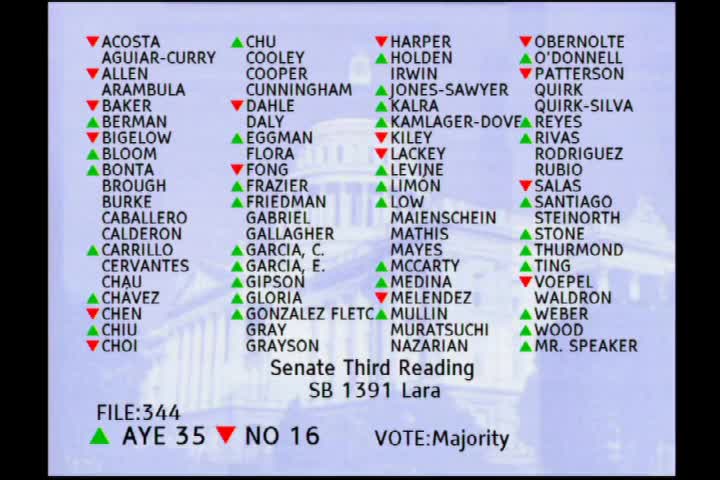
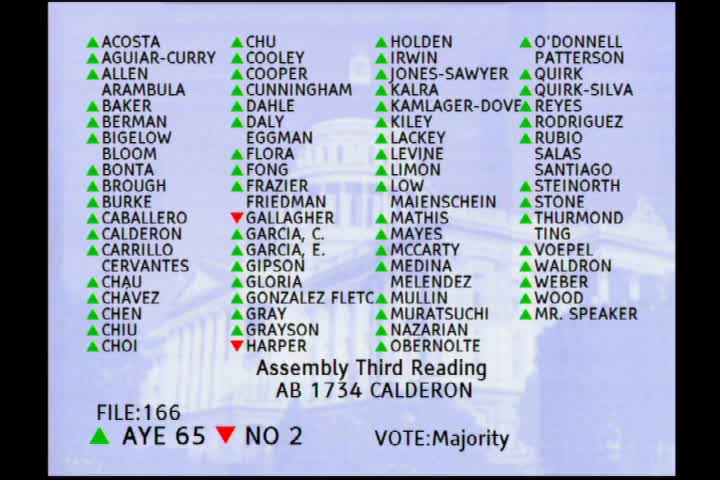
Bill Author

Bill Co-Author(s):