AB 2055: Legislative ethics: harassment: education: lobbying.
- Session Year: 2017-2018
- House: Assembly
- Latest Version Date: 2018-09-30
Existing law requires the legislative ethics committees of each house of the Legislature to conduct at least semiannually an orientation course on the relevant ethical issues and law related to lobbying.
This bill would require that orientation course to include information on each house of the Legislatures policies against harassment, including sexual harassment, in connection with lobbying activities..
The Political Reform Act of 1974 provides for the comprehensive regulation of campaign financing, lobbyists, conflicts of interest of public officials, and related matters, and establishes the Fair Political Practices Commission to enforce the acts provisions. The Commission is charged with the responsibility to investigate, upon the sworn complaint of any person or upon its own initiative, possible violations of the act relating to any agency, official, election, lobbyist, or legislative or administrative action. Under existing law, if the Commission determines a violation of the act has occurred, it is required to issue an order requiring the violator to comply with certain requirements, as specified.This bill would prohibit a lobbyist from engaging in sexual harassment, as defined, in the course of any activity related to his or her attempt to influence legislative or administrative action.A violation of the acts provisions is punishable as a misdemeanor. By expanding the scope of an existing crime, this bill would impose a state-mandated local program.The California Constitution requires the state to reimburse local agencies and school districts for certain costs mandated by the state. Statutory provisions establish procedures for making that reimbursement.This bill would provide that no reimbursement is required by this act for a specified reason.The Political Reform Act of 1974, an initiative measure, provides that the Legislature may amend the act to further the acts purposes upon a 2/3 vote of each house of the Legislature and compliance with specified procedural requirements.This bill would declare that it furthers the purposes of the act.The Political Reform Act of 1974 provides for the comprehensive regulation of campaign financing, lobbyists, conflicts of interest of public officials, and related matters, and establishes the Fair Political Practices Commission to enforce the acts provisions. The Commission is charged with the responsibility to investigate, upon the sworn complaint of any person or upon its own initiative, possible violations of the act relating to any agency, official, election, lobbyist, or legislative or administrative action. Under existing law, if the Commission determines a violation of the act has occurred, it is required to issue an order requiring the violator to comply with certain requirements, as specified.
This bill would prohibit a lobbyist from engaging in sexual harassment, as defined, and would authorize the Commission to order a lobbyist who violates this prohibition to cease all lobbying activity for a period of up to 4 years. in the course of any activity related to his or her attempt to influence legislative or administrative action.
A violation of the acts provisions is punishable as a misdemeanor. By expanding the scope of an existing crime, this bill would impose a state-mandated local program.
The California Constitution requires the state to reimburse local agencies and school districts for certain costs mandated by the state. Statutory provisions establish procedures for making that reimbursement.
This bill would provide that no reimbursement is required by this act for a specified reason.
The Political Reform Act of 1974, an initiative measure, provides that the Legislature may amend the act to further the acts purposes upon a 2/3 vote of each house of the Legislature and compliance with specified procedural requirements.
This bill would declare that it furthers the purposes of the act.
The Political Reform Act of 1974 provides for the comprehensive regulation of campaign financing, lobbyists, conflicts of interest of public officials, and related matters, and establishes the Fair Political Practices Commission to enforce the acts provisions. The Commission is charged with the responsibility to investigate, upon the sworn complaint of any person or upon its own initiative, possible violations of the act relating to any agency, official, election, lobbyist, or legislative or administrative action. Under existing law, if the Commission determines a violation of the act has occurred, it is required to issue an order requiring the violator to comply with certain requirements, as specified.
This bill would prohibit a lobbyist from engaging in sexual harassment, as defined, and would authorize the Commission to order a lobbyist who violates this prohibition to cease all lobbying activity for a period of up to 4 years.
The Political Reform Act of 1974, an initiative measure, provides that the Legislature may amend the act to further the acts purposes upon a 2/3 vote of each house of the Legislature and compliance with specified procedural requirements.
This bill would declare that it furthers the purposes of the act.
(a)The appropriate legislative ethics committees shall conduct at least semiannually an orientation course of the relevant statutes and regulations governing official conduct. The curriculum and presentation of the course shall be established by house rules.
(b)The committees shall conduct at least semiannually an orientation course on the relevant ethical issues and laws relating to lobbying, in consultation with the Fair Political Practices Commission. The course shall also include information on each house of the Legislatures policies against harassment, including sexual harassment, in connection with lobbying activities. One of the semiannual courses shall be held prior to June 30 of each year. This course may be combined with the course described in subdivision (a).
(c)At least once in each biennial session, each Member of the Legislature and each designated employee of the Legislature shall attend one of these courses.
(d)The committees shall impose fees on lobbyists for attending the course described in subdivision (b). The fees shall be set at an amount that will enable the lobbyists participation in the course to be funded from those fees to the fullest extent possible.
SECTION 1.Section 82048.2 is added to the Government Code, to read:82048.2.Sexual harassment means unwelcome sexual advances, requests for sexual favors, and other verbal, visual, or physical conduct of a sexual nature that arises out of or in the course of employment.SEC. 2.Section 86205 of the Government Code is amended to read:86205.A lobbyist or lobbying firm shall not:(a)Do anything with the purpose of placing any elected state officer, legislative official, agency official, or state candidate under personal obligation to the lobbyist, the lobbying firm, or the lobbyists or the firms employer.(b)Deceive or attempt to deceive any elected state officer, legislative official, agency official, or state candidate with regard to any material fact pertinent to any pending or proposed legislative or administrative action.(c)Cause or influence the introduction of any bill or amendment thereto for the purpose of thereafter being employed to secure its passage or defeat.(d)Attempt to create a fictitious appearance of public favor or disfavor of any proposed legislative or administrative action or to cause any communication to be sent to any elected state officer, legislative official, agency official, or state candidate in the name of any fictitious person or in the name of any real person, except with the consent of such real person.(e)Represent falsely, either directly or indirectly, that the lobbyist or the lobbying firm can control the official action of any elected state officer, legislative official, or agency official.(f)Accept or agree to accept any payment in any way contingent upon the defeat, enactment, or outcome of any proposed legislative or administrative action.(g)Engage in sexual harassment, as defined in Section 82048.2, in the course of any activity related to his or her attempt to influence legislative or administrative action.SEC. 3.No reimbursement is required by this act pursuant to Section 6 of Article XIIIB of the California Constitution because the only costs that may be incurred by a local agency or school district will be incurred because this act creates a new crime or infraction, eliminates a crime or infraction, or changes the penalty for a crime or infraction, within the meaning of Section 17556 of the Government Code, or changes the definition of a crime within the meaning of Section 6 of Article XIIIB of the California Constitution.SEC. 4.The Legislature finds and declares that this bill furthers the purposes of the Political Reform Act of 1974 within the meaning of subdivision (a) of Section 81012 of the Government Code.Sexual harassment means unwelcome sexual advances, requests for sexual favors, and other verbal, visual, or physical conduct of a sexual nature that arises out of or in the course of employment.
SEC. 2.Section 86205 of the Government Code is amended to read:86205.A lobbyist or lobbying firm shall not:
(a)Do anything with the purpose of placing any elected state officer, legislative official, agency official, or state candidate under personal obligation to the lobbyist, the lobbying firm, or the lobbyists or the firms employer.
(b)Deceive or attempt to deceive any elected state officer, legislative official, agency official, or state candidate with regard to any material fact pertinent to any pending or proposed legislative or administrative action.
(c)Cause or influence the introduction of any bill or amendment thereto for the purpose of thereafter being employed to secure its passage or defeat.
(d)Attempt to create a fictitious appearance of public favor or disfavor of any proposed legislative or administrative action or to cause any communication to be sent to any elected state officer, legislative official, agency official, or state candidate in the name of any fictitious person or in the name of any real person, except with the consent of such real person.
(e)Represent falsely, either directly or indirectly, that the lobbyist or the lobbying firm can control the official action of any elected state officer, legislative official, or agency official.
(f)Accept or agree to accept any payment in any way contingent upon the defeat, enactment, or outcome of any proposed legislative or administrative action.
(g)Engage in sexual harassment, as defined in Section 82048.2. The Commission may order a lobbyist who violates this subdivision to cease all lobbying activity for a period up to four years. 82048.2, in the course of any activity related to his or her attempt to influence legislative or administrative action.
SEC. 3.No reimbursement is required by this act pursuant to Section 6 of Article XIIIB of the California Constitution because the only costs that may be incurred by a local agency or school district will be incurred because this act creates a new crime or infraction, eliminates a crime or infraction, or changes the penalty for a crime or infraction, within the meaning of Section 17556 of the Government Code, or changes the definition of a crime within the meaning of Section 6 of Article XIIIB of the California Constitution.
SEC. 3.SEC. 4.The Legislature finds and declares that this bill furthers the purposes of the Political Reform Act of 1974 within the meaning of subdivision (a) of Section 81012 of the Government Code.
Sexual harassment means unwelcome sexual advances, requests for sexual favors, and other verbal, visual, or physical conduct of a sexual nature that arises out of or in the course of employment.
SEC. 2.Section 86205 of the Government Code is amended to read:86205.No A lobbyist or lobbying firm shall: shall not:
(a)Do anything with the purpose of placing any elected state officer, legislative official, agency official, or state candidate under personal obligation to the lobbyist, the lobbying firm, or the lobbyists or the firms employer.
(b)Deceive or attempt to deceive any elected state officer, legislative official, agency official, or state candidate with regard to any material fact pertinent to any pending or proposed legislative or administrative action.
(c)Cause or influence the introduction of any bill or amendment thereto for the purpose of thereafter being employed to secure its passage or defeat.
(d)Attempt to create a fictitious appearance of public favor or disfavor of any proposed legislative or administrative action or to cause any communication to be sent to any elected state officer, legislative official, agency official, or state candidate in the name of any fictitious person or in the name of any real person, except with the consent of such real person.
(e)Represent falsely, either directly or indirectly, that the lobbyist or the lobbying firm can control the official action of any elected state officer, legislative official, or agency official.
(f)Accept or agree to accept any payment in any way contingent upon the defeat, enactment, or outcome of any proposed legislative or administrative action.
(g)Engage in sexual harassment, as defined in Section 82048.2. The Commission may order a lobbyist who violates this subdivision to cease all lobbying activity for a period up to four years.
SEC. 3.The Legislature finds and declares that this bill furthers the purposes of the Political Reform Act of 1974 within the meaning of subdivision (a) of Section 81012 of the Government Code.
|
Date
|
Status
|
|---|---|
| Sep 30, 2018 | Chaptered by Secretary of State - Chapter 964, Statutes of 2018. |
| Sep 30, 2018 | Approved by the Governor. |
| Aug 20, 2018 | Enrolled and presented to the Governor at 3 p.m. |
| Aug 14, 2018 | In Assembly. Ordered to Engrossing and Enrolling. |
| Aug 13, 2018 | Read third time. Passed. Ordered to the Assembly. |
| Jul 5, 2018 | Read second time. Ordered to Consent Calendar. |
| Jul 3, 2018 | From committee: Do pass. To Consent Calendar. (Ayes 4. Noes 0.) (July 3). |
| Jun 13, 2018 | Referred to Com. on E. & C.A. |
| Jun 4, 2018 | In Senate. Read first time. To Com. on RLS. for assignment. |
| May 31, 2018 | Joint Rule 62(a), file notice suspended. |
| May 3, 2018 | Re-referred to Com. on RLS. pursuant to Assembly Rule 96. |
| May 1, 2018 | Re-referred to Com. on APPR. |
| Apr 30, 2018 | Read second time and amended. |
| Apr 26, 2018 | From committee: Amend, and do pass as amended and re-refer to Com. on APPR. (Ayes 10. Noes 0.) (April 24). |
| Apr 17, 2018 | Re-referred to Com. on JUD. |
| Apr 16, 2018 | Read second time and amended. |
| Apr 12, 2018 | From committee: Amend, and do pass as amended and re-refer to Com. on JUD. (Ayes 4. Noes 0.) (April 11). |
| Mar 22, 2018 | Referred to Coms. on E. & R. and JUD. |
| Feb 7, 2018 | From printer. May be heard in committee March 9. |
| Feb 6, 2018 | Read first time. To print. |
|
Date
|
Description
|
Location
|
Votes
|
|
|---|---|---|---|---|
| Aug 13, 2018 | Consent Calendar AB2055 Levine | Senate Floor |
Passed |
|
| Jul 3, 2018 | Do pass and be ordered to the Consent Calendar | Senate Standing Committee on Elections and Constitutional Amendments |
Passed |
|
| May 31, 2018 | AB 2055 LEVINE Assembly Third Reading | Assembly Floor |
Passed |
|
| May 31, 2018 | Do pass. | Assembly Standing Committee on Rules |
Passed |
|
| Apr 24, 2018 | Do pass as amended and be re-referred to the Committee on [Appropriations] | Assembly Standing Committee on Judiciary |
Passed |
|
| Apr 11, 2018 | Do pass as amended and be re-referred to the Committee on [Judiciary] | Assembly Standing Committee on Elections and Redistricting |
Passed |
This list shows positions taken on this bill by organizations on the date displayed, which is linked to the original source.
Positions by individuals are not included.
|
Organization
|
Position
|
Date
|
|---|---|---|
| Institute Of Governmental Activities | ** Support | Apr 21, 2018 |
| Institute Of Governmental Advocates | ** Support | Aug 1, 2018 |
Office of Senate Floor Analyses (916) 651-1520 Fax: (916) 327-4478 | AB |
CONSENT
Bill No: AB 2055
:
SENATE ELECTIONS & C.A. COMMITTEE: 4-0, 7/3/18
AYES: Stern, Anderson, Allen, Hertzberg
NO VOTE RECORDED: Leyva
ASSEMBLY FLOOR: 77-0, 5/31/18 - See last page for vote
DIGEST:
This bill requires that the lobbying ethics courses taught by the Assembly and Senate Legislative Ethics Committees include information on policies against harassment, including sexual harassment.
Existing law:
- Requires the appropriate legislative ethics committees to conduct at least semiannually an orientation course of the relevant statutes and regulations governing official conduct. At least once in each biennial session, each Member of the Legislature and each designated employee of the Legislature shall attend one of these courses.
- Requires the legislative ethics committees to conduct at least semiannually an orientation course on the relevant ethical issues and laws relating to lobbying, in consultation with the Fair Political Practices Commission (FPPC). The committees shall impose fees on lobbyists for attending this course. The fees shall be set at an amount that will enable the lobbyists’ participation in the course to be funded from those fees to the fullest extent possible.
- Defines a "lobbyist," for the purposes of the Political Reform Act (PRA), as either of the following, except as specified:
- An individual who receives $2,000 or more in a calendar month or whose principal duties as an employee are to communicate directly or through his or her agents with an elective state official, agency official, or legislative official for the purpose of influencing legislative or administrative action; or,
- A placement agent, as defined.
- An individual who receives $2,000 or more in a calendar month or whose principal duties as an employee are to communicate directly or through his or her agents with an elective state official, agency official, or legislative official for the purpose of influencing legislative or administrative action; or,
This bill requires the semiannual course taught by the legislative ethics committees for lobbyists to include information on each house of the Legislature's policies against harassment, including sexual harassment, in connection with lobbying activities.
Background
Sexual harassment. Under current law, sexual harassment is generally defined as “unwelcome sexual advances, requests for sexual favors, and other verbal, visual, or physical conduct of a sexual nature.” (Civil Code Section 51.9; Unemployment Insurance Code 1256.5; Education Code 212.5.) The Unruh Act outlines that a claim of sexual harassment may be raised when the victim shows that the behavior indicated above occurs, in combination with all of the following: a professional relationship; the relationship would be difficult for the victim to terminate; and the victim has or will suffer economic loss or disadvantage or personal injury (including emotional distress). (Civil Code Section 51.9.)
Sexual harassment is an issue that is at the forefront of current social, political, and legal discussions. The “Me Too” and “Times Up” movements have brought awareness to the institutional problem of sexual harassment that has permeated nearly every aspect of modern American society, from the workplace to politics. The Legislature has made efforts over the years to prevent sexual harassment by codifying prohibitions on such conduct in the Labor Code, the Education Code, the Unemployment Insurance Code, the Government Code, and the Civil Code. Underlying each of these provisions is the constitutional principle that the “State shall not discriminate against, or grant preferential treatment to, any individual or group on the basis of sex.” (Cal. Const., Art. I, § 31.)
Sexual harassment has been interpreted to be a form of discrimination on the basis of sex. (Meritor Savings Bank v. Vinson (1986) 477 U.S. 57, 64.) The Supreme Court stated in this landmark decision that, “Sexual harassment, which creates a hostile or offensive environment for members of one sex, is every bit the arbitrary barrier to sexual equality at the workplace that racial harassment is to racial equality. Surely, a requirement that a man or woman run a gauntlet of sexual abuse in return for the privilege of being allowed to work and make a living can be as demeaning and disconcerting as the harshest of racial epithets.” (Id. at p. 67.)
Between 2002 and 2004 there was a case that went through the California courts that changed the landscape of employer liability as it relates to the conduct of non-employees. Raquel Salazar, a bus driver, sued her employer for failing to take remedial actions when she complained about the behavior of a certain regular rider on her route. Initially the court of appeals determined that she had no cause of action because the conduct was by the employers “clientele.” (Salazar v Diversified Paratransit, Inc., (2002) 103 Cal. App. 4th 131, 151.) The Legislature passed AB 76 (Corbett, Chapter 671, Statutes of 2003) to specifically address the issues raised in this case. AB 76 amended Section 12940 (j) to include liability for employees where there is harassing conduct by a non-employee against an employee. In light of the updated code section, the California Supreme Court remanded the case back to the Court of Appeals. This case and the statutory provisions make it clear that where an employer knows or should know about harassing conduct they have an obligation to “take immediate and corrective actions.” (Salazar v. Diversified Paratransit, Inc., (2004) 117 Cal. App. 4th 318, 325).
Due to the obligations of employers in that code, as well as the case law that has extended the holding of Salazar to make it clear that employers also are responsible for the actions of those who come in contact with employees in the course of their work, the Legislature has an interest in ensuring that those who come into contact with Members and legislative staff on a regular basis, such as lobbyists, are familiar with laws and policies to prevent sexual harassment in the Capitol, as well as providing such training to Members and staff.
Current law requires that California employers provide sexual harassment prevention and training to supervisorial staff and gives them the option of extending the training to all employees. While the ethics committees of each house of the Legislature are required to provide ethics training to lobbyists, the training revolves around the provisions of the PRA, not sexual harassment.
This bill requires that the courses required to be conducted by the ethics committees in both houses of the Legislature include the policies of each house against harassment, including sexual harassment, in the course of lobbying. Therefore, the ethics committees will train lobbyists not only on the ethical issues as provided by the PRA, but also on the house policies regarding sexual harassment in the Legislature.
Comments
- According to the author, in October of 2017, over 140 female legislators, lobbyists, consultants, and women throughout the Capitol community signed an open letter condemning the culture of enabling harassment and assault in the Capitol community. The movement sparked an outpouring of stories from many survivors about their sexual harassment experiences with various individuals in California politics and government. While the Legislature is taking steps to address sexual harassment, there is a duty to protect the entire community. By requiring lobbyists to receive training on these issues, the Capitol can become a safer community.
Without sufficient awareness and information in place for these individuals, a permissive sexual harassment culture of can continue outside the Capitol grounds. This bill will require lobbyists to receive sexual harassment training as part of their semi-annual ethics training with issues and laws related to lobbying, in consultation with the FPPC. By requiring lobbyists to receive training on these issues, the Capitol can become a safer community.
Related/Prior Legislation
AB 2959 (Nazarian, 2018), which was never referred to a policy committee in the Assembly, states the intent of the Legislature to enact legislation establishing an independent ombudsperson, under the jurisdiction of the State Auditor, to investigate allegations of sexual harassment in the Legislature, as specified.
SB 224 (Jackson, 2017-18 Session), which is pending on the Assembly Floor, specifically includes an investor, elected official, lobbyist, director, and producer among those listed persons who may be liable to a plaintiff for sexual harassment.
FISCAL EFFECT: Appropriation: Fiscal Com.: Local:
Institute of Governmental Advocates
None received
ASSEMBLY FLOOR: 77-0, 5/31/18
AYES: Acosta, Aguiar-Curry, Travis Allen, Arambula, Baker, Berman, Bigelow, Bloom, Bonta, Brough, Burke, Caballero, Calderon, Carrillo, Cervantes, Chau, Chávez, Chen, Chiu, Choi, Chu, Cooley, Cooper, Cunningham, Dahle, Daly, Eggman, Flora, Fong, Frazier, Friedman, Gallagher, Cristina Garcia, Eduardo Garcia, Gipson, Gloria, Gonzalez Fletcher, Gray, Grayson, Harper, Holden, Irwin, Jones-Sawyer, Kalra, Kamlager-Dove, Kiley, Lackey, Levine, Limón, Low, Maienschein, Mathis, Mayes, McCarty, Medina, Melendez, Mullin, Muratsuchi, Nazarian, Obernolte, O'Donnell, Patterson, Quirk, Quirk-Silva, Reyes, Rodriguez, Rubio, Salas, Santiago, Steinorth, Mark Stone, Thurmond, Ting, Voepel, Waldron, Weber, Rendon
NO VOTE RECORDED: Wood
8/1/18 14:11:59
**** END ****
SENATE COMMITTEE ON
ELECTIONS AND CONSTITUTIONAL AMENDMENTS
Senator Henry Stern, Chair
2017 - 2018 Regular
Bill No: AB 2055 Hearing Date: 7/3/18
Author: | Levine | ||
Version: | 4/30/18 | ||
Urgency: | No | Fiscal: | No |
Consultant: | Darren Chesin | ||
Subject: Legislative ethics: harassment: education: lobbying
DIGEST
This bill requires that the lobbying ethics courses taught by the Assembly and Senate Legislative Ethics Committees include information on policies against harassment, including sexual harassment.
ANALYSIS
Existing law:
- Requires the appropriate legislative ethics committees to conduct at least semiannually an orientation course of the relevant statutes and regulations governing official conduct. At least once in each biennial session, each Member of the Legislature and each designated employee of the Legislature shall attend one of these courses.
- Requires the legislative ethics committees to conduct at least semiannually an orientation course on the relevant ethical issues and laws relating to lobbying, in consultation with the Fair Political Practices Commission (FPPC). The committees shall impose fees on lobbyists for attending this course. The fees shall be set at an amount that will enable the lobbyists’ participation in the course to be funded from those fees to the fullest extent possible.
- Defines a "lobbyist," for the purposes of the Political Reform Act (PRA), as either of the following, except as specified:
- An individual who receives $2,000 or more in a calendar month or whose principal duties as an employee are to communicate directly or through his or her agents with an elective state official, agency official, or legislative official for the purpose of influencing legislative or administrative action; or,
- A placement agent, as defined.
- An individual who receives $2,000 or more in a calendar month or whose principal duties as an employee are to communicate directly or through his or her agents with an elective state official, agency official, or legislative official for the purpose of influencing legislative or administrative action; or,
This bill:
- Requires the semiannual course taught by the legislative ethics committees for lobbyists to include information on each house of the Legislature's policies against harassment, including sexual harassment, in connection with lobbying activities.
BACKGROUND
Sexual Harassment. Under current law, sexual harassment is generally defined as “unwelcome sexual advances, requests for sexual favors, and other verbal, visual, or physical conduct of a sexual nature.” (Civil Code Section 51.9; Unemployment and Insurance Code 1256.5; Education Code 212.5.) The Unruh Act outlines that a claim of sexual harassment may be raised when the victim shows that the behavior indicated above occurs, in combination with all of the following: a professional relationship; the relationship would be difficult for the victim to terminate; and the victim has or will suffer economic loss or disadvantage or personal injury (including emotional distress). (Civil Code Section 51.9.)
Sexual harassment is an issue that is at the forefront of current social, political, and legal discussions. The “Me Too” and “Times Up” movements have brought awareness to the institutional problem of sexual harassment that has permeated nearly every aspect of modern American society, from the workplace to politics. The Legislature has made efforts over the years to prevent sexual harassment by codifying prohibitions on such conduct in the Labor Code, the Education Code, the Unemployment and Insurance Code, the Government Code, and the Civil Code. Underlying each of these provisions is the Constitutional principle that the “State shall not discriminate against, or grant preferential treatment to, any individual or group on the basis of sex.” (Cal. Const., art. I, § 31.)
Sexual harassment has been interpreted to be a form of discrimination on the basis of sex. (Meritor Savings Bank v. Vinson (1986) 477 U.S. 57, 64.) The Supreme Court stated in this landmark decision that, “Sexual harassment, which creates a hostile or offensive environment for members of one sex, is every bit the arbitrary barrier to sexual equality at the workplace that racial harassment is to racial equality. Surely, a requirement that a man or woman run a gauntlet of sexual abuse in return for the privilege of being allowed to work and make a living can be as demeaning and disconcerting as the harshest of racial epithets.” (Id. at p. 67.)
Between 2002 and 2004 there was a case that went through the California courts that changed the landscape of employer liability as it relates to the conduct of non-employees. Raquel Salazar, a bus driver, sued her employer for failing to take remedial actions when she complained about the behavior of a certain regular rider on her route. Initially the court of appeals determined that she had no cause of action because the conduct was by the employers “clientele.” (Salazar v Diversified Paratransit, Inc., (2002) 103 Cal. App. 4th 131, 151.) The Legislature passed AB 76 (2003) to specifically address the issues raised in this case. AB 76 (Corbett, Ch. 671, Stats. 2003) amended Section 12940 (j) to include liability for employees where there is harassing conduct by a non-employee against an employee. In light of the updated code section, the California Supreme Court remanded the case back to the Court of Appeals. This case and the statutory provisions make it clear that where an employer knows or should know about harassing conduct they have an obligation to “take immediate and corrective actions.” (Salazar v. Diversified Paratransit, Inc., (2004) 117 Cal. App. 4th 318, 325).
Due to the obligations of employers in that code, as well as the case law that has extended the holding of Salazar to make it clear that employers also are responsible for the actions of those who come in contact with employees in the course of their work, the Legislature has an interest in ensuring that those who come into contact with Members and legislative staff on a regular basis, such as lobbyists, are familiar with laws and policies to prevent sexual harassment in the Capitol, as well as providing such training to Members and staff.
Current law requires that California employers provide sexual harassment prevention and training to supervisorial staff and gives them the option of extending the training to all employees. While the ethics committees of each house of the Legislature are required to provide ethics training to lobbyists, the training revolves around the provisions of the PRA, not sexual harassment.
This bill requires that the courses required to be conducted by the ethics committees in both houses of the Legislature include the policies of each house against harassment, including sexual harassment, in the course of lobbying. Therefore, the ethics committees will train lobbyists not only on the ethical issues as provided by the PRA, but also on the house policies regarding sexual harassment in the Legislature.
COMMENTS
- According to the author: In October of 2017, over 140 female legislators, lobbyists, consultants, and women throughout the Capitol community signed an open letter condemning the culture of enabling harassment and assault in the Capitol community. The movement sparked an outpouring of stories from many survivors about their sexual harassment experiences with various individuals in California politics and government. While the Legislature is taking steps to address sexual harassment, there is a duty to protect the entire community. By requiring lobbyists to receive training on these issues, the Capitol can become a safer community.
Without sufficient awareness and information in place for these individuals, a permissive sexual harassment culture of can continue outside the Capitol grounds. This bill will require lobbyists to receive sexual harassment training as part of their semi-annual ethics training with issues and laws related to lobbying, in consultation with the FPPC. By requiring lobbyists to receive training on these issues, the Capitol can become a safer community.
RELATED/PRIOR LEGISLATION
SB 224 (Jackson), which is pending in the Assembly Judiciary Committee, would specifically include an investor, elected official, lobbyist, director, and producer among those listed persons who may be liable to a plaintiff for sexual harassment.
AB 2959 (Nazarian), which was never referred to policy committee in the Assembly, states the intent of the Legislature to enact legislation establishing an independent ombudsperson, under the jurisdiction of the State Auditor, to investigate allegations of sexual harassment in the Legislature, as specified.
PRIOR ACTION
Assembly Floor: | 77 - 0 |
Assembly Rules Committee: Assembly Judiciary Committee: Assembly Elections and Redistricting Committee: | 9 - 0 10 - 0 4 - 0 |
POSITIONS
Sponsor: Author
Support: Institute of Governmental Advocates
Oppose: None received
-- END --
Date of Hearing: May 31, 2018
ASSEMBLY COMMITTEE ON RULES
Ken Cooley, Chair
ABPCA Bill Id:AB 2055 (
Author:Levine) – As Amended Ver:April 30, 2018
SUBJECT: Legislative ethics: harassment: education: lobbying.
SUMMARY: Requires that the semiannual orientation course taught by the Assembly and Senate Legislative Ethics Committees include information on each house of the Legislature’s policies against harassment, including sexual harassment, in connection with lobbying activities.
EXISTING LAW:
- Requires the legislative ethics committees of the Assembly and Senate to conduct at least semiannually an orientation course of the relevant statutes and regulations governing official conduct.
- Requires those committees to conduct at least semiannually an orientation course on the relevant ethical issues and laws relating to lobbying, in consultation with the Fair Political Practices Commission (FPPC).
- Requires each Member of the Legislature and each designated employee of the Legislature to attend one of these courses.
FISCAL EFFECT: None
COMMENTS:
- Need for the bill: According to the author, this bill will provide lobbyists with information and training on sexual harassment issues and the Legislature’s policies against harassment, including sexual harassment, in connection with lobbying activities. Providing lobbyists with this information will help the Capitol become a safer community.
- Background: The Assembly and Senate Legislative Ethics Committees conduct an orientation course each year on the relevant ethical issues and laws relating to lobbying, including information on applicable FPPC rules and regulations and applicable statutes. All lobbyists are required to attend this ethics course in order to be a registered lobbyist with the Secretary of State. Continuing lobbyists must complete this course by June 30th of the first year of each legislative session, or within the twelve months before the start of the legislative session. New lobbyists must complete the course within 12 months of filing their certification with the Secretary of State, if they had not completed the course within 12 months before filing. Failure to attend the ethics course will result in the conditional lobbyist certification being voided by the Secretary of State, prohibiting that individual from lobbying the Legislature or any state entity.
The course already provides information on the “zero tolerance” policies against sexual harassment of both the Assembly and Senate. The training informs lobbyists that the policies apply to them when they are working in the Capitol. The course also provides that the policy protects lobbyists since the policy applies to the behavior of legislative employees toward lobbyists and the general public, and gives lobbyists contact information for each house if they have been subjected to or witnessed possible sexual harassment.
REGISTERED SUPPORT / OPPOSITION:
Support
None on file
Opposition
None on file
Analysis Prepared by: Michael Erke / RLS. / (916) 319-2800
(Without Reference to File)
ASSEMBLY THIRD READING
ATR Bill Id:AB 2055
Author:(Levine)
As Amended Ver:April 30, 2018
Majority vote
Committee | Votes | Ayes | Noes |
Elections |
| (Vote not relevant) | |
Judiciary | 10-0 | Mark Stone, Cunningham, Chau, Chiu, Weber, Holden, Kalra, Kiley, Maienschein, Reyes | |
Rules | 9-0 | Cooley, Cunningham, Carrillo, Cervantes, Grayson, Mayes, Nazarian, Salas, Waldron |
SUMMARY: Requires that the semiannual orientation course taught by the Assembly and Senate Legislative Ethics Committees include information on each house of the Legislature's policies against harassment, including sexual harassment, in connection with lobbying activities.
EXISTING LAW:
- Requires the legislative ethics committees of the Assembly and Senate to conduct at least semiannually an orientation course of the relevant statutes and regulations governing official conduct.
- Requires those committees to conduct at least semiannually an orientation course on the relevant ethical issues and laws relating to lobbying, in consultation with the Fair Political Practices Commission (FPPC).
- Requires each Member of the Legislature and each designated employee of the Legislature to attend one of these courses.
FISCAL EFFECT: None
COMMENTS:
- Need for the bill: According to the author, this bill will provide lobbyists with information and training on sexual harassment issues and the Legislature's policies against harassment, including sexual harassment, in connection with lobbying activities. Providing lobbyists with this information will help the Capitol become a safer community.
- Background: The Assembly and Senate Legislative Ethics Committees conduct an orientation course each year on the relevant ethical issues and laws relating to lobbying, including information on applicable FPPC rules and regulations and applicable statutes. All lobbyists are required to attend this ethics course in order to be a registered lobbyist with the Secretary of State. Continuing lobbyists must complete this course by June 30th of the first year of each legislative session, or within the twelve months before the start of the legislative session. New lobbyists must complete the course within 12 months of filing their certification with the Secretary of State, if they had not completed the course within 12 months before filing. Failure to attend the ethics course will result in the conditional lobbyist certification being voided by the Secretary of State, prohibiting that individual from lobbying the Legislature or any state entity.
The course already provides information on the "zero tolerance" policies against sexual harassment of both the Assembly and Senate. The training informs lobbyists that the policies apply to them when they are working in the Capitol. The course also provides that the policy protects lobbyists since the policy applies to the behavior of legislative employees toward lobbyists and the general public, and gives lobbyists contact information for each house if they have been subjected to or witnessed possible sexual harassment.
Analysis Prepared by: Nicole Willis / RLS. / (916) 319-2800 FN: 0003454
Date of Hearing: April 24, 2018
ASSEMBLY COMMITTEE ON JUDICIARY
Mark Stone, Chair
ABPCA Bill Id:AB 2055
Author:(Levine) –As amended :April 16, 2018
As Proposed to be Amended
SUBJECT: POLITICAL REFORM ACT OF 1974: LOBBYISTS: SEXUAL HARASSMENT
KEY ISSUE: SHOULD THE ETHICS TRAINING PROGRAM THAT IS DEVELOPED IN CONSULTATION WITH THE FPPC, PROVIDED BY ETHICS COMMITTEES OF EACH HOUSE OF THE LEGISLATURE, AND REQUIRED TO BE TAKEN BY LOBBYISTS ON A SEMI-ANNUAL BASIS, BE EXPANDED TO INCLUDE SEXUAL HARASSMENT TRAINING?
SYNOPSIS
This bill in print would make sexual harassment prohibited conduct, specifically as relates to lobbyists, a violation of the Political Reform Act. This provision would have required that the FPPC determine when such conduct has taken place, something that the FPPC has no experience or expertise in doing, and would have authorized the FPPC to impose penalties such as cease and desist orders or fines on those found to have engaged in sexual harassment. This version of the bill raised multiple concerns regarding due process, functionality, and implementation. As such, the author has agreed to amend the bill by removing its current content in its entirety.
This bill, as proposed to be amended by the author, requires that the semi-annual orientation course that is required to be conducted by the ethics committees in both houses of the Legislature includes training about the policies of each house against harassment, including sexual harassment, in the course of lobbying. While the ethics committees of each house of the Legislature is currently required to provide some training to lobbyists on the topic of ethics, the training is primarily focused on financial misconduct and intentional interference with the political process. The proposed change will provide greater notice for all parties working in and around the Legislature, regarding the expected conduct in the Capitol, where the threshold for reportable conduct is, and the remedial means available when an issue arises. The author’s proposed amendments are incorporated and discussed in the analysis.
The new amendment has changed the position of the Institute of Governmental Affairs from opposing the bill to supporting the bill.
SUMMARY: Adds sexual harassment training to the ethics training program that is developed in consultation with the Fair Political Practices Commission (FPPC) and provided to lobbyists by the ethics committees of each house of the Legislature on a semi-annual basis. Specifically, this bill:
- Adds a definition of sexual harassment to the Political Reform Act of 1974 (hereinafter the Act).
- Requires the ethics committees of each house of the Legislature to include the policies of each house against harassment, including sexual harassment, in the course of lobbying in the orientation course on the relevant statutes and regulations governing official conduct that it is required to provide to lobbyists on a semi-annual basis.
EXISTING LAW:
- Prohibits lobbyists from engaging in conduct that would influence any elected state officer, legislative official, agency official, or state candidate such as: deceiving any official regarding a material fact, causing or influencing the introduction of the bill for the purposes of later employment, creating or attempting to create fictitious support or opposition to legislation, representing falsely that they or their firm can control legislation, or accepting or agreeing to accept payment based upon the outcome of legislation. (Government Code Section 96205. All further statutory references are to this code, unless otherwise indicated.)
- Provides that an employer may also be responsible for the acts of nonemployees, with respect to sexual harassment of employees, applicants, unpaid interns or volunteers, or persons providing services pursuant to a contract in the workplace, if the employer, or its agents or supervisors, knows or should have known of the conduct and fails to take immediate and appropriate corrective action. (Section 12940 (j).)
- Provides that every person has, subject to the qualifications and restrictions provided by law, the right of protection from bodily restraint or harm, from personal insult, from defamation, and from injury to his personal relations. (Civil Code Section 43.)
- Provides that the purpose of the laws against discrimination and harassment in employment because of sex is to eliminate the means by which individuals, by virtue of their sex, gender identity, or gender expression, are treated differently, paid less, treated adversely based on stereotyping, subjected to conduct of a sexual nature, subjected to hostile work environments, or made to suffer other forms of adverse action, and to guarantee that in the future equal employment benefits will be afforded regardless of the individual's sex. (Cal. Code Regs. tit. 10, Section 11029.)
- Requires that all local agency officials of an agency shall receive sexual harassment prevention training and education if that local agency provides any type of compensation, salary, or stipend to a local agency official and allows a local agency to also require any of its employees to receive sexual harassment prevention training and education. (Section 53237.1.)
- Requires each local agency official, or employee who is so required, shall receive at least two hours of sexual harassment prevention training and education within the first six months of taking office or commencing employment, and every two years thereafter. (Section 53237.1.)
- Requires that the appropriate legislative ethics committees shall conduct at least semiannually an orientation course of the relevant statutes and regulations governing official conduct. The curriculum and presentation of the course shall be established by house rules. (Section 8956.)
- Requires that the appropriate legislative ethics committees also conduct at least semiannually an orientation course on the relevant ethical issues and laws relating to lobbying, in consultation with the Fair Political Practices Commission (hereafter the FPPC). One of the semiannual courses shall be held prior to June 30 of each year. This course may be combined with the course described in subdivision (a). (Section 8956.)
- Requires the Assembly Legislative Ethics Committee to conduct, at least semiannually, an orientation course on the relevant statutes and regulations governing official conduct the curriculum and presentation of the course for which is established by the Committee on Rules and that is required, at least once each biennial session, to be attended by each Member of the Assembly and each employee of the Assembly. (Assembly Rules 22.5 (p).)
- Requires the Assembly Legislative Ethics committee to do each of the following in compliance with 7) and 8), above:
- Conduct, at least semiannually, an orientation course on the relevant ethical issues and laws relating to lobbying.
- Impose fees on lobbyists for attending the course at an amount that will permit the participation of lobbyists to the fullest extent possible. (Assembly Rules 22.5 (q).)
- Requires the Senate Ethics Committee to conduct periodic workshops, at least once each calendar year, for Senators and officers and employees of the Senate, including workshops specifically designed for newly elected Senators and newly appointed officers and employees.
- Requires, at least once in each biennial session, that each Senator, and each officer or employee of the Senate shall attend one of these workshops.
- Requires the workshops to include, but not be limited to, a comprehensive review of all applicable statutes and Senate rules.
- Requires, at least once in each biennial session, each Senator to also attend an individual training or review session conducted by the ombudsperson. (Senate Rules 12.3 (b)(4).)
FISCAL EFFECT: As currently in print this bill is keyed fiscal.
COMMENTS: Sexual harassment is an issue that is at the forefront of current social, political, and legal discussions. The “Me Too” and “Times Up” movements have brought awareness to the institutional problem of sexual harassment that has permeated nearly every aspect of modern American society, from the workplace to politics. The Legislature has made efforts over the years to prevent sexual harassment by codifying prohibitions on such conduct in the Labor Code, the Education Code, the Unemployment and Insurance Code, the Government Code, and the Civil Code. Underlying each of these provisions is the Constitutional principle that the “State shall not discriminate against, or grant preferential treatment to, any individual or group on the basis of sex.” (Cal. Const., art. I, § 31.)
Sexual harassment has been interpreted to be a form of discrimination on the basis of sex. (Meritor Savings Bank v. Vinson (1986) 477 U.S. 57, 64.) The Supreme Court stated in this landmark decision that, “Sexual harassment, which creates a hostile or offensive environment for members of one sex, is every bit the arbitrary barrier to sexual equality at the workplace that racial harassment is to racial equality. Surely, a requirement that a man or woman run a gauntlet of sexual abuse in return for the privilege of being allowed to work and make a living can be as demeaning and disconcerting as the harshest of racial epithets.” (Id. at p. 67.)
The bill in print would make sexual harassment prohibited conduct, specifically as relates to lobbyists, under the Political Reform Act. This would have required that the FPPC determine when such conduct has taken place, and would have authorized the FPPC to impose penalties such as cease and desists or fines on those found to have engaged in sexual harassment. While there is no doubt that greater enforcement of sexual harassment standards is important, the language in print for this bill raised concerns regarding the implementation given that the FPPC is primarily mandated with investigated financial misconduct. This raised concerns over due process for those accused, and by what standard they would be judged before having the penalties imposed upon them. That then raised the question of whether or not the FPPC should simply implement the penalty upon a finding by a state agency or court. Given the concerns surrounding the language, the author has agreed to the new language which is included below.
Training obligations. Current law requires that employers provide sexual harassment prevention and training to supervisorial staff and gives them the option of extending the training to all employees. (Section 53237.1.) While the ethics committees of each house of the Legislature is required to provide some training to lobbyists on the topic of ethics, the training is subject to the ethics guidelines as dictated by the FPPC. (Section 8956.) Due to the nature of the FPPC and the purpose of the Political Reform Act, the conduct that the ethics guidelines are oriented to revolve around financial misconduct and intentional interference with the political process. (Section 86205.) Lobbyists may not engage in deceit, false representation, influence the introduction of bills that they have a later employment interest in, or accept payment that is based on the outcome of legislation. (Id.) This conduct all stems from political corruption and financial investment of a nature that has not involved sexual harassment. This bill would create a new obligation that training is explicitly required to include training for lobbyists on sexual harassment or their interactions with the members or Capitol staff, and of the rights of lobbyists in how members and Capitol staff interact with them.
Employer obligations as relates to non-employees. Between 2002 and 2004 there was a case that went through the California courts that changed the landscape of employer liability as it relates to the conduct of non-employees. Raquel Salazar, a bus driver, sued her employer for failing to take remedial actions when she complained about the behavior of a certain regular rider on her route. Initally the court of appeals determined that she had no cause of action because the conduct was by the employers “clientele.” (Salazar v Diversified Paratransit, Inc., (2002) 103 Cal. App. 4th 131, 151.) The Legislature passed AB 76 (2003) to specifically address the issues rasied in this case. AB 76 (Corbett, Ch. 671, Stats. 2003) amended Section 12940 (j) to include liability for employees where there is harassing conduct by a non-employee against an employee. In light of the updated code section, the California Supreme Court remanded the case back to the Court of Appeals. This case and the statutory provisions make it clear that where an employer knows or should know about harassing conduct they have an obligation to “take immediate and corrective actions.” (Salazar v. Diversified Paratransit, Inc., (2004) 117 Cal. App. 4th 318, 325).
Due to the obligations of employers in that code, as well as the case law that has extended the holding of Salazar to make it clear that employers also are responsible for the actions of those who come in contact with employees in the course of their work, the Legislature has an interest in ensuring that those who come into contact with Members and legislative staff on a regular basis, such as lobbyists, are familiar with laws and policies to prevent sexual harassment in the Capitol, as well as providing such training to Members and staff.
This bill, as proposed to be amended by the author, amends Section 8956 to require that the semi-annual orientation course that is required to be conducted by the ethics committees in both houses of the Legislature includes the policies of each house against harassment, including sexual harassment, in the course of lobbying. Therefore, the ethics committees will train lobbyists not only on the ethical issues as provided by the FPPC, but also on the house policies regarding sexual harassment in the Legislature. This change will provide greater notice for all parties working in and around the Legislature, regarding the expected conduct in the Capitol, where the threshold for reportable conduct is, and the remedial means available when an issue arises.
The definition of sexual harassment. Under current law, sexual harassment is generally defined as “unwelcome sexual advances, requests for sexual favors, and other verbal, visual, or physical conduct of a sexual nature.” (Civil Code Section 51.9; Unemployment and Insurance Code 1256.5; Education Code 212.5.) The Unruh Act outlines that a claim of sexual harassment may be raised when the victim shows that the behavior indicated above occurs, in combination with all of the following: 1) a professional relationship, 2) the relationship would be difficult for the victim to terminate, and 3) the victim has or will suffer economic loss or disadvantage or personal injury (including emotional distress). (Civil Code Section 51.9.) This bill, as proposed to be amended by the author, uses the same language to define sexual harassment that is present in those existing code sections.
Amended Language: The author has agreed to take the following amendments to the bill.
Amendment 1: On Page 1 of the bill, strike lines 7 through 20, inclusive, and on Page 2 of the bill, strike lines 1 through 17, inclusive (deleting the current content of the bill.).
Amendment 2: On Page 2 of the bill, after line 17, insert:
SEC 2. Section 8956 of the Government Code is amended to read:
8956. (b) The committees shall conduct at least semiannually an orientation course on the relevant ethical issues and laws relating to lobbying, in consultation with the Fair Political Practices Commission. The course shall also include the policies of each house against harassment, including sexual harassment, in the course of lobbying. One of the semiannual courses shall be held prior to June 30 of each year. This course may be combined with the course described in subdivision (a).
REGISTERED SUPPORT / OPPOSITION:
Support
Institute of Governmental Activities (as proposed to be amended)
Opposition
None on file
Analysis Prepared by: Allison Adey and Alison Merrilees /JUD. / (916)319-2334
Date of Hearing: April 11, 2018
ASSEMBLY COMMITTEE ON ELECTIONS AND REDISTRICTING
Marc Berman, Chair
ABPCA Bill Id:AB 2055 (
Author:Levine) – As Introduced Ver:February 6, 2018
SUBJECT: Political Reform Act of 1974: lobbyists: sexual harassment.
SUMMARY: Prohibits a lobbyist or a lobbying firm from engaging in sexual harassment, and permits the Fair Political Practices Commission (FPPC) to order a lobbyist who engages in sexual harassment to cease all lobbying activity for a period of up to four years. Specifically, this bill:
- Defines “sexual harassment,” for the purposes of this bill, as unwelcome sexual advances, requests for sexual favors, and other verbal, visual, or physical conduct of a sexual nature that arises out of or in the course of employment.
- Prohibits a lobbyist or a lobbying firm from engaging in sexual harassment, as defined.
- Permits the FPPC to order a lobbyist who is found to have engaged in sexual harassment to cease all lobbying activity for a period of up to four years.
EXISTING LAW:
- Creates the FPPC, and makes it responsible for the impartial, effective administration and implementation of the Political Reform Act (PRA).
- Requires the FPPC to investigate possible violations of the PRA relating to any agency, official, election, lobbyist, or legislative or administrative action. Permits the FPPC to subpoena witnesses, compel their attendance and testimony, administer oaths and affirmations, take evidence and require by subpoena the production of any books, papers, records or other items material to the performance of the FPPC’s duties or exercise of its powers.
- Defines a "lobbyist," for the purposes of the PRA, as either of the following, except as specified:
- An individual who receives $2,000 or more in a calendar month or whose principal duties as an employee are to communicate directly or through his or her agents with an elective state official, agency official, or legislative official for the purpose of influencing legislative or administrative action; or,
- A placement agent, as defined.
- Defines a "lobbying firm," for the purposes of the PRA, as any business entity, except as specified, including an individual contract lobbyist, which meets either of the following criteria:
- The business entity receives or becomes entitled to receive any compensation, other than reimbursement for reasonable travel expenses, for the purpose of influencing legislative or administrative action on behalf of any other person, and any partner, owner, officer, or employee of the business entity is a lobbyist; or,
- The business entity receives or becomes entitled to receive any compensation, other than reimbursement for reasonable travel expenses, to communicate directly with any elective state official, agency official, or legislative official for the purpose of influencing legislative or administrative action on behalf of any other person, if a substantial or regular portion of the activities for which the business entity receives compensation is for the purpose of influencing legislative or administrative action.
- Prohibits a lobbyist or a lobbying firm from doing any of the following:
- Doing anything with the purpose of placing an elected state officer, legislative official, agency official, or state candidate under personal obligation to the lobbyist, lobbying firm, or the lobbyist’s or lobbying firm’s employer.
- Deceiving or attempting to deceive any elected state officer, legislative official, agency official, or state candidate with regard to any material fact pertinent to any pending or proposed legislative or administrative action.
- Causing or influencing the introduction of a bill or an amendment to a bill for the purpose of thereafter being employed to secure its passage or defeat.
- Attempting to create a fictitious appearance of public favor or disfavor of any proposed legislative or administrative action or to cause any communication to be sent to any elected state officer, legislative official, agency official, or state candidate in the name of any fictitious person or in the name of any real person, except with the consent of such real person.
- Representing falsely, either directly or indirectly, that the lobbyist or lobbying firm can control the official action of any elected state officer, legislative official, or agency official.
- Accepting or agreeing to accept payment that is contingent on the defeat, enactment, or outcome of any proposed legislative or administrative action.
- Permits the FPPC to impose administrative penalties in situations where it determines that a violation of the PRA has occurred. Permits the FPPC, through this administrative enforcement procedure, to require the person who violated the PRA to do any of the following:
- Cease and desist violation of the PRA;
- File any reports, statements, or other documents or information required by the PRA; and,
- Pay a monetary penalty of up to $5,000 per violation, payable to the General Fund of the state.
- Cease and desist violation of the PRA;
- Provides that a person who violates any provision of the PRA, except as specified, for which no specific civil penalty is provided, shall be liable in a civil action for an amount of up to $5,000 per violation.
- Provides that any person who knowingly or willfully violates any provision of the PRA is guilty of a misdemeanor. Prohibits a person who is convicted of a misdemeanor for a violation of the PRA from being a candidate for elective office or acting as a lobbyist for a period of four years following the date of the conviction unless the court at the time of the sentencing specifically determines that this provision shall not be applicable.
- Requires an employer that knows or should have known about sexual harassment in its workplace to take immediate and appropriate corrective action, as specified. Provides that an employer may be responsible for the acts of sexual harassment committed by nonemployees in that employer’s workplace if the employer knows or should have known of the conduct and fails to take immediate and appropriate corrective action, as specified.
FISCAL EFFECT: Unknown
COMMENTS:
- Purpose of the Bill: According to the author:
In October of 2017, over 140 female legislators, lobbyists, consultants, and women throughout the Capitol community signed an open letter condemning the culture of enabling harassment and assault in the Capitol community. The movement sparked an outpouring of stories from many survivors about their sexual harassment experiences with various individuals in California politics and government.
The Legislature is taking steps to address sexual harassment. People throughout the Capitol community need to be protected and perpetrators need to be held accountable as the scope of sexual harassment expands beyond the Legislature and other state and local government entities. There is a duty to protect the entire community.
Without a system of accountability in place for these individuals, a culture of silence and coercion can continue outside the Capitol grounds.
- Joint Rules Subcommittee: Earlier this year, the Assembly Speaker and the Senate President pro Tempore announced the formation of a new subcommittee of the Joint Rules Committee tasked with establishing reforms to improve how the Legislature addresses sexual harassment and how it can better protect those who report harassment or abuse. That subcommittee—the Subcommittee on Sexual Harassment Prevention and Response—is expected to present recommendations to the full Joint Rules Committee for the adoption of new procedures and policies for the Legislature. The subcommittee is not a standing committee and is not hearing legislation.
Since its formation, the subcommittee has held informational hearings on the topics of Best Practices for Changing Culture on Sexual Harassment; Defining Harassment and Identifying Challenges; Best Practices for Reporting Sexual Harassment & Providing Victim Support; Investigation and Response to Sexual Harassment Allegations; and Preventing Sexual Harassment Through Training and Culture Change. The subcommittee has not yet presented its recommendations to the full Joint Rules Committee. - Scope of FPPC’s Authority and Possible Amendments: As currently drafted, this bill appears to permit the FPPC to investigate any allegation or complaint of sexual harassment that is made against a lobbyist, even if the alleged sexual harassment did not occur in the context of the person’s lobbying activities. For instance, this bill appears to give the FPPC the authority to investigate a complaint that a lobbyist sexually harassed a server at a restaurant, or an administrative staffer who works in the lobbying firm that employs the lobbyist. It is unclear whether this is consistent with the author’s intent.
Generally, the FPPC’s ability to investigate alleged misconduct by lobbyists under existing law is limited to situations where the alleged misconduct is related to the person’s lobbying activities. In light of that fact, the author and the committee may wish to consider an amendment to narrow the scope of this bill so that it is limited to alleged acts of sexual harassment by a lobbyist that occurred within the scope of that person’s lobbying activities. - Due Process and Possible Amendments: As detailed above, existing law permits the FPPC to bring enforcement actions for violations of the PRA through an administrative enforcement process. That enforcement process provides persons accused of violating the PRA with certain procedural protections, including the right to challenge a determination by the FPPC that probable cause exists to believe that the person has violated the PRA, the right to an administrative hearing to determine whether a violation of the PRA has occurred, and the right to seek reconsideration of any enforcement decision issued by the FPPC. Violations of the PRA are also punishable through civil or criminal actions, each of which provides the accused with a variety of due process protections.
It is not clear, however, what procedure would apply under this bill in a case where the FPPC sought to order a lobbyist to cease lobbying activity due to a finding that the lobbyist engaged in sexual harassment. As such, it is unclear what sort of due process protections, if any, a lobbyist would have to challenge or appeal a decision of the FPPC to ban that person from engaging in lobbying activity for a period of time.
Furthermore, the remedy that this bill seeks to authorize—allowing the FPPC to prohibit a lobbyist from engaging in lobbying activity for a period of time—is very different than the types of remedies that the FPPC currently has the power to impose through its administrative enforcement process. Generally, the administrative enforcement process found in the PRA allows the FPPC to impose monetary fines, to order a person to cease and desist violating the PRA, and to order a person to file any required reports or statements. While there is a limited precedent in existing law for prohibiting a person from lobbying for a period of time when that person is found to have violated the PRA, that remedy exists only in criminal enforcement actions for violations of the PRA.
As currently drafted, this bill makes it a violation of the PRA for a lobbyist to engage in sexual harassment. As a result, even in the absence of any provision imposing a specific penalty for lobbyists who engage in sexual harassment, the enforcement options that exist for violations of the PRA generally (administrative, civil, and criminal enforcement) would be available in situations where a lobbyist engaged in sexual harassment. In a serious case that results in a criminal conviction for a violation of the PRA, one of the penalties that is available under existing law, as detailed above, is a four-year ban on acting as a lobbyist.
In light of the foregoing information, and given the unprecedented nature of allowing the FPPC to impose the remedy that this bill proposes (a four-year ban on lobbying) and the lack of a specific procedure for the FPPC to impose that remedy, the author and the committee may wish to consider amending this bill to delete the provision that permits the FPPC to order a lobbyist who is found to have engaged in sexual harassment to cease all lobbying activity for a period of up to four years. If that provision were to be deleted from the bill, a lobbyist who engaged in sexual harassment would still be subject to the penalties that generally apply for violations of the PRA including, in serious cases, the potential for misdemeanor charges that can result in a four-year ban on lobbying. - Expertise in Sexual Harassment Law: Under the PRA, the FPPC has the responsibility for enforcing state laws regulating campaign financing, conflicts of interest, lobbying, and governmental ethics. The FPPC does not generally have enforcement or investigative authority over employment or anti-discrimination laws, including laws regarding sexual harassment. In light of that fact, it is unclear whether the FPPC is likely to have much expertise over sexual harassment matters.
- Assembly Policy on Sexual Harassment and Lobbyists: Even though lobbyists are not employed by the Assembly, an employer (including the Assembly) may be responsible for acts of sexual harassment committed by nonemployees (including lobbyists) in the employer’s workplace if the employer knows or should have known of the conduct and fails to take immediate and appropriate corrective action, as specified. Accordingly, the Assembly Policy Against Sexual Harassment includes misconduct by lobbyists within the scope of conduct that is covered by the policy.
Specifically, the Assembly policy provides that “[h]arassment may involve outside vendors, lobbyists, visitors or other members of the public,” and “[i]f the harassment is by a person who is not employed by the Assembly, or if a person who is not employed by the Assembly believes he or she has been harassed, the conduct should nevertheless be reported.”
While a complaint made against a lobbyist for sexual harassment may result in an Assembly investigation, the Assembly policy does not specifically address the potential consequences for lobbyists or other members of the public who are found to have sexually harassed Assembly employees. - Definition of Sexual Harassment: Although the term “sexual harassment” is used in many provisions of California law, it appears that there are few instances where the term is defined in state statute. One example where state law expressly defines the term is Section 212.5 of the Education Code, which defines “sexual harassment” as follows:
“Sexual harassment” means unwelcome sexual advances, requests for sexual favors, and other verbal, visual, or physical conduct of a sexual nature, made by someone from or in the work or educational setting, under any of the following conditions:
(a) Submission to the conduct is explicitly or implicitly made a term or a condition of an individual’s employment, academic status, or progress.
(b) Submission to, or rejection of, the conduct by the individual is used as the basis of employment or academic decisions affecting the individual.
(c) The conduct has the purpose or effect of having a negative impact upon the individual’s work or academic performance, or of creating an intimidating, hostile, or offensive work or educational environment.
(d) Submission to, or rejection of, the conduct by the individual is used as the basis for any decision affecting the individual regarding benefits and services, honors, programs, or activities available at or through the educational institution.
Other areas of state law describe “sexual harassment” in a more indirect manner, using terminology that is similar to that found in Section 212.5 of the Education Code. Furthermore, the definition in Education Code Section 212.5 is similar to the manner in which sexual harassment is described in the Assembly’s Policy Against Sexual Harassment.
The definition of the term “sexual harassment” that is found in this bill is similar to the first part of the definition found elsewhere in California law and policy. Specifically, this bill defines sexual harassment as “unwelcome sexual advances, requests for sexual favors, and other verbal, visual, or physical conduct of a sexual nature that arises out of or in the course of employment.” Unlike the definition found in Section 212.5 of the Education Code and the indirect definitions found elsewhere in California law, however, this bill does not include the second part of the definition that generally limits the definition of sexual harassment to situations where the unwelcome sexual conduct interferes with an individual’s work or school environment or where submission to or rejection of the conduct is used in making employment or schooling decisions.
Because this bill’s definition does not include the limiting factors that typically are found in other areas of law where the term is defined, conduct that is not generally understood to be “sexual harassment” under existing law may nonetheless be considered “sexual harassment” under this bill. While establishing an appropriate definition of conduct that constitutes sexual harassment is beyond the scope of this analysis or of this committee’s jurisdiction, having a definition of the term for lobbyists that is broader than the manner in which the term is generally defined under state law could create confusion and could complicate compliance with and enforcement of this bill. Given the number and scope of bills dealing with the issue of sexual harassment that have been introduced this year, the policy committee that has jurisdiction over sexual harassment issues generally should be in a better position to consider and develop an appropriate and generally applicable definition of the term “sexual harassment.”
- Arguments in Opposition: In opposition to this bill, the Institute of Governmental Advocates (IGA) writes:
IGA has supported many of the Legislature’s recent actions in response to revelations of misconduct and inappropriate behavior by a handful of Members and Staff. We have sponsored educational panels for our members and worked with the Senate and Assembly to establish protocols for the future receipt of complaints, investigation, and punishment. While much work remains, AB 2055 misdirects its focus solely on lobbyists who are more commonly the victims of unwanted sexual advances or harassment – not the perpetrators of such conduct.
Moreover, as private business owners and/or employees in California, registered lobbyists are already subject to numerous state laws concerning harassment in the workplace. AB 2055 is simply unnecessary.
Lastly, empowering the [FPPC] which is charged with investigating and punishing violations of the Political Reform Act, with no current ability or expertise to handle complaints, investigations, and enforcement of the type proposed by AB 2055, is ill-advised. The FPPC has its hands-full receiving and investigating the over 1,500 campaign finance and disclosure complaints it receives each year.
- Political Reform Act of 1974: California voters passed an initiative, Proposition 9, in 1974 that created the FPPC and codified significant restrictions and prohibitions on candidates, officeholders, and lobbyists. That initiative is commonly known as the PRA. Amendments to the PRA that are not submitted to the voters, such as those contained in this bill, must further the purposes of the initiative and require a two-thirds vote of both houses of the Legislature.
- Double-Referral: This bill is double-referred to the Assembly Judiciary Committee, which has received referrals on a large number of bills on the subject of sexual harassment. This committee analysis focuses primarily on those issues that are within the jurisdiction of the Assembly Elections & Redistricting Committee; issues related to sexual harassment law generally are more squarely within the jurisdiction of the Assembly Judiciary Committee.
REGISTERED SUPPORT / OPPOSITION:
Support
None on file.
Opposition
Institute of Governmental Advocates
Analysis Prepared by: Ethan Jones / E. & R. / (916) 319-2094
Discussed in Hearing
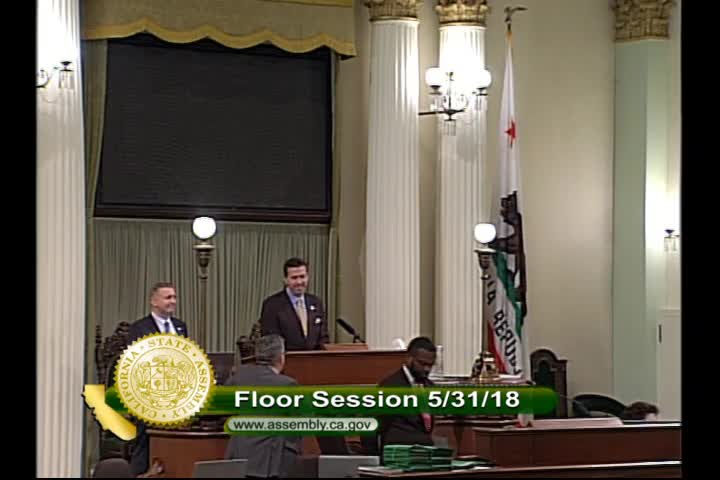 1MIN
Assembly Floor
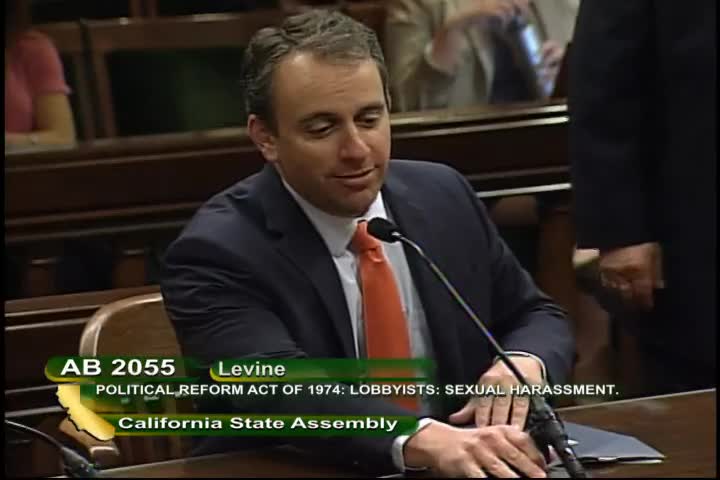 2MIN
Assembly Standing Committee on Judiciary
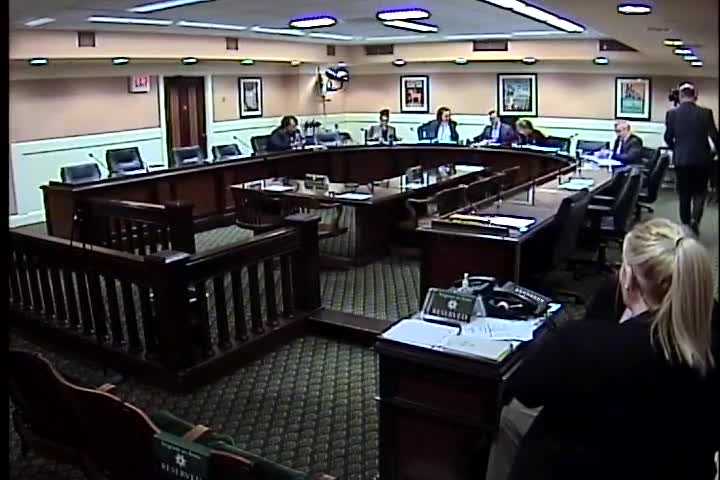 17MIN
Assembly Standing Committee on Elections and Redistricting
Bill Author

Bill Co-Author(s):