AB 2064: Integrated regional water management plans: grants: advanced payment.
- Session Year: 2017-2018
- House: Assembly
- Latest Version Date: 2018-08-31
Existing law, the Integrated Regional Water Management Planning Act, authorizes a regional water management group to prepare and adopt an integrated regional water management plan with specified components relating to water supply and water quality. Existing law provides that an integrated regional water management plan is eligible for funding allocated specifically for implementation of integrated regional water management.
Existing law, until January 1, 2025, requires a regional water management group, within 90 days of notice that a grant has been awarded, to provide the Department of Water Resources with a list of projects to be funded by the grant funds if the project proponent is a nonprofit organization or a disadvantaged community or the project benefits a disadvantaged community. Existing law requires the department, within 60 days of receiving this project information, to provide advanced payment of 50% of the grant award for those projects that satisfy specified criteria, including that the grant award for the project is less than $1,000,000, and requires the advanced funds to be handled as prescribed, including that the funds are required to be spent within 6 months of the date of receipt unless the department waives this requirement.
The bill, until January 1, 2025, would require the department to provide a project proponent that requests advanced payment and satisfies certain criteria with advanced payment for those projects of $500,000 or 50% of the grant award, whichever is less. The bill would eliminate the requirement that the grant award for the project be less than $1,000,000 to obtain advanced payment. The bill would require a project proponent, upon completion of the first one-half of a project receiving an above-described grant award, to provide a first one-half project accountability report to the department that reports the completion of objectives for the first one-half of the project and documents the expenditure and use of advanced grant funds. The bill would require the department to provide advanced payment of the remaining grant award for a project that received advanced payment for the first one-half of the project within 60 days of receiving the report if the project meets certain criteria. The bill would require the department to withhold 10% of the grant award as retention proceeds that the department is required to release fully to the project proponent upon verification by the department of project completion. The bill would require a project proponent to submit a final project accountability report to the department upon completion of the project.
Existing law, the Integrated Regional Water Management Planning Act, authorizes a regional water management group to prepare and adopt an integrated regional water management plan with specified components relating to water supply and water quality. Existing law provides that an integrated regional water management plan is eligible for funding allocated specifically for implementation of integrated regional water management.
Existing law, until January 1, 2025, requires a regional water management group, within 90 days of notice that a grant has been awarded, to provide the Department of Water Resources with a list of projects to be funded by the grant funds if the project proponent is a nonprofit organization or a disadvantaged community or the project benefits a disadvantaged community. Existing law requires the department, within 60 days of receiving this project information, to provide advanced payment of 50% of the grant award for those projects that satisfy specified criteria, including that the grant award for the project is less than $1,000,000, and requires the advanced funds to be handled as prescribed, including that the funds are required to be spent within 6 months of the date of receipt unless the department waives this requirement.
The bill, until January 1, 2025, would require the department to provide a project proponent that requests and demonstrates a need for advanced payment and satisfies certain criteria with advanced payment for those projects of $500,000 or 50% of the grant award, whichever is less. The bill would eliminate the requirement that the grant award for the project be less than $1,000,000 to obtain advanced payment. The bill would require a project proponent, upon completion of the first one-half of a project receiving an above-described grant award, to provide a first one-half project accountability report to the department that reports the completion of objectives for the first one-half of the project and documents the expenditure and use of advanced grant funds. The bill would require the department to provide advanced payment of the remaining grant award for a project that received advanced payment for the first one-half of the project within 60 days of receiving the report if the project meets certain criteria and would require the advanced funds to be handled as prescribed, including that the funds are required to be spent within 6 months of the date of receipt unless the department waives this requirement. criteria. The bill would authorize require the department to withhold up to 10% of the remaining advanced grant award as retention proceeds that the department is required to release fully to the project proponent upon verification by the department of project completion. The bill would require a project proponent to submit a final project accountability report to the department upon completion of the project.
Existing law, the Integrated Regional Water Management Planning Act, authorizes a regional water management group to prepare and adopt an integrated regional water management plan with specified components relating to water supply and water quality. Existing law provides that an integrated regional water management plan is eligible for funding allocated specifically for implementation of integrated regional water management.
Existing law, until January 1, 2025, requires a regional water management group, within 90 days of notice that a grant has been awarded, to provide the Department of Water Resources with a list of projects to be funded by the grant funds if the project proponent is a nonprofit organization or a disadvantaged community or the project benefits a disadvantaged community. Existing law requires the department, within 60 days of receiving this project information, to provide advanced payment of 50% of the grant award for those projects that satisfy specified criteria criteria, including that the grant award for the project is less than $1,000,000, and require requires the advanced funds to be handled, handled as prescribed, including that the funds are required to be spent within 6 months of the date of receipt unless the department waives this requirement.
The bill, until January 1, 2025, would require the department to provide a project proponent that requests and demonstrates a need for advanced payment with advanced payment for those projects of $500,000 or 50% of the grant award, whichever is less. The bill would eliminate the requirement that the grant award for the project be less than $1,000,000 to obtain advanced payment. The bill would require a project proponent, upon completion of the first one-half of a project receiving an above-described grant award, to provide a first one-half project accountability report to the department that reports the completion of objectives for the first one-half of the project and documents the expenditure and use of advanced grant funds. The bill would require the department to provide advanced payment of the remaining grant award within 60 days of receiving the report if the project meets certain criteria and would require the advanced funds to be handled as prescribed, including that the funds are required to be spent within 6 months of the date of receipt unless the department waives this requirement. The bill would authorize the department to withhold up to 10% of the remaining advanced grant award as retention proceeds that the department is required to release fully to the project proponent upon verification by the department of project completion. The bill would require a project proponent to submit a final project accountability report to the department upon completion of the project.
Existing law, the Integrated Regional Water Management Planning Act, authorizes a regional water management group to prepare and adopt an integrated regional water management plan with specified components relating to water supply and water quality. Existing law provides that an integrated regional water management plan is eligible for funding allocated specifically for implementation of integrated regional water management.
Existing law, until January 1, 2025, requires a regional water management group, within 90 days of notice that a grant has been awarded, to provide the Department of Water Resources with a list of projects to be funded by the grant funds if the project proponent is a nonprofit organization or a disadvantaged community or the project benefits a disadvantaged community. Existing law requires the department, within 60 days of receiving this project information, to provide advanced payment of 50% of the grant award for those projects that satisfy specified criteria and require the advanced funds to be handled, as prescribed, including that the funds are required to be spent within 6 months of the date of receipt unless the department waives this requirement.
The bill, until January 1, 2025, would require a project proponent, upon completion of the first one-half of a project receiving an above-described grant award, to provide a first one-half project accountability report to the department that reports the completion of objectives for the first one-half of the project and documents the expenditure and use of advanced grant funds. The bill would require the department to provide advanced payment of the remaining grant award within 60 days of receiving the report if the project meets certain criteria. criteria and would require the advanced funds to be handled as prescribed, including that the funds are required to be spent within 6 months of the date of receipt unless the department waives this requirement. The bill would authorize the department to withhold up to 10% of the remaining advanced grant award as retention proceeds that the department is required to release fully to the project proponent upon verification by the department of project completion. The bill would require a project proponent to submit a final project accountability report to the department upon completion of the project.
Existing law, the Integrated Regional Water Management Planning Act, authorizes a regional water management group to prepare and adopt an integrated regional water management plan with specified components relating to water supply and water quality. Existing law provides that an integrated regional water management plan is eligible for funding allocated specifically for implementation of integrated regional water management.
Existing law, until January 1, 2025, requires a regional water management group, within 90 days of notice that a grant has been awarded, to provide the Department of Water Resources with a list of projects to be funded by the grant funds if the project proponent is a nonprofit organization or a disadvantaged community or the project benefits a disadvantaged community. Existing law requires the department, within 60 days of receiving this project information, to provide advanced payment of 50% of the grant award for those projects that satisfy specified criteria and require the advanced funds to be handled, as prescribed, including that the funds are required to be spent within 6 months of the date of receipt unless the department waives this requirement.
The bill, until January 1, 2025, would require a project proponent, upon completion of the first one-half of a project receiving an above-described grant award, to provide a first one-half project accountability report to the department that reports the completion of objectives for the first one-half of the project and documents the expenditure and use of advanced grant funds. The bill would require the department to provide advanced payment of the remaining grant award within 60 days of receiving the report if the project meets certain criteria. The bill would authorize the department to withhold up to 10% of the remaining advanced grant award as retention proceeds that the department is required to release fully to the project proponent upon verification by the department of project completion. The bill would require a project proponent to submit a final project accountability report to the department upon completion of the project.
(a)Within 90 days of notice that a grant for projects included and implemented in an integrated regional water management plan has been awarded, the regional water management group shall provide the department with a list of projects to be funded by the grant funds where the project proponent is a nonprofit organization or a disadvantaged community, or the project benefits a disadvantaged community. The list shall specify how the projects are consistent with the adopted integrated regional water management plan and shall include all of the following information:
(1)Descriptive information concerning each project identified.
(2)The names of the entities that will receive the funding for each project, including, but not limited to, an identification as to whether the project proponent or proponents are nonprofit organizations or a disadvantaged community.
(3)The budget of each project.
(4)The anticipated schedule for each project.
(5)The qualifications of the project proponent to manage the project and the finances of the project pursuant to this chapter.
(b)Within 60 days of receiving the project information pursuant to subdivision (a), the department shall provide a project proponent that requests an advanced payment with advanced payment of five hundred thousand dollars ($500,000) or 50 percent of the grant award, whichever is less, provided that the project satisfies the following criteria:
(1)The project proponent is a nonprofit organization or a disadvantaged community or the project benefits a disadvantaged community.
(2)The project proponent has demonstrated to the departments satisfaction a need for an advanced payment.
(3)(A)The project proponent has demonstrated to the departments satisfaction that the project proponent is sufficiently qualified to manage the project and the finances of the project.
(B)If the department is not satisfied that the project proponent is sufficiently qualified to manage the project and the finances of the project, the department may impose additional requirements on the project proponent, including requiring additional partners to manage the project, the financing, or both.
(c)The department shall not provide advanced payment to a project proponent if the project proponent rejects additional requirements imposed by the department pursuant to subparagraph (B) of paragraph (3) of subdivision (b) or if the department determines that no additional requirements it may impose could make the project proponent sufficiently qualified to manage the project and the finances of the project.
SEC. 2.Section 10551.2 is added to the Water Code, to read:10551.2.Funds advanced pursuant to this chapter shall be handled as follows:
(a)The recipient shall place the funds in a noninterest-bearing account until expended.
(b)The funds shall be spent within six months of the date of receipt, unless the department waives this requirement.
(c)The recipient shall, on a quarterly basis, provide an accountability report to the department regarding the expenditure and use of any advanced grant funds that provides, at a minimum, the following information:
(1)An itemization as to how advanced payment funds provided under this chapter have been expended.
(2)A project itemization as to how any remaining advanced payment funds provided under this chapter will be expended over the period specified in subdivision (b).
(3)Whether the funds are placed in a noninterest-bearing account, and if so, the date that occurred and the dates of withdrawals of funds from that account, if applicable.
(4)An evaluation of whether the project is on schedule or not. If the project is behind schedule, the report shall identify what has caused the delay and actions taken or being taken to remedy the delay.
(d)If funds are not expended, the unused portion of the grant shall be returned to the department within 60 days after project completion or the end of the grant performance period, whichever is earlier.
(e)The department may adopt additional requirements for the recipient regarding the use of the advanced payment to ensure that the funds are used properly, including provisions for random audits and other verifications of the authorized use of funds.
SEC. 3.Section 10551.4 is added to the Water Code, to read:10551.4.(a)Upon completion of the first one-half of a project receiving a grant award pursuant to this chapter, the project proponent shall provide a first one-half project accountability report to the department that reports the completion of objectives for the first one-half of the project and documents the expenditure and use of advanced grant funds.
(b)Within 60 days of receiving the report pursuant to subdivision (a), the department shall provide advanced payment of the remaining grant award for a project that received advanced payment for the first one-half of the project and meets both of the following criteria:
(1)The department determines that the project proponent has completed identified project objectives within the first one-half of the project.
(2)The department determines that the originally advanced grant award has been expended consistent with the guidelines and requirements provided by the department.
(c)The department shall withhold 10 percent of the total grant award as retention proceeds.
(d)Notwithstanding subdivision (b), the department may, at its sole discretion, provide funding for the second half of the project through a drawdown based on completion of project milestones.
SEC. 4.Section 10551.6 is added to the Water Code, to read:10551.6.Upon completion of the project, the project proponent shall submit to the department a final project accountability report. The department shall undertake verification of project completion and once the project is deemed complete, the department shall release any retention proceeds fully to the project proponent.
SEC. 5.Section 10551.9 is added to the Water Code, to read:10551.9.As used in this chapter:
(a)Disadvantaged community has the same meaning as defined in subdivision (j) of Section 79702.
(b)Nonprofit organization has the same meaning as defined in subdivision (p) of Section 79702.
(a)Within 90 days of notice that a grant for projects included and implemented in an integrated regional water management plan has been awarded, the regional water management group shall provide the department with a list of projects to be funded by the grant funds where the project proponent is a nonprofit organization or a disadvantaged community, or the project benefits a disadvantaged community. The list shall specify how the projects are consistent with the adopted integrated regional water management plan and shall include all of the following information:
(1)Descriptive information concerning each project identified.
(2)The names of the entities that will receive the funding for each project, including, but not limited to, an identification as to whether the project proponent or proponents are nonprofit organizations or a disadvantaged community.
(3)The budget of each project.
(4)The anticipated schedule for each project.
(5)The qualifications of the project proponent to manage the project and the finances of the project pursuant to this chapter.
(b)Within 60 days of receiving the project information pursuant to subdivision (a), the department shall provide a project proponent that requests an advanced payment with advanced payment of five hundred thousand dollars ($500,000) or 50 percent of the grant award, whichever is less, provided that the project satisfies the following criteria:
(1)The project proponent is a nonprofit organization or a disadvantaged community or the project benefits a disadvantaged community.
(2)The project proponent has demonstrated to the departments satisfaction a need for an advance advanced payment.
(3)(A)The project proponent has demonstrated to the departments satisfaction that the project proponent is sufficiently qualified to manage the project and the finances of the project.
(B)If the department is not satisfied that the project proponent is sufficiently qualified to manage the project and the finances of the project, the department may impose additional requirements on the project proponent, including requiring additional partners to manage the project, the financing, or both.
(c)The department shall not provide advanced payment to a project proponent if the project proponent rejects additional requirements imposed by the department pursuant to subparagraph (B) of paragraph (3) of subdivision (b) or if the department determines that no additional requirements it may impose could make the project proponent sufficiently qualified to manage the project and the finances of the project.
SEC. 2.Section 10551.2 is added to the Water Code, to read:10551.2.Funds advanced pursuant to this chapter shall be handled as follows:
(a)The recipient shall place the funds in a noninterest-bearing account until expended.
(b)The funds shall be spent within six months of the date of receipt, unless the department waives this requirement.
(c)The recipient shall, on a quarterly basis, provide an accountability report to the department regarding the expenditure and use of any advanced grant funds that provides, at a minimum, the following information:
(1)An itemization as to how advanced payment funds provided under this chapter have been expended.
(2)A project itemization as to how any remaining advanced payment funds provided under this chapter will be expended over the period specified in subdivision (b).
(3)Whether the funds are placed in a noninterest-bearing account, and if so, the date that occurred and the dates of withdrawals of funds from that account, if applicable.
(4)An evaluation of whether the project is on schedule or not. If the project is behind schedule, the report shall identify what has caused the delay and actions taken or being taken to remedy the delay.
(d)If funds are not expended, the unused portion of the grant shall be returned to the department within 60 days after project completion or the end of the grant performance period, whichever is earlier.
(e)The department may adopt additional requirements for the recipient regarding the use of the advanced payment to ensure that the funds are used properly, including provisions for random audits and other verifications of the authorized use of funds.
SEC. 3.Section 10551.4 is added to the Water Code, to read:10551.4.(a)Upon completion of the first one-half of a project receiving a grant award pursuant to this chapter, the project proponent shall provide a first one-half project accountability report to the department that reports the completion of objectives for the first one-half of the project and documents the expenditure and use of advanced grant funds.
(b)Within 60 days of receiving the report pursuant to subdivision (a), the department shall provide advanced payment of the remaining grant award for a project that received advanced payment for the first one-half of the project and meets both of the following criteria:
(1)The department determines that the project proponent has completed identified project objectives within the first one-half of the project.
(2)The department determines that the originally advanced grant award has been expended consistent with the guidelines and requirements provided by the department.
(c)The department shall withhold 10 percent of the total grant award as retention proceeds.
(d)Notwithstanding subdivision (b), the department may, at its sole discretion, provide funding for the second half of the project through a drawdown based on completion of project milestones.
SEC. 4.Section 10551.6 is added to the Water Code, to read:10551.6.Upon completion of the project, the project proponent shall submit to the department a final project accountability report. The department shall undertake verification of project completion and once the project is deemed complete, the department shall release any retention proceeds fully to the project proponent.
SEC. 5.Section 10551.9 is added to the Water Code, to read:10551.9.As used in this chapter:
(a)Disadvantaged community has the same meaning as defined in subdivision (j) of Section 79702.
(b)Nonprofit organization has the same meaning as defined in subdivision (p) of Section 79702.
(a)Within 90 days of notice that a grant for projects included and implemented in an integrated regional water management plan has been awarded, the regional water management group shall provide the department with a list of projects to be funded by the grant funds where the project proponent is a nonprofit organization or a disadvantaged community, or the project benefits a disadvantaged community. The list shall specify how the projects are consistent with the adopted integrated regional water management plan and shall include all of the following information:
(1)Descriptive information concerning each project identified.
(2)The names of the entities that will receive the funding for each project, including, but not limited to, an identification as to whether the project proponent or proponents are nonprofit organizations or a disadvantaged community.
(3)The budget of each project.
(4)The anticipated schedule for each project.
(5)The qualifications of the project proponent to manage the project and the finances of the project pursuant to this chapter.
(b)Within 60 days of receiving the project information pursuant to subdivision (a), the department shall provide a project proponent that requests and demonstrates a need for an advanced payment with advanced payment of five hundred thousand dollars ($500,000) or 50 percent of the grant award, whichever is less, for projects in which the project proponent is a nonprofit organization or a disadvantaged community, or the project benefits a disadvantaged community. provided that the project satisfies the following criteria:
(1)The project proponent is a nonprofit organization or a disadvantaged community or the project benefits a disadvantaged community.
(2)The project proponent has demonstrated to the departments satisfaction a need for an advance payment.
(3)(A)The project proponent has demonstrated to the departments satisfaction that the project proponent is sufficiently qualified to manage the project and the finances of the project.
(B)If the department is not satisfied that the project proponent is sufficiently qualified to manage the project and the finances of the project, the department may impose additional requirements on the project proponent, including requiring additional partners to manage the project, the financing, or both.
(c)Funds advanced pursuant to subdivision (b) shall be handled as follows:(1)The recipient shall place the funds in a noninterest-bearing account until expended.(2)The funds shall be spent within six months of the date of receipt, unless the department waives this requirement.(3)The recipient shall, on a quarterly basis, provide an accountability report to the department regarding the expenditure and use of any advanced grant funds that provides, at a minimum, the following information:(A)An itemization as to how advanced payment funds provided under this section have been expended.(B)A project itemization as to how any remaining advanced payment funds provided under this section will be expended over the period specified in paragraph (2).(C)Whether the funds are placed in a noninterest-bearing account, and if so, the date that occurred and the dates of withdrawals of funds from that account, if applicable.(4)If funds are not expended, the unused portion of the grant shall be returned to the department within 60 days after project completion or the end of the grant performance period, whichever is earlier.(5)The department may adopt additional requirements for the recipient regarding the use of the advanced payment to ensure that the funds are used properly.(d)As used in this section:(1)Disadvantaged community has the same meaning as defined in subdivision (j) of Section 79702.(2)Nonprofit organization has the same meaning as defined in subdivision (p) of Section 79702.SEC. 2.Section 10551.2 is added to the Water Code, to read:10551.2.Funds advanced pursuant to this chapter shall be handled as follows:
(a)The recipient shall place the funds in a noninterest-bearing account until expended.
(b)The funds shall be spent within six months of the date of receipt, unless the department waives this requirement.
(c)The recipient shall, on a quarterly basis, provide an accountability report to the department regarding the expenditure and use of any advanced grant funds that provides, at a minimum, the following information:
(1)An itemization as to how advanced payment funds provided under this chapter have been expended.
(2)A project itemization as to how any remaining advanced payment funds provided under this chapter will be expended over the period specified in subdivision (b).
(3)Whether the funds are placed in a noninterest-bearing account, and if so, the date that occurred and the dates of withdrawals of funds from that account, if applicable.
(4)An evaluation of whether the project is on schedule or not. If the project is behind schedule, the report shall identify what has caused the delay and actions taken or being taken to remedy the delay.
(d)If funds are not expended, the unused portion of the grant shall be returned to the department within 60 days after project completion or the end of the grant performance period, whichever is earlier.
(e)The department may adopt additional requirements for the recipient regarding the use of the advanced payment to ensure that the funds are used properly, including provisions for random audits and other verifications of the authorized use of funds.
SEC. 2.SEC. 3.Section 10551.5 10551.4 is added to the Water Code, to read:10551.5.10551.4.(a)Upon completion of the first one-half of a project receiving a grant award pursuant to this chapter, the project proponent shall provide a first one-half project accountability report to the department that reports the completion of objectives for the first one-half of the project and documents the expenditure and use of advanced grant funds.
(b)Within 60 days of receiving the report pursuant to subdivision (a), the department shall provide advanced payment of the remaining 50 percent of the grant award for those projects a project that received advanced payment for the first one-half of the project, project and meet meets both of the following criteria:
(1)The department determines that the project proponent has completed identified project objectives within the first one-half of the project.
(2)The department determines that the originally advanced grant award has been expended consistent with the guidelines and requirements provided by the department.
(c)The department may withhold up to shall withhold 10 percent of the advanced total grant award provided pursuant to subdivision (b) as retention proceeds.
(d)Funds advanced pursuant to subdivision (b) shall be handled as follows:(1)The recipient shall place the funds in a noninterest-bearing account until expended.(2)The funds shall be spent within six months of the date of receipt, unless the department waives this requirement.(3)The recipient shall, on a quarterly basis, provide an accountability report to the department regarding the expenditure and use of any advanced grant funds that provides, at a minimum, the following information:(A)An itemization as to how advanced payment funds provided under this section have been expended.(B)A project itemization as to how any remaining advanced payment funds provided under this section will be expended over the period specified in paragraph (2).(C)Whether the funds are placed in a noninterest-bearing account, and if so, the date that occurred and the dates of withdrawals of funds from that account, if applicable.(4)If funds are not expended, the unused portion of the grant shall be returned to the department within 60 days after project completion or the end of the grant performance period, whichever is earlier.(5)The department may adopt additional requirements for the recipient regarding the use of the advanced payment to ensure that the funds are used properly. (e)Upon completion of the project, the project proponent shall submit to the department a final project accountability report. The department shall undertake verification of project completion and once the project is deemed complete, the department shall release retention proceeds fully to the project proponent.(d)Notwithstanding subdivision (b), the department may, at its sole discretion, provide funding for the second half of the project through a drawdown based on completion of project milestones.
SEC. 4.Section 10551.6 is added to the Water Code, to read:10551.6.Upon completion of the project, the project proponent shall submit to the department a final project accountability report. The department shall undertake verification of project completion and once the project is deemed complete, the department shall release any retention proceeds fully to the project proponent.
SEC. 5.Section 10551.9 is added to the Water Code, to read:10551.9.As used in this chapter:
(a)Disadvantaged community has the same meaning as defined in subdivision (j) of Section 79702.
(b)Nonprofit organization has the same meaning as defined in subdivision (p) of Section 79702.
(a)Within 90 days of notice that a grant for projects included and implemented in an integrated regional water management plan has been awarded, the regional water management group shall provide the department with a list of projects to be funded by the grant funds where the project proponent is a nonprofit organization or a disadvantaged community, or the project benefits a disadvantaged community. The list shall specify how the projects are consistent with the adopted integrated regional water management plan and shall include all of the following information:
(1)Descriptive information concerning each project identified.
(2)The names of the entities that will receive the funding for each project, including, but not limited to, an identification as to whether the project proponent or proponents are nonprofit organizations or a disadvantaged community.
(3)The budget of each project.
(4)The anticipated schedule for each project.
(b)Within 60 days of receiving the project information pursuant to subdivision (a), the department shall provide advanced payment of a project proponent that requests and demonstrates a need for advanced payment with advanced payment of five hundred thousand dollars ($500,000) or 50 percent of the grant award for those projects that satisfy both of the following criteria: award, whichever is less, for projects in which the project proponent is a nonprofit organization or a disadvantaged community, or the project benefits a disadvantaged community.
(1)The project proponent is a nonprofit organization or a disadvantaged community, or the project benefits a disadvantaged community.(2)The grant award for the project is less than one million dollars ($1,000,000).(c)Funds advanced pursuant to subdivision (b) shall be handled as follows:
(1)The recipient shall place the funds in a noninterest-bearing account until expended.
(2)The funds shall be spent within six months of the date of receipt, unless the department waives this requirement.
(3)The recipient shall, on a quarterly basis, provide an accountability report to the department regarding the expenditure and use of any advanced grant funds that provides, at a minimum, the following information:
(A)An itemization as to how advanced payment funds provided under this section have been expended.
(B)A project itemization as to how any remaining advanced payment funds provided under this section will be expended over the period specified in paragraph (2).
(C)Whether the funds are placed in a noninterest-bearing account, and if so, the date that occurred and the dates of withdrawals of funds from that account, if applicable.
(4)If funds are not expended, the unused portion of the grant shall be returned to the department within 60 days after project completion or the end of the grant performance period, whichever is earlier.
(5)The department may adopt additional requirements for the recipient regarding the use of the advanced payment to ensure that the funds are used properly.
(d)As used in this section:
(1)Disadvantaged community has the same meaning as defined in subdivision (j) of Section 79702.
(2)Nonprofit organization has the same meaning as defined in subdivision (p) of Section 79702.
SECTION 1.SEC. 2.Section 10551.5 is added to the Water Code, to read:10551.5.(a)Upon completion of the first one-half of a project receiving a grant award pursuant to this chapter, the project proponent shall provide a first one-half project accountability report to the department that reports the completion of objectives for the first one-half of the project and documents the expenditure and use of advanced grant funds.
(b)Within 60 days of receiving the report pursuant to subdivision (a), the department shall provide advanced payment of the remaining 50 percent of the grant award for those projects that received advanced payment for the first one-half of the project, and meet both of the following criteria:
(1)The department determines that the project proponent has completed identified project objectives within the first one-half of the project.
(2)The department determines that the originally advanced grant award has been expended consistent with the guidelines and requirements provided by the department.
(c)The department may withhold up to 10 percent of the advanced grant award provided pursuant to subdivision (b) as retention proceeds.
(d)Funds advanced pursuant to subdivision (b) shall be handled as follows:
(1)The recipient shall place the funds in a noninterest-bearing account until expended.
(2)The funds shall be spent within six months of the date of receipt, unless the department waives this requirement.
(3)The recipient shall, on a quarterly basis, provide an accountability report to the department regarding the expenditure and use of any advanced grant funds that provides, at a minimum, the following information:
(A)An itemization as to how advanced payment funds provided under this section have been expended.
(B)A project itemization as to how any remaining advanced payment funds provided under this section will be expended over the period specified in paragraph (2).
(C)Whether the funds are placed in a noninterest-bearing account, and if so, the date that occurred and the dates of withdrawals of funds from that account, if applicable.
(4)If funds are not expended, the unused portion of the grant shall be returned to the department within 60 days after project completion or the end of the grant performance period, whichever is earlier.
(5)The department may adopt additional requirements for the recipient regarding the use of the advanced payment to ensure that the funds are used properly.
(e)Upon completion of the project, the project proponent shall submit to the department a final project accountability report. The department shall undertake verification of project completion and once the project is deemed complete, the department shall release retention proceeds fully to the project proponent.
(a)Upon completion of the first one-half of a project receiving a grant award pursuant to this chapter, the project proponent shall provide a first one-half project accountability report to the department that reports the completion of objectives for the first one-half of the project and documents the expenditure and use of advanced grant funds.
(b)Within 60 days of receiving the report pursuant to subdivision (a), the department shall provide advanced payment of the remaining 50 percent of the grant award for those projects that meet the criteria established in Section 10551 and received advanced payment for the first one-half of the project, and meet both of the following criteria:
(1)The department determines that the project proponent has completed identified project objectives within the first half one-half of the project.
(2)The department determines that the originally advanced grant award has been expended consistent with the guidelines and requirements provided by the department.
(c)The department may withhold up to 10 percent of the advanced grant award provided pursuant to subdivision (b) as retention proceeds.
(d)Funds advanced pursuant to subdivision (b) shall be handled as follows:
(1)The recipient shall place the funds in a noninterest-bearing account until expended.
(2)The funds shall be spent within six months of the date of receipt, unless the department waives this requirement.
(3)The recipient shall, on a quarterly basis, provide an accountability report to the department regarding the expenditure and use of any advanced grant funds that provides, at a minimum, the following information:
(A)An itemization as to how advanced payment funds provided under this section have been expended.
(B)A project itemization as to how any remaining advanced payment funds provided under this section will be expended over the period specified in paragraph (2).
(C)Whether the funds are placed in a noninterest-bearing account, and if so, the date that occurred and the dates of withdrawals of funds from that account, if applicable.
(4)If funds are not expended, the unused portion of the grant shall be returned to the department within 60 days after project completion or the end of the grant performance period, whichever is earlier.
(5)The department may adopt additional requirements for the recipient regarding the use of the advanced payment to ensure that the funds are used properly.
(d)(e)Upon completion of the project, the project proponent shall submit to the department a final project accountability report. The department shall undertake verification of project completion and once the project is deemed complete, the department shall release retention proceeds fully to the project proponent.
(a)Upon completion of the first one-half of a project receiving a grant award pursuant to this chapter, the project proponent shall provide a first one-half project accountability report to the department that reports the completion of objectives for the first one-half of the project and documents the expenditure and use of advanced grant funds.
(b)Within 60 days of receiving the report pursuant to subdivision (a), the department shall provide advanced payment of the remaining 50 percent of the grant award for those projects that meet the criteria established in Section 10551 and received advanced payment for the first one-half of the project, and meet both of the following criteria:
(1)The department determines that the project proponent has completed identified project objectives within the first half of the project.
(2)The department determines that the originally advanced grant award has been expended consistent with the guidelines and requirements provided by the department.
(c)The department may withhold up to 10 percent of the advanced grant award provided pursuant to subdivision (b) as retention proceeds.
(d)Upon completion of the project, the project proponent shall submit to the department a final project accountability report. The department shall undertake verification of project completion and once the project is deemed complete, the department shall release retention proceeds fully to the project proponent.
|
Date
|
Status
|
|---|---|
| Sep 28, 2018 | Vetoed by Governor. |
| Sep 6, 2018 | Enrolled and presented to the Governor at 3 p.m. |
| Aug 29, 2018 | Senate amendments concurred in. To Engrossing and Enrolling. |
| Aug 24, 2018 | In Assembly. Concurrence in Senate amendments pending. May be considered on or after August 26 pursuant to Assembly Rule 77. |
| Aug 24, 2018 | Read third time. Passed. Ordered to the Assembly. |
| Aug 21, 2018 | Ordered to special consent calendar. |
| Aug 17, 2018 | From committee: Do pass. (Ayes 7. Noes 0.) (August 16). |
| Aug 6, 2018 | In committee: Referred to APPR. suspense file. |
| Jun 27, 2018 | Read second time and amended. Re-referred to Com. on APPR. |
| Jun 26, 2018 | From committee: Amend, and do pass as amended and re-refer to Com. on APPR. (Ayes 7. Noes 0.) (June 20). |
| Jun 13, 2018 | Read second time and amended. Re-referred to Com. on EQ. |
| Jun 12, 2018 | From committee: Amend, and do pass as amended and re-refer to Com. on EQ. (Ayes 9. Noes 0.) (June 12). |
| Jun 7, 2018 | Referred to Coms. on N.R. & W. and EQ. |
| May 31, 2018 | In Senate. Read first time. To Com. on RLS. for assignment. |
| May 30, 2018 | Read third time. Passed. Ordered to the Senate. |
| May 29, 2018 | Read second time. Ordered to third reading. |
| May 25, 2018 | From committee: Amend, and do pass as amended. (Ayes 12. Noes 0.) (May 25). |
| Apr 11, 2018 | In committee: Set, first hearing. Referred to APPR. suspense file. |
| Apr 3, 2018 | Re-referred to Com. on APPR. |
| Apr 2, 2018 | Read second time and amended. |
| Mar 22, 2018 | From committee: Amend, and do pass as amended and re-refer to Com. on APPR. (Ayes 15. Noes 0.) (March 20). |
| Feb 16, 2018 | Referred to Com. on W.,P., & W. |
| Feb 8, 2018 | From printer. May be heard in committee March 10. |
| Feb 7, 2018 | Read first time. To print. |
|
Date
|
Description
|
Location
|
Votes
|
|
|---|---|---|---|---|
| Aug 29, 2018 | AB 2064 GLORIA Concurrence in Senate Amendments | Assembly Floor |
Passed |
|
| Aug 24, 2018 | Special Consent AB2064 | Senate Floor |
Passed |
|
| Aug 16, 2018 | Do pass | Senate Standing Committee on Appropriations |
Passed |
|
| Aug 6, 2018 | Placed on suspense file | Senate Standing Committee on Appropriations |
Passed |
|
| Jun 20, 2018 | Do pass as amended, but first amend, and re-refer to the Committee on [Appropriations] | Senate Standing Committee on Environmental Quality |
Passed |
|
| Jun 12, 2018 | Do pass as amended, but first amend, and re-refer to the Committee on [Environmental Quality] | Senate Standing Committee on Natural Resources and Water |
Passed |
|
| May 30, 2018 | AB 2064 GLORIA Assembly Third Reading | Assembly Floor |
Passed |
|
| May 25, 2018 | Do pass as amended. | Assembly Standing Committee on Appropriations |
Passed |
|
| Mar 20, 2018 | Do pass as amended and be re-referred to the Committee on [Appropriations] | Assembly Standing Committee on Water, Parks, and Wildlife |
Passed |
This list shows positions taken on this bill by organizations on the date displayed, which is linked to the original source.
Positions by individuals are not included.
|
Organization
|
Position
|
Date
|
|---|---|---|
| According To The Desert Water Agency: | ** Against | Jun 18, 2018 |
| Arguments In Opposition: | ** Against | Jun 18, 2018 |
| As Used In This Section: | ** Against | Jun 8, 2018 |
| California Municipal Utilities Association | ** Support | Aug 18, 2018 |
| California Water Association | ** Support | Aug 18, 2018 |
| City Of San Diego | ** Support | Aug 18, 2018 |
| Clean Water Action | ** Support | Aug 18, 2018 |
| Community Water Center | ** Support | Aug 18, 2018 |
| Descriptive Information Concerning Each Project Identified. | ** Against | Jun 8, 2018 |
| Desert Water Agency | ** Against | Aug 18, 2018 |
| East Bay Municipal Utility District | ** Support | Aug 18, 2018 |
| Leadership Council for Justice & Accountability | ** Support | Aug 18, 2018 |
| Mock-Up Of Suggested Amendments | ** Against | Jun 8, 2018 |
| North Coast Resource Partnership | ** Support | Aug 18, 2018 |
| Rural County Representatives of California | ** Support | Aug 18, 2018 |
| San Diego County Water Authority | ** Support | Aug 18, 2018 |
| San Diego Integrated Regional Water Management Advisory Group | * Support | Jun 12, 2018 |
| The Anticipated Schedule For Each Project. | ** Against | Jun 8, 2018 |
| The Budget Of Each Project. | ** Against | Jun 8, 2018 |
GOVERNOR'S VETO
GV Bill Id:AB 2064
Author:(Gloria and Weber)
As Enrolled Ver:September 6, 2018
2/3 vote
ASSEMBLY: | 78-0 | (May 30, 2018) | SENATE: | 39-0 | (August 24, 2018) |
ASSEMBLY: | 80-0 | (August 29, 2018) |
Original Committee Reference: W., P., & W.
SUBJECT: Integrated regional water management plans: grants: advanced payment
SUMMARY: Requires the Department of Water Resources (DWR) to provide advanced funding, under specified conditions, of Integrated Regional Water Management Plan (IRWMP) grants. Specifically, this bill:
- Requires the DWR, within 60 days of receiving specified project information, to provide advanced payment of $500,000 or 50% of the grant award, whichever is less, for those projects that satisfy specified criteria, and where the project proponent has demonstrated a need for advanced payment.
- Eliminates the requirement that the grant award for the project be less than $1 million to obtain advanced payment.
- Requires the advanced funds to be handled as follows:
- The recipient shall place the funds in a noninterest-bearing account until expended;
- The funds shall be spent within six months of the date of receipt, unless the SWRCB waives this requirement; and
- The recipient shall, on a quarterly basis, provide an accountability report to the DWR regarding the expenditure and use of any advanced grant funds that provides specified information.
- Requires the project proponent receiving advanced funding for the first $500,000 or 50%, of the grant, whichever is less, to submit an accountability report to the DWR upon completion of the first half of the project, as specified.
- Requires the DWR to provide advanced payment of the remaining grant award within 60 days of receiving the first half accountability report for projects that meet specified criteria.
- Allows the DWR to provide funding for the second half of the project through a drawdown based on completion of project milestones, rather than an advanced payment.
- Requires the DWR to withhold 10% of the grant award as retention proceeds.
- Requires the project proponent to submit a final project accountability report to the DWR upon completion of the project, and requires the DWR to release retention proceeds fully to the project proponent once the DWR verifies project completion.
- Authorizes the DWR to adopt additional requirements for advanced payments, and allows the DWR to reject an advanced payment request if the project proponent is unwilling to comply with additional requirements imposed by the DWR or if the DWR determines that no additional requirements it may impose could make the project proponent sufficiently qualified to manage the project and the finances of the project
The Senate amendments:
- Allow the DWR to impose additional requirements on the project proponent, including requiring additional partners to manage the project, the financing, or both, if the DWR is not satisfied that the project proponent is sufficiently qualified to manage the project and the finances of the project.
- Require the project proponent to include information in required quarterly accountability reports about whether the project is on schedule or not. If the project is behind schedule, the report has to identify what has caused the delay and actions taken or being taken to remedy the delay.
- Require, rather than allow, the DWR to withhold 10% of the grant award as retention proceeds.
- Allow the DWR, at their sole discretion, to provide funding for the second half of the project through a drawdown based on completion of project milestones, rather than a second advanced payment.
- Allow the DWR to reject an advanced payment request if the project proponent is unwilling to comply with additional requirements imposed by the DWR or if the DWR determines that no additional requirements it may impose could make the project proponent sufficiently qualified to manage the project and the finances of the project.
- Make other technical and clarifying changes.
EXISTING LAW:
- Authorizes a regional water management group (RWMG) under the IRWMP Act to prepare and adopt an IRWMP with specified components relating to water supply and water quality.
- Provides that an IRWMP is eligible for funding allocated specifically for implementation of integrated regional water management.
- Requires a RWMG, within 90 days of notice that a grant has been awarded, to provide the DWR with a list of projects to be funded by the grant funds where the project proponent is a nonprofit organization or a disadvantaged community, or the project benefits a disadvantaged community.
- Requires the DWR, within 60 days of receiving the specified project information, to provide advanced payment of 50% of the grant award for those projects that satisfy specified criteria, including that the grant award for the project is less than $1 million.
- Repeals the advanced payment provisions as of January 1, 2025.
FISCAL EFFECT: According to the Assembly Appropriations Committee, this bill has increased costs to the DWR of approximately $225,000 (bond/General Fund) per grant cycle resulting from increased project and payment review and verification requirements. There may also be unknown potential losses, possibly in the hundreds of thousands of dollars (bond/General Fund) for misspent advanced funds that are unrecoverable. However, according to the DWR, no funds have been misspent since the advanced payments have been available.
COMMENTS:
Background and Purpose: This bill would allow advanced payments for eligible IRWMP grants over $1 million and requires the DWR to provide advanced funding of any remaining award funding once the first half of the project is successfully completed. Under existing law, advanced payment of the first 50% of the grant award is provided for projects that satisfy specified criteria, including that the proponent is a nonprofit organization or a disadvantaged community, or the project benefits a disadvantaged community, and that the grant award is less than $1 million.
For nonprofit organizations or disadvantaged communities, it can be a financial hardship to bear the costs of a project until reimbursement. In the past, it was not unusual for a number of months to pass between the time the local entity incurred the expense and the time it received reimbursement through the RWMG from the DWR. The IRWMP advanced payment mechanism [SB 208 (Lara), Chapter 675, Statutes of 2015] was established to eliminate these delays. According to the DWR, no funds have been misspent since the advanced payments have been available.
IRWMP implementation grants have resulted in the implementation of more than 800 projects. More recently, grants have been awarded to increase the involvement of disadvantaged communities and underrepresented communities (including Tribes) in the implementation of projects identified within an IRWMP.
This bill would expand the existing advanced payment provisions for grants awarded through the Integrated Regional Water Management Act. To date, the Department of Water Resources has advanced approximately $8.7 million for seven grants from Proposition 84 funds and five grants from Proposition 1 funds.
Notwithstanding the merits of this bill, the additional financial risk and administrative costs associated with the advanced payment process, as proposed in this bill, are unwarranted.
Analysis Prepared by: Keith Cialino / W., P., & W. / (916) 319-2096 FN: 0005318
CONCURRENCE IN SENATE AMENDMENTS
CSA1 Bill Id:AB 2064
Author:(Gloria and Weber)
As Amended Ver:June 27, 2018
Majority vote
ASSEMBLY: | 78-0 | (May 30, 2018) | SENATE: | 39-0 | (August 24, 2018) |
Original Committee Reference: W., P., & W.
SUBJECT: Integrated regional water management plans: grants: advanced payment
SUMMARY: Requires the Department of Water Resources (DWR) to provide advanced funding, under specified conditions, of Integrated Regional Water Management Plan (IRWMP) grants. Specifically, this bill:
- Requires the DWR, within 60 days of receiving specified project information, to provide advanced payment of $500,000 or 50% of the grant award, whichever is less, for those projects that satisfy specified criteria, and where the project proponent has demonstrated a need for advanced payment.
- Eliminates the requirement that the grant award for the project be less than $1 million to obtain advanced payment.
- Requires the advanced funds to be handled as follows:
- The recipient shall place the funds in a noninterest-bearing account until expended;
- The funds shall be spent within six months of the date of receipt, unless the SWRCB waives this requirement; and
- The recipient shall, on a quarterly basis, provide an accountability report to the DWR regarding the expenditure and use of any advanced grant funds that provides specified information.
- Requires the project proponent receiving advanced funding for the first $500,000 or 50%, of the grant, whichever is less, to submit an accountability report to the DWR upon completion of the first half of the project, as specified.
- Requires the DWR to provide advanced payment of the remaining grant award within 60 days of receiving the first half accountability report for projects that meet specified criteria.
- Allows the DWR to provide funding for the second half of the project through a drawdown based on completion of project milestones, rather than an advanced payment.
- Requires the DWR to withhold 10% of the grant award as retention proceeds.
- Requires the project proponent to submit a final project accountability report to the DWR upon completion of the project, and requires the DWR to release retention proceeds fully to the project proponent once the DWR verifies project completion.
- Authorizes the DWR to adopt additional requirements for advanced payments, and allows the DWR to reject an advanced payment request if the project proponent is unwilling to comply with additional requirements imposed by the DWR or if the DWR determines that no additional requirements it may impose could make the project proponent sufficiently qualified to manage the project and the finances of the project
The Senate amendments
- Allow the DWR to impose additional requirements on the project proponent, including requiring additional partners to manage the project, the financing, or both, if the DWR is not satisfied that the project proponent is sufficiently qualified to manage the project and the finances of the project.
- Require the project proponent to include information in required quarterly accountability reports about whether the project is on schedule or not. If the project is behind schedule, the report has to identify what has caused the delay and actions taken or being taken to remedy the delay.
- Require, rather than allow, the DWR to withhold 10% of the grant award as retention proceeds.
- Allow the DWR, at their sole discretion, to provide funding for the second half of the project through a drawdown based on completion of project milestones, rather than a second advanced payment.
- Allow the DWR to reject an advanced payment request if the project proponent is unwilling to comply with additional requirements imposed by the DWR or if the DWR determines that no additional requirements it may impose could make the project proponent sufficiently qualified to manage the project and the finances of the project.
- Make other technical and clarifying changes.
EXISTING LAW:
- Authorizes a regional water management group (RWMG) under the IRWMP Act to prepare and adopt an IRWMP with specified components relating to water supply and water quality.
- Provides that an IRWMP is eligible for funding allocated specifically for implementation of integrated regional water management.
- Requires a RWMG, within 90 days of notice that a grant has been awarded, to provide the DWR with a list of projects to be funded by the grant funds where the project proponent is a nonprofit organization or a disadvantaged community, or the project benefits a disadvantaged community.
- Requires the DWR, within 60 days of receiving the specified project information, to provide advanced payment of 50% of the grant award for those projects that satisfy specified criteria, including that the grant award for the project is less than $1 million.
- Repeals the advanced payment provisions as of January 1, 2025.
FISCAL EFFECT: According to the Assembly Appropriations Committee, this bill has increased costs to the DWR of approximately $225,000 (bond/General Fund) per grant cycle resulting from increased project and payment review and verification requirements. There may also be unknown potential losses, possibly in the hundreds of thousands of dollars (bond/General Fund) for misspent advanced funds that are unrecoverable. However, according to the DWR, no funds have been misspent since the advanced payments have been available.
COMMENTS:
Background and Purpose: This bill would allow advanced payments for eligible IRWMP grants over $1 million and requires the DWR to provide advanced funding of any remaining award funding once the first half of the project is successfully completed. Under existing law, advanced payment of the first 50% of the grant award is provided for projects that satisfy specified criteria, including that the proponent is a nonprofit organization or a disadvantaged community, or the project benefits a disadvantaged community, and that the grant award is less than $1 million.
For nonprofit organizations or disadvantaged communities, it can be a financial hardship to bear the costs of a project until reimbursement. In the past, it was not unusual for a number of months to pass between the time the local entity incurred the expense and the time it received reimbursement through the RWMG from the DWR. The IRWMP advanced payment mechanism [SB 208 (Lara), Chapter 675, Statutes of 2015] was established to eliminate these delays. According to the DWR, no funds have been misspent since the advanced payments have been available.
IRWMP implementation grants have resulted in the implementation of more than 800 projects. More recently, grants have been awarded to increase the involvement of disadvantaged communities and underrepresented communities (including Tribes) in the implementation of projects identified within an IRWMP.
Related Legislation:
SB 1672 (Costa), Chapter 767, Statutes of 2002, enacted the Integrated Regional Water Management Planning Act of 2002, which authorized the creation of regional water management groups to prepare and adopt regional water management plans.
SB 208 (Lara), Chapter 675, Statutes of 2015, requires the DWR to provide advanced funding of IRWMP grants less than $1,000,000 when the project proponent is a nonprofit organization or a disadvantaged community, or the project benefits a disadvantaged community.
AB 2060 (E. Garcia) of the current legislative session, would allow the advanced payment of 50% or $500,000, whichever is less, of grants awarded under the Small Community Grant Fund and Proposition 1 that are administered by the State Water Resources Control Board. This bill is currently on the Senate Floor awaiting further action.
Analysis Prepared by: Keith Cialino / W., P., & W. / (916) 319-2096 FN: 0004292
Office of Senate Floor Analyses (916) 651-1520 Fax: (916) 327-4478 | AB |
THIRD READING
Bill No: AB 2064
:
SENATE NATURAL RES. & WATER COMMITTEE: 9-0, 6/12/18
AYES: Hertzberg, Stone, Allen, Hueso, Jackson, McGuire, Monning, Stern, Vidak
SENATE ENVIRONMENTAL QUALITY COMMITTEE: 7-0, 6/20/18
AYES: Wieckowski, Stone, Gaines, Hill, Lara, Skinner, Stern
SENATE APPROPRIATIONS COMMITTEE: 7-0, 8/16/18
AYES: Portantino, Bates, Beall, Bradford, Hill, Nielsen, Wiener
ASSEMBLY FLOOR: 78-0, 5/30/18 - See last page for vote
SOURCE: San Diego County Water Authority
DIGEST:
This bill requires the Department of Water Resources (DWR) to advance grant awards in two phases that are provided through the Integrated Regional Water Management Program (IRWMP) for projects in which the project proponent is a nonprofit organization or a disadvantaged community, or the project benefits a disadvantaged community.
Existing law:
- Enacts the IRWMP Act of 2002, which authorizes the creation of regional water management groups to prepare and adopt regional water management plans.
- Establishes a process for the DWR to provide advance funding of IRWMP grants where the project proponent is a nonprofit organization or a disadvantaged community, or the project benefits a disadvantaged community.
- Requires a regional water management group, within 90 days of notice that a grant has been awarded, to provide DWR with a list of projects to be funded by the grant funds where the project proponent is a nonprofit organization or a disadvantaged community, or the project benefits a disadvantaged community.
- Requires DWR, within 60 days of receiving the specified project information, to provide advanced payment of 50% of the grant award for those projects that satisfy specified criteria, including that the grant award for the project is less than $1,000,000.
- Requires the project proponent to handle the advanced funds as prescribed.
- Sunsets the provisions on January 1, 2025.
This bill:
- Requires DWR to provide a project proponent that requests advanced payment and satisfies certain criteria with advanced payment for those projects of $500,000 or 50% of the grant award, whichever is less.
- Eliminates the requirement that the grant award for the project be less than $1,000,000 to obtain advanced payment.
- Requires a project proponent, upon completion of the first one-half of a project receiving an above-described grant award, to provide a first one-half project accountability report to the department that reports the completion of objectives for the first one-half of the project and documents the expenditure and use of advanced grant funds.
- Requires DWR to provide advanced payment of the remaining grant award for a project that received advanced payment for the first one-half of the project within 60 days of receiving the report if the project meets certain criteria.
- Requires DWR to withhold 10% of the grant award as retention proceeds that the department is required to release fully to the project proponent upon verification by the department of project completion.
- Requires a project proponent to submit a final project accountability report to the department upon completion of the project.
Comments
Advancement of second half funding. At present, project proponents may request advanced payment of up to 50 percent of the total grant award so that there is sufficient cash flow for the implementation phase of a project. Once the advance funds are depleted the project proponent must rely on reimbursement payments from DWR. This bill provides a mechanism for advance payment for the second half of project funds for those grantees that spent the first half of their advanced project funds appropriately.
Additionally, this bill adds several important accountability conditions. Namely that DWR has the discretion to provide advanced funding for the second-half of projects through a drawdown based on completion of project milestones. Additionally, new requirements for project eligibility criteria were added. To protect the state from potential financial risk of advanced payments a further amendment is needed:
Related/Prior Legislation
AB 2060 (E. Garcia, 2018) provides the State Water Resourced Control Board with similar authorities to provide advance payment of grants under the Small Community Grant Fund and Proposition 1 bond funds.
FISCAL EFFECT: Appropriation: Fiscal Com.: Local:
According to the Senate Appropriations Committee, “DWR estimates approximately $225,000 in additional workload associated with (1) the increased number of projects eligible and (2) the need to enter into a second round of advance payment funding agreements (General Fund or bond funds).”
San Diego County Water Authority (source)
California Municipal Utilities Association
California Water Association
City of San Diego
Clean Water Action
Community Water Center
East Bay Municipal Utility District
Leadership Council for Justice & Accountability
North Coast Resource Partnership
Rural County Representatives of California
OPPOSITION: (Verified 8/17/18)
Desert Water Agency
ARGUMENTS IN SUPPORT: According to the author, “The intent of this bill is to ensure clean, safe drinking water and the proper treatment of wastewater for disadvantaged communities and small communities. These types of infrastructure projects can be very costly, and the state has several competitive grant programs to help communities pay for these types of projects. However, disadvantaged communities, small communities, and nonprofits may not have the cash flow to cover grant costs while waiting for a grant reimbursement from the state.”
“Our solution helps to relieve the financial burden on disadvantaged communities that face cash flow issues, reduces the need for disadvantaged communities to borrow funds in order to bridge the gap between invoice and reimbursements, and reduces the risk of disadvantaged communities dropping out of programs that are specifically designed to help them. This bill expands eligibility for an existing, proven advanced payment mechanism created by SB 208 (Lara, 2015) to two funding sources managed by the State Water Resources Control Board. Like SB 208, the maximum advanced payment is capped at $500,000, no matter the total size of the grant award. We hope that our solution ensures that projects are completed on time and on budget as expected from our constituents and taxpayers.”
ARGUMENTS IN OPPOSITION: The Desert Water Agency writes that appreciates the author’s goal of expediting the release of state funds at the midpoint of an IRWMP project. “However, the remaining provisions of AB 2064 present several concerns. First, the scope of the two reports is not specified and therefore it is unclear what specific information would be required. Generally, a project funding agreement will specify the information that is required to release payments. The requirement to prepare two reports on top of the project funding agreement requirements seems unnecessary and will impose a burden on regional water management groups that undertake projects for disadvantaged communities. Second, it appears that the funding recipient would be responsible for paying for the costs related to the reports, which would create a disincentive for groups to seek state financial assistance. Finally, California law limits retention proceeds for local agencies to 5 percent. The retention provisions in this bill should be the same.”
“AB 2064 would provide greater flexibility to secure advanced payment for IRWMP projects and the processing of payment claims, but the reporting and retention provisions are concerning to the Agency and should be deleted from the legislation.”
ASSEMBLY FLOOR: 78-0, 5/30/18
AYES: Acosta, Aguiar-Curry, Travis Allen, Arambula, Baker, Berman, Bigelow, Bloom, Bonta, Brough, Burke, Caballero, Calderon, Carrillo, Cervantes, Chau, Chávez, Chen, Chiu, Choi, Chu, Cooley, Cooper, Cunningham, Dahle, Daly, Eggman, Flora, Fong, Frazier, Friedman, Gallagher, Cristina Garcia, Eduardo Garcia, Gipson, Gloria, Gonzalez Fletcher, Gray, Grayson, Harper, Holden, Irwin, Jones-Sawyer, Kalra, Kamlager-Dove, Kiley, Lackey, Levine, Limón, Low, Maienschein, Mathis, Mayes, McCarty, Medina, Melendez, Mullin, Muratsuchi, Nazarian, Obernolte, O'Donnell, Patterson, Quirk, Quirk-Silva, Reyes, Rodriguez, Rubio, Salas, Santiago, Steinorth, Mark Stone, Thurmond, Ting, Voepel, Waldron, Weber, Wood, Rendon
8/18/18 14:22:36
**** END ****
SENATE COMMITTEE ON APPROPRIATIONS
Senator Anthony Portantino, Chair
2017 - 2018 Regular Session
AB 2064 (Gloria) - Integrated regional water management plans: grants: advanced payment
Version: June 27, 2018 | Policy Vote: N.R. & W. 9 - 0, E.Q. 7 - 0 |
Urgency: No | Mandate: No |
Hearing Date: August 6, 2018 | Consultant: Ashley Ames |
This bill meets the criteria for referral to the Suspense File.
Bill Summary:
This bill would require the Department of Water Resources (DWR) to advance grant awards in two phases that are provided through the Integrated Regional Water Management Program (IRWMP) for projects in which the project proponent is a nonprofit organization or a disadvantaged community, or the project benefits a disadvantaged community.
Fiscal Impact:
DWR estimates approximately $225,000 in additional workload associated with (1) the increased number of projects eligible and (2) the need to enter into a second round of advance payment funding agreements (General Fund or bond funds).
Background:
The Integrated Regional Water Management Planning Act requires local agencies to work cooperatively to manage their available local and imported water supplies in order to improve the quality, quantity, and reliability of those supplies. IRWMP implementation grants have resulted in implementation of more than 800 IRWM projects. More recently, grants have been awarded to increase involvement of disadvantaged communities and underrepresented communities (including Tribes) in the implementation of projects identified within an IRWMP.
Under existing law, advanced payment of the first 50% or $500,000, whichever is less, of the grant award is provided for projects that satisfy specified criteria, including that the proponent is a nonprofit organization or a disadvantaged community, or the project benefits a disadvantaged community, and that the grant award is less than $1,000,000.
Proposed Law:
This bill would:
- Revise the disbursement requirements of advance funding for IRWMP grants where the project proponent is a nonprofit organization or a disadvantaged community, or the project benefits a disadvantaged community.
- Add the requirement for project proponents to provide information on their qualifications for both project and finance management as specified.
- Remove the eligibility requirement that the grant award be less than one million dollars.
- Limit the advance payment to $500,000 or 50 percent of the grant, whichever is less.
- Require a recipient of a grant awarded under this section to provide one-half of a project accountability report, as specified, and require the department to provide remaining grant award within 60 days if the department finds specified objectives are met.
- Allow DWR to withhold up to 10 percent of the grant amounts as retention proceeds to be released after a successful determination is made by the Department that the project is complete.
- Require a project proponent to submit a final project accountability report once it has been completed.
- Authorize the department to impose additional conditions, including partners, if it believes the applicant is not qualified to manage the project or its finances.
Staff Comments:
For most DWR programs, bond funding of grants is capped at 5 percent of the total bond appropriation, so this additional cost would likely require additional resources to fund.
For nonprofit organizations or disadvantaged communities, it can be a financial hardship to bear the costs of an IRWM project until reimbursement. The IRWMP advanced payment mechanism, establish by SB 208 (Lara, Chapter 675, Statutes of 2015), was created to eliminate reimbursement delays following the project proponent incurring expenses.
-- END --
SENATE COMMITTEE ON ENVIRONMENTAL QUALITY
Senator Wieckowski, Chair
2017 - 2018 Regular
Bill No: AB 2064
Author: | Gloria and Weber | ||
Version: | 6/13/2018 | Hearing Date: | 6/20/18 |
Urgency: | No | Fiscal: | Yes |
Consultant: | Magdalena Gutowska | ||
SUBJECT: Integrated regional water management plans: grants: advanced payment
ANALYSIS:
Existing law:
- Enacts the Integrated Regional Water Management Planning (IRWMP) Act of 2002, which authorizes the creation of regional water management groups to prepare and adopt regional water management plans. (Water Code (WAT) §10530 et seq.)
- Establishes a process for the Department of Water Resources (DWR) to provide advance funding of IRWMP grants where the project proponent is a nonprofit organization or a disadvantaged community, or the project benefits a disadvantaged community.
- Requires a regional water management group (RWMG), within 90 days of notice that a grant has been awarded, to provide the DWR with a list of projects to be funded by the grant funds where the project proponent is a nonprofit organization or a disadvantaged community, or the project benefits a disadvantaged community.
- Requires the DWR, within 60 days of receiving the specified project information, to provide advanced payment of 50% of the grant award for those projects that satisfy specified criteria, including that the grant award for the project is less than $1,000,000.
- Requires the project proponent to handle the advanced funds as prescribed.
- Sunsets the provisions on January 1, 2025. (WAT §§1055, 10552)
- Requires a regional water management group (RWMG), within 90 days of notice that a grant has been awarded, to provide the DWR with a list of projects to be funded by the grant funds where the project proponent is a nonprofit organization or a disadvantaged community, or the project benefits a disadvantaged community.
This bill:
- Revises the disbursement requirements of advance funding for IRWMP grants where the project proponent is a nonprofit organization or a disadvantaged community, or the project benefits a disadvantaged community.
- Adds the requirement for project proponents to provide information on their qualifications for both project and finance management as specified.
- Removes the eligibility requirement that the grant award be less than $1M.
- Limits the advance payment to $500,000 or 50% of the grant, whichever is less.
- Adds the following requirements for project eligibility criteria:
- The project proponent has demonstrated to the department’s satisfaction a need for an advance payment.
- The project proponent has demonstrated to the department’s satisfaction that the project proponent is sufficiently qualified to manage the project and the finances of the project. If the department is not satisfied the department may impose additional requirements on the project proponent as specified.
- The project proponent has demonstrated to the department’s satisfaction a need for an advance payment.
- Requires the project proponent, upon completion of the first half of a project, to provide a first half project accountability report to DWR that reports the completion of objectives for the first half of the project and documents the expenditure and use of advanced grant funds.
- Adds the following provisions for the handling of funds:
- An evaluation of whether the project is on schedule or not must be submitted. If the project is behind schedule, the report shall identify what has caused the delay and actions taken or being taken to remedy the delay.
- The department may randomly audit as well as use other means of verification to ensure authorized use of funds.
- An evaluation of whether the project is on schedule or not must be submitted. If the project is behind schedule, the report shall identify what has caused the delay and actions taken or being taken to remedy the delay.
- Adds the requirement for project proponents to provide information on their qualifications for both project and finance management as specified.
- Require DWR, within 60 days of receiving the project accountability report to provide advanced payment of the remaining 40 percent of the grant award for those projects that received advanced payment for the first one-half of the project, provide that DWR determines the following:
- That the project proponent has completed identified project objectives within the first one-half of the project.
- That the originally advanced grant award has been expended consistent with the guidelines and requirements provided by the department.
- Requires DWR to withhold 10% of the funds advanced for the second half as retention proceeds.
- Gives DWR the discretion to provide funding for the second-half of the project through a drawdown based on completion of project milestones.
- Requires the project proponent, upon completion of the project, to submit to DWR a final project accountability report. DWR would be required to undertake verification of project completion and once DWR deems the project complete, release retention proceeds fully to the project proponent.
- That the project proponent has completed identified project objectives within the first one-half of the project.
Background
- Integrated Regional Water Management. The Integrated Regional Water Management Planning Act requires local agencies to work cooperatively to manage their available local and imported water supplies in order to improve the quality, quantity, and reliability of those supplies. Since the passage of the act in 2002, various bond acts approved by California voters have provided over $1.5 billion in state funding to support and advance integrated, multi-benefit regional projects. According to the Assembly Water, Parks and Wildlife Committee, cities, counties, water districts, community/environmental groups, Tribes and others across the state have established 48 RWMGs, covering over 87% of the state’s area and 99% of its population. IRWMP implementation grants have resulted in implementation of more than 800 IRWM projects. More recently, grants have been awarded to increase involvement of disadvantaged communities and underrepresented communities (including Tribes) in the implementation of projects identified within an IRWMP.
- Advanced Payments. For nonprofit organizations or disadvantaged communities, it can be a financial hardship to bear the costs of an IRWM project until reimbursement. The IRWMP advanced payment mechanism, establish by SB 208 (Lara, Chapter 675, Statutes of 2015), was created to eliminate reimbursement delays following the project proponent incurring expenses. Under existing law, advanced payment of the first 50% or $500,000, whichever is less, of the grant award is provided for projects that satisfy specified criteria, including that the proponent is a nonprofit organization or a disadvantaged community, or the project benefits a disadvantaged community, and that the grant award is less than $1,000,000.
Comments
- Purpose of Bill. According to the author, “this bill removes the financial barriers that small nonprofit organizations and communities face to improving water quality and delivery for our most vulnerable populations. The current water grant disbursement structure can create significant financial hardships for organizations that have limited cash reserves. Replacing the current reimbursable payment model with an advanced payment method for the second-half of a project will help to address cash flow issues and bring the project to successful completion.
This bill also increases community participation by making it feasible for small nonprofit organizations and community groups to participate in regional IRWM programs which aim to serve disadvantaged communities.”
- Balancing accessibility and accountability. The intent of this bill is to ensure that small nonprofit organizations and disadvantaged communities that are participating in IRWM programs throughout the state will continue to be active participants and not be left out of the process due to cash flow issues that arise when those groups become project proponents utilizing IRWM grant awards. However the concern arises that some smaller nonprofit organization that lack the necessary financial capacity to implement IRWMP projects may also lack necessary project and finance management experience. This bill, as amended by the Senate Natural Resources and Water Committee, gives DWR the authority to impose additional requirements on project proponents that request advance funding. These requirements include the demonstration of financial and project management capacity as well as the generation of progress reports.
- Advancement of second half funding. At present, project proponents may request advanced payment of up to 50 percent of the total grant award so that there is sufficient cash flow for the implementation phase of a project. Once the advance funds are depleted the project proponent must rely on reimbursement payments from DWR. This bill provides a mechanism for advance payment for the second half of project funds for those grantees that spent the first half of their advanced project funds appropriately. As amended in the Senate Natural Resources and Water Committee, this bill now contains several important accountability conditions. Namely that DWR has the discretion to provide advanced funding for the second-half of projects through a drawdown based on completion of project milestones. Additionally, new requirements for project eligibility criteria were added. To protect the state from potential financial risk of advanced payments a further amendment is needed:
An amendment is needed to give DWR the discretion to deny the request for advanced payment if the project proponent rejects the additional eligibility requirements as specified, or that DWR determines that there are no additional requirements that could make the project proponent qualified.
- DWR’s grand administration costs could increase. According to the Senate Natural Resources and Water Committee, the programs that this bill would help fund have been funded historically by bond funds. Bond funds have, over the last two decades, included language limiting DWR’s administration costs to 5 percent. This bill will require additional staff work on the part of DWR, with or without the suggested amendments. Should this bill ultimately make it to the Senate Appropriations Committee, this is likely to be an item of discussion.
Related/Prior Legislation
SB 1672 (Costa), Chapter 767, Statutes of 2002, enacted the Integrated Regional Water Management Planning Act of 2002, which authorized the creation of regional water management groups to prepare and adopt regional water management plans.
AB 1874 (Gonzalez), 2014, would have required the DWR to pass IRWMP funding appropriated by the Legislature directly to a regional group if that group was eligible for, and had completed, a streamlined application process and requested the funding. AB 1874 was introduced in order to address IRWMP project reimbursement delays, particularly for nonprofit organizations and disadvantaged communities. AB 1874 was held in the Assembly Appropriations Committee.
SB 208 (Lara), Chapter 675, Statutes of 2015, requires the DWR to provide advance funding of IRWMP grants less than $1,000,000 when the project proponent is a nonprofit organization or a disadvantaged community, or the project benefits a disadvantaged community.
AB 2060 (E. Garcia), 2018, would expand the provisions of SB 208 (Lara), Chapter 675, Statutes of 2015, to permit advance payment of grants under the Small Community Grant Fund and Proposition 1 that are administered by the State Water Resources Control Board.
DOUBLE REFERRAL:
This measure was heard in Senate Natural Resources and Water Committee on June 12, 2018, and passed out of committee with a vote of 9-0.
SOURCE:
San Diego County Water Authority
SUPPORT:
California Municipal Utilities Association
California Water Association
City of San Diego
Clean Water Action
Community Water Center
East Bay Municipal Utility District
Leadership Council for Justice & Accountability
North Coast Resource Partnership
Rural County Representatives of California
San Diego County Water Authority
OPPOSITION:
Desert Water Agency
ARGUMENTS IN SUPPORT: According to the California Municipal Utilities Association:
“The reimbursement process for IRWMP has created challenges for implementation of projects that threaten the success of these programs and continued participation of all interested stakeholders including smaller non-profit organization and disadvantaged communities. While previous legislation initiated an advanced payment process for up to 50% of and IRWM award, which helped to remove this barrier, project proponents still have to complete the remaining 50% of the project on a traditional reimbursement basis.
AB2064 establishes a process for applicants that would allow them to access the remaining 50% of the award as advanced funds once they demonstrate they have appropriately spent the first 50 percent of funds. This bill is an important measure and will further improve participation by these groups, advancing integrated regional water management in California.”
ARGUMENTS IN OPPOSITION:
According to The Desert Water Agency:
“We appreciate the author’s goal of expediting the release of state funds at the midpoint of an IRWMP project. However, the remaining provisions of AB 2064 present several concerns.
First, the scope of the two reports is not specified and therefore it is unclear what specific information would be required. Generally, a project funding agreement will specify the information that is required to release payments. The requirement to prepare two reports on top of the project funding agreement requirements seems unnecessary and will impose a burden on regional water management groups that undertake projects for disadvantaged communities. Second, it appears that the funding recipient would be responsible for paying for the costs related to the reports, which would create a disincentive for groups to seek state financial assistance.
Finally, California law limits retention proceeds for local agencies to 5 percent. The retention provisions in this bill should be the same. AB 2064 (Gloria) Page 4 of 8 AB 2064 would provide greater flexibility to secure advanced payment for IRWMP projects and the processing of payment claims, but the reporting and retention provisions are concerning to the Agency and should be deleted from the legislation.”
-- END --
SENATE COMMITTEE ON NATURAL RESOURCES AND WATER
Senator Robert Hertzberg, Chair
2017 - 2018 Regular
Bill No: AB Hearing Date: June 12, 2018
Author: | Gloria | ||
Version: | May 25, 2018 | ||
Urgency: | No | Fiscal: | Yes |
Consultant: | Dennis O'Connor | ||
Subject: Integrated regional water management plans: grants: advanced payment
BACKGROUND AND EXISTING LAW
Numerous water bonds, including most recently Proposition 1, provide funding for projects and programs through the Integrated Regional Water Management Program (IRWMP). Typically, the Legislature appropriates bond funds to the Department of Water Resources (DWR) for a competitive grant solicitation. DWR then issues guidelines for a round of IRWMP funding, and regional water management groups submit their list of local projects. DWR ranks the projects and makes the awards within each IRWMP funding region.
In many cases, regional water management groups contract with their local entities to carry out the projects. The typical reimbursement process is that the local entity submits invoices to its regional water management group, who then submits the invoices to DWR. Upon review of the invoices, DWR then reimburses the management group who then reimburses the local entity. Depending on the specific details of the funding agreement and the administrative processes of the management group, a number of months may pass between the time the local entity incurs the expense and the time they receive reimbursement from the management group.
This process has proven to be challenging for smaller nonprofit organizations and disadvantaged communities. On occasion, it has taken anywhere from 60 to 330 days to process regional invoices for payment. This invoice payment delay disenfranchises smaller nonprofit organizations and disadvantaged communities, which could become less willing to meaningfully participate in the IRWMP process due to reimbursement delays.
In 2015, to address these challenges, the Legislature passed and the Governor signed SB 208 (Lara). That bill established a process whereby DWR can provide advance funding of IRWMP grants where the project proponent is a nonprofit organization or a disadvantaged community, or the project benefits a disadvantaged community. The process is as follows:
Within 90 days of receiving notice that it has been awarded an IRWMP grant, the regional water management group is required to provide the administering agency with a list of projects to be funded by the grant where the project proponent is a nonprofit organization or a disadvantaged community, or the project benefits a disadvantaged community. The list specifies how the projects are consistent with the adopted integrated regional water management plan and shall include specific information on each project.
Within 60 days of receiving the project information from the regional water management group, DWR provides advanced payment of 50 percent of the grant award for those projects that satisfy both of the following criteria:
- The project proponent is a nonprofit organization or a disadvantaged community, or the project benefits a disadvantaged community.
- The grant award for the project is less than $1M.
The recipients are required to place the funds in a noninterest-bearing account until expended.
- The funds are required to be spent within six months of the date of receipt, unless the administering agency waives this requirement.
- The recipient is required to periodically, but not more frequently than quarterly, provide an accountability report to DWR regarding the expenditure and use of any advanced grant funds in a format as determined by that state entity.
- If funds are not expended, the unused portion of the grant is required to be returned to DWR within 60 days after project completion or the end of the grant performance period, whichever is earlier.
These provisions sunset on January 1, 2025.
PROPOSED LAW
This bill would:
- Remove the eligibility requirement that the grant award be less than $1M.
- Limit the advance payment to $500,000 or 50% of the grant, whichever is less.
- Require the project proponent, upon completion of the first half of a project, to provide a first half project accountability report to DWR that reports the completion of objectives for the first half of the project and documents the expenditure and use of advanced grant funds.
- Require DWR, within 60 days of receiving the project accountability report to provide advanced payment of the remaining 50 percent of the grant award for those projects that received advanced payment for the first one-half of the project, provide that DWR determines both of the following:
- That the project proponent has completed identified project objectives within the first one-half of the project.
- That the originally advanced grant award has been expended consistent with the guidelines and requirements provided by the department.
- Authorizes DWR to withhold up to 10 percent of the funds advanced for the second half as retention proceeds.
- Require funds advanced for the second half would be handled the same as under current law for the initial advance of funds.
- Require the project proponent, upon completion of the project, to submit to DWR a final project accountability report. DWR would be required to undertake verification of project completion and once DWR deems the project, release retention proceeds fully to the project proponent.
ARGUMENTS IN SUPPORT
According to the author, the grant payment advance provides great assistance in many situations where the project proponent is a small nonprofit organization or disadvantaged community with minimal ability to manage the cash flow of a project costing up to $1 million through project completion. However, there continues to be situations where the reimbursable payment model for the second-half of a project creates a significant financial hardship for such organizations that have limited cash reserves. The continued ability to participate in the IRWMP becomes difficult because there is no statutory authority for DWR to provide another 50 percent advance payment for the remainder of the project.
Because of cash-flow concerns, organizations may opt to not apply for the grant program at all or back out of the project upon realizing that the grant would only be awarded for the first half of the funds, through the current advance payment structure. If small nonprofit organizations and disadvantaged community groups begin to back away from participation in regional IRWM programs, the integrity and credibility of those important regional efforts could suffer.
This bill removes the financial barriers that small nonprofit organizations and communities face to improving water quality and delivery for our most vulnerable populations. Replacing the current reimbursable payment model with an advanced payment method for the second-half of a project will help to address cash flow issues and bring the project to successful completion. This bill also increases community participation by making it feasible for small nonprofit organizations and community groups to participate in regional IRWMPs which aim to serve disadvantaged communities.
ARGUMENTS IN OPPOSITION
The Desert Water Agency appreciates the author’s goal of expediting the release of state funds at the midpoint of an IRWMP project. “However, the remaining provisions of AB 2064 present several concerns. First, the scope of the two reports is not specified and therefore it is unclear what specific information would be required. Generally, a project funding agreement will specify the information that is required to release payments. The requirement to prepare two reports on top of the project funding agreement requirements seems unnecessary and will impose a burden on regional water management groups that undertake projects for disadvantaged communities. Second, it appears that the funding recipient would be responsible for paying for the costs related to the reports, which would create a disincentive for groups to seek state financial assistance. Finally, California law limits retention proceeds for local agencies to 5 percent. The retention provisions in this bill should be the same.
AB 2064 would provide greater flexibility to secure advanced payment for IRWMP projects and the processing of payment claims, but the reporting and retention provisions are concerning to the Agency and should be deleted from the legislation.”
COMMENTS
Projects and Advanced Payment. According to DWR, there are 37 projects currently (as of early April 2018) that have requested advanced payments, with a total of $8,690,574 in advanced payments. Although there are 37 projects, there have only been a handful of “grants” as the projects need to get to a point where they have their funding agreements in place (essentially, to be ready to receive funding) before the funding flows. DWR reports it has experienced only a few instances where the applicants are moving forward sufficiently to have expended the advance within the one-year mandate. Additionally, DWR states that it has restructured agreements to avoid undue burdens on the recipients.
Not All Nonprofits Need Advanced Funding. While it is true that some smaller nonprofit organizations lack the financial capacity to implement IRWMP projects without advanced funding, many large national nonprofit organizations do have such financial capacity. However, neither current law nor this bill requires the project proponent to demonstrate that advanced funding is necessary for successful completion of the project.
Not All Nonprofits Are Qualified To Manage Large Projects Or Advance Funding. While it is true that some smaller nonprofit organizations have the necessary experience and expertise to manage IRWMP projects and financing, and simply lack the necessary financial capacity to implement IRWMP projects without advanced funding. However, not all do. In order to address this, DWR ought to have the authority to impose additional requirements on the project proponent, including requiring additional partners to manage the project, the financing, or both. This way, for example, the nonprofit organization may be allowed to manage the project but only if a larger public water agency manages the associated financing.
Removing Cap On Eligible Projects Brings Additional Risks. DWR reports that many of the current projects have been broken up into project elements so that they fall under the existing $1M cap, so altering the cap likely makes sense. However completely removing the cap significantly increases the consequences of a project going sideways. If the cap is removed, additional safeguards to ensure the project and financing are being manage appropriately seem prudent.
Advancing Second Half Funding Also Brings Additional Risks (Part I). This bill would limit the advance for the first half of the project to $500,000 or 50% of the grant, whichever is less. For a $2M project, that means the second half funding would be $1.5M. Again, this would significantly increase the consequences of a project going sideways. One way to reduce exposure to such risk would be to establish a drawdown based on meeting specific project milestones. This should be a faster way of paying the project proponent than under current law, as the only requirement for release of funds would be demonstration of meeting the specific milestone.
Advancing Second Half Funding Also Brings Additional Risks (Part II). Often there are financial issues that arise only towards the end of a project. For example, if a subcontractor has not been paid by the general contractor, liens may be placed on the improved property. This bill would address this by authorizing DWR to hold back up to 10 percent of the funds to ensure all bills have been paid and the project is completed as required by the funding agreement. It might make sense to make that 10 percent holdback mandatory.
DWR’s Costs To Administer These Grants Will Go Up. The programs that this bill would help fund have been funded historically by bond funds. Bond funds have, over the last two decades, included language limiting DWR’s administration costs to 5 percent. This bill will require additional staff work on the part of DWR, with or without the suggested amendments. Should this bill ultimately make it to the Senate Appropriations Committee, this is likely to be an item of discussion.
Suggested Amends Are A Work In Progress. Staff has taken a first cut at developing amendments to increase the financial and project management safeguards, but additional refinement is likely necessary. For example, this bill likely needs to also include a savings clause to not disrupt funding agreements that were finalized prior to the enactment of this bill. As the authors, sponsors, DWR, and other interested parties review the suggested amendments, additional refinements will likely be needed. Should the committee decide to pass this bill as proposed to be amended, the committee may wish to encourage the authors to continue to work with committee staff to further refine the bill’s language.
Double-referral. The Rules Committee referred this bill to both the Committee on Natural Resources and Water and to the Committee on Environmental Quality. Therefore, if this bill passes this committee, it will be referred to the Committee on Environmental Quality, which will consider the issues within their jurisdiction.
SUGGESTED AMENDMENTS: See attached mock-up
SUPPORT
San Diego County Water Authority (Sponsor)
California Municipal Utilities Association
California Water Association
City of San Diego
Clean Water Action
Community Water Center
East Bay Municipal Utility District
Leadership Council for Justice & Accountability
North Coast Resource Partnership
Rural County Representatives of California
OPPOSITION
Desert Water Agency (unless amended)
Mock-Up Of Suggested Amendments
SECTION 1. Section 10551 of the Water Code is amended to read:
10551. (a) Within 90 days of notice that a grant for projects included and implemented in an integrated regional water management plan has been awarded, the regional water management group shall provide the department with a list of projects to be funded by the grant funds where the project proponent is a nonprofit organization or a disadvantaged community, or the project benefits a disadvantaged community. The list shall specify how the projects are consistent with the adopted integrated regional water management plan and shall include all of the following information:
(1) Descriptive information concerning each project identified.
(2) The names of the entities that will receive the funding for each project, including, but not limited to, an identification as to whether the project proponent or proponents are nonprofit organizations or a disadvantaged community.
(3) The budget of each project.
(4) The anticipated schedule for each project.
(5) The qualifications of the project proponent to manage the project and the finances of the project pursuant to this chapter.
(b) Within 60 days of receiving the project information pursuant to subdivision (a), the department shall provide advanced payment of a project proponent that requests and demonstrates a need for an advanced payment with advanced payment of five hundred thousand dollars ($500,000) or 50 percent of the grant award for those projects that satisfy both of the following criteria: award, whichever is less, for projects in which the project proponent is a nonprofit organization or a disadvantaged community, or the project benefits a disadvantaged community. provided that the project satisfies the following criteria:
(1) The project proponent is a nonprofit organization or a disadvantaged community, or the project benefits a disadvantaged community.
(2) The grant award for the project is less than one million dollars ($1,000,000).
(1) The project proponent is a nonprofit organization or a disadvantaged community, or the project benefits a disadvantaged community.
(2) The project proponent has demonstrated to the department’s satisfaction a need for an advance payment.
(3) (A) The project proponent has demonstrated to the department’s satisfaction that the project proponent is sufficiently qualified to manage the project and the finances of the project.
(B) If the department is not satisfied that the project proponent is sufficiently qualified to manage the project and the finances of the project, the department may impose additional requirements on the project proponent, including requiring additional partners to manage the project, the financing, or both.
SEC. 2. Section 10551.2 is added to the Water Code, to read:
10551.2. (c) Funds advanced pursuant to subdivision (b) this chapter shall be handled as follows:
(a) (1) The recipient shall place the funds in a noninterest-bearing account until expended.
(b) (2) The funds shall be spent within six months of the date of receipt, unless the department waives this requirement.
(c) (3) The recipient shall, on a quarterly basis, provide an accountability report to the department regarding the expenditure and use of any advanced grant funds that provides, at a minimum, the following information:
(1) (A) An itemization as to how advanced payment funds provided under this section chapter have been expended.
(2) (B) A project itemization as to how any remaining advanced payment funds provided under this section will be expended over the period specified in paragraph (2).
(3) (C) Whether the funds are placed in a noninterest-bearing account, and if so, the date that occurred and the dates of withdrawals of funds from that account, if applicable.
(4) An evaluation of whether the project is on schedule or not. If the project is behind schedule, the report shall identify what has caused the delay and actions taken or being taken to remedy the delay.
(d) (4) If funds are not expended, the unused portion of the grant shall be returned to the department within 60 days after project completion or the end of the grant performance period, whichever is earlier.
(e) (5) The department may adopt additional requirements for the recipient regarding the use of the advanced payment to ensure that the funds are used properly, including provisions for random audits and other verifications of the authorized use of funds.
SEC. 3. Section 10551.4 is added to the Water Code, to read:
(d) As used in this section:
10551.4. Unless the context otherwise requires, the following definitions govern the construction of this chapter:
(a) (1) “Disadvantaged community” has the same meaning as defined in subdivision (j) of Section 79702.
(b) (2) “Nonprofit organization” has the same meaning as defined in subdivision (p) of Section 79702.
SEC. 2. SEC. 4. Section 10551.5 10551.6 is added to the Water Code, to read:
10551.5 10551.6 (a) Upon completion of the first one-half of a project receiving a grant award pursuant to this chapter, the project proponent shall provide a first one-half project accountability report to the department that reports the completion of objectives for the first one-half of the project and documents the expenditure and use of advanced grant funds.
(b) Within 60 days of receiving the report pursuant to subdivision (a), the department shall provide advanced payment of the remaining 50 40 percent of the grant award for those projects that received advanced payment for the first one-half of the project, and meet both of the following criteria:
(1) The department determines that the project proponent has completed identified project objectives within the first one-half of the project.
(2) The department determines that the originally advanced grant award has been expended consistent with the guidelines and requirements provided by the department.
(c) The department may shall withhold up to 10 percent of the advanced grant award provided pursuant to subdivision (b) as retention proceeds.
(d) Notwithstanding subdivision (b), the department may, at its sole discretion, provide funding for the second-half of the project through a drawdown based on completion of project milestones.
(d) Funds advanced pursuant to subdivision (b) shall be handled as follows:
(1) The recipient shall place the funds in a noninterest-bearing account until expended.
(2) The funds shall be spent within six months of the date of receipt, unless the department waives this requirement.
(3) The recipient shall, on a quarterly basis, provide an accountability report to the department regarding the expenditure and use of any advanced grant funds that provides, at a minimum, the following information:
(A) An itemization as to how advanced payment funds provided under this section have been expended.
(B) A project itemization as to how any remaining advanced payment funds provided under this section will be expended over the period specified in paragraph (2).
(C) Whether the funds are placed in a noninterest-bearing account, and if so, the date that occurred and the dates of withdrawals of funds from that account, if applicable.
(4) If funds are not expended, the unused portion of the grant shall be returned to the department within 60 days after project completion or the end of the grant performance period, whichever is earlier.
(5) The department may adopt additional requirements for the recipient regarding the use of the advanced payment to ensure that the funds are used properly.
SEC. 5. Section 10551.8 is added to the Water Code, to read:
10551.8 (e) Upon completion of the project, the project proponent shall submit to the department a final project accountability report. The department shall undertake verification of project completion and once the project is deemed complete, the department shall release retention proceeds fully to the project proponent.
-- END –
ASSEMBLY THIRD READING
ATR Bill Id:AB 2064
Author:(Gloria and Weber)
As Amended Ver:May 25, 2018
Majority vote
Committee | Votes | Ayes | Noes |
Water | 15-0 | Eduardo Garcia, Gallagher, Bigelow, Carrillo, Choi, Chu, Friedman, Gloria, Harper, Kalra, Levine, Mathis, Rubio, Salas, Wood | |
Appropriations | 12-0 | Gonzalez Fletcher, Bloom, Bonta, Calderon, Carrillo, Chau, Eggman, Friedman, Eduardo Garcia, Nazarian, Quirk, Reyes |
|
SUBJECT: Integrated regional water management plans: grants: advanced payment
SUMMARY: Requires the Department of Water Resources (DWR) to provide advanced funding, under specified conditions, of Integrated Regional Water Management Plan (IRWMP) grants. Specifically, this bill:
- Requires the DWR, within 60 days of receiving specified project information, to provide advanced payment of $500,000 or 50% of the grant award, whichever is less, for those projects that satisfy specified criteria, and where the project proponent has requested and demonstrated a need for advanced payment.
- Eliminates the requirement that the grant award for the project be less than $1 million to obtain advanced payment.
- Requires the project proponent receiving advanced funding for the first $500,000 or 50%, of the grant, whichever is less, to submit an accountability report to the DWR upon completion of the first half of the project, as specified.
- Requires the DWR to provide advanced payment of the remaining 50% of the grant award within 60 days of receiving the first half accountability report for projects that meet specified criteria.
- Allows the DWR to withhold up to 10% of the final advanced payment as retention proceeds.
- Requires advanced payments to be placed in noninterest bearing accounts until expended and spent within six months of receipt, unless the DWR waives this requirement. Requires recipients to provide specified accountability reports on a quarterly basis.
- Requires the project proponent to submit a final project accountability report to the DWR upon completion of the project, and requires the DWR to verify project completion and release retention proceeds.
- Authorizes the DWR to adopt additional requirements for advanced payments.
EXISTING LAW:
- Authorizes a regional water management group (RWMG) under the IRWMP Act to prepare and adopt an IRWMP with specified components relating to water supply and water quality.
- Provides that an IRWMP is eligible for funding allocated specifically for implementation of integrated regional water management.
- Requires a RWMG, within 90 days of notice that a grant has been awarded, to provide the DWR with a list of projects to be funded by the grant funds where the project proponent is a nonprofit organization or a disadvantaged community, or the project benefits a disadvantaged community.
- Requires the DWR, within 60 days of receiving the specified project information, to provide advanced payment of 50% of the grant award for those projects that satisfy specified criteria, including that the grant award for the project is less than $1 million.
- Repeals the advanced payment provisions as of January 1, 2025.
FISCAL EFFECT: According to the Assembly Appropriations Committee, this bill has unknown potential losses, possibly in the hundreds of thousands of dollars (bond/General Fund) for misspent advanced funds that are unrecoverable. However, according to DWR, no funds have been misspent since the advanced payments have been available. There are also increased costs to the DWR of approximately $225,000 (bond/General Fund) per grant cycle resulting from increased project and payment review and verification requirements.
COMMENTS:
Background and Purpose: This bill would allow advanced payments for eligible IRWMP grants over $1 million and requires the DWR to provide advanced funding of any remaining award funding once the first half of the project is successfully completed. Under existing law, advanced payment of the first 50% of the grant award is provided for projects that satisfy specified criteria, including that the proponent is a nonprofit organization or a disadvantaged community, or the project benefits a disadvantaged community, and that the grant award is less than $1 million.
For nonprofit organizations or disadvantaged communities, it can be a financial hardship to bear the costs of a project until reimbursement. In the past, it was not unusual for a number of months to pass between the time the local entity incurred the expense and the time it received reimbursement through the RWMG from the DWR. The IRWMP advanced payment mechanism [SB 208 (Lara), Chapter 675, Statutes of 2015] was established to eliminate these delays. According to the DWR, no funds have been misspent since the advanced payments have been available.
IRWMP implementation grants have resulted in implementation of more than 800 projects. More recently, grants have been awarded to increase the involvement of disadvantaged communities and underrepresented communities (including Tribes) in the implementation of projects identified within an IRWMP.
Related Legislation:
SB 1672 (Costa), Chapter 767, Statutes of 2002, enacted the Integrated Regional Water Management Planning Act of 2002, which authorized the creation of regional water management groups to prepare and adopt regional water management plans.
AB 1874 (Gonzalez) of 2014, would have required the DWR to pass IRWMP funding appropriated by the Legislature directly to a regional group if that group was eligible for, and had completed, a streamlined application process and requested the funding. AB 1874 was held in the Assembly Appropriations Committee.
SB 208 (Lara), Chapter 675, Statutes of 2015, requires the DWR to provide advanced funding of IRWMP grants less than $1,000,000 when the project proponent is a nonprofit organization or a disadvantaged community, or the project benefits a disadvantaged community.
AB 2060 (Eduardo Garcia) of the current legislative session, would allow the advanced payment of 50% or $500,000, whichever is less, of grants awarded under the Small Community Grant Fund and Proposition 1 that are administered by the State Water Resources Control Board. This bill is currently on the Assembly floor.
Analysis Prepared by: Keith Cialino / W., P., & W. / (916) 319-2096 FN: 0003307
Date of Hearing: April 11, 2018
ASSEMBLY COMMITTEE ON APPROPRIATIONS
Lorena Gonzalez Fletcher, Chair
ABPCA Bill Id:AB 2064
Author:(Gloria) – As Amended Ver:April 2, 2018
Policy Committee: | Water, Parks and Wildlife | Vote: | 15 - 0 |
|
| ||
|
|
Urgency: No State Mandated Local Program: No Reimbursable: No
SUMMARY:
This bill, until January 1, 2025, establishes requirements relating to the advanced funding for grants awarded from the Integrated Regional Water Management Plan (IRWMP) program for projects executed by nonprofit organizations and disadvantaged communities, or projects located in disadvantaged communities, less than $1 million. This bill also allows advanced funding for the final 50% of the amount of such grants. Specifically, this bill:
- Requires the project proponent receiving advanced funding for the first 50% of the grant amount to submit an accountability report to the Department of Water Resources (DWR), as specified.
- Requires DWR to provide the advanced payment of the remaining 50% of the grant within 60 days of receiving the accountability report for projects that meet specified criteria.
- Allows DWR to withhold up to 10% of the final advanced payment as retention proceeds.
- Requires final advanced payments to be: a) placed in noninterest bearing accounts until expended; and b) spent within six months of receipt, unless DWR waives this requirement. Requires recipients to provide specified accountability reports on a quarterly basis.
- Authorizes DWR to adopt additional requirements for advanced payments.
- Requires project proponents to submit final project accountability reports to DWR, as specified, and requires DWR to verify project completion and release retention proceeds.
FISCAL EFFECT:
- Unknown potential losses, possibly in the hundreds of thousands of dollars (bond/GF) for misspent advanced funds that are unrecoverable. However, according to DWR, no funds have been misspent since the advanced payments have been available.
- Increased DWR costs of approximately $225,000 (bond/GF) per grant cycle resulting from increased project and payment review and verification requirements.
COMMENTS:
- Purpose. According to the author, “this bill removes the financial barriers that small nonprofit organizations and communities face to improving water quality and delivery for our most vulnerable populations.”
- Background. Numerous water bonds, including most recently Proposition 1, provide funding for projects and programs through IRWMP grants. Typically, the Legislature appropriates bond funds to DWR for a competitive grant solicitation. DWR then issues guidelines for a round of IRWMP funding, and regional water management groups (RWMGs) submit their list of local projects. DWR ranks the projects and makes the awards within each IRWMP funding region.
In many cases, RWMGs contract with local entities to carry out projects. In the typical reimbursement process, the local entity submits invoices to its RWMG, who then submits invoices to DWR. Upon review of the invoices, DWR reimburses the RWMG who then reimburses the local entity. In the past, it was not unusual for a number of months to pass between the time the local entity incurs the expense and the time it receives reimbursement from the management group. This created a hardship for nonprofit organizations or disadvantaged communities unable to bear the up-front cost of the project.
SB 208 (Lara), Chapter 675, Statutes of 2015, was established to eliminate reimbursement delays following the project proponent incurring expenses. SB 208 allows advanced payment of the first 50% or $500,000, whichever is less, of the grant award provided for projects that satisfy specified criteria, including that the proponent is a nonprofit organization or a disadvantaged community, or the project benefits a disadvantaged community, and the grant award is less than $1,000,000.
The committee may wish to consider whether the advanced payment program has existed long enough to be adequately evaluated and if expansion is justified.
- Prior and Related Legislation. AB 1874 (Gonzalez), of the 2014-15 Legislative Session, would have required DWR to pass IRWMP funding appropriated by the Legislature directly to a regional group if that group was eligible for, and had completed, a streamlined application process and requested the funding. AB 1874 was held in this committee on suspense.
SB 208 (Lara), Chapter 675, Statutes of 2015, requires DWR to provide advanced funding of IRWMP grants less than $1,000,000 when the project proponent is a nonprofit organization or a disadvantaged community or the project benefits a disadvantaged community.
AB 2060 (E. Garcia) expands the provisions of SB 208 (Lara), Chapter 675, Statutes of 2015, by removing the $1 million cap and sunset date and extending the advanced payment program to grants under the Small Community Grant Fund and Proposition 1 that are administered by the State Water Resources Control Board (Water Board). AB 2060 is scheduled to be heard this week in the Assembly Environmental Safety and Toxic Material Committee.
Analysis Prepared by: Jennifer Galehouse / APPR. / (916) 319-2081
Date of Hearing: March 20, 2018
ASSEMBLY COMMITTEE ON WATER, PARKS, AND WILDLIFE
Eduardo Garcia, Chair
ABPCA Bill Id:AB 2064 (
Author:Gloria) – As Introduced Ver:February 7, 2018
SUBJECT: Integrated regional water management plans: grants: advanced payment
SUMMARY: Requires the Department of Water Resources (DWR) to provide advance funding, under specified conditions, of Integrated Regional Water Management Plan (IRWMP) grants. Specifically, this bill:
- Requires a project proponent receiving an advanced grant award through the Integrated Regional Water Management Planning Act, upon completion of the first one-half of a project, to provide a first one-half project accountability report to the DWR that reports the completion of objectives for the first one-half of the project and documents the expenditure and use of advanced grant funds.
- Requires the DWR to provide advanced payment of the remaining grant award within 60 days of receiving the report if the project proponent has completed identified project objectives within the first half of the project and the department determines that the originally advanced grant award has been expended consistent with the guidelines and requirements provided by the department.
- Requires a project proponent to submit a final project accountability report to the DWR upon completion of the project.
- Authorizes the DWR to withhold up to 10% of the remaining advanced grant award as retention proceeds that the department is required to release fully to the project proponent upon verification by the department of project completion.
EXISTING LAW:
- Authorizes a regional water management group (RWMG) under the IRWMP Act to prepare and adopt an IRWMP with specified components relating to water supply and water quality.
- Provides that an IRWMP is eligible for funding allocated specifically for implementation of integrated regional water management.
- Requires a RWMG, within 90 days of notice that a grant has been awarded, to provide the DWR with a list of projects to be funded by the grant funds where the project proponent is a nonprofit organization or a disadvantaged community, or the project benefits a disadvantaged community.
- Requires the DWR, within 60 days of receiving the specified project information, to provide advanced payment of 50% of the grant award for those projects that satisfy specified criteria, including that the grant award for the project is less than $1,000,000.
- Requires the project proponent to handle the advanced funds as prescribed.
- Repeals the advanced payment provisions as of January 1, 2025.
FISCAL EFFECT: Unknown
COMMENTS: Requires the DWR to provide advance funding, under specified conditions, of IRWMP grants.
Author’s Statement:
This bill removes the financial barriers that small nonprofit organizations and communities face to improving water quality and delivery for our most vulnerable populations. The current water grant disbursement structure can create significant financial hardships for organizations that have limited cash reserves. Replacing the current reimbursable payment model with an advanced payment method for the second-half of a project will help to address cash flow issues and bring the project to successful completion. This bill also increases community participation by making it feasible for small nonprofit organizations and community groups to participate in regional Integrated Regional Water Management (IRWM) programs which aim to serve disadvantaged communities.
Background: Integrated Regional Water Management. The Integrated Regional Water Management Planning Act requires local agencies to work cooperatively to manage their available local and imported water supplies in order to improve the quality, quantity, and reliability of those supplies. Since the passage of the act in 2002, various bond acts approved by California voters have provided over $1.5 billion in state funding to support and advance integrated, multi-benefit regional projects. Cities, counties, water districts, community/environmental groups, Tribes and others across the state have established 48 RWMGs, covering over 87 percent of the state's area and 99 percent of its population. IRWMP implementation grants have resulted in implementation of more than 800 IRWM projects. More recently, grants have been awarded to increase involvement of disadvantaged communities and underrepresented communities (including Tribes) in the implementation of projects identified within an IRWMP.
Advanced Payments. For nonprofit organizations or disadvantaged communities, it can be a financial hardship to bear the costs of a project until reimbursement. The IRWMP advanced payment mechanism [SB 208 (Lara), Chapter 675, Statutes of 2015] was established to eliminate reimbursement delays following the project proponent incurring expenses. Under existing law, advanced payment of the first 50% or $500,000, whichever is less, of the grant award is provided for projects that satisfy specified criteria, including that the proponent is a nonprofit organization or a disadvantaged community, or the project benefits a disadvantaged community, and that the grant award is less than $1,000,000. This bill introduces a process for advancing payment for the remaining funding once the first half of the project is successfully completed. The DWR is allowed to withhold up to 10% of the remaining advanced grant award as retention proceeds that the department is required to release fully to the project proponent upon verification of project completion.
Eligibility. The same project proponents currently receiving advanced payments would be eligible. However, more nonprofit organizations or disadvantaged communities, or additional projects that benefit a disadvantaged community, may apply for grant funding if they know the remainder of the grant would be advanced once the first half of the project is successfully completed. Since a majority, if not all, of the grant would now be advanced, this may increase the number of grant applications from project proponents without the financial means to fund these types of projects.
Risks. This bill could have the positive effect of increasing access to funding for projects that benefit disadvantaged communities. Concerns have been raised that this bill would also result in the funding of riskier projects or awarding funds to project proponents without adequate financial or technical capabilities. Also, concerns have been raised regarding the possibility of increased fraud should this bill be chaptered. For example, once the grant recipient has the second-half funding, it may be more difficult for the DWR to prevent fraud and may require enforcement actions if fraud occurs.
Reporting Requirements. Advance funding recipients are currently required to provide a quarterly accountability report to the DWR regarding the expenditure and use of any advanced grant funds. This bill would additionally require a first one-half project accountability report, as well as a final project accountability report. Quarterly accountability reporting on the second one-half advance funding is not required.
Under current law and this bill, the above reporting requirements do not apply to grants with values of $1,000,000 or more, as these are not eligible for advance grant payments.
Verification. The DWR would be required to verify projects at the halfway point, as well as at project completion. This could create an administrative burden for the DWR or result in delays at the halfway point of projects as the proponents wait for verification and the advance funding. The DWR is also required to verify project completion and release any retention proceeds to the project proponent once the project is deemed complete.
Definitions:
- Disadvantaged community: a community with an annual median household income that is less than 80 percent of the statewide annual median household income (Water Code, Section 79505.5, subdivision (a))
- Nonprofit organization: an organization qualified to do business in California and qualified under Section 501(c)(3) of Title 26 of the United States Code (Water Code, Section 79702, subdivision (p))
Suggested Amendments:
If this bill moves forward, the author may wish to consider:
- Requiring the project proponent to submit quarterly accountability reports to the DWR for the second-half advance funding, similar to those required for the first-half advance funding, as specified in Water Code Section 10511, subdivision (c) inclusive.
- Striking “meet the criteria established in Section 10551 and” from lines 12-13, as any projects that received an initial advanced payment have met the criteria established in Section 10551. Project proponents that have not received an initial advanced payment would not be eligible for the advanced payment of the remaining grant award.
Prior and Related Legislation:
SB 1672 (Costa), Chapter 767, Statutes of 2002, enacted the Integrated Regional Water Management Planning Act of 2002, which authorized the creation of regional water management groups to prepare and adopt regional water management plans.
AB 1874 (Gonzalez), 2014, would have required the DWR to pass IRWMP funding appropriated by the Legislature directly to a regional group if that group was eligible for, and had completed, a streamlined application process and requested the funding. AB 1874 was introduced in order to address IRWMP project reimbursement delays, particularly for nonprofit organizations and disadvantaged communities. AB 1874 was held in the Assembly Appropriations Committee.
SB 208 (Lara), Chapter 675, Statutes of 2015, requires the DWR to provide advance funding of IRWMP grants less than $1,000,000 when the project proponent is a nonprofit organization or a disadvantaged community, or the project benefits a disadvantaged community.
AB 2060 (E. Garcia), 2018, would expand the provisions of SB 208 (Lara), Chapter 675, Statutes of 2015, to permit the DWR to provide advance funding of IRWMP grants with a value of more than $1,000,000 when the project proponent is a nonprofit organization or a disadvantaged community, or the project benefits a disadvantaged community. AB 2060 would also allow advance payment of grants under the Small Community Grant Fund and Proposition 1 that are administered by the State Water Resources Control Board. This bill is currently in the Assembly Water, Parks, and Wildlife committee.
REGISTERED SUPPORT / OPPOSITION:
Support
None on file
Opposition
None on file
Analysis Prepared by: Keith Cialino / W., P., & W. / (916) 319-2096
Discussed in Hearing
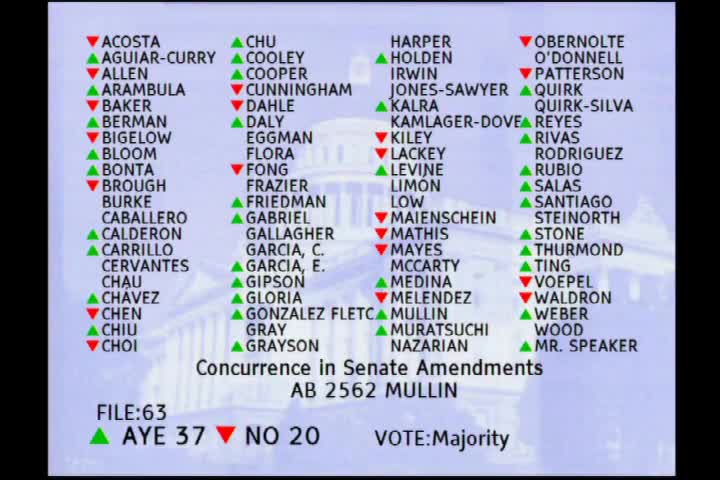 1MIN
Assembly Floor
 1H
Senate Standing Committee on Appropriations
 8MIN
Senate Standing Committee on Natural Resources and Water
 40SEC
Assembly Floor
 6MIN
Assembly Standing Committee on Water, Parks, and Wildlife


Bill Co-Author(s):