AB 2098: Adult Education Block Grant Program: immigration integration.
- Session Year: 2017-2018
- House: Assembly
- Latest Version Date: 2018-09-26
Existing law creates the Adult Education Block Grant Program under the administration of the Chancellor of the California Community Colleges and the Superintendent of Public Instruction. The program requires the chancellor and the Superintendent, with the advice of the Executive Director of the State Board of Education, to divide the state into adult education regions and approve one adult education consortium in each adult education region, as specified. Existing law requires the chancellor and the Superintendent to provide to the Director of Finance, the State Board of Education, and the Legislature preliminary reports on or before October 30 following each fiscal year for which funds are appropriated for the program and final reports on or before February 1 of the following year about the use of specified funds and outcomes for adults statewide and in each adult education region. Existing law requires those reports to include, among other things, any recommendations related to delivery or education and workforce services for adults.
Existing law establishes the Statewide Director of Immigrant Integration in the Governors Office of Planning and Research, appointed by the Governor, for the purpose of developing a comprehensive statewide report on programs and services that serve immigrants and programs and services currently managed by a state agency or department to support California immigrants.
This bill would require the reports prepared by the chancellor and the Superintendent to be additionally provided to the director. The bill would require those reports to also include any recommendations related to delivery of immigrant integration for adults.
Existing law requires the chancellor and the Superintendent to establish a menu of common assessments and policies regarding placement of adults seeking education and workforce services into adult education programs to be used by each consortium, as specified.
This bill would require the chancellor and the Superintendent, with input from the director and adult education program providers, to identify common measures for meeting the needs of immigrant and refugee adults seeking integration, and, at a minimum, would require the chancellor and the Superintendent, with input from the director, to both define the specific data each consortium may collect and establish a menu of common assessments and policies regarding placement of adults seeking immigrant integration into adult education programs to be used by each consortium to measure educational needs of adults and the effectiveness of providers in addressing those needs.
Existing law requires the chancellor and the Superintendent to identify, no later than January 1, 2016, measures for assessing the effectiveness of each consortium, which include, among other things, how many adults have demonstrated specified benefits from the services of a consortium, including, among other things, improved literacy skills and wages.
This bill instead would extend the January 1, 2016, deadline to July 1, 2019, and would require the chancellor and Superintendent, with input from the director and adult education program providers, as applicable, to identify additional measures for assessing the effectiveness of consortia that will be used in the report described above, including how many adults served by the consortium have demonstrated immigrant integration in specified areas, including increased participation in civic and community life.
Existing law creates the Adult Education Block Grant Program under the administration of the Chancellor of the California Community Colleges and the Superintendent of Public Instruction. The program requires the chancellor and the Superintendent, with the advice of the Executive Director of the State Board of Education, to divide the state into adult education regions and approve one adult education consortium in each adult education region, as specified. Existing law requires the chancellor and the Superintendent to provide to the Director of Finance, the State Board of Education, and the Legislature preliminary reports on or before October 30 following each fiscal year for which funds are appropriated for the program and final reports on or before February 1 of the following year about the use of specified funds and outcomes for adults statewide and in each adult education region. Existing law requires those reports to include, among other things, any recommendations related to delivery or education and workforce services for adults.
Existing law establishes the Statewide Director of Immigrant Integration in the Governors Office of Planning and Research, appointed by the Governor, for the purpose of developing a comprehensive statewide report on programs and services that serve immigrants and programs and services currently managed by a state agency or department to support California immigrants.
This bill would require the reports prepared by the chancellor and the Superintendent to be additionally provided to the director. The bill would require those reports to also include any recommendations related to delivery of immigrant integration for adults.
Existing law requires the chancellor and the Superintendent to establish a menu of common assessments and policies regarding placement of adults seeking education and workforce services into adult education programs to be used by each consortium, as specified.
This bill would require the chancellor and the Superintendent, in conjunction with input from the director, director and adult education program providers, to identify common measures for meeting the needs of immigrant and refugee adults seeking integration in eight specified goal areas, integration, and, at a minimum, would require the chancellor, Superintendent, and director chancellor and the Superintendent, with input from the director, to both define the specific data each consortium may collect and establish a menu of common assessments and policies regarding placement of adults seeking immigrant integration into adult education programs to be used by each consortium to measure educational needs of adults and the effectiveness of providers in addressing those needs.
Existing law requires the chancellor and the Superintendent to identify, no later than January 1, 2016, measures for assessing the effectiveness of each consortium, which include, among other things, how many adults have demonstrated specified benefits from the services of a consortium, including, among other things, improved literacy skills and wages.
This bill instead would extend the January 1, 2016, deadline to March July 1, 2019, and would require the chancellor and Superintendent, in conjunction with input from the director, director and adult education program providers, as applicable, to identify additional measures for assessing the effectiveness of consortia that will be used in the report described above, including how many adults served by the consortium have demonstrated immigrant integration in eight specified goal areas. areas, including increased participation in civic and community life.
Existing law creates the Adult Education Block Grant Program under the administration of the Chancellor of the California Community Colleges and the Superintendent of Public Instruction. The program requires the chancellor and the Superintendent, with the advice of the Executive Director of the State Board of Education, to divide the state into adult education regions and approve one adult education consortium in each adult education region, as specified. Existing law requires the chancellor and the Superintendent to provide to the Director of Finance, the State Board of Education, and the Legislature preliminary reports on or before October 30 following each fiscal year for which funds are appropriated for the program and final reports on or before February 1 of the following year about the use of specified funds and outcomes for adults statewide and in each adult education region. Existing law requires those reports to include, among other things, any recommendations related to delivery or education and workforce services for adults.
Existing law establishes the Statewide Director of Immigrant Integration in the Governors Office of Planning and Research, appointed by the Governor, for the purpose of developing a comprehensive statewide report on programs and services that serve immigrants and programs and services currently managed by a state agency or department to support California immigrants.
This bill would require the reports prepared by the chancellor and the Superintendent to be additionally provided to the director. The bill would require those reports to also include any recommendations related to delivery of immigrant integration for adults.
Existing law requires the chancellor and the Superintendent to establish a menu of common assessments and policies regarding placement of adults seeking education and workforce services into adult education programs to be used by each consortium, as specified.
This bill would require the chancellor and the Superintendent, in conjunction with the director, to identify common measures for meeting the needs of immigrant and refugee adults seeking integration in eight specified goal areas, and, at a minimum, would require the chancellor, Superintendent, and director to both define the specific data each consortium may collect and establish a menu of common assessments and policies regarding placement of adults seeking immigrant integration into adult education programs to be used by each consortium to measure educational needs of adults and the effectiveness of providers in addressing those needs.
Existing law requires the chancellor and the Superintendent to identify, no later than January 1, 2016, measures for assessing the effectiveness of each consortium, which include, among other things, how many adults have demonstrated specified benefits from the services of a consortium, including, among other things, improved literacy skills and wages.
This bill instead would extend the January 1, 2016, deadline to March 1, 2019, and would require the chancellor and Superintendent, in conjunction with the director, as applicable, to identify additional measures for assessing the effectiveness of consortia that will be used in the report described above, including how many adults served by the consortium have demonstrated immigrant integration in eight specified goal areas.
Existing law establishes the After School Education and Safety Program to serve pupils in kindergarten and grades 1 to 9, inclusive, at participating public elementary, middle, junior high, and charter schools, under which a program can apply for a grant for operating a before school component, an after school component, or both the before and after school components, on one or multiple schoolsites. The After School Education and Safety Program requires an applicant for a grant to ensure that certain requirements are fulfilled, including that all components of the program have an educational and literacy element in which tutoring or homework assistance is provided in one or more of the areas of language arts, mathematics, history and social science, computer training, or science.This bill, subject to an appropriation of moneys by the Legislature, would establish the After School Kids Code Grant Pilot Program under the administration of the State Department of Education to provide one-time grant funds to eligible after school education and safety programs that focus on computer coding as part of their program curriculum. The bill would require those one-time grant funds to be allocated and expended for the 201920, 202021, and 202122 fiscal years, as determined by the department. The bill would require the department, in consultation with interested stakeholders, to develop an application process and criteria for determining eligible grant recipients consistent with the purpose of promoting computer coding education. The bill would authorize the department to impose conditions on grant recipients regarding the use of grant funds consistent with the purposes of the program. The bill would require the department to determine the amount and number of grants to be awarded under the program based on the after school program site enrollment and in consideration of the overall funding appropriated for this grant program in the 201819 annual Budget Act or other statute. The bill would repeal the program on January 1, 2023.Existing law establishes the After School Education and Safety Program to serve pupils in kindergarten and grades 1 to 9, inclusive, at participating public elementary, middle, junior high, and charter schools, under which a program can apply for a grant for operating a before school component, an after school component, or both the before and after school components, on one or multiple schoolsites. The After School Education and Safety Program requires an applicant for a grant to ensure that certain requirements are fulfilled, including that all components of the program have an educational and literacy element in which tutoring or homework assistance is provided in one or more of the areas of language arts, mathematics, history and social science, computer training, or science.
This bill, subject to an appropriation of moneys by the Legislature, would establish the After School Kids Code Grant Pilot Program under the administration of the State Department of Education to provide one-time grant funds to eligible after school education and safety programs that focus on computer coding as part of their program curriculum. The bill would require those one-time grant funds to be allocated and expended for the 201920, 202021, and 202122 fiscal years, as determined by the department. The bill would require the department, in consultation with interested stakeholders, to develop an application process and criteria for determining eligible grant recipients consistent with the purpose of promoting computer coding education. The bill would authorize the department to impose conditions on grant recipients regarding the use of grant funds consistent with the purposes of the program. The bill would require the department to determine the amount and number of grants to be awarded under the program based on the after school program site enrollment and in consideration of the overall funding appropriated for this grant program in the 201819 annual Budget Act or other statute. The bill would repeal the program on January 1, 2023.
Existing law establishes the After School Education and Safety Program to serve pupils in kindergarten and grades 1 to 9, inclusive, at participating public elementary, middle, junior high, and charter schools, under which a program can apply for a grant for operating a before school component, an after school component, or both the before and after school components, on one or multiple schoolsites. The After School Education and Safety Program requires an applicant for a grant to ensure that certain requirements are fulfilled, including that all componenents components of the program have an educational and literacy element in which tutoring or homework assistance is provided in one or more of the areas of language arts, mathematics, history and social science, computer training, or science.
This bill, subject to an appropriation of moneys by the Legislature, would establish the After School Kids Code Grant Pilot Program under the administration of the State Department of Education to provide one-time grant funds to eligible after school education and safety programs that focus on computer coding as part of their program curriculum. The bill would require those one-time grant funds to be allocated and expended for the 201920, 202021, and 202122 fiscal years, as determined by the department. The bill would require the department, in consultation with interested stakeholders, to develop an application process and criteria for determining eligible grant recipients consistent with the purpose of promoting computer coding education. The bill would authorize the department to impose conditions on grant recipients regarding the use of grant funds consistent with the purposes of the program. The bill would require the department to determine the amount and number of grants to be awarded under the program based on the after school program site enrollment and in consideration of the overall funding appropriated for this grant program in the 201819 annual Budget Act or other statute. The bill would repeal the program on January 1, 2023.
Existing law establishes the After School Education and Safety Program to serve pupils in kindergarten and grades 1 to 9, inclusive, at participating public elementary, middle, junior high, and charter schools, under which a program can apply for a grant for operating a before school component, an after school component, or both the before and after school components, on one or multiple schoolsites. The After School Education and Safety Program requires an applicant for a grant to ensure that certain requirements are fulfilled, including that all componenents of the program have an educational and literacy element in which tutoring or homework assistance is provided in one or more of the areas of language arts, mathematics, history and social science, computer training, or science.
This bill, subject to an appropriation of moneys by the Legislature, would establish the After School Kids Code Grant Program under the administration of the State Department of Education to provide one-time grant funds to eligible after school education and safety programs that focus on computer coding as part of their program curriculum. The bill would require the department, in consultation with interested stakeholders, to develop an application process and criteria for determining eligible grant recipients consistent with the purpose of promoting computer coding education. The bill would require the department to determine the amount and number of grants to be awarded under the program based on the after school program site enrollment and in consideration of the overall funding appropriated for this grant program in the 201819 annual Budget Act or other statute. The bill would repeal the program on January 1, 2023.
Existing law establishes the California Community Colleges, the California State University, the University of California, independent institutions of higher education, as defined, and private postsecondary educational institutions, as defined, as the segments of postsecondary education in this state. The missions and functions of these segments are set forth in the Donahoe Higher Education Act.This bill would make nonsubstantive changes in a provision that, for purposes of the Donahoe Higher Education Act, designates the segments of public postsecondary education as the California Community Colleges, the California State University, and the University of California, as specified, and defines independent institutions of higher education for these purposes.Existing law establishes the California Community Colleges, the California State University, the University of California, independent institutions of higher education, as defined, and private postsecondary educational institutions, as defined, as the segments of postsecondary education in this state. The missions and functions of these segments are set forth in the Donahoe Higher Education Act.
This bill would make nonsubstantive changes in a provision that, for purposes of the Donahoe Higher Education Act, designates the segments of public postsecondary education as the California Community Colleges, the California State University, and the University of California, as specified, and defines independent institutions of higher education for these purposes.
(a)To inform actions taken by the Governor and the Legislature related to adult education, the chancellor and the Superintendent shall report to the Director of Finance, the Statewide Director of Immigrant Integration, the State Board of Education, and, in conformity with Section 9795 of the Government Code, the Legislature about the use of the funds described in paragraph (5) of subdivision (b) of Section 84906 and outcomes for adults statewide and in each adult education region. The chancellor and the Superintendent shall provide preliminary reports on or before October 30 following each fiscal year for which funds are appropriated for the program and final reports on or before February 1 of the following year. Each report shall be based on all data available at the time of its submission. The report shall include at least all of the following:
(1)A summary of the adult education plan operative for each consortium.
(2)The distribution schedule for each consortium.
(3)The types and levels of services provided by each consortium.
(4)The effectiveness of each consortium in meeting the educational needs of adults in its respective region.
(5)Any recommendations related to delivery of education, immigrant integration, and workforce services for adults, including recommendations related to improved alignment of state programs.
(b)(1)The chancellor and the Superintendent may require a consortium, as a condition of receipt of an apportionment, to submit any reports or data necessary to produce the report described in subdivision (a).
(2)The chancellor and the Superintendent shall align the data used to produce the report described in subdivision (a) with data reported by local educational agencies for other purposes, such as data used for purposes of the federal Workforce Innovation and Opportunity Act (Public Law 113-128).
(3)The Employment Development Department and the California Workforce Investment Board shall provide any assistance needed to align delivery of services across state and regional workforce, education, and job service programs.
SEC. 2.Section 84920 of the Education Code is amended to read:84920.(a)To the extent that one-time funding is made available in the Budget Act of 2015, consistent with the provisions of Section 84917, the chancellor and the Superintendent shall identify common measures for determining the effectiveness of members of each consortium in meeting the educational needs of adults. At a minimum, the chancellor and the Superintendent shall accomplish both of the following:
(1)Define the specific data each consortium shall collect.
(2)Establish a menu of common assessments and policies regarding placement of adults seeking education and workforce services into adult education programs to be used by each consortium to measure educational needs of adults and the effectiveness of providers in addressing those needs.
(b)Consistent with the provisions of Section 84917, the chancellor and the Superintendent, with input from the Statewide Director of Immigrant Integration and adult education program providers, shall identify common measures consistent with, but not limited to, the English literacy and civics (EL Civics) education programs Civic Objectives and Additional Assessment Plans under Title II of the federal Workforce Innovation and Opportunity Act (Public Law 113-128) for meeting the needs of immigrant and refugee adults seeking integration. At a minimum, the chancellor and the Superintendent, with input from the Statewide Director of Immigrant Integration, shall accomplish both of the following:
(1)Define the specific data each consortium may collect.
(2)Establish a menu of common assessments and policies regarding placement of adults seeking immigrant integration into adult education programs to be used by each consortium to measure educational needs of adults and the effectiveness of providers in addressing those needs.
(c)No later than August 1, 2017, the chancellor and the Superintendent shall report to the Director of Finance, the State Board of Education, and the appropriate policy and fiscal committees of the Legislature on options for integrating the assessments described in subdivision (a) into the common assessment system developed pursuant to Section 78219. The report shall address compliance of the assessments with federal and state funding requirements for adult education programs, identify estimated costs and timelines for the assessments, and identify changes in policies that may be needed to avoid duplicate assessments.
(d)It is the intent of the Legislature that both of the following occur:
(1)That the educational needs of adults in the state be better identified and understood through better sharing of data across state agencies.
(2)That, at a minimum, the chancellor and the Superintendent shall enter into agreements to share data related to effectiveness of the consortia between their agencies and with other state agencies, including, but not necessarily limited to, the Employment Development Department and the California Workforce Investment Board.
(e)The chancellor and the Superintendent, with input from the Statewide Director of Immigrant Integration and adult education program providers, as applicable, shall identify, no later than July 1, 2019, the measures for assessing the effectiveness of consortia that will be used in the report that is required pursuant to Section 84917. These measures shall include, but not necessarily be limited to, all of the following, as applicable:
(1)How many adults are served by members of the consortium.
(2)How many adults served by members of the consortium have demonstrated the following:
(A)Improved literacy skills.
(B)Immigrant integration in the areas consistent with, but not limited to, those already identified for English literacy and civics under Title II of the federal Workforce Innovation and Opportunity Act (Public Law 113-128), including increased participation in civic and community life.
(C)Completion of high school diplomas or their recognized equivalents.
(D)Completion of postsecondary certificates, degrees, or training programs.
(E)Placement into jobs.
(F)Improved wages.
(f)The chancellor and the Superintendent shall apportion the funds appropriated for purposes of this section in the Budget Act of 2015 in accordance with both of the following:
(1)Eighty-five percent of these funds shall be used for grants to consortia to establish systems or obtain data necessary to submit any reports or data required pursuant to subdivision (b) of Section 84917.
(2)Fifteen percent of these funds shall be used for grants for development of statewide policies and procedures related to data collection or reporting or for technical assistance to consortia, or both.
(g)The chancellor and the Superintendent shall provide any guidance to the consortia necessary to support the sharing of data included in systems established by consortia pursuant to this section across consortia.
(a)To inform actions taken by the Governor and the Legislature related to adult education, the chancellor and the Superintendent shall report to the Director of Finance, the Statewide Director of Immigrant Integration, the State Board of Education, and, in conformity with Section 9795 of the Government Code, the Legislature about the use of the funds described in paragraph (5) of subdivision (b) of Section 84906 and outcomes for adults statewide and in each adult education region. The chancellor and the Superintendent shall provide preliminary reports on or before October 30 following each fiscal year for which funds are appropriated for the program and final reports on or before February 1 of the following year. Each report shall be based on all data available at the time of its submission. The report shall include at least all of the following:
(1)A summary of the adult education plan operative for each consortium.
(2)The distribution schedule for each consortium.
(3)The types and levels of services provided by each consortium.
(4)The effectiveness of each consortium in meeting the educational needs of adults in its respective region.
(5)Any recommendations related to delivery of education, immigrant integration, and workforce services for adults, including recommendations related to improved alignment of state programs.
(b)(1)The chancellor and the Superintendent may require a consortium, as a condition of receipt of an apportionment, to submit any reports or data necessary to produce the report described in subdivision (a).
(2)The chancellor and the Superintendent shall align the data used to produce the report described in subdivision (a) with data reported by local educational agencies for other purposes, such as data used for purposes of the federal Workforce Opportunity Innovation and Innovation Opportunity Act (Public Law 113-128).
(3)The Employment Development Department and the California Workforce Investment Board shall provide any assistance needed to align delivery of services across state and regional workforce, education, and job service programs.
SEC. 2.Section 84920 of the Education Code is amended to read:84920.(a)To the extent that one-time funding is made available in the Budget Act of 2015, consistent with the provisions of Section 84917, the chancellor and the Superintendent shall identify common measures for determining the effectiveness of members of each consortium in meeting the educational needs of adults. At a minimum, the chancellor and the Superintendent shall accomplish both of the following:
(1)Define the specific data each consortium shall collect.
(2)Establish a menu of common assessments and policies regarding placement of adults seeking education and workforce services into adult education programs to be used by each consortium to measure educational needs of adults and the effectiveness of providers in addressing those needs.
(b)Consistent with the provisions of Section 84917, the chancellor and the Superintendent, in conjunction with input from the Statewide Director of Immigrant Integration, Integration and adult education program providers, shall identify common measures consistent with, but not limited to, the English literacy and civics (EL Civics) education programs Civic Objectives and Additional Assessment Plans under Title II of the federal Workforce Innovation and Opportunity Act (Public Law 113-128) for meeting the needs of immigrant and refugee adults seeking integration in the eight goal areas specified in subparagraph (B) of paragraph (2) of subdivision (e). integration. At a minimum, the chancellor, chancellor and the Superintendent, and with input from the Statewide Director of Immigrant Integration Integration, shall accomplish both of the following:
(1)Define the specific data each consortium may collect.
(2)Establish a menu of common assessments and policies regarding placement of adults seeking immigrant integration into adult education programs to be used by each consortium to measure educational needs of adults and the effectiveness of providers in addressing those needs.
(c)No later than August 1, 2017, the chancellor and the Superintendent shall report to the Director of Finance, the State Board of Education, and the appropriate policy and fiscal committees of the Legislature on options for integrating the assessments described in subdivision (a) into the common assessment system developed pursuant to Section 78219. The report shall address compliance of the assessments with federal and state funding requirements for adult education programs, identify estimated costs and timelines for the assessments, and identify changes in policies that may be needed to avoid duplicate assessments.
(d)It is the intent of the Legislature that both of the following occur:
(1)That the educational needs of adults in the state be better identified and understood through better sharing of data across state agencies.
(2)That, at a minimum, the chancellor and the Superintendent shall enter into agreements to share data related to effectiveness of the consortia between their agencies and with other state agencies, including, but not necessarily limited to, the Employment Development Department and the California Workforce Investment Board.
(e)The chancellor and the Superintendent, in conjunction with input from the Statewide Director of Immigrant Integration, Integration and adult education program providers, as applicable, shall identify, no later than March July 1, 2019, the measures for assessing the effectiveness of consortia that will be used in the report that is required pursuant to Section 84917. These measures shall include, but not necessarily be limited to, all of the following, as applicable:
(1)How many adults are served by members of the consortium.
(2)How many adults served by members of the consortium have demonstrated the following:
(A)Improved literacy skills.
(B)Immigrant integration in the following eight goal areas, as applicable: areas consistent with, but not limited to, those already identified for English literacy and civics under Title II of the federal Workforce Innovation and Opportunity Act (Public Law 113-128), including increased participation in civic and community life.
(i)Increased economic security.(ii)Improved English proficiency.(iii)Increased credentials and residency.(iv)Increased health and well-being.(v)Increased educational and career advancement.(vi)Increased first language literacy.(vii)Improved provision for children and family.(viii)Increased participation in civic and community life.(C)Completion of high school diplomas or their recognized equivalents.
(D)Completion of postsecondary certificates, degrees, or training programs.
(E)Placement into jobs.
(F)Improved wages.
(f)The chancellor and the Superintendent shall apportion the funds appropriated for purposes of this section in the Budget Act of 2015 in accordance with both of the following:
(1)Eighty-five percent of these funds shall be used for grants to consortia to establish systems or obtain data necessary to submit any reports or data required pursuant to subdivision (b) of Section 84917.
(2)Fifteen percent of these funds shall be used for grants for development of statewide policies and procedures related to data collection or reporting or for technical assistance to consortia, or both.
(g)The chancellor and the Superintendent shall provide any guidance to the consortia necessary to support the sharing of data included in systems established by consortia pursuant to this section across consortia.
(a)To inform actions taken by the Governor and the Legislature related to adult education, the chancellor and the Superintendent shall report to the Director of Finance, the Statewide Director of Immigrant Integration, the State Board of Education, and, in conformity with Section 9795 of the Government Code, the Legislature about the use of the funds described in paragraph (5) of subdivision (b) of Section 84906 and outcomes for adults statewide and in each adult education region. The chancellor and the Superintendent shall provide preliminary reports on or before October 30 following each fiscal year for which funds are appropriated for the program and final reports on or before February 1 of the following year. Each report shall be based on all data available at the time of its submission. The report shall include at least all of the following:
(1)A summary of the adult education plan operative for each consortium.
(2)The distribution schedule for each consortium.
(3)The types and levels of services provided by each consortium.
(4)The effectiveness of each consortium in meeting the educational needs of adults in its respective region.
(5)Any recommendations related to delivery of education, immigrant integration, and workforce services for adults, including recommendations related to improved alignment of state programs.
(b)(1)The chancellor and the Superintendent may require a consortium, as a condition of receipt of an apportionment, to submit any reports or data necessary to produce the report described in subdivision (a).
(2)The chancellor and the Superintendent shall align the data used to produce the report described in subdivision (a) with data reported by local educational agencies for other purposes, such as data used for purposes of the federal Workforce Opportunity and Innovation Act (Public Law 113-128).
(3)The Employment Development Department and the California Workforce Investment Board shall provide any assistance needed to align delivery of services across state and regional workforce, education, and job service programs.
SEC. 2.Section 84920 of the Education Code is amended to read:84920.(a)To the extent that one-time funding is made available in the Budget Act of 2015, consistent with the provisions of Section 84917, the chancellor and the Superintendent shall identify common measures for determining the effectiveness of members of each consortium in meeting the educational needs of adults. At a minimum, the chancellor and the Superintendent shall accomplish both of the following:
(1)Define the specific data each consortium shall collect.
(2)Establish a menu of common assessments and policies regarding placement of adults seeking education and workforce services into adult education programs to be used by each consortium to measure educational needs of adults and the effectiveness of providers in addressing those needs.
(b)Consistent with the provisions of Section 84917, the chancellor and the Superintendent, in conjunction with the Statewide Director of Immigrant Integration, shall identify common measures for meeting the needs of immigrant and refugee adults seeking integration in the eight goal areas specified in subparagraph (B) of paragraph (2) of subdivision (e). At a minimum, the chancellor, the Superintendent, and the Statewide Director of Immigrant Integration shall accomplish both of the following:
(1)Define the specific data each consortium shall may collect.
(2)Establish a menu of common assessments and policies regarding placement of adults seeking immigrant integration into adult education programs to be used by each consortium to measure educational needs of adults and the effectiveness of providers in addressing those needs.
(c)No later than August 1, 2017, the chancellor and the Superintendent shall report to the Director of Finance, the State Board of Education, and the appropriate policy and fiscal committees of the Legislature on options for integrating the assessments described in subdivision (a) into the common assessment system developed pursuant to Section 78219. The report shall address compliance of the assessments with federal and state funding requirements for adult education programs, identify estimated costs and timelines for the assessments, and identify changes in policies that may be needed to avoid duplicate assessments.
(d)It is the intent of the Legislature that both of the following occur:
(1)That the educational needs of adults in the state be better identified and understood through better sharing of data across state agencies.
(2)That, at a minimum, the chancellor and the Superintendent shall enter into agreements to share data related to effectiveness of the consortia between their agencies and with other state agencies, including, but not necessarily limited to, the Employment Development Department and the California Workforce Investment Board.
(e)The chancellor and the Superintendent, in conjunction with the Statewide Director of Immigrant Integration, as applicable, shall identify, no later than March 1, 2019, the measures for assessing the effectiveness of consortia that will be used in the report that is required pursuant to Section 84917. These measures shall include, but not necessarily be limited to, all of the following, as applicable:
(1)How many adults are served by members of the consortium.
(2)How many adults served by members of the consortium have demonstrated the following:
(A)Improved literacy skills.
(B)Immigrant integration in the following eight goal areas, as applicable:
(i)Increased economic security.
(ii)Improved English proficiency.
(iii)Increased credentials and residency.
(iv)Increased health and well-being.
(v)Increased educational and career advancement.
(vi)Increased first language literacy.
(vii)Improved provision for children and family.
(viii)Increased participation in civic and community life.
(C)Completion of high school diplomas or their recognized equivalents.
(D)Completion of postsecondary certificates, degrees, or training programs.
(E)Placement into jobs.
(F)Improved wages.
(f)The chancellor and the Superintendent shall apportion the funds appropriated for purposes of this section in the Budget Act of 2015 in accordance with both of the following:
(1)Eighty-five percent of these funds shall be used for grants to consortia to establish systems or obtain data necessary to submit any reports or data required pursuant to subdivision (b) of Section 84917.
(2)Fifteen percent of these funds shall be used for grants for development of statewide policies and procedures related to data collection or reporting or for technical assistance to consortia, or both.
(g)The chancellor and the Superintendent shall provide any guidance to the consortia necessary to support the sharing of data included in systems established by consortia pursuant to this section across consortia.
(a)To inform actions taken by the Governor and the Legislature related to adult education, the chancellor and the Superintendent shall report to the Director of Finance, the Statewide Director of Immigrant Integration, the State Board of Education, and, in conformity with Section 9795 of the Government Code, the Legislature about the use of the funds described in paragraph (5) of subdivision (b) of Section 84906 and outcomes for adults statewide and in each adult education region. The chancellor and the Superintendent shall provide preliminary reports on or before October 30 following each fiscal year for which funds are appropriated for the program and final reports on or before February 1 of the following year. Each report shall be based on all data available at the time of its submission. The report shall include at least all of the following:
(1)A summary of the adult education plan operative for each consortium.
(2)The distribution schedule for each consortium.
(3)The types and levels of services provided by each consortium.
(4)The effectiveness of each consortium in meeting the educational needs of adults in its respective region.
(5)Any recommendations related to delivery of education education, immigrant integration, and workforce services for adults, including recommendations related to improved alignment of state programs.
(b)(1)The chancellor and the Superintendent may require a consortium, as a condition of receipt of an apportionment, to submit any reports or data necessary to produce the report described in subdivision (a).
(2)The chancellor and the Superintendent shall align the data used to produce the report described in subdivision (a) with data reported by local educational agencies for other purposes, such as data used for purposes of the federal Workforce Opportunity and Innovation Act (Public Law 113-128).
(3)The Employment Development Department and the California Workforce Investment Board shall provide any assistance needed to align delivery of services across state and regional workforce, education, and job service programs.
SEC. 2.Section 84920 of the Education Code is amended to read:84920.(a)To the extent that one-time funding is made available in the Budget Act of 2015, consistent with the provisions of Section 84917, the chancellor and the Superintendent shall identify common measures for determining the effectiveness of members of each consortium in meeting the educational needs of adults. At a minimum, the chancellor and the Superintendent shall accomplish both of the following:
(1)Define the specific data each consortium shall collect.
(2)Establish a menu of common assessments and policies regarding placement of adults seeking education and workforce services into adult education programs to be used by each consortium to measure educational needs of adults and the effectiveness of providers in addressing those needs.
(b)Consistent with the provisions of Section 84917, the chancellor and the Superintendent, in conjunction with the Statewide Director of Immigrant Integration, shall identify common measures for meeting the needs of immigrant and refugee adults seeking integration in the eight goal areas specified in subparagraph (B) of paragraph (2) of subdivision (e). At a minimum, the chancellor, the Superintendent, and the Statewide Director of Immigrant Integration shall accomplish both of the following:
(1)Define the specific data each consortium shall collect.
(2)Establish a menu of common assessments and policies regarding placement of adults seeking immigrant integration into adult education programs to be used by each consortium to measure educational needs of adults and the effectiveness of providers in addressing those needs.
(b)(c)No later than August 1, 2017, the chancellor and the Superintendent shall report to the Director of Finance, the State Board of Education, and the appropriate policy and fiscal committees of the Legislature on options for integrating the assessments described in subdivision (a) into the common assessment system developed pursuant to Section 78219. The report shall address compliance of the assessments with federal and state funding requirements for adult education programs, identify estimated costs and timelines for the assessments, and identify changes in policies that may be needed to avoid duplicate assessments.
(c)(d)It is the intent of the Legislature that both of the following occur:
(1)That the educational needs of adults in the state be better identified and understood through better sharing of data across state agencies.
(2)That, at a minimum, the chancellor and the Superintendent shall enter into agreements to share data related to effectiveness of the consortia between their agencies and with other state agencies, including, but not necessarily limited to, the Employment Development Department and the California Workforce Investment Board.
(d)(e)The chancellor and the Superintendent Superintendent, in conjunction with the Statewide Director of Immigrant Integration, as applicable, shall identify, no later than January 1, 2016, March 1, 2019, the measures for assessing the effectiveness of consortia that will be used in the report that is required pursuant to Section 84917. These measures shall include, but not necessarily be limited to, all of the following: following, as applicable:
(1)How many adults are served by members of the consortium.
(2)How many adults served by members of the consortium have demonstrated the following:
(A)Improved literacy skills.
(B)Immigrant integration in the following eight goal areas, as applicable:
(i)Increased economic security.
(ii)Improved English proficiency.
(iii)Increased credentials and residency.
(iv)Increased health and well-being.
(v)Increased educational and career advancement.
(vi)Increased first language literacy.
(vii)Improved provision for children and family.
(viii)Increased participation in civic and community life.
(B)(C)Completion of high school diplomas or their recognized equivalents.
(C)(D)Completion of postsecondary certificates, degrees, or training programs.
(D)(E)Placement into jobs.
(E)(F)Improved wages.
(e)(f)The chancellor and the Superintendent shall apportion the funds appropriated for purposes of this section in the Budget Act of 2015 in accordance with both of the following:
(1)Eighty-five percent of these funds shall be used for grants to consortia to establish systems or obtain data necessary to submit any reports or data required pursuant to subdivision (b) of Section 84917.
(2)Fifteen percent of these funds shall be used for grants for development of statewide policies and procedures related to data collection or reporting or for technical assistance to consortia, or both.
(f)(g)The chancellor and the Superintendent shall provide any guidance to the consortia necessary to support the sharing of data included in systems established by consortia pursuant to this section across consortia.
SECTION 1.The Legislature finds and declares all of the following:(a)Computer science drives job growth and innovation throughout Californias economy and society. Computing occupations are the number one source of all new wages in the United States and make up more than one-half of all projected new jobs in science, technology, engineering, and mathematics (STEM) fields, making computer science one of the most in-demand college degrees.(b)Computer programming or coding is the tool used to power creation and innovation in the digital world. It provides foundational knowledge that all pupils need in the 21st century workplace.(c)California leads the nation in technology jobs, innovation, and average wage for technology workers. In the 201516 academic year, California had 1.2 million technology jobs but only had 4,029 computer science graduates.(d)It is critical to close the digital divide in California. There remains a large disparity between pupils from affluent schools and pupils from low-income schools with access to coding courses. Schools with the highest percentage of low-income pupils offer computer science or coding courses at a rate less than one-half of that of schools with the lowest percentage of low-income pupils.(e)The After School Education and Safety Program (ASES) (Article 22.5 (commencing with Section 8482) of Chapter 2 of Part 6 of Division 1 of Title 1 of the Education Code) serves more than 400,000 of the lowest-income pupils in the state. More than 80 percent of ASES participants are eligible for free or reduced-price meals, 35 percent are English learners, and 79 percent are underrepresented minority pupils.(f)The After School Kids Code Grant Pilot Program (Article 22 (commencing with Section 8460) of Chapter 2 of Part 6 of Division 1 of Title 1 of the Education Code) provides critically needed exposure to coding for after school youth who are the least likely to learn to code in school or at home. The After School Kids Code Grant Pilot Program is intended to inspire pupils to pursue STEM education and develop a growth mindset for learning.SEC. 2.Article 22 (commencing with Section 8460) is added to Chapter 2 of Part 6 of Division 1 of Title 1 of the Education Code, to read:22.After School Kids Code Grant Pilot Program8460.(a)(1)Subject to moneys appropriated by the Legislature for the purposes of this section, the department shall administer the After School Kids Code Grant Pilot Program. Under the grant program, the department shall provide one-time grant funds to eligible after school education and safety programs established pursuant to Article 22.5 (commencing with Section 8482) that focus on computer coding as part of their program curriculum.(2)The one-time grant funds provided in paragraph (1) shall be allocated and expended for the 201920, 202021, and 202122 fiscal years, as determined by the department pursuant to subdivision (c).(b)(1)The department, in consultation with interested stakeholders, shall develop an application process and criteria for determining eligible grant recipients consistent with the purpose of promoting computer coding education.(2)Priority shall be given to grant applications that demonstrate all of the following:(A)The applicant plans to offer high-quality coding curriculum and a commitment to provide instructional training to coding instructors utilizing a train-the-trainer model.(B)The applicant inspires pupils to consider science, technology, engineering, and mathematics (STEM) education and careers and emphasizes a growth mindset as a key to success in the 21st century digital world.(C)The applicant incorporates a college and career component that includes information about growing STEM opportunities in education and careers, and STEM internships and field trips that expose youth to STEM college opportunities and careers.(D)The applicant incorporates introductory digital literacy and responsible use of technology into its program curriculum.(3)The department may impose conditions on grant recipients regarding the use of grant funds consistent with the purposes of this article. (c)The department shall determine the amount and number of grants to be awarded under the program based on the after school program site enrollment and in consideration of the overall funding appropriated for this grant program in the 201819 annual Budget Act or other statute.8461.This article shall remain in effect only until January 1, 2023, and as of that date is repealed.The Legislature finds and declares all of the following:
(a)Computer science drives job growth and innovation throughout Californias economy and society. Computing occupations are the number one source of all new wages in the United States and make up more than one-half of all projected new jobs in science, technology, engineering, and mathematics (STEM) fields, making computer science one of the most in-demand college degrees.
(b)Computer programming or coding is the tool used to power creation and innovation in the digital world. It provides foundational knowledge that all pupils need in the 21st century workplace.
(c)California leads the nation in technology jobs, innovation, and average wage for technology workers. In the 201516 academic year, California had 1.2 million technology jobs but only had 4,029 computer science graduates.
(d)It is critical to close the digital divide in California. There remains a large disparity between pupils from affluent schools and pupils from low-income schools with access to coding courses. Schools with the highest percentage of low-income pupils offer computer science or coding courses at a rate less than one-half of that of schools with the lowest percentage of low-income pupils.
(e)The After School Education and Safety Program (ASES) (Article 22.5 (commencing with Section 8482) of Chapter 2 of Part 6 of Division 1 of Title 1 of the Education Code) serves more than 400,000 of the lowest-income pupils in the state. More than 80 percent of ASES participants are eligible for free or reduced-price meals, 35 percent are English learners, and 79 percent are underrepresented minority pupils.
(f)The After School Kids Code Grant Pilot Program (Article 22 (commencing with Section 8460) of Chapter 2 of Part 6 of Division 1 of Title 1 of the Education Code) provides critically needed exposure to coding for after school youth who are the least likely to learn to code in school or at home. The After School Kids Code Grant Pilot Program is intended to inspire pupils to pursue STEM education and develop a growth mindset for learning.
SEC. 2.Article 22 (commencing with Section 8460) is added to Chapter 2 of Part 6 of Division 1 of Title 1 of the Education Code, to read:22.After School Kids Code Grant Pilot Program8460.(a)(1)Subject to moneys appropriated by the Legislature for the purposes of this section, the department shall administer the After School Kids Code Grant Pilot Program. Under the grant program, the department shall provide one-time grant funds to eligible after school education and safety programs established pursuant to Article 22.5 (commencing with Section 8482) that focus on computer coding as part of their program curriculum.
(2)The one-time grant funds provided in paragraph (1) shall be allocated and expended for the 201920, 202021, and 202122 fiscal years, as determined by the department pursuant to subdivision (c).
(b)(1)The department, in consultation with interested stakeholders, shall develop an application process and criteria for determining eligible grant recipients consistent with the purpose of promoting computer coding education.
(2)Priority shall be given to grant applications that demonstrate all of the following:
(A)The applicant offers plans to offer high-quality coding curriculum and a commitment to provide instructional training to coding instructors utilizing a train-the-trainer model.
(B)The applicant has established a plan for sustaining the program beyond the three-year pilot program.(C)(B)The applicant inspires pupils to consider science, technology, engineering, and mathematics (STEM) education and careers and emphasizes a growth mindset as a key to success in the 21st century digital world.
(D)(C)The applicant incorporates a college and career component that includes information about growing STEM opportunities in education and careers, and STEM internships and field trips that expose youth to STEM college opportunities and careers.
(E)(D)The applicant incorporates introductory digital literacy and responsible use of technology into its program curriculum.
(3)The department may impose conditions on grant recipients regarding the use of grant funds consistent with the purposes of this article.
(c)The department shall determine the amount and number of grants to be awarded under the program based on the after school program site enrollment and in consideration of the overall funding appropriated for this grant program in the 201819 annual Budget Act or other statute.
8461.This article shall remain in effect only until January 1, 2023, and as of that date is repealed.
The Legislature finds and declares all of the following:
(a)Computer science drives job growth and innovation throughout Californias economy and society. Computing occupations are the number one source of all new wages in the United States and make up more than one-half of all projected new jobs in science, technology, engineering, and mathematics (STEM) fields, making computer science one of the most in-demand college degrees.
(b)Computer programming or coding is the tool used to power creation and innovation in the digital world. It provides foundational knowledge that all pupils need in the 21st century workplace.
(c)California leads the nation in technology jobs, innovation, and average wage for technology workers. In the 201516 academic year, California had 1.2 million technology jobs but only had 4,029 computer science graduates.
(d)It is critical to close the digital divide in California. There remains a large disparity between pupils from affluent schools and pupils from low-income schools with access to coding courses. Schools with the highest percentage of low-income pupils offer computer science or coding courses at a rate less than one-half of that of schools with the lowest percentage of low-income pupils.
(e)The After School Education and Safety Program (ASES) (Article 22.5 (commencing with Section 8482) of Chapter 2 of Part 6 of Division 1 of Title 1 of the Education Code) serves more than 400,000 of the lowest-income pupils in the state. More than 80 percent of ASES participants are eligible for free or reduced-price meals, 35 percent are English learners, and 79 percent are underrepresented minority pupils.
(f)The After School Kids Code Grant Pilot Program (Article 22 (commencing with Section 8460) of Chapter 2 of Part 6 of Division 1 of Title 1 of the Education Code) provides critically needed exposure to coding for after school youth who are the least likely to learn to code in school or at home. The After School Kids Code Grant Pilot Program is intended to inspire pupils to pursue STEM education and develop a growth mindset for learning.
SECTION 1.SEC. 2.Article 22 (commencing with Section 8460) is added to Chapter 2 of Part 6 of Division 1 of Title 1 of the Education Code, to read:22.After School Kids Code Grant Pilot Program8460.(a)(1)Subject to moneys appropriated by the Legislature for the purposes of this section, the department shall administer the After School Kids Code Grant Pilot Program. Under the grant program, the department shall provide one-time grant funds to eligible after school education and safety programs established pursuant to Article 22.5 (commencing with Section 8482) that focus on computer coding as part of their program curriculum.
(2)The one-time grant funds provided in paragraph (1) shall be allocated and expended for the 201920, 202021, and 202122 fiscal years, as determined by the department pursuant to subdivision (c).
(b)(1)The department, in consultation with interested stakeholders, shall develop an application process and criteria for determining eligible grant recipients consistent with the purpose of promoting computer coding education. The
(2)Priority shall be given to grant applications that demonstrate all of the following:
(A)The applicant offers high-quality coding curriculum and a commitment to provide instructional training to coding instructors utilizing a train-the-trainer model.
(B)The applicant has established a plan for sustaining the program beyond the three-year pilot program.
(C)The applicant inspires pupils to consider science, technology, engineering, and mathematics (STEM) education and careers and emphasizes a growth mindset as a key to success in the 21st century digital world.
(D)The applicant incorporates a college and career component that includes information about growing STEM opportunities in education and careers, and STEM internships and field trips that expose youth to STEM college opportunities and careers.
(E)The applicant incorporates introductory digital literacy and responsible use of technology into its program curriculum.
(3)The department may impose conditions on grant recipients regarding the use of grant funds consistent with the purposes of this article.
(c)The department shall determine the amount and number of grants to be awarded under the program based on the after school program site enrollment and in consideration of the overall funding appropriated for this grant program in the 201819 annual Budget Act or other statute.
8461.This article shall remain in effect only until January 1, 2023, and as of that date is repealed.
REVISIONS: HeadingLine 1.(a)Subject to moneys appropriated by the Legislature for the purposes of this section, the department shall administer the After School Kids Code Grant Program. Under the grant program, the department shall provide one-time grant funds to eligible after school education and safety programs established pursuant to Article 22.5 (commencing with Section 8482) that focus on computer coding as part of their program curriculum.
(b)The department, in consultation with interested stakeholders, shall develop an application process and criteria for determining eligible grant recipients consistent with the purpose of promoting computer coding education. The department shall determine the amount and number of grants to be awarded under the program based on the after school program site enrollment and in consideration of the overall funding appropriated for this grant program in the 201819 annual Budget Act or other statute.
8461.This article shall remain in effect only until January 1, 2023, and as of that date is repealed.
SECTION 1.Section 66010 of the Education Code is amended to read:66010.(a)Public higher education consists of all of the following: (1) the California Community Colleges; (2) the California State University, and each campus, branch, and function thereof; and (3) each campus, branch, and function of the University of California.(b)As used in this part, independent institutions of higher education are those nonpublic higher education institutions that grant undergraduate degrees, graduate degrees, or both, and that are formed as nonprofit corporations in this state and are accredited by an agency recognized by the United States Department of Education.(c)No provision of this part is intended to regulate, subsidize, or intrude upon private education, including, but not necessarily limited to, independent educational institutions and religious schools, nor to vary existing state law or state constitutional provisions relating to private education.(a)Public higher education consists of all of the following: (1) the California Community Colleges, Colleges; (2) the California State University, and each campus, branch, and function thereof, thereof; and (3) each campus, branch, and function of the University of California.
(b)As used in this part, independent institutions of higher education are those nonpublic higher education institutions that grant undergraduate degrees, graduate degrees, or both, and that are formed as nonprofit corporations in this state and are accredited by an agency recognized by the United States Department of Education.
(c)No provision of this part is intended to regulate, subsidize, or intrude upon private education, including, but not necessarily limited to, independent educational institutions and religious schools, nor to vary existing state law or state constitutional provisions relating to private education.
|
Date
|
Status
|
|---|---|
| Sep 26, 2018 | Chaptered by Secretary of State - Chapter 751, Statutes of 2018. |
| Sep 26, 2018 | Approved by the Governor. |
| Sep 12, 2018 | Enrolled and presented to the Governor at 12 p.m. |
| Aug 31, 2018 | Senate amendments concurred in. To Engrossing and Enrolling. |
| Aug 30, 2018 | From committee: That the Senate amendments be concurred in. (Ayes 11. Noes 0.) (August 30). |
| Aug 29, 2018 | From committee: That the Senate amendments be concurred in, but first be re-referred to Com. on HIGHER ED. (Ayes 7. Noes 0.) (August 29). Re-referred to Com. on HIGHER ED. |
| Aug 28, 2018 | Re-referred to Coms. on ED. and HIGHER ED. pursuant to Assembly Rule 77.2. |
| Aug 27, 2018 | In Assembly. Concurrence in Senate amendments pending. May be considered on or after August 29 pursuant to Assembly Rule 77. |
| Aug 27, 2018 | Read third time. Passed. Ordered to the Assembly. |
| Aug 20, 2018 | Read second time. Ordered to third reading. |
| Aug 17, 2018 | From committee: Amend, and do pass as amended. (Ayes 7. Noes 0.) (August 16). |
| Aug 6, 2018 | In committee: Referred to APPR. suspense file. |
| Jun 28, 2018 | From committee: Do pass and re-refer to Com. on APPR. with recommendation: To Consent Calendar. (Ayes 7. Noes 0.) (June 27). Re-referred to Com. on APPR. |
| Jun 18, 2018 | In committee: Set, first hearing. Hearing canceled at the request of author. |
| Jul 5, 2018 | Read second time and amended. Re-referred to Com. on APPR. |
| Jul 3, 2018 | From committee: Amend, and do pass as amended and re-refer to Com. on APPR. with recommendation: To Consent Calendar. (Ayes 7. Noes 0.) (June 27). |
| Jun 18, 2018 | From committee chair, with author's amendments: Amend, and re-refer to committee. Read second time, amended, and re-referred to Com. on ED. |
| Jun 13, 2018 | In committee: Hearing postponed by committee. |
| Jun 7, 2018 | From committee chair, with author's amendments: Amend, and re-refer to committee. Read second time, amended, and re-referred to Com. on ED. |
| Jun 7, 2018 | Referred to Com. on ED. |
| May 30, 2018 | In Senate. Read first time. To Com. on RLS. for assignment. |
| May 29, 2018 | Read third time. Passed. Ordered to the Senate. |
| May 25, 2018 | From committee: Do pass. (Ayes 16. Noes 0.) (May 25). |
| May 9, 2018 | In committee: Set, first hearing. Referred to APPR. suspense file. |
| Apr 26, 2018 | Coauthors revised. |
| Apr 18, 2018 | Re-referred to Com. on ED. |
| Apr 17, 2018 | From committee chair, with author's amendments: Amend, and re-refer to Com. on ED. Read second time and amended. |
| Mar 19, 2018 | Re-referred to Com. on ED. |
| Mar 15, 2018 | Referred to Com. on ED. |
| Feb 9, 2018 | From printer. May be heard in committee March 11. |
| Feb 8, 2018 | Read first time. To print. |
|
Date
|
Description
|
Location
|
Votes
|
|
|---|---|---|---|---|
| Aug 31, 2018 | AB 2098 MCCARTY Concurrence in Senate Amendments | Assembly Floor |
Passed |
|
| Aug 30, 2018 | With recommendation: That Senate amendments be concurred in. | Assembly Standing Committee on Higher Education |
Passed |
|
| Aug 29, 2018 | With recommendation: That Senate amendments be concurred in, but first be re-referred to Com. on [Higher Education] | Assembly Standing Committee on Education |
Passed |
|
| Aug 27, 2018 | Assembly 3rd Reading AB2098 McCarty et al. By Stern | Senate Floor |
Passed |
|
| Aug 16, 2018 | Do pass as amended | Senate Standing Committee on Appropriations |
Passed |
|
| Aug 6, 2018 | Placed on suspense file | Senate Standing Committee on Appropriations |
Passed |
|
| Jun 27, 2018 | Do pass, but first be re-referred to the Committee on [Appropriations] with the recommendation: To Consent Calendar | Senate Standing Committee on Education |
Passed |
|
| Jun 27, 2018 | Do pass as amended, but first amend, and re-refer to the Committee on [Appropriations] with the recommendation: To Consent Calendar | Senate Standing Committee on Education |
Passed |
|
| May 29, 2018 | AB 2098 MCCARTY Assembly Third Reading | Assembly Floor |
Passed |
|
| May 25, 2018 | Do pass. | Assembly Standing Committee on Appropriations |
Passed |
|
| Apr 25, 2018 | Do pass and be re-referred to the Committee on [Appropriations] | Assembly Standing Committee on Education |
Passed |
This list shows positions taken on this bill by organizations on the date displayed, which is linked to the original source.
Positions by individuals are not included.
|
Organization
|
Position
|
Date
|
|---|---|---|
| Alliance For Language Learners' Integration, Education And Success | ** Support | Aug 29, 2018 |
| Association Of California School Administrators | * Support | Aug 30, 2018 |
| Association Of Community And Continuing Education | ** Support | Aug 29, 2018 |
| California Adult Education Administrators Association | ** Support | Aug 30, 2018 |
| California Council For Adult Education | * Support | Aug 29, 2018 |
| California Counsel for Adult Education | ** Support | Aug 30, 2018 |
| California Immigrant Policy Center | * Support | Aug 29, 2018 |
| California STEM Network | * Neutral | Apr 25, 2018 |
| Chinese For Affirmative Action/Aacre | * Support | Aug 29, 2018 |
| Computing Technology Industry Association | ** Support | Jun 12, 2018 |
| Computing Technology Industry Association CompTIA | * Support | Apr 25, 2018 |
| McHugh, Koepke & Associates | * Support | Aug 30, 2018 |
| Partnership for Children & Youth | ** Support | Jun 12, 2018 |
| San Jose Evergreen Community College | ** Support | Aug 29, 2018 |
| Silicon Valley Leadership Group | ** Support | Jun 12, 2018 |
| Technet | ** Support | Jun 12, 2018 |
CONCURRENCE IN SENATE AMENDMENTS
CSA2 Bill Id:AB 2098
Author:(McCarty and Thurmond)
As Amended Ver:August 17, 2018
Majority vote
ASSEMBLY: | 77-0 | (May 29, 2018) | SENATE: | 39-0 | (August 27, 2018) |
COMMITTEE VOTE: | 7-0 | (August 29, 2018) | RECOMMENDATION: | Concur |
(ED.)
Original Committee Reference: ED.
SUMMARY: Requires the Chancellor of the California Community Colleges (chancellor) and the Superintendent of Public Instruction (SPI), with input from the Statewide Director of Immigration Integration and adult education providers, to identify common measures for meeting the needs of immigrant and refugee adults seeking integration, and to identify common measures for assessing the effectiveness of adult education consortia providing immigrant integration.
The Senate amendments delete the Assembly version of this bill and instead:
- Require the chancellor and the SPI, with input from the Statewide Director of Immigrant Integration and adult education providers, to identify common measures for meeting the needs of immigrant and refugee adults seeking integration.
- Specify that the common measures be consistent with, but not limited to, the English literacy and civics (EL Civics) education program's Civic Objectives and Additional Assessment Plans under Title II of the federal Workforce Innovation and Opportunity Act (WIOA).
- Require, at a minimum, the SPI and the chancellor to:
- Define the specific data each consortium may collect.
- Establish a menu of common assessments and policies regarding placement of adults seeking immigrant integration into adult education programs to be used by each consortium to measure educational needs of adults and the effectiveness of the providers in assessing those needs.
- Extend the deadline to July 1, 2019 for the chancellor and the SPI to identify the measures for assessing the effectiveness of consortia.
- Requires the measures in 4) above to include immigrant integration in areas, consistent with but not limited to, those already identified for English literacy and civics under Title II of the federal WIOA, including increased participation in civic and community life.
- Other technical and clarifying changes.
FISCAL EFFECT: According to the Senate Appropriations Committee:
- The Chancellor's Office estimates General Fund costs of up to $100,000 for various administrative activities to comply with this measure, including the cost to align current El Civics assessments and applications with the new immigrant integration measures. The California Department of Education may also incur additional General Fund costs, likely to be minor, to provide technical assistance and provide data for reporting.
- While the Adult Education Block Grant has received over $500 million in ongoing Proposition 98 funding each year since it was created in 2015 ($526.6 million for 2018-19), this bill could create pressure to expand services for this target population which could then lead to additional pressure for the state to increase funding for the block grant.
COMMENTS: According to the author,
"The adult education program framework fails to account for the needs and outcomes of immigrant and refugee students who may not yet measure up against the program's current academic literacy and career progress metrics. Serving immigrant and refugee adults in need of English language skills has been at the core of the K-12 adult education mission since its inception. They come to adult schools to develop literacy, and in doing so, gain cultural competency and literacy more broadly defined as health, financial, digital literacy, parenting and family literacy, and civic engagement, all also critical to successful transition to college and careers.
Unfortunately, the statute and overall adult education program framework does not explicitly provide for these types of immigrant integration metrics relative to demonstrating outcomes and accountability for student success. In this regard, we are concerned that immigrant and refugee students who may not yet have the skills to demonstrate outcomes on the current statutory spectrum that focuses solely on academic literacy and career progress will be left behind as adult education program entities seek to focus on programming for those students for which clear outcomes and progress can be measured and for which funding may eventually be prioritized."
Analysis Prepared by: Debbie Look / ED. / (916) 319-2087 FN: 0005140
Date of Hearing: August 30, 2018
ASSEMBLY COMMITTEE ON HIGHER EDUCATION
Jose Medina, Chair
ABPCA Bill Id:AB 2098 (
Author:McCarty and Thurmond) – As Amended Ver:August 17, 2018
SUBJECT: Adult Education Block Grant Program: immigration integration.
SUMMARY: Requires the California Community Colleges (CCC) Chancellor and the Superintendent of Public Instruction (SPI), with input from the Statewide Director of Immigration Integration and adult education program providers, to identify common measures for meeting the needs of immigrant and refugee adults seeking integration, and to identify, by July 1, 2019, measures for assessing the effectiveness of adult education consortia providing immigrant integration. Specifically, this bill:
- Requires the CCC Chancellor and the SPI, with input from the Statewide Director of Immigrant Integration and adult education providers, to identify common measures for meeting the needs of immigrant and refugee adults seeking integration.
- Specifies that the common measures be consistent with, but not limited to, the English literacy and civics (EL Civics) education program's Civic Objectives and Additional Assessment Plans under Title II of the federal Workforce Innovation and Opportunity Act (WIOA).
- Requires, at a minimum, the CCC Chancellor and the SPI to:
- Define the specific data each consortium may collect; and,
- Establish a menu of common assessments and policies regarding placement of adults seeking immigrant integration into adult education programs to be used by each consortium to measure educational needs of adults and the effectiveness of the providers in assessing those needs.
- Extends the deadline to July 1, 2019, for the CCC Chancellor and the SPI to identify the measures for assessing the effectiveness of consortia that will be used in the required report.
- Requires the measures in (4) above, to include immigrant integration in areas, consistent with but not limited to, those already identified for English literacy and civics under Title II of the federal WIOA, including increased participation in civic and community life.
- Makes technical and clarifying changes.
EXISTING LAW:
- Authorizes both the CCC and K-12 systems to offer and receive state funding for adult education courses (Education Code (EC) Sections 41976 and 84757).
- Charges the CCC Chancellor's Office (CCCCO) and the California Department of Education (CDE) to jointly implement an adult education planning process; authorizes the CCCCO and the CDE to distribute $25 million to regional consortia to develop plans with the shared goal of better serving the educational needs of California's adult learners; and, specifies that the following five areas are to be addressed in the plans:
- Elementary and secondary basic skills, including classes required for a high school diploma;
- Classes and courses for immigrants in English as a second language, citizenship, and workforce preparations;
- Education programs for adults with disabilities;
- Short-term career technical education programs with high employment potential; and,
- Programs for pre-apprenticeship training activities (EC Section 84830).
- Establishes the Adult Education Block Grant (AEBG) Program under the administration of the CCC Chancellor and the SPI to support the effective provision of services that address the education needs of adults in all regions of the state. The CCC Chancellor and SPI were required to divide the state into adult education regions (regional consortia) for this purpose. Existing law provides for the use and apportionment of funds based upon plans developed by the regional consortia. Existing law requires, as a condition of funding, approval of an adult education plan that includes specified information for that fiscal year. This information includes an evaluation of adult education needs in the region, a list of entities that provide these services, an evaluation of current levels and types of service, and an evaluation of all funds available to consortium members and other entities, among other things (EC Sections 84900-84913).
- Requires the CCC Chancellor and the SPI, in order to inform actions taken by the Governor and the Legislature related to adult education, to report to the Director of Finance, the State Board of Education, and the Legislature about the use of the funds and outcomes for adults statewide and in each adult education region. The CCC Chancellor and the SPI are required to provide preliminary reports on or before October 30 following each fiscal year for which funds are appropriated for the program and final reports on or before February 1 of the following year. Each report is required to be based on all data available at the time of its submission and to include at least all of the following:
a) A summary of the adult education plan operative for each consortium.
b) The distribution schedule for each consortium.
c) The types and levels of services provided by each consortium.
d) The effectiveness of each consortium in meeting the educational needs of adults in its respective region.
e) Any recommendations related to delivery of education and workforce services for adults, including recommendations related to improved alignment of state programs (EC Section 84917).
- Requires the duties of the Statewide Director of Immigrant Integration to include, but not be limited to, all of the following:
- Developing comprehensive statewide report on programs and services that serve immigrants, including immigrants regardless of legal presence. The report is required to include all of the following:
i) Federal and state laws, regulations, and policies that create programs or authorize the access or participation of immigrants, including immigrants without legal presence; and,
ii) Programs and services currently managed by a state agency or department to support California immigrants, such as naturalization services and other immigrant assistance programs, and the agency or department responsible for administering the funding or implementing the program.
b) Reporting to the Governor and the Legislature, by January 10, 2017, on the programs and services described above and a statewide plan for better implementation and coordination of immigrant assistance policies and programs;
c) Developing an online clearinghouse of immigrant services, resources, and programs by January 10, 2017; and,
d) Monitoring the implementation of statewide laws and regulations that serve immigrants. (Government Code Section 65050).
FISCAL EFFECT: According to the Senate Appropriations Committee:
- The Chancellor’s Office estimates General Fund (GF) costs of up to $100,000 for various administrative activities to comply with this measure, including the cost to align current El Civics assessments and applications with the new immigrant integration measures. The CDE may also incur additional GF costs, likely to be minor, to provide technical assistance and provide data for reporting.
- While the Adult Education Block Grant has received over $500 million in ongoing Proposition 98 funding each year since it was created in 2015 ($526.6 million for 2018-19), this bill could create pressure to expand services for this target population which could then lead to additional pressure for the state to increase funding for the block grant.
COMMENTS: Assembly Rule 77.2. This measure was referred to this Committee and the Assembly Committee on Education, pursuant to Assembly Rule 77.2.
AB 86 regional consortia. The Governor, in January 2013, proposed in his 2013-2014 budget, shifting the coordination and administration of all adult education programs to the CCC. The K-12 adult education program would be eliminated, but CCC could contract with school districts to provide instruction. Due to concerns about the timing and structure of the proposal, the Governor's May 2013 revision of the budget withdrew the proposal and instead maintained the current system for two years while allocating $30 million for planning grants awarded to regional consortia comprised of CCC and K-12 districts for the purpose of creating plans to integrate existing programs and determine how best to serve adult students within regions throughout the state. The budget adopted by the Legislature reduced the planning grants to $25 million and adopted trailer bill language in AB 86 (Chapter 48, Statutes of 2013).
AB 86 specified that the plans developed by the regional consortia shall only include the provision of the following programs:
- Elementary and secondary basic skills (GED);
- Classes and courses for immigrants (citizenship, English as a second language);
- Education programs for adults with disabilities;
- Short-term career technical education programs; and,
- Programs for apprentices.
AB 104 (Chapter 13, Statutes of 2015) Adult Education Block Grant (AEBG). The 2015-2016 budget allocated $500 million and created the AEBG program to provide adult education services through regional consortia. The CCC Chancellor and the SPI jointly approve consortia, including governance structures and funding allocations, with the advice of the Executive Director of the State Board of Education.
The 71 AEBG consortia are distributing funds to enhance consortium-wide outcomes.
Need for the measure. According to the author, "The Adult Education Program framework fails to account for the needs and outcomes of immigrant and refugee students who may not yet measure up against the Program’s current academic literacy and career progress metrics".
The author contends that, "Unfortunately, the statute and overall Adult Education Program framework does not explicitly provide for these types of immigrant integration metrics relative to demonstrating outcomes and accountability for student success".
This measure adds new immigrant integration measures into the reporting requirements for the evaluation of adult education consortia programs. The measures are required to be consistent with, but not limited to, the EL Civics education program’s Civic Objectives and Additional Assessment plans under WIOA.
To note, according to U.S. Department of Education, the aforementioned plans include “education services provided to English language learners who are adults, including professionals with degrees and credentials in their native countries, that enables such adults to achieve competency in the English language and acquire the basic and more advanced skills needed to function effectively as parents, workers, and citizens in the United States. Such services shall include instruction in literacy and English language acquisition and instruction on the rights and responsibilities of citizenship and civic participation, and may include workforce training.”
Immigration integration. According to the Alliance for Language Learners' Integration, Education and Success (ALLIES), immigration integration consists of a two-way dynamic process, whereby immigrants and the societies they join, work collectively to establish vibrant and cohesive communities. Immigration integration allows people to succeed through progress in three overall areas: linguistic integration, economic integration, and social integration.
To note, Governor Brown appointed a Director of Immigrant Integration, within the Governor's Office, to coordinate a wide range of state initiatives for immigrant integration on March 11, 2016.
REGISTERED SUPPORT / OPPOSITION:
Support
Alliance for Language Learners' Integration, Education and Success
Association of Community and Continuing Education
California Council for Adult Education
California Adult Education Administrators Association
San José Evergreen Community College
Opposition
None on file.
Analysis Prepared by: Jeanice Warden / HIGHER ED. / (916) 319-3960
CONCURRENCE IN SENATE AMENDMENTS
CSA1 Bill Id:AB 2098
Author:(McCarty and Thurmond)
As Amended Ver:August 17, 2018
Majority vote
ASSEMBLY: | 77-0 | (May 29, 2019) | SENATE: | 39-0 | (August 27, 2018) |
Original Committee Reference: ED.
SUMMARY: Requires the Chancellor of the California Community Colleges (chancellor) and the Superintendent of Public Instruction (SPI), with input from the Statewide Director of Immigration Integration and adult education providers, to identify common measures for meeting the needs of immigrant and refugee adults seeking integration, and to identify common measures for assessing the effectiveness of adult education consortia providing immigrant integration.
The Senate amendments delete the Assembly version of this bill and instead:
- Require the chancellor and the SPI, with input from the Statewide Director of Immigrant Integration and adult education providers, to identify common measures for meeting the needs of immigrant and refugee adults seeking integration.
- Specify that the common measures be consistent with, but not limited to, the English literacy and civics (EL Civics) education program's Civic Objectives and Additional Assessment Plans under Title II of the federal Workforce Innovation and Opportunity Act (WIOA).
- Require, at a minimum, the SPI and the chancellor to:
- Define the specific data each consortium may collect.
- Establish a menu of common assessments and policies regarding placement of adults seeking immigrant integration into adult education programs to be used by each consortium to measure educational needs of adults and the effectiveness of the providers in assessing those needs.
- Extend the deadline to July 1, 2019 for the chancellor and the SPI to identify the measures for assessing the effectiveness of consortia.
- Requires the measures in 4), above, to include immigrant integration in areas, consistent with but not limited to, those already identified for English literacy and civics under Title II of the federal WIOA, including increased participation in civic and community life.
- Other technical and clarifying changes.
EXISTING LAW:
- Authorizes both the California Community College and K-12 systems to offer and receive state funding for adult education courses.
- Authorizes adult education programs for immigrant eligible for educational services in citizenship, English as a second language, and workforce preparation classes in the basic skills of speaking, listening, reading, writing, mathematics, decision-making and problem solving skills, and other classes required for preparation to participate in job specific technical training, to be offered by the school districts and county superintendent of schools for apportionment purposes from the adult education fund and prohibits state apportionment to be made for any course or class not specified in law.
- Establishes the Adult Education Block Grant (AEBG) Program under the administration of the chancellor and the SPI and delineates the responsibilities of the chancellor and SPI in overseeing the Program. Tasks the chancellor and the SPI, with the advice of the Executive Director of the State Board of Education (SBE) to divide the state into regions that will best address the educational needs of adults in all regions of the state, specifying that there shall be only one adult education consortium in each region. Requires the chancellor and the SPI to approve, with the advice of the Executive Director of the SBE, for each consortium, rules and procedures, as specified.
FISCAL EFFECT: According to the Senate Appropriations Committee:
- The Chancellor's Office estimates General Fund costs of up to $100,000 for various administrative activities to comply with this measure, including the cost to align current El Civics assessments and applications with the new immigrant integration measures. The California Department of Education may also incur additional General Fund costs, likely to be minor, to provide technical assistance and provide data for reporting.
- While the Adult Education Block Grant has received over $500 million in ongoing Proposition 98 funding each year since it was created in 2015 ($526.6 million for 2018-19), this bill could create pressure to expand services for this target population which could then lead to additional pressure for the state to increase funding for the block grant.
COMMENTS: According to the author,
The adult education program framework fails to account for the needs and outcomes of immigrant and refugee students who may not yet measure up against the program's current academic literacy and career progress metrics. Serving immigrant and refugee adults in need of English language skills has been at the core of the K-12 adult education mission since its inception. They come to adult schools to develop literacy, and in doing so, gain cultural competency and literacy more broadly defined as health, financial, digital literacy, parenting and family literacy, and civic engagement, all also critical to successful transition to college and careers.
Unfortunately, the statute and overall adult education program framework does not explicitly provide for these types of immigrant integration metrics relative to demonstrating outcomes and accountability for student success. In this regard, we are concerned that immigrant and refugee students who may not yet have the skills to demonstrate outcomes on the current statutory spectrum that focuses solely on academic literacy and career progress will be left behind as adult education program entities seek to focus on programming for those students for which clear outcomes and progress can be measured and for which funding may eventually be prioritized.
Adult Education Block Grant (AEBG) Background. The California Community College Chancellor's Office and the California Department of Education work in partnership to implement the AEBG. The AEBG appropriates funds provided through the annual state budget process to regional consortia consisting of community college districts, school districts and county offices of education to implement regional plans to better serve the needs of adults. The purpose of the AEBG Program and regional consortia is to have adult education providers work collaboratively; coming to consensus on their own, meeting the needs of their region.
Formal membership in consortia is limited to school and community college districts, county offices of education, and joint power agencies. Each formal member is represented by a designee of its governing board and each consortium determines its governance structure and submits its plan to the Chancellor of the California Community Colleges and the California Department of Education for approval.
What is meant by Immigrant Integration? According to The Alliance for Language Learners' Integration, Education and Success (ALLIES), "immigrant integration means people are able to succeed in American society through progress in three overall areas: linguistic integration, economic integration, and social integration."
Clearly, immigrants make up a growing segment of the population of both California and the United States as a whole, and as such, are vital to the nation's economic future and social success. In March of 2016, Governor Brown appointed a Director of Immigrant Integration, within his office, to coordinate a wide range of state initiatives.
The ALLIES organization has created a framework of support for a two-way integration process, one that provides mutual benefit to both immigrants and the receiving community, and which includes the following eight goal areas:
- Economic security
- English proficiency
- Credentials and residency
- Health and well-being
- Educational and career advancement
- First language literacy
- Providing for children and family
- Participation in civic and community life.
Analysis Prepared by: Debbie Look / ED. / (916) 319-2087 FN: 0004280
Office of Senate Floor Analyses (916) 651-1520 Fax: (916) 327-4478 | AB |
THIRD READING
Bill No: AB 2098
:
SENATE EDUCATION COMMITTEE: 7-0, 6/27/18
AYES: Allen, Wilk, Galgiani, Leyva, McGuire, Pan, Vidak
SENATE APPROPRIATIONS COMMITTEE: 7-0, 8/16/18
AYES: Portantino, Bates, Beall, Bradford, Hill, Nielsen, Wiener
ASSEMBLY FLOOR: 77-0, 5/29/18 - See last page for vote
SOURCE: California Adult Education Administrators Association
California Council for Adult Education
DIGEST:
This bill requires the Chancellor of the California Community Colleges (the chancellor) and the Superintendent of Public Instruction (SPI), with input from the Statewide Director of Immigration Integration and adult education program providers, to identify common measures for meeting the needs of immigrant and refugee adults seeking integration, and to identify, by July 1, 2019, measures for assessing the effectiveness of adult education consortia providing immigrant integration.
Existing law:
1) Establishes the Adult Education Block Grant Program (AEBGP) under the administration of the chancellor and the SPI to support the effective provision of services that address the education needs of adults in all regions of the state. The chancellor and SPI were required to divide the state into adult education regions (regional consortia) for this purpose. Existing law also provides for the use and apportionment of funds based upon plans developed by the regional consortia. Existing law also requires, as a condition of funding, approval of an adult education plan that includes specified information for that fiscal year. This information includes an evaluation of adult education needs in the region, a list of entities that provide these services, an evaluation of current levels and types of service, and an evaluation of all funds available to consortium members and other entities, among other things. (Education Code §§ 84900-84913)
2) Requires the chancellor and the SPI, in order inform actions taken by the Governor and the Legislature related to adult education, to report to the Director of Finance, the State Board of Education, and the Legislature about the use of the funds and outcomes for adults statewide and in each adult education region. The chancellor and the SPI are required to provide preliminary reports on or before October 30 following each fiscal year for which funds are appropriated for the program and final reports on or before February 1 of the following year. Each report is required to be based on all data available at the time of its submission and to include at least all of the following:
a) A summary of the adult education plan operative for each consortium.
b) The distribution schedule for each consortium.
c) The types and levels of services provided by each consortium.
d) The effectiveness of each consortium in meeting the educational needs of adults in its respective region.
e) Any recommendations related to delivery of education and workforce services for adults, including recommendations related to improved alignment of state programs. (EC § 84917)
3) Requires the duties of the Statewide Director of Immigrant Integration to include, but not be limited to, all of the following:
a) Developing comprehensive statewide report on programs and services that serve immigrants, including immigrants regardless of legal presence. The report is required to include all of the following:
i) Federal and state laws, regulations, and policies that create programs or authorize the access or participation of immigrants, including immigrants without legal presence.
ii) Programs and services currently managed by a state agency or department to support California immigrants, such as naturalization services and other immigrant assistance programs, and the agency or department responsible for administering the funding or implementing the program.
b) Reporting to the Governor and the Legislature, by January 10, 2017, on the programs and services described above and a statewide plan for better implementation and coordination of immigrant assistance policies and programs.
c) Developing an online clearinghouse of immigrant services, resources, and programs by January 10, 2017.
d) Monitoring the implementation of statewide laws and regulations that serve immigrants. (Government Code § 65050)
This bill requires the chancellor and the SPI, with input from the Statewide Director of Immigration Integration and adult education program providers, to identify common measures for meeting the needs of immigrant and refugee adults seeking integration, and to identify, by July 1, 2019, measures for assessing the effectiveness of adult education consortia providing immigrant integration. Specifically, this bill:
1) Adds Statewide Director of Immigrant Integration to list of recipients of the chancellor and SPI report on the use of funds and outcomes for adults statewide and in each adult education region.
2) Adds recommendations related to the delivery of immigrant integration to that report.
3) Requires the chancellor and the SPI, with input from the Statewide Director of Immigrant Integration and adult education program providers, for purposes of the report, to identify common measures for meeting the needs of immigrant and refugee adults seeking integration in eight specific goal areas.
4) Requires those common measures to be consistent with, but not limited to, the English literacy and civics (EL Civics) education program’s Civic Objectives and Additional Assessment plans under the federal Workforce Innovation and Opportunity Act (WIOA).
5) Requires the chancellor and the SPI, with input from Statewide Director of Immigrant Integration to at least accomplish both of the following:
a) Define the specific data each consortium may collect.
b) Establish a menu of common assessments and policies regarding placement of adults seeking immigrant integration into adult education programs to be used by each consortium to measure educational needs of adults and the effectiveness of providers in addressing those needs.
6) Requires the chancellor and the SPI, with input from the Statewide Director of Immigrant Integration and adult education program providers, as applicable, to identify, by July 1, 2019, the measures for assessing the effectiveness of consortia for purposes of the report that include immigrant integration in the areas consistent with, but not limited to, those already identified for English literacy and civics under WIOA, including increased participation in civic and community life.
Comments
1) Need for the bill. According to the author, “Currently, the Adult Education Block Grant framework only accounts for metrics that evaluate outcomes in academic literacy and joining the workforce. Additional metrics for immigrant and refugee students who may not yet have the skills to demonstrate these outcomes are critical. Ensuring these students are not left behind is vital as adult education programs seek to focus on programming for which clear outcomes and progress can be measured.”
2) History. In a December 2012 report, Restructuring California's Adult Education System, the Legislative Analyst’s Office identified several weaknesses with the existing adult education system, a bifurcated system in which both K-12 and community colleges offered courses subject to distinctly different policies. In 2013 the Governor proposed, and the Legislature approved, AB 86 (Budget Committee, Chapter 48, Statutes of 2013) which charged the SPI and the California Community Colleges Chancellor’s Office with jointly implementing an adult education planning process. AB 86 also appropriated $25 million to distribute to regional consortia, composed of at least one K-12 Adult and one community college district, to develop joint plans for serving adult education students in their region. Across the state, 70 consortia were formed, representing all 72 community colleges and 320 K-12 school districts. In September 2014, the Legislature also passed SB 173 (Liu, Chapter, Statutes of 2014) which required the California Department of Education and the chancellor’s office to develop joint recommendations for assessment and placement practices, accountability, and fees.
Among other things, consortia were asked to develop plans to address the five program areas specified in AB 86 (elementary and basic skills, English as a second language, citizenship and workforce preparation for immigrants, programs for adults with disabilities, short-term Career Technical Education programs with high employment potential, and programs for apprentices). Each consortium was also required to identify current adult education services and service gaps and to develop a joint plan to address them.
3) Adult Education needs. According to the 2015 Adult Education Regional Planning Report required by AB 86 and SB 173, there is a significant and growing demand for adult education in California. The report notes that about 15.3 million adults are in the population groups targeted by the five AB 86 adult education program areas. These include:
a) 5.2 million adults without a high school diploma or GED.
b) 8 6.2 million adults with limited English proficiency.
c) 1.1 million adults eligible for citizenship courses.
d) 1.9 million adults with disabilities.
e) About 500,000 unemployed adults lacking a high school diploma, and over 500,000 young adults (age 20-24) who are unemployed.
The report notes that other factors driving demand for adult education include layoffs related to the 2008 recession and immigration reform at the national level. Immigration reform is projected to add 5.2 million to those seeking adult education nationally, with 1.5 million of these individuals in California.
4) AEBG. AB 104 (Committee on Budget, Chapter 13, Statutes of 2015) created the Adult Education Block Grant (AEBG). The 2015-16 Budget Act provides approximately $500 million in ongoing Proposition 98 funding for the block grant. The state provided this funding to further a restructuring of adult education services begun in 2013. Under the restructuring, adult education providers formed regional consortia to improve coordination and better serve the needs of adult learners within each region. According to the Legislative Analyst, adult education providers have formed 71 regional consortia with boundaries that coincide with community college district service areas. Formal membership in consortia is limited to school and community college districts, county offices of education, and joint powers agencies. Each formal member is represented by a designee of its governing board. With input from other adult education and workforce service providers (such as local libraries, community organizations, and workforce investment boards), the consortia have developed regional plans to coordinate and deliver adult education in their regions. Only formal consortia members may receive AEBG funding directly. A formal member, however, may pass through AEBG funding to other adult education providers if called for in the regional plan. State law authorizes consortia to use block grant funds for programs in seven adult education instructional areas:
• Elementary and secondary reading, writing, and mathematics (basic skills).
• English as a second language and other programs for immigrants.
• Workforce preparation for adults (including senior citizens) entering or re-entering the workforce.
• Short-term career technical education with high employment potential.
• Pre-apprenticeship training activities coordinated with approved apprenticeship programs.
• Programs for adults with disabilities.
• Programs designed to develop knowledge and skills that enable adults (including senior citizens) to help children to succeed in school.
5) Immigrant integration measures. This bill adds new immigrant integration measures into the reporting requirements for the evaluation of adult education consortia programs. These measures are required to be consistent with, but not limited to, the EL Civics education program’s Civic Objectives and Additional Assessment plans under WIOA. According to U.S. Department of Education, those activities include “education services provided to English language learners who are adults, including professionals with degrees and credentials in their native countries, that enables such adults to achieve competency in the English language and acquire the basic and more advanced skills needed to function effectively as parents, workers, and citizens in the United States. Such services shall include instruction in literacy and English language acquisition and instruction on the rights and responsibilities of citizenship and civic participation, and may include workforce training.”
FISCAL EFFECT: Appropriation: Fiscal Com.: Local:
According to the Senate Appropriations Committee, the Chancellor’s Office estimates General Fund costs of up to $100,000 for various administrative activities to comply with this measure, including the cost to align current EL Civics assessments and applications with the new immigrant integration measures. The California Department of Education may also incur additional General Fund costs, likely to be minor, to provide technical assistance and provide data for reporting.
While the AEBG has received over $500 million in ongoing Proposition 98 funding each year since it was created in 2015 ($526.6 million for 2018-19), this bill could create pressure to expand services for this target population which could then lead to additional pressure for the state to increase funding for the block grant.
California Adult Education Administrators Association (co-source)
California Council for Adult Education (co-source)
Alliance for Language Learners’ Integration, Education and Success
California Immigrant Policy Center
Chinese for Affirmative Action
OPPOSITION: (Verified 8/17/18)
None received
ASSEMBLY FLOOR: 77-0, 5/29/18
AYES: Acosta, Aguiar-Curry, Travis Allen, Arambula, Baker, Berman, Bigelow, Bloom, Bonta, Brough, Burke, Caballero, Calderon, Carrillo, Cervantes, Chau, Chávez, Chen, Chiu, Chu, Cooley, Cooper, Cunningham, Dahle, Daly, Eggman, Flora, Fong, Frazier, Friedman, Gallagher, Cristina Garcia, Eduardo Garcia, Gipson, Gloria, Gonzalez Fletcher, Gray, Grayson, Harper, Holden, Irwin, Jones-Sawyer, Kalra, Kamlager-Dove, Kiley, Lackey, Levine, Limón, Low, Maienschein, Mathis, Mayes, McCarty, Medina, Melendez, Mullin, Muratsuchi, Nazarian, Obernolte, O'Donnell, Patterson, Quirk, Quirk-Silva, Reyes, Rodriguez, Rubio, Salas, Santiago, Steinorth, Mark Stone, Thurmond, Ting, Voepel, Waldron, Weber, Wood, Rendon
NO VOTE RECORDED: Choi
8/20/18 10:01:13
**** END ****
SENATE COMMITTEE ON APPROPRIATIONS
Senator Anthony Portantino, Chair
2017 - 2018 Regular Session
AB 2098 (McCarty) - Adult Education Block Grant Program: immigration integration
Version: July 5, 2018 | Policy Vote: ED. 7 - 0 |
Urgency: No | Mandate: No |
Hearing Date: August 16, 2018 | Consultant: Lenin Del Castillo |
Bill Summary:
This bill requires the Chancellor of the California Community Colleges and the Superintendent of Public Instruction (SPI), in conjunction with the Statewide Director of Immigration Integration, to identify common measures for meeting the needs of immigrant and refugee adults seeking integration, and to identify common measures for assessing the effectiveness of adult education consortia providing immigrant integration.
*********** ANALYSIS ADDENDUM – SUSPENSE FILE ***********
The following information is revised to reflect amendments
adopted by the committee on August 16, 2018
Fiscal Impact:
- The Chancellor’s Office estimates General Fund costs of up to $100,000 for various administrative activities to comply with this measure, including the cost to align current El Civics assessments and applications with the new immigrant integration measures. The California Department of Education (CDE) may also incur additional General Fund costs, likely to be minor, to provide technical assistance and provide data for reporting.
- While the Adult Education Block Grant has received over $500 million in ongoing Proposition 98 funding each year since it was created in 2015 ($526.6 million for 2018-19), this bill could create pressure to expand services for this target population which could then lead to additional pressure for the state to increase funding for the block grant.
Author Amendments:
Remove the eight goal areas for immigrant integration metrics and make other clarifying changes.
-- END --
SENATE COMMITTEE ON
Senator Anthony Portantino, Chair
2017 - 2018 Regular Session
AB 2098 (McCarty) - Adult Education Block Grant Program: immigration integration
Version: | Policy Vote: |
Urgency: | Mandate: |
Hearing Date: | Consultant: |
This bill meets the criteria for referral to the Suspense File.
Bill Summary:
This bill requires the Chancellor of the California Community Colleges and the Superintendent of Public Instruction (SPI), in conjunction with the Statewide Director of Immigration Integration, to identify common measures for meeting the needs of immigrant and refugee adults seeking integration, and to identify common measures for assessing the effectiveness of adult education consortia providing immigrant integration.
Fiscal Impact:
- The Chancellor’s Office estimates General Fund costs that range from $350,000 to $600,000 for various administrative activities to comply with this measure, including the cost to develop additional El Civics Civic Objective and Additional Assessment Plans (COAAPs) to align with immigrant integration competencies and the cost of maintaining the El Civics online application for automated selection and submission of COAAPs.
- The California Department of Education (CDE) estimates General Fund costs of approximately $318,000 and one position, which includes $150,000 to develop and update COAAPs, provide technical assistance, and provide data for reporting.
- While the Adult Education Block Grant has received over $500 million in ongoing Proposition 98 funding each year since it was created in 2015 ($526.6 million for 2018-19), this bill could create pressure to expand services for this target population which could then lead to additional pressure for the state to increase funding for the block grant.
Background:
Existing law establishes the Adult Education Block Grant Program (AEBGP) under the administration of the Chancellor and the SPI to support the effective provision of services that address the education needs of adults in all regions of the state. The Chancellor and SPI were required to divide the state into adult education regions (regional consortia) for this purpose. Adult education providers have formed 71 regional consortia with boundaries that coincide with community college district service areas. Formal membership in consortia is limited to school and community college districts, county offices of education, and joint powers agencies. Each formal member is represented by a designee of its governing board. With input from other adult education and workforce service providers (such as local libraries, community organizations, and workforce investment boards), the consortia have developed regional plans to coordinate and deliver adult education in their regions. Only formal consortia members may receive block grant funding directly.
Existing law also provides for the use and apportionment of funds based upon plans developed by the regional consortia. Existing law also requires, as a condition of funding, approval of an adult education plan that includes specified information for that fiscal year. This information includes an evaluation of adult education needs in the region, a list of entities that provide these services, an evaluation of current levels and types of service, and an evaluation of all funds available to consortium members and other entities, among other things.
Existing law requires the Chancellor and the SPI, in order inform actions taken by the Governor and the Legislature related to adult education, to report on the use of the funds and outcomes for adults statewide and in each adult education region. The Chancellor and the SPI are required to provide preliminary reports on or before October 30 following each fiscal year for which funds are appropriated for the program and final reports on or before February 1 of the following year. Each report is required to be based on all data available at the time of its submission and to include specified information, including a summary of the adult education plan operative for each consortium, the distribution schedule for each consortium, the types and levels of services provided by each consortium, and the effectiveness of each consortium in meeting the educational needs of adults in its respective region.
Existing law requires the duties of the Statewide Director of Immigrant Integration to include developing comprehensive statewide reports on programs and services that serve immigrants, including immigrants regardless of legal presence. The Director is also required to monitor the implementation of statewide laws and regulations that serve immigrants.
Proposed Law:
This bill adds Statewide Director of Immigrant Integration to list of recipients for the Chancellor and the SPI to report on the use of funds and outcomes for adults statewide and in each adult education region and adds recommendations related to the delivery of immigrant integration to that report.
This bill requires the Chancellor and the SPI, in conjunction with the Statewide Director of Immigrant Integration, for purposes of the report, to identify common measures for meeting the needs of immigrant and refugee adults seeking integration in eight specific goal areas. The Chancellor, the SPI, and the Statewide Director of Immigrant Integration shall accomplish at least both of the following: define the specific data each consortium may collect and establish a menu of common assessments and policies regarding placement of adults seeking immigrant integration into adult education programs to be used by each consortium to measure educational needs of adults and the effectiveness of providers in addressing those needs.
This bill requires the Chancellor and the SPI, in conjunction with the Statewide Director of Immigrant Integration, as applicable, to identify, by March 1, 2019, the measures for assessing the effectiveness of consortia for purposes of the report that include immigrant integration in the following eight goal areas, as applicable: increased economic security, improved English proficiency, increased credentials and residency, increased health and well-being, increased educational and career advancement, increased first language literacy, improved provision for children and family, and increased participation in civic and community life.
-- END --
SENATE COMMITTEE ON EDUCATION
Senator Benjamin Allen, Chair
2017 - 2018 Regular
Bill No: AB 2098 Hearing Date: June 27, 2018
Author: | |||
Version: | June 18, 2018 | ||
Urgency: | No | Fiscal: | Yes |
Consultant: | Brandon Darnell | ||
Subject: Adult Education Block Grant Program: immigration integration.
NOTE: This bill has been amended to replace its contents and this is the first time the bill is being heard in its current form.
SUMMARY
This bill requires the Chancellor of the California Community Colleges and the Superintendent of Public Instruction (SPI), in conjunction with the Statewide Director of Immigration Integration to identify common measures for meeting the needs of immigrant and refugee adults seeking integration, and to identify, by March 1, 2019, common measures for assessing the effectiveness of adult education consortia providing immigrant integration.
BACKGROUND
Existing law:
1) Existing law establishes the Adult Education Block Grant Program (AEBGP) under the administration of the Chancellor of the Community Colleges and the to support the effective provision of services that address the education needs of adults in all regions of the state. The Chancellor and SPI were required to divide the state into adult education regions (regional consortia) for this purpose. Existing law also provides for the use and apportionment of funds based upon plans developed by the regional consortia. Existing law also requires, as a condition of funding, approval of an adult education plan that includes specified information for that fiscal year. This information includes an evaluation of adult education needs in the region, a list of entities that provide these services, an evaluation of current levels and types of service, and an evaluation of all funds available to consortium members and other entities, among other things. (Education Code §§ 84900-84913)
2) Requires the chancellor and the SPI, in order inform actions taken by the Governor and the Legislature related to adult education, to report to the Director of Finance, the State Board of Education, and the Legislature about the use of the funds and outcomes for adults statewide and in each adult education region. The chancellor and the SPI are required to provide preliminary reports on or before October 30 following each fiscal year for which funds are appropriated for the program and final reports on or before February 1 of the following year. Each report is required to be based on all data available at the time of its submission and to include at least all of the following:
a) A summary of the adult education plan operative for each consortium.
b) The distribution schedule for each consortium.
c) The types and levels of services provided by each consortium.
d) The effectiveness of each consortium in meeting the educational needs of adults in its respective region.
e) Any recommendations related to delivery of education and workforce services for adults, including recommendations related to improved alignment of state programs. (EC § 84917)
3) Requires the duties of the Statewide Director of Immigrant Integration to include, but not be limited to, all of the following:
a) Developing comprehensive statewide report on programs and services that serve immigrants, including immigrants regardless of legal presence. The report is required to include all of the following:
i) Federal and state laws, regulations, and policies that create programs or authorize the access or participation of immigrants, including immigrants without legal presence.
ii) Programs and services currently managed by a state agency or department to support California immigrants, such as naturalization services and other immigrant assistance programs, and the agency or department responsible for administering the funding or implementing the program.
b) Report to the Governor and the Legislature, by January 10, 2017, on the programs and services described above and a statewide plan for better implementation and coordination of immigrant assistance policies and programs.
c) Develop an online clearinghouse of immigrant services, resources, and programs by January 10, 2017.
d) Monitor the implementation of statewide laws and regulations that serve immigrants.
ANALYSIS
This bill requires the Chancellor of the California Community Colleges and the Superintendent of Public Instruction, in conjunction with the Statewide Director of Immigration Integration to identify common measures for meeting the needs of immigrant and refugee adults seeking integration, and to identify, by March 1, 2019, common measures for assessing the effectiveness of adult education consortia providing immigrant integration. Specifically, this bill:
1) Adds Statewide Director of Immigrant Integration to list of recipients for the chancellor and Superintendent of Public Instruction (SPI) report on the use of funds and outcomes for adults statewide and in each adult education region.
2) Adds recommendations related to the delivery of immigrant integration to that report.
3) Requires the Chancellor of the California Community Colleges (the chancellor) and the SPI, in conjunction with the Statewide Director of Immigrant Integration, for purposes of the report, to identify common measures for meeting the needs of immigrant and refugee adults seeking integration in eight specific goal areas.
4) Requires the chancellor, the SPI, and the Statewide Director of Immigrant Integration to at least accomplish both of the following:
a) Define the specific data each consortium shall collect.
b) Establish a menu of common assessments and policies regarding placement of adults seeking immigrant integration into adult education programs to be used by each consortium to measure educational needs of adults and the effectiveness of providers in addressing those needs.
5) Requires the chancellor and the SPI, in conjunction with the Statewide Director of Immigrant Integration, as applicable, to identify, by March 1, 2019, the measures for assessing the effectiveness of consortia for purposes of the report that include immigrant integration in the following eight goal areas, as applicable:
a) Increased economic security.
b) Improved English proficiency.
c) Increased credentials and residency.
d) Increased health and well-being.
e) Increased educational and career advancement.
f) Increased first language literacy.
g) Improved provision for children and family.
h) Increased participation in civic and community life.
STAFF COMMENTS
- Need for the bill. According to the author, “Currently, the Adult Education Block Grant framework only accounts for metrics that evaluate outcomes in academic literacy and joining the workforce. Additional metrics for immigrant and refugee students who may not yet have the skills to demonstrate these outcomes are critical. Ensuring these students are not left behind is vital as adult education programs seek to focus on programming for which clear outcomes and progress can be measured.”
- History. In a December 2012 report, Restructuring California's Adult Education System, the Legislative Analyst’s Office identified several weaknesses with the existing adult education system, a bifurcated system in which both K-12 and community colleges offered courses subject to distinctly different policies. In 2013 the Governor proposed, and the Legislature approved, AB 86 (Budget Committee, Chapter 48, Statutes of 2013) which charged the SPI and the California Community Colleges Chancellor’s Office with jointly implementing an adult education planning process. AB 86 also appropriated $25 million to distribute to regional consortia, composed of at least one K-12 Adult and one community college district, to develop joint plans for serving adult education students in their region. Across the state, 70 consortia were formed, representing all 72 community colleges and 320 K-12 school districts. In September 2014, the Legislature also passed SB 173 (Liu, Chapter, Statutes of 2014) which required the California Department of Education and Chancellor’s Office to develop joint recommendations for assessment and placement practices, accountability, and fees.
Among other things, consortia were asked to develop plans to address the five program areas specified in AB 86 (elementary and basic skills, English as a second language, citizenship and workforce preparation for immigrants, programs for adults with disabilities, short-term Career Technical Education (CTE) programs with high employment potential, and programs for apprentices). Each consortium was also required to identify current adult education services and service gaps and to develop a joint plan to address them.
- Adult Education needs. According to the 2015 Adult Education Regional Planning Report required by AB 86 and SB 173, there is a significant and growing demand for adult education in California. The report notes that about 15.3 million adults are in the population groups targeted by the five AB 86 adult education program areas. These include:
a) 5.2 million adults without a high school diploma or GED.
b) 8 6.2 million adults with limited English proficiency.
c) 1.1 million adults eligible for citizenship courses.
d) 1.9 million adults with disabilities.
e) About 500,000 unemployed adults lacking a high school diploma, and over 500,000 young adults (age 20-24) who are unemployed.
The report notes that other factors driving demand for adult education include layoffs related to the 2008 recession and immigration reform at the national level. Immigration reform is projected to add 5.2 million to those seeking adult education nationally, with 1.5 million of these individuals in California.
4) Adult Education Block Grant. Chapter 13 of 2015 (AB 104, Committee on Budget), created the Adult Education Block Grant (AEBG). The 2015-16 Budget Act provides approximately $500 million in ongoing Proposition 98 funding for the block grant. The state provided this funding to further a restructuring of adult education services begun in 2013. Under the restructuring, adult education providers formed regional consortia to improve coordination and better serve the needs of adult learners within each region. According to the Legislative Analyst, adult education providers have formed 71 regional consortia with boundaries that coincide with community college district service areas. Formal membership in consortia is limited to school and community college districts, county offices of education (COEs), and joint powers agencies (JPAs). Each formal member is represented by a designee of its governing board. With input from other adult education and workforce service providers (such as local libraries, community organizations, and workforce investment boards), the consortia have developed regional plans to coordinate and deliver adult education in their regions. Only formal consortia members may receive AEBG funding directly. A formal member, however, may pass through AEBG funding to other adult education providers if called for in the regional plan. State law authorizes consortia to use block grant funds for programs in seven adult education instructional areas:
- Elementary and secondary reading, writing, and mathematics (basic skills).
- English as a second language and other programs for immigrants.
- Workforce preparation for adults (including senior citizens) entering or re-entering the workforce.
- Short-term career technical education with high employment potential.
- Pre-apprenticeship training activities coordinated with approved apprenticeship programs.
- Programs for adults with disabilities.
- Programs designed to develop knowledge and skills that enable adults (including senior citizens) to help children to succeed in school.
5) Immigrant integration measures. This bill adds new immigrant integration measures into the reporting requirements for the evaluation of adult education consortia programs. These measures are based on metrics developed by the Alliance for Language Learners’ Integration, Education and Success (ALLIES), which was launched by the Silicon Valley Community Foundation in 2010, to offer an innovative way to identify and measure the critical factors for successful immigrant integration. A 2016 ALLIES white paper, Immigrant Integration Framework: From English Learning to Full Participation, outlines the immigrant integration framework. According to the white paper, ALLIES and the South Bay Consortium for Adult Education (SBCAE) convened a multi-stakeholder design group in 2016 to further the development of an immigrant integration pathway. The multi-stakeholder design group included representatives from Mission college, Campbell Adult and Community Education, Sacred Heart Community Services, Catholic Charities of Santa Clara County, City of San Jose Office of Immigrant Affairs, Santa Clara County Office of Immigrant Relations, ALLIES and the South Bay Consortium for Adult Education. The draft Goal Maps and metrics were presented in a symposium in July 2016, where representatives of over twenty community-based organizations conducted a close review of Goal Maps, metrics and possible uses for the framework.
6) Author’s amendment. In order to recognize the diversity of adult education consortia programming, the author would like to amend the bill to clarify the not all consortia need to collect immigrant integration data. Accordingly, the author would like to amend Section 84921(b)(1), as follows: “Define the specific data each consortium shall may collect.” Staff recommends that the bill be amended to reflect the author’s intent. Staff recommends that the bill be amended to reflect the author’s intent. The author may also wish to consider revising the March 1, 2019 deadline for identifying the measures for assessing the effectiveness of consortia, as it relates to immigrant integration, in order to allow sufficient time.
SUPPORT
Alliance for Language Learners’ Integration, Education and Success (ALLIES)
California Adult Education Administrators Association
California Council for Adult Education
California Immigrant Policy Center
Chinese for Affirmative Action
OPPOSITION
None received
-- END --
SENATE COMMITTEE ON EDUCATION
Senator Benjamin Allen, Chair
2017 - 2018 Regular
Bill No: AB 2098 Hearing Date: June 13, 2018
Author: | |||
Version: | June 7, 2018 | ||
Urgency: | No | Fiscal: | Yes |
Consultant: | Brandon Darnell | ||
Subject: After school programs: computer coding: grant program.
SUMMARY
This bill, subject to an appropriation, establishes the After School Kids Code Grant Pilot Program, administered by the California Department of Education (CDE), to provide one-time grant funds to eligible After School Education and Safety (ASES) programs that focus on computer coding as part of their program curriculum.
BACKGROUND
1) Establishes the ASES program through the 2002 voter-approved initiative, Proposition 49. The ASES program funds the establishment of local before and after-school education and enrichment programs, which are created through partnerships between schools and local community resources to provide literacy, academic enrichment and safe constructive alternatives for students in kindergarten through ninth grade. (Education Code § 8482)
2) Specifies that priority for funding ASES programs must be given to schools where a minimum of 50 percent of the pupils in elementary schools and 50 percent of the pupils in middle and junior high schools are eligible for free or reduced-cost meals. Also specifies that every ASES program be planned through a collaborative process that includes parents, youth, and representatives of participating public schools, governmental agencies, such as city and county parks and recreation departments, local law enforcement, community organizations, and the private sector. (EC § 8482.5)
3) Requires the Instructional Quality Commission to consider developing and recommending to the State Board of Education, on or before July 31, 2019, computer science content standards for kindergarten and grades 1 to 12 pursuant to recommendations developed by a group of computer science experts. (EC § 60605.4)
ANALYSIS
This bill, subject to an appropriation, establishes the After School Kids Code Grant Pilot Program, administered by the CDE, to provide one-time grant funds to eligible ASES programs that focus on computer coding as part of their program curriculum. Specifically, this bill:
1) Requires the California Department of Education (CDE), subject to moneys appropriated by the Legislature for these purposes, to administer the After School Kids Code Grant Program.
2) Requires the CDE to provide one-time grant funds to eligible After School Education and Safety (ASES) programs that focus on computer coding as part of their program curriculum.
3) Requires the one-time grant funds to be allocated and expended for the 2019-20, 2020-21, and 2021-22 fiscal years, as determined by the CDE.
4) Requires the CDE, in consultation with interested stakeholders, to develop an application process and criteria for determining eligible grant recipients consistent with the purposes of promoting computer coding education.
5) Requires priority to be given to grant applications that demonstrate all of the following:
a) The applicant plans to offer high-quality coding curriculum and a commitment to provide instructional training to coding instructors utilizing a train-the-trainer model.
b) The applicant inspires pupils to consider science, technology, engineering, and mathematics (STEM) education and careers and emphasizes a growth mindset as a key to success in the 21st century digital world.
c) The applicant incorporates a college and career component that includes information about growing STEM opportunities in education and careers, and STEM internships and field trips that expose youth to STEM college opportunities and careers.
d) The applicant incorporates introductory digital literacy and responsible use of technology into its program curriculum.
6) Authorizes the CDE to impose conditions on grant recipients regarding the use of grant funds consistent with the purposes of this article.
7) Requires the CDE to determine the amount and number of grants to be awarded under the program based on the after-school program site enrollment and in consideration of the overfunding appropriated for this grant program in the 2018-19 annual Budget Act or another statute.
8) Repeals these provisions as of January 1, 2023.
9) States the following Legislative findings and declarations:
a) Computer science drives job growth and innovation throughout California’s economy and society. Computing occupations are the number one source of all new wages in the United States and make up more than one-half of all projected new jobs in science, technology, engineering, and mathematics (STEM) fields, making computer science one of the most in-demand college degrees.
b) Computer programming or coding is the tool used to power creation and innovation in the digital world. It provides foundational knowledge that all pupils need in the 21st century workplace.
c) California leads the nation in technology jobs, innovation, and the average wage for technology workers. In the 2015–16 academic year, California had 1.2 million technology jobs but only had 4,029 computer science graduates.
d) It is critical to close the digital divide in California. There remains a large disparity between pupils from affluent schools and pupils from low-income schools with access to coding courses. Schools with the highest percentage of low-income pupils offer computer science or coding courses at a rate less than one-half of that of schools with the lowest percentage of low-income pupils.
e) The After School Education and Safety Program (ASES) serves more than 400,000 of the lowest-income pupils in the state. More than 80 percent of ASES participants are eligible for free or reduced-price meals, 35 percent are English learners, and 79 percent are underrepresented minority pupils.
f) The After School Kids Code Grant Pilot Program provides critically needed exposure to coding for after school youth who are the least likely to learn to code in school or at home. The After School Kids Code Grant Pilot Program is intended to inspire pupils to pursue STEM education and develop a growth mindset for learning.
STAFF COMMENTS
- Need for the bill. According to the authors, “California’s economy is dependent on a dynamic workforce with the skills necessary to compete in the global economy. There are currently more than 500,000 computing jobs in the United States that require some form of computer programming skills. Yet in 2017, only 43,000 students graduated college with a degree in computer science. While the demand for computer science professionals is tremendous, there continues to be a shortage of trained workers with the necessary skills to perform these jobs.
In addition to the skills gap, there remains a large disparity between students from affluent schools and students from low income schools with access to coding courses. Schools with the highest percentage of low-income students offer computer science courses at a rate less than half that of schools with the lowest percentage of low income students.
The California Department of Education (CDE) currently administers the After School Education and Safety (ASES) Program. This program serves over 400,000 students annually, at approximately 4,000 sites, the majority being
California’s most vulnerable students. Over 80% of After School Education and Safety (ASES) participants are eligible for free or reduced lunch, 35% are English language learners, and 79% are underrepresented minority students. The ASES program serves students and families across California by providing supervised after school academic and cultural enrichment. However, ASES does not currently offer a coding curriculum as part of its program.”
2) The ASES Program. The ASES Program is the result of the 2002 voter-approved initiative, Proposition 49. The ASES Program funds the establishment of local after school education and enrichment programs. These programs are created through partnerships between schools and local community resources to provide literacy, academic enrichment and safe constructive alternatives for students in kindergarten through ninth grade. Funding is designed to maintain existing before and after school program funding and provides eligibility to all elementary and middle schools that submit quality applications throughout California. The current funding level for the ASES program is $550 million or $8.16 per student per day.
The ASES program involves collaboration among parents, youth, representatives from schools and governmental agencies, such as local law enforcement and local parks and recreation departments, and individuals from community-based organizations and the private sector. Programs are created through partnerships between schools and local community resources to provide literacy, academic enrichment, and safe, constructive alternatives for students in grades K-9.
After school programs must consist of the two elements below and ASES program leaders work closely with school site principals and staff to integrate both elements with the school's curriculum, instruction, and learning support activities.
a) An educational and literacy element must provide tutoring and/or homework assistance designed to help students meet state standards in one or more of the following core academic subjects: reading/language arts, mathematics, history and social studies, or science. A broad range of activities may be implemented based on local student needs and interests.
b) The educational enrichment element must offer an array of additional services, programs, and activities that reinforce and complement the school’s academic program. Educational enrichment may include but is not limited to, positive youth development strategies, recreation and prevention activities. Such activities might involve the visual and performing arts, music, physical activity, health/nutrition promotion, and general recreation; career awareness and work preparation activities; community service-learning; and other youth development activities based on student needs and interests. Enrichment activities may be designed to enhance the core curriculum.
3) Growing need for computer science education. As noted by the author, “California’s economy is dependent on a dynamic workforce with the skills necessary to compete in the global economy. There are currently more than 500,000 computing jobs in the United States that require some form of computer programming skills. Yet in 2017, only 43,000 students graduated college with a degree in computer science. While the demand for computer science professionals is tremendous, there continues to be a shortage of trained workers with the necessary skills to perform these jobs.” Data underscores this need. According to the U.S. Bureau of Labor Statistics, it is predicted that by the year 2020, 4.6 million jobs will be in computing or information technology, which is more than all other science, technology, engineering, and mathematics (STEM) fields combined. A report by CompTIA, Cyberstates 2017, estimates that in 2016, 1.2 million jobs in California were in the tech industry, while there were over one million tech occupation jobs, of which 47 percent were in the tech industry.
4) Computer science implementation plan. Currently, the California Department of Education (CDE), State Board of Education (SBE), and Legislature are commencing the process for developing the new California computer science strategic implementation plan, as required by AB 2329 (Bonilla, Chapter 693, Statutes of 2016). The computer science strategic implementation advisory board has already met twice this year and will meet again this month. By January 15, 2019, the computer science strategic implementation advisory panel will submit recommendations for a computer science strategic implementation plan to the Superintendent of Public Instruction (SPI), the SBE, and the Legislature that includes, but is not limited to, recommendations on all of the following:
a) Defining computer science education principles that meet the needs of pupils in kindergarten and grades 1 to 12, inclusive
b) Ensuring school districts have adequate broadband connectivity and infrastructure and access to hardware and software. This may include, but is not limited to, the development of grant programs that prioritize high-need school districts.
c) Removing local policy and regulatory barriers that local educational agencies face when implementing computer science education.
d) Increasing the participation of pupils traditionally underrepresented in computer science education.
5) Related and previous legislation. AB 1744 (McCarty, 2018) would encourage After School Education and Safety (ASES) programs, the 21st Century Community Learning Centers Program (21st CCLC), and the 21st Century High School After School Safety and Enrichment for Teens Program (ASSETs) to establish programs that are designed to educate about and prevent substance use disorders or to prevent harm from substance abuse, requires the State Department of Health Care Services (DHCS) to enter into interagency agreements with the California Department of Education to administer those programs and allocate their funding; and specifically authorizes DHCS to consider selecting those programs for funding from the Control, Regulate and Tax Adult Use of Marijuana Act. AB 1744 is scheduled to be heard by this committee on June 13, 2018.
AB 2329 (Bonilla, Chapter 693, Statutes of 2016) establishes a computer science strategic implementation advisory board to develop a K-12 computer science strategic implementation plan.
AB 2237 (Olsen, 2015-16 Session) would have established the Science, Technology, Engineering, and Mathematics (STEM) Partnership Academies program, for the purposes of providing grants to school districts to establish up to 100 partnership academies dedicated to training students in STEM occupations. This bill was held in the Assembly Appropriations Committee.
AB 1258 (Chau, 2015-16 Session) would have established a Computer Science Start-Up Courses Grant Pilot Program and a Computer Science Educator Training Grant Pilot program, for the purposes of providing grants to school districts to establish and maintain computer science courses and provide professional development for educators to teach computer science. This bill was held in Senate Appropriations Committee.
SUPPORT
Computing Technology Industry Association
Partnership for Children & Youth
Silicon Valley Leadership Group
TechNet
OPPOSITION
None received
-- END --
ASSEMBLY THIRD READING
ATR Bill Id:AB 2098
Author:(McCarty and Thurmond)
As Amended Ver:April 17, 2018
Majority vote
Committee | Votes | Ayes | Noes |
Education | 7-0 | O'Donnell, Kiley, Kalra, McCarty, Steinorth, Thurmond, Weber | |
Appropriations | 16-0 | Gonzalez Fletcher, Bigelow, Bloom, Bonta, Calderon, Carrillo, Chau, Eggman, Fong, Friedman, Gallagher, Eduardo Garcia, Nazarian, Obernolte, Quirk, Reyes |
|
SUMMARY: Establishes a grant program to support computer coding initiatives in specified afterschool programs and expresses findings and declarations of the importance of computer science education, labor market demands, and the need to close the digital divide. Specifically, this bill:
- Expresses findings and declarations regarding the importance of computer science to students and to the economy and the critical need to close the digital divide in California.
- Establishes the After School Kids Code Grant Pilot Program, subject to an appropriation, to be administered by the California Department of Education (CDE) with the purpose of promoting computer coding education.
- Requires the CDE to provide one-time grant funds to eligible After School Education and Safety (ASES) programs that focus on computer coding as part of their program curriculum and requires that the one-time grant funds be allocated and expended for the 2019-20, 2020-21, and 2021-22 fiscal years.
- Requires the CDE, in consultation with interested stakeholders to develop an application process and criteria for determining eligible grant recipients and requires that priority for grants under this program be given to applicants demonstrating all of the following:
- A high-quality coding curriculum and a commitment to provide instructional training to coding instructors utilizing a train-the-trainer model.
- A plan for sustaining the program beyond the three-year pilot program.
- A program that inspires pupils to consider science, technology, engineering, and mathematics (STEM) education and careers and emphasizes a growth mindset as a key to success in the 21st century digital world.
- A program that incorporates a college and career component that includes information about growing STEM opportunities in education and careers, and STEM internships and field trips that expose youth to STEM college opportunities and careers.
- A program that incorporates introductory digital literacy and responsible use of technology into its program curriculum.
- Authorizes the CDE to impose conditions on grant recipients regarding the use of grant funds, as specified.
- Specifies that these provisions sunset on January 1, 2023.
FISCAL EFFECT: According to the Assembly Appropriations Committee:
- Proposition 98 general fund (GF) over the 2019-20, 2020-21, and 2021-22 fiscal years for grants to ASES programs to provide computer coding initiatives. If the grant were to award annual grants of $50,000 to 2% of ASES schools, costs would be $4 million.
- GF costs of about $300,000 for each year of the new initiative for CDE to hire three staff to administer the program.
COMMENTS:
The (ASES) Program is the result of the 2002 voter-approved initiative, Proposition 49. The ASES Program funds local after school education and enrichment programs. These programs are created through partnerships between schools and local community resources to provide literacy, academic enrichment and safe constructive alternatives for students in kindergarten through ninth grade.
Need for the bill. According to the author:
California's economy is dependent on a dynamic workforce with the skills necessary to compete in the global economy. There are currently more than 500,000 computing jobs in the United States that require some form of computer programming skills. Yet in 2017, only 43,000 students graduated college with a degree in computer science. While the demand for computer science professionals is tremendous, there continues to be a shortage of trained workers with the necessary skills to perform these jobs.
In addition to the skills gap, there remains a large disparity between students from affluent schools and students from low income schools with access to coding courses. Schools with the highest percentage of low-income students offer computer science courses at a rate less than half that of schools with the lowest percentage of low income students. Women make up about 48.7% of the general workforce, but represent only 22% of the technology workforce. The percentage of black and Hispanic workers in the tech industry has largely remained unchanged over the past 10 years.
By providing coding opportunities to ASES participants California may address the diversity issue in the technology sector over the long term. Giving ASES Program participants the opportunity to learn coding will introduce these underserved students to these high paying jobs that our economy increasingly depends on.
Analysis Prepared by: Debbie Look / ED. / (916) 319-2087 FN: 0003107
Date of Hearing: May 9, 2018
ASSEMBLY COMMITTEE ON APPROPRIATIONS
Lorena Gonzalez Fletcher, Chair
ABPCA Bill Id:AB 2098
Author:(McCarty) – As Amended Ver:April 17, 2018
Policy Committee: | Education | Vote: | 7 - 0 |
|
| ||
|
|
Urgency: No State Mandated Local Program: No Reimbursable: No
SUMMARY: This bill establishes, subject to an appropriation, a limited-term grant program for computer coding initiatives delivered by After School Education and Safety (ASES) programs, to be administered by the California Department of Education (CDE) over the 2019-20, 2020-21, and 2021-22 fiscal years.
FISCAL EFFECT:
1) Proposition 98 GF over the 2019-20, 2020-21, and 2021-22 fiscal years for grants to ASES programs to provide computer coding initiatives. (If the grant were to award annual grants of $50,000 to 2% of schools providing ASES programs, costs would be $4 million.)
2) GF costs of about $300,000 for each year of the new initiative for CDE to hire three staff to administer the program.
COMMENTS:
- After School Education and Safety Program. Proposition 49 of 2002 created the ASES program, which provides funding to schools to establish after school education and enrichment programs for students in kindergarten through ninth grade. Programs generally operate through partnerships between schools and community-based organizations. CDE awards renewable grants in three-year cycles, subject to reporting requirements. The specific funding amount for each school is calculated from the number of students a program proposes to serve, the number of days a program will operate, and the funding formula of $8.19 per student, per day, with a minimum total grant amount of $27,000 per school. In addition, schools are required to provide a local match of one-third of the state grant. The 2017-18 budget provides $542 million in Proposition 98 General Fund for the ASES program. About 4,000 schools participate in the program, serving over 400,000 students on average daily.
- Program Study. Although not required by this bill, the CDE indicates it would like to conduct a study of program quality, which would require an additional $60,000 in one-time GF.
- Related Legislation. AB 1744 (McCarty), of this session, authorizes the California Department of Health Care Services to consider after-school programs in allocating funds generated from an excise tax on the retail sale of cannabis for youth education, prevention, and treatment efforts, and encourages schools offering specified afterschool programs to apply for these funds. This bill is pending before this committee.
- Staff Comments. This bill does not include an appropriation for its purpose and presumably would require funding in the budget act or another statute for implementation.
Analysis Prepared by: Natasha Collins / APPR. / (916) 319-2081
Date of Hearing: April 25, 2018
ASSEMBLY COMMITTEE ON EDUCATION
Patrick O'Donnell, Chair
ABPCA Bill Id:AB 2098 (
Author:McCarty) – As Amended Ver:April 17, 2018
SUBJECT: After school programs: computer coding: grant program
SUMMARY: Establishes a grant program to support computer coding initiatives in specified afterschool programs and expresses findings and declarations of the importance of computer science education, labor market demands, and the need to close the digital divide. Specifically, this bill:
- Expresses findings and declarations as follows:
- Computer science drives job growth and innovation throughout California’s economy and society. Computing occupations are the number one source of all new wages in the United States and make up more than one-half of all projected new jobs in science, technology, engineering, and mathematics (STEM) fields, making computer science one of the most in-demand college degrees.
- Computer programming or coding is the tool used to power creation and innovation in the digital world. It provides foundational knowledge that all pupils need in the 21st century workplace.
- California leads the nation in technology jobs, innovation, and average wage for technology workers. In 2015-16, California had 1.2 million technology jobs but only had 4,029 computer science graduates.
- It is critical to close the digital divide in California. There remains a large disparity between pupils from affluent schools and pupils from low-income schools with access to coding courses. Schools with the highest percentage of low-income pupils offer computer science or coding courses at a rate less than one-half of that of schools with the lowest percentage of low-income pupils.
- The After School Education and Safety Program (ASES) serves more than 400,000 of the lowest-income pupils in the state. More than 80 percent of ASES participants are eligible for free or reduced-price meals, 35 percent are English learners, and 79 percent are underrepresented minority pupils.
- The After School Kids Code Grant Pilot Program provides critically needed exposure to coding for after school youth who are the least likely to learn to code in school or at home. The program is intended to inspire pupils to pursue STEM education and develop a growth mindset for learning.
- Subject to an appropriation for this purpose, establishes the After School Kids Code Grant Program to be administered by the California Department of Education (CDE).
- Requires the CDE to provide one-time grant funds to eligible ASES programs that focus on computer coding as part of their program curriculum.
- Requires that the one-time grant funds be allocated and expended for the 2019-20, 2020-21, and 2021-22 fiscal years, as determined by the CDE.
- Requires the CDE, in consultation with interested stakeholders, to develop an application process and criteria for determining eligible grant recipients consistent with the purpose of promoting computer coding education.
- Requires that priority for grants under this program be given to applicants demonstrating:
- A high-quality coding curriculum and a commitment to provide instructional training to coding instructors utilizing a train-the-trainer model.
- A plan for sustaining the program beyond the three-year pilot program.
- A program that inspires pupils to consider STEM education and careers and emphasizes a growth mindset as a key to success in the 21st century digital world.
- A program that incorporates a college and career component that includes information about growing STEM opportunities in education and careers, and STEM internships and field trips that expose youth to STEM college opportunities and careers.
- A program that incorporates introductory digital literacy and responsible use of technology into its program curriculum.
- Authorizes the CDE to impose conditions on grant recipients regarding the use of grant funds consistent with this section.
- Requires the CDE to determine the amount and number of grants to be awarded under the program based on the after school program site enrollment and in consideration of the overall funding appropriated for this grant program in the 2018-19 Budget Act or other statute.
- Specifies that these provisions sunset on January 1, 2023.
EXISTING LAW:
- Establishes the ASES program through the 2002 voter approved initiative, Proposition 49. The ASES program funds the establishment of local before and after school education and enrichment programs, which are created through partnerships between schools and local community resources to provide literacy, academic enrichment and safe constructive alternatives for students in kindergarten through ninth grade (EC 8482).
- Specifies that priority for funding ASES programs must be given to schools where a minimum of 50 percent of the pupils in elementary schools and 50 percent of the pupils in middle and junior high schools are eligible for free or reduced cost meals. Also specifies that every ASES program be planned through a collaborative process that includes parents, youth, and representatives of participating public schools, governmental agencies, such as city and county parks and recreation departments, local law enforcement, community organizations, and the private sector (EC 8482.5).
- Requires the IQC to consider developing and recommending to the SBE, on or before July 31, 2019, computer science content standards for kindergarten and grades 1 to 12 pursuant to recommendations developed by a group of computer science experts.
FISCAL EFFECT: Unknown.
COMMENTS: Need for the bill. According to the author:
“California’s economy is dependent on a dynamic workforce with the skills necessary to compete in the global economy. There are currently more than 500,000 computing jobs in the United States that require some form of computer programming skills. Yet in 2017, only 43,000 students graduated college with a degree in computer science. While the demand for computer science professionals is tremendous, there continues to be a shortage of trained workers with the necessary skills to perform these jobs.
In addition to the skills gap, there remains a large disparity between students from affluent schools and students from low income schools with access to coding courses. Schools with the highest percentage of low-income students offer computer science courses at a rate less than half that of schools with the lowest percentage of low income students.
The tech industry also has an issue with diversity. Over the past 10 years women in the technology sector have been underrepresented. Women make up about 48.7% of the general workforce, but represent only 22% of the technology workforce. Furthermore, underrepresented minorities have had modest gains at best in the tech industry. For example, the percentage of black and Hispanic workers in the tech industry has largely remained unchanged over the past 10 years.
The California Department of Education (CDE) currently administers the After School Education and Safety (ASES) Program. This program serves over 400,000 students annually, at approximately 4,000 sites, the majority being California’s most vulnerable students. Over 80% of ASES participants are eligible for free or reduced lunch, 35% are English language learners, and 79% are underrepresented minority students. The ASES program serves students and families across California by providing supervised after school academic and cultural enrichment. However, ASES does not currently offer a coding curriculum as part of its program.
By providing coding opportunities to ASES participants California may address the diversity issue in the technology sector over the long term. Giving ASES Program participants the opportunity to learn coding will introduce these underserved students to these high paying jobs that our economy increasingly depends on.”
The After School Education and Safety (ASES) Program is the result of the 2002 voter-approved initiative, Proposition 49. The ASES Program funds the establishment of local after school education and enrichment programs. These programs are created through partnerships between schools and local community resources to provide literacy, academic enrichment and safe constructive alternatives for students in kindergarten through ninth grade. Funding is designed to maintain existing before and after school program funding and provides eligibility to all elementary and middle schools that submit quality applications throughout California. The current funding level for the ASES program is $550 million or $8.16 per student per day.
The ASES program involves collaboration among parents, youth, representatives from schools and governmental agencies, such as local law enforcement and local parks and recreation departments, and individuals from community-based organizations and the private sector. Programs are created through partnerships between schools and local community resources to provide literacy, academic enrichment, and safe, constructive alternatives for students in grades K-9.
After school programs must consist of the two elements below and ASES program leaders work closely with school site principals and staff to integrate both elements with the school's curriculum, instruction, and learning support activities.
- An educational and literacy element must provide tutoring and/or homework assistance designed to help students meet state standards in one or more of the following core academic subjects: reading/language arts, mathematics, history and social studies, or science. A broad range of activities may be implemented based on local student needs and interests.
- The educational enrichment element must offer an array of additional services, programs, and activities that reinforce and complement the school’s academic program. Educational enrichment may include but is not limited to, positive youth development strategies, recreation and prevention activities. Such activities might involve the visual and performing arts, music, physical activity, health/nutrition promotion, and general recreation; career awareness and work preparation activities; community service-learning; and other youth development activities based on student needs and interests. Enrichment activities may be designed to enhance the core curriculum.
According to a 2016-17 report, “State of the State of Expanded Learning in California” by the California After-School Network, California has the largest expanded learning infrastructure in the nation. These programs support after school, summer, inter-session and before school programs at over 4,500 sites serving nearly 860,000 children annually with a daily capacity of 485,000. These programs offer a range of supports and resources for underserved communities, which include year-round learning opportunities, STEM learning, nutrition education, increased physical activity, and social and emotional learning.
Growing need for computer science education. According to the U.S. Bureau of Labor Statistics, it is predicted that by the year 2020, 4.6 million jobs will be in computing or information technology, which is more than all other science, technology, engineering, and mathematics (STEM) fields combined. A report by CompTIA, Cyberstates 2017, estimates that in 2016, 1.2 million jobs in California were in the tech industry, while there were over one million tech occupation jobs, of which 47% were in the tech industry. This highlights the broad reach of technology-based employment opportunities. The report highlights the leading tech occupations in California:
- Software developer, applications: 136,590 jobs
- Software developers, systems software: 88,990 jobs
- Computer systems analysts: 79,980 jobs
The report also notes that the average tech industry wage of $154,000 was 148 percent higher than the average state wage of $62,000 in 2016.
According to a report by the Education Commission of the States, and other, State Level Policies Supporting Equitable K-12 Computer Science Education, there are several key reasons behind the push to ensure that all of today’s students develop these competencies:
- Computer knowledge and skills are increasingly being recognized as foundational for an educated citizenry.
- Computer science is a central component of innovation, economic growth, and employment.
- The current homogeneity of the computer science workforce constrains opportunity and growth at the individual, state, and national levels.
According to a recent Gallup poll, 90 percent of parents want their child to study computer science but only 40 percent of schools teach computer programming. In light of this demand, policymakers, business leaders, and educators have made a conscious effort to expand computer science education in recent years in California and across the nation.
Barriers to computer science education. According to the Computer Science Teachers Association, “Roughly two-thirds of the fifty states do not have computer science standards for secondary school education. Even when they exist, computer science standards at the K-8 level often confuse computer science and the use of applications.” These gaps could pose barriers to the scaling up of computer science education. Approximately 10 percent of schools nationwide offer computer science classes, and few large, urban school districts provide comprehensive computer science education to their students from pre-K to 12.
According to the Computer Science Teachers Association, a significant barrier is the shortage of adults who can teach computer science at a rich and rigorous level. In a 2013 survey of computer science teachers, the Association found that 40 percent of those said the greatest challenge in teaching computer science is a lack of support or interest from school staff. Another 35 percent said a lack of student interest or enrollment was the greatest challenge. Rapidly changing technology and a lack of curriculum resources were cited as the greatest challenge by 31 percent and 24 percent of teachers, respectively.
Schools may be discouraged from scheduling computer science courses for financial and logistical reasons. Challenges include finding time in packed school day and packed student schedules, and making sure school districts have the wiring, hardware and software needed to teach a computer science course. Because computer science courses are often designed for smaller class sizes – about 20 students as opposed to 35 students – schools might view them as expensive to offer.
Underrepresented minorities in computer science education. According to Code.org,
The College Board last fall introduced a new course and exam called Advanced Placement (AP) Computer Science Principles. While the existing AP Computer Science course focuses on the Java programming language, the new course is billed as a creative exploration of real-world problems. It's designed to appeal to people who might have assumed that computers were not for them.
From 2016 to 2017 the number of underrepresented minorities who took an AP Computer Science exam nearly tripled, from 8,283 to 22,199. The number of girls increased from 12,642 to 29,708. While significant, this increase was not sufficient for those two groups to reach parity. Only 1 in 5 of those taking AP Computer Science last year was an underrepresented minority student and about 1 in 4 were women.
Similar and prior legislation. AB 1744 (McCarty) of this session authorizes the California Department of Health Care Services (DHCS) to consider after school programs in allocating funds generated from an excise tax on the retail sale of cannabis for youth education, prevention and treatment efforts, and encourages schools offering specified afterschool programs to apply for these funds. This bill passed out of this committee and is pending before the Assembly Health Committee.
AB 2329 (Bonilla) Chapter 693, Statutes of 2016 establishes a computer science strategic implementation advisory board to develop a K-12 computer science strategic implementation plan.
AB 2237 (Olsen) of the 2015-16 Session would establish the Science, Technology, Engineering, and Mathematics Partnership Academies program, for the purposes of providing grants to school districts to establish up to 100 partnership academies dedicated to training students in STEM occupations. This bill was held in Assembly Appropriations.
AB 1258 (Chau) of the 2015-16 Session would have established a Computer Science Start-Up Courses Grant Pilot Program and a Computer Science Educator Training Grant Pilot program, for the purposes of providing grants to school districts to establish and maintain computer science courses and provide professional development for educators to teach computer science. This bill was held in Senate Appropriations Committee.
AB 1539 (Hagman), Chapter 876, Statutes of 2014, required the IQC to consider developing and recommending to the SBE, on or before July 31, 2019, computer science content standards for kindergarten and grades 1 to 12 pursuant to recommendations developed by a group of computer science experts.
REGISTERED SUPPORT / OPPOSITION:
Support
Computing Technology Industry Association
TechNet
Opposition
None on file
Analysis Prepared by: Debbie Look / ED. / (916) 319-2087
Discussed in Hearing
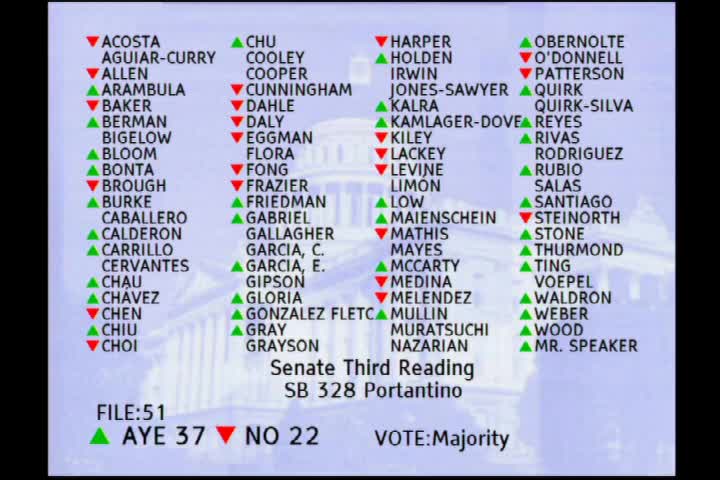 1MIN
Assembly Floor
 11MIN
Assembly Standing Committee on Higher Education
 4MIN
Assembly Standing Committee on Education
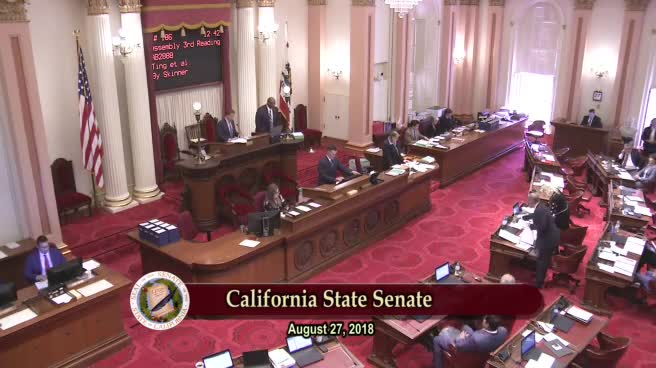 1MIN
Senate Floor
 1H
Senate Standing Committee on Appropriations
 2MIN
Assembly Floor
 4MIN
Assembly Standing Committee on Education


Bill Co-Author(s):