AB 2128: School employees: dismissal or suspension: hearings: evidence.
- Session Year: 2017-2018
- House: Assembly
- Latest Version Date: 2018-09-27
Existing law establishes procedures for the dismissal and suspension of school employees. Existing law prohibits a permanent school employee from being dismissed, except for one or more of certain enumerated causes.
Existing law prohibits, for certain dismissal or suspension proceedings, testimony or evidence relating to matters that occurred more than 4 years before the date of the filing of the notice of the governing board of the school district to an employee of its intention to dismiss or suspend him or her. Existing law also prohibits, for those dismissal or suspension proceedings, a decision relating to the dismissal or suspension of an employee to be made based on charges or evidence of any nature relating to matters occurring more than 4 years before the filing of the notice. Existing law exempts from these provisions allegations of a sex offense or an act of child abuse or neglect.
This bill would also exempt from those provisions testimony, evidence, or a dismissal or suspension decision regarding allegations of behavior or communication of a sexual nature with a pupil that is beyond the scope or requirements of the educational program, for purposes of a disciplinary proceeding based on similar conduct, as specified, and testimony, evidence, or a dismissal or suspension decision regarding allegations of specified offenses involving lewd and lascivious acts and certain types of contact or communication with minors, for purposes of any disciplinary proceeding.
Existing law establishes procedures for the dismissal and suspension of school employees. Existing law prohibits a permanent school employee from being dismissed, except for one or more of certain enumerated causes.
Existing law prohibits, for certain dismissal or suspension proceedings, testimony or evidence relating to matters that occurred more than 4 years before the date of the filing of the notice of the governing board of the school district to an employee of its intention to dismiss or suspend him or her. Existing law also prohibits, for those dismissal or suspension proceedings, a decision relating to the dismissal or suspension of an employee to be made based on charges or evidence of any nature relating to matters occurring more than 4 years before the filing of the notice. Existing law exempts from these provisions allegations of a sex offense or an act of child abuse or neglect.
This bill would also exempt from those provisions testimony, evidence, or a dismissal or suspension decision regarding allegations of behavior or communication of a sexual nature with a pupil that is beyond the scope or requirements of the educational program, for purposes of a disciplinary proceeding based on similar conduct, and testimony, evidence, or a dismissal or suspension decision regarding conduct that would constitute a violation allegations of specified offenses involving lewd and lascivious acts and certain types of contact or communication with minors, for purposes of any disciplinary proceeding.
Existing law establishes procedures for the dismissal and suspension of school employees. Existing law prohibits a permanent school employee from being dismissed, except for one or more of certain enumerated causes, including, among others, immoral or unprofessional conduct. Existing law provides that, for these purposes, immoral conduct includes egregious misconduct, as defined. causes.
Existing law prohibits, for certain dismissal or suspension proceedings, testimony or evidence relating to matters that occurred more than 4 years before the date of the filing of the notice of the governing board of the school district to an employee of its intention to dismiss or suspend him or her. Existing law also prohibits, for those dismissal or suspension proceedings, a decision relating to the dismissal or suspension of an employee to be made based on charges or evidence of any nature relating to matters occurring more than 4 years before the filing of the notice. Existing law exempts from these provisions allegations of a sex offense or an act of child abuse or neglect.
This bill would define egregious misconduct to include sexual harassment, as defined. The bill would also exempt from the prohibition on testimony, evidence, or a dismissal or suspension decision relating to matters that occurred more than 4 years before the date of the filing of the notice, allegations of specified conduct, including behavior or communication of a sexual nature with a pupil that is beyond the scope or requirements of the educational program and an act of sexual harassment. To the extent the bill would impose additional duties on local educational agency officials, the bill would impose a state-mandated local program.(2)The California Constitution requires the state to reimburse local agencies and school districts for certain costs mandated by the state. Statutory provisions establish procedures for making that reimbursement.This bill would provide that, if the Commission on State Mandates determines that the bill contains costs mandated by the state, reimbursement for those costs shall be made pursuant to the statutory provisions noted above.This bill would also exempt from those provisions testimony, evidence, or a dismissal or suspension decision regarding behavior or communication of a sexual nature with a pupil that is beyond the scope or requirements of the educational program, for purposes of a disciplinary proceeding based on similar conduct, and testimony, evidence, or a dismissal or suspension decision regarding conduct that would constitute a violation of specified offenses involving lewd and lascivious acts and certain types of contact or communication with minors, for purposes of any disciplinary proceeding.
(1)Existing law establishes procedures for the dismissal and suspension of school employees. Existing law prohibits a permanent school employee from being dismissed, except for one or more of certain enumerated causes, including, among others, immoral or unprofessional conduct. Existing law provides that, for these purposes, immoral conduct includes egregious misconduct, as defined.
Existing law prohibits, for certain dismissal or suspension proceedings, testimony or evidence relating to matters that occurred more than 4 years before the date of the filing of the notice of the governing board of the school district to an employee of its intention to dismiss or suspend him or her. Existing law also prohibits, for those dismissal or suspension proceedings, a decision relating to the dismissal or suspension of an employee to be made based on charges or evidence of any nature relating to matters occurring more than 4 years before the filing of the notice. Existing law exempts from these provisions allegations of a sex offense or an act of child abuse or neglect.
This bill would define egregious misconduct to include sexual harassment, as defined. The bill would also exempt from the prohibition on testimony, evidence, or a dismissal or suspension decision relating to matters that occurred more than 4 years before the date of the filing of the notice, allegations of inappropriate physical contact, an inappropriate verbal remark, sending a sexually suggestive or inappropriate communication to a pupil, or specified conduct, including behavior or communication of a sexual nature with a pupil that is beyond the scope or requirements of the educational program and an act of sexual harassment. To the extent the bill would impose additional duties on local educational agency officials, the bill would impose a state-mandated local program.
(2)The California Constitution requires the state to reimburse local agencies and school districts for certain costs mandated by the state. Statutory provisions establish procedures for making that reimbursement.
This bill would provide that, if the Commission on State Mandates determines that the bill contains costs mandated by the state, reimbursement for those costs shall be made pursuant to the statutory provisions noted above.
(1)Existing law establishes procedures for the dismissal and suspension of school employees. Existing law prohibits a permanent school employee from being dismissed, except for one or more of certain enumerated causes, including, among others, immoral or unprofessional conduct. Existing law provides that, for these purposes, immoral conduct includes egregious misconduct, as defined.
This bill would make nonsubstantive changes to that provision.Existing law prohibits, for certain dismissal or suspension proceedings, testimony or evidence relating to matters that occurred more than 4 years before the date of the filing of the notice of the governing board of the school district to an employee of its intention to dismiss or suspend him or her. Existing law also prohibits, for those dismissal or suspension proceedings, a decision relating to the dismissal or suspension of an employee to be made based on charges or evidence of any nature relating to matters occurring more than 4 years before the filing of the notice. Existing law exempts from these provisions allegations of a sex offense or an act of child abuse or neglect.
This bill would define egregious misconduct to include sexual harassment, as defined. The bill would also exempt from the prohibition on testimony, evidence, or a dismissal or suspension decision relating to matters that occurred more than 4 years before the date of the filing of the notice, allegations of inappropriate physical contact, an inappropriate verbal remark, sending a sexually suggestive or inappropriate communication to a pupil, or an act of sexual harassment. To the extent the bill would impose additional duties on local educational agency officials, the bill would impose a state-mandated local program.
(2)The California Constitution requires the state to reimburse local agencies and school districts for certain costs mandated by the state. Statutory provisions establish procedures for making that reimbursement.
This bill would provide that, if the Commission on State Mandates determines that the bill contains costs mandated by the state, reimbursement for those costs shall be made pursuant to the statutory provisions noted above.
Existing law establishes procedures for the dismissal and suspension of school employees. Existing law prohibits a permanent school employee from being dismissed, except for one or more of certain enumerated causes, including, among others, immoral or unprofessional conduct.
This bill would make nonsubstantive changes to that provision.
(a)This section applies only to dismissal or suspension proceedings initiated pursuant to Section 44934.
(b)(1)(A)In a dismissal or suspension proceeding initiated pursuant to Section 44934, if a hearing is requested by the employee, the hearing shall be commenced within six months from the date of the employees demand for a hearing. A continuance shall not extend the date for the commencement of the hearing more than six months from the date of the employees request for a hearing, except for extraordinary circumstances, as determined by the administrative law judge. If extraordinary circumstances are found that extend the date for the commencement of the hearing, the deadline for concluding the hearing and closing the record pursuant to this subdivision shall be extended for a period of time equal to the continuance. The hearing date shall be established after consultation with the employee and the governing board of the school district, or their representatives, except that if the parties are not able to reach an agreement on a date, the Office of Administrative Hearings shall unilaterally set a date in compliance with this section. The hearing shall be completed by a closing of the record within seven months of the date of the employees demand for a hearing. A continuance shall not extend the date for the close of the record more than seven months from the date of the employees request for a hearing, except for good cause, as determined by the administrative law judge.
(B)If substantial progress has been made in completing the previously scheduled days of the hearing within the seven-month period but the hearing cannot be completed, for good cause shown, within the seven-month period, the period for completing the hearing may be extended by the presiding administrative law judge. If the administrative law judge grants a continuance under this subparagraph, he or she shall establish a reasonable timetable for the completion of the hearing and the closing of the record. The hearing shall be initiated and conducted, and a decision made, in accordance with Chapter 5 (commencing with Section 11500) of Part 1 of Division 3 of Title 2 of the Government Code, and the Commission on Professional Competence shall have all of the power granted to an agency pursuant to that chapter, except as described in this article.
(2)(A)A witness shall not be permitted to testify at the hearing except upon oath or affirmation. Testimony shall not be given or evidence shall not be introduced relating to matters that occurred more than four years before the date of the filing of the notice, except in one of the following circumstances:
(i)Testimony or evidence regarding allegations of behavior or communication of a sexual nature with a pupil that is beyond the scope or requirements of the educational program, which may constitute misconduct, or an act described in Section 212.5, but not amounting to conduct described in clause (ii), may be introduced in a disciplinary proceeding based on similar conduct, where such allegations have been substantiated through an investigation or proceeding, or for which the employee was subject to discipline or other form of penalty.
(ii)Testimony or evidence regarding allegations of an act described in Section 288 of the Penal Code with respect to a pupil of any age, Section 288.3 of the Penal Code, Section 44010 of this code, or Sections 11165.2 to 11165.6, inclusive, of the Penal Code may be introduced in any disciplinary proceeding.
(B)Evidence of records regularly kept by the governing board of the school district concerning the employee may be introduced, but no decision relating to the dismissal or suspension of an employee shall be made based on charges or evidence of any nature relating to matters occurring more than four years before the filing of the notice, except as allowed pursuant to subparagraph (A).
(c)(1)The hearing provided for in this section shall be conducted by a Commission on Professional Competence, unless the parties submit a statement in writing to the Office of Administrative Hearings, indicating that both parties waive the right to convene a Commission on Professional Competence and stipulate to having the hearing conducted by a single administrative law judge. If the parties elect to waive a hearing before the Commission on Professional Competence, the hearing shall be initiated and conducted, and a decision made, in accordance with Chapter 5 (commencing with Section 11500) of Part 1 of Division 3 of Title 2 of the Government Code, and the administrative law judge conducting the hearing shall have all the powers granted to a Commission on Professional Competence pursuant to that chapter, except as described in this article.
(2)If the parties elect not to waive a hearing before a Commission on Professional Competence, one member of the commission shall be selected by the employee, one member shall be selected by the governing board of the school district, and one member shall be an administrative law judge of the Office of Administrative Hearings who shall be chairperson and a voting member of the commission and shall be responsible for assuring that the legal rights of the parties are protected at the hearing.
(3)The governing board of the school district and the employee shall select Commission on Professional Competence members no later than 45 days before the date set for hearing, and shall serve notice of their selection upon all other parties and upon the Office of Administrative Hearings. Failure to meet this deadline shall constitute a waiver of the right to selection, and the county board of education or its specific designee shall immediately make the selection. If the county board of education is also the governing board of the school district or has by statute been granted the powers of a governing board, the selection shall be made by the Superintendent, who shall be reimbursed by the school district for all costs incident to the selection.
(4)Any party who believes that a selected Commission on Professional Competence member is not qualified may file an objection, including a statement describing the basis for the objection, with the Office of Administrative Hearings and serve the objection and statement upon all other parties within 10 days of the date that the notice of selection is filed. Within seven days after the filing of any objection, the administrative law judge assigned to the matter shall rule on the objection or convene a teleconference with the parties for argument.
(5)(A)The member selected by the governing board of the school district and the member selected by the employee shall not be related to the employee and shall not be employees of the school district initiating the dismissal or suspension. Each member shall hold a currently valid credential and have at least three years experience within the past 10 years in the discipline of the employee.
(B)For purposes of this paragraph, the following terms have the following meanings:
(i)For an employee subject to dismissal whose most recent teaching assignment is in kindergarten or any of the grades 1 to 6, inclusive, discipline means a teaching assignment in kindergarten or any of the grades 1 to 6, inclusive.
(ii)For an employee subject to dismissal whose most recent assignment requires an education specialist credential or a services credential, discipline means an assignment that requires an education specialist credential or a services credential, respectively.
(iii)For an employee subject to dismissal whose most recent teaching assignment is in any of the grades 7 to 12, inclusive, discipline means a teaching assignment in any of grades 7 to 12, inclusive, in the same area of study, as that term is used in Section 51220, as the most recent teaching assignment of the employee subject to dismissal.
(d)(1)The decision of the Commission on Professional Competence shall be made by a majority vote, and the commission shall prepare a written decision containing findings of fact, determinations of issues, and a disposition that shall be, solely, one of the following:
(A)That the employee should be dismissed.
(B)That the employee should be suspended for a specific period of time without pay.
(C)That the employee should not be dismissed or suspended.
(2)The decision of the Commission on Professional Competence that the employee should not be dismissed or suspended shall not be based on nonsubstantive procedural errors committed by the school district or governing board of the school district unless the errors are prejudicial errors.
(3)The Commission on Professional Competence shall not have the power to dispose of the charge of dismissal by imposing probation or other alternative sanctions. The imposition of suspension pursuant to subparagraph (B) of paragraph (1) shall be available only in a suspension proceeding authorized pursuant to subdivision (b) of Section 44932 or Section 44933.
(4)The decision of the Commission on Professional Competence shall be deemed to be the final decision of the governing board of the school district.
(5)The governing board of the school district may adopt from time to time rules and procedures not inconsistent with this section as may be necessary to effectuate this section.
(6)The governing board of the school district and the employee shall have the right to be represented by counsel.
(e)(1)If the member selected by the governing board of the school district or the member selected by the employee is employed by any school district in this state, the member shall, during any service on a Commission on Professional Competence, continue to receive salary, fringe benefits, accumulated sick leave, and other leaves and benefits from the school district in which the member is employed, but shall not receive additional compensation or honorariums for service on the commission.
(2)If the member selected is a retired employee, the member shall receive pay at the daily substitute teacher rate in the school district that is a party to the hearing. Service on a Commission on Professional Competence shall not be credited toward retirement benefits.
(3)If service on a Commission on Professional Competence occurs during summer recess or vacation periods, the member shall receive compensation proportionate to that received during the current or immediately preceding contract period from the members employing school district, whichever amount is greater.
(f)(1)If the Commission on Professional Competence determines that the employee should be dismissed or suspended, the governing board of the school district and the state shall share equally the expenses of the hearing, including the cost of the administrative law judge. The state shall pay any costs incurred under paragraphs (2) and (3) of subdivision (e), the reasonable expenses, as determined by the administrative law judge, of the member selected by the governing board of the school district and the member selected by the employee, including, but not limited to, payments or obligations incurred for travel, meals, and lodging, and the cost of the substitute or substitutes, if any, for the member selected by the governing board of the school district and the member selected by the employee. The Controller shall pay all claims submitted pursuant to this paragraph from the General Fund, and may prescribe reasonable rules, regulations, and forms for the submission of the claims. The employee and the governing board of the school district shall pay their own attorneys fees.
(2)If the Commission on Professional Competence determines that the employee should not be dismissed or suspended, the governing board of the school district shall pay the expenses of the hearing, including the cost of the administrative law judge, any costs incurred under paragraphs (2) and (3) of subdivision (e), the reasonable expenses, as determined by the administrative law judge, of the member selected by the governing board of the school district and the member selected by the employee, including, but not limited to, payments or obligations incurred for travel, meals, and lodging, the cost of the substitute or substitutes, if any, for the member selected by the governing board of the school district and the member selected by the employee, and reasonable attorneys fees incurred by the employee.
(3)As used in this section, reasonable expenses shall not be deemed compensation within the meaning of subdivision (e).
(4)If either the governing board of the school district or the employee petitions a court of competent jurisdiction for review of the decision of the Commission on Professional Competence, the payment of expenses to members of the commission required by this subdivision shall not be stayed.
(5)If the decision of the Commission on Professional Competence is reversed or vacated by a court of competent jurisdiction, either the state, having paid the commission members expenses, shall be entitled to reimbursement from the governing board of the school district for those expenses, or the governing board of the school district, having paid the expenses, shall be entitled to reimbursement from the state. If either the governing board of the school district or the employee petitions a court of competent jurisdiction for review of the decision to overturn the administrative law judges decision, the payment of the expenses of the hearing, including the cost of the administrative law judge required by this paragraph, shall be stayed until no further appeal is sought, or all appeals are exhausted.
(g)The hearing provided for in this section shall be conducted in a place selected by agreement among the members of the Commission on Professional Competence. In the absence of agreement, the place shall be selected by the administrative law judge.
(a)This section applies only to dismissal or suspension proceedings initiated pursuant to Section 44934.
(b)(1)(A)In a dismissal or suspension proceeding initiated pursuant to Section 44934, if a hearing is requested by the employee, the hearing shall be commenced within six months from the date of the employees demand for a hearing. A continuance shall not extend the date for the commencement of the hearing more than six months from the date of the employees request for a hearing, except for extraordinary circumstances, as determined by the administrative law judge. If extraordinary circumstances are found that extend the date for the commencement of the hearing, the deadline for concluding the hearing and closing the record pursuant to this subdivision shall be extended for a period of time equal to the continuance. The hearing date shall be established after consultation with the employee and the governing board of the school district, or their representatives, except that if the parties are not able to reach an agreement on a date, the Office of Administrative Hearings shall unilaterally set a date in compliance with this section. The hearing shall be completed by a closing of the record within seven months of the date of the employees demand for a hearing. A continuance shall not extend the date for the close of the record more than seven months from the date of the employees request for a hearing, except for good cause, as determined by the administrative law judge.
(B)If substantial progress has been made in completing the previously scheduled days of the hearing within the seven-month period but the hearing cannot be completed, for good cause shown, within the seven-month period, the period for completing the hearing may be extended by the presiding administrative law judge. If the administrative law judge grants a continuance under this subparagraph, he or she shall establish a reasonable timetable for the completion of the hearing and the closing of the record. The hearing shall be initiated and conducted, and a decision made, in accordance with Chapter 5 (commencing with Section 11500) of Part 1 of Division 3 of Title 2 of the Government Code, and the Commission on Professional Competence shall have all of the power granted to an agency pursuant to that chapter, except as described in this article.
(2)(A)A witness shall not be permitted to testify at the hearing except upon oath or affirmation. Testimony shall not be given or evidence shall not be introduced relating to matters that occurred more than four years before the date of the filing of the notice, except in one of the following circumstances:
(i)Testimony or evidence regarding allegations of behavior or communication of a sexual nature with a pupil that is beyond the scope or requirements of the educational program, which may constitute misconduct, or an act described in Section 212.5, but not amounting to conduct described in clause (ii), may be introduced in a disciplinary proceeding based on similar conduct. conduct, where such allegations have been substantiated through an investigation or proceeding, or for which the employee was subject to discipline or other form of penalty.
(ii)Testimony or evidence regarding allegations of an act described in Section 288 of the Penal Code with respect to a pupil of any age, Section 288.3 of the Penal Code, Section 44010 of this code, or Sections 11165.2 to 11165.6, inclusive, of the Penal Code may be introduced in any disciplinary proceeding.
(B)Evidence of records regularly kept by the governing board of the school district concerning the employee may be introduced, but no decision relating to the dismissal or suspension of an employee shall be made based on charges or evidence of any nature relating to matters occurring more than four years before the filing of the notice, except as allowed pursuant to subparagraph (A).
(c)(1)The hearing provided for in this section shall be conducted by a Commission on Professional Competence, unless the parties submit a statement in writing to the Office of Administrative Hearings, indicating that both parties waive the right to convene a Commission on Professional Competence and stipulate to having the hearing conducted by a single administrative law judge. If the parties elect to waive a hearing before the Commission on Professional Competence, the hearing shall be initiated and conducted, and a decision made, in accordance with Chapter 5 (commencing with Section 11500) of Part 1 of Division 3 of Title 2 of the Government Code, and the administrative law judge conducting the hearing shall have all the powers granted to a Commission on Professional Competence pursuant to that chapter, except as described in this article.
(2)If the parties elect not to waive a hearing before a Commission on Professional Competence, one member of the commission shall be selected by the employee, one member shall be selected by the governing board of the school district, and one member shall be an administrative law judge of the Office of Administrative Hearings who shall be chairperson and a voting member of the commission and shall be responsible for assuring that the legal rights of the parties are protected at the hearing.
(3)The governing board of the school district and the employee shall select Commission on Professional Competence members no later than 45 days before the date set for hearing, and shall serve notice of their selection upon all other parties and upon the Office of Administrative Hearings. Failure to meet this deadline shall constitute a waiver of the right to selection, and the county board of education or its specific designee shall immediately make the selection. If the county board of education is also the governing board of the school district or has by statute been granted the powers of a governing board, the selection shall be made by the Superintendent, who shall be reimbursed by the school district for all costs incident to the selection.
(4)Any party who believes that a selected Commission on Professional Competence member is not qualified may file an objection, including a statement describing the basis for the objection, with the Office of Administrative Hearings and serve the objection and statement upon all other parties within 10 days of the date that the notice of selection is filed. Within seven days after the filing of any objection, the administrative law judge assigned to the matter shall rule on the objection or convene a teleconference with the parties for argument.
(5)(A)The member selected by the governing board of the school district and the member selected by the employee shall not be related to the employee and shall not be employees of the school district initiating the dismissal or suspension. Each member shall hold a currently valid credential and have at least three years experience within the past 10 years in the discipline of the employee.
(B)For purposes of this paragraph, the following terms have the following meanings:
(i)For an employee subject to dismissal whose most recent teaching assignment is in kindergarten or any of the grades 1 to 6, inclusive, discipline means a teaching assignment in kindergarten or any of the grades 1 to 6, inclusive.
(ii)For an employee subject to dismissal whose most recent assignment requires an education specialist credential or a services credential, discipline means an assignment that requires an education specialist credential or a services credential, respectively.
(iii)For an employee subject to dismissal whose most recent teaching assignment is in any of the grades 7 to 12, inclusive, discipline means a teaching assignment in any of grades 7 to 12, inclusive, in the same area of study, as that term is used in Section 51220, as the most recent teaching assignment of the employee subject to dismissal.
(d)(1)The decision of the Commission on Professional Competence shall be made by a majority vote, and the commission shall prepare a written decision containing findings of fact, determinations of issues, and a disposition that shall be, solely, one of the following:
(A)That the employee should be dismissed.
(B)That the employee should be suspended for a specific period of time without pay.
(C)That the employee should not be dismissed or suspended.
(2)The decision of the Commission on Professional Competence that the employee should not be dismissed or suspended shall not be based on nonsubstantive procedural errors committed by the school district or governing board of the school district unless the errors are prejudicial errors.
(3)The Commission on Professional Competence shall not have the power to dispose of the charge of dismissal by imposing probation or other alternative sanctions. The imposition of suspension pursuant to subparagraph (B) of paragraph (1) shall be available only in a suspension proceeding authorized pursuant to subdivision (b) of Section 44932 or Section 44933.
(4)The decision of the Commission on Professional Competence shall be deemed to be the final decision of the governing board of the school district.
(5)The governing board of the school district may adopt from time to time rules and procedures not inconsistent with this section as may be necessary to effectuate this section.
(6)The governing board of the school district and the employee shall have the right to be represented by counsel.
(e)(1)If the member selected by the governing board of the school district or the member selected by the employee is employed by any school district in this state, the member shall, during any service on a Commission on Professional Competence, continue to receive salary, fringe benefits, accumulated sick leave, and other leaves and benefits from the school district in which the member is employed, but shall not receive additional compensation or honorariums for service on the commission.
(2)If the member selected is a retired employee, the member shall receive pay at the daily substitute teacher rate in the school district that is a party to the hearing. Service on a Commission on Professional Competence shall not be credited toward retirement benefits.
(3)If service on a Commission on Professional Competence occurs during summer recess or vacation periods, the member shall receive compensation proportionate to that received during the current or immediately preceding contract period from the members employing school district, whichever amount is greater.
(f)(1)If the Commission on Professional Competence determines that the employee should be dismissed or suspended, the governing board of the school district and the state shall share equally the expenses of the hearing, including the cost of the administrative law judge. The state shall pay any costs incurred under paragraphs (2) and (3) of subdivision (e), the reasonable expenses, as determined by the administrative law judge, of the member selected by the governing board of the school district and the member selected by the employee, including, but not limited to, payments or obligations incurred for travel, meals, and lodging, and the cost of the substitute or substitutes, if any, for the member selected by the governing board of the school district and the member selected by the employee. The Controller shall pay all claims submitted pursuant to this paragraph from the General Fund, and may prescribe reasonable rules, regulations, and forms for the submission of the claims. The employee and the governing board of the school district shall pay their own attorneys fees.
(2)If the Commission on Professional Competence determines that the employee should not be dismissed or suspended, the governing board of the school district shall pay the expenses of the hearing, including the cost of the administrative law judge, any costs incurred under paragraphs (2) and (3) of subdivision (e), the reasonable expenses, as determined by the administrative law judge, of the member selected by the governing board of the school district and the member selected by the employee, including, but not limited to, payments or obligations incurred for travel, meals, and lodging, the cost of the substitute or substitutes, if any, for the member selected by the governing board of the school district and the member selected by the employee, and reasonable attorneys fees incurred by the employee.
(3)As used in this section, reasonable expenses shall not be deemed compensation within the meaning of subdivision (e).
(4)If either the governing board of the school district or the employee petitions a court of competent jurisdiction for review of the decision of the Commission on Professional Competence, the payment of expenses to members of the commission required by this subdivision shall not be stayed.
(5)If the decision of the Commission on Professional Competence is reversed or vacated by a court of competent jurisdiction, either the state, having paid the commission members expenses, shall be entitled to reimbursement from the governing board of the school district for those expenses, or the governing board of the school district, having paid the expenses, shall be entitled to reimbursement from the state. If either the governing board of the school district or the employee petitions a court of competent jurisdiction for review of the decision to overturn the administrative law judges decision, the payment of the expenses of the hearing, including the cost of the administrative law judge required by this paragraph, shall be stayed until no further appeal is sought, or all appeals are exhausted.
(g)The hearing provided for in this section shall be conducted in a place selected by agreement among the members of the Commission on Professional Competence. In the absence of agreement, the place shall be selected by the administrative law judge.
(a)This section applies only to dismissal or suspension proceedings initiated pursuant to Section 44934.
(b)(1)(A)In a dismissal or suspension proceeding initiated pursuant to Section 44934, if a hearing is requested by the employee, the hearing shall be commenced within six months from the date of the employees demand for a hearing. A continuance shall not extend the date for the commencement of the hearing more than six months from the date of the employees request for a hearing, except for extraordinary circumstances, as determined by the administrative law judge. If extraordinary circumstances are found that extend the date for the commencement of the hearing, the deadline for concluding the hearing and closing the record pursuant to this subdivision shall be extended for a period of time equal to the continuance. The hearing date shall be established after consultation with the employee and the governing board of the school district, or their representatives, except that if the parties are not able to reach an agreement on a date, the Office of Administrative Hearings shall unilaterally set a date in compliance with this section. The hearing shall be completed by a closing of the record within seven months of the date of the employees demand for a hearing. A continuance shall not extend the date for the close of the record more than seven months from the date of the employees request for a hearing, except for good cause, as determined by the administrative law judge.
(B)If substantial progress has been made in completing the previously scheduled days of the hearing within the seven-month period but the hearing cannot be completed, for good cause shown, within the seven-month period, the period for completing the hearing may be extended by the presiding administrative law judge. If the administrative law judge grants a continuance under this subparagraph, he or she shall establish a reasonable timetable for the completion of the hearing and the closing of the record. The hearing shall be initiated and conducted, and a decision made, in accordance with Chapter 5 (commencing with Section 11500) of Part 1 of Division 3 of Title 2 of the Government Code, and the Commission on Professional Competence shall have all of the power granted to an agency pursuant to that chapter, except as described in this article.
(2)(A)A witness shall not be permitted to testify at the hearing except upon oath or affirmation. Testimony shall not be given or evidence shall not be introduced relating to matters that occurred more than four years before the date of the filing of the notice, except in one of the following circumstances:
(i)Testimony or evidence regarding allegations of behavior or communication of a sexual nature with a pupil that is beyond the scope or requirements of the educational program, which may constitute misconduct, or an act described in Section 212.5, but not amounting to conduct described in clause (ii), may be introduced in a disciplinary proceeding based on similar conduct, including, but not limited to, an act described in Section 212.5. conduct.
(ii)Testimony or evidence regarding conduct that would constitute a violation of allegations of an act described in Section 288 of the Penal Code with respect to a pupil of any age, Section 288.3 of the Penal Code, Section 44010 of this code, or Sections 11165.2 to 11165.6, inclusive, of the Penal Code may be introduced in any disciplinary proceeding.
(B)Evidence of records regularly kept by the governing board of the school district concerning the employee may be introduced, but no decision relating to the dismissal or suspension of an employee shall be made based on charges or evidence of any nature relating to matters occurring more than four years before the filing of the notice, except as allowed pursuant to subparagraph (A).
(c)(1)The hearing provided for in this section shall be conducted by a Commission on Professional Competence, unless the parties submit a statement in writing to the Office of Administrative Hearings, indicating that both parties waive the right to convene a Commission on Professional Competence and stipulate to having the hearing conducted by a single administrative law judge. If the parties elect to waive a hearing before the Commission on Professional Competence, the hearing shall be initiated and conducted, and a decision made, in accordance with Chapter 5 (commencing with Section 11500) of Part 1 of Division 3 of Title 2 of the Government Code, and the administrative law judge conducting the hearing shall have all the powers granted to a Commission on Professional Competence pursuant to that chapter, except as described in this article.
(2)If the parties elect not to waive a hearing before a Commission on Professional Competence, one member of the commission shall be selected by the employee, one member shall be selected by the governing board of the school district, and one member shall be an administrative law judge of the Office of Administrative Hearings who shall be chairperson and a voting member of the commission and shall be responsible for assuring that the legal rights of the parties are protected at the hearing.
(3)The governing board of the school district and the employee shall select Commission on Professional Competence members no later than 45 days before the date set for hearing, and shall serve notice of their selection upon all other parties and upon the Office of Administrative Hearings. Failure to meet this deadline shall constitute a waiver of the right to selection, and the county board of education or its specific designee shall immediately make the selection. If the county board of education is also the governing board of the school district or has by statute been granted the powers of a governing board, the selection shall be made by the Superintendent, who shall be reimbursed by the school district for all costs incident to the selection.
(4)Any party who believes that a selected Commission on Professional Competence member is not qualified may file an objection, including a statement describing the basis for the objection, with the Office of Administrative Hearings and serve the objection and statement upon all other parties within 10 days of the date that the notice of selection is filed. Within seven days after the filing of any objection, the administrative law judge assigned to the matter shall rule on the objection or convene a teleconference with the parties for argument.
(5)(A)The member selected by the governing board of the school district and the member selected by the employee shall not be related to the employee and shall not be employees of the school district initiating the dismissal or suspension. Each member shall hold a currently valid credential and have at least three years experience within the past 10 years in the discipline of the employee.
(B)For purposes of this paragraph, the following terms have the following meanings:
(i)For an employee subject to dismissal whose most recent teaching assignment is in kindergarten or any of the grades 1 to 6, inclusive, discipline means a teaching assignment in kindergarten or any of the grades 1 to 6, inclusive.
(ii)For an employee subject to dismissal whose most recent assignment requires an education specialist credential or a services credential, discipline means an assignment that requires an education specialist credential or a services credential, respectively.
(iii)For an employee subject to dismissal whose most recent teaching assignment is in any of the grades 7 to 12, inclusive, discipline means a teaching assignment in any of grades 7 to 12, inclusive, in the same area of study, as that term is used in Section 51220, as the most recent teaching assignment of the employee subject to dismissal.
(d)(1)The decision of the Commission on Professional Competence shall be made by a majority vote, and the commission shall prepare a written decision containing findings of fact, determinations of issues, and a disposition that shall be, solely, one of the following:
(A)That the employee should be dismissed.
(B)That the employee should be suspended for a specific period of time without pay.
(C)That the employee should not be dismissed or suspended.
(2)The decision of the Commission on Professional Competence that the employee should not be dismissed or suspended shall not be based on nonsubstantive procedural errors committed by the school district or governing board of the school district unless the errors are prejudicial errors.
(3)The Commission on Professional Competence shall not have the power to dispose of the charge of dismissal by imposing probation or other alternative sanctions. The imposition of suspension pursuant to subparagraph (B) of paragraph (1) shall be available only in a suspension proceeding authorized pursuant to subdivision (b) of Section 44932 or Section 44933.
(4)The decision of the Commission on Professional Competence shall be deemed to be the final decision of the governing board of the school district.
(5)The governing board of the school district may adopt from time to time rules and procedures not inconsistent with this section as may be necessary to effectuate this section.
(6)The governing board of the school district and the employee shall have the right to be represented by counsel.
(e)(1)If the member selected by the governing board of the school district or the member selected by the employee is employed by any school district in this state, the member shall, during any service on a Commission on Professional Competence, continue to receive salary, fringe benefits, accumulated sick leave, and other leaves and benefits from the school district in which the member is employed, but shall not receive additional compensation or honorariums for service on the commission.
(2)If the member selected is a retired employee, the member shall receive pay at the daily substitute teacher rate in the school district that is a party to the hearing. Service on a Commission on Professional Competence shall not be credited toward retirement benefits.
(3)If service on a Commission on Professional Competence occurs during summer recess or vacation periods, the member shall receive compensation proportionate to that received during the current or immediately preceding contract period from the members employing school district, whichever amount is greater.
(f)(1)If the Commission on Professional Competence determines that the employee should be dismissed or suspended, the governing board of the school district and the state shall share equally the expenses of the hearing, including the cost of the administrative law judge. The state shall pay any costs incurred under paragraphs (2) and (3) of subdivision (e), the reasonable expenses, as determined by the administrative law judge, of the member selected by the governing board of the school district and the member selected by the employee, including, but not limited to, payments or obligations incurred for travel, meals, and lodging, and the cost of the substitute or substitutes, if any, for the member selected by the governing board of the school district and the member selected by the employee. The Controller shall pay all claims submitted pursuant to this paragraph from the General Fund, and may prescribe reasonable rules, regulations, and forms for the submission of the claims. The employee and the governing board of the school district shall pay their own attorneys fees.
(2)If the Commission on Professional Competence determines that the employee should not be dismissed or suspended, the governing board of the school district shall pay the expenses of the hearing, including the cost of the administrative law judge, any costs incurred under paragraphs (2) and (3) of subdivision (e), the reasonable expenses, as determined by the administrative law judge, of the member selected by the governing board of the school district and the member selected by the employee, including, but not limited to, payments or obligations incurred for travel, meals, and lodging, the cost of the substitute or substitutes, if any, for the member selected by the governing board of the school district and the member selected by the employee, and reasonable attorneys fees incurred by the employee.
(3)As used in this section, reasonable expenses shall not be deemed compensation within the meaning of subdivision (e).
(4)If either the governing board of the school district or the employee petitions a court of competent jurisdiction for review of the decision of the Commission on Professional Competence, the payment of expenses to members of the commission required by this subdivision shall not be stayed.
(5)If the decision of the Commission on Professional Competence is reversed or vacated by a court of competent jurisdiction, either the state, having paid the commission members expenses, shall be entitled to reimbursement from the governing board of the school district for those expenses, or the governing board of the school district, having paid the expenses, shall be entitled to reimbursement from the state. If either the governing board of the school district or the employee petitions a court of competent jurisdiction for review of the decision to overturn the administrative law judges decision, the payment of the expenses of the hearing, including the cost of the administrative law judge required by this paragraph, shall be stayed until no further appeal is sought, or all appeals are exhausted.
(g)The hearing provided for in this section shall be conducted in a place selected by agreement among the members of the Commission on Professional Competence. In the absence of agreement, the place shall be selected by the administrative law judge.
(a)This section applies only to dismissal or suspension proceedings initiated pursuant to Section 44934.
(b)(1)(A)In a dismissal or suspension proceeding initiated pursuant to Section 44934, if a hearing is requested by the employee, the hearing shall be commenced within six months from the date of the employees demand for a hearing. A continuance shall not extend the date for the commencement of the hearing more than six months from the date of the employees request for a hearing, except for extraordinary circumstances, as determined by the administrative law judge. If extraordinary circumstances are found that extend the date for the commencement of the hearing, the deadline for concluding the hearing and closing the record pursuant to this subdivision shall be extended for a period of time equal to the continuance. The hearing date shall be established after consultation with the employee and the governing board of the school district, or their representatives, except that if the parties are not able to reach an agreement on a date, the Office of Administrative Hearings shall unilaterally set a date in compliance with this section. The hearing shall be completed by a closing of the record within seven months of the date of the employees demand for a hearing. A continuance shall not extend the date for the close of the record more than seven months from the date of the employees request for a hearing, except for good cause, as determined by the administrative law judge.
(B)If substantial progress has been made in completing the previously scheduled days of the hearing within the seven-month period but the hearing cannot be completed, for good cause shown, within the seven-month period, the period for completing the hearing may be extended by the presiding administrative law judge. If the administrative law judge grants a continuance under this subparagraph, he or she shall establish a reasonable timetable for the completion of the hearing and the closing of the record. The hearing shall be initiated and conducted, and a decision made, in accordance with Chapter 5 (commencing with Section 11500) of Part 1 of Division 3 of Title 2 of the Government Code, and the Commission on Professional Competence shall have all of the power granted to an agency pursuant to that chapter, except as described in this article.
(2)(A)A witness shall not be permitted to testify at the hearing except upon oath or affirmation. Testimony shall not be given or evidence shall not be introduced relating to matters that occurred more than four years before the date of the filing of the notice, except allegations of in one of the following circumstances:
(i)Testimony or evidence regarding behavior or communication of a sexual nature with a pupil that is beyond the scope or requirements of the educational program, which may constitute misconduct, or an act described in Section 212.5 or 44010, may be introduced in a disciplinary proceeding based on similar conduct, including, but not limited to, an act described in Section 212.5.
(ii)Testimony or evidence regarding conduct that would constitute a violation of Section 288 of the Penal Code with respect to a pupil of any age, Section 288.3 of the Penal Code, Section 44010 of this code, or Sections 11165.2 to 11165.6, inclusive, of the Penal Code. Code may be introduced in any disciplinary proceeding.
(B)Evidence of records regularly kept by the governing board of the school district concerning the employee may be introduced, but no decision relating to the dismissal or suspension of an employee shall be made based on charges or evidence of any nature relating to matters occurring more than four years before the filing of the notice, except allegations of behavior or communication of a sexual nature with a pupil that is beyond the scope or requirements of the educational program, which may constitute misconduct, or an act described in Section 212.5 or 44010, Section 288 of the Penal Code with respect to a pupil of any age, Section 288.3 of the Penal Code, or Sections 11165.2 to 11165.6, inclusive, of the Penal Code. as allowed pursuant to subparagraph (A).
(c)(1)The hearing provided for in this section shall be conducted by a Commission on Professional Competence, unless the parties submit a statement in writing to the Office of Administrative Hearings, indicating that both parties waive the right to convene a Commission on Professional Competence and stipulate to having the hearing conducted by a single administrative law judge. If the parties elect to waive a hearing before the Commission on Professional Competence, the hearing shall be initiated and conducted, and a decision made, in accordance with Chapter 5 (commencing with Section 11500) of Part 1 of Division 3 of Title 2 of the Government Code, and the administrative law judge conducting the hearing shall have all the powers granted to a Commission on Professional Competence pursuant to that chapter, except as described in this article.
(2)If the parties elect not to waive a hearing before a Commission on Professional Competence, one member of the commission shall be selected by the employee, one member shall be selected by the governing board of the school district, and one member shall be an administrative law judge of the Office of Administrative Hearings who shall be chairperson and a voting member of the commission and shall be responsible for assuring that the legal rights of the parties are protected at the hearing.
(3)The governing board of the school district and the employee shall select Commission on Professional Competence members no later than 45 days before the date set for hearing, and shall serve notice of their selection upon all other parties and upon the Office of Administrative Hearings. Failure to meet this deadline shall constitute a waiver of the right to selection, and the county board of education or its specific designee shall immediately make the selection. If the county board of education is also the governing board of the school district or has by statute been granted the powers of a governing board, the selection shall be made by the Superintendent, who shall be reimbursed by the school district for all costs incident to the selection.
(4)Any party who believes that a selected Commission on Professional Competence member is not qualified may file an objection, including a statement describing the basis for the objection, with the Office of Administrative Hearings and serve the objection and statement upon all other parties within 10 days of the date that the notice of selection is filed. Within seven days after the filing of any objection, the administrative law judge assigned to the matter shall rule on the objection or convene a teleconference with the parties for argument.
(5)(A)The member selected by the governing board of the school district and the member selected by the employee shall not be related to the employee and shall not be employees of the school district initiating the dismissal or suspension. Each member shall hold a currently valid credential and have at least three years experience within the past 10 years in the discipline of the employee.
(B)For purposes of this paragraph, the following terms have the following meanings:
(i)For an employee subject to dismissal whose most recent teaching assignment is in kindergarten or any of the grades 1 to 6, inclusive, discipline means a teaching assignment in kindergarten or any of the grades 1 to 6, inclusive.
(ii)For an employee subject to dismissal whose most recent assignment requires an education specialist credential or a services credential, discipline means an assignment that requires an education specialist credential or a services credential, respectively.
(iii)For an employee subject to dismissal whose most recent teaching assignment is in any of the grades 7 to 12, inclusive, discipline means a teaching assignment in any of grades 7 to 12, inclusive, in the same area of study, as that term is used in Section 51220, as the most recent teaching assignment of the employee subject to dismissal.
(d)(1)The decision of the Commission on Professional Competence shall be made by a majority vote, and the commission shall prepare a written decision containing findings of fact, determinations of issues, and a disposition that shall be, solely, one of the following:
(A)That the employee should be dismissed.
(B)That the employee should be suspended for a specific period of time without pay.
(C)That the employee should not be dismissed or suspended.
(2)The decision of the Commission on Professional Competence that the employee should not be dismissed or suspended shall not be based on nonsubstantive procedural errors committed by the school district or governing board of the school district unless the errors are prejudicial errors.
(3)The Commission on Professional Competence shall not have the power to dispose of the charge of dismissal by imposing probation or other alternative sanctions. The imposition of suspension pursuant to subparagraph (B) of paragraph (1) shall be available only in a suspension proceeding authorized pursuant to subdivision (b) of Section 44932 or Section 44933.
(4)The decision of the Commission on Professional Competence shall be deemed to be the final decision of the governing board of the school district.
(5)The governing board of the school district may adopt from time to time rules and procedures not inconsistent with this section as may be necessary to effectuate this section.
(6)The governing board of the school district and the employee shall have the right to be represented by counsel.
(e)(1)If the member selected by the governing board of the school district or the member selected by the employee is employed by any school district in this state, the member shall, during any service on a Commission on Professional Competence, continue to receive salary, fringe benefits, accumulated sick leave, and other leaves and benefits from the school district in which the member is employed, but shall not receive additional compensation or honorariums for service on the commission.
(2)If the member selected is a retired employee, the member shall receive pay at the daily substitute teacher rate in the school district that is a party to the hearing. Service on a Commission on Professional Competence shall not be credited toward retirement benefits.
(3)If service on a Commission on Professional Competence occurs during summer recess or vacation periods, the member shall receive compensation proportionate to that received during the current or immediately preceding contract period from the members employing school district, whichever amount is greater.
(f)(1)If the Commission on Professional Competence determines that the employee should be dismissed or suspended, the governing board of the school district and the state shall share equally the expenses of the hearing, including the cost of the administrative law judge. The state shall pay any costs incurred under paragraphs (2) and (3) of subdivision (e), the reasonable expenses, as determined by the administrative law judge, of the member selected by the governing board of the school district and the member selected by the employee, including, but not limited to, payments or obligations incurred for travel, meals, and lodging, and the cost of the substitute or substitutes, if any, for the member selected by the governing board of the school district and the member selected by the employee. The Controller shall pay all claims submitted pursuant to this paragraph from the General Fund, and may prescribe reasonable rules, regulations, and forms for the submission of the claims. The employee and the governing board of the school district shall pay their own attorneys fees.
(2)If the Commission on Professional Competence determines that the employee should not be dismissed or suspended, the governing board of the school district shall pay the expenses of the hearing, including the cost of the administrative law judge, any costs incurred under paragraphs (2) and (3) of subdivision (e), the reasonable expenses, as determined by the administrative law judge, of the member selected by the governing board of the school district and the member selected by the employee, including, but not limited to, payments or obligations incurred for travel, meals, and lodging, the cost of the substitute or substitutes, if any, for the member selected by the governing board of the school district and the member selected by the employee, and reasonable attorneys fees incurred by the employee.
(3)As used in this section, reasonable expenses shall not be deemed compensation within the meaning of subdivision (e).
(4)If either the governing board of the school district or the employee petitions a court of competent jurisdiction for review of the decision of the Commission on Professional Competence, the payment of expenses to members of the commission required by this subdivision shall not be stayed.
(5)If the decision of the Commission on Professional Competence is reversed or vacated by a court of competent jurisdiction, either the state, having paid the commission members expenses, shall be entitled to reimbursement from the governing board of the school district for those expenses, or the governing board of the school district, having paid the expenses, shall be entitled to reimbursement from the state. If either the governing board of the school district or the employee petitions a court of competent jurisdiction for review of the decision to overturn the administrative law judges decision, the payment of the expenses of the hearing, including the cost of the administrative law judge required by this paragraph, shall be stayed until no further appeal is sought, or all appeals are exhausted.
(g)The hearing provided for in this section shall be conducted in a place selected by agreement among the members of the Commission on Professional Competence. In the absence of agreement, the place shall be selected by the administrative law judge.
SEC. 3. If the Commission on State Mandates determines that this act contains costs mandated by the state, reimbursement to local agencies and school districts for those costs shall be made pursuant to Part 7 (commencing with Section 17500) of Division 4 of Title 2 of the Government Code.(a)A permanent employee shall not be dismissed except for one or more of the following causes:
(1)Immoral conduct, including, but not limited to, egregious misconduct. For purposes of this chapter, egregious misconduct is defined exclusively as immoral conduct that is the basis for an offense described in Section 44010 or 44011, or in Sections 11165.2 to 11165.6, inclusive, of the Penal Code, or sexual harassment, as defined in Section 212.5.
(2)Unprofessional conduct.
(3)Commission, aiding, or advocating the commission of acts of criminal syndicalism, as prohibited by Chapter 188 of the Statutes of 1919, or in any amendment to that chapter.
(4)Dishonesty.
(5)Unsatisfactory performance.
(6)Evident unfitness for service.
(7)Physical or mental condition unfitting him or her to instruct, or associate with, children.
(8)Persistent violation of or refusal to obey the school laws of the state or reasonable regulations prescribed for the government of the public schools by the state board or by the governing board of the school district employing him or her.
(9)Conviction of a felony or of any crime involving moral turpitude.
(10)Violation of Section 51530 or conduct specified in Section 1028 of the Government Code, added by Chapter 1418 of the Statutes of 1947.
(11)Alcoholism or other drug abuse that makes the employee unfit to instruct, or associate with, children.
(b)The governing board of a school district may suspend without pay for a specific period of time on grounds of unprofessional conduct a permanent certificated employee or, in a school district with an average daily attendance of less than 250 pupils, a probationary employee, pursuant to the procedures specified in Sections 44933, 44934, 44934.1, 44935, 44936, 44937, 44943, and 44944. This authorization does not apply to a school district that has adopted a collective bargaining agreement pursuant to subdivision (b) of Section 3543.2 of the Government Code.
SEC. 2.Section 44944 of the Education Code is amended to read:44944.(a)This section applies only to dismissal or suspension proceedings initiated pursuant to Section 44934.
(b)(1)(A)In a dismissal or suspension proceeding initiated pursuant to Section 44934, if a hearing is requested by the employee, the hearing shall be commenced within six months from the date of the employees demand for a hearing. A continuance shall not extend the date for the commencement of the hearing more than six months from the date of the employees request for a hearing, except for extraordinary circumstances, as determined by the administrative law judge. If extraordinary circumstances are found that extend the date for the commencement of the hearing, the deadline for concluding the hearing and closing the record pursuant to this subdivision shall be extended for a period of time equal to the continuance. The hearing date shall be established after consultation with the employee and the governing board of the school district, or their representatives, except that if the parties are not able to reach an agreement on a date, the Office of Administrative Hearings shall unilaterally set a date in compliance with this section. The hearing shall be completed by a closing of the record within seven months of the date of the employees demand for a hearing. A continuance shall not extend the date for the close of the record more than seven months from the date of the employees request for a hearing, except for good cause, as determined by the administrative law judge.
(B)If substantial progress has been made in completing the previously scheduled days of the hearing within the seven-month period but the hearing cannot be completed, for good cause shown, within the seven-month period, the period for completing the hearing may be extended by the presiding administrative law judge. If the administrative law judge grants a continuance under this subparagraph, he or she shall establish a reasonable timetable for the completion of the hearing and the closing of the record. The hearing shall be initiated and conducted, and a decision made, in accordance with Chapter 5 (commencing with Section 11500) of Part 1 of Division 3 of Title 2 of the Government Code, and the Commission on Professional Competence shall have all of the power granted to an agency pursuant to that chapter, except as described in this article.
(2)(A)A witness shall not be permitted to testify at the hearing except upon oath or affirmation. Testimony shall not be given or evidence shall not be introduced relating to matters that occurred more than four years before the date of the filing of the notice, except allegations of inappropriate physical contact, an inappropriate verbal remark, sending a sexually suggestive or inappropriate communication to a pupil, behavior or communication of a sexual nature with a pupil that is beyond the scope or requirements of the educational program, which may constitute misconduct, or an act described in Section 212.5 or 44010, Section 288 of the Penal Code with respect to a pupil of any age, Section 288.3 of the Penal Code, or Sections 11165.2 to 11165.6, inclusive, of the Penal Code.
(B)Evidence of records regularly kept by the governing board of the school district concerning the employee may be introduced, but no decision relating to the dismissal or suspension of an employee shall be made based on charges or evidence of any nature relating to matters occurring more than four years before the filing of the notice, except allegations of inappropriate physical contact, an inappropriate verbal remark, sending a sexually suggestive or inappropriate communication to a pupil, behavior or communication of a sexual nature with a pupil that is beyond the scope or requirements of the educational program, which may constitute misconduct, or an act described in Section 212.5 or 44010, Section 288 of the Penal Code with respect to a pupil of any age, Section 288.3 of the Penal Code, or Sections 11165.2 to 11165.6, inclusive, of the Penal Code.
(c)(1)The hearing provided for in this section shall be conducted by a Commission on Professional Competence, unless the parties submit a statement in writing to the Office of Administrative Hearings, indicating that both parties waive the right to convene a Commission on Professional Competence and stipulate to having the hearing conducted by a single administrative law judge. If the parties elect to waive a hearing before the Commission on Professional Competence, the hearing shall be initiated and conducted, and a decision made, in accordance with Chapter 5 (commencing with Section 11500) of Part 1 of Division 3 of Title 2 of the Government Code, and the administrative law judge conducting the hearing shall have all the powers granted to a Commission on Professional Competence pursuant to that chapter, except as described in this article.
(2)If the parties elect not to waive a hearing before a Commission on Professional Competence, one member of the commission shall be selected by the employee, one member shall be selected by the governing board of the school district, and one member shall be an administrative law judge of the Office of Administrative Hearings who shall be chairperson and a voting member of the commission and shall be responsible for assuring that the legal rights of the parties are protected at the hearing.
(3)The governing board of the school district and the employee shall select Commission on Professional Competence members no later than 45 days before the date set for hearing, and shall serve notice of their selection upon all other parties and upon the Office of Administrative Hearings. Failure to meet this deadline shall constitute a waiver of the right to selection, and the county board of education or its specific designee shall immediately make the selection. If the county board of education is also the governing board of the school district or has by statute been granted the powers of a governing board, the selection shall be made by the Superintendent, who shall be reimbursed by the school district for all costs incident to the selection.
(4)Any party who believes that a selected Commission on Professional Competence member is not qualified may file an objection, including a statement describing the basis for the objection, with the Office of Administrative Hearings and serve the objection and statement upon all other parties within 10 days of the date that the notice of selection is filed. Within seven days after the filing of any objection, the administrative law judge assigned to the matter shall rule on the objection or convene a teleconference with the parties for argument.
(5)(A)The member selected by the governing board of the school district and the member selected by the employee shall not be related to the employee and shall not be employees of the school district initiating the dismissal or suspension. Each member shall hold a currently valid credential and have at least three years experience within the past 10 years in the discipline of the employee.
(B)For purposes of this paragraph, the following terms have the following meanings:
(i)For an employee subject to dismissal whose most recent teaching assignment is in kindergarten or any of the grades 1 to 6, inclusive, discipline means a teaching assignment in kindergarten or any of the grades 1 to 6, inclusive.
(ii)For an employee subject to dismissal whose most recent assignment requires an education specialist credential or a services credential, discipline means an assignment that requires an education specialist credential or a services credential, respectively.
(iii)For an employee subject to dismissal whose most recent teaching assignment is in any of the grades 7 to 12, inclusive, discipline means a teaching assignment in any of grades 7 to 12, inclusive, in the same area of study, as that term is used in Section 51220, as the most recent teaching assignment of the employee subject to dismissal.
(d)(1)The decision of the Commission on Professional Competence shall be made by a majority vote, and the commission shall prepare a written decision containing findings of fact, determinations of issues, and a disposition that shall be, solely, one of the following:
(A)That the employee should be dismissed.
(B)That the employee should be suspended for a specific period of time without pay.
(C)That the employee should not be dismissed or suspended.
(2)The decision of the Commission on Professional Competence that the employee should not be dismissed or suspended shall not be based on nonsubstantive procedural errors committed by the school district or governing board of the school district unless the errors are prejudicial errors.
(3)The Commission on Professional Competence shall not have the power to dispose of the charge of dismissal by imposing probation or other alternative sanctions. The imposition of suspension pursuant to subparagraph (B) of paragraph (1) shall be available only in a suspension proceeding authorized pursuant to subdivision (b) of Section 44932 or Section 44933.
(4)The decision of the Commission on Professional Competence shall be deemed to be the final decision of the governing board of the school district.
(5)The governing board of the school district may adopt from time to time rules and procedures not inconsistent with this section as may be necessary to effectuate this section.
(6)The governing board of the school district and the employee shall have the right to be represented by counsel.
(e)(1)If the member selected by the governing board of the school district or the member selected by the employee is employed by any school district in this state, the member shall, during any service on a Commission on Professional Competence, continue to receive salary, fringe benefits, accumulated sick leave, and other leaves and benefits from the school district in which the member is employed, but shall not receive additional compensation or honorariums for service on the commission.
(2)If the member selected is a retired employee, the member shall receive pay at the daily substitute teacher rate in the school district that is a party to the hearing. Service on a Commission on Professional Competence shall not be credited toward retirement benefits.
(3)If service on a Commission on Professional Competence occurs during summer recess or vacation periods, the member shall receive compensation proportionate to that received during the current or immediately preceding contract period from the members employing school district, whichever amount is greater.
(f)(1)If the Commission on Professional Competence determines that the employee should be dismissed or suspended, the governing board of the school district and the state shall share equally the expenses of the hearing, including the cost of the administrative law judge. The state shall pay any costs incurred under paragraphs (2) and (3) of subdivision (e), the reasonable expenses, as determined by the administrative law judge, of the member selected by the governing board of the school district and the member selected by the employee, including, but not limited to, payments or obligations incurred for travel, meals, and lodging, and the cost of the substitute or substitutes, if any, for the member selected by the governing board of the school district and the member selected by the employee. The Controller shall pay all claims submitted pursuant to this paragraph from the General Fund, and may prescribe reasonable rules, regulations, and forms for the submission of the claims. The employee and the governing board of the school district shall pay their own attorneys fees.
(2)If the Commission on Professional Competence determines that the employee should not be dismissed or suspended, the governing board of the school district shall pay the expenses of the hearing, including the cost of the administrative law judge, any costs incurred under paragraphs (2) and (3) of subdivision (e), the reasonable expenses, as determined by the administrative law judge, of the member selected by the governing board of the school district and the member selected by the employee, including, but not limited to, payments or obligations incurred for travel, meals, and lodging, the cost of the substitute or substitutes, if any, for the member selected by the governing board of the school district and the member selected by the employee, and reasonable attorneys fees incurred by the employee.
(3)As used in this section, reasonable expenses shall not be deemed compensation within the meaning of subdivision (e).
(4)If either the governing board of the school district or the employee petitions a court of competent jurisdiction for review of the decision of the Commission on Professional Competence, the payment of expenses to members of the commission required by this subdivision shall not be stayed.
(5)If the decision of the Commission on Professional Competence is reversed or vacated by a court of competent jurisdiction, either the state, having paid the commission members expenses, shall be entitled to reimbursement from the governing board of the school district for those expenses, or the governing board of the school district, having paid the expenses, shall be entitled to reimbursement from the state. If either the governing board of the school district or the employee petitions a court of competent jurisdiction for review of the decision to overturn the administrative law judges decision, the payment of the expenses of the hearing, including the cost of the administrative law judge required by this paragraph, shall be stayed until no further appeal is sought, or all appeals are exhausted.
(g)The hearing provided for in this section shall be conducted in a place selected by agreement among the members of the Commission on Professional Competence. In the absence of agreement, the place shall be selected by the administrative law judge.
SEC. 3.If the Commission on State Mandates determines that this act contains costs mandated by the state, reimbursement to local agencies and school districts for those costs shall be made pursuant to Part 7 (commencing with Section 17500) of Division 4 of Title 2 of the Government Code.
(a)This section applies only to dismissal or suspension proceedings initiated pursuant to Section 44934.
(b)(1)(A)In a dismissal or suspension proceeding initiated pursuant to Section 44934, if a hearing is requested by the employee, the hearing shall be commenced within six months from the date of the employees demand for a hearing. A continuance shall not extend the date for the commencement of the hearing more than six months from the date of the employees request for a hearing, except for extraordinary circumstances, as determined by the administrative law judge. If extraordinary circumstances are found that extend the date for the commencement of the hearing, the deadline for concluding the hearing and closing the record pursuant to this subdivision shall be extended for a period of time equal to the continuance. The hearing date shall be established after consultation with the employee and the governing board of the school district, or their representatives, except that if the parties are not able to reach an agreement on a date, the Office of Administrative Hearings shall unilaterally set a date in compliance with this section. The hearing shall be completed by a closing of the record within seven months of the date of the employees demand for a hearing. A continuance shall not extend the date for the close of the record more than seven months from the date of the employees request for a hearing, except for good cause, as determined by the administrative law judge.
(B)If substantial progress has been made in completing the previously scheduled days of the hearing within the seven-month period but the hearing cannot be completed, for good cause shown, within the seven-month period, the period for completing the hearing may be extended by the presiding administrative law judge. If the administrative law judge grants a continuance under this subparagraph, he or she shall establish a reasonable timetable for the completion of the hearing and the closing of the record. The hearing shall be initiated and conducted, and a decision made, in accordance with Chapter 5 (commencing with Section 11500) of Part 1 of Division 3 of Title 2 of the Government Code, and the Commission on Professional Competence shall have all of the power granted to an agency pursuant to that chapter, except as described in this article.
(2)(A)A witness shall not be permitted to testify at the hearing except upon oath or affirmation. Testimony shall not be given or evidence shall not be introduced relating to matters that occurred more than four years before the date of the filing of the notice, except allegations of inappropriate physical contact, an inappropriate verbal remark, sending a sexually suggestive or inappropriate communication to a pupil, or an act described in Section 44010 of this code 212.5 or 44010, or Sections 11165.2 to 11165.6, inclusive, of the Penal Code.
(B)Evidence of records regularly kept by the governing board of the school district concerning the employee may be introduced, but no decision relating to the dismissal or suspension of an employee shall be made based on charges or evidence of any nature relating to matters occurring more than four years before the filing of the notice, except allegations of inappropriate physical contact, an inappropriate verbal remark, sending a sexually suggestive or inappropriate communication to a pupil, or an act described in Section 44010 of this code 212.5 or 44010, or Sections 11165.2 to 11165.6, inclusive, of the Penal Code.
(c)(1)The hearing provided for in this section shall be conducted by a Commission on Professional Competence, unless the parties submit a statement in writing to the Office of Administrative Hearings, indicating that both parties waive the right to convene a Commission on Professional Competence and stipulate to having the hearing conducted by a single administrative law judge. If the parties elect to waive a hearing before the Commission on Professional Competence, the hearing shall be initiated and conducted, and a decision made, in accordance with Chapter 5 (commencing with Section 11500) of Part 1 of Division 3 of Title 2 of the Government Code, and the administrative law judge conducting the hearing shall have all the powers granted to a Commission on Professional Competence pursuant to that chapter, except as described in this article.
(2)If the parties elect not to waive a hearing before a Commission on Professional Competence, one member of the commission shall be selected by the employee, one member shall be selected by the governing board of the school district, and one member shall be an administrative law judge of the Office of Administrative Hearings who shall be chairperson and a voting member of the commission and shall be responsible for assuring that the legal rights of the parties are protected at the hearing.
(3)The governing board of the school district and the employee shall select Commission on Professional Competence members no later than 45 days before the date set for hearing, and shall serve notice of their selection upon all other parties and upon the Office of Administrative Hearings. Failure to meet this deadline shall constitute a waiver of the right to selection, and the county board of education or its specific designee shall immediately make the selection. If the county board of education is also the governing board of the school district or has by statute been granted the powers of a governing board, the selection shall be made by the Superintendent, who shall be reimbursed by the school district for all costs incident to the selection.
(4)Any party who believes that a selected Commission on Professional Competence member is not qualified may file an objection, including a statement describing the basis for the objection, with the Office of Administrative Hearings and serve the objection and statement upon all other parties within 10 days of the date that the notice of selection is filed. Within seven days after the filing of any objection, the administrative law judge assigned to the matter shall rule on the objection or convene a teleconference with the parties for argument.
(5)(A)The member selected by the governing board of the school district and the member selected by the employee shall not be related to the employee and shall not be employees of the school district initiating the dismissal or suspension. Each member shall hold a currently valid credential and have at least three years experience within the past 10 years in the discipline of the employee.
(B)For purposes of this paragraph, the following terms have the following meanings:
(i)For an employee subject to dismissal whose most recent teaching assignment is in kindergarten or any of the grades 1 to 6, inclusive, discipline means a teaching assignment in kindergarten or any of the grades 1 to 6, inclusive.
(ii)For an employee subject to dismissal whose most recent assignment requires an education specialist credential or a services credential, discipline means an assignment that requires an education specialist credential or a services credential, respectively.
(iii)For an employee subject to dismissal whose most recent teaching assignment is in any of the grades 7 to 12, inclusive, discipline means a teaching assignment in any of grades 7 to 12, inclusive, in the same area of study, as that term is used in Section 51220, as the most recent teaching assignment of the employee subject to dismissal.
(d)(1)The decision of the Commission on Professional Competence shall be made by a majority vote, and the commission shall prepare a written decision containing findings of fact, determinations of issues, and a disposition that shall be, solely, one of the following:
(A)That the employee should be dismissed.
(B)That the employee should be suspended for a specific period of time without pay.
(C)That the employee should not be dismissed or suspended.
(2)The decision of the Commission on Professional Competence that the employee should not be dismissed or suspended shall not be based on nonsubstantive procedural errors committed by the school district or governing board of the school district unless the errors are prejudicial errors.
(3)The Commission on Professional Competence shall not have the power to dispose of the charge of dismissal by imposing probation or other alternative sanctions. The imposition of suspension pursuant to subparagraph (B) of paragraph (1) shall be available only in a suspension proceeding authorized pursuant to subdivision (b) of Section 44932 or Section 44933.
(4)The decision of the Commission on Professional Competence shall be deemed to be the final decision of the governing board of the school district.
(5)The governing board of the school district may adopt from time to time rules and procedures not inconsistent with this section as may be necessary to effectuate this section.
(6)The governing board of the school district and the employee shall have the right to be represented by counsel.
(e)(1)If the member selected by the governing board of the school district or the member selected by the employee is employed by any school district in this state, the member shall, during any service on a Commission on Professional Competence, continue to receive salary, fringe benefits, accumulated sick leave, and other leaves and benefits from the school district in which the member is employed, but shall not receive additional compensation or honorariums for service on the commission.
(2)If the member selected is a retired employee, the member shall receive pay at the daily substitute teacher rate in the school district that is a party to the hearing. Service on a Commission on Professional Competence shall not be credited toward retirement benefits.
(3)If service on a Commission on Professional Competence occurs during summer recess or vacation periods, the member shall receive compensation proportionate to that received during the current or immediately preceding contract period from the members employing school district, whichever amount is greater.
(f)(1)If the Commission on Professional Competence determines that the employee should be dismissed or suspended, the governing board of the school district and the state shall share equally the expenses of the hearing, including the cost of the administrative law judge. The state shall pay any costs incurred under paragraphs (2) and (3) of subdivision (e), the reasonable expenses, as determined by the administrative law judge, of the member selected by the governing board of the school district and the member selected by the employee, including, but not limited to, payments or obligations incurred for travel, meals, and lodging, and the cost of the substitute or substitutes, if any, for the member selected by the governing board of the school district and the member selected by the employee. The Controller shall pay all claims submitted pursuant to this paragraph from the General Fund, and may prescribe reasonable rules, regulations, and forms for the submission of the claims. The employee and the governing board of the school district shall pay their own attorneys fees.
(2)If the Commission on Professional Competence determines that the employee should not be dismissed or suspended, the governing board of the school district shall pay the expenses of the hearing, including the cost of the administrative law judge, any costs incurred under paragraphs (2) and (3) of subdivision (e), the reasonable expenses, as determined by the administrative law judge, of the member selected by the governing board of the school district and the member selected by the employee, including, but not limited to, payments or obligations incurred for travel, meals, and lodging, the cost of the substitute or substitutes, if any, for the member selected by the governing board of the school district and the member selected by the employee, and reasonable attorneys fees incurred by the employee.
(3)As used in this section, reasonable expenses shall not be deemed compensation within the meaning of subdivision (e).
(4)If either the governing board of the school district or the employee petitions a court of competent jurisdiction for review of the decision of the Commission on Professional Competence, the payment of expenses to members of the commission required by this subdivision shall not be stayed.
(5)If the decision of the Commission on Professional Competence is reversed or vacated by a court of competent jurisdiction, either the state, having paid the commission members expenses, shall be entitled to reimbursement from the governing board of the school district for those expenses, or the governing board of the school district, having paid the expenses, shall be entitled to reimbursement from the state. If either the governing board of the school district or the employee petitions a court of competent jurisdiction for review of the decision to overturn the administrative law judges decision, the payment of the expenses of the hearing, including the cost of the administrative law judge required by this paragraph, shall be stayed until no further appeal is sought, or all appeals are exhausted.
(g)The hearing provided for in this section shall be conducted in a place selected by agreement among the members of the Commission on Professional Competence. In the absence of agreement, the place shall be selected by the administrative law judge.
SEC. 3.If the Commission on State Mandates determines that this act contains costs mandated by the state, reimbursement to local agencies and school districts for those costs shall be made pursuant to Part 7 (commencing with Section 17500) of Division 4 of Title 2 of the Government Code.
(a)A permanent employee shall not be dismissed except for one or more of the following causes:
(1)Immoral conduct, including, but not limited to, egregious misconduct. For purposes of this chapter, egregious misconduct is defined exclusively as immoral conduct that is the basis for an offense described in Section 44010 or 44011 of this code, 44011, or in Sections 11165.2 to 11165.6, inclusive, of the Penal Code.
(2)Unprofessional conduct.
(3)Commission, aiding, or advocating the commission of acts of criminal syndicalism, as prohibited by Chapter 188 of the Statutes of 1919, or in any amendment to that chapter.
(4)Dishonesty.
(5)Unsatisfactory performance.
(6)Evident unfitness for service.
(7)Physical or mental condition unfitting him or her to instruct instruct, or associate with with, children.
(8)Persistent violation of or refusal to obey the school laws of the state or reasonable regulations prescribed for the government of the public schools by the state board or by the governing board of the school district employing him or her.
(9)Conviction of a felony or of any crime involving moral turpitude.
(10)Violation of Section 51530 or conduct specified in Section 1028 of the Government Code, added by Chapter 1418 of the Statutes of 1947.
(11)Alcoholism or other drug abuse that makes the employee unfit to instruct instruct, or associate with with, children.
(b)The governing board of a school district may suspend without pay for a specific period of time on grounds of unprofessional conduct a permanent certificated employee or, in a school district with an average daily attendance of less than 250 pupils, a probationary employee, pursuant to the procedures specified in Sections 44933, 44934, 44934.1, 44935, 44936, 44937, 44943, and 44944. This authorization does not apply to a school district that has adopted a collective bargaining agreement pursuant to subdivision (b) of Section 3543.2 of the Government Code.
|
Date
|
Status
|
|---|---|
| Sep 27, 2018 | Chaptered by Secretary of State - Chapter 816, Statutes of 2018. |
| Sep 27, 2018 | Approved by the Governor. |
| Aug 24, 2018 | Enrolled and presented to the Governor at 4:30 p.m. |
| Aug 20, 2018 | Senate amendments concurred in. To Engrossing and Enrolling. |
| Aug 14, 2018 | In Assembly. Concurrence in Senate amendments pending. May be considered on or after August 16 pursuant to Assembly Rule 77. |
| Aug 13, 2018 | Read third time. Passed. Ordered to the Assembly. |
| Aug 6, 2018 | Read second time and amended. Ordered to consent calendar. |
| Jul 5, 2018 | From committee: Amend, and do pass as amended. To Consent Calendar. (Ayes 7. Noes 0.) (July 3). |
| Jun 13, 2018 | From committee: Do pass and re-refer to Com. on JUD. with recommendation: To Consent Calendar. (Ayes 7. Noes 0.) (June 13). Re-referred to Com. on JUD. |
| May 30, 2018 | Referred to Coms. on ED. and JUD. |
| May 22, 2018 | In Senate. Read first time. To Com. on RLS. for assignment. |
| May 21, 2018 | Read third time. Passed. Ordered to the Senate. |
| May 17, 2018 | Read third time and amended. Ordered to third reading. |
| May 1, 2018 | Read second time. Ordered to third reading. |
| Apr 30, 2018 | Re-referred to Com. on APPR. |
| Apr 26, 2018 | Read second time and amended. |
| Apr 25, 2018 | From committee: Amend, and do pass as amended and re-refer to Com. on APPR. (Ayes 10. Noes 0.) (April 24). |
| Apr 17, 2018 | Re-referred to Com. on JUD. |
| Apr 16, 2018 | Read second time and amended. |
| Apr 12, 2018 | From committee: Amend, and do pass as amended and re-refer to Com. on JUD. (Ayes 7. Noes 0.) (April 11). |
| Apr 2, 2018 | Re-referred to Com. on ED. |
| Mar 22, 2018 | Referred to Coms. on ED. and JUD. |
| Feb 9, 2018 | From printer. May be heard in committee March 11. |
| Feb 8, 2018 | Read first time. To print. |
|
Date
|
Description
|
Location
|
Votes
|
|
|---|---|---|---|---|
| Aug 20, 2018 | AB 2128 KILEY Concurrence in Senate Amendments | Assembly Floor |
Passed |
|
| Aug 13, 2018 | Consent Calendar AB2128 | Senate Floor |
Passed |
|
| Jul 3, 2018 | Do pass as amended, and be ordered to the Consent Calendar | Senate Standing Committee on Judiciary |
Passed |
|
| Jun 13, 2018 | Do pass, but first be re-referred to the Committee on [Judiciary] with the recommendation: To Consent Calendar | Senate Standing Committee on Education |
Passed |
|
| May 21, 2018 | AB 2128 KILEY Assembly Third Reading | Assembly Floor |
Passed |
|
| Apr 24, 2018 | Do pass as amended and be re-referred to the Committee on [Appropriations] | Assembly Standing Committee on Judiciary |
Passed |
|
| Apr 11, 2018 | Do pass as amended and be re-referred to the Committee on [Judiciary] | Assembly Standing Committee on Education |
Passed |
This list shows positions taken on this bill by organizations on the date displayed, which is linked to the original source.
Positions by individuals are not included.
|
Organization
|
Position
|
Date
|
|---|---|---|
| Association Of California School Administrators | ** Support | Aug 8, 2018 |
| California School Boards Association | ** Support | Aug 8, 2018 |
| Placer County Office Of Education | ** Support | Aug 8, 2018 |
| Riverside County Superintendent of Schools | ** Support | Jul 2, 2018 |
| Roseville High School District | * Support | Apr 11, 2018 |
| Roseville High School District | * Support | Apr 24, 2018 |
| Roseville Joint Union High School District | * Support | Apr 11, 2018 |
| Roseville Joint Union High School District | * Support | Apr 24, 2018 |
| School Employers Association Of California | ** Support | Aug 8, 2018 |
| small school districts' association | ** Support | Aug 8, 2018 |
CONCURRENCE IN SENATE AMENDMENTS
CSA1 Bill Id:AB 2128
Author:(Kiley)
As Amended Ver:August 6, 2018
Majority vote
ASSEMBLY: | 74-0 | (May 21, 2018) | SENATE: | 37-0 | (August 13, 2018) |
Original Committee Reference: ED.
SUMMARY: Authorizes a decision relating to the dismissal or suspension of an employee to be made based on evidence of specified allegations more than four years in the past. Specifically, this bill:
- Specifies a witness shall not be permitted to testify at the hearing except upon oath or affirmation. Testimony shall not be given or evidence shall not be introduced relating to matters that occurred more than four years before the date of the filing of the notice, except in one of the following circumstances:
- Testimony or evidence regarding allegations of behavior or communication of a sexual nature with a pupil that is beyond the scope or requirements of the educational program, which may constitute misconduct, or sexual harassment, but not amounting to conduct described in clause (b), may be introduced in a disciplinary proceeding based on similar conduct.
- Testimony or evidence regarding allegations of lewd or lascivious acts with respect to a pupil of any age, communication or contact with a minor in an attempt to commit lewd or lascivious acts as specified, sexual misconduct, child abuse and neglect offenses may be introduced in any disciplinary proceeding.
- Specifies that evidence of records regularly kept by the governing board of the school district concerning the employee may be introduced, but no decision relating to the dismissal or suspension of an employee shall be made based on charges or evidence of any nature relating to matters occurring more than four years before the filing of the notice, except in one of the following circumstances:
- Evidence regarding allegations of behavior or communication of a sexual nature with a pupil that is beyond the scope or requirements of the educational program, which may constitute misconduct, or sexual harassment, but not amounting to conduct described in clause (b), may be introduced in a disciplinary proceeding based on similar conduct.
- Evidence regarding allegations of lewd or lascivious acts with respect to a pupil of any age, communication or contact with a minor in an attempt to commit lewd or lascivious acts as specified, sexual misconduct, child abuse and neglect offenses may be introduced in any disciplinary proceeding.
EXISTING LAW:
- Prohibits the dismissal of permanent employees except for one or more of the following causes:
- Immoral conduct, including, but not limited to, egregious misconduct;
- Unprofessional conduct;
- Commissioning, aiding or advocating the commission of acts of criminal syndicalism;
- Dishonesty;
- Unsatisfactory performance;
- Evident unfitness for service;
- Physical or mental condition unfitting him or her to instruct or associate with children;
- Persistent violation of or refusal to obey the school laws of the state by the State Board of Education or by the local governing board employing him or her;
- Conviction of a felony or any crime involving moral turpitude;
- Advocating for or teaching communism with the intent of indoctrinating the mind of any pupil; or,
- Alcoholism or other drug abuse which makes the employee unfit to instruct or associate with children. (Education Code Section 44932)
- Prohibits a witness to testify at an employment dismissal hearing except upon oath or affirmation. Testimony shall not be given or evidence shall not be introduced relating to matters that occurred more than four years before the date of the filing of the notice, except allegations of sexual misconduct and child abuse and neglect offenses. (Education Code Section 44944)
- Evidence of records regularly kept by the governing board of the school district concerning the employee may be introduced, but no decision relating to the dismissal or suspension of an employee shall be made based on charges or evidence of any nature relating to matters occurring more than four years before the filing of the notice, except allegations of sexual misconduct and child abuse and neglect offenses. (Education Code Section 44944)
FISCAL EFFECT: This bill is keyed non-fiscal by the Legislative Counsel.
COMMENTS: This bill authorizes a decision relating to the dismissal or suspension of an employee to be made based on evidence of specified allegations more than four years in the past. Specifically, the bill authorizes evidence that is more than four years old to be presented for allegations of behavior or communication of a sexual nature with a pupil that is beyond the scope or requirements of the educational program, which may constitute misconduct, or sexual harassment to be introduced in a disciplinary proceeding based on similar conduct. Further, the bill authorizes allegations of lewd or lascivious acts with respect to a pupil of any age and communication or contact with a minor in an attempt to commit lewd or lascivious acts as specified, to be introduced in any disciplinary proceeding.
The author's intent is to allow evidence of inappropriate sexual behavior on the part of a teacher directed at a student to be considered in a dismissal hearing, when that evidence is more than four years old. While existing law authorizes this evidence if it relates to child abuse or sexual misconduct, the law does not allow evidence of less explicit, yet still unequivocally inappropriate behavior. As an example, a teacher that gives back rubs to students or makes remarks about a student's body that are sexual in nature is clearly demonstrating inappropriate behavior. If that behavior does not rise to the level of the definition of child abuse in the penal code, then districts cannot use that evidence if it is more than four years old. This bill would allow such evidence to be presented at a dismissal hearing.
Bifurcated System. This bill creates two different paths toward introducing evidence in a dismissal hearing. First, the bill specifies that testimony and evidence may be considered as it relates to allegations of behavior or communication of a sexual nature with a pupil that is beyond the scope or requirements of the educational program, which may constitute misconduct, or sexual harassment in a disciplinary proceeding based on similar conduct. Second, this bill specifies that testimony and evidence may be considered as it relates to allegations of lewd or lascivious acts with respect to a pupil of any age, communication or contact with a minor in an attempt to commit lewd or lascivious acts as specified, sexual misconduct, child abuse and neglect offenses, in any disciplinary proceeding.
Past Evidence in a Dismissal Hearing. This bill authorizes testimony and evidence relating to matters that occurred in the past to be used for a dismissal decision if the testimony and evidence is related to allegations of behavior or communication of a sexual nature with a pupil that is beyond the scope or requirements of the educational program, which may constitute misconduct, sexual harassment, lewd or lascivious acts with respect to a pupil of any age, or communication or contact with a minor in an attempt to commit lewd or lascivious acts as specified. Current law does not allow testimony about or evidence relating to these specific matters more than four years old during a suspension or dismissal hearing. Further, current law prohibits this information from being the basis of a decision relating to the dismissal or suspension of a certificated employee. Questions about this prohibition, however, have recently surfaced. There have been cases of immoral conduct by teachers where evidence older than four years, if it had been presented during the hearing, could have demonstrated a pattern of behavior and could have potentially given the school district and the Commission on Professional Competence a clearer picture of the ongoing inappropriate nature of the behavior.
This bill would allow for past evidence and testimony to be used to make a decision about whether or not to suspend or dismiss a certificated employee if that evidence is related to allegations of behavior or communication of a sexual nature with a pupil that is beyond the scope or requirements of the educational program, which may constitute misconduct, sexual harassment with a pupil or an adult, lewd or lascivious acts with respect to a pupil of any age, or communication or contact with a minor in an attempt to commit lewd or lascivious acts as specified. It seems that having all possible evidence to help illuminate patterns of behavior is reasonable during a dismissal hearing related to inappropriate physical and verbal contact between a teacher and a student.
According to the author, "Teacher dismissal policy in California was most recently updated in 2014 with the passage of AB 215 (Buchanan), Chapter 55. This bill made a number of changes to teacher dismissal policy, including the following:
- Created an expedited process for removal of teachers who have committed “egregious misconduct”
- Revised the process for all other cases so that hearings are required to end within seven months
- Created more transparency and accountability with regard to disclosing and reporting egregious misconduct and maintaining evidence in a teacher's file
Since the bill went into effect in 2015, a number of concerns have been raised that AB 215 did not allow administrators and local boards enough flexibility to deal teachers accused of inappropriate sexual misconduct with students. In many cases, teachers could not be dismissed because it was difficult to develop a pattern of behavior, due to the four-year limitation on testimony and evidence for most allegations of misconduct."
Analysis Prepared by: Chelsea Kelley / ED. / (916) 319-2087 FN: 0004000
Office of Senate Floor Analyses (916) 651-1520 Fax: (916) 327-4478 | AB |
CONSENT
Bill No: AB 2128
:
SENATE EDUCATION COMMITTEE: 7-0, 6/13/18
AYES: Allen, Wilk, Galgiani, Leyva, McGuire, Pan, Vidak
SENATE JUDICIARY COMMITTEE: 7-0, 7/3/18
AYES: Jackson, Moorlach, Anderson, Hertzberg, Monning, Stern, Wieckowski
ASSEMBLY FLOOR: 74-0, 5/21/18 - See last page for vote
DIGEST:
This bill expands the allegations that (1) a testifying witness at an employment dismissal hearing can share, and (2) decisions relating to the dismissal or suspension of an employee may be based, to include various behaviors or communications of a sexual or abusive nature with a pupil that occurred more than four years before the notice of intent to dismiss was filed.
Existing law:
- Prohibits the dismissal of permanent employees except for one or more of the following causes:
- Immoral conduct, including, but not limited to, egregious misconduct;
- Unprofessional conduct;
- Commissioning, aiding or advocating the commission of acts of criminal syndicalism;
- Dishonesty;
- Unsatisfactory performance;
- Evident unfitness for service;
- Physical or mental condition unfitting him or her to instruct or associate with children;
- Persistent violation of or refusal to obey the school laws of the state by the State Board of Education or by the local governing board employing him or her;
- Conviction of a felony or any crime involving moral turpitude;
- Advocating for or teaching communism with the intent of indoctrinating the mind of any pupil; or,
- Alcoholism or other drug abuse which makes the employee unfit to instruct or associate with children.
- Prohibits a witness from testifying at an employment dismissal hearing except upon oath or affirmation. Further, testimony may not be given and evidence may not be introduced relating to matters that occurred more than four years before the date of the filing of the notice, except allegations of sexual misconduct and child abuse and neglect offenses.
- Allows, during an employment dismissal hearing, evidence of records regularly kept by the governing board of the school district concerning the employee to be introduced. However, no decision relating to the dismissal or suspension of the employee shall be made based on charges or evidence relating to matters occurring more than four years before the filing of the notice, except allegations of sexual misconduct and child abuse and neglect offenses.
This bill expands the allegations that (1) a testifying witness at an employment dismissal hearing can share, and (2) decisions relating to the dismissal or suspension of an employee may be based, to include various behaviors or communications of a sexual or abusive nature with a pupil that occurred more than four years before the notice of intent to dismiss was filed. Specifically, this bill:
- Specifies a witness shall not be permitted to testify at the hearing except upon oath or affirmation. Testimony shall not be given or evidence shall not be introduced relating to matters that occurred more than four years before the date of the filing of the notice, except in one of the following circumstances:
- Testimony or evidence regarding allegations of behavior or communication of a sexual nature with a pupil that is beyond the scope or requirements of the educational program, which may constitute misconduct, or sexual harassment, but not amounting to conduct described in clause (b), may be introduced in a disciplinary proceeding based on similar conduct, where such allegations have been substantiated through an investigation or proceeding, or for which the employee was subject to discipline or other form of penalty.
- Testimony or evidence regarding allegations of lewd or lascivious acts with respect to a pupil of any age, communication or contact with a minor in an attempt to commit lewd or lascivious acts as specified, sexual misconduct, child abuse and neglect offenses may be introduced in any disciplinary proceeding.
- Specifies that evidence of records regularly kept by the governing board of the school district concerning the employee may be introduced, but no decision relating to the dismissal or suspension of an employee shall be made based on charges or evidence of any nature relating to matters occurring more than four years before the filing of the notice, except in one of the following circumstances:
- Evidence regarding allegations of behavior or communication of a sexual nature with a pupil that is beyond the scope or requirements of the educational program, which may constitute misconduct, or sexual harassment, but not amounting to conduct described in clause (b), may be introduced in a disciplinary proceeding based on similar conduct.
- Evidence regarding allegations of lewd or lascivious acts with respect to a pupil of any age, communication or contact with a minor in an attempt to commit lewd or lascivious acts as specified, sexual misconduct, child abuse and neglect offenses may be introduced in any disciplinary proceeding.
Comments
- Need for the bill. According to the author, “Teacher dismissal policy in California was most recently updated in 2014 with the passage of AB 215 (Buchanan). This bill made a number of changes to teacher dismissal policy, including the following:
- Created an expedited process for removal of teachers who have committed egregious misconduct;
- Revised the process for all other cases so that hearings are required to end within seven months;
- Created more transparency and accountability with regard to disclosing and reporting egregious misconduct and maintaining evidence in a teacher's file.
Since the bill went into effect in 2015, a number of concerns have been raised that AB 215 did not allow administrators and local boards enough flexibility to deal with teachers accused of inappropriate sexual misconduct with students. In many cases, teachers could not be dismissed because it was difficult to develop a pattern of behavior, due to the four-year limitation on testimony and evidence for most allegations of misconduct."
- Dismissal changes resulting from AB 215. Prior to passage of AB 215 (Buchanan, Chapter 55, Statutes of 2014), many contended that the teacher dismissal process was cumbersome, expensive, and made it difficult to dismiss teachers that should not be in the classroom. While AB 215 did not solve all of these issues, the measure did create a separate, expedited proceeding solely for egregious misconduct cases and attempted to overhaul the hearing process for all other dismissal or suspension causes. The most significant changes that took effect as a result of AB 215 were:
- For cases based solely on egregious misconduct, a separate dismissal or suspension proceeding was created. Egregious misconduct is defined as specified sex, drug, and child abuse and neglect offenses. Charges may be filed at any time, rather than a previously prescribed eight-month window. The hearing is conducted by an Administrative Law Judge, rather than the three-member Commission on Professional Competence. Evidence of egregious misconduct more than four years old may be introduced.
- For other causes, including those combined with egregious misconduct, charges may also be filed at any time. Notice must be by personal service on the teacher if served outside of the instructional year. Discovery is limited to defined disclosures and five depositions of witnesses. If disclosures are not made timely, evidence is precluded from introduction at the hearing except where good cause is shown. Evidence older than four years is not allowed except if it involves sex-based offenses, child abuse, neglect or endangerment. Further, the experience required for panel members on the Commission on Professional Competence was reduced from five to three years.
- For charges only based on unsatisfactory performance, notice must be served during the instructional year of the school site where the teacher is physically employed.
- Agreements to expunge from a school employee’s personnel file credible complaints of, substantiated investigations into, or discipline for, egregious misconduct are prohibited (not including the removal of documents where the allegations have been found to be false or unsubstantiated).
- Employees accusing other employees of egregious misconduct, knowing the allegation is false, are subject to certificate revocation.
- Four-year evidence rule. As noted above, AB 215 removed the four-year statute of limitations for testimony or evidence of sexual crimes and child abuse or neglect during a suspension or dismissal hearing. However, current law still does not allow testimony about or evidence relating to many serious acts if they are alleged to have occurred more than four years ago. Further, current law prohibits this information from being the basis of a decision relating to the dismissal or suspension of a certificated employee. This bill authorizes testimony and evidence relating to matters that occurred in the past to be used for a dismissal decision if the testimony and evidence is related to allegations of behavior or communication of a sexual nature with a pupil that is beyond the scope or requirements of the educational program, sexual harassment, lewd or lascivious acts with respect to a pupil of any age, or communication or contact with a minor in an attempt to commit lewd or lascivious acts, as specified.
Given that there have been cases of immoral conduct by teachers where evidence older than four years could have given the school district and the Commission on Professional Competence a clearer picture of ongoing inappropriate behavior, this bill will help illuminate patterns of behavior during a dismissal hearing related to inappropriate physical and verbal contact between a teacher and a student.
FISCAL EFFECT: Appropriation: Fiscal Com.: Local:
Association of California School Administrators
California School Boards Association
Placer County Office of Education
School Employers Association of California
Small School Districts’ Association
None received
ASSEMBLY FLOOR: 74-0, 5/21/18
AYES: Acosta, Aguiar-Curry, Travis Allen, Arambula, Baker, Berman, Bigelow, Bloom, Bonta, Brough, Burke, Caballero, Calderon, Carrillo, Cervantes, Chau, Chávez, Chen, Chiu, Choi, Chu, Cooley, Cooper, Cunningham, Dahle, Daly, Flora, Fong, Frazier, Friedman, Gallagher, Gipson, Gloria, Gonzalez Fletcher, Grayson, Harper, Holden, Irwin, Jones-Sawyer, Kalra, Kamlager-Dove, Kiley, Lackey, Levine, Limón, Low, Maienschein, Mathis, Mayes, McCarty, Medina, Melendez, Mullin, Muratsuchi, Nazarian, Obernolte, O'Donnell, Patterson, Quirk, Quirk-Silva, Reyes, Rodriguez, Rubio, Salas, Santiago, Steinorth, Mark Stone, Thurmond, Ting, Voepel, Waldron, Weber, Wood, Rendon
NO VOTE RECORDED: Eggman, Cristina Garcia, Eduardo Garcia, Gray
8/8/18 10:29:29
**** END ****
Senator Hannah-Beth Jackson, Chair
2017-2018 Regular Session
Bill No: AB 2128 (Author:Kiley)
Version: May 17, 2018
Hearing Date: July 3, 2018
Fiscal: No
Urgency: No
Consultant: CK
SUBJECT
School employees: dismissal or suspension: hearings: evidence
DESCRIPTION
This bill would allow testimony and evidence to be admitted in proceedings regarding the dismissal or suspension of a permanent school employee that involves allegations of behavior or communication of a sexual nature with a pupil or allegations of sexual harassment if the hearing is based on similar conduct regardless of whether it is over four years old. It would also allow testimony or evidence regarding allegations of lewd or lascivious acts with a pupil or contacting a known minor with intent to commit certain sexual misconduct to be admitted in any such proceeding regardless of when the alleged conduct took place.
BACKGROUND
The Education Code places restrictions on when a permanent employee of a school may be dismissed. The only bases for dismissal are:
- immoral conduct, including, but not limited to, egregious misconduct;
- unprofessional conduct;
- commission, aiding, or advocating the commission of acts of criminal syndicalism, as prohibited by Chapter 188 of the Statutes of 1919, or in any amendment to that chapter;
- dishonesty;
- unsatisfactory performance;
- evident unfitness for service;
- physical or mental condition unfitting him or her to instruct or associate with children;
- persistent violation of or refusal to obey the school laws of the state or reasonable regulations prescribed for the government of the public schools by the state board or by the governing board of the school district employing him or her;
- conviction of a felony or of any crime involving moral turpitude;
- violation of Section 51530 or conduct specified in Section 1028 of the Government Code, added by Chapter 1418 of the Statutes of 1947; or
- alcoholism or other drug abuse that makes the employee unfit to instruct or associate with children.
A permanent employee can be suspended without pay on grounds of unprofessional conduct. Existing law prescribes the procedures for dismissal or suspension proceedings involving permanent employees. A notice of suspension and intention to dismiss must be in writing and served on the employee, including the charges filed. If the employee requests a hearing, it must be commenced and completed within certain time limits.
The hearing must be conducted by a Commission on Professional Competence, unless waived by both parties. The decision is made by majority vote, and the Commission must prepare a written decision containing findings of fact, determinations of issues, and a disposition. The Commission may determine whether the employee should be dismissed, suspended, or neither. Either party may appeal.
This bill would expand what is deemed admissible testimony and evidence in such proceedings. This bill passed out of the Senate Education Committee on a 7 to 0 vote.
CHANGES TO EXISTING LAW
Existing law provides that a permanent employee shall not be dismissed except for one or more of the following causes:
- immoral conduct, including, but not limited to, egregious misconduct. For purposes of this chapter, “egregious misconduct” is defined exclusively as immoral conduct that is the basis for an offense described in Section 44010 or 44011 of this code, or in Sections 11165.2 to 11165.6, inclusive, of the Penal Code;
- unprofessional conduct;
- commission, aiding, or advocating the commission of acts of criminal syndicalism, as prohibited by Chapter 188 of the Statutes of 1919, or in any amendment to that chapter;
- dishonesty;
- unsatisfactory performance;
- evident unfitness for service;
- physical or mental condition unfitting him or her to instruct or associate with children;
- persistent violation of or refusal to obey the school laws of the state or reasonable regulations prescribed for the government of the public schools by the state board or by the governing board of the school district employing him or her;
- conviction of a felony or of any crime involving moral turpitude;
- violation of Section 51530 or conduct specified in Section 1028 of the Government Code, added by Chapter 1418 of the Statutes of 1947; or
- alcoholism or other drug abuse that makes the employee unfit to instruct or associate with children. (Ed. Code Sec. 44932(a).)
Existing law provides that the governing board of a school district may suspend without pay for a specific period of time on grounds of unprofessional conduct a permanent certificated employee or, in a school district with an average daily attendance of less than 250 pupils, a probationary employee, pursuant to the procedures specified in Sections 44933, 44934, 44934.1, 44935, 44936, 44937, 44943, and 44944. This authorization does not apply to a school district that has adopted a collective bargaining agreement pursuant to subdivision (b) of Section 3543.2 of the Government Code. (Ed. Code Sec. 44932(b).)
Existing law provides the procedures and evidentiary rules for a dismissal or suspension hearing, if a hearing is requested by the employee. Such hearing must be commenced within six months of the demand by the employee, as specified. A witness is not authorized to testify at the hearing except upon oath or affirmation. Testimony shall not be given or evidence shall not be introduced relating to matters that occurred more than four years before the date of the filing of the notice, except allegations of an act described in Section 44010 of this code or Sections 11165.2 to 11165.6, inclusive, of the Penal Code.
Existing law provides that evidence of records regularly kept by the governing board of the school district concerning the employee may be introduced, but no decision relating to the dismissal or suspension of an employee shall be made based on charges or evidence of any nature relating to matters occurring more than four years before the filing of the notice, except allegations of an act described in Section 44010 of this code or Sections 11165.2 to 11165.6, inclusive, of the Penal Code.
Existing law provides that “sexual harassment” means unwelcome sexual advances, requests for sexual favors, and other verbal, visual, or physical conduct of a sexual nature, made by someone from or in the work or educational setting, under any of the following conditions:
- submission to the conduct is explicitly or implicitly made a term or a condition of an individual’s employment, academic status, or progress;
- submission to, or rejection of, the conduct by the individual is used as the basis of employment or academic decisions affecting the individual;
- the conduct has the purpose or effect of having a negative impact upon the individual’s work or academic performance, or of creating an intimidating, hostile, or offensive work or educational environment;
- submission to, or rejection of, the conduct by the individual is used as the basis for any decision affecting the individual regarding benefits and services, honors, programs, or activities available at or through the educational institution. (Ed. Code Sec. 212.5.)
Existing law makes it a felony for any person to willfully, and lewdly commit any lewd or lascivious act, upon or with a child who is under the age of 14 years, with the intent of arousing, appealing to, or gratifying the lust, passions, or sexual desires of that person or the child. It is a public offense for a person to commit such acts with a child of 14 or 15 years, when that person is at least 10 years older than the child. (Pen. Code Sec. 288.)
Existing law makes it a crime for any person to contact or communicate with a minor, or attempt to do so, who knows or reasonably should know that the person is a minor, with intent to commit certain sexual offenses involving the minor. (Pen. Code Sec. 288.3.)
This bill would expand the exception to the four-year restriction on testimony, evidence, and records that may be introduced in these dismissal or suspension proceedings to include the following circumstances:
- testimony or evidence regarding allegations of behavior or communication of a sexual nature with a pupil that is beyond the scope or requirements of the educational program, which may constitute misconduct, or an act described in Section 212.5, but not amounting to conduct described below, may be introduced in a disciplinary proceeding based on similar conduct; or
- testimony or evidence regarding allegations of an act described in Section 288 of the Penal Code with respect to a pupil of any age or Section 288.3 of the Penal Code may be introduced in any disciplinary proceeding.
COMMENT
1. Stated need for the bill
According to the author:
Since the passage of AB 215 in 2014, which provided a framework to protect students from serious forms of misconduct, school administrators and governing boards have expressed concern that the law does not allow them to adequately address misconduct involving sexual harassment and inappropriate behavior with students. As a result, there are some school employees that are staying in the classroom even after numerous allegations of sexual misconduct.
AB 2128 addresses this issue by allowing local school officials to consider an employee’s entire history of sexual harassment or other inappropriate behavior with a student in a misconduct proceeding. Existing law only allows evidence and testimony that dates back 4 years, except in the most serious instances of alleged sexual assault or child abuse. This bill would also allow the presentation of evidence of sexual harassment or other inappropriate behavior, even if it is older than four years, in order to establish a pattern of misconduct.
AB 2128 is an important step in meeting two pressing social challenges: making our schools safer and rooting out sexual harassment. The bill makes common sense changes to strengthen the existing teacher dismissal statute and better to protect kids from predatory behaviors.
2. Expanding the exceptions to the evidentiary rules in dismissal or suspension
hearings
As indicated above, existing law provides the procedures and evidentiary rules for a dismissal or suspension hearing of a permanent school employee, if a hearing is requested by the employee. There are evidentiary restrictions on who can testify and what can be presented as evidence in these hearings.
For instance, a witness is not authorized to testify at the hearing except upon oath or affirmation. In addition, testimony cannot be given and evidence cannot be introduced relating to matters that occurred more than four years before the filing date of the notice, except allegations of an act described in Section 44010 of this code or Sections 11165.2 to 11165.6, inclusive, of the Penal Code. Similarly, evidence of records regularly kept by the governing board of the school district concerning the employee may be introduced, but no decision relating to the dismissal or suspension of an employee shall be made based on charges or evidence of any nature relating to matters occurring more than four years before the filing of the notice, except allegations of an act described in Section 44010 of this code or Sections 11165.2 to 11165.6, inclusive, of the Penal Code.
Both of these exceptions involve allegations of acts as specified in various statutes. These exceptions involve the following conduct undertaken by specified caregivers of a child:
- child abuse;
- sexual abuse;
- general or severe neglect of a child;
- willful harming or injuring of a child;
- willful infliction upon a child any cruel or inhuman corporal punishment or injury resulting in a traumatic condition; and
- endangering the person or health of a child.
This bill would expand the exception to the four-year restriction on testimony, evidence, and records that may be introduced in these dismissal or suspension proceedings to include the following circumstances:
- testimony or evidence regarding allegations of behavior or communication of a sexual nature with a pupil that is beyond the scope or requirements of the educational program, which may constitute misconduct, or sexual harassment, may be introduced in a disciplinary proceeding based on similar conduct; or
- testimony or evidence regarding allegations of lewd or lascivious acts with a pupil of any age or Section 288.3 of the Penal Code may be introduced in any disciplinary proceeding.
Therefore, under the first paragraph, allegations of certain sexual behavior or communication, or sexual harassment may be introduced when the underlying proceeding is based on similar misconduct or harassment, respectively, regardless of how old it is. Testimony or evidence regarding specified, criminal, sexual misconduct with a pupil or contacting a known minor with intent to commit certain sexual misconduct would be admissible in any proceeding regardless of how old it is.
Existing law recognizes that the value of evidence in proceedings regarding past conduct can be affected by its relevance, recency, and severity. For instance, Section 788 of the Evidence Code in combination with Article I, Section 28 of the California Constitution, provides that prior felony convictions are admissible to impeach the credibility of a witness. However, misdemeanor offenses are generally not admissible over a hearsay objection to establish issues of credibility.
The Federal Rules of Evidence provide that evidence of criminal convictions that have severe penalties must be admitted where the witness is not the defendant. It must be admitted against a defendant if it meets a heightened threshold of probity. Additional restrictions apply if the conviction is over ten years old. Such evidence is only admissible if it meets an extremely heightened standard of probity, where its probative value substantially outweighs its prejudicial effect.
Although expanding the scope of admissible evidence can serve solid policy goals by, for example, allowing a district to prove a pattern of misconduct, the scope of the evidence allowed by this bill may be excessive. It seems sound public policy to allow evidence of the severe crimes involving sexual misconduct with minors in such hearings, regardless of when they are alleged to have taken place. However, on the other end of the spectrum, allegations regarding sexual harassment that can be 20 years old are arguably much less probative in such a matter, especially when mere allegations suffice. In order to place reasonable limitations on when such evidence can be admitted and to slightly narrow the expansion of admissible evidence that the current bill provides, the following Committee amendment is suggested:
Committee Amendment:
On page 3, on line 30, delete “conduct.” and insert “conduct, where such allegations have been substantiated through an investigation or proceeding, or for which the employee was subject to discipline or other form of penalty.”
Support: Riverside County Superintendent of Schools
Opposition: None Known
HISTORY
Source: Author
Related Pending Legislation: None Known
Prior Legislation: AB 215 (Buchanan, Ch. 55, Stats. 2014) modified the suspension and dismissal procedures for permanent school employees and establishes a separate set of dismissal processes for employees charged with egregious misconduct, as specified.
Prior Vote:
Senate Education Committee (Ayes 7, Noes 0)
Assembly Floor (Ayes 74, Noes 0)
Assembly Judiciary Committee (Ayes 10, Noes 0)
Assembly Education Committee (Ayes 7, Noes 0)
**************
SENATE COMMITTEE ON EDUCATION
Senator Benjamin Allen, Chair
2017 - 2018 Regular
Bill No: AB 2128 Hearing Date: June 13, 2018
Author: | |||
Version: | May 17, 2018 | ||
Urgency: | No | Fiscal: | No |
Consultant: | Ian Johnson | ||
Subject: School employees: dismissal or suspension: hearings: evidence.
NOTE: This bill has been referred to the Committees on Education and Judiciary. A "do pass" motion should include referral to the Committee on Judiciary.
SUMMARY
This bill expands the allegations that (1) a testifying witness at an employment dismissal hearing can share, and (2) decisions relating to the dismissal or suspension of an employee may be based, to include various behaviors or communications of a sexual or abusive nature with a pupil that occurred more than four years before the notice of intent to dismiss was filed.
BACKGROUND
Existing law:
- Prohibits the dismissal of permanent employees except for one or more of the following causes:
- Immoral conduct, including, but not limited to, egregious misconduct;
- Unprofessional conduct;
- Commissioning, aiding or advocating the commission of acts of criminal syndicalism;
- Dishonesty;
- Unsatisfactory performance;
- Evident unfitness for service;
- Physical or mental condition unfitting him or her to instruct or associate with children;
- Persistent violation of or refusal to obey the school laws of the state by the State Board of Education or by the local governing board employing him or her;
- Conviction of a felony or any crime involving moral turpitude;
- Advocating for or teaching communism with the intent of indoctrinating the mind of any pupil; or,
- Alcoholism or other drug abuse which makes the employee unfit to instruct or associate with children.
- Prohibits a witness from testifying at an employment dismissal hearing except upon oath or affirmation. Further, testimony may not be given and evidence may not be introduced relating to matters that occurred more than four years before the date of the filing of the notice, except allegations of sexual misconduct and child abuse and neglect offenses.
- Allows, during an employment dismissal hearing, evidence of records regularly kept by the governing board of the school district concerning the employee to be introduced. However, no decision relating to the dismissal or suspension of the employee shall be made based on charges or evidence relating to matters occurring more than four years before the filing of the notice, except allegations of sexual misconduct and child abuse and neglect offenses.
ANALYSIS
This bill expands the allegations that (1) a testifying witness at an employment dismissal hearing can share, and (2) decisions relating to the dismissal or suspension of an employee may be based, to include various behaviors or communications of a sexual or abusive nature with a pupil that occurred more than four years before the notice of intent to dismiss was filed. Specifically, this bill:
- Specifies a witness shall not be permitted to testify at the hearing except upon oath or affirmation. Testimony shall not be given or evidence shall not be introduced relating to matters that occurred more than four years before the date of the filing of the notice, except in one of the following circumstances:
- Testimony or evidence regarding allegations of behavior or communication of a sexual nature with a pupil that is beyond the scope or requirements of the educational program, which may constitute misconduct, or sexual harassment, but not amounting to conduct described in clause (b), may be introduced in a disciplinary proceeding based on similar conduct.
- Testimony or evidence regarding allegations of lewd or lascivious acts with respect to a pupil of any age, communication or contact with a minor in an attempt to commit lewd or lascivious acts as specified, sexual misconduct, child abuse and neglect offenses may be introduced in any disciplinary proceeding.
- Specifies that evidence of records regularly kept by the governing board of the school district concerning the employee may be introduced, but no decision relating to the dismissal or suspension of an employee shall be made based on charges or evidence of any nature relating to matters occurring more than four years before the filing of the notice, except in one of the following circumstances:
- Evidence regarding allegations of behavior or communication of a sexual nature with a pupil that is beyond the scope or requirements of the educational program, which may constitute misconduct, or sexual harassment, but not amounting to conduct described in clause (b), may be introduced in a disciplinary proceeding based on similar conduct.
- Evidence regarding allegations of lewd or lascivious acts with respect to a pupil of any age, communication or contact with a minor in an attempt to commit lewd or lascivious acts as specified, sexual misconduct, child abuse and neglect offenses may be introduced in any disciplinary proceeding.
STAFF COMMENTS
- Need for the bill. According to the author, “Teacher dismissal policy in California was most recently updated in 2014 with the passage of AB 215 (Buchanan). This bill made a number of changes to teacher dismissal policy, including the following:
- Created an expedited process for removal of teachers who have committed egregious misconduct;
- Revised the process for all other cases so that hearings are required to end within seven months;
- Created more transparency and accountability with regard to disclosing and reporting egregious misconduct and maintaining evidence in a teacher's file.
Since the bill went into effect in 2015, a number of concerns have been raised that AB 215 did not allow administrators and local boards enough flexibility to deal with teachers accused of inappropriate sexual misconduct with students. In many cases, teachers could not be dismissed because it was difficult to develop a pattern of behavior, due to the four-year limitation on testimony and evidence for most allegations of misconduct."
- Dismissal changes resulting from AB 215. Prior to passage of AB 215 (Buchanan, 2014), many contended that the teacher dismissal process was cumbersome, expensive, and made it difficult to dismiss teachers that should not be in the classroom. While AB 215 did not solve all of these issues, the measure did create a separate, expedited proceeding solely for egregious misconduct cases and attempted to overhaul the hearing process for all other dismissal or suspension causes. The most significant changes that took effect as a result of AB 215 were:
- For cases based solely on egregious misconduct, a separate dismissal or suspension proceeding was created. Egregious misconduct is defined as specified sex, drug, and child abuse and neglect offenses. Charges may be filed at any time, rather than a previously prescribed eight-month window. The hearing is conducted by an Administrative Law Judge, rather than the three-member Commission on Professional Competence. Evidence of egregious misconduct more than four years old may be introduced.
- For other causes, including those combined with egregious misconduct, charges may also be filed at any time. Notice must be by personal service on the teacher if served outside of the instructional year. Discovery is limited to defined disclosures and five depositions of witnesses. If disclosures are not made timely, evidence is precluded from introduction at the hearing except where good cause is shown. Evidence older than four years is not allowed except if it involves sex-based offenses, child abuse, neglect or endangerment. Further, the experience required for panel members on the Commission on Professional Competence was reduced from five to three years.
- For charges only based on unsatisfactory performance, notice must be served during the instructional year of the school site where the teacher is physically employed.
- Agreements to expunge from a school employee’s personnel file credible complaints of, substantiated investigations into, or discipline for, egregious misconduct are prohibited (not including the removal of documents where the allegations have been found to be false or unsubstantiated).
- Employees accusing other employees of egregious misconduct, knowing the allegation is false, are subject to certificate revocation.
- Four-year evidence rule. As noted above, AB 215 removed the four-year statute of limitations for testimony or evidence of sexual crimes and child abuse or neglect during a suspension or dismissal hearing. However, current law still does not allow testimony about or evidence relating to many serious acts if they are alleged to have occurred more than four years ago. Further, current law prohibits this information from being the basis of a decision relating to the dismissal or suspension of a certificated employee. This bill authorizes testimony and evidence relating to matters that occurred in the past to be used for a dismissal decision if the testimony and evidence is related to allegations of behavior or communication of a sexual nature with a pupil that is beyond the scope or requirements of the educational program, sexual harassment, lewd or lascivious acts with respect to a pupil of any age, or communication or contact with a minor in an attempt to commit lewd or lascivious acts, as specified.
Given that there have been cases of immoral conduct by teachers where evidence older than four years could have given the school district and the Commission on Professional Competence a clearer picture of ongoing inappropriate behavior, this bill will help illuminate patterns of behavior during a dismissal hearing related to inappropriate physical and verbal contact between a teacher and a student.
SUPPORT
Association of California School Administrators
California School Boards Association
Placer County Office of Education
School Employers Association of California
Small School Districts’ Association
OPPOSITION
None received
-- END --
ASSEMBLY THIRD READING
ATR Bill Id:AB 2128
Author:(Kiley)
As Amended Ver:May 17, 2018
Majority vote
Committee | Votes | Ayes | Noes |
Education | 7-0 | O'Donnell, Kiley, Kalra, McCarty, Steinorth, Thurmond, Weber |
|
Judiciary | 10-0 | Mark Stone, Cunningham, Chau, Chiu, Weber, Holden, Kalra, Kiley, Maienschein, Reyes |
|
SUMMARY: Authorizes a decision relating to the dismissal or suspension of an employee to be made based on evidence of specified allegations more than four years in the past. Specifically, this bill:
- Specifies a witness shall not be permitted to testify at the hearing except upon oath or affirmation. Testimony shall not be given or evidence shall not be introduced relating to matters that occurred more than four years before the date of the filing of the notice, except in one of the following circumstances:
- Testimony or evidence regarding allegations of behavior or communication of a sexual nature with a pupil that is beyond the scope or requirements of the educational program, which may constitute misconduct, or sexual harassment, but not amounting to conduct described in clause (b), may be introduced in a disciplinary proceeding based on similar conduct.
- Testimony or evidence regarding allegations of lewd or lascivious acts with respect to a pupil of any age, communication or contact with a minor in an attempt to commit lewd or lascivious acts as specified, sexual misconduct, child abuse and neglect offenses may be introduced in any disciplinary proceeding.
- Specifies that evidence of records regularly kept by the governing board of the school district concerning the employee may be introduced, but no decision relating to the dismissal or suspension of an employee shall be made based on charges or evidence of any nature relating to matters occurring more than four years before the filing of the notice, except in one of the following circumstances:
- Evidence regarding allegations of behavior or communication of a sexual nature with a pupil that is beyond the scope or requirements of the educational program, which may constitute misconduct, or sexual harassment, but not amounting to conduct described in clause (b), may be introduced in a disciplinary proceeding based on similar conduct.
- Evidence regarding allegations of lewd or lascivious acts with respect to a pupil of any age, communication or contact with a minor in an attempt to commit lewd or lascivious acts as specified, sexual misconduct, child abuse and neglect offenses may be introduced in any disciplinary proceeding.
EXISTING LAW:
- Prohibits the dismissal of permanent employees except for one or more of the following causes:
- Immoral conduct, including, but not limited to, egregious misconduct;
- Unprofessional conduct;
- Commissioning, aiding or advocating the commission of acts of criminal syndicalism;
- Dishonesty;
- Unsatisfactory performance;
- Evident unfitness for service;
- Physical or mental condition unfitting him or her to instruct or associate with children;
- Persistent violation of or refusal to obey the school laws of the state by the State Board of Education or by the local governing board employing him or her;
- Conviction of a felony or any crime involving moral turpitude;
- Advocating for or teaching communism with the intent of indoctrinating the mind of any pupil; or,
- Alcoholism or other drug abuse which makes the employee unfit to instruct or associate with children. (Education Code Section 44932)
- Prohibits a witness to testify at an employment dismissal hearing except upon oath or affirmation. Testimony shall not be given or evidence shall not be introduced relating to matters that occurred more than four years before the date of the filing of the notice, except allegations of sexual misconduct and child abuse and neglect offenses. (Education Code Section 44944)
- Evidence of records regularly kept by the governing board of the school district concerning the employee may be introduced, but no decision relating to the dismissal or suspension of an employee shall be made based on charges or evidence of any nature relating to matters occurring more than four years before the filing of the notice, except allegations of sexual misconduct and child abuse and neglect offenses. (Education Code Section 44944)
FISCAL EFFECT: This bill is keyed non-fiscal by the Legislative Counsel.
COMMENTS: This bill authorizes a decision relating to the dismissal or suspension of an employee to be made based on evidence of specified allegations more than four years in the past. Specifically, the bill authorizes evidence that is more than four years old to be presented for allegations of behavior or communication of a sexual nature with a pupil that is beyond the scope or requirements of the educational program, which may constitute misconduct, or sexual harassment to be introduced in a disciplinary proceeding based on similar conduct. Further, the bill authorizes allegations of lewd or lascivious acts with respect to a pupil of any age and communication or contact with a minor in an attempt to commit lewd or lascivious acts as specified, to be introduced in any disciplinary proceeding.
The author's intent is to allow evidence of inappropriate sexual behavior on the part of a teacher directed at a student to be considered in a dismissal hearing, when that evidence is more than four years old. While existing law authorizes this evidence if it relates to child abuse or sexual misconduct, the law does not allow evidence of less explicit, yet still unequivocally inappropriate behavior. As an example, a teacher that gives back rubs to students or makes remarks about a student's body that are sexual in nature is clearly demonstrating inappropriate behavior. If that behavior does not rise to the level of the definition of child abuse in the penal code, then districts cannot use that evidence if it is more than four years old. This bill would allow such evidence to be presented at a dismissal hearing.
Bifurcated System. This bill creates two different paths toward introducing evidence in a dismissal hearing. First, the bill specifies that testimony and evidence may be considered as it relates to allegations of behavior or communication of a sexual nature with a pupil that is beyond the scope or requirements of the educational program, which may constitute misconduct, or sexual harassment in a disciplinary proceeding based on similar conduct. Second, the bill specifies that testimony and evidence may be considered as it relates to allegations of lewd or lascivious acts with respect to a pupil of any age, communication or contact with a minor in an attempt to commit lewd or lascivious acts as specified, sexual misconduct, child abuse and neglect offenses, in any disciplinary proceeding.
Past Evidence in a Dismissal Hearing. This bill authorizes testimony and evidence relating to matters that occurred in the past to be used for a dismissal decision if the testimony and evidence is related to allegations of behavior or communication of a sexual nature with a pupil that is beyond the scope or requirements of the educational program, which may constitute misconduct, sexual harassment, lewd or lascivious acts with respect to a pupil of any age, or communication or contact with a minor in an attempt to commit lewd or lascivious acts as specified. Current law does not allow testimony about or evidence relating to these specific matters more than four years old during a suspension or dismissal hearing. Further, current law prohibits this information from being the basis of a decision relating to the dismissal or suspension of a certificated employee. Questions about this prohibition, however, have recently surfaced. There have been cases of immoral conduct by teachers where evidence older than four years, if it had been presented during the hearing, could have demonstrated a pattern of behavior and could have potentially given the school district and the Commission on Professional Competence a clearer picture of the ongoing inappropriate nature of the behavior.
This bill would allow for past evidence and testimony to be used to make a decision about whether or not to suspend or dismiss a certificated employee if that evidence is related to allegations of behavior or communication of a sexual nature with a pupil that is beyond the scope or requirements of the educational program, which may constitute misconduct, sexual harassment with a pupil or an adult, lewd or lascivious acts with respect to a pupil of any age, or communication or contact with a minor in an attempt to commit lewd or lascivious acts as specified. It seems that having all possible evidence to help illuminate patterns of behavior is reasonable during a dismissal hearing related to inappropriate physical and verbal contact between a teacher and a student.
According to the author, "Teacher dismissal policy in California was most recently updated in 2014 with the passage of AB 215 (Buchanan) [Chapter 55]. This bill made a number of changes to teacher dismissal policy, including the following:
- Created an expedited process for removal of teachers who have committed "egregious misconduct"
- Revised the process for all other cases so that hearings are required to end within seven months
- Created more transparency and accountability with regard to disclosing and reporting egregious misconduct and maintaining evidence in a teacher's file
Since the bill went into effect in 2015, a number of concerns have been raised that AB 215 did not allow administrators and local boards enough flexibility to deal teachers accused of inappropriate sexual misconduct with students. In many cases, teachers could not be dismissed because it was difficult to develop a pattern of behavior, due to the four-year limitation on testimony and evidence for most allegations of misconduct."
Analysis Prepared by: Chelsea Kelley / ED. / (916) 319-2087 FN: 0002965
ASSEMBLY THIRD READING
ATR Bill Id:AB 2128
Author:(Kiley)
As Amended Ver:April 26, 2018
Majority vote
Committee | Votes | Ayes | Noes |
Education | 7-0 | O'Donnell, Kiley, Kalra, McCarty, Steinorth, Thurmond, Weber | |
Judiciary | 10-0 | Mark Stone, Cunningham, Chau, Chiu, Weber, Holden, Kalra, Kiley, Maienschein, Reyes |
SUMMARY: Authorizes a decision relating to the dismissal or suspension of an employee to be made based on evidence of specified allegations more than four years in the past. Specifically, this bill:
- Specifies a witness shall not be permitted to testify at the hearing except upon oath or affirmation. Testimony shall not be given or evidence shall not be introduced relating to matters that occurred more than four years before the date of the filing of the notice, except in one of the following circumstances:
- Testimony or evidence regarding behavior or communication of a sexual nature with a pupil that is beyond the scope or requirements of the educational program, which may constitute misconduct, may be introduced in a disciplinary proceeding based on similar conduct, including, but not limited to, sexual harassment.
- Testimony or evidence regarding conduct that would constitute lewd or lascivious acts with respect to a pupil of any age, communication or contact with a minor in an attempt to commit lewd or lascivious acts as specified, sexual misconduct, child abuse and neglect offenses may be introduced in any disciplinary proceeding.
- Specifies that evidence of records regularly kept by the governing board of the school district concerning the employee may be introduced, but no decision relating to the dismissal or suspension of an employee shall be made based on charges or evidence of any nature relating to matters occurring more than four years before the filing of the notice, except in one of the following circumstances:
- Testimony or evidence regarding behavior or communication of a sexual nature with a pupil that is beyond the scope or requirements of the educational program, which may constitute misconduct, may be introduced in a disciplinary proceeding based on similar conduct, including, but not limited to, sexual harassment.
- Testimony or evidence regarding conduct that would constitute lewd or lascivious acts with respect to a pupil of any age, communication or contact with a minor in an attempt to commit lewd or lascivious acts as specified, sexual misconduct, child abuse and neglect offenses may be introduced in any disciplinary proceeding.
EXISTING LAW:
- Prohibits the dismissal of permanent employees except for one or more of the following causes:
- Immoral conduct, including, but not limited to, egregious misconduct;
- Unprofessional conduct;
- Commissioning, aiding or advocating the commission of acts of criminal syndicalism;
- Dishonesty;
- Unsatisfactory performance;
- Evident unfitness for service;
- Physical or mental condition unfitting him or her to instruct or associate with children;
- Persistent violation of or refusal to obey the school laws of the state by the State Board of Education or by the local governing board employing him or her;
- Conviction of a felony or any crime involving moral turpitude;
- Advocating for or teaching communism with the intent of indoctrinating the mind of any pupil; or,
- Alcoholism or other drug abuse which makes the employee unfit to instruct or associate with children. (Education Code Section (EDC)44932)
- Prohibits a witness to testify at an employment dismissal hearing except upon oath or affirmation. Testimony shall not be given or evidence shall not be introduced relating to matters that occurred more than four years before the date of the filing of the notice, except allegations of sexual misconduct and child abuse and neglect offenses. (EDC 44944)
- Evidence of records regularly kept by the governing board of the school district concerning the employee may be introduced, but no decision relating to the dismissal or suspension of an employee shall be made based on charges or evidence of any nature relating to matters occurring more than four years before the filing of the notice, except allegations of sexual misconduct and child abuse and neglect offenses. (EDC 44944)
FISCAL EFFECT: This bill is keyed non-fiscal by the Legislative Counsel.
COMMENTS: This bill authorizes a decision relating to the dismissal or suspension of an employee to be made based on evidence of specified allegations more than four years in the past. Specifically, the bill authorizes evidence that is more than four years old to be presented for allegations of behavior or communication of a sexual nature with a pupil that is beyond the scope or requirements of the educational program, which may constitute misconduct, to be introduced in a disciplinary proceeding based on similar conduct, including, but not limited to, sexual harassment. Further, the bill authorizes allegations of lewd or lascivious acts with respect to a pupil of any age and communication or contact with a minor in an attempt to commit lewd or lascivious acts as specified, to be introduced in any disciplinary proceeding.
The author's intent is to allow evidence of inappropriate sexual behavior on the part of a teacher directed at a student to be considered in a dismissal hearing, when that evidence is more than four years old. While existing law authorizes this evidence if it relates to child abuse or sexual misconduct, the law does not allow evidence of less explicit, yet still unequivocally inappropriate behavior. As an example, a teacher that gives back rubs to students or makes remarks about a student's body that are sexual in nature is clearly demonstrating inappropriate behavior. If that behavior does not rise to the level of the definition of child abuse in the penal code, then districts cannot use that evidence if it is more than four years old. This bill would allow such evidence to be presented at a dismissal hearing.
Bifurcated System. This bill creates two different paths toward introducing evidence in a dismissal hearing. First, this bill specifies that testimony and evidence may be considered as it relates to allegations of behavior or communication of a sexual nature with a pupil that is beyond the scope or requirements of the educational program, which may constitute misconduct, or in a disciplinary proceeding based on similar conduct, including, but not limited to, sexual harassment. Second, this bill specifies that testimony and evidence may be considered as it relates to allegations of lewd or lascivious acts with respect to a pupil of any age, communication or contact with a minor in an attempt to commit lewd or lascivious acts as specified, sexual misconduct, child abuse and neglect offenses, in any disciplinary proceeding.
Past Evidence in a Dismissal Hearing. This bill authorizes testimony and evidence relating to matters that occurred in the past to be used for a dismissal decision if the testimony and evidence is related to allegations of behavior or communication of a sexual nature with a pupil that is beyond the scope or requirements of the educational program, which may constitute misconduct, sexual harassment, lewd or lascivious acts with respect to a pupil of any age, or communication or contact with a minor in an attempt to commit lewd or lascivious acts as specified. Current law does not allow testimony about or evidence relating to these specific matters more than four years old during a suspension or dismissal hearing. Further, current law prohibits this information from being the basis of a decision relating to the dismissal or suspension of a certificated employee. Questions about this prohibition, however, have recently surfaced. There have been cases of immoral conduct by teachers where evidence older than four years, if it had been presented during the hearing, could have demonstrated a pattern of behavior and could have potentially given the school district and the Commission on Professional Competence a clearer picture of the ongoing inappropriate nature of the behavior.
This bill would allow for past evidence and testimony to be used to make a decision about whether or not to suspend or dismiss a certificated employee if that evidence is related to allegations of behavior or communication of a sexual nature with a pupil that is beyond the scope or requirements of the educational program, which may constitute misconduct, sexual harassment with a pupil or an adult, lewd or lascivious acts with respect to a pupil of any age, or communication or contact with a minor in an attempt to commit lewd or lascivious acts as specified. It seems that having all possible evidence to help illuminate patterns of behavior is reasonable during a dismissal hearing related to inappropriate physical and verbal contact between a teacher and a student.
According to the author, "Teacher dismissal policy in California was most recently updated in 2014 with the passage of AB 215 (Buchanan) [Chapter 55]. This bill made a number of changes to teacher dismissal policy, including the following:
- Created an expedited process for removal of teachers who have committed "egregious misconduct"
- Revised the process for all other cases so that hearings are required to end within seven months
- Created more transparency and accountability with regard to disclosing and reporting egregious misconduct and maintaining evidence in a teacher's file
Since the bill went into effect in 2015, a number of concerns have been raised that AB 215 did not allow administrators and local boards enough flexibility to deal teachers accused of inappropriate sexual misconduct with students. In many cases, teachers could not be dismissed because it was difficult to develop a pattern of behavior, due to the four-year limitation on testimony and evidence for most allegations of misconduct."
Analysis Prepared by: Chelsea Kelley / ED. / (916) 319-2087 FN: 0002772
Date of Hearing: April 24, 2018
ASSEMBLY COMMITTEE ON JUDICIARY
Mark Stone, Chair
ABPCA Bill Id:AB 2128
Author:(Kiley) – As Amended Ver:April 16, 2018
As Proposed to be Amended
SUBJECT: SCHOOL EMPLOYEES: DISMISSAL OR SUSPENSION: HEARINGS: EVIDENCE
KEY ISSUES:
- SHOULD EVIDENCE AND TESTIMONY ABOUT alleged SEXUAL HARASSMENT BE ADMISSIBLE IN TEACHER DISCIPLINARY PROCEEDINGS INVOLVING CURRENT ALLEGATIONS OF SIMILAR BEHAVIOR, EVEN WHEN THE PAST ACTS OCCURRED MORE THAN FOUR YEARS PRIOR TO THE DISCIPLINARY PROCEEDING?
- SHOULD EVIDENCE AND TESTIMONY ABOUT alleged sex-related acts involving minors be admissible in a teacher disciplinary proceeding, even when the alleged acts OCCURRED MORE THAN FOUR YEARS PRIOR TO THE DISCIPLINARY PROCEEDING?
SYNOPSIS
The vast majority of public school teachers perform their jobs in a professional and ethical manner. Many dedicate decades of service to the public in an effort to educate the state’s youth, despite relatively low pay and working conditions that can, at times, be extremely challenging. This bill seeks to deal with the exception to this general rule: teachers who engage in illegal, unprofessional, and otherwise egregious conduct and who face disciplinary proceedings as a result of such conduct.
Existing Law (Education Code Section 44932) provides that a permanent school employee cannot be dismissed except for one or more specified causes, the most serious of which is “egregious misconduct.” In 2015, the teacher dismissal process for “egregious misconduct” cases was streamlined when AB 215 (Buchanan, Chap. 55, Stats. 2014) was signed into law. Existing law defines “egregious misconduct” to include a number of unlawful and criminal acts that are defined elsewhere in the Education Code (Sections 44010 and 44011) and the Penal Code, including the following: sex offenses (assault with intent to commit mayhem, rape, sodomy, or oral copulation; rape; unlawful sexual intercourse with a minor; spousal rape; sending harmful sexual matter to a minor for sexual gratification; sodomy, and oral copulation, among other sexual acts).
As now in print, the bill would add sexual harassment, as defined in Section 212.5, to the definition of “egregious misconduct,” basically placing it in the same category of misconduct as sexual offenses such as rape, sodomy, oral copulation, and child molestation. (See Section 44932.) While sexual harassment is serious and traumatizing, the Committee questions whether one act of sexual harassment is sufficiently serious for it to be put in the same category as extremely serious crimes such as rape, sodomy, oral copulation, and child molestation, or whether it should not be considered “egregious conduct” for purposes of dismissal of teachers. Given these concerns, the author has agreed to remove this provision from the bill.
The bill in print makes evidence and testimony of two types of misconduct- (1) inappropriate behavior or communication, including sexual harassment, and (2) sex offenses such as a violation of Penal Code Section 288 or 288.3 (lewd acts, or communication with the intent to commit lewd acts) admissible in disciplinary hearings, even when it is more than four years old, as an exception to the general rule that evidence that old is inadmissible. Because of the differences between these types of evidence, the author proposes to make the first category admissible in cases involving allegations of “similar conduct” and to make the second category admissible in any case. These amendments are reflected in the analysis. The bill in print has no opposition and is supported by several organizations that represent school administrators and employers. It is unknown how, or if, the proposed amendments will affect the positions of those groups. This bill was previously approved by the Assembly Education Committee by a vote of 7-0.
SUMMARY: Allows additional evidence of prior misconduct to be introduced at teacher disciplinary proceedings, even when it occurs more than four years before the proceeding. Specifically, this bill:
- Creates an exception to the general rule that prohibits testimony from being given or evidence introduced relating to matters that occurred more than four years before the date of the notice of dismissal or suspension proceeding when both of the following are satisfied:
- The testimony or evidence is regarding behavior or communication of a sexual nature with a pupil that is beyond the scope or requirements of the educational program, which may constitute misconduct.
- The testimony or evidence is introduced in a disciplinary proceeding based on similar conduct, including but not limited to an act described in Section 212.5 of the Education Code (which prohibits sexual harassment in school settings).
- Creates an exception to the general rule that prohibits testimony from being given or evidence introduced relating to matters that occurred more than four years before the date of the notice of dismissal or suspension proceeding when the testimony or evidence is regarding conduct that would constitute a violation of Section 288 of the Penal Code (lewd conduct) with respect to a pupil of any age, Section 288.3 of the Penal Code (contacting or communicating with a minor with the intent to engage in a sex-related act), and allows it to be introduced in any disciplinary proceeding.
- Allows evidence of records regularly kept by the governing board of the school district concerning the employee to be introduced, and for a dismissal or suspension proceeding to be based on charges or evidence that is allowed under 1) and 2), above.
EXISTING LAW:
- Prohibits the dismissal of permanent employees except for one or more of the following causes:
- Immoral conduct, including, but not limited to, egregious misconduct;
- Unprofessional conduct;
- Commissioning, aiding or advocating the commission of acts of criminal syndicalism;
- Dishonesty;
- Unsatisfactory performance;
- Evident unfitness for service;
- Physical or mental condition unfitting him or her to instruct or associate with children;
- Persistent violation of or refusal to obey the school laws of the state by the State Board of Education or by the local governing board employing him or her;
- Conviction of a felony or any crime involving moral turpitude;
- Advocating for or teaching communism with the intent of indoctrinating the mind of any pupil; or,
- Alcoholism or other drug abuse which makes the employee unfit to instruct or associate with children. (Education Code Section 44932. All further statutory references are to the Education Code, unless otherwise indicated.)
- Defines “egregious misconduct” exclusively as immoral conduct that is the basis for an offense described in Section 44010 or 44011, or in Sections 11165.2 to 11165.6, inclusive, of the Penal Code, which include the following offenses: rape, oral copulation, sodomy, lewd and lecivious conduct with a minor. (Section 44932 (a)(1).)
- Defines “sexual harassment” to mean the following: unwelcome sexual advances, requests for sexual favors, and other verbal, visual, or physical conduct of a sexual nature, made by someone from or in the work or educational setting, under any of the following conditions:
- Submission to the conduct is explicitly or implicitly made a term or a condition of an individual’s employment, academic status, or progress.
- Submission to, or rejection of, the conduct by the individual is used as the basis of employment or academic decisions affecting the individual.
- The conduct has the purpose or effect of having a negative impact upon the individual’s work or academic performance, or of creating an intimidating, hostile, or offensive work or educational environment.
- Submission to, or rejection of, the conduct by the individual is used as the basis for any decision affecting the individual regarding benefits and services, honors, programs, or activities available at or through the educational institution. (Section 212.5.)
- Prohibits testimony or evidence from being given relating to matters that occurred more than four years before the date of the filing of the notice, except allegations of sexual misconduct and child abuse and neglect offenses. (Section 44944 (b)(2)(A).)
- Allows evidence of records regularly kept by the governing board of the school district concerning the employee to be introduced, but prohibits a decision relating to the dismissal or suspension of an employee from being based upon charges or evidence of any nature relating to matters occurring more than four years before the filing of the notice, except allegations of sexual misconduct and child abuse and neglect offenses. (Section 44944 (b)(2)(B).)
FISCAL EFFECT: As currently in print this bill is keyed fiscal.
COMMENTS: The vast majority of public school teachers perform their jobs in a professional and ethical manner. Many dedicate decades of service to the public in an effort to educate the state’s youth, despite relatively low pay and working conditions that can, at times, be extremely challenging. This bill seeks to deal with the exception to this general rule: teachers who engage in illegal, unprofessional, and otherwise egregious conduct and who face disciplinary proceedings as a result of such conduct.
Teacher Discipline and Expedited Hearings for Egregious Misconduct. Existing law (Education Code Section 44932) provides that a permanent school employee cannot be dismissed except for one or more specified causes, the most serious of which is “egregious misconduct.” In 2015, the teacher dismissal process for “egregious misconduct” cases was streamlined when AB 215 (Buchanan, Chap. 55, Stats. 2014) was signed into law. AB 215 modified the dismissal procedures for certificated employees who have attained permanent status and established a separate set of dismissal processes for such cases.
Existing law, in Section 44932, defines “egregious misconduct” to include a number of unlawful and criminal acts that are defined elsewhere in the Education Code (Sections 44010 and 44011) and the Penal Code, including the following: sex offenses (assault with intent to commit mayhem, rape, sodomy, or oral copulation; rape; unlawful sexual intercourse with a minor; spousal rape; sending harmful sexual matter to a minor for sexual gratification; sodomy, and oral copulation, among other sexual acts); controlled substance offenses; child neglect, both severe and general; the willful harming or injuring of a child, or endangering the person or health of a child; unlawful corporal punishment or injury; and child abuse or neglect. (Section 44932 (a)(1).)
Author’s Statement. According to the author:
“Teacher dismissal policy in California was most recently updated in 2014 with the passage of AB 215 (Buchanan).” AB 215 made a number of changes to teacher dismissal policy: creating an expedited process for removal of teachers who have committed “egregious misconduct”; revising the process for all other cases so that hearings are required to end within 7 months; creating more transparency and accountability with regard to disclosing and reporting egregious misconduct and maintaining evidence in a teacher’s file. Under the expedited process created by this bill when an employee commits egregious misconduct, upon the filing of written charges with the governing board of a school district, the governing board may immediately suspend the employee from his or her duties and give notice to him or her of his or her suspension. Furthermore, 30 days after service of the notice of dismissal, that employee can be dismissed, unless he or she demands a hearing. Once dismissal or suspension proceedings have been initiated, the decision is in the hands of an administrative law judge (ALJ) who decides whether or not the employee should be dismissed, suspended with or without pay, or retained. The administrative cost of these hearings are paid according to the outcome.
The author alleges that the process outlined under AB 215, however, has proved to be inadequate in terms of its limited definition of “egregious conduct” and its four-year limit for the introduction of misconduct evidence that can be considered in a disciplinary proceeding. Specifically, the author alleges that since AB 215 went into effect in 2015, “a number of concerns have been raised that AB 215 did not allow administrators and local boards enough flexibility to deal with teachers accused of inappropriate sexual misconduct with students.”
The author cites a number of exceptional cases where teachers committed egregious acts, but stayed in the classroom longer than they should have. For example, the author mentions hundreds of incidents of child molestation at Miramonte Elementary School in Los Angeles that came to light in 2012. It is unclear if or how this bill, which broadens the scope of expedited disciplinary proceedings implemented with AB 215 and allows incidents of older misconduct, would have changed the outcome of the Miramonte cases, if it had been effect at the time. In the Miramonte cases, administrators either did not investigate complaints against teachers, or they investigated them and found them to be unfounded. Nothing in this bill would require administrators to conduct an investigation. Nor does this bill seek to change the standard of proof (currently preponderance of the evidence, the lowest standard of proof) for establishing egregious misconduct by a teacher. Like current law, this bill is premised on the idea that administrators will, in fact, perform their duties to investigate credible allegations of egregious misconduct in a timely and thorough manner.
Nevertheless, the author states that “AB 2128 addresses this issue and furthers the purpose of AB 215 in two ways.”
First, it modifies the definition of “egregious misconduct” in Education Code Section 44932 to include “sexual harassment.” This allows the expedited dismissal process created by AB 215 to be triggered in cases where an employee is accused of sexually harassing a student.
Second, for an employee charged with misconduct, the bill allows local school officials to consider their history of sexual harassment or other inappropriate behavior with a student. Existing law only allows evidence and testimony that dates back 4 years, except in the most serious instances of alleged sexual assault or child abuse. This bill would also allow evidence of sexual harassment or other inappropriate behavior, even if it is older than four years, in order to establish a pattern of misconduct.
Liability of School Administrators for Negligent Hiring and Employment. Public school administrators and supervisors may be held legally responsible for their negligence in hiring and retaining school staff, as well as supervising school staff. (C.A. v. William S. Hart Union High School Dist. (2012) 53 Cal.4th 861, 876-77.) The potential legal responsibility of administrators and supervisors for negligently hiring or retaining school personnel arises “from the special relationship they had with plaintiff, a student under their supervision, which relationship entailed the duty to take reasonable measures to protect plaintiff from injuries at the hands of others in the school environment.” (Id., at p. 877.)
At the same time, liability must be based on evidence of negligent hiring, supervision or retention, not on assumptions or speculation. (C.A. v. William S. Hart Union High School Dist., supra, 53 Cal. 4th at p. 878.) Just because an individual school employee has committed egregious misconduct with a student or students does not of itself establish, or raise any presumption, that the employing district should bear liability for the resulting injuries. (Ibid.) Thus, “when negligence by an administrator or supervisor is established, the greater share of fault will ordinarily lie with the individual who intentionally abused or harassed the student than with any other party, and that fact should be reflected in any allocation of comparative fault.” (Ibid.)
Is Sexual Harassment Sufficiently Egregious to Justify Dismissal of a Permanent Employee? Existing law provides that a permanent school teacher cannot be dismissed except for one or more specified causes, including “egregious misconduct,” which is currently defined to include a number of unlawful and criminal acts that are defined in the Education Code (Sections 44010 and 44011) and the Penal Code. (Section 44932 (a)(1).) These acts include the following: sex offenses (assault with intent to commit mayhem, rape, sodomy, or oral copulation; rape; unlawful sexual intercourse with a minor; spousal rape; sending harmful sexual matter to a minor for sexual gratification; sodomy, and oral copulation, among other sexual acts); controlled substance offenses; child neglect, both severe and general; the willful harming or injuring of a child, or endangering the person or health of a child; unlawful corporal punishment or injury; and child abuse or neglect. (Section 44932 (a)(1).)
The bill in print would add sexual harassment, as defined in Section 212.5, to the definition of “egregious misconduct,” basically placing it in the same category of misconduct as sexual offenses such as rape, sodomy, oral copulation, and child molestation. (See Section 44932.) While sexual harassment is serious and traumatizing, the Committee questions whether one act of sexual harassment is sufficiently serious for it to be put in the same category as extremely serious crimes such as rape, sodomy, oral copulation, and child molestation, or whether it should not be considered “egregious conduct” for purposes of dismissal of teachers.
New Types of Admissible Evidence About Past Misconduct. Current law prohibits a decision relating to the dismissal or suspension of an employee from being based upon testimony, charges, or evidence relating to matters occurring more than four years before the filing of the notice, except allegations of sexual misconduct and child abuse and neglect offenses. (Section 44944 (b)(2).)
The bill in print would expand the exception by allowing testimony and evidence of two types of older incidents. First it adds “behavior or communication of a sexual nature with a pupil that is beyond the scope or requirements of the educational program, which may constitute misconduct, or an act described in Section 212.5” (sexual harassment) to the list of serious crimes the evidence of which is allowed to be introduced in a disciplinary hearing under existing law. This provision also puts acts of sexual harassment on par with extremely serious crimes, such as rape and child molestation. Nevertheless, “behavior or communication of a sexual nature with a pupil that is beyond the scope or requirements of the educational program” is both inappropriate and serious, especially if it is part of a pattern of conduct.
Second, the bill allows testimony and evidence about serious sex-related crimes, including Section 288 of the Penal Code (lewd and lascivious conduct) with respect to a pupil of any age, and Section 288.3 of the Penal Code (contact or communication with a minor with the intent to commit a lewd or lascivious act) to existing law. Given that existing law provides an exception for serious sexual offenses, like these, that involve minors, this modest expansion or clarification seems appropriate.
As proposed to be amended, these provisions are separated so that evidence of the first category of misconduct (“behavior or communication of a sexual nature with a pupil that is beyond the scope or requirements of the educational program, which may constitute misconduct, or an act described in Section 212.5”) is only admissible in a proceeding involving “similar conduct,” including but not limited to misconduct that constitutes sexual harassment in an academic setting. Evidence of the second category of offenses – serious sex crimes–would be admissible in any proceeding.
Author’s Proposed Amendments. In order to address the concerns raised by the Committee about adding sexual harassment to the definition of “egregious misconduct,” the author proposes the following amendments:
- Delete Section One of the bill in its entirety.
- Amend Section Two of the bill, beginning on Page 4, at line 24, as follows:
(2) (A) A witness shall not be permitted to testify at the hearing except upon oath or affirmation. Testimony shall not be given or evidence shall not be introduced relating to matters that occurred more than four years before the date of the filing of the notice, except allegations of in the one of the following circumstances:
(i) Testimony or evidence regarding behavior or communication of a sexual nature with a pupil that is beyond the scope or requirements of the educational program, which may constitute misconduct, or may be introduced in a disciplinary proceeding based on similar conduct, including but not limited to an act described in Section 212.5 or 44010.
(ii) Testimony or evidence regarding conduct that would constitute a violation of Section 288 of the Penal Code with respect to a pupil of any age, Section 288.3 of the Penal Code, Section 44010, or Sections 11165.2 to 11165.6, inclusive, of the Penal Code may be introduced in any disciplinary proceeding.
(B) Evidence of records regularly kept by the governing board of the school district concerning the employee may be introduced, but no decision relating to the dismissal or suspension of an employee shall be made based on charges or evidence of any nature relating to matters occurring more than four years before the filing of the notice, except allegations of behavior or communication of a sexual nature with a pupil that is beyond the scope or requirements of the educational program, which may constitute misconduct, or an act described in Section 212.5 or 44010, Section 288 of the Penal Code with respect to a pupil of any age, Section 288.3 of the Penal Code, or Sections 11165.2 to 11165.6, inclusive, of the Penal Code as allowed pursuant to subparagraph (A).
REGISTERED SUPPORT / OPPOSITION:
Support (for the bill in print)
Association of California School Administrators
School Employers Association of California
Small School Districts Association
Opposition
None on file
Analysis Prepared by: Alison Merrilees / JUD. / (916) 319-2334
Date of Hearing: April 11, 2018
ASSEMBLY COMMITTEE ON EDUCATION
Patrick O'Donnell, Chair
ABPCA Bill Id:AB 2128 (
Author:Kiley) – As Amended Ver:March 22, 2018
[Note: This bill is double referred to the Committee on Judiciary and will be heard by that committee as it relates to issues under its jurisdiction.]
SUBJECT: School employees: dismissal or suspension: hearings: evidence
SUMMARY: Includes sexual harassment in the definition of egregious misconduct for purposes of permanent employee dismissal; and, authorizes a decision relating to the dismissal or suspension of an employee to be made based on evidence of specified allegations more than four years in the past. Specifically, this bill:
- Authorizes, for purposes of permanent employee dismissal hearings, testimony and evidence relating to matters that occurred more than four years before the date of the filing of the notice, for allegations of inappropriate physical contact, an inappropriate verbal remark, sending a sexually suggestive or inappropriate communication to a pupil, or sexual harassment.
- Authorizes, for purposes of permanent employee dismissal hearings, evidence of records regularly kept by the governing board of the school district concerning the employee to be introduced, and authorizes a decision relating to the dismissal or suspension of an employee to be made based on charges or evidence of any nature relating to matters occurring more than four years before the filing of the notice, for allegations of inappropriate physical contact, an inappropriate verbal remark, sending a sexually suggestive or inappropriate communication to a pupil, or sexual harassment.
EXISTING LAW:
- Prohibits the dismissal of permanent employees except for one or more of the following causes:
- Immoral conduct, including, but not limited to, egregious misconduct;
- Unprofessional conduct;
- Commissioning, aiding or advocating the commission of acts of criminal syndicalism;
- Dishonesty;
- Unsatisfactory performance;
- Evident unfitness for service;
- Physical or mental condition unfitting him or her to instruct or associate with children;
- Persistent violation of or refusal to obey the school laws of the state by the State Board of Education or by the local governing board employing him or her;
- Conviction of a felony or any crime involving moral turpitude;
- Advocating for or teaching communism with the intent of indoctrinating the mind of any pupil; or,
- Alcoholism or other drug abuse which makes the employee unfit to instruct or associate with children. (Education Code 44932)
- Defines “egregious misconduct” exclusively as immoral conduct that is the basis for sexual misconduct, controlled substances, child abuse and neglect offenses. (Education Code 44932)
- Prohibits a witness to testify at an employment dismissal hearing except upon oath or affirmation. Testimony shall not be given or evidence shall not be introduced relating to matters that occurred more than four years before the date of the filing of the notice, except allegations of sexual misconduct and child abuse and neglect offenses. (Education Code 44944)
- Evidence of records regularly kept by the governing board of the school district concerning the employee may be introduced, but no decision relating to the dismissal or suspension of an employee shall be made based on charges or evidence of any nature relating to matters occurring more than four years before the filing of the notice, except allegations of sexual misconduct and child abuse and neglect offenses. (Education Code 44944)
FISCAL EFFECT: Unknown
COMMENTS: This bill adds sexual harassment to the definition of egregious misconduct, allowing a school district to use an expedited dismissal process when a teacher sexually harasses a student or a fellow employee. The bill further authorizes a decision relating to the dismissal or suspension of an employee to be made based on evidence of specified allegations more than four years in the past. Specifically, the bill authorizes evidence that is more than four years old to be presented for allegations of inappropriate physical contact, an inappropriate verbal remark, sending a sexually suggestive or inappropriate communication to a pupil, or sexual harassment.
The author's intent is to allow evidence of inappropriate sexual behavior on the part of a teacher directed at a student to be considered in a dismissal hearing, when that evidence is more than four years old. While existing law authorizes this evidence if it relates to child abuse or sexual misconduct, the law does not allow evidence of less explicit, yet still unequivocally inappropriate behavior. As an example, a teacher that gives back rubs to students or makes remarks about a student's body that are sexual in nature is clearly demonstrating inappropriate behavior. If that behavior does not rise to the level of the definition of child abuse in the penal code, then districts cannot use that evidence if it is more than four years old. This bill would allow such evidence to be presented at a dismissal hearing.
Broad Terminology. This bill uses broad terminology such as "inappropriate physical contact," "inappropriate verbal remark" and "sending a sexually suggestive or inappropriate communication to a pupil." These terms can be interpreted in many ways. To clarify the author's intent with regard to inappropriate physical contact, the committee should consider amending the bill to clarify these terms and add references to penal code sections that describe this behavior in detail, such as lewd and lascivious acts in Penal Code Section 288 with a student of any age.
"Sexting" and Communication of a Sexual Nature to a Student. Penal code sections 288.2 and 228.3 describe communication with pupils depicting a minor engaging in sexual conduct and communication with pupils with the intent to commit lewd and lascivious acts (penal code 288). These code sections require that a person either send sexual images of a minor to another person, or they communicate with a minor with the intent to touch the minor in an arousing manner. The author's intent is for any communication with a student of a sexual nature to stay in the personnel file of a classified employee for more than four years, not just those communications with the intent to touch a student. To clarify this intent, the committee should consider amending the bill to include "behavior or communication of a sexual nature with a pupil that is beyond the scope or requirements of the educational program, which may constitute misconduct" and reference to penal code section 288.3 (communication with pupils with the intent to commit lewd and lascivious acts). This will allow school districts to keep all allegations of behavior or communication of a sexual nature between a teacher and a pupil in the personnel file. However, the language is narrow enough so that it will not include appropriate academic conversations that may contain sexual content that might happen within the scope of the educational program such as sexual health education or biology class.
Past Evidence in a Dismissal Hearing. This bill authorizes testimony and evidence relating to matters that occurred in the past to be used for a dismissal decision if the testimony and evidence is related to allegations of inappropriate physical contact, an inappropriate verbal remark, sending a sexually suggestive or inappropriate communication to a pupil, or sexual harassment. Current law does not allow testimony about or evidence relating to these specific matters more than four years old during a suspension or dismissal hearing. Further, current law prohibits this information from being the basis of a decision relating to the dismissal or suspension of a certificated employee. Questions about this prohibition, however, have recently surfaced. There have been cases of immoral conduct by teachers where evidence older than four years, if it had been presented during the hearing, could have demonstrated a pattern of behavior and could have potentially given the school district and the Commission on Professional Competence a clearer picture of the ongoing inappropriate nature of the behavior.
This bill would allow for past evidence and testimony to be used to make a decision about whether or not to suspend or dismiss a certificated employee if that evidence is related to allegations of inappropriate physical contact, an inappropriate verbal remark, sending a sexually suggestive or inappropriate communication to a pupil, or sexual harassment. It seems that having all possible evidence to help illuminate patterns of behavior is reasonable during a dismissal hearing related to inappropriate physical and verbal contact between a teacher and a student.
According to the author, "Teacher dismissal policy in California was most recently updated in 2014 with the passage of AB 215 (Buchanan). This bill made a number of changes to teacher dismissal policy, including the following:
- Created an expedited process for removal of teachers who have committed “egregious misconduct”
- Revised the process for all other cases so that hearings are required to end within 7 months
- Created more transparency and accountability with regard to disclosing and reporting egregious misconduct and maintaining evidence in a teacher’s file
Since the bill went into effect in 2015, a number of concerns have been raised that AB 215 did not allow administrators and local boards enough flexibility to deal teachers accused of inappropriate sexual misconduct with students. In many cases, teachers could not be dismissed because it was difficult to develop a pattern of behavior, due to the 4-year limitation on testimony and evidence for most allegations of misconduct."
Committee Amendment: Clarify the author's intent by removing the references "inappropriate physical contact," "inappropriate verbal remark" and "sending a sexually suggestive or inappropriate communication to a pupil" and instead specify "behavior or communication of a sexual nature with a pupil that is beyond the scope or requirements of the educational program, which may constitute misconduct" shall be kept in a personnel file more than 4 years and may be used in a dismissal hearing and add references to Penal Code sections 288 with respect to a pupil of any age, and 288.3.
REGISTERED SUPPORT / OPPOSITION:
Support
Association of School Administrators
School Employers Association of California
Small School Districts Association
Opposition
None on file
Analysis Prepared by: Chelsea Kelley / ED. / (916) 319-2087
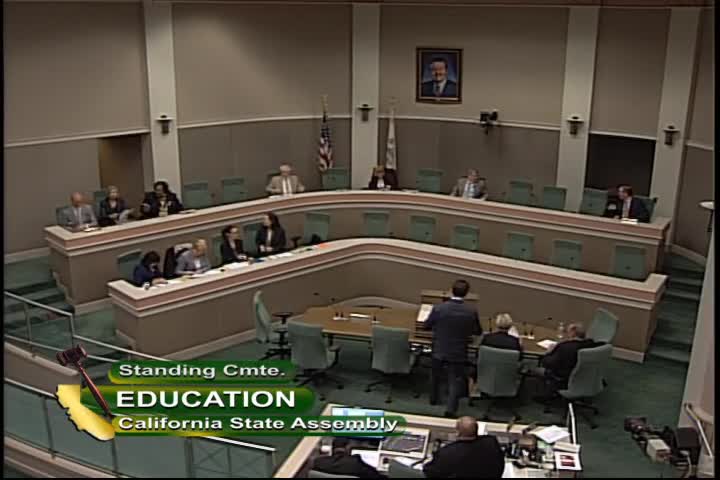
Bill Author

Bill Co-Author(s):
