AB 2142: Insurance: home protection companies.
- Session Year: 2017-2018
- House: Assembly
- Latest Version Date: 2018-09-17
Existing law regulates home protection companies, which issue contracts for the repair or replacement of a component, system, or appliance of a home. Existing law requires a home protection company to file an annual statement exhibiting its conditions and affairs, as specified, and an annual statement of financial condition. Existing law requires a home protection company to maintain a reserve for unearned premiums in an amount not less than 40% of the aggregate premiums charged on its current contracts. Existing law requires the Insurance Commissioner to examine the affairs of a home protection company before licensure and at other times as appears necessary, and prohibits the commissioner from conducting more than one financial examination of a home protection company in a 5-year period, unless specified requirements are met.
This bill would authorize the commissioner to extend the period between examinations up to 2 additional years if the commissioner determines that conditions warrant the extension, as specified.
Existing law regulates home protection companies, which issue contracts for the repair or replacement of a component, system, or appliance of a home. Existing law requires a home protection company to file an annual statement exhibiting its conditions and affairs, as specified, and an annual statement of financial condition. Existing law requires a home protection company to maintain a reserve for unearned premiums in an amount not less than 40% of the aggregate premiums charged on its current contracts. Existing law requires the Insurance Commissioner to examine the affairs of a home protection company before licensure and at other times as appears necessary, and prohibits the commissioner from conducting more than one financial examination of a home protection company in a 5-year period, unless specified requirements are met.
This bill would authorize the commissioner to extend the period between examinations up to 2 additional years if the commissioner determines that conditions warrant the extension, as specified.
Existing law regulates home protection companies, which issue contracts for the repair or replacement of a component, system, or appliance of a home. Existing law requires a home protection company to file an annual statement exhibiting its conditions and affairs, as specified, and an annual statement of financial condition. Existing law requires a home protection company to maintain a reserve for unearned premiums in an amount not less than 40% of the aggregate premiums charged on its current contracts. Existing law requires the Insurance Commissioner to examine the affairs of a home protection company before licensure and at other times as appears necessary, and prohibits the commissioner from conducting more than one financial examination of a home protection company in a 5-year period, unless specified requirements are met.
This bill would authorize the commissioner to extend the period between examinations up to 2 additional years if the commissioner determines that conditions warrant the extension, as specified. The bill would require the commissioner to provide to the Senate Insurance Committee and the Assembly Committee on Insurance a summary of the steps taken and the procedures streamlined to reduce examination costs for home protection companies.
Existing law regulates home protection companies, which issue contracts for the repair or replacement of a component, system, or appliance of a home. Existing law requires a home protection company to file an annual statement exhibiting its conditions and affairs, as specified, and an annual statement of financial condition. Existing law requires a home protection company to maintain a reserve for unearned premiums in an amount not less than 40% of the aggregate premiums charged on its current contracts. Existing law also requires a home protection company that has issued or renewed 1,000 or less contracts in the preceding calender year to maintain a minimum net worth of $40,000, and for each additional 500 contracts up to 10,000 contracts, an additional $20,000. Existing law requires the Insurance Commissioner to examine the affairs of a home protection company before licensure and at other times as appears necessary, and prohibits the commissioner from conducting more than one financial examination of a home protection company in a 5-year period, unless specified requirements are met.
This bill would prohibit the commissioner from conducting a financial examination of a home protection company if the companys most recent annual statement of financial condition shows the company maintains more than twice the reserves or net worth required by law and if the company president and treasurer provide, upon prior written request, an affidavit under penalty of perjury attesting to the companys reserves and accounts, or net worth, as specified. The bill would provide that the accounts, or net worth, are subject to verification by the Department of Insurance. By requiring the affidavit to be executed under penalty of perjury, the bill would expand the crime of perjury, and thus impose a state-mandated local program.The California Constitution requires the state to reimburse local agencies and school districts for certain costs mandated by the state. Statutory provisions establish procedures for making that reimbursement.This bill would provide that no reimbursement is required by this act for a specified reason.This bill would authorize the commissioner to extend the period between examinations up to 2 additional years if the commissioner determines that conditions warrant the extension, as specified. The bill would require the commissioner to provide to the Senate Insurance Committee and the Assembly Committee on Insurance a summary of the steps taken and the procedures streamlined to reduce examination costs for home protection companies.
Existing law regulates home protection companies, which issue contracts for the repair or replacement of a component, system, or appliance of a home. Existing law requires a home protection company to file an annual statement exhibiting its conditions and affairs, as specified, and an annual statement of financial condition. Existing law requires a home protection company to maintain a reserve for unearned premiums in an amount not less than 40% of the aggregate premiums charged on its current contracts. Existing law also requires a home protection company that has issued or renewed 1,000 or less contracts in the preceding calender year to maintain a minimum net worth of $40,000, and for each additional 500 contracts up to 10,000 contracts, an additional $20,000. Existing law requires the Insurance Commissioner to examine the affairs of a home protection company before licensure and at other times as appears necessary, and prohibits the commissioner from conducting more than one financial examination of a home protection company in a 5-year period, unless specified requirements are met.
This bill would prohibit the commissioner from conducting a financial examination of a home protection company if the companys most recent annual statement of financial condition shows the company maintains more than twice the reserves or net worth required by law and if the company president and treasurer provide, upon prior written request, an affidavit under penalty of perjury attesting to the companys reserves and accounts, or net worth, as specified. The bill would provide that the accounts accounts, or net worth, are subject to verification by the Department of Insurance. By requiring the affidavit to be executed under penalty of perjury, the bill would expand the crime of perjury, and thus impose a state-mandated local program.
The California Constitution requires the state to reimburse local agencies and school districts for certain costs mandated by the state. Statutory provisions establish procedures for making that reimbursement.
This bill would provide that no reimbursement is required by this act for a specified reason.
Existing law regulates home protection companies, which issue contracts for the repair or replacement of a component, system, or appliance of a home. Existing law requires a home protection company to file an annual statement exhibiting its conditions and affairs, as specified, and an annual statement of financial condition. Existing law requires a home protection company to maintain a reserve for unearned premiums in an amount not less than 40% of the aggregate premiums charged on its current contracts. Existing law requires the Insurance Commissioner to examine the affairs of a home protection company before licensure and at other times as appears necessary, and prohibits the commissioner from conducting more than one financial examination of a home protection company in a 5-year period, unless specified requirements are met.
This bill would prohibit the commissioner from conducting a financial examination of a home protection company if the companys most recent annual statement of financial condition shows the company maintains more than twice the reserves required by law and if the company president and treasurer provide, upon prior written request, an affidavit under penalty of perjury attesting to the companys reserves and accounts, as specified. The bill would provide that the accounts are subject to verification by the Department of Insurance. By requiring the affidavit to be executed under penalty of perjury, the bill would expand the crime of perjury, and thus impose a state-mandated local program.
The California Constitution requires the state to reimburse local agencies and school districts for certain costs mandated by the state. Statutory provisions establish procedures for making that reimbursement.
This bill would provide that no reimbursement is required by this act for a specified reason.
(a)A home protection company shall file an annual statement exhibiting its conditions and affairs in accordance with Sections 900, 900.5, 900.8, 900.9, 902, 903, 903.5, 904, 922.1 to 922.8, inclusive, 923, 923.5, and 924. However, the required contents of the annual statement may vary from the requirements thereof, pursuant to regulations adopted by the commissioner in accordance with Chapter 3.5 (commencing with Section 11340) of Part 1 of Division 3 of Title 2 of the Government Code, so as to adapt the requirements to the home protection business. This subdivision shall not be construed to limit the authority of the commissioner to request financial statements from licensees at any time.
(b)The commissioner shall, before licensure and at other times as appears necessary, examine the business and affairs of a home protection company subject to this part. A home protection company so examined shall open its books and records for inspection by the commissioner and shall otherwise facilitate and cooperate in the examination. In making the examination, the commissioner shall have the rights specified in Section 733, and the examinee shall be subject to the obligations of Section 736. The commissioner shall not conduct more than one financial examination of a company in a five-year period, unless the commissioner finds that the financial condition of the company has deteriorated, thereby warranting an interim examination.
(c)The commissioner may extend the period between examinations up to two additional years if the commissioner determines that conditions warrant the extension. In making that determination, the commissioner may consider all of the following factors:
(1)The companys reserves.
(2)The companys net worth.
(3)Any other factors the commissioner considers relevant.
(a)A home protection company shall file an annual statement exhibiting its conditions and affairs in accordance with Sections 900, 900.5, 900.8, 900.9, 902, 903, 903.5, 904, 922.1 to 922.8, inclusive, 923, 923.5, and 924. However, the required contents of the annual statement may vary from the requirements thereof, pursuant to regulations adopted by the commissioner in accordance with Chapter 3.5 (commencing with Section 11340) of Part 1 of Division 3 of Title 2 of the Government Code, so as to adapt the requirements to the home protection business. This subdivision shall not be construed to limit the authority of the commissioner to request financial statements from licensees at any time.
(b)The commissioner shall, before licensure and at other times as appears necessary, examine the business and affairs of a home protection company subject to this part. A home protection company so examined shall open its books and records for inspection by the commissioner and shall otherwise facilitate and cooperate in the examination. In making the examination, the commissioner shall have the rights specified in Section 733, and the examinee shall be subject to the obligations of Section 736. The commissioner shall not conduct more than one financial examination of a company in a five-year period, unless the commissioner finds that the financial condition of the company has deteriorated, thereby warranting an interim examination.
(c)The commissioner may extend the period between examinations up to two additional years if the commissioner determines that conditions warrant the extension. In making that determination, the commissioner may consider all of the following factors:
(1)The companys reserves.
(2)The companys net worth.
(3)Any other factors the commissioner considers relevant.
(a)A home protection company shall file an annual statement exhibiting its conditions and affairs in accordance with Sections 900, 900.5, 900.8, 900.9, 902, 903, 903.5, 904, 922.1 to 922.8, inclusive, 923, 923.5, and 924. However, the required contents of the annual statement may vary from the requirements thereof, pursuant to regulations adopted by the commissioner in accordance with Chapter 3.5 (commencing with Section 11340) of Part 1 of Division 3 of Title 2 of the Government Code, so as to adapt the requirements to the home protection business. This subdivision shall not be construed to limit the authority of the commissioner to request financial statements from licensees at any time.
(b)The commissioner shall, before licensure and at other times as appears necessary, examine the business and affairs of a home protection company subject to this part. A home protection company so examined shall open its books and records for inspection by the commissioner and shall otherwise facilitate and cooperate in the examination. In making the examination, the commissioner shall have the rights specified in Section 733, and the examinee shall be subject to the obligations of Section 736. The commissioner shall not conduct more than one financial examination of a company in a five-year period, unless the commissioner finds that the financial condition of the company has deteriorated, thereby warranting an interim examination.
(c)The commissioner may extend the period between examinations up to two additional years if the commissioner determines that conditions warrant the extension. In making that determination, the commissioner may consider all of the following factors:
(1)The companys reserves.
(2)The companys net worth.
(3)Any other factors the commissioner considers relevant.
(d)The commissioner shall provide to the Senate Insurance Committee and the Assembly Committee on Insurance a summary of the steps taken and the procedures streamlined to reduce examination costs for home protection companies.(a)A home protection company shall file an annual statement exhibiting its conditions and affairs in accordance with Sections 900, 900.5, 900.8, 900.9, 902, 903, 903.5, 904, 922.1 to 922.8, inclusive, 923, 923.5, and 924. However, the required contents of the annual statement may vary from the requirements thereof, pursuant to regulations adopted by the commissioner in accordance with Chapter 3.5 (commencing with Section 11340) of Part 1 of Division 3 of Title 2 of the Government Code, so as to adapt the requirements to the home protection business. This subdivision shall not be construed to limit the authority of the commissioner to request financial statements from licensees at any time.
(b)The commissioner shall, before licensure and at other times as appears necessary, examine the business and affairs of a home protection company subject to this part. A home protection company so examined shall open its books and records for inspection by the commissioner and shall otherwise facilitate and cooperate in the examination. In making the examination, the commissioner shall have the rights specified in Section 733, and the examinee shall be subject to the obligations of Section 736. The commissioner shall not conduct more than one financial examination of a company in a five-year period, unless the commissioner finds that the financial condition of the company has deteriorated, thereby warranting an interim examination.
(c)The commissioner shall not conduct a fiscal examination pursuant to subdivision (b) if both of the following apply:(1)A home protection companys most recent annual statement of financial condition filed with the commissioner pursuant to subdivision (b) of Section 12745 shows the company maintains more than twice the reserves required pursuant to Section 12753, or maintains twice the net worth required by Section 12750.(2)The home protection companys president and treasurer provide, upon prior written request, an affidavit under penalty of perjury attesting to the reserves and the financial institution account or accounts in which the reserves are held, or attesting to the required net worth. The account or accounts, or net worth, shall be subject to verification by the department.(c)The commissioner may extend the period between examinations up to two additional years if the commissioner determines that conditions warrant the extension. In making that determination, the commissioner may consider all of the following factors:
(1)The companys reserves.
(2)The companys net worth.
(3)Any other factors the commissioner considers relevant.
(d)The commissioner shall provide to the Senate Insurance Committee and the Assembly Committee on Insurance a summary of the steps taken and the procedures streamlined to reduce examination costs for home protection companies.
SEC. 2.No reimbursement is required by this act pursuant to Section 6 of Article XIIIB of the California Constitution because the only costs that may be incurred by a local agency or school district will be incurred because this act creates a new crime or infraction, eliminates a crime or infraction, or changes the penalty for a crime or infraction, within the meaning of Section 17556 of the Government Code, or changes the definition of a crime within the meaning of Section 6 of Article XIIIB of the California Constitution.(a)A home protection company shall file an annual statement exhibiting its conditions and affairs in accordance with Sections 900, 900.5, 900.8, 900.9, 902, 903, 903.5, 904, 922.1 to 922.8, inclusive, 923, 923.5, and 924. However, the required contents of the annual statement may vary from the requirements thereof, pursuant to regulations adopted by the commissioner in accordance with Chapter 3.5 (commencing with Section 11340) of Part 1 of Division 3 of Title 2 of the Government Code, so as to adapt the requirements to the home protection business. This subdivision shall not be construed to limit the authority of the commissioner to request financial statements from licensees at any time.
(b)The commissioner shall, before licensure and at other times as appears necessary, examine the business and affairs of a home protection company subject to this part. A home protection company so examined shall open its books and records for inspection by the commissioner and shall otherwise facilitate and cooperate in the examination. In making the examination, the commissioner shall have the rights specified in Section 733, and the examinee shall be subject to the obligations of Section 736. The commissioner shall not conduct more than one financial examination of a company in a five-year period, unless the commissioner finds that the financial condition of the company has deteriorated, thereby warranting an interim examination.
(c)The commissioner shall not conduct a fiscal examination pursuant to subdivision (b) if both of the following apply:
(1)A home protection companys most recent annual statement of financial condition filed with the commissioner pursuant to subdivision (b) of Section 12745 shows the company maintains more than twice the reserves required pursuant to Section 12753. 12753, or maintains twice the net worth required by Section 12750.
(2)The home protection companys president and treasurer provide, upon prior written request, an affidavit under penalty of perjury attesting to the reserves and the financial institution account or accounts in which the reserves are held. held, or attesting to the required net worth. The account or accounts accounts, or net worth, shall be subject to verification by the department.
SEC. 2.No reimbursement is required by this act pursuant to Section 6 of Article XIIIB of the California Constitution because the only costs that may be incurred by a local agency or school district will be incurred because this act creates a new crime or infraction, eliminates a crime or infraction, or changes the penalty for a crime or infraction, within the meaning of Section 17556 of the Government Code, or changes the definition of a crime within the meaning of Section 6 of Article XIIIB of the California Constitution.
(a)Each A home protection company shall file an annual statement exhibiting its conditions and affairs in accordance with Sections 900, 900.5, 900.8, 900.9, 902, 903, 903.5, 904, 922.1 to 922.8, inclusive, 923, 923.5, and 924. However, the required contents of the annual statement may be varied vary from the requirements thereof, pursuant to regulation regulations adopted by the commissioner in accordance with Chapter 3.5 (commencing with Section 11340) of Part 1 of Division 3 of Title 2 of the Government Code, so as to adapt the requirements to the home protection business. Nothing in this This subdivision shall not be construed to limit the authority of the commissioner to request financial statements from licensees at any time.
(b)The commissioner shall, prior to before licensure and at other times as appears necessary, examine the business and affairs of any a home protection company subject to this part. Every A home protection company so examined shall open its books and records for inspection by the commissioner and shall otherwise facilitate and cooperate in the examination. In making the examination, the commissioner shall have the rights specified in Section 733, and the examinee shall be subject to the obligations of Section 736. The commissioner shall not conduct more than one financial examination of a company in any a five-year period, unless the commissioner finds that the financial condition of the company has deteriorated, thereby warranting an interim examination.
(c)The commissioner shall not conduct a fiscal examination pursuant to subdivision (b) if both of the following apply:
(1)A home protection companys most recent annual statement of financial condition filed with the commissioner pursuant to subdivision (b) of Section 12745 shows the company maintains more than twice the reserves required pursuant to Section 12753.
(2)The home protection companys president and treasurer provide, upon prior written request, an affidavit under penalty of perjury attesting to the reserves and the financial institution account or accounts in which the reserves are held. The account or accounts shall be subject to verification by the department.
SEC. 2.No reimbursement is required by this act pursuant to Section 6 of Article XIIIB of the California Constitution because the only costs that may be incurred by a local agency or school district will be incurred because this act creates a new crime or infraction, eliminates a crime or infraction, or changes the penalty for a crime or infraction, within the meaning of Section 17556 of the Government Code, or changes the definition of a crime within the meaning of Section 6 of Article XIIIB of the California Constitution.
|
Date
|
Status
|
|---|---|
| Sep 17, 2018 | Chaptered by Secretary of State - Chapter 431, Statutes of 2018. |
| Sep 17, 2018 | Approved by the Governor. |
| Sep 5, 2018 | Enrolled and presented to the Governor at 3 p.m. |
| Aug 27, 2018 | Senate amendments concurred in. To Engrossing and Enrolling. |
| Aug 22, 2018 | In Assembly. Concurrence in Senate amendments pending. May be considered on or after August 24 pursuant to Assembly Rule 77. |
| Aug 21, 2018 | Read third time. Passed. Ordered to the Assembly. |
| Aug 20, 2018 | Read second time. Ordered to third reading. |
| Aug 17, 2018 | From committee: Amend, and do pass as amended. (Ayes 7. Noes 0.) (August 16). |
| Aug 6, 2018 | In committee: Referred to APPR. suspense file. |
| Jul 3, 2018 | Read second time and amended. Re-referred to Com. on APPR. |
| Jul 2, 2018 | From committee: Amend, and do pass as amended and re-refer to Com. on APPR. (Ayes 11. Noes 0.) (June 27). |
| May 31, 2018 | In committee: Set, first hearing. Hearing canceled at the request of author. |
| May 24, 2018 | Referred to Com. on INS. |
| May 10, 2018 | In Senate. Read first time. To Com. on RLS. for assignment. |
| May 10, 2018 | Read third time. Passed. Ordered to the Senate. |
| May 3, 2018 | Read second time. Ordered to Consent Calendar. |
| May 2, 2018 | From committee: Do pass. To Consent Calendar. (Ayes 17. Noes 0.) (May 2). |
| Apr 18, 2018 | From committee: Do pass and re-refer to Com. on APPR. with recommendation: To Consent Calendar. (Ayes 13. Noes 0.) (April 18). Re-referred to Com. on APPR. |
| Mar 20, 2018 | Re-referred to Com. on INS. |
| Mar 19, 2018 | From committee chair, with author's amendments: Amend, and re-refer to Com. on INS. Read second time and amended. |
| Feb 26, 2018 | Referred to Com. on INS. |
| Feb 13, 2018 | From printer. May be heard in committee March 15. |
| Feb 12, 2018 | Read first time. To print. |
|
Date
|
Description
|
Location
|
Votes
|
|
|---|---|---|---|---|
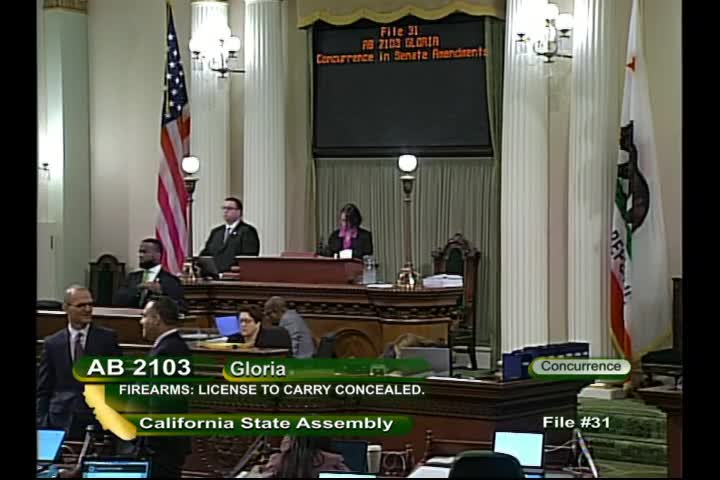
| Aug 27, 2018 | AB 2142 BIGELOW Concurrence in Senate Amendments | Assembly Floor |
Passed |
|
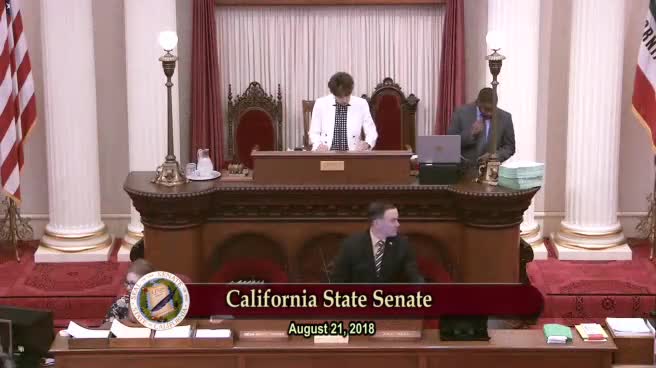
| Aug 21, 2018 | Assembly 3rd Reading AB2142 Bigelow By Wilk | Senate Floor |
Passed |
|
| Aug 16, 2018 | Do pass as amended | Senate Standing Committee on Appropriations |
Passed |
|
| Aug 6, 2018 | Placed on suspense file | Senate Standing Committee on Appropriations |
Passed |
|
| Jun 27, 2018 | Do pass as amended, but first amend, and re-refer to the Committee on [Appropriations] with the recommendation: To Consent Calendar | Senate Standing Committee on Insurance |
Passed |
|
| Jun 27, 2018 | Do pass as amended, but first amend, and re-refer to the Committee on [Appropriations] | Senate Standing Committee on Insurance |
Passed |
|
| May 10, 2018 | AB 2142 BIGELOW Consent Calendar Second Day Regular Session | Assembly Floor |
Passed |
|
| May 2, 2018 | Do pass. To Consent Calendar. | Assembly Standing Committee on Appropriations |
Passed |
|
| Apr 18, 2018 | Do pass and be re-referred to the Committee on [Appropriations] with recommendation: To Consent Calendar | Assembly Standing Committee on Insurance |
Passed |
This list shows positions taken on this bill by organizations on the date displayed, which is linked to the original source.
Positions by individuals are not included.
|
Organization
|
Position
|
Date
|
|---|---|---|
| National Home Service Contract Association | ** Support | Aug 19, 2018 |
CONCURRENCE IN SENATE AMENDMENTS
CSA1 Bill Id:AB 2142
Author:(Bigelow)
As Amended Ver:August 17, 2018
Majority vote
ASSEMBLY: | 73-0 | (May 10, 2018) | SENATE: | 37-0 | (August 21, 2018) |
Original Committee Reference: INS.
SUMMARY: Permits the Insurance Commissioner (commissioner) to extend the period between financial examinations of a home protection company (company). Specifically, this bill:
- Permits the commissioner to extend the period between financial examinations of a company by two years.
- Requires the commissioner to consider the company's reserves and net worth when deciding whether to extend the period between financial examinations.
The Senate amendments replaced language exempting a company from financial examination if it met specific financial standards with the current language.
EXISTING LAW:
- Provides a comprehensive regulatory system to license and regulate insurance companies.
- Provides a separate system to license and regulate home protection companies.
- Authorizes home protection companies to sell home protection contracts.
- Permits a home protection contract to cover the repair of a home, its systems, and appliances for a specified period of time.
- Establishes a minimum net worth for a home protection company.
- Establishes a minimum reserve requirement for a home protection company.
- Authorizes the commissioner to examine a home protection every five years.
- Requires the home protection company to reimburse the commissioner for the cost of examination.
FISCAL EFFECT: The Senate Appropriations Committee found that the bill could result in reduced workload for the Department of Insurance.
COMMENTS:
- Purpose. According to the author, home protection contracts are short-term, low-cost products typically provided in connection with the purchase of residential real estate, designed to give home purchasers peace of mind that appliances which fail due to normal wear and tear during the contract period will be repaired or replaced. Although home protection companies are regulated in much the same manner as traditional insurers, the product is very different from other lines of insurance. Contracts are typically sold on an annual basis, and when the contract expires, the obligation of the company expires as well. Where traditional insurance covers "fortuitous events", home protection contracts cover normal wear and tear. Consumers have no expectation that their insurer will be there to protect them years or decades in the future, as they might with life insurance, annuities and similar products.
Routine financial audits by the Department of Insurance are extremely expensive given the nature of the product. One company with a small footprint in California, with fewer than 1000 contracts in force, recently paid a Department audit charge of $132,000, representing 55% of net income, or $50.79 per contract. The exam required the allocation of 718 staff audit hours, or 0.28 hours per contract.
Analysis Prepared by: Paul Riches / INS. / (916) 319-2086 FN: 0004542
Office of Senate Floor Analyses (916) 651-1520 Fax: (916) 327-4478 | AB |
THIRD READING
Bill No: AB 2142
:
SENATE INSURANCE COMMITTEE: 11-0, 6/27/18
AYES: Glazer, Gaines, Galgiani, Hernandez, Hertzberg, Hueso, Lara, Mitchell, Morrell, Portantino, Roth
NO VOTE RECORDED: Berryhill, Moorlach
SENATE APPROPRIATIONS COMMITTEE: 7-0, 8/16/18
AYES: Portantino, Bates, Beall, Bradford, Hill, Nielsen, Wiener
ASSEMBLY FLOOR: 73-0, 5/10/18 (Consent) - See last page for vote
SOURCE: National Home Service Contract Association
DIGEST:
This bill authorizes the Insurance Commissioner (“commissioner”) to delay a routine financial exam of a home protection company up to two years if conditions warrant the delay.
Existing law:
- Establishes a system to license and regulate home protection companies administered by the California Department of Insurance (CDI).
- Authorizes a licensed home protection company to sell home protection contracts that cover the repair of a home, its systems, and appliances for a specified period of time.
- Prohibits CDI from examining a company more than once every five years unless the commissioner finds that the financial condition of the company has deteriorated and warrants an interim examination.
- Requires a company to reimburse CDI for the cost of examination.
This bill authorizes the commissioner to delay a routine exam up to two additional years if conditions warrant and suggests factors for making that determination, including the company’s net worth and reserves.
Background
Home protection contracts, also known as “home warranties,” cover mechanical breakdown of home appliances and systems (such as heating and air conditioning). In 2016, thirteen home protection companies of varying size earned premium of $412 million. Although these companies are regulated by CDI, the product is actually a service contract (insurance covers accidental damages).
These companies assume low-value risks that are easier to anticipate when compared to insurance contracts. Contracts are usually sold on an annual terms, have a “short-tail” (a company is likely to receive a claim shortly after it occurs), and involve losses far less prone to wild swings.
CDI uses routine financial examinations to confirm that financial solvency requirements are followed. The company must pay examination fees according to a schedule adopted by CDI. Existing law requires CDI to perform a routine examination of an insurer at least once every five years. CDI interprets this requirement to apply to home protection companies as well. Given the lower risk of insolvency when compared to an insurer, this bill gives the commissioner the discretion to delay a routine financial exam for an additional two years if conditions warrant.
FISCAL EFFECT: Appropriation: Fiscal Com.: Local:
According to the Senate Appropriations Committee, this bill would have the potential of reducing the frequency of examinations for some home protection companies, which would have the subsequent effect of reducing the workload necessary for CDI to conduct examinations each year.
National Home Service Contract Association (source)
OPPOSITION: (Verified 8/17/18)
None received
ARGUMENTS IN SUPPORT: According to the author, routine financial audits can be extremely expensive given the nature of the product.
ASSEMBLY FLOOR: 73-0, 5/10/18
AYES: Acosta, Aguiar-Curry, Arambula, Baker, Berman, Bigelow, Bloom, Bonta, Brough, Burke, Caballero, Calderon, Carrillo, Cervantes, Chau, Chávez, Chen, Chiu, Choi, Chu, Cooper, Cunningham, Dahle, Daly, Eggman, Flora, Fong, Frazier, Gallagher, Eduardo Garcia, Gipson, Gloria, Gonzalez Fletcher, Gray, Grayson, Harper, Holden, Irwin, Jones-Sawyer, Kalra, Kamlager-Dove, Kiley, Lackey, Levine, Limón, Low, Maienschein, Mathis, Mayes, McCarty, Medina, Melendez, Mullin, Muratsuchi, Nazarian, O'Donnell, Patterson, Quirk, Quirk-Silva, Reyes, Rodriguez, Rubio, Salas, Santiago, Steinorth, Mark Stone, Thurmond, Ting, Voepel, Waldron, Weber, Wood, Rendon
NO VOTE RECORDED: Travis Allen, Cooley, Friedman, Cristina Garcia, Obernolte
8/19/18 13:53:48
**** END ****
SENATE COMMITTEE ON APPROPRIATIONS
Senator Anthony Portantino, Chair
2017 - 2018 Regular Session
AB 2142 (Bigelow) - Insurance: home protection companies
Version: July 3, 2018 | Policy Vote: INS. 11 - 0 |
Urgency: No | Mandate: No |
Hearing Date: August 16, 2018 | Consultant: Debra Cooper |
Bill Summary:
AB 2142 would authorize the commissioner (IC) of the California Department of Insurance (CDI) to extend the period between financial examinations of a home protection company up to 2 additional years if the IC determines that conditions warrant the extension, as specified.
*********** ANALYSIS ADDENDUM – SUSPENSE FILE ***********
The following information is revised to reflect amendments
adopted by the committee on August 16, 2018
Fiscal Impact:
This bill would have the potential of reducing the frequency of examinations for some home protection companies, which would have the subsequent effect of reducing the workload necessary for CDI to conduct examinations each year.
Author Amendments:
Delete the reporting requirement.
-- END --
SENATE COMMITTEE ON APPROPRIATIONS
Senator Anthony Portantino, Chair
2017 - 2018 Regular Session
AB 2142 (Bigelow) - Insurance: home protection companies
Version: July 3, 2018 | Policy Vote: INS. 11 - 0 |
Urgency: No | Mandate: No |
Hearing Date: August 6, 2018 | Consultant: Debra Cooper |
This bill meets the criteria for referral to the Suspense File.
Bill Summary:
AB 2142 would authorize the commissioner (IC) of the California Department of Insurance (CDI) to extend the period between financial examinations of a home protection company up to 2 additional years if the IC determines that conditions warrant the extension, as specified.
Fiscal Impact:
- This bill would have the potential of reducing the frequency of examinations for some home protection companies, which would have the subsequent effect of reducing the workload necessary for CDI to conduct examinations each year.
- Unknown, potentially significant costs for CDI to compile a summary to submit to the Assembly and Senate Insurance Committees. (Insurance Fund)
Background:
Home protection contracts, also referred to as “home warranties” cover the wear and tear on home appliances and systems (including heating and air conditioning) that require repair or replacement. Although these companies are regulated by CDI, the product is actually a service contract. Home protection contracts cover mechanical breakdown which insurance typically will not. These types of risks are less complicated and more predictable than most types of insurance.
Insurers and home protection companies must have an adequate net worth and set aside adequate reserves to pay anticipated claims. Regulators then use financial exams, both routine and those for cause, to confirm that these requirements are followed. Existing law limits CDI to making a routine examination of a company no more than once every five years. CDI may also examine a company for cause and has extensive, unconditional authority to review a company’s books and records. Companies must pay the costs of the exam ($167 per hour for a field exam and $190 per hour for a financial analysis review) and must also file annual statements to CDI and with the National Association of Insurance Commissioners.
Proposed Law:
This bill would authorize the IC to extend the period between examinations up to two additional years if the IC determines that conditions warrant the extension. In making that determination, the IC may consider the company’s reserves, the company’s net worth, and any other factors the IC considers relevant. This bill would also require the IC to provide to the Senate Insurance Committee and the Assembly Committee on Insurance a summary of the steps taken and the procedures streamlined to reduce examination costs for home protection companies.
Related Legislation:
AB 1130 (Wilk, Chapter 324, Statutes of 2014) required each company to file a single annual statement and prohibited CDI from conducting more than one financial examination in any five-year period unless a finding is made that the company’s financial condition has deteriorated to such an extent that an exam is warranted.
Staff Comments:
Any cost associated with conducting the financial examinations is recouped by CDI through the home protection companies paying the cost of the examinations. By extending the authorized frequency for conducting examinations, this bill has the potential to reduce workload for CDI to conduct the examinations. This reduction in workload would be cost neutral as the home protection companies pay the cost of the examinations regardless of the frequency.
-- END --
SENATE COMMITTEE ON
Senator Steven Glazer, Chair
2017 - 2018 Regular
Bill No: Hearing Date: June 27, 2018
Author: | |||
Version: | Amended | ||
Urgency: | Fiscal: | ||
Consultant: | |||
Subject:
SUMMARY
Exempts a home protection company from routine financial examination if it meets heightened financial standards.
DIGEST
Existing law
- Establishes a system to license and regulate home protection companies administered by the California Department of Insurance (CDI).
- Authorizes a licensed home protection company (“company”) to sell home protection contracts that cover the repair of a home, its systems, and appliances for a specified period of time.
- Requires companies to maintain a minimum net worth of at least $40,000 if it issues or renews 1,000 or fewer contracts and adds an additional $20,000 for every additional 500 contracts (“minimum net worth”).
- Requires companies to reserve at least 40% of aggregated premiums charged on contracts currently in force (“required reserves”).
- Prohibits CDI from examining a company more than once every five years unless the Insurance Commissioner (“commissioner”) finds that the financial condition of the company has deteriorated and warrants an interim examination.
- Requires a company to reimburse CDI for the cost of examination according to a schedule of fees developed by CDI.
- Establishes a process to contest a bill for fees charged for an exam by submitting objections in writing 30 days before the bill’s due date; tolls late charges pending a decision; and requires CDI to provide written notice of the decision, any basis for the decision, and 30 days to remit payment.
This bill
- Prohibits CDI from conducting a financial examination of a company if:
- The company's most recent financial statement shows either twice the amount of required reserves or double the minimum net worth.
- The company's president and treasurer file an affidavit signed under penalty of perjury attesting to the veracity of the filed financial statement.
- Authorizes CDI to verify the balances in the account or accounts cited in the filed financial statement.
COMMENTS
- Purpose of the bill According to the author, home protection contracts are short-term, low-cost products typically provided in connection with the purchase of residential real estate that are designed to give home purchasers peace of mind that appliances which fail due to normal wear and tear during the contract period will be repaired or replaced. Although home protection companies are regulated in much the same manner as traditional insurers, the product is very different from other lines of insurance. Contracts are typically sold on an annual basis, and when the contract expires, the obligation of the company expires as well. Where traditional insurance covers “fortuitous events,” home protection contracts cover normal wear and tear. Consumers have no expectation that their insurer will be there to protect them years or decades in the future, as they might with life insurance, annuities and similar products.
The author explains that routine financial audits by CDI are extremely expensive given the nature of the product and points to the example of one company with a small footprint in California, with fewer than 1,000 contracts in force. The audit required 718 staff audit hours and cost the company $132,000.
AB 2142 would eliminate the need for a routine financial audit for companies which can properly document that they possess twice the required net worth established pursuant to Insurance Code Section 12750, or twice the reserves required by Section 12753. The bill is intended to preserve the ability of the commissioner to order an audit if circumstances warrant, and the ability to order “market conduct” audits would be unaffected.
- Background Home protection contracts, also referred to as “home warranties” cover the wear and tear on home appliances and systems (including heating and air conditioning) that require repair or replacement. In 2016, thirteen home protection companies of varying size earned premium of $412 million and incurred losses of about $225 million. The largest three companies make up about 75% of the business and the smallest three less than 0.01% (earning less than $100,000). In 2016, companies paid out about an average of 55 cents for every dollar earned.
Although these companies are regulated by CDI, the product is actually a service contract. Home protection contracts cover mechanical breakdown which insurance typically will not; residential property coverage will cover an air conditioner if a tree falls on it, but not if it just breaks down. These type of risks are less complicated and more predictable than most types of insurance.
For one, contracts are sold on a short-term and have a “short-tail,” that is the company is likely to receive a claim shortly after it occurs. (Some insurers might not receive a claim until years after a policy has ended.) Additionally, losses are far less prone to wild swings. Compare, for example, residential property insurers who suffer severe losses caused by a single disaster.
Because these companies assume low-value risks that are easier to anticipate, they are not subject to the same level of financial oversight as an insurer. According to the National Home Service Contract Association, most states do not regulate these companies as insurance (they might, for example, place them under their version of the Department of Consumer Affairs). Stakeholders are unaware of any recent insolvency at least within the last two decades.
Financial Solvency and Surveillance. Insurance regulation is about making sure policyholders are treated fairly and that insurers can make good on their obligations. Insurers and home protection companies must have an adequate net worth and set aside adequate reserves to pay anticipated claims. Regulators then use financial exams, both routine and those for cause, to confirm these requirements are followed.
California law prohibits CDI from making a routine examination of a company no more than once every five years. Companies must pay the costs for the exam. They must also file annual statements to CDI and with the National Association of Insurance Commissioners (NAIC). CDI may also examine a company for cause and has extensive, unconditional authority to review a company’s books and records.
Examinations are performed according to the NAIC’s examiner’s handbook. Changes were made to the exam procedures in 2010 that, some have argued, significantly increased the scope and costs of the exam. However, the handbook is designed to allow the regulators to customize the examination to the entity examined. The company must pay for examination fees according to a schedule adopted by the CDI. The current cost for a field exam is $167 per hour; a financial analysis review is a $190 per hour. An insurer may contest charges in writing or seek review by a court.
Existing law requires home protection companies to maintain a minimum net worth of at least $40 for every contract and reserves in the amount of at least 40 cents for every dollar collected (they may use other income, such as investment income or premium payments to pay claims). These thresholds are similar to those required by the Service Contracts Model Act adopted by the NAIC. This bill would prohibit CDI from making a routine financial exam if the company meets heightened financial standards, either by doubling the required reserves or doubling the minimum net worth of the company. Proponents argue that given the extra security provided, the probability of insolvency is so low that there is no need for routine financial exams and that, given the extensive regular filings, CDI should be aware of any problems that might arise and may still examine a company for cause at any time. This bill would not affect CDI’s ability to examine for cause.
CDI has raised concerns that without an exam, there would be no objective party to monitor companies and verify the records. CDI also points out that these exams may reveal other types of unlawful conduct such as the comingling of funds or unlawful transfers among related parties.
Fiscal Impact. According to the Assembly Appropriations Committee, this bill could result in ongoing revenue losses of $450,000 to $500,000 to the Insurance Fund annually based on the loss of current revenue collected from companies to reimburse CDI the cost of examinations.
- Prior Legislation AB 1130 (Wilk), Chapter 324, Statutes of 2014, required each company to file a single annual statement (in lieu of multiple statements throughout the year); and prohibited CDI from conducting more than one financial examination of any five-year period, unless a finding is made that the company’s financial condition has deteriorated to such an extent that an exam is warranted.
- Arguments in Support The sponsor, the National Home Services Contract Association, explains that audit costs are vastly disproportionate to the legitimate need to protect consumers.
- Suggested Amendments Existing law prohibits CDI from performing a routine exam more frequently than once every five years. CDI interprets this to require on one exam every five years. (CDI must examine insurers at least once every five years.) Amendments would authorize the commissioner to delay a subsequent exam beyond the five year period if conditions warrant the delay. Amendments also suggest some factors for making that determination including the company’s net worth, reserves, etc.
Lastly, amendments would require CDI to report to the insurance committees of each house of the Legislature the steps taken to streamline the exam process and reduce costs for these companies.
POSITIONS
Support
National Home Service Contract Association (sponsor)
Oppose
None received
-- END --
Date of Hearing: May 2, 2018
ASSEMBLY COMMITTEE ON APPROPRIATIONS
Lorena Gonzalez Fletcher, Chair
ABPCA Bill Id:AB 2142
Author:(Bigelow) – As Amended Ver:March 19, 2018
Policy Committee: | Insurance | Vote: | 13 - 0 |
Urgency: No State Mandated Local Program: Yes Reimbursable: No
SUMMARY:
This bill exempts a home protection company from financial inspection by the California Department of Insurance (CDI) if it meets heightened financial standards.
FISCAL EFFECT:
Based on current revenue collected from home protection companies to reimburse CDI the cost of examinations, ongoing revenue losses of $450,000 to $500,000 annually to CDI, and commensurate reduction in examination workload (Insurance Fund).
COMMENTS:
- Purpose. This bill would prevent CDI from conducting routine financial examination of home protection companies that possess twice the required amount of financial reserves in order to relieve such companies of the financial burden of these audits. This bill is sponsored by the National Home Service Contract Association, a trade association of home service contract providers.
- Background. Home protection companies offer contracts that provide service, repair or replacement on a home’s major systems and appliances, generally for a term of one year. Current law authorizes CDI to examine a home protection company every five years, and requires the home protection company to reimburse the department for the cost of the examination. For some companies with a small market share in California, regular examinations are resource-intensive and the cost represents a high percentage of net income.
- Ongoing Discussion. The author, sponsor, and CDI continue to discuss financial oversight structure for home protection companies.
Analysis Prepared by: Lisa Murawski / APPR. / (916) 319-2081
Date of Hearing: April 18, 2018
ASSEMBLY COMMITTEE ON INSURANCE
Tom Daly, Chair
ABPCA Bill Id:AB 2142 (
Author:Bigelow) – As Amended Ver:March 19, 2018
SUBJECT: Insurance: home protection companies
SUMMARY: Exempts a home protection company (company) from financial examination if it meets heightened financial standards. Specifically, this bill:
- Prohibits the Department of Insurance (DOI) from conducting a financial examination of a company if:
- The company's most recent financial statement filed with the commissioner shows either twice the amount of required reserves or double the required net worth.
- The company's president and treasurer file an affidavit signed under penalty of perjury attesting to the veracity of the filed financial statement.
- Authorizes the DOI to verify the balances in the account or accounts cited in the filed financial statement.
EXISTING LAW:
- Provides a comprehensive regulatory system to license and regulate insurance companies.
- Provides a separate system to license and regulate home protection companies.
- Authorizes home protection companies to sell home protection contracts.
- Permits a home protection contract to cover the repair of a home, its systems, and appliances for a specified period of time.
- Establishes a minimum net worth for a home protection company.
- Establishes a minimum reserve requirement for a home protection company.
- Authorizes the commissioner to examine a home protection every five years.
- Requires the home protection company to reimburse the commissioner for the cost of examination.
FISCAL EFFECT: Undetermined
COMMENTS:
- Purpose. According to the author, home protection contracts are short-term, low-cost products typically provided in connection with the purchase of residential real estate, designed to give home purchasers peace of mind that appliances which fail due to normal wear and tear during the contract period will be repaired or replaced. Although home protection companies are regulated in much the same manner as traditional insurers, the product is very different from other lines of insurance. Contracts are typically sold on an annual basis, and when the contract expires, the obligation of the company expires as well. Where traditional insurance covers “fortuitous events”, home protection contracts cover normal wear and tear. Consumers have no expectation that their insurer will be there to protect them years or decades in the future, as they might with life insurance, annuities and similar products.
Routine financial audits by the Department of Insurance are extremely expensive given the nature of the product. One company with a small footprint in California, with fewer than 1000 contracts in force, recently paid a Department audit charge of $132,000, representing 55% of net income, or $50.79 per contract. The exam required the allocation of 718 staff audit hours, or 0.28 hours per contract.
AB 2142 proposes to eliminate the need for a routine financial audit for companies which can properly document that they possess twice the required net worth, or twice the reserves required. The bill is intended to preserve the ability of the Commissioner to order an audit if circumstances warrant, and the ability to order “market conduct” audits would be unaffected.
- Ongoing Discussions. The author, sponsor, and DOI are having an ongoing discussion regarding the structure of financial oversight of home protection companies.
REGISTERED SUPPORT / OPPOSITION:
Support
National Home Service Contract Association (sponsor)
Opposition
None received
Analysis Prepared by: Paul Riches / INS. / (916) 319-2086
Discussed in Hearing
 36SEC
Assembly Floor
 1MIN
Senate Floor
 1H
Senate Standing Committee on Appropriations
Bill Author

Bill Co-Author(s):