AB 2153: Teachers: in-service training: lesbian, gay, bisexual, transgender, queer, and questioning pupil resources.
- Session Year: 2017-2018
- House: Assembly
- Latest Version Date: 2018-08-31
(1)Existing law establishes the system of public elementary and secondary schools in this state and provides for the establishment of local educational agencies to operate these schools and provide instruction to pupils. Existing law states the policy of the State of California to afford all persons in public schools, regardless of their disability, gender, gender identity, gender expression, nationality, race or ethnicity, religion, sexual orientation, or any other specified characteristic, including immigration status, equal rights and opportunities in the educational institutions of the state.
This bill, contingent upon an appropriation made for these purposes, would require each school operated by a school district or county office of education and each charter school to annually provide in-service training to teachers of pupils in grades 7 to 12, inclusive, and to all other certificated employees at that school, on schoolsite and community resources for the support of lesbian, gay, bisexual, transgender, queer, and questioning (LGBTQ) pupils as well as strategies to increase support for LGBTQ pupils and thereby improve overall school climate, as specified. To the extent the bill, upon implementation, would impose additional duties on public schools and local educational agencies, the bill would impose a state-mandated local program.
(2)The California Constitution requires the state to reimburse local agencies and school districts for certain costs mandated by the state. Statutory provisions establish procedures for making that reimbursement.
This bill would provide that, if the Commission on State Mandates determines that the bill contains costs mandated by the state, reimbursement for those costs shall be made pursuant to the statutory provisions noted above.
(1)Existing law establishes the system of public elementary and secondary schools in this state and provides for the establishment of local educational agencies to operate these schools and provide instruction to pupils. Existing law states the policy of the State of California to afford all persons in public schools, regardless of their disability, gender, gender identity, gender expression, nationality, race or ethnicity, religion, sexual orientation, or any other specified characteristic, including immigration status, equal rights and opportunities in the educational institutions of the state.
This bill bill, contingent upon an appropriation made for these purposes, would require each school operated by a school district or county office of education and each charter school to annually provide in-service training to teachers of pupils in grades 7 to 12, inclusive, and to all other certificated employees at that school, on schoolsite and community resources for the support of lesbian, gay, bisexual, transgender, queer, and questioning (LGBTQ) pupils as well as strategies to increase support for LGBTQ pupils and thereby improve overall school climate, as specified. By imposing To the extent the bill, upon implementation, would impose additional duties on public schools and local educational agencies, the bill would impose a state-mandated local program.
(2)The California Constitution requires the state to reimburse local agencies and school districts for certain costs mandated by the state. Statutory provisions establish procedures for making that reimbursement.
This bill would provide that, if the Commission on State Mandates determines that the bill contains costs mandated by the state, reimbursement for those costs shall be made pursuant to the statutory provisions noted above.
(1)Existing law establishes the system of public elementary and secondary schools in this state and provides for the establishment of local educational agencies to operate these schools and provide instruction to pupils. Existing law states the policy of the State of California to afford all persons in public schools, regardless of their disability, gender, gender identity, gender expression, nationality, race or ethnicity, religion, sexual orientation, or any other specified characteristic, including immigration status, equal rights and opportunities in the educational institutions of the state.
This bill would require, within the first six weeks of every school year, require each school operated by a school district or county office of education and each charter school to annually provide in-service training to teachers of pupils in grades 7 to 12, inclusive, and to all other certificated employees at that school, on schoolsite and community resources for the support of lesbian, gay, bisexual, transgender, queer, and questioning (LGBTQ) pupils as well as strategies to increase support for LGBTQ pupils and thereby improve overall school climate, as specified. By imposing additional duties on local educational agencies, the bill would impose a state-mandated local program.
(2)The California Constitution requires the state to reimburse local agencies and school districts for certain costs mandated by the state. Statutory provisions establish procedures for making that reimbursement.
This bill would provide that, if the Commission on State Mandates determines that the bill contains costs mandated by the state, reimbursement for those costs shall be made pursuant to the statutory provisions noted above.
(1)Existing law establishes the system of public elementary and secondary schools in this state and provides for the establishment of local educational agencies to operate these schools and provide instruction to pupils. Existing law states the policy of the State of California to afford all persons in public schools, regardless of their disability, gender, gender identity, gender expression, nationality, race or ethnicity, religion, sexual orientation, or any other specified characteristic, including immigration status, equal rights and opportunities in the educational institutions of the state.
This bill would require, within the first six weeks of every school year, each school operated by a school district or county office of education and each charter school to provide in-service training to teachers of pupils in grades 7 to 12, inclusive, and to all other certificated employees at that school, on schoolsite and community resources for the support of lesbian, gay, bisexual, transgender, queer, and questioning (LGBTQ) pupils as well as strategies to increase support for LGBTQ pupils and thereby improve overall school climate, as specified. By imposing additional duties on local educational agencies, the bill would impose a state-mandated local program.
(2)The California Constitution requires the state to reimburse local agencies and school districts for certain costs mandated by the state. Statutory provisions establish procedures for making that reimbursement.
This bill would provide that, if the Commission on State Mandates determines that the bill contains costs mandated by the state, reimbursement for those costs shall be made pursuant to the statutory provisions noted above.
The Legislature finds and declares all of the following:
(a)All pupils deserve and need safe and supportive school environments in which to learn.
(b)Despite much progress, California lesbian, gay, bisexual, transgender, queer, and questioning (LGBTQ) pupils often face verbal, physical, and online harassment, which has significant effects on their academic achievement.
(c)In the Gay Lesbian and Straight Education Networks (GLSEN) 2015 National School Climate Survey, over 70 percent of LGBTQ pupils nationwide reported being called names or threatened based on their sexual orientation, nearly 30 percent reported physical harassment or assault based on their gender expression, and over 48 percent reported cyberbullying.
(d)These problems have direct effects on how pupils perform in school. GLSEN survey data shows that the average grade point average for LGBTQ pupils who experience higher levels of harassment is significantly lower than for LGBTQ pupils who experience lower levels of harassment, and that over 30 percent of LGBTQ pupils report missing school because they felt unsafe, with 10 percent missing four or more full days in the month immediately preceding the survey.
(e)In spite of these problems, research has shown that over half of LGBTQ pupils who are harassed or assaulted in school do not report these incidents to school staff, primarily because they doubt any effective intervention will occur.
(f)Creating supportive learning environments for LGBTQ pupils improves their performance in school. Pupils in schools with peer support clubs report lower levels of victimization, are more likely to report that school personnel intervened when they witnessed harassment, and are less likely to miss school because of safety concerns.
SEC. 2.Article 2.7 (commencing with Section 218) is added to Chapter 2 of Part 1 of Division 1 of Title 1 of the Education Code, to read:2.7.In-Service Training: Lesbian, Gay, Bisexual, Transgender, Queer, and Questioning Pupil Resources218.(a)Each school operated by a school district or county office of education and each charter school shall annually, as part of a regularly scheduled staff meeting, provide in-service training to teachers of pupils in grades 7 to 12, inclusive, and to all other certificated employees at that school, on schoolsite and community resources for the support of lesbian, gay, bisexual, transgender, queer, and questioning (LGBTQ) pupils, as well as strategies to increase support for LGBTQ pupils and thereby improve overall school climate.
(b)As used in this section, schoolsite resources for the support of LGBTQ pupils include, but are not limited to, all of the following:
(1)Peer support or affinity clubs and organizations.
(2)Safe spaces for LGBTQ pupils.
(3)Antibullying and harassment policies and related complaint procedures.
(4)Counseling services.
(5)School staff who have received antibias or other training aimed at supporting LGBTQ youth.
(6)Health and other curriculum materials that are inclusive of, and relevant to, LGBTQ youth.
(c)As used in this section, community resources for the support of LGBTQ pupils include, but are not limited to, both of the following:
(1)Community-based organizations that provide support to LGBTQ youth.
(2)Physical and mental health providers with experience in treating and supporting LGBTQ youth.
(d)This section shall be implemented only upon an appropriation in the annual Budget Act or other statute for these purposes.
SEC. 3.If the Commission on State Mandates determines that this act contains costs mandated by the state, reimbursement to local agencies and school districts for those costs shall be made pursuant to Part 7 (commencing with Section 17500) of Division 4 of Title 2 of the Government Code.
The Legislature finds and declares all of the following:
(a)All pupils deserve and need safe and supportive school environments in which to learn.
(b)Despite much progress, California lesbian, gay, bisexual, transgender, queer, and questioning (LGBTQ) pupils often face verbal, physical, and online harassment, which has significant effects on their academic achievement.
(c)In the Gay Lesbian and Straight Education Networks (GLSEN) 2015 National School Climate Survey, over 70 percent of LGBTQ pupils nationwide reported being called names or threatened based on their sexual orientation, nearly 30 percent reported physical harassment or assault based on their gender expression, and over 48 percent reported cyberbullying.
(d)These problems have direct effects on how pupils perform in school. GLSEN survey data shows that the average grade point average for LGBTQ pupils who experience higher levels of harassment is significantly lower than for LGBTQ pupils who experience lower levels of harassment, and that over 30 percent of LGBTQ pupils report missing school because they felt unsafe, with 10 percent missing four or more full days in the month immediately preceding the survey.
(e)In spite of these problems, research has shown that over half of LGBTQ pupils who are harassed or assaulted in school do not report these incidents to school staff, primarily because they doubt any effective intervention will occur.
(f)Creating supportive learning environments for LGBTQ pupils improves their performance in school. Pupils in schools with peer support clubs report lower levels of victimization, are more likely to report that school personnel intervened when they witnessed harassment, and are less likely to miss school because of safety concerns.
SEC. 2.Article 2.7 (commencing with Section 218) is added to Chapter 2 of Part 1 of Division 1 of Title 1 of the Education Code, to read:2.7.In-Service Training: Lesbian, Gay, Bisexual, Transgender, Queer, and Questioning Pupil Resources218.Within the first six weeks of every school year, as part of a regularly scheduled staff meeting, each (a)Each school operated by a school district or county office of education and each charter school shall annually, as part of a regularly scheduled staff meeting, provide in-service training to teachers of pupils in grades 7 to 12, inclusive, and to all other certificated employees at that school, on schoolsite and community resources for the support of lesbian, gay, bisexual, transgender, queer, and questioning (LGBTQ) pupils, as well as strategies to increase support for LGBTQ pupils and thereby improve overall school climate.
(a)(b)As used in this section, schoolsite resources for the support of LGBTQ pupils include, but are not limited to, all of the following:
(1)Peer support or affinity clubs and organizations.
(2)Safe spaces for LGBTQ pupils.
(3)Antibullying and harassment policies and related complaint procedures.
(4)Counseling services.
(5)School staff who have received antibias or other training aimed at supporting LGBTQ youth.
(6)Health and other curriculum materials that are inclusive of, and relevant to, LGBTQ youth.
(b)(c)As used in this section, community resources for the support of LGBTQ pupils include, but are not limited to, both of the following:
(1)Community-based organizations that provide support to LGBTQ youth.
(2)Physical and mental health providers with experience in treating and supporting LGBTQ youth.
SEC. 3.If the Commission on State Mandates determines that this act contains costs mandated by the state, reimbursement to local agencies and school districts for those costs shall be made pursuant to Part 7 (commencing with Section 17500) of Division 4 of Title 2 of the Government Code.
The Legislature finds and declares all of the following:
(a)All pupils deserve and need safe and supportive school environments in which to learn.
(b)Despite much progress, California lesbian, gay, bisexual, transgender, queer, and questioning (LGBTQ) pupils often face verbal, physical, and online harassment, which has significant effects on their academic achievement.
(c)In the Gay Lesbian and Straight Education Networks (GLSEN) 2015 National School Climate Survey, over 70 percent of LGBTQ pupils nationwide reported being called names or threatened based on their sexual orientation, nearly 30 percent reported physical harassment or assault based on their gender expression, and over 48 percent reported cyberbullying.
(d)These problems have direct effects on how pupils perform in school. GLSEN survey data shows that the average grade point average for LGBTQ pupils who experience higher levels of harassment is significantly lower than for LGBTQ pupils who experience lower levels of harassment, and that over 30 percent of LGBTQ pupils report missing school because they felt unsafe, with 10 percent missing four or more full days in the month immediately preceding the survey.
(e)In spite of these problems, research has shown that over half of LGBTQ pupils who are harassed or assaulted in school do not report these incidents to school staff, primarily because they doubt any effective intervention will occur.
(f)Creating supportive learning environments for LGBTQ pupils improves their performance in school. Pupils in schools with peer support clubs report lower levels of victimization, are more likely to report that school personnel intervened when they witnessed harassment, and are less likely to miss school because of safety concerns.
SEC. 2.Article 2.7 (commencing with Section 218) is added to Chapter 2 of Part 1 of Division 1 of Title 1 of the Education Code, to read:2.7.In-Service Training: Lesbian, Gay, Bisexual, Transgender, Queer, and Questioning Pupil Resources218.Within the first six weeks of every school year, as part of a regularly scheduled staff meeting, each school operated by a school district or county office of education and each charter school shall provide in-service training to teachers of pupils in grades 7 to 12, inclusive, and to all other certificated employees at that school, on schoolsite and community resources for the support of lesbian, gay, bisexual, transgender, queer, and questioning (LGBTQ) pupils, as well as strategies to increase support for LGBTQ pupils and thereby improve overall school climate.
(a)As used in this section, schoolsite resources for the support of LGBTQ pupils include, but are not limited to, all of the following:
(1)Peer support or affinity clubs and organizations.
(2)Safe spaces for LGBTQ pupils.
(3)Antibullying and harassment policies and related complaint procedures.
(4)Counseling services.
(5)School staff who have received antibias or other training aimed at supporting LGBTQ youth.
(6)Health and other curriculum materials that are inclusive of, and relevant to, LGBTQ youth.
(b)As used in this section, community resources for the support of LGBTQ pupils include, but are not limited to, both of the following:
(1)Community-based organizations that provide support to LGBTQ youth.
(2)Physical and mental health providers with experience in treating and supporting LGBTQ youth.
SEC. 3.If the Commission on State Mandates determines that this act contains costs mandated by the state, reimbursement to local agencies and school districts for those costs shall be made pursuant to Part 7 (commencing with Section 17500) of Division 4 of Title 2 of the Government Code.
CORRECTIONS: DigestPage 1.|
Date
|
Status
|
|---|---|
| Sep 30, 2018 | Vetoed by Governor. |
| Sep 6, 2018 | Enrolled and presented to the Governor at 3 p.m. |
| Aug 29, 2018 | Senate amendments concurred in. To Engrossing and Enrolling. |
| Aug 27, 2018 | In Assembly. Concurrence in Senate amendments pending. May be considered on or after August 29 pursuant to Assembly Rule 77. |
| Aug 27, 2018 | Read third time. Passed. Ordered to the Assembly. |
| Aug 20, 2018 | Read second time. Ordered to third reading. |
| Aug 17, 2018 | From committee: Amend, and do pass as amended. (Ayes 5. Noes 2.) (August 16). |
| Jul 2, 2018 | In committee: Referred to APPR. suspense file. |
| Jun 20, 2018 | From committee: Do pass and re-refer to Com. on APPR. (Ayes 7. Noes 0.) (June 20). Re-referred to Com. on APPR. |
| Jun 13, 2018 | Referred to Com. on ED. |
| Jun 4, 2018 | In Senate. Read first time. To Com. on RLS. for assignment. |
| May 31, 2018 | Read third time. Passed. Ordered to the Senate. |
| May 29, 2018 | Read second time. Ordered to third reading. |
| May 25, 2018 | From committee: Amend, and do pass as amended. (Ayes 12. Noes 3.) (May 25). |
| Apr 11, 2018 | In committee: Set, first hearing. Referred to APPR. suspense file. |
| Mar 22, 2018 | From committee: Do pass and re-refer to Com. on APPR. (Ayes 6. Noes 0.) (March 21). Re-referred to Com. on APPR. |
| Feb 26, 2018 | Referred to Com. on ED. |
| Feb 22, 2018 | Introduced measure version corrected. |
| Feb 13, 2018 | From printer. May be heard in committee March 15. |
| Feb 12, 2018 | Read first time. To print. |
|
Date
|
Description
|
Location
|
Votes
|
|
|---|---|---|---|---|
| Aug 29, 2018 | AB 2153 THURMOND Concurrence in Senate Amendments | Assembly Floor |
Passed |
|
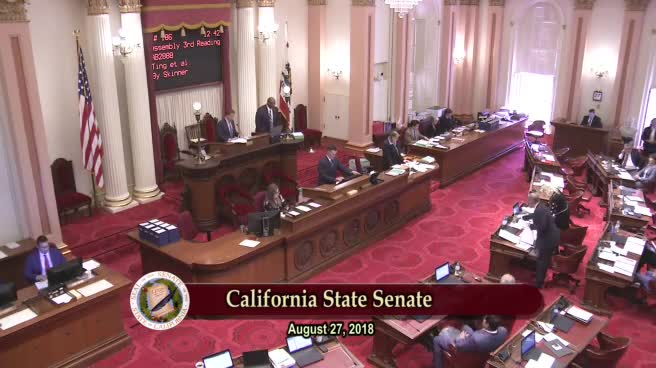
| Aug 27, 2018 | Assembly 3rd Reading AB2153 Thurmond et al. By Skinner | Senate Floor |
Passed |
|
| Aug 16, 2018 | Do pass as amended | Senate Standing Committee on Appropriations |
Passed |
|
| Jul 2, 2018 | Placed on suspense file | Senate Standing Committee on Appropriations |
Passed |
|
| Jun 20, 2018 | Do pass, but first be re-referred to the Committee on [Appropriations] | Senate Standing Committee on Education |
Passed |
|
| May 31, 2018 | AB 2153 THURMOND Assembly Third Reading | Assembly Floor |
Passed |
|
| May 25, 2018 | Do pass as amended. | Assembly Standing Committee on Appropriations |
Passed |
|
| Mar 21, 2018 | Do pass and be re-referred to the Committee on [Appropriations] | Assembly Standing Committee on Education |
Passed |
This list shows positions taken on this bill by organizations on the date displayed, which is linked to the original source.
Positions by individuals are not included.
|
Organization
|
Position
|
Date
|
|---|---|---|
| American Civil Liberties Union of California | ** Support | Aug 20, 2018 |
| Bay Area Student Activists | ** Support | Aug 20, 2018 |
| California Association Of School Counselors | ** Support | Aug 20, 2018 |
| Common Sense Kids Action | ** Support | Aug 20, 2018 |
| Equality California | ** Support | Aug 20, 2018 |
| San Francisco Unified School District | ** Support | Aug 20, 2018 |
| School Employers Association Of California | ** Support | Aug 20, 2018 |
| The Trevor Project | * Support | Mar 21, 2018 |
GOVERNOR'S VETO
GV Bill Id:AB 2153
Author:(Thurmond)
As Enrolled Ver:September 6, 2018
2/3 vote
ASSEMBLY: | 57-12 | (May 31, 2018) | SENATE: | 34-3 | (August 27, 2018) |
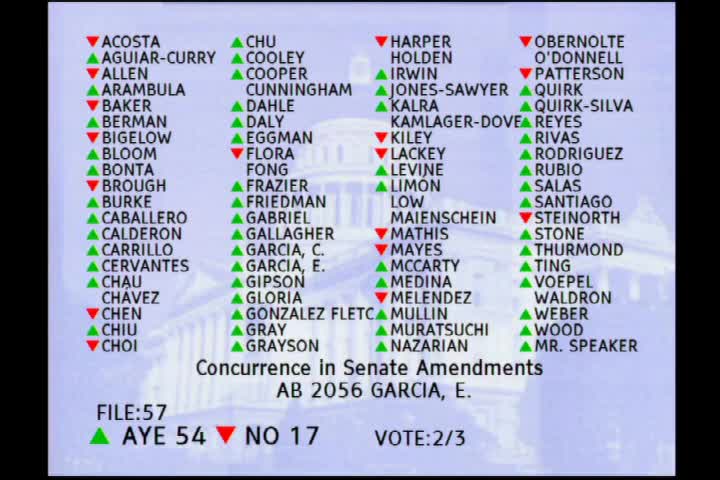
ASSEMBLY: | 58-14 | (August 29, 2018) |
|
|
Original Committee Reference: ED.
SUMMARY: Requires schools to provide in-service training to teachers on school site and community resources available for the support of lesbian, gay, bisexual, transgender, queer, and questioning (LGBTQ) students.
The Senate amendments make implementation of the act contingent upon an appropriation for its purposes in the annual Budget Act or other statute.
FISCAL EFFECT: According to the Senate Appropriations Committee, while the bill's requirement to provide professional development training would be contingent upon an appropriation, it could result in annual Proposition 98 General Fund cost pressure of approximately $6.5 million. This amount assumes there are about 130,000 certificated employees in roughly 2,600 middle, junior and high schools statewide and that districts would spend an average of $50 for staff time and training for each of these employees.
COMMENTS:
Need for the bill. The author's office states: "LGBTQ students often face verbal, physical, and online harassment, which affects their academic achievement. LGBTQ students often do not report that harassment to school staff because they doubt that effective intervention will occur. In fact, 91% of California LGBTQ students have reported hearing anti-LGBTQ remarks, 7 in 10 reported being called names or threatened based on their sexual orientation, nearly one-third reported physical harassment or assault, and 46% report cyberbullying. LGBTQ students have higher dropout rates than their non-LGBTQ peers and continue to report missing school because of safety concerns at higher rates than non-LGBTQ students.
At the same time, research has shown that LGBTQ students who are harassed or assaulted in school often do not report these incidents to school staff, primarily because they believe school staff will not address their reports. This creates an environment where students do not feel safe and teachers are not equipped with the tools to be the best educators they can be.
Schools are on the front line of providing a safety net against the effects of discrimination and lack of acceptance for the LGBTQ community, which can result in higher dropout rates, lower economic success, higher rates of homelessness, higher rates of substance abuse and suicide, and all the disparities in health and well-being that LGBTQ people face. If LGBTQ students have support in school, their likelihood of overcoming these disparities and succeeding later in life increases significantly."
This bill requires local schools to provide annual in-service training on available community and school site resources for lesbian, gay, bisexual, transgender, queer (LGBTQ) students to teachers and supporting staff of grades 7-12 students.
I signed AB 827 (O'Donnell) in 2015, which required the Department of Education, as part of its compliance monitoring, to assess whether local schools have provided information to certificated staff serving of grades 7-12 on school site and community resources for LGBTQ students. Current law also requires the Department to monitor local schools to ensure the adoptions of policies prohibiting discrimination, harassment, intimidation, and bullying on the basis of sexual orientation, gender, gender identity, or gender expression.
If local schools find that more training or resources on this topic is needed, they have the flexibility to use their resources as they see best.
Analysis Prepared by: Tanya Lieberman / ED. / (916) 319-2087 FN: 0005319
CONCURRENCE IN SENATE AMENDMENTS
CSA1 Bill Id:AB 2153
Author:(Thurmond)
As Amended Ver:August 17, 2018
Majority vote
ASSEMBLY: | 57-12 | (May 31, 2018) | SENATE: | 34-3 | (August 27, 2018) |
Original Committee Reference: ED.
SUMMARY: Requires schools to provide in-service training to teachers on school site and community resources available for the support of lesbian, gay, bisexual, transgender, queer, and questioning (LGBTQ) students.
The Senate amendments make implementation of the act contingent upon an appropriation for its purposes in the annual Budget Act or other statute.
FISCAL EFFECT: According to the Senate Appropriations Committee, while the bill's requirement to provide professional development training would be contingent upon an appropriation, it could result in annual Proposition 98 General Fund cost pressure of approximately $6.5 million. This amount assumes there are about 130,000 certificated employees in roughly 2,600 middle, junior and high schools statewide and that districts would spend an average of $50 for staff time and training for each of these employees.
COMMENTS:
Need for the bill. The author's office states: "LGBTQ students often face verbal, physical, and online harassment, which affects their academic achievement. LGBTQ students often do not report that harassment to school staff because they doubt that effective intervention will occur. In fact, 91% of California LGBTQ students have reported hearing anti-LGBTQ remarks, 7 in 10 reported being called names or threatened based on their sexual orientation, nearly one-third reported physical harassment or assault, and 46% report cyberbullying. LGBTQ students have higher dropout rates than their non-LGBTQ peers and continue to report missing school because of safety concerns at higher rates than non-LGBTQ students.
At the same time, research has shown that LGBTQ students who are harassed or assaulted in school often do not report these incidents to school staff, primarily because they believe school staff will not address their reports. This creates an environment where students do not feel safe and teachers are not equipped with the tools to be the best educators they can be.
Schools are on the front line of providing a safety net against the effects of discrimination and lack of acceptance for the LGBTQ community, which can result in higher dropout rates, lower economic success, higher rates of homelessness, higher rates of substance abuse and suicide, and all the disparities in health and well-being that LGBTQ people face. If LGBTQ students have support in school, their likelihood of overcoming these disparities and succeeding later in life increases significantly."
Analysis Prepared by: Tanya Lieberman / ED. / (916) 319-2087 FN: 0004520
Office of Senate Floor Analyses (916) 651-1520 Fax: (916) 327-4478 | AB |
THIRD READING
Bill No: AB 2153
Amended: 8/17/18 in Senate
SENATE EDUCATION COMMITTEE: 7-0, 6/20/18
AYES: Allen, Wilk, Galgiani, Leyva, McGuire, Pan, Vidak
SENATE APPROPRIATIONS COMMITTEE: 5-2, 8/16/18
AYES: Portantino, Beall, Bradford, Hill, Wiener
NOES: Bates, Nielsen
ASSEMBLY FLOOR: 57-12, 5/31/18 - See last page for vote
DIGEST:
This bill requires all public schools to annually provide in-service training to teachers on school site and community resources available for the support of lesbian, gay, bisexual, transgender, queer, and questioning (LGBTQ) students.
Existing law:
- Prohibits discrimination on the basis of sexual orientation, gender, gender identity, or gender expression in any educational program or activity by an educational institution receiving state funds.
- Requires the California Department of Education (CDE), as part of its compliance monitoring, to assess whether local educational agencies (LEAs) have provided information to certificated staff serving grades 7-12 on school site and community resources for LGBTQ students.
- Requires the CDE to monitor LEAs for adoption of policies prohibiting discrimination, harassment, intimidation, and bullying on the basis of sexual orientation, gender, gender identity, or gender expression.
- Requires the CDE to monitor LEAs for adoption of processes for receiving and investigating complaints of discrimination, harassment, intimidation, and bullying, and establishes complaint procedures.
- Requires the inclusion of the contributions of lesbian, gay, bisexual, and transgender Americans in instruction on California and United States history, and prohibits, in instructional materials, matter which reflects adversely upon persons because of their sexual orientation, gender, gender identity, or gender expression.
This bill requires all public schools to annually provide in-service training to teachers on school site and community resources available for the support of LGBTQ students. Specifically, this bill:
- Requires, that each school operated by a school district or county office of education, and each charter school, provide in-service training to teachers of students in grades 7 to 12 on schoolsite and community resources for the support of LGBTQ students, as well as strategies to increase support for LGBTQ pupils and thereby improve overall school climate.
- Requires this training occur annually, as part of a regularly scheduled staff meeting.
- Defines schoolsite resources for the support of LGBTQ students to include:
- Peer support or affinity clubs and organizations.
- Safe spaces for LGBTQ students.
- Anti-bullying and harassment policies, and related complaint procedures
Counseling services.
- School staff who have received anti-bias or other training aimed at supporting LGBTQ youth.
- Health and other curriculum materials that are inclusive of, and relevant to, LGBTQ youth.
- Defines community resources for the support of LGBTQ students to include, but not be limited to:
- Community-based organizations that provide support to LGBTQ youth.
- Physical and mental health providers with experience in treating and supporting LGBTQ youth.
- Specifies that the bill’s requirement is subject to an appropriation being made for its purpose.
Comments
- Need for the bill. According to the author, “LGBTQ students often face verbal, physical, and online harassment, which affects their academic achievement. LGBTQ students often do not report that harassment to school staff because they doubt that effective intervention will occur. In fact, 91% of California LGBTQ students have reported hearing anti-LGBTQ remarks, 7 in 10 reported being called names or threatened based on their sexual orientation, nearly one-third reported physical harassment or assault, and 46% report cyberbullying. LGBTQ students have higher dropout rates than their non-LGBTQ peers and continue to report missing school because of safety concerns at higher rates than non-LGBTQ students.
“At the same time, research has shown that LGBTQ students who are harassed or assaulted in school often do not report these incidents to school staff, primarily because they believe school staff will not address their reports. This creates an environment where students do not feel safe and teachers are not equipped with the tools to be the best educators they can be.
“Schools are on the front line of providing a safety net against the effects of discrimination and lack of acceptance for the LGBTQ community, which can result in higher dropout rates, lower economic success, higher rates of homelessness, higher rates of substance abuse and suicide, and all the disparities in health and well-being that LGBTQ people face. If LGBTQ students have support in school, their likelihood of overcoming these disparities and succeeding later in life increases significantly.”
- National School Climate Survey Findings and Recommendations. Research suggests that bias against LGBTQ students can have a harmful effect on school performance.
The Gay Lesbian Straight Education Network’s (GLSEN) 2015 National School Climate Survey of found that 87 percent of California LGBTQ students report hearing anti-LGBTQ remarks, 63 percent report verbal harassment based on their sexual orientation, 24 percent report physical harassment, and or assault. Of those, 62 percent of students never reported the harassment or assault to school staff. Of those who did, only 39 percent of those students who reported incidents said it resulted in effective staff intervention.
GLSEN’s national data suggest that these experiences have an effect on academic behavior and outcomes. The 2015 report found that LGBTQ students who experienced higher levels of victimization because of their sexual orientation:
- Were more than three times as likely to have missed school in the past month than those who experienced lower levels.
- Had lower grade point averages than students who were less often harassed.
- Were twice as likely to report that they did not plan to pursue any post-secondary education than those who experienced lower levels.
- Were more likely to have been disciplined at school, and had lower self-esteem and school belonging and higher levels of depression.
GLSEN’s survey also included the following recommendations for states:
- Increasing student access to appropriate and accurate information regarding LGBT people, history, and events through inclusive curricula and library and Internet resources;
- Supporting student clubs, such as GSAs, that provide support for LGBTQ students and address LGBT issues in education;
- Providing professional development for school staff to improve rates of intervention and increase the number of supportive teachers and other staff available to students;
- Ensuring that school policies and practices, such as those related to dress codes and school dances, do not discriminate against LGBTQ students; and
- Adopting and implementing comprehensive bullying/harassment policies that specifically enumerate sexual orientation, gender identity, and gender expression in individual schools and districts, with clear and effective systems for reporting and addressing incidents that students experience.
FISCAL EFFECT: Appropriation: Fiscal Com.: Local:
According to the Senate Appropriations Committee, while the bill’s requirement to provide professional development training would be contingent upon an appropriation, it could result in annual Proposition 98 General Fund cost pressure of approximately $6.5 million. This amount assumes there are about 130,000 certificated employees in roughly 2,600 middle, junior and high schools statewide and that districts would spend an average of $50 for staff time and training for each of these employees.
Equality California (source)
American Civil Liberties Union of California
Bay Area Student Activists
California Association of School Counselors
Common Sense Kids Action
San Francisco Unified School District
School Employers Association of California
OPPOSITION: (Verified 8/16/18)
None received
ASSEMBLY FLOOR: 57-12, 5/31/18
AYES: Aguiar-Curry, Arambula, Baker, Berman, Bloom, Bonta, Burke, Caballero, Calderon, Carrillo, Cervantes, Chau, Chávez, Chiu, Chu, Cooley, Cooper, Cunningham, Daly, Eggman, Frazier, Friedman, Cristina Garcia, Eduardo Garcia, Gipson, Gloria, Gonzalez Fletcher, Gray, Holden, Irwin, Jones-Sawyer, Kalra, Kamlager-Dove, Lackey, Levine, Limón, Low, Maienschein, McCarty, Medina, Mullin, Muratsuchi, Nazarian, O'Donnell, Quirk, Quirk-Silva, Reyes, Rodriguez, Rubio, Salas, Santiago, Mark Stone, Thurmond, Ting, Weber, Wood, Rendon
NOES: Travis Allen, Bigelow, Brough, Choi, Dahle, Gallagher, Harper, Mathis, Obernolte, Patterson, Voepel, Waldron
NO VOTE RECORDED: Acosta, Chen, Flora, Fong, Grayson, Kiley, Mayes, Melendez, Steinorth
8/20/18 10:06:33
**** END ****
SENATE COMMITTEE ON APPROPRIATIONS
Senator Anthony Portantino, Chair
2017 - 2018 Regular Session
AB 2153 (Thurmond) - Teachers: in-service training: lesbian, gay, bisexual, transgender, queer, and questioning pupil resources
Version: May 25, 2018 | Policy Vote: ED. 7 - 0 |
Urgency: No | Mandate: Yes |
Hearing Date: August 16, 2018 | Consultant: Lenin Del Castillo |
Bill Summary:
This bill requires all public schools to annually provide in-service training to teachers on school site and community resources available for the support of lesbian, gay, bisexual, transgender, queer, and questioning (LGBTQ) students.
*********** ANALYSIS ADDENDUM – SUSPENSE FILE ***********
The following information is revised to reflect amendments
adopted by the committee on August 16, 2018
Fiscal Impact:
While the bill’s requirement to provide professional development training would be contingent upon an appropriation, it could result in annual Proposition 98 General Fund cost pressure of approximately $6.5 million. This amount assumes there are about 130,000 certificated employees in roughly 2,600 middle, junior and high schools statewide and that districts would spend an average of $50 for staff time and training for each of these employees.
Committee Amendments:
Make the bill’s requirement contingent upon an appropriation.
-- END --
SENATE COMMITTEE ON
Senator Anthony Portantino, Chair
2017 - 2018 Regular Session
AB 2153 (Thurmond) - Teachers: in-service training: lesbian, gay, bisexual, transgender, queer, and questioning pupil resources
Version: | Policy Vote: |
Urgency: | Mandate: |
Hearing Date: | Consultant: |
This bill meets the criteria for referral to the Suspense File.
Bill Summary:
This bill requires all public schools to annually provide in-service training to teachers on school site and community resources available for the support of lesbian, gay, bisexual, transgender, queer, and questioning (LGBTQ) students.
Fiscal Impact:
By requiring local educational agencies (LEAs) to provide annual professional development training to employees on resources for the support of LGBTQ students, this bill could create a reimbursable state mandate resulting in Proposition 98 General Fund costs likely in the millions of dollars each year. A precise cost would depend on the number of employees and the extent of the training provided at each school. Assuming there are about 130,000 certificated employees in roughly 2,600 middle, junior and high schools statewide, if districts were to spend an average of $50 for staff time and training for each of these employees, the costs would be approximately $6.5 million Proposition 98 General Fund annually.
Background:
Existing law prohibits discrimination on the basis of sexual orientation, gender, gender identity, or gender expression in any educational program or activity by an educational institution receiving state funds.
Existing law requires the California Department of Education (CDE), as part of its compliance monitoring, to assess whether local educational agencies (LEAs) have provided information to certificated staff serving grades 7-12 on school site and community resources for LGBTQ students.
Existing law requires the CDE to monitor LEAs for adoption of policies prohibiting discrimination, harassment, intimidation, and bullying on the basis of sexual orientation, gender, gender identity, or gender expression.
Existing law also requires the CDE to monitor LEAs for adoption of processes for receiving and investigating complaints of discrimination, harassment, intimidation, and bullying, and establishes complaint procedures.
Proposed Law:
This bill requires that each school operated by an LEA and each charter school to provide in-service training to teachers of students in grades 7 to 12 on schoolsite and community resources for the support of LGBTQ students, as well as strategies to increase support for LGBTQ pupils and thereby improve overall school climate.
This bill provides that this training shall occur annually, as part of a regularly scheduled staff meeting.
This bill defines schoolsite resources for the support of LGBTQ students to include peer support or affinity clubs and organizations, safe spaces for LGBTQ students, anti-bullying and harassment policies, and related complaint procedures, counseling services, school staff who have received anti-bias or other training aimed at supporting LGBTQ youth, and health and other curriculum materials that are inclusive of, and relevant to, LGBTQ youth.
This bill defines community resources for the support of LGBTQ students to include, but not be limited to community-based organizations that provide support to LGBTQ youth and physical and mental health providers with experience in treating and supporting LGBTQ youth.
-- END --
SENATE COMMITTEE ON EDUCATION
Senator Benjamin Allen, Chair
2017 - 2018 Regular
Bill No: AB 2153 Hearing Date: June 20, 2018
Author: | |||
Version: | May 25, 2018 | ||
Urgency: | No | Fiscal: | Yes |
Consultant: | Ian Johnson | ||
Subject: Teachers: in-service training: lesbian, gay, bisexual, transgender, queer, and questioning pupil resources.
SUMMARY
This bill requires all public schools to annually provide in-service training to teachers on school site and community resources available for the support of lesbian, gay, bisexual, transgender, queer, and questioning (LGBTQ) students.
BACKGROUND
Existing law:
- Prohibits discrimination on the basis of sexual orientation, gender, gender identity, or gender expression in any educational program or activity by an educational institution receiving state funds.
- Requires the California Department of Education (CDE), as part of its compliance monitoring, to assess whether local educational agencies (LEAs) have provided information to certificated staff serving grades 7-12 on school site and community resources for LGBTQ students.
- Requires the CDE to monitor LEAs for adoption of policies prohibiting discrimination, harassment, intimidation, and bullying on the basis of sexual orientation, gender, gender identity, or gender expression.
- Requires the CDE to monitor LEAs for adoption of processes for receiving and investigating complaints of discrimination, harassment, intimidation, and bullying, and establishes complaint procedures.
- Requires the inclusion of the contributions of lesbian, gay, bisexual, and transgender Americans in instruction on California and United States history, and prohibits, in instructional materials, matter which reflects adversely upon persons because of their sexual orientation, gender, gender identity, or gender expression.
ANALYSIS
This bill requires all public schools to annually provide in-service training to teachers on school site and community resources available for the support of LGBTQ students. Specifically, this bill:
- Requires, that each school operated by a school district or county office of education, and each charter school, provide in-service training to teachers of students in grades 7 to 12 on schoolsite and community resources for the support of lesbian, gay, bisexual, transgender, queer, and questioning (LGBTQ) students, as well as strategies to increase support for LGBTQ pupils and thereby improve overall school climate.
- Requires this training occur annually, as part of a regularly scheduled staff meeting.
- Defines schoolsite resources for the support of LGBTQ students to include:
- Peer support or affinity clubs and organizations.
- Safe spaces for LGBTQ students.
- Anti-bullying and harassment policies, and related complaint procedures
Counseling services.
- School staff who have received anti-bias or other training aimed at supporting LGBTQ youth.
- Health and other curriculum materials that are inclusive of, and relevant to, LGBTQ youth.
- Defines community resources for the support of LGBTQ students to include, but not be limited to:
- Community-based organizations that provide support to LGBTQ youth.
- Physical and mental health providers with experience in treating and supporting LGBTQ youth.
STAFF COMMENTS
- Need for the bill. According to the author, “LGBTQ students often face verbal, physical, and online harassment, which affects their academic achievement. LGBTQ students often do not report that harassment to school staff because they doubt that effective intervention will occur. In fact, 91% of California LGBTQ students have reported hearing anti-LGBTQ remarks, 7 in 10 reported being called names or threatened based on their sexual orientation, nearly one-third reported physical harassment or assault, and 46% report cyberbullying. LGBTQ students have higher dropout rates than their non-LGBTQ peers and continue to report missing school because of safety concerns at higher rates than non-LGBTQ students.
At the same time, research has shown that LGBTQ students who are harassed or assaulted in school often do not report these incidents to school staff, primarily because they believe school staff will not address their reports. This creates an environment where students do not feel safe and teachers are not equipped with the tools to be the best educators they can be.
Schools are on the front line of providing a safety net against the effects of discrimination and lack of acceptance for the LGBTQ community, which can result in higher dropout rates, lower economic success, higher rates of homelessness, higher rates of substance abuse and suicide, and all the disparities in health and well-being that LGBTQ people face. If LGBTQ students have support in school, their likelihood of overcoming these disparities and succeeding later in life increases significantly.”
- National School Climate Survey Findings and Recommendations. Research suggests that bias against lesbian, gay, bisexual, transgender, queer, and questioning (LGBTQ) students can have a harmful effect on school performance.
The Gay Lesbian Straight Education Network’s (GLSEN) 2015 National School Climate Survey of found that 87 percent of California LGBTQ students report hearing anti-LGBTQ remarks, 63 percent report verbal harassment based on their sexual orientation, 24 percent report physical harassment, and or assault. Of those, 62 percent of students never reported the harassment or assault to school staff. Of those who did, only 39 percent of those students who reported incidents said it resulted in effective staff intervention.
GLSEN’s national data suggest that these experiences have an effect on academic behavior and outcomes. The 2015 report found that LGBTQ students who experienced higher levels of victimization because of their sexual orientation:
- Were more than three times as likely to have missed school in the past month than those who experienced lower levels.
- Had lower grade point averages than students who were less often harassed.
- Were twice as likely to report that they did not plan to pursue any post-secondary education than those who experienced lower levels.
- Were more likely to have been disciplined at school, and had lower self-esteem and school belonging and higher levels of depression.
GLSEN’s survey also included the following recommendations for states:
- Increasing student access to appropriate and accurate information regarding LGBT people, history, and events through inclusive curricula and library and Internet resources;
- Supporting student clubs, such as GSAs, that provide support for LGBTQ students and address LGBT issues in education;
- Providing professional development for school staff to improve rates of intervention and increase the number of supportive teachers and other staff available to students;
- Ensuring that school policies and practices, such as those related to dress codes and school dances, do not discriminate against lesbian, gay, bisexual, transgender, queer, and questioning (LGBTQ) students; and
- Adopting and implementing comprehensive bullying/harassment policies that specifically enumerate sexual orientation, gender identity, and gender expression in individual schools and districts, with clear and effective systems for reporting and addressing incidents that students experience.
- Fiscal impact. According to the Assembly Appropriations Committee, this bill would create annual Proposition 98 General Fund cost pressures likely in the hundreds of thousands of dollars to reimburse state-mandated costs to school districts to provide in-service professional development training to employees. Exact costs would depend on the depth of the training. For example, there are roughly 2,600 middle and high schools in the state. Were each school to spend $100 annually to pay for staff time for the training, the costs would be roughly $260,000. Costs would be higher if schools hired trainers or required existing staff to perform the training.
SUPPORT
Equality California (sponsor)
American Civil Liberties Union of California
Bay Area Student Activists
California Association of School Counselors
Common Sense Kids Action
San Francisco Unified School District
School Employers Association of California
OPPOSITION
None received
-- END --
ASSEMBLY THIRD READING
ATR Bill Id:
Author:(Thurmond)
As Amended Ver:May 25, 2018
Majority vote
Committee | Votes | Ayes | Noes |
Education | 6-0 | O'Donnell, Lackey, Kalra, McCarty, Thurmond, Weber | |
Appropriations | 12-3 | Gonzalez Fletcher, Bloom, Bonta, Calderon, Carrillo, Chau, Eggman, Friedman, Eduardo Garcia, Nazarian, Quirk, Reyes | Bigelow, Gallagher, Obernolte |
SUMMARY: Requires schools to provide in-service training to teachers on school site and community resources available for the support of lesbian, gay, bisexual, transgender, queer, and questioning (LGBTQ) students. Specifically, this bill:
- Requires, that each school operated by a school district or county office of education, and each charter school, provide in-service training to teachers of students in grades 7 to 12 on schoolsite and community resources for the support of LGBTQ students, as well as strategies to increase support for LGBTQ pupils and thereby improve overall school climate.
- Requires this training occur annually, as part of a regularly scheduled staff meeting.
- Defines schoolsite resources for the support of LGBTQ students to include:
- Peer support or affinity clubs and organizations
- Safe spaces for LGBTQ students
- Anti-bullying and harassment policies, and related complaint procedures
- Counseling services
- School staff who have received anti-bias or other training aimed at supporting LGBTQ youth
- Health and other curriculum materials that are inclusive of, and relevant to, LGBTQ youth
- Defines community resources for the support of LGBTQ students to include, but not be limited to:
- Community-based organizations that provide support to LGBTQ youth
- Physical and mental health providers with experience in treating and supporting LGBTQ youth
FISCAL EFFECT: According to the Assembly Appropriations Committee, annual Proposition 98 General Fund cost pressures likely in the hundreds of thousands of dollars to reimburse state mandate costs to school districts to provide in-service professional development training to employees. Exact costs would depend on the depth of the training. For example, there are roughly 2,600 middle and high schools in the state. Were each school to spend $100 annually to pay for staff time for the training, the costs would be roughly $260,000. Costs would be higher if schools hired trainers or required existing staff to perform the training.
COMMENTS:
Need for the bill. The author's office states: "LGBTQ students often face verbal, physical, and online harassment, which affects their academic achievement. LGBTQ students often do not report that harassment to school staff because they doubt that effective intervention will occur. In fact, 91% of California LGBTQ students have reported hearing anti-LGBTQ remarks, seven in 10 reported being called names or threatened based on their sexual orientation, nearly one-third reported physical harassment or assault, and 46% report cyberbullying. LGBTQ students have higher dropout rates than their non-LGBTQ peers and continue to report missing school because of safety concerns at higher rates than non-LGBTQ students.
At the same time, research has shown that LGBTQ students who are harassed or assaulted in school often do not report these incidents to school staff, primarily because they believe school staff will not address their reports. This creates an environment where students do not feel safe and teachers are not equipped with the tools to be the best educators they can be.
Schools are on the front line of providing a safety net against the effects of discrimination and lack of acceptance for the LGBTQ community, which can result in higher dropout rates, lower economic success, higher rates of homelessness, higher rates of substance abuse and suicide, and all the disparities in health and well-being that LGBTQ people face. If LGBTQ students have support in school, their likelihood of overcoming these disparities and succeeding later in life increases significantly."
Which school site supports improve outcomes for LGBTQ students? Several supportive factors at school appear to improve academic outcomes and improve safety for LGBTQ students.
Research shows, for example, that LGBTQ students with many supportive educators feel safer at school, skip fewer classes, earn higher grades, and have fewer school-related problems than those without supportive educators (Russell, 2010). Students in schools with Gay Straight Alliance (GSA) clubs report less harassment and assault are more likely to report these incidents when they occur, and are less likely to miss school because of safety concerns. 2015 GLSEN survey data found, for example, that students attending schools with a GSA heard anti-LGBT remarks less frequently than LGBTQ students in schools without a GSA (51% vs. 68%), were less likely to feel unsafe because of their sexual orientation (50.2% vs. 66.3%), and were less likely to experience higher levels of victimization based on their sexual orientation (20% vs. 36.1%) in schools without GSAs. Anti-bullying policies are also associated with better student outcomes, such as being one-third less likely to skip a class.
Evaluations from New York City, Illinois, and Massachusetts have found that such teacher training helped to create safer environments for LGBTQ students. The United States Department of Health and Human Services, as part of its anti-bullying campaign, recommends that, "when youth reveal same-sex attractions and relationships, this is an opportunity for health, medical, and school professionals to better inform and support sexual minority youth by linking them with community resources and helping to overcome the tensions of parents, families, and peers."
Research has also shown that feelings of safety at school are stronger when students know where to get information and support about sexual orientation and gender identity, but research has also shown that some students in California schools are not aware of one of these key supports - anti-discrimination policies.
Analysis Prepared by: Tanya Lieberman / ED. / (916) 319-2087 FN: 0003295
Date of Hearing: April 11, 2018
ASSEMBLY COMMITTEE ON APPROPRIATIONS
Lorena Gonzalez Fletcher, Chair
ABPCA Bill Id:AB 2153
Author:(Thurmond) – As Introduced Ver:February 12, 2018
Policy Committee: | Education | Vote: | 6 - 0 |
|
| ||
|
|
Urgency: No State Mandated Local Program: Yes Reimbursable: Yes
SUMMARY: This bill requires schools to provide in-service training to teachers of students in grades 7 to 12 and other certificated employees on school site and community resources available for the support of lesbian, gay, bisexual, transgender, queer, and questioning (LGBTQ) students. It also requires the training to include strategies for increasing support for LGBTQ students. The training must occur within the first six weeks of every school year as part of a regularly scheduled staff meeting.
FISCAL EFFECT:
Annual Proposition 98 General Fund cost pressures likely in the hundreds of thousands of dollars to reimburse state mandate costs to school districts to provide in-service professional development training to employees. Exact costs would depend on the depth of the training. For example, there are roughly 2,600 middle and high schools in the state. Were each school to spend $100 annually to pay for staff time for the training, the costs would be roughly $260,000. Costs would be higher if schools hired trainers or required existing staff to perform the training.
COMMENTS:
- Purpose. According to the author’s office:
Schools are on the front line of providing a safety net against the effects of discrimination and lack of acceptance for the LGBTQ community, which can result in higher dropout rates, lower economic success, higher rates of homelessness, higher rates of substance abuse and suicide, and all the disparities in health and well-being that LGBTQ people face. If LGBTQ students have support in school, their likelihood of overcoming these disparities and succeeding later in life increases significantly.
- Current Law. Current law requires the California Department of Education to assess whether local education agencies have provided information to certificated staff serving grades 7 to 12 on school site and community resources for LGBTQ students.
Analysis Prepared by: Natasha Collins / APPR. / (916) 319-2081
Date of Hearing: March 21, 2018
ASSEMBLY COMMITTEE ON EDUCATION
Patrick O'Donnell, Chair
ABPCA Bill Id:AB 2153 (
Author:Thurmond) – As Introduced Ver:February 12, 2018
SUBJECT: Teachers: in-service training: lesbian, gay, bisexual, transgender, queer, and questioning pupil resources
SUMMARY: Requires schools to provide in-service training to teachers on school site and community resources available for the support of lesbian, gay, bisexual, transgender, queer, and questioning (LGBTQ) students. Specifically, this bill:
- Requires, that each school operated by a school district or county office of education, and each charter school, provide in-service training to teachers of students in grades 7 to 12 on schoolsite and community resources for the support of LGBTQ students, as well as strategies to increase support for LGBTQ pupils and thereby improve overall school climate.
- Requires this training occur within the first six weeks of every school year, as part of a regularly scheduled staff meeting.
- Defines schoolsite resources for the support of LGBTQ students to include:
- peer support or affinity clubs and organizations
- safe spaces for LGBTQ students
- anti-bullying and harassment policies, and related complaint procedures
- counseling services
- school staff who have received anti-bias or other training aimed at supporting LGBTQ youth
- health and other curriculum materials that are inclusive of, and relevant to, LGBTQ youth
- Defines community resources for the support of LGBTQ students to include, but not be limited to:
- community-based organizations that provide support to LGBTQ youth
- physical and mental health providers with experience in treating and supporting LGBTQ youth
EXISTING LAW:
- Prohibits discrimination on the basis of sexual orientation, gender, gender identity, or gender expression in any educational program or activity by an educational institution receiving state funds.
- Requires the California Department of Education (CDE), as part of its compliance monitoring, to assess whether local educational agencies (LEAs) have provided information to certificated staff serving grades 7-12 on school site and community resources for LGBTQ students.
- Requires the CDE to monitor LEAs for adoption of policies prohibiting discrimination, harassment, intimidation, and bullying on the basis of sexual orientation, gender, gender identity, or gender expression.
- Requires the CDE to monitor LEAs for adoption of processes for receiving and investigating complaints of discrimination, harassment, intimidation, and bullying, and establishes complaint procedures.
- Requires the inclusion of the contributions of lesbian, gay, bisexual, and transgender Americans in instruction on California and United States history, and prohibits, in instructional materials, matter which reflects adversely upon persons because of their sexual orientation, gender, gender identity, or gender expression.
FISCAL EFFECT: This bill has been keyed a state-mandated local program by the Office of Legislative Counsel.
COMMENTS:
Need for the bill. The author’s office states: “LGBTQ students often face verbal, physical, and online harassment, which affects their academic achievement. LGBTQ students often do not report that harassment to school staff because they doubt that effective intervention will occur. In fact, 91% of California LGBTQ students have reported hearing anti-LGBTQ remarks, 7 in 10 reported being called names or threatened based on their sexual orientation, nearly one-third reported physical harassment or assault, and 46% report cyberbullying. LGBTQ students have higher dropout rates than their non-LGBTQ peers and continue to report missing school because of safety concerns at higher rates than non-LGBTQ students.
At the same time, research has shown that LGBTQ students who are harassed or assaulted in school often do not report these incidents to school staff, primarily because they believe school staff will not address their reports. This creates an environment where students do not feel safe and teachers are not equipped with the tools to be the best educators they can be.
Schools are on the front line of providing a safety net against the effects of discrimination and lack of acceptance for the LGBTQ community, which can result in higher dropout rates, lower economic success, higher rates of homelessness, higher rates of substance abuse and suicide, and all the disparities in health and well-being that LGBTQ people face. If LGBTQ students have support in school, their likelihood of overcoming these disparities and succeeding later in life increases significantly.”
Bias against LGBTQ students impacts academic outcomes. Research suggests that bias against LGBTQ students can have a deleterious effect on school performance.
The Gay Lesbian Straight Education Network’s (GLSEN) 2015 National School Climate Survey of found that 87% of California LGBTQ students report hearing anti-LGBTQ remarks, 63% report verbal harassment based on their sexual orientation, 24% report physical harassment, and or assault. Of those, 62% of students never reported the harassment or assault to school staff. Of those who did, only 39% of those students who reported incidents said it resulted in effective staff intervention.
GLSEN’s national data suggest that these experiences have an effect on academic behavior and outcomes. The 2015 report found that LGBTQ students who experienced higher levels of victimization because of their sexual orientation:
- were more than three times as likely to have missed school in the past month than those who experienced lower levels (62.2% vs. 20.1%)
- had lower grade point averages than students who were less often harassed (2.9 vs. 3.3)
- were twice as likely to report that they did not plan to pursue any post-secondary education than those who experienced lower levels (10.0% vs. 5.2%)
- were more likely to have been disciplined at school (54.9% vs. 32.1%), and had lower self-esteem and school belonging and higher levels of depression.
Which school site supports improve outcomes for LGBTQ students? Several supportive factors at school appear to improve academic outcomes and improve safety for LGBTQ students.
Research shows, for example, that LGBTQ students with many supportive educators feel safer at school, skip fewer classes, earn higher grades, and have fewer school-related problems than those without supportive educators (Russell, 2010). Students in schools with Gay Straight Alliance (GSA) clubs report less harassment and assault are more likely to report these incidents when they occur, and are less likely to miss school because of safety concerns. 2015 GLSEN survey data found, for example, that students attending schools with a GSA heard anti-LGBT remarks less frequently than LGBTQ students in schools without a GSA (51% vs. 68%), were less likely to feel unsafe because of their sexual orientation (50.2% vs. 66.3%), and were less likely to experience higher levels of victimization based on their sexual orientation (20% vs. 36.1%) in schools without GSAs. Anti-bullying policies are also associated with better student outcomes, such as being one-third less likely to skip a class.
Evaluations from New York City, Illinois, and Massachusetts have found that such teacher training helped to create safer environments for LGBTQ students. The U.S. Department of Health and Human Services, as part of its anti-bullying campaign, recommends that, “when youth reveal same-sex attractions and relationships, this is an opportunity for health, medical, and school professionals to better inform and support sexual minority youth by linking them with community resources and helping to overcome the tensions of parents, families, and peers.”
Research has also shown that feelings of safety at school are stronger when students know where to get information and support about sexual orientation and gender identity, but research has also shown that some students in California schools are not aware of one of these key supports - anti-discrimination policies.
CDC endorses school site resources for LGBTQ students. The Centers for Disease Control and Prevention (CDC), as part of its risk behavior prevention activities, monitors and funds local efforts to create supportive school environments for LGBTQ students. The CDC collects information on factors such as professional development for educators, school site resources such as GSA clubs and safe spaces for LGBTQ students, and referrals to school and community health professionals with experience providing support to LGBTQ students. The CDC has made grants for teacher training in support of LGBTQ students in Michigan, Rhode Island, Pennsylvania and in California (to the Los Angeles Unified School District). The CDC reports that 50% of California schools facilitate access to school site and community health resources for LGBTQ students, and 39% have GSA clubs.
What are Gay Straight Alliance clubs and safe spaces for LGBTQ students? This bill requires that teachers receive information about school site supports for LGBTQ students, including peer support organizations and safe spaces for LGBTQ students.
GSA clubs are an example of peer support organizations. These student-led clubs provide peer support for LGBTQ students and their straight allies. The presence of GSAs in schools is associated with less harassment, greater school safety and connectedness, and more instances of teacher intervention in harassment. First formed in the 1980’s, these clubs are now common to U.S. high schools. The Gay Straight Alliance Network lists 944 clubs in California middle and high schools.
“Safe spaces” (also known as positive spaces) for LGBTQ students refers to places where teachers, students, or educational institutions do not tolerate harassment, and instead are accepting and supportive. Some schools and teachers post signs indicating safe spaces. The CDC recommends that schools establish safe spaces, such as “counselors’ offices, designated classrooms, or student organizations, where LGBTQ youth can receive support from administrators, teachers, or other school staff.”
How will schools know about community resources to support LGBTQ students? This bill requires schools to provide information to teachers on community resources for support of LGBTQ students, including community-based organizations that provide support to LGBTQ youth, and physical and mental health providers with experience in treating and supporting LGBTQ youth.
In some cases, school personnel responsible for this training may not know how to identify such resources, particularly health care providers with the appropriate expertise. The author notes that databases of health professionals with special training or experience are available, such as the Gay Lesbian Medical Association (listed as a LGBTQ patient resource by the American Medical Association), which offers a searchable database of providers with this expertise. There is also a searchable database of LGBTQ centers which lists 21 centers in California.
Prior legislation. AB 1318 (Chiu) of this Session would have required a school operated by a school district or county office of education and a charter school to provide in-service training to certificated employees who serve pupils in grades 7 to 12, on tools and methods for addressing intergroup conflict and promoting positive intergroup relations. This bill was held in the Assembly Appropriations Committee.
AB 827 (O’Donnell), Chapter 562, Statues of 2015 requires the CDE, as part of its compliance monitoring, to assess whether LEAs have provided information to certificated staff serving grades 7-12 on schoolsite and community resources for LGBTQ students.
SB 840 (Lara) of the 2013-2014 Session would have required each LEA to develop, in collaboration with stakeholders, and implement a policy against bullying containing specified components. This bill would also have required LEAs to provide documentation of incidents to the CDE. This bill was held in the Senate Appropriations Committee.
REGISTERED SUPPORT / OPPOSITION:
Support
Equality California (sponsor)
American Civil Liberties Union of California
Common Sense Kids Action
Opposition
None on file
Analysis Prepared by: Tanya Lieberman / ED. / (916) 319-2087

Bill Author

Bill Co-Author(s):
