AB 2222: Crime prevention and investigation: informational databases: firearms.
- Session Year: 2017-2018
- House: Assembly
- Latest Version Date: 2018-09-28
Existing law directs police and sheriffs departments to submit the description of serialized or uniquely inscribed nonserialized property that has been reported stolen, lost, found, recovered, or under observation, directly to an automated Department of Justice system. Existing law requires that any information entered into the Department of Justice system regarding a firearm remain in the system until the firearm is found, recovered, no longer under observation, or the record is deemed to have been entered in error. Existing law also requires the costs resulting from this requirement to be reimbursed from funds other than those collected from specified fees relating to firearms.
This bill would extend this firearms reporting requirement to all law enforcement agencies in the state, as defined, and would require that the report be entered within 7 days of the agency being notified of the precipitating event.
Existing law also requires police and sheriffs departments, and authorizes other law enforcement agencies, to report to the Department of Justice any information in their possession necessary to identify and trace the history of a recovered firearm that is illegally possessed, has been used in a crime, or is suspected of having been used in a crime.
This bill would extend this reporting requirement to all law enforcement agencies in the state, as defined, and would require that the information be entered within 7 days of the agencys possession of the information.
This bill would incorporate additional changes to Section 33855 of the Penal Code proposed by SB 746 to be operative only if this bill and SB 746 are enacted and this bill is enacted last.
This bill would make technical and conforming changes.
By imposing new duties on local agencies, this bill would create a state-mandated local program.
The California Constitution requires the state to reimburse local agencies and school districts for certain costs mandated by the state. Statutory provisions establish procedures for making that reimbursement.
This bill would provide that, if the Commission on State Mandates determines that the bill contains costs mandated by the state, reimbursement for those costs shall be made pursuant to the statutory provisions noted above.
Existing law directs police and sheriffs departments to submit the description of serialized or uniquely inscribed nonserialized property which that has been reported stolen, lost, found, recovered, or under observation, directly to an automated Department of Justice system. Existing law requires that any information entered into the Department of Justice system regarding a firearm remain in the system until the firearm is found, recovered, no longer under observation, or the record is deemed to have been entered in error. Existing law also requires the costs resulting from this requirement to be reimbursed from funds other than those collected from specified fees relating to firearms.
This bill would extend this firearms reporting requirement to all law enforcement agencies in the state, as defined, and would require that the report be entered within 7 days of the agency being notified of the precipitating event.
Existing law also requires police and sheriffs departments, and authorizes other law enforcement agencies, to report to the Department of Justice any information in their possession necessary to identify and trace the history of a recovered firearm that is illegally possessed, has been used in a crime, or is suspected of having been used in a crime.
This bill would extend this reporting requirement to all law enforcement agencies in the state, as defined, and would require that the information be entered within 7 days of the agencys possession of the information.
This bill would also require the Department of Justice to prepare and submit a report to the Legislature, on or before July 1, 2020, regarding compliance by law enforcement agencies with these provisions.This bill would make technical and conforming changes.
By requiring imposing new duties for on local agencies, this bill would create a state-mandated local program.
The California Constitution requires the state to reimburse local agencies and school districts for certain costs mandated by the state. Statutory provisions establish procedures for making that reimbursement.
This bill would provide that, if the Commission on State Mandates determines that the bill contains costs mandated by the state, reimbursement for those costs shall be made pursuant to the statutory provisions noted above.
Existing law directs police and sheriffs departments to submit the description of serialized or uniquely inscribed nonserialized property which has been reported stolen, lost, found, recovered, or under observation, directly to an automated Department of Justice system. Existing law requires that any information entered into the Department of Justice system regarding a firearm remain in the system until the firearm is found, recovered, no longer under observation, or the record is deemed to have been entered in error. Existing law also requires the costs resulting from this requirement to be reimbursed from funds other than those collected from specified fees relating to firearms.
This bill would extend this firearms reporting requirement to all law enforcement agencies in the state, as defined, and would require that the report be entered within 3 7 days of the agency being notified of the precipitating event.
Existing law also requires police and sheriffs departments, and authorizes other law enforcement agencies, to report to the Department of Justice any information in their possession necessary to identify and trace the history of a recovered firearm that is illegally possessed, has been used in a crime, or is suspected of having been used in a crime.
This bill would extend this reporting requirement to all law enforcement agencies in the state, as defined, and would require that the information be entered within 3 7 days of the agencys possession of the information.
This bill would also require the Department of Justice to prepare and submit a report to the Legislature, on or before July 1, 2020, regarding compliance by law enforcement agencies with these provisions.
This bill would make technical and conforming changes.
By requiring new duties for local agencies, this bill would create a state-mandated local program.
The California Constitution requires the state to reimburse local agencies and school districts for certain costs mandated by the state. Statutory provisions establish procedures for making that reimbursement.
This bill would provide that, if the Commission on State Mandates determines that the bill contains costs mandated by the state, reimbursement for those costs shall be made pursuant to the statutory provisions noted above.
Existing law directs police and sheriffs departments to submit the description of serialized or uniquely inscribed nonserialized property which has been reported stolen, lost, found, recovered, or under observation, directly to an automated Department of Justice system. Existing law requires that any information entered into the Department of Justice system regarding a firearm remain in the system until the firearm is found, recovered, no longer under observation, or the record is deemed to have been entered in error. Existing law also requires the costs resulting from this requirement to be reimbursed from funds other than those collected from specified fees relating to firearms.
This bill would extend this firearms reporting requirement to all law enforcement agencies in the state, as defined, and would require that the report be entered within 3 days of the agency being notified of the precipitating event.
Existing law also requires police and sheriffs departments, and authorizes other law enforcement agencies, to report to the Department of Justice any information in their possession necessary to identify and trace the history of a recovered firearm that is illegally possessed, has been used in a crime, or is suspected of having been used in a crime.
This bill would extend this reporting requirement to all law enforcement agencies in the state, as defined, and would require that the information be entered within 3 days of the agencys possession of the information.
This bill would also require the Department of Justice to prepare and submit a report to the Legislature, on or before July 1, 2020, regarding compliance by law enforcement agencies with these provisions.
This bill would make technical and conforming changes.
By requiring new duties for local agencies, this bill would create a state-mandated local program.
The California Constitution requires the state to reimburse local agencies and school districts for certain costs mandated by the state. Statutory provisions establish procedures for making that reimbursement.
This bill would provide that, if the Commission on State Mandates determines that the bill contains costs mandated by the state, reimbursement for those costs shall be made pursuant to the statutory provisions noted above.
Each sheriff or police chief executive shall submit descriptions of serialized property, or nonserialized property that has been uniquely inscribed, which has been reported stolen, lost, found, recovered, held for safekeeping, or under observation, directly into the appropriate Department of Justice automated property system for stolen bicycles, stolen vehicles, or other property, as the case may be.
SEC. 2.Section 11108.2 is added to the Penal Code, to read:11108.2.(a)A law enforcement agency shall enter or cause to be entered into the Department of Justice Automated Firearms System each firearm that has been reported stolen, lost, found, recovered, held for safekeeping, or under observation, within seven calendar days after being notified of the precipitating event.
(b)Information about a firearm entered into the automated system for firearms shall remain in the system until the reported firearm has been found, recovered, is no longer under observation, or the record is determined to have been entered in error.
(c)Any costs incurred by the Department of Justice to implement subdivision (b) shall be reimbursed from funds other than fees charged and collected pursuant to Sections 28225 and 28230.
(d)As used in this section, law enforcement agency means a police or sheriffs department, or any department or agency of the state or any political subdivision thereof that employs any peace officer as defined in Section 830, including, but not limited to, the Department of the California Highway Patrol, the Department of Fish and Wildlife, the University of California or California State University Police Departments, and the police department of any school district, transit district, airport, and harbor, port, or housing authority.
SEC. 3.Section 11108.3 of the Penal Code is amended to read:11108.3.(a)In addition to the requirements of Section 11108.2 that apply to a law enforcement agencys duty to report to the Department of Justice the recovery of a firearm, a law enforcement agency described in Section 11108.2 shall, and any other law enforcement agency or agent, including but not limited to a federal or tribal law enforcement agency or agent, may, report to the department in a manner determined by the Attorney General in consultation with the Bureau of Alcohol, Tobacco, Firearms and Explosives all available information necessary to identify and trace the history of all recovered firearms that are illegally possessed, have been used in a crime, or are suspected of having been used in a crime, within seven calendar days of obtaining the information.
(b)When the department receives information from a law enforcement agency pursuant to subdivision (a), it shall promptly forward this information to the National Tracing Center of the federal Bureau of Alcohol, Tobacco, Firearms and Explosives to the extent practicable.
(c)In implementing this section, the Attorney General shall ensure to the maximum extent practical that both of the following apply:
(1)The information he or she provides to the federal Bureau of Alcohol, Tobacco, Firearms and Explosives enables that agency to trace the ownership of the firearm described in subdivision (a).
(2)Law enforcement agencies can report all relevant information without being unduly burdened by this reporting function.
(d)Information collected pursuant to this section shall be maintained by the department for a period of not less than 10 years, and shall be available, under guidelines set forth by the Attorney General, for academic and policy research purposes.
(e)The Attorney General may issue regulations to further the purposes of this section.
SEC. 4.Section 11108.5 of the Penal Code is amended to read:11108.5.(a)If a law enforcement agency identifies serialized property or any property reported pursuant to Section 21628 of the Business and Professions Code that has been reported lost or stolen by the owner or a person entitled to possession of the property and the property has been entered into the appropriate Department of Justice automated property system pursuant to Section 11108 or 11108.2, the agency shall notify the owner or person claiming to be entitled to possession of the property of the location of the property within 15 days of making the identification. If the location of the property was reported by a licensed pawnbroker or secondhand dealer pursuant to Section 21630 of the Business and Professions Code, notwithstanding the method by which the property was identified, notice shall be given to the party who reported the property lost or stolen pursuant to Section 21647 of the Business and Professions Code.
(b)If the property is in the custody of the law enforcement agency and it is determined that the property is no longer required for use as evidence in a criminal case, the property shall be made available to the person entitled to possession pursuant to Section 1417.5 or if the property was found in the possession of a licensed pawnbroker or secondhand dealer, pursuant to Section 21647 of the Business and Professions Code.
(c)Subdivision (a) shall not apply to the return to an owner of a lost or stolen vehicle, as defined in Section 670 of the Vehicle Code if the report of theft or loss of the vehicle into the automated property system preceded the report of the acquisition of property as set forth in Section 21628 of the Business and Professions Code by a licensed pawnbroker.
SEC. 5.Section 11108.10 of the Penal Code is amended to read:11108.10.(a)In addition to the requirements of Sections 11108.2 and 11108.3, a local law enforcement agency may cause to be entered into the United States Department of Justice, National Integrated Ballistic Information Network (NIBIN) information to ensure that representative samples of fired bullets and cartridge cases collected at crime scenes, from test-fires of firearms recovered at crime scenes, and other firearm information needed to investigate crimes, are recorded into the NIBIN in accordance with the protocol set forth in subdivision (b).
(b)The Attorney General, in cooperation with those law enforcement agencies that choose to do so, shall develop a protocol for the implementation of this section.
(c)The Attorney General shall have the authority to issue guidelines to further the purposes of this section.
SEC. 6.Section 25260 of the Penal Code is amended to read:25260.Pursuant to Section 11108.2, every sheriff or police chief shall submit a description of each firearm that has been reported lost or stolen directly into the Department of Justice Automated Firearms System.
SEC. 7.Section 33855 of the Penal Code is amended to read:33855.A law enforcement agency or court that has taken custody of any firearm shall not return the firearm to any individual unless the following requirements are satisfied:
(a)The individual presents to the agency or court notification of a determination by the department pursuant to Section 33865 that the person is eligible to possess firearms.
(b)If the agency or court has direct access to the Automated Firearms System, the agency or court has verified that the firearm is not listed as stolen pursuant to Section 11108.2, and that the firearm has been recorded in the Automated Firearms System in the name of the individual who seeks its return.
(c)If the firearm has been reported lost or stolen pursuant to Section 11108.2, a law enforcement agency shall notify the owner or person entitled to possession pursuant to Section 11108.5. However, that person shall provide proof of eligibility to possess a firearm pursuant to Section 33865.
(d)This section does not prevent the local law enforcement agency from charging the rightful owner or person entitled to possession of the firearm the fees described in Section 33880. However, an individual who is applying for a background check to retrieve a firearm that came into the custody or control of a court or law enforcement agency pursuant to Section 33850 shall be exempt from the fees in Section 33860, provided that the court or agency determines the firearm was reported stolen to a law enforcement agency prior to the date the firearm came into custody or control of the court or law enforcement agency, or within five business days of the firearm being stolen from its owner. The court or agency shall notify the Department of Justice of this fee exemption in a manner prescribed by the department.
SEC. 7.5.Section 33855 of the Penal Code is amended to read:33855.A law enforcement agency or court that has taken custody of any firearm shall not return the firearm to any individual unless the following requirements are satisfied:
(a)The individual presents to the agency or court notification of a determination by the department pursuant to Section 33865 that the person is eligible to possess firearms.
(b)If the agency or court has direct access to the Automated Firearms System, the agency or court has verified that the firearm is not listed as stolen pursuant to Section 11108.2, and that the firearm has been recorded in the Automated Firearms System in the name of the individual who seeks its return.
(c)If the firearm has been reported lost or stolen pursuant to Section 11108.2, a law enforcement agency shall notify the owner or person entitled to possession pursuant to Section 11108.5. However, that person shall provide proof of eligibility to possess a firearm pursuant to Section 33865.
(d)This section does not prevent the local law enforcement agency from charging the rightful owner or person entitled to possession of the firearm the fees described in Section 33880. However, an individual who is applying for a background check to retrieve a firearm that came into the custody or control of a court or law enforcement agency pursuant to Section 33850 shall be exempt from the fees in Section 33860, provided that the court or agency determines the firearm was reported stolen to a law enforcement agency prior to the date the firearm came into custody or control of the court or law enforcement agency, or within five business days of the firearm being stolen from its owner. The court or agency shall notify the Department of Justice of this fee exemption in a manner prescribed by the department.
(e)This section shall remain in effect only until July 1, 2020, and as of that date is repealed.
SEC. 7.6.Section 33855 is added to the Penal Code, to read:33855.A law enforcement agency or court that has taken custody of any firearm, ammunition feeding device, or ammunition shall not return the firearm, ammunition feeding device, or ammunition to any individual unless all of the following requirements are satisfied:
(a)The individual presents to the agency or court notification of a determination by the department pursuant to Section 33865 that the person is eligible to possess a firearm, ammunition feeding device, or ammunition.
(b)If the seized property is a firearm and the agency or court has direct access to the Automated Firearms System, the agency or court has verified that the firearm is not listed as stolen pursuant to Section 11108.2, and that the firearm has been recorded in the Automated Firearms System in the name of the individual who seeks its return.
(c)If the firearm has been reported lost or stolen pursuant to Section 11108.2, a law enforcement agency shall notify the owner or person entitled to possession pursuant to Section 11108.5. However, that person shall provide proof of eligibility to possess a firearm pursuant to Section 33865.
(d)This section does not prevent the local law enforcement agency from charging the rightful owner or person entitled to possession of the firearm the fees described in Section 33880. However, an individual who is applying for a background check to retrieve a firearm that came into the custody or control of a court or law enforcement agency pursuant to Section 33850 shall be exempt from the fees in Section 33860, provided that the court or agency determines the firearm was reported stolen to a law enforcement agency prior to the date the firearm came into custody or control of the court or law enforcement agency, or within five business days of the firearm being stolen from its owner. The court or agency shall notify the Department of Justice of this fee exemption in a manner prescribed by the department.
(e)This section shall become operative on July 1, 2020.
SEC. 8.Sections 7.5 and 7.6 of this bill incorporate amendments to Section 33855 of the Penal Code proposed by both this bill and Senate Bill 746. Those sections shall only become operative if (1) both bills are enacted and become effective on or before January 1, 2019, (2) each bill amends Section 33855 of the Penal Code, and (3) this bill is enacted after Senate Bill 746, in which case Section 7 of this bill shall not become operative.
SEC. 9.If the Commission on State Mandates determines that this act contains costs mandated by the state, reimbursement to local agencies and school districts for those costs shall be made pursuant to Part 7 (commencing with Section 17500) of Division 4 of Title 2 of the Government Code.
Each sheriff or police chief executive shall submit descriptions of serialized property, or nonserialized property that has been uniquely inscribed, which has been reported stolen, lost, found, recovered, held for safekeeping, or under observation, directly into the appropriate Department of Justice automated property system for stolen bicycles, stolen vehicles, or other property, as the case may be.
SEC. 2.Section 11108.2 is added to the Penal Code, to read:11108.2.(a)A law enforcement agency shall enter or cause to be entered into the Department of Justice Automated Firearms System each firearm that has been reported stolen, lost, found, recovered, held for safekeeping, or under observation, within seven calendar days after being notified of the precipitating event.
(b)Information about a firearm entered into the automated system for firearms shall remain in the system until the reported firearm has been found, recovered, is no longer under observation, or the record is determined to have been entered in error.
(c)Any costs incurred by the Department of Justice to implement subdivision (b) shall be reimbursed from funds other than fees charged and collected pursuant to Sections 28225 and 28230.
(d)As used in this section, law enforcement agency means a police or sheriffs department, or any department or agency of the state or any political subdivision thereof that employs any peace officer as defined in Section 830, including, but not limited to, the Department of the California Highway Patrol, the Department of Fish and Wildlife, the University of California or California State University Police Departments, and the police department of any school district, transit district, airport, and harbor, port, or housing authority.
SEC. 3.Section 11108.3 of the Penal Code is amended to read:11108.3.(a)In addition to the requirements of Section 11108.2 that apply to a law enforcement agencys duty to report to the Department of Justice the recovery of a firearm, a law enforcement agency described in Section 11108.2 shall, and any other law enforcement agency or agent, including but not limited to a federal or tribal law enforcement agency or agent, may, report to the department in a manner determined by the Attorney General in consultation with the Bureau of Alcohol, Tobacco, Firearms and Explosives all available information necessary to identify and trace the history of all recovered firearms that are illegally possessed, have been used in a crime, or are suspected of having been used in a crime, within seven calendar days of obtaining the information.
(b)When the department receives information from a law enforcement agency pursuant to subdivision (a), it shall promptly forward this information to the National Tracing Center of the federal Bureau of Alcohol, Tobacco, Firearms and Explosives to the extent practicable.
(c)In implementing this section, the Attorney General shall ensure to the maximum extent practical that both of the following apply:
(1)The information he or she provides to the federal Bureau of Alcohol, Tobacco, Firearms and Explosives enables that agency to trace the ownership of the firearm described in subdivision (a).
(2)Law enforcement agencies can report all relevant information without being unduly burdened by this reporting function.
(d)Information collected pursuant to this section shall be maintained by the department for a period of not less than 10 years, and shall be available, under guidelines set forth by the Attorney General, for academic and policy research purposes.
(e)The Attorney General may issue regulations to further the purposes of this section.
SEC. 4.Section 11108.5 of the Penal Code is amended to read:11108.5.(a)If a law enforcement agency identifies serialized property or any property reported pursuant to Section 21628 of the Business and Professions Code that has been reported lost or stolen by the owner or a person entitled to possession of the property and the property has been entered into the appropriate Department of Justice automated property system pursuant to Section 11108 or 11108.2, the agency shall notify the owner or person claiming to be entitled to possession of the property of the location of the property within 15 days of making the identification. If the location of the property was reported by a licensed pawnbroker or secondhand dealer pursuant to Section 21630 of the Business and Professions Code, notwithstanding the method by which the property was identified, notice shall be given to the party who reported the property lost or stolen pursuant to Section 21647 of the Business and Professions Code.
(b)If the property is in the custody of the law enforcement agency and it is determined that the property is no longer required for use as evidence in a criminal case, the property shall be made available to the person entitled to possession pursuant to Section 1417.5 or if the property was found in the possession of a licensed pawnbroker or secondhand dealer, pursuant to Section 21647 of the Business and Professions Code.
(c)Subdivision (a) shall not apply to the return to an owner of a lost or stolen vehicle, as defined in Section 670 of the Vehicle Code if the report of theft or loss of the vehicle into the automated property system preceded the report of the acquisition of property as set forth in Section 21628 of the Business and Professions Code by a licensed pawnbroker.
SEC. 5.Section 11108.10 of the Penal Code is amended to read:11108.10.(a)In addition to the requirements of Sections 11108.2 and 11108.3, a local law enforcement agency may cause to be entered into the United States Department of Justice, National Integrated Ballistic Information Network (NIBIN) information to ensure that representative samples of fired bullets and cartridge cases collected at crime scenes, from test-fires of firearms recovered at crime scenes, and other firearm information needed to investigate crimes, are recorded into the NIBIN in accordance with the protocol set forth in subdivision (b).
(b)The Attorney General, in cooperation with those law enforcement agencies that choose to do so, shall develop a protocol for the implementation of this section.
(c)The Attorney General shall have the authority to issue guidelines to further the purposes of this section.
SEC. 6.Section 25260 of the Penal Code is amended to read:25260.Pursuant to Section 11108.2, every sheriff or police chief shall submit a description of each firearm that has been reported lost or stolen directly into the Department of Justice Automated Firearms System.
SEC. 7.Section 33855 of the Penal Code is amended to read:33855.A law enforcement agency or court that has taken custody of any firearm shall not return the firearm to any individual unless the following requirements are satisfied:
(a)The individual presents to the agency or court notification of a determination by the department pursuant to Section 33865 that the person is eligible to possess firearms.
(b)If the agency or court has direct access to the Automated Firearms System, the agency or court has verified that the firearm is not listed as stolen pursuant to Section 11108.2, and that the firearm has been recorded in the Automated Firearms System in the name of the individual who seeks its return.
(c)If the firearm has been reported lost or stolen pursuant to Section 11108.2, a law enforcement agency shall notify the owner or person entitled to possession pursuant to Section 11108.5. However, that person shall provide proof of eligibility to possess a firearm pursuant to Section 33865.
(d)This section does not prevent the local law enforcement agency from charging the rightful owner or person entitled to possession of the firearm the fees described in Section 33880. However, an individual who is applying for a background check to retrieve a firearm that came into the custody or control of a court or law enforcement agency pursuant to Section 33850 shall be exempt from the fees in Section 33860, provided that the court or agency determines the firearm was reported stolen to a law enforcement agency prior to the date the firearm came into custody or control of the court or law enforcement agency, or within five business days of the firearm being stolen from its owner. The court or agency shall notify the Department of Justice of this fee exemption in a manner prescribed by the department.
SEC. 7.5.Section 33855 of the Penal Code is amended to read:33855.No A law enforcement agency or court that has taken custody of any firearm may shall not return the firearm to any individual unless the following requirements are satisfied:
(a)The individual presents to the agency or court notification of a determination by the department pursuant to Section 33865 that the person is eligible to possess firearms.
(b)If the agency or court has direct access to the Automated Firearms System, the agency or court has verified that the firearm is not listed as stolen pursuant to Section 11108, 11108.2, and that the firearm has been recorded in the Automated Firearms System in the name of the individual who seeks its return.
(c)If the firearm has been reported lost or stolen pursuant to Section 11108, 11108.2, a law enforcement agency shall notify the owner or person entitled to possession pursuant to Section 11108.5. However, that person shall provide proof of eligibility to possess a firearm pursuant to Section 33865.
(d)Nothing in this section shall This section does not prevent the local law enforcement agency from charging the rightful owner or person entitled to possession of the firearm the fees described in Section 33880. However, an individual who is applying for a background check to retrieve a firearm that came into the custody or control of a court or law enforcement agency pursuant to Section 33850 shall be exempt from the fees in Section 33860, provided that the court or agency determines the firearm was reported stolen to a law enforcement agency prior to the date the firearm came into custody or control of the court or law enforcement agency, or within five business days of the firearm being stolen from its owner. The court or agency shall notify the Department of Justice of this fee exemption in a manner prescribed by the department.
(e)This section shall remain in effect only until July 1, 2020, and as of that date is repealed.
SEC. 7.6.Section 33855 is added to the Penal Code, to read:33855.A law enforcement agency or court that has taken custody of any firearm, ammunition feeding device, or ammunition shall not return the firearm, ammunition feeding device, or ammunition to any individual unless all of the following requirements are satisfied:
(a)The individual presents to the agency or court notification of a determination by the department pursuant to Section 33865 that the person is eligible to possess a firearm, ammunition feeding device, or ammunition.
(b)If the seized property is a firearm and the agency or court has direct access to the Automated Firearms System, the agency or court has verified that the firearm is not listed as stolen pursuant to Section 11108.2, and that the firearm has been recorded in the Automated Firearms System in the name of the individual who seeks its return.
(c)If the firearm has been reported lost or stolen pursuant to Section 11108.2, a law enforcement agency shall notify the owner or person entitled to possession pursuant to Section 11108.5. However, that person shall provide proof of eligibility to possess a firearm pursuant to Section 33865.
(d)This section does not prevent the local law enforcement agency from charging the rightful owner or person entitled to possession of the firearm the fees described in Section 33880. However, an individual who is applying for a background check to retrieve a firearm that came into the custody or control of a court or law enforcement agency pursuant to Section 33850 shall be exempt from the fees in Section 33860, provided that the court or agency determines the firearm was reported stolen to a law enforcement agency prior to the date the firearm came into custody or control of the court or law enforcement agency, or within five business days of the firearm being stolen from its owner. The court or agency shall notify the Department of Justice of this fee exemption in a manner prescribed by the department.
(e)This section shall become operative on July 1, 2020.
SEC. 8.Sections 7.5 and 7.6 of this bill incorporate amendments to Section 33855 of the Penal Code proposed by both this bill and Senate Bill 746. Those sections shall only become operative if (1) both bills are enacted and become effective on or before January 1, 2019, (2) each bill amends Section 33855 of the Penal Code, and (3) this bill is enacted after Senate Bill 746, in which case Section 7 of this bill shall not become operative.
SEC. 8.SEC. 9.If the Commission on State Mandates determines that this act contains costs mandated by the state, reimbursement to local agencies and school districts for those costs shall be made pursuant to Part 7 (commencing with Section 17500) of Division 4 of Title 2 of the Government Code.
Each sheriff or police chief executive shall submit descriptions of serialized property, or nonserialized property that has been uniquely inscribed, which has been reported stolen, lost, found, recovered, held for safekeeping, or under observation, directly into the appropriate Department of Justice automated property system for stolen bicycles, stolen vehicles, or other property, as the case may be.
SEC. 2.Section 11108.2 is added to the Penal Code, to read:11108.2.(a)A law enforcement agency shall enter or cause to be entered into the Department of Justice Automated Firearms System each firearm that has been reported stolen, lost, found, recovered, held for safekeeping, or under observation, within seven calendar days after being notified of the precipitating event.
(b)Information about a firearm entered into the automated system for firearms shall remain in the system until the reported firearm has been found, recovered, is no longer under observation, or the record is determined to have been entered in error.
(c)Any costs incurred by the Department of Justice to implement subdivision (b) shall be reimbursed from funds other than fees charged and collected pursuant to Sections 28225 and 28230.
(d)As used in this section, law enforcement agency means a police or sheriffs department, or any department or agency of the state or any political subdivision thereof that employs any peace officer as defined in Section 830, including, but not limited to, the Department of the California Highway Patrol, the Department of Fish and Wildlife, the University of California or California State University Police Departments, and the police department of any school district, transit district, airport, and harbor, port, or housing authority.
SEC. 3.Section 11108.3 of the Penal Code is amended to read:11108.3.(a)In addition to the requirements of Section 11108.2 that apply to a law enforcement agencys duty to report to the Department of Justice the recovery of a firearm, a law enforcement agency described in Section 11108.2 shall, and any other law enforcement agency or agent, including but not limited to a federal or tribal law enforcement agency or agent, may, report to the department in a manner determined by the Attorney General in consultation with the Bureau of Alcohol, Tobacco, Firearms and Explosives all available information necessary to identify and trace the history of all recovered firearms that are illegally possessed, have been used in a crime, or are suspected of having been used in a crime, within seven calender calendar days of obtaining the information.
(b)When the department receives information from a law enforcement agency pursuant to subdivision (a), it shall promptly forward this information to the National Tracing Center of the federal Bureau of Alcohol, Tobacco, Firearms and Explosives to the extent practicable.
(c)In implementing this section, the Attorney General shall ensure to the maximum extent practical that both of the following apply:
(1)The information he or she provides to the federal Bureau of Alcohol, Tobacco, Firearms and Explosives enables that agency to trace the ownership of the firearm described in subdivision (a).
(2)Law enforcement agencies can report all relevant information without being unduly burdened by this reporting function.
(d)Information collected pursuant to this section shall be maintained by the department for a period of not less than 10 years, and shall be available, under guidelines set forth by the Attorney General, for academic and policy research purposes.
(e)The Attorney General may issue regulations to further the purposes of this section.
SEC. 4.Section 11108.4 is added to the Penal Code, to read:11108.4.(a)On or before July 1, 2020, the Department of Justice shall prepare and submit a report to the Legislature regarding law enforcement agency compliance with Sections 11108.2 and 11108.3.(b)The report required by subdivision (a) may also include recommendations to the Legislature regarding measures to improve law enforcement agency compliance with those provisions.(c)(1)A report to be submitted pursuant to subdivision (a) shall be submitted in compliance with Section 9795 of the Government Code.(2)Pursuant to Section 10231.5 of the Government Code, this section is repealed on July 1, 2024.SEC. 5.SEC. 4.Section 11108.5 of the Penal Code is amended to read:11108.5.(a)If a law enforcement agency identifies serialized property or any property reported pursuant to Section 21628 of the Business and Professions Code that has been reported lost or stolen by the owner or a person entitled to possession of the property and the property has been entered into the appropriate Department of Justice automated property system pursuant to Section 11108 or 11108.2, the agency shall notify the owner or person claiming to be entitled to possession of the property of the location of the property within 15 days of making the identification. If the location of the property was reported by a licensed pawnbroker or secondhand dealer pursuant to Section 21630 of the Business and Professions Code, notwithstanding the method by which the property was identified, notice shall be given to the party who reported the property lost or stolen pursuant to Section 21647 of the Business and Professions Code.
(b)If the property is in the custody of the law enforcement agency and it is determined that the property is no longer required for use as evidence in a criminal case, the property shall be made available to the person entitled to possession pursuant to Section 1417.5 or if the property was found in the possession of a licensed pawnbroker or secondhand dealer, pursuant to Section 21647 of the Business and Professions Code.
(c)Subdivision (a) shall not apply to the return to an owner of a lost or stolen vehicle, as defined in Section 670 of the Vehicle Code if the report of theft or loss of the vehicle into the automated property system preceded the report of the acquisition of property as set forth in Section 21628 of the Business and Professions Code by a licensed pawnbroker.
SEC. 6.SEC. 5.Section 11108.10 of the Penal Code is amended to read:11108.10.(a)In addition to the requirements of Sections 11108.2 and 11108.3, a local law enforcement agency may cause to be entered into the United States Department of Justice, National Integrated Ballistic Information Network (NIBIN) information to ensure that representative samples of fired bullets and cartridge cases collected at crime scenes, from test-fires of firearms recovered at crime scenes, and other firearm information needed to investigate crimes, are recorded into the NIBIN in accordance with the protocol set forth in subdivision (b).
(b)The Attorney General, in cooperation with those law enforcement agencies that choose to do so, shall develop a protocol for the implementation of this section.
(c)The Attorney General shall have the authority to issue guidelines to further the purposes of this section.
SEC. 7.SEC. 6.Section 25260 of the Penal Code is amended to read:25260.Pursuant to Section 11108.2, every sheriff or police chief shall submit a description of each firearm that has been reported lost or stolen directly into the Department of Justice Automated Firearms System.
SEC. 8.SEC. 7.Section 33855 of the Penal Code is amended to read:33855.A law enforcement agency or court that has taken custody of any firearm shall not return the firearm to any individual unless the following requirements are satisfied:
(a)The individual presents to the agency or court notification of a determination by the department pursuant to Section 33865 that the person is eligible to possess firearms.
(b)If the agency or court has direct access to the Automated Firearms System, the agency or court has verified that the firearm is not listed as stolen pursuant to Section 11108.2, and that the firearm has been recorded in the Automated Firearms System in the name of the individual who seeks its return.
(c)If the firearm has been reported lost or stolen pursuant to Section 11108.2, a law enforcement agency shall notify the owner or person entitled to possession pursuant to Section 11108.5. However, that person shall provide proof of eligibility to possess a firearm pursuant to Section 33865.
(d)This section does not prevent the local law enforcement agency from charging the rightful owner or person entitled to possession of the firearm the fees described in Section 33880. However, an individual who is applying for a background check to retrieve a firearm that came into the custody or control of a court or law enforcement agency pursuant to Section 33850 shall be exempt from the fees in Section 33860, provided that the court or agency determines the firearm was reported stolen to a law enforcement agency prior to the date the firearm came into custody or control of the court or law enforcement agency, or within five business days of the firearm being stolen from its owner. The court or agency shall notify the Department of Justice of this fee exemption in a manner prescribed by the department.
SEC. 9.SEC. 8.If the Commission on State Mandates determines that this act contains costs mandated by the state, reimbursement to local agencies and school districts for those costs shall be made pursuant to Part 7 (commencing with Section 17500) of Division 4 of Title 2 of the Government Code.
Each sheriff or police chief executive shall submit descriptions of serialized property, or nonserialized property that has been uniquely inscribed, which has been reported stolen, lost, found, recovered, held for safekeeping, or under observation, directly into the appropriate Department of Justice automated property system for stolen bicycles, stolen vehicles, or other property, as the case may be.
SEC. 2.Section 11108.2 is added to the Penal Code, to read:11108.2.(a)A law enforcement agency shall enter or cause to be entered into the Department of Justice Automated Firearms System each firearm that has been reported stolen, lost, found, recovered, held for safekeeping, or under observation, within three seven calendar days after being notified of the precipitating event.
(b)Information about a firearm entered into the automated system for firearms shall remain in the system until the reported firearm has been found, recovered, is no longer under observation, or the record is determined to have been entered in error.
(c)Any costs incurred by the Department of Justice to implement subdivision (b) shall be reimbursed from funds other than fees charged and collected pursuant to Sections 28225 and 28230.
(d)As used in this section, law enforcement agency means a police or sheriffs department, or any department or agency of the state or any political subdivision thereof that employs any peace officer as defined in Section 830, including, but not limited to, the Department of the California Highway Patrol, the Department of Fish and Wildlife, the University of California or California State University Police Departments, and the police department of any school district, transit district, airport, and harbor, port, or housing authority.
SEC. 3.Section 11108.3 of the Penal Code is amended to read:11108.3.(a)In addition to the requirements of Section 11108.2 that apply to a law enforcement agencys duty to report to the Department of Justice the recovery of a firearm, a law enforcement agency described in Section 11108.2 shall, and any other law enforcement agency or agent, including but not limited to a federal or tribal law enforcement agency or agent, may, report to the department in a manner determined by the Attorney General in consultation with the Bureau of Alcohol, Tobacco, Firearms and Explosives all available information necessary to identify and trace the history of all recovered firearms that are illegally possessed, have been used in a crime, or are suspected of having been used in a crime. crime, within seven calender days of obtaining the information.
(b)When the department receives information from a law enforcement agency pursuant to subdivision (a), it shall promptly forward this information to the National Tracing Center of the federal Bureau of Alcohol, Tobacco, Firearms and Explosives to the extent practicable.
(c)In implementing this section, the Attorney General shall ensure to the maximum extent practical that both of the following apply:
(1)The information he or she provides to the federal Bureau of Alcohol, Tobacco, Firearms and Explosives enables that agency to trace the ownership of the firearm described in subdivision (a).
(2)Law enforcement agencies can report all relevant information without being unduly burdened by this reporting function.
(d)Information collected pursuant to this section shall be maintained by the department for a period of not less than 10 years, and shall be available, under guidelines set forth by the Attorney General, for academic and policy research purposes.
(e)The Attorney General may issue regulations to further the purposes of this section.
SEC. 4.Section 11108.4 is added to the Penal Code, to read:11108.4.(a)On or before July 1, 2020, the Department of Justice shall prepare and submit a report to the Legislature regarding law enforcement agency compliance with Sections 11108.2 and 11108.3.
(b)The report required by subdivision (a) may also include recommendations to the Legislature regarding measures to improve law enforcement agency compliance with those provisions.
(c)(1)A report to be submitted pursuant to subdivision (a) shall be submitted in compliance with Section 9795 of the Government Code.
(2)Pursuant to Section 10231.5 of the Government Code, this section is repealed on July 1, 2024.
SEC. 5.Section 11108.5 of the Penal Code is amended to read:11108.5.(a)If a law enforcement agency identifies serialized property or any property reported pursuant to Section 21628 of the Business and Professions Code that has been reported lost or stolen by the owner or a person entitled to possession of the property and the property has been entered into the appropriate Department of Justice automated property system pursuant to Section 11108 or 11108.2, the agency shall notify the owner or person claiming to be entitled to possession of the property of the location of the property within 15 days of making the identification. If the location of the property was reported by a licensed pawnbroker or secondhand dealer pursuant to Section 21630 of the Business and Professions Code, notwithstanding the method by which the property was identified, notice shall be given to the party who reported the property lost or stolen pursuant to Section 21647 of the Business and Professions Code.
(b)If the property is in the custody of the law enforcement agency and it is determined that the property is no longer required for use as evidence in a criminal case, the property shall be made available to the person entitled to possession pursuant to Section 1417.5 or if the property was found in the possession of a licensed pawnbroker or secondhand dealer, pursuant to Section 21647 of the Business and Professions Code.
(c)Subdivision (a) shall not apply to the return to an owner of a lost or stolen vehicle, as defined in Section 670 of the Vehicle Code if the report of theft or loss of the vehicle into the automated property system preceded the report of the acquisition of property as set forth in Section 21628 of the Business and Professions Code by a licensed pawnbroker.
SEC. 6.Section 11108.10 of the Penal Code is amended to read:11108.10.(a)In addition to the requirements of Sections 11108.2 and 11108.3, a local law enforcement agency may cause to be entered into the United States Department of Justice, National Integrated Ballistic Information Network (NIBIN) information to ensure that representative samples of fired bullets and cartridge cases collected at crime scenes, from test-fires of firearms recovered at crime scenes, and other firearm information needed to investigate crimes, are recorded into the NIBIN in accordance with the protocol set forth in subdivision (b).
(b)The Attorney General, in cooperation with those law enforcement agencies that choose to do so, shall develop a protocol for the implementation of this section.
(c)The Attorney General shall have the authority to issue guidelines to further the purposes of this section.
SEC. 7.Section 25260 of the Penal Code is amended to read:25260.Pursuant to Section 11108.2, every sheriff or police chief shall submit a description of each firearm that has been reported lost or stolen directly into the Department of Justice Automated Firearms System.
SEC. 8.Section 33855 of the Penal Code is amended to read:33855.A law enforcement agency or court that has taken custody of any firearm shall not return the firearm to any individual unless the following requirements are satisfied:
(a)The individual presents to the agency or court notification of a determination by the department pursuant to Section 33865 that the person is eligible to possess firearms.
(b)If the agency or court has direct access to the Automated Firearms System, the agency or court has verified that the firearm is not listed as stolen pursuant to Section 11108.2, and that the firearm has been recorded in the Automated Firearms System in the name of the individual who seeks its return.
(c)If the firearm has been reported lost or stolen pursuant to Section 11108.2, a law enforcement agency shall notify the owner or person entitled to possession pursuant to Section 11108.5. However, that person shall provide proof of eligibility to possess a firearm pursuant to Section 33865.
(d)This section does not prevent the local law enforcement agency from charging the rightful owner or person entitled to possession of the firearm the fees described in Section 33880. However, an individual who is applying for a background check to retrieve a firearm that came into the custody or control of a court or law enforcement agency pursuant to Section 33850 shall be exempt from the fees in Section 33860, provided that the court or agency determines the firearm was reported stolen to a law enforcement agency prior to the date the firearm came into custody or control of the court or law enforcement agency, or within five business days of the firearm being stolen from its owner. The court or agency shall notify the Department of Justice of this fee exemption in a manner prescribed by the department.
SEC. 9.If the Commission on State Mandates determines that this act contains costs mandated by the state, reimbursement to local agencies and school districts for those costs shall be made pursuant to Part 7 (commencing with Section 17500) of Division 4 of Title 2 of the Government Code.
Each sheriff or police chief executive shall submit descriptions of serialized property, or nonserialized property that has been uniquely inscribed, which has been reported stolen, lost, found, recovered, held for safekeeping, or under observation, directly into the appropriate Department of Justice automated property system for stolen bicycles, stolen vehicles, or other property, as the case may be.
SEC. 2.Section 11108.2 is added to the Penal Code, to read:11108.2.(a)A law enforcement agency shall enter or cause to be entered into the Department of Justice Automated Firearms System each firearm that has been reported stolen, lost, found, recovered, held for safekeeping, or under observation, within three days after being notified of the precipitating event.
(b)Information about a firearm entered into the automated system for firearms shall remain in the system until the reported firearm has been found, recovered, is no longer under observation, or the record is determined to have been entered in error.
(c)Any costs incurred by the Department of Justice to implement subdivision (b) shall be reimbursed from funds other than fees charged and collected pursuant to Sections 28225 and 28230.
(d)As used in this section, law enforcement agency means a police or sheriffs department, or any department or agency of the state or any political subdivision thereof that employs any peace officer as defined in Section 830, including, but not limited to, the Department of the California Highway Patrol, the Department of Fish and Wildlife, the University of California or California State University Police Departments, and the police department of any school district, transit district, airport, and harbor, port, or housing authority.
SEC. 3.Section 11108.3 of the Penal Code is amended to read:11108.3.(a)In addition to the requirements of Section 11108.2 that apply to a law enforcement agencys duty to report to the Department of Justice the recovery of a firearm, a law enforcement agency described in Section 11108.2 shall, and any other law enforcement agency or agent, including but not limited to a federal or tribal law enforcement agency or agent, may, report to the department in a manner determined by the Attorney General in consultation with the Bureau of Alcohol, Tobacco, Firearms and Explosives all available information necessary to identify and trace the history of all recovered firearms that are illegally possessed, have been used in a crime, or are suspected of having been used in a crime.
(b)When the department receives information from a law enforcement agency pursuant to subdivision (a), it shall promptly forward this information to the National Tracing Center of the federal Bureau of Alcohol, Tobacco, Firearms and Explosives to the extent practicable.
(c)In implementing this section, the Attorney General shall ensure to the maximum extent practical that both of the following apply:
(1)The information he or she provides to the federal Bureau of Alcohol, Tobacco, Firearms and Explosives enables that agency to trace the ownership of the firearm described in subdivision (a).
(2)Law enforcement agencies can report all relevant information without being unduly burdened by this reporting function.
(d)Information collected pursuant to this section shall be maintained by the department for a period of not less than 10 years, and shall be available, under guidelines set forth by the Attorney General, for academic and policy research purposes.
(e)The Attorney General may issue regulations to further the purposes of this section.
SEC. 4.Section 11108.4 is added to the Penal Code, to read:11108.4.(a)On or before July 1, 2020, the Department of Justice shall prepare and submit a report to the Legislature regarding law enforcement agency compliance with Sections 11108.2 and 11108.3.
(b)The report required by subdivision (a) may also include recommendations to the Legislature regarding measures to improve law enforcement agency compliance with those provisions.
(c)(1)A report to be submitted pursuant to subdivision (a) shall be submitted in compliance with Section 9795 of the Government Code.
(2)Pursuant to Section 10231.5 of the Government Code, this section is repealed on July 1, 2024.
SEC. 5.Section 11108.5 of the Penal Code is amended to read:11108.5.(a)If a law enforcement agency identifies serialized property or any property reported pursuant to Section 21628 of the Business and Professions Code that has been reported lost or stolen by the owner or a person entitled to possession of the property and the property has been entered into the appropriate Department of Justice automated property system pursuant to Section 11108, 11108 or 11108.2, the agency shall notify the owner or person claiming to be entitled to possession of the property of the location of the property within 15 days of making the identification. If the location of the property was reported by a licensed pawnbroker or secondhand dealer pursuant to Section 21630 of the Business and Professions Code, notwithstanding the method by which the property was identified, notice shall be given to the party who reported the property lost or stolen pursuant to Section 21647 of the Business and Professions Code.
(b)If the property is in the custody of the law enforcement agency and it is determined that the property is no longer required for use as evidence in a criminal case, the property shall be made available to the person entitled to possession pursuant to Section 1417.5 or if the property was found in the possession of a licensed pawnbroker or secondhand dealer, pursuant to Section 21647 of the Business and Professions Code.
(c)Subdivision (a) shall not apply to the return to an owner of a lost or stolen vehicle, as defined in Section 670 of the Vehicle Code if the report of theft or loss of the vehicle into the automated property system preceded the report of the acquisition of property as set forth in Section 21628 of the Business and Professions Code by a licensed pawnbroker.
SEC. 6.Section 11108.10 of the Penal Code is amended to read:11108.10.(a)In addition to the requirements of Sections 11108 11108.2 and 11108.3, commencing January 1, 2009, every a local law enforcement agency may cause to be entered into the United States Department of Justice, National Integrated Ballistic Information Network (NIBIN) information to ensure that representative samples of fired bullets and cartridge cases collected at crime scenes, from test-fires of firearms recovered at crime scenes, and other firearm information needed to investigate crimes, are recorded into the NIBIN in accordance with the protocol set forth in subdivision (b).
(b)The Attorney General, in cooperation with those law enforcement agencies that choose to do so, shall develop a protocol for the implementation of this section. The protocol shall be completed on or before July 1, 2008.
(c)The Attorney General shall have the authority to issue guidelines to further the purposes of this section.
SEC. 7.Section 25260 of the Penal Code is amended to read:25260.Pursuant to Section 11108, 11108.2, every sheriff or police chief shall submit a description of each firearm that has been reported lost or stolen directly into the Department of Justice Automated Firearms System.
SEC. 8.Section 33855 of the Penal Code is amended to read:33855.No A law enforcement agency or court that has taken custody of any firearm may shall not return the firearm to any individual unless the following requirements are satisfied:
(a)The individual presents to the agency or court notification of a determination by the department pursuant to Section 33865 that the person is eligible to possess firearms.
(b)If the agency or court has direct access to the Automated Firearms System, the agency or court has verified that the firearm is not listed as stolen pursuant to Section 11108, 11108.2, and that the firearm has been recorded in the Automated Firearms System in the name of the individual who seeks its return.
(c)If the firearm has been reported lost or stolen pursuant to Section 11108, 11108.2, a law enforcement agency shall notify the owner or person entitled to possession pursuant to Section 11108.5. However, that person shall provide proof of eligibility to possess a firearm pursuant to Section 33865.
(d)Nothing in this This section shall does not prevent the local law enforcement agency from charging the rightful owner or person entitled to possession of the firearm the fees described in Section 33880. However, an individual who is applying for a background check to retrieve a firearm that came into the custody or control of a court or law enforcement agency pursuant to Section 33850 shall be exempt from the fees in Section 33860, provided that the court or agency determines the firearm was reported stolen to a law enforcement agency prior to the date the firearm came into custody or control of the court or law enforcement agency, or within five business days of the firearm being stolen from its owner. The court or agency shall notify the Department of Justice of this fee exemption in a manner prescribed by the department.
SEC. 5.SEC. 9.If the Commission on State Mandates determines that this act contains costs mandated by the state, reimbursement to local agencies and school districts for those costs shall be made pursuant to Part 7 (commencing with Section 17500) of Division 4 of Title 2 of the Government Code.
Each sheriff or police chief executive shall submit descriptions of serialized property, or nonserialized property that has been uniquely inscribed, which has been reported stolen, lost, found, recovered, held for safekeeping, or under observation, directly into the appropriate Department of Justice automated property system for stolen bicycles, stolen vehicles, or other property, as the case may be.
SEC. 2.Section 11108.2 is added to the Penal Code, to read:11108.2.(a)A law enforcement agency shall enter or cause to be entered into the Department of Justice Automated Firearms System each firearm that has been reported stolen, lost, found, recovered, held for safekeeping, or under observation, within three days after being notified of the precipitating event.
(b)Information about a firearm entered into the automated system for firearms shall remain in the system until the reported firearm has been found, recovered, is no longer under observation, or the record is determined to have been entered in error.
(c)Any costs incurred by the Department of Justice to implement subdivision (b) shall be reimbursed from funds other than fees charged and collected pursuant to Sections 28225 and 28230.
(d)As used in this section, law enforcement agency means a police or sheriffs department, or any department or agency of the state or any political subdivision thereof that employs any peace officer as defined in Section 830, including, but not limited to, the Department of the California Highway Patrol, the Department of Fish and Wildlife, the University of California or California State University Police Departments, and the police department of any school district, transit district, airport, and harbor, port, or housing authority.
SEC. 3.Section 11108.3 of the Penal Code is amended to read:11108.3.(a)In addition to the requirements of Section 11108.2 that apply to a law enforcement agencys duty to report to the Department of Justice the recovery of a firearm, a law enforcement agency described in Section 11108.2 shall, and any other law enforcement agency or agent, including but not limited to a federal or tribal law enforcement agency or agent, may, report to the department in a manner determined by the Attorney General in consultation with the Bureau of Alcohol, Tobacco, Firearms and Explosives all available information necessary to identify and trace the history of all recovered firearms that are illegally possessed, have been used in a crime, or are suspected of having been used in a crime.
(b)When the department receives information from a law enforcement agency pursuant to subdivision (a), it shall promptly forward this information to the National Tracing Center of the federal Bureau of Alcohol, Tobacco, Firearms and Explosives to the extent practicable.
(c)In implementing this section, the Attorney General shall ensure to the maximum extent practical that both of the following apply:
(1)The information he or she provides to the federal Bureau of Alcohol, Tobacco, Firearms and Explosives enables that agency to trace the ownership of the firearm described in subdivision (a).
(2)Law enforcement agencies can report all relevant information without being unduly burdened by this reporting function.
(d)Information collected pursuant to this section shall be maintained by the department for a period of not less than 10 years, and shall be available, under guidelines set forth by the Attorney General, for academic and policy research purposes.
(e)The Attorney General may issue regulations to further the purposes of this section.
SEC. 4.Section 11108.4 is added to the Penal Code, to read:11108.4.(a)On or before July 1, 2020, the Department of Justice shall prepare and submit a report to the Legislature regarding law enforcement agency compliance with Sections 11108.2 and 11108.3.
(b)The report required by subdivision (a) may also include recommendations to the Legislature regarding measures to improve law enforcement agency compliance with those provisions.
(c)(1)A report to be submitted pursuant to subdivision (a) shall be submitted in compliance with Section 9795 of the Government Code.
(2)Pursuant to Section 10231.5 of the Government Code, this section is repealed on July 1, 2024.
SEC. 5.If the Commission on State Mandates determines that this act contains costs mandated by the state, reimbursement to local agencies and school districts for those costs shall be made pursuant to Part 7 (commencing with Section 17500) of Division 4 of Title 2 of the Government Code.
(a)Each sheriff or police chief executive shall submit descriptions of serialized property, or nonserialized property that has been uniquely inscribed, which has been reported stolen, lost, found, recovered, held for safekeeping, or under observation, directly into the appropriate Department of Justice automated property system for firearms, stolen bicycles, stolen vehicles, or other property, as the case may be.
(b)Information about a firearm entered into the automated system for firearms shall remain in the system until the reported firearm has been found, recovered, is no longer under observation, or the record is determined to have been entered in error.(c)Any costs incurred by the Department of Justice to implement subdivision (b) shall be reimbursed from funds other than fees charged and collected pursuant to Sections 28225 and 28230.SEC. 2.Section 11108.2 is added to the Penal Code, to read:11108.2.(a)A law enforcement agency shall enter or cause to be entered into the Department of Justice Automated Firearms System each firearm that has been reported stolen, lost, found, recovered, held for safekeeping, or under observation, within three days after being notified of the precipitating event.
(b)Information about a firearm entered into the automated system for firearms shall remain in the system until the reported firearm has been found, recovered, is no longer under observation, or the record is determined to have been entered in error.
(c)Any costs incurred by the Department of Justice to implement subdivision (b) shall be reimbursed from funds other than fees charged and collected pursuant to Sections 28225 and 28230.
(d)As used in this section, law enforcement agency means a police or sheriffs department, or any department or agency of the state or any political subdivision thereof that employs any peace officer as defined in Section 830, including, but not limited to, the Department of the California Highway Patrol, the Department of Fish and Wildlife, the University of California or California State University Police Departments, and the police department of any school district, transit district, and harbor, port, or housing authority.
SEC. 3.Section 11108.3 of the Penal Code is amended to read:11108.3.(a)In addition to the requirements of Section 11108 11108.2 that apply to a local law enforcement agencys duty to report to the Department of Justice the recovery of a firearm, a police or sheriffs department law enforcement agency described in Section 11108.2 shall, and any other law enforcement agency or agent agent, including but not limited to a federal or tribal law enforcement agency or agent, may, report to the department in a manner determined by the Attorney General in consultation with the Bureau of Alcohol, Tobacco, Firearms and Explosives all available information necessary to identify and trace the history of all recovered firearms that are illegally possessed, have been used in a crime, or are suspected of having been used in a crime.
(b)When the department receives information from a local law enforcement agency pursuant to subdivision (a), it shall promptly forward this information to the National Tracing Center of the federal Bureau of Alcohol, Tobacco, Firearms and Explosives to the extent practicable.
(c)The Department of Justice shall implement an electronic system by January 1, 2002, to receive comprehensive tracing information from each local law enforcement agency, and to forward this information to the National Tracing Center.(d)(c)In implementing this section, the Attorney General shall ensure to the maximum extent practical that both of the following apply:
(1)The information he or she provides to the federal Bureau of Alcohol, Tobacco, Firearms and Explosives enables that agency to trace the ownership of the firearm described in subdivision (a).
(2)Local law Law enforcement agencies can report all relevant information without being unduly burdened by this reporting function.
(e)(d)Information collected pursuant to this section shall be maintained by the department for a period of not less than 10 years, and shall be available, under guidelines set forth by the Attorney General, for academic and policy research purposes.
(f)(e)The Attorney General shall have the authority to may issue regulations to further the purposes of this section.
SEC. 4.Section 11108.4 is added to the Penal Code, to read:11108.4.(a)On or before July 1, 2020, the Department of Justice shall prepare and submit a report to the Legislature regarding law enforcement agency compliance with Sections 11108.2 and 11108.3.
(b)The report required by subdivision (a) may also include recommendations to the Legislature regarding measures to improve law enforcement agency compliance with those provisions.
(c)(1)A report to be submitted pursuant to subdivision (a) shall be submitted in compliance with Section 9795 of the Government Code.
(2)Pursuant to Section 10231.5 of the Government Code, this section is repealed on July 1, 2024.
SEC. 5.If the Commission on State Mandates determines that this act contains costs mandated by the state, reimbursement to local agencies and school districts for those costs shall be made pursuant to Part 7 (commencing with Section 17500) of Division 4 of Title 2 of the Government Code.
|
Date
|
Status
|
|---|---|
| Sep 28, 2018 | Chaptered by Secretary of State - Chapter 864, Statutes of 2018. |
| Sep 28, 2018 | Approved by the Governor. |
| Sep 10, 2018 | Enrolled and presented to the Governor at 3:30 p.m. |
| Aug 30, 2018 | Senate amendments concurred in. To Engrossing and Enrolling. |
| Aug 29, 2018 | In Assembly. Concurrence in Senate amendments pending. |
| Aug 29, 2018 | Read third time. Passed. Ordered to the Assembly. |
| Aug 27, 2018 | Read second time. Ordered to third reading. |
| Aug 24, 2018 | Read third time and amended. Ordered to second reading. |
| Aug 23, 2018 | Ordered to third reading. |
| Aug 17, 2018 | Read second time. Ordered to third reading. |
| Aug 6, 2018 | In committee: Referred to APPR. suspense file. |
| Jun 26, 2018 | From committee: Do pass and re-refer to Com. on APPR. with recommendation: To Consent Calendar. (Ayes 7. Noes 0.) (June 26). Re-referred to Com. on APPR. |
| Jun 13, 2018 | Referred to Com. on PUB. S. |
| Jun 4, 2018 | In Senate. Read first time. To Com. on RLS. for assignment. |
| May 31, 2018 | Read third time. Passed. Ordered to the Senate. |
| May 29, 2018 | Read second time. Ordered to third reading. |
| May 25, 2018 | From committee: Amend, and do pass as amended. (Ayes 15. Noes 0.) (May 25). |
| May 9, 2018 | In committee: Set, first hearing. Referred to APPR. suspense file. |
| Apr 23, 2018 | Re-referred to Com. on APPR. |
| Apr 19, 2018 | From committee chair, with author's amendments: Amend, and re-refer to Com. on APPR. Read second time and amended. |
| Apr 4, 2018 | From committee: Do pass and re-refer to Com. on APPR. (Ayes 7. Noes 0.) (April 3). Re-referred to Com. on APPR. |
| Apr 3, 2018 | Re-referred to Com. on PUB. S. |
| Apr 2, 2018 | From committee chair, with author's amendments: Amend, and re-refer to Com. on PUB. S. Read second time and amended. |
| Mar 15, 2018 | Re-referred to Com. on PUB. S. |
| Mar 14, 2018 | From committee chair, with author's amendments: Amend, and re-refer to Com. on PUB. S. Read second time and amended. |
| Mar 1, 2018 | Referred to Com. on PUB. S. |
| Feb 13, 2018 | From printer. May be heard in committee March 15. |
| Feb 12, 2018 | Read first time. To print. |
|
Date
|
Description
|
Location
|
Votes
|
|
|---|---|---|---|---|
| Aug 30, 2018 | AB 2222 QUIRK Concurrence in Senate Amendments | Assembly Floor |
Passed |
|
| Aug 29, 2018 | Assembly 3rd Reading AB2222 Quirk et al. By Hertzberg | Senate Floor |
Passed |
|
| Aug 23, 2018 | Assembly 3rd Reading AB2222 Quirk et al. By Hertzberg Reconsider | Senate Floor |
Passed |
|
| Aug 23, 2018 | Assembly 3rd Reading AB2222 Quirk et al. By Hertzberg | Senate Floor |
Passed |
|
| Aug 16, 2018 | Do pass | Senate Standing Committee on Appropriations |
Passed |
|
| Aug 6, 2018 | Placed on suspense file | Senate Standing Committee on Appropriations |
Passed |
|
| Jun 26, 2018 | Do pass, but first be re-referred to the Committee on [Appropriations] with the recommendation: To Consent Calendar | Senate Standing Committee on Public Safety |
Passed |
|
| May 31, 2018 | AB 2222 QUIRK Assembly Third Reading | Assembly Floor |
Passed |
|
| May 25, 2018 | Do pass as amended. | Assembly Standing Committee on Appropriations |
Passed |
|
| Apr 3, 2018 | Do pass and be re-referred to the Committee on [Appropriations] | Assembly Standing Committee on Public Safety |
Passed |
This list shows positions taken on this bill by organizations on the date displayed, which is linked to the original source.
Positions by individuals are not included.
|
Organization
|
Position
|
Date
|
|---|---|---|
| Bay Area Student Activists | ** Support | Aug 27, 2018 |
| Brady Campaign to Prevent Gun Violence | * Support | Apr 3, 2018 |
| California Civil Liberties Advocacy | * Support | Apr 3, 2018 |
| California Law Enforcement Association of Records Supervisors | * Against | Apr 3, 2018 |
| Chief Probation Officers Of California | ** Against | Aug 27, 2018 |
| Giffords Law Center To Prevent Gun Violence | ** Support | Aug 27, 2018 |
| League Of Women Voters Of California | ** Support | Aug 27, 2018 |
| San Francisco Bay Area Physicians for Social Responsibility | ** Support | Aug 27, 2018 |
CONCURRENCE IN SENATE AMENDMENTS
CSA1 Bill Id:AB 2222
Author:(Quirk)
As Amended Ver:August 24, 2018
Majority vote
ASSEMBLY: | 78-0 | (May 31, 2018) | SENATE: | 39-0 | (August 29, 2018) |
Original Committee Reference: PUB. S.
SUMMARY: Requires all law enforcement agencies to report to the Department of Justice (DOJ) information about each firearm reported lost, stolen, or recovered, and requires the DOJ to submit a report to the Legislature outlining law enforcement agency compliance with the new reporting requirement.
The Senate amendments double joint this bill with SB 746 (Portantino) of the current legislative session, to avoid chaptering issues.
EXISTING LAW:
- Provides that every person who knows or reasonably should have known that their firearm was stolen or lost, must report that information to a local law enforcement agency.
- Mandates every person reporting a lost or stolen firearm to report the make, model, and serial number of the firearm.
- States that each sheriff or police chief executive shall submit descriptions of property which has been reported stolen, lost, found, recovered, held for safekeeping, or under observation, into the appropriate DOJ automated property system for bicycles, vehicles, firearms, or other property.
- Requires information entered into the DOJ's Automated Firearms System to remain in the system until the firearm has been found, recovered, is no longer observation, or was found to have been entered erroneously.
- Requires every sheriff or police chief to submit a description of each firearm that has been reported lost or stolen directly into the DOJ Automated Firearms System.
- Authorizes every local law enforcement agency to enter firearm information, as specified, needed to investigate crimes into the United States Department of Justice, National Integrated Ballistics Information Network.
- States that a police or sheriff's department shall, and any other law enforcement agencies may, report to the DOJ all available information necessary to identify and trace the history of all recovered firearms that were illegally possessed, used in a crime, or are suspected of having been used in a crime. The DOJ, upon receiving such information, must promptly forward it to the National Tracing Center of the federal Bureau of Alcohol, Tobacco, Firearms, and Explosives to the extent practicable.
- Requires a law enforcement agency, upon identifying serialized property and entering it into the DOJ's appropriate automated property system, to notify the owner or person laying claim to the property within fifteen days of making the identification.
- Prohibits a law enforcement agency or court, which has taken custody of a firearm, from returning it to any individual unless the individual presents evidence from the DOJ that they are eligible to possess firearms, or the agency or court is able to verify that the firearm was not listed stolen in the Automated Firearms System. If the firearm has been listed as lost or stolen—the owner shall be notified, as specified.
- Provides that any person claiming title to a firearm in the custody or control of a law enforcement agency or court, must apply for a determination by the DOJ as to whether the applicant is eligible to possess a firearm, as specified.
- Requires the DOJ to permanently keep and properly file all information reported to the DOJ pursuant to applicable firearm laws, as specified.
AS PASSED BY THE ASSEMBLY, this bill:
- Required all law enforcement agencies in the state to input information regarding each firearm that has been reported stolen, lost, found, recovered, held for safekeeping, or under observation, into the DOJ's Automated Firearms System within three days after being notified.
- Defined a "law enforcement agency" as "a police or sheriff's department, or any department or agency of the state or any political subdivision thereof that employs any peace officer as defined."
- Required firearm information entered into the Automated Firearms System to remain in the system until the reported firearm is found, recovered, no longer under observation, or determined to have been entered erroneously.
- Stated that any costs incurred by the DOJ in the implementation of the Automated Firearms System must be reimbursed by funds other than the fund resulting from fees relating to the sale, lease, or transfer of firearms.
- Made conforming cross-referencing changes.
FISCAL EFFECT: According to the Senate Appropriations Committee:
- The Department of Fish and Wildlife (DFW) anticipates ongoing costs of $182,000 for 1.0 new Associate Governmental Program Analyst position. This figure includes annual operating expenses and equipment costs of $75,000. Committee staff is unsure of what makes up those operating expense and equipment (OE&E) costs. (General Fund)
- DOJ reports the need for 1.0 new permanent Field Representative position at an annual cost of $125,000, including wages, benefits, equipment, and operating expenses, to provide audit support to the department’s Automated Firearms System (AFS). (General Fund)
- Unknown, potentially-significant costs in the thousands of dollars in the aggregate for non-police-and-sheriff-department local law enforcement agencies (e.g., airport police departments) to report the required information within seven days. Actual costs to each agency would vary, depending on the agency’s current practice and how many firearm reports it receives. For example, some local agencies already may submit lost or stolen firearm information reported to them in a manner consistent with this bill. Some agencies may not and might receive a large volume of reported gun theft. These costs likely would be reimbursable by the state, the extent of which would be determined by the Commission on State Mandates. (General Fund, local funds)
- Unknown compliance costs to the University of California and California State University police departments.
- Negligible costs to the California Highway Patrol, as the department largely already complies with the requirements of this bill.
COMMENTS: According to the author, "AB 2222 will ensure data on every firearm used in a crime and recovered by any law enforcement agency is logged into the Department of Justice's Automated Firearm System. This will help law enforcement and the Department of Justice better recognize patterns in gun trafficking, figure out where guns used in crimes are coming from, and stop criminals from possessing them."
Analysis Prepared by: Mureed Rasool and Sandy Uribe / PUB. S. / (916) 319-3744 FN: 0005143
Office of Senate Floor Analyses (916) 651-1520 Fax: (916) 327-4478 | AB |
THIRD READING
Bill No: AB 2222
:
SENATE PUBLIC SAFETY COMMITTEE: 7-0, 6/26/18
AYES: Skinner, Anderson, Bradford, Jackson, Mitchell, Stone, Wiener
SENATE APPROPRIATIONS COMMITTEE: 7-0, 8/16/18
AYES: Portantino, Bates, Beall, Bradford, Hill, Nielsen, Wiener
ASSEMBLY FLOOR: 78-0, 5/31/18 - See last page for vote
DIGEST:
This bill requires all law enforcement agencies to report to the Department of Justice (DOJ) information about each firearm reported lost, stolen, or recovered.
Senate Floor Amendments of 8/24/18 add double jointing language to prevent chaptering issues with SB 746 (Portantino).
Existing law:
- Provides that every person who knows or reasonably should have known that their firearm was stolen or lost, must report that information to a local law enforcement agency. (Pen. Code, § 25250.)
- Mandates every person reporting a lost or stolen firearm to report the make, model, and serial number of the firearm. (Pen. Code, § 25270.)
- States that each sheriff or police chief executive shall submit descriptions of property which has been reported stolen, lost, found, recovered, held for safekeeping, or under observation, into the appropriate DOJ automated property system for bicycles, vehicles, firearms, or other property. (Pen. Code, § 11108, subd. (a).)
- Requires information entered into the DOJ’s Automated Firearms System to remain in the system until the firearm has been found, recovered, is no longer observation, or was found to have been entered erroneously. (Pen. Code, § 11108, subd. (b).)
- Requires every sheriff or police chief to submit a description of each firearm that has been reported lost or stolen directly into the DOJ Automated Firearms System. (Pen. Code, § 25260.)
- Authorizes every local law enforcement agency to enter firearm information, as specified, needed to investigate crimes into the United States Department of Justice, National Integrated Ballistics Information Network. (Pen. Code, § 11108.10.)
- States that a police or sheriff’s department shall, and any other law enforcement agencies may, report to the DOJ all available information necessary to identify and trace the history of all recovered firearms that were illegally possessed, used in a crime, or are suspected of having been used in a crime. The DOJ, upon receiving such information, must promptly forward it to the National Tracing Center of the federal Bureau of Alcohol, Tobacco, Firearms, and Explosives to the extent practicable. (Pen. Code, § 11108.3.)
- Requires a law enforcement agency, upon identifying serialized property and entering it into the DOJ’s appropriate automated property system, to notify the owner or person laying claim to the property within fifteen days of making the identification. (Pen. Code, § 11108.5.)
- Prohibits a law enforcement agency or court, which has taken custody of a firearm, from returning it to any individual unless the individual presents evidence from the DOJ that they are eligible to possess firearms, or the agency or court is able to verify that the firearm was not listed stolen in the Automated Firearms System. If the firearm has been listed as lost or stolen—the owner shall be notified, as specified. (Pen. Code, § 33855.)
- Provides that any person claiming title to a firearm in the custody or control of a law enforcement agency or court, must apply for a determination by the DOJ as to whether the applicant is eligible to possess a firearm, as specified. (Pen. Code, § 33850.)
- Requires the DOJ to permanently keep and properly file all information reported to the DOJ pursuant to applicable firearm laws, as specified. (Pen. Code, § 11106.)
This bill:
- Requires all law enforcement agencies in the state to input information regarding each firearm that has been reported stolen, lost, found, recovered, held for safekeeping, or under observation, into the DOJ's Automated Firearms System within three days after being notified.
- Defines a "law enforcement agency" as "a police or sheriff's department, or any department or agency of the state or any political subdivision thereof that employs any peace officer as defined."
- Requires firearm information entered into the Automated Firearms System to remain in the system until the reported firearm is found, recovered, no longer under observation, or determined to have been entered erroneously.
- States that any costs incurred by the DOJ in the implementation of the Automated Firearms System must be reimbursed by funds other than the fund resulting from fees relating to the sale, lease, or transfer of firearms.
- Makes conforming cross-referencing changes.
Background
According to the US Bureau of Alcohol, Tobacco, Firearms and Explosives (ATF), “Lost and stolen firearms pose a substantial threat to public safety and to law enforcement. Those that steal firearms commit violent crimes with stolen guns, transfer stolen firearms to others who commit crimes, and create an unregulated secondary market for firearms, including a market for those who are prohibited by law from possessing a gun… Lost firearms pose a similar threat. Like stolen firearms, they are most often bought and sold in an unregulated secondary market where law enforcement is unable to trace transactions.” (US Bureau of Alcohol, Tobacco, Firearms and Explosives, (2013). 2012 Summary: Firearms Reported Lost and Stolen.
Such lost or stolen firearms may become “crime guns” which are defined as, “any firearm used in a crime or suspected to have been used in a crime. This may include firearms abandoned or otherwise taken into law enforcement custody that are either suspected to have been used in a crime or whose proper disposition can be facilitated through a firearms trace.” Upon recovery of a crime gun, law enforcement officers “trace” it, which involves systematically tracking the movement of a recovered firearm back to its importation into, or manufacture in, the United States through the distribution chain and to the point of its first retail sale. (ATF. (2011). Firearms Tracing Guide: Tracing Firearms to Reduce Violent Crime.
From a general perspective, tracing a crime gun back to its origins can help law enforcement identify patterns in the supply of gun trafficking by locating, and investigating, the circumstances surrounding a gun that leaves the legal marketplace and enters the illicit secondary market. (Brady Campaign to Prevent Gun Violence. The Sources of Crime Guns: How City Officials Can Reduce Gun Deaths & Injuries in Their Communities.) For individual cases, tracing can help develop potential witnesses, prove ownership, and can generate investigative leads. (ATF. (2011). Firearms Tracing Guide: Tracing Firearms to Reduce Violent Crime.
Federally, the ATF has been delegated as the sole agency authorized to trace firearms, which it administers through its National Tracing Center.
At the federal level, there is no requirement for private citizens or law enforcement agencies to report lost or stolen firearms. (US Bureau of Alcohol, Tobacco, Firearms and Explosives. (2013). 2012 Summary: Firearms Reported Lost and Stolen. Conversely, all federal firearms licensees (FFLs) are required to report a theft or loss within 48 hours of discovery. (27 C.F.R. § 478.39a (a) (1).)
The ATF has cited private citizen reporting requirements as an impairment to its ability to effectively trace guns, stating:
Reporting by law enforcement is voluntary, not mandatory, and thus the statistics in this report likely reveal only a fraction of the problem. Additionally, even where state and local law enforcement are consistently reporting statistics, many states do not require private citizens to report the loss or theft of a firearm to local law enforcement in the first place. As such, many lost and stolen firearms go entirely unreported. Moreover, even if a firearm is reported as lost or stolen, individuals often are unable to report the serial number to law enforcement because they are not required to record the serial number or maintain other records of the firearms they own for identification purposes. As a result, many lost and stolen firearms enter secondary and illicit markets with their status undocumented and undetectable.
Regarding the more stringent reporting requirements for FFLs, the ATF strikes a different tone, stating:
ATF’s accounting of firearms lost or stolen from FFLs is more accurate. In 1994, Congress enacted requirements that FFLs report the theft or loss of any firearm from their inventories to both ATF and local police within 48 hours of discovery. This mandatory reporting requirement accounts for lost inventory and allows law enforcement to respond expeditiously to thefts from FFLs. Most often, these reports provide law enforcement with serial numbers and reliable descriptions. This information is closely managed to ensure that whenever law enforcement recovers a firearm lost by or stolen from a federally-licensed dealer, the recovery data is promptly provided to ATF and local authorities. In the case of theft, this information assists in the identification, apprehension, and prosecution of the thieves.
California law closely resembles the federal provisions for FFLs. California law is more comprehensive in that it requires all private citizens to report lost or stolen firearms to the local law enforcement agency in the jurisdiction. (Pen. Code, § 25250.) However, California law requires only sheriffs and police chief executives to forward such information to the state DOJ’s Automated Firearms System. (Pen. Code, § 11108.)
This bill extends the local law enforcement agency reporting requirement to include all peace officers within the state, including the Department of Highway Patrol, University of California and California State University Police Departments, and other police departments, as specified. The end result would be a more comprehensive tracing scheme for law enforcement to utilize when tracing a crime gun.
FISCAL EFFECT: Appropriation: Fiscal Com.: Local:
According to the Senate Appropriations Committee:
- The Department of Fish and Wildlife (DFW) anticipates ongoing costs of $182,000 for 1.0 new Associate Governmental Program Analyst position. This figure includes annual operating expenses and equipment costs of $75,000. Committee staff is unsure of what makes up those OE&E costs. (General Fund)
- DOJ reports the need for 1.0 new permanent Field Representative position at an annual cost of $125,000, including wages, benefits, equipment, and operating expenses, to provide audit support to the department’s Automated Firearms System (AFS). (General Fund)
- Unknown, potentially-significant costs in the thousands of dollars in the aggregate for non-police-and-sheriff-department local law enforcement agencies (e.g., airport police departments) to report the required information within seven days. Actual costs to each agency would vary, depending on the agency’s current practice and how many firearm reports it receives. For example, some local agencies already may submit lost or stolen firearm information reported to them in a manner consistent with this bill. Some agencies may not and might receive a large volume of reported gun theft. These costs likely would be reimbursable by the state, the extent of which would be determined by the Commission on State Mandates. (General Fund, local funds)
- Unknown compliance costs to the University of California and California State University police departments.
- Negligible costs to the California Highway Patrol, as the department largely already complies with the requirements of this bill.
Bay Area Student Activists
California Chapters of the Brady Campaign to Prevent Gun Violence
Giffords Law Center to Prevent Gun Violence
League of Women Voters of California
San Francisco Bay Area Physicians for Social Responsibility
OPPOSITION: (Verified 8/24/18)
Chief Probation Officers of California
ASSEMBLY FLOOR: 78-0, 5/31/18
AYES: Acosta, Aguiar-Curry, Travis Allen, Arambula, Baker, Berman, Bigelow, Bloom, Bonta, Brough, Burke, Caballero, Calderon, Carrillo, Cervantes, Chau, Chávez, Chen, Chiu, Choi, Chu, Cooley, Cooper, Cunningham, Dahle, Daly, Eggman, Flora, Fong, Frazier, Friedman, Gallagher, Cristina Garcia, Eduardo Garcia, Gipson, Gloria, Gonzalez Fletcher, Gray, Grayson, Harper, Holden, Irwin, Jones-Sawyer, Kalra, Kamlager-Dove, Kiley, Lackey, Levine, Limón, Low, Maienschein, Mathis, Mayes, McCarty, Medina, Melendez, Mullin, Muratsuchi, Nazarian, Obernolte, O'Donnell, Patterson, Quirk, Quirk-Silva, Reyes, Rodriguez, Rubio, Salas, Santiago, Steinorth, Mark Stone, Thurmond,
Ting, Voepel, Waldron, Weber, Wood, Rendon
8/27/18 19:32:29
**** END ****
Office of Senate Floor Analyses (916) 651-1520 Fax: (916) 327-4478 | AB |
THIRD READING
Bill No: AB 2222
:
SENATE PUBLIC SAFETY COMMITTEE: 7-0, 6/26/18
AYES: Skinner, Anderson, Bradford, Jackson, Mitchell, Stone, Wiener
SENATE APPROPRIATIONS COMMITTEE: 7-0, 8/16/18
AYES: Portantino, Bates, Beall, Bradford, Hill, Nielsen, Wiener
ASSEMBLY FLOOR: 78-0, 5/31/18 - See last page for vote
DIGEST:
This bill requires all law enforcement agencies to report to the Department of Justice (DOJ) information about each firearm reported lost, stolen, or recovered.
Existing law:
- Provides that every person who knows or reasonably should have known that their firearm was stolen or lost, must report that information to a local law enforcement agency. (Pen. Code, § 25250.)
- Mandates every person reporting a lost or stolen firearm to report the make, model, and serial number of the firearm. (Pen. Code, § 25270.)
- States that each sheriff or police chief executive shall submit descriptions of property which has been reported stolen, lost, found, recovered, held for safekeeping, or under observation, into the appropriate DOJ automated property system for bicycles, vehicles, firearms, or other property. (Pen. Code, § 11108, subd. (a).)
- Requires information entered into the DOJ’s Automated Firearms System to remain in the system until the firearm has been found, recovered, is no longer observation, or was found to have been entered erroneously. (Pen. Code, § 11108, subd. (b).)
- Requires every sheriff or police chief to submit a description of each firearm that has been reported lost or stolen directly into the DOJ Automated Firearms System. (Pen. Code, § 25260.)
- Authorizes every local law enforcement agency to enter firearm information, as specified, needed to investigate crimes into the United States Department of Justice, National Integrated Ballistics Information Network. (Pen. Code, § 11108.10.)
- States that a police or sheriff’s department shall, and any other law enforcement agencies may, report to the DOJ all available information necessary to identify and trace the history of all recovered firearms that were illegally possessed, used in a crime, or are suspected of having been used in a crime. The DOJ, upon receiving such information, must promptly forward it to the National Tracing Center of the federal Bureau of Alcohol, Tobacco, Firearms, and Explosives to the extent practicable. (Pen. Code, § 11108.3.)
- Requires a law enforcement agency, upon identifying serialized property and entering it into the DOJ’s appropriate automated property system, to notify the owner or person laying claim to the property within fifteen days of making the identification. (Pen. Code, § 11108.5.)
- Prohibits a law enforcement agency or court, which has taken custody of a firearm, from returning it to any individual unless the individual presents evidence from the DOJ that they are eligible to possess firearms, or the agency or court is able to verify that the firearm was not listed stolen in the Automated Firearms System. If the firearm has been listed as lost or stolen—the owner shall be notified, as specified. (Pen. Code, § 33855.)
- Provides that any person claiming title to a firearm in the custody or control of a law enforcement agency or court, must apply for a determination by the DOJ as to whether the applicant is eligible to possess a firearm, as specified. (Pen. Code, § 33850.)
- Requires the DOJ to permanently keep and properly file all information reported to the DOJ pursuant to applicable firearm laws, as specified. (Pen. Code, § 11106.)
This bill:
- Requires all law enforcement agencies in the state to input information regarding each firearm that has been reported stolen, lost, found, recovered, held for safekeeping, or under observation, into the DOJ's Automated Firearms System within three days after being notified.
- Defines a "law enforcement agency" as "a police or sheriff's department, or any department or agency of the state or any political subdivision thereof that employs any peace officer as defined."
- Requires firearm information entered into the Automated Firearms System to remain in the system until the reported firearm is found, recovered, no longer under observation, or determined to have been entered erroneously.
- States that any costs incurred by the DOJ in the implementation of the Automated Firearms System must be reimbursed by funds other than the fund resulting from fees relating to the sale, lease, or transfer of firearms.
- Makes conforming cross-referencing changes.
Background
According to the US Bureau of Alcohol, Tobacco, Firearms and Explosives (ATF), “Lost and stolen firearms pose a substantial threat to public safety and to law enforcement. Those that steal firearms commit violent crimes with stolen guns, transfer stolen firearms to others who commit crimes, and create an unregulated secondary market for firearms, including a market for those who are prohibited by law from possessing a gun… Lost firearms pose a similar threat. Like stolen firearms, they are most often bought and sold in an unregulated secondary market where law enforcement is unable to trace transactions.” (US Bureau of Alcohol, Tobacco, Firearms and Explosives, (2013). 2012 Summary: Firearms Reported Lost and Stolen.
Such lost or stolen firearms may become “crime guns” which are defined as, “any firearm used in a crime or suspected to have been used in a crime. This may include firearms abandoned or otherwise taken into law enforcement custody that are either suspected to have been used in a crime or whose proper disposition can be facilitated through a firearms trace.” Upon recovery of a crime gun, law enforcement officers “trace” it, which involves systematically tracking the movement of a recovered firearm back to its importation into, or manufacture in, the United States through the distribution chain and to the point of its first retail sale. (ATF. (2011). Firearms Tracing Guide: Tracing Firearms to Reduce Violent Crime.
From a general perspective, tracing a crime gun back to its origins can help law enforcement identify patterns in the supply of gun trafficking by locating, and investigating, the circumstances surrounding a gun that leaves the legal marketplace and enters the illicit secondary market. (Brady Campaign to Prevent Gun Violence. The Sources of Crime Guns: How City Officials Can Reduce Gun Deaths & Injuries in Their Communities.) For individual cases, tracing can help develop potential witnesses, prove ownership, and can generate investigative leads. (ATF. (2011). Firearms Tracing Guide: Tracing Firearms to Reduce Violent Crime.
Federally, the ATF has been delegated as the sole agency authorized to trace firearms, which it administers through its National Tracing Center.
At the federal level, there is no requirement for private citizens or law enforcement agencies to report lost or stolen firearms. (US Bureau of Alcohol, Tobacco, Firearms and Explosives. (2013). 2012 Summary: Firearms Reported Lost and Stolen. Conversely, all federal firearms licensees (FFLs) are required to report a theft or loss within 48 hours of discovery. (27 C.F.R. § 478.39a (a) (1).)
The ATF has cited private citizen reporting requirements as an impairment to its ability to effectively trace guns, stating:
Reporting by law enforcement is voluntary, not mandatory, and thus the statistics in this report likely reveal only a fraction of the problem. Additionally, even where state and local law enforcement are consistently reporting statistics, many states do not require private citizens to report the loss or theft of a firearm to local law enforcement in the first place. As such, many lost and stolen firearms go entirely unreported. Moreover, even if a firearm is reported as lost or stolen, individuals often are unable to report the serial number to law enforcement because they are not required to record the serial number or maintain other records of the firearms they own for identification purposes. As a result, many lost and stolen firearms enter secondary and illicit markets with their status undocumented and undetectable.
Regarding the more stringent reporting requirements for FFLs, the ATF strikes a different tone, stating:
ATF’s accounting of firearms lost or stolen from FFLs is more accurate. In 1994, Congress enacted requirements that FFLs report the theft or loss of any firearm from their inventories to both ATF and local police within 48 hours of discovery. This mandatory reporting requirement accounts for lost inventory and allows law enforcement to respond expeditiously to thefts from FFLs. Most often, these reports provide law enforcement with serial numbers and reliable descriptions. This information is closely managed to ensure that whenever law enforcement recovers a firearm lost by or stolen from a federally-licensed dealer, the recovery data is promptly provided to ATF and local authorities. In the case of theft, this information assists in the identification, apprehension, and prosecution of the thieves.
California law closely resembles the federal provisions for FFLs. California law is more comprehensive in that it requires all private citizens to report lost or stolen firearms to the local law enforcement agency in the jurisdiction. (Pen. Code, § 25250.) However, California law requires only sheriffs and police chief executives to forward such information to the state DOJ’s Automated Firearms System. (Pen. Code, § 11108.)
This bill extends the local law enforcement agency reporting requirement to include all peace officers within the state, including the Department of Highway Patrol, University of California and California State University Police Departments, and other police departments, as specified. The end result would be a more comprehensive tracing scheme for law enforcement to utilize when tracing a crime gun.
FISCAL EFFECT: Appropriation: Fiscal Com.: Local:
According to the Senate Appropriations Committee:
- The Department of Fish and Wildlife (DFW) anticipates ongoing costs of $182,000 for 1.0 new Associate Governmental Program Analyst position. This figure includes annual operating expenses and equipment costs of $75,000. Committee staff is unsure of what makes up those OE&E costs. (General Fund)
- DOJ reports the need for 1.0 new permanent Field Representative position at an annual cost of $125,000, including wages, benefits, equipment, and operating expenses, to provide audit support to the department’s Automated Firearms System (AFS). (General Fund)
- Unknown, potentially-significant costs in the thousands of dollars in the aggregate for non-police-and-sheriff-department local law enforcement agencies (e.g., airport police departments) to report the required information within seven days. Actual costs to each agency would vary, depending on the agency’s current practice and how many firearm reports it receives. For example, some local agencies already may submit lost or stolen firearm information reported to them in a manner consistent with this bill. Some agencies may not and might receive a large volume of reported gun theft. These costs likely would be reimbursable by the state, the extent of which would be determined by the Commission on State Mandates. (General Fund, local funds)
- Unknown compliance costs to the University of California and California State University police departments.
- Negligible costs to the California Highway Patrol, as the department largely already complies with the requirements of this bill.
Bay Area Student Activists
California Chapters of the Brady Campaign to Prevent Gun Violence
Giffords Law Center to Prevent Gun Violence
League of Women Voters of California
San Francisco Bay Area Physicians for Social Responsibility
OPPOSITION: (Verified 8/16/18)
Chief Probation Officers of California
ASSEMBLY FLOOR: 78-0, 5/31/18
AYES: Acosta, Aguiar-Curry, Travis Allen, Arambula, Baker, Berman, Bigelow, Bloom, Bonta, Brough, Burke, Caballero, Calderon, Carrillo, Cervantes, Chau, Chávez, Chen, Chiu, Choi, Chu, Cooley, Cooper, Cunningham, Dahle, Daly, Eggman, Flora, Fong, Frazier, Friedman, Gallagher, Cristina Garcia, Eduardo Garcia, Gipson, Gloria, Gonzalez Fletcher, Gray, Grayson, Harper, Holden, Irwin, Jones-Sawyer, Kalra, Kamlager-Dove, Kiley, Lackey, Levine, Limón, Low, Maienschein, Mathis, Mayes, McCarty, Medina, Melendez, Mullin, Muratsuchi, Nazarian, Obernolte, O'Donnell, Patterson, Quirk, Quirk-Silva, Reyes, Rodriguez, Rubio, Salas, Santiago, Steinorth, Mark Stone, Thurmond, Ting, Voepel, Waldron, Weber, Wood, Rendon
8/18/18 13:17:27
**** END ****
SENATE COMMITTEE ON
Senator Anthony Portantino, Chair
2017 - 2018 Regular Session
AB 2222 (Quirk) - Crime prevention and investigation: informational databases: firearms
Version: | Policy Vote: |
Urgency: | Mandate: |
Hearing Date: | Consultant: |
This bill meets the criteria for referral to the Suspense File.
Bill Summary:
AB 2222 would expand which law enforcement agencies are required to report information about firearms that are reported lost, stolen, or recovered.
Fiscal Impact:
- The Department of Fish and Wildlife (DFW) anticipates ongoing costs of $182,000 for 1.0 new Associate Governmental Program Analyst position. This figure includes annual operating expenses and equipment costs of $75,000. Committee staff is unsure of what makes up those OE&E costs. (General Fund)
- The Department of Justice (DOJ) reports the need for 1.0 new permanent Field Representative position at an annual cost of $125,000, including wages, benefits, equipment, and operating expenses, to provide audit support to the department’s Automated Firearms System (AFS). (General Fund)
- Unknown, potentially-significant costs in the thousands of dollars in the aggregate for non-police-and-sheriff-department local law enforcement agencies (e.g., airport police departments) to report the required information within seven days. Actual costs to each agency would vary, depending on the agency’s current practice and how many firearm reports it receives. For example, some local agencies already may submit lost or stolen firearm information reported to them in a manner consistent with this bill. Some agencies may not and might receive a large volume of reported gun theft. These costs likely would be reimbursable by the state, the extent of which would be determined by the Commission on State Mandates. (General Fund, local funds)
- Unknown compliance costs to the University of California and California State University police departments.
- Negligible costs to the California Highway Patrol (CHP), as the department largely already complies with the requirements of this measure.
Background:
Generally, sheriff and police departments are required to submit to DOJ, directly into the appropriate automated property system, descriptions of serialized property, or non-serialized property that is uniquely inscribed, that has been reported lost, stolen, found, recovered, held for safekeeping, or under observation. This requirement applies to firearms, stolen bicycles, stolen vehicles, and other property, as the case may be. Specific to firearms, this information is submitted into AFS. Also with respect to firearms only, the information entered into AFS must remain in the system until the gun has been found, recovered, is no longer under observation, or it is determines that the record was entered erroneously. Additionally, police and sheriffs’ departments are required to, and other law enforcement agencies may, report to DOJ any information in their possession necessary to identify and trace the history of a recovered firearm that is illegally possessed, has been used in a crime, or is suspected of having been used in a crime.
According to the analysis of this bill by the Assembly Committee on Public Safety: “California law closely resembles the federal provisions for [federal firearms licensees]. California law is more comprehensive in that it requires all private citizens to report lost or stolen firearms to the local law enforcement agency in the jurisdiction. However, California law requires only sheriffs and police chief executives to forward such information to the state DOJ’s Automated Firearms System.” (Internal citations omitted.)
Proposed Law:
This bill would:
- Extend the lost/stolen firearms reporting requirement to all law enforcement agencies in the state.
- Require the report be entered into AFS within seven days of the agency being notified of the precipitating event.
- Extend the history reporting requirement to all law enforcement agencies in the state.
- Require the history information be entered within seven days of the agency’s possession of the information.
- Define “law enforcement agency” to mean:
- A Police or sheriff’s department.
- Any department or agency of the state or any political subdivision thereof that employs any peace officer, as defined, including CHP, DFW, the University of California or California State University police departments, and the police department of any school district, transit district, airport, and harbor, port, or housing authority.
Prior Legislation:
AB 1060 (Liu, Ch. 715, Stats. 2005) required sheriff and police departments to enter information about lost and stolen firearms into AFS.
-- END --
SENATE COMMITTEE ON PUBLIC SAFETY
Senator Nancy Skinner, Chair
2017 - 2018 Regular
Bill No: AB 2222 Hearing Date: June 26, 2018
Author: | Quirk | ||
Version: | May 25, 2018 | ||
Urgency: | No | Fiscal: | Yes |
Consultant: | GC | ||
Subject: Crime Prevention and Investigation: Informational Databases: Firearms
HISTORY
Source: California Chapters of the Brady Campaign to Prevent Gun Violence
Prior Legislation: AB 1060 (Liu), Ch. 715, Stats. of 2005
Support: Bay Area Student Activists; Giffords Law Center to Prevent Gun Violence; League of Women Voters of California; San Francisco Bay Area Physicians for Social Responsibility
Opposition: None known
Assembly Floor Vote: 78 - 0
PURPOSE
The purpose of this bill is to require all law enforcement agencies to report to the Department of Justice (DOJ) information about each firearm reported lost, stolen, or recovered..
Existing law provides that every person who knows or reasonably should have known that their firearm was stolen or lost, must report that information to a local law enforcement agency. (Pen. Code, § 25250.)
Existing law mandates every person reporting a lost or stolen firearm to report the make, model, and serial number of the firearm. (Pen. Code, § 25270.)
Existing law states that each sheriff or police chief executive shall submit descriptions of property which has been reported stolen, lost, found, recovered, held for safekeeping, or under observation, into the appropriate DOJ automated property system for bicycles, vehicles, firearms, or other property. (Pen. Code, § 11108, subd. (a).)
Existing law requires information entered into the DOJ’s Automated Firearms System to remain in the system until the firearm has been found, recovered, is no longer observation, or was found to have been entered erroneously. (Pen. Code, § 11108, subd. (b).)
Existing law requires every sheriff or police chief to submit a description of each firearm that has been reported lost or stolen directly into the DOJ Automated Firearms System. (Pen. Code, § 25260.)
Existing law authorizes every local law enforcement agency to enter firearm information, as specified, needed to investigate crimes into the United States Department of Justice, National Integrated Ballistics Information Network. (Pen. Code, § 11108.10.)
Existing law states that a police or sheriff’s department shall, and any other law enforcement agencies may, report to the DOJ all available information necessary to identify and trace the history of all recovered firearms that were illegally possessed, used in a crime, or are suspected of having been used in a crime. The DOJ, upon receiving such information, must promptly forward it to the National Tracing Center of the federal Bureau of Alcohol, Tobacco, Firearms, and Explosives to the extent practicable. (Pen. Code, § 11108.3.)
Existing law requires a law enforcement agency, upon identifying serialized property and entering it into the DOJ’s appropriate automated property system, to notify the owner or person laying claim to the property within fifteen days of making the identification. (Pen. Code, § 11108.5.)
Existing law prohibits a law enforcement agency or court, which has taken custody of a firearm, from returning it to any individual unless the individual presents evidence from the DOJ that they are eligible to possess firearms, or the agency or court is able to verify that the firearm was not listed stolen in the Automated Firearms System. If the firearm has been listed as lost or stolen—the owner shall be notified, as specified. (Pen. Code, § 33855.)
Existing law provides that any person claiming title to a firearm in the custody or control of a law enforcement agency or court, must apply for a determination by the DOJ as to whether the applicant is eligible to possess a firearm, as specified. (Pen. Code, § 33850.)
Existing law requires the DOJ to permanently keep and properly file all information reported to the DOJ pursuant to applicable firearm laws, as specified. (Pen. Code, § 11106.)
This bill requires all law enforcement agencies in the state to input information regarding each firearm that has been reported stolen, lost, found, recovered, held for safekeeping, or under observation, into the DOJ's Automated Firearms System within three days after being notified.
This bill defines a "law enforcement agency" as "a police or sheriff's department, or any department or agency of the state or any political subdivision thereof that employs any peace officer as defined."
This bill requires firearm information entered into the Automated Firearms System to remain in the system until the reported firearm is found, recovered, no longer under observation, or determined to have been entered erroneously.
This bill states that any costs incurred by the DOJ in the implementation of the Automated Firearms System must be reimbursed by funds other than the fund resulting from fees relating to the sale, lease, or transfer of firearms.
This bill makes conforming cross-referencing changes.
COMMENTS
- Need for This Bill
According to the author:
AB 2222 will ensure data on every firearm used in a crime and recovered by any law enforcement agency is logged into the Department of Justice’s Automated Firearm System. This will help law enforcement and the Department of Justice better recognize patterns in gun trafficking, figure out where guns used in crimes are coming from, and stop criminals from possessing them.
- Trace Data for Lost or Stolen Firearms
According to the US Bureau of Alcohol, Tobacco, Firearms and Explosives (ATF), “Lost and stolen firearms pose a substantial threat to public safety and to law enforcement. Those that steal firearms commit violent crimes with stolen guns, transfer stolen firearms to others who commit crimes, and create an unregulated secondary market for firearms, including a market for those who are prohibited by law from possessing a gun… Lost firearms pose a similar threat. Like stolen firearms, they are most often bought and sold in an unregulated secondary market where law enforcement is unable to trace transactions.” (US Bureau of Alcohol, Tobacco, Firearms and Explosives, (2013). 2012 Summary: Firearms Reported Lost and Stolen.[1]
Such lost or stolen firearms may become “crime guns” which are defined as, “any firearm used in a crime or suspected to have been used in a crime. This may include firearms abandoned or otherwise taken into law enforcement custody that are either suspected to have been used in a crime or whose proper disposition can be facilitated through a firearms trace.” Upon recovery of a crime gun, law enforcement officers “trace” it, which involves systematically tracking the movement of a recovered firearm back to its importation into, or manufacture in, the United States through the distribution chain and to the point of its first retail sale. (ATF. (2011). Firearms Tracing Guide: Tracing Firearms to Reduce Violent Crime.[2]
From a general perspective, tracing a crime gun back to its origins can help law enforcement identify patterns in the supply of gun trafficking by locating, and investigating, the circumstances surrounding a gun that leaves the legal marketplace and enters the illicit secondary market. (Brady Campaign to Prevent Gun Violence. The Sources of Crime Guns: How City Officials Can Reduce Gun Deaths & Injuries in Their Communities.) For individual cases, tracing can help develop potential witnesses, prove ownership, and can generate investigative leads. (ATF. (2011). Firearms Tracing Guide: Tracing Firearms to Reduce Violent Crime.[3]
- National Firearms Tracing Laws
Federally, the ATF has been delegated as the sole agency authorized to trace firearms, which it administers through its National Tracing Center.[4]
At the federal level, there is no requirement for private citizens or law enforcement agencies to report lost or stolen firearms. (US Bureau of Alcohol, Tobacco, Firearms and Explosives. (2013). 2012 Summary: Firearms Reported Lost and Stolen.[5] Conversely, all federal firearms licensees (FFLs) are required to report a theft or loss within 48 hours of discovery. (27 C.F.R. § 478.39a (a) (1).)
The ATF has cited private citizen reporting requirements as an impairment to its ability to effectively trace guns, stating:
“Reporting by law enforcement is voluntary, not mandatory, and thus the statistics in this report likely reveal only a fraction of the problem. Additionally, even where state and local law enforcement are consistently reporting statistics, many states do not require private citizens to report the loss or theft of a firearm to local law enforcement in the first place. As such, many lost and stolen firearms go entirely unreported. Moreover, even if a firearm is reported as lost or stolen, individuals often are unable to report the serial number to law enforcement because they are not required to record the serial number or maintain other records of the firearms they own for identification purposes. As a result, many lost and stolen firearms enter secondary and illicit markets with their status undocumented and undetectable.”
Regarding the more stringent reporting requirements for FFLs, the ATF strikes a different tone, stating:
“ATF’s accounting of firearms lost or stolen from FFLs is more accurate. In 1994, Congress enacted requirements that FFLs report the theft or loss of any firearm from their inventories to both ATF and local police within 48 hours of discovery. This mandatory reporting requirement accounts for lost inventory and allows law enforcement to respond expeditiously to thefts from FFLs. Most often, these reports provide law enforcement with serial numbers and reliable descriptions. This information is closely managed to ensure that whenever law enforcement recovers a firearm lost by or stolen from a federally-licensed dealer, the recovery data is promptly provided to ATF and local authorities. In the case of theft, this information assists in the identification, apprehension, and prosecution of the thieves.”[6]
- California’s Firearm Tracing Laws
California law closely resembles the federal provisions for FFLs. California law is more comprehensive in that it requires all private citizens to report lost or stolen firearms to the local law enforcement agency in the jurisdiction. (Pen. Code, § 25250.) However, California law requires only sheriffs and police chief executives to forward such information to the state DOJ’s Automated Firearms System. (Pen. Code, § 11108.)
This bill would extend the local law enforcement agency reporting requirement to include all peace officers within the state, including the Department of Highway Patrol, University of California and California State University Police Departments, and other police departments, as specified. The end result would be a more comprehensive tracing scheme for law enforcement to utilize when tracing a crime gun.
5. Argument in Support
According to the California Chapters of the Brady Campaign:
The California Chapters of the Brady Campaign to Prevent Gun Violence is a grassroots organization working to reduce firearm crime, injury, and death. There are 28 Brady Chapters throughout the state, many of whose members have lost a loved one to gunfire. In furtherance of our goal to reduce firearm violence in our communities, the California Brady Campaign is pleased to sponsor and support Assembly Bill 2222.
Existing law requires police and sheriffs’ departments to submit the description of firearms that have been reported stolen, lost, found, recovered, or under observation directly into the California Department of Justice’s (Cal DOJ) Automated Firearms System (AFS). Existing law also requires police and sheriffs’ departments to report to Cal DOJ all available information necessary to identify and trace the history of all recovered firearms that are illegally possessed, have been used in a crime, or are suspected of having been used in a crime. This bill will extend these requirements to all law enforcement agencies, as defined, and will require that the information be submitted within seven calendar days. Under existing law, Cal DOJ must promptly forward this information to the National Tracing Center of the federal Bureau of Alcohol, Tobacco, Firearms and Explosives (ATF).
In 2012, the International Association of Chiefs of Police adopted a resolution titled Regional Crime Gun Processing Protocols, which recommends the “timely and comprehensive tracing of all crime guns through ATF and eTrace”. The resolution finds that technology tools such as eTrace can help police develop and share information about the identity of armed criminals across wide geographic regions and can provide law enforcement with timely and actionable information to help identify and apprehend armed criminals before they do more harm.
In addition to providing leads in individual criminal investigations, trace data can help law enforcement spot suspicious patterns in the supply of crime guns and identify corrupt dealers engaged in illegal sales or gun trafficking. For example, in 2000, one single gun store—out of more than tens of thousands nationwide—was the source of almost half the crime guns recovered in Oakland. These “bad apple”firearm dealers need to be identified, then reformed or shut down. Clearly, tracing is an important investigative tool for law enforcement but an effective tracing program in California requires that all recovered guns be entered into the system.
Consistent entry of recovered guns into AFS will also improve the data and efficiency of California’s Armed and Prohibited Persons System (APPS) program. APPS crosschecks firearm records (AFS) with prohibited person databases to identify individuals who are armed and prohibited. Cal DOJ expends significant resources to disarm these persons before they do harm. Unfortunately, it is not uncommon for Cal DOJ to conduct an APPS search and find that local law enforcement had already recovered the gun but never entered the information into AFS. This results in a waste of time and money and impedes bringing down the APPS backlog.
Additionally, beginning July 1, 2019, California will conduct background checks on ammunition purchasers by crosschecking AFS with APPS. If the ammunition purchaser has a registered firearm and is not listed in APPS, then the sale may immediately proceed. This process relies on accurate databases; a law enforcement officer’s failure to enter a recovered gun into AFS could cause an erroneous sale of ammunition.
AB 2222 seeks to facilitate consistent and prompt submission of firearm information into AFS, which will improve Cal DOJ’s databases and systems and ensure that all recovered firearms are entered into eTrace.
-- END –
<https://www.atf.gov/resource-center/docs/2012-firearms-reported-lost-and-stolenpdf-1/download> [Mar. 22, 2018].) ↑
<https://www.atf.gov/file/58631/download> [Mar. 23, 2018].) ↑
<https://www.atf.gov/file/58631/download> [Mar. 23, 2018].) ↑
(ATF. (2016). Fact Sheet – National Tracing Center. <https://www.atf.gov/resource-center/fact-sheet/fact-sheet-national-tracing-center> [Mar. 23, 2018].) ↑
<https://www.atf.gov/resource-center/docs/2012-firearms-reported-lost-and-stolenpdf-1/download> [Mar. 22, 2018].) ↑
(ATF. (2011). Firearms Tracing Guide:Tracing Firearms to Reduce Violent Crime. <https://www.atf.gov/file/58631/download> [Mar. 23, 2018].) ↑
ASSEMBLY THIRD READING
ATR Bill Id:AB 2222
Author:(Quirk)
As Amended Ver:
Majority vote
Committee | Votes | Ayes | Noes |
Public Safety | 7-0 | Jones-Sawyer, Lackey, Carrillo, Gonzalez Fletcher, Kiley, Quirk, Santiago | |
Appropriations | 15-0 | Gonzalez Fletcher, Bigelow, Bloom, Bonta, Calderon, Carrillo, Chau, Eggman, Friedman, Gallagher, Eduardo Garcia, Nazarian, Obernolte, Quirk, Reyes |
|
SUMMARY: Requires all law enforcement agencies to report to the Department of Justice (DOJ) information about each firearm reported lost, stolen, or recovered, and requires the DOJ to submit a report to the Legislature outlining law enforcement agency compliance with the new reporting requirement. Specifically, this bill:
- Requires all law enforcement agencies in the state to input information regarding each firearm that has been reported stolen, lost, found, recovered, held for safekeeping, or under observation, into the DOJ's Automated Firearms System within three days after being notified.
- Defines a "law enforcement agency" as "a police or sheriff's department, or any department or agency of the state or any political subdivision thereof that employs any peace officer as defined."
- Requires firearm information entered into the Automated Firearms System to remain in the system until the reported firearm is found, recovered, no longer under observation, or determined to have been entered erroneously.
- States that any costs incurred by the DOJ in the implementation of the Automated Firearms System must be reimbursed by funds other than the fund resulting from fees relating to the sale, lease, or transfer of firearms.
- Makes conforming cross-referencing changes.
EXISTING LAW:
- Provides that every person who knows or reasonably should have known that their firearm was stolen or lost, must report that information to a local law enforcement agency.
- Mandates every person reporting a lost or stolen firearm to report the make, model, and serial number of the firearm.
- States that each sheriff or police chief executive shall submit descriptions of property which has been reported stolen, lost, found, recovered, held for safekeeping, or under observation, into the appropriate DOJ automated property system for bicycles, vehicles, firearms, or other property.
- Requires information entered into the DOJ's Automated Firearms System to remain in the system until the firearm has been found, recovered, is no longer observation, or was found to have been entered erroneously.
- Requires every sheriff or police chief to submit a description of each firearm that has been reported lost or stolen directly into the DOJ Automated Firearms System.
- Authorizes every local law enforcement agency to enter firearm information, as specified, needed to investigate crimes into the United States Department of Justice, National Integrated Ballistics Information Network.
- States that a police or sheriff's department shall, and any other law enforcement agencies may, report to the DOJ all available information necessary to identify and trace the history of all recovered firearms that were illegally possessed, used in a crime, or are suspected of having been used in a crime. The DOJ, upon receiving such information, must promptly forward it to the National Tracing Center of the federal Bureau of Alcohol, Tobacco, Firearms, and Explosives to the extent practicable.
- Requires a law enforcement agency, upon identifying serialized property and entering it into the DOJ's appropriate automated property system, to notify the owner or person laying claim to the property within fifteen days of making the identification.
- Prohibits a law enforcement agency or court, which has taken custody of a firearm, from returning it to any individual unless the individual presents evidence from the DOJ that they are eligible to possess firearms, or the agency or court is able to verify that the firearm was not listed stolen in the Automated Firearms System. If the firearm has been listed as lost or stolen—the owner shall be notified, as specified.
- Provides that any person claiming title to a firearm in the custody or control of a law enforcement agency or court, must apply for a determination by the DOJ as to whether the applicant is eligible to possess a firearm, as specified.
- Requires the DOJ to permanently keep and properly file all information reported to the DOJ pursuant to applicable firearm laws, as specified.
FISCAL EFFECT: According to the Assembly Appropriations Committee:
- Unknown GF costs, likely in the range of a hundred thousand dollars annually, for DOJ. Costs may be partially, or fully, offset by potential savings or efficiencies from having more accurate information reported to the department by law enforcement.
- Unknown, potentially reimbursable state-mandated costs, likely in the tens of thousands to hundreds of thousands of dollars annually, for local law enforcement agencies to enter information about firearms into DOJ's Automated Firearms System database within seven days.
- Unknown, potentially significant costs, likely in the tens of thousands to hundreds of thousands of dollars, to state law enforcement entities to enter information about firearms into DOJ's Automated Firearms System database within seven days.
COMMENTS:
- Author's Statement: According to the author, "AB 2222 will ensure data on every firearm used in a crime and recovered by any law enforcement agency is logged into the Department of Justice's Automated Firearm System. This will help law enforcement and the Department of Justice better recognize patterns in gun trafficking, figure out where guns used in crimes are coming from, and stop criminals from possessing them."
- California's Firearm Tracing Laws: California law closely resembles the federal provisions for FFLs. California law is more comprehensive in that it requires all private citizens to report lost or stolen firearms to the local law enforcement agency in the jurisdiction. However, California law requires only sheriffs and police chief executives to forward such information to the state DOJ's Automated Firearms System.
This bill would extend the local law enforcement agency reporting requirement to include all peace officers within the state, including the Department of Highway Patrol, University of California and California State University Police Departments, and other police departments, as specified. The end result would be a more comprehensive tracing scheme for law enforcement to utilize when tracing a crime gun.
Please see the policy committee analysis for a full discussion of this bill.
Analysis Prepared by: Mureed Rasool / PUB. S. / (916) 319-3744 FN: 0003243
Date of Hearing: May 9, 2018
ASSEMBLY COMMITTEE ON APPROPRIATIONS
Lorena Gonzalez Fletcher, Chair
ABPCA Bill Id:AB 2222
Author:(Quirk) – As Amended Ver:April 19, 2018
Policy Committee: | Public Safety | Vote: | 7 - 0 |
|
| ||
|
|
Urgency: No State Mandated Local Program: Yes Reimbursable: Yes
SUMMARY:
This bill requires all law enforcement agencies to report to the Department of Justice (DOJ) information about each firearm reported lost, stolen, or recovered, and requires the DOJ to submit a report to the Legislature outlining law enforcement agency compliance with the new reporting requirement. Specifically, this bill:
- Extends the requirement to all law enforcement agencies in the state, rather than only sheriff and police departments, to input information regarding each firearm that has been reported stolen, lost, found, recovered, held for safekeeping, or under observation, into the DOJ’s Automated Firearms System.
- Requires law enforcement agencies to make the required report about firearms described in (1) within seven days after being notified of the issue with the firearm.
- Defines a “law enforcement agency” as “a police or sheriff’s department, or any department or agency of the state or any political subdivision thereof that employs any peace officer as defined.” This definition also includes state agencies that employ peace officers, such as the California Highway Patrol (CHP), Department of Fish and Wildlife (DFW), University of California (UC), and California State University (CSU) system.
- States that any costs incurred by the DOJ in the implementation of the Automated Firearms System must be reimbursed by funds other than the fund resulting from fees relating to the sale, lease, or transfer of firearms.
- Requires DOJ to submit a report to the Legislature, on or before July 1, 2020, detailing law enforcement agency compliance with the new reporting requirements and possible recommendations for improving compliance.
FISCAL EFFECT:
- Unknown onetime GF costs, potentially in the millions of dollars, for DOJ to evaluate law enforcement agencies for compliance with the requirement to report information about firearms within seven days and report findings to the Legislature.
- Unknown, potentially reimbursable state-mandated costs, likely in the tens of thousands to hundreds of thousands of dollars annually, for local law enforcement agencies to enter information about firearms into DOJ’s Automated Firearms System database within seven days.
- Unknown, potentially significant costs, likely in the tens of thousands to hundreds of thousands of dollars, to state law enforcement entities to enter information about firearms into DOJ’s Automated Firearms System database within seven days.
COMMENTS:
- Background. Current law requires sheriffs and police departments to report to DOJ regarding firearms purported to be lost, stolen, found, recovered, held for safekeeping, or under observation. This information is reported to DOJ through the Automated Firearms System database. Under current law, the requirement to report on these firearms only applies to sheriff and police departments and not to other law enforcement agencies. In addition, the existing requirement does not specify a timeline for when the information must be reported to DOJ.
- Purpose. This bill expands the reporting requirement to all law enforcement agencies and requires such reports are made within three days. According to the author:
AB 2222 will ensure data on every firearm used in a crime and recovered by any law enforcement agency is logged into the Department of Justice’s Automated Firearm System. This will help law enforcement and the Department of Justice better recognize patterns in gun trafficking, figure out where guns used in crimes are coming from, and stop criminals from possessing them.
Analysis Prepared by: Jessica Peters / APPR. / (916) 319-2081
Date of Hearing:
Consultant: Mureed Rasool
ASSEMBLY COMMITTEE ON PUBLIC SAFETY
Reginald Byron Jones-Sawyer, Sr., Chair
ABPCA Bill Id:AB 2222
Author:(Quirk) – As Amended Ver:
SUMMARY:
Requires all law enforcement agencies to report to the Department of Justice (DOJ) information about each firearm reported lost, stolen, or recovered, and requires the DOJ to submit a report to the Legislature outlining law enforcement agency compliance with the new reporting requirement. Specifically, this bill:
- Requires all law enforcement agencies in the state to input information regarding each firearm that has been reported stolen, lost, found, recovered, held for safekeeping, or under observation, into the DOJ’s Automated Firearms System within three days after being notified.
- Defines a “law enforcement agency” as “a police or sheriff’s department, or any department or agency of the state or any political subdivision thereof that employs any peace officer as defined.”
- Requires firearm information entered into the Automated Firearms System to remain in the system until the reported firearm is found, recovered, no longer under observation, or determined to have been entered erroneously.
- States that any costs incurred by the DOJ in the implementation of the Automated Firearms System must be reimbursed by funds other than the fund resulting from fees relating to the sale, lease, or transfer of firearms.
- Mandates the DOJ to submit a report to the Legislature, on or before July 1, 2020, detailing law enforcement agency compliance with the new reporting requirements and possible recommendations for improving compliance.
- Makes conforming cross-referencing changes.
EXISTING LAW:
- Provides that every person who knows or reasonably should have known that their firearm was stolen or lost, must report that information to a local law enforcement agency. (Pen. Code, § 25250.)
- Mandates every person reporting a lost or stolen firearm to report the make, model, and serial number of the firearm. (Pen. Code, § 25270.)
- States that each sheriff or police chief executive shall submit descriptions of property which has been reported stolen, lost, found, recovered, held for safekeeping, or under observation, into the appropriate DOJ automated property system for bicycles, vehicles, firearms, or other property. (Pen. Code, § 11108, subd. (a).)
- Requires information entered into the DOJ’s Automated Firearms System to remain in the system until the firearm has been found, recovered, is no longer observation, or was found to have been entered erroneously. (Pen. Code, § 11108, subd. (b).)
- Requires every sheriff or police chief to submit a description of each firearm that has been reported lost or stolen directly into the DOJ Automated Firearms System. (Pen. Code, § 25260.)
- Authorizes every local law enforcement agency to enter firearm information, as specified, needed to investigate crimes into the United States Department of Justice, National Integrated Ballistics Information Network. (Pen. Code, § 11108.10.)
- States that a police or sheriff’s department shall, and any other law enforcement agencies may, report to the DOJ all available information necessary to identify and trace the history of all recovered firearms that were illegally possessed, used in a crime, or are suspected of having been used in a crime. The DOJ, upon receiving such information, must promptly forward it to the National Tracing Center of the federal Bureau of Alcohol, Tobacco, Firearms, and Explosives to the extent practicable. (Pen. Code, § 11108.3.)
- Requires a law enforcement agency, upon identifying serialized property and entering it into the DOJ’s appropriate automated property system, to notify the owner or person laying claim to the property within fifteen days of making the identification. (Pen. Code, § 11108.5.)
- Prohibits a law enforcement agency or court, which has taken custody of a firearm, from returning it to any individual unless the individual presents evidence from the DOJ that they are eligible to possess firearms, or the agency or court is able to verify that the firearm was not listed stolen in the Automated Firearms System. If the firearm has been listed as lost or stolen—the owner shall be notified, as specified. (Pen. Code, § 33855.)
- Provides that any person claiming title to a firearm in the custody or control of a law enforcement agency or court, must apply for a determination by the DOJ as to whether the applicant is eligible to possess a firearm, as specified. (Pen. Code, § 33850.)
- Requires the DOJ to permanently keep and properly file all information reported to the DOJ pursuant to applicable firearm laws, as specified. (Pen. Code, § 11106.)
FISCAL EFFECT:
Unknown
COMMENTS:
- Author's Statement: According to the author, "AB 2222 will ensure data on every firearm used in a crime and recovered by any law enforcement agency is logged into the Department of Justice’s Automated Firearm System. This will help law enforcement and the Department of Justice better recognize patterns in gun trafficking, figure out where guns used in crimes are coming from, and stop criminals from possessing them.”
- Significance of Trace Data for Lost or Stolen Firearms: According to the US Bureau of Alcohol, Tobacco, Firearms and Explosives (ATF), “Lost and stolen firearms pose a substantial threat to public safety and to law enforcement. Those that steal firearms commit violent crimes with stolen guns, transfer stolen firearms to others who commit crimes, and create an unregulated secondary market for firearms, including a market for those who are prohibited by law from possessing a gun… Lost firearms pose a similar threat. Like stolen firearms, they are most often bought and sold in an unregulated secondary market where law enforcement is unable to trace transactions.” (US Bureau of Alcohol, Tobacco, Firearms and Explosives, (2013). 2012 Summary: Firearms Reported Lost and Stolen. <https://www.atf.gov/resource-center/docs/2012-firearms-reported-lost-and-stolenpdf-1/download> [Mar. 22, 2018].)
Such lost or stolen firearms may become “crime guns” which are defined as, “any firearm used in a crime or suspected to have been used in a crime. This may include firearms abandoned or otherwise taken into law enforcement custody that are either suspected to have been used in a crime or whose proper disposition can be facilitated through a firearms trace.” Upon recovery of a crime gun, law enforcement officers “trace” it, which involves systematically tracking the movement of a recovered firearm back to its importation into, or manufacture in, the United States through the distribution chain and to the point of its first retail sale. (ATF. (2011). Firearms Tracing Guide: Tracing Firearms to Reduce Violent Crime. <https://www.atf.gov/file/58631/download> [Mar. 23, 2018].)
From a general perspective, tracing a crime gun back to its origins can help law enforcement identify patterns in the supply of gun trafficking by locating, and investigating, the circumstances surrounding a gun that leaves the legal marketplace and enters the illicit secondary market. (Brady Campaign to Prevent Gun Violence. The Sources of Crime Guns: How City Officials Can Reduce Gun Deaths & Injuries in Their Communities.) For individual cases, tracing can help develop potential witnesses, prove ownership, and can generate investigative leads. (ATF. (2011). Firearms Tracing Guide: Tracing Firearms to Reduce Violent Crime. <https://www.atf.gov/file/58631/download> [Mar. 23, 2018].) - National Firearms Tracing Laws: Federally, the ATF has been delegated as the sole agency authorized to trace firearms, which it administers through its National Tracing Center. (ATF. (2016). Fact Sheet – National Tracing Center. <https://www.atf.gov/resource-center/fact-sheet/fact-sheet-national-tracing-center> [Mar. 23, 2018].)
At the federal level, there is no requirement for private citizens or law enforcement agencies to report lost or stolen firearms. (US Bureau of Alcohol, Tobacco, Firearms and Explosives. (2013). 2012 Summary: Firearms Reported Lost and Stolen. <https://www.atf.gov/resource-center/docs/2012-firearms-reported-lost-and-stolenpdf-1/download> [Mar. 22, 2018].) Conversely, all federal firearms licensees (FFLs) are required to report a theft or loss within 48 hours of discovery. (27 C.F.R. § 478.39a (a) (1).)
The ATF has cited private citizen reporting requirements as an impairment to its ability to effectively trace guns, stating:
“Reporting by law enforcement is voluntary, not mandatory, and thus the statistics in this report likely reveal only a fraction of the problem. Additionally, even where state and local law enforcement are consistently reporting statistics, many states do not require private citizens to report the loss or theft of a firearm to local law enforcement in the first place. As such, many lost and stolen firearms go entirely unreported. Moreover, even if a firearm is reported as lost or stolen, individuals often are unable to report the serial number to law enforcement because they are not required to record the serial number or maintain other records of the firearms they own for identification purposes. As a result, many lost and stolen firearms enter secondary and illicit markets with their status undocumented and undetectable.”
Regarding the more stringent reporting requirements for FFLs, the ATF strikes a different tone, stating:
“ATF’s accounting of firearms lost or stolen from FFLs is more accurate. In 1994, Congress enacted requirements that FFLs report the theft or loss of any firearm from their inventories to both ATF and local police within 48 hours of discovery. This mandatory reporting requirement accounts for lost inventory and allows law enforcement to respond expeditiously to thefts from FFLs. Most often, these reports provide law enforcement with serial numbers and reliable descriptions. This information is closely managed to ensure that whenever law enforcement recovers a firearm lost by or stolen from a federally-licensed dealer, the recovery data is promptly provided to ATF and local authorities. In the case of theft, this information assists in the identification, apprehension, and prosecution of the thieves.” (ATF. (2011). Firearms Tracing Guide:Tracing Firearms to Reduce Violent Crime. <https://www.atf.gov/file/58631/download> [Mar. 23, 2018].)
- California’s Firearm Tracing Laws: California law closely resembles the federal provisions for FFLs. California law is more comprehensive in that it requires all private citizens to report lost or stolen firearms to the local law enforcement agency in the jurisdiction. (Pen. Code, § 25250.) However, California law requires only sheriffs and police chief executives to forward such information to the state DOJ’s Automated Firearms System. (Pen. Code, § 11108.)
This bill would extend the local law enforcement agency reporting requirement to include all peace officers within the state, including the Department of Highway Patrol, University of California and California State University Police Departments, and other police departments, as specified. The end result would be a more comprehensive tracing scheme for law enforcement to utilize when tracing a crime gun. - Argument in Support: According to the Brady Campaign to Prevent Gun Violence, “Existing law requires police and sheriffs’ departments to submit the description of firearms which has been reported stolen, lost, found, recovered, or under observation, directly into the California Department of Justice’s (Cal DOJ) Automated Firearms System (AFS). Existing law also requires police and sheriffs’ departments to report to Cal DOJ all available information necessary to identify and trace the history of all recovered firearms that are illegally possessed, have been used in a crime, or are suspected of having been used in a crime. This bill will extend these requirements to all law enforcement agencies, as defined, and requires that the information be submitted within three days.
“In 2012, the International Association of Chiefs of Police adopted a resolution titled Regional Crime Gun Processing Protocols, which recommends the “timely and comprehensive tracing of all crime guns through ATF and eTrace”. The resolution finds that technology tools such as eTrace can help police develop and share information about the identity of armed criminals across wide geographic regions and can provide law enforcement with timely and actionable information to help identify and apprehend armed criminals before they do more harm.
“AB 2222 seeks to facilitate consistent and prompt submission of firearm information into AFS, which will improve Cal DOJ’s databases and systems and ensure that all recovered firearms are being traced. Additionally, the bill directs Cal DOJ to submit a report to the Legislature regarding law enforcement agency compliance and make recommendations if tracing submissions are deficient. For these reasons, the California Brady Campaign strongly supports AB 2222 and asks for your AYE vote.” - Argument in Opposition: According to the California Law Enforcement Association of Record Supervisors, Inc., “We agree that existing law on the tracing of stolen weapons is a valuable tool for law enforcement to identify illegal firearm sales and firearm smuggling. We also agree that a uniform timeframe for cataloguing this data should be in place so law enforcement is working with the most up-to-date and complete information. However, as proposed by AB 2222, the prescriptive three-day reporting time line is impractical. The procedure whereby a confiscated firearm has to be documented by an evidence technician is often time consuming and requires thoroughness.”
- Related Legislation: AB 2781 (Low), would require law enforcement agencies to test actual and possible crime guns and submit the ballistic images to the National Integrated Ballistic Identification Network. AB 2781 is pending a hearing in the Assembly Public Safety Committee.
- Prior Legislation: AB 1060 (Liu), Chapter 715, Statutes of 2005, required every sheriff or police chief executive to enter information about certain firearms into the Automated Firearms System and required such information to remain in the system until the reported firearm was found, recovered, no longer under observation, or was determined to be entered erroneously.
REGISTERED SUPPORT / OPPOSITION:
Support
Brady Campaign to Prevent Gun Violence (Sponsor)
Giffords Law Center to Prevent Gun Violence
Opposition
California Law Enforcement Association of Record Supervisors, Inc.
Analysis Prepared by:
Mureed Rasool / PUB. S. / (916) 319-3744
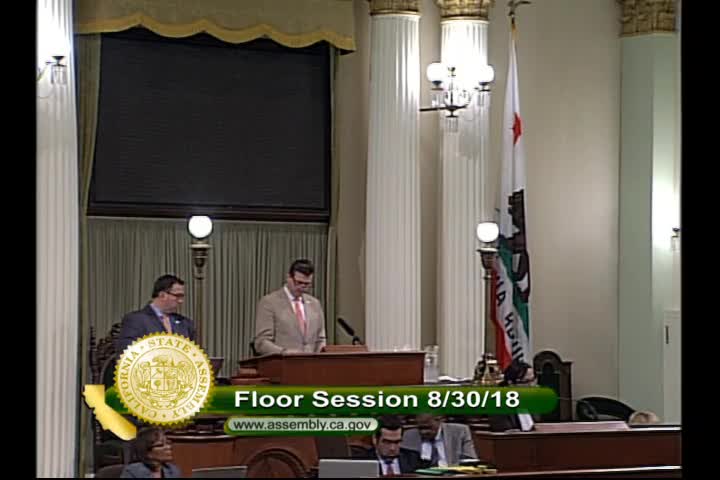

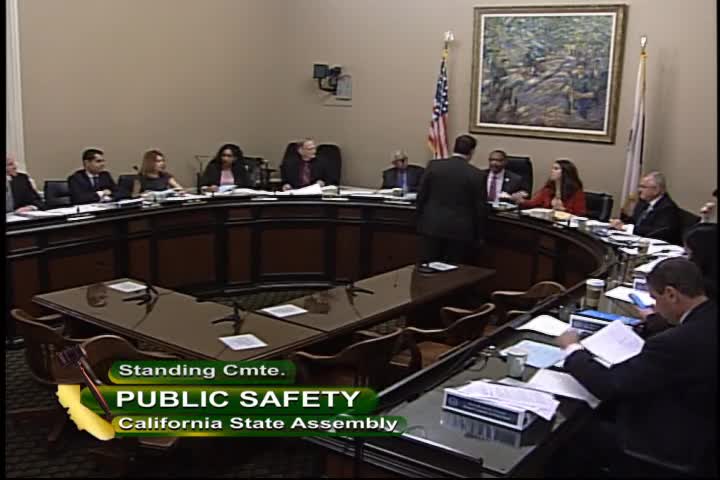
Bill Author

Bill Co-Author(s):
