AB 2230: Civil actions.
- Session Year: 2017-2018
- House: Assembly
- Latest Version Date: 2018-09-10
(1)Existing law authorizes a court to determine a motion for a new trial or a motion to set aside and vacate a judgment within 60 days after the mailing of notice of entry of judgment by the clerk of the court, or 60 days after service on the moving party by any party of written notice of entry of judgment, or, if that notice has not been given, within 60 days after filing the first notice of intention to move for a new trial or to set aside and vacate a judgment.
This bill would extend each of the periods described above to 75 days and make nonsubstantive, technical changes to these provisions.
(2)Existing law establishes procedures for conducting discovery in civil actions. Existing law provides that, in the case of interrogatories, demands for inspection, and requests for admissions, a party who objects to a discovery response for specified reasons may file a motion to compel a further response. Under the California Rules of Court, this motion must be accompanied by a separate statement providing information necessary to understand each discovery request and all the responses to it that are at issue.
This bill would allow the court to require, in lieu of a separate statement, a concise outline of the discovery request and each response in dispute. The bill would provide that these provisions would become operative on January 1, 2020.
(1)Existing law authorizes a court to determine a motion for a new trial or a motion to set aside and vacate a judgment within 60 days after the mailing of notice of entry of judgment by the clerk of the court, or 60 days after service on the moving party by any party of written notice of entry of judgment, or, if that notice has not been given, within 60 days after filing the first notice of intention to move for a new trial or to set aside and vacate a judgment.
This bill would extend each of the periods described above to 75 days and make nonsubstantive, technical changes to these provisions.
Existing(2)Existing law establishes procedures for conducting discovery in civil actions. Existing law provides that, in the case of interrogatories, demands for inspection, and requests for admissions, a party who objects to a discovery response for specified reasons may file a motion to compel a further response. Under the California Rules of Court, this motion must be accompanied by a separate statement providing information necessary to understand each discovery request and all the responses to it that are at issue.
This bill would allow the court to require, in lieu of a separate statement, a concise outline of the discovery request and each response in dispute. The bill would provide that these provisions would become operative on January 1, 2020.
This bill would provide that these provisions would become operative on January 1, 2020.(2)Existing law establishes procedures for conducting discovery in civil actions. Existing law provides that, in the case of interrogatories, demands for inspection, and requests for admissions, a party who objects to a discovery response for specified reasons may file a motion to compel a further response. Under the California Rules of Court, this motion must be accompanied by a separate statement providing information necessary to understand each discovery request and all the responses to it that are at issue.
This bill would allow the court to require, in lieu of a separate statement, a concise outline of the discovery request and each response in dispute.
This bill would provide that these provisions would become operative on January 1, 2020.
(1)Existing law requires a party moving for summary judgment in a civil action or proceeding to submit a separate statement of material facts the party contends are undisputed. Existing law similarly requires a party opposing a motion for summary judgment to submit a separate statement responding to the moving partys statement and setting forth any other material facts the opposing party contends are undisputed.
This bill would allow a moving party to arrange its separate statement by cause of action or count. The bill would require an opposing party to arrange its separate statement in the same order as the moving partys statement with respect to facts the moving party contends are undisputed. The bill would allow an opposing party to arrange other material facts by cause of action or count.
Existing(2)Existing law establishes procedures for conducting discovery in civil actions. Existing law provides that, in the case of interrogatories, demands for inspection, and requests for admissions, a party who objects to a discovery response for specified reasons may file a motion to compel a further response. Under the California Rules of Court, this motion must be accompanied by a separate statement providing information necessary to understand each discovery request and all the responses to it that are at issue.
This bill would allow the court to require, in lieu of the a separate statement, a concise outline of the discovery request and each response in dispute.
Existing law establishes procedures for conducting discovery in civil actions. Existing law provides that, in the case of interrogatories, demands for inspection, and requests for admissions, a party who objects to a discovery response for specified reasons may file a motion to compel a further response. Under the California Rules of Court, this motion must be accompanied by a separate statement providing information necessary to understand each discovery request and all the responses to it that are at issue.
This bill would allow the court to require, in lieu of the separate statement, a concise outline of the discovery request and each response in dispute.
Existing law authorizes a party or attorney in an action or proceeding to move to disqualify a judge, court commissioner, or referee for prejudice against a party or attorney or the interest of a party or attorney, as specified. Prejudice may be established by an oral or written motion without notice supported by affidavit or declaration under penalty of perjury, or an oral statement under oath, that the judge, court commissioner, or referee is prejudiced against a party or attorney, or the interest of the party or attorney, so that the party or attorney cannot, or believes that he or she cannot, have a fair and impartial trial or hearing. Existing law requires this motion be made at least 5 days before the date set for trial or hearing if the judge, court commissioner, or referee assigned to the cause or to hear the matter is known at least 10 days before the date set for the proceeding.This bill would instead require the motion be made at least 10 days before the date set for trial or hearing if the judge, court commissioner, or referee assigned to the cause or to hear the matter is known at least 20 days before the date set for the proceeding.Existing law authorizes a party or attorney in an action or proceeding to move to disqualify a judge, court commissioner, or referee for prejudice against a party or attorney or the interest of a party or attorney, as specified. Prejudice may be established by an oral or written motion without notice supported by affidavit or declaration under penalty of perjury, or an oral statement under oath, that the judge, court commissioner, or referee is prejudiced against a party or attorney, or the interest of the party or attorney, so that the party or attorney cannot, or believes that he or she cannot, have a fair and impartial trial or hearing. Existing law requires this motion be made at least 5 days before the date set for trial or hearing if the judge, court commissioner, or referee assigned to the cause or to hear the matter is known at least 10 days before the date set for the proceeding.
This bill would instead require the motion be made at least 10 days before the date set for trial or hearing if the judge, court commissioner, or referee assigned to the cause or to hear the matter is known at least 20 days before the date set for the proceeding.
(a)On the hearing of the motion, reference may be had in all cases to the pleadings and orders of the court on file, and when the motion is made on the minutes, reference may also be had to any depositions and documentary evidence offered at the trial and to the report of the proceedings on the trial taken by the phonographic reporter, or to any certified transcript of the report or if there be no such report or certified transcript, to proceedings occurring at the trial that are within the recollection of the judge; when the proceedings at the trial have been phonographically reported, but the reporters notes have not been transcribed, the reporter shall, upon request of the court or either party, attend the hearing of the motion and read his or her notes, or such parts thereof as the court, or either party, may require.
(b)The hearing and determination of the motion for a new trial shall have precedence over all other matters except criminal cases, probate matters, and cases actually on trial, and it shall be the duty of the court to determine the motion at the earliest possible moment.
(c)Except as otherwise provided in Section 12a of this code, the power of the court to rule on a motion for a new trial shall expire 75 days after the mailing of notice of entry of judgment by the clerk of the court pursuant to Section 664.5 or 75 days after service on the moving party by any party of written notice of entry of judgment, whichever is earlier, or if that notice has not been given, 75 days after the filing of the first notice of intention to move for a new trial. If the motion is not determined within the 75-day period, or within that period as extended, the effect shall be a denial of the motion without further order of the court. A motion for a new trial is not determined within the meaning of this section until an order ruling on the motion is entered in the permanent minutes of the court or signed by the judge and filed with the clerk. The entry of a new trial order in the permanent minutes of the court shall constitute a determination of the motion even though that minute order, as entered, expressly directs that a written order be prepared, signed, and filed. The minute entry shall in all cases show the date on which the order is entered in the permanent minutes, but failure to comply with this direction shall not impair the validity or effectiveness of the order.
SEC. 2.Section 663a of the Code of Civil Procedure is amended to read:663a.(a)A party intending to make a motion to set aside and vacate a judgment, as described in Section 663, shall file with the clerk and serve upon the adverse party a notice of his or her intention, designating the grounds upon which the motion will be made, and specifying the particulars in which the legal basis for the decision is not consistent with or supported by the facts, or in which the judgment or decree is not consistent with the special verdict, either:
(1)After the decision is rendered and before the entry of judgment.
(2)Within 15 days of the date of mailing of notice of entry of judgment by the clerk of the court pursuant to Section 664.5, or service upon him or her by any party of written notice of entry of judgment, or within 180 days after the entry of judgment, whichever is earliest.
(b) Except as otherwise provided in Section 12a, the power of the court to rule on a motion to set aside and vacate a judgment shall expire 75 days from the mailing of notice of entry of judgment by the clerk of the court pursuant to Section 664.5, or 75 days after service upon the moving party by any party of written notice of entry of the judgment, whichever is earlier, or if that notice has not been given, 75 days after the filing of the first notice of intention to move to set aside and vacate the judgment. If that motion is not determined within the 75-day period, or within that period as extended, the effect shall be a denial of the motion without further order of the court. A motion to set aside and vacate a judgment is not determined within the meaning of this section until an order ruling on the motion is entered in the permanent minutes of the court, or signed by the judge and filed with the clerk. The entry of an order to set aside and vacate the judgment in the permanent minutes of the court shall constitute a determination of the motion even though that minute order, as entered, expressly directs that a written order be prepared, signed, and filed. The minute entry shall, in all cases, show the date on which the order is entered in the permanent minutes, but failure to comply with this direction shall not impair the validity or effectiveness of the order.
(c)The provisions of Section 1013 extending the time for exercising a right or doing an act where service is by mail shall not apply to extend the times specified in paragraphs (1) and (2) of subdivision (a).
(d)The moving, opposing, and reply briefs and any accompanying documents shall be filed and served within the periods specified by Section 659a and the hearing on the motion shall be set in the same manner as the hearing on a motion for new trial under Section 660.
(e)An order of the court granting a motion may be reviewed on appeal in the same manner as a special order made after final judgment.
SEC. 3.Section 2030.300 of the Code of Civil Procedure is amended to read:2030.300.(a)On receipt of a response to interrogatories, the propounding party may move for an order compelling a further response if the propounding party deems that any of the following apply:
(1)An answer to a particular interrogatory is evasive or incomplete.
(2)An exercise of the option to produce documents under Section 2030.230 is unwarranted or the required specification of those documents is inadequate.
(3)An objection to an interrogatory is without merit or too general.
(b)(1)A motion under subdivision (a) shall be accompanied by a meet and confer declaration under Section 2016.040.
(2)In lieu of a separate statement required under the California Rules of Court, the court may allow the moving party to submit a concise outline of the discovery request and each response in dispute.
(c)Unless notice of this motion is given within 45 days of the service of the verified response, or any supplemental verified response, or on or before any specific later date to which the propounding party and the responding party have agreed in writing, the propounding party waives any right to compel a further response to the interrogatories.
(d)The court shall impose a monetary sanction under Chapter 7 (commencing with Section 2023.010) against any party, person, or attorney who unsuccessfully makes or opposes a motion to compel a further response to interrogatories, unless it finds that the one subject to the sanction acted with substantial justification or that other circumstances make the imposition of the sanction unjust.
(e)If a party then fails to obey an order compelling further response to interrogatories, the court may make those orders that are just, including the imposition of an issue sanction, an evidence sanction, or a terminating sanction under Chapter 7 (commencing with Section 2023.010). In lieu of, or in addition to, that sanction, the court may impose a monetary sanction under Chapter 7 (commencing with Section 2023.010).
SEC. 4.Section 2031.310 of the Code of Civil Procedure is amended to read:2031.310.(a)On receipt of a response to a demand for inspection, copying, testing, or sampling, the demanding party may move for an order compelling further response to the demand if the demanding party deems that any of the following apply:
(1)A statement of compliance with the demand is incomplete.
(2)A representation of inability to comply is inadequate, incomplete, or evasive.
(3)An objection in the response is without merit or too general.
(b)A motion under subdivision (a) shall comply with each of the following:
(1)The motion shall set forth specific facts showing good cause justifying the discovery sought by the demand.
(2)The motion shall be accompanied by a meet and confer declaration under Section 2016.040.
(3)In lieu of a separate statement required under the California Rules of Court, the court may allow the moving party to submit a concise outline of the discovery request and each response in dispute.
(c)Unless notice of this motion is given within 45 days of the service of the verified response, or any supplemental verified response, or on or before any specific later date to which the demanding party and the responding party have agreed in writing, the demanding party waives any right to compel a further response to the demand.
(d)In a motion under subdivision (a) relating to the production of electronically stored information, the party or affected person objecting to or opposing the production, inspection, copying, testing, or sampling of electronically stored information on the basis that the information is from a source that is not reasonably accessible because of the undue burden or expense shall bear the burden of demonstrating that the information is from a source that is not reasonably accessible because of undue burden or expense.
(e)If the party or affected person from whom discovery of electronically stored information is sought establishes that the information is from a source that is not reasonably accessible because of the undue burden or expense, the court may nonetheless order discovery if the demanding party shows good cause, subject to any limitations imposed under subdivision (g).
(f)If the court finds good cause for the production of electronically stored information from a source that is not reasonably accessible, the court may set conditions for the discovery of the electronically stored information, including allocation of the expense of discovery.
(g)The court shall limit the frequency or extent of discovery of electronically stored information, even from a source that is reasonably accessible, if the court determines that any of the following conditions exists:
(1)It is possible to obtain the information from some other source that is more convenient, less burdensome, or less expensive.
(2)The discovery sought is unreasonably cumulative or duplicative.
(3)The party seeking discovery has had ample opportunity by discovery in the action to obtain the information sought.
(4)The likely burden or expense of the proposed discovery outweighs the likely benefit, taking into account the amount in controversy, the resources of the parties, the importance of the issues in the litigation, and the importance of the requested discovery in resolving the issues.
(h)Except as provided in subdivision (j), the court shall impose a monetary sanction under Chapter 7 (commencing with Section 2023.010) against any party, person, or attorney who unsuccessfully makes or opposes a motion to compel further response to a demand, unless it finds that the one subject to the sanction acted with substantial justification or that other circumstances make the imposition of the sanction unjust.
(i)Except as provided in subdivision (j), if a party fails to obey an order compelling further response, the court may make those orders that are just, including the imposition of an issue sanction, an evidence sanction, or a terminating sanction under Chapter 7 (commencing with Section 2023.010). In lieu of, or in addition to, that sanction, the court may impose a monetary sanction under Chapter 7 (commencing with Section 2023.010).
(j)(1)Notwithstanding subdivisions (h) and (i), absent exceptional circumstances, the court shall not impose sanctions on a party or any attorney of a party for failure to provide electronically stored information that has been lost, damaged, altered, or overwritten as the result of the routine, good faith operation of an electronic information system.
(2)This subdivision shall not be construed to alter any obligation to preserve discoverable information.
SEC. 5.Section 2033.290 of the Code of Civil Procedure is amended to read:2033.290.(a)On receipt of a response to requests for admissions, the party requesting admissions may move for an order compelling a further response if that party deems that either or both of the following apply:
(1)An answer to a particular request is evasive or incomplete.
(2)An objection to a particular request is without merit or too general.
(b)(1)A motion under subdivision (a) shall be accompanied by a meet and confer declaration under Section 2016.040.
(2)In lieu of a separate statement required under the California Rules of Court, the court may allow the moving party to submit a concise outline of the discovery request and each response in dispute.
(c)Unless notice of this motion is given within 45 days of the service of the verified response, or any supplemental verified response, or any specific later date to which the requesting party and the responding party have agreed in writing, the requesting party waives any right to compel further response to the requests for admission.
(d)The court shall impose a monetary sanction under Chapter 7 (commencing with Section 2023.010) against any party, person, or attorney who unsuccessfully makes or opposes a motion to compel further response, unless it finds that the one subject to the sanction acted with substantial justification or that other circumstances make the imposition of the sanction unjust.
(e)If a party then fails to obey an order compelling further response to requests for admission, the court may order that the matters involved in the requests be deemed admitted. In lieu of, or in addition to, this order, the court may impose a monetary sanction under Chapter 7 (commencing with Section 2023.010).
SEC. 6.Sections 3, 4, and 5 of this act shall become operative on January 1, 2020.
(a)On the hearing of such the motion, reference may be had in all cases to the pleadings and orders of the court on file, and when the motion is made on the minutes, reference may also be had to any depositions and documentary evidence offered at the trial and to the report of the proceedings on the trial taken by the phonographic reporter, or to any certified transcript of such the report or if there be no such report or certified transcript, to such proceedings occurring at the trial as that are within the recollection of the judge; when the proceedings at the trial have been phonographically reported, but the reporters notes have not been transcribed, the reporter must shall, upon request of the court or either party, attend the hearing of the motion and shall read his or her notes, or such parts thereof as the court, or either party, may require.
The(b)The hearing and disposition determination of the motion for a new trial shall have precedence over all other matters except criminal cases, probate matters matters, and cases actually on trial, and it shall be the duty of the court to determine the same motion at the earliest possible moment.
Except(c)Except as otherwise provided in Section 12a of this code, the power of the court to rule on a motion for a new trial shall expire 60 75 days from and after the mailing of notice of entry of judgment by the clerk of the court pursuant to Section 664.5 or 60 75 days from and after service on the moving party by any party of written notice of the entry of the judgment, whichever is earlier, or if such that notice has not theretofore been given, then 60 75 days after the filing of the first notice of intention to move for a new trial. If such the motion is not determined within said period of 60 days, the 75-day period, or within said period as thus that period as extended, the effect shall be a denial of the motion without further order of the court. A motion for a new trial is not determined within the meaning of this section until an order ruling on the motion (1)is is entered in the permanent minutes of the court or (2)is signed by the judge and filed with the clerk. The entry of a new trial order in the permanent minutes of the court shall constitute a determination of the motion even though such minute order as entered that minute order, as entered, expressly directs that a written order be prepared, signed signed, and filed. The minute entry shall in all cases show the date on which the order actually is entered in the permanent minutes, but failure to comply with this direction shall not impair the validity or effectiveness of the order.
SEC. 2.Section 663a of the Code of Civil Procedure is amended to read:663a.(a)A party intending to make a motion to set aside and vacate a judgment, as described in Section 663, shall file with the clerk and serve upon the adverse party a notice of his or her intention, designating the grounds upon which the motion will be made, and specifying the particulars in which the legal basis for the decision is not consistent with or supported by the facts, or in which the judgment or decree is not consistent with the special verdict, either:
(1)After the decision is rendered and before the entry of judgment.
(2)Within 15 days of the date of mailing of notice of entry of judgment by the clerk of the court pursuant to Section 664.5, or service upon him or her by any party of written notice of entry of judgment, or within 180 days after the entry of judgment, whichever is earliest.
(b) Except as otherwise provided in Section 12a, the power of the court to rule on a motion to set aside and vacate a judgment shall expire 60 75 days from the mailing of notice of entry of judgment by the clerk of the court pursuant to Section 664.5, or 60 75 days after service upon the moving party by any party of written notice of entry of the judgment, whichever is earlier, or if that notice has not been given, then 60 75 days after the filing of the first notice of intention to move to set aside and vacate the judgment. If that motion is not determined within the 60-day 75-day period, or within that period, period as extended, the effect shall be a denial of the motion without further order of the court. A motion to set aside and vacate a judgment is not determined within the meaning of this section until an order ruling on the motion is (1) entered in the permanent minutes of the court, or (2) signed by the judge and filed with the clerk. The entry of an order to set aside and vacate the judgment in the permanent minutes of the court shall constitute a determination of the motion even though that minute order, as entered, expressly directs that a written order be prepared, signed, and filed. The minute entry shall, in all cases, show the date on which the order actually is entered in the permanent minutes, but failure to comply with this direction shall not impair the validity or effectiveness of the order.
(c)The provisions of Section 1013 extending the time for exercising a right or doing an act where service is by mail shall not apply to extend the times specified in paragraphs (1) and (2) of subdivision (a).
(d)The moving, opposing, and reply briefs and any accompanying documents shall be filed and served within the periods specified by Section 659a and the hearing on the motion shall be set in the same manner as the hearing on a motion for new trial under Section 660.
(e)An order of the court granting a motion may be reviewed on appeal in the same manner as a special order made after final judgment.
SECTION 1.SEC. 3.Section 2030.300 of the Code of Civil Procedure is amended to read:2030.300.(a)On receipt of a response to interrogatories, the propounding party may move for an order compelling a further response if the propounding party deems that any of the following apply:
(1)An answer to a particular interrogatory is evasive or incomplete.
(2)An exercise of the option to produce documents under Section 2030.230 is unwarranted or the required specification of those documents is inadequate.
(3)An objection to an interrogatory is without merit or too general.
(b)(1)A motion under subdivision (a) shall be accompanied by a meet and confer declaration under Section 2016.040.
(2)In lieu of a separate statement required under the California Rules of Court, the court may allow the moving party to submit a concise outline of the discovery request and each response in dispute.
(c)Unless notice of this motion is given within 45 days of the service of the verified response, or any supplemental verified response, or on or before any specific later date to which the propounding party and the responding party have agreed in writing, the propounding party waives any right to compel a further response to the interrogatories.
(d)The court shall impose a monetary sanction under Chapter 7 (commencing with Section 2023.010) against any party, person, or attorney who unsuccessfully makes or opposes a motion to compel a further response to interrogatories, unless it finds that the one subject to the sanction acted with substantial justification or that other circumstances make the imposition of the sanction unjust.
(e)If a party then fails to obey an order compelling further response to interrogatories, the court may make those orders that are just, including the imposition of an issue sanction, an evidence sanction, or a terminating sanction under Chapter 7 (commencing with Section 2023.010). In lieu of, or in addition to, that sanction, the court may impose a monetary sanction under Chapter 7 (commencing with Section 2023.010).
SEC. 2.SEC. 4.Section 2031.310 of the Code of Civil Procedure is amended to read:2031.310.(a)On receipt of a response to a demand for inspection, copying, testing, or sampling, the demanding party may move for an order compelling further response to the demand if the demanding party deems that any of the following apply:
(1)A statement of compliance with the demand is incomplete.
(2)A representation of inability to comply is inadequate, incomplete, or evasive.
(3)An objection in the response is without merit or too general.
(b)A motion under subdivision (a) shall comply with each of the following:
(1)The motion shall set forth specific facts showing good cause justifying the discovery sought by the demand.
(2)The motion shall be accompanied by a meet and confer declaration under Section 2016.040.
(3)In lieu of a separate statement required under the California Rules of Court, the court may allow the moving party to submit a concise outline of the discovery request and each response in dispute.
(c)Unless notice of this motion is given within 45 days of the service of the verified response, or any supplemental verified response, or on or before any specific later date to which the demanding party and the responding party have agreed in writing, the demanding party waives any right to compel a further response to the demand.
(d)In a motion under subdivision (a) relating to the production of electronically stored information, the party or affected person objecting to or opposing the production, inspection, copying, testing, or sampling of electronically stored information on the basis that the information is from a source that is not reasonably accessible because of the undue burden or expense shall bear the burden of demonstrating that the information is from a source that is not reasonably accessible because of undue burden or expense.
(e)If the party or affected person from whom discovery of electronically stored information is sought establishes that the information is from a source that is not reasonably accessible because of the undue burden or expense, the court may nonetheless order discovery if the demanding party shows good cause, subject to any limitations imposed under subdivision (g).
(f)If the court finds good cause for the production of electronically stored information from a source that is not reasonably accessible, the court may set conditions for the discovery of the electronically stored information, including allocation of the expense of discovery.
(g)The court shall limit the frequency or extent of discovery of electronically stored information, even from a source that is reasonably accessible, if the court determines that any of the following conditions exists:
(1)It is possible to obtain the information from some other source that is more convenient, less burdensome, or less expensive.
(2)The discovery sought is unreasonably cumulative or duplicative.
(3)The party seeking discovery has had ample opportunity by discovery in the action to obtain the information sought.
(4)The likely burden or expense of the proposed discovery outweighs the likely benefit, taking into account the amount in controversy, the resources of the parties, the importance of the issues in the litigation, and the importance of the requested discovery in resolving the issues.
(h)Except as provided in subdivision (j), the court shall impose a monetary sanction under Chapter 7 (commencing with Section 2023.010) against any party, person, or attorney who unsuccessfully makes or opposes a motion to compel further response to a demand, unless it finds that the one subject to the sanction acted with substantial justification or that other circumstances make the imposition of the sanction unjust.
(i)Except as provided in subdivision (j), if a party fails to obey an order compelling further response, the court may make those orders that are just, including the imposition of an issue sanction, an evidence sanction, or a terminating sanction under Chapter 7 (commencing with Section 2023.010). In lieu of, or in addition to, that sanction, the court may impose a monetary sanction under Chapter 7 (commencing with Section 2023.010).
(j)(1)Notwithstanding subdivisions (h) and (i), absent exceptional circumstances, the court shall not impose sanctions on a party or any attorney of a party for failure to provide electronically stored information that has been lost, damaged, altered, or overwritten as the result of the routine, good faith operation of an electronic information system.
(2)This subdivision shall not be construed to alter any obligation to preserve discoverable information.
SEC. 3.SEC. 5.Section 2033.290 of the Code of Civil Procedure is amended to read:2033.290.(a)On receipt of a response to requests for admissions, the party requesting admissions may move for an order compelling a further response if that party deems that either or both of the following apply:
(1)An answer to a particular request is evasive or incomplete.
(2)An objection to a particular request is without merit or too general.
(b)(1)A motion under subdivision (a) shall be accompanied by a meet and confer declaration under Section 2016.040.
(2)In lieu of a separate statement required under the California Rules of Court, the court may allow the moving party to submit a concise outline of the discovery request and each response in dispute.
(c)Unless notice of this motion is given within 45 days of the service of the verified response, or any supplemental verified response, or any specific later date to which the requesting party and the responding party have agreed in writing, the requesting party waives any right to compel further response to the requests for admission.
(d)The court shall impose a monetary sanction under Chapter 7 (commencing with Section 2023.010) against any party, person, or attorney who unsuccessfully makes or opposes a motion to compel further response, unless it finds that the one subject to the sanction acted with substantial justification or that other circumstances make the imposition of the sanction unjust.
(e)If a party then fails to obey an order compelling further response to requests for admission, the court may order that the matters involved in the requests be deemed admitted. In lieu of, or in addition to, this order, the court may impose a monetary sanction under Chapter 7 (commencing with Section 2023.010).
SEC. 4.SEC. 6.This Sections 3, 4, and 5 of this act shall become operative on January 1, 2020.
(a)On receipt of a response to interrogatories, the propounding party may move for an order compelling a further response if the propounding party deems that any of the following apply:
(1)An answer to a particular interrogatory is evasive or incomplete.
(2)An exercise of the option to produce documents under Section 2030.230 is unwarranted or the required specification of those documents is inadequate.
(3)An objection to an interrogatory is without merit or too general.
(b)(1)A motion under subdivision (a) shall be accompanied by a meet and confer declaration under Section 2016.040.
(2)In lieu of a separate statement required under the California Rules of Court, the court may allow the moving party to submit a concise outline of the discovery request and each response in dispute.
(c)Unless notice of this motion is given within 45 days of the service of the verified response, or any supplemental verified response, or on or before any specific later date to which the propounding party and the responding party have agreed in writing, the propounding party waives any right to compel a further response to the interrogatories.
(d)The court shall impose a monetary sanction under Chapter 7 (commencing with Section 2023.010) against any party, person, or attorney who unsuccessfully makes or opposes a motion to compel a further response to interrogatories, unless it finds that the one subject to the sanction acted with substantial justification or that other circumstances make the imposition of the sanction unjust.
(e)If a party then fails to obey an order compelling further response to interrogatories, the court may make those orders that are just, including the imposition of an issue sanction, an evidence sanction, or a terminating sanction under Chapter 7 (commencing with Section 2023.010). In lieu of, or in addition to, that sanction, the court may impose a monetary sanction under Chapter 7 (commencing with Section 2023.010).
SEC. 3.SEC. 2.Section 2031.310 of the Code of Civil Procedure is amended to read:2031.310.(a)On receipt of a response to a demand for inspection, copying, testing, or sampling, the demanding party may move for an order compelling further response to the demand if the demanding party deems that any of the following apply:
(1)A statement of compliance with the demand is incomplete.
(2)A representation of inability to comply is inadequate, incomplete, or evasive.
(3)An objection in the response is without merit or too general.
(b)A motion under subdivision (a) shall comply with each of the following:
(1)The motion shall set forth specific facts showing good cause justifying the discovery sought by the demand.
(2)The motion shall be accompanied by a meet and confer declaration under Section 2016.040.
(3)In lieu of a separate statement required under the California Rules of Court, the court may allow the moving party to submit a concise outline of the discovery request and each response in dispute.
(c)Unless notice of this motion is given within 45 days of the service of the verified response, or any supplemental verified response, or on or before any specific later date to which the demanding party and the responding party have agreed in writing, the demanding party waives any right to compel a further response to the demand.
(d)In a motion under subdivision (a) relating to the production of electronically stored information, the party or affected person objecting to or opposing the production, inspection, copying, testing, or sampling of electronically stored information on the basis that the information is from a source that is not reasonably accessible because of the undue burden or expense shall bear the burden of demonstrating that the information is from a source that is not reasonably accessible because of undue burden or expense.
(e)If the party or affected person from whom discovery of electronically stored information is sought establishes that the information is from a source that is not reasonably accessible because of the undue burden or expense, the court may nonetheless order discovery if the demanding party shows good cause, subject to any limitations imposed under subdivision (g).
(f)If the court finds good cause for the production of electronically stored information from a source that is not reasonably accessible, the court may set conditions for the discovery of the electronically stored information, including allocation of the expense of discovery.
(g)The court shall limit the frequency or extent of discovery of electronically stored information, even from a source that is reasonably accessible, if the court determines that any of the following conditions exists:
(1)It is possible to obtain the information from some other source that is more convenient, less burdensome, or less expensive.
(2)The discovery sought is unreasonably cumulative or duplicative.
(3)The party seeking discovery has had ample opportunity by discovery in the action to obtain the information sought.
(4)The likely burden or expense of the proposed discovery outweighs the likely benefit, taking into account the amount in controversy, the resources of the parties, the importance of the issues in the litigation, and the importance of the requested discovery in resolving the issues.
(h)Except as provided in subdivision (j), the court shall impose a monetary sanction under Chapter 7 (commencing with Section 2023.010) against any party, person, or attorney who unsuccessfully makes or opposes a motion to compel further response to a demand, unless it finds that the one subject to the sanction acted with substantial justification or that other circumstances make the imposition of the sanction unjust.
(i)Except as provided in subdivision (j), if a party fails to obey an order compelling further response, the court may make those orders that are just, including the imposition of an issue sanction, an evidence sanction, or a terminating sanction under Chapter 7 (commencing with Section 2023.010). In lieu of, or in addition to, that sanction, the court may impose a monetary sanction under Chapter 7 (commencing with Section 2023.010).
(j)(1)Notwithstanding subdivisions (h) and (i), absent exceptional circumstances, the court shall not impose sanctions on a party or any attorney of a party for failure to provide electronically stored information that has been lost, damaged, altered, or overwritten as the result of the routine, good faith operation of an electronic information system.
(2)This subdivision shall not be construed to alter any obligation to preserve discoverable information.
SEC. 4.SEC. 3.Section 2033.290 of the Code of Civil Procedure is amended to read:2033.290.(a)On receipt of a response to requests for admissions, the party requesting admissions may move for an order compelling a further response if that party deems that either or both of the following apply:
(1)An answer to a particular request is evasive or incomplete.
(2)An objection to a particular request is without merit or too general.
(b)(1)A motion under subdivision (a) shall be accompanied by a meet and confer declaration under Section 2016.040.
(2)In lieu of a separate statement required under the California Rules of Court, the court may allow the moving party to submit a concise outline of the discovery request and each response in dispute.
(c)Unless notice of this motion is given within 45 days of the service of the verified response, or any supplemental verified response, or any specific later date to which the requesting party and the responding party have agreed in writing, the requesting party waives any right to compel further response to the requests for admission.
(d)The court shall impose a monetary sanction under Chapter 7 (commencing with Section 2023.010) against any party, person, or attorney who unsuccessfully makes or opposes a motion to compel further response, unless it finds that the one subject to the sanction acted with substantial justification or that other circumstances make the imposition of the sanction unjust.
(e)If a party then fails to obey an order compelling further response to requests for admission, the court may order that the matters involved in the requests be deemed admitted. In lieu of, or in addition to, this order, the court may impose a monetary sanction under Chapter 7 (commencing with Section 2023.010).
SEC. 4.This act shall become operative on January 1, 2020.
(a)(1)A party may move for summary judgment in an action or proceeding if it is contended that the action has no merit or that there is no defense to the action or proceeding. The motion may be made at any time after 60 days have elapsed since the general appearance in the action or proceeding of each party against whom the motion is directed or at any earlier time after the general appearance that the court, with or without notice and upon good cause shown, may direct.
(2)Notice of the motion and supporting papers shall be served on all other parties to the action at least 75 days before the time appointed for hearing. If the notice is served by mail, the required 75-day period of notice shall be increased by 5 days if the place of address is within the State of California, 10 days if the place of address is outside the State of California but within the United States, and 20 days if the place of address is outside the United States. If the notice is served by facsimile transmission, express mail, or another method of delivery providing for overnight delivery, the required 75-day period of notice shall be increased by two court days.
(3)The motion shall be heard no later than 30 days before the date of trial, unless the court for good cause orders otherwise. The filing of the motion shall not extend the time within which a party must otherwise file a responsive pleading.
(b)(1)The motion shall be supported by affidavits, declarations, admissions, answers to interrogatories, depositions, and matters of which judicial notice shall or may be taken. The supporting papers shall include a separate statement setting forth plainly and concisely all material facts that the moving party contends are undisputed. Each of the material facts stated shall be followed by a reference to the supporting evidence. The failure to comply with this requirement of a separate statement may in the courts discretion constitute a sufficient ground for denying the motion. The separate statement may, but need not, be arranged by cause of action or count.
(2)An opposition to the motion shall be served and filed not less than 14 days preceding the noticed or continued date of hearing, unless the court for good cause orders otherwise. The opposition, where appropriate, shall consist of affidavits, declarations, admissions, answers to interrogatories, depositions, and matters of which judicial notice shall or may be taken.
(3)The opposition papers shall include a separate statement that responds to each of the material facts contended by the moving party to be undisputed, indicating if the opposing party agrees or disagrees that those facts are undisputed. The statement also shall set forth plainly and concisely any other material facts the opposing party contends are disputed. Each material fact contended by the opposing party to be disputed shall be followed by a reference to the supporting evidence. Failure to comply with this requirement of a separate statement may constitute a sufficient ground, in the courts discretion, for granting the motion. The separate statement shall be arranged in the same order as the moving partys separate statement with respect to those material facts contended by the moving party to be undisputed. Other material facts may, but need not, be arranged by cause of action or count.
(4)A reply to the opposition shall be served and filed by the moving party not less than five days preceding the noticed or continued date of hearing, unless the court for good cause orders otherwise.
(5)Evidentiary objections not made at the hearing shall be deemed waived.
(6)Except for subdivision (c) of Section 1005 relating to the method of service of opposition and reply papers, Sections 1005 and 1013, extending the time within which a right may be exercised or an act may be done, do not apply to this section.
(7)An incorporation by reference of a matter in the courts file shall set forth with specificity the exact matter to which reference is being made and shall not incorporate the entire file.
(c)The motion for summary judgment shall be granted if all the papers submitted show that there is no triable issue as to any material fact and that the moving party is entitled to a judgment as a matter of law. In determining if the papers show that there is no triable issue as to any material fact, the court shall consider all of the evidence set forth in the papers, except the evidence to which objections have been made and sustained by the court, and all inferences reasonably deducible from the evidence, except summary judgment shall not be granted by the court based on inferences reasonably deducible from the evidence if contradicted by other inferences or evidence that raise a triable issue as to any material fact.
(d)Supporting and opposing affidavits or declarations shall be made by a person on personal knowledge, shall set forth admissible evidence, and shall show affirmatively that the affiant is competent to testify to the matters stated in the affidavits or declarations. An objection based on the failure to comply with the requirements of this subdivision, if not made at the hearing, shall be deemed waived.
(e)If a party is otherwise entitled to summary judgment pursuant to this section, summary judgment shall not be denied on grounds of credibility or for want of cross-examination of witnesses furnishing affidavits or declarations in support of the summary judgment, except that summary judgment may be denied in the discretion of the court if the only proof of a material fact offered in support of the summary judgment is an affidavit or declaration made by an individual who was the sole witness to that fact; or if a material fact is an individuals state of mind, or lack thereof, and that fact is sought to be established solely by the individuals affirmation thereof.
(f)(1)A party may move for summary adjudication as to one or more causes of action within an action, one or more affirmative defenses, one or more claims for damages, or one or more issues of duty, if the party contends that the cause of action has no merit, that there is no affirmative defense to the cause of action, that there is no merit to an affirmative defense as to any cause of action, that there is no merit to a claim for damages, as specified in Section 3294 of the Civil Code, or that one or more defendants either owed or did not owe a duty to the plaintiff or plaintiffs. A motion for summary adjudication shall be granted only if it completely disposes of a cause of action, an affirmative defense, a claim for damages, or an issue of duty.
(2)A motion for summary adjudication may be made by itself or as an alternative to a motion for summary judgment and shall proceed in all procedural respects as a motion for summary judgment. A party shall not move for summary judgment based on issues asserted in a prior motion for summary adjudication and denied by the court unless that party establishes, to the satisfaction of the court, newly discovered facts or circumstances or a change of law supporting the issues reasserted in the summary judgment motion.
(g)Upon the denial of a motion for summary judgment on the ground that there is a triable issue as to one or more material facts, the court shall, by written or oral order, specify one or more material facts raised by the motion that the court has determined there exists a triable controversy. This determination shall specifically refer to the evidence proffered in support of and in opposition to the motion that indicates that a triable controversy exists. Upon the grant of a motion for summary judgment on the ground that there is no triable issue of material fact, the court shall, by written or oral order, specify the reasons for its determination. The order shall specifically refer to the evidence proffered in support of and, if applicable, in opposition to the motion that indicates no triable issue exists. The court shall also state its reasons for any other determination. The court shall record its determination by court reporter or written order.
(h)If it appears from the affidavits submitted in opposition to a motion for summary judgment or summary adjudication, or both, that facts essential to justify opposition may exist but cannot, for reasons stated, be presented, the court shall deny the motion, order a continuance to permit affidavits to be obtained or discovery to be had, or make any other order as may be just. The application to continue the motion to obtain necessary discovery may also be made by ex parte motion at any time on or before the date the opposition response to the motion is due.
(i)If, after granting a continuance to allow specified additional discovery, the court determines that the party seeking summary judgment has unreasonably failed to allow the discovery to be conducted, the court shall grant a continuance to permit the discovery to go forward or deny the motion for summary judgment or summary adjudication. This section does not affect or limit the ability of a party to compel discovery under the Civil Discovery Act (Title 4 (commencing with Section 2016.010) of Part 4).
(j)If the court determines at any time that an affidavit was presented in bad faith or solely for the purpose of delay, the court shall order the party who presented the affidavit to pay the other party the amount of the reasonable expenses the filing of the affidavit caused the other party to incur. Sanctions shall not be imposed pursuant to this subdivision except on notice contained in a partys papers or on the courts own noticed motion, and after an opportunity to be heard.
(k)Unless a separate judgment may properly be awarded in the action, a final judgment shall not be entered on a motion for summary judgment before the termination of the action, but the final judgment shall, in addition to any matters determined in the action, award judgment as established by the summary proceeding provided for in this section.
(l)In an action arising out of an injury to the person or to property, if a motion for summary judgment is granted on the basis that the defendant was without fault, no other defendant during trial, over plaintiffs objection, may attempt to attribute fault to, or comment on, the absence or involvement of the defendant who was granted the motion.
(m)(1)A summary judgment entered under this section is an appealable judgment as in other cases. Upon entry of an order pursuant to this section, except the entry of summary judgment, a party may, within 20 days after service upon him or her of a written notice of entry of the order, petition an appropriate reviewing court for a peremptory writ. If the notice is served by mail, the initial period within which to file the petition shall be increased by five days if the place of address is within the State of California, 10 days if the place of address is outside the State of California but within the United States, and 20 days if the place of address is outside the United States. If the notice is served by facsimile transmission, express mail, or another method of delivery providing for overnight delivery, the initial period within which to file the petition shall be increased by two court days. The superior court may, for good cause, and before the expiration of the initial period, extend the time for one additional period not to exceed 10 days.
(2)Before a reviewing court affirms an order granting summary judgment or summary adjudication on a ground not relied upon by the trial court, the reviewing court shall afford the parties an opportunity to present their views on the issue by submitting supplemental briefs. The supplemental briefs may include an argument that additional evidence relating to that ground exists, but the party has not had an adequate opportunity to present the evidence or to conduct discovery on the issue. The court may reverse or remand based upon the supplemental briefs to allow the parties to present additional evidence or to conduct discovery on the issue. If the court fails to allow supplemental briefs, a rehearing shall be ordered upon timely petition of a party.
(n)(1)If a motion for summary adjudication is granted, at the trial of the action, the cause or causes of action within the action, affirmative defense or defenses, claim for damages, or issue or issues of duty as to the motion that has been granted shall be deemed to be established and the action shall proceed as to the cause or causes of action, affirmative defense or defenses, claim for damages, or issue or issues of duty remaining.
(2)In the trial of the action, the fact that a motion for summary adjudication is granted as to one or more causes of action, affirmative defenses, claims for damages, or issues of duty within the action shall not bar any cause of action, affirmative defense, claim for damages, or issue of duty as to which summary adjudication was either not sought or denied.
(3)In the trial of an action, neither a party, a witness, nor the court shall comment to a jury upon the grant or denial of a motion for summary adjudication.
(o)A cause of action has no merit if either of the following exists:
(1)One or more of the elements of the cause of action cannot be separately established, even if that element is separately pleaded.
(2)A defendant establishes an affirmative defense to that cause of action.
(p)For purposes of motions for summary judgment and summary adjudication:
(1)A plaintiff or cross-complainant has met his or her burden of showing that there is no defense to a cause of action if that party has proved each element of the cause of action entitling the party to judgment on the cause of action. Once the plaintiff or cross-complainant has met that burden, the burden shifts to the defendant or cross-defendant to show that a triable issue of one or more material facts exists as to the cause of action or a defense thereto. The defendant or cross-defendant shall not rely upon the allegations or denials of its pleadings to show that a triable issue of material fact exists but, instead, shall set forth the specific facts showing that a triable issue of material fact exists as to the cause of action or a defense thereto.
(2)A defendant or cross-defendant has met his or her burden of showing that a cause of action has no merit if the party has shown that one or more elements of the cause of action, even if not separately pleaded, cannot be established, or that there is a complete defense to the cause of action. Once the defendant or cross-defendant has met that burden, the burden shifts to the plaintiff or cross-complainant to show that a triable issue of one or more material facts exists as to the cause of action or a defense thereto. The plaintiff or cross-complainant shall not rely upon the allegations or denials of its pleadings to show that a triable issue of material fact exists but, instead, shall set forth the specific facts showing that a triable issue of material fact exists as to the cause of action or a defense thereto.
(q)In granting or denying a motion for summary judgment or summary adjudication, the court need rule only on those objections to evidence that it deems material to its disposition of the motion. Objections to evidence that are not ruled on for purposes of the motion shall be preserved for appellate review.
(r)This section does not extend the period for trial provided by Section 1170.5.
(s)Subdivisions (a) and (b) do not apply to actions brought pursuant to Chapter 4 (commencing with Section 1159) of Title 3 of Part 3.
(t)Notwithstanding subdivision (f), a party may move for summary adjudication of a legal issue or a claim for damages other than punitive damages that does not completely dispose of a cause of action, affirmative defense, or issue of duty pursuant to this subdivision.
(1)(A)Before filing a motion pursuant to this subdivision, the parties whose claims or defenses are put at issue by the motion shall submit to the court both of the following:
(i)A joint stipulation stating the issue or issues to be adjudicated.
(ii)A declaration from each stipulating party that the motion will further the interest of judicial economy by decreasing trial time or significantly increasing the likelihood of settlement.
(B)The joint stipulation shall be served on any party to the civil action who is not also a party to the motion.
(2)Within 15 days of receipt of the stipulation and declarations, unless the court has good cause for extending the time, the court shall notify the stipulating parties if the motion may be filed. In making this determination, the court may consider objections by a nonstipulating party made within 10 days of the submission of the stipulation and declarations.
(3)If the court elects not to allow the filing of the motion, the stipulating parties may request, and upon request the court shall conduct, an informal conference with the stipulating parties to permit further evaluation of the proposed stipulation. The stipulating parties shall not file additional papers in support of the motion.
(4)(A)A motion for summary adjudication made pursuant to this subdivision shall contain a statement in the notice of motion that reads substantially similar to the following: This motion is made pursuant to subdivision (t) of Section 437c of the Code of Civil Procedure. The parties to this motion stipulate that the court shall hear this motion and that the resolution of this motion will further the interest of judicial economy by decreasing trial time or significantly increasing the likelihood of settlement.
(B)The notice of motion shall be signed by counsel for all parties, and by those parties in propria persona, to the motion.
(5)A motion filed pursuant to this subdivision may be made by itself or as an alternative to a motion for summary judgment and shall proceed in all procedural respects as a motion for summary judgment.
(u)For purposes of this section, a change in law does not include a later enacted statute without retroactive application.
SECTION 1.SEC. 2.Section 2030.300 of the Code of Civil Procedure is amended to read:2030.300.(a)On receipt of a response to interrogatories, the propounding party may move for an order compelling a further response if the propounding party deems that any of the following apply:
(1)An answer to a particular interrogatory is evasive or incomplete.
(2)An exercise of the option to produce documents under Section 2030.230 is unwarranted or the required specification of those documents is inadequate.
(3)An objection to an interrogatory is without merit or too general.
(b)(1)A motion under subdivision (a) shall be accompanied by a meet and confer declaration under Section 2016.040.
(2)In lieu of a separate statement required under the California Rules of Court, the court may allow the moving party to submit a concise outline of the discovery request and each response in dispute.
(c)Unless notice of this motion is given within 45 days of the service of the verified response, or any supplemental verified response, or on or before any specific later date to which the propounding party and the responding party have agreed in writing, the propounding party waives any right to compel a further response to the interrogatories.
(d)The court shall impose a monetary sanction under Chapter 7 (commencing with Section 2023.010) against any party, person, or attorney who unsuccessfully makes or opposes a motion to compel a further response to interrogatories, unless it finds that the one subject to the sanction acted with substantial justification or that other circumstances make the imposition of the sanction unjust.
(e)If a party then fails to obey an order compelling further response to interrogatories, the court may make those orders that are just, including the imposition of an issue sanction, an evidence sanction, or a terminating sanction under Chapter 7 (commencing with Section 2023.010). In lieu of, or in addition to, that sanction, the court may impose a monetary sanction under Chapter 7 (commencing with Section 2023.010).
SEC. 2.SEC. 3.Section 2031.310 of the Code of Civil Procedure is amended to read:2031.310.(a)On receipt of a response to a demand for inspection, copying, testing, or sampling, the demanding party may move for an order compelling further response to the demand if the demanding party deems that any of the following apply:
(1)A statement of compliance with the demand is incomplete.
(2)A representation of inability to comply is inadequate, incomplete, or evasive.
(3)An objection in the response is without merit or too general.
(b)A motion under subdivision (a) shall comply with each of the following:
(1)The motion shall set forth specific facts showing good cause justifying the discovery sought by the demand.
(2)The motion shall be accompanied by a meet and confer declaration under Section 2016.040.
(3)In lieu of a separate statement required under the California Rules of Court, the court may allow the moving party to submit a concise outline of the discovery request and each response in dispute.
(c)Unless notice of this motion is given within 45 days of the service of the verified response, or any supplemental verified response, or on or before any specific later date to which the demanding party and the responding party have agreed in writing, the demanding party waives any right to compel a further response to the demand.
(d)In a motion under subdivision (a) relating to the production of electronically stored information, the party or affected person objecting to or opposing the production, inspection, copying, testing, or sampling of electronically stored information on the basis that the information is from a source that is not reasonably accessible because of the undue burden or expense shall bear the burden of demonstrating that the information is from a source that is not reasonably accessible because of undue burden or expense.
(e)If the party or affected person from whom discovery of electronically stored information is sought establishes that the information is from a source that is not reasonably accessible because of the undue burden or expense, the court may nonetheless order discovery if the demanding party shows good cause, subject to any limitations imposed under subdivision (g).
(f)If the court finds good cause for the production of electronically stored information from a source that is not reasonably accessible, the court may set conditions for the discovery of the electronically stored information, including allocation of the expense of discovery.
(g)The court shall limit the frequency or extent of discovery of electronically stored information, even from a source that is reasonably accessible, if the court determines that any of the following conditions exists:
(1)It is possible to obtain the information from some other source that is more convenient, less burdensome, or less expensive.
(2)The discovery sought is unreasonably cumulative or duplicative.
(3)The party seeking discovery has had ample opportunity by discovery in the action to obtain the information sought.
(4)The likely burden or expense of the proposed discovery outweighs the likely benefit, taking into account the amount in controversy, the resources of the parties, the importance of the issues in the litigation, and the importance of the requested discovery in resolving the issues.
(h)Except as provided in subdivision (j), the court shall impose a monetary sanction under Chapter 7 (commencing with Section 2023.010) against any party, person, or attorney who unsuccessfully makes or opposes a motion to compel further response to a demand, unless it finds that the one subject to the sanction acted with substantial justification or that other circumstances make the imposition of the sanction unjust.
(i)Except as provided in subdivision (j), if a party fails to obey an order compelling further response, the court may make those orders that are just, including the imposition of an issue sanction, an evidence sanction, or a terminating sanction under Chapter 7 (commencing with Section 2023.010). In lieu of, or in addition to, that sanction, the court may impose a monetary sanction under Chapter 7 (commencing with Section 2023.010).
(j)(1)Notwithstanding subdivisions (h) and (i), absent exceptional circumstances, the court shall not impose sanctions on a party or any attorney of a party for failure to provide electronically stored information that has been lost, damaged, altered, or overwritten as the result of the routine, good faith operation of an electronic information system.
(2)This subdivision shall not be construed to alter any obligation to preserve discoverable information.
SEC. 3.SEC. 4.Section 2033.290 of the Code of Civil Procedure is amended to read:2033.290.(a)On receipt of a response to requests for admissions, the party requesting admissions may move for an order compelling a further response if that party deems that either or both of the following apply:
(1)An answer to a particular request is evasive or incomplete.
(2)An objection to a particular request is without merit or too general.
(b)(1)A motion under subdivision (a) shall be accompanied by a meet and confer declaration under Section 2016.040.
(2)In lieu of a separate statement required under the California Rules of Court, the court may allow the moving party to submit a concise outline of the discovery request and each response in dispute.
(c)Unless notice of this motion is given within 45 days of the service of the verified response, or any supplemental verified response, or any specific later date to which the requesting party and the responding party have agreed in writing, the requesting party waives any right to compel further response to the requests for admission.
(d)The court shall impose a monetary sanction under Chapter 7 (commencing with Section 2023.010) against any party, person, or attorney who unsuccessfully makes or opposes a motion to compel further response, unless it finds that the one subject to the sanction acted with substantial justification or that other circumstances make the imposition of the sanction unjust.
(e)If a party then fails to obey an order compelling further response to requests for admission, the court may order that the matters involved in the requests be deemed admitted. In lieu of, or in addition to, this order, the court may impose a monetary sanction under Chapter 7 (commencing with Section 2023.010).
(a)On receipt of a response to interrogatories, the propounding party may move for an order compelling a further response if the propounding party deems that any of the following apply:
(1)An answer to a particular interrogatory is evasive or incomplete.
(2)An exercise of the option to produce documents under Section 2030.230 is unwarranted or the required specification of those documents is inadequate.
(3)An objection to an interrogatory is without merit or too general.
(b)(b)(1)A motion under subdivision (a) shall be accompanied by a meet and confer declaration under Section 2016.040.
(2)In lieu of a separate statement required under the California Rules of Court, the court may allow the moving party to submit a concise outline of the discovery request and each response in dispute.
(c)Unless notice of this motion is given within 45 days of the service of the verified response, or any supplemental verified response, or on or before any specific later date to which the propounding party and the responding party have agreed in writing, the propounding party waives any right to compel a further response to the interrogatories.
(d)The court shall impose a monetary sanction under Chapter 7 (commencing with Section 2023.010) against any party, person, or attorney who unsuccessfully makes or opposes a motion to compel a further response to interrogatories, unless it finds that the one subject to the sanction acted with substantial justification or that other circumstances make the imposition of the sanction unjust.
(e)If a party then fails to obey an order compelling further response to interrogatories, the court may make those orders that are just, including the imposition of an issue sanction, an evidence sanction, or a terminating sanction under Chapter 7 (commencing with Section 2023.010). In lieu of, or in addition to, that sanction, the court may impose a monetary sanction under Chapter 7 (commencing with Section 2023.010).
SEC. 2.Section 2031.310 of the Code of Civil Procedure is amended to read:2031.310.(a)On receipt of a response to a demand for inspection, copying, testing, or sampling, the demanding party may move for an order compelling further response to the demand if the demanding party deems that any of the following apply:
(1)A statement of compliance with the demand is incomplete.
(2)A representation of inability to comply is inadequate, incomplete, or evasive.
(3)An objection in the response is without merit or too general.
(b)A motion under subdivision (a) shall comply with both each of the following:
(1)The motion shall set forth specific facts showing good cause justifying the discovery sought by the demand.
(2)The motion shall be accompanied by a meet and confer declaration under Section 2016.040.
(3)In lieu of a separate statement required under the California Rules of Court, the court may allow the moving party to submit a concise outline of the discovery request and each response in dispute.
(c)Unless notice of this motion is given within 45 days of the service of the verified response, or any supplemental verified response, or on or before any specific later date to which the demanding party and the responding party have agreed in writing, the demanding party waives any right to compel a further response to the demand.
(d)In a motion under subdivision (a) relating to the production of electronically stored information, the party or affected person objecting to or opposing the production, inspection, copying, testing, or sampling of electronically stored information on the basis that the information is from a source that is not reasonably accessible because of the undue burden or expense shall bear the burden of demonstrating that the information is from a source that is not reasonably accessible because of undue burden or expense.
(e)If the party or affected person from whom discovery of electronically stored information is sought establishes that the information is from a source that is not reasonably accessible because of the undue burden or expense, the court may nonetheless order discovery if the demanding party shows good cause, subject to any limitations imposed under subdivision (g).
(f)If the court finds good cause for the production of electronically stored information from a source that is not reasonably accessible, the court may set conditions for the discovery of the electronically stored information, including allocation of the expense of discovery.
(g)The court shall limit the frequency or extent of discovery of electronically stored information, even from a source that is reasonably accessible, if the court determines that any of the following conditions exists:
(1)It is possible to obtain the information from some other source that is more convenient, less burdensome, or less expensive.
(2)The discovery sought is unreasonably cumulative or duplicative.
(3)The party seeking discovery has had ample opportunity by discovery in the action to obtain the information sought.
(4)The likely burden or expense of the proposed discovery outweighs the likely benefit, taking into account the amount in controversy, the resources of the parties, the importance of the issues in the litigation, and the importance of the requested discovery in resolving the issues.
(h)Except as provided in subdivision (j), the court shall impose a monetary sanction under Chapter 7 (commencing with Section 2023.010) against any party, person, or attorney who unsuccessfully makes or opposes a motion to compel further response to a demand, unless it finds that the one subject to the sanction acted with substantial justification or that other circumstances make the imposition of the sanction unjust.
(i)Except as provided in subdivision (j), if a party fails to obey an order compelling further response, the court may make those orders that are just, including the imposition of an issue sanction, an evidence sanction, or a terminating sanction under Chapter 7 (commencing with Section 2023.010). In lieu of, or in addition to, that sanction, the court may impose a monetary sanction under Chapter 7 (commencing with Section 2023.010).
(j)(1)Notwithstanding subdivisions (h) and (i), absent exceptional circumstances, the court shall not impose sanctions on a party or any attorney of a party for failure to provide electronically stored information that has been lost, damaged, altered, or overwritten as the result of the routine, good faith operation of an electronic information system.
(2)This subdivision shall not be construed to alter any obligation to preserve discoverable information.
SEC. 3.Section 2033.290 of the Code of Civil Procedure is amended to read:2033.290.(a)On receipt of a response to requests for admissions, the party requesting admissions may move for an order compelling a further response if that party deems that either or both of the following apply:
(1)An answer to a particular request is evasive or incomplete.
(2)An objection to a particular request is without merit or too general.
(b)(b)(1)A motion under subdivision (a) shall be accompanied by a meet and confer declaration under Section 2016.040.
(2)In lieu of a separate statement required under the California Rules of Court, the court may allow the moving party to submit a concise outline of the discovery request and each response in dispute.
(c)Unless notice of this motion is given within 45 days of the service of the verified response, or any supplemental verified response, or any specific later date to which the requesting party and the responding party have agreed in writing, the requesting party waives any right to compel further response to the requests for admission.
(d)The court shall impose a monetary sanction under Chapter 7 (commencing with Section 2023.010) against any party, person, or attorney who unsuccessfully makes or opposes a motion to compel further response, unless it finds that the one subject to the sanction acted with substantial justification or that other circumstances make the imposition of the sanction unjust.
(e)If a party then fails to obey an order compelling further response to requests for admission, the court may order that the matters involved in the requests be deemed admitted. In lieu of, or in addition to, this order, the court may impose a monetary sanction under Chapter 7 (commencing with Section 2023.010).
SECTION 1.Section 170.6 of the Code of Civil Procedure is amended to read:170.6.(a)(1)A judge, court commissioner, or referee of a superior court of the State of California shall not try a civil or criminal action or special proceeding of any kind or character nor hear any matter therein that involves a contested issue of law or fact when it is established as provided in this section that the judge, court commissioner, or referee is prejudiced against a party or attorney or the interest of a party or attorney appearing in the action or proceeding.(2)A party to, or an attorney appearing in, an action or proceeding may establish this prejudice by an oral or written motion without prior notice supported by affidavit or declaration under penalty of perjury, or an oral statement under oath, that the judge, court commissioner, or referee before whom the action or proceeding is pending, or to whom it is assigned, is prejudiced against a party or attorney, or the interest of the party or attorney, so that the party or attorney cannot, or believes that he or she cannot, have a fair and impartial trial or hearing before the judge, court commissioner, or referee. If the judge, other than a judge assigned to the case for all purposes, court commissioner, or referee assigned to, or who is scheduled to try, the cause or hear the matter is known at least 20 days before the date set for trial or hearing, the motion shall be made at least 10 days before that date. If directed to the trial of a cause with a master calendar, the motion shall be made to the judge supervising the master calendar not later than the time the cause is assigned for trial. If directed to the trial of a criminal cause that has been assigned to a judge for all purposes, the motion shall be made to the assigned judge or to the presiding judge by a party within 10 days after notice of the all purpose assignment, or if the party has not yet appeared in the action, then within 10 days after the appearance. If directed to the trial of a civil cause that has been assigned to a judge for all purposes, the motion shall be made to the assigned judge or to the presiding judge by a party within 15 days after notice of the all purpose assignment, or if the party has not yet appeared in the action, then within 15 days after the appearance. If the court in which the action is pending is authorized to have no more than one judge, and the motion claims that the duly elected or appointed judge of that court is prejudiced, the motion shall be made before the expiration of 30 days from the date of the first appearance in the action of the party who is making the motion or whose attorney is making the motion. In no event shall a judge, court commissioner, or referee entertain the motion if it is made after the drawing of the name of the first juror, or if there is no jury, after the making of an opening statement by counsel for plaintiff, or if there is no opening statement by counsel for plaintiff, then after swearing in the first witness or the giving of any evidence or after trial of the cause has otherwise commenced. If the motion is directed to a hearing, other than the trial of a cause, the motion shall be made not later than the commencement of the hearing. In the case of trials or hearings not specifically provided for in this paragraph, the procedure specified herein shall be followed as nearly as possible. The fact that a judge, court commissioner, or referee has presided at, or acted in connection with, a pretrial conference or other hearing, proceeding, or motion prior to trial, and not involving a determination of contested fact issues relating to the merits, shall not preclude the later making of the motion provided for in this paragraph at the time and in the manner herein provided.A motion under this paragraph may be made following reversal on appeal of a trial courts decision, or following reversal on appeal of a trial courts final judgment, if the trial judge in the prior proceeding is assigned to conduct a new trial on the matter. Notwithstanding paragraph (4), the party who filed the appeal that resulted in the reversal of a final judgment of a trial court may make a motion under this section regardless of whether that party or side has previously done so. The motion shall be made within 60 days after the party or the partys attorney has been notified of the assignment.(3)A party to a civil action making that motion under this section shall serve notice on all parties no later than five days after making the motion.(4)If the motion is duly presented, and the affidavit or declaration under penalty of perjury is duly filed or an oral statement under oath is duly made, thereupon and without any further act or proof, the judge supervising the master calendar, if any, shall assign some other judge, court commissioner, or referee to try the cause or hear the matter. In other cases, the trial of the cause or the hearing of the matter shall be assigned or transferred to another judge, court commissioner, or referee of the court in which the trial or matter is pending or, if there is no other judge, court commissioner, or referee of the court in which the trial or matter is pending, the Chair of the Judicial Council shall assign some other judge, court commissioner, or referee to try the cause or hear the matter as promptly as possible. Except as provided in this section, no party or attorney shall be permitted to make more than one such motion in any one action or special proceeding pursuant to this section. In actions or special proceedings where there may be more than one plaintiff or similar party or more than one defendant or similar party appearing in the action or special proceeding, only one motion for each side may be made in any one action or special proceeding.(5)Unless required for the convenience of the court or unless good cause is shown, a continuance of the trial or hearing shall not be granted by reason of the making of a motion under this section. If a continuance is granted, the cause or matter shall be continued from day to day or for other limited periods upon the trial or other calendar and shall be reassigned or transferred for trial or hearing as promptly as possible.(6)Any affidavit filed pursuant to this section shall be in substantially the following form:(Here set forth court and cause)State of California, ss.PEREMPTORY CHALLENGE County of____, being duly sworn, deposes and says: That he or she is a party (or attorney for a party) to the within action (or special proceeding). That ____ the judge, court commissioner, or referee before whom the trial of the (or a hearing in the) action (or special proceeding) is pending (or to whom it is assigned) is prejudiced against the party (or his or her attorney) or the interest of the party (or his or her attorney) so that affiant cannot or believes that he or she cannot have a fair and impartial trial or hearing before the judge, court commissioner, or referee. Subscribed and sworn to before me this______ day of ______, 20__.(Clerk or notary public or otherofficer administering oath)(7)Any oral statement under oath or declaration under penalty of perjury made pursuant to this section shall include substantially the same contents as the affidavit above.(b)Nothing in this section shall affect or limit Section 170 or Title 4 (commencing with Section 392) of Part 2, and this section shall be construed as cumulative thereto.(c)If any provision of this section or the application to any person or circumstance is held invalid, that invalidity shall not affect other provisions or applications of the section that can be given effect without the invalid provision or application and, to this end, the provisions of this section are declared to be severable.(a)(1)A judge, court commissioner, or referee of a superior court of the State of California shall not try a civil or criminal action or special proceeding of any kind or character nor hear any matter therein that involves a contested issue of law or fact when it is established as provided in this section that the judge or court commissioner judge, court commissioner, or referee is prejudiced against a party or attorney or the interest of a party or attorney appearing in the action or proceeding.
(2)A party to, or an attorney appearing in, an action or proceeding may establish this prejudice by an oral or written motion without prior notice supported by affidavit or declaration under penalty of perjury, or an oral statement under oath, that the judge, court commissioner, or referee before whom the action or proceeding is pending, or to whom it is assigned, is prejudiced against a party or attorney, or the interest of the party or attorney, so that the party or attorney cannot, or believes that he or she cannot, have a fair and impartial trial or hearing before the judge, court commissioner, or referee. If the judge, other than a judge assigned to the case for all purposes, court commissioner, or referee assigned to, or who is scheduled to try, the cause or hear the matter is known at least 10 20 days before the date set for trial or hearing, the motion shall be made at least 5 10 days before that date. If directed to the trial of a cause with a master calendar, the motion shall be made to the judge supervising the master calendar not later than the time the cause is assigned for trial. If directed to the trial of a criminal cause that has been assigned to a judge for all purposes, the motion shall be made to the assigned judge or to the presiding judge by a party within 10 days after notice of the all purpose assignment, or if the party has not yet appeared in the action, then within 10 days after the appearance. If directed to the trial of a civil cause that has been assigned to a judge for all purposes, the motion shall be made to the assigned judge or to the presiding judge by a party within 15 days after notice of the all purpose assignment, or if the party has not yet appeared in the action, then within 15 days after the appearance. If the court in which the action is pending is authorized to have no more than one judge, and the motion claims that the duly elected or appointed judge of that court is prejudiced, the motion shall be made before the expiration of 30 days from the date of the first appearance in the action of the party who is making the motion or whose attorney is making the motion. In no event shall a judge, court commissioner, or referee entertain the motion if it is made after the drawing of the name of the first juror, or if there is no jury, after the making of an opening statement by counsel for plaintiff, or if there is no opening statement by counsel for plaintiff, then after swearing in the first witness or the giving of any evidence or after trial of the cause has otherwise commenced. If the motion is directed to a hearing, other than the trial of a cause, the motion shall be made not later than the commencement of the hearing. In the case of trials or hearings not specifically provided for in this paragraph, the procedure specified herein shall be followed as nearly as possible. The fact that a judge, court commissioner, or referee has presided at, or acted in connection with, a pretrial conference or other hearing, proceeding, or motion prior to trial, and not involving a determination of contested fact issues relating to the merits, shall not preclude the later making of the motion provided for in this paragraph at the time and in the manner herein provided.
A motion under this paragraph may be made following reversal on appeal of a trial courts decision, or following reversal on appeal of a trial courts final judgment, if the trial judge in the prior proceeding is assigned to conduct a new trial on the matter. Notwithstanding paragraph (4), the party who filed the appeal that resulted in the reversal of a final judgment of a trial court may make a motion under this section regardless of whether that party or side has previously done so. The motion shall be made within 60 days after the party or the partys attorney has been notified of the assignment.
(3)A party to a civil action making that motion under this section shall serve notice on all parties no later than five days after making the motion.
(4)If the motion is duly presented, and the affidavit or declaration under penalty of perjury is duly filed or an oral statement under oath is duly made, thereupon and without any further act or proof, the judge supervising the master calendar, if any, shall assign some other judge, court commissioner, or referee to try the cause or hear the matter. In other cases, the trial of the cause or the hearing of the matter shall be assigned or transferred to another judge, court commissioner, or referee of the court in which the trial or matter is pending or, if there is no other judge, court commissioner, or referee of the court in which the trial or matter is pending, the Chair of the Judicial Council shall assign some other judge, court commissioner, or referee to try the cause or hear the matter as promptly as possible. Except as provided in this section, no party or attorney shall be permitted to make more than one such motion in any one action or special proceeding pursuant to this section. In actions or special proceedings where there may be more than one plaintiff or similar party or more than one defendant or similar party appearing in the action or special proceeding, only one motion for each side may be made in any one action or special proceeding.
(5)Unless required for the convenience of the court or unless good cause is shown, a continuance of the trial or hearing shall not be granted by reason of the making of a motion under this section. If a continuance is granted, the cause or matter shall be continued from day to day or for other limited periods upon the trial or other calendar and shall be reassigned or transferred for trial or hearing as promptly as possible.
(6)Any affidavit filed pursuant to this section shall be in substantially the following form:
(Here set forth court and cause) | |||
State of California, | ss. | PEREMPTORY CHALLENGE | |
| County of | |||
| ____, being duly sworn, deposes and says: That he or she is a party (or attorney for a party) to the within action (or special proceeding). That ____ the judge, court commissioner, or referee before whom the trial of the (or a hearing in the) action (or special proceeding) is pending (or to whom it is assigned) is prejudiced against the party (or his or her attorney) or the interest of the party (or his or her attorney) so that affiant cannot or believes that he or she cannot have a fair and impartial trial or hearing before the judge, court commissioner, or referee. | ||
Subscribed and sworn to before me this | ||
______ day of ______, 20__. | ||
(Clerk or notary public or other | ||
officer administering oath) |
(7)Any oral statement under oath or declaration under penalty of perjury made pursuant to this section shall include substantially the same contents as the affidavit above.
(b)Nothing in this section shall affect or limit Section 170 or Title 4 (commencing with Section 392) of Part 2, and this section shall be construed as cumulative thereto.
(c)If any provision of this section or the application to any person or circumstance is held invalid, that invalidity shall not affect other provisions or applications of the section that can be given effect without the invalid provision or application and, to this end, the provisions of this section are declared to be severable.
|
Date
|
Status
|
|---|---|
| Sep 10, 2018 | Chaptered by Secretary of State - Chapter 317, Statutes of 2018. |
| Sep 10, 2018 | Approved by the Governor. |
| Sep 5, 2018 | Enrolled and presented to the Governor at 3 p.m. |
| Aug 27, 2018 | Senate amendments concurred in. To Engrossing and Enrolling. |
| Aug 23, 2018 | In Assembly. Concurrence in Senate amendments pending. May be considered on or after August 25 pursuant to Assembly Rule 77. |
| Aug 23, 2018 | Read third time. Passed. Ordered to the Assembly. |
| Aug 21, 2018 | Read second time. Ordered to third reading. |
| Aug 20, 2018 | Read third time and amended. Ordered to second reading. |
| Aug 6, 2018 | From Consent Calendar. |
| Jul 5, 2018 | Read second time. Ordered to Consent Calendar. |
| Jul 3, 2018 | From committee: Do pass. To Consent Calendar. (Ayes 7. Noes 0.) (July 3). |
| Jun 25, 2018 | In committee: Hearing postponed by committee. |
| Jun 18, 2018 | From committee chair, with author's amendments: Amend, and re-refer to committee. Read second time, amended, and re-referred to Com. on JUD. |
| May 30, 2018 | Referred to Com. on JUD. |
| May 17, 2018 | In Senate. Read first time. To Com. on RLS. for assignment. |
| May 17, 2018 | Read third time. Passed. Ordered to the Senate. |
| May 14, 2018 | Read second time. Ordered to third reading. |
| May 10, 2018 | Read second time and amended. Ordered returned to second reading. |
| May 9, 2018 | From committee: Amend, and do pass as amended. (Ayes 10. Noes 0.) (May 8). |
| May 2, 2018 | Re-referred to Com. on JUD. |
| May 1, 2018 | From committee chair, with author's amendments: Amend, and re-refer to Com. on JUD. Read second time and amended. |
| Apr 25, 2018 | In committee: Set, first hearing. Hearing canceled at the request of author. |
| Apr 12, 2018 | In committee: Hearing postponed by committee. |
| Mar 14, 2018 | In committee: Hearing postponed by committee. |
| Mar 1, 2018 | Referred to Com. on JUD. |
| Feb 14, 2018 | From printer. May be heard in committee March 16. |
| Feb 13, 2018 | Read first time. To print. |
|
Date
|
Description
|
Location
|
Votes
|
|
|---|---|---|---|---|
| Aug 27, 2018 | AB 2230 BERMAN Concurrence in Senate Amendments | Assembly Floor |
Passed |
|
| Aug 23, 2018 | Assembly 3rd Reading AB2230 Berman et al. By Wieckowski | Senate Floor |
Passed |
|
| Jul 3, 2018 | Do pass and be ordered to the Consent Calendar | Senate Standing Committee on Judiciary |
Passed |
|
| May 17, 2018 | AB 2230 BERMAN Assembly Third Reading | Assembly Floor |
Passed |
|
| May 8, 2018 | Do pass as amended. | Assembly Standing Committee on Judiciary |
Passed |
This list shows positions taken on this bill by organizations on the date displayed, which is linked to the original source.
Positions by individuals are not included.
|
Organization
|
Position
|
Date
|
|---|---|---|
| California Defense Counsel | ** Support | Aug 21, 2018 |
| Consumer Attorneys Of California | ** Support | Aug 21, 2018 |
CONCURRENCE IN SENATE AMENDMENTS
CSA1 Bill Id:AB 2230
Author:(Berman)
As Amended Ver:August 20, 2018
Majority vote
ASSEMBLY: | 72-0 | (May 17, 2018) | SENATE: | 39-0 | (August 23, 2018) |
Original Committee Reference: JUD.
SUMMARY: Amends several sections of the Code of Civil Procedure (CCP) related to specific statements filed in conjunction with motions for discovery, and motions to set aside or vacate a jury verdict or seek a new trial. Specifically, this bill:
- Provides the court may permit a party to submit a concise outline of their discovery request, in lieu of filing a separate statement as required by the California Rules of Court, for the following discovery motions:
- A motion to compel further responses to an interrogatory;
- A motion to compel further responses to a demand for inspecting, copying, testing, or sampling documents, tangible things, land or other property, and electronically stored information in the possession, custody, or control of any other party to the action; or
- A motion to compel further responses to a request for admission of the genuineness of specified documents, or the truth of specified matters of fact, opinion relating to fact, or application of law to fact.
- Provides that the provisions described in 1), above, would not become operative until January 1, 2020.
- Extends the timeline for filing a motion to set aside or vacate a jury verdict from 60 to 75 days.
- Extends the timeline for filing a motion for a new trial from 60 to 75 days.
The Senate amendments:
- Delete provisions regarding separate statements attached to motions for summary judgment.
- Add provisions delaying the operative date of the bill’s provisions related to motions to compel discovery requests until January 1, 2020.
- Add provisions extending the time period for filing a motion for a new trial or a motion to set aside and vacate a judgment from 60 days to 75 days.
EXISTING LAW:
- Permits, pursuant to the Civil Discovery Act, that a party may obtain discovery by propounding to any other party to the action written interrogatories to be answered under oath. (CCP 2030.010.)
- Provides that the party required to respond to interrogatory shall respond in writing under oath separately to each interrogatory by any of the following:
- An answer containing the information sought to be discovered;
- An exercise of the party's option to produce writings; or
- An objection to the particular interrogatory. (CCP 2030.210(a).)
- Provides that, upon receipt of a response to interrogatories, the propounding party may move for an order compelling a further response if the propounding party deems that any of the following apply:
- An answer to a particular interrogatory is evasive or incomplete;
- An exercise of the option to produce documents under Section 2030.230 is unwarranted or the required specification of those documents is inadequate; or
- An objection to an interrogatory is without merit or too general. (CCP 2030.300(a).)
- Permits, pursuant to the Civil Discovery Act, that a party may obtain discovery by inspecting, copying, testing, or sampling documents, tangible things, land or other property, and electronically stored information in the possession, custody, or control of any other party to the action. (CCP 2031.010(a).)
- Provides that the party to whom a demand for inspection, copying, testing, or sampling has been directed shall respond separately to each item or category of item by any of the following:
- A statement that the party will comply with the particular demand for inspection, copying, testing, or sampling by the date set for the inspection, copying, testing, or sampling consistent with existing law;
- A representation that the party lacks the ability to comply with the demand for inspection, copying, testing, or sampling of a particular item or category of item; or
- An objection to the particular demand for inspection, copying, testing, or sampling. (CCP 2031.210(a).)
- Provides that, upon receipt of a response to a demand for inspection, copying, testing, or sampling, the demanding party may move for an order compelling further response to the demand if the demanding party deems that any of the following apply:
- A statement of compliance with the demand is incomplete;
- A representation of inability to comply is inadequate, incomplete, or evasive; or
- An objection in the response is without merit or too general. (CCP 2031.310.)
- Permits, pursuant to the Civil Discovery Act, that a party may obtain discovery by a written request that any other party to the action admit the genuineness of specified documents, or the truth of specified matters of fact, opinion relating to fact, or application of law to fact. A request for admission may relate to a matter that is in controversy between the parties. (CCP 2033.010.)
- Requires the party to whom requests for admission have been directed to respond in writing under oath separately to each request. (CCP 2033.210.)
- Provides that, upon receipt of a response to requests for admissions, the party requesting admissions may move for an order compelling a further response if that party deems that either or both of the following apply:
- An answer to a particular request is evasive or incomplete; or
- An objection to a particular request is without merit or too general. (CCP 2033.290.)
- Provides that any motion involving the content of a discovery request must include a separate statement if the motion seeks any of the following:
- To compel further responses to requests for admission;
- To compel further responses to interrogatories;
- To compel further responses to a demand for inspection of documents or tangible things;
- To compel answers at a deposition;
- To compel or to quash the production of documents or tangible things at a deposition;
- For medical examination over objection; and
- For issue or evidentiary sanctions. (California Rules of Court, Rule 3.1345(a).)
- Requires a separate statement filed and served with the discovery motion and provide all the information necessary to understand each discovery request and all the responses to it that are at issue. Prohibits the separate statement from incorporating information by reference and requires the inclusion of the following:
- The text of the request, interrogatory, question, or inspection demand;
- The text of each response, answer, or objection, and any further responses or answers;
- A statement of the factual and legal reasons for compelling further responses, answers, or production as to each matter in dispute;
- If necessary, the text of all definitions, instructions, and other matters required to understand each discovery request and the responses to it;
- If the response to a particular discovery request is dependent on the response given to another discovery request, or if the reasons a further response to a particular discovery request is deemed necessary are based on the response to some other discovery request, the other request and the response to it must be set forth; and
- If the pleadings, other documents in the file, or other items of discovery are relevant to the motion, the party relying on them must summarize each relevant document. (California Rules of Court Rule 3.1345(c).)
- Provides that the power of the court to rule on a motion for a new trial shall expire 60 days from and after the mailing of notice of entry of judgment by the clerk of the court or 60 days from and after service on the moving party by any party of written notice of the entry of the judgment, whichever is earlier. (CCP Section 660.)
- Provides that the power of the court to rule on a motion to set aside and vacate a judgment shall expire 60 days from the mailing of notice of entry of judgment by the clerk of the court, or 60 days after service upon the moving party by any party of written notice of entry of the judgment, whichever is earlier, or if that notice has not been given, then 60 days after filing of the first notice of intention to move to set aside and vacate the judgment. (CCP Section 663a.)
FISCAL EFFECT: None
COMMENTS: Several motions filed by a party to civil litigation must be accompanied by a separate statement, sometimes referred to as the separate statement of facts, which lays out the law and factual evidence underlying the motion. In discovery actions, the separate statement "must be full and complete so that no person is required to review any other document in order to determine the full request and the full response." (California Rules of Court Rule 3.1345(c).) In practice, this often requires attorneys to copy and paste the original discovery request and response into the separate statement, resulting in lengthy, repetitive, and difficult to read documents. This bill streamlines the process for filing separate statements in discovery motions.
In building a factual record of a case before trial, California law enables all parties to a civil action to seek extensive discovery of the evidence related to that case. As a part of the discovery process, each party is entitled to pose interrogatories to the opposing party, seeking answers to questions related to the case, request the production and inspection of documents related to the case, and request admissions of uncontested facts from the other party. To ensure that proper discovery takes place, existing law enables a party to file a motion to compel compliance with their discovery requests. In support of these motions, existing law requires separate statements to be filed that contain a verbatim record of the contested discovery requests and incomplete answers. In practice, this requires the parties to conduct an extensive exercise in copying and pasting discovery requests into the separate statement, making the documents cumbersome, repetitive, and difficult to read.
This bill seeks to streamline the process for compiling separate statements related to discovery motions. The bill would permit parties, with the approval of the court, to file an outline of the discovery request and facts related to the subsequent disputes. These modified statements will eliminate the need for parties to raise common, and potentially identical, factual and legal issues multiple times in one document. The parties may then provide copies of the original discovery documents to supplement their statement. In order to ensure that courts can implement the changes to discovery motions, the implementation of this bill is delayed until January 1, 2020.
In addition to modifying the statements accompanying discovery motions, this bill seeks to modify the timelines for post-trial motions for a new trial, motions to set aside a verdict, and motions to vacate a judgment. These motions are typically made by a losing defendant on the belief that a jury improperly applied the law to the facts of the case. Existing law establishes a requirement that the court must grant one of the motions within 60 days of the mailing of the entry of the judgment, service of the judgment, or filing of the motion if no service of the judgment was provided, whichever is earliest. Due to various other post-trial deadlines and potential court delays this timeline poses significant pressures on defendants. Accordingly, this bill seeks to extend the timeline to 75 days. While modest, the proponents of this measure contend that the additional 15 days provides much needed flexibility to all parties in civil cases.
Analysis Prepared by: Nicholas Liedtke / JUD. / (916) 319-2334 FN: 0004350 FN:
Office of Senate Floor Analyses (916) 651-1520 Fax: (916) 327-4478 | AB |
THIRD READING
Bill No: AB 2230
:
SENATE JUDICIARY COMMITTEE: 7-0, 7/3/18
AYES: Jackson, Moorlach, Anderson, Hertzberg, Monning, Stern, Wieckowski
ASSEMBLY FLOOR: 72-0, 5/17/18 - See last page for vote
SOURCE: California Defense Counsel
Consumer Attorneys of California
DIGEST:
This bill provides that in lieu of a separate statement in connection with a motion to compel further responses to discovery requests, the court may allow the moving party to submit a concise outline of the discovery request and each response in dispute.
Senate Floor Amendments on 8/20/18 extend the timelines within which courts are required to rule on motions for new trial and motions to set aside and vacate judgments.
Existing law:
- Provides that the hearing and disposition of a motion for a new trial shall take precedence over all other matters except criminal cases, probate matters, and cases actually on trial, and it shall be the duty of the court to determine such a motion at the earliest possible moment. The power of the court to rule on such a motion expires 60 days from and after the mailing of notice of entry of judgment by the clerk of the court or 60 days from and after service on the moving party by any party of written notice of the entry of the judgment, whichever is earlier, or if such notice has not theretofore been given, then 60 days after filing of the first notice of intention to move for a new trial. (Code Civ. Proc. Sec. 660.)
- Provides that a party intending to make a motion to set aside and vacate a judgment and enter another and different judgment shall file with the clerk and serve upon the adverse party a notice of their intention, designating the grounds upon which the motion will be made, and specifying the particulars in which the legal basis for the decision is not consistent with or supported by the facts, or in which the judgment or decree is not consistent with the special verdict, as specified. The power of the court to rule on a motion to set aside and vacate a judgment shall expire 60 days from the mailing of notice of entry of judgment by the clerk of the court, or 60 days after service upon the moving party by any party of written notice of entry of the judgment, whichever is earlier, or if that notice has not been given, then 60 days after filing of the first notice of intention to move to set aside and vacate the judgment. (Code Civ. Proc. Secs. 663, 663a.)
- Provides, through the Civil Discovery Act, procedures by which parties to a civil action conduct and obtain “discovery.” (Code Civ. Proc. Sec. 2016.010 et seq.)
- Provides that, unless otherwise limited by order of the court, any party may obtain discovery regarding any matter, not privileged, that is relevant to the subject matter involved in the pending action or to the determination of any motion made in that action, if the matter either is itself admissible in evidence or appears reasonably calculated to lead to the discovery of admissible evidence. Discovery may relate to the claim or defense of the party seeking discovery or of any other party to the action. Discovery may be obtained of the identity and location of persons having knowledge of any discoverable matter, as well as of the existence, description, nature, custody, condition, and location of any document, electronically stored information, tangible thing, or land or other property. (Code Civ. Proc. Sec. 2017.010.)
- Provides that on receipt of a response to interrogatories, the propounding party may move for an order compelling a further response if the propounding party deems that any of the following apply:
- An answer to a particular interrogatory is evasive or incomplete;
- An exercise of the option to produce documents under Section 2030.230 is unwarranted or the required specification of those documents is inadequate; or
- An objection to an interrogatory is without merit or too general. (Code Civ. Proc. Sec. 2030.300(a).)
- Provides that on receipt of a response to a demand for inspection, copying, testing, or sampling, the demanding party may move for an order compelling further response to the demand, setting forth specific facts showing good cause justifying the discovery sought by the demand, if the demanding party deems that any of the following apply:
- A statement of compliance with the demand is incomplete;
- A representation of inability to comply is inadequate, incomplete, or evasive; or
- An objection in the response is without merit or too general. (Code Civ. Proc. Sec. 2031.310.)
- Provides that on receipt of a response to requests for admissions, the party requesting admissions may move for an order compelling a further response if that party deems that either or both of the following apply:
- An answer to a particular request is evasive or incomplete; or
- An objection to a particular request is without merit or too general. (Code Civ. Proc. Sec. 2033.290.)
- Provides through the rules of court that any motion involving the content of a discovery request or the responses to such a request must be accompanied by a separate statement, except when no response has been provided to the request for discovery. The motions that require a separate statement include a motion:
- To compel further responses to requests for admission;
- To compel further responses to interrogatories;
- To compel further responses to a demand for inspection of documents or tangible things;
- To compel answers at a deposition;
- To compel or to quash the production of documents or tangible things at a deposition;
- For medical examination over objection; and
- For issue or evidentiary sanctions. (Rules of Court, Rule 3.1345.)
- Provides through rules of court that a separate statement is a separate document filed and served with the discovery motion that provides all the information necessary to understand each discovery request and all the responses to it that are at issue. The separate statement must be full and complete so that no person is required to review any other document in order to determine the full request and the full response. Material must not be incorporated into the separate statement by reference. The separate statement must include--for each discovery request (e.g., each interrogatory, request for admission, deposition question, or inspection demand) to which a further response, answer, or production is requested─the following:
- The text of the request, interrogatory, question, or inspection demand;
- The text of each response, answer, or objection, and any further responses or answers;
- A statement of the factual and legal reasons for compelling further responses, answers, or production as to each matter in dispute;
- If necessary, the text of all definitions, instructions, and other matters required to understand each discovery request and the responses to it;
- If the response to a particular discovery request is dependent on the response given to another discovery request, or if the reasons a further response to a particular discovery request is deemed necessary are based on the response to some other discovery request, the other request and the response to it must be set forth; and
- If the pleadings, other documents in the file, or other items of discovery are relevant to the motion, the party relying on them must summarize each relevant document. (Rules of Court, Rule 3.1345(c).)
This bill:
- Provides that in lieu of a separate statement in connection with a motion to compel further responses to discovery requests, the court may allow the moving party to submit a concise outline of the discovery request and each response in dispute. These provisions become operative on January 1, 2020.
- Extends the time within which a court may rule upon a motion to set aside and vacate a judgment, and enter another judgment and upon a motion for a new trial.
Background
The Civil Discovery Act (Act) applies to every civil action and special proceeding of a civil nature, unless there is a statutory exception. Discovery is the formal exchange of evidentiary information and materials between parties to a pending action. Under the Act, discovery can be obtained by inspecting documents, electronically stored information, tangible things, and land or other property in the possession of any other party to the action. Primary devices to conduct discovery include interrogatories, depositions, requests for admissions, and requests for production. If the party propounding such discovery requests believes that responses are inadequate or objections are without merit or are too general, it may file a motion to compel further responses. Such a motion generally requires the submission of a separate statement. This bill provides that in lieu of a separate statement, the court may allow the moving party to submit a concise outline of the discovery request and each response in dispute.
After a decision is rendered, parties are generally entitled to move the court for a new trial or move to set aside and vacate a judgment and enter a different judgment. The court has 60 days to rule upon such motions. This bill extends that timeline to 75 days.
Comments
The author states, “Delays resulting from overburdened and under resourced courts disproportionately affect civil litigation. AB 2230 would provide judges and counsel the flexibility to more efficiently litigate cases. These changes are neither radical nor controversial, but they will provide helpful streamlining.”
Expediting the Discovery Process
Discovery is intended to aid the parties to litigation in revealing the truth and to educate them on relevant matters. As part of the discovery process, parties can propound interrogatories, requests for production of documents and other evidence, and requests for admissions on other parties. Upon receiving responses to such requests, if the demanding party is not satisfied with them, the parties must meet and confer to try and resolve their differences of opinion. However, if such conversations are unsuccessful and fail to fully mitigate the concerns of the demanding party, current law affords that party a mechanism to involve the court. If the responses are inadequate, incomplete, or evasive, or if objections to the requests are meritless or too general, the propounding party may file a motion to compel further responses with the court.
Current rules of court provide that motions to compel further responses to interrogatories, requests for admission, and demands for inspection of documents or tangible things, must include a separate statement. A separate statement is a document filed and served with the discovery motion that provides all the information necessary to understand each discovery request and all the responses to it that are at issue. It is required to be full and complete so that no person is required to review any other document, and material must not be incorporated into the separate statement by reference.
A separate statement must include─for each discovery request to which a further response, answer, or production is requested─the following:
- The text of the request, interrogatory, question, or inspection demand;
- The text of each response, answer, or objection, and any further responses or answers;
- A statement of the factual and legal reasons for compelling further responses, answers, or production as to each matter in dispute;
- If necessary, the text of all definitions, instructions, and other matters required to understand each discovery request and the responses to it;
- If the response to a particular discovery request is dependent on the response given to another discovery request, or if the reasons a further response to a particular discovery request is deemed necessary are based on the response to some other discovery request, the other request and the response to it must be set forth; and
- If the pleadings, other documents in the file, or other items of discovery are relevant to the motion, the party relying on them must summarize each relevant document. (Rules of Court, Rule 3.1345(c).)
In practice, the separate statement can often become a very unwieldy document filled with redundant information. If there are 50 requests for which further responses are being sought, the moving party could be simply repeating the same objections to the responding parties’ boilerplate objections and repeating the same arguments over and over again. The result is often a process and product that depletes the resources of the parties and puts a drain on the already limited resources of the court.
This bill affords the court discretion to accept a concise outline of the discovery requests and each response in dispute instead of a separate statement. This allows the courts to streamline the process where appropriate, but still maintain the requirement should the court deem it proper.
Extending the Time for Courts to Rule Upon Specified Motions
After a decision is rendered, parties are generally entitled to move the court for a new trial or move to set aside and vacate a judgment and enter a different judgment. The power of a court to rule upon such motions expires after 60 days, as specified. Given the existing strain upon the courts and in order to allow more opportunity for deliberation upon such motions, this bill affords courts an additional 15 days to rule upon such motions, extending the timeline to 75 days.
FISCAL EFFECT: Appropriation: Fiscal Com.: Local:
California Defense Counsel (co-source)
Consumer Attorneys of California (co-source)
OPPOSITION: (Verified 8/20/18)
None received
ARGUMENTS IN SUPPORT: The Consumer Attorneys of California, a co-sponsor of this bill, writes in support:
So much detail is required in these separate statements that they often amount to anywhere from fifty pages to entire reams of paper. Plaintiff and defense counsel alike must copy and paste all the text for each discovery dispute, creating one massive separate statement. The objections and arguments are often the same for many if not all of the discovery items in dispute. Nevertheless, counsel must still copy and paste each objection and response for every discovery request. This process is often tedious and ultimately has no benefit for judges that dislike this format.
AB 2230 will promote efficiency by giving judges the option to require either a full separate statement or instead a concise outline of the discovery issues in dispute.
ASSEMBLY FLOOR: 72-0, 5/17/18
AYES: Acosta, Aguiar-Curry, Travis Allen, Arambula, Baker, Berman, Bigelow, Bloom, Bonta, Brough, Caballero, Calderon, Carrillo, Cervantes, Chau, Chávez, Chen, Chiu, Choi, Chu, Cooley, Cooper, Cunningham, Dahle, Daly, Eggman, Flora, Fong, Frazier, Friedman, Gallagher, Eduardo Garcia, Gipson, Gloria, Gonzalez Fletcher, Gray, Grayson, Harper, Holden, Irwin, Jones-Sawyer, Kalra, Kamlager-Dove, Kiley, Lackey, Levine, Limón, Low, Maienschein, Mathis, Mayes, McCarty, Medina, Mullin, Nazarian, Obernolte, O'Donnell, Patterson, Quirk, Quirk-Silva, Reyes, Rodriguez, Rubio, Salas, Mark Stone, Thurmond, Ting, Voepel, Waldron, Weber, Wood, Rendon
NO VOTE RECORDED: Burke, Cristina Garcia, Melendez, Muratsuchi, Santiago, Steinorth
8/21/18 18:57:48
**** END ****
Office of Senate Floor Analyses (916) 651-1520 Fax: (916) 327-4478 | AB |
THIRD READING
Bill No: AB 2230
:
SENATE JUDICIARY COMMITTEE: 7-0, 7/3/18
AYES: Jackson, Moorlach, Anderson, Hertzberg, Monning, Stern, Wieckowski
ASSEMBLY FLOOR: 72-0, 5/17/18 - See last page for vote
SOURCE: California Defense Counsel
Consumer Attorneys of California
DIGEST:
This bill provides that in lieu of a separate statement in connection with a motion to compel further responses to discovery requests, the court may allow the moving party to submit a concise outline of the discovery request and each response in dispute.
Existing law:
- Provides, through the Civil Discovery Act, procedures by which parties to a civil action conduct and obtain “discovery.” (Code Civ. Proc. Sec. 2016.010 et seq.)
- Provides that, unless otherwise limited by order of the court, any party may obtain discovery regarding any matter, not privileged, that is relevant to the subject matter involved in the pending action or to the determination of any motion made in that action, if the matter either is itself admissible in evidence or appears reasonably calculated to lead to the discovery of admissible evidence. Discovery may relate to the claim or defense of the party seeking discovery or of any other party to the action. Discovery may be obtained of the identity and location of persons having knowledge of any discoverable matter, as well as of the existence, description, nature, custody, condition, and location of any document, electronically stored information, tangible thing, or land or other property. (Code Civ. Proc. Sec. 2017.010.)
- Provides that on receipt of a response to interrogatories, the propounding party may move for an order compelling a further response if the propounding party deems that any of the following apply:
- An answer to a particular interrogatory is evasive or incomplete;
- An exercise of the option to produce documents under Section 2030.230 is unwarranted or the required specification of those documents is inadequate; or
- An objection to an interrogatory is without merit or too general. (Code Civ. Proc. Sec. 2030.300(a).)
- Provides that on receipt of a response to a demand for inspection, copying, testing, or sampling, the demanding party may move for an order compelling further response to the demand, setting forth specific facts showing good cause justifying the discovery sought by the demand, if the demanding party deems that any of the following apply:
- A statement of compliance with the demand is incomplete;
- A representation of inability to comply is inadequate, incomplete, or evasive; or
- An objection in the response is without merit or too general. (Code Civ. Proc. Sec. 2031.310.)
- Provides that on receipt of a response to requests for admissions, the party requesting admissions may move for an order compelling a further response if that party deems that either or both of the following apply:
- An answer to a particular request is evasive or incomplete; or
- An objection to a particular request is without merit or too general. (Code Civ. Proc. Sec. 2033.290.)
- Provides through the rules of court that any motion involving the content of a discovery request or the responses to such a request must be accompanied by a separate statement, except when no response has been provided to the request for discovery. The motions that require a separate statement include a motion:
- To compel further responses to requests for admission;
- To compel further responses to interrogatories;
- To compel further responses to a demand for inspection of documents or tangible things;
- To compel answers at a deposition;
- To compel or to quash the production of documents or tangible things at a deposition;
- For medical examination over objection; and
- For issue or evidentiary sanctions. (Rules of Court, Rule 3.1345.)
- Provides through rules of court that a separate statement is a separate document filed and served with the discovery motion that provides all the information necessary to understand each discovery request and all the responses to it that are at issue. The separate statement must be full and complete so that no person is required to review any other document in order to determine the full request and the full response. Material must not be incorporated into the separate statement by reference. The separate statement must include--for each discovery request (e.g., each interrogatory, request for admission, deposition question, or inspection demand) to which a further response, answer, or production is requested─the following:
- The text of the request, interrogatory, question, or inspection demand;
- The text of each response, answer, or objection, and any further responses or answers;
- A statement of the factual and legal reasons for compelling further responses, answers, or production as to each matter in dispute;
- If necessary, the text of all definitions, instructions, and other matters required to understand each discovery request and the responses to it;
- If the response to a particular discovery request is dependent on the response given to another discovery request, or if the reasons a further response to a particular discovery request is deemed necessary are based on the response to some other discovery request, the other request and the response to it must be set forth; and
- If the pleadings, other documents in the file, or other items of discovery are relevant to the motion, the party relying on them must summarize each relevant document. (Rules of Court, Rule 3.1345(c).)
This bill provides that in lieu of a separate statement in connection with a motion to compel further responses to discovery requests, the court may allow the moving party to submit a concise outline of the discovery request and each response in dispute. This bill becomes operative on January 1, 2020.
Background
The Civil Discovery Act (Act) applies to every civil action and special proceeding of a civil nature, unless there is a statutory exception. Discovery is the formal exchange of evidentiary information and materials between parties to a pending action. Generally, the Act permits any party to a civil action to obtain discovery regarding any matter, not privileged, that is relevant to the subject matter in the pending action or to the determination of any motion made in that action, if the matter either is admissible in evidence or appears reasonably calculated to lead to the discovery of admissible evidence.
The intention of California’s broad discovery statutes is to make discovery a “simple, convenient, and inexpensive” means of revealing the truth and exposing false claims, to “educate the parties concerning their claims and defenses so as to encourage settlements and to expedite and facilitate trial,” and eliminate surprise. Moreover, California courts have reiterated that discovery provisions are to be liberally construed in favor of disclosure.
Under the Act, discovery can be obtained by inspecting documents, electronically stored information, tangible things, and land or other property in the possession of any other party to the action. Primary devices to conduct discovery include interrogatories, depositions, requests for admissions, and requests for production. If the party propounding such discovery requests believes that responses are inadequate or objections are without merit or are too general, it may file a motion to compel further responses. Such a motion generally requires the submission of a separate statement. This bill provides that in lieu of a separate statement, the court may allow the moving party to submit a concise outline of the discovery request and each response in dispute.
Comments
The author states: “Delays resulting from overburdened and under resourced courts disproportionately affect civil litigation. AB 2230 would provide judges and counsel the flexibility to more efficiently litigate cases. These changes are neither radical nor controversial, but they will provide helpful streamlining.”
Expediting the Discovery Process
Discovery is intended to aid the parties to litigation in revealing the truth and to educate them on relevant matters. As part of the discovery process, parties can propound interrogatories, requests for production of documents and other evidence, and requests for admissions on other parties. Upon receiving responses to such requests, if the demanding party is not satisfied with them, the parties must meet and confer to try and resolve their differences of opinion. However, if such conversations are unsuccessful and fail to fully mitigate the concerns of the demanding party, current law affords that party a mechanism to involve the court. If the responses are inadequate, incomplete, or evasive, or if objections to the requests are meritless or too general, the propounding party may file a motion to compel further responses with the court.
Current rules of court provide that motions to compel further responses to interrogatories, requests for admission, and demands for inspection of documents or tangible things, must include a separate statement. A separate statement is a document filed and served with the discovery motion that provides all the information necessary to understand each discovery request and all the responses to it that are at issue. It is required to be full and complete so that no person is required to review any other document, and material must not be incorporated into the separate statement by reference.
A separate statement must include─for each discovery request to which a further response, answer, or production is requested─the following:
- The text of the request, interrogatory, question, or inspection demand;
- The text of each response, answer, or objection, and any further responses or answers;
- A statement of the factual and legal reasons for compelling further responses, answers, or production as to each matter in dispute;
- If necessary, the text of all definitions, instructions, and other matters required to understand each discovery request and the responses to it;
- If the response to a particular discovery request is dependent on the response given to another discovery request, or if the reasons a further response to a particular discovery request is deemed necessary are based on the response to some other discovery request, the other request and the response to it must be set forth; and
- If the pleadings, other documents in the file, or other items of discovery are relevant to the motion, the party relying on them must summarize each relevant document. (Rules of Court, Rule 3.1345(c).)
In practice, the separate statement can often become a very unwieldy document filled with redundant information. If there are 50 requests for which further responses are being sought, the moving party could be simply repeating the same objections to the responding parties’ boilerplate objections and repeating the same arguments over and over again. The result is often a process and product that depletes the resources of the parties and puts a drain on the already limited resources of the court.
This bill affords the court discretion to accept a concise outline of the discovery requests and each response in dispute instead of a separate statement. This allows the courts to streamline the process where appropriate, but still maintain the requirement should the court deem it proper.
FISCAL EFFECT: Appropriation: Fiscal Com.: Local:
California Defense Counsel (co-source)
Consumer Attorneys of California (co-source)
None received
ARGUMENTS IN SUPPORT: The Consumer Attorneys of California, a co-sponsor of this bill, writes in support:
So much detail is required in these separate statements that they often amount to anywhere from fifty pages to entire reams of paper. Plaintiff and defense counsel alike must copy and paste all the text for each discovery dispute, creating one massive separate statement. The objections and arguments are often the same for many if not all of the discovery items in dispute. Nevertheless, counsel must still copy and paste each objection and response for every discovery request. This process is often tedious and ultimately has no benefit for judges that dislike this format.
AB 2230 will promote efficiency by giving judges the option to require either a full separate statement or instead a concise outline of the discovery issues in dispute.
ASSEMBLY FLOOR: 72-0, 5/17/18
AYES: Acosta, Aguiar-Curry, Travis Allen, Arambula, Baker, Berman, Bigelow, Bloom, Bonta, Brough, Caballero, Calderon, Carrillo, Cervantes, Chau, Chávez, Chen, Chiu, Choi, Chu, Cooley, Cooper, Cunningham, Dahle, Daly, Eggman, Flora, Fong, Frazier, Friedman, Gallagher, Eduardo Garcia, Gipson, Gloria, Gonzalez Fletcher, Gray, Grayson, Harper, Holden, Irwin, Jones-Sawyer, Kalra, Kamlager-Dove, Kiley, Lackey, Levine, Limón, Low, Maienschein, Mathis, Mayes, McCarty, Medina, Mullin, Nazarian, Obernolte, O'Donnell, Patterson, Quirk, Quirk-Silva, Reyes, Rodriguez, Rubio, Salas, Mark Stone, Thurmond, Ting, Voepel, Waldron, Weber, Wood, Rendon
NO VOTE RECORDED: Burke, Cristina Garcia, Melendez, Muratsuchi, Santiago, Steinorth
8/8/18 9:55:53
**** END ****
Senator Hannah-Beth Jackson, Chair
2017-2018 Regular Session
Bill No: AB 2230 (Author:Berman)
Version: June 18, 2018
Hearing Date: July 3, 2018
Fiscal: No
Urgency: No
Consultant: CK
SUBJECT
Civil actions
DESCRIPTION
This bill would provide that in lieu of a separate statement in connection with a motion to compel further responses to discovery requests, the court may allow the moving party to submit a concise outline of the discovery request and each response in dispute.
BACKGROUND
The Civil Discovery Act (“the Act”) applies to every civil action and special proceeding of a civil nature, unless there is a statutory exception. Discovery is the formal exchange of evidentiary information and materials between parties to a pending action. Generally, the Act permits any party to a civil action to obtain discovery regarding any matter, not privileged, that is relevant to the subject matter in the pending action or to the determination of any motion made in that action, if the matter either is admissible in evidence or appears reasonably calculated to lead to the discovery of admissible evidence.
The intention of California’s broad discovery statutes is to make discovery a “simple, convenient, and inexpensive” means of revealing the truth and exposing false claims, to “educate the parties concerning their claims and defenses so as to encourage settlements and to expedite and facilitate trial,” and eliminate surprise. Moreover, California courts have reiterated that discovery provisions are to be liberally construed in favor of disclosure.
Under the Act, discovery can be obtained by inspecting documents, electronically stored information, tangible things, and land or other property in the possession of any other party to the action. Primary devices to conduct discovery include interrogatories, depositions, requests for admissions, and requests for production. If the party propounding such discovery requests believes that responses are inadequate or objections are without merit or are too general, it may file a motion to compel further responses. Such a motion generally requires the submission of a separate statement. This bill would provide that in lieu of a separate statement, the court may allow the moving party to submit a concise outline of the discovery request and each response in dispute.
CHANGES TO EXISTING LAW
Existing law, the Civil Discovery Act, provides procedures by which parties to a civil action conduct and obtain “discovery.” (Code Civ. Proc. Sec. 2016.010 et seq.)
Existing law provides that, unless otherwise limited by order of the court, any party may obtain discovery regarding any matter, not privileged, that is relevant to the subject matter involved in the pending action or to the determination of any motion made in that action, if the matter either is itself admissible in evidence or appears reasonably calculated to lead to the discovery of admissible evidence. Discovery may relate to the claim or defense of the party seeking discovery or of any other party to the action. Discovery may be obtained of the identity and location of persons having knowledge of any discoverable matter, as well as of the existence, description, nature, custody, condition, and location of any document, electronically stored information, tangible thing, or land or other property. (Code Civ. Proc. Sec. 2017.010.)
Existing law provides that on receipt of a response to interrogatories, the propounding party may move for an order compelling a further response if the propounding party deems that any of the following apply:
- an answer to a particular interrogatory is evasive or incomplete;
- an exercise of the option to produce documents under Section 2030.230 is unwarranted or the required specification of those documents is inadequate; or
- an objection to an interrogatory is without merit or too general. (Code Civ. Proc. Sec. 2030.300(a).)
Existing law provides that on receipt of a response to a demand for inspection, copying, testing, or sampling, the demanding party may move for an order compelling further response to the demand, setting forth specific facts showing good cause justifying the discovery sought by the demand, if the demanding party deems that any of the following apply:
- a statement of compliance with the demand is incomplete;
- a representation of inability to comply is inadequate, incomplete, or evasive; or
- an objection in the response is without merit or too general. (Code Civ. Proc. Sec. 2031.310.)
Existing law provides that on receipt of a response to requests for admissions, the party requesting admissions may move for an order compelling a further response if that party deems that either or both of the following apply:
- an answer to a particular request is evasive or incomplete; or
- an objection to a particular request is without merit or too general. (Code Civ. Proc. Sec. 2033.290.)
Existing rules of court provide that any motion involving the content of a discovery request or the responses to such a request must be accompanied by a separate statement, except when no response has been provided to the request for discovery. The motions that require a separate statement include a motion:
- to compel further responses to requests for admission;
- to compel further responses to interrogatories;
- to compel further responses to a demand for inspection of documents or tangible things;
- to compel answers at a deposition;
- to compel or to quash the production of documents or tangible things at a deposition;
- for medical examination over objection; and
- for issue or evidentiary sanctions. (Rules of Court, Rule 3.1345.)
Existing rules of court provide that a separate statement is a separate document filed and served with the discovery motion that provides all the information necessary to understand each discovery request and all the responses to it that are at issue. The separate statement must be full and complete so that no person is required to review any other document in order to determine the full request and the full response. Material must not be incorporated into the separate statement by reference. The separate statement must include--for each discovery request (e.g., each interrogatory, request for admission, deposition question, or inspection demand) to which a further response, answer, or production is requested--the following:
- the text of the request, interrogatory, question, or inspection demand;
- the text of each response, answer, or objection, and any further responses or answers;
- a statement of the factual and legal reasons for compelling further responses, answers, or production as to each matter in dispute;
- if necessary, the text of all definitions, instructions, and other matters required to understand each discovery request and the responses to it;
- if the response to a particular discovery request is dependent on the response given to another discovery request, or if the reasons a further response to a particular discovery request is deemed necessary are based on the response to some other discovery request, the other request and the response to it must be set forth; and
- if the pleadings, other documents in the file, or other items of discovery are relevant to the motion, the party relying on them must summarize each relevant document. (Rules of Court, Rule 3.1345(c).)
This bill would provide that in lieu of a separate statement in connection with a motion to compel further responses to discovery requests, the court may allow the moving party to submit a concise outline of the discovery request and each response in dispute.
This bill would become operative on January 1, 2020.
COMMENT
1. Stated need for the bill
According to the author: “Delays resulting from overburdened and under resourced courts disproportionately affect civil litigation. AB 2230 would provide judges and counsel the flexibility to more efficiently litigate cases. These changes are neither radical nor controversial, but they will provide helpful streamlining.”
2. Expediting the discovery process
Discovery is intended to aid the parties to litigation in revealing the truth and to educate them on relevant matters. As part of the discovery process, parties can propound interrogatories, requests for production of documents and other evidence, and requests for admissions on other parties. Upon receiving responses to such requests, if the demanding party is not satisfied with them, the parties must meet and confer to try and resolve their differences of opinion. However, if such conversations are unsuccessful and fail to fully mitigate the concerns of the demanding party, current law affords that party a mechanism to involve the court. If the responses are inadequate, incomplete, or evasive, or if objections to the requests are meritless or too general, the propounding party may file a motion to compel further responses with the court.
Current rules of court provide that motions to compel further responses to interrogatories, requests for admission, and demands for inspection of documents or tangible things, must include a separate statement. A separate statement is a document filed and served with the discovery motion that provides all the information necessary to understand each discovery request and all the responses to it that are at issue. It is required to be full and complete so that no person is required to review any other document, and material must not be incorporated into the separate statement by reference.
A separate statement must include--for each discovery request to which a further response, answer, or production is requested--the following:
- the text of the request, interrogatory, question, or inspection demand;
- the text of each response, answer, or objection, and any further responses or answers;
- a statement of the factual and legal reasons for compelling further responses, answers, or production as to each matter in dispute;
- if necessary, the text of all definitions, instructions, and other matters required to understand each discovery request and the responses to it;
- if the response to a particular discovery request is dependent on the response given to another discovery request, or if the reasons a further response to a particular discovery request is deemed necessary are based on the response to some other discovery request, the other request and the response to it must be set forth; and
- if the pleadings, other documents in the file, or other items of discovery are relevant to the motion, the party relying on them must summarize each relevant document. (Rules of Court, Rule 3.1345(c).)
In practice, the separate statement can often become a very unwieldy document filled with redundant information. If there are 50 requests for which further responses are being sought, the moving party could be simply repeating the same objections to the responding parties’ boilerplate objections and repeating the same arguments over and over again. The result is often a process and product that depletes the resources of the parties and puts a drain on the already limited resources of the court.
This bill would afford the court discretion to accept a concise outline of the discovery requests and each response in dispute instead of a separate statement. This would allow the courts to streamline the process where appropriate, but still maintain the requirement should the court deem it proper.
The Consumer Attorneys of California, a co-sponsor of this bill, writes in support:
So much detail is required in these separate statements that they often amount to anywhere from fifty pages to entire reams of paper. Plaintiff and defense counsel alike must copy and paste all the text for each discovery dispute, creating one massive separate statement. The objections and arguments are often the same for many if not all of the discovery items in dispute. Nevertheless, counsel must still copy and paste each objection and response for every discovery request. This process is often tedious and ultimately has no benefit for judges that dislike this format.
AB 2230 will promote efficiency by giving judges the option to require either a full separate statement or instead a concise outline of the discovery issues in dispute.
The California Defense Counsel, the other co-sponsor of this bill, writes:
The measure proposes changes to the Code of Civil Procedure to improve the fair and efficient administration of civil cases in California. Collectively the changes proposed in this measure will give courts and litigants more time to prepare and respond to certain motions.
Support: None Known
Opposition: None Known
HISTORY
Source: Consumer Attorneys of California; California Defense Counsel
Related Pending Legislation: None Known
Prior Legislation: None Known
Prior Vote:
Assembly Floor (Ayes 72, Noes 0)
Assembly Judiciary Committee (Ayes 10, Noes 0)
**************
ASSEMBLY THIRD READING
ATR Bill Id:AB 2230
Author:(Berman)
As Amended Ver:
Majority vote
Committee | Votes | Ayes | Noes |
Judiciary | 10-0 | Mark Stone, Cunningham, Chau, Chiu, Gonzalez Fletcher, Holden, Kalra, Kiley, Maienschein, Reyes |
|
SUMMARY: Amends several sections of the Code of Civil Procedure related to specific statements filed in conjunction with motions for discovery and summary judgement. Specifically, this bill:
- Provides the court may permit a party to submit a concise outline of their discovery request, in lieu of filing a separate statement as required by the California Rules of Court, for the following discovery motions:
- A motion to compel further responses to an interrogatory;
- A motion to compel further responses to a demand for inspecting, copying, testing, or sampling documents, tangible things, land or other property, and electronically stored information in the possession, custody, or control of any other party to the action; or
- A motion to compel further responses to a request for admission of the genuineness of specified documents, or the truth of specified matters of fact, opinion relating to fact, or application of law to fact.
- Provides that a separate statement accompanying a motion for summary judgement may, but need not, be arranged by action or count.
- Provides that the separate statement accompanying the papers opposing a motion for summary judgment shall be arranged in the same order as the original statement accompanying the motion for summary judgment with respect to material facts alleged in the original motion, but all other material facts in the separate statement need not be arranged by count or action.
EXISTING LAW:
- Provides that a party may move for summary judgment in an action or proceeding if the party contends that the action has no merit or there is no defense to the action or proceeding. (Code of Civil Procedure Section (CCP) 437c (a).)
- Provides that a motion for summary judgement shall be granted if the papers submitted by the parties to the case show that there is no triable issue as to any material fact and that the moving party is entitled to a judgment as a matter of law. (CCP 437c (c).)
- Provides that the party seeking the motion for summary judgement provide supporting papers that include any affidavits, declarations, admissions, answers to interrogatories, depositions, and matters of which judicial notice shall or may be taken. The supporting papers shall include a separate statement setting forth plainly and concisely all material facts that the moving party contends are undisputed. Each of the material facts stated shall be followed by a reference to the supporting evidence. The failure to comply with this requirement of a separate statement may in the court's discretion constitute a sufficient ground for denying the motion. (CCP 437c (b)(1).)
- Provides that a party may file an opposition to a motion for summary judgment not less than 14 days prior to the noticed or continued date of the hearing on the motion. (CCP 437c (b)(2).)
- Provides that the opposition papers, filed by the party opposing the motion for summary judgment, shall include a separate statement that responds to each of the material facts contended by the moving party to be undisputed, indicating if the opposing party agrees or disagrees that those facts are undisputed. The statement also shall set forth plainly and concisely any other material facts the opposing party contends are disputed. Each material fact contended by the opposing party to be disputed shall be followed by a reference to the supporting evidence. Failure to comply with this requirement of a separate statement may constitute a sufficient ground, in the court's discretion, for granting the motion. (CCP 437c (b)(3).)
- Permits, pursuant to the Civil Discovery Act, that a party may obtain discovery by propounding to any other party to the action written interrogatories to be answered under oath. (CCP 2030.010.)
- Provides that the party required to respond to interrogatory shall respond in writing under oath separately to each interrogatory by any of the following:
- An answer containing the information sought to be discovered;
- An exercise of the party's option to produce writings; or
- An objection to the particular interrogatory. (CCP 2030.210 (a).)
- Provides that, upon receipt of a response to interrogatories, the propounding party may move for an order compelling a further response if the propounding party deems that any of the following apply:
- An answer to a particular interrogatory is evasive or incomplete;
- An exercise of the option to produce documents under Section 2030.230 is unwarranted or the required specification of those documents is inadequate; or
- An objection to an interrogatory is without merit or too general. (CCP 2030.300 (a).)
- Permits, pursuant to the Civil Discovery Act, that a party may obtain discovery by inspecting, copying, testing, or sampling documents, tangible things, land or other property, and electronically stored information in the possession, custody, or control of any other party to the action. (CCP 2031.010 (a).)
- Provides that the party to whom a demand for inspection, copying, testing, or sampling has been directed shall respond separately to each item or category of item by any of the following:
- A statement that the party will comply with the particular demand for inspection, copying, testing, or sampling by the date set for the inspection, copying, testing, or sampling consistent with existing law;
- A representation that the party lacks the ability to comply with the demand for inspection, copying, testing, or sampling of a particular item or category of item; or
- An objection to the particular demand for inspection, copying, testing, or sampling. (CCP 2031.210 (a).)
- Provides that, upon receipt of a response to a demand for inspection, copying, testing, or sampling, the demanding party may move for an order compelling further response to the demand if the demanding party deems that any of the following apply:
- A statement of compliance with the demand is incomplete;
- A representation of inability to comply is inadequate, incomplete, or evasive; or
- An objection in the response is without merit or too general. (CCP 2031.310.)
- Permits, pursuant to the Civil Discovery Act, that a party may obtain discovery by a written request that any other party to the action admit the genuineness of specified documents, or the truth of specified matters of fact, opinion relating to fact, or application of law to fact. A request for admission may relate to a matter that is in controversy between the parties. (CCP 2033.010.)
- Requires the party to whom requests for admission have been directed to respond in writing under oath separately to each request. (CCP 2033.210.)
- Provides that, upon receipt of a response to requests for admissions, the party requesting admissions may move for an order compelling a further response if that party deems that either or both of the following apply:
- An answer to a particular request is evasive or incomplete; or
- An objection to a particular request is without merit or too general. (Code of Civil Procedure Section 2033.290.)
- Provides that any motion involving the content of a discovery request must include a separate statement if the motion seeks any of the following:
- To compel further responses to requests for admission;
- To compel further responses to interrogatories;
- To compel further responses to a demand for inspection of documents or tangible things;
- To compel answers at a deposition;
- To compel or to quash the production of documents or tangible things at a deposition;
- For medical examination over objection; and
- For issue or evidentiary sanctions. (California Rules of Court, Rule 3.1345 (a).)
- Requires a separate statement filed and served with the discovery motion and provide all the information necessary to understand each discovery request and all the responses to it that are at issue. Prohibits the separate statement from incorporating information by reference and requires the inclusion of the following:
- The text of the request, interrogatory, question, or inspection demand;
- The text of each response, answer, or objection, and any further responses or answers;
- A statement of the factual and legal reasons for compelling further responses, answers, or production as to each matter in dispute;
- If necessary, the text of all definitions, instructions, and other matters required to understand each discovery request and the responses to it;
- If the response to a particular discovery request is dependent on the response given to another discovery request, or if the reasons a further response to a particular discovery request is deemed necessary are based on the response to some other discovery request, the other request and the response to it must be set forth; and
- If the pleadings, other documents in the file, or other items of discovery are relevant to the motion, the party relying on them must summarize each relevant document. (California Rules of Court Rule 3.1345 (c).)
FISCAL EFFECT: None
COMMENTS: Several motions filed by a party to civil litigation must be accompanied by a separate statement, sometimes referred to as the separate statement of facts, which lays out the law and factual evidence underlying the motion. In discovery actions, the separate statement "must be full and complete so that no person is required to review any other document in order to determine the full request and the full response." (California Rules of Court Rule 3.1345 (c).) In practice, this often requires attorneys to copy and paste the original discovery request and response into the separate statement, resulting in lengthy, repetitive, and difficult to read documents. Similarly, when filing a motion for, or in opposition to, summary judgment, the separate statement must be structured in two-column format, ordered by cause of action and issue within the cause of action. Similar to discovery motions, these documents can be cumbersome and difficult to read. This bill streamlines the process for filing separate statements in discovery motions and motions for summary judgment.
In building a factual record of a case before trial, California law enables all parties to a civil action to seek extensive discovery of the evidence related to that case. As a part of the discovery process, each party is entitled to pose interrogatories to the opposing party, seeking answers to questions related to the case, request the production and inspection of documents related to the case, and request admissions of uncontested facts from the other party. To ensure that proper discovery takes place, existing law enables a party to file a motion to compel compliance with their discovery requests. In support of these motions, existing law requires separate statements to be filed that contain a verbatim record of the contested discovery requests and incomplete answers. In practice, this requires the parties to conduct an extensive exercise in copying and pasting discovery requests into the separate statement, making the documents cumbersome, repetitive, and difficult to read.
This bill seeks to streamline the process for compiling separate statements related to discovery motions. The bill would permit parties, with the approval of the court, to file an outline of the discovery request and facts related to the subsequent disputes. These modified statements will eliminate the need for parties to raise common, and potentially identical, factual and legal issues multiple times in one document. The parties may then provide copies of the original discovery documents to supplement their statement.
Motions for summary judgment can be brought forward by any party seeking to eliminate issues for which there are no factual disputes. In these cases, the lack of factual disputes enables the court to render a decision as a matter of law. In order to facilitate the court's review of motions for summary judgment, the party filing the motion and any party opposing the motion must file separate statements, laying out the factual evidence supporting their claim and providing direct references to the official records of the case where such evidence exists. The existing California Rules of Court requires separate statements accompanying motions for summary judgment to follow strict formatting requirements. The current rules require all material facts, claimed by the moving party to be undisputed, to be set forth verbatim on the left side of the page. Below these statements, the moving party must include all references to evidence supporting their claims. These statements must be laid out in numerical order, generally following the original pleadings. For parties opposing the measure, they must include their response to the moving party's statement on the left side of the page, and additional facts they wish to add to the motion. The opposition must follow the same order as the original statement.
This bill would keep the similar left-right format. However, the ordering of the statements of facts would be left to the discretion of the moving party. This would permit the moving party to order their statement in a manner that is logical, readable, and best follows the arguments the party seeks to make. Although the opposing party must respond to the moving party's statement in the same order, the opposing party is provided with the flexibility to order any additional statements of fact in any order they see fit.
Analysis Prepared by: Nicholas Liedtke / JUD. / (916) 319-2334 FN: 0002865
Date of Hearing: May 8, 2018
ASSEMBLY COMMITTEE ON JUDICIARY
Mark Stone, Chair
ABPCA Bill Id:AB 2230
Author:(Berman) – As Amended Ver:May 1, 2018
As Proposed to be Amended
SUBJECT: Civil Procedure: Separate Statements
KEY ISSUE: SHOULD SEPARATE STATEMENTS SUBMITTED IN SUPPORT OF DICSOVERY MOTIONS AND MOTIONS FOR SUMMARY JUDGMENT BE REFORMED TO IMPROVE EFFICENCY IN THE CIVIL LITIGATION PROCESS?
SYNOPSIS
This bill represents the vehicle for the annual compromise measure co-sponsored by the California Defense Counsel and the Consumer Attorneys of California to promote non-controversial, yet helpful, reforms to the civil litigation process. As proposed to be amended, this year’s bill will address the sometimes cumbersome process of submitting separate statements to the court in conjunction with discovery motions and motions for summary judgment. As proposed to be amended, this bill proposes to eliminate the need for copying verbatim the contents of every discovery objection and instead permit parties to file a comprehensive outline and supporting documentation as the separate statement, with the court’s approval. Additionally, as proposed to be amended, the bill seeks to permit, but not mandate, that a party seeking a motion for summary judgment to arrange the separate statement in order of count or cause of action.
This bill, as proposed to be amended, merges two bills that each of this bill’s sponsors were previously sponsoring. The proposed amendments merge provisions of AB 2651 (Kiley, 2018) related to separate statements into this bill and make Assemblymember Kiley a co-author of this measure. While both co-sponsors have agreed to continue discussing additional modifications to civil litigation procedures, including timelines for filing post-trial motions, as proposed to be amended, this bill reflects common sense modifications to improve the efficiency of the civil justice process. This bill has no known opposition.
SUMMARY: Amends several sections of the Code of Civil Procedure related to specific statements filed in conjunction with motions for discovery and summary judgement. Specifically, this bill:
- Provides the court may permit a party to submit a concise outline of their discovery request, in lieu of filing a separate statement as required by the California Rules of Court, for the following discovery motions:
- A motion to compel further responses to an interrogatory;
- A motion to compel further responses to a demand for inspecting, copying, testing, or sampling documents, tangible things, land or other property, and electronically stored information in the possession, custody, or control of any other party to the action; or
- A motion to compel further responses to a request for admission of the genuineness of specified documents, or the truth of specified matters of fact, opinion relating to fact, or application of law to fact.
- Provides that a separate statement accompanying a motion for summary judgement may, but need not, be arranged by action or count.
- Provides that the separate statement accompanying the papers opposing a motion for summary judgment shall be arranged in the same order as the original statement accompanying the motion for summary judgment with respect to material facts alleged in the original motion, but all other material facts in the separate statement need not be arranged by count or action.
EXISTING LAW:
- Provides that a party may move for summary judgment in an action or proceeding if the party contends that the action has no merit or there is no defense to the action or proceeding. (Code of Civil Procedure Section 437c (a).)
- Provides that a motion for summary judgement shall be granted if the papers submitted by the parties to the case show that there is no triable issue as to any material fact and that the moving party is entitled to a judgment as a matter of law. (Code of Civil Procedure Section 437c (c).)
- Provides that the party seeking the motion for summary judgement provide supporting papers that include any affidavits, declarations, admissions, answers to interrogatories, depositions, and matters of which judicial notice shall or may be taken. The supporting papers shall include a separate statement setting forth plainly and concisely all material facts that the moving party contends are undisputed. Each of the material facts stated shall be followed by a reference to the supporting evidence. The failure to comply with this requirement of a separate statement may in the court’s discretion constitute a sufficient ground for denying the motion. (Code of Civil Procedure Section 437c (b)(1).)
- Provides that a party may file an opposition to a motion for summary judgment not less than 14 days prior to the noticed or continued date of the hearing on the motion. (Code of Civil Procedure Section 437c (b)(2).)
- Provides that the opposition papers, filed by the party opposing the motion for summary judgment, shall include a separate statement that responds to each of the material facts contended by the moving party to be undisputed, indicating if the opposing party agrees or disagrees that those facts are undisputed. The statement also shall set forth plainly and concisely any other material facts the opposing party contends are disputed. Each material fact contended by the opposing party to be disputed shall be followed by a reference to the supporting evidence. Failure to comply with this requirement of a separate statement may constitute a sufficient ground, in the court’s discretion, for granting the motion. (Code of Civil Procedure Section 437c (b)(3).)
- Permits, pursuant to the Civil Discovery Act, that a party may obtain discovery by propounding to any other party to the action written interrogatories to be answered under oath. (Code of Civil Procedure Section 2030.010.)
- Provides that the party required to respond to interrogatory shall respond in writing under oath separately to each interrogatory by any of the following:
- An answer containing the information sought to be discovered;
- An exercise of the party’s option to produce writings; or
- An objection to the particular interrogatory. (Code of Civil Procedure Section 2030.210 (a).)
- Provides that, upon receipt of a response to interrogatories, the propounding party may move for an order compelling a further response if the propounding party deems that any of the following apply:
- An answer to a particular interrogatory is evasive or incomplete;
- An exercise of the option to produce documents under Section 2030.230 is unwarranted or the required specification of those documents is inadequate; or
- An objection to an interrogatory is without merit or too general. (Code of Civil Procedure Section 2030.300 (a).)
- Permits, pursuant to the Civil Discovery Act, that a party may obtain discovery by inspecting, copying, testing, or sampling documents, tangible things, land or other property, and electronically stored information in the possession, custody, or control of any other party to the action. (Code of Civil Procedure Section 2031.010 (a).)
- Provides that the party to whom a demand for inspection, copying, testing, or sampling has been directed shall respond separately to each item or category of item by any of the following:
- A statement that the party will comply with the particular demand for inspection, copying, testing, or sampling by the date set for the inspection, copying, testing, or sampling consistent with existing law;
- A representation that the party lacks the ability to comply with the demand for inspection, copying, testing, or sampling of a particular item or category of item; or
- An objection to the particular demand for inspection, copying, testing, or sampling. (Code of Civil Procedure Section 2031.210 (a).)
- Provides that, upon receipt of a response to a demand for inspection, copying, testing, or sampling, the demanding party may move for an order compelling further response to the demand if the demanding party deems that any of the following apply:
- A statement of compliance with the demand is incomplete;
- A representation of inability to comply is inadequate, incomplete, or evasive; or
- An objection in the response is without merit or too general. (Code of Civil Procedure Section 2031.310.)
- Permits, pursuant to the Civil Discovery Act, that a party may obtain discovery by a written request that any other party to the action admit the genuineness of specified documents, or the truth of specified matters of fact, opinion relating to fact, or application of law to fact. A request for admission may relate to a matter that is in controversy between the parties. (Code of Civil Procedure Section 2033.010.)
- Requires the party to whom requests for admission have been directed to respond in writing under oath separately to each request. (Code of Civil Procedure Section 2033.210.)
- Provides that, upon receipt of a response to requests for admissions, the party requesting admissions may move for an order compelling a further response if that party deems that either or both of the following apply:
- An answer to a particular request is evasive or incomplete; or
- An objection to a particular request is without merit or too general. (Code of Civil Procedure Section 2033.290.)
- Provides that any motion involving the content of a discovery request must include a separate statement if the motion seeks any of the following:
- To compel further responses to requests for admission;
- To compel further responses to interrogatories;
- To compel further responses to a demand for inspection of documents or tangible things;
- To compel answers at a deposition;
- To compel or to quash the production of documents or tangible things at a deposition;
- For medical examination over objection; and
- For issue or evidentiary sanctions. (California Rules of Court Rule 3.1345 (a).)
- Requires a separate statement filed and served with the discovery motion and provide all the information necessary to understand each discovery request and all the responses to it that are at issue. Prohibits the separate statement from incorporating information by reference and requires the inclusion of the following:
- The text of the request, interrogatory, question, or inspection demand;
- The text of each response, answer, or objection, and any further responses or answers;
- A statement of the factual and legal reasons for compelling further responses, answers, or production as to each matter in dispute;
- If necessary, the text of all definitions, instructions, and other matters required to understand each discovery request and the responses to it;
- If the response to a particular discovery request is dependent on the response given to another discovery request, or if the reasons a further response to a particular discovery request is deemed necessary are based on the response to some other discovery request, the other request and the response to it must be set forth; and
- If the pleadings, other documents in the file, or other items of discovery are relevant to the motion, the party relying on them must summarize each relevant document. (California Rules of Court Rule 3.1345 (c).)
FISCAL EFFECT: As currently in print this bill is keyed non-fiscal.
COMMENTS: This bill represents the annual consensus civil procedure reform measure that is jointly proffered by the Consumer Attorneys of California and the California Defense Counsel. While several issues remain under consideration, as proposed to be amended, this bill seeks to clarify the process of submitting the separate statements that accompany motions to compel discovery and motions for summary judgment.
Separate Statements. Several motions made as a party of civil litigation must be accompanied by a separate statement, sometimes referred to as the separate statement of facts, which lays out the law and factual evidence underlying the motion. In discovery actions, the separate statement “must be full and complete so that no person is required to review any other document in order to determine the full request and the full response.” (California Rules of Court Rule 3.1345 (c).) In practice, this often requires attorneys to copy and paste the original discovery request and response into the separate statement, resulting in lengthy, repetitive, and difficult to read documents. Similarly, when filing a motion for, or in opposition to, summary judgment, the separate statement must be structured in two-column format, ordered by cause of action and issue within the cause of action. Similar to discovery motions, these documents can be cumbersome and difficult to read.
This bill seeks to improve the separate statement process. This bill, as proposed to be amended, streamlines the process for filing separate statements in discovery motions and motions for summary judgment. The bill provides the parties to litigation the ability to better organize and condense separate statements to ensure that they are more useful to the court. In support of the measure, the authors point to the bill’s ability to streamline motion practice and reform what can be, at times, duplicative and difficult to comprehend court records.
Motions for summary judgment. Motions for summary judgment can be brought forward by any party seeking to eliminate issues for which there are no factual disputes. In these cases, the lack of factual disputes enables the court to render a decision as a matter of law. In order to facilitate the court’s review of motions for summary judgment, the party filing the motion and any party opposing the motion must file separate statements, laying out the factual evidence supporting their claim and providing direct references to the official records of the case where such evidence exists.
The existing California Rules of Court requires separate statements accompanying motions for summary judgment to follow strict formatting requirements. The current rules require all material facts, claimed by the moving party to be undisputed, to be set forth verbatim on the left side of the page. Below these statements, the moving party must include all references to evidence supporting their claims. These statements must be laid out in numerical order, generally following the original pleadings. For parties opposing the measure, they must include their response to the moving party’s statement on the left side of the page, and additional facts they wish to add to the motion. The opposition must follow the same order as the original statement. This bill, as proposed to be amended, would keep the similar left-right format. However, the ordering of the statements of facts would be left to the discretion of the moving party. This would permit the moving party to order their statement in a manner that is logical, readable, and best follows the arguments the party seeks to make. Although the opposing party must respond to the moving party’s statement in the same order, the opposing party is provided with the flexibility to order any additional statements of fact in any order they see fit.
By giving the parties greater flexibility in formatting statements, this bill seeks to improve readability and efficiency in crafting separate statements. Although the bill is unlikely to lessen the length of these documents, as proposed to be amended, this bill will ensure that separate statements can be structured in a more orderly and readable manner.
Streamlining discovery motions. In building a factual record of a case before trial, California law enables all parties to a civil action to seek extensive discovery of the evidence related to that case. As a part of the discovery process, each party is entitled to pose interrogatories to the opposing party, seeking answers to questions related to the case, request the production and inspection of documents related to the case, and request admissions of uncontested facts from the other party. While existing law requires the parties in civil litigation to make information available when possible and answer truthfully, in practice opposing parties frequently object to even basic discovery requests.
To ensure that proper discovery takes place, existing law enables a party to file a motion to compel compliance with their discovery requests. In support of these motions, existing law requires separate statements to be filed that contain a verbatim record of the contested discovery requests and incomplete answers. In practice, this requires the parties to conduct an extensive exercise in copying and pasting discovery requests into the separate statement, making the documents cumbersome, repetitive, and difficult to read.
This bill, as proposed to be amended, seeks to streamline the process for compiling separate statements related to discovery motions. The bill would permit parties, with the approval of the court, to file an outline of the discovery request and facts related to the subsequent disputes. These modified statements will eliminate the need for parties to raise common, and potentially identical, factual and legal issues multiple times in one document. The parties may then provide copies of the original discovery documents to supplement their statement.
Providing flexibility to the courts in handling discovery motions. As noted, discovery motions require voluminous records of all discovery requests to which a party is objecting. This results in the production of a massive and repetitive document. Nonetheless, the Judicial Council of California notes that some judges prefer to have all information contained in one document, no matter what the length, and accordingly, this bill conditions the use of the outline for discovery motions on the court’s granting of permission to the parties. This balances the needs of the court with the benefit to counsel of limiting the repetitive nature of separate statements accompanying discovery motions.
Similar provisions are not included in the provisions related to separate statements that accompany motion for summary judgment. This bill would permit parties to arrange their separate statements for motions for summary judgment as they see fit. Nonetheless, it would not be in the parties’ best interest to omit many details from these statements on such an important motion, and as such, judges would receive the same information required by existing law. Nonetheless, as this bill moves through the legislative process and the stakeholders continue to negotiate, they may wish to consider conditioning modifying the format of separate statements for summary judgment on court approval.
Two bills become one, a match made in the California Legislature! Or for those who prefer, the far less exciting: “proposed amendments.” This bill, as proposed to be amended, merges provisions of this bill and AB 2651 (Kiley, 2018). As noted this bill is sponsored by the Consumer Attorneys of California and the California Defense Counsel, who each introduced measures involving separate statements at the start of this legislative session. As discussions surrounding the contents of a potential compromise measure took shape, seeking to provide the Legislature with efficiency gains similar to those provided to the courts by this bill, the authors and stakeholders agreed to carry one consolidated measure. While the parties continue to discuss additional aspects of civil procedure in which additional mutually agreed upon reforms perhaps can be made, the authors of this bill agreed to merge their efforts into one vehicle.
Accordingly, as proposed to be amended, Assemblymember Kiley will be added as a principal co-author to this measure and conforming amendments will be made to reflect that addition. Furthermore, the following content of Assemblymember Kiley’s bill related to separate statements, amending subdivision (b) of Section 437c of the Code of Civil Procedure, will be added to this measure such that the new Section 1 of this bill will read, in pertinent part, as follows:
SECTION 1.
Section 437c of the Code of Civil Procedure is amended to read:
437c.
(b) (1) The motion shall be supported by affidavits, declarations, admissions, answers to interrogatories, depositions, and matters of which judicial notice shall or may be taken. The supporting papers shall include a separate statement setting forth plainly and concisely all material facts that the moving party contends are undisputed. Each of the material facts stated shall be followed by a reference to the supporting evidence. The failure to comply with this requirement of a separate statement may in the court’s discretion constitute a sufficient ground for denying the motion. The separate statement may, but need not, be arranged by cause of action or count.
(2) An opposition to the motion shall be served and filed not less than 14 days preceding the noticed or continued date of hearing, unless the court for good cause orders otherwise. The opposition, where appropriate, shall consist of affidavits, declarations, admissions, answers to interrogatories, depositions, and matters of which judicial notice shall or may be taken.
(3) The opposition papers shall include a separate statement that responds to each of the material facts contended by the moving party to be undisputed, indicating if the opposing party agrees or disagrees that those facts are undisputed. The statement also shall set forth plainly and concisely any other material facts the opposing party contends are disputed. Each material fact contended by the opposing party to be disputed shall be followed by a reference to the supporting evidence. Failure to comply with this requirement of a separate statement may constitute a sufficient ground, in the court’s discretion, for granting the motion. The separate statement shall be arranged in the same order as the moving party’s separate statement with respect to those material facts contended by the moving party to be undisputed. Other material facts may, but need not, be arranged by cause of action or count.
ARGUMENTS IN SUPPORT: In support of the measure, the co-sponsor, the Consumer Attorneys of California argue that the separate statement process is due for reforms and that:
This process is often tedious and ultimately has no benefit for judges that dislike this format.
Additionally, the co-sponsor, the California Defense Counsel notes that:
AB 2230 proposes to change the Code of Civil Procedure to improve the fair and efficient administration of civil cases in California. AB 2230 is good for practitioners and court users who come before the courts.
REGISTERED SUPPORT / OPPOSITION:
Support
California Defense Counsel (co-sponsor)
Consumer Attorneys of California (co-sponsor)
Opposition
None on file
Analysis Prepared by: Nicholas Liedtke / JUD. / (916) 319-2334
Discussed in Hearing
 1MIN
Assembly Floor
 2MIN
Senate Floor
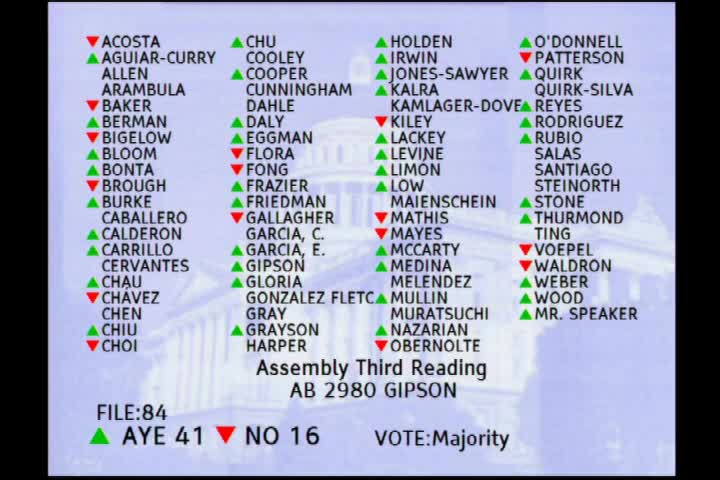 1MIN
Assembly Floor
 3MIN
Assembly Standing Committee on Judiciary
Bill Author

Bill Co-Author(s):
