AB 2341: California Environmental Quality Act: aesthetic impacts.
- Session Year: 2017-2018
- House: Assembly
- Latest Version Date: 2018-09-07
The California Environmental Quality Act (CEQA) requires a lead agency, as defined, to prepare, or cause to be prepared, and certify the completion of an environmental impact report on a project that it proposes to carry out or approve that may have a significant effect on the environment or to adopt a negative declaration if it finds that the project will not have that effect. CEQA also requires a lead agency to prepare a mitigated negative declaration for a project that may have a significant effect on the environment if revisions in the project would avoid or mitigate that effect and there is no substantial evidence that the project, as revised, would have a significant effect on the environment.
This bill would, until January 1, 2024, specify that, except as provided, the aesthetic effects of projects meeting certain requirements are not significant effects on the environment for purposes of CEQA and that the lead agency is not required to evaluate the aesthetic effects of those projects.
The California Environmental Quality Act (CEQA) requires a lead agency, as defined, to prepare, or cause to be prepared, and certify the completion of an environmental impact report on a project that it proposes to carry out or approve that may have a significant effect on the environment or to adopt a negative declaration if it finds that the project will not have that effect. CEQA also requires a lead agency to prepare a mitigated negative declaration for a project that may have a significant effect on the environment if revisions in the project would avoid or mitigate that effect and there is no substantial evidence that the project, as revised, would have a significant effect on the environment.
This bill would would, until January 1, 2024, specify that, except as provided, the aesthetic effects of projects meeting certain requirements are not significant effects on the environment for purposes of CEQA and that the lead agency is not required to evaluate the aesthetic effects of those projects.
The California Environmental Quality Act (CEQA) requires a lead agency, as defined, to prepare, or cause to be prepared, and certify the completion of an environmental impact report on a project that it proposes to carry out or approve that may have a significant effect on the environment or to adopt a negative declaration if it finds that the project will not have that effect. CEQA also requires a lead agency to prepare a mitigated negative declaration for a project that may have a significant effect on the environment if revisions in the project would avoid or mitigate that effect and there is no substantial evidence that the project, as revised, would have a significant effect on the environment.
This bill would specify that, except as provided, the aesthetic effects of projects meeting certain requirements are not significant effects on the environment for purposes of CEQA and that the lead agency is not required to evaluate the aesthetic effects of those projects.
The California Environmental Quality Act (CEQA) requires a lead agency, as defined, to prepare, or cause to be prepared, and certify the completion of, of an environmental impact report on a project that it proposes to carry out or approve that may have a significant effect on the environment or to adopt a negative declaration if it finds that the project will not have that effect. CEQA also requires a lead agency to prepare a mitigated negative declaration for a project that may have a significant effect on the environment if revisions in the project would avoid or mitigate that effect and there is no substantial evidence that the project, as revised, would have a significant effect on the environment.
This bill would specify that, except as provided, the aesthetic effects of projects meeting certain requirements are not significant effects on the environment for purposes of CEQA and that the lead agency is not required to evaluate the aesthetic effects of those projects.
The California Environmental Quality Act (CEQA) requires a lead agency, as defined, to prepare, or cause to be prepared, and certify the completion of, an environmental impact report on a project that it proposes to carry out or approve that may have a significant effect on the environment or to adopt a negative declaration if it finds that the project will not have that effect. CEQA also requires a lead agency to prepare a mitigated negative declaration for a project that may have a significant effect on the environment if revisions in the project would avoid or mitigate that effect and there is no substantial evidence that the project, as revised, would have a significant effect on the environment.
This bill would specify that, except as provided, the aesthetic effects of projects meeting certain requirements are not significant effects on the environment for purposes of CEQA and that the lead agency is not required to evaluate the aesthetic effects of those projects.
(a)Except as specified in subdivision (b), a lead agency is not required to evaluate the aesthetic effects of a project and aesthetic effects shall not be considered significant effects on the environment if the project involves the refurbishment, conversion, repurposing, or replacement of an existing building that meets all of the following requirements:
(1)The building is abandoned, dilapidated, or has been vacant for more than one year.
(2)The building site is immediately adjacent to parcels that are developed with qualified urban uses or at least 75 percent of the perimeter of the site adjoins parcels that are developed with qualified urban uses and the remaining 25 percent of the site adjoins parcels that previously have been developed for qualified urban uses.
(3)The project includes the construction of housing.
(4)Any new structure does not substantially exceed the height of the existing structure.
(5)The project does not create a new source of substantial light or glare.
(b)Subdivision (a) shall not apply to either of the following:
(1)A project with potentially significant aesthetic effects on an official state scenic highway established pursuant to Article 2.5 (commencing with Section 260) of Chapter 2 of Division 1 of the Streets and Highways Code.
(2)A project with potentially significant aesthetic effects on historical or cultural resources.
(c)This section does not alter, affect, or otherwise change the authority of a lead agency to consider aesthetic issues and to require the mitigation or avoidance of adverse aesthetic effect pursuant to other laws.
(d)For purposes of this section, dilapidated means decayed, deteriorated, or fallen into such disrepair through neglect or misuse so as to require substantial repair for safe and proper use.
(e)This section shall remain in effect only until January 1, 2024, and as of that date is repealed.
(a)Except as specified in subdivision (b), a lead agency is not required to evaluate the aesthetic effects of a project and aesthetic effects shall not be considered significant effects on the environment if the project involves the refurbishment, conversion, repurposing, or replacement of an existing building that meets all of the following requirements:
(1)The building is abandoned, dilapidated, or has been vacant for more than one year.
(2)The building site is immediately adjacent to parcels that are developed with qualified urban uses or at least 75 percent of the perimeter of the site adjoins parcels that are developed with qualified urban uses and the remaining 25 percent of the site adjoins parcels that have previously have been developed for qualified urban uses.
(3)The project includes the construction of housing.
(4)Any new structure does not substantially exceed the height of the existing structure.
(5)The project does not create a new source of substantial light or glare.
(b)Subdivision (a) shall not apply to either of the following:
(1)A project with potentially significant aesthetic effects on an official state scenic highway established pursuant to Article 2.5 (commencing with Section 260) of Chapter 2 of Division 1 of the Streets and Highways Code.
(2)A project with potentially significant aesthetic effects on historical or cultural resources.
(c)This section does not alter, affect, or otherwise change the authority of a lead agency to consider aesthetic issues and to require the mitigation or avoidance of adverse aesthetic effect pursuant to other laws.
(a)Except as specified in subdivision (b), a lead agency is not required to evaluate the aesthetic effects of a project and aesthetic effects shall not be considered significant effects on the environment if the project involves the refurbishment, conversion, repurposing, or replacement of an existing building that meets all of the following requirements:
(1)The building is abandoned, dilapidated, or has been vacant for more than one year.
(2)The building site is immediately adjacent to parcels that are developed with qualified urban uses, uses or at least 75 percent of the perimeter of the site adjoins parcels that are developed with qualified urban uses and the remaining 25 percent of the site adjoins parcels that have previously been developed for qualified urban uses.
(3)The project includes the construction of housing.
(b)(1)Except as provided in paragraph (2), a lead agency is not required to evaluate the aesthetic effects of a project and the aesthetic effects of a project are not significant effects on the environment for purposes of this division.(2)Paragraph (1) does not apply to either of the following:(4)Any new structure does not substantially exceed the height of the existing structure.
(5)The project does not create a new source of substantial light or glare.
(b)Subdivision (a) shall not apply to either of the following:
(A)(1)A project with potentially significant aesthetic effects on an official state scenic highway established pursuant to Article 2.5 (commencing with Section 260) of Chapter 2 of Division 1 of the Streets and Highways Code.
(B)(2)A project with potentially significant aesthetic effects on historical or cultural resources.
(c)This section does not alter, affect, or otherwise change the authority of a lead agency to consider aesthetic issues and to require the mitigation or avoidance of adverse aesthetic effect pursuant to other laws.
(a)For purposes of this section, project means a project involving the refurbishment, conversion, repurposing, or replacement of an existing building that meets all of the following requirements:
(1)The building is abandoned, dilapidated, or has been vacant for more than one year.
(2)The building site is immediately adjacent to parcels that are developed with qualified urban uses, or at least 75 percent of the perimeter of the site adjoins parcels that are developed with qualified urban uses and the remaining 25 percent of the site adjoins parcels that have previously been developed for qualified urban uses.
(3)The project includes the construction of housing.
(b)(1)Except as provided in paragraph (2), a lead agency is not required to evaluate the aesthetic effects of a project and the aesthetic effects of a project are not significant effects on the environment for purposes of this division.
(2)Paragraph (1) does not apply to either of the following:
(A)A project with potentially significant aesthetic effects on an official state scenic highway established pursuant to Article 2.5 (commencing with Section 260) of Chapter 2 of Division 1 of the Streets and Highways Code.
(B)A project with potentially significant aesthetic effects on historical or cultural resources.
(c)This section does not alter, affect, or otherwise change the authority of a lead agency to consider aesthetic issues and to require mitigation or avoidance of adverse aesthetic effect pursuant to other laws.
|
Date
|
Status
|
|---|---|
| Sep 7, 2018 | Chaptered by Secretary of State - Chapter 298, Statutes of 2018. |
| Sep 7, 2018 | Approved by the Governor. |
| Aug 24, 2018 | Enrolled and presented to the Governor at 4:30 p.m. |
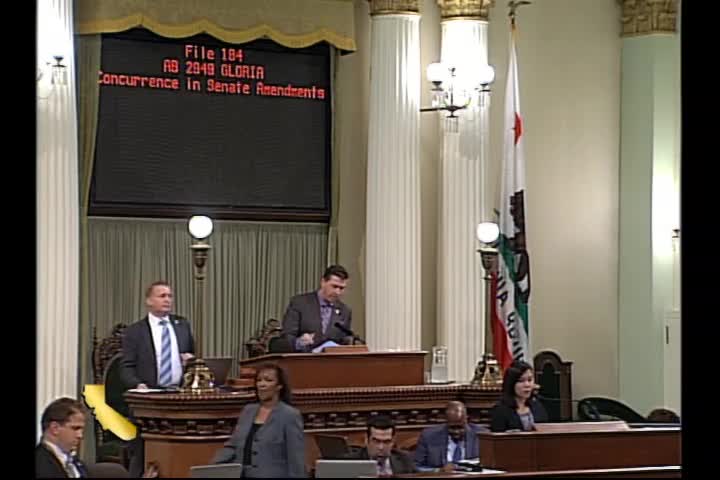
| Aug 20, 2018 | Senate amendments concurred in. To Engrossing and Enrolling. |
| Aug 14, 2018 | In Assembly. Concurrence in Senate amendments pending. May be considered on or after August 16 pursuant to Assembly Rule 77. |
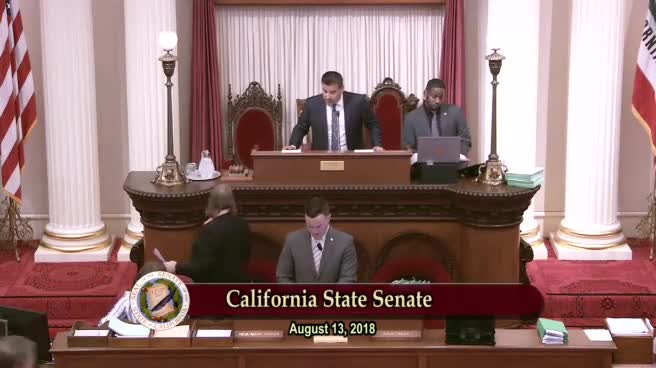
| Aug 13, 2018 | Read third time. Passed. Ordered to the Assembly. |
| Aug 9, 2018 | Read second time. Ordered to third reading. |
| Aug 8, 2018 | Withdrawn from committee. |
| Jun 14, 2018 | From committee chair, with author's amendments: Amend, and re-refer to committee. Read second time, amended, and re-referred to Com. on EQ. |
| May 23, 2018 | From committee chair, with author's amendments: Amend, and re-refer to committee. Read second time, amended, and re-referred to Com. on EQ. |
| May 3, 2018 | Referred to Com. on EQ. |
| Apr 23, 2018 | In Senate. Read first time. To Com. on RLS. for assignment. |
| Apr 23, 2018 | Read third time. Passed. Ordered to the Senate. |
| Apr 17, 2018 | Read second time. Ordered to third reading. |
| Apr 16, 2018 | Read second time and amended. Ordered returned to second reading. |
| Apr 12, 2018 | From committee: Amend, and do pass as amended. (Ayes 7. Noes 1.) (April 9). |
| Mar 1, 2018 | Referred to Com. on NAT. RES. |
| Feb 14, 2018 | From printer. May be heard in committee March 16. |
| Feb 13, 2018 | Read first time. To print. |
|
Date
|
Description
|
Location
|
Votes
|
|
|---|---|---|---|---|
| Aug 20, 2018 | AB 2341 MATHIS Concurrence in Senate Amendments | Assembly Floor |
Passed |
|
| Aug 13, 2018 | Assembly 3rd Reading AB2341 Mathis et al. By Wiener | Senate Floor |
Passed |
|
| Jun 6, 2018 | Do pass as amended | Senate Standing Committee on Environmental Quality |
Passed |
|
| Apr 23, 2018 | AB 2341 MATHIS Assembly Third Reading | Assembly Floor |
Passed |
|
| Apr 9, 2018 | Do pass as amended. | Assembly Standing Committee on Natural Resources |
Passed |
This list shows positions taken on this bill by organizations on the date displayed, which is linked to the original source.
Positions by individuals are not included.
|
Organization
|
Position
|
Date
|
|---|---|---|
| American Planning Association, California Chapter | ** Support | Aug 10, 2018 |
| Arguments In Opposition: | ** Against | Jun 4, 2018 |
| California Apartment Association | ** Support | Aug 10, 2018 |
| California Association Of Realtors | * Support | Jun 6, 2018 |
| California Building Industry Association | ** Support | Aug 10, 2018 |
| California Business Properties Association | * Support | Apr 9, 2018 |
| California Chamber Of Commerce | ** Support | Aug 10, 2018 |
| California League Of Conservation Voters | ** Against | Apr 6, 2018 |
| San Gabriel Valley Economic Partnership | ** Support | Apr 6, 2018 |
| Sierra Club California | ** Against | Aug 10, 2018 |
| Southwest California Legislative Council | ** Support | Aug 10, 2018 |
CONCURRENCE IN SENATE AMENDMENTS
CSA1 Bill Id:AB 2341
Author:(Mathis)
As Amended Ver:June 14, 2018
Majority vote
ASSEMBLY: | 61-9 | (April 23, 2018) | SENATE: | 27-8 | (August 13, 2018) |
Original Committee Reference: NAT. RES.
SUMMARY: Eliminates consideration of aesthetic effects under the California Environmental Quality Act (CEQA) for specified projects involving the refurbishment, conversion, repurposing, or replacement of an existing abandoned, dilapidated, or vacant building, provided the new structure does not substantially exceed the height of the existing structure or create a new source of substantial light or glare.
The Senate amendments:
- Define "dilapidated" to mean decayed, deteriorated, or fallen into such disrepair through neglect or misuse so as to require substantial repair for safe and proper use.
- Sunset the bill January 1, 2024.
EXISTING LAW:
- Requires lead agencies with the principal responsibility for carrying out or approving a proposed project to prepare a negative declaration, mitigated negative declaration, or environmental impact report (EIR) for this action, unless the project is exempt from CEQA. (CEQA includes various statutory exemptions, as well as categorical exemptions in the CEQA Guidelines.)
- Defines "environment" as the physical conditions that exist within the area which will be affected by a proposed project, including land, air, water, minerals, flora, fauna, noise, or objects of historic or aesthetic significance. (emphasis added)
- Prohibits the consideration of aesthetic impacts of a residential, mixed-use residential, or employment center project on an infill site within a "transit priority area" (an area within one-half mile of a major transit stop).
- Requires the Office of Planning and Research (OPR) to prepare and develop proposed guidelines for the implementation of CEQA by public agencies, then transmit them to the Secretary of the Natural Resources Agency, who must certify and adopt the guidelines, and update them at least once every two years. Requires the CEQA Guidelines to include a list of classes of projects that have been determined not to have a significant effect on the environment and that shall be exempt from CEQA (i.e., "categorical exemptions").
- The categorical exemptions are subject to exceptions to ensure eligible projects do not have a significant effect on the environment, including when cumulative impacts of successive projects of the same type in the same place may result in significant effect or there is a reasonable possibility that the project will have a significant effect due to unusual circumstances.
- The CEQA Guidelines include categorical exemptions for buildings as follows:
- 15301. EXISTING FACILITIES. Class 1 consists of the operation, repair, maintenance, permitting, leasing, licensing, or minor alteration of existing public or private structures, facilities, mechanical equipment, or topographical features, involving negligible or no expansion of use beyond that existing at the time of the lead agency's determination.
- 15302. REPLACEMENT OR RECONSTRUCTION. Class 2 consists of replacement or reconstruction of existing structures and facilities where the new structure will be located on the same site as the structure replaced and will have substantially the same purpose and capacity as the structure replaced.
FISCAL EFFECT: None.
COMMENTS: CEQA provides a process for evaluating the environmental effects of applicable projects undertaken or approved by public agencies. If a project is not exempt from CEQA, an initial study is prepared to determine whether the project may have a significant effect on the environment. If the initial study shows that the project would not have a significant effect on the environment, the lead agency must prepare a negative declaration. If the initial study shows that the project may have a significant effect, the lead agency must prepare an EIR.
Generally, an EIR must accurately describe the proposed project, identify and analyze each significant environmental impact expected to result from the proposed project, identify mitigation measures to reduce those impacts to the extent feasible, and evaluate a range of reasonable alternatives to the proposed project. Prior to approving any project that has received environmental review, an agency must make certain findings. If mitigation measures are required or incorporated into a project, the agency must adopt a reporting or monitoring program to ensure compliance with those measures.
Aesthetics are among the 18 environmental factors that must be evaluated by lead agencies in an initial study to determine the appropriate level of CEQA review. Significant aesthetic effects of a project include blocking a scenic vista or creating a new source of substantial light or glare. In 2013, SB 743 (Steinberg), Chapter 386, enacted a new provision to prohibit the consideration of aesthetic, as well as parking, impacts of a residential, mixed-use residential, or employment center project on an infill site within a "transit priority area" (an area within one-half mile of a major transit stop).
As noted in the Existing Law section above, the CEQA Guidelines include categorical exemptions for renovation, reconstruction and replacement of existing buildings, provided the project doesn't involve a significant expansion of existing uses. OPR has proposed amendments to the Class 1 (Section 15301) exemption, which are pending adoption by the Secretary of Natural Resources Agency, to make it more practical to use the exemption in the renovation of vacant buildings by permitting the consideration of former uses when evaluating whether a project involves the expansion of use.
Analysis Prepared by: Lawrence Lingbloom / NAT. RES. / (916) 319-2092 FN: 0004032
Office of Senate Floor Analyses (916) 651-1520 Fax: (916) 327-4478 | AB |
THIRD READING
Bill No: AB 2341
:
SENATE ENVIRONMENTAL QUALITY COMMITTEE: 4-0, 6/6/18
AYES: Stone, Gaines, Hill, Skinner
NO VOTE RECORDED: Wieckowski, Lara, Stern
ASSEMBLY FLOOR: 61-9, 4/23/18 - See last page for vote
DIGEST: This bill eliminates consideration of aesthetic effects under the California Environmental Quality Act (CEQA) for specified projects involving the refurbishment, conversion, repurposing, or replacement of existing abandoned, dilapidated, or vacant building, provided the new structure does not substantially exceed the height of the existing structure or create a new source of substantial light or glare.
Existing law under CEQA:
- Requires lead agencies with the principal responsibility for carrying out or approving a proposed discretionary project to prepare a negative declaration, mitigated declaration, or environmental impact report (EIR) for this action, unless the project is exempt from CEQA (CEQA includes various statutory exemptions, as well as categorical exemptions in the CEQA guidelines). (Public Resources Code §21000 et seq.). If there is substantial evidence, in light of the whole record before a lead agency, that a project may have a significant effect on the environment, the lead agency must prepare a draft EIR. (CEQA Guidelines §15064(a)(1), (f)(1)).
- Sets requirements relating to the preparation, review, comment, approval and certification of environmental documents, as well as procedures relating to an action or proceeding to attack, review, set aside, void, or annul various actions of a public agency on the grounds of noncompliance with CEQA.
- Defines “environment” as the physical conditions that exist within the area which will be affected by a proposed project, including land, air, water, minerals, flora, fauna, noise, or objects of historic or aesthetic significance.
- Prohibits the consideration of aesthetic impacts of a residential, mixed-use residential, or employment center project on an infill site within a "transit priority area" (an area within one-half mile of a major transit stop).
- Requires the Office of Planning and Research (OPR) to prepare and develop proposed guidelines for the implementation of CEQA by public agencies, then transmit them to the Secretary of the Natural Resources Agency, who must certify and adopt the guidelines, and update them at least once every two years. Requires the CEQA Guidelines to include a list of classes of projects that have been determined not to have a significant effect on the environment and that shall be exempt from CEQA (i.e., "categorical exemptions").
- Provides categorical exemptions are subject to exceptions to ensure eligible projects do not have a significant effect on the environment, including when cumulative impacts of successive projects of the same type in the same place may result in significant effect or there is a reasonable possibility that the project will have a significant effect due to unusual circumstances.
- Includes, in the CEQA Guidelines, categorical exemptions for buildings as follows:
- 15301. EXISTING FACILITIES. Class 1 consists of the operation, repair, maintenance, permitting, leasing, licensing, or minor alteration of existing public or private structures, facilities, mechanical equipment, or topographical features, involving negligible or no expansion of use beyond that existing at the time of the lead agency's determination.
- 15302. REPLACEMENT OR RECONSTRUCTION. Class 2 consists of replacement or reconstruction of existing structures and facilities where the new structure will be located on the same site as the structure replaced and will have substantially the same purpose and capacity as the structure replaced.
This bill:
- Eliminates consideration of aesthetic effects under CEQA for specified projects involving the refurbishment, conversion, repurposing, or replacement of existing abandoned, dilapidated, or vacant building, provided the new structure does not substantially exceed the height of the existing structure or create a new source of substantial light or glare.
- Defines “dilapidated” as decayed, deteriorated, or fallen into such disrepair through neglect or misuse so as to require substantial repair for safe and proper use.
- Provides that the provisions of this bill sunset January 1, 2024.
Background
- CEQA: Environmental review process. CEQA provides a process for evaluating the environmental effects of a project, and includes statutory exemptions as well as categorical exemptions in the CEQA guidelines. If a project is not exempt from CEQA, an initial study is prepared to determine whether a project may have a significant effect on the environment. If the initial study shows that there would not be a significant effect on the environment, the lead agency must prepare a negative declaration. If the initial study shows that the project may have a significant effect on the environment, then the lead agency must prepare an EIR.
An EIR must describe the proposed project, identify and analyze each significant environmental impact expected to result from the proposed project, identify mitigation measures to reduce those impacts to the extent feasible, and evaluate a range of reasonable alternatives to the proposed project. Prior to approving any project that has received an environmental review, an agency must make certain findings. If mitigation measures are required or incorporated into a project, the agency must adopt a reporting or monitoring program to ensure compliance with those measures.
If a mitigation measure would cause one or more significant effects in addition to those that would be caused by the proposed project, the effects of the mitigation measure must be discussed but in less detail than the significant effects of the proposed project.
- What is analyzed in an environmental review? Pursuant to CEQA, an environmental review analyzing the significant direct and indirect environmental impacts of a proposed project, may include water quality, surface and subsurface hydrology, land use and agricultural resources, transportation and circulation, air quality and greenhouse gas emissions, terrestrial and aquatic biological resources, aesthetics, geology and soils, recreation, public services and utilities such as water supply and wastewater disposal, cultural resources, and tribal cultural resources.
The analysis must also evaluate the cumulative impacts of any past, present, and reasonably foreseeable projects/activities within study areas that are applicable to the resources being evaluated. A study area for a proposed project must not be limited to the footprint of the project because many environmental impacts of a development extend beyond the identified project boundary. Also, CEQA stipulates that the environmental impacts must be measured against existing physical conditions within the project area, not future, allowable conditions.
Aesthetics are among the 18 environmental factors that must be evaluated by lead agencies in an initial study to determine the appropriate level of CEQA review.
The purpose of analyzing aesthetics in CEQA is to identify and evaluate key visual resources in a project area, and to determine the degree of visual impact that would be attributable to a proposed project. Aesthetics refers to visual considerations, including scenic resources, scenic vistas, changes in visual character, lighting or glare.
- SB 743 (Steinberg, Chapter 386, Statutes of 2013). SB 743 enacted a new provision in CEQA to prohibit the consideration of aesthetic, as well as parking, impacts of a residential, mixed-use residential, or employment center project on an infill site within a "transit priority area" (an area within one-half mile of a major transit stop).
Comments
- Purpose of Bill. According to the author “AB 2341 is a bipartisan measure which would provide litigation relief for housing projects involving the refurbishment, conversion, repurposing, or replacement of an existing building that is abandoned, dilapidated, or has been vacant for more than one year. This narrowly tailored measure would exempt a lead agency from having to consider or mitigate that housing project’s aesthetic impacts. We are not trying to hinder CEQA with this measure; we are simply trying to ensure that entities do not stall or halt a housing project under the argument of aesthetic appeal. Given the state of our housing crisis and the drastic need for more affordable and accessible housing for our State’s working families, the relief offered in AB 2341 is crucial.”
- Most projects covered by the bill may be eligible for a categorical exemption. As noted in the Existing Law section above, the CEQA Guidelines include categorical exemptions for renovation, reconstruction and replacement of existing buildings, provided the project doesn't involve a significant expansion of existing uses. OPR has proposed amendments to the Class 1 (Section 15301) exemption, which are pending adoption by the Secretary of Natural Resources Agency, to make it more practical to use the exemption in the renovation of vacant buildings by permitting the consideration of former uses when evaluating whether a project involves the expansion of use.
FISCAL EFFECT: Appropriation: Fiscal Com.: Local:
American Planning Association, California Chapter
California Apartment Association
California Building Industry Association
California Chamber of Commerce
Southwest California Legislative Council
OPPOSITION: (Verified 8/10/18)
Sierra Club California
ASSEMBLY FLOOR: 61-9, 4/23/18
AYES: Acosta, Aguiar-Curry, Travis Allen, Arambula, Baker, Berman, Bigelow, Bloom, Brough, Burke, Caballero, Calderon, Cervantes, Chau, Chávez, Chen, Choi, Chu, Cooley, Cooper, Cunningham, Dahle, Daly, Eggman, Flora, Fong, Frazier, Gallagher, Gipson, Gray, Grayson, Harper, Holden, Irwin, Jones-Sawyer, Kiley, Lackey, Levine, Low, Maienschein, Mathis, Mayes, McCarty, Medina, Melendez, Mullin, Muratsuchi, Obernolte, O'Donnell, Patterson, Quirk-Silva, Reyes, Rodriguez, Rubio, Salas, Santiago, Steinorth, Voepel, Waldron, Wood, Rendon
NOES: Gloria, Gonzalez Fletcher, Kalra, Kamlager-Dove, Limón, Mark Stone, Thurmond, Ting, Weber
NO VOTE RECORDED: Bonta, Carrillo, Chiu, Friedman, Cristina Garcia, Eduardo Garcia, Nazarian, Quirk
8/10/18 14:28:31
**** END ****
SENATE COMMITTEE ON ENVIRONMENTAL QUALITY
Senator Wieckowski, Chair
2017 - 2018 Regular
Bill No: AB 2341
Author: | Mathis | ||
Version: | 5/23/2018 | Hearing Date: | 6/6/2018 |
Urgency: | No | Fiscal: | No |
Consultant: | Rachel Machi Wagoner | ||
SUBJECT: California Environmental Quality Act: aesthetic impacts
ANALYSIS:
- Existing law: Under the California Environmental Quality Act (CEQA):
- Requires lead agencies with the principal responsibility for carrying out or approving a proposed discretionary project to prepare a negative declaration, mitigated declaration, or environmental impact report (EIR) for this action, unless the project is exempt from CEQA (CEQA includes various statutory exemptions, as well as categorical exemptions in the CEQA guidelines). (Public Resources Code §21000 et seq.). If there is substantial evidence, in light of the whole record before a lead agency, that a project may have a significant effect on the environment, the lead agency must prepare a draft EIR. (CEQA Guidelines §15064(a)(1), (f)(1)).
- Sets requirements relating to the preparation, review, comment, approval and certification of environmental documents, as well as procedures relating to an action or proceeding to attack, review, set aside, void, or annul various actions of a public agency on the grounds of noncompliance with CEQA.
- Defines “environment” as the physical conditions that exist within the area which will be affected by a proposed project, including land, air, water, minerals, flora, fauna, noise, or objects of historic or aesthetic significance.
- Prohibits the consideration of aesthetic impacts of a residential, mixed-use residential, or employment center project on an infill site within a "transit priority area" (an area within one-half mile of a major transit stop).
- Requires the Office of Planning and Research (OPR) to prepare and develop proposed guidelines for the implementation of CEQA by public agencies, then transmit them to the Secretary of the Natural Resources Agency, who must certify and adopt the guidelines, and update them at least once every two years. Requires the CEQA Guidelines to include a list of classes of projects that have been determined not to have a significant effect on the environment and that shall be exempt from CEQA (i.e., "categorical exemptions").
- Categorical exemptions are subject to exceptions to ensure eligible projects do not have a significant effect on the environment, including when cumulative impacts of successive projects of the same type in the same place may result in significant effect or there is a reasonable possibility that the project will have a significant effect due to unusual circumstances.
- The CEQA Guidelines include categorical exemptions for buildings as follows:
- 15301. EXISTING FACILITIES. Class 1 consists of the operation, repair, maintenance, permitting, leasing, licensing, or minor alteration of existing public or private structures, facilities, mechanical equipment, or topographical features, involving negligible or no expansion of use beyond that existing at the time of the lead agency's determination.
- 15302. REPLACEMENT OR RECONSTRUCTION. Class 2 consists of replacement or reconstruction of existing structures and facilities where the new structure will be located on the same site as the structure replaced and will have substantially the same purpose and capacity as the structure replaced.
- Requires lead agencies with the principal responsibility for carrying out or approving a proposed discretionary project to prepare a negative declaration, mitigated declaration, or environmental impact report (EIR) for this action, unless the project is exempt from CEQA (CEQA includes various statutory exemptions, as well as categorical exemptions in the CEQA guidelines). (Public Resources Code §21000 et seq.). If there is substantial evidence, in light of the whole record before a lead agency, that a project may have a significant effect on the environment, the lead agency must prepare a draft EIR. (CEQA Guidelines §15064(a)(1), (f)(1)).
This bill: Eliminates consideration of aesthetic effects under the California Environmental Quality Act (CEQA) for specified projects involving the refurbishment, conversion, repurposing, or replacement of existing abandoned, dilapidated, or vacant building, provided the new structure does not substantially exceed the height of the existing structure or create a new source of substantial light or glare.
Background
- CEQA: Environmental review process. CEQA provides a process for evaluating the environmental effects of a project, and includes statutory exemptions as well as categorical exemptions in the CEQA guidelines. If a project is not exempt from CEQA, an initial study is prepared to determine whether a project may have a significant effect on the environment. If the initial study shows that there would not be a significant effect on the environment, the lead agency must prepare a negative declaration. If the initial study shows that the project may have a significant effect on the environment, then the lead agency must prepare an EIR.
An EIR must describe the proposed project, identify and analyze each significant environmental impact expected to result from the proposed project, identify mitigation measures to reduce those impacts to the extent feasible, and evaluate a range of reasonable alternatives to the proposed project. Prior to approving any project that has received an environmental review, an agency must make certain findings. If mitigation measures are required or incorporated into a project, the agency must adopt a reporting or monitoring program to ensure compliance with those measures.
If a mitigation measure would cause one or more significant effects in addition to those that would be caused by the proposed project, the effects of the mitigation measure must be discussed but in less detail than the significant effects of the proposed project. - What is analyzed in an environmental review? Pursuant to CEQA, an environmental review analyzing the significant direct and indirect environmental impacts of a proposed project, may include water quality, surface and subsurface hydrology, land use and agricultural resources, transportation and circulation, air quality and greenhouse gas emissions, terrestrial and aquatic biological resources, aesthetics, geology and soils, recreation, public services and utilities such as water supply and wastewater disposal, cultural resources, and tribal cultural resources.
The analysis must also evaluate the cumulative impacts of any past, present, and reasonably foreseeable projects/activities within study areas that are applicable to the resources being evaluated. A study area for a proposed project must not be limited to the footprint of the project because many environmental impacts of a development extend beyond the identified project boundary. Also, CEQA stipulates that the environmental impacts must be measured against existing physical conditions within the project area, not future, allowable conditions.
Aesthetics are among the 18 environmental factors that must be evaluated by lead agencies in an initial study to determine the appropriate level of CEQA review.
The purpose of analyzing aesthetics in CEQA is to identify and evaluate key visual resources in a project area, and to determine the degree of visual impact that would be attributable to a proposed project. Aesthetics refers to visual considerations, including scenic resources, scenic vistas, changes in visual character, lighting or glare.
- SB 743 (Steinberg, Chapter 386, Statutes of 2013). SB 743 enacted a new provision in CEQA to prohibit the consideration of aesthetic, as well as parking, impacts of a residential, mixed-use residential, or employment center project on an infill site within a "transit priority area" (an area within one-half mile of a major transit stop).
Comments
- Purpose of Bill. According to the author “AB 2341 is a bipartisan measure which would provide litigation relief for housing projects involving the refurbishment, conversion, repurposing, or replacement of an existing building that is abandoned, dilapidated, or has been vacant for more than one year. This narrowly tailored measure would exempt a lead agency from having to consider or mitigate that housing project’s aesthetic impacts. We are not trying to hinder CEQA with this measure; we are simply trying to ensure that entities do not stall or halt a housing project under the argument of aesthetic appeal. Given the state of our housing crisis and the drastic need for more affordable and accessible housing for our State’s working families, the relief offered in AB 2341 is crucial.”
- Most projects covered by the bill may be eligible for a categorical exemption. As noted in the Existing Law section above, the CEQA Guidelines include categorical exemptions for renovation, reconstruction and replacement of existing buildings, provided the project doesn't involve a significant expansion of existing uses. OPR has proposed amendments to the Class 1 (Section 15301) exemption, which are pending adoption by the Secretary of Natural Resources Agency, to make it more practical to use the exemption in the renovation of vacant buildings by permitting the consideration of former uses when evaluating whether a project involves the expansion of use.
- What does dilapidated mean? The bill provides an exception within CEQA from having to consider the aesthetic impacts of a project if the project is “dilapidated”. However, this term is not used elsewhere within the CEQA statutes or guidelines. For clarity this term should be defined as “decayed, deteriorated, or fallen into such disrepair through neglect or misuse so as to require substantial repair in order to safely and properly utilize.”
- Sunset. As this bill creates a new exception under CEQA, it is appropriate to add a five year sunset date to the bill in order to allow the Legislature to review whether this exception is appropriate or needed, as has been done with previous exceptions or exemptions under this statute.
SOURCE:
Author
SUPPORT:
American Planning Association, California Chapter
California Apartment Association
California Building Industry Association
California Chamber of Commerce
OPPOSITION:
Sierra Club California
ARGUMENTS IN SUPPORT:
Supporters argue that “AB 2341 seeks to simplify the CEQA process and return to its original intent – a disclosure documenting a project’s impact on the environment. All too often, projects are challenged based on aesthetic concerns completely unrelated to the environment. These lawsuits only slow down the production of much needed housing and contribute to the skyrocketing cost of homes.”
ARGUMENTS IN OPPOSITION:
The Sierra Club Argues that AB 2341, “creates a new exemption under CEQA for aesthetic impacts for certain types of projects. The proposed exemption is unlikely to be workable, and existing efforts at the Office of Planning and Research’s (OPR) implementation of SB 743 already limit aesthetic impact analysis.
CEQA provides for public disclosure of environmental impacts of a project, as well as mitigation of those impacts so that polluters clean up their pollution. It helps promote informed decision making and a better environment for all. It has not been found to be a significant factor in slowing California’s economy nor has it been found to be a major driver of California’s housing affordability crisis.
AB 2341 only comes into effect where an abandoned or derelict structure is being replaced with a larger more intensive project, which could have impacts to public aesthetics.”
-- END --
ASSEMBLY THIRD READING
ATR Bill Id:AB 2341
Author:(Mathis)
As Amended Ver:April 16, 2018
Majority vote
Committee | Votes | Ayes | Noes |
Natural Resources | 7-1 | Muratsuchi, Acosta, Chau, Eggman, Flora, McCarty, Melendez | Mark Stone |
SUMMARY: Eliminates consideration of aesthetic effects under the California Environmental Quality Act (CEQA) for specified projects involving the refurbishment, conversion, repurposing, or replacement of existing abandoned, dilapidated, or vacant building, provided the new structure does not substantially exceed the height of the existing structure or create a new source of substantial light or glare.
EXISTING LAW, CEQA:
- Requires lead agencies with the principal responsibility for carrying out or approving a proposed project to prepare a negative declaration, mitigated negative declaration, or environmental impact report (EIR) for this action, unless the project is exempt from CEQA. (CEQA includes various statutory exemptions, as well as categorical exemptions in the CEQA Guidelines.)
- Defines "environment" as the physical conditions that exist within the area which will be affected by a proposed project, including land, air, water, minerals, flora, fauna, noise, or objects of historic or aesthetic significance. (emphasis added)
- Prohibits the consideration of aesthetic impacts of a residential, mixed-use residential, or employment center project on an infill site within a "transit priority area" (an area within one-half mile of a major transit stop).
- Requires the Office of Planning and Research (OPR) to prepare and develop proposed guidelines for the implementation of CEQA by public agencies, then transmit them to the Secretary of the Natural Resources Agency, who must certify and adopt the guidelines, and update them at least once every two years. Requires the CEQA Guidelines to include a list of classes of projects that have been determined not to have a significant effect on the environment and that shall be exempt from CEQA (i.e., "categorical exemptions").
- The categorical exemptions are subject to exceptions to ensure eligible projects do not have a significant effect on the environment, including when cumulative impacts of successive projects of the same type in the same place may result in significant effect or there is a reasonable possibility that the project will have a significant effect due to unusual circumstances.
- The CEQA Guidelines include categorical exemptions for buildings as follows:
- California Code of Regulations (CCR), Title 14, Chapter 3, Article 19, Section 15301. EXISTING FACILITIES. Class 1 consists of the operation, repair, maintenance, permitting, leasing, licensing, or minor alteration of existing public or private structures, facilities, mechanical equipment, or topographical features, involving negligible or no expansion of use beyond that existing at the time of the lead agency's determination.
- CCR, Title 14, Chapter 3, Article 19, Section 15302. REPLACEMENT OR RECONSTRUCTION. Class 2 consists of replacement or reconstruction of existing structures and facilities where the new structure will be located on the same site as the structure replaced and will have substantially the same purpose and capacity as the structure replaced.
FISCAL EFFECT: This bill is keyed non-fiscal by the Legislative Counsel.
COMMENTS: CEQA provides a process for evaluating the environmental effects of applicable projects undertaken or approved by public agencies. If a project is not exempt from CEQA, an initial study is prepared to determine whether the project may have a significant effect on the environment. If the initial study shows that the project would not have a significant effect on the environment, the lead agency must prepare a negative declaration. If the initial study shows that the project may have a significant effect, the lead agency must prepare an EIR.
Generally, an EIR must accurately describe the proposed project, identify and analyze each significant environmental impact expected to result from the proposed project, identify mitigation measures to reduce those impacts to the extent feasible, and evaluate a range of reasonable alternatives to the proposed project. Prior to approving any project that has received environmental review, an agency must make certain findings. If mitigation measures are required or incorporated into a project, the agency must adopt a reporting or monitoring program to ensure compliance with those measures.
Aesthetics are among the 18 environmental factors that must be evaluated by lead agencies in an initial study to determine the appropriate level of CEQA review. Significant aesthetic effects of a project include blocking a scenic vista or creating a new source of substantial light or glare. In 2013, SB 743 (Steinberg) Chapter 286, enacted a new provision to prohibit the consideration of aesthetic, as well as parking, impacts of a residential, mixed-use residential, or employment center project on an infill site within a "transit priority area" (an area within one-half mile of a major transit stop).
As noted in the Existing Law section above, the CEQA Guidelines include categorical exemptions for renovation, reconstruction and replacement of existing buildings, provided the project doesn't involve a significant expansion of existing uses. OPR has proposed amendments to the Class 1 (Section 15301) exemption, which are pending adoption by the Secretary of Natural Resources Agency, to make it more practical to use the exemption in the renovation of vacant buildings by permitting the consideration of former uses when evaluating whether a project involves the expansion of use.
Analysis Prepared by: Lawrence Lingbloom / NAT. RES. / (916) 319-2092 FN: 0002695
Date of Hearing: April 9, 2018
ASSEMBLY COMMITTEE ON NATURAL RESOURCES
Al Muratsuchi, Acting Chair
ABPCA Bill Id:AB 2341 (
Author:Mathis) – As Introduced Ver:February 13, 2018
SUBJECT: California Environmental Quality Act: aesthetic impacts
SUMMARY: Eliminates consideration of aesthetic effects under the California Environmental Quality Act (CEQA) for specified projects involving the refurbishment, conversion, repurposing, or replacement of existing abandoned, dilapidated, or vacant buildings.
EXISTING LAW, CEQA:
- Requires lead agencies with the principal responsibility for carrying out or approving a proposed project to prepare a negative declaration, mitigated negative declaration, or environmental impact report (EIR) for this action, unless the project is exempt from CEQA. (CEQA includes various statutory exemptions, as well as categorical exemptions in the CEQA Guidelines.)
- Defines “environment” as the physical conditions that exist within the area which will be affected by a proposed project, including land, air, water, minerals, flora, fauna, noise, or objects of historic or aesthetic significance. (emphasis added)
- Prohibits the consideration of aesthetic impacts of a residential, mixed-use residential, or employment center project on an infill site within a "transit priority area" (an area within one-half mile of a major transit stop).
- Requires the Office of Planning and Research (OPR) to prepare and develop proposed guidelines for the implementation of CEQA by public agencies, then transmit them to the Secretary of the Natural Resources Agency, who must certify and adopt the guidelines, and update them at least once every two years. Requires the CEQA Guidelines to include a list of classes of projects that have been determined not to have a significant effect on the environment and that shall be exempt from CEQA (i.e., "categorical exemptions").
- The categorical exemptions are subject to exceptions to ensure eligible projects do not have a significant effect on the environment, including when cumulative impacts of successive projects of the same type in the same place may result in significant effect or there is a reasonable possibility that the project will have a significant effect due to unusual circumstances.
- The CEQA Guidelines include categorical exemptions for buildings as follows:
- 15301. EXISTING FACILITIES. Class 1 consists of the operation, repair, maintenance, permitting, leasing, licensing, or minor alteration of existing public or private structures, facilities, mechanical equipment, or topographical features, involving negligible or no expansion of use beyond that existing at the time of the lead agency's determination.
- 15302. REPLACEMENT OR RECONSTRUCTION. Class 2 consists of replacement or reconstruction of existing structures and facilities where the new structure will be located on the same site as the structure replaced and will have substantially the same purpose and capacity as the structure replaced.
FISCAL EFFECT: Non-fiscal
COMMENTS:
- Background. CEQA provides a process for evaluating the environmental effects of applicable projects undertaken or approved by public agencies. If a project is not exempt from CEQA, an initial study is prepared to determine whether the project may have a significant effect on the environment. If the initial study shows that the project would not have a significant effect on the environment, the lead agency must prepare a negative declaration. If the initial study shows that the project may have a significant effect, the lead agency must prepare an EIR.
Generally, an EIR must accurately describe the proposed project, identify and analyze each significant environmental impact expected to result from the proposed project, identify mitigation measures to reduce those impacts to the extent feasible, and evaluate a range of reasonable alternatives to the proposed project. Prior to approving any project that has received environmental review, an agency must make certain findings. If mitigation measures are required or incorporated into a project, the agency must adopt a reporting or monitoring program to ensure compliance with those measures.
Aesthetics are among the 18 environmental factors that must be evaluated by lead agencies in an initial study to determine the appropriate level of CEQA review. Significant aesthetic effects of a project include blocking a scenic vista or creating a new source of substantial light or glare. In 2013, SB 743 (Steinberg) enacted a new provision to prohibit the consideration of aesthetic, as well as parking, impacts of a residential, mixed-use residential, or employment center project on an infill site within a "transit priority area" (an area within one-half mile of a major transit stop).
- Author's statement:
Current law does not allow for minor aesthetic refurbishment projects to be exempt from filing an EIR prior to project initiation. This has resulted in building owners being forced to undergo extensive filing processes, resulting in increased costs for an aesthetic project’s completion. This oversight has created an atmosphere which fails to promote upkeep and minor renovations to older and dilapidated buildings. As such, many lower income areas struggle to provide a positive and friendly environment, with regards to beautification projects, for their residents.
AB 2341 is a very narrow exemption which ultimately promotes a positive atmosphere in disadvantaged communities. While the measure has no impact on streamlining the construction of a building, it does promote building beautification projects.
- Most projects covered by the bill may be eligible for a categorical exemption. As noted in the Existing Law section above, the CEQA Guidelines include categorical exemptions for renovation, reconstruction and replacement of existing buildings, provided the project doesn't involve a significant expansion of existing uses. OPR has proposed amendments to the Class 1 (Section 15301) exemption, which are pending adoption by the Secretary of Natural Resources Agency, to make it more practical to use the exemption in the renovation of vacant buildings by permitting the consideration of former uses when evaluating whether a project involves the expansion of use.
- Suggested amendments. The author and the committee may wish to consider the following amendments:
- Exclude new structures that substantially exceed the height of the existing structure.
- Exclude projects that create a new source of substantial light or glare.
- Technical amendments to avoid establishing a duplicative definition of "project" for purposes of this bill.
REGISTERED SUPPORT / OPPOSITION:
Support
California Apartment Association
California Chamber of Commerce
San Gabriel Valley Economic Partnership
Opposition
California League of Conservation Voters
Sierra Club California
Analysis Prepared by: Lawrence Lingbloom / NAT. RES. /
Bill Author


