AB 2352: Elections: reportable events.
- Session Year: 2017-2018
- House: Assembly
- Latest Version Date: 2018-08-31
Existing law permits the governing body of any city or district to request that the county render specified services to the city or district regarding the conduct of an election.
If a jurisdiction requests that the county conduct an election on its behalf pursuant to this provision, this bill would require the jurisdiction at the time that it makes that request to provide the county elections official with the boundaries of the jurisdiction and any districts within the jurisdiction.
Existing law imposes various obligations on the Secretary of State with respect to the results of an election. Existing law also imposes various requirements on county elections officials with respect to the retention and preservation of election records.
This bill would require the Secretary of State to promulgate regulations by January 1, 2020, establishing which events in election administration constitute reportable events and would require county elections officials to document reportable events and to submit information about these events to the Secretary of State for review and guidance, if necessary. By requiring new duties of local government officials, this bill would impose a state-mandated local program.
The California Constitution requires the state to reimburse local agencies and school districts for certain costs mandated by the state. Statutory provisions establish procedures for making that reimbursement.
This bill would provide that, if the Commission on State Mandates determines that the bill contains costs mandated by the state, reimbursement for those costs shall be made pursuant to the statutory provisions noted above.
Existing law permits the governing body of any city or district to request that the county render specified services to the city or district regarding the conduct of an election.
If a jurisdiction requests that the county conduct an election on its behalf pursuant to this provision, this bill would require the jurisdiction at the time that it makes that request to provide the county elections official with the boundaries of the jurisdiction and any districts within the jurisdiction.
Existing law imposes various obligations on the Secretary of State with respect to the results of an election. Existing law also imposes various requirements on county elections officials with respect to the retention and preservation of election records.
This bill would require the Secretary of State to promulgate regulations by January 1, 2020, establishing which errors events in election administration constitute reportable errors events and would require county elections officials to document reportable errors events and to submit information about these errors events to the Secretary of State for review and guidance, if necessary. By requiring new duties of local government officials, this bill would impose a state-mandated local program.
The California Constitution requires the state to reimburse local agencies and school districts for certain costs mandated by the state. Statutory provisions establish procedures for making that reimbursement.
This bill would provide that, if the Commission on State Mandates determines that the bill contains costs mandated by the state, reimbursement for those costs shall be made pursuant to the statutory provisions noted above.
Existing law permits the governing body of any city or district to request that the county render specified services to the city or district regarding the conduct of an election.
If a jurisdiction requests that the county conduct an election on its behalf pursuant to this provision, this bill would require the jurisdiction at the time that it makes that request to provide the county elections official with the boundaries of the jurisdiction and any districts within the jurisdiction.
Existing law imposes various obligations on the Secretary of State with respect to the results of an election. Existing law also imposes various requirements on county elections officials with respect to the retention and preservation of election records.
This bill would require the Secretary of State to promulgate regulations by January 1, 2020, establishing which errors in election administration constitute reportable errors and would require county elections officials to document reportable errors and to submit information about these errors to the Secretary of State for review and guidance, if necessary. By requiring new duties of local government officials, this bill would impose a state-mandated local program.
The California Constitution requires the state to reimburse local agencies and school districts for certain costs mandated by the state. Statutory provisions establish procedures for making that reimbursement.
This bill would provide that, if the Commission on State Mandates determines that the bill contains costs mandated by the state, reimbursement for those costs shall be made pursuant to the statutory provisions noted above.
Existing law permits the governing body of any city or district to request that the county render specified services to the city or district regarding the conduct of an election.
If a jurisdiction requests that the county conduct an election on its behalf pursuant to this provision, this bill would require the jurisdiction at the time that it makes that request to provide the county elections official with the boundaries of the jurisdiction and any districts within the jurisdiction.
Existing law imposes various obligations on the Secretary of State with respect to the results of an election. Existing law also imposes various requirements on county elections officials with respect to the retention and preservation of election records.
This bill would require the Secretary of State to promulgate regulations establishing which errors in election administration constitute reportable errors and would require county elections officials to document reportable errors and to submit information about these errors to the Secretary of State for review and guidance, if necessary. By requiring new duties of local government officials, this bill would impose a state-mandated local program.
The California Constitution requires the state to reimburse local agencies and school districts for certain costs mandated by the state. Statutory provisions establish procedures for making that reimbursement.
This bill would provide that, if the Commission on State Mandates determines that the bill contains costs mandated by the state, reimbursement for those costs shall be made pursuant to the statutory provisions noted above.
The Legislature finds and declares all of the following:
(a)A fair, accessible, and equitable electoral process is central to our democracy.
(b)Each countys registrar of voters administers the federal, state, and local elections.
(c)Errors related to the electoral process can be detrimental to our democracy and each registrar of voters should be accountable for their policies and procedures.
(d)Appropriate measures should be taken to avoid electoral process errors as much as possible.
(e)Keeping the publics faith in a fair, accessible, and equitable electoral process is of utmost importance.
(f)A recent report by the State Auditor indicates that processing errors in the County of Santa Clara might have been avoidable.
(g)It is vital that other counties learn from the errors that occurred in the County of Santa Clara and take the appropriate steps to avoid making similar errors that jeopardize the integrity of the electoral process.
SEC. 2.Section 10002 of the Elections Code is amended to read:10002.(a)(1)The governing body of any city or district may by resolution request the board of supervisors of the county to permit the county elections official to render specified services to the city or district relating to the conduct of an election. Subject to approval of the board of supervisors, these services shall be performed by the county elections official.
(2)The resolution of the governing body of the city or district shall specify the services requested.
(3)A city that requests the board of supervisors to permit the elections official to prepare the citys election materials shall, if the board of supervisors agrees to provide such services, supply the county elections official with a list of its precincts, or consolidated precincts, as applicable, no later than 61 days before the election.
(4)A jurisdiction at the time that it requests that the county conduct an election on its behalf pursuant to this section shall provide the county elections official both of the following:
(A)The boundaries of the jurisdiction.
(B)Any districts within the jurisdiction.
(b)Unless other arrangements satisfactory to the county have been made, the city or district shall reimburse the county in full for the services performed upon presentation of a bill to the city or district.
SEC. 3.Section 15506 is added to the Elections Code, to read:15506.The Secretary of State shall do all of the following:
(a)Promulgate regulations by January 1, 2020, establishing which events in election administration constitute reportable events. The regulations shall be consistent with all of the following:
(1)A reportable event must affect at least 100 individuals or 0.01 percent of the registered voters, whichever is greater.
(2)A reportable event includes, but is not limited to, instances when a voter is provided election-related materials from a county elections official that is incorrect or incomplete. For the purpose of this paragraph, election-related materials includes, but is not limited to, ballots, voter rolls, sample ballots, voter information guides, and polling place notifications that are sent to a voter by mail, e-mail, or text.
(3)A reportable event is not a minor or technical typographical or formatting error, as determined by the Secretary of State.
(b)Require county elections officials to submit specified information about reportable events to the Secretary of State within a prescribed time.
(c)Review submitted information about reportable events and issue appropriate guidance to address those events, if necessary.
SEC. 4.Section 17507 is added to the Elections Code, to read:17507.A county elections official shall document reportable events, consistent with Section 15506, and shall submit specified information about these events to the Secretary of State, after each election, as required.
SEC. 5.If the Commission on State Mandates determines that this act contains costs mandated by the state, reimbursement to local agencies and school districts for those costs shall be made pursuant to Part 7 (commencing with Section 17500) of Division 4 of Title 2 of the Government Code.
The Legislature finds and declares all of the following:
(a)A fair, accessible, and equitable electoral process is central to our democracy.
(b)Each countys registrar of voters administers the federal, state, and local elections.
(c)Errors related to the electoral process can be detrimental to our democracy and each registrar of voters should be accountable for their policies and procedures.
(d)Appropriate measures should be taken to avoid electoral process errors as much as possible.
(e)Keeping the publics faith in a fair, accessible, and equitable electoral process is of utmost importance.
(f)A recent report by the State Auditor indicates that processing errors in the County of Santa Clara might have been avoidable.
(g)It is vital that other counties learn from the errors that occurred in the County of Santa Clara and take the appropriate steps to avoid making similar errors that jeopardize the integrity of the electoral process.
SEC. 2.Section 10002 of the Elections Code is amended to read:10002.(a)(1)The governing body of any city or district may by resolution request the board of supervisors of the county to permit the county elections official to render specified services to the city or district relating to the conduct of an election. Subject to approval of the board of supervisors, these services shall be performed by the county elections official.
(2)The resolution of the governing body of the city or district shall specify the services requested.
(3)A city that requests the board of supervisors to permit the elections official to prepare the citys election materials shall, if the board of supervisors agrees to provide such services, supply the county elections official with a list of its precincts, or consolidated precincts, as applicable, no later than 61 days before the election.
(4)A jurisdiction at the time that it requests that the county conduct an election on its behalf pursuant to this section shall provide the county elections official both of the following:
(A)The boundaries of the jurisdiction.
(B)Any districts within the jurisdiction.
(b)Unless other arrangements satisfactory to the county have been made, the city or district shall reimburse the county in full for the services performed upon presentation of a bill to the city or district.
SEC. 3.Section 15506 is added to the Elections Code, to read:15506.The Secretary of State shall do all of the following:
(a)Promulgate regulations by January 1, 2020, establishing which errors events in election administration constitute reportable errors. events. The regulations shall be consistent with all of the following:
(1)A reportable error event must affect at least 100 individuals or 0.01 percent of the registered voters, whichever is greater.
(2)A reportable error event includes, but is not limited to, instances when a voter is provided election-related materials from a county elections official that is incorrect or incomplete. For the purpose of this paragraph, election-related materials includes, but is not limited to, ballots, voter rolls, sample ballots, voter information guides, and polling place notifications that are sent to a voter by mail, e-mail, or text.
(3)A reportable error event is not a minor or technical typographical or formatting error, as determined by the Secretary of State.
(b)Require county elections officials to submit specified information about reportable errors events to the Secretary of State within a prescribed time.
(c)Review submitted information about reportable errors events and issue appropriate guidance to address those errors, events, if necessary.
SEC. 4.Section 17507 is added to the Elections Code, to read:17507.A county elections official shall document reportable errors, events, consistent with Section 15506, and shall submit specified information about these errors events to the Secretary of State, after each election, as required.
SEC. 5.If the Commission on State Mandates determines that this act contains costs mandated by the state, reimbursement to local agencies and school districts for those costs shall be made pursuant to Part 7 (commencing with Section 17500) of Division 4 of Title 2 of the Government Code.
The Legislature finds and declares all of the following:
(a)A fair, accessible, and equitable electoral process is central to our democracy.
(b)Each countys registrar of voters administers the federal, state, and local elections.
(c)Errors related to the electoral process can be detrimental to our democracy and each registrar of voters should be accountable for their policies and procedures.
(d)Appropriate measures should be taken to avoid electoral process errors as much as possible.
(e)Keeping the publics faith in a fair, accessible, and equitable electoral process is of utmost importance.
(f)A recent report by the State Auditor indicates that processing errors in the County of Santa Clara might have been avoidable.
(g)It is vital that other counties learn from the errors that occurred in the County of Santa Clara and take the appropriate steps to avoid making similar errors that jeopardize the integrity of the electoral process.
SEC. 2.Section 10002 of the Elections Code is amended to read:10002.(a)(1)The governing body of any city or district may by resolution request the board of supervisors of the county to permit the county elections official to render specified services to the city or district relating to the conduct of an election. Subject to approval of the board of supervisors, these services shall be performed by the county elections official.
(2)The resolution of the governing body of the city or district shall specify the services requested.
(3)A city that requests the board of supervisors to permit the elections official to prepare the citys election materials shall, if the board of supervisors agrees to provide such services, supply the county elections official with a list of its precincts, or consolidated precincts, as applicable, no later than 61 days before the election.
(4)A jurisdiction at the time that it requests that the county conduct an election on its behalf pursuant to this section shall provide the county elections official both of the following:
(A)The boundaries of the jurisdiction.
(B)Any districts within the jurisdiction.
(b)Unless other arrangements satisfactory to the county have been made, the city or district shall reimburse the county in full for the services performed upon presentation of a bill to the city or district.
SEC. 3.Section 15506 is added to the Elections Code, to read:15506.The Secretary of State shall do all of the following:
(a)Promulgate regulations by January 1, 2020, establishing which errors in election administration constitute reportable errors. The regulations shall be consistent with all of the following:
(1)A reportable error must affect at least 100 individuals or 0.01 percent of the registered voters, whichever is greater.
(2)A reportable error includes, but is not limited to, instances when a voter is provided election-related materials from a county elections official that is incorrect or incomplete. For the purpose of this paragraph, election-related materials includes, but is not limited to, ballots, sample ballots, voter information guides, and polling place notifications that are sent to a voter by mail, e-mail, or text.
(3)A reportable error is not a minor or technical typographical or formatting error, as determined by the Secretary of State.
(b)Require county elections officials to submit specified information about reportable errors to the Secretary of State within a prescribed time.
(c)Review submitted information about reportable errors and issue appropriate guidance to address those errors, if necessary.
SEC. 4.Section 17507 is added to the Elections Code, to read:17507.A county elections official shall document reportable errors, consistent with Section 15506, and shall submit specified information about these errors to the Secretary of State, State, after each election, as required.
SEC. 5.If the Commission on State Mandates determines that this act contains costs mandated by the state, reimbursement to local agencies and school districts for those costs shall be made pursuant to Part 7 (commencing with Section 17500) of Division 4 of Title 2 of the Government Code.
The Legislature finds and declares all of the following:
(a)A fair, accessible, and equitable electoral process is central to our democracy.
(b)Each countys registrar of voters administers the federal, state, and local elections.
(c)Errors related to the electoral process can be detrimental to our democracy and each registrar of voters should be accountable for their policies and procedures.
(d)Appropriate measures should be taken to avoid electoral process errors as much as possible.
(e)Keeping the publics faith in a fair, accessible, and equitable electoral process is of utmost importance.
(f)A recent report by the State Auditor indicates that processing errors in the County of Santa Clara might have been avoidable.
(g)It is vital that other counties learn from the errors that occurred in the County of Santa Clara and take the appropriate steps to avoid making similar errors that jeopardize the integrity of the electoral process.
SEC. 2.Section 10002 of the Elections Code is amended to read:10002.(a)(1)The governing body of any city or district may by resolution request the board of supervisors of the county to permit the county elections official to render specified services to the city or district relating to the conduct of an election. Subject to approval of the board of supervisors, these services shall be performed by the county elections official.
The(2)The resolution of the governing body of the city or district shall specify the services requested.
Any(3)A city that requests the board of supervisors to permit the elections official to prepare the citys election materials shall, if the board of supervisors agrees to provide such services, supply the county elections official with a list of its precincts, or consolidated precincts, as applicable, no later than 61 days before the election.
(4)A jurisdiction at the time that it requests that the county conduct an election on its behalf pursuant to this section shall provide the county elections official both of the following:
(A)The boundaries of the jurisdiction.
(B)Any districts within the jurisdiction.
Unless(b)Unless other arrangements satisfactory to the county have been made, the city or district shall reimburse the county in full for the services performed upon presentation of a bill to the city or district.
SEC. 3.Section 15506 is added to the Elections Code, to read:15506.The Secretary of State shall do all of the following:
(a)Promulgate regulations establishing which errors in election administration constitute reportable errors.
(b)Require county elections officials to submit specified information about reportable errors to the Secretary of State within a prescribed time.
(c)Review submitted information about reportable errors and issue appropriate guidance to address those errors, if necessary.
SEC. 4.Section 17507 is added to the Elections Code, to read:17507.A county elections official shall document reportable errors and shall submit specified information about these errors to the Secretary of State, as required.
SEC. 5.If the Commission on State Mandates determines that this act contains costs mandated by the state, reimbursement to local agencies and school districts for those costs shall be made pursuant to Part 7 (commencing with Section 17500) of Division 4 of Title 2 of the Government Code.
|
Date
|
Status
|
|---|---|
| Sep 29, 2018 | Vetoed by Governor. |
| Sep 6, 2018 | Enrolled and presented to the Governor at 3 p.m. |
| Aug 29, 2018 | Senate amendments concurred in. To Engrossing and Enrolling. |
| Aug 27, 2018 | In Assembly. Concurrence in Senate amendments pending. May be considered on or after August 29 pursuant to Assembly Rule 77. |
| Aug 27, 2018 | Read third time. Passed. Ordered to the Assembly. |
| Aug 24, 2018 | Ordered to third reading. |
| Aug 21, 2018 | Ordered to special consent calendar. |
| Aug 17, 2018 | From committee: Do pass. (Ayes 7. Noes 0.) (August 16). |
| Aug 6, 2018 | In committee: Referred to APPR. suspense file. |
| Jun 21, 2018 | Read second time and amended. Re-referred to Com. on APPR. |
| Jun 20, 2018 | From committee: Amend, and do pass as amended and re-refer to Com. on APPR. (Ayes 5. Noes 0.) (June 19). |
| Jun 7, 2018 | Referred to Com. on E. & C.A. |
| May 30, 2018 | In Senate. Read first time. To Com. on RLS. for assignment. |
| May 29, 2018 | Read third time. Passed. Ordered to the Senate. |
| May 25, 2018 | From committee: Do pass. (Ayes 16. Noes 0.) (May 25). |
| May 16, 2018 | In committee: Set, first hearing. Referred to APPR. suspense file. |
| May 9, 2018 | In committee: Hearing postponed by committee. |
| Apr 25, 2018 | From committee: Do pass and re-refer to Com. on APPR. (Ayes 7. Noes 0.) (April 25). Re-referred to Com. on APPR. |
| Apr 19, 2018 | Re-referred to Com. on E. & R. |
| Apr 18, 2018 | From committee chair, with author's amendments: Amend, and re-refer to Com. on E. & R. Read second time and amended. |
| Apr 11, 2018 | In committee: Set, first hearing. Hearing canceled at the request of author. |
| Mar 1, 2018 | Referred to Com. on E. & R. |
| Feb 14, 2018 | From printer. May be heard in committee March 16. |
| Feb 13, 2018 | Read first time. To print. |
|
Date
|
Description
|
Location
|
Votes
|
|
|---|---|---|---|---|
| Aug 29, 2018 | AB 2352 LOW Concurrence in Senate Amendments | Assembly Floor |
Passed |
|
| Aug 27, 2018 | Assembly 3rd Reading AB2352 Low By Beall | Senate Floor |
Passed |
|
| Aug 16, 2018 | Do pass | Senate Standing Committee on Appropriations |
Passed |
|
| Aug 6, 2018 | Placed on suspense file | Senate Standing Committee on Appropriations |
Passed |
|
| Jun 19, 2018 | Do pass as amended, but first amend, and re-refer to the Committee on [Appropriations] | Senate Standing Committee on Elections and Constitutional Amendments |
Passed |
|
| May 29, 2018 | AB 2352 LOW Assembly Third Reading | Assembly Floor |
Passed |
|
| May 25, 2018 | Do pass. | Assembly Standing Committee on Appropriations |
Passed |
|
| Apr 25, 2018 | Do pass and be re-referred to the Committee on [Appropriations] | Assembly Standing Committee on Elections and Redistricting |
Passed |
This list shows positions taken on this bill by organizations on the date displayed, which is linked to the original source.
Positions by individuals are not included.
GOVERNOR'S VETO
GV Bill Id:AB 2352
Author:(Low)
As Enrolled Ver:September 6, 2018
2/3 vote
ASSEMBLY: | 78-0 | (May 29, 2018) | SENATE: | 39-0 | (August 27, 2018) |
ASSEMBLY: | 79-0 | (August 29, 2018) |
Original Committee Reference: E. & R.
SUMMARY: Requires a county elections official to document reportable events, as defined, and submit information on these events to the Secretary of State (SOS) for review and guidance, as specified. Specifically, this bill:
- Requires the SOS to do all of the following:
- Promulgate regulations by January 1, 2020, establishing which events in election administration constitute "reportable events." Requires the regulations to be consistent with all of the following:
- A "reportable event" must affect at least 100 individuals or 0.01% of the registered voters, whichever is greater.
- A "reportable event" includes, but is not limited to, instances when a voter is provided election-related materials from a county elections official that is incorrect or incomplete. Defines, for the purposes of this bill, "election-related materials" to include, but not be limited to, ballots, voter rolls, sample ballots, voter information guides, and polling place notifications that are sent to a voter by mail, email, or text.
- A "reportable event" is not a minor or technical typographical or formatting error, as determined by the SOS.
- Require a county elections official to submit specified information about reportable events to the SOS within a prescribed time.
- Review submitted information about reportable events and issue appropriate guidance to address those events, if necessary.
- Promulgate regulations by January 1, 2020, establishing which events in election administration constitute "reportable events." Requires the regulations to be consistent with all of the following:
- Requires a county elections official to document reportable events, consistent with the provisions above, and requires a county elections official to submit specified information about these events to the SOS after each election, as required.
- Requires a jurisdiction, at the time that it requests for the county elections official to conduct an election on its behalf, to provide the county elections official with both of the following:
- The boundaries of the jurisdiction; and,
- Any districts within the jurisdiction.
The Senate amendments require county elections officials to document reportable events, instead of reportable errors, and made other technical changes.
FISCAL EFFECT: According to the Senate Appropriations Committee, the SOS indicates that it would incur first-year General Fund costs of $449,000, and $379,000 annually thereafter, to implement to provisions of the bill.
Additionally, by requiring counties to document reportable events and submit this information to the SOS, this bill creates a state-mandated local program. To the extent the Commission on State Mandates determines that the provisions of this bill create a new program or impose a higher level of service on local agencies, local agencies could claim reimbursement of those costs (General Fund). The magnitude of these costs is unknown, but potentially significant.
COMMENTS: According to the author, "Last year, I requested an audit of the Santa Clara County Elections Office following a series of administrative errors over the last few election cycles. The audit found that inadequate policies and procedures had led to errors in election materials, and that the county failed to notify voters consistently and effectively when mistakes were made. While the errors uncovered in the Santa Clara County audit did not influence the outcome of an election, they may have undermined voter confidence in the electoral process.
"As such, the report included several recommendations for the Santa Clara County Elections Office to reduce errors, and the Secretary of State to enhance oversight over county elections offices. AB 2352 will prevent similar mistakes from being made in local elections across the state…"
According to the audit report, Santa Clara reported that it had administered nearly 30 elections between 2010 through 2016 and identified 26 errors in its development and distribution of election-related materials. The errors largely originated from incorrect mapping of voting districts, vendor mistakes, and inadequate proofreading and publication processes. This report concluded that Santa Clara's insufficient policies and procedures led to errors in their election-related materials, and Santa Clara's responses were inconsistent and sometimes inadequate when notifying the public of the errors. The audit report made the following general conclusions: (1) inadequate and often unwritten policies, procedures and practices led to errors in election-related materials; 2) Santa Clara did not ensure that it notified voters consistently and effectively about errors in election-related materials; and 3) to help prevent errors in election-related materials and processes, the SOS should enhance its oversight of county election officials.
The Senate amendments require an elections official to document reportable events, instead of reportable errors, and made other technical changes. This bill, as amended in the Senate, is consistent with Assembly actions.
Please see the policy committee analysis for a full discussion of this bill.
This bill requires county election officials to document reportable events and submit information regarding those events to the Secretary of State for review and guidance.
Each election approximately 400 reportable events are referred to the Secretary of State, for guidance and review. Given the current workload, I don't think the state should mandate the additional reporting called for in this bill.
Analysis Prepared by: Nichole Becker / E. & R. / (916) 319-2094 FN: 0005336
CONCURRENCE IN SENATE AMENDMENTS
CSA1 Bill Id:AB 2352
Author:(Low)
As Amended Ver:June 21, 2018
Majority vote
ASSEMBLY: | 78-0 | (May 29, 2018) | SENATE: | 39-0 | (August 27, 2018) |
Original Committee Reference: E. & R.
SUMMARY: Requires a county elections official to document reportable events, as defined, and submit information on these events to the Secretary of State (SOS) for review and guidance, as specified. Specifically, this bill:
- Requires the SOS to do all of the following:
- Promulgate regulations by January 1, 2020, establishing which events in election administration constitute "reportable events." Requires the regulations to be consistent with all of the following:
- A "reportable event" must affect at least 100 individuals or 0.01% of the registered voters, whichever is greater.
- A "reportable event" includes, but is not limited to, instances when a voter is provided election-related materials from a county elections official that is incorrect or incomplete. Defines, for the purposes of this bill, "election-related materials" to include, but not be limited to, ballots, voter rolls, sample ballots, voter information guides, and polling place notifications that are sent to a voter by mail, email, or text.
- A "reportable event" is not a minor or technical typographical or formatting error, as determined by the SOS.
- Require a county elections official to submit specified information about reportable events to the SOS within a prescribed time.
- Review submitted information about reportable events and issue appropriate guidance to address those errors, if necessary.
- Promulgate regulations by January 1, 2020, establishing which events in election administration constitute "reportable events." Requires the regulations to be consistent with all of the following:
- Requires a county elections official to document reportable events, consistent with the provisions above, and requires a county elections official to submit specified information about these events to the SOS after each election, as required.
- Requires a jurisdiction, at the time that it requests for the county elections official to conduct an election on its behalf, to provide the county elections official with both of the following:
- The boundaries of the jurisdiction; and,
- Any districts within the jurisdiction.
The Senate amendments require county elections officials to document reportable events, instead of reportable errors, and made other technical changes.
FISCAL EFFECT: According to the Senate Appropriations Committee, the SOS indicates that it would incur first-year General Fund costs of $449,000, and $379,000 annually thereafter, to implement to provisions of the bill.
Additionally, by requiring counties to document reportable events and submit this information to the SOS, this bill creates a state-mandated local program. To the extent the Commission on State Mandates determines that the provisions of this bill create a new program or impose a higher level of service on local agencies, local agencies could claim reimbursement of those costs (General Fund). The magnitude of these costs is unknown, but potentially significant.
COMMENTS: According to the author, "Last year, I requested an audit of the Santa Clara County Elections Office following a series of administrative errors over the last few election cycles. The audit found that inadequate policies and procedures had led to errors in election materials, and that the county failed to notify voters consistently and effectively when mistakes were made. While the errors uncovered in the Santa Clara County audit did not influence the outcome of an election, they may have undermined voter confidence in the electoral process.
"As such, the report included several recommendations for the Santa Clara County Elections Office to reduce errors, and the Secretary of State to enhance oversight over county elections offices. AB 2352 will prevent similar mistakes from being made in local elections across the state…"
According to the audit report, Santa Clara reported that it had administered nearly 30 elections between 2010 through 2016 and identified 26 errors in its development and distribution of election-related materials. The errors largely originated from incorrect mapping of voting districts, vendor mistakes, and inadequate proofreading and publication processes. This report concluded that Santa Clara's insufficient policies and procedures led to errors in their election-related materials, and Santa Clara's responses were inconsistent and sometimes inadequate when notifying the public of the errors. The audit report made the following general conclusions: (1) inadequate and often unwritten policies, procedures and practices led to errors in election-related materials; 2) Santa Clara did not ensure that it notified voters consistently and effectively about errors in election-related materials; and 3) to help prevent errors in election-related materials and processes, the SOS should enhance its oversight of county election officials.
The Senate amendments require an elections official to document reportable events, instead of reportable errors, and made other technical changes. This bill, as amended in the Senate, is consistent with Assembly actions.
Please see the policy committee analysis for a full discussion of this bill.
Analysis Prepared by: Nichole Becker / E. & R. / (916) 319-2094 FN: 0004335
Office of Senate Floor Analyses (916) 651-1520 Fax: (916) 327-4478 | AB |
THIRD READING
Bill No: AB 2352
:
SENATE ELECTIONS & C.A. COMMITTEE: 5-0, 6/19/18
AYES: Stern, Anderson, Allen, Hertzberg, Leyva
SENATE APPROPRIATIONS COMMITTEE: 7-0, 8/16/18
AYES: Portantino, Bates, Beall, Bradford, Hill, Nielsen, Wiener
ASSEMBLY FLOOR: 78-0, 5/29/18 - See last page for vote
DIGEST:
This bill requires county elections officials to document reportable events, as defined, and submit information regarding these events to the Secretary of State (SOS) for review and guidance, as specified.
Existing law:
- Allows the governing body of any city or district, by resolution, to request the board of supervisors of a county to permit the county elections official to render specified services to the city or district relating to the conduct of an election by resolution specifying the services requested. Provides, subject to approval of the board of supervisors, that these services are performed by the county elections official.
- Provides that if the board of supervisors agrees to prepare the city’s election materials, the city that requests the board of supervisors to permit the elections official to prepare the city’s elections materials supply the county elections official with a list of its precincts or consolidated precincts, as applicable, no later than 61 days before the election.
- Requires county elections officials to mail a county voter information guide to each voter in the jurisdiction, as specified.
- Requires the county voter information guide to contain, among other things, a copy of the official ballot (sample ballot), a notice of the polling place, a complete copy of each local measure, and an analysis of each measure.
- Requires a county elections official, by the 88th day before an election, to divide a jurisdiction into voting precincts, as specified.
- Requires an elections official to divide a jurisdiction into precincts and prepare detailed maps or exterior descriptions of the precincts, as specified. Requires all jurisdictions to submit political boundary line adjustments to the elections official at least 125 days before an election for the changes to be in effect for the election.
- Requires the SOS to prepare, certify, and file a statement of the vote, as specified, no later than the 38th day after the election.
- Requires a county elections official to retain and preserve certain election records, as specified.
This bill:
- Requires a jurisdiction to provide the county elections official with the boundaries and any districts within the jurisdiction at the time the request is made to the county to conduct an election on its behalf.
- Requires the SOS to do all of the following:
- Promulgate regulations by January 1, 2020, establishing which events in election administration constitute “reportable events.” Requires the regulations to be consistent with all of the following:
- A “reportable event” must affect at least 100 individuals or 0.01 percent of the registered voters, whichever is greater.
- A “reportable event” includes, but is not limited to, instances when a voter is provided election-related materials from a county elections official that is incorrect or incomplete. Defines, for the purposes of this bill, “election-related materials” to include, but not be limited to, ballots, voter rolls, sample ballots, voter information guides, and polling place notifications that are sent to a voter by mail, email, or text.
- A “reportable event” is not a minor or technical typographical or formatting error, as determined by the SOS.
- A “reportable event” must affect at least 100 individuals or 0.01 percent of the registered voters, whichever is greater.
- Require a county elections official to submit specified information about reportable events to the SOS within a prescribed time.
- Review submitted information about reportable events and issue appropriate guidance to address those events, if necessary.
- Promulgate regulations by January 1, 2020, establishing which events in election administration constitute “reportable events.” Requires the regulations to be consistent with all of the following:
- Requires a county elections official to document reportable events, consistent with the provisions above, and requires a county elections official to submit specified information about these events to the SOS after each election, as required.
- Makes the findings and declarations.
Background
State Audit of the Santa Clara Registrar of Voters. Due to a number of publicized administrative mistakes and errors in elections conducted by the Santa Clara County Registrar of Voters' (Santa Clara) office since 2010, last year Assemblymember Low submitted a request to the Joint Legislative Audit Committee (JLAC) requesting an audit of Santa Clara. Specifically, the audit requested the State Auditor to examine Santa Clara's elections processes and procedures and to assess the degree to which the problems in recent elections (2010-2016) were isolated errors, or were evidence of a more systemic problem. The audit requested also sought to identify the root causes of the errors, and to assess risks as well as vulnerabilities in order to prevent future mistakes. In March of 2017, JLAC approved the audit request and directed the State Auditor to audit Santa Clara's policies, procedures, and practices for the creation, review, and distribution of election-related materials.
Last October, the State Auditor completed the audit and released her report. According to the report, the State Auditor reviewed Santa Clara’s policies, procedures, and practices regarding its review and distribution of election-related materials, oversight of its vendors, and actions associated with errors in election-related materials that occurred from 2010 through 2016. Additionally, the audit included interviews with election officials from five other California counties regarding similar types of processes and errors related to producing and distributing election-related materials.
The report also indicated that Santa Clara reported that it had administered nearly 30 elections between 2010 through 2016 and identified 26 errors in its development and distribution of election-related materials. The errors largely originated from incorrect mapping of voting districts, vendor mistakes, and inadequate proofreading and publication processes. This report concluded that Santa Clara’s insufficient policies and procedures led to errors in their election-related materials, and Santa Clara's responses were inconsistent and sometimes inadequate when notifying the public of the errors.
The audit report made the following general conclusions:
- Inadequate and often unwritten policies, procedures and practices led to errors in election-related materials.
- Santa Clara did not ensure that it notified voters consistently and effectively about errors in election-related materials.
- In order to help prevent errors in election-related materials and processes, the SOS should enhance its oversight of county election officials.
Audit Report Findings. As mentioned above, the State Auditor made three general conclusions. The first conclusion found that Santa Clara has inadequate and often unwritten policies, procedures and practices which led to errors in their election-related materials. The findings stated that errors consisted of mapping errors, typographical errors, missing or incorrect information, mailing errors, or technical errors and that the errors were generally attributed to mistakes made by Santa Clara’s staff or vendors as well as staff members’ failures to ensure that voting districts provided Santa Clara with correct information. In all, the report states that these errors affected a cumulative 10 percent of Santa Clara’s total registered voter population for all elections over the seven-year audit period.
Some of Santa Clara's more significant errors resulted from inadequacies in its mapping process. Consequently, voters were provided with voter information guides and ballots designated for other voting districts, and the county failed to provide some voters with the appropriate election-related materials within the timeframe required by state law. The reports also states that the majority of these mapping errors occurred because the county did not confirm that the data they were working from reflected the voting districts' most accurate and up-to-date boundary maps. Some errors in election-related materials were also attributed to vendors that were contracted for printing, translating, and mailing election-related materials. The audit found that several errors primarily related to software programming, material assembly, or mailing, caused the vendors to omit certain information from ballots when printing them, sending voters the wrong ballots, or sending voters' ballots to the wrong addresses. Errors that were attributed to Santa Clara's staff included omissions of candidate statements or arguments from voter information guides. Finally, the report found that Santa Clara does not track the number and types of errors in its election-related materials and that compiling the list of errors was done by using Santa Clara staff members’ collective memories and information it found in documents, emails, and press releases.
Secondly, the State Auditor concluded that Santa Clara did not ensure that it notified voters consistently and effectively when errors were discovered in their election-related materials. The report found that Santa Clara issued letters or press releases to notify voters about most of its errors. However, since Santa Clara does not have any written formalized contingency plans or processes to inform its decision making on how to best address election-related errors, its response was inconsistent and sometimes inadequate when notifying the public. According to the report, although state law or regulations do not require counties to have contingency plans for responding to election-related errors, the Auditor believes that implementing such a plan is a best practice. The audit also found that Santa Clara generally took steps to notify voters about errors, but did not explain the causes of the errors or how the county planned to prevent similar errors from reoccurring. The report notes that state law does not require such explanations. However, the Auditor contends that disclosing this information is a best practice that promotes transparency and helps foster the public's trust.
The report discussed and concluded that to help prevent errors in election-related materials and processes, the SOS should enhance its oversight of county election officials. The report states that although state law provides the SOS with oversight responsibility for county election activities and practices, the SOS does not actively monitor or review counties’ election-related materials, and provides limited guidance to election officials about what constitutes an error or how to address errors in election-related materials. The report contends that if the SOS were to actively identify the types and frequency of errors that occur in the election-related materials prepared and distributed by counties, it could help identify and mitigate the causes of those errors. In addition, the report states that the SOS does not define the criteria for determining the types of mistakes in election-related materials that constitute reportable errors and that this omission may contribute to inconsistencies in counties’ interpretations of election laws and regulations and to disparities in counties’ efforts to disclose errors to the public. Lastly, the report contends that by increasing its monitoring efforts, the SOS could more readily identify statewide issues to better focus the direction it provides to counties, including guidance that helps ensure that counties are providing accurate information to voters and are addressing errors consistently.
Audit Report Recommendations. The State Auditor's report makes various recommendations for both Santa Clara and the SOS. The report recommends Santa Clara document its policies and procedures for the creation, review, and distribution of election related materials. In addition, to reduce mapping errors, the report recommends Santa Clara send voting districts the boundary maps it has on file and require the districts to verify the boundaries or updated boundary maps before each election, coordinate with other county departments to maximize its available mapping resources, and research its opportunities to integrate its mapping technology with its election management software to reduce the risk of staff errors. The report also recommends Santa Clara implement a contingency plan to ensure that it consistently and effectively addresses errors in the election-related materials it provides to voters. To increase transparency and the public's trust, the report also recommends Santa Clara explain in its postelection reports why errors occurred and how it plans to ensure that similar errors will not recur in the future.
With regards to the SOS, the audit recommends the SOS adopt regulations defining the criteria for mistakes in election-related materials that constitute reportable errors, require counties to report errors to the SOS, and recommends the SOS to use this information to enhance the guidance it provides to county election officials. The report also recommends the SOS conduct annual reviews of a selection of county election officials’ offices to ensure that these offices are complying with state election laws and regulations.
Changes to Jurisdictional Boundaries. Current law requires an elections official to divide a jurisdiction into precincts and prepare detailed maps or exterior descriptions of the precincts. However, if jurisdictional boundary lines change, current law requires all jurisdictions to submit the political boundary line adjustments to the elections official by a certain time. Last year, the Legislature passed and the Governor signed AB 1730 (Committee on Elections & Redistricting, Chapter 118, Statutes of 2017), which lengthened the timeframe from 88 days to 125 days before an election for the changes to be in effect for the election. AB 1730 ensures elections officials have sufficient time to accurately incorporate and implement boundary changes into their election management systems and place every voter in the correct political jurisdiction.
Comments
- According to the author, all voters deserve access to free and fair elections. Last year, an audit of the Santa Clara County Elections Office following a series of administrative errors over the last few election cycles found that inadequate policies and procedures had led to errors in election materials, and that the county failed to notify voters consistently and effectively when mistakes were made. While the errors uncovered in the Santa Clara County audit did not influence the outcome of an election, they may have undermined voter confidence in the electoral process.
As such, the report included several recommendations for the Santa Clara County Elections Office to reduce errors, and the SOS to enhance oversight over county elections offices. AB 2352 will prevent similar mistakes from being made in local elections across the state.
AB 2352 requires the SOS to establish regulations to determine which election administration events are “reportable,” and require those events to be submitted to the SOS for review. This bill also requires a local jurisdiction, when requesting the county elections official to conduct an election on their behalf, to provide district boundaries to the county in a format specified by the county.
Maintaining the public’s faith in a fair, accessible, and equitable electoral process is of utmost importance.
Related/Prior Legislation
AB 1730 (Committee on Elections and Redistricting, Chapter 118, Statutes of 2017), among other provisions, lengthened the timeframe from 88 days to 125 days before an election for the changes to be in effect for the election and ensured that elections officials have sufficient time to accurately incorporate and implement boundary changes into their election management systems and place every voter in the correct political jurisdiction.
AB 2911 (Committee on Elections and Redistricting, Chapter 422, Statutes of 2016), among other provisions, addressed an allegation of an error or omission in the placing of a name on, or in the printing of, a ballot, county voter information guide, state voter information guide, or other official matter.
FISCAL EFFECT: Appropriation: Fiscal Com.: Local:
According to the Senate Appropriations Committee, SOS indicates that it would incur first-year General Fund costs of $449,000, and $379,000 annually thereafter, to implement to provisions of the bill.
Additionally, by requiring counties to document reportable events and submit this information to SOS, this bill creates a state-mandated local program. To the extent the Commission on State Mandates determines that the provisions of this bill create a new program or impose a higher level of service on local agencies, local agencies could claim reimbursement of those costs (General Fund). The magnitude of these costs is unknown, but potentially significant.
None received
OPPOSITION: (Verified 8/13/18)
None received
ASSEMBLY FLOOR: 78-0, 5/29/18
AYES: Acosta, Aguiar-Curry, Travis Allen, Arambula, Baker, Berman, Bigelow, Bloom, Bonta, Brough, Burke, Caballero, Calderon, Carrillo, Cervantes, Chau, Chávez, Chen, Chiu, Choi, Chu, Cooley, Cooper, Cunningham, Dahle, Daly, Eggman, Flora, Fong, Frazier, Friedman, Gallagher, Cristina Garcia, Eduardo Garcia, Gipson, Gloria, Gonzalez Fletcher, Gray, Grayson, Harper, Holden, Irwin, Jones-Sawyer, Kalra, Kamlager-Dove, Kiley, Lackey, Levine, Limón, Low, Maienschein, Mathis, Mayes, McCarty, Medina, Melendez, Mullin, Muratsuchi, Nazarian, Obernolte, O'Donnell, Patterson, Quirk, Quirk-Silva, Reyes, Rodriguez, Rubio, Salas, Santiago, Steinorth, Mark Stone, Thurmond, Ting, Voepel, Waldron, Weber, Wood, Rendon
8/18/18 13:49:54
SENATE COMMITTEE ON
Senator Anthony Portantino, Chair
2017 - 2018 Regular Session
AB 2352 (Low) - Elections: reportable events
Version: | Policy Vote: |
Urgency: | Mandate: |
Hearing Date: | Consultant: |
This bill meets the criteria for referral to the Suspense File.
Bill Summary:
AB 2352 would (1) require county elections officials to document reportable errors, as defined, and (2) submit information regarding these errors to the Secretary of State (SOS) for review and guidance, as specified.
Fiscal Impact:
SOS indicates that it would incur first-year General Fund costs of $449,000, and $379,000 annually thereafter, to implement to provisions of the bill.
Additionally, by requiring counties to document reportable events and submit this information to SOS, this bill creates a state-mandated local program. To the extent the Commission on State Mandates determines that the provisions of this bill create a new program or impose a higher level of service on local agencies, local agencies could claim reimbursement of those costs (General Fund). The magnitude of these costs is unknown, but potentially significant.
Background:
Following a series of well-publicized administrative mistakes and errors in elections conducted in Santa Clara County since 2010, Assemblymember Low submitted a request to the Joint Legislative Audit Committee (JLAC) for an audit of the Santa Clara County Registrar of Voters (Santa Clara). Specifically, the audit requested (1) an examination of Santa Clara's elections processes and procedures, and (2) an assessment of the degree to which the problems in recent elections (2010-2016) were isolated errors, or were evidence of a more systemic problem.
According to the audit report released in October 2017, Santa Clara reported that it had administered nearly 30 elections between 2010 through 2016 and identified 26 errors in its development and distribution of election-related materials. The errors largely originated from incorrect mapping of voting districts, vendor mistakes, and inadequate proofreading and publication processes. The audit report made the following general conclusions: (1) inadequate and often unwritten policies, procedures and practices led to errors in election-related materials, (2) Santa Clara did not ensure that it notified voters consistently and effectively about errors in election-related materials, and (3) in order to help prevent errors in election-related materials and processes, SOS should enhance its oversight of county election officials.
Proposed Law:
This bill would, among other things, do the following:
- Require a jurisdiction to provide the county elections official with the boundaries and any districts within the jurisdiction at the time the request is made to the county to conduct an election on its behalf.
- Require SOS to do the following:
- Promulgate regulations by January 1, 2020, establishing which errors in election administration constitute “reportable events.” Require the regulations to be consistent with all of the following:
- A “reportable event” must affect at least 100 individuals or 0.01 percent of the registered voters, whichever is greater.
- A “reportable event” includes, but is not limited to, instances when a voter is provided election-related materials from a county elections official that is incorrect or incomplete. Defines, for the purposes of this bill, “election-related materials” to include, but not be limited to, ballots, sample ballots, voter information guides, and polling place notifications that are sent to a voter by mail, email, or text.
- A “reportable event” is not a minor or technical typographical or formatting event, as determined by the SOS.
- Require a county elections official to submit specified information about reportable events to the SOS within a prescribed time.
- Review submitted information about reportable events and issue appropriate guidance to address those events, if necessary.
- Promulgate regulations by January 1, 2020, establishing which errors in election administration constitute “reportable events.” Require the regulations to be consistent with all of the following:
- Require a county elections official to document reportable events, consistent with the provisions above, and requires a county elections official to submit specified information about these events to the SOS after each election, as required.
Related Legislation:
- AB 1730 (Committee on Elections and Redistricting, Chapter 118, Statutes of 2017) among other provisions, lengthened the timeframe from 88 days to 125 days before an election for the changes to be in effect for the election and ensured that elections officials have sufficient time to accurately incorporate and implement boundary changes into their election management systems and place every voter in the correct political jurisdiction.
- AB 2911 (Committee on Elections and Redistricting, Chapter 422, Statutes of 2016), among other provisions, addressed an allegation of an error or omission in the placing of a name on, or in the printing of, a ballot, county voter information guide, state voter information guide, or other official matter.
Staff Comments:
SOS would incur a one-time cost of $55,000 to promulgate regulations as required by the bill. Additionally, it would need three positions and $379,000 annually (1) to receive, track, and review, error reports submitted by the 58 counties, (2) research and analyze state law, regulation, and policy, as well as any related processes, regarding the production of election materials provided to voters by county elections officials, (3) serve as subject matter expert on the preparation and dissemination of documents not provided by the State, and (4) recommend guidance applicable to all county elections officials regardless of equipment, system, vendor, size, staffing, and resources.
With respect to the bill’s potential mandate costs, as an example, Los Angeles County estimates that would minimally need to track errors for 180 days, review findings with managers and seek County Counsel opinions. To create a system that includes a data gathering tool and reporting capability, costs could range from $75,000 to $100,000, and require up to six months to develop using an external vendor. Additionally, the County assumes one staff member would be necessary to oversee the development and work of the external vendor. Annual costs to repair and maintain the system would likely range from $10,000 to $15,000.
-- END --
SENATE COMMITTEE ON
ELECTIONS AND CONSTITUTIONAL AMENDMENTS
Senator Henry Stern, Chair
2017 - 2018 Regular
Bill No: AB Hearing Date: 6/19/18
Author: | |||
Version: | 4/18/18 | ||
Urgency: | No | Fiscal: | Yes |
Consultant: | Scott Matsumoto | ||
Subject: Elections: reportable errors.
DIGEST
This bill requires county elections officials to document reportable errors, as defined, and submit information regarding these errors to the Secretary of State (SOS) for review and guidance, as specified.
ANALYSIS
Existing law:
- Allows the governing body of any city or district, by resolution, to request the board of supervisors of a county to permit the county elections official to render specified services to the city or district relating to the conduct of an election by resolution specifying the services requested. Provides, subject to approval of the board of supervisors, that these services are performed by the county elections official.
- Provides that if the board of supervisors agrees to prepare the city’s election materials, the city that requests the board of supervisors to permit the elections official to prepare the city’s elections materials supply the county elections official with a list of its precincts or consolidated precincts, as applicable, no later than 61 days before the election.
- Requires county elections officials to mail a county voter information guide to each voter in the jurisdiction, as specified.
- Requires the county voter information guide to contain, among other things, a copy of the official ballot (sample ballot), a notice of the polling place, a complete copy of each local measure, and an analysis of each measure.
- Requires a county elections official, by the 88th day before an election, to divide a jurisdiction into voting precincts, as specified.
- Requires an elections official to divide a jurisdiction into precincts and prepare detailed maps or exterior descriptions of the precincts, as specified. Requires all jurisdictions to submit political boundary line adjustments to the elections official at least 125 days before an election for the changes to be in effect for the election.
- Requires the SOS to prepare, certify, and file a statement of the vote, as specified, no later than the 38th day after the election.
- Requires a county elections official to retain and preserve certain election records, as specified.
This bill:
- Requires a jurisdiction to provide the county elections official with the boundaries and any districts within the jurisdiction at the time the request is made to the county to conduct an election on its behalf.
- Makes the following findings and declarations:
- A fair, accessible, and equitable electoral process is central to our democracy.
- Each county’s registrar of voters administers the federal, state, and local elections.
- Errors related to the electoral process can be detrimental to our democracy and each registrar of voters should be accountable for their policies and procedures.
- Appropriate measures should be taken to avoid electoral process errors as much as possible.
- Keeping the public’s faith in a fair, accessible, and equitable electoral process is of utmost importance.
- A recent report by the State Auditor indicates that processing errors in the County of Santa Clara might have been avoidable.
- It is vital that other counties learn from the errors that occurred in the County of Santa Clara and take the appropriate steps to avoid making similar errors that jeopardize the integrity of the electoral process.
- Requires the SOS to do all of the following:
- Promulgate regulations by January 1, 2020, establishing which errors in election administration constitute “reportable errors.” Requires the regulations to be consistent with all of the following:
- A “reportable error” must affect at least 100 individuals or 0.01 percent of the registered voters, whichever is greater.
- A “reportable error” includes, but is not limited to, instances when a voter is provided election-related materials from a county elections official that is incorrect or incomplete. Defines, for the purposes of this bill, “election-related materials” to include, but not be limited to, ballots, sample ballots, voter information guides, and polling place notifications that are sent to a voter by mail, email, or text.
- A “reportable error” is not a minor or technical typographical or formatting error, as determined by the SOS.
- A “reportable error” must affect at least 100 individuals or 0.01 percent of the registered voters, whichever is greater.
- Require a county elections official to submit specified information about reportable errors to the SOS within a prescribed time.
- Review submitted information about reportable errors and issue appropriate guidance to address those errors, if necessary.
- Promulgate regulations by January 1, 2020, establishing which errors in election administration constitute “reportable errors.” Requires the regulations to be consistent with all of the following:
- Requires a county elections official to document reportable errors, consistent with the provisions above, and requires a county elections official to submit specified information about these errors to the SOS after each election, as required.
BACKGROUND
State Audit of the Santa Clara Registrar of Voters. Due to a number of well publicized administrative mistakes and errors in elections conducted by the Santa Clara County Registrar of Voters' (Santa Clara) office since 2010, last year Assemblymember Low submitted a request to the Joint Legislative Audit Committee (JLAC) requesting an audit of the Santa Clara County Registrar of Voters. Specifically, the audit requested the State Auditor to examine Santa Clara's elections processes and procedures and to assess the degree to which the problems in recent elections (2010-2016) were isolated errors, or were evidence of a more systemic problem. The audit requested also sought to identify the root causes of the errors, and to assess risks as well as vulnerabilities in order to prevent future mistakes.
In March of 2017, JLAC approved the audit request and directed the State Auditor to audit Santa Clara's policies, procedures, and practices for the creation, review, and distribution of election-related materials. Last October, the State Auditor completed the audit and released her report. According to the report, the State Auditor reviewed Santa Clara’s policies, procedures, and practices regarding its review and distribution of election-related materials, oversight of its vendors, and actions associated with errors in election-related materials that occurred from 2010 through 2016. Additionally, the audit included interviews with election officials from five other California counties regarding similar types of processes and errors related to producing and distributing election-related materials.
According to the audit report, Santa Clara reported that it had administered nearly 30 elections between 2010 through 2016 and identified 26 errors in its development and distribution of election-related materials. The errors largely originated from incorrect mapping of voting districts, vendor mistakes, and inadequate proofreading and publication processes. This report concluded that Santa Clara’s insufficient policies and procedures led to errors in their election-related materials, and Santa Clara's responses were inconsistent and sometimes inadequate when notifying the public of the errors.
The audit report made the following general conclusions:
- Inadequate and often unwritten policies, procedures and practices led to errors in election-related materials.
- Santa Clara did not ensure that it notified voters consistently and effectively about errors in election-related materials.
- In order to help prevent errors in election-related materials and processes, the SOS should enhance its oversight of county election officials.
Audit Report Findings. As mentioned above, the State Auditor made three general conclusions. The first conclusion found that Santa Clara has inadequate and often unwritten policies, procedures and practices which led to errors in their election-related materials. The findings stated that errors consisted of mapping errors, typographical errors, missing or incorrect information, mailing errors, or technical errors and that the errors were generally attributed to mistakes made by Santa Clara’s staff or vendors as well as staff members’ failures to ensure that voting districts provided Santa Clara with correct information. In all, the report states that these errors affected a cumulative 10 percent of Santa Clara’s total registered voter population for all elections over the seven-year audit period.
Some of Santa Clara's more significant errors resulted from inadequacies in its mapping process. Consequently, voters were provided with voter information guides and ballots designated for other voting districts, and the county failed to provide some voters with the appropriate election-related materials within the timeframe required by state law. The reports also states that the majority of these mapping errors occurred because the county did not confirm that the data they were working from reflected the voting districts' most accurate and up-to-date boundary maps. Some errors in election-related materials were also attributed to vendors that were contracted for printing, translating, and mailing election-related materials. The audit found that several errors primarily related to software programming, material assembly, or mailing, that caused the vendors to omit certain information from ballots when printing them, sending voters the wrong ballots, or sending voters' ballots to the wrong addresses. Errors that were attributed to Santa Clara's staff included omissions of candidate statements or arguments from voter information guides. Finally, the report found that Santa Clara does not track the number and types of errors in its election-related materials and that compiling the list of errors was done by using Santa Clara staff members’ collective memories and information it found in documents, emails, and press releases.
Secondly, the State Auditor concluded that Santa Clara did not ensure that it notified voters consistently and effectively when errors were discovered in their election-related materials. The report found that Santa Clara issued letters or press releases to notify voters about most of its errors. However, since Santa Clara does not have any written formalized contingency plans or processes to inform its decision making on how to best address election-related errors, its response was inconsistent and sometimes inadequate when notifying the public. According to the report, although state law or regulations do not require counties to have contingency plans for responding to election-related errors, the Auditor believes that implementing such a plan is a best practice. The audit also found that Santa Clara generally took steps to notify voters about errors, but did not explain the causes of the errors or how the county planned to prevent similar errors from reoccurring. The report notes that state law does not require such explanations. However, the Auditor contends that disclosing this information is a best practice that promotes transparency and helps foster the public's trust.
The report discussed and concluded that to help prevent errors in election-related materials and processes, the SOS should enhance its oversight of county election officials. The report states that although state law provides the SOS with oversight responsibility for county election activities and practices, the SOS does not actively monitor or review counties’ election-related materials, and provides limited guidance to election officials about what constitutes an error or how to address errors in election-related materials. The report contends that if the SOS were to actively identify the types and frequency of errors that occur in the election-related materials prepared and distributed by counties, it could help identify and mitigate the causes of those errors. In addition, the report states that the SOS does not define the criteria for determining the types of mistakes in election-related materials that constitute reportable errors and that this omission may contribute to inconsistencies in counties’ interpretations of election laws and regulations and to disparities in counties’ efforts to disclose errors to the public. Lastly, the report contends that by increasing its monitoring efforts, the SOS could more readily identify statewide issues to better focus the direction it provides to counties, including guidance that helps ensure that counties are providing accurate information to voters and are addressing errors consistently.
Audit Report Recommendations. The State Auditor's report makes various recommendations for both Santa Clara and the SOS. The report recommends Santa Clara document its policies and procedures for the creation, review, and distribution of election related materials. In addition, to reduce mapping errors, the report recommends Santa Clara send voting districts the boundary maps it has on file and require the districts to verify the boundaries or updated boundary maps before each election, coordinate with other county departments to maximize its available mapping resources, and research its opportunities to integrate its mapping technology with its election management software to reduce the risk of staff errors. The report also recommends Santa Clara implement a contingency plan to ensure that it consistently and effectively addresses errors in the election-related materials it provides to voters. To increase transparency and the public's trust, the report also recommends Santa Clara explain in its postelection reports why errors occurred and how it plans to ensure that similar errors will not recur in the future.
With regards to the SOS, the audit recommends the SOS adopt regulations defining the criteria for mistakes in election-related materials that constitute reportable errors, require counties to report errors to the SOS, and recommends the SOS to use this information to enhance the guidance it provides to county election officials. The report also recommends the SOS conduct annual reviews of a selection of county election officials’ offices to ensure that these offices are complying with state election laws and regulations.
Changes to Jurisdictional Boundaries. Current law requires an elections official to divide a jurisdiction into precincts and prepare detailed maps or exterior descriptions of the precincts. However, if jurisdictional boundary lines change, current law requires all jurisdictions to submit the political boundary line adjustments to the elections official by a certain time. Last year the Legislature passed and the Governor signed AB 1730 (Committee on Elections & Redistricting), Chapter 118, Statutes of 2017, which lengthened the timeframe from 88 days to 125 days before an election for the changes to be in effect for the election. AB 1730 ensures elections officials have sufficient time to accurately incorporate and implement boundary changes into their election management systems and place every voter in the correct political jurisdiction.
COMMENTS
- According to the author: All voters deserve access to free and fair elections. Last year, I requested an audit of the Santa Clara County Elections Office following a series of administrative errors over the last few election cycles. The audit found that inadequate policies and procedures had led to errors in election materials, and that the county failed to notify voters consistently and effectively when mistakes were made. While the errors uncovered in the Santa Clara County audit did not influence the outcome of an election, they may have undermined voter confidence in the electoral process.
As such, the report included several recommendations for the Santa Clara County Elections Office to reduce errors, and the Secretary of State to enhance oversight over county elections offices. AB 2352 will prevent similar mistakes from being made in local elections across the state.
AB 2352 requires the Secretary of State to establish regulations to determine which election administration errors are “reportable,” and require those errors to be submitted to the Secretary of State for review. The bill would also require a local jurisdiction, when requesting the county elections official to conduct an election on their behalf, to provide district boundaries to the county in a format specified by the county.
Maintaining the public’s faith in a fair, accessible, and equitable electoral process is of utmost importance.
- Letter of Concern. In a letter, dated June 14, 2018, from the California Association of Clerks and Elections Officials (CACEO), concerns were raised regarding the term “reportable error,” the costs of implementing the bill, and the finding and declarations language. CACEO also raised concerns that the bill’s provisions regarding the submission of a jurisdiction’s map does not re-allow boundary changes to be submitted E-88 or later. Moving forward, the author should continue discussions with CACEO in order to find a solution that works for all entities.
- Author’s Amendments. The author has indicated that the bill will be amended to change references of “reportable error(s)” to “reportable event(s)” and specifically mention that “election-related materials” includes voter rolls.
RELATED/PRIOR LEGISLATION
AB 1730 (Committee on Elections and Redistricting), Chapter 118, Statutes of 2017, among other provisions, lengthened the timeframe from 88 days to 125 days before an election for the changes to be in effect for the election and ensured that elections officials have sufficient time to accurately incorporate and implement boundary changes into their election management systems and place every voter in the correct political jurisdiction.
AB 2911 (Committee on Elections and Redistricting), Chapter 422, Statutes of 2016, among other provisions, addressed an allegation of an error or omission in the placing of a name on, or in the printing of, a ballot, county voter information guide, state voter information guide, or other official matter.
PRIOR ACTION
Assembly Floor: | |
Assembly Appropriations Committee: | |
Assembly Elections and Redistricting Committee: |
|
POSITIONS
Sponsor: Author
Support: None received
Oppose: None received
-- END --
ASSEMBLY THIRD READING
ATR Bill Id:AB 2352
Author:(Low)
As Amended Ver:April 18, 2018
Majority vote
Committee | Votes | Ayes | Noes |
Elections | 7-0 | Berman, Harper, Calderon, Low, Mullin, Obernolte, Weber | |
Appropriations | 16-0 | Gonzalez Fletcher, Bigelow, Bloom, Bonta, Calderon, Carrillo, Chau, Eggman, Fong, Friedman, Gallagher, Eduardo Garcia, Nazarian, Obernolte, Quirk, Reyes |
|
SUMMARY: Requires a county elections official to document reportable errors, as defined, and submit information on these errors to the Secretary of State (SOS) for review and guidance, as specified. Specifically, this bill:
- Requires the SOS to do all of the following:
- Promulgate regulations by January 1, 2020, establishing which errors in election administration constitute “reportable errors." Requires the regulations to be consistent with all of the following:
- A "reportable error" must affect at least 100 individuals or 0.01 percent of the registered voters, whichever is greater.
- A "reportable error" includes, but is not limited to, instances when a voter is provided election-related materials from a county elections official that is incorrect or incomplete. Defines, for the purposes of this bill, "election-related materials" to include, but not be limited to, ballots, sample ballots, voter information guides, and polling place notifications that are sent to a voter by mail, email, or text.
- A "reportable error" is not a minor or technical typographical or formatting error, as determined by the SOS.
- Require a county elections official to submit specified information about reportable errors to the SOS within a prescribed time.
- Review submitted information about reportable errors and issue appropriate guidance to address those errors, if necessary.
- Promulgate regulations by January 1, 2020, establishing which errors in election administration constitute “reportable errors." Requires the regulations to be consistent with all of the following:
- Requires a county elections official to document reportable errors, consistent with the provisions above, and requires a county elections official to submit specified information about these errors to the SOS after each election, as required.
- Requires a jurisdiction, at the time that it requests for the county elections official to conduct an election on its behalf, to provide the county elections official with both of the following:
- The boundaries of the jurisdiction; and,
- Any districts within the jurisdiction.
FISCAL EFFECT: According to the Assembly Appropriations Committee:
1) Increased ongoing annual SOS costs of approximately $325,000 General Fund (GF) (3 Personnel Years) and one-time personal equipment costs of $25,000 GF to develop regulations and provide ongoing guidance to counties.
2) Unknown, significant state-mandated reimbursable local costs, potentially in the millions of dollars.
For example, the County of Los Angeles estimates at a minimum staff will need to track errors for 180 days, review findings with managers and seek County Counsel opinions. To create a system that includes a data gathering tool and reporting matrix, external build costs could range from $75,000 to $100,000 and require 4 to 6 months to develop. Additionally, LA County assumes one staff member would be necessary to oversee the development and work of the external vendor. Annual costs to repair and maintain the system would likely range from $10,000 to $15,000.
COMMENTS: According to the author, "Last year, I requested an audit of the Santa Clara County Elections Office following a series of administrative errors over the last few election cycles. The audit found that inadequate policies and procedures had led to errors in election materials, and that the county failed to notify voters consistently and effectively when mistakes were made. While the errors uncovered in the Santa Clara County audit did not influence the outcome of an election, they may have undermined voter confidence in the electoral process.
"As such, the report included several recommendations for the Santa Clara County Elections Office to reduce errors, and the Secretary of State to enhance oversight over county elections offices. AB 2352 will prevent similar mistakes from being made in local elections across the state…"
According to the audit report, Santa Clara reported that it had administered nearly 30 elections between 2010 through 2016 and identified 26 errors in its development and distribution of election-related materials. The errors largely originated from incorrect mapping of voting districts, vendor mistakes, and inadequate proofreading and publication processes. This report concluded that Santa Clara’s insufficient policies and procedures led to errors in their election-related materials, and Santa Clara's responses were inconsistent and sometimes inadequate when notifying the public of the errors. The audit report made the following general conclusions: (1) inadequate and often unwritten policies, procedures and practices led to errors in election-related materials; 2) Santa Clara did not ensure that it notified voters consistently and effectively about errors in election-related materials; and 3) to help prevent errors in election-related materials and processes, the SOS should enhance its oversight of county election officials.
Please see the policy committee analysis for a full discussion of this bill.
Analysis Prepared by: Nichole Becker / E. & R. / (916) 319-2094 FN: 0003065
Date of Hearing: May 16, 2018
ASSEMBLY COMMITTEE ON APPROPRIATIONS
Lorena Gonzalez Fletcher, Chair
ABPCA Bill Id:AB 2352
Author:(Low) – As Amended Ver:April 18, 2018
Policy Committee: | Elections and Redistricting | Vote: | 7 - 0 |
|
| ||
|
|
Urgency: No State Mandated Local Program: Yes Reimbursable: Yes
SUMMARY:
This bill requires a county elections official to document reportable errors, as defined, and submit information on these errors to the Secretary of State (SOS) for review and guidance. Specifically, this bill:
- Requires the SOS to do all of the following:
- Promulgate regulations by January 1, 2020, establishing which errors in election administration constitute “reportable errors.”
- Require a county elections official to submit specified information about reportable errors to the SOS within a prescribed time.
- Review submitted information about reportable errors and issue appropriate guidance to address those errors, if necessary.
- Requires a county elections official to document reportable errors, consistent with the provisions above, and requires a county elections official to submit specified information about these errors to the SOS after each election, as required.
- Requires a jurisdiction, at the time that it requests the county elections official to conduct an election on its behalf, to provide the county the boundaries of the jurisdiction and any districts within the jurisdiction.
FISCAL EFFECT:
- Increased ongoing annual SOS costs of approximately $325,000 GF (3 PY) and one-time personal equipment costs of $25,000 GF to develop regulations and provide ongoing guidance to counties.
- Unknown, significant state-mandated reimbursable local costs, potentially in the in the millions of dollars.
For example, the County of Los Angeles estimates at a minimum staff will need to track errors for 180 days, review findings with managers and seek County Counsel opinions. To create a system that includes a data gathering tool and reporting matrix, external build costs could range from $75,000 to $100,000 and require 4 to 6 months to develop. Additionally, LA County assumes one staff member would be necessary to oversee the development and work of the external vendor. Annual costs to repair and maintain the system would likely range from $10,000 to $15,000.
COMMENTS:
- Purpose. This bill requires the SOS to establish regulations to determine which election administration errors are “reportable,” and require those errors to be submitted to the SOS for review. The bill also requires a local jurisdiction, when requesting the county elections official to conduct an election on its behalf, to provide district boundaries to the county in a format specified by the county.
According to the author, “Maintaining the public’s faith in a fair, accessible, and equitable electoral process is of utmost importance.”
- Background. Due to a number of well publicized administrative mistakes and errors in elections conducted by the Santa Clara County Registrar of Voters' (Santa Clara) office since 2010, last year Assemblymember Low submitted a request to the Joint Legislative Audit Committee (JLAC) requesting an audit of the Santa Clara County Registrar of Voters. Specifically, the audit requested the state auditor to examine Santa Clara's elections processes and procedures assess the degree to which problems in recent elections (2010-2016) were isolated errors or were evidence of a more systemic problem.
Last October, the state auditor completed the audit and released her report. According to the audit report, Santa Clara reported that it had administered nearly 30 elections between 2010 through 2016 and identified 26 errors in its development and distribution of election-related materials. The errors largely originated from incorrect mapping of voting districts, vendor mistakes, and inadequate proofreading and publication processes.
This report concluded that Santa Clara’s insufficient policies and procedures led to errors in its election-related materials, and Santa Clara's responses were inconsistent and sometimes inadequate when notifying the public of the errors.
- Audit Report Recommendations. The state auditor's report makes various recommendations for both Santa Clara and the SOS. In summary the report recommends Santa Clara document its policies and procedures for the creation, review, and distribution of election related materials. Additionally, to reduce mapping errors, the report recommends Santa Clara to send voting districts the boundary maps it has on file and require the districts to verify the boundaries or updated boundary maps before each election, coordinate with other county departments to maximize its available mapping resources, and research its opportunities to integrate its mapping technology with its election management software to reduce the risk of staff errors.
Additionally, the report recommends Santa Clara implement a contingency plan to ensure it consistently and effectively addresses errors in the election-related materials it provides to voters. Moreover, to increase transparency and the public's trust, the report recommends Santa Clara explain in its postelection reports why errors occurred and how it plans to ensure that similar errors will not occur in the future.
With regards to the SOS, the audit recommends the SOS adopt regulations defining the criteria for mistakes in election-related materials that constitute reportable errors, require counties to report errors to the SOS, and recommends the SOS to use this information to enhance the guidance it provides to county election officials. Additionally, the report recommends the SOS conduct annual reviews of a selection of county election officials’ offices to ensure that these offices are complying with state election laws and regulations.
Analysis Prepared by: Jennifer Galehouse / APPR. / (916) 319-2081
Date of Hearing: April 25, 2018
ASSEMBLY COMMITTEE ON ELECTIONS AND REDISTRICTING
Marc Berman, Chair
ABPCA Bill Id:AB 2352 (
Author:Low) – As Amended Ver:April 18, 2018
SUBJECT: Elections: reportable errors.
SUMMARY: Requires a county elections official to document reportable errors, as defined, and submit information on these errors to the Secretary of State (SOS) for review and guidance, as specified. Specifically, this bill:
- Requires the SOS to do all of the following:
- Promulgate regulations by January 1, 2020, establishing which errors in election administration constitute “reportable errors.” Requires the regulations to be consistent with all of the following:
- A “reportable error” must affect at least 100 individuals or 0.01 percent of the registered voters, whichever is greater.
- A “reportable error” includes, but is not limited to, instances when a voter is provided election-related materials from a county elections official that is incorrect or incomplete. Defines, for the purposes of this bill, “election-related materials” to include, but not be limited to, ballots, sample ballots, voter information guides, and polling place notifications that are sent to a voter by mail, email, or text.
- A “reportable error” is not a minor or technical typographical or formatting error, as determined by the SOS.
- A “reportable error” must affect at least 100 individuals or 0.01 percent of the registered voters, whichever is greater.
- Require a county elections official to submit specified information about reportable errors to the SOS within a prescribed time.
- Review submitted information about reportable errors and issue appropriate guidance to address those errors, if necessary.
- Promulgate regulations by January 1, 2020, establishing which errors in election administration constitute “reportable errors.” Requires the regulations to be consistent with all of the following:
- Requires a county elections official to document reportable errors, consistent with the provisions above, and requires a county elections official to submit specified information about these errors to the SOS after each election, as required.
- Requires a jurisdiction, at the time that it requests for the county elections official to conduct an election on its behalf, to provide the county elections official with both of the following:
- The boundaries of the jurisdiction; and,
- Any districts within the jurisdiction.
- The boundaries of the jurisdiction; and,
- Makes the following findings and declarations:
- A fair, accessible, and equitable electoral process is central to our democracy.
- Each county’s registrar of voters administers the federal, state, and local elections.
- Errors related to the electoral process can be detrimental to our democracy and each registrar of voters should be accountable for their policies and procedures.
- Appropriate measures should be taken to avoid electoral process errors as much as possible.
- Keeping the public’s faith in a fair, accessible, and equitable electoral process is of utmost importance.
- A recent report by the State Auditor indicates that processing errors in the County of Santa Clara might have been avoidable.
- It is vital that other counties learn from the errors that occurred in the County of Santa Clara and take the appropriate steps to avoid making similar errors that jeopardize the integrity of the electoral process.
EXISTING LAW:
- Requires the SOS to mail to all households in which voters are registered a state voter information guide, as specified.
- Requires the state voter information guide to contain information including, but not limited to, a complete copy of each state measure, arguments and rebuttals for and against each state measure, and an analysis of each state measure.
- Requires county elections officials to mail a county voter information guide to each voter in the jurisdiction, as specified.
- Requires the county voter information guide to contain, among other things, a copy of the official ballot (sample ballot), a notice of the polling place, a complete copy of each local measure, and an analysis of each measure.
- Permits the governing body of any city or district, by resolution, to request the board of supervisors of a county to permit the county elections official to render specified services to the city or district relating to the conduct of an election.
- Requires any city that requests the board of supervisors to permit the elections official to prepare the city’s election materials to supply the county elections official with a list of its precincts, or consolidated precincts no later than 61 days before an election.
- Requires a county elections official, by the 88th day before an election, to divide a jurisdiction into voting precincts, as specified.
- Requires an elections official to divide a jurisdiction into precincts and prepare detailed maps or exterior descriptions of the precincts, as specified. Requires all jurisdictions to submit political boundary line adjustments to the elections official at least 125 days before an election for the changes to be in effect for the election.
- Requires the SOS to prepare, certify, and file a statement of the vote, as specified, no later than the 38th day after the election.
- Requires a county elections official to retain and preserve certain election records, as specified.
FISCAL EFFECT: Unknown. State-mandated local program; contains reimbursement direction.
COMMENTS:
- Purpose of the Bill: According to the author:
All voters deserve access to free and fair elections. Last year, I requested an audit of the Santa Clara County Elections Office following a series of administrative errors over the last few election cycles. The audit found that inadequate policies and procedures had led to errors in election materials, and that the county failed to notify voters consistently and effectively when mistakes were made. While the errors uncovered in the Santa Clara County audit did not influence the outcome of an election, they may have undermined voter confidence in the electoral process.
As such, the report included several recommendations for the Santa Clara County Elections Office to reduce errors, and the Secretary of State to enhance oversight over county elections offices. AB 2352 will prevent similar mistakes from being made in local elections across the state.
AB 2352 requires the Secretary of State to establish regulations to determine which election administration errors are “reportable,” and require those errors to be submitted to the Secretary of State for review. The bill would also require a local jurisdiction, when requesting the county elections official to conduct an election on their behalf, to provide district boundaries to the county in a format specified by the county.
Maintaining the public’s faith in a fair, accessible, and equitable electoral process is of utmost importance.
- State Audit of the Santa Clara Registrar of Voters: Due to a number of well publicized administrative mistakes and errors in elections conducted by the Santa Clara County Registrar of Voters' (Santa Clara) office since 2010, last year Assemblymember Low submitted a request to the Joint Legislative Audit Committee (JLAC) requesting an audit of the Santa Clara County Registrar of Voters. Specifically, the audit requested the State Auditor to examine Santa Clara's elections processes and procedures and to assess the degree to which the problems in recent elections (2010-2016) were isolated errors, or were evidence of a more systemic problem. Additionally, the audit requested to identify the root causes of the errors, and to assess risks and vulnerabilities in order to prevent future mistakes.
In March of last year, JLAC approved the audit request and directed the State Auditor to audit Santa Clara's policies, procedures, and practices for the creation, review, and distribution of election-related materials. Last October, the State Auditor completed the audit and released her report. According to the report, the State Auditor reviewed Santa Clara’s policies, procedures, and practices regarding its review and distribution of election-related materials, oversight of its vendors, and actions associated with errors in election-related materials that occurred from 2010 through 2016. Additionally, the audit included interviews with election officials from five other California counties regarding similar types of processes and errors related to producing and distributing election-related materials.
According to the audit report, Santa Clara reported that it had administered nearly 30 elections between 2010 through 2016 and identified 26 errors in its development and distribution of election-related materials. The errors largely originated from incorrect mapping of voting districts, vendor mistakes, and inadequate proofreading and publication processes. This report concluded that Santa Clara’s insufficient policies and procedures led to errors in their election-related materials, and Santa Clara's responses were inconsistent and sometimes inadequate when notifying the public of the errors. The audit report made the following general conclusions: (1) inadequate and often unwritten policies, procedures and practices led to errors in election-related materials; 2) Santa Clara did not ensure that it notified voters consistently and effectively about errors in election-related materials; and 3) to help prevent errors in election-related materials and processes, the SOS should enhance its oversight of county election officials.
- Audit Report Findings: As mentioned above, the State Auditor's made three general conclusions. The first conclusion found that Santa Clara has inadequate and often unwritten policies, procedures and practices which led to errors in their election-related materials. The findings stated that errors consisted of mapping errors, typographical errors, missing or incorrect information, mailing errors, or technical errors and that the errors were generally attributed to mistakes made by Santa Clara’s staff or vendors as well as staff members’ failures to ensure that voting districts provided Santa Clara with correct information. In all, the report states that these errors affected a cumulative 10 percent of Santa Clara’s total registered voter population for all elections over the seven-year audit period.
Some of Santa Clara's more significant errors resulted from inadequacies in its mapping process. Consequently, voters were provided with voter information guides and ballots designated for other voting districts, and the county failed to provide some voters with the appropriate election-related materials within the timeframe required by state law. Moreover, the report states that the majority of these mapping errors occurred because the county did not confirm that the data they were working from reflected the voting districts' most accurate and up-to-date boundary maps. Additionally, some errors in election-related materials were attributed to vendors that were contracted for printing, translating, and mailing election-related materials. The audit found that several errors primarily related to software programming, material assembly, or mailing, that caused the vendors to omit certain information from ballots when printing them, sending voters the wrong ballots, or sending voters' ballots to the wrong addresses. Errors that were attributed to Santa Clara's staff included omissions of candidate statements or arguments from voter information guides. Lastly, the report found that Santa Clara does not track the number and types of errors in its election-related materials and that compiling the list of errors was done by using Santa Clara staff members’ collective memories and information it found in documents, emails, and press releases.
Secondly, the State Auditor concluded that Santa Clara did not ensure that it notified voters consistently and effectively when errors were discovered in their election-related materials. The report found that Santa Clara issued errata letters or press releases to notify voters about most of its errors, however because Santa Clara does not have any written formalized contingency plans or processes to inform its decision making on how to best address election-related errors, its response was inconsistent and sometimes inadequate when notifying the public. According to the report, although state law or regulations do not require counties to have contingency plans for responding to election-related errors, the Auditor believes that implementing such a plan is a best practice. Moreover, the audit found that, in general, Santa Clara took steps to notify voters about errors, but it did not explain the causes of the errors or how the county planned to prevent similar errors from reoccurring. Again, the report notes that state law does not require such explanations, however the Auditor contends that disclosing this information is a best practice that promotes transparency and helps foster the public's trust.
Lastly, the report concluded that to help prevent errors in election-related materials and processes, the SOS should enhance its oversight of county election officials. The report states that although state law provides the SOS with oversight responsibility for county election activities and practices, the SOS does not actively monitor or review counties’ election-related materials, and provides limited guidance to election officials about what constitutes an error or how to address errors in election-related materials. The report contends that if the SOS were to actively identify the types and frequency of errors that occur in the election-related materials prepared and distributed by counties, it could help identify and mitigate the causes of those errors. Moreover, the report states that the SOS does not define the criteria for determining the types of mistakes in election-related materials that constitute reportable errors and that this omission may contribute to inconsistencies in counties’ interpretations of election laws and regulations and to disparities in counties’ efforts to disclose errors to the public. Lastly, the report contends that by increasing its monitoring efforts, the SOS could more readily identify statewide issues to better focus the direction it provides to counties, including guidance that helps ensure that counties are providing accurate information to voters and are addressing errors consistently.
- Audit Report Recommendations: The State Auditor's report makes various recommendations for both Santa Clara and the SOS. In summary the report recommends Santa Clara document its policies and procedures for the creation, review, and distribution of election related materials. Additionally, to reduce mapping errors, the report recommends Santa Clara to send voting districts the boundary maps it has on file and require the districts to verify the boundaries or updated boundary maps before each election, coordinate with other county departments to maximize its available mapping resources, and research its opportunities to integrate its mapping technology with its election management software to reduce the risk of staff errors. Additionally, the report recommends Santa Clara to implement a contingency plan to ensure that it consistently and effectively addresses errors in the election-related materials it provides to voters. Moreover, to increase transparency and the public's trust, the report recommends Santa Clara to explain in its postelection reports why errors occurred and how it plans to ensure that similar errors will not recur in the future.
With regards to the SOS, the audit recommends the SOS to adopt regulations defining the criteria for mistakes in election-related materials that constitute reportable errors, require counties to report errors to the SOS, and recommends the SOS to use this information to enhance the guidance it provides to county election officials. Additionally, the report recommends the SOS to conduct annual reviews of a selection of county election officials’ offices to ensure that these offices are complying with state election laws and regulations. - Jurisdictional Boundaries: Current law requires an elections official to divide a jurisdiction into precincts and prepare detailed maps or exterior descriptions of the precincts. However, if jurisdictional boundary lines change, current law requires all jurisdictions to submit the political boundary line adjustments to the elections official by a certain time. Last year the Legislature passed and the Governor signed AB 1730 (Elections & Redistricting Committee), which lengthened the timeframe from 88 days to 125 days before an election for the changes to be in effect for the election. AB 1730 ensures elections officials have sufficient time to accurately incorporate and implement boundary changes into their election management systems and place every voter in the correct political jurisdiction.
REGISTERED SUPPORT / OPPOSITION:
Support
None on file.
Opposition
None on file.
Analysis Prepared by: Nichole Becker / E. & R. / (916) 319-2094
Discussed in Hearing
 57SEC
Assembly Floor
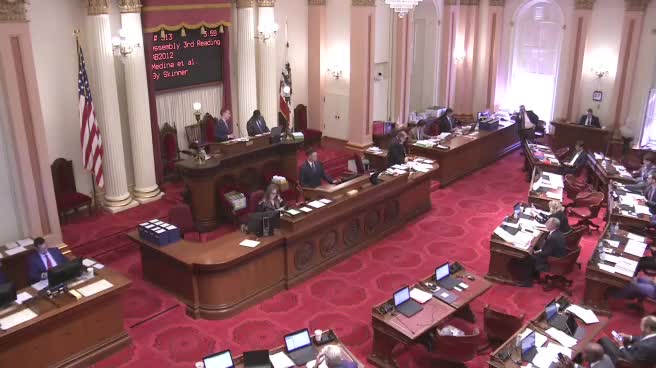 2MIN
Senate Floor
 1H
Senate Standing Committee on Appropriations
 1MIN
Senate Standing Committee on Elections and Constitutional Amendments
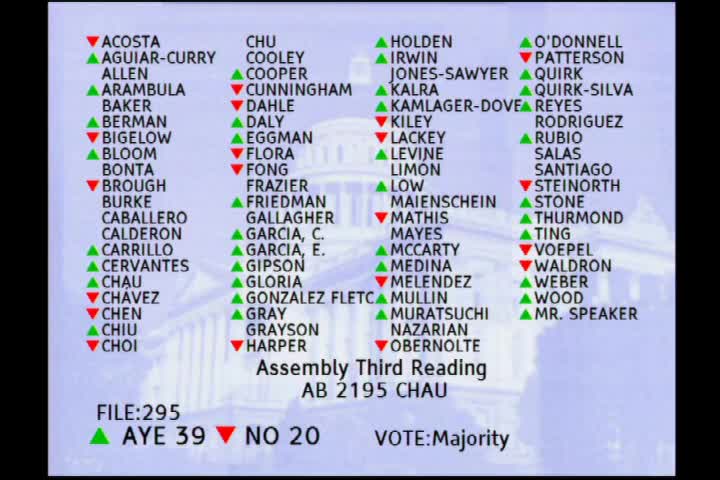 44SEC
Assembly Floor
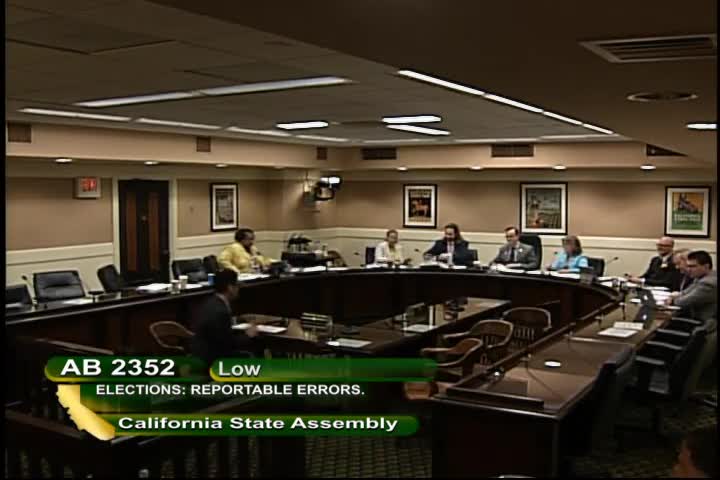 1MIN
Assembly Standing Committee on Elections and Redistricting
Bill Author

Bill Co-Author(s):