AB 2376: Civil actions: provisional remedies: injunctions.
- Session Year: 2017-2018
- House: Assembly
- Latest Version Date: 2018-09-10
Existing law provides that a citizen resident or corporation who is assessed for and is liable to pay, or within one year before the commencement of the action, has paid, a tax in a county, town, city, or city and county may maintain an action to obtain a judgment restraining and preventing an illegal expenditure of, waste of, or injury to the estate, funds, or other property of the political subdivision, as specified. The California Supreme Court in Weatherford v. City of San Rafael (2017) 2 Cal.5th 1241 held that this tax was not restricted to payment of a property tax.
This bill would expand the scope of an action described above by permitting the action to be maintained against a local agency, defined as a city, town, county, or city and county, or a district, public authority, or any other political subdivision in the state. The bill would allow any resident of the local agency to maintain an action under those circumstances. The bill would further clarify that a tax that funds the defendant local agency is sufficient to confer standing as a taxpayer, including, but not limited to, an income tax, a sales and use tax or transaction and use tax initially paid by a consumer to a retailer, a property tax, or a business license tax. The bill would define resident for these purposes to mean a person who lives, works, owns property, or attends school in the jurisdiction of the defendant local agency.
Existing law provides that a citizen resident or corporation who is assessed for and is liable to pay, or within one year before the commencement of the action, has paid, a tax in a county, town, city, or city and county may maintain an action to obtain a judgment restraining and preventing an illegal expenditure of, waste of, or injury to the estate, funds, or other property of the political subdivision, as specified. The California Supreme Court in Weatherford v. City of San Rafael (2017) 2 Cal.5th 1241 held that this tax was not restricted to payment of a property tax.
This bill would expand the scope of an action described above by permitting the action to be maintained against a local agency, defined as a city, town, county, or city and county, or a district, public authority, or any other political subdivision in the state. The bill would allow any resident of the local agency to maintain an action under those circumstances. The bill would further clarify that a tax that funds the defendant local agency is sufficient to confer standing as a taxpayer, including, but not limited to, an income tax, a sales and use tax or transaction and use tax initially paid by a consumer to a retailer, a property tax, or a business license tax. The bill would define resident for these purposes to mean a person who lives, works, owns property, or attends school in the jurisdiction of the defendant local agency.
Existing law provides that a citizen resident or corporation who is assessed for and is liable to pay, or within one year before the commencement of the action, has paid, a tax in a county, town, city, or city and county may maintain an action to obtain a judgment restraining and preventing an illegal expenditure of, waste of, or injury to the estate, funds or other property of the political subdivision, as specified. The California Supreme Court in Weatherford v. City of San Rafael (2017) 2 Cal.5th 1241 held that this tax was not restricted to payment of a property tax.
This bill would expand the scope of an action described above by permitting the action to be maintained against a local agency, defined as a city, town, county, or city and county, or a district, public authority, or any other political subdivision in the state. The bill would allow any resident of the local agency to maintain an action under those circumstances. The bill would further clarify that a tax that funds the defendant local agency is sufficient to confer standing as a taxpayer, including, but not limited to, an income tax, a sales and use tax or transaction and use tax initially paid by a consumer to a retailer, a property tax paid by a tenant or lessee to a landlord or lessor pursuant to the terms of a written lease, a property tax, or a business license tax. The bill would define resident for these purposes to mean a person who lives, works, pays taxes, owns property, or attends school in the jurisdiction of the defendant local agency.
Existing law provides that a citizen resident or corporation who is assessed for and is liable to pay, or within one year before the commencement of the action, has paid, a tax in a county, town, city, or city and county may maintain an action to obtain a judgment restraining and preventing an illegal expenditure of, waste of, or injury to the estate, funds or other property of the political subdivision, as specified. The California Supreme Court in Weatherford v. City of San Rafael (2017) 2 Cal.5th 1241 held that this tax was not restricted to payment of a property tax.
This bill would instead expand the scope of an action described above by permitting the action to be maintained against a local agency, defined as a city, town, county, or city and county, or a district, public authority, or any other political subdivision in the state. The bill would allow any resident of the county, town, city, or city and county local agency to maintain an action under those circumstances. The bill would further clarify that a tax that funds the defendant government local agency is sufficient to confer standing as a taxpayer, including, but not limited to, an income tax, a sales and use tax or transaction and use tax initially paid by a consumer to a retailer, a property tax paid by a tenant or lessee to a landlord or lessor pursuant to the terms of a written lease, a property tax, or a business license tax. The bill would define resident for these purposes to mean a person who lives, works, pays taxes, or attends school in the jurisdiction of the defendant government. local agency.
Existing law provides that a citizen resident or corporation who is assessed for and is liable to pay, or within one year before the commencement of the action, has paid, a tax in a county, town, city, or city and county may maintain an action to obtain a judgment restraining and preventing an illegal expenditure of, waste of, or injury to the estate, funds or other property of the political subdivision, as specified. The California Supreme Court in Weatherford v. City of San Rafael (2017) 2 Cal.5th 1241 held that this tax was not restricted to payment of a property tax.
This bill would instead allow any resident of the county, town, city, or city and county to maintain an action under those circumstances. The bill would further clarify that a tax that funds the defendant government is sufficient to confer standing as a taxpayer, including, but not limited to, an income tax, a sales and use tax or transaction and use tax initially paid by a consumer to a retailer, a property tax paid by a tenant or lessee to a landlord or lessor pursuant to the terms of a written lease, a use tax, a property tax, or a business license tax. The bill would define resident for these purposes to mean a person who lives, works, or attends school in the jurisdiction of the defendant government.
Existing law provides that a citizen resident or corporation who is assessed for and is liable to pay, or within one year before the commencement of the action, has paid, a tax in a county, town, city, or city and county may maintain an action to obtain a judgment restraining and preventing an illegal expenditure of, waste of, or injury to the estate, funds or other property of the political subdivision, as specified. The California Supreme Court in Weatherford v. City of San Rafael (2017) 2 Cal.5th 1241 held that this tax was not restricted to payment of a property tax.
This bill would instead allow any resident of the county, town, city, or city and county to maintain an action under those circumstances. The bill would further clarify that a tax that funds the defendant government is sufficient to confer standing as a taxpayer, including, but not limited to, an income tax, a sales tax initially paid by a consumer to a retailer, a property tax paid by a tenant or lessee to a landlord or lessor pursuant to the terms of a written lease, a use tax, a property tax, or a business license tax. The bill would define resident for these purposes to mean a person who lives, works, or attends school in the jurisdiction of the defendant government.
Existing state and federal laws regulate financial institutions and mortgage lending. Existing state law prescribes various requirements that must be satisfied prior to exercising a power of sale under a mortgage or deed of trust. Existing law requires any person who negotiates or offers to negotiate a residential mortgage loan modification for a fee paid by the borrower to provide a specified statement to the borrower prior to entering into a fee agreement. This bill would state the intent of the Legislature to enact legislation that would clarify the application of law that prohibits the charging of advance fees by any individual or business that helps or offers to help a borrower obtain a loan modification or other form of mortgage loan forbearance or forgiveness from the institution servicing the borrowers residential mortgage loan.Existing state and federal laws regulate financial institutions and mortgage lending. Existing state law prescribes various requirements that must be satisfied prior to exercising a power of sale under a mortgage or deed of trust. Existing law requires any person who negotiates or offers to negotiate a residential mortgage loan modification for a fee paid by the borrower to provide a specified statement to the borrower prior to entering into a fee agreement.
This bill would state the intent of the Legislature to enact legislation that would clarify the application of law that prohibits the charging of advance fees by any individual or business that helps or offers to help a borrower obtain a loan modification or other form of mortgage loan forbearance or forgiveness from the institution servicing the borrowers residential mortgage loan.
(a)An action to obtain a judgment, restraining and preventing any illegal expenditure of, waste of, or injury to, the estate, funds, or other property of a local agency, may be maintained against any officer thereof, or any agent, or other person, acting in its behalf, either by a resident therein, or by a corporation, who is assessed for and is liable to pay, or, within one year before the commencement of the action, has paid, a tax that funds the defendant local agency, including, but not limited to, the following:
(1)An income tax.
(2)A sales and use tax or transaction and use tax initially paid by a consumer to a retailer.
(3)A property tax, including a property tax paid by a tenant or lessee to a landlord or lessor pursuant to the terms of a written lease.
(4)A business license tax.
(b)This section does not affect any right of action in favor of a local agency, or any public officer; provided, that no injunction shall be granted restraining the offering for sale, sale, or issuance of any municipal bonds for public improvements or public utilities.
(c)An action brought pursuant to this section to enjoin a public improvement project shall take special precedence over all civil matters on the calendar of the court except those matters to which equal precedence on the calendar is granted by law.
(d)For purposes of this section, the following definitions apply:
(1)Local agency means a city, town, county, or city and county, or a district, public authority, or any other political subdivision in the state.
(2)Resident means a person who lives, works, owns property, or attends school in the jurisdiction of the defendant local agency.
(a)An action to obtain a judgment, restraining and preventing any illegal expenditure of, waste of, or injury to, the estate, funds, or other property of a local agency, may be maintained against any officer thereof, or any agent, or other person, acting in its behalf, either by a resident therein, or by a corporation, who is assessed for and is liable to pay, or, within one year before the commencement of the action, has paid, a tax that funds the defendant local agency, including, but not limited to, the following:
(1)An income tax.
(2)A sales and use tax or transaction and use tax initially paid by a consumer to a retailer.
(3)A property tax, including a property tax paid by a tenant or lessee to a landlord or lessor pursuant to the terms of a written lease.
(4)A business license tax.
(b)This section does not affect any right of action in favor of a local agency, or any public officer; provided, that no injunction shall be granted restraining the offering for sale, sale, or issuance of any municipal bonds for public improvements or public utilities.
(c)An action brought pursuant to this section to enjoin a public improvement project shall take special precedence over all civil matters on the calendar of the court except those matters to which equal precedence on the calendar is granted by law.
(d)For purposes of this section, the following definitions apply:
(1)Local agency means a city, town, county, or city and county, or a district, public authority, or any other political subdivision in the state.
(2)Resident means a person who lives, works, owns property, or attends school in the jurisdiction of the defendant local agency.
(a)An action to obtain a judgment, restraining and preventing any illegal expenditure of, waste of, or injury to, the estate, funds, or other property of a local agency, may be maintained against any officer thereof, or any agent, or other person, acting in its behalf, either by a resident therein, or by a corporation, who is assessed for and is liable to pay, or, within one year before the commencement of the action, has paid, a tax that funds the defendant local agency, including, but not limited to, the following:
(1)An income tax.
(2)A sales and use tax or transaction and use tax initially paid by a consumer to a retailer.
(3)A property tax tax, including a property tax paid by a tenant or lessee to a landlord or lessor pursuant to the terms of a written lease.
(4)A property tax. (5)(4)A business license tax.
(b)This section does not affect any right of action in favor of a local agency, or any public officer; provided, that no injunction shall be granted restraining the offering for sale, sale, or issuance of any municipal bonds for public improvements or public utilities.
(c)An action brought pursuant to this section to enjoin a public improvement project shall take special precedence over all civil matters on the calendar of the court except those matters to which equal precedence on the calendar is granted by law.
(d)For purposes of this section, the following definitions apply:
(1)Local agency means a city, town, county, or city and county, or a district, public authority, or any other political subdivision in the state.
(2)Resident means a person who lives, works, pays taxes, owns property, or attends school in the jurisdiction of the defendant local agency.
(a)An action to obtain a judgment, restraining and preventing any illegal expenditure of, waste of, or injury to, the estate, funds, or other property of a county, town, city or city and county of the state, local agency, may be maintained against any officer thereof, or any agent, or other person, acting in its behalf, either by a resident therein, or by a corporation, who is assessed for and is liable to pay, or, within one year before the commencement of the action, has paid, a tax that funds the defendant government, local agency, including, but not limited to, the following:
(1)An income tax.
(2)A sales and use tax or transaction and use tax initially paid by a consumer to a retailer.
(3)A property tax paid by a tenant or lessee to a landlord or lessor pursuant to the terms of a written lease.
(4)A property tax.
(5)A business license tax.
(b)This section does not affect any right of action in favor of a county, city, town, or city and county, local agency, or any public officer; provided, that no injunction shall be granted restraining the offering for sale, sale, or issuance of any municipal bonds for public improvements or public utilities.
(c)An action brought pursuant to this section to enjoin a public improvement project shall take special precedence over all civil matters on the calendar of the court except those matters to which equal precedence on the calendar is granted by law.
(d)For purposes of this section, resident the following definitions apply:
(1)Local agency means a city, town, county, or city and county, or a district, public authority, or any other political subdivision in the state.
(2)Resident means a person who lives, works, pays taxes, or attends school in the jurisdiction of the defendant government. local agency.
(a)An action to obtain a judgment, restraining and preventing any illegal expenditure of, waste of, or injury to, the estate, funds, or other property of a county, town, city or city and county of the state, may be maintained against any officer thereof, or any agent, or other person, acting in its behalf, either by a resident therein, or by a corporation, who is assessed for and is liable to pay, or, within one year before the commencement of the action, has paid, a tax that funds the defendant government, including, but not limited to, the following:
(1)An income tax.
(2)A sales and use tax or transaction and use tax initially paid by a consumer to a retailer.
(3)A property tax paid by a tenant or lessee to a landlord or lessor pursuant to the terms of a written lease.
(4)A use tax. (5)(4)A property tax.
(6)(5)A business licenses license tax.
(b)This section does not affect any right of action in favor of a county, city, town, or city and county, or any public officer; provided, that no injunction shall be granted restraining the offering for sale, sale, or issuance of any municipal bonds for public improvements or public utilities.
(c)An action brought pursuant to this section to enjoin a public improvement project shall take special precedence over all civil matters on the calendar of the court except those matters to which equal precedence on the calendar is granted by law.
(d)For purposes of this section, resident means a person who lives, works, or attends school in the jurisdiction of the defendant government.
(a)An action to obtain a judgment, restraining and preventing any illegal expenditure of, waste of, or injury to, the estate, funds, or other property of a county, town, city or city and county of the state, may be maintained against any officer thereof, or any agent, or other person, acting in its behalf, either by a citizen resident therein, or by a corporation, who is assessed for and is liable to pay, or, within one year before the commencement of the action, has paid, a tax therein. This that funds the defendant government, including, but not limited to, the following:
(1)An income tax.
(2)A sales tax initially paid by a consumer to a retailer.
(3)A property tax paid by a tenant or lessee to a landlord or lessor pursuant to the terms of a written lease.
(4)A use tax.
(5)A property tax.
(6)A business licenses tax.
(b)This section does not affect any right of action in favor of a county, city, town, or city and county, or any public officer; provided, that no injunction shall be granted restraining the offering for sale, sale, or issuance of any municipal bonds for public improvements or public utilities.
(c)An action brought pursuant to this section to enjoin a public improvement project shall take special precedence over all civil matters on the calendar of the court except those matters to which equal precedence on the calendar is granted by law.
(d)For purposes of this section, resident means a person who lives, works, or attends school in the jurisdiction of the defendant government.
SECTION 1.It is the intent of the Legislature to enact legislation that would clarify the application of existing law that prohibits the charging of advance fees by any individual or business that helps or offers to help a borrower obtain a loan modification or other form of mortgage loan forbearance or forgiveness from the institution servicing the borrowers residential mortgage loan.It is the intent of the Legislature to enact legislation that would clarify the application of existing law that prohibits the charging of advance fees by any individual or business that helps or offers to help a borrower obtain a loan modification or other form of mortgage loan forbearance or forgiveness from the institution servicing the borrowers residential mortgage loan.
|
Date
|
Status
|
|---|---|
| Sep 10, 2018 | Chaptered by Secretary of State - Chapter 319, Statutes of 2018. |
| Sep 10, 2018 | Approved by the Governor. |
| Sep 5, 2018 | Enrolled and presented to the Governor at 3 p.m. |
| Aug 27, 2018 | Senate amendments concurred in. To Engrossing and Enrolling. |
| Aug 22, 2018 | In Assembly. Concurrence in Senate amendments pending. May be considered on or after August 24 pursuant to Assembly Rule 77. |
| Aug 21, 2018 | Read third time. Passed. Ordered to the Assembly. |
| Aug 6, 2018 | Read second time. Ordered to third reading. |
| Jul 5, 2018 | Read third time and amended. Ordered to second reading. |
| Jun 18, 2018 | From Consent Calendar. |
| Jun 14, 2018 | Read second time. Ordered to Consent Calendar. |
| Jun 13, 2018 | From committee: Do pass. To Consent Calendar. (Ayes 7. Noes 0.) (June 12). |
| May 29, 2018 | From committee chair, with author's amendments: Amend, and re-refer to committee. Read second time, amended, and re-referred to Com. on JUD. |
| May 3, 2018 | Referred to Com. on JUD. |
| Apr 19, 2018 | In Senate. Read first time. To Com. on RLS. for assignment. |
| Apr 19, 2018 | Read third time. Passed. Ordered to the Senate. (Ayes 65. Noes 0.) |
| Apr 16, 2018 | Read second time. Ordered to third reading. |
| Apr 12, 2018 | Read second time and amended. Ordered returned to second reading. |
| Apr 11, 2018 | From committee: Amend, and do pass as amended. (Ayes 9. Noes 0.) (April 10). |
| Mar 20, 2018 | Re-referred to Com. on JUD. |
| Mar 19, 2018 | From committee chair, with author's amendments: Amend, and re-refer to Com. on JUD. Read second time and amended. |
| Mar 19, 2018 | Referred to Com. on JUD. |
| Feb 15, 2018 | From printer. May be heard in committee March 17. |
| Feb 14, 2018 | Read first time. To print. |
|
Date
|
Description
|
Location
|
Votes
|
|
|---|---|---|---|---|
| Aug 27, 2018 | AB 2376 STONE Concurrence in Senate Amendments | Assembly Floor |
Passed |
|
| Aug 21, 2018 | Assembly 3rd Reading AB2376 Mark Stone By Galgiani | Senate Floor |
Passed |
|
| Jun 12, 2018 | Do pass and be ordered to the Consent Calendar | Senate Standing Committee on Judiciary |
Passed |
|
| Apr 19, 2018 | AB 2376 STONE Assembly Third Reading | Assembly Floor |
Passed |
|
| Apr 10, 2018 | Do pass as amended. | Assembly Standing Committee on Judiciary |
Passed |
This list shows positions taken on this bill by organizations on the date displayed, which is linked to the original source.
Positions by individuals are not included.
|
Organization
|
Position
|
Date
|
|---|---|---|
| American Civil Liberties Union of California | ** Support | Aug 8, 2018 |
| Asian Law Alliance | ** Support | Aug 8, 2018 |
| Bay Area Legal Aid | ** Support | Aug 8, 2018 |
| Bet Tzedek Legal Services | ** Support | Aug 8, 2018 |
| California Labor Federation | ** Support | Aug 8, 2018 |
| Child Care Law Center | ** Support | Aug 8, 2018 |
| Courage Campaign | ** Support | Aug 8, 2018 |
| Disability Rights California | ** Support | Aug 8, 2018 |
| Howard Jarvis Taxpayers Association | ** Support | Aug 8, 2018 |
| Legal Aid Association Of California | ** Support | Aug 8, 2018 |
| Legal Aid Foundation of Los Angeles | ** Support | Aug 8, 2018 |
| National Health Law Program | ** Support | Aug 8, 2018 |
| Neighborhood Legal Services of Los Angeles County | ** Support | Aug 8, 2018 |
| Public Interest Law Project | ** Support | Aug 8, 2018 |
| Public Law Center | ** Support | Aug 8, 2018 |
| western center on law and poverty | ** Support | Aug 8, 2018 |
CONCURRENCE IN SENATE AMENDMENTS
CSA1 Bill Id:AB 2376
Author:(Mark Stone)
As Amended Ver:July 5, 2018
Majority vote
ASSEMBLY: | 65-0 | (April 19, 2018) | SENATE: | 38-0 | (August 21, 2018) |
Original Committee Reference: JUD.
SUMMARY: Clarifies criteria sufficient to establish taxpayer standing to sue a local government entity for alleged wasteful or illegal expenditures. Specifically, this bill:
- Specifies what kinds of taxes are sufficient to establish taxpayer standing if paid within one year of the action, including, but not limited to, the following: a) income tax; b) sales and use tax or transaction and use tax initially paid by a consumer to a retailer; c) property tax, including a property tax paid by a tenant or lessee to a landlord or lessor pursuant to the terms of a written lease; or d) business license tax.
- Clarifies that the resident taxpayer who files the suit must be a person who lives, works, owns property, or attends school in the jurisdiction of the defendant local agency, but need not be a United States (U.S.) citizen.
- Defines "local agency" to mean a city, town, county, or city and county, or a district, public authority, or any other political subdivision in the state.
The Senate amendments clarify that the definition of "resident" also includes a person who owns property in the jurisdiction of the defendant local agency, and expands the scope of the bill to include taxpayer standing against a district, public authority, or any other political subdivision in the state.
EXISTING LAW:
- Provides that an action to obtain a judgment, restraining and preventing any illegal expenditure of, waste of, or injury to, the estate, funds, or other property of a county, town, city or city and county of the state, may be maintained against any officer thereof, or any agent, or other person, acting in its behalf, either by a citizen resident therein, or by a corporation, who is assessed for and is liable to pay, or, within one year before the commencement of the action, has paid, a tax therein. (Code of Civil Procedure (CCP) Section 526a.)
- Does not require a person to have paid a property tax in order to have sufficient standing to maintain a taxpayer action under CCP Section 526a; instead, an allegation that a person has paid an assessed tax to the defendant locality is sufficient. (Weatherford v. City of San Rafael, 2017 WL 2417763.)
FISCAL EFFECT: None
COMMENTS: This bill, sponsored by the Western Center on Law and Poverty, responds to a 2017 court opinion in which California Chief Justice Tani Cantil-Sakauye urged the Legislature to amend California's taxpayer standing statute "to make clear what kinds of taxes are sufficient to establish standing to sue a particular government entity for alleged wasteful or illegal expenditures." Specifically, the bill amends CCP Section 526a to make clear that sales and use taxes, income taxes, business license taxes, and property taxes, among others, are sufficient to establish standing under the statute. According to the author, "The ambiguity of current law prevents the public from establishing taxpayer standing under Section 526a as the Legislature intended. As a result, until the Legislature acts, it remains unclear who can use taxpayer standing."
Background on taxpayer standing: As a general matter, standing to sue concerns a specific party's interest in the outcome of a lawsuit, and California courts therefore require a party to show that he or she is sufficiently interested as a prerequisite to deciding, on the merits, whether a party's challenge to legislative or executive action independently has merit. (Weatherford, supra, at p. 3.) Prior to the enactment of CCP Section 526a in 1909, common law only required a plaintiff to be a taxpayer supporting the governmental entity whose act he or she sought to challenge in court. (Weatherford at 4.) (See, e.g. Winn v. Shaw (1891) 87 Cal. 631, 636, holding that taxpayers had "such an interest in the application of [public] funds" that they could "maintain an action" to enjoin the illegal expenditure of public funds.) While the court in Weatherford recognized that CCP Section 526a is a "measure narrowing the category of taxpayers that are eligible to commence such actions relative to what the common law allowed," at the same time the court concluded that CCP Section 526a "represents a legislative decision to create judicial access for parties that would not otherwise be eligible to seek relief under sections 367 [general standing] or 1086 [public interest standing]." (Ibid.)
Background on Weatherford case. According to Western Center, until 1993, advocates routinely asserted taxpayer causes of action in major litigation, including on the basis of payment of sales taxes. Then, in Torres v. City of Yorba Linda (1993) 13 Cal.App.4th 1035, the Court of Appeal held that payment of sales tax does not confer taxpayer standing because the tax is technically paid by retailers, not consumers. Torres and some later Court of Appeal opinions also suggest that CCP Section 526a requires a plaintiff to pay property taxes to satisfy the taxpayer standing requirement, creating some uncertainty about the criteria for taxpayer standing for many subsequent years. Then, last year, the California Supreme Court granted review in Weatherford v. City of San Rafael, 2017 WL 2417763.
Ultimately, the Court in Weatherford unanimously sided with the plaintiff taxpayer and held that CCP Section 526a does not require a person to have paid or be liable for payment of property taxes in order to have sufficient standing for a taxpayer action. However, the Court also noted that the statute was unclear about precisely which taxes were sufficient to establish standing, and called upon the Legislature to make that determination and amend the law accordingly. In her concurring opinion, the Chief Justice of California stated:
In order for a law to have its full intended effects and benefits, it should be framed to reflect circumstances as they exist now. If the primary purpose of section 526a was to give a large body of citizens standing to challenge governmental actions' (Blair v. Pitchess (1971) 5 Cal.3d 258, 269), the statute's lack of clarity would seem to thwart that very purpose. (emphasis added.) The archaic language of section 526a has not evolved alongside the increasing complexities concerning how residents are taxed and how those proceeds fund local government entities. Accordingly, I encourage the Legislature to revisit section 526a in order to clarify the criteria necessary to confer taxpayer standing. (Weatherford, at 7.)
This bill codifies specific types of taxes sufficient to establish standing. Proponents of the bill contend that without further clarification by the Legislature, the ambiguity of current law post-Weatherford hinders the public from establishing taxpayer standing under CCP Section 526a as the Legislature intended. Thus, in response to the Chief Justice of California's appeal for clarification of the statute, this bill clarifies specifically what kinds of taxes are sufficient to establish taxpayer standing. As a preliminary matter, the tax must have been one that funds the defendant government (i.e. not necessarily paid directly to the defendant government), and must have been paid within one year before commencement of the action. These taxes include the following categories: 1) income tax; 2) sales and use tax, or transaction and use tax, initially paid by a consumer to a retailer; 3) property tax, including a property tax paid by a tenant or lessee to a landlord or lessor pursuant to the terms of a written lease; or 4) business license tax.
Among these categories, proponents note that sales tax is especially important because, although there are many types of taxes that could potentially give rise to standing, payment of sales taxes is virtually the only way for many low-income Californians to qualify for taxpayer standing. The Judiciary Committee notes that this bill does not change any underlying taxation law, and does not seek to change the way that sales tax is collected by retailers or handled by local government. Instead, this bill simply clarifies the criteria for standing to sue in taxpayer actions, and establishes that payment of sales taxes qualifies a consumer as a taxpayer for purposes of the taxpayer standing statute, assuming that all other criteria are satisfied.
The bill clarifies that non-citizen residents, as defined, may have standing to bring an action. CCP Section 526a currently provides that only a "citizen resident therein" may have standing to bring a taxpayer action against the defendant local government. According to the author, this antiquated language ignores the fact that under current law, many non-U.S. citizens live, work, and most importantly, pay their fair share of taxes in California to fund cities and counties. If non-citizens pay a qualifying tax, there is no sound policy reason to discriminate against them and deny them standing to bring a lawsuit to enjoin the local agency from misusing or wasting those public funds. Accordingly, this bill would delete the word "citizen" from CCP Section 526a, limiting its application to "residents".
In addition, for the purpose of this statute, the bill defines the term "resident" to mean a person who lives, works, owns property, or attends school in the jurisdiction of the defendant local agency. According to the author, this provision is intended to clarify that the resident taxpayer eligible to file suit is not just someone who paid a minimal amount of sales tax on a cup of coffee while passing through town, but instead is a person who has an established physical presence in the local jurisdiction. It should be noted that, unlike some statutory definitions of "resident" that limit a person to only one place (e.g. voter registration laws), this bill does not limit residency to a single place. For example, a state politician who spends six months a year in Sacramento and 6 months a year in her home district could be considered a resident of both places and, assuming she paid requisite taxes in both places, would maintain the ability to establish standing in a taxpayer action against either local government under this bill. Recent amendments clarify that a person who owns property in the local jurisdiction also has standing (for example, a person who pays property taxes on a rental property to one county even though her primary residence is in a different county).
Analysis Prepared by: Anthony Lew / JUD. / (916) 319-2334 FN: 0003755
Office of Senate Floor Analyses (916) 651-1520 Fax: (916) 327-4478 | AB |
THIRD READING
Bill No: AB 2376
:
SENATE JUDICIARY COMMITTEE: 7-0, 6/12/18
AYES: Jackson, Moorlach, Anderson, Hertzberg, Monning, Stern, Wieckowski
ASSEMBLY FLOOR: 65-0, 4/19/18 - See last page for vote
SOURCE: Western Center on Law and Poverty
DIGEST:
This bill clarifies that taxpayer standing for purposes of Section 526a of the Code of Civil Procedure can be based on the assessment or payment of specified taxes, including an income tax, a sales and use tax initially paid by a consumer, a property tax, a property tax paid by a tenant to a landlord, or a business license tax.
Senate Floor Amendments of 7/5/18 clarify the basis for standing and recast the definition of resident.
Existing law:
- Provides that every action must be prosecuted in the name of the real party in interest, except as otherwise provided by statute. (Code Civ. Proc. Sec. 367.)
- Provides that an action to obtain a judgment, restraining and preventing any illegal expenditure of, waste of, or injury to, the estate, funds, or other property of a county, town, city or city and county of the state, may be maintained against any officer thereof, or any agent, or other person, acting in its behalf, either by a citizen resident therein, or by a corporation, who is assessed for and is liable to pay, or, within one year before the commencement of the action, has paid, a tax therein. An action brought pursuant hereto to enjoin a public improvement project shall take special precedence over all civil matters on the calendar of the court except those matters to which equal precedence on the calendar is granted by law. (Code Civ. Proc. Sec. 526a.)
This bill:
- Amends and clarifies the standing requirements for bringing an action to obtain a judgment, restraining and preventing any illegal expenditure of, waste of, or injury to, the estate, funds, or other property of a local agency, against any officer thereof, or any agent, or other person, acting in its behalf. It authorizes a resident therein or a corporation, who is assessed for and is liable to pay, or, within one year before the commencement of the action, has paid, a tax that funds the defendant local agency, including the following:
- an income tax;
- a sales and use tax or transaction and use tax initially paid by a consumer to a retailer;
- a property tax, including a property tax paid by a tenant or lessee to a landlord or lessor pursuant to the terms of a written lease; or,
- a business license tax.
- Defines “resident” to mean a person who lives, works, owns property, or attends school in the jurisdiction of the defendant local agency. It defines “local agency” to mean a city, town, county, or city and county, or a district, public authority, or any other political subdivision in the state.
Background
Section 526a of the Code of Civil Procedure (Section 526a) provides:
An action to obtain a judgment, restraining and preventing any illegal expenditure of, waste of, or injury to, the estate, funds, or other property of a county, town, city or city and county of the state, may be maintained against any officer thereof, or any agent, or other person, acting in its behalf, either by a citizen resident therein, or by a corporation, who is assessed for and is liable to pay, or, within one year before the commencement of the action, has paid, a tax therein.
“The primary purpose of this statute, originally enacted in 1909, is to enable a large body of the citizenry to challenge governmental action which would otherwise go unchallenged in the courts because of the standing requirement.” (Blair v. Pitchess (1971) 5 Cal.3d 258, 267-268, internal quotations and citations omitted.) Section 526a provides a “general citizen remedy for controlling illegal governmental activity.” (White v. Davis (1975) 13 Cal.3d 757, 763.)
Section 526a provides a unique and important mechanism for specified individuals and corporations to hold their government accountable. However, case law has revealed that exactly what confers standing pursuant to this section remains unclear. This bill provides needed clarity to the operation of Section 526a by detailing specific taxes upon which “taxpayer standing” in these important public interest suits may be based.
Comments
The author states:
The California’s Supreme Court’s decision in Weatherford v. City of San Rafael (2017) reviewed California’s taxpayer standing statute to determine which taxpayers can claim standing in taxpayer suits against local governments alleging wasteful or illegal spending of public funds. The Court ultimately requested that the Legislature weigh in to clarify its intent as the statute itself was determined unclear. The Court clarified that the statute could not be limited to just property taxpayers, as opponents had suggested, but did not further interpret which taxpayers were included. As a result, until the Legislature acts, it remains unclear who can use taxpayer standing. The ambiguity of current law prevents the public from establishing taxpayer standing under Section 526a as the Legislature intended.
In order to heed the Court’s appeal for clarification of Section 526a, AB 2376 specifies what kinds of taxes are sufficient to establish taxpayer standing if paid within one year of the action, including the following: (1) income tax; (2) sales tax or use tax initially paid by a consumer to a retailer; (3) property tax paid by a tenant or lessee to a landlord or lessor pursuant to the terms of a written lease; (4) property tax; or (5) business license tax.
In addition, AB 2376 clarifies that the resident taxpayer who files the suit must be a person who lives, works, or attends school in the jurisdiction of the defendant government. This requirement ensures that the plaintiff has physical presence in the local jurisdiction (i.e. more than just travelling through town), while removing the outdated requirement that the taxpayer must also be a U.S. citizen.
These clarifications would ensure that our taxpayer standing statute allows all community members equal access to enforce the law.
Legal landscape: determining the parameters of taxpayer standing
“Section 526a provides a mechanism for controlling illegal, injurious, or wasteful actions by [government] officials. That mechanism . . . remains available even where the injury is insufficient to satisfy general standing requirements under section 367 [of the Code of Civil Procedure].” (Weatherford v. City of San Rafael (2017) 2 Cal.5th 1241, 1249.) However, in order to bring a cause of action against a government entity or official pursuant to Section 526a, a plaintiff must establish they have proper standing to do so. The law currently confers standing to “a citizen resident” or a corporation, who is “assessed for and is liable to pay, or, within one year before the commencement of the action, has paid, a tax therein.” (Sec. 526a.)
Although the statute was enacted in 1909, the exact parameters of the taxes that confer standing pursuant to it have remained unclear. A recent case before the California Supreme Court, Weatherford v. City of San Rafael (2017) 2 Cal.5th 1241, has highlighted the need for additional clarity in this regard.
Weatherford dealt with a plaintiff resident who was challenging the governmental defendants’ practice of impounding vehicles without adequate notice as a violation of the California and United States Constitutions. (2 Cal.5th at 1245-1246.) The appellate court upheld a judgment of dismissal, ruling that an individual must be liable to pay a property tax within the relevant locality or have paid such a property tax within the prior year in order to have standing pursuant to Section 526a. (Id.) The California Supreme Court reversed that ruling in an opinion by Justice Cuéllar:
Section 526a does narrow the category of taxpayers able to sue to enjoin certain expenditures of governmental funds. But the Court of Appeal traveled a step too far when it held that the statute requires individual plaintiffs to pay a property tax. Although we need not delineate the precise outer limits of the statute’s operation, we can conclude with confidence that limiting its application to property taxpayers reflects an unduly constrained view of the statute’s requirements.
(Id.) The majority opinion pointed out that Section 526a “does not confer unrestricted standing to taxpayers,” and therefore, the question remained: “Which taxes are sufficient to establish standing under the statute?” (Id. at 1250-1251.) Although the court held that payment of a property tax was not required, it failed to answer that question and thereby resolve the lack of clarity over exactly what was required and what could confer such standing.
A concurring opinion by Chief Justice Cantil-Sakauye addressed the underlying issues:
The provision of section 526a at issue in this matter reads: “An action to obtain a judgment, restraining and preventing any illegal expenditure of, waste of, or injury to, the estate, funds, or other property of a county, town, city or city and county of the state, may be maintained against any officer thereof, or any agent, or other person, acting in its behalf, either by a citizen resident therein, or by a corporation, who is assessed for and is liable to pay, or, within one year before the commencement of the action, has paid, a tax therein.” (Italics added.) In this single sentence are 87 words parsed by 19 commas. It is not a model of clarity.
(Id. at 1253.) The Chief Justice points out that the language was drafted in 1909 and has not been amended in the over 100 years since; “[y]et the system of state and local taxation in California has changed dramatically over the last century” becoming “increasingly complex.” (Id. at 1254.) The concurrence continues:
In order for a law to have its full intended effects and benefits, it should be framed to reflect circumstances as they exist now. If “the primary purpose of section 526a was to give a large body of citizens standing to challenge governmental actions” (Blair v. Pitchess (1971) 5 Cal.3d 258, 269), the statute’s lack of clarity would seem to thwart that very purpose. The archaic language of section 526a has not evolved alongside the increasing complexities concerning how residents are taxed and how those proceeds fund local government entities. Accordingly, I encourage the Legislature to revisit section 526a in order to clarify the criteria necessary to confer taxpayer standing.
(Id. at 1255.)
This bill heeds this plea “to revisit section 526a and amend the statute in a manner that makes clear what kinds of taxes are sufficient to establish standing to sue a particular government entity for alleged wasteful or illegal expenditures.” (Id. at 1253.) Specifically, it details that the following, nonexclusive, list of taxes can serve as the basis for standing pursuant to Section 526a:
- an income tax;
- a sales and use tax or transaction and use tax initially paid by a consumer to a retailer;
- a property tax, including a property tax paid by a tenant or lessee to a landlord or lessor pursuant to the terms of a written lease; or,
- a business license tax.
These amendments effectively address the lack of clarity that has led to protracted legal battles and wasted judicial resources. It also ensures that courts continue to construe Section 526a liberally to adequately achieve its critical remedial purpose. (See Blair v. Pitchess (1971) 5 Cal.3d 258, 268; Van Atta v. Scott (1980) 27 Cal.3d 424, 447; Torres v. City of Yorba Linda (1993) 13 Cal.App.4th 1035, 1047.) The language also makes certain that plaintiffs have adequate ties to the relevant communities before bringing suit on their behalf by defining “resident” to mean a person who lives, works, owns property, or attends school in the jurisdiction of the defendant local agency and by requiring that the relevant tax actually fund the defendant local agency. This latter change clarifies the current ambiguity of the latter use of the term “therein,” which was also highlighted in the Chief Justice’s concurrence in Weatherford. (Weatherford at 1253.)
This bill also goes further by expanding the application of the statute from a “county, town, city or city and county of the state” to a “local agency,” which would be defined to additionally include a district, public authority, or any other political subdivision in the state. These additional entities would now be subject to suit under this statute.
Finally, the bill removes the archaic requirement that only citizen residents have standing to enforce the law. This amendment reflects the values of this State and the understanding that citizenship is not the test by which California determines who should have the legal right to challenge government waste and impropriety. As the sponsor of this bill, the Western Center on Law and Poverty, states that this bill continues the “tradition of guaranteeing immigrants equal access under the law.”
FISCAL EFFECT: Appropriation: Fiscal Com.: Local:
Western Center on Law and Poverty (source)
American Civil Liberties Union of California
Asian Law Alliance
Bay Area Legal Aid
Bet Tzedek Legal Services
California Labor Federation
Child Care Law Center
Courage Campaign
Disability Rights California
Howard Jarvis Taxpayers Association
Legal Aid Association of California
Legal Aid Foundation of Los Angeles
National Health Law Program
Neighborhood Legal Services of Los Angeles County
Public Interest Law Project
Public Law Center
None received
ARGUMENTS IN SUPPORT: In support, Neighborhood Legal Services of Los Angeles County argues the bill provides “commonsense clarifications” that “ensure that California’s taxpayer standing statute allows all community members equal access to enforce the law,” and contends the bill will “substantially benefit low-income residents of California, as well as immigrants residing in the state.”
Disability Rights California writes in support that it is “critical that any cloud on taxpayer standing be removed so that [its] clients can assert their rights without side issues, such as standing, diverting both [its] resources and those of the courts.”
Writing in support, the Legal Aid Association of California highlights the importance of providing needed clarity on the question of taxpayer standing, stressing its members’ reliance on Section 526a “to challenge city and county practices that injure their client communities.”
ASSEMBLY FLOOR: 65-0, 4/19/18
AYES: Acosta, Aguiar-Curry, Arambula, Baker, Berman, Bigelow, Bloom, Bonta, Burke, Caballero, Carrillo, Cervantes, Chau, Chávez, Chiu, Choi, Chu, Cooley, Cooper, Cunningham, Dahle, Daly, Eggman, Flora, Frazier, Friedman, Eduardo Garcia, Gipson, Gloria, Gonzalez Fletcher, Gray, Grayson, Holden, Irwin, Jones-Sawyer, Kalra, Kamlager-Dove, Lackey, Levine, Limón, Low, Maienschein, Mathis, Mayes, McCarty, Medina, Muratsuchi, Nazarian, Obernolte, O'Donnell, Quirk-Silva, Reyes, Rodriguez, Rubio, Salas, Santiago, Steinorth, Mark Stone, Thurmond, Ting, Voepel, Waldron, Weber, Wood, Rendon
NO VOTE RECORDED: Travis Allen, Brough, Calderon, Chen, Fong, Gallagher, Cristina Garcia, Harper, Kiley, Melendez, Mullin, Patterson, Quirk
8/8/18 10:12:20
**** END ****
Office of Senate Floor Analyses (916) 651-1520 Fax: (916) 327-4478 | AB |
THIRD READING
Bill No: AB 2376
:
SENATE JUDICIARY COMMITTEE: 7-0, 6/12/18
AYES: Jackson, Moorlach, Anderson, Hertzberg, Monning, Stern, Wieckowski
ASSEMBLY FLOOR: 65-0, 4/19/18 - See last page for vote
SOURCE: Western Center on Law and Poverty
DIGEST:
This bill clarifies that taxpayer standing for purposes of Section 526a of the Code of Civil Procedure can be based on the assessment or payment of specified taxes, including an income tax, a sales and use tax initially paid by a consumer, a property tax, a property tax paid by a tenant to a landlord, or a business license tax.
Existing law:
- Provides that every action must be prosecuted in the name of the real party in interest, except as otherwise provided by statute. (Code Civ. Proc. Sec. 367.)
- Provides that an action to obtain a judgment, restraining and preventing any illegal expenditure of, waste of, or injury to, the estate, funds, or other property of a county, town, city or city and county of the state, may be maintained against any officer thereof, or any agent, or other person, acting in its behalf, either by a citizen resident therein, or by a corporation, who is assessed for and is liable to pay, or, within one year before the commencement of the action, has paid, a tax therein. An action brought pursuant hereto to enjoin a public improvement project shall take special precedence over all civil matters on the calendar of the court except those matters to which equal precedence on the calendar is granted by law. (Code Civ. Proc. Sec. 526a.)
This bill:
- Amends and clarifies the standing requirements for bringing an action to obtain a judgment, restraining and preventing any illegal expenditure of, waste of, or injury to, the estate, funds, or other property of a local agency, against any officer thereof, or any agent, or other person, acting in its behalf. It authorizes a resident therein or a corporation, who is assessed for and is liable to pay, or, within one year before the commencement of the action, has paid, a tax that funds the defendant local agency, including the following:
- an income tax;
- a sales and use tax or transaction and use tax initially paid by a consumer to a retailer;
- a property tax paid by a tenant or lessee to a landlord or lessor pursuant to the terms of a written lease;
- a property tax; or,
- a business license tax.
- Defines “resident” to mean a person who lives, works, pays taxes, or attends school in the jurisdiction of the defendant local agency. It defines “local agency” to mean a city, town, county, or city and county, or a district, public authority, or any other political subdivision in the state.
Background
Section 526a of the Code of Civil Procedure (Section 526a) provides:
An action to obtain a judgment, restraining and preventing any illegal expenditure of, waste of, or injury to, the estate, funds, or other property of a county, town, city or city and county of the state, may be maintained against any officer thereof, or any agent, or other person, acting in its behalf, either by a citizen resident therein, or by a corporation, who is assessed for and is liable to pay, or, within one year before the commencement of the action, has paid, a tax therein.
“The primary purpose of this statute, originally enacted in 1909, is to enable a large body of the citizenry to challenge governmental action which would otherwise go unchallenged in the courts because of the standing requirement.” (Blair v. Pitchess (1971) 5 Cal.3d 258, 267-268, internal quotations and citations omitted.) Section 526a provides a “general citizen remedy for controlling illegal governmental activity.” (White v. Davis (1975) 13 Cal.3d 757, 763.)
Section 526a provides a unique and important mechanism for specified individuals and corporations to hold their government accountable. However, case law has revealed that exactly what confers standing pursuant to this section remains unclear. This bill provides needed clarity to the operation of Section 526a by detailing specific taxes upon which “taxpayer standing” in these important public interest suits may be based.
Comments
The author states:
The California’s Supreme Court’s decision in Weatherford v. City of San Rafael (2017) reviewed California’s taxpayer standing statute to determine which taxpayers can claim standing in taxpayer suits against local governments alleging wasteful or illegal spending of public funds. The Court ultimately requested that the Legislature weigh in to clarify its intent as the statute itself was determined unclear. The Court clarified that the statute could not be limited to just property taxpayers, as opponents had suggested, but did not further interpret which taxpayers were included. As a result, until the Legislature acts, it remains unclear who can use taxpayer standing. The ambiguity of current law prevents the public from establishing taxpayer standing under Section 526a as the Legislature intended.
In order to heed the Court’s appeal for clarification of Section 526a, AB 2376 specifies what kinds of taxes are sufficient to establish taxpayer standing if paid within one year of the action, including the following: (1) income tax; (2) sales tax or use tax initially paid by a consumer to a retailer; (3) property tax paid by a tenant or lessee to a landlord or lessor pursuant to the terms of a written lease; (4) property tax; or (5) business license tax.
In addition, AB 2376 clarifies that the resident taxpayer who files the suit must be a person who lives, works, or attends school in the jurisdiction of the defendant government. This requirement ensures that the plaintiff has physical presence in the local jurisdiction (i.e. more than just travelling through town), while removing the outdated requirement that the taxpayer must also be a U.S. citizen.
These clarifications would ensure that our taxpayer standing statute allows all community members equal access to enforce the law.
Legal landscape: determining the parameters of taxpayer standing
“Section 526a provides a mechanism for controlling illegal, injurious, or wasteful actions by [government] officials. That mechanism . . . remains available even where the injury is insufficient to satisfy general standing requirements under section 367 [of the Code of Civil Procedure].” (Weatherford v. City of San Rafael (2017) 2 Cal.5th 1241, 1249.) However, in order to bring a cause of action against a government entity or official pursuant to Section 526a, a plaintiff must establish they have proper standing to do so. The law currently confers standing to “a citizen resident” or a corporation, who is “assessed for and is liable to pay, or, within one year before the commencement of the action, has paid, a tax therein.” (Sec. 526a.)
Although the statute was enacted in 1909, the exact parameters of the taxes that confer standing pursuant to it have remained unclear. A recent case before the California Supreme Court, Weatherford v. City of San Rafael (2017) 2 Cal.5th 1241, has highlighted the need for additional clarity in this regard.
Weatherford dealt with a plaintiff resident who was challenging the governmental defendants’ practice of impounding vehicles without adequate notice as a violation of the California and United States Constitutions. (2 Cal.5th at 1245-1246.) The appellate court upheld a judgment of dismissal, ruling that an individual must be liable to pay a property tax within the relevant locality or have paid such a property tax within the prior year in order to have standing pursuant to Section 526a. (Id.) The California Supreme Court reversed that ruling in an opinion by Justice Cuéllar:
Section 526a does narrow the category of taxpayers able to sue to enjoin certain expenditures of governmental funds. But the Court of Appeal traveled a step too far when it held that the statute requires individual plaintiffs to pay a property tax. Although we need not delineate the precise outer limits of the statute’s operation, we can conclude with confidence that limiting its application to property taxpayers reflects an unduly constrained view of the statute’s requirements.
(Id.) The majority opinion pointed out that Section 526a “does not confer unrestricted standing to taxpayers,” and therefore, the question remained: “Which taxes are sufficient to establish standing under the statute?” (Id. at 1250-1251.) Although the court held that payment of a property tax was not required, it failed to answer that question and thereby resolve the lack of clarity over exactly what was required and what could confer such standing.
A concurring opinion by Chief Justice Cantil-Sakauye addressed the underlying issues:
The provision of section 526a at issue in this matter reads: “An action to obtain a judgment, restraining and preventing any illegal expenditure of, waste of, or injury to, the estate, funds, or other property of a county, town, city or city and county of the state, may be maintained against any officer thereof, or any agent, or other person, acting in its behalf, either by a citizen resident therein, or by a corporation, who is assessed for and is liable to pay, or, within one year before the commencement of the action, has paid, a tax therein.” (Italics added.) In this single sentence are 87 words parsed by 19 commas. It is not a model of clarity.
(Id. at 1253.) The Chief Justice points out that the language was drafted in 1909 and has not been amended in the over 100 years since; “[y]et the system of state and local taxation in California has changed dramatically over the last century” becoming “increasingly complex.” (Id. at 1254.) The concurrence continues:
In order for a law to have its full intended effects and benefits, it should be framed to reflect circumstances as they exist now. If “the primary purpose of section 526a was to give a large body of citizens standing to challenge governmental actions” (Blair v. Pitchess (1971) 5 Cal.3d 258, 269), the statute’s lack of clarity would seem to thwart that very purpose. The archaic language of section 526a has not evolved alongside the increasing complexities concerning how residents are taxed and how those proceeds fund local government entities. Accordingly, I encourage the Legislature to revisit section 526a in order to clarify the criteria necessary to confer taxpayer standing.
(Id. at 1255.)
This bill heeds this plea “to revisit section 526a and amend the statute in a manner that makes clear what kinds of taxes are sufficient to establish standing to sue a particular government entity for alleged wasteful or illegal expenditures.” (Id. at 1253.) Specifically, it details that the following, nonexclusive, list of taxes can serve as the basis for standing pursuant to Section 526a:
- an income tax;
- a sales and use tax or transaction and use tax initially paid by a consumer to a retailer;
- a property tax paid by a tenant or lessee to a landlord or lessor pursuant to the terms of a written lease;
- a property tax; or,
- a business license tax.
These amendments effectively address the lack of clarity that has led to protracted legal battles and wasted judicial resources. It also ensures that courts continue to construe Section 526a liberally to adequately achieve its critical remedial purpose. (See Blair v. Pitchess (1971) 5 Cal.3d 258, 268; Van Atta v. Scott (1980) 27 Cal.3d 424, 447; Torres v. City of Yorba Linda (1993) 13 Cal.App.4th 1035, 1047.) The language also makes certain that plaintiffs have adequate ties to the relevant communities before bringing suit on their behalf by defining “resident” to mean a person who lives, works, pays taxes, or attends school in the jurisdiction of the defendant local agency and by requiring that the relevant tax actually fund the defendant local agency. This latter change clarifies the current ambiguity of the latter use of the term “therein,” which was also highlighted in the Chief Justice’s concurrence in Weatherford. (Weatherford at 1253.)
This bill also goes further by expanding the application of the statute from a “county, town, city or city and county of the state” to a “local agency,” which would be defined to additionally include a district, public authority, or any other political subdivision in the state. These additional entities would now be subject to suit under this statute.
Finally, the bill removes the archaic requirement that only citizen residents have standing to enforce the law. This amendment reflects the values of this State and the understanding that citizenship is not the test by which California determines who should have the legal right to challenge government waste and impropriety. As the sponsor of this bill, the Western Center on Law and Poverty, states that this bill continues the “tradition of guaranteeing immigrants equal access under the law.”
FISCAL EFFECT: Appropriation: Fiscal Com.: Local:
Western Center on Law and Poverty (source)
American Civil Liberties Union of California
Asian Law Alliance
Bay Area Legal Aid
Bet Tzedek Legal Services
California Labor Federation
Child Care Law Center
Courage Campaign
Disability Rights California
Howard Jarvis Taxpayers Association
Legal Aid Association of California
Legal Aid Foundation of Los Angeles
National Health Law Program
Neighborhood Legal Services of Los Angeles County
Public Interest Law Project
Public Law Center
OPPOSITION: (Verified 6/13/18)
None received
ARGUMENTS IN SUPPORT: In support, Neighborhood Legal Services of Los Angeles County argues the bill provides “commonsense clarifications” that “ensure that California’s taxpayer standing statute allows all community members equal access to enforce the law,” and contends the bill will “substantially benefit low-income residents of California, as well as immigrants residing in the state.”
Disability Rights California writes in support that it is “critical that any cloud on taxpayer standing be removed so that [its] clients can assert their rights without side issues, such as standing, diverting both [its] resources and those of the courts.”
Writing in support, the Legal Aid Association of California highlights the importance of providing needed clarity on the question of taxpayer standing, stressing its members’ reliance on Section 526a “to challenge city and county practices that injure their client communities.”
ASSEMBLY FLOOR: 65-0, 4/19/18
AYES: Acosta, Aguiar-Curry, Arambula, Baker, Berman, Bigelow, Bloom, Bonta, Burke, Caballero, Carrillo, Cervantes, Chau, Chávez, Chiu, Choi, Chu, Cooley, Cooper, Cunningham, Dahle, Daly, Eggman, Flora, Frazier, Friedman, Eduardo Garcia, Gipson, Gloria, Gonzalez Fletcher, Gray, Grayson, Holden, Irwin, Jones-Sawyer, Kalra, Kamlager-Dove, Lackey, Levine, Limón, Low, Maienschein, Mathis, Mayes, McCarty, Medina, Muratsuchi, Nazarian, Obernolte, O'Donnell, Quirk-Silva, Reyes, Rodriguez, Rubio, Salas, Santiago, Steinorth, Mark Stone, Thurmond, Ting, Voepel, Waldron, Weber, Wood, Rendon
NO VOTE RECORDED: Travis Allen, Brough, Calderon, Chen, Fong, Gallagher, Cristina Garcia, Harper, Kiley, Melendez, Mullin, Patterson, Quirk
6/19/18 10:39:16
**** END ****
Senator Hannah-Beth Jackson, Chair
2017-2018 Regular Session
Bill No: AB 2376 (Author:Mark Stone)
Version: May 29, 2018
Hearing Date: June 12, 2018
Fiscal: No
Urgency: No
Consultant: CK
SUBJECT
Civil actions: provisional remedies: injunctions
DESCRIPTION
This bill would clarify that taxpayer standing for purposes of Section 526a of the Code of Civil Procedure can be based on the assessment or payment of specified taxes, including an income tax, a sales and use tax initially paid by a consumer, a property tax, a property tax paid by a tenant to a landlord, or a business license tax.
BACKGROUND
Section 526a of the Code of Civil Procedure (Section 526a) provides:
An action to obtain a judgment, restraining and preventing any illegal expenditure of, waste of, or injury to, the estate, funds, or other property of a county, town, city or city and county of the state, may be maintained against any officer thereof, or any agent, or other person, acting in its behalf, either by a citizen resident therein, or by a corporation, who is assessed for and is liable to pay, or, within one year before the commencement of the action, has paid, a tax therein.
“The primary purpose of this statute, originally enacted in 1909, is to enable a large body of the citizenry to challenge governmental action which would otherwise go unchallenged in the courts because of the standing requirement.” (Blair v. Pitchess (1971) 5 Cal.3d 258, 267-268, internal quotations and citations omitted.) Section 526a provides a “general citizen remedy for controlling illegal governmental activity.” (White v. Davis (1975) 13 Cal.3d 757, 763.)
Section 526a provides a unique and important mechanism for specified individuals and corporations to hold their government accountable. However, case law has revealed that exactly what confers standing pursuant to this section remains unclear. This bill would provide needed clarity to the operation of Section 526a by detailing specific taxes upon which “taxpayer standing” in these important public interest suits may be based.
CHANGES TO EXISTING LAW
Existing law provides that every action must be prosecuted in the name of the real party in interest, except as otherwise provided by statute. (Code Civ. Proc. Sec. 367.)
Existing law provides that an action to obtain a judgment, restraining and preventing any illegal expenditure of, waste of, or injury to, the estate, funds, or other property of a county, town, city or city and county of the state, may be maintained against any officer thereof, or any agent, or other person, acting in its behalf, either by a citizen resident therein, or by a corporation, who is assessed for and is liable to pay, or, within one year before the commencement of the action, has paid, a tax therein. An action brought pursuant hereto to enjoin a public improvement project shall take special precedence over all civil matters on the calendar of the court except those matters to which equal precedence on the calendar is granted by law. (Code Civ. Proc. Sec. 526a.)
This bill would amend and clarify the standing requirements for bringing an action to obtain a judgment, restraining and preventing any illegal expenditure of, waste of, or injury to, the estate, funds, or other property of a local agency, against any officer thereof, or any agent, or other person, acting in its behalf. It would authorize a resident therein or a corporation, who is assessed for and is liable to pay, or, within one year before the commencement of the action, has paid, a tax that funds the defendant local agency, including the following:
- an income tax;
- a sales and use tax or transaction and use tax initially paid by a consumer to a retailer;
- a property tax paid by a tenant or lessee to a landlord or lessor pursuant to the terms of a written lease;
- a property tax; or,
- a business license tax.
This bill would define “resident” to mean a person who lives, works, pays taxes, or attends school in the jurisdiction of the defendant local agency. It would define “local agency” to mean a city, town, county, or city and county, or a district, public authority, or any other political subdivision in the state.
COMMENT
1. Stated need for the bill
According to the author:
The California’s Supreme Court’s decision in Weatherford v. City of San Rafael (2017) reviewed California’s taxpayer standing statute to determine which taxpayers can claim standing in taxpayer suits against local governments alleging wasteful or illegal spending of public funds. The Court ultimately requested that the Legislature weigh in to clarify its intent as the statute itself was determined unclear. The Court clarified that the statute could not be limited to just property taxpayers, as opponents had suggested, but did not further interpret which taxpayers were included. As a result, until the Legislature acts, it remains unclear who can use taxpayer standing. The ambiguity of current law prevents the public from establishing taxpayer standing under Section 526a as the Legislature intended.
In order to heed the Court’s appeal for clarification of Section 526a, AB 2376 specifies what kinds of taxes are sufficient to establish taxpayer standing if paid within one year of the action, including the following: (1) income tax; (2) sales tax or use tax initially paid by a consumer to a retailer; (3) property tax paid by a tenant or lessee to a landlord or lessor pursuant to the terms of a written lease; (4) property tax; or (5) business license tax.
In addition, AB 2376 clarifies that the resident taxpayer who files the suit must be a person who lives, works, or attends school in the jurisdiction of the defendant government. This requirement ensures that the plaintiff has physical presence in the local jurisdiction (i.e. more than just travelling through town), while removing the outdated requirement that the taxpayer must also be a U.S. citizen.
These clarifications would ensure that our taxpayer standing statute allows all community members equal access to enforce the law.
2. Legal landscape: determining the parameters of taxpayer standing
“Section 526a provides a mechanism for controlling illegal, injurious, or wasteful actions by [government] officials. That mechanism . . . remains available even where the injury is insufficient to satisfy general standing requirements under section 367 [of the Code of Civil Procedure].” (Weatherford v. City of San Rafael (2017) 2 Cal.5th 1241, 1249.) However, in order to bring a cause of action against a government entity or official pursuant to Section 526a, a plaintiff must establish they have proper standing to do so. The law currently confers standing to “a citizen resident” or a corporation, who is “assessed for and is liable to pay, or, within one year before the commencement of the action, has paid, a tax therein.” (Sec. 526a.)
Although the statute was enacted in 1909, the exact parameters of the taxes that confer standing pursuant to it have remained unclear. A recent case before the California Supreme Court, Weatherford v. City of San Rafael (2017) 2 Cal.5th 1241, has highlighted the need for additional clarity in this regard.
Weatherford dealt with a plaintiff resident who was challenging the governmental defendants’ practice of impounding vehicles without adequate notice as a violation of the California and United States Constitutions. (2 Cal.5th at 1245-1246.) The appellate court upheld a judgment of dismissal, ruling that an individual must be liable to pay a property tax within the relevant locality or have paid such a property tax within the prior year in order to have standing pursuant to Section 526a. (Id.) The California Supreme Court reversed that ruling in an opinion by Justice Cuéllar:
Section 526a does narrow the category of taxpayers able to sue to enjoin certain expenditures of governmental funds. But the Court of Appeal traveled a step too far when it held that the statute requires individual plaintiffs to pay a property tax. Although we need not delineate the precise outer limits of the statute’s operation, we can conclude with confidence that limiting its application to property taxpayers reflects an unduly constrained view of the statute’s requirements.
(Id.) The majority opinion pointed out that Section 526a “does not confer unrestricted standing to taxpayers,” and therefore, the question remained: “Which taxes are sufficient to establish standing under the statute?” (Id. at 1250-1251.) Although the court held that payment of a property tax was not required, it failed to answer that question and thereby resolve the lack of clarity over exactly what was required and what could confer such standing.
A concurring opinion by Chief Justice Cantil-Sakauye addressed the underlying issues:
The provision of section 526a at issue in this matter reads: “An action to obtain a judgment, restraining and preventing any illegal expenditure of, waste of, or injury to, the estate, funds, or other property of a county, town, city or city and county of the state, may be maintained against any officer thereof, or any agent, or other person, acting in its behalf, either by a citizen resident therein, or by a corporation, who is assessed for and is liable to pay, or, within one year before the commencement of the action, has paid, a tax therein.” (Italics added.) In this single sentence are 87 words parsed by 19 commas. It is not a model of clarity.
(Id. at 1253.) The Chief Justice points out that the language was drafted in 1909 and has not been amended in the over 100 years since; “[y]et the system of state and local taxation in California has changed dramatically over the last century” becoming “increasingly complex.” (Id. at 1254.) The concurrence continues:
In order for a law to have its full intended effects and benefits, it should be framed to reflect circumstances as they exist now. If “the primary purpose of section 526a was to give a large body of citizens standing to challenge governmental actions” (Blair v. Pitchess (1971) 5 Cal.3d 258, 269), the statute’s lack of clarity would seem to thwart that very purpose. The archaic language of section 526a has not evolved alongside the increasing complexities concerning how residents are taxed and how those proceeds fund local government entities. Accordingly, I encourage the Legislature to revisit section 526a in order to clarify the criteria necessary to confer taxpayer standing.
(Id. at 1255.)
This bill would heed this plea “to revisit section 526a and amend the statute in a manner that makes clear what kinds of taxes are sufficient to establish standing to sue a particular government entity for alleged wasteful or illegal expenditures.” (Id. at 1253.) Specifically, it would detail that the following, nonexclusive, list of taxes can serve as the basis for standing pursuant to Section 526a:
- an income tax;
- a sales and use tax or transaction and use tax initially paid by a consumer to a retailer;
- a property tax paid by a tenant or lessee to a landlord or lessor pursuant to the terms of a written lease;
- a property tax; or,
- a business license tax.
These amendments would effectively address the lack of clarity that has led to protracted legal battles and wasted judicial resources. It would also ensure that courts continue to construe Section 526a liberally to adequately achieve its critical remedial purpose. (See Blair v. Pitchess (1971) 5 Cal.3d 258, 268; Van Atta v. Scott (1980) 27 Cal.3d 424, 447; Torres v. City of Yorba Linda (1993) 13 Cal.App.4th 1035, 1047.) The language would also make certain that plaintiffs have adequate ties to the relevant communities before bringing suit on their behalf by defining “resident” to mean a person who lives, works, pays taxes, or attends school in the jurisdiction of the defendant local agency and by requiring that the relevant tax actually fund the defendant local agency. This latter change would clarify the current ambiguity of the latter use of the term “therein,” which was also highlighted in the Chief Justice’s concurrence in Weatherford. (Weatherford at 1253.)
This bill would also go further by expanding the application of the statute from a “county, town, city or city and county of the state” to a “local agency,” which would be defined to additionally include a district, public authority, or any other political subdivision in the state. These additional entities would now be subject to suit under this statute.
Finally, the bill would remove the archaic requirement that only citizen residents have standing to enforce the law. This amendment would reflect the values of this State and the understanding that citizenship is not the test by which California determines who should have the legal right to challenge government waste and impropriety. As the sponsor of this bill, the Western Center on Law and Poverty, states, this bill would continue the “tradition of guaranteeing immigrants equal access under the law.”
3. Support
In support, Neighborhood Legal Services of Los Angeles County argues the bill provides “commonsense clarifications” that “ensure that California’s taxpayer standing statute allows all community members equal access to enforce the law,” and contends the bill will “substantially benefit low-income residents of California, as well as immigrants residing in the state.”
Disability Rights California writes in support that it is “critical that any cloud on taxpayer standing be removed so that [its] clients can assert their rights without side issues, such as standing, diverting both [its] resources and those of the courts.”
Writing in support, the Legal Aid Association of California highlights the importance of providing needed clarity on the question of taxpayer standing, stressing its members’ reliance on Section 526a “to challenge city and county practices that injure their client communities.”
Support: American Civil Liberties Union of California; Asian Law Alliance; Bay Area Legal Aid; Bet Tzedek Legal Services; California Labor Federation; Child Care Law Center; Courage Campaign; Disability Rights California; Howard Jarvis Taxpayers Association; Legal Aid Association of California; Legal Aid Foundation of Los Angeles; National Health Law Program; Neighborhood Legal Services of Los Angeles County; Public Interest Law Project; Public Law Center
Opposition: None Known
HISTORY
Source: Western Center on Law and Poverty
Related Pending Legislation: None Known
Prior Legislation: None Known
Prior Vote:
Assembly Floor (Ayes 65, Noes 0)
Assembly Judiciary Committee (Ayes 9, Noes 0)
**************
ASSEMBLY THIRD READING
ATR Bill Id:AB 2376
Author:(Mark Stone)
As Amended Ver:April 12, 2018
Majority vote
Committee | Votes | Ayes | Noes |
Judiciary | 9-0 | Mark Stone, Cunningham, Chau, Chiu, Gonzalez Fletcher, Holden, Kalra, Maienschein, Reyes |
|
SUMMARY: Clarifies criteria sufficient to establish taxpayer standing to sue a local government entity for alleged wasteful or illegal expenditures. Specifically, this bill:
- Specifies what kinds of taxes are sufficient to establish taxpayer standing if paid within one year of the action, including, but not limited to, the following: a) income tax; b) sales and use tax or transaction and use tax initially paid by a consumer to a retailer; c) property tax paid by a tenant or lessee to a landlord or lessor pursuant to the terms of a written lease; d) property tax; or e) business license tax.
- Clarifies that the resident taxpayer who files the suit must be a person who lives, works, or attends school in the jurisdiction of the defendant government, but need not be a U.S. citizen.
EXISTING LAW:
- Provides that an action to obtain a judgment, restraining and preventing any illegal expenditure of, waste of, or injury to, the estate, funds, or other property of a county, town, city or city and county of the state, may be maintained against any officer thereof, or any agent, or other person, acting in its behalf, either by a citizen resident therein, or by a corporation, who is assessed for and is liable to pay, or, within one year before the commencement of the action, has paid, a tax therein. (Code of Civil Procedure (CCP) Section 526a.)
- Does not require a person to have paid a property tax in order to have sufficient standing to maintain a taxpayer action under CCP Section 526a; instead, an allegation that a person has paid an assessed tax to the defendant locality is sufficient. (Weatherford v. City of San Rafael, 2017 WL 2417763.)
FISCAL EFFECT: None
COMMENTS: This bill, sponsored by the Western Center on Law and Poverty, responds to a 2017 court opinion in which California Chief Justice Tani Cantil-Sakauye urged the Legislature to amend California's taxpayer standing statute "to make clear what kinds of taxes are sufficient to establish standing to sue a particular government entity for alleged wasteful or illegal expenditures." Specifically, the bill amends CCP Section 526a to make clear that sales and use taxes, income taxes, business license taxes, and property taxes, among others, are sufficient to establish standing under the statute. According to the author, "The ambiguity of current law prevents the public from establishing taxpayer standing under Section 526a as the Legislature intended. As a result, until the Legislature acts, it remains unclear who can use taxpayer standing."
Background on taxpayer standing: As a general matter, standing to sue concerns a specific party's interest in the outcome of a lawsuit, and California courts therefore require a party to show that he or she is sufficiently interested as a prerequisite to deciding, on the merits, whether a party's challenge to legislative or executive action independently has merit. (Weatherford, supra, at p. 3.) Prior to the enactment of CCP Section 526a in 1909, common law only required a plaintiff to be a taxpayer supporting the governmental entity whose act he or she sought to challenge in court. (Weatherford at 4.) (See, e.g. Winn v. Shaw (1891) 87 Cal. 631, 636, holding that taxpayers had "such an interest in the application of [public] funds" that they could "maintain an action" to enjoin the illegal expenditure of public funds.) While the court in Weatherford recognized that CCP Section 526a is a "measure narrowing the category of taxpayers that are eligible to commence such actions relative to what the common law allowed," at the same time the court concluded that CCP Section 526a "represents a legislative decision to create judicial access for parties that would not otherwise be eligible to seek relief under sections 367 [general standing] or 1086 [public interest standing]." (Ibid.)
Background on Weatherford case. According to Western Center, until 1993, advocates routinely asserted taxpayer causes of action in major litigation, including on the basis of payment of sales taxes. Then, in Torres v. City of Yorba Linda (1993) 13 Cal.App.4th 1035, the Court of Appeal held that payment of sales tax does not confer taxpayer standing because the tax is technically paid by retailers, not consumers. Torres and some later Court of Appeal opinions also suggest that CCP Section 526a requires a plaintiff to pay property taxes to satisfy the taxpayer standing requirement, creating some uncertainty about the criteria for taxpayer standing for many subsequent years. Then, last year, the California Supreme Court granted review in Weatherford v. City of San Rafael, 2017 WL 2417763.
Ultimately, the Court in Weatherford unanimously sided with the plaintiff taxpayer and held that CCP Section 526a does not require a person to have paid or be liable for payment of property taxes in order to have sufficient standing for a taxpayer action. However, the Court also noted that the statute was unclear about precisely which taxes were sufficient to establish standing, and called upon the Legislature to make that determination and amend the law accordingly. In her concurring opinion, the Chief Justice of California stated:
In order for a law to have its full intended effects and benefits, it should be framed to reflect circumstances as they exist now. If the primary purpose of section 526a was to give a large body of citizens standing to challenge governmental actions' (Blair v. Pitchess (1971) 5 Cal.3d 258, 269), the statute's lack of clarity would seem to thwart that very purpose. (emphasis added.) The archaic language of section 526a has not evolved alongside the increasing complexities concerning how residents are taxed and how those proceeds fund local government entities. Accordingly, I encourage the Legislature to revisit section 526a in order to clarify the criteria necessary to confer taxpayer standing. (Weatherford, at 7.)
This bill codifies specific types of taxes sufficient to establish standing. Proponents of the bill contend that without further clarification by the Legislature, the ambiguity of current law post-Weatherford hinders the public from establishing taxpayer standing under CCP Section 526a as the Legislature intended. Thus, in response to the Chief Justice of California's appeal for clarification of the statute, this bill clarifies specifically what kinds of taxes are sufficient to establish taxpayer standing. As a preliminary matter, the tax must have been one that funds the defendant government (i.e. not necessarily paid directly to the defendant government), and must have been paid within one year before commencement of the action. These taxes include the following categories: 1) income tax; 2) sales and use tax, or transaction and use tax, initially paid by a consumer to a retailer; 3) property tax paid by a tenant or lessee to a landlord or lessor pursuant to the terms of a written lease; 4) property tax; or 5) business license tax.
Among these categories, proponents note that sales tax is especially important because, although there are many types of taxes that could potentially give rise to standing, payment of sales taxes is virtually the only way for many low-income Californians to qualify for taxpayer standing. The Judiciary Committee notes that this bill does not change any underlying taxation law, and does not seek to change the way that sales tax is collected by retailers or handled by local government. Instead, this bill simply clarifies the criteria for standing to sue in taxpayer actions, and establishes that payment of sales taxes qualifies a consumer as a taxpayer for purposes of the taxpayer standing statute, assuming that all other criteria are satisfied.
The bill clarifies that non-citizen residents, as defined, may have standing to bring an action. CCP Section 526a currently provides that only a "citizen resident therein" may have standing to bring a taxpayer action against the defendant local government. According to the author, this antiquated language ignores the fact that under current law, many non-U.S. citizens live, work, and most importantly, pay their fair share of taxes in California to fund cities and counties. If non-citizens pay a qualifying tax, there is no sound policy reason to discriminate against them and deny them standing to bring a lawsuit to enjoin the local government entity from misusing or wasting those public funds. Accordingly, this bill would delete the word "citizen" from CCP Section 526a, limiting its application to "residents".
In addition, for the purpose of this statute, the bill defines the term "resident" to mean a person who lives, works, or attends school in the jurisdiction of the defendant government. According to the author, this provision is intended to clarify that the resident taxpayer eligible to file suit is not just someone who paid a minimal amount of sales tax on a cup of coffee while passing through town, but instead is a person who has an established physical presence in the local jurisdiction. It should be noted that, unlike some statutory definitions of "resident" that limit a person to only one place (e.g. voter registration laws), this bill does not limit residency to a single place. For example, a state politician who spends 6 months a year in Sacramento and 6 months a year in her home district could be considered a resident of both places and, assuming she paid requisite taxes in both places, would maintain the ability to establish standing in a taxpayer action against either local government under this bill.
Analysis Prepared by: Anthony Lew / JUD. / (916) 319-2334 FN: 0002685
Date of Hearing: April 10, 2018
ASSEMBLY COMMITTEE ON JUDICIARY
Mark Stone, Chair
ABPCA Bill Id:AB 2376
Author:(Mark Stone) – As Amended Ver:March 19, 2018
As Proposed to be Amended
SUBJECT: CIVIL ACTIONS: PROVISIONAL REMEDIES: INJUNCTIONS
KEY ISSUE: in RESPONSE TO THE SUPREME COURT’S URGING, SHOULD THE LEGISLATURE CLARIFY WHAT KINDS OF TAXES ARE SUFFICIENT TO ESTABLISH the STANDING of a taxpaer TO SUE A LOCAL GOVERNMENT ENTITY FOR ALLEGED WASTEFUL OR ILLEGAL EXPENDITURES?
SYNOPSIS
This bill, sponsored by the Western Center on Law and Poverty, responds to a 2017 court opinion in which California Chief Justice Tani Cantil-Sakauye urged the Legislature to amend California's taxpayer standing statute "to make clear what kinds of taxes are sufficient to establish standing to sue a particular government entity for alleged wasteful or illegal expenditures." In that case, Weatherford v. City of San Rafael, the Court unanimously sided with the plaintiff taxpayer and held that the taxpayer standing statute, Code of Civil Procedure Section 526a, does not require a person to have paid or be liable for payment of property taxes in order to have sufficient standing for a taxpayer action, as was argued by the defendant government. However, the Court also noted that the statute was unclear about precisely which taxes were sufficient to establish standing, and called upon the Legislature to make that determination and amend the law accordingly.
In response to that call to action, the bill amends Section 526a to make clear that payment of sales and use taxes, income taxes, business license taxes, and property taxes, among others, are sufficient to establish standing under the statute. Proposed amendments are technical in nature and clarify proper terminology for certain types of taxes used. Proponents note that sales tax is especially important in this respect because, although there are several types of taxes that could potentially give rise to taxpayer standing, payment of sales taxes is virtually the only way for many low-income Californians to establish standing.
The bill also deletes the antiquated requirement that the resident taxpayer be a U.S. citizen, reflecting the fact that many non-U.S. citizens live, work, and most importantly, pay their fair share of taxes in California to fund cities and counties. According to the author, if non-citizens pay a qualifying tax, there is no sound policy reason to discriminate against them and deny them standing to bring a taxpayer lawsuit to enjoin wasteful or illegal spending of tax funds. Finally the bill clarifies that the resident taxpayer who files the suit must be a person who lives, works, or attends school in the jurisdiction of the defendant government—in other words, someone who is not just passing through town, but who has a genuine connection to the defendant government. This bill is supported by a broad coalition of legal aid organizations, non-profit advocacy groups, and environmental groups, among others—demonstrating the importance of Section 526a as a tool used by advocates from many different fields to ensure oversight on local government. There is no known opposition to this bill.
SUMMARY: Clarifies criteria sufficient to establish taxpayer standing to sue a local government entity for alleged wasteful or illegal expenditures. Specifically, this bill:
- Specifies what kinds of taxes are sufficient to establish taxpayer standing if paid within one year of the action, including, but not limited to, the following: (a) income tax; (b) sales and use tax or transaction and use tax initially paid by a consumer to a retailer; (c) property tax paid by a tenant or lessee to a landlord or lessor pursuant to the terms of a written lease; (d) property tax; or (e) business license tax.
- Clarifies that the resident taxpayer who files the suit must be a person who lives, works, or attends school in the jurisdiction of the defendant government, but need not be a U.S. citizen.
EXISTING LAW:
- Provides that an action to obtain a judgment, restraining and preventing any illegal expenditure of, waste of, or injury to, the estate, funds, or other property of a county, town, city or city and county of the state, may be maintained against any officer thereof, or any agent, or other person, acting in its behalf, either by a citizen resident therein, or by a corporation, who is assessed for and is liable to pay, or, within one year before the commencement of the action, has paid, a tax therein. (Code of Civil Procedure Section 526a.)
- Clarifies that 1), above, does not affect any right of action in favor of a county, city, town, or city and county, or any public officer; provided, that no injunction shall be granted restraining the offering for sale, sale, or issuance of any municipal bonds for public improvements or public utilities. (Id.)
- Does not require a person to have paid a property tax in order to have sufficient standing to maintain a taxpayer action under CCP Section 526a; instead, an allegation that a person has paid an assessed tax to the defendant locality is sufficient. (Weatherford v. City of San Rafael, 2017 WL 2417763.)
FISCAL EFFECT: As currently in print this bill is keyed non-fiscal.
COMMENTS: This bill, sponsored by the Western Center on Law and Poverty, responds to a 2017 court opinion in which California Chief Justice Tani Cantil-Sakauye urged the Legislature to amend California's taxpayer standing statute "to make clear what kinds of taxes are sufficient to establish standing to sue a particular government entity for alleged wasteful or illegal expenditures." Specifically, the bill amends Code of Civil Procedure Section 526a to make clear that sales and use taxes, income taxes, business license taxes, and property taxes, among others, are sufficient to establish standing under the statute.
Need for the bill. According to the author:
In 2017, the California Supreme Court's decision in Weatherford v. City of San Rafael reviewed California’s taxpayer standing statute to determine which taxpayers can claim standing in taxpayer suits. The Court clarified that the statute could not be limited to just property taxpayers as opponents had suggested, but did not further interpret which taxpayers were included. The Court ultimately requested that the Legislature weigh in to clarify its intent, as the statute itself was determined to be unclear on the issue. As a result, until the Legislature acts, it remains unclear who can use taxpayer standing. The ambiguity of current law prevents the public from establishing taxpayer standing under Section 526a as the Legislature intended.
Background on taxpayer standing: As a general matter, standing to sue concerns a specific party's interest in the outcome of a lawsuit, and California courts therefore require a party to show that he or she is sufficiently interested as a prerequisite to deciding, on the merits, whether a party's challenge to legislative or executive action independently has merit. (Weatherford, supra, at p. 3.) For example, CCP Section 367, articulating general standing requirements, states that "Every action must be prosecuted in the name of the real party in interest, except as otherwise provided by statute." In addition, under Section 1086, plaintiffs are generally required to have a direct and substantial "beneficial interest" in order to seek a writ of mandate. Courts have long recognized, however, an exception to the beneficial interest requirement that allows a petitioner to seek relief where "'the question is one of public right and the object of mandamus is to procure the enforcement of a public duty'" (Ibid., citing Save the Plastic Bag Coalition v. City of Manhattan Beach (2011) 52 Cal.45h 155, 166.)
Prior to the enactment of Section 526a in 1909, common law only required a plaintiff to be a taxpayer supporting the governmental entity whose act he or she sought to challenge in court. (Weatherford at 4.) (See, e.g. Winn v. Shaw (1891) 87 Cal. 631, 636, holding that taxpayers had "such an interest in the application of [public] funds" that they could "maintain an action" to enjoin the illegal expenditure of public funds.) While the court in Weatherford recognized that Section 526a is a "measure narrowing the category of taxpayers that are eligible to commence such actions relative to what the common law allowed," at the same time the court concluded that Section 526a "represents a legislative decision to create judicial access for parties that would not otherwise be eligible to seek relief under sections 367 [general standing] or 1086 [public interest standing]." (Ibid.)
Background on Weatherford case. According to Western Center, until 1993, advocates routinely asserted taxpayer causes of action in major litigation, including on the basis of payment of sales taxes. Then, in Torres v. City of Yorba Linda (1993) 13 Cal.App.4th 1035, the Court of Appeal held that payment of sales tax does not confer taxpayer standing because the tax is technically paid by retailers, not consumers. Torres and some later Court of Appeal opinions also suggest that Section 526a requires a plaintiff to pay property taxes to satisfy the taxpayer standing requirement, creating some uncertainty about the criteria for taxpayer standing for many subsequent years. Then, last year, the California Supreme Court granted review in Weatherford v. City of San Rafael, 2017 WL 2417763.
Ultimately, the Court in Weatherford unanimously sided with the plaintiff taxpayer and held that Section 526a does not require a person to have paid or be liable for payment of property taxes in order to have sufficient standing for a taxpayer action. However, the Court also noted that the statute was unclear about precisely which taxes were sufficient to establish standing, and called upon the Legislature to make that determination and amend the law accordingly. In her concurring opinion, the Chief Justice of California stated:
In order for a law to have its full intended effects and benefits, it should be framed to reflect circumstances as they exist now. If 'the primary purpose of section 526a was to give a large body of citizens standing to challenge governmental actions' (Blair v. Pitchess (1971) 5 Cal.3d 258, 269), the statute's lack of clarity would seem to thwart that very purpose. (emphasis added.) The archaic language of section 526a has not evolved alongside the increasing complexities concerning how residents are taxed and how those proceeds fund local government entities. Accordingly, I encourage the Legislature to revisit section 526a in order to clarify the criteria necessary to confer taxpayer standing. (Weatherford, at 7.)
This bill codifies specific types of taxes sufficient to establish standing. Proponents of the bill contend that without further clarification by the Legislature, the ambiguity of current law post-Weatherford hinders the public from establishing taxpayer standing under Section 526a as the Legislature intended. Thus, in response to the Chief Justice of California's appeal for clarification of the statute, AB 2376 clarifies specifically what kinds of taxes are sufficient to establish taxpayer standing. As a preliminary matter, the tax must have been one that funds the defendant government (i.e. not necessarily paid directly to the defendant government), and must have been paid within one year before commencement of the action. As proposed to be amended, these taxes include the following categories: (1) income tax; (2) sales and use tax, or transaction and use tax, initially paid by a consumer to a retailer; (3) property tax paid by a tenant or lessee to a landlord or lessor pursuant to the terms of a written lease; (4) property tax; or (5) business license tax.
Among these categories, proponents note that sales tax is especially important because, although there are many types of taxes that could potentially give rise to standing, payment of sales taxes is virtually the only way for many low-income Californians to qualify for taxpayer standing. The Committee notes that this bill does not change any underlying taxation law, and does not seek to change the way that sales tax is collected by retailers or handled by local government. Instead, this bill simply clarifies the criteria for standing to sue in taxpayer actions, and establishes that payment of sales taxes qualifies a consumer as a taxpayer for purposes of the taxpayer standing statute, assuming that all other criteria are satisfied.
The bill clarifies that non-citizen residents, as defined, may have standing to bring an action. Existing law provides that only a "citizen resident therein" may have standing to bring a taxpayer action against the defendant local government. According to the author, this antiquated language ignores the fact that many non-U.S. citizens live, work, and most importantly, pay their fair share of taxes in California to fund cities and counties. If non-citizens pay a qualifying tax, there is no sound policy reason to discriminate against them and deny them standing to bring a lawsuit to enjoin the local government entity from misusing or wasting those public funds. Accordingly, this bill would delete the word "citizen" from Section 526a, limiting its application to "residents".
In addition, for the purpose of this statute, the bill defines the term "resident" to mean a person who lives, works, or attends school in the jurisdiction of the defendant government. According to the author, this provision is intended to clarify that the resident taxpayer eligible to file suit is not just someone who paid a minimal amount of sales tax on a cup of coffee while passing through town, but instead is a person who has an established physical presence in the local jurisdiction. Committee staff notes that, unlike some statutory definitions of "resident" that limit a person to only one place (e.g. voter registration laws), this bill does not limit residency to a single place. For example, a state politician who spends 6 months a year in Sacramento and 6 months a year in her home district could be considered a resident of both places and, assuming she paid requisite taxes in both places, would maintain the ability to establish standing in a taxpayer action against either local government under this bill.
Technical amendments: The author proposes to make the following technical amendments to clarify terminology describing the types of taxes deemed sufficient to establish standing:
On page 2, line 13, after “tax” insert “and use tax or transaction and use tax”
On page 2, delete line 16.
On page 2, line 17, delete "(5)" and replace with "(4)"
On page 2, delete line 18 and insert "(5) A business license tax."
ARGUMENTS IN SUPPORT: This bill is supported by a broad coalition of legal aid organizations, non-profit advocacy groups, and environmental groups, among others—demonstrating the importance and utility of Section 526a as a tool used by advocates from many different fields to ensure oversight on our government and its use of tax funds. For example, Disability Rights California (DRC) writes:
DRC is an organization that must turn to the courts to enforce the rights of people with disabilities. Sometimes that litigation is against the government to prevent alleged wasteful and illegal spending of public tax funds. It is critical that any cloud on taxpayer standing be removed so that our clients can assert their rights without side issues, such as standing, diverting both our resources and those of courts. AB 2376 properly responds to the Supreme Court's stated need and provides clarity to the taxpayer standing statute.
Similarly, the Child Care Law Center writes:
Child Care Law Center has asserted taxpayer standing in previous lawsuits that it has filed to compel a governmental entity to use the taxes it collects for their intended purposes. Many of the child care providers that we represent are themselves tenants. Under the California Day Care Facilities Act, large family day care providers who are tenants may be subject to business license taxes as a condition of operating their family day care. (citation omitted.) AB 2376 would answer the Court’s request and clarify that taxpayer standing is open to payers of a broad range of taxes, including income tax, sales or use tax, property tax (including that paid by a tenant to a landlord pursuant to the terms of a written lease), or a business license tax.
The Legal Aid Association of California (LAAC) also supports the bill because its members use Section 526a. LAAC states:
LAAC is a statewide membership association of over 90 public interest law nonprofits that provide free civil legal services to low-income people and communities throughout California. LAAC member organizations provide legal assistance on a broad array of substantive issues, ranging from general poverty law to civil rights to immigration, and also serve a wide range of low-income and vulnerable populations. LAAC serves as California’s unified voice for legal services and is a zealous advocate advancing the needs of the clients of legal services on a statewide level regarding funding and access to justice issues. Many of our member organizations must rely on CCP §526a to challenge city and county practices that injure their client communities.
REGISTERED SUPPORT / OPPOSITION:
Support
Western Center on Law and Poverty (sponsor)
American Civil Liberties Union
Child Care Law Center
Courage Campaign
Disability Rights California
Legal Aid Association of California (LAAC)
National Health Law Program (NHLP)
Neighborhood Legal Services of Los Angeles County
Opposition
None on file
Analysis Prepared by: Anthony Lew / JUD. / (916) 319-2334
Discussed in Hearing
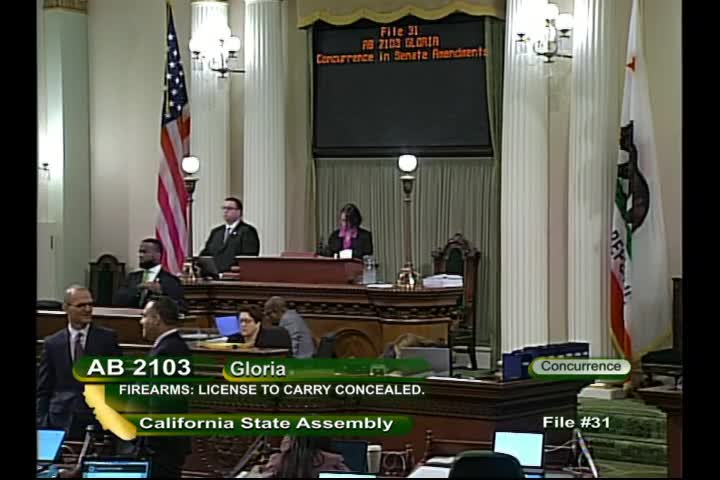 37SEC
Assembly Floor
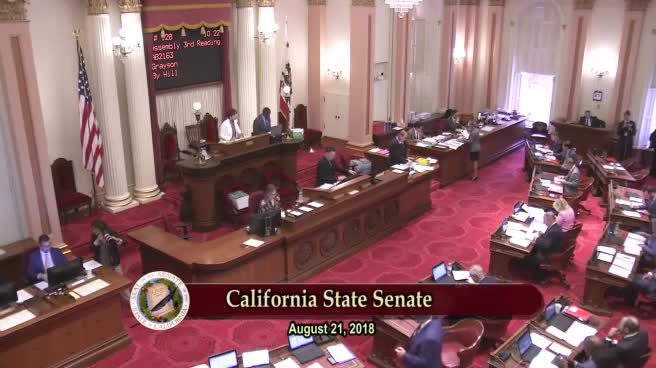 2MIN
Senate Floor
 1MIN
Assembly Floor
 6MIN
Assembly Standing Committee on Judiciary
Bill Author

Bill Co-Author(s):