AB 2388: Employment: minors.
- Session Year: 2017-2018
- House: Assembly
- Latest Version Date: 2018-09-05
Existing law regulates the employment of minors in the entertainment industry and requires the written consent of the Labor Commissioner for a minor under 16 years of age to take part in certain types of employment. Existing law makes it a crime to employ or for a parent or guardian to permit the employment of a minor in violation of these provisions.
Existing law exempts from these employment of a minor provisions the appearance of a minor in a radio or television broadcasting exhibition, if the minor does not receive compensation directly or indirectly, the engagement of the minor is limited to a single appearance lasting not more than one hour, and an admission fee is not charged for the radio broadcasting or television exhibition.
This bill would expand the above described exemption to include digital exhibitions under those conditions.
Existing law regulates the employment of minors in the entertainment industry and requires the written consent of the Labor Commissioner for a minor under 16 years of age to take part in certain types of employment. Existing law makes it a crime to employ or for a parent or guardian to permit the employment of a minor in violation of these provisions.
This bill would, with specified exceptions, include employment of a minor in social media advertising, as defined, within the types of employment subject to the written consent requirement. By expanding the scope of a crime, this bill would impose a state-mandated local program.Existing law exempts from these employment of a minor provisions the appearance of a minor in a radio or television broadcasting exhibition, if the minor does not receive compensation directly or indirectly, the engagement of the minor is limited to a single appearance lasting not more than one hour, and an admission fee is not charged for the radio broadcasting or television exhibition.
This bill would expand the above described exemption to include digital exhibitions under those conditions.
The California Constitution requires the state to reimburse local agencies and school districts for certain costs mandated by the state. Statutory provisions establish procedures for making that reimbursement.This bill would provide that no reimbursement is required by this act for a specified reason.Existing law regulates the employment of minors in the entertainment industry and requires the written consent of the Labor Commissioner for a minor under 16 years of age to take part in certain types of employment. Existing law makes it a crime to employ or for a parent or guardian to permit the employment of a minor in violation of these provisions.
This bill would would, with specified exceptions, include employment of a minor in social media advertising, as defined, within the types of employment subject to the written consent requirement. By expanding the scope of a crime, this bill would impose a state-mandated local program.
Existing law exempts from these employment of a minor provisions the appearance of a minor in a radio or television broadcasting exhibition, if the minor does not receive compensation directly or indirectly, the engagement of the minor is limited to a single appearance lasting not more than one hour, and an admission fee is not charged for the radio broadcasting or television exhibition.
This bill would expand the above described exemption to include digital exhibitions under those conditions.
The California Constitution requires the state to reimburse local agencies and school districts for certain costs mandated by the state. Statutory provisions establish procedures for making that reimbursement.
This bill would provide that no reimbursement is required by this act for a specified reason.
Existing law regulates the employment of minors in the entertainment industry and requires the written consent of the Labor Commissioner for a minor under 16 years of age to take part in certain types of employment. Existing law makes it a crime to employ or for a parent or guardian to permit the employment of a minor in violation of these provisions.
This bill would include employment of a minor in social media advertising, as defined, within the types of employment subject to the written consent requirement. By expanding the scope of a crime, this bill would impose a state-mandated local program.
The California Constitution requires the state to reimburse local agencies and school districts for certain costs mandated by the state. Statutory provisions establish procedures for making that reimbursement.
This bill would provide that no reimbursement is required by this act for a specified reason.
This chapter and Chapter 3 (commencing with Section 1390) do not prohibit or prevent any of the following:
(a)The appearance of any minor in any church, public or religious school, or community entertainment.
(b)The appearance of any minor in any school entertainment or in any entertainment for charity or for children, for which an admission fee is not charged.
(c)The appearance of any minor in any radio or television broadcasting or digital exhibition, if the minor does not receive compensation directly or indirectly therefor, the engagement of the minor is limited to a single appearance lasting not more than one hour, and an admission fee is not charged for the radio or television broadcasting or digital exhibition.
(d)The appearance of any minor at any one event during a calendar year, occurring on a day on which school attendance is not required or on the day preceding such a day, lasting four hours or less, if a parent or guardian of the minor is present, for which the minor does not directly or indirectly receive any compensation.
SEC. 4.No reimbursement is required by this act pursuant to Section 6 of Article XIIIB of the California Constitution because the only costs that may be incurred by a local agency or school district will be incurred because this act creates a new crime or infraction, eliminates a crime or infraction, or changes the penalty for a crime or infraction, within the meaning of Section 17556 of the Government Code, or changes the definition of a crime within the meaning of Section 6 of Article XIIIB of the California Constitution.It is the intent of the Legislature for this chapter to apply to unemancipated minors who are parties to a contract to provide social media advertising, as defined in Section 1308.5 of the Labor Code.
SECTION 1.SEC. 2.Section 1308.5 of the Labor Code is amended to read:1308.5.(a)This section, with the exception of paragraph (4) of this subdivision, shall apply to all minors under the age of 16 years. The written consent of the Labor Commissioner in the form of a permit to employ a minor in the entertainment industry is required for any minor, not otherwise exempted by this chapter, for any of the following:
(1)The employment of a minor, in the presentation of a drama, legitimate play, or in a radio broadcasting or television studio.
(2)The employment of a minor 12 years of age or over in any other performance, concert, or entertainment.
(3)The appearance of a minor over the age of eight years in a performance, concert, or entertainment during the public school vacation.
(4)Allowing a minor between the ages of 8 and 18 years, who is by a law of this state permitted to be employed as an actor, actress, or performer in a theater, motion picture studio, radio broadcasting studio, or television studio, before 10 p.m., in the presentation of a performance, play, or drama continuing from an earlier hour until after 10 p.m., to continue his or her part in this presentation between the hours of 10 p.m. and midnight.
(5)The appearance of a minor in any entertainment which is noncommercial in nature.
(6)The employment of a minor artist in the making of phonograph recordings.
(7)The employment of a minor as an advertising or photographic model.
(8)The employment or appearance of a minor pursuant to a contract approved by the superior court under Chapter 3 (commencing with Section 6750) of Part 3 of Division 11 of the Family Code.
(9)The employment or appearance of a minor in social media advertising. For purposes of this subdivision, social media advertising includes is the use, demonstration, or placement of a product through a social media communication. communication pursuant to a contract with a resident of this state for the promotion of that product. This contract may be for any form of engagement, retention, or employment of a minor, either directly or through third persons or a parent or guardian, and includes a contract with an independent contractor. Social media has the same meaning as in subdivision (a) of Section 980.
(b)Any (1)Except as provided in paragraph (2), a person, or the agent, manager, superintendent, or officer thereof, employing either directly or indirectly through third persons, or a parent or guardian of a minor who employs, or permits a minor to be employed in violation of this section is guilty of a misdemeanor. Failure to produce the written consent from the Labor Commissioner is prima facie evidence of the illegal employment of a minor whose written consent is not produced.
(2)Paragraph (1) shall not apply to either of the following:
(A)A person who contracts with a third person to engage, retain, or employ a minor for social media advertising, as defined in paragraph (9) of subdivision (a), if the contract contains terms of agreement wherein the third person expressly acknowledges and agrees that the contract for the engagement, retention, or employment of the minor requires the signatory on the minors behalf to expressly acknowledge and agree to abide by all state and federal employment laws pertaining to the engagement of minors, including without limitation, Coogan accounts, place of work, and work hours requirements.
(B)A person who contracts with a minor for social media advertising, as defined in paragraph (9) of subdivision (a), by that minor if the services being rendered by the minor are not in any way connected to a motion picture, television series or new media employing the minor and if the contract for the engagement of the minor requires the signatory on the minors behalf to expressly acknowledge and agree, to abide by all state and federal employment laws pertaining to the engagement of minors, including without limitation, Coogan accounts, place of work and work hours requirements.
SEC. 3.Section 1310 of the Labor Code is amended to read:1310.This chapter and Chapter 3 (commencing with Section 1390) do not prohibit or prevent any of the following:
(a)The appearance of any minor in any church, public or religious school, or community entertainment.
(b)The appearance of any minor in any school entertainment or in any entertainment for charity or for children, for which an admission fee is not charged.
(c)The appearance of any minor in any radio or television broadcasting or digital exhibition, if the minor does not receive compensation directly or indirectly therefor, the engagement of the minor is limited to a single appearance lasting not more than one hour, and an admission fee is not charged for the radio broadcasting or television broadcasting or digital exhibition.
(d)The appearance of any minor at any one event during a calendar year, occurring on a day on which school attendance is not required or on the day preceding such a day, lasting four hours or less, if a parent or guardian of the minor is present, for which the minor does not directly or indirectly receive any compensation.
SEC. 2.SEC. 4.No reimbursement is required by this act pursuant to Section 6 of Article XIIIB of the California Constitution because the only costs that may be incurred by a local agency or school district will be incurred because this act creates a new crime or infraction, eliminates a crime or infraction, or changes the penalty for a crime or infraction, within the meaning of Section 17556 of the Government Code, or changes the definition of a crime within the meaning of Section 6 of Article XIIIB of the California Constitution.
(a)This section, with the exception of paragraph (4) of this subdivision, shall apply to all minors under the age of 16 years. The written consent of the Labor Commissioner in the form of a permit to employ a minor in the entertainment industry is required for any minor, not otherwise exempted by this chapter, for any of the following:
(1)The employment of any a minor, in the presentation of any a drama, legitimate play, or in any a radio broadcasting or television studio.
(2)The employment of any a minor 12 years of age or over in any other performance, concert, or entertainment.
(3)The appearance of any a minor over the age of eight years in any a performance, concert, or entertainment during the public school vacation.
(4)Allowing any a minor between the ages of 8 and 18 years, who is by any a law of this state permitted to be employed as an actor, actress, or performer in a theater, motion picture studio, radio broadcasting studio, or television studio, before 10 p.m., in the presentation of a performance, play, or drama continuing from an earlier hour until after 10 p.m., to continue his or her part in such this presentation between the hours of 10 p.m. and midnight.
(5)The appearance of any a minor in any entertainment which is noncommercial in nature.
(6)The employment of any a minor artist in the making of phonograph recordings.
(7)The employment of any a minor as an advertising or photographic model.
(8)The employment or appearance of any a minor pursuant to a contract approved by the superior court under Chapter 3 (commencing with Section 6750) of Part 3 of Division 11 of the Family Code.
(9)The employment of a minor in social media advertising. For purposes of this subdivision, social media advertising includes the use, demonstration, or placement of a product through a social media communication. Social media has the same meaning as in subdivision (a) of Section 980.
(b)Any person, or the agent, manager, superintendent, or officer thereof, employing either directly or indirectly through third persons, or any a parent or guardian of a minor who employs, or permits any a minor to be employed in violation of any of the provisions of this section is guilty of a misdemeanor. Failure to produce the written consent from the Labor Commissioner is prima facie evidence of the illegal employment of any a minor whose written consent is not produced.
SEC. 2.No reimbursement is required by this act pursuant to Section 6 of Article XIIIB of the California Constitution because the only costs that may be incurred by a local agency or school district will be incurred because this act creates a new crime or infraction, eliminates a crime or infraction, or changes the penalty for a crime or infraction, within the meaning of Section 17556 of the Government Code, or changes the definition of a crime within the meaning of Section 6 of Article XIIIB of the California Constitution.
|
Date
|
Status
|
|---|---|
| Sep 5, 2018 | Chaptered by Secretary of State - Chapter 261, Statutes of 2018. |
| Sep 5, 2018 | Approved by the Governor. |
| Aug 24, 2018 | Enrolled and presented to the Governor at 4:30 p.m. |
| Aug 20, 2018 | Senate amendments concurred in. To Engrossing and Enrolling. |
| Aug 14, 2018 | In Assembly. Concurrence in Senate amendments pending. May be considered on or after August 16 pursuant to Assembly Rule 77. |
| Aug 13, 2018 | Read third time. Passed. Ordered to the Assembly. |
| Aug 1, 2018 | Ordered to special consent calendar. |
| Jun 26, 2018 | Read second time. Ordered to third reading. |
| Jun 25, 2018 | Withdrawn from committee. |
| Jun 25, 2018 | In committee: Hearing postponed by committee. |
| Jun 19, 2018 | From committee: Do pass and re-refer to Com. on JUD. (Ayes 5. Noes 0.) (June 19). Re-referred to Com. on JUD. |
| Jun 14, 2018 | From committee chair, with author's amendments: Amend, and re-refer to committee. Read second time, amended, and re-referred to Com. on L. & I.R. |
| Jun 7, 2018 | Referred to Coms. on L. & I.R. and JUD. |
| May 30, 2018 | In Senate. Read first time. To Com. on RLS. for assignment. |
| May 29, 2018 | Read third time. Passed. Ordered to the Senate. |
| May 24, 2018 | Read second time. Ordered to Consent Calendar. |
| May 23, 2018 | From committee: Do pass. To Consent Calendar. (Ayes 16. Noes 0.) (May 23). |
| May 22, 2018 | Re-referred to Com. on APPR. |
| May 21, 2018 | From committee chair, with author's amendments: Amend, and re-refer to Com. on APPR. Read second time and amended. |
| May 2, 2018 | In committee: Hearing postponed by committee. |
| Apr 19, 2018 | From committee: Do pass and re-refer to Com. on APPR. with recommendation: To Consent Calendar. (Ayes 7. Noes 0.) (April 18). Re-referred to Com. on APPR. |
| Apr 4, 2018 | From committee: Do pass and re-refer to Com. on L. & E. (Ayes 6. Noes 0.) (April 4). Re-referred to Com. on L. & E. |
| Mar 1, 2018 | Referred to Coms. on A.,E.,S.,T., & I.M. and L. & E. |
| Feb 15, 2018 | From printer. May be heard in committee March 17. |
| Feb 14, 2018 | Read first time. To print. |
|
Date
|
Description
|
Location
|
Votes
|
|
|---|---|---|---|---|
| Aug 20, 2018 | AB 2388 CHU Concurrence in Senate Amendments | Assembly Floor |
Passed |
|
| Aug 13, 2018 | Special Consent AB2388 | Senate Floor |
Passed |
|
| Jun 19, 2018 | Do pass, but first be re-referred to the Committee on [Judiciary] | Senate Standing Committee on Labor and Industrial Relations |
Passed |
|
| May 29, 2018 | AB 2388 CHU Consent Calendar Second Day Regular Session | Assembly Floor |
Passed |
|
| May 23, 2018 | Do pass. To Consent Calendar. | Assembly Standing Committee on Appropriations |
Passed |
|
| Apr 18, 2018 | Do pass and be re-referred to the Committee on [Appropriations] with recommendation: To Consent Calendar | Assembly Standing Committee on Labor and Employment |
Passed |
|
| Apr 4, 2018 | Do pass and be re-referred to the Committee on [Labor and Employment] | Assembly Standing Committee on Arts, Entertainment, Sports, Tourism, and Internet Media |
Passed |
This list shows positions taken on this bill by organizations on the date displayed, which is linked to the original source.
Positions by individuals are not included.
|
Organization
|
Position
|
Date
|
|---|---|---|
| Bizparentz | ** Support | Apr 16, 2018 |
| Bizparentz Foundation | ** Support | Jun 27, 2018 |
| Motion Picture Association Of America | * Neutral | Apr 4, 2018 |
CONCURRENCE IN SENATE AMENDMENTS
CSA1 Bill Id:AB 2388
Author:(Chu)
As Amended Ver:June 14, 2018
Majority vote
ASSEMBLY: | 78-0 | (May 29, 2018) | SENATE: | 37-0 | (August 13, 2018) |
Original Committee Reference: A.,E.,S.,T., & I.M.
SUMMARY: Would clarify that the labor code sections establishing additional regulations for minors in the entertainment industry do not prohibit minors from appearing in specified digital exhibitions.
The Senate amendments removed the section of this bill which would have regulated social media influencers.
EXISTING LAW:
- Requires that employers obtain the written consent of the Labor Commissioner to employ a minor under the age of 16 in the entertainment industry. (Labor Code Section 1308.5)
- States that the labor code sections establishing additional regulations for minors in the entertainment industry do not prohibit minors from appearing in any radio or television broadcasting exhibition, if the minor does not receive compensation directly or indirectly, the engagement of the minor is limited to a single appearance lasting not more than one hour, and an admission fee is not charged for the radio broadcasting or television exhibition, among other exceptions. (Labor Code Section 1310)
FISCAL EFFECT: None. This bill has been keyed non-fiscal by the Legislative Counsel.
COMMENTS: According to the author, "The California Labor Code has some of the strongest and most protective provisions for child performers engaged in the field of entertainment found anywhere in the world. Within that set of protections for children who are employed, is a provision which recognizes that one time amateur productions which are under one hour in length, for which no one is paid to perform, and no one pays to see, are not 'employment' activities subject to the rigors of the regulatory scheme created for working children. Examples are performing the national anthem at a ball game, singing in a church choir performance which is broadcast on the radio, or a local theater production which is televised.
"Modern media production and exhibition methods have dramatically changed, with the recent advent of digital-based production and online broadcasts necessitating an update in the codes to reflect this new reality. AB 2388 will modernize and clarify the existing exemption for specified and limited performances that are not "employment" under the Labor Code, by adding the term 'digital exhibition.' This language is consistent with efforts of the entertainment industry to update codes."
Analysis Prepared by: Dana Mitchell / A.,E.,S.,T., & I.M. / (916) 319-3450 FN: 0003609
Office of Senate Floor Analyses (916) 651-1520 Fax: (916) 327-4478 | AB |
THIRD READING
Bill No: AB 2388
:
SENATE LABOR & IND. REL. COMMITTEE: 5-0, 6/19/18
AYES: Lara, Stone, Jackson, Mitchell, Wieckowski
ASSEMBLY FLOOR: 78-0, 5/29/18 (Consent) - See last page for vote
DIGEST: This bill clarifies that employers do not have to obtain permission from the Labor Commissioner to employ minors in digital exhibitions, provided the minor is not compensated, the exhibition is limited to one hour and an admission fee is not charged for attendance.
Existing law:
- Requires that employers obtain the written consent of the Labor Commissioner to employ a minor under the age of 16 in the entertainment industry. (Labor Code §1308.5)
- Defines “Entertainment Industry” to include employment in:
- The presentation of drama, legitimate play, or in a radio broadcasting or television studio.
- Any other performance, concert, or entertainment if the minor is over the age of 12
- A performance, concert, or entertainment during the public school vacation if the minor is at least 8 years old.
- Any entertainment which is noncommercial in nature.
- The making of phonograph recordings.
- Advertisement or photographic modeling. (Labor Code §1308.5)
- Specifies which contracts within the entertainment industry are subject to additional regulations when involving a contract with a minor under the age of 16 and designates a person or entity employing or receiving services from the minor to be that minor’s employer. (Family Code §6750)
- Requires that 15% of a minor’s gross earnings pursuant to one of the types of contracts specified by Section 6750 of the Labor Code be set aside by the minor’s employer in a trust, account or savings plan and preserved for the benefit of the minor. (Family Code § 6752)
- Defines “gross earnings” to mean the total compensation payable to the minor under the contract or, if the minor’s services are being rendered through a third-party individual or personal services corporation, the total compensation payable to that third party for the services of the minor. (Family Code §6750)
- Requires the trustee or trustees of a minor to set up a Coogan Trust Fund Account for the benefit of that minor within 7 days of an approved contract being signed, with additional stated specifications within the family code. (Family Code §6753)
- States that the labor code sections establishing additional regulations for minors in the entertainment industry do not prohibit minors from appearing in any radio or television broadcasting exhibition, if the minor does not receive compensation directly or indirectly, the engagement of the minor is limited to a single appearance lasting not more than one hour, and an admission fee is not charged for the radio broadcasting or television exhibition, among other exceptions. (Labor Code §1310)
This bill clarifies that that the labor code sections establishing additional regulations for minors in the entertainment industry do not prohibit minors from appearing in any digital exhibition. The minor must not receive compensation directly or indirectly, the engagement of the minor must be limited to a single appearance lasting not more than one hour, and an admission fee must not be charged for the digital exhibition.
Comments
- Need for this bill? To reflect the increased role that digital media plays in the entertainment industry today, this bill amends the labor code to include “digital” in sections that allow minors to appear in radio or television broadcast exhibitions.
- Lack of Definition of Digital. While this language is intended to clarify existing law surrounding minors in the entertainment industry, without a definition of what constitutes a digital exhibition, the bill could create more uncertainty in this industry. Digital media now includes a wide variety of options, from platforms such as Youtube or Twitch, a video game streaming website, to other forms of social media such as Facebook and Twitter. The author could consider amendments providing a definition of digital, which would remove any potential confusion.
FISCAL EFFECT: Appropriation: Fiscal Com.: Local:
BizParentz Foundation
OPPOSITION: (Verified 6/25/18)
None received
ARGUMENTS IN SUPPORT: Proponents argue that given the changing nature of media and entertainment, code sections that were written before the advent of the internet often become outdated. This bill adds “digital” to labor code sections which allow minors to appear in radio or television broadcast exhibitions. Since these code sections have additional worker protections built into them to prevent exploitative work practices, this language represents a small change that will simply align labor code more with the world today.
ASSEMBLY FLOOR: 78-0, 5/29/18
AYES: Acosta, Aguiar-Curry, Travis Allen, Arambula, Baker, Berman, Bigelow, Bloom, Bonta, Brough, Burke, Caballero, Calderon, Carrillo, Cervantes, Chau, Chávez, Chen, Chiu, Choi, Chu, Cooley, Cooper, Cunningham, Dahle, Daly, Eggman, Flora, Fong, Frazier, Friedman, Gallagher, Cristina Garcia, Eduardo Garcia, Gipson, Gloria, Gonzalez Fletcher, Gray, Grayson, Harper, Holden, Irwin, Jones-Sawyer, Kalra, Kamlager-Dove, Kiley, Lackey, Levine, Limón, Low, Maienschein, Mathis, Mayes, McCarty, Medina, Melendez, Mullin, Muratsuchi, Nazarian, Obernolte, O'Donnell, Patterson, Quirk, Quirk-Silva, Reyes, Rodriguez, Rubio, Salas, Santiago, Steinorth, Mark Stone, Thurmond, Ting, Voepel, Waldron, Weber, Wood, Rendon
6/27/18 10:23:41
**** END ****
SENATE COMMITTEE ON LABOR AND INDUSTRIAL RELATIONS
Senator Ricardo Lara, Chair
2017 - 2018 Regular
Bill No: AB 2388 Hearing Date: June 19, 2018
Author: | Chu | ||
Version: | June 14, 2018 | ||
Urgency: | No | Fiscal: | No |
Consultant: | Jake Ferrera | ||
Subject: Employment: minors.
KEY ISSUE
Should the Legislature clarify that employers do not have to obtain permission from the Labor Commissioner to employ minors in digital exhibitions, provided the minor is not compensated, the exhibition is limited to one hour and an admission fee is not charged for attendance?
ANALYSIS
Existing law
- Requires that employers obtain the written consent of the Labor Commissioner to employ a minor under the age of 16 in the entertainment industry.
(Labor Code §1308.5)
- Defines “Entertainment Industry” to include employment in:
- The presentation of drama, legitimate play, or in a radio broadcasting or television studio.
- Any other performance, concert, or entertainment if the minor is over the age of 12
- A performance, concert, or entertainment during the public school vacation if the minor is at least 8 years old.
- Any entertainment which is noncommercial in nature.
- The making of phonograph recordings.
- Advertisement or photographic modeling.
(Labor Code §1308.5)
- Specifies which contracts within the entertainment industry are subject to additional regulations when involving a contract with a minor under the age of 16 and designates a person or entity employing or receiving services from the minor to be that minor’s employer. (Family Code §6750)
- Requires that 15% of a minor’s gross earnings pursuant to one of the types of contracts specified by Section 6750 of the Labor Code be set aside by the minor’s employer in a trust, account or savings plan and preserved for the benefit of the minor. (Family Code § 6752)
- Defines “gross earnings” to mean the total compensation payable to the minor under the contract or, if the minor’s services are being rendered through a third-party individual or personal services corporation, the total compensation payable to that third party for the services of the minor. (Family Code §6750)
- Requires the trustee or trustees of a minor to set up a Coogan Trust Fund Account for the benefit of that minor within 7 days of an approved contract being signed, with additional stated specifications within the family code. (Family Code §6753)
- States that the labor code sections establishing additional regulations for minors in the entertainment industry do not prohibit minors from appearing in any radio or television broadcasting exhibition, if the minor does not receive compensation directly or indirectly, the engagement of the minor is limited to a single appearance lasting not more than one hour, and an admission fee is not charged for the radio broadcasting or television exhibition, among other exceptions. (Labor Code §1310)
This Bill
- Clarifies that that the labor code sections establishing additional regulations for minors in the entertainment industry do not prohibit minors from appearing in any digital exhibition. The minor must not receive compensation directly or indirectly, the engagement of the minor must be limited to a single appearance lasting not more than one hour, and an admission fee must not be charged for the digital exhibition.
COMMENTS
1. Need for this bill?
To reflect the increased role that digital media plays in the entertainment industry today, this bill amends the labor code to include “digital” in sections that allow minors to appear in radio or television broadcast exhibitions.
- Staff Comments
Lack of Definition of Digital
While this language is intended to clarify existing law surrounding minors in the entertainment industry, without a definition of what constitutes a digital exhibition, the bill could create more uncertainty in this industry. Digital media now includes a wide variety of options, from platforms such as Youtube or Twitch, a video game streaming website, to other forms of social media such as Facebook and Twitter. The author could consider amendments providing a definition of digital, which would remove any potential confusion.
3. Proponent Arguments:
Given the changing nature of media and entertainment, code sections that were written before the advent of the internet often become outdated. This bill adds “digital” to labor code sections which allow minors to appear in radio or television broadcast exhibitions. Since these code sections have additional worker protections built into them to prevent exploitative work practices, this language represents a small change that will simply align labor code more with the world today.
4. Opponent Arguments:
None received.
5. Double Referral
This bill has been double referred and, if approved by this committee, it will be sent to the Senate Judiciary Committee for hearing.
SUPPORT
BizParentz Foundation
OPPOSITION
None on file.
-- END --
SENATE COMMITTEE ON LABOR AND INDUSTRIAL RELATIONS
Senator Ricardo Lara, Chair
2017 - 2018 Regular
Bill No: AB 2388 Hearing Date: June 19, 2018
Author: | Chu | ||
Version: | May 21, 2018 | ||
Urgency: | No | Fiscal: | Yes |
Consultant: | Jake Ferrera | ||
Subject: Employment: minors.
KEY ISSUE
Should the Legislature clarify that employers do not have to obtain permission from the Labor Commissioner to employ minors in digital exhibitions, provided the minor is not compensated, the exhibition is limited to one hour and an admission fee is not charged for attendance?
ANALYSIS
Existing law
- Requires that employers obtain the written consent of the Labor Commissioner to employ a minor under the age of 16 in the entertainment industry.
(Labor Code §1308.5)
- Defines “Entertainment Industry” to include employment in:
- The presentation of drama, legitimate play, or in a radio broadcasting or television studio.
- Any other performance, concert, or entertainment if the minor is over the age of 12
- A performance, concert, or entertainment during the public school vacation if the minor is at least 8 years old.
- Any entertainment which is noncommercial in nature.
- The making of phonograph recordings.
- Advertisement or photographic modeling.
(Labor Code §1308.5)
- Specifies which contracts within the entertainment industry are subject to additional regulations when involving a contract with a minor under the age of 16 and designates a person or entity employing or receiving services from the minor to be that minor’s employer. (Family Code §6750)
- Requires that 15% of a minor’s gross earnings pursuant to one of the types of contracts specified by Section 6750 of the Labor Code be set aside by the minor’s employer in a trust, account or savings plan and preserved for the benefit of the minor. (Family Code § 6752)
- Defines “gross earnings” to mean the total compensation payable to the minor under the contract or, if the minor’s services are being rendered through a third-party individual or personal services corporation, the total compensation payable to that third party for the services of the minor. (Family Code §6750)
- Requires the trustee or trustees of a minor to set up a Coogan Trust Fund Account for the benefit of that minor within 7 days of an approved contract being signed, with additional stated specifications within the family code. (Family Code §6753)
- States that the labor code sections establishing additional regulations for minors in the entertainment industry do not prohibit minors from appearing in any radio or television broadcasting exhibition, if the minor does not receive compensation directly or indirectly, the engagement of the minor is limited to a single appearance lasting not more than one hour, and an admission fee is not charged for the radio broadcasting or television exhibition, among other exceptions. (Labor Code §1310)
This Bill
- Clarifies that that the labor code sections establishing additional regulations for minors in the entertainment industry do not prohibit minors from appearing in any digital exhibition. The minor must not receive compensation directly or indirectly, the engagement of the minor must be limited to a single appearance lasting not more than one hour, and an admission fee must not be charged for the digital exhibition.
COMMENTS
1. Need for this bill?
To reflect the increased role that digital media plays in the entertainment industry today, this bill amends the labor code to include “digital” in sections that allow minors to appear in radio or television broadcast exhibitions.
- Staff Comments
Lack of Definition of Digital
While this language is intended to clarify existing law surrounding minors in the entertainment industry, without a definition of what constitutes a digital exhibition, the bill could create more uncertainty in this industry. Digital media now includes a wide variety of options, from platforms such as Youtube or Twitch, a video game streaming website, to other forms of social media such as Facebook and Twitter. The author could consider amendments providing a definition of digital, which would remove any potential confusion.
3. Proponent Arguments:
Given the changing nature of media and entertainment, code sections that were written before the advent of the internet often become outdated. This bill adds “digital” to labor code sections which allow minors to appear in radio or television broadcast exhibitions. Since these code sections have additional worker protections built into them to prevent exploitative work practices, this language represents a small change that will simply align labor code more with the world today.
4. Opponent Arguments:
None received.
5. Double Referral
This bill has been double referred and, if approved by this committee, it will be sent to the Senate Judiciary Committee for hearing.
SUPPORT
BizParentz Foundation
OPPOSITION
None on file.
-- END --
Date of Hearing: May 23, 2018
ASSEMBLY COMMITTEE ON APPROPRIATIONS
Lorena Gonzalez Fletcher, Chair
ABPCA Bill Id:AB 2388
Author:(Chu) – As Amended Ver:May 21, 2018
Policy Committee: | Arts, Entertainment, Sports, Tourism, and Internet Media | Vote: | 6 - 0 |
Labor and Employment | 7 - 0 |
Urgency: No State Mandated Local Program: Yes Reimbursable: No
SUMMARY:
This bill adds employment of a minor in social media advertising, as defined, to the types of employment subject to the written consent of the Labor Commissioner. Specifically, this bill:
- Defines social media advertising as the use, demonstration, or placement of a product through social media communication pursuant to a contract with a California resident for the promotion of their product.
- Exempts persons who engage third persons to provide social media influencers from the requirements to seek a work permit from the Labor Commissioner for employment of the minor, if specified conditions are met. Provides for all state and federal employment laws pertaining to the engagement of minors to be acknowledged and followed in these cases.
- Exempts persons who engage third persons as social media influencers from the requirements to seek a work permit from the Labor Commissioner for employment of the minor, if specified conditions are met. Provides for all state and federal employment laws pertaining to the engagement of minors to be acknowledged and followed in these cases.
- States legislative intent that existing law, which protects the finances of children by requiring 15% of their earnings be put into a trust, applies to unemancipated minors who are parties to a contract to provide social media advertising, as defined.
FISCAL EFFECT:
Potential increased staff costs to the Department of Industrial Relations of up to $100,000 (Labor Employment Compliance Fund) annually to process additional employment permits.
COMMENTS:
- Purpose. This bill attempts to update the code in the era of social media to better define the types of entertainment for which a work permit is required for a child.
- Background. Current law requires minors to have employment permits to work in specified capacities in the entertainment industry. This bill adds social media advertising, which the bill defines as the use, demonstration, or placement of a product through a social media communication. So-called "social media influencers," including some children, have large social media followings and often get paid large sums to promote products. This bill attempts to modernize code protecting minors who are employed as advertisers, while ensuring existing state and federal protections are maintained.
Analysis Prepared by: Lisa Murawski / APPR. / (916) 319-2081
Date of Hearing: May 2, 2018
ASSEMBLY COMMITTEE ON APPROPRIATIONS
Lorena Gonzalez Fletcher, Chair
ABPCA Bill Id:AB 2388
Author:(Chu) – As Introduced Ver:February 14, 2018
Policy Committee: | Arts, Entertainment, Sports, Tourism, and Internet Media | Vote: | 6 - 0 |
Labor and Employment | 7 - 0 | ||
|
|
Urgency: No State Mandated Local Program: Yes Reimbursable: No
SUMMARY:
This bill adds employment of a minor in social media advertising, as defined, to the types of employment subject to the written consent of the Labor Commissioner.
FISCAL EFFECT:
Potential increased staff costs to the Department of Industrial Relations in the range of $100,000 (Labor Employment Compliance Fund) annually to process additional employment permits. Because this requirement is broad and the concept of social media advertising is fairly amorphous, this estimate is subject to significant uncertainty.
COMMENTS:
- Purpose. This bill attempts to update the code in the era of social media to better define the types of entertainment for which a work permit is required for a child.
- Background. Current law requires minors to have employment permits to work in specified capacities in the entertainment industry. This bill adds social media advertising, which the bill defines as the use, demonstration, or placement of a product through a social media communication. So-called "social media influencers," including some children, have large social media followings and often get paid large sums to promote products.
Analysis Prepared by: Lisa Murawski / APPR. / (916) 319-2081
Date of Hearing: April 18, 2018
ASSEMBLY COMMITTEE ON LABOR AND EMPLOYMENT
Tony Thurmond, Chair
ABPCA Bill Id:AB 2388 (
Author:Chu) – As Introduced Ver:February 14, 2018
SUBJECT: Employment: minors
SUMMARY: Includes employment of a minor in social media advertising, as defined, within the types of employment subject to the written consent of the Labor Commissioner (LC). Specifically, this bill:
- Clarifies that the existing law which requires permission of the Labor Commissioner for employment of minors under 16 years of age applies to employment of a minor in social media advertising.
- Contains the following definitions:
- “Social media advertising” includes the use, demonstration, or placement of a product through a social media communication.
- “Social media” has the same meaning as in subdivision (a) of Section 980, which provides, “social media” means an electronic service or account, or electronic content, including, but not limited to, videos, still photographs, blogs, video blogs, podcasts, instant and text messages, email, online services or accounts, or Internet Web site profiles or locations.
EXISTING LAW:
- Regulates the employment of minors in the entertainment industry and requires the written consent of the LC for a minor under 16 years of age to take part in certain types of employment.
- Makes it a crime to employ or for a parent or guardian to permit the employment of a minor in violation of these provisions.
FISCAL EFFECT: Unknown
COMMENTS: According to the author, “Although existing law regulates the employment of minors in the entertainment industry and requires the written consent of the LC for a minor under 16 years of age to take part in certain types of employment, including, "employment of a minor as an advertising or photographic model,’ it is not well understood that social media influencers are engaged in advertising and therefore are covered under the law.”
Arguments in Support
The BizParentz Foundation writes, “These children deserve the same protections as those professional child performers already covered by California law. This bill accomplishes that by expanding the current definition to include “social media advertising” as a work venue.”
There is no known opposition.
Ongoing discussions regarding the scope of bill
While this legislation has no opposition, concerns have been raised that the language as drafted may encompass activities or actors beyond the author's intention. The author states that he has been working with the Department of Industrial Relations (DIR) and Motion Picture Association of America (MPAA), and others to assure that the structure of the proposed legislation is not overly broad. Toward this end, he has committed to address two specific concerns with future amendments; one is the triggering activity which will bring a person under the scope of the bill, and the other is the responsibility placed on companies who are not in a direct employer relationship with a social media influencer.
With regard to the former, the author is crafting language in consultation with the MPAA and DIR which will provide that the term social media advertising, as defined in the bill, would be clarified to require that social media advertising includes the use, demonstration, or placement of a product pursuant to a contract for the promotion of that product through a social media communication. This change would address concerns that the free goods and services influencers often receive without any agreement attached would be included in the bill.
As to the latter concern, the author is working on language to clarify that entities who engage employment agencies to solicit social media influencers to promote their products, or use independent contractors rather than employees, are not bound by the requirements of this measure so long as they include in their contracts with the agency or independent contractor language which expressly references child labor laws and the need for compliance.
REGISTERED SUPPORT / OPPOSITION:
Support
BizParentz
Opposition
None on file.
Analysis Prepared by: Jennifer Richard / L. & E. /
Date of Hearing: April 4, 2018
ASSEMBLY COMMITTEE ON ARTS, ENTERTAINMENT, SPORTS, TOURISM, AND INTERNET MEDIA
Kansen Chu, Chair
ABPCA Bill Id:AB 2388 (
Author:Chu) – As Introduced Ver:February 14, 2018
SUBJECT: Employment: minors.
SUMMARY: This bill would include employment of a minor in social media advertising, as defined, within the types of employment subject to the written consent of the Labor Commissioner. Specifically, this bill:
- Clarifies that the existing law which requires permission of the Labor Commissioner for employment of minors under 16 years of age applies to employment of a minor in social media advertising.
- Contains the following definitions:
- “Social media advertising” includes the use, demonstration, or placement of a product through a social media communication.
- “Social media” has the same meaning as in subdivision (a) of Section 980, which provides, “social media” means an electronic service or account, or electronic content, including, but not limited to, videos, still photographs, blogs, video blogs, podcasts, instant and text messages, email, online services or accounts, or Internet Web site profiles or locations.
EXISTING LAW:
- Provides in Labor Code 1308, et seq., that for all minors under the age of 16 years the written consent of the Labor Commissioner in the form of a permit to employ a minor in the entertainment industry is required for any minor, as specified, for any of the following:
- The employment of any minor, in the presentation of any drama, legitimate play, or in any radio broadcasting or television studio.
- The employment of any minor 12 years of age or over in any other performance, concert, or entertainment.
- The appearance of any minor over the age of eight years in any performance, concert, or entertainment during the public school vacation.
- The appearance of any minor in any entertainment which is noncommercial in nature.
- The employment of any minor artist in the making of phonograph recordings.
- The employment of any minor as an advertising or photographic model.
- The employment or appearance of any minor pursuant to a contract approved by the superior court under Chapter 3 (commencing with Section 6750) of Part 3 of Division 11 of the Family Code.
2) Further requires a permit for any minor between the ages of 8 and 18 years, who is by any law of this state permitted to be employed as an actor, actress, or performer in a theater, motion picture studio, radio broadcasting studio, or television studio, before 10 p.m., in the presentation of a performance, play, or drama continuing from an earlier hour until after 10 p.m., to continue his or her part in such presentation between the hours of 10 p.m. and midnight.
FISCAL EFFECT: Unknown. This bill is keyed fiscal by the Legislative Counsel.
COMMENTS:
- Author's stated need for legislation: Clarification of existing child performer protections.
According to the author, "The advent of the Internet and the explosive growth of online social media sites such as Instagram, YouTube and Facebook have given rise to a new form of fame based upon 'likes,' 'followers' and 'views.' The most popular social media figures have quickly become the newest tool that marketers employ to advertise their products, due to the huge impact a post on a popular site or promotion of a product by a famous individual such as Kim Kardashian can have on a brand's internet exposure. These social media advertisers are known as "influencers" for their ability to influence consumer behavior.
"A recent FTC crack-down points out that influencers are advertisers. On April 19, 2017 the Federal Trade Commission was forced to send 'educational letters' to 90 social media influencers who had failed to disclose that they were being paid for their posts on social media.
"While famous adults such as Beyoncé and the Kardashians are well known as social media influencers, a large and growing market for kid influencers is gaining attention. A recent New York Times article on kid influencers asks, "Why Isn't Your Toddler Paying The Mortgage?" Cosmopolitan Online ran a story about a 3 year old who earns thousands for every post, has worked with the Kardashians and even walked in New York Fashion Week entitled, "What It's Like to Have an Instagram Famous Child," and a January 2018 Buzzfeed story on the Stauffer family (featuring Mila, a break-out Internet star), wherein InstaMom Katie Stauffer declares she earns more than her husband the doctor, and enough from posting images of her kids to quit her job and focus on her new career as a media mom. In the same article the CEO of an influencer ad agency MediaKix stated, "Instagrammers of her size (Katie Stauffer) can get paid anywhere from $10,000-$20,000 per post…Top Instagrammers with millions of followers can make $500,000 or more in annual income from brand sponsorship."
Although existing law regulates the employment of minors in the entertainment industry and requires the written consent of the Labor Commissioner for a minor under 16 years of age to take part in certain types of employment, including, "employment of a minor as an advertising or photographic model," it is not well understood that social media influencers are engaged in advertising and therefore are covered under the law.
BizParents add in their support for the measure, "As a non-profit organization concerned with the safety of young performers, we recognize that the landscape of advertising has changed. Today, many more children are being employed outside the traditional corporate framework of production companies and studios as their employers. Instead, advertisers are contracting with families directly to post on social media, in hopes of gaining the child's social media following. These child "influencers" can be making significant money for promoting brands or allowing advertising on lnstagram, Facebook, Snapchat, Musical.ly, and Youtube for example.
"This new business model has exciting potential for young performers, but the pitfalls exist. For example:
- Finances: the Stauffer family (AZ residents) have been interviewed repeatedly about the videos of their 3 year old twins, stating that they have received significant advertising per-click revenue, appearance fees, travel and merchandise, yet it does not appear that the children themselves are benefiting from their appearances.
- Education is most often accomplished via homeschooling and is repeatedly noted as a concern for influencer families. This was discussed in a January 2018 Atlantic article, "Raising a Social Media Star: The Parents of Teen Internet Celebrities Get a Crash Course in a New Kind of Fame While Trying to Maintain Boundaries for Their Newly Rich and Powerful Children."
- Physical safety has risen to the top of the list of concerns, highlighted by the murder of social media superstar Christina Grimmie in 2016.
"These children deserve the same protections as those professional child performers already covered by California law. This bill accomplishes that by expanding the current definition to include 'social media advertising' as a work venue."
- Where to draw the line between a child who is "working" and one who is "participating in a documentary type performance" aka being a kid: Reality TV Model.
This day and age there are so many individuals posting images of themselves and their families, including uploads by children themselves, of subjects captured at home or play and not on a set, which are placed onto a social media platform through an account controlled by the subject and/or their parents and not an employer. The question is begged whether these children are "working" which is covered activity under the Labor Code protections for minors in entertainment and Family Code's "Coogan Act," or simply having everyday life documented.
Similar issues raised in the regulation of child performers in reality television programming may be instructive in parsing this issue. The similarities between reality television and social media influencers are many: loose if any scripted content, cameras set up in the home or in family situations rather than on a traditional "set," and working hours which are not defined, to name a few.
In response to concerns about the welfare of children featured on a show entitled Jon and Kate Plus 8, a reality series focused on a large family in Pennsylvania which included toddler sextuplets, the court contrived a test of sorts to determine whether or not the eight Gosslin children were subject to child labor laws. The Pennsylvania Department of Labor and Industry found that the children were in fact "employed" and therefore required work permits based upon the direction they sometimes received, because of their continued and ongoing participation in the series and because the Gosselins and others were paid for the show. (Associated Press, Pennsylvania opts for no legal action against 'Jon & Kate Plus 8' producers over child-labor issue, April 14, 2010 accessed at: http://www.pennlive.com/midstate/index.ssf/2010/04/pennsylvania_opts_for_no_legal.html)
On February 25, 2003, David Gurley, staff attorney for the California Labor Commissioner's Office, issued an opinion letter addressing numerous questions regarding a then-upcoming reality series "The Swap" which would feature rotating families with children of various ages who would be filmed for 10 days per episode. The questions and answers may be instructive to the challenges raised by AB 2388.
Q: How should we define Set, Work, School and R&R? For instance, when shooting a family in the context of their own lives "reality", what is work? If a child is enjoying Rest & Relaxation and we videotape that, does it become work?
A: We look to the Order to determine what is "work". IWC Order 12 section 2(H) defines "hours worked" as: "the time during which an employee is subject to the control of an employer, and includes all the time the employee is suffered or permitted to work, whether or not required to do so."
Once again we are faced with whether or not the director and/or producers are controlling the participant and to what extent. We believe these questions may only be answered by an on set investigation. Without further details, we conclude that any time a participant is being filmed, they are subject to the control of the employer and therefore all filming time will be considered "hours worked." Of course, if a child is truly resting (i.e., sleeping), that time period would not considered hours worked.
Q: Once Work is defined in our case, we need to understand how it applies to documenting our participants. There will be a mixture of spontaneous activities on the part of the families and some preplanned events (e.g., dinner out, bowling, etc.) There will be multiple occasions throughout the day when it would be important to document activities (e.g., sharing household chores, making lunch, doing homework, etc.) Is this an instance where we need to define a Split Call and its application to cumulative Work Time?
A: Again, any time the minor is being filmed other than for bona fide rest periods, will be considered "hours worked."
Q: The videotaping will not be taking place on a traditional Sound Stage, like a Sit-Com, and it seems that much of the structure of Child Labor Law revolves around "Set Time." In this case the "Set" is the children's home, backyard, school, etc.
A: Whether or not the "set" is on a traditional "studio lot" or "on location" is also an insignificant distinction for application of laws governing minors in the entertainment industry... Wherever the participants are being filmed is considered the "set."
(See Gurley, February 25, 2003, Division of Labor Standards Enforcement Legal Division, Opinion Letter-Reality Television: The Swap, accessed at: http://www.thestudioteachers.com/wp-content/uploads/2014/06/Reality-shows_Labor-Laws.pdf)
In looking at the analogous situation of children acting as social media influencers, we find children "working" at home, parents acting on behalf of contracted employers staging videos, feeding their children lines, dressing their toddlers and teens in clothing for compensation and photographing them for various video and social media platforms, all with the expectation and time pressures of a designated number of posts daily. For instance, Katie Stauffer, mother of internet breakout star 3 year old Mila, shared in a recent article, "I have two photos due today that I have to get to advertisers. I haven't taken them and they're due by the end of the day today and it's totally stressing me out." The article continues, "Mila's videos are easily the most profitable…The videos can take as long as three days to make, with Kaitlin feeding Mila lines to repeat." (Smidt, Buzzfeed News, This Mom's full time job is posting to Instagram and this is what it's like, Posted January 25, 2018).
In addition to the apparent application of the Labor Code to the activities of professional social media influencers, the Family Code "Coogan Act" which protects working minors' financial assets would also seem to cover "influencers" income, as its scope reaches earnings through, "use of a person’s likeness, voice recording, performance, or story of or incidents in his or her life, either tangible or intangible, or any rights therein for use in motion pictures, television, the production of sound recordings in any format now known or hereafter devised, the legitimate or living stage, or otherwise in the entertainment field." California Family Code, Section 6750 (a) (2), emphasis added.
3) Ongoing discussions regarding future amendments to focus scope of bill: While this legislation has no opposition, concerns have been raised that the language as drafted may encompass activities or actors beyond the author's intention. The author states that he has been working with the Department of Industrial Relations (DIR) and Motion Picture Association of America (MPAA), and others to assure that the structure of the proposed legislation is not overly broad. Toward this end, he has committed to address two specific concerns with future amendments; one is the triggering activity which will bring a person under the scope of the bill, and the other is the responsibility placed on companies who are not in a direct employer relationship with a social media influencer.
With regard to the former, the author is crafting language in consultation with the MPAA and DIR which will provide that the term social media advertising, as defined in the bill, would be clarified to require that social media advertising includes the use, demonstration, or placement of a product pursuant to a contract for the promotion of that product through a social media communication. This change would address concerns that the free goods and services influencers often receive without any agreement attached would be included in the bill.
As to the latter concern, the author is working on language to clarify that entities who engage employment agencies to solicit social media influencers to promote their products, or use independent contractors rather than employees, are not bound by the requirements of this measure so long as they include in their contracts with the agency or independent contractor language which expressly references child labor laws and the need for compliance.
4) Double-referral: Should this bill pass out of this committee, it will be re-referred to the Assembly Committee on Labor and Employment.
REGISTERED SUPPORT / OPPOSITION:
Support
BizParentz
Opposition
There is no opposition on file.
Analysis Prepared by: Dana Mitchell / A.,E.,S.,T., & I.M. / (916) 319-3450
Discussed in Hearing
 1MIN
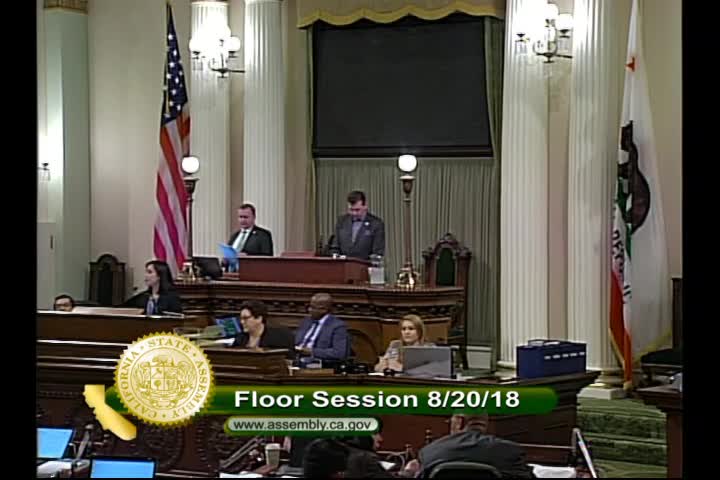
Assembly Floor
 1MIN
Senate Standing Committee on Labor and Industrial Relations
 3MIN
Assembly Standing Committee on Arts, Entertainment, Sports, Tourism, and Internet Media
Bill Author

Bill Co-Author(s):