AB 2447: California Environmental Quality Act: land use: environmental justice.
- Session Year: 2017-2018
- House: Assembly
- Latest Version Date: 2018-09-04
The California Environmental Quality Act (CEQA) requires a lead agency, as defined, to prepare, or cause to be prepared, and certify the completion of an environmental impact report (EIR) on a project that it proposes to carry out or approve that may have a significant effect on the environment or to adopt a negative declaration if it finds that the project will not have that effect. CEQA also requires a lead agency to prepare a mitigated negative declaration for a project that may have a significant effect on the environment if revisions in the project would avoid or mitigate that effect and there is no substantial evidence that the project, as revised, would have a significant effect on the environment. CEQA prohibits a lead agency from approving or carrying out a project for which a certified EIR identifies one or more significant effects on the environment unless the lead agency makes certain findings.
This bill would, except as provided, require a lead agency that is preparing an EIR or a negative declaration to provide certain notices required by CEQA to owners and occupants of property located within 1/2 mile of any parcel or parcels, and to any schools located within one mile of any parcel or parcels, on which is located a project involving an industrial or equivalent land use, as defined, within a disadvantaged community or within 1/2 mile of a disadvantaged community. The bill would also require the lead agency to provide those notices to those entities for a project involving the adoption of municipal regulations, zoning, or land use designations that authorize an industrial or equivalent land use within a disadvantaged community or within 1/2 mile of a disadvantaged community. The bill would require the lead agency to call at least one scoping meeting for those projects, as provided. The bill would require the lead agency to provide a specified notice in English and in other languages, as provided. Because the bill would impose additional duties on a lead agency, this bill would impose a state-mandated local program.
This bill would require the Office of Environmental Health Hazard Assessment to publish a specified map relating to disadvantaged communities no later than June 30, 2019, and to update the map, as specified.
The California Constitution requires the state to reimburse local agencies and school districts for certain costs mandated by the state. Statutory provisions establish procedures for making that reimbursement.
This bill would provide that no reimbursement is required by this act for a specified reason.
The California Environmental Quality Act (CEQA) requires a lead agency, as defined, to prepare, or cause to be prepared, and certify the completion of an environmental impact report (EIR) on a project that it proposes to carry out or approve that may have a significant effect on the environment or to adopt a negative declaration if it finds that the project will not have that effect. CEQA also requires a lead agency to prepare a mitigated negative declaration for a project that may have a significant effect on the environment if revisions in the project would avoid or mitigate that effect and there is no substantial evidence that the project, as revised, would have a significant effect on the environment. CEQA prohibits a lead agency from approving or carrying out a project for which a certified EIR identifies one or more significant effects on the environmental unless the lead agency makes certain findings.
This bill would, except as provided, require a lead agency that is preparing an EIR or a negative declaration to provide certain notices required by CEQA to owners and occupants of property located within1/2 mile of any parcel or parcels, and to any schools located within one mile of any parcel or parcels, on which is located a project involving a subject an industrial or equivalent land use, as defined. defined, within a disadvantaged community or within 1/2 mile of a disadvantaged community. The bill would also require the lead agency to provide those notices to those entities for a project involving the adoption of municipal regulations, zoning, or land use designations that authorize an industrial or equivalent land use within a disadvantaged community or within 1/2 mile of a disadvantaged community. The bill would require the lead agency to call at least one scoping meeting for those projects, as provided. The bill would require the lead agency to provide a specified notice in English and in other languages, as provided. Because the bill would impose additional duties on a lead agency, this bill would impose a state-mandated local program.
This bill would require the Office of Environmental Health Hazard Assessment to publish a specified map relating to disadvantaged communities no later than June 30, 2019, and to update the map, as specified.
The California Constitution requires the state to reimburse local agencies and school districts for certain costs mandated by the state. Statutory provisions establish procedures for making that reimbursement.
This bill would provide that no reimbursement is required by this act for a specified reason.
The California Environmental Quality Act (CEQA) requires a lead agency, as defined, to prepare, or cause to be prepared, and certify the completion of, of an environmental impact report (EIR) on a project that it proposes to carry out or approve that may have a significant effect on the environment or to adopt a negative declaration if it finds that the project will not have that effect. CEQA also requires a lead agency to prepare a mitigated negative declaration for a project that may have a significant effect on the environment if revisions in the project would avoid or mitigate that effect and there is no substantial evidence that the project, as revised, would have a significant effect on the environment. CEQA prohibits a lead agency from approving or carrying out a project for which a certified EIR identifies one or more significant effects on the environmental unless the lead agency makes certain findings.
This bill would, except as provided, require a lead agency that is preparing an EIR or a negative declaration to provide certain notices required by CEQA to owners and occupants of property located within1/2 mile of any parcel or parcels, and to any schools located within one mile of any parcel or parcels, on which is located a project involving a subject land use, as defined, for projects for which environmental review commences on or after July 1, 2019. defined. The bill would require the lead agency to call at least one scoping meeting for those projects, as provided. The bill would require the lead agency to provide a specified notice in English and in other languages, as provided. Because the bill would impose additional duties on a lead agency, this bill would impose a state-mandated local program.
This bill would require the Office of Environmental Health Hazard Assessment to publish a specified map relating to disadvantaged communities no later than June 30, 2019, and to update the map, as specified.
The California Constitution requires the state to reimburse local agencies and school districts for certain costs mandated by the state. Statutory provisions establish procedures for making that reimbursement.
This bill would provide that no reimbursement is required by this act for a specified reason.
The California Environmental Quality Act (CEQA) requires a lead agency, as defined, to prepare, or cause to be prepared, and certify the completion of, an environmental impact report (EIR) on a project that it proposes to carry out or approve that may have a significant effect on the environment or to adopt a negative declaration if it finds that the project will not have that effect. CEQA also requires a lead agency to prepare a mitigated negative declaration for a project that may have a significant effect on the environment if revisions in the project would avoid or mitigate that effect and there is no substantial evidence that the project, as revised, would have a significant effect on the environment. CEQA prohibits a lead agency from approving or carrying out a project for which a certified EIR identifies one or more significant effects on the environmental unless the lead agency makes certain findings.
This bill would require the Office of Environmental Health Hazard Assessment, by June 30, 2019, to publish a list of subject land uses, as specified, and a map that identifies disadvantaged communities and areas within a 1/2 mile radius of the disadvantaged communities. The bill would would, except as provided, require a lead agency that is preparing an EIR or a negative declaration to provide certain notices required by CEQA to owners and occupants of property located within one-half1/2 mile of any parcel or parcels, and to any schools located within one mile of any parcel or parcels, on which is located a project involving a subject land use. use, as defined, for projects for which environmental review commences on or after July 1, 2019. The bill would require the lead agency to call at least one scoping meeting for those projects, as provided. The bill would apply these requirements to projects for which environmental review commences on or after July 1, 2019. require the lead agency to provide a specified notice in English and in other languages, as provided. Because the bill would impose additional duties on a lead agency, this bill would impose a state-mandated local program.
The California Constitution requires the state to reimburse local agencies and school districts for certain costs mandated by the state. Statutory provisions establish procedures for making that reimbursement.
This bill would provide that no reimbursement is required by this act for a specified reason.
The California Environmental Quality Act (CEQA) requires a lead agency, as defined, to prepare, or cause to be prepared, and certify the completion of, an environmental impact report (EIR) on a project that it proposes to carry out or approve that may have a significant effect on the environment or to adopt a negative declaration if it finds that the project will not have that effect. CEQA also requires a lead agency to prepare a mitigated negative declaration for a project that may have a significant effect on the environment if revisions in the project would avoid or mitigate that effect and there is no substantial evidence that the project, as revised, would have a significant effect on the environment. CEQA prohibits a lead agency from approving or carrying out a project for which a certified EIR identifies one or more significant effects on the environmental unless the lead agency makes certain findings.
This bill would require the Office of Environmental Health Hazard Assessment, by June 30, 2019, to publish a list of subject land uses, as specified, and a map that identifies disadvantaged communities and areas within a 1/2 mile radius of the disadvantaged communities. The bill would require a lead agency that is preparing an EIR or a negative declaration to provide certain notices required by CEQA to owners and occupants of property located within one-half mile of any parcel or parcels, and to any schools located within one mile of any parcel or parcels, on which is located a project involving a subject land use. The bill would require the lead agency to call at least one scoping meeting for those projects, as provided. The bill would apply these requirements to projects for which environmental review commences on or after July 1, 2019. Because the bill would impose additional duties on a lead agency, this bill would impose a state-mandated local program.
The California Constitution requires the state to reimburse local agencies and school districts for certain costs mandated by the state. Statutory provisions establish procedures for making that reimbursement.
This bill would provide that no reimbursement is required by this act for a specified reason.
The California Environmental Quality Act (CEQA) requires a lead agency, as defined, to prepare, or cause to be prepared, and certify the completion of, an environmental impact report (EIR) on a project that it proposes to carry out or approve that may have a significant effect on the environment or to adopt a negative declaration if it finds that the project will not have that effect. CEQA also requires a lead agency to prepare a mitigated negative declaration for a project that may have a significant effect on the environment if revisions in the project would avoid or mitigate that effect and there is no substantial evidence that the project, as revised, would have a significant effect on the environment. CEQA prohibits a lead agency from approving or carrying out a project for which a certified EIR identifies one or more significant effects on the environmental unless the lead agency makes certain findings.
This bill would require the Office of Environmental Health Hazard Assessment, by June 30, 2019, to publish a list of subject land uses, as specified, and a map that identifies disadvantaged communities and areas within 1/2 a 1/2 mile radius of the disadvantaged communities. The bill would require a lead agency to provide certain notices required by CEQA to owners and occupants of property located within one-half mile of any parcel or parcels, and to any schools located within one mile of any parcel or parcels, on which is located a project involving a subject land use. The bill would require the lead agency to call at least one scoping meeting for those projects, as provided. The bill would additionally require a lead agency, before certifying an EIR or adopting a negative declaration or mitigated negative declaration for a project involving a subject land use, to make a finding that the approval of the project does not constitute intentional discrimination, or result in a discriminatory effect, on protected classes of person, as provided. The bill would apply these requirements to projects for which environmental review commences on or after July 1, 2019. Because the bill would impose additional duties on a lead agency, this bill would impose a state-mandated local program.
The California Constitution requires the state to reimburse local agencies and school districts for certain costs mandated by the state. Statutory provisions establish procedures for making that reimbursement.
This bill would provide that no reimbursement is required by this act for a specified reason.
The California Environmental Quality Act (CEQA) requires a lead agency, as defined, to prepare, or cause to be prepared, and certify the completion of, an environmental impact report (EIR) on a project that it proposes to carry out or approve that may have a significant effect on the environment or to adopt a negative declaration if it finds that the project will not have that effect. CEQA also requires a lead agency to prepare a mitigated negative declaration for a project that may have a significant effect on the environment if revisions in the project would avoid or mitigate that effect and there is no substantial evidence that the project, as revised, would have a significant effect on the environment. CEQA prohibits a lead agency from approving or carrying out a project for which a certified EIR identifies one or more significant effects on the environmental unless the lead agency makes certain findings.
This bill would require the Office of Environmental Health Hazard Assessment, by June 30, 2019, to publish a list of subject land uses, as specified, and a map that identifies disadvantaged communities and areas within 1/2 mile radius of the disadvantaged communities. The bill would require a lead agency to provide certain notices required by CEQA to owners and occupants of property located within one-half mile of any parcel or parcels, and to any schools located within one mile of any parcel or parcels, on which is located a project involving a subject land use. The bill would require the lead agency to call at least one scoping meeting for those projects, as provided. The bill would additionally require a lead agency, before approving or carrying out certifying an EIR or adopting a negative declaration or mitigated negative declaration for a project involving a subject land use, to make a finding that the approval of the project does not constitute intentional discrimination, or result in a discriminatory effect, on protected classes of person, as provided. The bill would apply these requirements to projects for which environmental review commences on or after July 1, 2019. Because the bill would impose additional duties on a lead agency, this bill would impose a state-mandated local program.
The California Constitution requires the state to reimburse local agencies and school districts for certain costs mandated by the state. Statutory provisions establish procedures for making that reimbursement.
This bill would provide that no reimbursement is required by this act for a specified reason.
The California Environmental Quality Act (CEQA) requires a lead agency, as defined, to prepare, or cause to be prepared, and certify the completion of, an environmental impact report (EIR) on a project that it proposes to carry out or approve that may have a significant effect on the environment or to adopt a negative declaration if it finds that the project will not have that effect. CEQA also requires a lead agency to prepare a mitigated negative declaration for a project that may have a significant effect on the environment if revisions in the project would avoid or mitigate that effect and there is no substantial evidence that the project, as revised, would have a significant effect on the environment. CEQA prohibits a lead agency from approving or carrying out a project for which a certified EIR identifies one or more significant effects on the environmental unless the lead agency makes certain findings.
This bill would require the Office of Environmental Health Hazard Assessment, by June 30, 2019, to publish a list of subject land uses, as specified, and a map that identifies disadvantaged communities and areas within 1/2 mile radius of the disadvantaged communities. The bill would require a lead agency to provide certain notices required by CEQA to owners and occupants of property located within one-half mile of any parcel or parcels, and to any schools located within one mile of any parcel or parcels, on which is located a project involving a subject land use. The bill would additionally require a lead agency, before approving or carrying out a project involving a subject land use, to make a finding that the approval of the project does not constitute intentional discrimination, or result in a discriminatory effect, on protected classes of person, as provided. The bill would apply these requirements to projects for which environmental review commences on or after July 1, 2019. Because the bill would impose additional duties on a lead agency, this bill would impose a state-mandated local program.
The California Constitution requires the state to reimburse local agencies and school districts for certain costs mandated by the state. Statutory provisions establish procedures for making that reimbursement.
This bill would provide that no reimbursement is required by this act for a specified reason.
The Planning and Zoning Law authorizes the legislative body of any county or city to adopt ordinances regulating zoning within its jurisdiction, as specified. This bill would express the intent of the Legislature to enact legislation that would protect environmentally vulnerable and economically disadvantaged communities from further degradation caused by the negative impacts of certain potentially harmful land uses.The Planning and Zoning Law authorizes the legislative body of any county or city to adopt ordinances regulating zoning within its jurisdiction, as specified.
This bill would express the intent of the Legislature to enact legislation that would protect environmentally vulnerable and economically disadvantaged communities from further degradation caused by the negative impacts of certain potentially harmful land uses.
(a)It is the intent of the Legislature that the appropriate state agencies coordinate to determine the characteristics of land uses that impact public health and impact environmental justice communities.
(b)It is the intent of the Legislature that public agencies in implementing the Vulnerable Communities Inclusion Act (Chapter 2.8 (commencing with Section 21099.50) of Division 13 of the Public Resources Code) consider environmental and health impacts equivalent to those in industrial areas.
SEC. 2.This act shall be known, and may be cited, as the Vulnerable Communities Inclusion Act.
SEC. 3.Section 21083.9 of the Public Resources Code is amended to read:21083.9.(a)Notwithstanding Section 21080.4, 21104, or 21153, a lead agency shall call at least one scoping meeting for either of the following:
(1)A proposed project that may affect highways or other facilities under the jurisdiction of the Department of Transportation if the meeting is requested by the department. The lead agency shall call the scoping meeting as soon as possible, but not later than 30 days after receiving the request from the Department of Transportation.
(2)A project of statewide, regional, or areawide significance.
(b)The lead agency shall provide notice of at least one scoping meeting held pursuant to paragraph (2) of subdivision (a) to all of the following:
(1)A county or city that borders on a county or city within which the project is located, unless otherwise designated annually by agreement between the lead agency and the county or city.
(2)A responsible agency.
(3)A public agency that has jurisdiction by law with respect to the project.
(4)A transportation planning agency or public agency required to be consulted pursuant to Section 21092.4.
(5)A public agency, organization, or individual who has filed a written request for the notice.
(c)For a public agency, organization, or individual that is required to be provided notice of a lead agency public meeting, the requirement for notice of a scoping meeting pursuant to subdivision (b) may be met by including the notice of a scoping meeting in the public meeting notice.
(d)A scoping meeting that is held in the city or county within which the project is located pursuant to the federal National Environmental Policy Act of 1969 (42 U.S.C. Sec. 4321 et seq.) and the regulations adopted pursuant to that act shall be deemed to satisfy the requirement that a scoping meeting be held for a project subject to paragraph (2) of subdivision (a) if the lead agency meets the notice requirements of subdivision (b) or subdivision (c).
(e)The referral of a proposed action to adopt or substantially amend a general plan to a city or county pursuant to paragraph (1) of subdivision (a) of Section 65352 of the Government Code may be conducted concurrently with the scoping meeting required pursuant to this section, and the city or county may submit its comments as provided pursuant to subdivision (b) of that section at the scoping meeting.
(f)The requirement for a scoping meeting for a project described in paragraph (2) of subdivision (a) is satisfied if a scoping meeting is held pursuant to Section 21099.52.
SEC. 4.Section 21092 of the Public Resources Code is amended to read:21092.(a)A lead agency that is preparing an environmental impact report or a negative declaration or making a determination pursuant to subdivision (c) of Section 21157.1 shall provide public notice of that fact within a reasonable period of time prior to certification of the environmental impact report, adoption of the negative declaration, or making the determination pursuant to subdivision (c) of Section 21157.1.
(b)(1)The notice shall specify the period during which comments will be received on the draft environmental impact report or negative declaration, and shall include the date, time, and place of any public meetings or hearings on the proposed project, a brief description of the proposed project and its location, the significant effects on the environment, if any, anticipated as a result of the project, the address where copies of the draft environmental impact report or negative declaration, and all documents referenced in the draft environmental impact report or negative declaration, are available for review, and a description of how the draft environmental impact report or negative declaration can be provided in an electronic format.
(2)This section shall not be construed in any manner that results in the invalidation of an action because of the alleged inadequacy of the notice content if there has been substantial compliance with the notice content requirements of this section.
(3)The notice required by this section shall be given to the last known name and address of all organizations and individuals who have previously requested notice, and shall also be given by at least one of the following procedures:
(A)Publication, no fewer times than required by Section 6061 of the Government Code, by the public agency in a newspaper of general circulation in the area affected by the proposed project. If more than one area will be affected, the notice shall be published in the newspaper of largest circulation from among the newspapers of general circulation in those areas.
(B)Posting of notice by the lead agency onsite and offsite in the area where the project is to be located.
(C)Direct mailing to the owners and occupants of contiguous property shown on the latest equalized assessment roll.
(c)For a project involving the burning of municipal wastes, hazardous waste, or refuse-derived fuel, including, but not limited to, tires, meeting the qualifications of subdivision (d), notice shall be given to all organizations and individuals who have previously requested notice and shall also be given by at least the procedures specified in subparagraphs (A), (B), and (C) of paragraph (3) of subdivision (b). In addition, notification shall be given by direct mailing to the owners and occupants of property within one-fourth of a mile of any parcel or parcels on which is located a project subject to this subdivision.
(d)The notice requirements of subdivision (c) apply to both of the following:
(1)The construction of a new facility.
(2)The expansion of an existing facility that burns hazardous waste which would increase its permitted capacity by more than 10 percent. For purposes of this paragraph, the amount of expansion of an existing facility shall be calculated by comparing the proposed facility capacity with whichever of the following is applicable:
(A)The facility capacity approved in the facilitys hazardous waste facilities permit pursuant to Section 25200 of the Health and Safety Code or its grant of interim status pursuant to Section 25200.5 of the Health and Safety Code, or the facility capacity authorized in any state or local agency permit allowing the construction or operation of a facility for the burning of hazardous waste, granted before January 1, 1990.
(B)The facility capacity authorized in the facilitys original hazardous waste facilities permit, grant of interim status, or any state or local agency permit allowing the construction or operation of a facility for the burning of hazardous waste, granted on or after January 1, 1990.
(e)(1)For a project that is subject to Section 21099.52, the lead agency shall give notice to all organizations and individuals who have previously requested notice and shall also give notice by at least the procedures specified in subparagraphs (A), (B), and (C) of paragraph (3) of subdivision (b). In addition, the lead agency shall give notice by direct mailing to the owners and occupants of property within one-half mile of any parcel or parcels on which is located a project subject to this subdivision and to all schools located within one mile of any parcel or parcels on which is located a project subject to this subdivision. In addition to English, the notice provided pursuant to this subdivision shall be provided in all threshold languages, as defined in Section 21099.50.
(2)This subdivision does not apply to a project that has a notice of preparation, or a notice of negative declaration or mitigated negative declaration, filed before July 1, 2019, or to the evaluation of any changes or new information about that project pursuant to Section 21166.
(3)This subdivision shall not be construed in a manner that results in the invalidation of an action due to the lead agencys alleged inadequacy in meeting the notice requirements of this subdivision if the lead agency has substantially complied with the notice requirement of this section.
(f)The notice requirements specified in subdivision (b) or (c) shall not preclude a public agency from providing additional notice by other means if the agency so desires, or from providing the public notice required by this section at the same time and in the same manner as public notice otherwise required by law for the project.
SEC. 5.Chapter 2.8 (commencing with Section 21099.50) is added to Division 13 of the Public Resources Code, to read:2.8.Vulnerable Communities Inclusion Act21099.50.For purposes of this chapter, the following definitions apply:
(a)Disadvantaged community means a community identified as a disadvantaged community pursuant to Section 39711 of the Health and Safety Code.
(b)(1)Where the lead agency is a local agency, industrial or equivalent land use means a land use that is identified as, or falls within the definition of, an industrial or equivalent land use in the city or county ordinance of the local jurisdiction in which the land use is proposed, as that ordinance read on August 1, 2018.
(2)Where the lead agency is a state agency, industrial or equivalent land use means a land use for which the primary purpose is manufacturing.
(3)Industrial or equivalent land use does not include any of the following:
(A)A project undertaken by a public water supplier or public agency for the conveyance, production, storage, impoundment, or treatment of safe and reliable water, such as recycled water, wastewater, and stormwater, to serve a disadvantaged community.
(B)A project undertaken by a public agency for the provision of safe and reliable energy or sanitary sewer service to a disadvantaged community.
(C)A residential or mixed-use residential land use.
(c)Threshold language means a language for the geographical area in which a project is located as identified by the Department of Health Care Services in its most recent determination required pursuant to subdivision (b) of Section 14029.91 of the Welfare and Institutions Code.
21099.51.(a)No later than June 30, 2019, the Office of Environmental Health Hazard Assessment shall publish a map that does both of the following:
(1)Identifies disadvantaged communities identified pursuant to Section 39711 of the Health and Safety Code.
(2)Identifies areas within one-half mile radius of a disadvantaged community.
(b)The Office of Environmental Health Hazard Assessment shall update the map required pursuant to subdivision (a) concurrently with any revisions to the identification of disadvantaged communities required pursuant to Section 39711 of the Health and Safety Code.
21099.52.(a)A lead agency shall call at least one scoping meeting for a project that will be analyzed in a negative declaration, mitigated negative declaration, or an environmental impact report and that involves either of the following:
(1)The siting, expansion, or intensification of an industrial or equivalent land use or the construction of a structure designed or intended for an industrial or equivalent land use within a disadvantaged community or within one-half mile of a disadvantaged community, as determined by reference to the map published pursuant to Section 21099.51.
(2)The adoption of municipal regulations, zoning, or land use designations that authorize an industrial or equivalent land use within a disadvantaged community or within one-half mile of a disadvantaged community, as determined by reference to the map published pursuant to Section 21099.51.
(b)(1)The lead agency shall mail or deliver notice of the scoping meeting to all of the following:
(A)Entities specified in paragraphs (1) to (5), inclusive, of subdivision (b) of Section 21083.9.
(B)All owners and occupants of properties located within one-half mile of the project site.
(C)All schools located within one mile of the project site.
(2)The notice shall include all of the following:
(A)A brief description of the proposed project and its location.
(B)The date, time, and location of the scoping meeting for the project.
(C)A brief description of the purpose of the scoping meeting.
(D)A description of how additional information or materials relating to the project may be obtained.
(E)A description of any other opportunities for the public to provide written and oral comments on the project and how written and oral comments may be provided to the lead agency.
(3)In addition to English, the notice provided pursuant to subparagraph (B) or (C) of paragraph (1) shall be provided in all threshold languages.
(c)(1)(A)The lead agency shall conduct a scoping meeting at a location within one mile of the project site.
(B) If, after making a good faith effort, the lead agency is unable to secure a location for the scoping meeting within one mile of the project site, the lead agency may hold the meeting at another location that meets both of the following requirements:
(i)The meeting location is readily accessible to residents of disadvantaged communities located within one-half mile of the project site.
(ii)The meeting location is located within one-half mile of a transit stop if feasible.
(2)If the scoping meeting is held on a weekday, the scoping meeting shall be held between the hours of 5 p.m. and 8 p.m.
(d)At the scoping meeting, the lead agency shall do both of the following:
(1)Provide a description of the project and any information known about the projects potential environmental impacts.
(2)Take public comments regarding potential environmental impacts of the project, including any social and economic impacts related to a direct or indirect physical change caused by the project, project alternatives, and mitigation measures that would avoid or reduce any potentially significant environmental impacts.
(e)The lead agency shall make an audio or audio-visual recording of the scoping meeting. Oral and written comments obtained at the scoping meeting conducted pursuant to this section shall be deemed a part of the record of proceedings and shall be considered by the lead agency prior to the approval of the project.
(f)This section shall not be construed in a manner that results in the invalidation of an action due to the lead agencys alleged inadequacy in meeting the notice requirements of this section if the lead agency has substantially complied with the notice requirements of this section.
21099.53.The lead agency may consolidate the notices and meetings required pursuant to Section 21099.52 with other appropriate notices and meetings that are required pursuant to this division.
21099.54.This chapter does not apply to a project that has a notice of preparation, or a notice of negative declaration or mitigated negative declaration, filed before July 1, 2019, or the evaluation of any changes or new information about that project pursuant to Section 21166.
SEC. 6.No reimbursement is required by this act pursuant to Section 6 of Article XIIIB of the California Constitution because a local agency or school district has the authority to levy service charges, fees, or assessments sufficient to pay for the program or level of service mandated by this act, within the meaning of Section 17556 of the Government Code.
(a)It is the intent of the Legislature that the appropriate state agencies coordinate to determine the characteristics of land uses that impact public health and impact environmental justice communities.
(b)It is the intent of the Legislature that public agencies in implementing the Vulnerable Communities Inclusion Act (Chapter 2.8 (commencing with Section 21099.50) of Division 13 of the Public Resources Code) consider environmental and health impacts equivalent to those in industrial areas.
SEC. 2.This act shall be known, and may be cited, as the Vulnerable Communities Inclusion Act.
SEC. 3.Section 21083.9 of the Public Resources Code is amended to read:21083.9.(a)Notwithstanding Section 21080.4, 21104, or 21153, a lead agency shall call at least one scoping meeting for either of the following:
(1)A proposed project that may affect highways or other facilities under the jurisdiction of the Department of Transportation if the meeting is requested by the department. The lead agency shall call the scoping meeting as soon as possible, but not later than 30 days after receiving the request from the Department of Transportation.
(2)A project of statewide, regional, or areawide significance.
(b)The lead agency shall provide notice of at least one scoping meeting held pursuant to paragraph (2) of subdivision (a) to all of the following:
(1)A county or city that borders on a county or city within which the project is located, unless otherwise designated annually by agreement between the lead agency and the county or city.
(2)A responsible agency.
(3)A public agency that has jurisdiction by law with respect to the project.
(4)A transportation planning agency or public agency required to be consulted pursuant to Section 21092.4.
(5)A public agency, organization, or individual who has filed a written request for the notice.
(c)For a public agency, organization, or individual that is required to be provided notice of a lead agency public meeting, the requirement for notice of a scoping meeting pursuant to subdivision (b) may be met by including the notice of a scoping meeting in the public meeting notice.
(d)A scoping meeting that is held in the city or county within which the project is located pursuant to the federal National Environmental Policy Act of 1969 (42 U.S.C. Sec. 4321 et seq.) and the regulations adopted pursuant to that act shall be deemed to satisfy the requirement that a scoping meeting be held for a project subject to paragraph (2) of subdivision (a) if the lead agency meets the notice requirements of subdivision (b) or subdivision (c).
(e)The referral of a proposed action to adopt or substantially amend a general plan to a city or county pursuant to paragraph (1) of subdivision (a) of Section 65352 of the Government Code may be conducted concurrently with the scoping meeting required pursuant to this section, and the city or county may submit its comments as provided pursuant to subdivision (b) of that section at the scoping meeting.
(f)The requirement for a scoping meeting for a project described in paragraph (2) of subdivision (a) is satisfied if a scoping meeting is held pursuant to Section 21099.52.
SEC. 3.SEC. 4.Section 21092 of the Public Resources Code is amended to read:21092.(a)A lead agency that is preparing an environmental impact report or a negative declaration or making a determination pursuant to subdivision (c) of Section 21157.1 shall provide public notice of that fact within a reasonable period of time prior to certification of the environmental impact report, adoption of the negative declaration, or making the determination pursuant to subdivision (c) of Section 21157.1.
(b)(1)The notice shall specify the period during which comments will be received on the draft environmental impact report or negative declaration, and shall include the date, time, and place of any public meetings or hearings on the proposed project, a brief description of the proposed project and its location, the significant effects on the environment, if any, anticipated as a result of the project, the address where copies of the draft environmental impact report or negative declaration, and all documents referenced in the draft environmental impact report or negative declaration, are available for review, and a description of how the draft environmental impact report or negative declaration can be provided in an electronic format.
(2)This section shall not be construed in any manner that results in the invalidation of an action because of the alleged inadequacy of the notice content if there has been substantial compliance with the notice content requirements of this section.
(3)The notice required by this section shall be given to the last known name and address of all organizations and individuals who have previously requested notice, and shall also be given by at least one of the following procedures:
(A)Publication, no fewer times than required by Section 6061 of the Government Code, by the public agency in a newspaper of general circulation in the area affected by the proposed project. If more than one area will be affected, the notice shall be published in the newspaper of largest circulation from among the newspapers of general circulation in those areas.
(B)Posting of notice by the lead agency onsite and offsite in the area where the project is to be located.
(C)Direct mailing to the owners and occupants of contiguous property shown on the latest equalized assessment roll.
(c)For a project involving the burning of municipal wastes, hazardous waste, or refuse-derived fuel, including, but not limited to, tires, meeting the qualifications of subdivision (d), notice shall be given to all organizations and individuals who have previously requested notice and shall also be given by at least the procedures specified in subparagraphs (A), (B), and (C) of paragraph (3) of subdivision (b). In addition, notification shall be given by direct mailing to the owners and occupants of property within one-fourth of a mile of any parcel or parcels on which is located a project subject to this subdivision.
(d)The notice requirements of subdivision (c) apply to both of the following:
(1)The construction of a new facility.
(2)The expansion of an existing facility that burns hazardous waste which would increase its permitted capacity by more than 10 percent. For purposes of this paragraph, the amount of expansion of an existing facility shall be calculated by comparing the proposed facility capacity with whichever of the following is applicable:
(A)The facility capacity approved in the facilitys hazardous waste facilities permit pursuant to Section 25200 of the Health and Safety Code or its grant of interim status pursuant to Section 25200.5 of the Health and Safety Code, or the facility capacity authorized in any state or local agency permit allowing the construction or operation of a facility for the burning of hazardous waste, granted before January 1, 1990.
(B)The facility capacity authorized in the facilitys original hazardous waste facilities permit, grant of interim status, or any state or local agency permit allowing the construction or operation of a facility for the burning of hazardous waste, granted on or after January 1, 1990.
(e)(1)For a project that is subject to Chapter 2.8 (commencing with Section 21099.50), Section 21099.52, the lead agency shall give notice to all organizations and individuals who have previously requested notice and shall also give notice by at least the procedures specified in subparagraphs (A), (B), and (C) of paragraph (3) of subdivision (b). In addition, the lead agency shall give notice by direct mailing to the owners and occupants of property within one-half mile of any parcel or parcels on which is located a project subject to this subdivision and to all schools located within one mile of any parcel or parcels on which is located a project subject to this subdivision. In addition to English, the notice provided pursuant to this subdivision shall be provided in all threshold languages, as defined in Section 1810.410 of Title 9 of the California Code of Regulations. 21099.50.
(2)This subdivision does not apply to a project that has a notice of preparation, or a notice of negative declaration or mitigated negative declaration, filed before July 1, 2019, or to the evaluation of any changes or new information about that project pursuant to Section 21166.
(3)This subdivision shall not be construed in a manner that results in the invalidation of an action due to the lead agencys alleged inadequacy in meeting the notice requirements of this subdivision if the lead agency has substantially complied with the notice requirement of this section.
(f)The notice requirements specified in subdivision (b) or (c) shall not preclude a public agency from providing additional notice by other means if the agency so desires, or from providing the public notice required by this section at the same time and in the same manner as public notice otherwise required by law for the project.
SEC. 4.SEC. 5.Chapter 2.8 (commencing with Section 21099.50) is added to Division 13 of the Public Resources Code, to read:2.8.Vulnerable Communities Inclusion Act21099.50.For purposes of this chapter, the following definitions apply:
(a)Disadvantaged community means a community identified as a disadvantaged community pursuant to Section 39711 of the Health and Safety Code.
(b)(1)Project means a project for which the lead agency is preparing an environmental impact report or negative declaration that includes either of the following:(A)The siting, expansion, or intensification of a subject land use or the construction of a structure designed or intended for subject land use.(B)The adoption of municipal regulations, zoning, or land use designations that authorize a subject land use.(2)Project does not include either of the following:(A)A project undertaken by a public agency for the conveyance of safe and reliable energy or drinking water to a disadvantaged community.(B)A residential or mixed-use residential land use.(c)Subject land use means a land use that meets both of the following criteria:(A)Is identified(b)(1)Where the lead agency is a local agency, industrial or equivalent land use means a land use that is identified as, or falls within the definition of, an industrial or equivalent land use in the city or county ordinance of the local jurisdiction in which the land use is proposed, as that ordinance read on August 1, 2018.
(B)(i)Is located within a disadvantaged community or within one-half mile of a disadvantaged community.(ii)Whether a land use is located within a disadvantaged community or within one-half mile of a disadvantaged community shall be determined by reference to the map created by the Office of Environmental Health Hazard Assessment, upon publication, pursuant to Section 21099.51.(2)Where the lead agency is a state agency, industrial or equivalent land use means a land use for which the primary purpose is manufacturing.
(3)Industrial or equivalent land use does not include any of the following:
(A)A project undertaken by a public water supplier or public agency for the conveyance, production, storage, impoundment, or treatment of safe and reliable water, such as recycled water, wastewater, and stormwater, to serve a disadvantaged community.
(B)A project undertaken by a public agency for the provision of safe and reliable energy or sanitary sewer service to a disadvantaged community.
(C)A residential or mixed-use residential land use.
(d)(c)Threshold language means a language for the geographical area in which a project is located as identified by the Department of Health Care Services in its most recent determination required pursuant to subdivision (b) of Section 14029.91 of the Welfare and Institutions Code.
21099.51.(a)No later than June 30, 2019, the Office of Environmental Health Hazard Assessment shall publish a map that does both of the following:
(1)Identifies disadvantaged communities identified pursuant to Section 39711 of the Health and Safety Code.
(2)Identifies areas within one-half mile radius of a disadvantaged community.
(b)The Office of Environmental Health Hazard Assessment shall update the map required pursuant to subdivision (a) concurrently with any revisions to the identification of disadvantaged communities required pursuant to Section 39711 of the Health and Safety Code.
21099.52.(a)Notwithstanding Section 21080.4, 21104, or 21153, a A lead agency shall call at least one scoping meeting for a project. project that will be analyzed in a negative declaration, mitigated negative declaration, or an environmental impact report and that involves either of the following:
(1)The siting, expansion, or intensification of an industrial or equivalent land use or the construction of a structure designed or intended for an industrial or equivalent land use within a disadvantaged community or within one-half mile of a disadvantaged community, as determined by reference to the map published pursuant to Section 21099.51.
(2)The adoption of municipal regulations, zoning, or land use designations that authorize an industrial or equivalent land use within a disadvantaged community or within one-half mile of a disadvantaged community, as determined by reference to the map published pursuant to Section 21099.51.
(b)(1)The lead agency shall mail or deliver notice of the scoping meeting to all of the following:
(A)Entities specified in paragraphs (1) to (5), inclusive, of subdivision (b) of Section 21083.9.
(B)All owners and occupants of properties located within one-half mile of the project site.
(C)All schools located within one mile of the project site.
(2)The notice shall include all of the following:
(A)A brief description of the proposed project and its location.
(B)The date, time, and location of the scoping meeting for the project.
(C)A brief description of the purpose of the scoping meeting.
(D)A description of how additional information or materials relating to the project may be obtained.
(E)A description of any other opportunities for the public to provide written and oral comments on the project and how written and oral comments may be provided to the lead agency.
(3)In addition to English, the notice provided pursuant to subparagraph (B) or (C) of paragraph (1) shall be provided in all threshold languages.
(c)(1)(A)The lead agency shall conduct a scoping meeting at a location within one mile of the project site.
(B) If, after making a good faith effort, the lead agency is unable to secure a location for the scoping meeting within one mile of the project site, the lead agency may hold the meeting at another location that meets both of the following requirements:
(i)The meeting location is readily accessible to residents of disadvantaged communities located within one-half mile of the project site.
(ii)The meeting location is located within one-half mile of a transit stop if feasible.
(2)If the scoping meeting is held on a weekday, the scoping meeting shall be held between the hours of 5 p.m. and 8 p.m.
(d)At the scoping meeting, the lead agency shall do both of the following:
(1)Provide a description of the project and any information known about the projects potential environmental impacts.
(2)Take public comments regarding potential project impacts, environmental impacts of the project, including any social and economic impacts related to a direct or indirect physical change caused by the project, project alternatives, and mitigation measures that would avoid or reduce any project potentially significant environmental impacts.
(e)The lead agency shall make an audio or audio-visual recording of the scoping meeting. Oral and written comments obtained at the scoping meeting conducted pursuant to this section shall be deemed a part of the record of proceedings and shall be considered by the lead agency prior to the approval of the project.
(f)This section shall not be construed in a manner that results in the invalidation of an action due to the lead agencys alleged inadequacy in meeting the notice requirements of this section if the lead agency has substantially complied with the notice requirements of this section.
21099.53.The lead agency may consolidate the notices and meetings required pursuant to Section 21099.52 with other appropriate notices and meetings that are required pursuant to this division.
21099.54.This chapter does not apply to a project that has a notice of preparation, or a notice of negative declaration or mitigated negative declaration, filed before July 1, 2019, or the evaluation of any changes or new information about that project pursuant to Section 21166.
SEC. 5.SEC. 6.No reimbursement is required by this act pursuant to Section 6 of Article XIIIB of the California Constitution because a local agency or school district has the authority to levy service charges, fees, or assessments sufficient to pay for the program or level of service mandated by this act, within the meaning of Section 17556 of the Government Code.
(a)It is the intent of the Legislature that the appropriate state agencies coordinate to determine the characteristics of land uses that impact public health and impact environmental justice communities.
(b)It is the intent of the Legislature that public agencies in implementing the Vulnerable Communities Inclusion Act (Chapter 2.8 (commencing with Section 21099.50) of Division 13 of the Public Resources Code) consider environmental and health impacts equivalent to those in industrial areas.
SECTION 1.SEC. 2.This act shall be known, and may be cited, as the Vulnerable Communities Inclusion Act.
SEC. 2.SEC. 3.Section 21092 of the Public Resources Code is amended to read:21092.(a)A lead agency that is preparing an environmental impact report or a negative declaration or making a determination pursuant to subdivision (c) of Section 21157.1 shall provide public notice of that fact within a reasonable period of time prior to certification of the environmental impact report, adoption of the negative declaration, or making the determination pursuant to subdivision (c) of Section 21157.1.
(b)(1)The notice shall specify the period during which comments will be received on the draft environmental impact report or negative declaration, and shall include the date, time, and place of any public meetings or hearings on the proposed project, a brief description of the proposed project and its location, the significant effects on the environment, if any, anticipated as a result of the project, the address where copies of the draft environmental impact report or negative declaration, and all documents referenced in the draft environmental impact report or negative declaration, are available for review, and a description of how the draft environmental impact report or negative declaration can be provided in an electronic format.
(2)This section shall not be construed in any manner that results in the invalidation of an action because of the alleged inadequacy of the notice content if there has been substantial compliance with the notice content requirements of this section.
(3)The notice required by this section shall be given to the last known name and address of all organizations and individuals who have previously requested notice, and shall also be given by at least one of the following procedures:
(A)Publication, no fewer times than required by Section 6061 of the Government Code, by the public agency in a newspaper of general circulation in the area affected by the proposed project. If more than one area will be affected, the notice shall be published in the newspaper of largest circulation from among the newspapers of general circulation in those areas.
(B)Posting of notice by the lead agency onsite and offsite in the area where the project is to be located.
(C)Direct mailing to the owners and occupants of contiguous property shown on the latest equalized assessment roll.
(c)For a project involving the burning of municipal wastes, hazardous waste, or refuse-derived fuel, including, but not limited to, tires, meeting the qualifications of subdivision (d), notice shall be given to all organizations and individuals who have previously requested notice and shall also be given by at least the procedures specified in subparagraphs (A), (B), and (C) of paragraph (3) of subdivision (b). In addition, notification shall be given by direct mailing to the owners and occupants of property within one-fourth of a mile of any parcel or parcels on which is located a project subject to this subdivision.
(d)The notice requirements of subdivision (c) apply to both of the following:
(1)The construction of a new facility.
(2)The expansion of an existing facility that burns hazardous waste which would increase its permitted capacity by more than 10 percent. For purposes of this paragraph, the amount of expansion of an existing facility shall be calculated by comparing the proposed facility capacity with whichever of the following is applicable:
(A)The facility capacity approved in the facilitys hazardous waste facilities permit pursuant to Section 25200 of the Health and Safety Code or its grant of interim status pursuant to Section 25200.5 of the Health and Safety Code, or the facility capacity authorized in any state or local agency permit allowing the construction or operation of a facility for the burning of hazardous waste, granted before January 1, 1990.
(B)The facility capacity authorized in the facilitys original hazardous waste facilities permit, grant of interim status, or any state or local agency permit allowing the construction or operation of a facility for the burning of hazardous waste, granted on or after January 1, 1990.
(e)(1)For a project that is subject to Chapter 2.8 (commencing with Section 21099.50), the lead agency shall give notice to all organizations and individuals who have previously requested notice and shall also give notice by at least the procedures specified in subparagraphs (A), (B), and (C) of paragraph (3) of subdivision (b). In addition, the lead agency shall give notice by direct mailing to the owners and occupants of property within one-half mile of any parcel or parcels on which is located a project subject to this subdivision and to all schools located within one mile of any parcel or parcels on which is located a project subject to this subdivision. In addition to English, the notice provided pursuant to this subdivision shall be provided in all threshold languages, as defined in Section 1810.410 of Title 9 of the California Code of Regulations.
(2)This subdivision applies to a project for which an environmental review is commenced on or after July 1, 2019.(f)The notice requirements specified in subdivision (b) or (c) shall not preclude a public agency from providing additional notice by other means if the agency so desires, or from providing the public notice required by this section at the same time and in the same manner as public notice otherwise required by law for the project.
SEC. 3.SEC. 4.Chapter 2.8 (commencing with Section 21099.50) is added to Division 13 of the Public Resources Code, to read:2.8.Vulnerable Communities Inclusion Act21099.50.For purposes of this chapter, the following definitions apply:
(a)Disadvantaged community means a community identified as a disadvantaged community pursuant to Section 39711 of the Health and Safety Code.
(b)(1)Project means a project for which the lead agency is preparing an environmental impact report or negative declaration that includes either of the following:
(A)The siting, expansion, construction, or intensification of a subject land use. use or the construction of a structure designed or intended for subject land use.
(B)The adoption of municipal regulations, zoning, or land use designations that authorize a subject land use.
(2)Project does not include a project undertaken by a public agency for the conveyance of safe and reliable energy or drinking water to a disadvantaged community. either of the following:
(A)A project undertaken by a public agency for the conveyance of safe and reliable energy or drinking water to a disadvantaged community.
(B)A residential or mixed-use residential land use.
(c)Subject land use means a land use that is identified as, or falls within the definition of, an industrial or similar land use by the city or county ordinance of the local jurisdiction in which the land use is proposed and that is located within one-half mile of a disadvantaged community. meets both of the following criteria:
(A)Is identified as, or falls within the definition of, an industrial or equivalent land use in the city or county ordinance of the local jurisdiction in which the land use is proposed, as that ordinance read on August 1, 2018.
(B)(i)Is located within a disadvantaged community or within one-half mile of a disadvantaged community.
(ii)Whether a land use is located within a disadvantaged community or within one-half mile of a disadvantaged community shall be determined by reference to the map created by the Office of Environmental Health Hazard Assessment, upon publication, pursuant to Section 21099.51.
(d)Threshold language has the same definition as set forth in Section 1810.410 of Title 9 of the California Code of Regulations.(d)Threshold language means a language for the geographical area in which a project is located as identified by the Department of Health Care Services in its most recent determination required pursuant to subdivision (b) of Section 14029.91 of the Welfare and Institutions Code.
21099.51.(a)In addition to any notices required pursuant to this division, a lead agency that is preparing an environmental impact report or negative declaration for a project shall do both of the following:(1)Provide a notice of application to the last known name and address of all organizations and individuals who have previously requested notice.(2)Provide a notice of application, by direct mail, to the owners and occupants of property located within one-half mile of any parcel or parcels, and to any schools located within one mile of any parcel or parcels, on which is located a project subject to this section.(b)The notice shall include all of the following:(1)A brief description of the project and its location.(2)A description of any opportunities to provide oral or written comments on the project.(3)A description of how oral and written comments on the project may be provided to the lead agency.(4)A description of how additional information or materials relating to the project may be obtained.(c)In addition to English, the notice shall be provided in all threshold languages.(d)The notice required pursuant to this section shall be provided within a reasonable period of time prior to certification of the environmental impact report or adoption of the negative declaration.21099.51.(a)No later than June 30, 2019, the Office of Environmental Health Hazard Assessment shall publish a map that does both of the following:
(1)Identifies disadvantaged communities identified pursuant to Section 39711 of the Health and Safety Code.
(2)Identifies areas within one-half mile radius of a disadvantaged community.
(b)The Office of Environmental Health Hazard Assessment shall update the map required pursuant to subdivision (a) concurrently with any revisions to the identification of disadvantaged communities required pursuant to Section 39711 of the Health and Safety Code.
21099.52.(a)Notwithstanding Section 21080.4, 21104, or 21153, a lead agency shall call at least one scoping meeting for a project.
(b)(1)The lead agency shall mail or deliver notice of the scoping meeting to all of the following:
(A)Entities specified in paragraphs (1) to (5), inclusive, of subdivision (b) of Section 21083.9.
(B)All owners and occupants of properties located within one-half mile of the project site.
(C)All schools located within one mile of the project site.
(2)The notice shall include all of the following:
(A)A brief description of the proposed project and its location.
(B)The date, time, and location of the scoping meeting for the project.
(C)A brief description of the purpose of the scoping meeting.
(D)Any other opportunities for the public to provide written and oral comments on the project.(D)A description of how additional information or materials relating to the project may be obtained.
(E)A description of any other opportunities for the public to provide written and oral comments on the project and how written and oral comments may be provided to the lead agency.
(3)In addition to English, the notice provided pursuant to subparagraph (B) or (C) of paragraph (1) shall be provided in all threshold languages.
(c)(1)(A)The lead agency shall conduct a scoping meeting at a location within one mile of the project site.
(B) If, after making a good faith effort, the lead agency is unable to secure a location for the scoping meeting within one mile of the project site, the lead agency may hold the meeting at another location that meets both of the following requirements:
(i)The meeting location is readily accessible to residents of disadvantaged communities located in or next to within one-half mile of the project site.
(ii)The meeting location is located within one-half mile of a transit stop. stop if feasible.
(2)If the scoping meeting is held on a weekday, the scoping meeting shall be held between the hours of 5 p.m. and 8 p.m.
(d)At the scoping meeting, the lead agency shall do both of the following:
(1)Provide a description of the project and any information known about the projects potential environmental impacts.
(2)Take public comments regarding potential project impacts, project alternatives, and mitigation measures that would avoid or reduce any project impacts.
(e)The lead agency shall make an audio or audio-visual recording of the scoping meeting. Oral and written comments obtained at the scoping meeting conducted pursuant to this section shall be deemed a part of the record of proceedings and shall be considered by the lead agency prior to the approval of the project.
(f)This section shall not be construed in a manner that results in the invalidation of an action due to the lead agencys alleged inadequacy in meeting the notice requirements of this section if the lead agency has substantially complied with the notice requirements of this section.
21099.53.The lead agency may consolidate the notices required pursuant to Section 21099.52 or 21099.53 with other appropriate notices that are required pursuant to this division.
SEC. 4.SEC. 5.No reimbursement is required by this act pursuant to Section 6 of Article XIIIB of the California Constitution because a local agency or school district has the authority to levy service charges, fees, or assessments sufficient to pay for the program or level of service mandated by this act, within the meaning of Section 17556 of the Government Code.
This act shall be known, and may be cited, as the Vulnerable Communities Inclusion Act.
SECTION 1.SEC. 2.Section 21092 of the Public Resources Code is amended to read:21092.(a)A lead agency that is preparing an environmental impact report or a negative declaration or making a determination pursuant to subdivision (c) of Section 21157.1 shall provide public notice of that fact within a reasonable period of time prior to certification of the environmental impact report, adoption of the negative declaration, or making the determination pursuant to subdivision (c) of Section 21157.1.
(b)(1)The notice shall specify the period during which comments will be received on the draft environmental impact report or negative declaration, and shall include the date, time, and place of any public meetings or hearings on the proposed project, a brief description of the proposed project and its location, the significant effects on the environment, if any, anticipated as a result of the project, the address where copies of the draft environmental impact report or negative declaration, and all documents referenced in the draft environmental impact report or negative declaration, are available for review, and a description of how the draft environmental impact report or negative declaration can be provided in an electronic format.
(2)This section shall not be construed in any manner that results in the invalidation of an action because of the alleged inadequacy of the notice content if there has been substantial compliance with the notice content requirements of this section.
(3)The notice required by this section shall be given to the last known name and address of all organizations and individuals who have previously requested notice, and shall also be given by at least one of the following procedures:
(A)Publication, no fewer times than required by Section 6061 of the Government Code, by the public agency in a newspaper of general circulation in the area affected by the proposed project. If more than one area will be affected, the notice shall be published in the newspaper of largest circulation from among the newspapers of general circulation in those areas.
(B)Posting of notice by the lead agency onsite and offsite in the area where the project is to be located.
(C)Direct mailing to the owners and occupants of contiguous property shown on the latest equalized assessment roll.
(c)For a project involving the burning of municipal wastes, hazardous waste, or refuse-derived fuel, including, but not limited to, tires, meeting the qualifications of subdivision (d), notice shall be given to all organizations and individuals who have previously requested notice and shall also be given by at least the procedures specified in subparagraphs (A), (B), and (C) of paragraph (3) of subdivision (b). In addition, notification shall be given by direct mailing to the owners and occupants of property within one-fourth of a mile of any parcel or parcels on which is located a project subject to this subdivision.
(d)The notice requirements of subdivision (c) apply to both of the following:
(1)The construction of a new facility.
(2)The expansion of an existing facility that burns hazardous waste which would increase its permitted capacity by more than 10 percent. For purposes of this paragraph, the amount of expansion of an existing facility shall be calculated by comparing the proposed facility capacity with whichever of the following is applicable:
(A)The facility capacity approved in the facilitys hazardous waste facilities permit pursuant to Section 25200 of the Health and Safety Code or its grant of interim status pursuant to Section 25200.5 of the Health and Safety Code, or the facility capacity authorized in any state or local agency permit allowing the construction or operation of a facility for the burning of hazardous waste, granted before January 1, 1990.
(B)The facility capacity authorized in the facilitys original hazardous waste facilities permit, grant of interim status, or any state or local agency permit allowing the construction or operation of a facility for the burning of hazardous waste, granted on or after January 1, 1990.
(e)(1)For a project that is subject to Chapter 2.8 (commencing with Section 21099.50), the lead agency shall give notice to all organizations and individuals who have previously requested notice and shall also give notice by at least the procedures specified in subparagraphs (A), (B), and (C) of paragraph (3) of subdivision (b). In addition, the lead agency shall give notice by direct mailing to the owners and occupants of property within one-half mile of any parcel or parcels on which is located a project subject to this subdivision and to all schools located within one mile of any parcel or parcels on which is located a project subject to this subdivision. In addition to English, the notice provided pursuant to this subdivision shall be provided in all threshold languages, as defined in Section 1810.410 of Title 9 of the California Code of Regulations.
(2)This subdivision applies to a project for which an environmental review is commenced on or after July 1, 2019.
(f)The notice requirements specified in subdivision (b) or (c) shall not preclude a public agency from providing additional notice by other means if the agency so desires, or from providing the public notice required by this section at the same time and in the same manner as public notice otherwise required by law for the project.
SEC. 2.SEC. 3.Chapter 2.8 (commencing with Section 21099.50) is added to Division 13 of the Public Resources Code, to read:2.8.Special Requirements for Subject Land Uses Vulnerable Communities Inclusion Act21099.50.For purposes of this chapter, the following definitions apply:
(a)Disadvantaged community means a community identified as a disadvantaged community pursuant to Section 39711 of the Health and Safety Code.
(b)(1)Project means a project for which the lead agency is preparing an environmental impact report or negative declaration that includes either of the following:
(1)(A)The siting, expansion, construction, or intensification of a subject land use.
(2)(B)The adoption of municipal regulations, zoning, or land use designations that authorize a subject land use.
(2)Project does not include a project undertaken by a public agency for the conveyance of safe and reliable energy or drinking water to a disadvantaged community.
(c)Subject land use means a land use identified in the list published pursuant to Section 21099.51 that is identified as, or falls within the definition of, an industrial or similar land use by the city or county ordinance of the local jurisdiction in which the land use is proposed and that is located within one-half mile of a disadvantaged community.
(d)Threshold language has the same definition as set forth in Section 1810.410 of Title 9 of the California Code of Regulations.
21099.51.No later than June 30, 2019, the Office of Environmental Health Hazard Assessment shall do both of the following:(a)(1)Publish a map that identifies disadvantaged communities and areas within one-half mile radius surrounding the disadvantaged communities.(2)The Office of Environmental Health Hazard Assessment shall update the map concurrently with any revisions of the identification of disadvantaged communities made pursuant to Section 39711 of the Health and Safety Code.(b)(1)Publish a list of industrial or similar land uses, that contain or produce onsite or offsite criteria air pollutant or toxic air contaminants, water contamination, or hazardous materials that can lead to, or are associated with, negative public health effects.(2)The Office of Environmental Health Hazard Assessment shall not list any residential or mixed-use residential land uses.21099.52.21099.51.(a)In addition to any notices required pursuant to this division, a lead agency that is preparing an environmental impact report or negative declaration for a project shall do both of the following:
(1)Provide a notice of application to the last known name and address of all organizations and individuals who have previously requested notice.
(2)Provide a notice of application, by direct mail, to the owners and occupants of property located within one-half mile of any parcel or parcels, and to any schools located within one mile of any parcel or parcels, on which is located a project subject to this section.
(b)The notice shall include all of the following:
(1)A brief description of the project and its location.
(2)A description of any opportunities to provide oral or written comments on the project.
(3)A description of how oral and written comments on the project may be provided to the lead agency.
(4)A description of how additional information or materials relating to the project may be obtained.
(c)In addition to English, the notice shall be provided in all threshold languages.
(d)The notice required pursuant to this section shall be provided within a reasonable period of time prior to certification of the environmental impact report or adoption of the negative declaration.
(e)This section applies to a project for which the environmental review commences on or after July 1, 2019.21099.53.21099.52.(a)Notwithstanding Section 21080.4, 21104, or 21153, a lead agency shall call at least one scoping meeting for a project.
(b)(1)The lead agency shall mail or deliver notice of the scoping meeting to all of the following:
(A)Entities specified in paragraphs (1) to (5), inclusive, of subdivision (b) of Section 21083.9.
(B)All owners and occupants of properties located within one-half mile of the project site.
(C)All schools located within one mile of the project site.
(2)The notice shall include all of the following:
(A)A brief description of the proposed project and its location.
(B)The date, time, and location of the scoping meeting for the project.
(C)A brief description of the purpose of the scoping meeting.
(D)Any other opportunities for the public to provide written and oral comments on the project.
(3)In addition to English, the notice provided pursuant to subparagraph (B) or (C) of paragraph (1) shall be provided in all threshold languages.
(c)(1)(A)The lead agency shall conduct a scoping meeting at a location within one mile of the project site.
(B) If, after making a good faith effort, the lead agency is unable to secure a location for the scoping meeting within one mile of the project site, the lead agency may hold the meeting at another location that meets both of the following requirements:
(i)The meeting location is readily accessible to residents of disadvantaged communities located in or next to the project site.
(ii)The meeting location is located within one-half mile of a transit stop.
(2)If the scoping meeting is held on a weekday, the scoping meeting shall be held between the hours of 5 p.m. and 8 p.m.
(d)At the scoping meeting, the lead agency shall do both of the following:
(1)Provide a description of the project and any information known about the projects potential environmental impacts.
(2)Take public comments regarding potential project impacts, project alternatives, and mitigation measures that would avoid or reduce any project impacts.
(e)The lead agency shall make an audio or audio-visual recording of the scoping meeting. Oral and written comments obtained at the scoping meeting conducted pursuant to this section shall be deemed a part of the record of proceedings and shall be considered by the lead agency prior to the approval of the project.
(f)This section applies to a project for which the environmental review commences on or after July 1, 2019.21099.54.21099.53.The lead agency may consolidate the notices required pursuant to Section 21099.52 or 21099.53 with other appropriate notices that are required pursuant to this division.
SEC. 3.SEC. 4.No reimbursement is required by this act pursuant to Section 6 of Article XIIIB of the California Constitution because a local agency or school district has the authority to levy service charges, fees, or assessments sufficient to pay for the program or level of service mandated by this act, within the meaning of Section 17556 of the Government Code.
(a)A lead agency that is preparing an environmental impact report or a negative declaration or making a determination pursuant to subdivision (c) of Section 21157.1 shall provide public notice of that fact within a reasonable period of time prior to certification of the environmental impact report, adoption of the negative declaration, or making the determination pursuant to subdivision (c) of Section 21157.1.
(b)(1)The notice shall specify the period during which comments will be received on the draft environmental impact report or negative declaration, and shall include the date, time, and place of any public meetings or hearings on the proposed project, a brief description of the proposed project and its location, the significant effects on the environment, if any, anticipated as a result of the project, the address where copies of the draft environmental impact report or negative declaration, and all documents referenced in the draft environmental impact report or negative declaration, are available for review, and a description of how the draft environmental impact report or negative declaration can be provided in an electronic format.
(2)This section shall not be construed in any manner that results in the invalidation of an action because of the alleged inadequacy of the notice content if there has been substantial compliance with the notice content requirements of this section.
(3)The notice required by this section shall be given to the last known name and address of all organizations and individuals who have previously requested notice, and shall also be given by at least one of the following procedures:
(A)Publication, no fewer times than required by Section 6061 of the Government Code, by the public agency in a newspaper of general circulation in the area affected by the proposed project. If more than one area will be affected, the notice shall be published in the newspaper of largest circulation from among the newspapers of general circulation in those areas.
(B)Posting of notice by the lead agency onsite and offsite in the area where the project is to be located.
(C)Direct mailing to the owners and occupants of contiguous property shown on the latest equalized assessment roll.
(c)For a project involving the burning of municipal wastes, hazardous waste, or refuse-derived fuel, including, but not limited to, tires, meeting the qualifications of subdivision (d), notice shall be given to all organizations and individuals who have previously requested notice and shall also be given by at least the procedures specified in subparagraphs (A), (B), and (C) of paragraph (3) of subdivision (b). In addition, notification shall be given by direct mailing to the owners and occupants of property within one-fourth of a mile of any parcel or parcels on which is located a project subject to this subdivision.
(d)The notice requirements of subdivision (c) apply to both of the following:
(1)The construction of a new facility.
(2)The expansion of an existing facility that burns hazardous waste which would increase its permitted capacity by more than 10 percent. For purposes of this paragraph, the amount of expansion of an existing facility shall be calculated by comparing the proposed facility capacity with whichever of the following is applicable:
(A)The facility capacity approved in the facilitys hazardous waste facilities permit pursuant to Section 25200 of the Health and Safety Code or its grant of interim status pursuant to Section 25200.5 of the Health and Safety Code, or the facility capacity authorized in any state or local agency permit allowing the construction or operation of a facility for the burning of hazardous waste, granted before January 1, 1990.
(B)The facility capacity authorized in the facilitys original hazardous waste facilities permit, grant of interim status, or any state or local agency permit allowing the construction or operation of a facility for the burning of hazardous waste, granted on or after January 1, 1990.
(e)(1)For a project that is subject to Chapter 2.8 (commencing with Section 21099.50), the lead agency shall give notice to all organizations and individuals who have previously requested notice and shall also give notice by at least the procedures specified in subparagraphs (A), (B), and (C) of paragraph (3) of subdivision (b). In addition, the lead agency shall give notice by direct mailing to the owners and occupants of property within one-half of a mile of any parcel or parcels on which is located a project subject to this subdivision and to all schools located within one mile of any parcel or parcels on which is located a project subject to this subdivision. In addition to English, the notice provided pursuant to this subdivision shall be provided in all threshold languages, as defined in Section 1810.410 of Title 9 of the California Code of Regulations.
(2)The This subdivision applies to a project for which an environmental review is commenced on or after July 1, 2019.
(f)The notice requirements specified in subdivision (b) or (c) shall not preclude a public agency from providing additional notice by other means if the agency so desires, or from providing the public notice required by this section at the same time and in the same manner as public notice otherwise required by law for the project.
SEC. 2.Chapter 2.8 (commencing with Section 21099.50) is added to Division 13 of the Public Resources Code, to read:2.8.Special Requirements for Subject Land Uses21099.50.For purposes of this chapter, the following definitions apply:
(a)Disadvantaged community means a community identified as a disadvantaged community pursuant to Section 39711 of the Health and Safety Code.
(b)Project means a project for which the lead agency is preparing an environmental impact report or negative declaration that includes any either of the following:
(1)The siting, expansion, construction, or intensification of a subject land use.
(2)The construction or expansion of a structure that is intended or designed for use as or to facilitate a subject land use.(3)(2)The adoption of municipal regulations, zoning, or land use designations that authorize a subject land use.
(c)Subject land use means a land use identified in the list published pursuant to Section 21099.51 and that is located within one-half mile of a disadvantaged community.
(d)Threshold language has the same definition as set forth in Section 1810.410 of Title 9 of the California Code of Regulations.
21099.51.No later than June 30, 2019, the Office of Environmental Health Hazard Assessment shall do both of the following:
(a)(1)Publish a map that identifies disadvantaged communities and areas within one-half mile radius surrounding the disadvantaged communities.
(2)The Office of Environmental Health Hazard Assessment shall update the map concurrently with any revisions of the identification of disadvantaged communities made pursuant to Section 39711 of the Health and Safety Code.
(b)(1)Publish a list of industrial-like land uses, including, but not limited to, warehouses, factories, refineries, rendering plants, waste storage or staging facilities, waste disposal and transfer facilities, and other similar land uses.(2)In determining the industrial-like(b)(1)Publish a list of industrial or similar land uses to be listed, the Office of Environmental Health Hazard Assessment shall consider whether or not the land uses generate or result in public exposure to uses, that contain or produce onsite or offsite criteria air pollutant or toxic air contaminants, odors, water contamination, or hazardous materials, or other environmental pollution or impacts materials that can lead to, or are associated with, negative public health effects or adversely affect the quality of life or the use and enjoyment of housing in the vicinity of the land use. effects.
(3)(2)The Office of Environmental Health Hazard Assessment shall not list land uses for any residential development, including single family and multifamily. or mixed-use residential land uses.
21099.52.(a)In addition to any notices required pursuant to this division, within 30 days of the receipt of an application for a project and prior to making any determination regarding the level of environmental review for the project or the eligibility of the project for an exemption, an addendum to a certified environmental impact report or adopted negative declaration, a supplemental environmental impact report, or a subsequent environmental impact report, the a lead agency that is preparing an environmental impact report or negative declaration for a project shall do both of the following:
(1)Provide a notice of application to the last known name and address of all organizations and individuals who have previously requested notice.
(2)Provide a notice of application, by direct mail, to the owners and occupants of property located within one-half mile of any parcel or parcels, and to any schools located within one mile of any parcel or parcels, on which is located a project subject to this section.
(b)The notice shall include all of the following:
(1)A brief description of the project and its location.
(2)A description of any opportunities to provide oral or written comments on the project.
(3)A description of how oral and written comments on the project may be provided to the lead agency.
(4)A description of how additional information or materials relating to the project may be obtained.
(c)In addition to English, the notice shall be provided in all threshold languages.
(d)The notice required pursuant to this section shall be provided within a reasonable period of time prior to certification of the environmental impact report or adoption of the negative declaration.
(d)(e)This section applies to a project for which the environmental review commences on or after July 1, 2019.
21099.53.(a)Notwithstanding Section 21080.4, 21104, or 21153, a lead agency shall call at least one scoping meeting for a project.
(b)(1)The lead agency shall mail or deliver notice of the scoping meeting to all of the following:
(A)Entities specified in paragraphs (1) to (5), inclusive, of subdivision (b) of Section 21083.9.
(B)All owners and occupants of properties located within one-half mile of the project site.
(C)All schools located within one mile of the project site.
(2)The notice shall include all of the following:
(A)A brief description of the proposed project and its location.
(B)The date, time, and location of the scoping meeting for the project.
(C)A brief description of the purpose of the scoping meeting.
(D)Any other opportunities for the public to provide written and oral comments on the project.
(3)In addition to English, the notice provided pursuant to subparagraph (B) or (C) of paragraph (1) shall be provided in all threshold languages.
(c)(1)(A)The lead agency shall conduct a scoping meeting at a location within one mile of the project site.
(B) If, after making a good faith effort, the lead agency is unable to secure a location for the scoping meeting within one mile of the project site, the lead agency may hold the meeting at another location that meets both of the following requirements:
(i)The meeting location is readily accessible to residents of disadvantaged communities located in or next to the project site.
(ii)The meeting location is located within one-half miles mile of a transit stop.
(2)If the scoping meeting is held on a weekday, the scoping meeting shall be held between the hours of 5 p.m. and 8 p.m.
(d)At the scoping meeting, the lead agency shall do both of the following:
(1)Provide a description of the project and any information known about the projects potential environmental impacts.
(2)Take public comments regarding potential project impacts, project alternatives, and mitigation measures that would avoid or reduce any project impacts.
(e)The lead agency shall make an audio or audio-visual recording of the scoping meeting. Oral and written comments obtained at the scoping meeting conducted pursuant to this section shall be deemed a part of the record of proceedings and shall be considered by the lead agency prior to the approval of the project.
(f)This section applies to a project for which the environmental review commences on or after July 1, 2019.
21099.54.The lead agency may consolidate the notices required pursuant to Section 21099.52 or 21099.53 with other appropriate notices that are required pursuant to this division.
SEC. 3.No reimbursement is required by this act pursuant to Section 6 of Article XIIIB of the California Constitution because a local agency or school district has the authority to levy service charges, fees, or assessments sufficient to pay for the program or level of service mandated by this act, within the meaning of Section 17556 of the Government Code.
(a)A lead agency that is preparing an environmental impact report or a negative declaration or making a determination pursuant to subdivision (c) of Section 21157.1 shall provide public notice of that fact within a reasonable period of time prior to certification of the environmental impact report, adoption of the negative declaration, or making the determination pursuant to subdivision (c) of Section 21157.1.
(b)(1)The notice shall specify the period during which comments will be received on the draft environmental impact report or negative declaration, and shall include the date, time, and place of any public meetings or hearings on the proposed project, a brief description of the proposed project and its location, the significant effects on the environment, if any, anticipated as a result of the project, the address where copies of the draft environmental impact report or negative declaration, and all documents referenced in the draft environmental impact report or negative declaration, are available for review, and a description of how the draft environmental impact report or negative declaration can be provided in an electronic format.
(2)This section shall not be construed in any manner that results in the invalidation of an action because of the alleged inadequacy of the notice content if there has been substantial compliance with the notice content requirements of this section.
(3)The notice required by this section shall be given to the last known name and address of all organizations and individuals who have previously requested notice, and shall also be given by at least one of the following procedures:
(A)Publication, no fewer times than required by Section 6061 of the Government Code, by the public agency in a newspaper of general circulation in the area affected by the proposed project. If more than one area will be affected, the notice shall be published in the newspaper of largest circulation from among the newspapers of general circulation in those areas.
(B)Posting of notice by the lead agency onsite and offsite in the area where the project is to be located.
(C)Direct mailing to the owners and occupants of contiguous property shown on the latest equalized assessment roll.
(c)For a project involving the burning of municipal wastes, hazardous waste, or refuse-derived fuel, including, but not limited to, tires, meeting the qualifications of subdivision (d), notice shall be given to all organizations and individuals who have previously requested notice and shall also be given by at least the procedures specified in subparagraphs (A), (B), and (C) of paragraph (3) of subdivision (b). In addition, notification shall be given by direct mailing to the owners and occupants of property within one-fourth of a mile of any parcel or parcels on which is located a project subject to this subdivision.
(d)The notice requirements of subdivision (c) apply to both of the following:
(1)The construction of a new facility.
(2)The expansion of an existing facility that burns hazardous waste which would increase its permitted capacity by more than 10 percent. For purposes of this paragraph, the amount of expansion of an existing facility shall be calculated by comparing the proposed facility capacity with whichever of the following is applicable:
(A)The facility capacity approved in the facilitys hazardous waste facilities permit pursuant to Section 25200 of the Health and Safety Code or its grant of interim status pursuant to Section 25200.5 of the Health and Safety Code, or the facility capacity authorized in any state or local agency permit allowing the construction or operation of a facility for the burning of hazardous waste, granted before January 1, 1990.
(B)The facility capacity authorized in the facilitys original hazardous waste facilities permit, grant of interim status, or any state or local agency permit allowing the construction or operation of a facility for the burning of hazardous waste, granted on or after January 1, 1990.
(e)(1)For a project that is subject to Chapter 2.8 (commencing with Section 21099.50), the lead agency shall give notice to all organizations and individuals who have previously requested notice and shall also give notice by at least the procedures specified in subparagraphs (A), (B), and (C) of paragraph (3) of subdivision (b). In addition, the lead agency shall give notice by direct mailing to the owners and occupants of property within one-half of a mile of any parcel or parcels on which is located a project subject to this subdivision and to all schools located within one mile of any parcel or parcels on which is located a project subject to this subdivision. In addition to English, the notice provided pursuant to this subdivision shall be provided in all threshold languages, as defined in Section 1810.410 of Title 9 of the California Code of Regulations.
(2)The subdivision applies to a project for which an environmental review is commenced on or after July 1, 2019.
(f)The notice requirements specified in subdivision (b) or (c) shall not preclude a public agency from providing additional notice by other means if the agency so desires, or from providing the public notice required by this section at the same time and in the same manner as public notice otherwise required by law for the project.
SEC. 2.Chapter 2.8 (commencing with Section 21099.50) is added to Division 13 of the Public Resources Code, to read:2.8.Special Requirements for Subject Land Uses21099.50.For purposes of this chapter, the following definitions apply:
(a)Disadvantaged community means a community identified as a disadvantaged community pursuant to Section 39711 of the Health and Safety Code.
(b)Project means a project that includes any of the following:
(1)The siting, expansion, or intensification of a subject land use.
(2)The construction or expansion of a structure that is intended or designed for use as or to facilitate a subject land use.
(3)The adoption of municipal regulations, zoning, or land use designations that authorize a subject land use.
(c)Subject land use means a land use identified in the list published pursuant to Section 21099.51 and that is located within one-half mile of a disadvantaged community.
(d)Threshold language has the same definition as set forth in Section 1810.410 of Title 9 of the California Code of Regulations.
21099.51.No later than June 30, 2019, the Office of Environmental Health Hazard Assessment shall do both of the following:
(a)(1)Publish a map that identifies disadvantaged communities and areas within one-half mile radius surrounding the disadvantaged communities.
(2)The Office of Environmental Health Hazard Assessment shall update the map concurrently with any revisions of the identification of disadvantaged communities made pursuant to Section 39711 of the Health and Safety Code.
(b)(1)Publish a list of land uses that contain or produce onsite and offsite criteria air pollutants or toxic air contaminants, odors, water contamination, hazardous materials, or other environmental pollution or impacts that are associated with negative public health effects or adversely affect the quality of life or the use and enjoyment of housing in the vicinity of the land use.(2)In determining the land use to be listed, the Office of Environmental Health Hazard Assessment shall not consider impacts of the land use on aesthetics, biological resources, agriculture and forestry resources, or mineral resources.(b)(1)Publish a list of industrial-like land uses, including, but not limited to, warehouses, factories, refineries, rendering plants, waste storage or staging facilities, waste disposal and transfer facilities, and other similar land uses.
(2)In determining the industrial-like land uses to be listed, the Office of Environmental Health Hazard Assessment shall consider whether or not the land uses generate or result in public exposure to contain or produce onsite or offsite criteria air pollutant or toxic air contaminants, odors, water contamination, hazardous materials, or other environmental pollution or impacts that can lead to, or are associated with, negative public health effects or adversely affect the quality of life or the use and enjoyment of housing in the vicinity of the land use.
(3)The Office of Environmental Health Hazard Assessment shall not list land uses for residential development, including single family and multifamily.
21099.52.(a)In addition to any notices required pursuant to this division, within 30 days of the receipt of an application for a project and prior to making any determination regarding the level of environmental review for the project or the eligibility of the project for an exemption, an addendum to a certified environmental impact report or adopted negative declaration, a supplemental environmental impact report, or a subsequent environmental impact report, the lead agency shall do both of the following:
(1)Provide a notice of application to the last known name and address of all organizations and individuals who have previously requested notice.
(2)Provide a notice of application, by direct mail, to the owners and occupants of property located within one-half mile of any parcel or parcels, and to any schools located within one mile of any parcel or parcels, on which is located a project subject to this section.
(b)The notice shall include all of the following:
(1)A brief description of the project and its location.
(2)A description of any opportunities to provide oral or written comments on the project.
(3)A description of how oral and written comments on the project may be provided to the lead agency.
(4)A description of how additional information or materials relating to the project may be obtained.
(c)In addition to English, the notice shall be provided in all threshold languages.
(d)This section applies to a project for which the environmental review commences on or after July 1, 2019.
21099.53.(a)Notwithstanding Section 21080.4, 21104, or 21153, a lead agency shall call at least one scoping meeting for a project.
(b)(1)The lead agency shall mail or deliver notice of the scoping meeting to all of the following:
(A)Entities specified in paragraphs (1) to (5), inclusive, of subdivision (b) of Section 21083.9.
(B)All owners and occupants of properties located within one-half mile of the project site.
(C)All schools located within one mile of the project site.
(2)The notice shall include all of the following:
(A)A brief description of the proposed project and its location.
(B)The date, time, and location of the scoping meeting for the project.
(C)A brief description of the purpose of the scoping meeting.
(D)Any other opportunities for the public to provide written and oral comments on the project.
(3)In addition to English, the notice provided pursuant to subparagraph (B) or (C) of paragraph (1) shall be provided in all threshold languages.
(c)(1)(A)The lead agency shall conduct a scoping meeting at a location within one mile of the project site.
(B) If, after making a good faith effort, the lead agency is unable to secure a location for the scoping meeting within one mile of the project site, the lead agency may hold the meeting at another location that meets both of the following requirements:
(i)The meeting location is readily accessible to residents of disadvantaged communities located in or next to the project site.
(ii)The meeting location is located within one-half miles of a transit stop.
(2)If the scoping meeting is held on a weekday, the scoping meeting shall be held between the hours of 5 p.m. and 8 p.m.
(d)At the scoping meeting, the lead agency shall do both of the following:
(1)Provide a description of the project and any information known about the projects potential environmental impacts.
(2)Take public comments regarding potential project impacts, project alternatives, and mitigation measures that would avoid or reduce any project impacts.
(e)The lead agency shall make an audio or audio-visual recording of the scoping meeting. Oral and written comments obtained at the scoping meeting conducted pursuant to this section shall be deemed a part of the record of proceedings and shall be considered by the lead agency prior to the approval of the project.
(f)This section applies to a project for which the environmental review commences on or after July 1, 2019.
21099.54.(a)In addition to the requirements of Section 21081, a lead agency shall not certify an environmental impact report or adopt a negative declaration unless the lead agency finds, in light of the whole record before the lead agency, that the approval or carrying out of the project does not constitute intentional discrimination, or result in a discriminatory effect, based on classes of persons protected pursuant to Section 12955 of the Government Code.(b)This section applies to a project for which the environmental review commences on or after July 1, 2019.21099.54.The lead agency may consolidate the notices required pursuant to Section 21099.52 or 21099.53 with other appropriate notices that are required pursuant to this division.
SEC. 3.No reimbursement is required by this act pursuant to Section 6 of Article XIIIB of the California Constitution because a local agency or school district has the authority to levy service charges, fees, or assessments sufficient to pay for the program or level of service mandated by this act, within the meaning of Section 17556 of the Government Code.
(a)A lead agency that is preparing an environmental impact report or a negative declaration or making a determination pursuant to subdivision (c) of Section 21157.1 shall provide public notice of that fact within a reasonable period of time prior to certification of the environmental impact report, adoption of the negative declaration, or making the determination pursuant to subdivision (c) of Section 21157.1.
(b)(1)The notice shall specify the period during which comments will be received on the draft environmental impact report or negative declaration, and shall include the date, time, and place of any public meetings or hearings on the proposed project, a brief description of the proposed project and its location, the significant effects on the environment, if any, anticipated as a result of the project, the address where copies of the draft environmental impact report or negative declaration, and all documents referenced in the draft environmental impact report or negative declaration, are available for review, and a description of how the draft environmental impact report or negative declaration can be provided in an electronic format.
(2)This section shall not be construed in any manner that results in the invalidation of an action because of the alleged inadequacy of the notice content if there has been substantial compliance with the notice content requirements of this section.
(3)The notice required by this section shall be given to the last known name and address of all organizations and individuals who have previously requested notice, and shall also be given by at least one of the following procedures:
(A)Publication, no fewer times than required by Section 6061 of the Government Code, by the public agency in a newspaper of general circulation in the area affected by the proposed project. If more than one area will be affected, the notice shall be published in the newspaper of largest circulation from among the newspapers of general circulation in those areas.
(B)Posting of notice by the lead agency on- and off-site onsite and offsite in the area where the project is to be located.
(C)Direct mailing to the owners and occupants of contiguous property shown on the latest equalized assessment roll.
(c)For a project involving the burning of municipal wastes, hazardous waste, or refuse-derived fuel, including, but not limited to, tires, meeting the qualifications of subdivision (d), notice shall be given to all organizations and individuals who have previously requested notice and shall also be given by at least the procedures specified in subparagraphs (A), (B), and (C) of paragraph (3) of subdivision (b). In addition, notification shall be given by direct mailing to the owners and occupants of property within one-fourth of a mile of any parcel or parcels on which is located a project subject to this subdivision.
(d)The notice requirements of subdivision (c) apply to both of the following:
(1)The construction of a new facility.
(2)The expansion of an existing facility that burns hazardous waste which would increase its permitted capacity by more than 10 percent. For purposes of this paragraph, the amount of expansion of an existing facility shall be calculated by comparing the proposed facility capacity with whichever of the following is applicable:
(A)The facility capacity approved in the facilitys hazardous waste facilities permit pursuant to Section 25200 of the Health and Safety Code or its grant of interim status pursuant to Section 25200.5 of the Health and Safety Code, or the facility capacity authorized in any state or local agency permit allowing the construction or operation of a facility for the burning of hazardous waste, granted before January 1, 1990.
(B)The facility capacity authorized in the facilitys original hazardous waste facilities permit, grant of interim status, or any state or local agency permit allowing the construction or operation of a facility for the burning of hazardous waste, granted on or after January 1, 1990.
(e)(1)For a project involving a subject land use, as identified pursuant to subdivision (b) of Section 21099.51, that is located within one-half mile of a disadvantaged community, as identified pursuant to Section 39711 of the Health and Safety Code, that is subject to Chapter 2.8 (commencing with Section 21099.50), the lead agency shall give notice shall be given to all organizations and individuals who have previously requested notice and shall also be given give notice by at least the procedures specified in subparagraphs (A), (B), and (C) of paragraph (3) of subdivision (b). In addition, notification shall be given the lead agency shall give notice by direct mailing to the owners and occupants of property within one-half of a mile of any parcel or parcels on which is located a project subject to this subdivision and to all schools located within one mile of any parcel or parcels on which is located a project subject to this subdivision. In addition to English, the notice provided pursuant to this subdivision shall be provided in all threshold languages, as defined in Section 1810.410 of Title 9 of the California Code of Regulations.
(2)The subdivision applies to a project for which an environmental review is commenced on or after July 1, 2019.
(f)The notice requirements specified in subdivision (b) or (c) shall not preclude a public agency from providing additional notice by other means if the agency so desires, or from providing the public notice required by this section at the same time and in the same manner as public notice otherwise required by law for the project.
SEC. 2.Chapter 2.8 (commencing with Section 21099.50) is added to Division 13 of the Public Resources Code, to read:2.8.Special Requirements for Subject Land Uses21099.50.For purposes of this chapter, the following definition applies: definitions apply:
(a)Disadvantaged community means a community identified as a disadvantaged community pursuant to Section 39711 of the Health and Safety Code.
(b)Project means a project that involves a subject land use located within one-half mile of a disadvantaged community. includes any of the following:
(1)The siting, expansion, or intensification of a subject land use.
(2)The construction or expansion of a structure that is intended or designed for use as or to facilitate a subject land use.
(3)The adoption of municipal regulations, zoning, or land use designations that authorize a subject land use.
(c)Subject land use means a land use identified by the Office of Environmental Health Hazard Assessment pursuant to Section 21099.51. in the list published pursuant to Section 21099.51 and that is located within one-half mile of a disadvantaged community.
(d)Threshold language has the same definition as set forth in Section 1810.410 of Title 9 of the California Code of Regulations.
21099.51.No later than June 30, 2019, the Office of Environmental Health Hazard Assessment shall do both of the following:
(a)(1)Publish a map that identifies disadvantaged communities and areas within one-half mile radius surrounding the disadvantaged communities.
(2)The Office of Environmental Health Hazard Assessment shall update the map concurrently with any revisions of the identification of disadvantaged communities made pursuant to Section 39711 of the Health and Safety Code.
(b)(1)Publish a list of subject land uses that have a propensity to generate or result in public exposure to contain or produce onsite and offsite criteria air pollutants or toxic air contaminants, odors, water contamination, hazardous materials, or other environmental pollution or impacts that can lead to are associated with negative public health effects or adversely affect the quality of life or the use and enjoyment of housing in the vicinity of the land use.
(2)In determining the land use to be listed, the Office of Environmental Health Hazard Assessment shall not consider impacts of the land use on aesthetics, biological resources, agriculture and forestry resources, or mineral resources.
21099.52.(a)In addition to any notices required pursuant to this division, within 30 days of the receipt of an application for a project and prior to making any determination regarding the level of environmental review for the project or the eligibility of the project for an exemption, an addendum to a certified environmental impact report or adopted negative declaration, a supplemental environmental impact report, or a subsequent environmental impact report, the lead agency shall do both of the following:
(1)Provide a notice of application to the last known name and address of all organizations and individuals who have previously requested notice.
(2)Provide a notice of application, by direct mail, to the owners and occupants of property located within one-half mile of any parcel or parcels, and to any schools located within one mile of any parcel or parcels, on which is located a project subject to this section.
(b)The notice shall include all of the following:
(1)A brief description of the project and its location.
(2)A description of any opportunities to provide oral or written comments on the project.
(3)A description of how oral and written comments on the project may be provided to the lead agency.
(4)A description of how additional information or materials relating to the project may be obtained.
(c)In addition to English, the notice shall be provided in all threshold languages.
(d)This section applies to a project for which the environmental review commences on or after July 1, 2019.
21099.53.(a)Notwithstanding Section 21080.4, 21104, or 21153, a lead agency shall call at least one scoping meeting for a project.
(b)(1)The lead agency shall mail or deliver notice of the scoping meeting to all of the following:
(A)Entities specified in paragraphs (1) to (5), inclusive, of subdivision (b) of Section 21083.9.
(B)All owners and occupants of properties located within one-half mile of the project site.
(C)All schools located within one mile of the project site.
(2)The notice shall include all of the following:
(A)A brief description of the proposed project and its location.
(B)The date, time, and location of the scoping meeting for the project.
(C)A brief description of the purpose of the scoping meeting.
(D)Any other opportunities for the public to provide written and oral comments on the project.
(3)In addition to English, the notice provided pursuant to subparagraph (B) or (C) of paragraph (1) shall be provided in all threshold languages.
(c)(1)(A)The lead agency shall conduct a scoping meeting at a location within one mile of the project site.
(B) If, after making a good faith effort, the lead agency is unable to secure a location for the scoping meeting within one mile of the project site, the lead agency may hold the meeting at another location that meets both of the following requirements:
(i)The meeting location is readily accessible to residents of disadvantaged communities located in or next to the project site.
(ii)The meeting location is located within one-half miles of a transit stop.
(2)If the scoping meeting is held on a weekday, the scoping meeting shall be held between the hours of 5 p.m. and 8 p.m.
(d)At the scoping meeting, the lead agency shall do both of the following:
(1)Provide a description of the project and any information known about the projects potential environmental impacts.
(2)Take public comments regarding potential project impacts, project alternatives, and mitigation measures that would avoid or reduce any project impacts.
(e)The lead agency shall make an audio or audio-visual recording of the scoping meeting. Oral and written comments obtained at the scoping meeting conducted pursuant to this section shall be deemed a part of the record of proceedings, shall be included in any initial study or environmental review documents prepared pursuant to this division, proceedings and shall be considered by the lead agency prior to the approval of the project.
(f)This section applies to a project for which the environmental review commences on or after July 1, 2019.
21099.54.(a)In addition to the requirements of Section 21081, a public lead agency shall not approve or carry out a project for which certify an environmental impact report has been certified that identifies one or more environmental impacts that would occur if the project is approved or carried out or adopt a negative declaration unless the public lead agency finds finds, in light of the whole record before the lead agency, that the approval or carrying out of the project does not constitute intentional discrimination, or result in a discriminatory effect, based on classes of persons protected pursuant to Section 12955 of the Government Code.
(b)This section applies to a project for which the environmental review commences on or after July 1, 2019.
SEC. 3.No reimbursement is required by this act pursuant to Section 6 of Article XIIIB of the California Constitution because a local agency or school district has the authority to levy service charges, fees, or assessments sufficient to pay for the program or level of service mandated by this act, within the meaning of Section 17556 of the Government Code.
(a)A lead agency that is preparing an environmental impact report or a negative declaration or making a determination pursuant to subdivision (c) of Section 21157.1 shall provide public notice of that fact within a reasonable period of time prior to certification of the environmental impact report, adoption of the negative declaration, or making the determination pursuant to subdivision (c) of Section 21157.1.
(b)(1)The notice shall specify the period during which comments will be received on the draft environmental impact report or negative declaration, and shall include the date, time, and place of any public meetings or hearings on the proposed project, a brief description of the proposed project and its location, the significant effects on the environment, if any, anticipated as a result of the project, the address where copies of the draft environmental impact report or negative declaration, and all documents referenced in the draft environmental impact report or negative declaration, are available for review, and a description of how the draft environmental impact report or negative declaration can be provided in an electronic format.
(2)This section shall not be construed in any manner that results in the invalidation of an action because of the alleged inadequacy of the notice content if there has been substantial compliance with the notice content requirements of this section.
(3)The notice required by this section shall be given to the last known name and address of all organizations and individuals who have previously requested notice, and shall also be given by at least one of the following procedures:
(A)Publication, no fewer times than required by Section 6061 of the Government Code, by the public agency in a newspaper of general circulation in the area affected by the proposed project. If more than one area will be affected, the notice shall be published in the newspaper of largest circulation from among the newspapers of general circulation in those areas.
(B)Posting of notice by the lead agency on- and off-site in the area where the project is to be located.
(C)Direct mailing to the owners and occupants of contiguous property shown on the latest equalized assessment roll.
(c)For a project involving the burning of municipal wastes, hazardous waste, or refuse-derived fuel, including, but not limited to, tires, meeting the qualifications of subdivision (d), notice shall be given to all organizations and individuals who have previously requested notice and shall also be given by at least the procedures specified in subparagraphs (A), (B), and (C) of paragraph (3) of subdivision (b). In addition, notification shall be given by direct mailing to the owners and occupants of property within one-fourth of a mile of any parcel or parcels on which is located a project subject to this subdivision.
(d)The notice requirements of subdivision (c) apply to both of the following:
(1)The construction of a new facility.
(2)The expansion of an existing facility that burns hazardous waste which would increase its permitted capacity by more than 10 percent. For purposes of this paragraph, the amount of expansion of an existing facility shall be calculated by comparing the proposed facility capacity with whichever of the following is applicable:
(A)The facility capacity approved in the facilitys hazardous waste facilities permit pursuant to Section 25200 of the Health and Safety Code or its grant of interim status pursuant to Section 25200.5 of the Health and Safety Code, or the facility capacity authorized in any state or local agency permit allowing the construction or operation of a facility for the burning of hazardous waste, granted before January 1, 1990.
(B)The facility capacity authorized in the facilitys original hazardous waste facilities permit, grant of interim status, or any state or local agency permit allowing the construction or operation of a facility for the burning of hazardous waste, granted on or after January 1, 1990.
(e)(1)For a project involving a subject land use, as identified pursuant to subdivision (b) of Section 21099.51, that is located within one-half mile of a disadvantaged community, as identified pursuant to Section 39711 of the Health and Safety Code, notice shall be given to all organizations and individuals who have previously requested notice and shall also be given by at least the procedures specified in subparagraphs (A), (B), and (C) of paragraph (3) of subdivision (b). In addition, notification shall be given by direct mailing to the owners and occupants of property within one-half of a mile of any parcel or parcels on which is located a project subject to this subdivision and to all schools located within one mile of any parcel or parcels on which is located a project subject to this subdivision. In addition to English, the notice provided pursuant to this subdivision shall be provided in all threshold languages, as defined in Section 1810.410 of Title 9 of the California Code of Regulations.
(2)The subdivision applies to a project for which an environmental review is commenced on or after July 1, 2019.
(e)(f)The notice requirements specified in subdivision (b) or (c) shall not preclude a public agency from providing additional notice by other means if the agency so desires, or from providing the public notice required by this section at the same time and in the same manner as public notice otherwise required by law for the project.
SEC. 2.Chapter 2.8 (commencing with Section 21099.50) is added to Division 13 of the Public Resources Code, to read:2.8.Special Requirements for Subject Land Uses21099.50.For purposes of this chapter, the following definition applies:
(a)Disadvantaged community means a community identified as a disadvantaged community pursuant to Section 39711 of the Health and Safety Code.
(b)Project means a project that involves a subject land use located within one-half mile of a disadvantaged community.
(c)Subject land use means a land use identified by the Office of Environmental Health Hazard Assessment pursuant to Section 21099.51.
(d)Threshold language has the same definition as set forth in Section 1810.410 of Title 9 of the California Code of Regulations.
21099.51.No later than June 30, 2019, the Office of Environmental Health Hazard Assessment shall do both of the following:
(a)(1)Publish a map that identifies disadvantaged communities and areas within one-half mile radius surrounding the disadvantaged communities.
(2)The Office of Environmental Health Hazard Assessment shall update the map concurrently with any revisions of the identification of disadvantaged communities made pursuant to Section 39711 of the Health and Safety Code.
(b)Publish a list of subject land uses that have a propensity to generate or result in public exposure to onsite and offsite toxic air contaminants, odors, water contamination, hazardous materials, or other environmental pollution or impacts that can lead to negative public health effects or adversely affect the quality of life or the use and enjoyment of housing in the vicinity of the land use.
21099.52.(a)In addition to any notices required pursuant to this division, within 30 days of the receipt of an application for a project and prior to making any determination regarding the level of environmental review for the project or the eligibility of the project for an exemption, an addendum to a certified environmental impact report or adopted negative declaration, a supplemental environmental impact report, or a subsequent environmental impact report, the lead agency shall do both of the following:
(1)Provide a notice of application to the last known name and address of all organizations and individuals who have previously requested notice.
(2)Provide a notice of application, by direct mail, to the owners and occupants of property located within one-half mile of any parcel or parcels, and to any schools located within one mile of any parcel or parcels, on which is located a project subject to this section.
(b)The notice shall include all of the following:
(1)A brief description of the project and its location.
(2)A description of any opportunities to provide oral or written comments on the project.
(3)A description of how oral and written comments on the project may be provided to the lead agency.
(4)A description of how additional information or materials relating to the project may be obtained.
(c)In addition to English, the notice shall be provided in all threshold languages.
(d)This section applies to a project for which the environmental review commences on or after July 1, 2019.
21099.53.(a)Notwithstanding Section 21080.4, 21104, or 21153, a lead agency shall call at least one scoping meeting for a project.
(b)(1)The lead agency shall mail or deliver notice of the scoping meeting to all of the following:
(A)Entities specified in paragraphs (1) to (5), inclusive, of subdivision (b) of Section 21083.9.
(B)All owners and occupants of properties located within one-half mile of the project site.
(C)All schools located within one mile of the project site.
(2)The notice shall include all of the following:
(A)A brief description of the proposed project and its location.
(B)The date, time, and location of the scoping meeting for the project.
(C)A brief description of the purpose of the scoping meeting.
(D)Any other opportunities for the public to provide written and oral comments on the project.
(3)In addition to English, the notice provided pursuant to subparagraph (B) or (C) of paragraph (1) shall be provided in all threshold languages.
(c)(1)(A)The lead agency shall conduct a scoping meeting at a location within one mile of the project site.
(B) If, after making a good faith effort, the lead agency is unable to secure a location for the scoping meeting within one mile of the project site, the lead agency may hold the meeting at another location that meets both of the following requirements:
(i)The meeting location is readily accessible to residents of disadvantaged communities located in or next to the project site.
(ii)The meeting location is located within one-half miles of a transit stop.
(2)If the scoping meeting is held on a weekday, the scoping meeting shall be held between the hours of 5 p.m. and 8 p.m.
(d)At the scoping meeting, the lead agency shall do both of the following:
(1)Provide a description of the project and any information known about the projects potential environmental impacts.
(2)Take public comments regarding potential project impacts, project alternatives, and mitigation measures that would avoid or reduce any project impacts.
(e)Oral and written comments obtained at the scoping meeting conducted pursuant to this section shall be deemed a part of the record of proceedings, shall be included in any initial study or environmental review documents prepared pursuant to this division, and shall be considered by the lead agency prior to the approval of the project.
(f)This section applies to a project for which the environmental review commences on or after July 1, 2019.
21099.54.(a)In addition to the requirements of Section 21081, a public agency shall not approve or carry out a project for which an environmental impact report has been certified that identifies one or more environmental impacts that would occur if the project is approved or carried out unless the public agency finds that the approval or carrying out of the project does not constitute intentional discrimination, or result in a discriminatory effect, based on classes of persons protected pursuant to Section 12955 of the Government Code.
(b)This section applies to a project for which the environmental review commences on or after July 1, 2019.
SEC. 3.No reimbursement is required by this act pursuant to Section 6 of Article XIIIB of the California Constitution because a local agency or school district has the authority to levy service charges, fees, or assessments sufficient to pay for the program or level of service mandated by this act, within the meaning of Section 17556 of the Government Code.
SECTION 1.It is the intent of the Legislature to enact legislation that would protect environmentally vulnerable and economically disadvantaged communities from further degradation caused by the negative impacts of certain potentially harmful land uses.It is the intent of the Legislature to enact legislation that would protect environmentally vulnerable and economically disadvantaged communities from further degradation caused by the negative impacts of certain potentially harmful land uses.
|
Date
|
Status
|
|---|---|
| Sep 30, 2018 | Vetoed by Governor. |
| Sep 10, 2018 | Enrolled and presented to the Governor at 3:30 p.m. |
| Aug 30, 2018 | Senate amendments concurred in. To Engrossing and Enrolling. |
| Aug 29, 2018 | In Assembly. Concurrence in Senate amendments pending. |
| Aug 29, 2018 | Read third time. Passed. Ordered to the Assembly. |
| Aug 27, 2018 | Read second time. Ordered to third reading. |
| Aug 24, 2018 | Read third time and amended. Ordered to second reading. |
| Aug 14, 2018 | Read second time. Ordered to third reading. |
| Aug 13, 2018 | From committee: Be ordered to second reading pursuant to Senate Rule 28.8. |
| Aug 6, 2018 | In committee: Hearing postponed by committee. |
| Aug 6, 2018 | From committee chair, with author's amendments: Amend, and re-refer to committee. Read second time, amended, and re-referred to Com. on APPR. |
| Jul 2, 2018 | Read second time and amended. Re-referred to Com. on APPR. |
| Jun 28, 2018 | From committee: Amend, and do pass as amended and re-refer to Com. on APPR. (Ayes 5. Noes 2.) (June 20). |
| Jun 7, 2018 | Referred to Com. on EQ. |
| May 31, 2018 | In Senate. Read first time. To Com. on RLS. for assignment. |
| May 30, 2018 | Read third time. Passed. Ordered to the Senate. |
| May 29, 2018 | Read second time. Ordered to third reading. |
| May 25, 2018 | Read second time and amended. Ordered returned to second reading. |
| May 16, 2018 | In committee: Set, first hearing. Referred to APPR. suspense file. |
| Apr 30, 2018 | Re-referred to Com. on APPR. |
| Apr 26, 2018 | Read second time and amended. |
| Apr 25, 2018 | From committee: Amend, and do pass as amended and re-refer to Com. on APPR. (Ayes 5. Noes 2.) (April 24). |
| Apr 17, 2018 | From committee: Do pass and re-refer to Com. on E.S. & T.M. (Ayes 7. Noes 3.) (April 16). Re-referred to Com. on E.S. & T.M. |
| Apr 11, 2018 | Re-referred to Com. on NAT. RES. |
| Apr 10, 2018 | From committee chair, with author's amendments: Amend, and re-refer to Com. on NAT. RES. Read second time and amended. |
| Mar 19, 2018 | Re-referred to Com. on NAT. RES. |
| Mar 15, 2018 | Referred to Coms. on NAT. RES. and E.S. & T.M. |
| Feb 15, 2018 | From printer. May be heard in committee March 17. |
| Feb 14, 2018 | Read first time. To print. |
|
Date
|
Description
|
Location
|
Votes
|
|
|---|---|---|---|---|
| Aug 30, 2018 | AB 2447 REYES Concurrence in Senate Amendments | Assembly Floor |
Passed |
|
| Aug 29, 2018 | Assembly 3rd Reading AB2447 Reyes et al. By Lara | Senate Floor |
Passed |
|
| Jun 20, 2018 | Do pass as amended, but first amend, and re-refer to the Committee on [Appropriations] | Senate Standing Committee on Environmental Quality |
Passed |
|
| May 30, 2018 | AB 2447 REYES Assembly Third Reading | Assembly Floor |
Passed |
|
| May 25, 2018 | Do pass as amended. | Assembly Standing Committee on Appropriations |
Passed |
|
| Apr 24, 2018 | Do pass as amended and be re-referred to the Committee on [Appropriations] | Assembly Standing Committee on Environmental Safety and Toxic Materials |
Passed |
|
| Apr 16, 2018 | Do pass and be re-referred to the Committee on [Environmental Safety and Toxic Materials] | Assembly Standing Committee on Natural Resources |
Passed |
This list shows positions taken on this bill by organizations on the date displayed, which is linked to the original source.
Positions by individuals are not included.
|
Organization
|
Position
|
Date
|
|---|---|---|
| ACLU California | ** Support | Aug 27, 2018 |
| Agricultural Council Of California | ** Against | Aug 27, 2018 |
| Almond Alliance of California | ** Against | Aug 27, 2018 |
| American Council of Engineering Companies, California | ** Against | Apr 20, 2018 |
| American Lung Association | ** Support | Aug 27, 2018 |
| American Pistachio Growers | ** Against | Aug 27, 2018 |
| Asian Pacific Environmental Network | ** Support | Aug 27, 2018 |
| Association California Water Agencies | ** Against | Jun 18, 2018 |
| Association Of California Egg Farmers | ** Against | Aug 27, 2018 |
| Building The California Dream Alliance | ** Support | Aug 27, 2018 |
| Cal Chamber | * Against Unless Amend | Apr 24, 2018 |
| California Apartment Association | ** Against | Apr 20, 2018 |
| California Association Of Realtors | * Indeterminate | Apr 24, 2018 |
| California Association Of Wheat Growers | ** Against | Aug 27, 2018 |
| California Association Of Winegrape Growers | ** Against | Aug 27, 2018 |
| California Bicycle Coalition | ** Support | Aug 27, 2018 |
| California Building Industry Association | * Against Unless Amend | Apr 24, 2018 |
| California Business Properties Association | * Indeterminate | Apr 24, 2018 |
| California Cattlemen'S Association | ** Against | Aug 27, 2018 |
| California Coastkeeper Alliance | ** Support | Aug 27, 2018 |
| California Construction And Industrial Materials Association | ** Against | Apr 20, 2018 |
| California Environmental Justice Alliance | ** Support | Aug 27, 2018 |
| California Farm Bureau | ** Against | Aug 27, 2018 |
| California Fresh Fruit Association | ** Against | Aug 27, 2018 |
| California Grain Feed Association | ** Against | Aug 27, 2018 |
| California Independent Petroleum Association | ** Against | Apr 20, 2018 |
| California League Of Conservation Voters | ** Support | Aug 27, 2018 |
| California Municipal Utilities Association | ** Against | Jun 18, 2018 |
| California Seed Association | ** Against | Aug 27, 2018 |
| California State Association Of Counties | ** Against | Apr 13, 2018 |
| California Walks | ** Support | Aug 27, 2018 |
| Center California Environmental Justice Network | ** Support | Aug 27, 2018 |
| Center Community Action And Environmental Justice | ** Support | Apr 20, 2018 |
| Center For Biological Diversity | ** Support | Aug 27, 2018 |
| Center for Community Action and Environmental Justice | ** Support | Aug 27, 2018 |
| Center for Race, Poverty & The Environment | * Support | Apr 24, 2018 |
| Center Of Race Poverty And The Environment | ** Support | Aug 27, 2018 |
| Central California Asthma Collaborative | ** Support | Aug 27, 2018 |
| Central Coast Alliance United For Sustainable Economy | ** Support | Aug 27, 2018 |
| Central Valley Air Quality Coalition | ** Support | Aug 27, 2018 |
| Centro Legal de la Raza | ** Support | Aug 27, 2018 |
| Clarion Conservation | * Indeterminate | Apr 16, 2018 |
| ClimatePlan | ** Support | Aug 27, 2018 |
| Coalition For Clean Air | ** Support | Aug 27, 2018 |
| Communities for a New California | ** Support | Aug 27, 2018 |
| Community For A Better Environment | ** Support | Aug 27, 2018 |
| Community Legal Services in East Palo Alto | ** Support | Aug 27, 2018 |
| Community Water Center | ** Support | Aug 27, 2018 |
| Dream Alliance | ** Support | Jun 18, 2018 |
| East Bay Asian Youth Center | ** Support | Aug 27, 2018 |
| East Bay Youth Coalition | ** Support | Jun 18, 2018 |
| Environmental Health Coalition | ** Support | Aug 27, 2018 |
| Envision Transform Build East Palo Alto | ** Support | Jun 18, 2018 |
| Envision Transform Build Epa | ** Support | Apr 13, 2018 |
| Envision-Transform-Build East Palo Alto | ** Support | Aug 27, 2018 |
| Fair Housing Of Northern California | ** Support | Aug 27, 2018 |
| Faith in the Valley | ** Support | Aug 27, 2018 |
| Fresno Interdenominational Refugee Ministries | ** Support | Aug 27, 2018 |
| Friends Of The Earth | ** Support | Aug 27, 2018 |
| Green for All | ** Support | Jun 18, 2018 |
| Greenling Institute | ** Support | Jun 18, 2018 |
| Grid Alternatives Green For All | ** Support | Aug 27, 2018 |
| Housing Rights Center | ** Support | Aug 27, 2018 |
| Law Students For Community Advancement | ** Support | Apr 20, 2018 |
| Leadership Counsel for Justice and Accountability | ** Support | Aug 27, 2018 |
| Matheny Trac Committee | ** Support | Aug 27, 2018 |
| Matheny Tract Committee | ** Support | Jun 18, 2018 |
| National Housing Law Project | ** Support | Aug 27, 2018 |
| Natural Resources Defense Council | ** Support | Aug 27, 2018 |
| Orange County Water District | ** Against | Jun 18, 2018 |
| Patterson Progressive Alliance | ** Support | Aug 27, 2018 |
| Physicians for Social Responsibility-Los Angeles | ** Support | Aug 27, 2018 |
| Planting And Conservation League | ** Support | Aug 27, 2018 |
| Planting Justice | ** Support | Aug 27, 2018 |
| PODER | ** Support | Aug 27, 2018 |
| PolicyLink | ** Support | Aug 27, 2018 |
| Public Interest Law Project | ** Support | Aug 27, 2018 |
| Public Law Center | ** Support | Aug 27, 2018 |
| Regional Asthma Management and Prevention | ** Support | Jun 18, 2018 |
| Regional Asthma Management And Prevention Fresno | ** Support | Aug 27, 2018 |
| Rural County Representatives Of California | * Indeterminate | Apr 24, 2018 |
| Sierra Club | ** Support | Aug 27, 2018 |
| The California Democratic Party | ** Support | Aug 27, 2018 |
| The Greenlining Institute | ** Support | Aug 27, 2018 |
| The Trust For Public Land | * Support | Apr 16, 2018 |
| Urban Counties of California | ** Against | Apr 13, 2018 |
| West Coast Lumber & Building Material Association | ** Against | Apr 20, 2018 |
| West Oakland Environmental Indicators Project | ** Support | Aug 27, 2018 |
| Western Agricultural Processors | ** Against | Aug 27, 2018 |
| western center on law and poverty | ** Support | Aug 27, 2018 |
| Western Growers | ** Against | Aug 27, 2018 |
| Western Independent Refiners Association | ** Against | Apr 20, 2018 |
| Western Mining Alliance | ** Against | Apr 20, 2018 |
| Western Plan Health Association | ** Against | Aug 27, 2018 |
| Western Plant Health Association | ** Against | Apr 20, 2018 |
| Western States Petroleum Association | ** Against | Apr 20, 2018 |
| Wine Institute | ** Against | Aug 27, 2018 |
| Women'S International League Of Peace & Freedom, Fresno | ** Support | Aug 27, 2018 |
| Youth Unite For Community Action | ** Support | Aug 27, 2018 |
| Youth United for Community Action | ** Support | Jun 18, 2018 |
GOVERNOR'S VETO
GV Bill Id:AB 2447
Author:(Reyes)
As Enrolled Ver:September 10, 2018
2/3 vote
ASSEMBLY: | 47-26 | (May 30, 2018) | SENATE: | 25-13 | (August 29, 2018) |
ASSEMBLY: | 42-30 | (August 30, 2018) |
|
|
Original Committee Reference: NAT. RES.
SUMMARY: Establishes additional requirements under the California Environmental Quality Act (CEQA) for classes of industrial or similar projects identified by the Office of Environmental Health Hazard Assessment (OEHHA) that are located within one-half mile of a disadvantaged community (DAC), including requiring the lead agency to 1) provide CEQA notices by direct mail to all owners and occupants of property within one-half mile, and all schools within one mile, of the project in all "threshold" languages for the area, and 2) call at least one local, evening scoping meeting, as specified, to describe the project and take public comments.
The Senate amendments:
- Provide that the bill's requirements:
- Do not apply to a project that has a notice of preparation, or a notice of negative declaration or mitigated negative declaration, filed before July 1, 2019, or to the evaluation of any changes or new information about that project pursuant to specified CEQA requirements.
- Shall not be construed in a manner that results in the invalidation of an action due to the lead agency's alleged inadequacy in meeting the notice requirements if the lead agency has substantially complied with the notice requirement.
- Revise the bill to apply to projects involving an "industrial or equivalent land use," which, for a local agency, means a land use that is identified as, or falls within the definition of, an industrial or equivalent land use in the city or county ordinance, and, for a state agency, means a land use for which the primary purpose is manufacturing.
- Provide that "industrial or equivalent land use" does not include any of the following:
- A project undertaken by a public water supplier or public agency for the conveyance, production, storage, impoundment, or treatment of safe and reliable water, such as recycled water, wastewater, and stormwater, to serve a disadvantaged community.
- A project undertaken by a public agency for the provision of safe and reliable energy or sanitary sewer service to a disadvantaged community.
- A residential or mixed-use residential land use.
- Make other minor, clarifying changes.
EXISTING LAW:
- Requires lead agencies with the principal responsibility for carrying out or approving a proposed project to prepare a negative declaration, mitigated negative declaration, or environmental impact report (EIR) for this action, unless the project is exempt from CEQA.
- Prohibits a lead agency from approving a project for which an EIR has been certified which identifies one or more significant effects on the environment unless both of the following occur:
- The agency makes one or more of the following findings with respect to each significant effect:
- Changes or alterations have been required in, or incorporated into, the project which mitigate or avoid the significant effects on the environment.
- Those changes or alterations are within the responsibility and jurisdiction of another public agency and have been, or can and should be, adopted by that other agency.
- Specific economic, legal, social, technological, or other considerations, including considerations for the provision of employment opportunities for highly trained workers, make infeasible the mitigation measures or alternatives identified in the EIR, and the agency finds that specific overriding economic, legal, social, technological, or other benefits of the project outweigh the significant effects on the environment.
- The agency makes one or more of the following findings with respect to each significant effect:
- Requires a lead agency to call at least one scoping meeting for a proposed project of statewide, regional, or area-wide significance. Notice of at least one scoping meeting must be provided to specified agencies, as well as any organization or individual who has filed a written request for notice.
- Requires an agency to mail specified notices to any person who has filed a written request for notices with either the governing body clerk or the agency director. The agency may require requests for notices to be annually renewed and may charge a fee for providing the service. Notices to be provided include the notice of preparation (NOP) of an EIR, scoping meeting notice, and a notice of determination (NOD).
- Requires a city or county to include in the general plan an environmental justice (EJ) element, or related goals, policies, and objectives integrated in other elements, that identifies disadvantaged communities within the area covered by the general plan of that city or county, if the city or county has a DAC.
AS PASSED BY THE ASSEMBLY, this bill:
- Required OEHHA, no later than June 30, 2019, to do both of the following:
- Publish a map that identifies DACs and areas within one-half mile radius.
- Publish a list of "subject land uses" – industrial or similar land uses that contain or produce onsite and offsite criteria air pollutants or toxic air contaminants, water contamination, or hazardous materials that can lead to, or are associated with, negative public health effects. Prohibits OEHHA from listing any residential or mixed-use residential land uses.
- For projects involving a subject land use located within one-half mile of a DAC, where CEQA review commences on or after July 1, 2019:
- Required the lead agency to provide specified notices by direct mailing to the owners and occupants of property within one-half mile, and to all schools located within one mile, of the project. Required the notice to be provided in all "threshold languages" (i.e., a language that has been identified as the primary language of 3,000 beneficiaries or five percent of the beneficiary population, whichever is lower, in an identified geographic area for purposes of Medi-Cal mental health services).
- Required the lead agency to call at least one scoping meeting to describe and take comments on the project. Required the scoping meeting to be held within one mile of the project site, with specified exceptions, between the hours of 5 p.m. and 8 p.m. if the meeting is held on a weekday. Required the lead agency to make an audio or audio-visual recording of the scoping meeting and requires oral and written comments be deemed a part of the record of proceedings and be considered by the lead agency prior to the approval of the project.
FISCAL EFFECT: According to the Senate Appropriations Committee, pursuant to Senate Rule 28.8, negligible state costs.
COMMENTS: CEQA provides a process for evaluating the environmental effects of applicable projects undertaken or approved by public agencies. If a project is not exempt from CEQA, an initial study is prepared to determine whether the project may have a significant effect on the environment. If the initial study shows that there would not be a significant effect on the environment, the lead agency must prepare a negative declaration. If the initial study shows that the project may have a significant effect on the environment, the lead agency must prepare an EIR.
Generally, an EIR must accurately describe the proposed project, identify and analyze each significant environmental impact expected to result from the proposed project, identify mitigation measures to reduce those impacts to the extent feasible, and evaluate a range of reasonable alternatives to the proposed project. If mitigation measures are required or incorporated into a project, the agency must adopt a reporting or monitoring program to ensure compliance with those measures.
Once a lead agency has approved a project, the agency must file a notice of determination. State agencies are required to file notice with the Governor's Office of Planning and Research (OPR), which is then posted on OPR's CEQAnet website. Local agencies are required to file notice within five working days with the county clerk of each county in which the project will be located. These notices may be posted on the county's website, but this is not required. Depending on the county's practices, the notice may simply be posted on a bulletin board in the clerk's office. CEQA also requires notices to be sent upon request to any interested person.
Generally, CEQA actions taken by local public agencies can be challenged in Superior Court once the agency approves or determines to carry out the project. CEQA appeals are subject to unusually short statutes of limitations, which are tied to the date the notice was filed. Under current law, court challenges of CEQA decisions generally must be filed within 30-35 days, depending on the type of decision. Failure to file a notice in time may increase the statute of limitations to 180 days.
In the 1980's, special notice requirements were added to CEQA for projects involving the burning of municipal wastes, hazardous waste, or refuse-derived fuel. For those projects, direct mailing is required to all residents within one-fourth mile of the project.
In 2014, the Legislature passed AB 543 (Campos), which initially required lead agencies to translate CEQA notices when a group of non-English-speaking people comprises at least 25% of the population within a lead agency's jurisdiction. The bill was later amended to require the CEQA Guidelines to include criteria for a lead agency to assess the need for translating notices into non-English languages. AB 543 was vetoed.
In 2017, the Legislature passed SB 80 (Wieckowski), which required electronic posting of specified CEQA notices by lead agencies and county clerks, as well as requiring filing of a notice for every categorical exemption claimed under the CEQA Guidelines. SB 80 was vetoed.
According to the author:
Except where a person has previously requested written notice in writing, existing law does not require local jurisdictions to provide direct notice to residents of disadvantaged communities of proposals to locate or expand land uses in or near those communities which are likely to result in adverse impacts on the environment, neighborhood quality, or public health. Existing law also does not require jurisdictions to hold any public meetings to provide information about or take input on the potential impacts of and available alternatives and mitigation for such proposed projects, except in certain circumstances where those projects are deemed of "statewide, regional, or areawide significance" and does not require any such meetings to be held in the neighborhoods or communities where those projects are proposed to be located.
As a result, projects which result in adverse impacts on the environment, neighborhood quality and public health are routinely located in and around disadvantaged communities without any direct notice to residents prior to project approval and without any input by residents about the project's potential local and cumulative impacts and available project alternatives and mitigation measures. Projects therefore often receive approval and inflict significant adverse impacts to overburdened disadvantaged communities, exacerbating existing environmental, neighborhood, and public health conditions and failing to incorporate available mitigation measures that are required by law.
This bill aims to rectify these problems by establishing meaningful public notice and meeting requirements that apply to projects involving land uses that are likely to result in adverse impacts on public health in one or more disadvantaged communities.
This bill would expand notice and public meeting requirements under the California Environmental Quality Act for certain industrial projects in or near disadvantaged communities.
Land use is quintessentially a local matter. I believe the notice and meeting requirements, as outlined in this bill, are too prescriptive. Disadvantaged communities are entitled to clear and adequate notice, but zones of notice and the definition of projects subject to the requirements should be flexibly defined to reflect the vast diversity of our state.
Analysis Prepared by: Lawrence Lingbloom / NAT. RES. / (916) 319-2092 FN: 0005350
CONCURRENCE IN SENATE AMENDMENTS
CSA1 Bill Id:AB 2447
Author:(Reyes)
As Amended Ver:August 24, 2018
Majority vote
ASSEMBLY: | 47-26 | (May 30, 2018) | SENATE: | 25-13 | (August 29, 2018) |
Original Committee Reference: NAT. RES.
SUMMARY: Establishes additional requirements under the California Environmental Quality Act (CEQA) for classes of industrial or similar projects identified by the Office of Environmental Health Hazard Assessment (OEHHA) that are located within one-half mile of a disadvantaged community (DAC), including requiring the lead agency to 1) provide CEQA notices by direct mail to all owners and occupants of property within one-half mile, and all schools within one mile, of the project in all "threshold" languages for the area, and 2) call at least one local, evening scoping meeting, as specified, to describe the project and take public comments.
The Senate amendments:
- Provide that the bill's requirements:
- Do not apply to a project that has a notice of preparation, or a notice of negative declaration or mitigated negative declaration, filed before July 1, 2019, or to the evaluation of any changes or new information about that project pursuant to specified CEQA requirements.
- Shall not be construed in a manner that results in the invalidation of an action due to the lead agency's alleged inadequacy in meeting the notice requirements if the lead agency has substantially complied with the notice requirement.
- Revise the bill to apply to projects involving an "industrial or equivalent land use," which, for a local agency, means a land use that is identified as, or falls within the definition of, an industrial or equivalent land use in the city or county ordinance, and, for a state agency, means a land use for which the primary purpose is manufacturing.
- Provide that "industrial or equivalent land use" does not include any of the following:
- A project undertaken by a public water supplier or public agency for the conveyance, production, storage, impoundment, or treatment of safe and reliable water, such as recycled water, wastewater, and stormwater, to serve a disadvantaged community.
- A project undertaken by a public agency for the provision of safe and reliable energy or sanitary sewer service to a disadvantaged community.
- A residential or mixed-use residential land use.
- Make other minor, clarifying changes.
EXISTING LAW:
- Requires lead agencies with the principal responsibility for carrying out or approving a proposed project to prepare a negative declaration, mitigated negative declaration, or environmental impact report (EIR) for this action, unless the project is exempt from CEQA.
- Prohibits a lead agency from approving a project for which an EIR has been certified which identifies one or more significant effects on the environment unless both of the following occur:
- The agency makes one or more of the following findings with respect to each significant effect:
- Changes or alterations have been required in, or incorporated into, the project which mitigate or avoid the significant effects on the environment.
- Those changes or alterations are within the responsibility and jurisdiction of another public agency and have been, or can and should be, adopted by that other agency.
- Specific economic, legal, social, technological, or other considerations, including considerations for the provision of employment opportunities for highly trained workers, make infeasible the mitigation measures or alternatives identified in the EIR, and the agency finds that specific overriding economic, legal, social, technological, or other benefits of the project outweigh the significant effects on the environment.
- The agency makes one or more of the following findings with respect to each significant effect:
- Requires a lead agency to call at least one scoping meeting for a proposed project of statewide, regional, or area-wide significance. Notice of at least one scoping meeting must be provided to specified agencies, as well as any organization or individual who has filed a written request for notice.
- Requires an agency to mail specified notices to any person who has filed a written request for notices with either the governing body clerk or the agency director. The agency may require requests for notices to be annually renewed and may charge a fee for providing the service. Notices to be provided include the notice of preparation (NOP) of an EIR, scoping meeting notice, and a notice of determination (NOD).
- Requires a city or county to include in the general plan an environmental justice (EJ) element, or related goals, policies, and objectives integrated in other elements, that identifies disadvantaged communities within the area covered by the general plan of that city or county, if the city or county has a DAC.
AS PASSED BY THE ASSEMBLY, this bill:
- Required OEHHA, no later than June 30, 2019, to do both of the following:
- Publish a map that identifies DACs and areas within one-half mile radius.
- Publish a list of "subject land uses" – industrial or similar land uses that contain or produce onsite and offsite criteria air pollutants or toxic air contaminants, water contamination, or hazardous materials that can lead to, or are associated with, negative public health effects. Prohibits OEHHA from listing any residential or mixed-use residential land uses.
- For projects involving a subject land use located within one-half mile of a DAC, where CEQA review commences on or after July 1, 2019:
- Required the lead agency to provide specified notices by direct mailing to the owners and occupants of property within one-half mile, and to all schools located within one mile, of the project. Required the notice to be provided in all "threshold languages" (i.e., a language that has been identified as the primary language of 3,000 beneficiaries or five percent of the beneficiary population, whichever is lower, in an identified geographic area for purposes of Medi-Cal mental health services).
- Required the lead agency to call at least one scoping meeting to describe and take comments on the project. Required the scoping meeting to be held within one mile of the project site, with specified exceptions, between the hours of 5 p.m. and 8 p.m. if the meeting is held on a weekday. Required the lead agency to make an audio or audio-visual recording of the scoping meeting and requires oral and written comments be deemed a part of the record of proceedings and be considered by the lead agency prior to the approval of the project.
FISCAL EFFECT: According to the Senate Appropriations Committee, pursuant to Senate Rule 28.8, negligible state costs.
COMMENTS: CEQA provides a process for evaluating the environmental effects of applicable projects undertaken or approved by public agencies. If a project is not exempt from CEQA, an initial study is prepared to determine whether the project may have a significant effect on the environment. If the initial study shows that there would not be a significant effect on the environment, the lead agency must prepare a negative declaration. If the initial study shows that the project may have a significant effect on the environment, the lead agency must prepare an EIR.
Generally, an EIR must accurately describe the proposed project, identify and analyze each significant environmental impact expected to result from the proposed project, identify mitigation measures to reduce those impacts to the extent feasible, and evaluate a range of reasonable alternatives to the proposed project. If mitigation measures are required or incorporated into a project, the agency must adopt a reporting or monitoring program to ensure compliance with those measures.
Once a lead agency has approved a project, the agency must file a notice of determination. State agencies are required to file notice with the Governor's Office of Planning and Research (OPR), which is then posted on OPR's CEQAnet website. Local agencies are required to file notice within five working days with the county clerk of each county in which the project will be located. These notices may be posted on the county's website, but this is not required. Depending on the county's practices, the notice may simply be posted on a bulletin board in the clerk's office. CEQA also requires notices to be sent upon request to any interested person.
Generally, CEQA actions taken by local public agencies can be challenged in Superior Court once the agency approves or determines to carry out the project. CEQA appeals are subject to unusually short statutes of limitations, which are tied to the date the notice was filed. Under current law, court challenges of CEQA decisions generally must be filed within 30-35 days, depending on the type of decision. Failure to file a notice in time may increase the statute of limitations to 180 days.
In the 1980's, special notice requirements were added to CEQA for projects involving the burning of municipal wastes, hazardous waste, or refuse-derived fuel. For those projects, direct mailing is required to all residents within one-fourth mile of the project.
In 2014, the Legislature passed AB 543 (Campos), which initially required lead agencies to translate CEQA notices when a group of non-English-speaking people comprises at least 25% of the population within a lead agency's jurisdiction. The bill was later amended to require the CEQA Guidelines to include criteria for a lead agency to assess the need for translating notices into non-English languages. AB 543 was vetoed.
In 2017, the Legislature passed SB 80 (Wieckowski), which required electronic posting of specified CEQA notices by lead agencies and county clerks, as well as requiring filing of a notice for every categorical exemption claimed under the CEQA Guidelines. SB 80 was vetoed.
According to the author:
Except where a person has previously requested written notice in writing, existing law does not require local jurisdictions to provide direct notice to residents of disadvantaged communities of proposals to locate or expand land uses in or near those communities which are likely to result in adverse impacts on the environment, neighborhood quality, or public health. Existing law also does not require jurisdictions to hold any public meetings to provide information about or take input on the potential impacts of and available alternatives and mitigation for such proposed projects, except in certain circumstances where those projects are deemed of "statewide, regional, or areawide significance" and does not require any such meetings to be held in the neighborhoods or communities where those projects are proposed to be located.
As a result, projects which result in adverse impacts on the environment, neighborhood quality and public health are routinely located in and around disadvantaged communities without any direct notice to residents prior to project approval and without any input by residents about the project's potential local and cumulative impacts and available project alternatives and mitigation measures. Projects therefore often receive approval and inflict significant adverse impacts to overburdened disadvantaged communities, exacerbating existing environmental, neighborhood, and public health conditions and failing to incorporate available mitigation measures that are required by law.
This bill aims to rectify these problems by establishing meaningful public notice and meeting requirements that apply to projects involving land uses that are likely to result in adverse impacts on public health in one or more disadvantaged communities.
Analysis Prepared by: Lawrence Lingbloom / NAT. RES. / (916) 319-2092 FN: 0005044
Office of Senate Floor Analyses (916) 651-1520 Fax: (916) 327-4478 | AB 2447 |
THIRD READING
Bill No: AB 2447
Amended: 8/24/18 in Senate
SENATE ENVIRONMENTAL QUALITY COMMITTEE: 5-2, 6/20/18
AYES: Wieckowski, Hill, Lara, Skinner, Stern
NOES: Stone, Gaines
SENATE APPROPRIATIONS COMMITTEE: Senate Rule 28.8
ASSEMBLY FLOOR: 47-26, 5/30/18 - See last page for vote
SUBJECT: California Environmental Quality Act: land use: environmental justice
SOURCE: California Environmental Justice Alliance
Leadership Counsel for Justice and Accountability
DIGEST:
- This bill requires a lead agency that is preparing an environmental impact report (EIR) or a negative declaration to provide certain notices required by California Environmental Quality Act (CEQA) to owners and occupants of property located within or within one-half mile of a disadvantaged community any parcel or parcels, and to any schools located within one mile of any parcel or parcels, on which is located a project involving an industrial or equivalent land use project, as defined within or within ½ mile of a disadvantaged community.
Senate Floor Amendments of 8/24/18 clarify that requirements of this bill apply to “industrial or equivalent land uses” and specify the type and location of those projects in relation to a disadvantaged community; provide that the subdivision does not apply to a project that has a notice of preparation, or a notice of negative declaration or mitigated negative declaration, filed before July 1, 2019; and make other technical clarifying amendments.
Existing law:
- Establishes the Office of Environmental Health Hazard Assessment (OEHHA) in the California Environmental Protection Agency to protect and enhance public health and the environment by scientific evaluation of risks posed by hazardous substances.
Under CEQA
- Requires lead agencies with the principal responsibility for carrying out or approving a proposed project to prepare a negative declaration, mitigated negative declaration or EIR for this action, unless the project is exempt from CEQA.
- Prohibits a lead agency from approving a project for which an EIR has been certified which identifies one or more significant effects on the environment unless both of the following occur:
- The agency makes one or more of the following findings with respect to each significant effect:
- Changes or alterations have been required in, or incorporated into, the project which mitigate or avoid the significant effects on the environment.
- Those changes or alterations are within the responsibility and jurisdiction of another public agency and have been, or can and should be, adopted by that other agency.
- Specific economic, legal, social, technological, or other considerations, including considerations for the provision of employment opportunities for highly trained workers, make infeasible the mitigation measures or alternatives identified in the EIR, and the agency finds that specific overriding economic, legal, social, technological, or other benefits of the project outweigh the significant effects on the environment.
- The agency makes one or more of the following findings with respect to each significant effect:
- Requires a lead agency to call at least one scoping meeting for a proposed project of statewide, regional, or area-wide significance. Notice of at least one scoping meeting must be provided to specified agencies, as well as any organization or individual who has filed a written request for notice.
- Requires an agency to mail specified notices to any person who has filed a written request for notices with either the governing body clerk or the agency director. The agency may require requests for notices to be annually renewed and may charge a fee for providing the service. Notices to be provided include the notice of preparation of an EIR, scoping meeting notice, and a notice of determination (NOD).
- Requires a city or county to include in the general plan an environmental justice element, or related goals, policies, and objectives integrated in other elements, that identifies disadvantaged communities within the area covered by the general plan of that city or county, if the city or county has a disadvantaged community.
- Requires, for a project involving the burning of municipal wastes, hazardous waste, or refuse-derived fuel, notice be given to all organizations and individuals who have previously requested notice and notice by direct mailing to the owners and occupants of property within one-fourth of a mile of any parcel or parcels on which is located a project subject to this subdivision.
This bill:
- Requires a lead agency that is preparing an EIR or a negative declaration to provide certain notices required by CEQA to owners and occupants of property located within one-half mile of any parcel or parcels, and to any schools located within one mile of any parcel or parcels, on which is located a project involving a subject land use, as defined.
- Requires the lead agency to call at least one scoping meeting for those projects, as provided.
- Requires OEHHA to publish a specified map relating to disadvantaged communities no later than June 30, 2019, and to update the map, as specified.
- Imposes a state-mandated local program because additional duties are imposed on a lead agency.
Background
- CEQA. CEQA provides a process for evaluating the environmental effects of applicable projects undertaken or approved by public agencies. If a project is not exempt from CEQA, an initial study is prepared to determine whether the project may have a significant effect on the environment. If the initial study shows that there would not be a significant effect on the environment, the lead agency must prepare a negative declaration. If the initial study shows that the project may have a significant effect on the environment, the lead agency must prepare an EIR.
Generally, an EIR must accurately describe the proposed project, identify and analyze each significant environmental impact expected to result from the proposed project, identify mitigation measures to reduce those impacts to the extent feasible, and evaluate a range of reasonable alternatives to the proposed project. If mitigation measures are required or incorporated into a project, the agency must adopt a reporting or monitoring program to ensure compliance with those measures.
Once a lead agency has approved a project, the agency must file a NOD. State agencies are required to file notice with the Governor’s Office of Planning and Research (OPR), which is then posted on OPR's CEQA Web site. Local agencies are required to file notice within five working days with the county clerk of each county in which the project will be located. These notices may be posted on the county's Web site, but this is not required. Depending on the county's practices, the notice may simply be posted on a bulletin board in the clerk's office. CEQA also requires notices to be sent upon request to any interested person.
Generally, CEQA actions taken by local public agencies can be challenged in Superior Court once the agency approves or determines to carry out the project. CEQA appeals are subject to unusually short statutes of limitations, which are tied to the date the notice was filed. Under current law, court challenges of CEQA decisions generally must be filed within 30-35 days, depending on the type of decision. Failure to file a notice in time may increase the statute of limitations to 180 days.
- Prior special notice and translation bills. In the 1980's, special notice requirements were added to CEQA for projects involving the burning of municipal wastes, hazardous waste, or refuse-derived fuel. For those projects, direct mailing is required to all residents within one-fourth mile of the project.
In 2014, the Legislature passed AB 543 (Campos), which initially required lead agencies to translate CEQA notices when a group of non-English-speaking people comprises at least 25% of the population within a lead agency's jurisdiction. The bill was later amended to require the CEQA Guidelines to include criteria for a lead agency to assess the need for translating notices into non-English languages. AB 543 was vetoed.
In 2017, the Legislature passed SB 80 (Wieckowski), which required electronic posting of specified CEQA notices by lead agencies and county clerks, as well as requiring filing of a notice for every categorical exemption claimed under the CEQA Guidelines. SB 80 was vetoed.
Comments
Purpose of bill. According to the author, “California’s disadvantaged communities are disproportionately impacted by polluting and noxious land uses, undermining neighborhood quality and public health outcomes. Given this status, it is critical that they be engaged when industrial projects are proposed. AB 2447 ensures that residents of disadvantaged communities can provide input on expanded land uses in their neighborhoods. Projects that proceed without adequate community input often do not take into consideration the needs of residents, and further undermine environmental quality and public health in neighborhoods already overburdened by environmental stresses.”
FISCAL EFFECT: Appropriation: No Fiscal Com.: Yes Local: Yes
California Environmental Justice Alliance (co-source)
Leadership Counsel for Justice and Accountability (co-source)
ACLU California
American Lung Association
Asian Pacific Environmental Network
Building the California Dream Alliance
California Bicycle Coalition
California Coastkeeper Alliance
California League of Conservation Voters
California Walks
Center California Environmental Justice Network
Center for Biological Diversity
Center for Community Action and Environmental Justice
Center of Race Poverty and the Environment
Central California Asthma Collaborative
Central Coast Alliance United for Sustainable Economy
Central Valley Air Quality Coalition
Centro Legal de la Raza
ClimatePlan
Coalition for Clean Air
Communities for a New California
Community for a Better Environment
Community Legal Services in East Palo Alto
Community Water Center
East Bay Asian Youth Center
Environmental Health Coalition
Envision-Transform-Build East Palo Alto
Fair Housing of Northern California
Faith in the Valley
Fresno Interdenominational Refugee Ministries
Friends of the Earth
GRID alternatives Green for All
Housing Rights Center
Law Student for Community Advancement, San Joaquin College of Law
Matheny Trac Committee
National Housing Law Project
Natural Resources Defense Council
Patterson Progressive Alliance
Physicians for Social Responsibility-Los Angeles
Planting and Conservation League
Planting Justice
PODER
PolicyLink
Public Interest Law Project
Public Law Center
Regional Asthma Management and Prevention Fresno
Roman Catholic Diocese of Fresno Office of Social Justice Ministry
Sierra Club
The California Democratic Party
The Greenlining Institute
West Oakland Environmental Indicators Project
Western Center on Law and Poverty
Women’s International League of Peace & Freedom, Fresno
Youth Unite for Community Action
OPPOSITION: (Verified 8/15/18)
Agricultural Council of California
Almond Alliance of California
American Pistachio Growers
Association of California Egg Farmers
California Association of Wheat Growers
California Association of Winegrape Growers
California Bean Shippers California Cotton Ginner and Growers Association
California Cattlemen’s Association
California Farm Bureau
California Fresh Fruit Association
California Grain Feed Association
California Seed Association
Western Agricultural Processors
Western Growers
Western Plan Health Association
Wine Institute
ASSEMBLY FLOOR: 47-26, 5/30/18
AYES: Arambula, Berman, Bloom, Bonta, Burke, Caballero, Carrillo, Cervantes, Chau, Chiu, Chu, Cooper, Daly, Eggman, Friedman, Eduardo Garcia, Gloria, Gonzalez Fletcher, Grayson, Holden, Irwin, Jones-Sawyer, Kalra, Kamlager-Dove, Levine, Limón, Low, Maienschein, McCarty, Medina, Mullin, Muratsuchi, Nazarian, O'Donnell, Quirk, Quirk-Silva, Reyes, Rodriguez, Rubio, Salas, Santiago, Mark Stone, Thurmond, Ting, Weber, Wood, Rendon
NOES: Acosta, Travis Allen, Baker, Bigelow, Brough, Chávez, Chen, Choi, Cooley, Cunningham, Dahle, Flora, Fong, Gallagher, Gray, Harper, Kiley, Lackey, Mathis, Mayes, Melendez, Obernolte, Patterson, Steinorth, Voepel, Waldron
NO VOTE RECORDED: Aguiar-Curry, Calderon, Frazier, Cristina Garcia, Gipson
Prepared by: Rachel Machi Wagoner / E.Q. / (916) 651-4108
8/27/18 19:35:03
**** END ****
Office of Senate Floor Analyses (916) 651-1520 Fax: (916) 327-4478 | AB 2447 |
THIRD READING
Bill No: AB 2447
Amended: 8/6/18 in Senate
SENATE ENVIRONMENTAL QUALITY COMMITTEE: 5-2, 6/20/18
AYES: Wieckowski, Hill, Lara, Skinner, Stern
NOES: Stone, Gaines
SENATE APPROPRIATIONS COMMITTEE: Senate Rule 28.8
ASSEMBLY FLOOR: 47-26, 5/30/18 - See last page for vote
SUBJECT: California Environmental Quality Act: land use: environmental justice
SOURCE: California Environmental Justice Alliance
Leadership Counsel for Justice and Accountability
DIGEST:
- This bill requires a lead agency that is preparing an environmental impact report (EIR) or a negative declaration to provide certain notices required by California Environmental Quality Act (CEQA) to owners and occupants of property located within one-half mile of any parcel or parcels, and to any schools located within one mile of any parcel or parcels, on which is located a project involving a subject land use, as defined.
Existing law:
- Establishes the Office of Environmental Health Hazard Assessment (OEHHA) in the California Environmental Protection Agency to protect and enhance public health and the environment by scientific evaluation of risks posed by hazardous substances.
Under CEQA
- Requires lead agencies with the principal responsibility for carrying out or approving a proposed project to prepare a negative declaration, mitigated negative declaration or EIR for this action, unless the project is exempt from CEQA.
- Prohibits a lead agency from approving a project for which an EIR has been certified which identifies one or more significant effects on the environment unless both of the following occur:
- The agency makes one or more of the following findings with respect to each significant effect:
- Changes or alterations have been required in, or incorporated into, the project which mitigate or avoid the significant effects on the environment.
- Those changes or alterations are within the responsibility and jurisdiction of another public agency and have been, or can and should be, adopted by that other agency.
- Specific economic, legal, social, technological, or other considerations, including considerations for the provision of employment opportunities for highly trained workers, make infeasible the mitigation measures or alternatives identified in the EIR, and the agency finds that specific overriding economic, legal, social, technological, or other benefits of the project outweigh the significant effects on the environment.
- The agency makes one or more of the following findings with respect to each significant effect:
- Requires a lead agency to call at least one scoping meeting for a proposed project of statewide, regional, or area-wide significance. Notice of at least one scoping meeting must be provided to specified agencies, as well as any organization or individual who has filed a written request for notice.
- Requires an agency to mail specified notices to any person who has filed a written request for notices with either the governing body clerk or the agency director. The agency may require requests for notices to be annually renewed and may charge a fee for providing the service. Notices to be provided include the notice of preparation of an EIR, scoping meeting notice, and a notice of determination (NOD).
- Requires a city or county to include in the general plan an environmental justice element, or related goals, policies, and objectives integrated in other elements, that identifies disadvantaged communities within the area covered by the general plan of that city or county, if the city or county has a disadvantaged community.
- Requires, for a project involving the burning of municipal wastes, hazardous waste, or refuse-derived fuel, notice be given to all organizations and individuals who have previously requested notice and notice by direct mailing to the owners and occupants of property within one-fourth of a mile of any parcel or parcels on which is located a project subject to this subdivision.
This bill:
- Requires a lead agency that is preparing an EIR or a negative declaration to provide certain notices required by CEQA to owners and occupants of property located within one-half mile of any parcel or parcels, and to any schools located within one mile of any parcel or parcels, on which is located a project involving a subject land use, as defined.
- Requires the lead agency to call at least one scoping meeting for those projects, as provided.
- Requires OEHHA to publish a specified map relating to disadvantaged communities no later than June 30, 2019, and to update the map, as specified.
- Imposes a state-mandated local program because additional duties are imposed on a lead agency.
Background
- CEQA. CEQA provides a process for evaluating the environmental effects of applicable projects undertaken or approved by public agencies. If a project is not exempt from CEQA, an initial study is prepared to determine whether the project may have a significant effect on the environment. If the initial study shows that there would not be a significant effect on the environment, the lead agency must prepare a negative declaration. If the initial study shows that the project may have a significant effect on the environment, the lead agency must prepare an EIR.
Generally, an EIR must accurately describe the proposed project, identify and analyze each significant environmental impact expected to result from the proposed project, identify mitigation measures to reduce those impacts to the extent feasible, and evaluate a range of reasonable alternatives to the proposed project. If mitigation measures are required or incorporated into a project, the agency must adopt a reporting or monitoring program to ensure compliance with those measures.
Once a lead agency has approved a project, the agency must file a NOD. State agencies are required to file notice with the Governor’s Office of Planning and Research (OPR), which is then posted on OPR's CEQA Web site. Local agencies are required to file notice within five working days with the county clerk of each county in which the project will be located. These notices may be posted on the county's Web site, but this is not required. Depending on the county's practices, the notice may simply be posted on a bulletin board in the clerk's office. CEQA also requires notices to be sent upon request to any interested person.
Generally, CEQA actions taken by local public agencies can be challenged in Superior Court once the agency approves or determines to carry out the project. CEQA appeals are subject to unusually short statutes of limitations, which are tied to the date the notice was filed. Under current law, court challenges of CEQA decisions generally must be filed within 30-35 days, depending on the type of decision. Failure to file a notice in time may increase the statute of limitations to 180 days.
- Prior special notice and translation bills. In the 1980's, special notice requirements were added to CEQA for projects involving the burning of municipal wastes, hazardous waste, or refuse-derived fuel. For those projects, direct mailing is required to all residents within one-fourth mile of the project.
In 2014, the Legislature passed AB 543 (Campos), which initially required lead agencies to translate CEQA notices when a group of non-English-speaking people comprises at least 25% of the population within a lead agency's jurisdiction. The bill was later amended to require the CEQA Guidelines to include criteria for a lead agency to assess the need for translating notices into non-English languages. AB 543 was vetoed.
In 2017, the Legislature passed SB 80 (Wieckowski), which required electronic posting of specified CEQA notices by lead agencies and county clerks, as well as requiring filing of a notice for every categorical exemption claimed under the CEQA Guidelines. SB 80 was vetoed.
Comments
Purpose of bill. According to the author, “California’s disadvantaged communities are disproportionately impacted by polluting and noxious land uses, undermining neighborhood quality and public health outcomes. Given this status, it is critical that they be engaged when industrial projects are proposed. AB 2447 ensures that residents of disadvantaged communities can provide input on expanded land uses in their neighborhoods. Projects that proceed without adequate community input often do not take into consideration the needs of residents, and further undermine environmental quality and public health in neighborhoods already overburdened by environmental stresses.”
FISCAL EFFECT: Appropriation: No Fiscal Com.: Yes Local: Yes
California Environmental Justice Alliance (co-source)
Leadership Counsel for Justice and Accountability (co-source)
ACLU California
American Lung Association
Asian Pacific Environmental Network
Building the California Dream Alliance
California Bicycle Coalition
California Coastkeeper Alliance
California League of Conservation Voters
California Walks
Center California Environmental Justice Network
Center for Biological Diversity
Center for Community Action and Environmental Justice
Center of Race Poverty and the Environment
Central California Asthma Collaborative
Central Coast Alliance United for Sustainable Economy
Central Valley Air Quality Coalition
Centro Legal de la Raza
ClimatePlan
Coalition for Clean Air
Communities for a New California
Community for a Better Environment
Community Legal Services in East Palo Alto
Community Water Center
East Bay Asian Youth Center
Environmental Health Coalition
Envision-Transform-Build East Palo Alto
Fair Housing of Northern California
Faith in the Valley
Fresno Interdenominational Refugee Ministries
Friends of the Earth
GRID alternatives Green for All
Housing Rights Center
Law Student for Community Advancement, San Joaquin College of Law
Matheny Trac Committee
National Housing Law Project
Natural Resources Defense Council
Patterson Progressive Alliance
Physicians for Social Responsibility-Los Angeles
Planting and Conservation League
Planting Justice
PODER
PolicyLink
Public Interest Law Project
Public Law Center
Regional Asthma Management and Prevention Fresno
Roman Catholic Diocese of Fresno Office of Social Justice Ministry
Sierra Club
The California Democratic Party
The Greenlining Institute
West Oakland Environmental Indicators Project
Western Center on Law and Poverty
Women’s International League of Peace & Freedom, Fresno
Youth Unite for Community Action
OPPOSITION: (Verified 8/15/18)
Agricultural Council of California
Almond Alliance of California
American Pistachio Growers
Association of California Egg Farmers
California Association of Wheat Growers
California Association of Winegrape Growers
California Bean Shippers California Cotton Ginner and Growers Association
California Cattlemen’s Association
California Farm Bureau
California Fresh Fruit Association
California Grain Feed Association
California Seed Association
Western Agricultural Processors
Western Growers
Western Plan Health Association
Wine Institute
ASSEMBLY FLOOR: 47-26, 5/30/18
AYES: Arambula, Berman, Bloom, Bonta, Burke, Caballero, Carrillo, Cervantes, Chau, Chiu, Chu, Cooper, Daly, Eggman, Friedman, Eduardo Garcia, Gloria, Gonzalez Fletcher, Grayson, Holden, Irwin, Jones-Sawyer, Kalra, Kamlager-Dove, Levine, Limón, Low, Maienschein, McCarty, Medina, Mullin, Muratsuchi, Nazarian, O'Donnell, Quirk, Quirk-Silva, Reyes, Rodriguez, Rubio, Salas, Santiago, Mark Stone, Thurmond, Ting, Weber, Wood, Rendon
NOES: Acosta, Travis Allen, Baker, Bigelow, Brough, Chávez, Chen, Choi, Cooley, Cunningham, Dahle, Flora, Fong, Gallagher, Gray, Harper, Kiley, Lackey, Mathis, Mayes, Melendez, Obernolte, Patterson, Steinorth, Voepel, Waldron
NO VOTE RECORDED: Aguiar-Curry, Calderon, Frazier, Cristina Garcia, Gipson
Prepared by: Rachel Machi Wagoner / E.Q. / (916) 651-4108
8/15/18 14:14:58
**** END ****
SENATE COMMITTEE ON ENVIRONMENTAL QUALITY
Senator Wieckowski, Chair
2017 - 2018 Regular
Bill No: AB 2447
Author: | Reyes | ||
Version: | 5/25/2018 | Hearing Date: | 6/20/2018 |
Urgency: | No | Fiscal: | Yes |
Consultant: | Rachel Machi Wagoner | ||
SUBJECT: California Environmental Quality Act: land use: environmental justice
ANALYSIS:
Existing law:
- Establishes the Office of Environmental Health Hazard Assessment in the California Environmental Protection Agency (CalEPA) to protect and enhance public health and the environment by scientific evaluation of risks posed by hazardous substances.
Under the California Environmental Quality Act (CEQA):
- Requires lead agencies with the principal responsibility for carrying out or approving a proposed project to prepare a negative declaration, mitigated negative declaration, or EIR for this action, unless the project is exempt from CEQA.
- Prohibits a lead agency from approving a project for which an EIR has been certified which identifies one or more significant effects on the environment unless both of the following occur:
- The agency makes one or more of the following findings with respect to each significant effect:
- Changes or alterations have been required in, or incorporated into, the project which mitigate or avoid the significant effects on the environment.
- Those changes or alterations are within the responsibility and jurisdiction of another public agency and have been, or can and should be, adopted by that other agency.
- Specific economic, legal, social, technological, or other considerations, including considerations for the provision of employment opportunities for highly trained workers, make infeasible the mitigation measures or alternatives identified in the EIR, and the agency finds that specific overriding economic, legal, social, technological, or other benefits of the project outweigh the significant effects on the environment.
- The agency makes one or more of the following findings with respect to each significant effect:
- Requires a lead agency to call at least one scoping meeting for a proposed project of statewide, regional, or area-wide significance. Notice of at least one scoping meeting must be provided to specified agencies, as well as any organization or individual who has filed a written request for notice.
- Requires an agency to mail specified notices to any person who has filed a written request for notices with either the governing body clerk or the agency director. The agency may require requests for notices to be annually renewed and may charge a fee for providing the service. Notices to be provided include the notice of preparation (NOP) of an EIR, scoping meeting notice, and a notice of determination (NOD).
- Requires a city or county to include in the general plan an environmental justice (EJ) element, or related goals, policies, and objectives integrated in other elements, that identifies disadvantaged communities within the area covered by the general plan of that city or county, if the city or county has a disadvantaged community.
- Requires, for a project involving the burning of municipal wastes, hazardous waste, or refuse-derived fuel, notice be given to all organizations and individuals who have previously requested notice and notice by direct mailing to the owners and occupants of property within one-fourth of a mile of any parcel or parcels on which is located a project subject to this subdivision.
This bill:
- Requires OEHHA, by June 30, 2019, to publish a list of subject (industrial or similar) land uses, as specified, and a map that identifies disadvantaged communities and areas within a 1/2 mile radius of the disadvantaged communities.
- Requires a lead agency that is preparing an EIR or a negative declaration to provide certain notices required by CEQA to owners and occupants of property located within one-half mile of any parcel or parcels, and to any schools located within one mile of any parcel or parcels, on which is located a project involving a subject land use.
- Requires the lead agency to call at least one scoping meeting for those projects, as provided.
- Applies these requirements to projects for which environmental review commences on or after July 1, 2019.
- Because the bill would impose additional duties on a lead agency, this bill would impose a state-mandated local program.
Background
- CEQA. CEQA provides a process for evaluating the environmental effects of applicable projects undertaken or approved by public agencies. If a project is not exempt from CEQA, an initial study is prepared to determine whether the project may have a significant effect on the environment. If the initial study shows that there would not be a significant effect on the environment, the lead agency must prepare a negative declaration. If the initial study shows that the project may have a significant effect on the environment, the lead agency must prepare an EIR.
Generally, an EIR must accurately describe the proposed project, identify and analyze each significant environmental impact expected to result from the proposed project, identify mitigation measures to reduce those impacts to the extent feasible, and evaluate a range of reasonable alternatives to the proposed project. If mitigation measures are required or incorporated into a project, the agency must adopt a reporting or monitoring program to ensure compliance with those measures.
Once a lead agency has approved a project, the agency must file a notice of determination. State agencies are required to file notice with the Governor’s Office of Planning and Research (OPR), which is then posted on OPR's CEQAnet website. Local agencies are required to file notice within five working days with the county clerk of each county in which the project will be located. These notices may be posted on the county's website, but this is not required. Depending on the county's practices, the notice may simply be posted on a bulletin board in the clerk's office. CEQA also requires notices to be sent upon request to any interested person.
Generally, CEQA actions taken by local public agencies can be challenged in Superior Court once the agency approves or determines to carry out the project. CEQA appeals are subject to unusually short statutes of limitations, which are tied to the date the notice was filed. Under current law, court challenges of CEQA decisions generally must be filed within 30-35 days, depending on the type of decision. Failure to file a notice in time may increase the statute of limitations to 180 days.
- Prior special notice and translation bills. In the 1980's, special notice requirements were added to CEQA for projects involving the burning of municipal wastes, hazardous waste, or refuse-derived fuel. For those projects, direct mailing is required to all residents within one-fourth mile of the project.
In 2014, the Legislature passed AB 543 (Campos), which initially required lead agencies to translate CEQA notices when a group of non-English-speaking people comprises at least 25% of the population within a lead agency's jurisdiction. The bill was later amended to require the CEQA Guidelines to include criteria for a lead agency to assess the need for translating notices into non-English languages. AB 543 was vetoed.
In 2017, the Legislature passed SB 80 (Wieckowski), which required electronic posting of specified CEQA notices by lead agencies and county clerks, as well as requiring filing of a notice for every categorical exemption claimed under the CEQA Guidelines. SB 80 was vetoed.
Comments
- Purpose of Bill. According to the author, “California’s disadvantaged communities are disproportionately impacted by polluting and noxious land uses, undermining neighborhood quality and public health outcomes. Given this status, it is critical that they be engaged when industrial projects are proposed. AB 2447 ensures that residents of disadvantaged communities can provide input on expanded land uses in their neighborhoods. Projects that proceed without adequate community input often do not take into consideration the needs of residents, and further undermine environmental quality and public health in neighborhoods already overburdened by environmental stresses.”
- Confusing Definitions and Directions. This bill creates a new definition of "project," which includes the siting, expansion, or intensification of a subject land use; construction or expansion of a structure that is intended or designed for use as or to facilitate a subject land use; adoption of municipal regulations, zoning, or land use designations that authorize a subject land use.
The bill in turn defines "subject land use" as an industrial or similar land use identified by OEHHA that contains or produces onsite and offsite criteria air pollutants or toxic air contaminants, water contamination, hazardous materials, or other environmental pollution or impacts that are associated with negative public health effects, except for housing or mixed-use housing projects.
While the language has been narrowed, it stills appears that any land use, except for housing or mixed use housing, that may produce a significant environmental impact could be eligible, except for land use that only impacts those specified environmental factors that OEHHA may not consider: aesthetics, biological resources, agriculture and forestry resources, or mineral resources.
While the scope of projects subject to the bill ultimately depends on OEHHA, it's not clear that the criteria in the bill provides clear direction as to which projects should be included, except that the project must be located within one-half mile of a DAC.
An amendment is needed to not create a new definition of “project” within CEQA but rather use the existing definition.
Additionally, the bill requires OEHHA publish a list of industrial or similar land uses, that contain or produce onsite or offsite criteria air pollutant or toxic air contaminants, water contamination, or hazardous materials that can lead to, or are associated with, negative public health effects.
This is a very broad task that OEHHA’s scientists do not have the resource expertise to accomplish. OEHHA evaluates the impact of specific contaminants or chemicals for environmental health impacts. Its scientists do not specialize in identification of specific land uses with environmental impacts. This task would be more appropriately placed with the local land use authorities that are familiar with the impacts of specific land uses or alternatively the author could list specific land uses that for which this bill would apply.
An amendment is needed to remove OEHHA’s responsibility of identifying land uses and replace with either specific land uses in the legislation (which would create explicit and clear direction) or provide that the local lead agencies shall identify land uses that meet the criteria in the bill.
CEQA provides that noticing be provided to residents within a quarter of a mile of a facility that proposes to burn waste in California. It may be more prudent to expand on that list or create a similar list for the purposes of this bill.
- California Municipal Utilities Association (CMUA) concern. CMUA has raised concerns that the additional costs and time required to comply with this bill could impair a public agency’s ability to expeditiously conduct repair or upgrade projects that provides energy and water to their constituents. As a municipal utility is accountable to the local city council, the local governments are likely to be engaged with the communities in preparing for these necessary projects.
As such the author and committee may wish to consider an amendment that exempts projects conducted by a public agency for the conveyance of safe and reliable energy and clean, safe and reliable drinking water.
SOURCE:
- Leadership Counsel for Justice and Accountability
California Environmental Justice Alliance
SUPPORT:
American Civil Liberties Union - California
American Lung Association - California
Asian Pacific Environmental Network
California Bicycle Coalition
California Environmental Justice Alliance
California League of Conservation Voters
California Walks
Center for Biological Diversity
Center for Community Action and Environmental Justice
Central California Asthma Collaborative
Central California Environmental Justice Alliance
Central Coast Alliance United for a Sustainable Economy
Central Valley Air Quality Coalition
Centro Legal de la Raza
ClimatePlan
Coalition for Clean Air
Communities for a Better Environment
Community Legal Services in East Palo Alto
Communities for a New California
Community Water Center
Dream Alliance
East Bay Youth Coalition
Environmental Health Coalition
Envision Transform Build East Palo Alto
Fair Housing of Northern California
Faith in the Valley
Fresno Interdenominational Refugee Ministries
Friends of the Earth
GRID Alternatives
Green for All
Greenling Institute
Housing Rights Center
Law Students for Community Advancement, San Joaquin College of Law
Matheny Tract Committee
National Housing Law Project
Natural Resources Defense Council
Patterson Progressive Alliance
Physicians for Social Responsibility – Los Angeles
Planting Justice
PODER
Policy Link
Public Interest Law Project
Public Law Center
Regional Asthma Management and Prevention
Roman Catholic Diocese of Fresno Office of Social Justice Ministry
Sierra Club
West Oakland Environmental Indicators Project
Western Center on Law & Poverty
Women’s International League of Peace & Freedom, Fresno
Youth United for Community Action
OPPOSITION:
Association California Water Agencies
California Farm Bureau Federation
California Municipal Utilities Association
Orange County Water District
-- END --
ASSEMBLY THIRD READING
ATR Bill Id:AB 2447
Author:(Reyes)
As Amended Ver:May 25, 2018
Majority vote
Committee | Votes | Ayes | Noes |
Natural Resources | 7-3 | Muratsuchi, Chau, Eggman, Limón, McCarty, Mark Stone, Bloom | Acosta, Flora, Melendez |
Environmental Safety | 5-2 | Quirk, Arambula, Bloom, Holden, Muratsuchi | Melendez, Brough |
Appropriations | 12-4 | Gonzalez Fletcher, Bloom, Bonta, Calderon, Carrillo, Chau, Eggman, Friedman, Eduardo Garcia, Nazarian, Quirk, Reyes | Bigelow, Fong, Gallagher, Obernolte |
SUMMARY: Establishes additional requirements under the California Environmental Quality Act (CEQA) for classes of industrial or similar projects identified by the Office of Environmental Health Hazard Assessment (OEHHA) that are located within one-half mile of a disadvantaged community (DAC), including requiring the lead agency to (1) provide CEQA notices by direct mail to all owners and occupants of property within one-half mile, and all schools within one mile, of the project in all "threshold" languages for the area, and (2) call at least one local, evening scoping meeting, as specified, to describe the project and take public comments. Specifically, this bill:
- Requires OEHHA, no later than June 30, 2019, to do both of the following:
- Publish a map that identifies DACs and areas within one-half mile radius.
- Publish a list of "subject land uses" – industrial or similar land uses that contain or produce onsite and offsite criteria air pollutants or toxic air contaminants, water contamination, or hazardous materials that can lead to, or are associated with, negative public health effects. Prohibits OEHHA from listing any residential or mixed-use residential land uses.
- For projects involving a subject land use located within one-half mile of a DAC, where CEQA review commences on or after July 1, 2019:
- Requires the lead agency to provide specified notices by direct mailing to the owners and occupants of property within one-half mile, and to all schools located within one mile, of the project. Requires the notice to be provided in all "threshold languages" (i.e., a language that has been identified as the primary language of 3,000 beneficiaries or five percent of the beneficiary population, whichever is lower, in an identified geographic area for purposes of Medi-Cal mental health services).
- Requires the lead agency to call at least one scoping meeting to describe and take comments on the project. Requires the scoping meeting to be held within one mile of the project site, with specified exceptions, between the hours of 5 p.m. and 8 p.m. if the meeting is held on a weekday. Requires the lead agency to make an audio or audio-visual recording of the scoping meeting and requires oral and written comments be deemed a part of the record of proceedings and be considered by the lead agency prior to the approval of the project.
EXISTING LAW:
- Requires lead agencies with the principal responsibility for carrying out or approving a proposed project to prepare a negative declaration, mitigated negative declaration, or EIR for this action, unless the project is exempt from CEQA.
- Prohibits a lead agency from approving a project for which an EIR has been certified which identifies one or more significant effects on the environment unless both of the following occur:
- The agency makes one or more of the following findings with respect to each significant effect:
- Changes or alterations have been required in, or incorporated into, the project which mitigate or avoid the significant effects on the environment.
- Those changes or alterations are within the responsibility and jurisdiction of another public agency and have been, or can and should be, adopted by that other agency.
- Specific economic, legal, social, technological, or other considerations, including considerations for the provision of employment opportunities for highly trained workers, make infeasible the mitigation measures or alternatives identified in the EIR, and the agency finds that specific overriding economic, legal, social, technological, or other benefits of the project outweigh the significant effects on the environment.
- The agency makes one or more of the following findings with respect to each significant effect:
- Requires a lead agency to call at least one scoping meeting for a proposed project of statewide, regional, or area-wide significance. Notice of at least one scoping meeting must be provided to specified agencies, as well as any organization or individual who has filed a written request for notice.
- Requires an agency to mail specified notices to any person who has filed a written request for notices with either the governing body clerk or the agency director. The agency may require requests for notices to be annually renewed and may charge a fee for providing the service. Notices to be provided include the notice of preparation (NOP) of an EIR, scoping meeting notice, and a notice of determination (NOD).
- Requires a city or county to include in the general plan an environmental justice (EJ) element, or related goals, policies, and objectives integrated in other elements, that identifies disadvantaged communities within the area covered by the general plan of that city or county, if the city or county has a disadvantaged community.
FISCAL EFFECT: According to the Assembly Appropriations Committee:
- Costs of $160,000 or more, including $50,000 in contracts for economic analysis consultation, for OEHHA to develop a list of industrial-like land uses (General Fund or special fund).
- Potential increased state costs, if state entities are acting as lead agencies and become industrial-like land uses subject to the new notification requirements.
COMMENTS: CEQA provides a process for evaluating the environmental effects of applicable projects undertaken or approved by public agencies. If a project is not exempt from CEQA, an initial study is prepared to determine whether the project may have a significant effect on the environment. If the initial study shows that there would not be a significant effect on the environment, the lead agency must prepare a negative declaration. If the initial study shows that the project may have a significant effect on the environment, the lead agency must prepare an EIR.
Generally, an EIR must accurately describe the proposed project, identify and analyze each significant environmental impact expected to result from the proposed project, identify mitigation measures to reduce those impacts to the extent feasible, and evaluate a range of reasonable alternatives to the proposed project. If mitigation measures are required or incorporated into a project, the agency must adopt a reporting or monitoring program to ensure compliance with those measures.
Once a lead agency has approved a project, the agency must file a notice of determination. State agencies are required to file notice with the Governor's Office of Planning and Research (OPR), which is then posted on OPR's CEQAnet website. Local agencies are required to file notice within five working days with the county clerk of each county in which the project will be located. These notices may be posted on the county's website, but this is not required. Depending on the county's practices, the notice may simply be posted on a bulletin board in the clerk's office. CEQA also requires notices to be sent upon request to any interested person.
Generally, CEQA actions taken by local public agencies can be challenged in Superior Court once the agency approves or determines to carry out the project. CEQA appeals are subject to unusually short statutes of limitations, which are tied to the date the notice was filed. Under current law, court challenges of CEQA decisions generally must be filed within 30-35 days, depending on the type of decision. Failure to file a notice in time may increase the statute of limitations to 180 days.
In the 1980's, special notice requirements were added to CEQA for projects involving the burning of municipal wastes, hazardous waste, or refuse-derived fuel. For those projects, direct mailing is required to all residents within one-fourth mile of the project.
In 2014, the Legislature passed AB 543 (Campos), which initially required lead agencies to translate CEQA notices when a group of non-English-speaking people comprises at least 25% of the population within a lead agency's jurisdiction. The bill was later amended to require the CEQA Guidelines to include criteria for a lead agency to assess the need for translating notices into non-English languages. AB 543 was vetoed.
In 2017, the Legislature passed SB 80 (Wieckowski), which required electronic posting of specified CEQA notices by lead agencies and county clerks, as well as requiring filing of a notice for every categorical exemption claimed under the CEQA Guidelines. SB 80 was vetoed.
According to the author:
Except where a person has previously requested written notice in writing, existing law does not require local jurisdictions to provide direct notice to residents of disadvantaged communities of proposals to locate or expand land uses in or near those communities which are likely to result in adverse impacts on the environment, neighborhood quality, or public health. Existing law also does not require jurisdictions to hold any public meetings to provide information about or take input on the potential impacts of and available alternatives and mitigation for such proposed projects, except in certain circumstances where those projects are deemed of "statewide, regional, or areawide significance" and does not require any such meetings to be held in the neighborhoods or communities where those projects are proposed to be located.
As a result, projects which result in adverse impacts on the environment, neighborhood quality and public health are routinely located in and around disadvantaged communities without any direct notice to residents prior to project approval and without any input by residents about the project's potential local and cumulative impacts and available project alternatives and mitigation measures. Projects therefore often receive approval and inflict significant adverse impacts to overburdened disadvantaged communities, exacerbating existing environmental, neighborhood, and public health conditions and failing to incorporate available mitigation measures that are required by law.
This bill aims to rectify these problems by establishing meaningful public notice and meeting requirements that apply to projects involving land uses that are likely to result in adverse impacts on public health in one or more disadvantaged communities.
First, the bill would require notice to residents and owners of property located within a half mile of the site of a proposed Subject Land Use of an application for such projects located in or within a half mile of a disadvantaged community, the availability of a draft environmental review prepared for the project, and a public scoping meeting and the opportunities and ways to provide input on the project in threshold languages spoken in the community.
Second, the bill would require public agencies to hold a public scoping meeting within one mile of the project site to provide community members with information about the project and its potential environmental impacts and receive input from residents on potential project impacts, alternatives, and mitigation measures. If an agency is unable to secure a location for the scoping meeting within the community, the bill provides that the agency may hold the meeting in another location that is accessible to residents of the community and located within one-half mile of a transit stop.
Analysis Prepared by: Lawrence Lingbloom / NAT. RES. / (916) 319-2092 FN: 0003404
Date of Hearing: May 16, 2018
ASSEMBLY COMMITTEE ON APPROPRIATIONS
Lorena Gonzalez Fletcher, Chair
ABPCA Bill Id:AB 2447
Author:(Reyes) – As Amended Ver:April 26, 2018
Policy Committee: | Natural Resources | Vote: | 7 - 3 |
Environmental Safety and Toxic Materials | 5 - 2 | ||
|
|
Urgency: No State Mandated Local Program: Yes Reimbursable: No
SUMMARY:
This bill establishes additional notification requirements under the California Environmental Quality Act (CEQA) for classes of projects identified by the Office of Environmental Health Hazard Assessment (OEHHA) that are located within one-half mile of a disadvantaged community (DAC). Specifically, this bill:
- Requires OEHHA, no later than June 30, 2019, to do both of the following:
- Publish a map that identifies DACs and areas within one-half-mile radius of a DAC.
- Publish a list of industrial-like land uses including but not limited to warehouses, factories, refineries, rendering plants, waste storage or staging facilities, waste disposal and transfer facilities, and other similar land uses.
- Requires OEHHA to consider whether the land uses generate or result in public exposure or produce onsite or offsite criteria air pollutants or toxic air contaminants, odors, water contamination, hazardous materials, or other environmental pollution or impacts that are associated with negative public health effects or adversely affect the quality of life or the use and enjoyment of housing in the vicinity of the land use.
- Prohibits OEHHA from including on its list of industrial-like uses listing land uses for residential development including single family and multifamily housing.
- For projects involving an industrial-like land use located within one-half mile of a DAC, where CEQA review commences on or after July 1, 2019:
- Requires the lead agency to provide specified notices by direct mailing to the owners and occupants of property within one-half mile, and to all schools located within one mile, of the project. Requires the notice to be provided in all "threshold languages" (i.e., a language that has been identified as the primary language of 3,000 beneficiaries or five % of the beneficiary population, whichever is lower, in an identified geographic area for purposes of Medi-Cal mental health services).
- Requires the lead agency to call at least one scoping meeting to describe and take comments on the project. Requires the scoping meeting to be held within one mile of the project site, with specified exceptions, between the hours of 5 p.m. and 8 p.m. if the meeting is held on a weekday. Requires the lead agency to make an audio or audio-visual recording of the scoping meeting and requires oral and written comments be deemed a part of the record of proceedings and be considered by the lead agency prior to the approval of the project.
- Authorizes the lead agency to consolidate any specified existing CEQA notices with the notices required under this bill.
FISCAL EFFECT:
- Costs of $160,000 or more, including $50,000 in contracts for economic analysis consultation, for OEHHA to develop a list of industrial-like land uses (GF or special fund).
OEHHA indicates the timeline in this bill is challenging, and OEHHA will likely need to consult with other CalEPA regulatory agencies to provide information about facilities and other practices that would be considered sensitive land uses. Going forward, the author may wish to adjust the timeline in the bill and formalize this consultation process.
- Potential increased state costs, if state entities are acting as lead agencies and become industrial-like land uses subject to the new notification requirements.
COMMENTS:
- Purpose. This bill creates a new definition of "project," which includes the siting, expansion, or intensification of an industrial-like land use. The bill in turn defines "industrial-like land use" as a land use identified by OEHHA that contains or produces onsite and offsite criteria air pollutants or toxic air contaminants, odors, water contamination, hazardous materials, or other environmental pollution or impacts that are associated with negative public health effects or adversely affect the quality of life or the use and enjoyment of housing in the vicinity of the land use.
According to the author:
Except where a person has previously requested written notice in writing, existing law does not require local jurisdictions to provide direct notice to residents of disadvantaged communities of proposals to locate or expand land uses in or near those communities which are likely to result in adverse impacts on the environment, neighborhood quality, or public health. As a result, projects which result in adverse impacts on the environment, neighborhood quality and public health are routinely located in and around disadvantaged communities without any direct notice to residents prior to project approval and without any input by residents about the project’s potential local and cumulative impacts and available project alternatives and mitigation measures. This bill aims to rectify these problems by establishing meaningful public notice, public meeting, and findings requirements that apply to projects involving land uses that are likely to result in adverse impacts on public health, quality of life, or the use and enjoyment of housing in one or more disadvantaged communities.
- Background. CEQA requires the principal public agency with responsibility for carrying out or approving a proposed project, known as the lead agency, to prepare a negative declaration, mitigated negative declaration, or environmental impact report for the action, unless the project is exempt from CEQA.
In the 1980's, special notice requirements were added to CEQA for projects involving the burning of municipal wastes, hazardous waste, or refuse-derived fuel. For those projects, direct mailing is required to all residents within one-fourth mile of the project.
In 2014, the Legislature passed AB 543 (Campos), which initially required lead agencies to translate CEQA notices when a group of non-English-speaking people comprises at least 25% of the population within a lead agency's jurisdiction. The bill was later amended to require the CEQA Guidelines to include criteria for a lead agency to assess the need for translating notices into non-English languages. AB 543 was vetoed.
In 2017, the Legislature passed SB 80 (Wieckowski), which required electronic posting of specified CEQA notices by lead agencies and county clerks, as well as requiring filing of a notice for every categorical exemption claimed under the CEQA Guidelines. SB 80 was vetoed.
Analysis Prepared by: Jennifer Galehouse / APPR. / (916) 319-2081
Date of Hearing: April 24, 2018
ASSEMBLY COMMITTEE ON ENVIRONMENTAL SAFETY AND TOXIC MATERIALS
Bill Quirk, Chair
ABPCA Bill Id:AB 2447 (
Author:Reyes) – As Amended Ver:April 10, 2018
SUBJECT: California Environmental Quality Act: land use: environmental justice
SUMMARY: Requires lead agencies that are preparing the environmental review of a project to provide a notice about the project to owners and occupants of property within a half mile of the project, if that project is within a half mile of a disadvantaged community. Requires the Office of Environmental Health Hazard Assessment (OEHHA) to compile a list of land uses that could pose an environmental threat and publish a map that identifies disadvantaged communities and areas within one half mile of those disadvantaged communities. Specifically, this bill:
1) Requires a lead agency that is preparing an environmental review of a project, as defined, to give notice to all organizations and individuals who have previously requested notice and notice to other entities as specified. Requires the lead agency to give notice by direct mailing to the owners and occupants of property within one-half mile of any parcel of a project.
2) Applies the notice requirements of the lead agency only for projects for which an environmental review is started on or after July 1, 2019.
3) Defines "disadvantaged community (DAC)" as a community identified by the California Environmental Protection Agency (CalEPA) for investment opportunities related to the reduction of greenhouse gases.
4) Defines a "project" as the siting, expansion, or intensification of a subject land use; the construction or expansion of a structure that is intended or designed for use as or to facilitate a subject land use; or, the adoption of municipal regulations, zoning, or land use designations that authorize a subject land use.
5) Defines "subject land use" as a land use identified by the Office of Environmental Health Hazard Assessment (OEHHA) and that is located within one-half mile of a disadvantaged community.
6) Defines "threshold language" as a language that has been identified as the primary language, as indicated on the medications of 3,000 beneficiaries or five percent of the beneficiary population, whichever is lower, in an identified geographic area.
7) Requires OEHHA, no later than June 30, 2019, to do both of the following:
a) Publish a map that identifies DACs and areas within one-half mile radius surrounding the DAC and shall update the map concurrently with any revisions of the identification of DACs by CalEPA; and,
b) Publish a list of land uses that contain or produce onsite and offsite criteria air pollutants or toxic air contaminants, odors, water contamination, hazardous materials, or other environmental pollution or impacts that are associated with negative public health effects or adversely affect the quality of life or the use and enjoyment of housing in the vicinity of the land use. In determining the land uses, prohibits OEHHA from considering impacts of the land use on aesthetics, biological resources, agriculture and forestry resources, or mineral resources.
8) Requires a lead agency, in addition to any other required notices, within 30 days of receipt of an application for a project and prior to making any determination regarding the level of environmental review for the project, or the eligibility of the project for an exemption, to provide a notice of application to the last known name and address of all organizations and individuals who have previously requested notice and provide a notice of application, by direct mail, to the owners and occupants of property located within one-half mile of any parcel or parcels, and to any schools located within one mile of any parcel or parcels, on which is located a project.
9) Requires the notice sent by a lead agency notifying people of the project that the notice shall include a brief description of the project and its location; a description of any opportunities to provide oral or written comments on the project; a description of how oral and written comments on the project may be provided to the lead agency; a description of how additional information or materials relating to the project may be obtained; and, requires the notice to be provided in English and in all threshold languages.
10) Requires a lead agency to call at least one scoping meeting for a project.
11) Requires the lead agency to mail or deliver notice of the scoping meeting to a county or city that borders the project; a responsible agency; a public agency that has jurisdiction by law with respect to the project; a transportation planning agency; a public agency, organization, or individual who has filed a written request for the notice; all owners and occupants of properties located within one-half mile of the project site; and, all schools located within one mile of the project site.
12) Requires the lead agency to include in the scoping meeting notice a brief description of the proposed project and its location; the date, time and location of the scoping meeting for the project; a brief description of the purpose of the scoping meeting; any other opportunities for the public to provide written and oral comments on the project; provide the notice in English and all threshold languages; and, conduct a scoping meeting at a location within one mile of the project site.
13) Requires the lead agency, at the scoping meeting, to provide a description of the project and any information known about the project's potential environmental impacts, and take public comments regarding potential project impacts, project alternatives, and mitigation measures that would avoid or reduce any project impacts.
14) Requires a lead agency to make an audio or audio-visual recording of the scoping meeting and deem oral and written comments obtained at the scoping meeting part of the record of proceedings and requires those comments to be considered by the lead agency prior to approval of the project.
15) Prohibits a lead agency from certifying an environmental impact report (EIR) or adopting a negative declaration unless the lead agency finds, in light of the whole record before the lead agency, that the approval or carrying out of the project does not constitute intentional discrimination, or result in a discriminatory effect.
16) Provides that the notice requirements and new scoping meeting requirements only apply to projects for which the environmental review commences on or after July 1, 2019.
EXISTING LAW:
- Requires the CalEPA to develop a methodology that identifies priority disadvantaged community areas for investment opportunities related to the Greenhouse Gas Reduction Fund (GGRF). Requires that these "priority community investment areas" be identified and updated at least every two years based on specified geographic, socioeconomic, and environmental hazard criteria. To meet this requirement OEHHA has developed CalEnviroScreen. (Health and Safety Code § 39711)
- Requires OEHHA to develop and maintain a system of environmental indicators to provide policymakers and the public with information to evaluate the effectiveness of CalEPA's programs in improving environmental quality and protecting public health throughout the state, including environmental quality and public health in low-income communities and communities of color, and to assist CalEPA in making budget decisions that address the most significant environmental concerns, among other objectives for the system. (Public Resources Code (PRC) § 71080 (a))
- Requires OEHHA to update its CalEnviroScreen 2.0 tool by using any relevant environmental data relating to known impacts of air pollution, water pollution, and toxic sites on the environmental quality of the communities in the California-Mexico border region. (PRC § 71090 (b)(1))
- Establishes the California Environmental Quality Act (CEQA) which provides a process for evaluating the environmental effects of applicable projects undertaken or approved by public agencies. (PRC § 21000 et al)
FISCAL EFFECT: Unknown.
COMMENTS:
Need for the bill: According to the author,
"Except where a person has previously requested written notice in writing, existing law does not require local jurisdictions to provide direct notice to residents of disadvantaged communities of proposals to locate or expand land uses in or near those communities which are likely to result in adverse impacts on the environment, neighborhood quality, or public health. Existing law also does not require jurisdictions to hold any public meetings to provide information about or take input on the potential impacts of and available alternatives and mitigation for such proposed projects, except in certain circumstances where those projects are deemed of "statewide, regional, or areawide significance" and does not require any such meetings to be held in the neighborhoods or communities where those projects are proposed to be located.
As a result, projects which result in adverse impacts on the environment, neighborhood quality and public health are routinely located in and around disadvantaged communities without any direct notice to residents prior to project approval and without any input by residents about the project’s potential local and cumulative impacts and available project alternatives and mitigation measures. Projects therefore often receive approval and inflict significant adverse impacts to overburdened disadvantaged communities, exacerbating existing environmental, neighborhood, and public health conditions and failing to incorporate available mitigation measures that are required by law.
This bill aims to rectify these problems by establishing meaningful public notice, public meeting, and findings requirements that apply to projects involving land uses that are likely to result in adverse impacts ("Subject Land Use") on public health, quality of life, or the use and enjoyment of housing in one or more disadvantaged communities."
Identifying disadvantaged communities: Pursuant to the authorities provided in AB 32 (Nuñez, Chapter 488, Statutes of 2006), the California Air Resources Board (ARB) implemented the cap-and-trade program as one of several strategies to reduce greenhouse gas emissions. Funds received from the program are deposited into the GGRF and appropriated by the Legislature. They must be used for programs that further reduce emissions of greenhouse gases.
In 2012, the Legislature passed SB 535 (De Léon, Chapter 830, Statutes of 2012), directing at least 25% of the funds from the GGRF to go to projects that provide a benefit DACs, and requiring a minimum of 10% of the funds to be directed to projects located within those communities.
SB 535 directed CalEPA to identify DACs based on geographic, socioeconomic, public health, and environmental hazard criteria, including:
- Areas disproportionately affected by environmental pollution and other hazards that can lead to negative public health effects, exposure, or environmental degradation; and,
- Areas with concentrations of people that are of low income, high unemployment, low levels of homeownership, high rent burden, sensitive populations, or low levels of educational attainment.
AB 2447 requires a lead agency to notify residents and property owners within a half mile of a DAC as defined in SB 535.
CalEnviroScreen: To comply with the requirements set forth in SB 535, OEHHA developed CalEnviroScreen, which uses existing environmental, health, and socioeconomic data to determine the extent to which communities across the state are burdened by, and vulnerable to, pollution and to calculate a quantitative score for each of the state’s 8,000 census tracts based on their overall pollution burdens and vulnerabilities. The scores are mapped so that different communities can be compared. An area with a high score is one that experiences a much higher pollution burden than areas with low scores.
CalEnviroScreen uses the following statewide data to identify the 25% most disadvantaged census tracts:
- Pollution burden indicators: ozone, PM2.5 (particulate matter <2.5 microns), diesel particulate matter, drinking water contaminants, pesticide use, toxic releases from facilities, traffic density, cleanup sites, groundwater threats, hazardous waste generators and facilities, impaired water bodies, and solid waste sites and facilities; and,
- Population characteristics: asthma, cardiovascular disease, educational attainment, housing burdened low income households, low birth weight infants, linguistic isolation, poverty, and unemployment.
Uses for CalEnviroScreen: According to CalEPA, "During the initial consideration and adoption of CalEnviroScreen, concerns were raised about its potential for misuse. To ensure proper use and understanding we explained that the tool is not a substitute for a cumulative impacts analysis under the California Environmental Quality Act (CEQA). Nor is the intent to restrict the authority of government agencies in permit and land-use decisions. Furthermore, CalEnviroScreen may not be the appropriate tool to guide all public policy decisions. Other tools – or individual data layers – might be more useful for different purposes, such as for identifying communities facing socioeconomic disadvantage or health disadvantage.
Over the past three years, CalEnviroScreen has been successfully used to inform the implementation of many policies, programs and activities throughout the state. For example, CalEPA and its boards, departments and office continue to use the tool to administer environmental justice grants, promote greater compliance with environmental laws, prioritize site-cleanup activities and identify opportunities for sustainable economic development in heavily impacted neighborhoods."
Examples of uses of CalEnviroScreen: One of the most notable uses of CalEnviroScreen has been to inform CalEPA’s identification of DACs pursuant to SB 535. The CalEPA Environmental Justice Task Force uses CalEnviroScreen in its effort to integrate environmental justice considerations into cross-media enforcement of environmental laws. CalEnviroScreen results and underlying data guided recent enforcement initiatives by the CalEPA Environmental Justice Task Force in West Fresno, Boyle Heights, and Pacoima. This effort resulted in a multi-media, multi-agency investigation of businesses in these communities in order to ensure compliance and take appropriate enforcement action as necessary.
The boards and departments within CalEPA also use CalEnviroScreen to prioritize supplemental environmental projects (SEPs) in DACs. These projects use money paid in lieu of penalties by violators of environmental laws to fund projects benefitting the communities that bore the harm or burden created by these violations.
The Department of Toxic Substances Control uses CalEnviroScreen to prioritize inspections, investigations, and enforcement actions.
California Environmental Quality Act (CEQA): CEQA provides a process for evaluating the environmental effects of applicable projects undertaken or approved by public agencies. If a project is not exempt from CEQA, an initial study is prepared to determine whether the project may have a significant effect on the environment. If the initial study shows that there would not be a significant effect on the environment, the lead agency must prepare a negative declaration. If the initial study shows that the project may have a significant effect on the environment, the lead agency must prepare an EIR.
Generally, an EIR must accurately describe the proposed project, identify, and analyze each significant environmental impact expected to result from the proposed project, identify mitigation measures to reduce those impacts to the extent feasible, and evaluate a range of reasonable alternatives to the proposed project. If mitigation measures are required or incorporated into a project, the agency must adopt a reporting or monitoring program to ensure compliance with those measures.
Once a lead agency has approved a project, the agency must file a notice of determination. State agencies are required to file notice with the Governor’s Office of Planning and Research (OPR), which is then posted on OPR's CEQAnet website. Local agencies are required to file notice within five working days with the county clerk of each county in which the project will be located. These notices may be posted on the county's website, but this is not required. Depending on the county's practices, the notice may simply be posted on a bulletin board in the clerk's office. CEQA also requires notices to be sent upon request to any interested person.
Generally, CEQA actions taken by local public agencies can be challenged in Superior Court once the agency approves or determines to carry out the project. CEQA appeals are subject to unusually short statutes of limitations, which are tied to the date the notice was filed. Under current law, court challenges of CEQA decisions generally must be filed within 30-35 days, depending on the type of decision. Failure to file a notice in time may increase the statute of limitations to 180 days.
AB 2447 is designed to provide early notice of a project that could have negative environmental affects to DACs. As identified in CalEnviroScreen, there are many communities throughout the state that are already heavily impacted by pollution. The result is that these communities often face additional health impacts from these sources of pollution such as asthma, cardiovascular disease, and other illnesses and decreased quality of life. Providing early notice could have a positive outcome for both the community and the developer. A project could be improved at an early stage to address community concerns thereby expediting a project’s trajectory avoiding a stand-still, as well as not further impacting the communities overall health. However, by increasing the notices sent under the CEQA process, it could provide more opportunity for lawsuits designed to impede progress.
Double referral and issues for the committee to consider: This bill was heard on April 16, 2018 in the Assembly Committee on Natural Resources. During that hearing the author of AB 2447 said that the bill would not apply to residential development. Therefore, the author and Committee may wish to consider an amendment to the bill specifically exempting residential development from the land uses and/or projects under the bill's provisions. Additionally, during that committee hearing there were concerns raised around the provisions of the bill that deal with requiring a lead agency to certify that a project does not cause discrimination or a discriminatory effect. The author and Committee may wish to consider striking that section of the bill. Lastly, as drafted the bill's provisions could apply to a wide range of land uses, given that many of the facilities that have contributed to pollution in communities are more industrial in nature, the author and Committee may wish to further clarify this point.
REGISTERED SUPPORT / OPPOSITION:
Support
American Lung Association - California
Asian Pacific Environmental Network
CalBike
California Environmental Justice Alliance
California Walks
Center Community Action and Environmental Justice
Center on Race and Poverty
Central California Asthma Collaborative
Central California Environmental Justice Alliance
Central Coast Alliance United for a Sustainable Economy
Central Valley Air Quality Coalition
ClimatePlan
Coalition for Clean Air
Communities for a New California
Community Water Center Community Legal Services in East Palo Alto
Dream Alliance
East Bay Youth Coalition
Envision Transform Build East Palo Alto
Faith in the Valley
Fresno Interdenominational Refugee Ministries
Greenling Institute
Housing Rights Center
Law Students for Community Advancement
Matheny Tract Committee
National Housing Law Project
Natural Resources Defense Council
Patterson Progressive Alliance
Physicians for Social Responsibility – Los Angeles
PODER
Policy Link
Public Interest Law Project
Public Law Center
Roman Catholic Diocese of Fresno Office of Social Justice Ministry
Sierra Club
Western Center on Law & Poverty
Opposition
American Council of Engineering Companies, California
California Chamber of Commerce
California Construction and Industrial Materials Association
California Apartment Association
California Association of Realtors
California Building Industry Association
California Farm Bureau Federation
California Independent Petroleum Association
West Coast Lumber & Building Material Association
Western Independent Refiners Association
Western Mining Alliance
Western Plant Health Association
Western States Petroleum Association
Wine Institute
Analysis Prepared by: Josh Tooker / E.S. & T.M. /
Date of Hearing: April 16, 2018
ASSEMBLY COMMITTEE ON NATURAL RESOURCES
Al Muratsuchi, Acting Chair
ABPCA Bill Id:AB 2447 (
Author:Reyes) – As Amended Ver:April 10, 2018
SUBJECT: California Environmental Quality Act: land use: environmental justice
SUMMARY: Establishes additional requirements under the California Environmental Quality Act (CEQA) for classes of projects identified by the Office of Environmental Health Hazard Assessment (OEHHA) that are located within one-half mile of a disadvantaged community (DAC), including requiring the lead agency to (1) provide CEQA notices by direct mail to all owners and occupants of property within one-half mile, and all schools within one mile, of the project in all "threshold" languages for the area, and (2) call at least one local, evening scoping meeting, as specified, to describe the project and take public comments. Prohibits a lead agency from certifying an environmental impact report (EIR) or adopting a negative declaration for a project unless the lead agency finds that the approval of the project does not constitute intentional discrimination, or result in a discriminatory effect, based on a person's race, color, religion, sex, gender, gender identity, gender expression, sexual orientation, marital status, national origin, ancestry, familial status, source of income, disability, or genetic information.
EXISTING LAW:
- Requires lead agencies with the principal responsibility for carrying out or approving a proposed project to prepare a negative declaration, mitigated negative declaration, or EIR for this action, unless the project is exempt from CEQA.
- Prohibits a lead agency from approving a project for which an EIR has been certified which identifies one or more significant effects on the environment unless both of the following occur:
- The agency makes one or more of the following findings with respect to each significant effect:
- Changes or alterations have been required in, or incorporated into, the project which mitigate or avoid the significant effects on the environment.
- Those changes or alterations are within the responsibility and jurisdiction of another public agency and have been, or can and should be, adopted by that other agency.
- Specific economic, legal, social, technological, or other considerations, including considerations for the provision of employment opportunities for highly trained workers, make infeasible the mitigation measures or alternatives identified in the EIR, and the agency finds that specific overriding economic, legal, social, technological, or other benefits of the project outweigh the significant effects on the environment.
- The agency makes one or more of the following findings with respect to each significant effect:
- Requires a lead agency to call at least one scoping meeting for a proposed project of statewide, regional, or area-wide significance. Notice of at least one scoping meeting must be provided to specified agencies, as well as any organization or individual who has filed a written request for notice.
- Requires an agency to mail specified notices to any person who has filed a written request for notices with either the governing body clerk or the agency director. The agency may require requests for notices to be annually renewed and may charge a fee for providing the service. Notices to be provided include the notice of preparation (NOP) of an EIR, scoping meeting notice, and a notice of determination (NOD).
- Requires a city or county to include in the general plan an environmental justice (EJ) element, or related goals, policies, and objectives integrated in other elements, that identifies disadvantaged communities within the area covered by the general plan of that city or county, if the city or county has a disadvantaged community.
- Prohibits the owner of any housing accommodation to discriminate against or harass any person because of the race, color, religion, sex, gender, gender identity, gender expression, sexual orientation, marital status, national origin, ancestry, familial status, source of income, disability, or genetic information of that person.
THIS BILL:
- Requires OEHHA, no later than June 30, 2019, to do both of the following:
- Publish a map that identifies DACs and areas within one-half mile radius.
- Publish a list of "subject land uses" that contain or produce onsite and offsite criteria air pollutants or toxic air contaminants, odors, water contamination, hazardous materials, or other environmental pollution or impacts that are associated with negative public health effects or adversely affect the quality of life or the use and enjoyment of housing in the vicinity of the land use. Prohibits OEHHA from considering impacts of the land use on aesthetics, biological resources, agriculture and forestry resources, or mineral resources.
- For projects involving a subject land use located within one-half mile of a DAC, where CEQA review commences on or after July 1, 2019:
- Requires the lead agency to provide specified notices by direct mailing to the owners and occupants of property within one-half mile, and to all schools located within one mile, of the project. Requires the notice to be provided in all "threshold languages" (i.e., a language that has been identified as the primary language of 3,000 beneficiaries or five percent of the beneficiary population, whichever is lower, in an identified geographic area for purposes of Medi-Cal mental health services).
- Requires the lead agency to call at least one scoping meeting to describe and take comments on the project. Requires the scoping meeting to be held within one mile of the project site, with specified exceptions, between the hours of 5 p.m. and 8 p.m. if the meeting is held on a weekday. Requires the lead agency to make an audio or audio-visual recording of the scoping meeting and requires oral and written comments be deemed a part of the record of proceedings and be considered by the lead agency prior to the approval of the project.
- Prohibits a lead agency from certifying an EIR or adopting a negative declaration unless the lead agency finds, in light of the whole record, that the approval or carrying out of the project does not constitute intentional discrimination, or result in a discriminatory effect, based on a person's race, color, religion, sex, gender, gender identity, gender expression, sexual orientation, marital status, national origin, ancestry, familial status, source of income, disability, or genetic information.
FISCAL EFFECT: Unknown
COMMENTS:
- Background. CEQA provides a process for evaluating the environmental effects of applicable projects undertaken or approved by public agencies. If a project is not exempt from CEQA, an initial study is prepared to determine whether the project may have a significant effect on the environment. If the initial study shows that there would not be a significant effect on the environment, the lead agency must prepare a negative declaration. If the initial study shows that the project may have a significant effect on the environment, the lead agency must prepare an EIR.
Generally, an EIR must accurately describe the proposed project, identify and analyze each significant environmental impact expected to result from the proposed project, identify mitigation measures to reduce those impacts to the extent feasible, and evaluate a range of reasonable alternatives to the proposed project. If mitigation measures are required or incorporated into a project, the agency must adopt a reporting or monitoring program to ensure compliance with those measures.
Once a lead agency has approved a project, the agency must file a notice of determination. State agencies are required to file notice with the Governor’s Office of Planning and Research (OPR), which is then posted on OPR's CEQAnet website. Local agencies are required to file notice within five working days with the county clerk of each county in which the project will be located. These notices may be posted on the county's website, but this is not required. Depending on the county's practices, the notice may simply be posted on a bulletin board in the clerk's office. CEQA also requires notices to be sent upon request to any interested person.
Generally, CEQA actions taken by local public agencies can be challenged in Superior Court once the agency approves or determines to carry out the project. CEQA appeals are subject to unusually short statutes of limitations, which are tied to the date the notice was filed. Under current law, court challenges of CEQA decisions generally must be filed within 30-35 days, depending on the type of decision. Failure to file a notice in time may increase the statute of limitations to 180 days.
- Author's statement:
Except where a person has previously requested written notice in writing, existing law does not require local jurisdictions to provide direct notice to residents of disadvantaged communities of proposals to locate or expand land uses in or near those communities which are likely to result in adverse impacts on the environment, neighborhood quality, or public health. Existing law also does not require jurisdictions to hold any public meetings to provide information about or take input on the potential impacts of and available alternatives and mitigation for such proposed projects, except in certain circumstances where those projects are deemed of “statewide, regional, or areawide significance” and does not require any such meetings to be held in the neighborhoods or communities where those projects are proposed to be located.
As a result, projects which result in adverse impacts on the environment, neighborhood quality and public health are routinely located in and around disadvantaged communities without any direct notice to residents prior to project approval and without any input by residents about the project’s potential local and cumulative impacts and available project alternatives and mitigation measures. Projects therefore often receive approval and inflict significant adverse impacts to overburdened disadvantaged communities, exacerbating existing environmental, neighborhood, and public health conditions and failing to incorporate available mitigation measures that are required by law.
Adverse impacts from such projects also often interfere with, undermine, and make unavailable housing opportunities in the neighborhoods in which the projects are located. For example, residents are impacted inside their homes and on their properties by excessive air pollution in the form of dust, diesel emissions, toxic air emissions, and/or odors from facility operations and associated traffic, contributing to negative health outcomes and health disparities; nuisances; and forcing residents to keep their windows closed and avoid going outdoors. Facility groundwater use forces residents and communities reliant on groundwater from wells to compete and threatens access to well water in their homes and thus the habitability of their housing. Constant noise and light pollution impacts undermines residents’ enjoyment of their homes, cause headaches and other short-term and long-term symptoms, and interfere with residents’ ability to sleep. Residents of disadvantaged communities are disproportionately people of color, immigrants, people with limited or no English language abilities, and other groups protected under state civil rights and fair housing laws. Thus, approval of projects without adequate review or mitigation and that undermine housing opportunities in disadvantaged communities conflicts with fair housing law that prohibits land use decisions made pursuant to a discriminatory intent or that result in a discriminatory effect based on protected class status.
This bill aims to rectify these problems by establishing meaningful public notice, public meeting, and findings requirements that apply to projects involving land uses that are likely to result in adverse impacts (“Subject Land Use”) on public health, quality of life, or the use and enjoyment of housing in one or more disadvantaged communities.
First, the bill would require notice to residents and owners of property located within a half mile of the site of a proposed Subject Land Use of an application for such projects located in or within a half mile of a disadvantaged community, the availability of a draft environmental review prepared for the project, and a public scoping meeting and the opportunities and ways to provide input on the project in threshold languages spoken in the community.
Second, the bill would require public agencies to hold a public scoping meeting within one mile of the project site to provide community members with information about the project and its potential environmental impacts and receive input from residents on potential project impacts, alternatives, and mitigation measures. If an agency is unable to secure a location for the scoping meeting within the community, the bill provides that the agency may hold the meeting in another location that is accessible to residents of the community and located within one-half mile of a transit stop.
Third, to approve a proposal to site or expand a Subject Land Use within or within one-half mile of a disadvantaged community, the bill would require a public agency find that approval of the project as proposed would not constitute intentional discrimination or result in a discriminatory effect by making housing opportunities unavailable on the basis of a class protected under the California Fair Employment and Housing Act.
- Scope of projects covered is unclear. This bill creates a new definition of "project," which includes the siting, expansion, or intensification of a subject land use; construction or expansion of a structure that is intended or designed for use as or to facilitate a subject land use; adoption of municipal regulations, zoning, or land use designations that authorize a subject land use. The bill in turn defines "subject land use" as a land use identified by OEHHA that contains or produces onsite and offsite criteria air pollutants or toxic air contaminants, odors, water contamination, hazardous materials, or other environmental pollution or impacts that are associated with negative public health effects or adversely affect the quality of life or the use and enjoyment of housing in the vicinity of the land use.
It appears that virtually any land use that may produce a significant environmental impact could be eligible, except for land use that only impacts those specified environmental factors that OEHHA may not consider: aesthetics, biological resources, agriculture and forestry resources, or mineral resources. While the scope of projects subject to the bill ultimately depends on OEHHA, it's not clear that the criteria in the bill is any more limited than the existing definition of project under CEQA, except that the project must be located within one-half mile of a DAC.
- How will a lead agency find no discriminatory effect at the time a project is approved? This bill prohibits a lead agency from certifying an EIR or adopting a negative declaration unless the lead agency finds that approval of the project does not constitute intentional discrimination, or result in a discriminatory effect, based on a person's race, color, religion, sex, gender, gender identity, gender expression, sexual orientation, marital status, national origin, ancestry, familial status, source of income, disability, or genetic information.
The finding applies to the lead agency's "approval of the project," which is more expansive than CEQA and apparently is not limited to discrimination caused by environmental impacts. The CEQA analysis on its own is unlikely to support such a finding, so the provision appears to require a new analysis to identify discrimination. While a lead agency could conceivably identify the absence of intentional discrimination at the time of project approval, it is not clear how a lead agency could find that the project will not result in a discriminatory effect. At the time the project is approved, the lead agency may not be able to identify who will live or work at or near the project, or the manner in which the project may eventually be operated. While discriminatory effect may be revealed once the project is in operation, by that time the statute of limitations for CEQA claims will have run and there is no clear remedy. In many cases, the question of discriminatory effect may turn on the actions of the owner or operator of the project over time, and be out of the hands of the lead agency.
- Prior special notice and translation bills. In the 1980's, special notice requirements were added to CEQA for projects involving the burning of municipal wastes, hazardous waste, or refuse-derived fuel. For those projects, direct mailing is required to all residents within one-fourth mile of the project.
In 2014, the Legislature passed AB 543 (Campos), which initially required lead agencies to translate CEQA notices when a group of non-English-speaking people comprises at least 25% of the population within a lead agency's jurisdiction. The bill was later amended to require the CEQA Guidelines to include criteria for a lead agency to assess the need for translating notices into non-English languages. AB 543 was vetoed.
In 2017, the Legislature passed SB 80 (Wieckowski), which required electronic posting of specified CEQA notices by lead agencies and county clerks, as well as requiring filing of a notice for every categorical exemption claimed under the CEQA Guidelines. SB 80 was vetoed.
- Double referral. This bill has been double referred to the Environmental Safety and Toxic Materials Committee.
REGISTERED SUPPORT / OPPOSITION:
Support
Leadership Counsel for Justice and Accountability (sponsor)
American Lung Association
Asian Pacific Environmental Network
California Bicycle Coalition
California Environmental Justice Alliance
California Walks
Center for Community Action and Environmental Justice
Center on Race Poverty and the Environmental
Central California Asthma Collaborative
Central California Environmental Justice Network
Central Valley Air Quality Coalition
Coalition for Clean Air
Communities for a New California
Community Legal Services
Community Water Center
East Bay Asian Youth Center
Envision Transform Build EPA
Fair Housing Advocates Northern California
Fresno Interdenominational Refugee Ministries
Housing Rights Center
Law Students for Community Advancement
Natural Resources Defense Council
Patterson Progressive Alliance
Physicians for Social Responsibility
PODER San Francisco
Policy Link
Public Interest Law Project
Public Law Center
Roman Catholic Diocese of Fresno Office of Social Justice Ministry
Western Center on Law and Poverty
Opposition
American Council of Engineering Companies, California
California Apartment Association
California Association of Realtors
California Building Industry Association
California Chamber of Commerce
California Construction and Industrial Materials Association
California Farm Bureau Federation
California Independent Petroleum Association
California State Association of Counties
Rural County Representatives of California
Urban Counties of California
West Coast Lumber & Building Material Association
Western Independent Refiners Association
Western Mining Alliance
Western Plant Health Association
Western States Petroleum Association
Wine Institute
Analysis Prepared by: Lawrence Lingbloom / NAT. RES. /
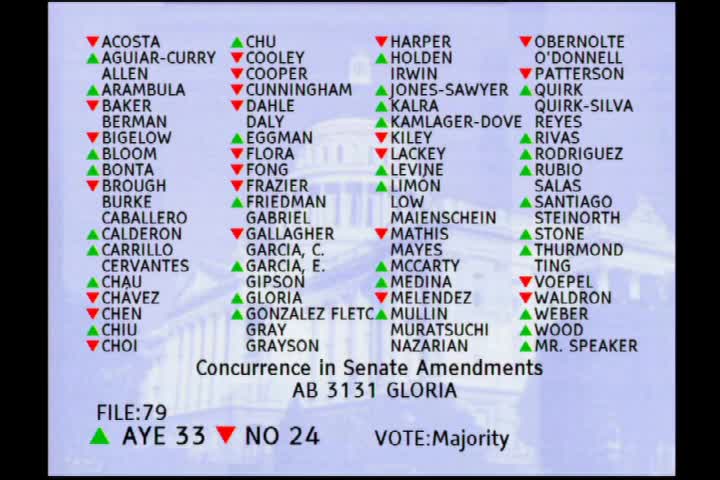

Bill Author

Bill Co-Author(s):
